
Home » Governance (Page 23)
Category Archives: Governance
Traffic is back to “normal”
Traveling to the office last Monday, I could not help but notice the long lines of cars along Ortigas Avenue’s westbound lanes and Katipunan’s southbound lanes. Without adequate public transportation, people have few options for their commutes. Walking from home to workplaces is feasible only for those who live relatively near their workplace (perhaps up to 5km distance?). Cycling may be considered but not everyone can bike beyond 5km, what more for 10km+ commutes. And for both cases, there are just so many obstacles (and I’m not just fault-finding here) like a lack of sidewalks and bike paths to ensure safe walking and cycling.
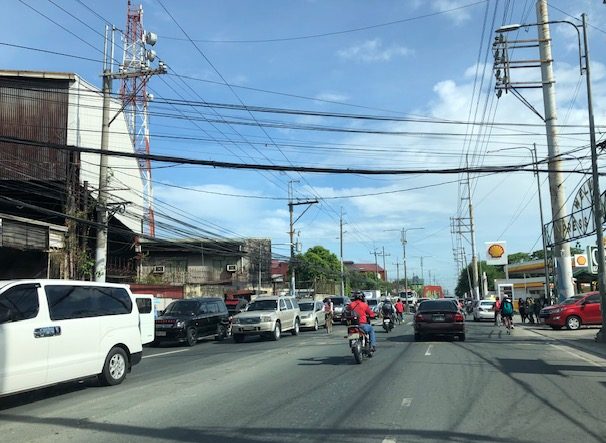 Traffic congestion along Felix Avenue in Cainta towards Cainta Junction (with Ortigas Avenue Extension) – these are mostly outbound traffic likely coming from the residential subdivisions along Felix Avenue and heading to workplaces in Pasig, Mandaluyong, Makati and Taguig. They will likely take Ortigas Avenue to connect with other major roads such as C-5 and EDSA to get to their destinations.
The DOTr and the LTFRB have released guidelines for safety and the prevention of the spread of the COVID-19 virus. Yet, they have moved quite so slowly to bring back public transportation to address the demand for it and to be able to discourage or restrict car usage in the “business-as-usual” or “old normal” sense. Public transportation is critical if we are to transform transportation during this transition from the lockdowns. Granted, the government probably wants to use the situation to effect its modernization plans but it is one thing to take advantage of the opportunity and another to be an opportunist considering the vulnerabilities of the transport sector after it endured 3 months of shutdown. The moral and right thing to do is to bring back public transport and give incentives for it to thrive and perhaps transform or upgrade by themselves rather than force the situation at the expense of commuters.
–
COVID-19 Infection Risk Assessment of Transport Modes
I posted about the work we have been doing to assess the infection risk (i.e., spread of COVID-19) for various modes of transport considering the transition of many areas including the National Capital Region (NCR) to the General Community Quarantine (GCQ). The work was undertaken through the Transportation Science Society of the Philippines (TSSP), which is under the umbrella of the Eastern Asia Society for Transportation Studies (EASTS). Here is the outcome in the form of an “Infection Risk Classification of Transport Modes or Vehicle Types” developed by a core group of public transportation and road safety specialists among its members:
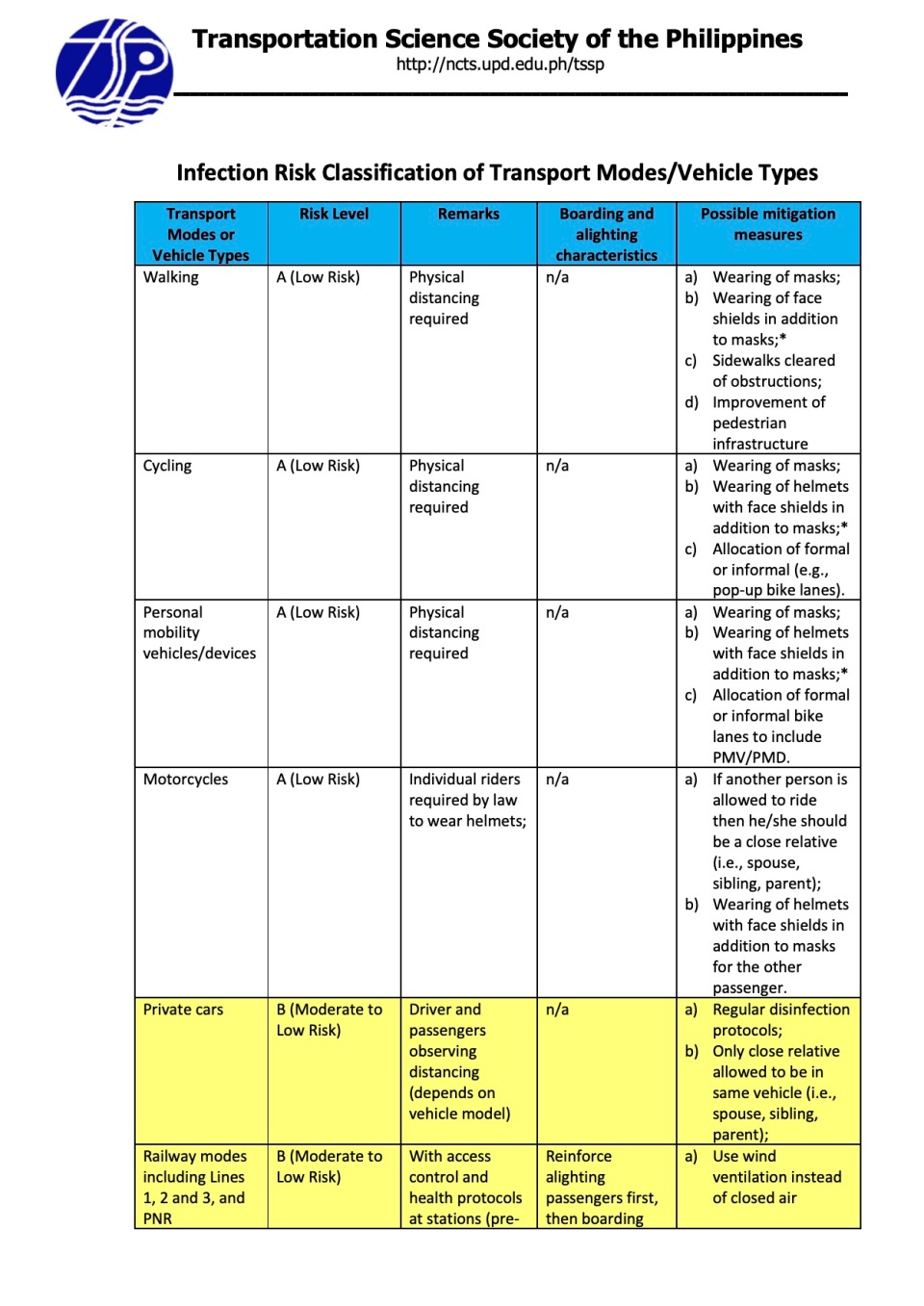
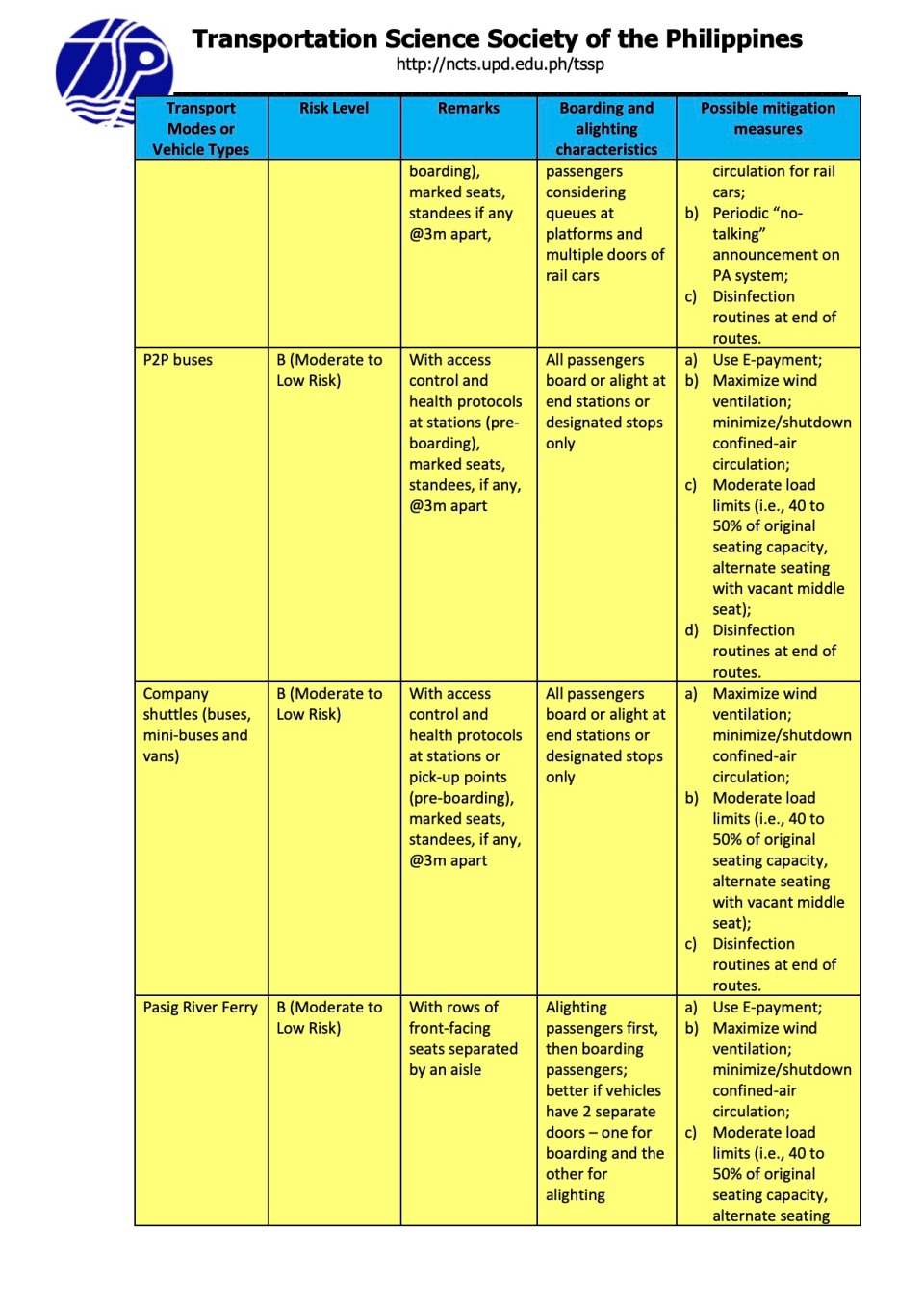
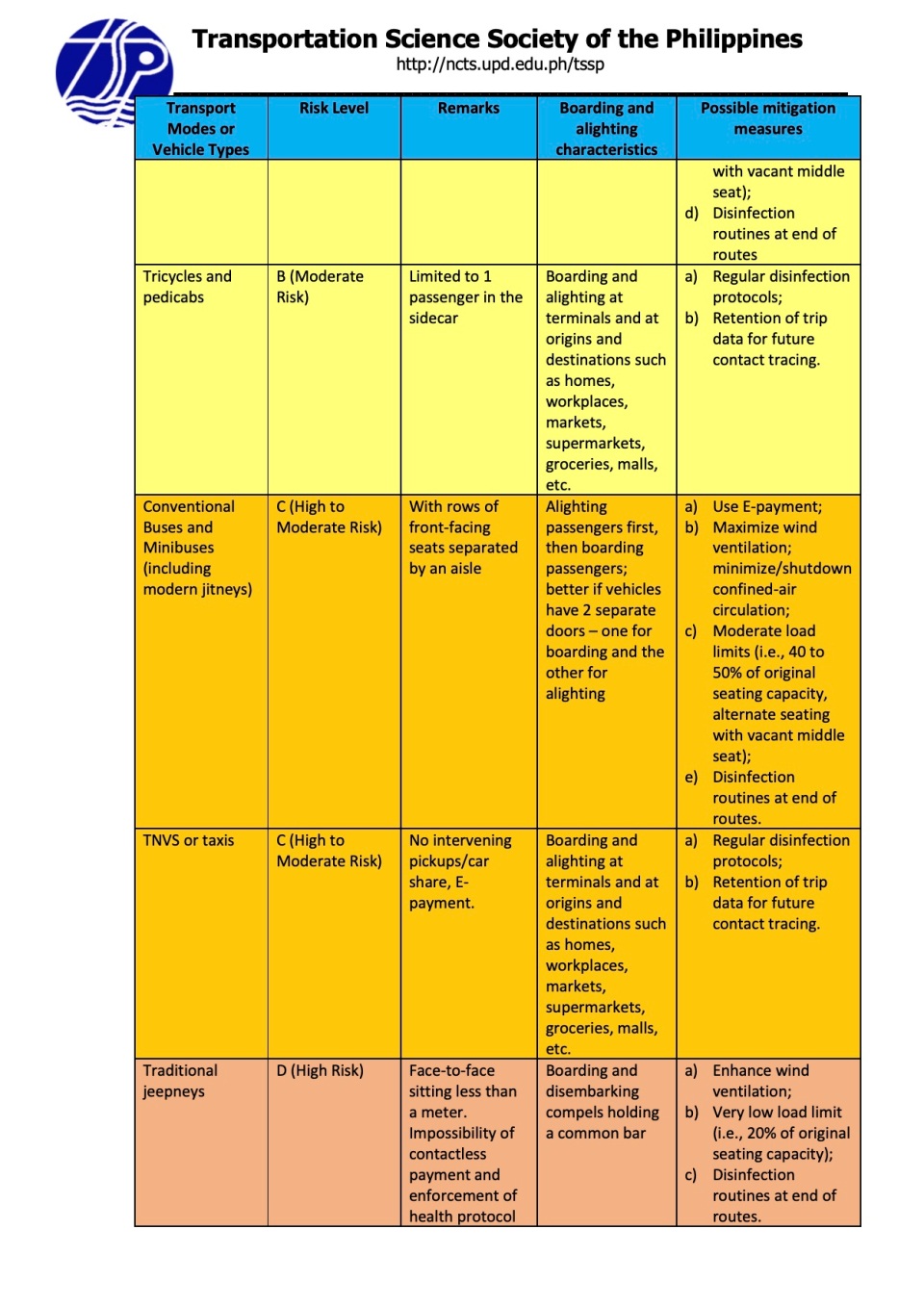
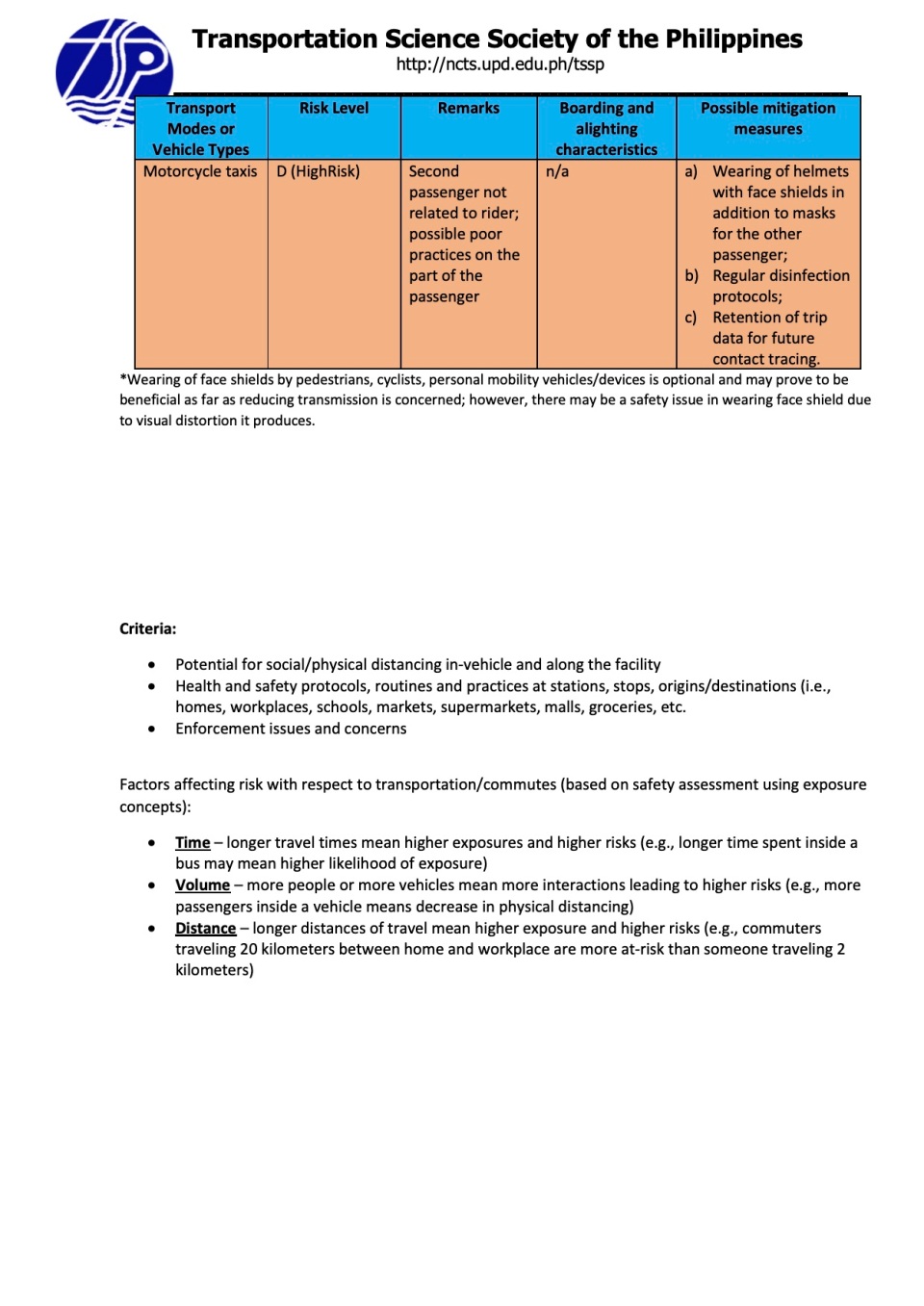
Note again that this is the product of a rapid assessment using the mentioned criteria and factors. It is a qualitative assessment and a quantitative one, given the data, would obviously been preferred. Moreover, this is an assessment for risk of infection rather than for road safety. In the “old normal”, for example, cycling and motorcycle use may have a higher risk in traffic given traffic mix, human behavior and lack of facilities to make these modes safe.
–
On urban planning resources or references for the pandemic
I am posting for reference this article compiling helpful references for urban planning in the context of the COVID-19 pandemic. Most of the references listed are based on the US experience and I am sure there is already a wealth of information coming from other countries as well including those that have been successful in mitigating the effects of the pandemic.
Brasuell, J. (2020) “Urban Planning Resources for COVID-19”, Planetizen, https://www.planetizen.com/node/109238?utm_source=newswire&utm_medium=email&utm_campaign=news-05142020&mc_cid=2e155996b6&mc_eid=9ccfe464b1 [Last accessed: 5/16/2020]
–
On the DOTr Guidelines for Public Transport – Layouts for Distancing
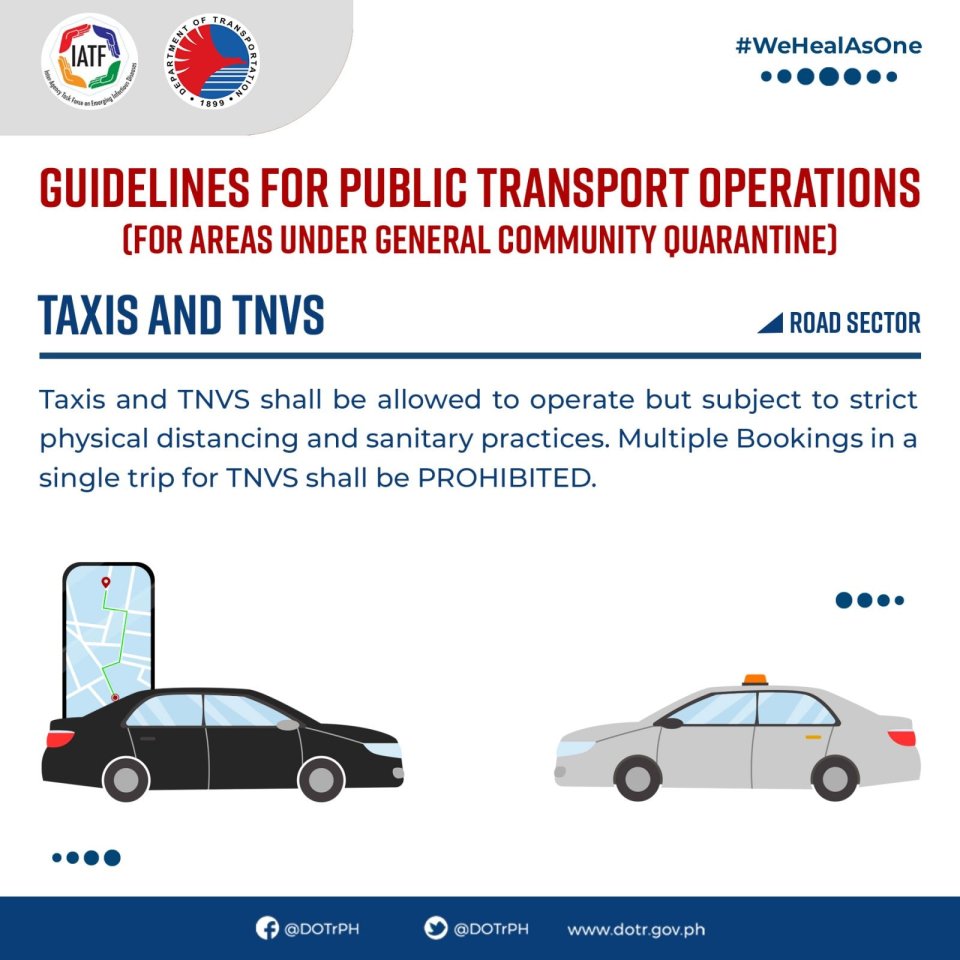
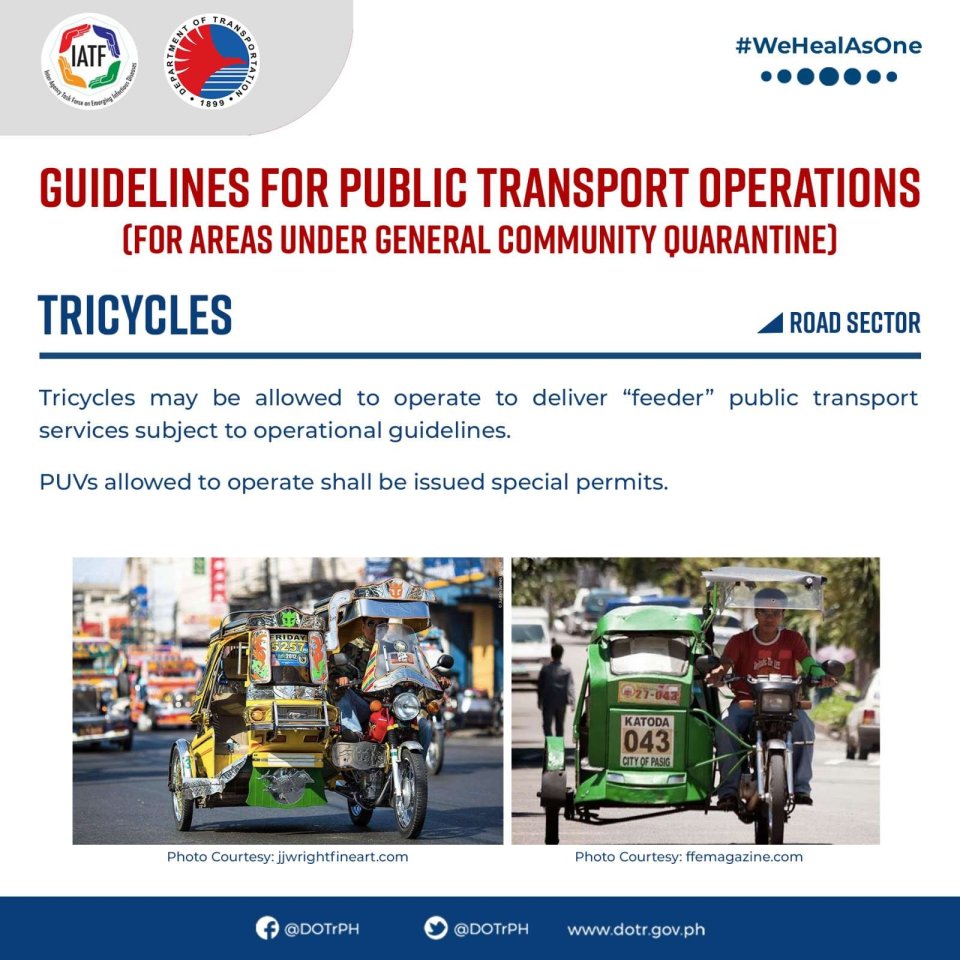
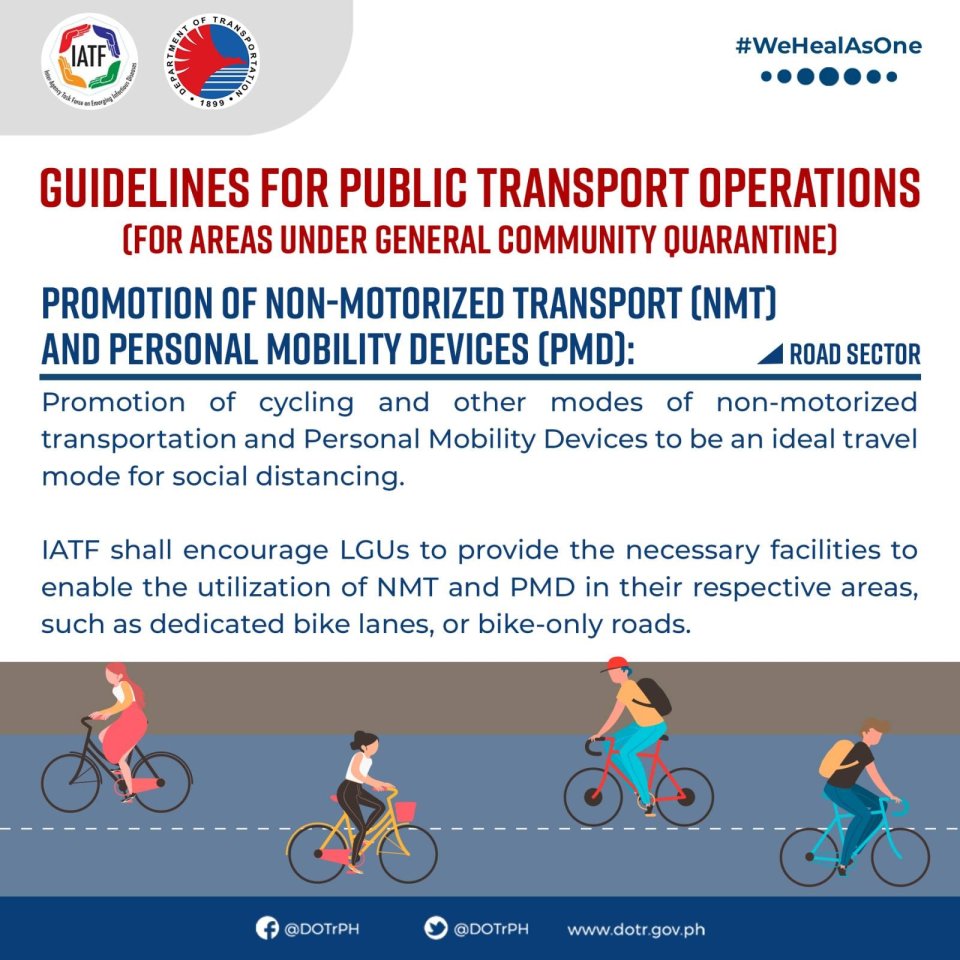
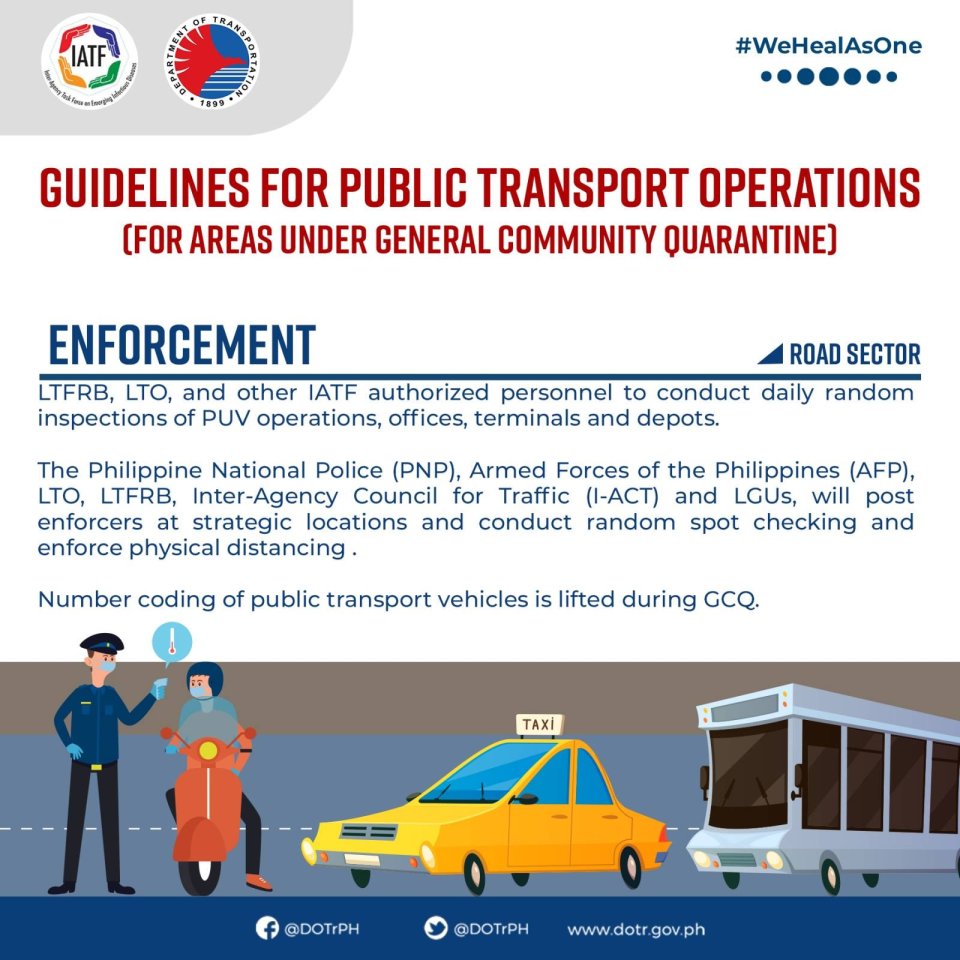
Here again, for reference, are the guidelines issued by the DOTr in relation to the transition from ECQ to GCQ and beyond (immediate rather than far future). The following images show the physical distancing prescribed for road transport.


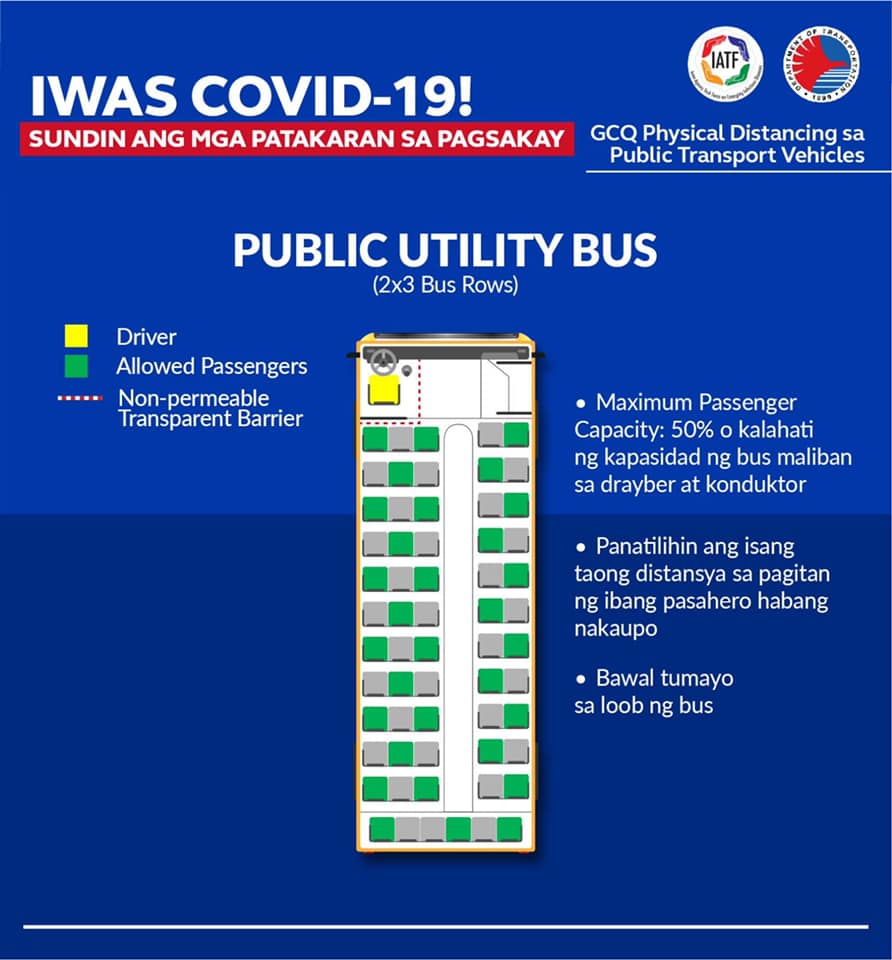


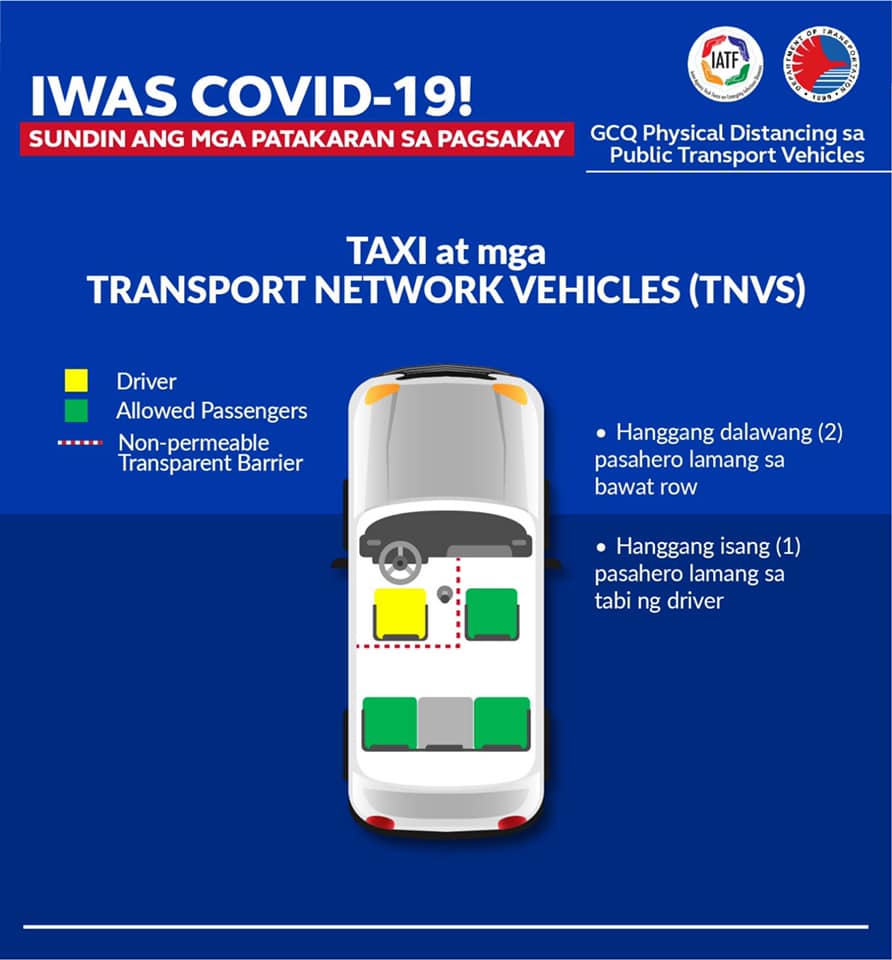

The last image for the tricycle is something that should have been allowed at least for a limited number of tricycles during the ECQ period. That could have eased transport woes for many people especially those who had to walk long distances in order to get their supplies. Some LGUs like Davao were able to issue Executive Orders to that effect that the IATF did not contend (or is Davao a special case?). Now, we see a lot of LGUs issuing EO’s and ordinances allowing public utility tricycles to operate again but limiting their numbers through odd-even schemes. Perhaps the same should be applied to pedicabs or padyak (non-motorized 3-wheelers), too.
–
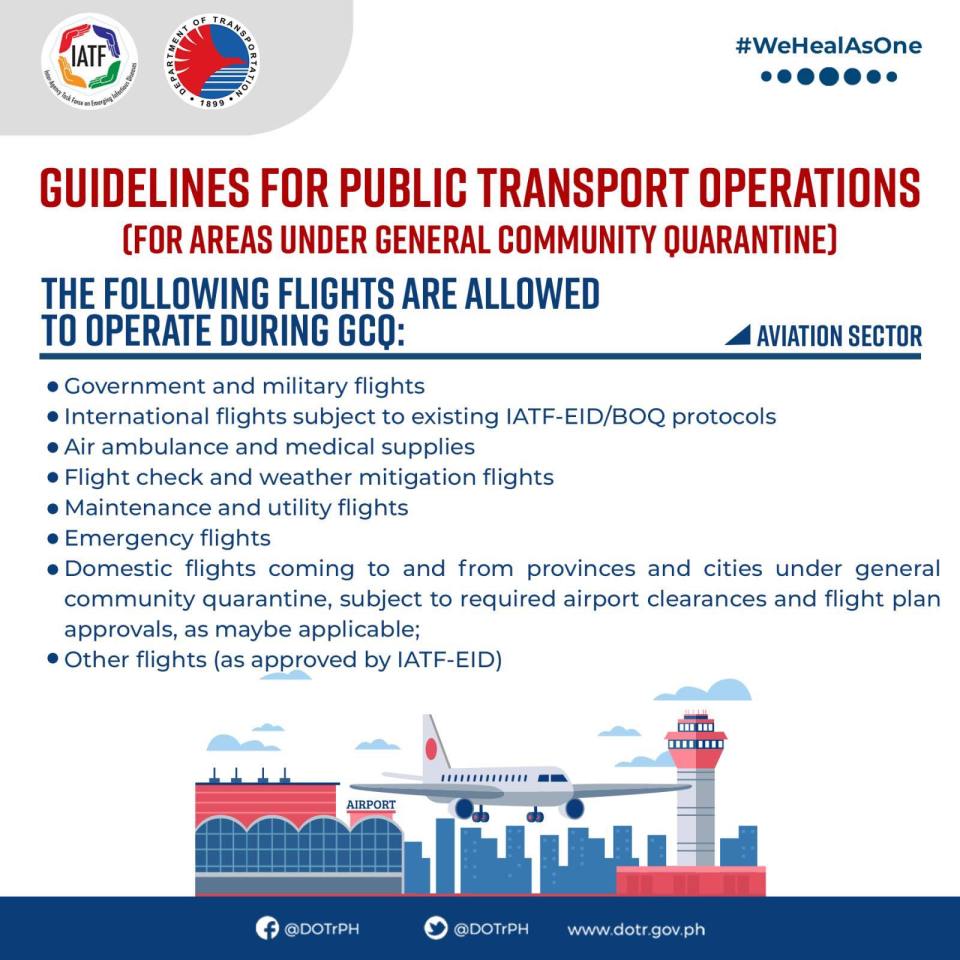
On the DOTr Guidelines for Public Transport – Aviation Sector
Here are the guidelines for the Aviation Sector. My only comment here is that many people are anxious about when they can travel again, particularly to other parts of the country mainly for business or to go home (e.g., many students have been stranded in the cities where they go to school and away from their hometowns). Part of this anxiety is the thinking that airfares will increase significantly as airlines are forced to reduce capacities for their aircraft to adhere to physical distancing guidelines. Gone, probably, are the discount fares like the Piso fare promos.

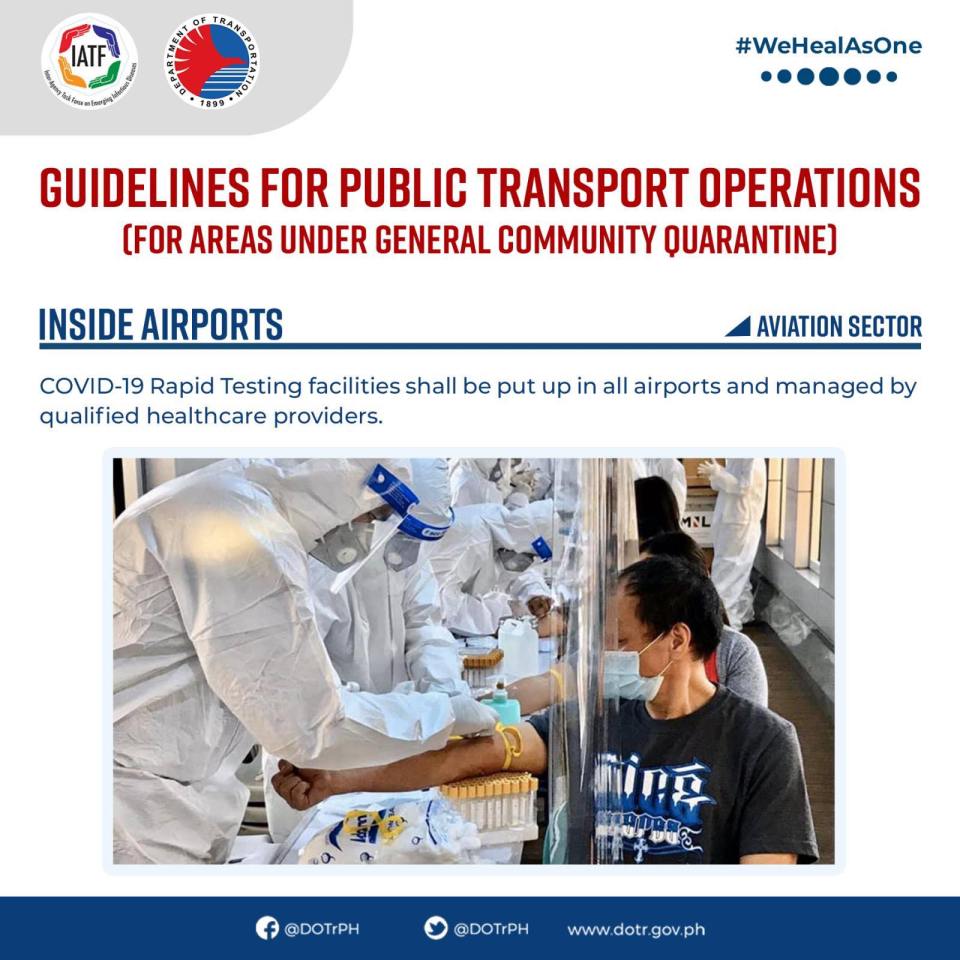


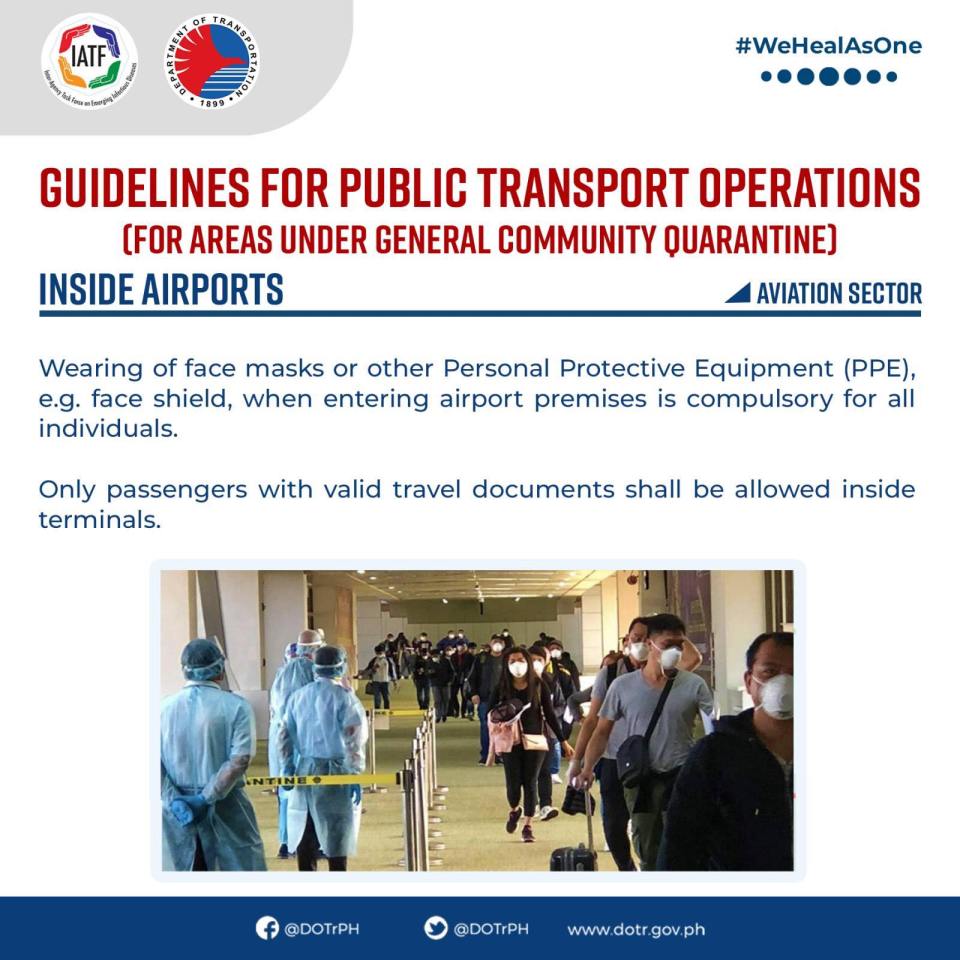

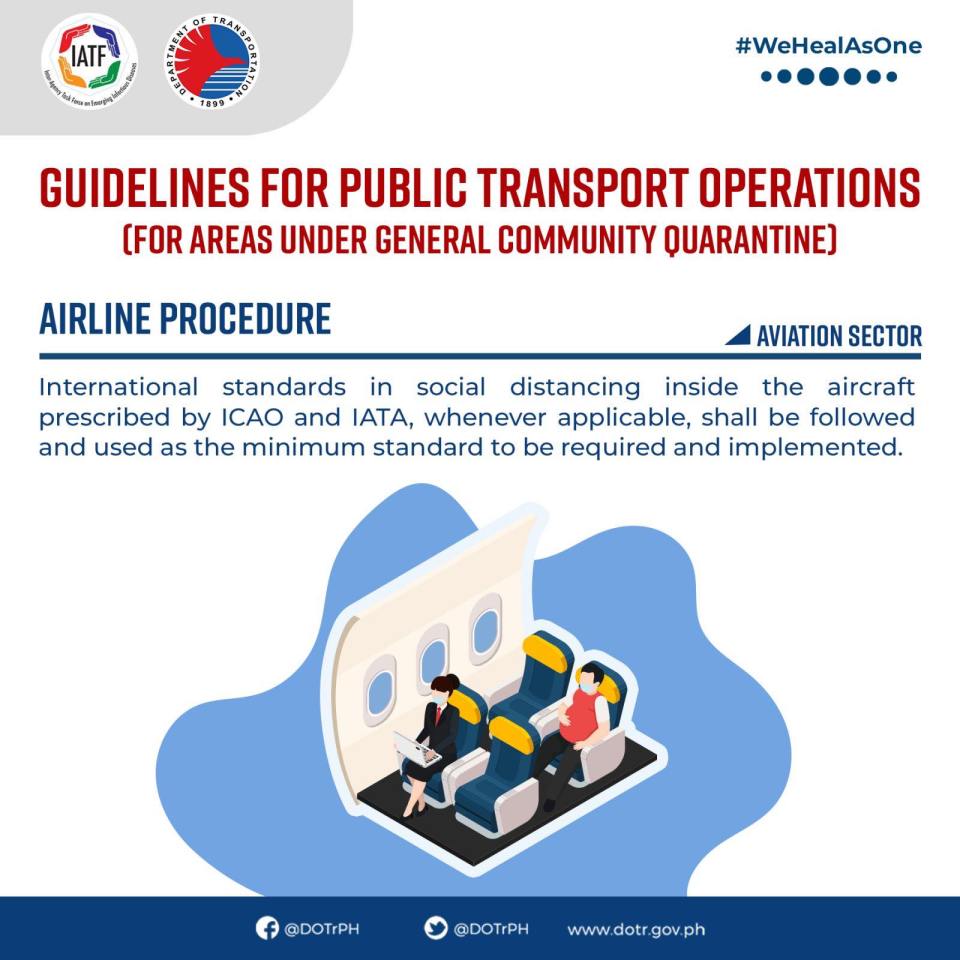

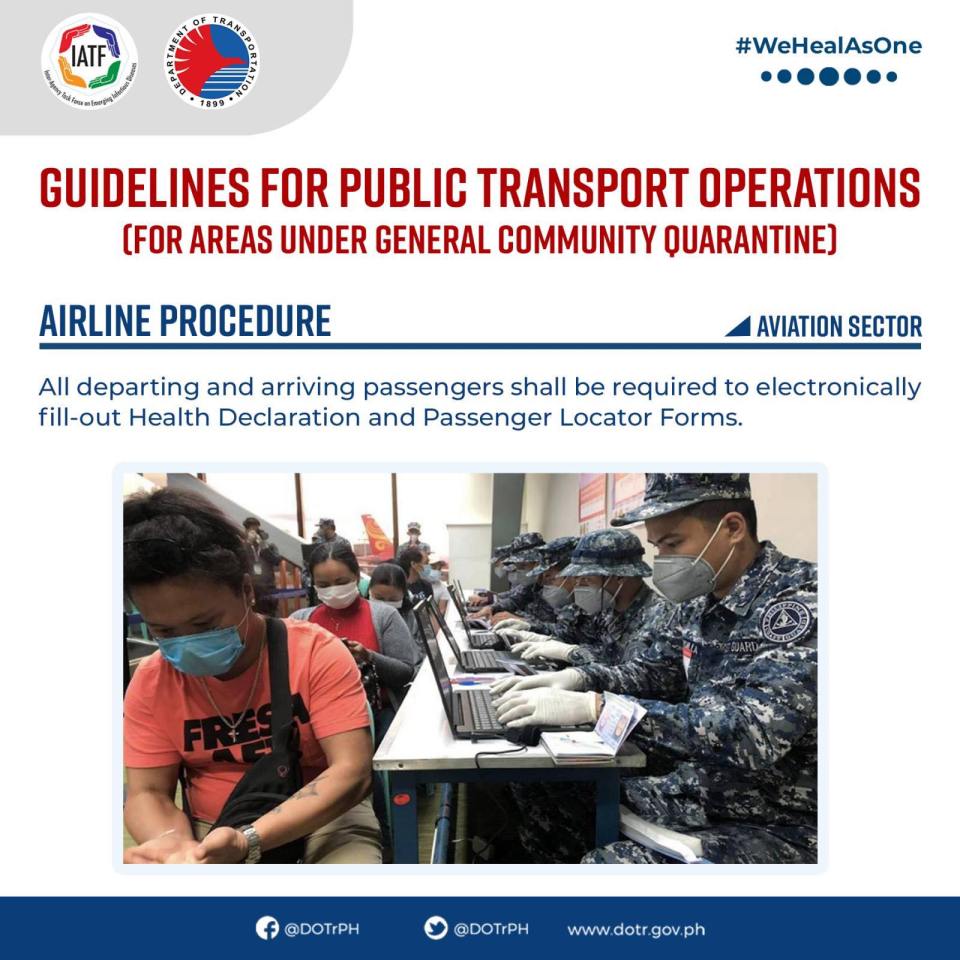

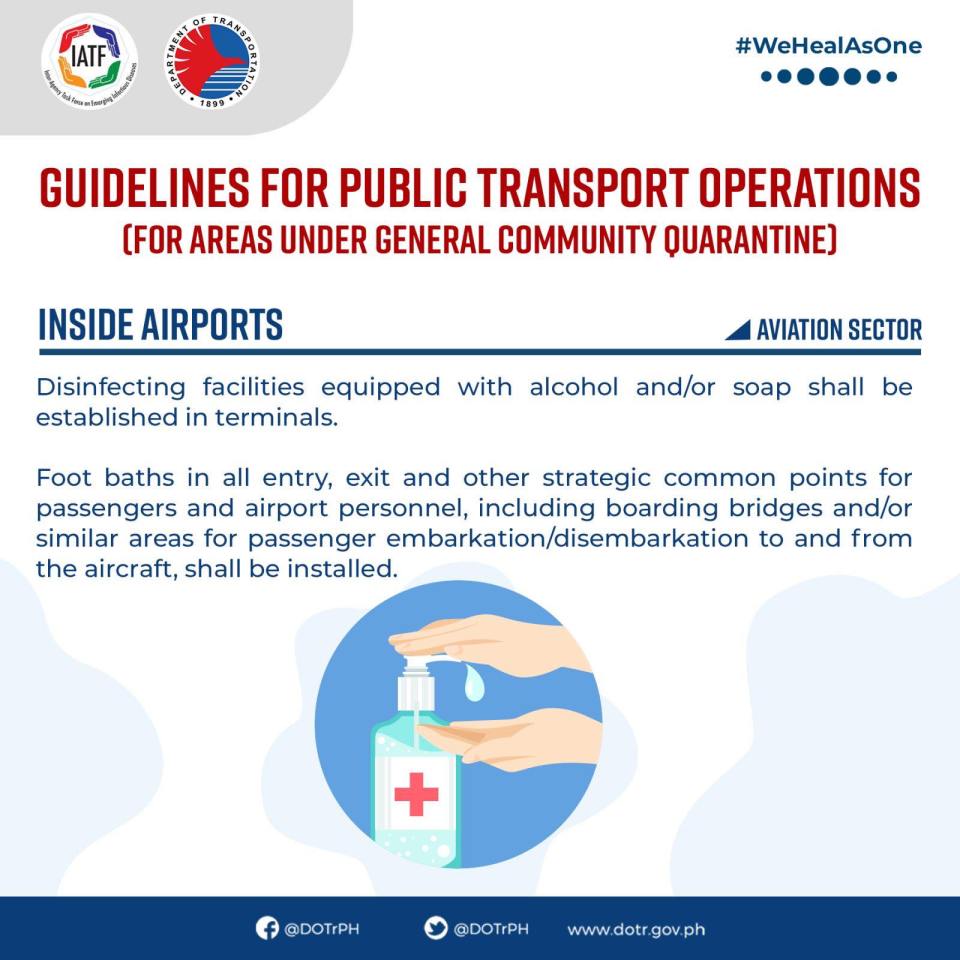
Related to this, I have received emails from 4 airlines I frequently used – Cebu Pacific, Philippine Airlines, Singapore Airlines and Japan Airlines. All provided updates on their respective efforts to ensure the future air travel will be safe, health-wise. As for the airport terminals, that’s another story…
–
On the DOTr for Public Transport – Maritime Sector
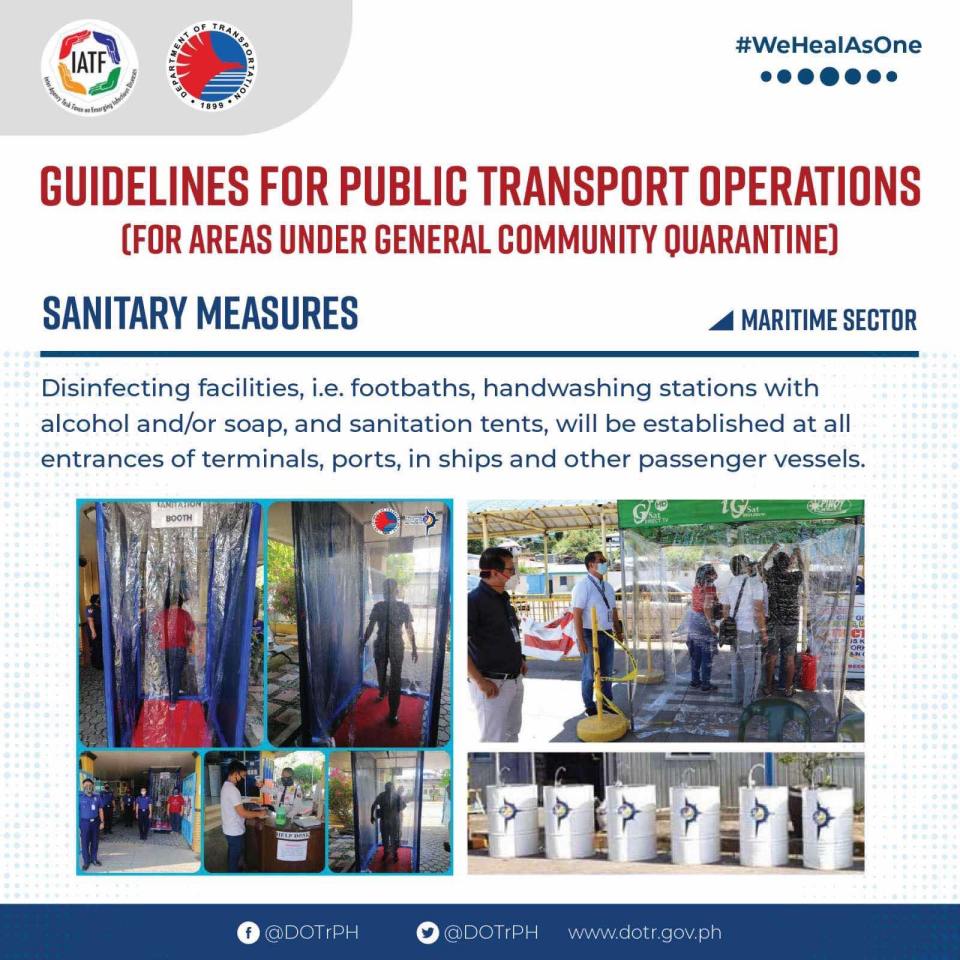
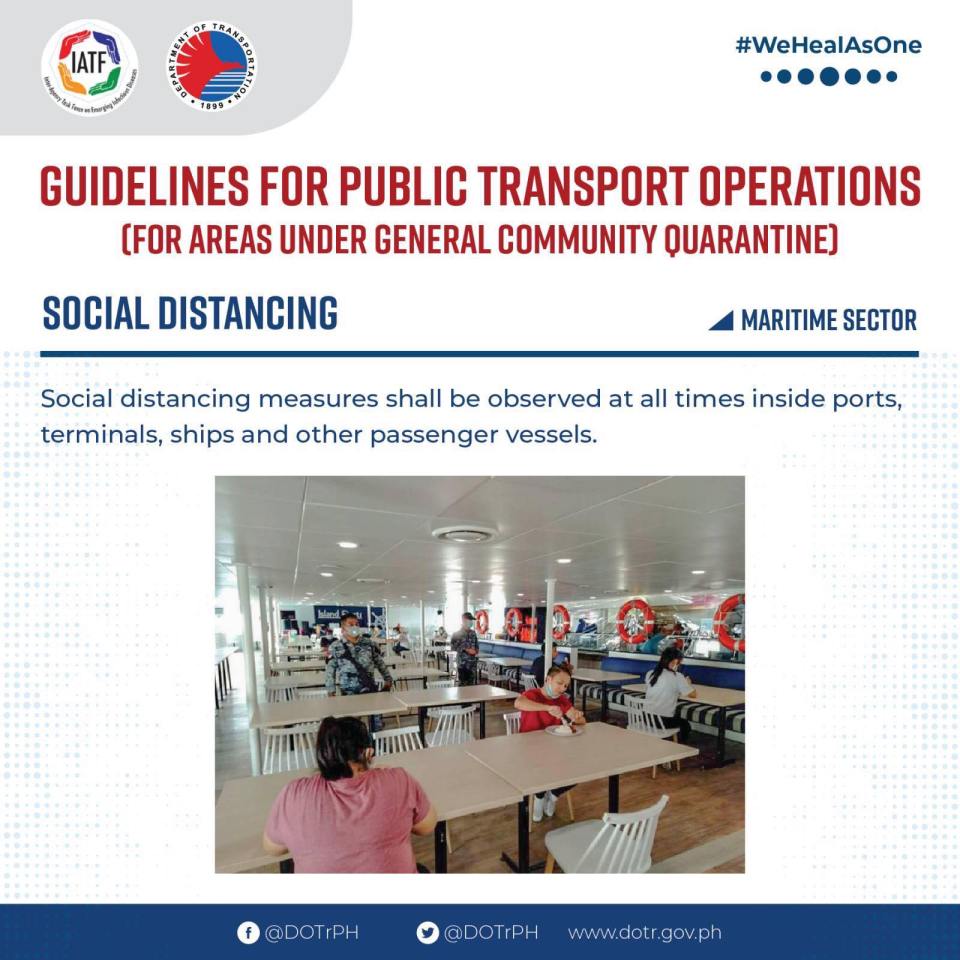
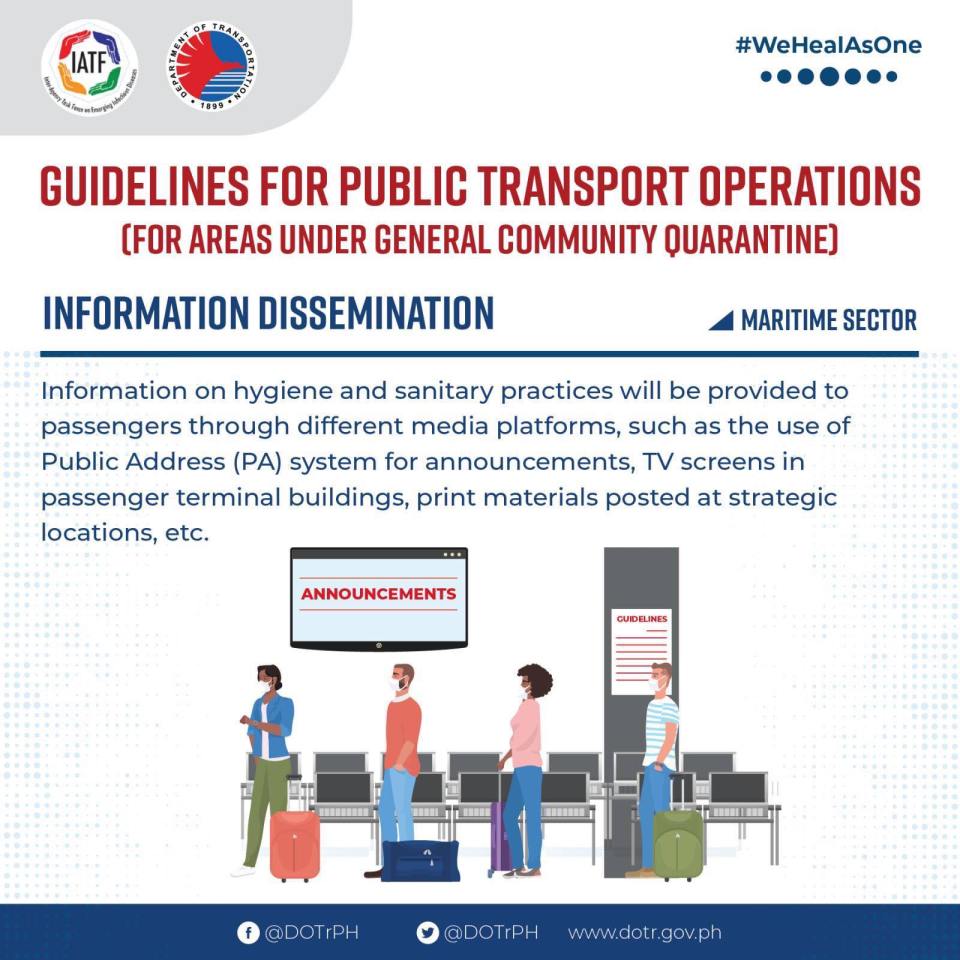
Here’s a continuation of the set of guidelines issued by the Department of Transportation for transport operations for areas that are or will be under the General Community Quarantine (GCQ). Again, I try to refrain from making any critiques or comments, and post this for information and reference.
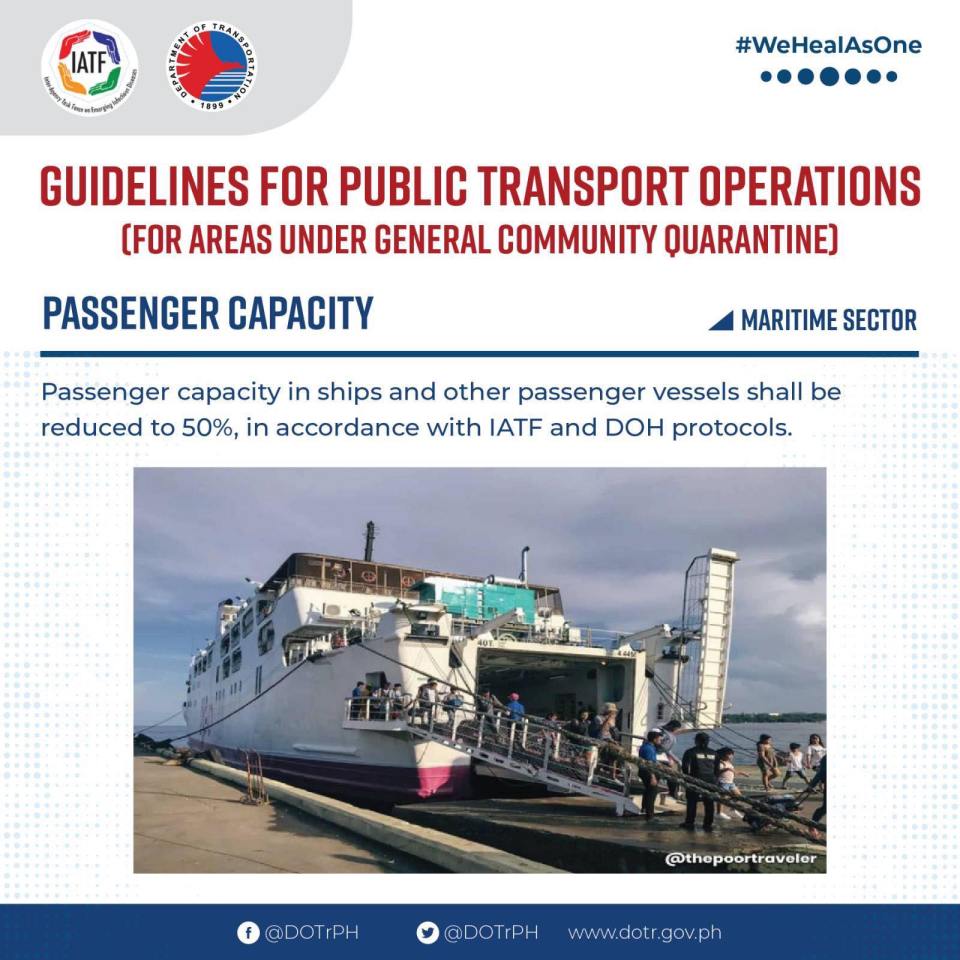
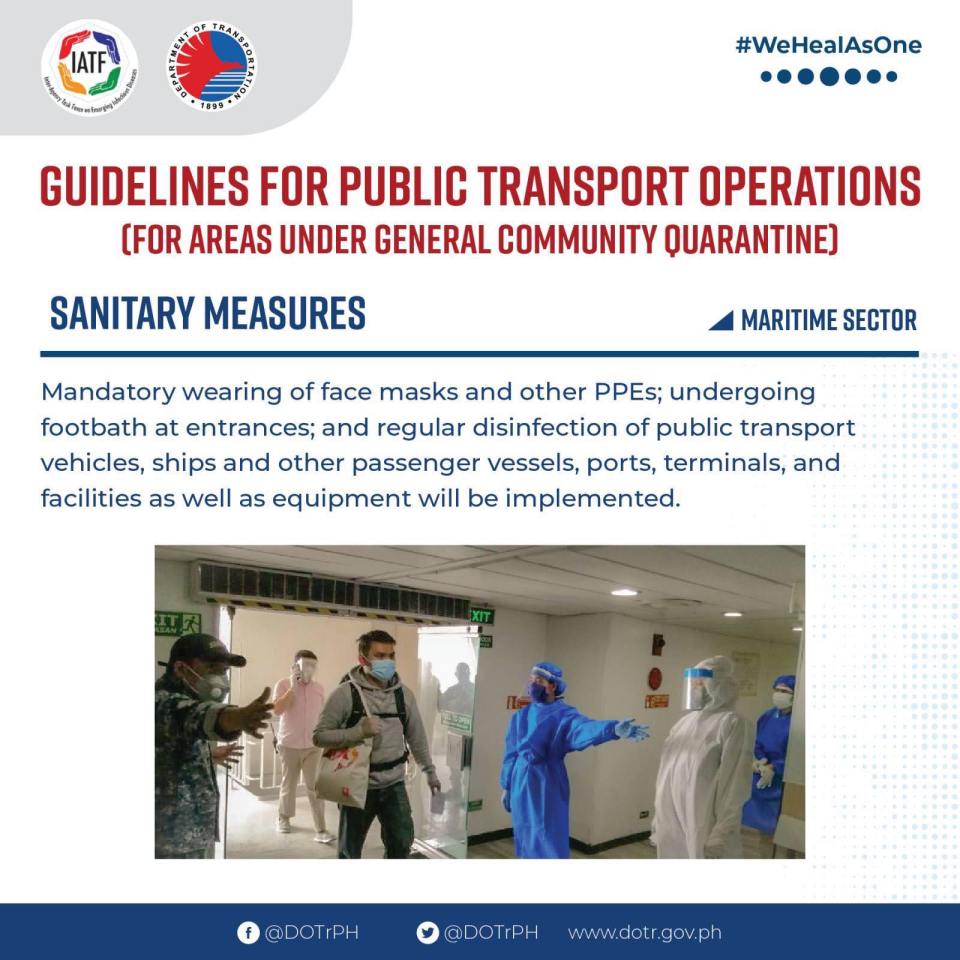
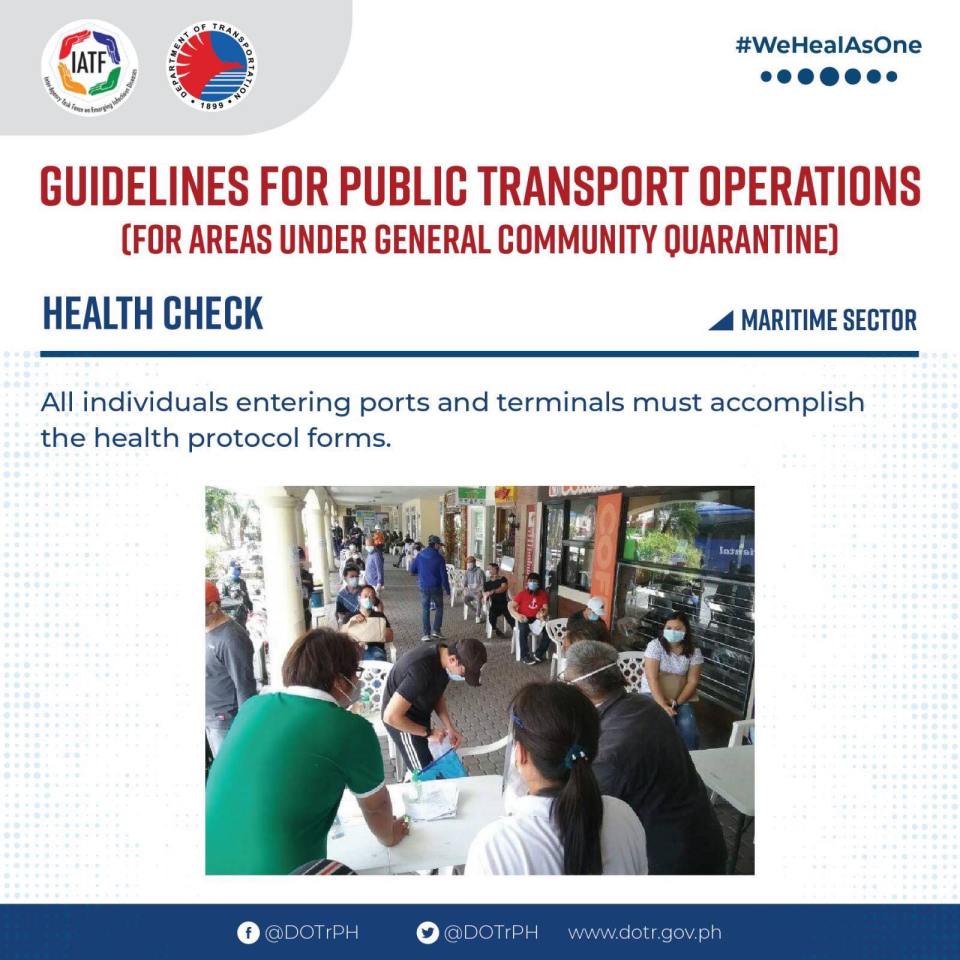
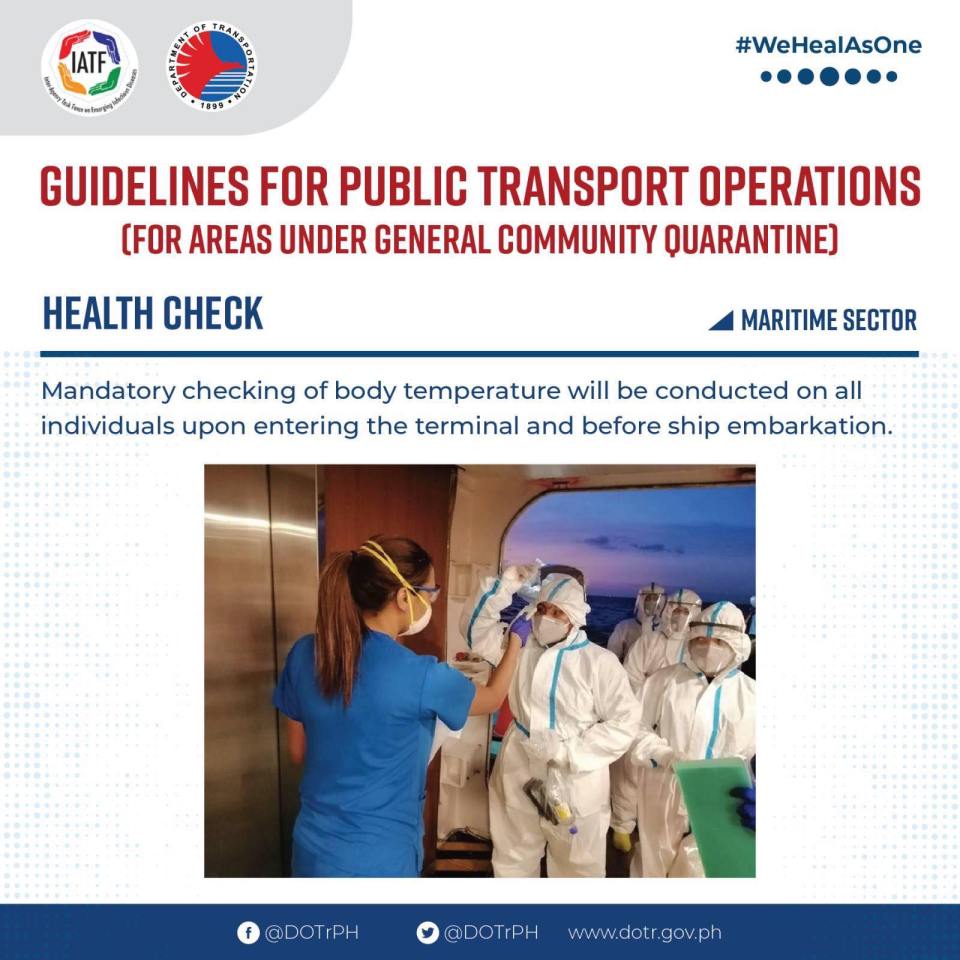
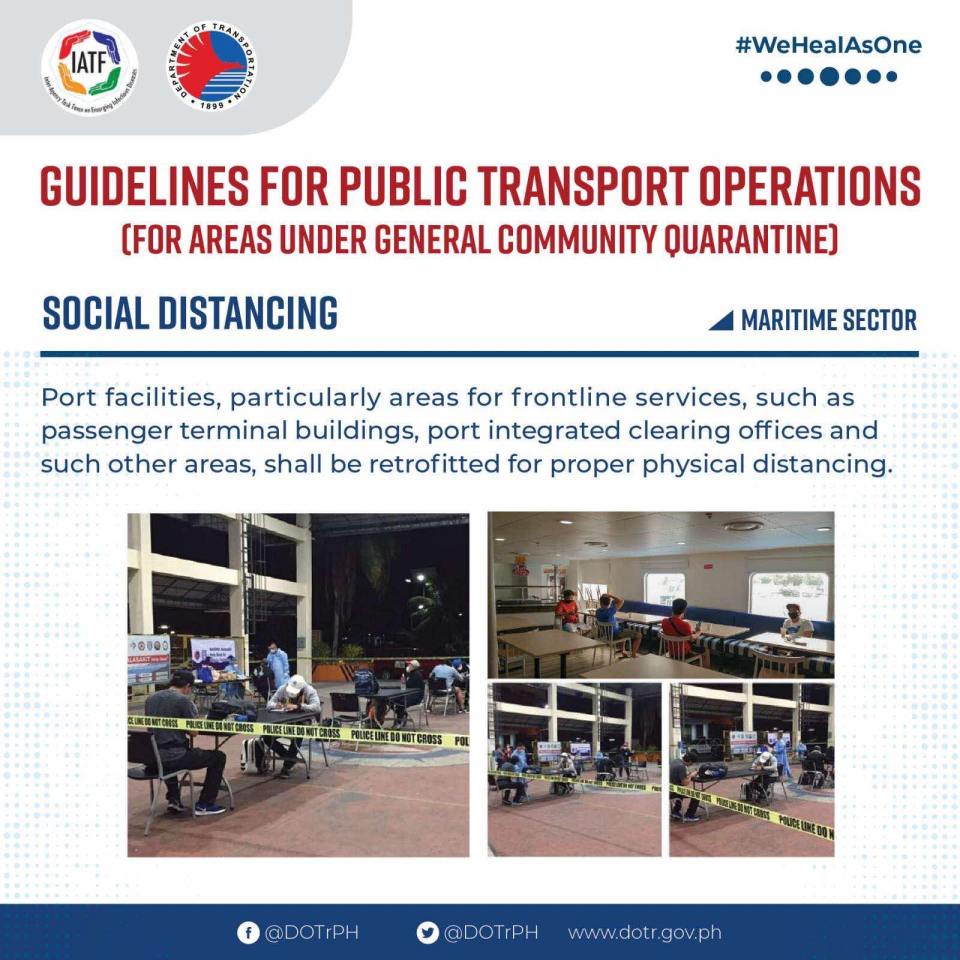
–
On the DOTr GCQ Guidelines for Public Transport Operations – Rail Sector
I had previously posted for information and reference the Department of Transportation’s (DOTr) guidelines for road public transportation. Here are the guidelines for rail public transportation:
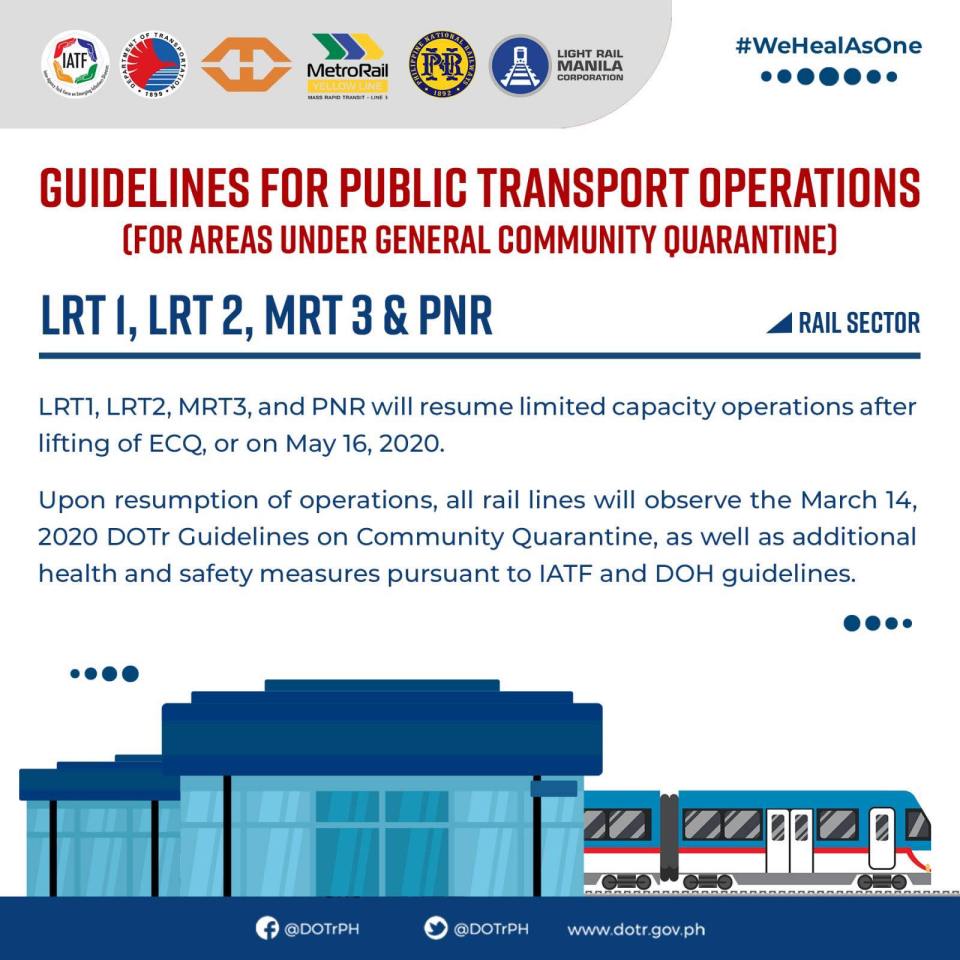
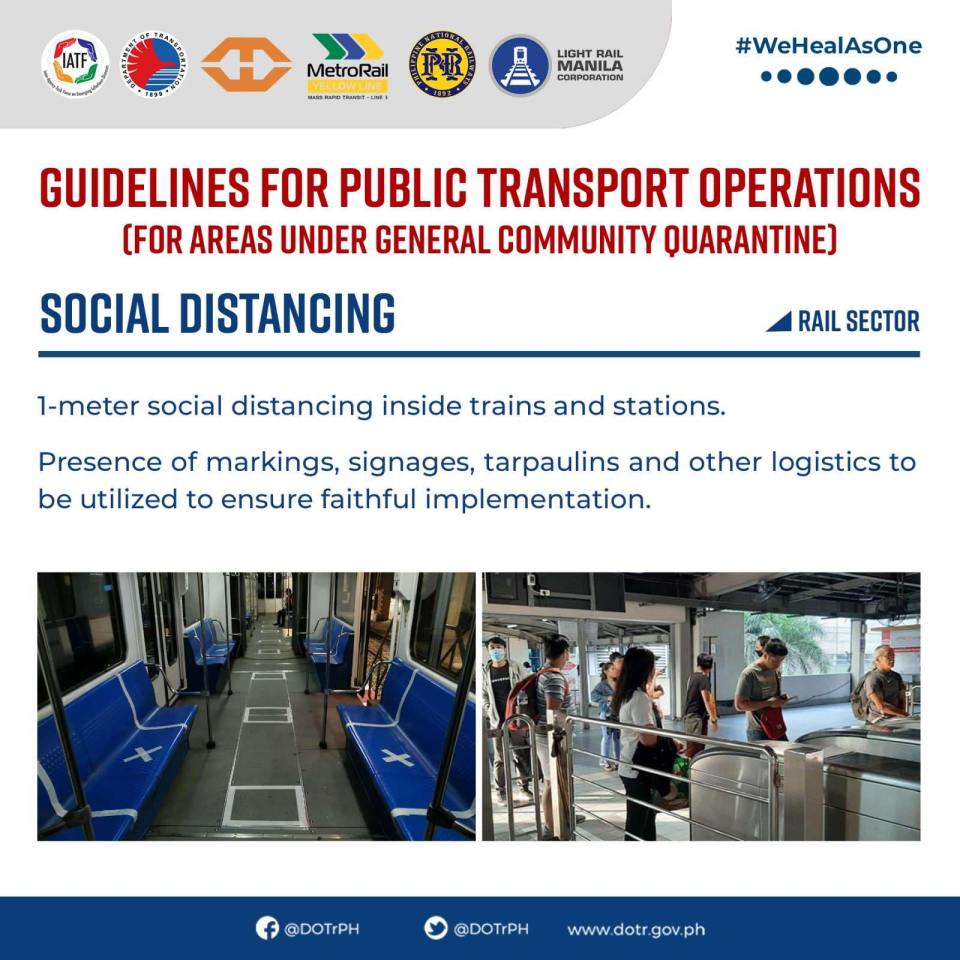

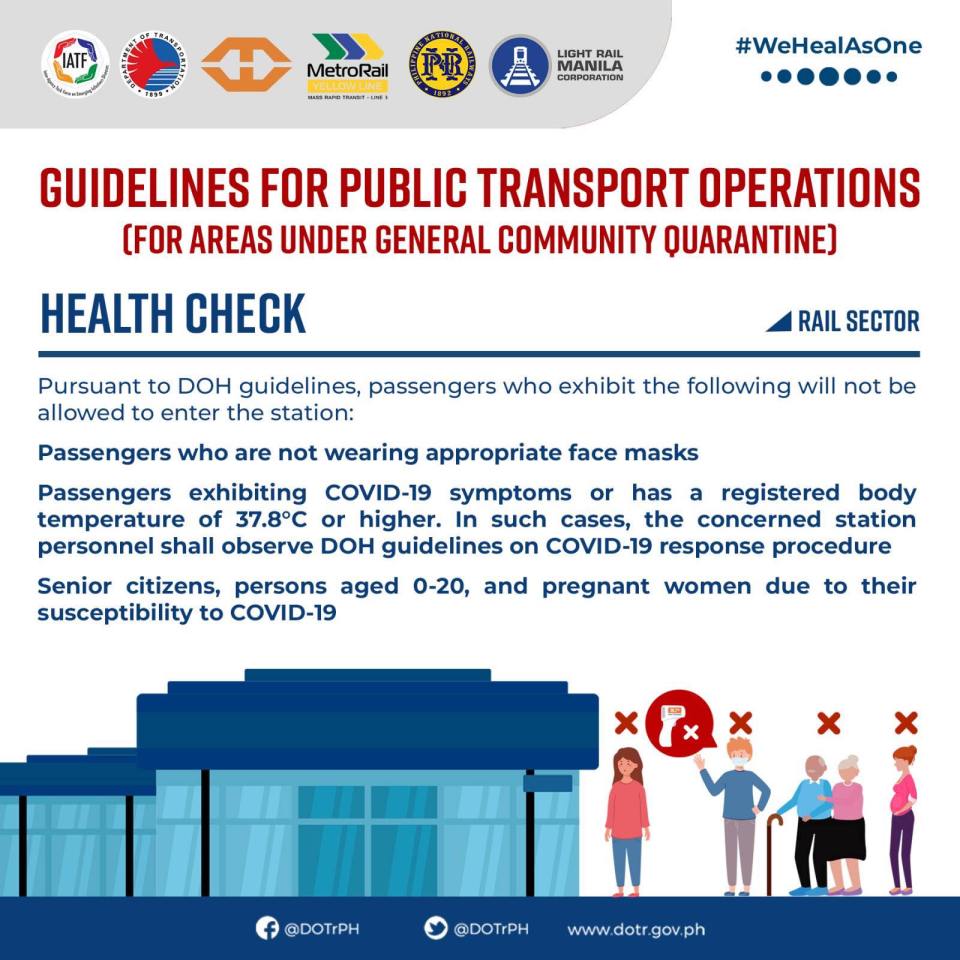

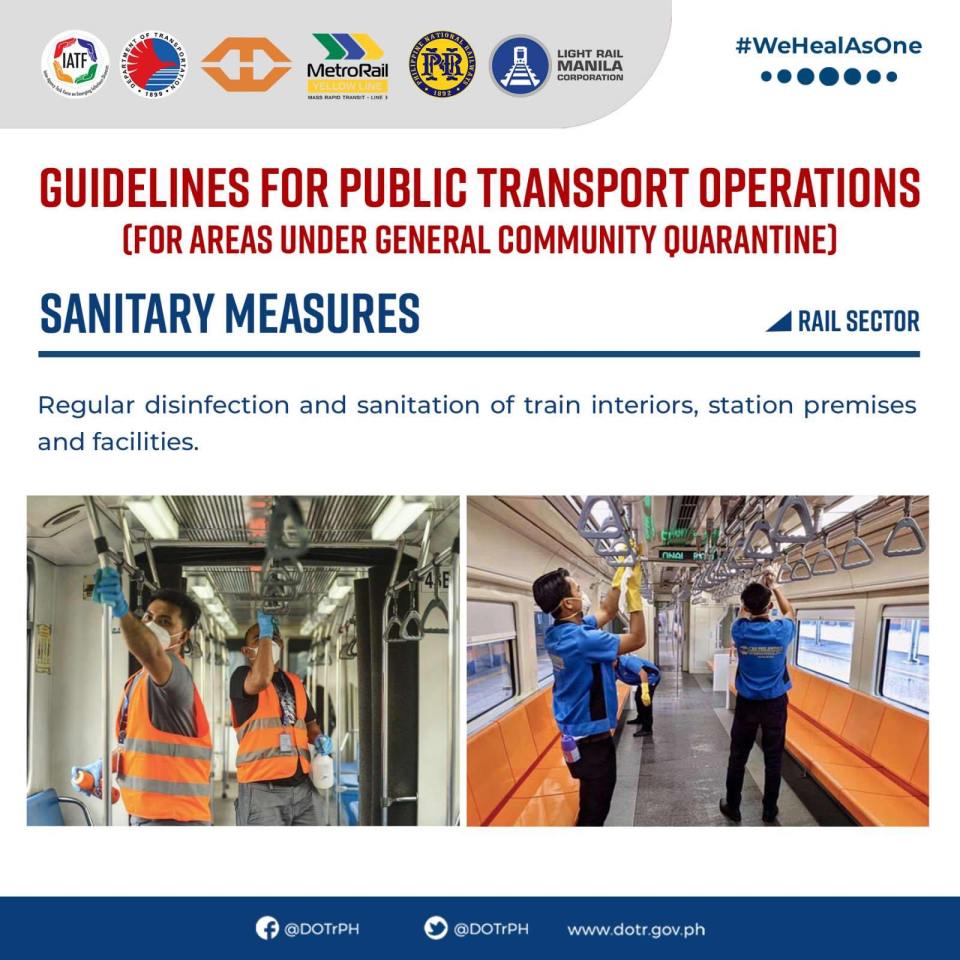

While I said that I will refrain from commenting or critiquing these guidelines starting from the previous post on road public transport, I could not help but say a few things about the case for rail. In particular, I am most concerned about the reduced capacity of trains based on the infographics above. The particular infographic states that passenger capacities for Line 1, Line 2, Line 3 and PNR would be 12, 10, 13 and 20 percent, respectively. These are very low numbers that are not even comparable to the 30 to 50% passenger capacities that road public transportation may be able to achieve. Would it be worth it (and I’m talking about financial terms here) to operate at these capacities? Or are there solutions that could increase train passenger capacities while ensuring physical separation. I use the term “physical separation” here instead of “physical distancing” because it may be possible to design not just a layout but barriers that would also be effective in minimizing if not eliminating the possibility of infection of the virus should any passenger turn out to be infected. People, after all, will be required to wear masks and even gloves. Others may opt to wear face shields. And there are also measures vs infection at the stations or terminals as well as the workplaces. What do you think?
–
On the DOTr GCQ Guidelines for Public Transportation – Road Sector
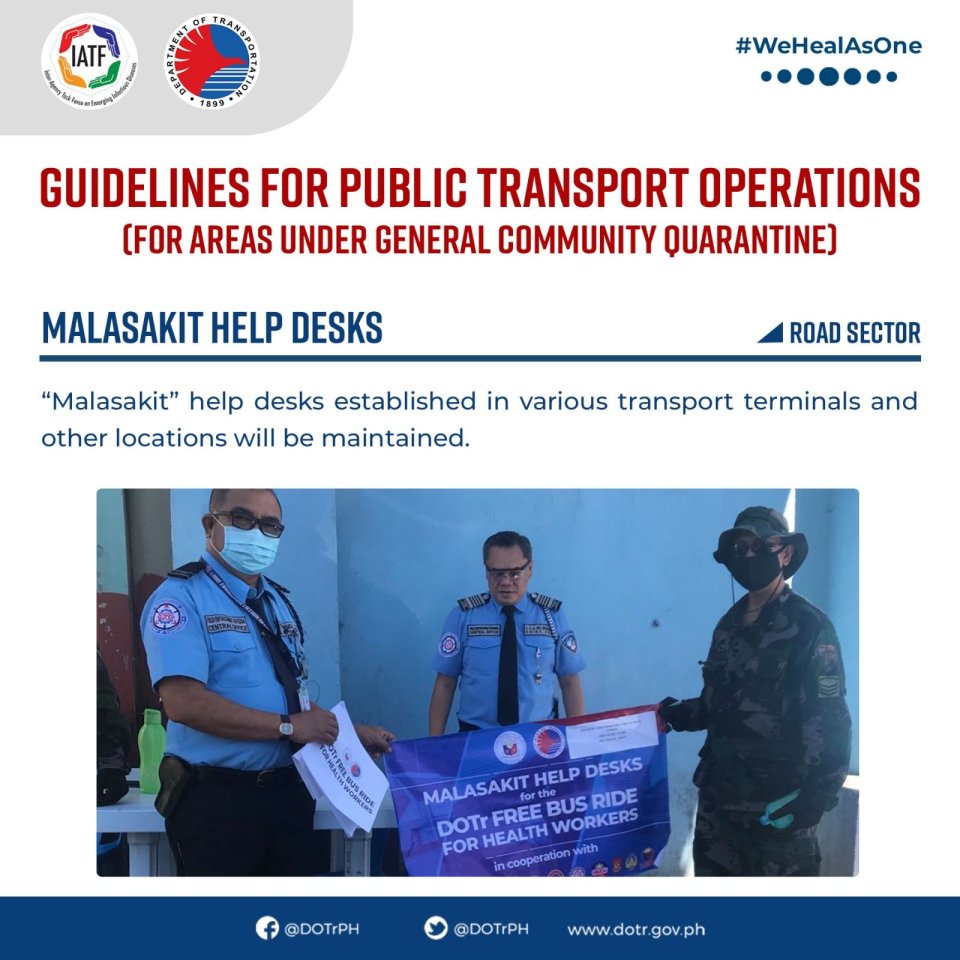
I just wanted to post, share and document here the DOTr’s Guidelines for Public Transport Operations for areas under General Community Quarantine (GCQ). The images are self explanatory so I will not discuss these nor will I offer a critique at this point. The following are public and posted on DOTr’s social media pages (i.e., Facebook) and have been shared and circulating among the public. I also post it here for future reference as I do to many other references like articles and infographics.

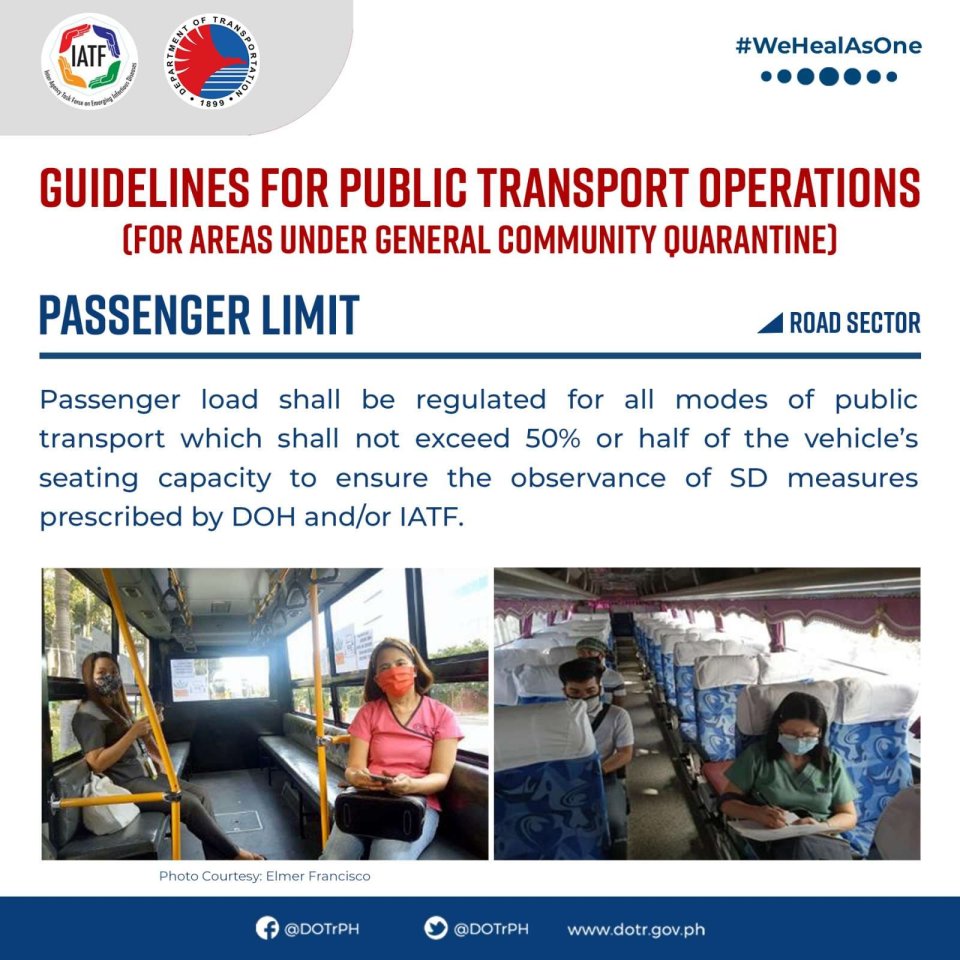


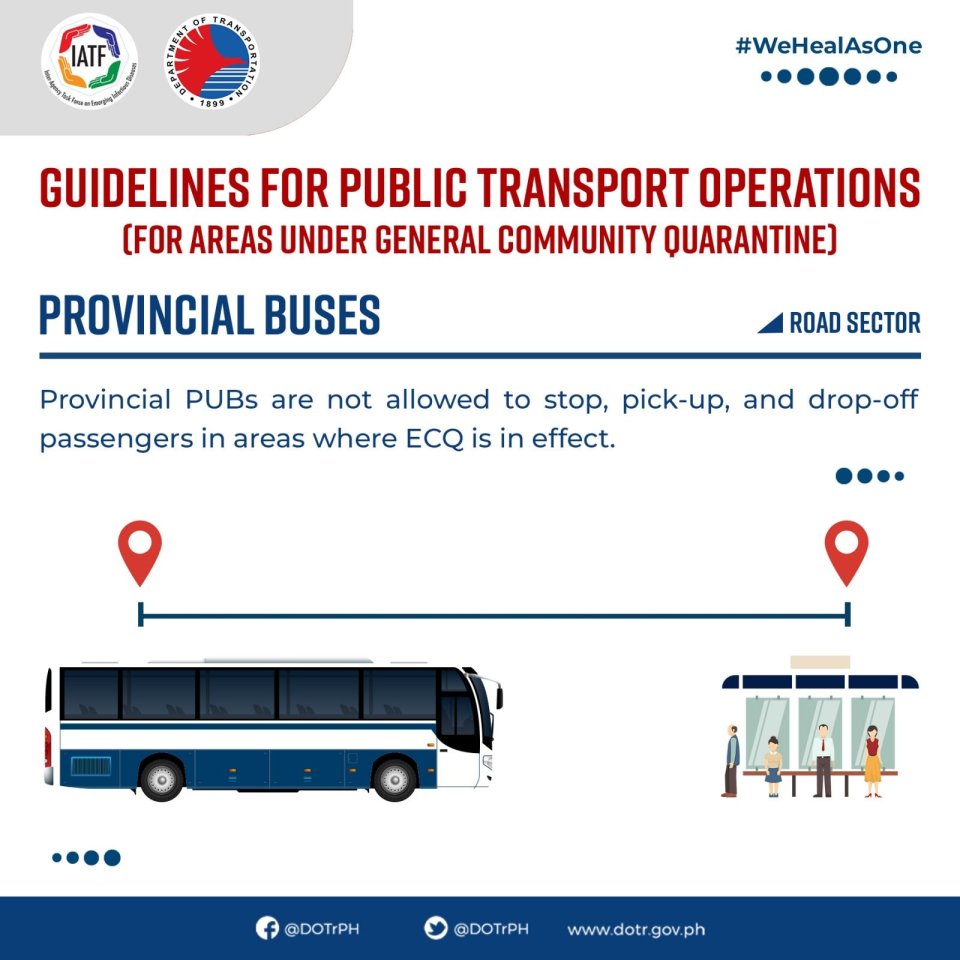
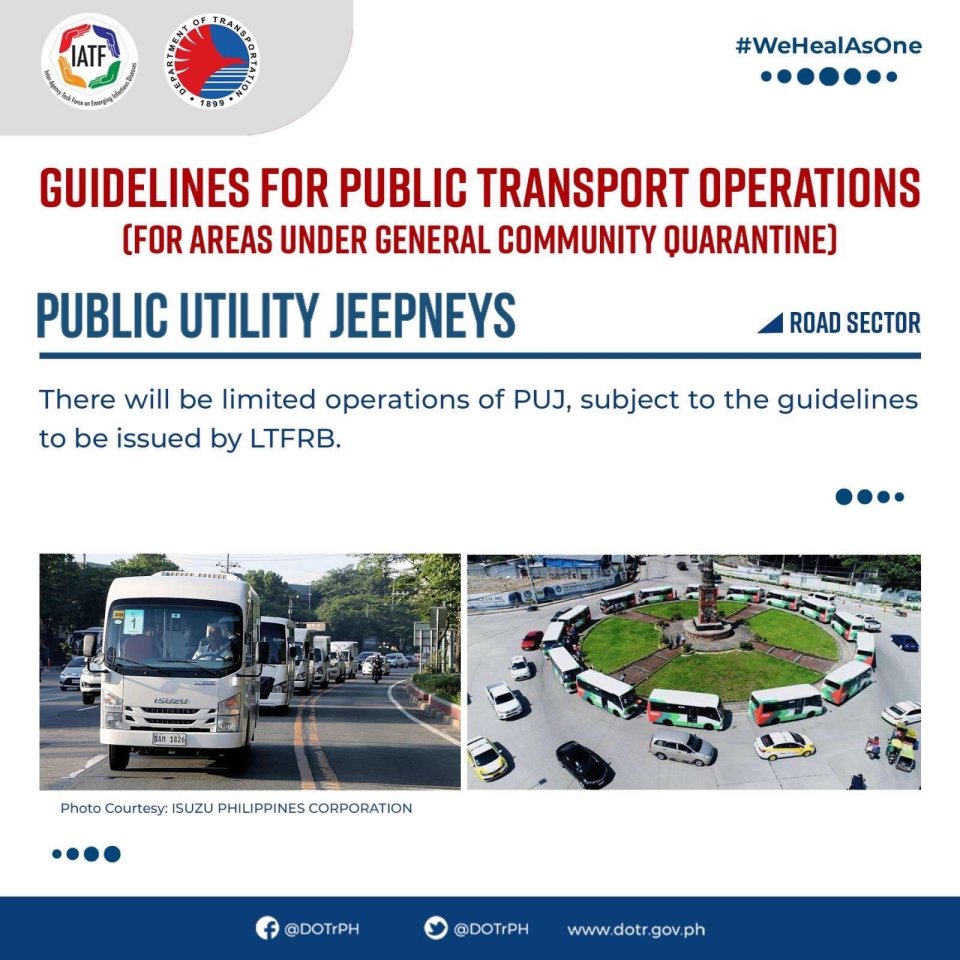



–
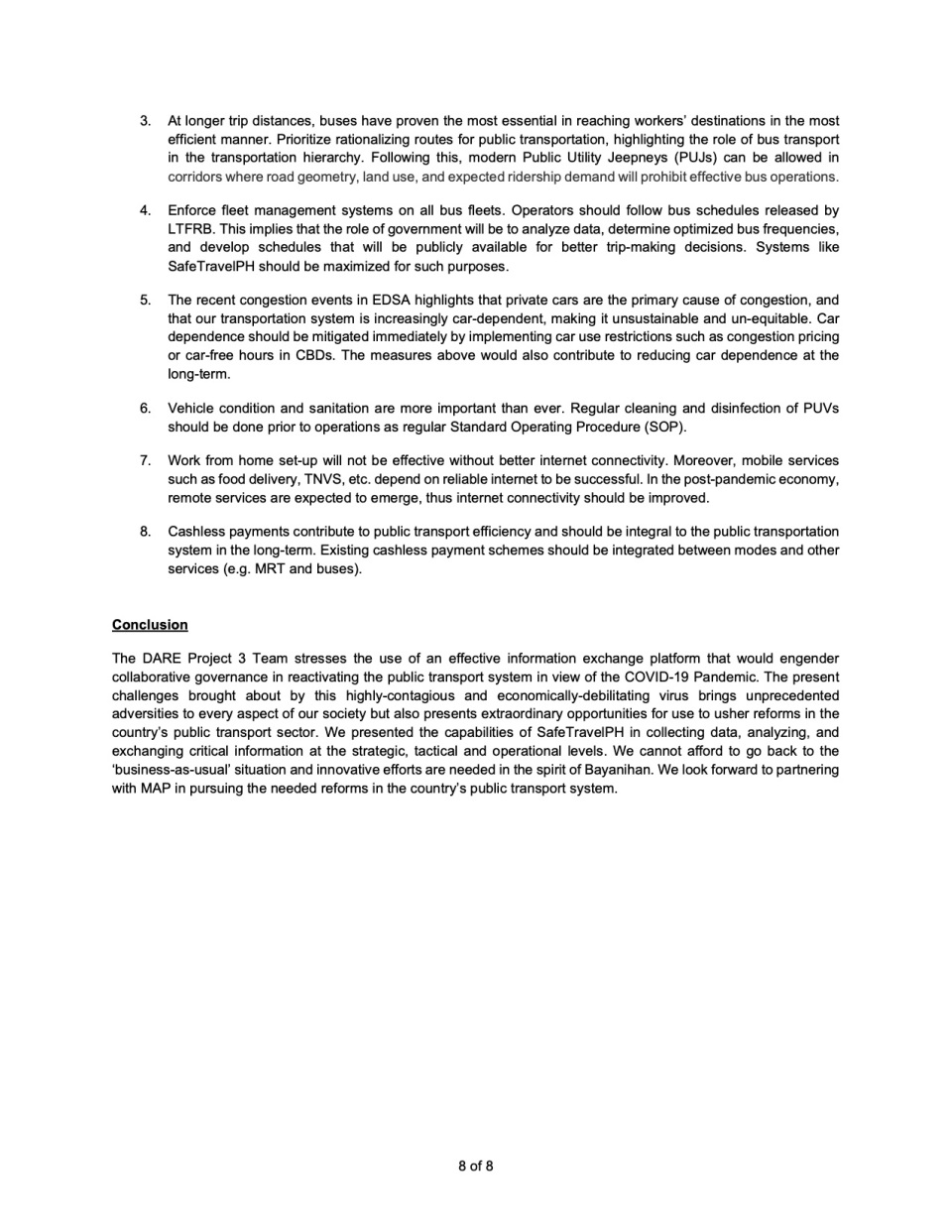
Public Transport Recommendations of the UP COVID-19 Pandemic Response Team
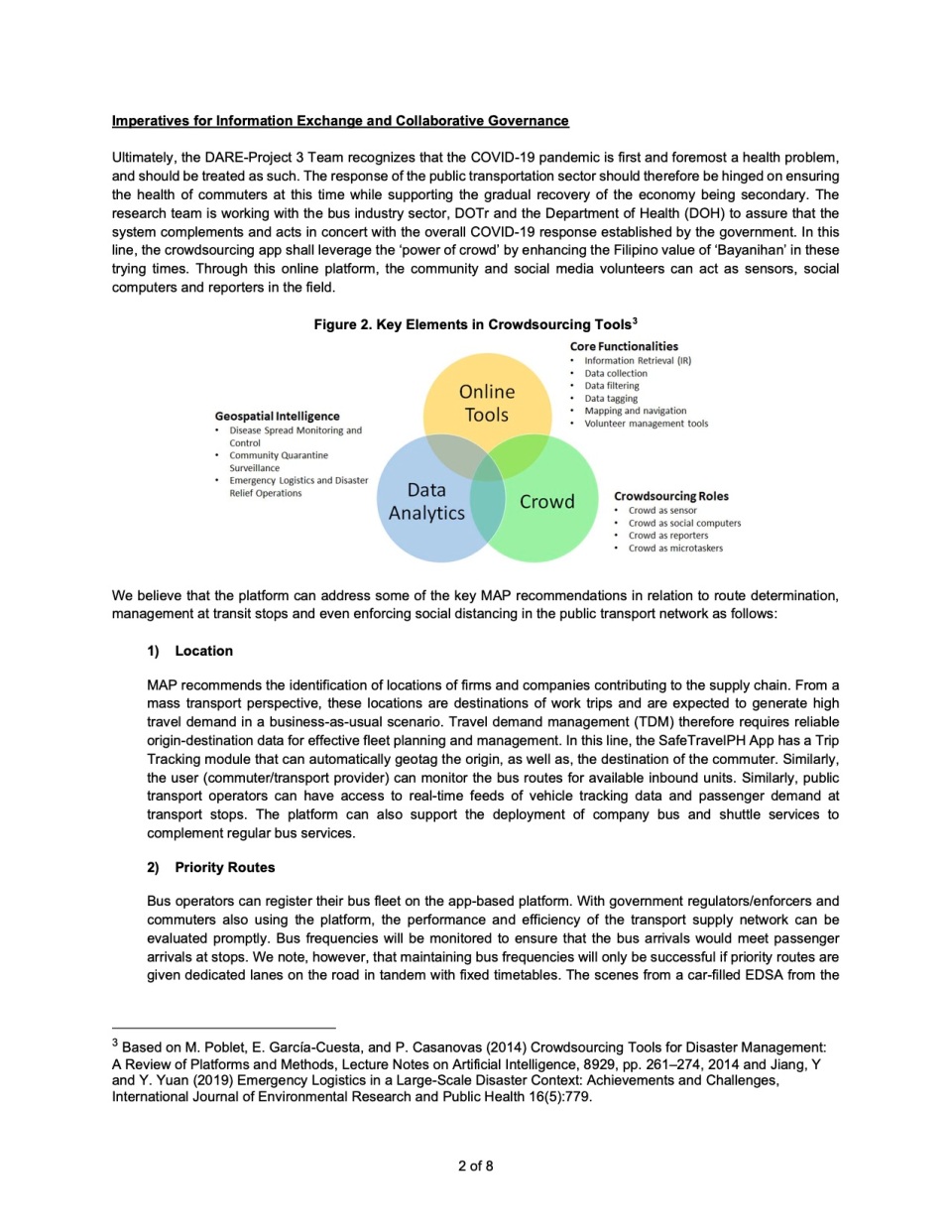
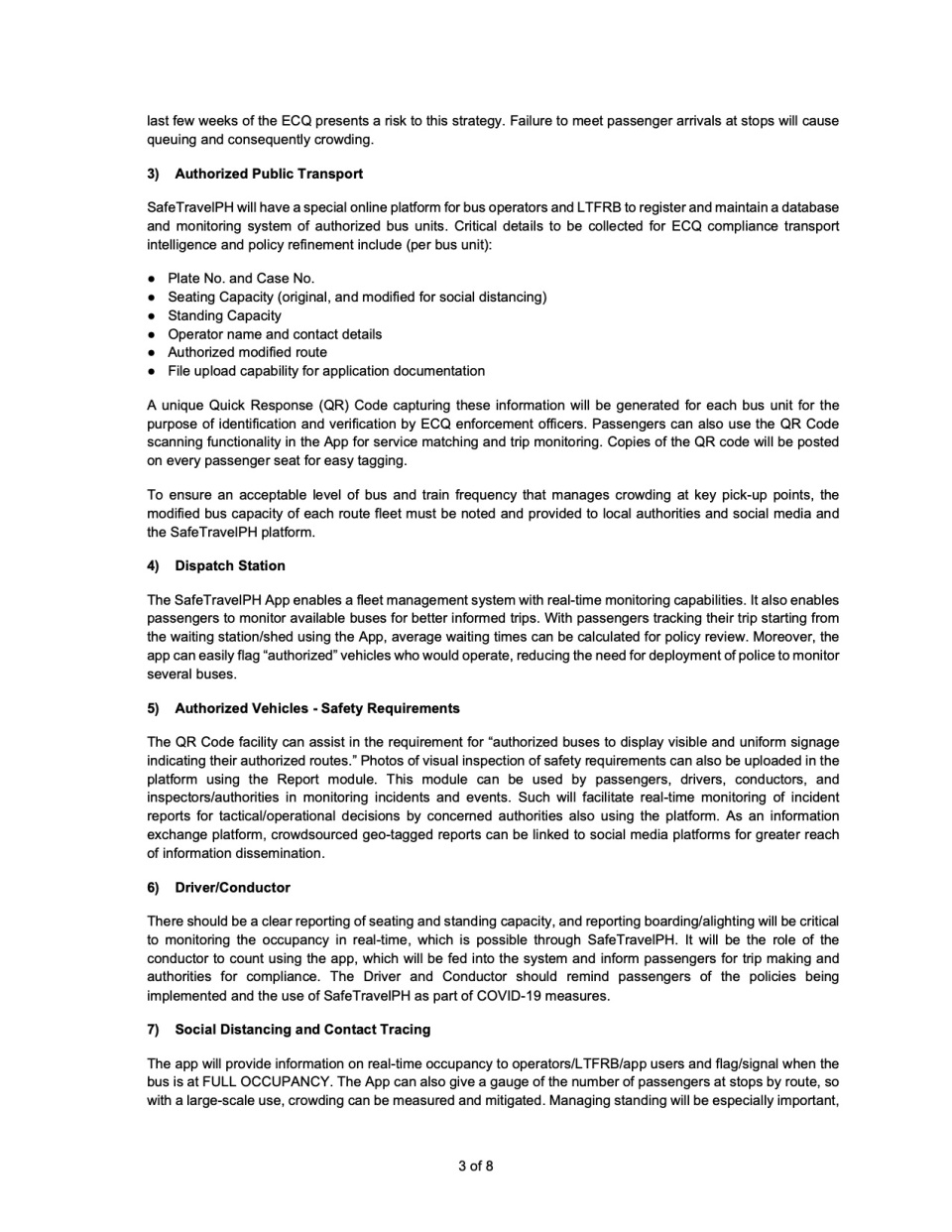
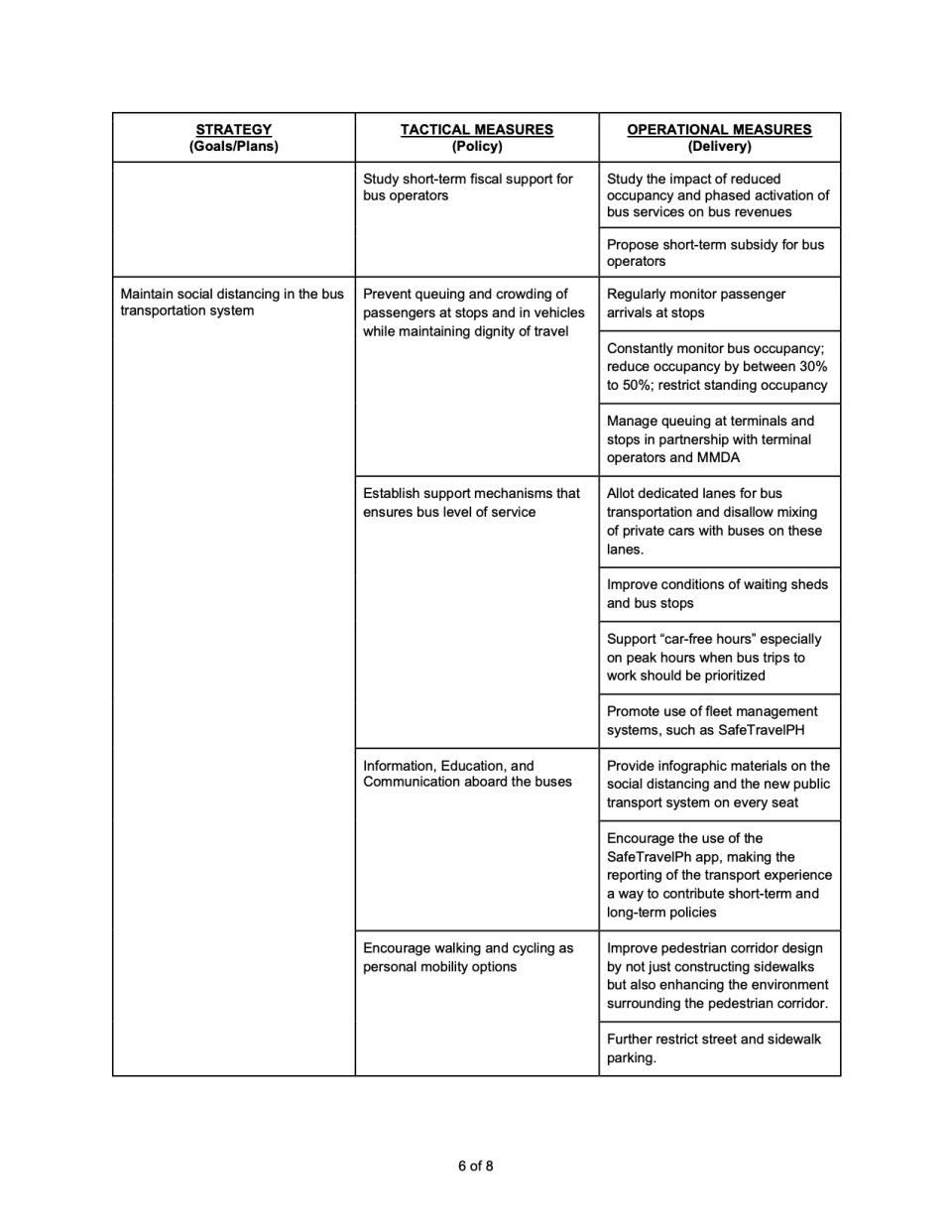
Here are the recommendations of UP COVID-19 Pandemic Response Team: “Effective Reactivation of Public Transport Operations for the New Normal through an Information Exchange Platform for Collaborative Governance”




–
On public transport services during the pandemic
I’ve read a lot of discussions and recommendations pertaining to public transportation services (mainly its lack thereof) during the Enhanced Community Quarantine aka lockdown in most parts of the Philippines. Problem is, a lot of people had their mobility curtailed as most people did not have their own private vehicles (cars or motorcycles) to do essential trips (i.e., for groceries, market, drugstores, hospitals, etc.). These include so-called frontline workers, most especially those working in hospitals or clinics. Even the use of tricycles on a limited basis while adhering to physical distancing guideline was not allowed in many cities and municipalities. What do we really need to do now and in transition to address the lack of public transport services?
Here is a concise yet very informative article on transit:
Walker, J. (2020) “Cutting Transit Service During the Pandemic: Why? How? And What’s Next?”, Human Transit, https://humantransit.org/2020/04/cutting-transit-service-during-the-pandemic-why-how-and-whats-next.html [Last accessed: 4/23/2020]
Most of the points discussed and recommendations presented are applicable to our case in the Philippines. We should also accept the fact that we cannot go back to the situation prior to the ECQ, and that the new normal calls for a reduction in car use. Meanwhile, we still have to address the pressing issues and come up with a plan or maybe strategies for public transport that involved not just buses and trains but other modes as well like the jeepneys, vans and tricycles.
–
 Caught (up) in traffic