
Home » Governance (Page 24)
Category Archives: Governance
On Davao’s Executive Order No. 23 allowing tricycles as a transport mode during the ECQ
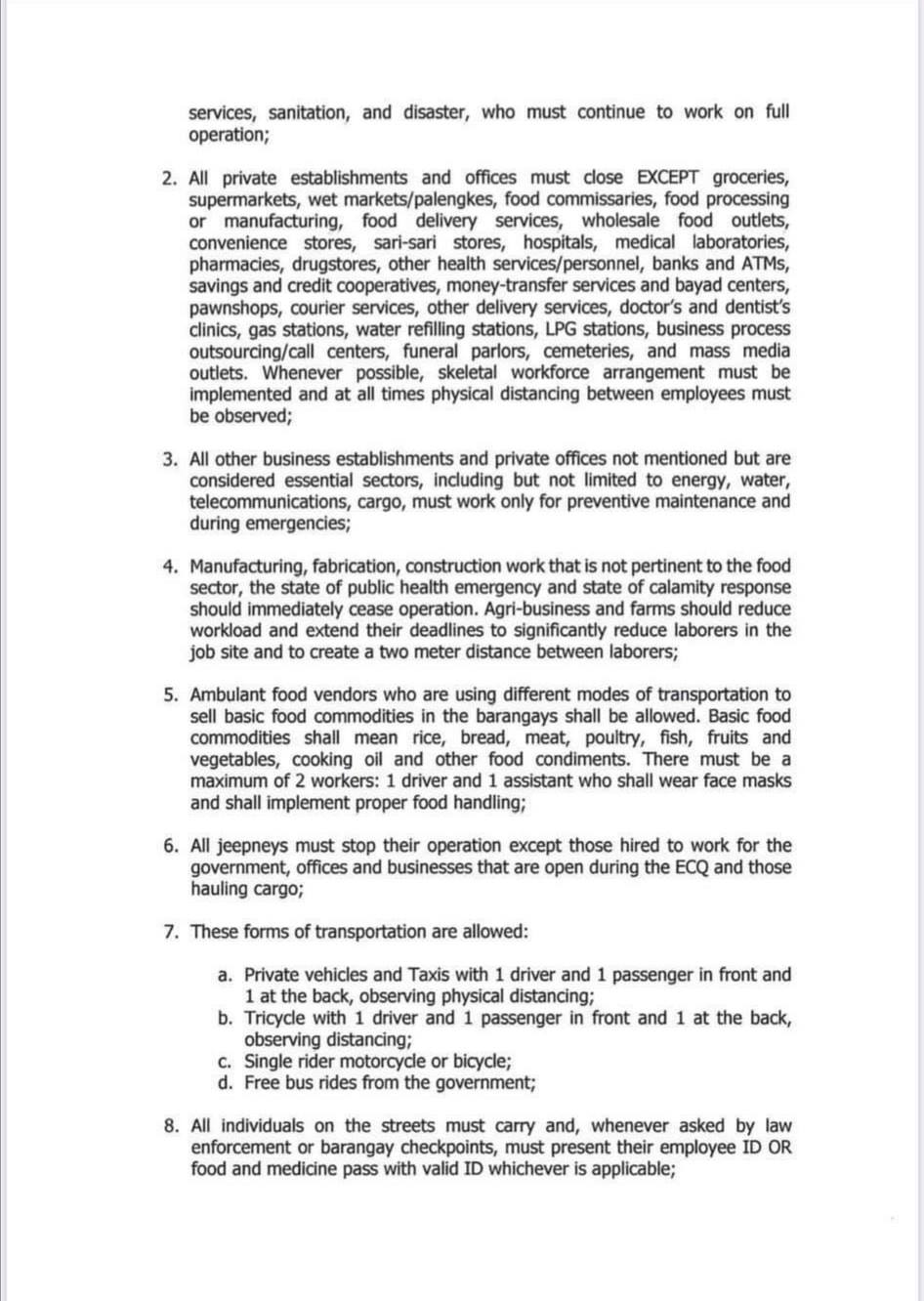
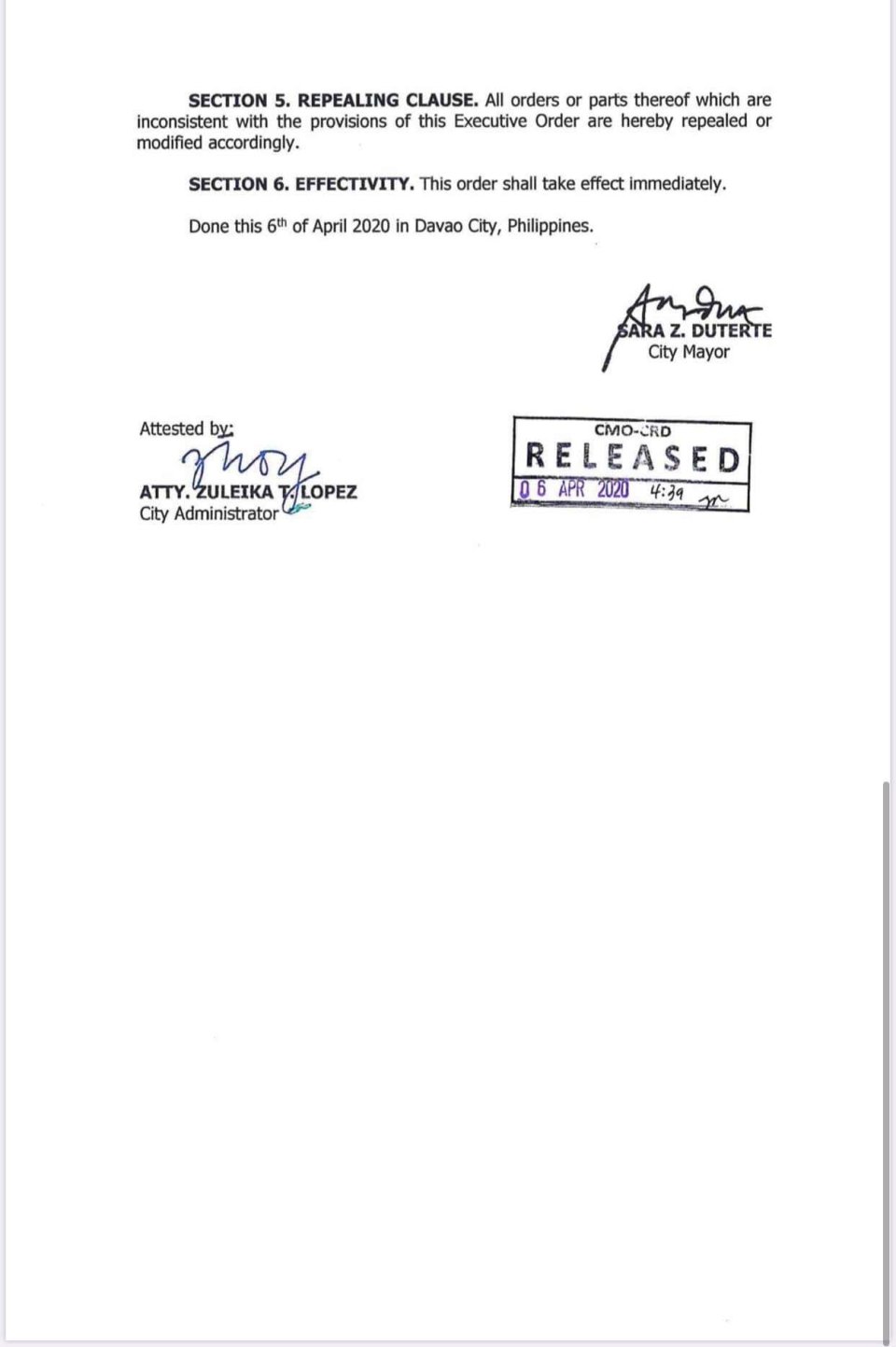
The other day, I posted about the Pasig City Ordinance promoting cycling or the use of bicycles for transport during the Enhanced Community Quarantine (ECQ) or lockdown period. Here is the Executive Order issued by the Davao City mayor where tricycles are allowed by the city (i.e., one driver and one passenger only) as a form of transport. The justification by the City Mayor in subsequent statements and interviews is so simple and common sense that you wonder why such cannot be allowed in other cities like Pasig, which at first allowed tricycles (also with the one driver, one passenger set-up) but was rebuked by national government for their alleged violation of rules set out by the task force in-charge of the nationwide ECQ. While the Davao Executive Order is in itself a formal document and statement, it is interesting to note that after issuing the EO, the Davao City Mayor, who happens to be the daughter of the Philippines’ President, also issued a statement that basically says she will answer all queries and criticisms of this EO; short of threatening those who will oppose it. Surprisingly or not surprisingly, depending on which side of the fence one is, national government was mum about the EO and let Davao be. Thus, it now presents a precedent for other LGUs to follow or invoke. Otherwise, there will be a double standard and it will seem as if Davao will always be a special case.


–
On Pasig’s ordinance promoting and supporting the use of bicycles
I am posting a couple of LGU issuances that would be good references to other LGUs as we all tread along through these quarantines, curfews and lockdowns (or whatever it is they call it these days). First off is the Ordinance from Pasig City. The city has been in the news quite frequently for the very progressive, responsible and active handling of the situation led by its popular mayor Vico Sotto. His policies and programs are claimed to be based on data or information on his constituents that his team is using with much efficiency. This shows us how data analytics can prove useful in times of crisis such as the Covid-19 pandemic. The ordinance also shows a grasp of realities for transport and the so-called “new normal” that people have been talking about once we transition out of the quarantines and lockdowns.


I guess it begs the question if Pasig is also coming out with a formal policy or statement regarding other modes of transport such as tricycles, jeepneys and buses. They did allow tricycles for a while until national government told them to cease tricycle operations citing health issues while not really delving into details to find a way to improve people’s mobility during these times. Meanwhile, other LGUs specifically one that is close to the President’s heart has defied the very same orders from national agencies to restrict tricycle operations as public transport. I will post that issuance next…
–
Transport route maps for Greater Metro Manila/ NCR during the quarantine period
I am sharing the following maps produced by the Department of Transportation (visit the DOTr Facebook page) and the Office of the Vice President. The details of operations are in their respective social media accounts that are being shared/circulated.
Here are the maps for 16 routes from the DOTr:
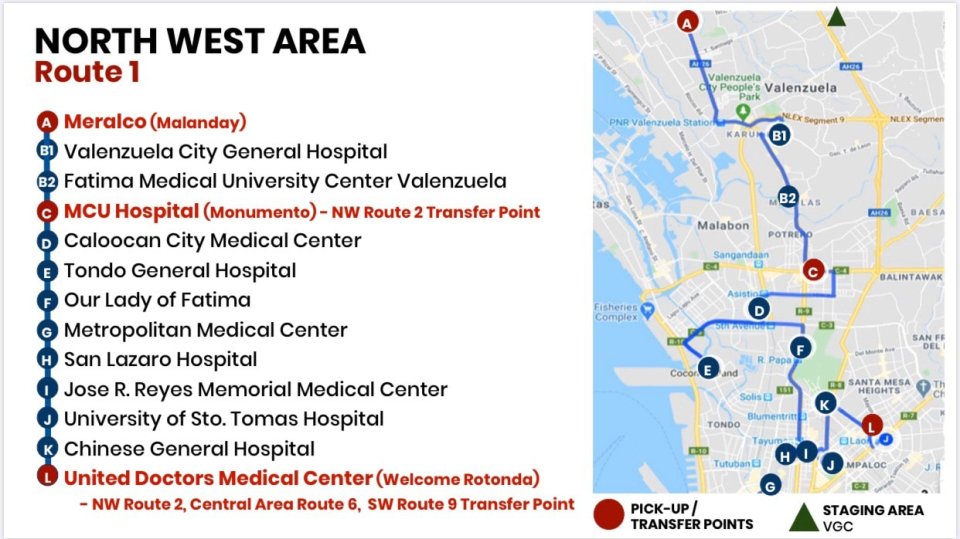
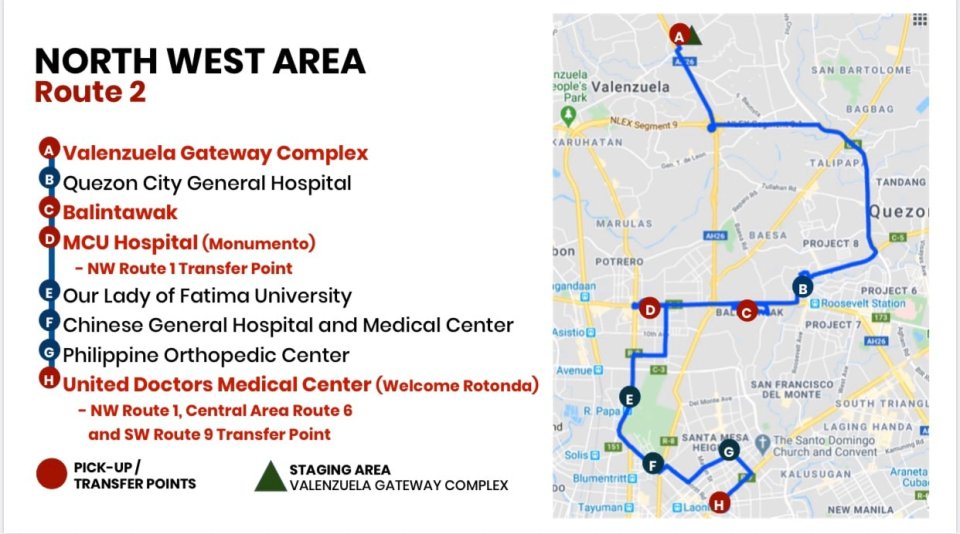
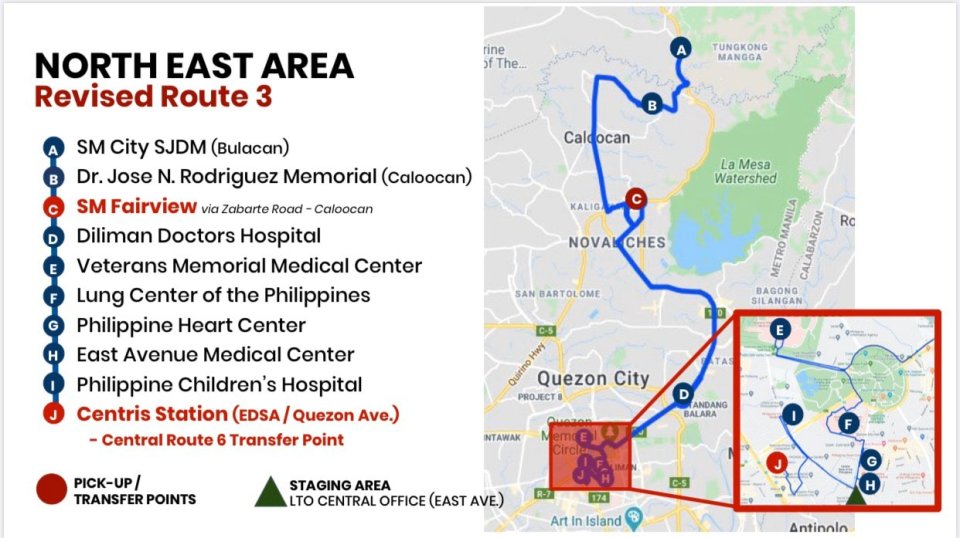


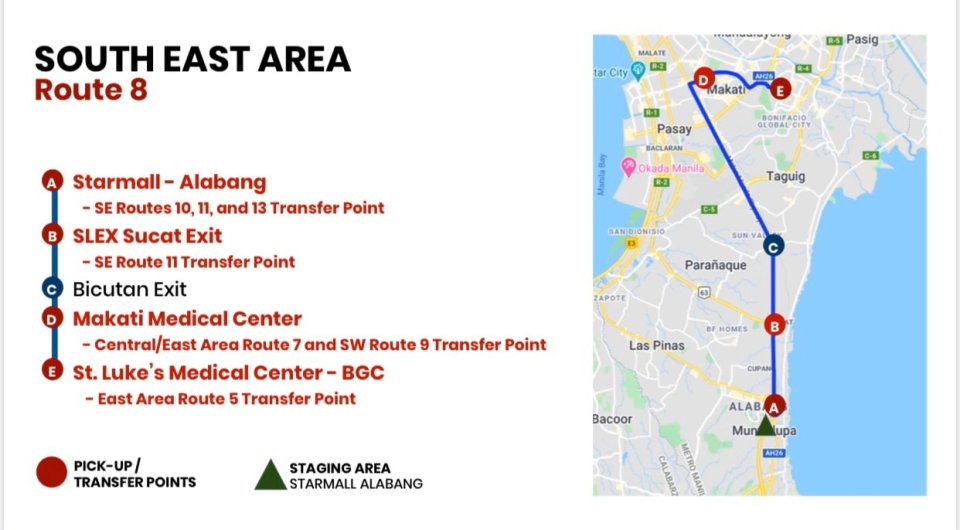


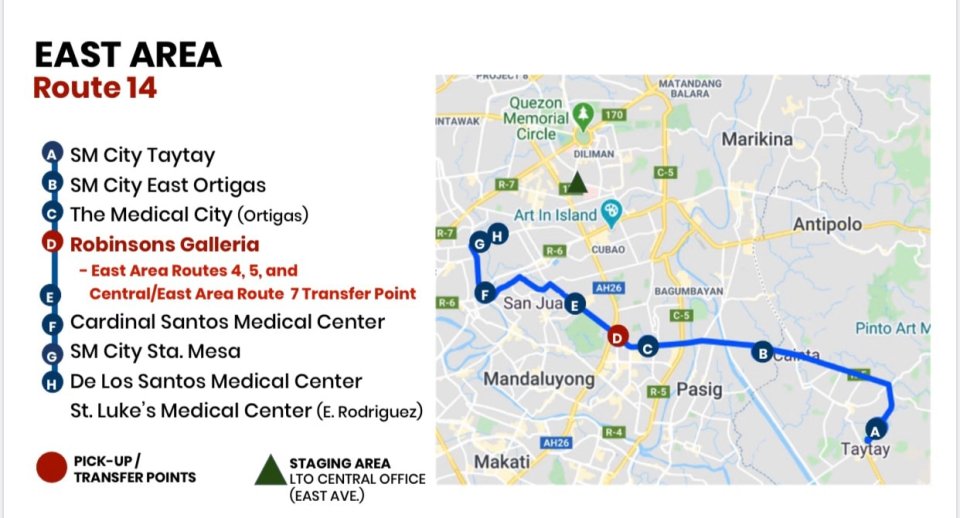
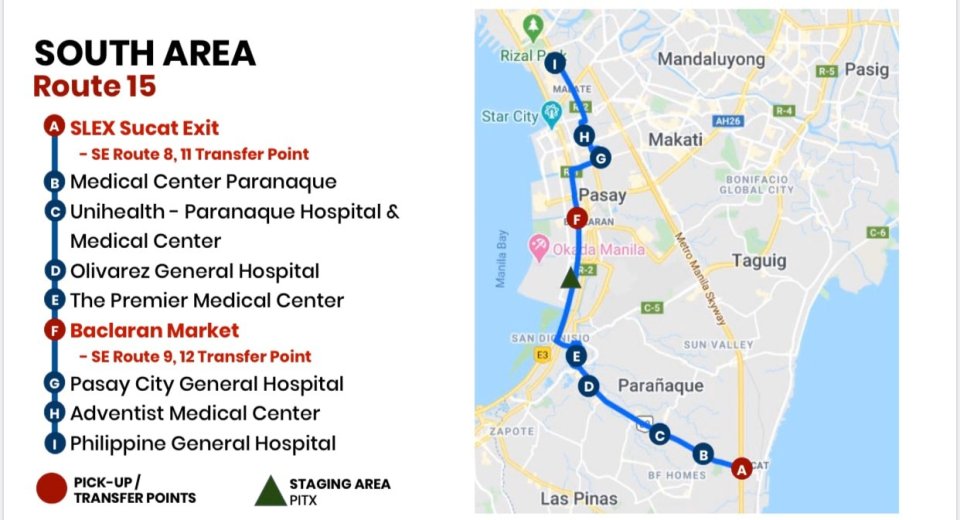

Here is a map from the OVP as well as a detailed itinerary for one of the routes they operate:


–
Planning for the new normal – post Covid-19
There have been many discussions lately about urban planning and transport planning in relation to the pandemic currently gripping the world. There are opinions and assessments about topics such as population density, employment, public transportation, physical or social distance, as well as the prospects for reducing car dependence.
Here is a nice article that compiles some of the better articles on planning related to the current Covid-19 pandemic that’s affecting our planet:
Brasuell, J. (2020) Debating the Future of Cities, and Urban Densities, After the Pandemic, planetizen.com, https://www.planetizen.com/node/108814?utm_source=newswire&utm_medium=email&utm_campaign=news-03232020&mc_cid=a891454817&mc_eid=9ccfe464b1 [Last accessed 3/24/2020].
The world will never be the same after what everyone has gone through during this pandemic. Let us not wish we could go back to normal because, as the saying goes, that “normal” was what got us here in the first place.
Keep safe everyone!
–
NCR checkpoint map
I just wanted to share the checkpoint map developed by a good friend from UP. Here is the text and link provided by UP Resilience Institute head Mahar Lagmay on his FB page:
Metro Manila quarrantine checkpoint map now available. It is already linked with the Google Traffic Map. Sana makatulong. You can check the traffic status if you zoom in on the interactive map.
Many thanks to Prof. Noriel Christopher Tiglao of UP NCPAG. He is a civil engineer by profession and has conducted research on transportation management and policy with the National Center for Transportation Studies (NCTS).
Copy paste to your web browser this URL http://35.185.190.69/
and continue to accept. Walang pong virus iyan.
I hope this is good info to many!
–
Politics: Questions on Succession
Here is another political post so click on another if this is not your thing. In a previous post, I wrote about politics in general and cited the example of Rizal politics. I write more about this topic based on my observations and assessment.
A big problem with patronage and clan politics is succession. Ipinamamana na lang ba ang posisyon sa gobyerno? (Are positions in government supposed to be like things that are handed down like inheritance?] Many cities and municipalities are like that and there are many so-called prominent families who hold top positions with some occupying Mayor, Vice Mayor and several Councilor positions. The more powerful ones also hold Governor, Representative and even Senator (which is a national post).
Rizal has very much similar circumstances with the congressional districts of the province and the capital city of Antipolo practically being dominated by certain families. The first district of Rizal has not had anyone except a Duavit while the second was for a while been held by a Rodriguez until a defeat in the last election by what seemed to be an upstart. He is actually from a political family from the southern Philippines whose been a good staff of the Ynares clan. Antipolo’s two districts are controlled by the Punos and the Acops. With both already juggling the post among their immediate families, there seems to be no one to end their dynasties. Even well-performing politicians like Cainta’s Nieto will be hard-pressed to run for Governor or Congressman.
It would take much more like perhaps a crisis or something disastrous for these well-entrenched politicians to be defeated. Nieto did it just when his predecessor was attempting to build a dynasty on the heels of subsequent disastrous floods in Cainta. But perhaps the case of Vico Sotto’s campaign and resulting upset of another dynasty in Pasig offers as a more interesting study of engaging and transformative politics? Let’s wait some more and see how things develop. Will they remain and sustain their momentum without losing (part of) their souls? Or will they end up being succumbing to the temptations of the ‘system’?
On the financial viability requirement for public transport operators
I came upon the news that the P2P Bus service between SM City North EDSA and SM Megamall suspended operations The Land Transportation Franchising and Regulatory Board (LTFRB) released a statement to clarify the circumstances surrounding the suspension, which apparently was the initiative of the operator rather than the agency. Apparently, too, some people were quick to attribute (blame seems to be the more appropriate adjective to describe how some netizens reacted) the suspension to LTFRB. Here is the statement posted on their social media page:
Land Transportation Franchising and Regulatory Board – LTFRB
February 23 at 7:52 PM ·LTFRB PRESS STATEMENT ON P2P OPERATIONS OF FROEHLICH TOURS, INC.
23 February 2020The Land Transportation Franchising and Regulatory Board (LTFRB) would like to clarify that it did not order the cessation of the P2P operations of Froehlich Tours, Inc. (FTI) which plied the SM North EDSA-SM Megamall and Trinoma-Park Square routes.
FTI was one of the first to be awarded with P2P routes in 2016. In November 2019, MAN Automotive Concessionaires Corporation (MAN) submitted a letter requesting the Board to look into the financial capability of FTI to maintain its operations, fund expenses that may arise from accidents, and continue to provide public service.
According to MAN, an exclusive truck and bus importer, assembler, and distributor, FTI initially acquired 17 bus units amounting to a total of P185.7 million from them. FTI was only able to pay P39.2 million which resulted in MAN having to repossess 12 bus units. To this day, P19.75 million is still left unpaid by FTI.
While these allegations are still under investigation by the Board, an inspection of the FTI bus units revealed that the company’s Provisional Authority, which allowed them to run and function as a public service provider, has already expired and no renewal was filed.
As of now, an order has been sent out to Froehlich Tours Inc. to submit its 2019 Financial Statement within a period of five (5) days from receipt of a copy. The hearing is reset, upon the agreement of both parties, on 3 March 2020 at the LTFRB Central Office.
Pending the outcome of the hearing, the Board shall adopt measure in the coming weeks to ensure that the riding public will be provided with the needed transport service on the routes affected.
–
There are two major points in the statement. One is on the financial viability of the operator and another is on the provisional authority granted by the LTFRB, which is a regulatory agency. The latter pertains to something more temporary and authoritative than a franchise, which is basically a license to provide transport services. These provisional authorities are often granted by the agency for so-called “missionary routes” as well as for supplementing the supply of vehicles during peak seasons like Christmas, Holy Week and Undas.
Financial viability is a requirement for all public transport operators. It is part of the formula for determining the viable number of units (i.e., vehicles) considering the fare that is to be charged to passengers taking into consideration the operating costs of operators. If this requirement was implemented strictly, a lot of operators would not be operating PUVs in the first place. The LTFRB, however, as well as its mother agency, the DOTr, have been lax about this requirement for so long a time that it is difficult to recall the last case where this was cited as a reason for suspending operations.
–
Scenic highways? On the irony of “Daang Kalikasan”
There’s a lot of buzz about new roads nearing completion in the provinces of Pangasinan and Zambales. What is touted as scenic highways became an instant hit and attracted a lot of visitors who apparently wasted little time in trashing the area. The recent news now state that the road has been closed due to the garbage and some road crashes attributed to the influx of tourists in the area:
Mountain roads linking Pangasinan, Zambales closed over accidents, trash
There were a lot of posts that appeared on my social media newsfeed about these roads and the scenery around them. While I have seen a lot of roads with splendid or even magnificent sceneries whenever I go on road trips, the first thing that came to my mind was a question whether the landscape was like that before. I suspected that there used to be forests on these mountains and that the trees were irresponsibly cut down (some people will use the word ‘harvested’ as if they grew and cared for the trees) and never replaced. Some friends from Zambales say there used to be trees there and another recalled old dirt roads in the areas used for logging. So it’s ironic that the road is named “Daang Kailkasan” when nature was practically raped by people who ravaged the land many years ago. Indigenous people who we often refer to as “katutubo” also would likely have never consumed more than what they needed. Scenic? Maybe ‘depressing’ is a more suitable term for these roads.
–
Whatever happened or is happening to the Metro Manila Subway?
There is an article that came out today stating issues and concerns about the Metro Manila Subway Project. I will not summarize the article here but leave it to the reader to click on the link and read the article himself/herself. The writer has been attacked for his sharp criticisms of this administration and has had his share of being branded a liar. What is lost in the attacks vs him (many if not most by organized trolls) is that he is usually on target and factual despite the denials by those who are the subject of his exposes and criticisms. Also, note that he has been a consistent and persistent critique of any administration. This is important as he is being objective rather than protective of vested interests. He represents the interests of a lot of people who are considered the silent majority.
Bondoc, J. (2020) Subway works at standstill since realigned to fault line, The Philippine Star, https://www.philstar.com/opinion/2020/02/14/1992947/subway-works-standstill-realigned-fault-line?fbclid=IwAR2yN_qpwTJ9AHfJaws_3VXztVu6etZsxOBkSj-Zw2KS7v7Tv9hcnJc1K-s&utm_medium=Social&utm_source=Facebook&utm_term=Autofeed [Last accessed: 2/14/2020]
While I am still hopeful about this project, I already feel some disappointment for something that I have supported from Day 1. The delays and escalation of costs are serious matters. It can only get worse during construction.
–
Statement of the Philippine Competition Commission on Motorcycles as Public Transport
Here is the link to the press statement of the Philippine Competition Commission on Motorcycles as Public Transport:
I will just leave this here as it stands on its own with the details and discussions provided by the PCC. I will comment on this in another post but in essence I agree with the statement, which I think is a better document in terms of provisions and clarity compared to what the TWG has released so far.
–
 Caught (up) in traffic