
Home » Health (Page 17)
Category Archives: Health
On the DOTr GCQ Guidelines for Public Transportation – Road Sector
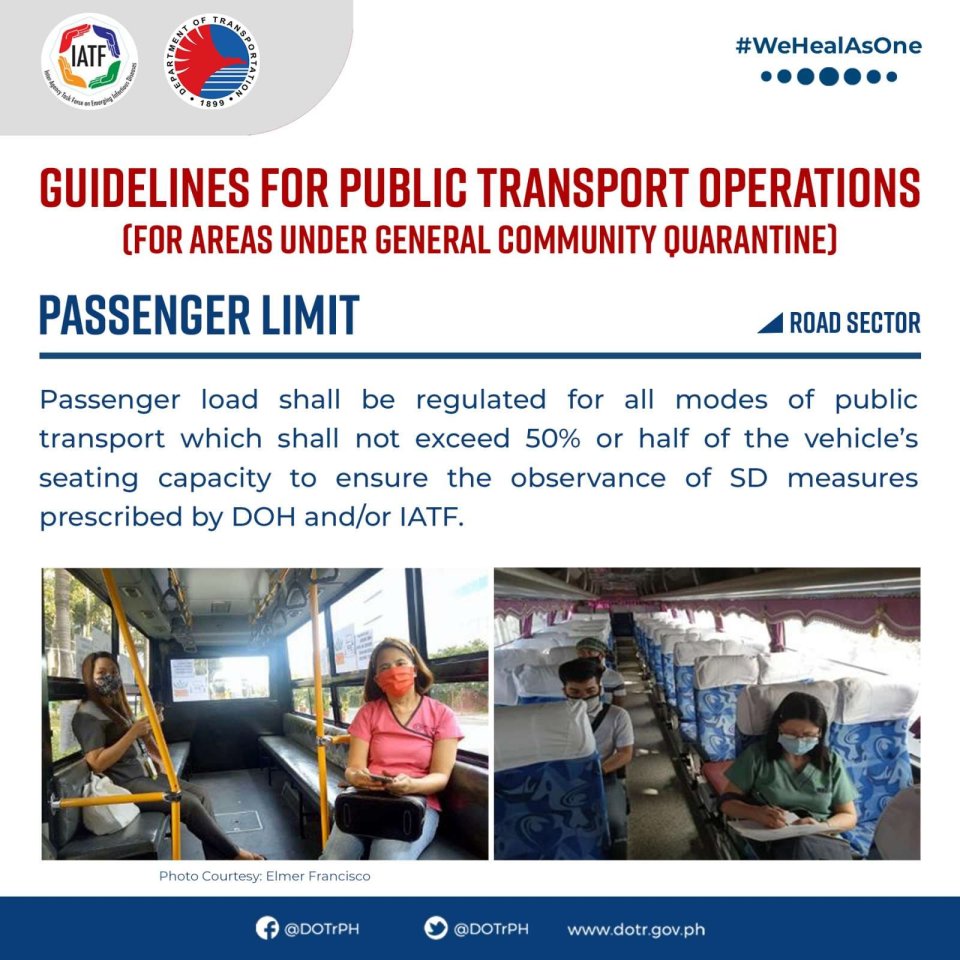
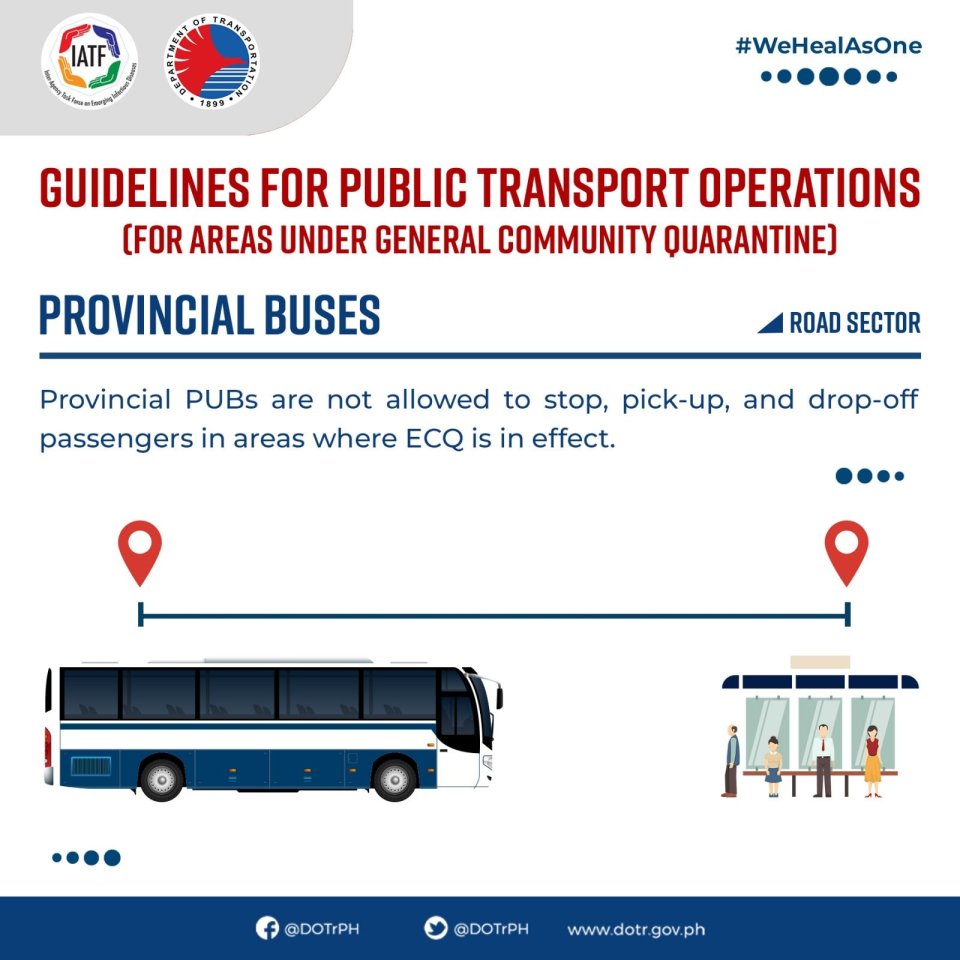
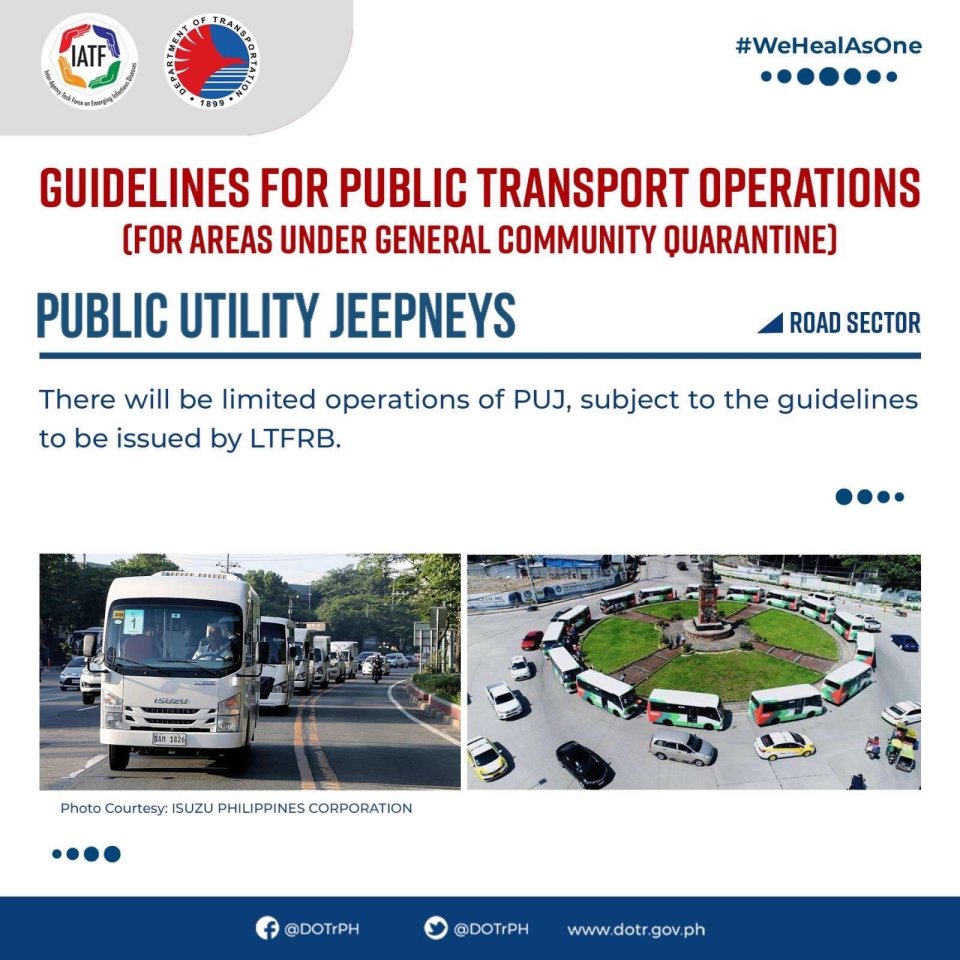
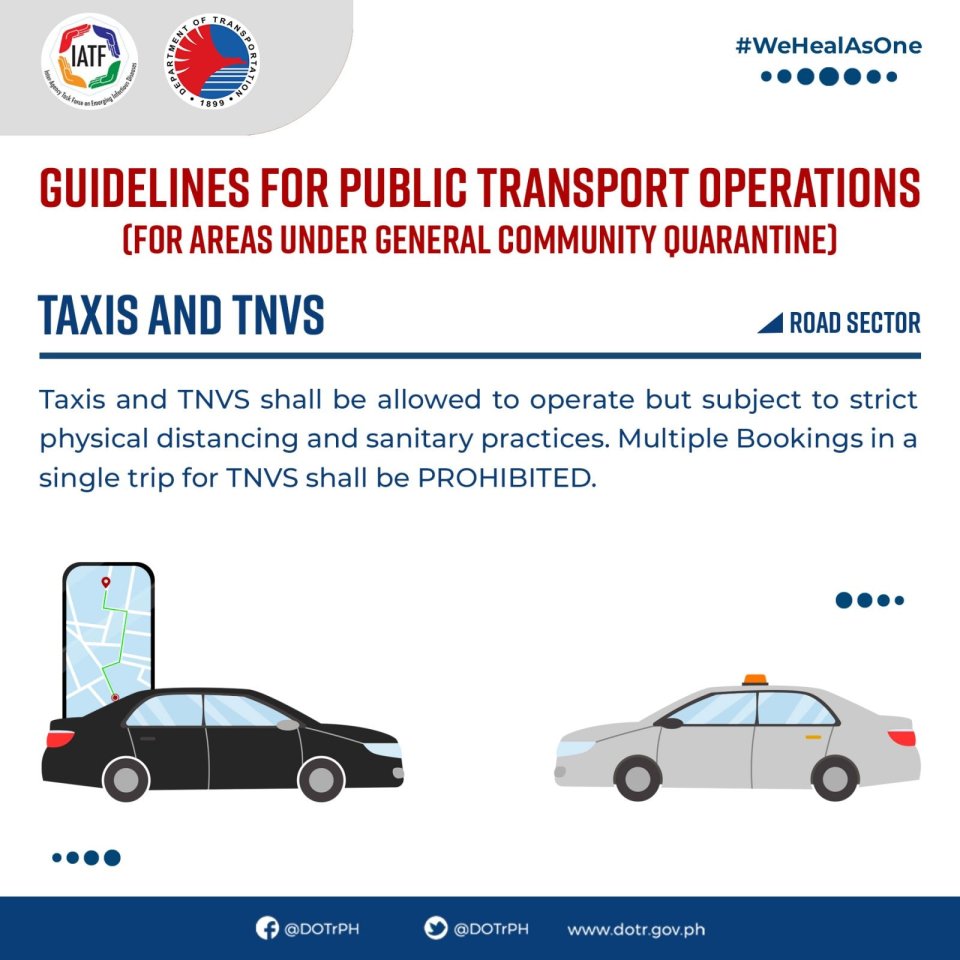
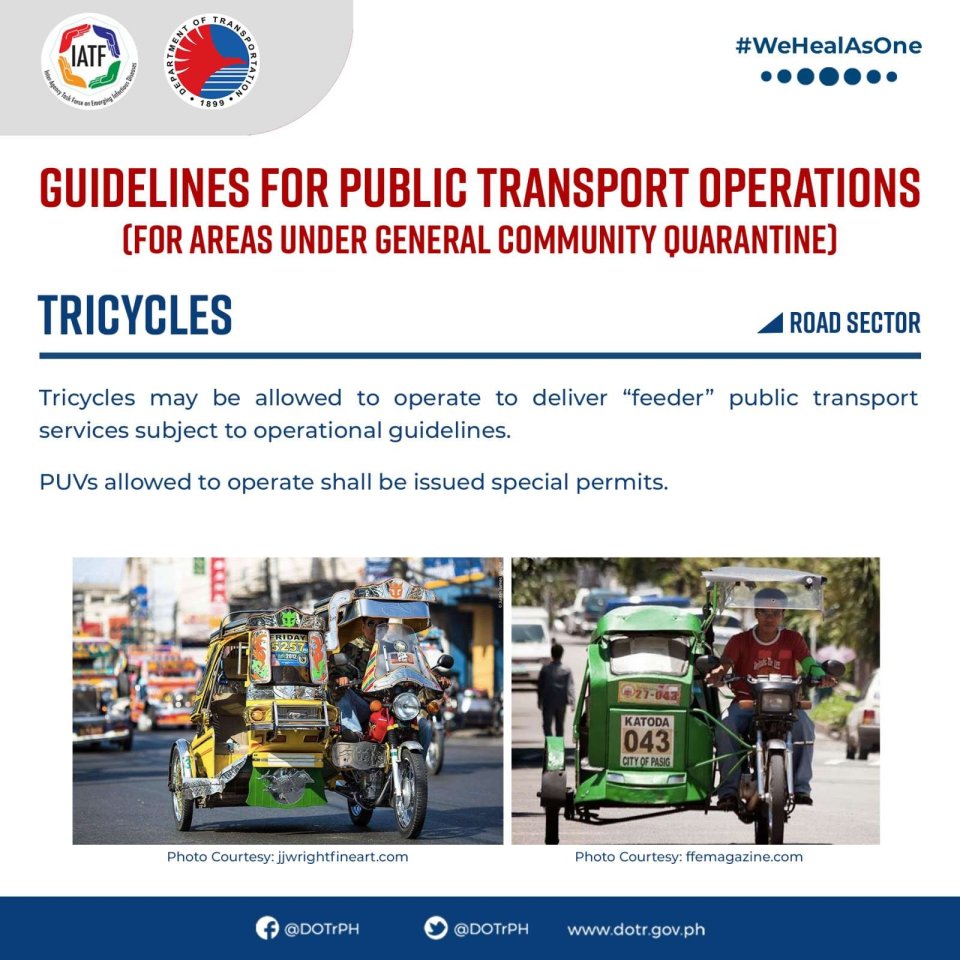
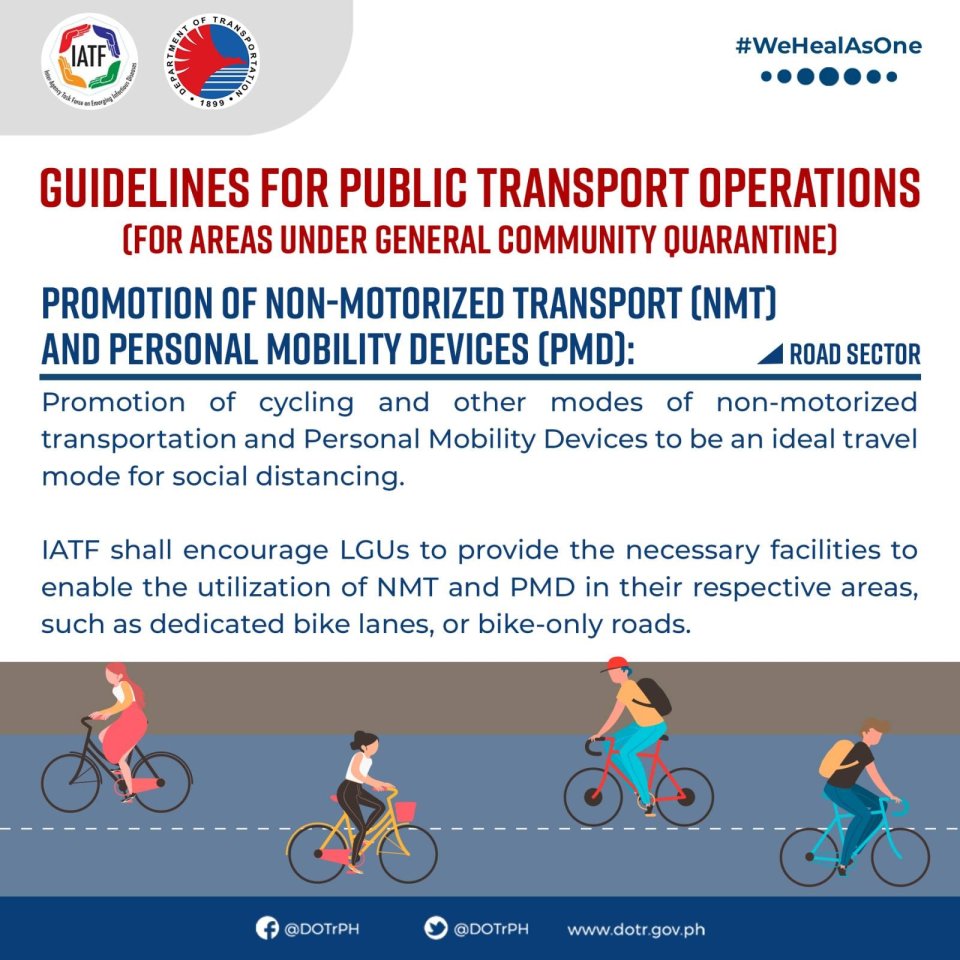
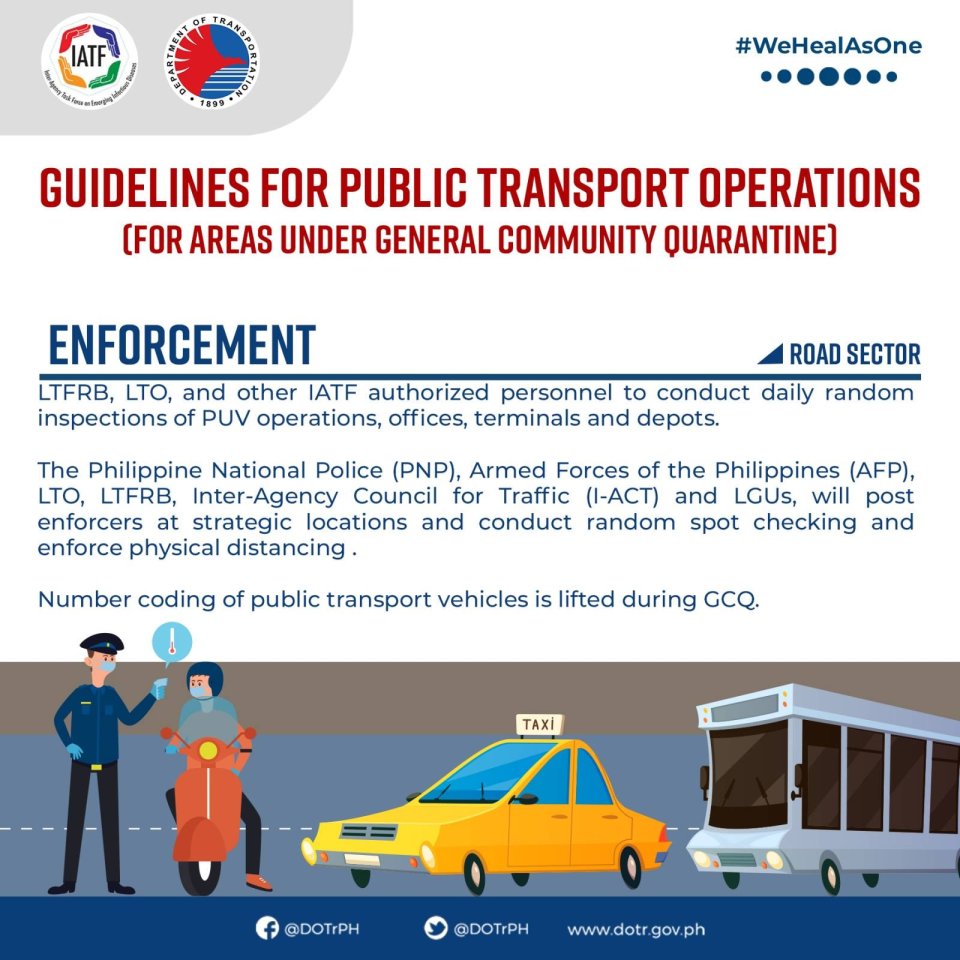
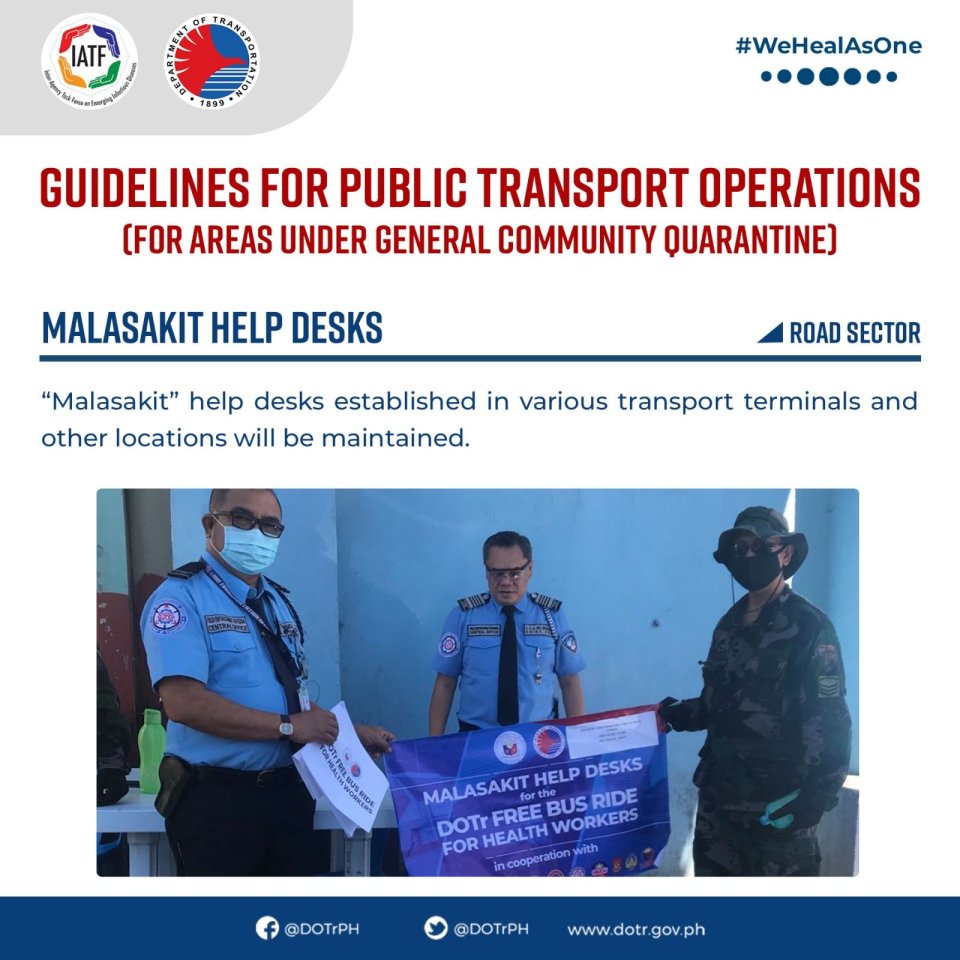
I just wanted to post, share and document here the DOTr’s Guidelines for Public Transport Operations for areas under General Community Quarantine (GCQ). The images are self explanatory so I will not discuss these nor will I offer a critique at this point. The following are public and posted on DOTr’s social media pages (i.e., Facebook) and have been shared and circulating among the public. I also post it here for future reference as I do to many other references like articles and infographics.






–
Reference on Bicycle Facility Preferences and Increasing Bicycle Trips
There are many references that are free for downloading. These include the latest publications from the National Academies Press that includes outputs from the National Academies of Sciences, Engineering and Medicine. I am sharing here and posting also as a reference for me to return to a new publication from the National Cooperative Highway Research Program:
NCHRP Research Report 941: Bicyclist Facility Preferences and Effects on Increasing Bicycle Trips by Watkins, Clark, Mokhtarian, Circella, Handy and Kendall.
The research was supported by the American Association of State Highway and Transportation Officials (AASHTO) in cooperation with the Federal Highway Administration (FHWA).
–
On car-shaming and reducing car use
Here is another article I am sharing (re-sharing?). I have seen or read a lot of posts on social media about how we should not go back to the car-centric traffic before the Enhanced Community Quarantine (ECQ) and its variations. I do agree with this point. However, I take reservation about how some people seem to be resorting to car-shaming rather than be more proactive and progressive about coming up with strategies and/or plans that I hope would be evidence-based or supported by valid data. As the article states, “it takes more than car-shaming to change car use”:
Jaffe, E. (2020) “It takes more than car-shaming to change car use”, Medium, https://medium.com/sidewalk-talk/it-takes-more-than-car-shaming-to-change-car-use-107e28ccb2cf [Last accessed: 4/29/2020]
A key message from the article: “People are most open to changing their travel habits during major life events, such as a move. But even a well-timed message isn’t enough.” Perhaps the opportunity is here now to reform our transportation system. But that will take a lot of will or effort from all sectors most especially the national agencies (e.g., DOTr, DPWH) and local governments who have the authority and responsibility to implement changes. These changes include the assignment of exclusive lanes for bicycles, public transport and logistics while restricting car use. There are also other elements that need to be in place as we transition into the so-called “new normal” and so there will be a lot going on among the sectors or parties collaborating or interacting for transportation. Hopefully, there are context-sensitive strategies that will be adopted and implemented in order for everyone to transition more efficiently and effectively. And as they say…life goes on.
–
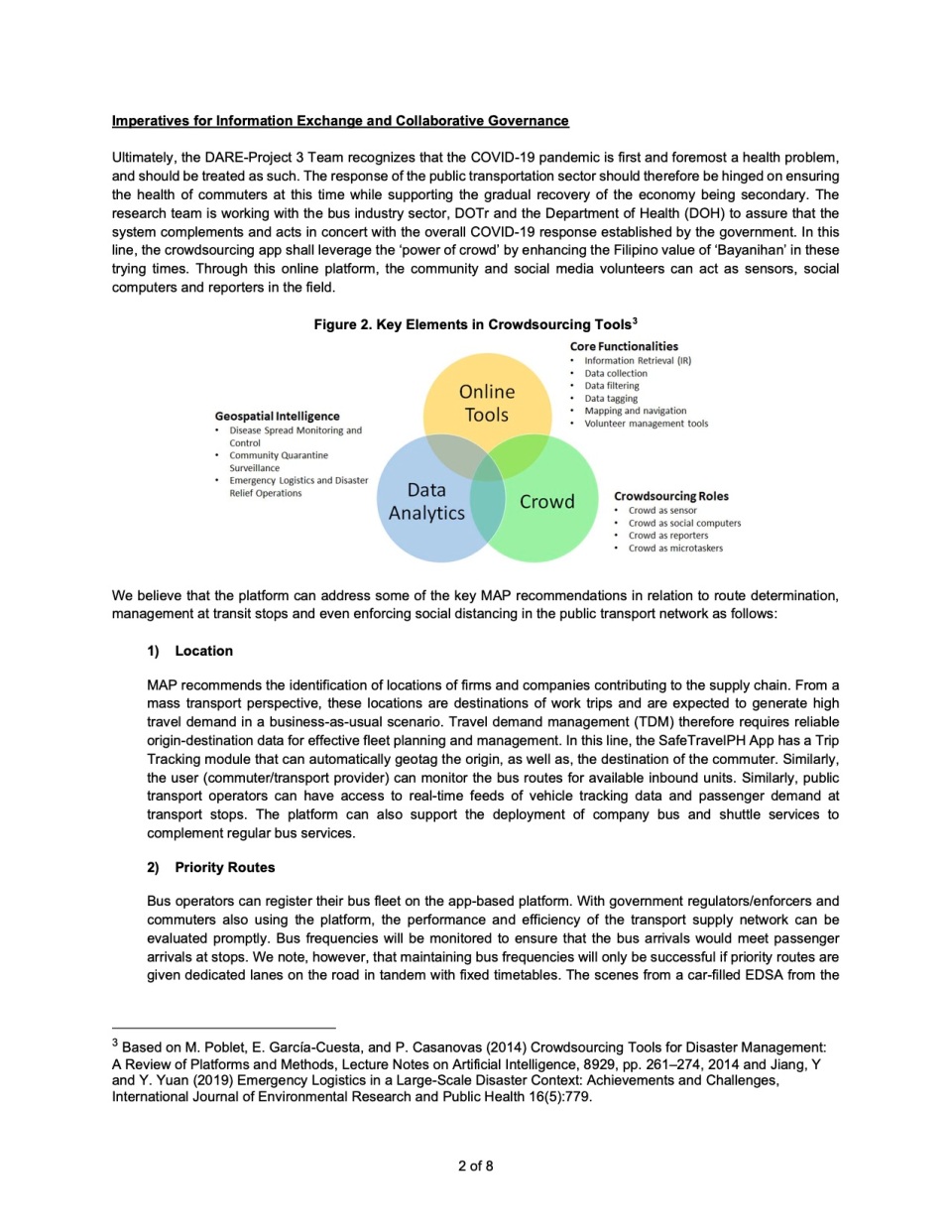
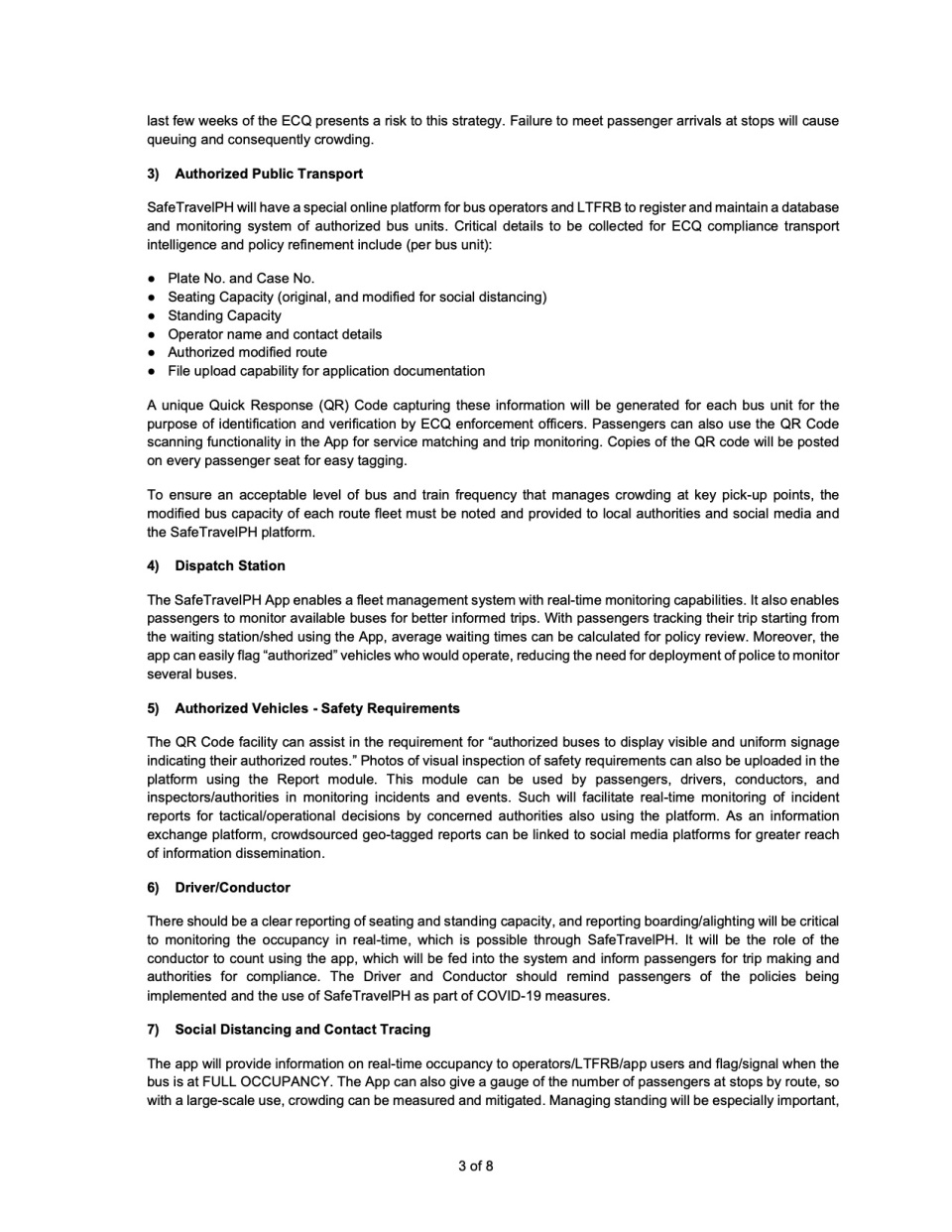
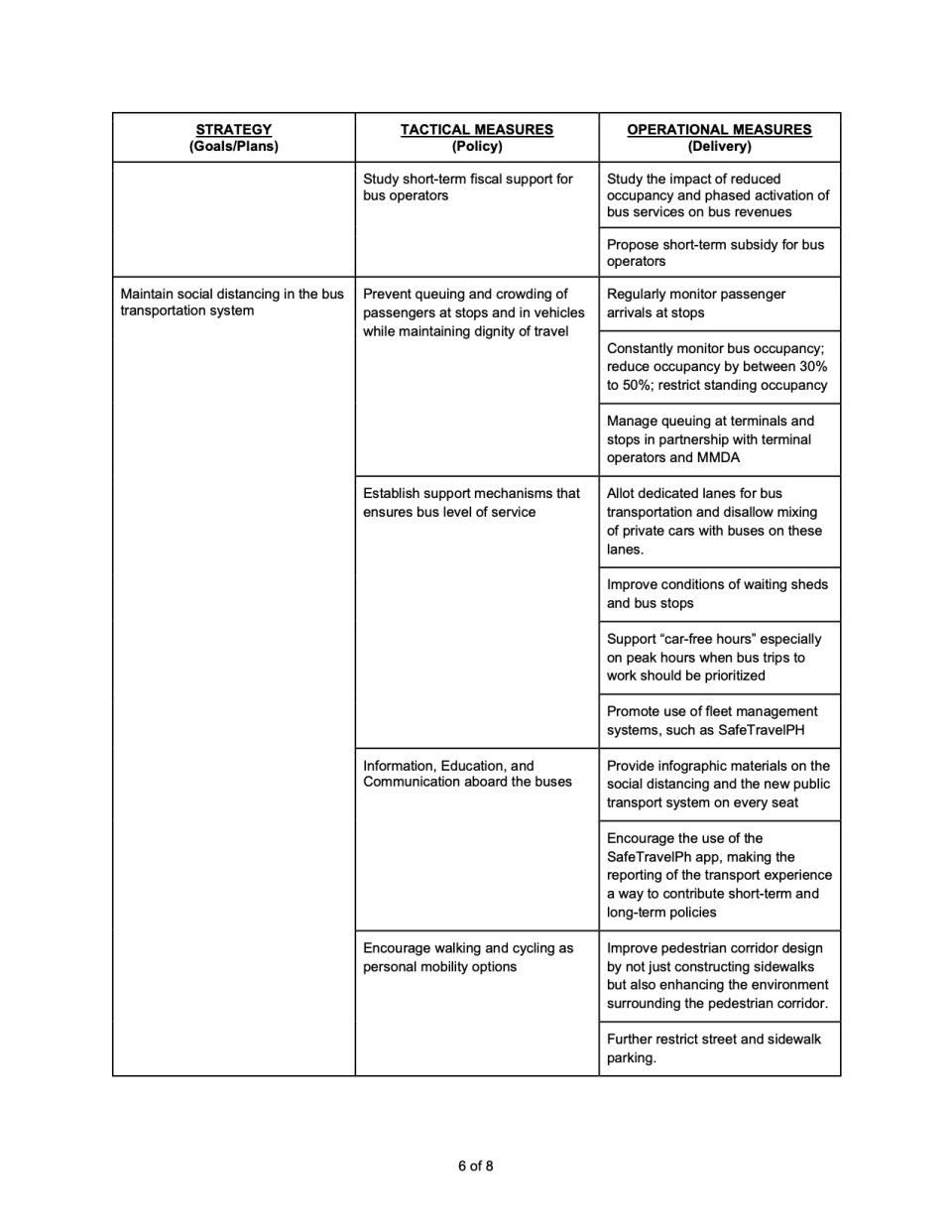
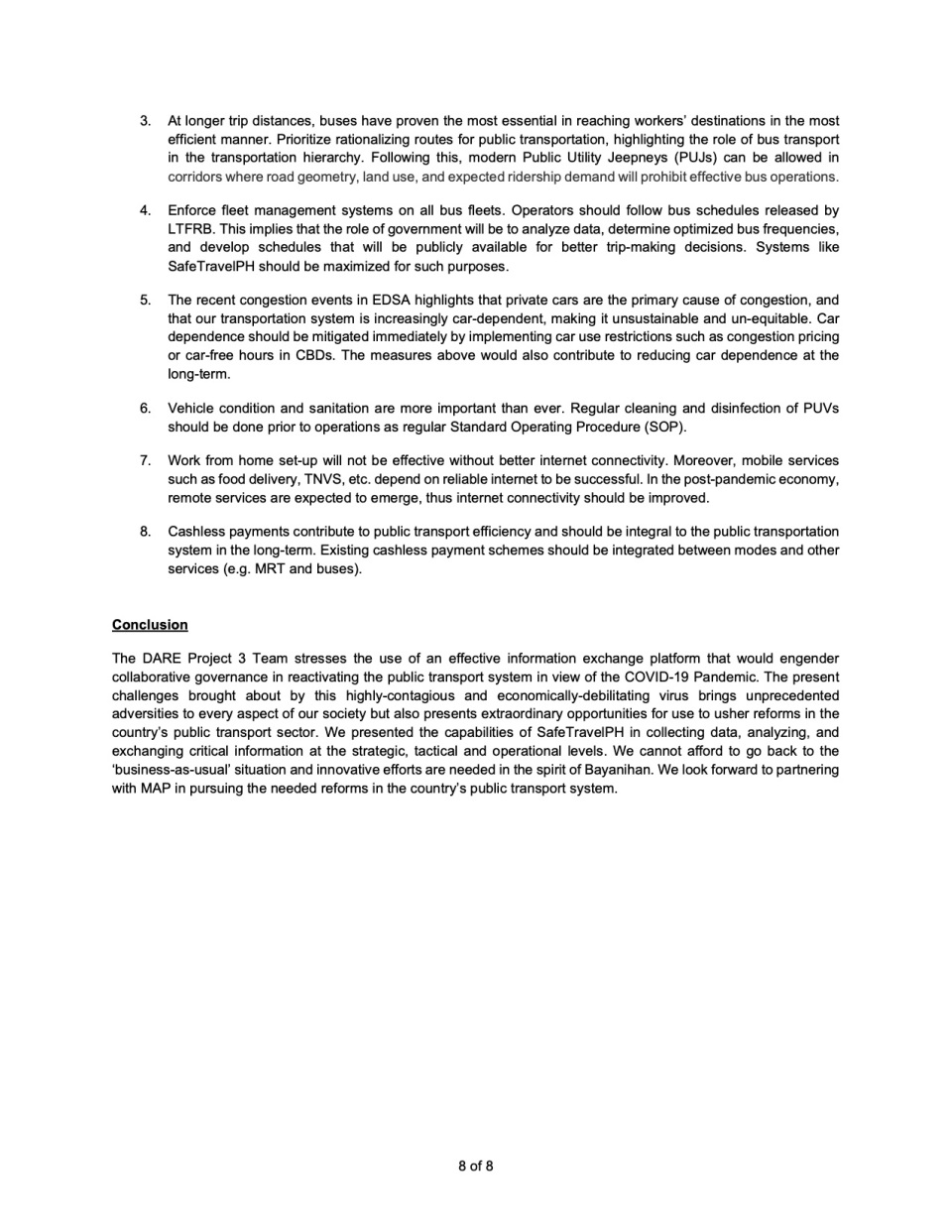
Public Transport Recommendations of the UP COVID-19 Pandemic Response Team
Here are the recommendations of UP COVID-19 Pandemic Response Team: “Effective Reactivation of Public Transport Operations for the New Normal through an Information Exchange Platform for Collaborative Governance”




–
On public transport services during the pandemic
I’ve read a lot of discussions and recommendations pertaining to public transportation services (mainly its lack thereof) during the Enhanced Community Quarantine aka lockdown in most parts of the Philippines. Problem is, a lot of people had their mobility curtailed as most people did not have their own private vehicles (cars or motorcycles) to do essential trips (i.e., for groceries, market, drugstores, hospitals, etc.). These include so-called frontline workers, most especially those working in hospitals or clinics. Even the use of tricycles on a limited basis while adhering to physical distancing guideline was not allowed in many cities and municipalities. What do we really need to do now and in transition to address the lack of public transport services?
Here is a concise yet very informative article on transit:
Walker, J. (2020) “Cutting Transit Service During the Pandemic: Why? How? And What’s Next?”, Human Transit, https://humantransit.org/2020/04/cutting-transit-service-during-the-pandemic-why-how-and-whats-next.html [Last accessed: 4/23/2020]
Most of the points discussed and recommendations presented are applicable to our case in the Philippines. We should also accept the fact that we cannot go back to the situation prior to the ECQ, and that the new normal calls for a reduction in car use. Meanwhile, we still have to address the pressing issues and come up with a plan or maybe strategies for public transport that involved not just buses and trains but other modes as well like the jeepneys, vans and tricycles.
–
On walking, running and cycling for exercise during the Covid-19 pandemic
We had been walking in the early mornings prior to the so-called “total lockdown” implemented by our Barangay. There were others like us in our community who walked, jogged or cycled during the same time we took our walks. However, we all practiced physical distancing and used masks while outdoors. We could afford to do this because the village where we resided in had relatively wide streets and there were few houses and residents compared to other residential areas. In our case, we usually walked in areas where there were even fewer houses and people. It is highly unlikely we could get Covid-19 during our morning walks. Afternoons were different as we observed more people going around including those who appear to be joyriding with their motorcycles.
Is there actual evidence that walking, jogging, running or cycling actual aid the spread of Covid-19? So far, there isn’t and what we have are mostly simulations. Yes, simulations like those that appear in articles that are going around the internet; often shared in social media. Here is a more informative and objective article about this topic that articulates more the importance of physical activity (i.e., in the form of walking, jogging, running or cycling) in combatting the virus while also emphasizing the need for social or physical distance and the use of masks:
Niiler, E. (2020) “Are Running or Cycling Actually Risks for Spreading Covid-19?”, Wired, https://www.wired.com/story/are-running-or-cycling-actually-risks-for-spreading-covid-19/?bxid=5bd6761b3f92a41245dde413&cndid=37243643&esrc=AUTO_OTHER&source=EDT_WIR_NEWSLETTER_0_DAILY_ZZ&utm_brand=wired&utm_campaign=aud-dev&utm_mailing=WIR_Daily_041420&utm_medium=email&utm_source=nl&utm_term=list1_p4 [Last accessed 4/15/2020]
I appreciate the efforts of those in our Barangay to make sure no one gets infected (there are zero incidents so far). However, sometimes the overeagerness seem to trump the need to practice common sense in these times. I believe there is a need to make an even bigger effort to ensure people are able to maintain physical and mental wellness through exercise or activity. I believe we are in a community where people are educated, aware and responsible enough to make this work.
–
Planning for the new normal – post Covid-19
There have been many discussions lately about urban planning and transport planning in relation to the pandemic currently gripping the world. There are opinions and assessments about topics such as population density, employment, public transportation, physical or social distance, as well as the prospects for reducing car dependence.
Here is a nice article that compiles some of the better articles on planning related to the current Covid-19 pandemic that’s affecting our planet:
Brasuell, J. (2020) Debating the Future of Cities, and Urban Densities, After the Pandemic, planetizen.com, https://www.planetizen.com/node/108814?utm_source=newswire&utm_medium=email&utm_campaign=news-03232020&mc_cid=a891454817&mc_eid=9ccfe464b1 [Last accessed 3/24/2020].
The world will never be the same after what everyone has gone through during this pandemic. Let us not wish we could go back to normal because, as the saying goes, that “normal” was what got us here in the first place.
Keep safe everyone!
–
On the importance of trees in the urban setting
Having lived in two other countries and traveled in many others, I have seen and experienced for myself examples of tree lined avenues and streets in the urban setting. And I am not talking about small cities but big ones like Tokyo and Singapore. I have gone to many of the big cities in Japan to be able to say that trees should have their place in the so-called urban jungle and the benefits of having them are tremendous. Here is a nice article recently published in The Guardian that explains the advantages of green streets:
Balch, O. (2019) “Green streets: which city has the most streets?”, The Guardian, https://www.theguardian.com/cities/2019/nov/05/green-streets-which-city-has-the-most-trees [Last accessed: 11/08/2019]
Philippine cities should heed the advice from the author and city and municipal planners should make sure that plans incorporate trees and other flora. Obviously, they are not just ornamental but rather should be indispensable components of our towns whether it is highly urbanized or not. I guess the same concepts apply also to the roadsides of our national highways. The Department of Public Works and Highways (DPWH) clearly had little or no regard for greenery; chopping down even the elder trees along the way of their road widening programs. As such, they have contributed to blight along these roads and it would take some time and effort to bring back what used to be tree-lined, canopied roads in many provinces.
–
Is there really a transport or traffic crisis in Metro Manila?
I was interviewed recently for a research project by students enrolled in a journalism class. I was asked by one in the group if we indeed have a transport crisis in Metro Manila. The other quickly added “hindi transport, traffic” (not transport but traffic). And so I replied that both terms are valid but refer to different aspects of the daily travel we call “commuting”. “Traffic” generally refers to the flow of vehicles (and people if we are to be inclusive) while “transport” refers to the modes of travel available to us.
“Commuting” is actually not limited to those taking public transportation. The term refers to all regular travel between two locations. The most common pairs are home – office and home – school. The person traveling may use one or a combination of transport modes for the commute. Walking counts including when it is the only mode used. So if your residence is a building just across from your office then your commute probably would be that short walk crossing the street. In the Philippines, however, like “coke” and “Xerox”, which are brands by the way, we have come to associate “commute” with those taking public transportation.
And so we go back to the question or questions- Do we have a transport and traffic crises? My response was we do have a crisis on both aspects of travel. All indicators state so and it is a wonder many including top government transport officials deny this. Consider the following realities for most commuters at present:
- Longer travel times – what used to be 30-60 minutes one-way commutes have become 60 – 120 (even 180) minute one-way commutes. Many if not most people now have double, even triple, their previous travel times.
- It is more difficult to get a public transport ride – people wait longer to get their rides whether they are in lines at terminals or along the roadside. The latter is worse as you need to compete with others like you wanting to get a ride ahead of others.
- People have to wake up and get out of their homes earlier – it used to be that you can wake up at 6:00AM and be able to get a ride or drive to the workplace or school at 7:00/7:30 AM and get there by 8:00 or 9:00AM. Nowadays, you see a lot of people on the road at 5:30AM (even 4:30AM based on what I’ve seen). That means they are waking up earlier than 6:00 AM and its probably worse for school children who either will be fetched by a service vehicle (e.g., school van or bus) or taken by their parents to their schools before going to the workplaces themselves.
- People get home later at night – just when you think the mornings are bad, afternoons, evening and nighttimes might even be worse. Again, it’s hard to get a ride and when you drive, traffic congestion might be at its worst especially since most people leave at about the same time after 5:00PM. Coding people and others not wanting to spend time on the road (instead working overtime – with or without additional pay) leave for their homes later and arrive even later.
- Less trips for public transport vehicles – traffic congestion leads to this. What used to be 6 roundtrips may now be 4. That affect the bottomline of income for road public transport providers. Given the increased demand and reduced rolling stocks of existing rail lines that includes rail transport.
To be continued…
—
Bike patrol
Wouldn’t it be healthier and more effective for law enforcers to have bike patrols? Many of them seem to be detached from the communities they’re supposed to serve when they aren’t on foot or pedals but instead go around on motor vehicles. It also seems a waste that the motor vehicles assigned to these people are being used to train them for driving. Thus, you often see patrol cars (even motorcycles) that are supposed to be recent model vehicles but seem so battered already. Do they really use these for chases? Or are they damaged due to their being used as “training” vehicles?
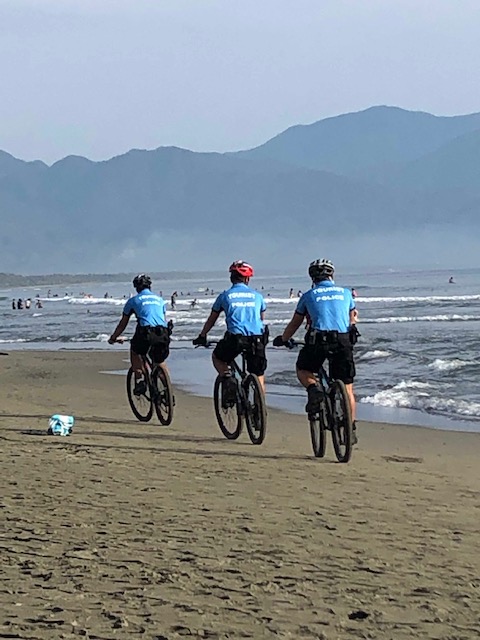 PNP officers on bike patrol along the beaches in Baler, Aurora
To be more effective, police officers should probably be roaming on foot or bicycles. They can be more in touch with the communities as there will be opportunities to mingle compared to if they were on cars or motorcycles. In one thread on social media, for example, there was a call for our local police to adopt the “Koban” style of the Japanese police where officers roam the communities mainly on foot and where many are recruited from the community for the latter and former to have some familiarity with the people and areas they are assigned to. Going around on foot or bicycle would also be a healthier option as surely they will be able to go more than the 10,000 steps (or equivalent) necessary to be classified as active.
–
 Caught (up) in traffic