
Home » Highway Engineering (Page 10)
Category Archives: Highway Engineering
Tandang Sora Avenue road widening
The stretch of Tandang Sora Avenue between Commonwealth Avenue (Luzon Avenue Flyover) and Capitol Hills Drive is currently being widened as part of the Luzon Avenue project. Work here has been delayed by not a few glitches including the issues regarding the right-of-way acquisition. This area used to be home to a lot of informal settlers, including many who have lived in the area for decades as they were tolerated by the land owners. Many had to be relocated and were compensated to give way to the section of Tandang Sora that connects to the also unfinished Luzon Avenue.
The following photos were from a month ago when work was still ongoing along the southbound side of the road. This southbound side is actually the old 2-lane, 2-way section of Tandang Sora that was rehabilitated following completion of work on the expansion northbound lanes.
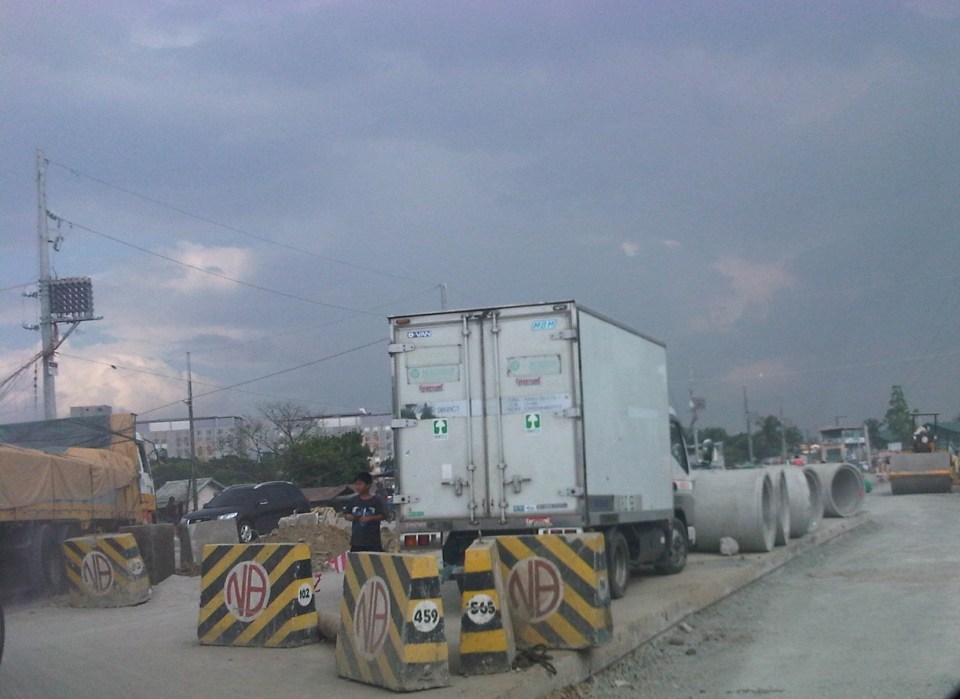 Heavy equipment are everywhere along the section like the roller (pison) on the right side of the photo working on base layer of the pavement. The concrete barriers are used to prevent vehicles from entering the work zone.
 Both northbound and southbound traffic were using the northbound side of the road. The median island separating NB and SB sides of the the road is shown in the photo. The building on the right is actually a condemned structure.
 Concrete pavement has been laid out along the SB lanes but was still undergoing curing.
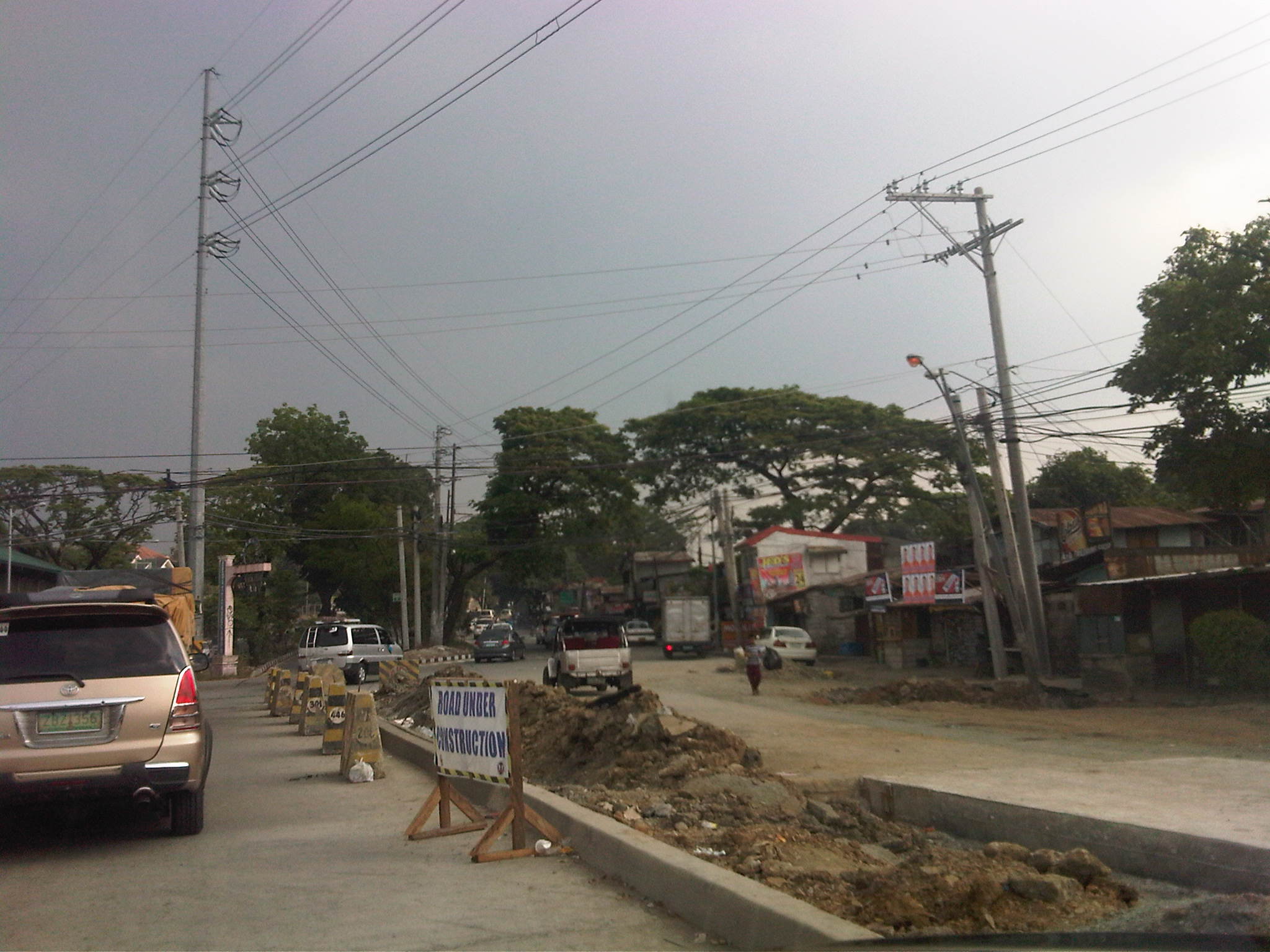 Approach to the intersection with Capitol Hills Drive
Yesterday, I was able to take a few photos of the same section and found that the rehabilitated southbound lanes were already usable to traffic.
 Tandang Sora junction with Luzon Avenue
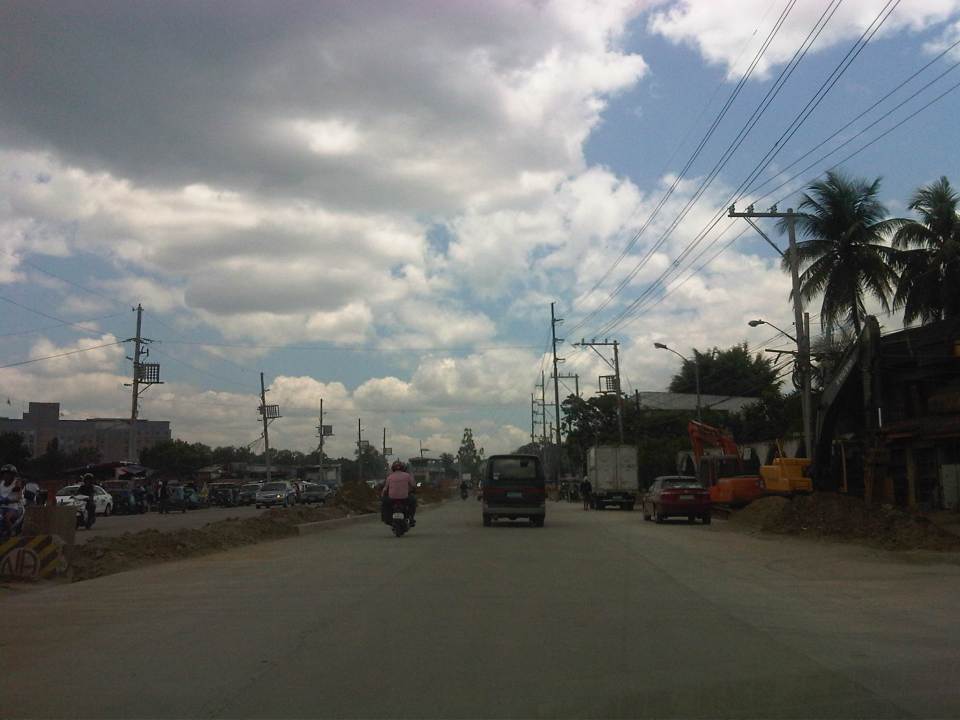 Newly opened southbound lanes – 3 lanes are of PCCP but there are still construction work ongoing including drainage and sidewalk construction.
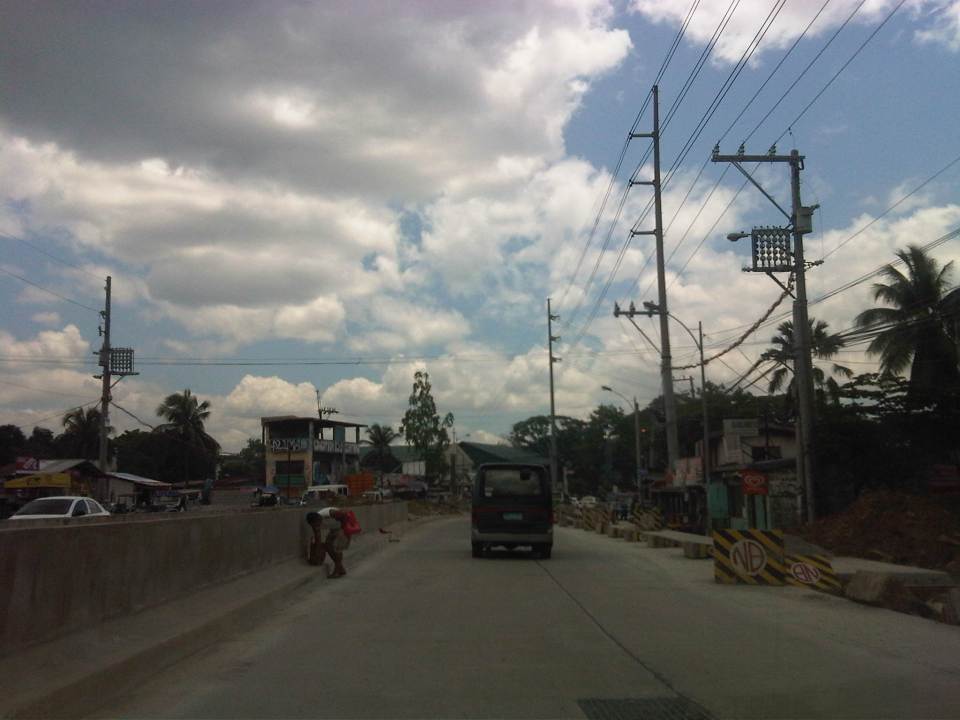 Sidewalk and median barriers are in various stages of construction along the section. I think they built barriers to anticipate problems regarding jaywalking.
 Approach to the intersection with Capitol Hill Drive – one problem that needs to be solved along Tandang Sora is roadside parking. Informal settlers who own vehicles park these along the road. There are also stores, eateries and vehicle repair shops along the section that occupy sidewalks and encourage parking by customers.
Once the section is completed and with the future completion of Luzon Avenue, it is expected that traffic will increase along this section. The improved capacity of the road is also expected to ease traffic along the Capitol Hills Driver-Zuzuaregi Street route, which has become congested due to vehicles traveling between Commonwealth and C-5 whose drivers want to bypass the usually constricted Tandang Sora section.
–
Road right-of-way encroachments: Samar
Going around the country for projects, we always take a lot of photos about transportation including roads, bridges and transport modes. Thank goodness for digital cameras and cell phone cameras, and special mention to memory cards that have allowed us to take photos at will often only worrying about battery life. In a previous post, I wrote about encroachments to the RROW and featured some photos from field work we did in Palawan. This time, I was able to find a few choice photos taken from another project we did; this time in the island of Samar in the Eastern Visayas. In the following photos, one will see permanent structures already built along the roads – ones that are usually the most difficult to remove and the residents a challenge to be relocated.
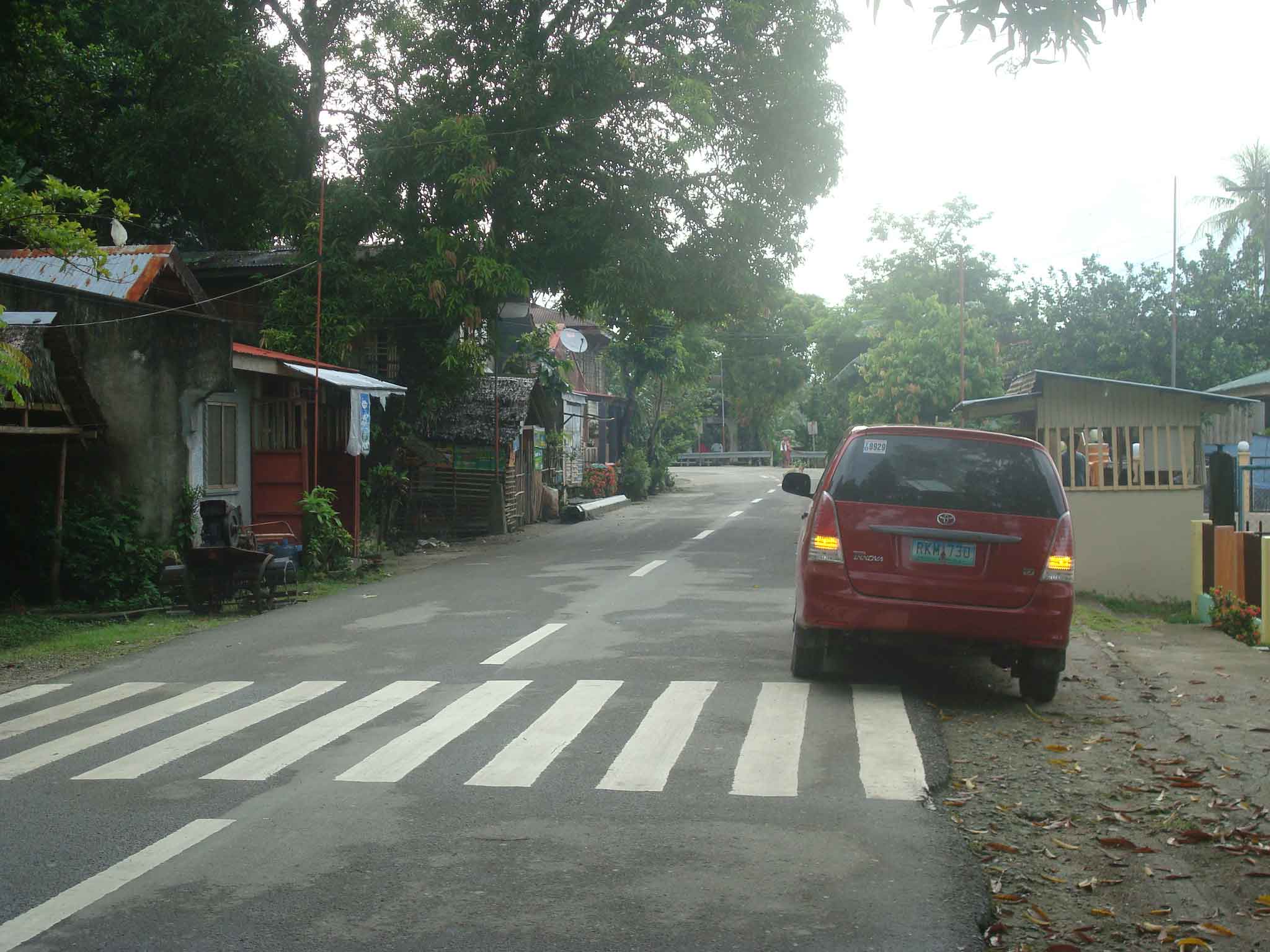 Houses built alongside the highway on what is supposed to be shoulder space. What looks like a booth in from tof the parked vehicle on the right is actually a guard post for the barangay. The barangay hall is located behind the fence visible at the right of the photo.
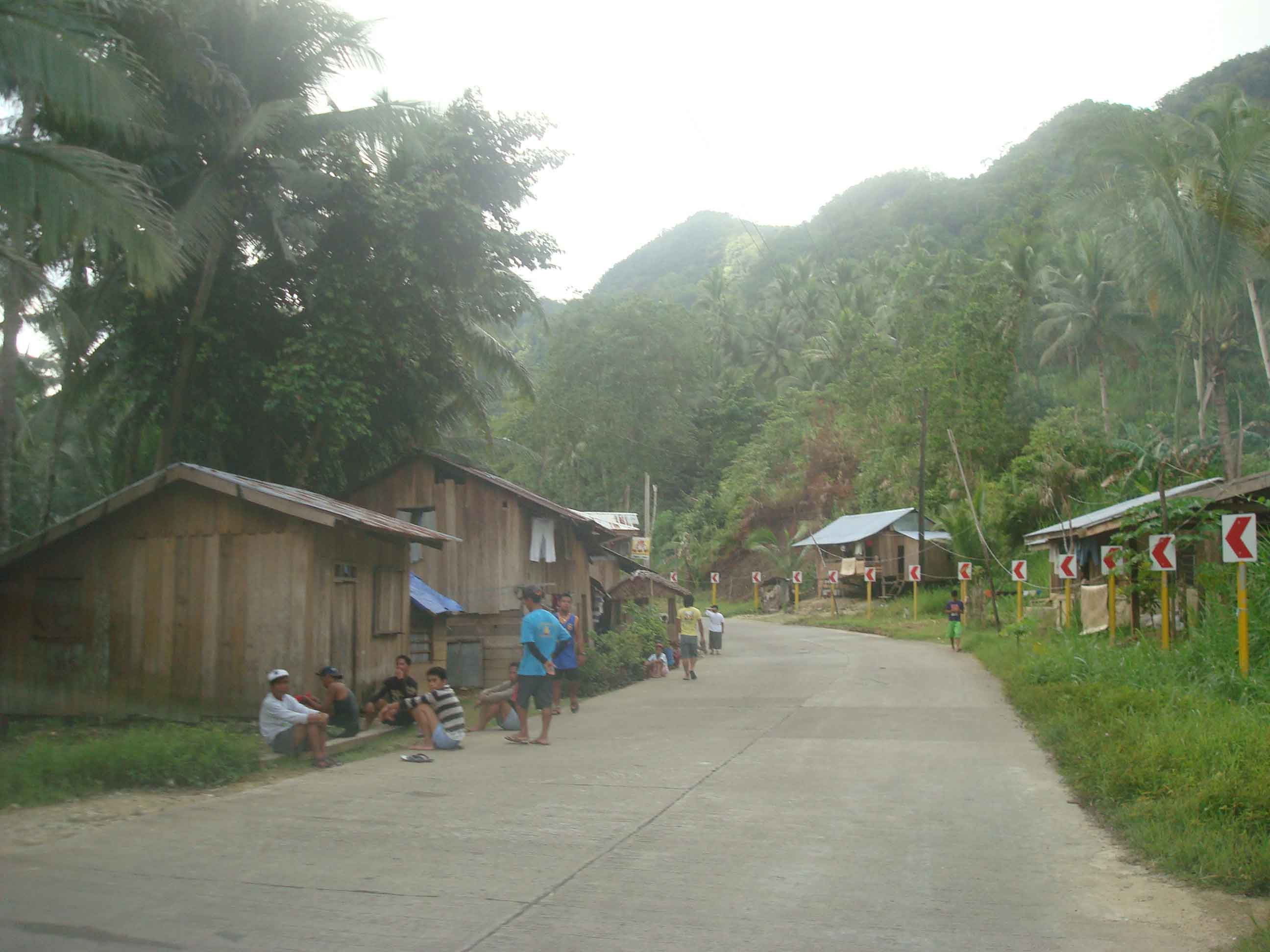 Makeshift houses along the secondary national road also on space usually where the shoulders are. Some houses are located at a hazardous part of the road (i.e., right at the curve and just behind the chevron signs).
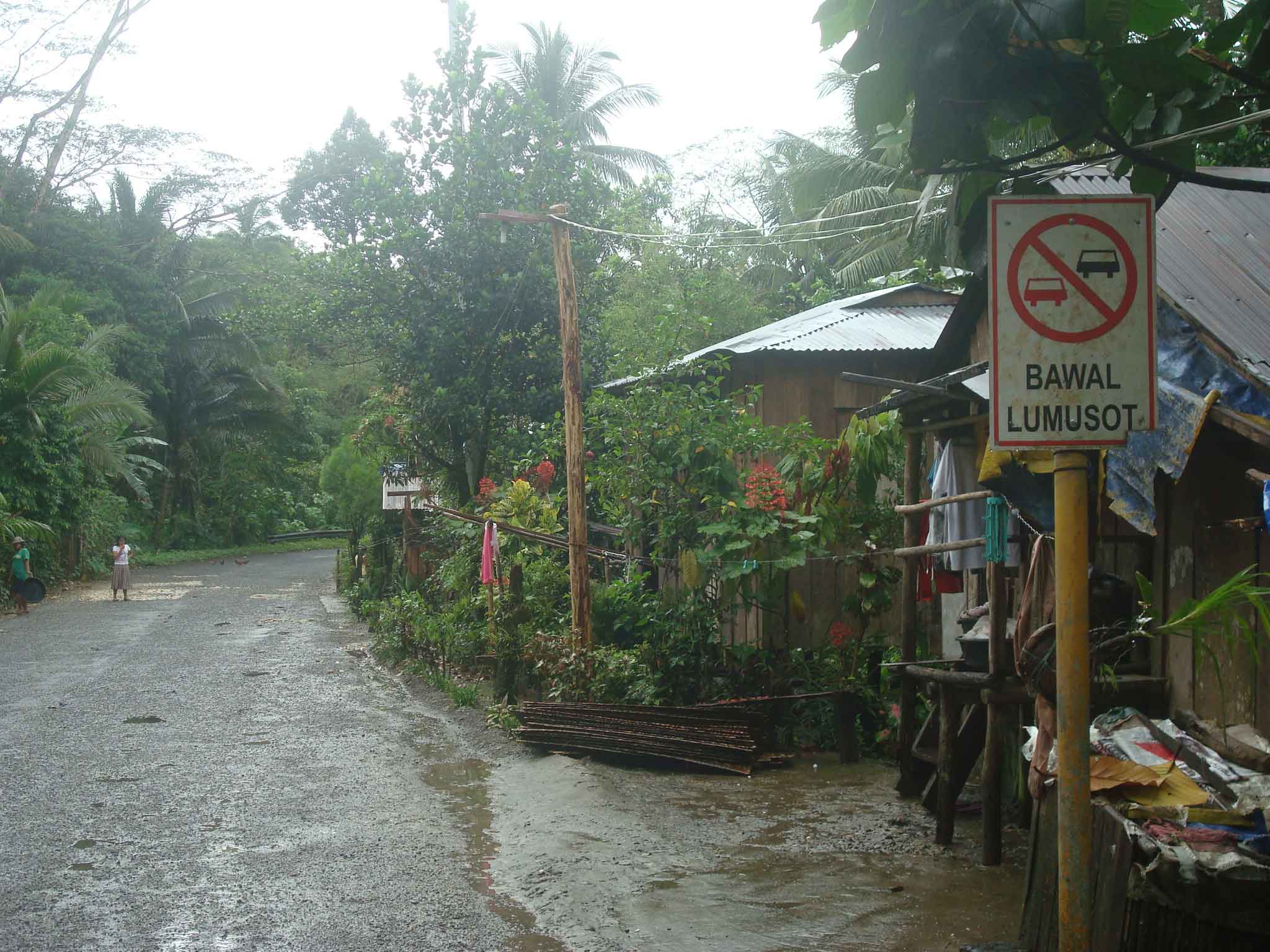 More houses with their fences encroaching on the RROW along a secondary national road in Eastern Samar – the sign on the right, while not exactly obstructed, will blend with the structures and will probably be unseen or unnoticed by motorists.
 Souvenir? – I have seen signs being stolen and displayed in some homes as trophies (actually an illegal act that can get one jailed and fined a hefty sum if caught by authorities). Some souvenirs are harder to take but can be integrated with the house interior or, in this case, as part of a store. Imagine knowing the exact location of a store in the area not through GPS but simply by knowing the exact kilometer post where the store was put up.
There are many other examples of RROW encroachments along other roads. These seem to be common along all types of highways where development along the roads are generally not regulated by local governments but present future problems when space is needed to widen roads to accommodate traffic. Is it an issue of cooperation between the DPWH and the LGUs (including the DILG)? Or is it mainly a local issue that is largely the responsibility of local authorities? Perhaps it is both and something that needs to be addressed to enhance road safety as well as to ensure that future headaches will be avoided when it is time to access the RROW.
–
Road right-of-way encroachments: Palawan
Encroachments to the road right of way (RROW) is quite common along many roads in the Philippines including national roads. While the DPWH has jurisdiction over the latter roads in as far as construction and maintenance is concerned, the agency does not have the resources to secure these roads. Such responsibility lies in the hands of local government units (LGUs), which are tasked to regulate land use at the local level ahead of the Housing and Land Use Regulatory Board (HLURB). Following are a few photos I took in one trip to Palawan where we did a few road safety audits of a national highway.
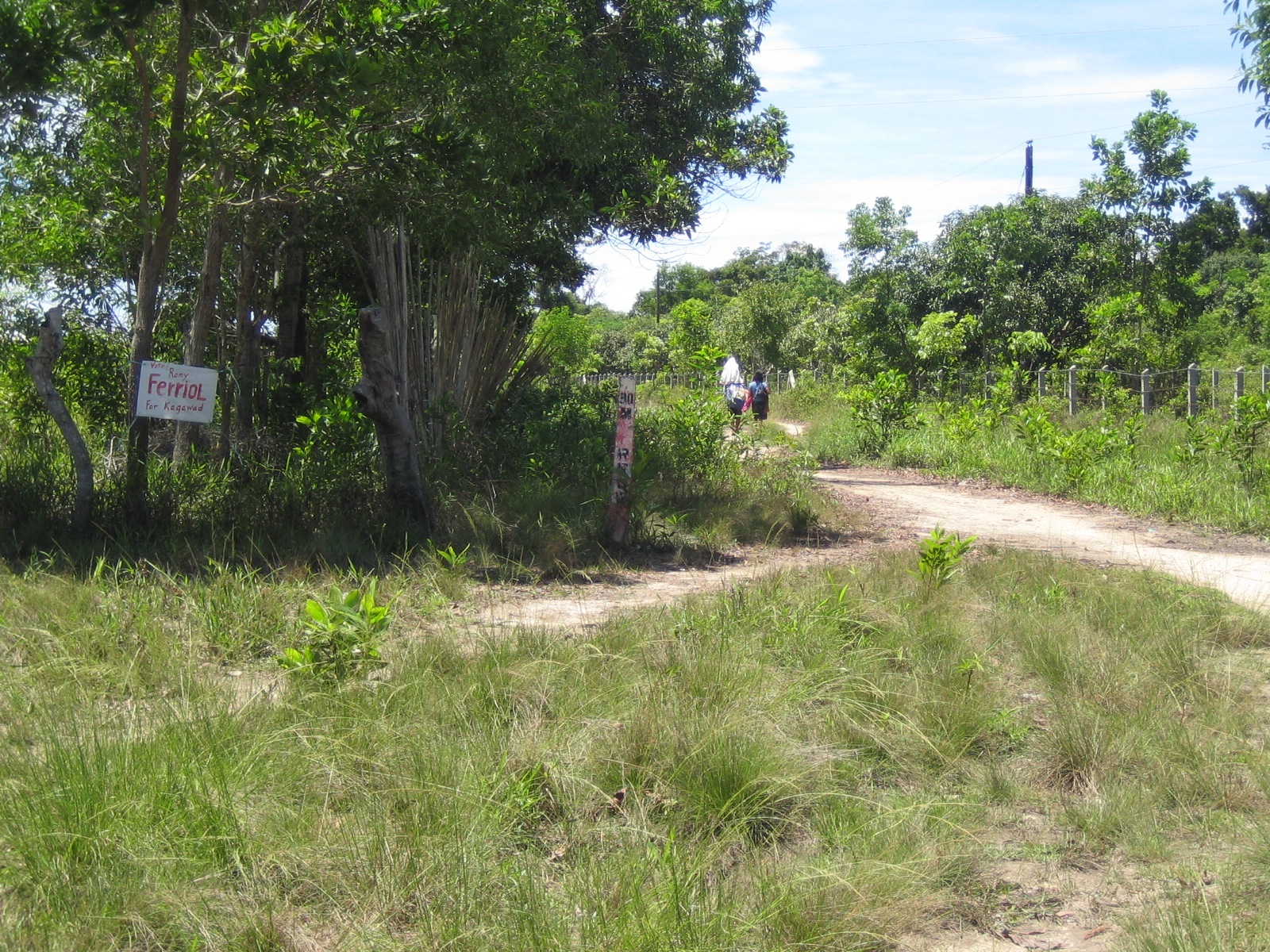 This RROW marker that doubles as a kilometer post along a highway in Palawan is located a few meters from the carriageway. While there are no developments or encroachments along this section, such markers could easily get lost.
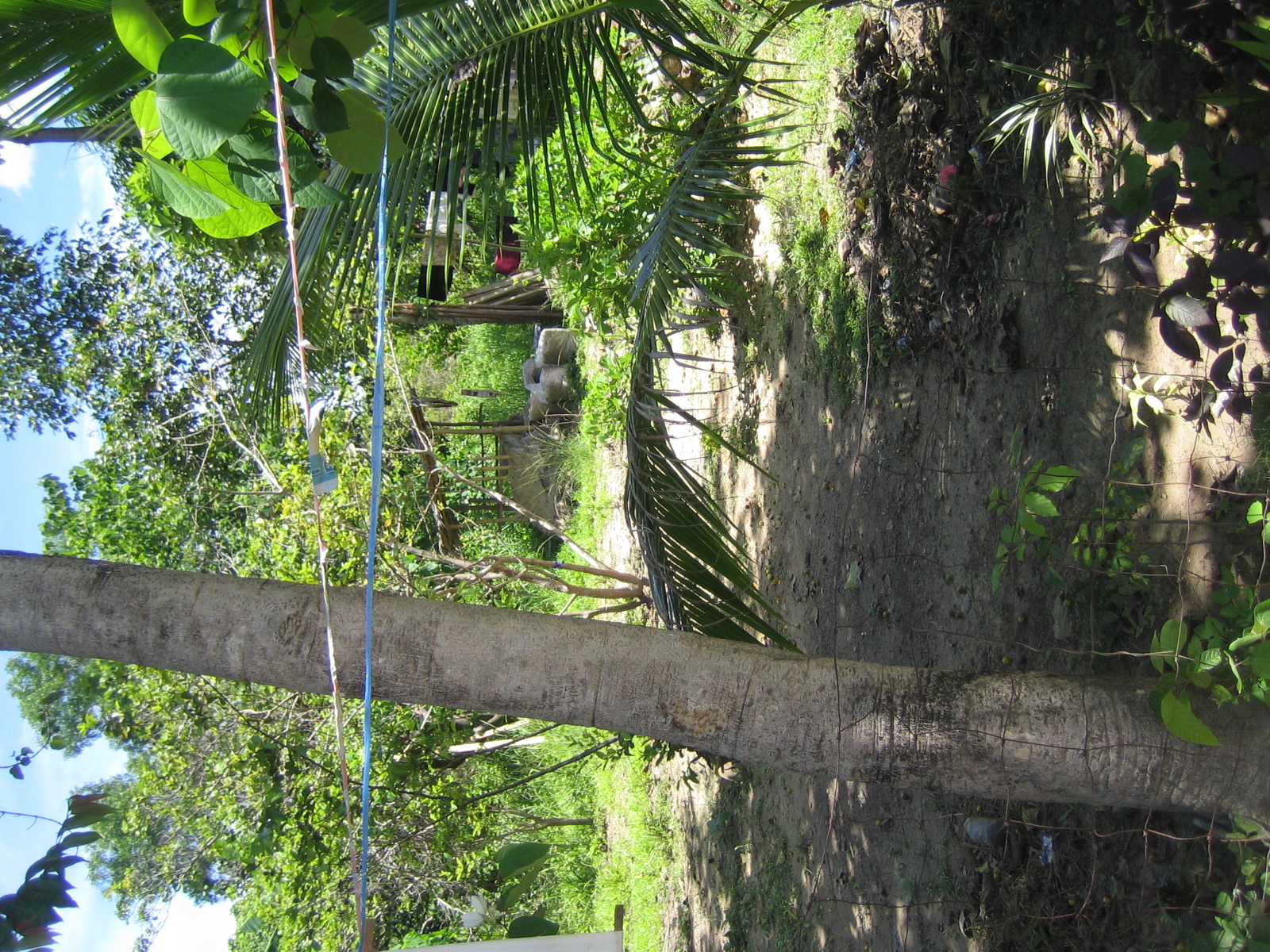 This one’s already behind the fence (and house) of a family encroaching on the RROW. Many of these people establish homes and even informal businesses (vulcanizing shops, makeshift stores, etc.) along the road with LGUs often turning a blind eye and in many cases even allowing people to register the lands as their own when in fact these have been reserved for future expansion of the road.
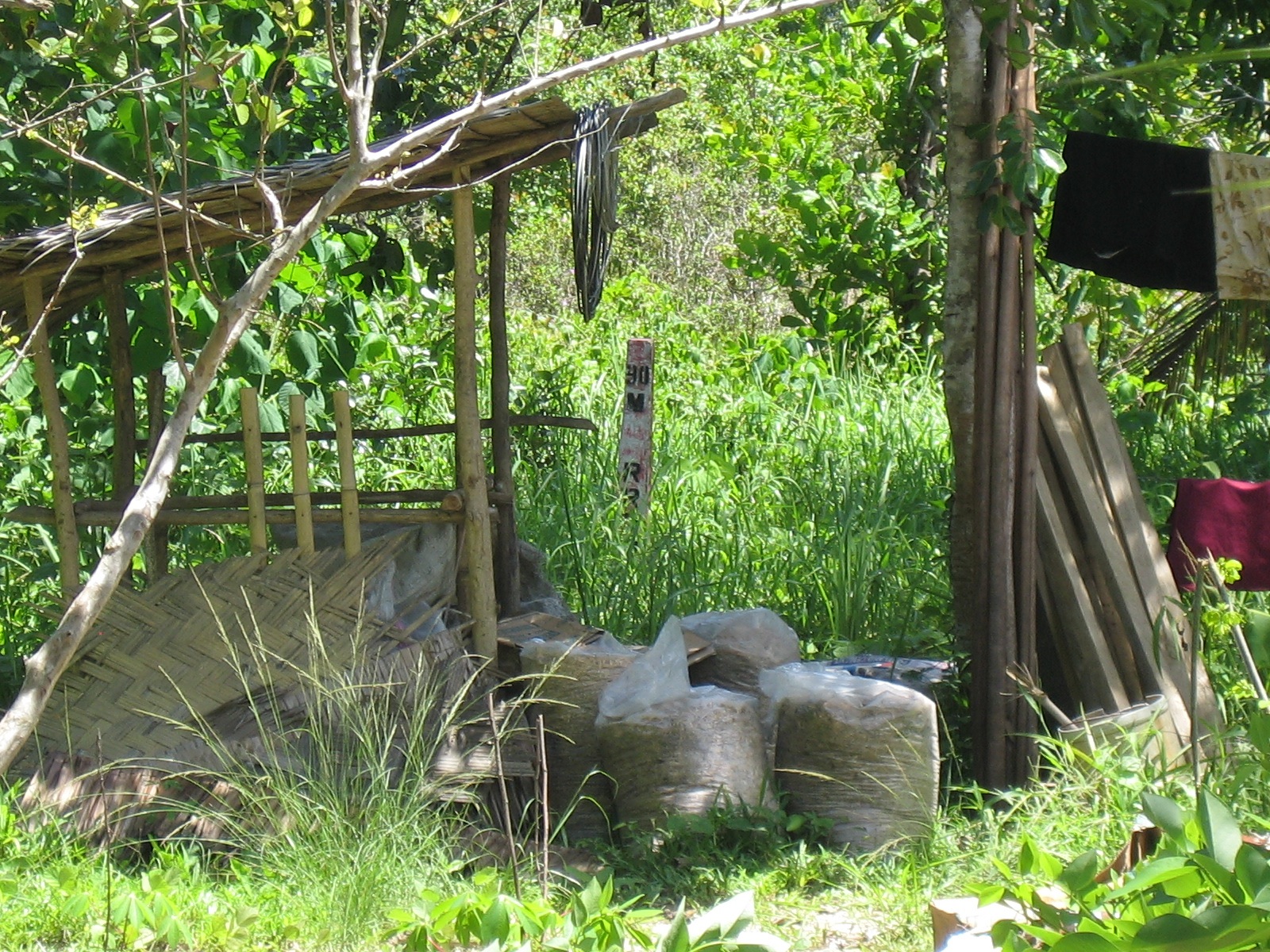 Zooming in on the marker shows it to be behind a storage shed where grain, lumber, bamboo and various other materials are piled up.
For most of these people who have encroached on the RROW, their actions are not illegal given that in many cases, the LGUs let them do so in order to develop areas along the road. The problem comes later when these developments and residents begin constricting traffic along the highways and demanding compensation when they are asked to move out to give way to road widening projects. It seems that the best approach is still for LGUs to do their part in regulating settlements along roads so that most if not all will locate outside the RROW. In other cases where it is obvious that development will come much later, it should be clear to settlers that the property is not theirs and will not be theirs, and that they would have to go sometime in the future when the road needs to be widened. This is not an easy thing for LGUs to accomplish but they should have system in place for this since it will considerably be more difficult later when the roadside has been settled with more permanent structures.
–
Loop D Loop Bridge
One of the more interesting features of a highway that I have seen in the Philippines is a certain Loop D Loop Bridge section along a secondary national road between the towns of Wright (Paranas) in Samar Province and Taft in Eastern Samar.
Following is a video of the loop section, which is quite unique given the terrain in the mountains of Samar Island:
–
Payatas Road
We traveled along the section of Payatas Road from the junction with Montalban Highway to the intersection with the Manila Gravel Pit Road. A significant length of the road had the La Mesa watershed, Metro Manila’s main source of fresh water, along its right. This was an issue before and is still an issue today as more and more developments are made along the road with some already having impacts on the watershed due to encroachments, irresponsible waste disposal and other activities.
The following photos show various sections of the Payatas Road from its junction with Montalban Highway to the point it becomes the Gravel Pit Road (also known as Litex Road). The photos clearly show the road and roadside conditions of this important link between Metro Manila and Rizal Province.
 After turning left from the intersection with Montalban Highway, it is a two-lane road
 A few hundred meters away, travelers begin to climb towards Quezon City view a few picturesque areas along the road. The tarpaulin sign on the left indicates an ongoing roadworks project by the DPWH.
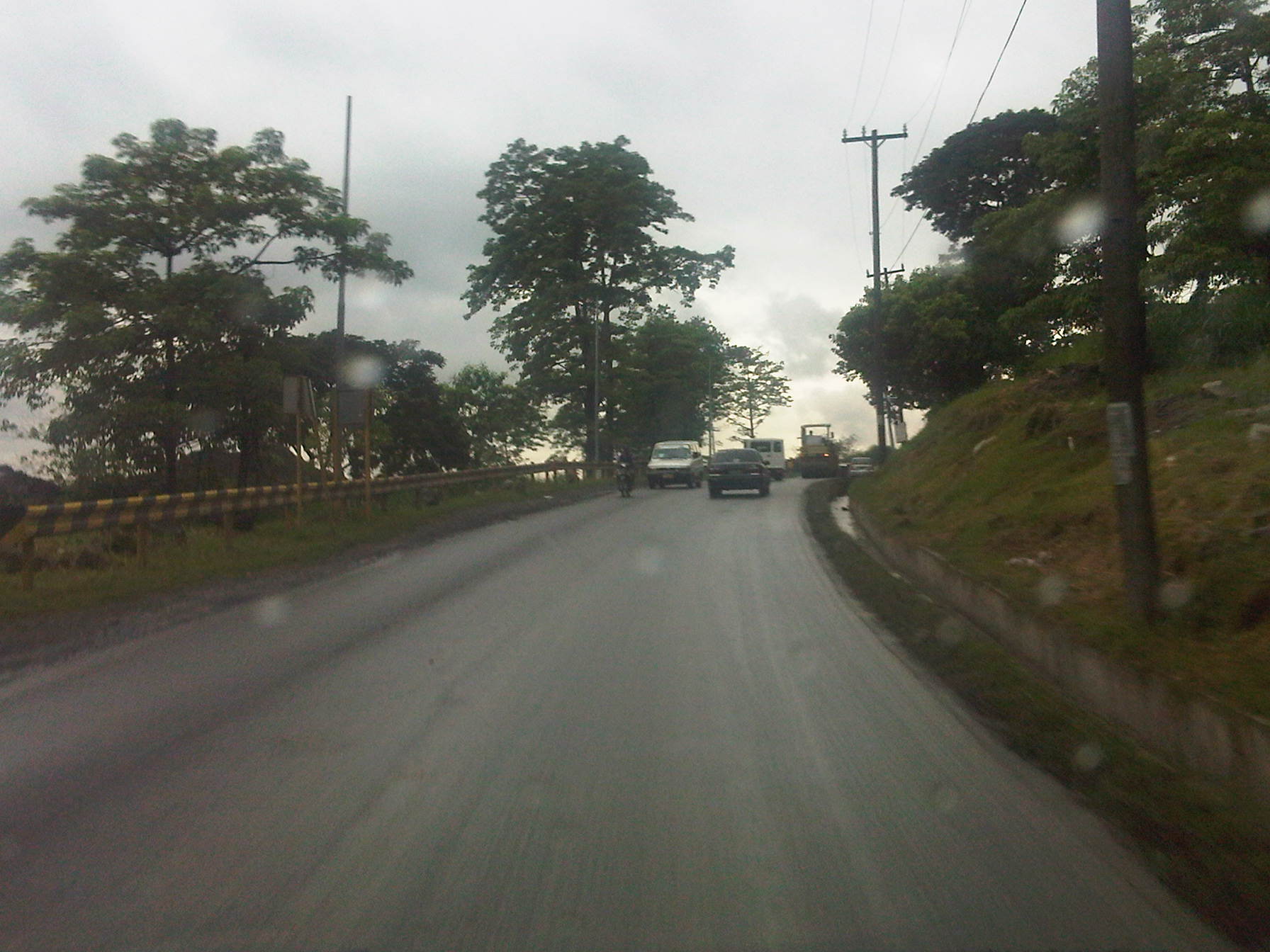 The canal on the inner side of the road keeps water off the carriageway, making the surface safer for motorists. These though are not easily seen at night-time without proper pavement markings and lights.
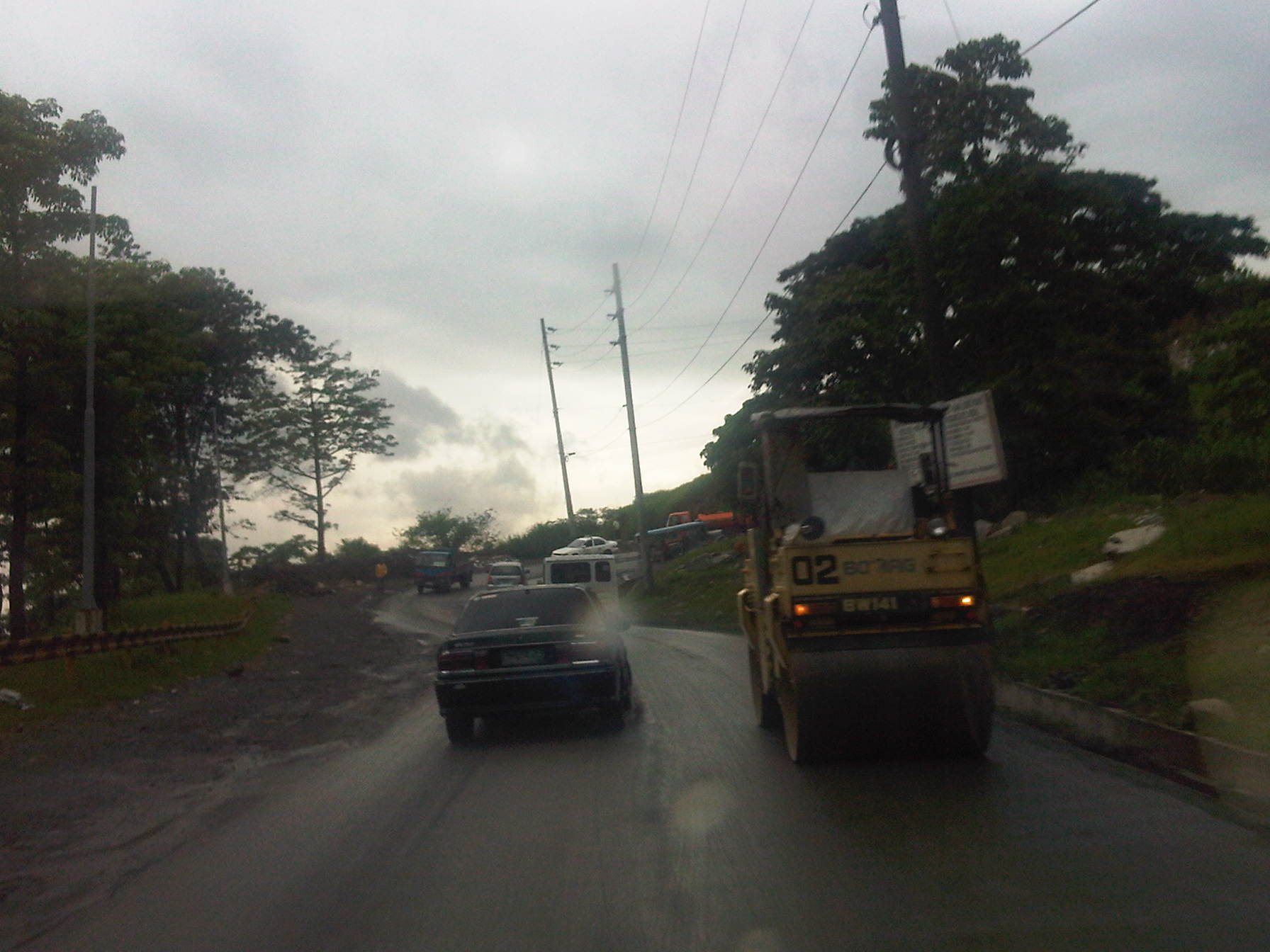 There were roadworks ongoing along the road as we ascended and heavy equipment like the one shown in the photo tend to constrict traffic flow.
 Going up the road, we became part of a platoon of vehicles whose speed was dictated by the road conditions.
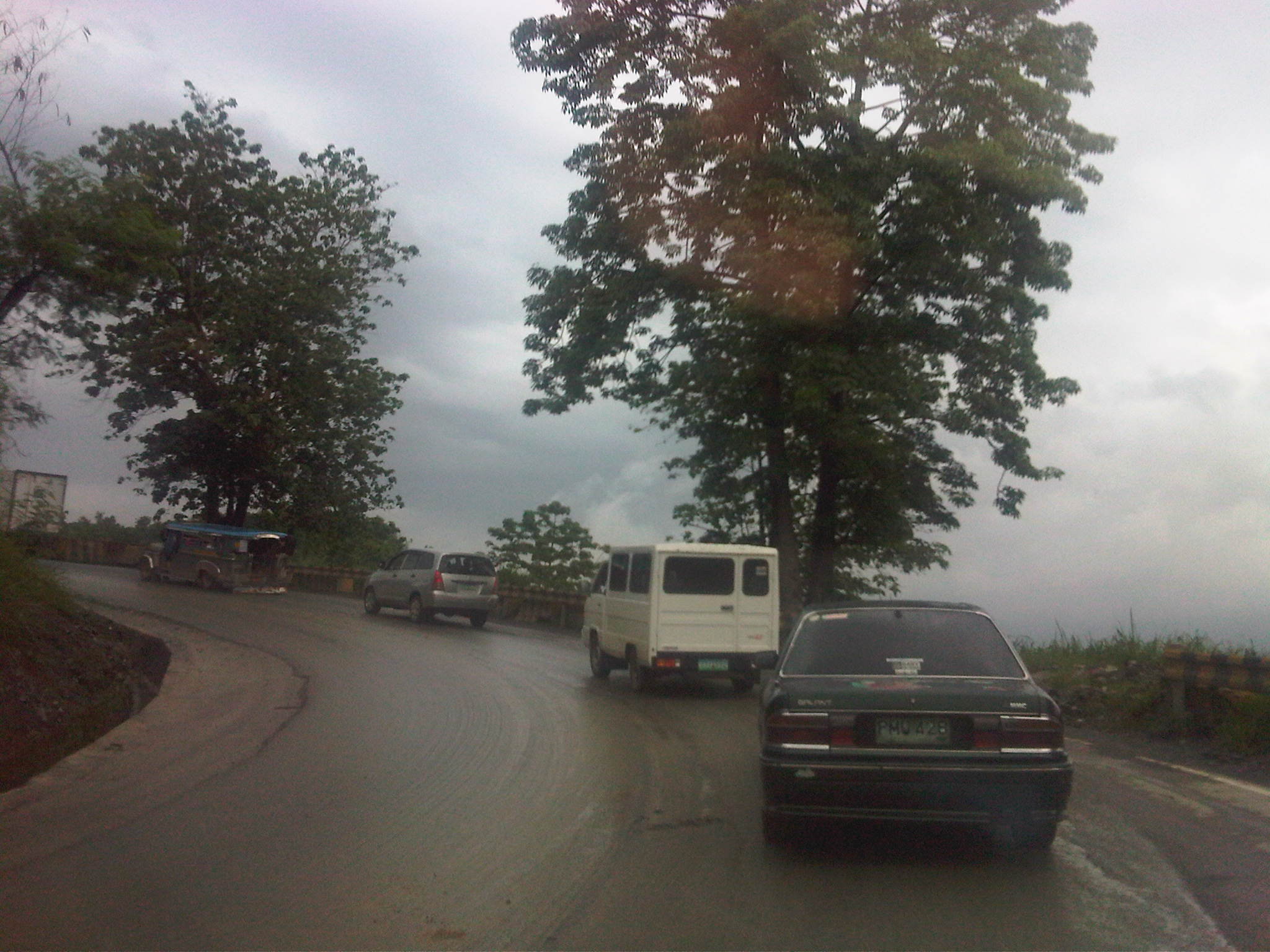 Trucks are usually the slower moving vehicles and will often dictate speeds on the ascent.
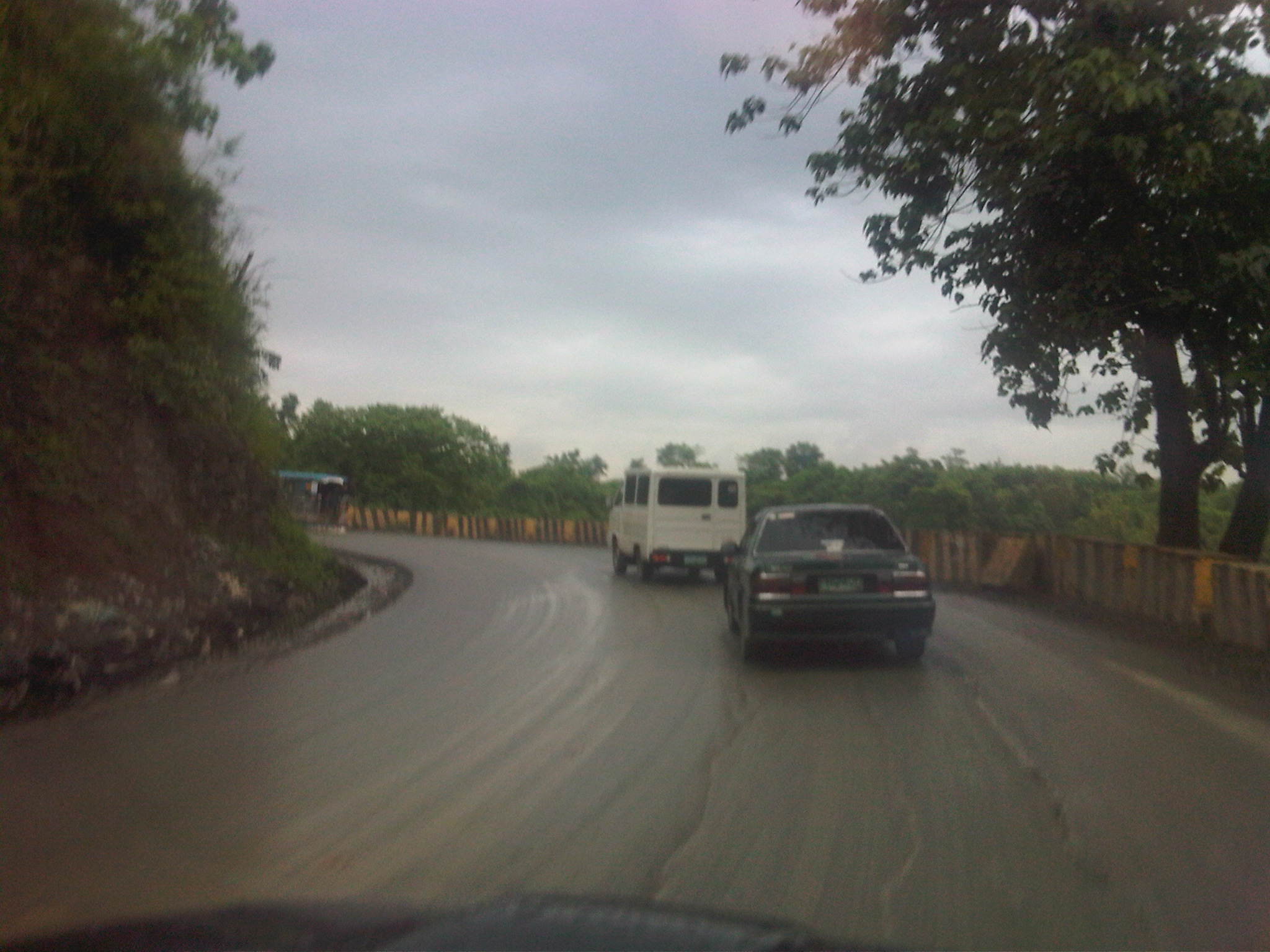 Concrete barriers prevented vehicles from flying off the road in case the driver or rider loses control of the vehicle.
 View of the Marikina Valley, which is the catchment area for a lot of water (from rains) that comes from the surrounding mountains of the Sierra Madre range.
 There’s significant truck traffic along this road and many carry garbage or junk.
 But traffic is usually light as this and other photos show. Many sections had no pavement markings and traffic signs to guide motorists.
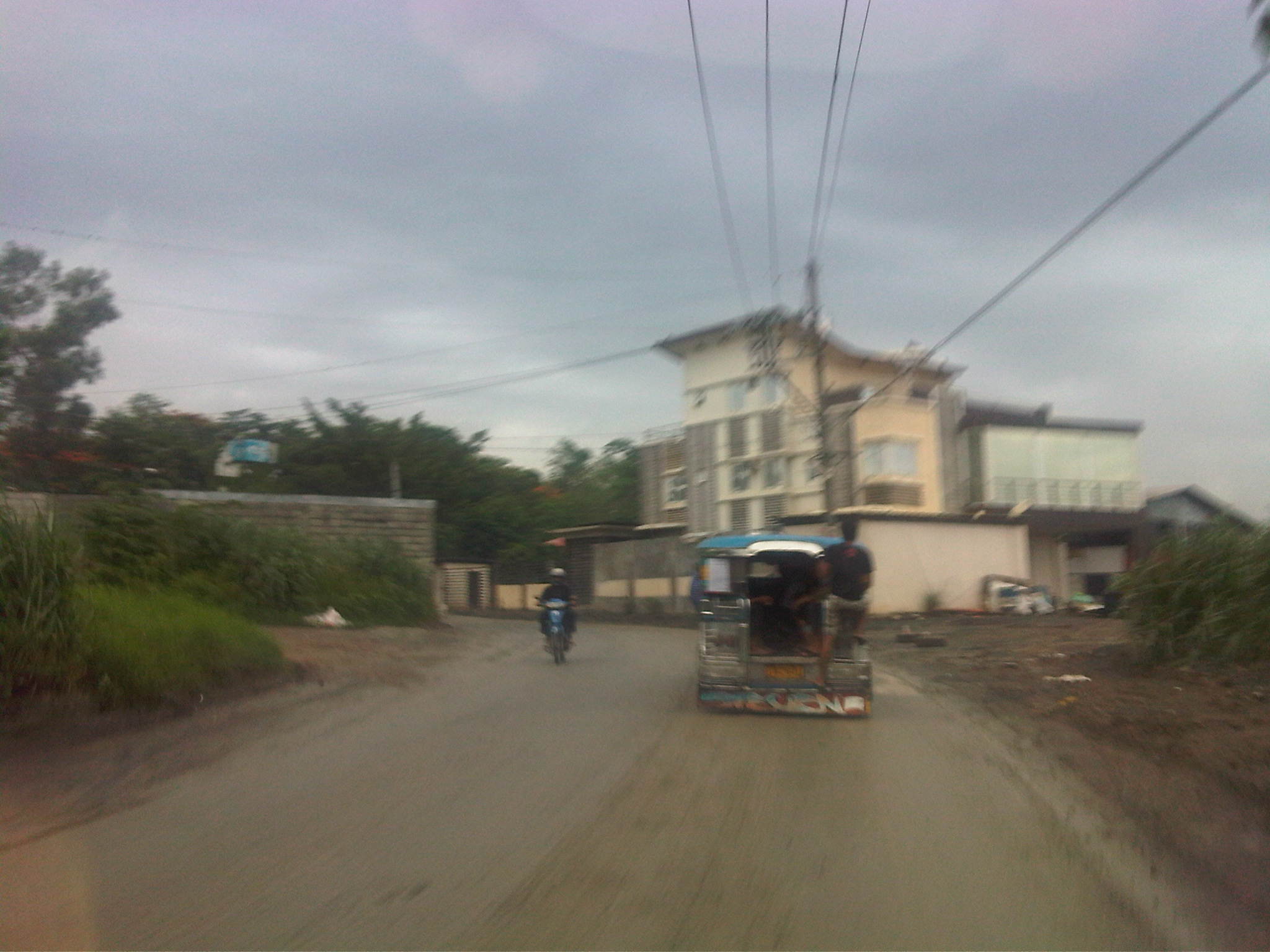 At the edge of one of the curves is a house with modern style architecture. A good landmark to guide travelers using the road.
 Some sections seem narrow due to the walls built to keep people out of the watershed area and the encroachments on the other side of the road.
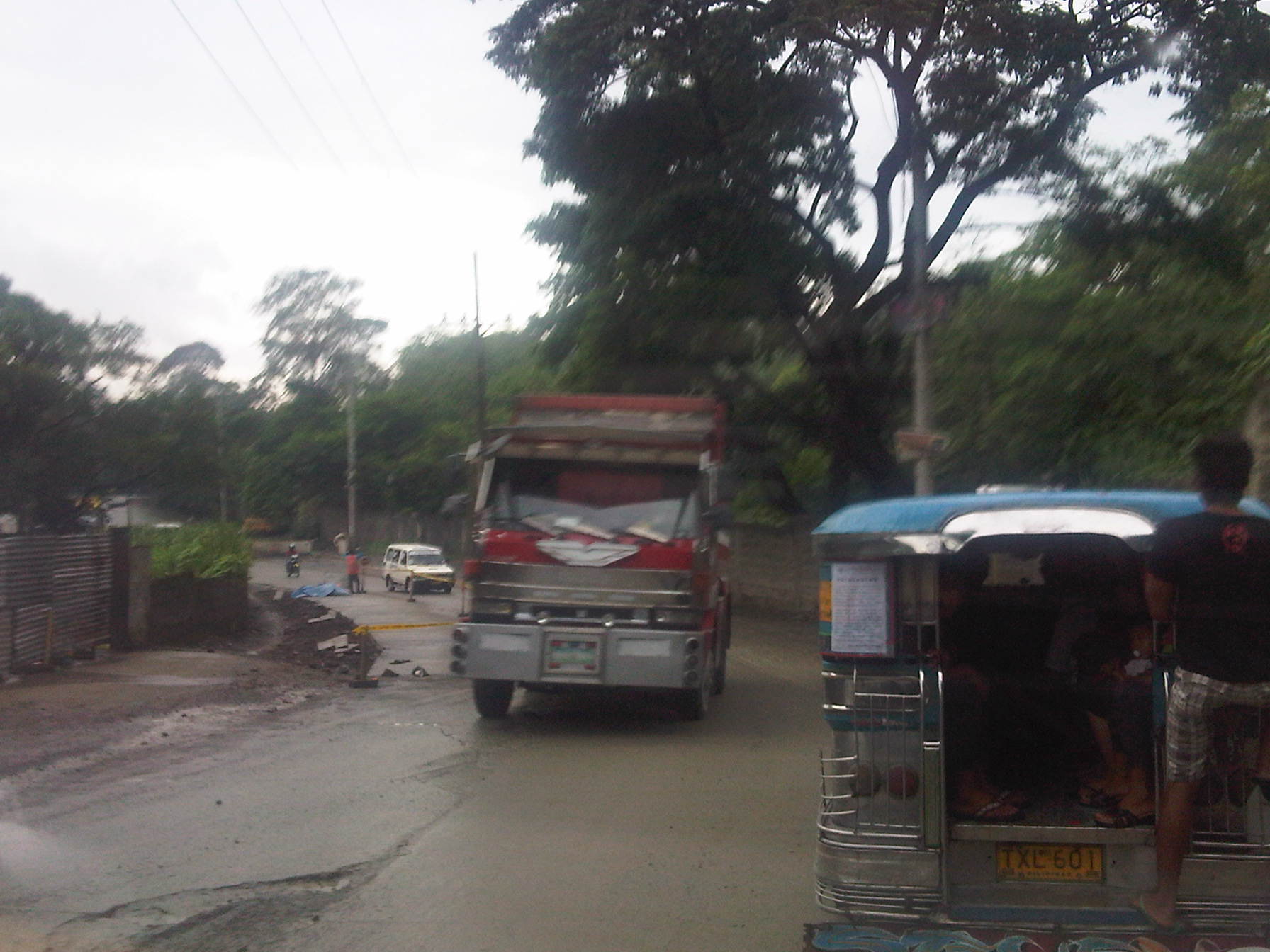 There were no proper drainage along the road and many sections have poor pavement conditions.
 What appeared as drainage works were actually part of the concrete “re-blocking” for the road.
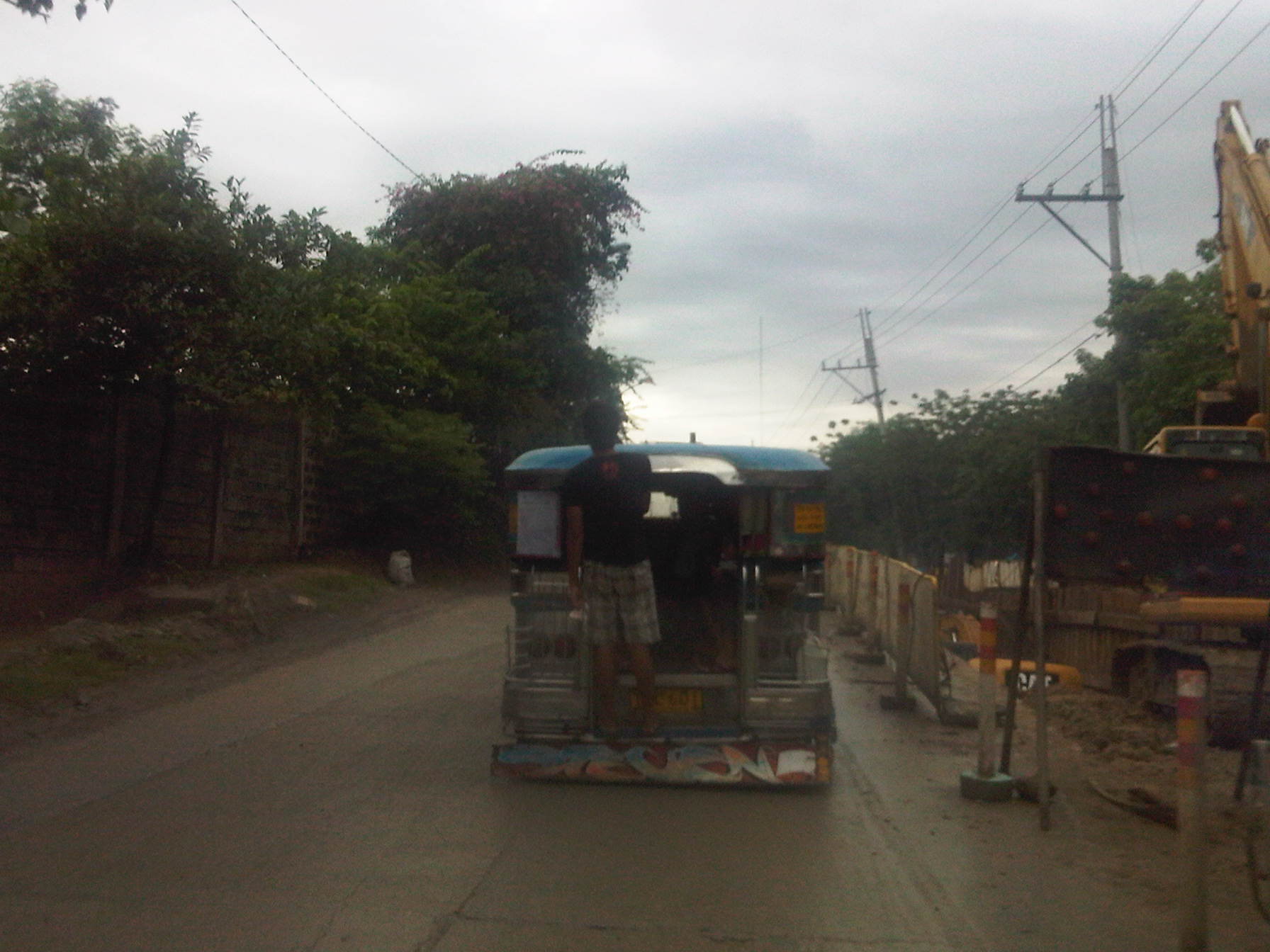 There were also waterworks along the road when we passed through.
 Such waterworks being undertaken often lead to traffic congestion as road space is constricted.
 The road has poor drainage along many of its sections including this section near a gas station where muddy water pools in the middle of the road. Such instances induce drivers and riders to encroach upon the opposing lane as shown in the photo above.
 There are many junk shops along the road owing to its proximity to the Payatas open dumpsite.
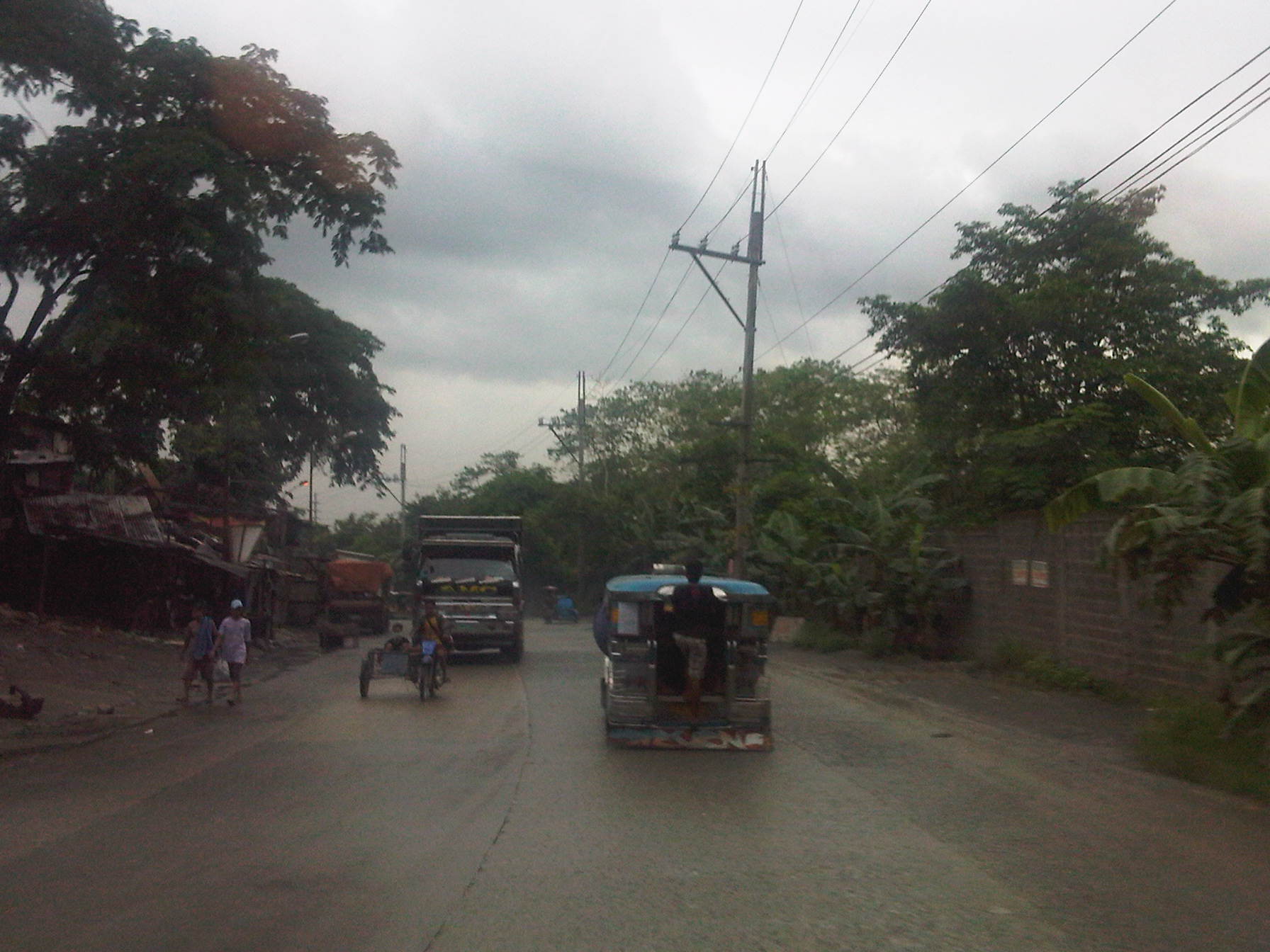 End of the road where Payatas Road ends and becomes the Manila Gravel Pit Road.
–
Update on the Quezon Ave.-Araneta Ave. underpass
Passed by the construction site of the Quezon Ave. underpass at its intersection with Araneta Ave. last week and took a few more photos showing the progress of work for the underpass. Fortunately, we were riding a bus and our seats provided a good view of the underpass. Following are photos taken last March 12, 2012.
 Heavy equipment along the ramp on the eastbound direction of Quezon Ave.
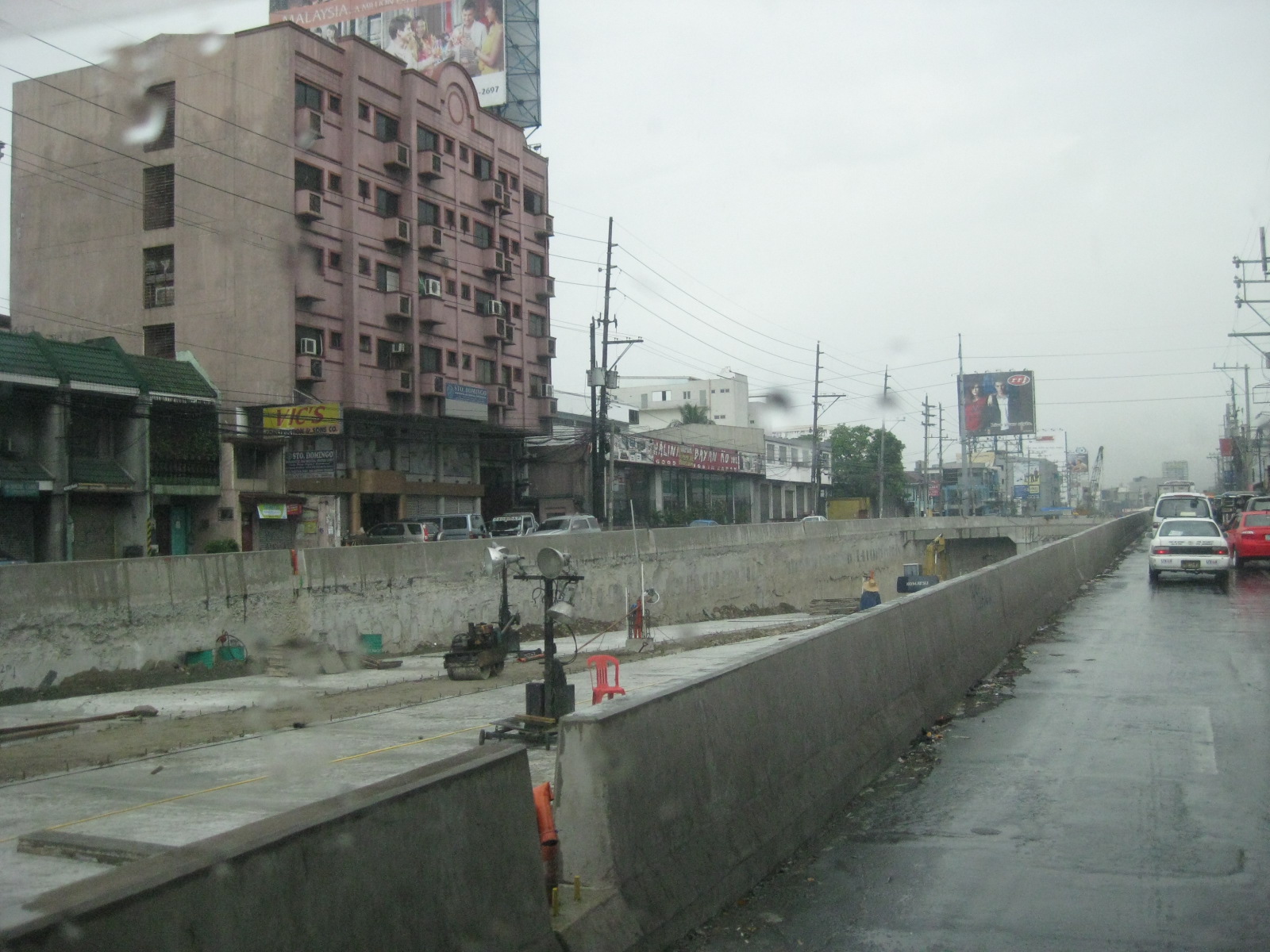 Both directions of the underpass have been paved and the median island is under construction.
 Backhoe at unpaved section of the underpass. The design reminds me of the underpass section along the same Quezon Ave. at its junction with Agham Road. Visible from the photo are braces/anchors embedded into the sides of the walls to reinforce these and prevent collapse.
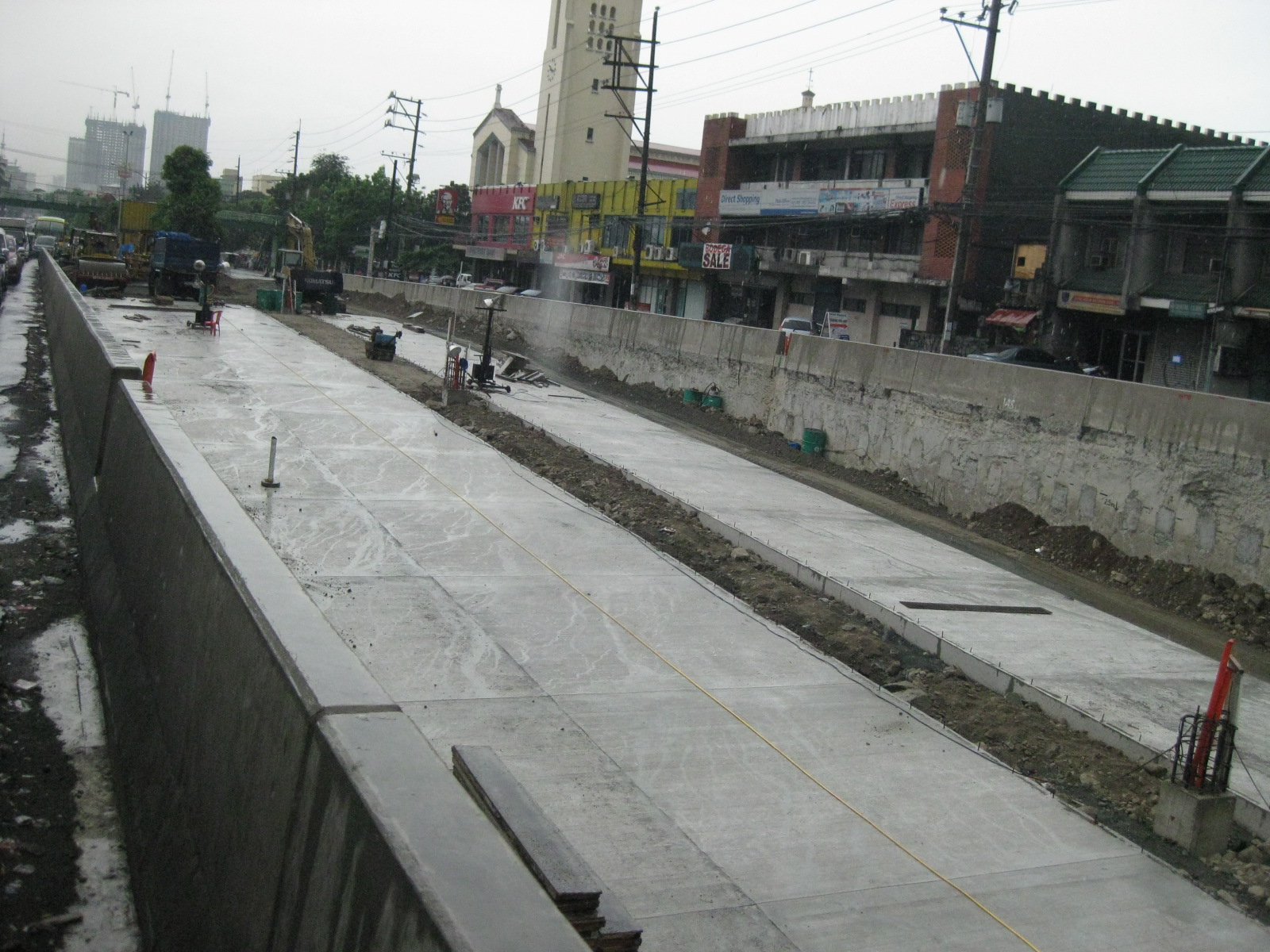 The underpass will have 3 lanes per direction that should be able to handle significant through traffic along the arterial.
 The section past Araneta Ave. is practically complete and retains essentially retains 3 lanes on each side of the original Quezon Ave. Upstream of the junction, there are only 2 lanes available on eaither side of the at-grade section of Quezon Ave.
 While traffic along the eastbound (to Quezon City) direction is practically free-flowing due to the wide section of the highway downstream, the westbound (to Manila) section is congested.
 Construction materials and workers’ bunkers at the east end of the underpass.
 The congestion along the westbound direction extends from the intersection to way past the underpass’ east end. On a bad day, it takes a significant time for travelers to be able to cross Araneta Ave. and towards Manila.
–
Quezon Ave.-Araneta Ave. progress
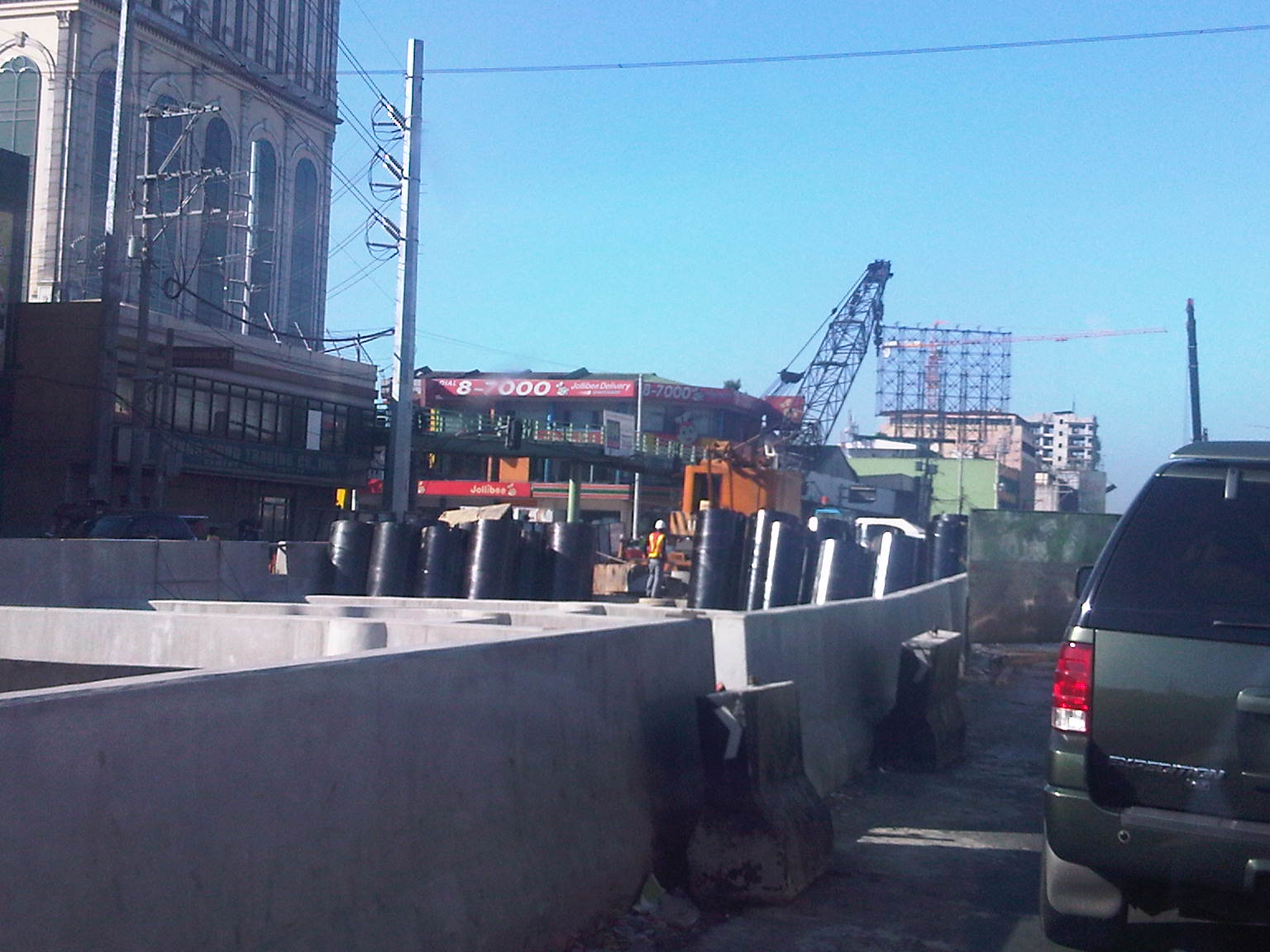
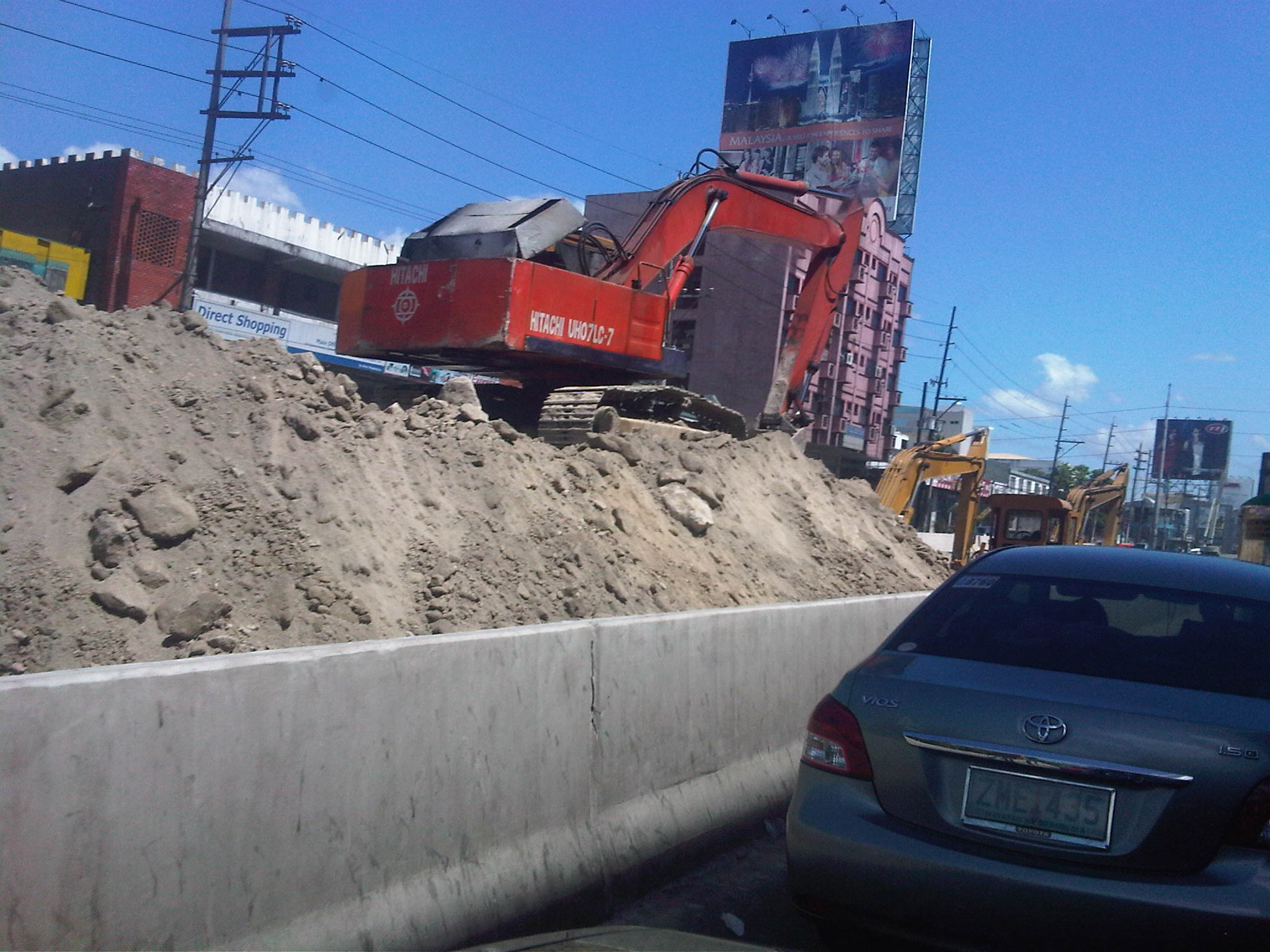
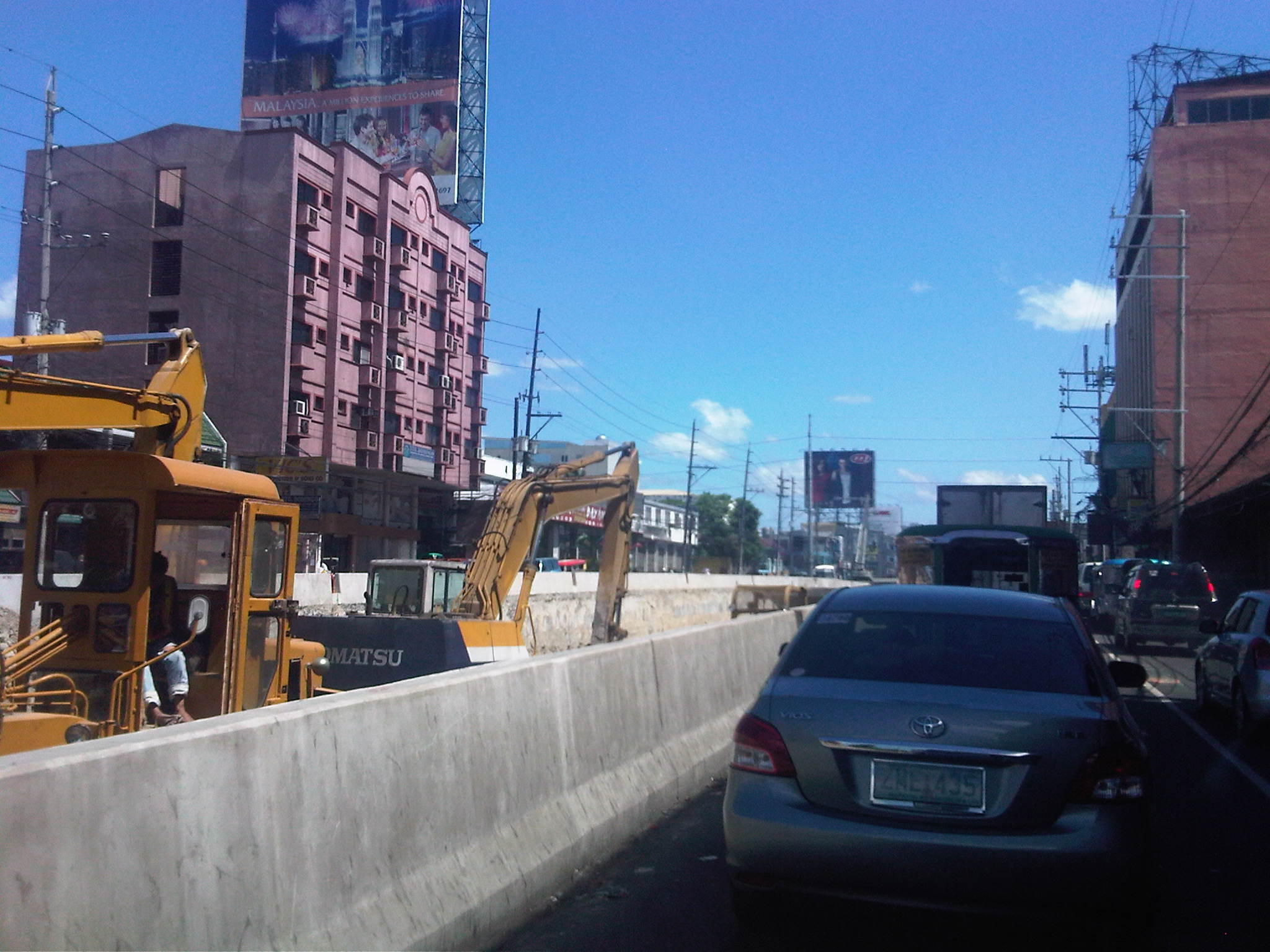
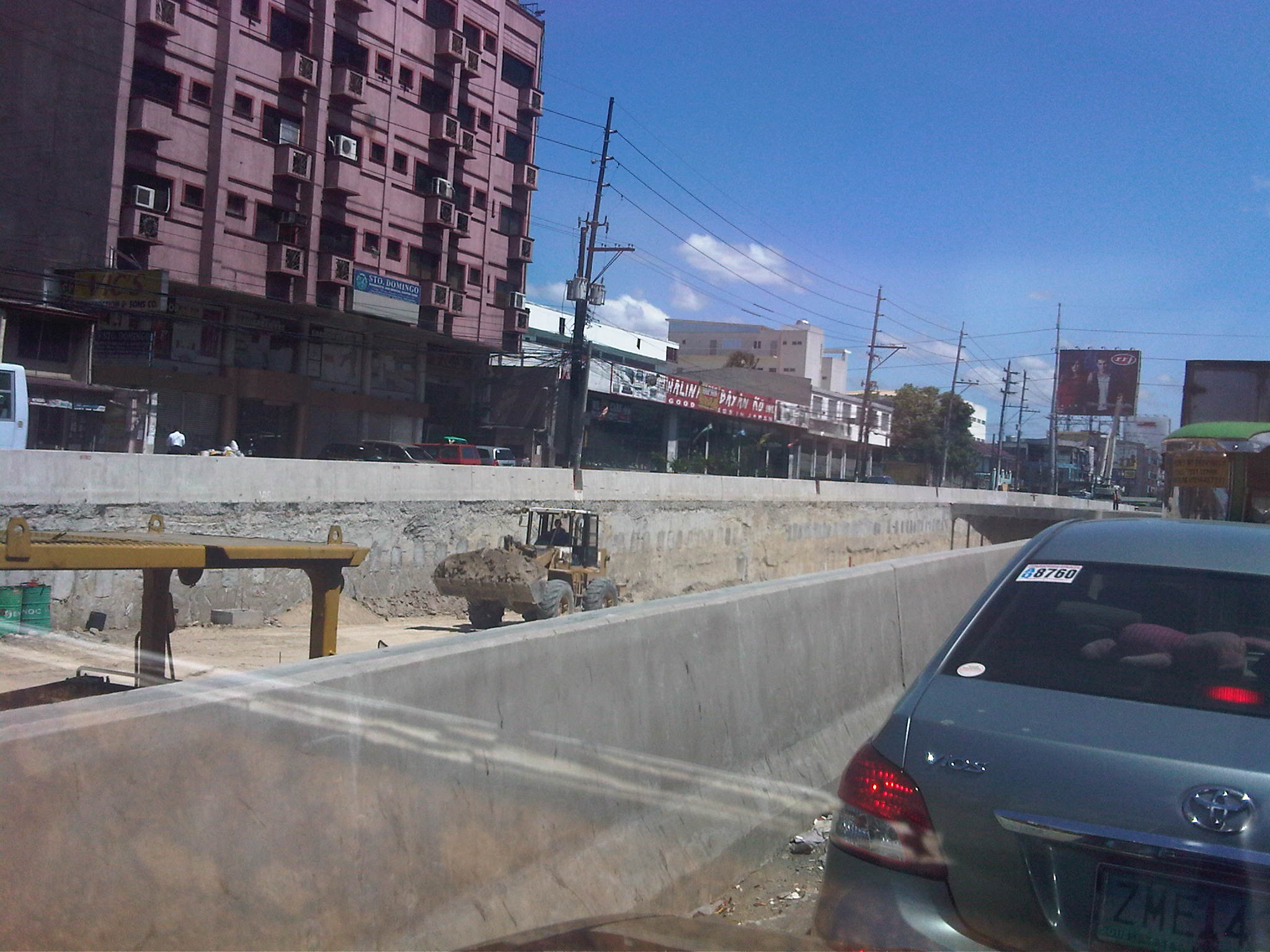
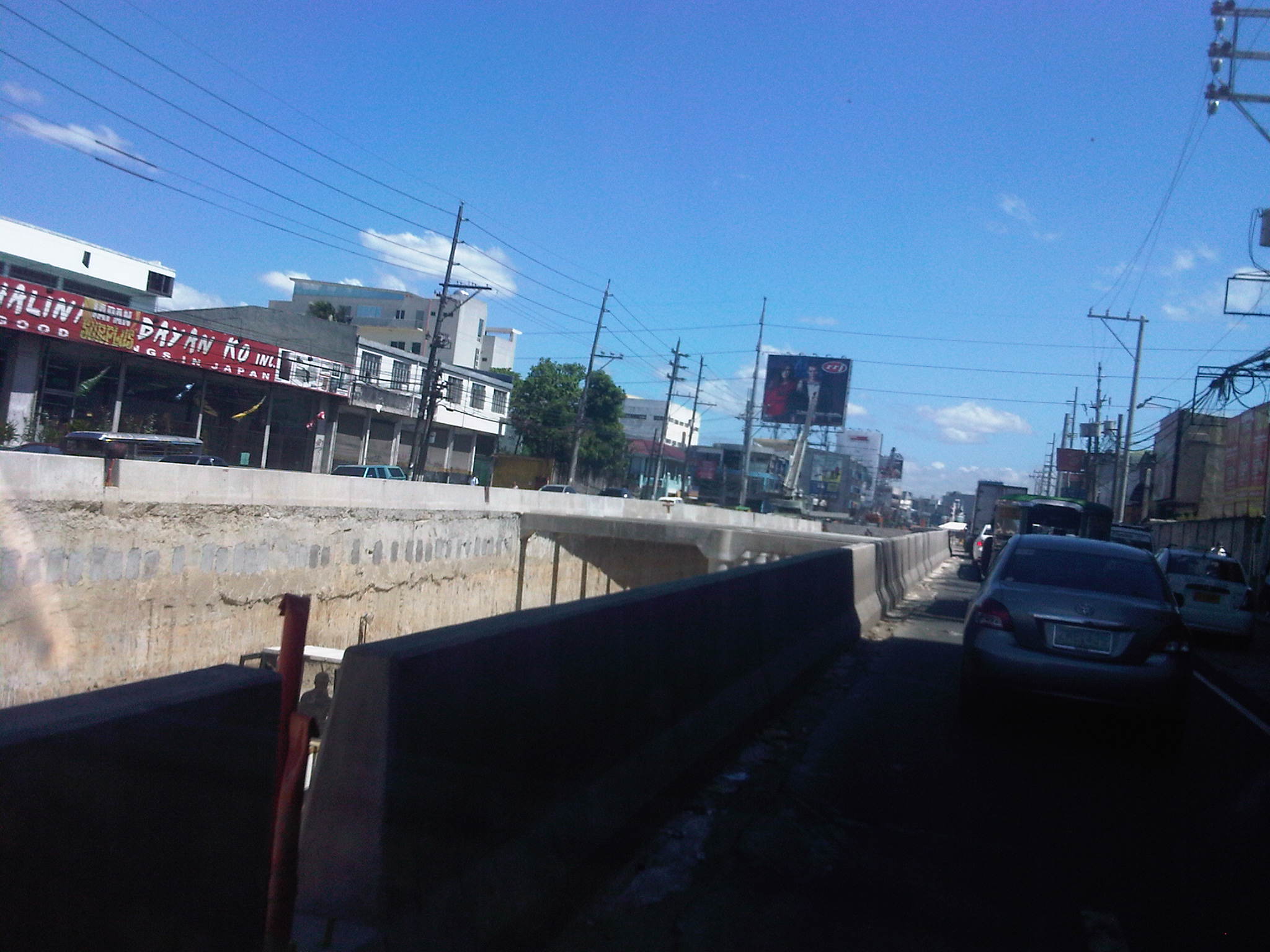
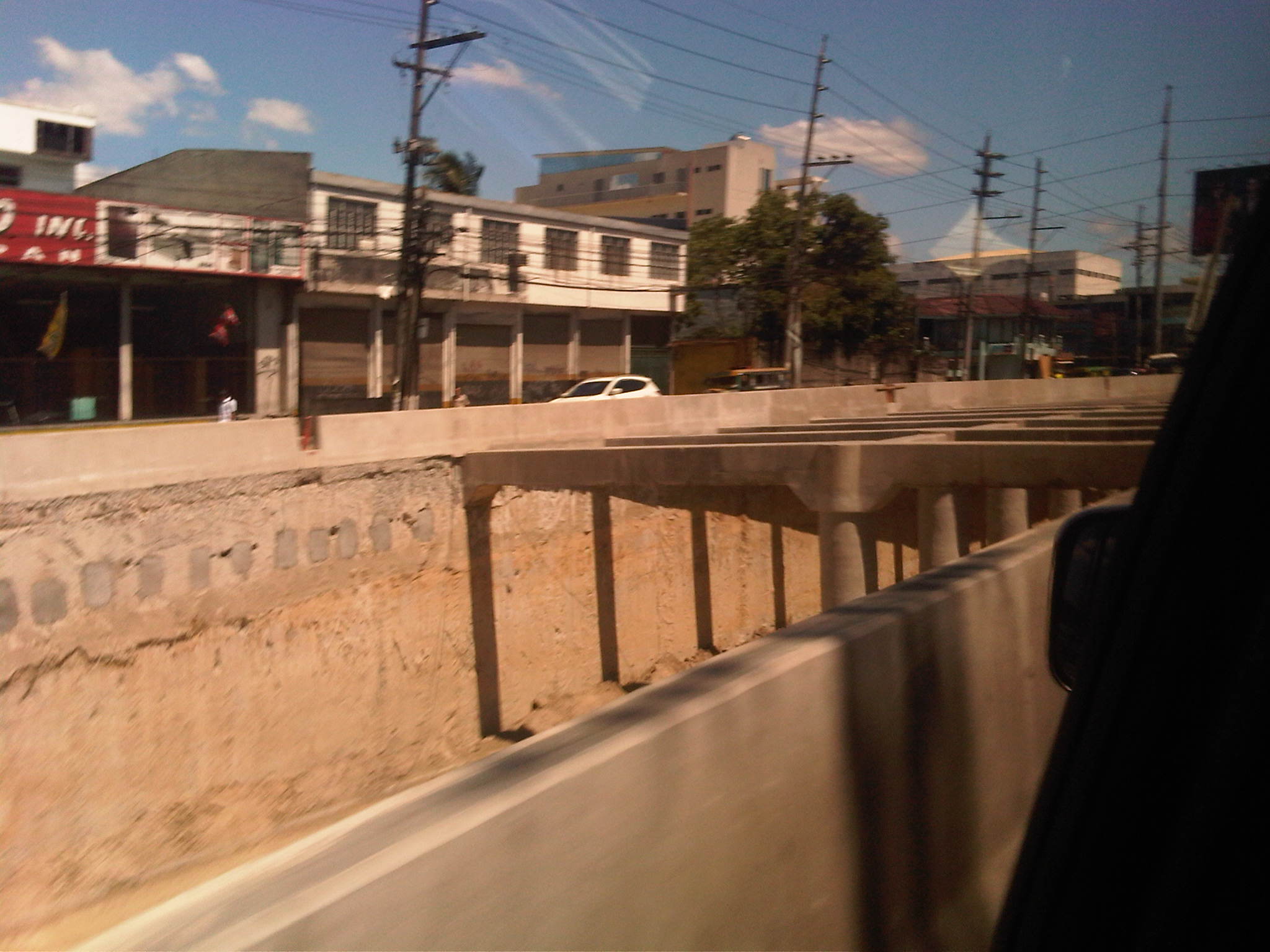
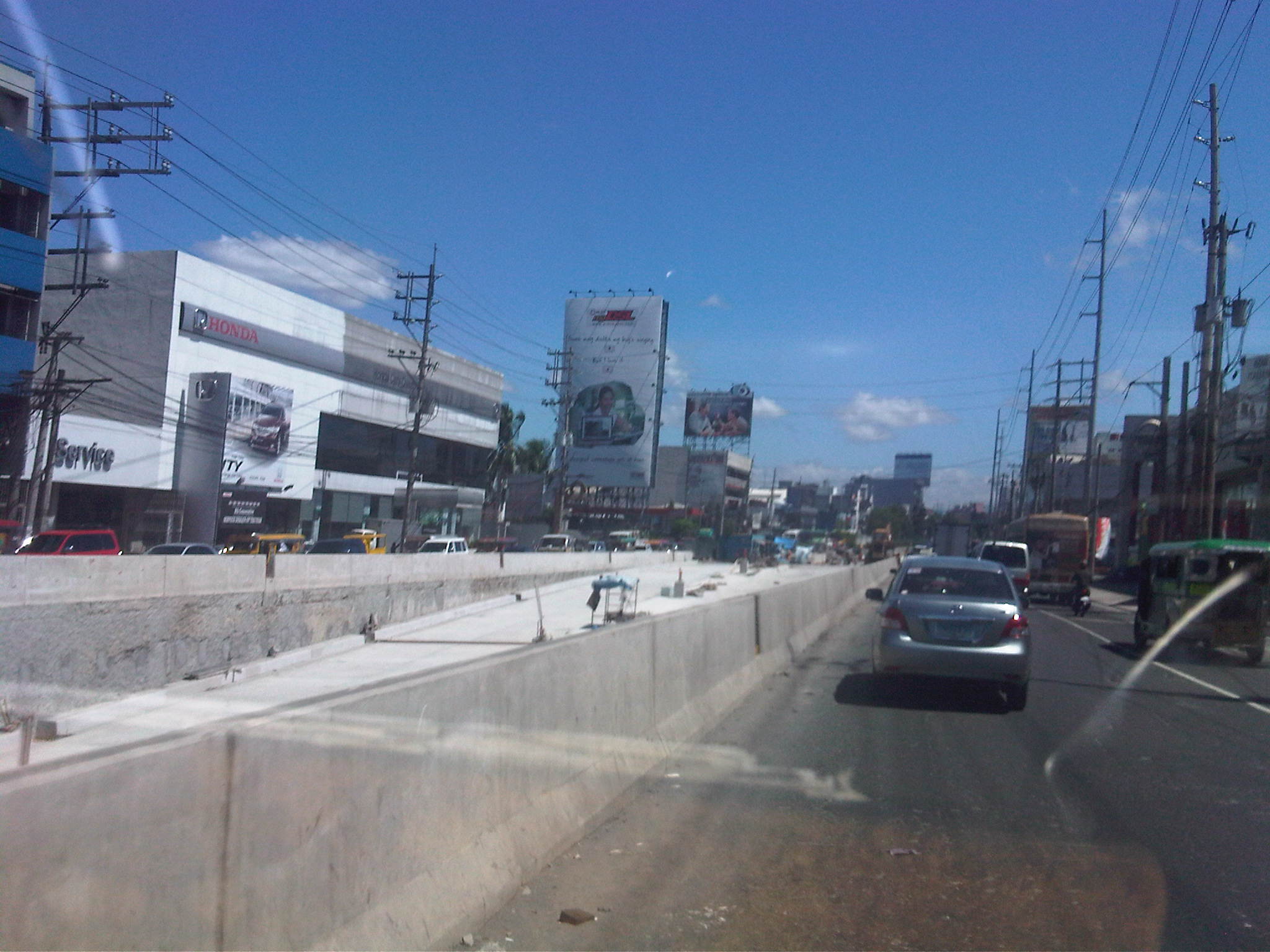
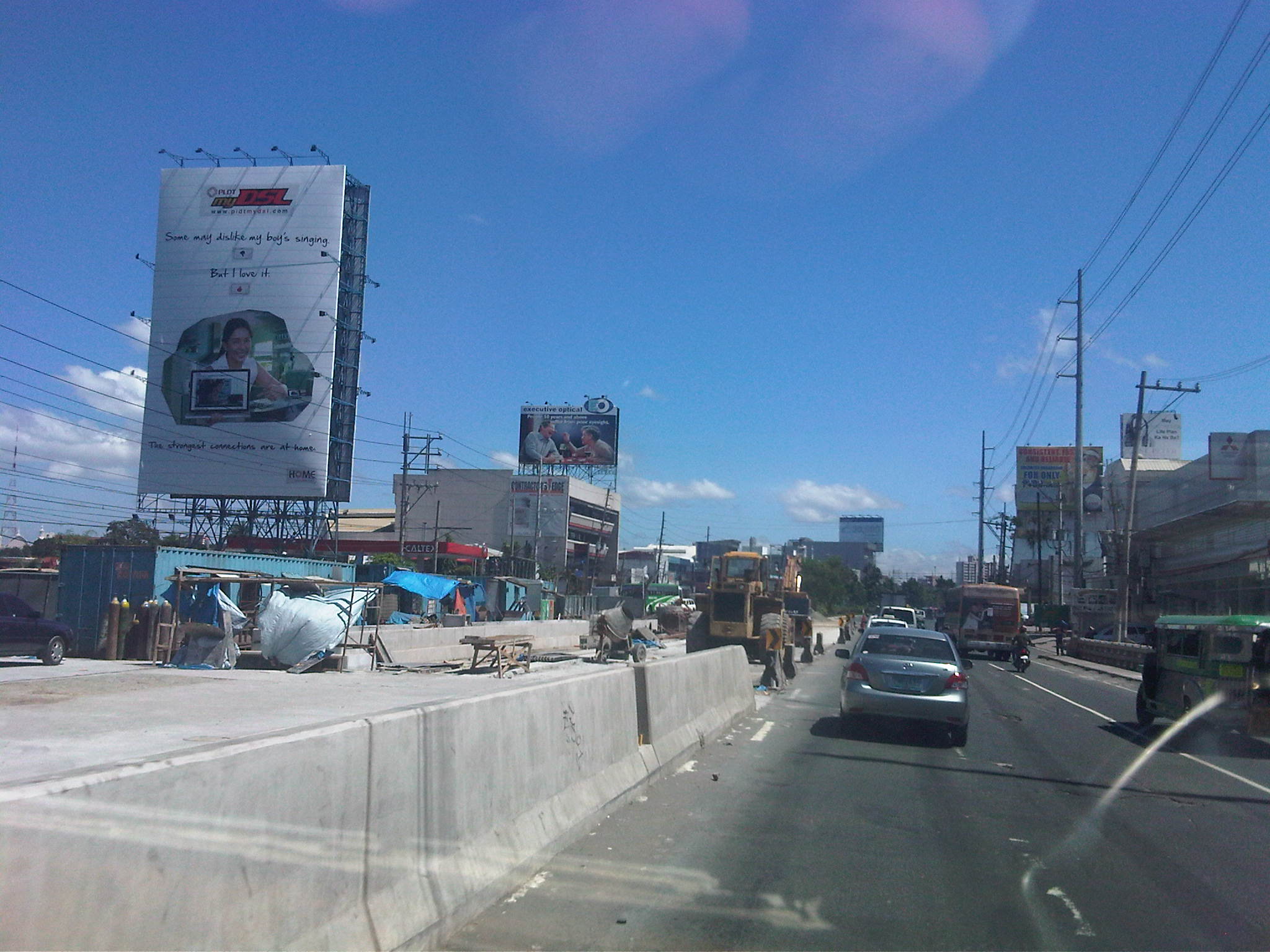
Passed by the construction site of the underpass along Quezon Ave. and the project seems to be running on schedule and should be finished prior to the next school year. Much is expected of the project because it has been touted as the solution to the traffic congestion along both major roads intersecting at this point.
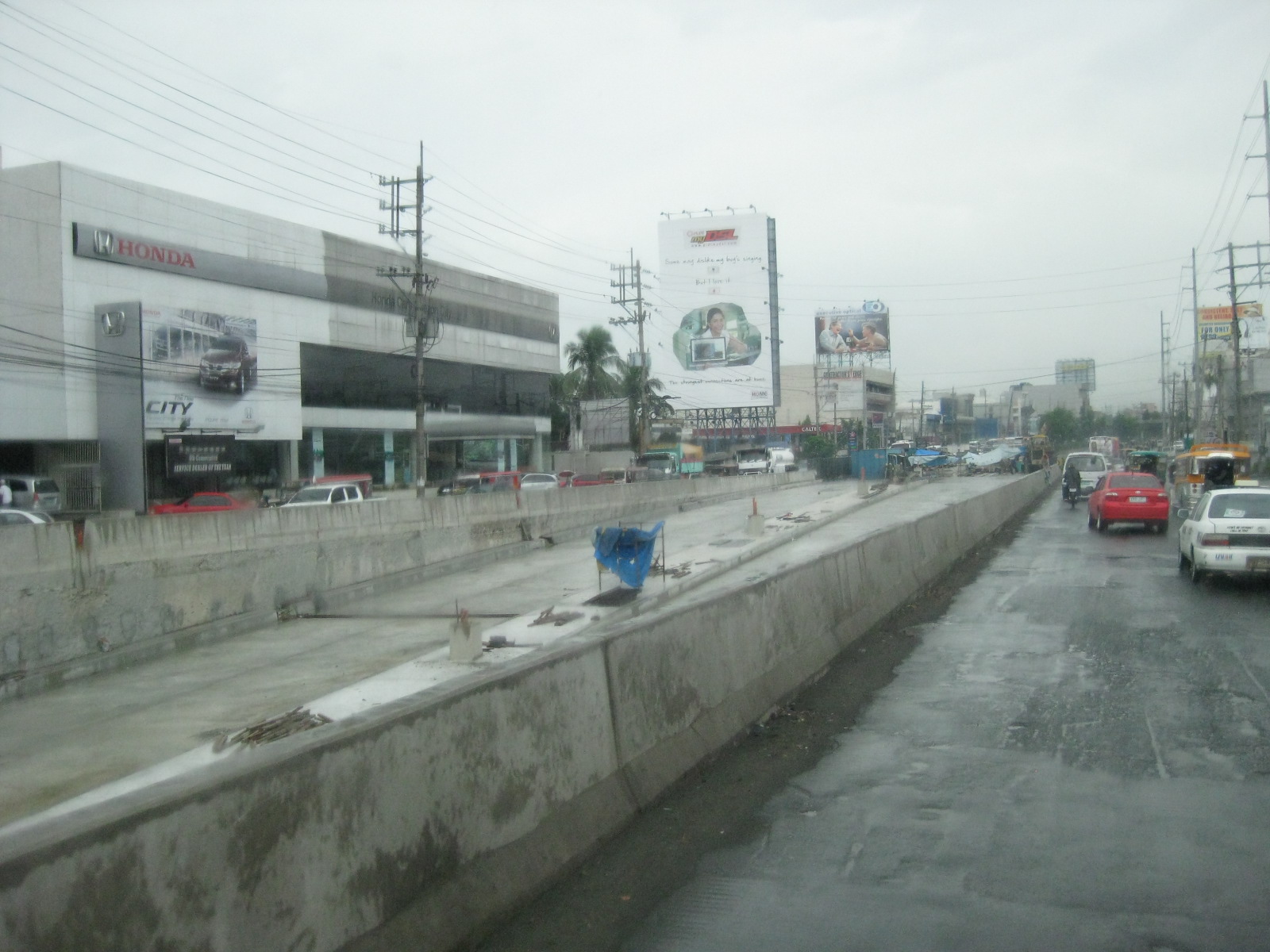
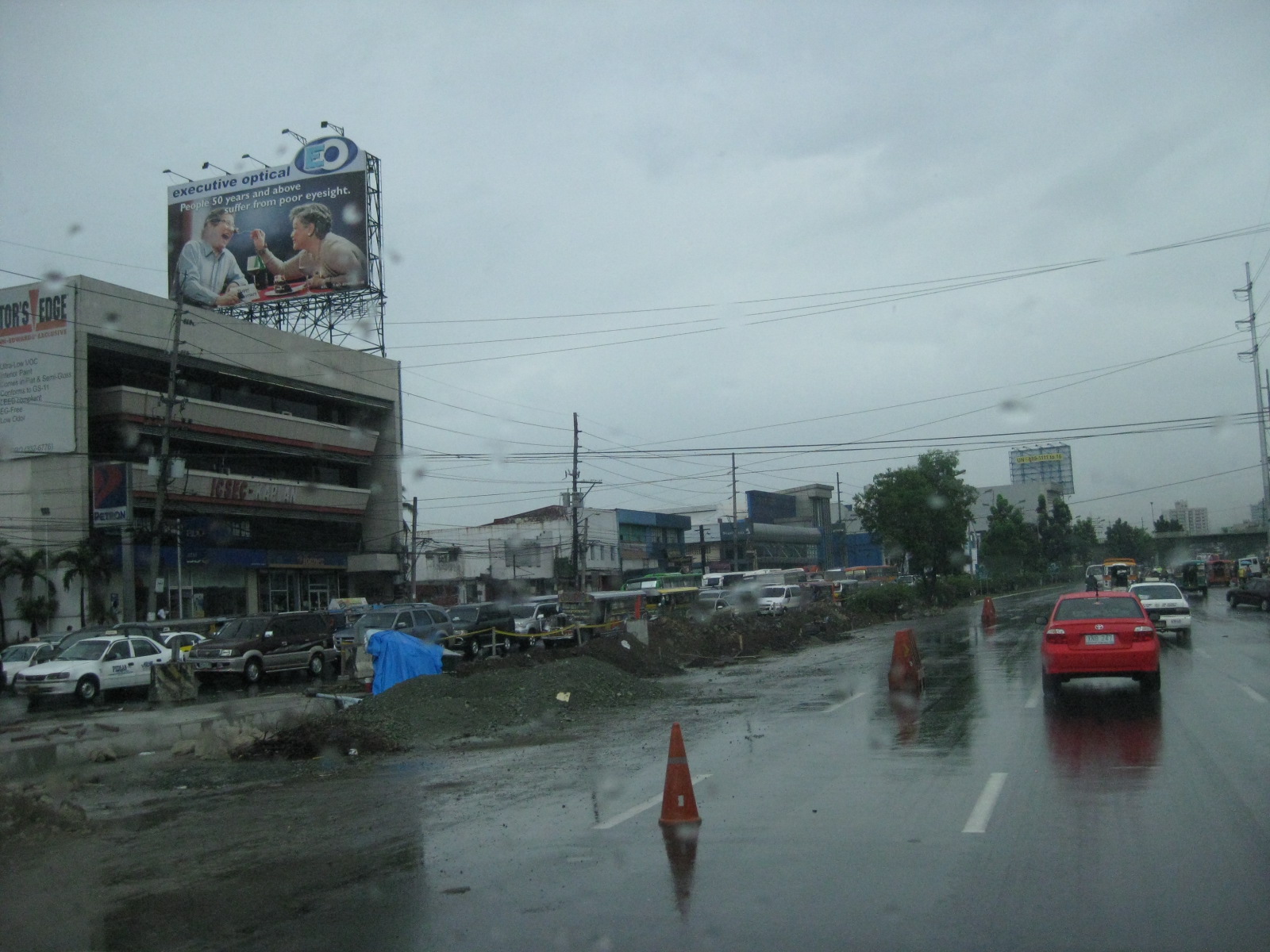
The following photos show the work site from the westbound side along Quezon Ave. from Honda to Sto. Domingo:
 1
1
 2
2
 3
3
 4
4
 5
5
 6
6
 7
7
 8
8
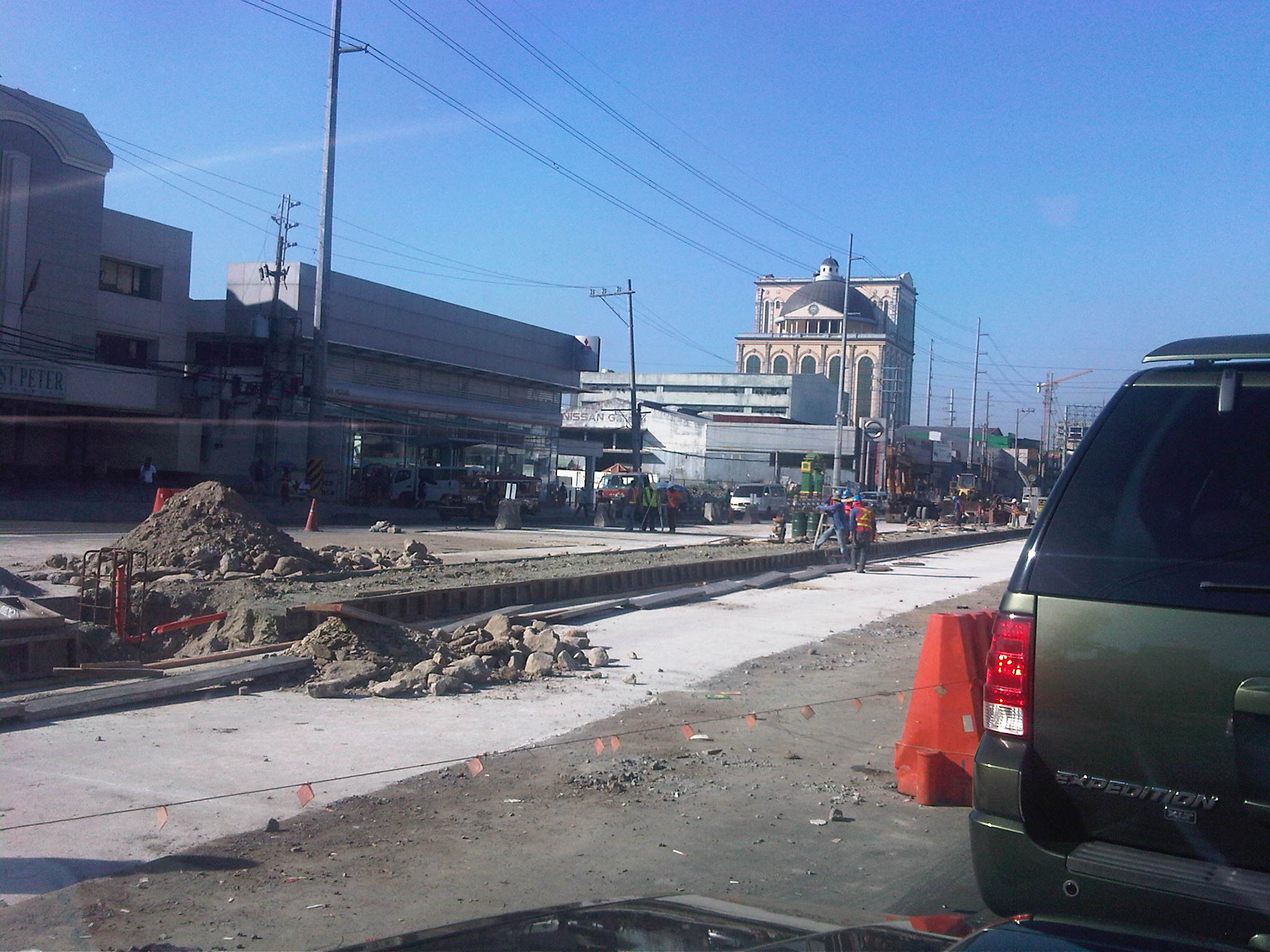
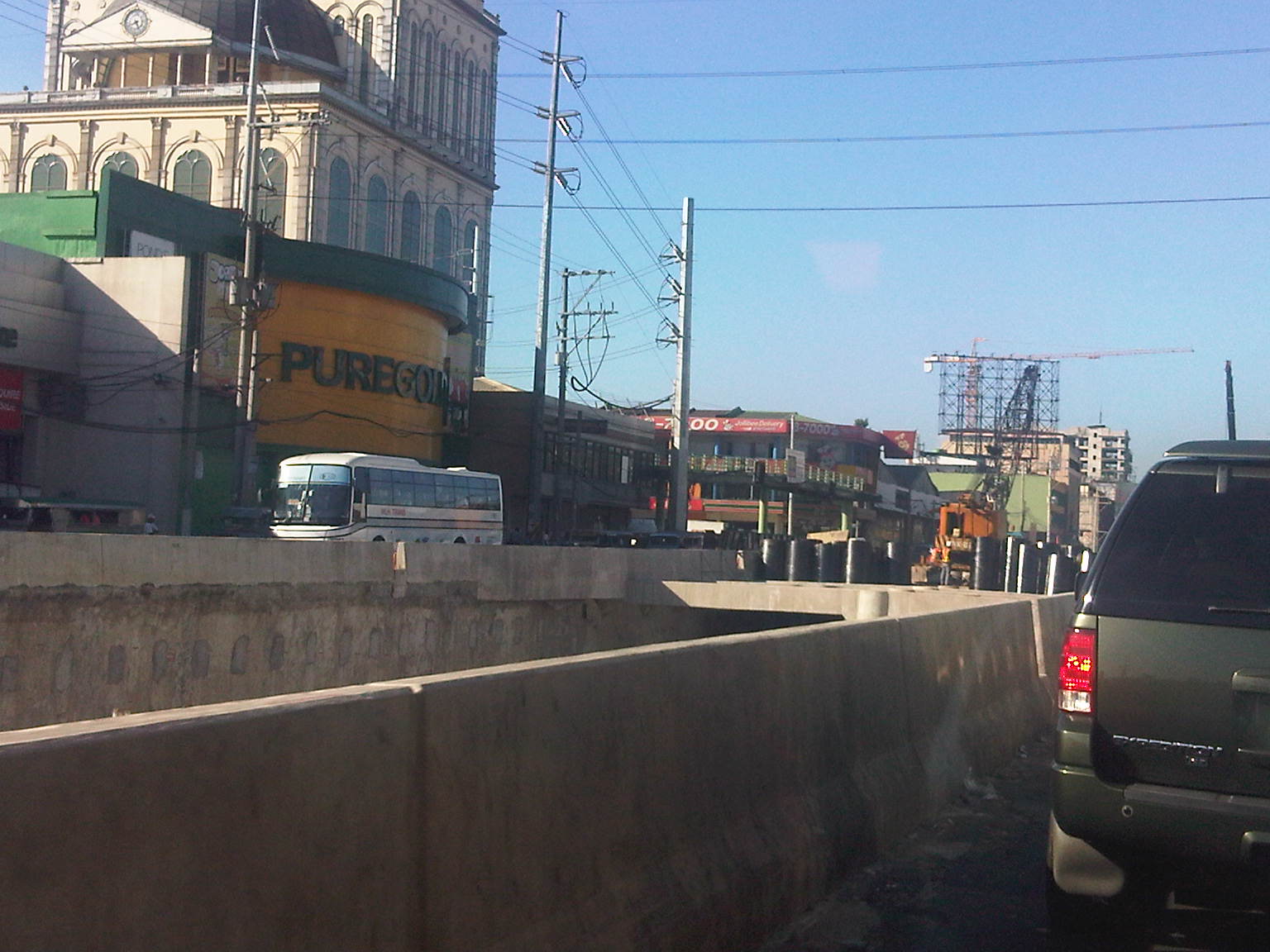
The following photos show the work site from the eastbound side of Quezon Avenue from the Sto. Domingo to Puregold:
 9
9
 10
10
 11
11
 12
12
 13
13
 14
14
 15
15
 16
16
 17
17
 18
18
There seems to be a lot at stake with the completion of this project considering concerns about the drainage (Talayan is nearby and so is a river that usually overflows during periods of heavy rains.) as well as the capacity of the roads to handle traffic. While there should be no problems along the eastbound direction of Quezon Ave. due to the available capacity due to the widened sections of the highway, it is quite a different case for the Manila-bound direction where congestion may occur due to Sto. Domingo church and the series of intersections including the busy one at Banawe. Nevertheless, the main concern will be if the traffic signals at the at-grade Quezon Ave.-Araneta Ave. intersection will be able to handle the remaining traffic considering that most through traffic along Quezon Ave. will be expected to take the underpass. While the DPWH simulations seem to show relief at the intersection, the actual outcomes are something to wait for in order to validate traffic engineering analysis for the junction.
–
Barriers at U-turn slots
The MMDA has received a lot of flak from motorists and road safety experts regarding traffic schemes in Metro Manila This is but natural and one can say that “it comes with the territory,” considering that the agency handles much of the traffic management in MM and a lot of criticisms are actually of the nitpicking kind. Some matters, however, while appearing at first to be minor are actually details that should not be missed particularly if the end result may mean a matter of life or death.
Details pertaining to the U-turn slots, for example, are often lost in the big picture approach of looking at the facilities as solutions to problems of congestion. In striving for faster speeds, the case for safety is often overlooked. In striving for continuous flow, the case for disciplined movement at intersections is discarded. And in imposing the scheme along roads not designed for it, the case for sound, safe design is sacrificed. The latter is demonstrated in the case of barriers used to delineate the U-turns, allocating space for turning vehicles while constricting that which is for others. For the barriers to be practically immovable, these were cast in concrete and painted to enhance visibility. In certain cases, reflectors were added to further increase visibility particularly at night-time. Previously, many barriers were made of plastic and filled with water for them to have weight. These eventually gave way to the more durable concrete barriers, although both were of the same shape and size and occupied significant space when laid out.
Recently, the MMDA installed plastic bollards at several U-turn slots, replacing the concrete barriers there. This was a welcome development that allowed the freeing up of space occupied by the massive concrete barriers. Moreover, while delineating the U-turns, the bollards will be more forgiving for motorists who could be involved in crashes involving these. Concrete barriers are not so forgiving and may cause a vehicle to overturn if not stop abruptly and highly likely to be causing serious injuries if not death.
 Typical concrete barriers near the foot of the Katipunan flyover across Aurora Boulevard – these are what will greet motorists speeding through the flyover and has been the bane of many who have crashed into these barriers (overspeeding? drunk? sleepy?). The barriers eat-up a significant portion of the middle lane and requiring drivers to swerve to the right and along the path of other vehicles. Plastic bollards have been installed but the concrete barriers remain and still pose dangers to motorists.
 Plastic bollards along Katipunan at the U-turn slot across from the Miriam College main gate – these are more forgiving in that it will cause damage to a vehicle but will not stop it on its tracks delivering potentially fatal injuries to occupants. A plastic jersey barrier can be seen at the end of the median island at the left side of the photo. Such were usually filled with water to increase their weights to avoid them from being displaced from their locations.
There are other alternatives that may be installed and not just for U-turns, but also for public transport bays, medians and other applications. Some bollards may be collapsible, recovering (standing right up) after being bumped or ran over by a vehicle. Perhaps the MMDA should look into such options and other details more often while also proactively seeking for suitable, not necessarily novel, solutions to our traffic problems.
–
Truck weight limits in the Philippines
I noticed a lot of interest on the “truck ban” scheme from the statistics provided by WordPress on my dashboard. It seems there are very limited material available on the scheme especially in the Philippines where there have been variations of and misconceptions on this travel demand management (TDM) measure. Why do cities like Metro Manila implement a truck ban? Or better yet, why are there designated truck routes in cities? The answer can be quite simple if viewed from the perspective of asset preservation. That is, by restricting trucks to use specific roads, we are also limiting their impacts (read: damage) to the road infrastructure. Such impacts come in the way of damaged pavements and/or bridges that bear the brunt of the weights carried by heavy vehicles. But such argument begs the question of why, in the first place, shouldn’t we design our pavements and bridges so that they may be able to withstand the cumulative loads of heavy vehicle traffic over a prescribed period of time, say 20 years, give and take a few years for variability and reliability in design and construction methods? Such is a question that needs to be answered, and clearly, by our DPWH, at least for the case of our national roads and bridges. It is really not a simple matter and certainly not something that cannot be blamed solely on the fact that evidences in the Philippines point to truck overloading as one of the culprits for damaged pavements and bridges.
The website of the Department of Public Works and Highways provides information on the axle load and truck weight limits for national roads. The matrix of weights may easily be downloaded and is provided in the following document:
The maximum single axle loads for different countries around the world are provided below:
Max Permissible Truck Loads World
I found another table of values this time for European countries. Based on the table on weight limits in European Union Countries, France seems to have the heaviest single axle load limit.
Still, the question running in the minds of most people involved in policymaking, monitoring and enforcement, and research is “How did we come up with the 13.5-metric ton maximum single axle load value in the first place?” Surely, it wasn’t a number that was plucked out from the air?
The 13.5-metric ton was most probably derived from an axle load study conducted in the 1990’s. Such a study could have, among others, determined the appropriate maximum axle loads that could be adopted by the country in lieu of the limits at the time that were already deemed obsolete given the evolution of trucks over time (i.e., they’re bigger now compared to, say, 30 years ago). What is problematic is that it seems the study was only able to derive the maximum single axle load and was not able to estimate maximum loads for tandem and tridem axles. Tandem axles are two axles positioned one after the other while tridems are three axles grouped together. These tandems and tridems are typical configurations for the rear axles of large trucks and trailers, enabling them to support heavy loads that typically are distributed more towards the rear axles.
Commonwealth extension
Quezon City’s Commonwealth Avenue extends from its junction with the Elliptical Road (Quezon Memorial Circle) up to gate of Jordan Plaines Subdivision in Novaliches. Often labeled as a killer highway due to the frequent road crashes that have resulted in many deaths, it is perhaps the widest road in all of the Philippines, having 10 lanes per direction at its widest sections in the Diliman area. The avenue is still far from completion as the stretch from Jordan Plaines to Quirino Highway has taken quite sometime for construction. I took the following photos of the area last weekend to illustrate the situation.
 Counterflow scheme a block away from the Jordan Plaines gate due to excavations and the civil works on a short bridge over a creek. Two weeks ago the counterflow scheme was implemented along the northbound side of the avenue.
 Only a few people were working on the Sunday I passed by the area.While there are signs and a few barriers, the work area presented a lot of hazards to both motorists and pedestrians. It was a bit dry last Sunday due to the sunny weather but I can imagine the mud from the work site should rains fall in the area.
Connecting Commonwealth Avenue with Quirino Avenue will surely improve circulation in the area and would probably ease congestion in the Novaliches bayan area. Maybe there will even be an adjustment of some public transport routes once Commonwealth and Quirino are connected. The extension of the avenue is long overdue and a much delayed project considering that there are already developments along the right of way including a residential project by the Quezon City government. The completion of the avenue will perhaps also have a significant impact on land values in Novaliches.
 Caught (up) in traffic