
Home » Infrastructure (Page 29)
Category Archives: Infrastructure
Professorial Chair Lectures on Transportation Topics – 2012
The College of Engineering of the University of the Philippines Diliman recently held its Professorial Chair Colloquium where lectures were delivered by faculty members from the various institutes and departments comprising the college. Four lectures were delivered last August 10, 2012 at a special session held at the Toyota Training Room of the National Center for Transportation Studies. The lectures were on transportation topics and presented by faculty members of the Institute of Civil Engineering who are also Fellows at the NCTS. Following are the lectures and the presentation files in PDF:
Palmiano, H.S.O., Investigation of Road Crash Causal Factors in Metro Manila, DMCI Developers Professorial Chair: Road Safety Researches HSOPalmiano 10Aug2012
Vergel, K.N., Design of Traffic Signal Timing and Traffic Impacts of the Re-Introduction of Traffic Signal Control at the Intersection of the University Avenue and Commonwealth Avenue, Maynilad Professorial Chair: Traffic Signal Timing KNVergel 10Aug2012
Sigua, R.DG., Microscopic Simulation: A Tool for Evaluation of Traffic Schemes, Prof. Emeritus Norbert S. Vila Professorial Chair: Traffic Simulation RDGSigua 10Aug2012
Regidor, J.R.F., Revisiting the Costs of Traffic Congestion in Metro Manila and their Implications, Pozzolanic Philippines, Inc. Professorial Chair: Revisiting Costs of Congestion JRFRegidor 10Aug2012
–
Solutions to floods and traffic in Marikina, Antipolo and Cainta?
Writing about the improved drainage systems along Marcos Highway and A. Tuazon in the cities of Marikina, Antipol and Pasig and the Municipality of Cainta, I was hopeful (along with a lot of other people living in these areas) that the completed projects would be able to handle heavy rains such as those experienced during the onslaught of Typhoon Ondoy (International name: Ketsana) in 2009. It turns out a lot of people’s hopes sank in the floods that have ravaged the areas again and many other parts of Metro Manila and the surrounding provinces this last several days.
Is there a solution to the problem? I would like to think that there is an engineering solution. I cite as an example Malaysia’s experience, particularly in Kuala Lumpur that has also experienced a lot of flooding in the past. To address severe flooding brought about by , they constructed the Storm Management and Road Tunnel or SMART Tunnel . Details for this infrastructure are posted in their website and it does not take a genius to understand what it would take for the Philippines to solve similar problems in its national capital region. [Of course, it helped that the tunnel is also used for traffic!] Too much investment is already established in these cities and it is not an easier task to move people from the affected areas compared with what it would take to build something like the SMART. Sige nga, kaya bang palipatin ang lahat ng tao sa Marikina, QC, Pasig, lower Antipolo and Cainta sa ibang lugar?
Singapore also did major drainage works in that city state along with its subway development. They recognized early on that they had a serious problem and it required sacrifices that are now paying off in terms of them also experiencing heavy rains from the monsoon and yet have minimal or no severe flooding problems like what we have. Such projects are long overdue here and should be the flagship project of any administration who would want to come up with something that they will be remembered for by generations to come – and with smiles on their faces.
–
Transportation-related lectures at the UP College of Engineering 2012 Professorial Chair Colloquium
The College of Engineering of the University of the Philippines Diliman will be holding its Professorial Chair Colloquium for 2012 on July 30, 2012 at the Melchor Hall and the UP Alumni Engineers Centennial Hall at the UP Diliman campus. Among the topics under many disciplines of engineering are several lectures on transportation. These are the following and mainly under three departments of the college.
Institute of Civil Engineering [P & G Room, Melchor Hall]
- “Investigation of Road Crash Causes in Metro Manila,” Dr. Hilario Sean O. Palmiano, DMCI Developers Professorial Chair [8:30 – 8:50 am]
- “Design of Traffic Signal Timing and Traffic Impacts of the Re-introduction of Traffic Signal Control at the Intersection of the University Avenue and Commonwealth Avenue,” Dr. Karl B.N. Vergel, Maynilad Professorial Chair [8:50 – 9:10 am]
- “Microscopic Simulation: A Tool for Evaluation of Traffic Schemes,” Dr. Ricardo G. Sigua, Prof. Emeritus Norbert S. Vila Professorial Chair [9:10 – 9:30 am]
- “Revisiting the Costs of Traffic Congestion in Metro Manila and Their Implications,” Dr. Jose Regin F. Regidor, Pozzolanic Philippines, Inc. Professorial Chair [9:30 – 9:50 am]
Department of Mechanical Engineering [Maynilad Room, Melchor Hall]
- “Performance And Emission Characteristics of a Direct Injection Diesel Vehicle with Different Blends of CME Biodiesel,” Dr. Edwin N. Quiros, Emerson Professorial Chair in Mechanical Engineering [9:30- 9:50 am]
- “Design and Local Fabrication of an Energy- Efficient Electric Vehicle,” Asst. Prof. Joseph Gerard T. Reyes, Emerson Professorial Chair in Engineering [10:30 – 10:50 am]
Department of Chemical Engineering [Maynilad Room, Melchor Hall]
- “Co-Production of Alternative Fuels for the Philippines,” Dr. Rizalinda L. De Leon, Semirara Professorial Chair in Engineering [10:50 – 11:10 am]
The lectures are all open to the public and will be held from 8:30 AM to 12:30 PM. There are 8 lecture groups that are assigned to 8 venues at Melchor Hall and UPAE Centennial Hall. Melchor Hall is located at the university core along the Academic Oval while the UPAE Hall is located along Velasquez Street beside the EEE Institute Building and across from the National Institute of Geological Sciences (NIGS).
–
Road and drainage works along A. Tuazon Ave., Marikina
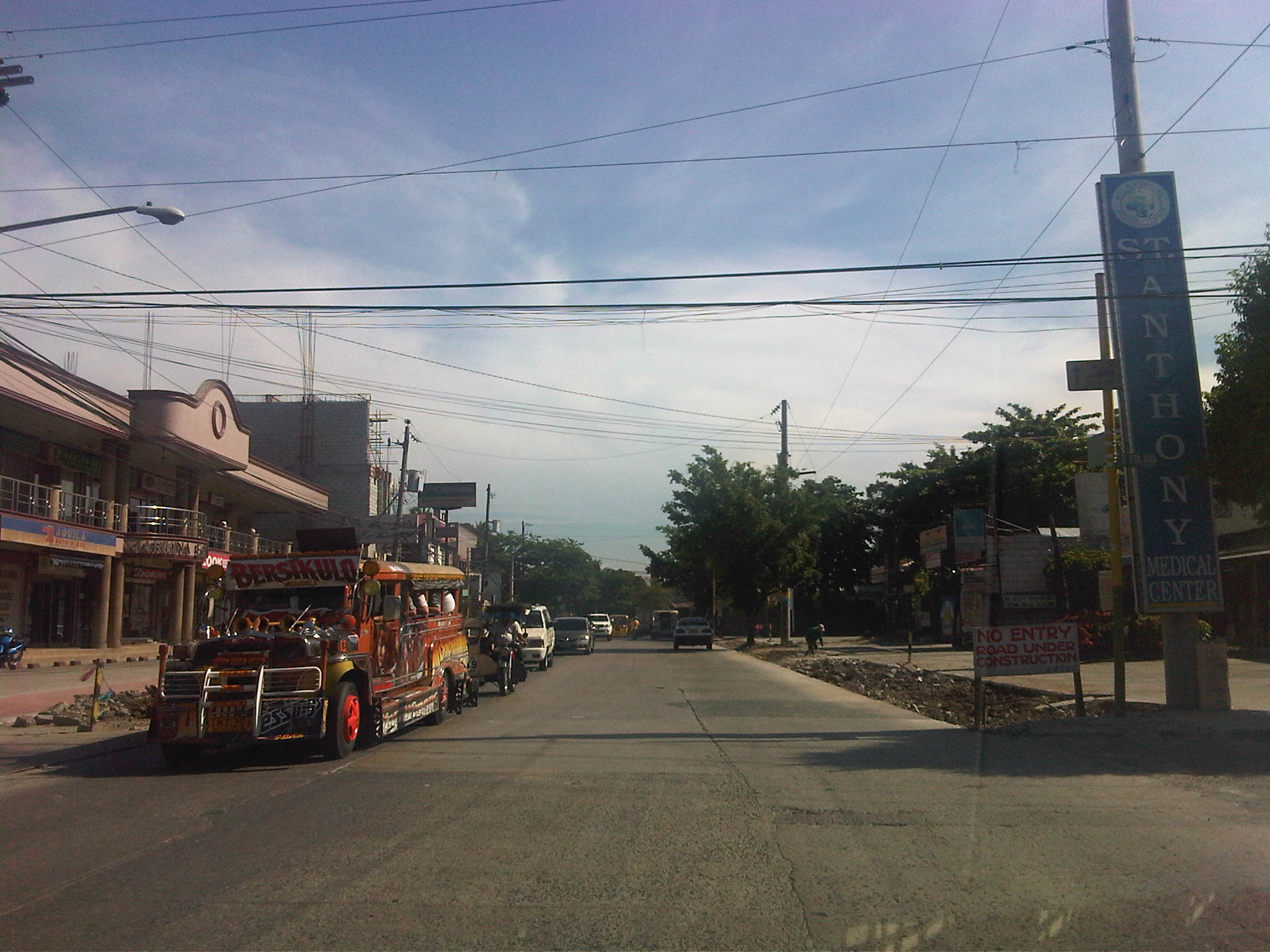
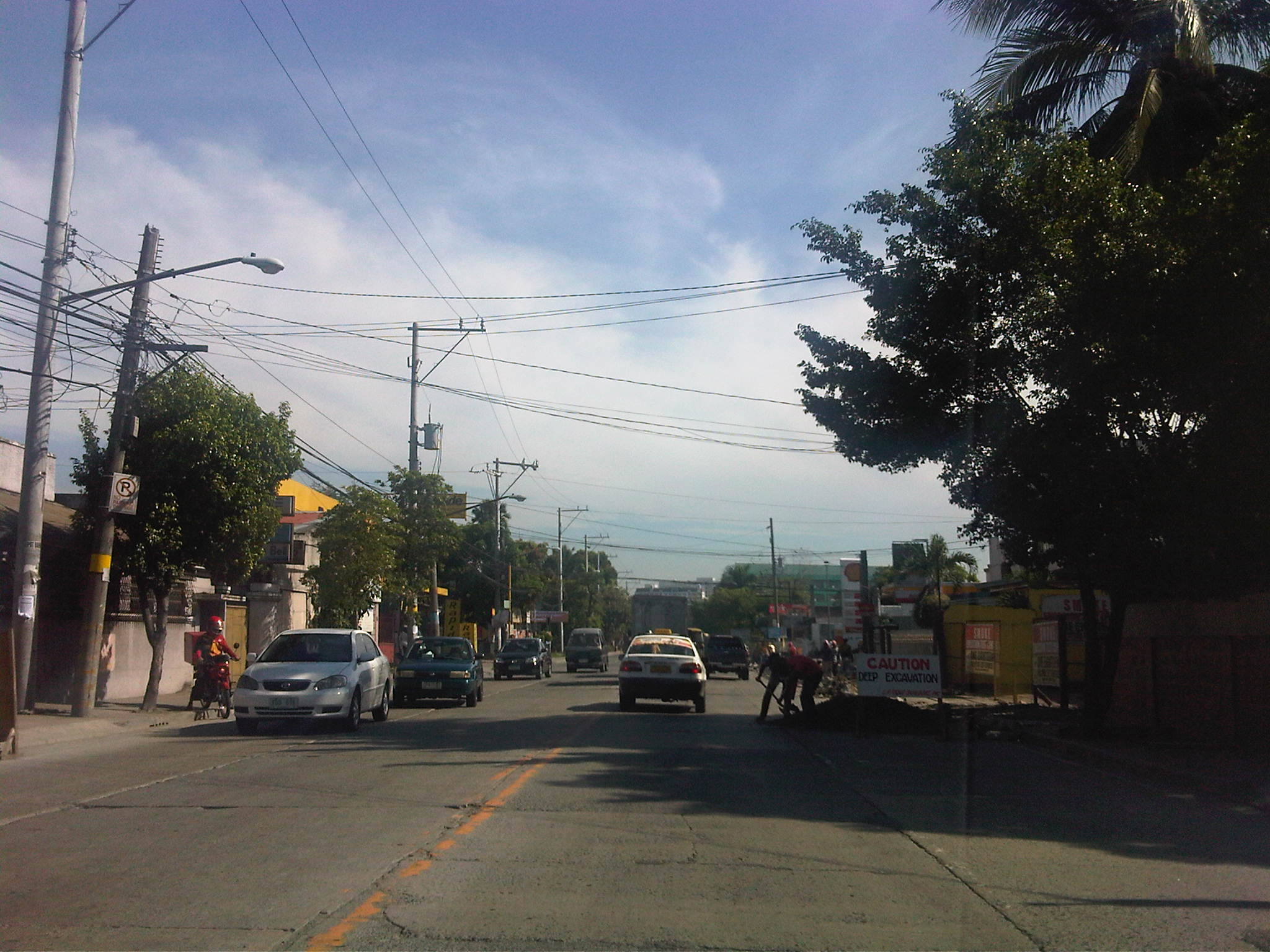
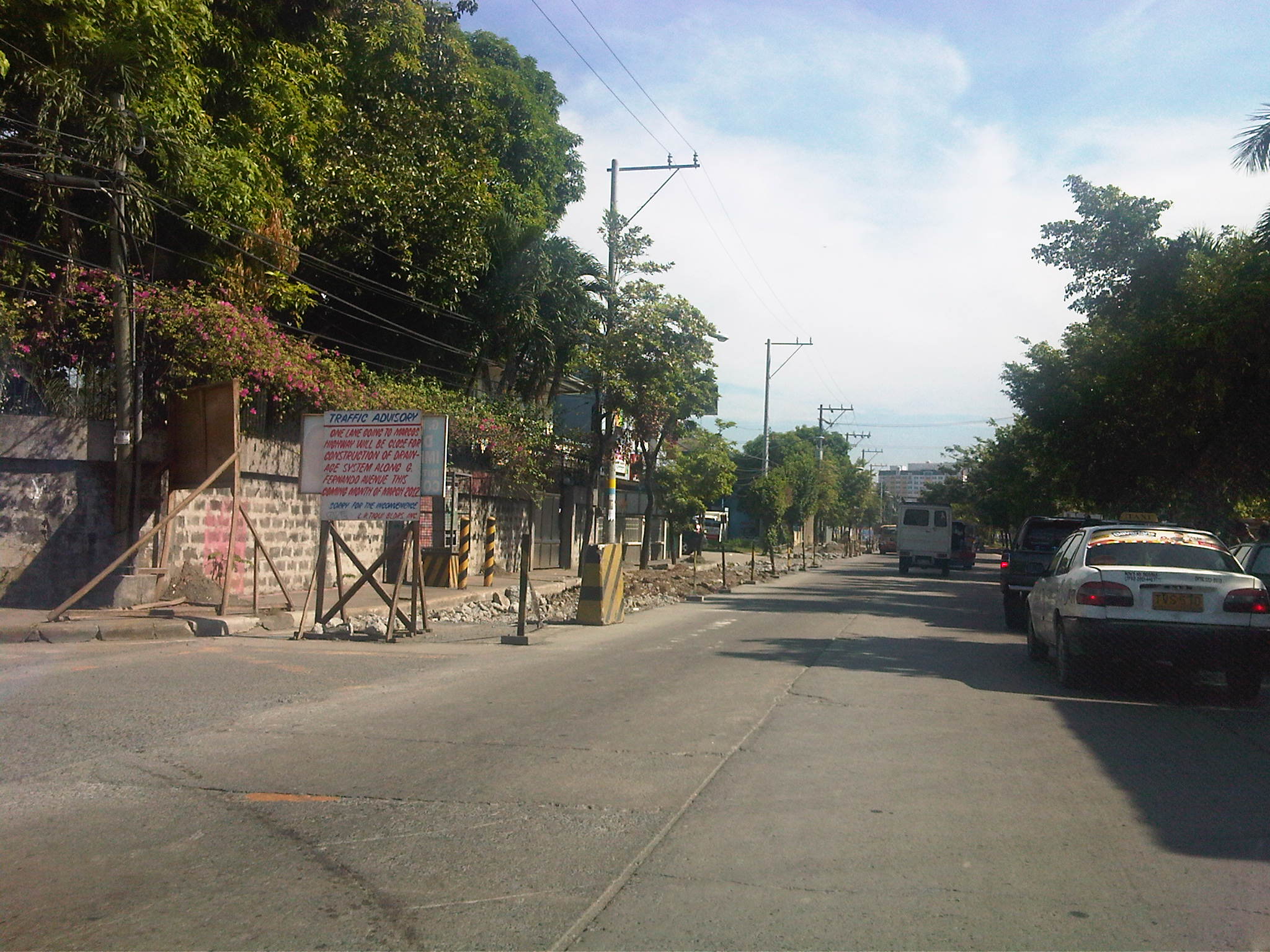
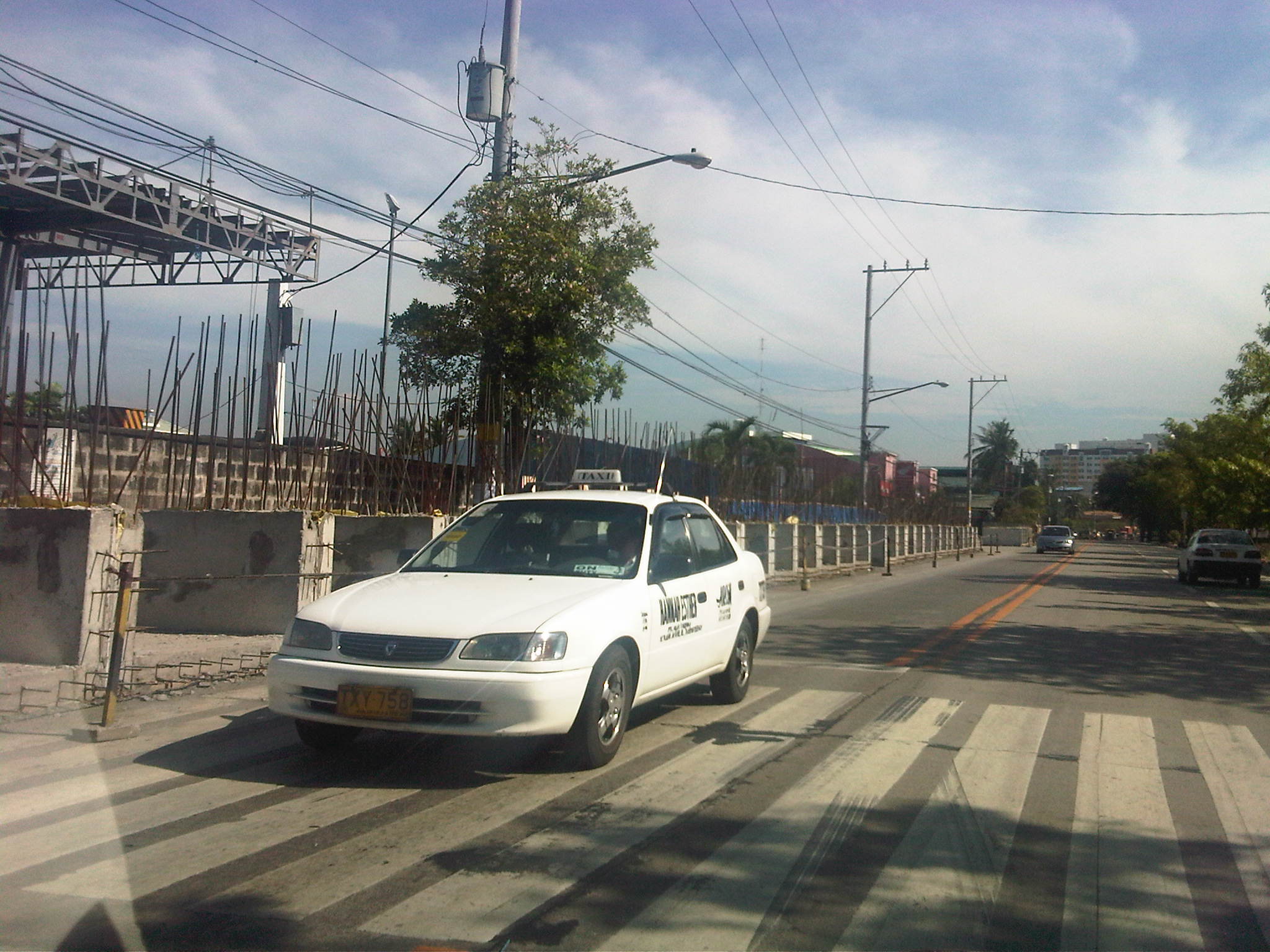
Driving to the dentist on a Saturday morning, I came across roadworks along Angel Tuazon Ave. in Marikina City. The road connects the Marikina portion of Sumulong Highway with Marcos Highway in the Pasig/Cainta area and was also known as Fernando Sr. Ave. at one time. With the completion of works along Marcos Highway and Imelda Avenue, I was happy to see another road near my residence getting some much needed attention.
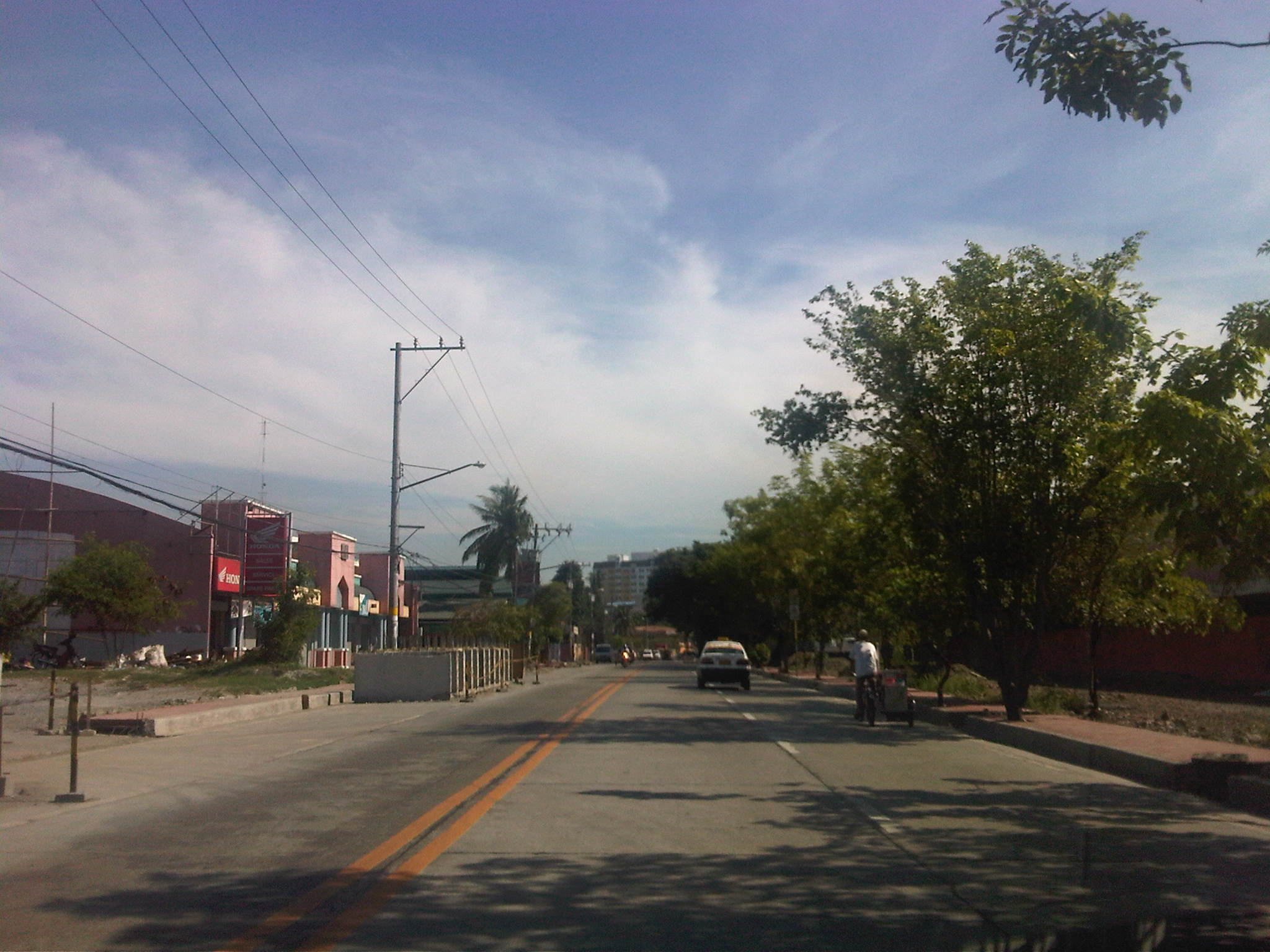
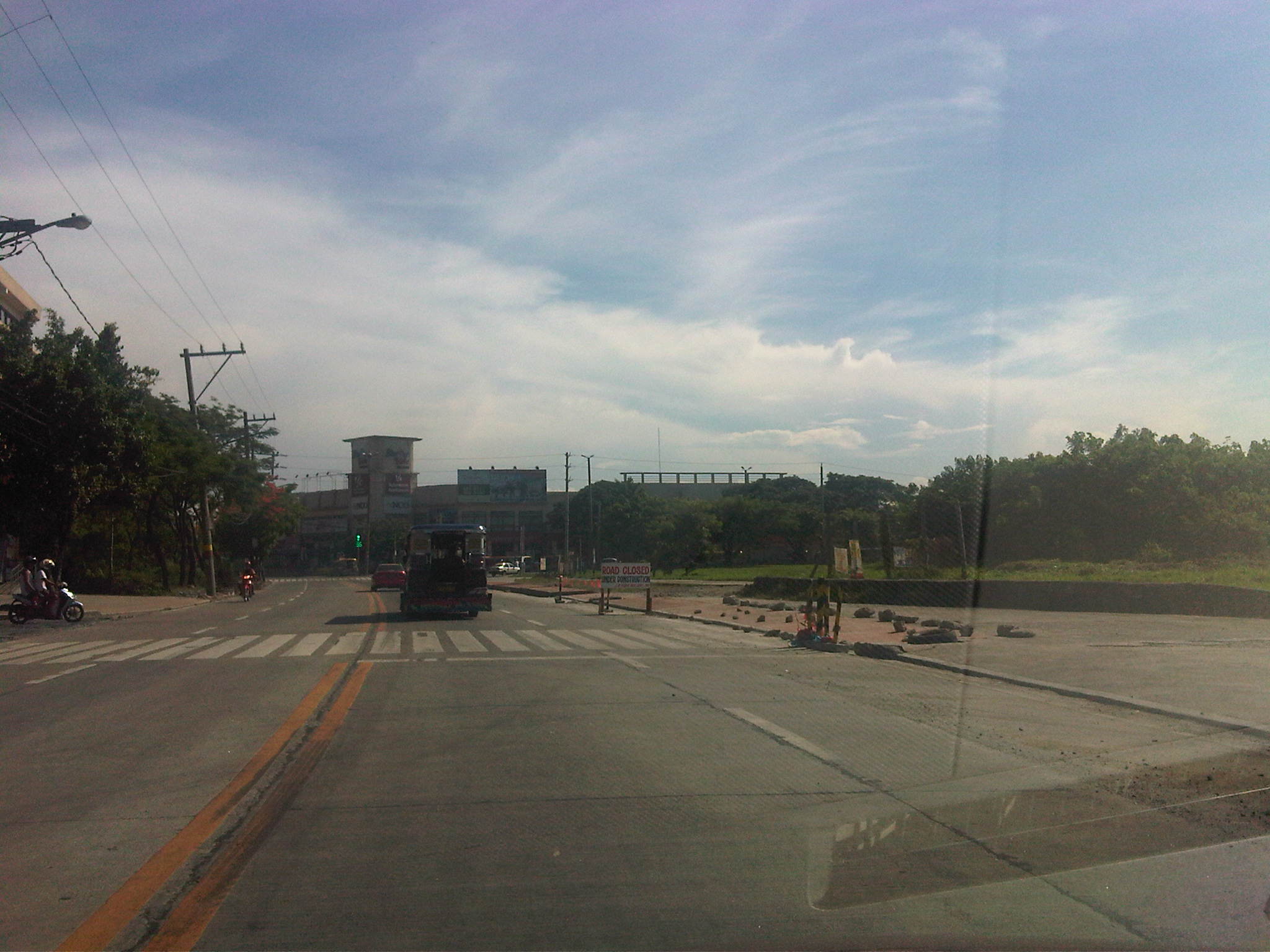
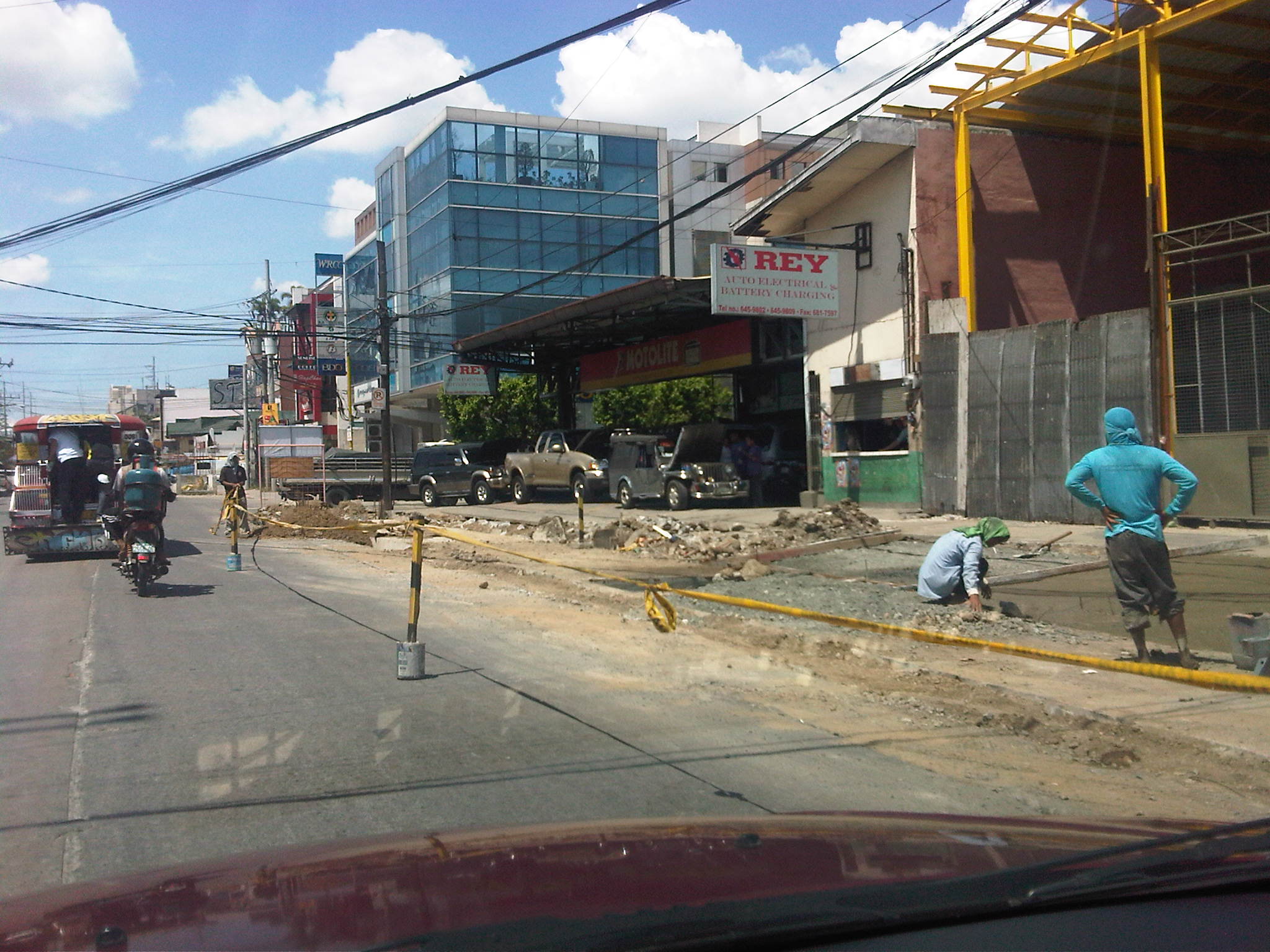
I thought that the works were just for the rehabilitation/concreting of damaged or weather pavements but it turned out to be something of a larger scope that includes drainage/flood control. The following photos were taken along the stretch of A. Tuazon last Saturday. Shown in the photos are road repairs, re-blocking/re-paving, drainage works and sidewalk construction in various stages of implementation. By the looks of it (there were a lot of people working along different sections of the avenue) the project will finish in time for the opening of school in June. Kudos to Marikina leaders for doing their jobs in this road and area that are usually subject to flooding during times of severe rain.
 1
1
 2
2
 3
3
 4
4
 5
5
 6
6
 7
7
 8
8
 9
9
 10
10
 11
11
 12
12
 13
13
 14
14
 15
15
I didn’t bother to put captions on the photos as they pretty much speak for themselves.
–
Fort Bonifacio flyover
After only seeing the new overpass to C5 northbound from Bonifacio Global City when it was under construction and after its completion from the perspective of a traveler using C5, I was finally able to use the flyover a couple of weeks ago. The following photos show the newly constructed overpass connecting 36th Street to C5 northbound that is supposed to decongest the older interchange emanating from 26th Street/McKinley Parkway.
 Approach to the new overpass – the chevrons are supposed to guide motorists as to the separation of traffic lanes. The lane to the right leads to the service road for Market! Market! and connects with C5 southbound.
 Curvature – the alignment from the approach to the turn towards C5 is actually a reverse curve
 View from the top – this is what motorists will see upon reaching the top of the overpass as he/she turns towards C5, which is shown on the left of the photo. There is also a good view of the Sierra Madre mountains.
 Descent – traffic along the two-lane overpass was very light when we used it; quite ideal for speeding a bit to save on time on our return to the university
 Separate ways – the lines delineating the two lanes of the flyover transform into chevrons and directional arrows are visible to guide motorists merging into C5 and traveling in the direction of Pasig and Quezon City, and those heading towards Taguig and Pateros via the service on the right.
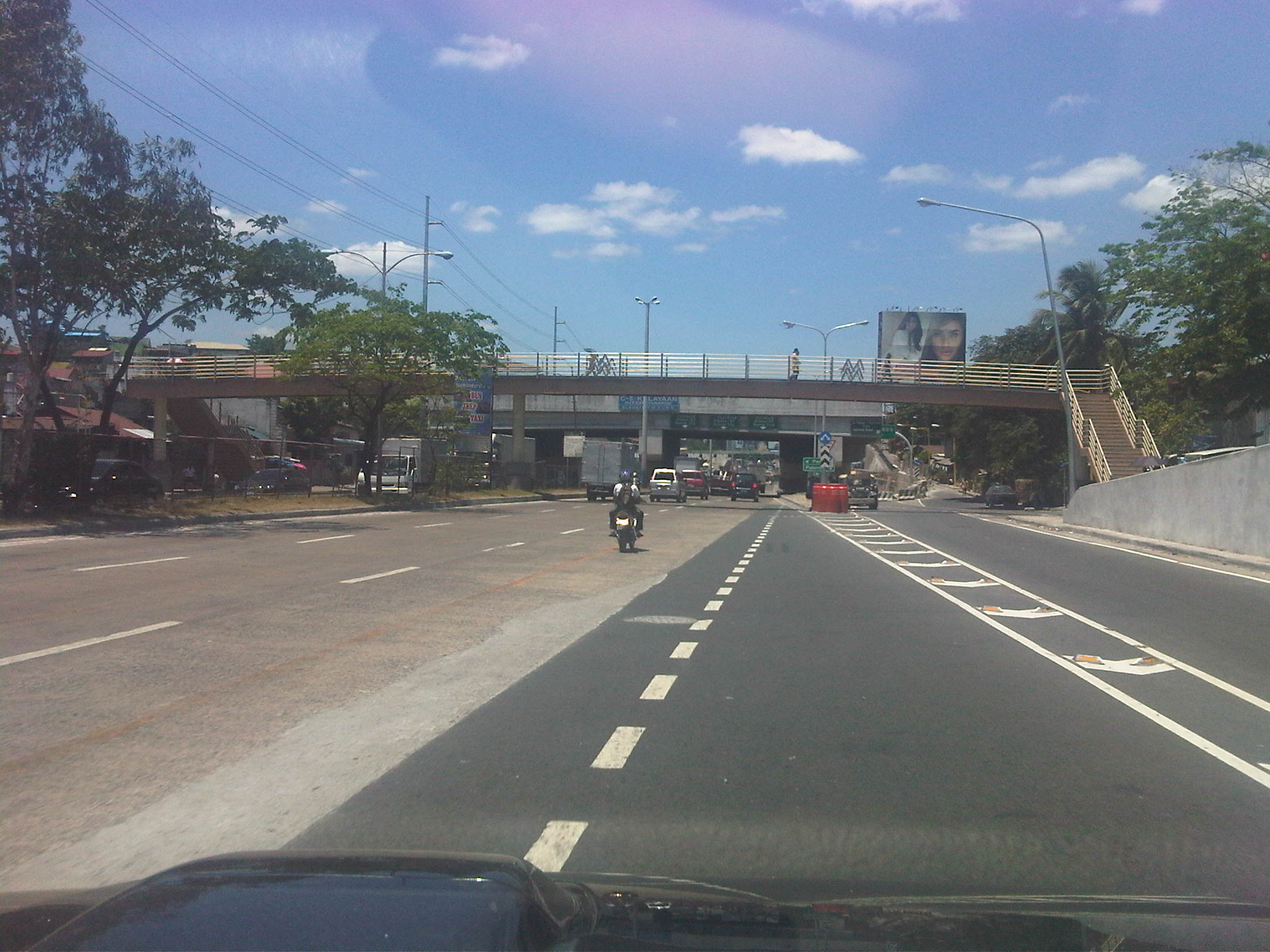 Overpasses galore – the south component of the elevated U-turn pair, a remnant of the previous MMDA dispensation, is obscured by the pedestrian overpass connecting the East Rembo districts separated by C5.
 Interchange? – the pair of elevated U-turns is called the C5-Kalayaan interchange, quite a stretch to many traffic and highway engineers who were critical of the facilities that were constructed instead of the recommended underpass along C5.
–
The Panay-Guimaras-Negros bridge: nice to have but is it necessary now?
An article came out of the Philippine Daily Inquirer about 19 congressmen backing a proposed 53-Billion Peso bridge project. The bridge is supposed to connect the main islands comprising Western Visayas namely Panay (which has 4 provinces – Iloilo, Capiz, Aklan and Antique), Guimaras and Negros (divided into two provinces – Negros Occidental and Oriental). The claim is that the bridge will generate traffic between the islands, leading to more economic activity. While this preliminary assessment is generally true, it is the magnitude of the traffic and the resulting benefits that is difficult to determine. In fact, it is very difficult to establish a likelihood for what are expected to be tremendous benefits given also the tremendous cost of the bridge. The price tag will require quite a stretch should the usual economic analysis of NPV, IRR and B/C Ration be applied to justify the project, even factoring in employment opportunities (after the project, what then becomes of the workers?)
Meanwhile, it is interesting to make a reality check about the constituencies of these same congressmen. Do they have health centers to serve their people? If so, are there medicines and other essential equipment or staff in these centers? These are just examples of what needs much and immediate attention other than constructing what may likely become a monument to folly. First things first! There are many other things that need to be prioritized other than sinking funds into this project.
From a purely civil engineering or architectural viewpoint, the bridge would definitely be a great project. It could be a showcase project for an emerging economy, a statement for a country wanting to be recognized among its more progressive neighbors like Thailand and Malaysia. Yet, considering many other things like recovery from the disasters that visit the nation every year (think Ondoy and Sendong) it is another one of those projects that I believe is nice to have but is unnecessary at this time. In fact, the cities in the islands of Panay and Negros would probably benefit more if their traffic and public transport systems are upgraded. But that’s just one opinion…
The article is reproduced below:
19 solons back P53-B bridge project
By Nestor P. Burgos Jr.
Inquirer Visayas12:03 am | Sunday, March 25th, 2012ILOILO CITY—Crossing party lines, 19 Visayas congressmen have asked President Aquino to prioritize the construction of a bridge network linking the islands of Panay, Negros and Guimaras.
The legislators, in a resolution, called on Mr. Aquino, the Public-Private Partnership (PPP) Center, the Department of Public Works and Highways (DPWH) and the National Economic Development Authority to prioritize the construction of bridges connecting the islands in the government’s PPP program.
“The construction of trans-link bridges will open new economic opportunities, reduce transportation and business transaction costs, increase access to social services and boost tourism in the entire Western Visayas region,” according to the resolution.
The resolution was initiated by Iloilo City Rep. Jerry Treñas and was signed by 19 of the 21 legislators from Western Visayas and Negros Oriental.
Aside from Treñas, those who signed the resolution include Representatives Janette Garin (Iloilo), Augusto Syjuco (Iloilo), Arthur Defensor Jr. (Iloilo), Ferjenel Biron (Iloilo), Niel Tupas Jr. (Iloilo), Florencio Miraflores (Aklan), Paolo Javier (Antique) , Antonio Del Rosario (Capiz), Jane Castro (Capiz), JC Rahman Nava (Guimaras), Anthony Rolando Golez Jr. (Negros Occidental), Aflredo Marañon III (Negros Occidental), Alfredo Benitez (Negros Occidental), Jeffrey Ferrer (Negros Occidental), Mercedes Alvarez (Negros Occidental), Jocelyn Limkaichong (Negros Oriental), George Arnaiz (Negros Oriental) and Pryde Henry Teves (Negros Oriental).
Only the late Rep. Ignacio “Iggy” Arroyo and Rep. Julio Ledesma IV, both of Negros Occidental, were not among the resolution’s coauthors.
House Resolution No. 2018 was read on Jan. 16 and was referred to the House committee on public works and highways.
Steel bridges
There have been various proposals and studies to construct the bridges over the years but none has led to an actual project because of the high estimated cost. In the past, however, the government used modular steel bridges for its various projects. The bridges, unlike concrete ones, are easier to build and less expensive.
A study of Japan International Cooperation Agency conducted in 1999 pegged the cost of the project at P53.661 billion with a total span of 23.19 kilometers.
This includes P14.173 billion for the construction of the 2.59-km Panay-Guimaras bridge and P39.488 billion for a 20.6-km bridge linking Guimaras and Negros islands.
In a separate DPWH study in 2010, the project cost was estimated at P28.496 billion covering 13.16 kilometers. This include 3.6 km for the Panay-Guimaras bridge at P9.438 billion and a 9.56-km bridge to connect Guimaras and Negros costing P19.08 billion.
The 13.16-km span is the shortest among the target areas for bridge construction.
Based on this projected length, a bridge will be constructed to connect Leganes town in Iloilo to Buenavista town in Guimaras. Another bridge will link San Lorenzo town in Guimaras to Pulupandan town in Negros Occidental.
‘More realizable’
Treñas said the projected cost in the DPWH study “makes the dream more realizable.”
The Visayan legislators pointed out in the resolution that the promotion of the project under the PPP is an integral part of the President’s socioeconomic program.
They said infrastructure and economic development projects should also be implemented beyond the capital.
“The National Capital Region receives the lion’s share of the national budget despite the Visayas islands having a population greater than that of Metro Manila,” said the resolution.
They said the archipelagic nature of the country “requires the development of a unified well-integrated economy which allows people and goods to be transported swiftly and efficiently.”
Treñas said they hoped that the national government could release funds for a comprehensive feasibility study that would pave the way for the approval and implementation of the project.
–
Update on the Quezon Ave.-Araneta Ave. underpass
Passed by the construction site of the Quezon Ave. underpass at its intersection with Araneta Ave. last week and took a few more photos showing the progress of work for the underpass. Fortunately, we were riding a bus and our seats provided a good view of the underpass. Following are photos taken last March 12, 2012.
 Heavy equipment along the ramp on the eastbound direction of Quezon Ave.
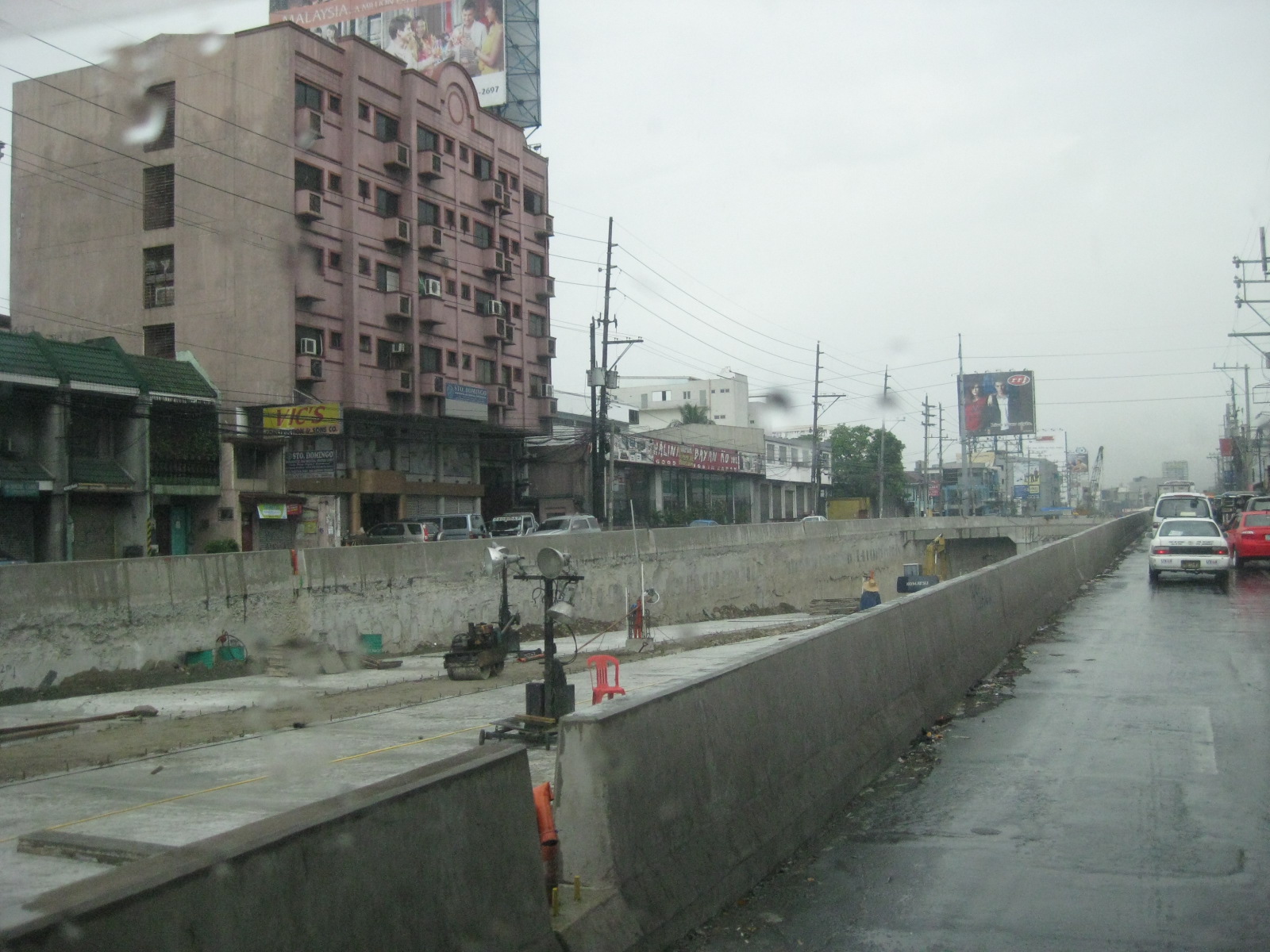 Both directions of the underpass have been paved and the median island is under construction.
 Backhoe at unpaved section of the underpass. The design reminds me of the underpass section along the same Quezon Ave. at its junction with Agham Road. Visible from the photo are braces/anchors embedded into the sides of the walls to reinforce these and prevent collapse.
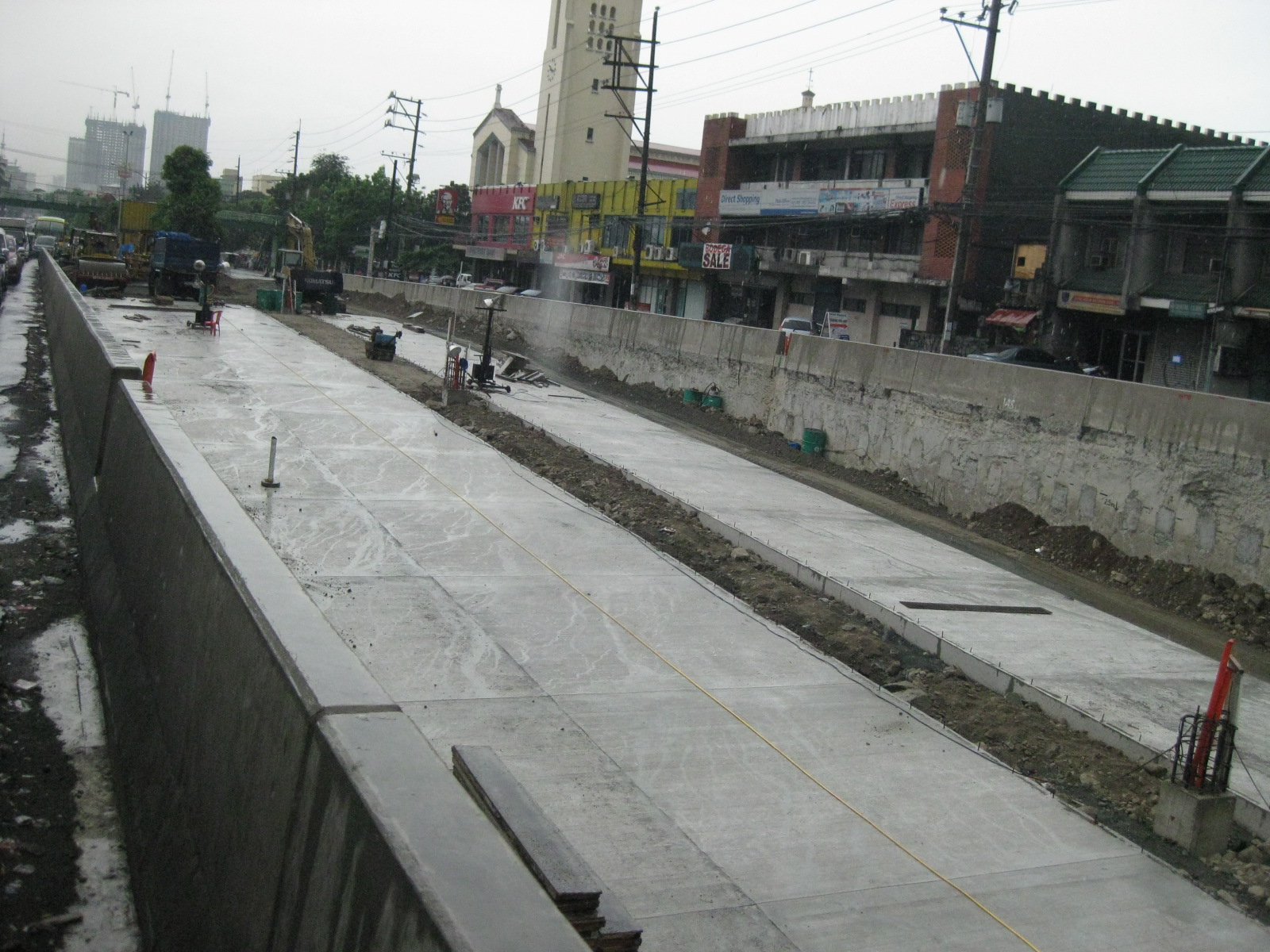 The underpass will have 3 lanes per direction that should be able to handle significant through traffic along the arterial.
 The section past Araneta Ave. is practically complete and retains essentially retains 3 lanes on each side of the original Quezon Ave. Upstream of the junction, there are only 2 lanes available on eaither side of the at-grade section of Quezon Ave.
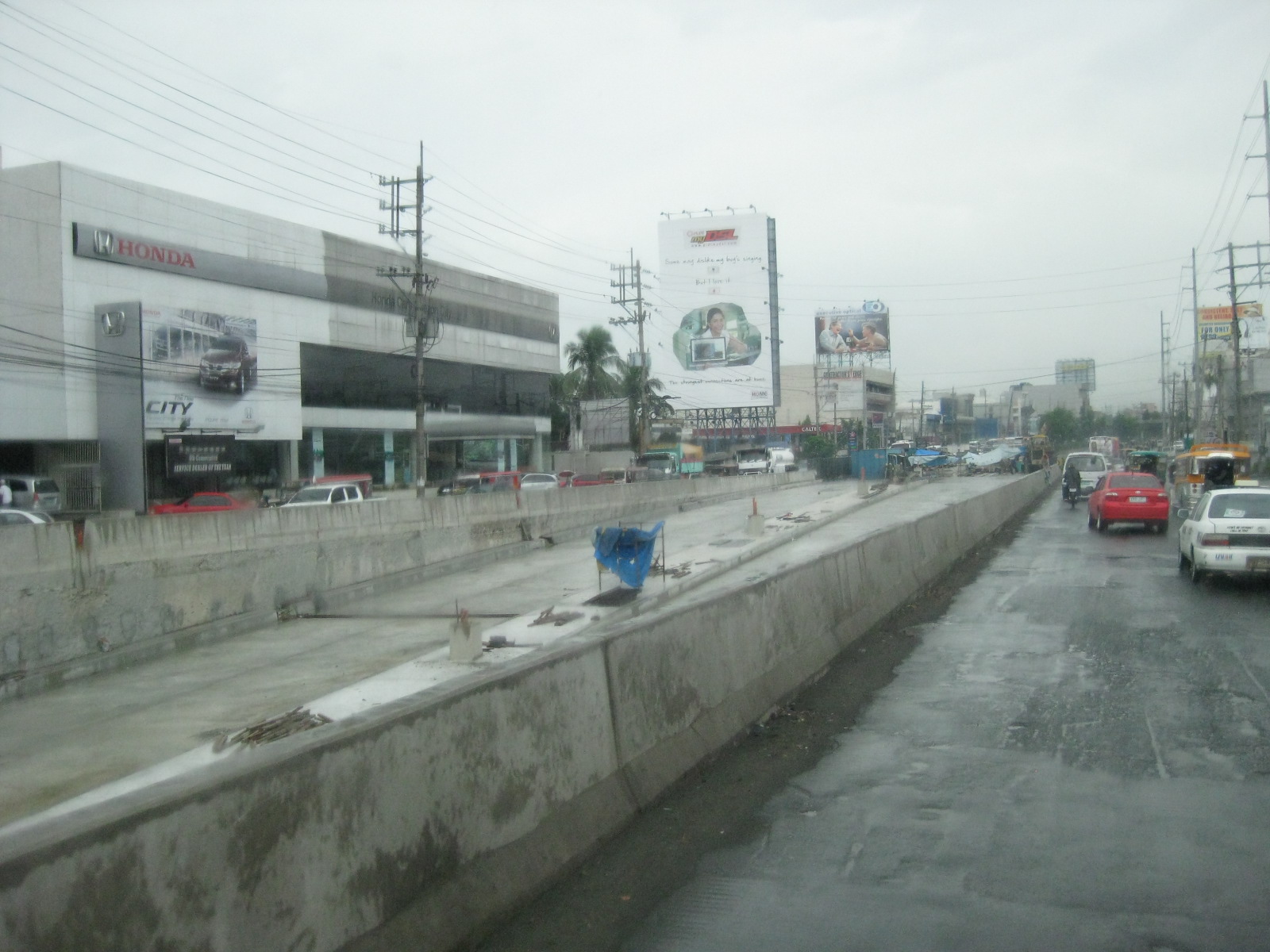 While traffic along the eastbound (to Quezon City) direction is practically free-flowing due to the wide section of the highway downstream, the westbound (to Manila) section is congested.
 Construction materials and workers’ bunkers at the east end of the underpass.
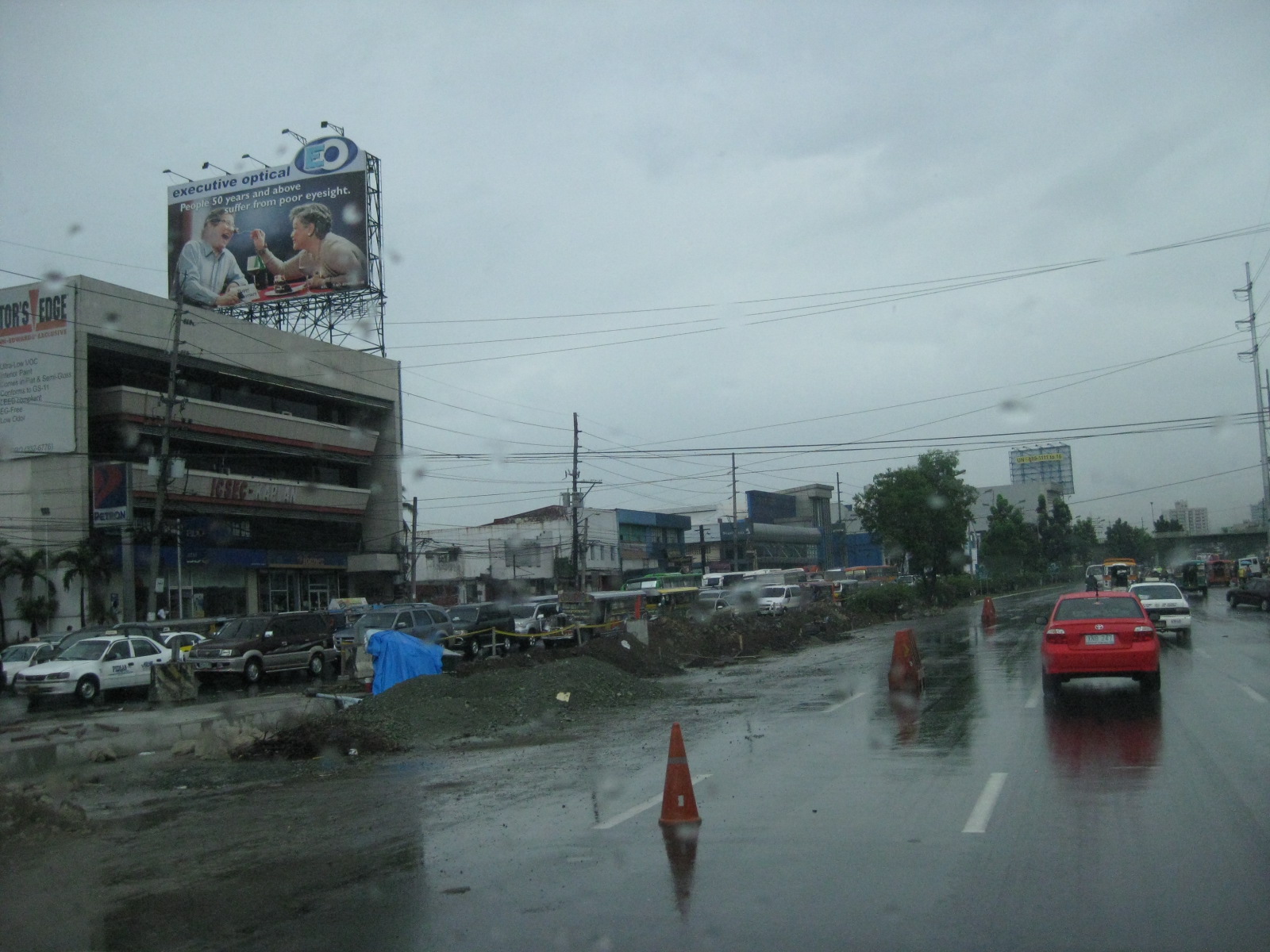 The congestion along the westbound direction extends from the intersection to way past the underpass’ east end. On a bad day, it takes a significant time for travelers to be able to cross Araneta Ave. and towards Manila.
–
Coastal Expressway
One of the shortest tollways in the Philippines is the Coastal Expressway, which was actually a free road in the 1990’s (then known as the Coastal Road). It now connects to a longer segment that is the Cavite Toll Expressway (CaviTEx). Following are photos taken during a recon survey of an area along the expressway in relation to a traffic impact study we were conducting for a major development.
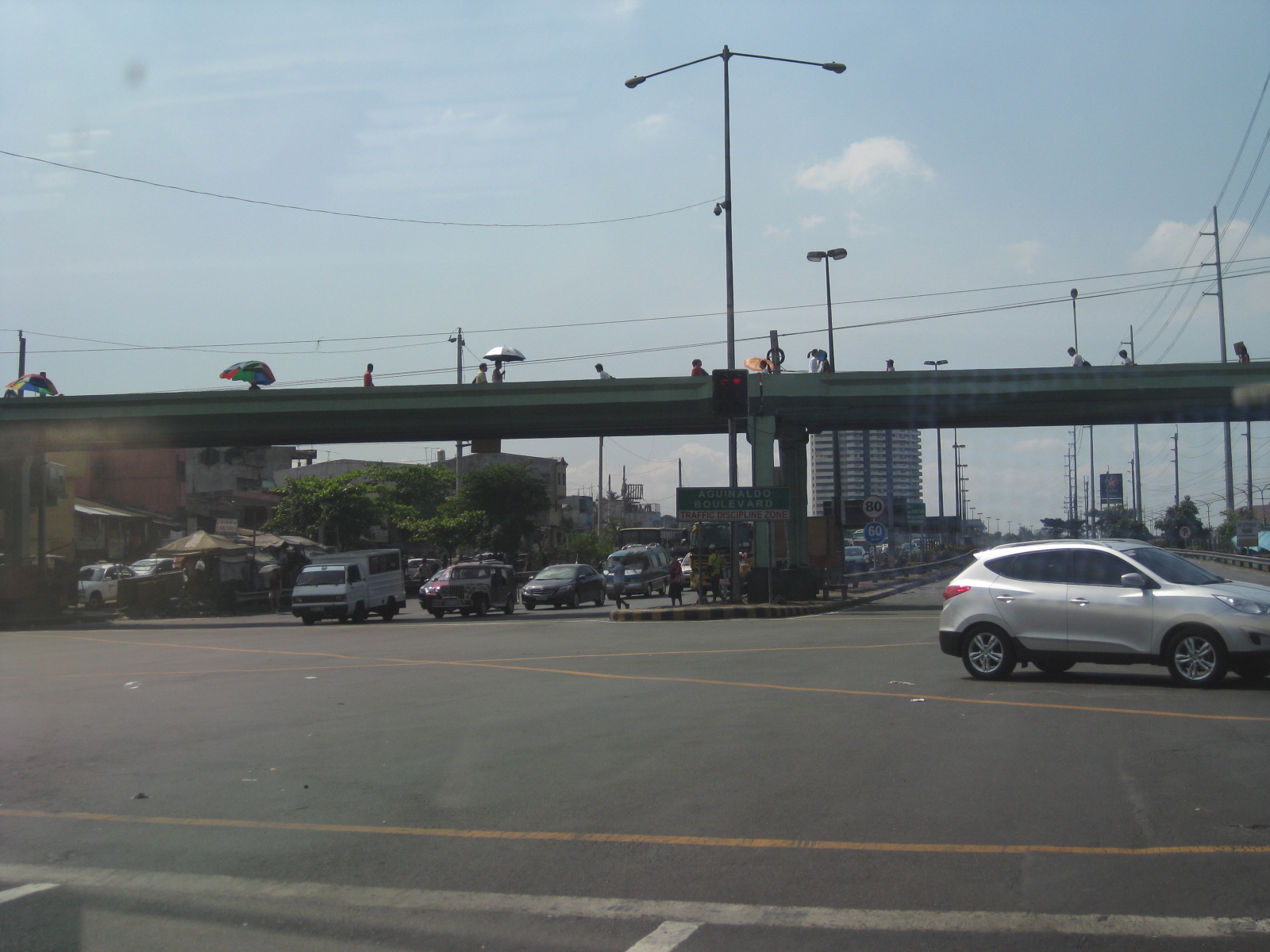 The Coastal Expressway essentially starts from the intersection of Roxas Boulevard and the Airport Road in Pasay City
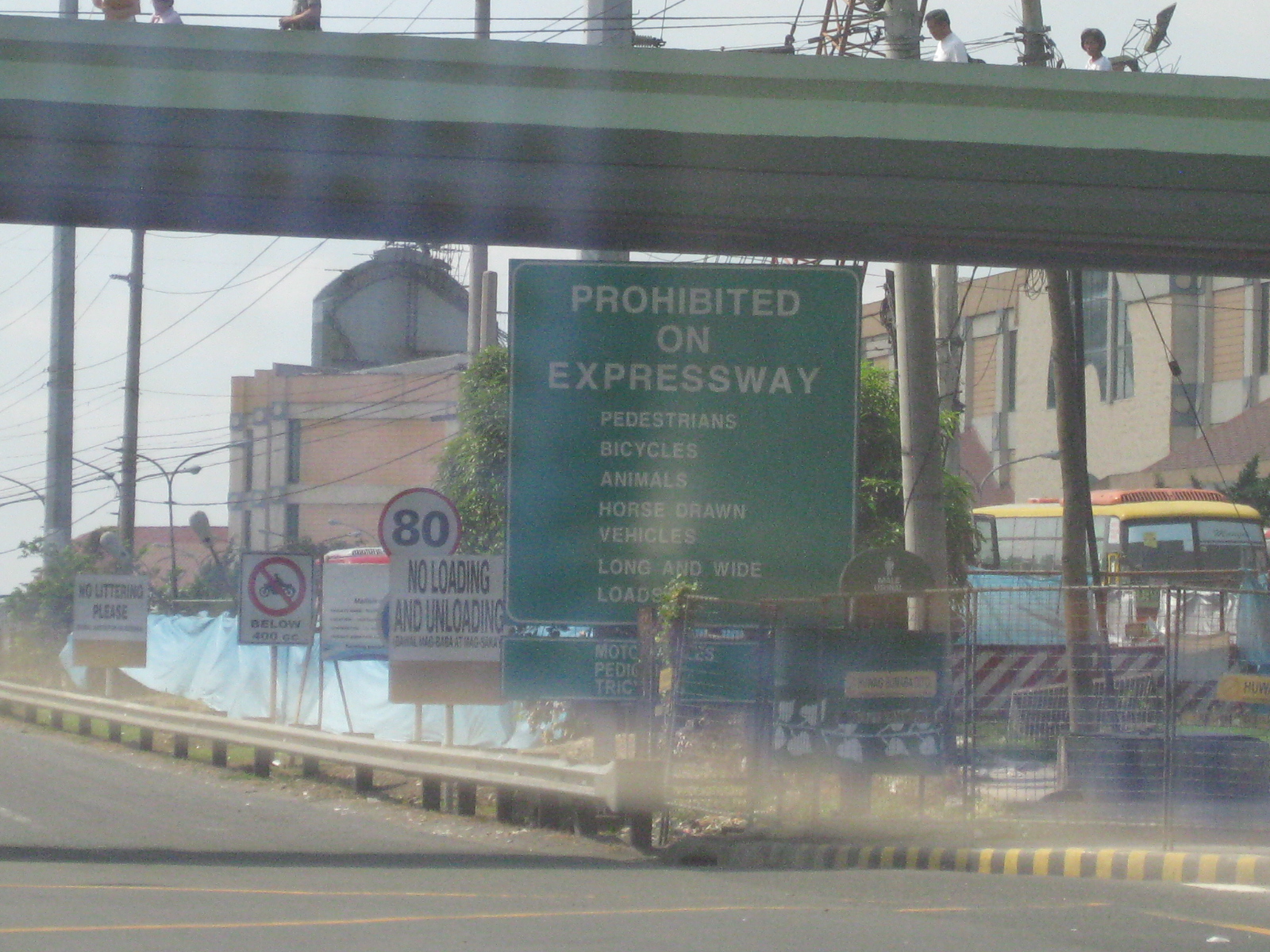 There seems to be so many signs on this corner leading to the entrance to the expressway. This is an example of what not to do in as far as signage are concerned.
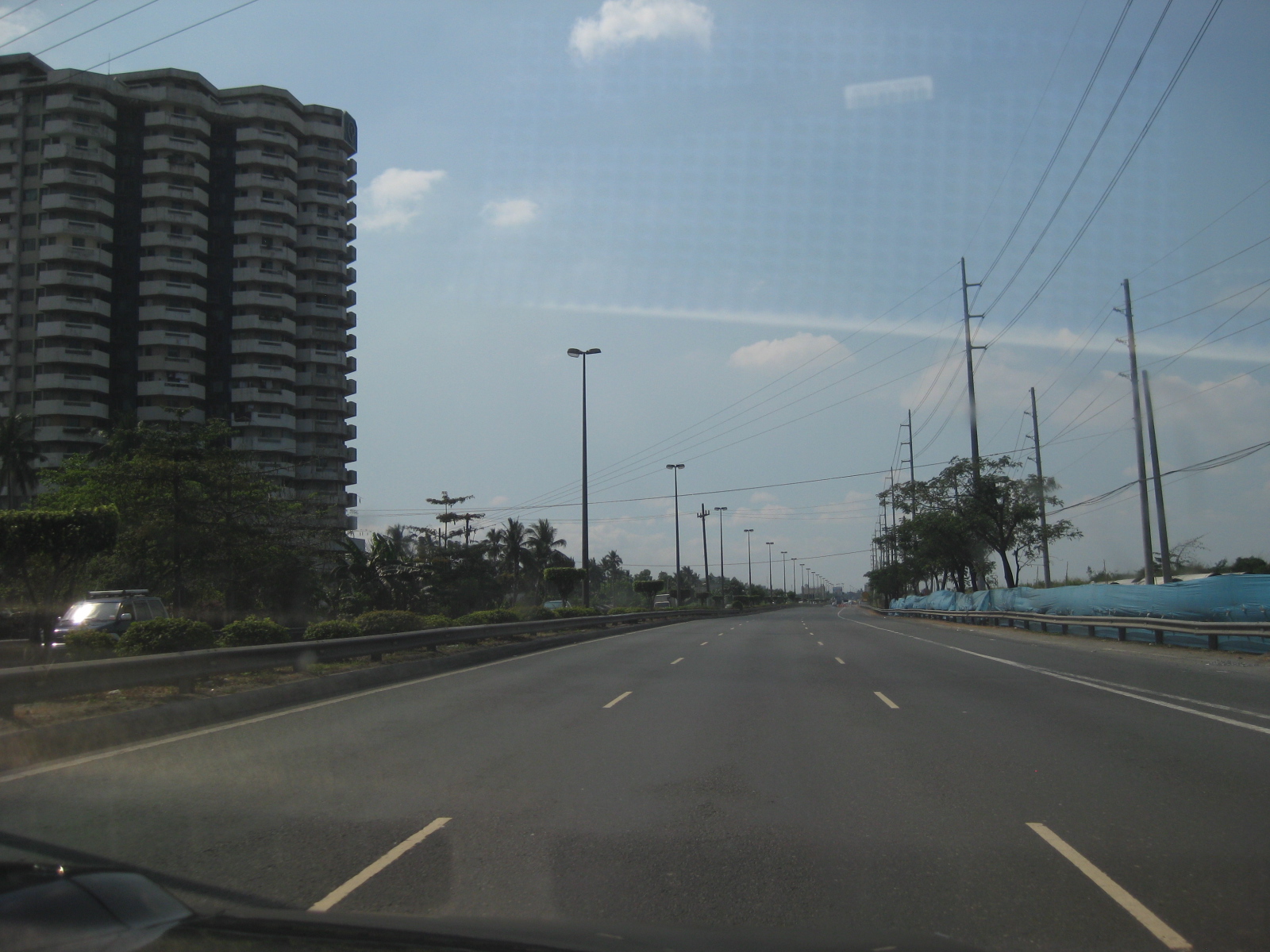 From the intersection, it is practically free flowing traffic leading to the toll plaza. On one side of the expressway are residential/office condominium developments and on the other side are undeveloped or under-developed reclamation areas.
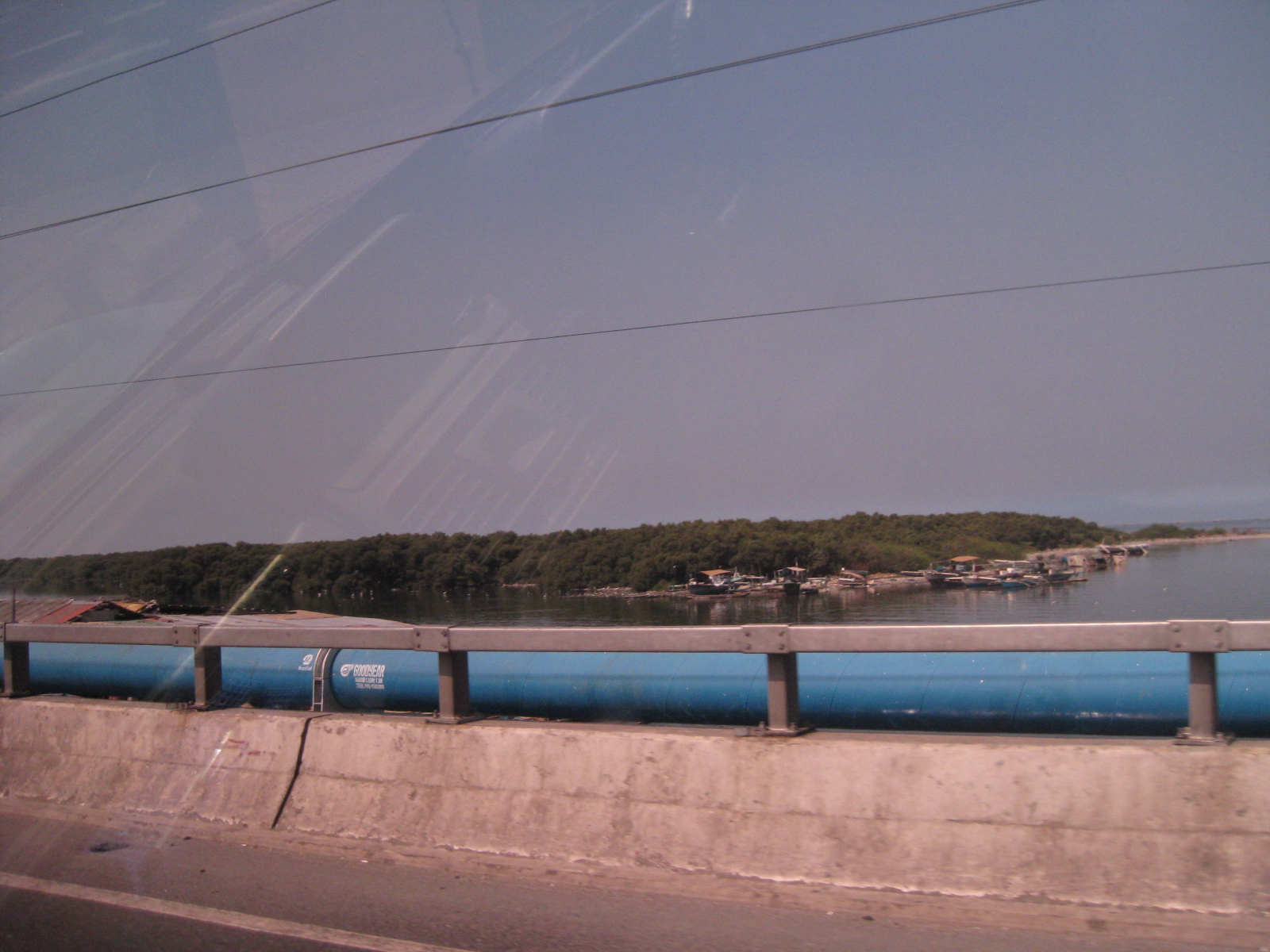 The photo shows one of several small islands from across the tollway that is host to mangrove forests. These growths in turn host an entire eco-system that includes migratory birds, which makes the area a popular site for conservationists, environmentalists and bird-watching enthusiasts.
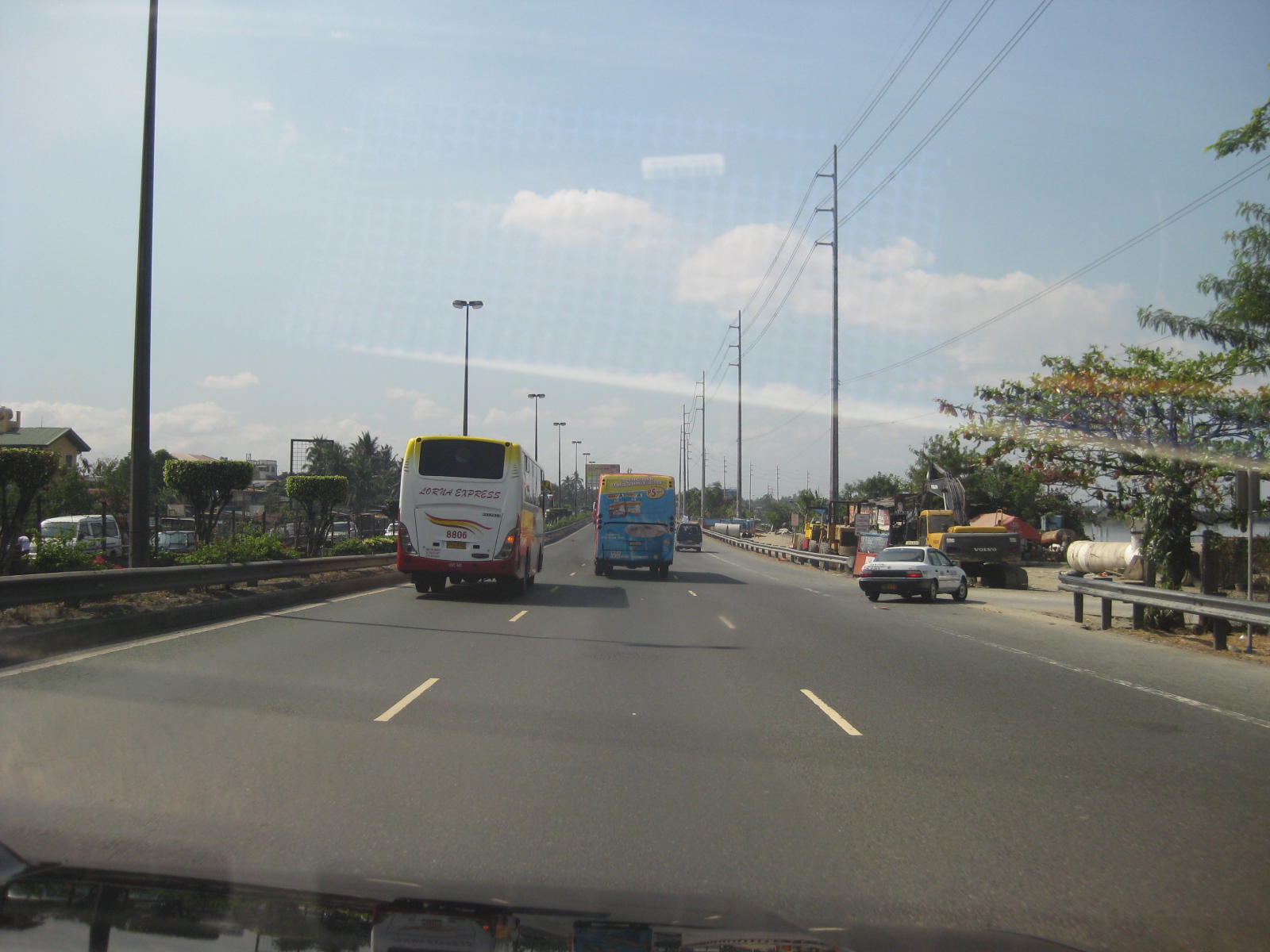 Many provincial buses use the tollway from terminals and stations in Pasay and Manila. This is because the tollway provides a direct access to the province of Cavite where many people who work or study in Metro Manila reside.
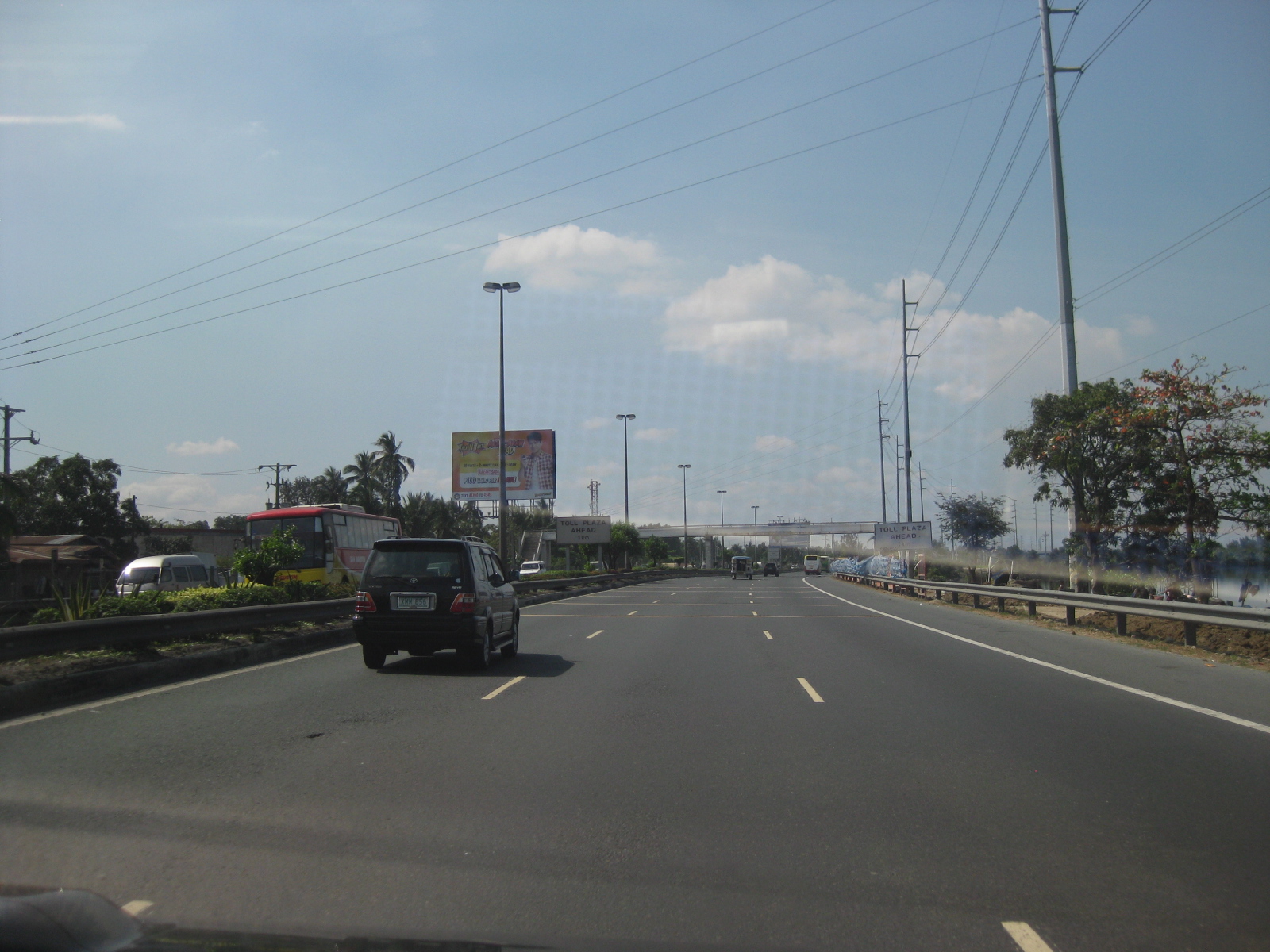 The tollway has 3 lanes per direction with standard shoulders on either side of the carriageway. The is also a median separating the opposing flows of traffic.
 Signs advise for the reduction of speeds as vehicles approach the only toll plaza along at the time along the route to Cavite. There is a minor toll facility along a feeder road to the tollway along the northbound side but it seems more an accommodation rather than a full-fledged tollgate.
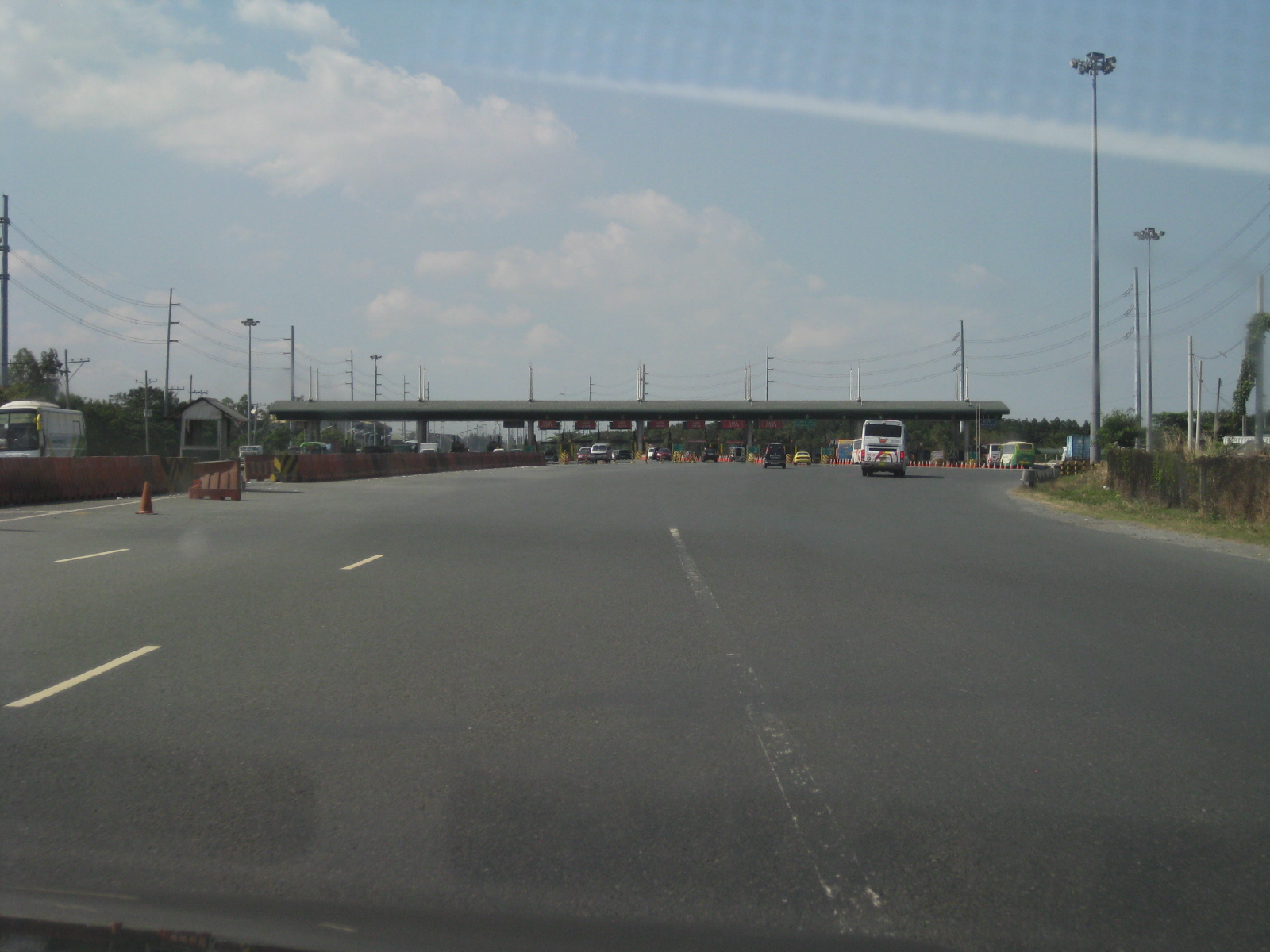 The Coastal Expressway toll plaza – traffic during the time of travel was light despite it being a weekday. However, traffic can be quite horrendous during peak periods and queues particularly long at the toll plaza. There are no electronic toll collection systems in place yet so all transactions are manual. The highway section widens at the plaza for the multiple booths to be able to accommodate vehicle arrivals.
 Typical toll booth along the expressway
 Traffic cones help guide motorists from the toll plaza who will eventually transition back to a three-lane section.
 Sign indicating the boundary between Metro Manila and the Province of Cavite
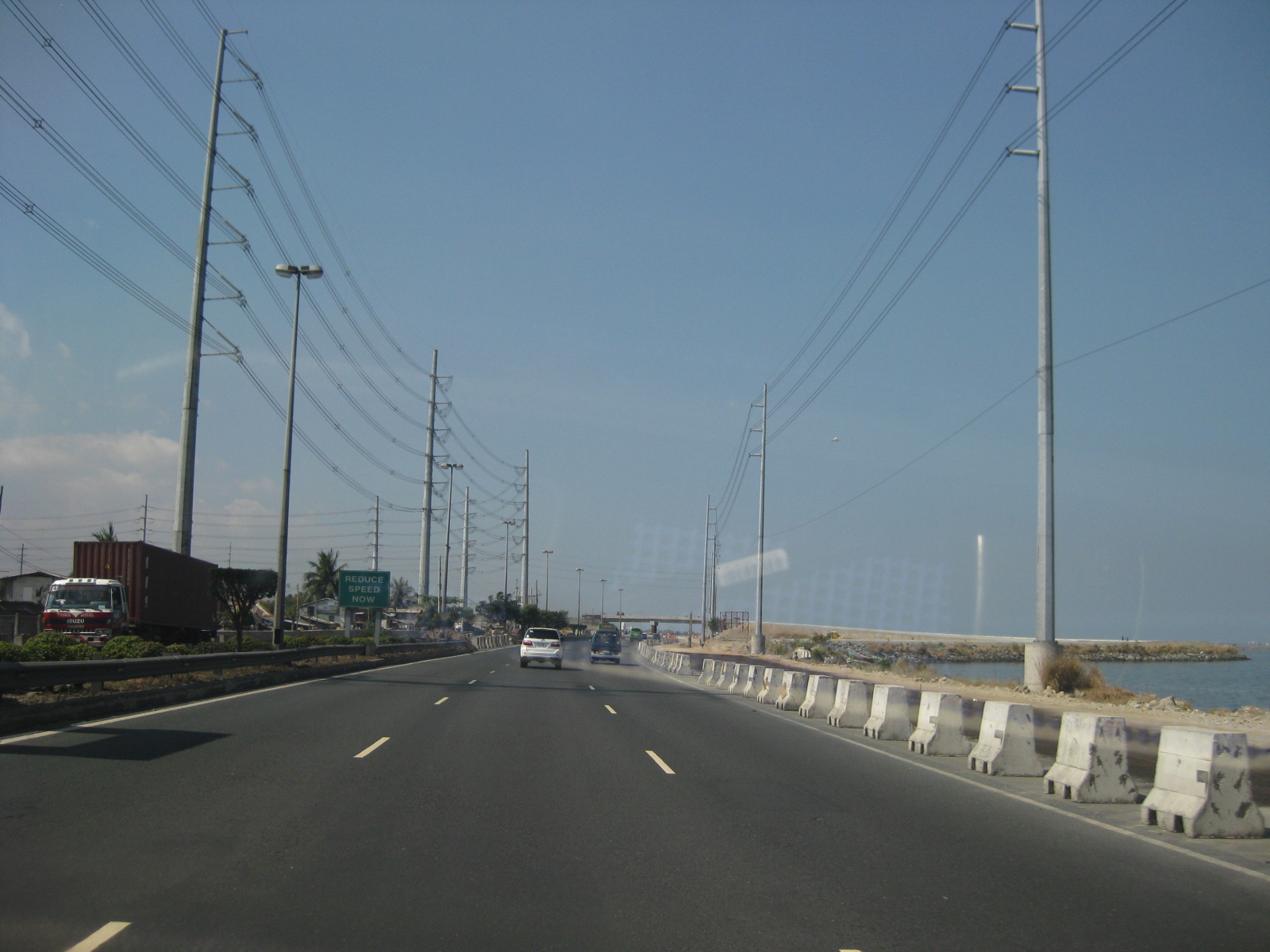 Nearing the then end of the expressway in Bacoor, Cavite, one could already see the ongoing interchange construction and the unfinished section of CaviTEx.
 Construction works for the approach to the overpass for what is now the Bacoor Exit. Vehicles now take the rightmost lanes to turn left towards Bacoor using the overpass that can already be seen in the photo. Vehicles proceeding towards Kawit should proceed along the tollway
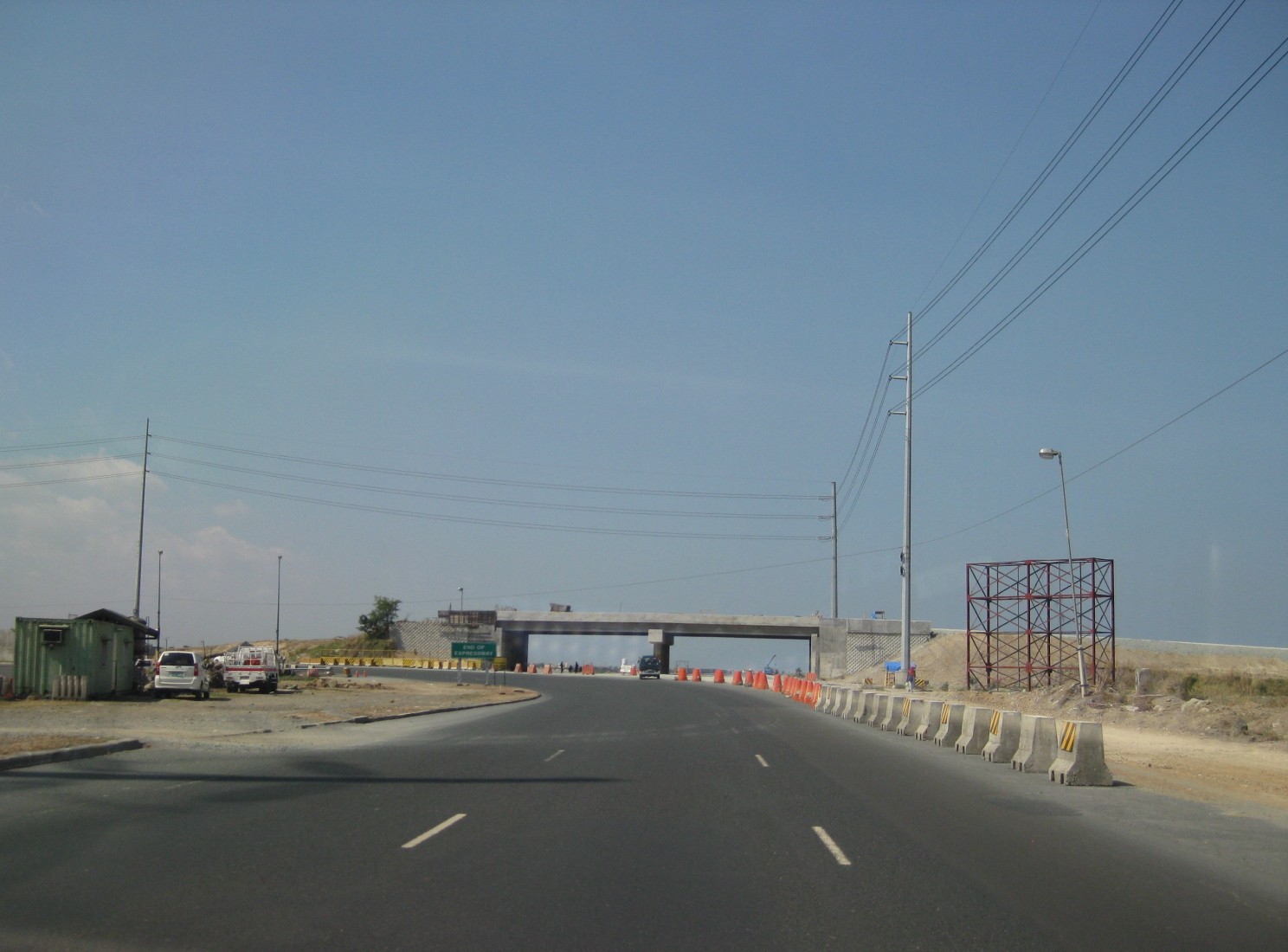 At the time these photos were taken, the CaviTEx was not yet completed and the Coastal Expressway ended at Bacoor. The curve leads motorists to Bacoor town proper.
 A peak at the then unfinished section of Cavitex including the uncompleted overpass
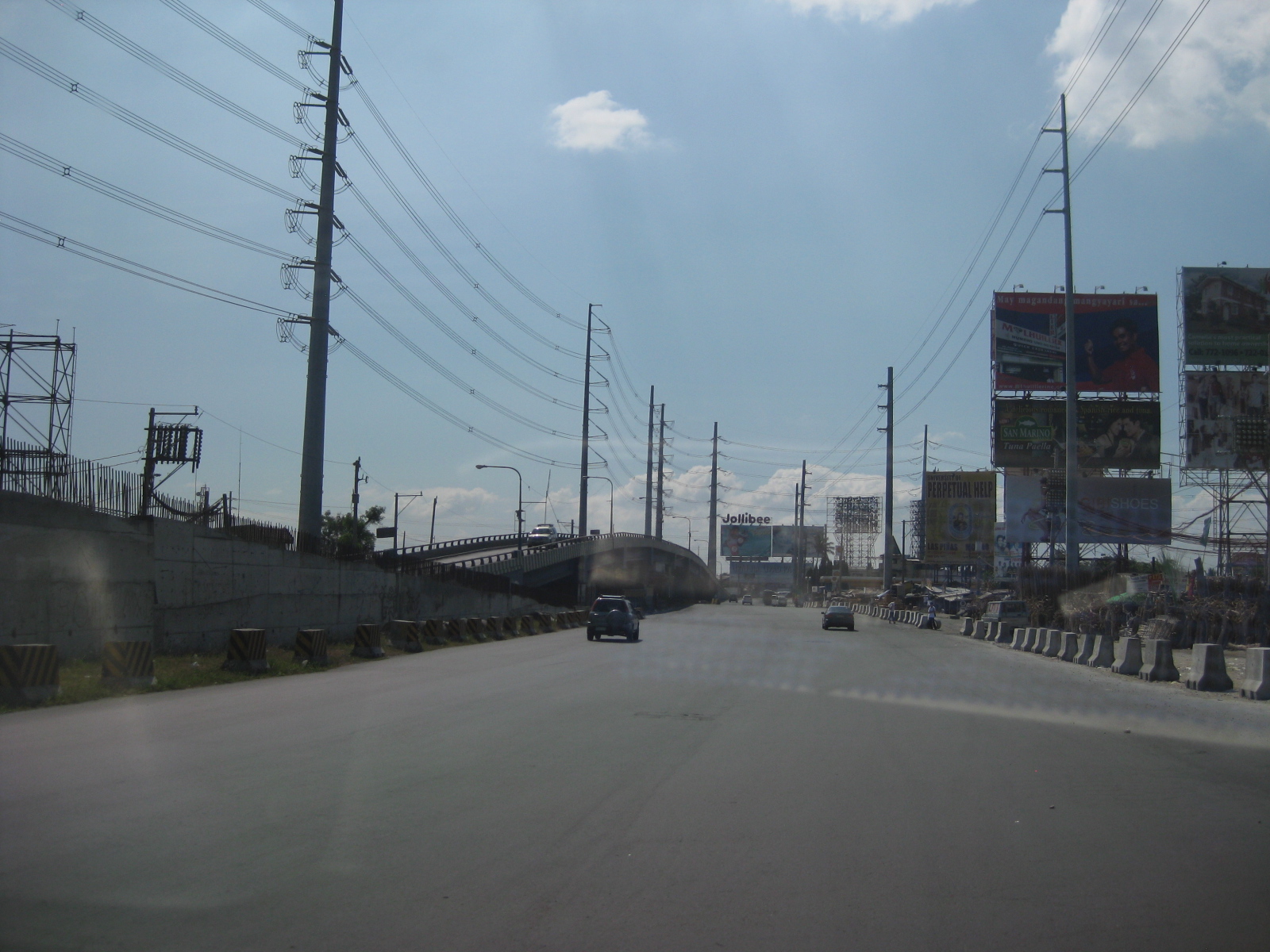 Turning towards Bacoor, motorists are greeted by another overpass on the opposing direction that leads travelers from the Alabang-Zapote Road (from Muntinlupa) or the Aguinaldo Highway towards the Coastal Expressway. Travelers wanting to proceed to Las Pinas via Quirino Avenue may turn beneath the flyover.
 17Overpass from Aguinaldo Highway to the Coastal Expressway. Our vehicle’s trajectory led us to Quirino Avenue, which eventually connects to the C5 Extension
 To go to Alabang via the Alabang-Zapote Road, motorists should stay on the left side of the road. To go to the Aguinaldo Highway, one must keep to the right.
–
Gapan-San Fernando-Olongapo Road: Lubao bypass road
The Gapan-San Fernando-Olongapo Road was often congested along sections passing through populated areas of towns along the highway. Among the busiest (and most congested) was the section in Lubao. This necessitated the eventual construction of a bypass road for travelers to be able to reduce delays caused by various elements including local traffic (e.g., tricycles and pedicabs). The following photos describe the bypass road and the traffic using it.
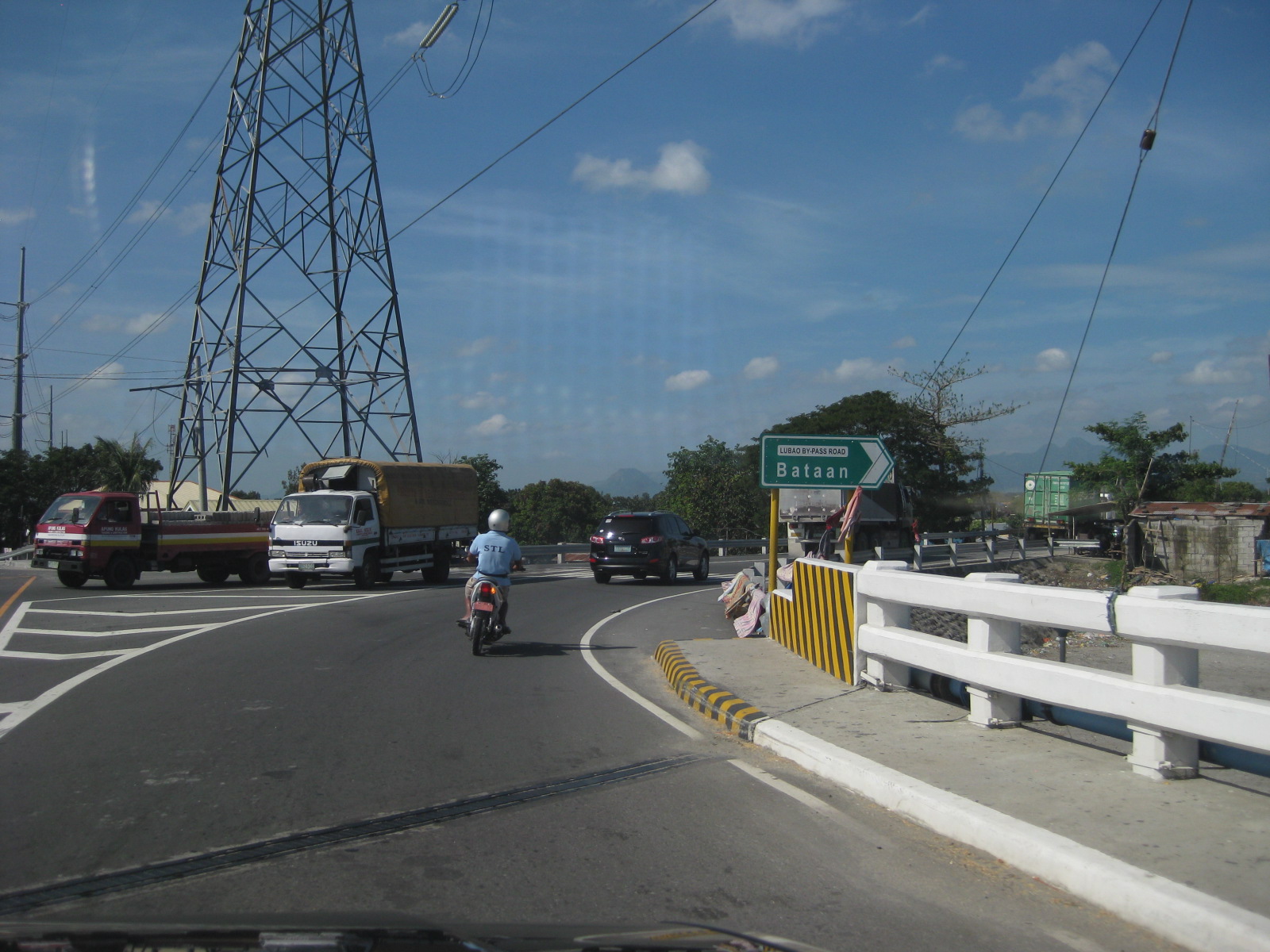 The bypass road is easily identified with the conspicuous signage and lane markings. The junction is right after this bridge.
 The pavement markings along the bypass road is inadequate and appears to be inappropriate given the carriageway width. There are also many people crossing the highway at various points.
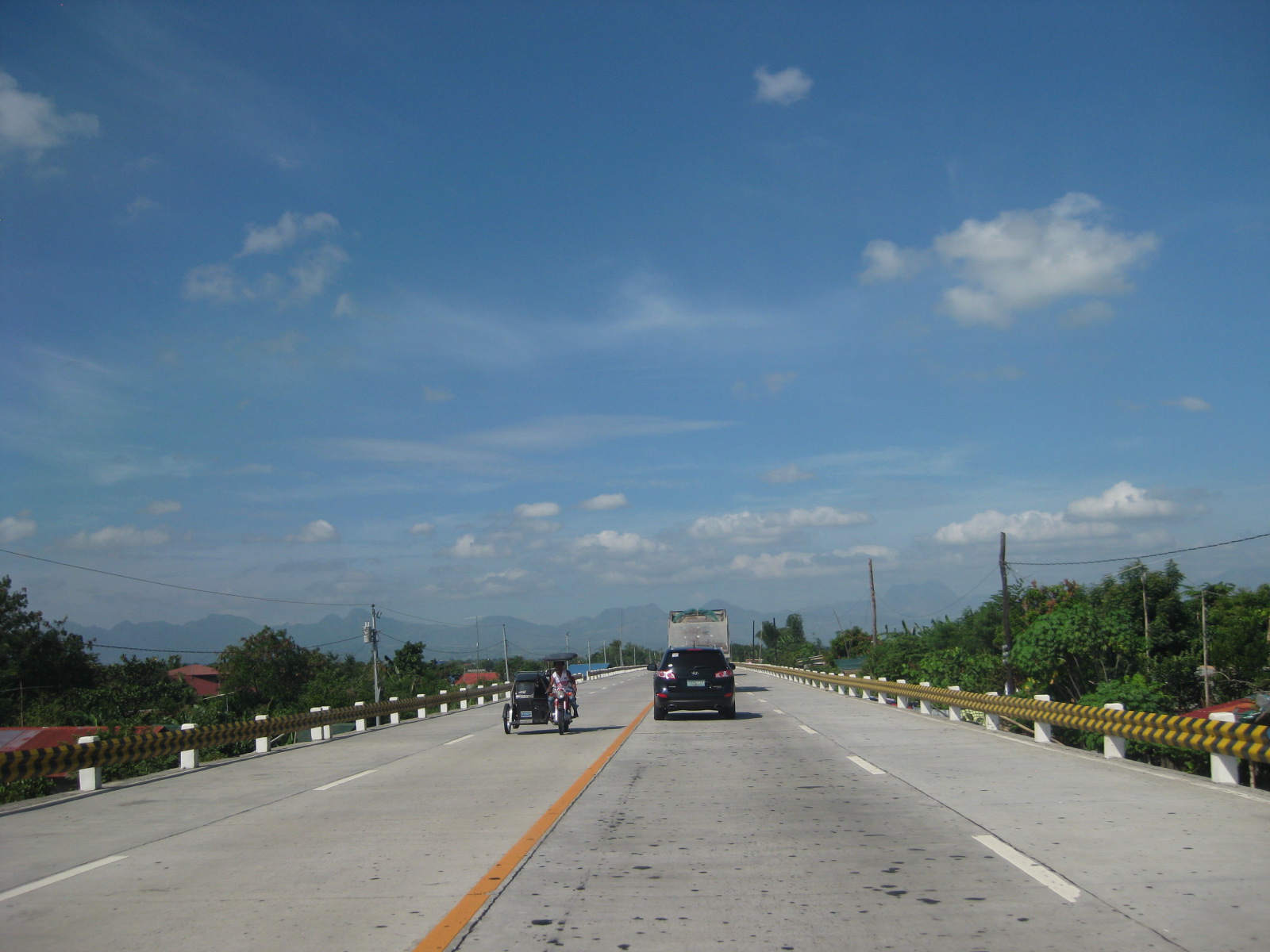 The bypass road should have been a two-lane, two-way highway with shoulders at either side of the road. The yellow line in the middle of the road may be appropriate to advise against overtaking or passing but the white broken lines should be replaced by solid lines to delineate the shoulders from the traveled way. Yup, that’s a tricycle along a national road.
 The highway is elevated probably to prevent flooding (of which the area has lots of experience including the times when lahar was a severe problem in the area). As such, travelers can see the rooftops of a lot of most houses along the highway.
 The bypass road narrows to 3 lanes at certain sections.
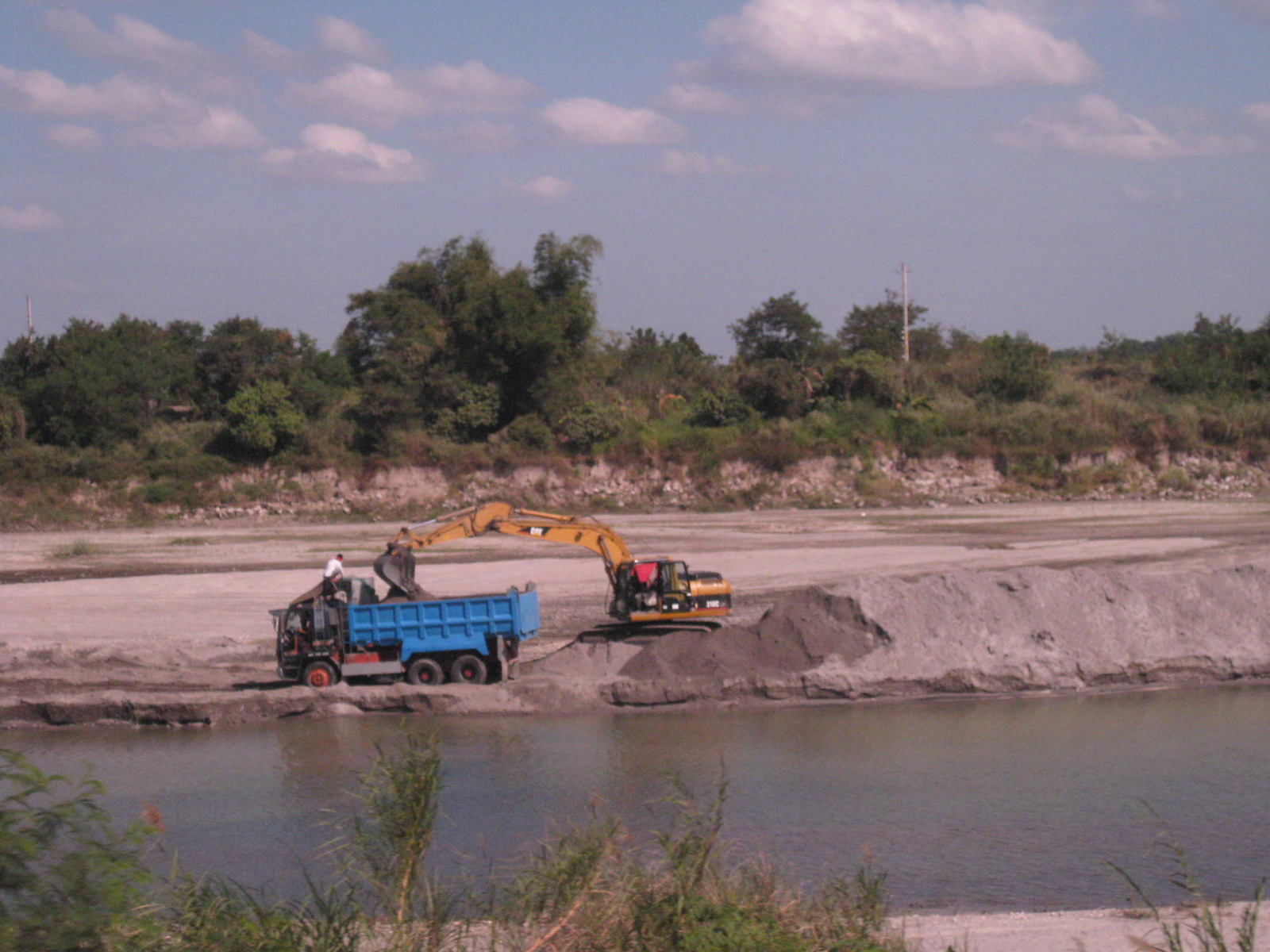 Scene along the highway sections along which is a river. Quarrying for construction materials like sand is quite common and a major source of revenue for many Pampanga towns. Such activities have also been controversial due to the fees charged by the local governments, particularly how these are divided among towns and where these are used.
 The space provided along the single lane direction is obviously inadequate considering that trucks tend to encroach upon the opposing traffic lane.
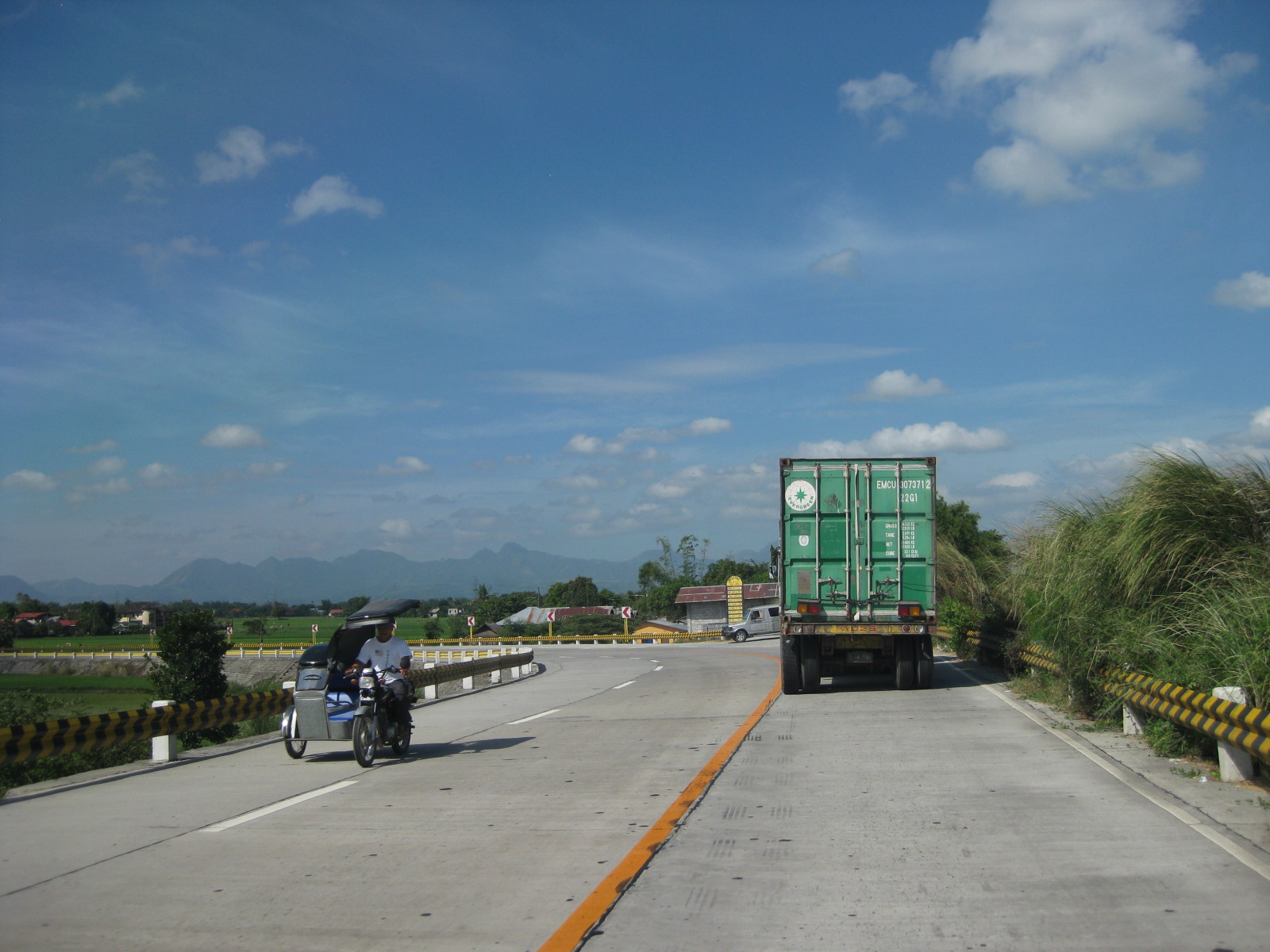 The 3-lane section approaching a junction. There were no signs or rumble strips to warn drivers about the presence of a junction.
 There are no signs to inform motorists of the presence of this junction at a curved section where the 3-lane road transitions into 4 lanes. This is actually an unsafe location for a junction and requires both geometric and traffic engineering interventions to prevent crashes from occurring.
 The chevron signs indicating the curvature of the road section are quite few. Perhaps the highway engineers became too conscious of the controversies elsewhere where there seems to be an abundance and propensity for such signs. The embankment for the highway is visible from the photo.
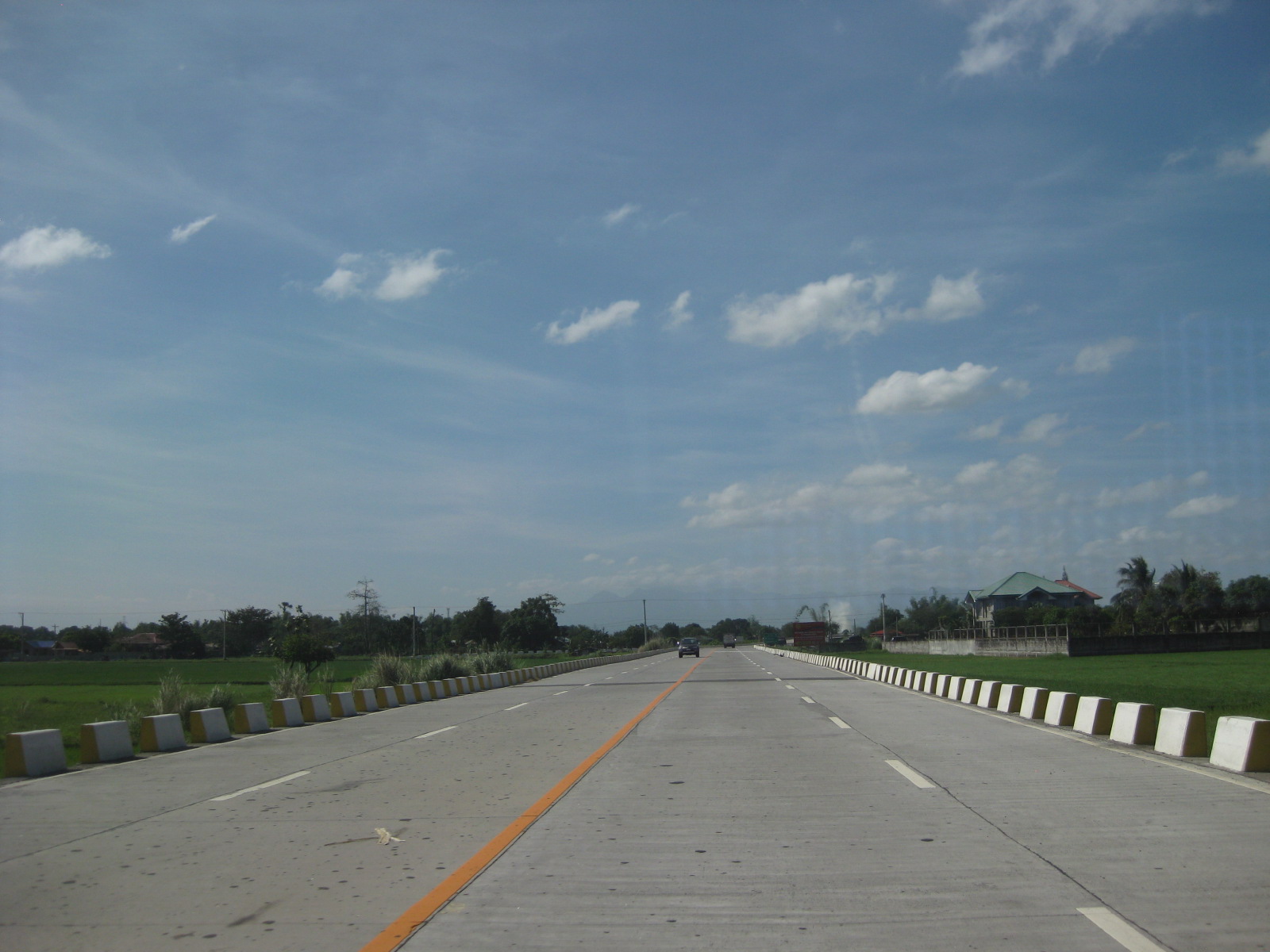 Lower section of the bypass road with concrete barriers apparently designed for waters to flow through. Notice that the section is not as elevated as the previous ones judging from the rice plantations on either side of the road.
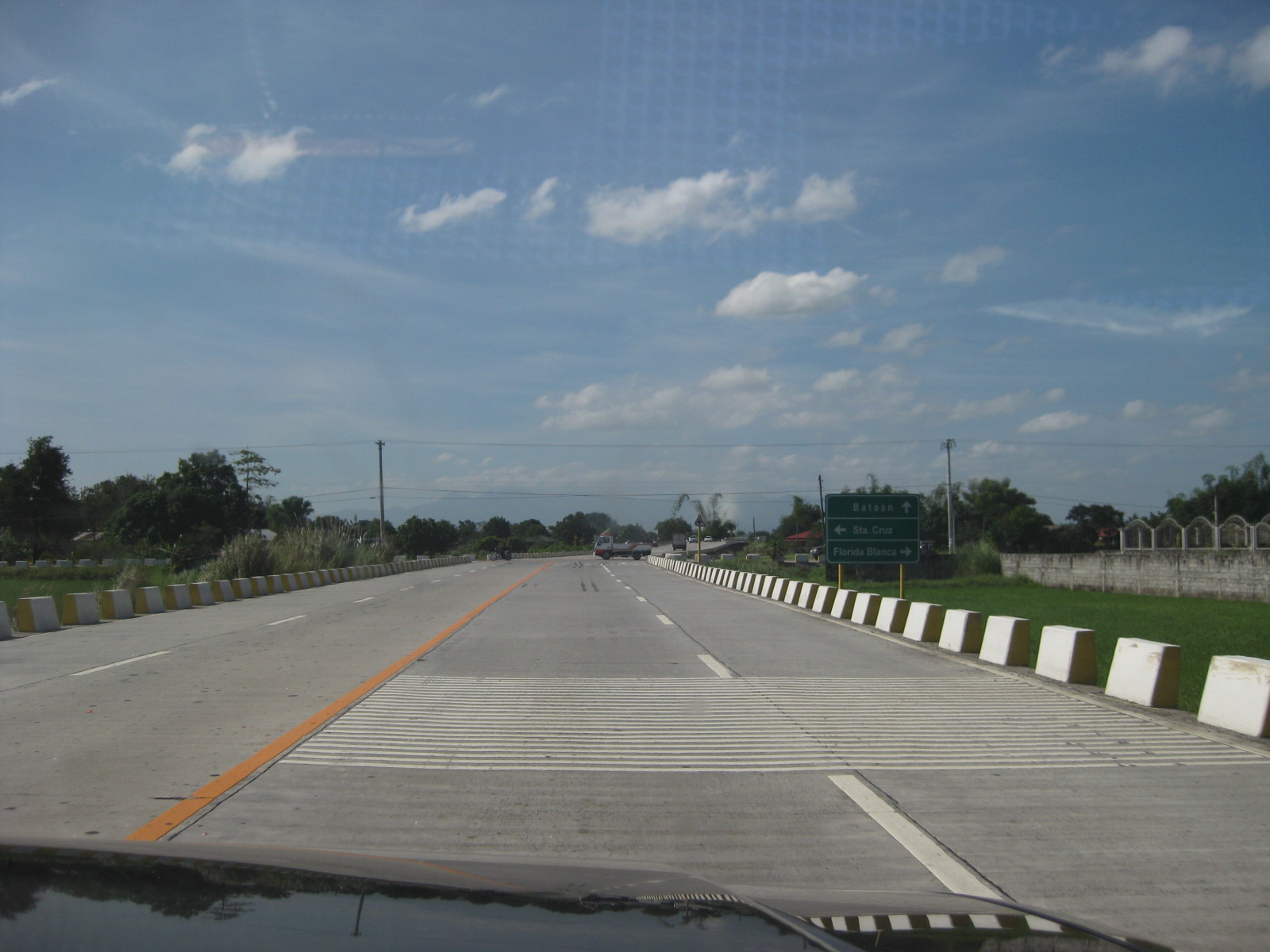 Rumble strips along the highway to warn the driver of a hazardous section
 13Curved section with signs that seem to be too small considering the speed limits (40 kph). Meanwhile, there is a single chevron sign on the other side of the road.
 Straight, level section is quite tempting for speeding. Such designs actually encourage speeding, and many vehicles we observed (including ours) exceeded the 40 kph speed limit.
 Traffic along the highway is quite light even during the peak periods – further proof that 2 lanes are enough for the bypass.
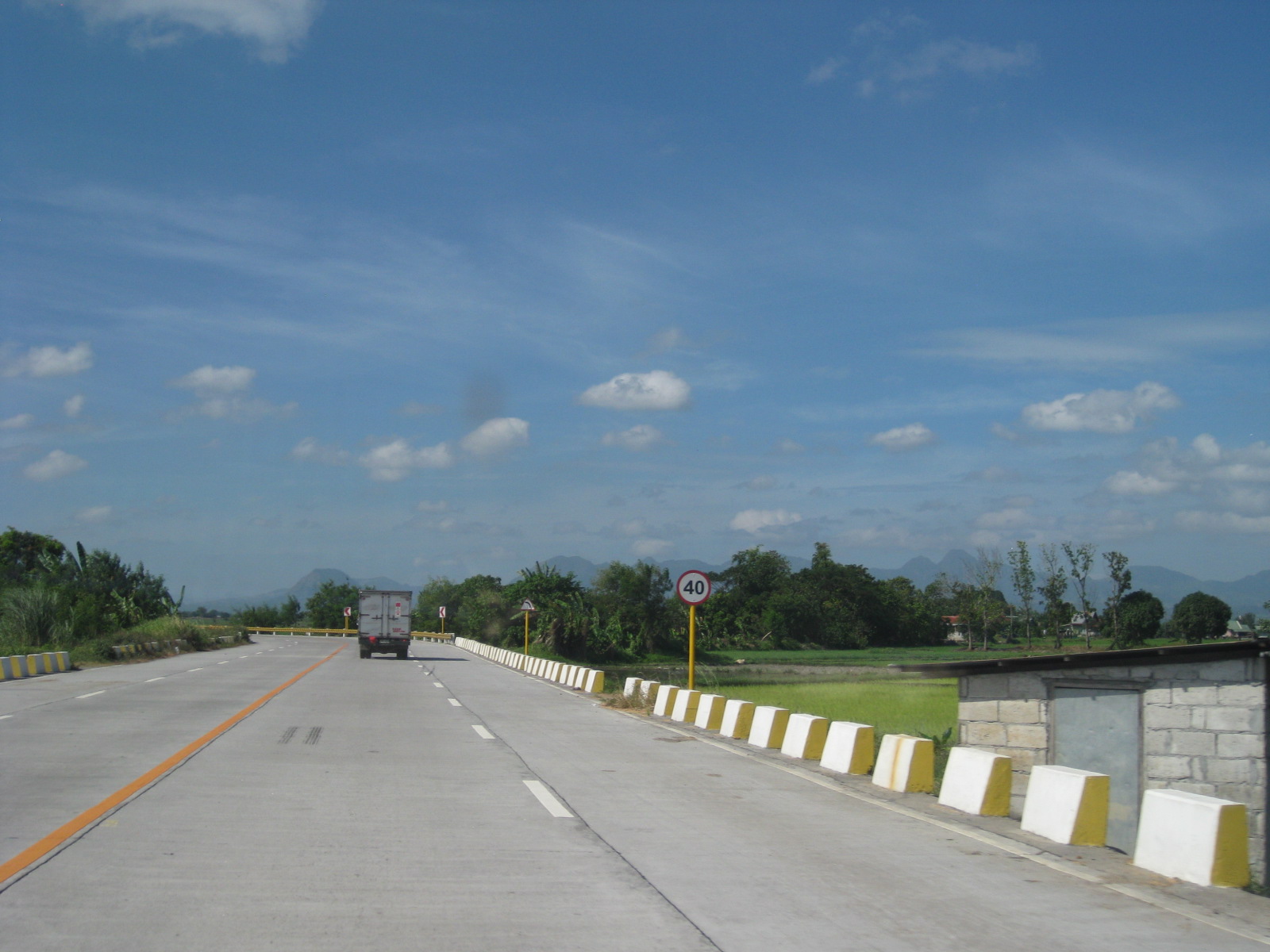 The concrete barriers do not seem sufficient or able to stop large trucks should these be involved in crashes where vehicles are run off the road.
 Aside from tricycles, there is a significant motorcycle traffic along the bypass road.
 I think sharp curves like this section requires more chevron than what was installed along the highway.
 Straight, level section approaching the west junction with the Gapan-San Fernando-Olongapo highway. The tall electric pole marks the junction.
 Closer to the junction, the electric pole looms and become more conspicuous to travelers.
 Power line pole in the middle of an island that’s part of the channelization for the bypass road’s intersection with the GSO Highway.
It is clear that the Lubao bypass road has benefited many motorists often hindered by congestion along the GSO road. However, given the opportunity to design a safe highway, it seems that many elements were not satisfied in terms of safety. As such, the bypass road presents us with a high potential for road crashes at present and when traffic eventually increases over time. There are, of course, options that can be implemented to improve the situation along the bypass road and its junctions with the GSO Highway.
–
Circumferential Road 5 Extension
Among the issues raised during the Philippine presidential elections in 2010 was the persistent and widespread graft and corruption in government. Candidates had to present their platforms and emphasize how they were going to address graft and corruption in the various agencies in all branches of government (executive, legislative and judicial). The slogan of one candidate was “Sipag at Tiyaga,” which translated into “hard-working and persevering.” A play was made on this, transforming the slogan into “C5 at Taga,” referring to the road and an allusion to someone getting a cut (benefited) from the funds. The allusion, of course, was to the same candidate. Objectively speaking, however, the extension of the road made sense because C5 practically terminated at the South Luzon Expressway where a ramp connects it to the tollway. However, the project failed to construct a link (perhaps an overpass) connecting the extension to the existing alignment on the other side of the tollway. The following photos were taken during one recon survey conducted by our staff for another development project in the area.
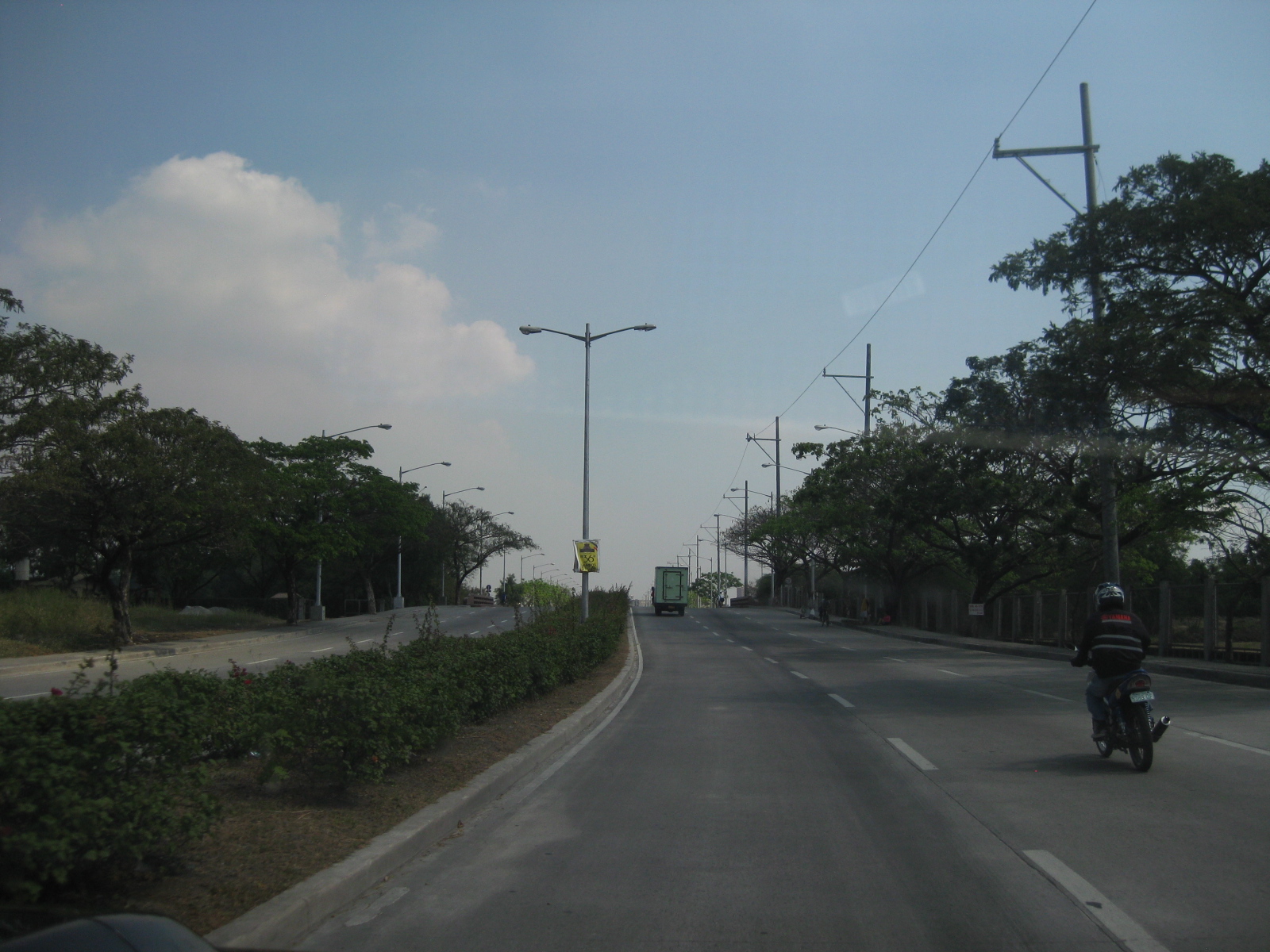 The C5 Extension is accessible from its southernmost end from the Coastal Expressway (aka CavitEx) or Aguinaldo Highway (from Bacoor, Cavite) and the Alabang-Zapote Road in Las Pinas. Lane widths and pavement markings follow DPWH standards and the road is apparently well-illuminated given the lamps installed along the highway.
 The road didn’t seem to follow any particular or deliberate alignment. The vacant lands on either side of C5 extension is allegedly owned by the real estate companies associated with Sen. Villar. However, at the time the photos were taken (early 2011) there were no major developments associated with these real estate companies in the area.
 There is generally light traffic along the road with few trucks. One can often observe many speeding vehicles including motorcycles. The pavement markings are already weathered despite the light traffic and is probably indicative of the quality of the material used.
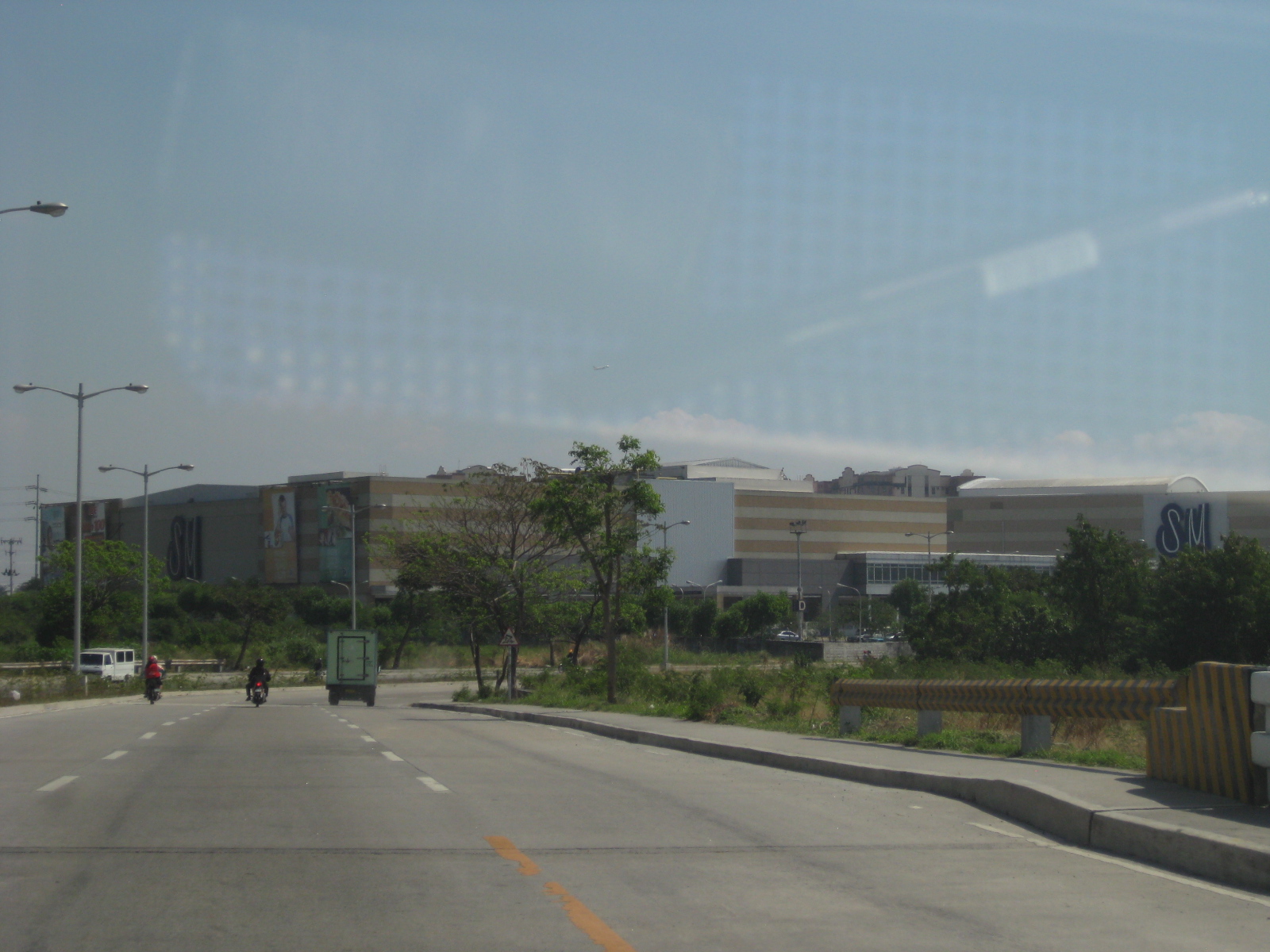 The road passes through a major shopping mall, SM Sucat, where the highway has a junction with Sucat Road.
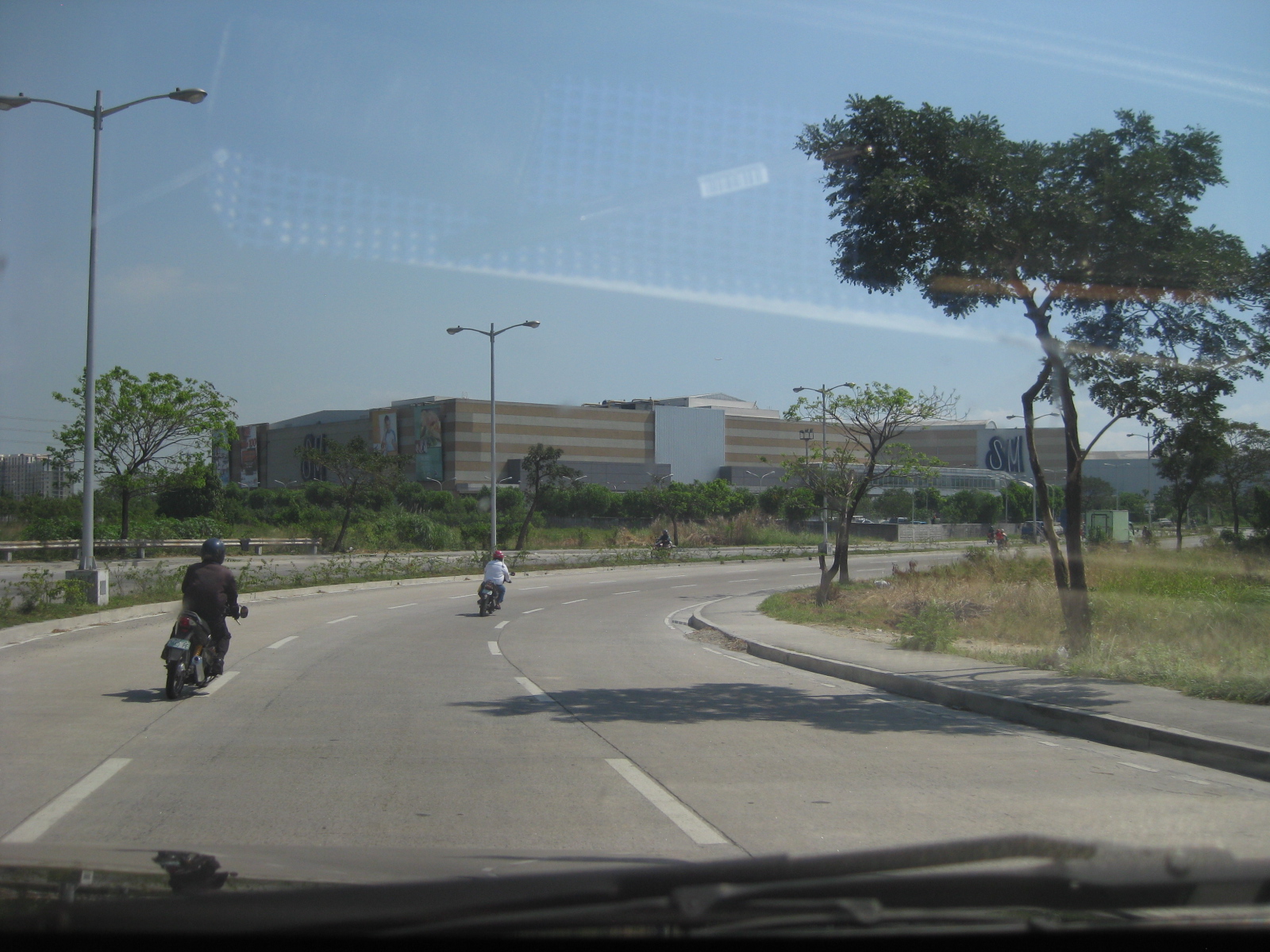 Curvatures along the highway alignment have been interpreted as accommodations for the owners of the lands along the road. Some experts say that such curvature, which can be clearly seen from maps such Google’s are unnecessary.
 There are 2 overpasses in this photo. One is a pedestrian overpass for the mall, which has two buildings on either side of the highway. Another is a vehicular overpass (flyover) at the highway’s intersection with Sucat Road. There are service roads on either side of the main alignment for vehicles traveling between C5 and Sucat Road. Visible in the photo (center) are residential condominium buildings of a major developer.
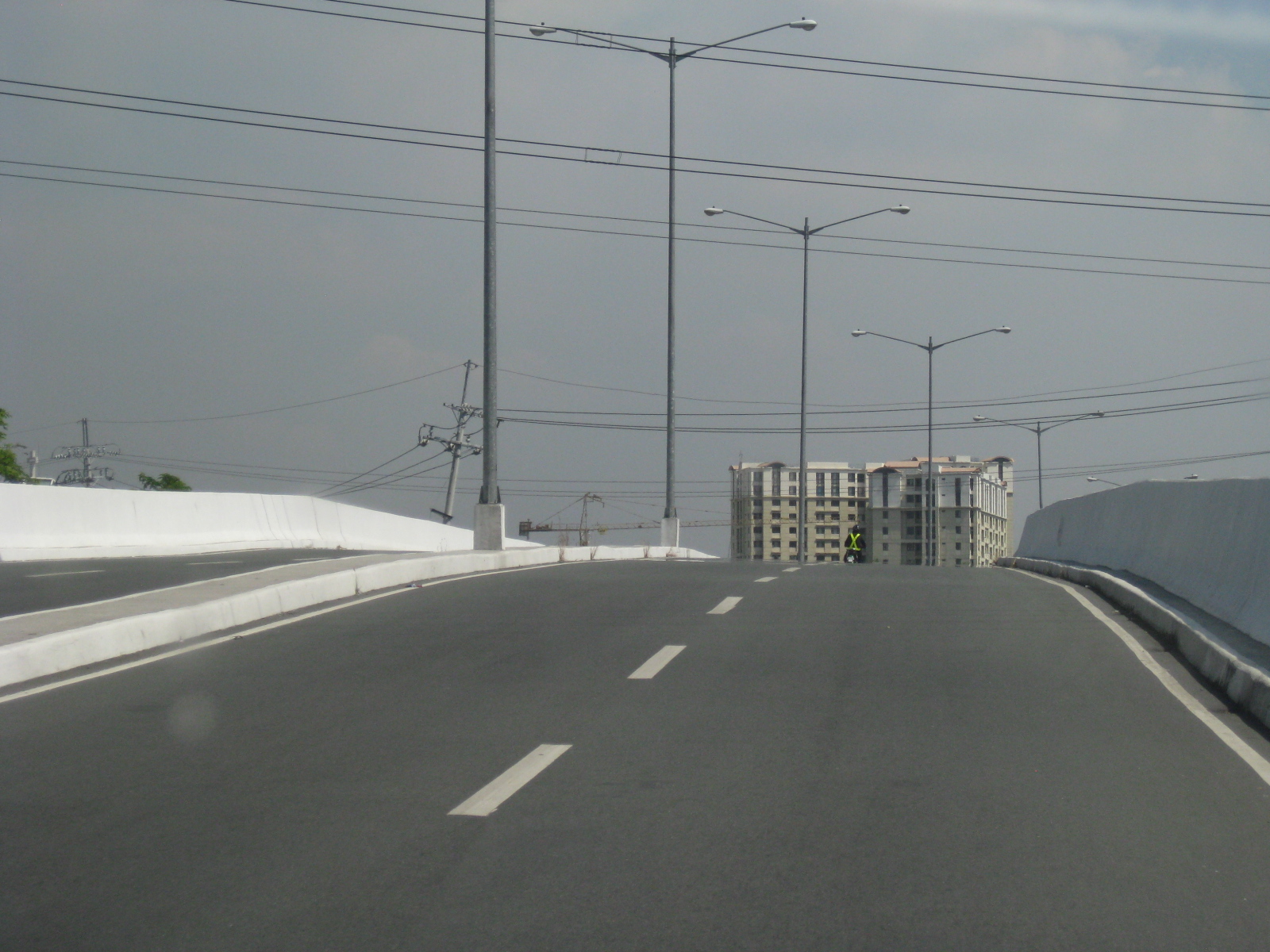 The vehicular overpass does not include pedestrian sidewalks or access. Such are actually necessary considering facilities like this flyover should not be for motorists only but for other travelers as well.
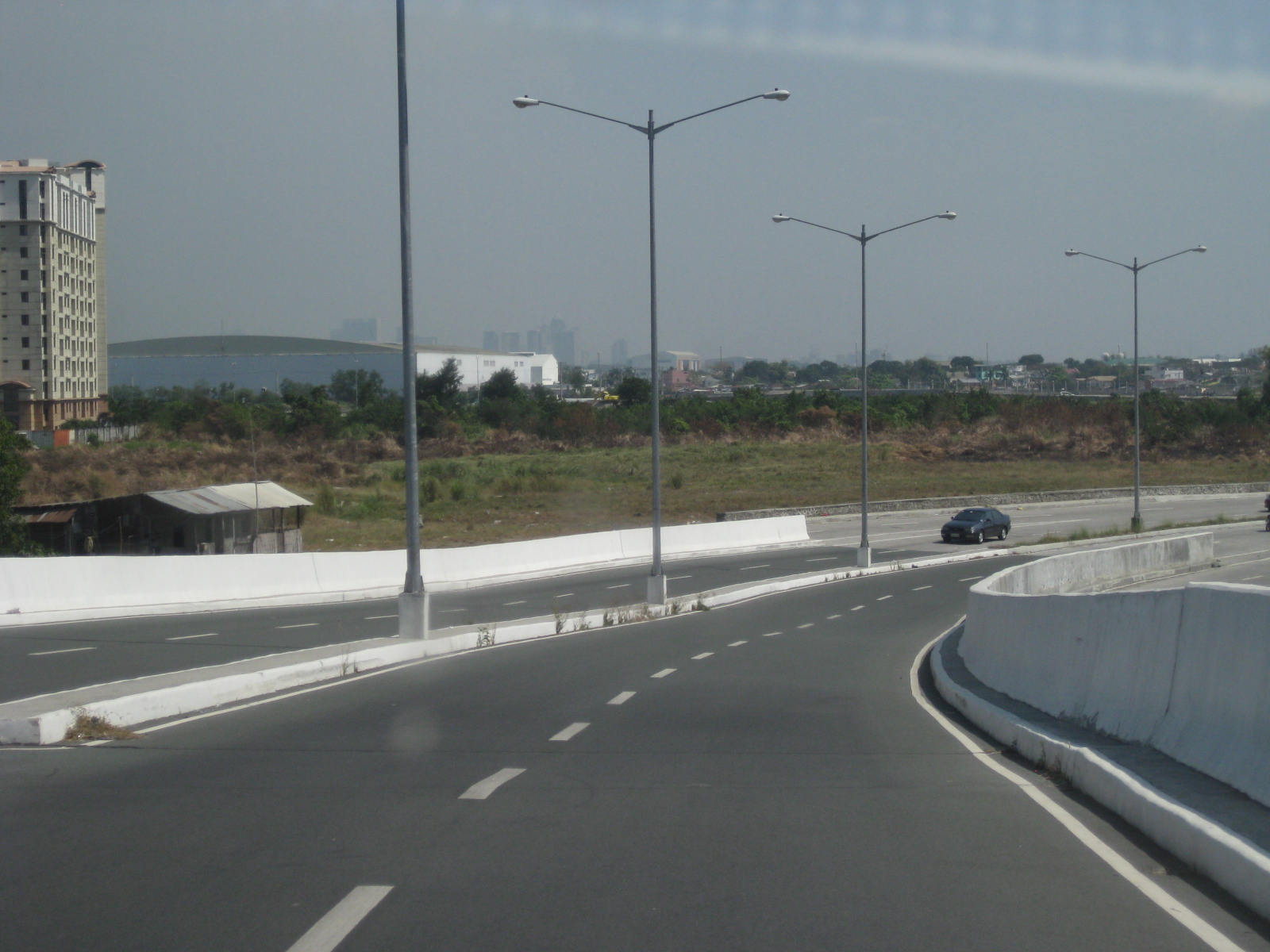 Seen from the northbound-side of the overpass is a wide area used by the El Shaddai religious group for their activities. These areas are usually seen by passengers of aircraft approaching NAIA from the east as these are along the flightpath to the main runway.
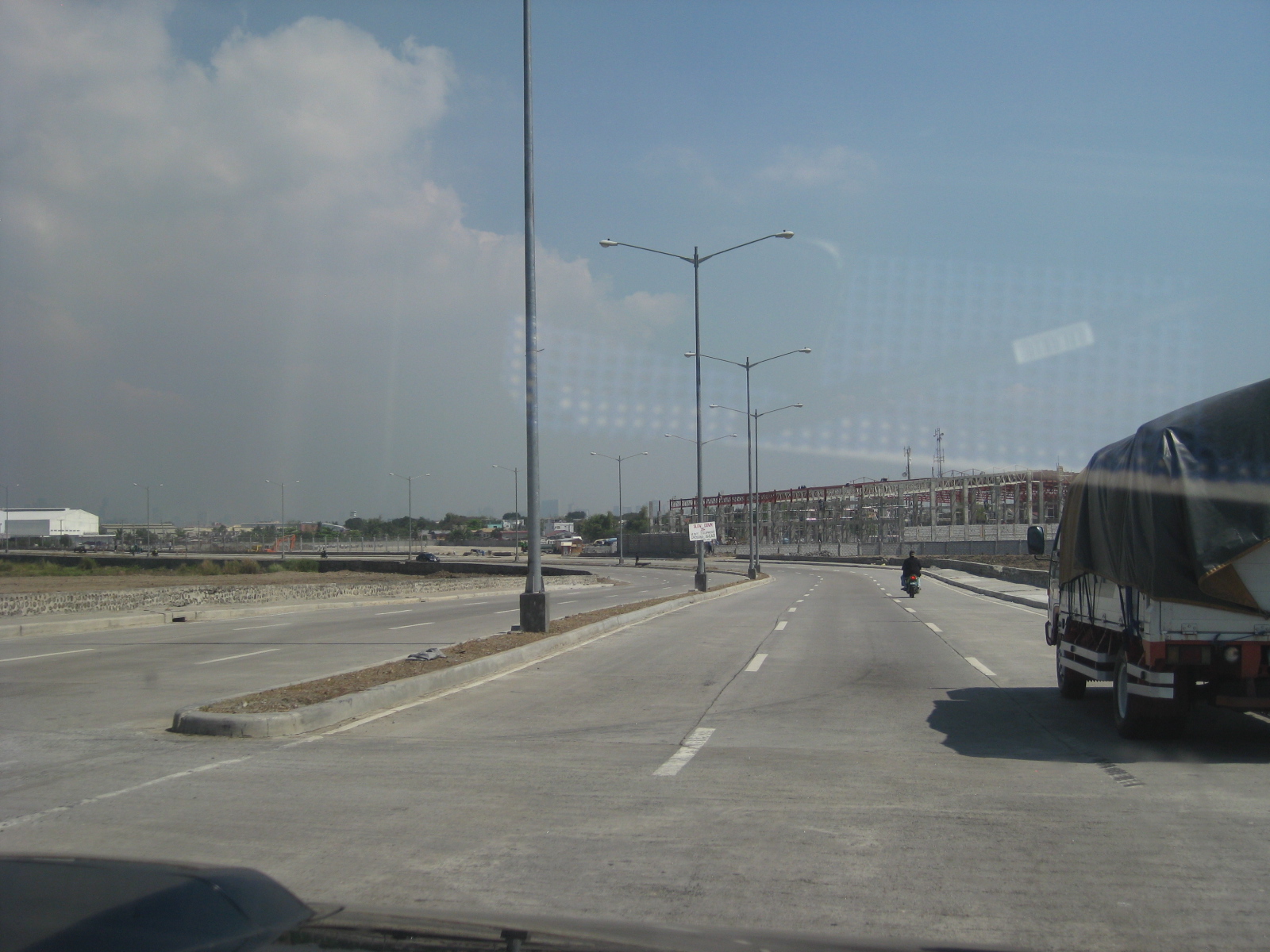 Section approaching an area where there are mostly warehouses and logistics facilities. This area is already very close to the NAIA complex.
 Among the logistics facilities in the area is mall giant SM’s warehouse facility. Note again the curvature along the highway alignment despite the fact that there are practically no developments in the area even after a significant time after the extension’s completion.
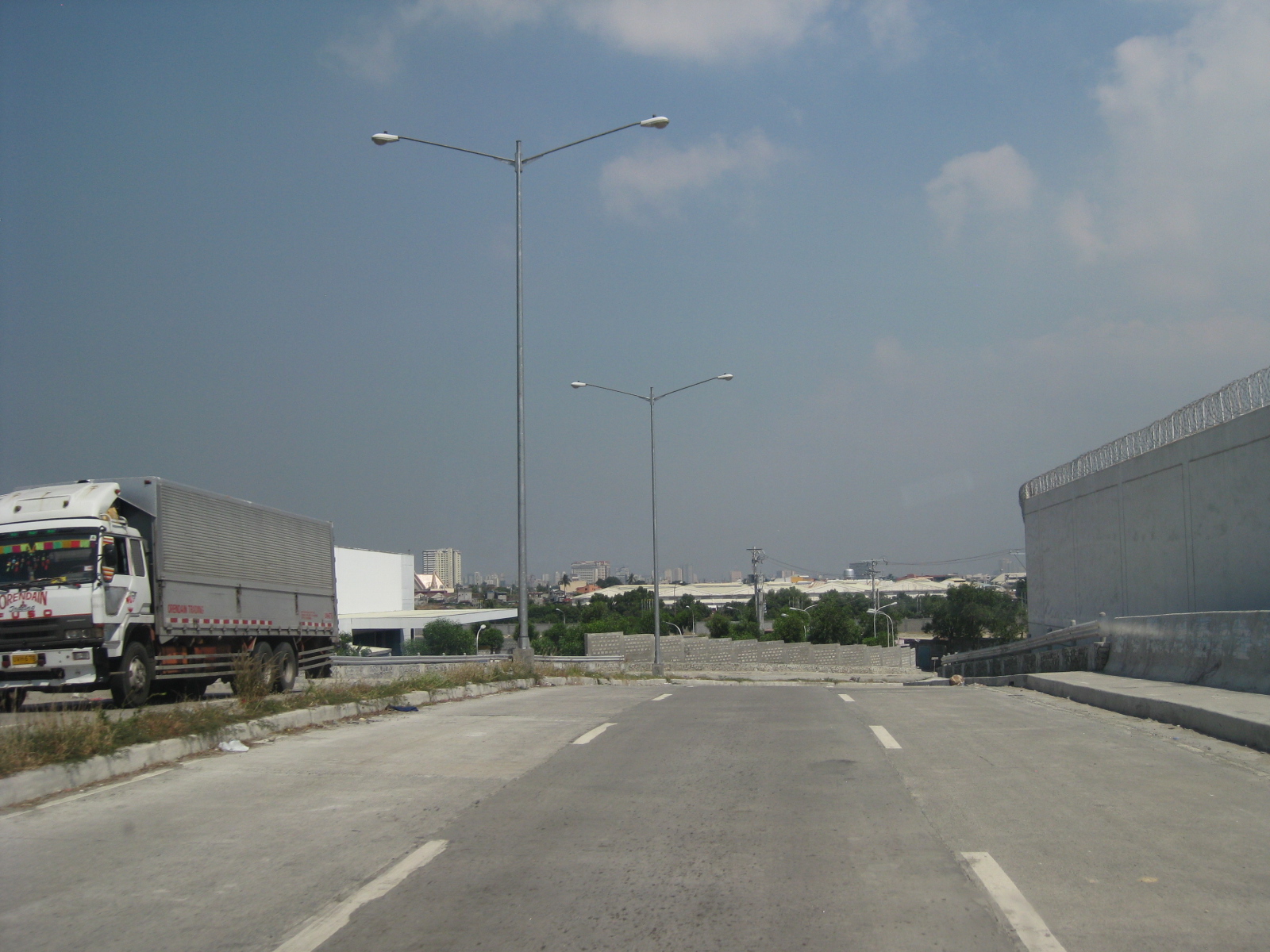 The highway eventually turns towards Kaingin Road and NAIA (also SLEX, which is at its northernmost end).
 The vehicles turning left are bound for the Airport Road via the road fronting the Multinational Village at the end of NAIA’s main runway. Straight ahead is the Kaingin Road that connects to the Moonwalk/Merville Access Roads that end at the West Service Road along SLEX.
 The C5 Extension’s other end starts from Kaingin Road, which is parallel to the NAIA main runway. The fence on the left is NAIA’s and there is no physical connection between the Extension and C5 across the SLEX.
–

