
Home » Infrastructure (Page 30)
Category Archives: Infrastructure
Some thoughts on airport parking for NAIA T3
I had another unpleasant experience parking at NAIA Terminal 3 just before Christmas. It seems its getting more difficult to park at the airport every time and authorities have yet to address the parking problem despite the solutions staring them in the face. I would like to believe that the typically higher demand for parking during the Christmas season can be accommodated if the available parking space can be managed and equitably allocated for users of the terminal.
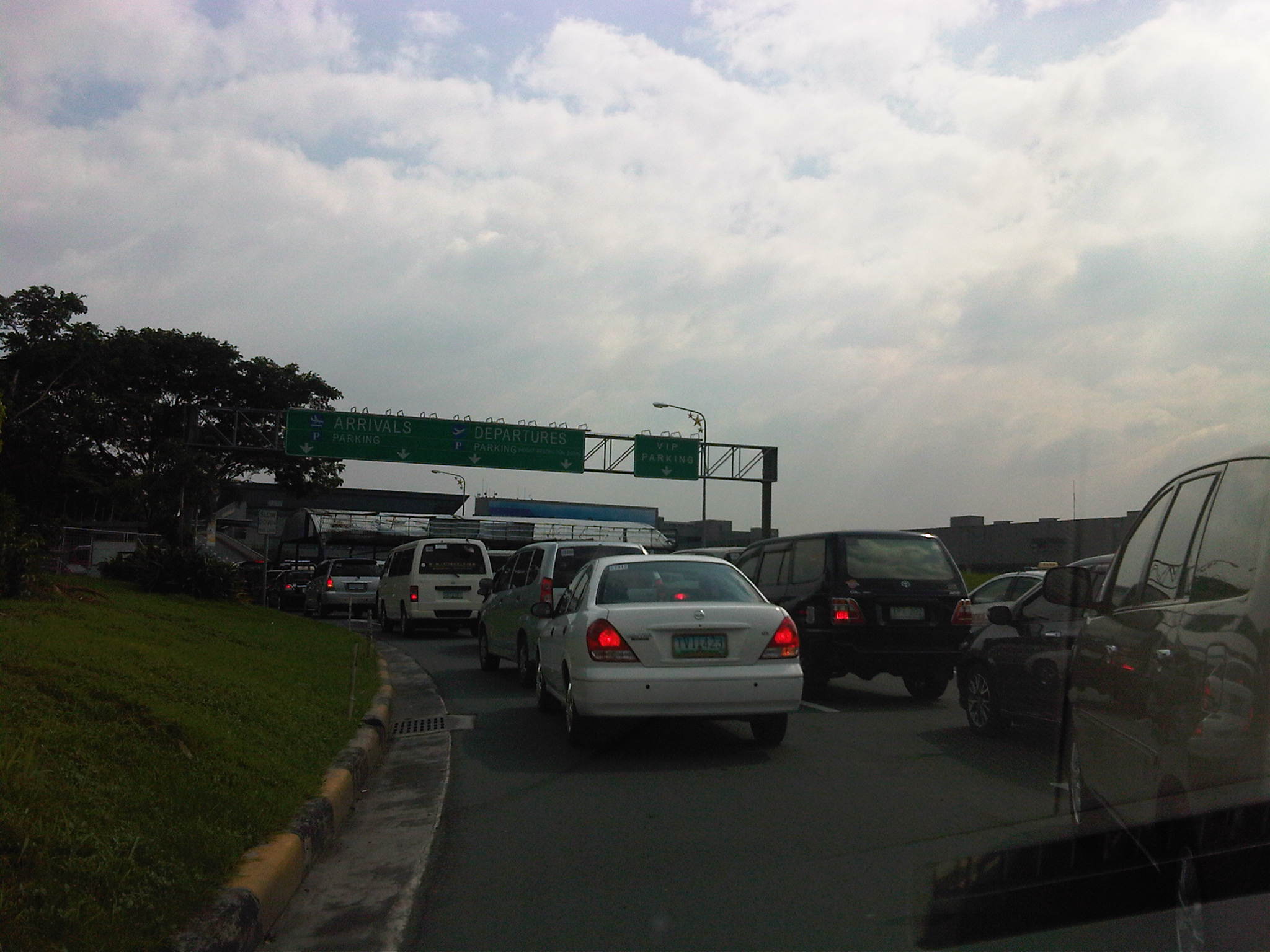 Queue at the entrance to the airport – the guards were still inspecting each vehicle but they had to wait for these to inch towards them at the inspection point.
 While the signs seem to suggest different parking facilities for arrivals and departure, there is actually one large open parking lot located in front of Terminal 3. This lot is segregated among airport taxi services, employee parking, overnight parking and general parking. Meanwhile, the parking area to the right side of the ramp to the departure area is generally empty but for a few vehicles that are said to be owned by employees of the airport. This is quite odd considering they also have a lot of parking space for them
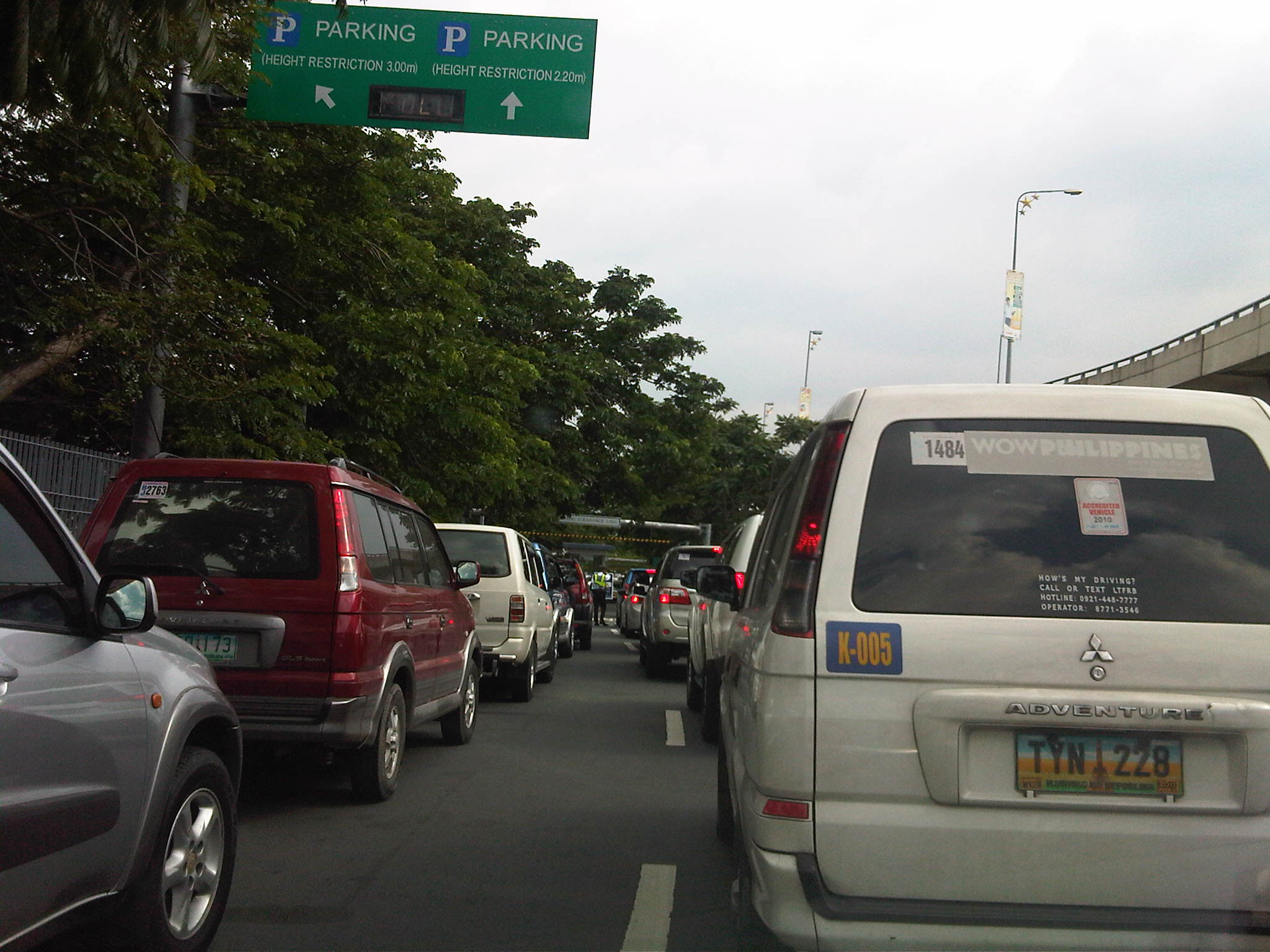 Everyone had to wait for the security to wave them through to to parking lot. Others were content with staying inside their vehicles while waiting to pick-up their passengers.
In the end, I had to rush to the airport terminal after parking my car as my wife’s plane was already arriving. I wasn’t able to take more photos of the parking situation that day but knew I had other opportunities to do so in the near future. That future was when I was back again recently at Terminal 3 when I drove someone to the airport for an outbound flight after the Christmas break. The queue at the gate was much better and we were able to enter the parking area without a glitch. There were many spaces available but these were mostly along the fringes of the lot, with some requiring a few minutes walk to or from the terminal.
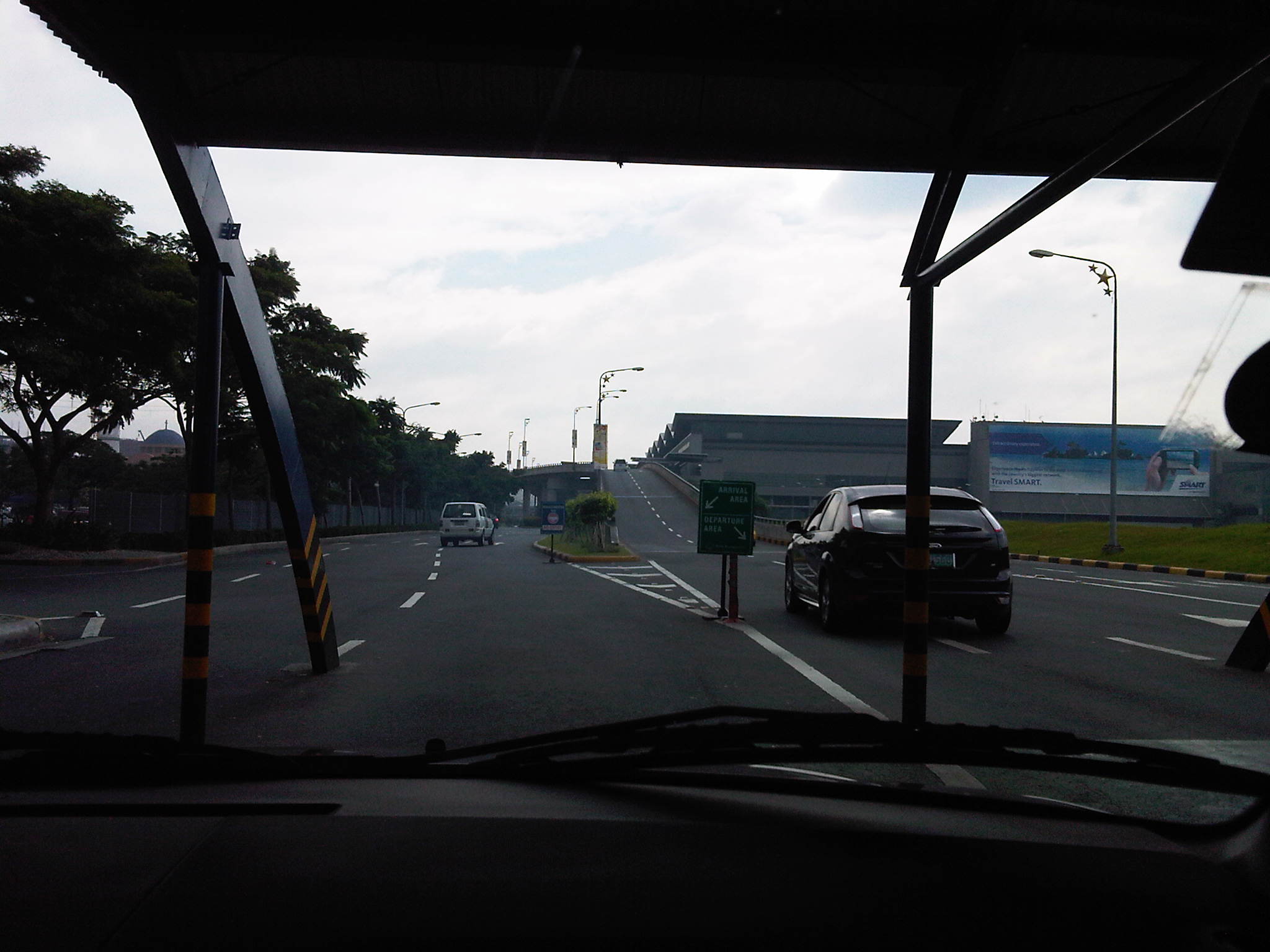 View from the inspection gate with the on-ramp for the departure level to the right and the driveway to the parking and arrival areas to the left.
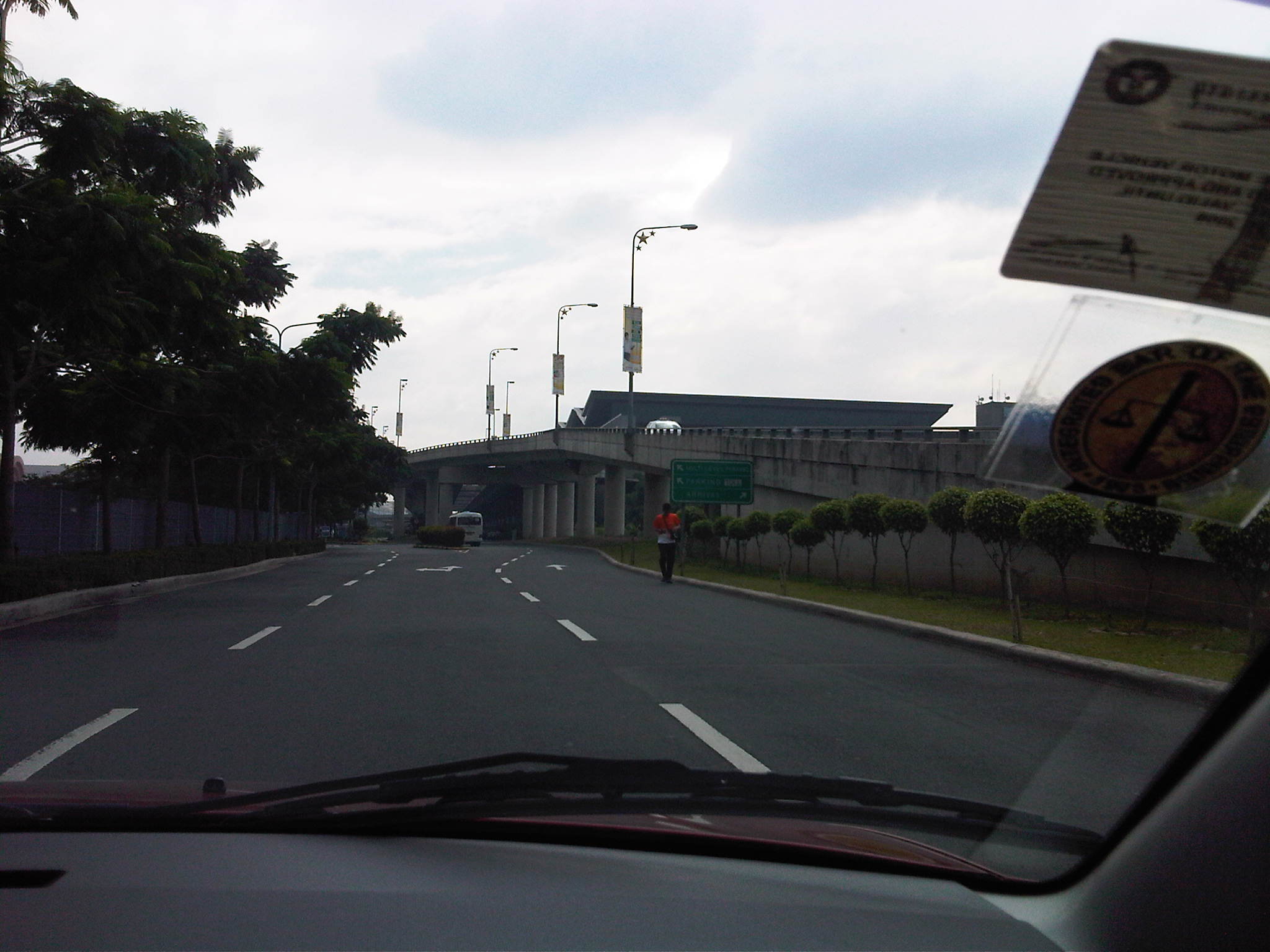 The way to the arrivals driveway (right) and the parking lot (left) was unlike the condition shown in the earlier photos taken just before Christmas.
 There was a sign stating that the overnight parking area was full. The overnight parking area for those who opt to leave their vehicles until their return is actually the driveway on the right side of the photo that eventually leads to the on-ramp for the multilevel parking building that until now has not been opened for various reasons. To the left is the driveway to the parking lot.
 Those vehicles lined up in the photo are not part of a queue for arrivals. These are parked along the driveway designated for overnight parking.
 Meanwhile, these are vehicles at the parking area designated for the general public.
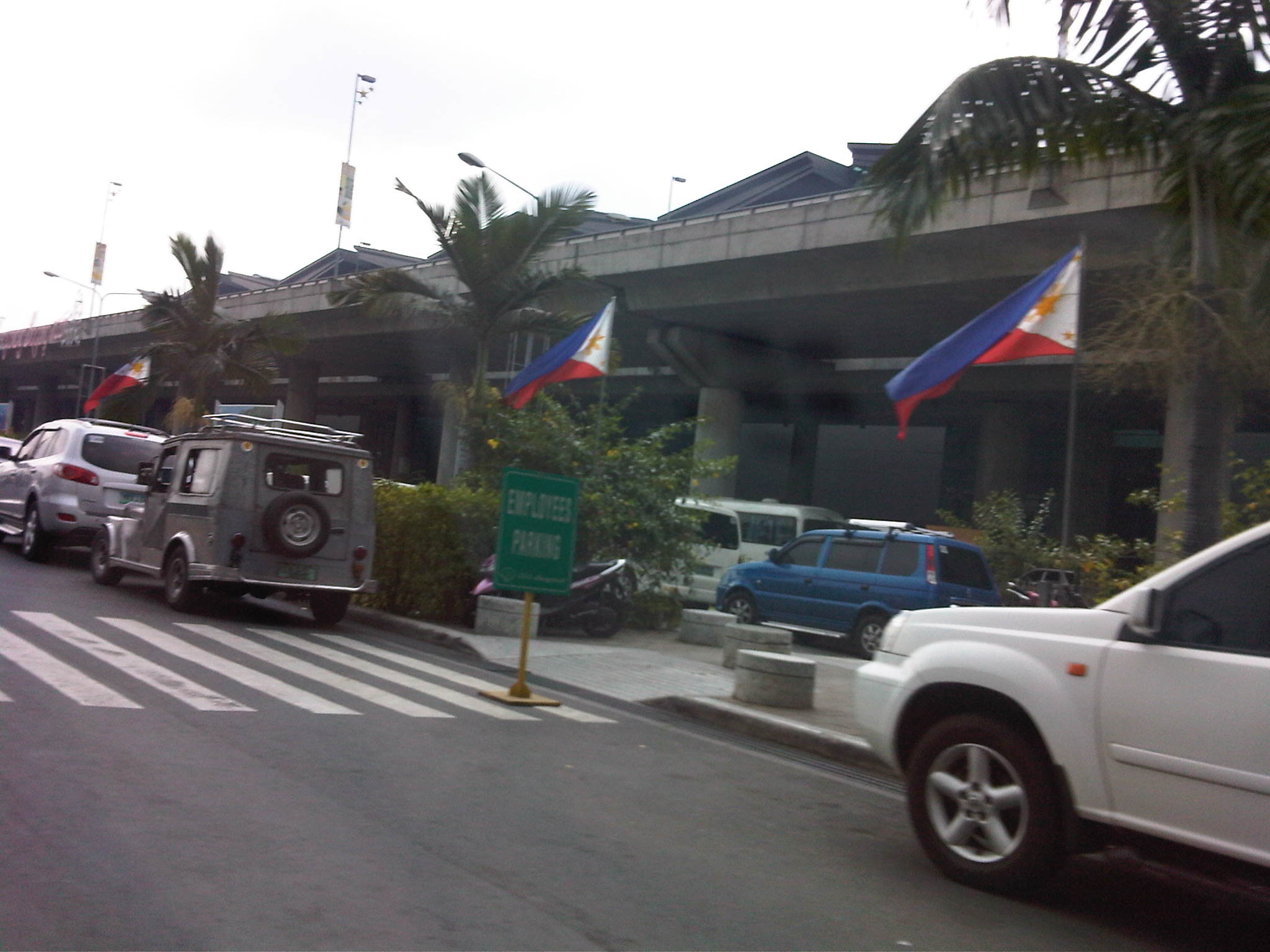 There seems to be a lot of signs for “Employees Parking” when airport authorities should prioritize space in this area for passengers and well-wishers. There are other under-utilized areas better suited for employees. I also wonder just how many employees actually have cars.
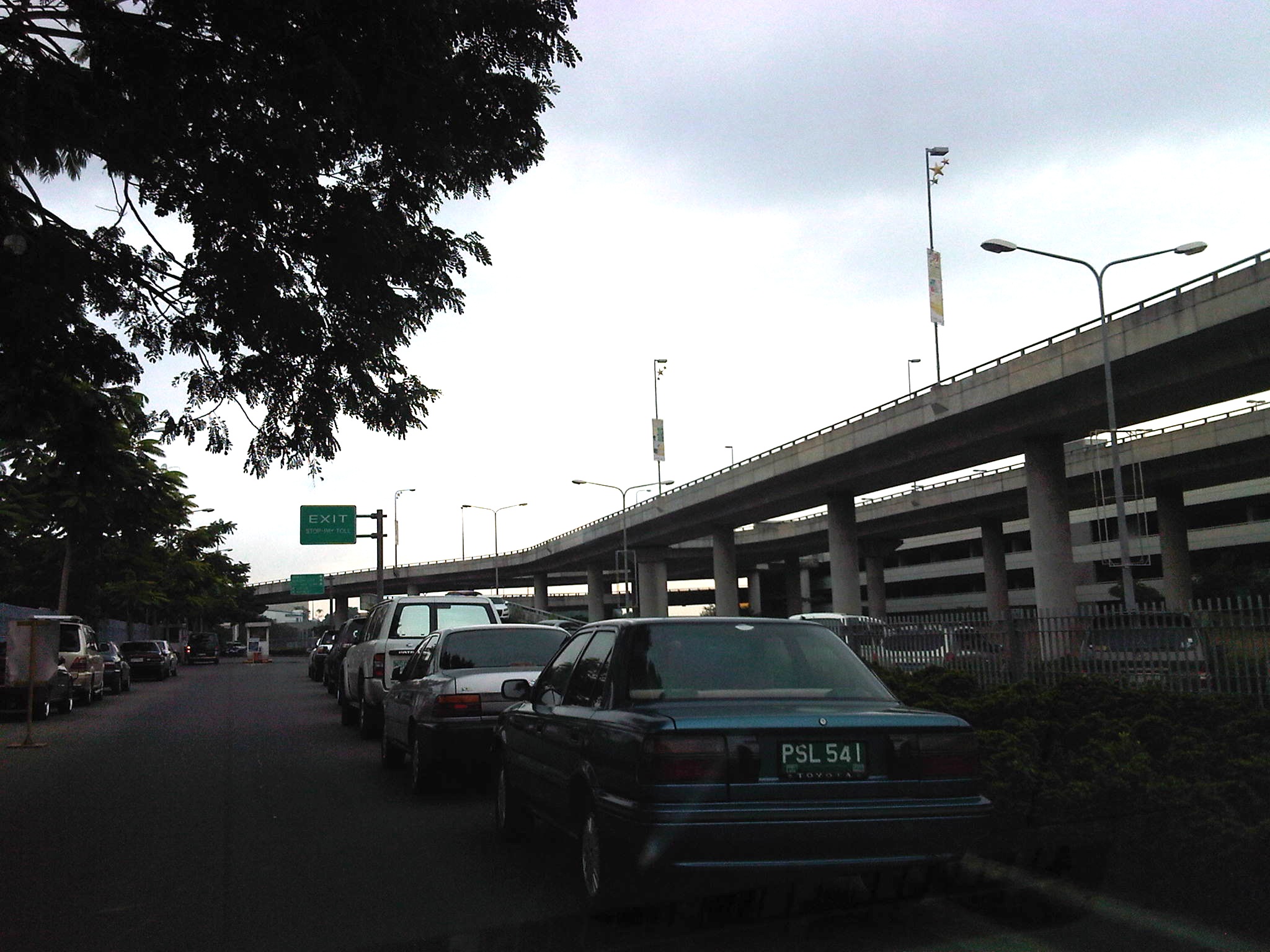 Turning towards the exit from the parking facility, one is greeted by more vehicles parked along the curbside (both sides of the driveway, actually). The fence separates this driveway from another that leads to the ramp to the multilevel parking building that is visible on the right side of the photo. This latter driveway also has vehicles parked along its length, which is allocated for overnight or long term parking. Above is the ramp from the departure level.
 In this photo, the ramp to the multilevel parking facility can be seen clearly and is occupied by parked vehicles. I still wonder how long it would be and what it would take before NAIA Terminal 3 finally makes the parking building available for use of the general public when, according to some sources, there are no structural issues barring the use of the building. Meanwhile, there is already an obvious demand given the evolving preferences of travelers with their own vehicles.
 Motorcycle parking at the fringe of the parking. This is actually another driveway utilized instead for motorcycles.
The layout of the open parking lot at Terminal 3 can be seen via Google Earth as shown in the image below. The area designated for public parking (center to right before the off ramp from the departure level) is conspicuously full while there seems to be a lot of spaces available in the area allocated for taxis and airline and airport employees (left in the image and prior to the on ramp to the departure level). There is also a relatively spacious open lot to the left and adjacent to the terminal building itself. This seems to be reserved for employees (again?) and VIPs. While the last area may be allocated for employees and VIPs, I would like to point out that more parking spaces should be allotted for travelers and well-wishers. Questionable for me is the allocation of so many spaces for taxis and vans that seem to be using the lot as their depot. I seem to remember that these public utility vehicles should have their garage somewhere and not necessarily at the airport where they seem to be lording it over “regular” taxis. These airport taxis charge significantly higher if not exorbitant rates compared to the typical taxi and to some, their preferential treatment at the airport is at the expense of passengers and well-wishers who certainly deserve better public transport service.
 Layout of NAIA Terminal 3 (image from Google Earth)
In the image above, the building with the light-colored roof to the right of the terminal building is a multilevel parking facility. The parking building is directly connected to the terminal and is accessible via the southeast wing of the terminal. I am not aware of the capacity of this facility but based on what one can see from the outside, its 5 levels should be able to accommodate quite a lot of vehicles and offer other opportunities for business (e.g., car wash, small shops, etc.) much like what is already available in similar facilities found in shopping malls.
[Note: An news article appearing on January 27, 2012 states that the parking building has a 2,000 car capacity while the open area can hold 1,200 cars. I assume these numbers refer to the number of spaces and do not include waiting or circulating vehicles.]
–
Quezon Ave. – Araneta Ave. underpass
The underpass along Quezon Avenue (Radial Road 7 or R-7) for its intersection with Araneta Avenue (Circumferential Road 3 or C-3) is currently being constructed. The project was approved last year and it designed to relieve congestion at this busy junction of two major thoroughfares. Among the alternatives considered for the intersection was a 4-lane overpass to be constructed along Quezon Avenue similar in design to the overpasses in Iloilo and Cebu cities. One concern, however, that needed to be explained thoroughly by the DPWH to stakeholders, especially the Quezon City government, was the prospect of flooding. The area, particularly the part of Talayan Village, is prone to flooding with water reaching waste-level that can be brought about by heavy rains. It may even be worse for rainfall of the Ondoy or Sendong kind.
The project seems to be proceeding at a good pace with a lot of activities in the past months. Congestion does not seem to be as serious as what had been anticipated, thanks in part to an aggressive campaign that included information on alternative routes for motorists. Still, it is recommended for the motorist to avoid the area and use other routes if possible as traffic can test one’s patience in this area.
Some of the photos were quite dark as it was already past 5pm when I took them with a cell phone camera. I tried to adjust the brightness in order to have clearer images.
 Approaching the construction site along Quezon Avenue, motorists can already experience the constriction
 The concrete barriers are adequate for keeping vehicles off the excavated sections of Quezon Avenue. These seem to be permanent barriers for when the underpass is already operational.
 Manila-bound approach to the Quezon Ave.-Araneta Ave. intersection where there are effectively 2 lanes available to traffic. It can be quite congested here during the regular weekdays as the original 5-lane section Quezon Ave. narrowed to 2 lanes due to the ongoing construction of the underpass. There used to be a pedestrian overpass at the intersection. This had to be dismantled to give way to the construction of the underpass. Remnants of the overpass remain in the area.
 After crossing Araneta Ave., Quezon Ave. still effectively has 2 lanes as temporary concrete barriers protect the innermost lane beside the underpass barrier.
 Approaching the site from Manila, there is already congestion along the 5-lane section of Quezon Ave. This section will also eventually narrow down to 2 lanes.
 The Quezon City-bound approach to the intersection along Quezon Ave. also has only 2 lanes left available due to construction materials and equipment.
 As in the opposite side of Quezon Ave. one lane of the at-grade level of the road is not available to traffic due to the construction works.
 At the intersection, the remains of what was a pedestrian overpass can be still be seen. The overpass crossed both Quezon Ave. and Araneta Ave., allowing for pedestrians to walk across the intersection without conflict with motor vehicles below.
 The intersection itself has not been excavated and it will be a “Herculean” task to manage traffic once this phase of the project is implemented. Both R-7 and C-3 are high volume roads and the MMDA and QC enforcers would have their hands full, and definitely more challenging than what they are contending with at present. This intersection will still be at-grade in the future and should feature a traffic signal to manage the remaining traffic movements as through traffic along Quezon Ave. will eventually flow continuously along the underpass.
 About 100 meters past the intersection, traffic is free flowing along Quezon Ave. as 2 lanes become 3 and then 5 – a basic principle in traffic flow theory.
A good thing for the project is the approaching school break after March 2012. Should construction proceed at the current pace (or even faster) they should be able to have the underpass operational by the time school opens in June 2012. The contractor should take advantage of the typically good weather in Metro Manila from January to May so as to finally relieve road users of the inconvenience caused by the project implementation. On another note, the underpass is similar to what was proposed for the case of C5-Kalayaan before the MMDA decided to turn that intersection into a showcase for their U-turn scheme, culminating in the construction of 2 U-turn overpasses in the area. The completion of the Quezon Ave.-Araneta Ave. underpass coupled with an effective traffic signal system setting at-grade may just prove the DPWH right in their pitch for the same intervention at C5-Kalayaan and revive discussions pertaining to a more effective solution to the congestion there.
–
Cagayan De Oro Airport
To continue with our feature of Philippine airports, I am posting photos on the airport in Cagayan De Oro City collected over the past few years. The airport is curiously located on a plateau making it difficult to expand the airport, particularly lengthen the runway to accommodate larger aircraft. The airport is also plagued by poor visibility due to its elevation, which makes it prone to fog during the wet season. I am a frequent user of the airport due to trips to Iligan City where we have research and extension involvement with MSU-IIT and the City Government of Iligan, mostly to promote environmentally sustainable transport. MSU-IIT and UP Diliman are also among the partners in the DOST’s Engineering Research and Development for Technology (ERDT) program together with Ateneo De Manila University, DLSU, UPLB, Mapua, CLSU and Cebu’s University of San Carlos.
Following are photos from a trip to Iligan City back in September 2007. The gateway to Northern Mindanao, we usually travel to Iligan City via Cagayan De Oro.
 Cebu Pacific plane waiting for boarding.
 Baggage to be loaded on the plane.
 CebPac Airbus A320 boarding passengers.
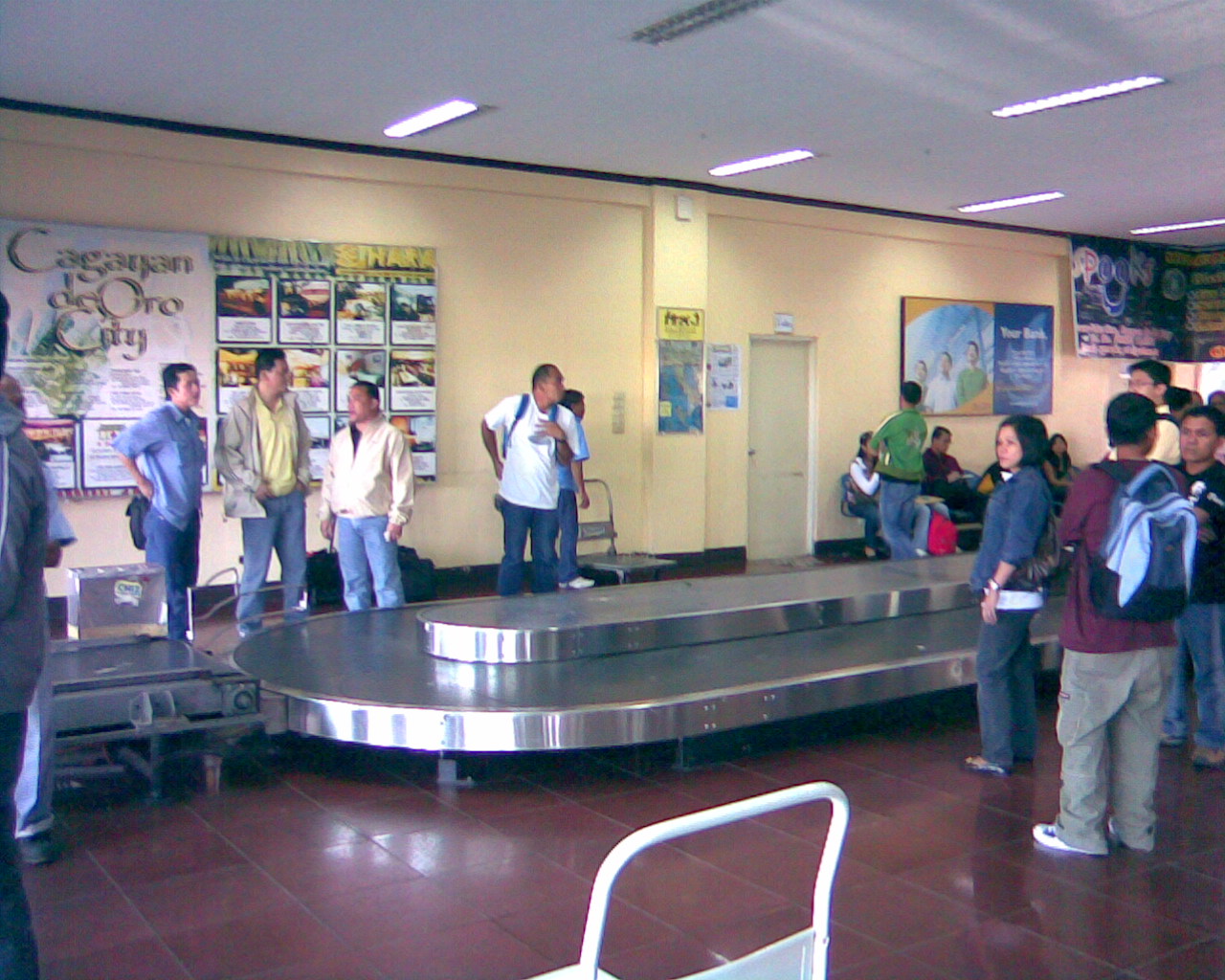 Waiting for our baggage at the arrival area.
 Here it comes and to be loaded by porters unto the conveyor system. I haven’t seen mishandled baggage so far from my trips to this airport.
 Luggage and other baggage are placed on a conveyor.
I was able to take photos on a September 2009 trip to Iligan City. This was only a couple of weeks before Ondoy (Ketsana) inundated Metro Manila and much of its surrounding areas.
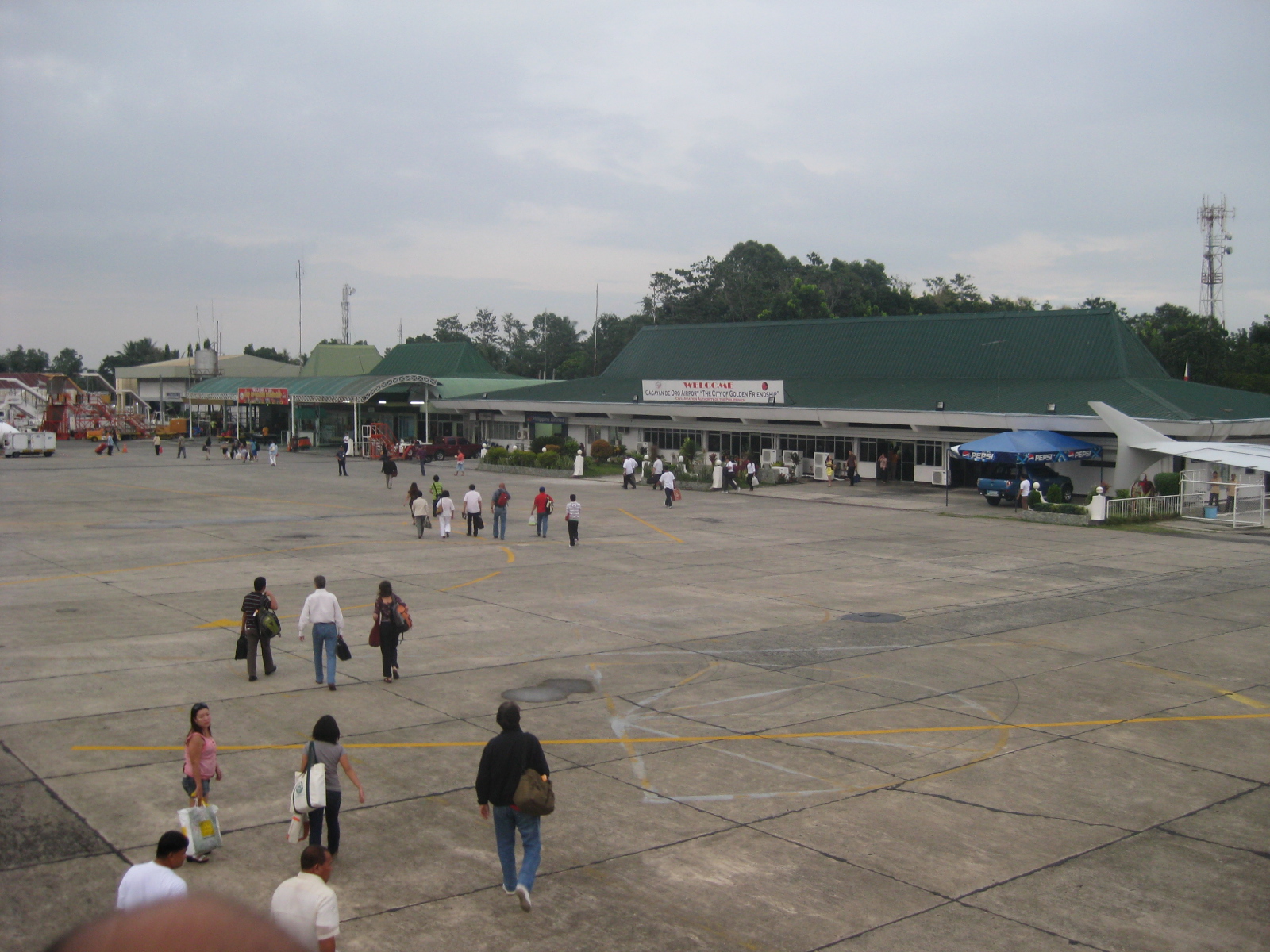 The CDO airport passenger terminal as viewed from the aircraft.
 Passengers deplaning from the aircraft’s rear (aft) door. That’s Prof. Tetsuo Yai of Tokyo Tech smiling as he descends from the plane. PAL’s staircases actually look more sturdy than the makeshift ones used by CebPac.
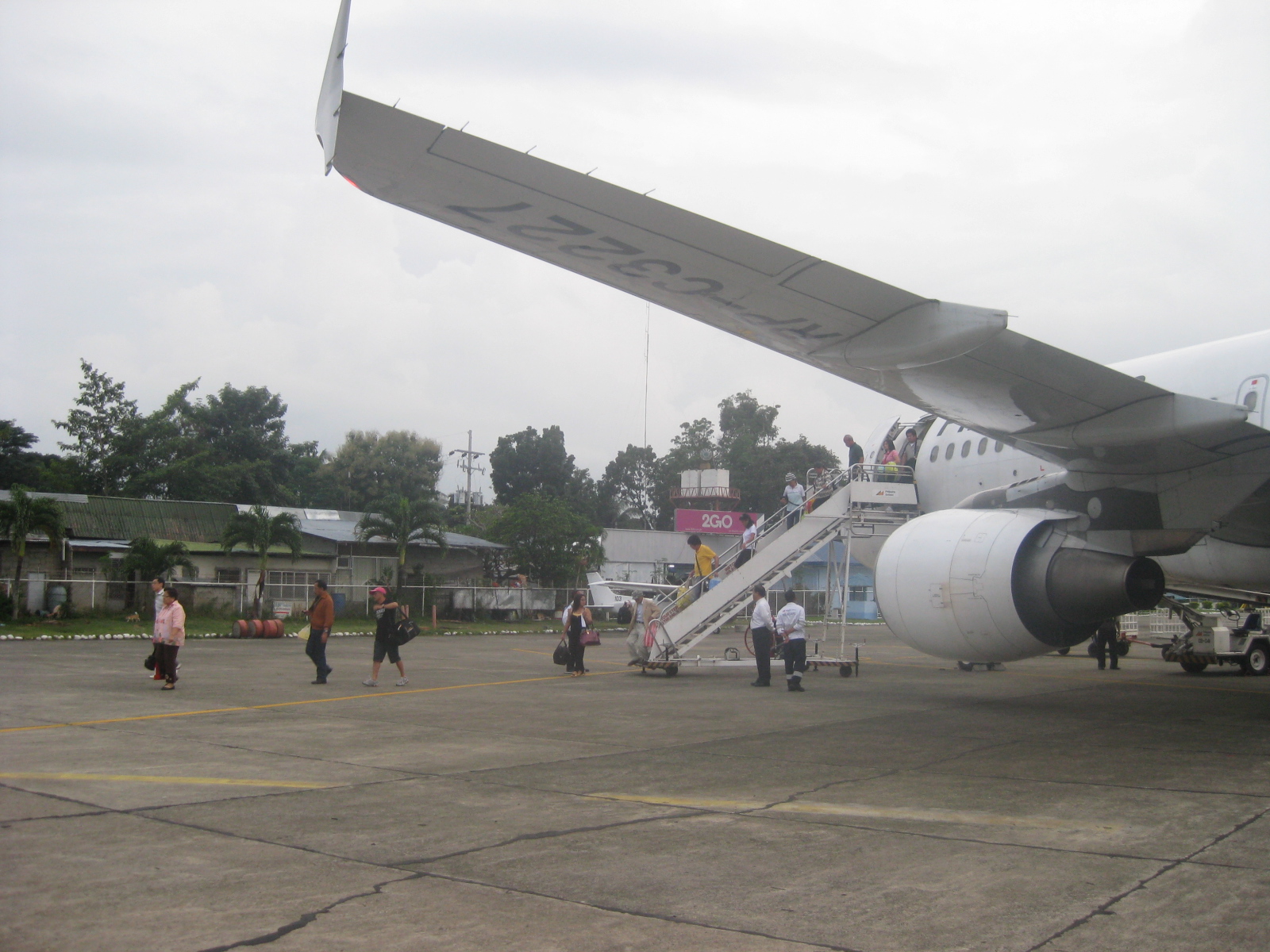 Nothing to prevent people from walking under the aircraft’s wings and near its engines
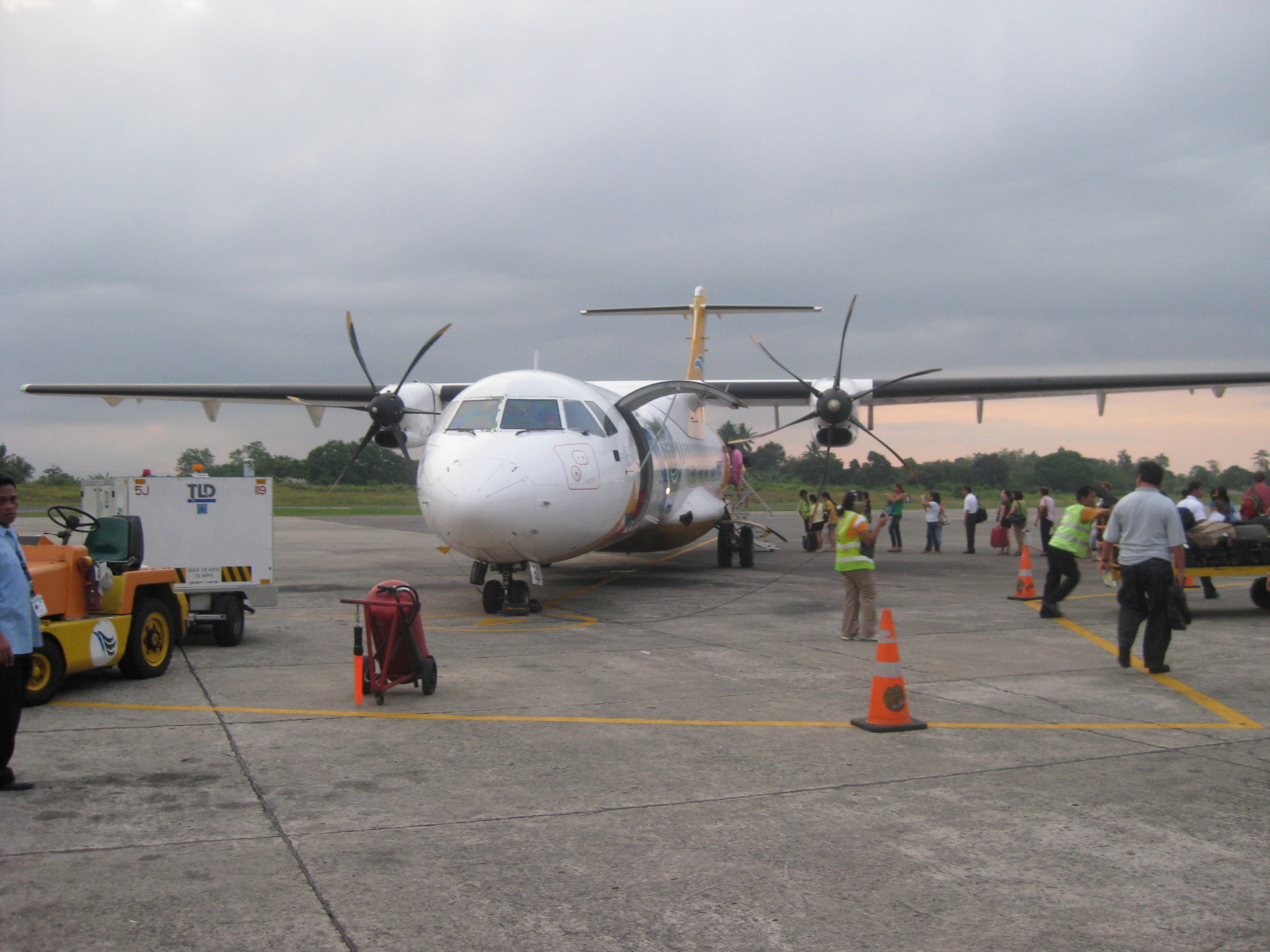 Ceb Pac turbo prop aircraft (ATR 72-500) loading passengers. These aircraft typically serve shorter routes like CDO-CEB or CDO-DVO. Jet aircraft (A319, A320 or A330) usually services the longer domestic routes like CDO-MNL or DVO-MNL.
 The stairs seem to be waiting for the next plane to serve.
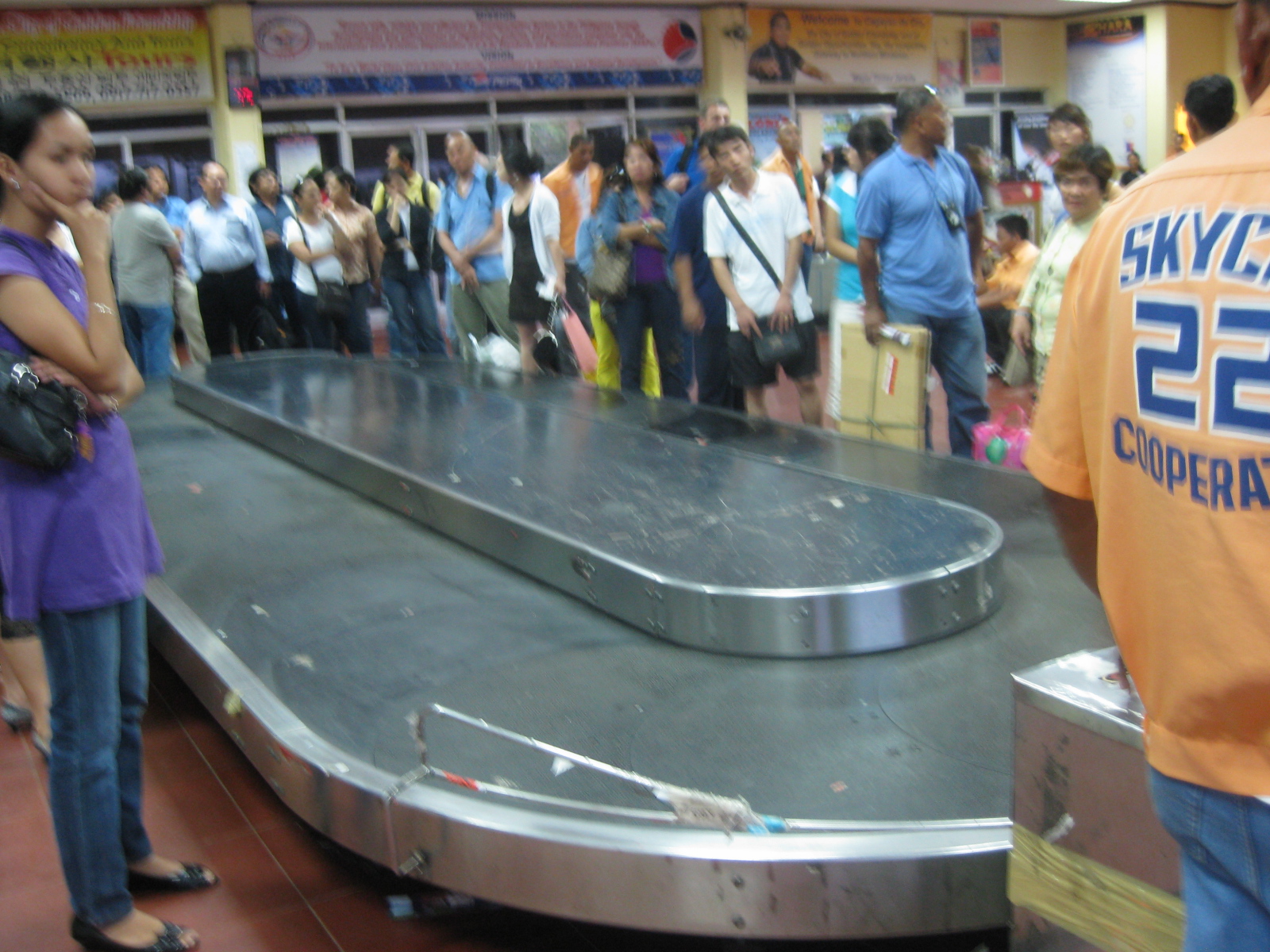 Passengers gather around the conveyor for their baggage.
The following photos are from a more recent trip to Iligan (July 2010) via CDO. At the time, we held a seminar/workshop at MSU-IIT on EST that focused on the application of a road accident database system developed by NCTS for the DOTC.
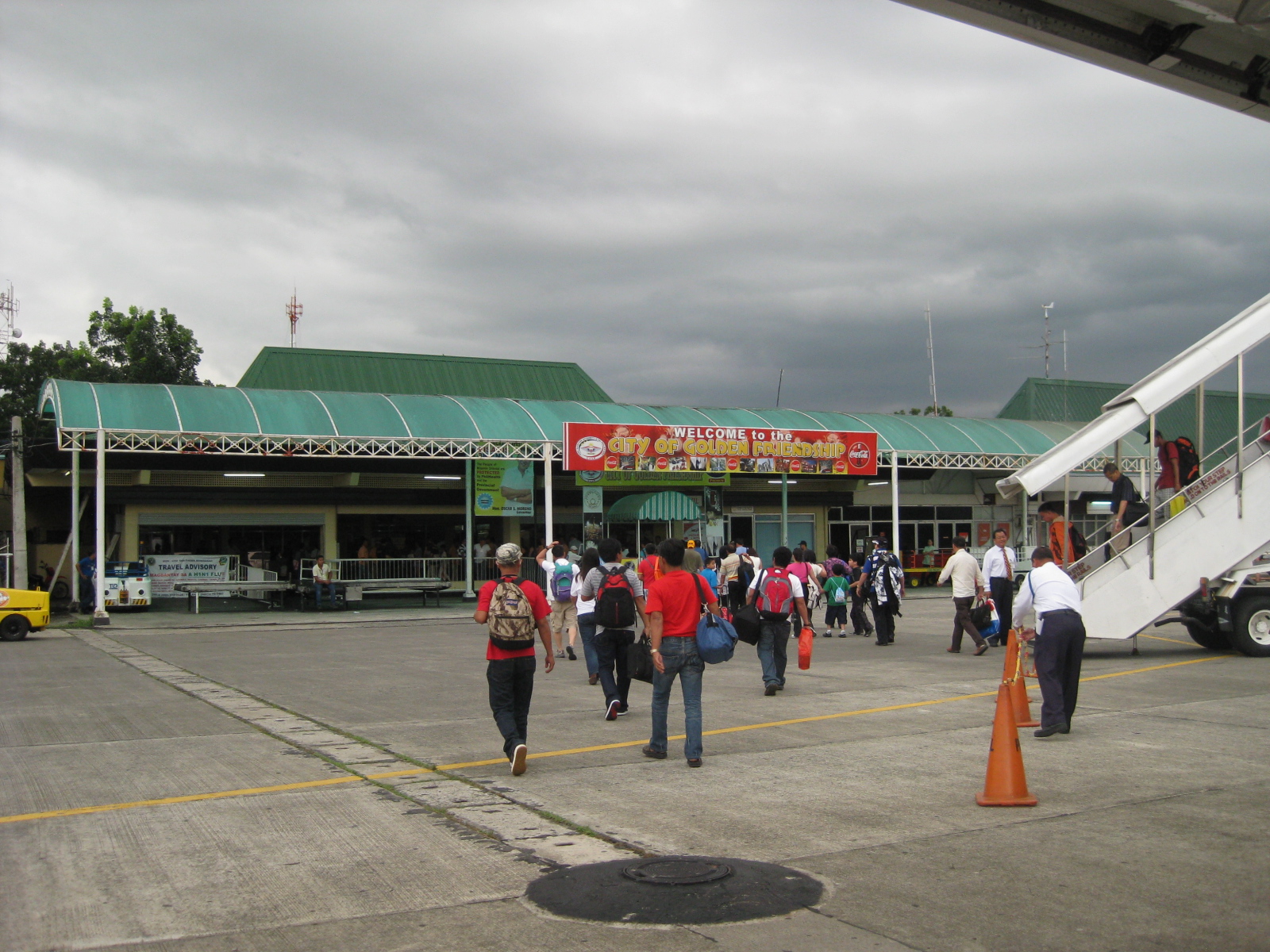 After deplaning, passengers walk towards the terminal. People are supposed to be prohibited from walking along the area under the aircraft’s wings so security typically lay down traffic cones for this purpose.
 A view of our aircraft from the baggage claim area
 Baggage handling is the same as in 2007.
From 2012, or perhaps 2013 if delayed, the main airport for Northern Mindanao will be transferred to Laguindingan town, a few minutes away from CDO. The region, after all, deserves a bigger and better airport. The land where current airport is located will most probably be sold or leased out, similar to what was done to Iloilo’s airport in the Mandurriao district of that city. I am quite curious if the Laguindingan airport construction was affected by the recent floods brought about by Sendong (Washi). That storm laid waste to large areas of Northern Mindanao and particularly costing the lives of more than 1,000 people based on the latest reckoning. It is hoped that Northern Mindanao and other areas affected by the recent calamity would be able to recover and quickly. The people are resilient and hopeful, and should be aided for them to be able to rise from this terrible experience, a tragedy of the highest magnitude.
Truck weight limits in the Philippines
I noticed a lot of interest on the “truck ban” scheme from the statistics provided by WordPress on my dashboard. It seems there are very limited material available on the scheme especially in the Philippines where there have been variations of and misconceptions on this travel demand management (TDM) measure. Why do cities like Metro Manila implement a truck ban? Or better yet, why are there designated truck routes in cities? The answer can be quite simple if viewed from the perspective of asset preservation. That is, by restricting trucks to use specific roads, we are also limiting their impacts (read: damage) to the road infrastructure. Such impacts come in the way of damaged pavements and/or bridges that bear the brunt of the weights carried by heavy vehicles. But such argument begs the question of why, in the first place, shouldn’t we design our pavements and bridges so that they may be able to withstand the cumulative loads of heavy vehicle traffic over a prescribed period of time, say 20 years, give and take a few years for variability and reliability in design and construction methods? Such is a question that needs to be answered, and clearly, by our DPWH, at least for the case of our national roads and bridges. It is really not a simple matter and certainly not something that cannot be blamed solely on the fact that evidences in the Philippines point to truck overloading as one of the culprits for damaged pavements and bridges.
The website of the Department of Public Works and Highways provides information on the axle load and truck weight limits for national roads. The matrix of weights may easily be downloaded and is provided in the following document:
The maximum single axle loads for different countries around the world are provided below:
Max Permissible Truck Loads World
I found another table of values this time for European countries. Based on the table on weight limits in European Union Countries, France seems to have the heaviest single axle load limit.
Still, the question running in the minds of most people involved in policymaking, monitoring and enforcement, and research is “How did we come up with the 13.5-metric ton maximum single axle load value in the first place?” Surely, it wasn’t a number that was plucked out from the air?
The 13.5-metric ton was most probably derived from an axle load study conducted in the 1990’s. Such a study could have, among others, determined the appropriate maximum axle loads that could be adopted by the country in lieu of the limits at the time that were already deemed obsolete given the evolution of trucks over time (i.e., they’re bigger now compared to, say, 30 years ago). What is problematic is that it seems the study was only able to derive the maximum single axle load and was not able to estimate maximum loads for tandem and tridem axles. Tandem axles are two axles positioned one after the other while tridems are three axles grouped together. These tandems and tridems are typical configurations for the rear axles of large trucks and trailers, enabling them to support heavy loads that typically are distributed more towards the rear axles.
Pedestrian facilities around Saitama Shintoshin Station
I have found many examples of excellent pedestrian facilities during my visits to Japan. Among the best are those integrated with the Saitama Shintoshin Station along the JR Keihin Tohoku Line. I had the good fortune of staying at a hotel near the station, from where I could easily catch a train to go to Saitama University via Kita Urawa Station where I transfer for a short bus ride to the university. Following are photos taken in September 2008 showing the walkways connecting my hotel with the JR station. Along the way the walkway connects other buildings such as those hosting government offices and the Saitama Super Arena, a major venue for indoor sports events like the Asian basketball tournaments that determine the continent’s representatives to the Olympics and World Championships.
 Tiled walkways with provisions for the blind (the yellow tiles) and protection from the elements
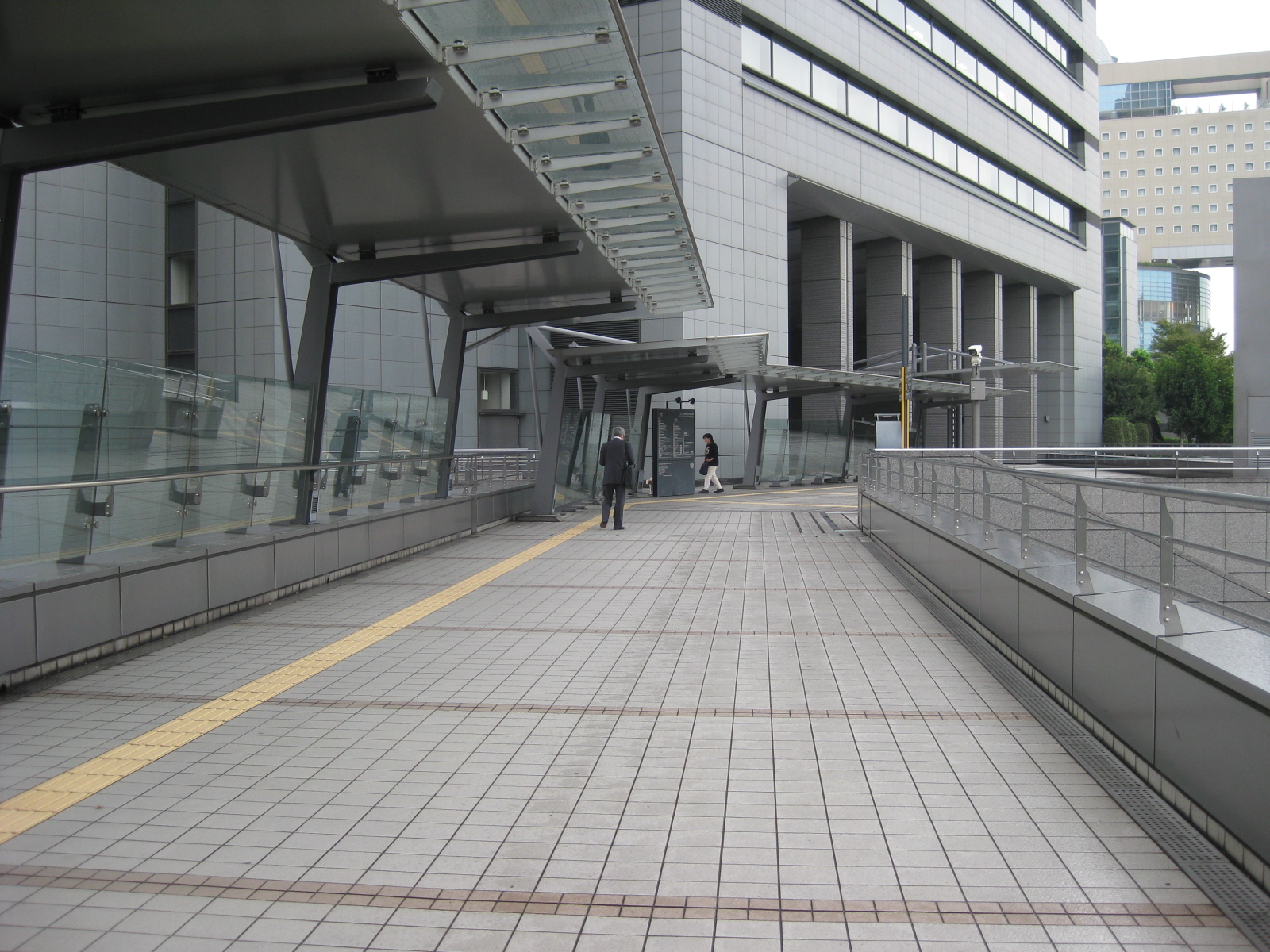 The walkways are wide and should be able to accommodate a high volume of pedestrian traffic. This section leads to the Saitama prefectural government offices located in the building on the background.
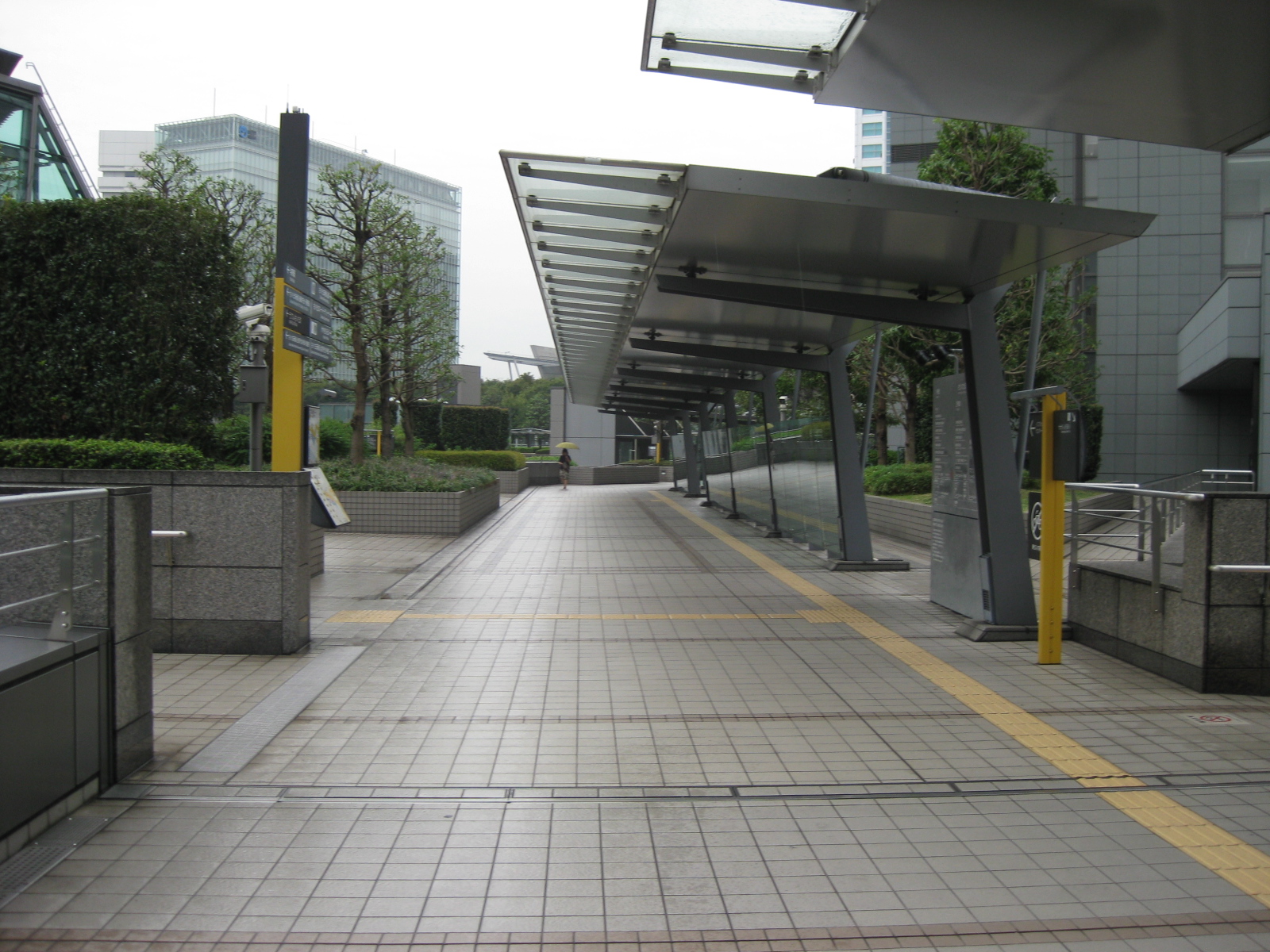 The yellow tiles forming the paths for blind pedestrians are designed to be under the shed and extends to the stairs from which the pedestrian could access the sidewalks and establishments at the ground level of the complex/area.
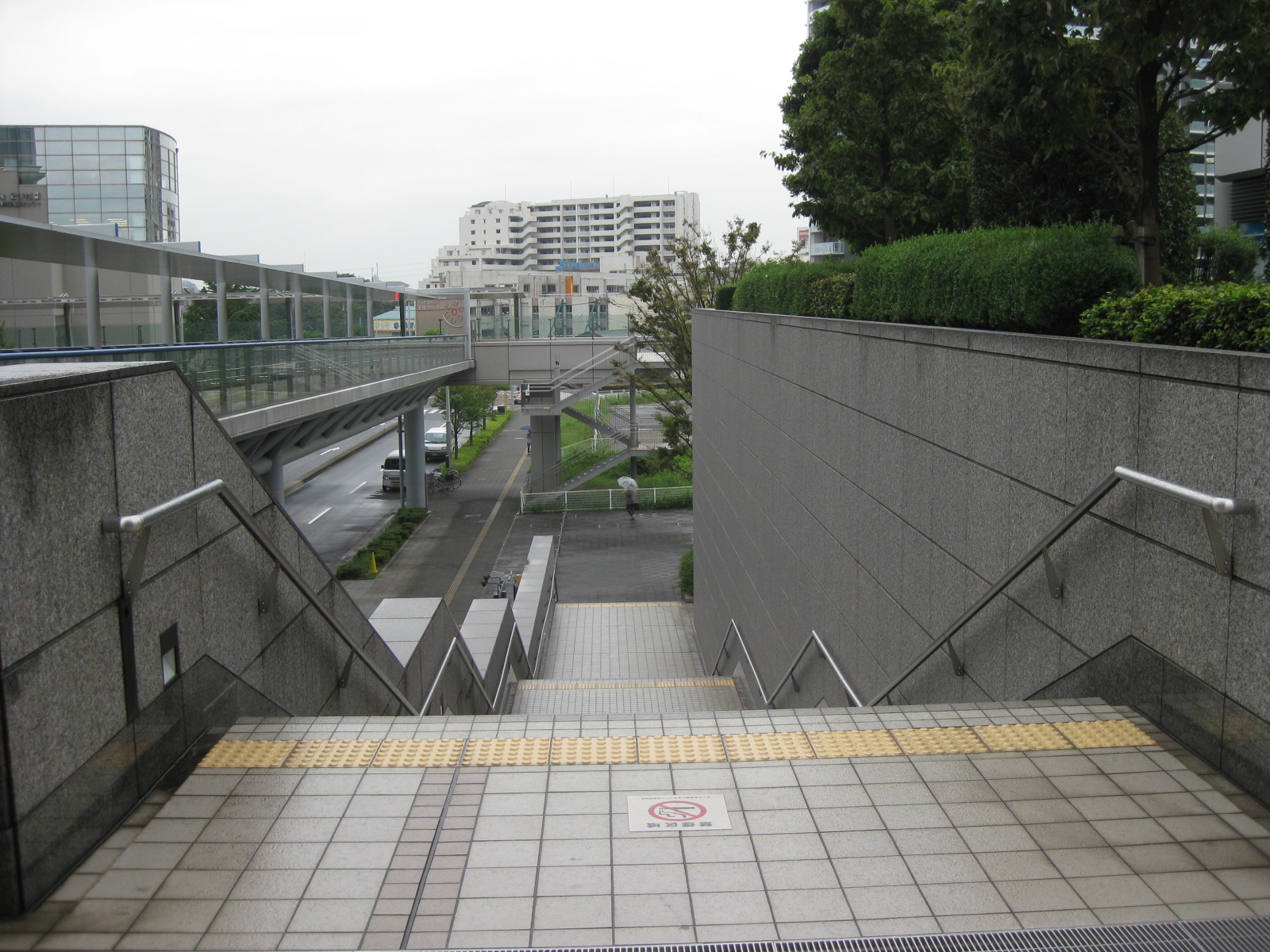 Stairs are designed with hand rails to support physically challenged people including the elderly. Note the yellow strips prior to the first step down the stairs.
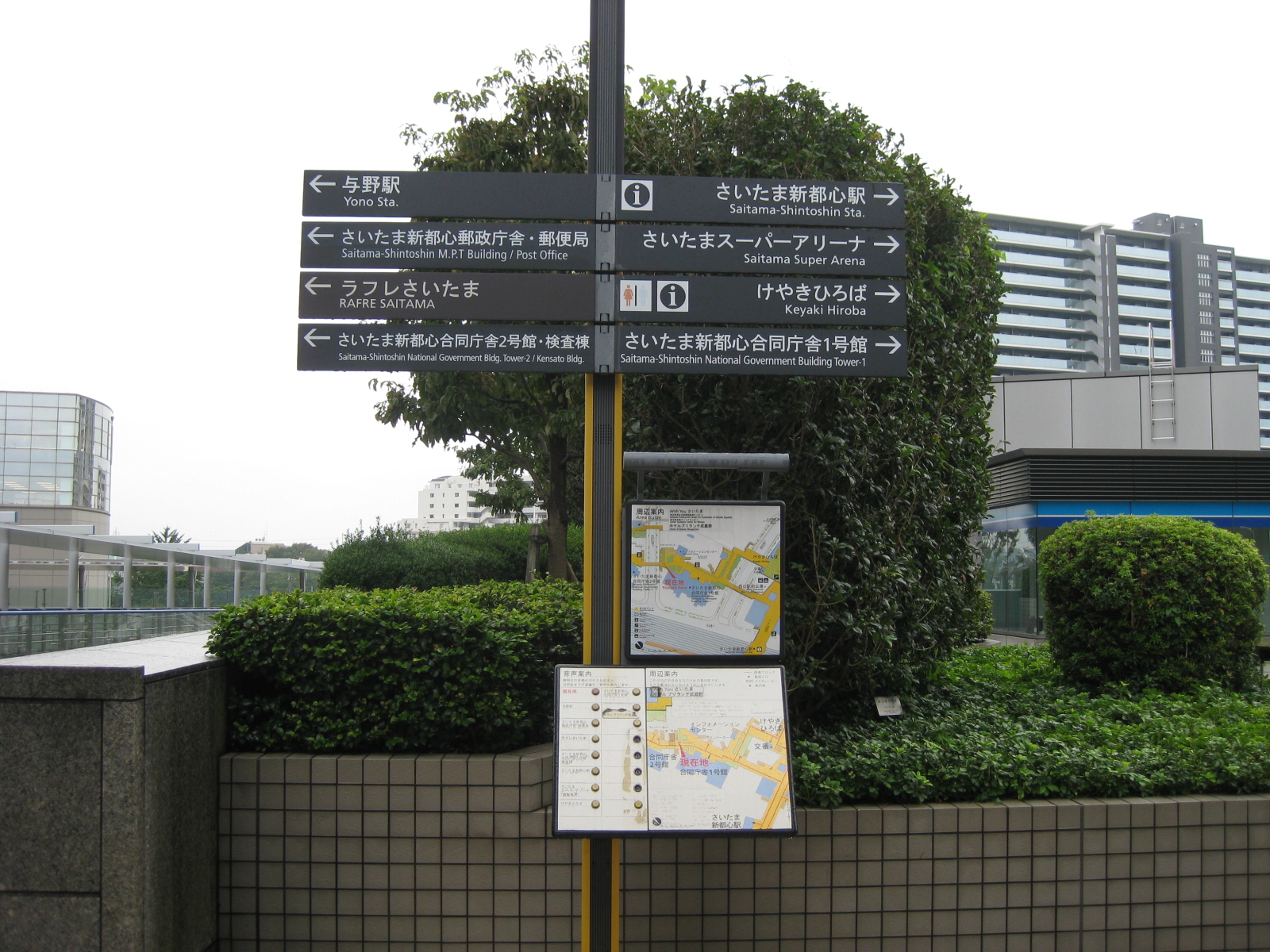 Pedestrian need to have access to information and maps and directional signs provide guidance for people especially those unfamiliar with the area (e.g., visitors or tourists). Most signs in the urban areas of Japan have English translations like what is shown beneath the Japanese in the signs above.
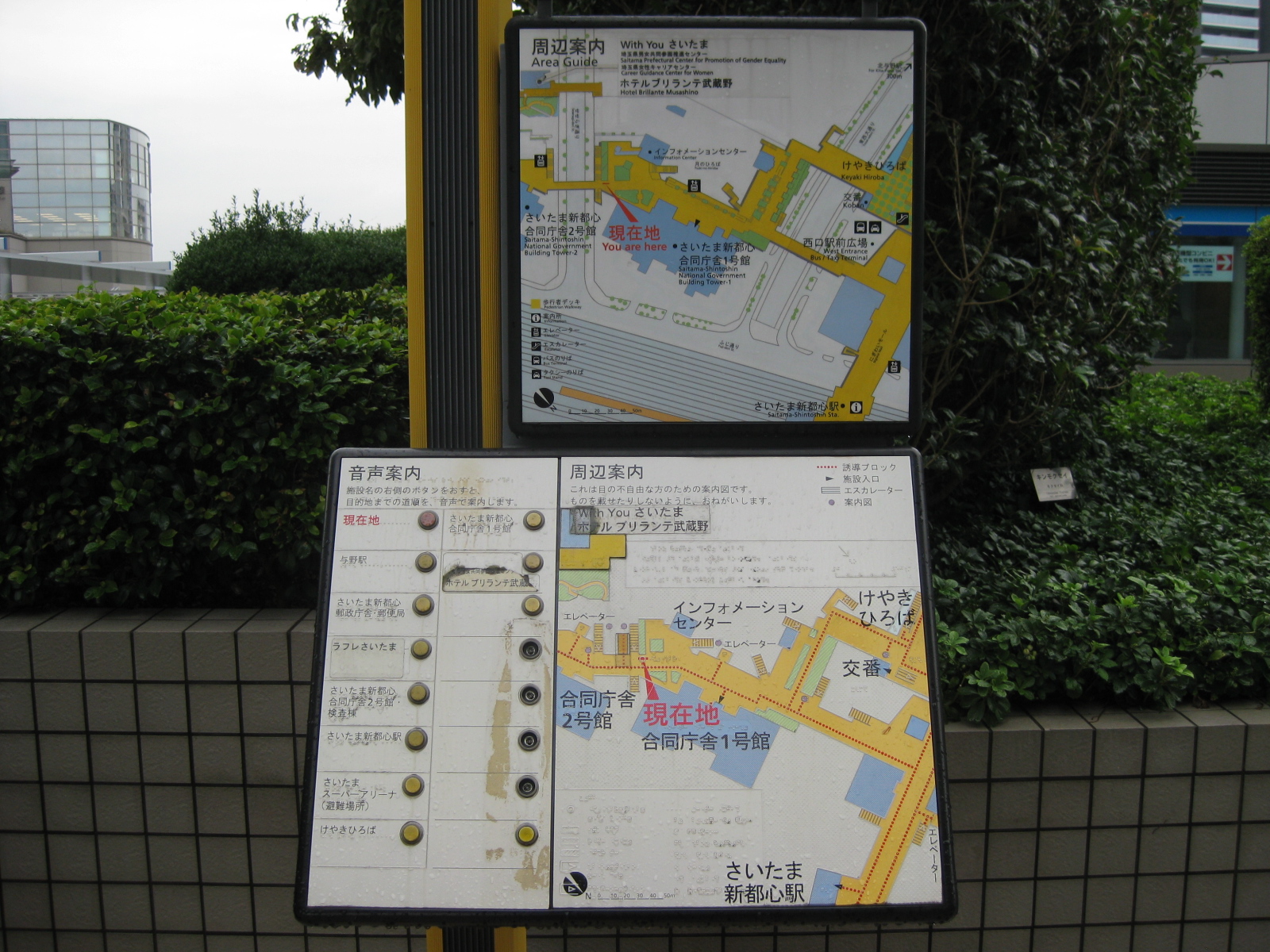 Some maps have interactive features. In this case, there are buttons that provide audio description of places of interest on the map. Today, there are already touchscreen maps in malls and there should be outdoor versions of such facilities.
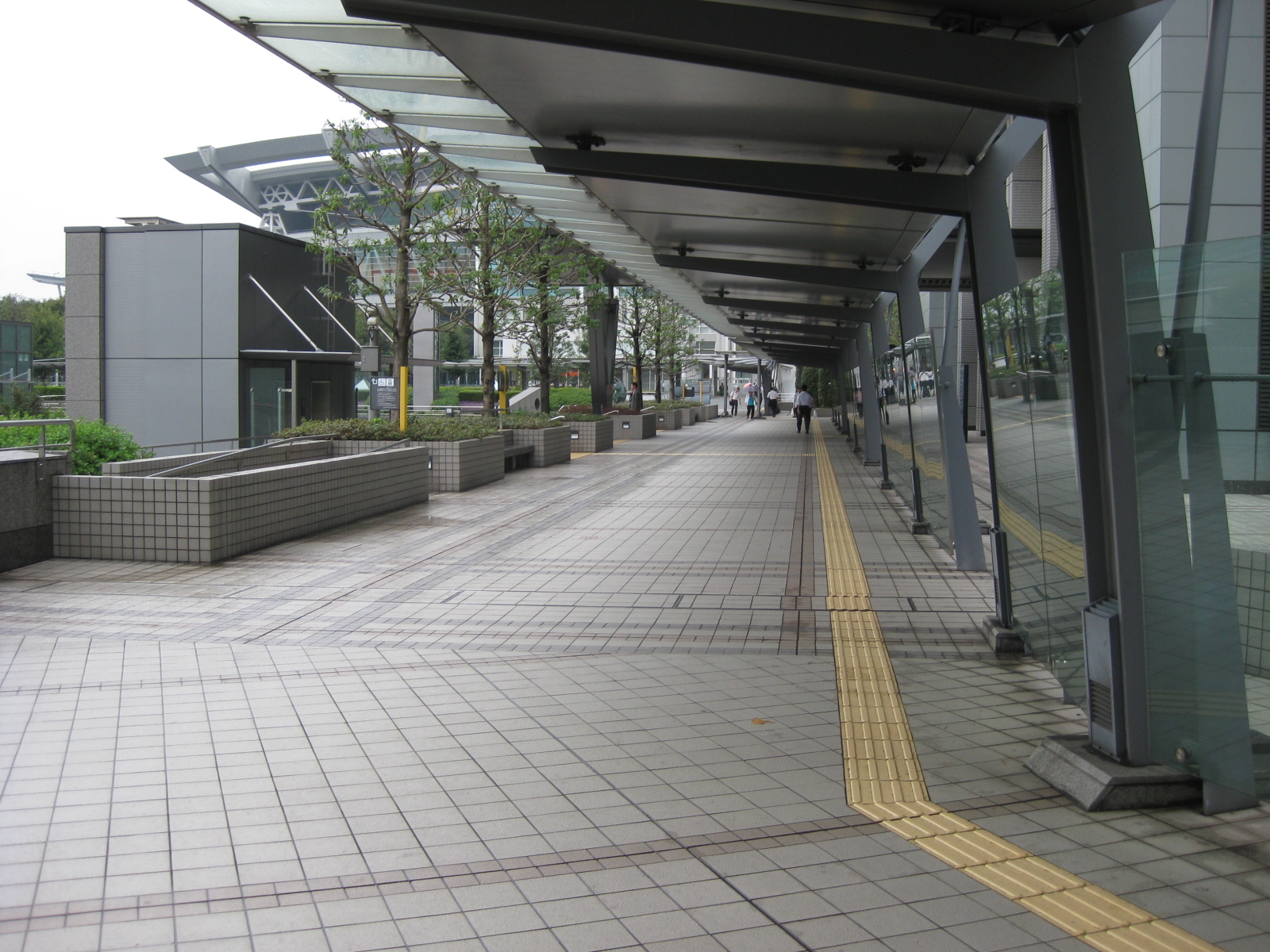 Another photo of the spacious walkways in the Saitama Shintoshin area. One could see the roof of the Saitama Super Arena on the upper left part of the photo and the building housing the elevators for those using wheelchairs or carrying heavy items.
 Closer to the station and the arena.
 There are plant boxes containing brushes and trees along the walkways, providing a more relaxing environment for pedestrians.
 The walkways eventually lead to the complex where located is the Super Arena on one side to the train station in the middle and the commercial complex on the other side.
 Walking from the station to the commercial establishments and office after the Super Arena (at right in the photo), there is a wide space for visitors (e.g., fans, spectators, etc.). There are many coffee shops and restaurants in the area where people could meet up for coffee or tea aside from grab a quick or leisurely meal.
 This the view of a pedestrian approaching the Saitama Shintoshin JR station. Shops are located along the right side of the promenade while the arches form the roof structure of the station, reflecting the modern architecture of the transit station.
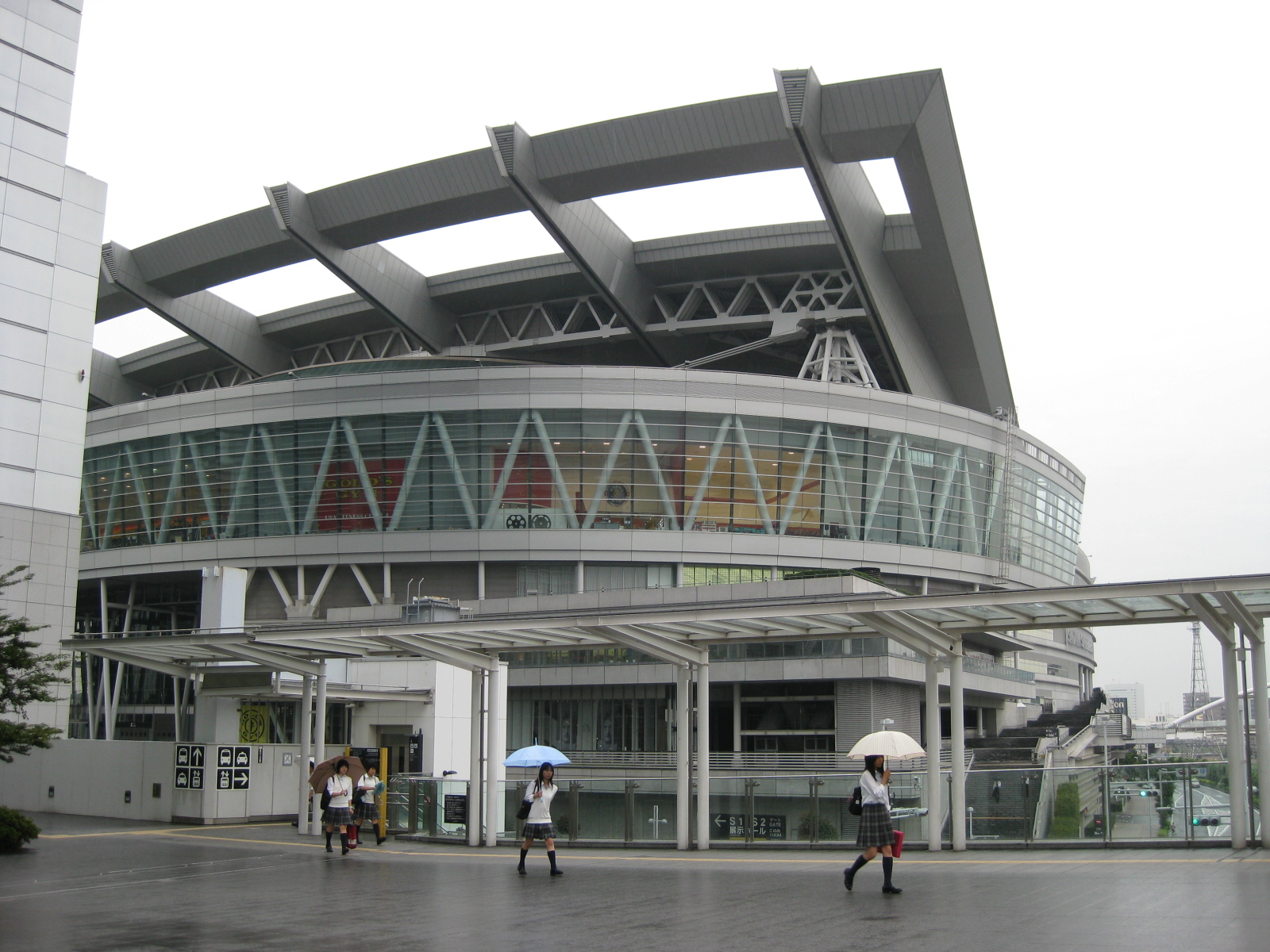 The Saitama Super Arena is also host to a museum dedicated to the late Beatle John Lennon.
 Inside the JR station plaza with kiosks on the left side and ticket machine to the right. Further on are more commercial establishments located in an upscale mall.
–
Fast ferries in the Philippines
The Philippines is an archipelago, meaning it is comprised of islands, some 7,107 of them. As it is impractical (read: too expensive) to connect the larger islands by bridges or tunnels, the connections would have to be made via either maritime or air transport. In previous postings, I have already written about some of the more modern airports in the country like the Bacolod/Silay, Iloilo and Davao airports. What I have not written about in this blog is something in maritime transport.
To get a feel of the current state of commercial maritime inter-island transport (i.e., not including those using motorized or human-powered boats or bancas), I thought it most appropriate to feature fast ferry/fast craft services that are quite popular in the Visayas and Mindanao. I will write on roll-on, roll-off (RORO) services and the nautical highway in the future.
There have been much progress in the upgrading of maritime transport services between islands in the Visayas and Mindanao. This was made possible with the introduction in the 1990’s of fast craft or fast ferries popularly called Supercat with the cat in reference to the catamaran-type vessels plying routes like Bacolod-Iloilo, Cebu-Tagbilaran and Cebu-Dumaguete. These fast crafts effectively cut down travel times by half with the Bacolod-Iloilo run trimmed down from 2-2.5 hours to 1 hour. Following are a few photos of fast crafts and terminal facilities in Cebu City.
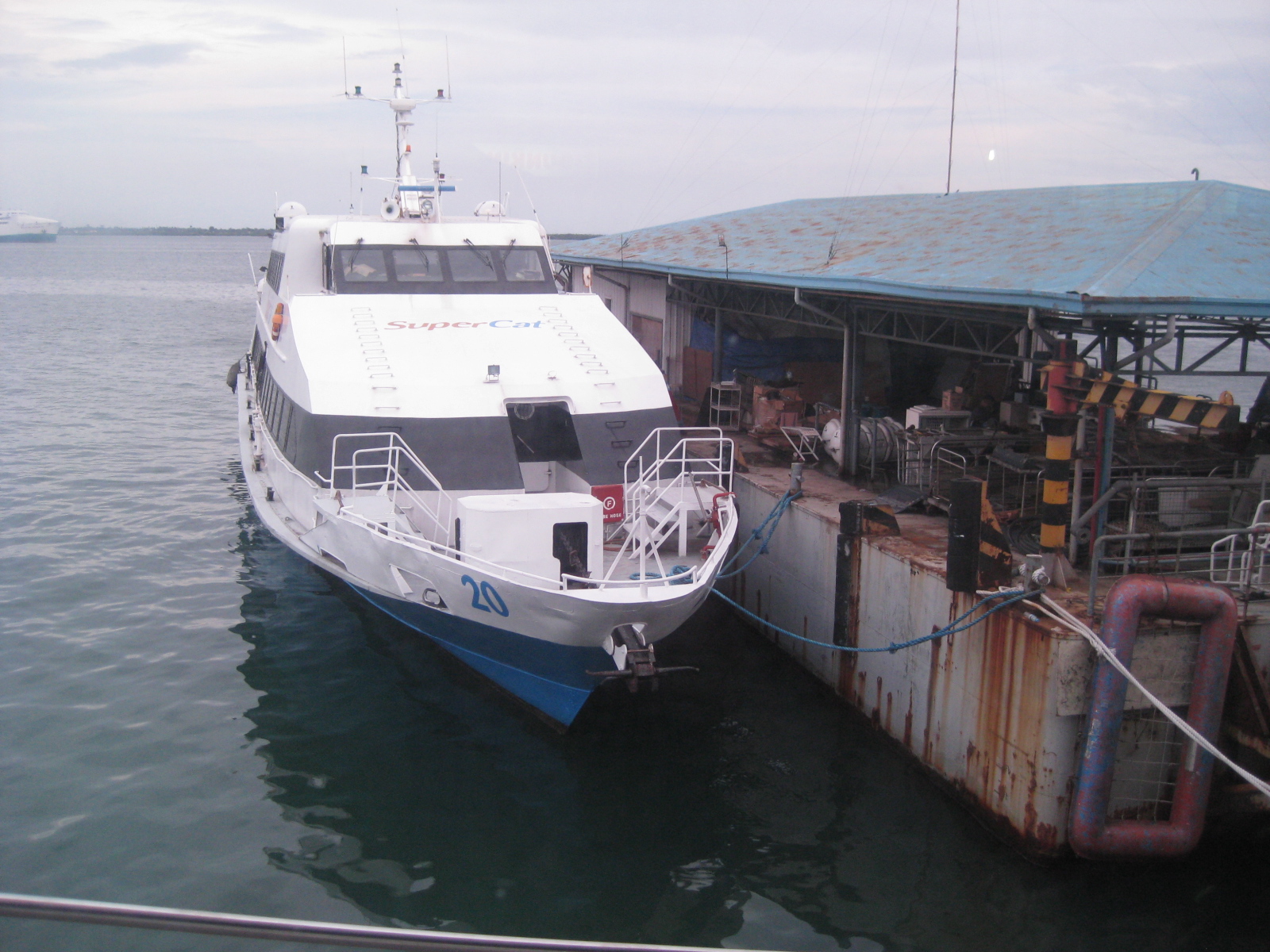 Typical fast ferry docked at the Cebu terminal of the Aboitiz Co.
 Twin-hulled SuperCat approaching the Cebu port
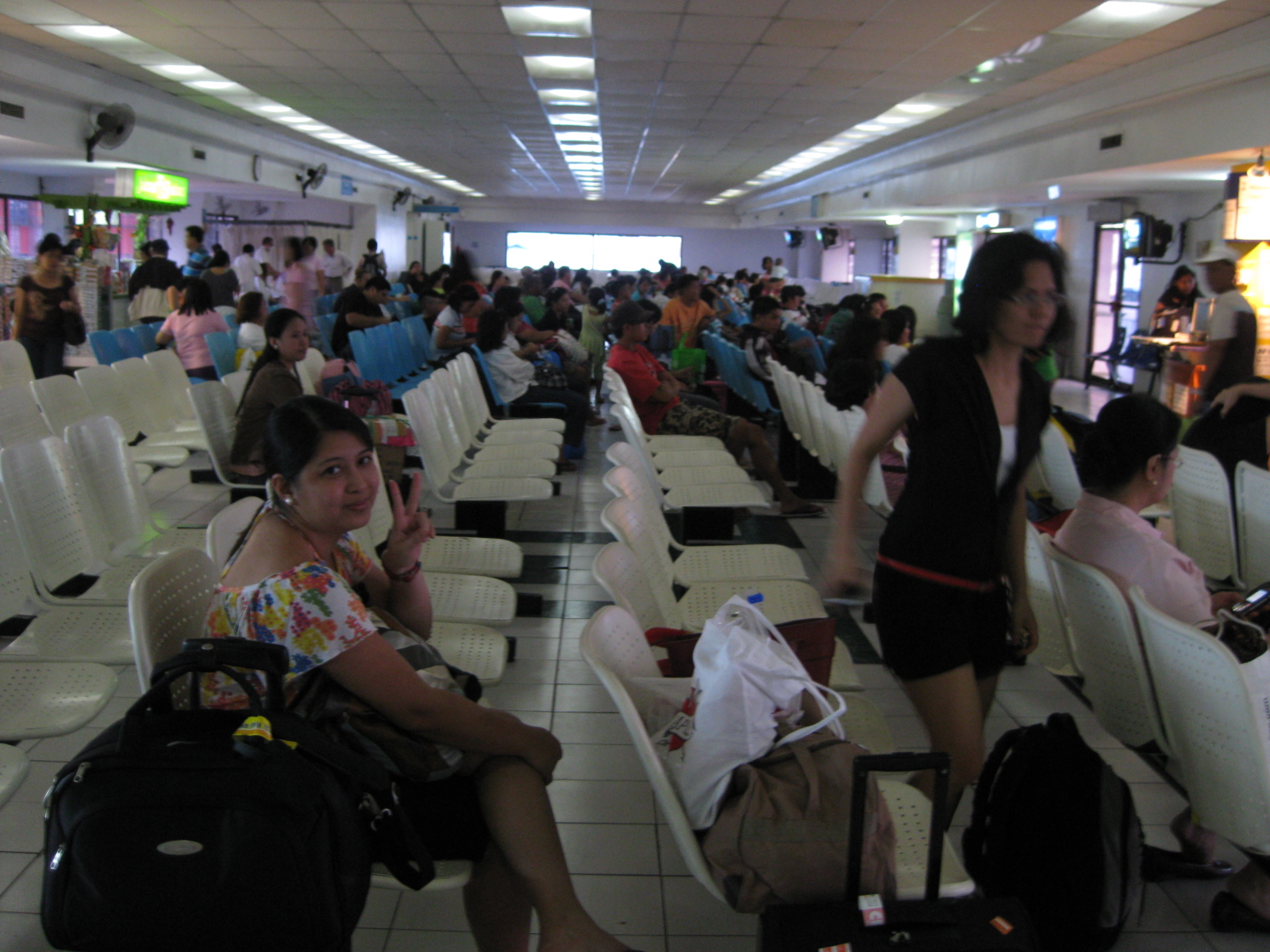 Inside the fast ferry terminal, there are plenty of space and seats for waiting passengers. There are also concessionaires selling food, drinks and souvenir items.
 Floating piers serve as the port’s extensions to accommodate fast craft operations
 Passengers boarding the fast craft via bridge connecting the terminal to the floating piers
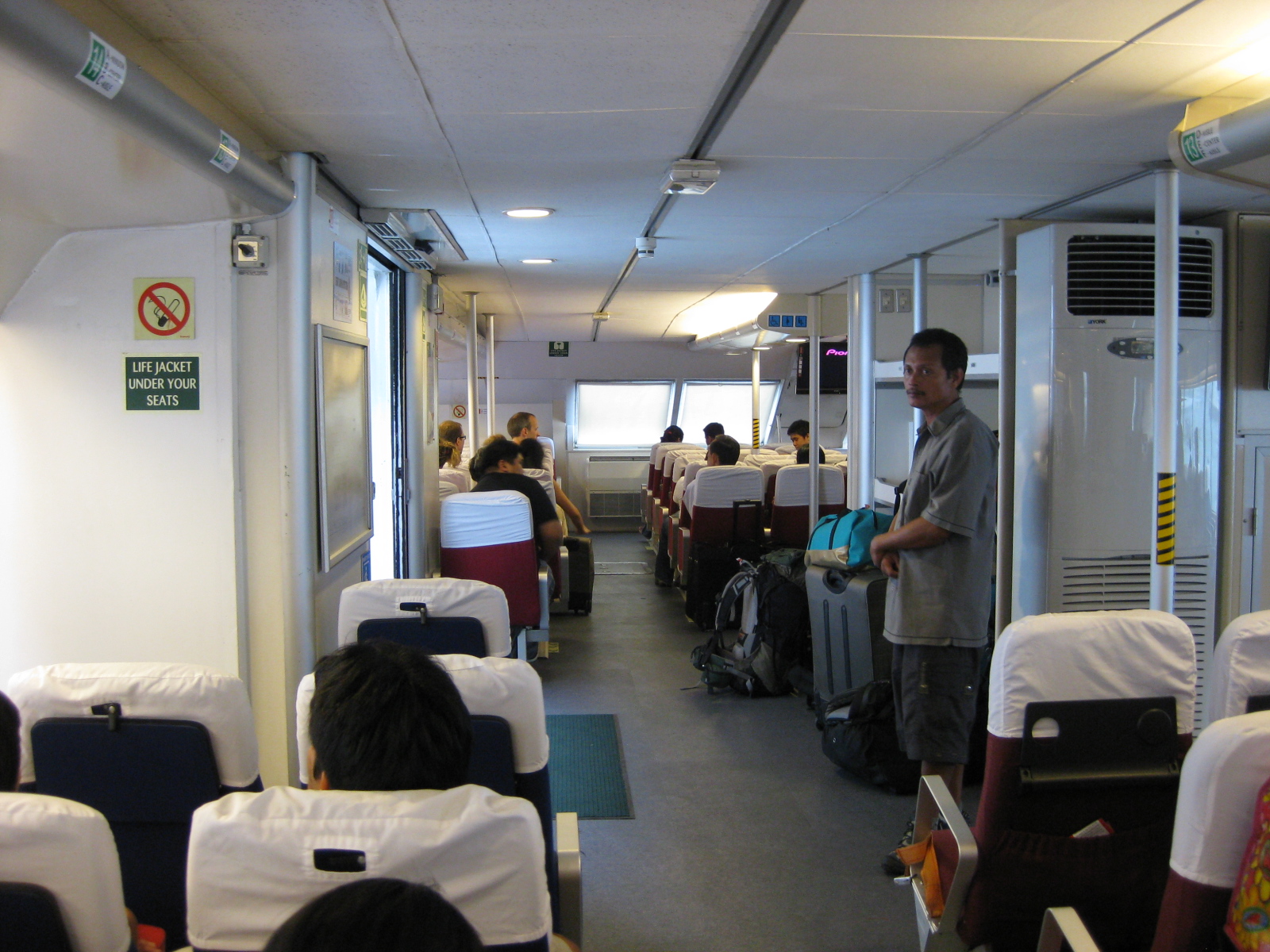 On-board the SuperCat, seats appear like those for long-distance buses complete with head rests for the comfort of passengers. The vessel cabin is fully air-conditioned.
 Another view of the seats inside the vessel show comfortable seating for passengers as well as wide windows for those wanting to have a view of the islands. There is also a snack bar inside the vessel serving food and drinks to hungry or thirsty passengers.
Fast ferry/fast craft services are quite popular in the Visayas and Mindanao and provide a less expensive option to air travel. These complement the RORO services that are more about long-distance travels between cities in different parts of the Philippines, like for example Manila to Iloilo. Such services offered by fast craft are essential for both commerce and tourism and should be encouraged for further development or upgrading, especially in terms of terminal facilities that are still wanting or deficient in many ports in the Philippines.
–
Domestic Airport at Roxas City
There are many domestic airports around the country that need to be upgraded. Among them are Cagayan De Oro, Tagbilaran and Roxas City. With the exception of Roxas City, the other two cities I mentioned are in dire need of larger passenger terminals given the demand and longer runways to be able to handle larger aircraft. In the case of Roxas City, passenger demand is surely increasing but not as rapidly as CDO or Tagbilaran. CDO, after all, is the main gateway to northern Mindanao while Tagbilaran is a major tourist destination. In the case of Roxas City, it has to compete with larger and more modern airports in the island of Panay particularly the Iloilo and Kalibo airports. For the neighboring province of Aklan, there is actually another modern airport that serves primarily the demand for travel to the attraction that is Boracay Island. Still, there is a need to refurbish, at the very least, Roxas City’s passenger terminal for many reasons. Primary among these reasons are the need for a more comfortable departure lounge and a secure terminal facility. Of course, it will be most welcome if the runway could also be improved. Following are a few photos from a trip back in 2010.
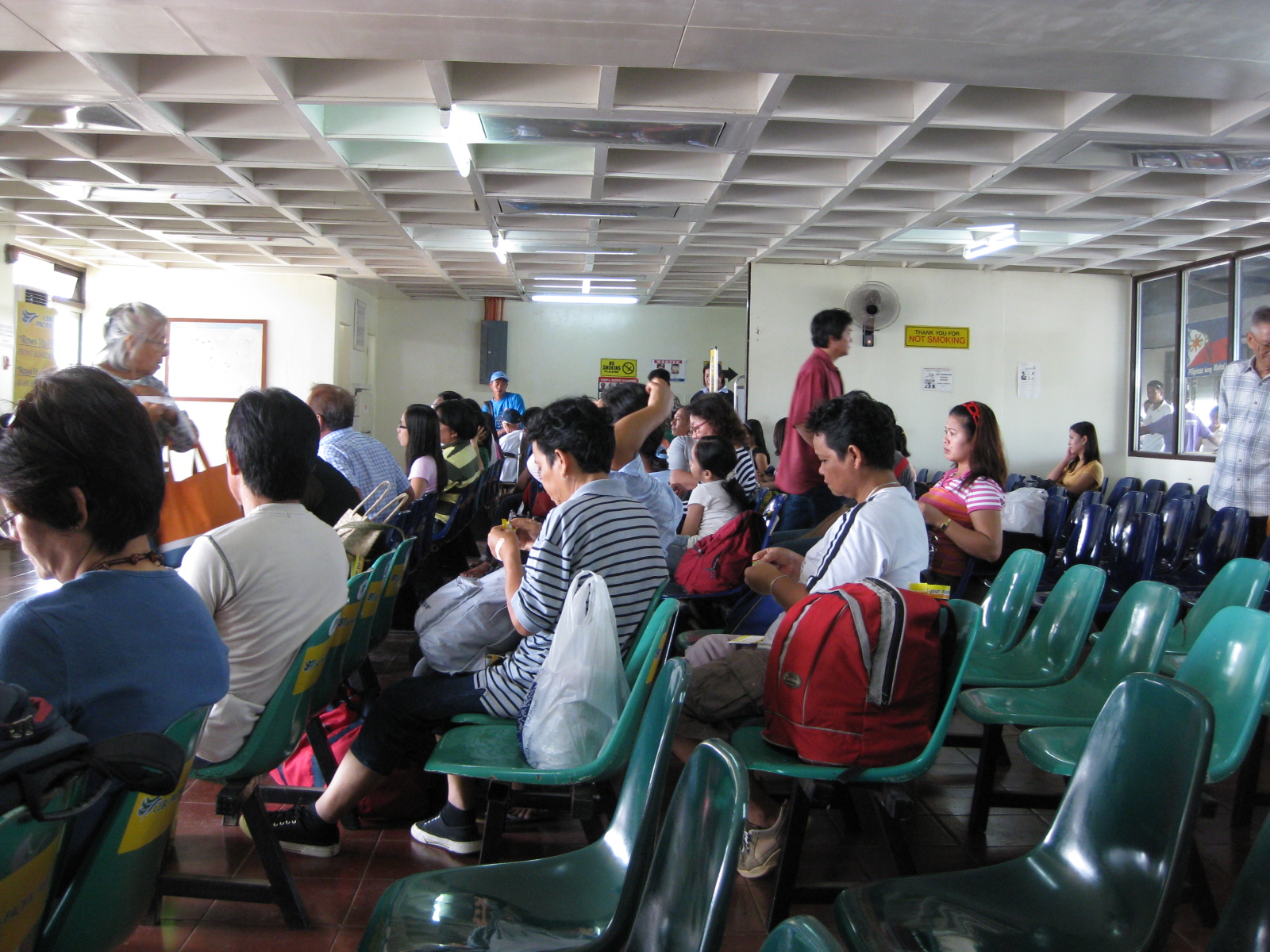 The departure area is crowded and would not be able to handle two plane loads of passengers given the typical schedule of flights to Roxas.
 It was a good thing the airconditioning was working and the area was generally clean. The toilets were satisfactory. The TVs were also functioning but one couldn’t really hear anything from the ambient sounds (or noise) from the collective conversations of those in the lounge.
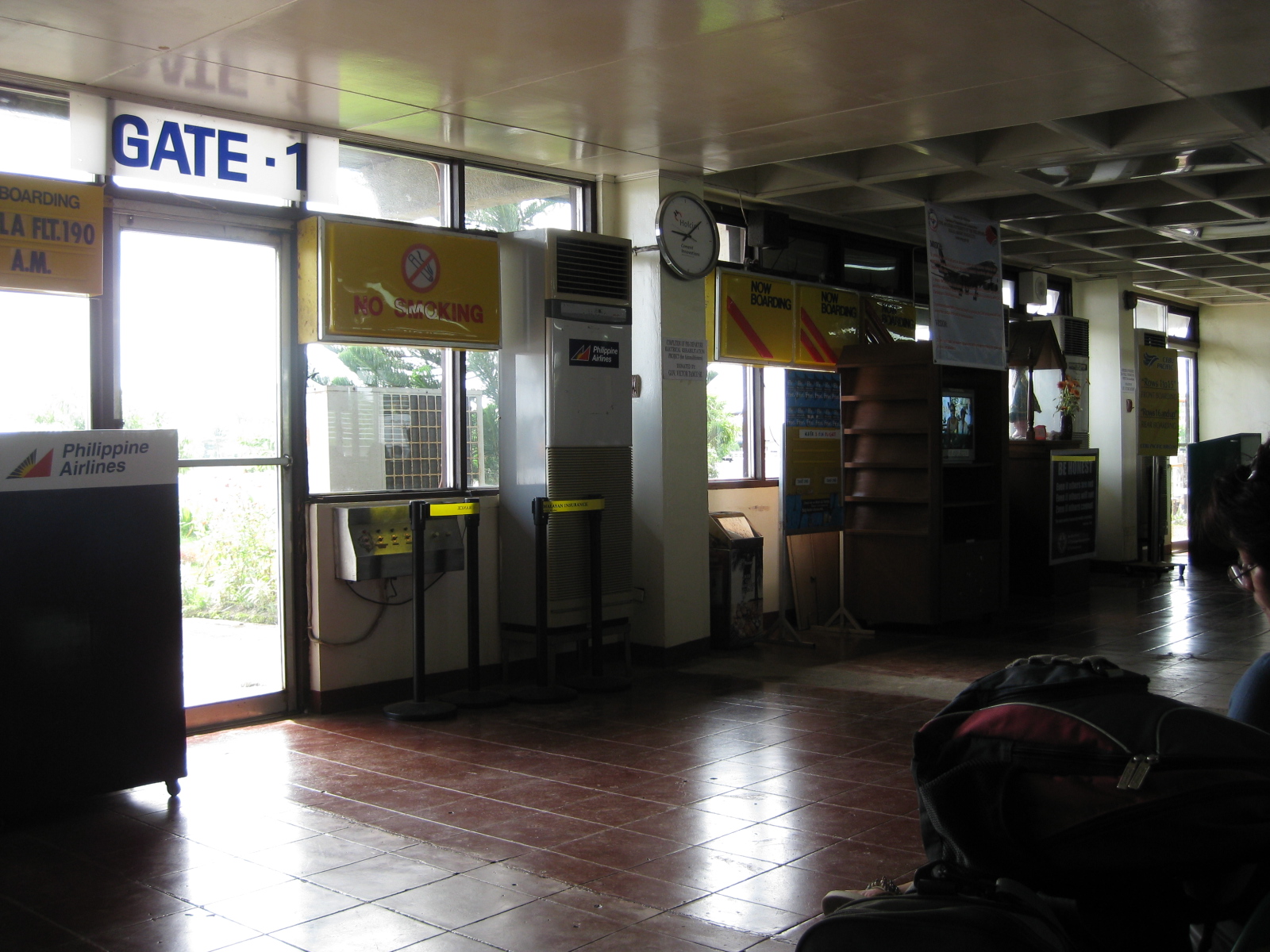 The airport reminded me a lot of the old processes in the old domestic airports including Manila’s. Boarding was organized according to the “diagonal lines” indicated on the boarding passes. There are still signs in the terminal with these conventions as shown above near the clock.
 The domestic airport provided the basic facilities for such terminals. These terminals do not have air bridges like the airports I have written about. In the photo shown above, fabricated stairs or ladders are used for boarding or deplaning.
–
Iloilo’s Airport at Cabatuan and Sta. Barbara
The current Iloilo Airport located mainly in the towns of Cabatuan and Sta. Barbara is a significant upgrade to the old one located in the Mandurriao District of the city. Like the old Bacolod Airport, the Mandurriao airport could no longer be expanded considering the requirements for a larger terminal and a longer runway. Planners also had to take into account prospects for further expansion in the future. The location of the airport is quite a curiosity since only the main access road is located in Sta. Barbara town, which comes before Cabatuan when traveling from the city. The terminal and the runway are laid out at Barangay Tiring of Cabatuan town. Since the Bacolod and Iloilo airports were constructed almost at the same time in 2004 and completed one after the other. Iloilo’s was completed a few months ahead of Bacolod’s in 2007 but the former was opened that same year while the latter started operations early in 2008.
Transit time between the airport and Iloilo City is typically 30 to 45 minutes depending on the destination within the city. There is a service road connecting the airport terminal to the Sta. Barbara bypass road national highway. From the airport, taking a right from the access road will bring the traveler towards the city. A left will lead travelers towards Cabatuan and in the general direction of Passi City and Capiz Province in the north.
Following are a few photos of the airport passenger terminal from past trips to the province. There are few as I keep procrastinating about taking more photos given that our home in Cabatuan is a short 20-minute drive from the airport. There are many other photos of the airport as well as the Bacolod-Silay airport that can be found in the internet.
 The Iloilo and Bacolod airports are quite similar and the designs address many of the requirements of a modern airport. Both also take into account the typical Filipinos’ penchant for having many well-wishers accompanying the departing travelers to the airport or, for arrivals, fetching relatives and friends. As such, there is adequate space for people at the terminal (though again there seems to be a need for additional benches) and many parking spaces that can accommodate peak demands particularly during the holiday seasons of Holy Week and Christmas. It is easy to get a taxi or shuttle (usually AUVs or vans) from the airport.
 The departure area is spacious, with the high ceiling obviously helping out in making passengers comfortable. The terminal is well-lighted, taking advantage of natural lighting, and clean toilets, and, as required by law, smoking rooms.
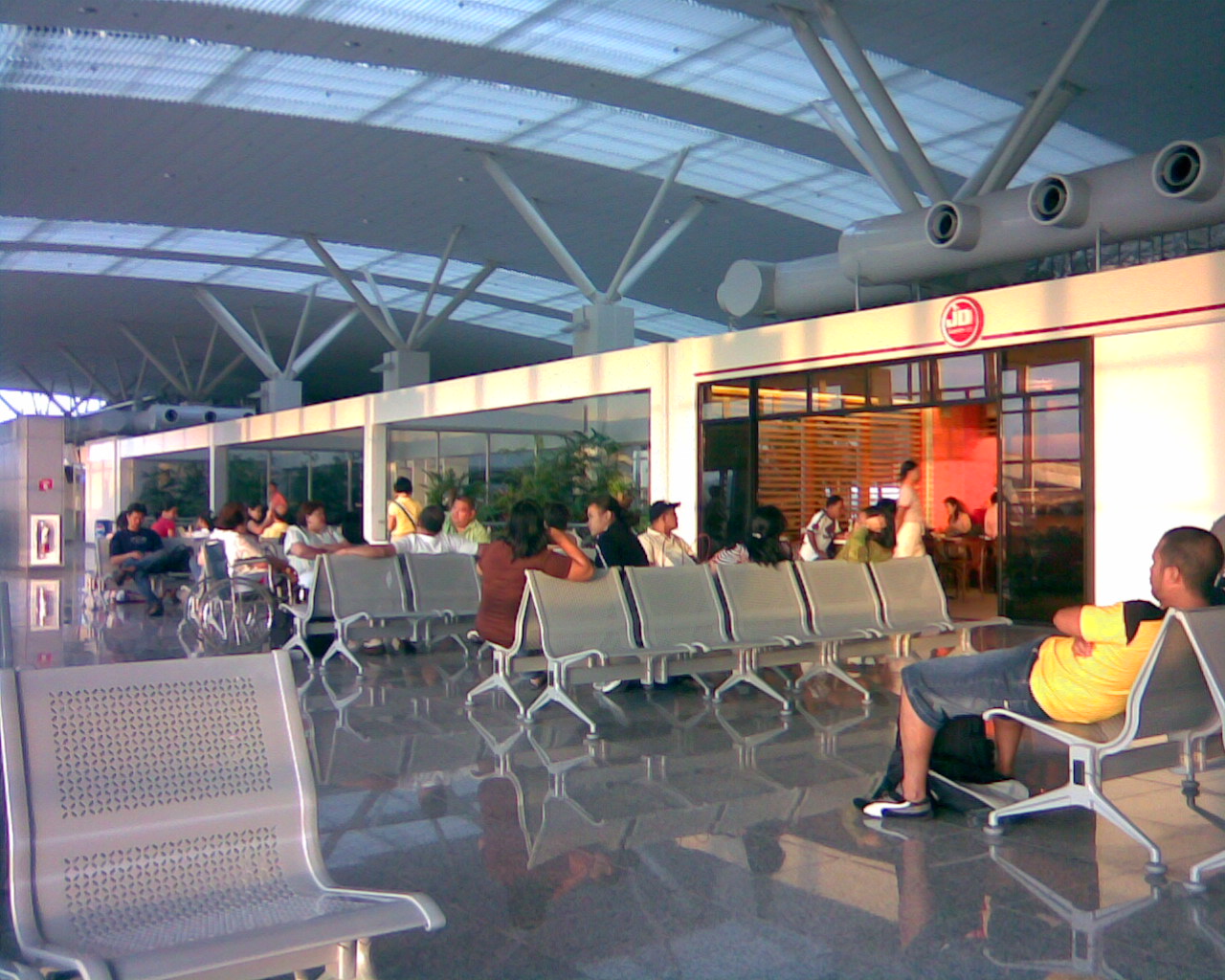 There are many concessionaires both inside and outside the airport. There are shops selling popular pasalubong like food items (try the pinasugbo, piaya, turrones and biscocho) and crafts (look for items made of hablon, an indigenous weave, or pineapple fiber). There are also eateries and cafes including one by the popular local bakeshop JD. It is never too late to try out a serving of Molo or Batchoy that may be ordered from the eateries.
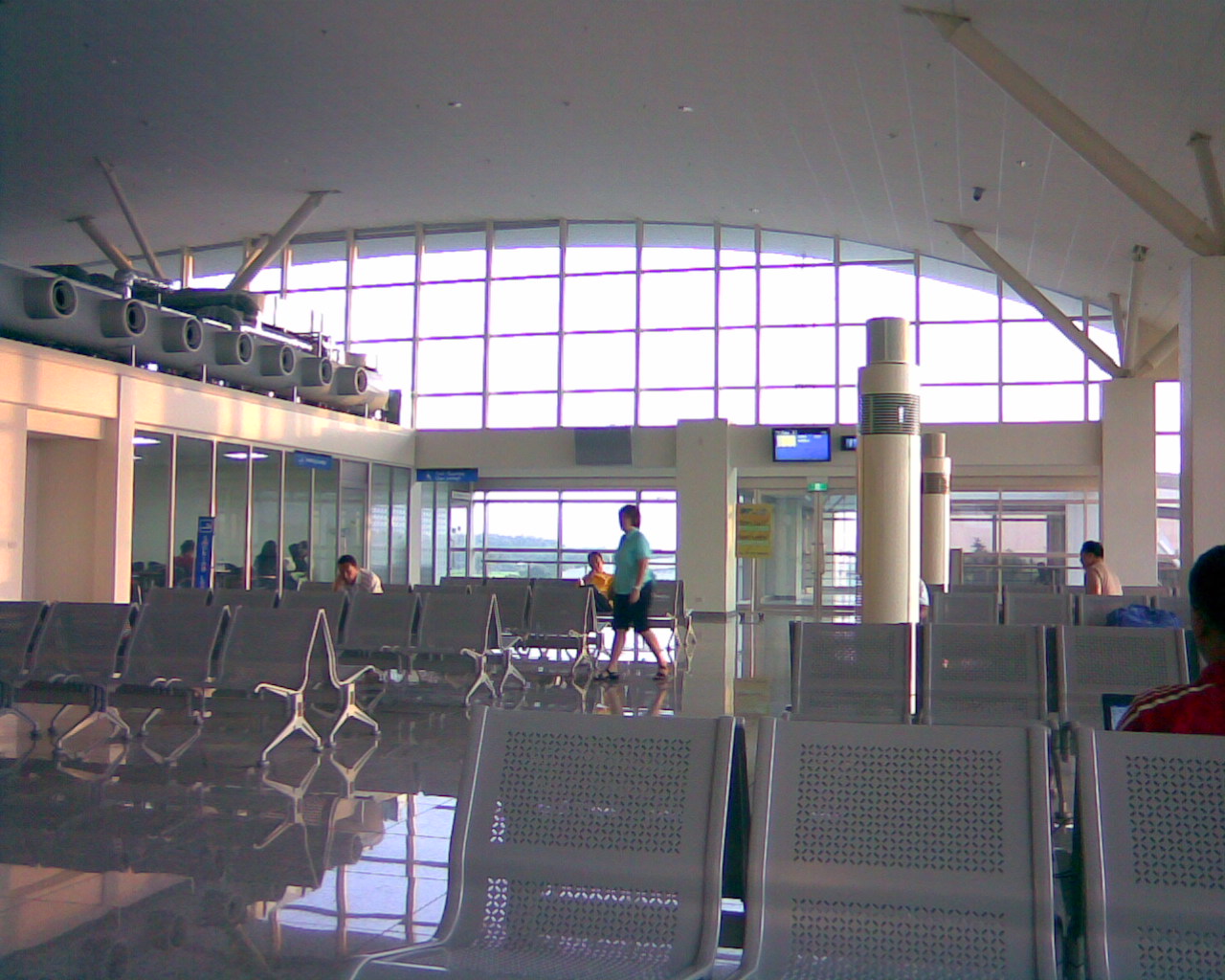 There are four gates at the departure area that are typically assigned to the airlines servicing the airport including PAL, Ceb Pac and Air Philippines. Passenger demand for the airport is quite high as it also serves as the air transport hub not only for the province but for the towns of neighboring Antique, Capiz and Guimaras provinces. Antique and the island of Guimaras off Iloilo City have no airports, while Roxas City in Capiz has fewer flights. Aklan province is already served by two airports in the capital of Kalibo and the newly upgraded Caticlan that is the gateway to the popular tourist destination of Boracay Island.
–
Davao’s international airport and some comments on Philippine airports
There are three other major international airports operating in the Philippines aside from the NAIA. These are the airports in Cebu (Mactan Cebu International Airport), Davao (Francisco Bangoy International Airport) and Clark (Diosdado Macapagal International Airport). There are two others that handle international flights, Laoag (Ilocos Norte) and Subic (Zambales), which mainly cater to chartered flights from Hongkong, Taipei or Macau. Subic, of course, is the former US naval base that also used to be the Asian hub of logistics giant Fedex.
Mactan is the gateway to the central Philippines and is second to Manila in terms of international flights. The number of domestic flights flying in and out of Cebu is comparable to Manila considering that Cebu connects to many destinations in Mindanao (southern Philippines) that does not have flights linking to Manila. Davao is the gateway to the south and handles international flights, mostly via budget airlines, from Indonesia, Malaysia and Singapore. Clark or DMIA is the former US airbase and has already overtaken Davao in terms of the number of international flights handled. It is always mentioned as a possible replacement for NAIA as the primary international airport for the country, with discussions comparing NAIA-DMIA to Haneda-Narita. Of course, DMIA will require a much larger terminal to be able to handle the number of passengers who are expected to use the airport should it become the main gateway. And, there should be a good transport system linking the National Capital Region with Clark, which also should be like the transport systems making Narita accessible (e.g., Narita Express trains, limousine bus services, etc.).
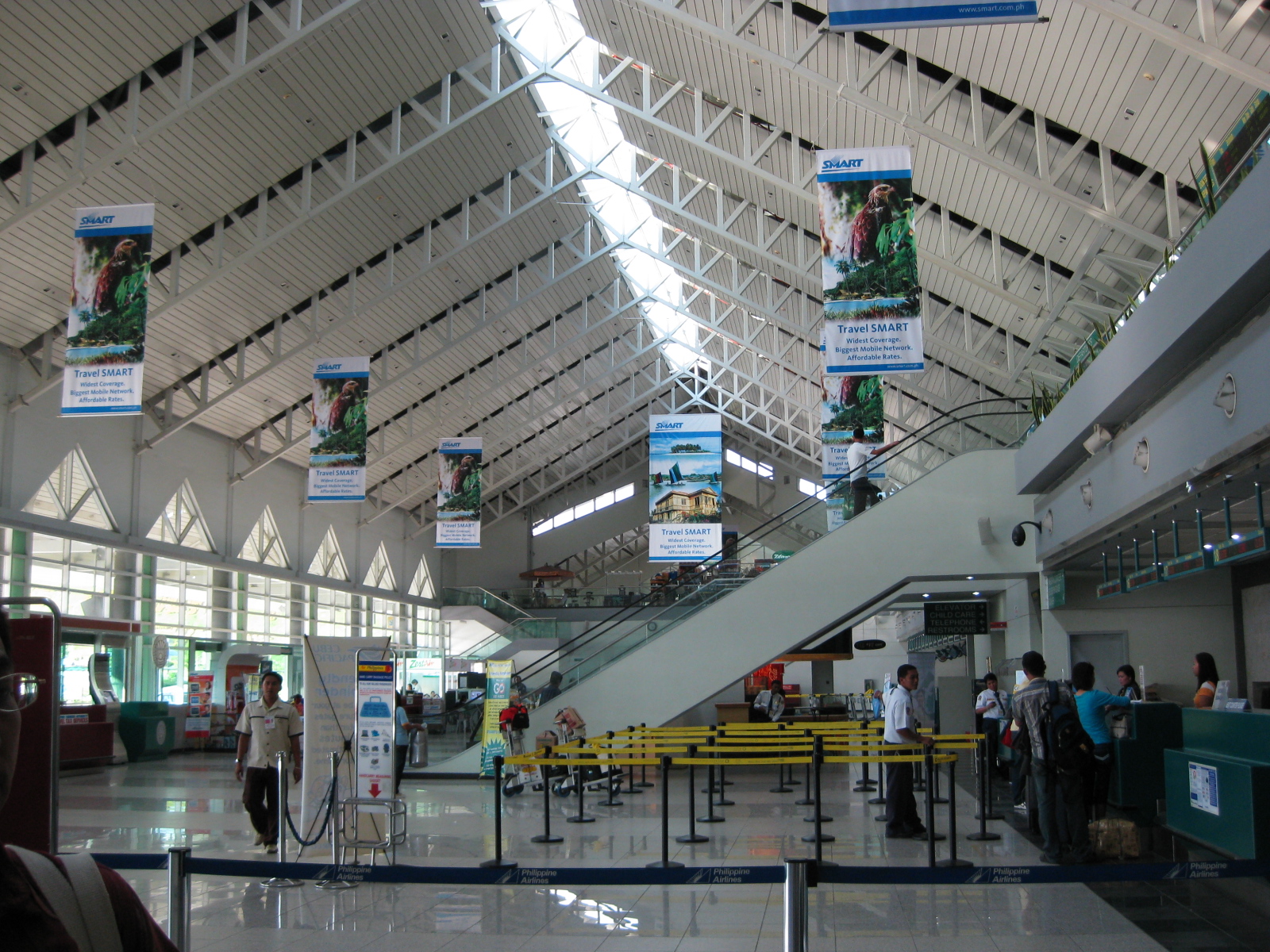 The pre-departure area of the airport is also spacious and should be sufficient for the projected demand for the airport. The area is squeaky clean, well-lighted and the staff are respectful and efficient.
 Check-in counters of the various local airlines are sufficient in number. All local airlines operate from Davao, which is the top destination in the southern Philippine island of Mindanao. Davao is actually the largest city in the Philippines in terms of land area.
 Up the stairs – the escalators are functioning and the so are the other facilities in the terminal. The comfort rooms are clean and larger than many other airports including NAIA T1 and T2.
 The spacious pre-departure area is sufficient for the number passengers typically handled by the airport particularly for domestic operations (There aren’t so many international flights.). Nevertheless, the area could use more benches considering the number of waiting passengers. The well-wishers’ area outside the terminal doesn’t have much furniture. Perhaps this is to discourage loitering or tambays in the airport terminal’s premises? These are understandably among the security concerns that the airport officials addressed with memories of the Davao airport (the old one) bombing a number of years ago.
 There are many concessionaires inside the airport but some of them appear more like tiangge or informal. There is a booth where people can purchase vacuum-packed seafoods that can be taken as carry-on (if not purchased in large quantities). All the other shops sell pasalubong with the typical food items and crafts Davao is known for. That includes fruits like suha (pomelo) and mangosteen. There is, of course, durian being sold and you can even buy them vacuum-packed so you can take them in the plane. Fresh durian is not allowed as carry-on for obvious reasons – the scent.
There are a couple of coffee shops inside the airport but they don’t seem to be as attractive as the ones in Bacolod, Cebu or Iloilo. Nevertheless, they are good enough for hungry stomachs or thirsty throats. I am not including photos taken at one coffee shop as they show some colleagues joking around.
 Departure area – the guy in the white barong is a distinguished gentleman from Mindanao who seem to prefer the spacious departure area from the VIP lounge usually reserved for people of his stature (good form sir!). Conferring with his staff, his being comfortable here seems to indicate that the area is good enough for everyone else including those who might think they deserve better.
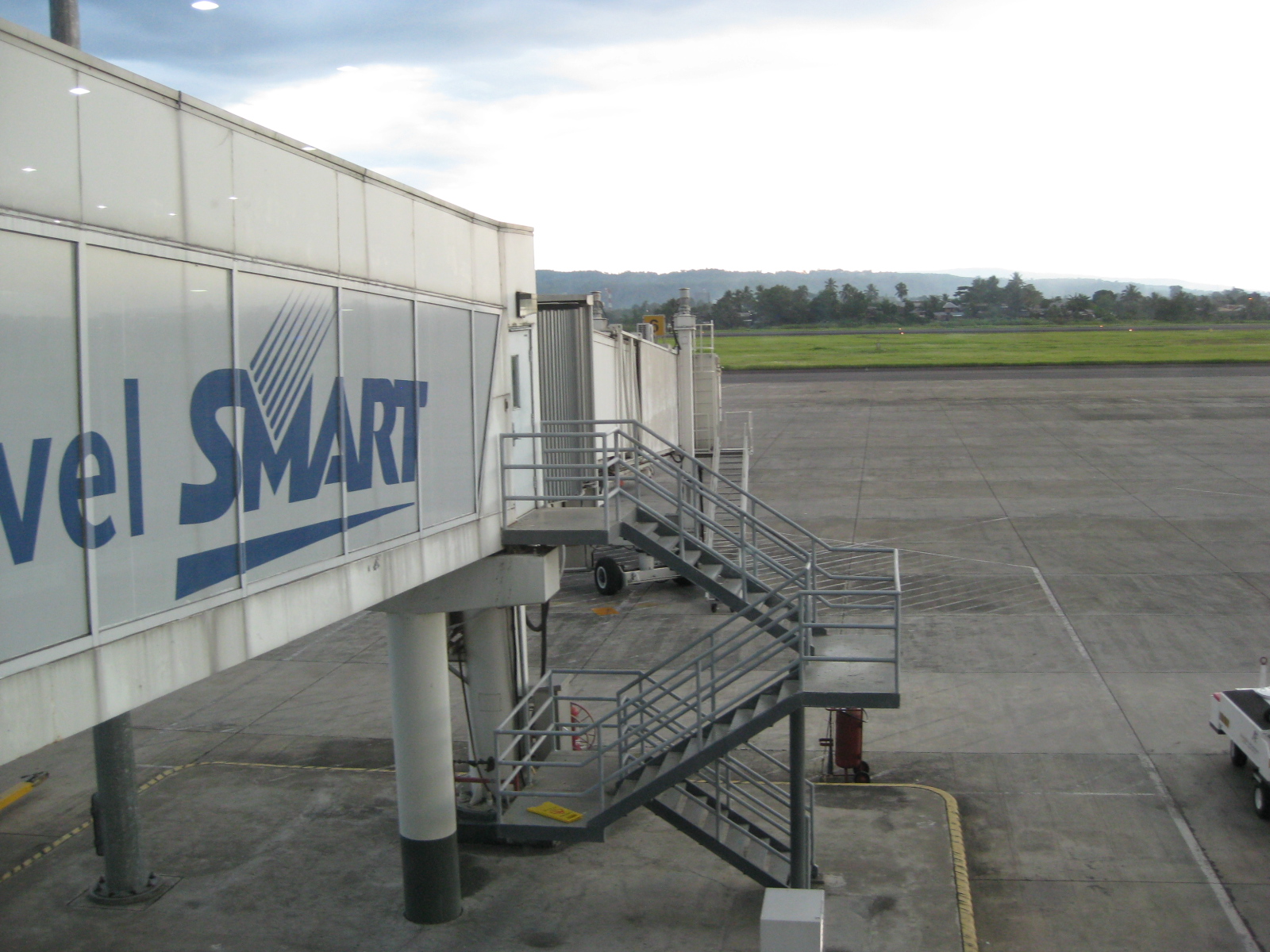 The airbridge is extendable and should be able to handle wide-bodied aircraft like the A330’s that PAL usually deploys to Davao. The city generates much air traffic passengers considering it is a major tourist and business destination in the country.
The scenes above of Davao’s international airport gives us hope that we can actually have decent terminal facilities. The floors of the terminal are so clean that I’m sure anyone blogging about this would agree they are worthy of “sleeping on.” The same goes with the Bacolod-Silay airport that I wrote about in the previous post and other airports that have been upgraded if not recently constructed or relocated. It’s not too late for NAIA’s terminals but the government should really pour some resources into it and perhaps take the cue from people who have offered their services pro bono in order to address the state of the terminals, especially T1. But then again, I would like to see the government finally make a firm stand, a commitment, regarding the futures of NAIA and DMIA. Alin ba talaga ang gusto nating maging premier gateway? And note that DMIA is indeed strategic and has enough space for expansion but will require a larger, modern passenger terminal to handle traffic that is currently flying in and out of NAIA, and more in the future.
–
Modern airports in the Philippines: The Bacolod-Silay Airport
After writing a lot about highways and streets and railways (particularly on the PNR, its history and a few what if’s) I think its high time that I also write something about other modes of transport. Much has been abuzz about the state of our main international airport, the Ninoy Aquino International Airport. Terminal 1 is already too crowded and with toilets already quite notorious for their being dirty and stinky. Terminal 2, despite being used only by one airline – Philippine Airlines, is also becoming too crowded already being unable to handle both domestic and international flights during the peak periods. It is also being dragged into the mess that PAL is currently wading through. Terminal 3 is predominantly being used by Cebu Pacific, already the country’s largest airline despite being a budget outfit. It is supposed to handle international flights for NAIA and yet because of the still unresolved issues surrounding its construction, most international flights are still serviced by Terminal 1. Perhaps the largest and the most friendly for passengers and well-wishers, it has a serious parking problem (covered parking anyone?) and many of its features are not operational (e.g., moving walkways, air bridges, baggage handling, etc.).
But rather than feature the older, less attractive airports for my first post on these facilities, I will start with what we should have more of. There are already several airports that have been constructed/ transferred and/or upgraded in the past few years around the country that are worth mentioning. Among these is the New Bacolod-Silay Airport that is located in Silay City, north-northeast of Bacolod City. The following photos were taken by colleagues at the Institute of Civil Engineering and the National Center for Transportation Studies of UP Diliman back in 2008 when the airport just began operations. It is a very significant upgrade from the old Bacolod Airport that was already too crowded and could not handle both passengers and aircraft projected for Bacolod and Negros Occidental.
 The airport terminal as viewed from the parking area – parking is spacious and sufficient for many years to come given the current and projected passenger demand. The airport is the second (after Iloilo) “airport of international standard” completed during the previous dispensation.
 Pre-departure area – provides a spacious area for passengers checking-in for their flights. The high ceiling definitely helps in providing a feeling of space.
 Another view of the airline check-in area – Bacolod is served by PAL, Ceb Pac, Air Philippines and Zest Air. Passenger demand requires frequent trips that allow for flexible scheduling of travel.
 Escalator to the departure lounge – departing passengers are handled on the ground floor but have to transfer to the upper floor for the departure area. They board the plane through the air bridges that provide the connection between the terminal and the planes. Arriving passengers also use the air bridges but descend to the ground level for departure procedures including baggage claims.

The departure lounge at the airport is spacious and clean. The comfort rooms, my colleagues say from more recent trips, are still sparkling clean and well-maintained.
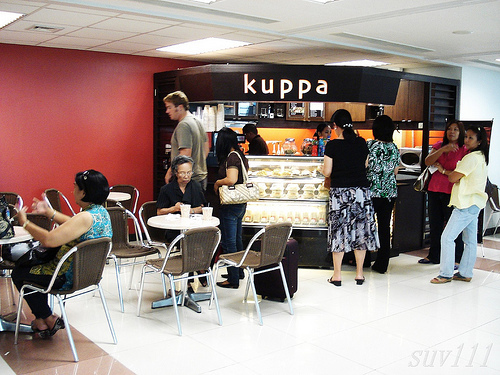 Concessionaires include this coffee shop for passengers wanting a cup of their preferred beverages or perhaps a serving or slice of a cake to satisfy the proverbial sweet tooth.
 Another concessionaire in the airport gives passengers an alternative to other shops offering snacks or full meals. The prices, I am told, are pretty reasonable considering they operate in the airport. Often, items sold in airports are criticized for being expensive (presyong turista), something that needs to be addressed, too, in the interest of travelers.
 Pasalubong center at the airport – Filipinos and travelers from other countries like to buy gifts or souvenirs to take home with them to give family and friends a taste of what they experienced in their trips. In Japan, this is called omiyage and is usually something that one can buy only from the place that you went to. There are many such items all around the country and for Bacolod/Negros Occidental, these include piaya, barquillos and napoleones.
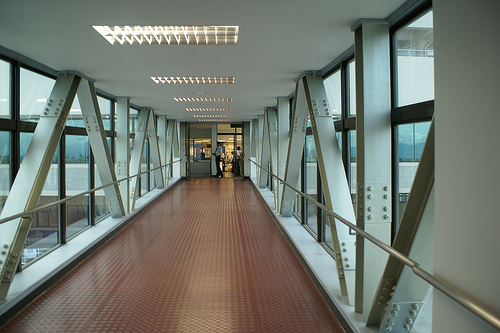 Air bridge – provides access to and from the terminal building to the plane on the tarmac. This is level with the aircraft’s doors and eliminates the need for ladders often employed in other airports (usually domestic).
 View from the departing plane – this is perhaps what the traveler will see first when his/her plane taxis towards to the terminal. It will also be what one would see as the plane taxis away to prepare for departure.
They say first impressions last and from the looks of the airport once you arrive in a certain place, you can already make some conclusions as to what the place might be in general terms. My colleagues are very impressed with Bacolod and its airport makes a statement to this effect. It is a very nice place to visit. It is clean and modern. Perhaps such simple observations or perceptions are what we should strive for in the case of NAIA’s terminals. It doesn’t really require so much to impress people. And clean toilets, and honest, efficient and reliable staff probably doesn’t require billions of pesos to realize.

