
Home » Public Transport » Bus
Category Archives: Bus
How about a pop-up BRT along Commonwealth Avenue?
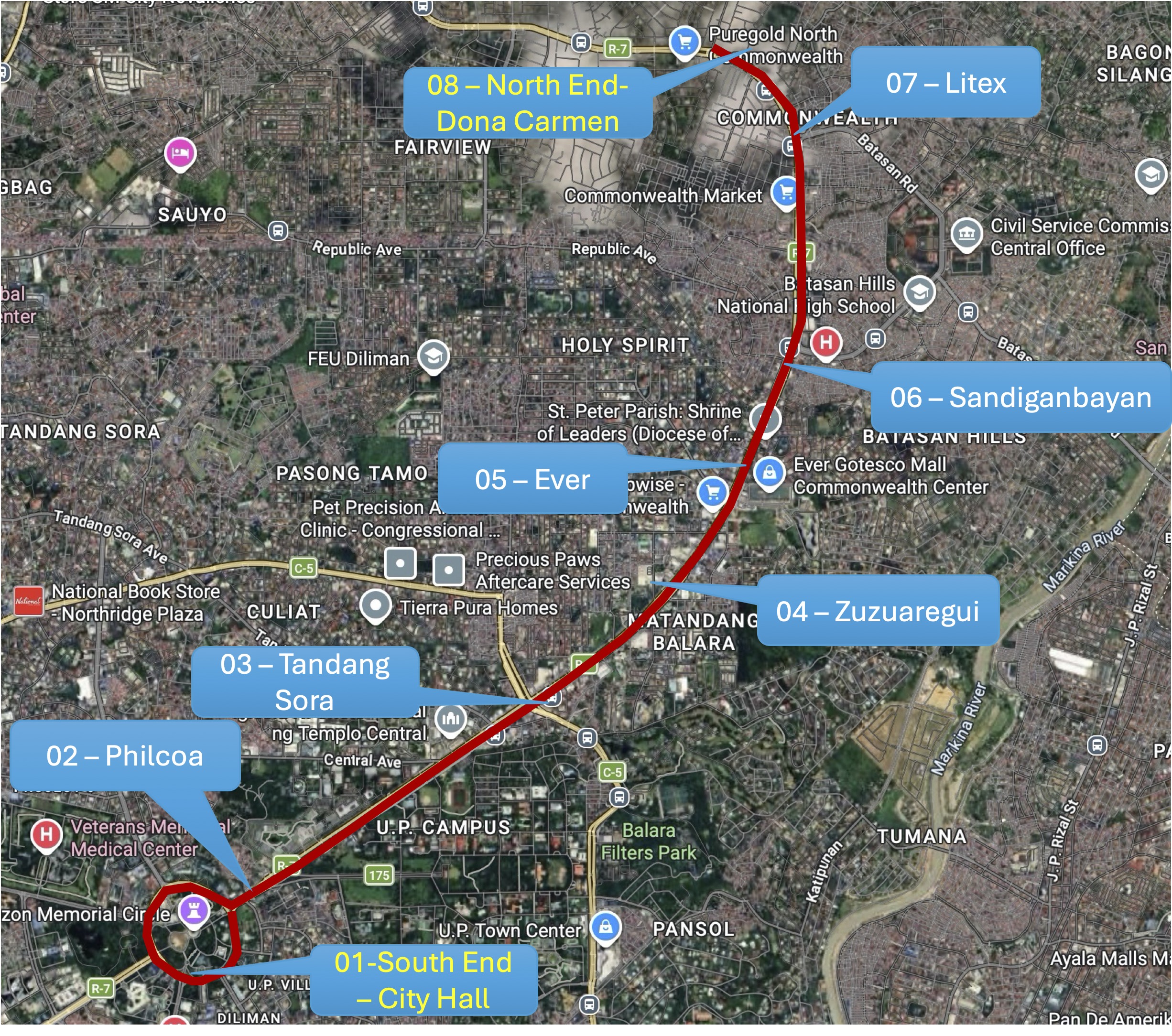
I posted this map on social media showing a possible route for a pop-up BRT (Bus Rapid Transit) along Commonwealth Avenue. This was inspired by the reports this week of the horrendous experience of commuters along this corridor due to the current fuel crisis. It seems that a lot of people have reduced their use of private vehicles in favor of what they thought was adequate public transportation only to find out how lacking the supply was.
While this route can be extended (all the way to Fairview via Regalado, for example), I think the one in the map below would be able to capture a majority of the commuters along the corridor with the end at Dona Carmen being a drop-off/pick-up area for those residing to the north. Quezon City Hall and the Elliptical Road is a no-brainer since the Quezon City Bus service terminates here and people can transfer to one of the other lines that will allow them to travel elsewhere covered by the bus network. Quezon City or DOTr can lease buses and come up with a service contracting scheme to sustain operations. The idea is to first run this pop-up BRT while the crisis in Iran is ongoing. Data collection and assessments should coincide with this to refine the service and perhaps, make recommendations for sustaining this service at least until MRT 7 gets online.
The idea of a pop-up BRT is not really new as there were “proof of concept” runs along Commonwealth and at BGC many years ago. Unfortunately, the BRTs never came to be in both cases; both now missed opportunities as we have come to realize. It’s still a long way before the MRT 7 is up and running. The recent announcement from the proponent that they will probably start operations next year is perceived by many as too late. Government, both national and local, need to be decisive if they want people to be able to go to their workplaces and schools. Maybe this is another opportunity for the more than 70% public transport users to be provided with the services they need while taking advantage of road space being freed up from car dominance?
–
At long last, the Cebu BRT is finally running
After more than two decades, the Cebu Bus Rapid Transit (BRT) is finally operational (partly). I think I wrote about the BRT numerous times here. I was involved in the social marketing of the BRT to major cities almost 2 decades ago. At that time, only Cebu City was receptive to the idea as Metro Manila was more engrossed with railway projects that also took much gestation time. I was also involved in the pre-FS for Metro Manila BRT’s so I can say this has a lot of history and political economy about it.
Here is a report from Rappler via their official Facebook page:
https://www.facebook.com/share/v/1J3Fpmar16/
I already look forward to the next trip to Cebu to have a first hand experience of the BRT there. I wanted to share photos from the internet here but perhaps I can wait til I have my own photos to share.
–
Good Transit Is Simple: Lessons in Good Route Design
Here is a quick share of an article on transit route design:
Source: Good Transit Is Simple: Lessons in Good Route Design
I will not preempt the reader (you) on the content but there’s a lot of tips for stop spacing and route design based on the author’s experience in Chicago as transit planner.
–
More buses please
The modernization and rationalization initiatives of the government seem to have slowed down. While there are many modern or modernized jitneys on the road, these are mostly in the big cities including Metro Manila and comprise a small percentage of the total jeepneys currently operating around the country.
Buses have been in the mix of these initiatives especially after the pandemic when jeepney operations were suspended and buses were the first to be activated. In the case of Antipolo City in Rizal, bus services between the city and Cubao in Quezon City were introduced. We even thought that they will replace the jeepneys that dominated the routes. Now they are competitors along with Line 2.
There was a real opportunity there for rationalization that involved upgrading to a higher capacity vehicle but that didn’t materialize. In most cases, the so-called modern jeepneys (many really are mini buses) just added to the conventional jeepneys. Were the number of vehicles reduced while increasing passengers capacities? No.
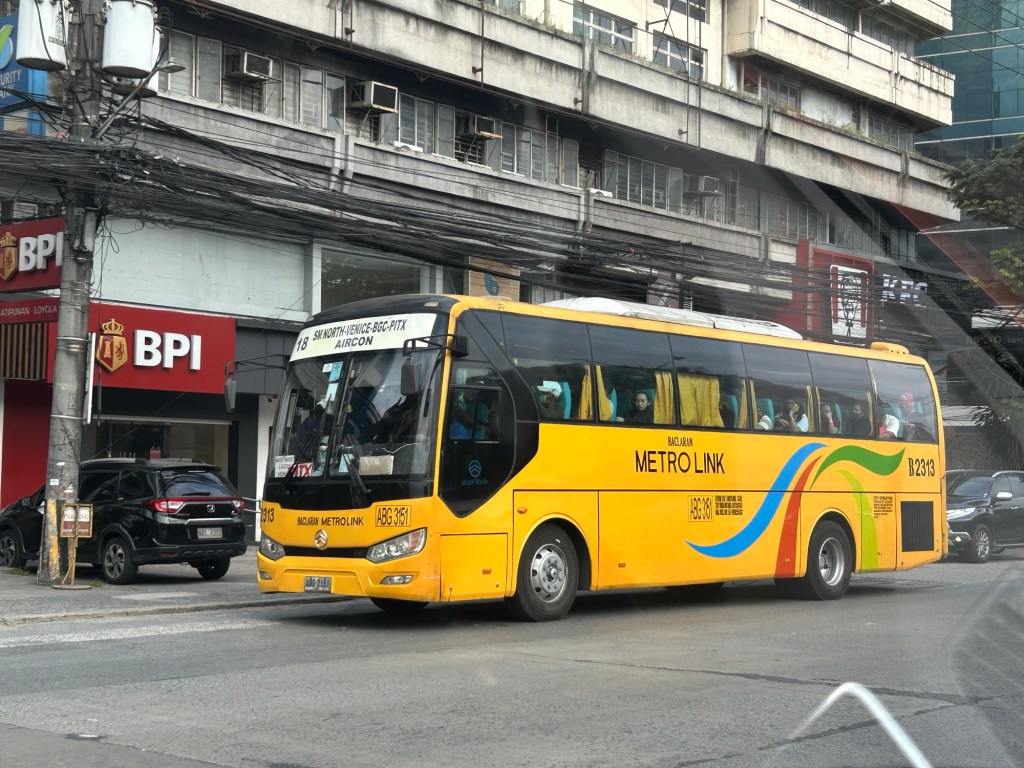
“We need more buses!” is an understatement. We really need more buses but to replace lower capacity vehicles on the road. The inconvenient truth is that we need to phase out jeepneys along certain routes and replace them with buses. Jeepneys may still operate but along shorter routes and would serve as feeder/collector with respect to the main lines operated by rail and buses.
–
Bus service between UPLB and UP Diliman
Last December, I was supposed to take the bus directly connecting the UP Diliman and Los Banos campuses. I was supposed to attend the annual conference of the Transportation Science Society of the Philippines (TSSP) hosted by the UPLB Department of Civil Engineering. I was looking forward to riding the bus being somewhat nostalgic to the Tritran buses I used to ride between the two campuses back in the 1980s and 1990s.
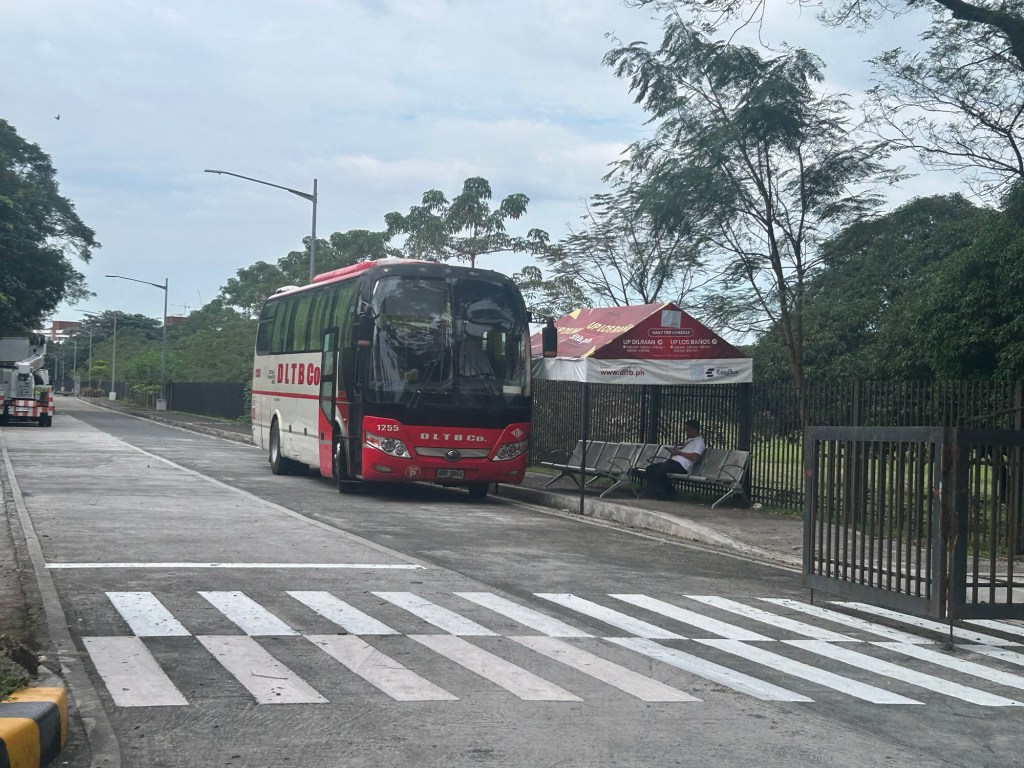
Unfortunately, I was not able to attend the conference due to an emergency. So, I will have to wait for the next opportunity to take the bus to Los Banos and back.
–
Good Transit is Fun
Here’s a nice read on how transit or public transportation should be fun. People won’t really use public transportation unless they find utility or value in using it.
Source: Good Transit is Fun
I won’t be quoting from the article this time. I’ll let you read it yourself and digest the content.
Happy Sunday!
Reviving an old public transport option
There is some nostalgia about the first air-conditioned public transport mode in the Philippines (correct me if I’m wrong). The Love Bus, as it was called, was operated by the Metro Manila Transit Corporation (MMTC), which is a government owned and controlled corporation. There’s a lot about the MMTC that could be the subject of a series of articles but those are for other days. Suffice it to say here that MMTC provided several types of bus services using different bus models including double deckers. Their most popular though more expensive service is the air-conditioned Love Bus. I was able to take the Love Bus from Cubao to UP Diliman during its waning period of operations in the late 1980s. At the time, the buses entered the campus and I could get off at the nearest stop to Melchor Hall. Those buses terminated at Ateneo near the Blue Eagle Gym. Also, at the time, there were already smaller aircon buses but these were not branded as Love Bus.
I spotted the current incarnation of the Love Bus in the form of a “modernized jeepney.” Like other “modernized jeepneys,” the vehicle is actually a mini-bus. The vehicles are electric and run by Get COMET, a company that used to run an electric jeepney service along Katipunan Avenue. Sometime before the pandemic, they ceased operations. And so this is somewhat a shot at redemption. A comeback given the proliferation of “modernized jeepneys” of various models (many of which are not electric of hybrid).
 This revival of the Love Bus is an electric vehicle operated by GET, which is the company behind the COMET.
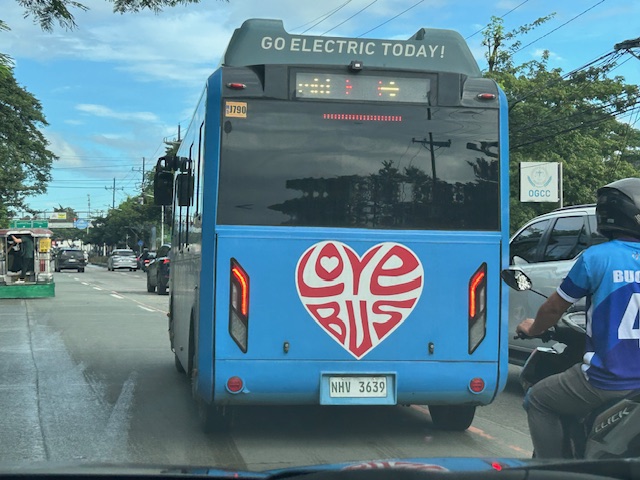 The livery is a throwback to the original Love Bus. They should have also included the “Save Gas” slogan that were in the original buses.
Will these buses stay in business? Will they help popularize public transport? The jury is still out there as currently they are few and there are many competing options along their route. Their presence though is very welcome and perhaps the nostalgia will translate into encouraging more people to take public transportation.
–
Public transport in Iloilo
I took some snapshots of public transportation on my recent travel to Iloilo. These are typical PUVs you would find in most towns across the country. Iloilo’s have some distinct features that they also share with other towns in other provinces.
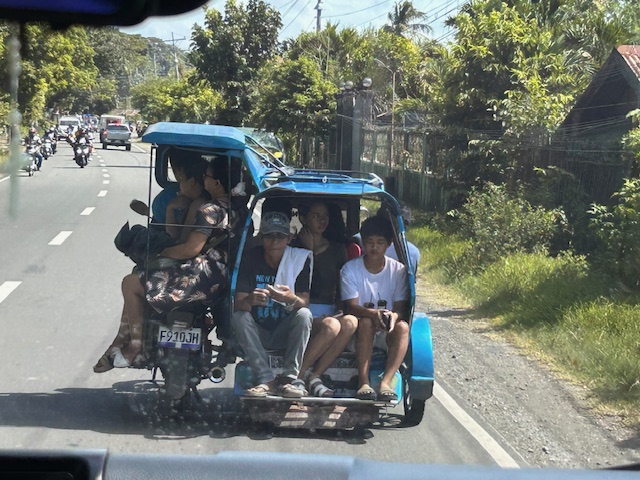 A typical tricycle along the Iloilo-Antique road seats 8 to 9 passengers. Sometimes passengers even sit on top of the sidecar. Sidecars here and other provinces often have roofs designed to carry heavy loads including agricultural products. Usual trike sidecar seating have passengers facing front. This one has them “talikuran” or “back to back” with some passengers facing back – not really a nice view when traveling along a highway and vehicles tailing or bearing down on the trike.
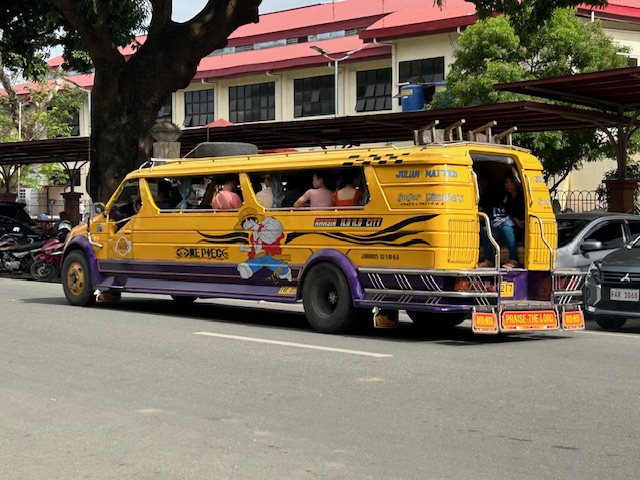 The typical jeepney in Iloilo is stretched whether it’s for inter-town or city operations. Instead of having the ‘face’ of the jeep (from which jeepneys evolved from), they use the front of the Toyota Fortuner or Mitsubishi Montero. These seat 20 to 24 passengers not counting those who are seated on the bench along the aisle. I wonder what engines they now use for these vehicles.
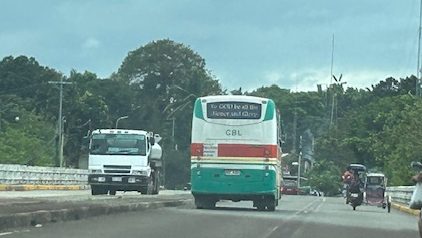 I took this fleeting photo of a bus. For me it wasn’t just a regular bus like the Ceres buses that now dominate the inter-provincial routes. This was a Calinog Bus Line (CBL) bus. We used to take their buses whenever we traveled from Cabatuan town proper to Tigbauan Road. One of my aunts also rode on these buses going to work as a teacher in another town along its route.
–
More Buses, Fewer Riders? Thoughts on the Ridership vs Coverage Tradeoff
Here is a quick share of an article on ridership vs. coverage:
Source: More Buses, Fewer Riders? Thoughts on the Ridership vs Coverage Tradeoff
Basically, there is that question of whether planners or decision makers should prioritize ridership over coverage? Or should it be the other way around? The article provides a detailed discussion of the trade-offs. Perhaps this is again a case of determining which is more suitable for your city?
–
Quezon City’s electric buses
While Quezon City rolled out its new electric buses, I have not seen them along my typical commutes that takes me to C5, particularly and mainly along Katipunan Avenue. Most of these buses are probably deployed along the other routes served by the Q City buses. So I took this snapshot of one that I saw not in QC but along Ortigas Avenue Extension in Pasig City. Maybe it was en route to the end station/terminal at Bridgetown, which is at its border with Pasig?
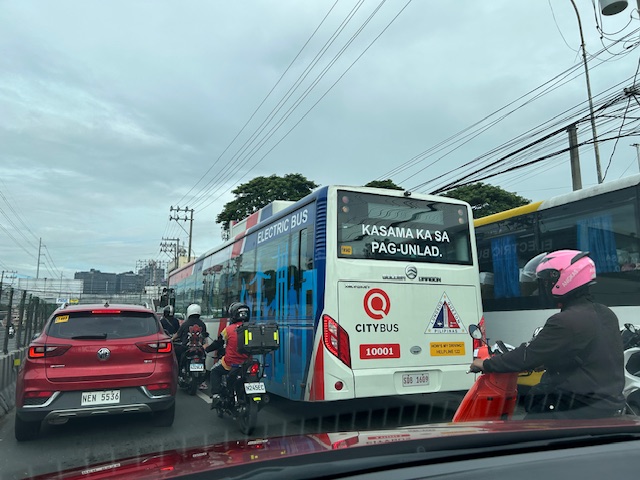 One of Quezon City’s electric buses
–
 Caught (up) in traffic