
Home » Public Transport (Page 58)
Category Archives: Public Transport
Ongoing construction of the AGT at UP Diliman
People have been asking me if what was being constructed at the vacant lot near the College of Fine Arts and visible from the University Avenue and C.P. Garcia Avenue is the test track for the Automated Guideway Transit (AGT) project of the Department of Science and Technology (DOST). I always replied in the affirmative even though I haven’t seen the construction site myself. I finally had an opportunity to visit the site though I could not go directly where people were working due to the ground conditions (it has been raining heavily in Metro Manila the past few days) and the fact that it was an impromptu visit.
The following photos confirm the ongoing construction in the area where steel bars for the columns of the elevated test track are already jutting out of the ground from the foundations. The contractor is MIESCOR, a sister firm of electric utility giant Meralco. The latter, of course, has a history with public rail transport as it operated the electric tranvias in old Manila. Meralco actually stands for Manila Electric Rail and Light Company and so it seems quite fitting rather than just coincidence that it is involved, through MIESCOR, in this project.
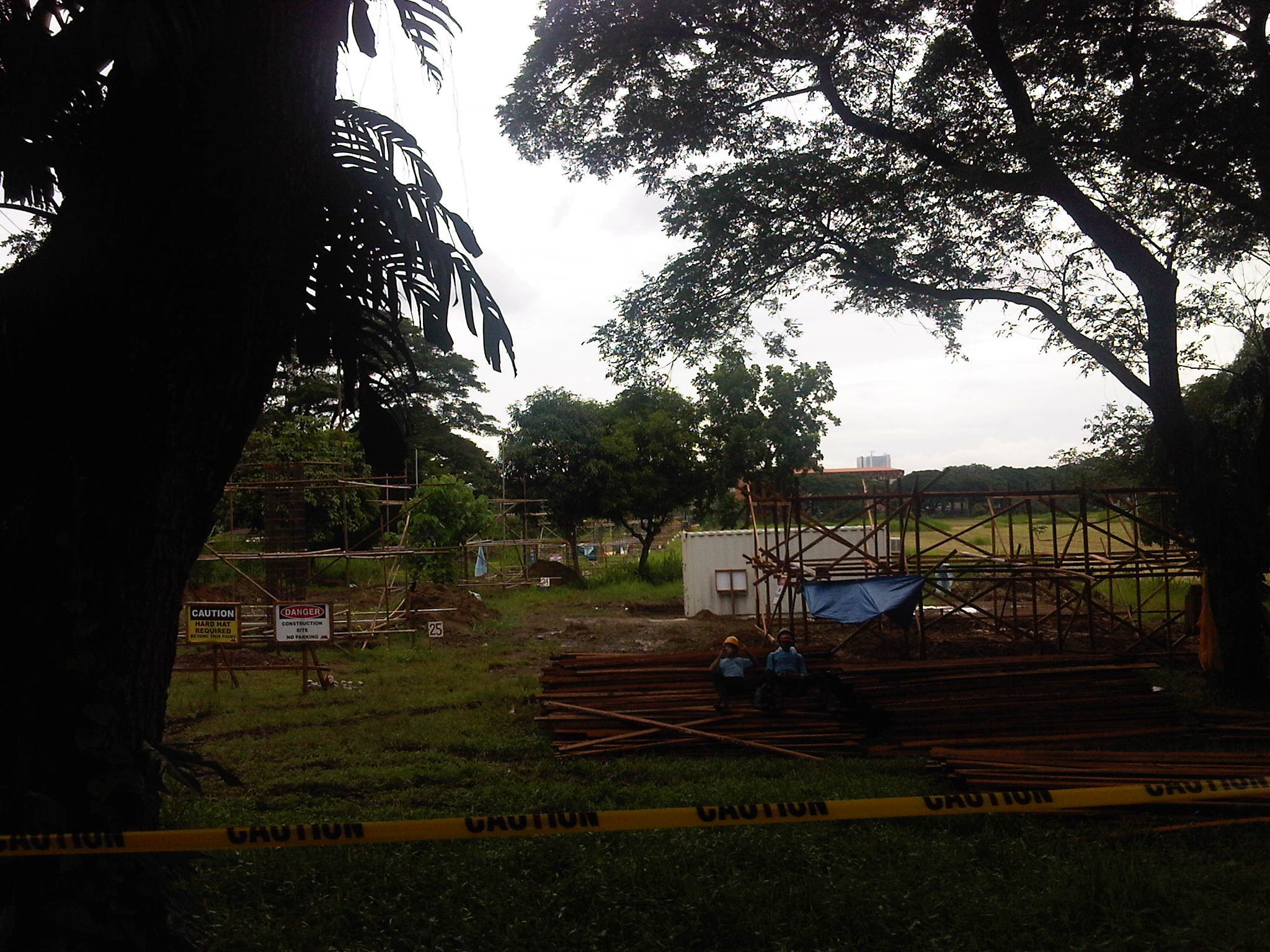 Project site as seen from Jacinto Street
 Project site as seen from the corner of Jacinto Street and the access road to the UP Veterinary Hospital and the Campus Maintenance Office (CMO).
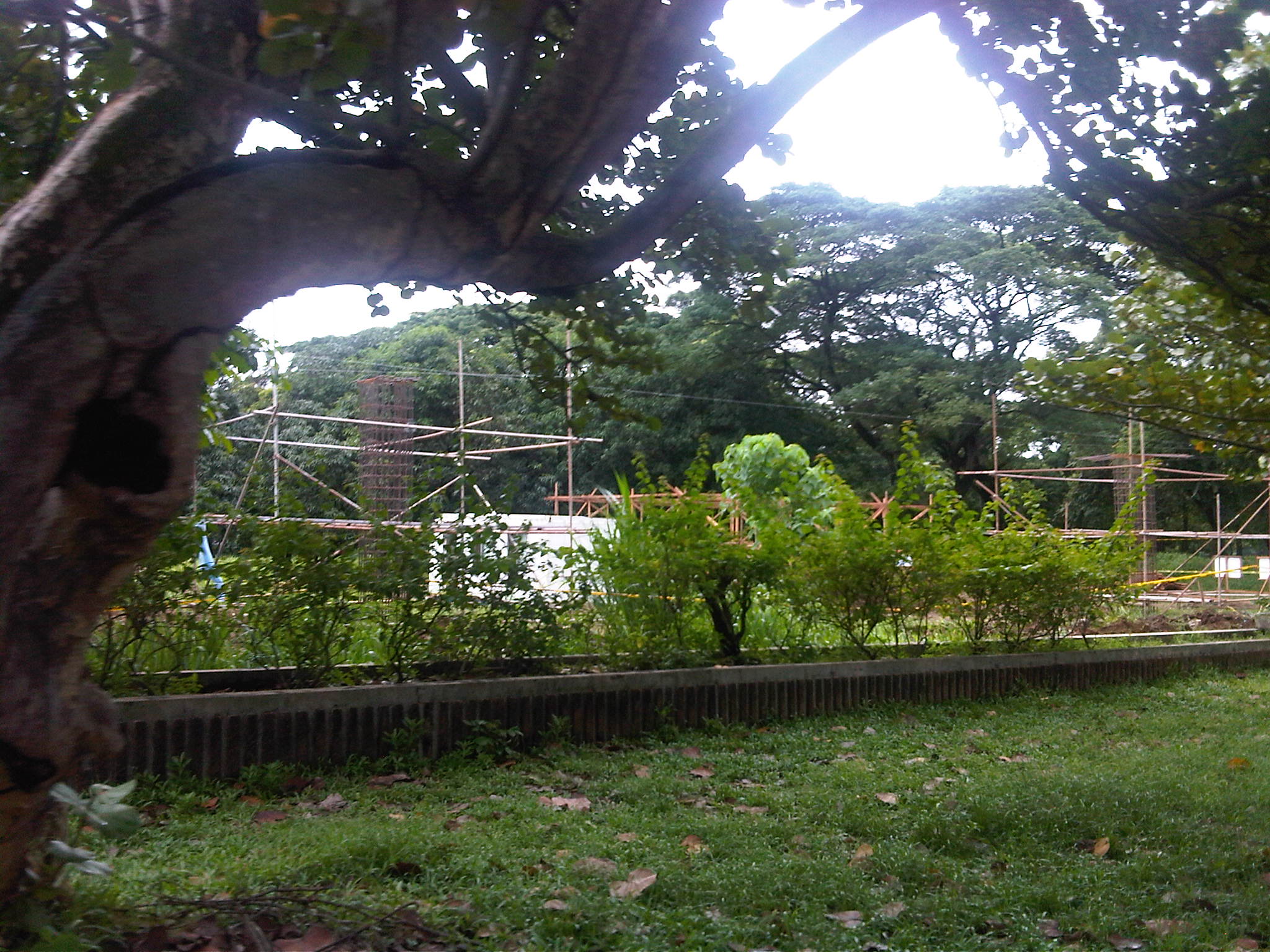 Columns rising – steel bars forming the reinforcement for the concrete columns of the elevated test track
 Construction materials piled up at the site – the expanse of the area where the test track is being built can be appreciated in the photo. That’s the rooftop of the CHED building in the background in the upper left side of the photo.
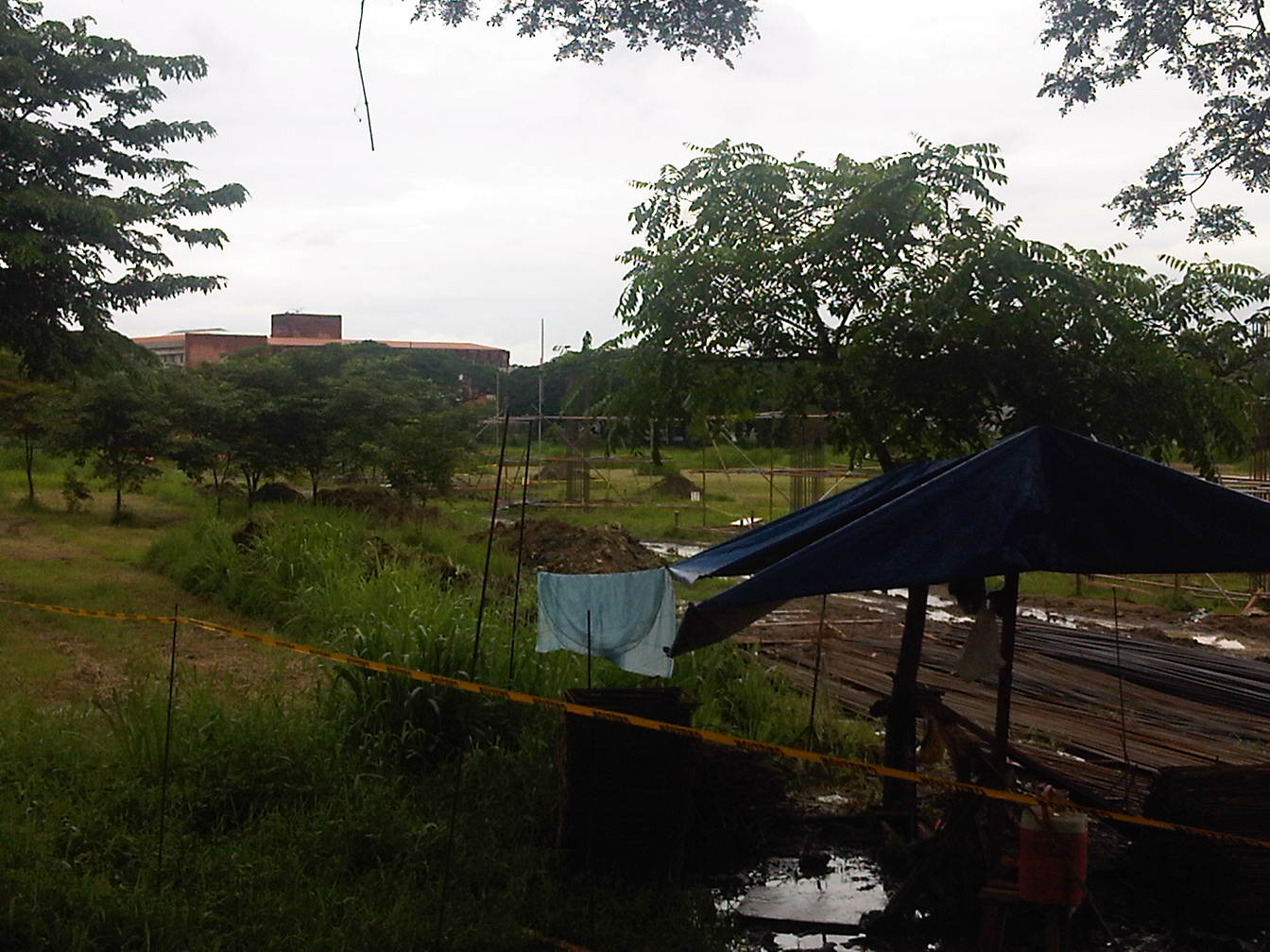 I tried to get a photo where the other columns are visible
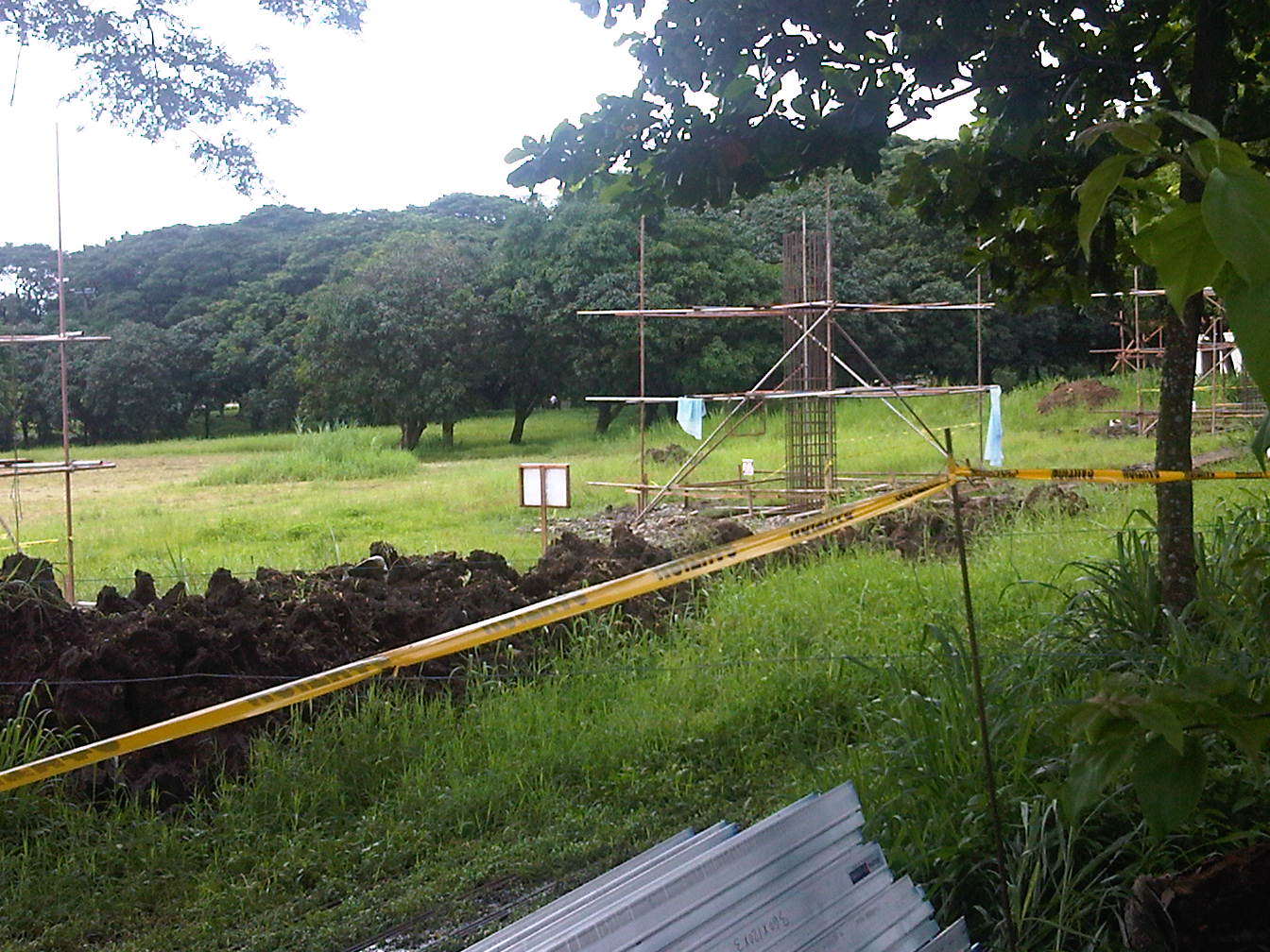 A view of the excavations and the line of columns leading to the track end near Jacinto Street
 The closest shot I could get of a column under construction
The structure should gain form in the next few weeks when work on the columns are completed and the girders forming the tracks are laid out. Perhaps the power room for the test track will also be constructed in preparation for the power system installation along the track.
–
Philippine railway plans in 1903
I was browsing the book by Arturo Corpuz (The Colonial Iron Horse: Railroads and Regional Development in the Philippines 1875-1935, U.P. Press, 1999) and remembered there was a figure there that illustrated what looked like an ultimate plan for railways north of Manila. The map, shown below, indicated that what was the Main Line North (MLN) was already planned to be extended all the way to Laoag in Ilocos Norte from the existing station in Dagupan, Pangasinan.
 PNR expansion plans in 1903
The map also shows proposed and alternate plans for a branch of the railways run along the Cagayan Valley and all the way to Aparri, Cagayan. The map along with others from that period reinforce what I have termed as probably one of the biggest “what ifs?” in Philippine transport. If such plans were implemented and we had retained and even upgraded these lines, perhaps inter-provincial or inter-regional passenger and freight flow in Luzon could have been significantly different from what we currently have that is dominated by road transport. A fully developed MLN and MLS could have been game changers in the development of Luzon and the country in general. Long distance travel for both people and goods may not have been dependent on road-based vehicles, and perhaps could have been more affordable for many people before the emergence of air transport and the present’s budget airlines. In fact, a fully developed railway system could give budget airlines and bus companies a run for their money today and perhaps influence tourist transport as well.
–
AGT at UP Diliman: some clarifications
There have been too many articles hyping a proposed transport system at UP Diliman. What seems like a DOST media blitz started with an article posted by Malaya Business Insight online that announced a project developing what was allegedly a train that’s the first of its kind in the world:
- FIRST OF ITS KIND IN THE WORLD; Trains to run on rubber tires [Malaya, June 18, 2012]
The article was inaccurate in many ways including the fact that there are already many such vehicles operating in public transport systems around the world including our ASEAN neighbors. Articulated buses can be seen regularly along the streets of Singapore and there are Bus Rapid Transit (BRT) lines in Jakarta and Bangkok. There are others in South America, most notably in Curitiba and Bogota. In fact, Cebu City is on the way to realizing the first BRT system in the Philippines with an FS already underway (Note: one can search the internet on articles and official statements on this project). Rubber-tired trains are not new, there are even automated or driver-less systems that have been operating in Japan, Europe and North America for quite some time now. Those who have been to Tokyo probably have ridden the Yurikamome. Among these are the following:
- DOST automated rail transport is back on track [People’s Television, June 19, 2012]
- Automated Transport System To Be Tested At Diliman Campus–DoST [Manila Bulletin, June 20, 2012]
- UP monorail project still on track-DoST [Philippine Daily Inquirer, June 21, 2012]
First things first. The prototype vehicle to be developed and tested will be an AGT and NOT a monorail. These two were proposed and discussions among DOST and UPD led to the decision to develop an AGT rather than a monorail. To support the project, a test track had initially been built on the DOST grounds as a “proof of concept” exercise. The “success” of the exercise apparently led to the decision to move forward and pursue full scale development and testing of a system. Thus, after several discussions with the UP System and UP Diliman a test track will be constructed in UP Diliman.
The test track will not be a fully functional system for commuting although the location will be conspicuous enough for those interested in the project. The alignment was also decided based on the potential for a full system to be built should it be found to be feasible. By feasibility, this meant that the environmental and financial impacts of such a system for the campus will have to be evaluated. In fact, one of the biggest questions that has still to be answered is who will pay for such a full system and whether it can sustain itself given the limited ridership in the area coupled with the limited supply the system can provide.
The test track will be constructed at the lot bounded by the University Ave in the north, C.P. Garcia Ave. in the west, Jacinto St. in the east, and the UP College of Fine Arts (CFA) and Campus Maintenance Office (CMO) in the south. This location is shown below:
 Map showing test track location and layout.
One idea already put forward before was the possibility of a full system being constructed along C.P. Garcia Ave., effectively connecting Commonwealth Ave. (at Philcoa) and Katipunan Ave. (near the National Institute of Physics). Such a system might be viable but it has to be two-way and with a fleet of vehicles to support the demand along the corridor. Perhaps stations along this line may be located at Philcoa, National Computer Center (between CHED and Phivolcs), the old Stud Farm, College of Engineering Complex (near the junction to the Hardin ng Rosas residential areas), and NIP (perhaps across it at the lot near the technology incubator?).
–
Montalban Highway
The Montalban Highway is located between the junction with J.P. Rizal Avenue in Rodriguez, Rizal (formerly known as the town of Montalban) and the junction with Payatas Road in Quezon City, Metro Manila. It serves as part of an alternate but somewhat longer (distance-wise) route between Metro Manila (via QC) and the northern towns (San Mateo and Rodriguez) of Rizal Province. The other route is through the Batasan-San Mateo Road, which also has a bridge crossing the Marikina River. While it is longer, it is often the less congested road and may perhaps offer faster travel (shorter travel times) between QC and San Mateo or Rodriguez. It is definitely the faster route to Montalban since travelers won’t have to pass through the town proper of San Mateo, which can get congested due to the local traffic and narrow roads.
 Turning right from J.P. Rizal and unto the QC-bound side of Montalban Highway
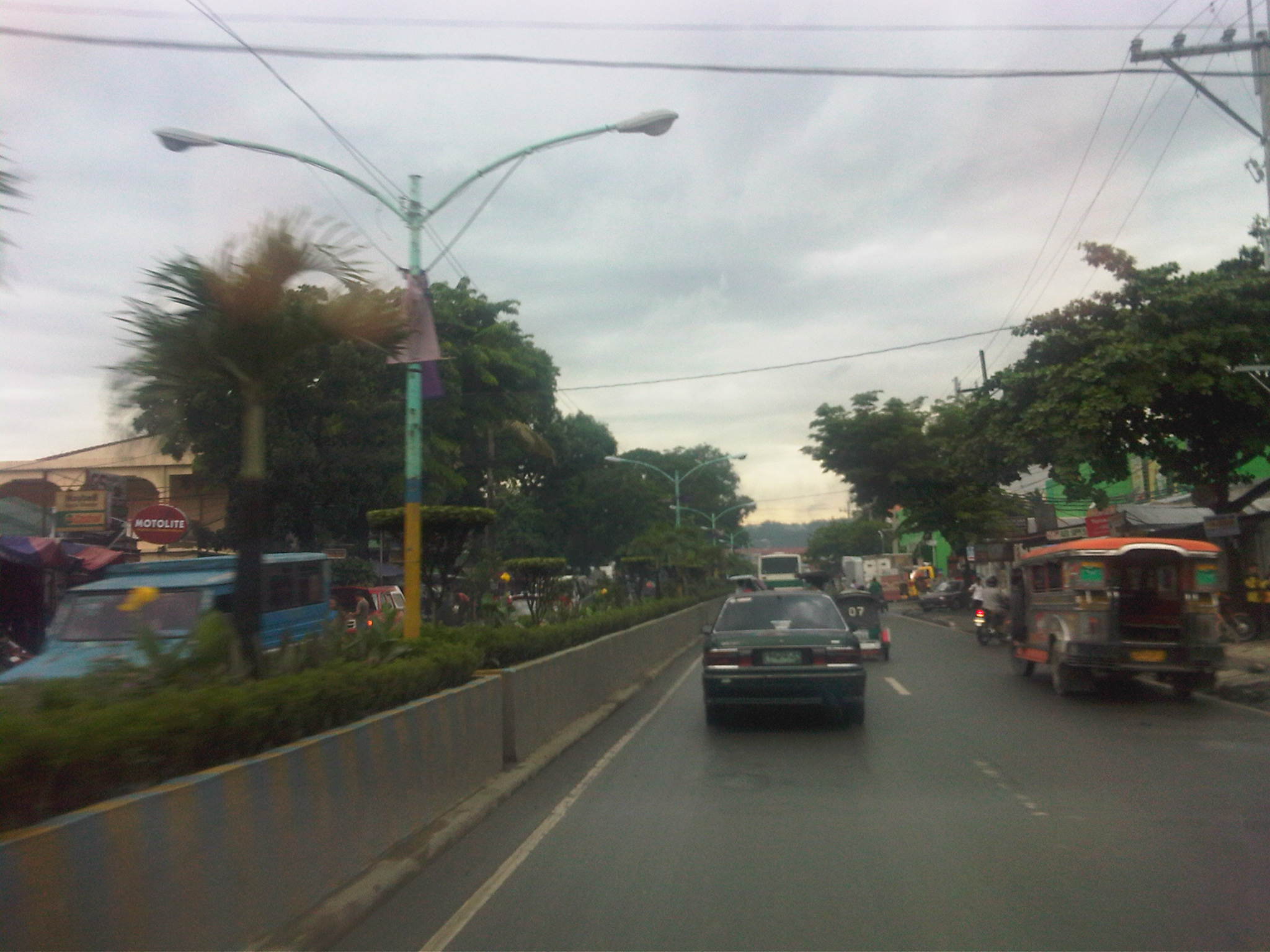 The road is a 4-lane/2-way highway with a median island with a plant box separating opposing traffic.
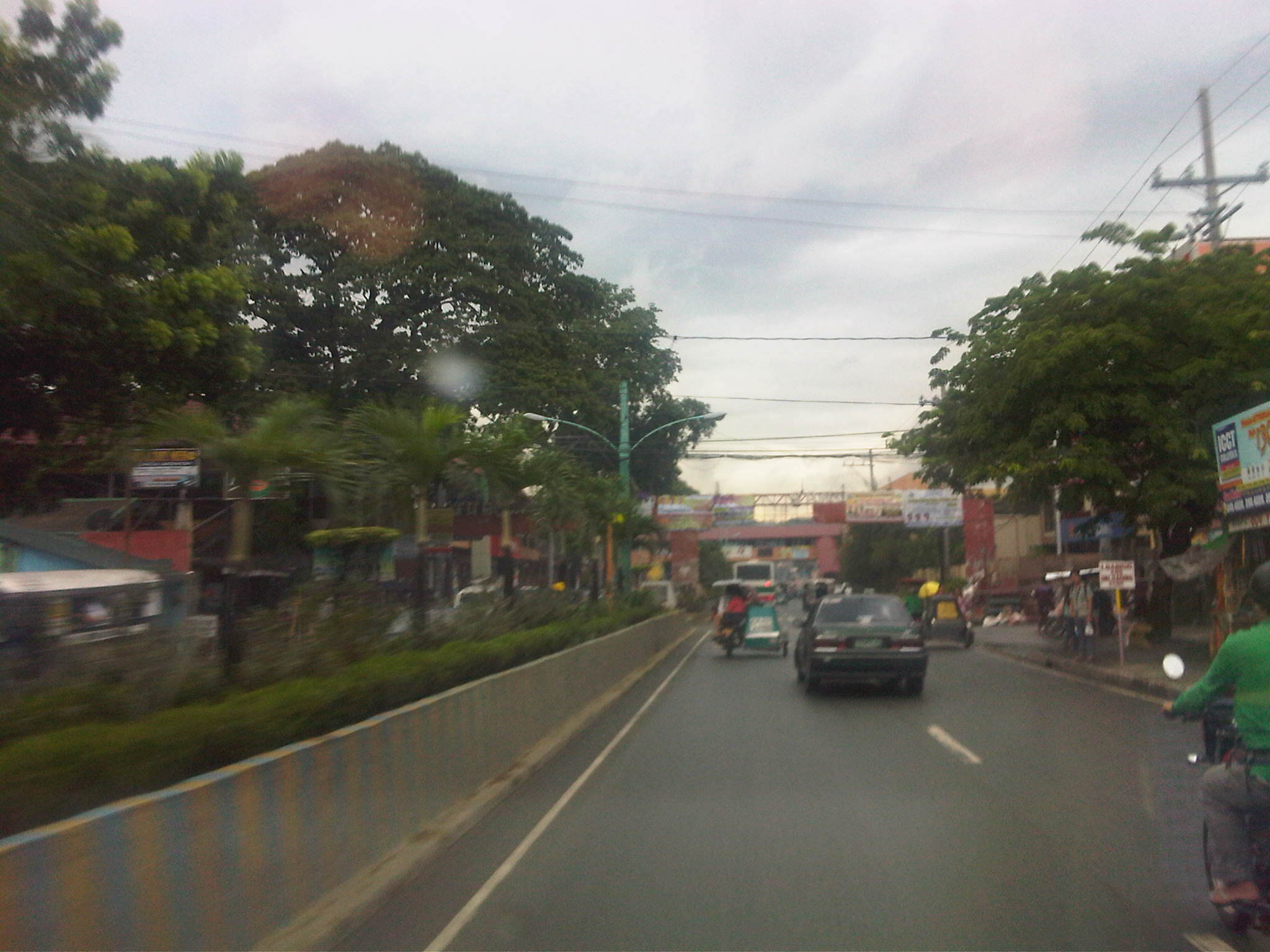 Traffic is a mix of cars, tricycles, jeepneys, buses, even bicycles and pedicabs.
 Along the highway is the Montalban Town Center, which has buildings on either side of the road midway through the highway. The buildings are connected by a covered elevated walkway.
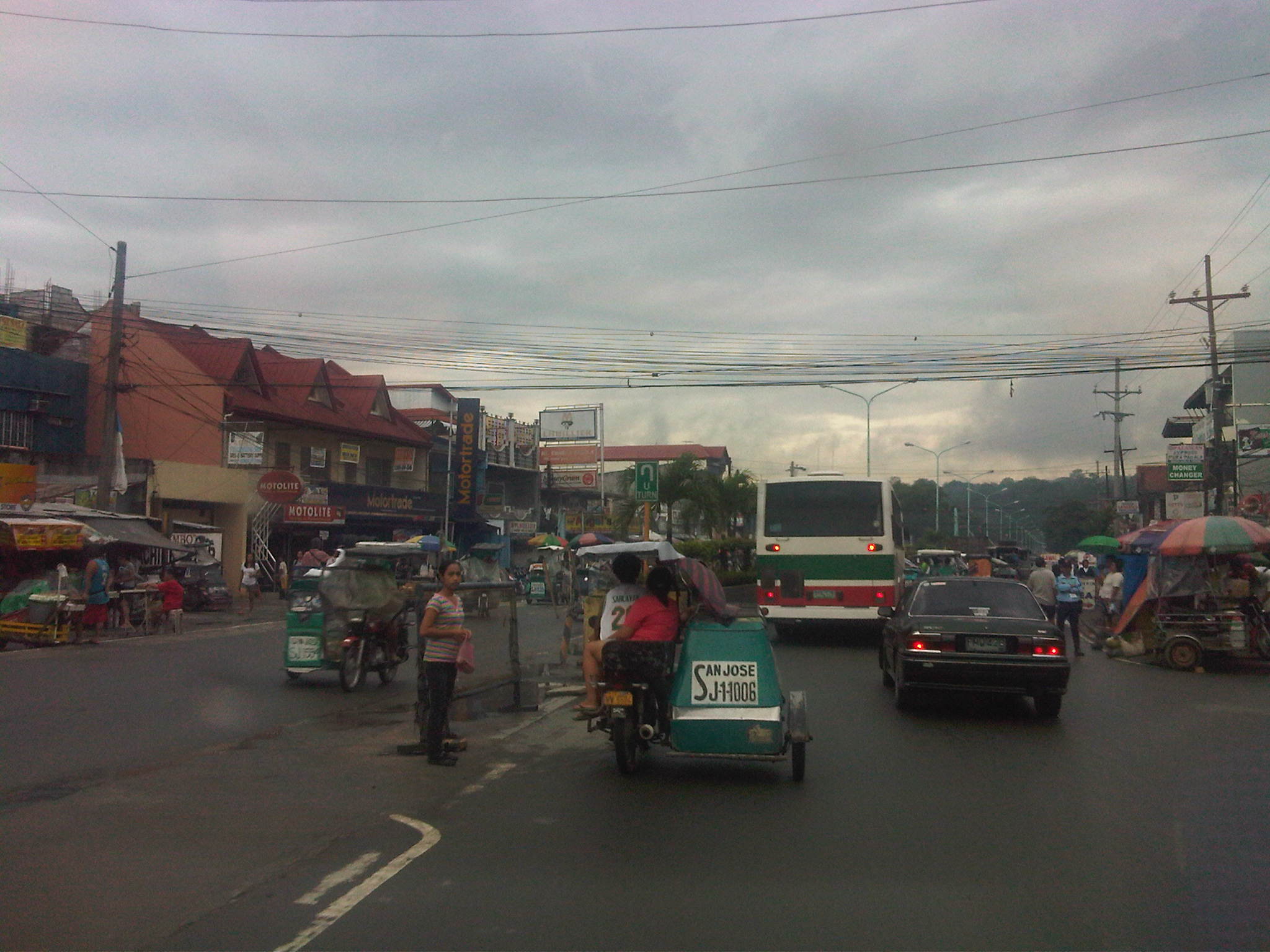 Past the town center is the Montalban Public Market and the area reminds of what Kalayaan Avenue in Makati City looked like before it was widened.
 We couldn’t understand exactly what the tagline “committed to change with honor” really meant, especially when it’s placed together with the sign for the market.
 Tricycles easily clog up the highway with many trying to get passengers by slowly traveling along the curbside.
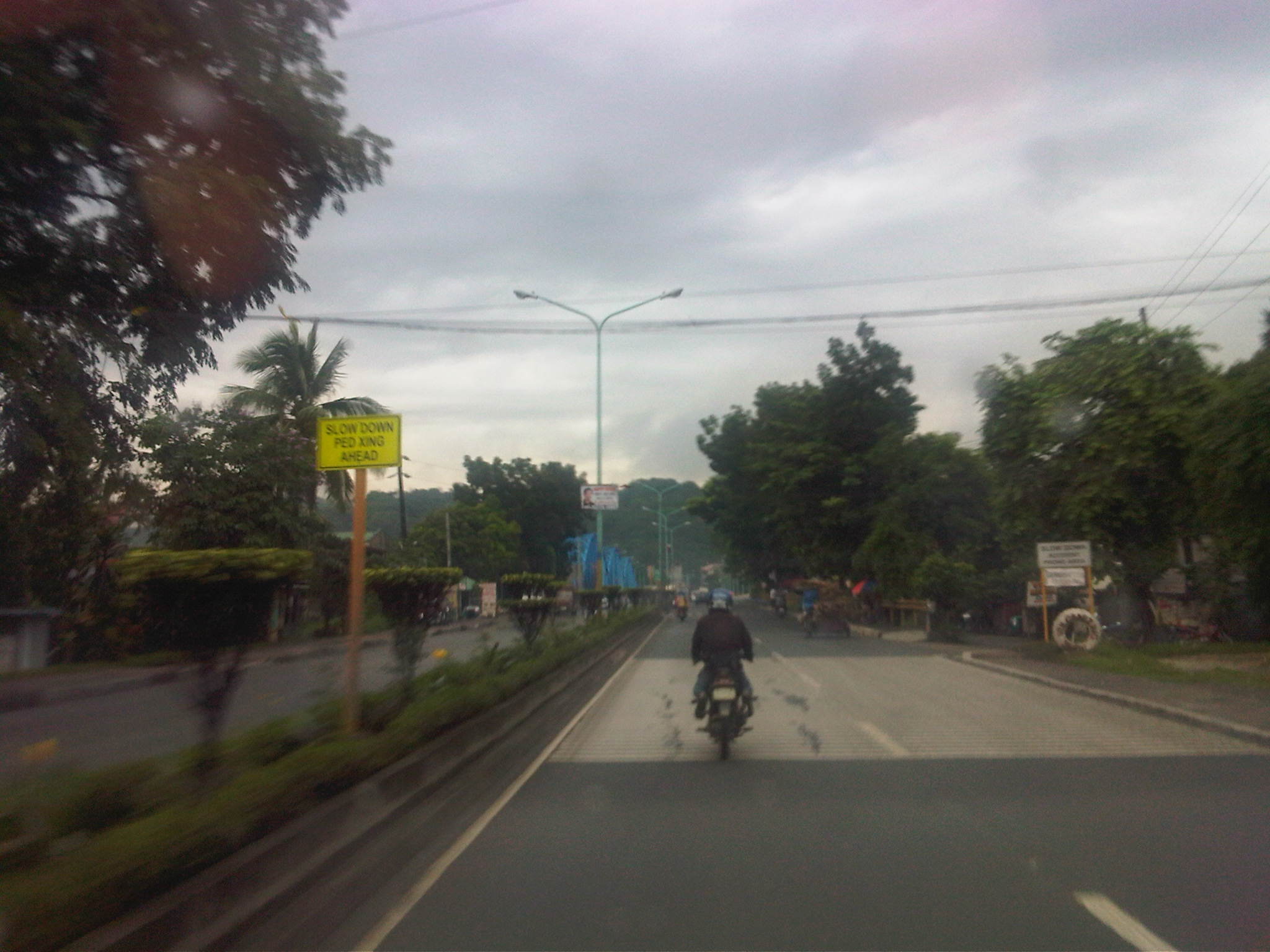 Past the commercial/market areas, traffic is free-flowing.
 Approach to the San Jose Bridge crossing the Marikina River
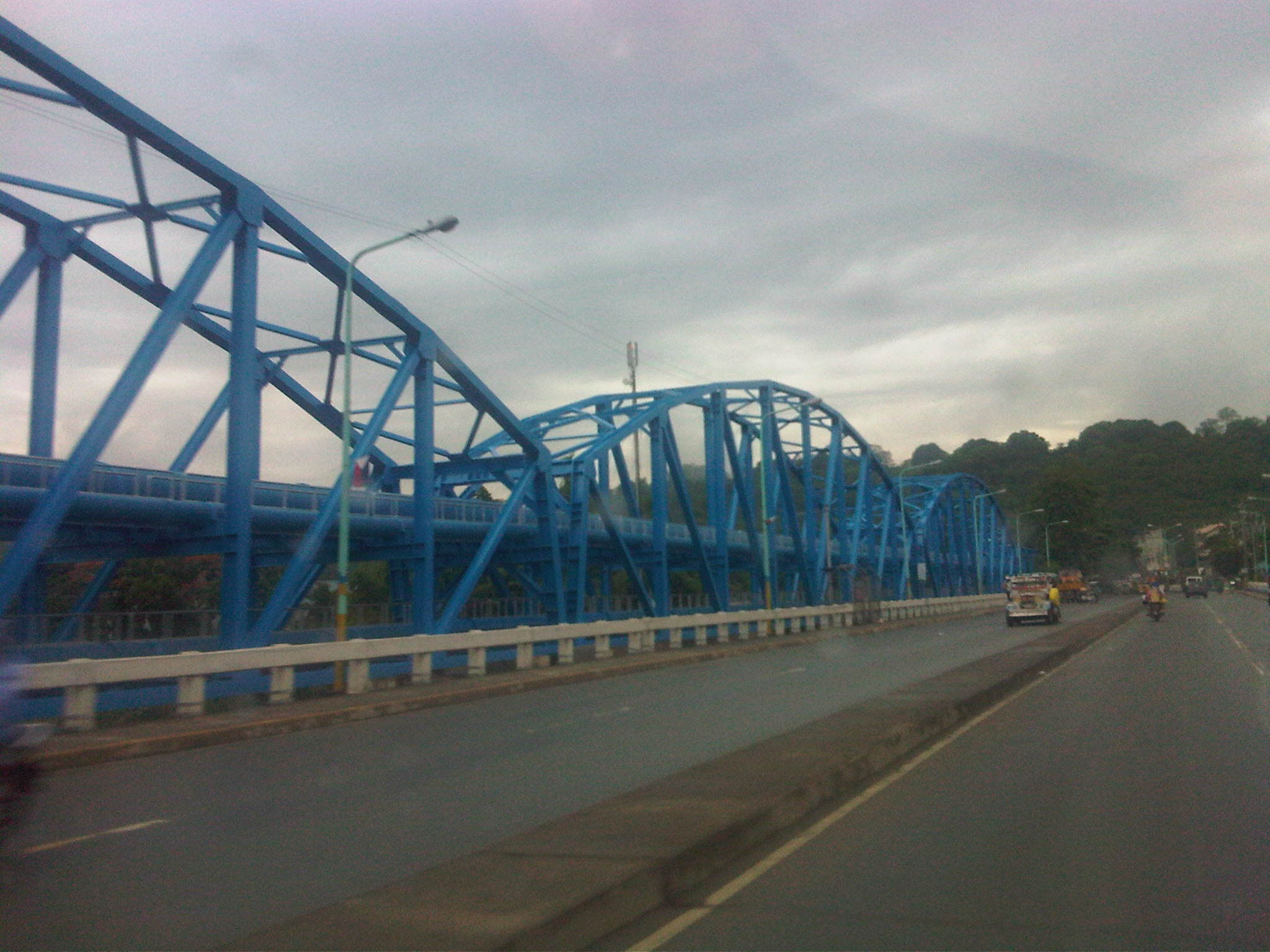 There’s a steel structure alongside the bridge that carries water pipes. From distance, the structure together with the bridge makes it look like the San Jose Bridge is a steel structure.
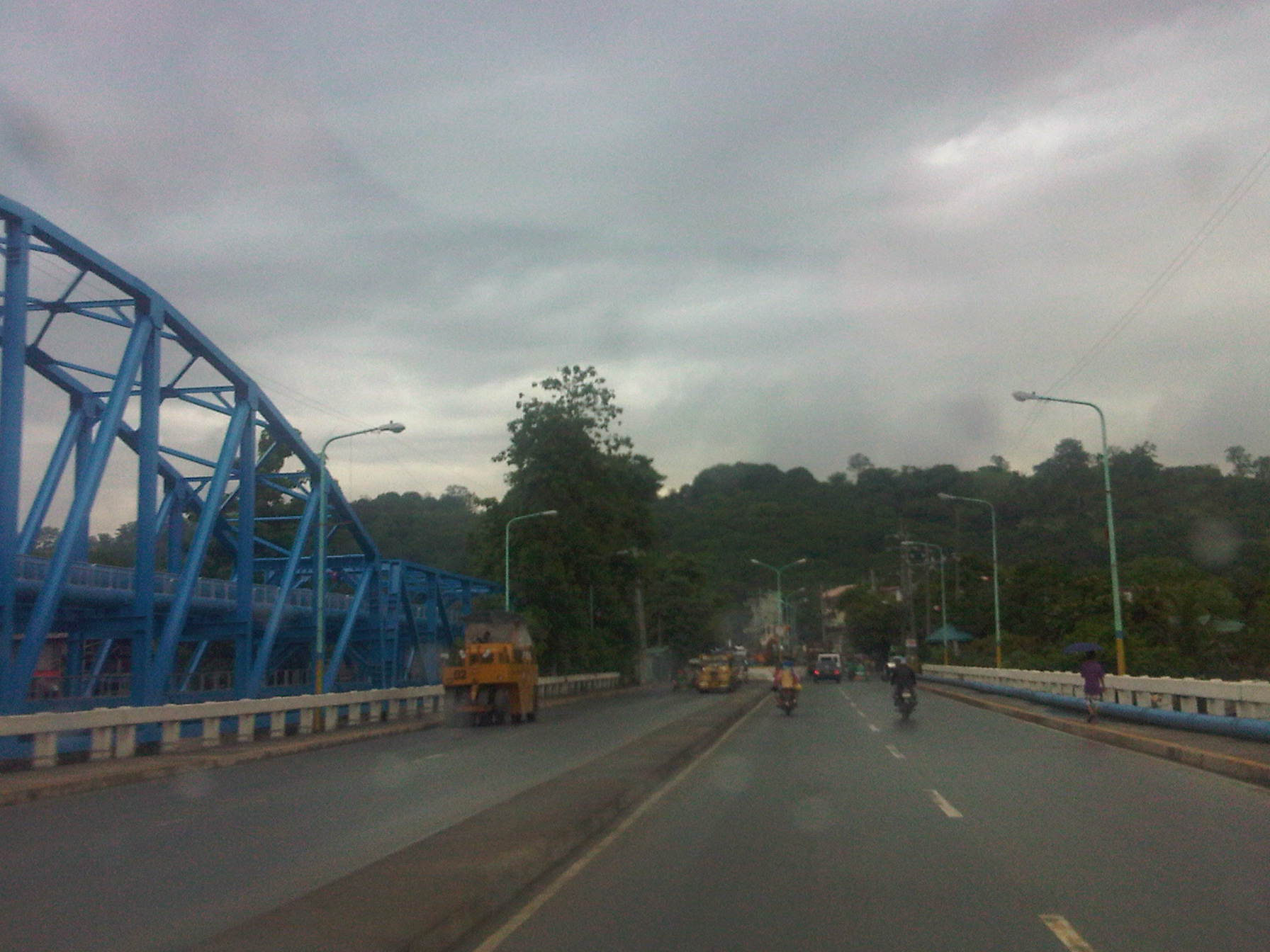 What looks like a hill at the end of the highway is actually part of the La Mesa Dam reservoir and watershed.
 After crossing the bridge, traffic is still light but vehicles generally slow down as they approach the end of the highway where there is a junction.
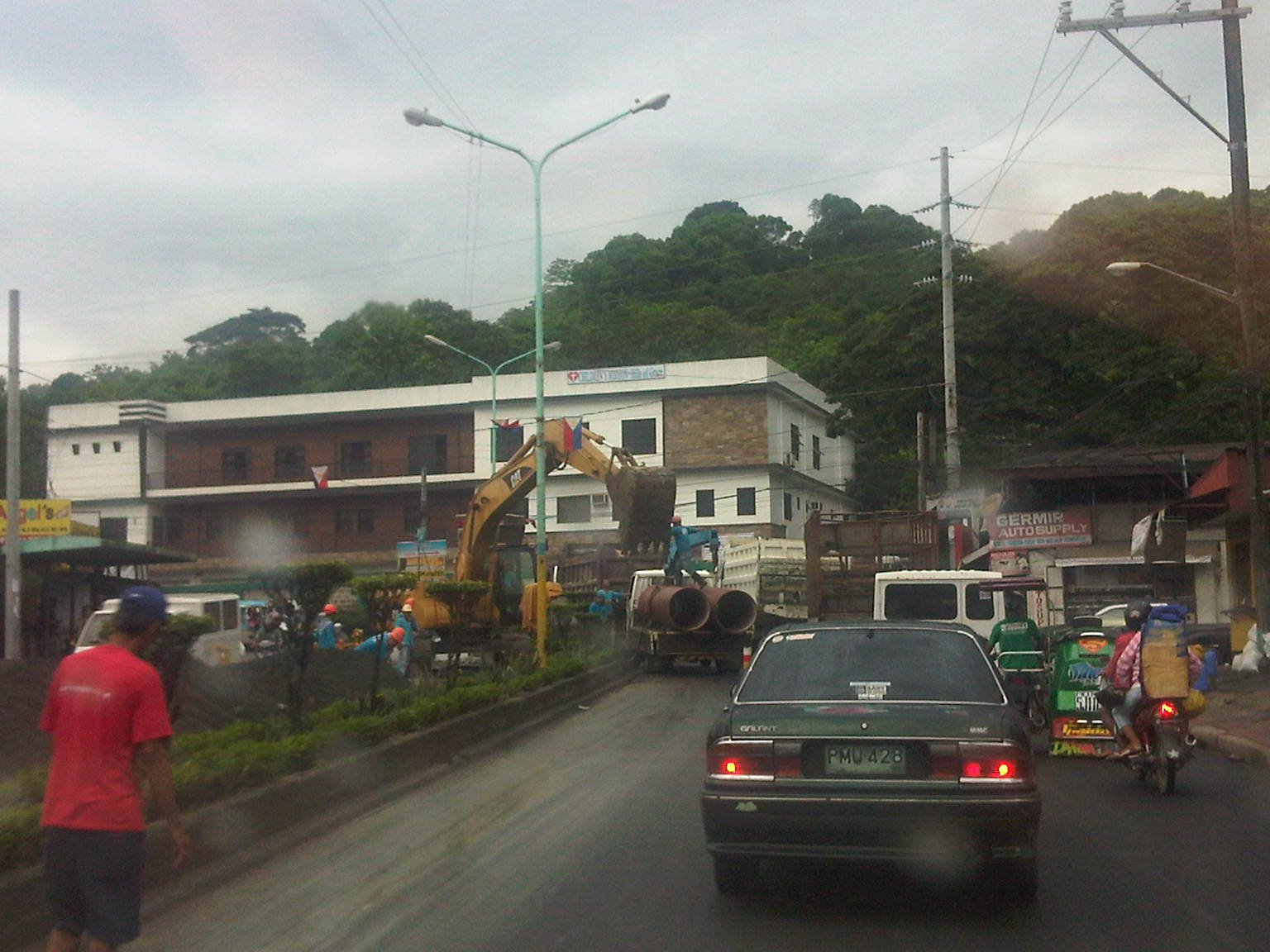 It turned out that vehicles were also slowing down due to major waterworks being conducted at the intersection of Montalban Highway and Payatas Road.
 A closer look at the pipes being laid out in the area when we passed by this June.
–
The electric bus and other thoughts on bus operations in Manila
An electric bus was on display at the 2nd Electric Vehicle Summit recently held at the Meralco Multi-purpose Hall. The exterior reminded me of the buses I rode in Yokohama and Saitama during my stints as a student and later as a visiting researcher. Following are a few photos I took of the exterior and interior of the bus. Most of the following notes are comments applicable to city buses operating in the Philippines rather than specifically for electric buses.
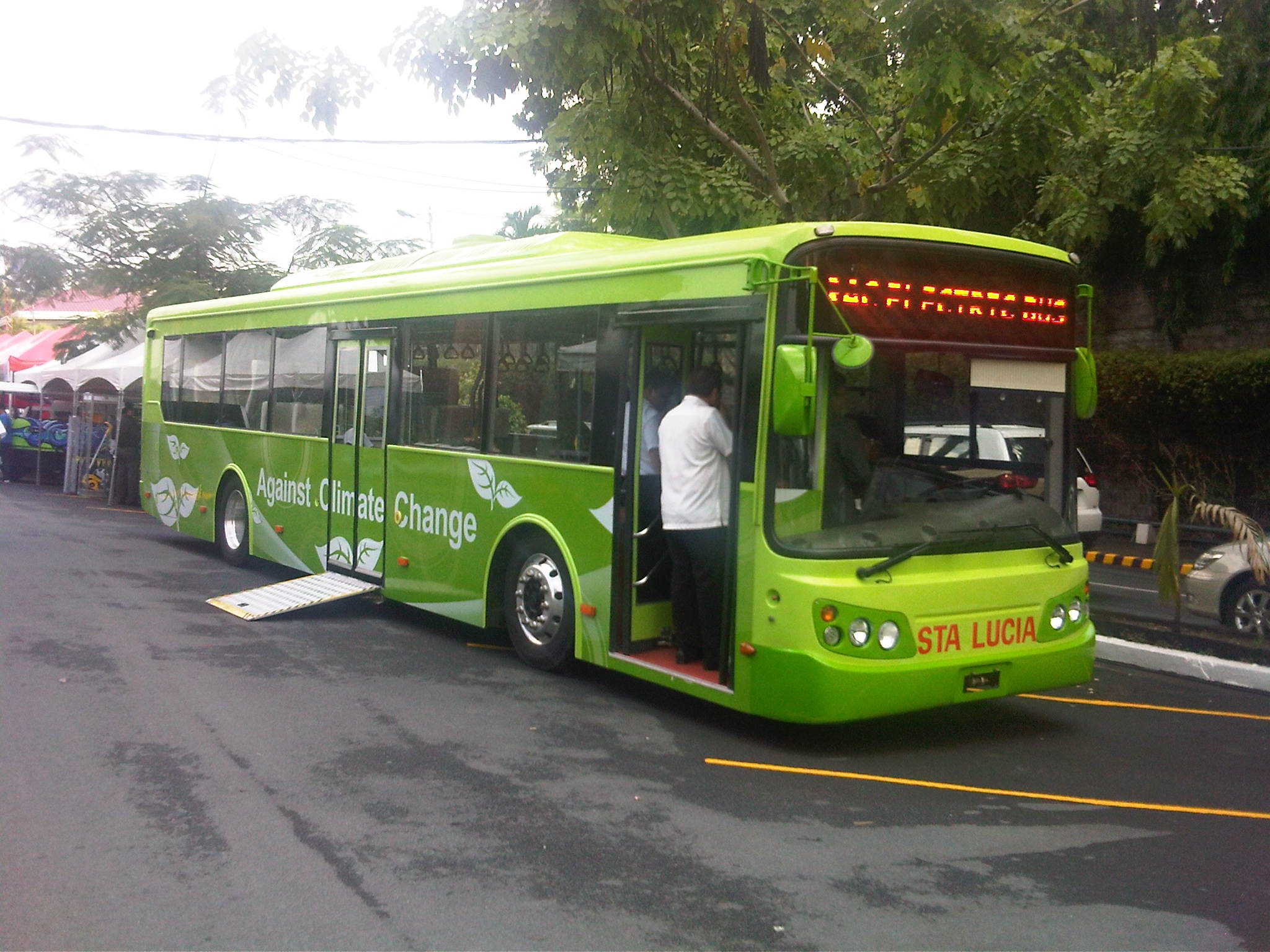 This electric bus was imported from Taiwan by the Victory Liner Inc.., which is among the largest provincial bus operators in the Philippines. The first thing I noticed is that the bus has a low floor, perhaps the same height as most curbs, but this can be a concern considering many of Metro Manila’s streets are subject to flash floods during the wet season.
 The interior and layout is perhaps the most appropriate for buses with city operations. There is sufficient standing space from the front to the middle of the bus. Seats here are usually for the elderly or physically challenged and includes space for a wheelchair. Most city buses in Metro Manila have layouts that are suitable for long distance trips, with many seats and often narrow corridors.
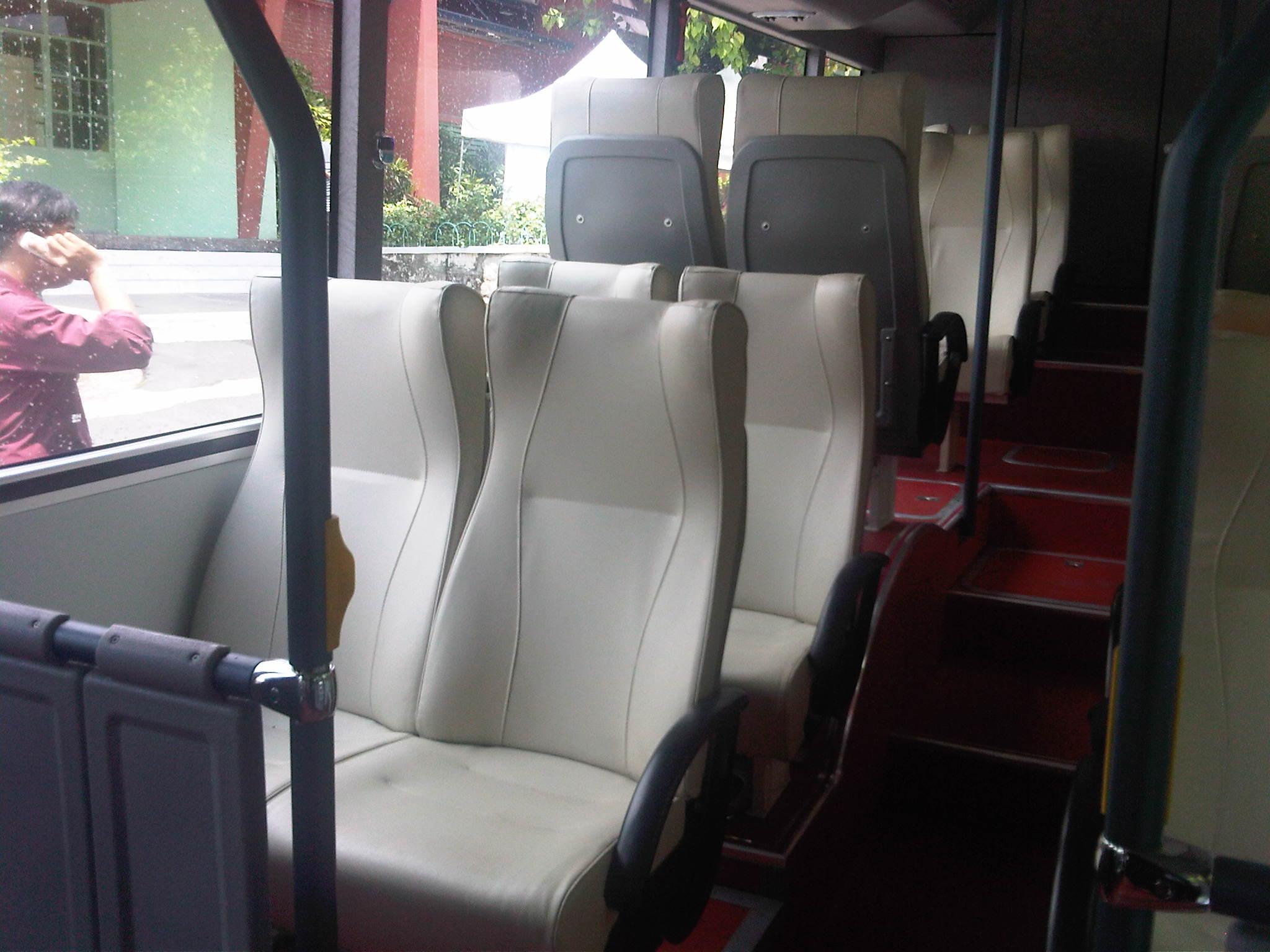 The seats at the back look very inviting and I assume are comfy for long rides not because of distances but congestion. Obviously, these seats and especially those at the back, which require passengers to negotiate a few steps are free for all though those in the lower level may be reserved for the elderly, physically-challenged or pregnant women.
 A look at the driver’s seat with the emblem of the manufacturer, RAC, on the steering wheel. I saw an article on the electric bus stating its specs (top speed of 95 kph and range of 270 km on a single charge). I’m really not worried about the specs given the advances in technology these days. I think it will still boil down to driver behavior when it comes to the question of road safety and the provision of efficient services for the public.
 Unlike most city buses in the Philippines, this bus has 2 doors. The one at the front may be used for entrance and there’s space for transactions, i.e., payment of fares, showing passes or swiping of cards. The one at the back is wider for more efficient unloading of passengers. There is also a provision for a ramp that can be used by persons on wheelchairs.
The potential benefits derived from electric buses are quite obvious from the environmental perspective. I like its chances for success considering that the initiative is being pushed by a major company like Victory, which might have to show the way by being an example and be the first to deploy these buses on an actual route. Victory’s business, however, is in provincial operations so there should be at least one taker from among the companies operating in Metro Manila to use these buses on a route.
For demonstration purposes, I think Bonifacio Global City with its Fort Bus service can provide a good route for a start. The Fort is ideal for such electric buses given the current demand and route length. Charging stations may also be provided at the route ends, particularly at the Market! Market! transport terminal. Another option might be Katipunan, with electric buses allowed to enter the Ateneo campus and perhaps help alleviate traffic congestion there by encouraging their students and staff to use public transport. One end may be at the UP Diliman campus where the buses may also be allowed to enter the campus but perhaps take a route that won’t necessarily compete with jeepneys on campus (e.g., Academic Oval). Deciding the other end of the route would be a bit tricky but one option can be near SM Marikina where a secure terminal can be established and sufficient space for “park and ride” or “kiss and ride” operations. These might just be success stories in public transport waiting to happen.
–
Electric vehicle revolution in the Philippines
It started with the deployment of the first electric jeepneys and tricycles about 5 years ago. Today, electric vehicles are the rage in the Philippines with public transport being the main application of the e-vehicles. Makati already has 3 operational e-jeepney routes including the first e-vehicles to be registered and the first franchise for public transport. E-trikes have been operating in Bonifacio Global City in Taguig as well as in limited numbers in Puerto Princesa, Surigao and Boracay. During the 2nd Electric Vehicle Summit held last May 24-25, 2012 at the Meralco grounds, models of various electric vehicles for private and public transport use were on display for people to inspect and appreciate. These included cars, motorcycles, tricycles, jeepneys and a bus. Special mention goes to the Segway booth and its clone, which featured more personalized modes that are not really in the same category as most of the e-vehicles on display.
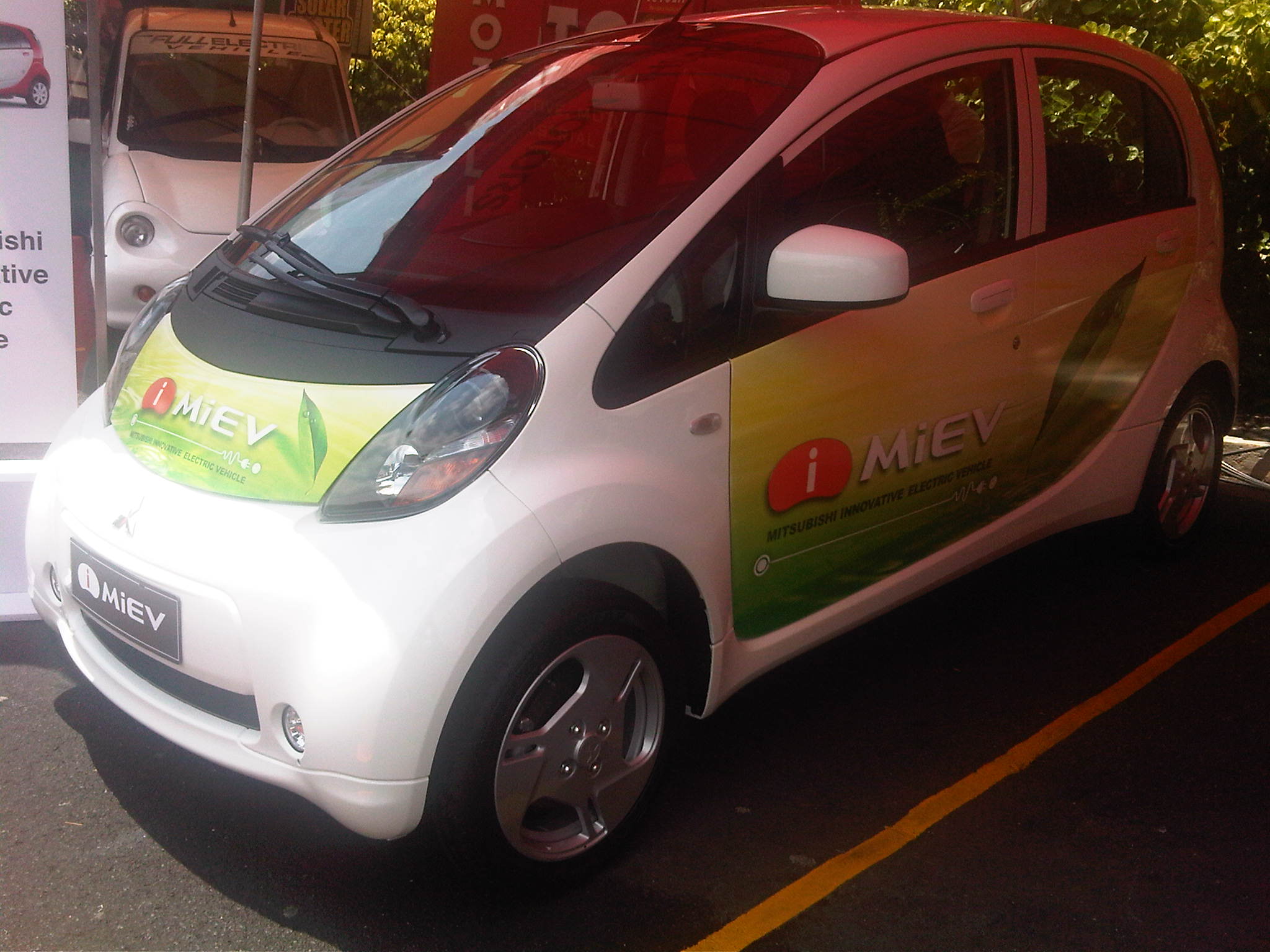 Mitsubishi’s entry in the local market is via the MiEV, a unit of which was donated to the Department of Energy (DOE)
 The REVAi is a small car produced by an Indian company. The logo on the car is of the leading battery company in the country.
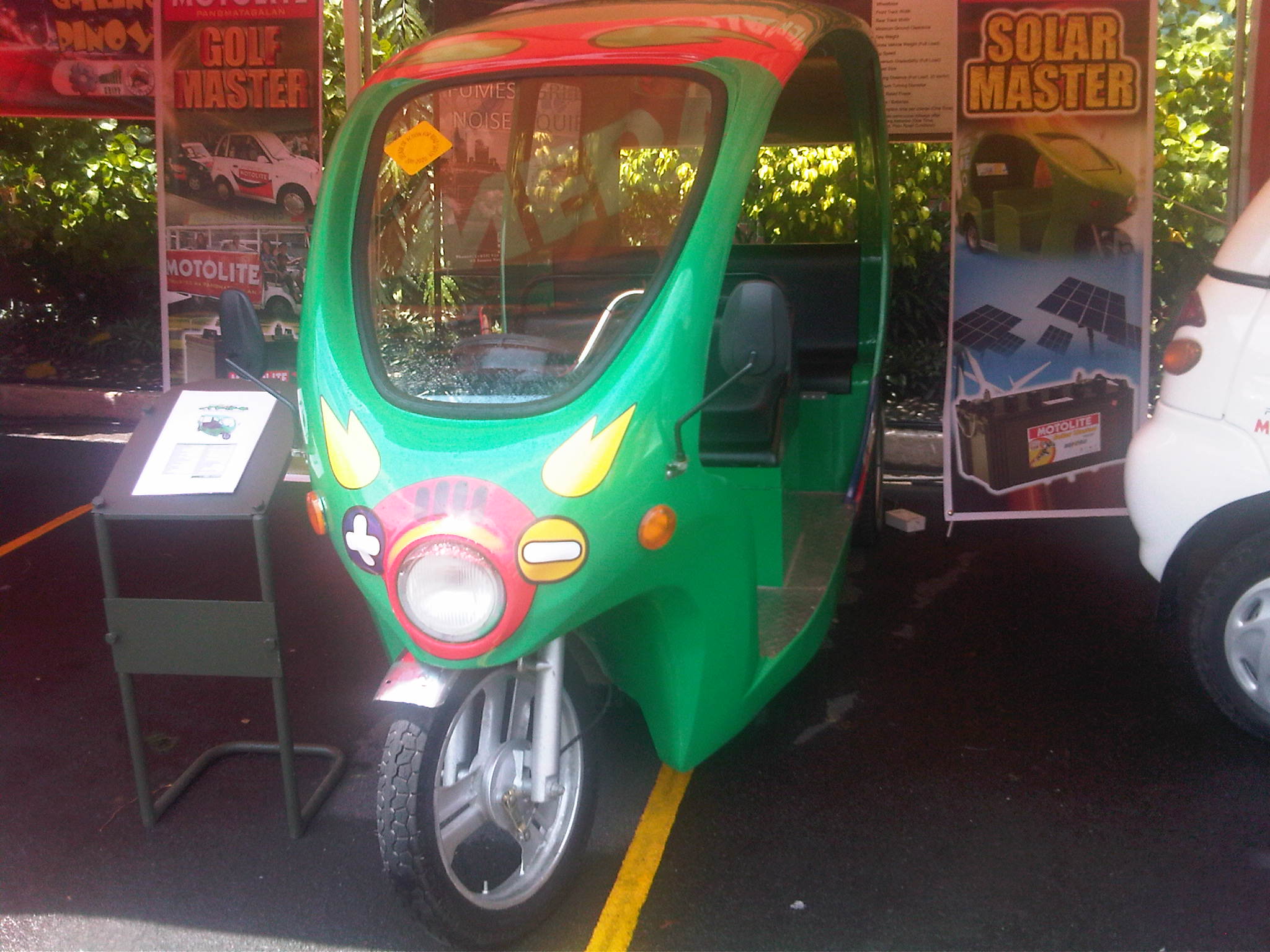 A locally assembled electric tricycle that is now popular in tourist areas like resorts.
 The 4-wheeled e-vehicle dubbed as the E-quad that is locally assembled.
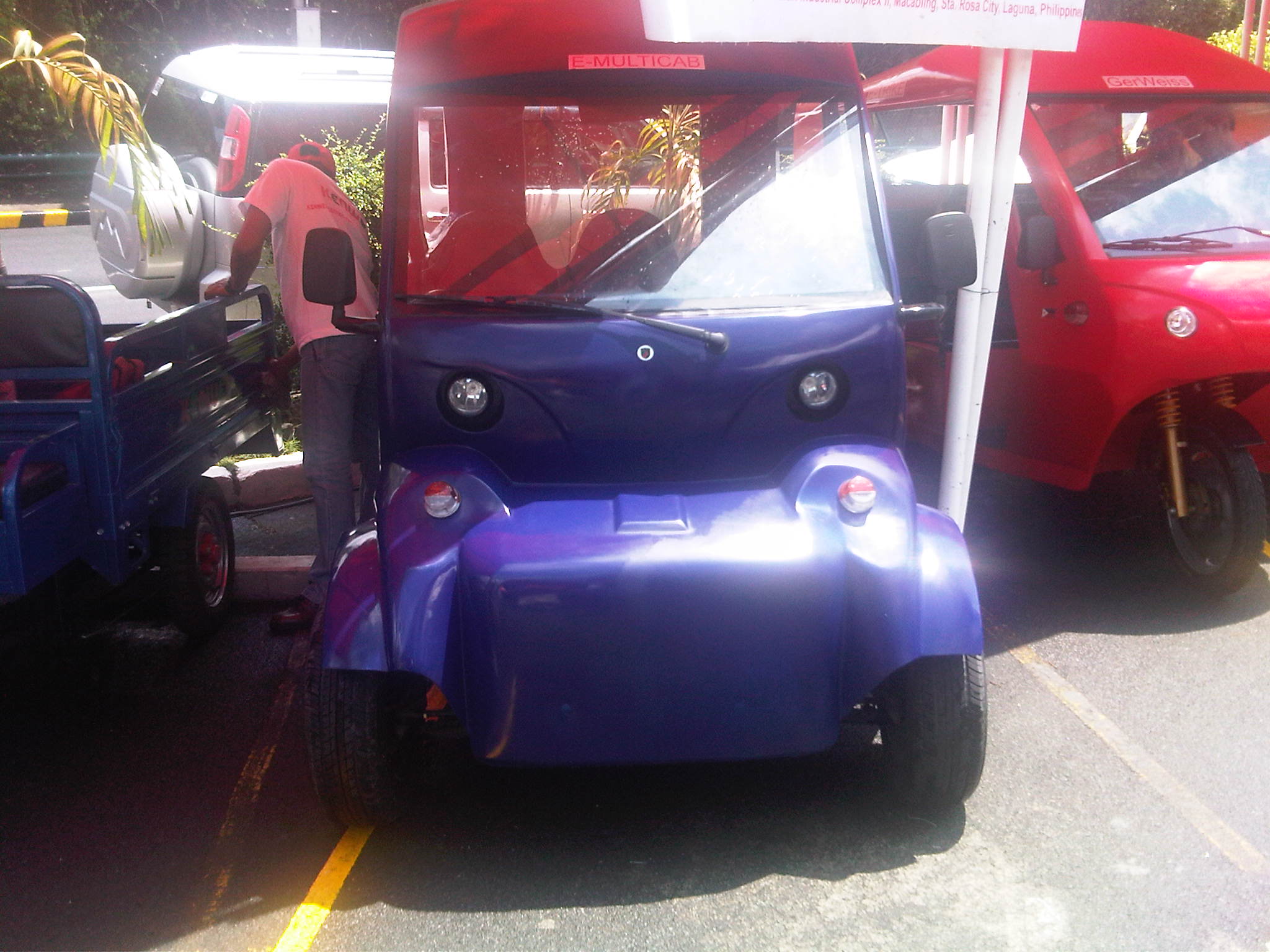 Variants of 3- and 4-wheeled e-vehicles including one (visible on the left) that is designed as a pick-up or delivery vehicle. All are made by local companies.
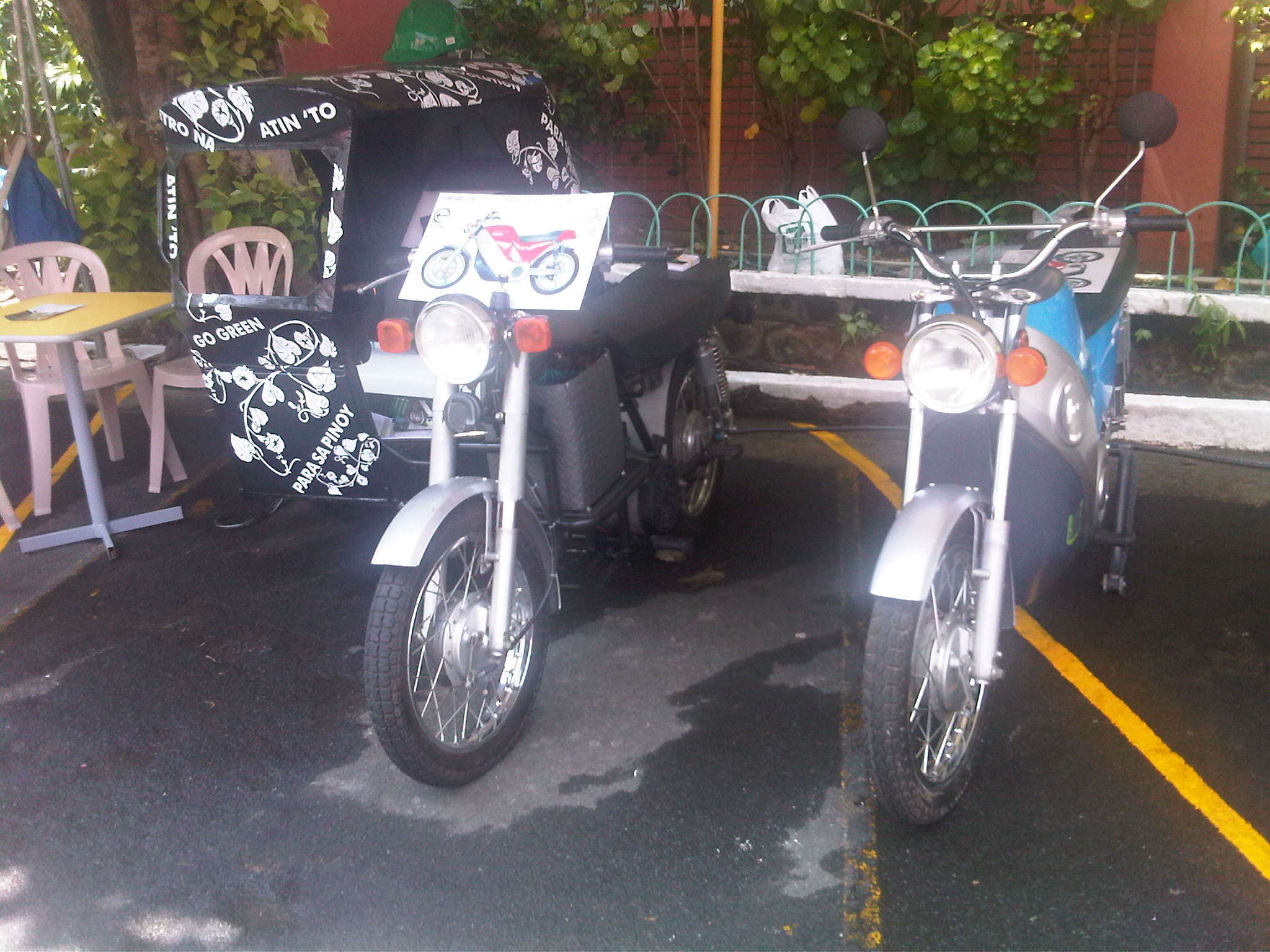 Electric motorcycles with one having a sidecar, which is the same form of the traditional tricycles that are the dominant public transport mode in local roads, many small cities and rural areas in the country.
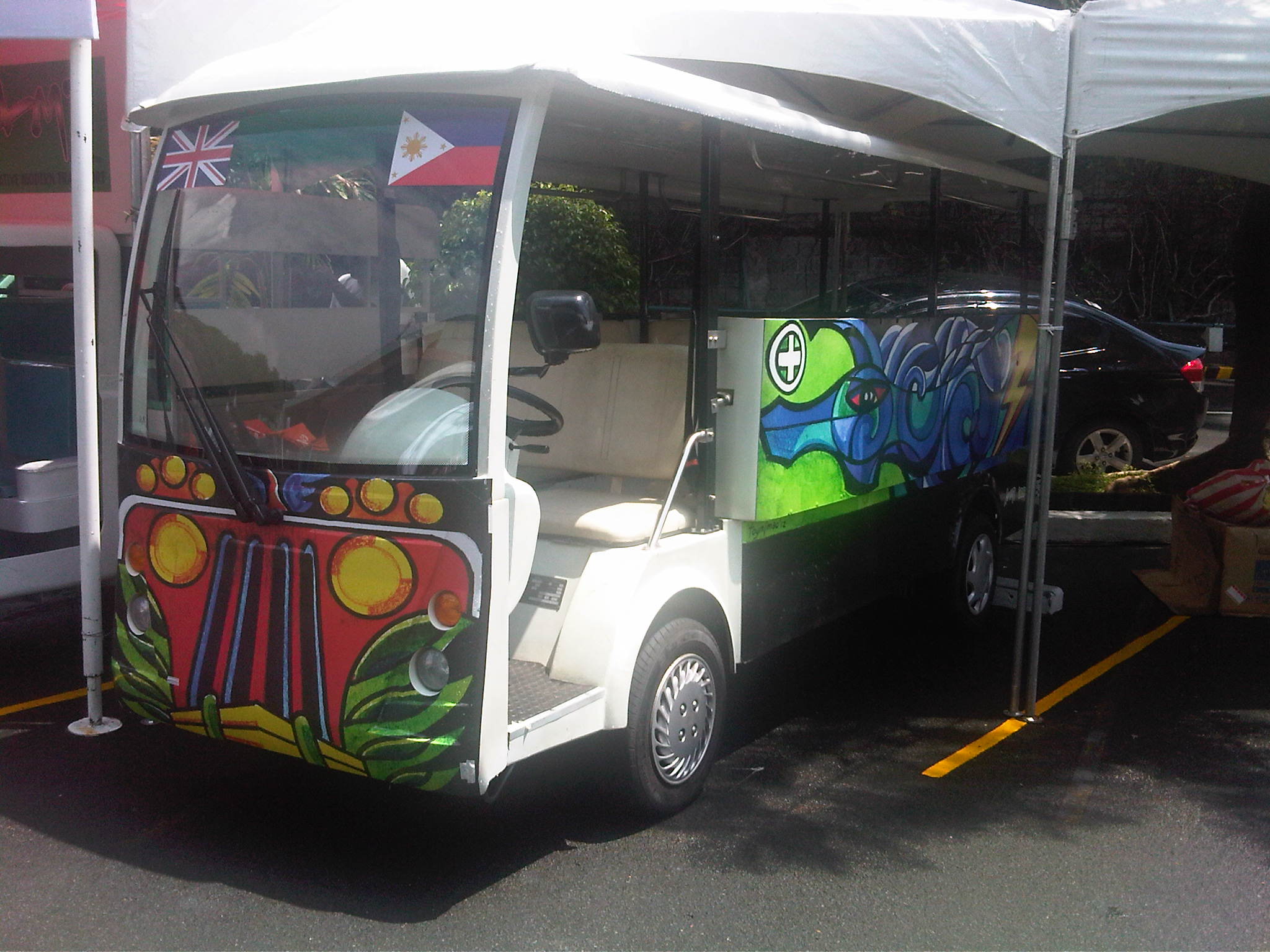 The electric jeepney that is also locally assembled with the motor and controller the only major components that are imported. I think this model is the latest one and has a more powerful motor that allows the vehicle to negotiate steeper slopes. Other models are currently operating in Makati City (CBD) and as shuttles in shopping mall complexes and industrial areas.
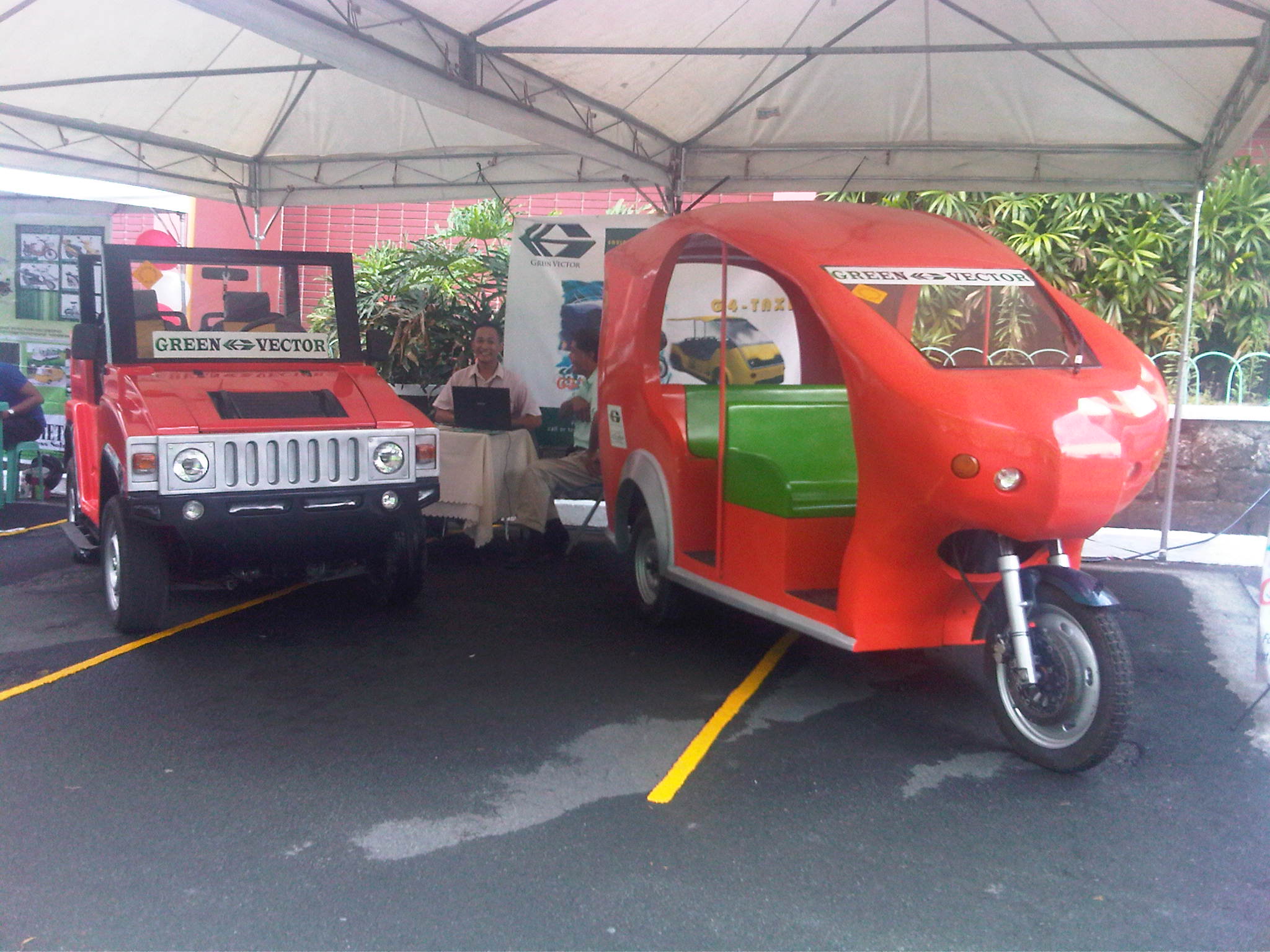 Another e-trike with form similar to the Thai tuktuks and another, a 4-wheeler, made to look like the popular Hummer vehicles.
 Electric scooters on display outside the summit venue
 The electric bus imported by a company affiliated with Victory Liner, one of the largest provincial bus companies in the Philippines was a popular attraction during the summit.
There are still many issues pertaining to the deployment or operations of e-vehicles in the Philippines. Among the more important ones involve costs and the need for infrastructure such as charging stations to support e-vehicles. Unlike the experiences in other countries, especially in Europe, the e-vehicle initiatives in the Philippines are mainly for public transport rather than for private use. In fact, the DOE’s E-trike project together with the ADB looks to the deployment of 100,000 e-trikes to replace traditional tricycles around the country. This seems to be a small initiative considering Metro Manila alone has about 250,000 legally operating tricycles (there are quite many illegally operating units) and an estimated more than 1.5 million legal units around the country. But such initiatives if carried out and evaluated scientifically, systematically and objectively will surely go a long way to addressing transport problems in this country. The Makati e-jeepneys already provide a good model for replication elsewhere and soon, more studies will be underway to evaluate such vehicles in comparison with the traditional jeepneys and the emerging Auto-LPG variant. With an impending law that will provide incentives for electric, hybrid and other alternative-powered vehicles, e-vehicles will be here to stay and perhaps effect a transformation of Philippine transport.
–
Melaka central bus terminal
Trips between Singapore and Malaysia are quite frequent given the proximity between the two countries (Singapore used to be part of Malaysia.) with a lot of people employed just across the borders and Malaysia being a popular destination for shopping and recreation. In fact, the first Premium Outlet in Asia is located in Johor, Malaysia, which is just across the border from Singapore. On a weekend trip to Melaka (Malacca), we took an express bus that made only 3 stopovers including one each for immigration control/processing in Singapore (exit) and Malaysia (entry). On the way back, we only had an extra stopover due to a fellow passenger requesting for a toilet break.
Arriving at Melaka, I was impressed with the central bus terminal, a sprawling complex that connected with commercial establishments around it. Inside the terminal, there are many shops and restaurants so one doesn’t need to leave the terminal to eat or to make some last minute shopping. Good buys are rubber sandals much like those being sold under Brazilian brands. Malaysia is a major producer of rubber and the sandals made in Malaysia are of high quality but less expensive than the Brazilian and perhaps Chinese counterparts.
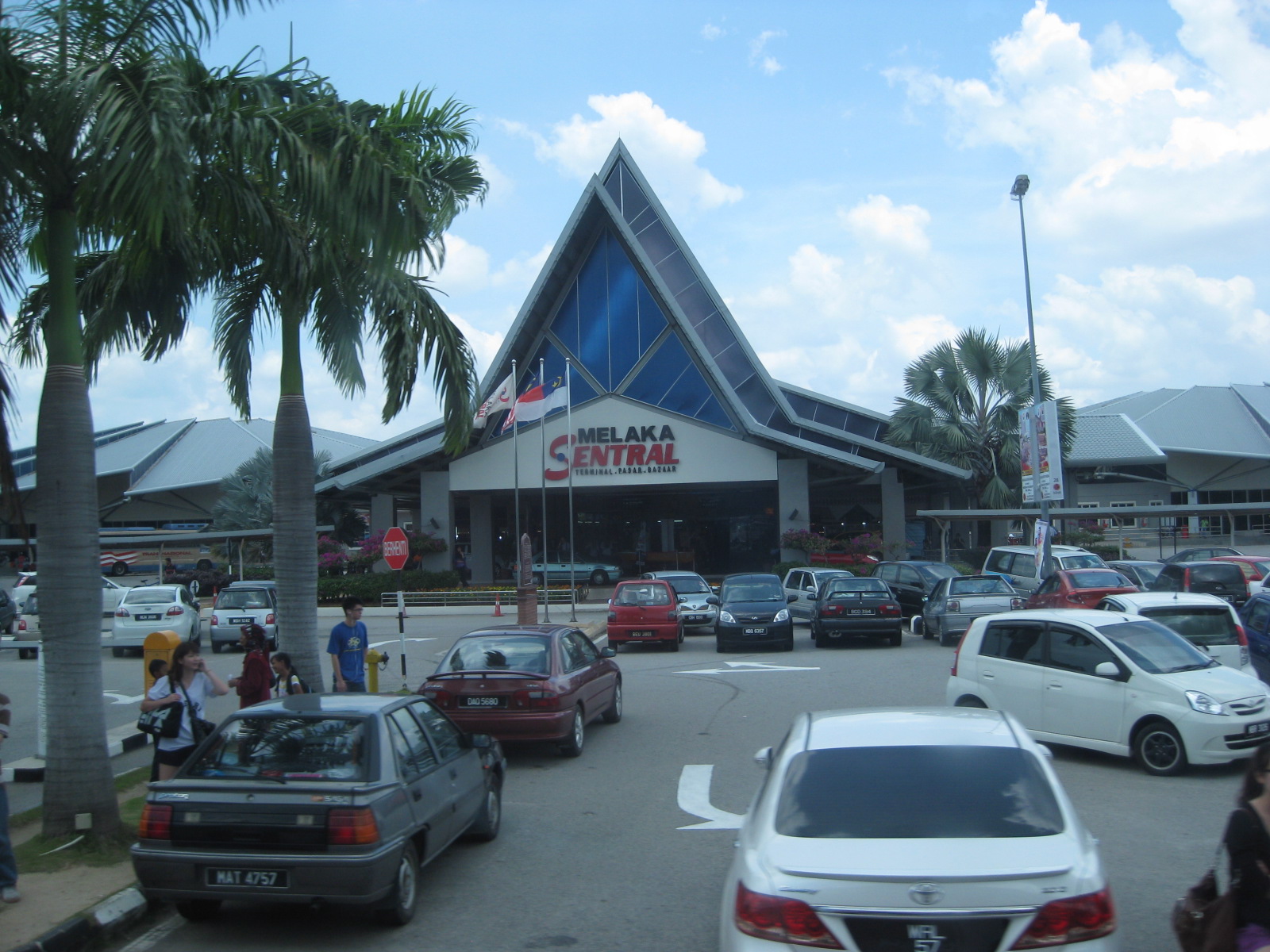 Terminal building and parking
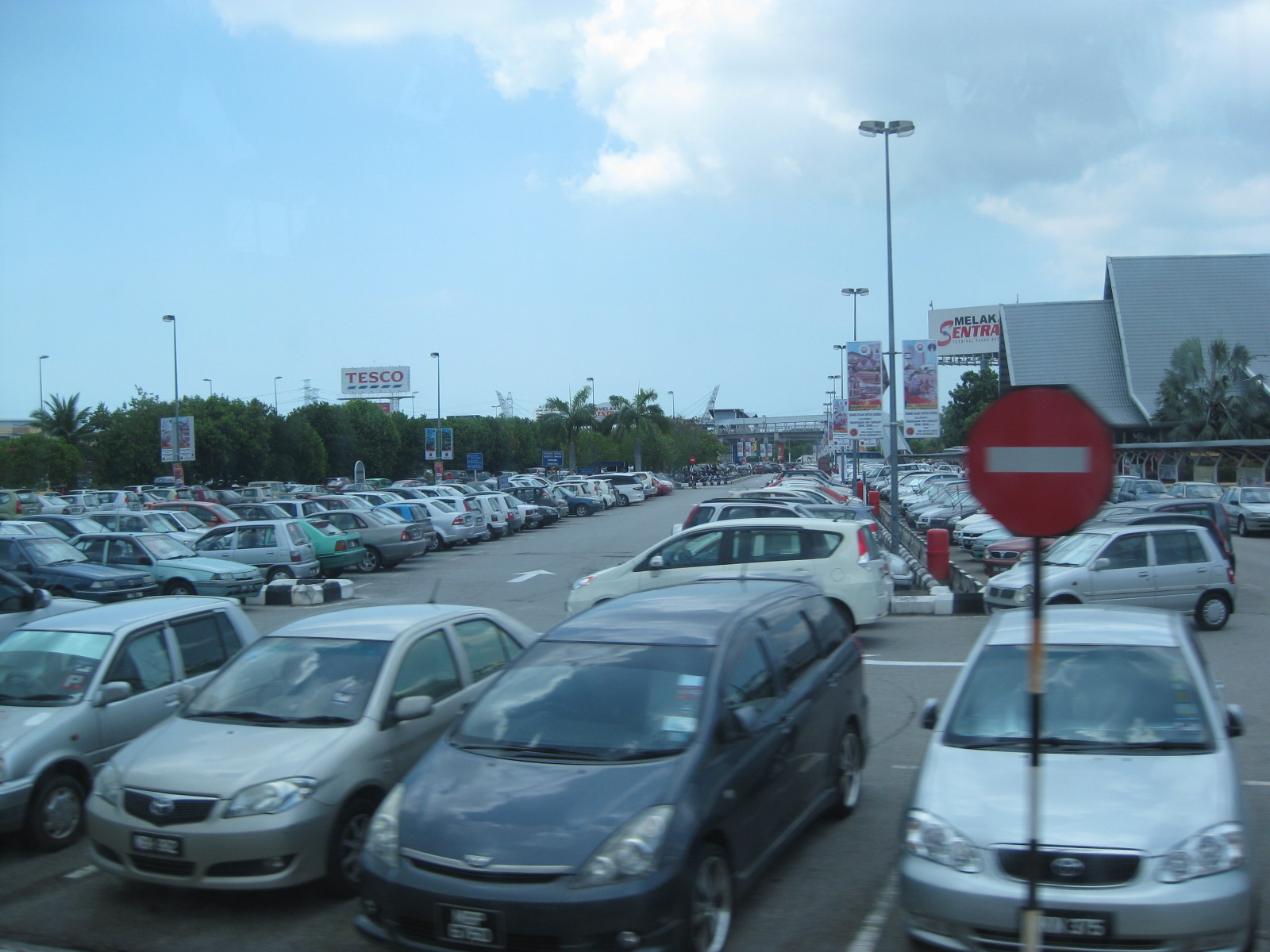 A look at the spacious parking area around the terminal.
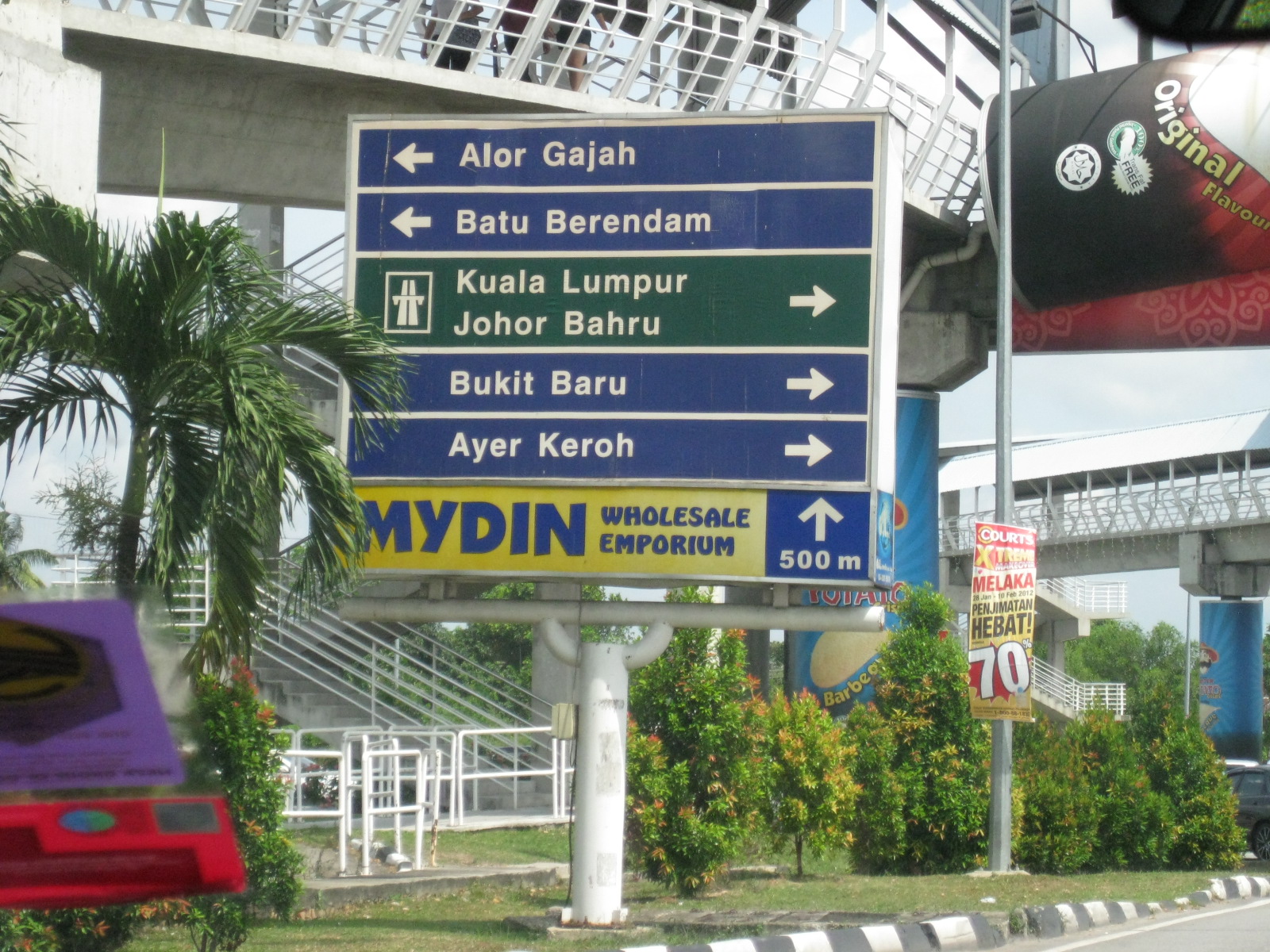 Directional sign to guide visitors (probably sponsored by the emporium indicated at the bottom).
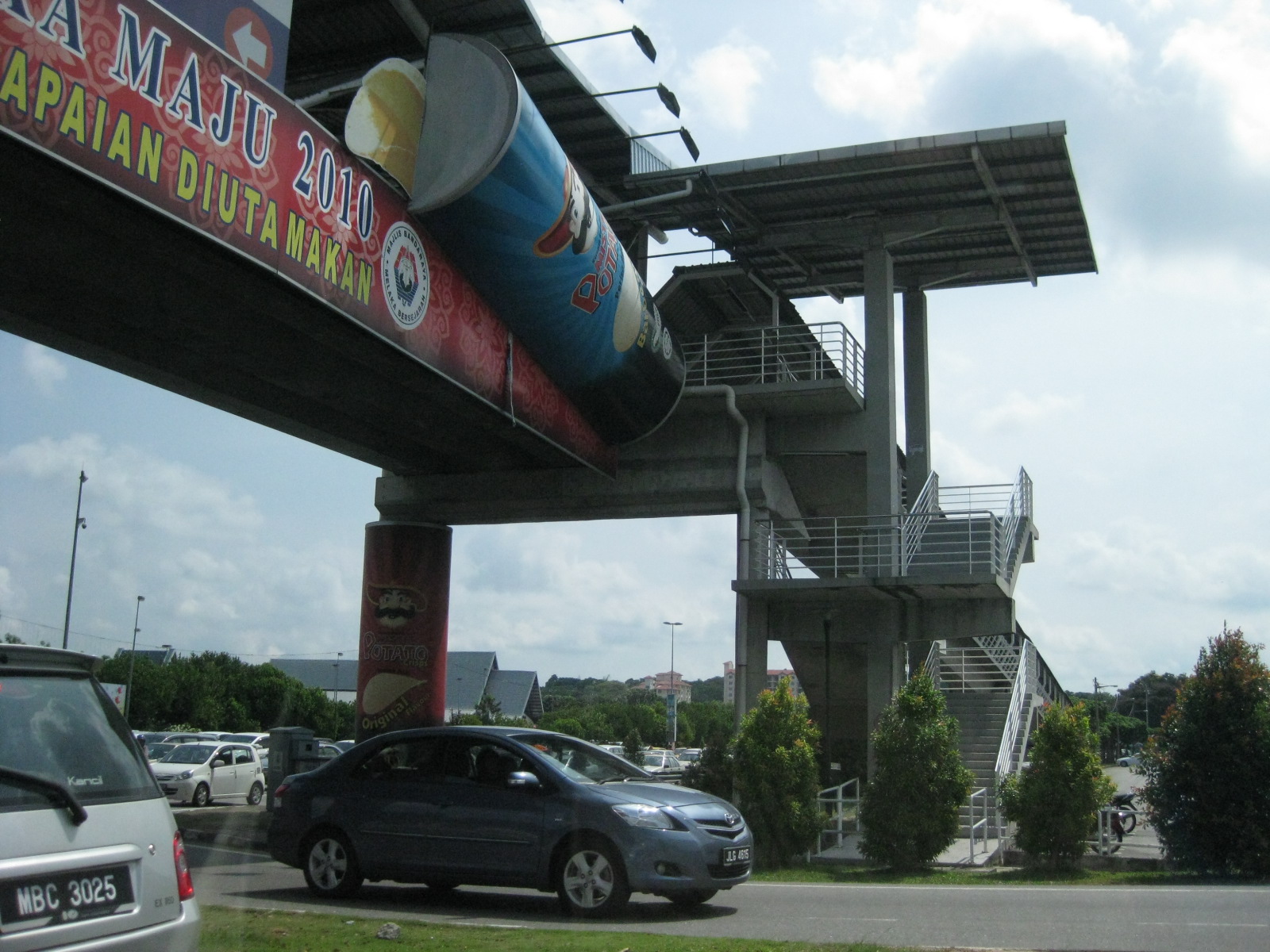 Pedestrian overpass for people crossing the busy highway in front of the terminal.
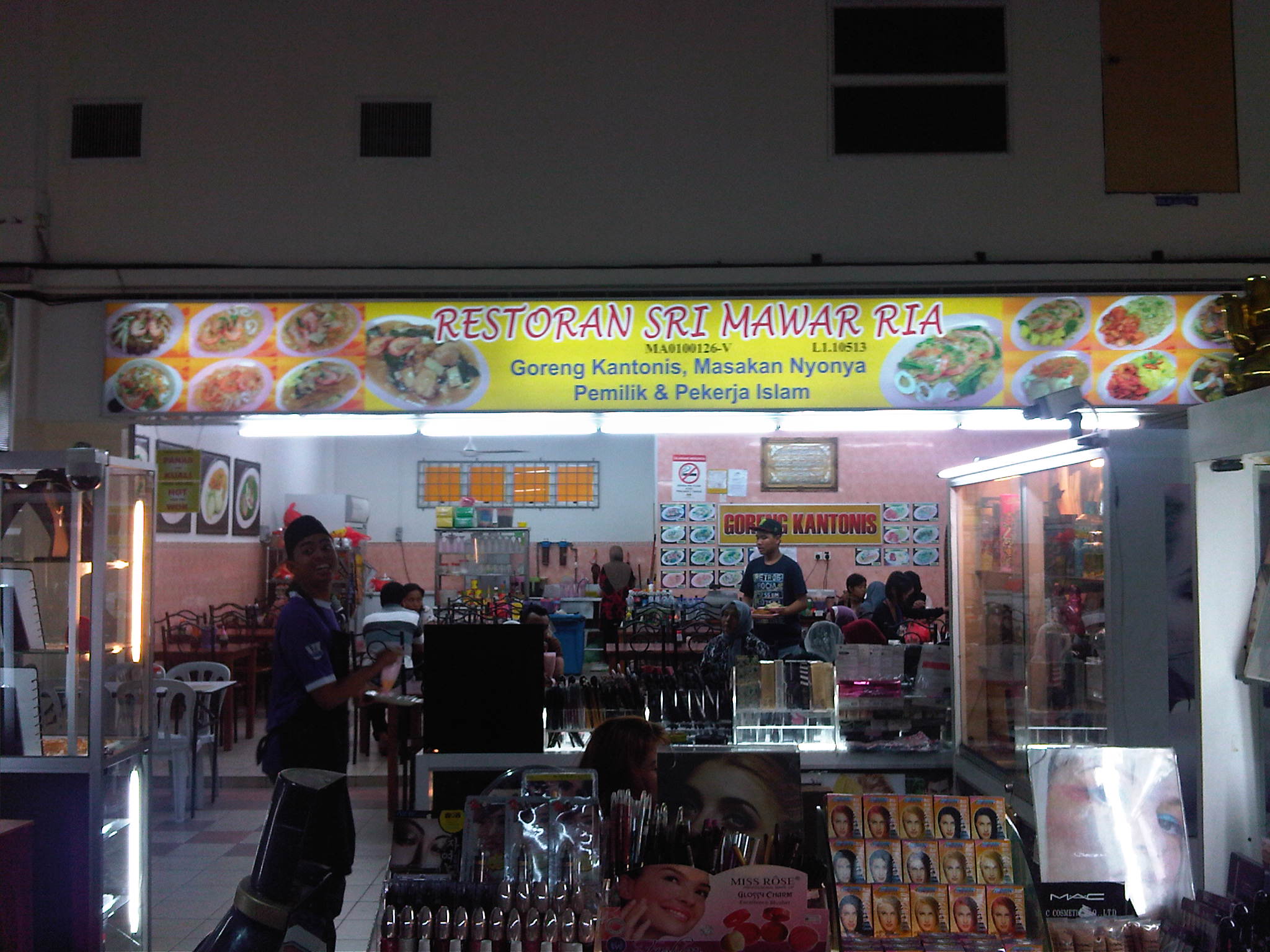 There are many restaurants and shops inside the terminal, which is by itself a commercial establishment.
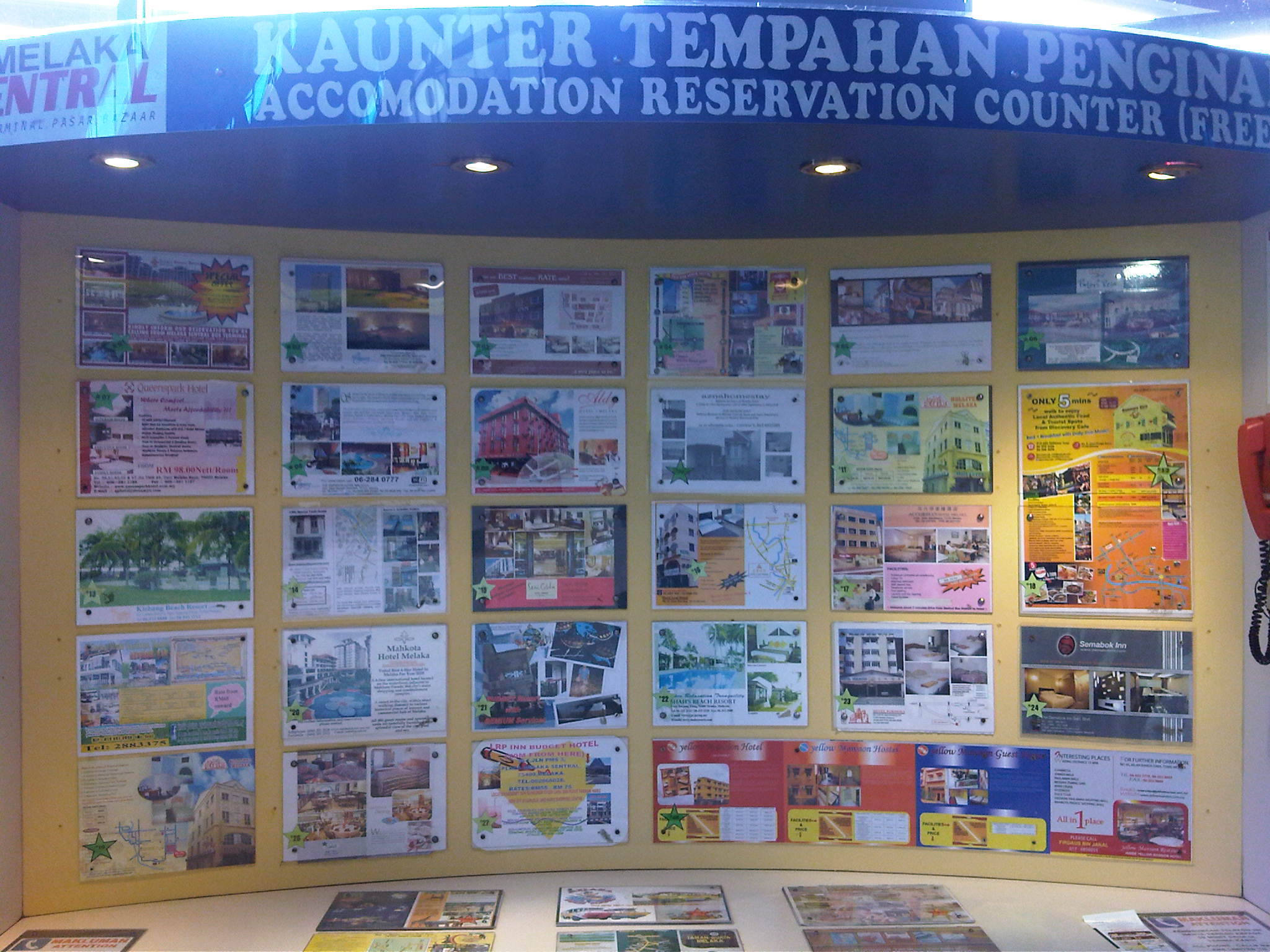 Hotel/accommodations information for travelers are posted at the terminal.
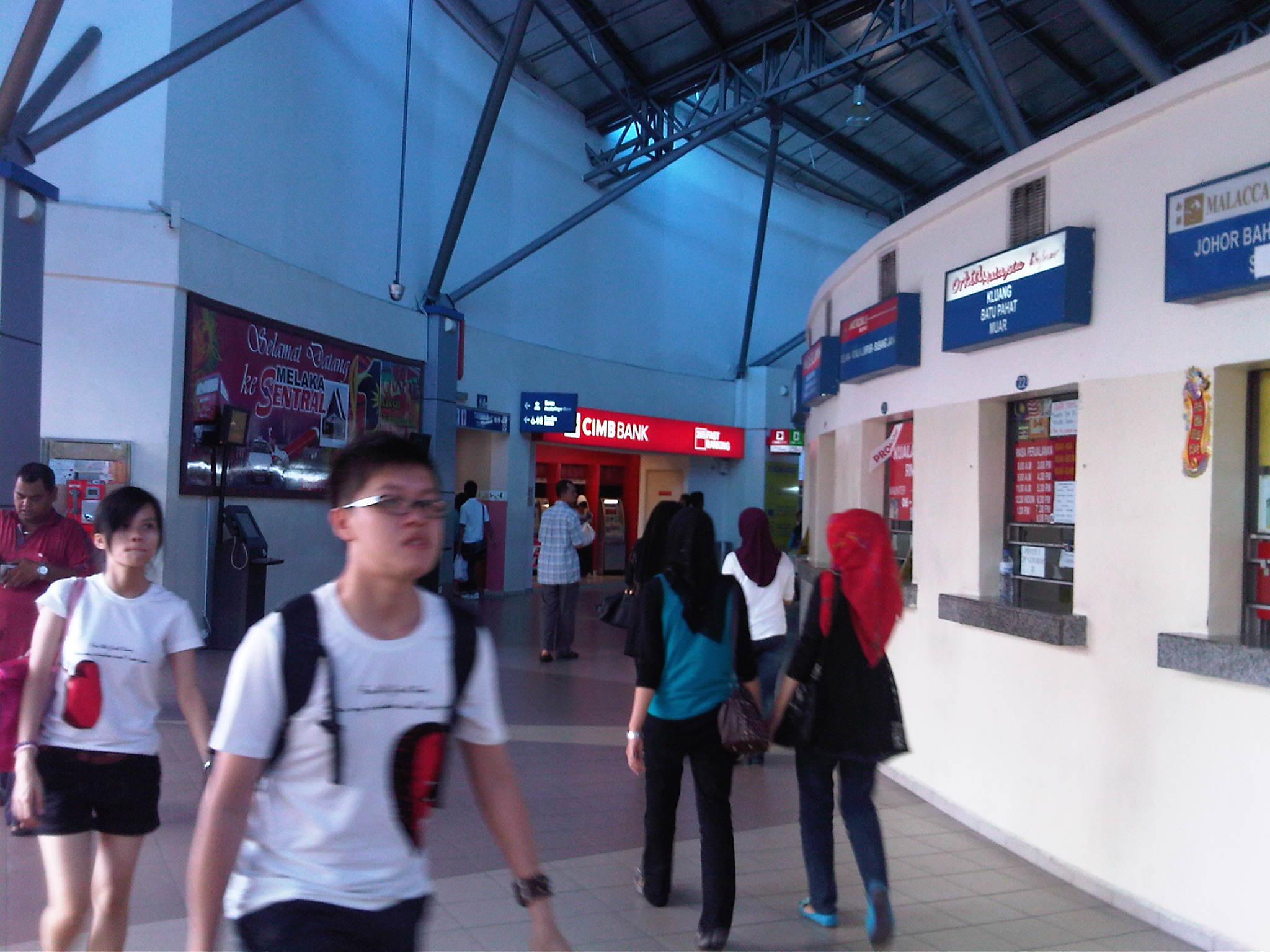 The different bus companies operating out of the terminal have their booths were travelers may buy/reserve tickets.
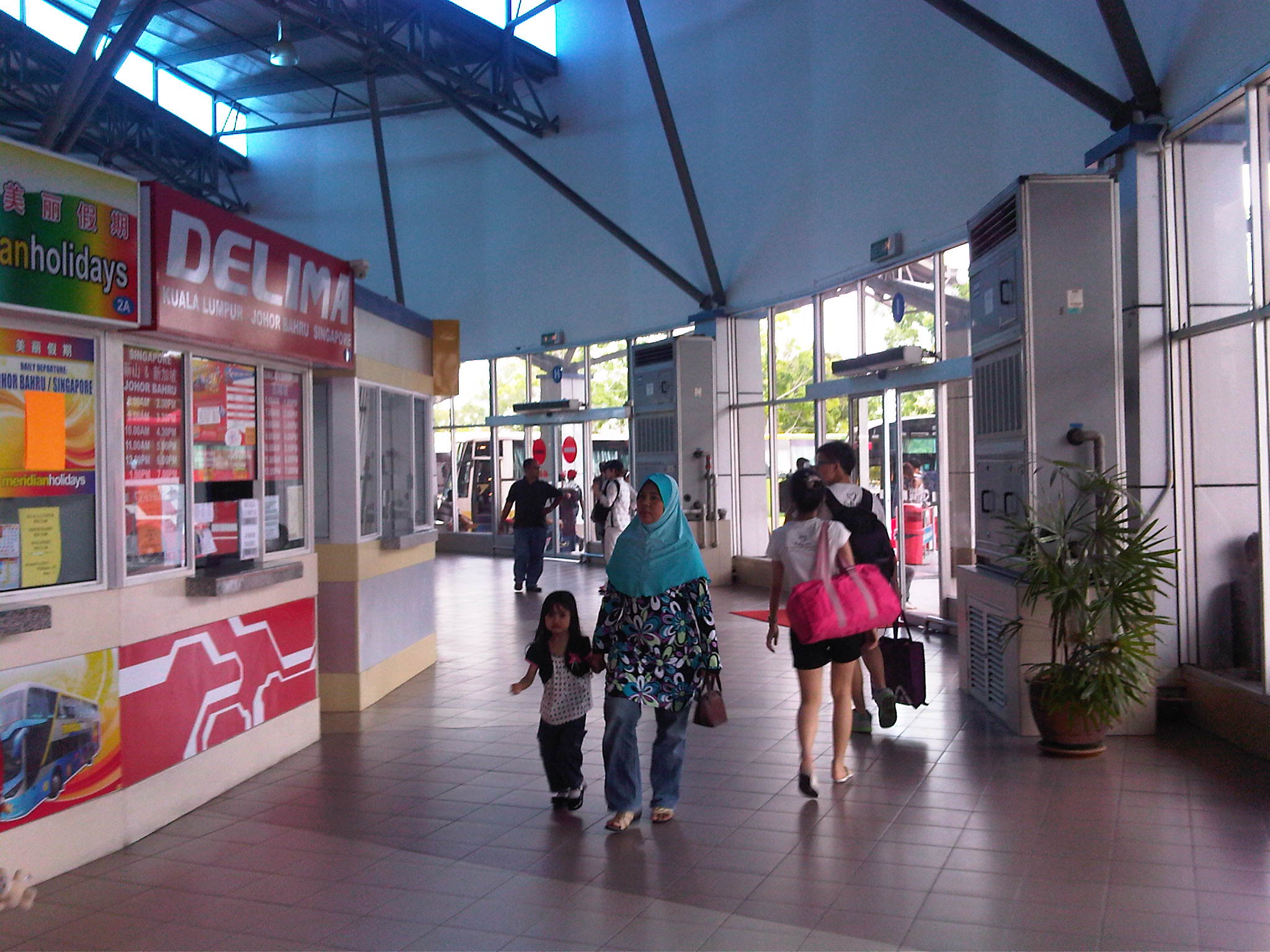 The ticketing area is spacious and there were no long lines, in part due to the availability of online (internet) ticket purchases. Seating is not free for all so travelers need to reserve or purchase tickets ahead of travel in order to get good schedules and seats.
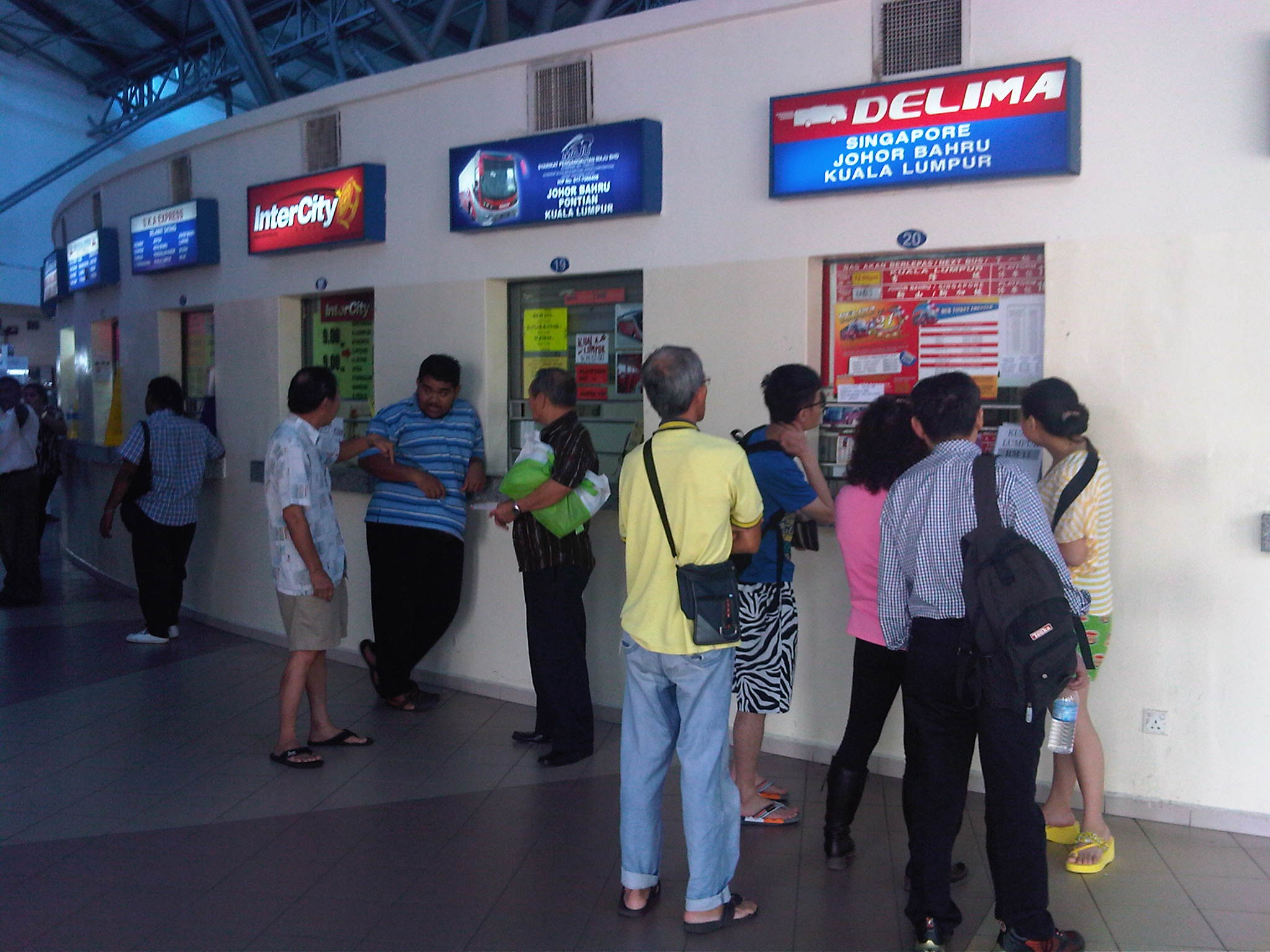 One can purchase tickets to any point in Malaysia (local long distance trips) and Singapore (another country) is among the most popular destinations. Schedules and fares are posted for information of travelers.
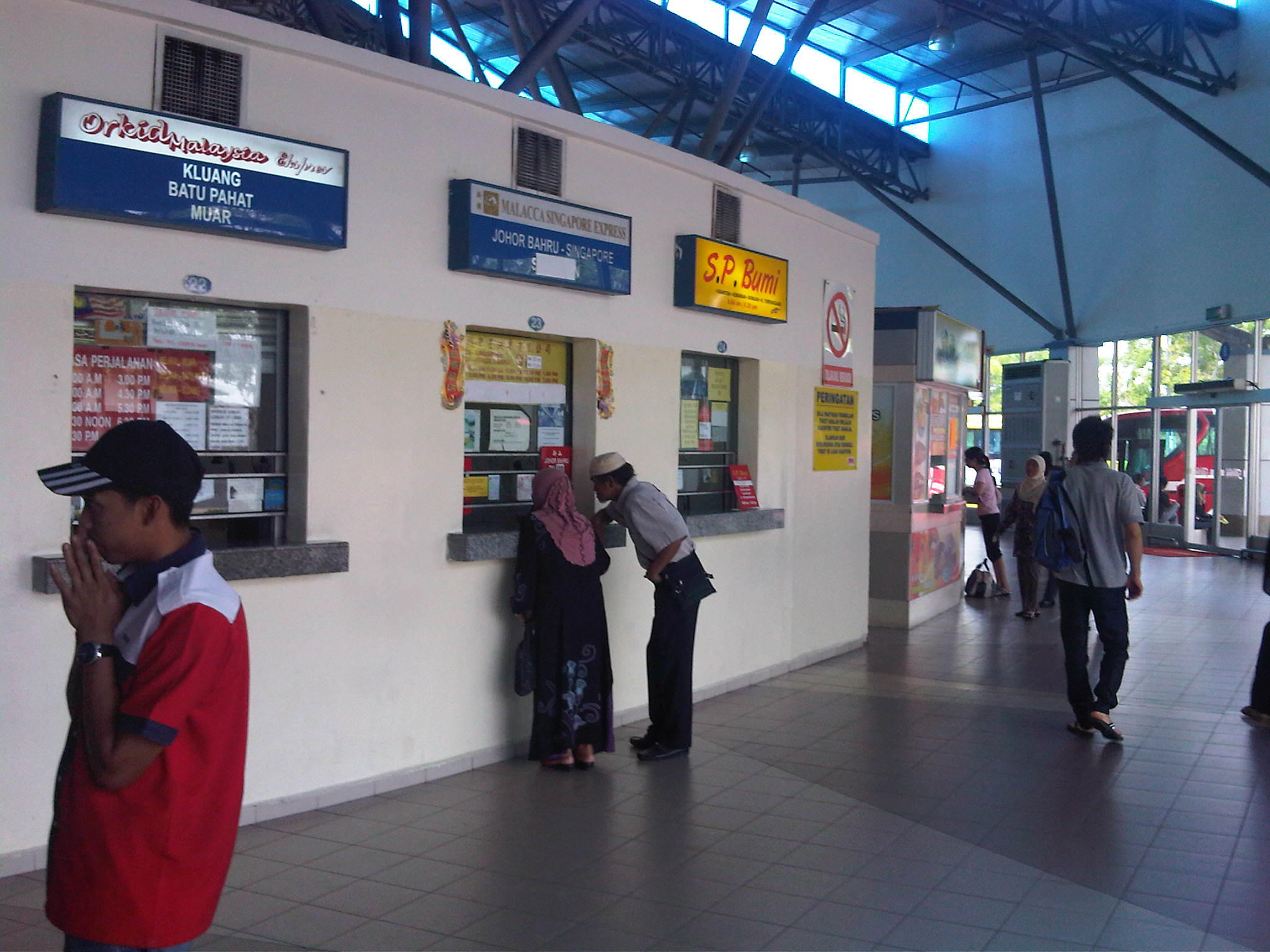 There are many choices among the bus companies but I would strongly recommend Starmart Express buses when traveling between Singapore and Malaysia. They provide excellent service and have well-maintained buses. One can purchase tickets online and claim these at their booths/stations.
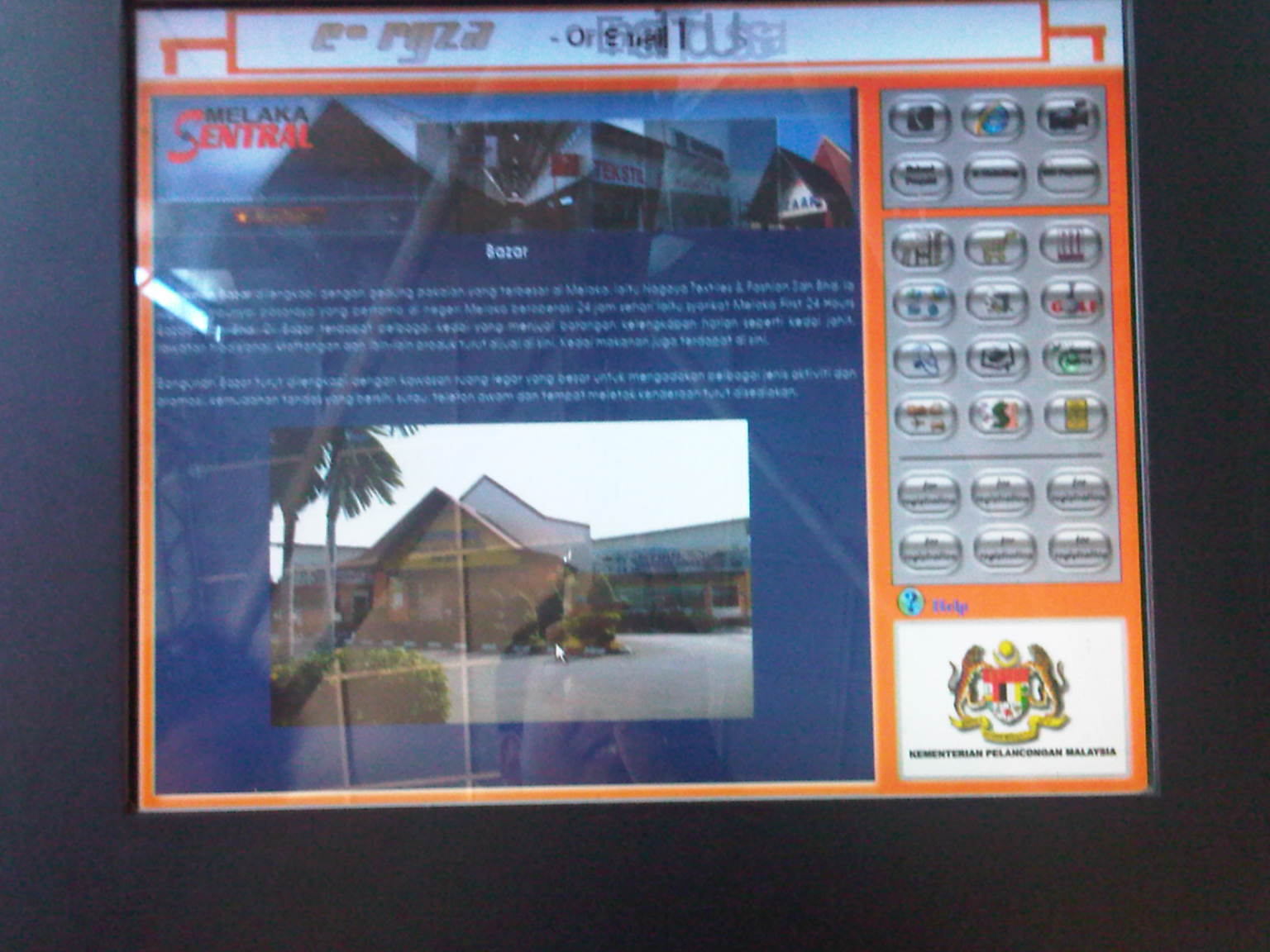
Interactive information screen at the terminal
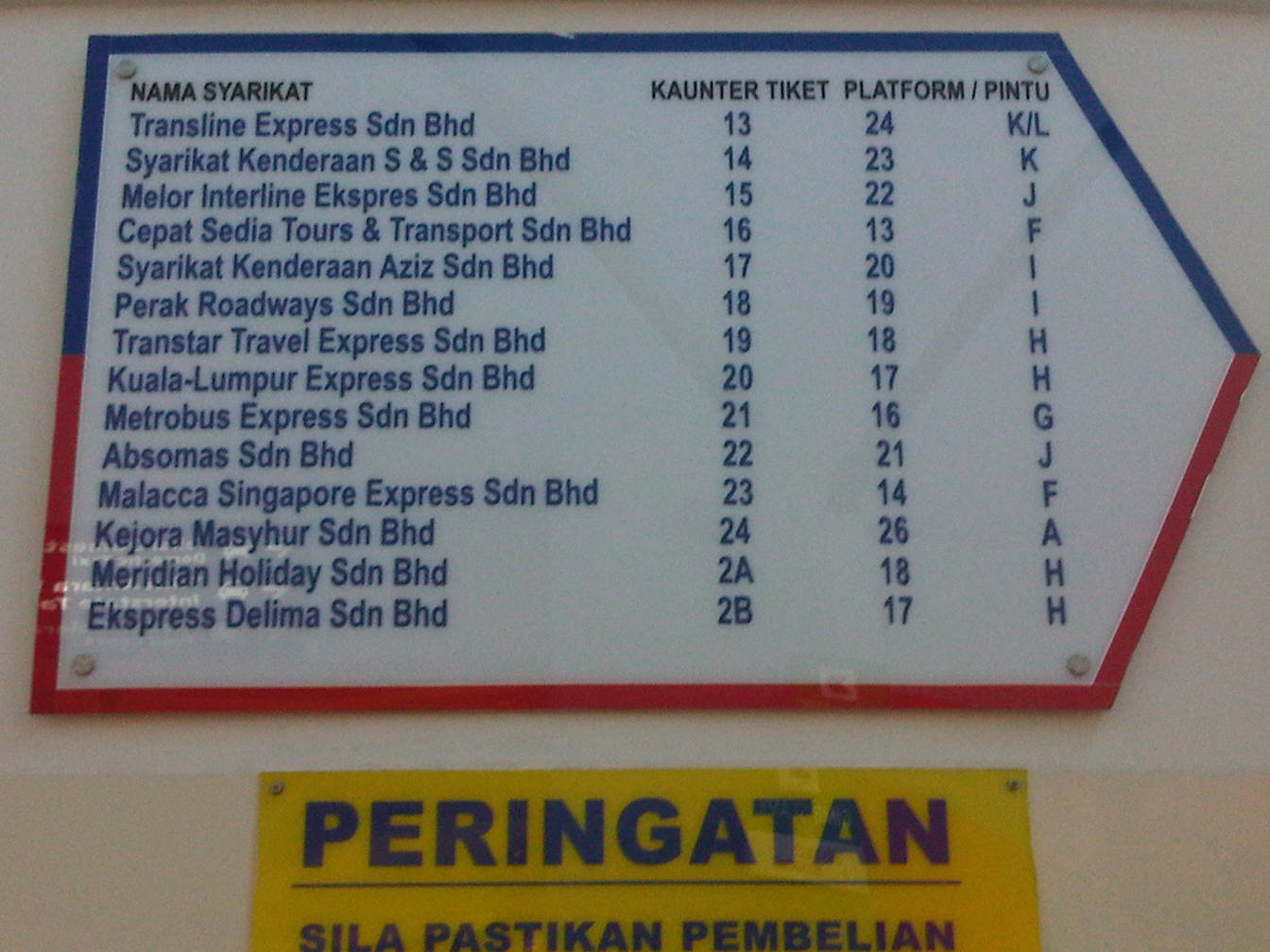 Static information board for the locations of bus company booths at the terminal
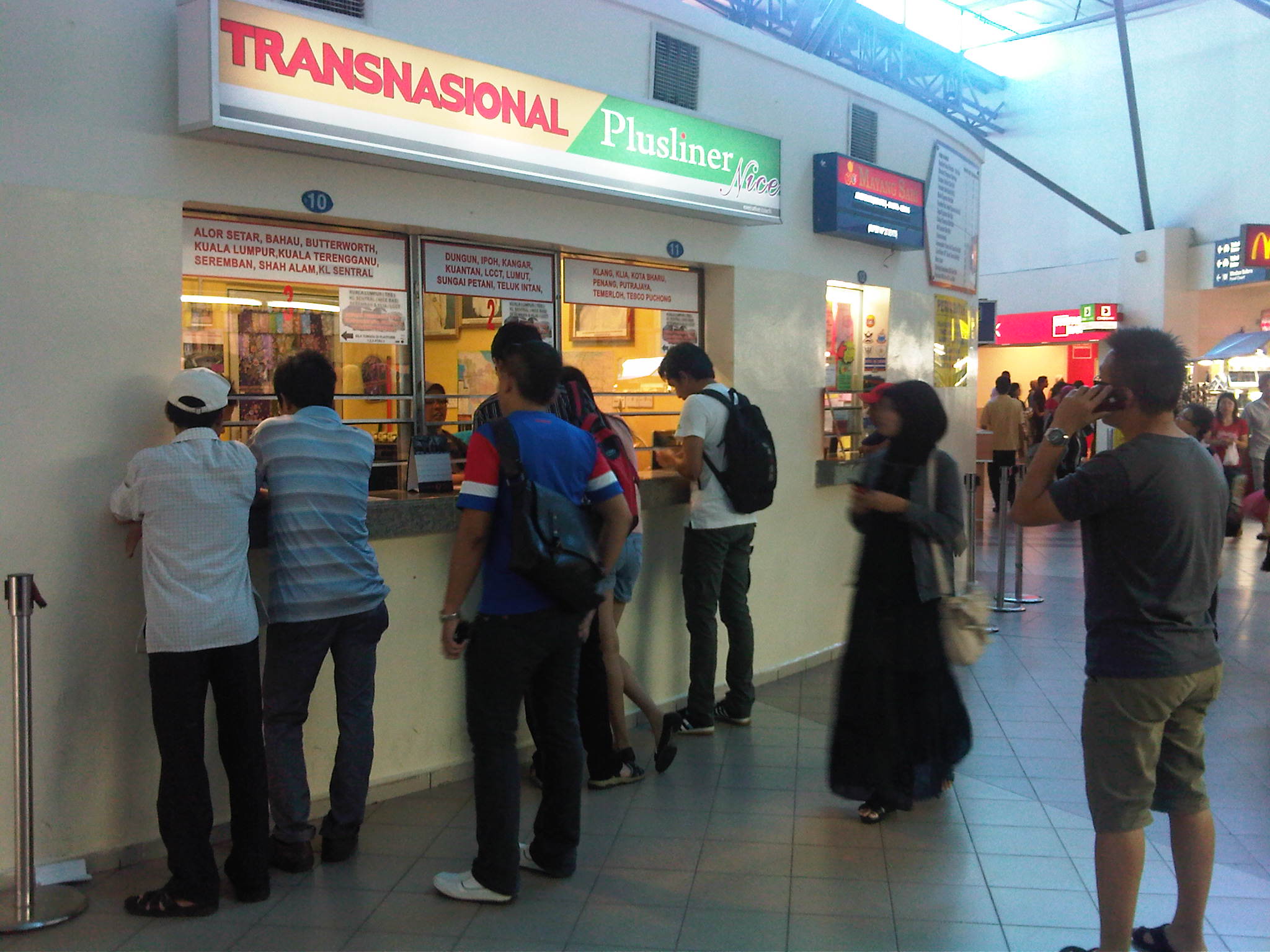 Travelers lining up before a booth to purchase tickets
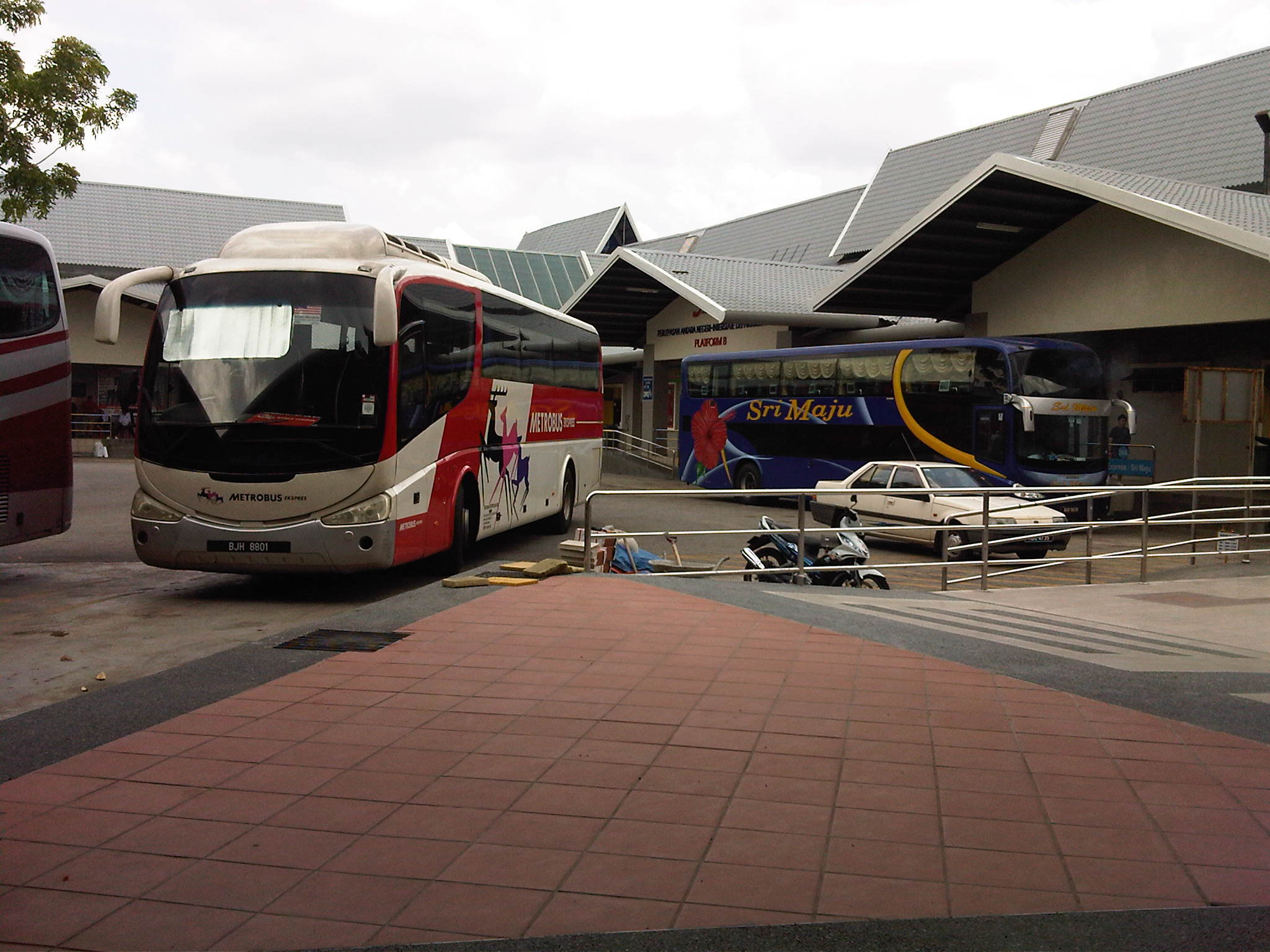 Buses berthed at the terminal departure area
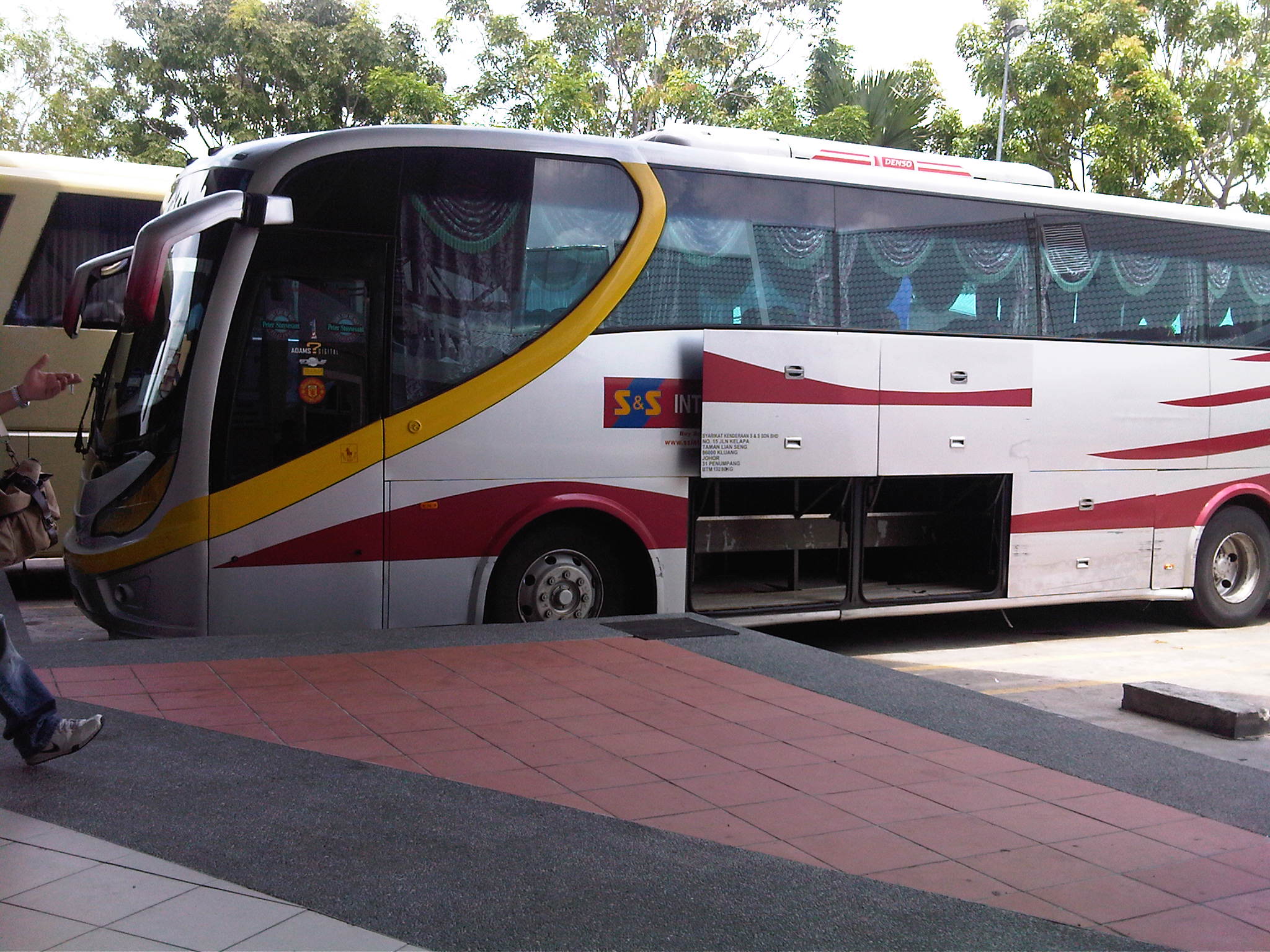 Typical long distance limousine bus plying routes between Malaysia and Singapore
The central bus terminal at Melaka is a good example of terminal design for long distance buses. Such concepts are also found in the Philippines but with some significant variations in the design. Among the notables are the terminals in Mabalacat (Pampanga), Lucena (Quezon) and Legazpi City (Albay) in Luzon. Other terminals in the Philippines are not good examples in the sense that many are not developed or well-planned, many without the amenities or features of a modern terminal. Perhaps local and international examples of terminals should serve as templates for central terminal development in the Philippines including those being conceptualized for Metro Manila.
–
Resurrecting the Bicol Express
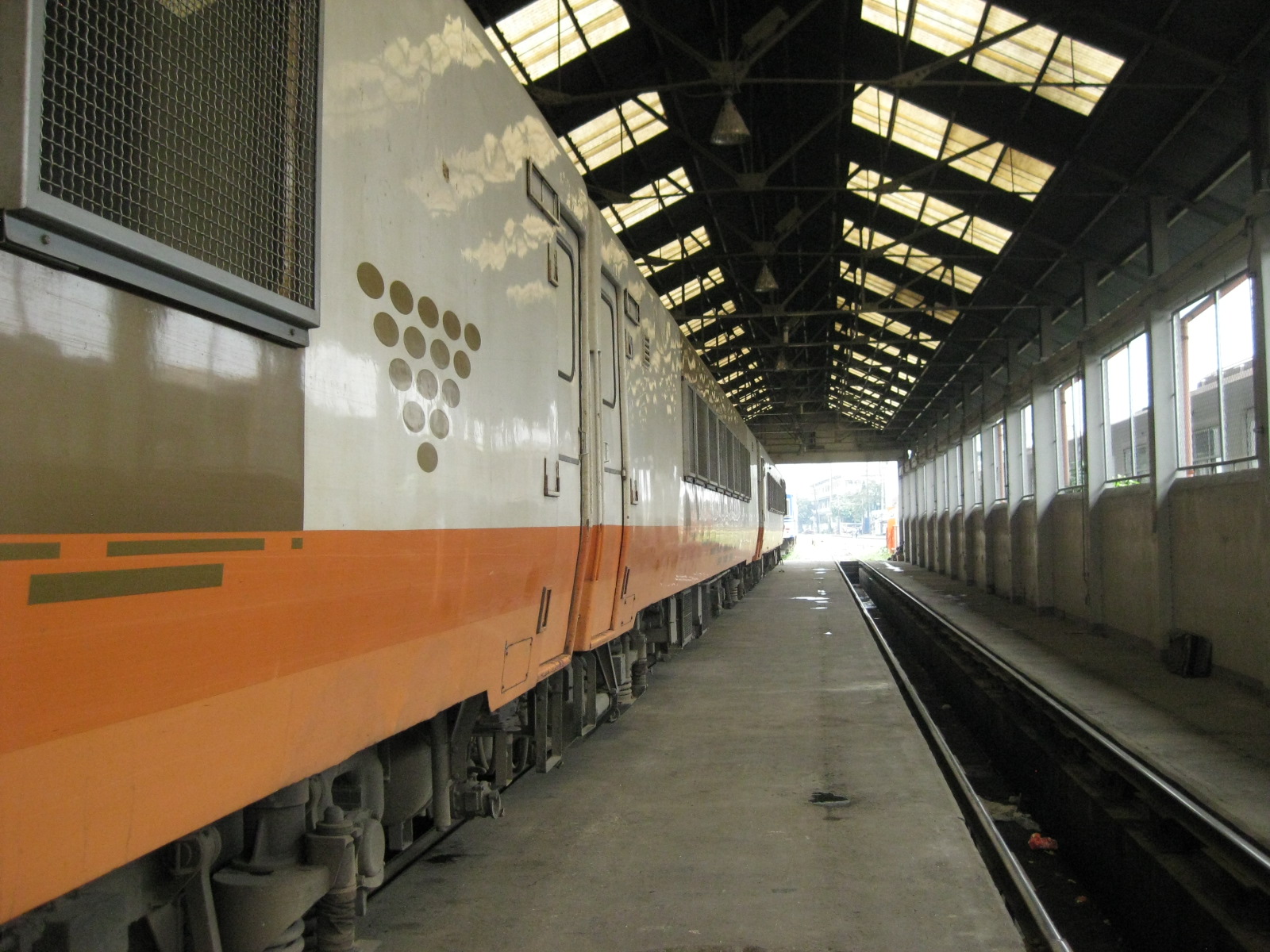
Part of our recent field visit at the PNR included a tour of the depot where the maintenance and refurbishing works are undertaken. Among the cars we saw were those intended for train sets to serve the recently revived Bicol Express. The service to Bicol was recently re-started with a once-a-day trip to Naga City in Camarines Sur, which was eventually extended all the way to Ligao, Albay. The revival hopefully could be the start of something big – a renaissance – for the once famed Bicol Express. For older people, this could be a nostalgic service while for younger people it could be an adventure of sorts. Perhaps it would be a welcome alternative to air and road travel to the region given that the PNR ROW offers a better view along the way into Bicol including breathtaking Vistas of Mayon Volcano, the Pacific Ocean, Lamon Bay, Ragay Gulf and the Bicol countryside. Unfortunately, for now Bicol Express trains travel mainly at night from Manila and so the views will come up only after Naga City, which the train reaches at around 6:00 AM in the morning, and from there proceeds to Legazpi City for the next few hours.
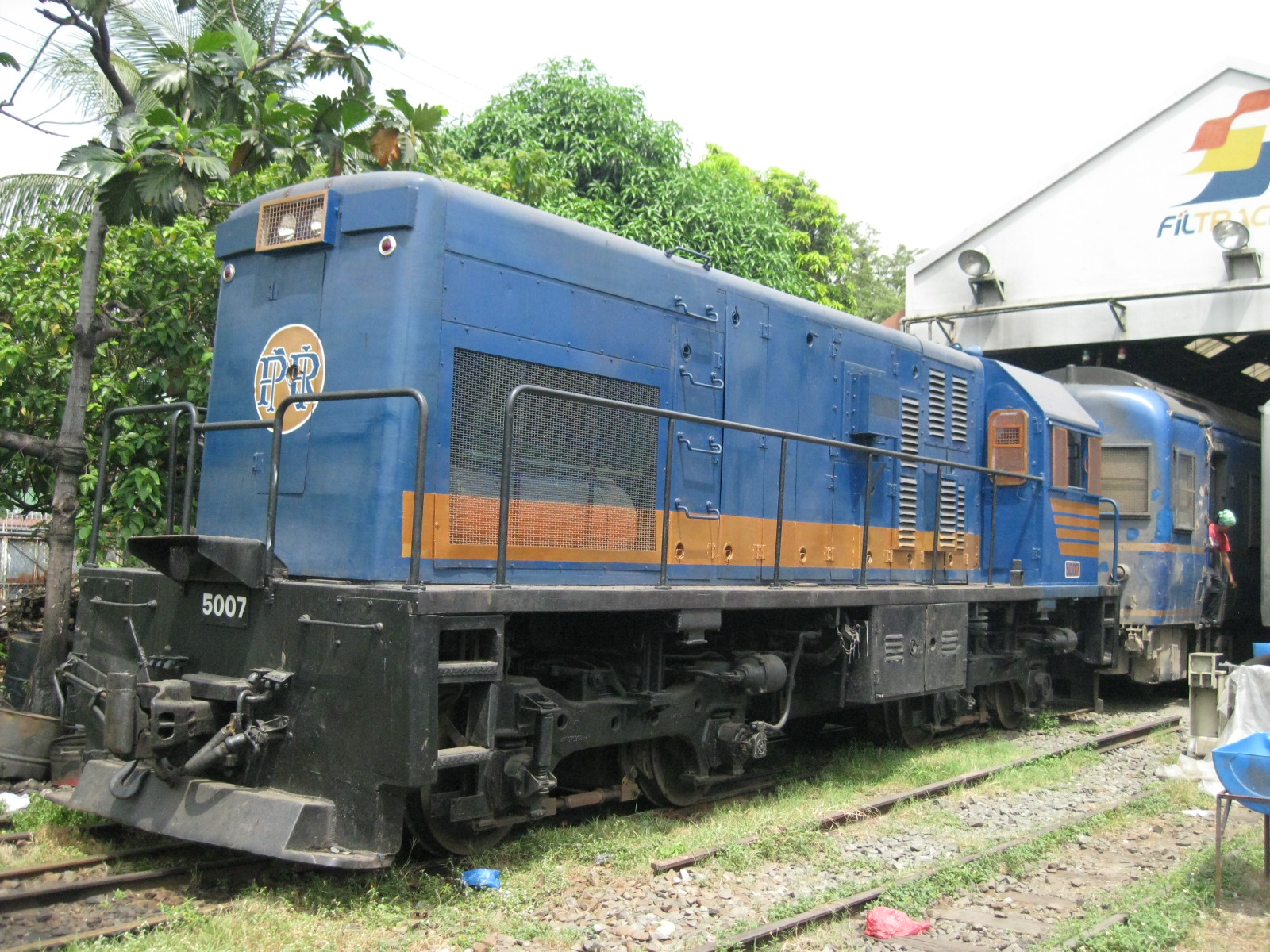 Diesel-electric locomotive that pulls PNR trains – unlike those I rode in Japan, Philippine trains are no electrified and have to be pulled by locomotives.
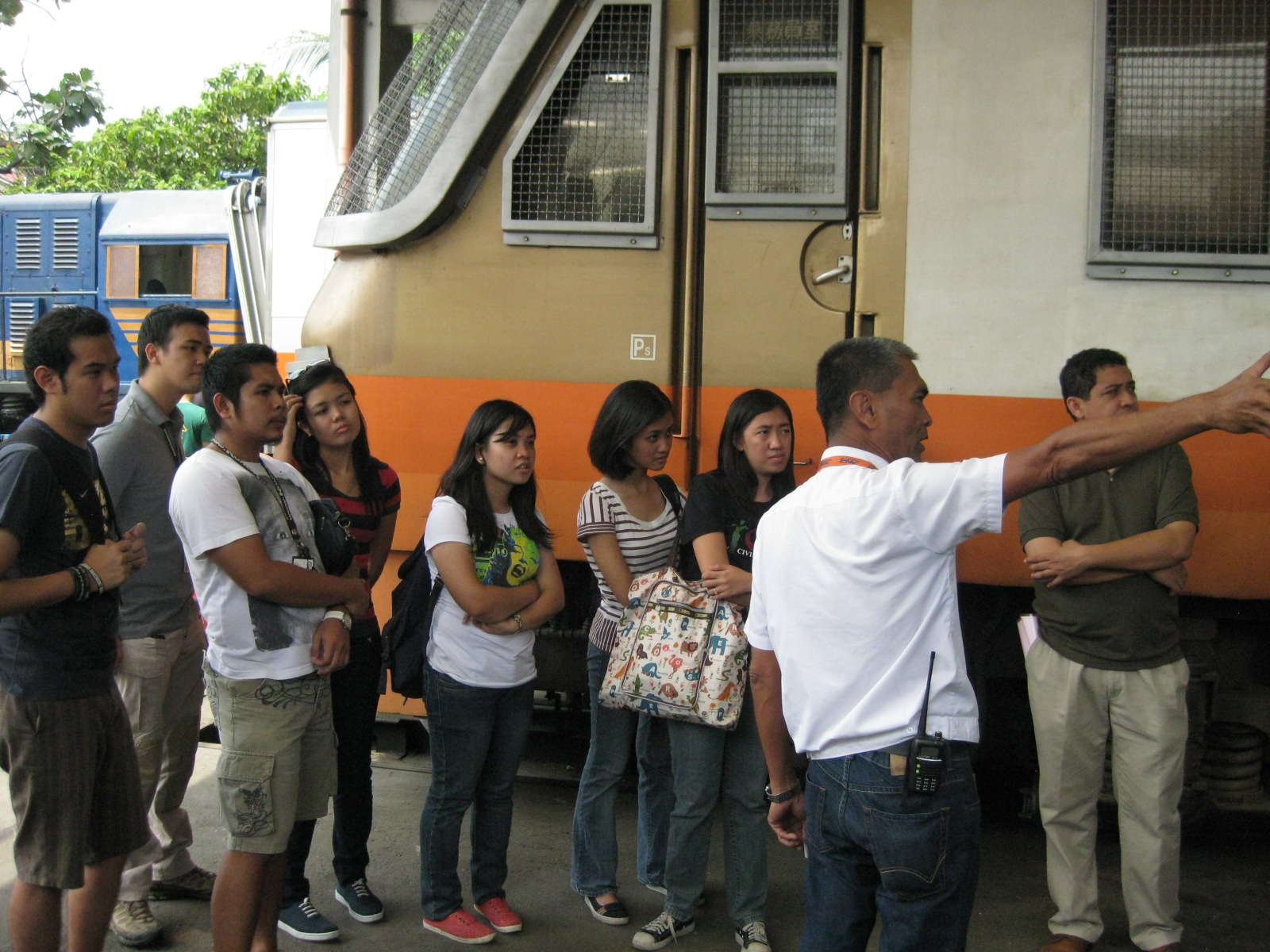 Technical tours – our hosts were very gracious and generous to provide us with a grand tour of the depot and the rolling stock. Such tours help our students to understand railway engineering “from the source.” Perhaps some students may be inspired to join a rail company.
 Sleepers – not referring to the rail ties but to the sleeper cars of this train, which has the family cabins consisting of 4 beds (0n 2 double-deckers) each cabin.
 Side view – the same diesel electric locomotive, which is actually a mobile power plant. Diesel is used as the fuel for the engine that produces electricity to power the locomotive.
 Upper deck – the cabins have 2 double deck beds with the upper deck bed having straps to prevent passengers from falling. While much of the PNR’s tracks have been rehabilitated, they are said to be still far from providing the smooth ride of their Japanese counterparts.
 Hallway – our students pose for photo along the corridor to illustrate the space in a sleeper car. There is a small seat that can be unfolded from the side wall across from each cabin door. Perhaps this is not really for use by the conductor but an extra seat for groups having a huddle or individuals wanting a seat to get a good view from the other side of the train. There’s are thick curtains that serve to provide privacy for each cabin. Each car is connected to each other so it is certain that passengers from other cars may be walking along these corridors.
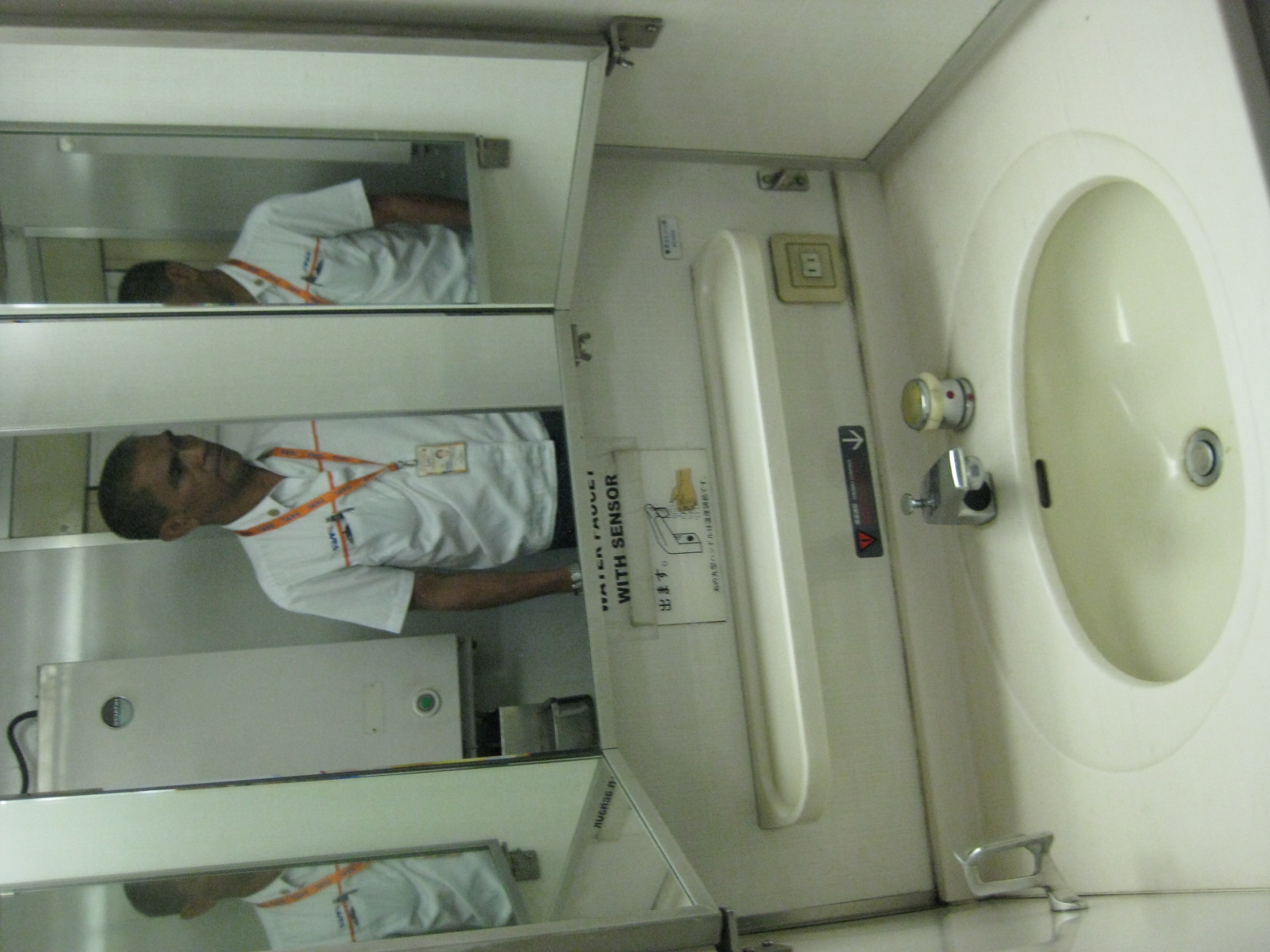 Wash room – the sleeper cars are equipped with washrooms and toilets for the long ride, amenities not usually found in most long distance buses serving the same corridor.
 Dirty toilets? – not really because this train has not yet been put into operation. The amenities like toilets and sinks are part of the refurbishing activities, we were told. Of course, this would have to be validated by actual passengers who would, by now, have taken the Bicol Express trains to/from Bicol during these Holy Week holidays.
 Conductor’s cabin – each car has a cabin assigned for the conductor or whoever is assigned to assist passengers during their journeys.
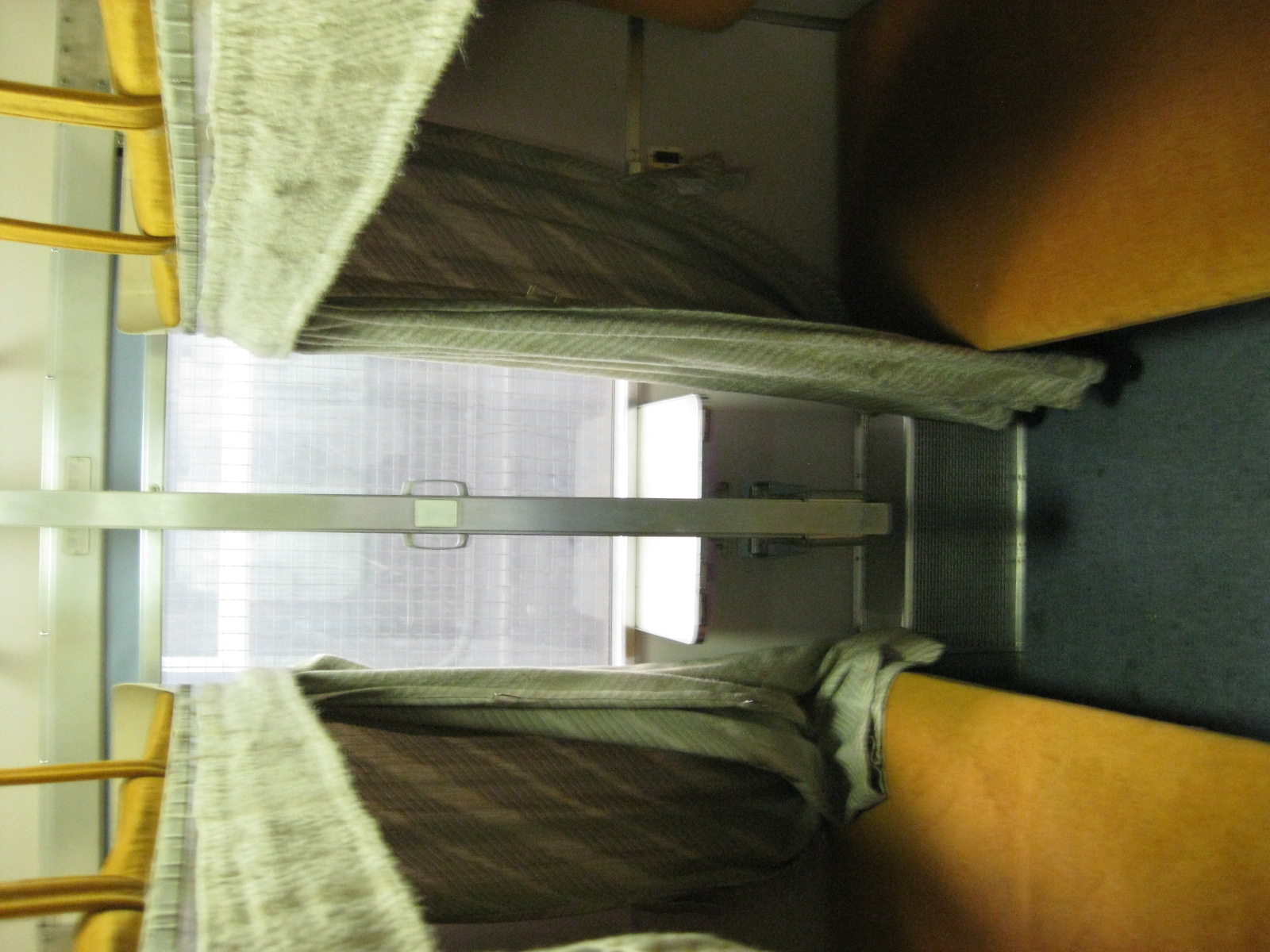 Double-deckers – the photo affords a better view of the double deck beds in a family cabin. The handles on the vertical bar on the center when pulled apart will reveal steps for persons to climb to the upper deck beds. There are also curtains for persons to have privacy particularly while sleeping or when sharing the cabin with other people.
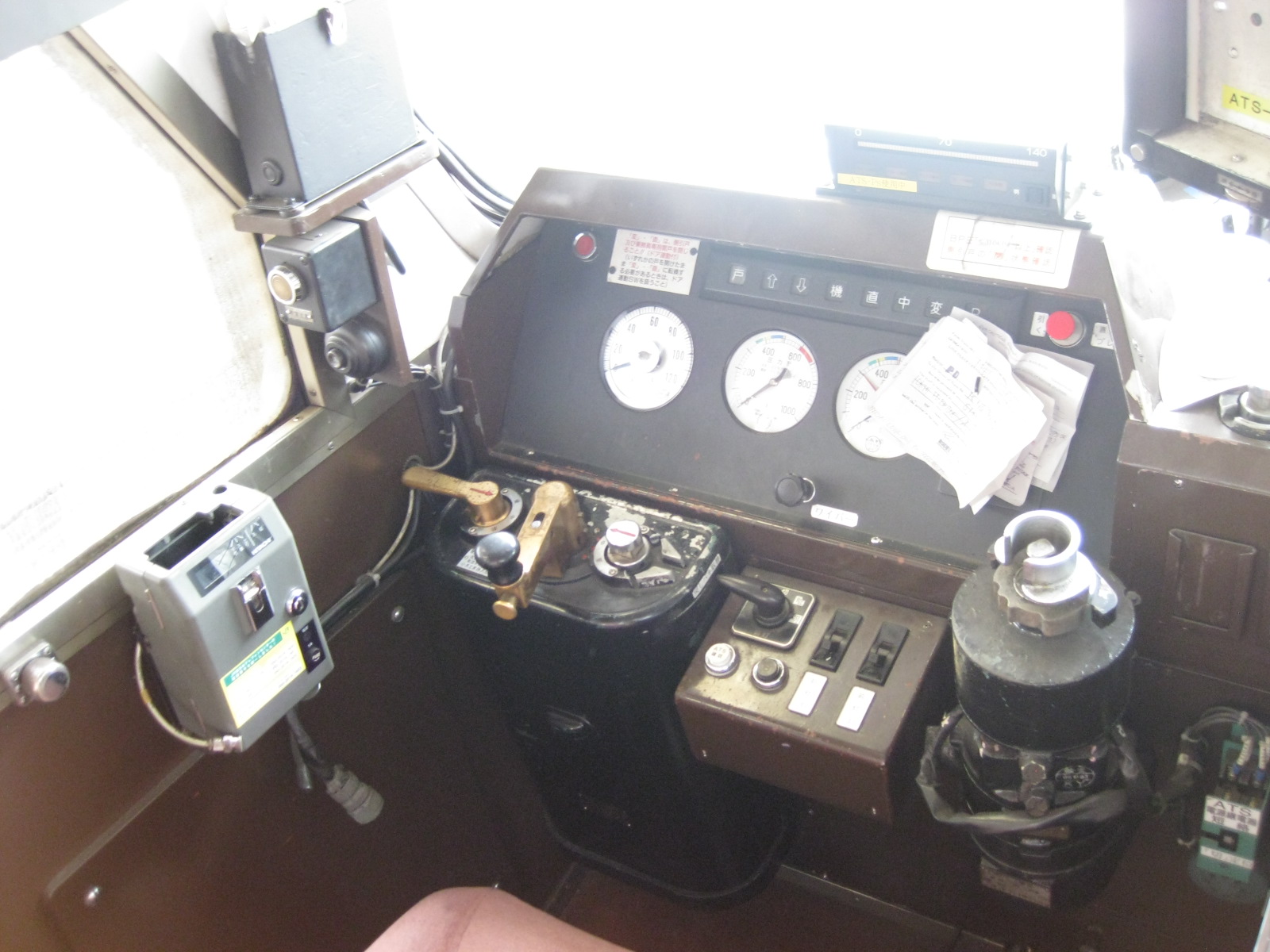 Driver’s console – the controls for the train give a hint on how old this unit is, noting that it has been retired in Japan. I remember looking at similar dials and levers during my first visit to Japan in 1996 when we usually stood behind the cockpit to see how the train is operated.
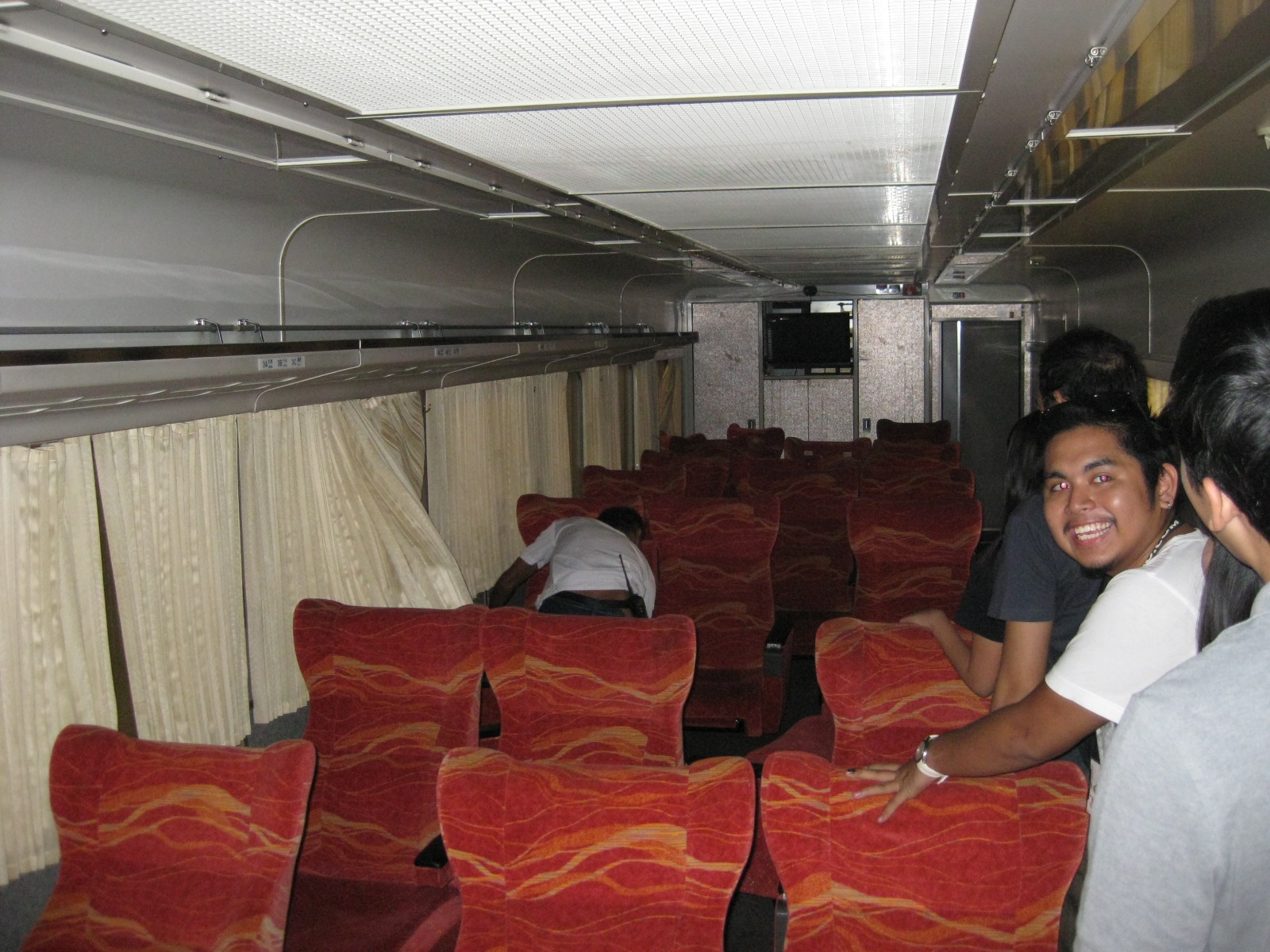 Recliners – inside the cars are reclining seats that seem to be as comfortable as business class seats on airliners. I tried one of the seats and the cushions are still quite firm for something that’s more than a decade old. I couldn’t smell any traces of tobacco so I guess these were already sanitized. Smoking cars are quite common in Japan and seats and entire cars can smell of smoke that tends to stick to the furniture and your clothes if you happen to be in one during a trip.
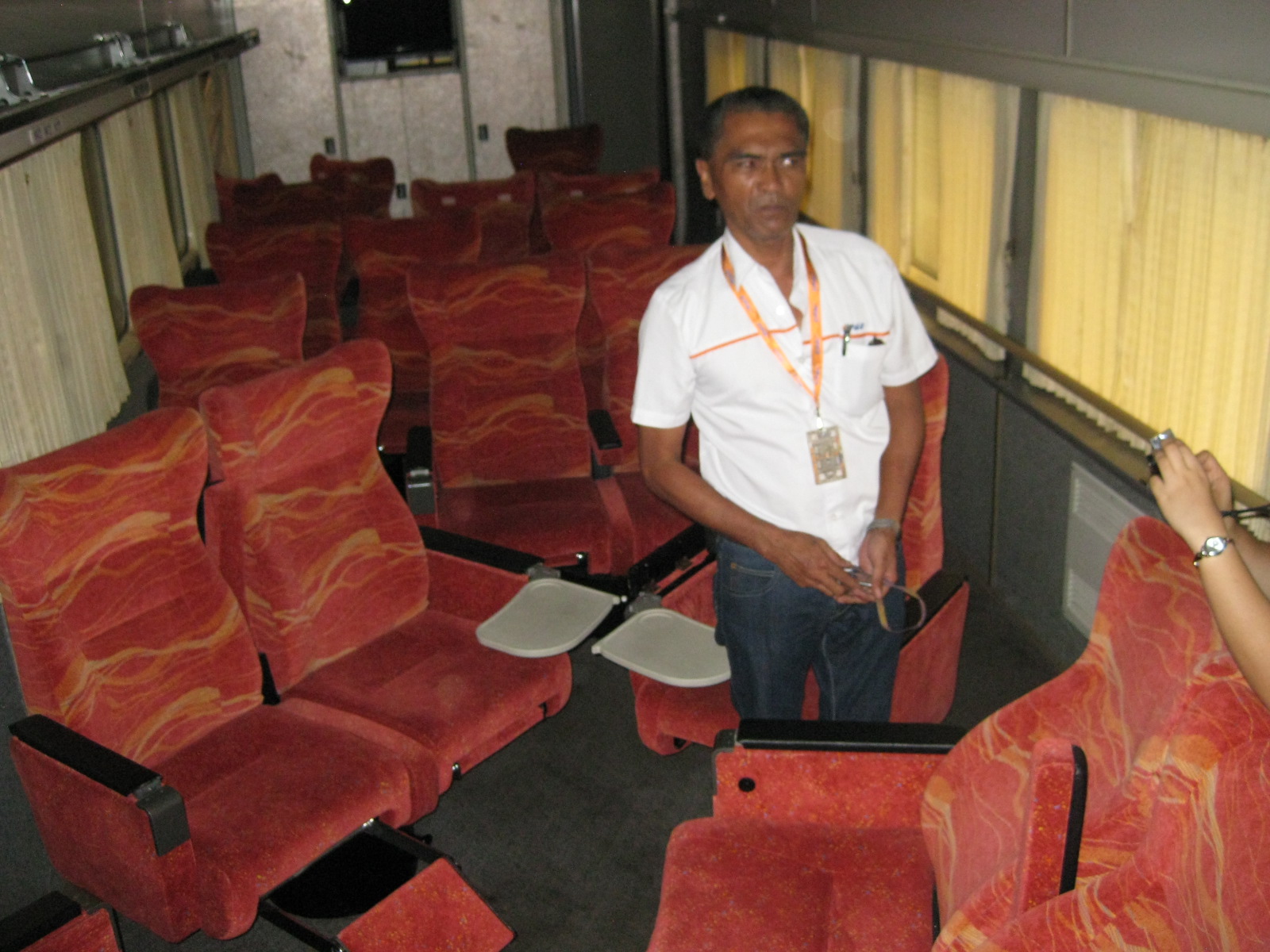 Rotation – the seat can be configured so that groups may face each other. Many seat two people kind of like love seats perfect for snuggling on long distance trips. There are also pull-out trays for eating, writing or working on your computer to update FB status or tweet about the experience.
 Entertainment – Yes, that’s a television set at the far end of the cabin. I can imagine that like in buses, the PNR will be showing some movies during trips to help passengers wile away the time. We were informed that big groups could actually take a car for themselves so it is also possible to have activities like workshops in the train. Perhaps groups could even have karaoke if they had the entire car to themselves.
 Reserved – the seat numbers remind ticket holders which seat they are to take and the characters remind us where the trains came from. That’s a hook (for hanging your coat or other belonging) in the lower center of the photo.
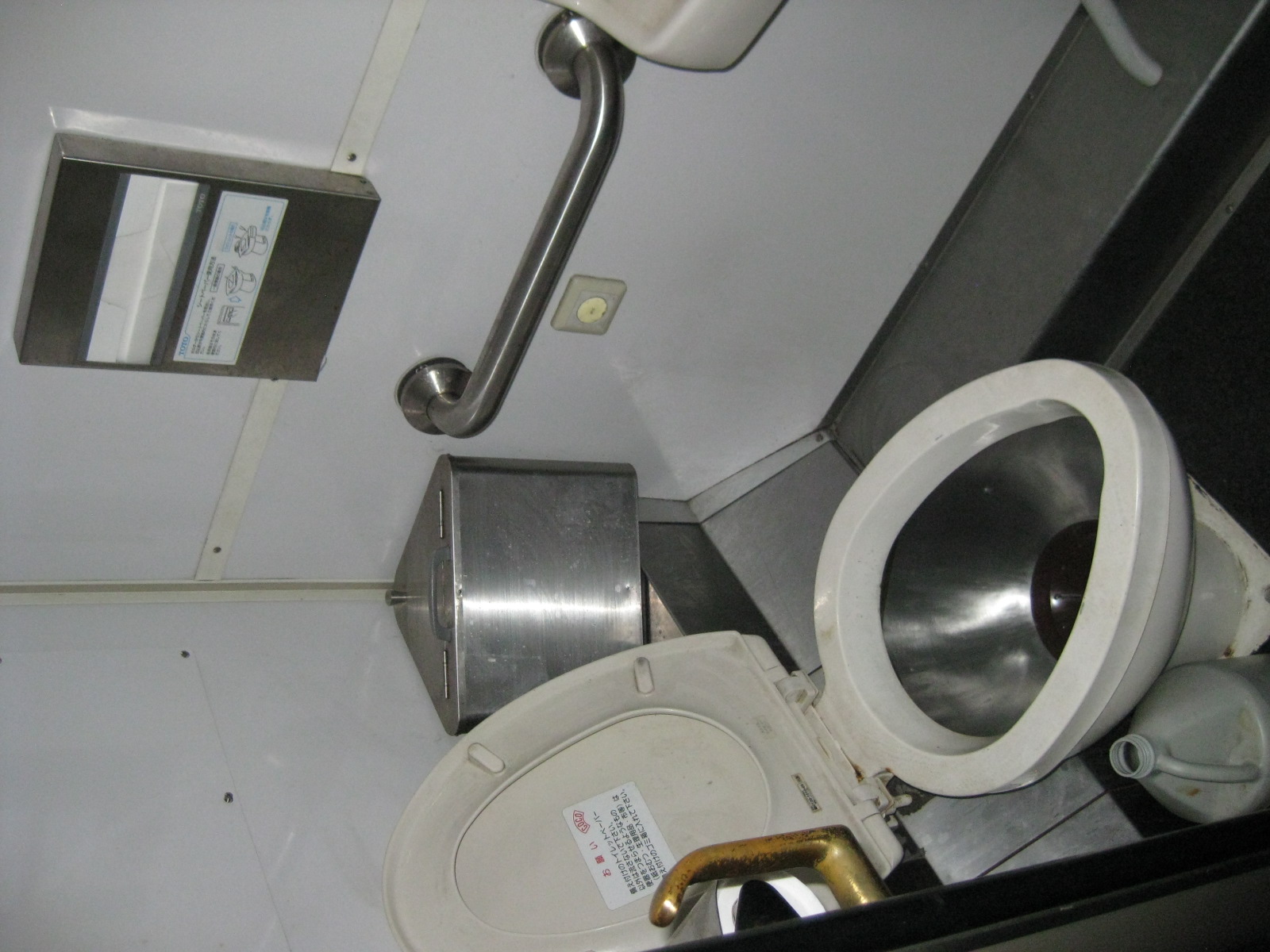 Toilets – the toilets are western-style with support bars for those requiring stability and a paper towel dispenser for the convenience of passengers.
 Toilets for PWDs and others – this has larger space for people requiring space including persons with disabilities, senior citizens, pregnant women and those with babies or small children.
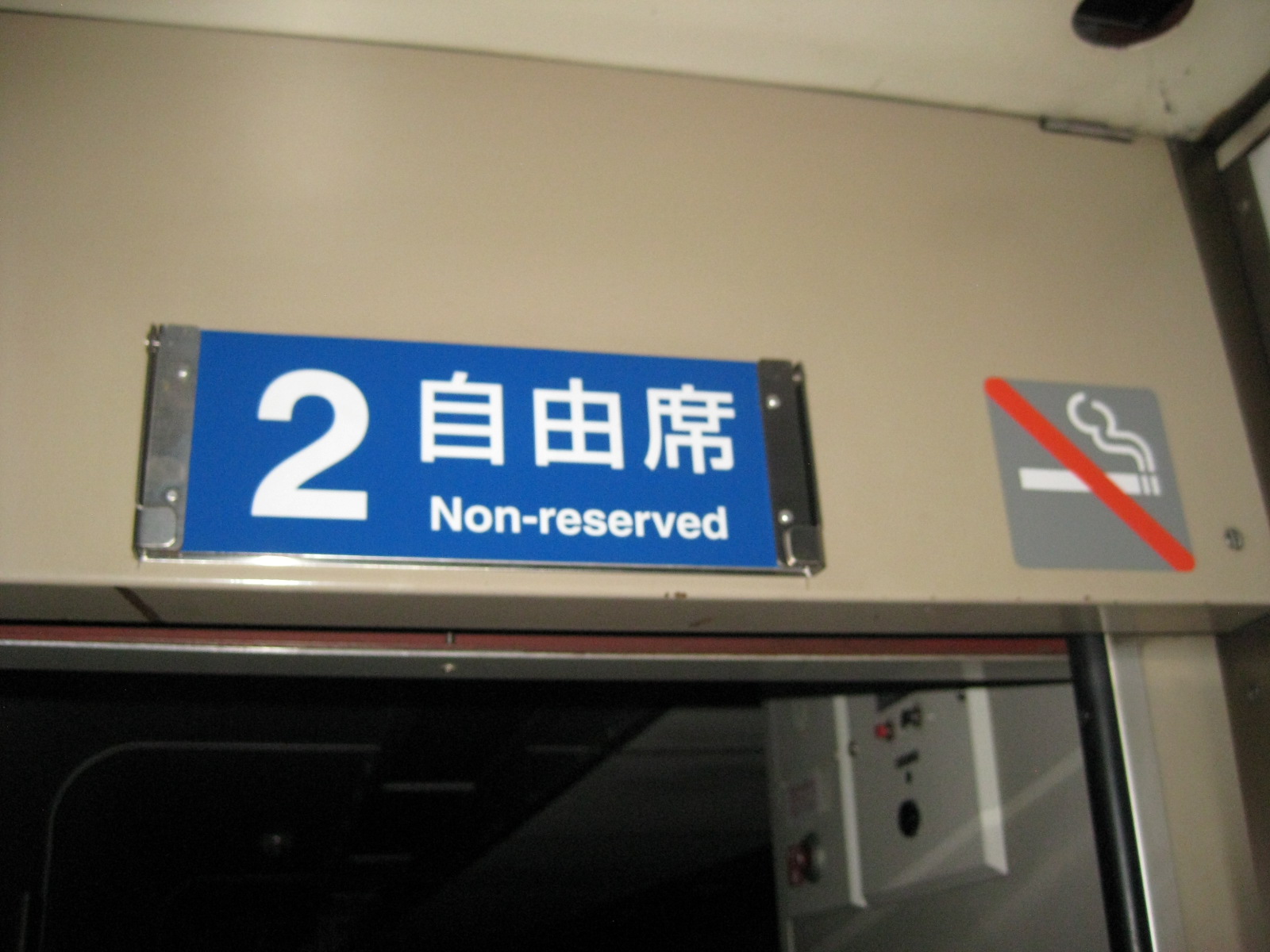 No reservations – in Japan “Non-reserved” means that seats on the car are first come, first served. One could purchase either such seats or the more expensive reserved seats from the train station.
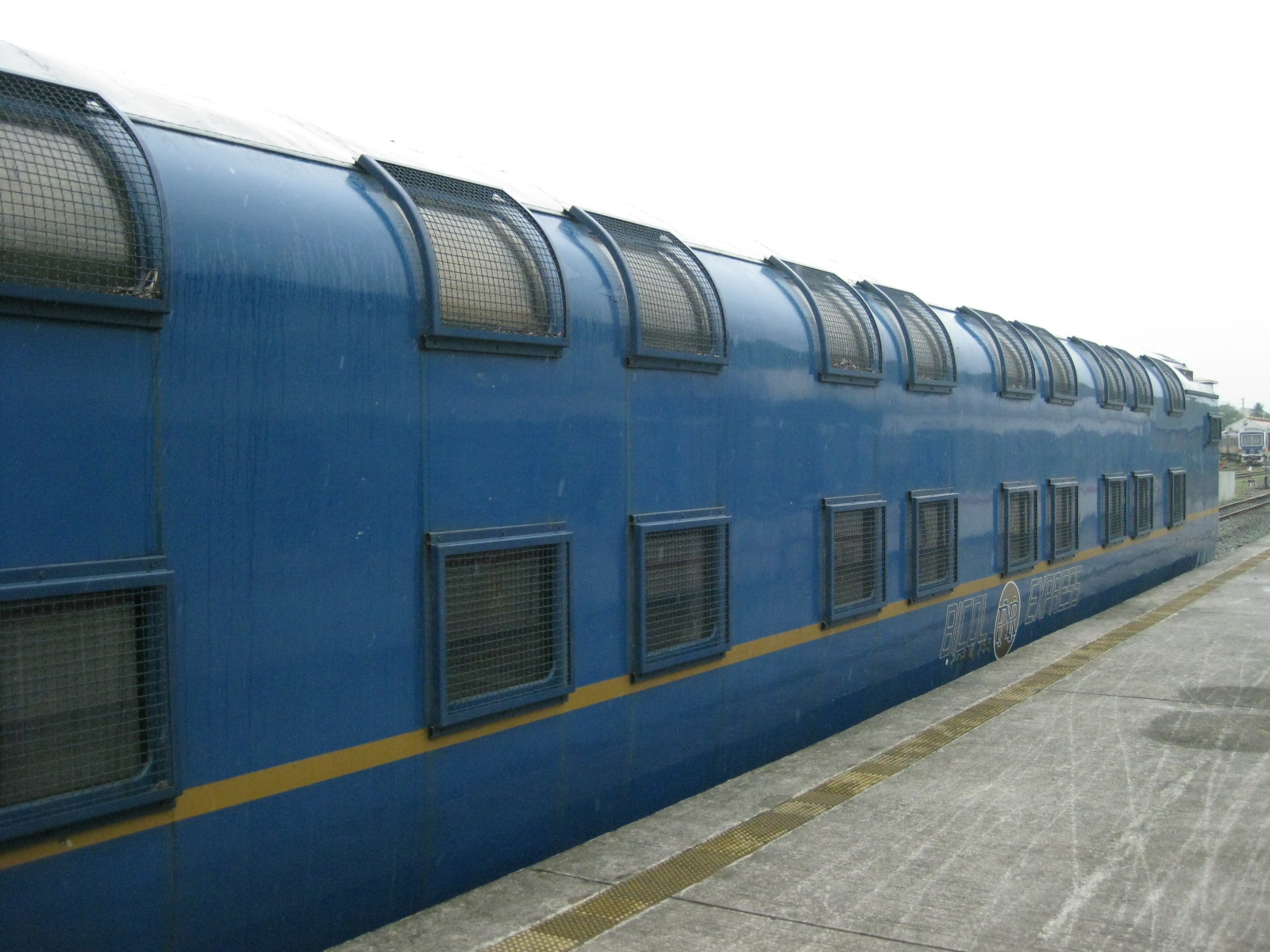 Executive class – the double deck cars containing Executive Sleepers or individual cabins for the Bicol Express
 Airconditioned – the Executive Sleepers have air-conditioning, which is a requirement for all services of the PNR that is part of the attraction for passengers. Some cars were fitted with generator sets to supplement the power provided by the locomotives. Note again that the PNR lines are not electrified so power required for lights, aircon and other equipment have to be provided by these generators.
 Dining car – the Bicol Express trains include dining cars like this one also being refurbished by the PNR.
 The Bar – the car included a bar where people could have drinks. This feature of the train elicited a lot of questions and some excitement among our students.
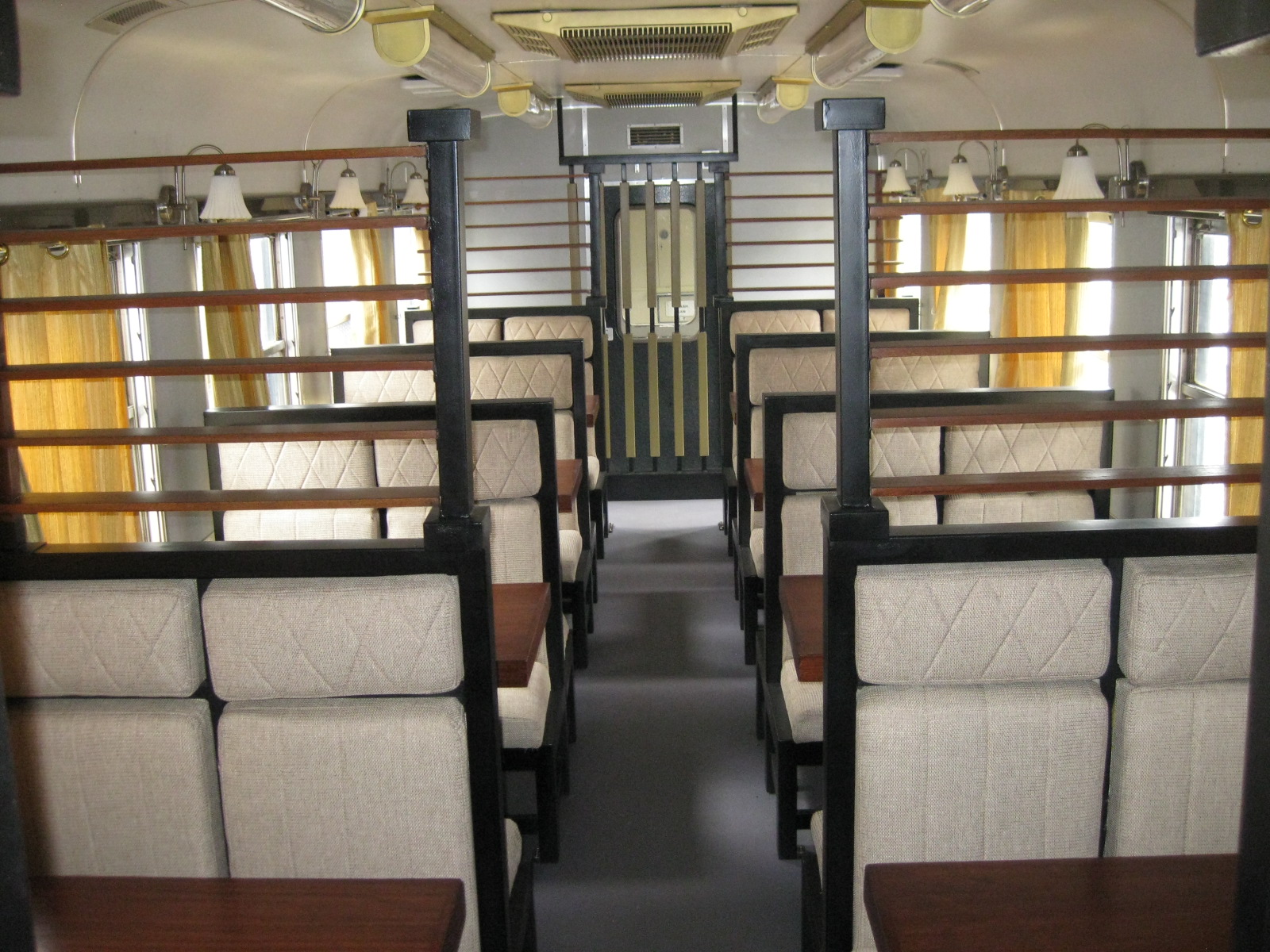 Dining tables – there’s ample space for diners though we were not able to ask who may actually be allowed to use the dining cars. There are 4-seater and 2-seater tables in the car.
 4-seaters – a closer look at the dining tables show comfortable seats and a good view from the window. Unfortunately, the Bicol Express trains travel at night so there’s really not much to see while in transit.
 Singles – passengers may also opt to eat at the bar, especially for the case of individuals who might end up hogging a table and depriving groups of space.
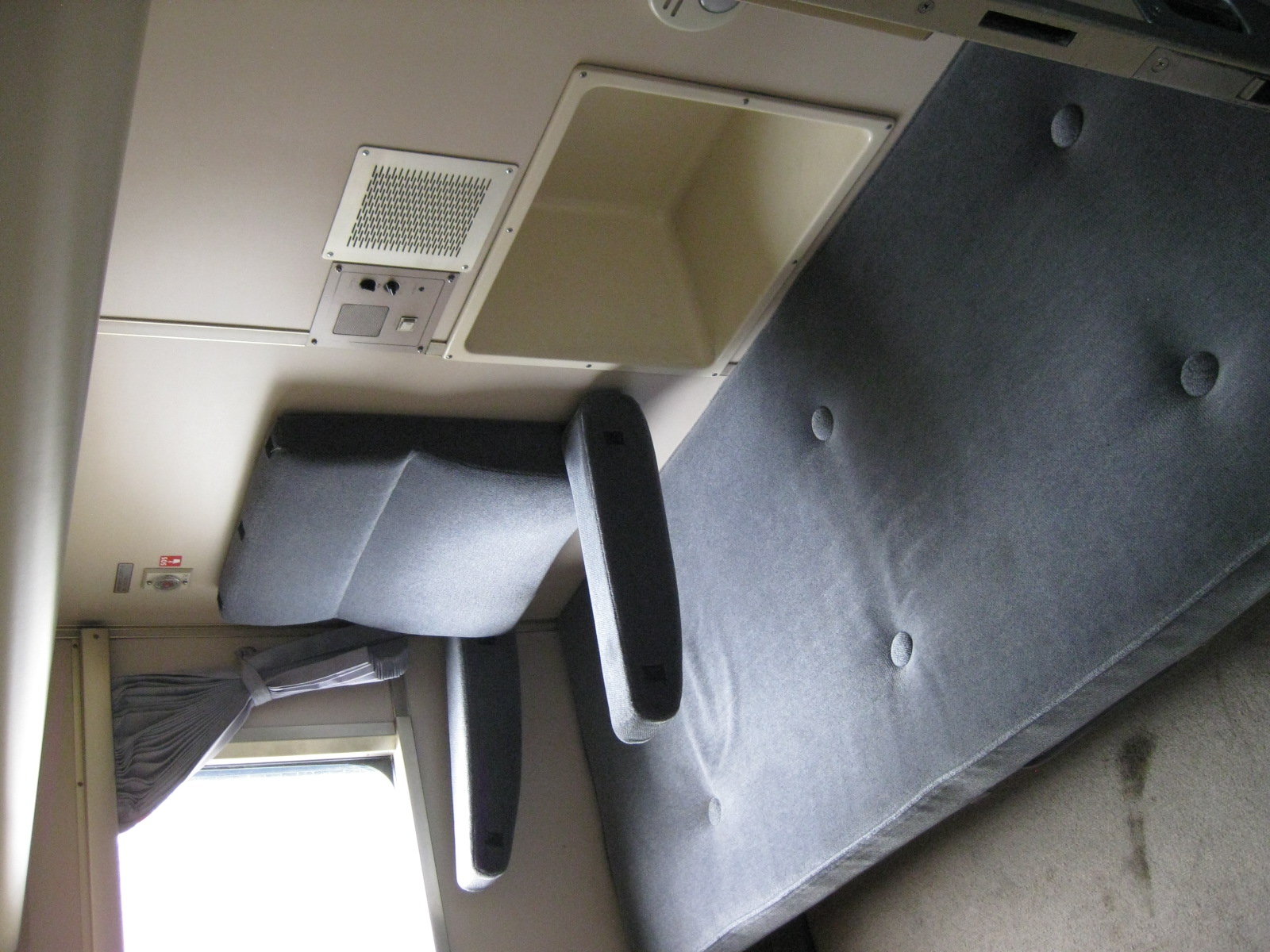 Executive sleeper – the cabin has a bed that doubles as a seat. Note the foldable arm rests and back cushion by the window. Also, there is space for a small bag located at a more secure part of the cabin.
 Lights and aircon – each cabin is equipped with a desk, adjustable lights and individual air-conditioning control for the convenience of the occupant.
 Window seat – each cabin has a window and generous space for the individual. The same features are found on the cabins on the upper deck but I guess the view is better upstairs so these would be the choice cabins for the Executive Sleepers.
I look forward to finally riding the Bicol Express, perhaps with family or friends, as I visit relatives in Bicol (my mother hails from Sorsogon). Though I can ride the train to Legazpi City, Albay, it is just a short trip by bus from that city to my mother’s hometown. Of course, there are other cities of interest for me including Naga City, my father-in-law’s hometown and Legazpi where there are many attractions around. My father has told me a lot about the Bicol Express, which he took with his sisters en route to Sorsogon to wed my mother. And so, part of the attraction to the train is sentimental in nature.
–
PhP 21.5 B for electric tricycles
Another article came out today, this time from GMA News about the NEDA’s approval of a PhP 21.5 Billion project for electric tricycles. The approval of the project is said to be based on the evaluation of a feasibility study submitted by its proponent, the Department of Energy (DOE). I have not yet seen this FS and I am not aware of any formal studies in this regard that has been made public so I cannot make a fair comment with regards to what the NEDA had as reference materials in their assessment. I am aware of one private initiative where UP was involved but to my knowledge this has not been disseminated or shared by the Client to government agencies. Though caution is still very much necessary and desired when moving forward with this e-trike project (What would happen to spent batteries? Is there adequate technical support? Charging stations? Policies regarding phasing out conventional tricycles?), it is hoped that this will be one of those “tipping point” moments that will ultimately benefit the country.
The article on the e-trike is reproduced below:
MELAY GUANZON LAPEÑA, GMA News March 26, 2012 5:29pmThe National Economic and Development Authority (NEDA) approved a P21.5-billion project to promote sustainable transportation and achieve energy efficiency.
The Market Transformation through Introduction of Energy Efficient Electric Tricycle (E-trike) Project will reduce fuel consumption of tricycles by 2.8 percent, equivalent to 560,926 oil barrels, NEDA said in a statement Monday.
“The project will distribute 100,000 E-trikes to tricycle operators on a lease-to-own arrangement, replacing their old gas-fed and two-stroke gasoline engine units. This way, we are also able to protect our environment,” according to NEDA, citing Socioeconomic Planning Secretary and NEDA board vice chair Cayetano W. Paderanga Jr.
“The electric tricycle is a specially designed, highly efficient tricycle that runs on a motor powered by a battery charged by electricity. E-trikes produce no noise, no tailpipe emissions, and represent an opportunity to make public transportation in the Philippines more environmentally conscious while improving the livelihood of tricycle drivers across the country,” reads the project description on the website of Asian Development Bank, which is financing part of the project through a P12.9-billion loan.
The project was proposed by the Department of Energy (DOE).
Additional financing will come from the Clean Technology Fund (P4.3 billion loan and P43 million grant), Clean Development Mechanism facility (P860 million), Philippine government counterpart funding (P3.397 billion).
Early this month, the DOE selected 10 winners in a nationwide contest for the best E-trike design on a theme of “Bright Now! Do Right, Be Bright.”
According to the DOE, the design is optimized to ensure structural integrity.
ADB explained that the project gives tricycle drivers the opportunity to lease or lease-to-own the E-trikes by paying less than 200 pesos a day, which translates to a higher take-home income.
“For example, a conventional tricycle needs between 5 and 7 liters of gasoline to travel approximately 100 kms, costing P250 to P350. To travel the same 100 kms, an E-trike will use between 3 kWh and 5 kWh of electricity, costing only P30 to P50. The 200 peso difference in fuel savings will help the driver pay for the cost of the E-trike,” ADB added.
The pilot project was launched in April 2011, with 20 E-trikes deployed in Mandaluyong City. The E-trikes use two different types of lithium ion battery technology—the 3 kWh and 6 kWh battery packs.
Models with the 3 kWh battery pack can run as far as 50 km on a single charge, and can be recharged to 80 percent in under 30 minutes at fast charging stations. Models using the 6 kWh battery pack can go up to 100km on a single overnight charge.
Sen. Edgardo Angara, who heads the Congressional Commission on Science, and Technology, and Engineering, lauded the E-trike project, saying the use of e-vehicles could lower air pollution levels and lessen the dependence on oil.
“Once thousands of E-trikes begin to be manufactured, many new jobs could be created. Working together, we can give Manila cleaner air, bluer skies, and a more livable environment,” Kunio Senga, director-general of ADB’s Southeast Asia Department, said in an earlier report.
The Quezon City government is preparing pilot test the E-trikes. According to a news release, the city has conducted an Eco-Driving Training for Quezon City Tricycle Operators and Drivers Associations (QC-TODA).
Discussed was the impact of good driving behavior, proper engine maintenance for lesser emissions and reduced maintenance cost as well as increased fuel saving for the current conventional tricycles operating in the city.
QC will be given 22,000 E-trikes over five years—the largest allocation among LGUs in Metro Manila—2,000 this year and 5,000 every other 4 years.
“The project is expected to complement the city government’s continuing effort to mitigate the ill effects of pollution on public health and safety. This would also pave the way for the gradual phase-out of conventional tricycles now plying city roads,” according to a statement by the Quezon City government.
Under Phase I of the project, 20,000 E-trikes will be distributed to operators in Metro Manila, Boracay, Puerto Princesa City, Cabanatuan City, and Davao City from 2012 to 2013.
Eighty thousand units will be distributed to operators in municipalities and cities that are still to be determined under Phase II (2013 to 2016).
NEDA said the project aims to promote, establish and develop electric-vehicle support industries such as battery leasing, recycling and disposal, and motor supply chain and charging stations.
But the Electric Vehicle Alliance and the Partnership for Clean Air are questioning the project, saying its funds were reallocated from the renewable energy industry—originally stipulated in the Clean Technology Fund.
Greenpeace is also not happy with the project.
“Why are we rushing this project?” asked Greenpeace Southeast Asia campaigner Francis Dela Cruz.
While E-trikes are not bad in terms of technology, Dela Cruz said
they are not necessarily good for the environment. “Hindi siya magiging source ng mobile pollution, but because you use power outlets to charge, you are just shifting to a stationary source of pollution—the fossil fuel-fired power plants,” he said.In addition, the project-mechanism that involves LGUs as lenders make the project seem dubious to Greenpeace.
“Kaya bang magpautang at maningil? Baka magpapautang tapos hindi maniningil, ang magbabayad ang taong bayan,” Dela Cruz said, noting this will be unfair to taxpayers who don’t benefit from the project but may end up having to indirectly pay for it. — VS, GMA News
–
PNR Field Trip 2012
We took our students to a field visit to the Philippine National Railways (PNR) station and depot in Tutuban in Manila. It was a good experience for all of us who joined the trip as the PNR is currently in the process of upgrading their services with the acquisition of refurbished rolling stock and the resumption of services to Bicol. We were quite curious as to the current state of the PNR after what has been a long period of neglect from a government that is supposed to promote safe, efficient and affordable mass transit not just for the urban setting but for long distance travel as well.
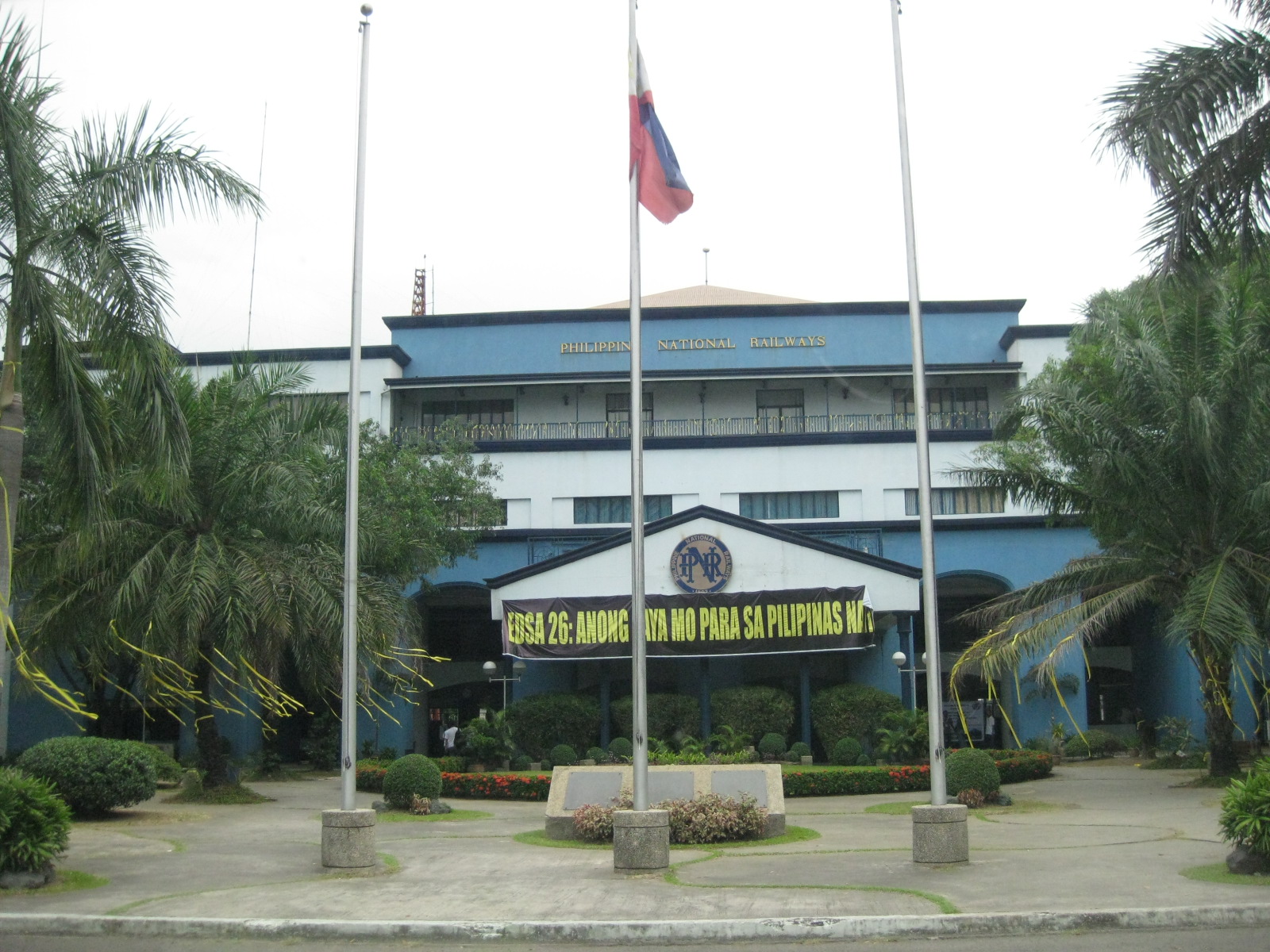 The PNR station and office building at Tutuban – the old station is actually where the Tutuban is now located. Access to the Tutuban Station is through a gate and the surrounding area is not suitable for a main or central station. There is no station plaza and as we will see in another photo, the space including the platform will not be suitable should operations expand in the next few years. In fact, passengers entering the station are processed as if they are entering an office building. This is partly true as the building serves as head office for the PNR.
 Train schedule for the PNR commuter line – service frequency is still low with headways of 30 minutes (a train every half hour). With the number of passengers steadily increasing, the current capacity of trains has already been exceeded. The PNR should resolve issues pertaining to conflicts along its tracks and deploy more trains and/or more cars.
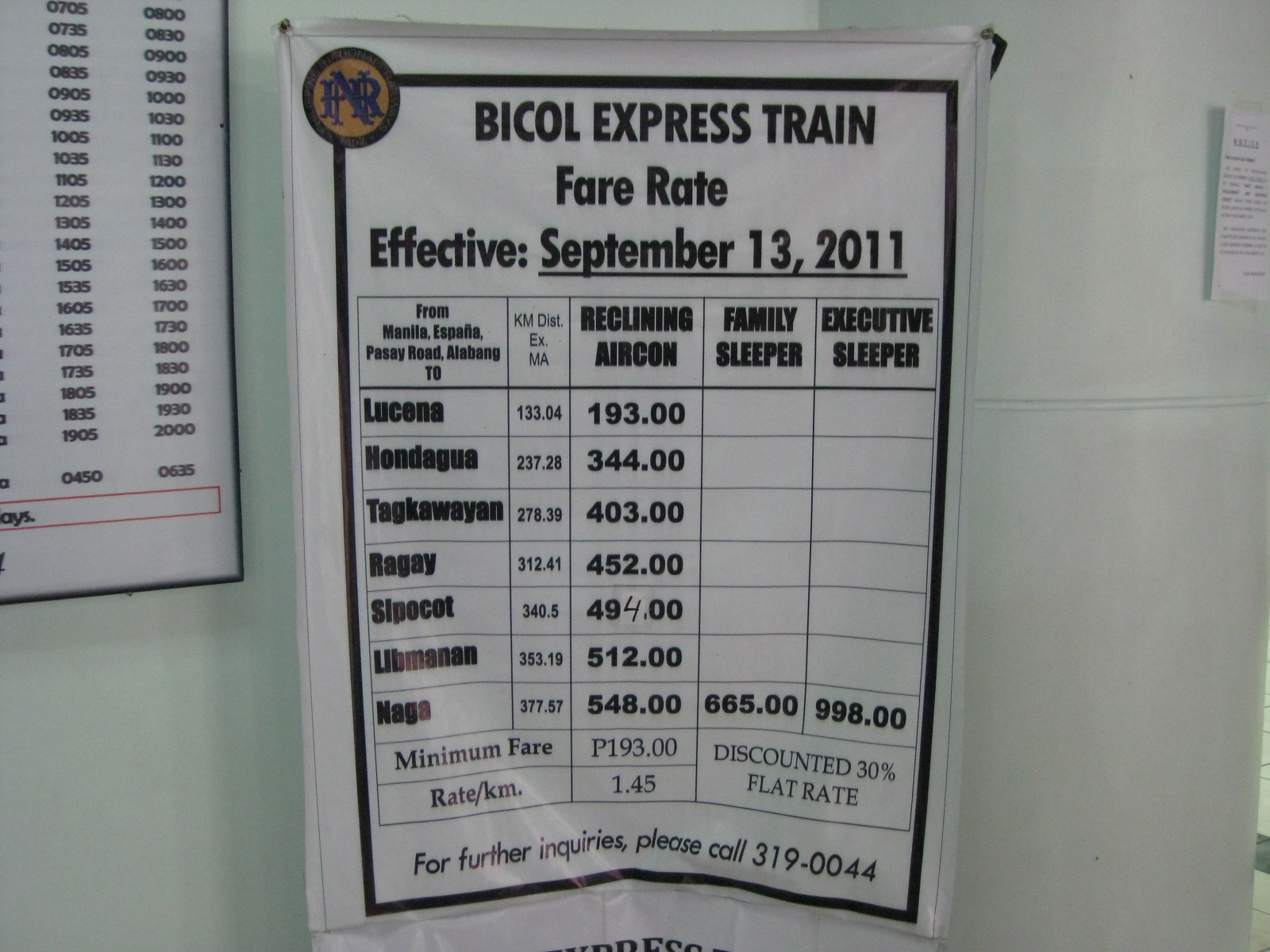 Fare table for the resurrected Bicol Express – family and executive sleepers were supposed to start operation last March 16. We were told that the PNR hosted representatives of travel/tourist agencies to an exclusive initial run of the sleeper and recliner cars to Bicol and back. This was part of the promotion of rail services to travelers especially as the summer months are approaching.
 Replica of old PNR train car – there were many photos and other memorabilia on display at the Tutuban station. Unfortunately, the security people seem quite iffy about people taking photos. They had to be told by our host PNR officials that we were visitors from the State University. I found this to be very odd and a definite turn off for people interested in the trains. Rail needs to be promoted and PNR security is not helping in this aspect.
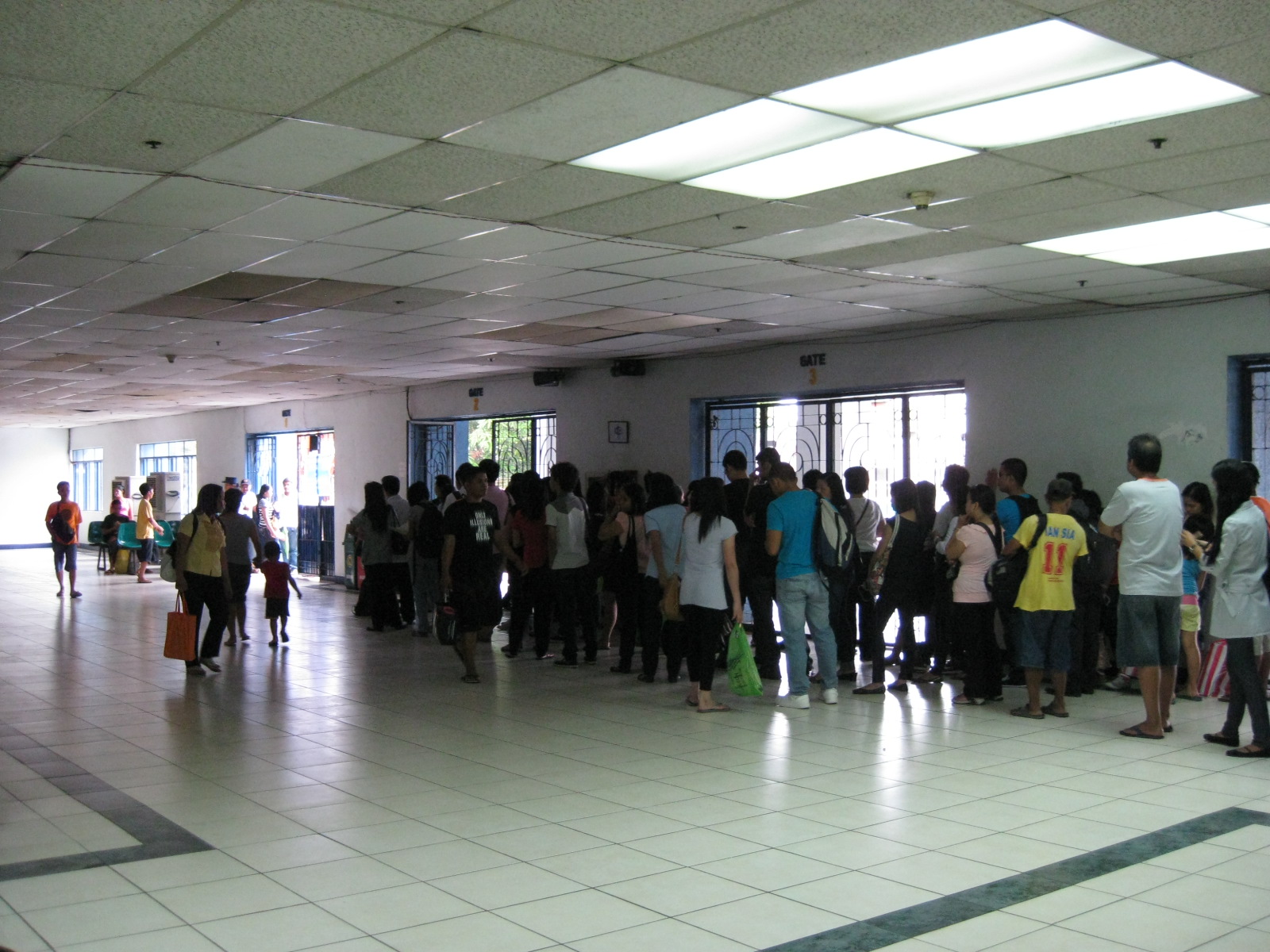 Passengers queued at the Tutuban Station – there were very few seats in the waiting area and passengers who want to board the next train emanating from Tutuban had to stand in line from the gate where PNR staff and security process passengers. A better system should be established here including the introduction of ticketing machines and turnstiles to better serve passengers. It won’t hurt also to have an electronic information system for train schedules and announcements.
 Maintenance cars – when our hosts led us to the platforms, the first things that caught my eyes were the maintenance cars. These have allowed the PNR to provide better maintenance work on their tracks, no longer relying solely on manual labor for inspection and other works. Behind the equipment are cars familiar to me and my colleagues – Japan Railways (JR) retired these cars from the Saikyo Line that served areas along a route connecting Tokyo and Saitama Prefecture.
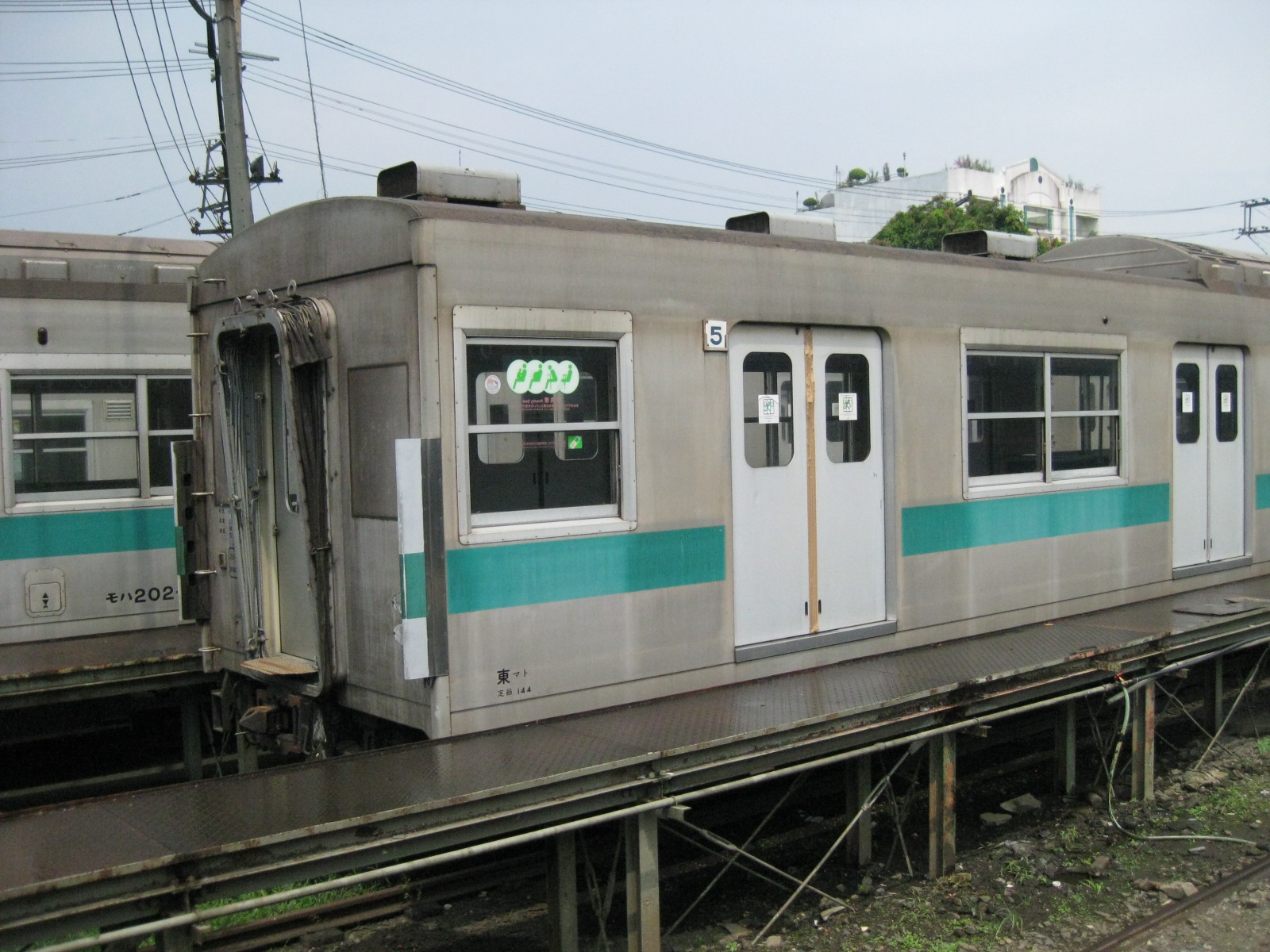 Nostalgic – these cars were the very same cars we used to ride along JR East’s Saikyo Line, which now runs between Omiya in Saitama Prefecture and Osaki in Tokyo via Ikebukuro and Shinjuku. It was usually my choice for going to Tokyo from Saitama University if I was heading to Shinjuku or Shibuya. From the university, I ook a bus to Minami Yono Station where I can also see Shinkansen trains passing through the station. The latter were also headed to Omiya where the Shinkansen lines branch out to Nagano, Tohoku and Akita. The cars shown in the photos are donations from Japan and the PNR only paid for its transport.
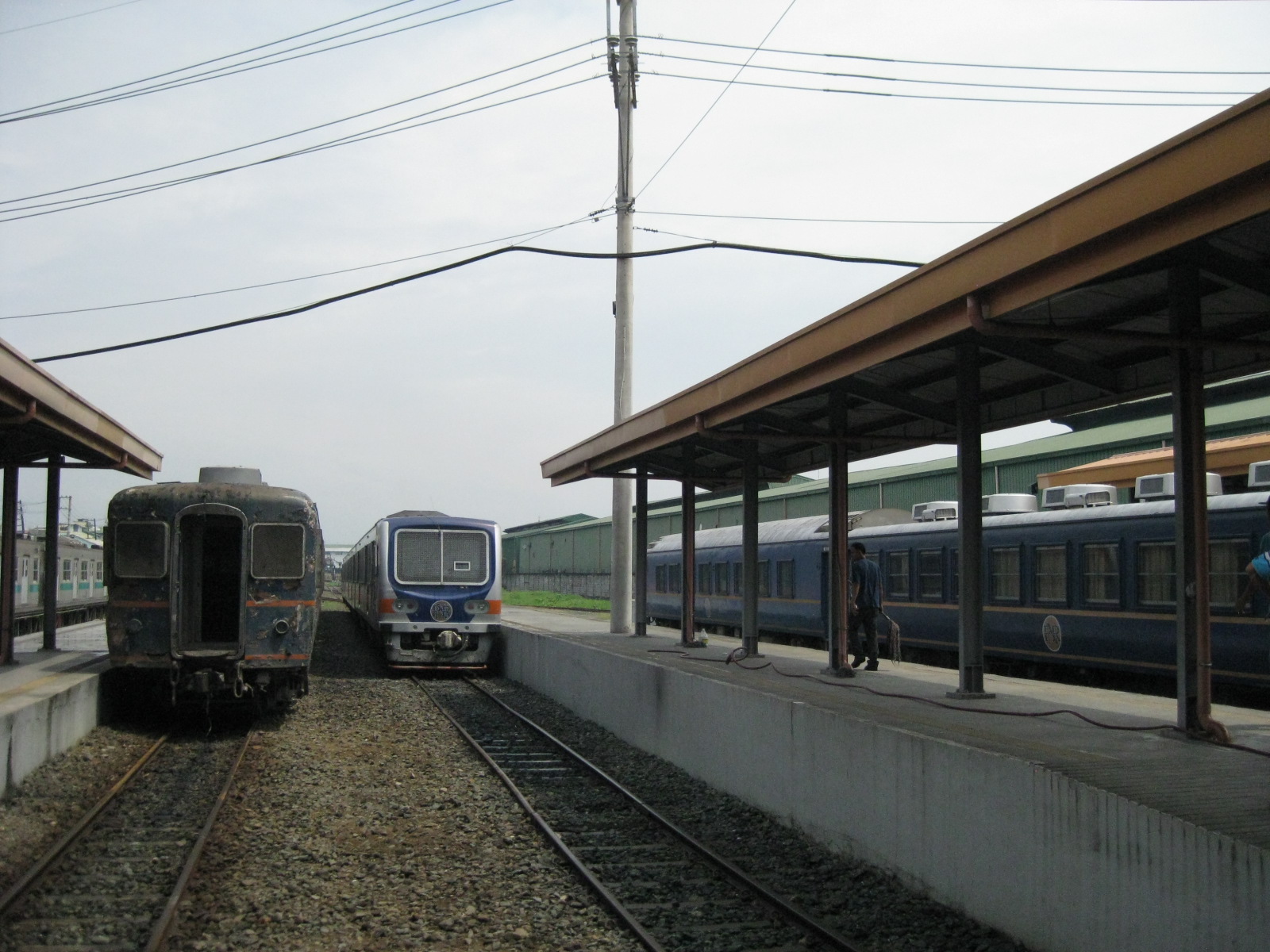 Old and new – old cars of the PNR may also be found at the Tutuban depot like this old passenger coach at one of the platforms. We were not able to ask if the PNR had plans to preserve these old cars. In other countries, there are railway museums like the one near Omiya Station in Japan. I’m sure the PNR would not lack for museum pieces including the old locomotives on display at its gates.
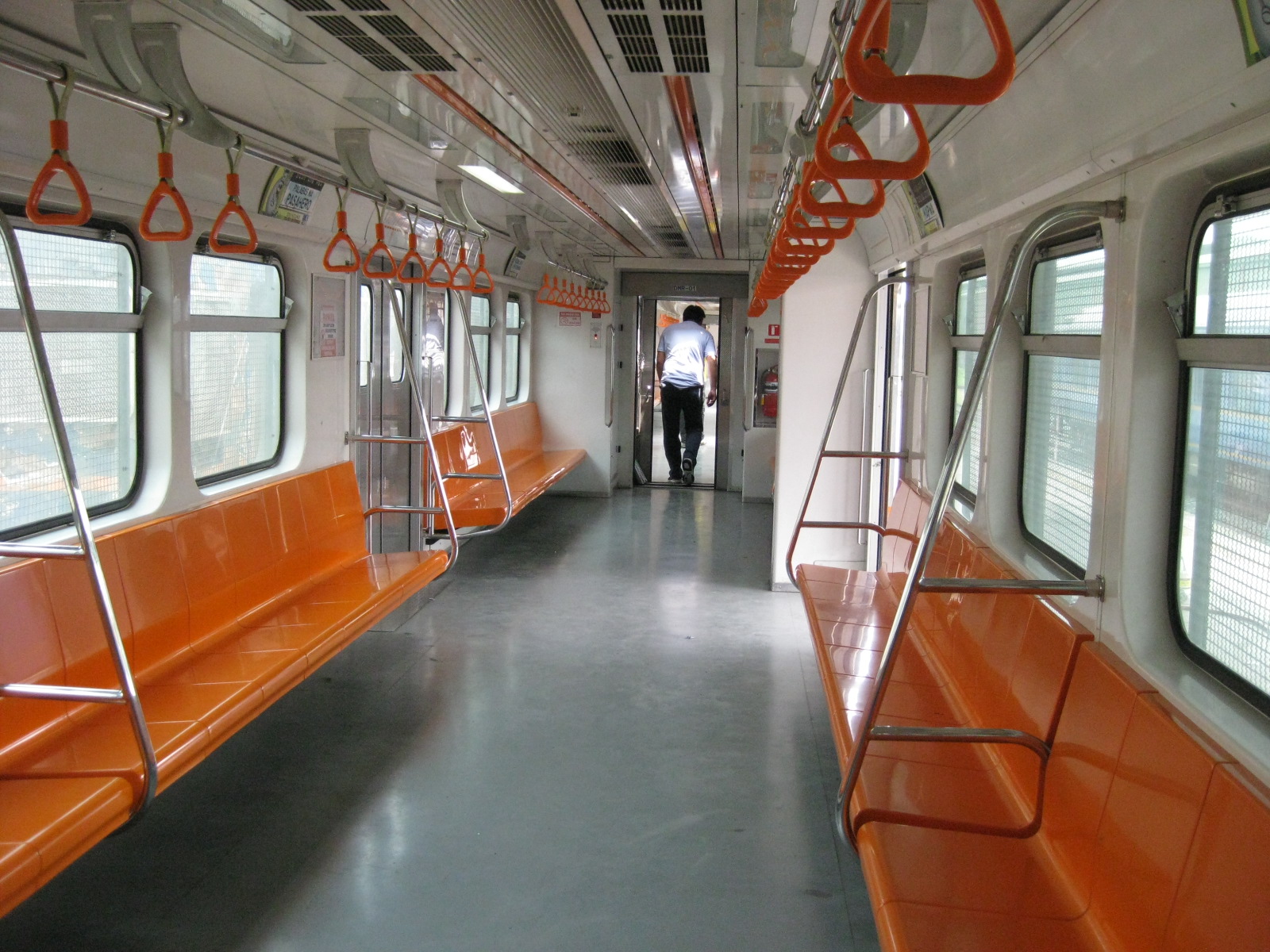 Sparkling – The interiors of the commuter trains reflect the service upgrade for the PNR. The trains are clean and spacious (appropriate for the capacities required for commuter service).
 Try-outs – our students and my colleagues try out the seats as we were ferried from the Tutuban platform to the depot where our hosts gave us a technical tour of the rolling stock and other facilities.
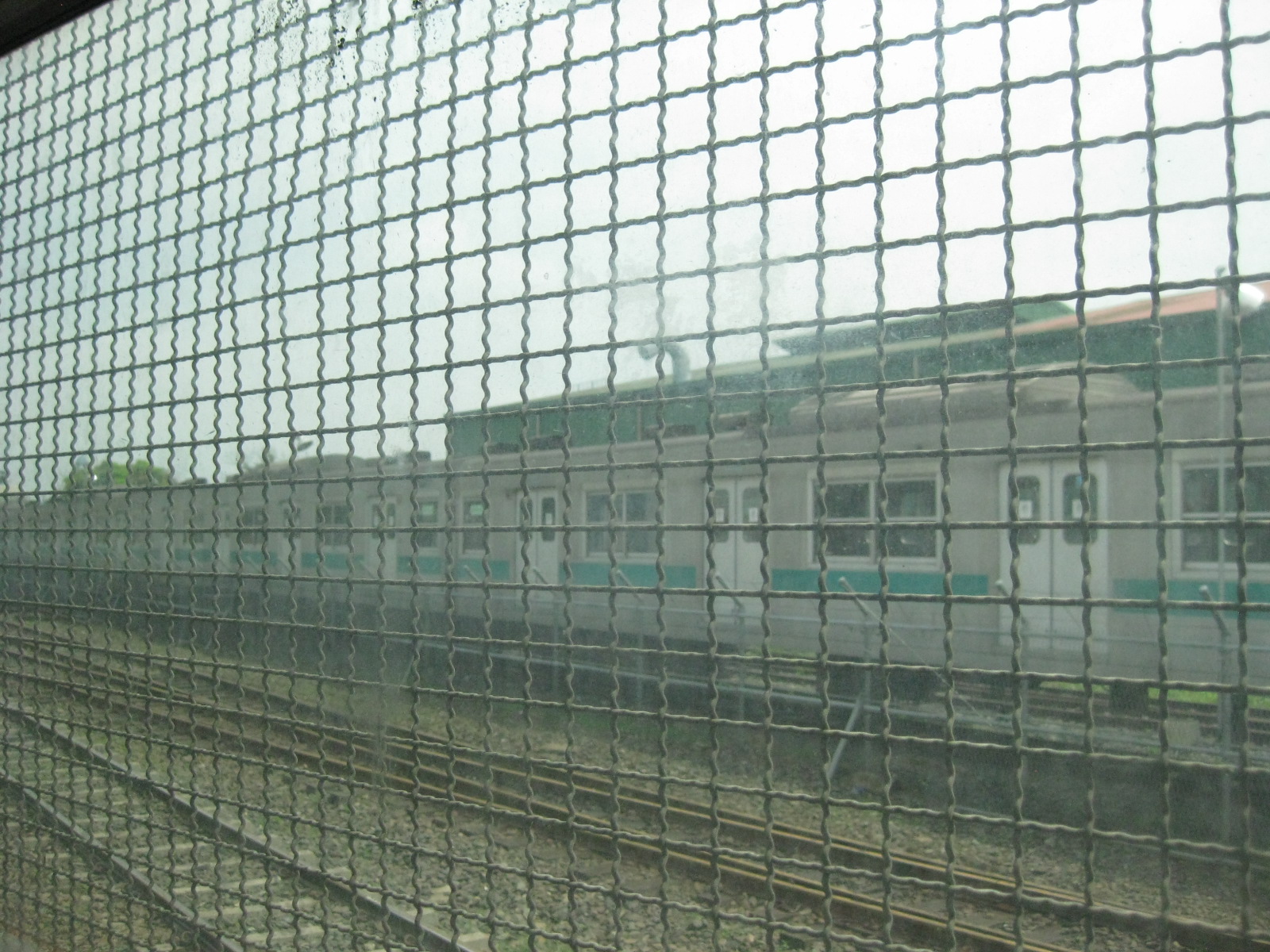 Grilled reminder – PNR coaches have their windows fitted with grills like this on the PNR commuter trains. Despite efforts to clear its right-of-way of informal settlers, there are still many along its route and these have often vandalized trains. In many instances, garbage and other items are thrown at the trains. These incidents have been significantly reduces but the PNR continues to experience such, necessitating the installation of grills. The coaches from Japan will not be operated until they are fitted with the same grills. Hopefully, the PNR ROW will be clear of informal settlers as well as other sources of impedance.
 Control panel – the lead car of the train features this more modern panel for the train controls. Note also the grills on the windshield of the train to mitigate the impacts of stones or other items thrown at the train as it rolls along its tracks near communities that include informal settlers.
 Exit route – when our train reached the depot, we had to climb down from the train as there were no platforms in the area. For this, one had to climb down backwards and feel for the steps just below the doors.
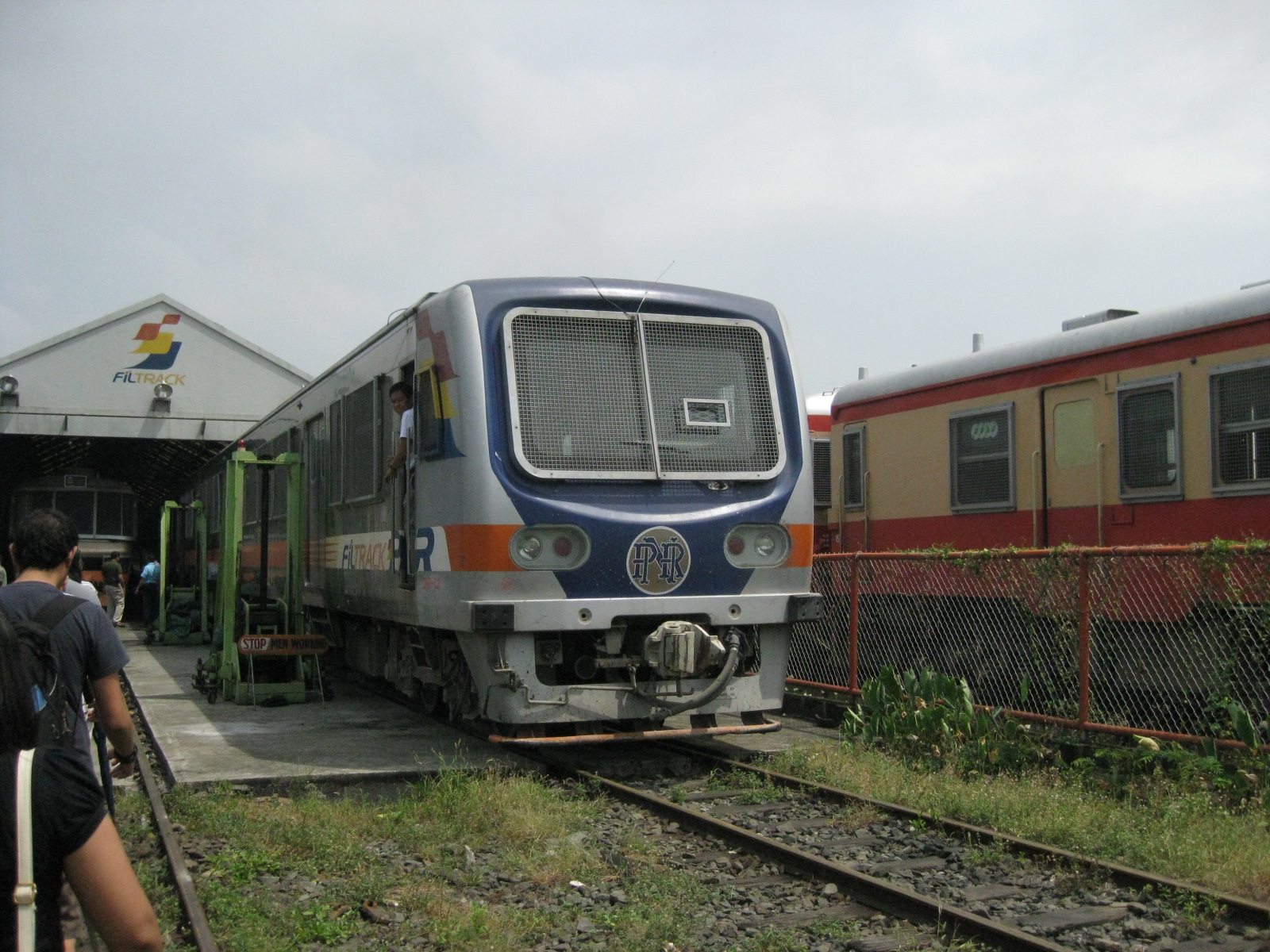 Maintenance yard – one of the newer commuter trains from Korea undergoing maintenance work at the depot. The coaches on the right are also Japanese donations for refurbishing, and are fitted for long distance travel though not as comfortable as the recliners or sleeping cars. These are more for longer distance commutes like from Laguna to Manila, which are similar to commutes along the JR Tokaido Line.
 Busy bees – with the resumption of Bicol Express services and the revitalized commuter line, the PNR’s maintenance staff have become more busy. There seems to be higher morale, too, as the long-neglected railway company gets a much needed proverbial “shot in the arm.”
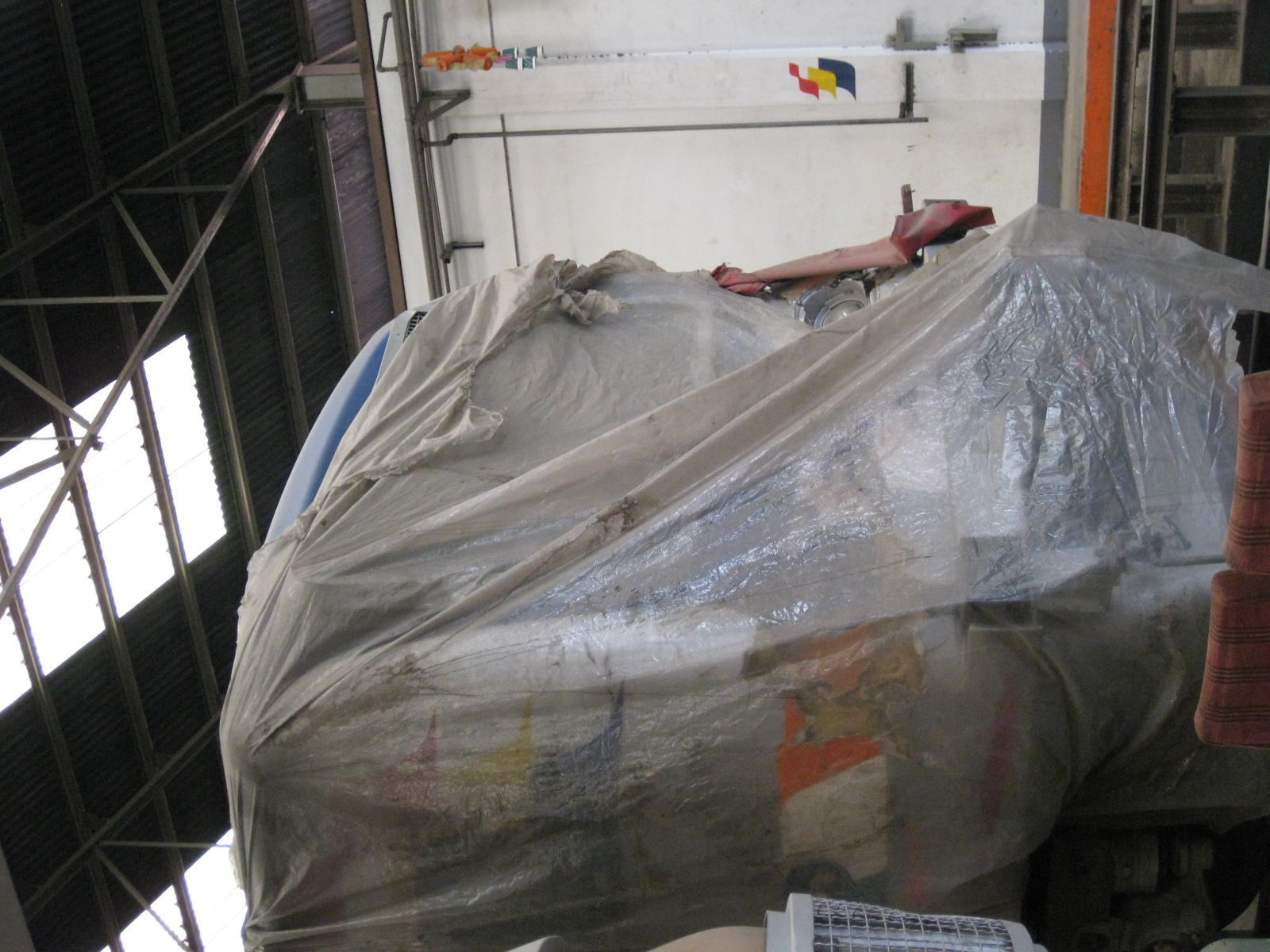 Crash victim – one of the commuter trains was involved in a crash when a truck proceeded despite the warnings and the barriers indicating an approaching train. That effectively knocked out one train and will cost the PNR a lot to repair the train. There are still many issues pertaining to safety along rail crossings, and many motorists and pedestrians remain hardheaded (pasaway?). As the PNR increases its frequencies for both its commuter and provincial services the subject of safety will become more serious and one that needs much attention.
 Briefing – colleagues ask our hosts about operations and other matters concerning the PNR today. Our students also had the opportunity to ask about employment possibilities at the PNR including what qualifications are needed for railwaymen.
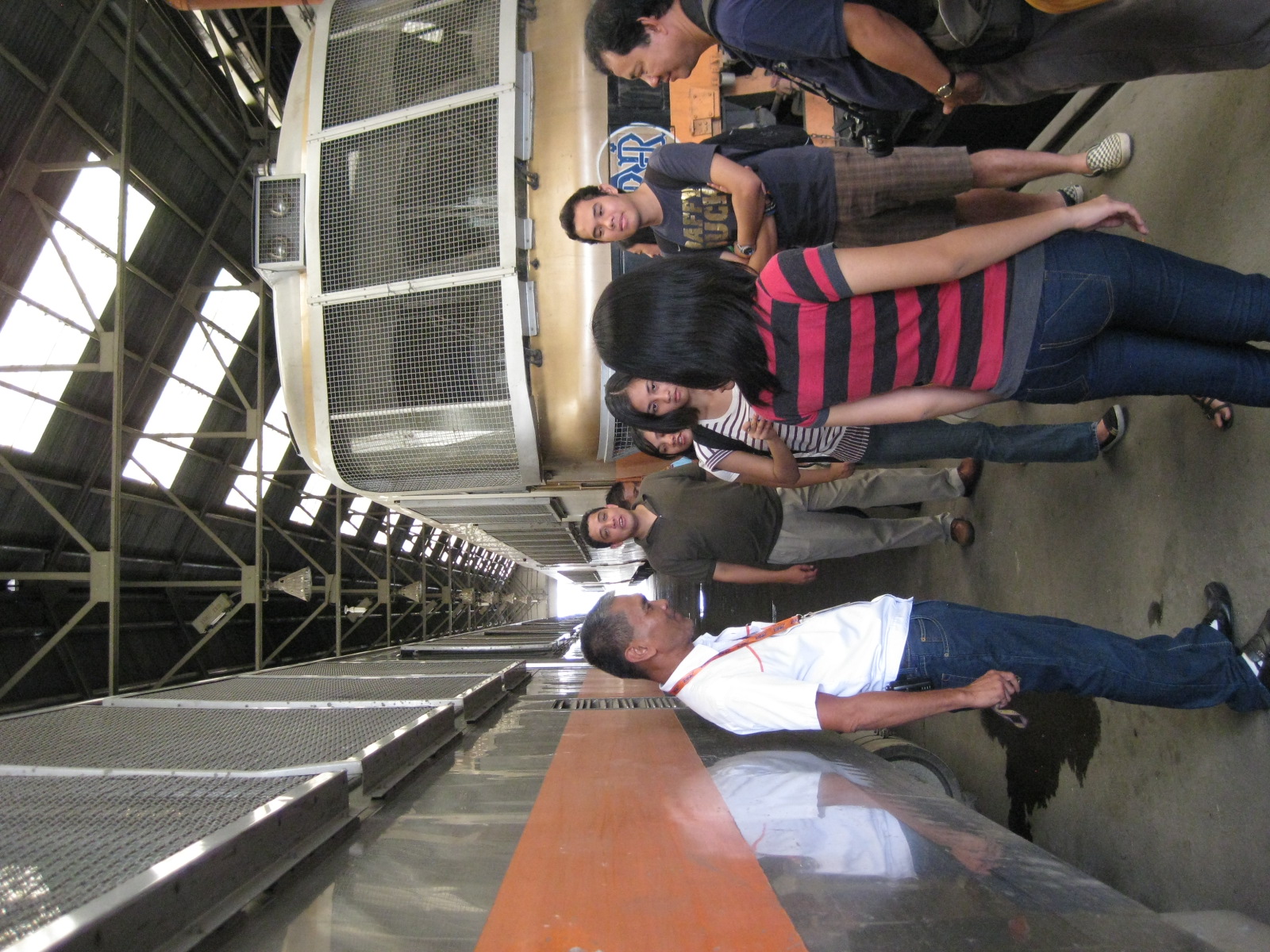 From JR to PNR – those are more Japanese trains in the background. We were not really surprised about the conditions of the trains considering that JR does a great job maintaining their trains given their usage.
 Recruitment pitch – our students had plenty of questions for our host including those about the trains and the history of the PNR. They were informed that the Polytechnic University of the Philippines (PUP) has a baccalaureate program in Railway Engineering and that our host taught courses there. When asked where the graduates go for employment, our host mentioned its difficult for them to get employment locally as railway engineers and that the program will soon terminated.
 Noontime rush – back at Tutuban Station, we witnessed passengers alighting at the station and walking towards the exit. The number of passengers was significant considering the limited capacity of the trains and the fact that it was already noontime. There are probably more passengers during the morning and afternoon peak periods.
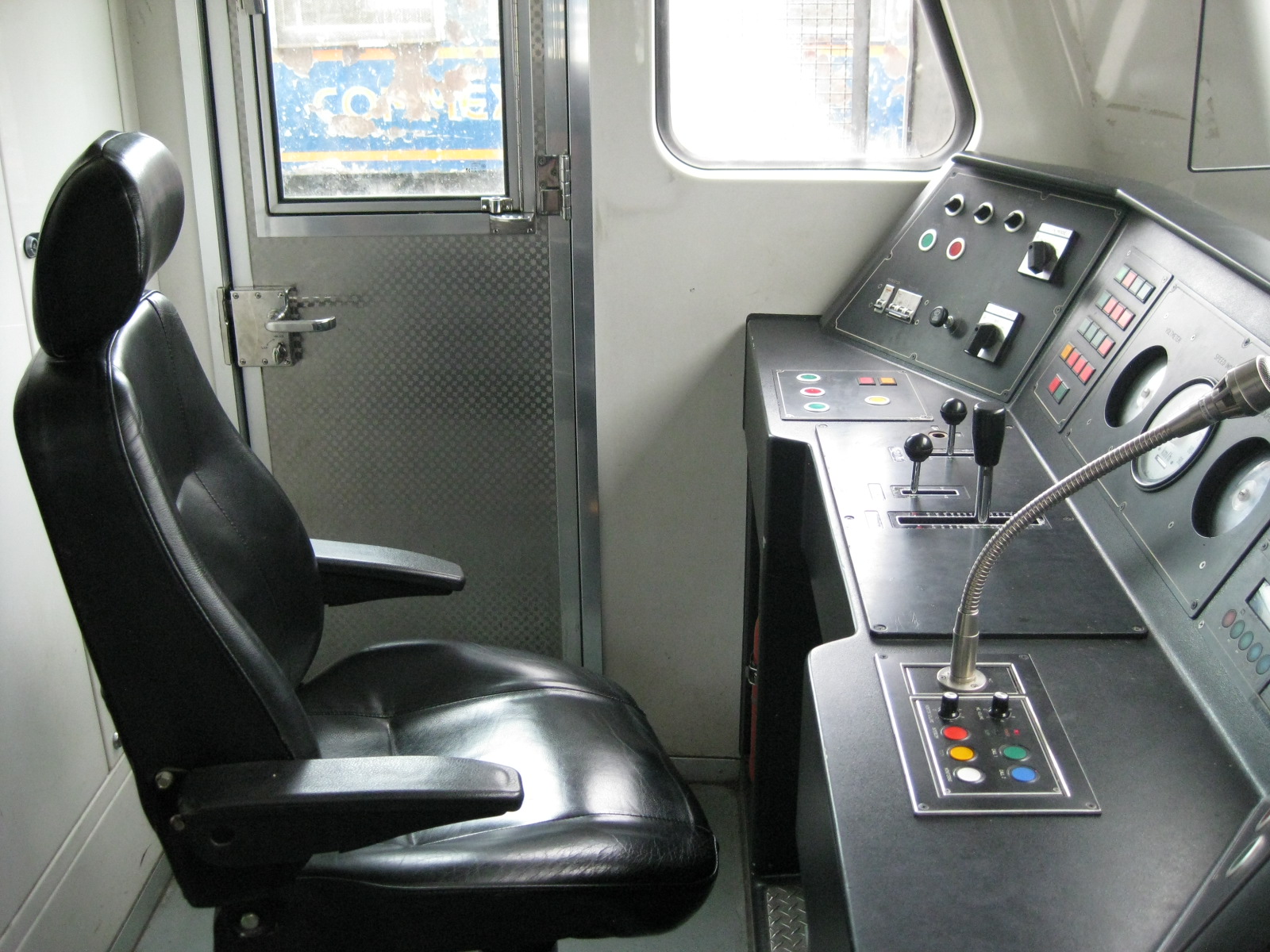 Driver’s seat – I took this photo when we boarded our train from Tutuban to Espana. Our hosts were very kind and generous to allow us to ride in the cockpit where all the action takes place. We also got a firsthand experience of what the driver had to go through (his hand was practically on the horn the whole time he was running the train) to earn a living.
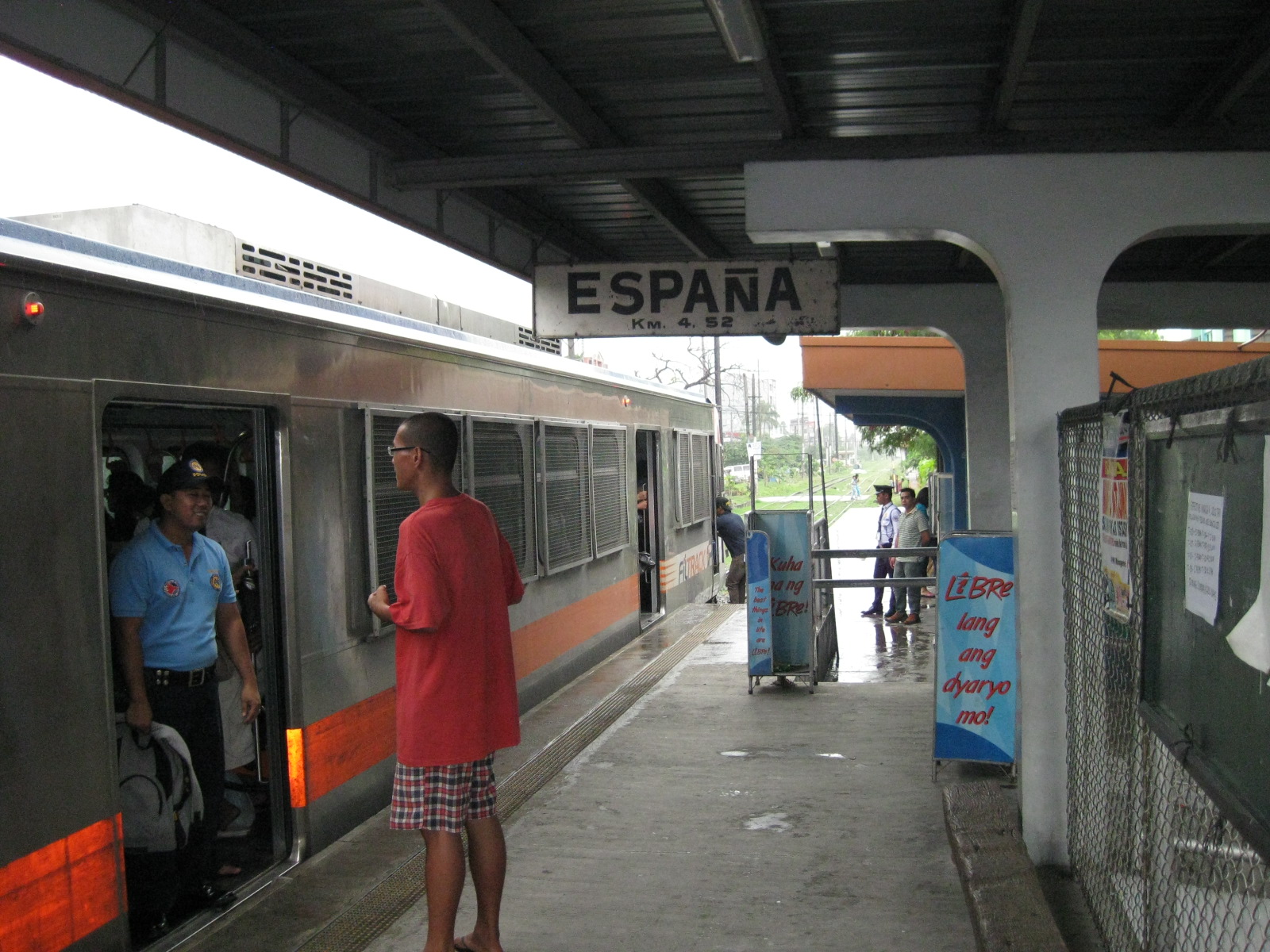 All aboard! – the Espana Station platform after all passengers have boarded the train. One passenger seems to be talking to the security personnel at one of the doors. The DOTC and the PNR posts security staff on the trains to ensure safety and security on-board. Their presence is a deterrence against criminality including snatchers and con-men who prey on students and the inattentive.
 Capacity – the train is filled with passengers, underlining the demand for more efficient public transport services in Metro Manila. This, despite the fact that trains have 30-minute headways. The PNR commuter line provides an inexpensive alternative to commuters.
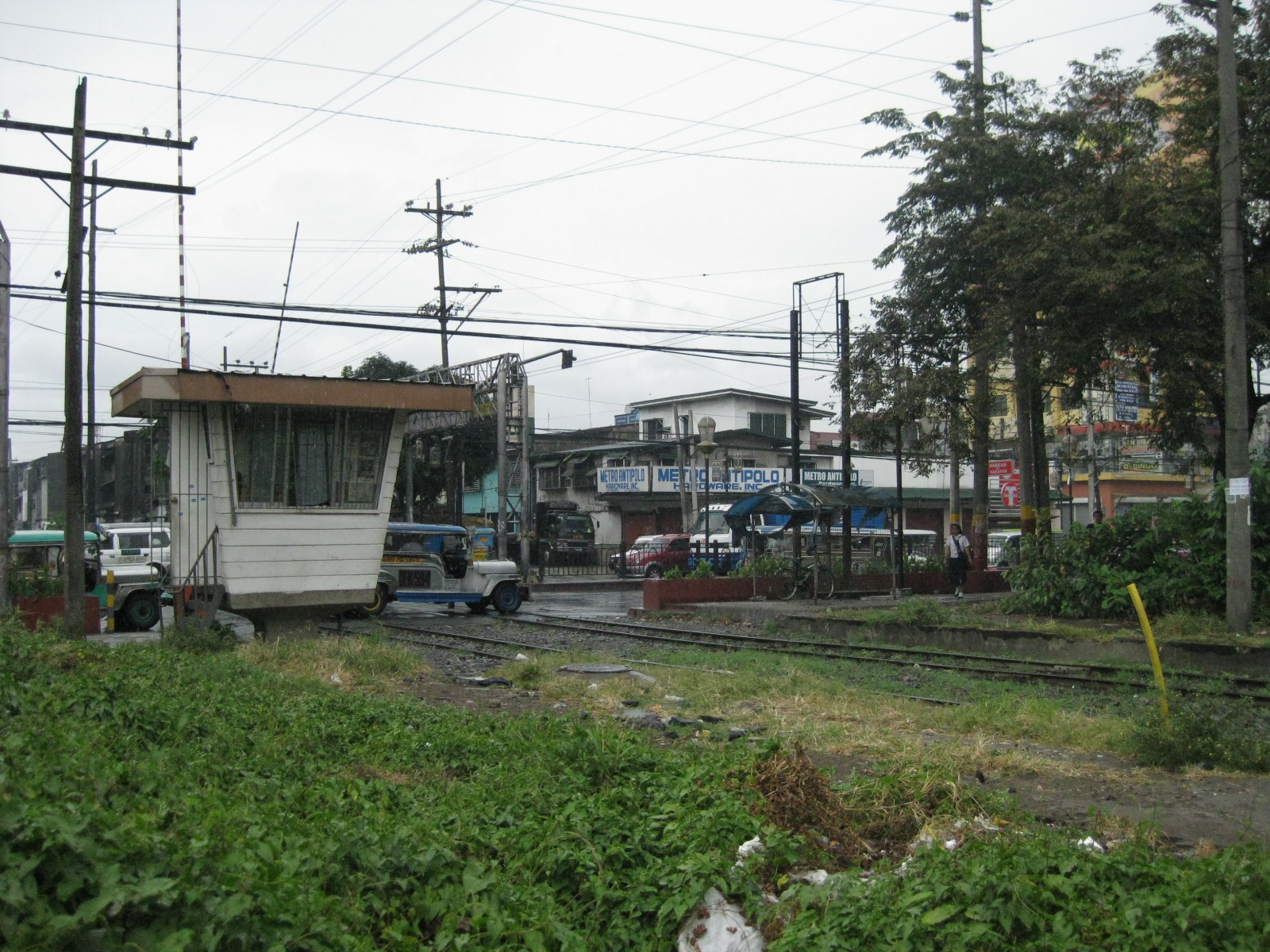 Crossings – the junction at Espana Avenue in Manila is among the busiest given the road traffic along this major arterial. If the PNR will increase service frequencies (and therefore capacity), this will result in higher likelihoods for crashes involving trains. During our short ride from Tutuban to Espana, we already saw a lot of crossings along the railways that require much attention and safety devices.
 Line diagram – like most trains, the PNR displays information on the stations along its commuter line. We visited their main station at Tutuban and rode a train from there to Espana. I can imagine that the stations listed in red would be express stations in the future but then conspicuously “blue” are Paco and Buendia Stations, which I believe should be major stops for the PNR.
–
 Caught (up) in traffic