
Home » Railways (Page 16)
Category Archives: Railways
Resurrecting the Bicol Express
Part of our recent field visit at the PNR included a tour of the depot where the maintenance and refurbishing works are undertaken. Among the cars we saw were those intended for train sets to serve the recently revived Bicol Express. The service to Bicol was recently re-started with a once-a-day trip to Naga City in Camarines Sur, which was eventually extended all the way to Ligao, Albay. The revival hopefully could be the start of something big – a renaissance – for the once famed Bicol Express. For older people, this could be a nostalgic service while for younger people it could be an adventure of sorts. Perhaps it would be a welcome alternative to air and road travel to the region given that the PNR ROW offers a better view along the way into Bicol including breathtaking Vistas of Mayon Volcano, the Pacific Ocean, Lamon Bay, Ragay Gulf and the Bicol countryside. Unfortunately, for now Bicol Express trains travel mainly at night from Manila and so the views will come up only after Naga City, which the train reaches at around 6:00 AM in the morning, and from there proceeds to Legazpi City for the next few hours.
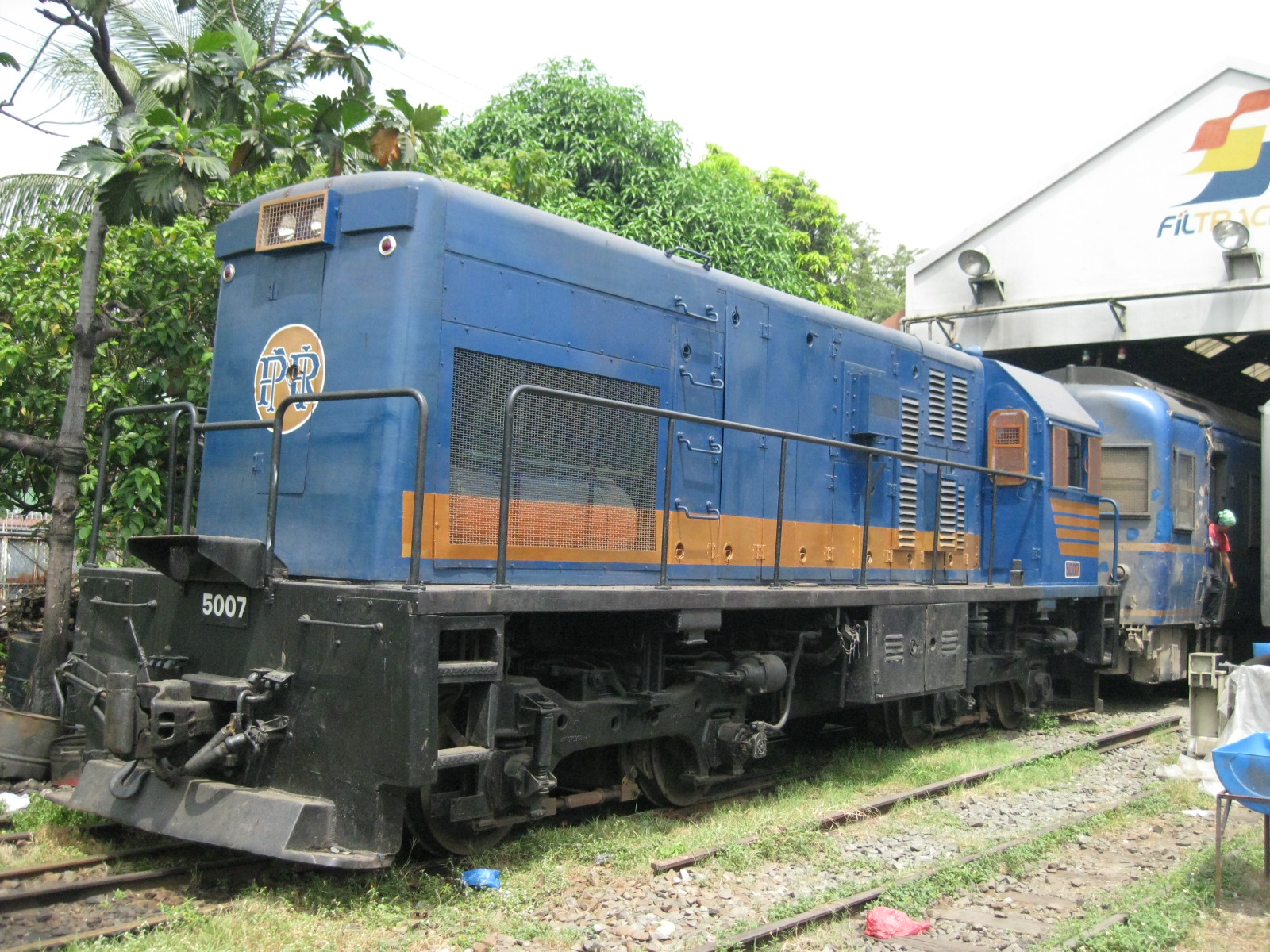 Diesel-electric locomotive that pulls PNR trains – unlike those I rode in Japan, Philippine trains are no electrified and have to be pulled by locomotives.
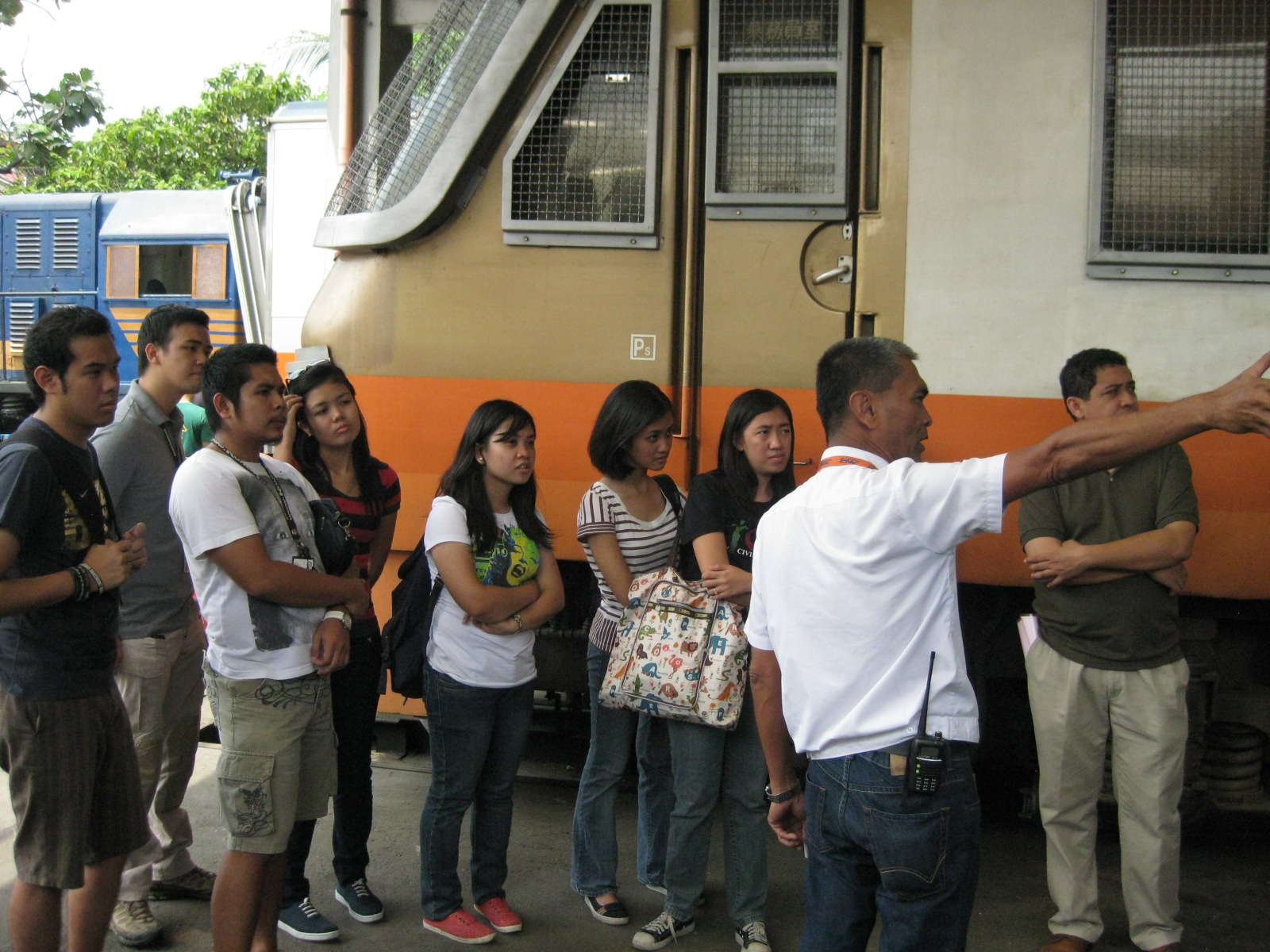 Technical tours – our hosts were very gracious and generous to provide us with a grand tour of the depot and the rolling stock. Such tours help our students to understand railway engineering “from the source.” Perhaps some students may be inspired to join a rail company.
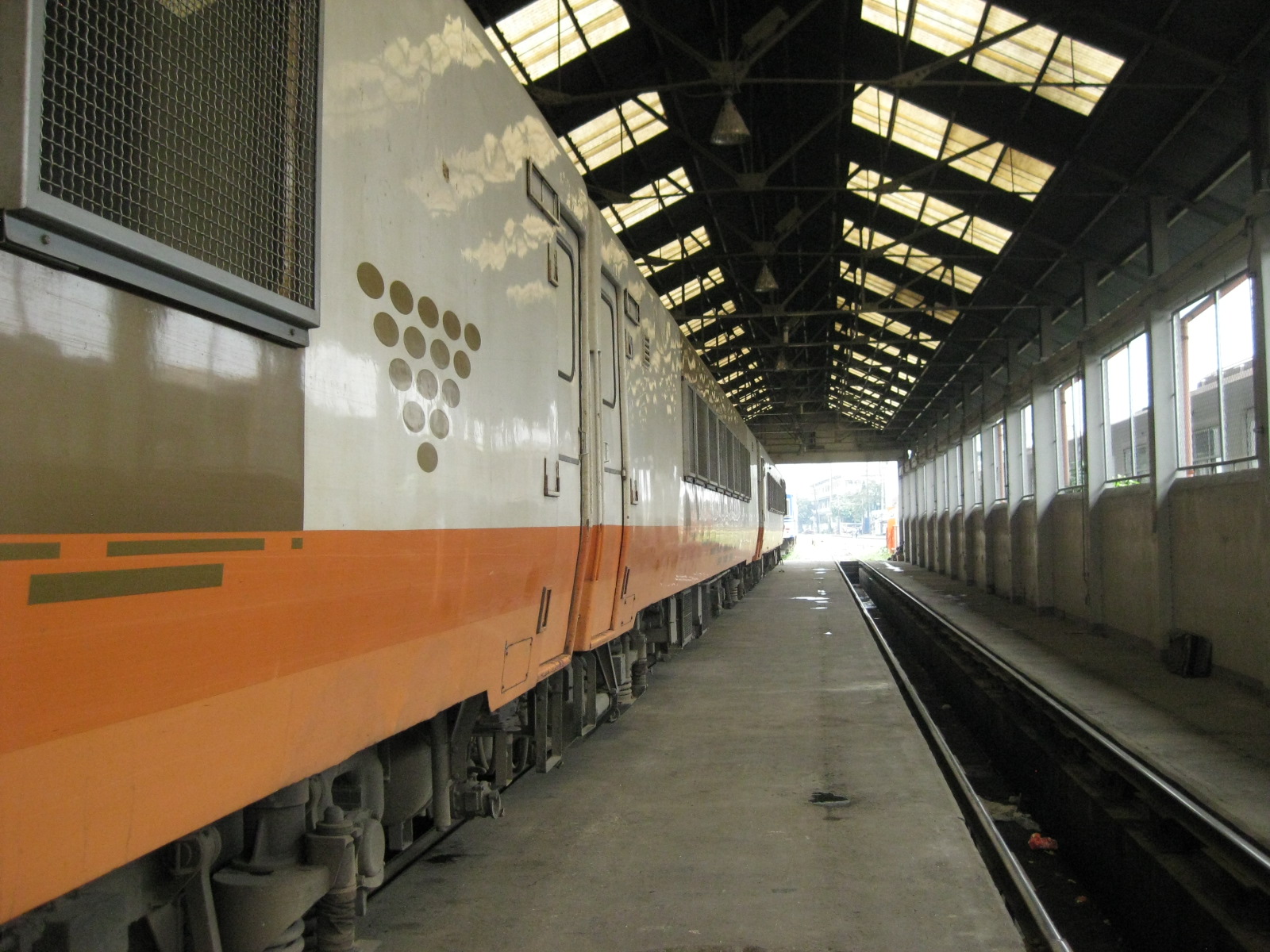 Sleepers – not referring to the rail ties but to the sleeper cars of this train, which has the family cabins consisting of 4 beds (0n 2 double-deckers) each cabin.
 Side view – the same diesel electric locomotive, which is actually a mobile power plant. Diesel is used as the fuel for the engine that produces electricity to power the locomotive.
 Upper deck – the cabins have 2 double deck beds with the upper deck bed having straps to prevent passengers from falling. While much of the PNR’s tracks have been rehabilitated, they are said to be still far from providing the smooth ride of their Japanese counterparts.
 Hallway – our students pose for photo along the corridor to illustrate the space in a sleeper car. There is a small seat that can be unfolded from the side wall across from each cabin door. Perhaps this is not really for use by the conductor but an extra seat for groups having a huddle or individuals wanting a seat to get a good view from the other side of the train. There’s are thick curtains that serve to provide privacy for each cabin. Each car is connected to each other so it is certain that passengers from other cars may be walking along these corridors.
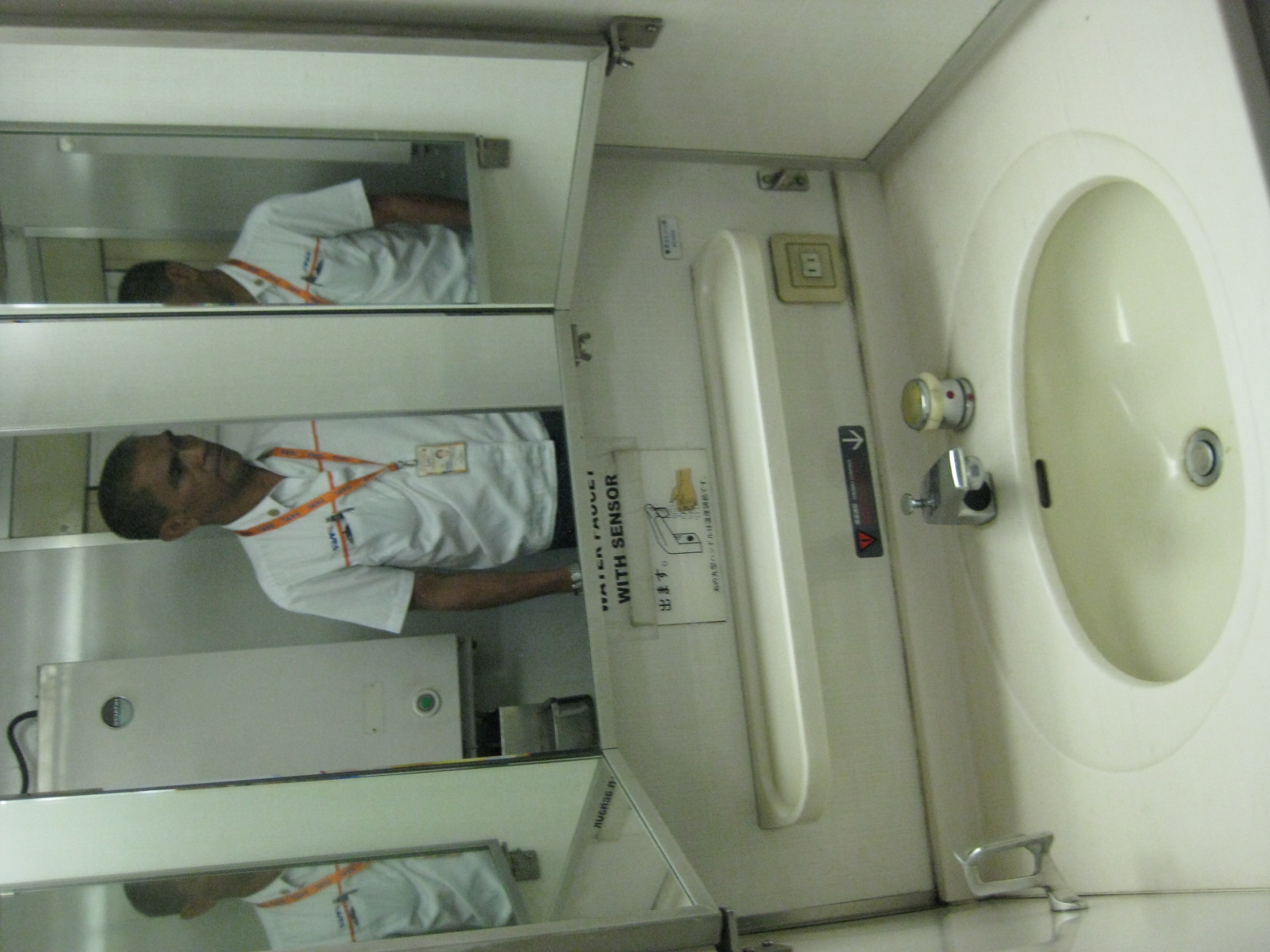 Wash room – the sleeper cars are equipped with washrooms and toilets for the long ride, amenities not usually found in most long distance buses serving the same corridor.
 Dirty toilets? – not really because this train has not yet been put into operation. The amenities like toilets and sinks are part of the refurbishing activities, we were told. Of course, this would have to be validated by actual passengers who would, by now, have taken the Bicol Express trains to/from Bicol during these Holy Week holidays.
 Conductor’s cabin – each car has a cabin assigned for the conductor or whoever is assigned to assist passengers during their journeys.
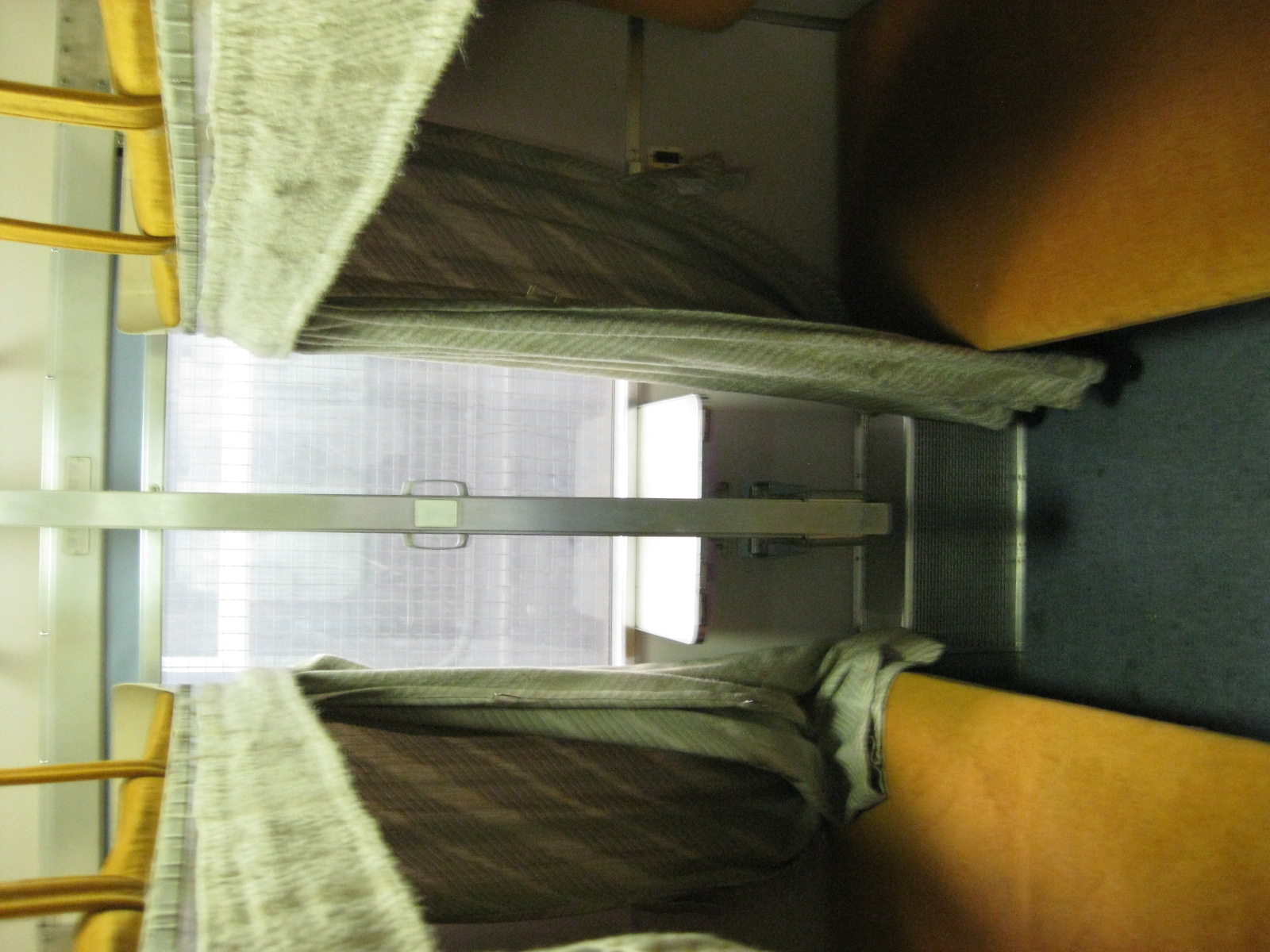 Double-deckers – the photo affords a better view of the double deck beds in a family cabin. The handles on the vertical bar on the center when pulled apart will reveal steps for persons to climb to the upper deck beds. There are also curtains for persons to have privacy particularly while sleeping or when sharing the cabin with other people.
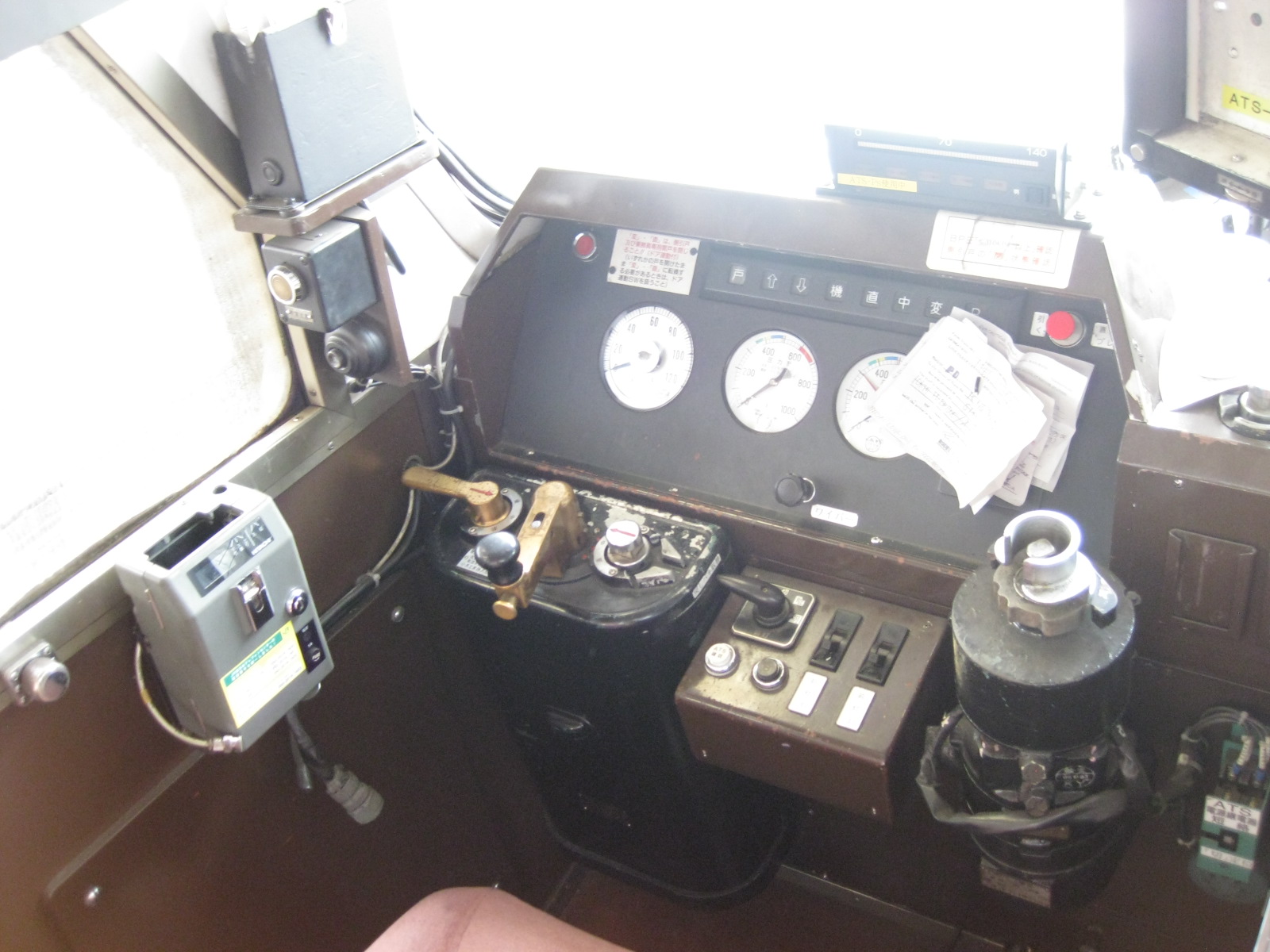 Driver’s console – the controls for the train give a hint on how old this unit is, noting that it has been retired in Japan. I remember looking at similar dials and levers during my first visit to Japan in 1996 when we usually stood behind the cockpit to see how the train is operated.
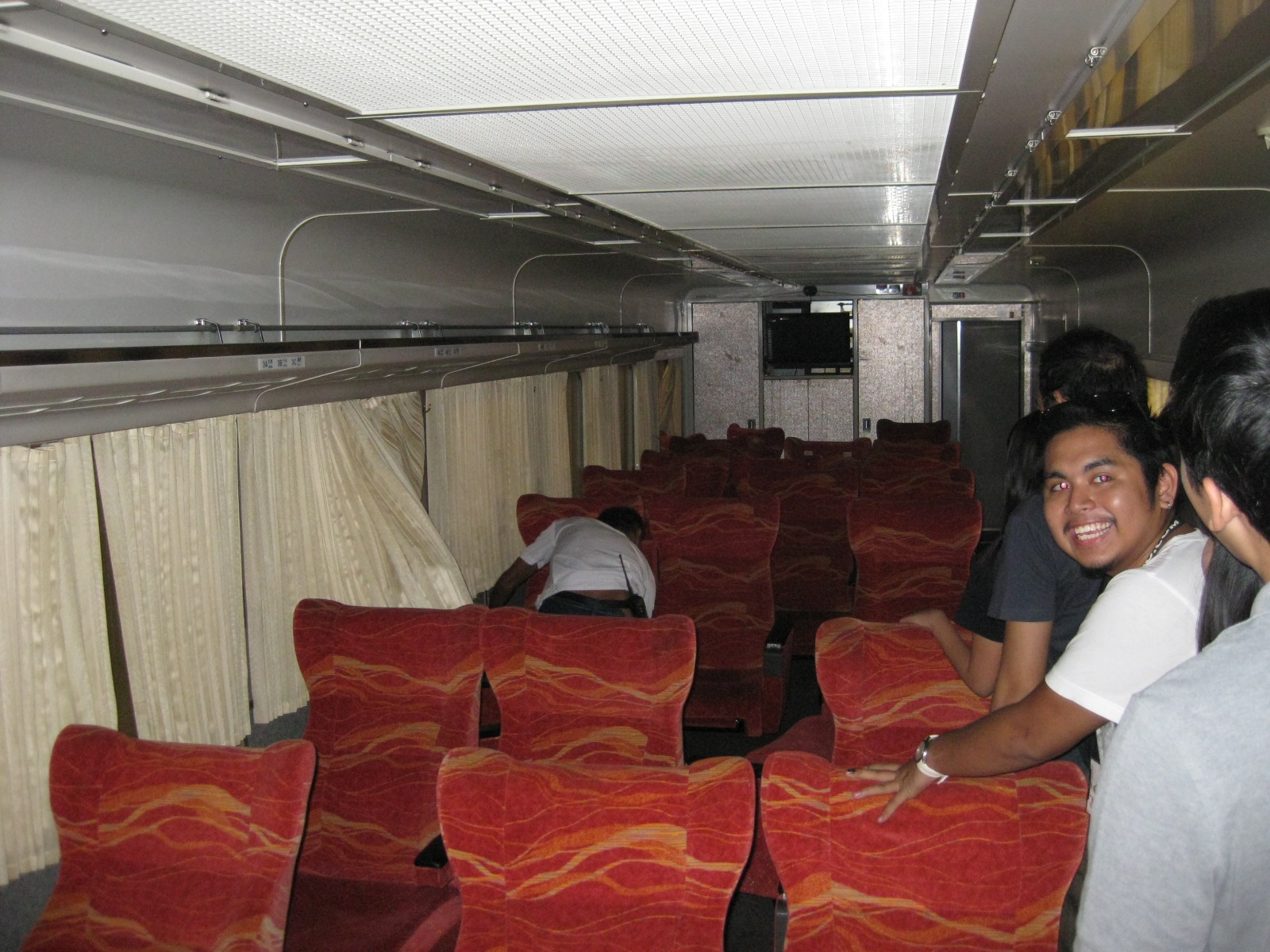 Recliners – inside the cars are reclining seats that seem to be as comfortable as business class seats on airliners. I tried one of the seats and the cushions are still quite firm for something that’s more than a decade old. I couldn’t smell any traces of tobacco so I guess these were already sanitized. Smoking cars are quite common in Japan and seats and entire cars can smell of smoke that tends to stick to the furniture and your clothes if you happen to be in one during a trip.
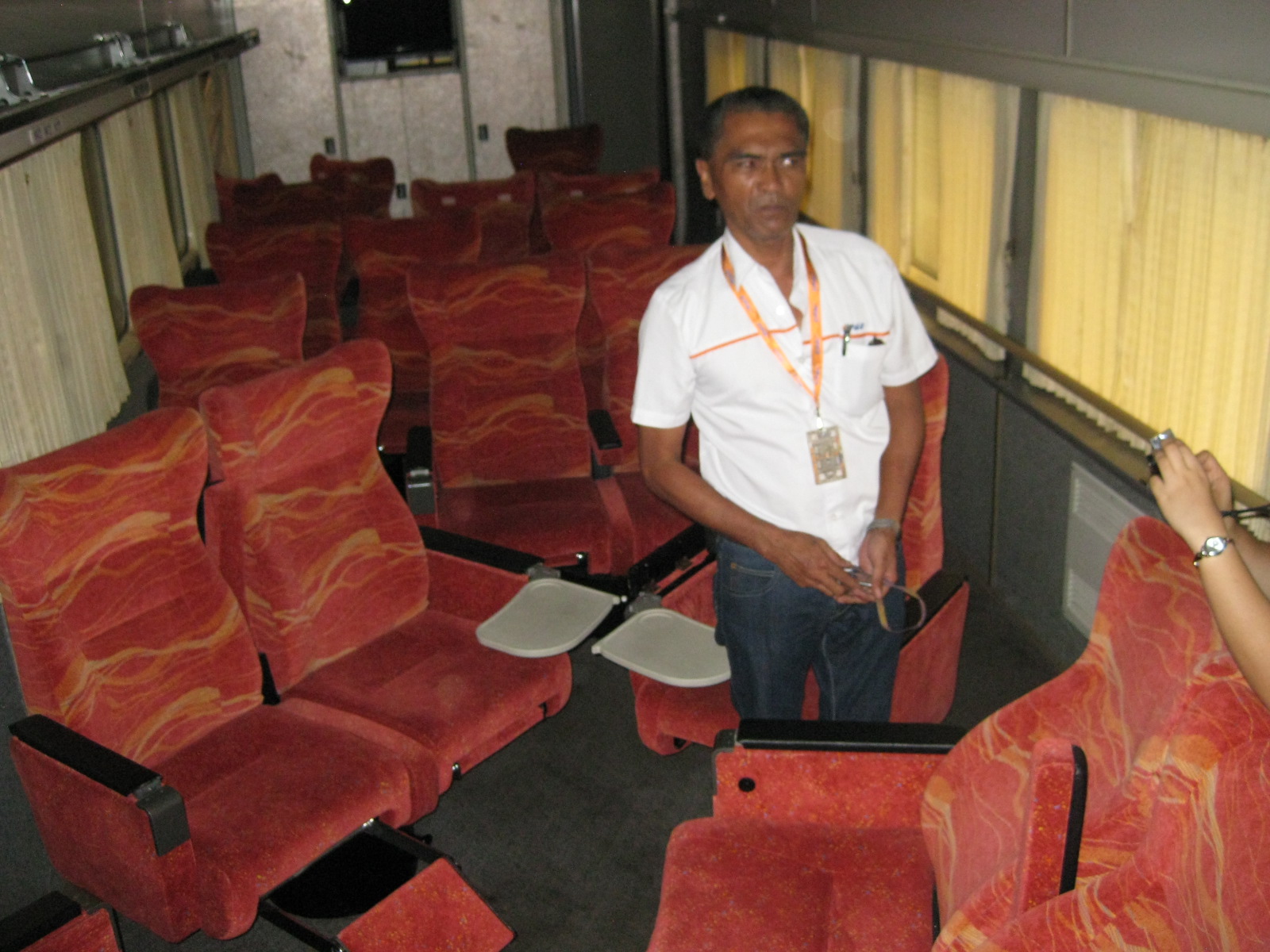 Rotation – the seat can be configured so that groups may face each other. Many seat two people kind of like love seats perfect for snuggling on long distance trips. There are also pull-out trays for eating, writing or working on your computer to update FB status or tweet about the experience.
 Entertainment – Yes, that’s a television set at the far end of the cabin. I can imagine that like in buses, the PNR will be showing some movies during trips to help passengers wile away the time. We were informed that big groups could actually take a car for themselves so it is also possible to have activities like workshops in the train. Perhaps groups could even have karaoke if they had the entire car to themselves.
 Reserved – the seat numbers remind ticket holders which seat they are to take and the characters remind us where the trains came from. That’s a hook (for hanging your coat or other belonging) in the lower center of the photo.
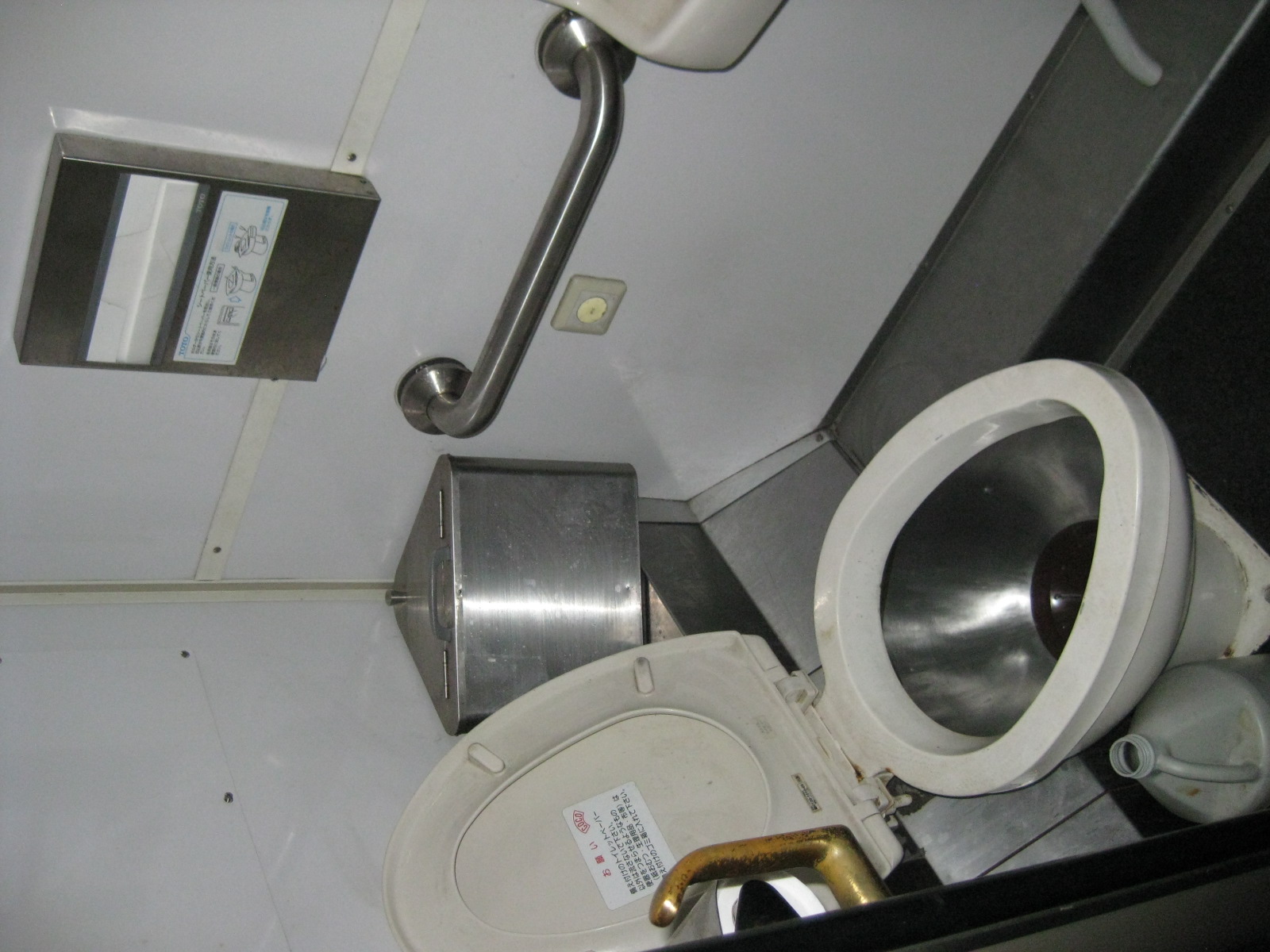 Toilets – the toilets are western-style with support bars for those requiring stability and a paper towel dispenser for the convenience of passengers.
 Toilets for PWDs and others – this has larger space for people requiring space including persons with disabilities, senior citizens, pregnant women and those with babies or small children.
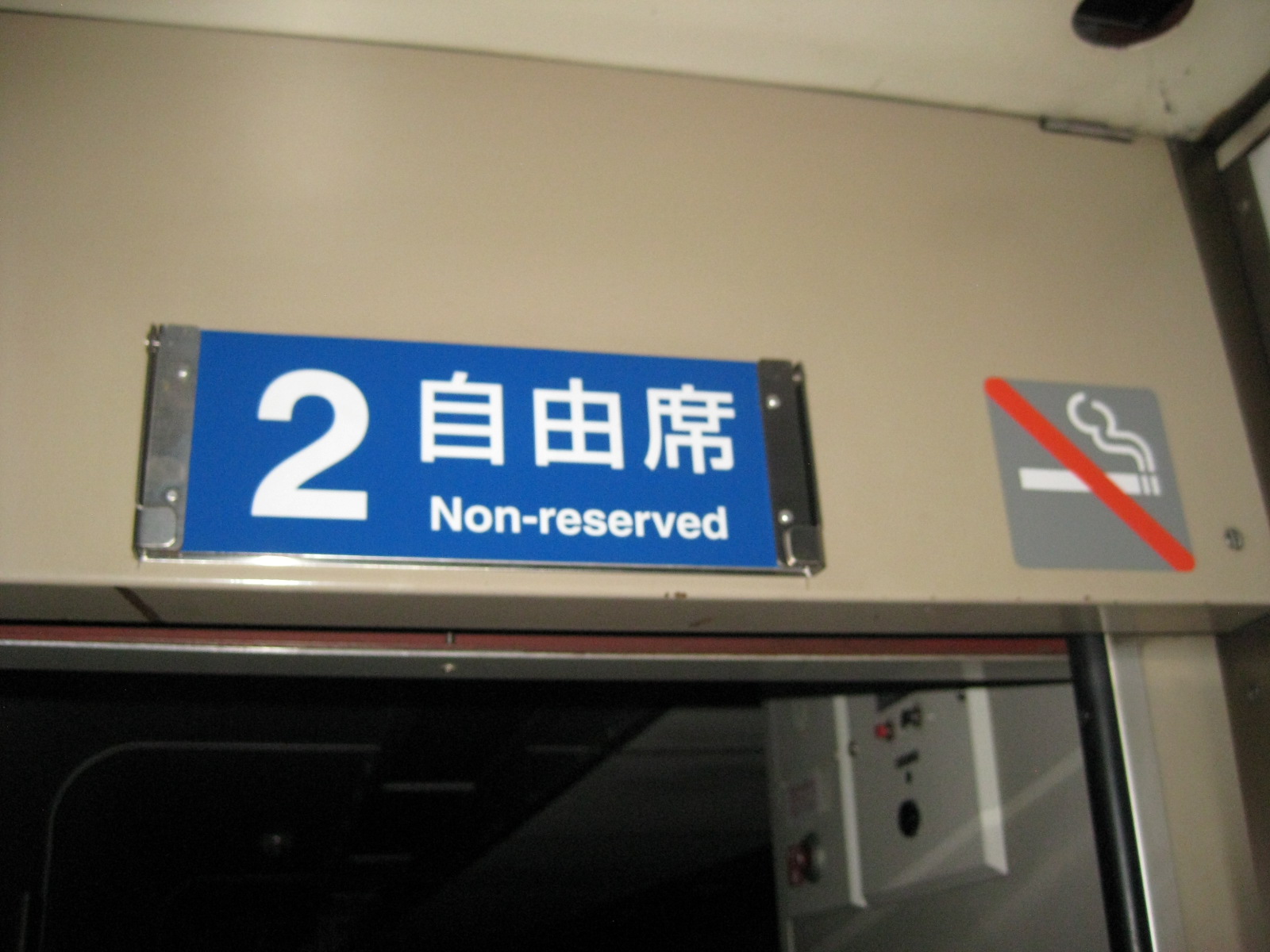 No reservations – in Japan “Non-reserved” means that seats on the car are first come, first served. One could purchase either such seats or the more expensive reserved seats from the train station.
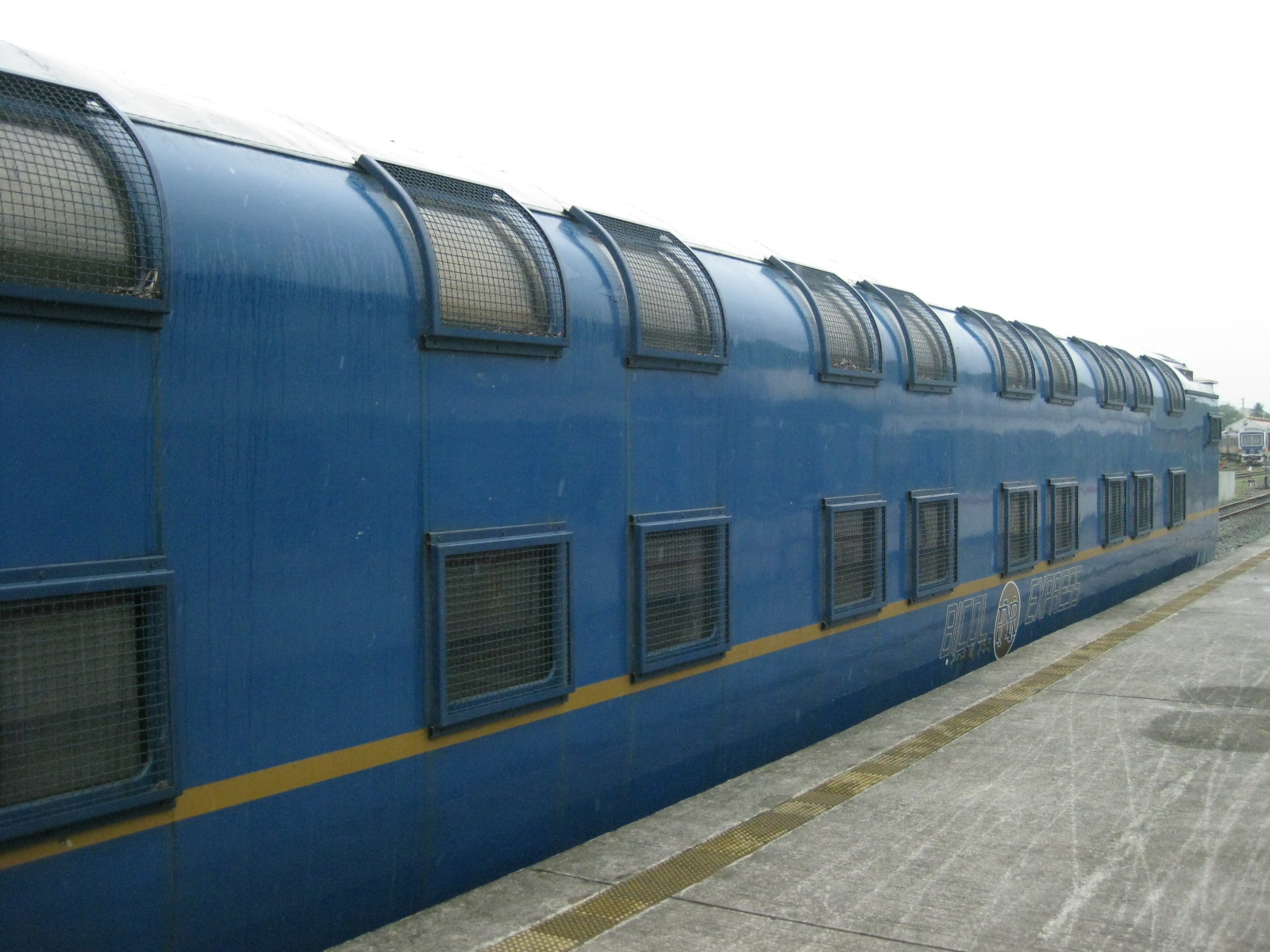 Executive class – the double deck cars containing Executive Sleepers or individual cabins for the Bicol Express
 Airconditioned – the Executive Sleepers have air-conditioning, which is a requirement for all services of the PNR that is part of the attraction for passengers. Some cars were fitted with generator sets to supplement the power provided by the locomotives. Note again that the PNR lines are not electrified so power required for lights, aircon and other equipment have to be provided by these generators.
 Dining car – the Bicol Express trains include dining cars like this one also being refurbished by the PNR.
 The Bar – the car included a bar where people could have drinks. This feature of the train elicited a lot of questions and some excitement among our students.
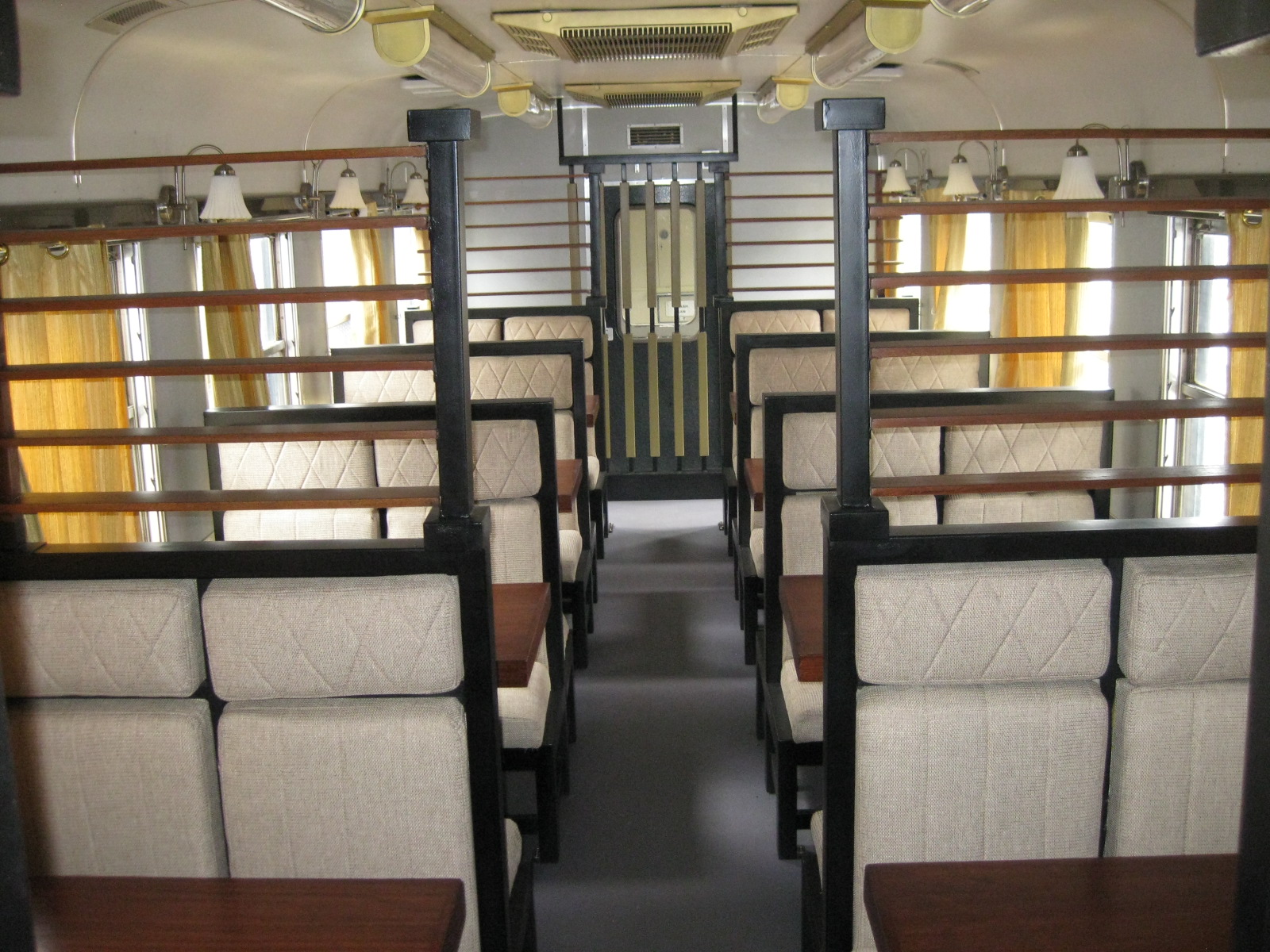 Dining tables – there’s ample space for diners though we were not able to ask who may actually be allowed to use the dining cars. There are 4-seater and 2-seater tables in the car.
 4-seaters – a closer look at the dining tables show comfortable seats and a good view from the window. Unfortunately, the Bicol Express trains travel at night so there’s really not much to see while in transit.
 Singles – passengers may also opt to eat at the bar, especially for the case of individuals who might end up hogging a table and depriving groups of space.
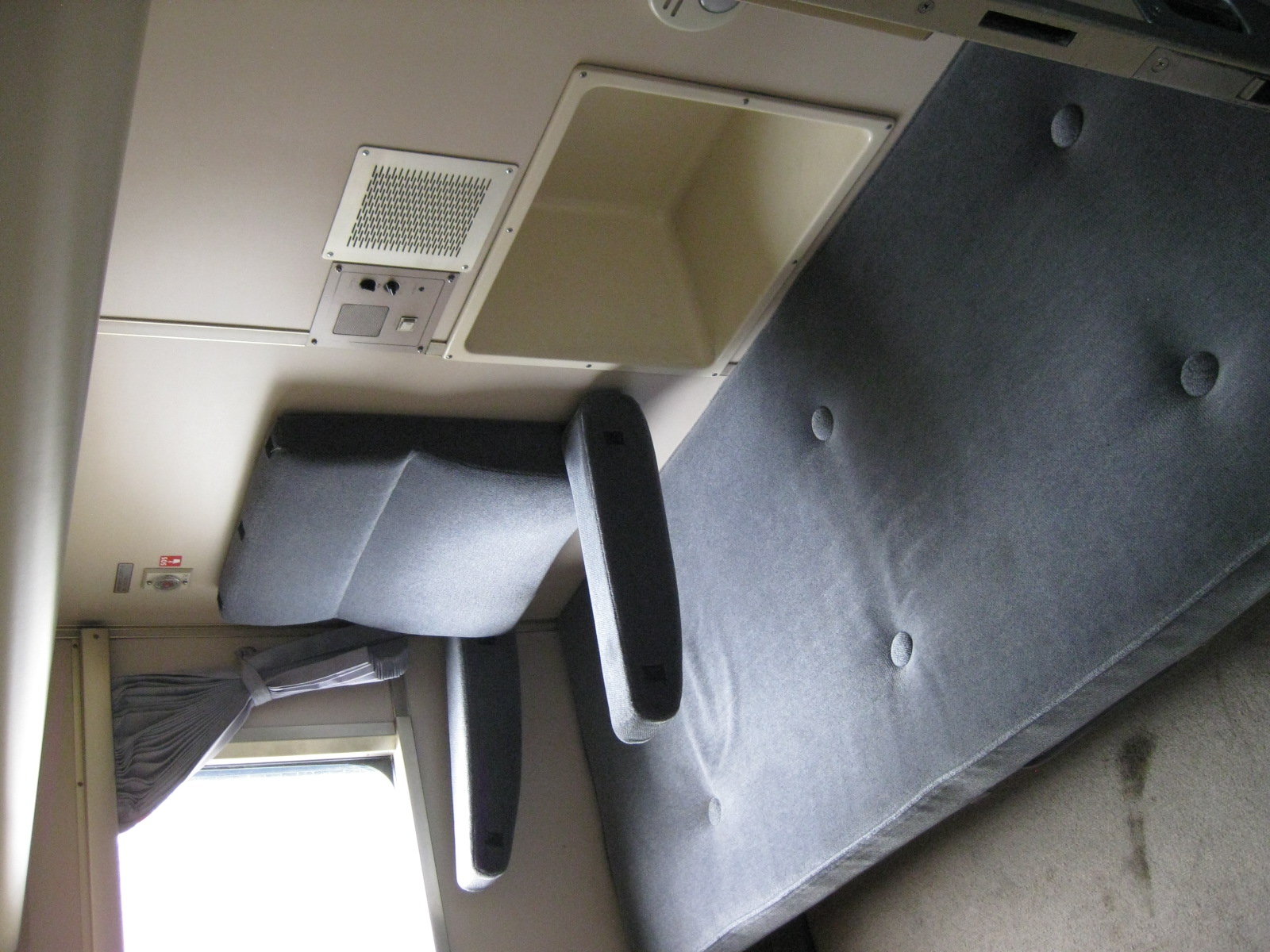 Executive sleeper – the cabin has a bed that doubles as a seat. Note the foldable arm rests and back cushion by the window. Also, there is space for a small bag located at a more secure part of the cabin.
 Lights and aircon – each cabin is equipped with a desk, adjustable lights and individual air-conditioning control for the convenience of the occupant.
 Window seat – each cabin has a window and generous space for the individual. The same features are found on the cabins on the upper deck but I guess the view is better upstairs so these would be the choice cabins for the Executive Sleepers.
I look forward to finally riding the Bicol Express, perhaps with family or friends, as I visit relatives in Bicol (my mother hails from Sorsogon). Though I can ride the train to Legazpi City, Albay, it is just a short trip by bus from that city to my mother’s hometown. Of course, there are other cities of interest for me including Naga City, my father-in-law’s hometown and Legazpi where there are many attractions around. My father has told me a lot about the Bicol Express, which he took with his sisters en route to Sorsogon to wed my mother. And so, part of the attraction to the train is sentimental in nature.
–
PNR Field Trip 2012
We took our students to a field visit to the Philippine National Railways (PNR) station and depot in Tutuban in Manila. It was a good experience for all of us who joined the trip as the PNR is currently in the process of upgrading their services with the acquisition of refurbished rolling stock and the resumption of services to Bicol. We were quite curious as to the current state of the PNR after what has been a long period of neglect from a government that is supposed to promote safe, efficient and affordable mass transit not just for the urban setting but for long distance travel as well.
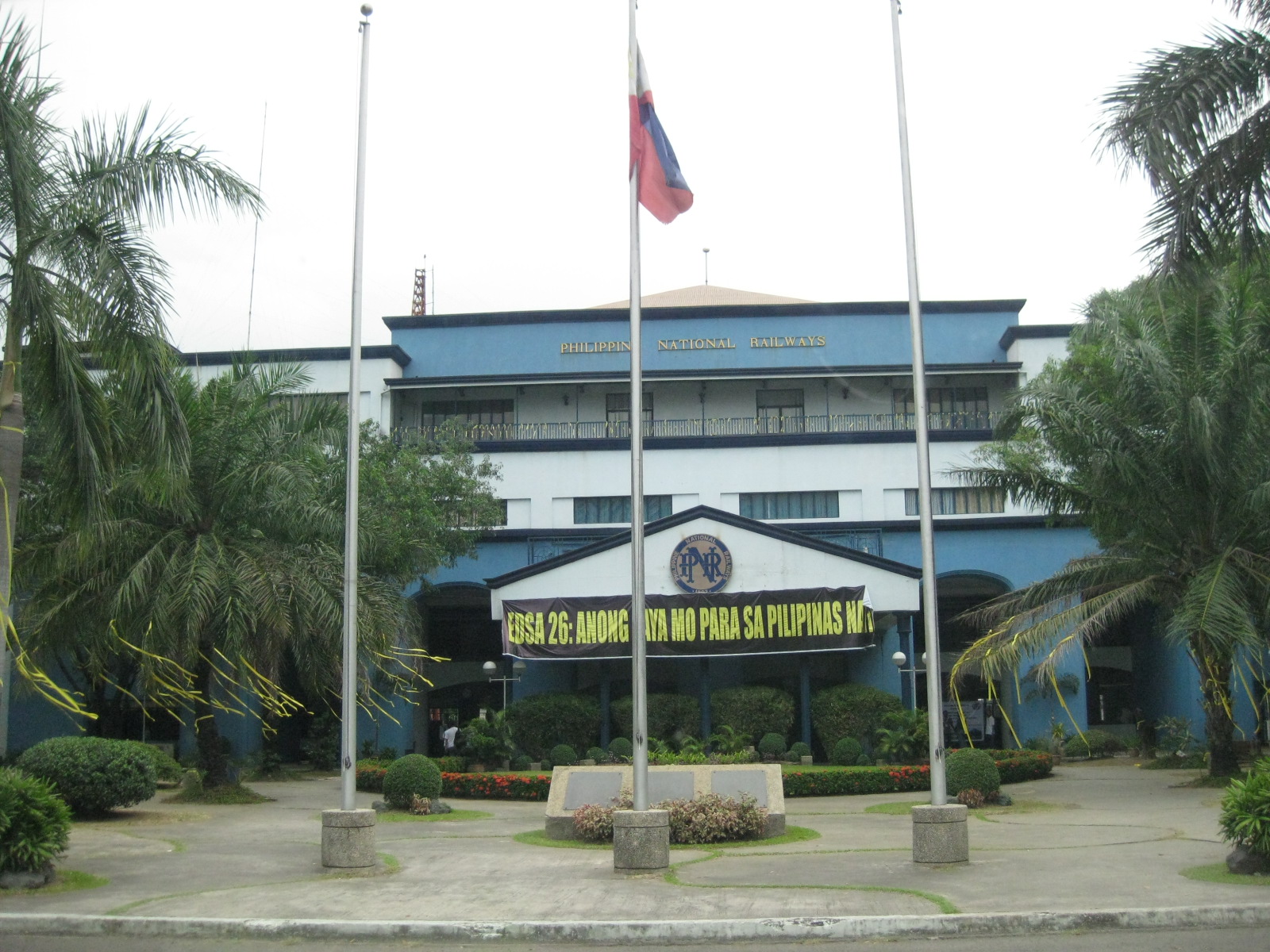 The PNR station and office building at Tutuban – the old station is actually where the Tutuban is now located. Access to the Tutuban Station is through a gate and the surrounding area is not suitable for a main or central station. There is no station plaza and as we will see in another photo, the space including the platform will not be suitable should operations expand in the next few years. In fact, passengers entering the station are processed as if they are entering an office building. This is partly true as the building serves as head office for the PNR.
 Train schedule for the PNR commuter line – service frequency is still low with headways of 30 minutes (a train every half hour). With the number of passengers steadily increasing, the current capacity of trains has already been exceeded. The PNR should resolve issues pertaining to conflicts along its tracks and deploy more trains and/or more cars.
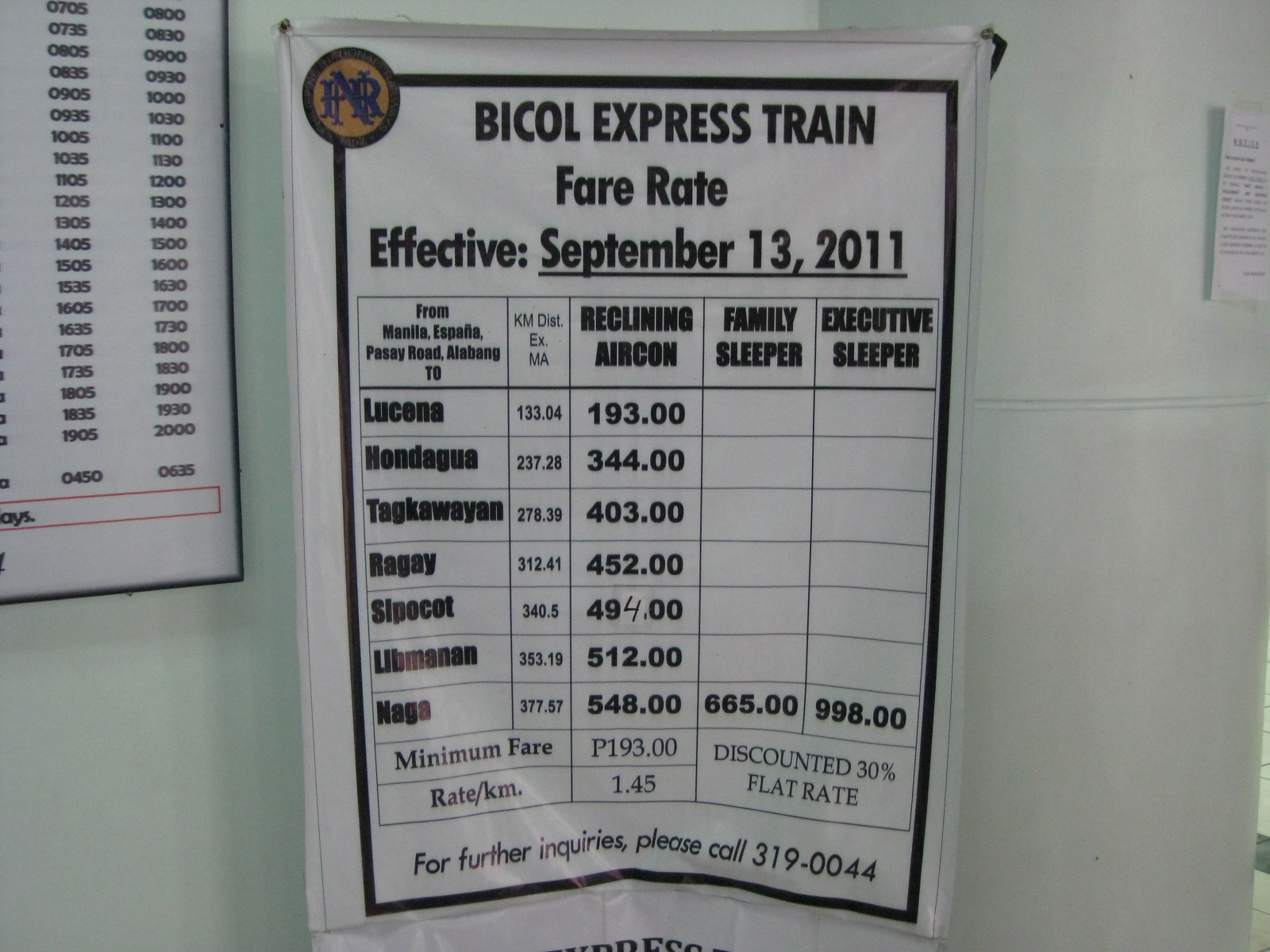 Fare table for the resurrected Bicol Express – family and executive sleepers were supposed to start operation last March 16. We were told that the PNR hosted representatives of travel/tourist agencies to an exclusive initial run of the sleeper and recliner cars to Bicol and back. This was part of the promotion of rail services to travelers especially as the summer months are approaching.
 Replica of old PNR train car – there were many photos and other memorabilia on display at the Tutuban station. Unfortunately, the security people seem quite iffy about people taking photos. They had to be told by our host PNR officials that we were visitors from the State University. I found this to be very odd and a definite turn off for people interested in the trains. Rail needs to be promoted and PNR security is not helping in this aspect.
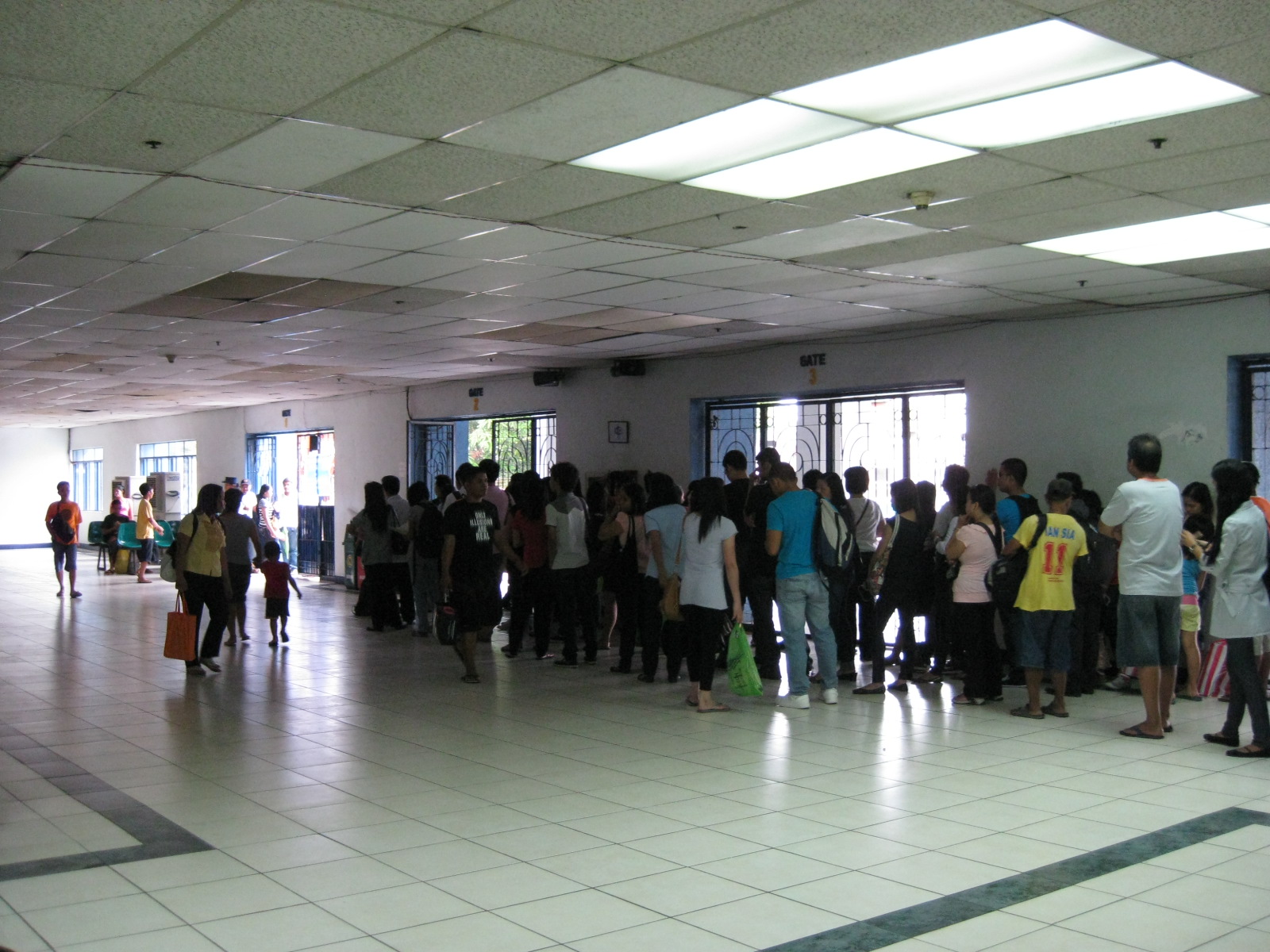 Passengers queued at the Tutuban Station – there were very few seats in the waiting area and passengers who want to board the next train emanating from Tutuban had to stand in line from the gate where PNR staff and security process passengers. A better system should be established here including the introduction of ticketing machines and turnstiles to better serve passengers. It won’t hurt also to have an electronic information system for train schedules and announcements.
 Maintenance cars – when our hosts led us to the platforms, the first things that caught my eyes were the maintenance cars. These have allowed the PNR to provide better maintenance work on their tracks, no longer relying solely on manual labor for inspection and other works. Behind the equipment are cars familiar to me and my colleagues – Japan Railways (JR) retired these cars from the Saikyo Line that served areas along a route connecting Tokyo and Saitama Prefecture.
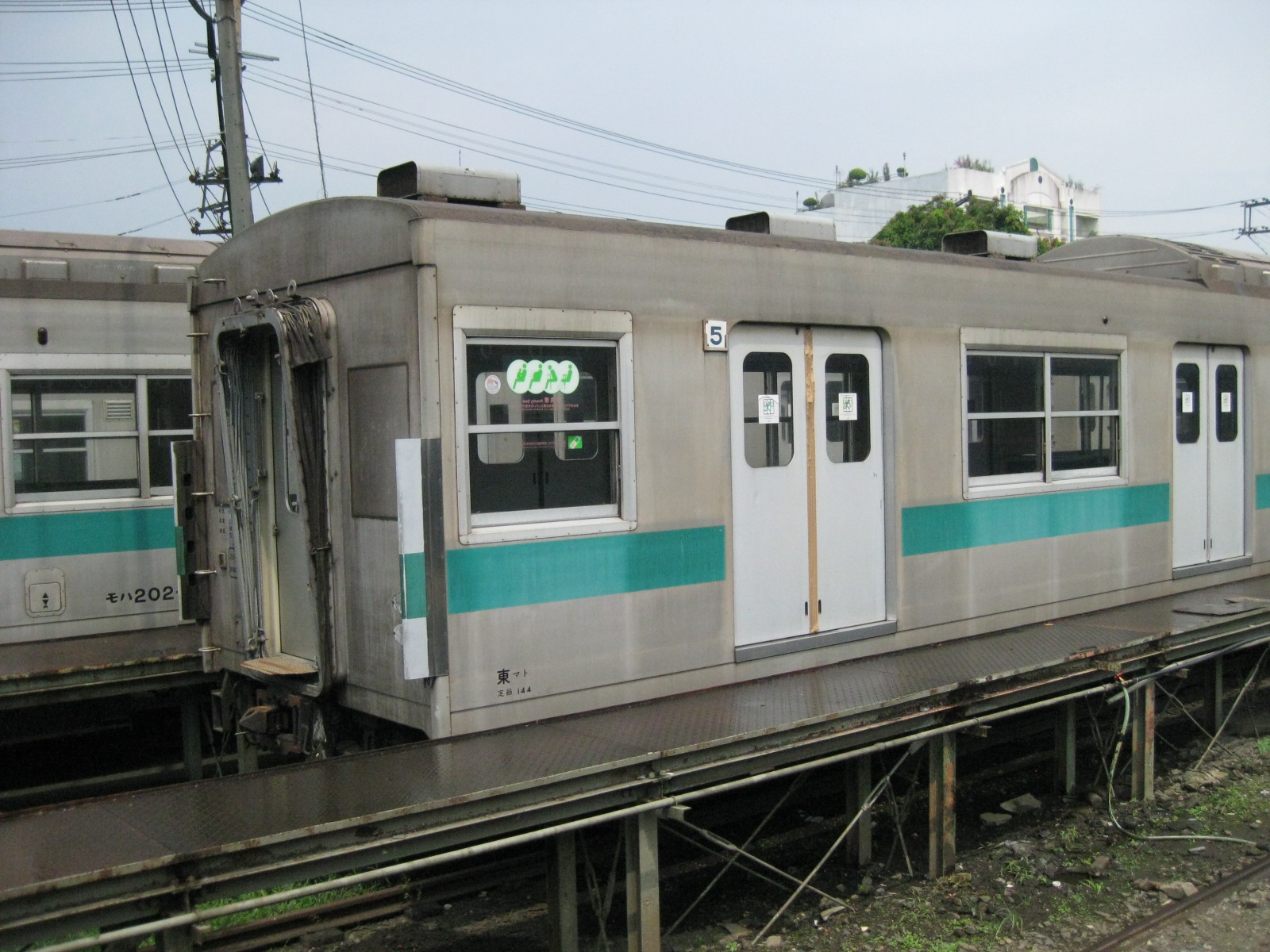 Nostalgic – these cars were the very same cars we used to ride along JR East’s Saikyo Line, which now runs between Omiya in Saitama Prefecture and Osaki in Tokyo via Ikebukuro and Shinjuku. It was usually my choice for going to Tokyo from Saitama University if I was heading to Shinjuku or Shibuya. From the university, I ook a bus to Minami Yono Station where I can also see Shinkansen trains passing through the station. The latter were also headed to Omiya where the Shinkansen lines branch out to Nagano, Tohoku and Akita. The cars shown in the photos are donations from Japan and the PNR only paid for its transport.
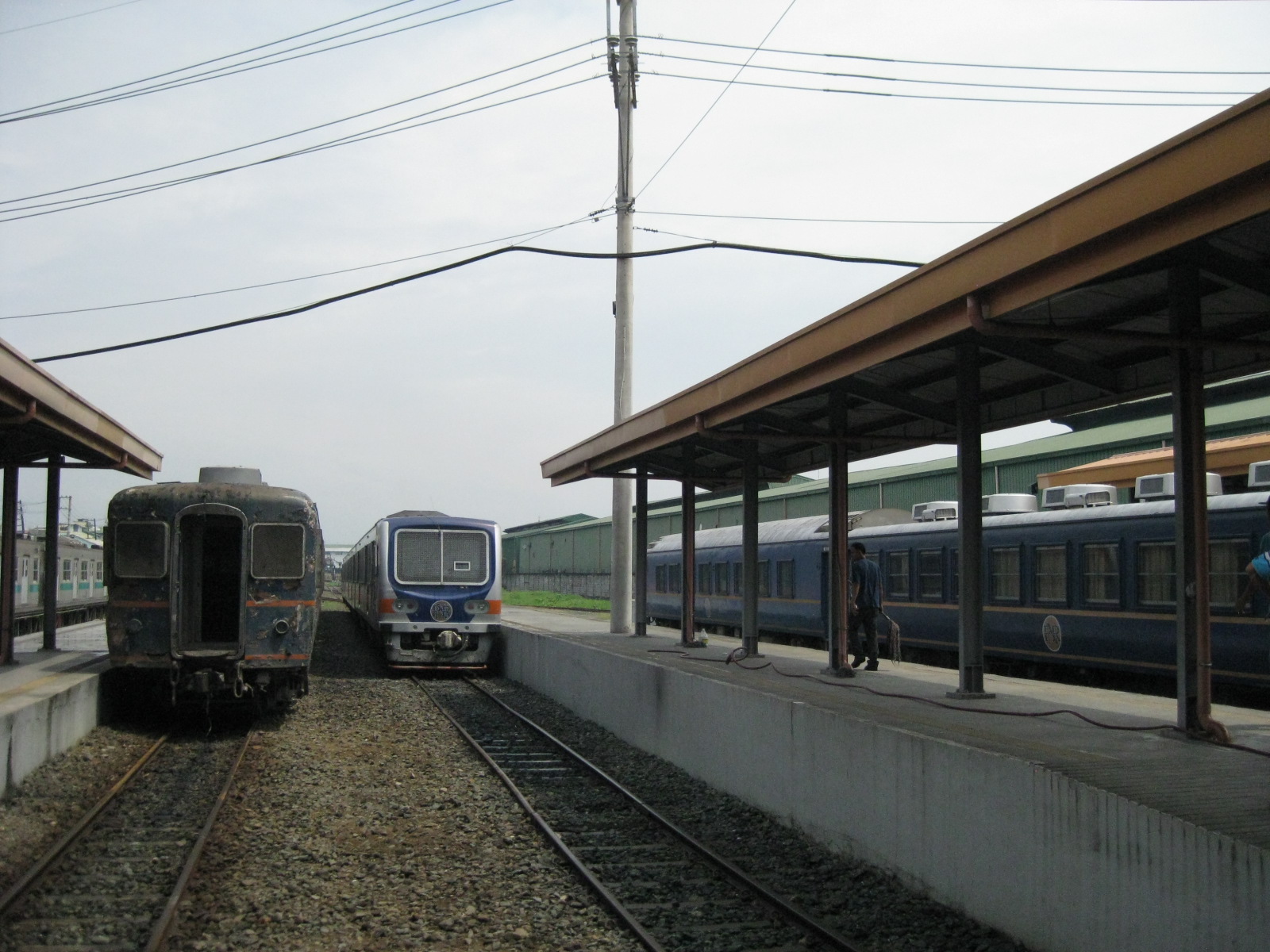 Old and new – old cars of the PNR may also be found at the Tutuban depot like this old passenger coach at one of the platforms. We were not able to ask if the PNR had plans to preserve these old cars. In other countries, there are railway museums like the one near Omiya Station in Japan. I’m sure the PNR would not lack for museum pieces including the old locomotives on display at its gates.
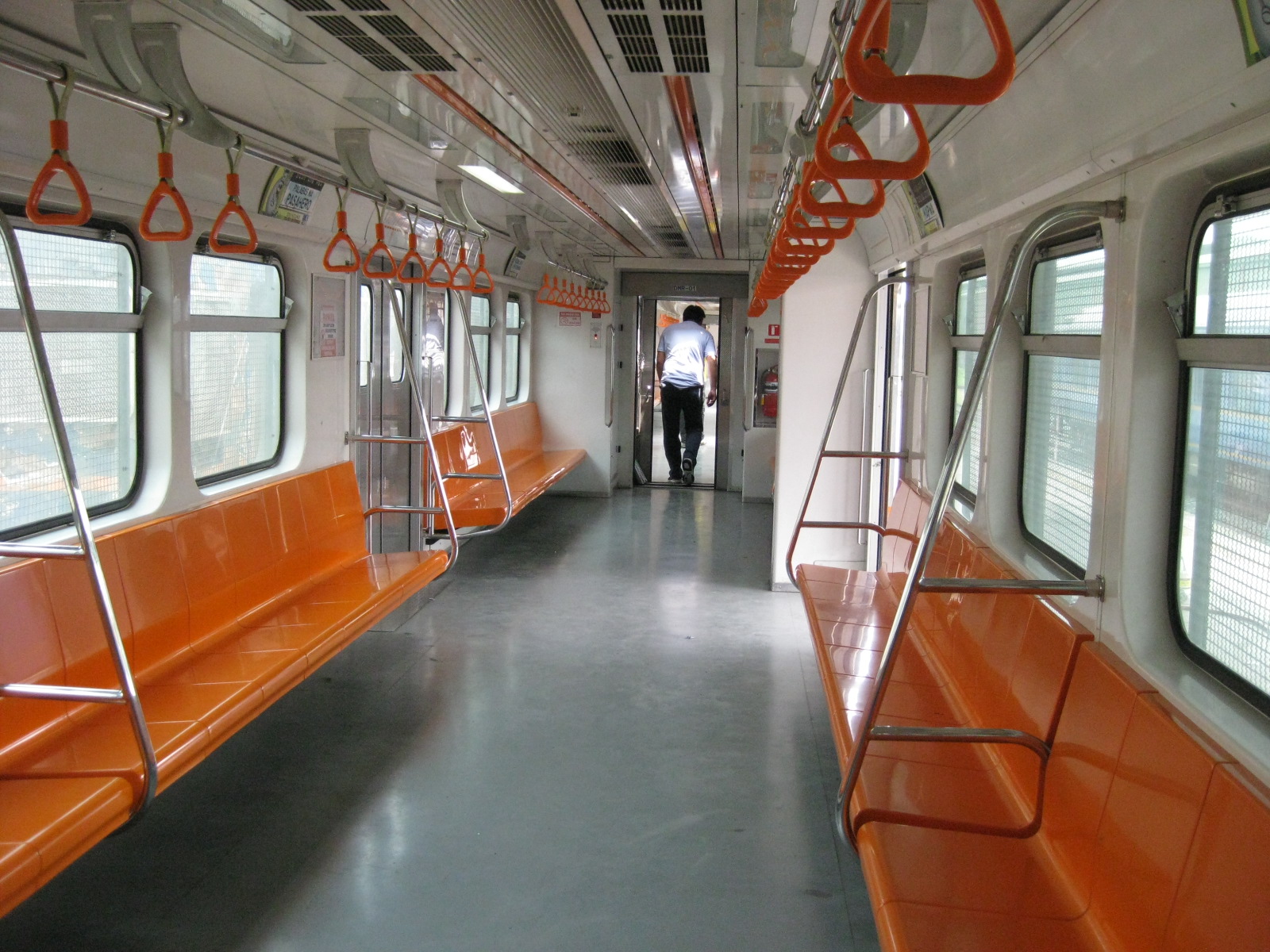 Sparkling – The interiors of the commuter trains reflect the service upgrade for the PNR. The trains are clean and spacious (appropriate for the capacities required for commuter service).
 Try-outs – our students and my colleagues try out the seats as we were ferried from the Tutuban platform to the depot where our hosts gave us a technical tour of the rolling stock and other facilities.
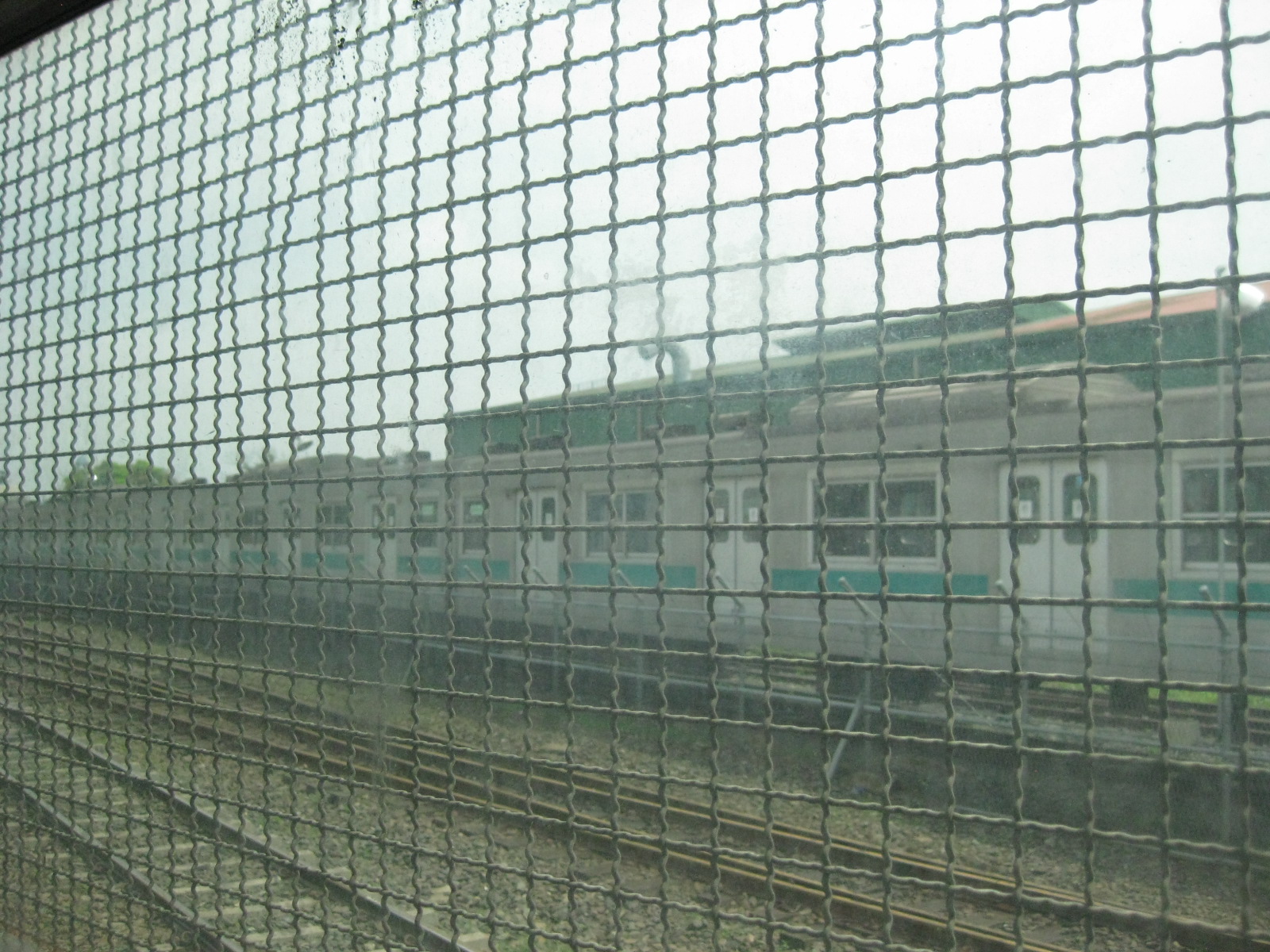 Grilled reminder – PNR coaches have their windows fitted with grills like this on the PNR commuter trains. Despite efforts to clear its right-of-way of informal settlers, there are still many along its route and these have often vandalized trains. In many instances, garbage and other items are thrown at the trains. These incidents have been significantly reduces but the PNR continues to experience such, necessitating the installation of grills. The coaches from Japan will not be operated until they are fitted with the same grills. Hopefully, the PNR ROW will be clear of informal settlers as well as other sources of impedance.
 Control panel – the lead car of the train features this more modern panel for the train controls. Note also the grills on the windshield of the train to mitigate the impacts of stones or other items thrown at the train as it rolls along its tracks near communities that include informal settlers.
 Exit route – when our train reached the depot, we had to climb down from the train as there were no platforms in the area. For this, one had to climb down backwards and feel for the steps just below the doors.
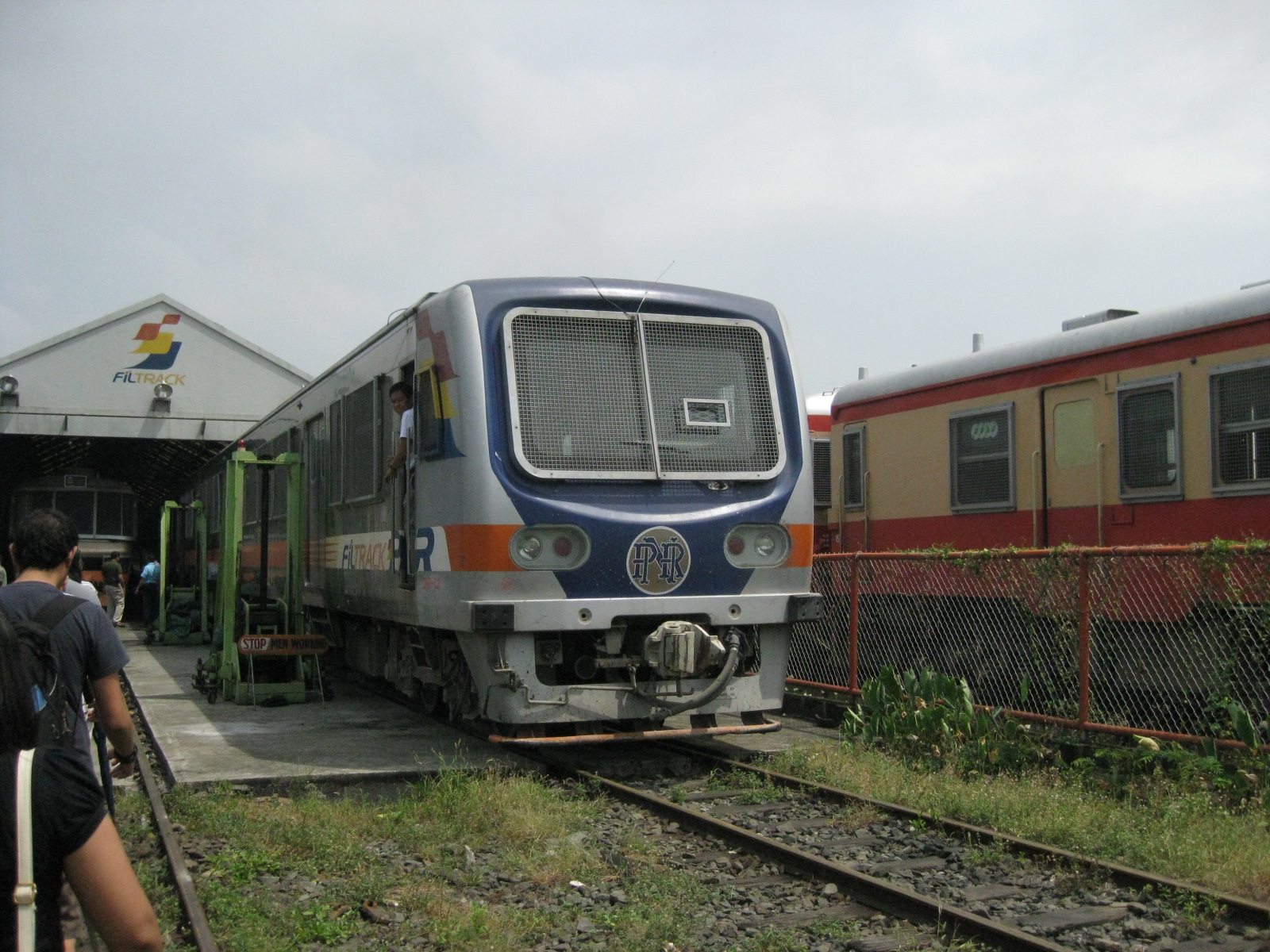 Maintenance yard – one of the newer commuter trains from Korea undergoing maintenance work at the depot. The coaches on the right are also Japanese donations for refurbishing, and are fitted for long distance travel though not as comfortable as the recliners or sleeping cars. These are more for longer distance commutes like from Laguna to Manila, which are similar to commutes along the JR Tokaido Line.
 Busy bees – with the resumption of Bicol Express services and the revitalized commuter line, the PNR’s maintenance staff have become more busy. There seems to be higher morale, too, as the long-neglected railway company gets a much needed proverbial “shot in the arm.”
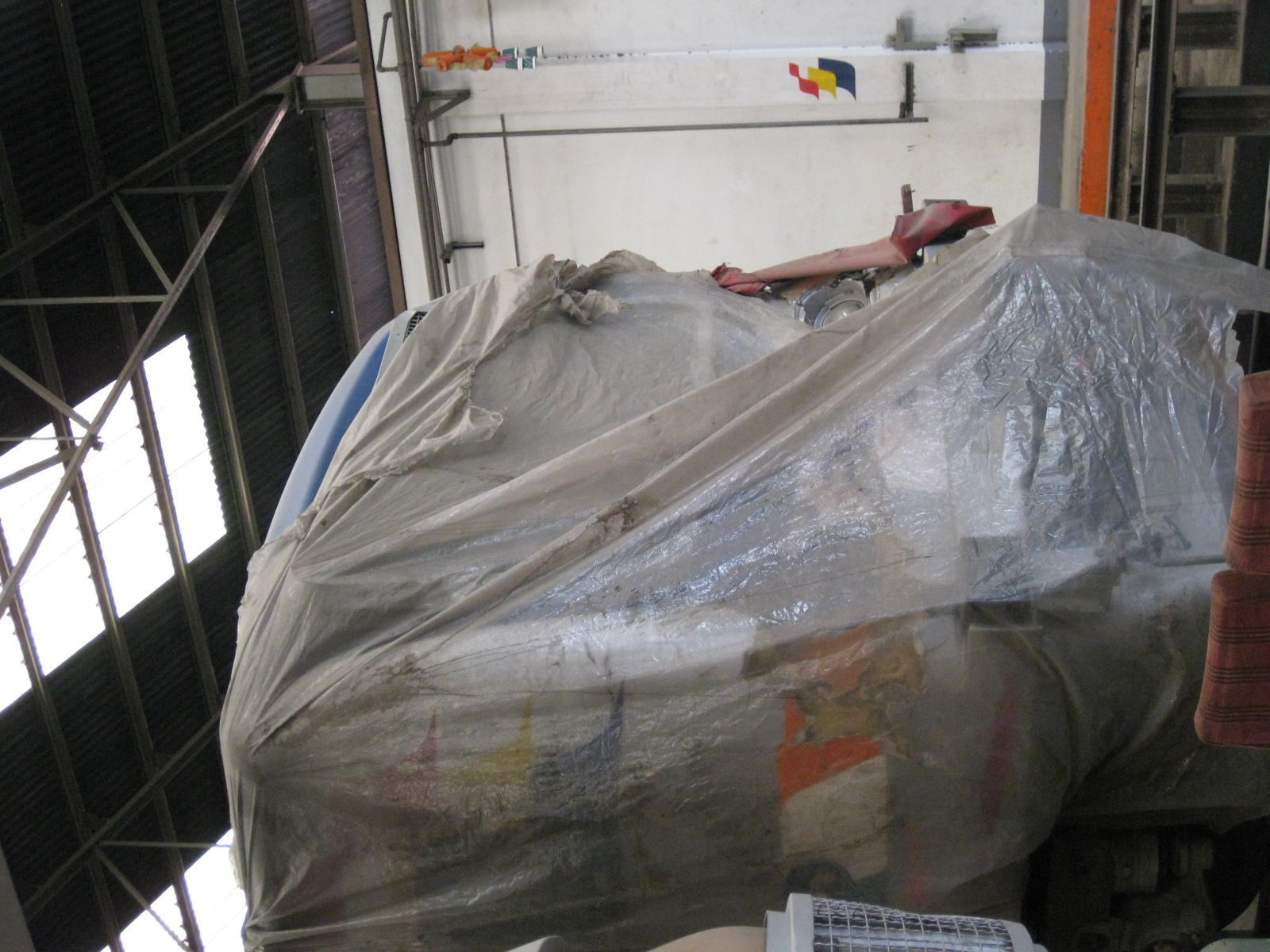 Crash victim – one of the commuter trains was involved in a crash when a truck proceeded despite the warnings and the barriers indicating an approaching train. That effectively knocked out one train and will cost the PNR a lot to repair the train. There are still many issues pertaining to safety along rail crossings, and many motorists and pedestrians remain hardheaded (pasaway?). As the PNR increases its frequencies for both its commuter and provincial services the subject of safety will become more serious and one that needs much attention.
 Briefing – colleagues ask our hosts about operations and other matters concerning the PNR today. Our students also had the opportunity to ask about employment possibilities at the PNR including what qualifications are needed for railwaymen.
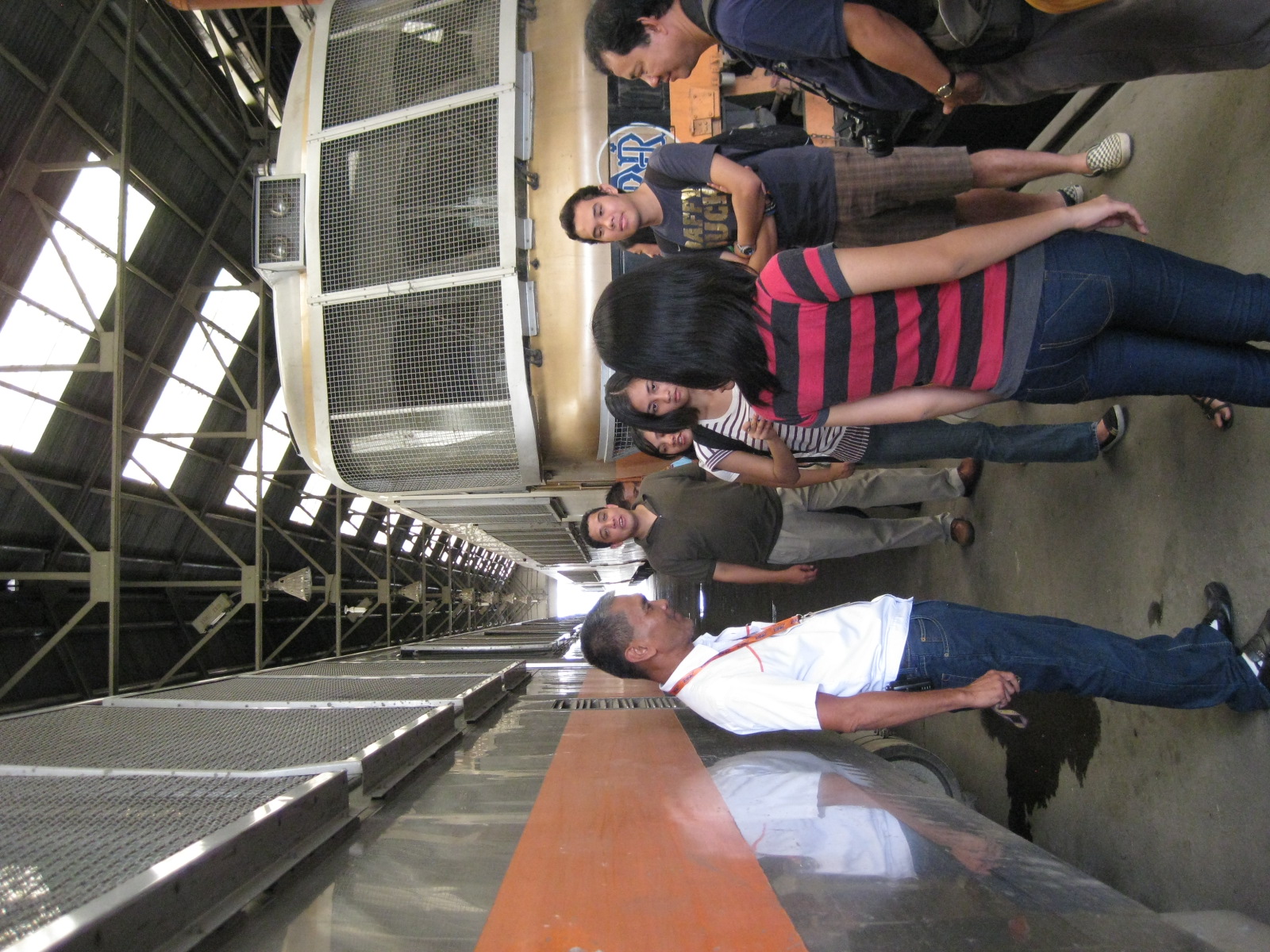 From JR to PNR – those are more Japanese trains in the background. We were not really surprised about the conditions of the trains considering that JR does a great job maintaining their trains given their usage.
 Recruitment pitch – our students had plenty of questions for our host including those about the trains and the history of the PNR. They were informed that the Polytechnic University of the Philippines (PUP) has a baccalaureate program in Railway Engineering and that our host taught courses there. When asked where the graduates go for employment, our host mentioned its difficult for them to get employment locally as railway engineers and that the program will soon terminated.
 Noontime rush – back at Tutuban Station, we witnessed passengers alighting at the station and walking towards the exit. The number of passengers was significant considering the limited capacity of the trains and the fact that it was already noontime. There are probably more passengers during the morning and afternoon peak periods.
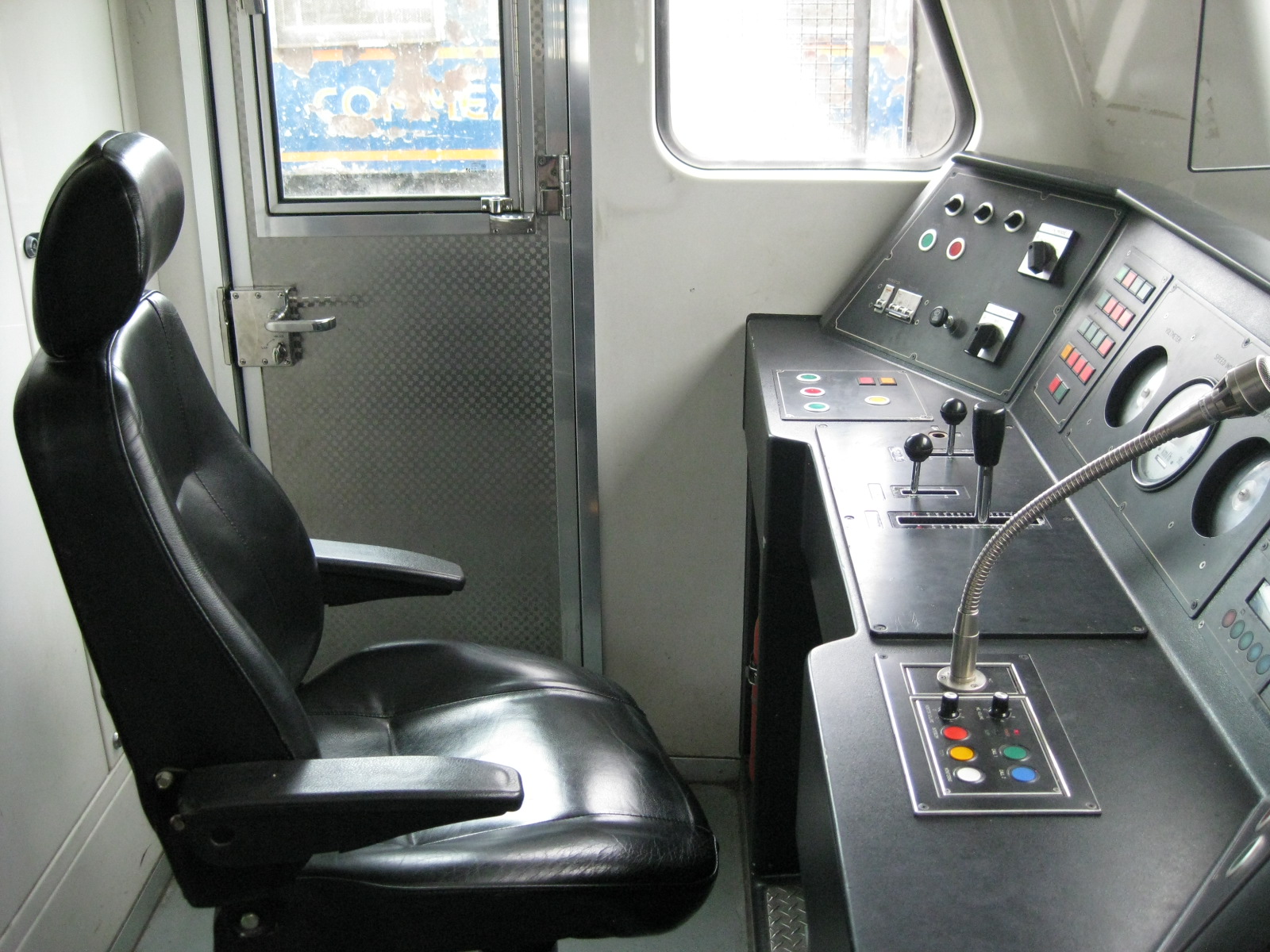 Driver’s seat – I took this photo when we boarded our train from Tutuban to Espana. Our hosts were very kind and generous to allow us to ride in the cockpit where all the action takes place. We also got a firsthand experience of what the driver had to go through (his hand was practically on the horn the whole time he was running the train) to earn a living.
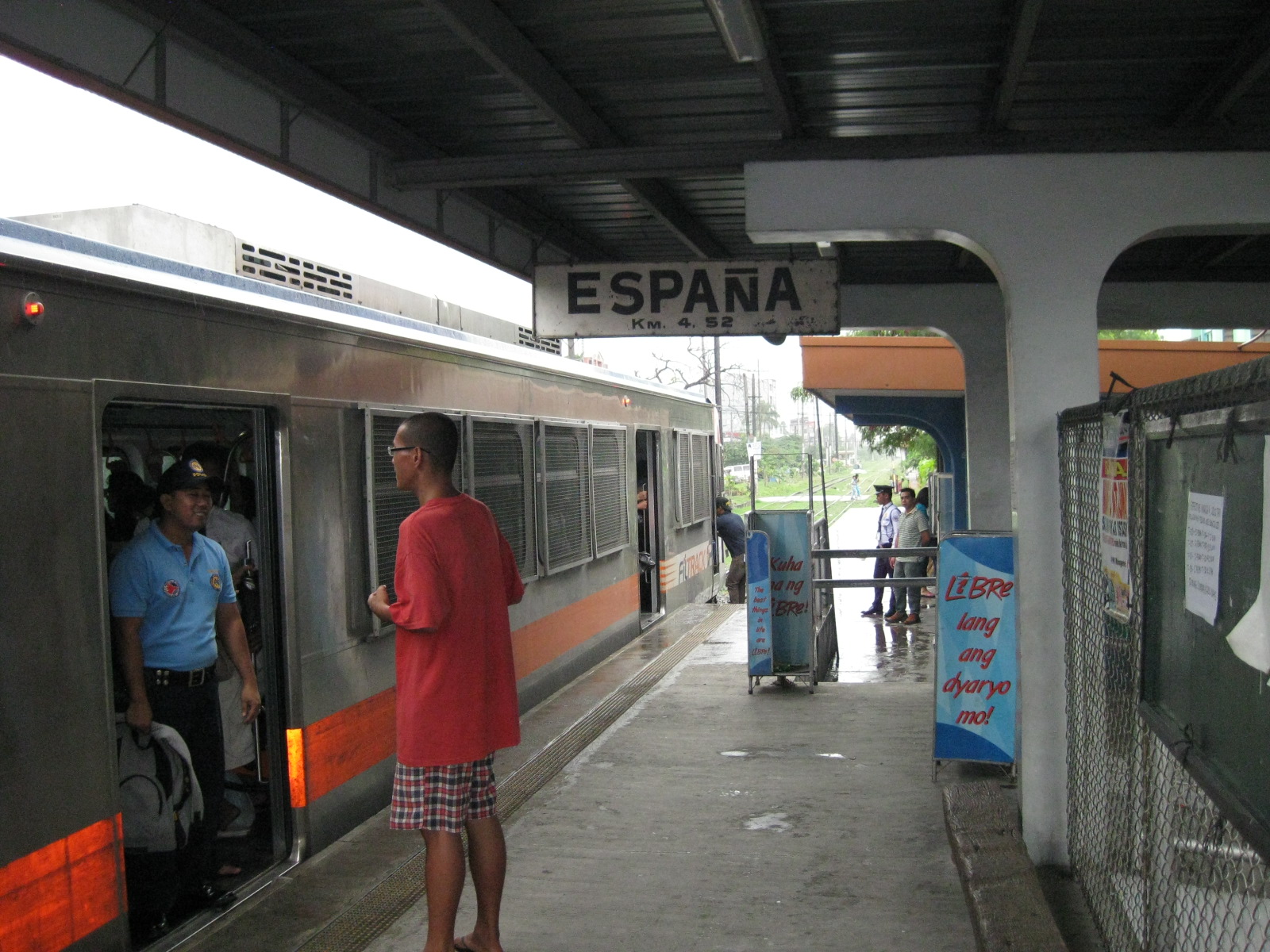 All aboard! – the Espana Station platform after all passengers have boarded the train. One passenger seems to be talking to the security personnel at one of the doors. The DOTC and the PNR posts security staff on the trains to ensure safety and security on-board. Their presence is a deterrence against criminality including snatchers and con-men who prey on students and the inattentive.
 Capacity – the train is filled with passengers, underlining the demand for more efficient public transport services in Metro Manila. This, despite the fact that trains have 30-minute headways. The PNR commuter line provides an inexpensive alternative to commuters.
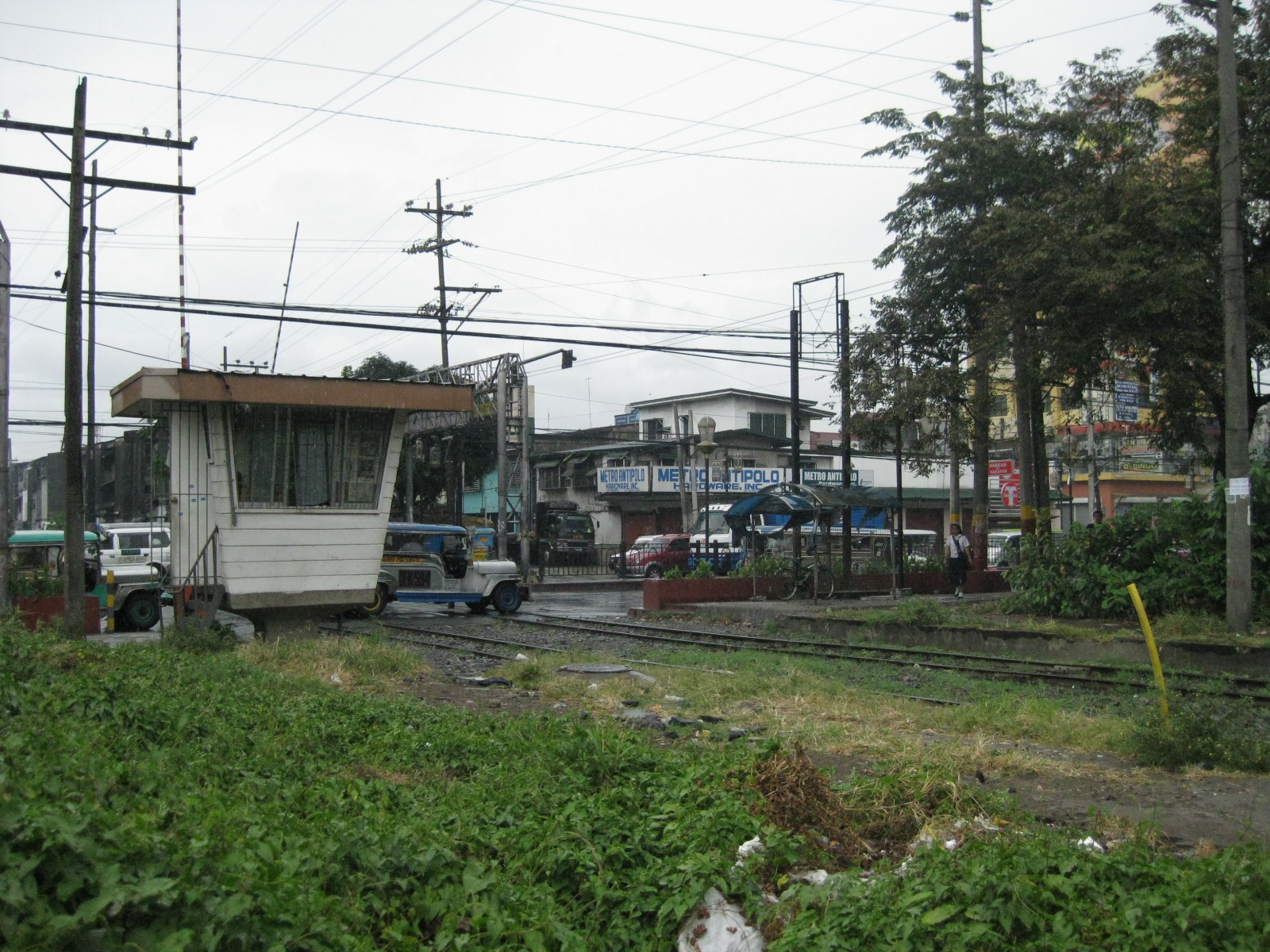 Crossings – the junction at Espana Avenue in Manila is among the busiest given the road traffic along this major arterial. If the PNR will increase service frequencies (and therefore capacity), this will result in higher likelihoods for crashes involving trains. During our short ride from Tutuban to Espana, we already saw a lot of crossings along the railways that require much attention and safety devices.
 Line diagram – like most trains, the PNR displays information on the stations along its commuter line. We visited their main station at Tutuban and rode a train from there to Espana. I can imagine that the stations listed in red would be express stations in the future but then conspicuously “blue” are Paco and Buendia Stations, which I believe should be major stops for the PNR.
–
San Francisco’s Cable Cars
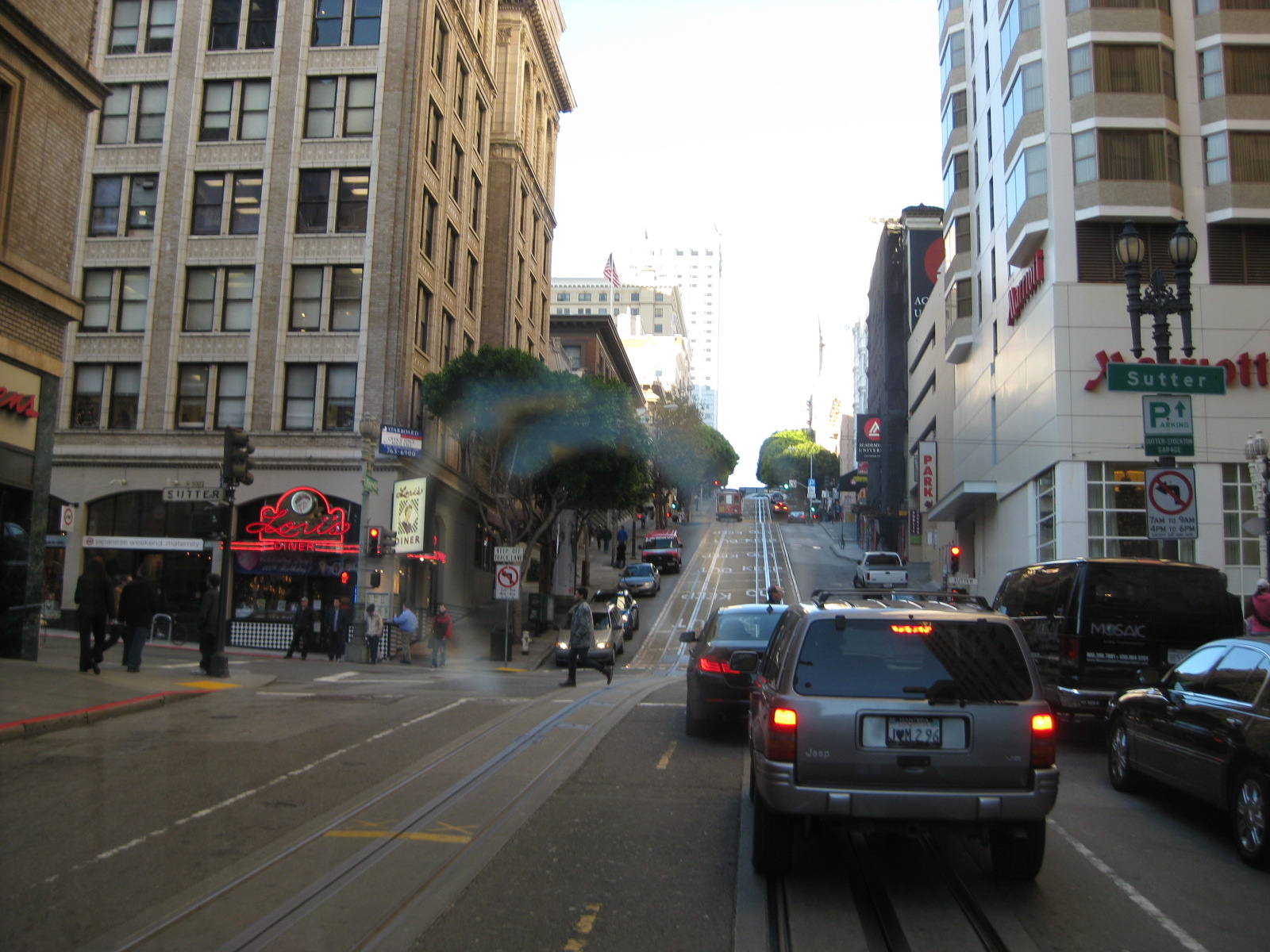
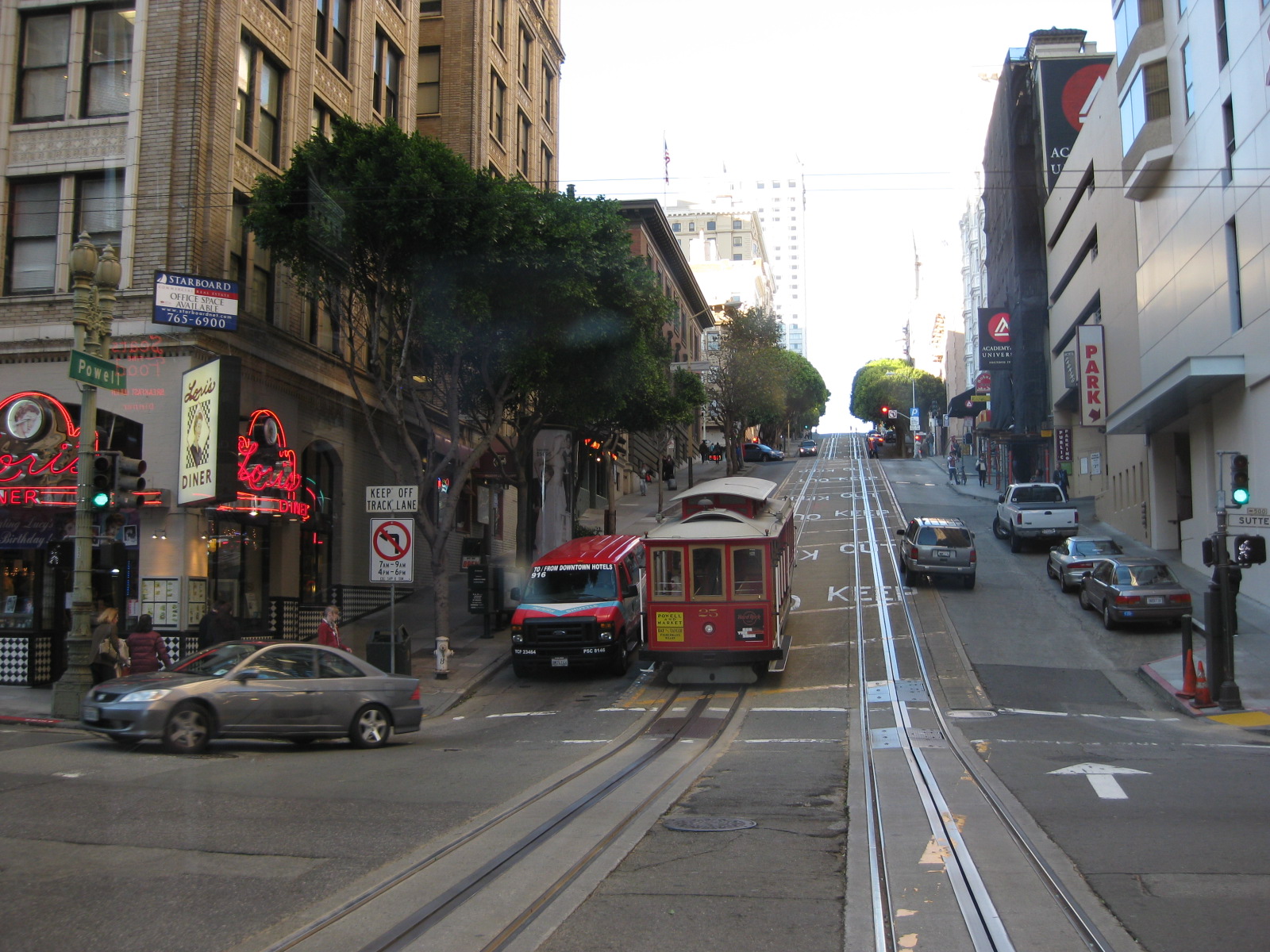
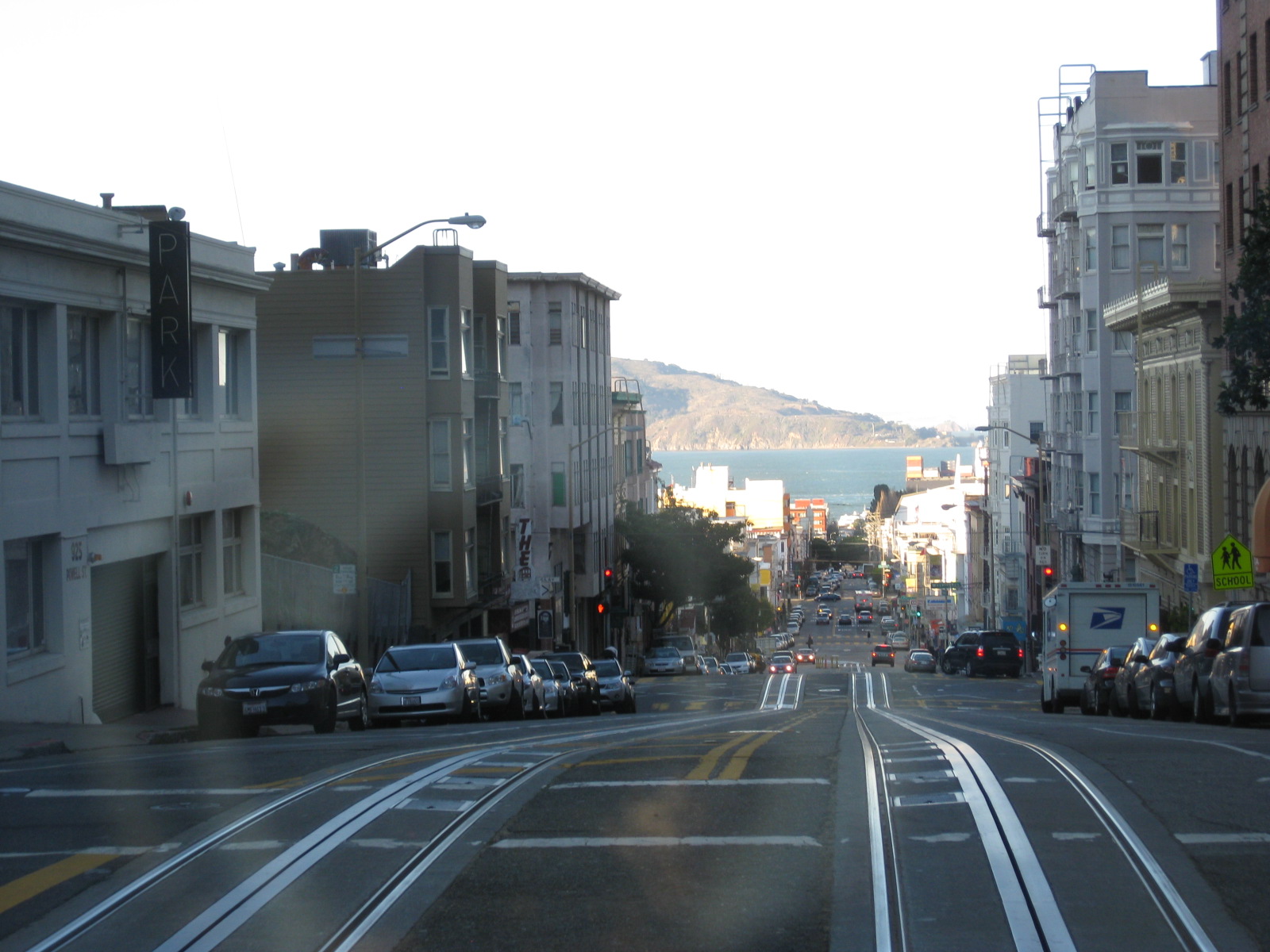
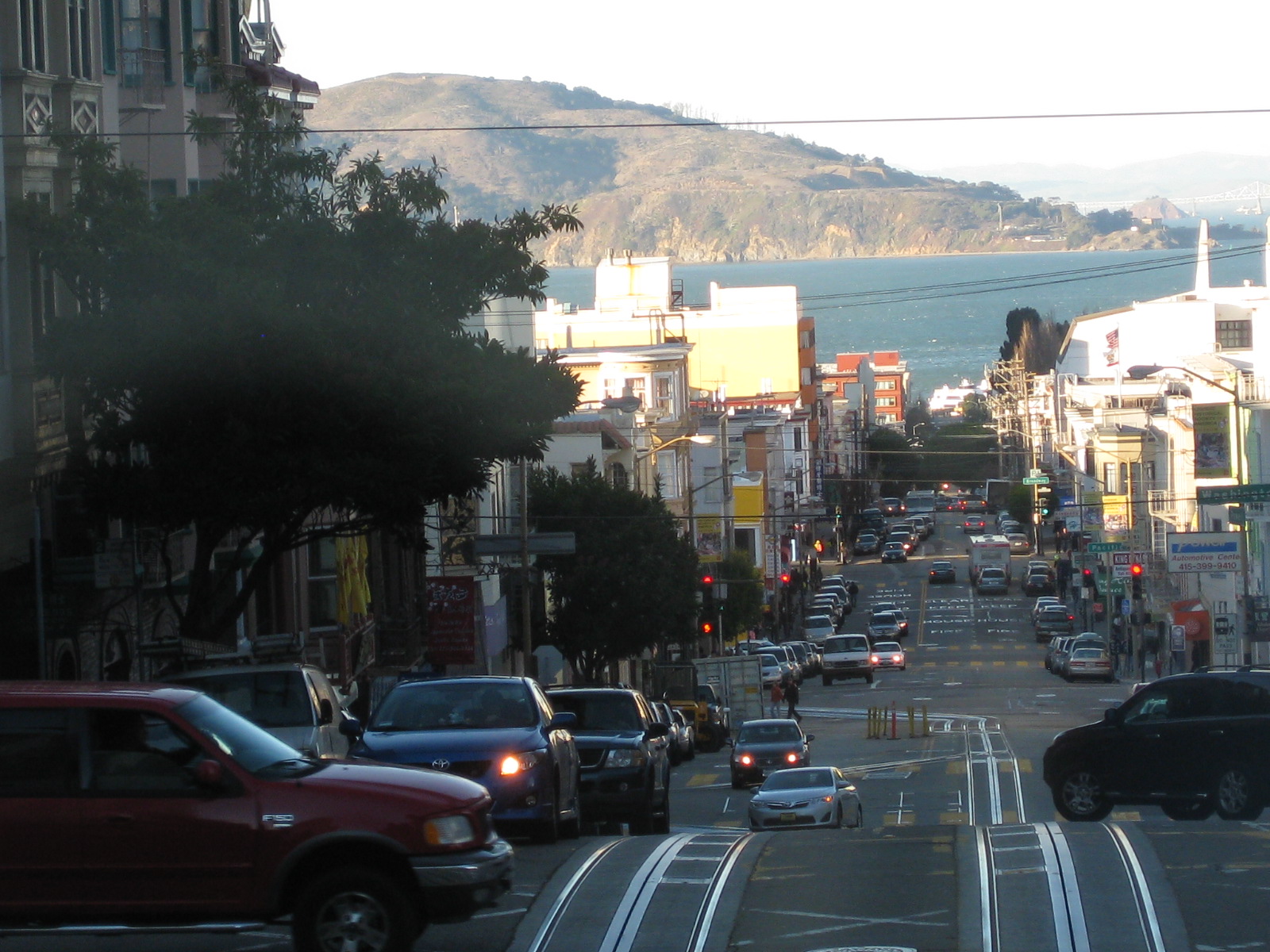
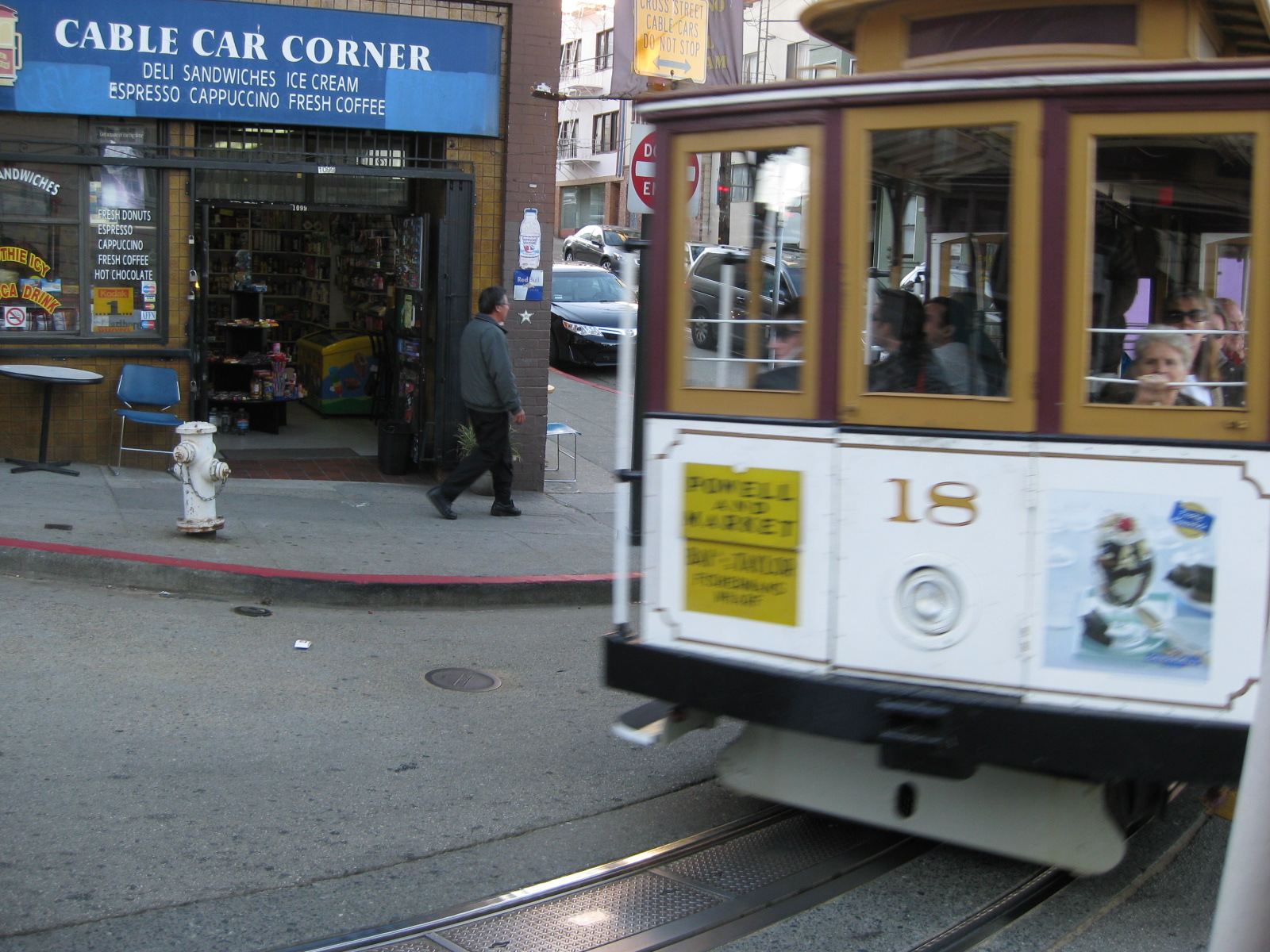
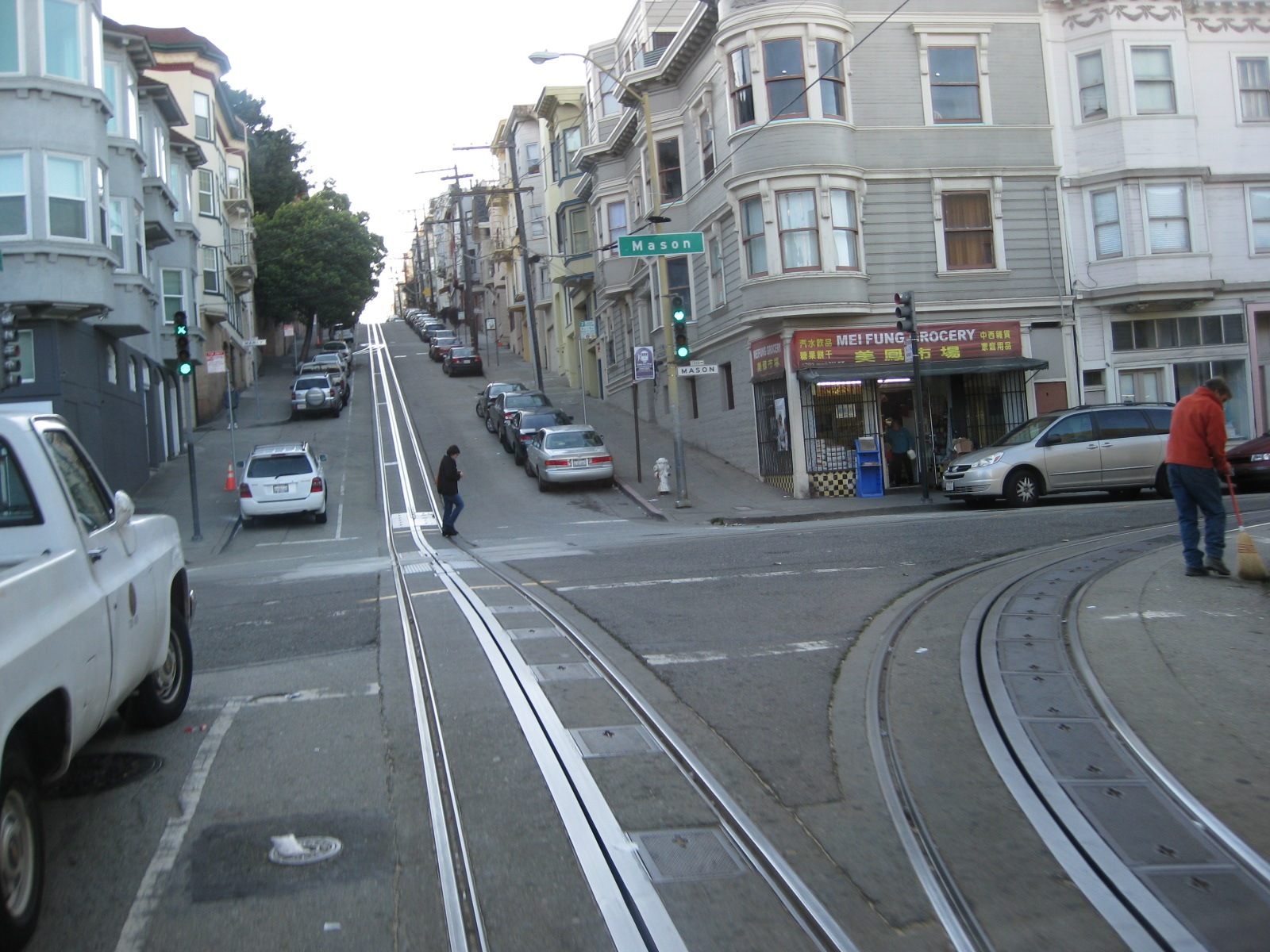
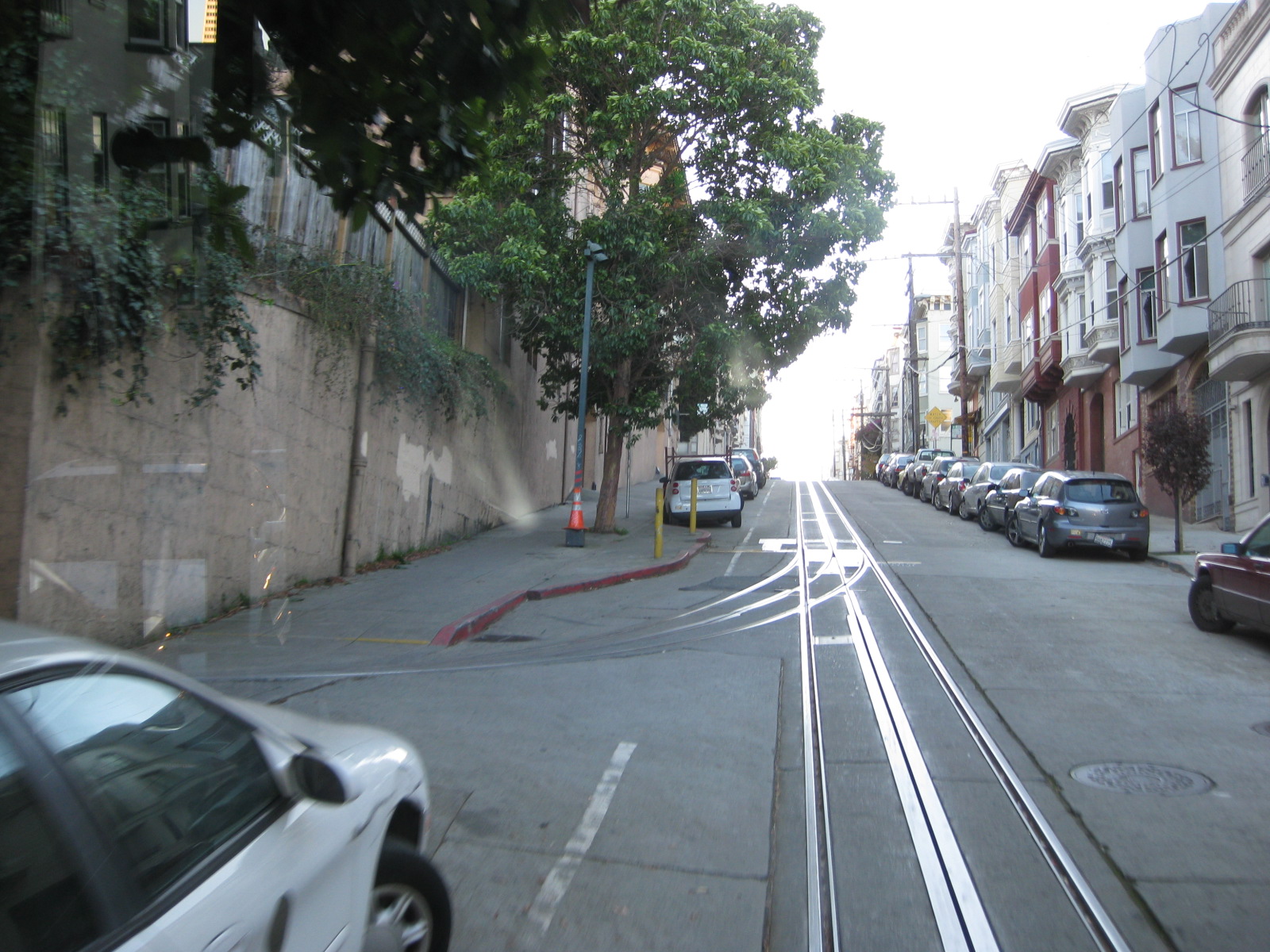
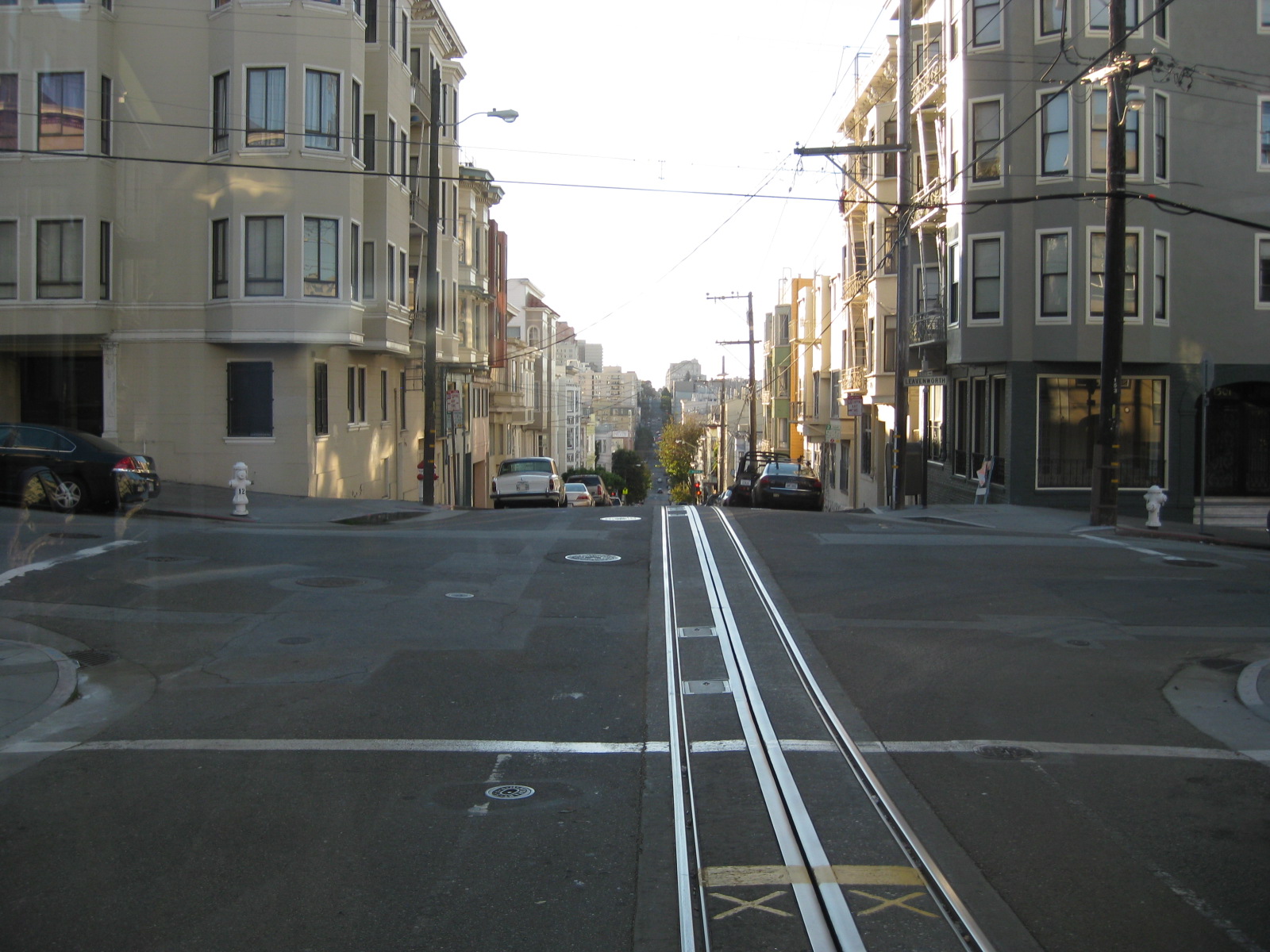
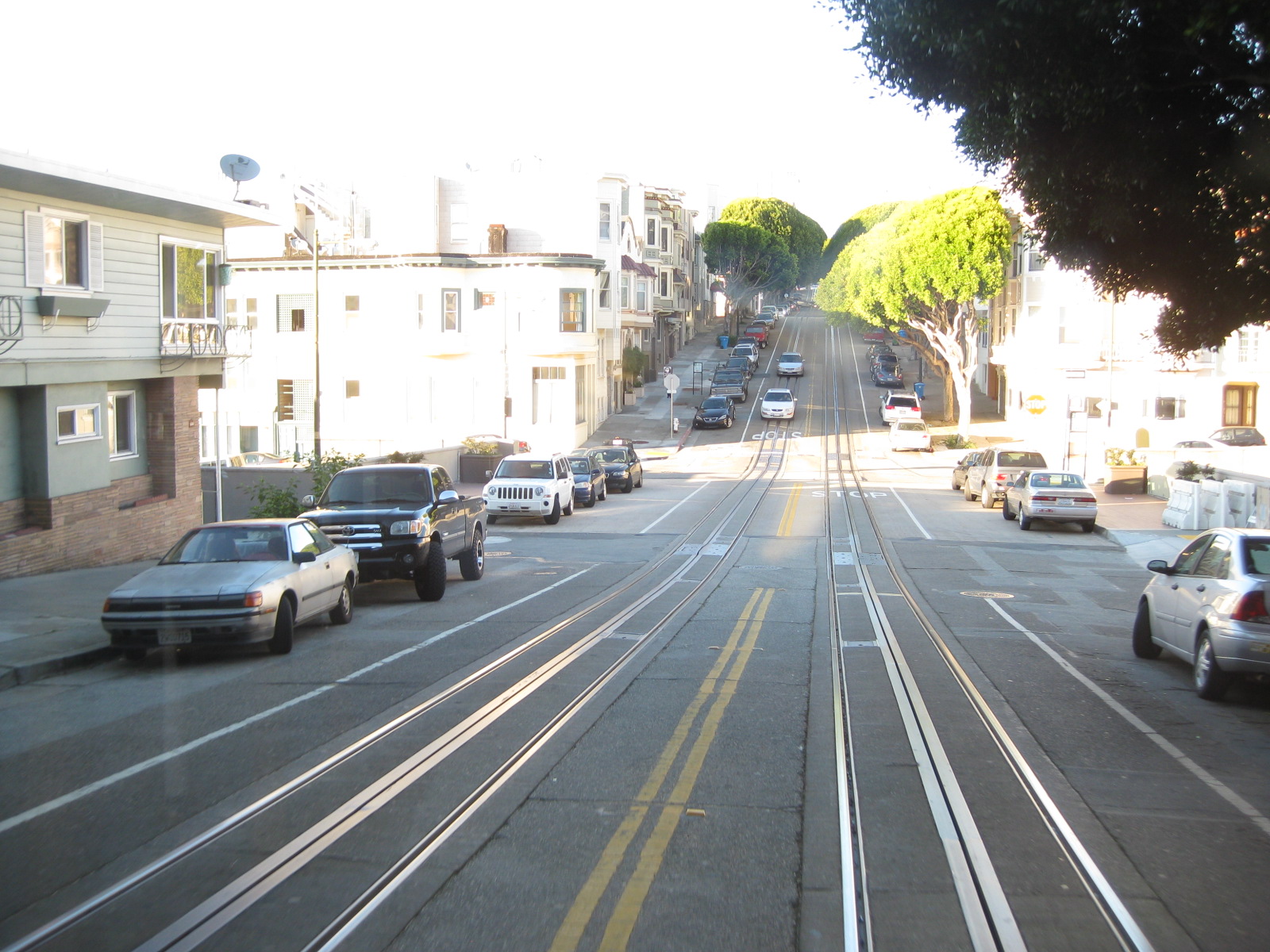
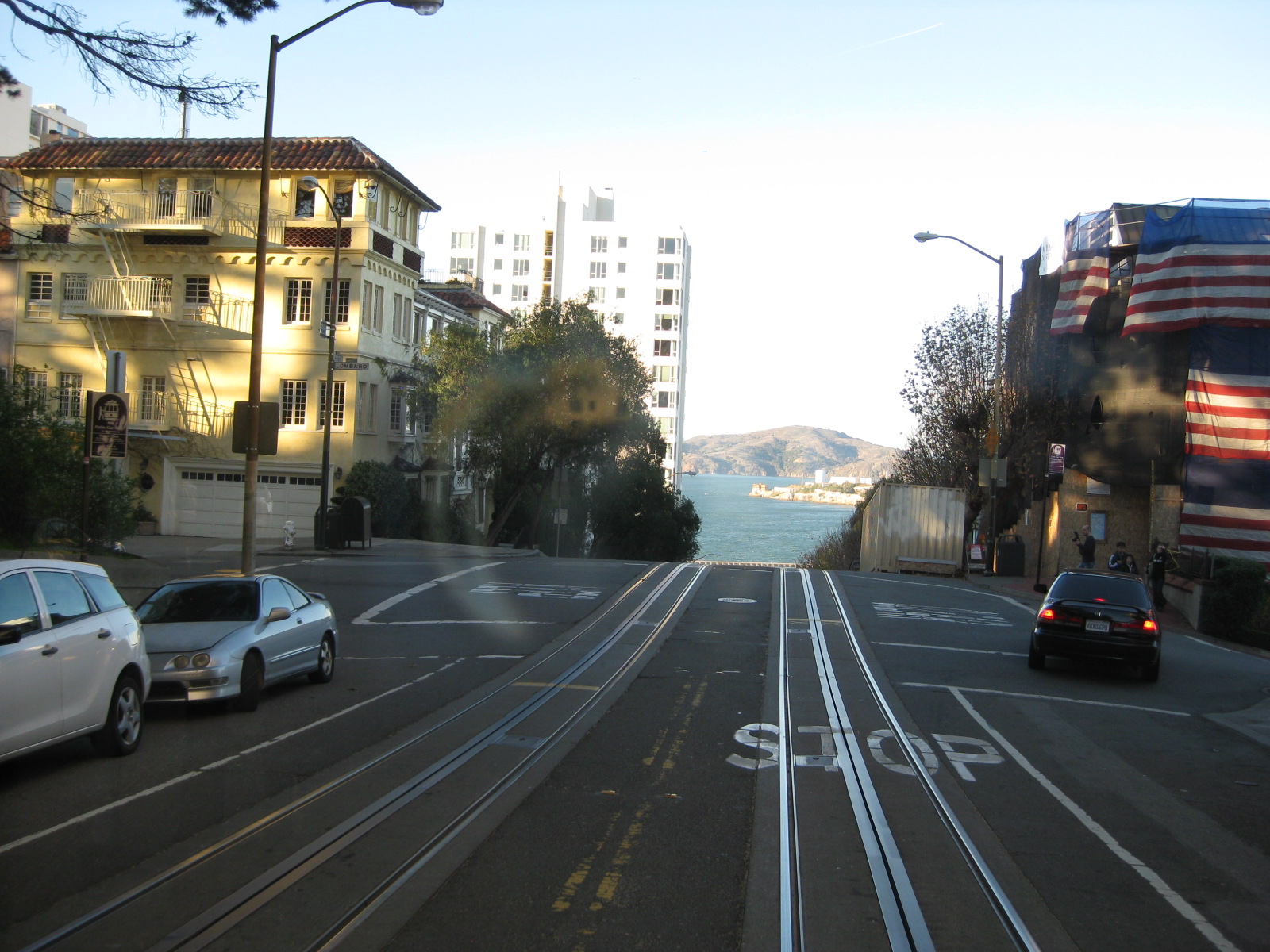
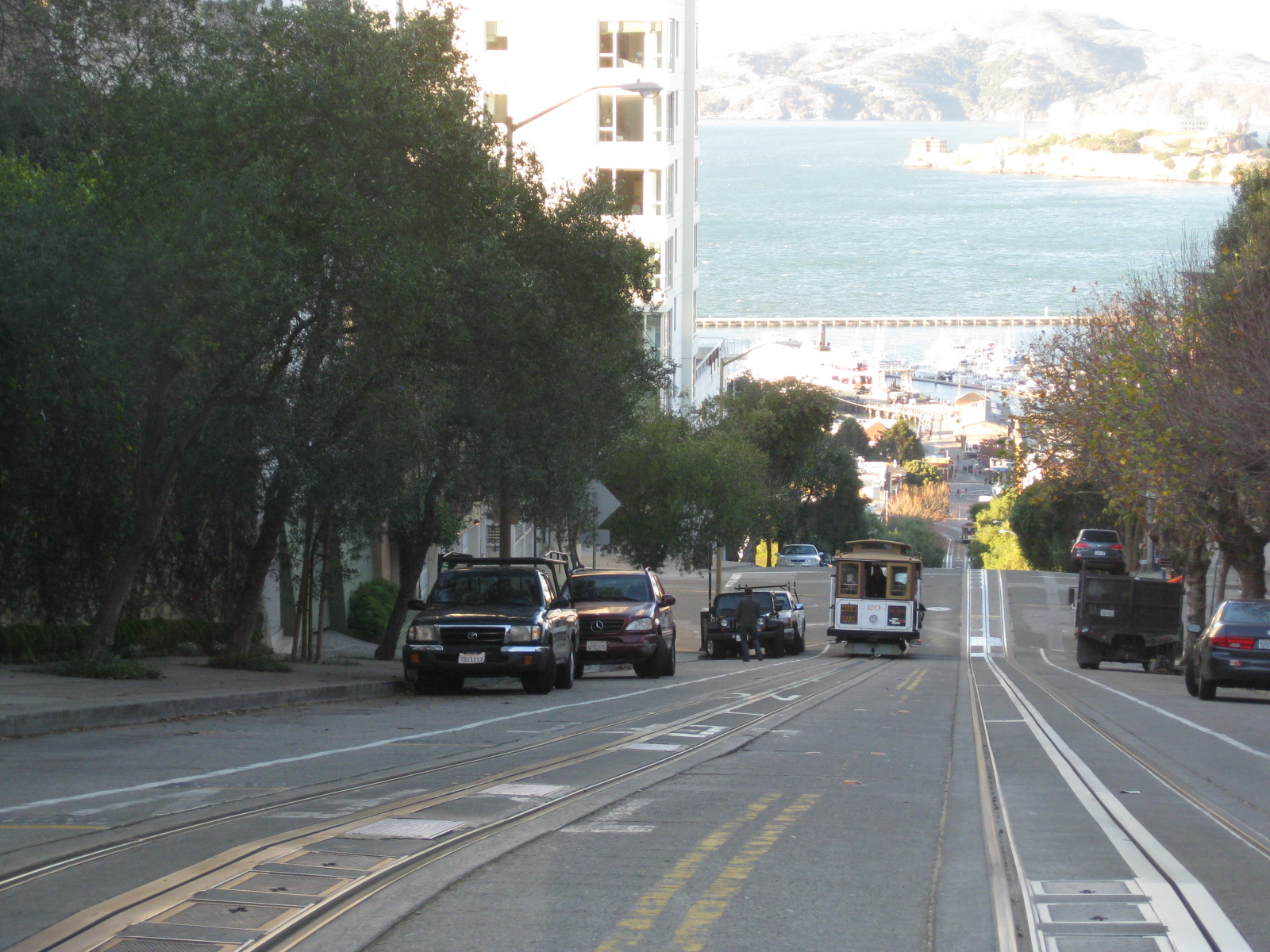
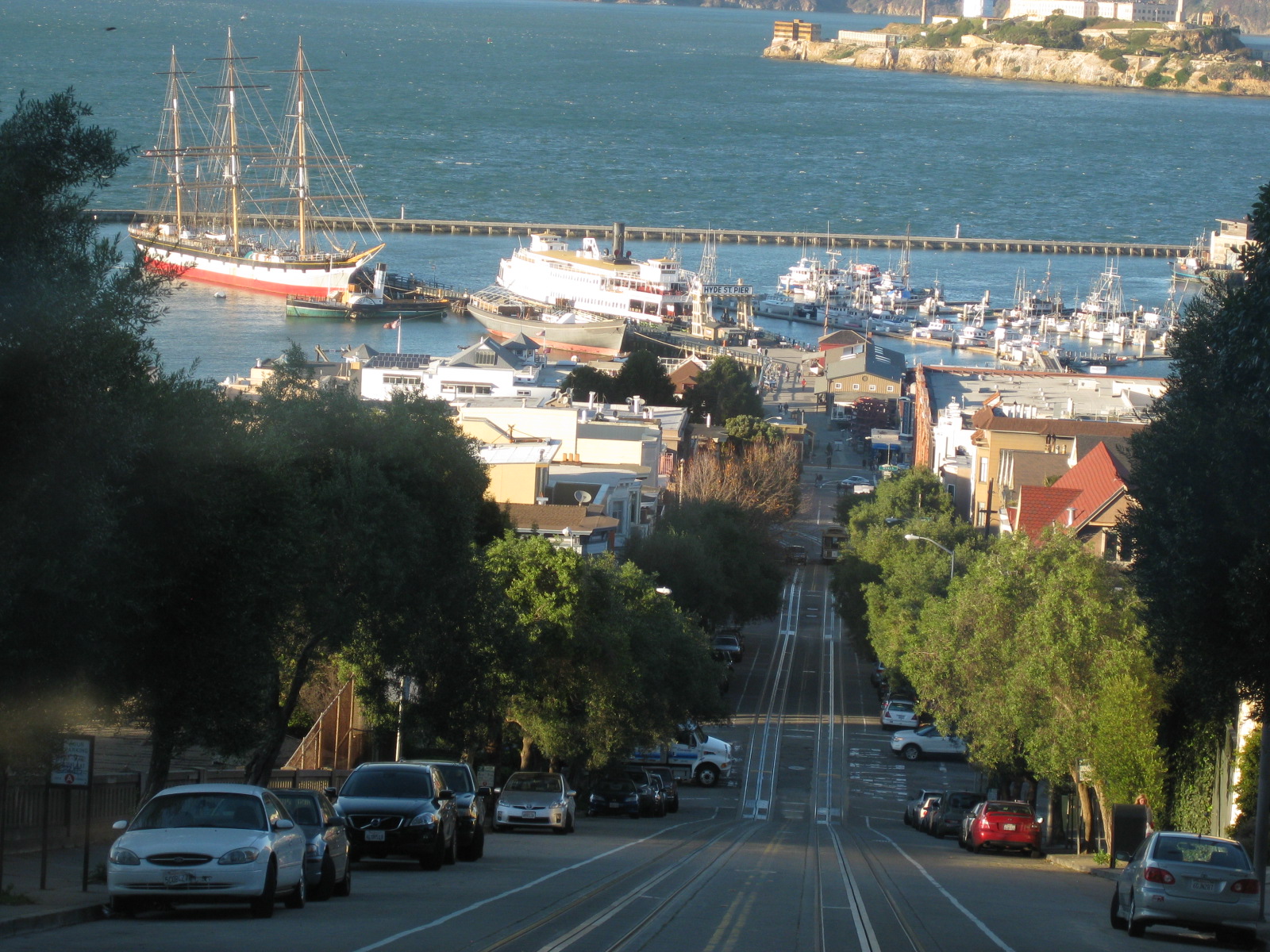
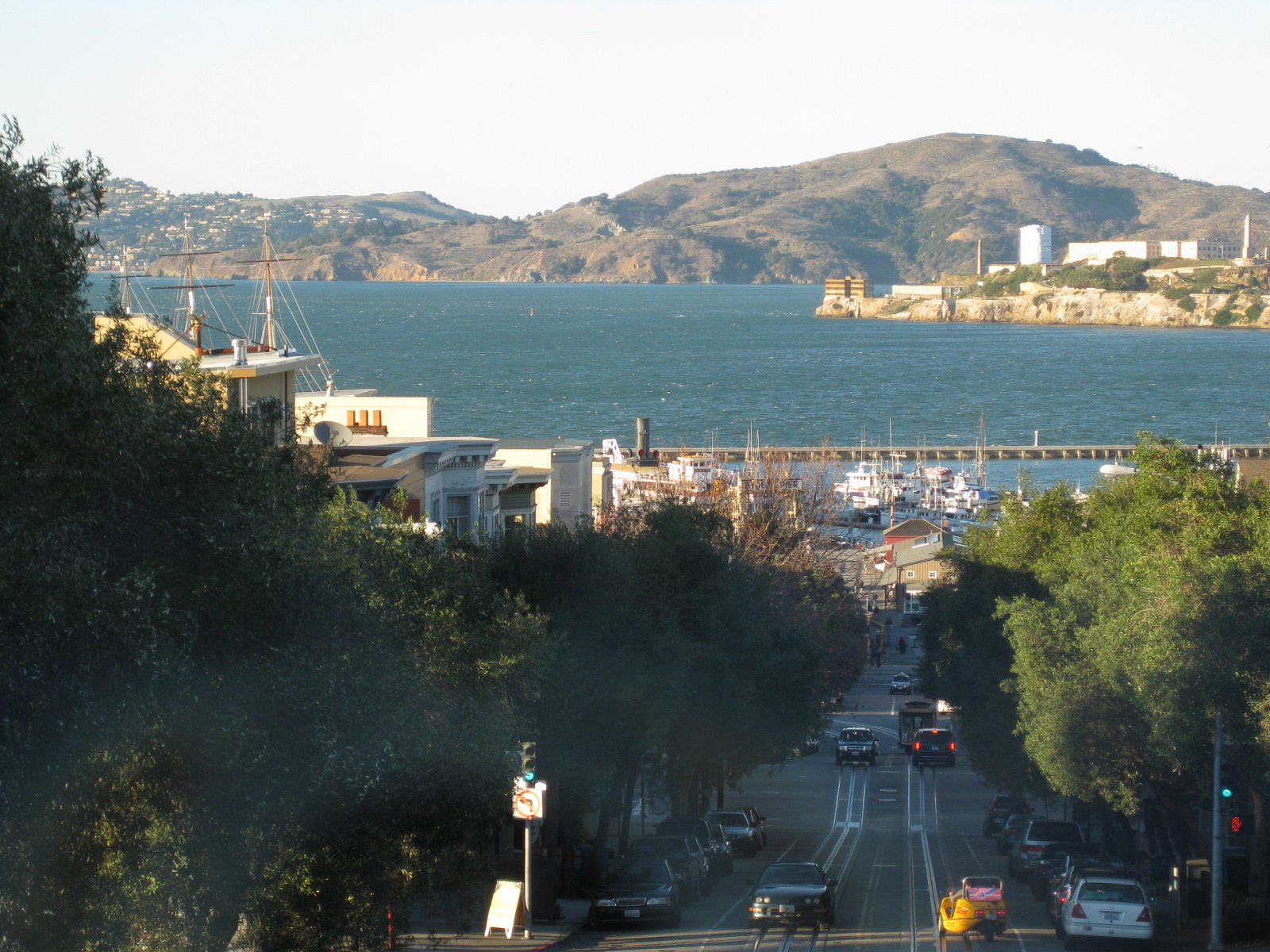
The photos show a particular journey aboard a Powell & Hyde cable car from Market Street (near Union Square) to Hyde Street (near Argonaut Hotel). The trip takes one through notable spots like Union Square, Chinatown, Nob Hill and Russian Hill, including a stop at Lombard Street that has that famous crooked section popular with tourists and residents alike. There are also breathtaking views of the bay as the cable car descends towards Mason or Hyde Streets, towards the pier.
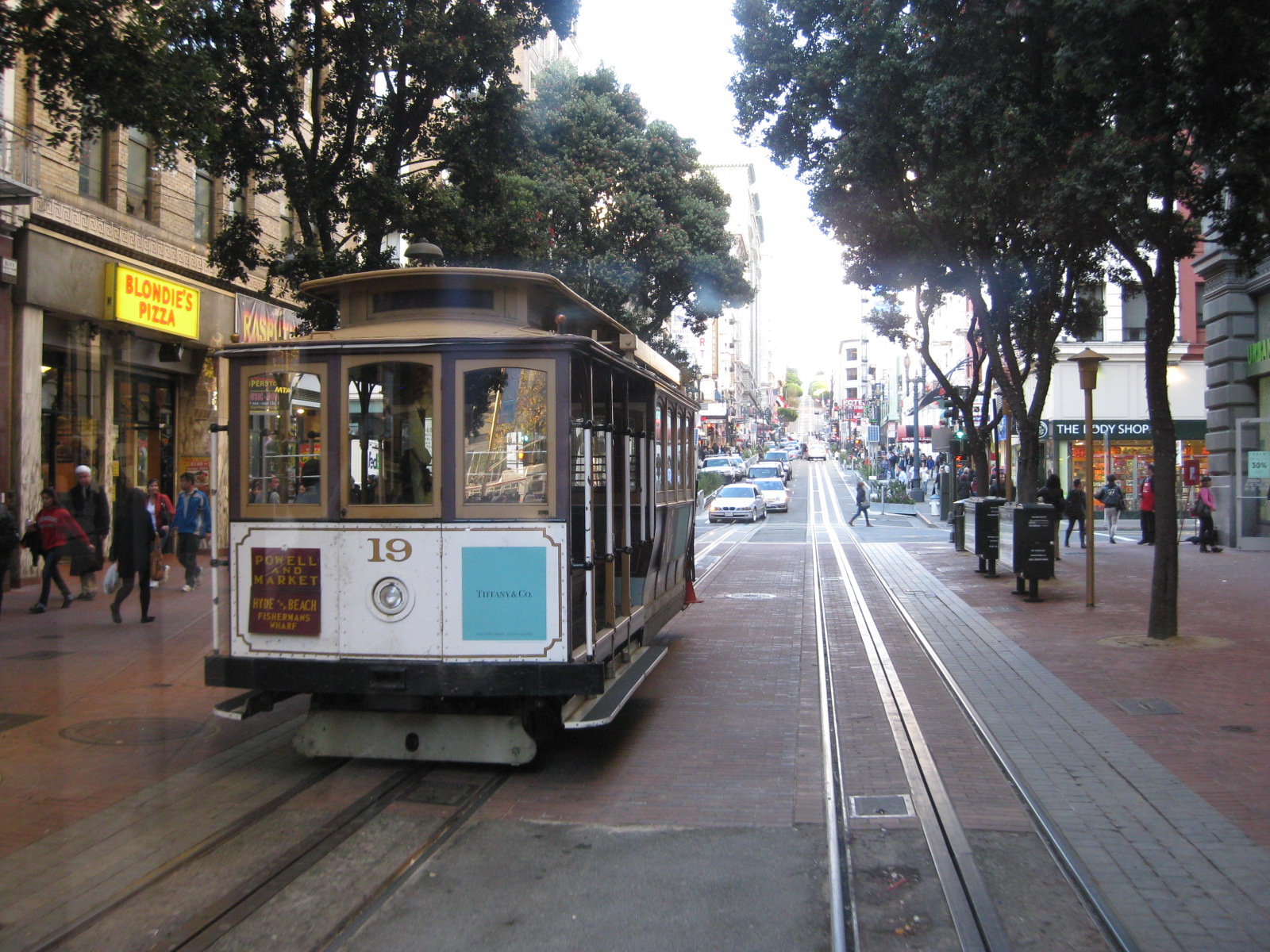 Cable car arriving at the end of the line near Market Street
–
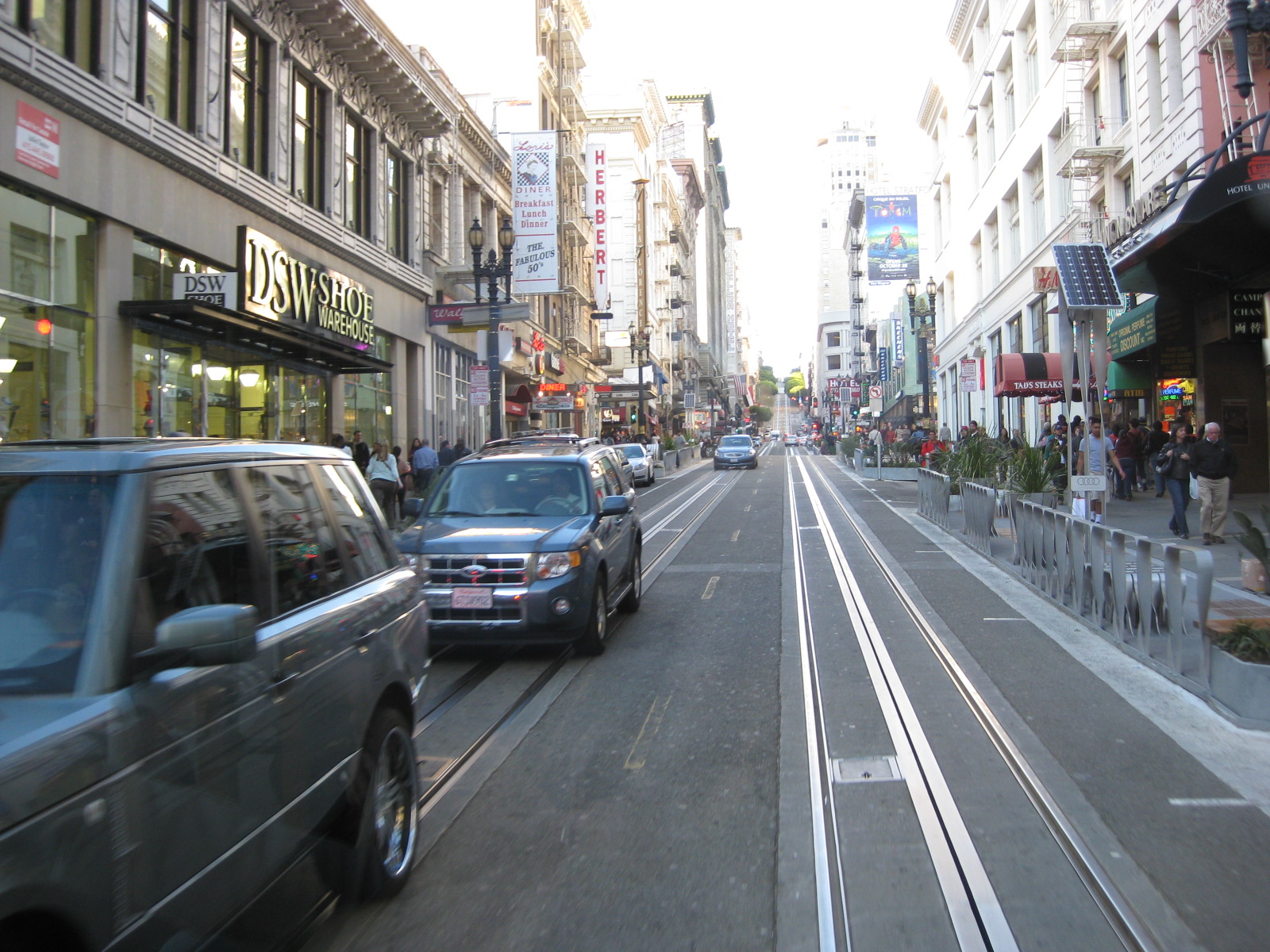
 To the right is Union Square famous for its Christmas Tree. However, there is that monument at the square that people tend to take for granted. Filipinos should be aware that it is one commemorating the victory of one Comm. Dewey and the US Fleet over Adm. Montojo and the Spanish Fleet in Manila Bay back in 1898, a significant part of Philippine and American histories.













Railways of old in Manila and Rizal
One of the great “what if’s” for public transportation in Metro Manila and its surrounding areas pertains to rail transport that were operated in the Cavite and Rizal provinces prior to the Second World War. The present-day developments along what were railway corridors attest to the viability of these areas for development and it can be argued that rail transport services here could have been a game-changer in as far as public transport is concerned and may have significantly influenced travel preferences and behavior in these areas. These would not be light-rail but heavy-rail services and would certainly have had higher passenger capacities.

Close-up for railway lines from the figure in a previous blog
An even better close-up is provided in the following figure that shows three lines that could have shaped developments to the east and southwest of Metro Manila. These are the Cavite Line, the Marikina Line and the Antipolo Line.
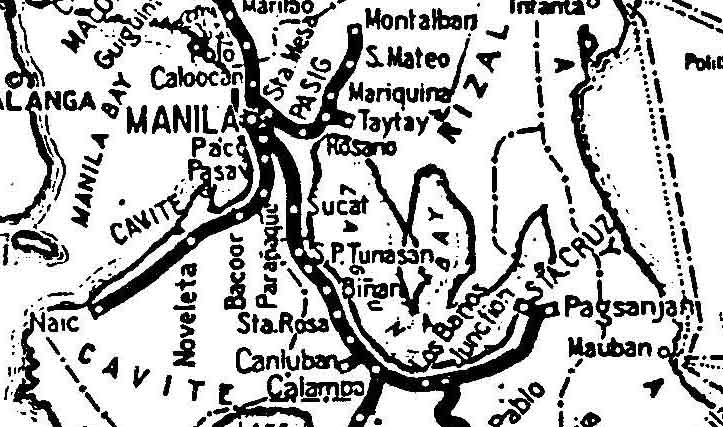
Close-up for Cavite, Marikina and Antipolo Lines of the Manila Railroad Company
Following are the breakdown of stations for the three lines:
- The Cavite Line stretched from Manila through Paco, Paranaque, Bacoord, Noveleta until Naic in Cavite Province for a total of 44 km. Completed in 1908, it was abandoned in 1936.
- The Marikina Line started from Rosario (presently in Pasig and along an area still called Tramo) to Montalban via Marikina (where there is still a Daang Bakal) and San Mateo for a total of 31 km. Completed in 1907 (until Marikina in 1906), the entire line was abandoned in 1936.
- The Antipolo Line started from Manila and passed through Sta. Mesa, Pasig (likely somewhere in what is presently Bagong Ilog), Rosario, Taytay (through present day Cainta) and until Antipolo (near Hinulugang Taktak where there is still a Daang Bakal). Completed in 1908, the line was abandoned in 1917. The alignment from Cainta and Taytay crossed what is now Ortigas Ave. Extension at the Valley Golf gate and stretched along an alignment that appears to have the gentlest slope for a climb to Antipolo.
Clearly, if these lines were not abandoned but instead retained and developed even after World War 2, commuting preferences and behavior in Metro Manila could have been quite different. In fact, people could have chosen to travel by train instead of being dependent on cars. For those residing or working in the south (i.e., Paranaque, Las Pinas, Muntinlupa, towns of Cavite, Laguna and Batangas) maybe people would have a viable alternative to the tollways in those areas. Note that the only operating rail transport in the area is the PNR Commuter Line that is currently experiencing a renaissance of sorts. Hopefully, its rehabilitation is completed and more passengers patronize the service.
Rizal is presently not served by any railway until perhaps LRT Line 2 is finally extended towards Antipolo via the Marcos Highway corridor. The Marikina-San Mateo- Rodriguez (formerly Montalban) areas are accessible via national roads that are often congested primarily due to paratransit traffic. The more progressive towns of Rizal (Cainta, Taytay, Binangonan and Angono) as well as its capital city of Antipolo is accessible mainly via either Ortigas Avenue or Marcos Highway. Both highways are already quite congested and road widening options are quite limited especially for the heavily traveled Ortigas Ave. One can only imagine now how a rail system could have addressed the travel demand along these corridors and perhaps enhanced the quality of living in these areas.
Tracing tracks 2
Following are a few more photos from a trip to Naga City back in 2009. These photos take off from a previous posting where I featured the tracks of the PNR’s Main Line South, mainly what a traveler may see along the national highway en route to Naga City. Many of these tracks were not being used by any trains at the time due to a suspension of services after an incident a few years back when a Bicol Express train was derailed somewhere in Quezon. Most of the tracks one will see here have already been rehabilitated as the PNR has resumed the service between Manila and Naga City. In fact, they have taken advantage of the long weekend for All Saints’ Day (Undas) to promote the Bicol Express service that now features sleeping cars. The approximate travel time between Manila and Naga is 12 hours.
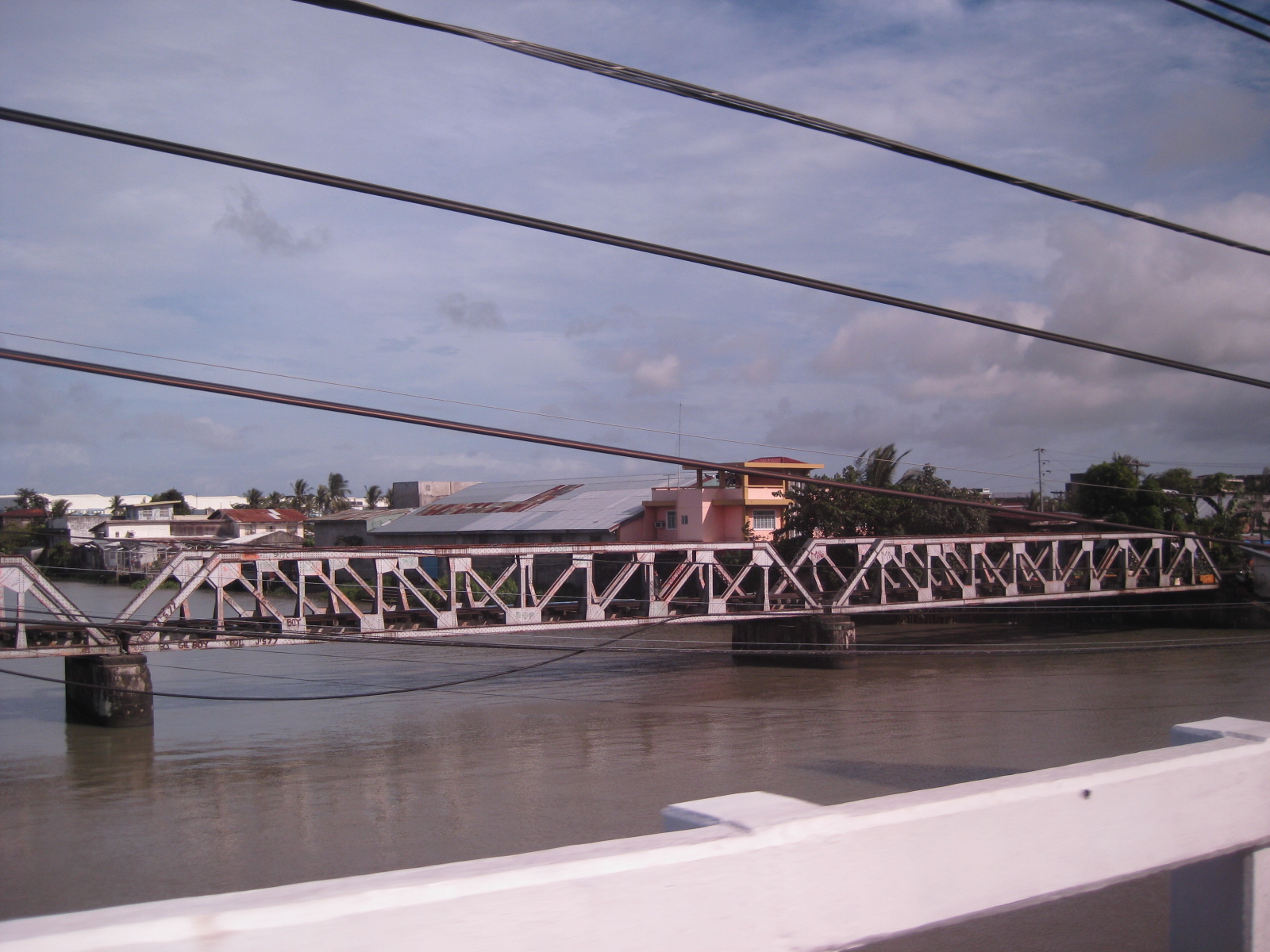 A railway bridge in Naga City – note the classic steel truss design that was the mainstay of most PNR bridges.
 Another steel truss bridge – this one I photographed prior to the provincial boundary with Quezon province.
 Rail junction along the national highway – this junction is located in the town of Gumaca. The signs are already obscured by tree branches and electric poles. At the time, one could see the state of neglect for the tracks as they are practically covered by dirt that transforms into mud during rainy days.
 The railway tracks parallel to a barangay road – many sections again appear to be covered by dirt and growth. A tricycle is parked atop the tracks, probably waiting for passengers on space that is being used as a shoulder with respect to the local road. As communities have access to local roads, there are no trolleys here.
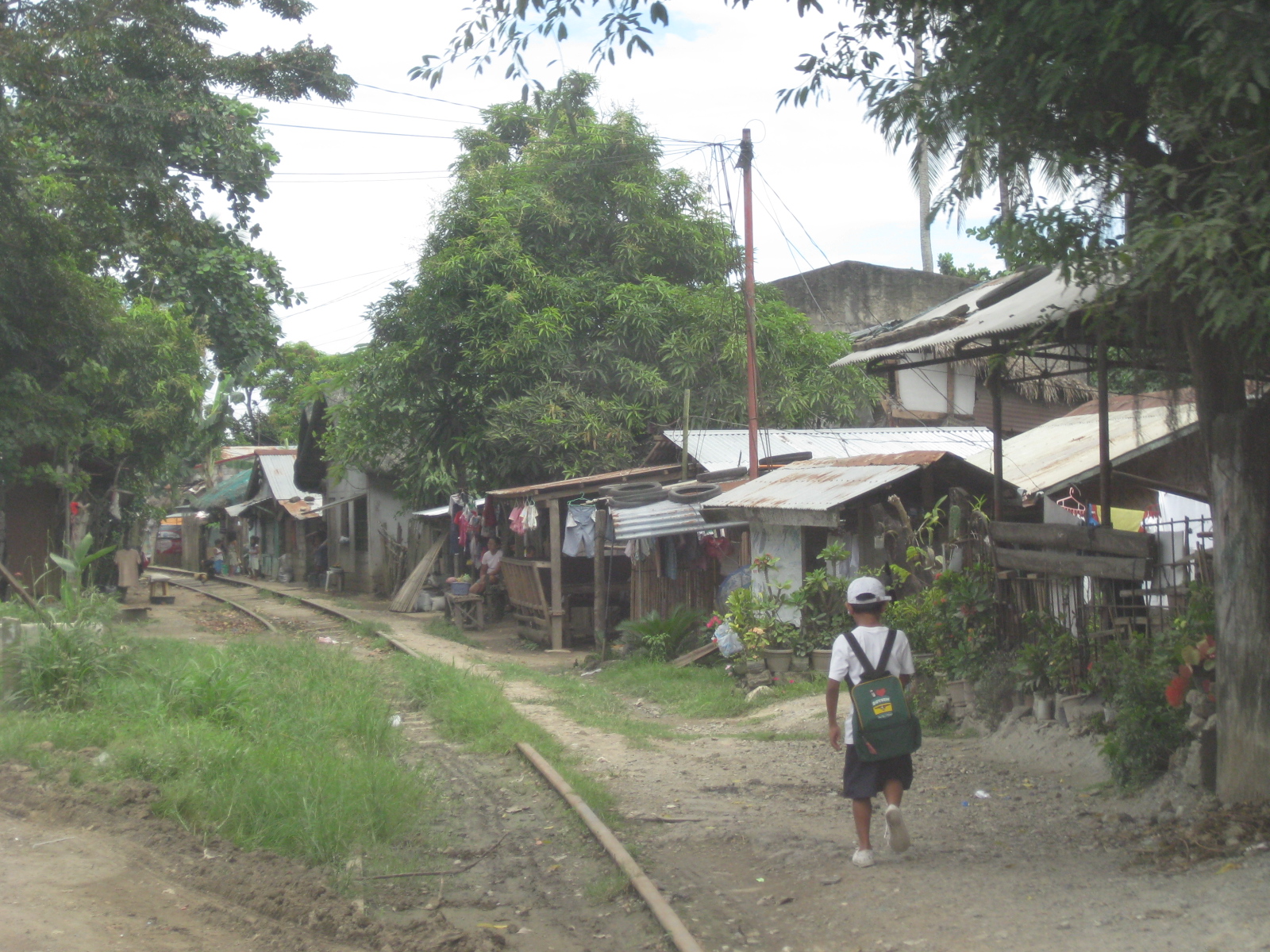 Neglected railway tracks – note the grass growing along the tracks and covering the rails. Also, from the looks of it some ties seem to be missing or just buried in the dirt. Many houses and shanties are obviously within the 30m ROW of the PNR. Such situations create a high risk for untoward incidents should rail services become regular and more frequent.
Informal rail transport
After my talk at the Ateneo De Naga, we went around the city to have a look at its roads and transport. As we had already seen the previous day that there were motorized trolleys in that city, we made it a point to visit one informal terminal located at a junction. The following photos are a documentation of our taking a closer look at informal rail transport in the Philippines.
 Taking a closer look at the motorized trolleys of Naga City – our driver Roy speaks to two drivers/operators of the trolleys to ask them about operations. The trolleys are not so much different from the one we saw along the road while traveling through the towns of Quezon Province and certainly look like their relatives in Manila. They are made of light but sturdy bamboo with the occasional metal parts and some have makeshift couplers in case two or three are connected to form trains! The trolleys even have benches to allow for a few seated passengers.
 Passenger mix – the trolley service is popular to different users including students and laborers. They are cheap and the most practical (direct) mode of transport to their home, which are located along the railway line. Note the concrete ties for the tracks, indicative that this section has already undergone rehabilitation in the past when the old wooden sleepers were replaced by concrete ties.
 Informal freight transport – goods like rice and flour are also transported using the trolleys. I assume there are also stores in communities along the tracks and that the most convenient way of transporting commodities (paninda) would be via this mode.
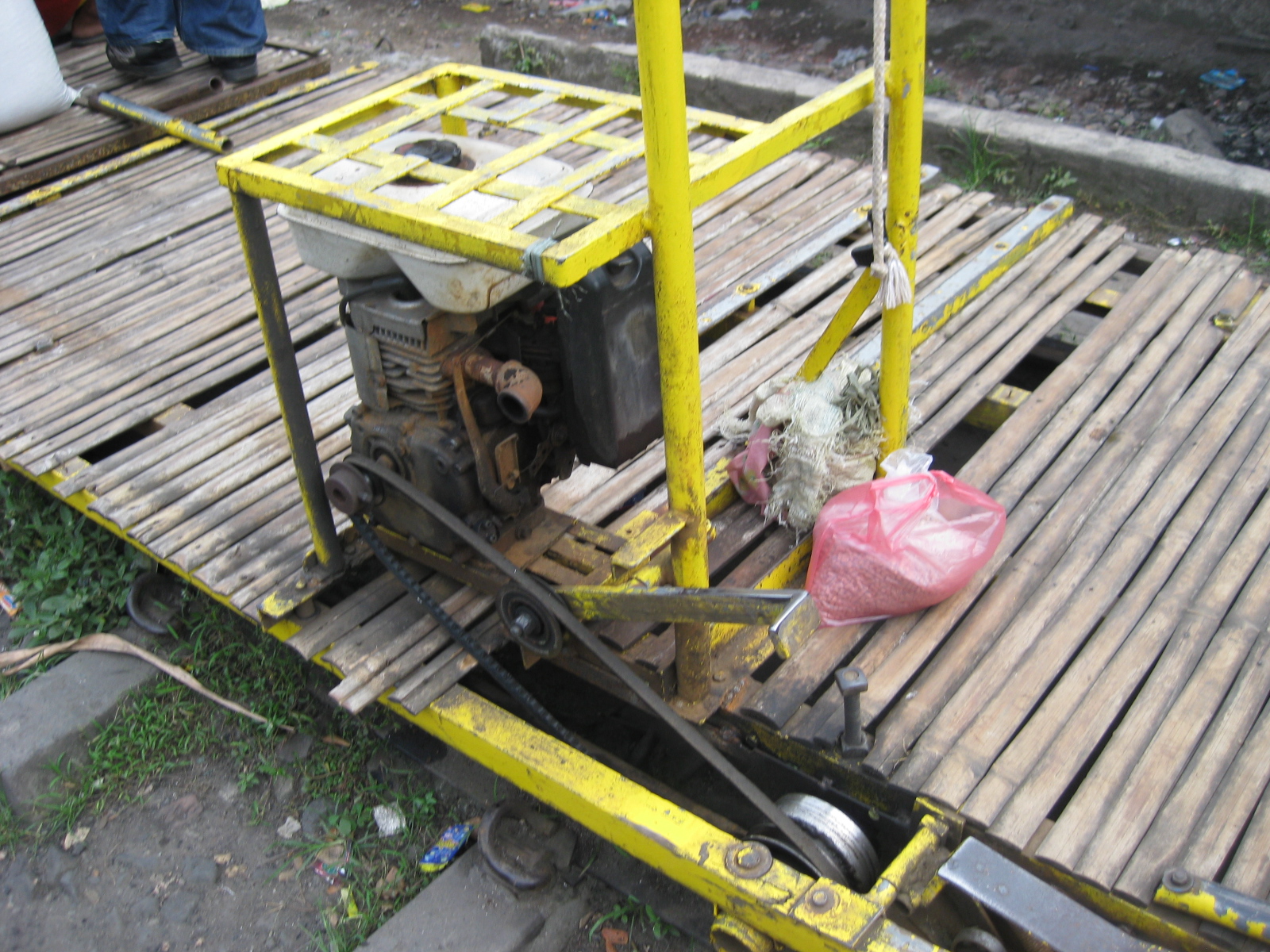 Motor power – while most if not all the trolleys in Manila are human-powered (partly because they should be light enough to lift in case trains do come given the increasing frequency of PNR commuter line services), the Naga trolleys use motors similar to that being used by boats.
 Driving wheel – while trains may be powered by locomotives, the trolleys have motors typically used by pumpboats and by the tricyboats found in the Visayas and Mindanao (tricycles powered by the same motors). The driving wheel is connected to the motor to move the vehicle and the contraption on the lower right and just beside the driving wheel is the brake mechanism. Thus, the driver is usually positioned just behind the motor where he has access to both the motor and the brakes.
 Fully loaded – a single trolley can carry as many as 25 passengers depending on their weight and size (more if there are many children in the mix). I think there are about 24 passengers on this trolley about to depart from the informal terminal.
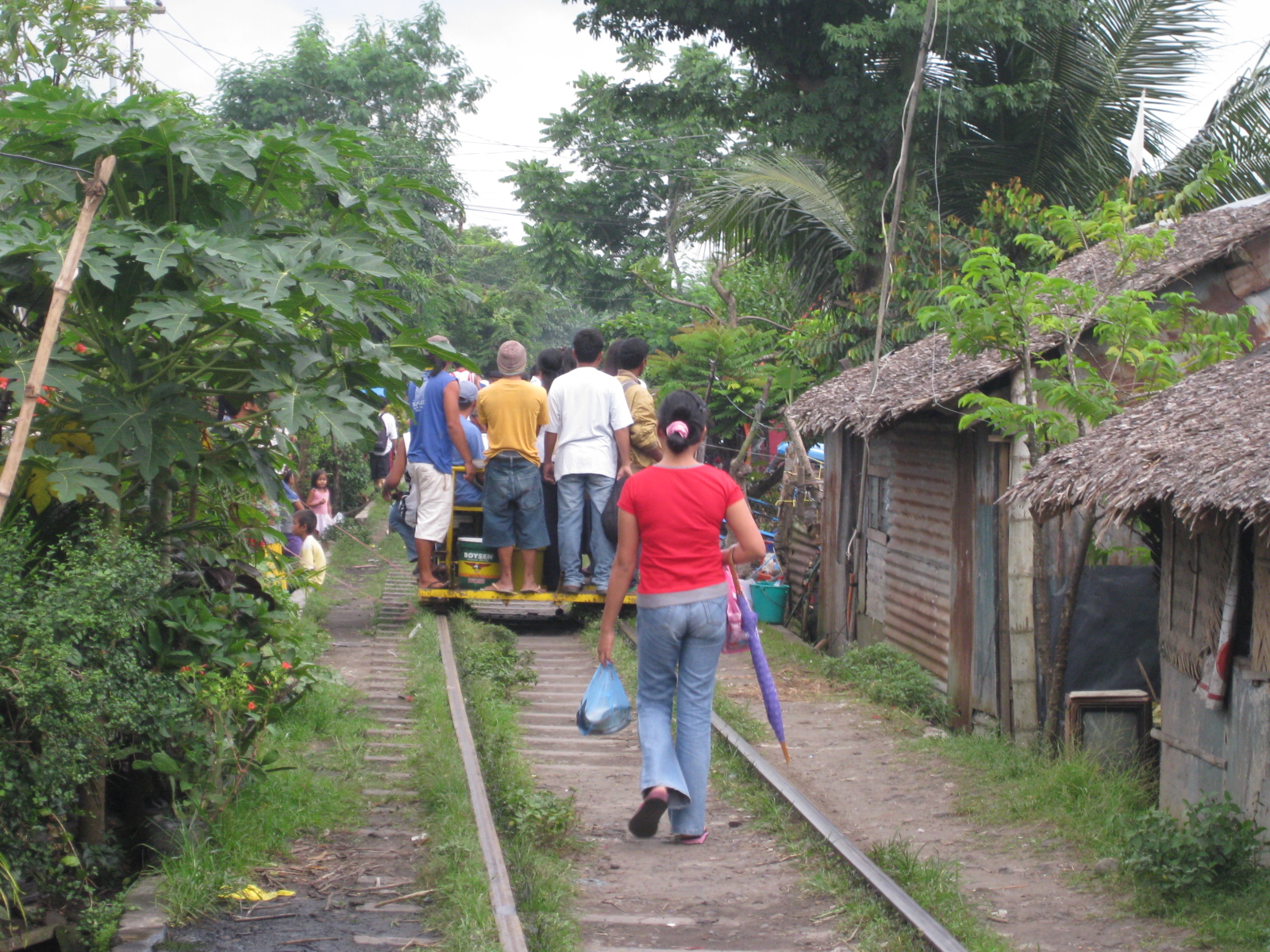 Off they go – with a full load and each person paying 10 pesos for the ride, the driver can earn about 200 pesos for one run or 400 for a roundtrip. Operating costs are quite simple including fuel and maintenance costs. On a typical busy day, a driver can have about 5 round-trips. Note how close houses are to the railway tracks.
 Next in line – the driver of the next trolley positions his vehicle and waits for passengers. We estimated it took something like 15 to 20 minutes to get a full load during the afternoon peak period when we were at the informal terminal. It would probably be longer during the off-peak periods.
 A view of the tracks on the other side of the road – we learned that the area along the tracks is not served by the trolleys.
I can imagine that with the resumption of the Bicol Express service between Manila and Naga City, the people operating the trolleys would eventually have to deal with more frequent arrival of trains. Currently, the PNR services would probably pass through the trolleys’ service areas during the night-time so there will be very limited conflict at present. However, further rehabilitation of the Main Line South and the resumption of services all the way to Legaspi City should already serve as a notice to informal rail transport and the concerned local governments that the days of the trolleys are numbered.
Tracing tracks
Traveling to and from the Bicol region back in 2009, I tried to trace the PNR’s Main Line South railway tracks that passed through the provinces of Quezon and Camarines Sur. Following are a few snapshots while traveling on-board our trusty Pajero. I don’t remember the towns where I took the photos mainly because I didn’t keep tabs about the info. However, I’m sure these can be retraced and recorded in another, future trip to Bicol. I hope readers don’t mind the reflections in some of the photos due mainly to our vehicle’s window tint.
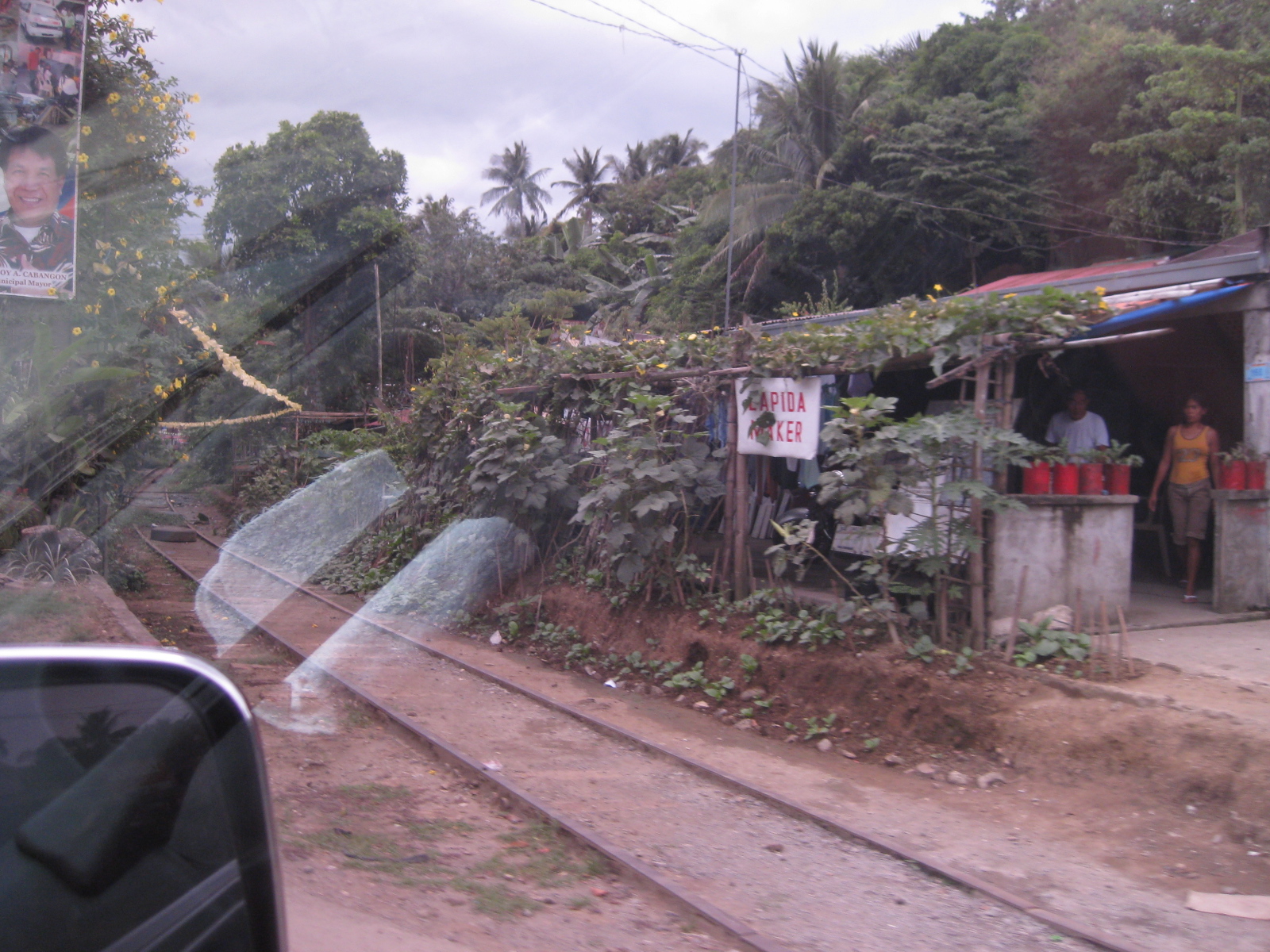 Railway tracks along a barrio in Quezon – while the rails are there, it seems many of the ties (sleepers) are either missing or already covered in soil. Note the houses that have encroached on the PNR ROW? They are well within the 30 meter ROW of the PNR tracks and will surely be affected should there be capacity expansion (read: double tracks) in the future.
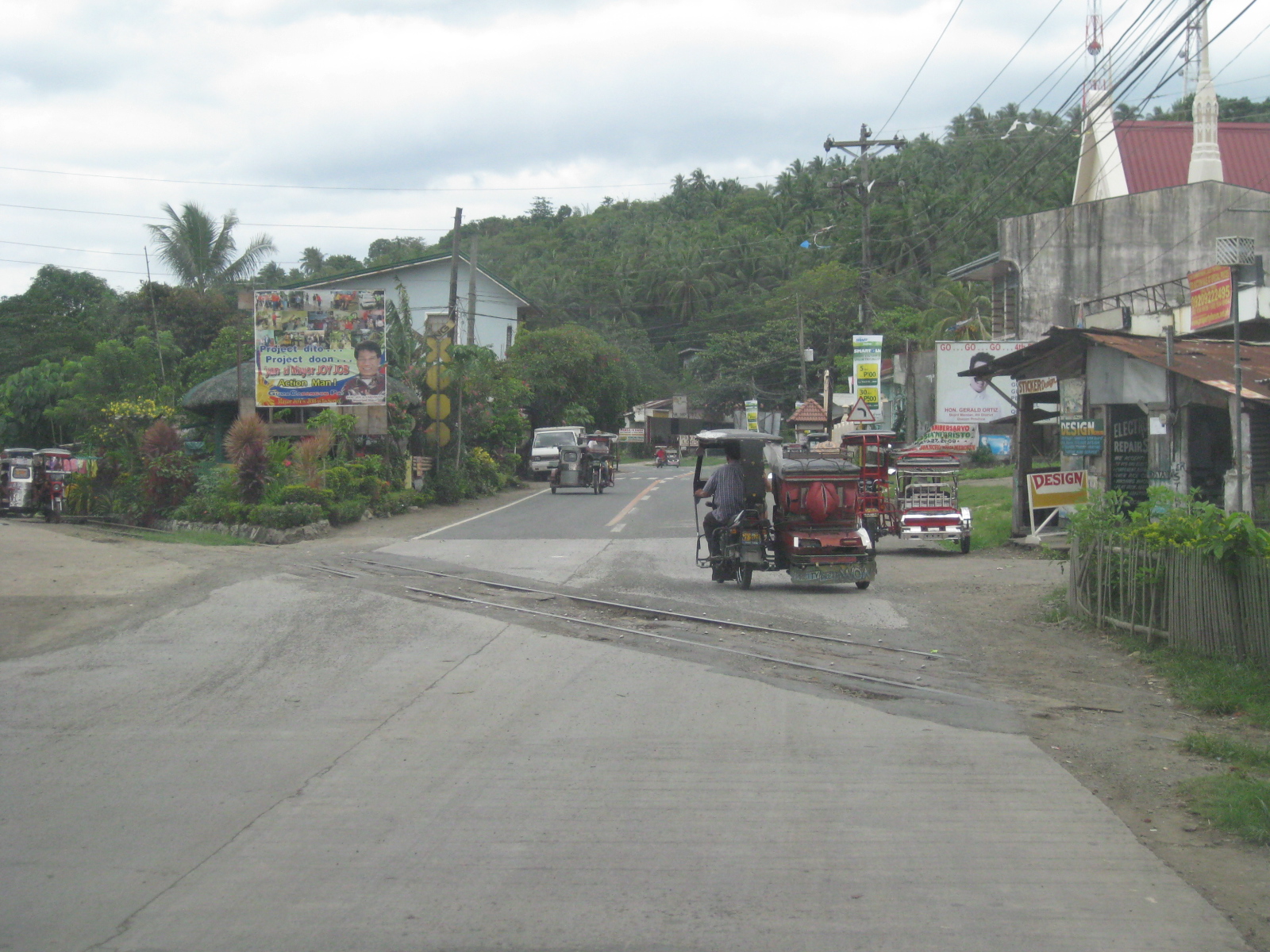 Tracks embedded on the national highway – while the old signs are still present in some junctions with roads, most are either unreadable because of wear or hidden among the posts and flora. These, too, need upgrading and should already include traffic signals and barriers to warn road traffic of an approaching train.
 The switch assembly on the right indicates diverging tracks probably in the vicinity of a station somewhere downstream from where I hurriedly took a photo.
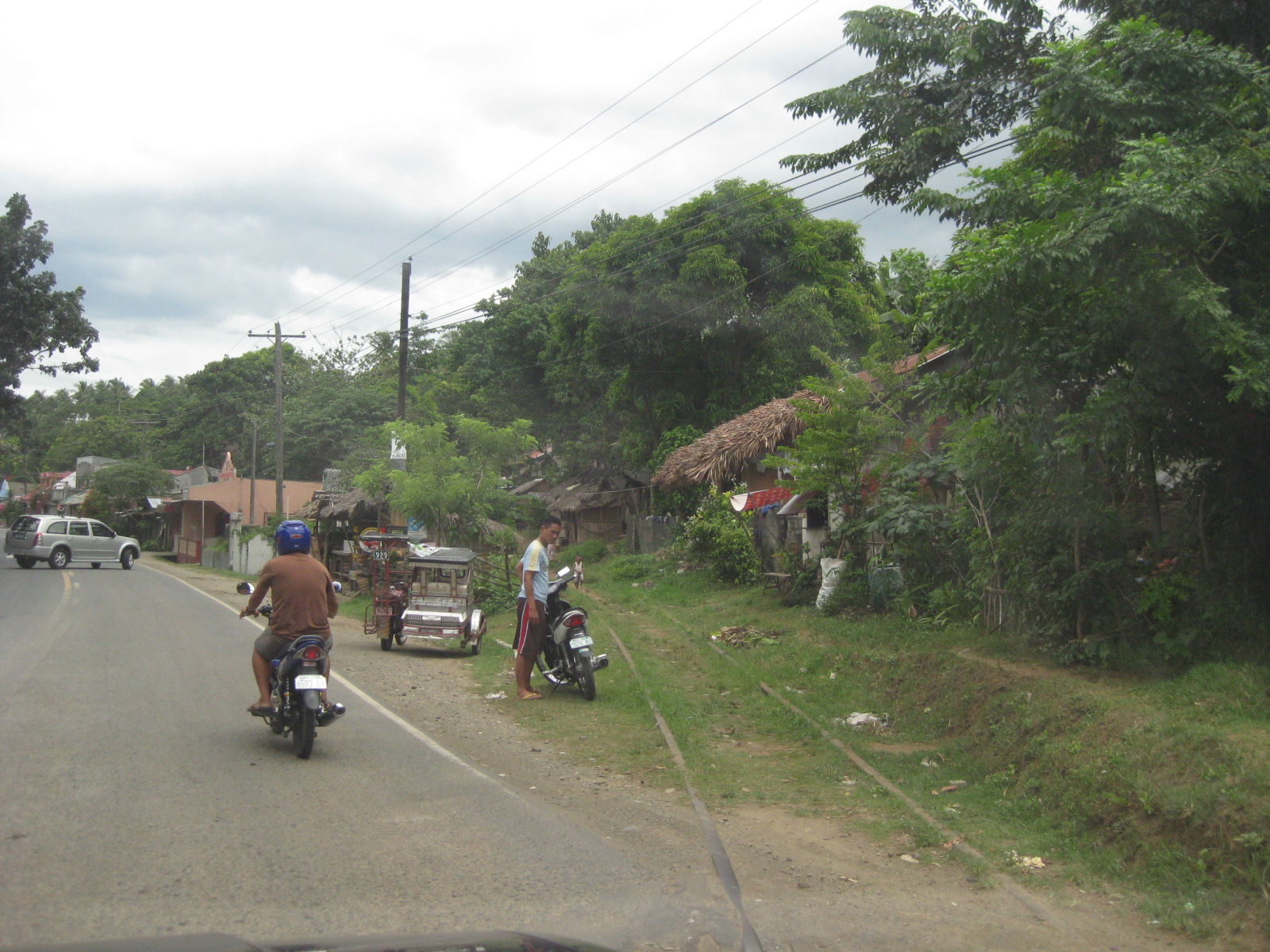 Railway tracks seemingly diverging from the highway – in this case, the photo strongly suggests the absence of ties to hold the tracks and prevent derailment. Much of what’s left of both MLS and MLN are in this condition and in the case of MLS requires intense rehabilitation to ensure the safety of travel. I can only imagine how trains should slow down during the wet season when the soil turns to mud in many sections.
 The signs are not so noticeable especially when motorists are driving quite fast along roads with very good pavements. I don’t think the railway signs comply with current standards of reflectivity and are already partly hidden from effective view by the trees and structures along the roadside. The tracks just ahead and crossing the highway are almost hidden due to the highway pavement. Asphalt overlays may tend to cover rails that are embedded on the highway.
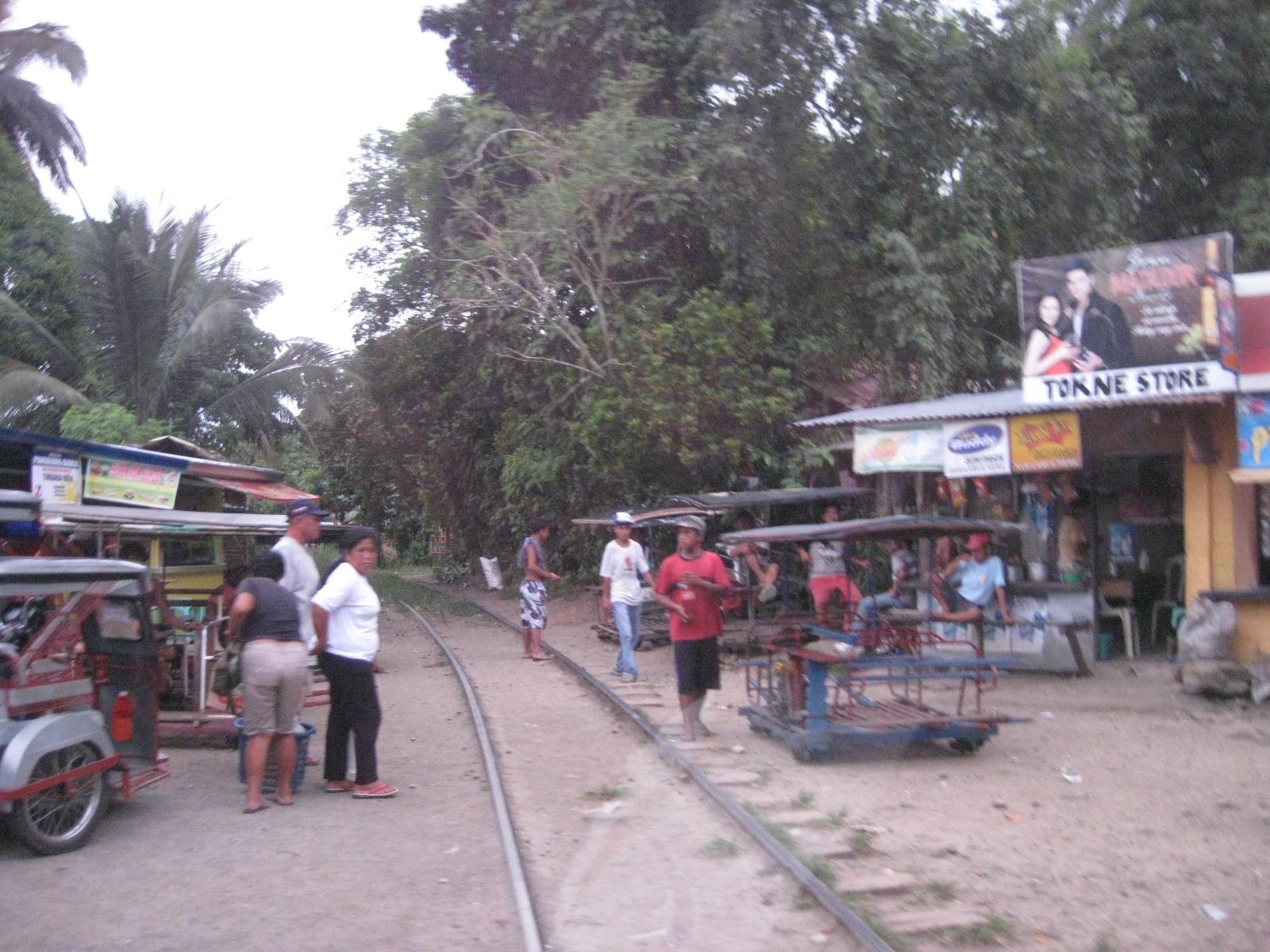 My first look at the motorized trolleys of Quezon – this photo shows what seems to be a terminal for two type of paratransit: the road-based tricycle (left) and the rail-based trolley (right). Being a convergence point for passengers, there are stores and eateries in the area. Note again the condition of the tracks where the wooden ties are still visible.
The photo above is my last snapshot of the railways prior to us using the bypass road on our way to Naga City. We also encountered heavy rains that prevented me from taking more photos during our drive. Thus, I was only able to take some more snapshots when we were already in Naga City.
 Rail crossing in Naga City – the signs again are obscured by other structures along the road. There are practically no safety devices at the time that could prevent crashes involving trains. Of course, at the time, the train service to Bicol were still suspended so there were none that could have had conflicts with road-based traffic.
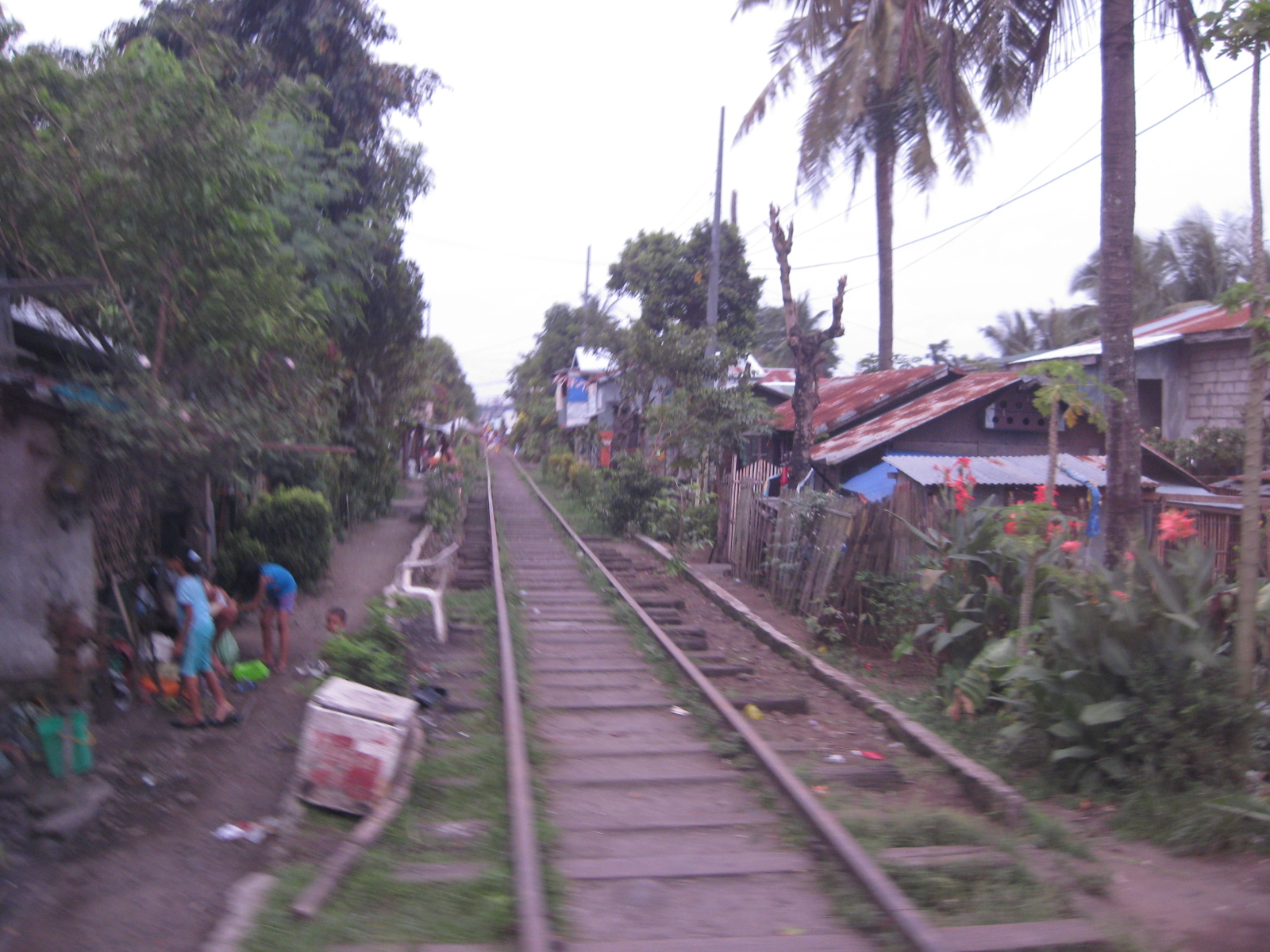 Railway tracks in Naga City – the tracks here seem to be in good condition despite the suspension of train services at the time. Noticeable too is the fact that while there is clearly encroachment on the PNR ROW, the houses have at least some space between them and the tracks unlike the case of Manila. Note that in the Bicol region, the PNR uses a single track rather than a double track system. Future capacity expansion (and I’m crossing my fingers here) would require a double track system to permit increased two way traffic once the trains regain popularity.
Next: the trolleys of Naga City
Railways in Luzon – Main Line South
In a previous post, I talked about the recent developments concerning the PNR and provided an historical perspective of railway development in Luzon Island, particularly focusing on the Main Line North and its branches. The MLN, of course, is no longer operating with proverbial nail in the coffin hammered by the eruption of Mt. Pinatubo in 1991, when lahar buried much of what was left of the lines in Pangasinan, Tarlac and Pampanga. Various initiatives have been put forward since the 1990’s to revive a portion of the MLN but in the form of a rail service connecting Clark with Manila. This is the Northrail project that has seen so much anticipation because of its promise of finally reviving railways for Central Luzon by providing access to what is being touted as the future main international airport at Clark, the Diosdado Macapagal International Airport (DMIA). The continuing saga concerning what seems to be a struggle in putting up Northrail is certainly worth another post. Meanwhile, we focus on the Main Line South for today’s feature. The figure below illustrates the extent of the MLS, significant sections of which have been rehabilitated.
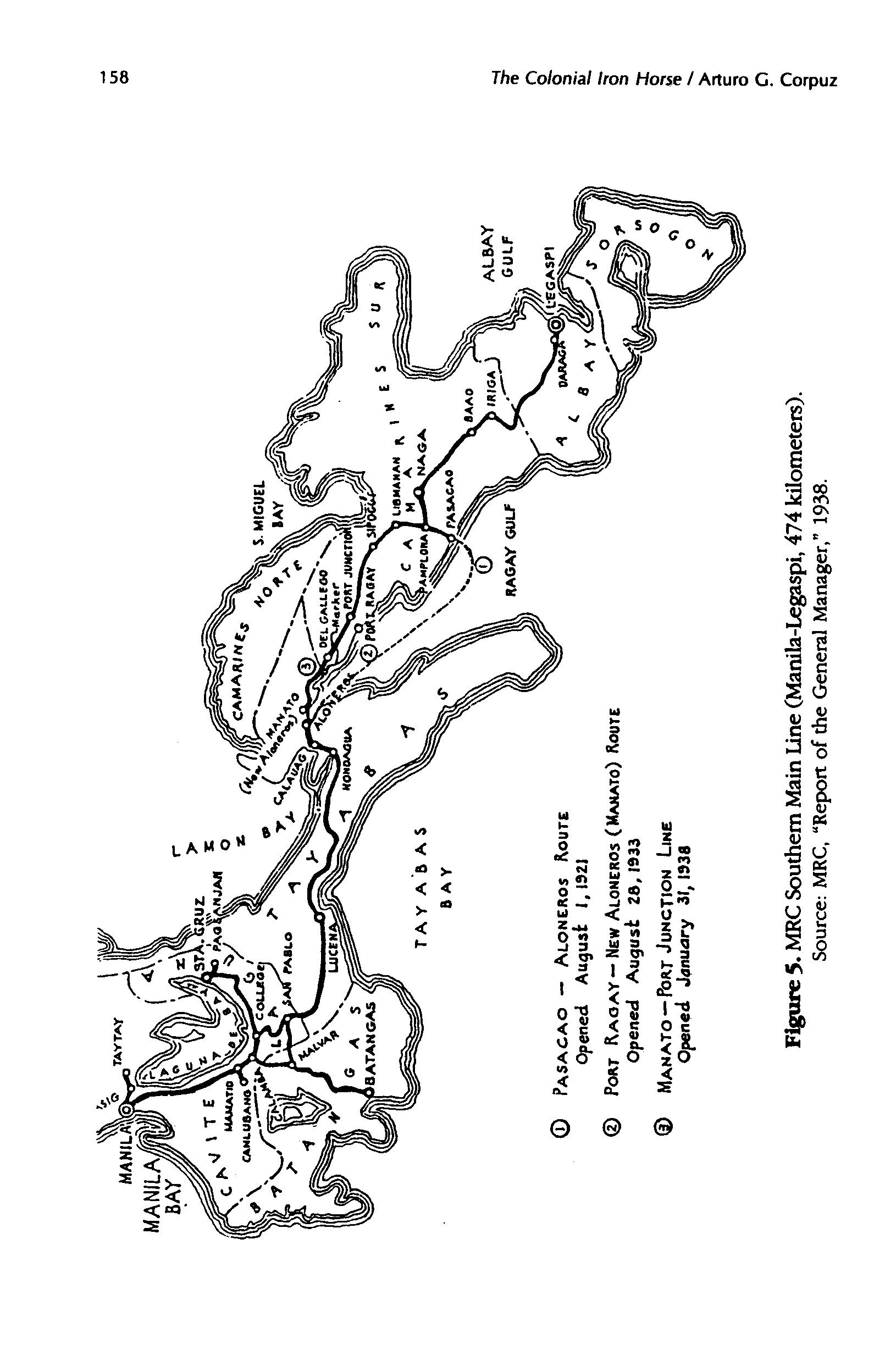 The PNR Main Line South (Source: PNR)
The MLS was constructed starting in the early 1900’s and can be quite tricky to establish given that many refer to it also by another familiar name: the “Bicol Express.” The invention of the latter term though was only applicable from 1938 when the first trains finally traversed the entire stretch from Manila to Legaspi, Albay. Construction for the southern line and its branches started in Manila and included the rail developments in Batangas, Cavite and Laguna that was later extended all the way to Aloneros in Guinayangan, Quezon. From here, it finally linked up with a line that started construction in Legaspi and proceeded northwards along the Bicol region until Ragay, Camarines Sur. (Reference: Corpuz, 1999 and PNR)
- The Main Line South started from Manila and covers practically the same route as today’s commuter and Bicol line all the way to Quezon and the Bicol Region. Construction started from two points representing the end stations of Manila and Legaspi with the northern segment terminating at Aloneros (Guinayangan, Quezon) and the southern segment at Ragay, Camarines Sur. The gap was eventually connected through Tagkawaya, Quezon in 1938.
- The Cavite Line ran from Manila to Naic via Paranaque and Bacoor for a total of 44 km, and was completed in 1908. The line was eventually abandoned in 1936.
- The Canlubang Branch is 7 km and emanated from what is currently the commuter line from Mamatid in Cabuyao, Laguna. It was completed in 1909.
- The Santa Cruz Branch started from Calamba and extended to Sta. Cruz and terminated at Pagsanjan, Laguna for a total of 46 km. Completed in 1912, continued contruction towards the towns of Rizal could have realized a railway line connecting the coastal towns of Laguna De Bay.
- The Batangas Branch is a 43 km network from Luta in what is now Malvar, Batangas to Bauan via Lipa and Batangas City. Completed in 1912, the Batangas-Bauan segment was abandoned in 1936.
PNR Field Trip in 2003 – Part 3
At the end of our field visit to the PNR yard in Tutuban, our group was treated to a free ride to the Buendia (Gil Puyat Ave.) Station. Some of us sat on the last car so we were afforded a view of the railway tracks and the environment along the PNR right of way. The result is a set of photos that I like to call “a peep into the train’s backdoor.”
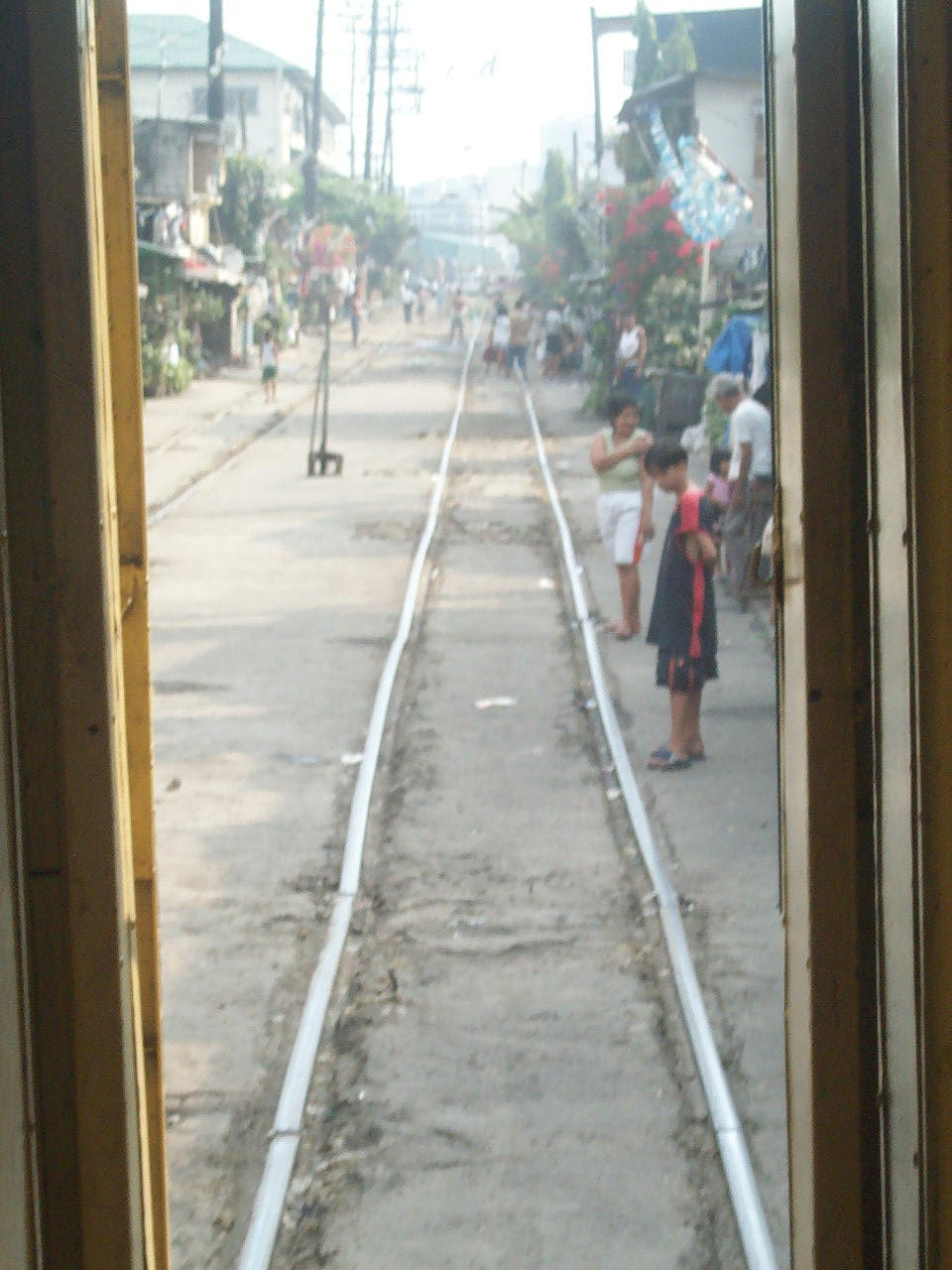 At the time, there were no rehabilitation work along the commuter line and one could clearly see the state of the tracks that could easily lead to derailment. Communities were dangerously close to the tracks as many informal settlers have encroached upon the PNR ROW. There is even a makeshift basketball court in the middle of the tracks. Thus, trains moved quite slowly partly because of the tracks and partly because of the people, mostly children who routinely cross the path of the train.
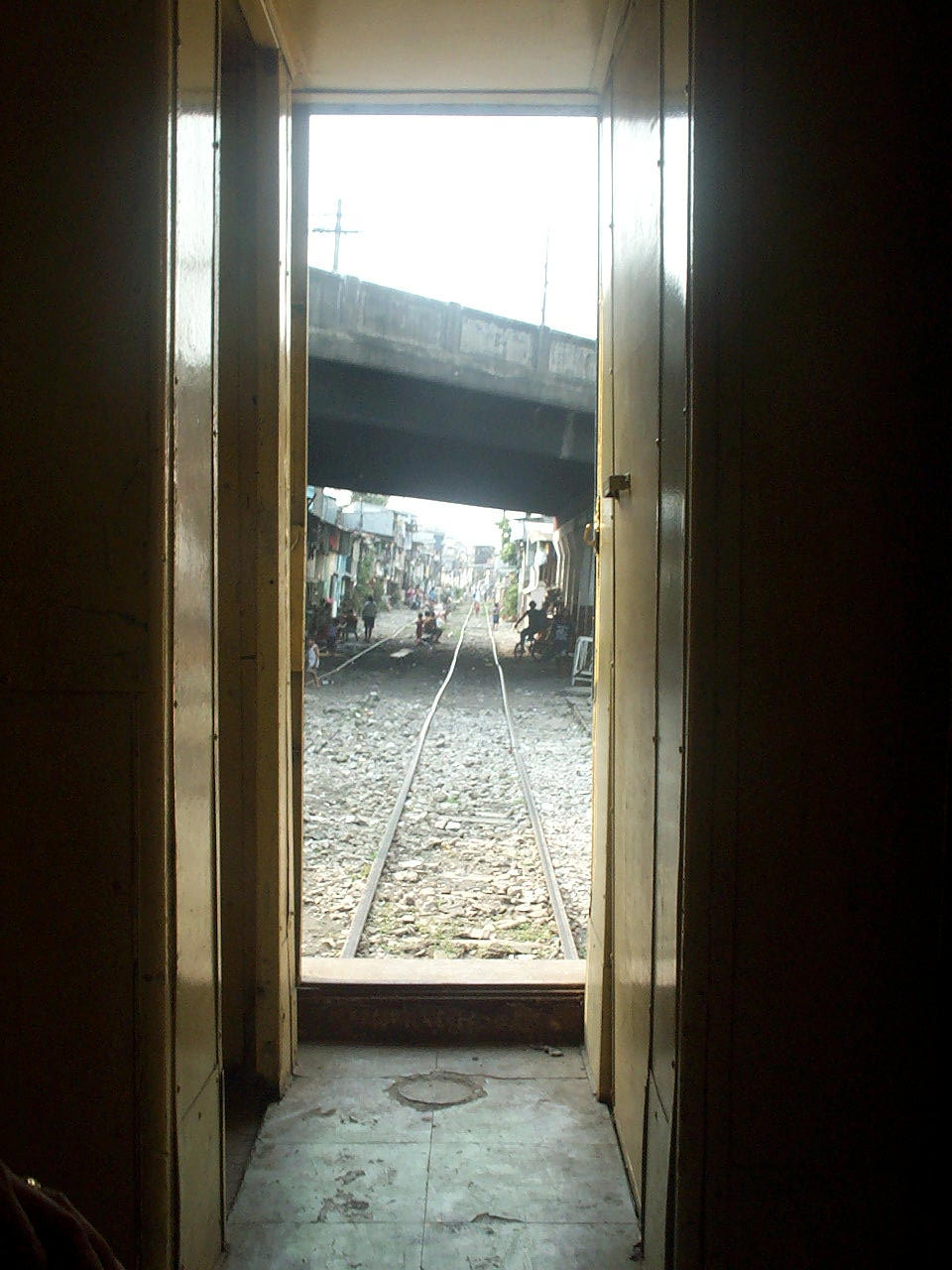 People have set up benches between the tracks and tambays are often found drinking or gambling, of the dangers posed by the trains.
Absent at the time were the trolleys that serve as informal transportation for communities along the line. These trolleys were generally human-powered, pushed by their operators and taking advantage of the the tracks and the unseen slopes to generate momentum and speed. These trolleys were light enough that they could easily be removed in case a train happened to be passing. I have photos of trolleys from my trip to Bicol that I will be including in future posts.
 It is said that the state of a country is clearly reflected in the conditions or situation of its transportation system. I guess the photo above gives us a pretty good picture of where the Philippines is right now if only we can deduce the essential elements from the photo. We have children wandering about and not getting the education they need to become productive members of society. This, despite primary and secondary eduction being free and compulsory. We have a problem concerning waste disposal that definitely has environmental consequences, not to mention a contribution to the perennial problems of flooding. We also have a housing problem where affordable, well-located housing is generally unavailable thereby attracting people to informal settlements. In the latter case, some settlements seem to be encouraged by local politicians if not local governments as they provide cheap votes come election time. And of course, there’s our transport system that needs a lot of attention if only to fix the results of failures in transport planning.
Need I say more?
PNR Field Trip in 2003 – Part 2
During the field in 2003, we also visited the PNR yard in Tutuban. The original central station/terminal of the PNR was already lost to what is now the Tutuban Mall. Perhaps in the near future, the PNR would again have a central terminal with architecture evoking its glory days. I’ve always imagined something that looks like what is Tokyo Station today. After all, stations of what was the PNR Main Line North featured red bricks.
 At the PNR yard in Tutuban, one could see what were operational and abandoned rolling stock and other equipment. Notice the roofs of the passengers cars? The roofs were modified because informal settlers were throwing their garbage and other wastes on top of the cars. The reasoning for the modification was that the wastes would just slide down. There’s some anecdotal evidence that the settlers also did their own adjustments by tying two plastic bags of garbage and hurling the two in such a way that the two bags would be on either side of the roof.
 A turnout at the PNR yard – turnouts allow for the diversion of trains from one set of tracks to another. It has three basic components: switches, acute angle or vee crossings (also known as “frogs”), and obtuse angle crossings. Visible in this photo is the frog at the middle of the picture and the check rails across from either side of the frog.
 Every wonder how the switches are activated so trains can transfer from one set of tracks to another? The contraption on the left is a lever that moves the rails for the trains to switch tracks. Of course the LRT and MRT lines use a more modern version of these devices so trains can transfer tracks once reaching the end of the lines.
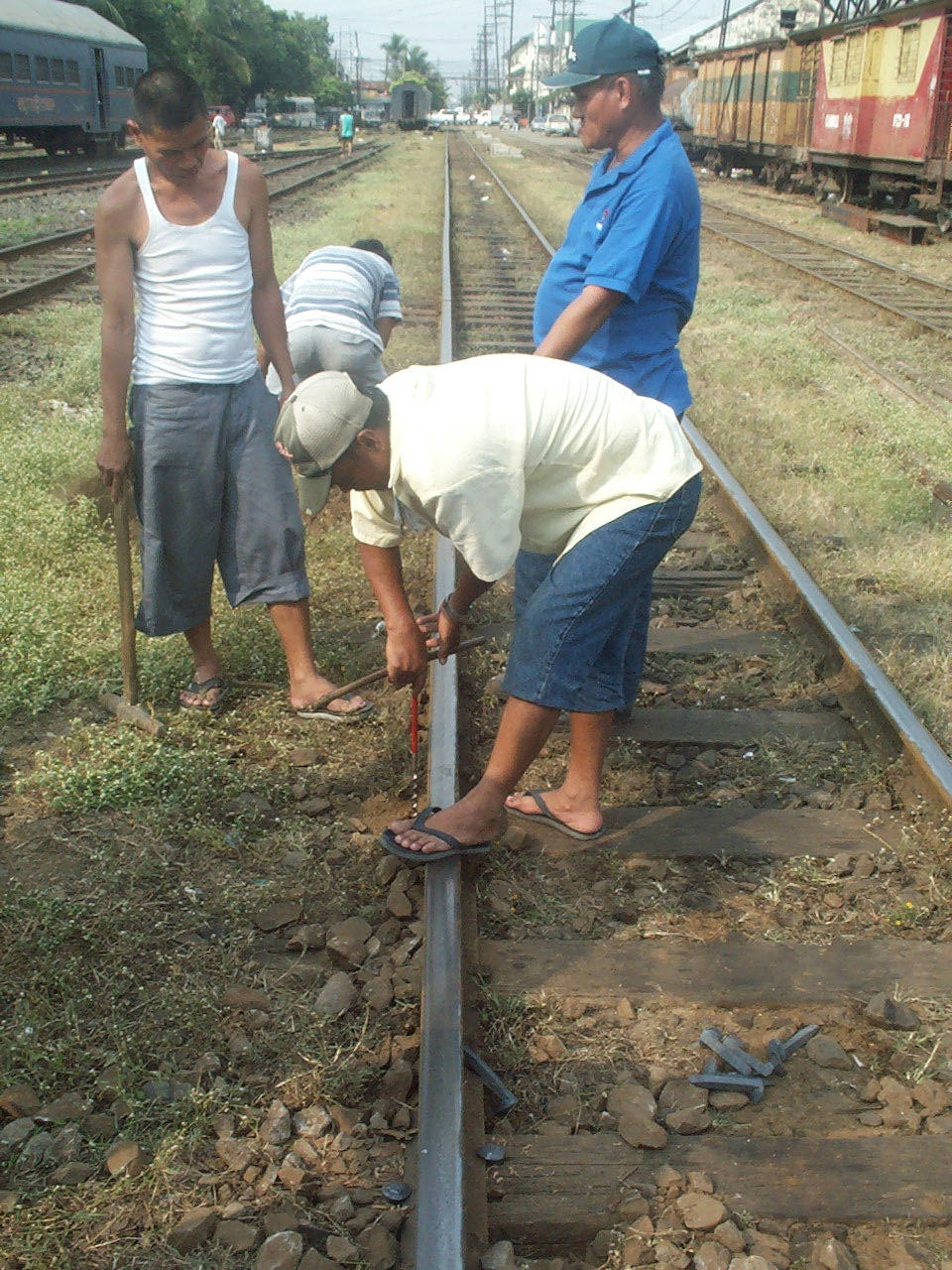 PNR staff working to secure the rails to the railroad ties (sleepers or traviesa) – it may look pathetic but the PNR was really so ill-equipped that they had to use manual drills to make holes on the wooden sleepers and then hammer the spikes (shown in the foreground) to the ties. Note the man with the big hammer on the left waiting for his turn to work. Since then, the PNR has changed many of these sleepers so we see mostly concrete ties in their places. Many sleepers were stolen not just along abandoned tracks in the north and central Luzon but those along active tracks as well. These were sold as construction material, garden accessories or even accents for houses, offices or restaurants.
 Caught (up) in traffic