
Home » Research (Page 14)
Category Archives: Research
Transport related topics in the 2013 UP College of Engineering Professorial Chair Colloquium
The College of Engineering of the University of the Philippines Diliman is holding its Professorial Chair Colloquium on July 11 and 12, 2013. These will be held mainly at the Melchor Hall, which has been the home of the College since it transferred to Quezon City after the Second World War. The colloquium is an annual event where Professorial Chair holders deliver lectures on selected topics of research being undertaken in the various institutes and departments of the college.
On July 11, 2013 (Thursday) at the Geodetic Engineering Theater, 4th Floor, Melchor Hall, U.P. Diliman:
- Dr. Hilario Sean O. Palmiano, Institute of Civil Engineering, “Traffic Noise Perception in UP Campus Dormitories” [DMCI Developers Professorial Chair] – 0950 to 1010.
- Dr. Nathaniel B. Diola, Institute of Civil Engineering, “Blended Cement for Road Construction” [Prof. Jose Ma. Diago de Castro Professorial Chair in Civil Engineering] – 1010 to 1030.
- Dr. Ricardo G. Sigua, Institute of Civil Engineering, “Blackspots and Their Identification” [Primary Group of Builders Professorial Chair Award in Engineering] – 1050 to 1110.
On July 12, 2013 (Friday) at the Maynilad Room, 3rd Floor, Melchor Hall, U.P. Diliman:
- Dr. Jose Regin F. Regidor, Institute of Civil Engineering, “Transport Infrastructure, Poverty and Inclusive Growth” [Pozzolanic Philippines Inc. Professorial Chair] – 0910 to 0930.
- Asst. Prof. Gerald Jo C. Denoga, Department of Mechanical Engineering, “Optimization of Parallel-Series Hybrid Powertrain for Public Transportation” [Emerson Professorial Chair in Engineering] – 0930 to 0950.
- Dr. Karl B.N. Vergel, Institute of Civil Engineering, “Evaluation of Compliance of Specifications of Customized Local Road Vehicles (CLRV) with Local Regulations and International Standards” [Maynilad Professorial Chair] – 0950 to 1010.
- Dr. Edwin N. Quiros, Department of Mechanical Engineering, ” Coconut Methyl Esther (CME) Performance and Emission Characteristics Using a Common-Rail Direct Injection (CRDI) Engine” [Emerson Professorial Chair in Mechanical Engineering] – 1010 to 1030.
Dr. Palmiano is the current Director of the National Center for Transportation Studies (NCTS). Dr. Diola is the immediate past Director of the Building Research Service (BRS). Dr. Sigua is the head of the Road Safety Research Laboratory (RSRL) of the NCTS. Dr. Regidor is past Director of the NCTS. And Dr. Vergel is the head of the Transport & Environment Laboratory of the NCTS.
Asst. Prof. Denoga is the past Chair of the Dept. of Mechanical Engineering (DME) and has led teams in the design of vehicles that participated and won in international competitions on energy efficient vehicles, representing the country and the university in these contests. Dr. Quiroz is the head of the DME’s Vehicle Research and Testing Laboratory (VRTL).
These lectures as well as others on the mornings of July 11 and 12 are open to the public. Venues are at the Melchor Hall (along the Academic Oval), and the UPAE Hall and the EEEI Building at the College of Engineering Complex along Velasquez Street (across from the College of Science complex).
–
MNTC Donation to UP-NCTS Road Safety Research Laboratory
The Manila North Tollways Corporation (MNTC) recently donated software and equipment to the University of the Philippines Diliman’s Road Safety Research Laboratory (RSRL) at the National Center for Transportation Studies (NCTS). Gracing the Turnover Ceremony were no less than MNTC Chair Manuel V. Pangilinan and UP System President Alfredo E. Pascual. Dr. Hilario Sean O. Palmiano, the current NCTS Director, welcomed guests from MNTC and its parent firm Metro Pacific Tollways Corporation as well as from UP and the media. Dr. Ricardo DG. Sigua provided a background on the RSRL and how the donated equipment would help in the implementation of researches. The following photos show some highlights of the Turnover Ceremony last April 11, 2013.
 UP President Alfredo E. Pascual shaking the hands of MNTC Chair Manuel V. Pangilinan after they delivered messages during the Turnover Ceremony held at the NCTS. Looking on are Road Safety Laboratory Head Dr. Ricardo Sigua and NCTS Director Sean Palmiano.
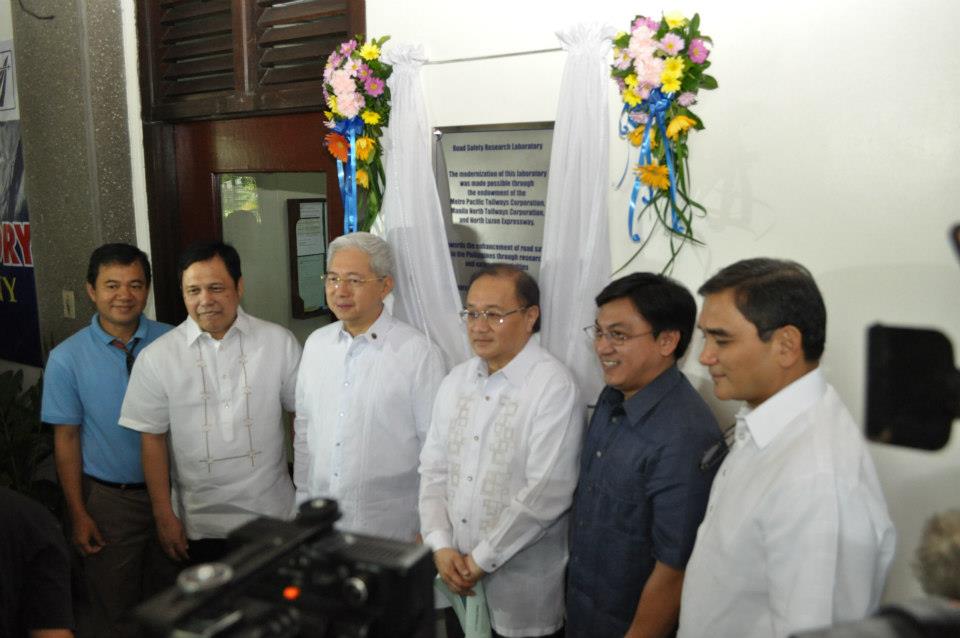 Unveiling of the plaque by (L-R) Dr. Ric Sigua, MNTC President & CEO Rodrigo Franco, UP Pres. Alfredo Pascual, MNTC Chair Manny Pangilinan, Dir. Sean Palmiano, and Metro Pacific President & CEO Ramoncito Fernandez
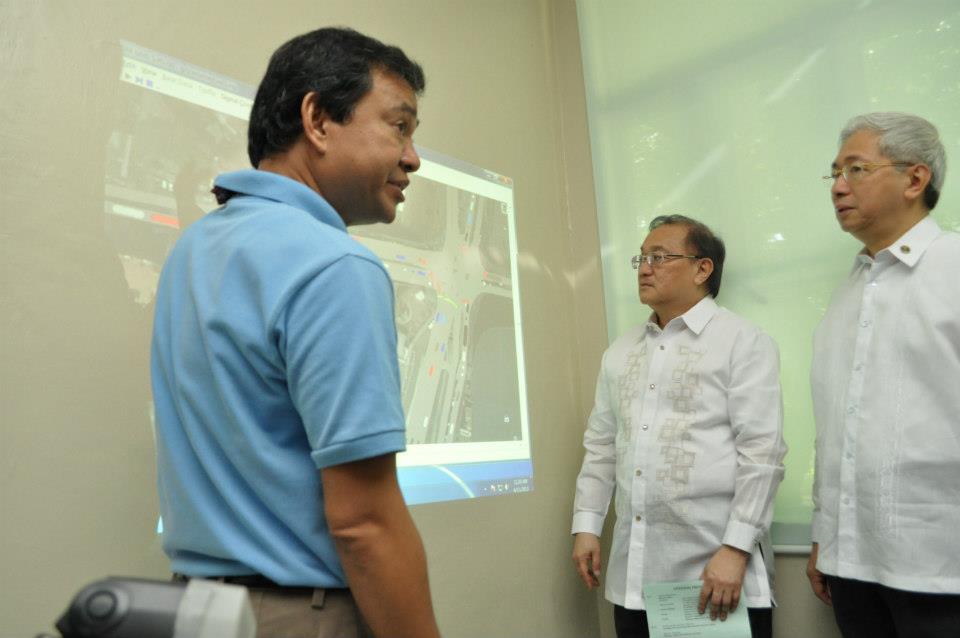 Dr. Sigua demonstrating VISSIM, one of the software donated by MNTC to UP-NCTS
 MNTC Chair MVP making a point about the microsimulation demo as UP Pres. Pascual looks on.
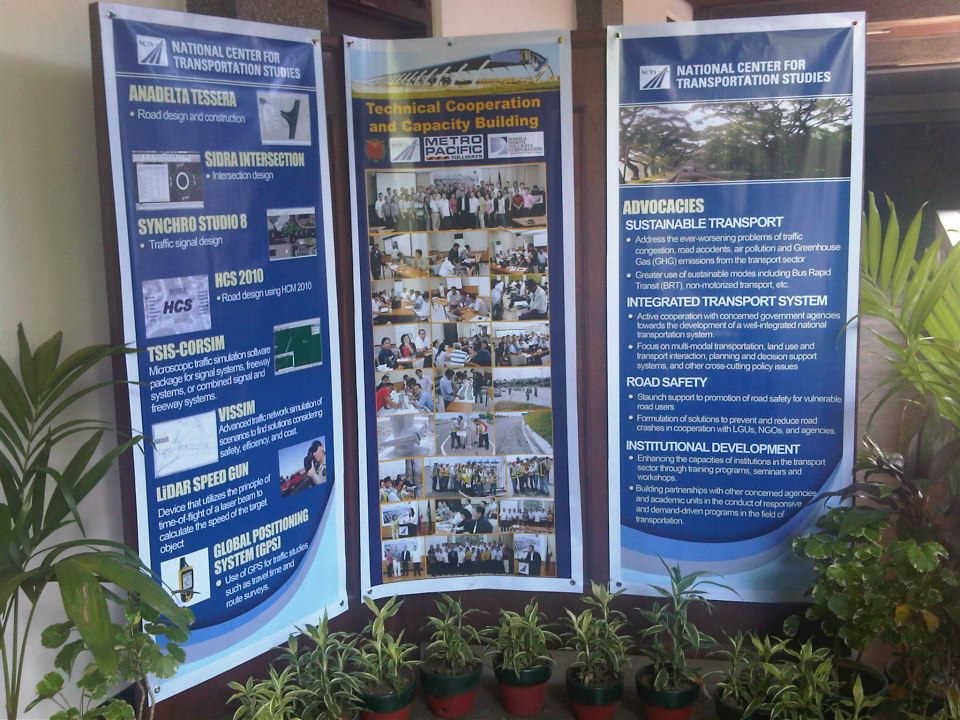 Tarps on display showing a list of donated software and equipment, photos of technical cooperation and capacity building between NCTS and MNTC/MPTC, and the advocacies of NCTS.
The following links are for news items on the turnover:
AKSYON TV ANDAR NG MGA BALITA Road Safety Lab binuksan para sa pagaaral ng kaligtasan sa kalsada
http://article.mediabanc.ws/stream/default.aspx?cc=T0T06d8bb4U%3d&file=k177n0SVBnt2RaICvoFJhiFjxgfZyCtN6NoXOXnMSGyal1UJ64YKNpL2BU77bIOvciz4Fow7jHs%3d&title=t52vKVnKl2UOiPwLKMoBIY7qOmbKBwO1BvxSsh3vvK9bxrfWReUGvonLroiSCcRES9sS3xiZeZJwE1Fge2YBny9SUwnOgsxVTV5 AKSYON Dalawang aksidente kada minuto nangyayari sa buong mundo
ayon sa pag aaral
http://article.mediabanc.ws/stream/default.aspx?cc=T0T06d8bb4U%3d&file=k177n0SVBnsls4maYTmszSUZ5hGB8cannnCtIw38rXSPzVAYSki5Ja9OXLfu2SRW0MoCtizKBHI%3d&title=lpnzG7ZYupO9oIfbLTmmnyPuzDcsckTf7KQri2OPzrjD3PZBucpQvITV0xUGBlObShdIgViH%2fltBVsTf70AwjRR5y3I
+hqdT0uag3PAgkU0%3d
[Note: To view the videos, you must have Microsoft Silverlight installed on your computer.]
–
AGT demonstration runs at UP Diliman
The Automated Guideway Transit (AGT) project of the Department of Science and Technology (DOST) is well under way with the initial test runs already being conducted by the agency. Several demonstration runs were also undertaken to show the vehicle and provide an initial experience for various stakeholders including government official, UP faculty, the media and invited guests from the private sector. I am posting a short video taken during one demonstration run where faculty members from UP’s College of Engineering rode on the prototype and also made some initial inspections of the vehicle.
.
The first phase of tests is expected to be completed during this first quarter of 2013. The next phase, which is expected to be a joint undertaking of DOST and UP, will follow immediately and should involve a multidisciplinary team that will evaluate the prototype. Such assessments are necessary to determine and address issues and/or weaknesses. It is imperative that the AGT would be proven to be safe and sound in its specs before a scale-up in the project.
Already, there are discussions on the future applications of this vehicle, and CBDs and airports are already being mentioned where the AGT would be most applicable. Also being mentioned is the further development of the test track to connect the UP-Ayala Technohub along Commonwealth Avenue and the future University town center along Katipunan with a line along C.P. Garcia Ave. Perhaps, too, such a line would have more ridership if it is extended all the way to Ateneo along Katipunan (C-5). While there is also talk on the AGT along the lines of the existing LRT and MRT lines, the reality is that AGT’s and monorails have significantly less capacities compared to regular commuter lines that are much needed in Metro Manila and other rapidly developing, highly urbanized cities in the country.
–
UP-AGT test runs
Happy New Year!
I start the year with a short feature on the Automated Guideway Transit (AGT) prototype at the University of the Philippines Diliman (UPD) campus. The prototype has been featured in a number of articles in quad media in the recent weeks of November and December after its delivery and a few runs along the elevated test track at the campus. A project of the Department of Science and Technology (DOST) through its PCIEERD and MIRDC, and in cooperation with UPD, the vehicle has caught the attention of the general public and particularly those who have advocated for better public transport services in Metro Manila and other Philippine cities. Many are excited about the prospects of a “home-grown” system being constructed and operated in Metro Manila, and the buzz about the AGT replacing the IKOT jeepneys of UP Diliman is still very much alive despite clarifications by both the DOST and UP about this being a R&D project as well as questions regarding sustainability and practicality. Following are a few photos of the AGT prototype during one of its demonstration runs last December.
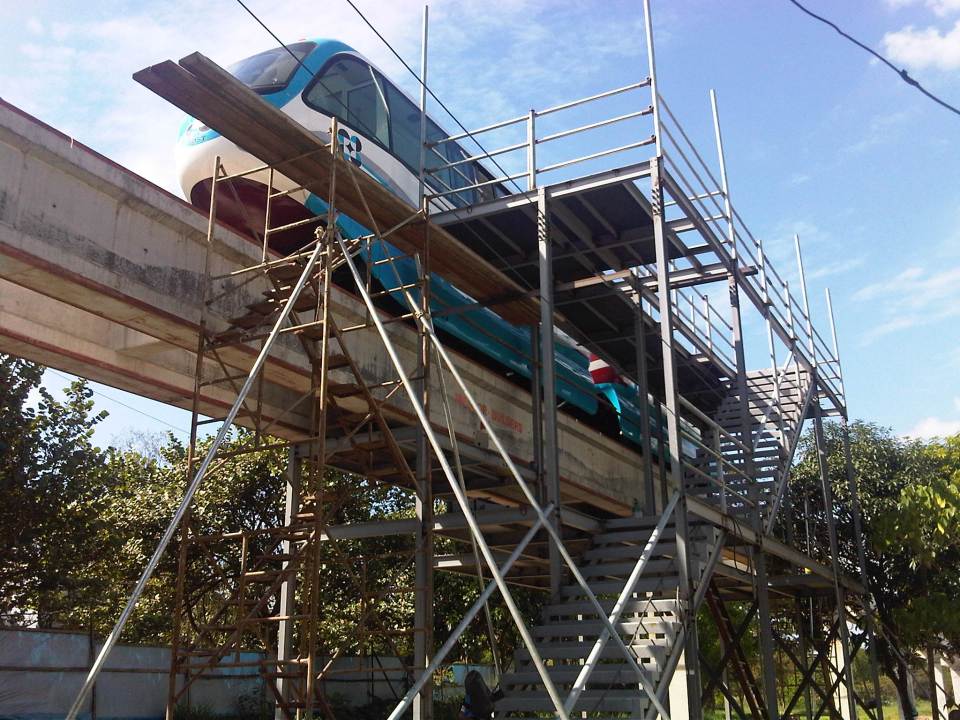 Unfinished platform at the Jacinto Street end of the test track allowing access to the vehicle’s underside and bogey and the loading platform
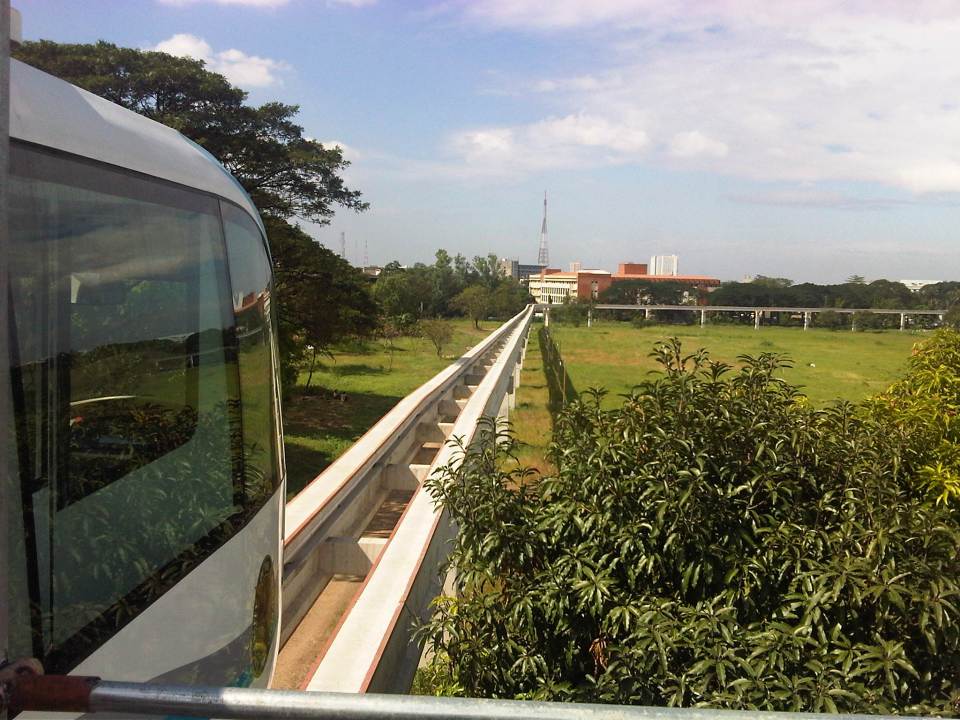 View of the test track from the platform – note again the absence of rail tracks as the AGT employs rubber tires. Wheels travel along the two concrete guideways shown in the photo. That’s the CHED building along C.P. Garcia Ave. downstream from the position of the AGT
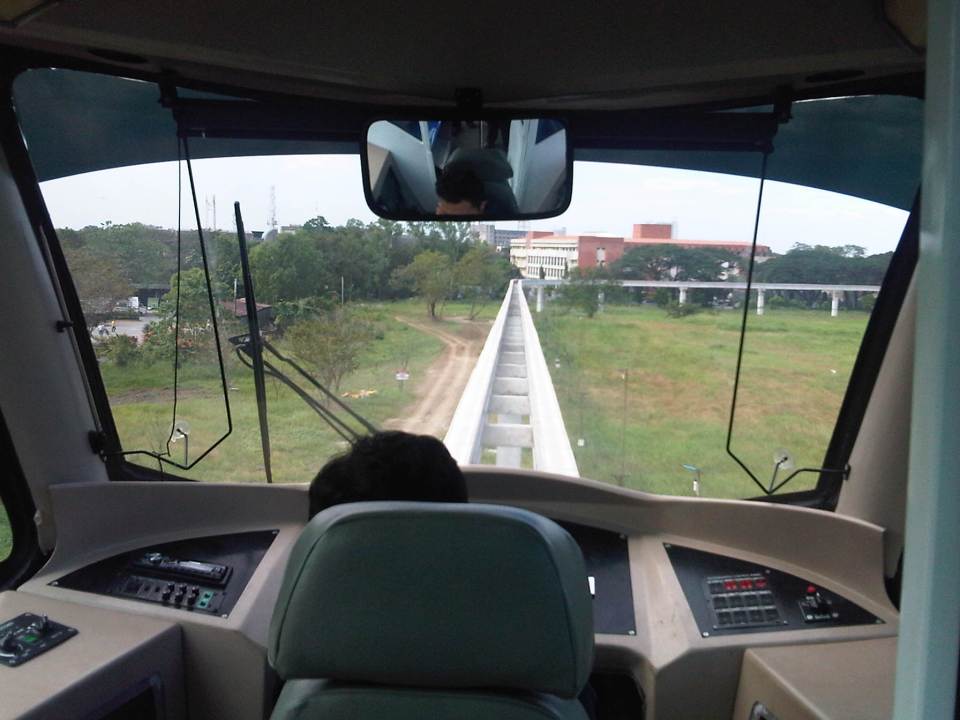 Driver’s perspective of the test track – the vehicle will eventually be driver-less (hence, automated) but for the test runs, there will initially be a driver to make sure the train operates correctly
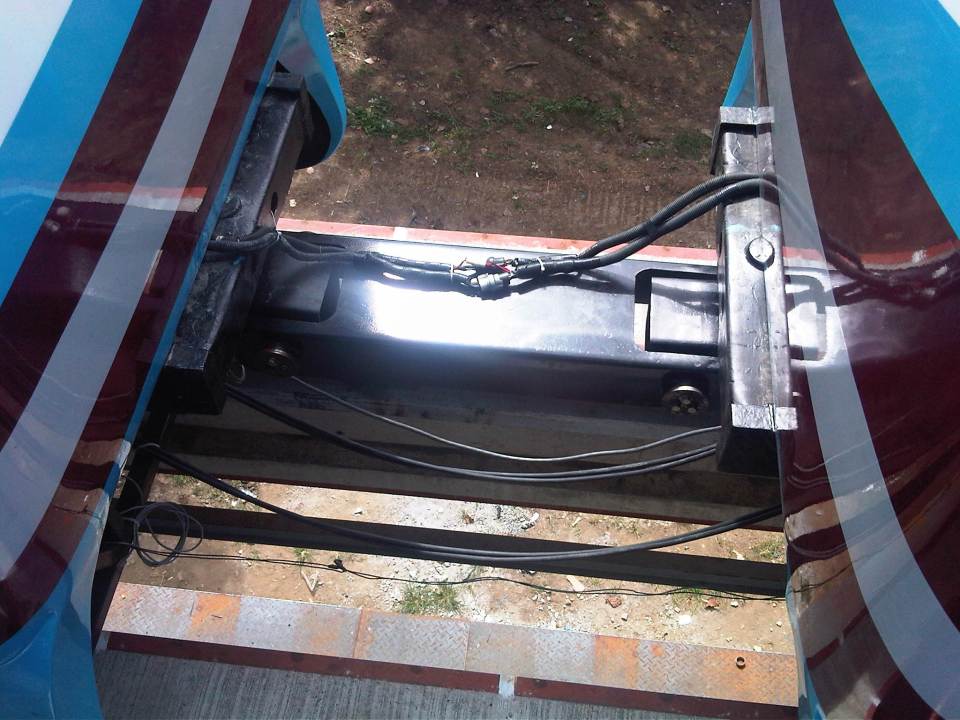 Connection – the two prototype vehicles are connected by this crude assembly that is definitely one of the things that would need to be reconsidered in subsequent vehicles. Perhaps an automatic coupler should be installed in the future?
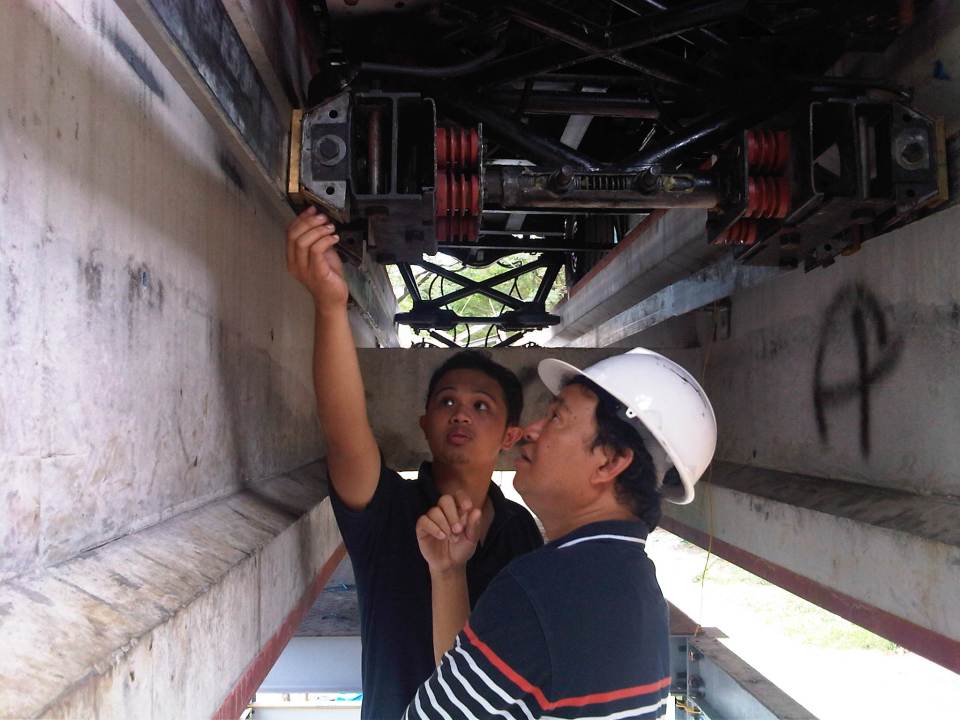 Dr. Ric Sigua of the Institute of Civil Engineering inspecting the pick-up system for the AGT prototype with DOST project staff.
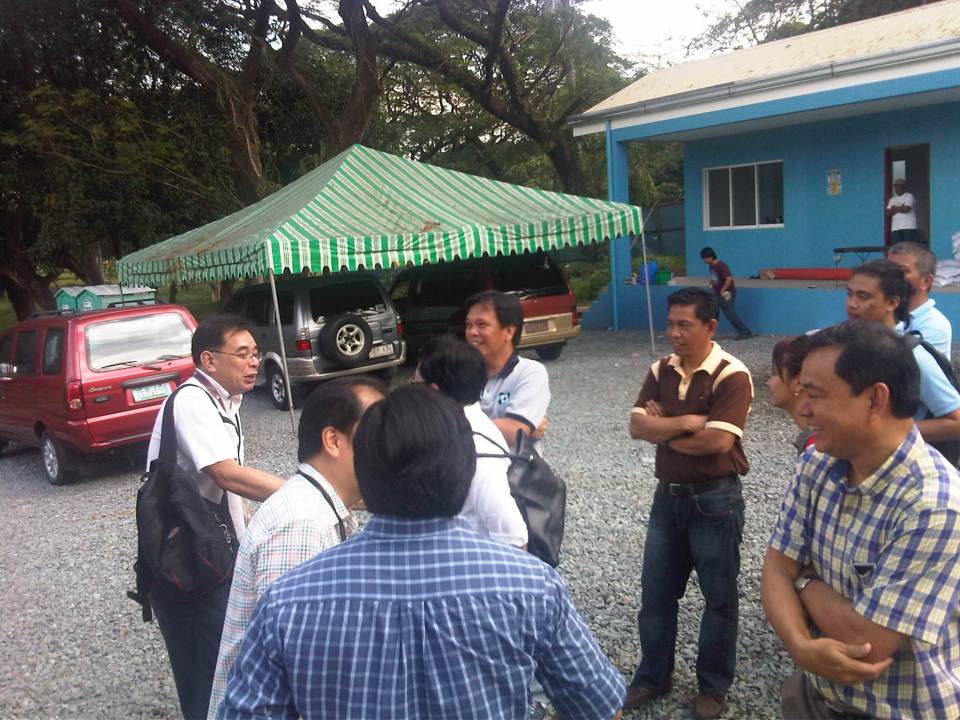 DOST-PCIEERD and UP Diliman faculty (from the Institute of Civil Engineering, Department of Mechanical Engineering, Electrical and Electronics Engineering Institute and School of Urban and Regional Planning) exchange ideas on the prototype.
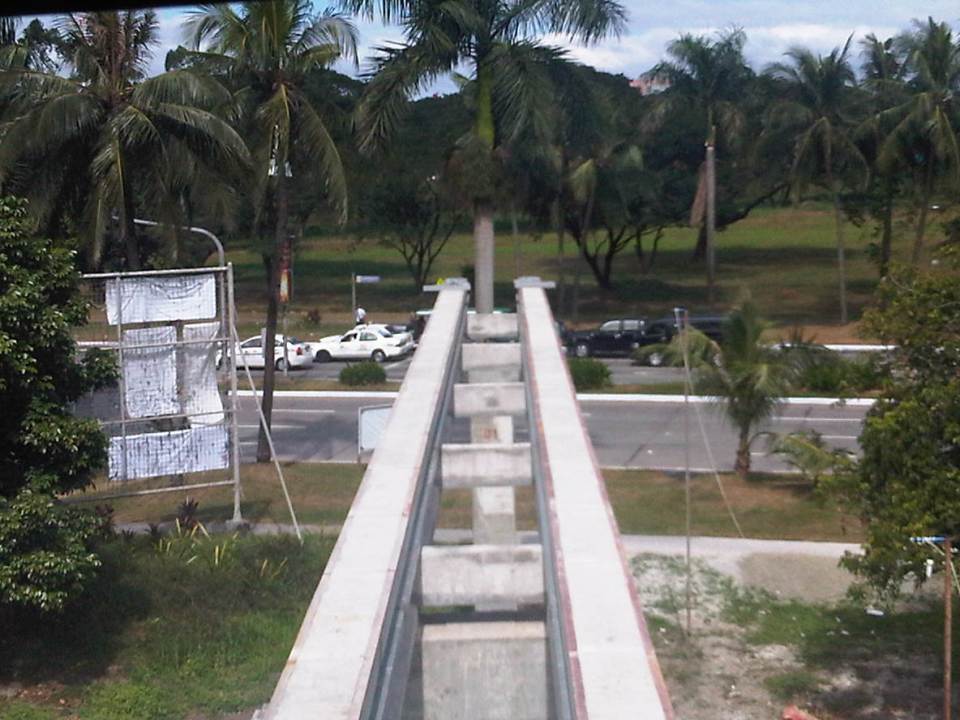 View of the end of the test track showing the two guideways employed by the vehicle and traffic along the University Avenue
The initial runs of the AGT have been exclusive demonstrations to government officials including those in national agencies, guests from the private sector, and partners with UP Diliman. The formal test runs will start in January 2013 but there are still no details on how these will be carried out in order to determine the functionality and safety of the prototype. Already, there are informal discussions on what needs to be improved in the prototype based on the initial observations and inspections conducted by faculty members from UP Diliman’s College of Engineering who will be involved in the technical evaluation of the prototype. Hopefully, such evaluations can be completed at the soonest and improvements are considered prior to a full system eventually being constructed and made available for public use. Where that system can be constructed and operated is still up in the air but should definitely be somewhere where the system is needed and where it can be a showcase for localized technology.
–
Special lectures on Traffic Engineering and ITS
The National Center for Transportation Studies hosted a series of lectures by a visiting professor last November 27 and 28, 2012. The lectures were delivered by Dr. Takashi OGUCHI, Professor, Department of Human and Social Systems and the Advanced Mobility Research Center of the Institute of Industrial Science of the University of Tokyo. Dr. Oguchi is currently a Visiting Professor under the Engineering Research and Development for Technology (ERDT) Program of the Department of Science and Technology (DOST) and is hosted by the Institute of Civil Engineering (ICE) of the UP Diliman College of Engineering.
The lecture on Nov. 27 was on Traffic Engineering and was well attended by students, UP staff and guests from government agencies. Dr. Oguchi lectured on the basic concepts of traffic flow theory including bottleneck phenomena.
 Dr. Oguchi talking about traffic congestion
 The NCTS Toyota Training Room was full with participants including students, staff and guests from government agencies.
 Dr. Oguchi explaining about the difference between time mean speed and space mean speed using an illustrated example.
The lecture on Nov. 28 was on Intelligent Transport Systems (ITS)
 Dr. Ric Sigua of the ICE introduces Dr. Oguchi before the latter’s lecture. Like the previous lecture, the venue was full with attendees from UP and government agencies.
 Dr. Oguchi also spoke about the ITS World Congress to be held in Tokyo next year.
 Dr. Oguchi fields a question from Dr. Eric Cruz of the ICE during the open forum right after the lecture.
–
Updates on the UP AGT
The prototype vehicles for the Automated Guideway Transit (AGT) project of the DOST through its PCIEERD and MIRDC were delivered last Sunday, November 25, at the test track site in UP Diliman. The two vehicles will form the train that will be mounted on the test tracks and subject to experiments to test the performance and functionality. Researchers from UP Diliman, including faculty members from its College of Engineering and College of Science, will be cooperating with the DOST to provide advise on issues that are certain to crop up once the tests are underway.
Contrary to many reports coming out that it will be an “upgrade” or “replacement” for the Ikot and Toki jeepneys currently operating inside the campus, the truth is that a Phase 2 creating a loop around the campus is not viable for the foreseeable future. For one, the system will be too expensive to build, operate and maintain for a very limited ridership that is attributed to UP Diliman, even with the increasing numbers of through trips using UP public transportation. Of course, it would be nice to have a system like this in campus but the costs cannot be covered by revenues from fares. Funds for construction (investment costs), seen from one perspective, may be of better use elsewhere where resources are in dire need to support other very important endeavors. A full system would be appropriate elsewhere and with funding coming not from the DOST or UP budgets but from airports, developers, local governments and others who can be the proponents for such systems.
 AGT vehicle delivered at the test site in UP Diliman – the streamlined body was designed by DOST project staff. The skirt helps to hide the bogey, which includes the mechanism for the vehicle to pick up power from rails embedded along the guideway.
 Inside the vehicle – there are few seats behind the driver’s cab to maximize space for (standing) passengers. This layout is very much similar to other AGTs and monorails including those serving airports where users would also have luggage with them.
 Driver’s cab – although the intention is for the vehicle to be ultimately driverless, tests will initially be conducted with a driver.
 Back seats – there are a few more seats at the back but the layout maximizes the number of standing passengers.
 Another look at the AGT vehicle – the DOST logo is prominent in the front and one side of the vehicle. The UP logo is on the other side of the vehicle.
 Test tracks – the AGT guideway is elevated and stretches to almost 500 meters. For reference, the photo was taken from near the project office/power house with the CHED building along C.P. Garcia Ave visible downstream of the elevated guideway. The line of trees on the right is along the University Avenue.
While it is understandable that certain rail aficionados have become excited about the prospects of having an operational, functional AGT or monorail, the UP-AGT is really an experimental system. It is best considered as a “proof of concept” project that will hopefully encourage the development and promotion of public transport in many of our cities that seem to be mired in having unsustainable transport modes. But of course, any transit system such as this will not survive if no rationalization in transport services are implemented and this is particularly true if an AGT or monorail would have to compete directly with buses, jeepneys or tricycles.
–
CLRV: another look at the LPG Jeepney
The research on Customized Local Road Vehicles (CLRV) is currently underway with the project team going around the country to document different jeepney designs. The main objective of the study is to be able to formulate and recommend standards for jeepneys based on the requirements of stakeholders (e.g., passengers) and from the perspective of safety, ergonomics and efficiency. The last term is quite tricky as efficiency here generally refers to the performance of the vehicle, particularly related to fuel consumption. Efficiency may also touch on the capacity of the jeepneys, which would have implications on revenue (i.e., more passengers mean more fares).
Following are photos taken prior to the recent workshop held in Calamba, Laguna where the outcomes of previous workshops in Iloilo and Davao were presented for validation by a similar group of stakeholders. These included cooperatives, assemblers, automobile companies, NGOs, government agencies and other interested parties to the CLRV research. The study is being conducted under the auspices of the Philippine Council for Industry, Engineering and Energy Research and Development (PCIEERD) of the Department of Science and Technology (DOST) and funded by the Department of Transportation and Communications (DOTC).
 One of the jeepneys on display was a 24-seater LPG-powered jeepney by David Motors
 Hyundai Theta engine converted for LPG
 Another look at the engine, which is practically the same engine used by the popular Starex vans. There were two other LPG jeepneys that day with both having Toyota engines converted for LPG. The engines are from the ones used by Hi-Ace models.
 Bench seats inside the LPG jeepney – there is still a door at the rear but it is used as an emergency exit rather than the main entry/exit for the vehicle. The sliding windows are sealed because of the air-conditioning installed for this jeepney.
 The main door for the jeepney is at the right side just across from the driver. This design mimics those for buses and should enable more efficient collection of fares. That is, passengers may be asked to pay their fares immediately upon boarding the jeepney.
 6A close look at the dashboard, which is a mix of parts coming from different vehicles. The steering wheel, for example, bears the emblem of Hyundai. This jeepney had power features such as power windows that can be controlled by switches on the panel board to the left of the steering wheel.
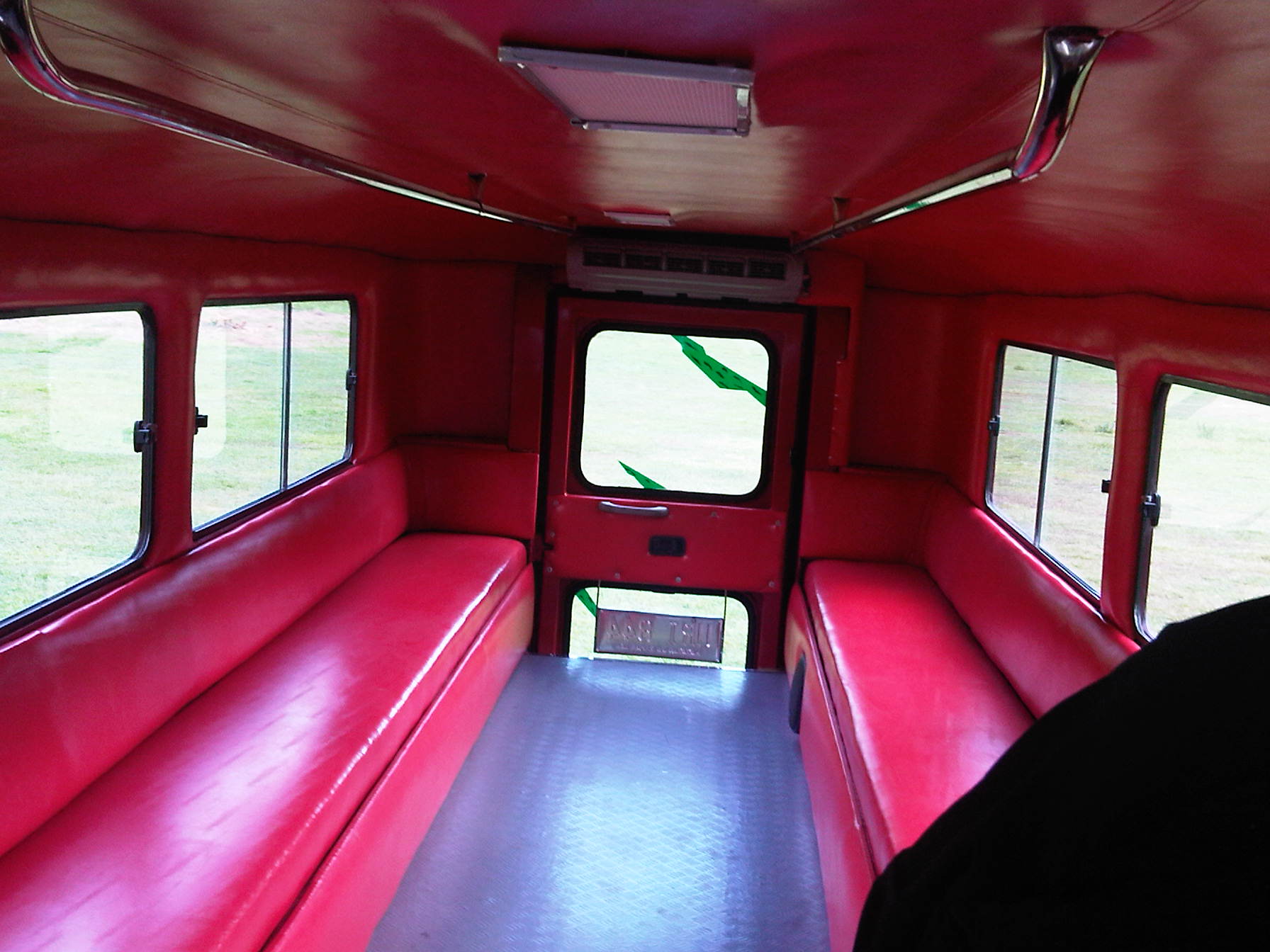 Driver’s rear view of passengers and whatever will be trailing the jeepney in traffic.
 The jeepney door is operated through a lever, parts of which are taken from a gear shift. The handle is well within reach of the driver of the vehicle.
 Exec. Dir. Rowena Guevara of DOST-PCIEERD interviews the driver and mechanic of this LPG from David Motors. According to them, the performance of the jeepney is the same as conventional ones and that this less noisy as well as having less emissions. Assemblers of LPG jeepneys say that consumption is about 7.3 km/kg of LPG, which compares well with the estimated 7.5 km/L of diesel consumed by well-maintained conventional jeepneys. LPG is cheaper so it can be inferred that overall, drivers and operators would have increased revenues if they used LPG jeepneys.
 The LPG jeepney is one (there are also electric jeepneys) of the variants being touted as the future of the vehicle. The “eco” tag is among the pitches for these jeepneys and should be a consideration for the study.
–
Undergraduate research topics on transportation
Our undergraduate students are presenting today and are divided into two groups: those presenting research proposals under the CE 190 course and those presenting the outcomes of their research implementation unse CE 199. Following are topics related to transportation as administered by their respective groups under UP Diliman’s Institute of Civil Engineering and associated with the University’s National Center for Transportation Studies (NCTS) and the Building Research Service (BRS).
Research proposals (CE 190)
Transportation Engineering Group (TEG)
- Study on Parking Supply and Demand in UP Diliman (Jonard Apilado and Kathleen Perez)
- An Assessment of Heavy Vehicle Factors and Other Current Practices Relating Traffic and Pavement Design (Maricar Biscocho)
- Trip Generation and Trip Distribution Modelling of Lipa City (Dominic Aloc and Jan Aaron Amar)
- Compliance of Jeepneys with Selected National Vehicle Regulations and Standards (Raphael Dela Cruz and Abhigael Marabut)
- Development of Bus Passenger Origin-Destination Table of EDSA-Commonwealth Avenue Routes (Angelica Neri and Abigail Sunga)
- Development of Bus-Passenger Origin Destination Table for EDSA Bus Routes with Turnaround Points Covering Southern to Northwestern Metro Manila (Jake Aaron Chua Yap)
- Improving the Passenger Queue Conditions of North and Taft Avenue Stations of Metro Rail Transit 3 (Michael Macaraig and Marc Cyril Tuazon)
- Identification of Traffic Bottlenecks inside UP Diliman Campus (Diana B. Andino)
- Locational Analysis: Centralized Provincial Bus Terminals in Metro Manila (Carl Buzon and Franz Flores)
- Philippine Maritime Transport Safety: Analysis of Incidents over the Last 10 Years (John Michael Escarro)
- Blackspot Mapping of UP Diliman Campus Using Google Earth (John Michael Parco)
- Designing A Simple Procedure to Manually Count Traffic Volumes in Large Roundabouts (Patrick Nepomuceno)
- Designing Bike-friendly Intersections (Zara Alaira)
- Motorcycle lane safety evaluation (Fatima Cipriano and Karl Vicenta)
Research Implementation (CE 199)
TEG:
- Perception of Traffic Noise Inside U.P. Campus (John Carlo D. Villar and Michelle Monelle S. Quilatan)
- Level of Service of Pedestrian Facilities in University of the Philippines Diliman (Angel U. Gacutan and Maria Jenna M. Tan)
- The Assessment of the Effects of Billboard to Safe Driving (Dave Andrei Rivera)
- Analysis of the Presence of Urban Air Pollutants from Road Vehicles Within UP Diliman (Joshua Carlo S. Padilla and Tsuyoshi A. Sakurai)
- Assessment of Public Transport Supply and Demand Characteristics for the UP-Philcoa Route (Ms. Jessica Mae Anaque and Ms. Kylie Dianne Erika Landingin)
- Determination of Walkability Index of UP Diliman (Niki Jon Y. Tolentino)
Geotechnical Engineering Group:
- Simulation of the Bottom-Up Cracking Performance of Portland Cement Concrete Pavement (PCCP) with Cement-treated Sub-base using the Mechanistic-Empirical Road Design Framework (Ma. Karenina J. Lardizabal and April Anne Acosta)
Construction Engineering & Management Group:
- Comparison of Strength Parameters of Concrete for Road Application Using Different Types of Cement (Shioichiro S. Sato)
- Performance of Cement as a Stabilizing Agent for Selected Soil Classifications in Cement Treated Bases (Gerard Christopher Filart Lahoz)
–
Professorial Chair 2012 presentations on Transportation
The Transportation Engineering Group of the Institute of Civil Engineering of the University of the Philippines Diliman held a special session for its Professorial Chair Lectures last August 10, 2012 at the Toyota Training Room of the National Center for Transportation Studies. Four lectures were delivered by ICE faculty members who are also Research and Extension Fellows at the NCTS. Following are a few photos taken during the colloquium.
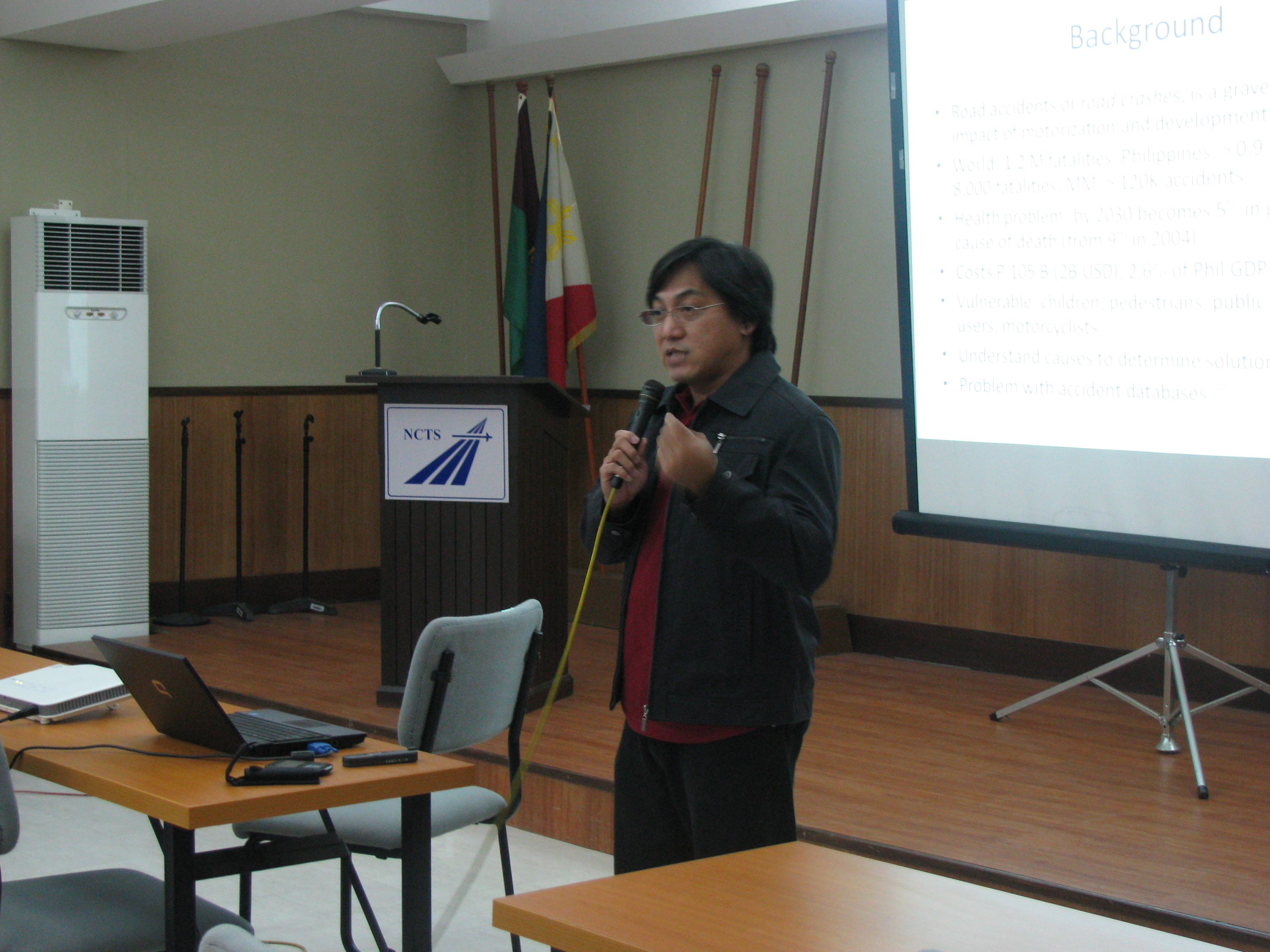 Dr. Sean Palmiano presenting on the Investigation of Road Crash Causal Factors in Metro Manila (DMCI Developers Professorial Chair)
 Dr. Karl Vergel presenting on the Design of Traffic Signal Timing and Traffic Impacts of the Re-Introduction of Traffic Signal Control at the Intersection of the University Avenue and Commonwealth Avenue (Maynilad Professorial Chair)
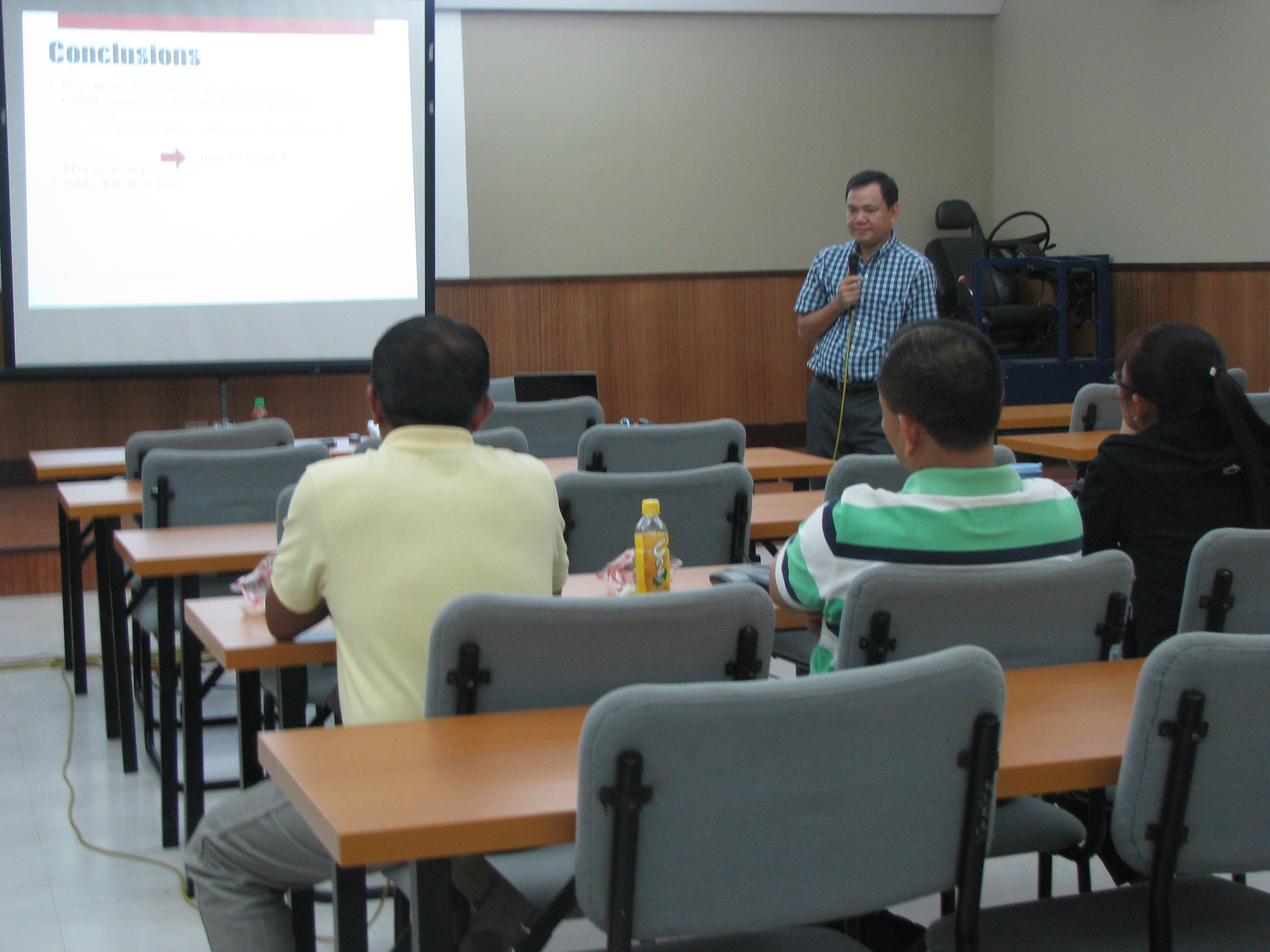 Dr. Ric Sigua presenting on Microscopic Simulation: A Tool for Evaluation of Traffic Schemes (Prof. Emeritus Norbert S. Vila Professorial Chair)
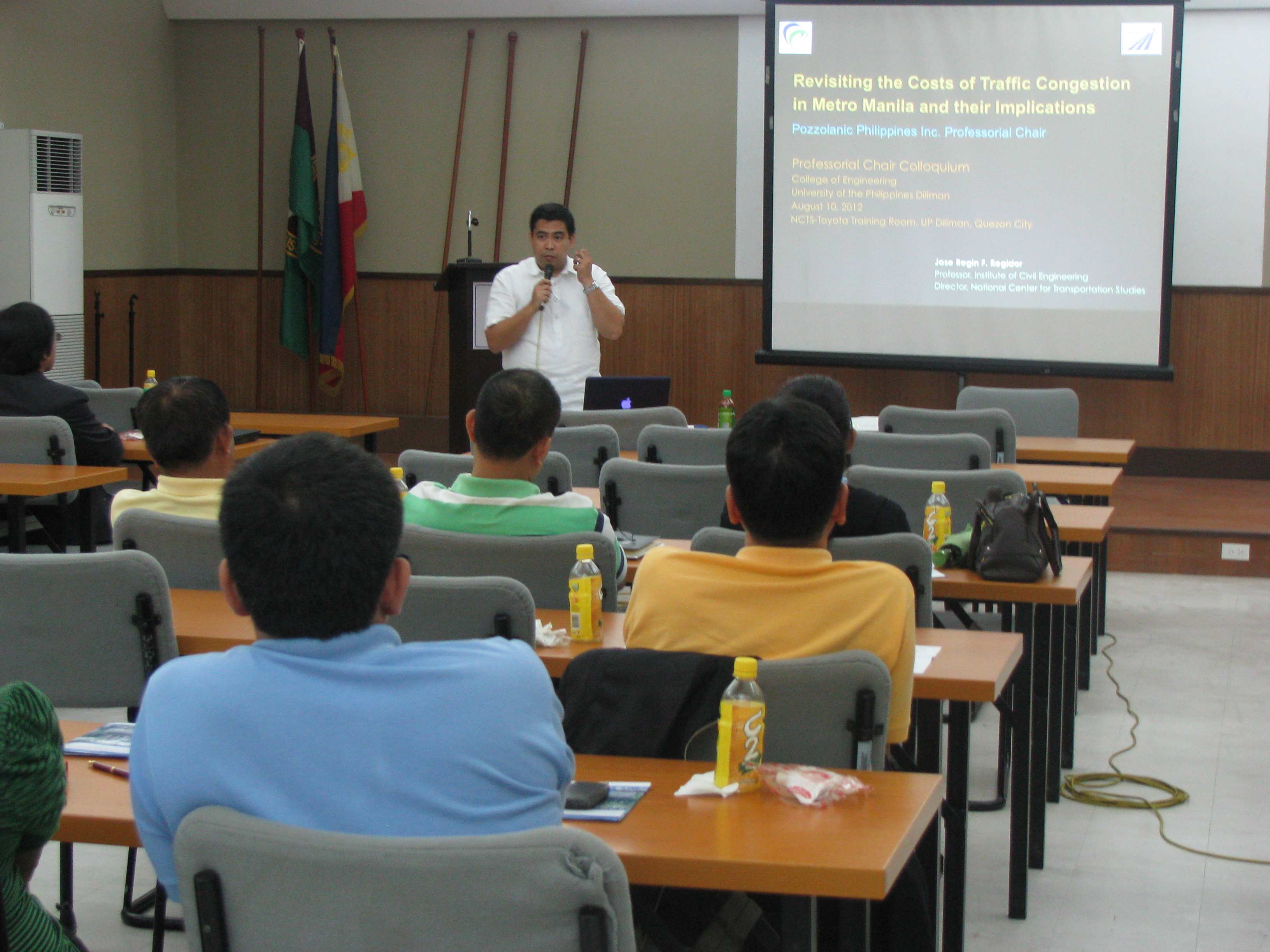 Dr. Regin Regidor presenting on Revisiting the Costs of Traffic Congestion in Metro Manila and their Implications (Pozzolanic Philippines, Inc. Professorial Chair)
 Audience consisting of various participants including those from the DPWH, DOTC and MMDA who were invited for the colloquium.
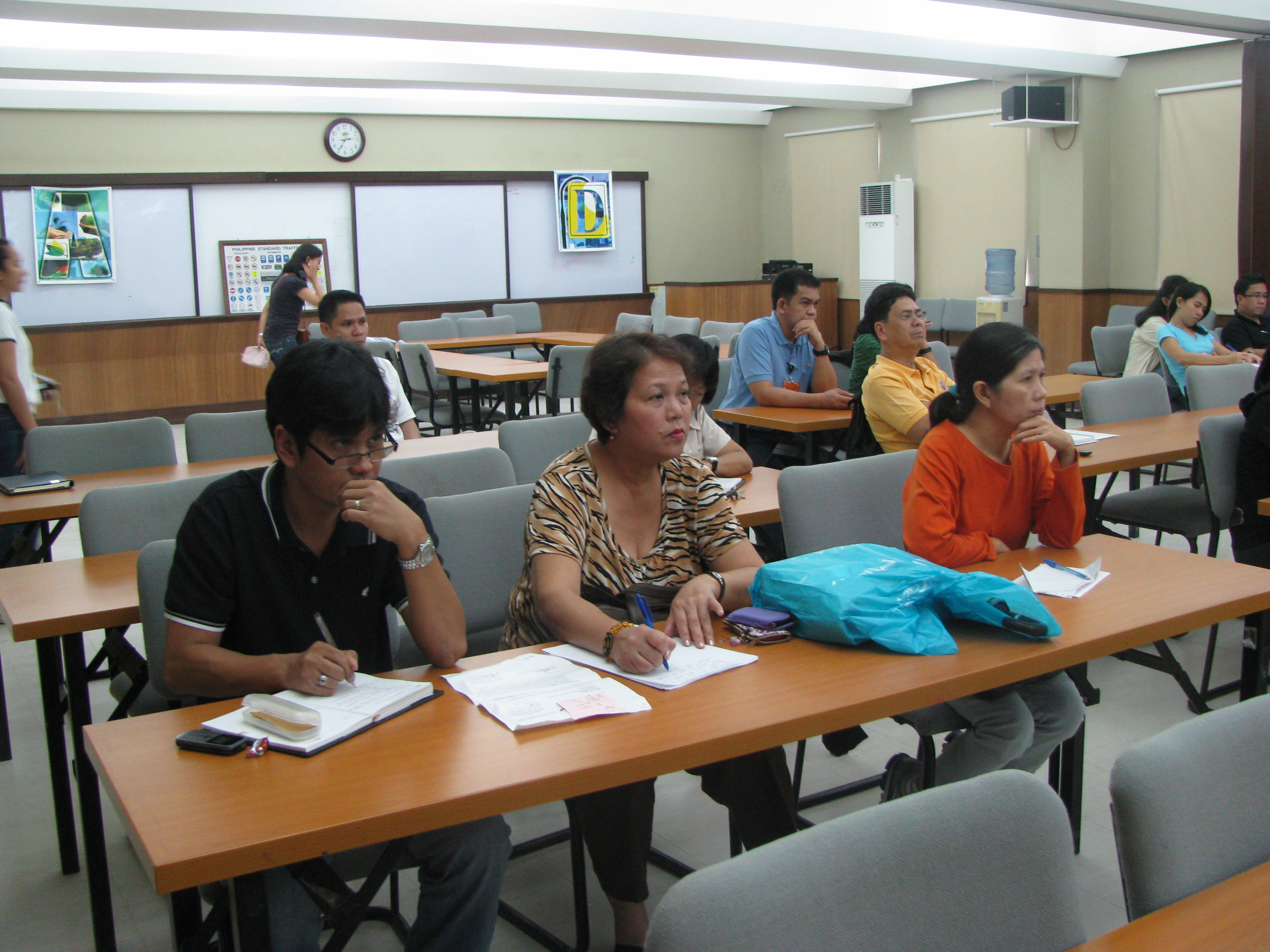 Graduate students and technical staff from the College of Engineering and the National Center for Transportation Studies also attended the lectures. Unfortunately, classes were suspended that week due to the monsoon rains that resulted in widespread flooding in Metro Manila so undergraduate students were not able to attend the colloquium.
The presentation files may be found in a previous post where links for downloading are provided. These may also be found in the NCTS website.
–
Transportation-related lectures at the UP College of Engineering 2012 Professorial Chair Colloquium
The College of Engineering of the University of the Philippines Diliman will be holding its Professorial Chair Colloquium for 2012 on July 30, 2012 at the Melchor Hall and the UP Alumni Engineers Centennial Hall at the UP Diliman campus. Among the topics under many disciplines of engineering are several lectures on transportation. These are the following and mainly under three departments of the college.
Institute of Civil Engineering [P & G Room, Melchor Hall]
- “Investigation of Road Crash Causes in Metro Manila,” Dr. Hilario Sean O. Palmiano, DMCI Developers Professorial Chair [8:30 – 8:50 am]
- “Design of Traffic Signal Timing and Traffic Impacts of the Re-introduction of Traffic Signal Control at the Intersection of the University Avenue and Commonwealth Avenue,” Dr. Karl B.N. Vergel, Maynilad Professorial Chair [8:50 – 9:10 am]
- “Microscopic Simulation: A Tool for Evaluation of Traffic Schemes,” Dr. Ricardo G. Sigua, Prof. Emeritus Norbert S. Vila Professorial Chair [9:10 – 9:30 am]
- “Revisiting the Costs of Traffic Congestion in Metro Manila and Their Implications,” Dr. Jose Regin F. Regidor, Pozzolanic Philippines, Inc. Professorial Chair [9:30 – 9:50 am]
Department of Mechanical Engineering [Maynilad Room, Melchor Hall]
- “Performance And Emission Characteristics of a Direct Injection Diesel Vehicle with Different Blends of CME Biodiesel,” Dr. Edwin N. Quiros, Emerson Professorial Chair in Mechanical Engineering [9:30- 9:50 am]
- “Design and Local Fabrication of an Energy- Efficient Electric Vehicle,” Asst. Prof. Joseph Gerard T. Reyes, Emerson Professorial Chair in Engineering [10:30 – 10:50 am]
Department of Chemical Engineering [Maynilad Room, Melchor Hall]
- “Co-Production of Alternative Fuels for the Philippines,” Dr. Rizalinda L. De Leon, Semirara Professorial Chair in Engineering [10:50 – 11:10 am]
The lectures are all open to the public and will be held from 8:30 AM to 12:30 PM. There are 8 lecture groups that are assigned to 8 venues at Melchor Hall and UPAE Centennial Hall. Melchor Hall is located at the university core along the Academic Oval while the UPAE Hall is located along Velasquez Street beside the EEE Institute Building and across from the National Institute of Geological Sciences (NIGS).
–
 Caught (up) in traffic