
Home » Traffic flow (Page 8)
Category Archives: Traffic flow
EDSA traffic: view from the top
Traffic along Epifanio Delos Santos Avenue (EDSA) or Circumferential Road 4 is quite infamous considering it being a if not the main artery of Metro Manila and carrying much vehicular and passenger traffic between cities like Pasay City, Makati City, Mandaluyong City, Pasig City, Quezon City and Caloocan City where it has major junctions with other major thoroughfares like Roxas Boulevard, South Superhighway, Ayala Ave., Gil Puyat (Buendia) Ave., Shaw Blvd., Ortigas Ave., Aurora Blvd., East and Timog Avenues, Quezon Ave., North Ave., Roosevelt Ave., NLEX and A. Bonifacio Ave., Rizal Ave. and MacArthur Highway.
Shown in the following photos are traffic conditions along EDSA during a holiday, and typical afternoon peak and evening on a weekday. The section featured is the stretch from the Ortigas junction to Camp Aguinaldo. Visible in the photos are the high-rise condominiums along Connecticut Street (upper left) and the developments at the Araneta Center including the Araneta Coliseum in the Cubao commercial district. The green area on the upper right is Camp Aguinaldo, headquarters of the Armed Forces of the Philippines (AFP), while the rooftops at the right are of houses located in an high-end exclusive subdivision (Corinthian Gardens). In the middle of EDSA is the MRT-3’s elevated tracks.
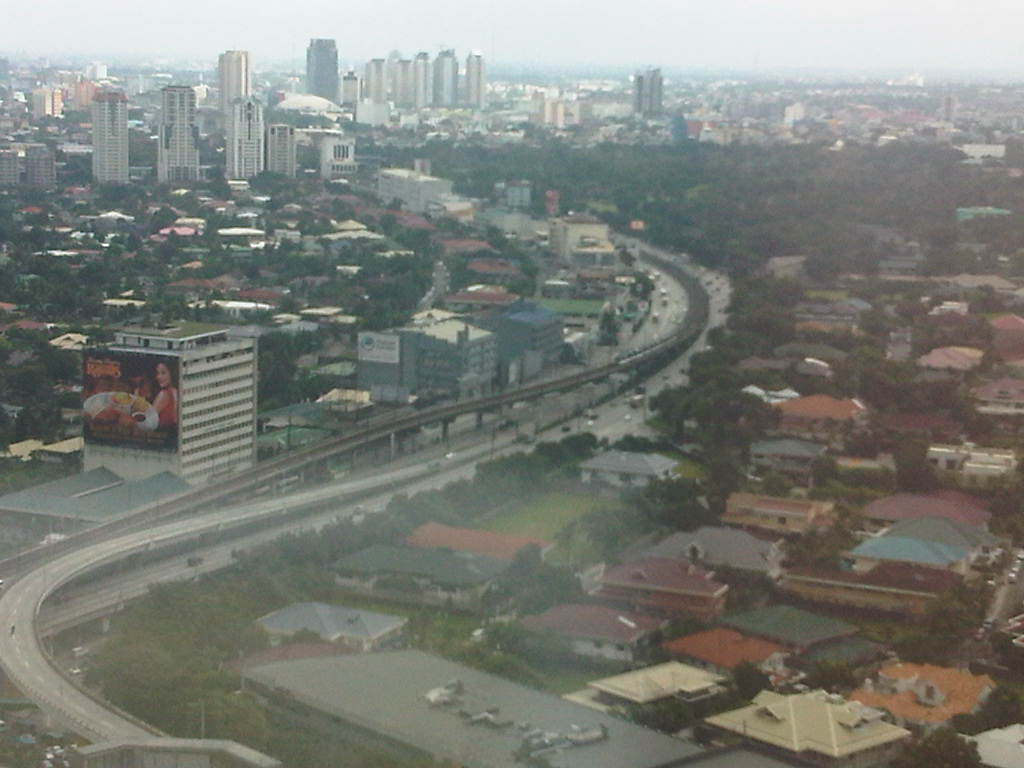 Photo taken from the 35F of the Robinsons-Equitable Tower shows light traffic along EDSA during a holiday. Traffic probably is similar during Sundays while such volumes may be observed on Saturdays only in the early mornings; before 9:00 or 10:00 AM when the shopping malls open.
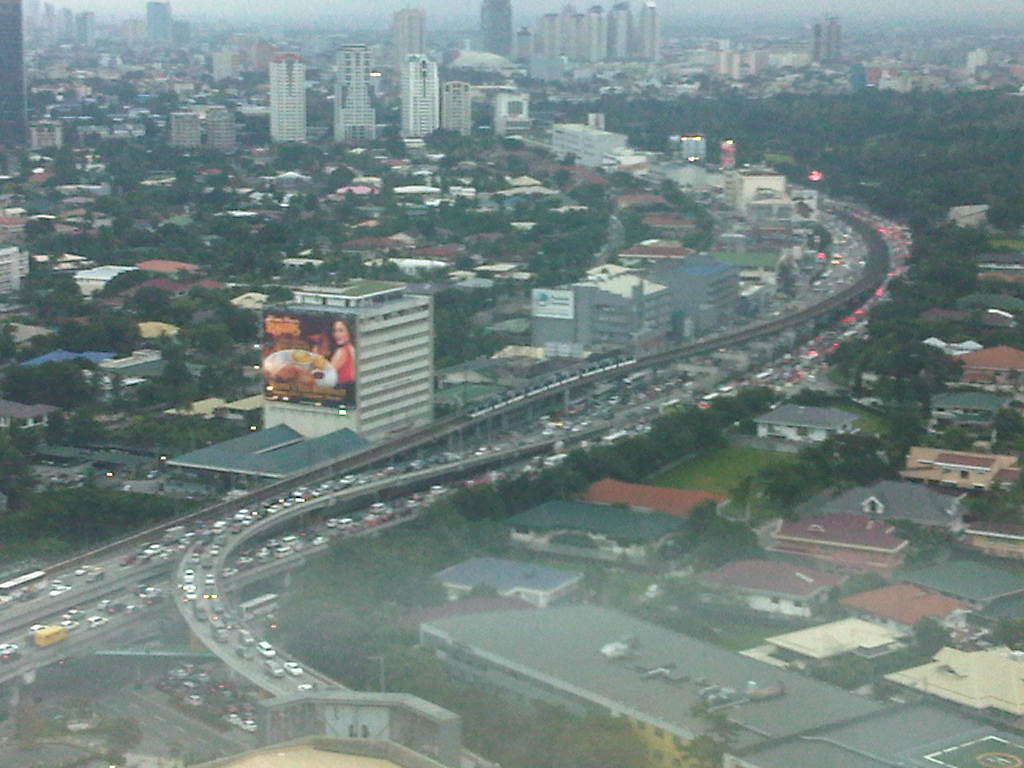 Photo taken at 5:44 pm showing traffic congestion on both directions (northbound and southbound) of EDSA including the overpasses at its intersection with Ortigas Ave. An MRT-3 train is visible in the middle of the photo.
 Photo taken at 6:16 pm with the headlights and taillights indicative of the traffic density during the early evening. Such congestion now usually extends past 8:00 pm with cases where EDSA is still congested near midnight. Such cases are more common now rather than exceptional.
–
School traffic impacts – issues along Ortigas Ave., Part 2
I had written recently about traffic congestion along Ortigas Avenue that is due mainly to traffic generated by a private school in the area. In the previous post, the photos only show vehicles parked on the sidewalks on either side of the road. They did not show the actual traffic congestion experience. The parked vehicles seem more incidental and indirect than concrete evidence of congestion brought about by school traffic generation though they are a definite manifestations of parking generation, which is directly related to traffic generation.
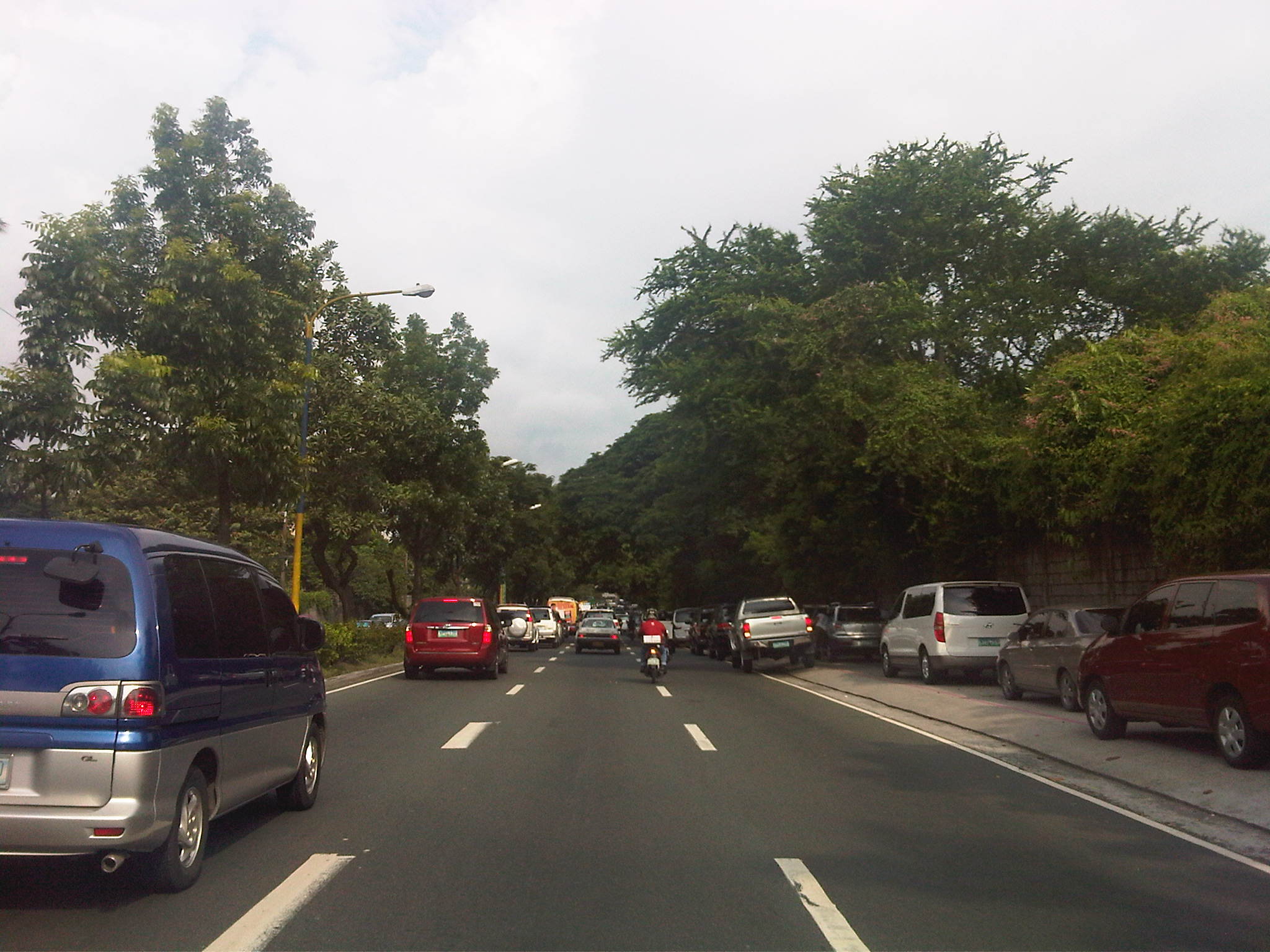 Parked vehicles on the sidewalk are seen as we approached the tail of a very slow moving platoon owing to the congestion generated by an exclusive school.
 Traffic jam with road capacity reduced by the parked and standing vehicles along the EDSA-bound side of Ortigas Ave. The trees are witnesses to the chronic traffic jams and help alleviate their impacts by absorbing emissions from the vehicle.
 Severe congestion as we approached the school – the overpass downstream in the photo is a reference for where the school is located
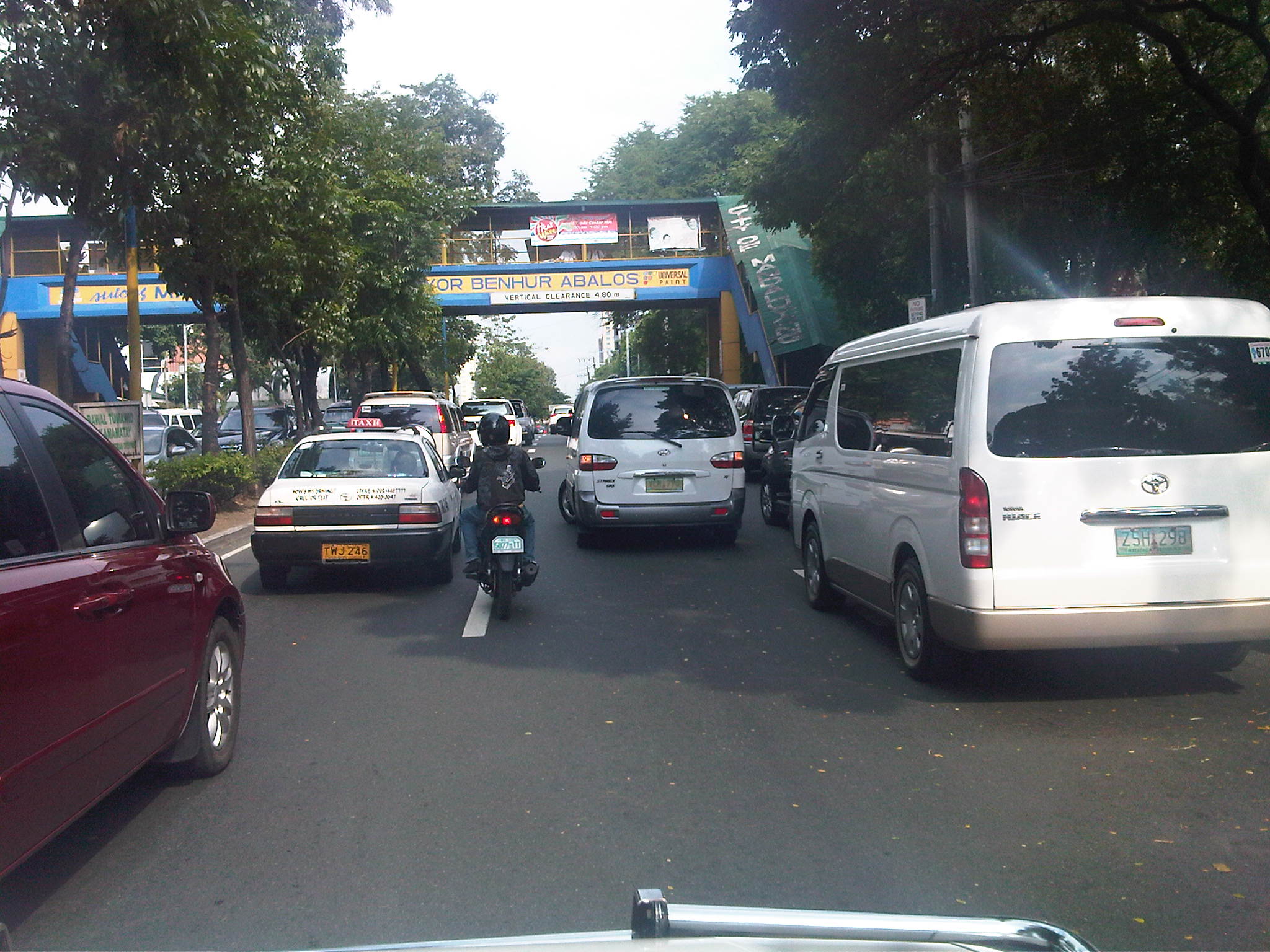 The overpass bears the name of the mayor of Mandaluyong City, where this school is located and which has jurisdiction, together with the MMDA, for traffic management in the area. At the time we passed the area though, there were no enforcers in the area despite the severe congestion. Is this because they gave the responsibility (or burden) of managing traffic to the school? Perhaps there was no need to post enforcers here as congestion is a regular thing and people seem to have been conditioned with the almost daily experience.
 The area at the foot of the pedestrian overpass actually functions as a pick-up and drop-off area for students of the school. As such, vehicles occupy not just the the sidewalk but also more than a lane of Ortigas Avenue. This effectively constricts traffic along this major road.
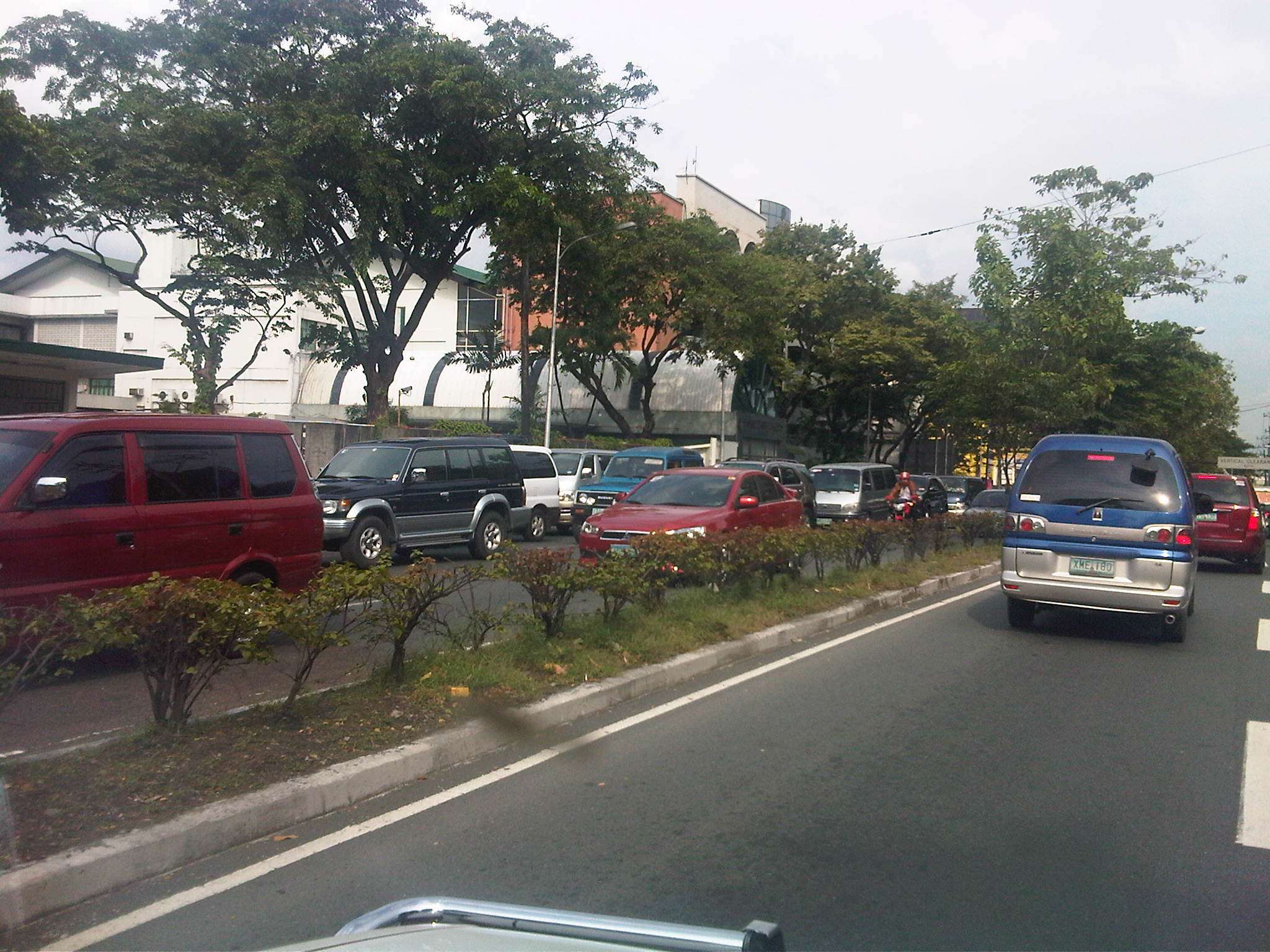 Traffic is slow along the San Juan-bound direction of Ortigas as vehicles waiting for their passengers (students of the school) are lined up and occupying the outermost and even the middle lane of the road.
 This queue is not entirely attributed to traffic generation by the school but is likely due to traffic management at the EDSA-Ortigas intersection, which is signalized. If the signal setting is not optimized or if the intersection is not cleared of straggler vehicles, traffic is backed up along all the approaches to the intersection. The tall building in the background hosts DOTC’s headquarters. I wonder if our officials are taking in the congestion that occurs almost daily (weekdays) and if they are even crosses their minds how to solve this problem and others like it around the country.
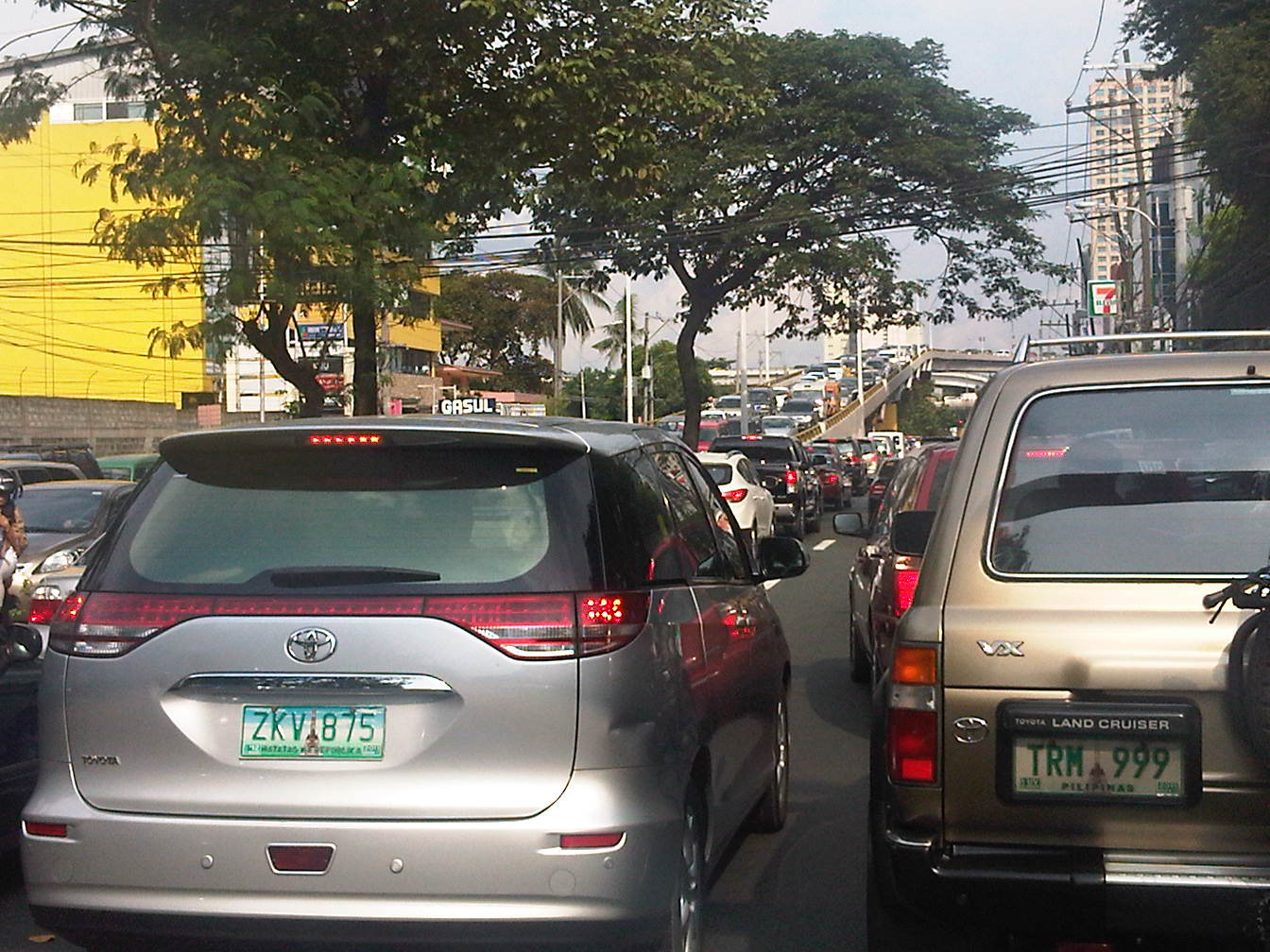 Proof that congestion is along both directions of Ortigas Ave. is seen in the middle of the photo where vehicles are also backed up along the overpass ramp coming from EDSA’s northbound side. For what it’s worth, the DOTC headquarters is right along this road at the building where the 7-Eleven (sign visible in the photo) is located.
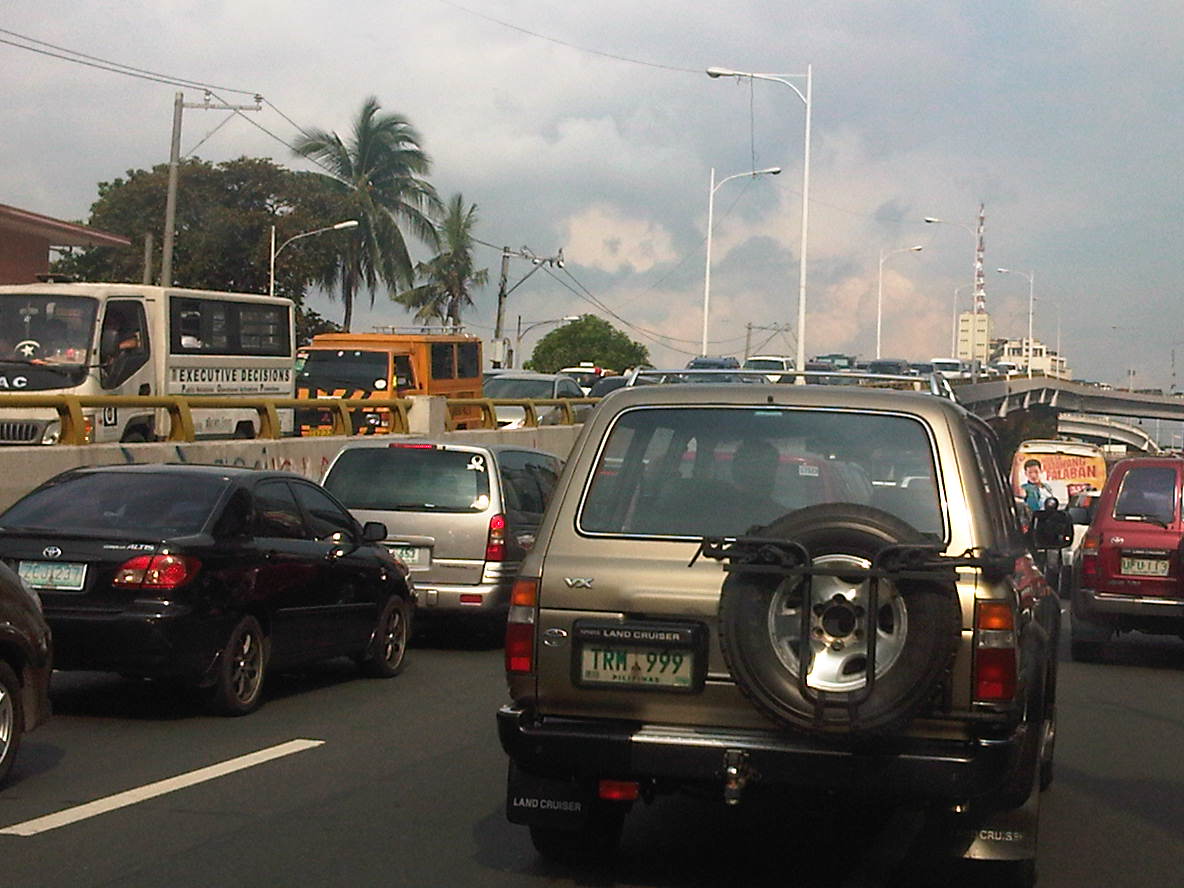 Another and even closer look of what is literally bumper-to-bumper traffic along both sides of Ortigas Avenue during the afternoon peak triggered by the exclusive school along its San Juan-bound side. Visible in the photo is the congestion along the overpass from EDSA.
–
Circumferential Road-4: R-10 to Monumento
Circumferential Road 4 or C-4 is perhaps the busiest among the major arterials of Metro Manila. It is usually associated with its longest segment named Epifanio De los Santos Avenue or EDSA, which stretches from the SM Mall of Asia in Pasay City to Monumento in Caloocan City. There are two other segments of C-4: C-4 Road (R-10 to Letre/Samson Road), Letre Road (Malabon City Hall to Samson Road), and Samson Road (Letre/C-4 to Monumento). All in all, the road cuts across eight cities in Metro Manila: Navotas, Malabon, Caloocan, Quezon City, Mandaluyong, Pasig, Makati and Pasay.
 After turning from R-10, one is greeted with a 4-lane road that at the time didn’t have pavement markings to distinguish the lanes.
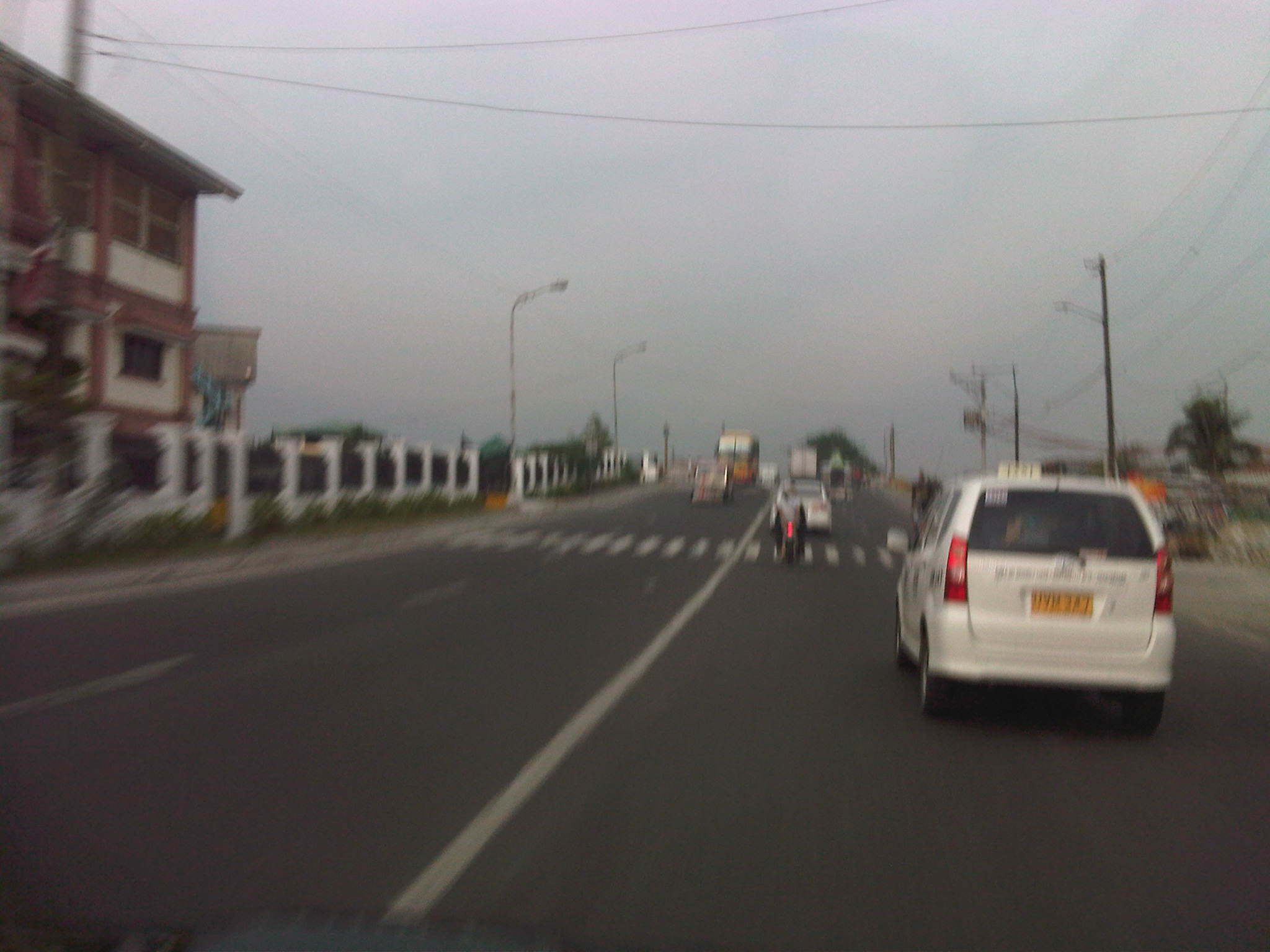 After covering some distance, pavement markings appear before reaching the bridge that connected the Navotas part of C-4 with Malabon.
 The bridge spans the Navotas-Malabon River, which goes around this point and meanders back to Malabon and Caloocan.
 Between the first bridge and the next along the way to Monumento, travelers have a view of the section of Navotas-Malabon River meander on the right side. Garbage floating on the river are quite noticeable but not as many as in the past.
 The 4-lane undivided road eventually becomes a divided road with a median island separating opposing flows of traffic.
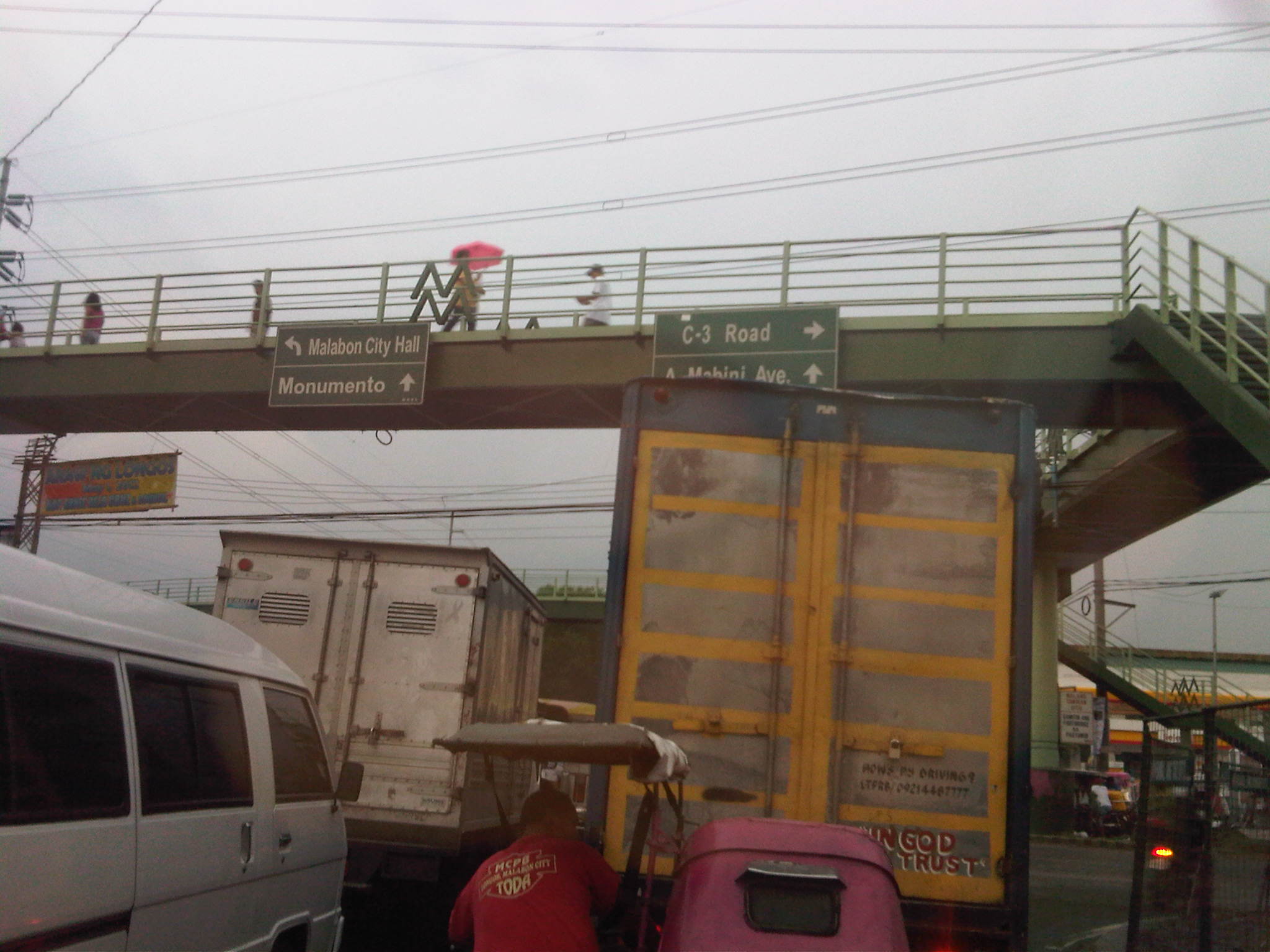 Pedestrian overpass with directional signs before the intersection with Dagat-dagatan Avenue.
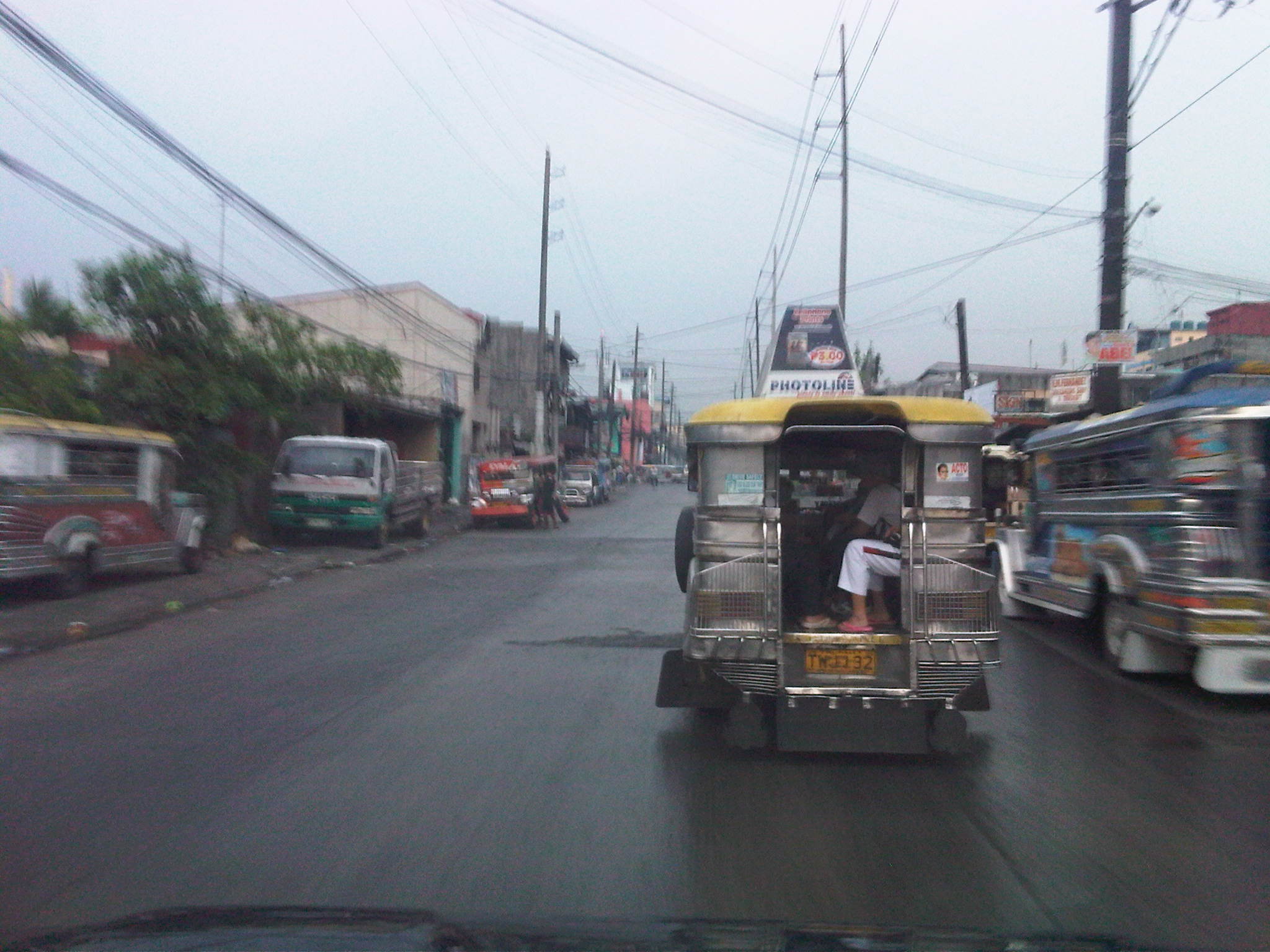 This is supposed to be a 4-lane section but it seems the roadside friction, driver behavior and the lack of pavement/lane markings contribute to the perception of limited space along C-4. Pedestrian sidewalks are also used as parking space by jeepneys and trucks as shown in the photo.
 Roadworks at the approach to the intersection with A. Mabini/M.H. Del Pilar from where C-4 is known as Samson Road.
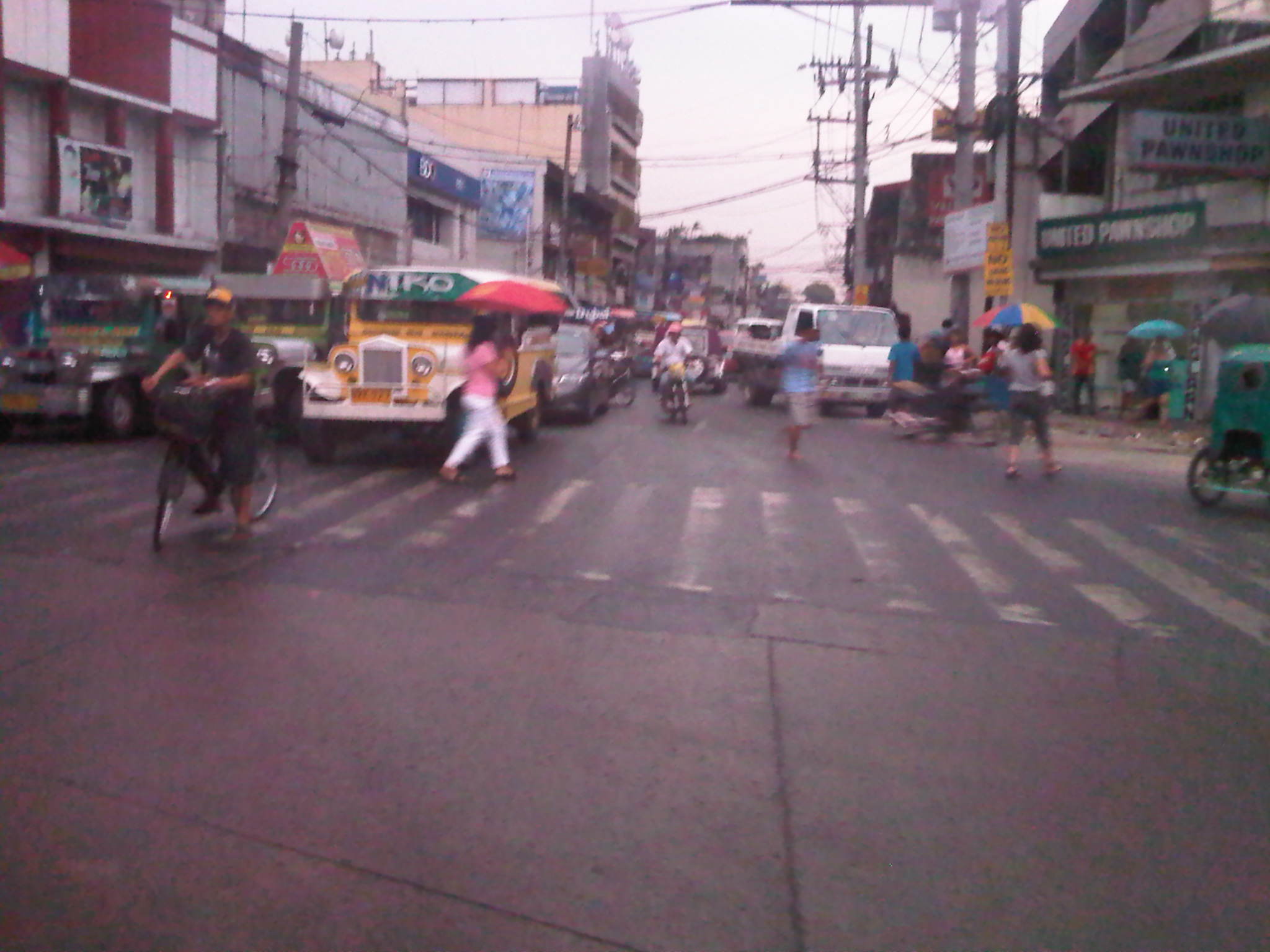 Intersection with Torres Bugallon – jeepneys crowd at the intersection and this often leads to congestion. Pedestrians cross anywhere and there are also pedicabs (non-motorized three-wheelers) roaming around that also contribute to the chaotic traffic.
 Roadworks along C-4 – also shown in the photo are shanties of informal settlers along the PNR right of way, which crosses C-4 at this point.
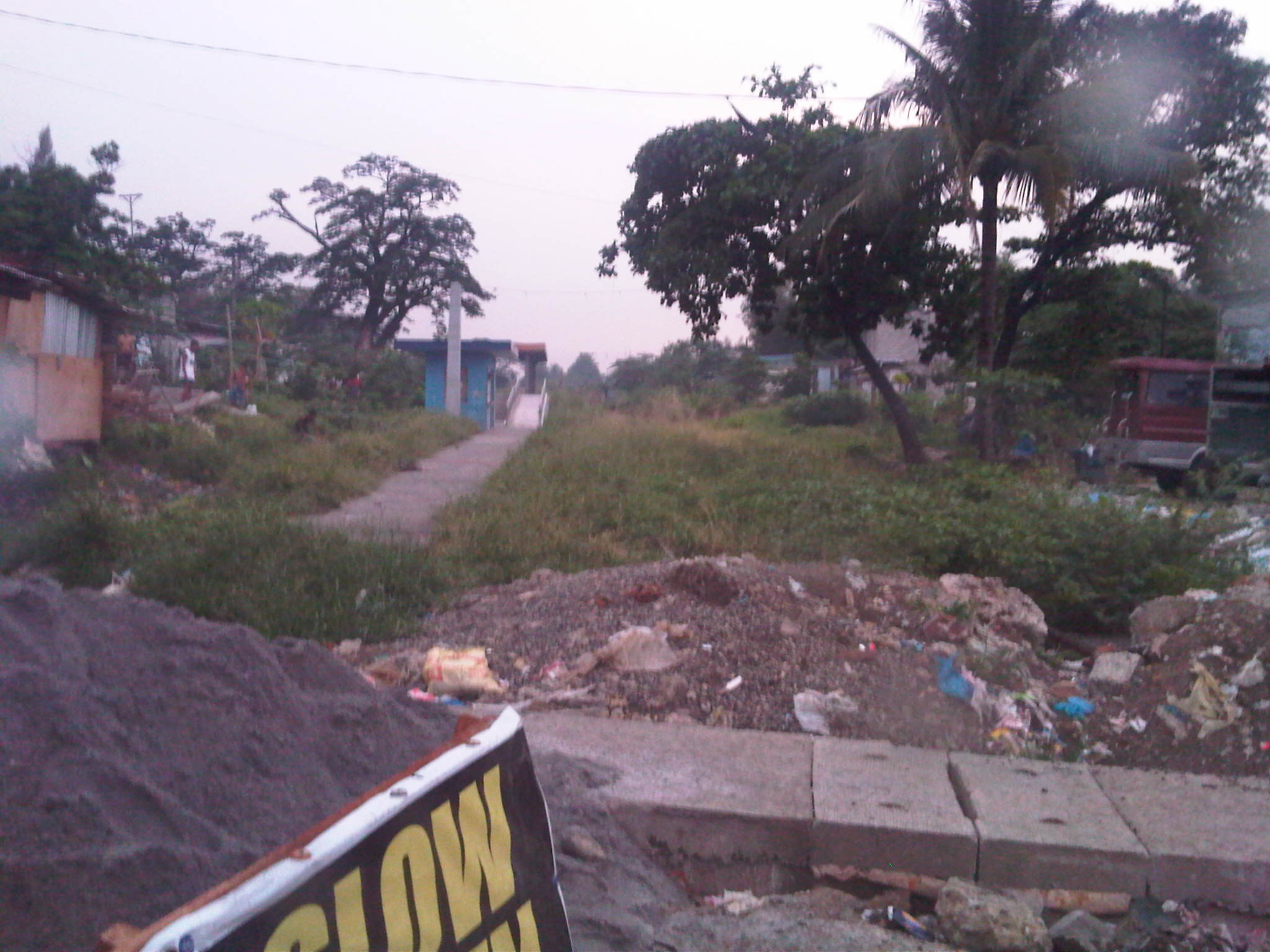 Remnants of the PNR’s Main Line North with a station a few meters from C-4. This should have been part of the proposed Northrail line connecting Metro Manila to Clark, Pampanga.
 Samson Road stretches along a very busy, much built-up district of Caloocan. Near Monumento, there are many big commercial centers including shopping malls around the rotonda known for a memorial for Andres Bonifacio, a national hero who led the revolution for independence from Spain in 1896.
 Samson Road is obviously a national road but tricycles are allowed to operate here; just one of the traffic/transport policies that accommodate such paratransit modes along roads where they are inappropriate.
 In order to address the vehicles counter-flowing or encroaching on the opposing traffic lanes and jaywalking problem, steel barriers were put up in the middle of the road. Overpasses like the one in the photo were constructed to enable people to cross the road. Notice the vehicles parked or standing along the road and on the sidewalks?
 Approach to Monumento with the obelisk at the center island of the rotonda visible at the center of the photo. Also shown in the photo at the roadside is a traffic sign informing travelers that they are approaching a rotonda.
–
Olongapo-Castillejos Road: Castillejos
The name of the town Castillejos translates to “little castle.” Such names are part of our Spanish or Castillan legacy, being under Spain for more than 300 years until 1898. Following are photos showing segments of the Olongapo-Castillejos Road within the Municipality of Castillejos.
 Double yellow – the twin solid lines emphasize the “no overtaking” rule for both directions of flow. Often disregarded in the Philippines, crossing over a double yellow will result in an apprehension and a ticket when driving in the US or Canada.
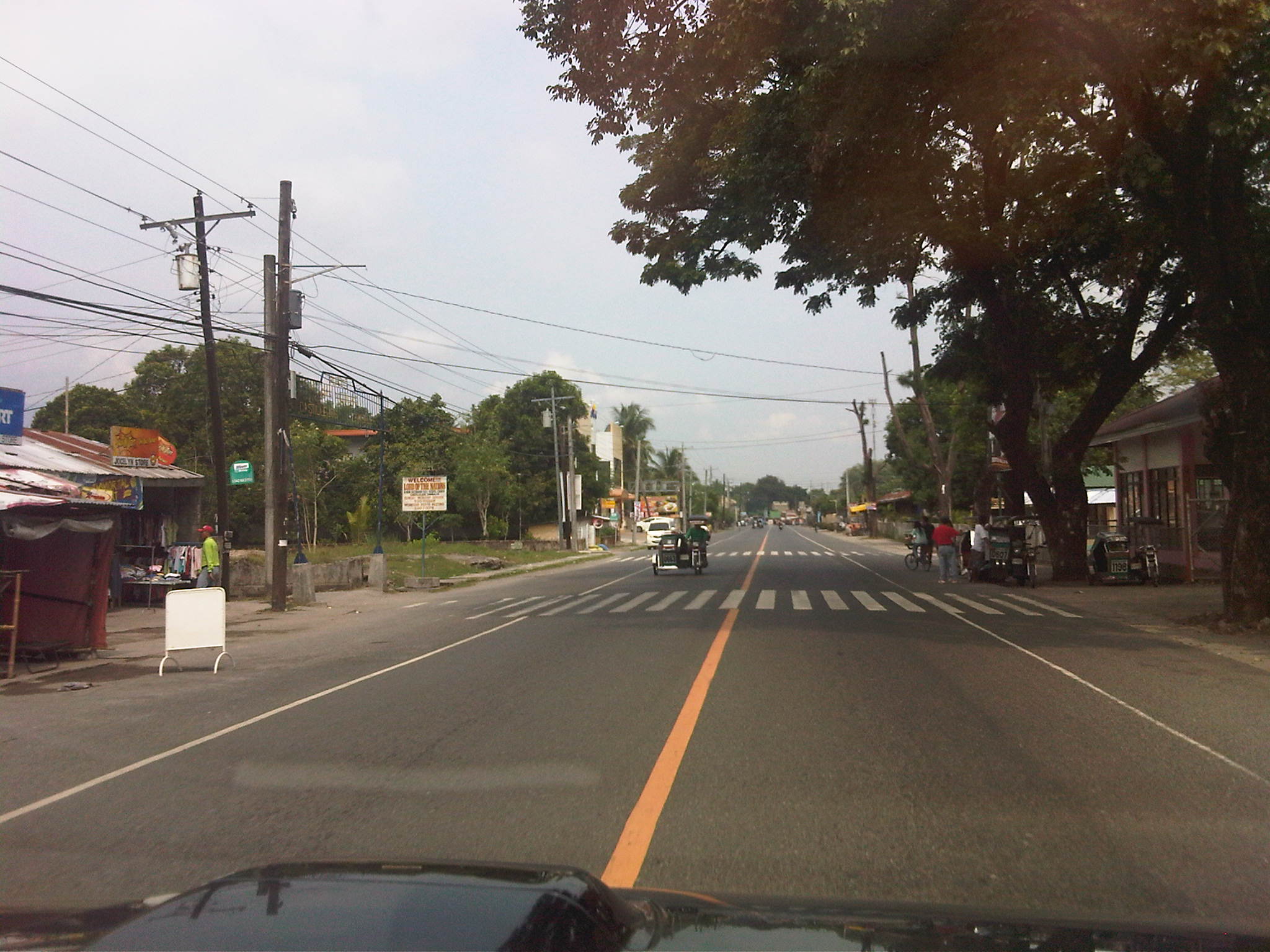 Single yellow on a straight section? – the single yellow line also means “no overtaking”
 Obstacle course – among the things people should expect or anticipate when traveling along Philippine roads are various checkpoints that tend to slow down traffic. Some are operated by the PNP or the Army as part of their security measures. There are also those by the DENR to check the transport of restricted items such as logs, corals, exotic animals, etc. Also, there are those set-up to slow down traffic due to the presence of schools or pedestrian crossings like the one shown in the photo.
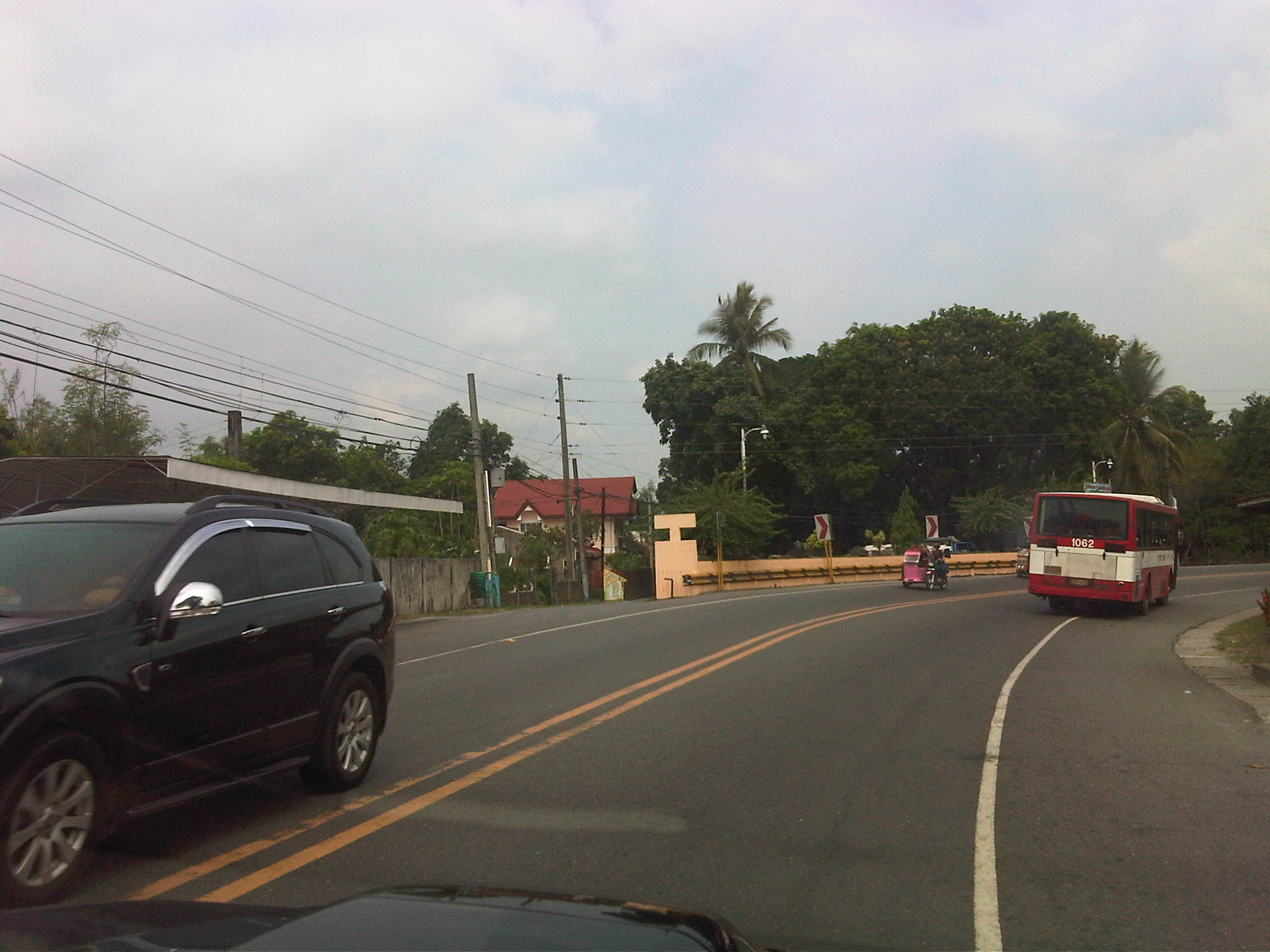 Turning – typical curve along the highway with the paved shoulders allowing for more maneuver space and improving sight distance
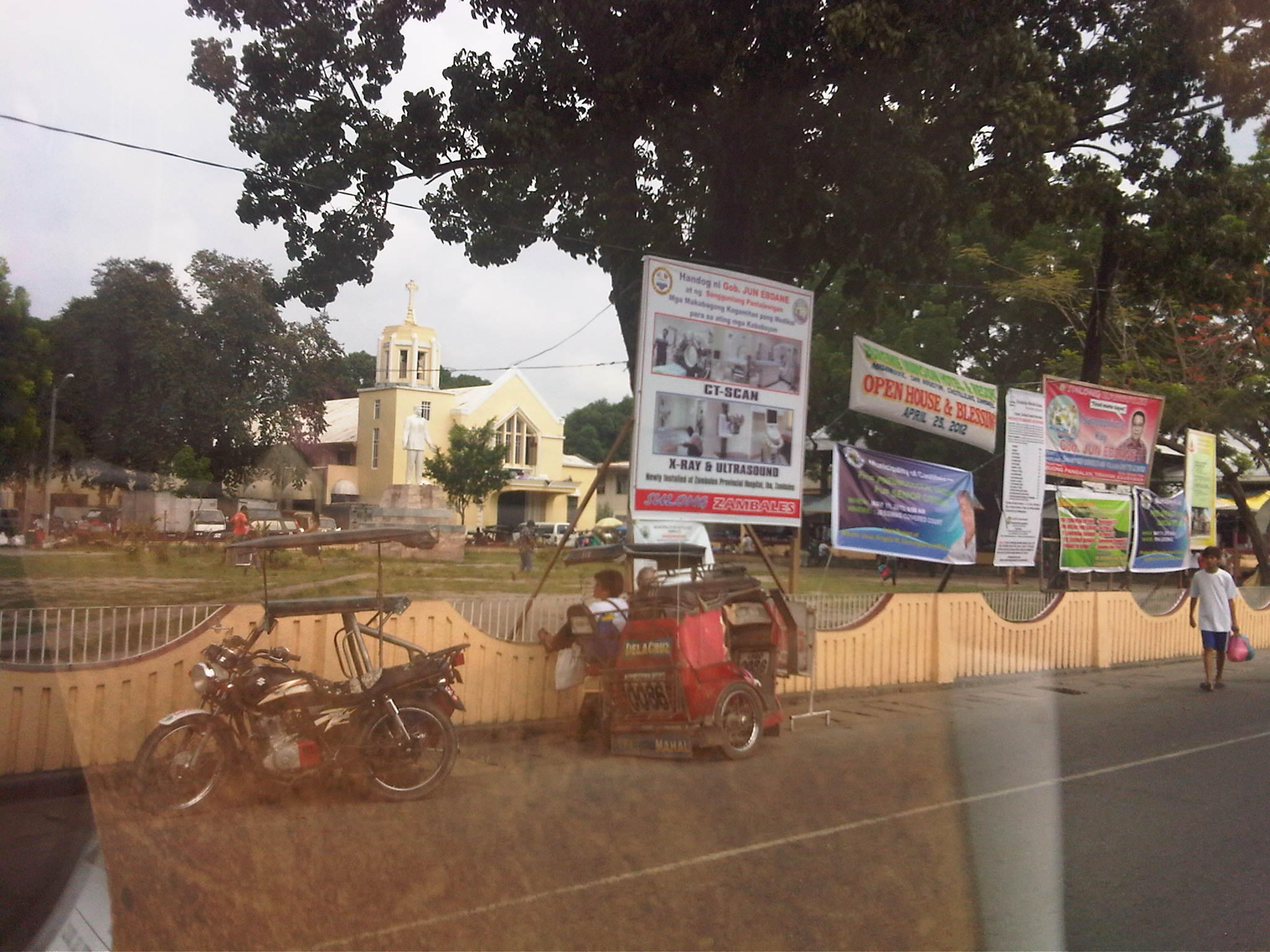 Town center – the poblacion or center of Castillejos is typical of most if not all old towns in the country with the Municipal Hall, Parish Church, local school and market are located together, and usually around or near a plaza.
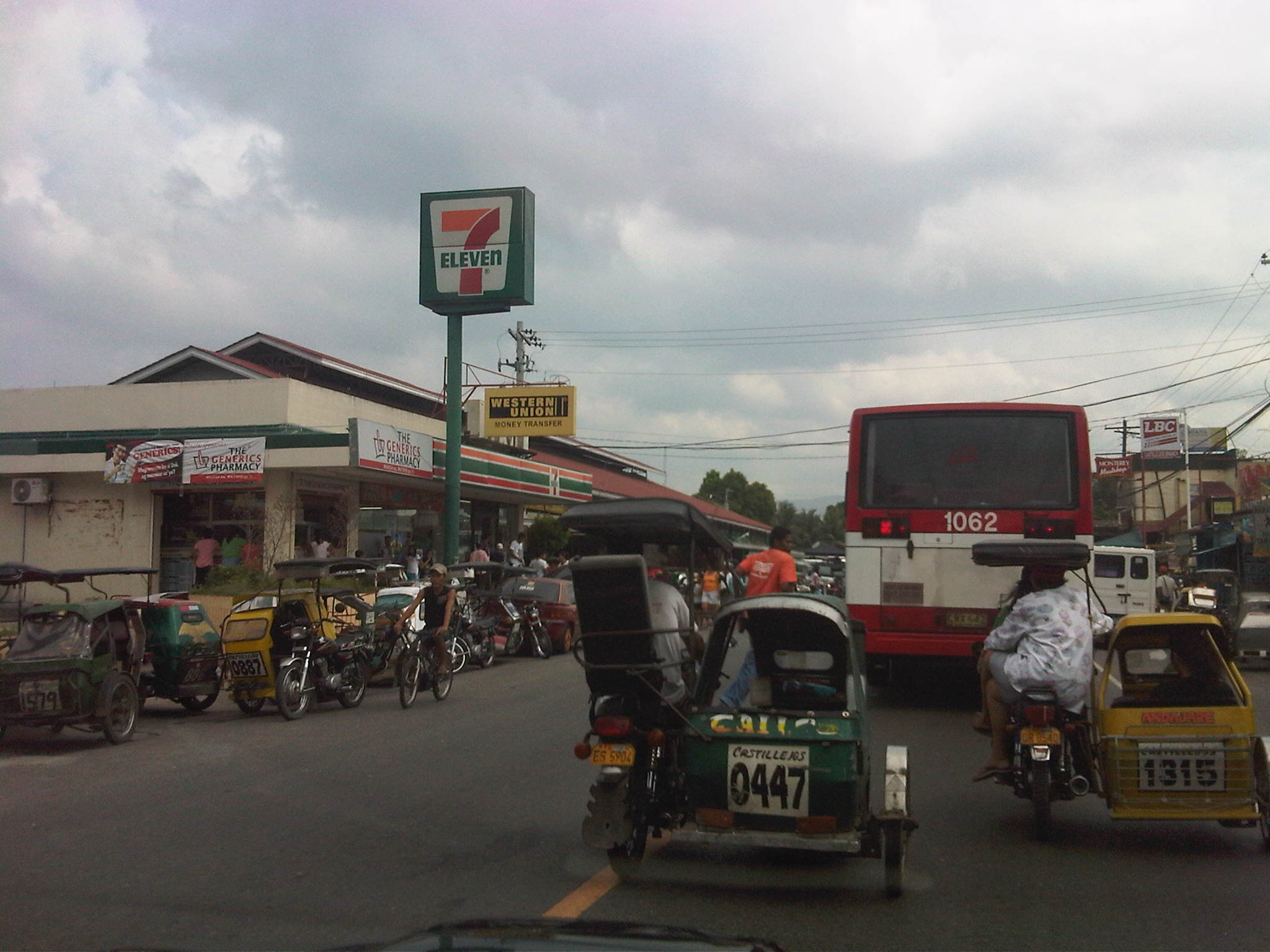 Tricycles galore – three-wheeled taxis everywhere around the market area. The location of the market along the national highway means local traffic during market days will surely impeded traffic flow.
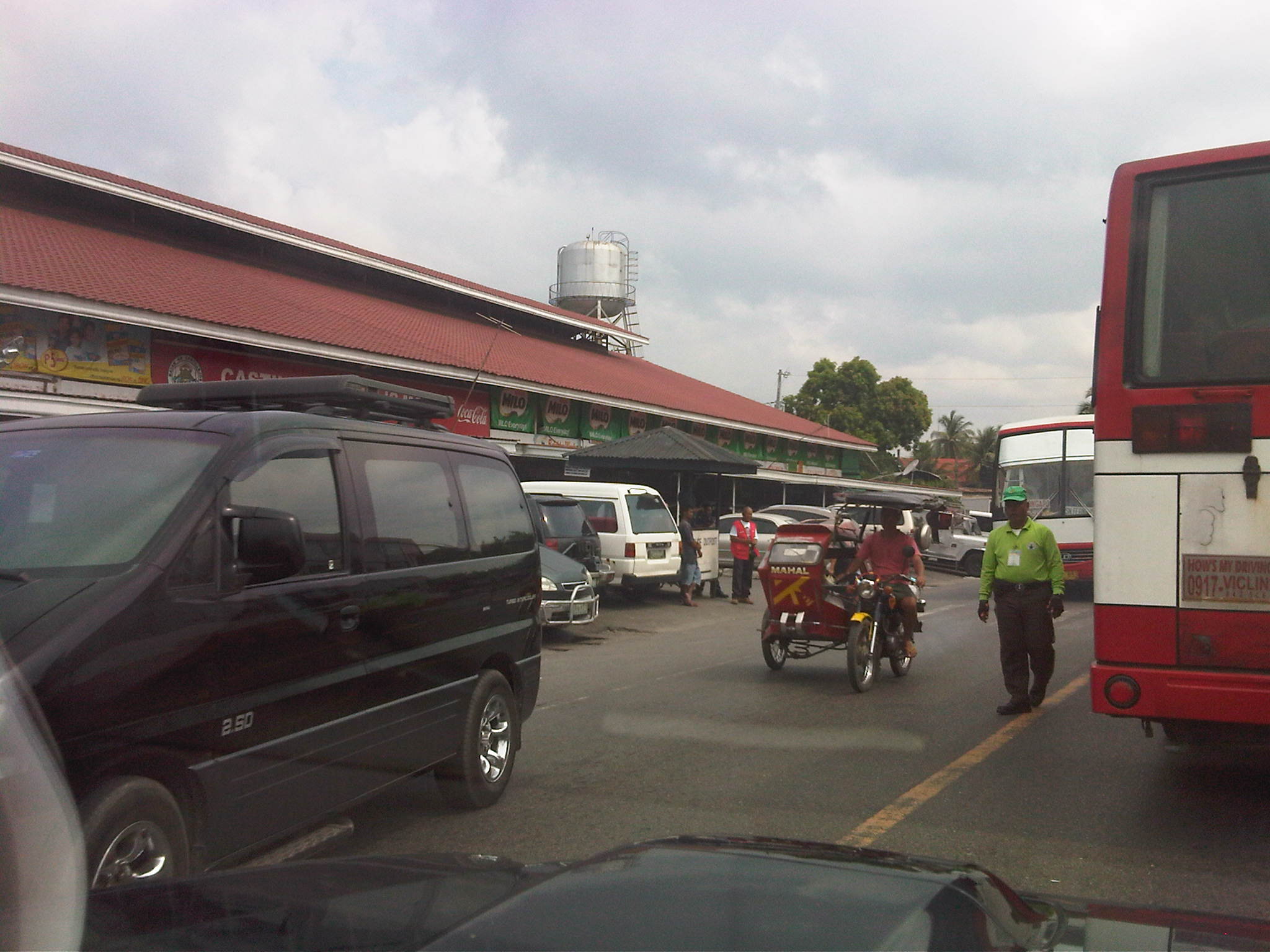 Marketplace traffic – it is common for travelers to encounter congestion due to the presence of a town’s market along national roads. There are enforcers like the one in green in the photo but they are usually helpless and reduced to managing for the maneuvers of parked vehicles or helping people to cross the road.
 Opposite congestion – after passing the market area, we were relieved that we could proceed with much less congestion. Traffic along the other direction would have to contend with the congestion.
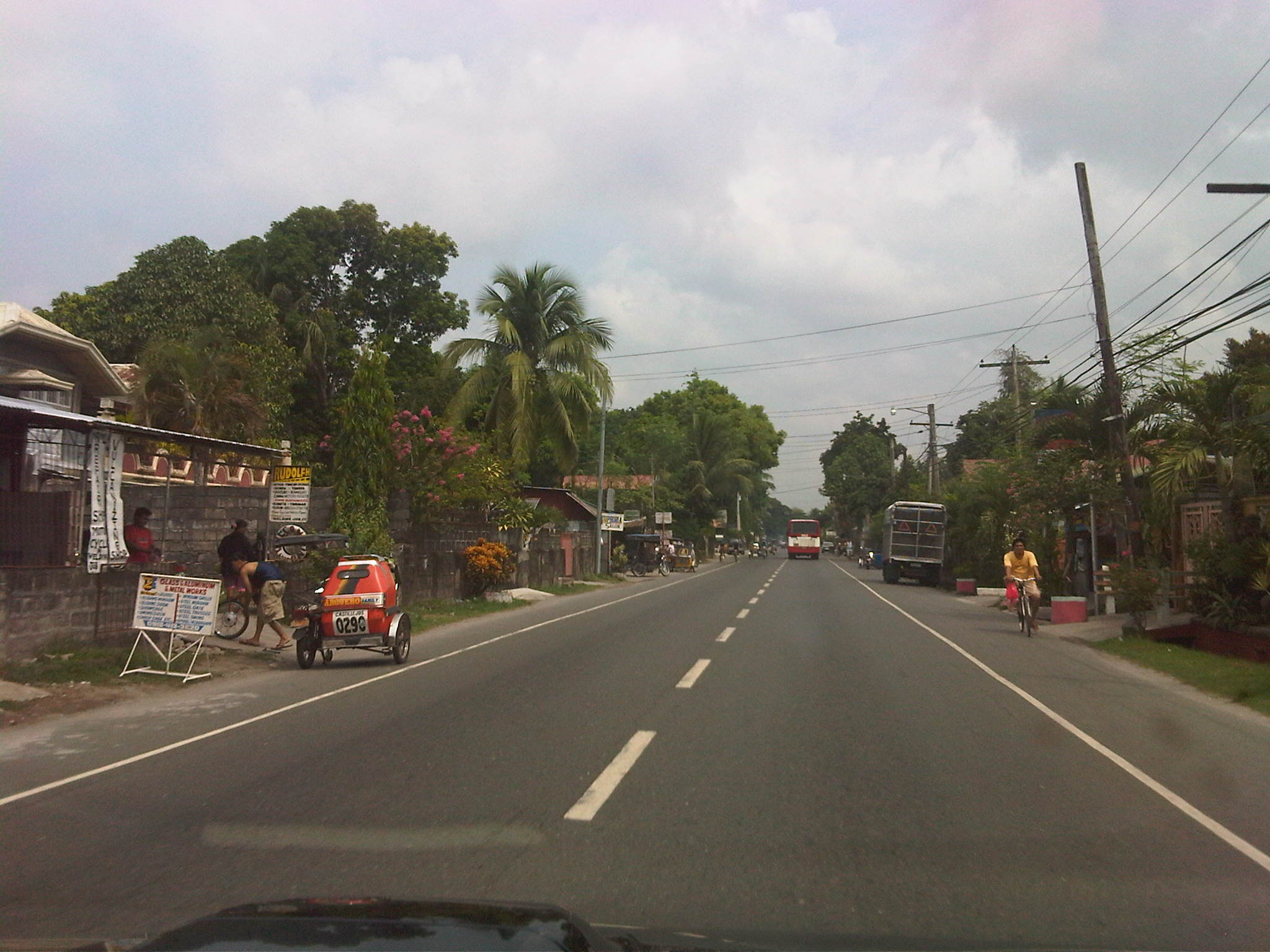 Usable shoulders – we were pleased to see that the shoulders were paved and in excellent condition. Such cases allow for walking and cycling off the carriageway such as the example shown by the cyclist on the right. Tricycles would also be able to pull to the side to avoid impeding general traffic. A concern though would always be parked vehicles on the shoulders.
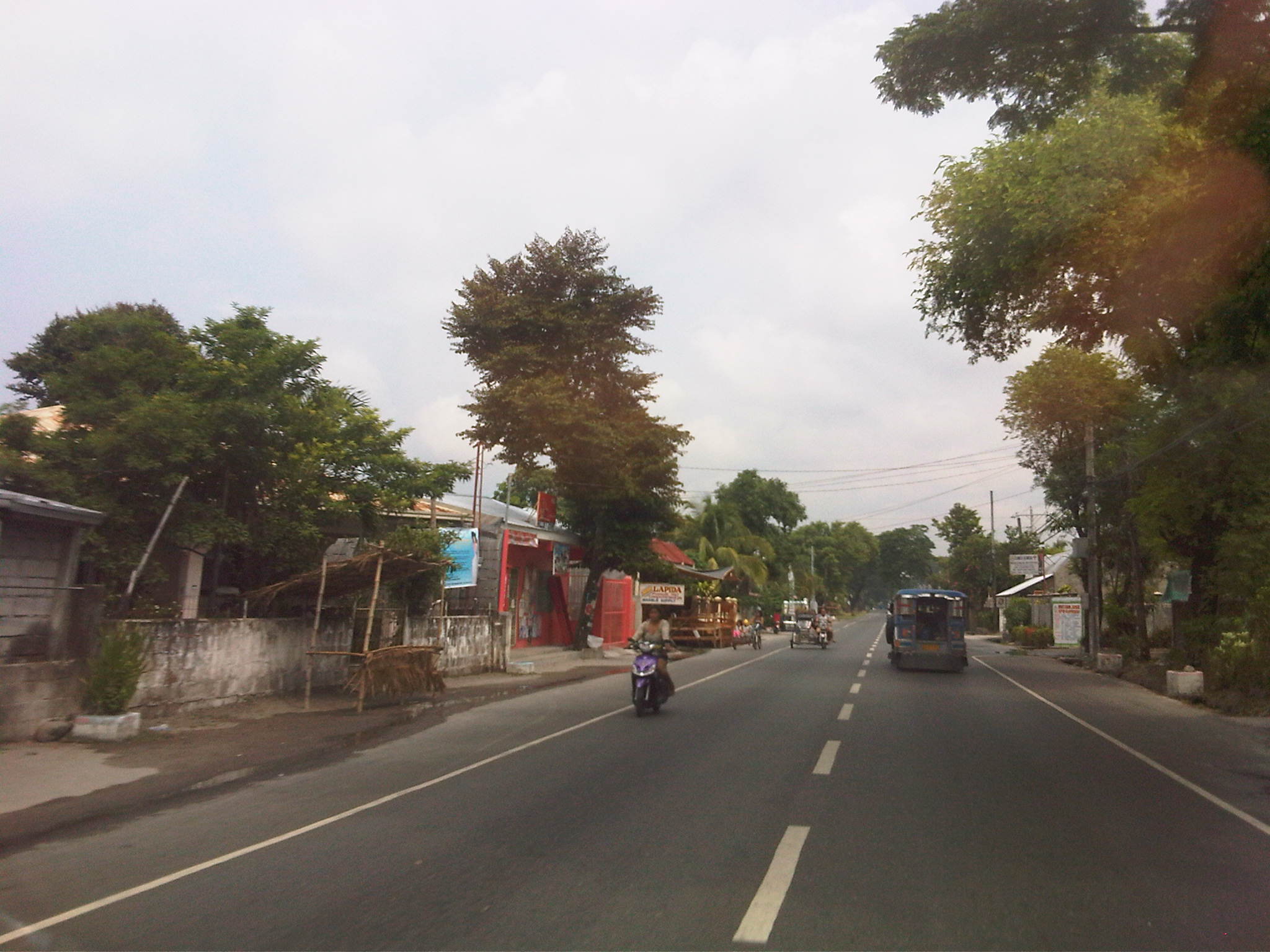 Minimal encroachments – we were also pleased to observe that there were few properties encroaching upon the RROW along the highway, especially in populated or built-up areas like the one shown in the photo above. Such is not the case with many other towns where stores, shops and houses practically dominate shoulder space and even take up parts of the carriageway.
 Free flow – these tricycles seem to be racing and could actually pick up speed even with passengers in the cab, probably due to the straight level road and the excellent pavement as shown in the photo. The shoulders are paved and should be sufficient for tricycles to use in order to not impede the flow of other vehicles.
 Unimpeded flow – the photo above shows further proof of minimal encroachments on the RROW and especially along the shoulders, which are paved and usable.
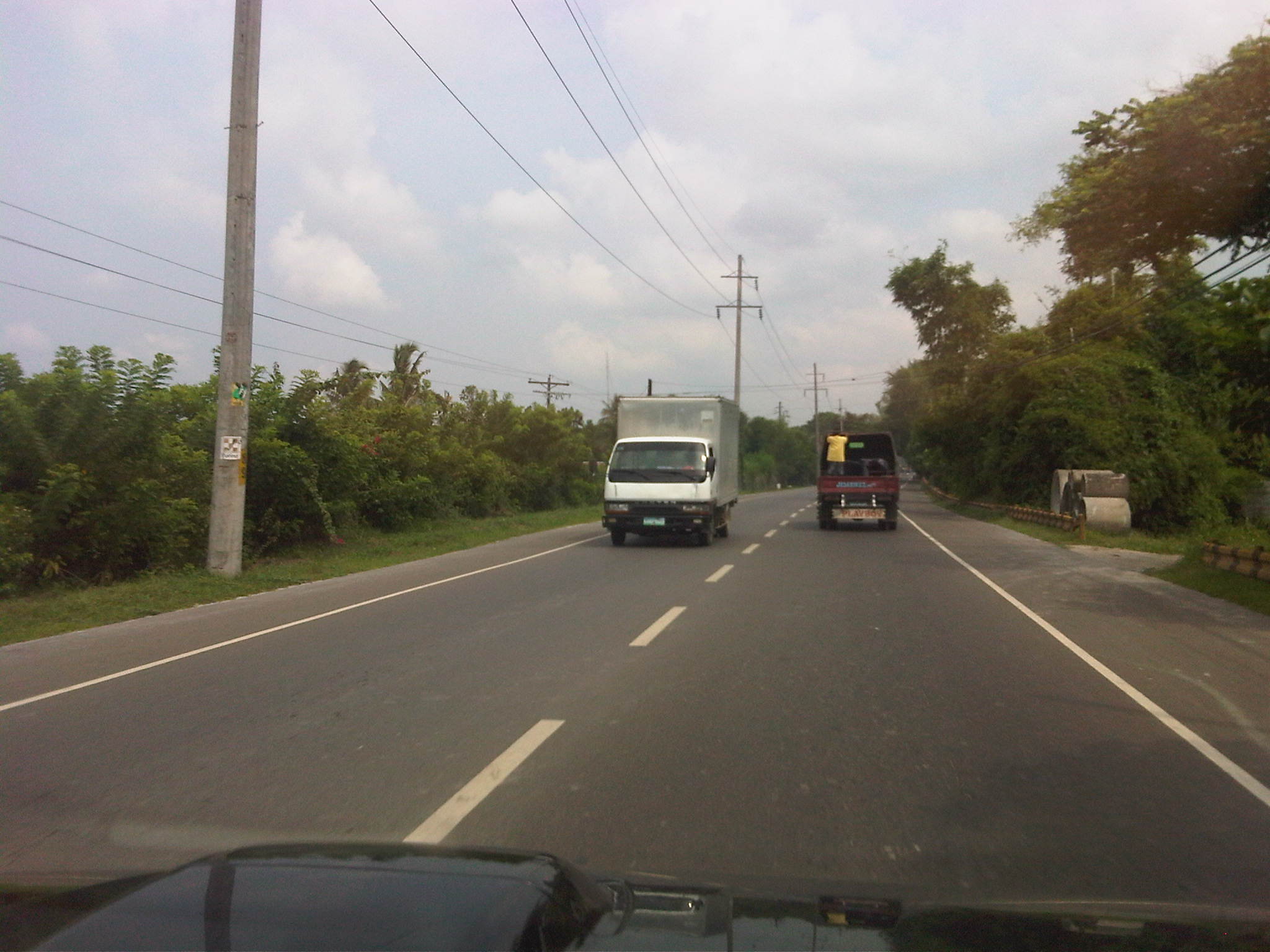 Light traffic – traffic was quite light along the highway the time that we traveled.
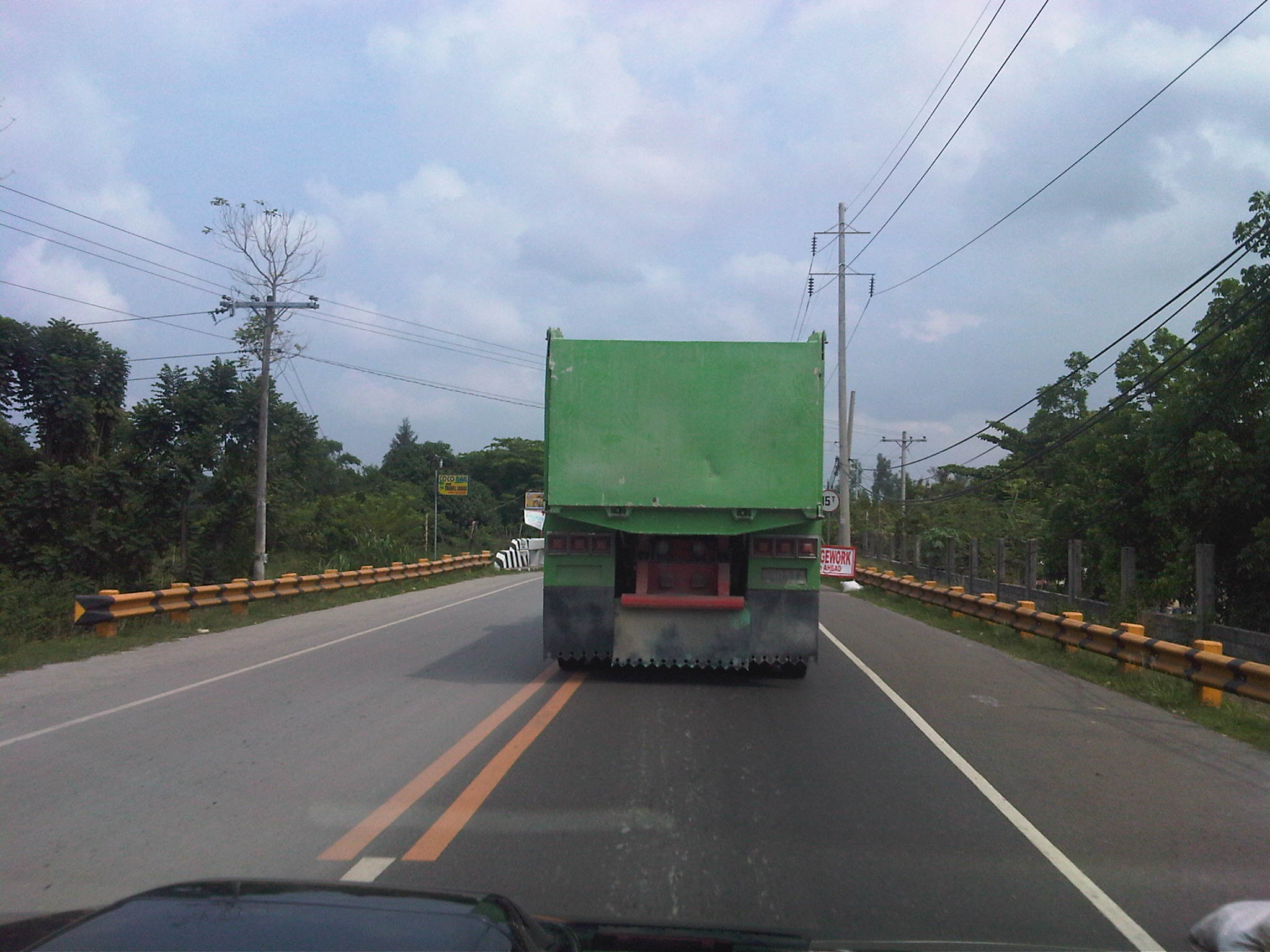 Bridge ahead – the roadside barriers and the signs already visible from a distance inform motorists of the bridge ahead. We didn’t see any advance temporary signage for the construction site that would have been ideal to advise motorists about the work site.
 Detour – the sign speaks for itself but seems to have been placed quite late into the approach to the bridge construction site.
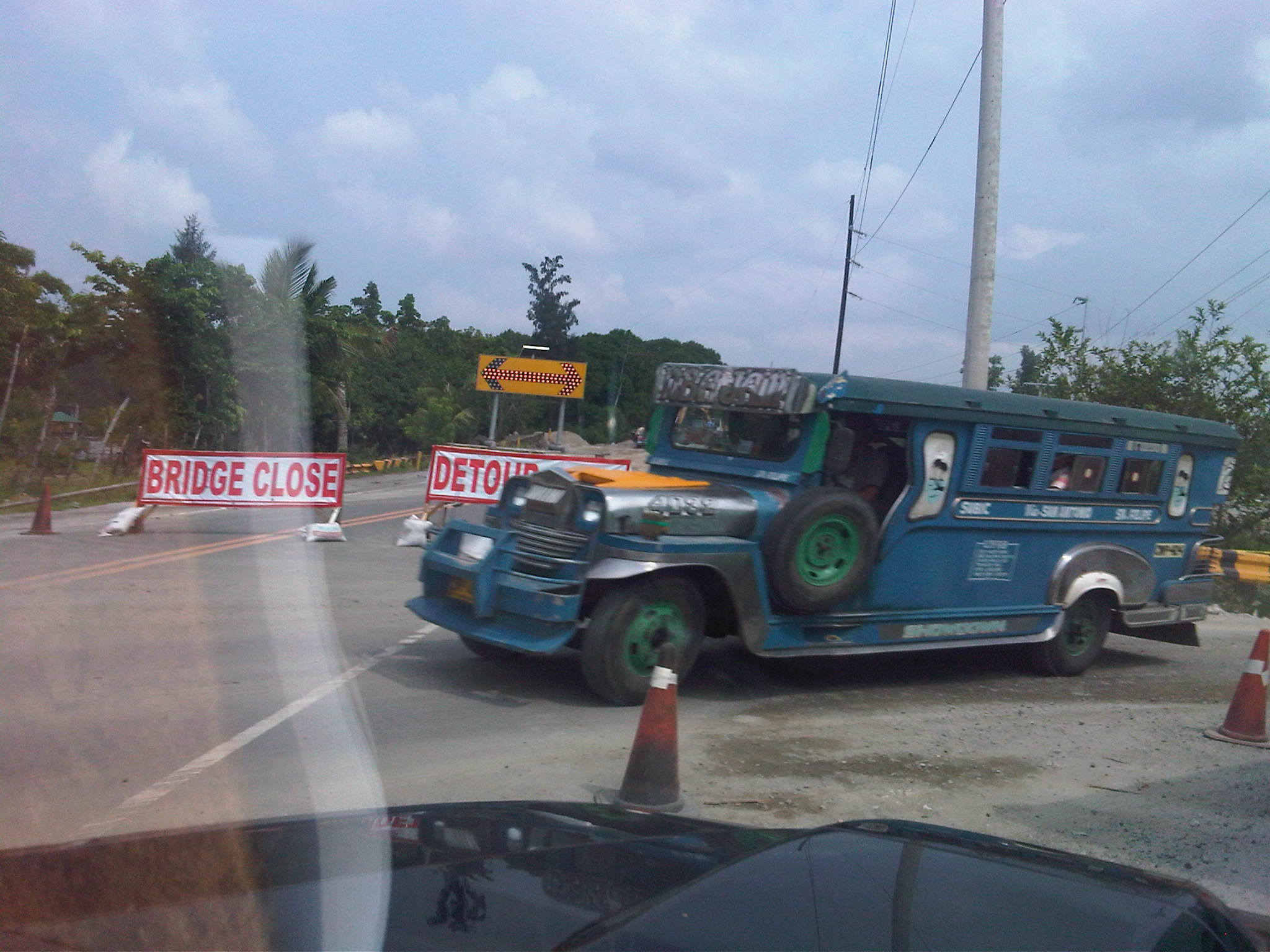 Blocks – signs block the way towards the bridge under construction along the highway while a jeepney emerges from the temporary diversion road.
 Sight distance? – while there is sufficient sight distance along the diversion road, there are cones along the middle of the road to discourage overtaking.
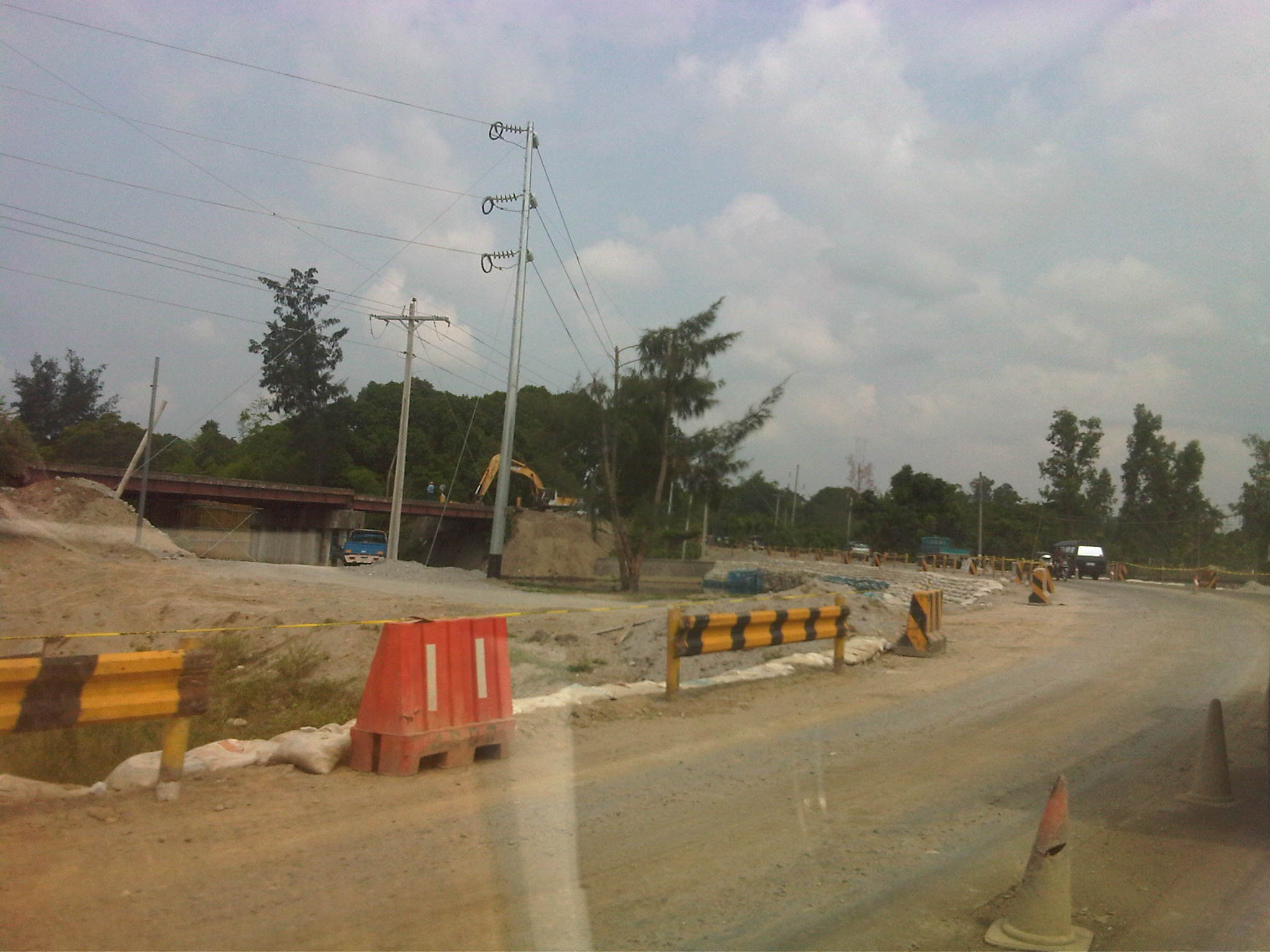 Gravel surface – the temporary diversion road was well-graded and wasn’t that rough unlike many other roads built for such purpose.
 Steel structure – steel girders laid across the river and on top of the columns in the middle.
 End support – a backhoe was working on material to reinforce the embankment at the northern approach to the bridge.
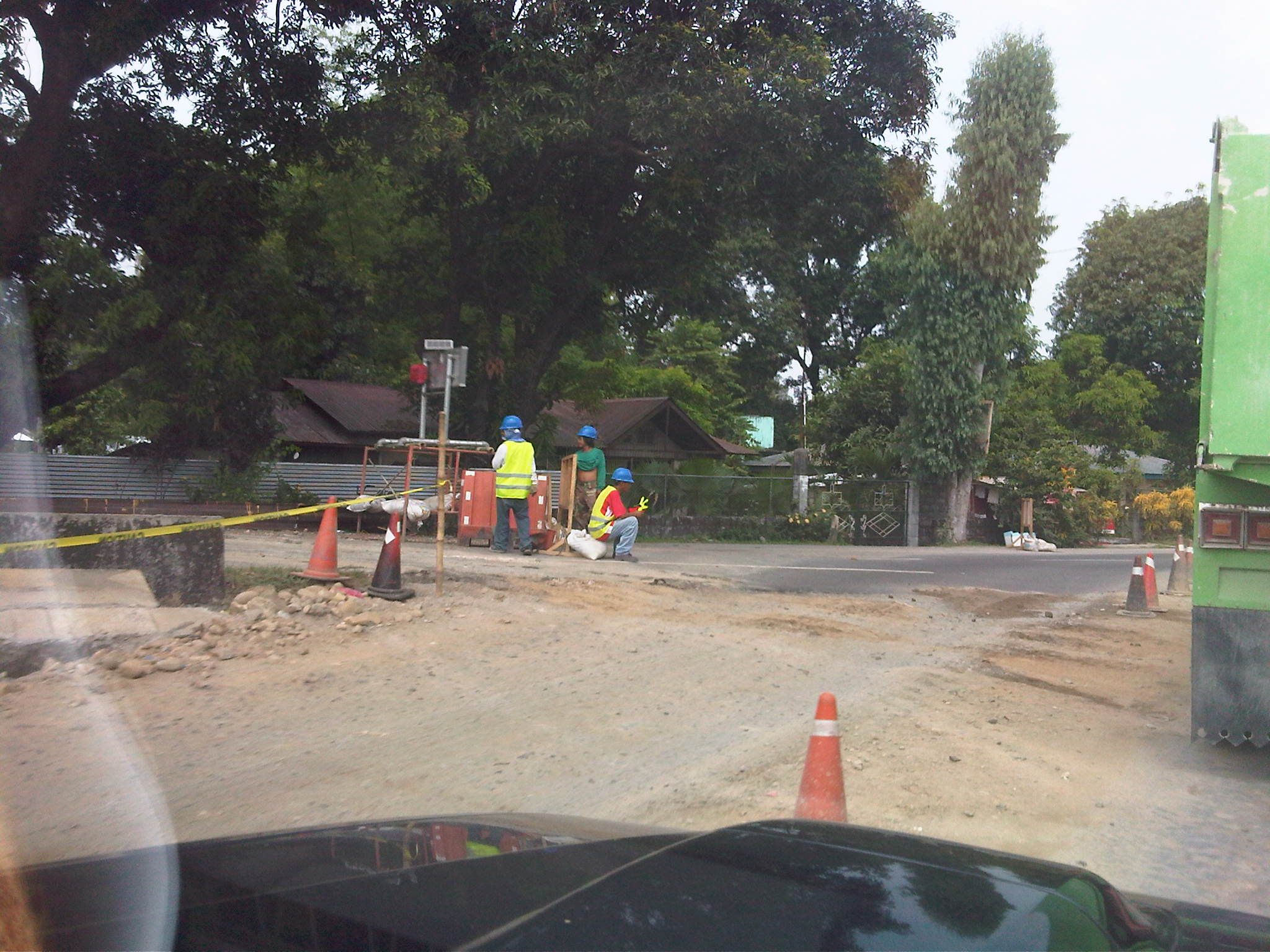 End of the road – the diversion road, that is, at the other end of the bridge.
 Boundary – arch symbolizing the gateway to the next town of San Marcelino.
–
Another quick look at the EDSA motorcycle lanes
There was a story appearing in the news recently about motorcycle riders staging a motorcade rally to bring attention to their plight in relation to the motorcycle lane along Epifanio Delos Santos Avenue (EDSA) or Circumferential Road 4 (C-4). The Metropolitan Manila Development Authority (MMDA) implemented the scheme along EDSA after getting generally positive results along Commonwealth Avenue in Quezon City and Diosdado Macapagal Boulevard in Pasay City. Perhaps the thinking here was that if such a scheme succeeded in other roads, it would also succeed elsewhere. Right? – Wrong!
EDSA is always so different from may other Metro Manila roads, most definitely from Commonwealth Ave. and Macapagal Blvd. For one, EDSA carries more traffic than these two roads (combined?) and the sheer volume of private vehicles during busy times of the day cannot be handled by the lanes designated for them. The two outermost lanes of EDSA are supposed to be for the exclusive use of buses but private vehicles frequently encroach on these lanes due to the inevitable spillover from congestion. Fortunately, there is a truck ban along the highway (these generally use Circumferential Road 5) but this does not translate to less congestion as the following photos show. Commonwealth is wider than EDSA while carrying less traffic. As such, vehicles can speed up along many sections of that highway. In fact, the main problems along Commonwealth happen to be related to speeding and weaving. Macapagal has even less traffic and generally does not carry public transport. Perhaps it will carry more traffic in the future once the reclamation areas are fully developed.
 Heavy traffic along EDSA at mid-afternoon – many cars encroach upon the two outermost lanes that are supposed to be for buses. The same vehicles practically occupy the lanes designated for motorcycles.
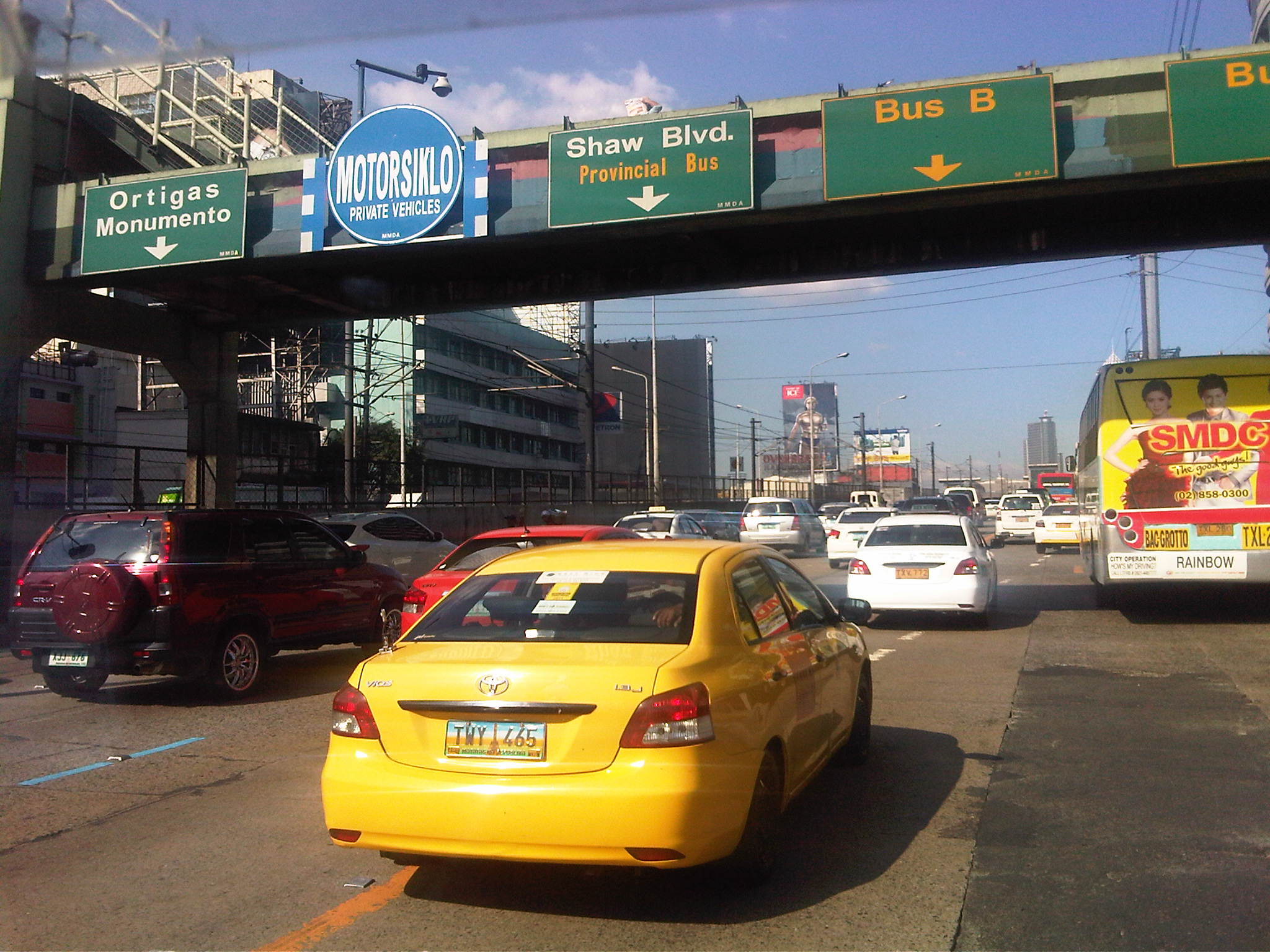 Vehicles occupying the lane designated for use by motorcycle along EDSA – note the “fine print” on the sign on the pedestrian overpass stating the lane is also for use by private vehicles. Riders are lobbying for the lane to be for their exclusive use.
 No motorcycles in sight – there were few motorcycles along EDSA at the time the photos appearing here were taken. Their numbers are more significant during the morning and afternoon peak periods.
 The motorcycle lane proceeds through EDSA along its underpasses and overpasses – EDSA’s capacity during peak periods is not enough for cars and so they usually spill over to the bus lanes. It’s also status quo for them in as far as using the motorcycle lane is concerned, unlike in the case of Commonwealth Ave. where the wider carriageway allows for private vehicles to avoid taking the motorcycle lane.
The initial assessment we made for the motorcycle lanes along EDSA was positive and hopeful for the behavior change that it is supposed to bring about both with drivers and riders. I believe that despite the dry run and the aggressive enforcement that followed, the scheme as applied along EDSA is still very much in the “honeymoon” stage and there’s room for some adjustments here and there including some flexibility on motorcycle riders who are often forced out of the designated lane by cars. It is clear from the photos above that private cars really cannot be given too much freedom to use the motorcycle lane. Perhaps by prohibiting cars from generally using the motorcycle lane, we’ll eventually have a safer EDSA. This comes at a steep price, however, as that will be one less lane for private cars. But then again, if the objective is to discourage car use (especially the low occupancy kind) then it should be good but with the caveat that public transport services along EDSA, including the MRT running along the center of the highway, should have improved quality of service.
–
Conflicting flows – driver and rider behavior in the vicinity of flyovers
Typical issues concerning traffic flow along sections approaching or departing from the ramps of vehicular overpasses or flyovers include weaving. Simple observations will reveal that a significant number of vehicles, regardless of whether private or public, passenger or freight, big or small, have a propensity to change lanes before and after a flyover. Such weaving behavior is a consequence of driving behavior in this country where many drivers and riders often are unmindful of planning their trips as well as the proper positioning of their vehicles while using the road. Many drivers and riders seem intent only in bypassing points of congestion and do not have any respect at all for the rights of other road users as well as for the rule of law along highways and streets.
I took the opportunity of taking a few photos after an interview conducted atop the pedestrian overpass along Commonwealth across from Puregold and near the Tandang Sora flyover. Below are a few photos taken during nightfall on Monday showing typical behavior of drivers and riders in the vicinity of the foot of the Tandang Sora flyover.
 Jeepneys occupying five (5) northbound lanes of Commonwealth Avenue, including the lane designated for motorcycles (delineated by the blue lines) – Most public utility vehicle drivers in the Philippines seem to abhor queuing and the prevailing practice is for most of them to try to bypass others by encroaching along the middle lanes. Instead of a First In First Out (FIFO) discipline that is desirable for conventional public transport operations, its more like a Last In First Out (LIFO) state along loading/unloading areas.
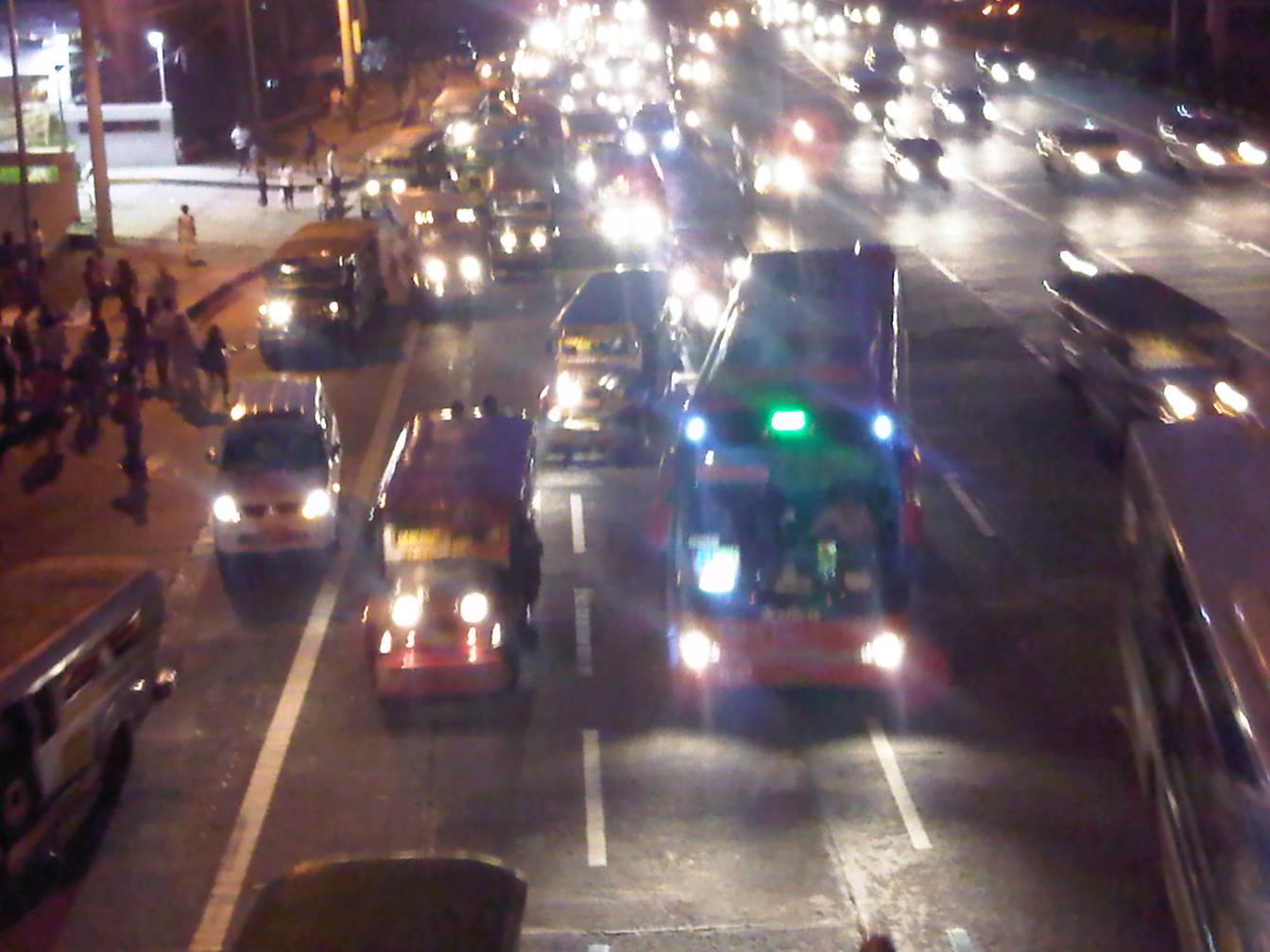 Buses joining the fray of vehicles in the same area – Note that practically 4 to 5 lanes of Commonwealth are occupied by buses, jeepneys and AUVs, effectively blocking motorcycles from using the lane designated for them. Such behavior in the vicinity of the foot of the Tandang Sora flyover also influences private vehicles to shift towards the inner lanes of the highway and unto the path of vehicles descending the flyover.
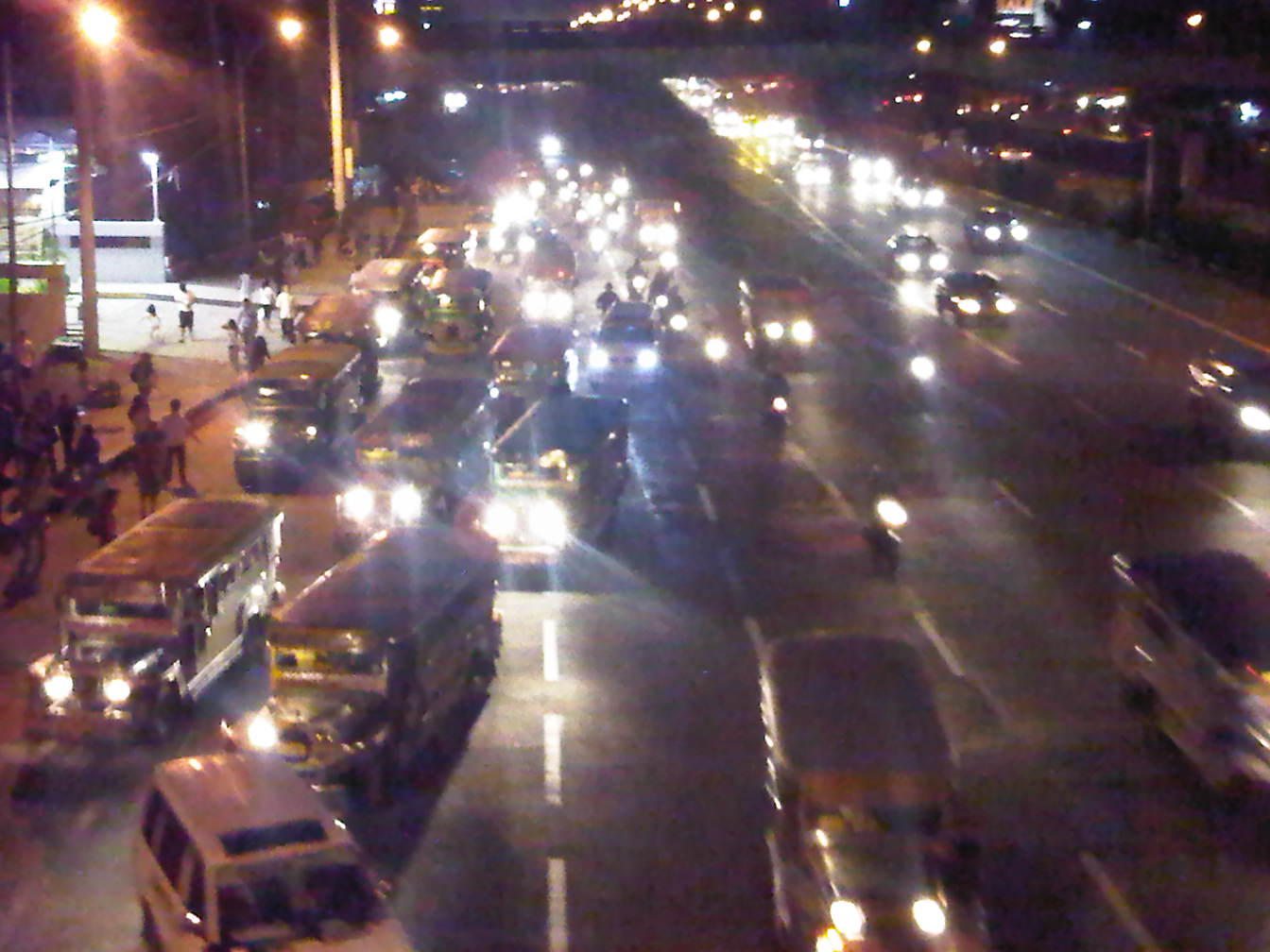 Motorcycles (they with the single headlights) using the 5th and 6th lanes of Commonwealth – riders have no choice in this situation where PUVs have occupied the motorcycle lane and behave as if they are the the only road users in the area. PUVs are observed as generally oblivious of the fact that road space is to be shared and basic courtesy is a requirement for smooth and safe flow to occur.
 As the traffic flow decreases, partly due to the control imposed by the traffic signal upstream at the Tandang Sora intersection, lanes become less congested – motorcycles are then able to return to their designated lane.
The chaotic situation shown in the photos could have been prevented or corrected if enforcers were in the area to manage traffic. There were none in the area, and I only found a few of them a couple of hundred meters downstream apprehending riders where traffic is already free-flowing. I thought perhaps that instead of focusing on apprehending riders, these enforcers were better off trying to address the mess upstream of their position. It is always both frustrating and disappointing to see enforcers diligently doing their jobs in the wrong locations along our highways. And all too often, the drivers and riders they apprehend are not the ones guilty of constricting traffic or posing dangers upon other motorists.
 Caught (up) in traffic