
Home » Traffic Management (Page 19)
Category Archives: Traffic Management
Manila East Road
The Manila East Road is located in the province of Rizal to the east of Metro Manila. The section of the highway featured in this post connects the towns of Taytay and Angono in the province of Rizal while also in the vicinity of Antipolo City, Cainta and Binangonan. References will tell us that the road actually stretches all the way to Laguna where it passes through the towns of Pangil, Pakil and Paete along the east coast of the Laguna de Bay and continues through more towns of Laguna until Calamba.
The following photos were taken one rainy afternoon while we were listening to the radio about senators giving their individual verdicts on the first article of impeachment for the Chief Justice of the Supreme Court of the Philippines. While there are rain drops visible in the photos, these did not obscure the view of the highway allowing us to take good enough shots to illustrate the stretch of the road from Angono to Taytay (junction with Ortigas Avenue Extension (R-5) and just before the ascent to Antipolo). It is supposed to be part of Radial Road 5 or R-5 but other references also point to the continuation of Ortigas Extension through Antipolo and Teresa as also part of R-5. These roads eventually converge in the town of Morong, Rizal.
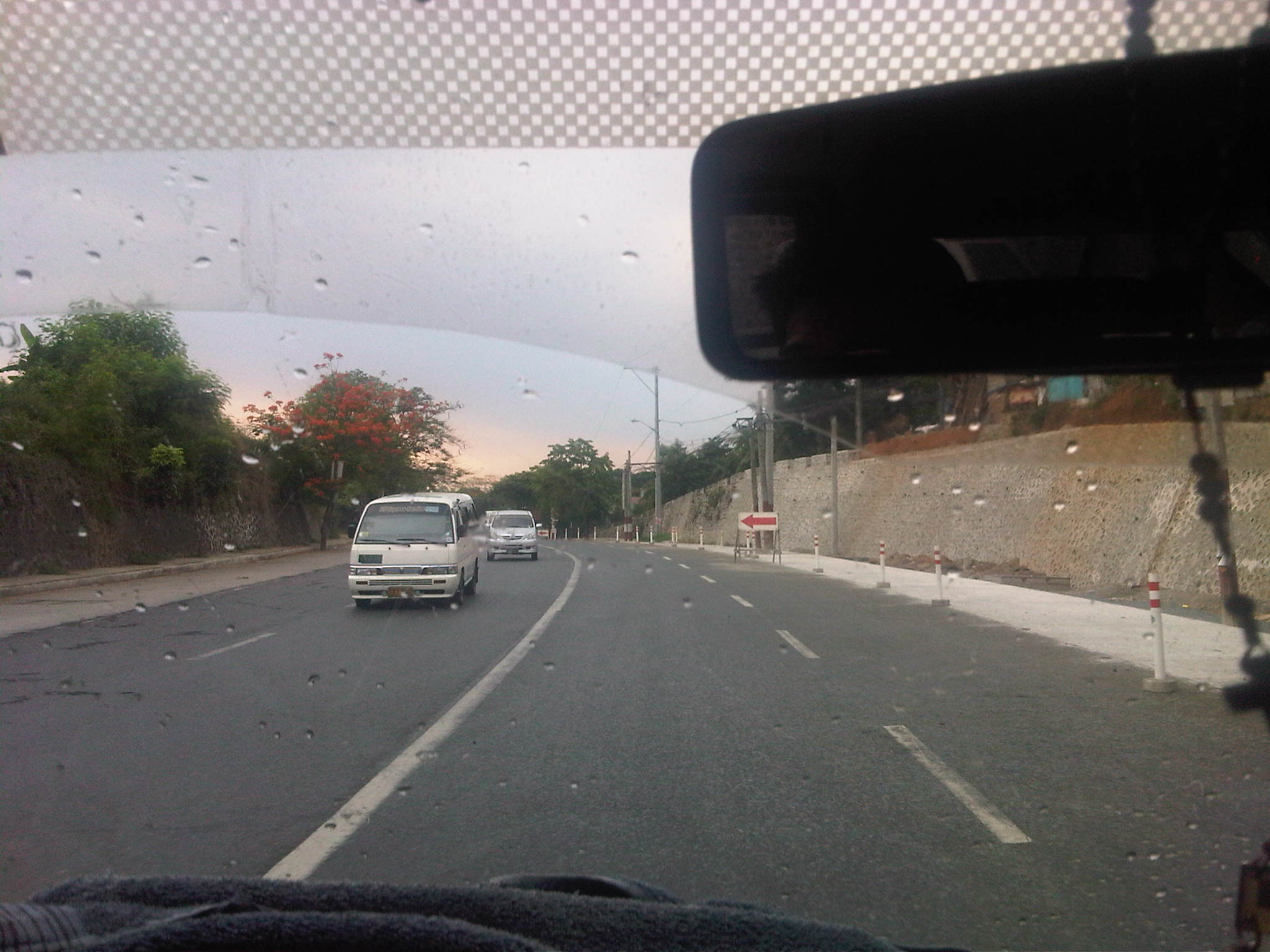 Descending from an exclusive resort where we just had a workshop hosted by a national government agency, we traveled along a section that was a 4-lane undivided road being widened to have 3 lanes per direction. While there’s a sidewalk on one side, the other side did not have pedestrian facilities.
 The section, it turns out, is a continuation of what was already a 6-lane highway as shown above.
 The 6-lane section, however, constricts into 4-lanes near the junction to the original road passing through Angono town proper. Pavement conditions were good but most markings have faded or non-existent.
 Typical of rural highways around the country, there is a proliferation of tricycles traveling along the Manila East Road. These often cause congestion due to their operations including having informal terminals along the highway.
 The lack of pavement markings can be a source of confusion for motorists who are not guided and would have the tendency to encroach into the paths of other vehicles.
 Rather simple sign to mark the boundary between Angono and Taytay. Elsewhere, there would have been an arch designed and put up by one of the towns and reflecting its character or showing off products or attractions.
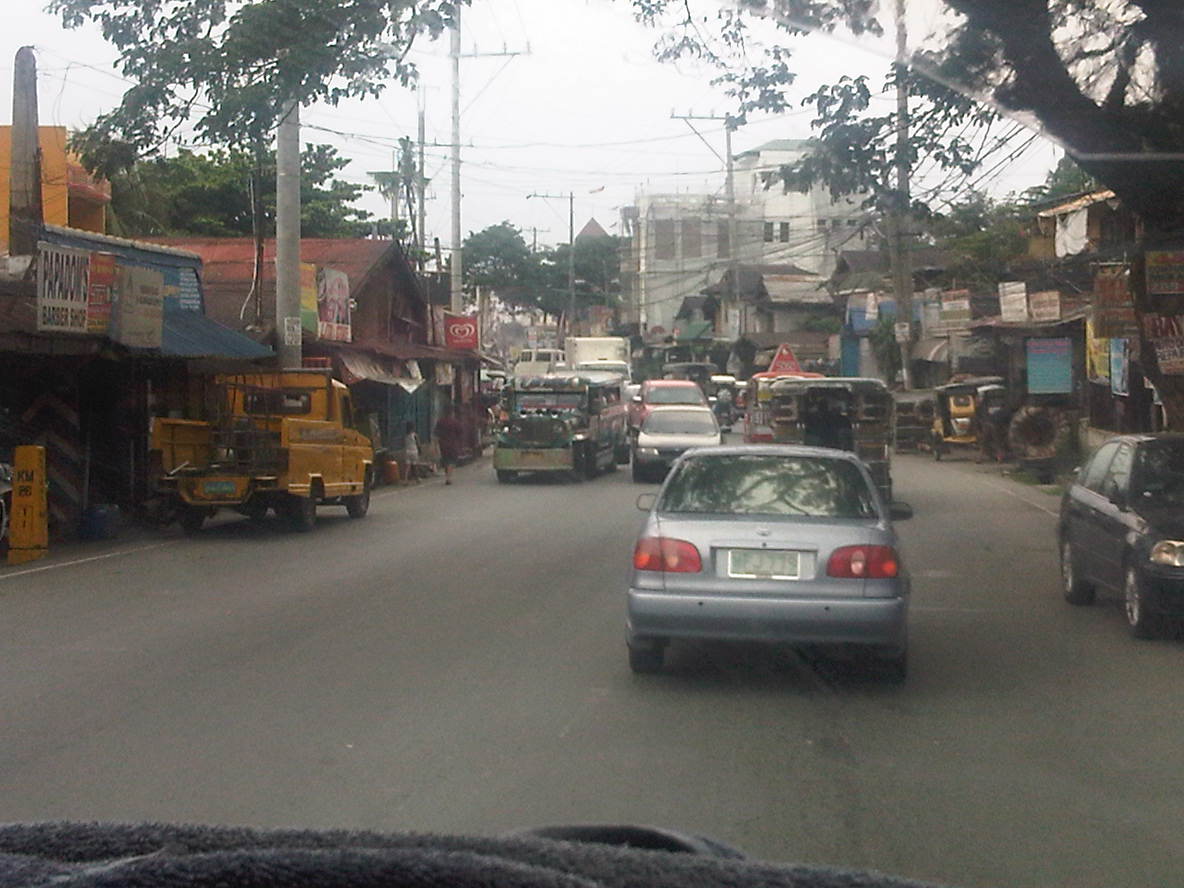 Shanties and other structures of informal settlers line up along this section of the road, effectively constricting traffic. This is supposed to be a 4-lane section (perhaps more if we check the RROW) but roadside friction including the presence of roadside parking and informal structures reduce space to about 3 lanes as shown in the photo.
 Most properties along the stretch of the highway seem unaware of building code provisions for pedestrian sidewalks and clearance in front of the building. These are matters that should have been inspected and ensured by local government.
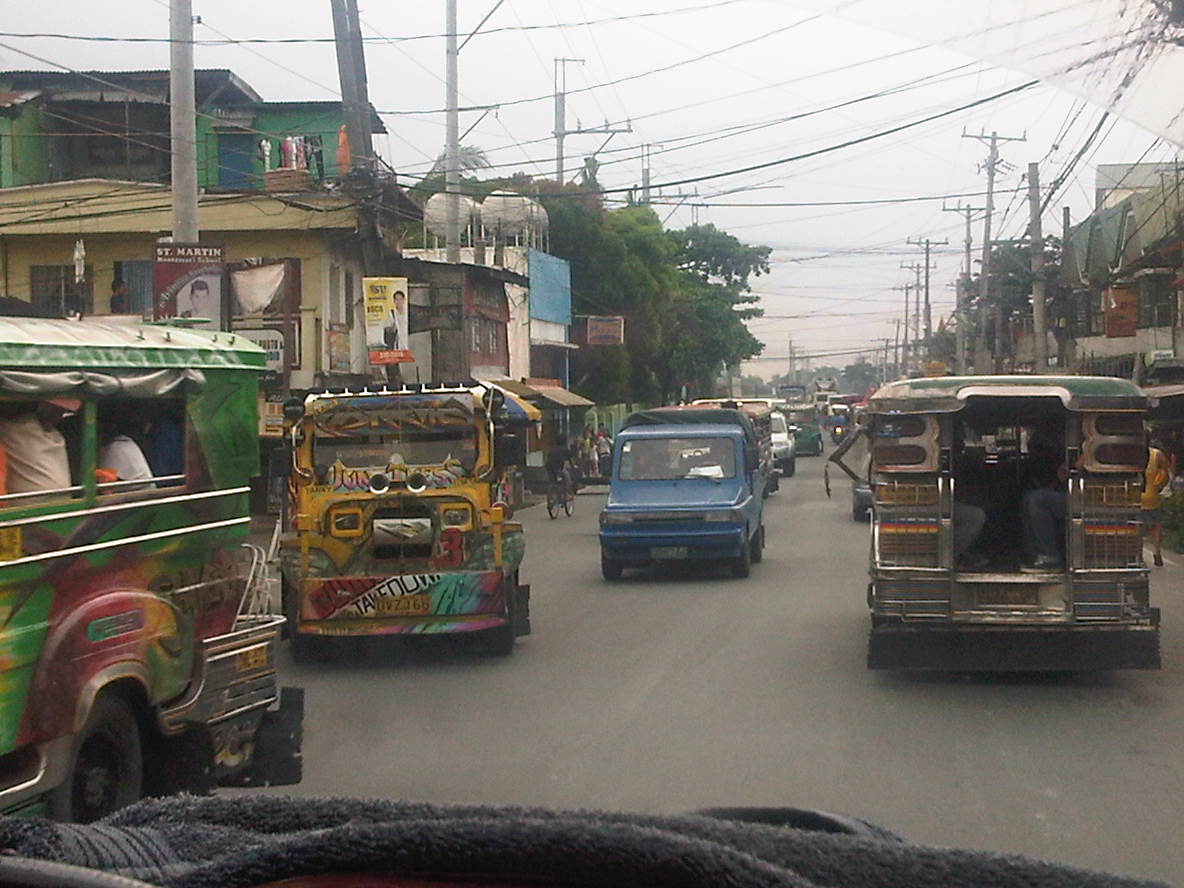 Taytay is one of the more densely populated towns of Rizal and would probably already qualify for cityhood ahead of many other LGUs that became cities in the last few years despite having shaky incomes among other qualifications. Land use planning, however, does not look like something that was undertaken for much of the areas adjacent to the highway.
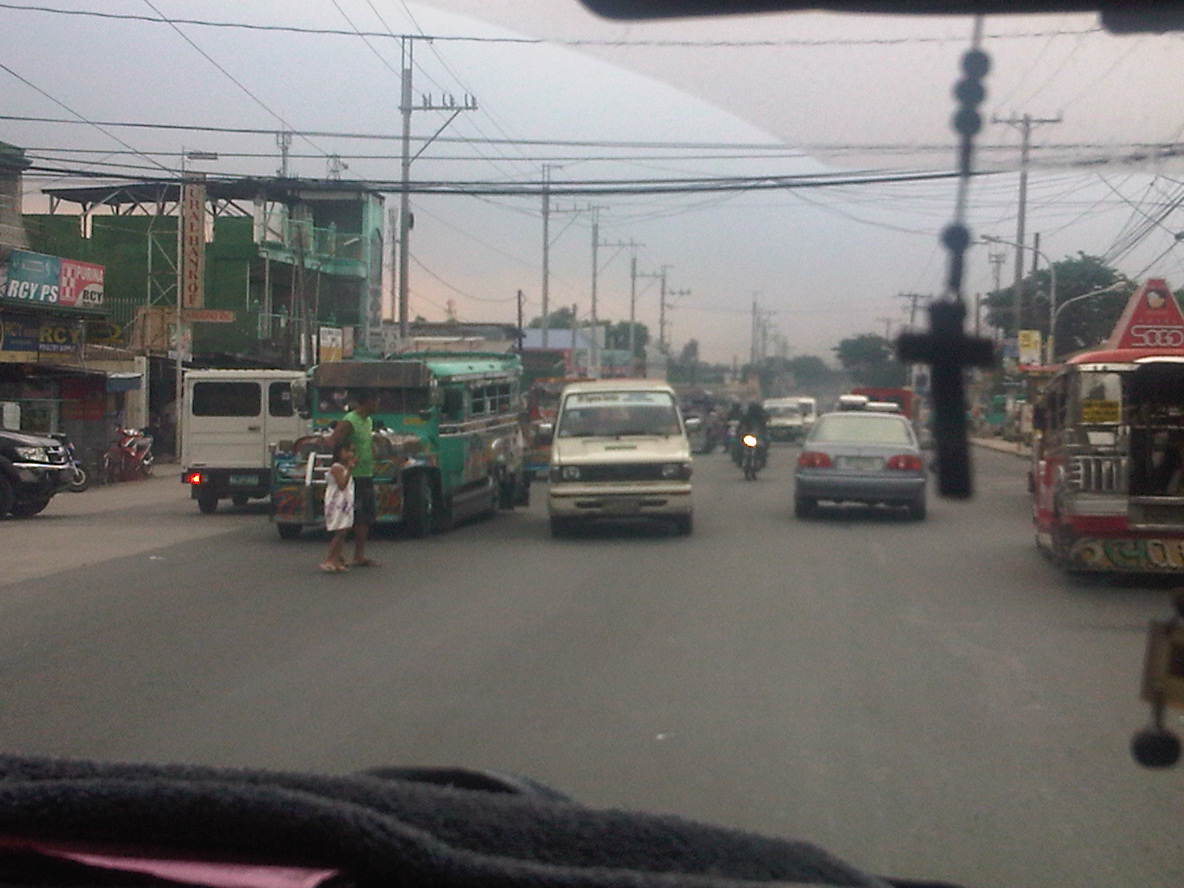 Pedestrians practically cross anywhere along the highway, with most like the man with a child in the photo seemingly uncaring about the risks posed by motor vehicles. In the case above, there are no pedestrian crossing signs or markings but in places where there are such designations people rarely follow the zebra crossings mainly out of ignorance and partly out of stubbornness.
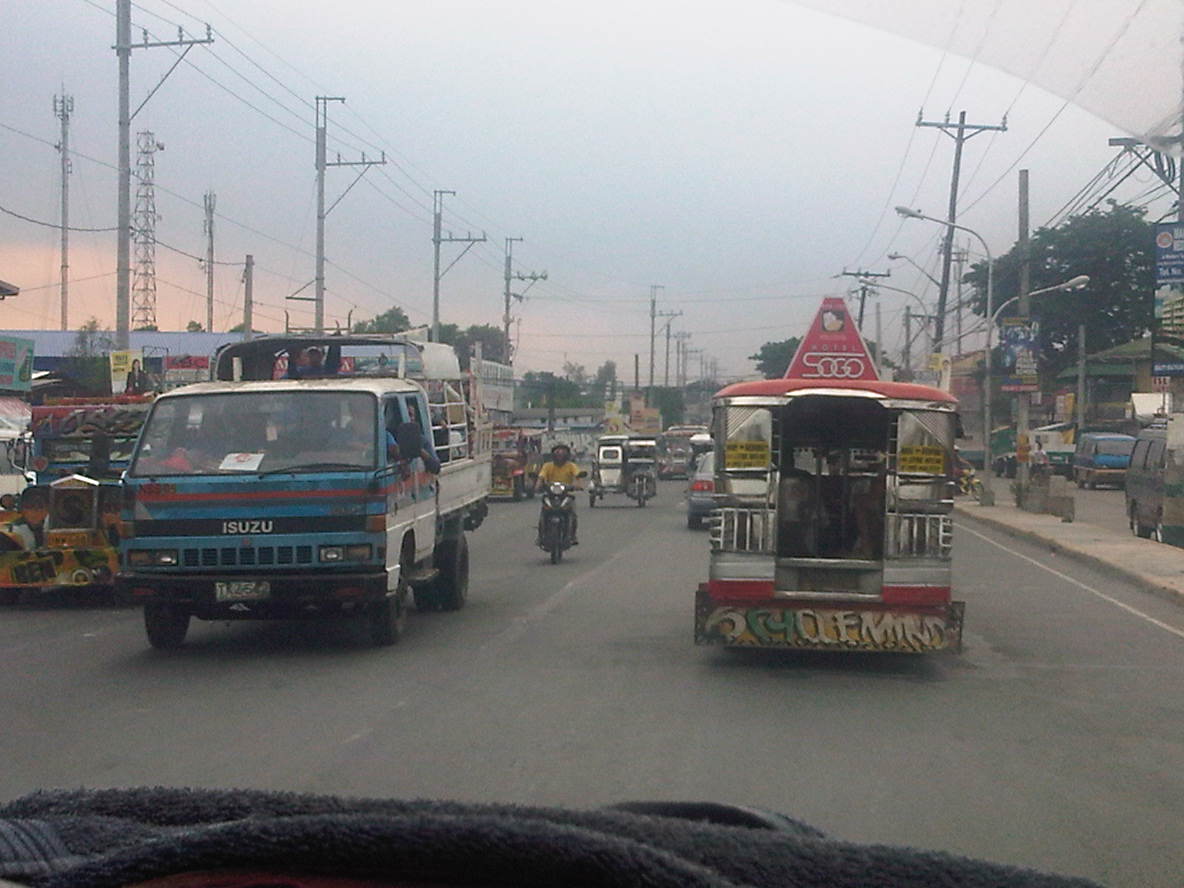 Along one section, the road widens and has along the Ortigas-bound side (right in the photo) a 2-lane service road separate from the main carriageway by a narrow concrete island. The service road is also plagued by parking though its purpose seems to be that for loading and unloading of passengers.
 Electric posts are located dangerously close to the road and would probably fall over if hit by a wayward vehicle. Such is probably the result of road-widening and shortcomings with coordination with the utility company as well as some fault, too, with the utility company as well.
 Another section with excellent pavement conditions but no pavement markings.
 There are short bridges along the highway due to the streams that run across the road from the mountains in the east to the general direction of Laguna De Bay and the Manggahan Floodway to the west. These bridges also tend to limit the width of the carriageway as shown in the photo.
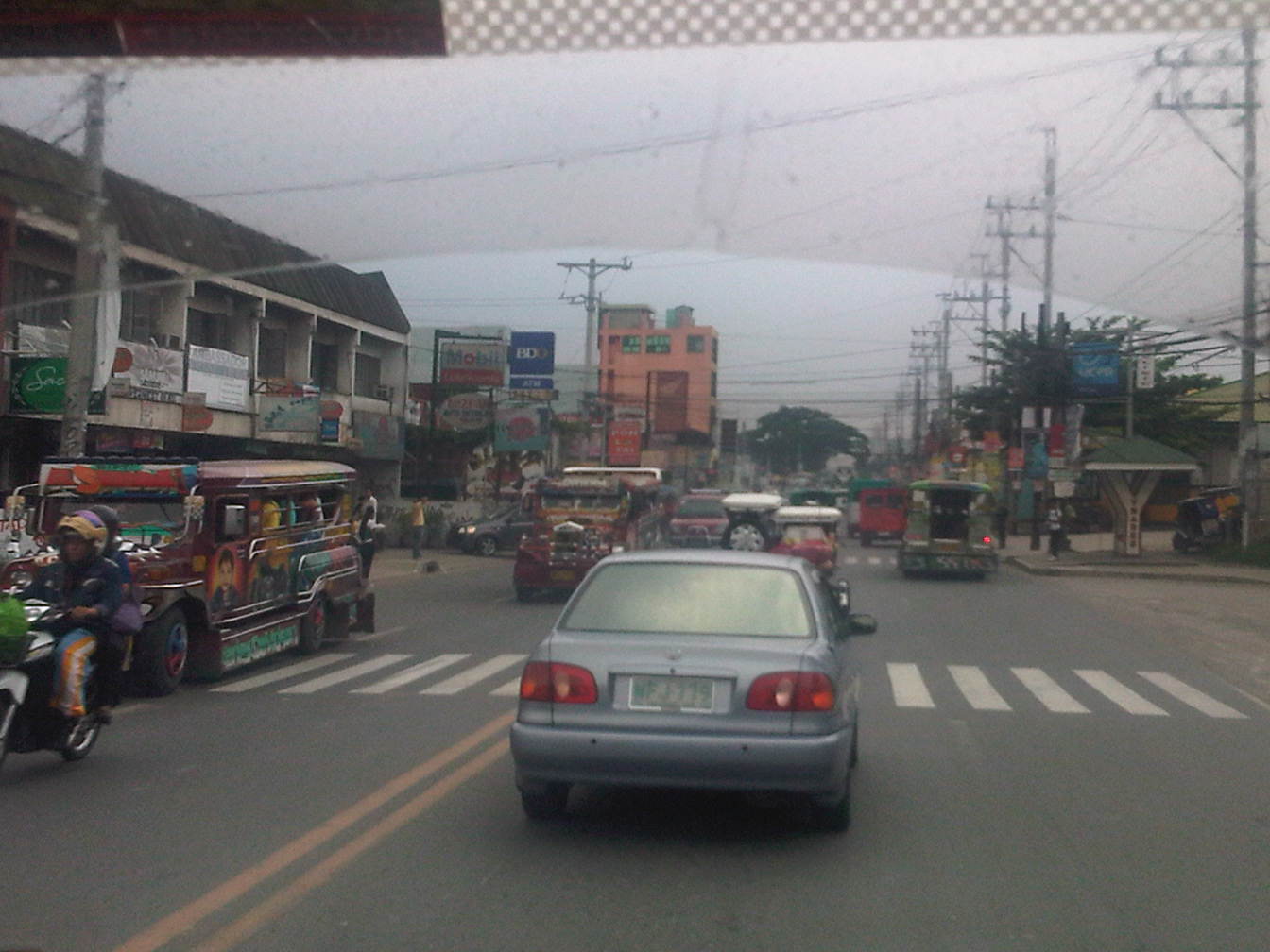 After the bridge, the road widens back to 4 lanes and complete with standard markings. For the entire length of the road from Angono to Taytay there is a trend, based on our observations, that sections alternately widen and narrow based on the developments on either side of the road.
 On-street mayhem is when you mix different kinds of vehicles and pedestrians on the road in the Philippines.
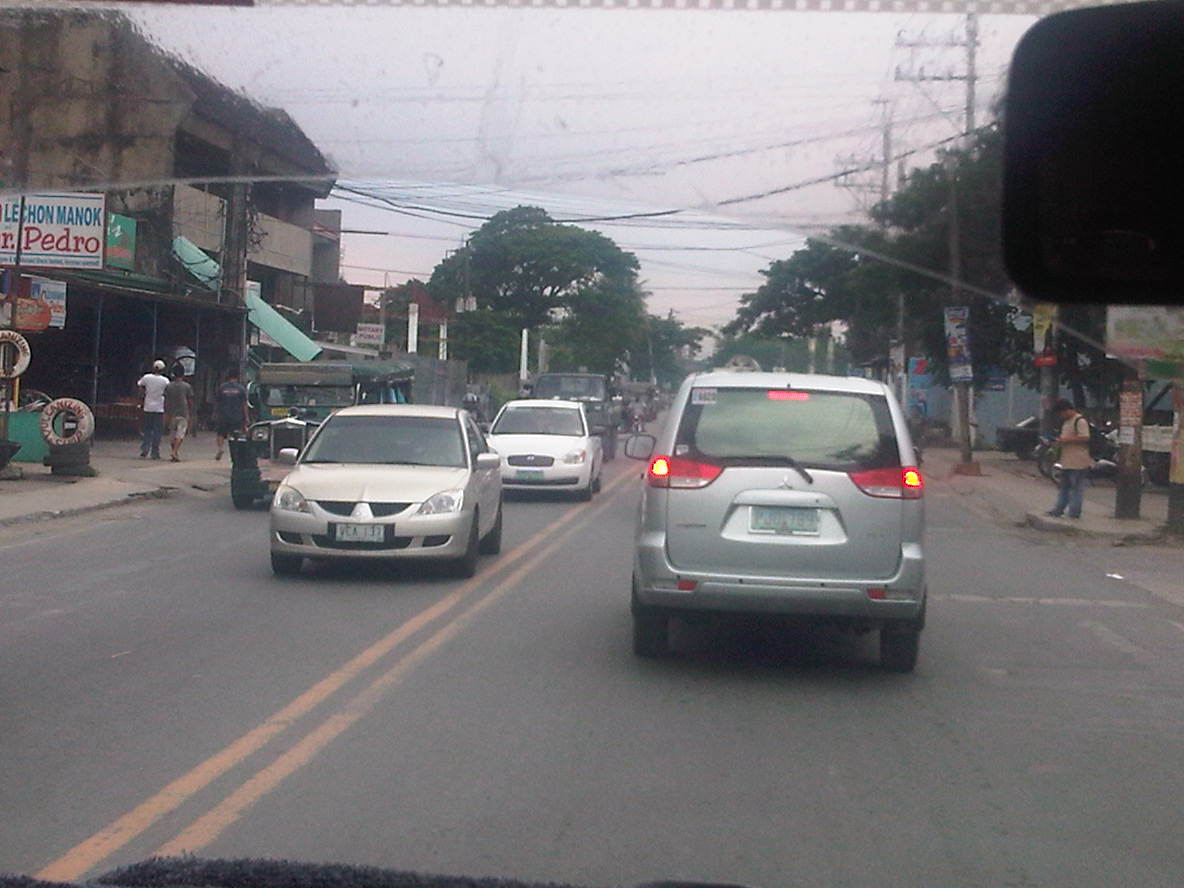 What is supposed to be a 4-lane road seems like a 2-lane carriageway because of some delineations missing and vehicle tending to hog the equivalent of 2 lanes like the vehicle in front of us.
 Junction with A. Bonifacio Ave (from Imelda Ave. and the Cainta Junction). A. Bonifacio passes through the town centers of Cainta and Taytay but is usually a very congested road having a narrow 4-lane carriageway that’s effectively a 2-lane road. The Manila East Road effectively bypasses that road. Notice that after the junction, the road markings are all there.
 Curve right after the junction
 This section has a total of 8 lanes based on the pavement markings but effectively has only 6 as the outermost lanes are often occupied by parked vehicles or used by pedestrians in the absence of sidewalks along either side of the highway.
 Pedestrian bridge between two buildings comprising the SM City Taytay. People have a tendency to cross at street-level so to force them to use the overpass, barriers were placed along the median. The barriers seem to be quite porous and I only wonder if anti-jaywalking policies are enforced in the area.
 An 8-lane stretch of the highway featuring a covered court with the name of a provincial politician stamped on its roof. This section used to have only 4 lanes with some shoulder space on either side of the highway. The DPWH and the local government had a measure of success in recovering land from encroachments and easing informal settlers off from the RROW, something that should probably be undertaken but which requires much more effort along sections shown in the previous photos.
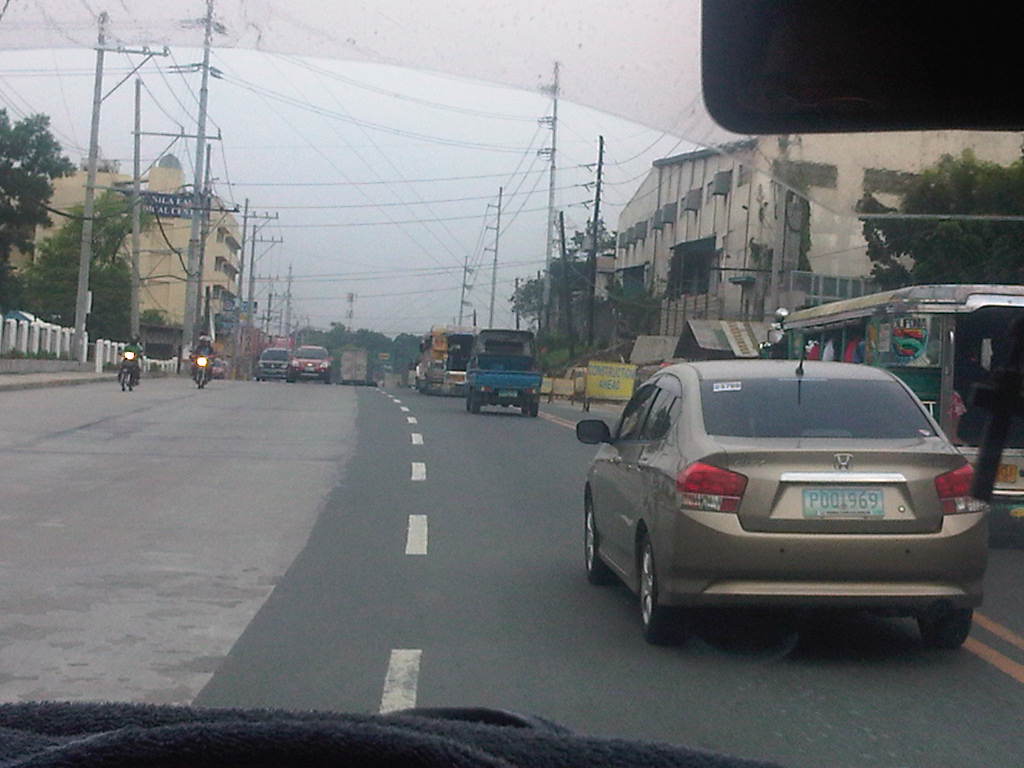 Road widening was still being implemented along the Ortigas-bound side of the highway when we passed through. There was no congestion though since the carriageway was wide enough to carry the light traffic during the early afternoon.
 The 8-lane section narrows to the equivalent of 6 lanes though the pavement markings seem to indicate only 4 lanes as shown in the photo. Already visible in the photo downstream of our position is the Tikling Junction – the intersection of the Manila East Road with Ortigas Avenue.
 Approach to Ortigas Avenue Extension and Leonard Wood Road (which is to the left just before the intersection with Ortigas)
 Junction with Ortigas Avenue Extension
–
Road congestion around NAIA: Sales Bridge
A particularly urgent problem concerning traffic congestion is the case of the Sales Bridge along the Sales Road at the Nichols/Villamor Air Base area. The bridge and the road is the main access from Fort Bonifacio and the Taguig/Makati areas and is used by most vehicles going to or coming from the airport not using EDSA and Tramo. That’s practically much of the airport-related traffic from Quezon City, Pasig, Marikina and Rizal Province. There’s usually also traffic congestion along Tramo from EDSA but this is predictable and the reason why more people tend to use the route via Sales Bridge. Nowadays its pretty bad in the Villamor area and this has been an inconvenience to a lot of travelers.
It’s been more than a couple of months now since repair/rehabilitation works for the Sales Bridge began and there are only a single lane bound for the west-bound direction and 2 lanes for the east-bound side. From the last time I passed through the area, it seems that the work on the bridge will be taking more time to complete and so more people will have to endure the inconvenience of congestion in the area. There are not so many options for traffic re-routing but I believe traffic enforcers at the intersection of Sales Road and the West Service Road should prioritize traffic bound for or coming from the airport considering the latter being a major gateway not just for Metro Manila but for the country.
 Vehicles queued along the east-bound side of Sales Road. The blue wall on the right is the fence of Villamor Air Base. The overpass on top is the access ramp for the Skyway.
 2At the junction, where there is a roundabout for traffic coming from the airport, Sales Bridge and the West Service Road of the South Super Highway, traffic is all tied up and you can usually hear a lot of honking among motorists whose patience have been tested by the traffic jam.
 While there are traffic enforcers posted at the intersection to manage traffic, they can only do so much given the capacity of the bridge. The volume of traffic from the airport and the service road can usually overwhelm the enforcers but they should try to establish priority for traffic. It seems that the west service road is usually given more priority than the traffic to and from the airport. This should not be the case here considering NAIA is a main gateway to Metro Manila and the country.
–
Montalban Highway
The Montalban Highway is located between the junction with J.P. Rizal Avenue in Rodriguez, Rizal (formerly known as the town of Montalban) and the junction with Payatas Road in Quezon City, Metro Manila. It serves as part of an alternate but somewhat longer (distance-wise) route between Metro Manila (via QC) and the northern towns (San Mateo and Rodriguez) of Rizal Province. The other route is through the Batasan-San Mateo Road, which also has a bridge crossing the Marikina River. While it is longer, it is often the less congested road and may perhaps offer faster travel (shorter travel times) between QC and San Mateo or Rodriguez. It is definitely the faster route to Montalban since travelers won’t have to pass through the town proper of San Mateo, which can get congested due to the local traffic and narrow roads.
 Turning right from J.P. Rizal and unto the QC-bound side of Montalban Highway
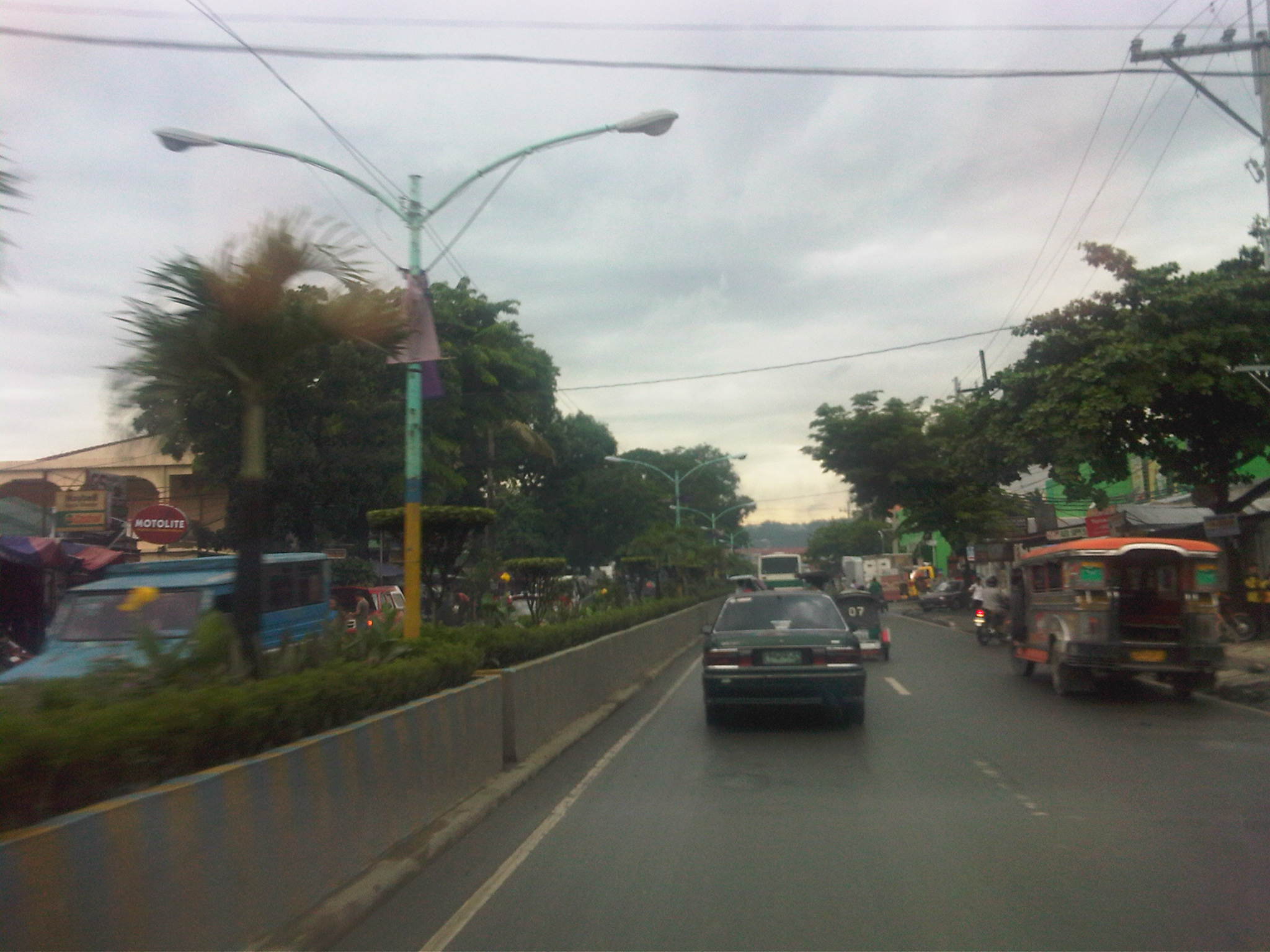 The road is a 4-lane/2-way highway with a median island with a plant box separating opposing traffic.
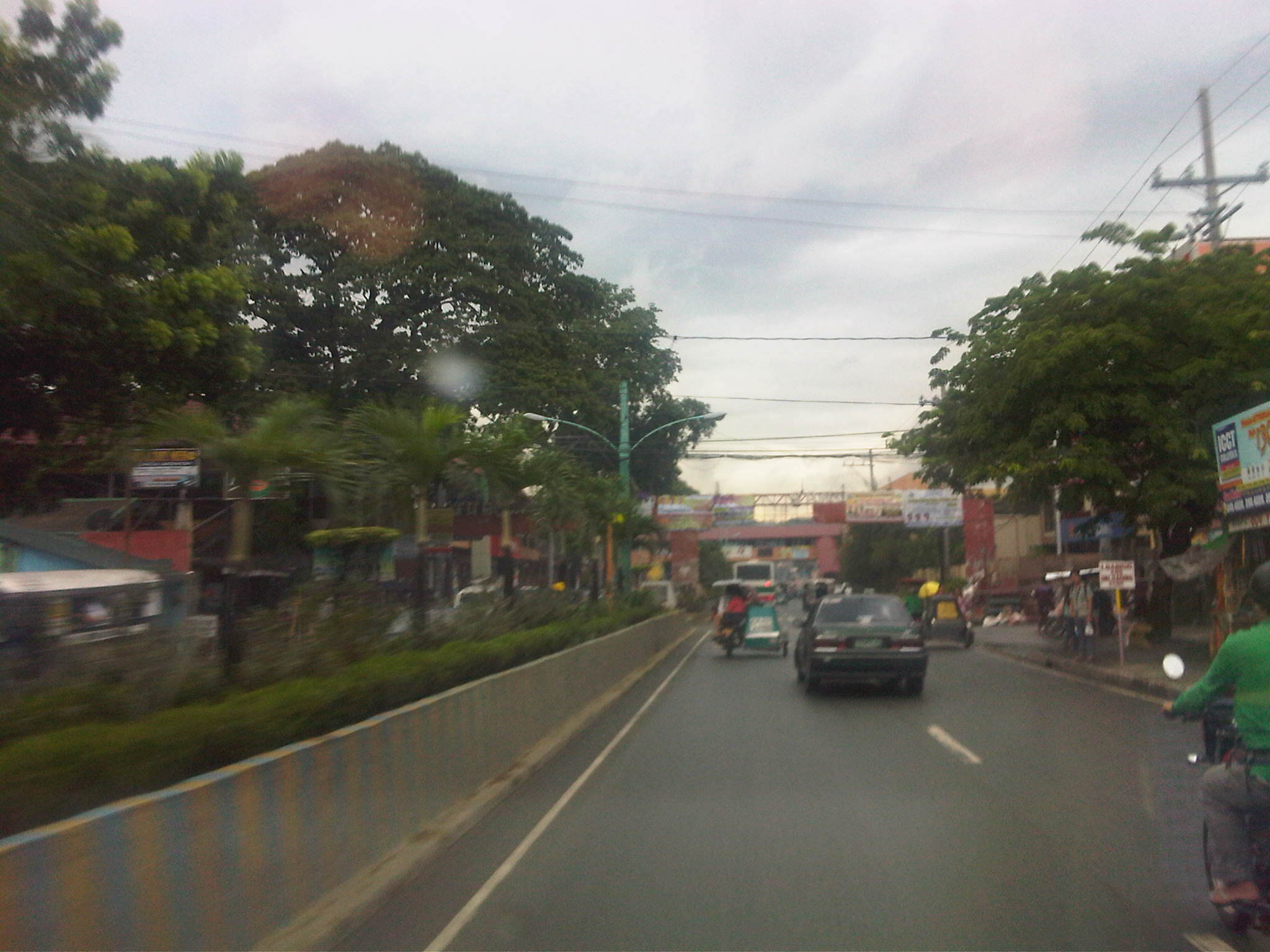 Traffic is a mix of cars, tricycles, jeepneys, buses, even bicycles and pedicabs.
 Along the highway is the Montalban Town Center, which has buildings on either side of the road midway through the highway. The buildings are connected by a covered elevated walkway.
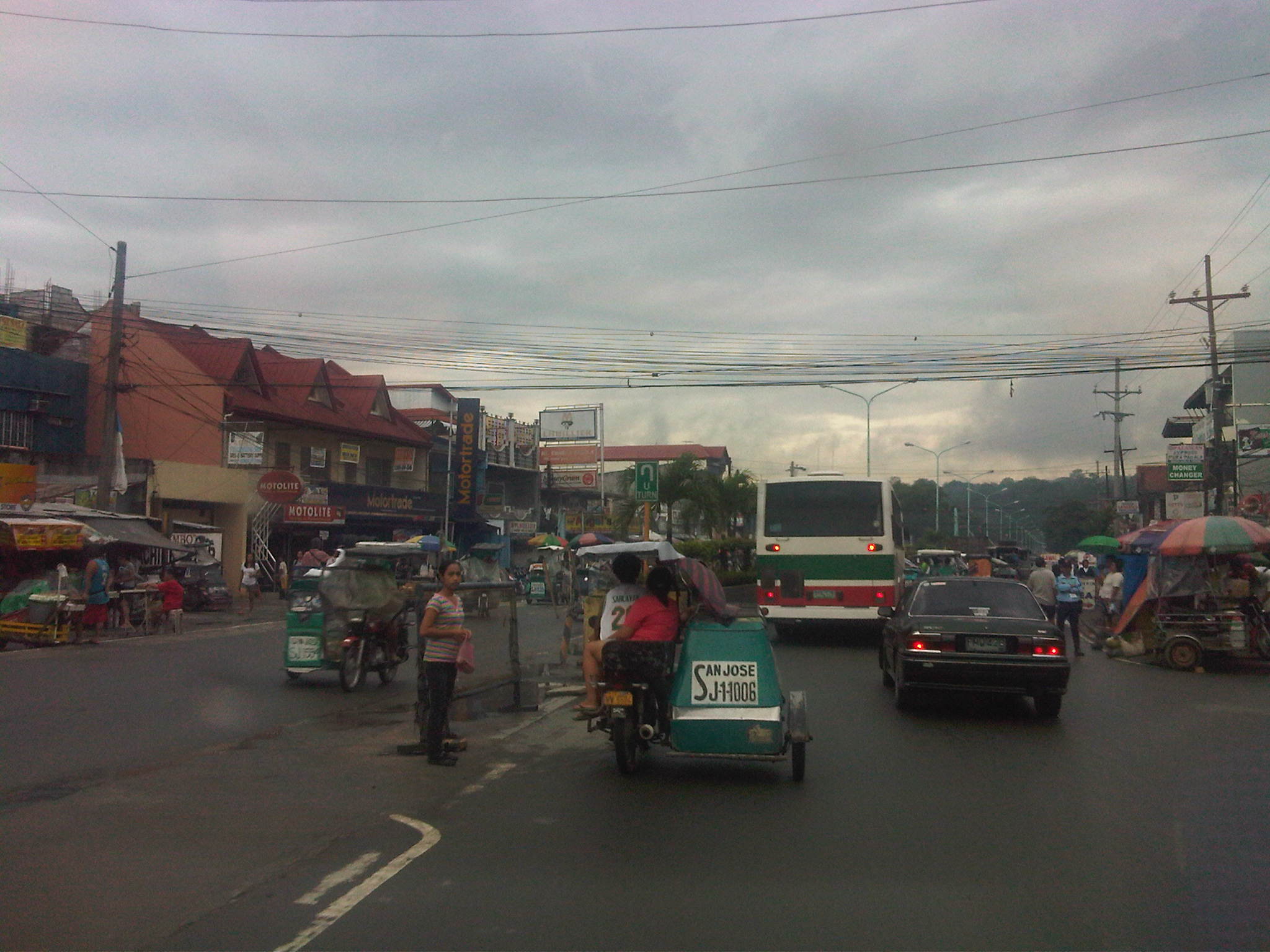 Past the town center is the Montalban Public Market and the area reminds of what Kalayaan Avenue in Makati City looked like before it was widened.
 We couldn’t understand exactly what the tagline “committed to change with honor” really meant, especially when it’s placed together with the sign for the market.
 Tricycles easily clog up the highway with many trying to get passengers by slowly traveling along the curbside.
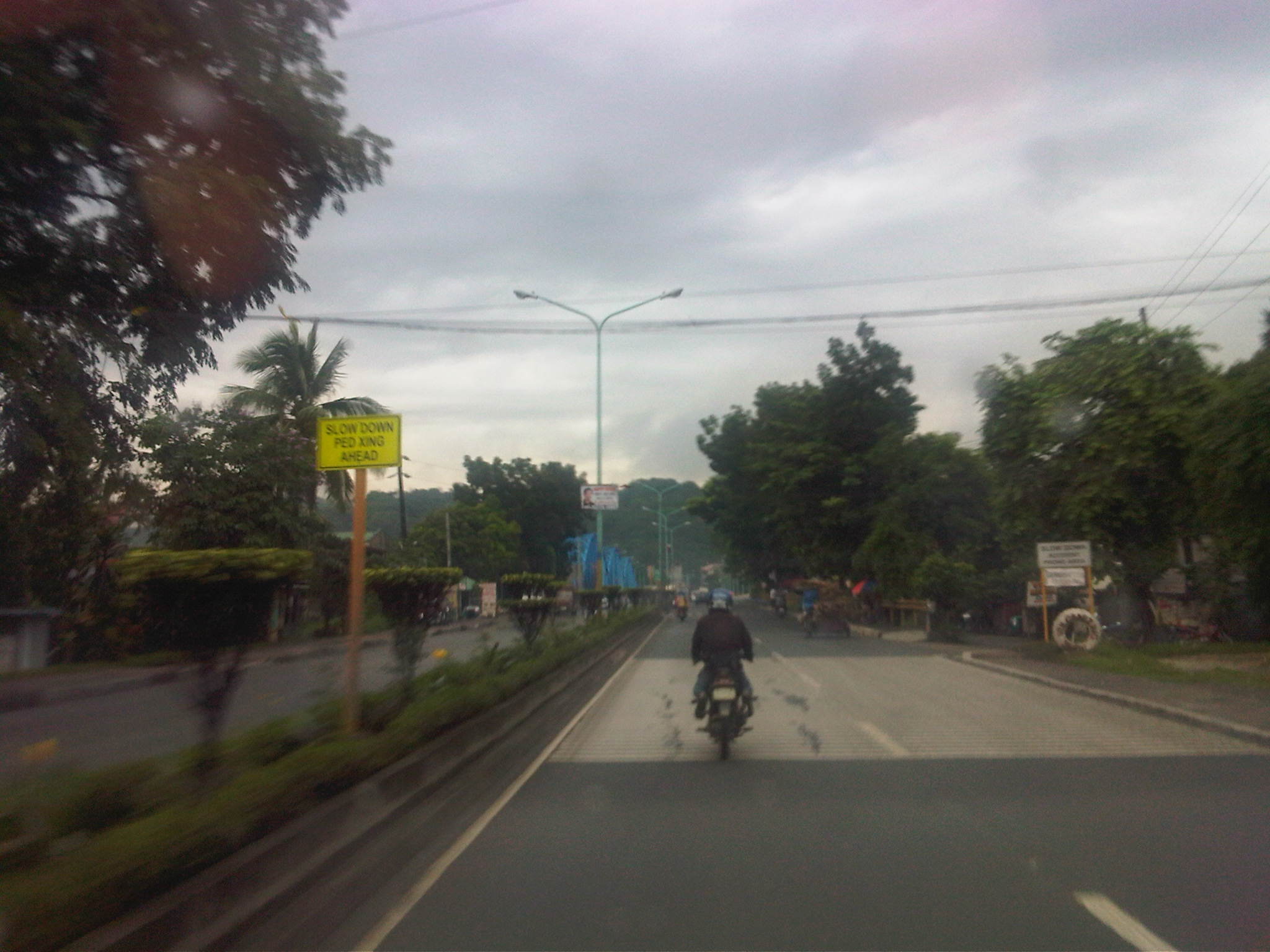 Past the commercial/market areas, traffic is free-flowing.
 Approach to the San Jose Bridge crossing the Marikina River
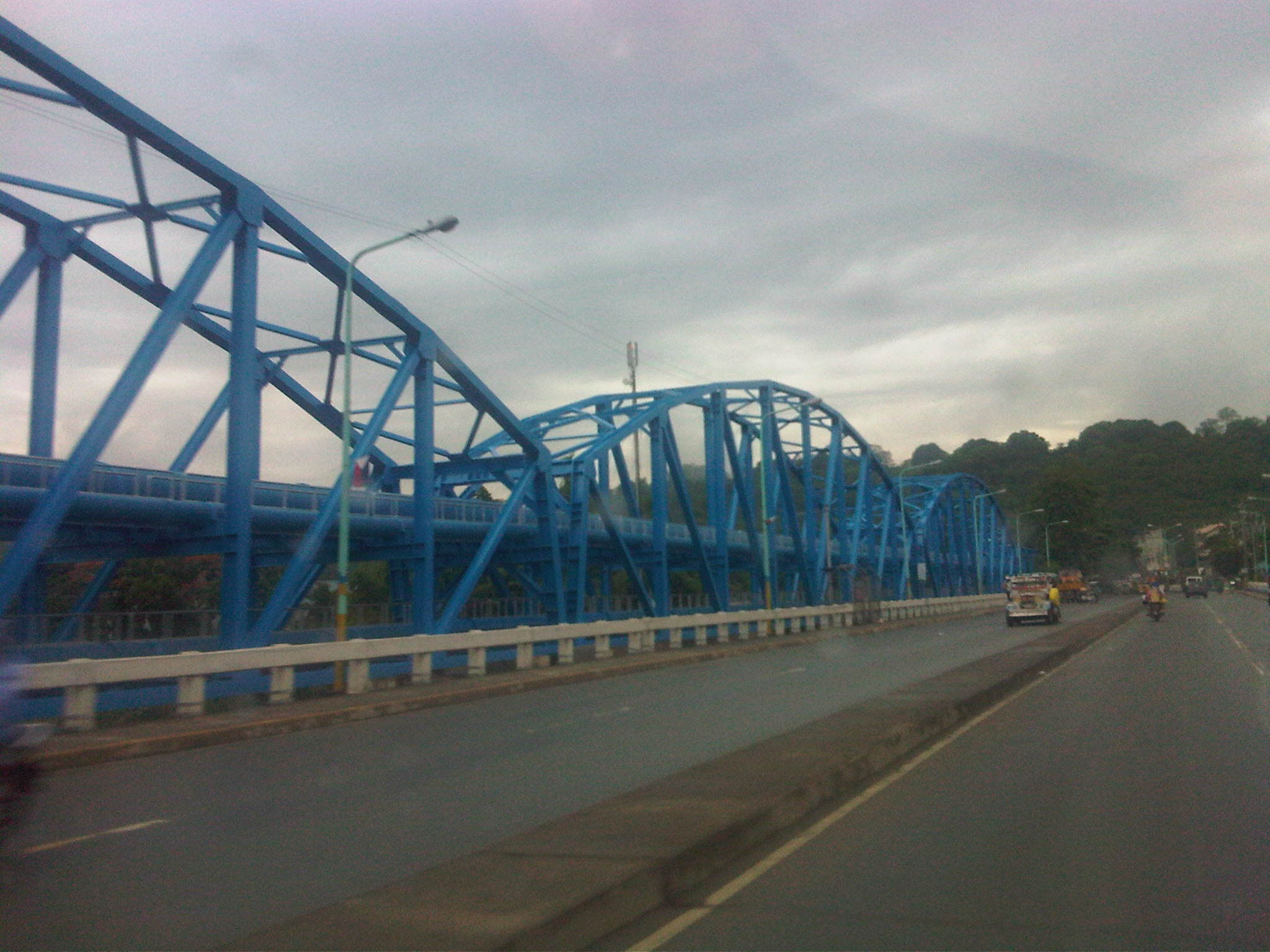 There’s a steel structure alongside the bridge that carries water pipes. From distance, the structure together with the bridge makes it look like the San Jose Bridge is a steel structure.
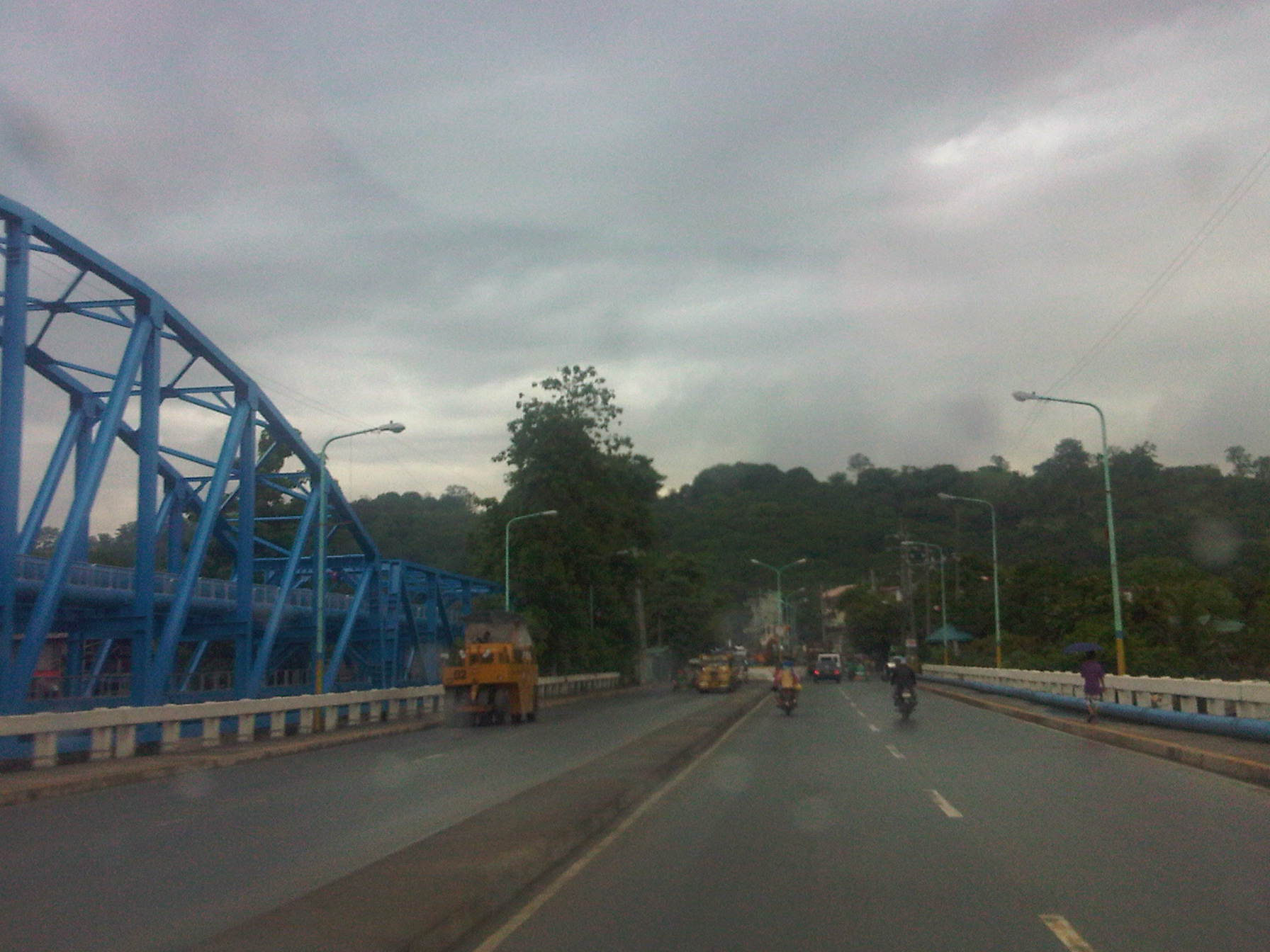 What looks like a hill at the end of the highway is actually part of the La Mesa Dam reservoir and watershed.
 After crossing the bridge, traffic is still light but vehicles generally slow down as they approach the end of the highway where there is a junction.
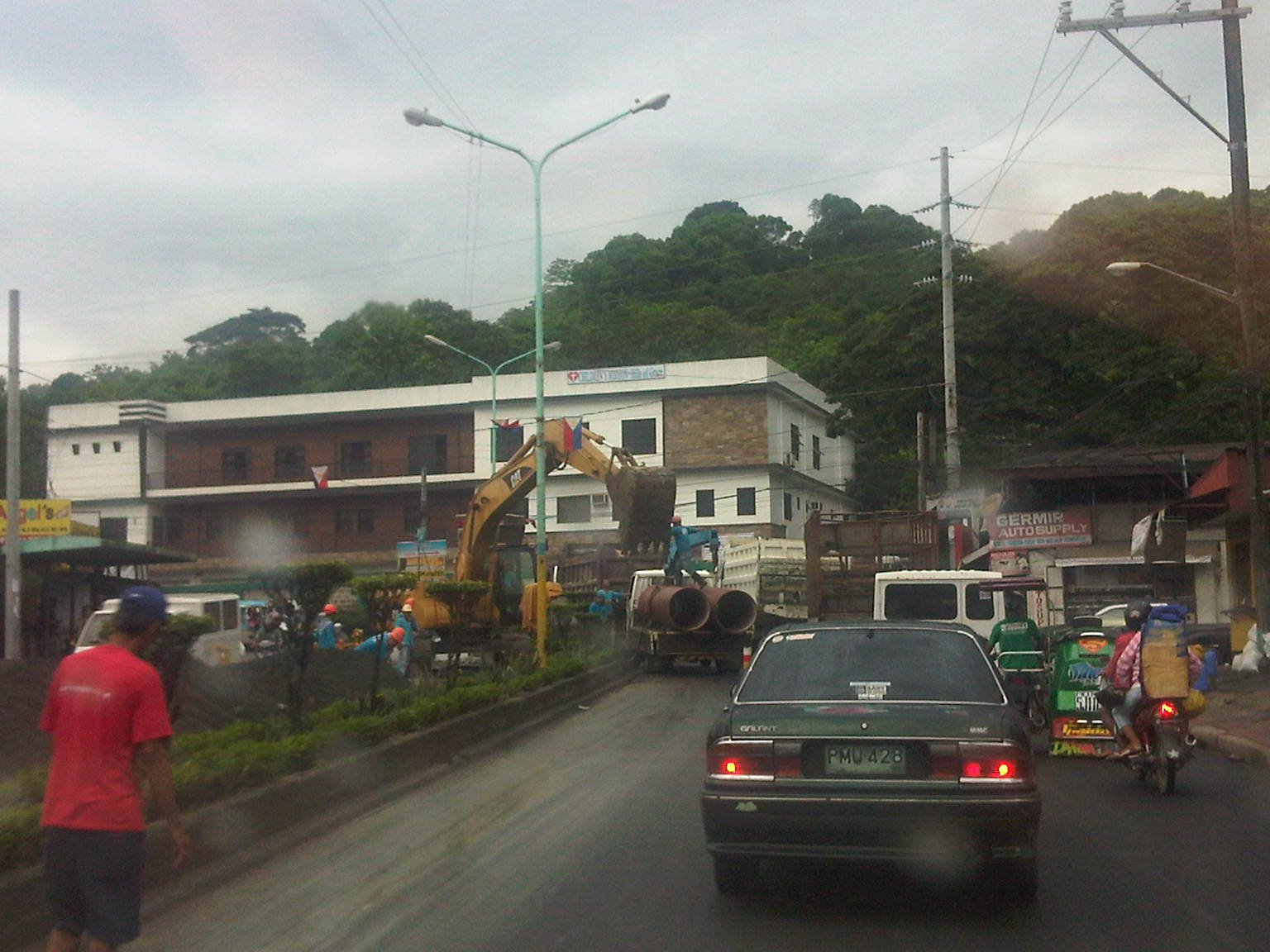 It turned out that vehicles were also slowing down due to major waterworks being conducted at the intersection of Montalban Highway and Payatas Road.
 A closer look at the pipes being laid out in the area when we passed by this June.
–
School traffic generation – Part 3: LSGH and Ortigas
Was at the DOTC for a meeting and couldn’t help but look out the window from the conference room while waiting for the meeting to start. Our meeting was being held at the 16th floor of the building housing the Department and so it gave an excellent vista of the surrounding area. I was particularly interested in a view of Ortigas Avenue know there was no congestion that time of the day mainly because school was still off. The latter observation is important here because La Salle Greenhills, which is just a stone’s throw away from the building, is a major traffic generator with cars and school service vehicles clogging up the stretch of Ortigas Ave. from Galleria to the Greenhills Shopping Center. In fact, one can find vehicles parked or waiting along the road and even on the sidewalks, depraving pedestrians the proper and safe space to walk.
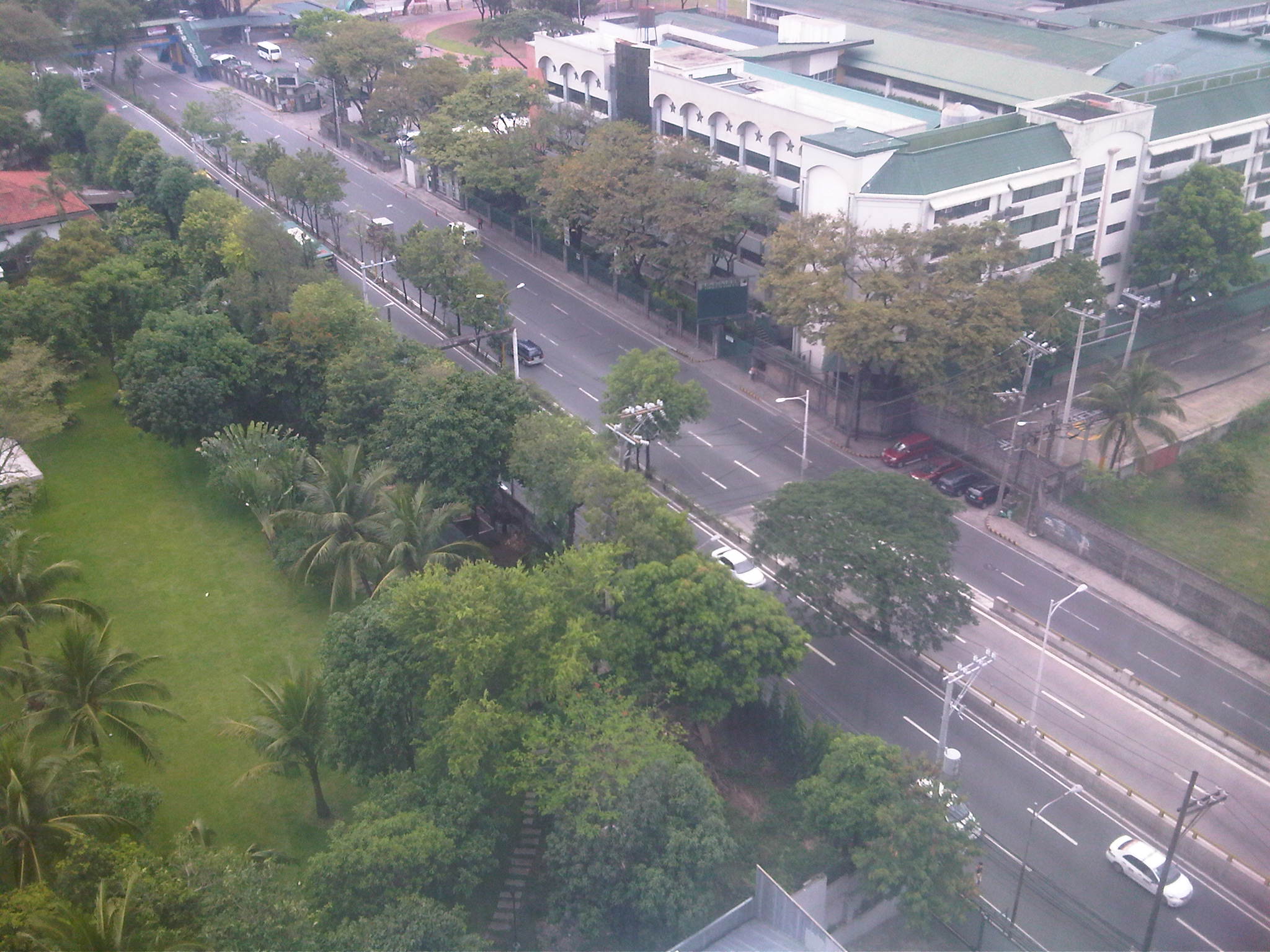 Free-flowing traffic along Ortigas Ave. in front of LSGH on a Friday mid-afternoon.
 Main gate and pedestrian overpass at LSGH – there seems enough space for a multi-level parking lot inside the school but perhaps there are other options other than low capacity transport for the students.
 Impact area – photo showing LSGH in the foreground and the Greenhills area in the background, including Virra Mall on the upper left and the condominiums around the Greenhills Shopping Center and behind Camp Crame.
 Exclusive roads – the photo above seems the same as the previous one. A distinction though is that it shows Holy Cross Street (at right in the photo), which is inside Greenhills East Subdivision, an exclusive residential subdivision. The road and other streets in the subdivision are not open to general traffic and so cannot ease traffic along Ortigas Ave during congested periods.
 Greenery – across LSGH is Wack wack, one of the first golf courses in the country and a welcome patch of green in the middle of the metropolis. Trees also line up along Ortigas Ave. but their capacities to absorb the CO2 produced by motor traffic are not enough considering the volume and frequent congestion along the road.
–
Lane rationalization along Katipunan Avenue
While driving along Katipunan last weekend, I noticed the excavations beside the median island along the southbound direction. The excavations were of curious shapes as they were large holes that were conspicuously beside each of the small trees planted on the median island. It suddenly struck me that this was likely the implementation of the planned adjustment of the median island to allow for an additional lane along Katipunan northbound. A few more passes along the project site confirmed my suspicion and I was finally able to take a few photos this morning of the work along this section of C-5.
 The old median island has already been removed to make way for an additional lane along Katipunan (C-5) northbound. This will increase the number of lanes from 3 to 4 and should ease traffic when classes open in June. Meanwhile, the trees have been replanted on the adjacent lane on the southbound direction where a new median will be constructed.
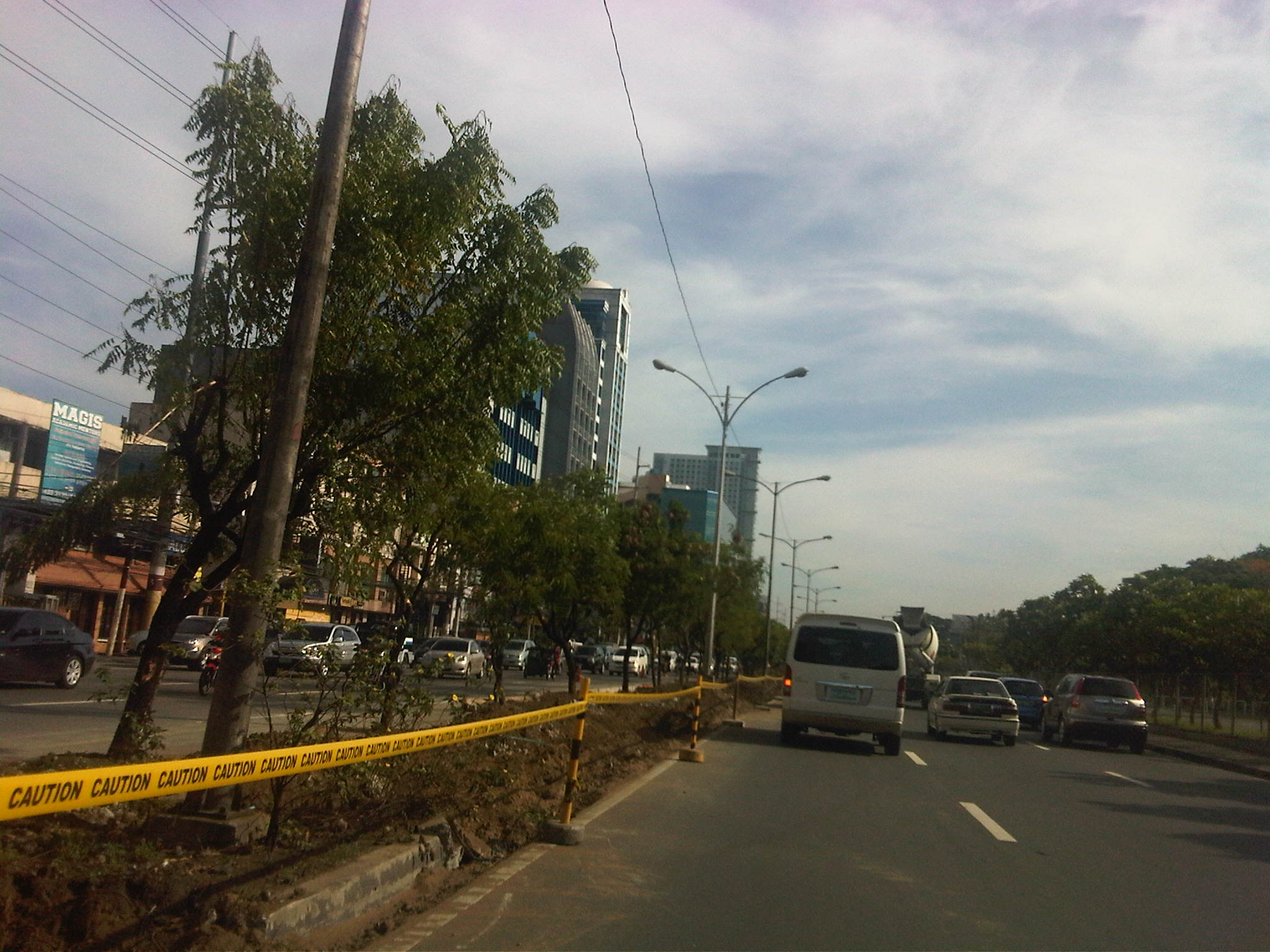 Aside from the trees, the light poles will also have to be transferred. I assume this will be done with Meralco and during the night time to reduce impacts on traffic.
 After transferring the trees, the old curb is demolished and the soil excavated and transferred to the new median on the other side. A new curb is being constructed and is visible in center of the photo.
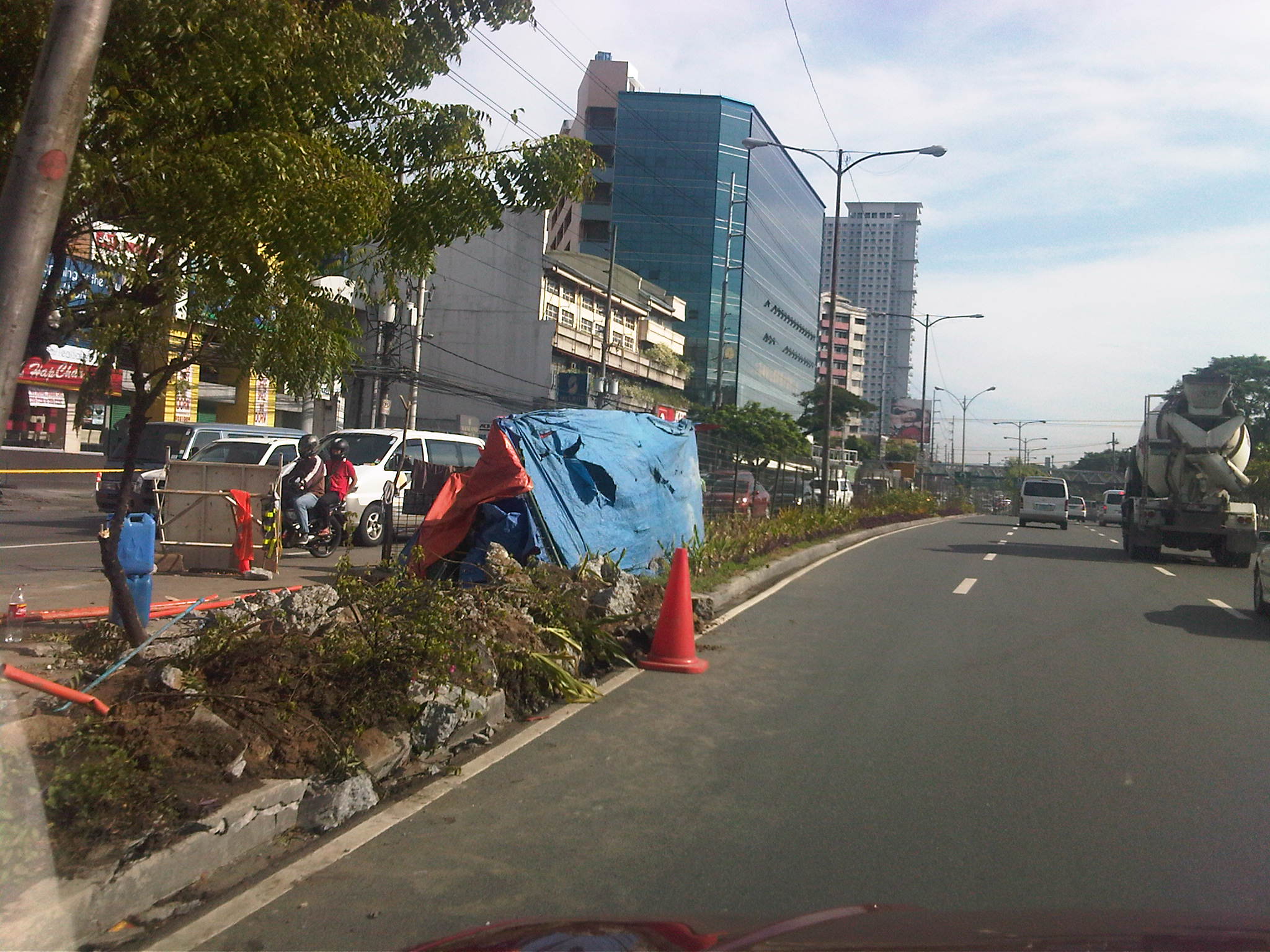 While the project is being implemented 2 lanes of the southbound side are effectively unusable to traffic with one lane being converted into a median and another being used by the contractor for their equipment and materials.
Once completed, the section of Katipunan should have 4 lanes along the northbound direction. Meanwhile, the southbound direction will have 5 lanes from the 6 it had after the west service road was removed as part of the U-turn scheme implementation by the MMDA 9 years ago. The 5 lanes are not all usable to general traffic since 1 or 2 lanes area often occupied by parked or standing vehicles in relation to the establishments on this side of Katipunan.
–
Road crashes: disasters waiting to happen
While I’m very appreciative of the efforts of the MMDA particularly on traffic management, there is still much to be desired regarding enforcement around Metro Manila. These include the need for consistent and firm enforcement of traffic rules and regulations along major roads such as Commonwealth, EDSA, and C5. There are still many instances of speeding along Commonwealth as many drivers (cars and buses) and riders (motorcycles) are already aware of the usual positions of MMDA enforcers measuring speed along the highway.
In the vicinity of current and former U-turn slots, there are also many violations especially where motorcycles can squeeze into openings to conveniently (though dangerously) make turns. Some U-turn slots are positioned across side streets of major roads and are used by motorists for making left turns. Often, one will find vehicles inching their way to cross the major road, effectively blocking through traffic. This is particularly the case along Katipunan just across from the gate of an exclusive subdivision well-known for its politician residents. While the Katipunan – C.P. Garcia intersection is only a few meters away for those intending to travel along the southbound side of C5, many vehicles (conspicuously those which are expensive and of the luxury type) cross C5 northbound to make left turns at the U-turn slot/median opening. A few meters away, MMDA enforcers and QC Police turn blind eyes to the practice, leaving motorists to fend for themselves in trying to avoid each others’ vehicles while also trying not to constrict traffic.
Such situations increase the likelihood for road crashes in the area, exposing people to unnecessary risks. These also exacerbate traffic congestion as crossing vehicles interrupt the otherwise smooth (and continuous) flow of traffic towards C.P. Garcia. Such situations are also perfect examples for cases where there may not be crashes occurring but there is a high likelihood for incidents to happen. Crashes waiting to happen seem too theoretical that the MMDA and the PNP apparently have difficulties understanding the concept, which is the basis for assessments of road safety including the star ratings given out by iRAP. It is not necessarily only the actual number of crashes (or accidents) occurring that is evaluated but the likelihood for them to happen given the conditions at any particular area. Perhaps this is why many of our roads remain unsafe because many of our administrators, planners, engineers and enforcers continue to fail to understand this concept for the potential for crash occurrence. And this is where we should work on to address – very hard!
The following photo was taken one early morning along Katipunan prior to the peak period that typically starts around 6:30AM during times when there are classes at the schools along this stretch of C5.
 Early morning road crash near the La Vista gate along Katipunan (C5) involving vehicles encroaching towards the U-turn slot to make a left turn at the median opening.
Perhaps we should also extend our appreciation of the concept of disaster risk prevention and mitigation to our streets. After all, road crashes may also be treated as disasters. They result in deaths, injuries and damages to property. The only difference and probably more frightening aspect of these disasters on the road is that they do occur on a much more frequent basis than you major earthquakes and typhoons.
–
Traffic congestion due to waterworks and roadworks
Driving from the airport this morning, I already saw the buildup along Villamor due to some roadworks being undertaken along the overpass crossing the SLEX. As such, I decided to take an alternate albeit longer route via Tramo and EDSA on my way back to Antipolo. It would have been longer but I had assumed Tramo and EDSA would be free-flowing at 7 AM on a Saturday. I was wrong!
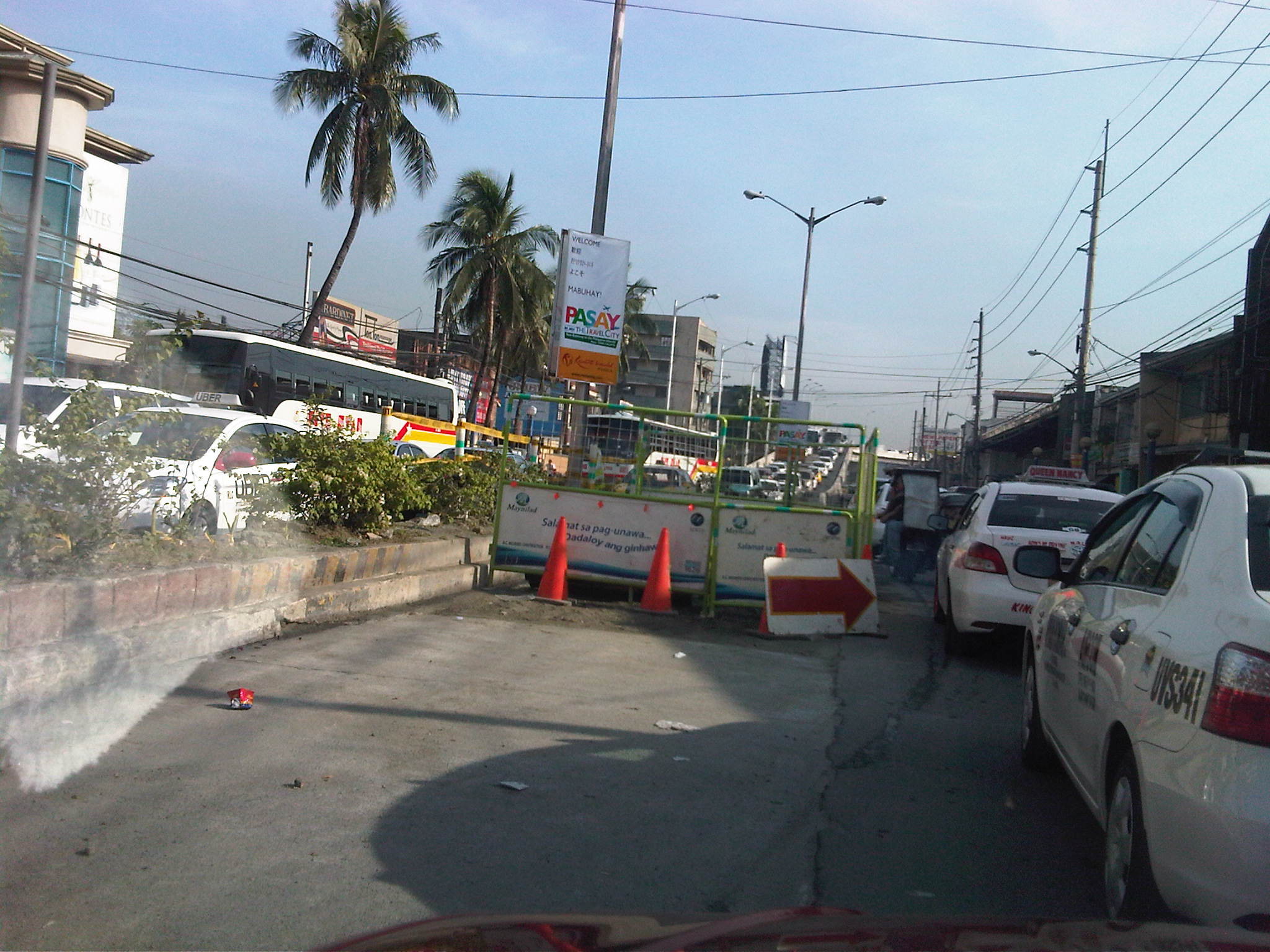 Tramo congestion – Tramo is usually congested due to a variety of reasons including provincial buses maneuvering to and from terminals and depots located along the EDSA-bound side of the road and the proliferation of tricycles and pedicabs operating along the road despite the clear ban against them on national roads. The latter serve the informal settlers who live along Tramo (and Pasay), even occupying parts of the waterways in the area. This morning, waterworks by concessionaire Maynilad added insult to the injury that is congestion along the road. Airport-bound traffic wasn’t so lucky, too, as they had to contend with what seems to be a flawed setting of the traffic signal at the intersection downstream.
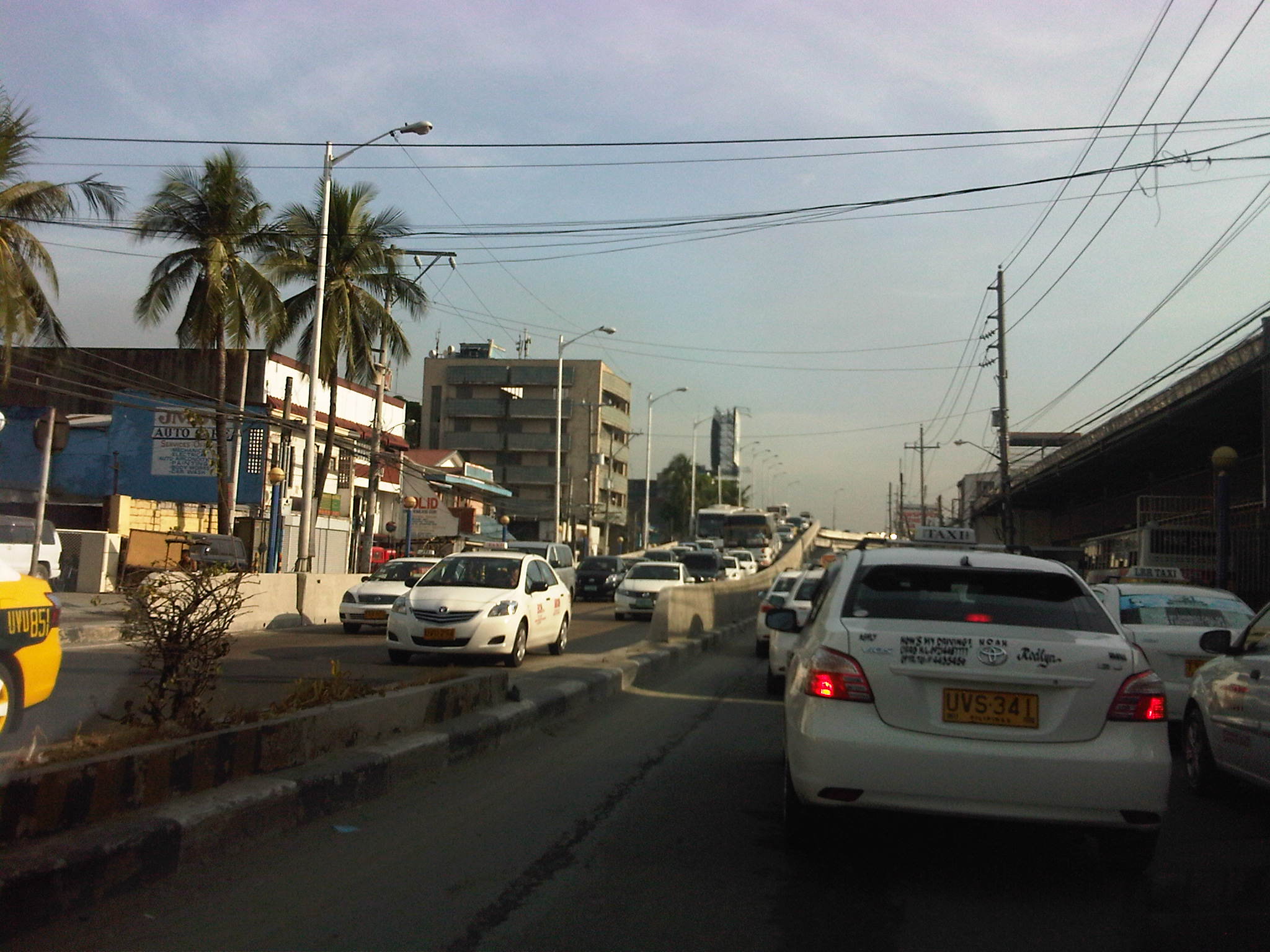 More traffic – after passing the Maynilad work site, there was still much congestion and it turned out this was due to very slow turning (i.e., all vehicles must turn right upon reaching EDSA) as MMDA traffic enforcers were not doing their jobs to ensure the intersection was clear of buses, jeepneys, taxis, and tricycles and pedicabs loading and unloading after the intersection, along which provincial bus terminals were all lined up. That’s right. There are tricycles and pedicabs along EDSA. I would have taken photos of the situation but unfortunately, these have to be against the sun and my trusty cell phone could not manage to get good photos. Such congestion is supposed to be manageable if enforcers would just be strict/firm in doing their jobs.
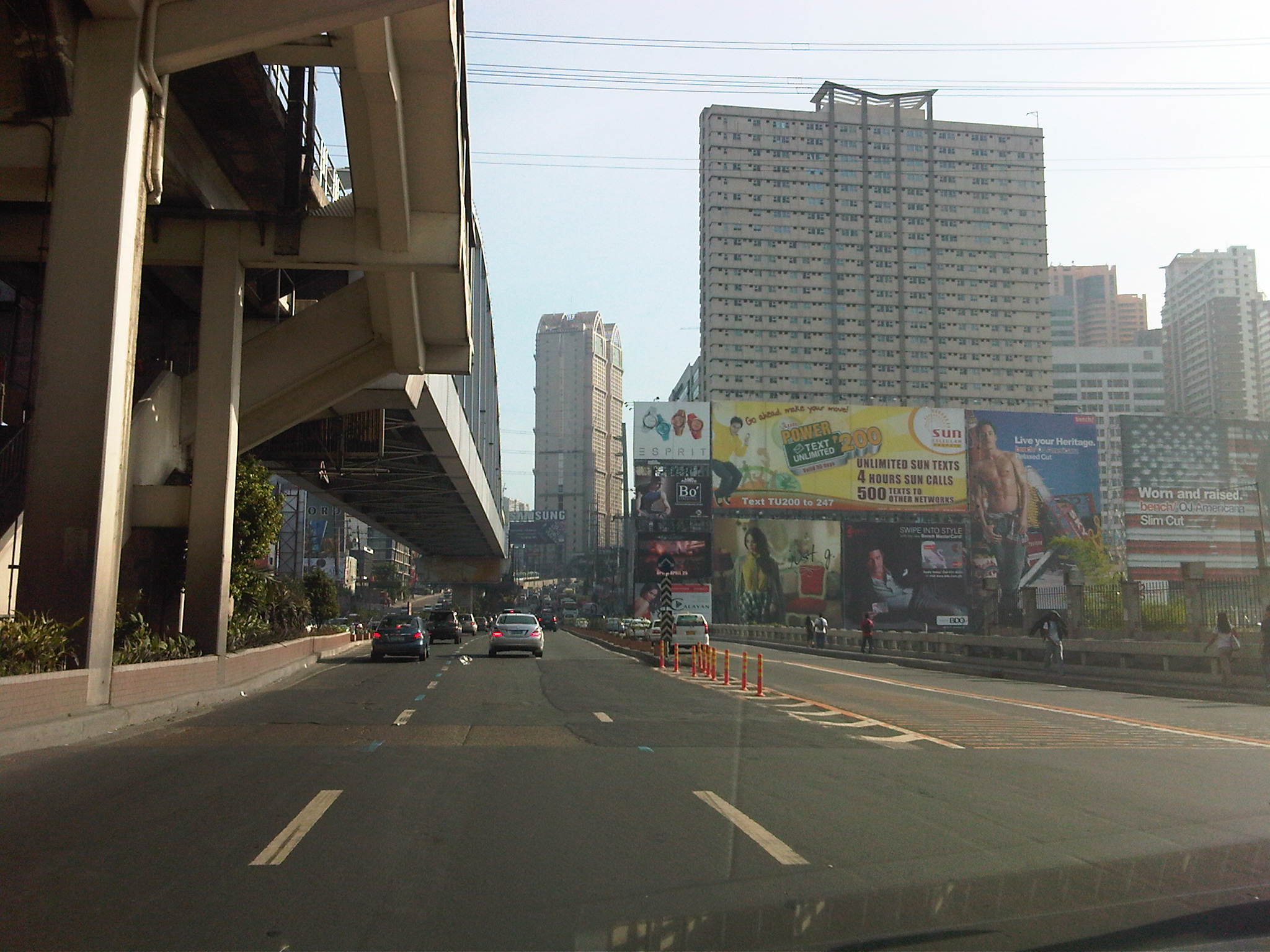 EDSA traffic – after recovering from the congestion along Tramo and the stretch of EDSA from Tramo to Magallanes, I stumbled upon another buildup as I passed Guadalupe and crossed the bridge at the Pasig River.
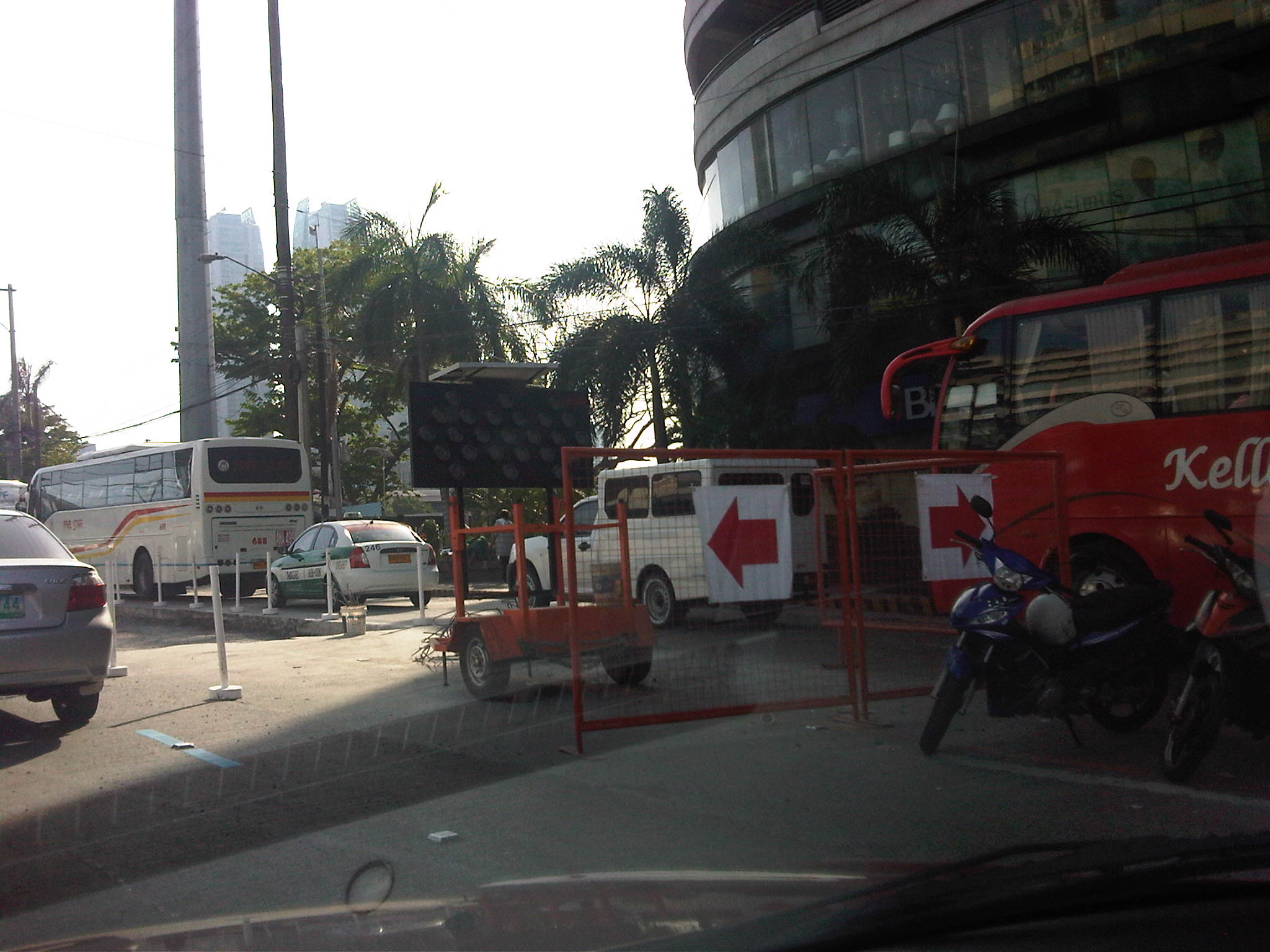 Re-blocking – it turned out that the congestion was due to roadworks along a lane of EDSA, which practically occupied 2 lanes due to the equipment and temporary barriers set up in the area near Reliance and the Boni MRT-3 Station.
 Hectic schedules – I forgot that the re-blocking works along EDSA and other major roads in Metro Manila are undertaken during the weekends when traffic was supposed to be relatively light compared to the weekdays. As such, the MMDA only allows DPWH and its contractors to conduct works during the weekends, targeting completion by Sunday night in order for the lanes to be usable by Monday.
 Imelda Avenue again – as if the congestion along Tramo and EDSA were not enough for a Saturday morning, I encountered still another bottleneck along Imelda Avenue in Cainta. This was quite surprising to me as water works in the area were supposed to have been completed more than a month ago.
 Surprise! surprise! – what I thought was a completed project turned out to be something that was stalled for some reason. I think this may also be related to a similar policy being applied to the contractors, restricting their work to weekends.
There must be a better way to manage traffic along work sites like the one above? Perhaps work should not be limited to the weekends but be allowed during the late nights to early mornings (11PM to 5AM). This would allow for more time to be available for contractors to complete projects especially during these months of April and May when school is out and weather (read: rains) is not necessarily a factor working against such road and water works. While it is really difficult to work under the scorching sun, it is still no excuse for enforcers to do their jobs right in managing traffic to ensure smooth flow. It is a wonder how we cannot impose discipline on erring drivers at the cost of valuable time and fuel to other travelers.
–
Morayta Street and some thoughts on reviving Manila
The University Belt in Manila is called such because of the proliferation of schools, particularly universities and colleges, in the area. Most recognizable are institutions such as the University of Sto. Tomas, University of the East, Far Eastern University, Polytechnic University of the Philippines, Centro Escolar University, Manuel L. Quezon University, San Beda College, San Sebastian College, La Consolacion College, National Teachers College and College of the Holy Spirit. The U-belt, as it is also known, stretches all the way to Intramuros and Padre Faura where many other institutions like UP Manila, Mapua, Letran, Lyceum, PNU and Sta. Isabel College are located.
The streets in the area are very familiar to many as they are usually indicated in the sign boards of jeepneys and buses plying routes in the area. These include Recto, Lerma, Espana, Legarda, Mendiola and Quezon Blvd. An ubiquitous street in the area is currently named Nicanor Reyes Sr., in honor of the founder of the Far Eastern University, the main gates of which are located along the street. Nicanor Reyes, of course, is more popularly known as Morayta for most people even the younger generation who picked up the old name of the street, which is more familiar with public transport drivers (jeepneys and taxis). Morayta connects Espana with Recto.
 Morayta Street (Nicanor Reyes St.) – Recto bound traffic with the FEU on the right side. There is practically two lanes per direction but one lane is usually occupied by parked or waiting vehicles. Add to this the operations of public utility vehicles as the street is along jeepney routes.
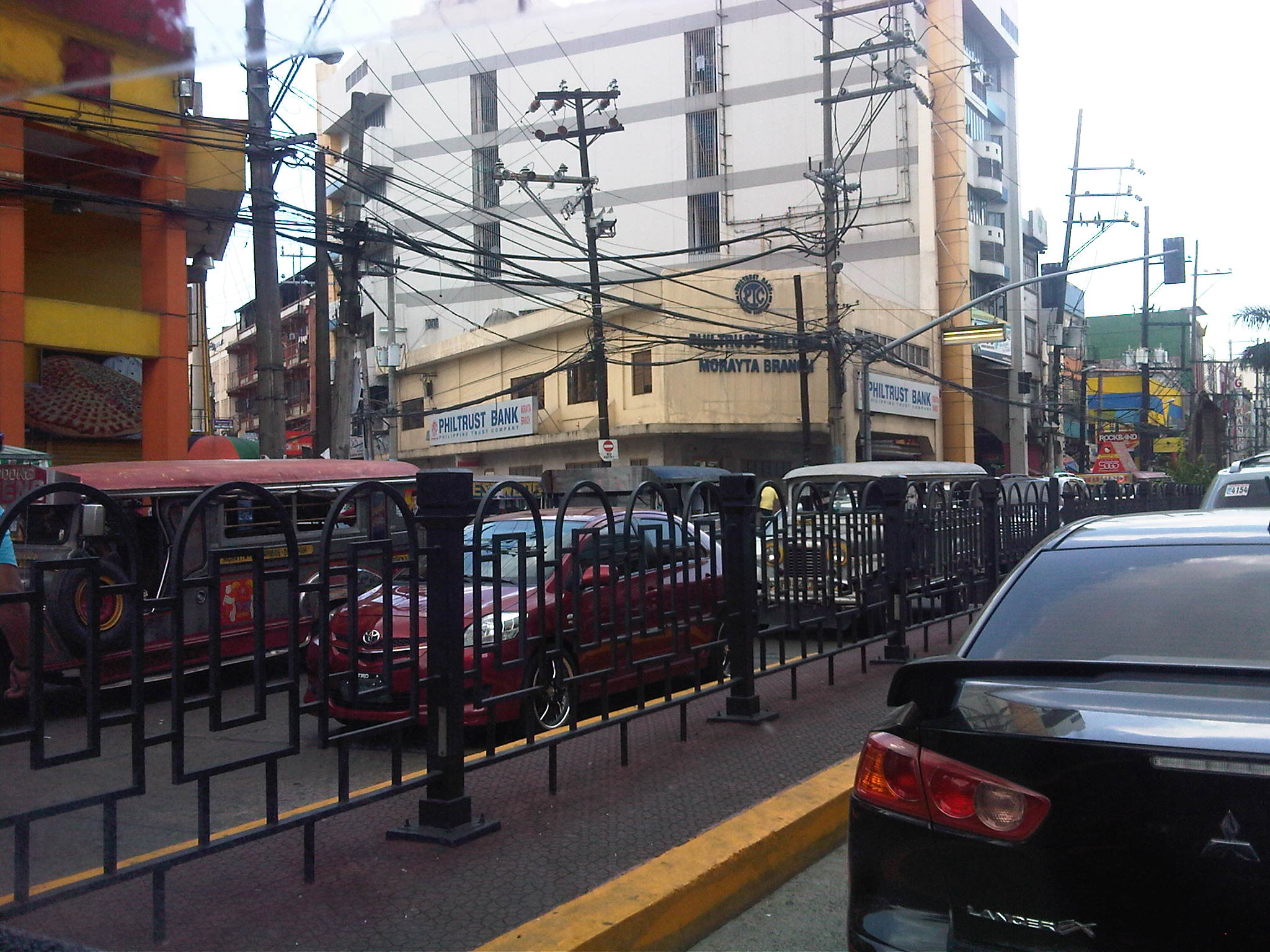 Railings – street railings on the median island along Morayta help minimize jaywalking along the busy street. There are no median openings for vehicles along the street though there are junctions like the one with R. Papa Street shown in the photo.
 Pedestrian traffic signal – there is a traffic signal along Morayta for pedestrians crossing the street in front of the FEU main gate. Such signals may be equipped with a button for on-demand green indications.
 Pedestrian flow – because of the schools, there are many students (generally in uniform) in the area. Each school would usually have a distinct uniform for females though some are generally in white with their school logos or IDs the only distinguishing aspects. Meanwhile, male students usually wear white polos and black pants. The photo above shows students crossing in front of the FEU gate. The photo also shows the typical commercial establishments in the area that include fast food and book shops.
 FEU main gate – the university has several access/egress points along Morayta including those for people only and this gate where vehicles may pass. Many universities (with only few exceptions) in the University Belt have very limited space with some having practically no campuses to speak of but only buildings where they conduct their activities.
 Parking and standing – parked and standing (waiting) vehicles occupy significant road space. While standing vehicles have their drivers and could be made to move, the parked vehicles generally take up a lane that could otherwise be used by pedestrians. I am not aware of any pay parking regulations along Morayta. There are no signs indicating pay parking schedules and rates, and have not seen parking attendants like the ones in Makati.
 Approach to Recto – the intersection with Recto Ave. is signalized and the median island is tapered to accommodate vehicles queuing to turn left towards Mendiola or Legarda. The LRT Line 2 superstructure is also visible in the photo above Recto. Pedestrians walk along the building arcades that are typical of most older buildings in Manila, which are similar to those in other old cities in the Philippines.
 Entry from Recto – the photo shows Morayta as our vehicle turned right from Recto. Taken during an April afternoon, there is very light traffic between Recto and R. Papa, and not so many students as those shown in the previous photos, which were incidentally taken during the morning of the same day. Note the vehicles parked on the curbside.
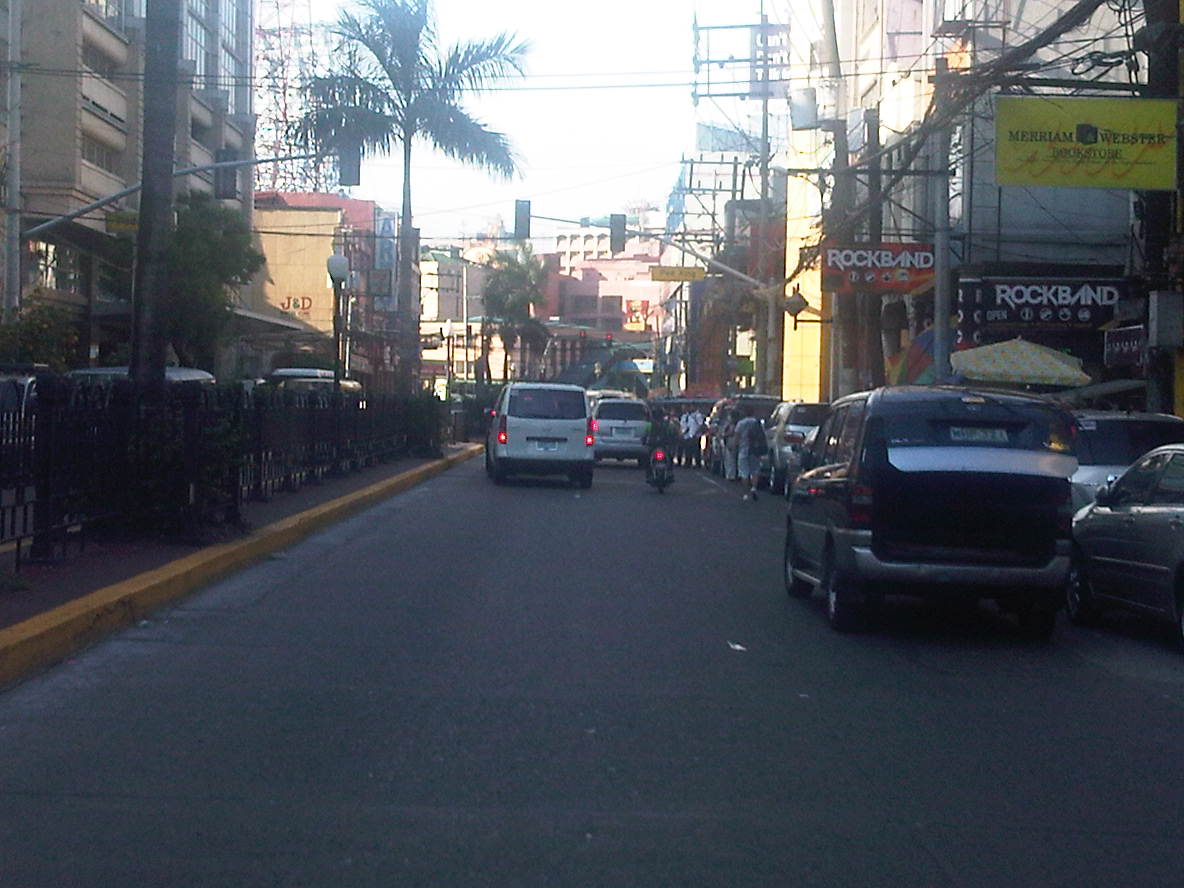 Build-up – approaching the signalized pedestrian crossing, we noticed some congestion due to the stopped vehicles and the presence of pedestrians. The section between R. Papa and Espana is usually congested due to several reasons including the presence of an informal jeepney terminal at the corner of Espana and Morayta.
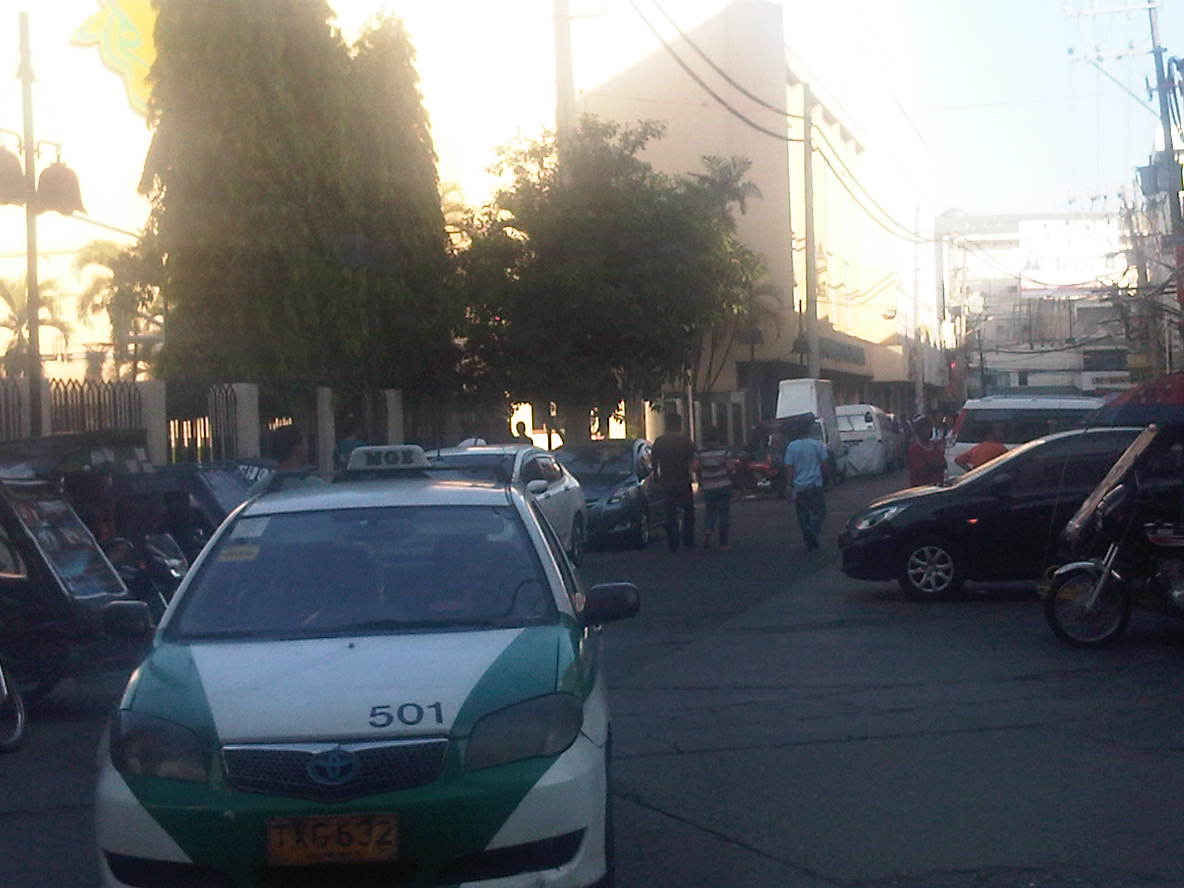 Junction with Paredes – a peek at Paredes St. shows more parked vehicles and tricycles lined up and waiting for passengers. Public transport demand along Manila’s side streets are served by tricycles and pedicabs, and until a few months ago by what were called “kuligligs.” The latter were also paratransit modes that were the motorized versions of pedicabs fitted with motors or generators much like the ones used in farm equipment or motorized bancas in seaside towns. These are called tricyboats in Davao. Meanwhile, the term “kuliglig” is used in many parts of Luzon for farm tractors used as public transport in the rural areas. Paredes St. is quite busy as the Professional Regulations Commission (PRC) is located along the street.
 Informal terminal – the approach to Espana is usually congested in part due to the informal jeepney terminal from the corner of the junction. Some jeepneys even tend to bypass the line and pick-up passengers right at the corner and often blocking turning traffic.
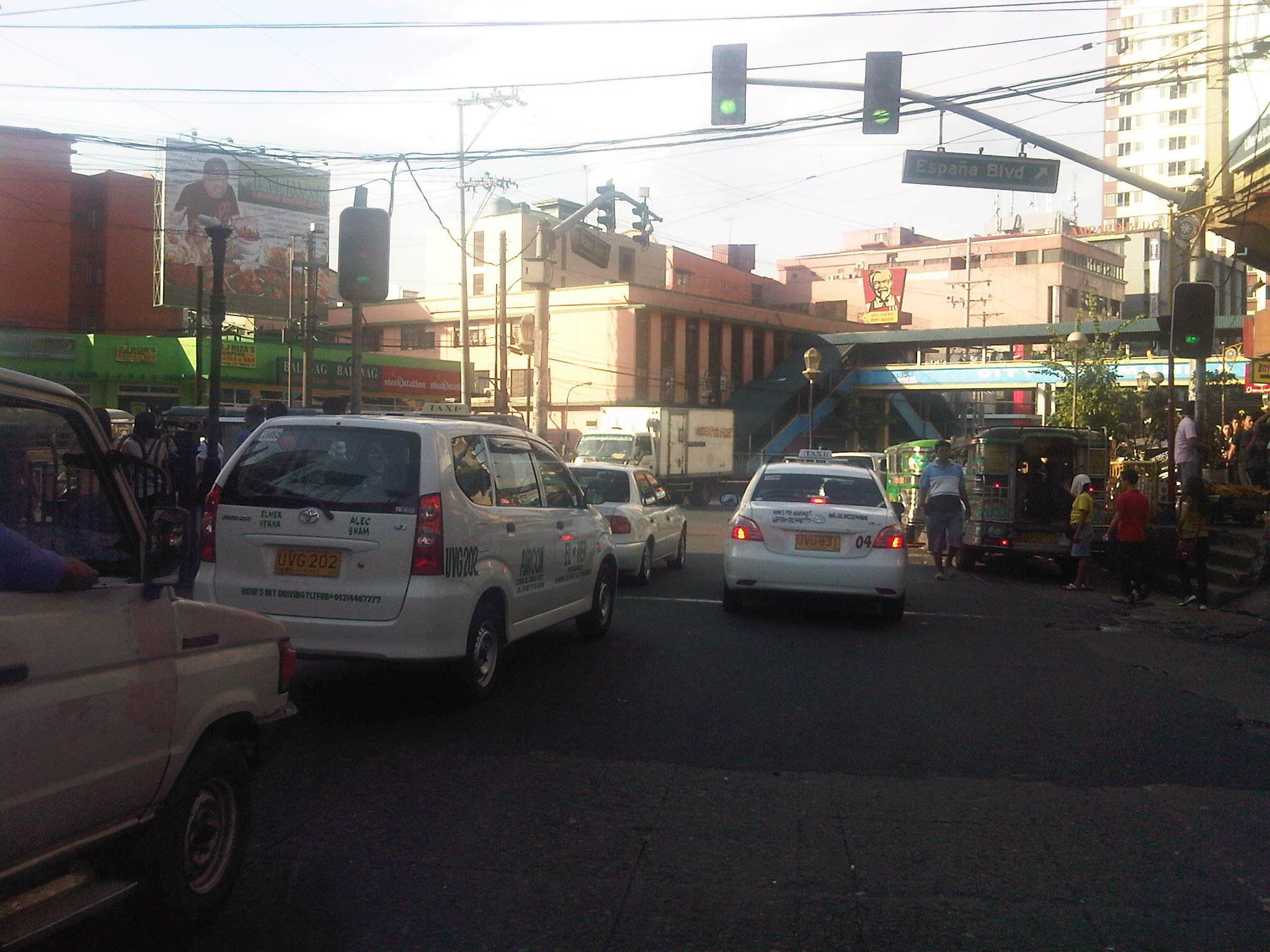 Approach to Espana – the intersection is signalized but there are jeepneys usually camped out at the corner, effectively reducing throughput along the intersection.
There are many streets like Morayta in Manila that can actually be evaluated and considered for pedestrianization if not for road diets. Careful studies and perhaps an experiment here and there should show the feasibility and practicality of generally closing some streets to motor vehicles including tricycles and jeepneys. For some streets, public transport access may be maintained but there should be genuine effort to improve pedestrian facilities to enhance the experience of walking in what are supposed to be historic streets in Manila. Considering the volume of foot traffic in the area, one would assume that the City of Manila should be thinking about how to bring down motor vehicle traffic while providing for public transport and walking needs in the city. Perhaps some radical plans need to be formulated including out of the box ideas to revive Manila streets such as Morayta? I would like to see the schools come up with these plans and perhaps be instrumental in implementing the same and not just for the sake of their students and staff who are exposed to pollution, congestion and safety risks on a daily basis. It can be done if people and institutions will collaborate to make it happen.
–
Why is Commonwealth still unsafe?
After being branded as a “killer highway” and regarded as the most dangerous road in the Philippines, authorities have scrambled every now and again to come up with various schemes to reduce the incidence of road crashes along Commonwealth Avenue in Quezon City. The highway has been designated as a traffic discipline zone, pedestrian overpasses have been constructed, the speed limit has been set at 60 kph, and a lane has been assigned for motorcycles. All this and still Commonwealth has been assessed to be unsafe.

Why is Commonwealth Avenue unsafe after all the initiatives, all the programs and projects implemented along the corridor? There are many reasons both general and specific. However, let us list only four:
1) Driver behavior – despite all the safety programs, driver behavior (both for private and public transport) has not generally improved. There are still many aggressive and reckless drivers weaving in traffic. PUB and PUJ drivers often exit the lanes designated for them. Private vehicle driver continue to speed above the speed limit, knowing that there is only 1 speed radar deployed along the highway. And drivers continue to use median openings to cross the highway, creating situations with high likelihoods of crashes. Gap acceptance is typically aggressive and driver and riders seem to travel thinking others will just avoid them should there be conflicts along the way.
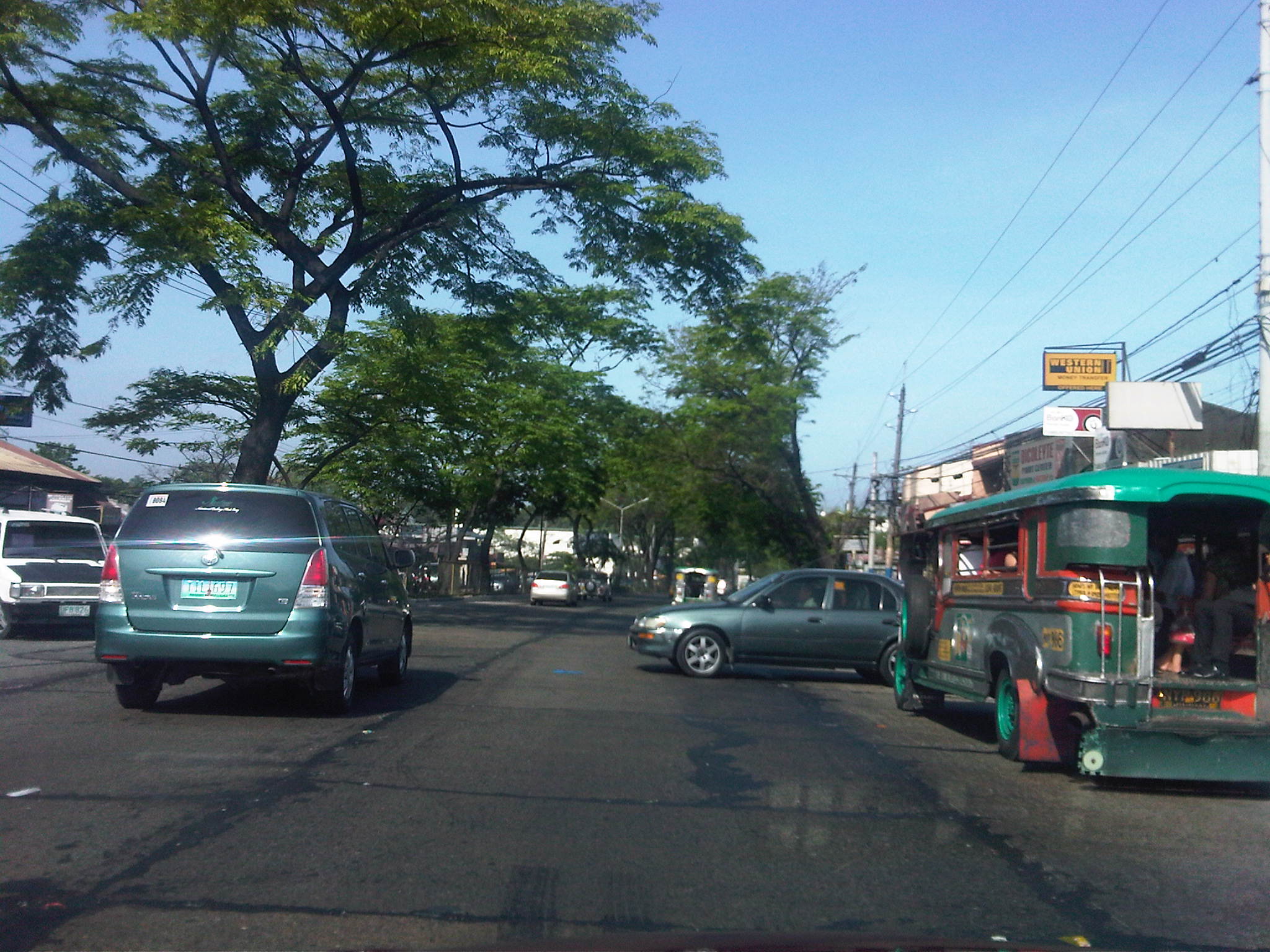
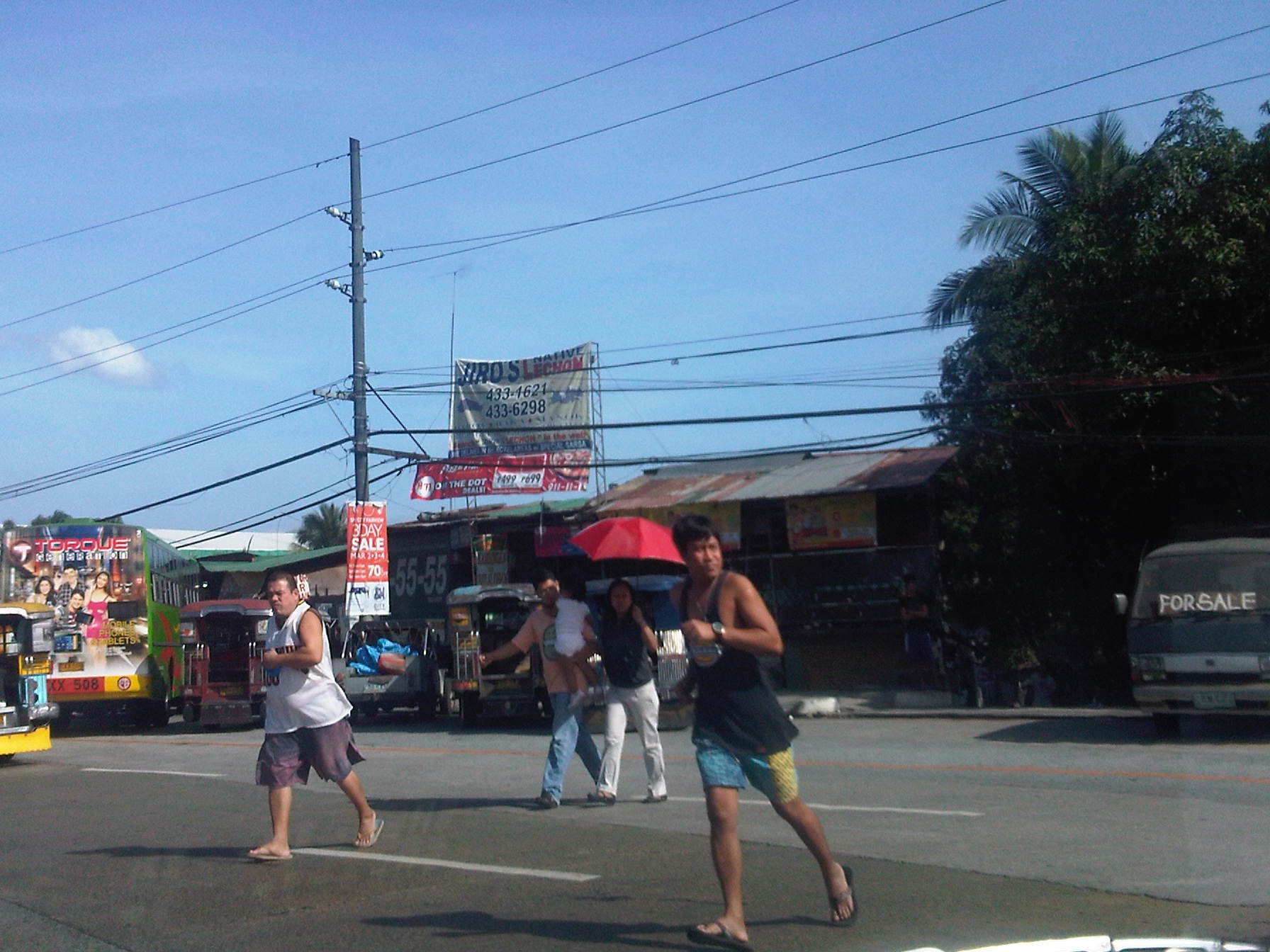
2) Pedestrian behavior – even with overpasses constructed, This is particularly the situation along the section from Fairview Market to Litex where people of all ages continue to cross at various points along the highway, seemingly oblivious to the dangers posed by motor vehicles along the highways many lanes. People seem to be generally unaware or do not care about the risks as shown by the pedestrians below including parents crossing while carrying their child. Jaywalking (or if there is an equivalent running and dodging vehicles) is quite prevalent along Commonwealth despite the construction of several overpasses. One problem, it seems, is the fact that many overpasses are not used because of some design flaws (stairs too steep or have limited capacity) and the propensity for setting up shop right on the overpasses themselves, thereby limiting its capacity for pedestrian traffic.
3) Enforcement – let’s be honest and accept the fact that enforcement along Commonwealth is patchy at best. It’s strict only during the initial days of a new program but eventually relaxes. We have a term for this – “ningas cogon.” This applies to both enforcers of the MMDA and Quezon City DPOS and the Philippine National Police. In fact, there are many violations that are taken for granted perhaps for the sheer difficulty of sustaining enforcement efforts. It was mentioned previously that there is still a problem pertaining to pedestrians and such problems that include jaywalking and illegal vendors on overpasses are among those that need constant attention from enforcers. There is also the persistent challenge from public transport that includes racing and the non-usage of lanes designated for them. In the photo below, for example, jeepneys take up the outer lane of the highway, which also happens to be part of the public transport lanes where PUB’s and PUJ’s are supposed to be confined while traveling along Commonwealth.

4) Geometry – the highway is not only too wide but also generally straight and level for long sections. These conditions are perfect for high speed travel and without enforced speed limits will normally tempt a lot of drivers and riders to speed up. This is something that has been well established abroad and can easily be observed along our expressways and national roads where the formula of availability of space (wide roads) plus excellent sight distance combine with aggressive, risk taking driver/rider behavior to result in high vehicle speeds.
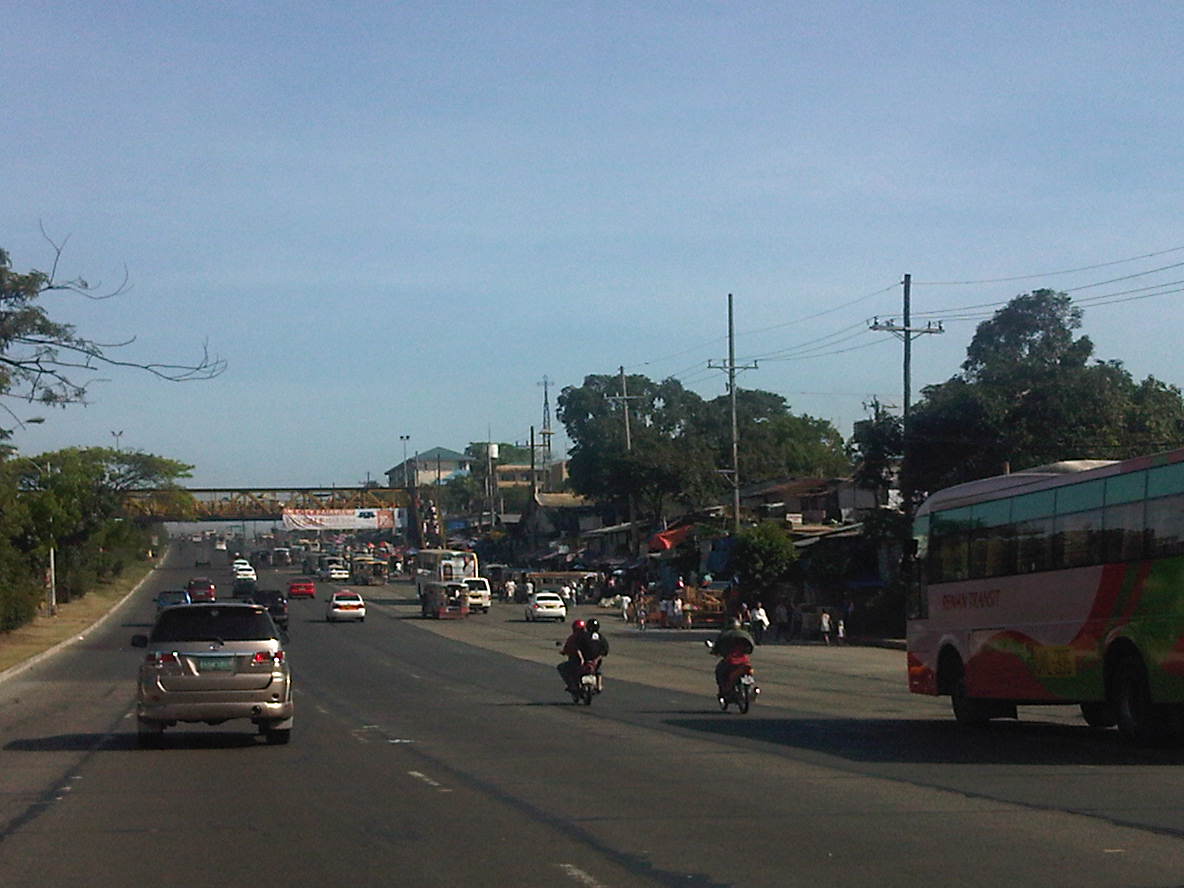
There are also the unusual designs of median openings (U-turns) that were claimed to have taken into consideration vehicle turning radii as well as trajectories along the the highway. Yet, there is the persistent observation that the median islands appear to be “nabubuntis” or getting pregnant based on the bulging island where the U-turn slots are located. U-turns also encourage weaving and aggressive behavior in order to cover the distance and width to a median opening. The non-occurrence of crashes now do not mean they will not occur in the future. These are examples of disasters waiting to happen just like the conditions at the huge roundabout that was constructed along Commonwealth in the Fairview area (photo below) where vehicle movements show motorists generally do not know how to use roundabouts. Thus, you get buses making U-turns and jeepneys and cars doing left turns in this portion of the highway.
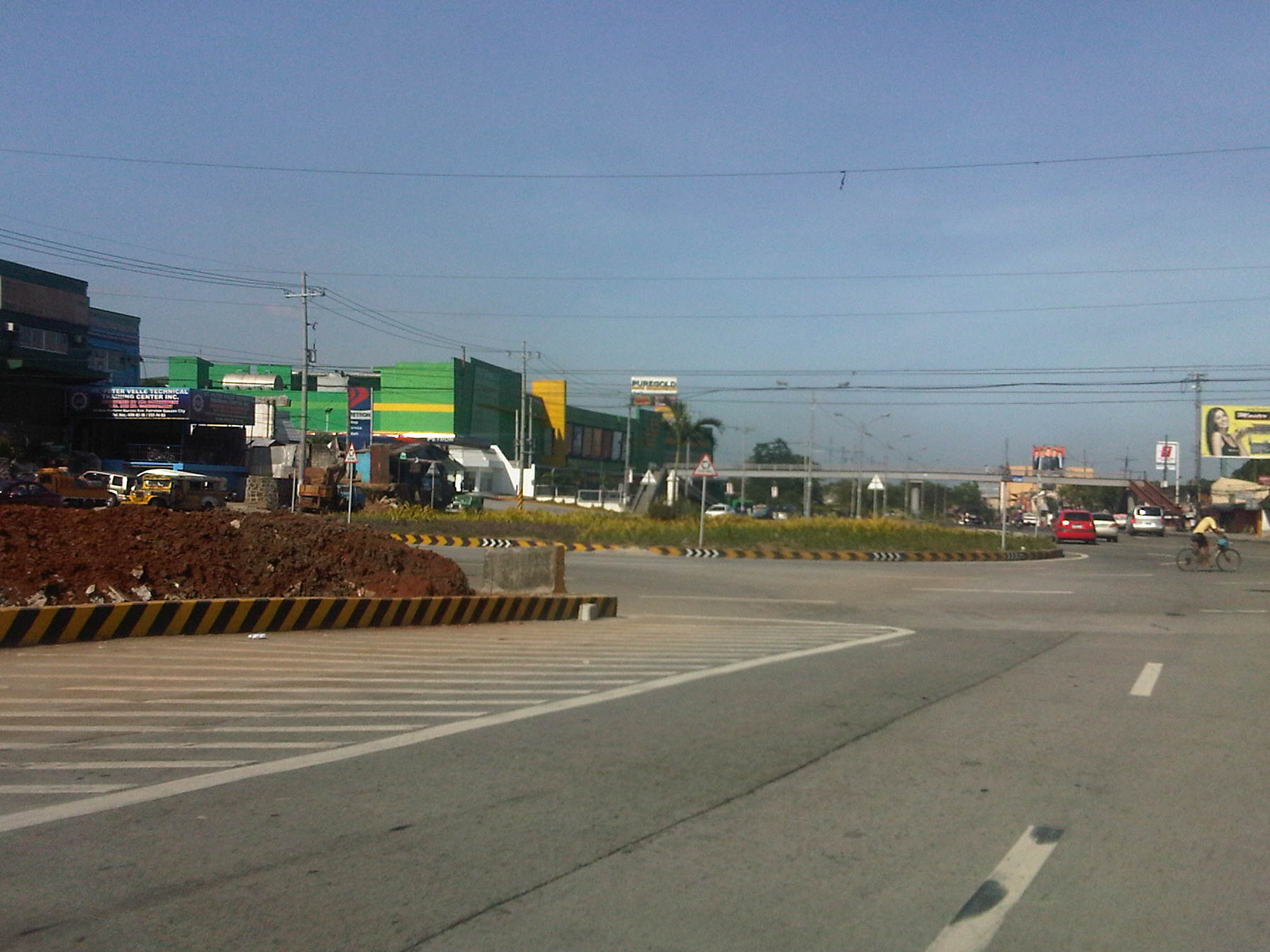
Let me emphasize a main point I made in the previous paragraphs: It is not because there are few road crashes occurring (compared with the potential often cited by various parties criticizing the U-turn scheme) that Commonwealth is deemed safe. The fact is that any assessment of the highway will be based on the likelihood of crashes occurring due to the conditions along the road. It is probably by sheer luck that the incidence of fatal accidents is not that high. It is still a case of a disaster just waiting to happen.
There is still much to hope for since the MMDA and others involved continue in their efforts along Commonwealth including the designation of motorcycle lanes and the enforcement of speed limits (despite their limited hardware). These have obviously influenced motorists’ behavior in a positive way along the highway. Behavior change is a very good thing that needs to be reinforced further in order to improve safety along Commonwealth. But constructive and more permanent behavior change with respect to transport and traffic will take time, and efforts need to be consistent, firm and sustained to condition the minds of travelers for this change.
The case for Commonwealth might as well be applied to other roads not just in Metro Manila but throughout the country as well. Much is required in terms of resources and commitment to effect significant changes that will lead to the improvement of transport and traffic conditions. And yet the treatments are often generally varied, each city going about its own ways despite good practices available for adoption or adaptation. Perhaps the lessons from Commonwealth will be applied elsewhere, or perhaps not. Let us just hope that it won’t go the way officials in other cities jokingly say about traffic schemes in Metro Manila – “We observe what they do in Metro Manila and then we don’t do it here.”
–
Another quick look at the EDSA motorcycle lanes
There was a story appearing in the news recently about motorcycle riders staging a motorcade rally to bring attention to their plight in relation to the motorcycle lane along Epifanio Delos Santos Avenue (EDSA) or Circumferential Road 4 (C-4). The Metropolitan Manila Development Authority (MMDA) implemented the scheme along EDSA after getting generally positive results along Commonwealth Avenue in Quezon City and Diosdado Macapagal Boulevard in Pasay City. Perhaps the thinking here was that if such a scheme succeeded in other roads, it would also succeed elsewhere. Right? – Wrong!
EDSA is always so different from may other Metro Manila roads, most definitely from Commonwealth Ave. and Macapagal Blvd. For one, EDSA carries more traffic than these two roads (combined?) and the sheer volume of private vehicles during busy times of the day cannot be handled by the lanes designated for them. The two outermost lanes of EDSA are supposed to be for the exclusive use of buses but private vehicles frequently encroach on these lanes due to the inevitable spillover from congestion. Fortunately, there is a truck ban along the highway (these generally use Circumferential Road 5) but this does not translate to less congestion as the following photos show. Commonwealth is wider than EDSA while carrying less traffic. As such, vehicles can speed up along many sections of that highway. In fact, the main problems along Commonwealth happen to be related to speeding and weaving. Macapagal has even less traffic and generally does not carry public transport. Perhaps it will carry more traffic in the future once the reclamation areas are fully developed.
 Heavy traffic along EDSA at mid-afternoon – many cars encroach upon the two outermost lanes that are supposed to be for buses. The same vehicles practically occupy the lanes designated for motorcycles.
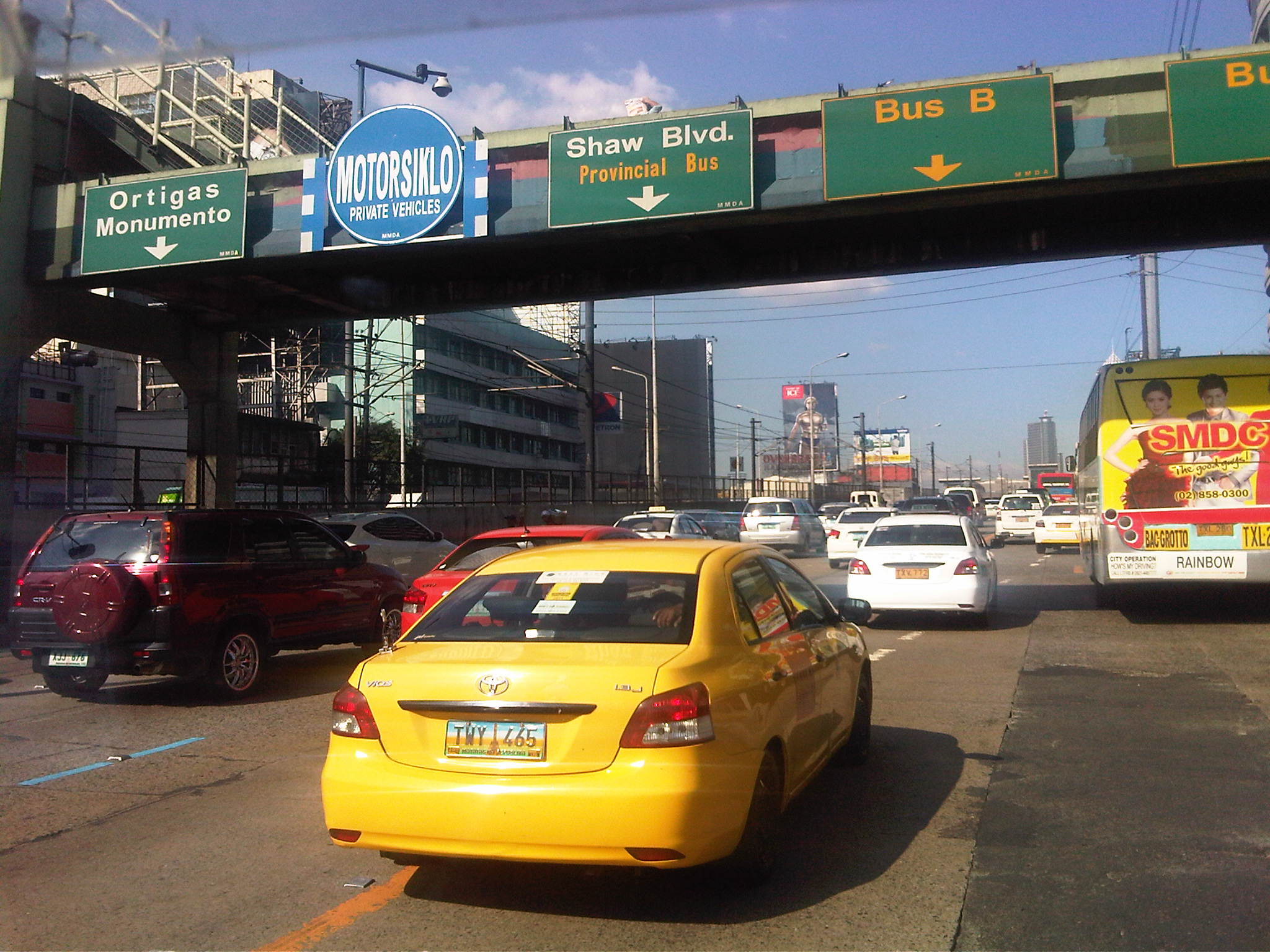 Vehicles occupying the lane designated for use by motorcycle along EDSA – note the “fine print” on the sign on the pedestrian overpass stating the lane is also for use by private vehicles. Riders are lobbying for the lane to be for their exclusive use.
 No motorcycles in sight – there were few motorcycles along EDSA at the time the photos appearing here were taken. Their numbers are more significant during the morning and afternoon peak periods.
 The motorcycle lane proceeds through EDSA along its underpasses and overpasses – EDSA’s capacity during peak periods is not enough for cars and so they usually spill over to the bus lanes. It’s also status quo for them in as far as using the motorcycle lane is concerned, unlike in the case of Commonwealth Ave. where the wider carriageway allows for private vehicles to avoid taking the motorcycle lane.
The initial assessment we made for the motorcycle lanes along EDSA was positive and hopeful for the behavior change that it is supposed to bring about both with drivers and riders. I believe that despite the dry run and the aggressive enforcement that followed, the scheme as applied along EDSA is still very much in the “honeymoon” stage and there’s room for some adjustments here and there including some flexibility on motorcycle riders who are often forced out of the designated lane by cars. It is clear from the photos above that private cars really cannot be given too much freedom to use the motorcycle lane. Perhaps by prohibiting cars from generally using the motorcycle lane, we’ll eventually have a safer EDSA. This comes at a steep price, however, as that will be one less lane for private cars. But then again, if the objective is to discourage car use (especially the low occupancy kind) then it should be good but with the caveat that public transport services along EDSA, including the MRT running along the center of the highway, should have improved quality of service.
–
 Caught (up) in traffic