
Home » Transportation (Page 2)
Category Archives: Transportation
On vehicle maintenance
We own 2 vehicles – one 11 year-old and another that is 7 years old. Both are well maintained but the older one recently required repairs including replacement of its shock absorbers. Recently, we had some trouble on its air-conditioning and eventually had it checked and repaired (defective evaporator).
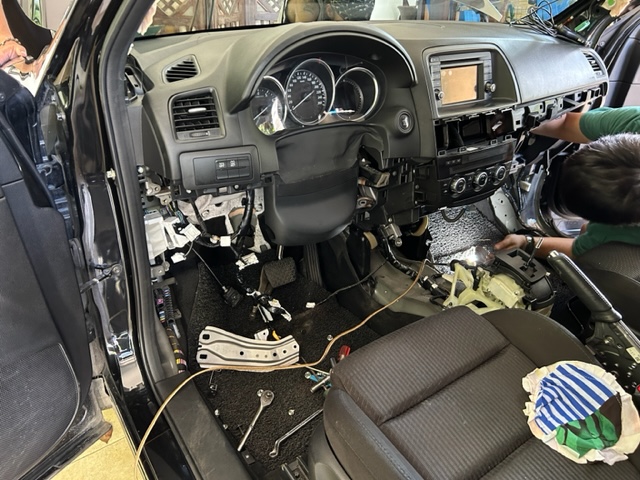 We had our vehicle serviced at home. The shop sent their service people to work on the vehicle at our garage. Here’s what the dashboard looked like while they were working.
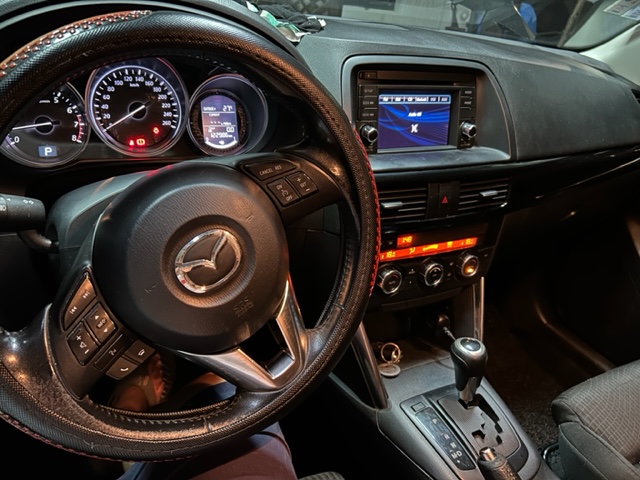 Here is what it looked like after the repairs. The air-conditioning is back strong and smelling all clean.
I joked about all the parts, screws and all, that came out when they disassembled the dashboard. I was worried they won’t be able to remember where to put these back. Of course they were able to assemble them all back and the car and the air-conditioning are all running well now. Vehicle maintenance costs are notable expenses and if you don’t do the routine maintenance works on your vehicle, you might just be surprised at how expensive it would be for major repairs. So far, we have been lucky with our vehicles after the losses due to Typhoon Ondoy (Ketsana) that resulted in 2 damaged vehicles. Maintenance costs are considered by some as hidden costs in owning vehicles. This shouldn’t be the case if you have a regular maintenance regime and keep track of the actual costs.
With the new hybrid and electric models coming out, who knows when the conventional vehicles will be phased out. Those new models would be different in terms of maintenance costs as well. I guess we’ll know soon how much it will take to maintain these new vehicles.
–
Musings on rainy day commutes
I sympathize with a lot of people whose activities were disrupted by the inclement weather the past days. The rains from the other night and today resulted in floods around Metro Manila and Rizal (where I live). The forecast of more rains during the past days made government suspend classes at all levels for both public and private schools. However, many and particularly students have already traveled to their schools as some announcements came late or not early enough for those who usually leave home early to avoid the usual traffic congestion around schools.
I myself used to leave our home early to go to school. As I took public transportation to the university, I had to leave before 6:00 AM (even earlier if it was raining) to be able to get a jeepney ride and have a comfortable trip (shorter travel time than when I leave later in the morning). I had one transfer at what used to be the K-Mart terminal. Both legs of the trip were via jeepneys. I recall silently cursing the guards at Ateneo for prioritizing what seemed to be an infinite number of cars entering and exiting that university via their Gates 2 and 3. At the time, Ateneo still operated the blue school buses and you can see few students on those buses. I observed already then that most of their students probably had their own vehicles to take them to school. Once past the gauntlet of Ateneo and Miriam (which was Maryknoll before), traffic was smoother. And to think that there was no C.P. Garcia yet and Katipunan at the UP Diliman and MWSS areas was not as wide as it is now. The old Katipunan section was basically a two lane road with UP on one side and MWSS on the other. What is now a center island with large acacia trees used to be the frontage of MWSS. UP’s walls were lined with eateries and small stores catering to students and workers.
My commutes during the wet season can be quite difficult as you can’t simply hang on to the jeepney (at the back) when it’s pouring. And when the weather’s particularly bad, there were flooding along my route, not to mention where I resided. I also remember wading in floodwaters along Katipunan (yes, there were floods along Katipunan before) because the road was impassable to vehicles and the only way to get home was to walk from UP to Aurora Boulevard. Our home in Cainta was often flooded during typhoons, and I also waded in floodwaters along portions of Felix/Imelda Avenue an in our village. The flood experiences probably deserve separate articles here and I will share some stories as soon as I can organize my thoughts and memories of these. Of course, I will relate these to transportation as there were lots I learned from these experiences. The frustration though is that it seems we have yet to do in order to address climate’s and weather’s impacts on transportation.
–
On home location preferences
There’s an interesting article on the preference of Americans for big houses even if these
(August 2, 2023) “Majority of Americans prefer a community with big houses, even if local amenities are far away,” Pew Research Center, https://www.pewresearch.org/short-reads/2023/08/02/majority-of-americans-prefer-a-community-with-big-houses-even-if-local-amenities-are-farther-away/ [Last accessed: 8/12/2023]
Quoting from the article:
“A majority of Americans (57%) say they would prefer to live in a community where “houses are larger and farther apart, but schools, stores and restaurants are several miles away,” according to a Pew Research Center survey conducted March 27-April 2, 2023. About four-in-ten (42%) would prefer a community where “houses are smaller and closer to each other, but schools, stores and restaurants are within walking distance.”
As general as that statement appears to be, as they say, “the devil is in the details.” The article goes to qualify the statistics according to partisanship, age, education, race and ethnicity, ideology, community type, and community type & partisanship. The resulting stats are quite revealing and helps one understand the survey results.
I wonder what would be the result of a similar survey if one were conduced in the Philippines. There is no partisanship factor here that is similar to the characteristics of Republicans and Democrats in the US. What will it reveal about our preferences? Do Filipinos prefer to have their own houses even if these are located far from workplaces and schools? Or do Filipinos prefer living closer to their workplaces and schools even if it means living in smaller homes? Certainly affordability, which was not mentioned in the article, is a major factor considering the cost of homes in cities compared to prices in the suburbs.
There is a link in the article for the methodology and questions used in the study. That means it would be possible to replicate or adapt these for the Philippine setting.
–
Push and Pull: The Link Between Walkability and Affordability
Here is a quick share of an article about the link between walkability and affordable housing.
To quote:
“While early pandemic pundits predicted the ‘death’ of urban areas, recent trends show that people—perhaps more than ever—value the benefits of compact development and easily accessible amenities and services. But “Demand drives up costs and can reduce low- and moderate-income households’ opportunity to live in highly walkable areas,” the report warns.”
Source: Push and Pull: The Link Between Walkability and Affordability
Some people seem to be baffled why people choose to purchase homes and reside in the suburbs or away from the city centers. It is actually simpler than what many tend to overthink and attribute purely to the condition of our transportation system. It takes two (or more apparently) to tango and housing affordability is critical for the Philippines’ case.
–
On the role of women in transportation
I found this podcast on “Advancing the Role of Women in Transportation” on the AASHTO thread:
This reminded me of the Women in Transport Leadership (WiTL) group that friends formed a few years ago. They are active in promoting the role and relevance of women in transport as well as equity in transportation.
–
Vintage bus and train cards
With the Tokyo Olympics recently concluded and me supposed to be in Hiroshima now and participating in an international conference, I am somewhat nostalgic about Japan. Having lived there for a few years while studying, and then staying again for a few months twice later (2001 and 2008) as a visiting researcher, I miss many of my haunts.
Another discovery one time I was searching for an item in my office drawers is a stash of cards from the various times I was staying in Japan. You can purchase these at the station, convenience stores or from the bus driver.
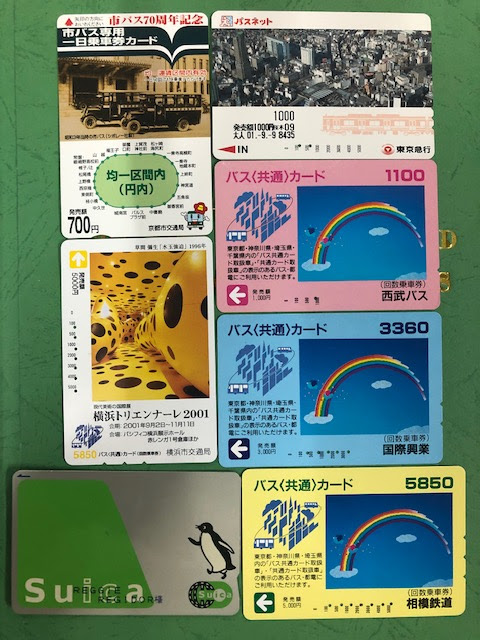
The bus cards already have discounts incorporated. The pink 1,100 bus card costs 1,000 yen so you get an extra 100 yen value. It’s +360 for the blue and +850 for the yellow. Since I was a regular commuter before, I usually got the yellow card. I’m not sure these cards are still there given the advances in technology and innovations over the past decade but it is likely that these were upgraded and are other options to more high tech ones using, for example, smartphones. Mobility as a service (MaaS) is now being promoted in Japan and as I have registered for my conference in Hiroshima, I have a three day transport pass included in my registration. This can be accessed through my phone and could have made a convenient companion going around the city.
–
On the future of Uber and other ridesharing/ridehailing companies
A few years ago, Uber was the darling of transportation. It and others like it were considered disruptors. They were but then eventually unraveled as their business model and practices were challenged and exposed. Here’s an article that does not mince words in describing what and how Uber is:
Doctorow, C. (August 11, 2021) “End of the line for Uber,” Medium, https://marker.medium.com/end-of-the-line-for-uber-901e3077bbbc [Last accessed: 8/21/2021]
There’s a wealth of references (links provided) in the article provided to support the arguments of the author. It is not anecdotal but an accumulation of facts from various experiences as well as a documentation of the company’s efforts to hide its flaws.
I co-authored several papers analyzing what was seen as a phenomenon. It was clear that people preferred Uber or Grab over regular taxis because of the higher quality of service they got. Similar results were obtained elsewhere and spelled the doom of many taxi drivers. Those that survived were the better serving ones like taxis in Japan and Singapore. However, the more recent of those papers have shown that what are called TNVS or transport network vehicle service have basically been deceiving and took advantage of their drivers (whom they do not want to refer to as employees). Did they help reduce congestion? They did not, and even added more cars to traffic.
–
Article on “invisible exercise”
Here’s another share of an article I recently read about what is referred to as “invisible exercise”. This might just be semantics to some people as we often just refer to this as “chores”. Yes, you can do a lot of exercise by being active around your home. Handwashing clothes and dishes, doing gardening, cleaning the house, walking the dog(s), etc. all burn calories. I recall having a workout at our old house in Iloilo where we have wood floors. It’s no joke polishing the floors using a coconut husk (bunot). Just imagine you’re doing/dancing the twist. 🙂
Putka, S. (August 9, 2021) “The invisible exercise that might count more than your workout,” Inverse, https://www.inverse.com/mind-body/hidden-exercise-better-health [Last accessed: 8/19/2021]
To quote from the article:
“More physical activity is almost always for the better when it comes to living a long, healthy life. But only some of us have access to the time, equipment, and resources it takes to engage in what we typically think of as “exercise.”
The spaces we occupy, or our “built environment,” can also erode or enhance chances of staying “fit” over time. In many cases, the necessities of daily life mean many people will get their exercises from daily activities — especially if they live in low-income countries.”
There’s another article I recently read about how regular exercise helps one become resistant to Covid-19. There’s also another that states regular exercise or being active may contribute to those who have Covid-19 to have milder cases (of course this is combined to already having been vaccinated). The key here is being active!
–
Some opinions on active transport
Here are some good reads for those who are following the discussions and arguments pertaining to active transport:
The statements by Engr. Rene Santiago in the article ticked off some people who suddenly were attacking him instead of addressing his arguments. Unfortunately, Santiago is not on any of the social media platforms like Facebook or Twitter so he could not explain his points further. It would have been interesting to read that exchange between him and all comers. Actually, he doesn’t need to be in socmed, and has nothing to prove to those reduced to saying the guy needs to be involved in relevant projects than giving what detractors thought were flawed opinions. Santiago was and still is involved in many projects that are relevant impactful. The body of work speaks for itself unless you aren’t or choose not to be aware of his accomplishments. Perhaps his faults, if you can consider these as faults, are that he is very direct and speaks his mind? But aren’t being direct and speaking your mind supposedly among the attractions of whom old-timers (boomers?) might refer to as upstarts?
Here are a couple of articles from another experienced professional relating about personal experience and expounding on the ideas from Santiago’s interview:
Villarete, N.P. (May 25, 2021) “Walking and biking,” The Freeman, https://www.philstar.com/the-freeman/opinion/2021/05/25/2100630/walking-and-biking [Last accessed: 6/1/2021]
Villarete, N.P. (June 1, 2021) “The concept of quiet streets,” The Freeman, https://www.philstar.com/the-freeman/opinion/2021/06/01/2102287/concept-quiet-streets-streetlife [Last accessed: 6/1/2021]
These opinions are important in the discourse on active transport that we are currently engaged in. No one has a monopoly on ideas and perhaps we need differing opinions to enrich the discussion. What are your thoughts on walking and cycling? Shouldn’t we also give walking equal if not greater priority in terms of policies and infrastructure even as we push for more bike lanes and other cycling-related facilities?
–
On the history of “jaywalking”
I am an avid reader of history and have been involved in some history projects myself, particularly those concerning transportation. Recently, a former staff of mine who now works in the archives section of the university library discovered a treasure trove of magazines with articles about road safety written back in the 1950s. Then as now, road safety has been an issue and concern for society.
Here is a good read about “jaywalking”, which basically refers to the illegal crossing of streets by pedestrians:
Stromberg, J. (November 4, 2015) The forgotten history of how automakers invented the crime of “jaywalking”, Vox, https://www.vox.com/2015/1/15/7551873/jaywalking-history [Last accessed: 5/27/2021]
The article is very relevant today as we grapple with the specter of road crashes and its outcomes including fatalities and injuries that have long term effects on those involved and affected. We generally regard those crossing anywhere along the streets as jaywalkers; even branding them as “pasaway” (naughty or pesky) as what we learn early on is that there are designated places to cross streets (e.g., crosswalk, pedestrian overpasses and underpasses). And we see all those signs vs. jaywalking including the “Bawal ang tumawid dito” signs by local government units. Were these appropriate in the first place and are we prioritizing vehicles over pedestrians in most cases where “jaywalking” is considered illegal?
While this article maybe factual in as far as history is concerned, we still need to contextualize jaywalking in the current world. There still should be rules albeit these need to be revised, too. Along what roads can we have pedestrians first and cars last? What re-designs do we need to do to make roads safe? While I’m sure engineers and planners are prepared to design and implement these, the buck stops with the decision-makers, who are often politicians with their own agendas. How do we convince them and other authorities about making “jaywalking” legal?
–
 Caught (up) in traffic