
Home » Posts tagged 'airports' (Page 16)
Tag Archives: airports
NAIA 2 Arrival Sunduan
I took some photos of the NAIA Terminal 2 arrival area while waiting for my in-laws to arrive from Singapore via Philippine Airlines. Terminal 2, which is also called the Centennial Terminal after opening in 1998, the 100th year of Philippines’ Independence, is exclusively used by Philippine Airlines for both its domestic and international operations. The North Wing serves international passengers while the South Wing serves domestic passengers.
 Gate and fence separating the tarmac from the VIP parking area just behind the cafe at the international wing of NAIA Terminal 2 – I was actually taking a photo of the windblown coconut trees and the dark clouds generated by a slow-moving typhoon Gener.
 VIP parking area at the NAIA T2 that is near the gate access to the tarmac. The building in the background is what used to be the Philippine Village Hotel. The building has been unoccupied for many years now and is up for demolition and re-development along with the old Nayong Filipino theme park.
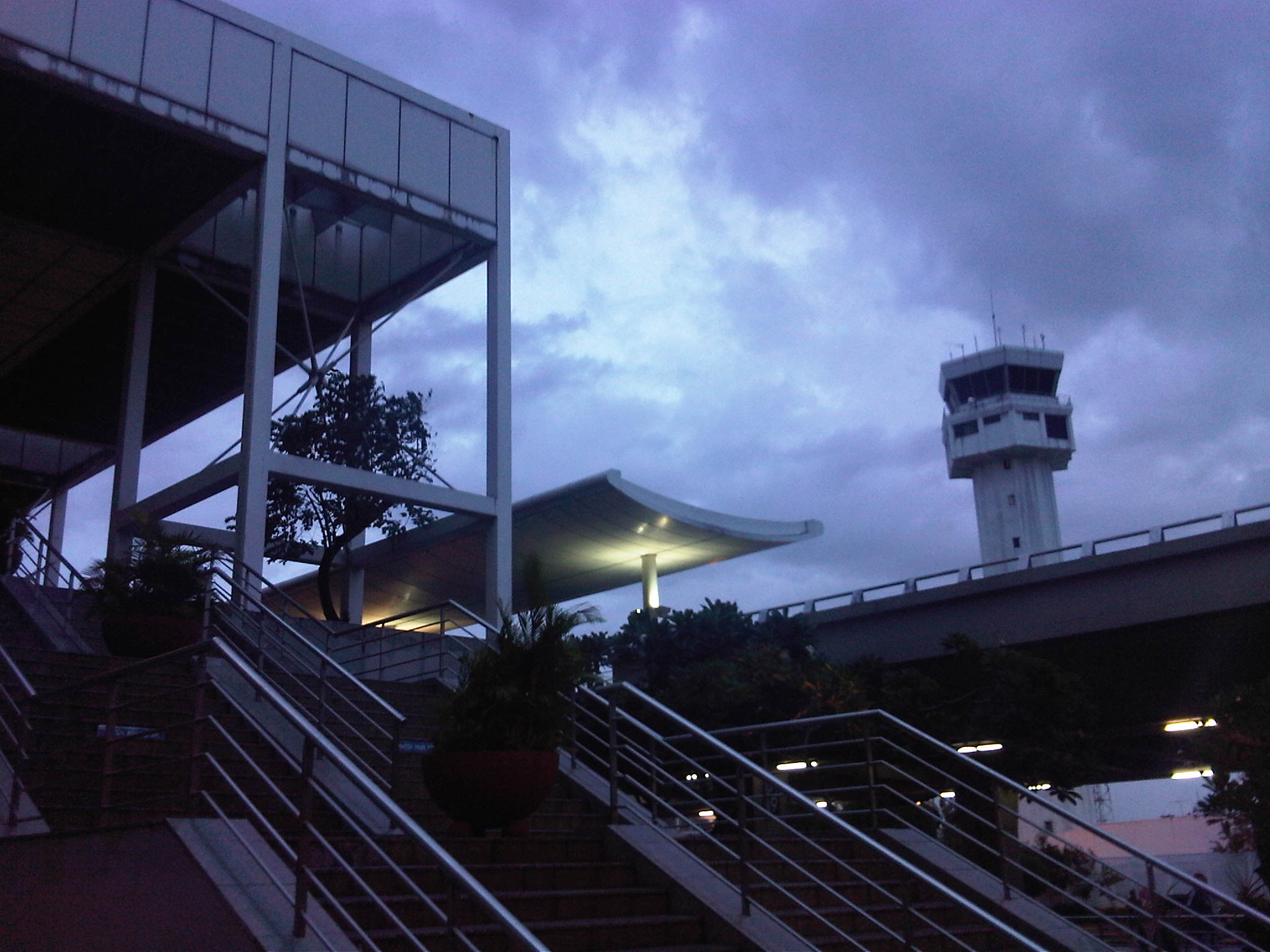 Stairs to the departure level of NAIA-T2 with the control tower in the background
 Cafe just outside the arrival level – I usually have a snack or tea at this cafe if I have time before the plane arrives
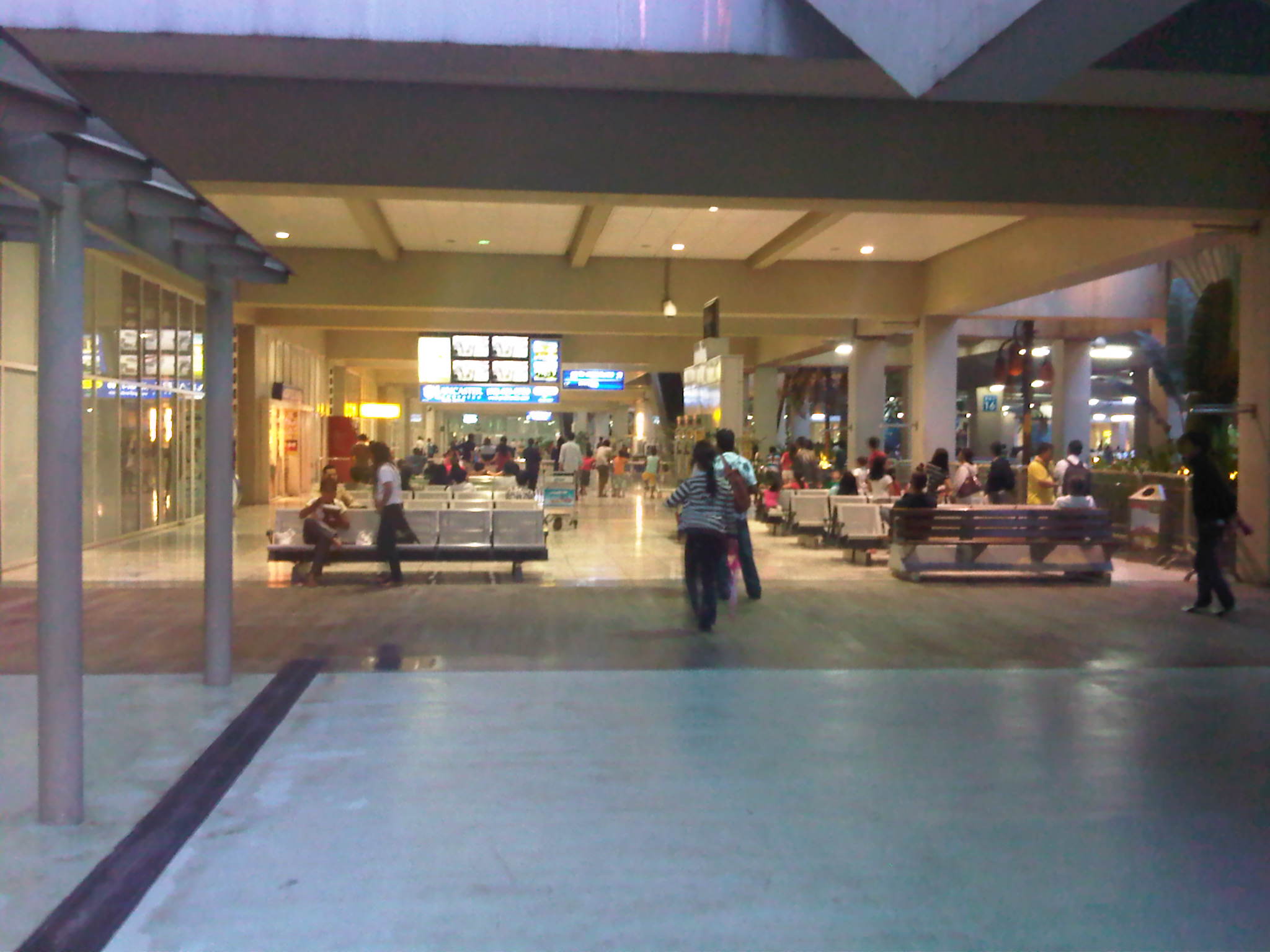 The waiting area has benches for people waiting for their relatives or friends
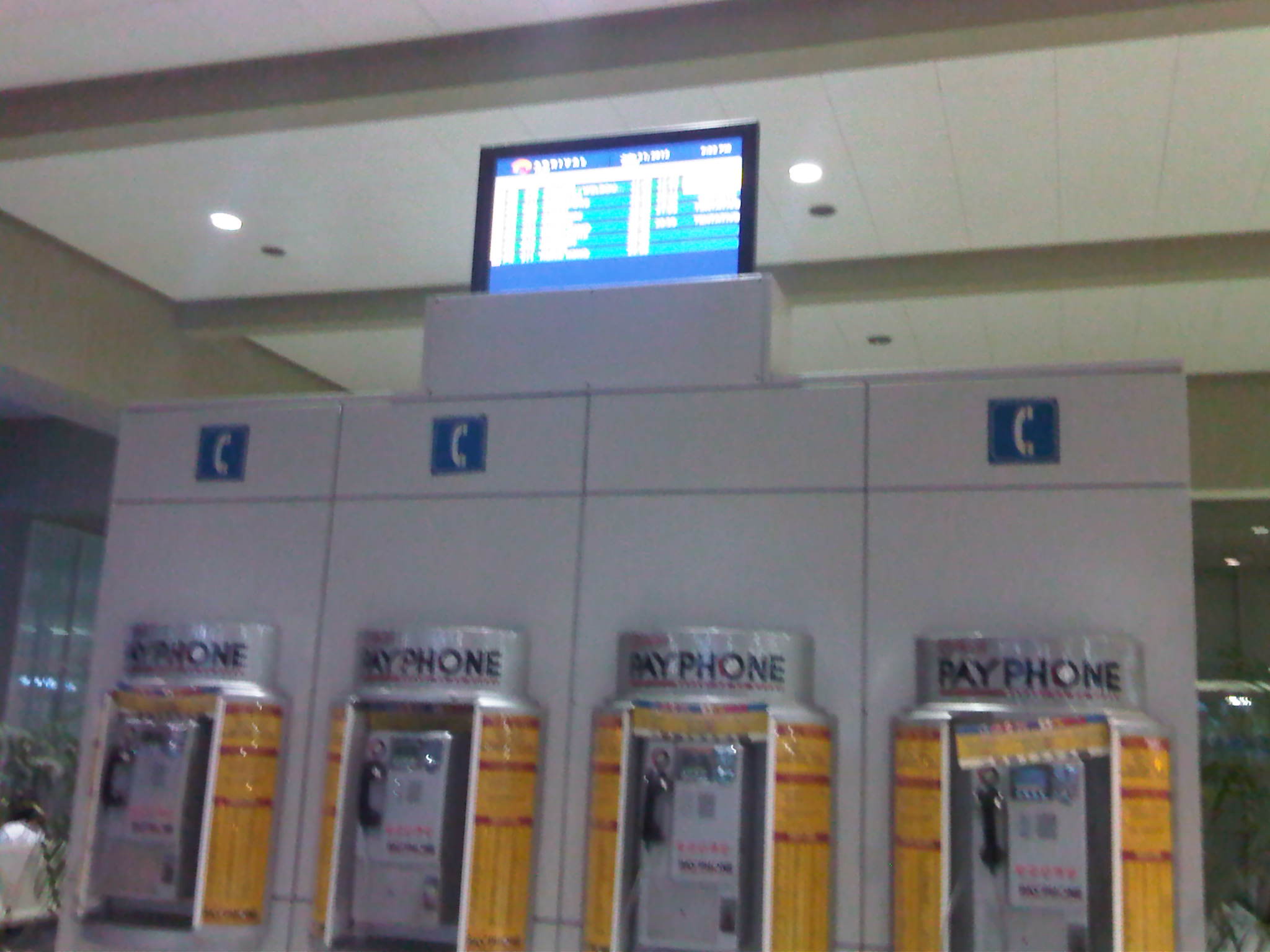 Small screen showing information on aircraft arrivals just above the public phones
 7Coffee shop and screens at the arrival area. This is the only shop in the area as the other concessionaire closed up months ago.
 The screens show passengers arriving at the baggage claim area inside the airport and as they exit from the customs checkpoints.
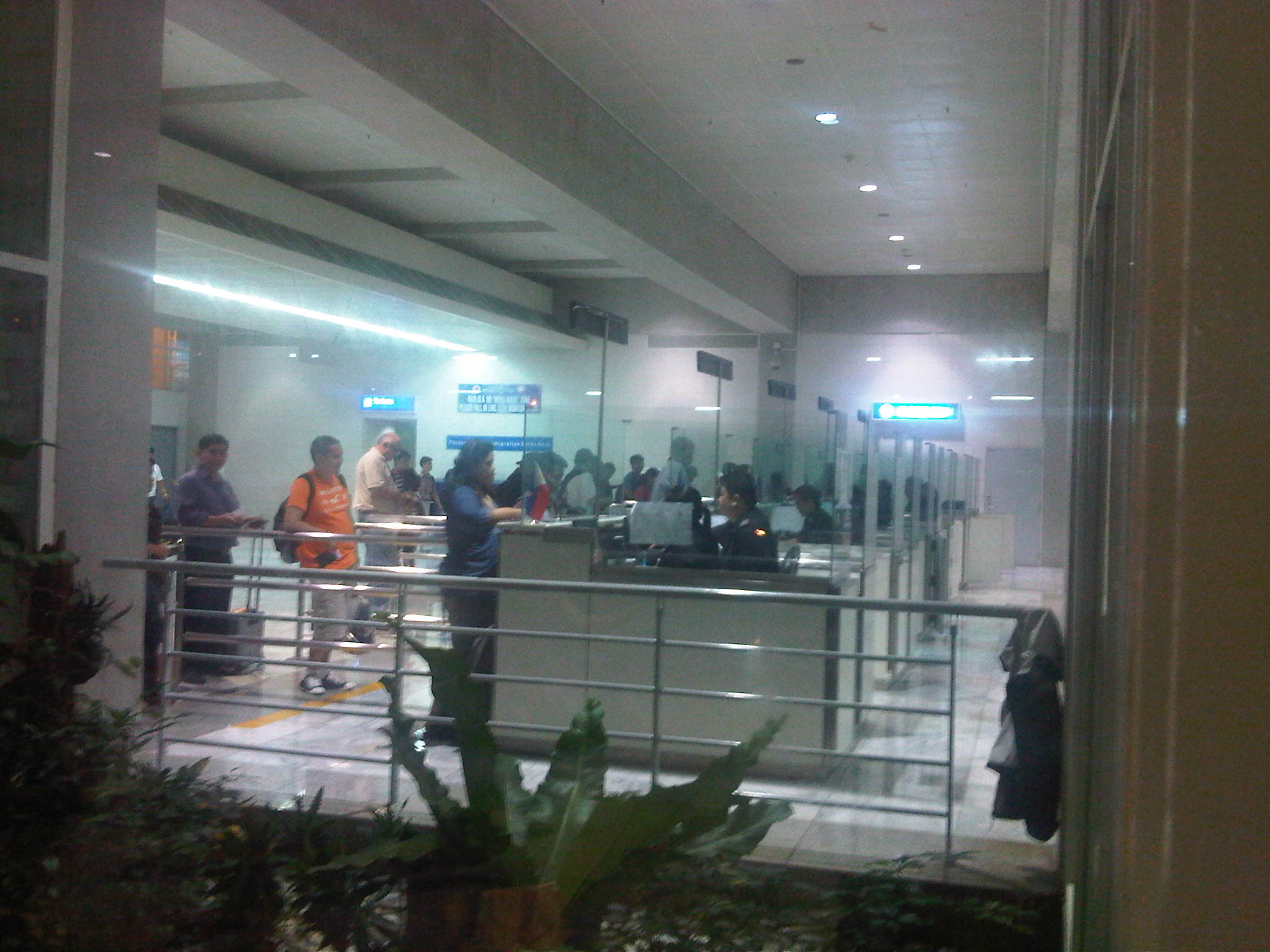 People could see passengers lining up at the immigration counters from the waiting area outside the terminal
 Spacious arrival concourse exclusive to passengers (well-wishers are not allowed here). The yellow sign indicates the small duty-free shop near the exit from the terminal building.
 Passengers transferring to the departure level can take the escalator shown in the photo. The escalator, however, seems to be always under maintenance and unavailable. There is another on the other end of the International Wing of the terminal.
–
NAIA Terminal 1 Departure
I was able to take a few photos inside NAIA Terminal 1 during one recent trip. Terminal 1 is the oldest of the three main terminals of Manila international airport with the exception of the old domestic terminal. It is this Terminal 1 that was known as the New Manila International Airport until 1986, when it was renamed the Ninoy Aquino International Airport after the husband of former President Corazon Aquino, father of current Philippines President Noynoy Aquino. It is also this Terminal which has been the subject of criticisms for being dilapidated and unfit to be a major gateway to the country, particularly its capital.
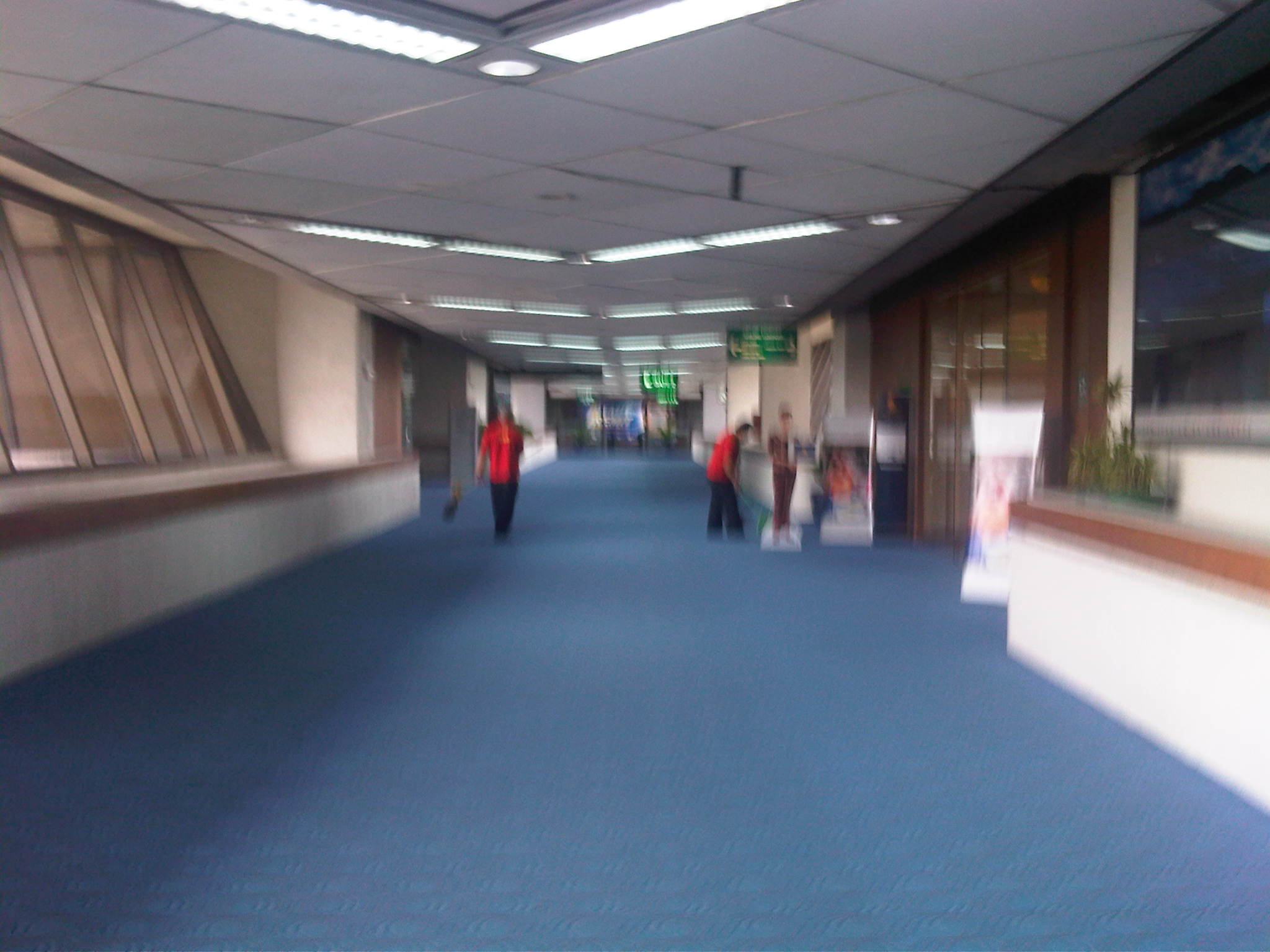 Corridor leading to the pre-departure area and gates at one wing of the terminal – the carpets seem tidy enough and airport staff may be found cleaning the area near one of the airline lounges.
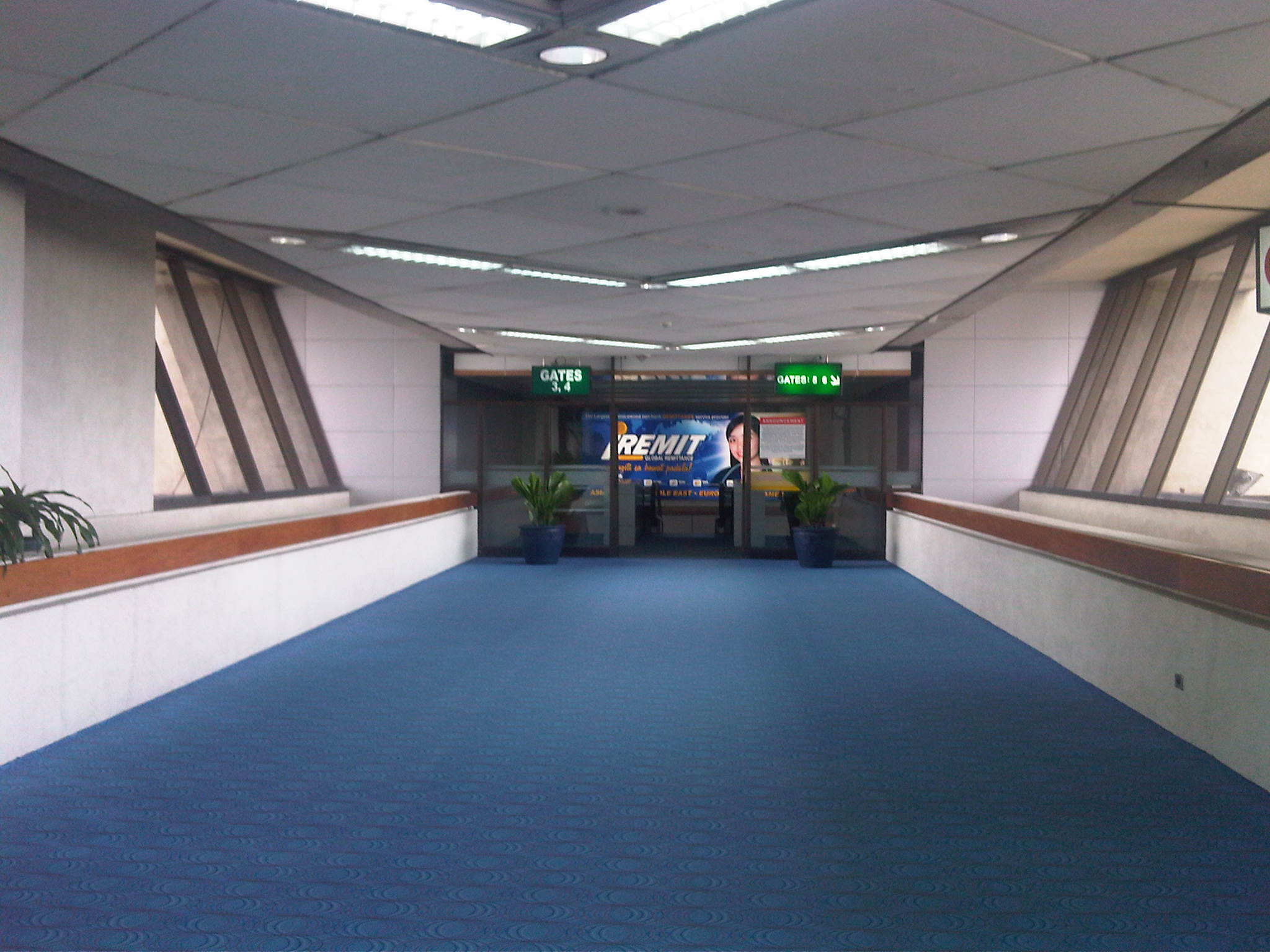 Corridor leading to the pre-departure area – the area
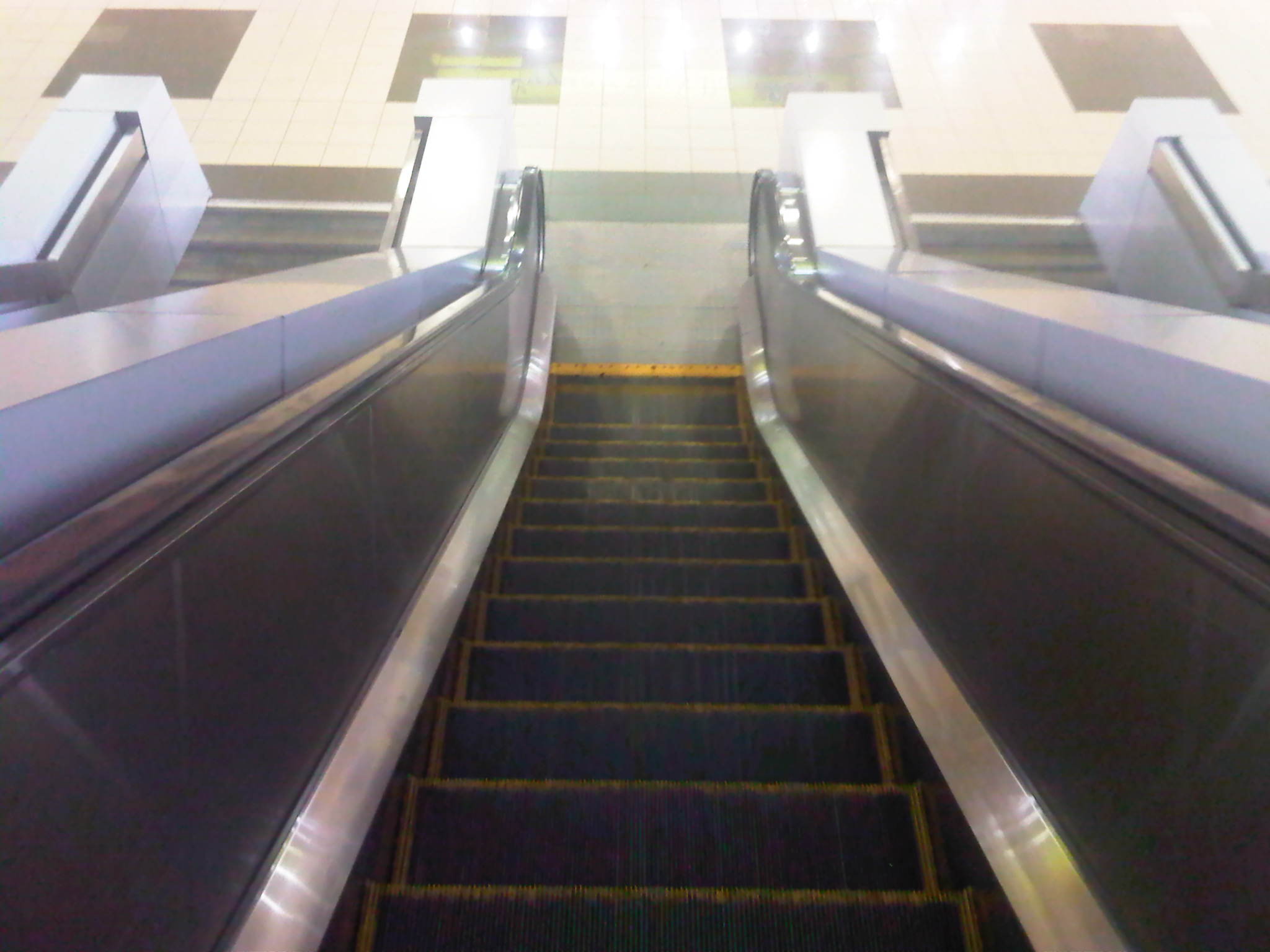 View along the escalator descending towards the pre-departure area – upon reaching the bottom, one will find himself/herself facing counters selling food and drinks to travelers.
 Shops selling local goods like dried fruit, cookies, preserves, souvenirs and other stuff at the pre-departure area of the terminal. Notice the newly tiled floors?
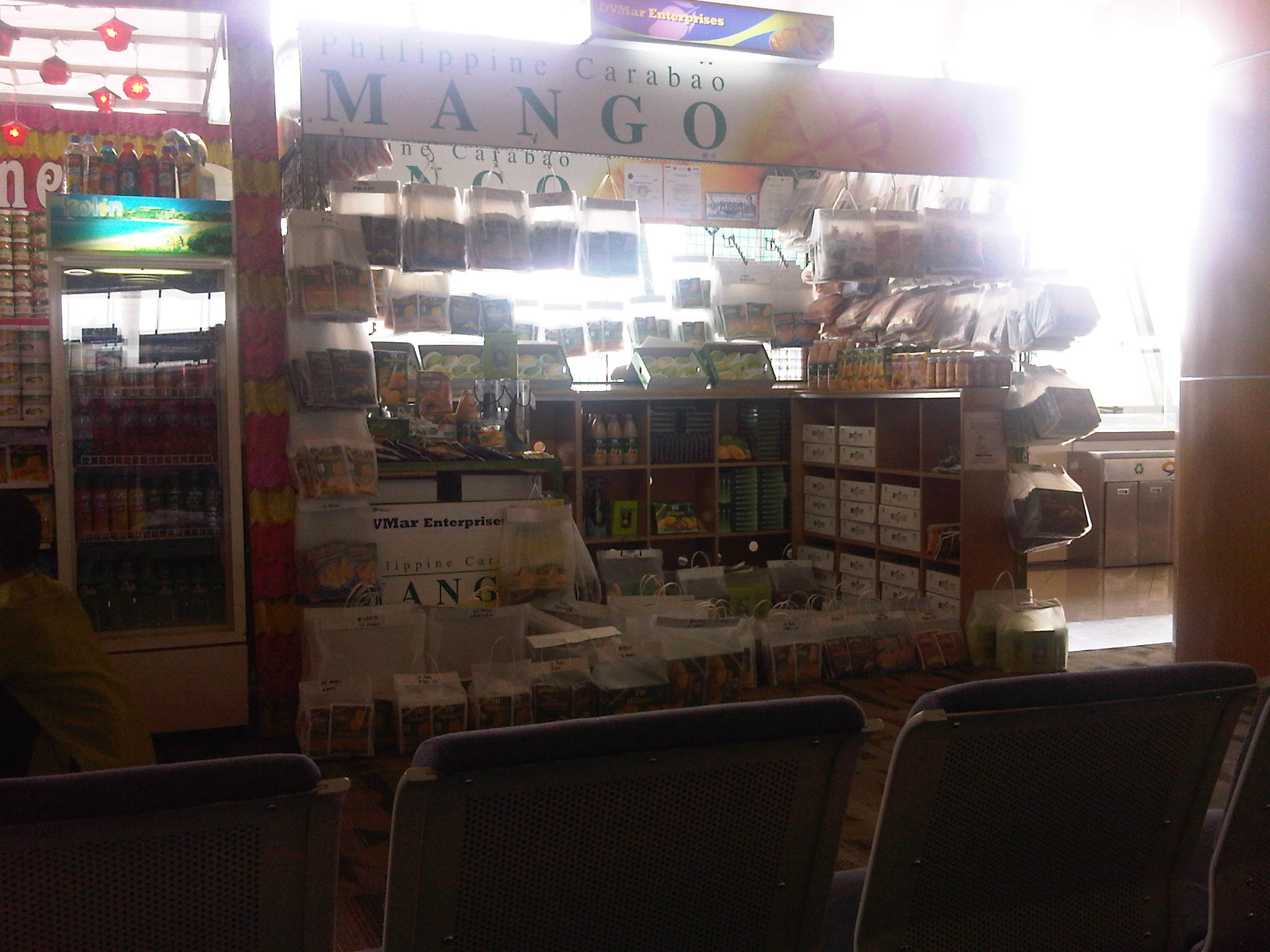 Shop specializing in products made out of Philippine mangoes – they even sell fresh mangoes aside from the popular dried fruit and candies
 Seats at the pre-departure area of the terminal – this is the free seating area that is not associated with any airline. Normally, areas are cordoned off for passenger control and security measures prior to boarding by any airline. The seats are relatively old but are clean and some appear to have been re-upholstered.
 Passengers waiting at the designated area for Singapore Airlines. The airline conducts a security check of all hand-carried baggage for all passengers similar to the practice for US-bound flights.
Admittedly, there is still much work to be done for NAIA’s Terminal 1 in order for it to be able to handle more passengers and well-wishers. There are also a lot to be done in terms of amenities and we can be hopeful that issues pertaining to its facilities will be addressed sooner rather than later.
–
NAIA Terminal 3 multi-level parking building
I finally had the opportunity to take some quick photos as we drove through the departure level of NAIA’s Terminal 3. The objective was to take a few photos of the still closed multi-level parking facility adjacent to the terminal building, which could be accessed both from the ground and upper level driveways. It was late afternoon and it looked like it was going to rain so the photos were not as good as I would have liked them to be. Still, they clearly show the unused parking facility of T3 that could have been quite helpful to a lot of travelers especially those who wanted to leave their vehicles at the airport a few days or nights for short trips.
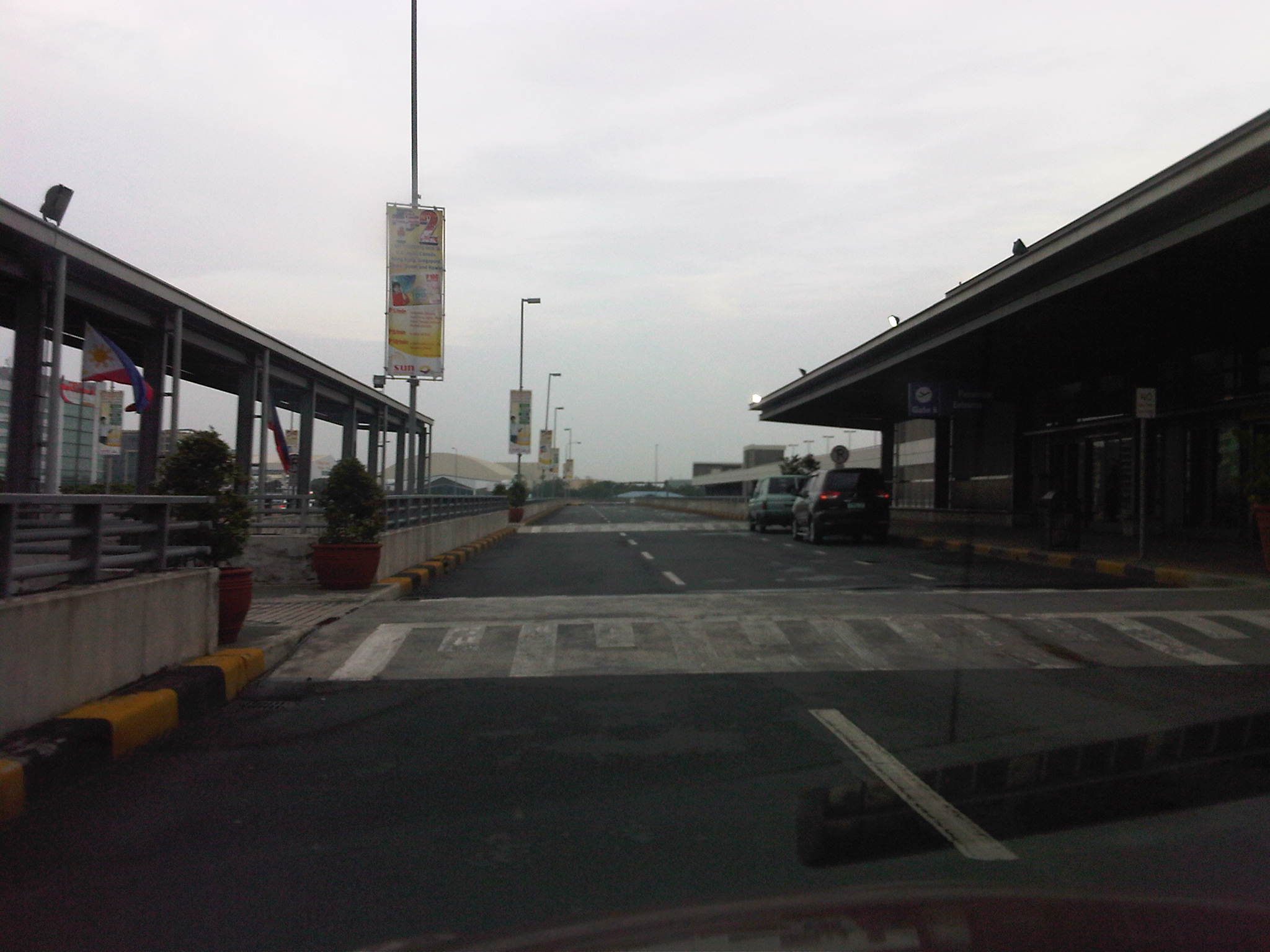 Driveway along the departure level of NAIA Terminal 3
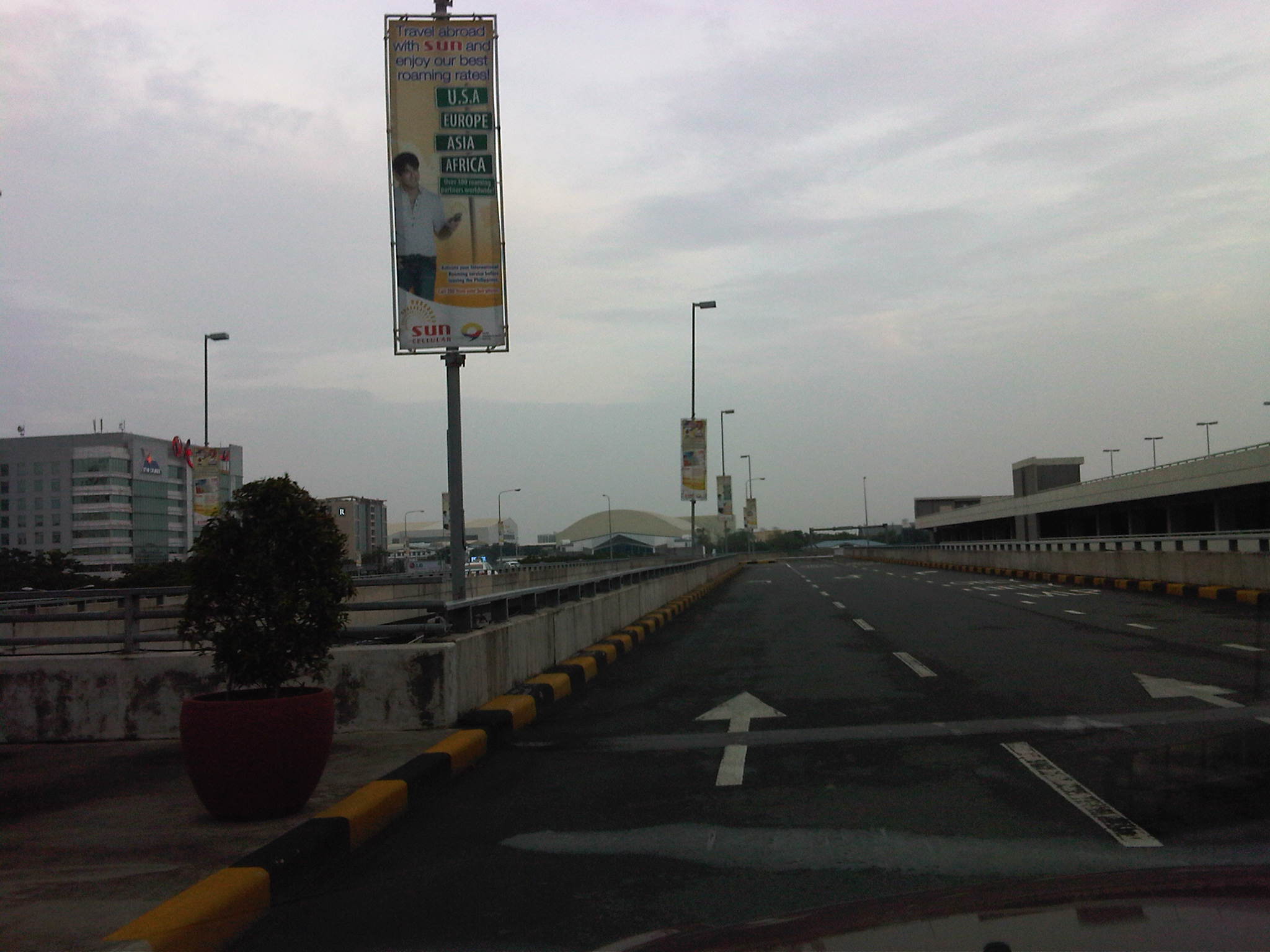 Motor vehicle exit ramp from the departure level – the parking building is seen on the right
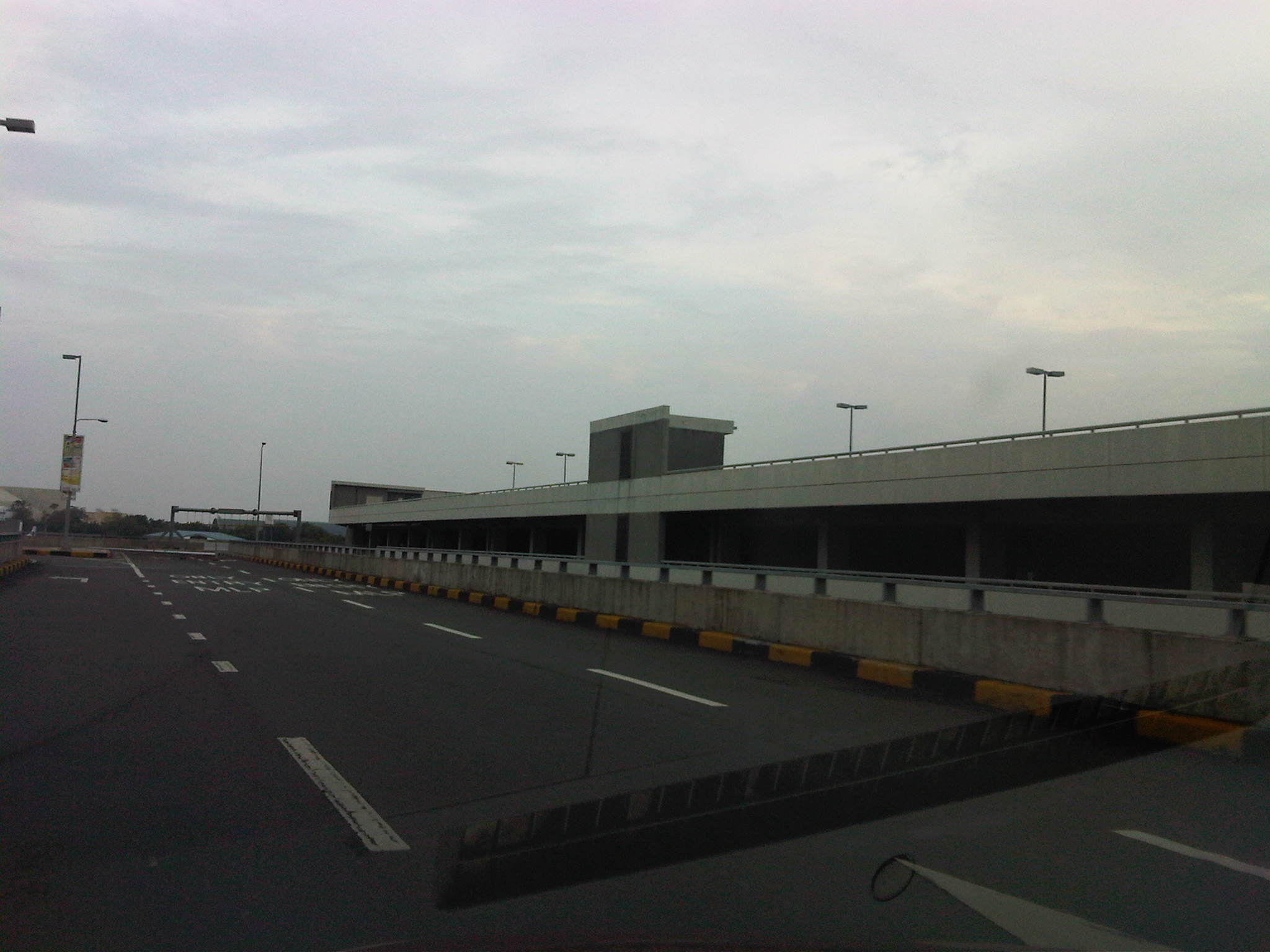 The parking building is seen immediately after the passenger terminal gates for departures
 After unloading passengers and well-wishers, drivers could have proceeded to the parking building via the ramp from the second level driveway (shown at the right in the photo).
 Ramp to Andrews Avenue – the Newport City development that contains several hotels including a Marriott Hotel and Resorts World Manila is located in the complex.
–
Another look at Davao’s Francisco Bangoy International Airport
I featured Davao in a previous post and just had to feature it again after being able to get a few decent photos of the arrival areas, passengers’ lounge and the terminal itself. The photos will also show that the airport is well maintained considering not much has changed since the last time I was there for a few days in 2009. I was actually in Davao in 2010 but it was a very quick visit as I was en route to Manila from General Santos City and had traveled more than 2 hours by land to make the last flight out of the city.
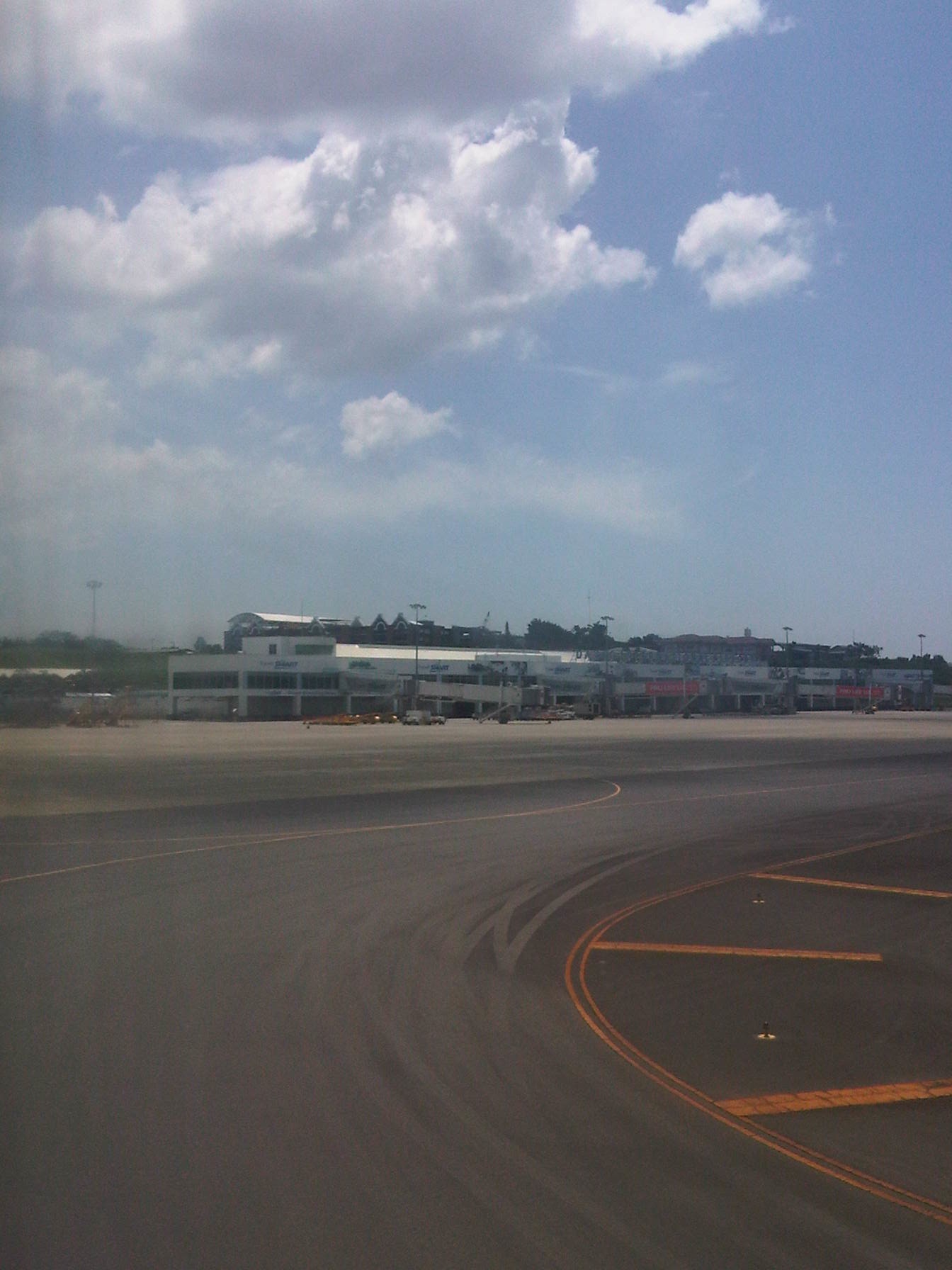 Airport terminal as seen from a plane taxiing from the runway
 Tarmac area at Davao Airport
 Waiting for the plane to unload the pallets containing passengers’ baggage and other freight
 Baggage claim area at the domestic wing
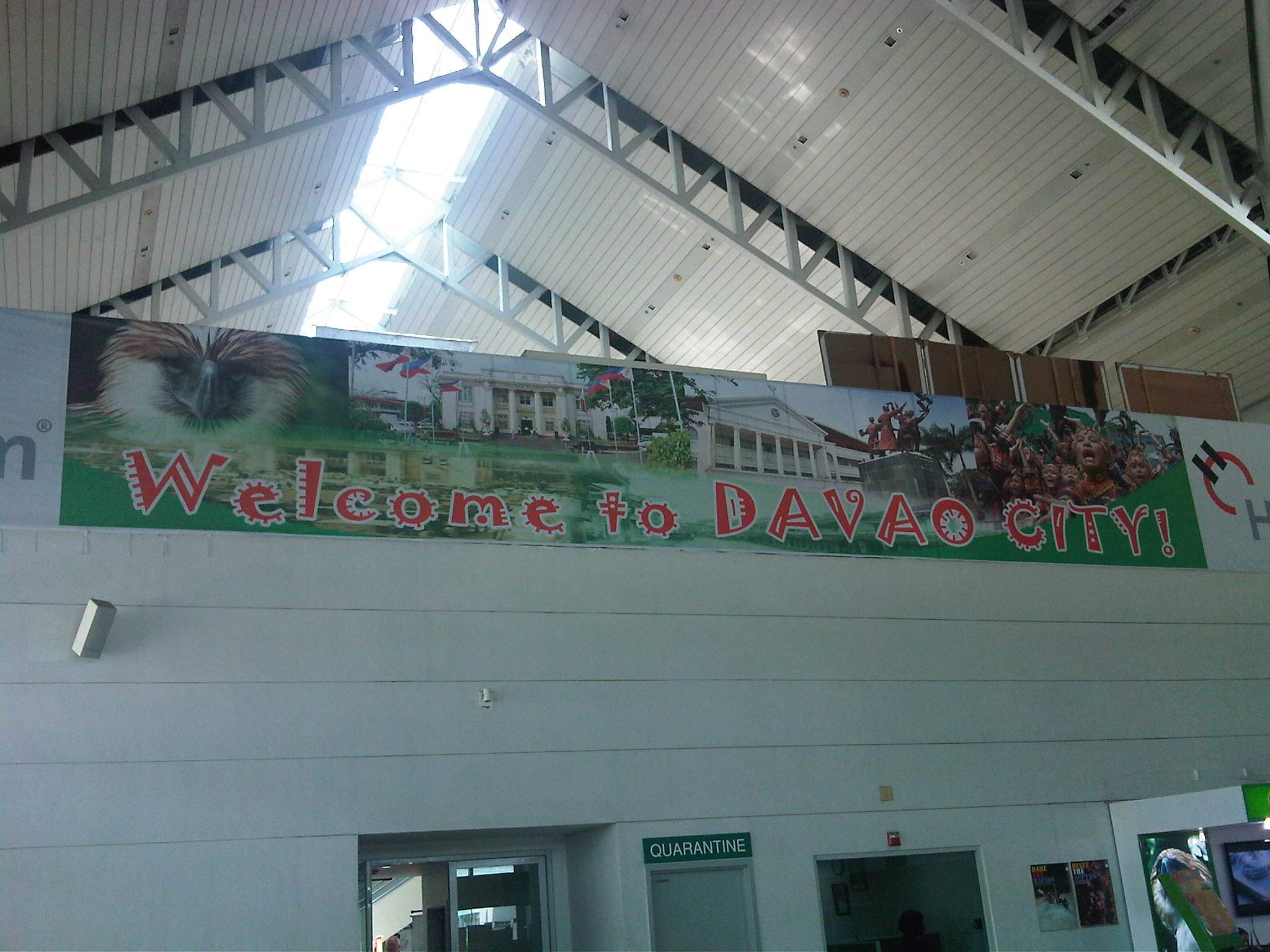 Tarpaulin welcoming visitors and returning residents to Davao City
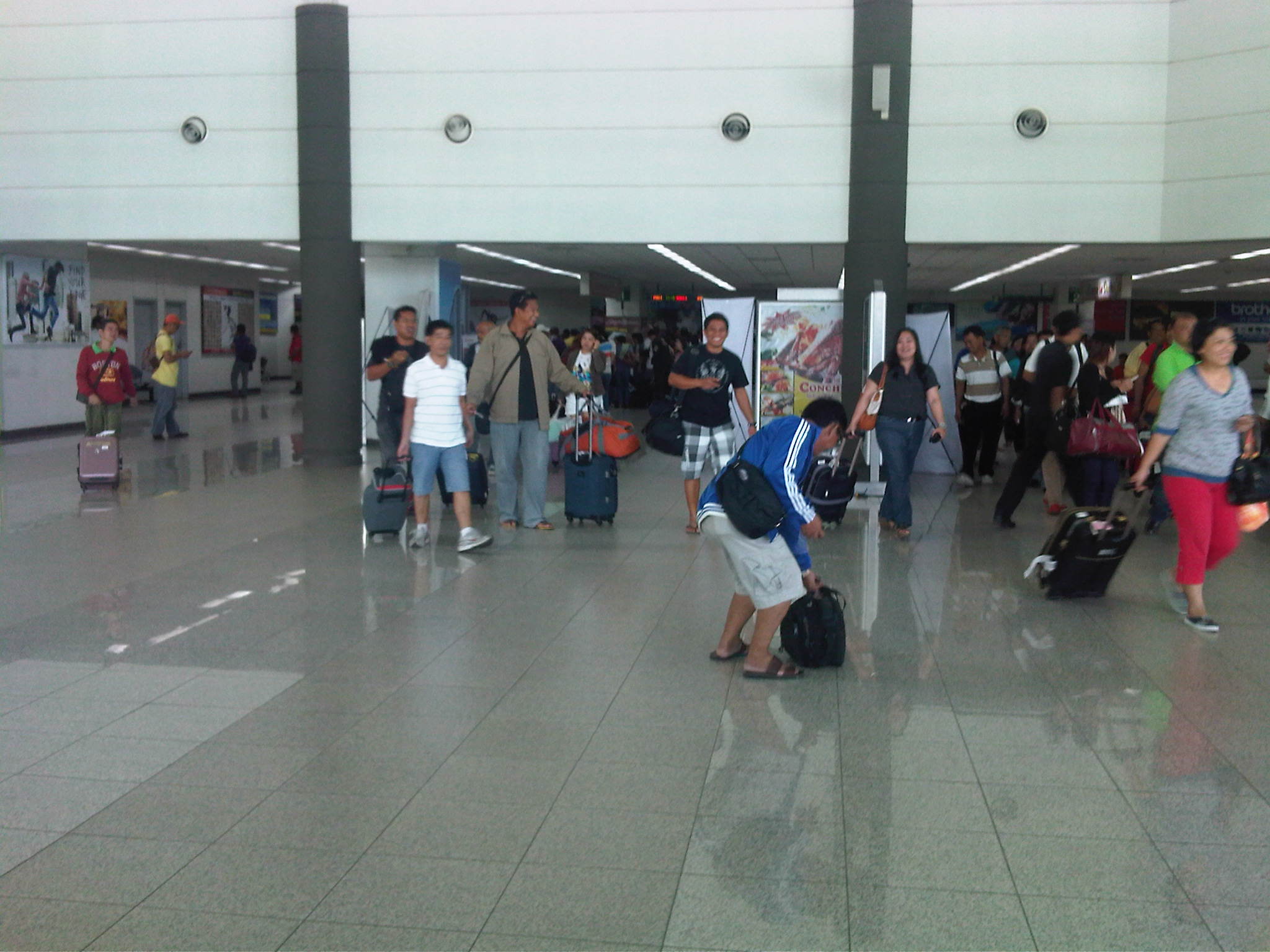 Passengers streaming from the baggage claim towards the exit from the arrival area
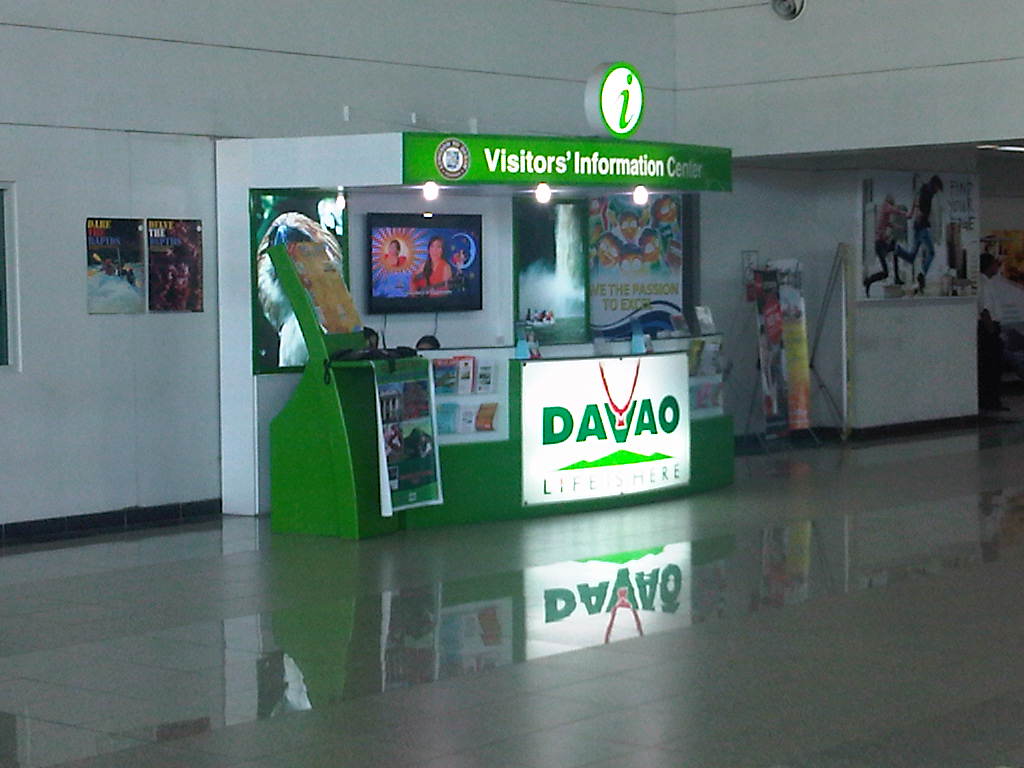 Information booth – they have good materials for first-timers
 Airport terminal as seen from the road leading to the national highway
 It was a pleasant surprise to see self-service check-in machines at the Davao airport. I haven’t seen these at NAIA Terminal 3 as well as at the Iloilo and Bacolod-Silay airports. While I usually check-in online when I’m flying Cebu Pacific, this can be a good alternative for passengers traveling light and have no luggage to check-in.
 Another look at Davao’s spacious terminal – the only glitch seems to be the descending escalator not functioning at the time we were there.
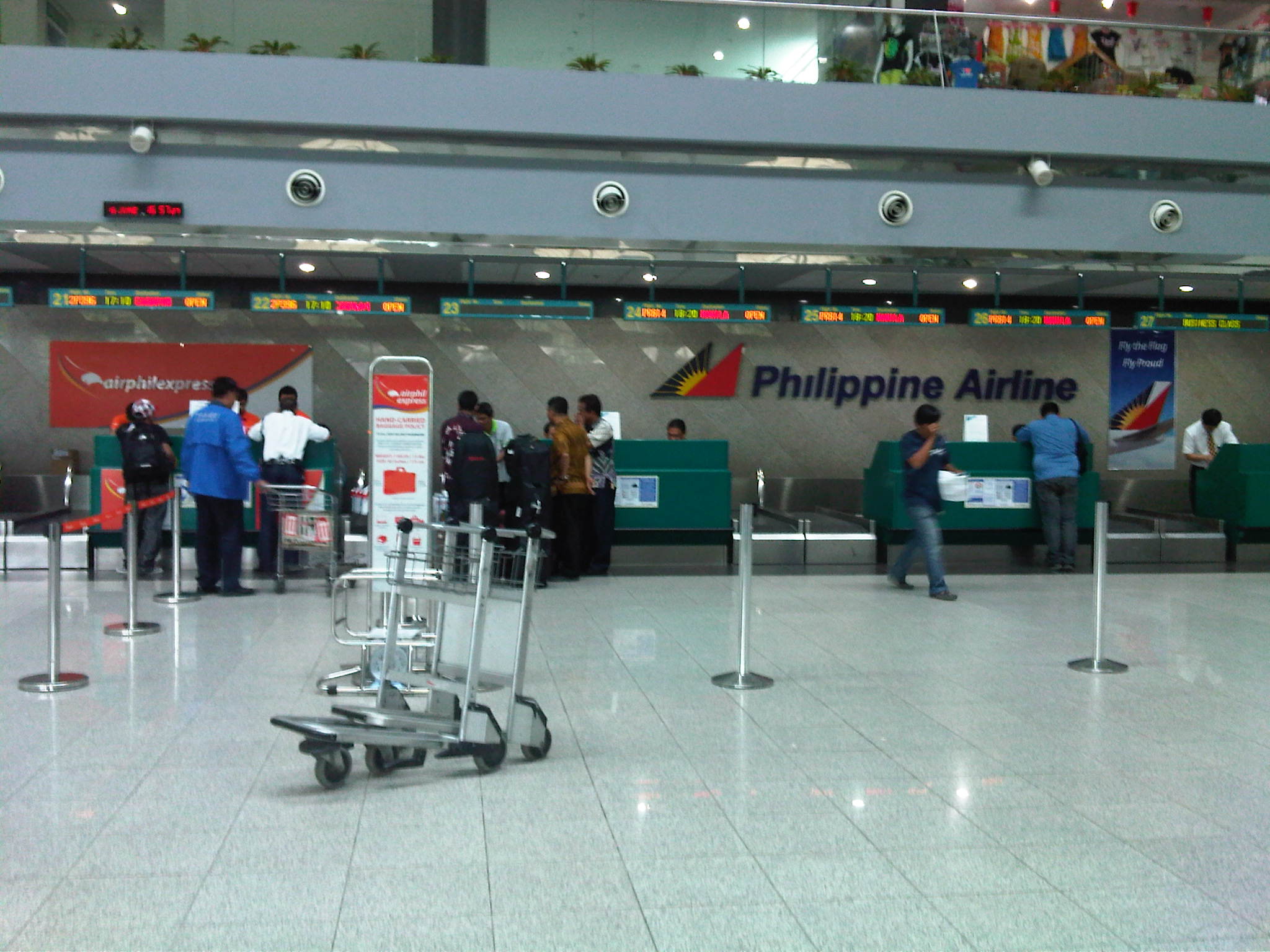 Check-in counters for domestic airline passengers – though spacious, it could get quite crowded not just because of the number of passengers but also because of their luggage and souvenirs. Davao is well-known for its fruits so it is not uncommon for passengers having one or more boxes of pomelo or perhaps durian, which have to be checked-in as the latter is not allowed in the aircraft cabin due to its smell.
 Corridor from the final security check prior to the departure gates
 Along the corridors are a few benches and some small shops as well as the lounges for business and first class passengers, and VIPs.
 The pre-departure lounge of the airport is expansive – appropriate for the number of passengers usually served by the terminal
 Another look at the pre-departure area, which looked crowded because people tended to be seated closer to their departure gates. Our flight would be on board a B747 so there were really a lot of passengers. Still, there were many seats available at the lounge.
 That’s our gate in the middle of the photo.
I think Francisco Bangoy is one of the cleanest airports in the Philippines. It is also among the most organized and more spacious ones. Airport authorities are also quite strict with security, giving travelers that sense of safety once in the airport premises. Airports should provide such feeling to passengers and other users of the facility considering the airport is a major meeting place for a lot of people aside from being gateways and serving as a first impression of that city to visitors.
–
Overnight parking at NAIA
The main terminals of Manila’s Ninoy Aquino International Airport (NAIA) each have overnight parking facilities. These are all open lots located near the terminals and have roving personnel on motorcycles for security. The overnight parking spaces for Terminals 1 and 2 are located a bit of a walk away from the terminal buildings but are generally spacious and do not reach their full capacities.
Terminal 1’s overnight parking is located on the lot to the right as travelers drive through the security check for vehicles. Terminal 2’s overnight facility is near the old Nayong Pilipino gate and appears to be the combined parking lots of the now-closed theme park and the also closed Philippine Village Hotel. Terminal 3’s overnight parking spaces are generally spread out with most along the service road or driveway that leads to its still closed multi-level parking facility. Other spaces made available for overnight parking are those near the entrance to Terminal 3.
I haven’t tried overnight parking at T1 and T2 but I recently availed of overnight parking at T3. Following are a couple of photos to describe overnight parking at T3, followed by a few tips on how to get a slot in what is always a full area.
 Overnight parking spaces are along the service road on the right that ultimately leads to a ramp access to the still closed multi-level parking facility at Terminal 3. There is a sign that states overnight parking is full. Ask for assistance from the security staff to find a slot.
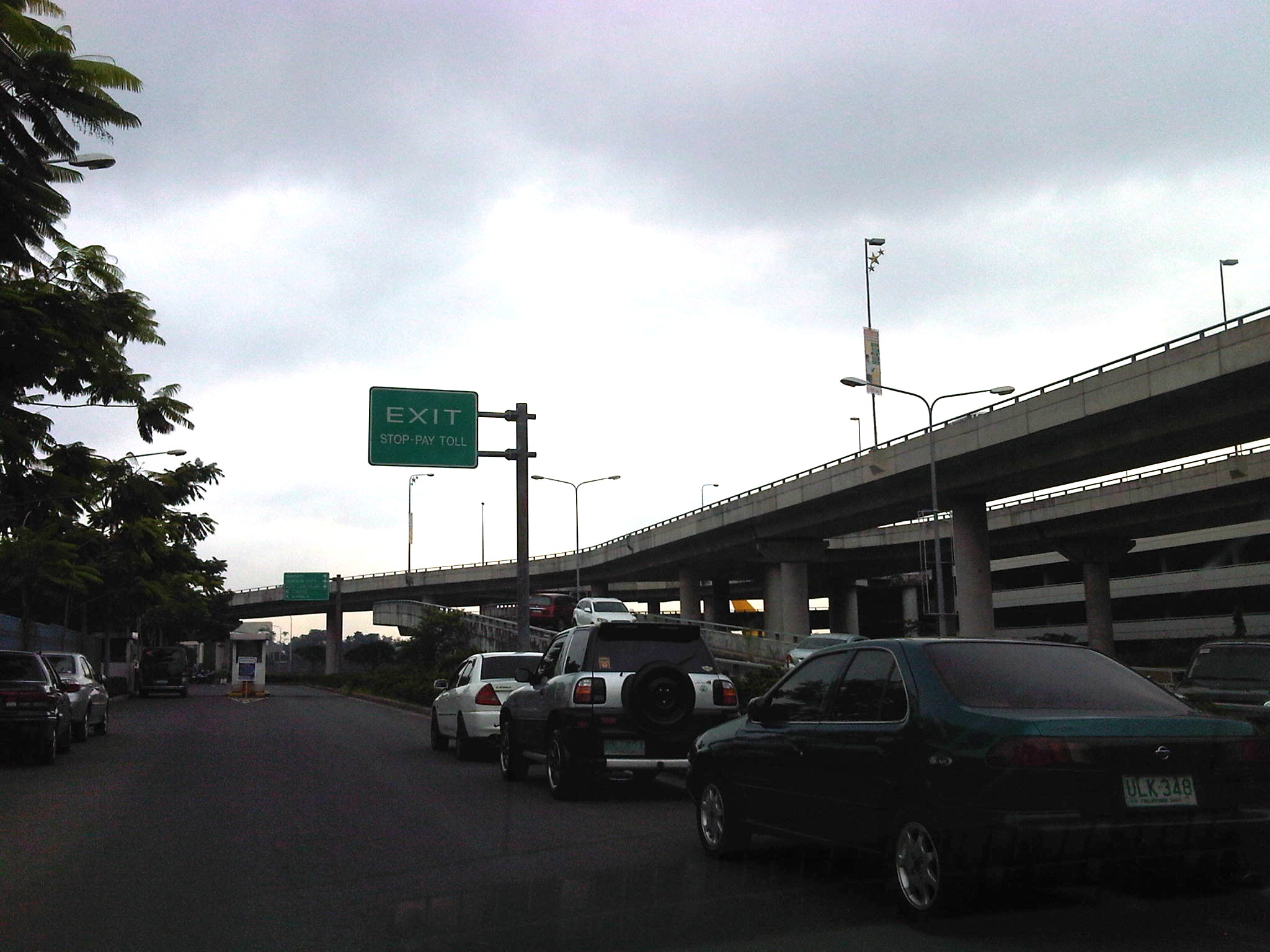 The service road leads to a ramp (visible at the center of the photo) to the closed multi-level parking (also visible on the right of the photo) of Terminal 3.
A tip for those wanting to park their cars for a night or more at Terminal 3: ask nicely for assistance from the security guard at the entrance to the parking lot. They will help you find an open space somewhere (trust me, it’s quite a challenge) in what is always a full overnight parking area. Show your gratitude by tipping. It’s definitely worth it and they’ll probably even check your car to return the favor. And yes… overnight parking fees are quite cheap at 50 pesos (about 1.15 USD) per night.
–
Walking around in NAIA Terminal 3
I had another opportunity to explore NAIA’s Terminal 3 last weekend. The following photos were taken while walking around to kill time while I waited for the arrival of a friend I was fetching at the airport. I arrived early at the terminal assuming it would be difficult to get a parking slot and that the flight would be arriving on time. I ended up eating dinner and having a nice stroll around the terminal building.
 Check-in counters for ANA and Zest Air
 Shops at the third level of the air terminal (2nd level of the departure area) – there’s also a Mini Stop and 7-Eleven at the terminal.
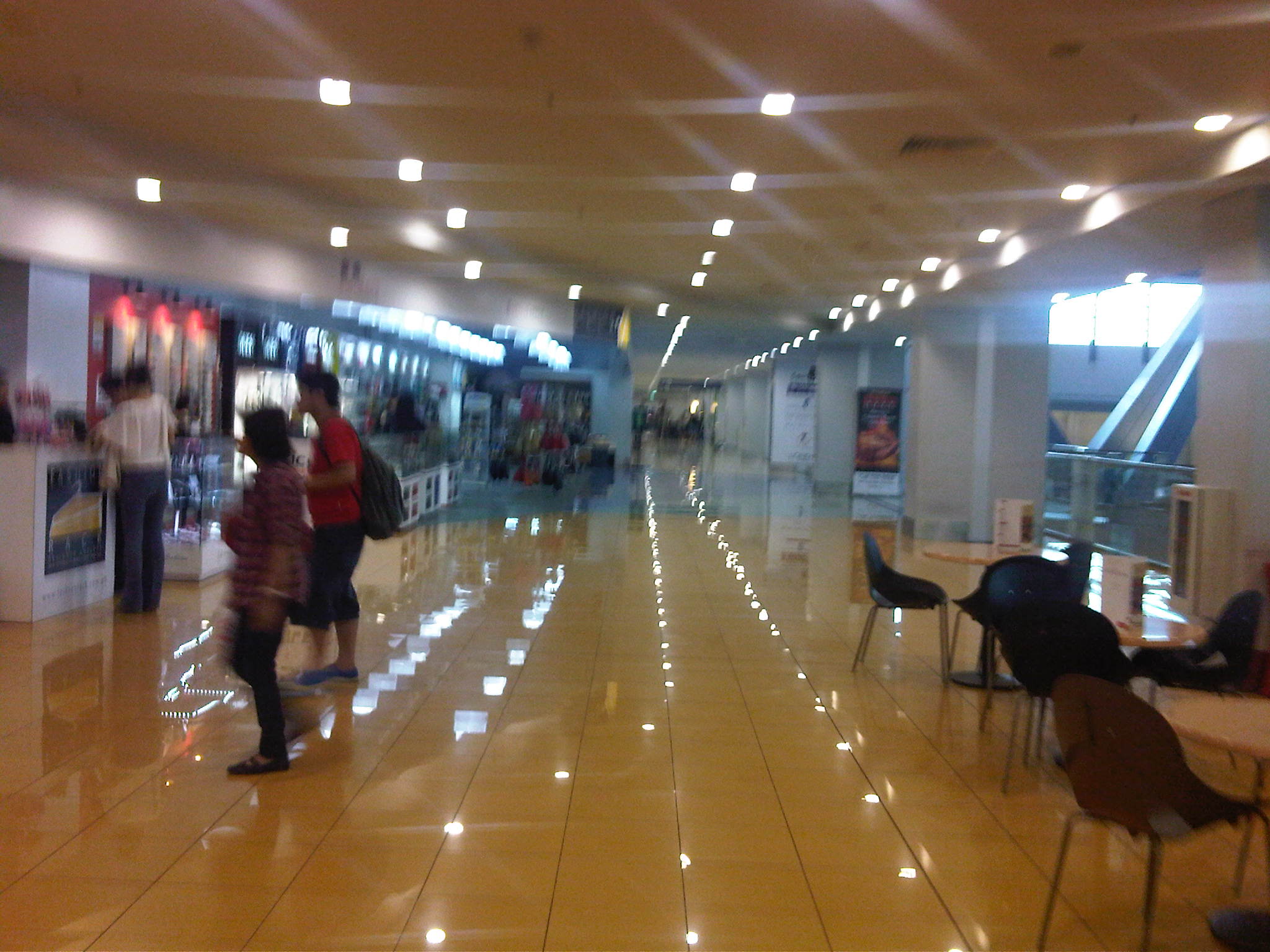 Most of the shops appear to be outlets for popular brands like Nike, Adidas, Oakley, Delsey, etc.
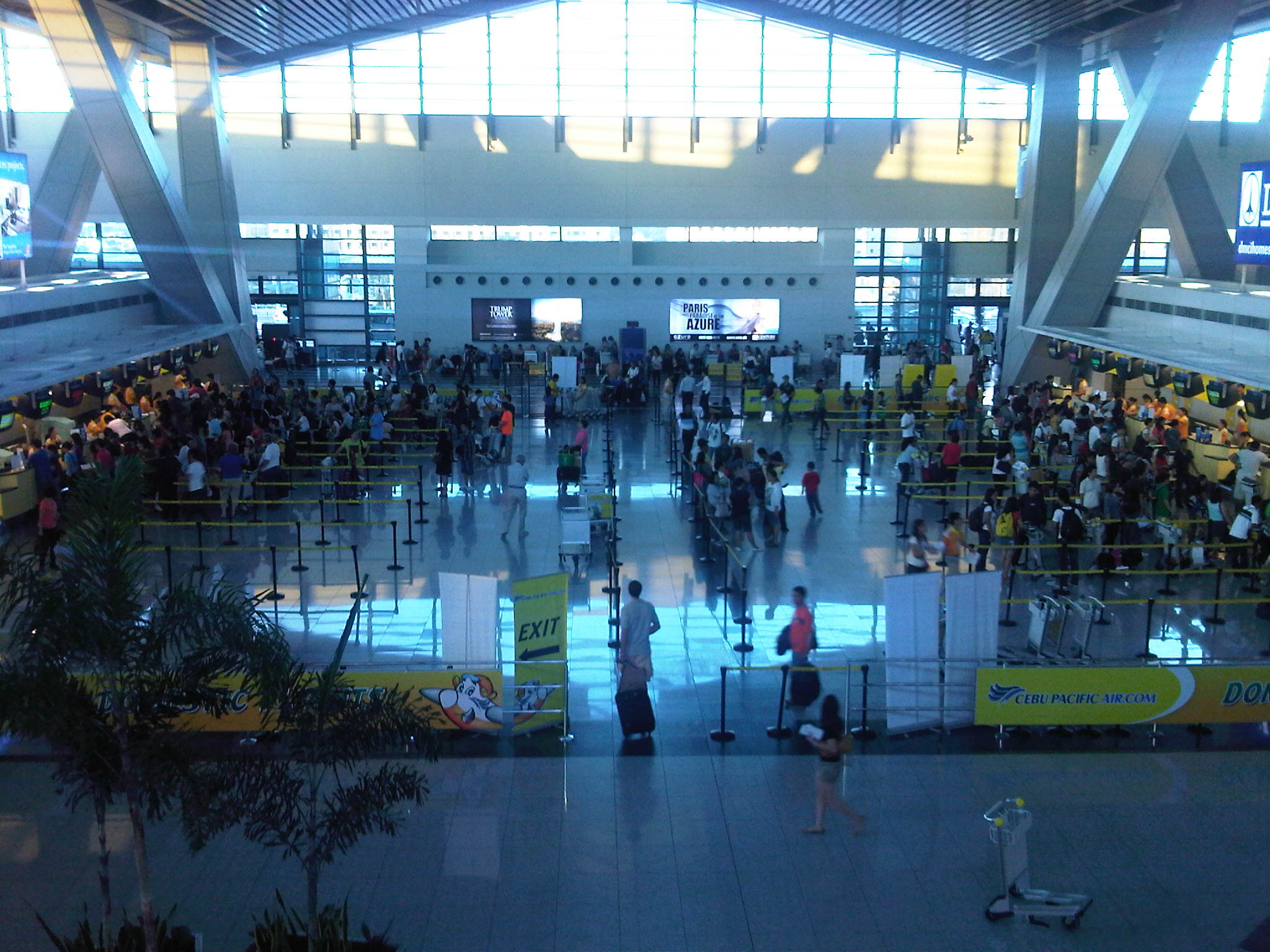 Queues before the Cebu Pacific counters for domestic flights.
 There are many restaurants including the recognizable ones like Shakey’s Pizza, Pancake House, Kenny Rogers, Yellow Cab Pizza and Jollibee.
 Screens showing flights scheduled for departure and arrival via NAIA Terminal 3.
 Spacious halls of the arrival area of Terminal 3 – surprisingly, the area was not crowded at the time (it was around 6:30 PM when the photo was taken)
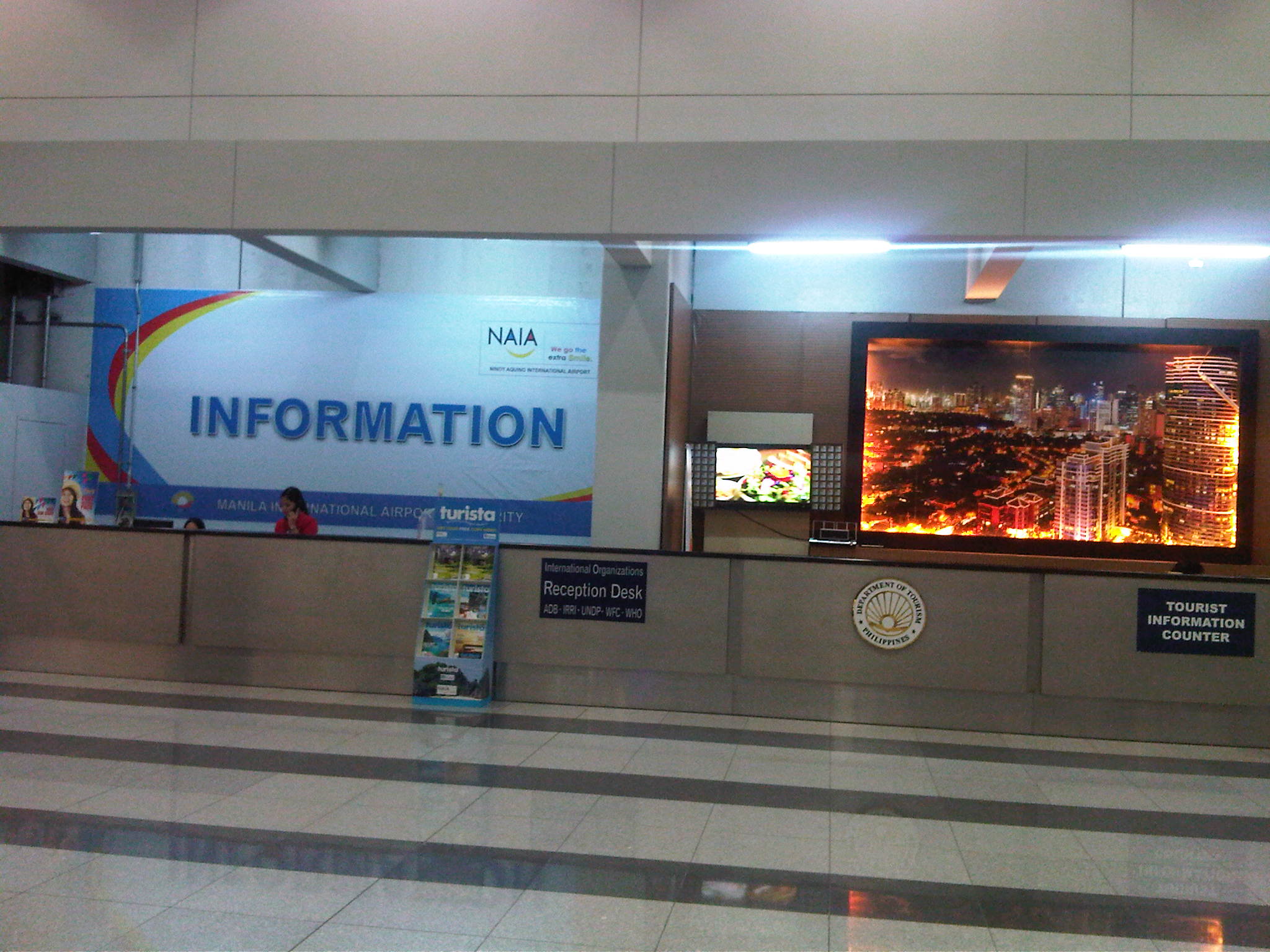 Information counters for visitors
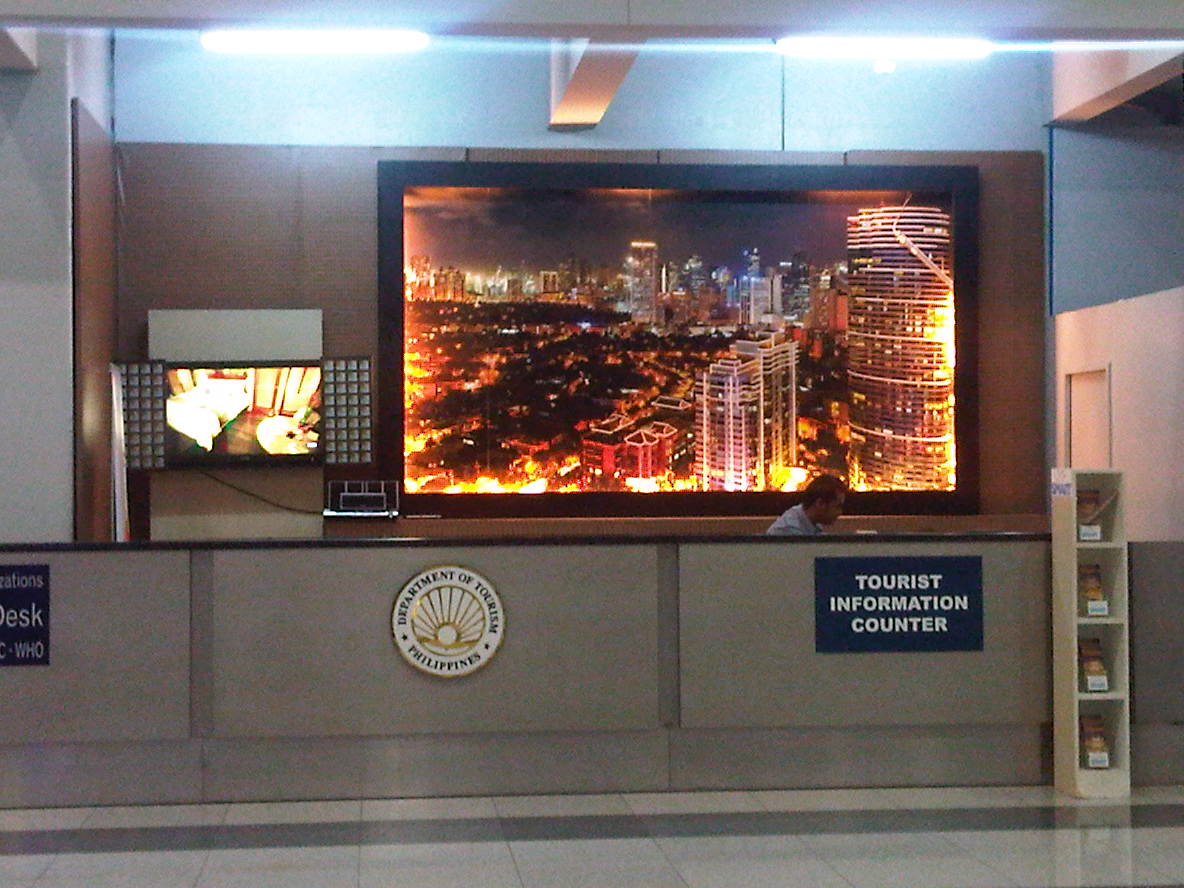 Tourist information counter of the Department of Tourism
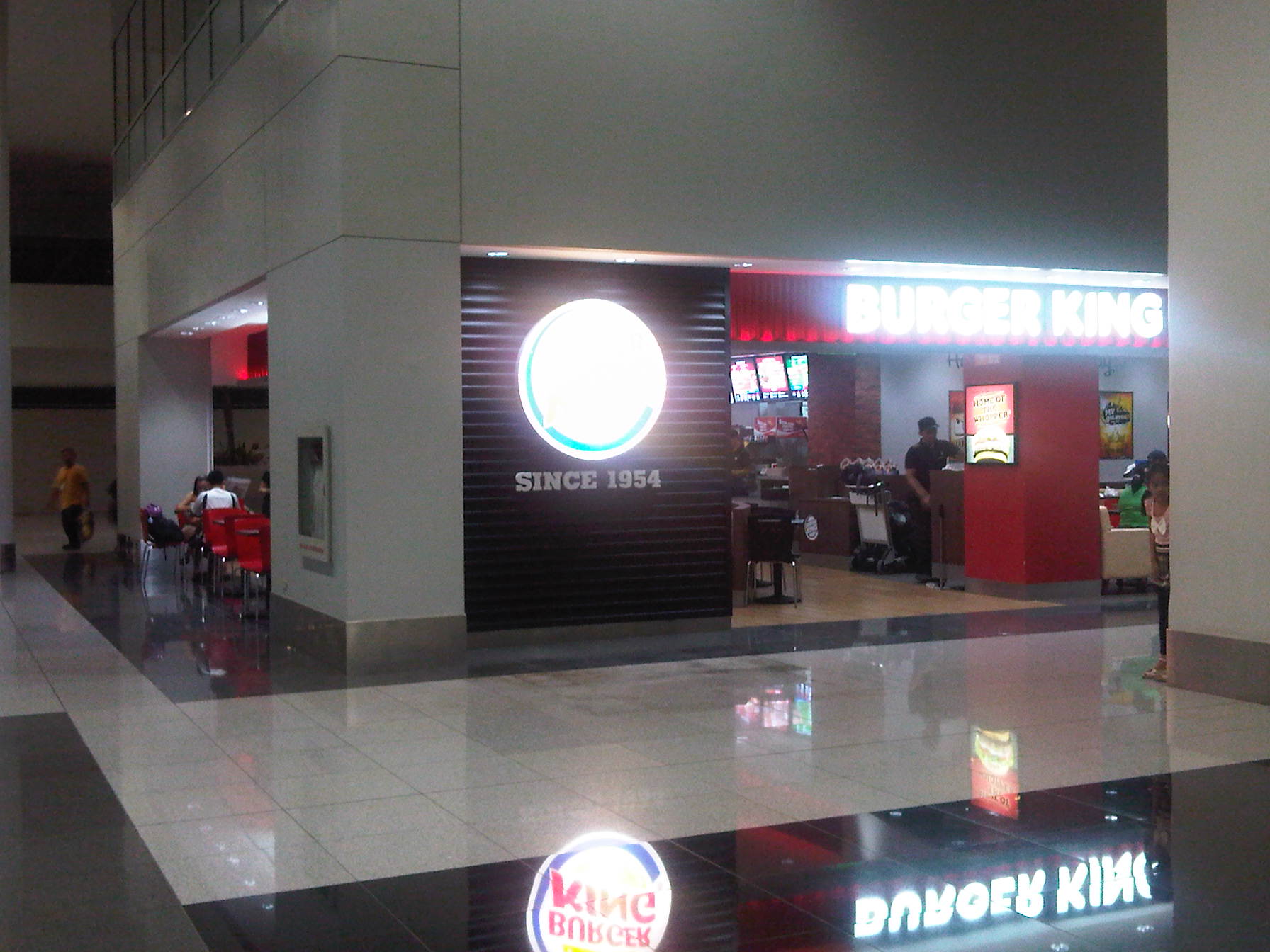 Newly opened Burger King at the ground level / arrival area of Terminal 3
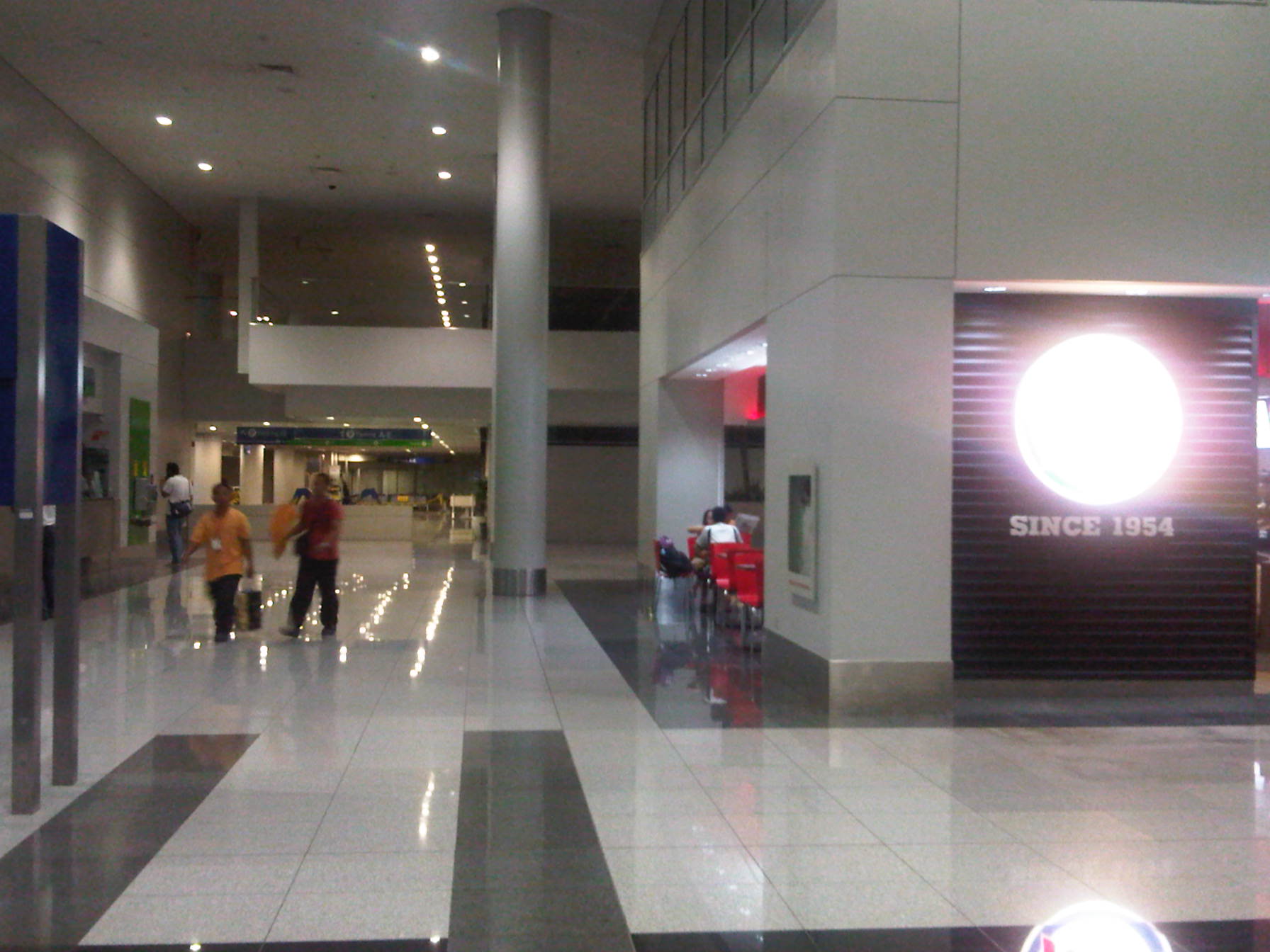 This way leads to the unopened area of the terminal, which includes space for more shops and the multi-level parking building. On the left side across Burger King are ATMs and counters of banks for currency exchange.
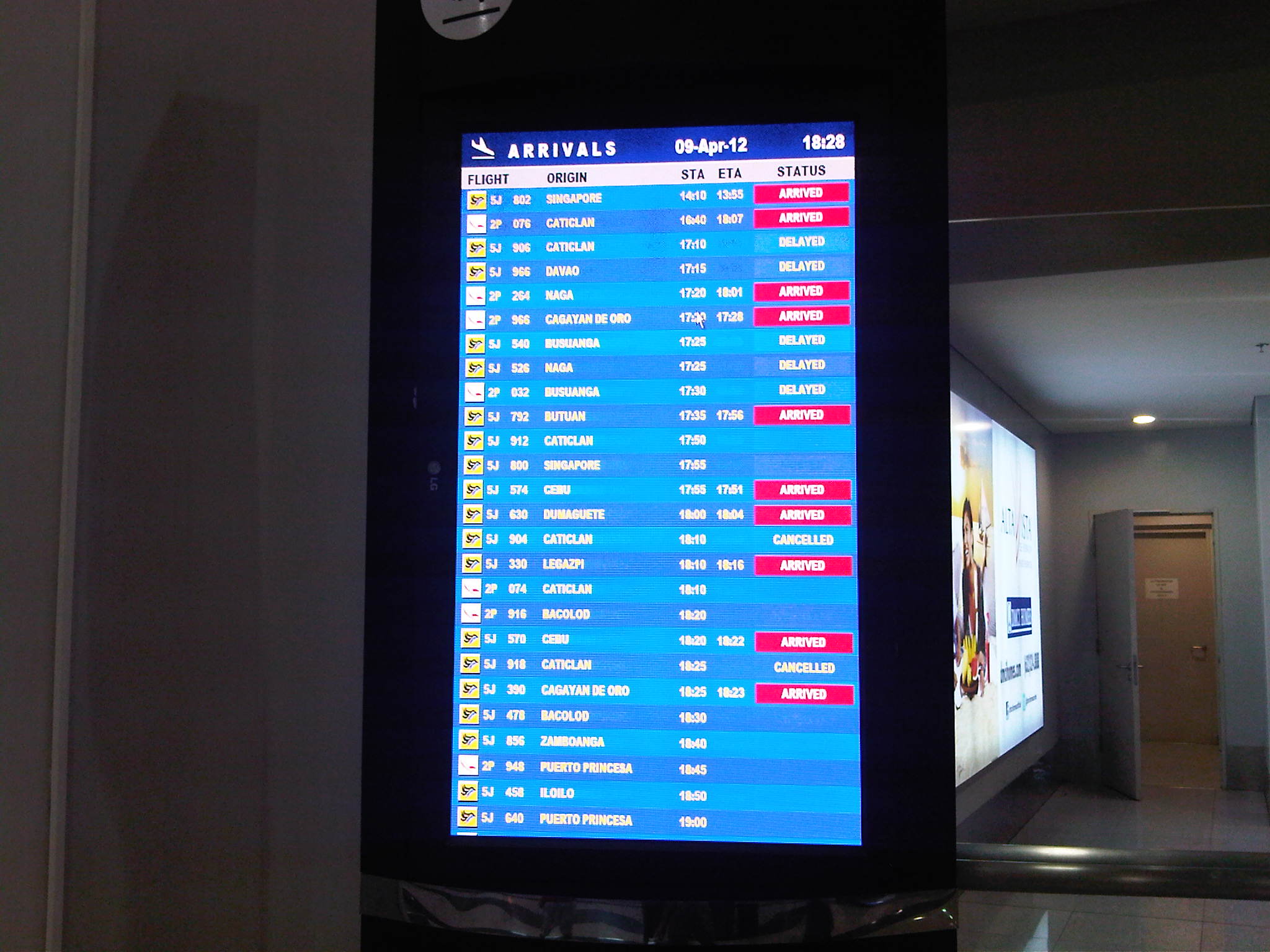 Arrival information just before the exit from baggage claim and customs
 Well-wishers view of passengers coming from the baggage claim area for domestic arrivals
–
NAIA T3 Departures
This is one of the peak periods for air travel in the Philippines so the airports are pretty full with people departing and arriving from different places here and abroad. It was early morning yesterday and as I approached at the airport, I could see lots of vehicles driving off from the departure level of the terminal including taxis that have ferried passengers mainly for morning flights. It was about 4:30 AM when I arrived so the terminal was not as busy as it would be a few hours later.
I had some time to burn yesterday as I waited for the arrival of my wife at NAIA’s Terminal 3. And so I decided to take a walk around the terminal to check out the restaurants and coffee shops on the 3rd level. It turned out my favorite place was still closed and I didn’t think pizza, burgers or fried chicken would be a good idea at the time. I ended up walking around the terminal to get some exercise early in the morning and taking a few photos here and there of the queues at the check-in counters.
 Cebu Pacific handles a lot of flights nowadays as the top airline in the Philippines though it is a budget airline. At 4:30 AM, there were a lot of people lined up in front of their counters assigned to domestic flights. There were a lot more outside the cordoned off area and also outside the airport queued before the first security check for the terminal.
 There were even more people on the other side as Ceb Pac handled quite a number of flights to favorite destinations such as Caticlan (gateway to Boracay), Tagbilaran (gateway to Panglao) and Puerto Princesa (Palawan). Of course, there were the frequent flights to hubs like Cebu, Davao and Iloilo.
 AirPhil Express (formerly Air Philippines) also operates out of Terminal 3 but has less flights compared to CebPac. Its mother company, Philippine Airlines (PAL), is a full service airline with domestic and international flights to and from Terminal 2, which is also called the Centennial Terminal after being opened during the Philippines’ Independence Centennial in 1998. PAL Express, another one of PAL’s budget spin-offs, used to operate out of T3 but ceased operations in 2010 and was integrated into AirPhil Express.
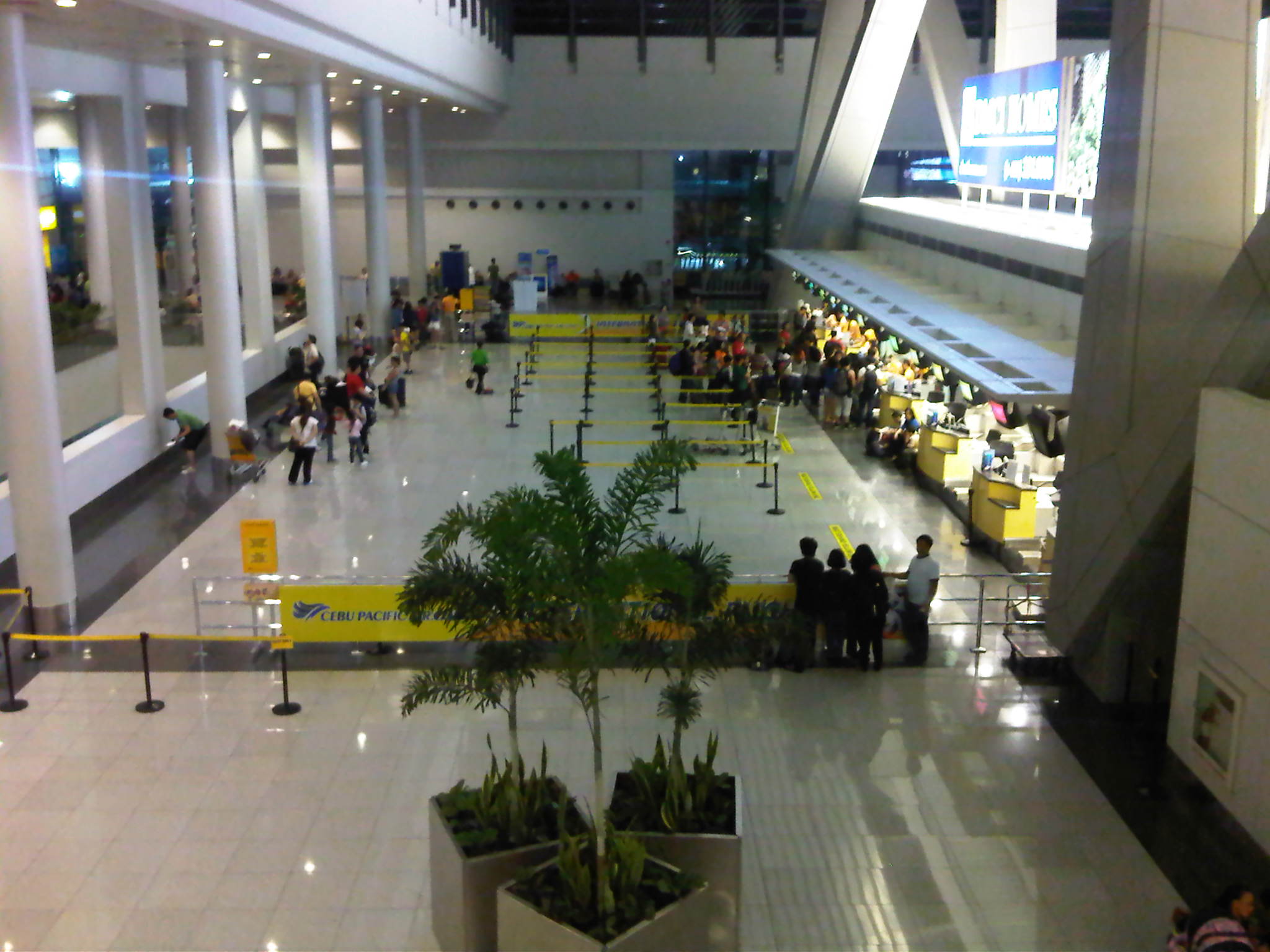 The queues for CebPac’s international flights were still short. I think they have few flights during the late night to early morning periods. These counters, however, will be busy later in the day considering the frequencies of service to destinations like Singapore, Hongkong and Bangkok. CebPac also flies to Korea, China and Japan and has recently opened direct flights to Cambodia (Siem Reap) and Vietnam (Hanoi and Ho Chi Minh).
I was not able to take a photo of the counters assigned to All Nippon Airways (ANA). I guess there might be no people there yet as ANA operates only two flights daily between Manila and Narita (from where it connects with a lot of flights to many other destinations including major cities in the US and Europe). Terminal 3 will be busier in the coming months and years as international flights increase and the Philippines tries to have its status upgraded in order for airlines such as CebPac to expand operations. Already in the sights of the airline are destinations in the Middle East, Australia and the US where there is a demand for a low cost Philippine carrier even counting only Filipinos living abroad. And with the country pitching its tourist destinations abroad, T3 will be expected to handle much of the traffic in this gateway in Manila.
–
Early morning at NAIA Terminal 2
Taking the 5:30 AM flight to Roxas City, we had to be at the airport at least an hour before the ETD. We decided to come earlier in order to be able to get good seats. We were taking Philippine Airlines and the airline didn’t have an online check-in facility (!) so we decided to be there 90 minutes prior to the ETD. That meant leaving our homes around 3:00 PM to make it to the airport by 4:00 AM despite the fact that traffic is usually free flowing at those hours.
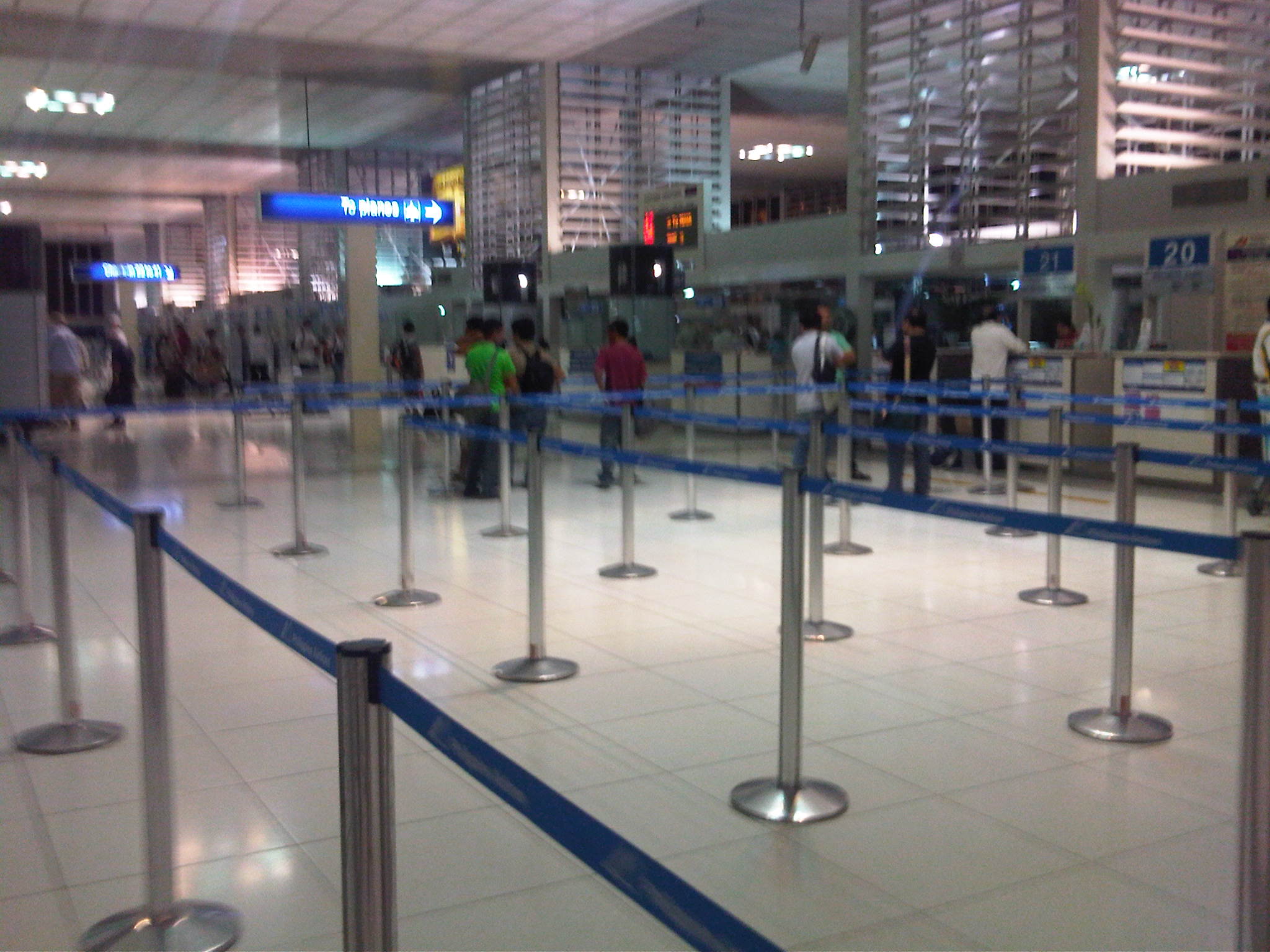 Check-in: There were few passengers at the airport despite the many early morning flights. Perhaps the fact that Terminal 2 has separate wings for domestic and international passengers also partly explain this, aside from the fact that fewer people are taking PAL. We noticed during check-in that the ground staff seemed slower than before. The staff in red uniform are supposed to be relatively new as PAL decided to outsource many of its services to cut costs.
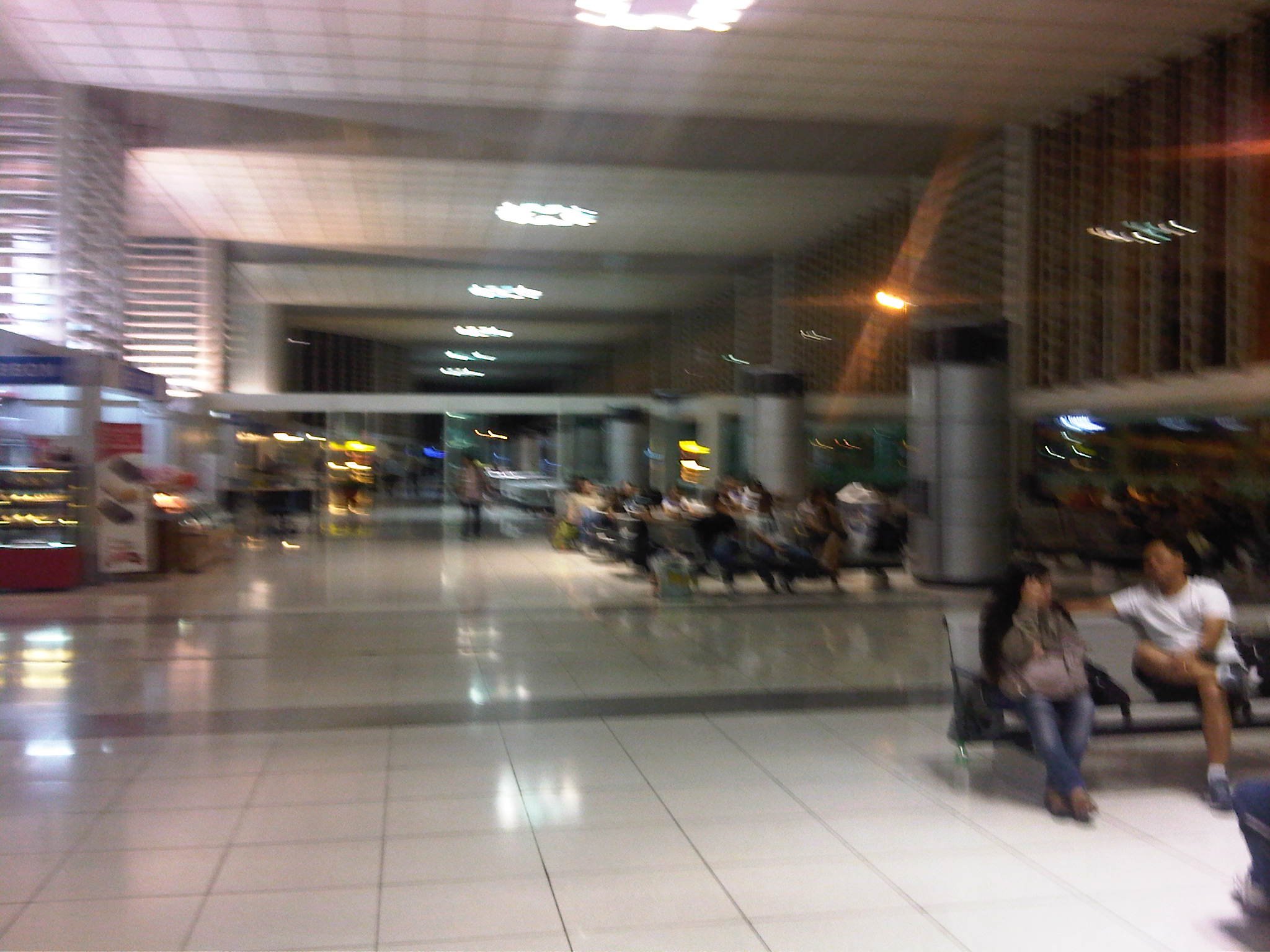 Departure lounge: The departure area is not at all crowded and you can choose wherever you want to sit while waiting for your flight to be called. Even the cafes were not crowded and we easily got a table where we could drink our coffee while waiting for the boarding call.
 Boarding gates: The gates at NAIA’s Terminal 2 look like this with a counter in front of the gate. Only staff are supposed to be behind the counter considering security implications and issues. This wasn’t the case when I was at the same airport for a US flight last year. The ground staff who were apparently newbies along with the security people paid no attention to one foreigner charging his phone behind the counter and talking it up with staff about what’s on their computer screen!
 Concessionaires: There are many concessionaires inside the departure area of T2 and fortunately they open early for passengers wanting to have a quick bite or drink before their flights. Some passengers may also have to purchase last minute pasalubong and among the popular items are cakes and pastries from either Goldilocks or Red Ribbon. Terminal 3 is much better though as there are many restaurants and shops in the terminal where passengers and well-wishers can have their meals.
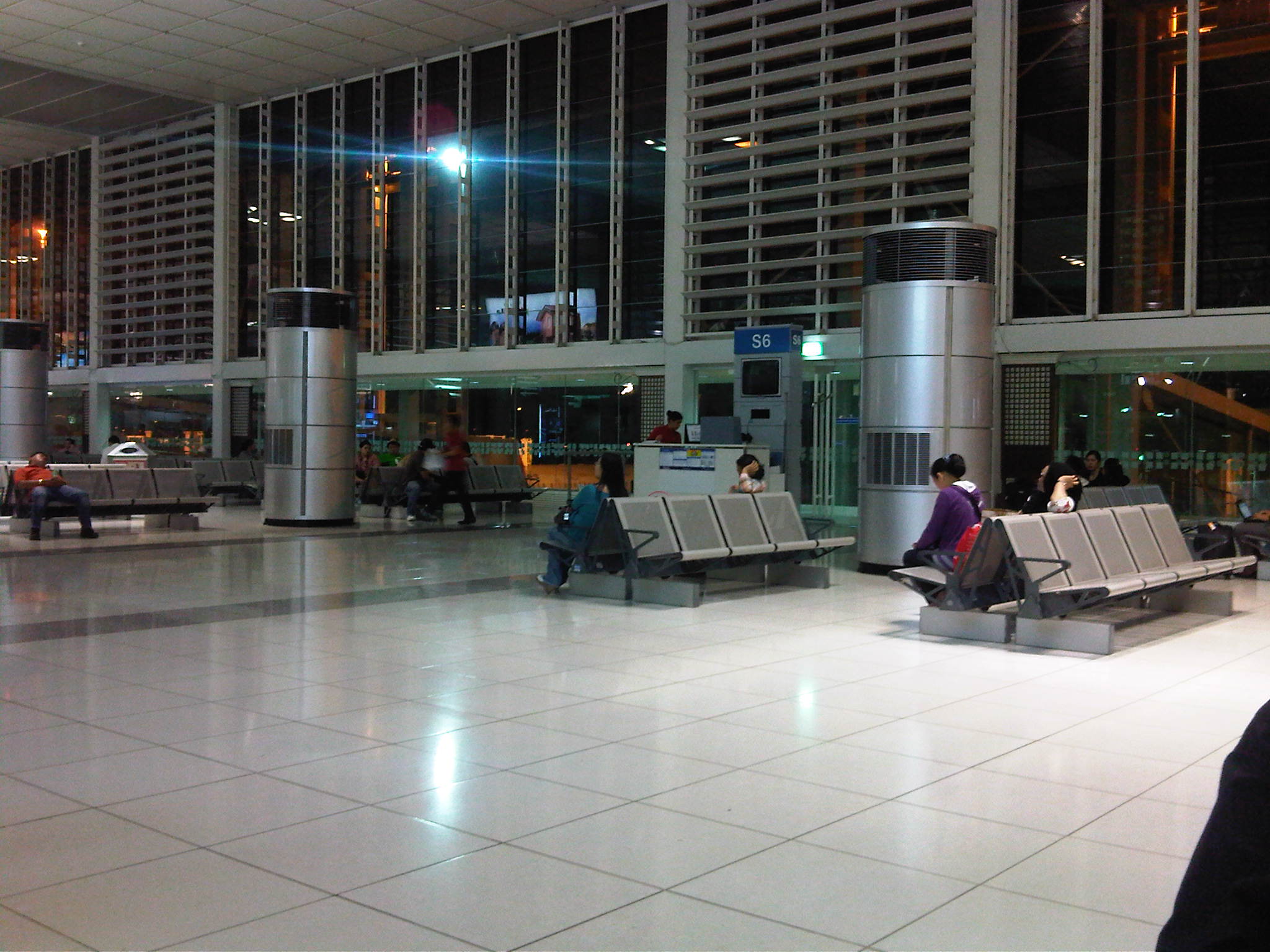 Neat and clean: Terminal 2 is not as big and neat as Terminal 3, which serves the Cebu Pacific, AirPhil Express, PAL Express and ANA flights (T2 only serves PAL). Nevertheless, I think the facilities are much better than Terminal 1 and that includes the toilets. It would seem to me that the floors are good enough for one to sit or even lie on while waiting for your boarding call. I wouldn’t recommend it though.
The Centennial Terminal, as T2 is also called, is supposed to remain as PAL’s terminal even after Terminal 3 would have been fully operational. One plan called for all international flights to be serviced from T3 while all domestic flights, except those of PAL, will be at T1. Hopefully, these re-assignment of services will be done after T1 is renovated. So far, I haven’t got news about the proposed renovation including whether this will push through at all. Manila definitely needs good airport terminals if only to make a good first impression on visitors. Airports, after all, are gateways and provide visitors with a preview of what a country can offer.
Another look at NAIA T3 – arrival
Arriving at NAIA, aircraft may proceed to one of 4 terminals operating at the complex – Terminal 1 (international), Terminal 2 (international and domestic flight operated by PAL), Terminal 3 (Cebu Pacific, PAL Express and Air Phil Express and ANA of Japan). Despite the fact that the airport is fully equipped for servicing aircraft, most equipment apparently are not being used for various reasons including preserving such equipment for when the terminal will be in full operation. In certain cases such as the immigration and customs booths on the area designated for domestic operations, the equipment/furniture are not required at all. One common observation for most passengers using T3 is the non-use of the tube or air bridges by Cebu Pacific, which requires passengers to board and alight using the stairs and, in many cases, still require the same to climb back to the air bridge to walk to the arrival area!
 A common experience for domestic and international passengers is to board or deplane without the benefit of using the tube or airbridge of Terminal 3. This was apparently to shorten boarding and alighting time for faster turnarounds for Ceb PAc. I was to learn later that there also aren’t enough airbridge operators at the terminal.
 An inutile airbridge at Terminal 3. It seems these are not used by airlines for one reason or another – a definite disbenefit to passengers.
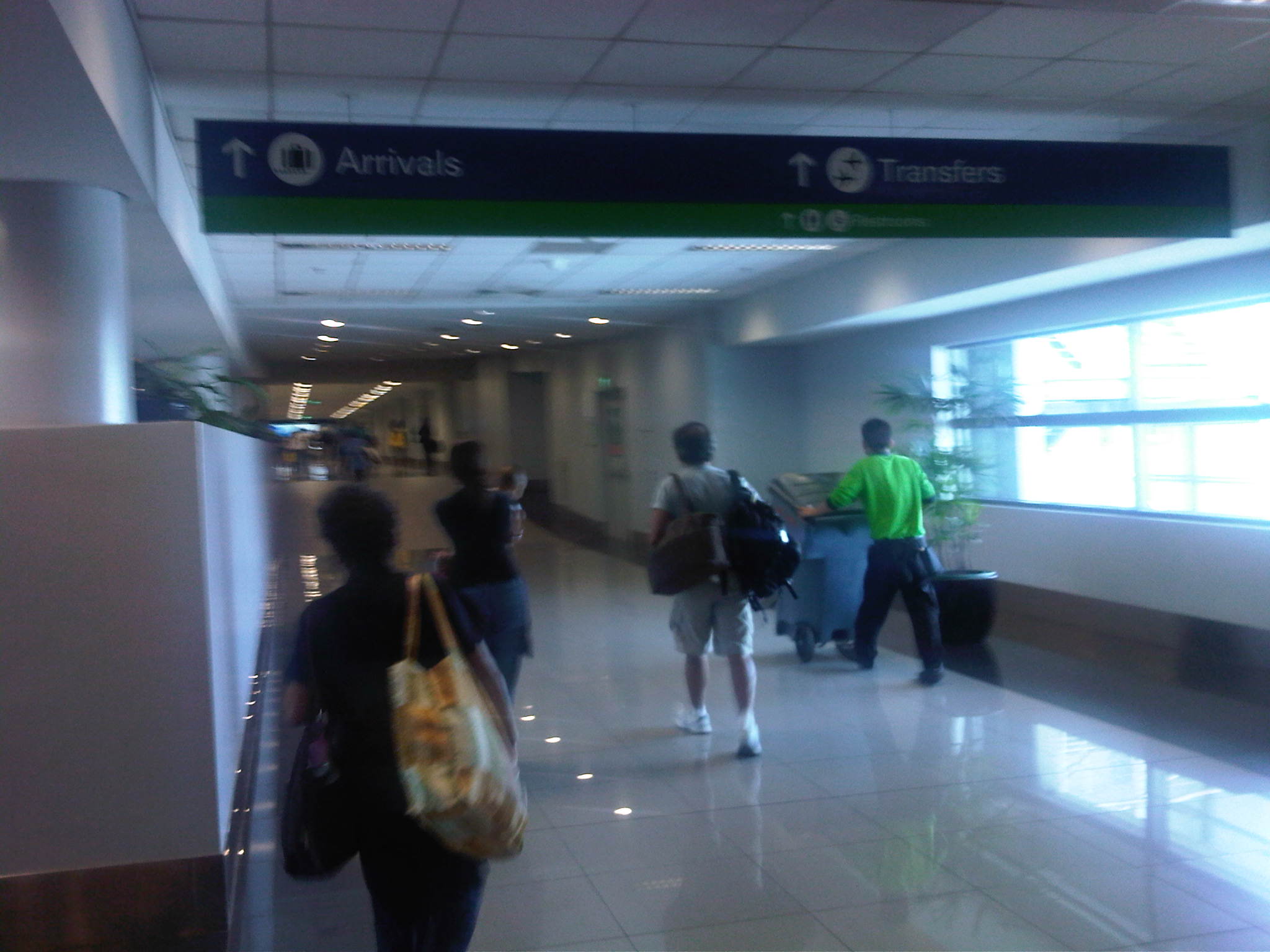 It’s a long walk from the tarmac to the baggage claim area. For passengers on international flights, they would have to go through immigration first after the long walk.
 Long hallways without the benefit of moving walkways are always an inconvenience to passengers, some of whom would probably require assistance. Of course, there are passengers who opt to cheat with their carry on allowance so one can say they should blame themselves when burdened with more than what is allowed for carry ons.
 Immigration booths on the domestic wing of T3 are unoccupied and probably should be reconsidered in case the airport will continue to be used for both domestic and international operations.
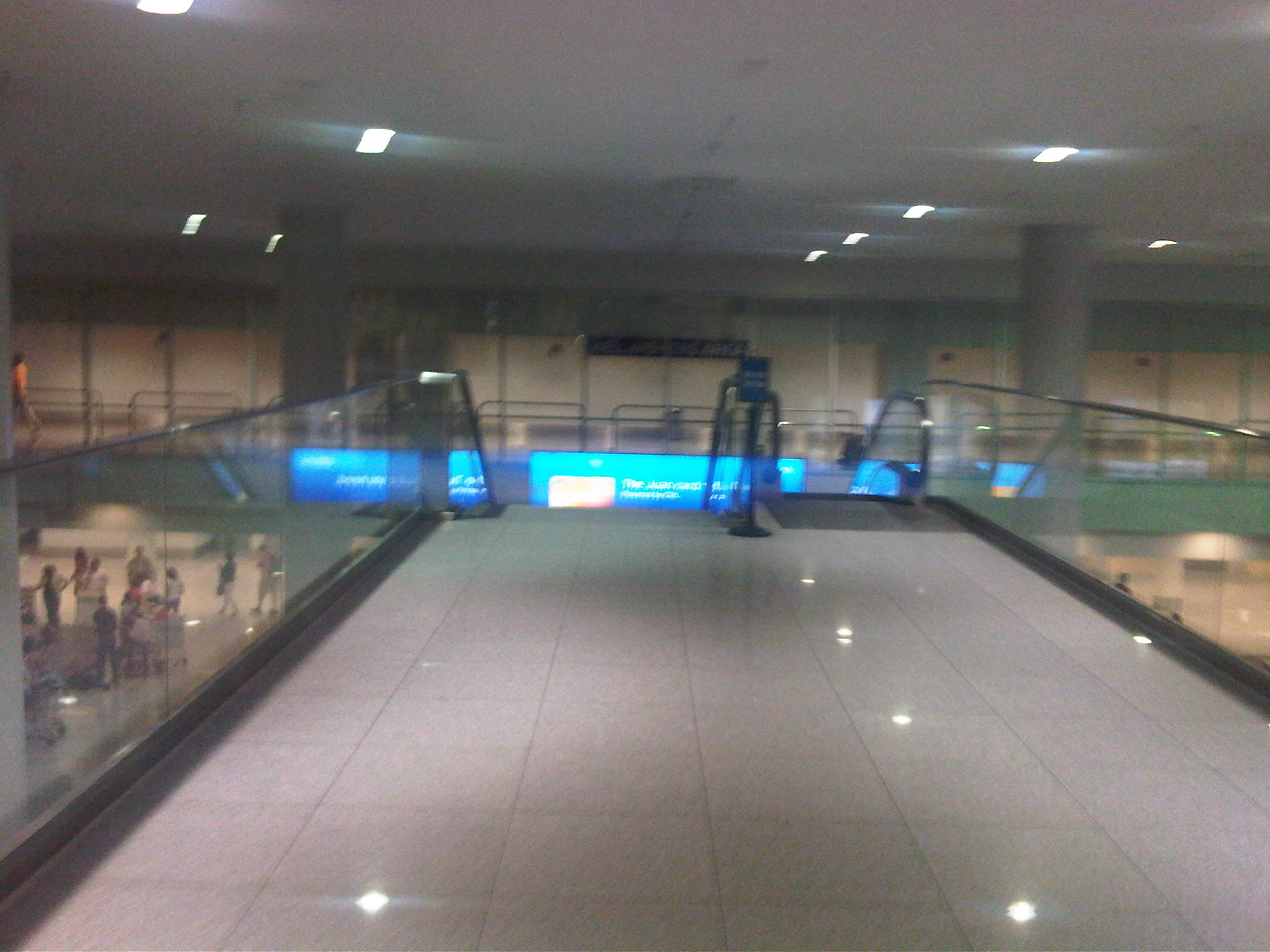 Past the immigration area, passengers would descend via stairs or escalator to the baggage claim area.
 Passengers waiting around the carousel – there was a time when one had to pay for the use of carts. Fortunately, that was scrapped during the last decade.
 Notice to passengers picking up their baggage from the carousel. T3 personnel do not check the baggage tags when passengers exit the area. The same is true for T1. Only in T2 (Centennial Terminal) do staff strictly check baggage tags, minimizing the chances of one’s luggage being taken (mistakenly or otherwise) by other people.
 First bags out unto the carousel
 Spacious area for baggage claim – there are actually several carousels but airlines use only 1 or 2 carousels despite so many flights being handled by T3.
 Since T3 was originally conceptualized as an international terminal, the wing used for domestic operations still have an area for customs operations. Like the immigration booths, these are unmanned and passengers just breeze through to exit the arrival/baggage claim area.
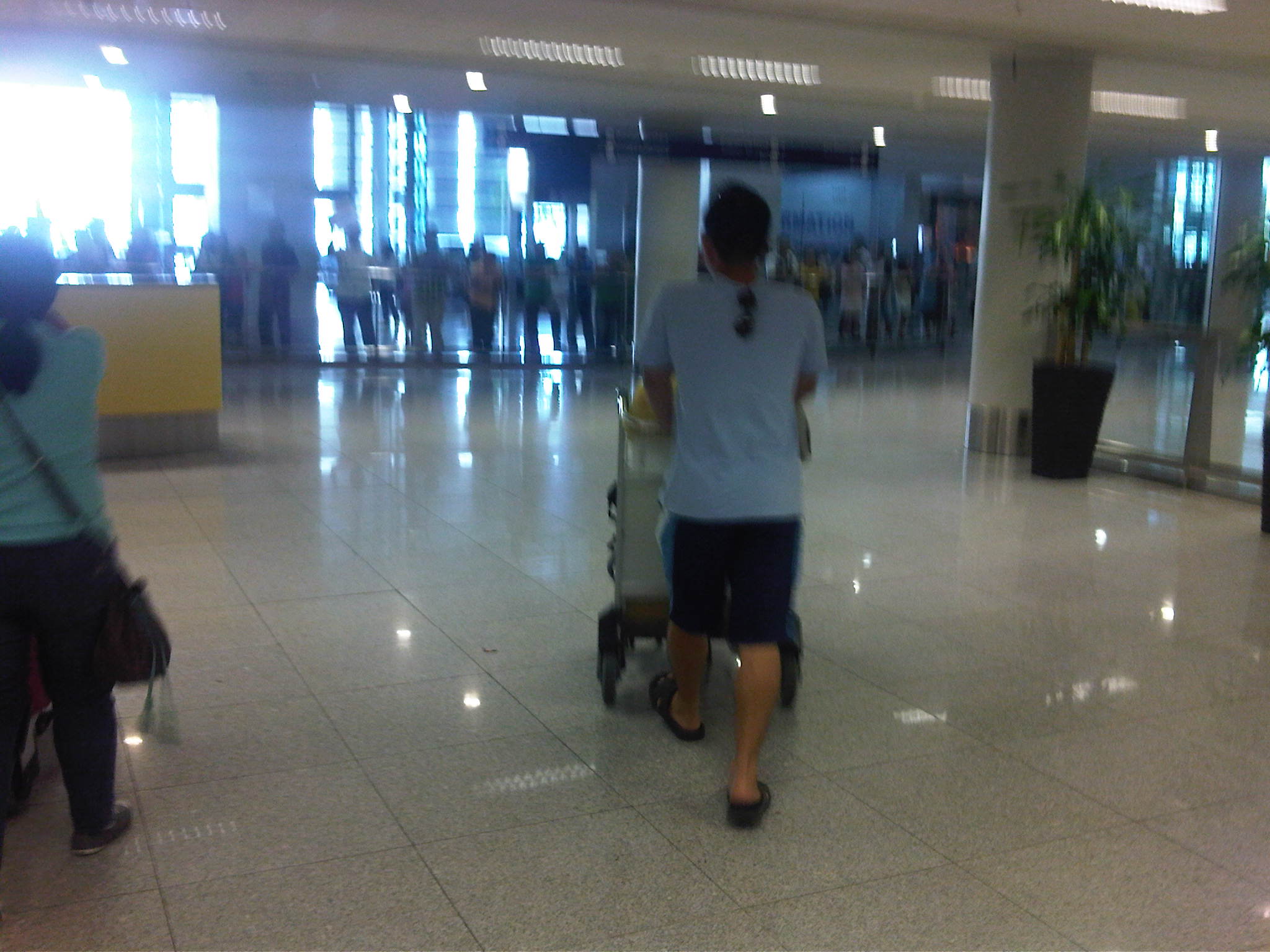 View for passengers exiting from the baggage claim and/or customs – one can easily see people waiting for arrivals, some with signs bearing names of persons they are meeting.
–
Another look at NAIA T3 – departure
With the recent withdrawal of charges by PIATCO, the full operations of NAIA’s Terminal 3 should be underway. Until now, the operations of the terminal has been at best limited despite the increasing number of flights being handled by the terminal with the continuing growth of Cebu Pacific and the addition of Japan’s All Nippon Airways (ANA) to the few airlines that have made Terminal 3 their home in the Manila. With plans for the much maligned Terminal 1 to be renovated and the impasse on what to do at Clark, it is expected that more international flights will be handled at T3. Following are photos of the Terminal 3 North Wing departure area from a recent trip. The North Wing handles the domestic flights while the South is for international operations.
 Departure area along the linear Terminal 3’s North Wing
 There are already many passengers taking the early morning flights. This photo was taken at around 4AM and shows shops to the right along the corridor and the seats lined up along the left. The walkalator or conveyor was not functioning just like at the other wing (I am unsure of the reasons but this was probably to reduce operations and maintenance costs.).
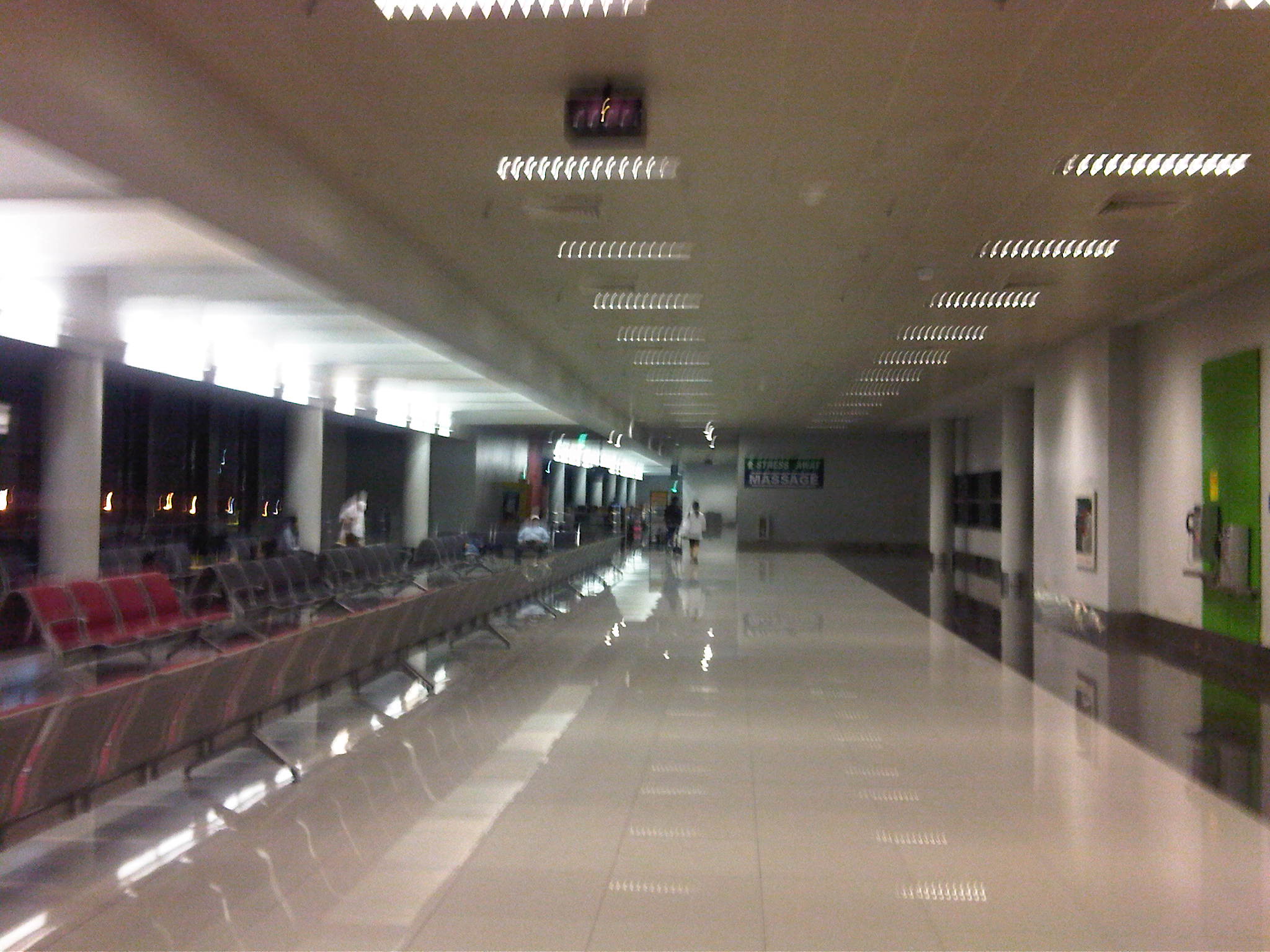 Our gate was at the end of the wing and there were few people when I arrived at the area. Other passengers can be seen napping across several seats as they wait for their flights to be called.
I guess its clear from the photos that Terminal 3 is clean and orderly though many facilities like the moving walkways are not currently operational and there is still the issue regarding the non-operation of the multi-storey car park for the terminal. Hopefully, such issues are eventually resolved and the full operation of the airport for international flights is indeed something to look forward to.
–
 Caught (up) in traffic