
Home » Posts tagged 'NAIA Terminal 3' (Page 5)
Tag Archives: NAIA Terminal 3
NAIA T3 Departures
This is one of the peak periods for air travel in the Philippines so the airports are pretty full with people departing and arriving from different places here and abroad. It was early morning yesterday and as I approached at the airport, I could see lots of vehicles driving off from the departure level of the terminal including taxis that have ferried passengers mainly for morning flights. It was about 4:30 AM when I arrived so the terminal was not as busy as it would be a few hours later.
I had some time to burn yesterday as I waited for the arrival of my wife at NAIA’s Terminal 3. And so I decided to take a walk around the terminal to check out the restaurants and coffee shops on the 3rd level. It turned out my favorite place was still closed and I didn’t think pizza, burgers or fried chicken would be a good idea at the time. I ended up walking around the terminal to get some exercise early in the morning and taking a few photos here and there of the queues at the check-in counters.
 Cebu Pacific handles a lot of flights nowadays as the top airline in the Philippines though it is a budget airline. At 4:30 AM, there were a lot of people lined up in front of their counters assigned to domestic flights. There were a lot more outside the cordoned off area and also outside the airport queued before the first security check for the terminal.
 There were even more people on the other side as Ceb Pac handled quite a number of flights to favorite destinations such as Caticlan (gateway to Boracay), Tagbilaran (gateway to Panglao) and Puerto Princesa (Palawan). Of course, there were the frequent flights to hubs like Cebu, Davao and Iloilo.
 AirPhil Express (formerly Air Philippines) also operates out of Terminal 3 but has less flights compared to CebPac. Its mother company, Philippine Airlines (PAL), is a full service airline with domestic and international flights to and from Terminal 2, which is also called the Centennial Terminal after being opened during the Philippines’ Independence Centennial in 1998. PAL Express, another one of PAL’s budget spin-offs, used to operate out of T3 but ceased operations in 2010 and was integrated into AirPhil Express.
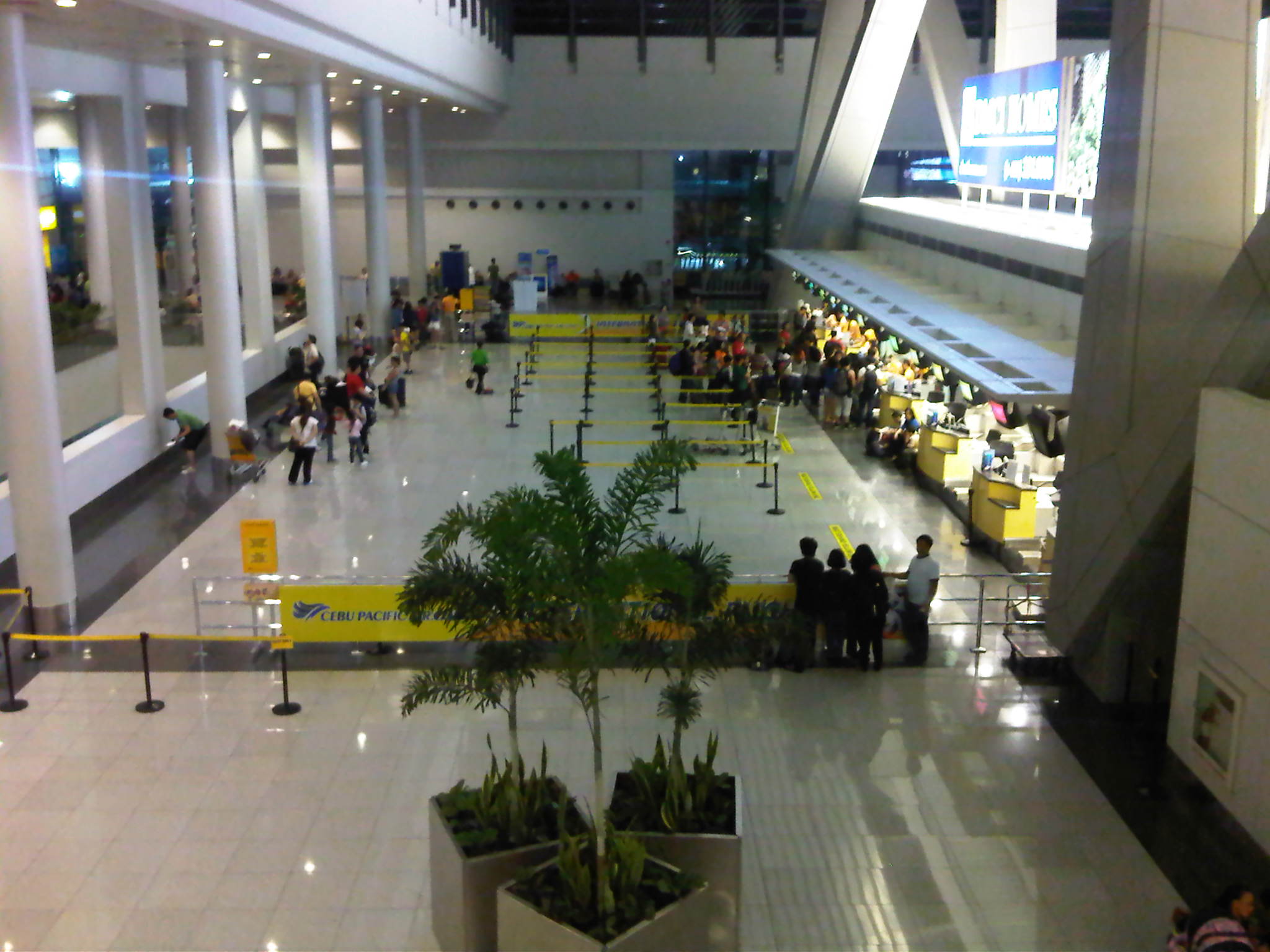 The queues for CebPac’s international flights were still short. I think they have few flights during the late night to early morning periods. These counters, however, will be busy later in the day considering the frequencies of service to destinations like Singapore, Hongkong and Bangkok. CebPac also flies to Korea, China and Japan and has recently opened direct flights to Cambodia (Siem Reap) and Vietnam (Hanoi and Ho Chi Minh).
I was not able to take a photo of the counters assigned to All Nippon Airways (ANA). I guess there might be no people there yet as ANA operates only two flights daily between Manila and Narita (from where it connects with a lot of flights to many other destinations including major cities in the US and Europe). Terminal 3 will be busier in the coming months and years as international flights increase and the Philippines tries to have its status upgraded in order for airlines such as CebPac to expand operations. Already in the sights of the airline are destinations in the Middle East, Australia and the US where there is a demand for a low cost Philippine carrier even counting only Filipinos living abroad. And with the country pitching its tourist destinations abroad, T3 will be expected to handle much of the traffic in this gateway in Manila.
–
Another look at NAIA T3 – arrival
Arriving at NAIA, aircraft may proceed to one of 4 terminals operating at the complex – Terminal 1 (international), Terminal 2 (international and domestic flight operated by PAL), Terminal 3 (Cebu Pacific, PAL Express and Air Phil Express and ANA of Japan). Despite the fact that the airport is fully equipped for servicing aircraft, most equipment apparently are not being used for various reasons including preserving such equipment for when the terminal will be in full operation. In certain cases such as the immigration and customs booths on the area designated for domestic operations, the equipment/furniture are not required at all. One common observation for most passengers using T3 is the non-use of the tube or air bridges by Cebu Pacific, which requires passengers to board and alight using the stairs and, in many cases, still require the same to climb back to the air bridge to walk to the arrival area!
 A common experience for domestic and international passengers is to board or deplane without the benefit of using the tube or airbridge of Terminal 3. This was apparently to shorten boarding and alighting time for faster turnarounds for Ceb PAc. I was to learn later that there also aren’t enough airbridge operators at the terminal.
 An inutile airbridge at Terminal 3. It seems these are not used by airlines for one reason or another – a definite disbenefit to passengers.
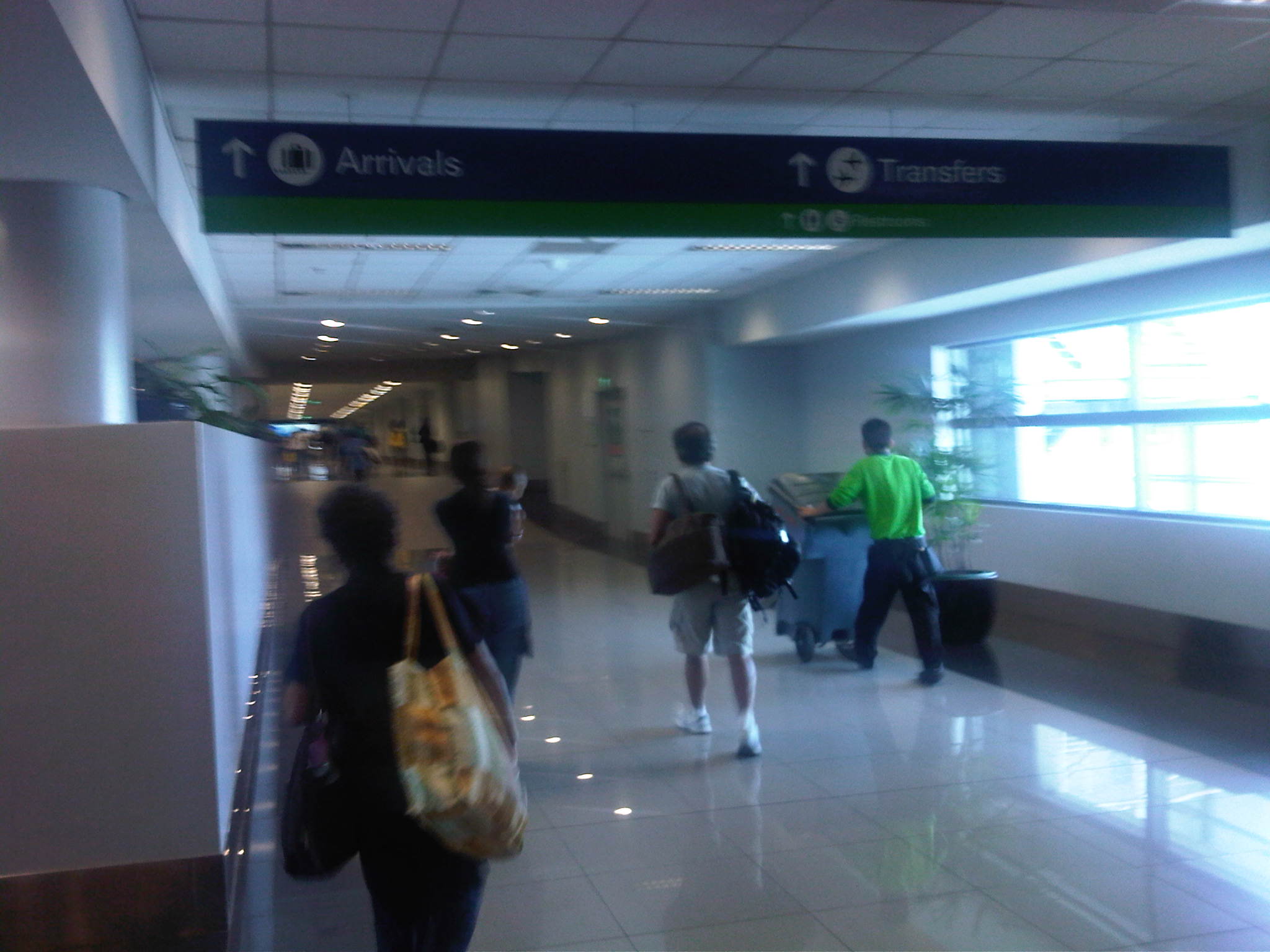 It’s a long walk from the tarmac to the baggage claim area. For passengers on international flights, they would have to go through immigration first after the long walk.
 Long hallways without the benefit of moving walkways are always an inconvenience to passengers, some of whom would probably require assistance. Of course, there are passengers who opt to cheat with their carry on allowance so one can say they should blame themselves when burdened with more than what is allowed for carry ons.
 Immigration booths on the domestic wing of T3 are unoccupied and probably should be reconsidered in case the airport will continue to be used for both domestic and international operations.
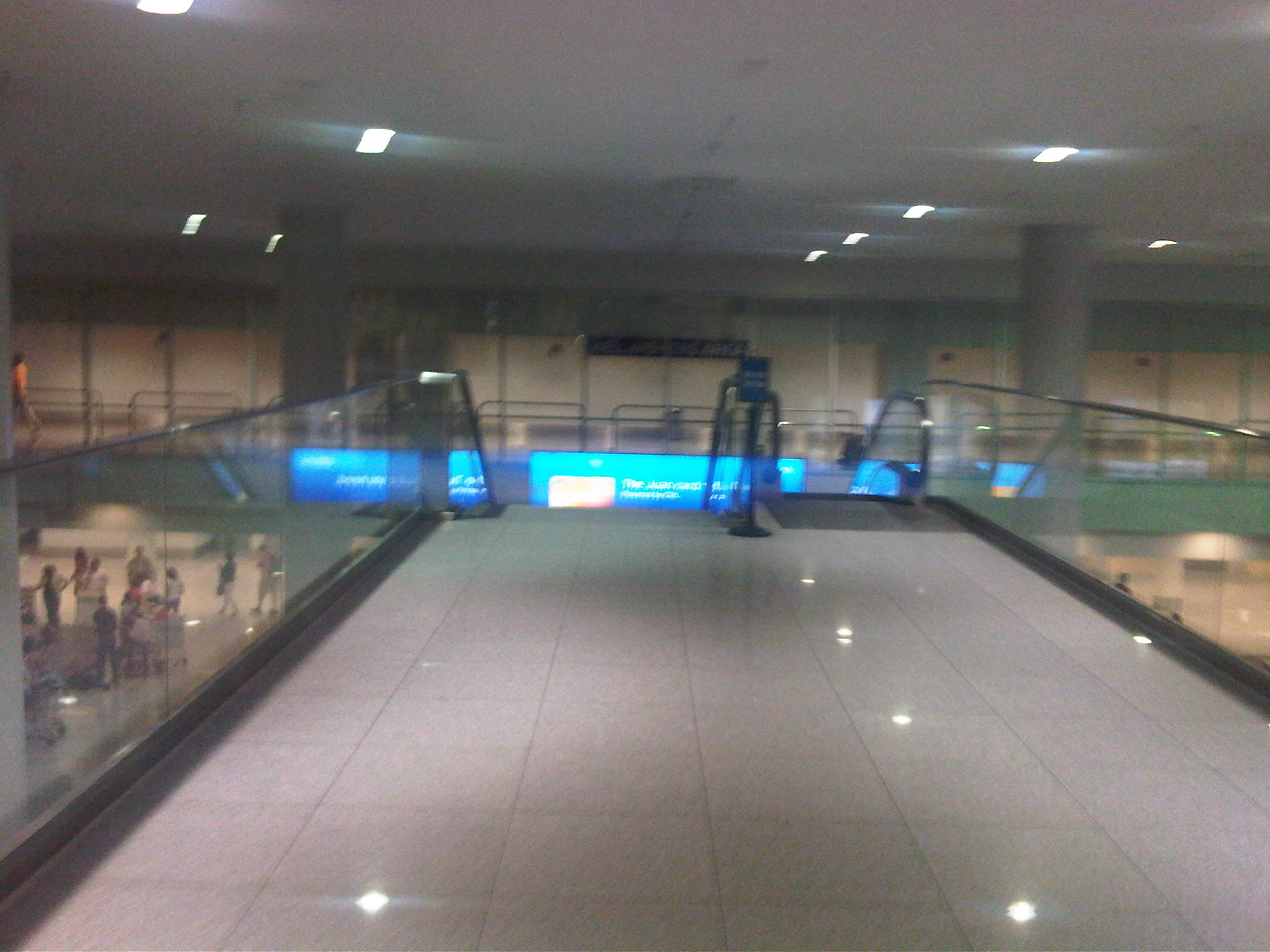 Past the immigration area, passengers would descend via stairs or escalator to the baggage claim area.
 Passengers waiting around the carousel – there was a time when one had to pay for the use of carts. Fortunately, that was scrapped during the last decade.
 Notice to passengers picking up their baggage from the carousel. T3 personnel do not check the baggage tags when passengers exit the area. The same is true for T1. Only in T2 (Centennial Terminal) do staff strictly check baggage tags, minimizing the chances of one’s luggage being taken (mistakenly or otherwise) by other people.
 First bags out unto the carousel
 Spacious area for baggage claim – there are actually several carousels but airlines use only 1 or 2 carousels despite so many flights being handled by T3.
 Since T3 was originally conceptualized as an international terminal, the wing used for domestic operations still have an area for customs operations. Like the immigration booths, these are unmanned and passengers just breeze through to exit the arrival/baggage claim area.
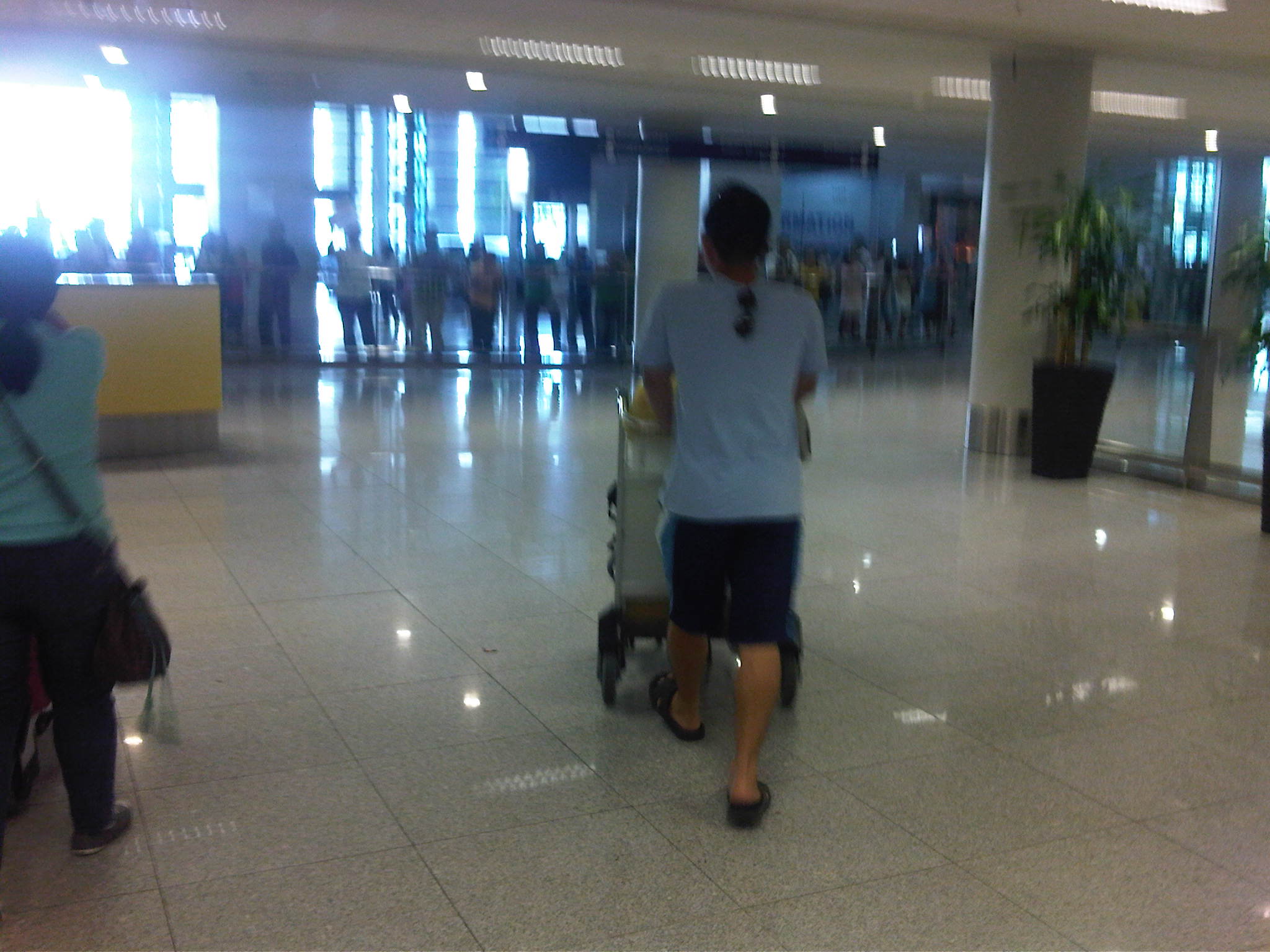 View for passengers exiting from the baggage claim and/or customs – one can easily see people waiting for arrivals, some with signs bearing names of persons they are meeting.
–
Another look at NAIA T3 – departure
With the recent withdrawal of charges by PIATCO, the full operations of NAIA’s Terminal 3 should be underway. Until now, the operations of the terminal has been at best limited despite the increasing number of flights being handled by the terminal with the continuing growth of Cebu Pacific and the addition of Japan’s All Nippon Airways (ANA) to the few airlines that have made Terminal 3 their home in the Manila. With plans for the much maligned Terminal 1 to be renovated and the impasse on what to do at Clark, it is expected that more international flights will be handled at T3. Following are photos of the Terminal 3 North Wing departure area from a recent trip. The North Wing handles the domestic flights while the South is for international operations.
 Departure area along the linear Terminal 3’s North Wing
 There are already many passengers taking the early morning flights. This photo was taken at around 4AM and shows shops to the right along the corridor and the seats lined up along the left. The walkalator or conveyor was not functioning just like at the other wing (I am unsure of the reasons but this was probably to reduce operations and maintenance costs.).
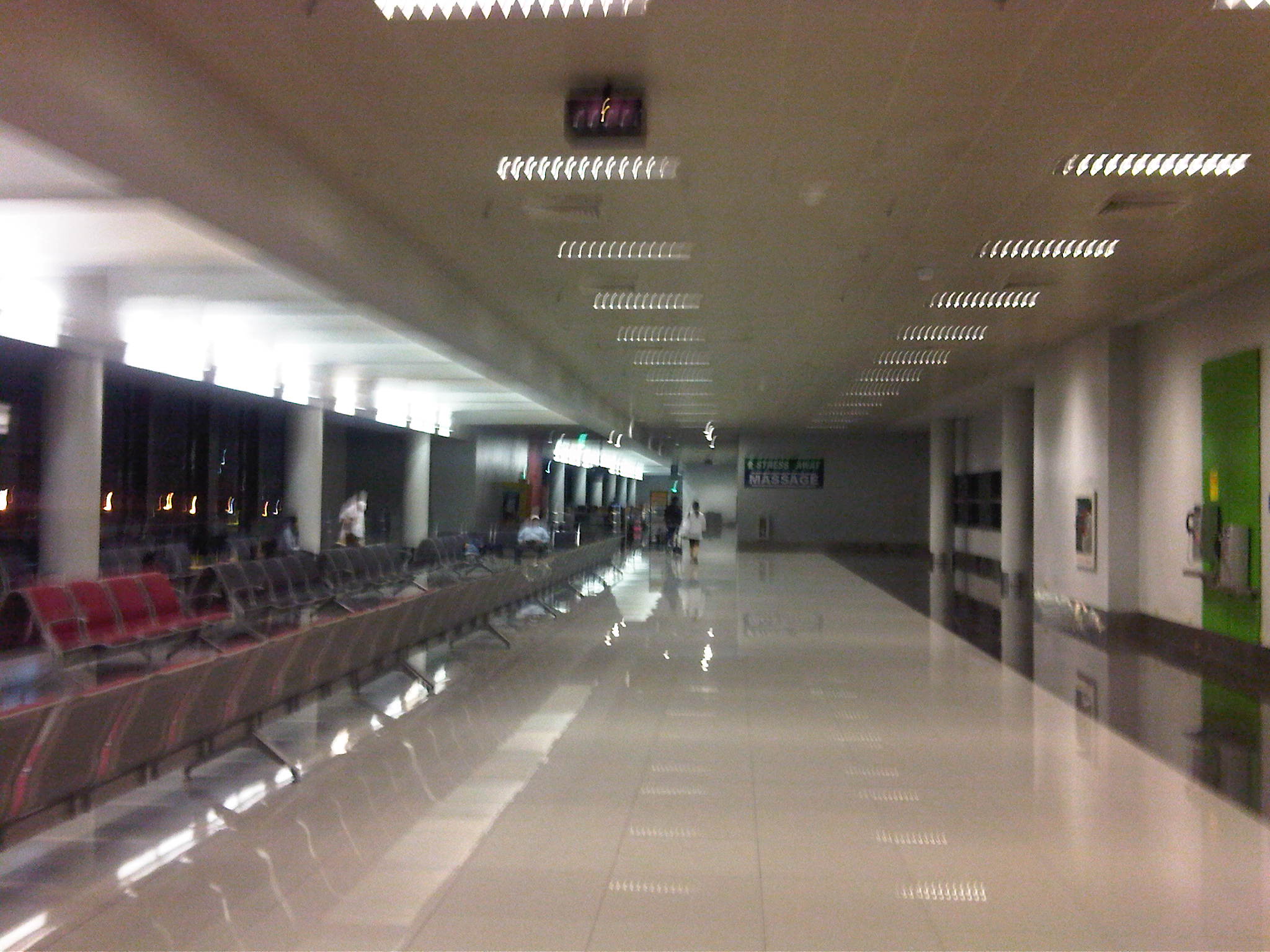 Our gate was at the end of the wing and there were few people when I arrived at the area. Other passengers can be seen napping across several seats as they wait for their flights to be called.
I guess its clear from the photos that Terminal 3 is clean and orderly though many facilities like the moving walkways are not currently operational and there is still the issue regarding the non-operation of the multi-storey car park for the terminal. Hopefully, such issues are eventually resolved and the full operation of the airport for international flights is indeed something to look forward to.
–
Some thoughts on airport parking for NAIA T3
I had another unpleasant experience parking at NAIA Terminal 3 just before Christmas. It seems its getting more difficult to park at the airport every time and authorities have yet to address the parking problem despite the solutions staring them in the face. I would like to believe that the typically higher demand for parking during the Christmas season can be accommodated if the available parking space can be managed and equitably allocated for users of the terminal.
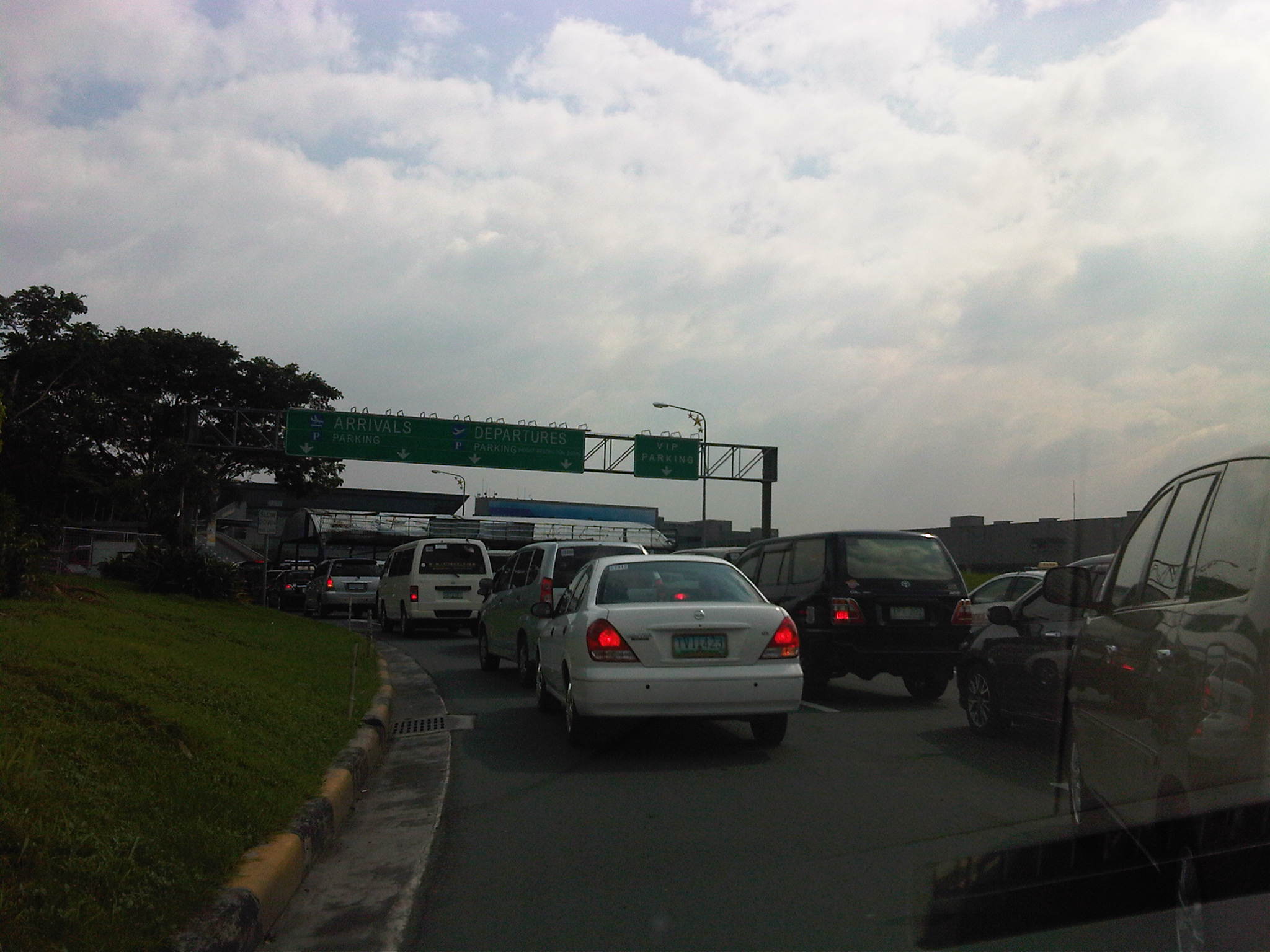 Queue at the entrance to the airport – the guards were still inspecting each vehicle but they had to wait for these to inch towards them at the inspection point.
 While the signs seem to suggest different parking facilities for arrivals and departure, there is actually one large open parking lot located in front of Terminal 3. This lot is segregated among airport taxi services, employee parking, overnight parking and general parking. Meanwhile, the parking area to the right side of the ramp to the departure area is generally empty but for a few vehicles that are said to be owned by employees of the airport. This is quite odd considering they also have a lot of parking space for them
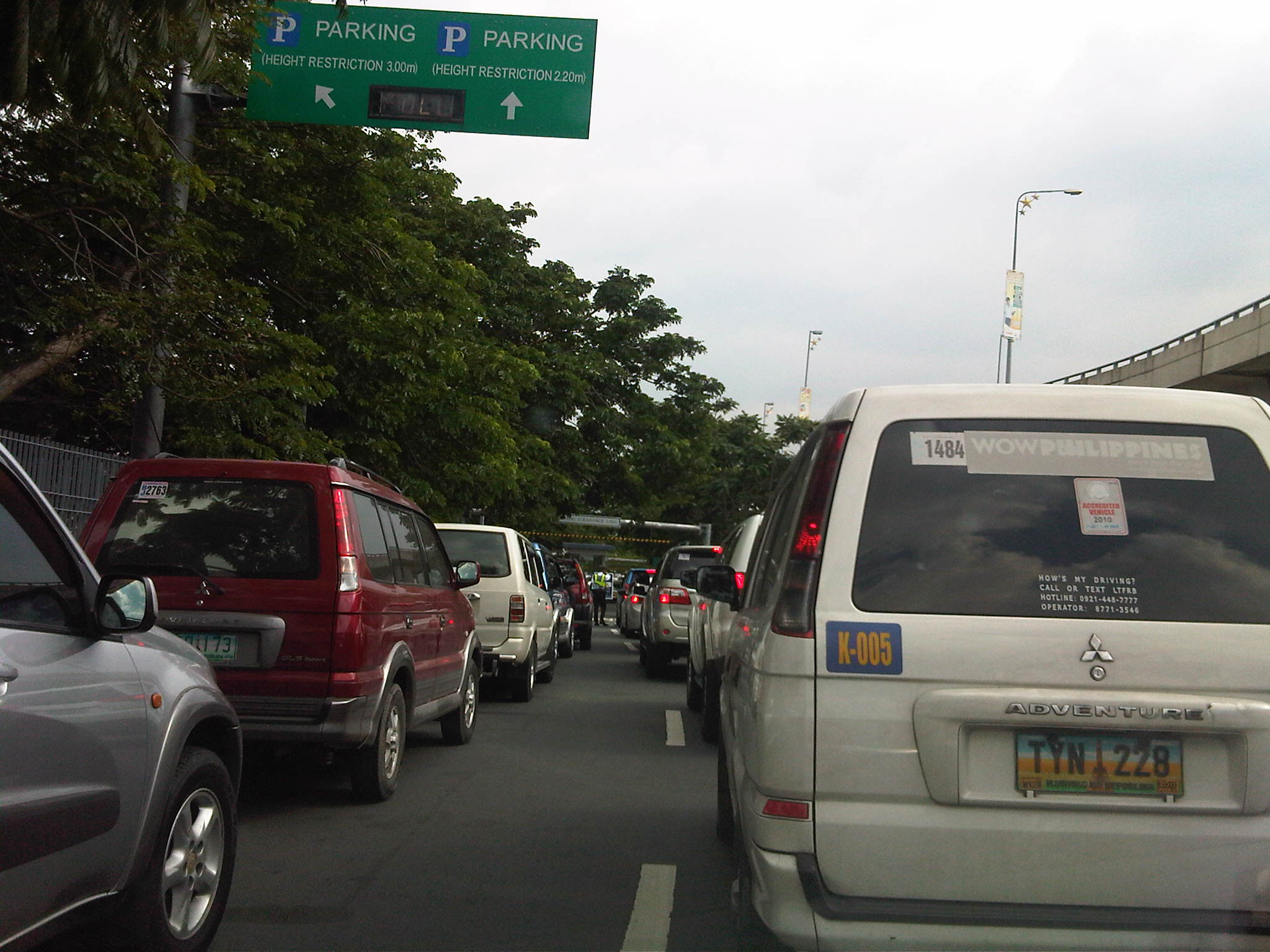 Everyone had to wait for the security to wave them through to to parking lot. Others were content with staying inside their vehicles while waiting to pick-up their passengers.
In the end, I had to rush to the airport terminal after parking my car as my wife’s plane was already arriving. I wasn’t able to take more photos of the parking situation that day but knew I had other opportunities to do so in the near future. That future was when I was back again recently at Terminal 3 when I drove someone to the airport for an outbound flight after the Christmas break. The queue at the gate was much better and we were able to enter the parking area without a glitch. There were many spaces available but these were mostly along the fringes of the lot, with some requiring a few minutes walk to or from the terminal.
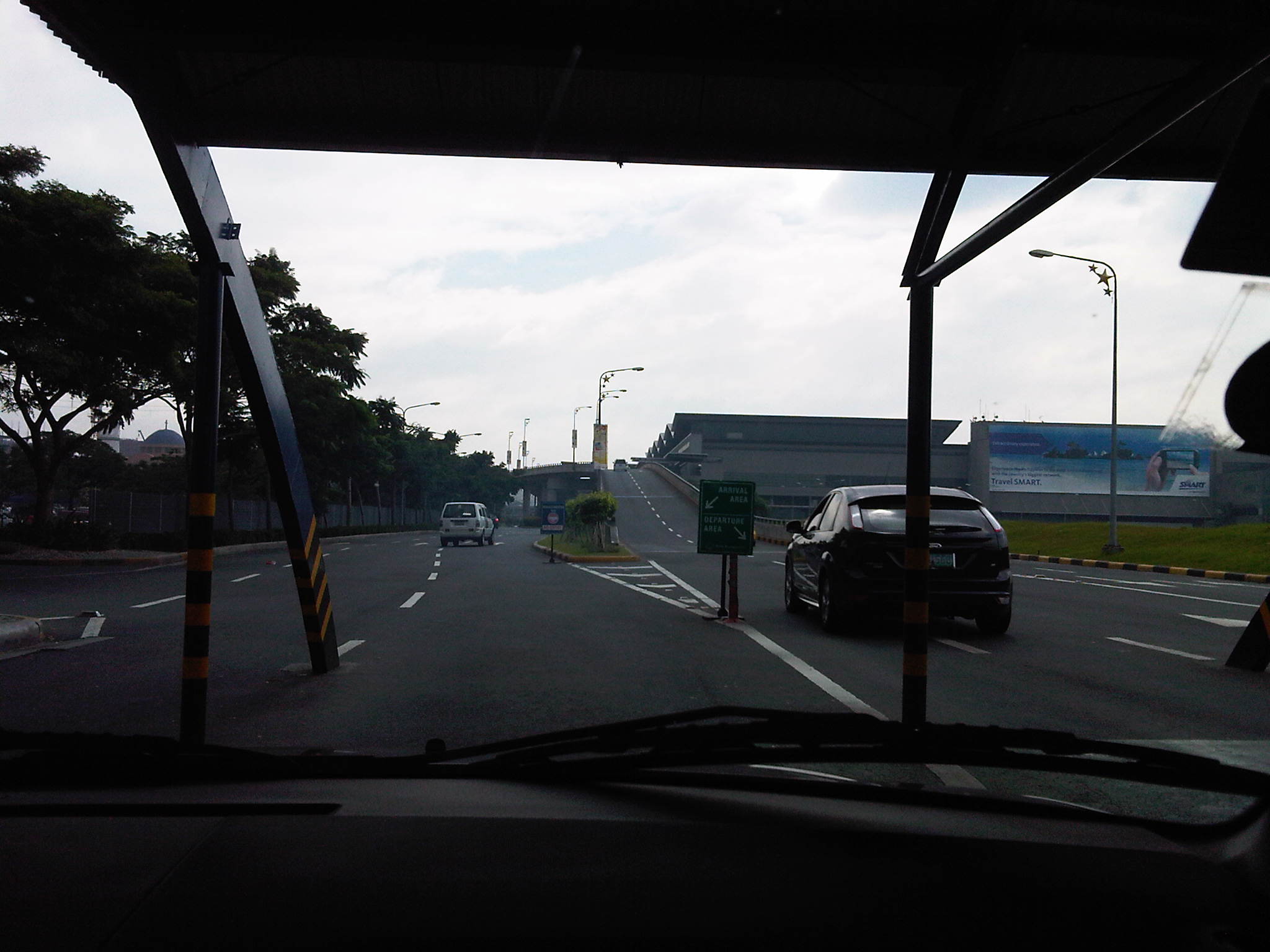 View from the inspection gate with the on-ramp for the departure level to the right and the driveway to the parking and arrival areas to the left.
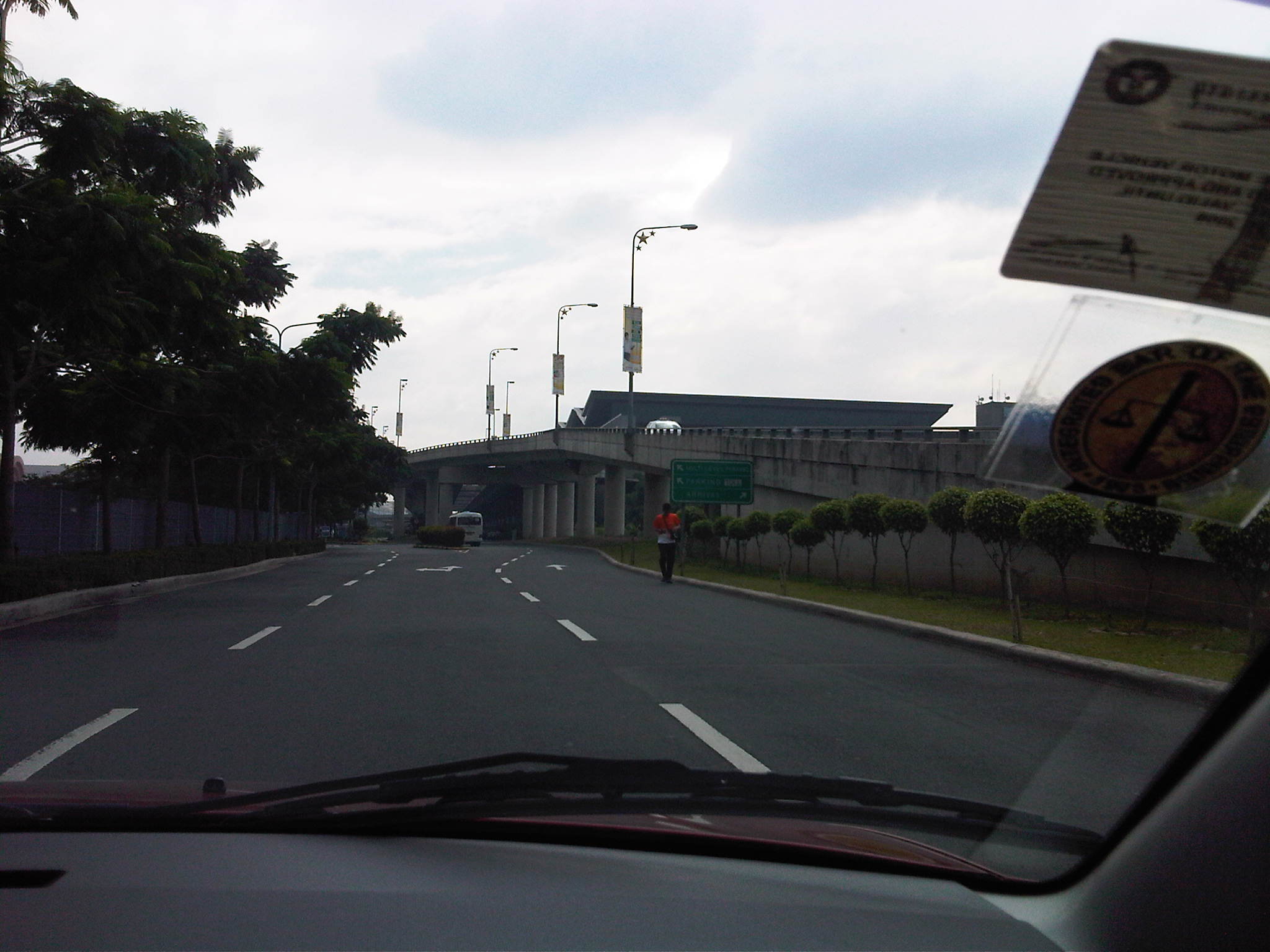 The way to the arrivals driveway (right) and the parking lot (left) was unlike the condition shown in the earlier photos taken just before Christmas.
 There was a sign stating that the overnight parking area was full. The overnight parking area for those who opt to leave their vehicles until their return is actually the driveway on the right side of the photo that eventually leads to the on-ramp for the multilevel parking building that until now has not been opened for various reasons. To the left is the driveway to the parking lot.
 Those vehicles lined up in the photo are not part of a queue for arrivals. These are parked along the driveway designated for overnight parking.
 Meanwhile, these are vehicles at the parking area designated for the general public.
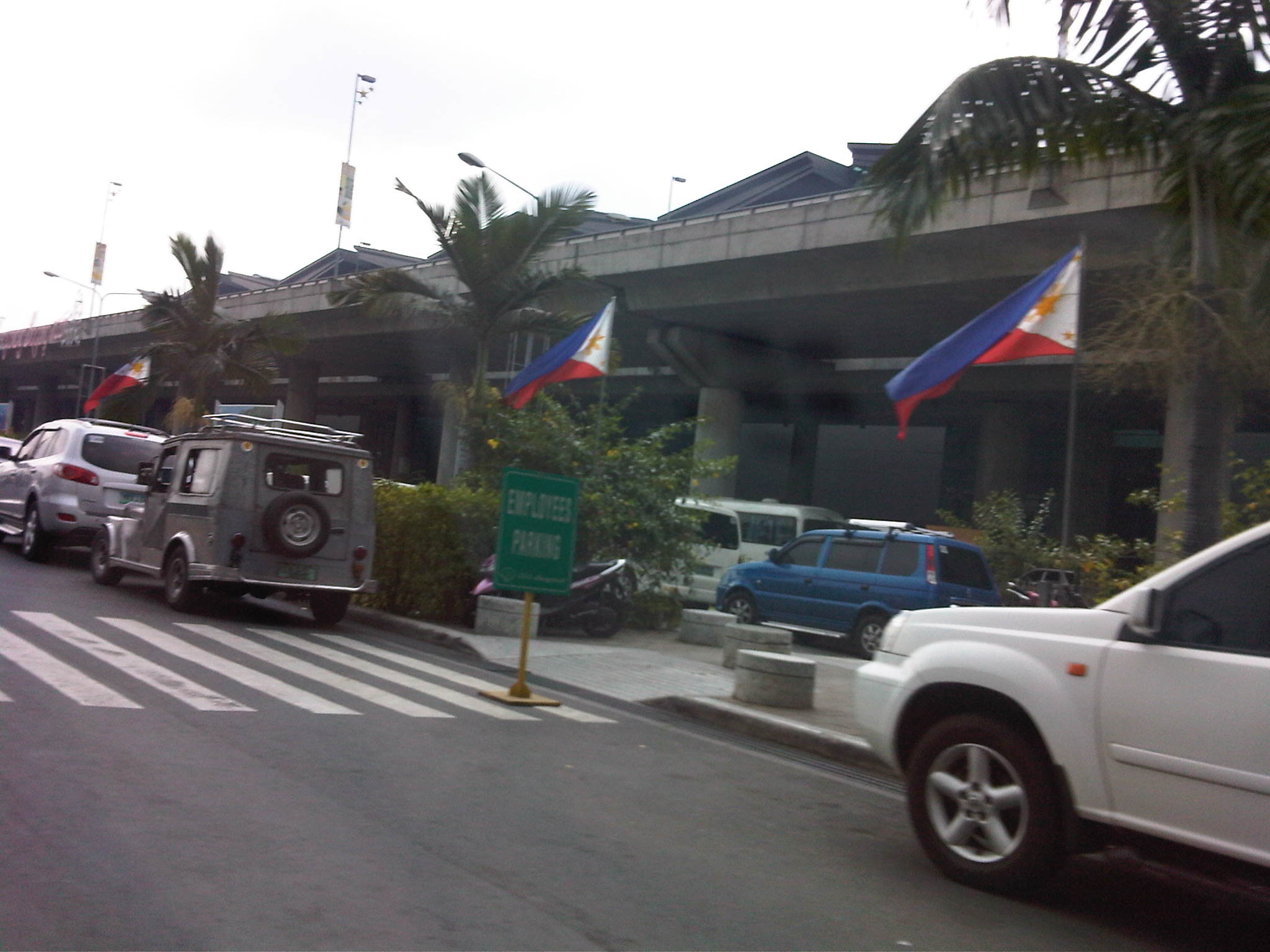 There seems to be a lot of signs for “Employees Parking” when airport authorities should prioritize space in this area for passengers and well-wishers. There are other under-utilized areas better suited for employees. I also wonder just how many employees actually have cars.
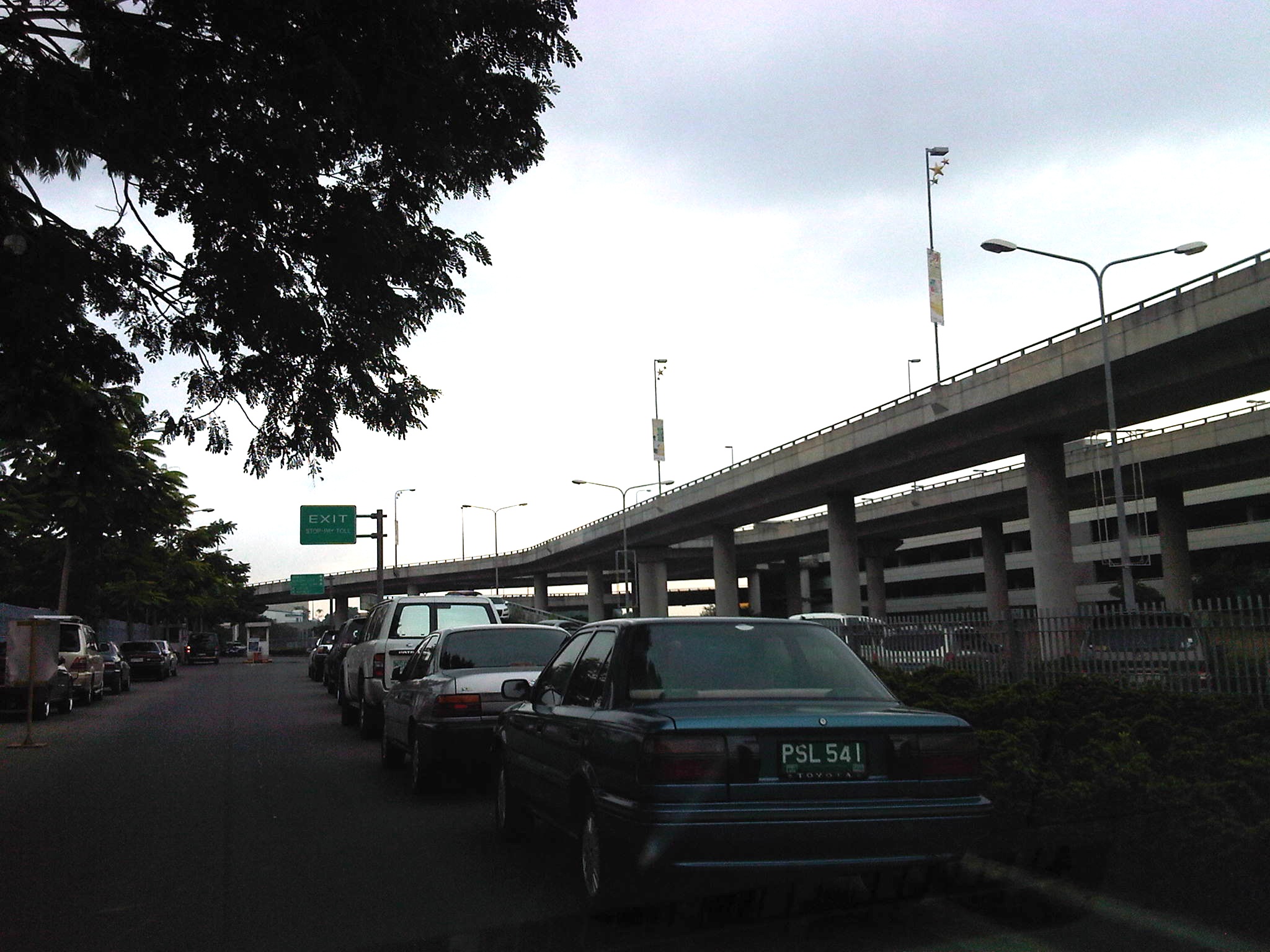 Turning towards the exit from the parking facility, one is greeted by more vehicles parked along the curbside (both sides of the driveway, actually). The fence separates this driveway from another that leads to the ramp to the multilevel parking building that is visible on the right side of the photo. This latter driveway also has vehicles parked along its length, which is allocated for overnight or long term parking. Above is the ramp from the departure level.
 In this photo, the ramp to the multilevel parking facility can be seen clearly and is occupied by parked vehicles. I still wonder how long it would be and what it would take before NAIA Terminal 3 finally makes the parking building available for use of the general public when, according to some sources, there are no structural issues barring the use of the building. Meanwhile, there is already an obvious demand given the evolving preferences of travelers with their own vehicles.
 Motorcycle parking at the fringe of the parking. This is actually another driveway utilized instead for motorcycles.
The layout of the open parking lot at Terminal 3 can be seen via Google Earth as shown in the image below. The area designated for public parking (center to right before the off ramp from the departure level) is conspicuously full while there seems to be a lot of spaces available in the area allocated for taxis and airline and airport employees (left in the image and prior to the on ramp to the departure level). There is also a relatively spacious open lot to the left and adjacent to the terminal building itself. This seems to be reserved for employees (again?) and VIPs. While the last area may be allocated for employees and VIPs, I would like to point out that more parking spaces should be allotted for travelers and well-wishers. Questionable for me is the allocation of so many spaces for taxis and vans that seem to be using the lot as their depot. I seem to remember that these public utility vehicles should have their garage somewhere and not necessarily at the airport where they seem to be lording it over “regular” taxis. These airport taxis charge significantly higher if not exorbitant rates compared to the typical taxi and to some, their preferential treatment at the airport is at the expense of passengers and well-wishers who certainly deserve better public transport service.
 Layout of NAIA Terminal 3 (image from Google Earth)
In the image above, the building with the light-colored roof to the right of the terminal building is a multilevel parking facility. The parking building is directly connected to the terminal and is accessible via the southeast wing of the terminal. I am not aware of the capacity of this facility but based on what one can see from the outside, its 5 levels should be able to accommodate quite a lot of vehicles and offer other opportunities for business (e.g., car wash, small shops, etc.) much like what is already available in similar facilities found in shopping malls.
[Note: An news article appearing on January 27, 2012 states that the parking building has a 2,000 car capacity while the open area can hold 1,200 cars. I assume these numbers refer to the number of spaces and do not include waiting or circulating vehicles.]
–
 Caught (up) in traffic