
Home » Posts tagged 'policy' (Page 10)
Tag Archives: policy
Alternatives for the delivery of public transport services in the new normal
No, this is not a dissenting opinion on service contracting as proposed by a coalition of transport advocates. Rather, I write about other options or alternatives that can be taken on by the government in collaboration with the different sectors or players involved in transportation. Other options have not been discusses as extensively as would have been desired and ultimately weighed for application.
Allow me to rattle off a few options stated in the position paper by the Transportation Science Society of the Philippines (TSSP):
- Service contracting – which some groups have proposed and lobbied Congress for Php110 billion funding. This implies a government selecting a few among hundreds of bus operators and thousands of jeepney operators – a process that is bound to be controversial; whilst needing the mobilization of a performance audit and monitoring unit in a government agency. Economic literature is replete with studies that subsidy to producer (i.e., operator) produce bad outcomes over direct subsidy to consumers (i.e., commuter). In this regime, financial risks are borne by the government or authority.
- Fuel subsidy – the government was already implementing the Pantawid Pasada Program before ECQ. It incurred Php2.372 billion subsidies in 2019, up by 243% from Php0.977 billion in 2018. At the pump, the fuel subsidy equates to Php1.00/liter discount. Now, the DoTr is proposing a 30% subsidy which it estimates to be Php1,152/PUB and Php366/PUJ. These amounts are NOT commensurate to the theoretical drop in revenues at 50% load limit. Worse, free fuel leads to bad outcomes, as it would encourage higher fuel use and siphoning off to other modes.
- Free Fare – this proposal is intertwined with the service contracting model and may be counterproductive to the objective of social distancing. It is a policy that encourages unnecessary travel and crowding – which the distancing rule seeks to minimize. The government needs only to look on ridership on LRT/MRT on free-fare days against regular working days.
- Direct Subsidy to Commuter – in this scheme, the operator is allowed to increase its tariff by an amount sufficient to compensate for the 50% volume cut. However, the passenger only pays the same fare level that he paid before ECQ. The government pays the difference. When paired with the Automated Fare Collection System (which LTFRB has required under MC-2020-019 dated 14-May 2020), it is the most efficient method, and is immediately implementable. Subsidy is targeted, rather than all-encompassing. It promotes the wider adoption of AFCS on all public transport, not just on MRT/LRT. Senate Bill No.1417 seeks to fund, among others, for transportation vouchers; this could be disbursed rapidly via the AFCS card
Another idea is the purchase of new model jitneys to replace old jeepneys – this is an idea that I have posted and have discussed with former and current officials of the DOTC/DOTr before (matagal na itong idea na ito). You purchase say 1 modern jitney at 1.6million pesos/vehicle (note: other models are more expensive, exceeding 2M per unit) and replace the old, conventional jeepneys. It will not be free but payment for the vehicle will be deferred until after the transport crisis brought about by the pandemic clears out. The old jeepneys would be part of the collateral and perhaps still have some utility in them to be used for other purposes (freight?). Think about it. How much pork does your typical congressman and senator have? They could probably use this to modernize public transport in their respective constituencies!
It is important to have a lot of ideas out there instead of just one that is being pushed as the only option. In truth, there should be a combinations of solutions as there will not a be single one applicable and effective to all cases and situations. At this time, I am not sure that these options are being considered by the DOTr. The agency and the LTFRB are proceeding with rationalization and modernization simultaneously, at their own pace and at their own terms, taking advantage of the conditions and situations brought about by the pandemic. While it seems to be the ‘perfect’ opportunity to do rationalization and modernization, it might be immoral and inappropriate given the circumstances that doomed a lot of families who depend on public transport operations for their livelihood.
–
On mass transit and active transport
I recently gave a talk on transport in the new normal. There are a lot of materials that you can refer to if you want good visuals for a presentation. It helps to capture the attention and maybe the imagination of your audience, which in this case was varied. While I assume many to be in the physical, chemical & social sciences, and engineering, I knew that there were also people from media and those who were just interested in the topic. And so I made sure there were a lot of infographics mixed in with bullet points to drive the message clear about mass transit systems being the backbone of transport in highly urbanized cities, conventional transit like buses and jeepneys supplementing and complementing these, and active transport enabled and encouraged as a safe option for many.
I wasn’t able to include the following graphic shared by a friend advocating bicycle use especially for work and school trips. The following graphic comes from TUDelft, which is among the major universities in the forefront of research in transit and cycling. Clicking on the graphic will take you to their Facebook page and more links to their programs.

Note the essential information relating bicycles and transit in the graphic. Do we have similar data in the Philippines (or at least for the National Capital Region)? I hope this stirs interest for research work. There are a lot of topics to take on including even data collection to capture the information required for substantial studies on cycling, transit and their relationship.
–
Why cycling or bicycles are good for the economy?
You saw that meme shared in social media where they say “why bicycles are bad for the economy”? There’s some humor there but it doesn’t necessarily convince many people to support cycling or biking over motor vehicle use.
Here goes one and note the logic:
“Cycling or bicycles are good for the economy because…it helps reduce car use/dependence. That means less dependence and expenses to fossil fuels. That means more money available to the household for more important stuff like food, homes and education.”
Can you come up with something like that?
 Workers on bicycles crossing the Marcos Highway bridge from Marikina towards Quezon City.
–
On the importance of public transportation post-pandemic
I am sharing another article from Todd Litman that appear yesterday:
Litman, T. (2020) “Lessons from Pandemics: Valuing Public Transportation,” Planetizen, https://www.planetizen.com/blogs/109584-lessons-pandemics-valuing-public-transportation?fbclid=IwAR2jduFuYoyf_MoksI2Th4UoWtQYMQVOdwHuiih8JM9NxMN5pT_e1lwhgDQ [Last accessed: 6/13/2020]
The article contains material derived from previous work by the author and provides a list (and links to) resources or references related to this topic.
–
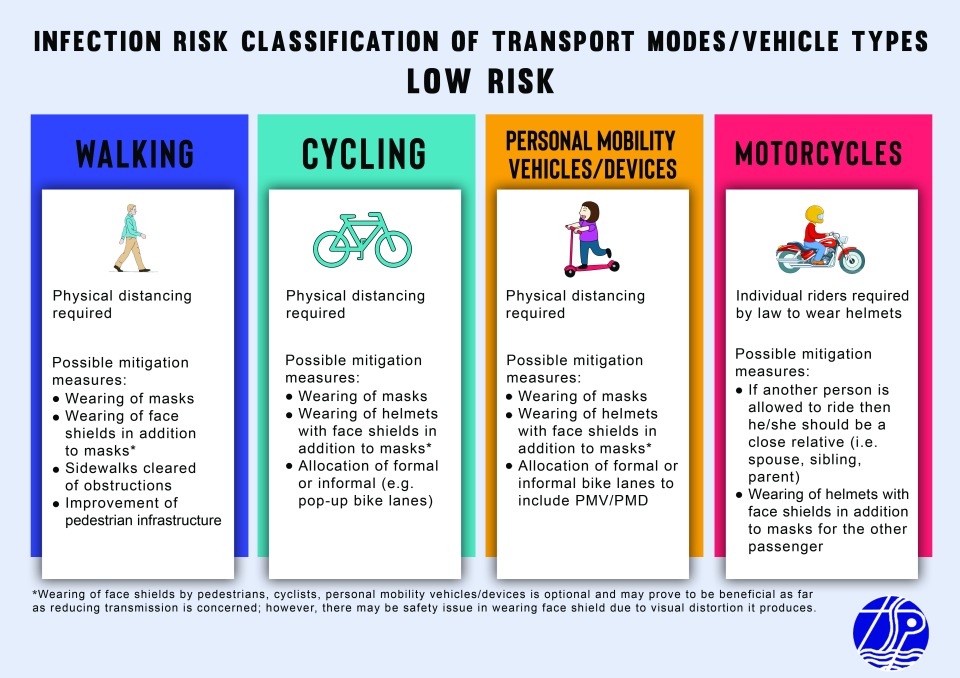
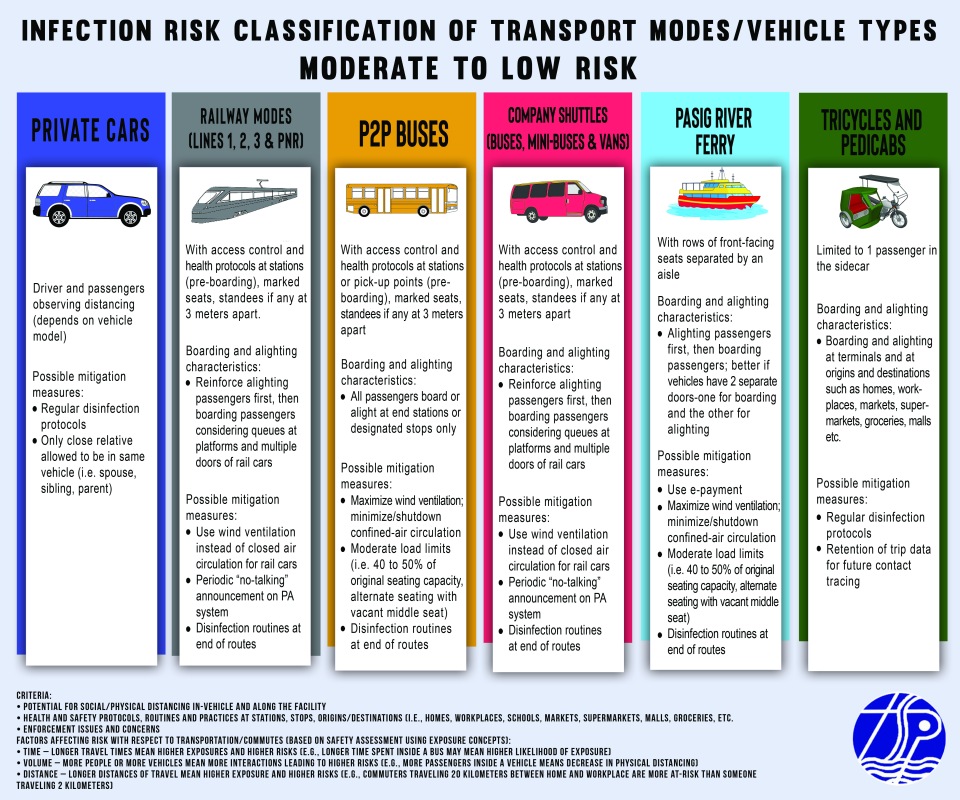
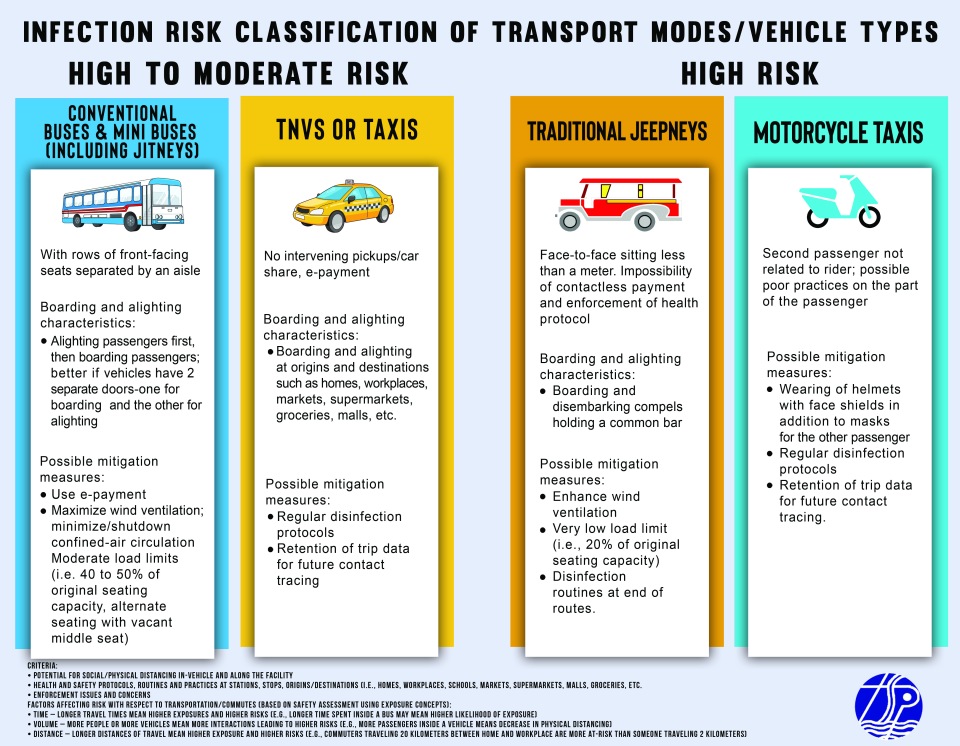
Infographics: Infection Risk Classification of Transport Modes Post-ECQ
The infection risk table I posted a few days ago was improved into the following infographics:
–
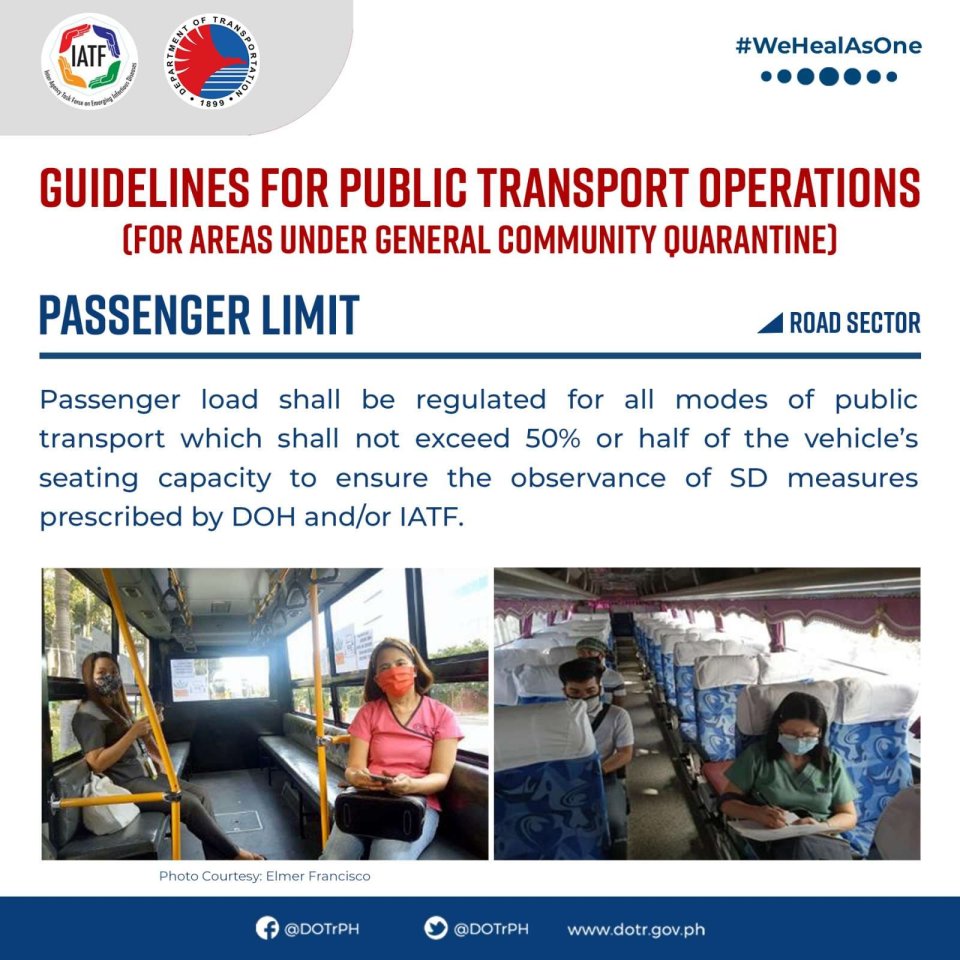
On the DOTr GCQ Guidelines for Public Transportation – Road Sector
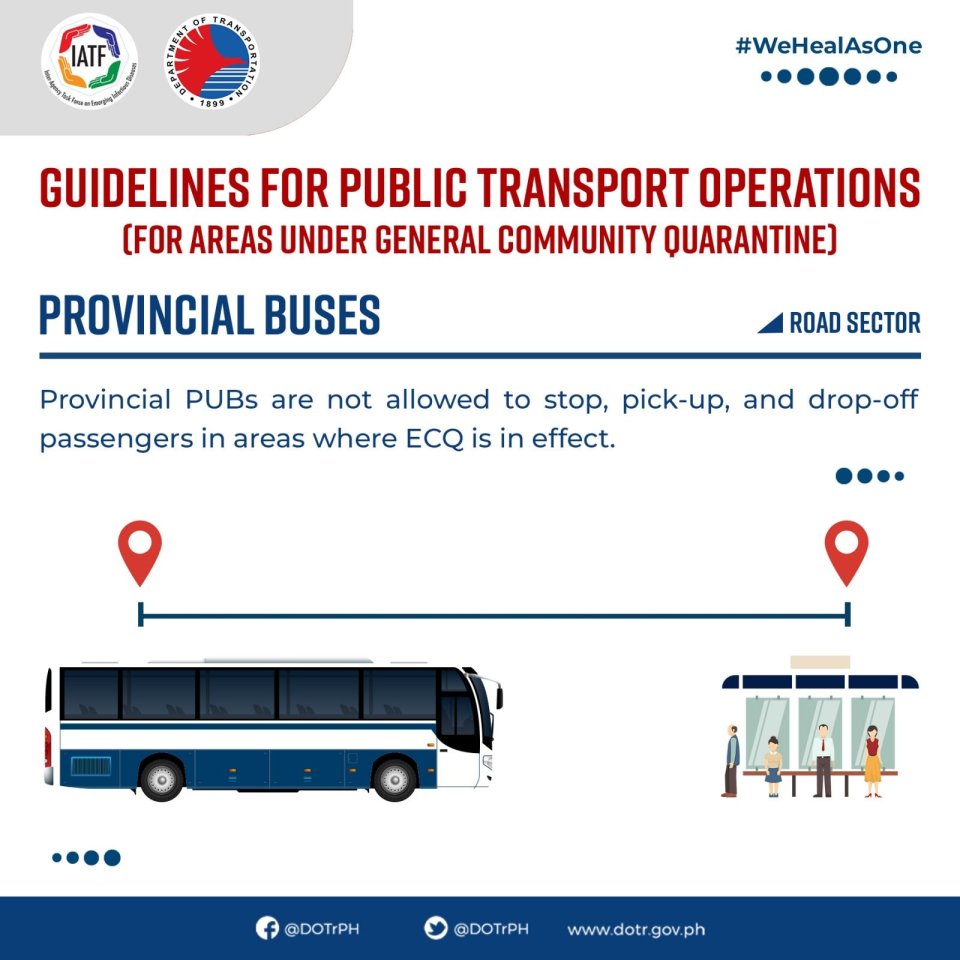
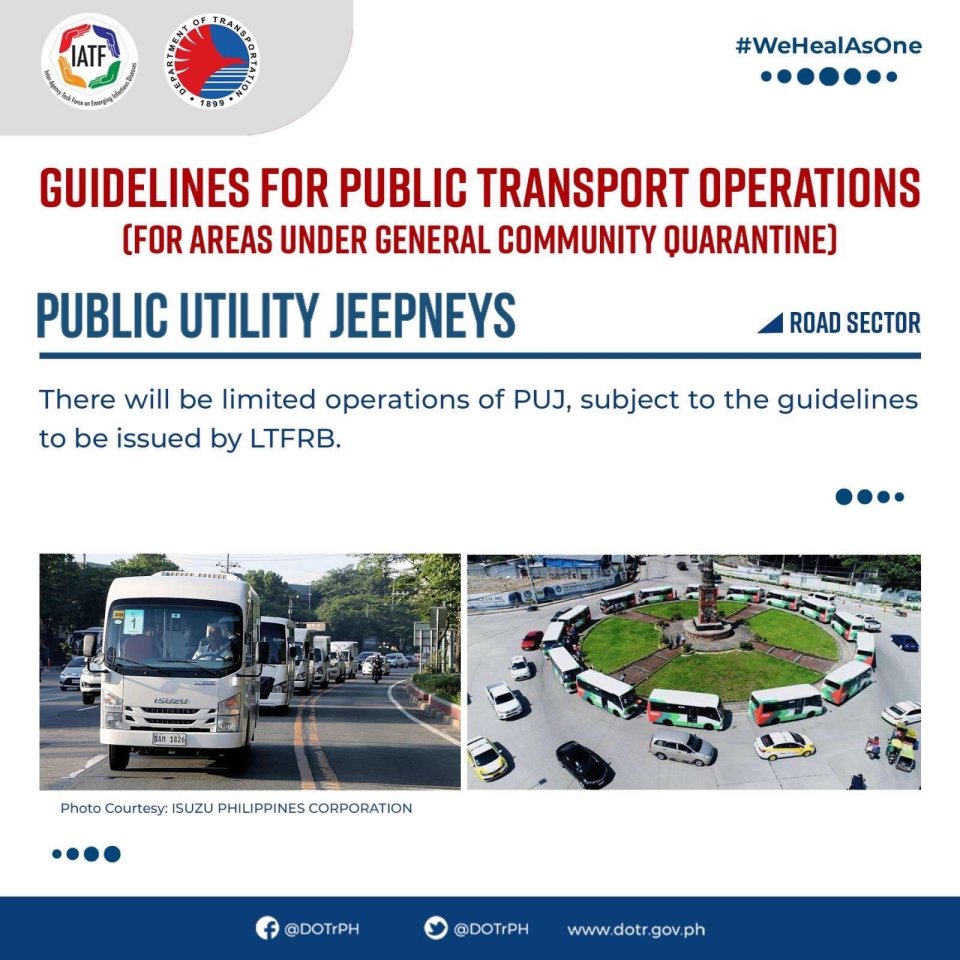
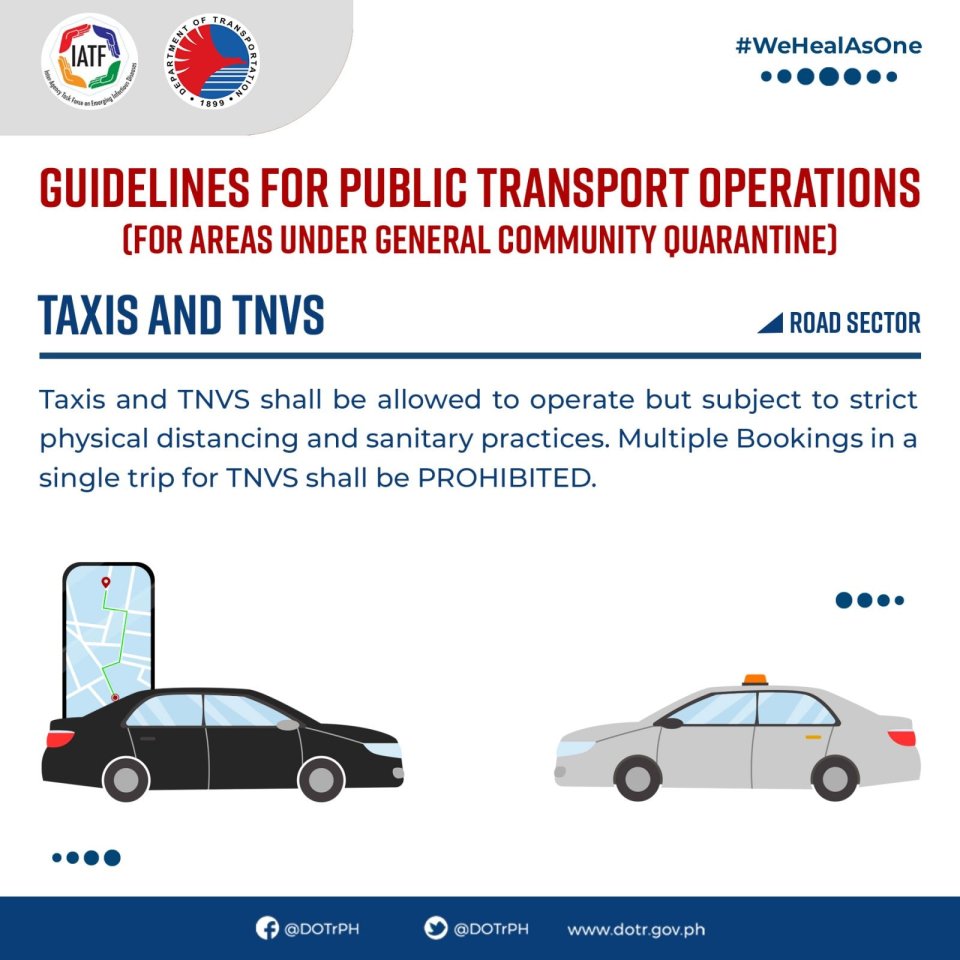
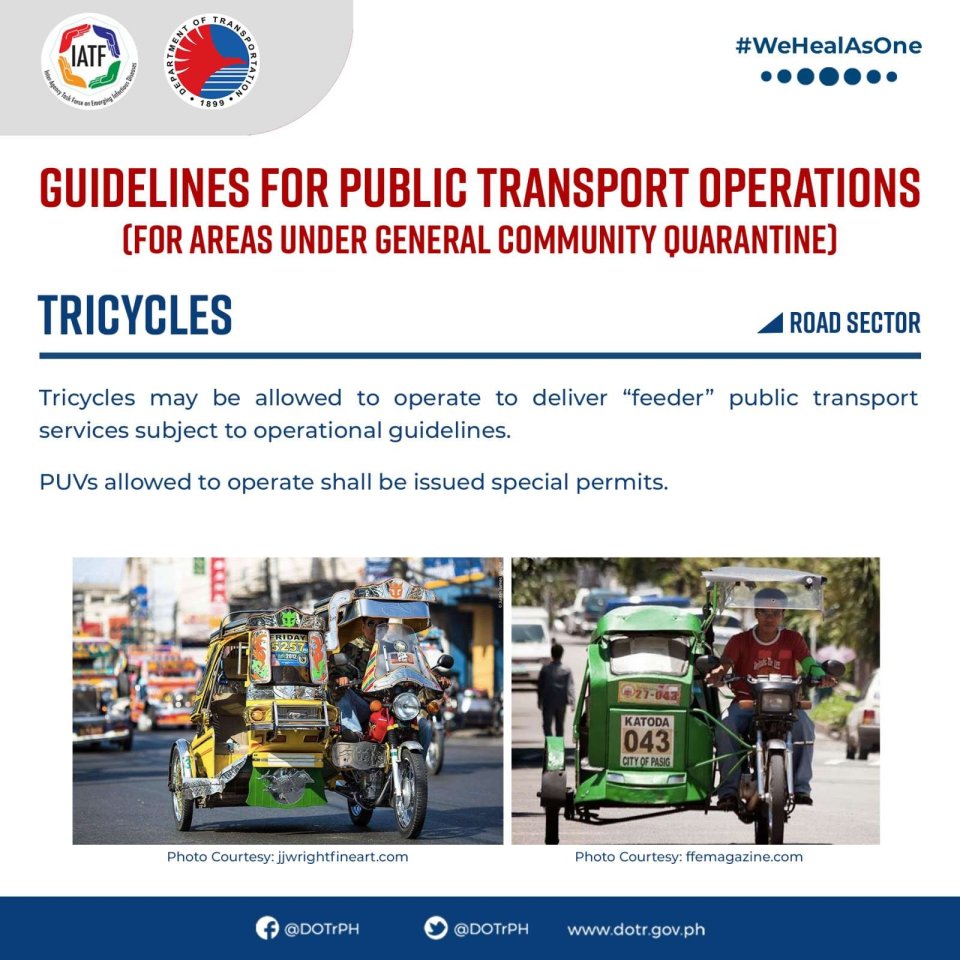
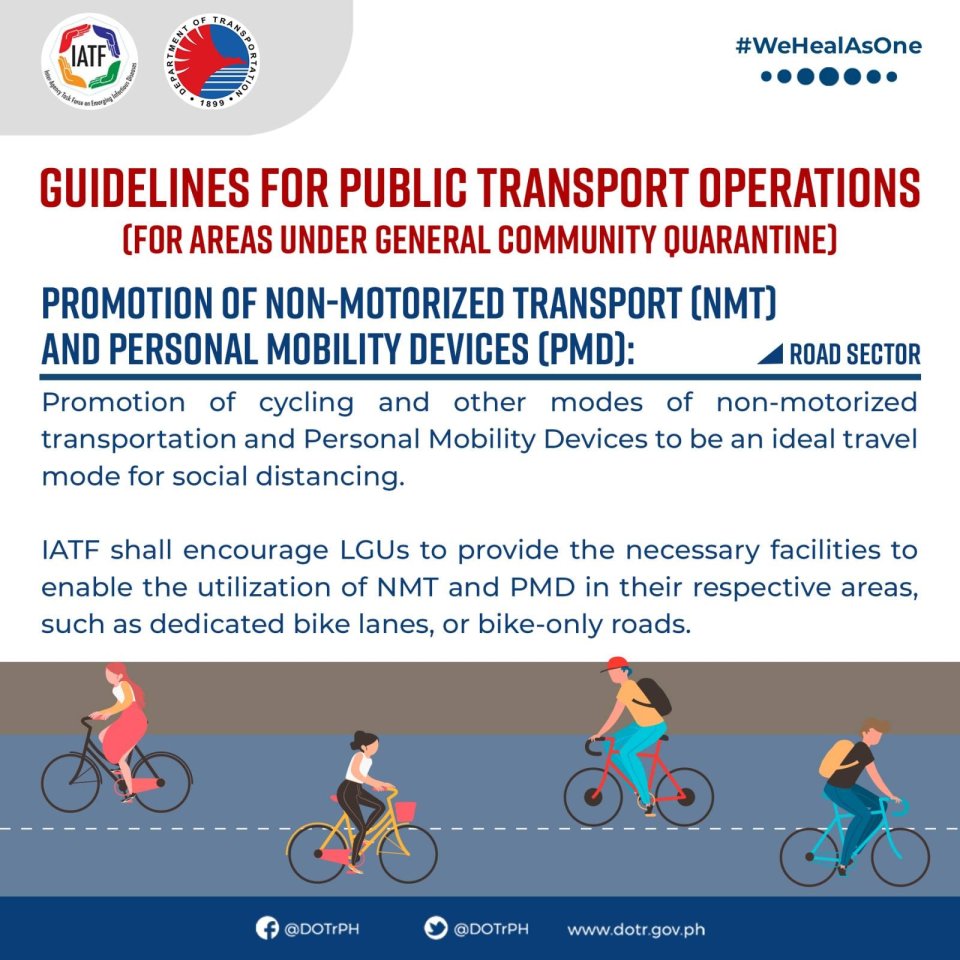
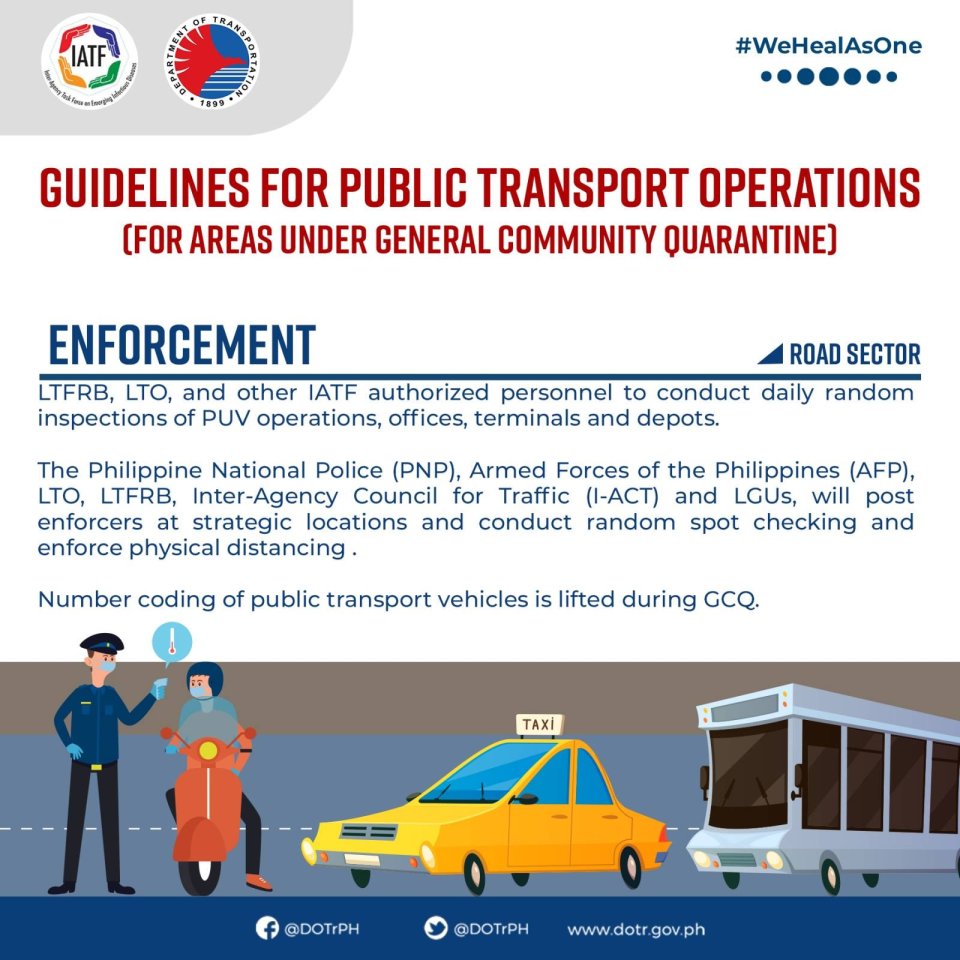
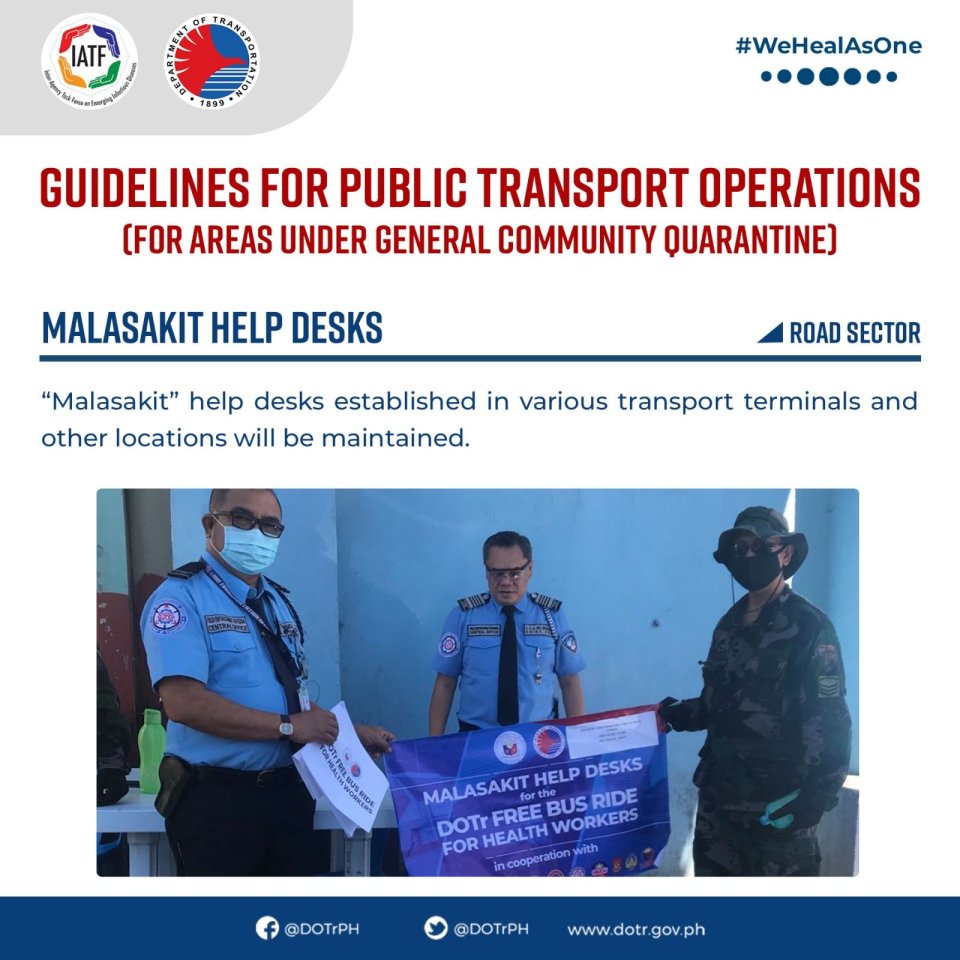
I just wanted to post, share and document here the DOTr’s Guidelines for Public Transport Operations for areas under General Community Quarantine (GCQ). The images are self explanatory so I will not discuss these nor will I offer a critique at this point. The following are public and posted on DOTr’s social media pages (i.e., Facebook) and have been shared and circulating among the public. I also post it here for future reference as I do to many other references like articles and infographics.






–
On car-shaming and reducing car use
Here is another article I am sharing (re-sharing?). I have seen or read a lot of posts on social media about how we should not go back to the car-centric traffic before the Enhanced Community Quarantine (ECQ) and its variations. I do agree with this point. However, I take reservation about how some people seem to be resorting to car-shaming rather than be more proactive and progressive about coming up with strategies and/or plans that I hope would be evidence-based or supported by valid data. As the article states, “it takes more than car-shaming to change car use”:
Jaffe, E. (2020) “It takes more than car-shaming to change car use”, Medium, https://medium.com/sidewalk-talk/it-takes-more-than-car-shaming-to-change-car-use-107e28ccb2cf [Last accessed: 4/29/2020]
A key message from the article: “People are most open to changing their travel habits during major life events, such as a move. But even a well-timed message isn’t enough.” Perhaps the opportunity is here now to reform our transportation system. But that will take a lot of will or effort from all sectors most especially the national agencies (e.g., DOTr, DPWH) and local governments who have the authority and responsibility to implement changes. These changes include the assignment of exclusive lanes for bicycles, public transport and logistics while restricting car use. There are also other elements that need to be in place as we transition into the so-called “new normal” and so there will be a lot going on among the sectors or parties collaborating or interacting for transportation. Hopefully, there are context-sensitive strategies that will be adopted and implemented in order for everyone to transition more efficiently and effectively. And as they say…life goes on.
–
On walking, running and cycling for exercise during the Covid-19 pandemic
We had been walking in the early mornings prior to the so-called “total lockdown” implemented by our Barangay. There were others like us in our community who walked, jogged or cycled during the same time we took our walks. However, we all practiced physical distancing and used masks while outdoors. We could afford to do this because the village where we resided in had relatively wide streets and there were few houses and residents compared to other residential areas. In our case, we usually walked in areas where there were even fewer houses and people. It is highly unlikely we could get Covid-19 during our morning walks. Afternoons were different as we observed more people going around including those who appear to be joyriding with their motorcycles.
Is there actual evidence that walking, jogging, running or cycling actual aid the spread of Covid-19? So far, there isn’t and what we have are mostly simulations. Yes, simulations like those that appear in articles that are going around the internet; often shared in social media. Here is a more informative and objective article about this topic that articulates more the importance of physical activity (i.e., in the form of walking, jogging, running or cycling) in combatting the virus while also emphasizing the need for social or physical distance and the use of masks:
Niiler, E. (2020) “Are Running or Cycling Actually Risks for Spreading Covid-19?”, Wired, https://www.wired.com/story/are-running-or-cycling-actually-risks-for-spreading-covid-19/?bxid=5bd6761b3f92a41245dde413&cndid=37243643&esrc=AUTO_OTHER&source=EDT_WIR_NEWSLETTER_0_DAILY_ZZ&utm_brand=wired&utm_campaign=aud-dev&utm_mailing=WIR_Daily_041420&utm_medium=email&utm_source=nl&utm_term=list1_p4 [Last accessed 4/15/2020]
I appreciate the efforts of those in our Barangay to make sure no one gets infected (there are zero incidents so far). However, sometimes the overeagerness seem to trump the need to practice common sense in these times. I believe there is a need to make an even bigger effort to ensure people are able to maintain physical and mental wellness through exercise or activity. I believe we are in a community where people are educated, aware and responsible enough to make this work.
–
Politics: Questions on Succession
Here is another political post so click on another if this is not your thing. In a previous post, I wrote about politics in general and cited the example of Rizal politics. I write more about this topic based on my observations and assessment.
A big problem with patronage and clan politics is succession. Ipinamamana na lang ba ang posisyon sa gobyerno? (Are positions in government supposed to be like things that are handed down like inheritance?] Many cities and municipalities are like that and there are many so-called prominent families who hold top positions with some occupying Mayor, Vice Mayor and several Councilor positions. The more powerful ones also hold Governor, Representative and even Senator (which is a national post).
Rizal has very much similar circumstances with the congressional districts of the province and the capital city of Antipolo practically being dominated by certain families. The first district of Rizal has not had anyone except a Duavit while the second was for a while been held by a Rodriguez until a defeat in the last election by what seemed to be an upstart. He is actually from a political family from the southern Philippines whose been a good staff of the Ynares clan. Antipolo’s two districts are controlled by the Punos and the Acops. With both already juggling the post among their immediate families, there seems to be no one to end their dynasties. Even well-performing politicians like Cainta’s Nieto will be hard-pressed to run for Governor or Congressman.
It would take much more like perhaps a crisis or something disastrous for these well-entrenched politicians to be defeated. Nieto did it just when his predecessor was attempting to build a dynasty on the heels of subsequent disastrous floods in Cainta. But perhaps the case of Vico Sotto’s campaign and resulting upset of another dynasty in Pasig offers as a more interesting study of engaging and transformative politics? Let’s wait some more and see how things develop. Will they remain and sustain their momentum without losing (part of) their souls? Or will they end up being succumbing to the temptations of the ‘system’?
National Transport Policy is out!
The National Transport Policy is out and there’s a lot of buzz about the wording of the policy. NEDA released the following infographics on their official Facebook page:
 Definition of what the policy is about
 Hierarchy of transport modes (note the emphasis on walking and cycling)
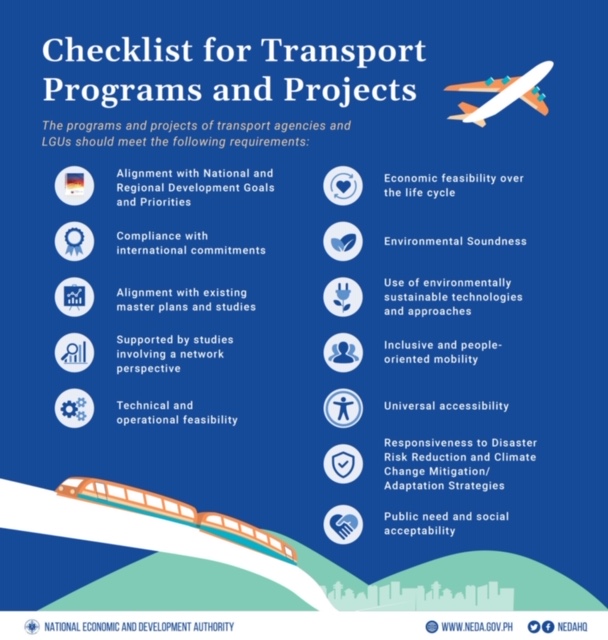 Checklist for programs and projects: I am already anticipating what proponents will be writing to justify projects according to this checklist.
I will reserve my commentaries for future blogs. There is really a lot to discuss about this policy and how it will implemented (properly or improperly), There are lots of different ideas, advocacies, interests and agendas on transportation that come into play here. And we can only hope that the policy and its implementing rules and regulations will be clear enough (not vague as to have so many loopholes) for this policy to effect transformation and inclusive and sustainable development.
–
 Caught (up) in traffic