
Home » Disaster (Page 6)
Category Archives: Disaster
Responding to the transport impacts of road crashes
Last March 9, traffic was terrible along Marcos Highway and roads connecting to it including Imelda Avenue and Sumulong Highway due to a truck that slammed into the scaffolding of the Line 2 Extension across the Sta. Lucia Mall, and barely missing the newly constructed column supporting the girders and elevated tracks of Line 2.
 [Photo not mine but sent by an officemate who was glad to have taken his motorcycle that day instead of commuting by car.]
Following are comments I captured from Waze as I tried to get information about the traffic situation:


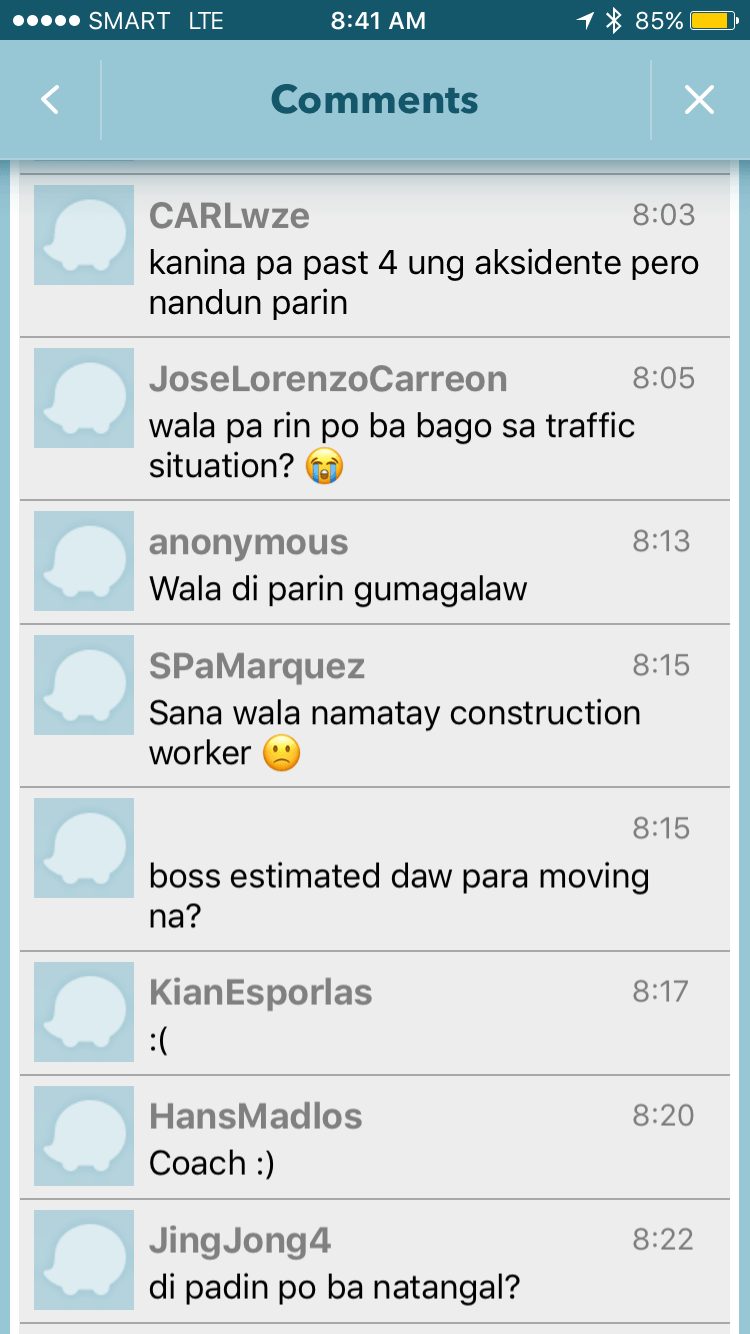

It is very clear from travelers’ comments that most were frustrated and many were angry about what seemed to be a very slow response from authorities in clearing the crash site and getting traffic to move faster. I myself wondered how a crash like this with its impacts manifesting in severe congestion along major roads was not dealt with as urgently as possible by so many entities that were not without capacity to act decisively. The front liner should have been the Metropolitan Manila Development Authority (MMDA) and there were at least four local government units directly affected by the congestion: Pasig, Marikina, Cainta and Antipolo. Surely, these LGUs could have done more if the MMDA couldn’t, in order to resolve the problem? If the availability of heavy equipment was an issue, weren’t there available equipment from Line 2 contractor, DMCI, or perhaps from the construction sites nearby (Ayala is constructing a huge mall near the area.)? Surely, they could lend a payloader or mobile crane that can remove the truck or at least help unblock the area?
I finally decided to turn back and work from home instead that day. Later, I learned that authorities had to stop traffic along Marcos Highway around 11:00 AM in order to tow the truck and clear the area for traffic to normalize. I hope this serves as a lesson in coordination among government entities and that future incidents like this will not results in a “carmaggedon” like Friday’s congestion. One thing that also became obvious is that travelers passing the area are all dependent on road-based transport and the primary reason why a lot of people were affected by the crash. The expanded operations of the Line 2, whenever that will be, will surely change transport in these areas and for the better.
–
The Tagaytay transportation predicament
The title of this article is actually a bit tame and on the diplomatic side of trying to describe transportation and traffic in this city that was once relaxed a retreat for many. I had wanted to end February on a good note and so I decided to defer posting this until March.
We used to frequent Tagaytay and liked spending some rest and recreation time there to the tune of being there almost once a month at one time. Needless to say, at the time travel to Tagaytay from our home in Antipolo took us only about 2 to 2.5 hours excluding our usual stop at Paseo in Sta. Rosa, Laguna. We liked the city so much that we even considered making it a second home; even inquiring and looking at properties there.
Fast forward to the present and it has become an excruciating travel with the highways leading to the city already congested. It didn’t help that when you got there, you also had to deal with serious traffic congestion. This started not a few years ago when the city approved developments by major players including Robinsons, SM and Ayala. The developments by SM and Ayala proved to be the backbreakers with Ayala coming up with the first mall in the city and SM operating an amusement park beside its prime acquisition that is the Taal Vista Hotel. Now, there is another mall under construction by Filinvest and right at the corner of the rotonda where the Aguinaldo Highway terminates.
 Vehicles queue along the Tagaytay – Nasugbu Highway towards the Rotonda where Tagaytay traffic enforcers attempt to manage traffic but appear to create more congestion instead.
More on Tagaytay soon…
–
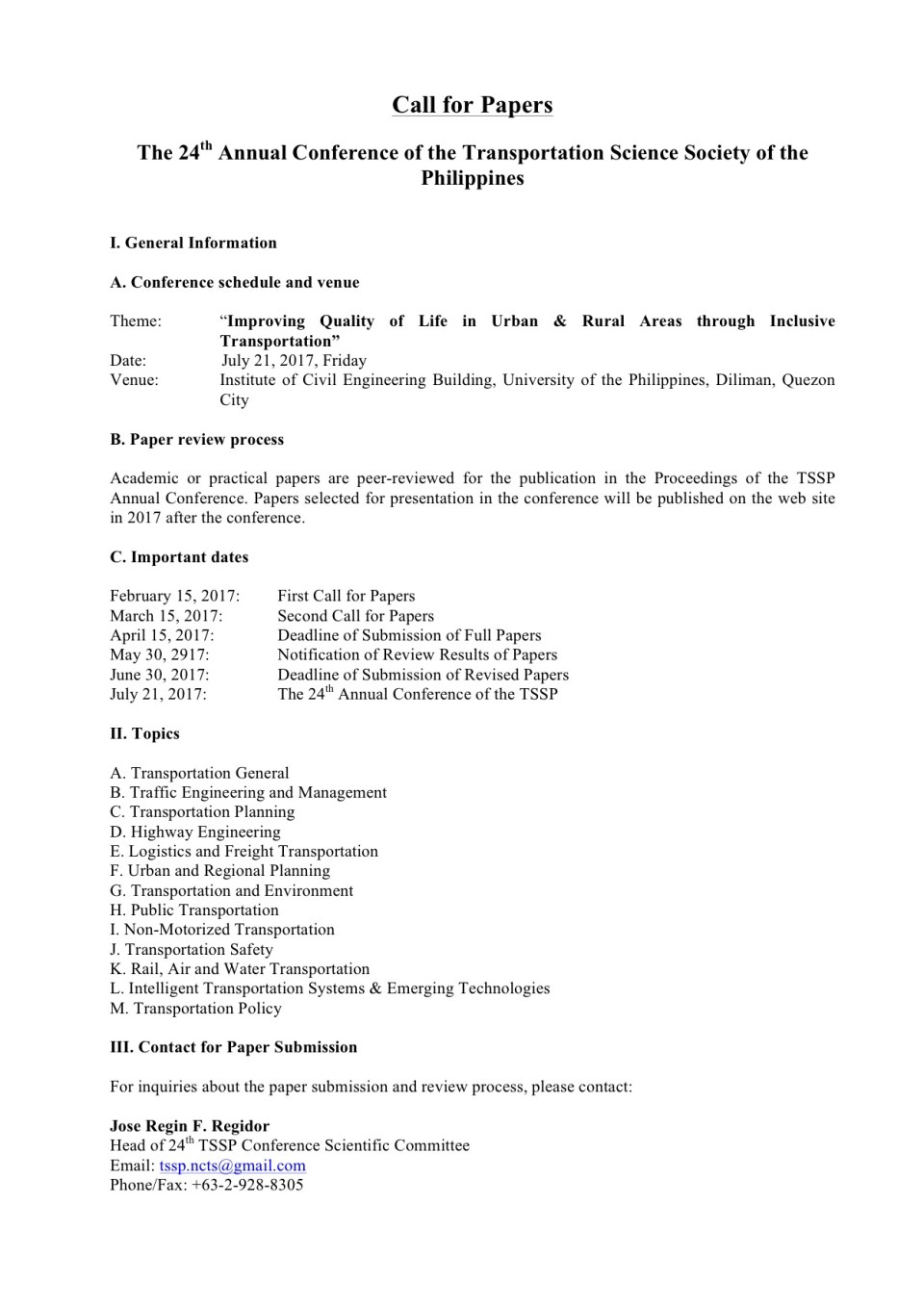
First call for papers for the TSSP 2017 conference
The first call for papers for the 24th Annual Conference of the Transportation Science Society of the Philippines came out last Wednesday, Feb. 15:
–
Emergency powers to solve PH transport problems? – A long list of projects
I am sharing the long list of projects submitted by the Department of Transportation (DoTr) to the Senate Committee on Public Services chaired by Sen. Grace Poe. This is a public document and I think should be circulated for transparency and so people will know what projects are proposed to be covered
List of sectoral projects that the Department of Transportation intends to implement and draft bill for emergency powers: dotr-list-of-projects-and-draft-bill
I leave it up to my readers to determine which among the projects listed really require emergency powers. Many I think do not require emergency powers especially since the period requested for such powers is 2 years and not the duration of the current administration’s term. Perhaps those requiring emergency powers would be programs and projects aiming to overhaul our public transport system, which is currently much dependent on road-based modes. Public transportation services do not follow the suitable hierarchy as seen along major corridors served by low capacity modes. An overhaul (i.e., rationalisation) will touch the very sensitive nerves of bus, jeepney, UV express and tricycle operators and drivers and could trigger an avalanche of TROs to prevent or discourage government from doing what should have been done decades ago to bring order to our chaotic transport. I believe emergency powers coupled with the current admin’s political capital (and the “action man” image of Pres. Duterte) can help bring about genuine reform (and change!) to transport in our cities.
–
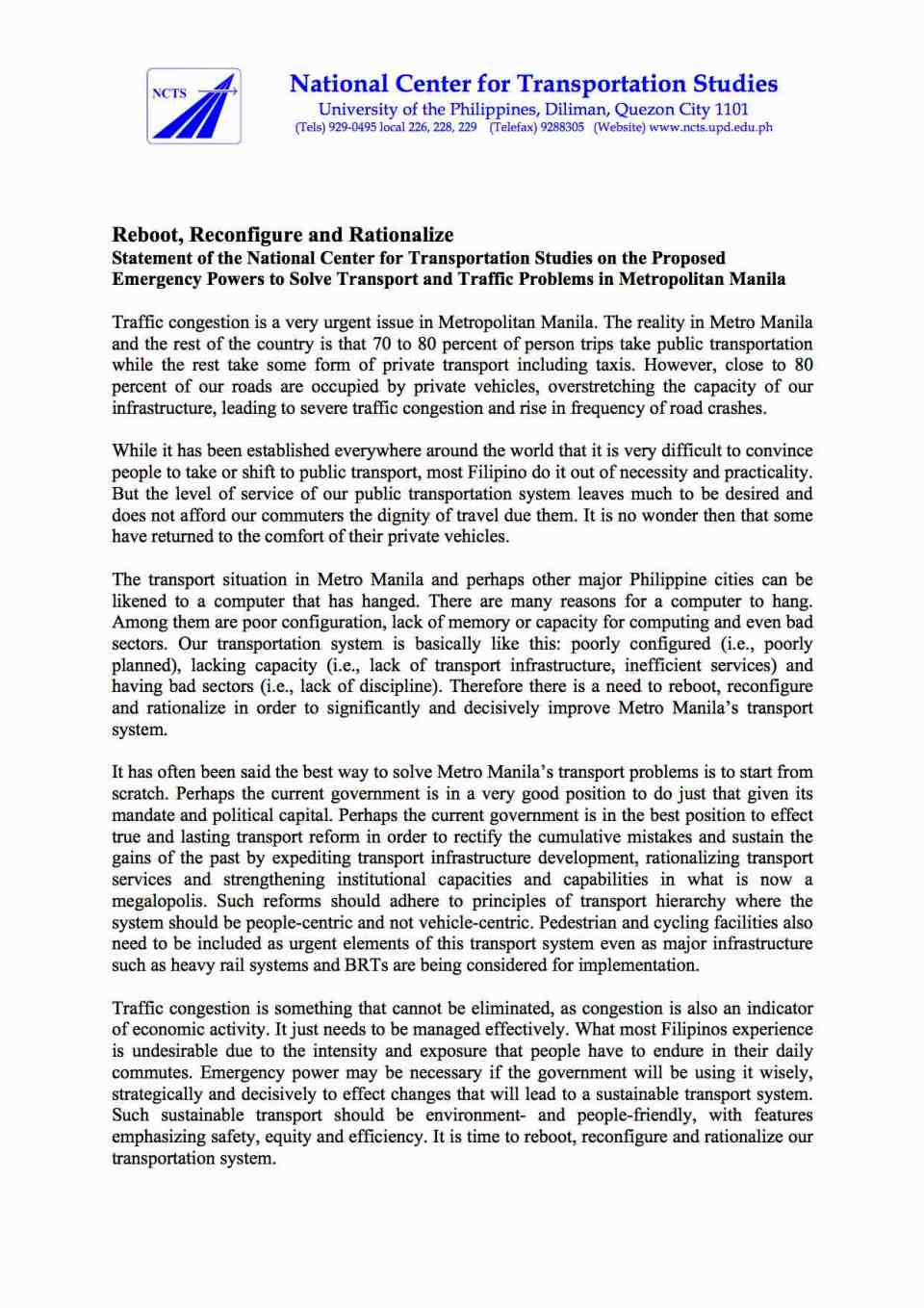
Statement on the proposed emergency powers to solve transport and traffic problems
The National Center for Transportation Studies (NCTS) of UP Diliman submitted a statement to the joint Senate committees evaluating the proposal to grant emergency powers to the Philippines President in order to solve the transport and traffic problems in the country and especially in Metro Manila. Following is a copy of the one-page statement:
–
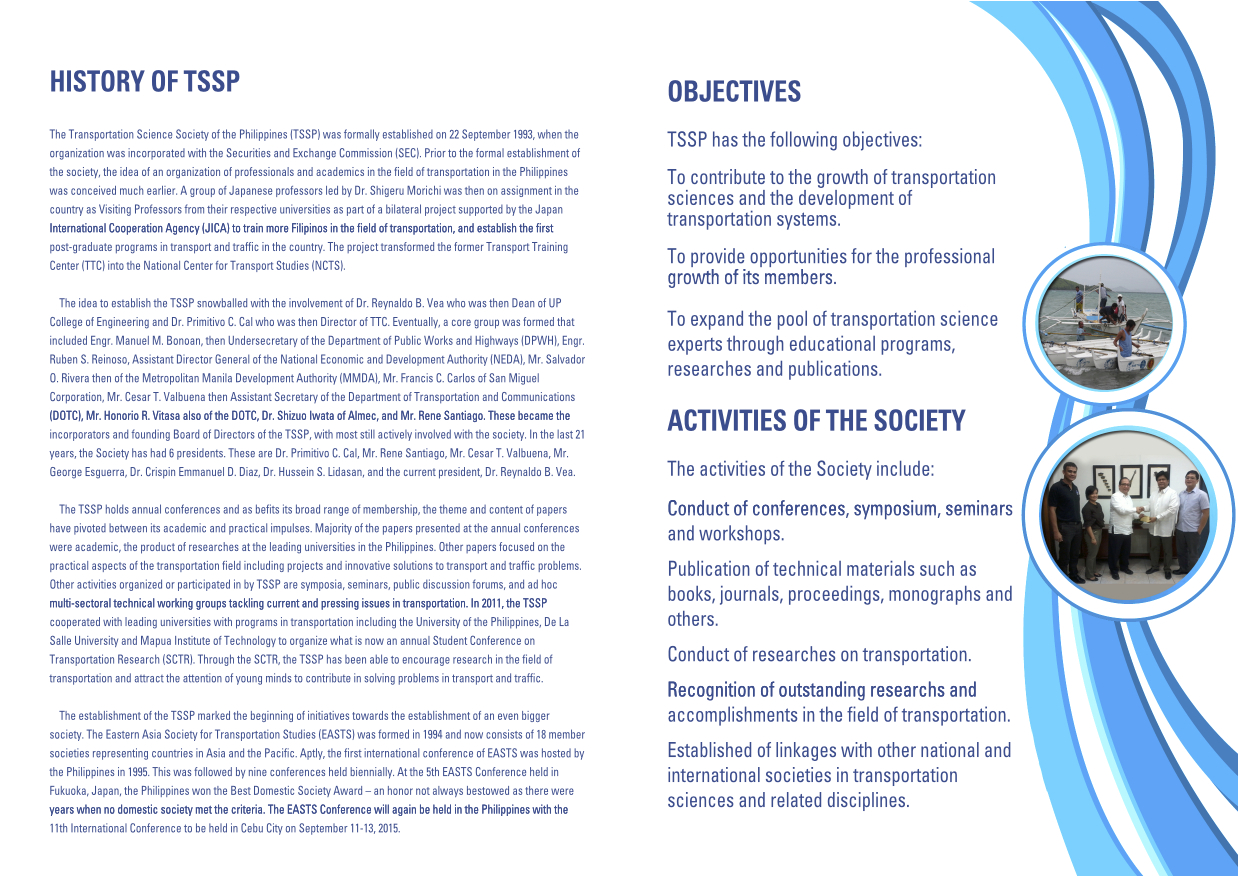
EASTS 2015 – Cebu City, September 11-13, 2015
The 11th International Conference of the Eastern Asia Society for Transportation Studies (EASTS 2015) will be held in Cebu City this September 11-13, 2015. For information on the conference and program, check out their website here:
You can also download a brochure about EASTS here:
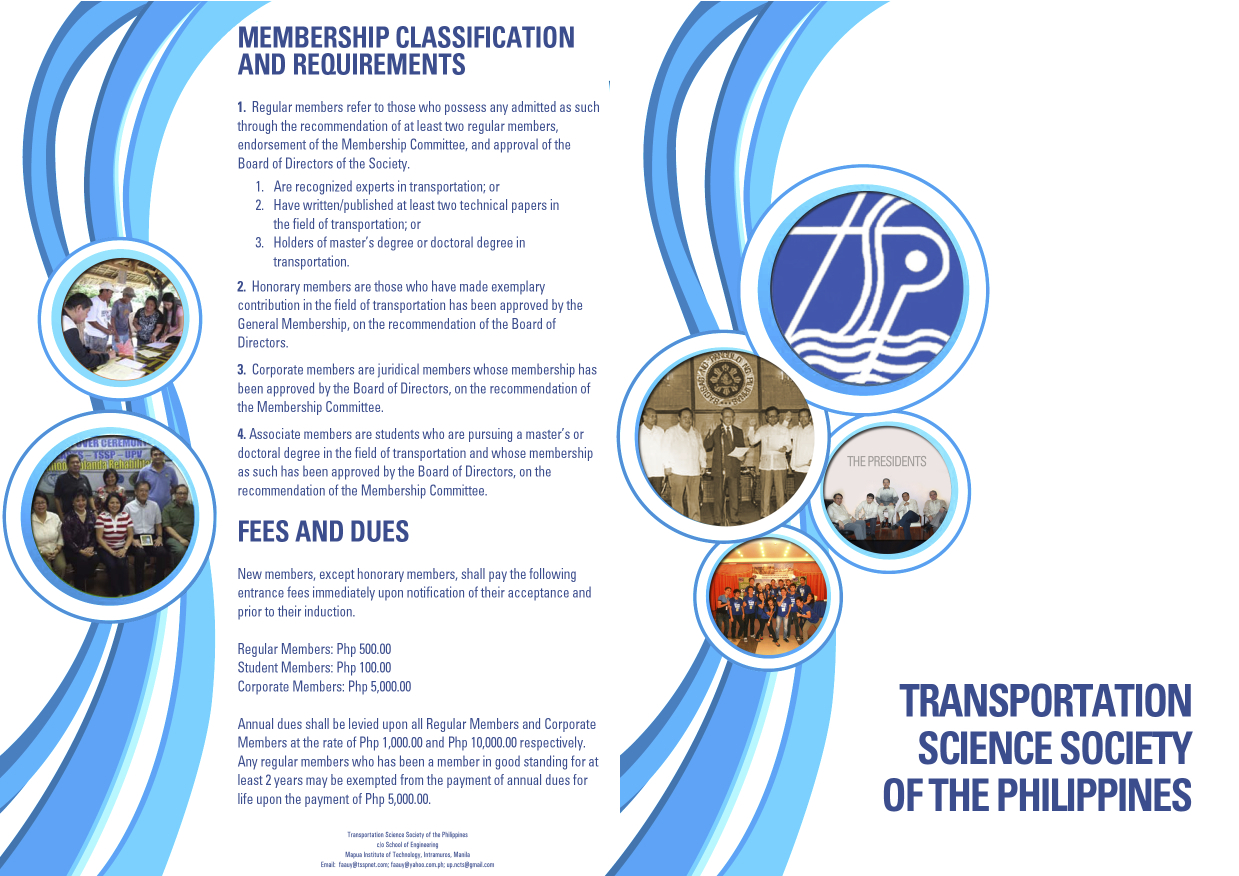
The conference is hosted by the Transportation Science Society of the Philippines (TSSP), which is the local affiliate of the EASTS. More information on the TSSP are found below:
–
Flooded roads and some thoughts on flooding
I’ve always said that transport and traffic problems will always take a back seat to flooding. Traffic also takes a back seat to floods in this post. Issues like congestion and terrible public transport services are experienced by many everyday but basically do not stop people from their routines. Floods on the other hand are a major inconvenience that makes things like congestion or getting a ride during the rush hours much worse. Floods also have a way of making things stop as people cannot go to work and students cannot go to school. It seems that whenever there are floods, everything grinds to a halt and productivity takes a dive. Such losses, of course, are in addition to the cost of damages directly brought about by the floods.
The following photo was taken by a staff of our office who was going around near his home. Fortunately, their place was not flooded so that afforded him time to go around and take some photos of the swollen Marikina River along Marcos Highway in the Pasig-Marikina border.
 Marcos Highway Bridge over a swollen Marikina River – not visible in the photo is the road leading to FVR Road and C-5, which is usually subject to flooding. The tall building in the background is SMDC’s Blue condominium along Katipunan Avenue. [Photo credit: Roy Velasco, NCTS, September 2014]
These extreme floods have been happening more frequently lately. I think these extreme rain events brought about by typhoons or monsoons are the norm now and we should be more prepared than ever in dealing with such heavy rainfall. Flooding can be alleviated if not eliminated and the experiences of some flood-prone LGUs can help us in determining suitable approaches to alleviate the problem and mitigate its impacts.
The philosophy applied by previous administrations of Marikina City did not have the objective of eliminating flooding. That was too expensive for a growing city that needed to put resources to other aspects or areas of development. The main objective was to alleviate flooding; mainly to reduce the depth as well as the duration of flooding. That is, instead of having waste-deep waters, perhaps knee-deep would be more tolerable. And instead of having to deal with flooded homes or streets over a day or more, half a day would make life better for people affected. The key was to address issues that led to severe flooding. Such issues include poor drainage stemming from inadequate maintenance of facilities and the still tremendous amounts of garbage irresponsibly disposed off by people, especially those living near waterways.
Marikina, Antipolo and Cainta at least should consider building retention basins in order to mitigate serious flooding. A lot of waterways were lost as residential subdivisions were developed and developers responsible for these should bear part of the burden by doing their part (e.g., identifying and turning over or donating lands than can serve as sites for the basins) in helping alleviate flooding. One friend pointed out that the critical time for flooding would be when rains are heaviest (e.g., last Thursday to Friday for Mario or the 6 hours of extreme rains by Ondoy in 2009). Basins should be designed so they can accommodate waters from the rains during the critical period so that instead of neck-deep floods, perhaps there will only be knee-deep or waist-deep waters. Yes, there will still be floods but they will be more tolerable and perhaps faster to dissipate than when you don’t have the basins to mitigate such events. There will be significant costs for such facilities but then the costs surely don’t compare to the annual losses that can be attributed to flooding and relocating whole communities definitely is much more costly and is not an option for those in the Marikina Valley and other food prone areas. Floods have been issues for many LGUs during elections and whoever can come up with a good plan to alleviate flooding will surely win a lot of votes.
–
Road crashes: everyday disasters
The occurrence of road crashes involving road public transport has hit an alarming rate the past few weeks. Only this morning, a bus fell of the Skyway and as of this writing over 20 people have been confirmed dead from the tragic incident. These casualties add to those from other crashes this past month alone. Consider the following recent incidents involving buses:
- Yesterday, more than 50 people were hurt in a crash involving 2 buses in Olongapo City;
- Last November 16, 6 people died in a collision involving 2 buses in Camarines Sur;
- Last November 14, 6 people were killed in a crash along EDSA;
There are countless more people who have died in other crashes involving other vehicles including private cars and vans that have not been reported or were considered minor news in comparison with bigger events like those related to super typhoon Yolanda (Haiyan) and the powerful earthquake that hit the Cebu-Bohol areas. These are disasters happening everyday. However, unlike the earthquake and typhoon, these are very much predictable and the deaths and injuries preventable if the drivers of the vehicles only exercised caution given the conditions at the time the crashes occurred.
The Land Transportation Franchising and Regulatory Board (LTFRB) should examine their approach to punishing erring bus companies. So far, the policy of temporarily suspending the operations of the bus companies involved and investigating the cases of drivers involved in the crashes have not been effective in improving safety as such appear to have had no positive impacts to road crash occurrences in our roads. Given the bad safety records of such bus companies, it is high time to make a strong point by not only suspending these companies but by revoking their franchises. How many more people should die if bus companies do not comply with having their drivers practice safe driving? Their excuses of their drivers being the ones to blame do not hold any water as they have responsibility over them as stipulated in their franchises. The Land Transportation Office (LTO) should also move towards revoking the licenses of these drivers and to never allow these people to handle vehicles again whether as public utility vehicle or private drivers!
–
#ReliefPH: Access and needs in many other places
The buzz on the streets and on social media is the focus on Tacloban, Leyte when vast areas and many other towns and provinces have been ravaged by super typhoon Yolanda (Haiyan). This seems unfair to other cities and municipalities considering Yolanda made 6 landfalls at or near peak strength (as a Category 5 typhoon) with winds topping 225 kph and generating destructive storm surges as it hammered through the central Philippines.
If you have Facebook, one provincial government staff has posted a lot of photos describing the situation in the northern towns of Iloilo where the destruction caused by the typhoon is very clear and to many, still unimaginable. These photos along with all others that can be Googled, Yahooed or found via other search engines or news agencies show the extent of the damage brought about by Yolanda.
Some people say that the islands of Cebu, Panay, Negros and Mindoro are fortunate as principal cities in those islands like Cebu City, Iloilo City, Bacolod City, Dumaguete City and Calapan City were relatively undamaged. This is also true, and so the airports and ports in these cities provide direct access to the islands for relief work. Moreover, government agencies and private entities have been able to organize relief activities through these cities and based on various news reports, it looks like a lot of people are already involved in these activities. That goes without saying that more people are still needed to be involved in various capacities for relief, rehabilitation and reconstruction work that are expected to be undertaken over a longer term considering the extent of the damages to towns. But given the circumstances for the said islands, there is no excuse for more rapid aid not being able to reach the affected towns in these provinces. In fact, much more is expected where accessibility is no longer an issue and so faster recovery is possible for Panay, Negros, Cebu and Mindoro. In the cases of Cebu and Bohol, it is important to remember that the provinces already are also still reeling from the impacts of the Magnitude 7.2 earthquake that occurred only a few weeks ago.
On another note…Tacloban Airport is still closed to commercial aircraft but the land routes via RORO or the nautical highways are open to traffic or operational. I think the quickest way to Leyte is via the route from Cebu. There are regular RORO and Supercat services between Cebu City and Ormoc City in Leyte. There are other maritime transport services from Bogo City in northern Cebu but I am not sure those services are back to normal. Then there are also access via the Eastern Nautical Route via the Bicol Region and crossing over to Samar Island (Allen) via Matnog, Sorsogon. Many roads still need to be cleared but the main highway (Pan Philippine Highway) including the San Juanico Bridge that connects the islands of Samar and Leyte.
–
#ReliefPH: Help the victims of Typhoon Haiyan in the Philippines
The online news organization Rappler has compiled a list of organizations by which you can course through your help.
Anything that can be spared will be of help to the people affected by super typhoon Yolanda (international name: Haiyan).
Tulung-tulong po tayong lahat!
Salamat sa mga tulong at dasal para sa mga nasalanta ng bagyo! Pagpapalain kayo ng Maykapal sa inyong pagtulong!
 Caught (up) in traffic