
Home » Health (Page 15)
Category Archives: Health
Social distancing on trikes
We came alongside this tuktuk-type tricycle. The model produced by Piaggio is not the motorcycle & sidecar combination that is the most common type of motorized 3-wheeler in the country. The latter currently has a one passenger limit due to the health protocols instituted in light of the pandemic. The layout of the former, however, allowed for a physical barrier in the middle of the back seat that allowed for 2 passengers for the trike.
 A peak inside a Piaggio shows the plastic barrier between passengers seated at the back of the vehicle. There is also a plastic barrier between the driver and his passengers.
Being able to carry two passengers at a time contributes to reducing the number of these vehicles required to transport people. However, most passenger tricycles function as taxis and are not in the same category as buses or jeepneys in terms of the number of people they could carry. Some cities have also taken advantage of the pandemic to reduce the number of trikes going around. In the case of Antipolo, the LGU has a program encouraging trikes to take on deliveries instead of passengers. The current passenger limit should not be used to justify more of these trikes in any city or municipality.
–
On solving the inequality problem in cities
Here is another quick share of an article that is timely and relevant not just now but for years (maybe decades?) to come:
Grossman, D. (2020) “New Study Proposes a Mathematical Solution to Big Cities’ Inequality Problem,” Inverse, https://www.inverse.com/science/a-new-study-shows-why-building-more-equal-cities-could-save-lives?link_uid=15&utm_campaign=inverse-daily-2020-09-14&utm_medium=inverse&utm_source=newsletter [Last accessed: 9/15/2020]
I will just leave it here for future reference but to summarize, the article explains how cities should be planned or replanned based on the distribution or redistribution of certain facilities like hospitals, banks, schools, supermarkets, and parks. It argues that there is an optimum location for these in relation to where people live and work. If properly planned, travel distances and times can be significantly reduced.
–
Do we still have to practice self restraint in travel?
I took this photo this morning as I was coming home from the market. Ever since Metro Manila, Antipolo and other areas around the NCR transitioned into General Community Quarantine (GCQ) and Modified General Community Quarantine (MGCQ), a lot of people have been going out and taking group rides on motorcycles and bicycles as if there was no pandemic hanging around. I understand that a lot of people have been holed in their homes for quite some time now but these trips seem excessive considering many are cross-town or even inter-provincial trips that are long in terms of distance and times traveled.
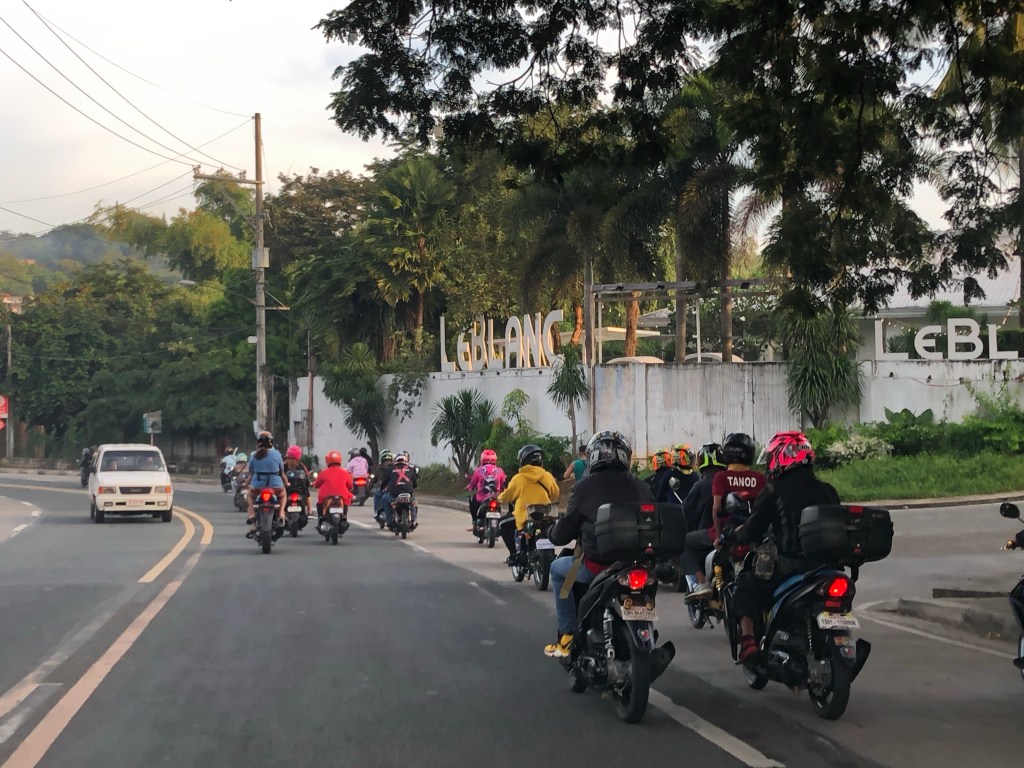
Motorcycle group traveling along Daang Bakal in Antipolo City
I posted the same photo on social media to solicit reactions or comments. I asked the question of whether these trips are necessary. So far, I only got a couple of sad face reactions and a couple of comments. The sad face reactions included one from a cycling advocate. I know the person to be very passionate about bicycle commuting but also advised vs. group rides during MECQ and GCQ. I guess the point here is that we seem to be lowering our guard against Covid-19 and to me these trips (i.e., long rides, group rides) are unnecessary trips. While there seems to be no spikes in infections due to these rides, we don’t know really as data is poorly collected and analyzed. For those who don’t give a damn, I give the analogy of road safety, many situations of reckless driving or riding do not necessarily lead to a crash but the high potential for one means it is something waiting to happen. The same applies to these rides where there might be one, just one, asymptomatic rider who can potentially spread Covid-19. Maybe those infected will be asymptomatic, too. However, others they are in contact with may not be and become seriously ill. So until we do have a vaccine vs. Covid-19 and many are vaccinated already, I would advise against these unnecessary trips.
–
Some takeaways from a UNICEF webinar
The UN together with its partners recently launch a Second Decade of Action for Road Safety (2021-2030). I will share the statement in a subsequent post. For now, I will share some slides from the recent webinar organized by UNICEF that focuses on safe and healthy journeys for children. Those of us who are working directly with UN agencies have been working on safe journeys for children particularly as they travel between their homes and schools. The recent launch and pledges or commitments of support from partner organizations will surely reinforce efforts to ensure the safety of children whether or not they return to school.

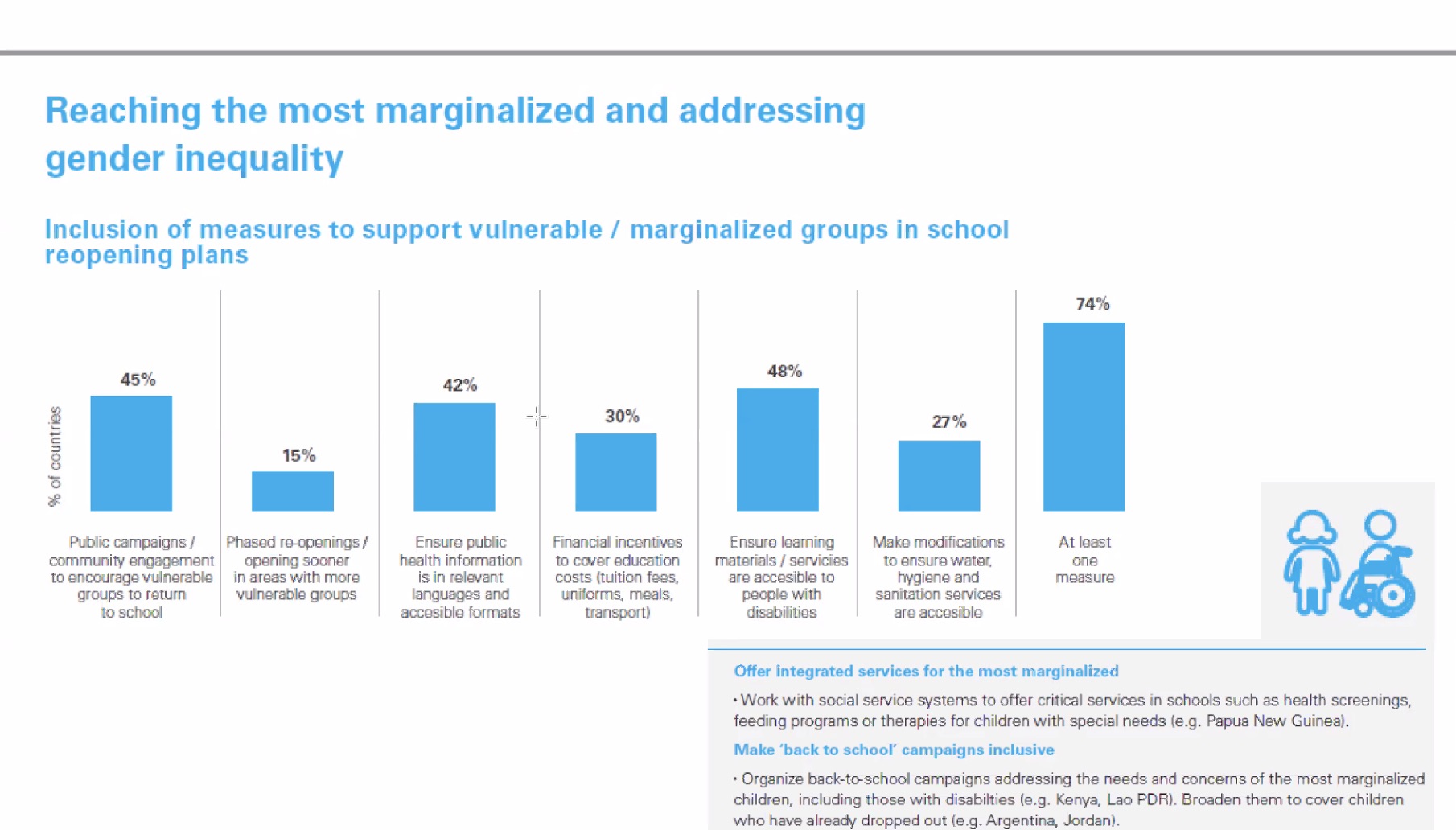 Context setting or rationale for UNICEF’s initiatives
 Key resources or references shared by the webinar host
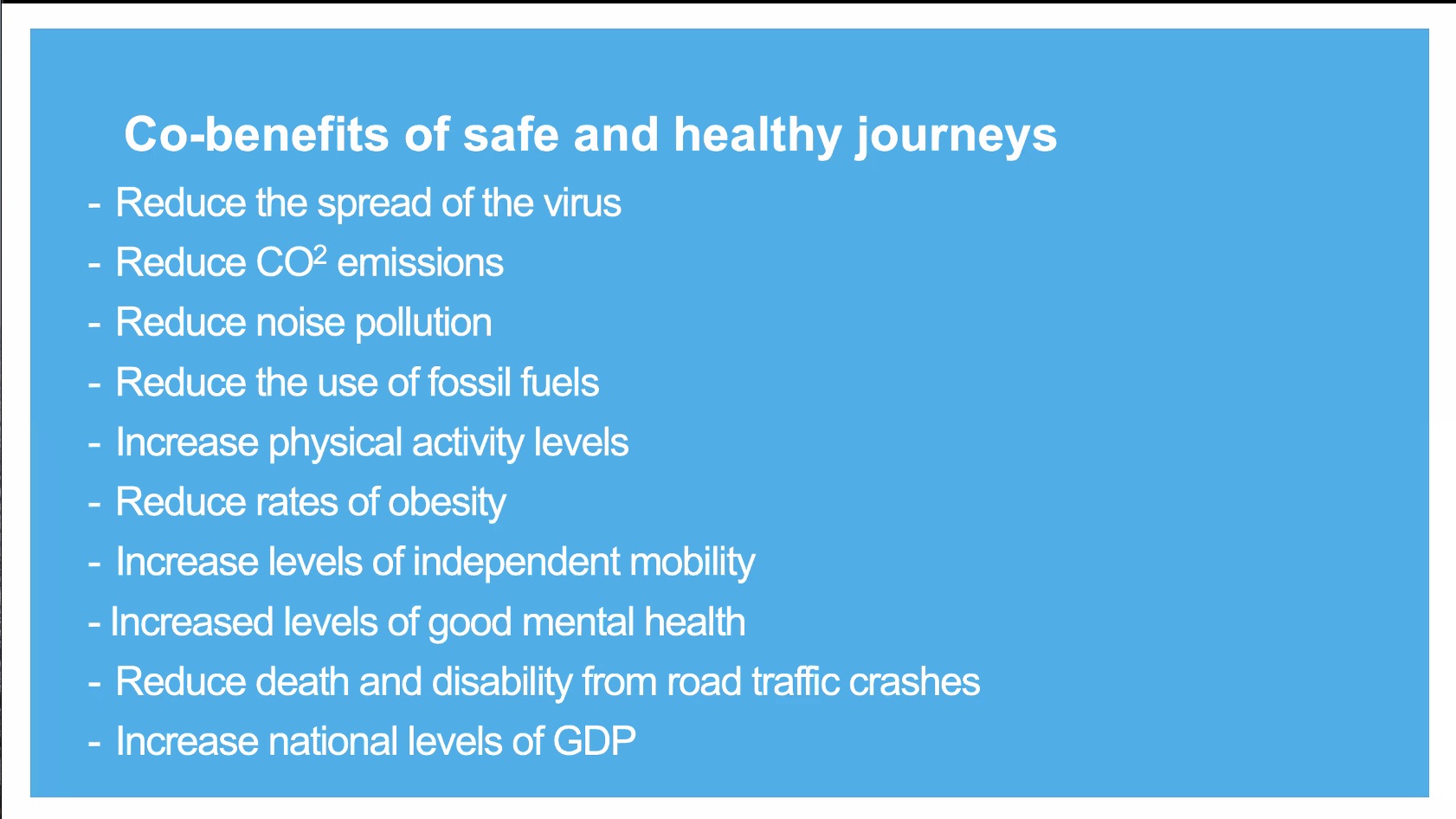 The term ‘co-benefits’ reminded me of a past project I worked on that was about low carbon transport. We also did assessment using co-benefits of low carbon transport. Among these were road safety.
 The slide and the table speaks for itself – examples of effective strategies
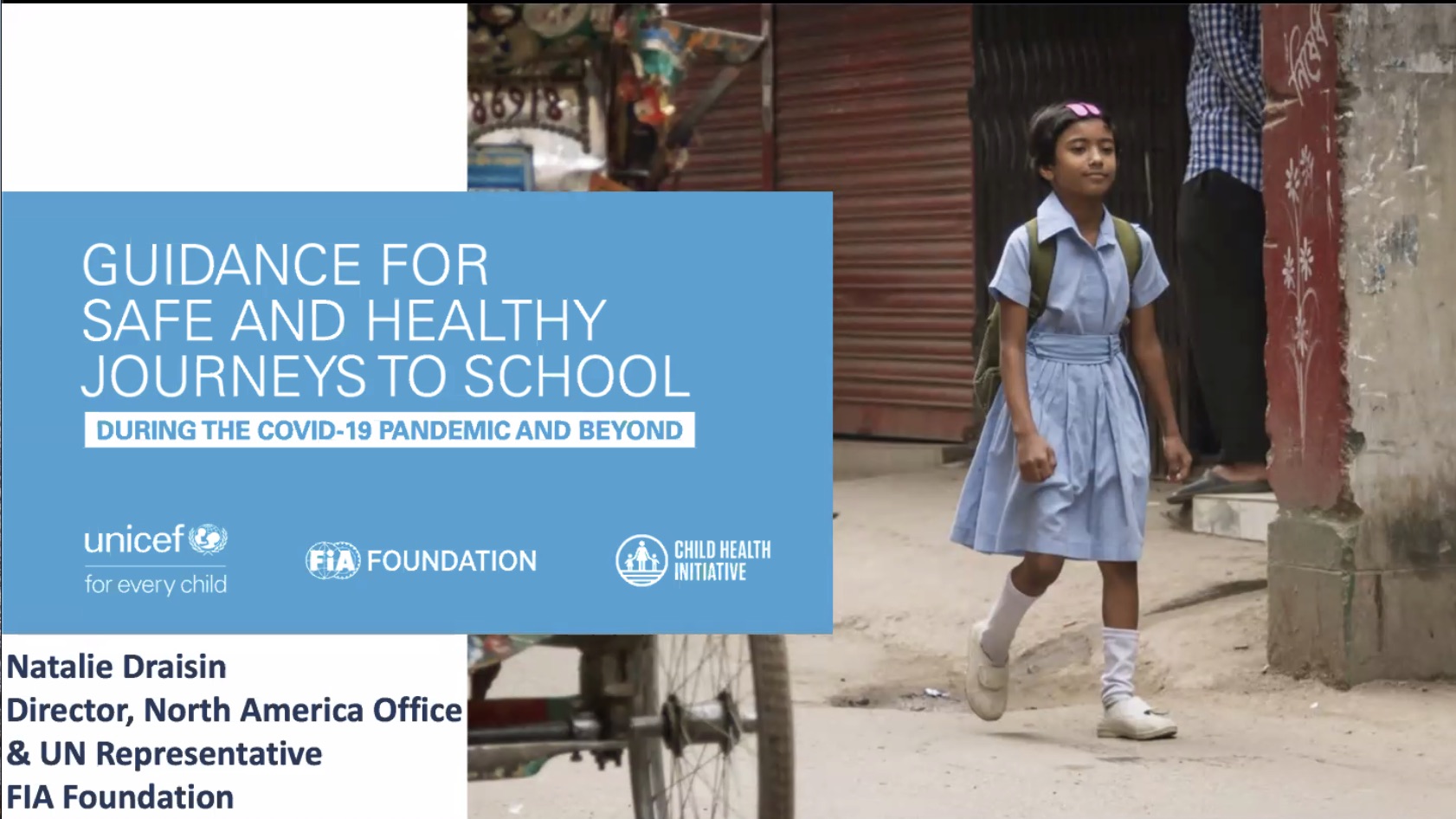 There were several presentations during the webinar. However, the most interesting and informative for me was this one about the guidance for safe and healthy journeys to school.
 Ten (10) points to consider as guidance for safe and healthy journeys to school
 Database initiative in support of the guidance (I will get the link to this and share it in a future post.)
 An example from London’s experience
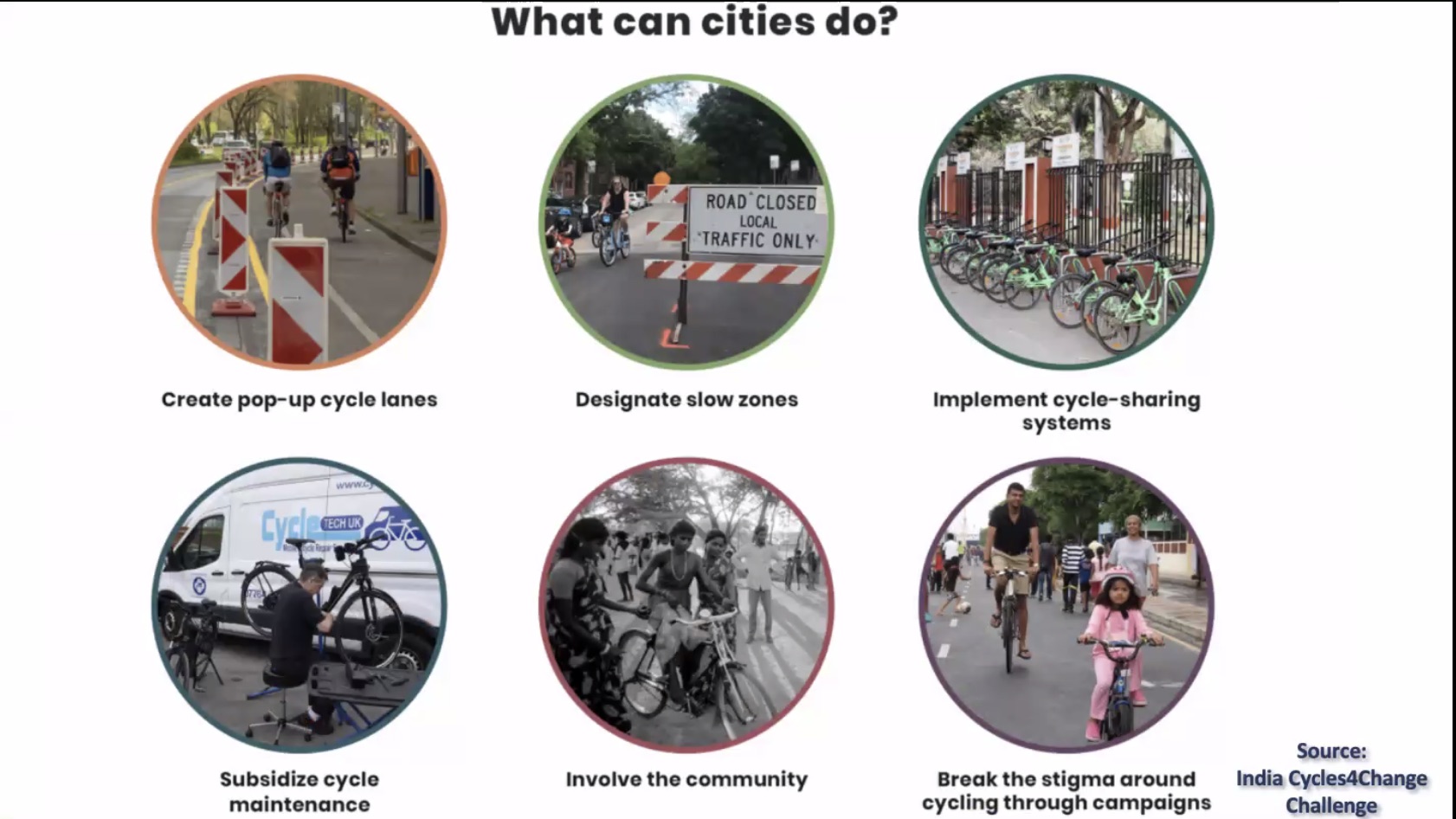 This is a slide on what cities can do to promote active transport among children.
 The photo shows what is termed as a “bicycle school bus”. This and “walking school bus” are real options for children and their guardians when traveling between their homes and schools. Such underlines the option of not using motor vehicles (i.e., reduction in motor vehicle trips).
I will try to elaborate on these in future posts, particularly on the 10-point guidance.
–
The return of the conventional jeepneys during GCQ and MGCQ
I spotted more jeepneys along my commuting route yesterday and took photos while we were stopped in traffic (yes, roads are again congested as they were before the lockdowns). Here are the photos showing the barriers required for the vehicles to be allowed to operate. Most jeepneys also have signs at the doorway vs. passengers not wearing face masks and shields. These are required for public transport users, and drivers have to reject people not wearing masks and shields.
 Plastic sheets dividing the seating spaces and serving as physical barriers between passengers
 Plastic sheets attached to wood frames on this jeepney
 Another example of plastic sheets defining the passenger spaces.
Some jeepney seat barrier configurations seem more sturdy or offer more physical separation or protection from others. I have seen versions with metal (wire) and wood frames. And then there are the customized “trapal” types similar to the window covers that are folded for air to flow in the jeepneys and unfolded when it is raining. Instead of passengers being one seat apart though, they are practically beside each other with only sheets of plastic dividing them. For precautions sake, this does not seem to be the recommendation of the medical community. While the open windows allow for better ventilation and air flow compared to the closed, aircon vehicles, the physical distancing is not practiced as it should be, with or without the face masks and shields required when riding public transport. This may pose a problem considering we are not over the hump, so to speak, in as far as COVID-19 infections are concerned.
–
Of inequitable allocations and accessibility
In the news recently were figures released supposedly by Philhealth showing the top hospitals receiving reimbursements from the agency for claims relating to COVID-19. Southern Philippines Medical Center, a hospital in Davao City received 326M pesos while UP-PGH got 263.3M pesos. I was not surprised that my social media newsfeed included posts from both sides of the fence (The fence sitters among my friends on social media were not commenting about these anymore and seem content in just posting on food or whatever activity they were in.). Each were posting information divulged by the whistleblowers in the ongoing hearings on the issues pertaining to PhilHealth funds.
I will not go into the political aspect of this controversy but will just focus on the transportation aspects of the issue. I will just compare the top two hospitals in the list to simplify the assessment while mentioning others in general.
The claim that the hospital in Davao was the equivalent of PGH in Mindanao doesn’t hold water as the hospital does not treat even 10% of the cases that PGH is handling and for a much smaller geographical area. While UP-PGH is accessible to a larger population and for less travel times, SPMC is not as accessible to say people coming from other major cities like Cagayan De Oro or Zamboanga City. Yes, there are other major cities on the same island that have sizable populations with ‘catchment’ or influence areas comparable to Davao City. They, too, probably need funds to be able to treat COVID-19 patients. It is true that there are many other hospitals in the National Capital Region (NCR) that have the facilities to treat COVID-19 patients. However, many of these are private hospitals that tend to incur more costs for the patient and are not generally accessible (read: affordable) to most people who are of middle and low incomes. Thus, UP-PGH can be regarded as the frontliner among frontline hospitals.
What? There are other public or government hospitals in Metro Manila and surrounding provinces? True, but many of those have very limited capacities in terms of facilities and Human Resources. The same applies to Davao’s case as well because there are also medical centers and hospitals in surrounding provinces. And to round-out the resources available to these hospitals, local government units have also (over) extended their resources to hospitals. Perhaps the allocations and proportions can be explained in another way that is not the “apologist” but based on actual numbers pertaining to cases handled by the hospitals?
–
On the benefits of shared roads during the pandemic
There is evidence, and they are increasing, for the benefits of shared roads. Here is another quick share of an article supporting that:
Brown, M (2020) “Shared-use roads improve physical distancing, research shows,” Medical Xpress, https://medicalxpress.com/news/2020-07-shared-use-roads-physical-distancing.html%5BLast accessed: 7/30/2020]
With the situation in the Philippines and particularly in Metro Manila appearing to be worsening rather than improving, national and local governments should take heed of the evidence for shared-use roads and the importance of active transport to ensure people’s mobility will not be hampered. This is particularly important for our frontliners and other essential workers if we are to survive this pandemic.
–
The plight of commuters during GCQ
I write this on the eve of the imposition of Modified Enhanced Community Quarantine (MECQ). It is another unfinished article that was intended to be a quick post showing the typical conditions for commuters during the GCQ. Public transport supply was slow to return to adequate levels as the government took advantage of restrictions to impose route rationalization and modernization programs. The following scenes were common along my commuting routes:
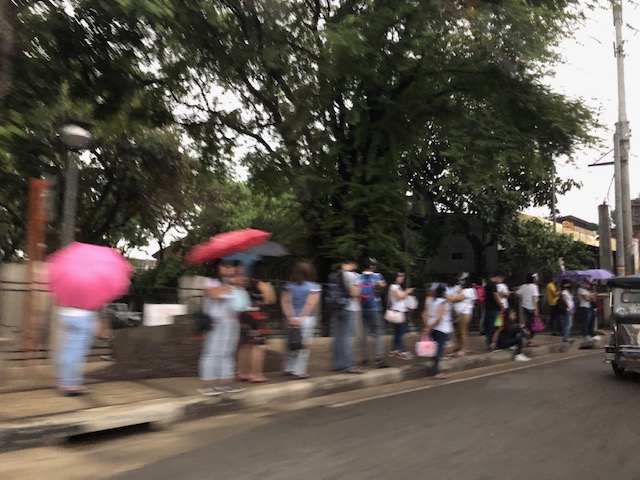 Commuters waiting for a ride near the provincial capitol
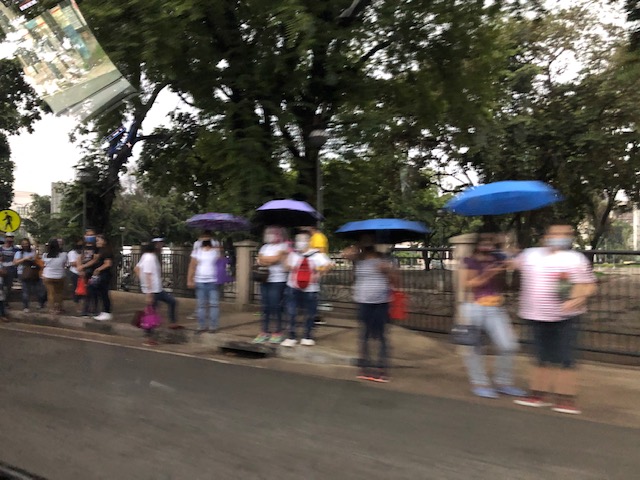 The rains of the wet season added to the misery of the wait.
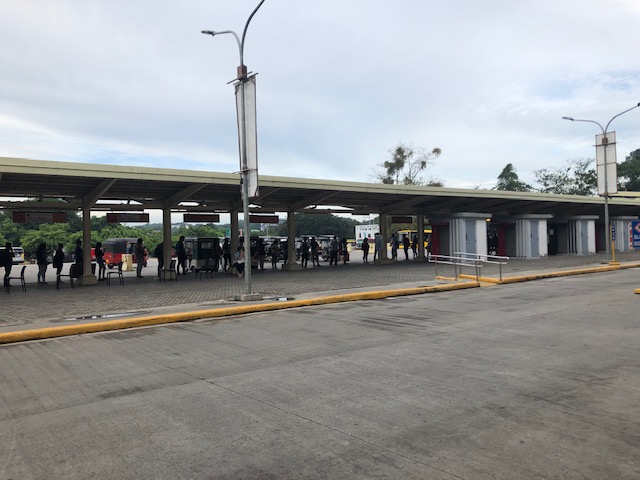 Long queue at the public transport terminal at Robinsons Antipolo, which is the terminus for buses connecting Antipolo with Cubao and Ortigas Center.
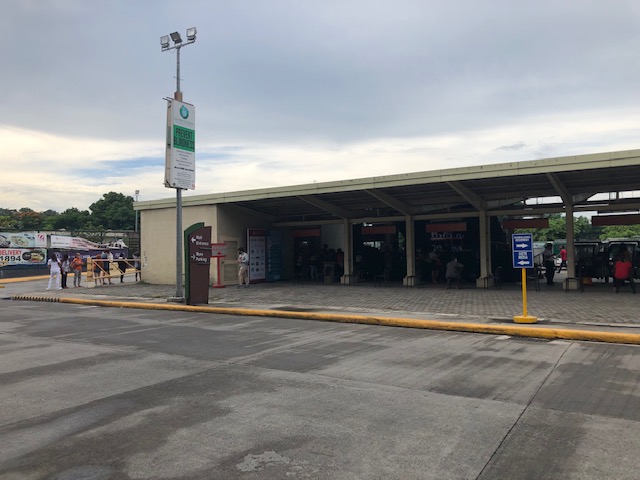 The queue reaches beyond the shaded areas of the terminal.
I think national government should be the one to provide for the public transport needs of frontliners (i.e., health care workers including doctor, nurses, medical technologists, pharmacists, etc.) and other essential workers. My definition of the latter are those required for logistics to function as well as those to ensure the required production or manufacturing for the rest of us who need to stay at home. Not everyone has the same, fair circumstances as there are those who can afford to stay at home and those who need to work for them to live, often on a day-to-day basis.
The pandemic has taken a toll not only on the physical but the mental health of many of us. Government rants and retorts are unnecessary and uncalled for given its dismal performance. I dare say dismal as the evidence shows certain local government units and the Office of the Vice President doing much, much more despite their limited resources. We are not in this quandary because government performed well and to the best of their people’s abilities. If that was their best then they have no business staying in their positions. If our health care system fails, then there is nothing to stop this pandemic from claiming much more than lives.
–
On bike shares and the pandemic
We begin August 2020 with another article I want to share. Here is another article on cycling, this time on bike share:
Kanik, A. (2020) “The decisions cities made about coronavirus had a big impact on bikeshare ridership,” citymetric.com, https://www.citymetric.com/transport/decisions-cities-made-about-coronavirus-had-big-impact-bike-share-ridership-5218[Last accessed: 7/29/2020]
Our university’s bike share program currently dedicated their bikes for the use of frontliners. Outside UP Diliman, only the City of Pasig has a bike share program. Is it somewhat surprising that these are the only bike shares we know in the country? It should be, considering the potential of bike shares and cycling as a mode of transport for mobility. In fact, two cities, Marikina and Iloilo, which pride themselves having formal bikeways (Marikina even has an extensive bikeway network that began 20 years ago.) have no bike share programs. Is the concept or perhaps the lack of facilities to encourage people to bike safely that is absent and therefore need to be provided? With the surge of bike users post-lockdown, there should be evidence that bike shares can work but only if cities work on it, too.
 File photo of Iloilo City’s bikeway along the Benigno Aquino Jr. Ave. (formerly Diversion Road) taken in 2015.
–
On tricycle capacity in the time of COVID-19
With the current rationalization and modernization of public transport vehicles and services being implemented by the national government, many jeepneys, mostly the conventional or traditional ones, have been unable to ply their routes again. Along some routes, buses have taken over but have been limited in the number of passengers they could carry due to physical distancing restrictions. But these are mostly for routes and roads that carry people between their residences and workplaces that typically are longer distance trips (e.g., more than 4 kilometers one way). For shorter distance trips, the more relevant mode of motorized transport is the tricycle. The conventional trike in the Philippines is one involving a motorcycle with a side car. Side car designs vary around the country with some seating 4 people (e.g., back to back with 2 facing backward) but usually with only two seats inside the cab. one or two passengers can be accommodated behind the driver on the motorcycle.
New model trikes include the models endorsed by the Asian Development Bank for the e-trike project that is laid out like a small jitney with benches seating 3 to 4 people on one side (total 6 to 8 passengers) and the popular tuktuk designs that seat 3 people at the back. With the quarantine restrictions in place, conventional trikes can only take one passenger inside the sidecar and none behind the driver. Tuktuks can seat 2 behind the driver but with a barrier (usually a plastic curtain) between the passengers.
 Conventional or traditional trike with plastic sheet between the driver and the passenger (in the side car).
 Tuktuk-type trike with plastic sheet between the driver (in front seat) and passengers in back seat. The back seat allows for 3 people seated together but due to distancing requirement
I have been informed by a former student that certain e-trike models (e.g., BEMAC model e-trikes) are allowed to carry 4 passengers, 2 each on the benches behind the driver who is on the front seat. That still means less passengers than they could usually carry. This would seem to be part of the new normal and will be the set-up for the foreseeable future until perhaps a vaccine for COVID-19 is approved and people get vaccinated. Then, health protocols may be eased to allow for the full seating capacities of public transport vehicles.
–
 Caught (up) in traffic