
Home » Highways and Streets (Page 29)
Category Archives: Highways and Streets
Muelle del Rio
The Muelle del Rio is a riverside road that stretches from Quezon Blvd. (from the ramp of Quezon Bridge) to Plaza Mexico in Intramuros. The road passes under the McArthur and Jones Bridges that cross the Pasig River, and behind buildings such as the Manila Central Post Office, the National Press Club, the Philippine Chamber of Commerce and Industry, and the Bureau of Immigration.
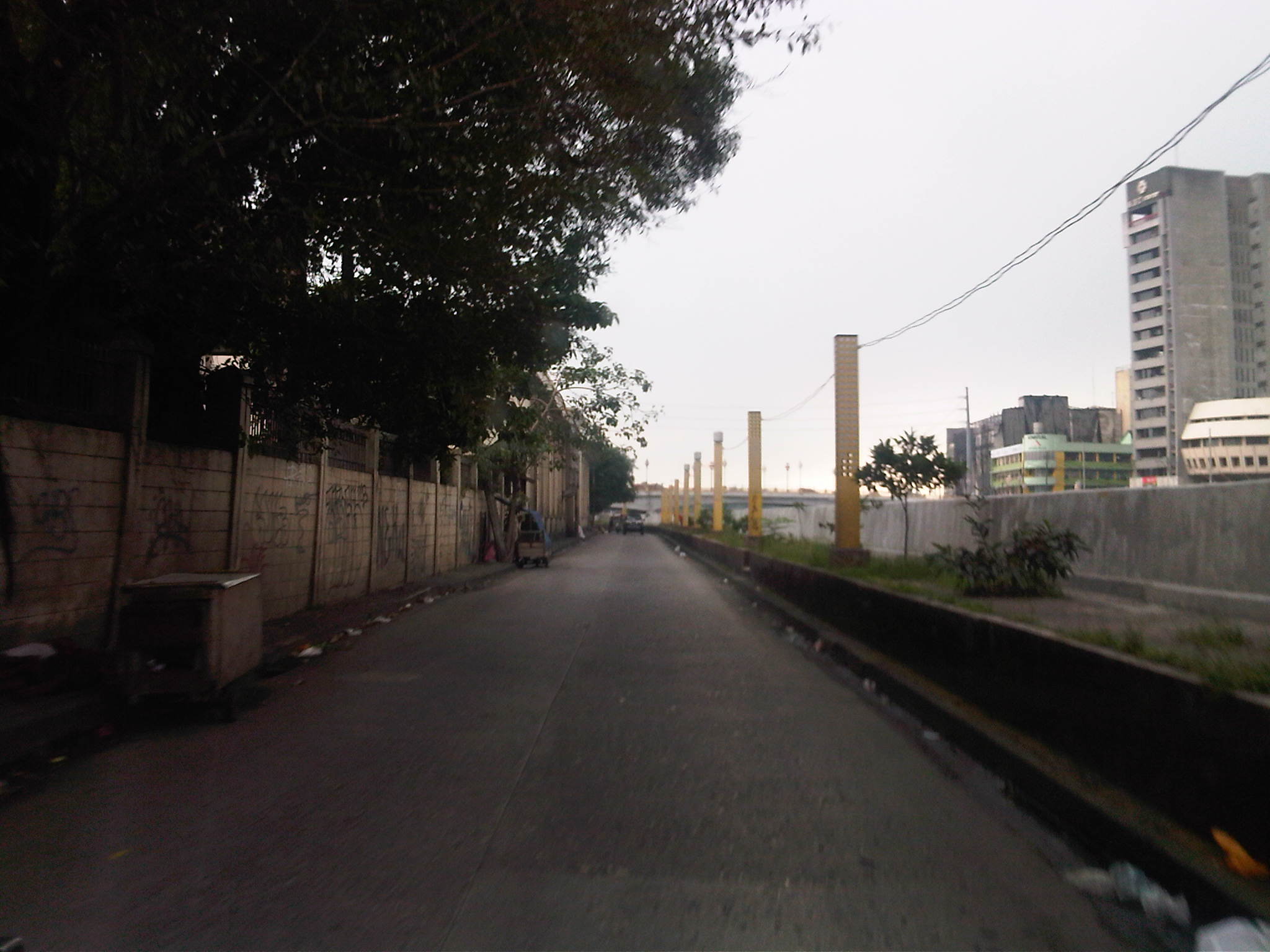 The stretch from McArthur Bridge behind the Manila Central Post Office is clear of squatters but there are many garbage, mainly plastics, strewn everywhere. There are people “residing” under McArthur Bridge and these homeless people have only their carts or cardboard boxes to protect them from the elements.
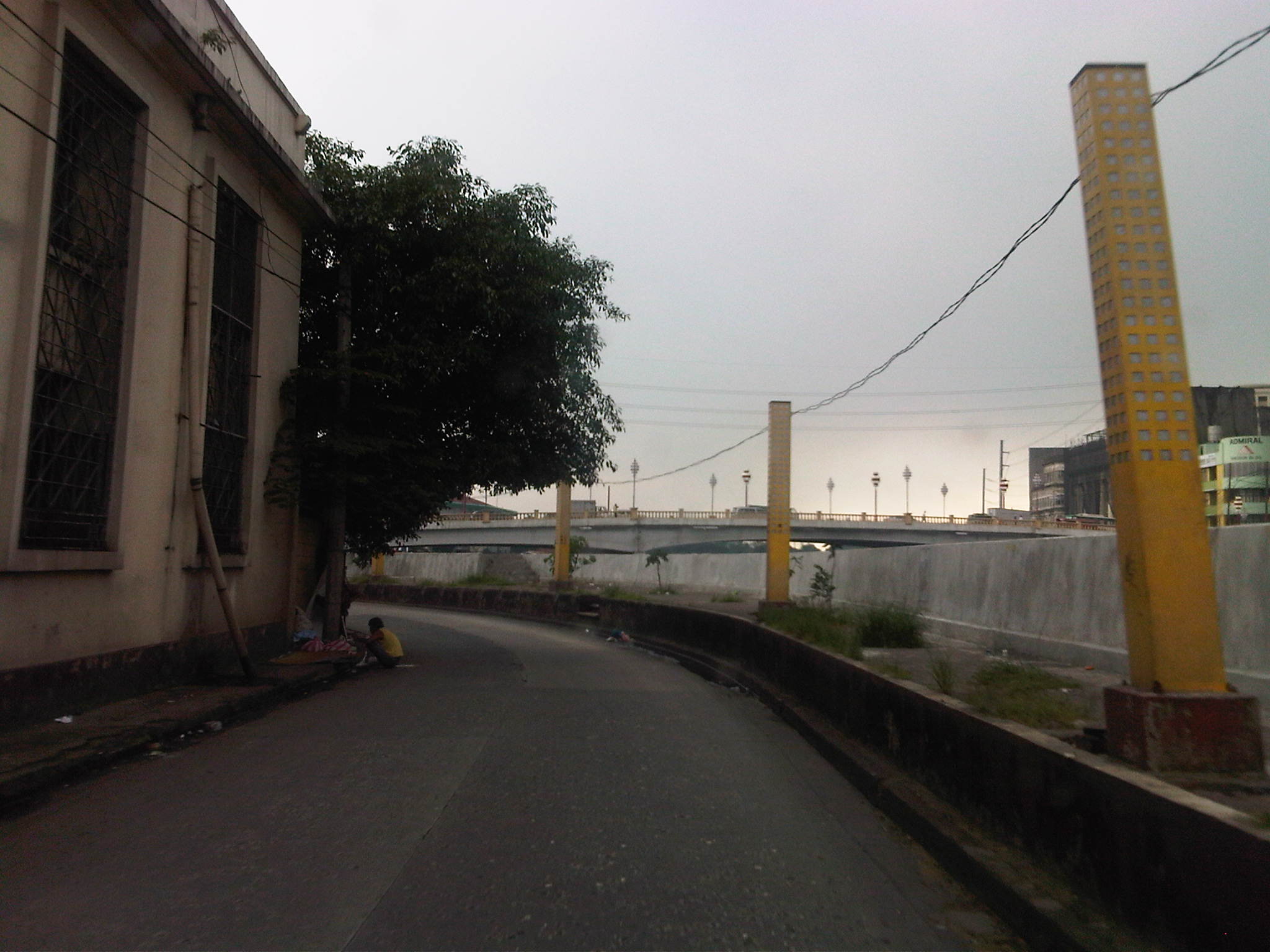 The lamp posts along the road look like they were inspired by the capiz windows of old houses. The homeless include the individual pictured here who was washing clothes using the flowing water from various sources including a leaking water pipe. This section is often flooded during the wet season due in part to its location and elevation with respect to the Pasig River.
 The underpass at Jones Bridge is another section that is usually flooded during the wet season. A staircase connects the bridge and the riverside walkway cum park. The bridge is currently mentioned in news reports regarding the film “The Bourne Legacy” that will be shot in Manila. The bridge is an old one and considered a landmark in Manila. It has been the subject of many old photos and has been romanticized in paintings.
 Vehicles parked along the linear park across the road from behind the Bureau of Immigration. The park is not supposed to be a parking facility but due to a lack of parking spaces for the Bureau and not too many people using the park anyways, parking was tolerated. Perhaps it is better than having such vehicles occupy precious road space. Further down the road, the red tile roof of a Pasig River Ferry terminal is visible.
 The Plaza Mexico Station of the Pasig River Ferry. the Ferry services were suspended last year due to many problems including the lack of passengers.
Plaza Mexico is only a stone’s throw away from the ferry terminal shown in the preceding photo and is already within the walls of Intramuros. Among the historical buildings in the vicinity are the Intendencia, Almacenes and the Aduana, which were buildings from the Spanish Period. Some are currently being restored as part of a heritage initiative in Manila spearheaded by the Intramuros Administration.
–
Quezon Ave. – Araneta Ave. underpass
The underpass along Quezon Avenue (Radial Road 7 or R-7) for its intersection with Araneta Avenue (Circumferential Road 3 or C-3) is currently being constructed. The project was approved last year and it designed to relieve congestion at this busy junction of two major thoroughfares. Among the alternatives considered for the intersection was a 4-lane overpass to be constructed along Quezon Avenue similar in design to the overpasses in Iloilo and Cebu cities. One concern, however, that needed to be explained thoroughly by the DPWH to stakeholders, especially the Quezon City government, was the prospect of flooding. The area, particularly the part of Talayan Village, is prone to flooding with water reaching waste-level that can be brought about by heavy rains. It may even be worse for rainfall of the Ondoy or Sendong kind.
The project seems to be proceeding at a good pace with a lot of activities in the past months. Congestion does not seem to be as serious as what had been anticipated, thanks in part to an aggressive campaign that included information on alternative routes for motorists. Still, it is recommended for the motorist to avoid the area and use other routes if possible as traffic can test one’s patience in this area.
Some of the photos were quite dark as it was already past 5pm when I took them with a cell phone camera. I tried to adjust the brightness in order to have clearer images.
 Approaching the construction site along Quezon Avenue, motorists can already experience the constriction
 The concrete barriers are adequate for keeping vehicles off the excavated sections of Quezon Avenue. These seem to be permanent barriers for when the underpass is already operational.
 Manila-bound approach to the Quezon Ave.-Araneta Ave. intersection where there are effectively 2 lanes available to traffic. It can be quite congested here during the regular weekdays as the original 5-lane section Quezon Ave. narrowed to 2 lanes due to the ongoing construction of the underpass. There used to be a pedestrian overpass at the intersection. This had to be dismantled to give way to the construction of the underpass. Remnants of the overpass remain in the area.
 After crossing Araneta Ave., Quezon Ave. still effectively has 2 lanes as temporary concrete barriers protect the innermost lane beside the underpass barrier.
 Approaching the site from Manila, there is already congestion along the 5-lane section of Quezon Ave. This section will also eventually narrow down to 2 lanes.
 The Quezon City-bound approach to the intersection along Quezon Ave. also has only 2 lanes left available due to construction materials and equipment.
 As in the opposite side of Quezon Ave. one lane of the at-grade level of the road is not available to traffic due to the construction works.
 At the intersection, the remains of what was a pedestrian overpass can be still be seen. The overpass crossed both Quezon Ave. and Araneta Ave., allowing for pedestrians to walk across the intersection without conflict with motor vehicles below.
 The intersection itself has not been excavated and it will be a “Herculean” task to manage traffic once this phase of the project is implemented. Both R-7 and C-3 are high volume roads and the MMDA and QC enforcers would have their hands full, and definitely more challenging than what they are contending with at present. This intersection will still be at-grade in the future and should feature a traffic signal to manage the remaining traffic movements as through traffic along Quezon Ave. will eventually flow continuously along the underpass.
 About 100 meters past the intersection, traffic is free flowing along Quezon Ave. as 2 lanes become 3 and then 5 – a basic principle in traffic flow theory.
A good thing for the project is the approaching school break after March 2012. Should construction proceed at the current pace (or even faster) they should be able to have the underpass operational by the time school opens in June 2012. The contractor should take advantage of the typically good weather in Metro Manila from January to May so as to finally relieve road users of the inconvenience caused by the project implementation. On another note, the underpass is similar to what was proposed for the case of C5-Kalayaan before the MMDA decided to turn that intersection into a showcase for their U-turn scheme, culminating in the construction of 2 U-turn overpasses in the area. The completion of the Quezon Ave.-Araneta Ave. underpass coupled with an effective traffic signal system setting at-grade may just prove the DPWH right in their pitch for the same intervention at C5-Kalayaan and revive discussions pertaining to a more effective solution to the congestion there.
–
Still on the Commonwealth extension to Quirino Highway
Driving to my in-laws’ home the weekend before Christmas, I was able to pass along the newly paved section of Commonwealth that now connects directly with Quirino Highway. While there are still much evidence of the construction project like materials and soil from excavations, traffic signs have been installed and pavement and curb markings were mostly completed including the yellow box.
One can compare the photos below with those in an earlier post found here.
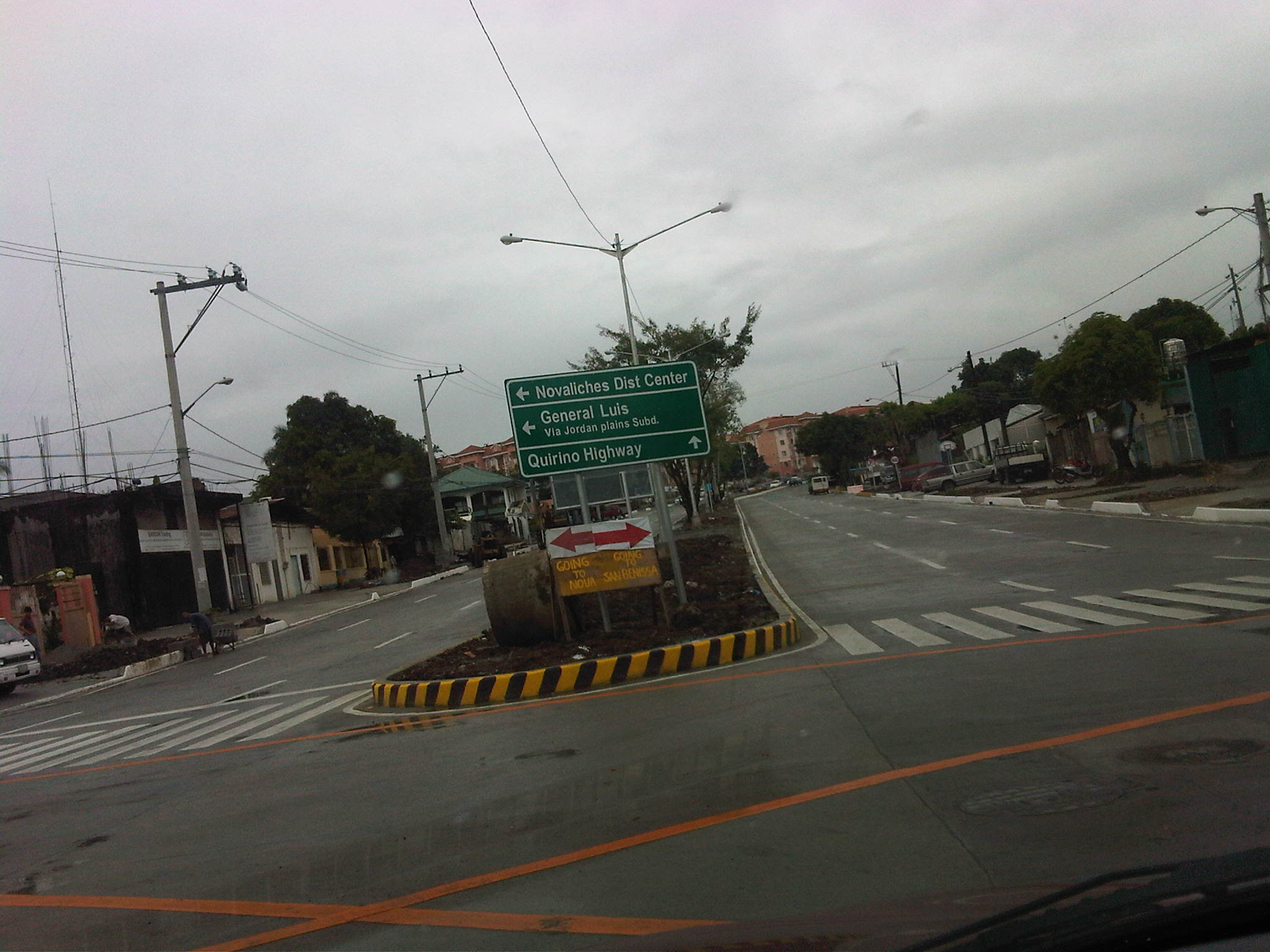 Intersection of Commonwealth Avenue and Jordan Plains Subd. gate
The intersection at the Jordan Plains gate already has directional signs showing the way to points of interest like the Novaliches District Center (sort of a mini City Hall), General Luis road (via Jordan Plains Subdivision) and Quirino Highway, which is up ahead from the intersection.
On the day before Christmas, most leftover construction material were already removed from the area and the approach to the intersection is shown below. The 4-lane northbound side of Commonwealth becomes 3 lanes from the intersection. The opposite southbound direction with 3 lanes widens to 4 lanes after the intersection.
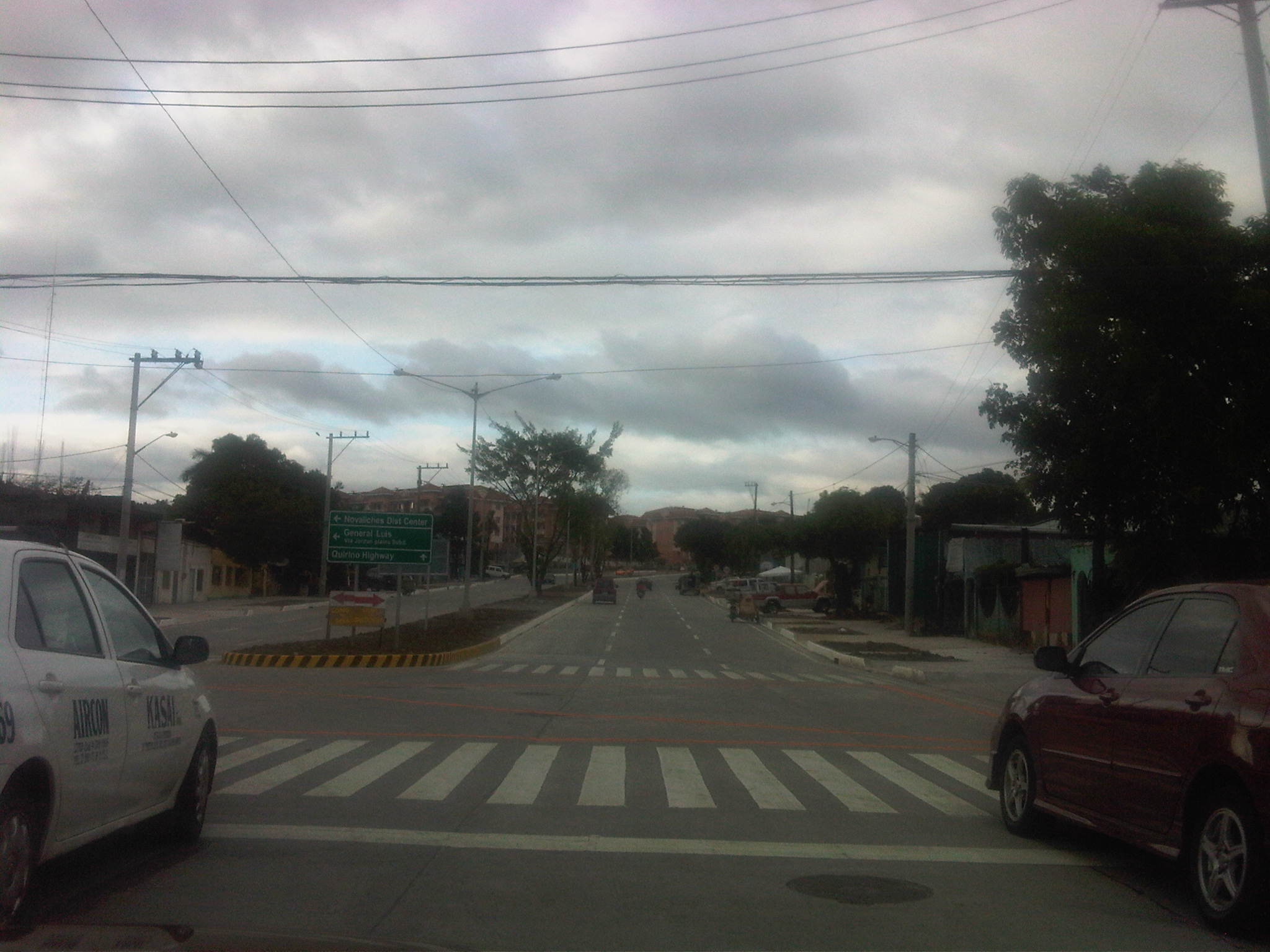 Approach to the intersection with Jordan Plains to the left and Quirino Highway up ahead. The buildings up ahead are part of the San Benissa Garden Villas.
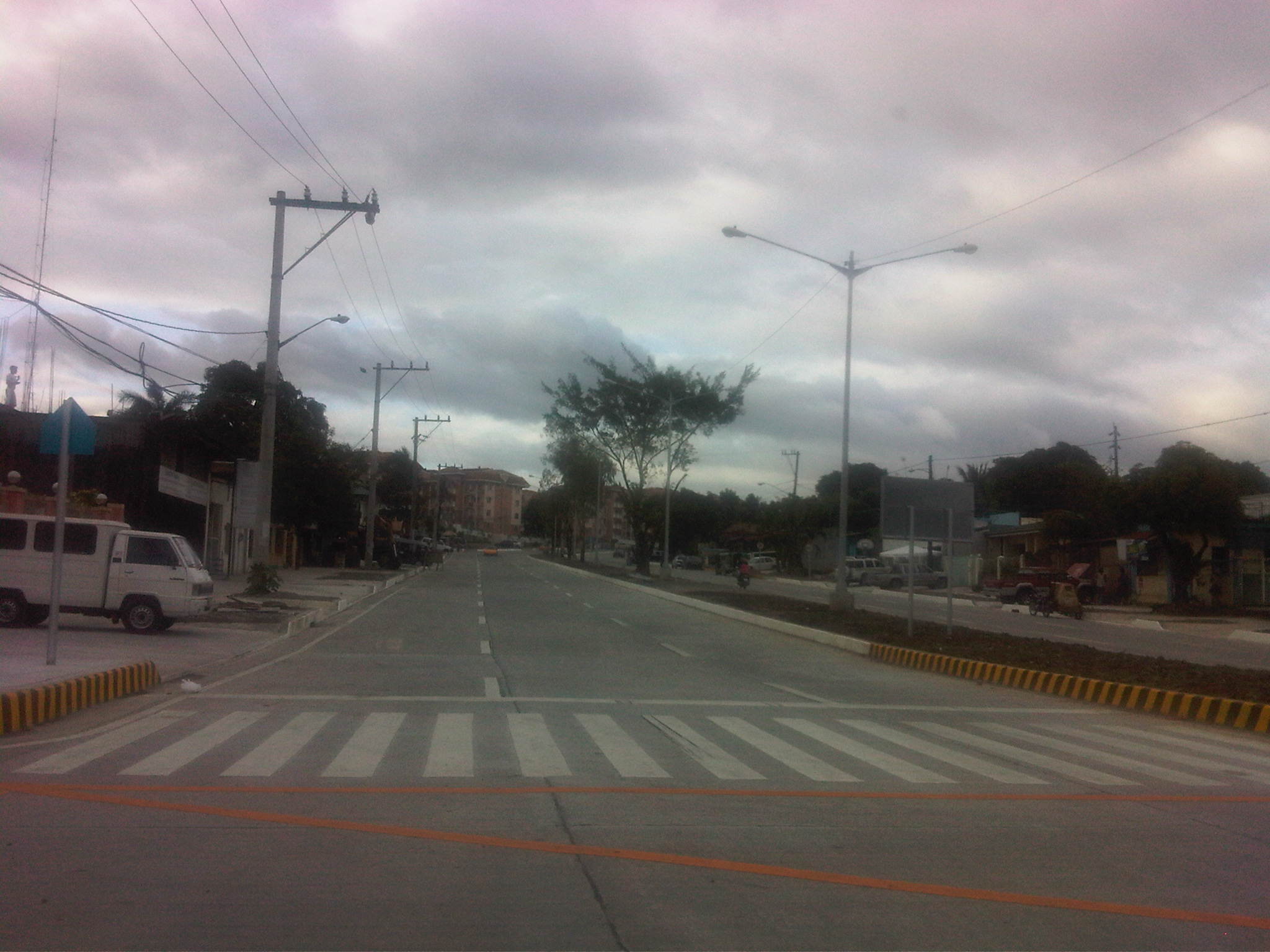 Approach to intersection from Quirino Highway. Also visible in this photo are residential buildings of the San Benissa Garden Villas
So far, I have only observed light traffic along the intersection but this should eventually become a major intersection and may require traffic signals once motorists become more familiar with this route. Already there are some experiences of congestion at the intersection with Quirino Highway as it is currently unsignalized despite the volume of traffic at the area. Considering the typical behavior of motorists, it is not unthinkable that conflicting flows eventually translate into constrictions as drivers generally do not give way even to those with a clear right of way. Thus, manual enforcement will have to be present, firm and consistent in order to be effective in managing traffic at Commonwealth-Quirino.
–
Revisiting Marcos Highway: a work in progress?
I was able to take some photos along Marcos Highway before the rains came over the weekend just to have a handle on the current state of roadworks along that road. I had written recently about the progress along Commonwealth Ave., particularly the stretch connecting to Quirino Highway. In that project, the contractors constructed a culvert across Commonwealth that took quite some time and yet has been completed many weeks ago.
Unfortunately, for those using Marcos Highway, it seems the inconvenience (to use a diplomatic word) will continue on considering the seemingly chaotic approach the contractors have been employing in digging up the pavement. Of course, it is a major project and I am sure many people will ultimately be thankful for the new drainage (hopefully, it’s maintained well) and the brand new pavement that will make travel smoother. But then the completion of the Marcos Highway works seem quite far in the horizon and has effected tremendous losses in travel time and fuel.
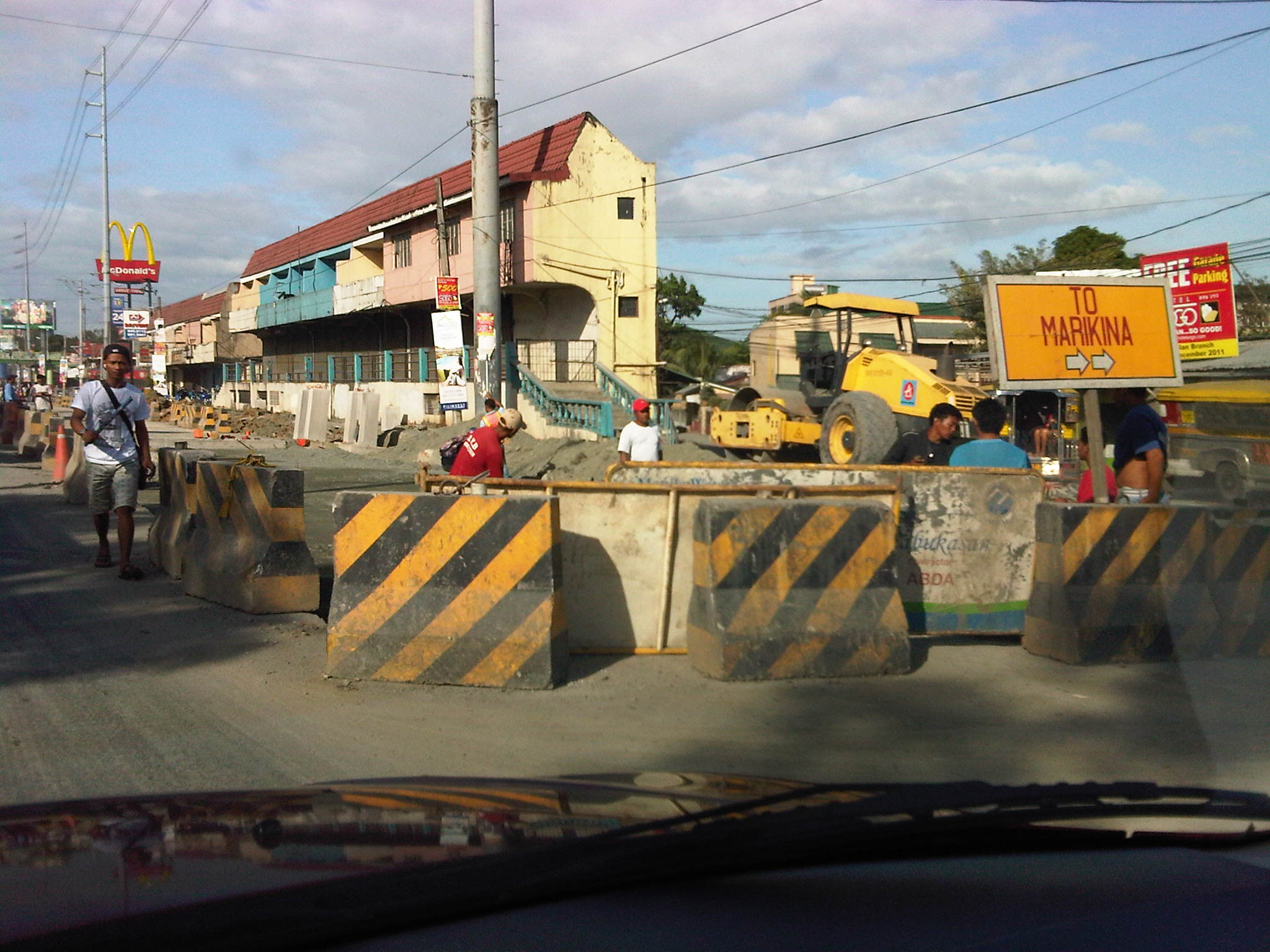 Section across Burger King and in the vicinity of a U-turn slot intended for traffic generally coming from Imelda/Felix Ave. The site is a bottleneck for traffic coming from Masinag and the villages along Marcos Highway. Due to the road works and the U-turn slot, there are only 2 lanes effectively available for through traffic that originally flowed along 4 lanes.
 Past the bottleneck, the Marcos Highway seems quite spacious with the equivalent of 3 lanes suddenly available to motorists. At right, there is the work area of a water concession who is supposed to coordinate with the road project contractor.
 Newly paved lane at the approach to the junction with Imelda Ave/A. Tuazon Ave. The works at this intersection has affected turning traffic to and from A. Tuazon Ave. At one time, right turns from Marcos Highway were prohibited due to construction affecting the entire intersection exit to A. Tuazon itself.
 After passing Dela Paz and approaching Ligaya, motorists will usually encounter another bottleneck due to the U-turn slot for vehicles generally coming from Amang Rodriguez (Pasig) and bound for Marikina. The area is usually constricted even with traffic enforcers present. These enforcers are usually found engrossed in checking for number coding violators than managing traffic. At present, there project contractor has paved the innermost lane of the section and this morning that lane is already passable to vehicles. Problem is, the same vehicles will discover that they will eventually run into the U-turn slot and motorists would have to swerve right to converge with through traffic.
 At the intersection of Marcos and Rodriguez, the traffic enforcers (probably in coordination with the contractor) made an opening to allow for counterflow during the peak periods. This is supposed to alleviate congestion at the intersection where aside from the still unfinished works, jeepneys tend to congregate and constrict the flow of traffic. Such occurs on a regular basis and one wonders how Pasig and MMDA enforcers can just stand around and not do anything about this predicament.
 After Ligaya, traffic flow is split with vehicles maneuvering left and right to avoid road works along a middle lane of Marcos Highway. The pavement on the right most lanes are newly constructed and have been passable for some time now. From the looks of the pavement on the left, these two will soon be scheduled for re-blocking. Perhaps the lane under construction now will be finished by then.
There are also drainage and road works ongoing on the other side of the highway and right in front along the LRT2 station. Often, commuters can be seen taking one lane of Marcos Highway as they try to get their rides from jeepneys who occupy yet another lane or two. During the night-time, another counterflow scheme is used for eastbound traffic with an opening just after the bridge.
Of course there is hope for those using Marcos Highway regularly. Perhaps the project will be completed before school opens in June 2012 and by then flow will be smoother and congestion more bearable. We only need to look at Ortigas Ave and its extension to know that we are still quite lucky. It is far worse along that road.
Municipal transport in San Francisco – Part 2: Trolley buses
San Francisco’s trolley buses are probably among the last of a fading breed of bus transport still employing electricity to service various routes in that city. With a cousin driving our vehicles along McAllister Street, I was able to take photos of the overhead cables from which the trolley buses are able to pick-up electricity to power their motors.
 Overhead cables seem to be everywhere including the streets around the San Francisco City Hall located at the Civic Center. This is a photo of the intersection of McAllister and Polk Street.
 Another view of City Hall with cables running above McAllister. Notice the cables connected to transverse wires that are in turn connected to the light poles.
 Where buses turn, cables may also be found above. This is the junction of McAllister and Van Ness Avenue. That’s the Herbst Theater building on the left, which houses the Museum of Performance and Design, and the California Public Utilities Commission on the right. Those are two buses, one trolley and the other natural gas-powered in the middle of the photo.
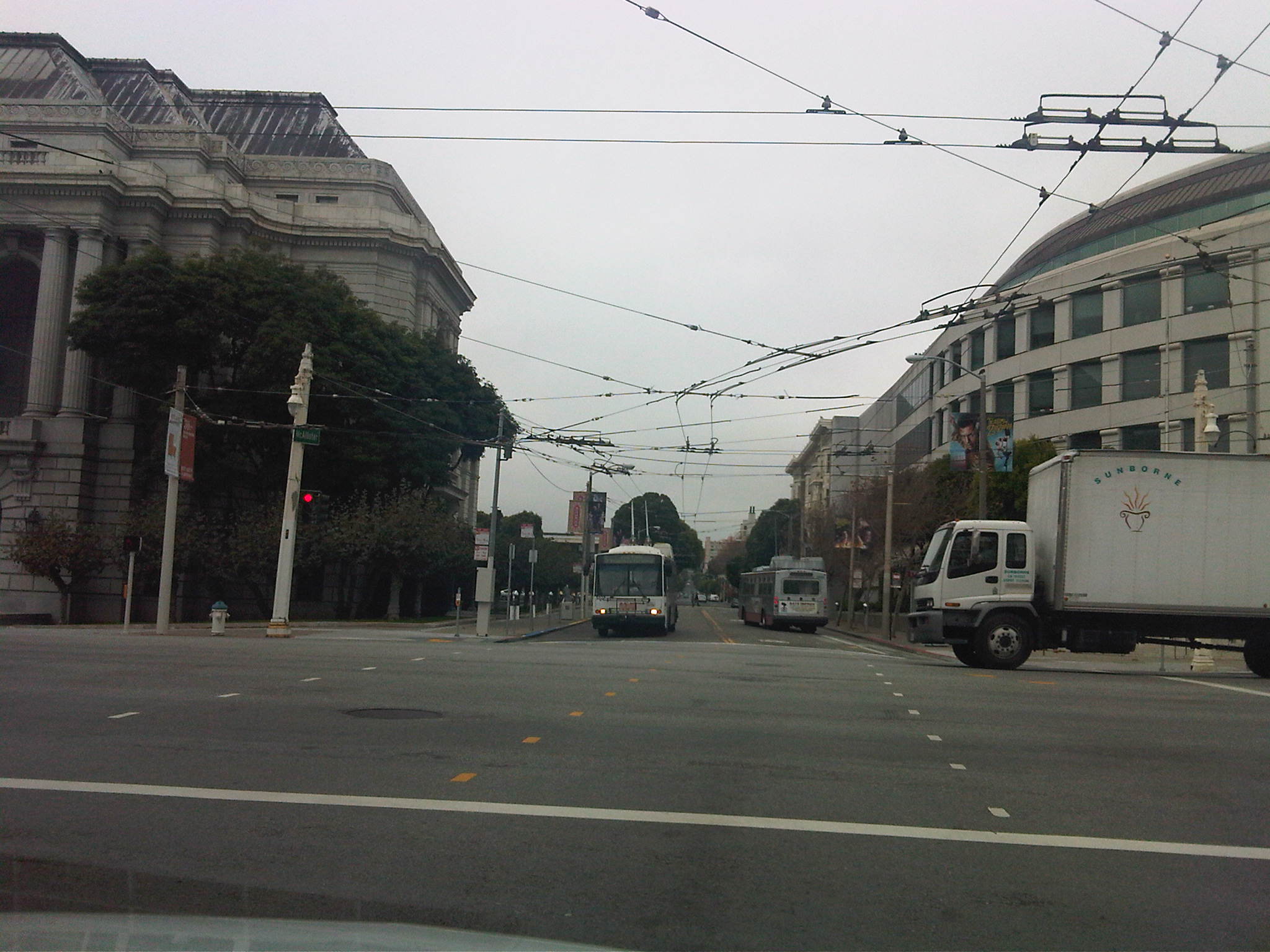 A close-up from the preceding photo shows the trolley bus with its long pantograph. The bus on the right runs on natural gas and is a low emission vehicle.
 A closer view of the overhead cables show how they are connected to the poles along the roadside.
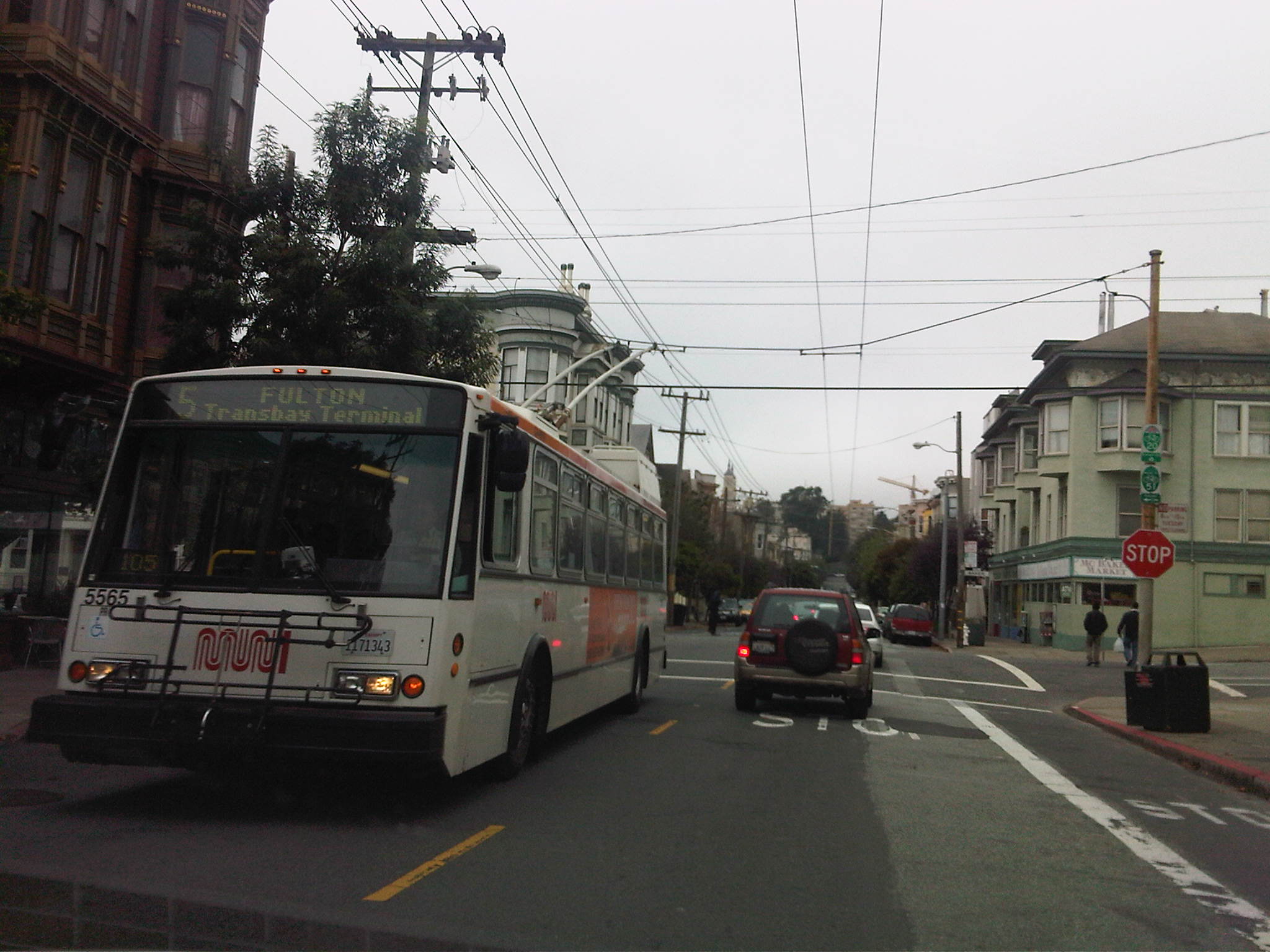 That’s a bus headed for the Transbay terminal. At front is a bicycle rack and the worm logo of Muni.
In the streets of San Francisco, one thing’s for sure – if you see those overhead cables along a road, you know that the trolley buses run along that street. Most major streets in San Francisco are served by public transport, providing excellent mobility for its citizens. They say you can usually take or get off a bus within a block of your destination. If you have to walk, the walk is usually at a leisurely pace and generally in a safe environment. You’ll probably only encounter difficulties walking when you’re in the hilly areas like Nob Hill and Russian Hill where the streets can get quite steep. Still, the walk’s usually well worth it not just because of the exercise but also because of the view and the small neighborhood shops and restaurants along your way.
Mission accomplished: the Commonwealth – Quirino link up
Over the weekend, I happened to pass by what used to be the north end of Commonwealth Avenue near the back entrance to Jordan Plains Subdivision. Public utility jeepneys and private cars commonly use the subdivision streets to go to and from the Novaliches town center (Bayan). As such, the subdivision bears much of the negative externalities brought about by mostly unwanted through traffic. These include vehicle emissions and noise from motor vehicles, and the incidence of crime (mostly burglaries) in the subdivision. Too long have they waited for Commonwealth and Quirino Highway to be connected to reduce through traffic and its unwanted derivatives in the subdivision.
After delays due to various reasons, the project was finally bidded out and implemented this year. The construction didn’t go without any problems and there were times particularly during rainy days when the site was quite difficult to traverse due to excavations, materials and a so-so traffic management scheme (mostly counterflows) that ensure vehicles traveling as if they were negotiating a labyrinth. Still, work went on and at least people saw that it continued unlike other projects that went untouched after some excavations were made (“naka-tengga”).
I guess it was quite rewarding and a relief to a lot of people that the project will be completed soon and hopefully within the year and apparently on schedule. Following are a few photos of the area I took last Sunday.

First look at the approach to the completed section of Commonwealth Avenue connecting to Quirino Highway.
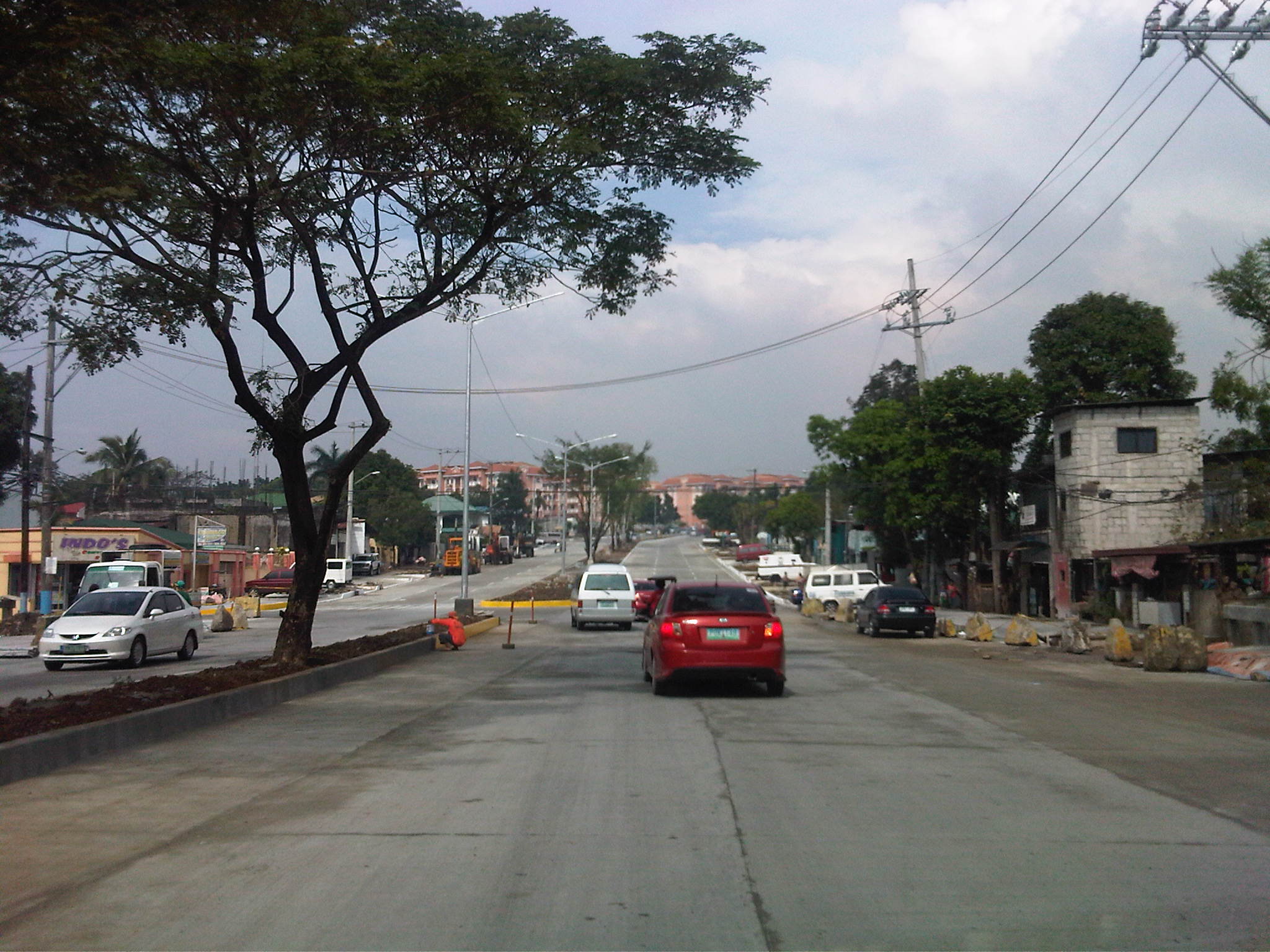 Closer to what used to be a chaotic intersection towards Jordan Plains, it was clear that most of the major works have been completed and that the section to Quirino was passable. The only elements missing are the pavement markings and traffic signs.
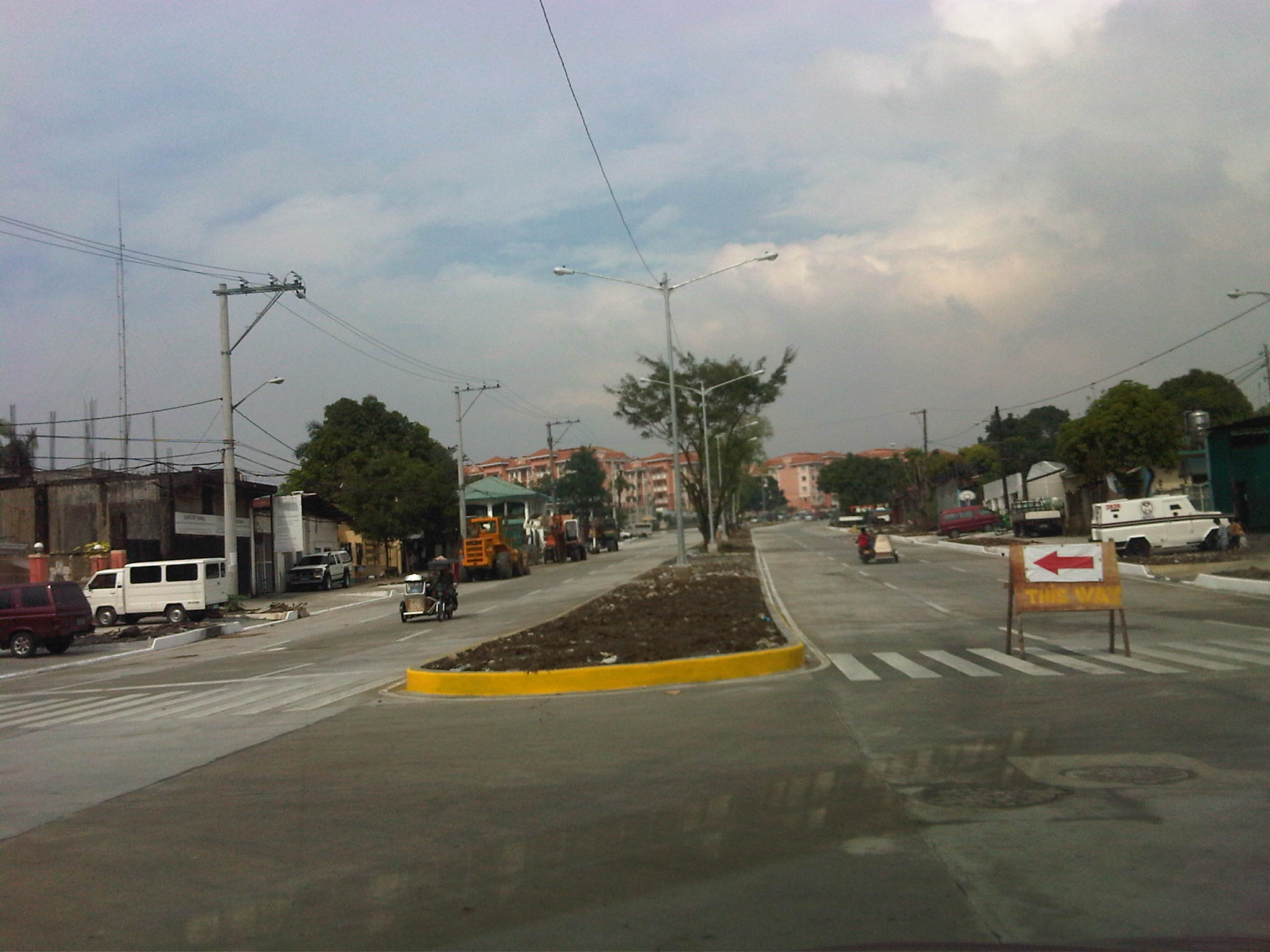 Close-up of new intersection and section of Commonwealth leading to Quirino. Pedestrian crossing markings and lane markings and edge delineators are visible in this photo.
Kudos to the contractor of this project and the DPWH and Quezon City government for the near completion of the project. Now, if only the contractors of roadworks along Marcos Highway and Ortigas Avenue will follow the Commonwealth example and get their acts together and work more efficiently, not to mention do a better job managing traffic along the way, then probably people using those roads will have less headaches during this season.
Roadworks along Angel Tuazon Avenue, Marikina
On my way to the dentist last weekend, I encountered more roadworks during my drive. This time, it was along Angel Tuazon Ave. stretching from Marcos Highway to Sumulong Highway. Due to the rains the past few days, work seems to have been suspended and I saw no one doing anything along the work site.
 Concrete pavement re-blocking site along A. Tuazon Ave. – this road frequently goes under water during intense rainfalls brought about by typhoons. Being a truck route also contributes to the road being damaged.
–
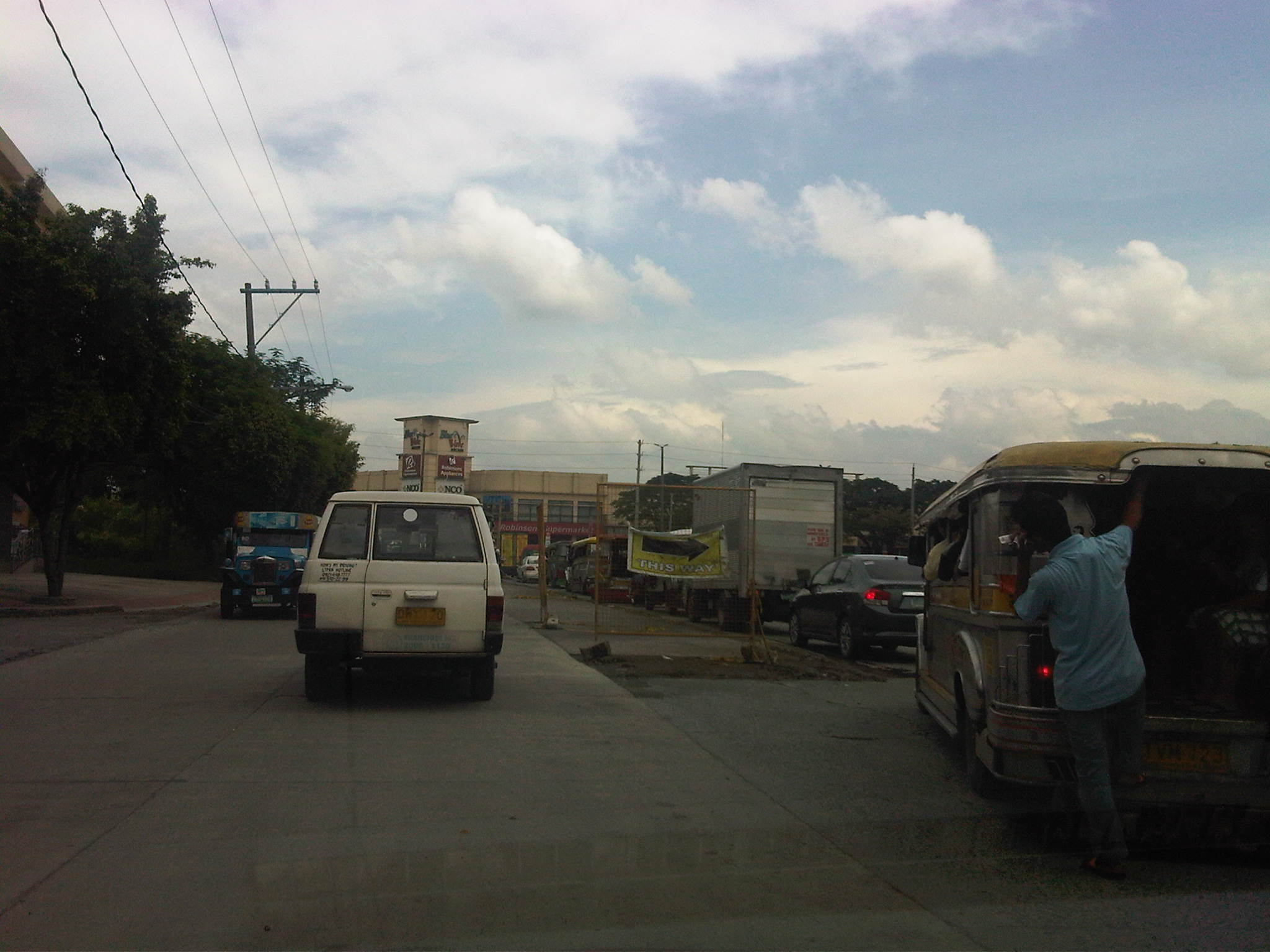 Roadworks along the approach to the junction with Sumulong Highway – one lane of the opposing direction is generally used by left-turning traffic along the northbound side under a countet-flow scheme. I can imagine this causes significant congestion along other legs of the intersection as only one lane is available for the southbound direction, limiting intersection capacity.
Good luck to people passing these areas this week. May you have more patience as you travel.
–
Road crashes along Katipunan Avenue
Katipunan Avenue in Quezon City has claimed a lot of lives and injured a many more people over the past years particularly due to aggressive and often reckless driving or riding by motorists using the road. Especially dangerous is the section stretching from the flyover to the U-turn slot just after Ateneo’s Gate 2 since many vehicles tend to (over)speed from the wide overpass and unto the section fronting Ateneo De Manila University. On the other side of the road, motorists also tend to speed up towards the overpass, unmindful of vehicles shifting from the outer lanes of the road towards the U-turn slot. In many cases, some vehicles cross from the establishments along Katipunan towards the U-turn slot. These conditions significantly increase the likelihood of occurrence of road crashes.
This morning, I noticed during my drive to UP that the concrete barriers of the U-turn slot along Katipunan northbound were again witnesses to another crash. The driver was most likely speeding if not flying from the overpass and miscalculated on his/her maneuver upon discovering the barriers along his/her path as he/she descended the overpass. It was more especially dangerous this morning as I can imagine the pavement conditions as well as the visibility given the heavy rains pouring around Metro Manila since last night. I took a quick photo of the damaged vehicle just when a truck was maneuvering in preparation to towing the vehicle.
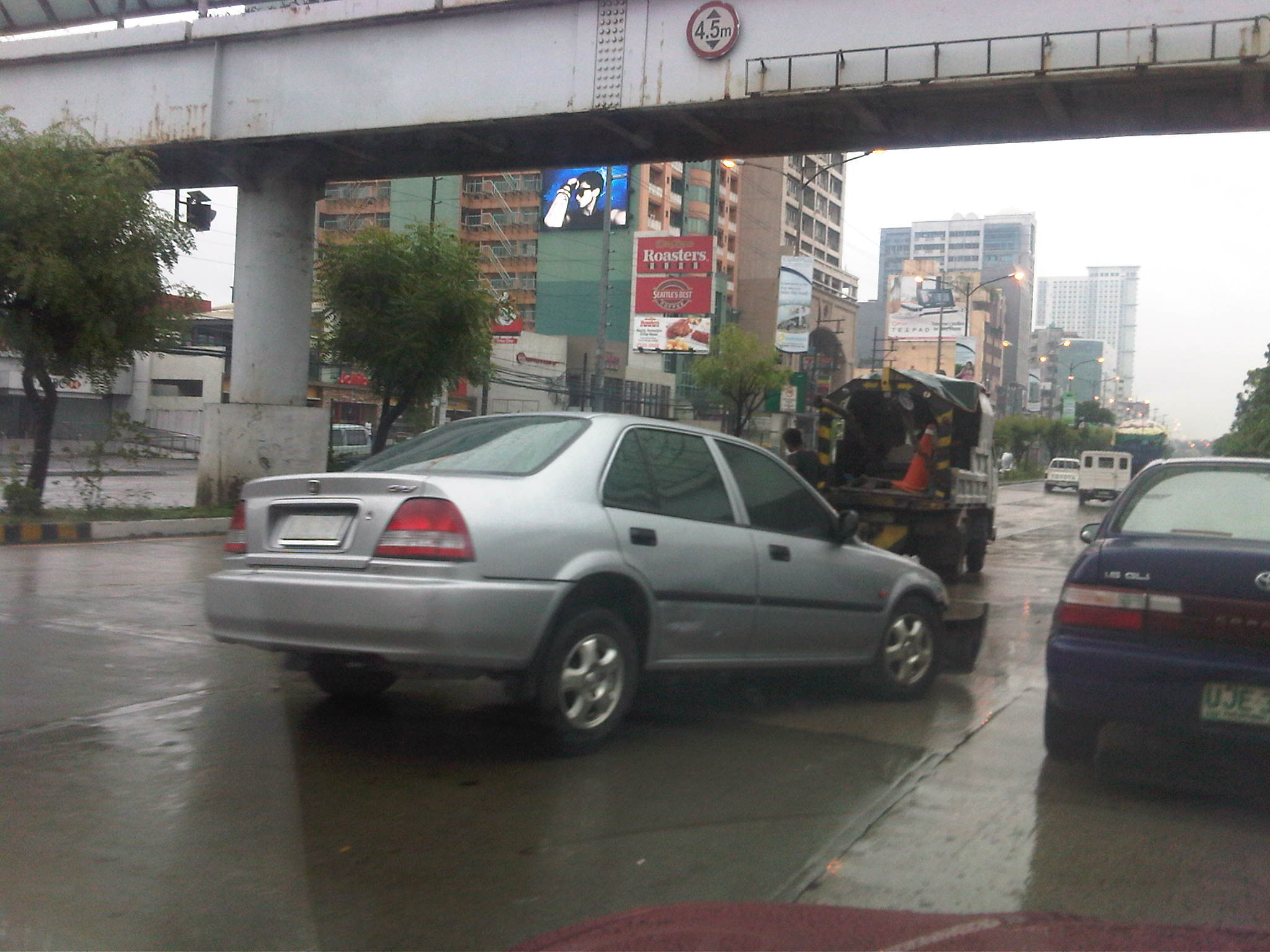 Honda City with damaged front bumper – the vehicle hit one of the concrete barriers of the U-turn slot with a trajectory indicating it apparently came from the direction of the overpass. After passing the vehicle, I saw that the left front wheel is already missing and apparently destroyed when the car hit the barrier. The damage to the car indicated tremendous impact and I just hope the driver and other occupants (if any) were wearing their seatbelts when the car hit the barrier. It would have helped also if the car had airbags. These safety devices are not standard issue in many if not most vehicles in the Philippines allowing dealers to make airbags optional and giving the buyer the false perception of getting the vehicle with a cheaper price.
When will motorists learn from such incidents? When and how will the MMDA or whoever is in-charge finally, effectively and decisively address this issue? Is it simply a case of speeding and something that can be addressed by enforcing speed limits? Or does the infrastructure and layout encourage such behavior among motorists? Perhaps we should rethink how we design and place U-turn slots and the barriers we use in the scheme. Otherwise, we will just see the same scene happening all over again at the cost of more lives and limbs.
–
Commonwealth extension
Quezon City’s Commonwealth Avenue extends from its junction with the Elliptical Road (Quezon Memorial Circle) up to gate of Jordan Plaines Subdivision in Novaliches. Often labeled as a killer highway due to the frequent road crashes that have resulted in many deaths, it is perhaps the widest road in all of the Philippines, having 10 lanes per direction at its widest sections in the Diliman area. The avenue is still far from completion as the stretch from Jordan Plaines to Quirino Highway has taken quite sometime for construction. I took the following photos of the area last weekend to illustrate the situation.
 Counterflow scheme a block away from the Jordan Plaines gate due to excavations and the civil works on a short bridge over a creek. Two weeks ago the counterflow scheme was implemented along the northbound side of the avenue.
 Only a few people were working on the Sunday I passed by the area.While there are signs and a few barriers, the work area presented a lot of hazards to both motorists and pedestrians. It was a bit dry last Sunday due to the sunny weather but I can imagine the mud from the work site should rains fall in the area.
Connecting Commonwealth Avenue with Quirino Avenue will surely improve circulation in the area and would probably ease congestion in the Novaliches bayan area. Maybe there will even be an adjustment of some public transport routes once Commonwealth and Quirino are connected. The extension of the avenue is long overdue and a much delayed project considering that there are already developments along the right of way including a residential project by the Quezon City government. The completion of the avenue will perhaps also have a significant impact on land values in Novaliches.
Coastal Roads in Quezon
While traveling between Metro Manila and Naga City in the Camarines Sur, I took the opportunity of taking photos of sections along the coastal roads in the towns of Quezon Province. These include roads in the towns of Atimonan, Gumaca and Atimonan, which face the waters of Lamon Bay, which in turn joins waters of the Philippine Sea as well as the Pacific Ocean. I have old photos of coastal roads on the other side of the province on the Bondoc Peninsula and will feature them in another post.
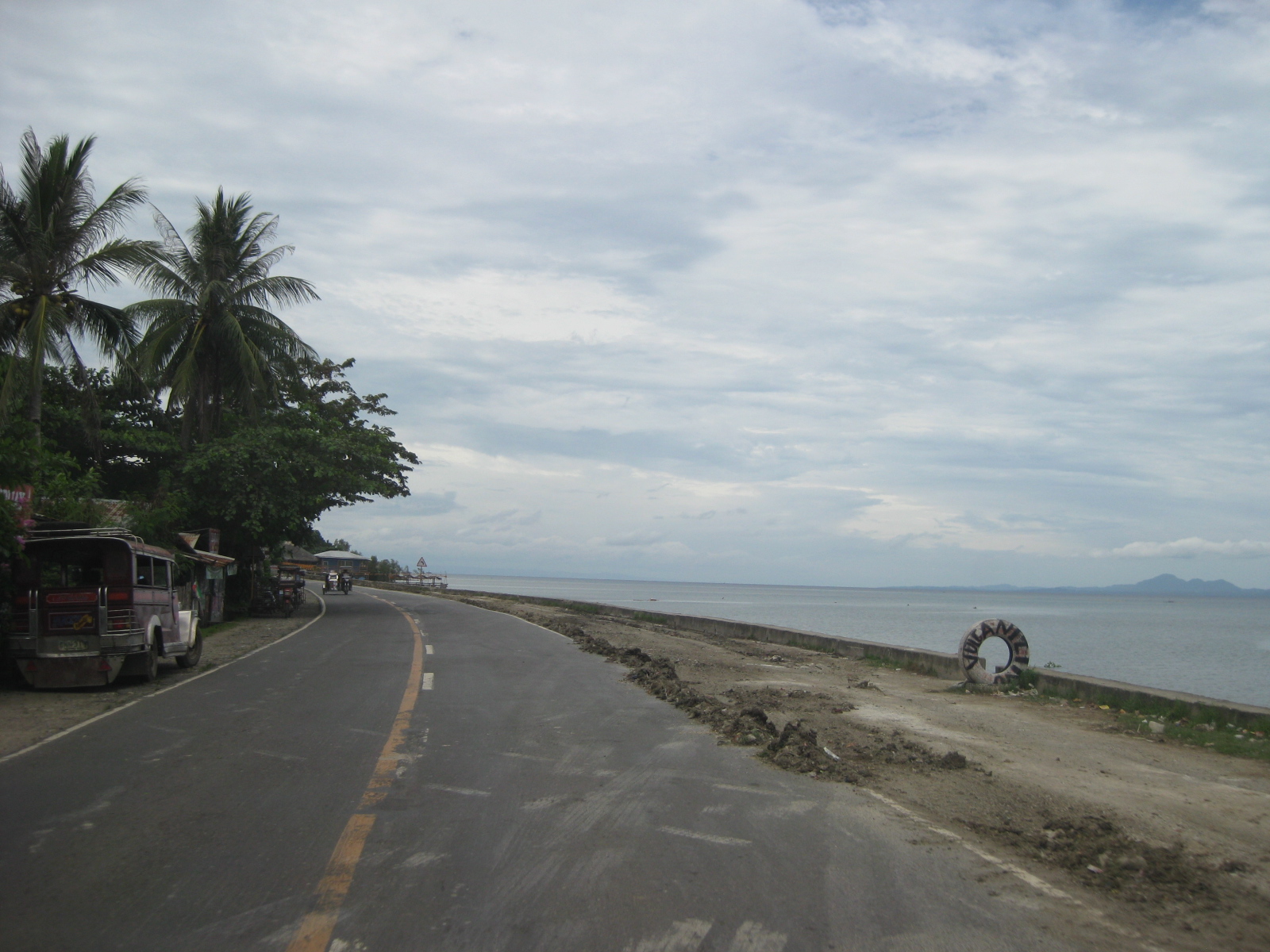 An old tire placed along the sea wall to advertise “vulcanizing” services to motorists, particularly truckers passing along this highway. “Vulcanizing,” of course is the term used for various services concerning ones tires. The shoulder stretching along the seawall serves as parking spaces for trucks plying routes along the Pan-Philippine Highway.
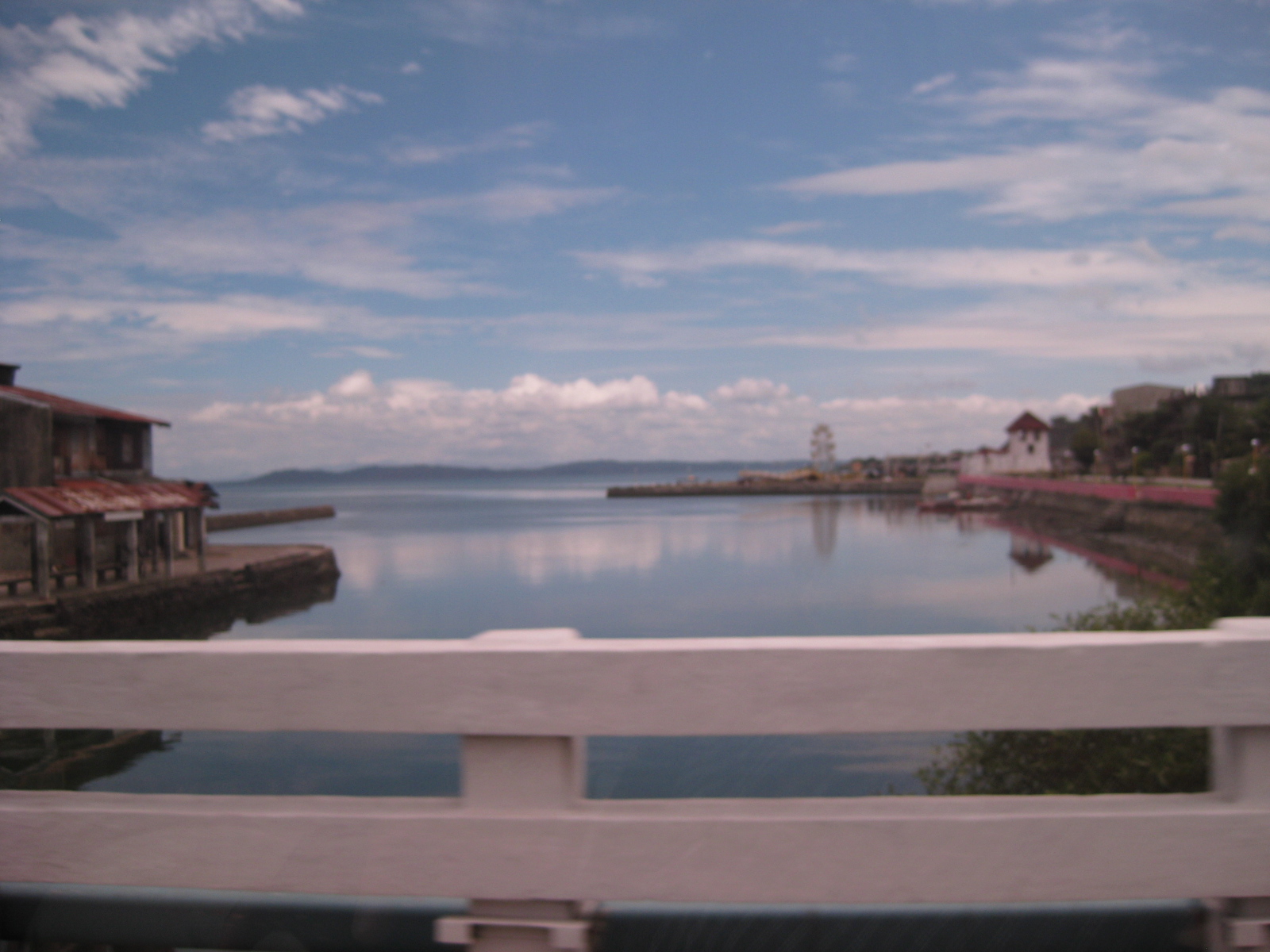 A peek at a small harbor located at the mouth of a river – there are many small ports located along Philippine coastlines. In some towns, there are several including those serving fishermen rather than passengers. One can see the lighthouse at some distance from the bridge where I took a quick shot.
 There are many stores and eateries along the road and many travelers can choose among the carenderias or turu-turo’s. I haven’t tried eating at any of these eateries along this route but during field work, we routinely check out where we can have lunch or merienda. In some cases, you can even have viand cooked for you if you don’t like what’s being offered on the counter (often it’s just pots or pans containing various viands for the selection of the customer). For such seaside towns and barrios, I assume there’s a good supply of fish that can be cooked a number of ways.
 Many stores have their usual customers (suki) among truckers. The wide shoulders provide for parking spaces but these may also bring about some hazards especially at night, and when the trucks are maneuvering. The excellent pavement conditions, and the level and straight sections can induce drivers to speed up along these roads, and such contributes to increased risk of road crashes.
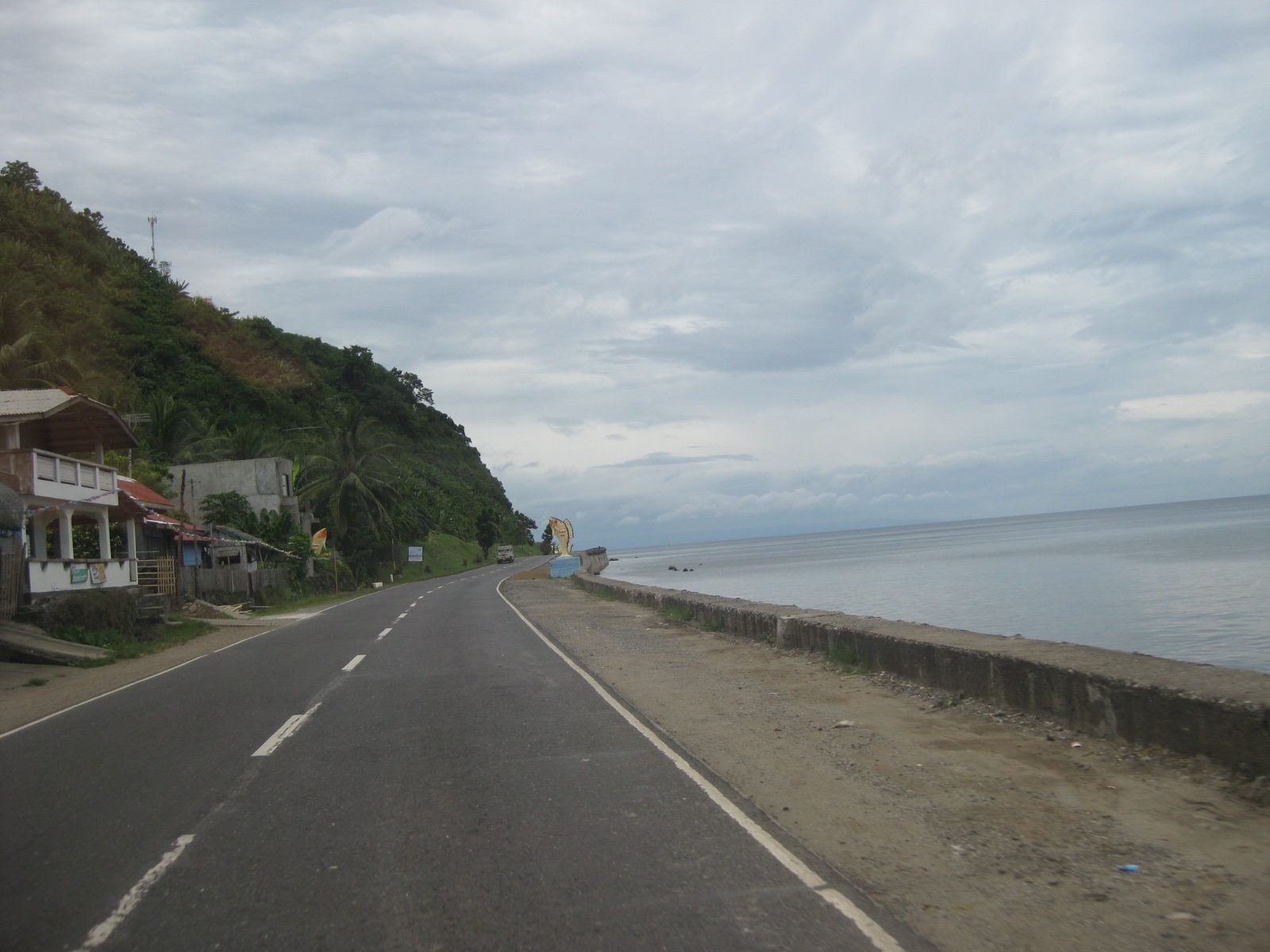 I imagine it must be nice to live along the coast with a good view of the sea and with fresh air coming in from the east (Pacific Ocean). But then I am reminded of the typhoons that generally come from this direction. Quezon is one of the provinces that’s regularly on the roll call for when typhoon signals are announced.
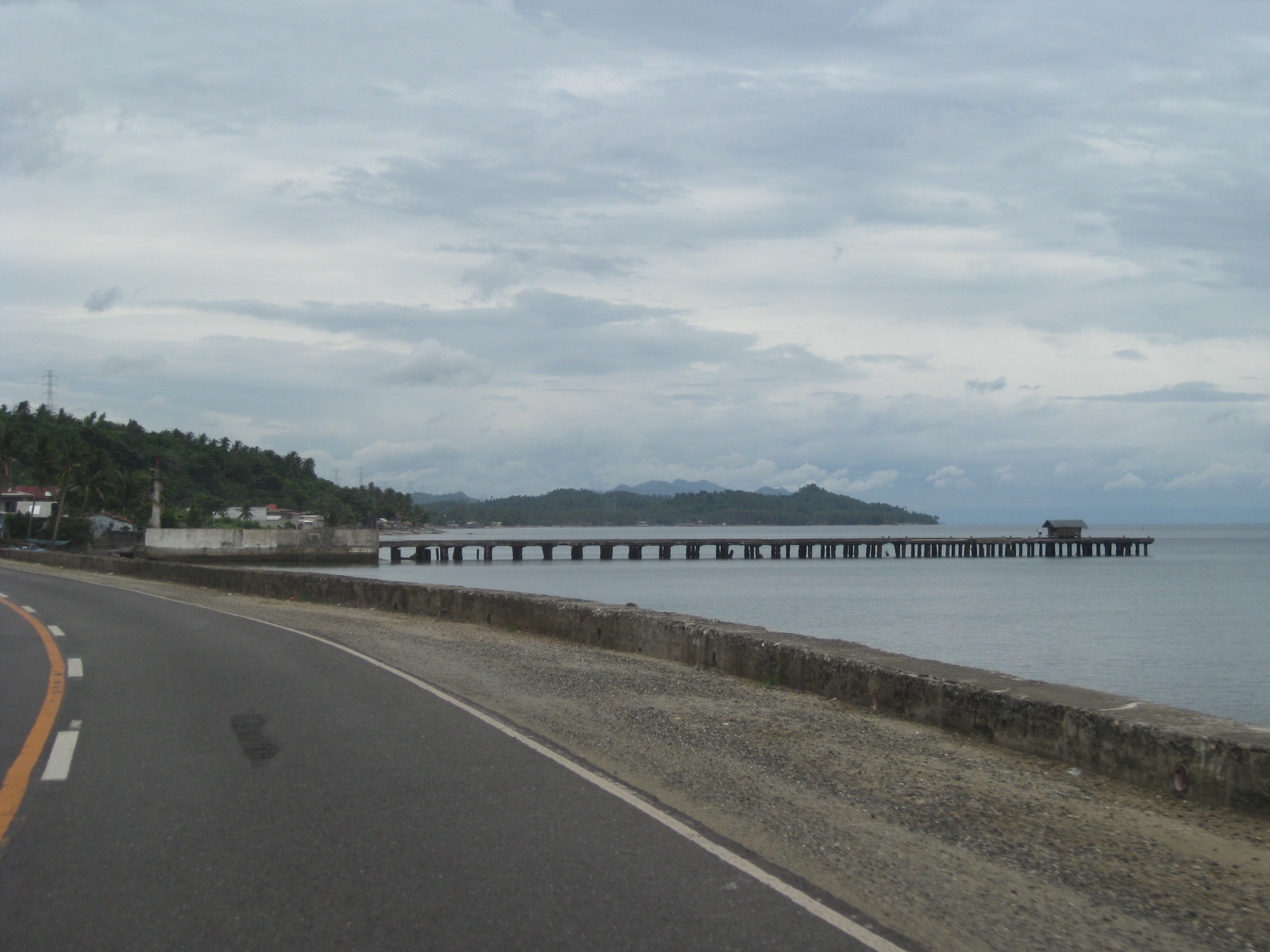 In cases where the water is not deep enough for the larger vessels or bancas, piers are constructed. Such serve not only fishermen but people living in islands of the coast in Lamon Bay.
 Some sections of the road have no inhabitants and can be quite dark at night given there are no lamp posts along the highway.
 Typical pier serving large, motorized bancas serving as ferries to islands and other coastal towns. Such maritime transport are often advised to stay at port during inclement weather as they are not as sturdy as they look. Notice the outriggers that serve to stabilize the vessels as they encounter waves in the open sea.
 Port of Atimonan – the construction of this port was supported by funds from the Government of Japan. Most ports are under the Philippine Ports Authority (PPA), which is an agency under the Department of Transportation and Communications (DOTC).

