
Home » Highways and Streets (Page 28)
Category Archives: Highways and Streets
Weekday EDSA
I chanced upon an uncongested EDSA one day during noontime along the northbound direction. I was traveling from the airport and saw that my usual route along C5 was very congested. I decided to take EDSA instead considering it was noontime and there would probably be less vehicles along the highway during that time of day. I was right and the following photos speak for themselves in as far as describing traffic between 12:00 NN and 1:00 PM.
 Section past Orense Street and the MMDA headquarters
 Section approaching Guadalupe
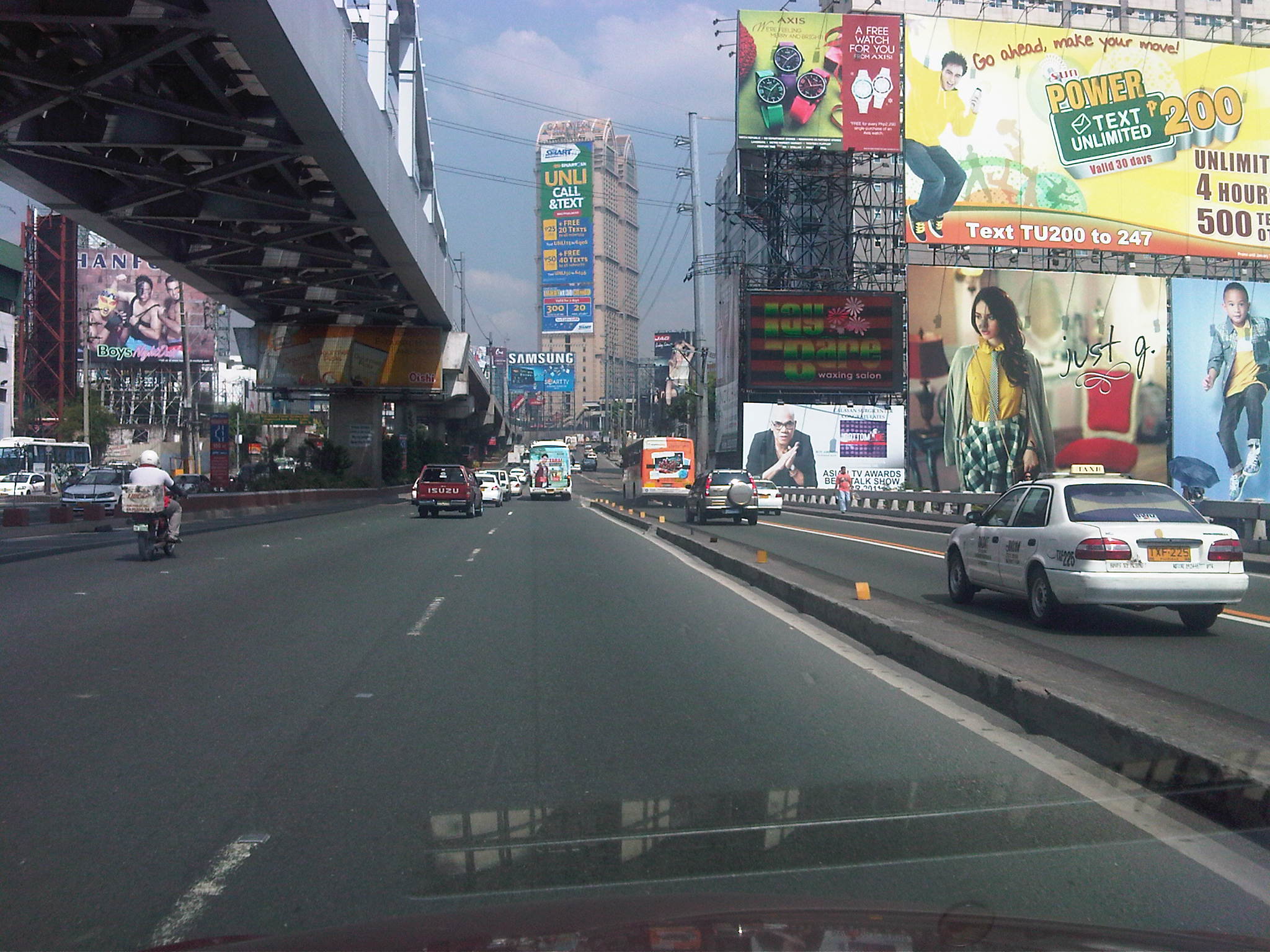 Guadalupe Bridge, crossing the Pasig River, the MRT 3 runs along the steel bridge above
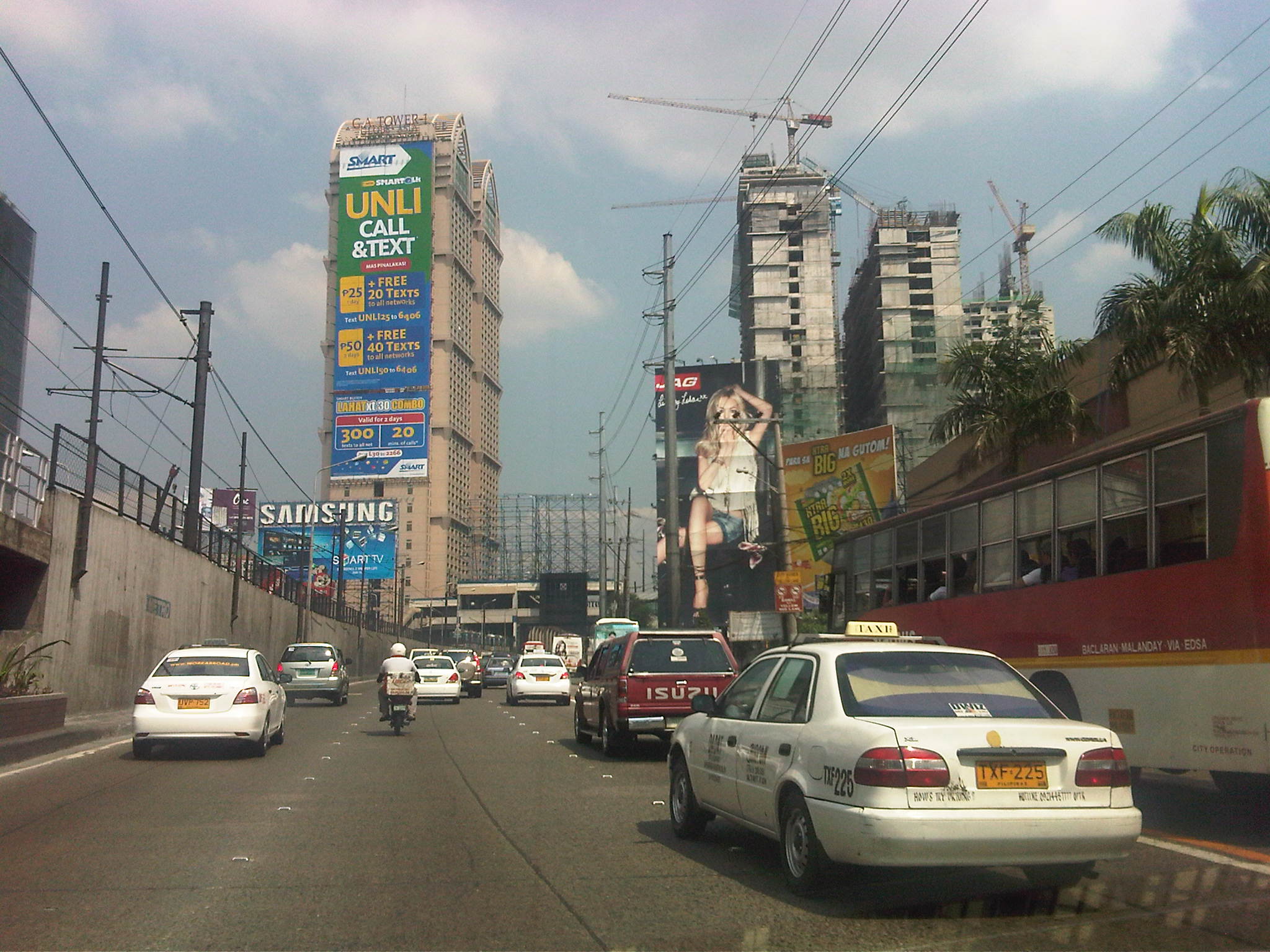 Approaching A. Bonifacio/Renaissance, in the background is the G.A. Tower, the Boni MRT Station and condos under construction including SMDC’s Jazz
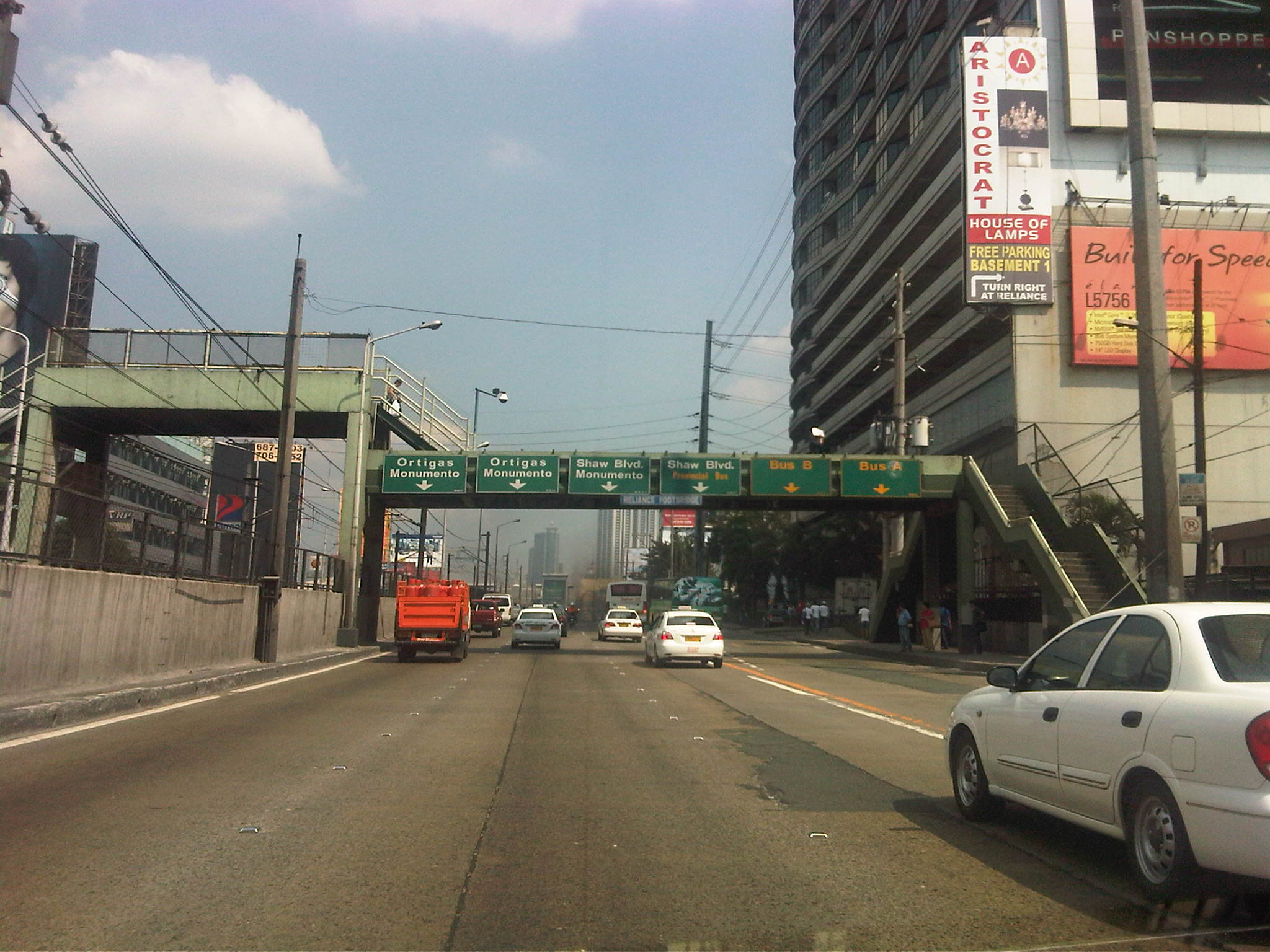 Section across the Renaissance Tower where many FM radio stations are based
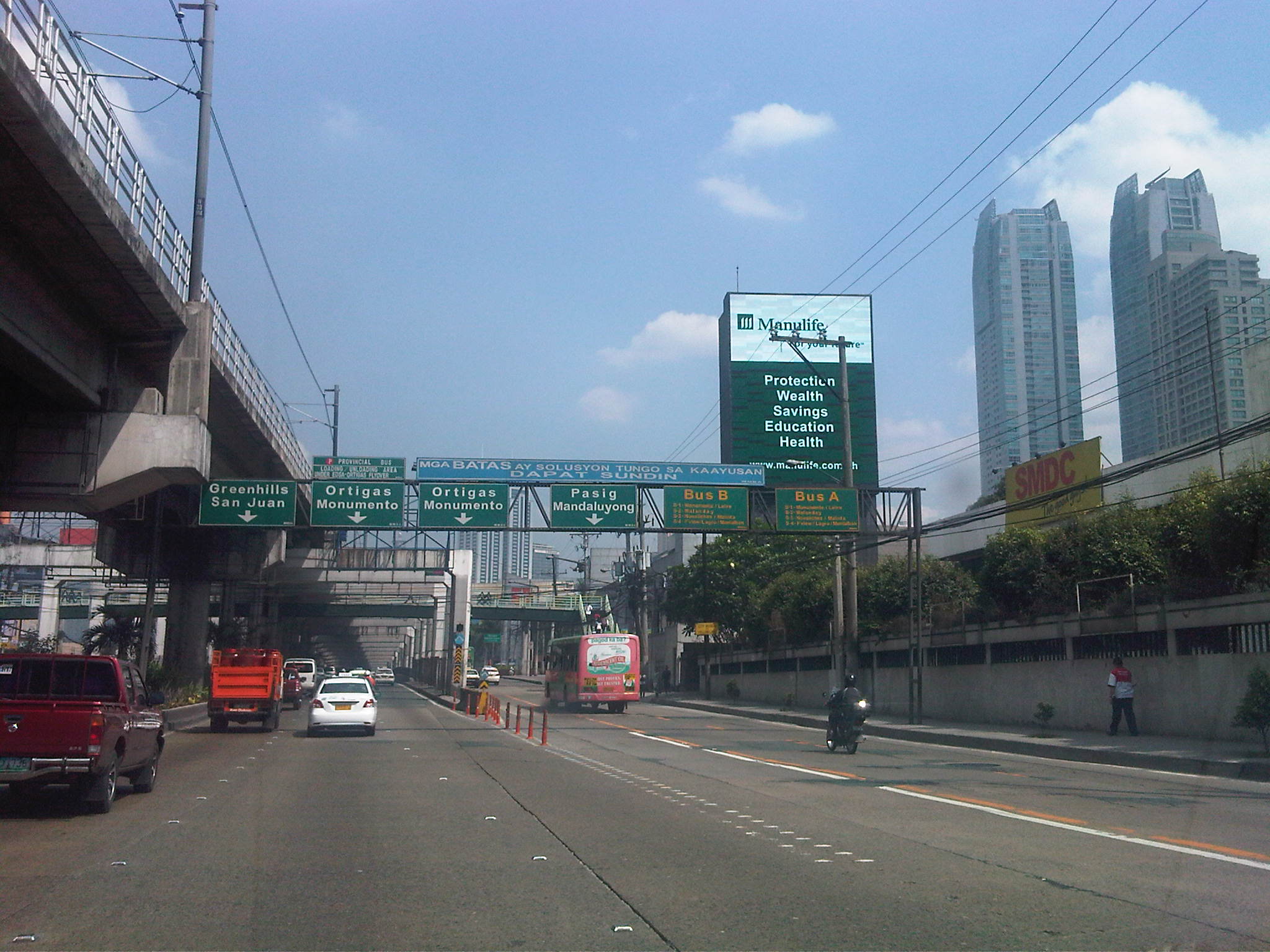 Section past Robinsons Cybergate Mall
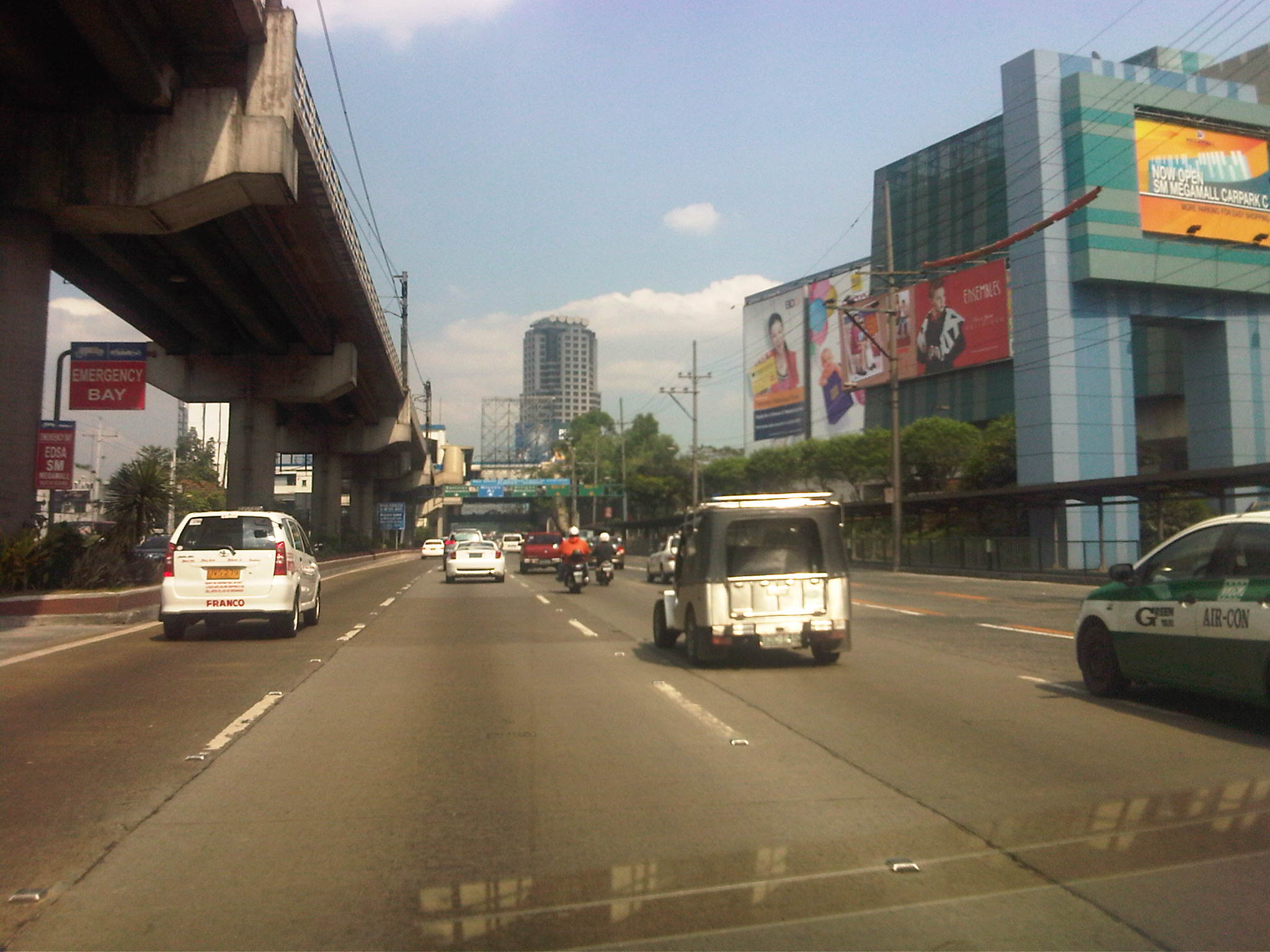 Section across the SM Megamall and approaching the ADB
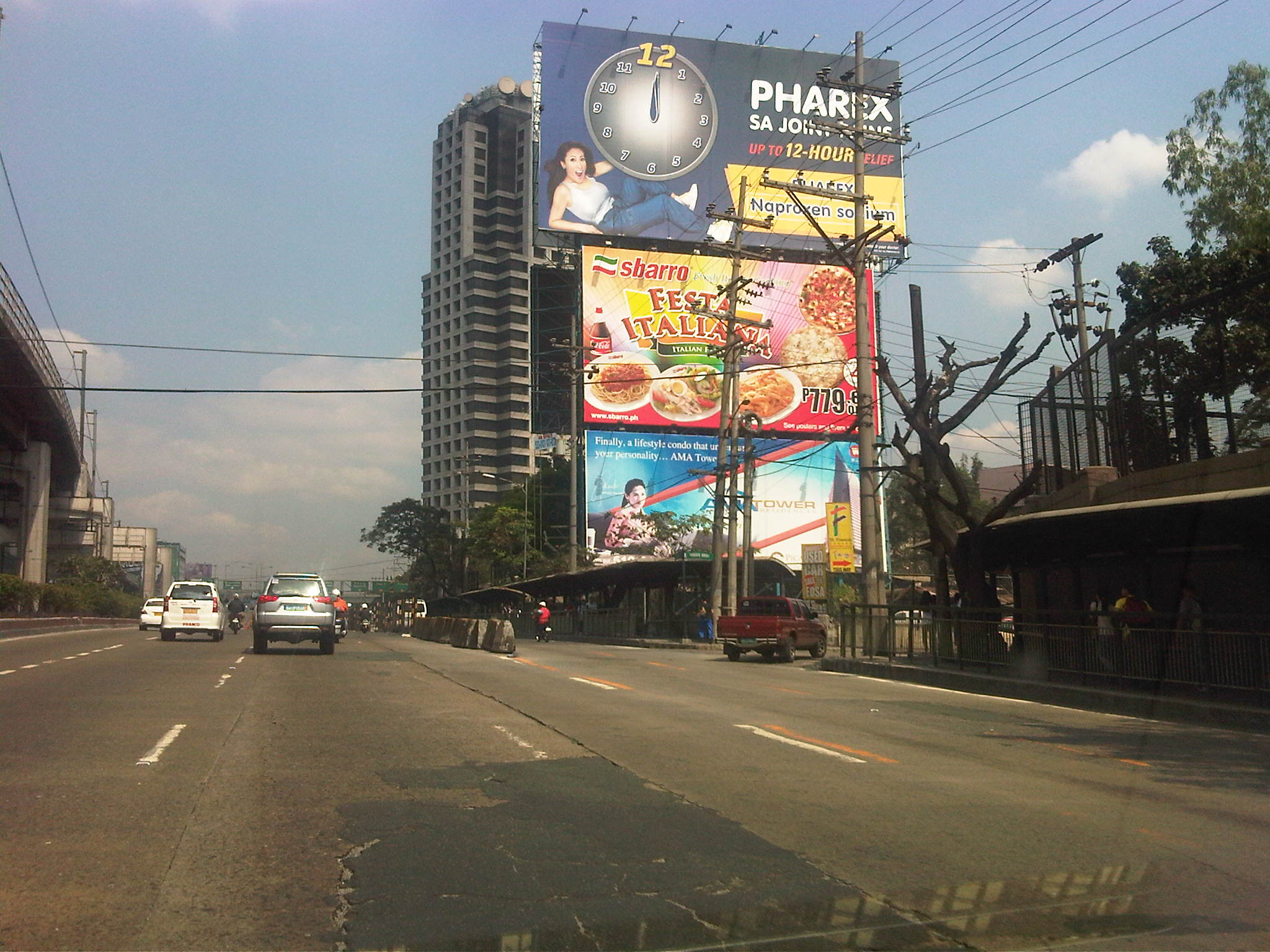 Section across the ADB and approaching Ortigas Ave. One of Galleria’s buildings is seen behind the giant billboards. The MRT
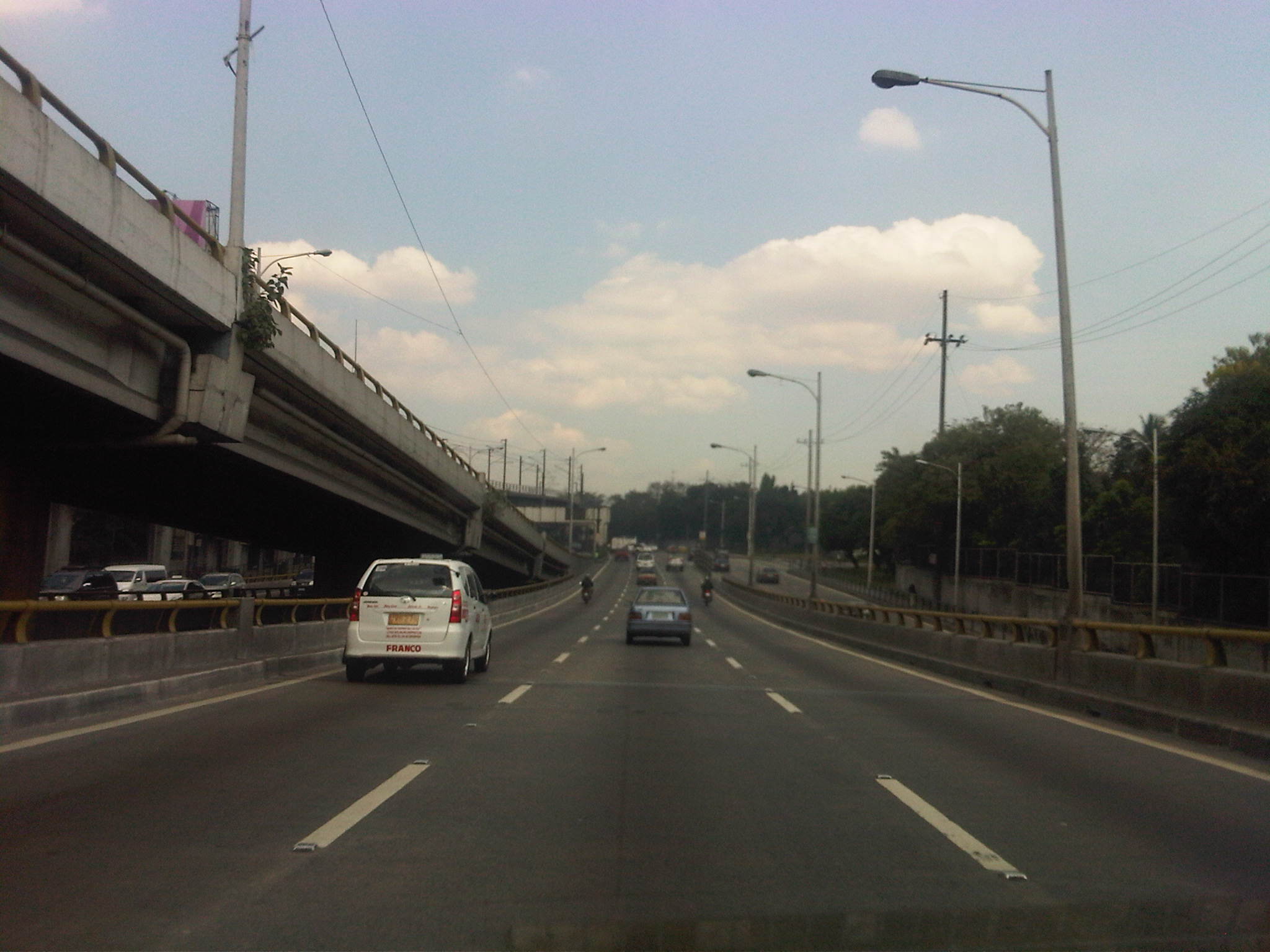 Section descending the Ortigas Flyover and across from Corinthian Gardens
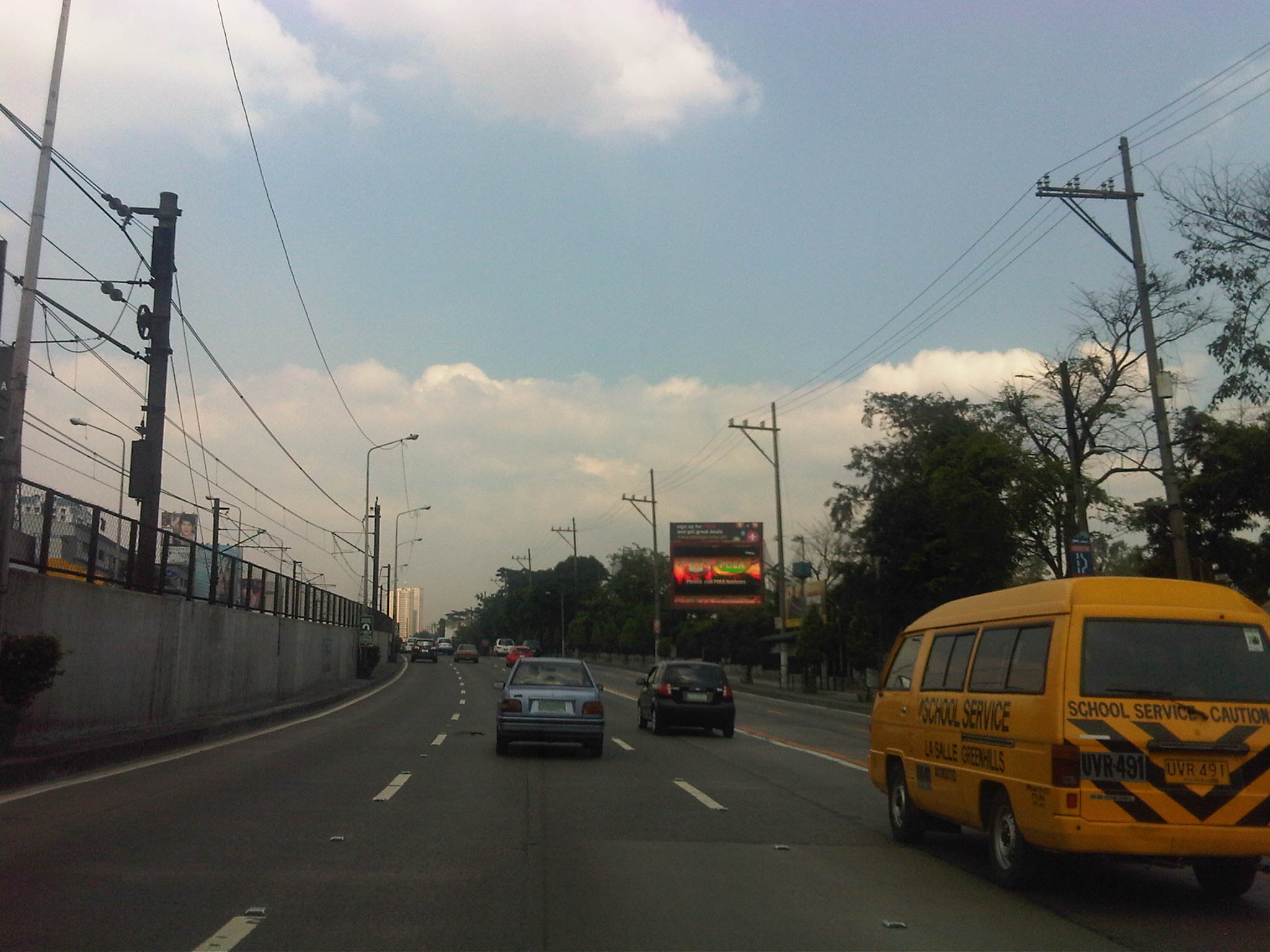 Section across Camp Aguinaldo (between the Aguinaldo and Crame) and approaching the Camp’s EDSA gate
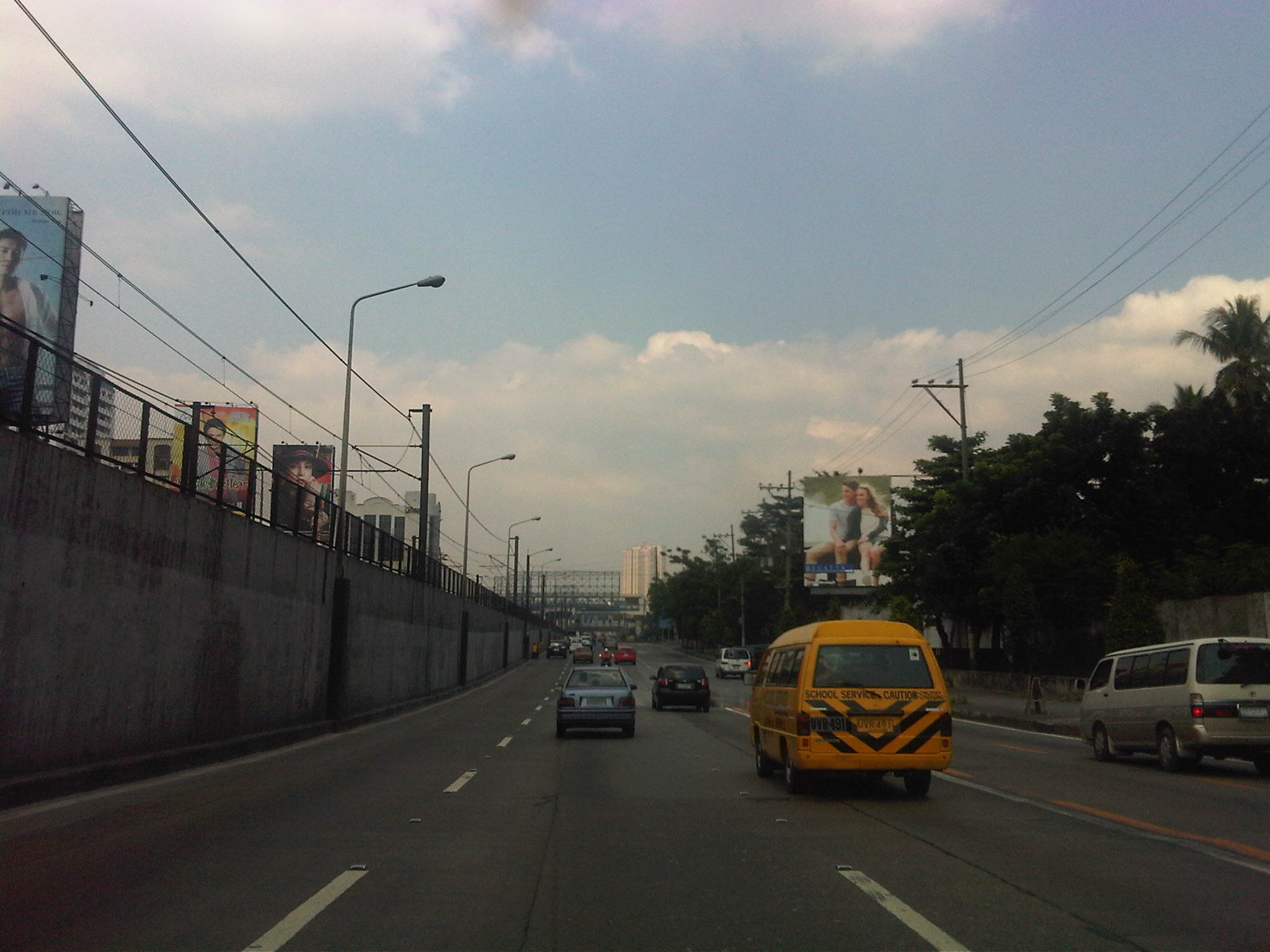 Section approaching Boni Serrano Avenue
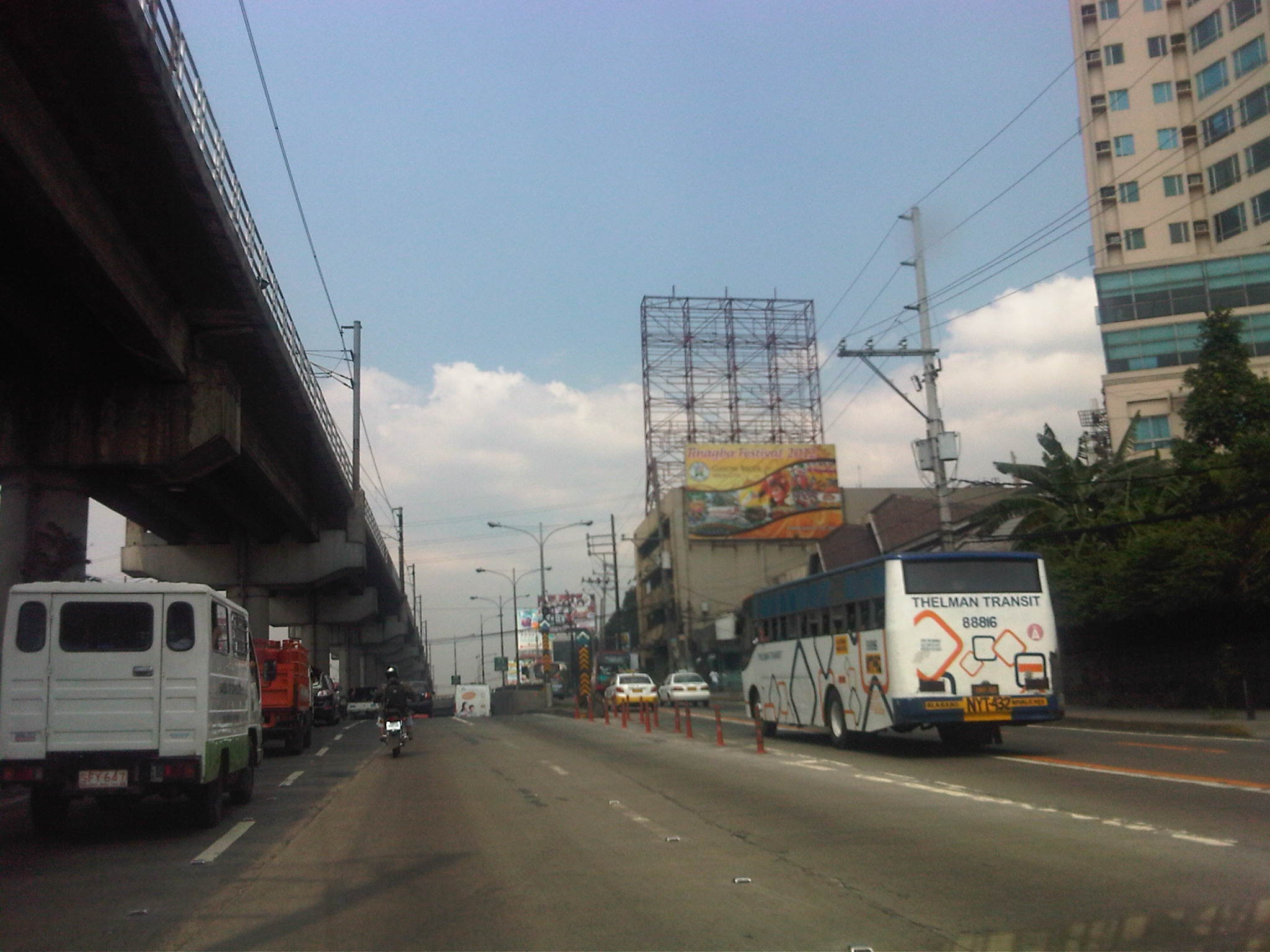 Section approaching the EDSA underpass crossing P. Tuazon and approaching the Cubao commercial center
 Section past the Cubao commercial center and across from several provincial bus terminals lined up along EDSA northbound
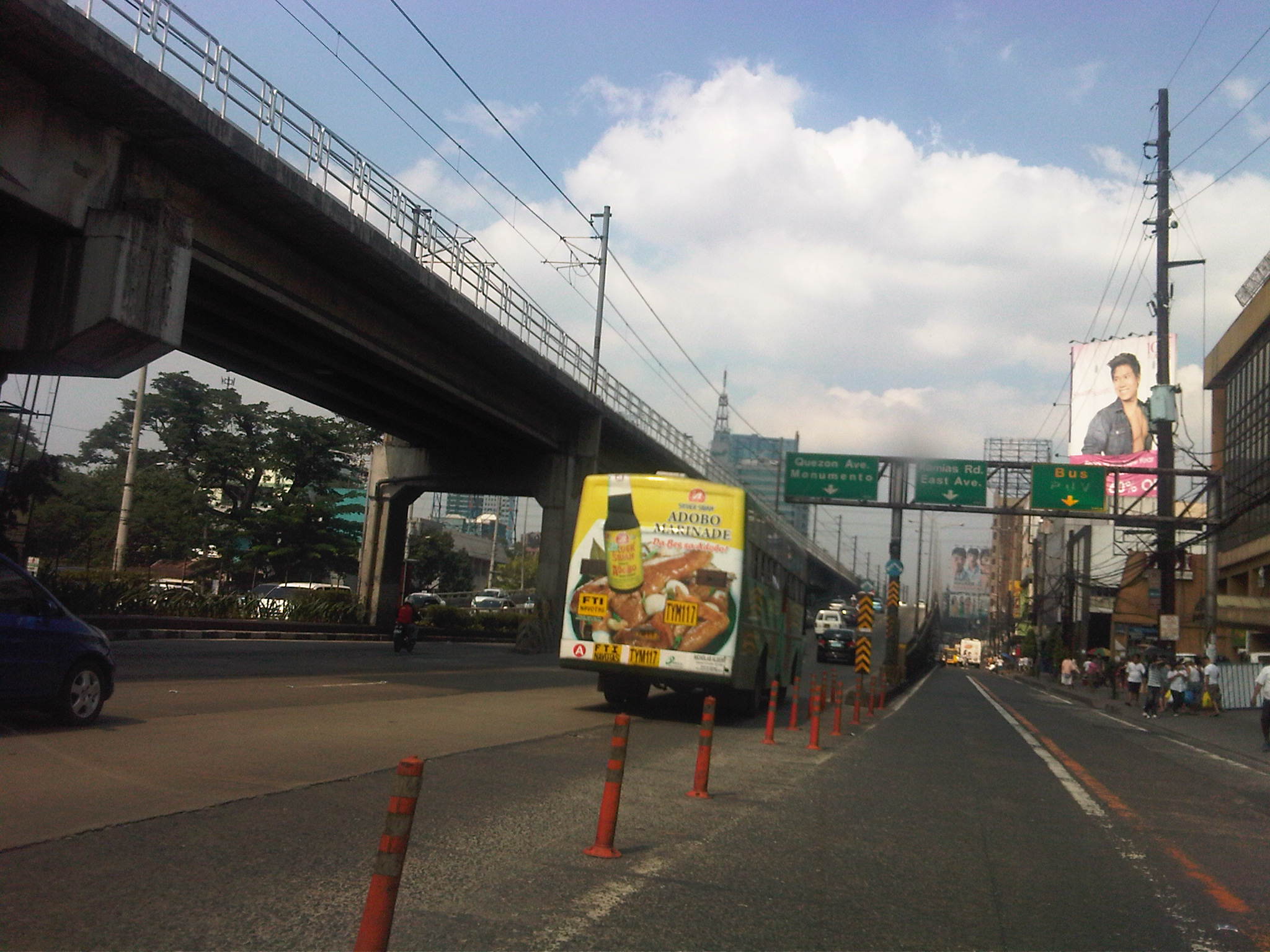 Section approaching Kamias – taking the flyover means I won’t be able to turn towards East Avenue so we shifted towards the outer lanes
Now, if only EDSA and the other main arteries of Metro Manila could be like this more frequently…
–
Pedestrianizing Session Road
When visiting Baguio City, one should never fail to go to Session Road whether to have a meal or just to take walk along the street. It is perhaps the city’s most famous street and a landmark itself where it used to be that a lot about Baguio is going about along Session Road. Here you will find shops, restaurants, bars and other establishments. Since my first time to go to Baguio in 1995, I have seen the city become more crowded and Session Road become more congested. There have been proposals for the street to be pedestrianized but I am unaware of any detailed study concerning pedestrianization and its implications on traffic and commerce in the area. This, I think, should now be among the things Baguio City should look into with more urgency and perhaps a study can be initiated among the universities there, together with the local chapters of planning, architecture and civil engineering societies.
The following article is from the Business Mirror entitled Road Revolution, which appeared in the newspaper’s February 4, 2012 issue:
BAGUIO CITY—Architect Joseph Alabanza keeps a long-held dream: to see Session Road pedestrianized.
As early as 1972, when Alabanza, former head of National Economic and Development Authoriy-Cordillera Administrative Region (Neda-CAR) was head of the city planning office, policies then had pointed out strongly that something had to be done about Session Road as it was predicted to soon become polluted and congested, and lose it aesthetic heritage, being at the heart of the city’s central business district.
A scene that is exactly what Session Road has become.
Then there were not too many cars and the population was much lower than the almost 400,000 mark today, and there was a lack of urgency to control the traffic situation in the city.
In more recent years, as lecturer and consultant of the architecture department of the St. Louis University, his class drafted, as their theses, a layout plan for the streets of the city. The central blueprint was that of Session Road pedestrianized.
Some consultations were made, but this was strongly opposed by business establishments around.
The yearly “Session Road in Bloom,” a market event for Panagbenga (meaning a season of blooming in the Igorot Kankanaey dialect) on Session Road, which stayed closed for a week, was used as a vehicle to test the plan. But it proved to be too hectic and the pedestrian is too heavy to be desirable for a longer period of time.
Even if it seemed that Alabanza’s dream was far from becoming a reality, the glimmer of hope remains as he continuously lamented the continuing deterioration of Session Road—the heavy pollution, the unkempt façades, the heavy traffic, crimes, the insane cat-and-dog chase of the police with sidewalk vendors. Life in the heart of the city was in shambles, but business thrived as usual.
Road Revo
THEN a group of environmental advocates heard of this dream. Something that was a success in Cebu. They came to tell the people of Baguio about their winning game plan in a forum on January 27.
It is called Road Revo—a revolution to change the way people think about the way they transport themselves.
Road Revo is a concept developed by lawyer and environmental activist, Antonio Oposa, a 2009 Ramon Magsaysay awardee in environment.
“We cannot have a Hollywood kind of transportation system, one of individual and expensive mobility. They have eight-lane highways and their roads are like moving parking lots,” he said.
Our insistence at individual mobility has resulted in serious collective mobility, he said.
“Kanya-kanyang galaw kaya lahat di makagalaw [Everybody wants his own way to move that’s why all could not move],” he said, referring to the traffic congestion that has also resulted in serious air and noise pollution.
The road is supposed to be for everyone, that is why Road Revo is for making road use fair. This would mean a turn-around in priorities.
“There’s a need to change mindsets. Road use and policies must have a bias for people, not for cars,” he said.
A World Bank study shows that only 300 out of a thousand own a car in the country. Oposa pointed out that only 3 percent own cars, and they occupy 97 percent of the road, while showing an image of a street jammed with cars in chaos, while people walked on narrow sidewalks.
He said Executive Order 774 specifically cites the new paradigm that the movement of men and cars must follow the principle that “those who have less in wheels must have more in roads,” and that the system must favor nonmotorized transportation and collective transportation.
EO 774 also ordered the Department of Transportation and Communications and the Department of Public Works and Highways to follow the same principle in transforming the road system.
Oposa said that ideally a good public transport system provides 30 percent for all-weather walkways, 30 percent for bicycle lanes, and 30 percent for a greenbelt and what remains would be for cars.
EO 774 also directs all public open spaces along sidewalks and roads no longer needed to be devoted to urban agriculture, something that has been done in Cebu.
“If we could do it in Cebu, so can you,” Oposa said.
Alabanza said that the city has lost its sense of space, referring to walking and open spaces.
“People used to have a sense of belonging here. Now we feel like strangers in our own place,” he said.
Session Road closed: Music, dining on road, sidewalks
AS an experiment, one side of Session Road was closed from 3 p.m. to midnight the day Oposa and his group of environmental activists were in the city on January 27.
And it did happen. Families dined on tables set on the road and sidewalks. Young people were seen just hanging out with one another. Lovers strolled leisurely. Musicians and poets drew a crowd as they beat on their percussions and read poems. Passersby even stopped to do a few dance steps.
For those few hours, the spirit of community was palpable, one of the aims for pedestrianizing Session Road.
Alabanza said that minimizing pollution was one of the first objectives of the proposed road closure as Session Road has become but a passageway for cars and people between the market and the SM Mall on opposite ends. The safety of pedestrians is also compromised as the sidewalks have become too narrow for the crowd who had to walk on parts of the road.
Oposa showed some examples of the ingenious Filipinos’ inventions of environment-friendly modes of transportation. There is the blueprint for a rail bus. There is already a carousel where people pedal to make it run. There is the idea of giving discounts to volunteers who pedal trolleys on train rails. A prototype for a wind-powered bamboo train is on the works, which can run both with an electric motor or the option for pedaling.
“We are a unique place and we cannot but just copy the transportation systems and models of other places,” Alabanza said. The transportation crisis can give rise to opportunities, something that will serve the city well, he said.
Change attitudes
OPOSA pointed out that the world is now experiencing so much disasters because of climate change and it becomes everybody’s responsibility to change attitudes about transportation systems, as this is the sector that emits one of the highest volume of carbon dioxide to the atmosphere.
He reminded that people need to think out of the box and to get out from the inertia of collective insanity, of doing the same thing because everybody else is doing it, no matter how senseless it has become. To illustrate, he said that the bicycle runs on fat and saves you money, while the car runs on money and makes you fat. But all the cars suffering the cost of insurance, stress and productivity lost to traffic jams, loss of a healthier lifestyle indicate that habits are hard to break.
Road Revo will help decrease man’s dependence on oil, restore sense of community, reduce criminality as this allows visibility of one another and, most of all, give people a sense of belonging and owning the space which is a secret tip to keeping it clean.
Oposa is on a nationwide campaign to promote Road Revo. Pasig City opened a road for a day on July 8 last year and Ongpin Street in Binondo became a festival road for the Chinese New Year celebration. After Baguio, Oposa will do the rounds in Subic, Dumaguete, Marikina, Davao and Puerto Princesa.
Alabanza’s dream may not even happen in his lifetime, but the wisdom of keeping the air clean, of enlivening the spirit of community and giving importance to people rather than cars has been sown in the few hours of not closing Session Road but opening it for people.
Perhaps pedestrianization will be more beneficial to the stakeholders of Session Road. It would not be an easy task to convince people that a car-free session road will be the way to go. There probably would also be other options, even a middle ground between status quo and pedestrianization. But doing nothing and letting Session deteriorate further is surely unacceptable to most people.
–
Circumferential Road 5 Extension
Among the issues raised during the Philippine presidential elections in 2010 was the persistent and widespread graft and corruption in government. Candidates had to present their platforms and emphasize how they were going to address graft and corruption in the various agencies in all branches of government (executive, legislative and judicial). The slogan of one candidate was “Sipag at Tiyaga,” which translated into “hard-working and persevering.” A play was made on this, transforming the slogan into “C5 at Taga,” referring to the road and an allusion to someone getting a cut (benefited) from the funds. The allusion, of course, was to the same candidate. Objectively speaking, however, the extension of the road made sense because C5 practically terminated at the South Luzon Expressway where a ramp connects it to the tollway. However, the project failed to construct a link (perhaps an overpass) connecting the extension to the existing alignment on the other side of the tollway. The following photos were taken during one recon survey conducted by our staff for another development project in the area.
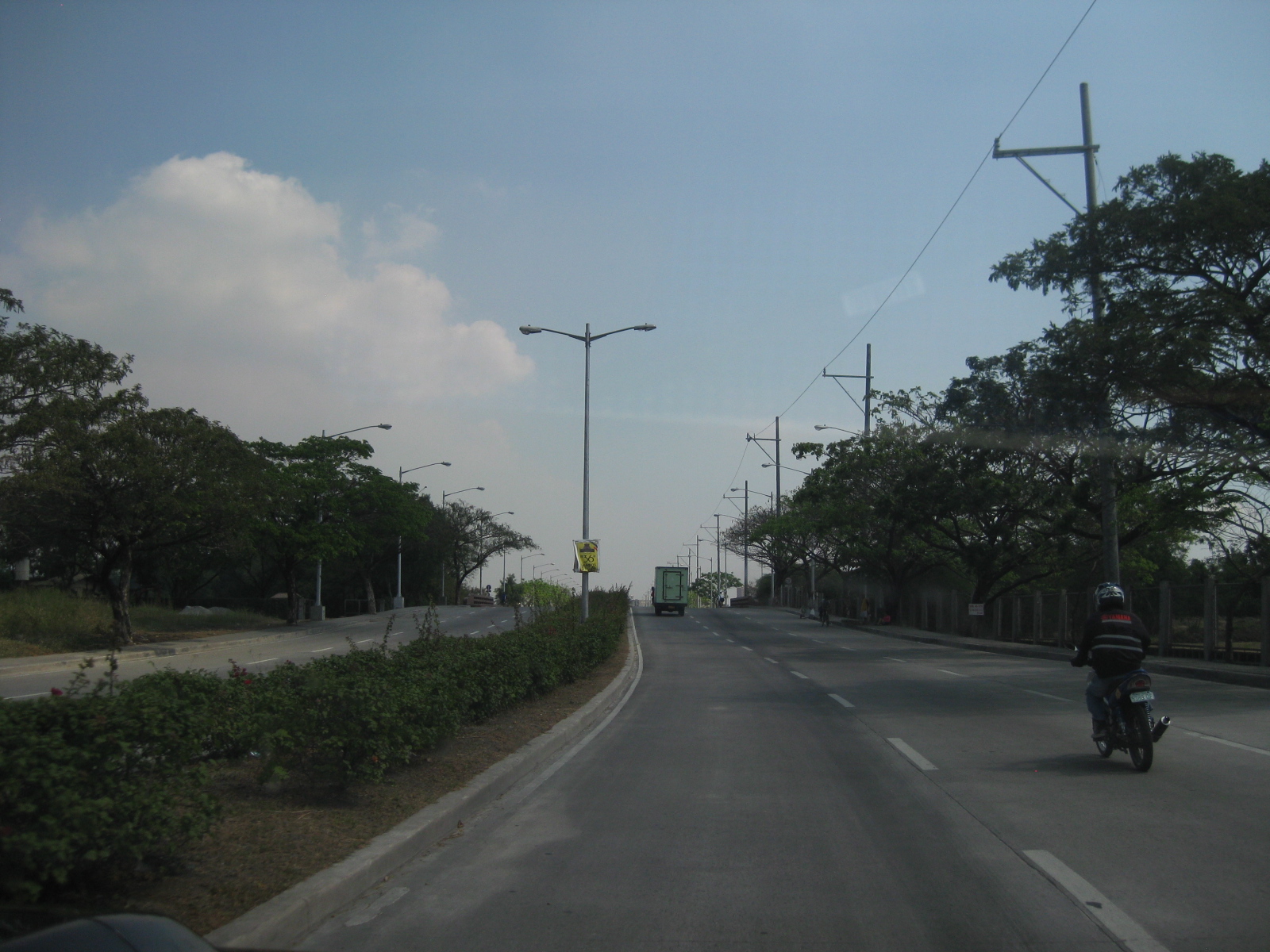 The C5 Extension is accessible from its southernmost end from the Coastal Expressway (aka CavitEx) or Aguinaldo Highway (from Bacoor, Cavite) and the Alabang-Zapote Road in Las Pinas. Lane widths and pavement markings follow DPWH standards and the road is apparently well-illuminated given the lamps installed along the highway.
 The road didn’t seem to follow any particular or deliberate alignment. The vacant lands on either side of C5 extension is allegedly owned by the real estate companies associated with Sen. Villar. However, at the time the photos were taken (early 2011) there were no major developments associated with these real estate companies in the area.
 There is generally light traffic along the road with few trucks. One can often observe many speeding vehicles including motorcycles. The pavement markings are already weathered despite the light traffic and is probably indicative of the quality of the material used.
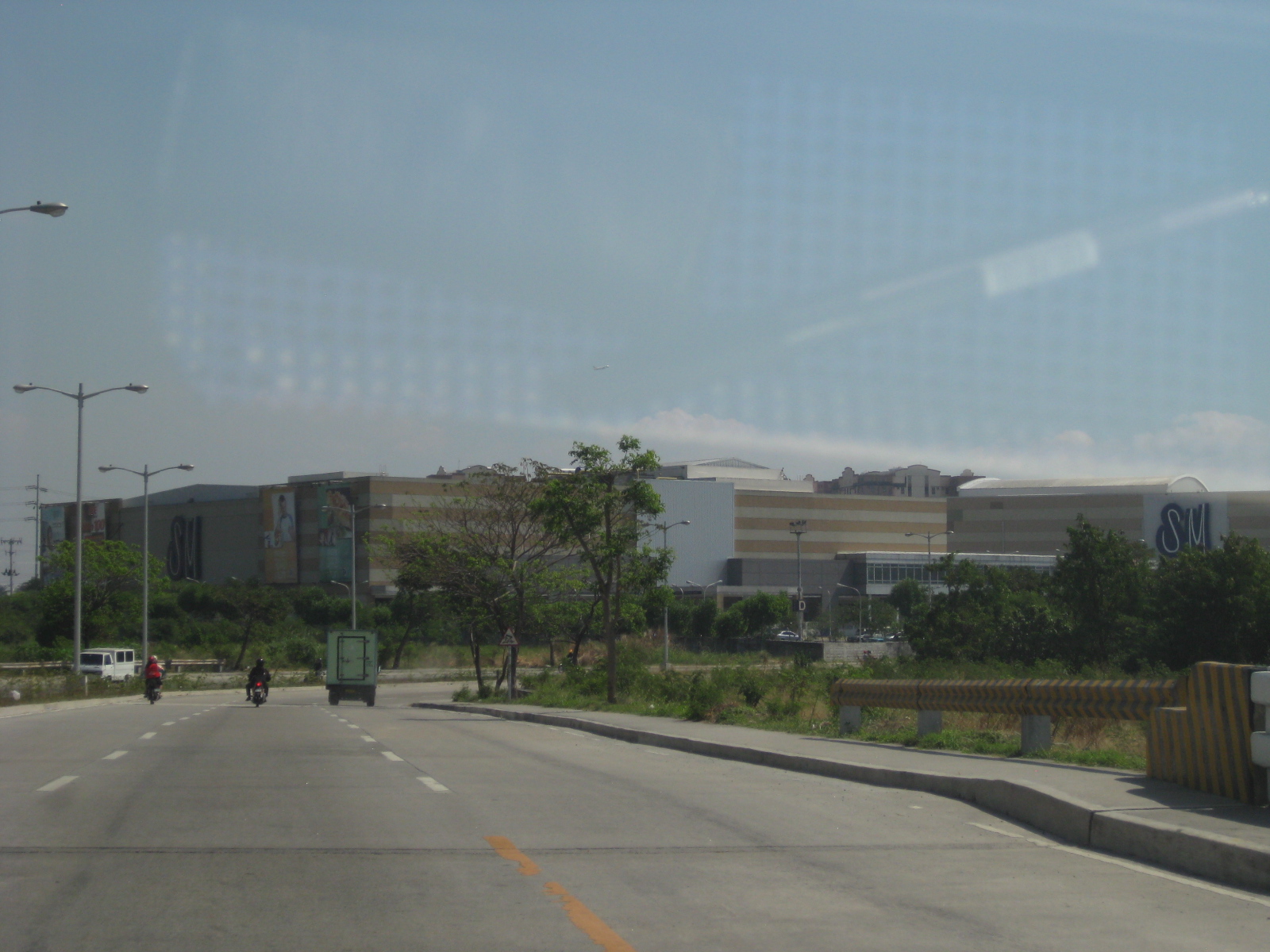 The road passes through a major shopping mall, SM Sucat, where the highway has a junction with Sucat Road.
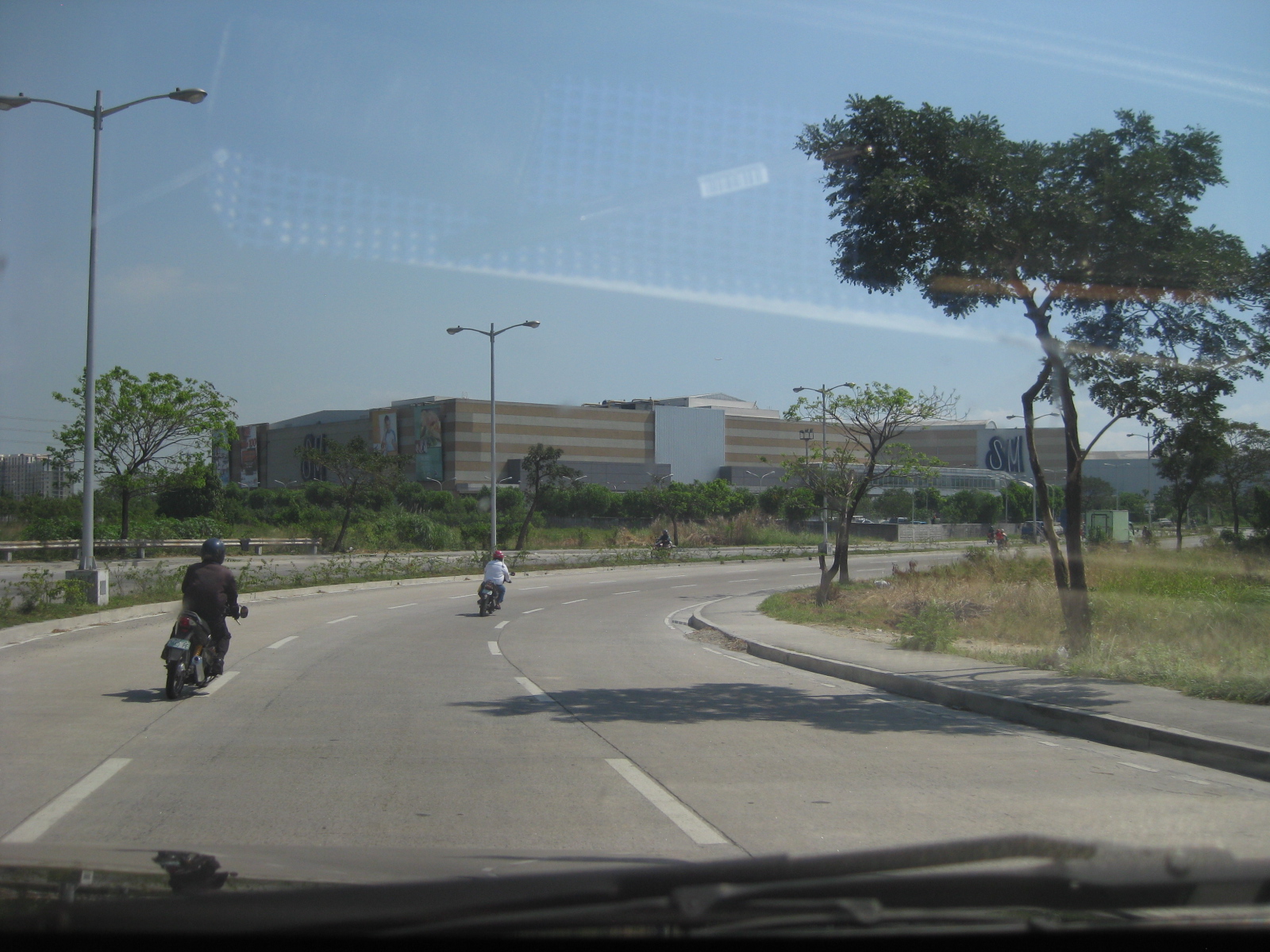 Curvatures along the highway alignment have been interpreted as accommodations for the owners of the lands along the road. Some experts say that such curvature, which can be clearly seen from maps such Google’s are unnecessary.
 There are 2 overpasses in this photo. One is a pedestrian overpass for the mall, which has two buildings on either side of the highway. Another is a vehicular overpass (flyover) at the highway’s intersection with Sucat Road. There are service roads on either side of the main alignment for vehicles traveling between C5 and Sucat Road. Visible in the photo (center) are residential condominium buildings of a major developer.
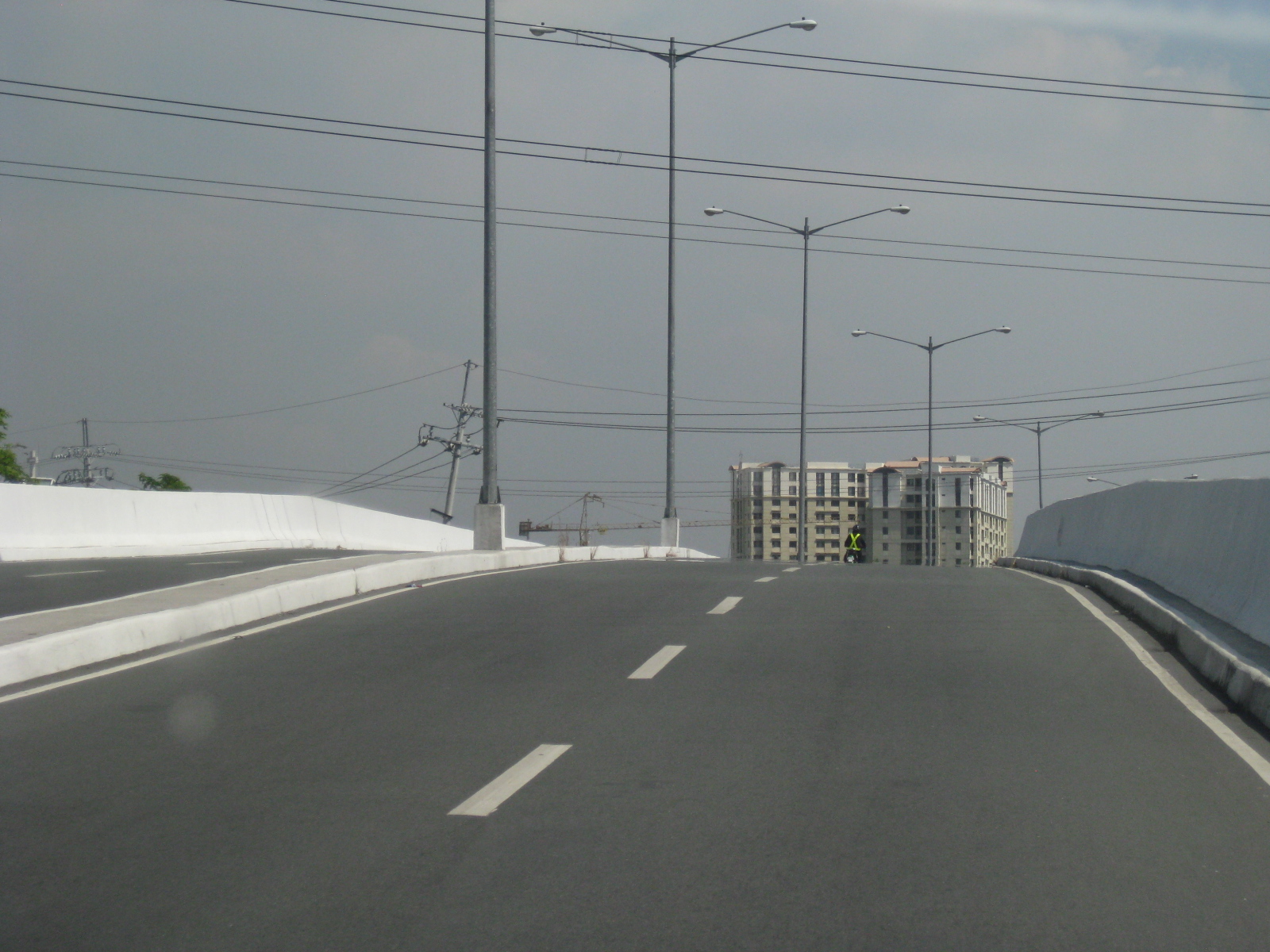 The vehicular overpass does not include pedestrian sidewalks or access. Such are actually necessary considering facilities like this flyover should not be for motorists only but for other travelers as well.
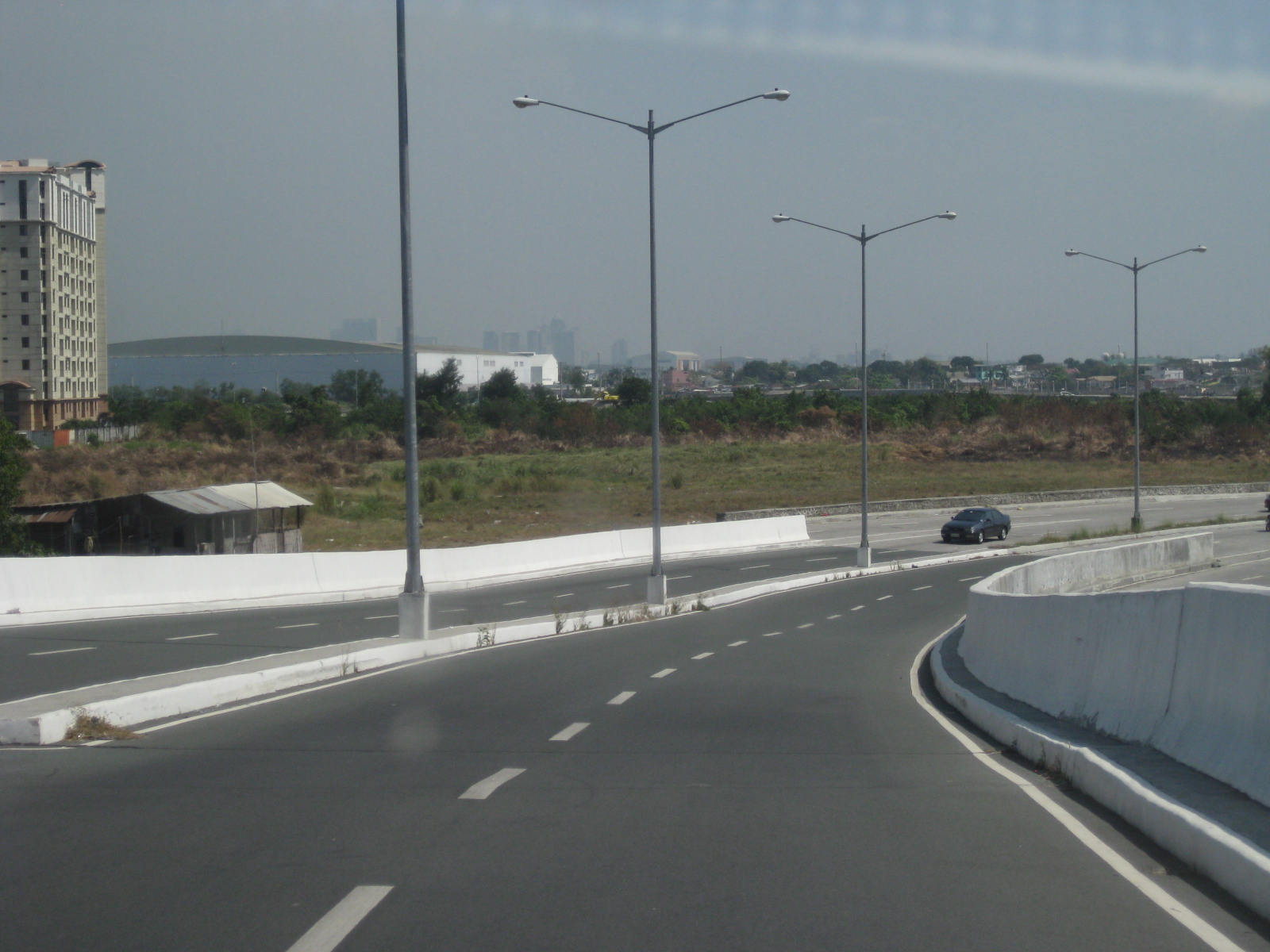 Seen from the northbound-side of the overpass is a wide area used by the El Shaddai religious group for their activities. These areas are usually seen by passengers of aircraft approaching NAIA from the east as these are along the flightpath to the main runway.
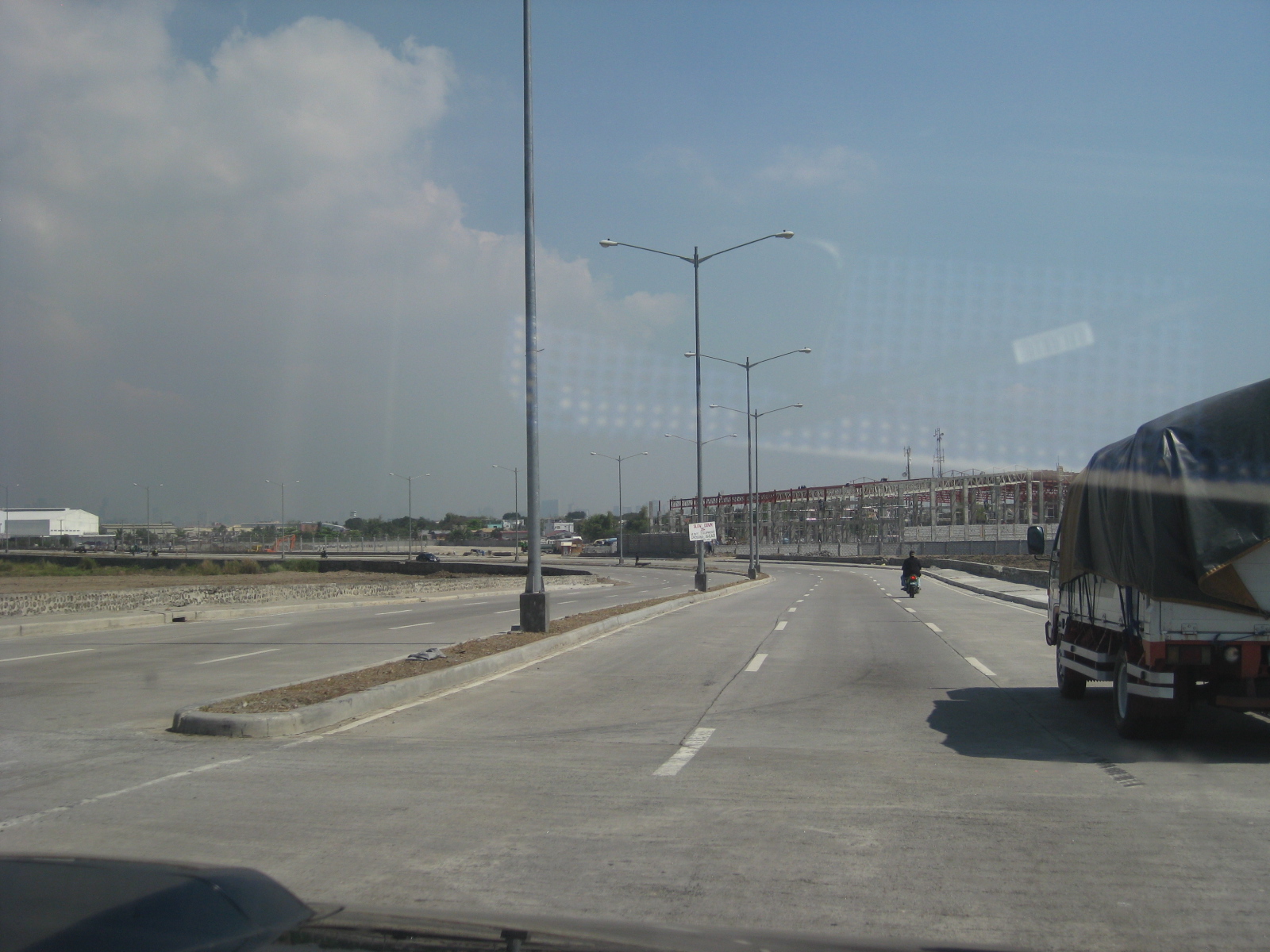 Section approaching an area where there are mostly warehouses and logistics facilities. This area is already very close to the NAIA complex.
 Among the logistics facilities in the area is mall giant SM’s warehouse facility. Note again the curvature along the highway alignment despite the fact that there are practically no developments in the area even after a significant time after the extension’s completion.
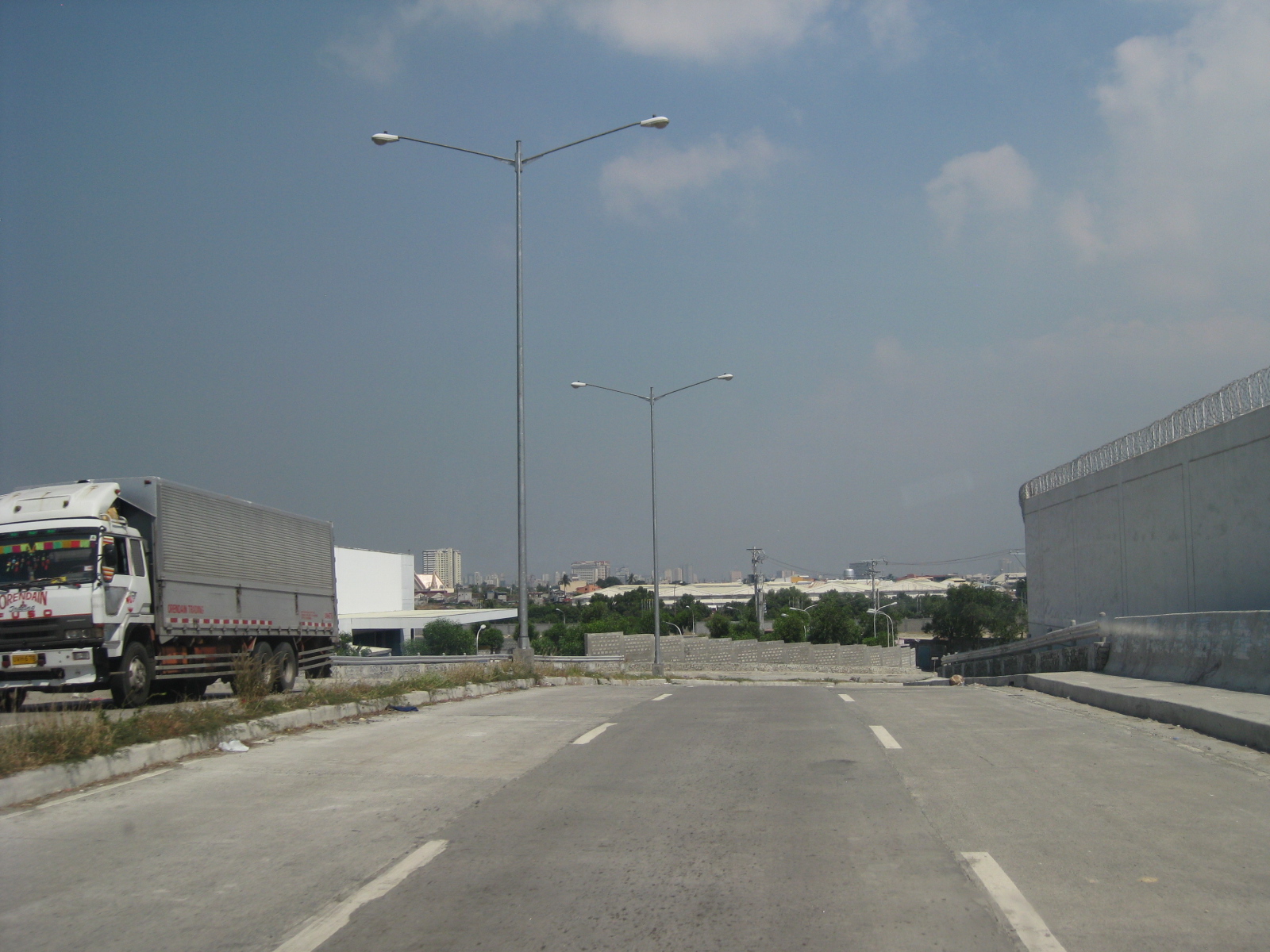 The highway eventually turns towards Kaingin Road and NAIA (also SLEX, which is at its northernmost end).
 The vehicles turning left are bound for the Airport Road via the road fronting the Multinational Village at the end of NAIA’s main runway. Straight ahead is the Kaingin Road that connects to the Moonwalk/Merville Access Roads that end at the West Service Road along SLEX.
 The C5 Extension’s other end starts from Kaingin Road, which is parallel to the NAIA main runway. The fence on the left is NAIA’s and there is no physical connection between the Extension and C5 across the SLEX.
–
Balete Pass (Dalton Pass)
Dalton Pass is named after a General of the US Army who led combined Philippine and American troops pursuing a retreating Gen. Tomoyuki Yamashita during the campaign for the liberation of the Philippines in World War II. It is part of the Pan-Philippine Highway and the Asian Highway network (AH-26). The section is also part of what is known as the Cagayan Valley road, which is the main highway access for the eastern part of northern Luzon. The northern part of Luzon Island is divided by the Cordillera mountain range with the Ilocos region in the west and Cagayan Valley in the east.
Following are photos taken a few years back during a trip to the city of Tuguegarao, Cagayan. I chose to go via land and using the Pan Philippine Highway out of curiosity about the towns and provinces along the way. The trip, after all, allowed me to go through the provinces of Bulacan, Pampanga, Nueva Ecija, Nueva Vizcaya, Isabela and Cagayan. At the time, it took us around 11 hours to travel to Tuguegarao where I promoted the graduate programs of the UP College of Engineering. This included two stopovers for late breakfast and late lunch.
 National Historical Institute marker placed in 2005 relating (in Filipino) the events in the latter part of World War II during the pursuit of retreating Japanese forces from February to May 1945.
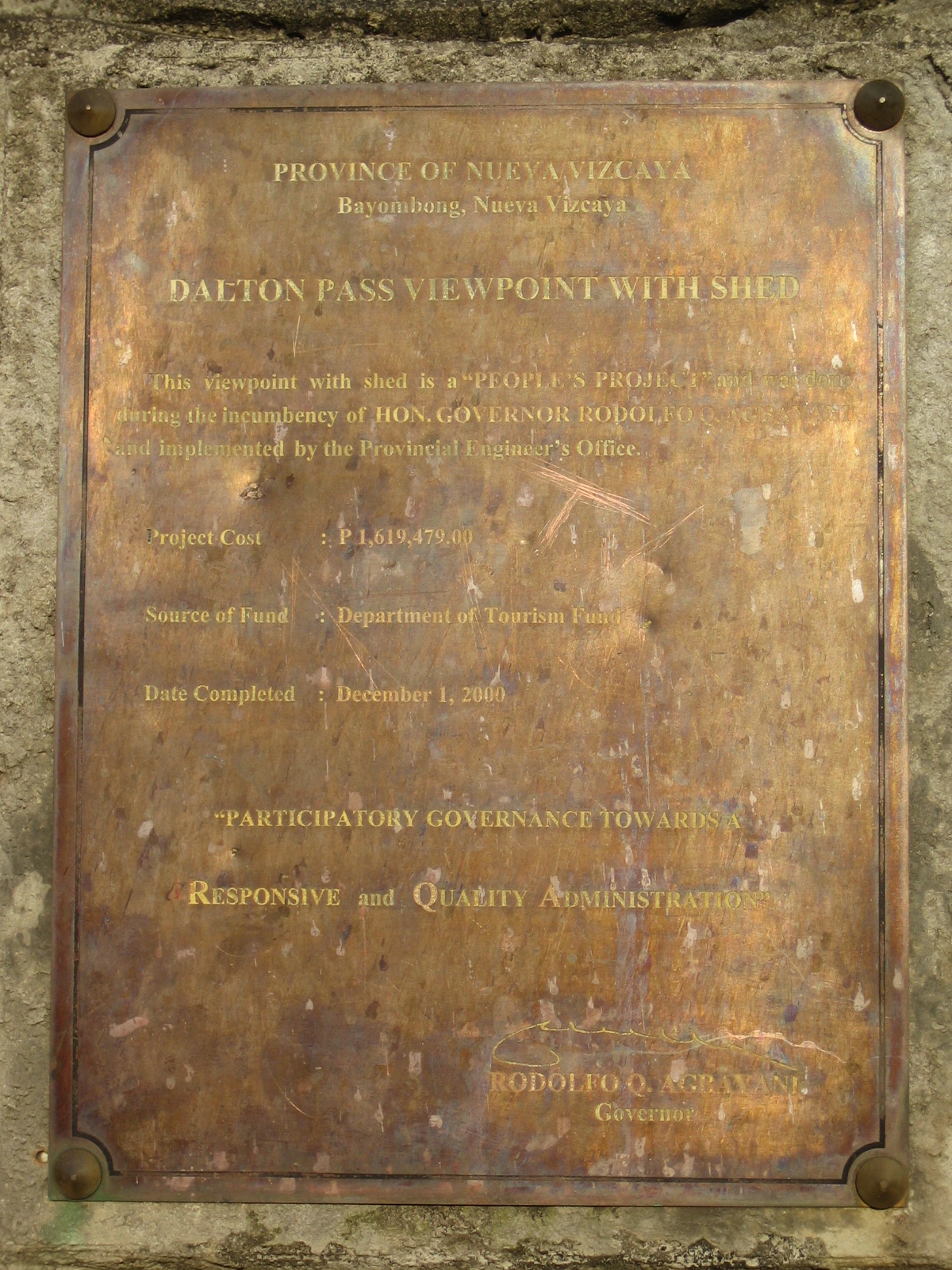 Balete Pass is located in the town of Bayombong in Nueva Vizcaya province. This market is for the viewdeck completed in 2000.
 Stone marker with inscriptions in Japanese commemorating those who fell in the battles at Balete Pass.
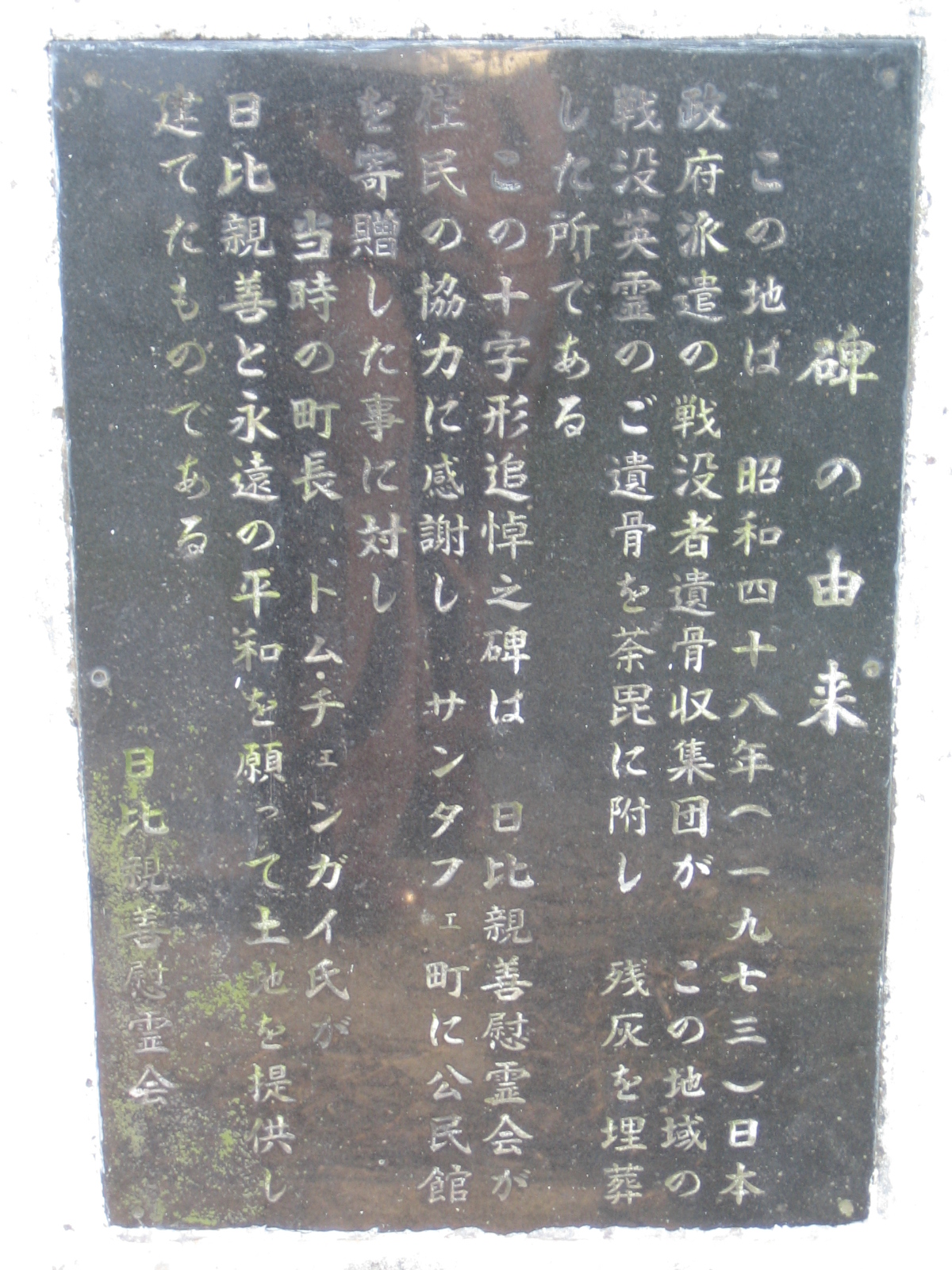 Another marker in Japanese
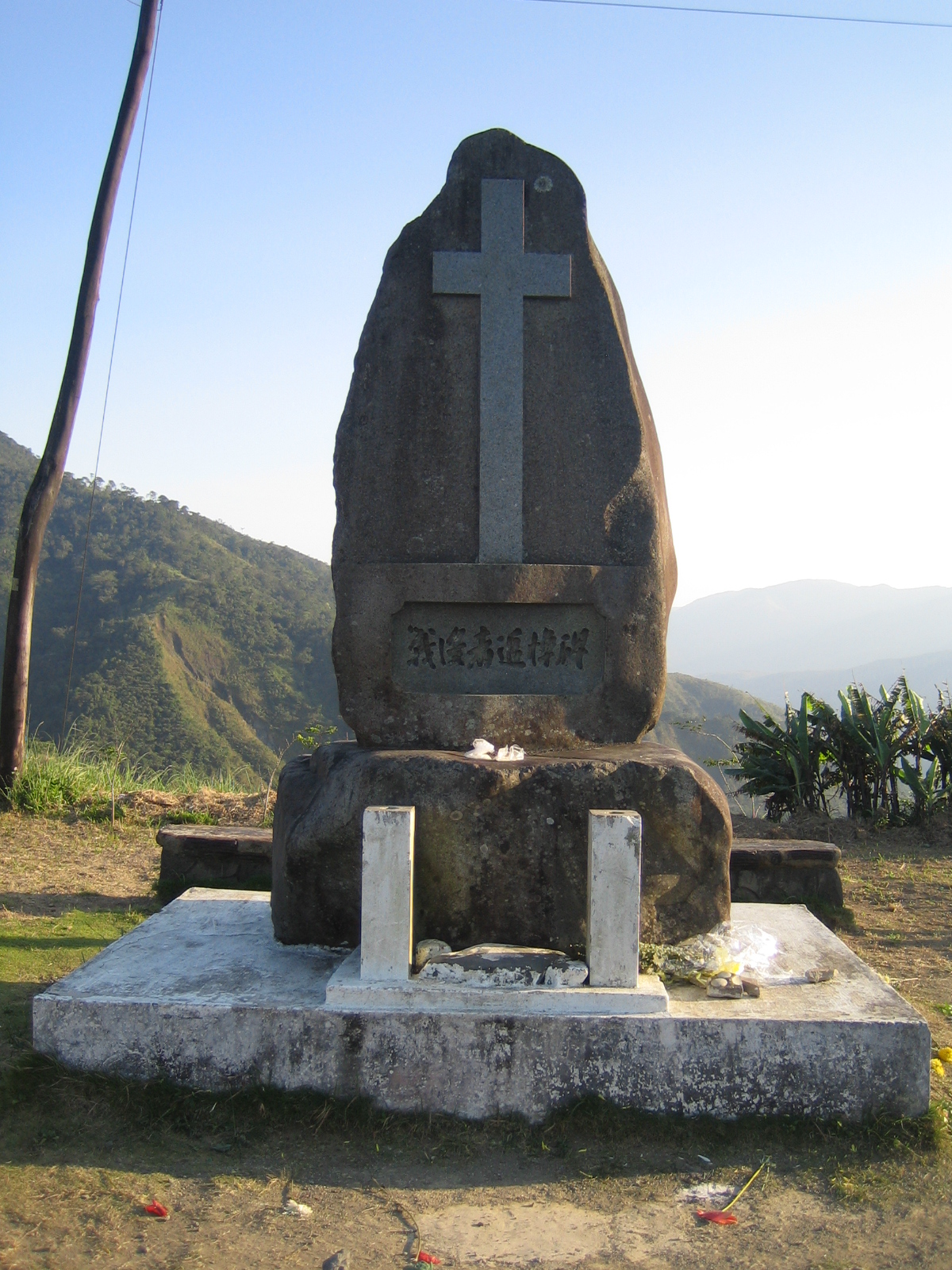 Shrine dedicated to those who fell in the battles during World War II
 Reverse curve section along Dalton Pass – being a major corridor means there’s a lot of truck traffic including tankers using the highway
 Trailer tanker heading north along Balete Pass. The photo shows the foot of the hill where the view deck is located. The access road to the view deck is shown on the lower right. There are stores on the left that cater to tourists and other travelers.
 Another marker is located near the foot of the view deck. There were no other visitors except us so we were able to park easily. From where we parked, one had to walk along the stairs to the view deck.
 The view deck allowed for great views of the surrounding areas and like the one along Kennon Road in Baguio, one could see all around for kilometers away. This is a photo of a landslide/rockslide prone section where a concrete roof was built over the section to protect motorists and preserve the road.
–
Barriers at U-turn slots
The MMDA has received a lot of flak from motorists and road safety experts regarding traffic schemes in Metro Manila This is but natural and one can say that “it comes with the territory,” considering that the agency handles much of the traffic management in MM and a lot of criticisms are actually of the nitpicking kind. Some matters, however, while appearing at first to be minor are actually details that should not be missed particularly if the end result may mean a matter of life or death.
Details pertaining to the U-turn slots, for example, are often lost in the big picture approach of looking at the facilities as solutions to problems of congestion. In striving for faster speeds, the case for safety is often overlooked. In striving for continuous flow, the case for disciplined movement at intersections is discarded. And in imposing the scheme along roads not designed for it, the case for sound, safe design is sacrificed. The latter is demonstrated in the case of barriers used to delineate the U-turns, allocating space for turning vehicles while constricting that which is for others. For the barriers to be practically immovable, these were cast in concrete and painted to enhance visibility. In certain cases, reflectors were added to further increase visibility particularly at night-time. Previously, many barriers were made of plastic and filled with water for them to have weight. These eventually gave way to the more durable concrete barriers, although both were of the same shape and size and occupied significant space when laid out.
Recently, the MMDA installed plastic bollards at several U-turn slots, replacing the concrete barriers there. This was a welcome development that allowed the freeing up of space occupied by the massive concrete barriers. Moreover, while delineating the U-turns, the bollards will be more forgiving for motorists who could be involved in crashes involving these. Concrete barriers are not so forgiving and may cause a vehicle to overturn if not stop abruptly and highly likely to be causing serious injuries if not death.
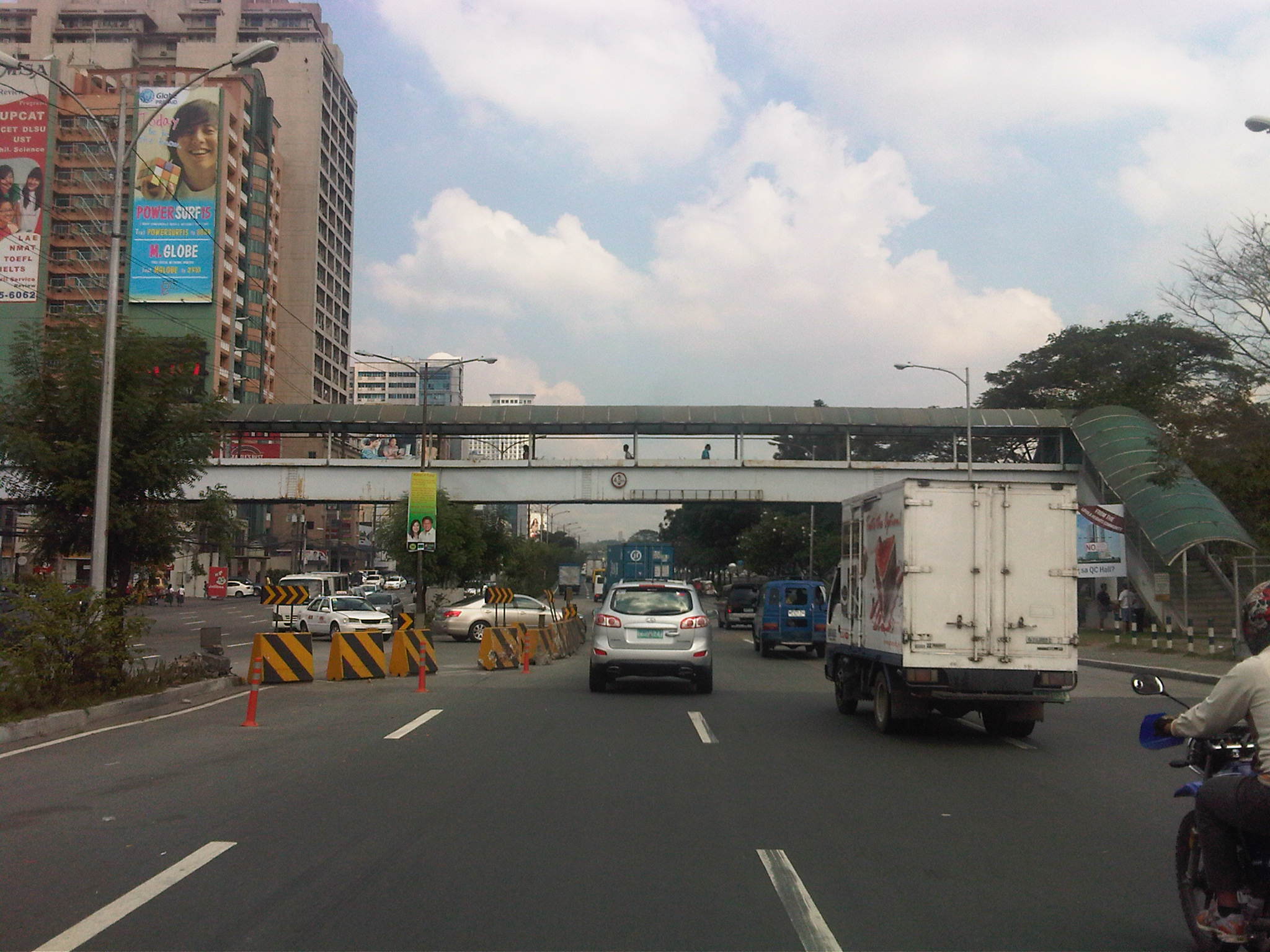 Typical concrete barriers near the foot of the Katipunan flyover across Aurora Boulevard – these are what will greet motorists speeding through the flyover and has been the bane of many who have crashed into these barriers (overspeeding? drunk? sleepy?). The barriers eat-up a significant portion of the middle lane and requiring drivers to swerve to the right and along the path of other vehicles. Plastic bollards have been installed but the concrete barriers remain and still pose dangers to motorists.
 Plastic bollards along Katipunan at the U-turn slot across from the Miriam College main gate – these are more forgiving in that it will cause damage to a vehicle but will not stop it on its tracks delivering potentially fatal injuries to occupants. A plastic jersey barrier can be seen at the end of the median island at the left side of the photo. Such were usually filled with water to increase their weights to avoid them from being displaced from their locations.
There are other alternatives that may be installed and not just for U-turns, but also for public transport bays, medians and other applications. Some bollards may be collapsible, recovering (standing right up) after being bumped or ran over by a vehicle. Perhaps the MMDA should look into such options and other details more often while also proactively seeking for suitable, not necessarily novel, solutions to our traffic problems.
–
The Marcos Highway predicament
Just when I thought I’ve experienced the worst traffic jams along Ortigas Avenue Extension (De Castro to Junction) last year, I am greeted with even worse congestion along Marcos Highway as 2012 began. I have featured this highway in previous posts first on August 24, 2011, then in September 2, 2011, again in September 13, 2011, and then as late as December 18, 2011, as I have been able to basically monitor the progress of pavement “re-blocking” and drainage works along this highway (I live in a subdivision along the highway.). The project stretches from the Santolan area near the Marikina River to Masinag Junction, and affecting traffic in at least 4 cities (Quezon City, Marikina City, Pasig City and Antipolo City) and 1 major municipality (Cainta). The problem, it seems to me, is that the contractor seems to be behind schedule and is now trying to make up for lost time by practically digging up entire sections of the highway without first finishing the job in other sections they have already started rehabilitating. In fact, there are sections that already have new concrete pavements that are still inaccessible to traffic despite already over 2 weeks of curing time! The concrete barriers preventing vehicles from using these sections occupy about a fourth of the adjacent lanes, contributing to the reduction of what is already limited road capacities for the high volume of traffic along Marcos Highway.
I am aware of the traffic management plan for the highway as it is posted online at the DPWH website. But this is something that is on paper (or online) and one that seems to have been thrown out the window given the discrepancies with what’s on the plan and what we actually see and experience on the ground. The current work along the highway has effectively turned the stretch from Filinvest East to Santolan into a sort of slalom or obstacle course that has led to much inconvenience to commuters and motorists. Factor in the wasted fuel and the resulting emissions due to the congestion and you have economic losses piling up everyday.
I took the following photos I took one late weekday afternoon only this week as I traveled from Masinag to Imelda Avenue. The photos clearly show the work in progress along the highway that has been that main cause of congestion throughout most of the day.
 Beginning of section being rehabilitated with work concentrated on a middle lane in front of the Marian Memorial (funeral) Chapels along Marcos Highway. Note the barriers on either side of the lane and the heavy equipment. Notice, too, the few people working on this section. Vehicles will have to split into two streams, one on either side of the affected lane.
 End of the lane mentioned in the previous photos. There is a gap between this affected lane and the next one (start is indicated by the red barrier downstream in the photo) allowing vehicles to weave along sections between work sites. The pick-up in the middle of the photo is doing just that – shifting from the shoulder lane to the median lane.
 This is again the end of the section Unfinished section is flooded due to the sudden rainfall that afternoon in the area. Many sections have already been filled with base layer material and compacted. However, I am wondering why the contractor has not poured concrete when I reckon it has already taken enough time for consolidation of the base layer. From the same photo above, you can see the beginning of another section under rehab, but this time two lanes (inner lanes) are closed to traffic on one side of the highway. There are 2 other lanes also closed to traffic on the other side of the median island.
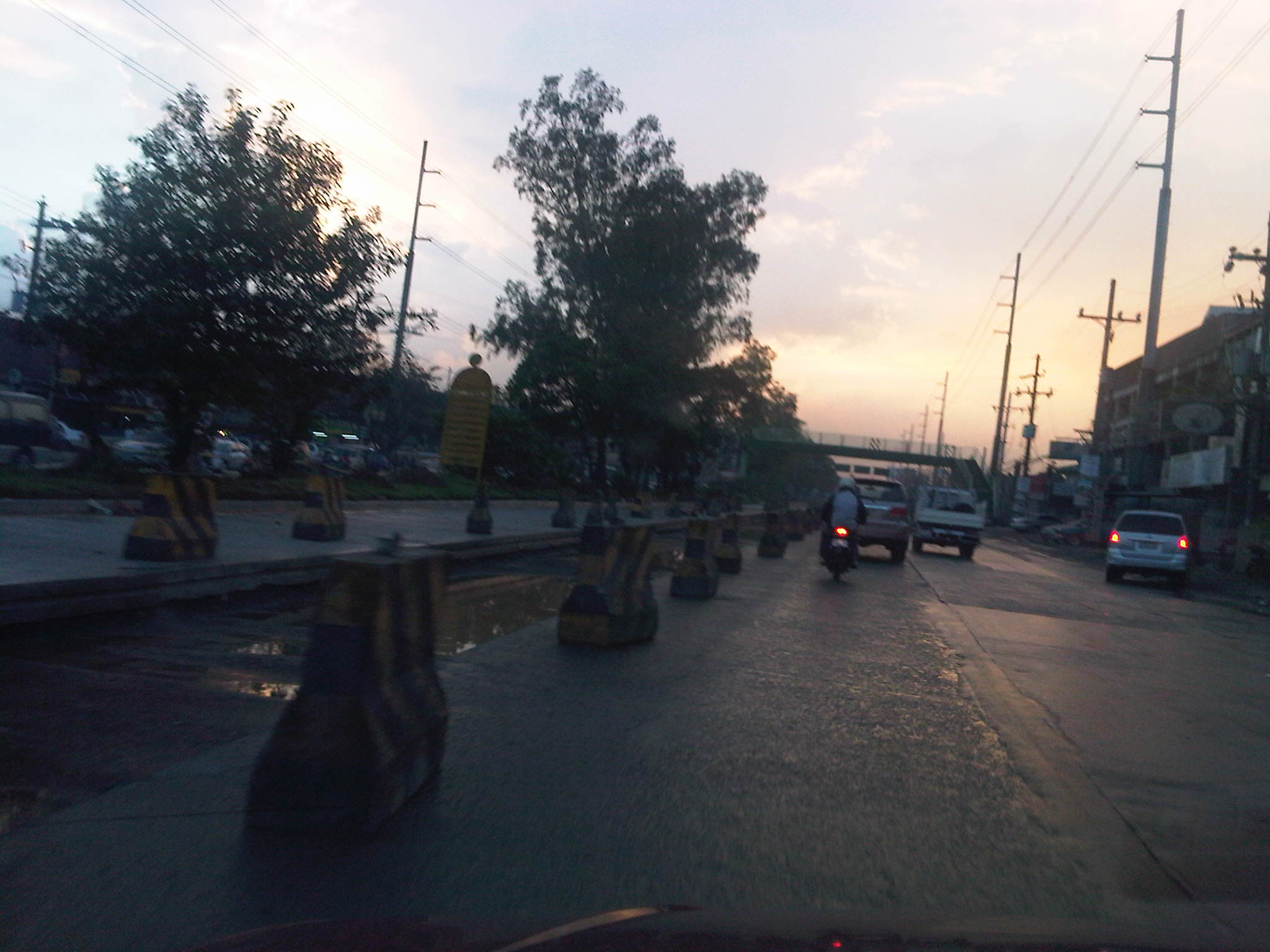 Despite the completion of re-blocking for the median lane, it is still closed to traffic. Meanwhile, it has taken a significant amount of time since they dug up the middle lane shown in the photo and where the section should have been ready for concrete but with the water collecting after the sudden rains that afternoon. Notice the hazards posed by the concrete barriers along the highway.
 Section along the westbound direction of the highway and across from Town & Country subdivision shows 2 lanes affected by the pavement rehab works and only 2 lanes available to traffic.
It is really quite difficult to offer solutions in this case considering so much work still to be done in order to meet the March 28, 2012 deadline posted on the project billboards along the highway. For one, I do not know exactly what the reasons are for the delay of the project (perhaps a delayed release of funds?) and why the contractor has been unable to deliver according to schedule and plan considering the amount of time that was available to them. I do notice that there seems to be not enough people working on the project and that there seems to be no one working during certain times of the day when traffic is supposed to be lighter and fewer people to inconvenience. I did write that the contractor was doing a decent job in managing traffic before including their good use of counterflows. That was months ago and it seems that the saying “you are only as good as your last performance” applies in this case where people will be scrutinizing the current state of traffic along Marcos Highway.
People do expect though that the combined efforts of the MMDA, local traffic enforcers from Pasig, Marikina and Antipolo, and personnel from the contractor to make a bigger effort to ease (manage?) traffic congestion during the critical periods. It’s very frustrating and disappointing, however, that instead of managing traffic or facilitating flow, most enforcers seem to be engrossed with enforcing the number coding scheme alone. This seems to be the case for Pasig and MMDA enforcers posted at Ligaya and the Metro East vicinity. Perhaps number coding should be the least of their concerns when traffic is already constricted because of their failure to manage the jeepneys clogging the Ligaya area as well as what seems to be a breakdown in the coordination among these enforcers and the contractor of the rehab works along Marcos Highway.
–
Gapan-San Fernando-Olongapo Road: San Fernando
The Gapan-San Fernando-Olongapo (GSO) Road stretches across 4 provinces in Central Luzon. The road starts from the City of Gapan in Nueva Ecija and passes through the towns of San Isidro and Cabiao before crossing into Pampanga through the towns of Sta. Ana, Arayat, and Mexico, and crossing the North Luzon Expressway (NLEX) and McArthur Highway along the City of San Fernando. After San Fernando, the road heads west through Bacolor, Sta. Rita, Guagua and Lubao. It exits Pampanga from Lubao and to Bataan via Dinalupihan, and finally to Olongapo City in Zambales. It is also known along major stretches as Jose Abad Santos Avenue.
The GSO used to be the only main route towards Bataan and Zambales from the North-South corridor defined by NLEX and McArthur Highway (also known as the Manila North Road). That was prior to the construction of the Subic-Clark-Tarlac Expressway (SCTEX), which stretched from Tarlac City in the north and through Concepcion before crossing to Pampanga. The tollway proceeds southwest through Clark (in Mabalacat and Angeles City), the towns of Porac, Floridablanca and eventually crossing into Bataan at Dinalupihan. The SCTEX finally connects to the Subic Freeport Expressway (SFX), which is also known before as the Tipo toll road.
One of the justifications for the Clark-Subic component of the expressway was the need for an alternate route between the industrial centers at Subic, Hermosa, Clark and Tarlac (Luisita?). Unfortunately, the projected rapid developments of those centers were not quite realized and traffic along SCTX remains light for most of the time. Congestion apparently only occurs at the Clark exit where the toll plaza capacity is not enough to accommodate vehicle arrivals. To compound the situation, the national government improved the GSO, increasing its capacity and therefore making this free road a viable alternative to the SCTEX when traveling between Pampanga and Zambales.
Following are photos taken quite recently along the GSO Road and at San Fernando. I will post other photos later, featuring sections along other towns.
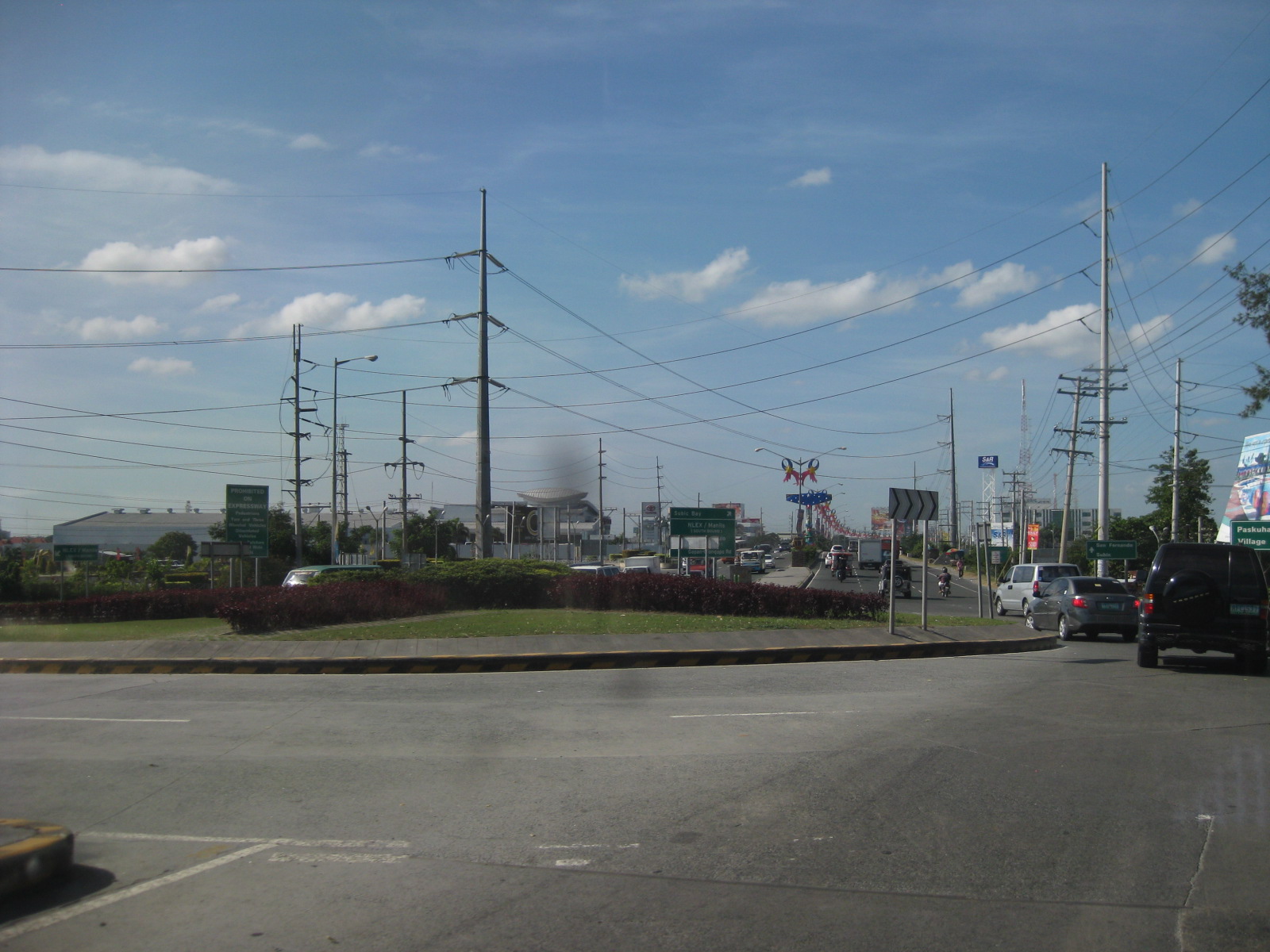 Roundabout at the interchange with the NLEX on the west side of the tollway
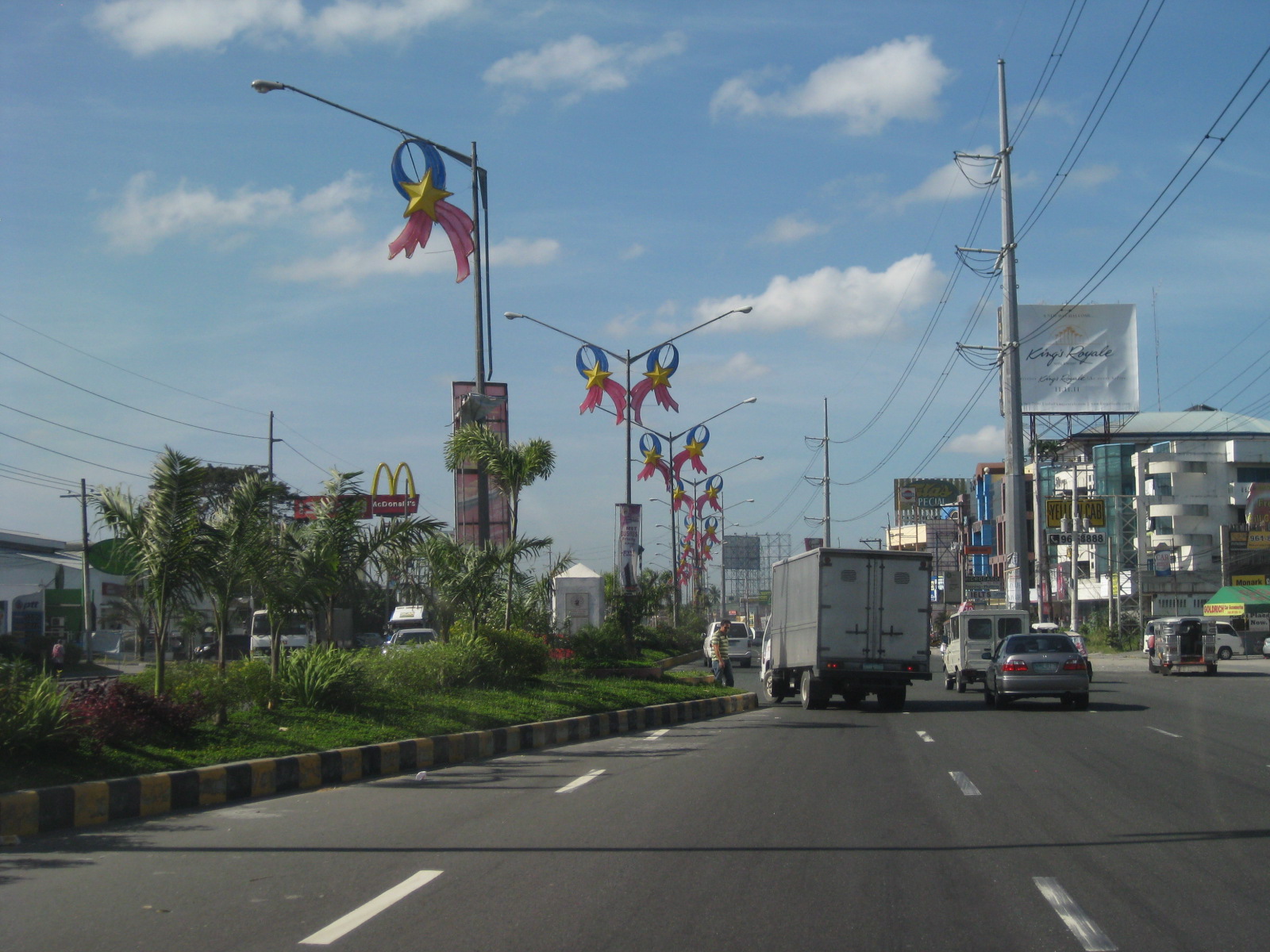 GSO section leading to what most people think is already San Fernando City proper. The old city center is actually further south along McArthur Highway and is an example of a traditional “bayan” with the municipal/city hall, church and market clustered together.
 Overpass along GSO Road over McArthur Highway – prior to the construction of the overpass, traffic junction was the main cause of congestion in the area.
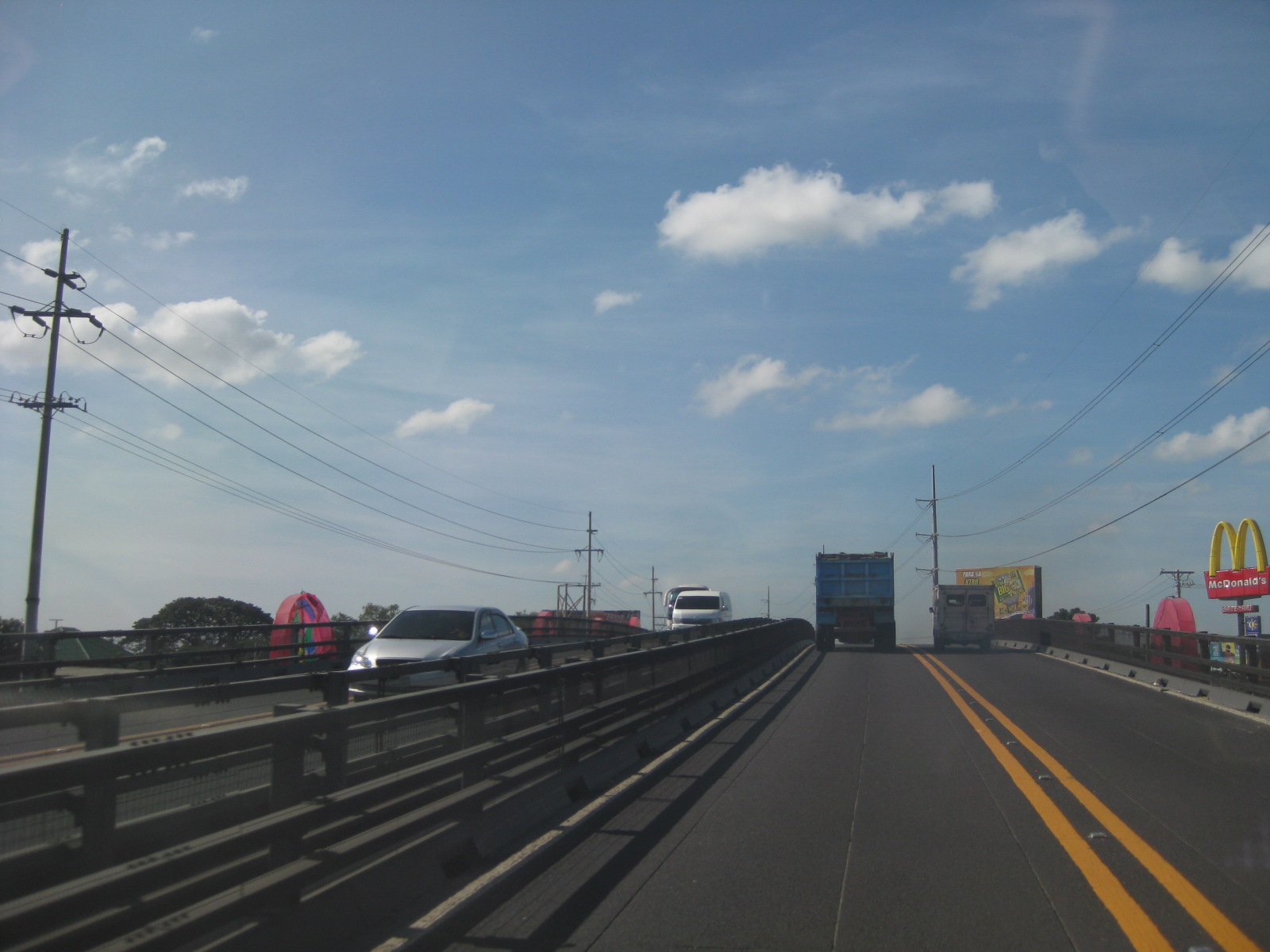 There are actually two overpasses, one beside the other, and each having two lanes and dedicated to one direction of traffic. As can be seen in the photo, there are no shoulders or space for pedestrians. The double yellow also indicates no overtaking along the overpass.
 The overpass structure is very similar to those constructed in Malolos, Bulacan and Iloilo City. Similar structures were proposed for a flyover along Quezon Avenue and crossing Araneta Avenue in Quezon City but an underpass is instead being constructed in that area.
 After the overpass, travelers pass through an elevated section of the GSO Road. The section was constructed over an embankment that was part of the response on the infrastructure side for disastrous lahar flows of the 1990’s. At the time, many sections of the GSO Road were destroyed by lahar generated by the eruption of Mt. Pinatubo in 1991.
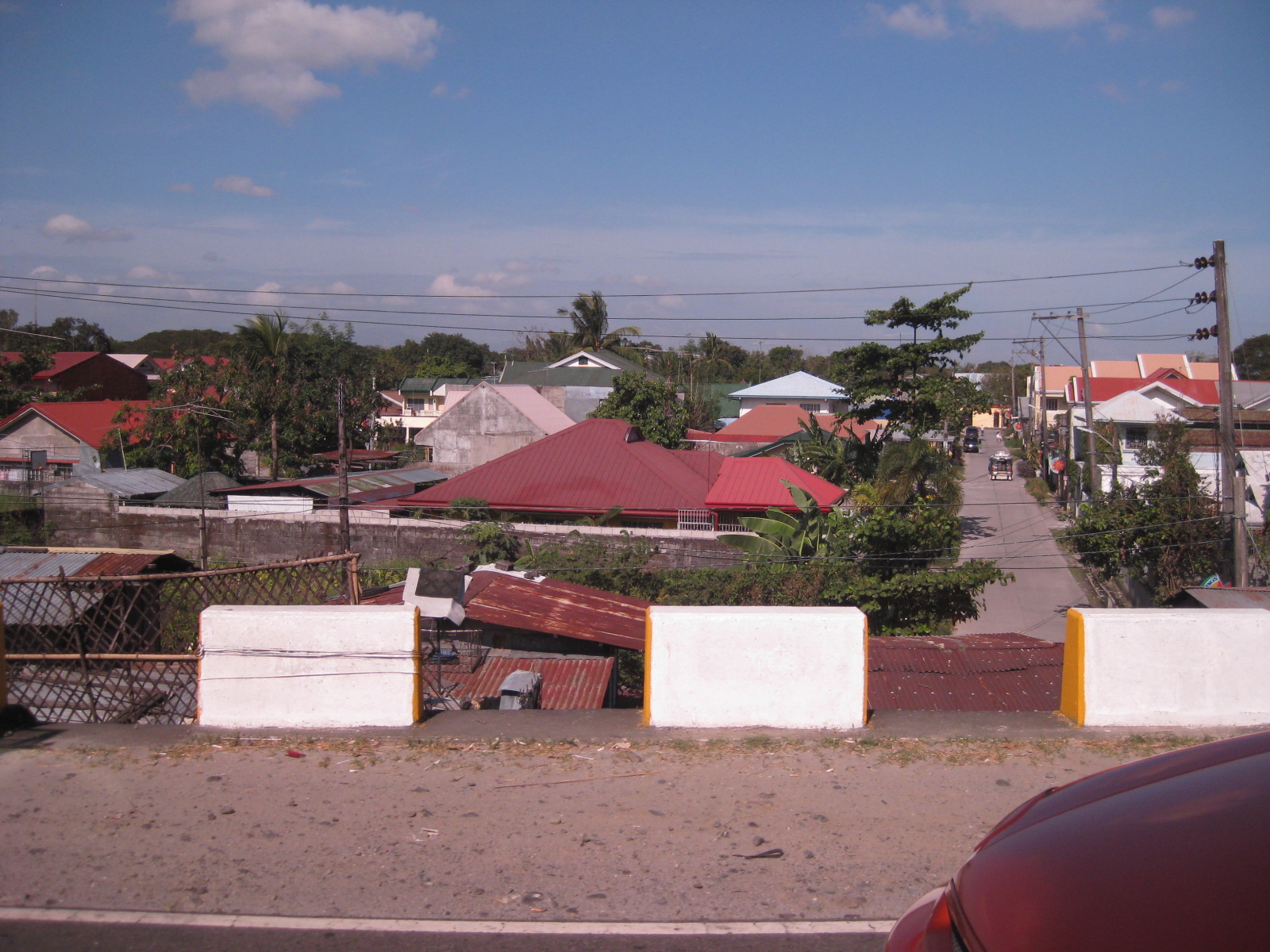 The concrete barriers are quite low and definitely not enough to prevent even a car from taking off from the road (in case of one going out of control) and unto the houses below. The photo above clearly shows how high the carriageway is with respect to the adjacent areas. Notice, too, the narrow strip serving as a shoulder for the road.
 8There was significant congestion almost immediately after descending the overpass and along the westbound direction of GSO Road. It took quite a while for us to reach the cause of the congestion – GSO Road’s intersection with Lazatin Boulevard.
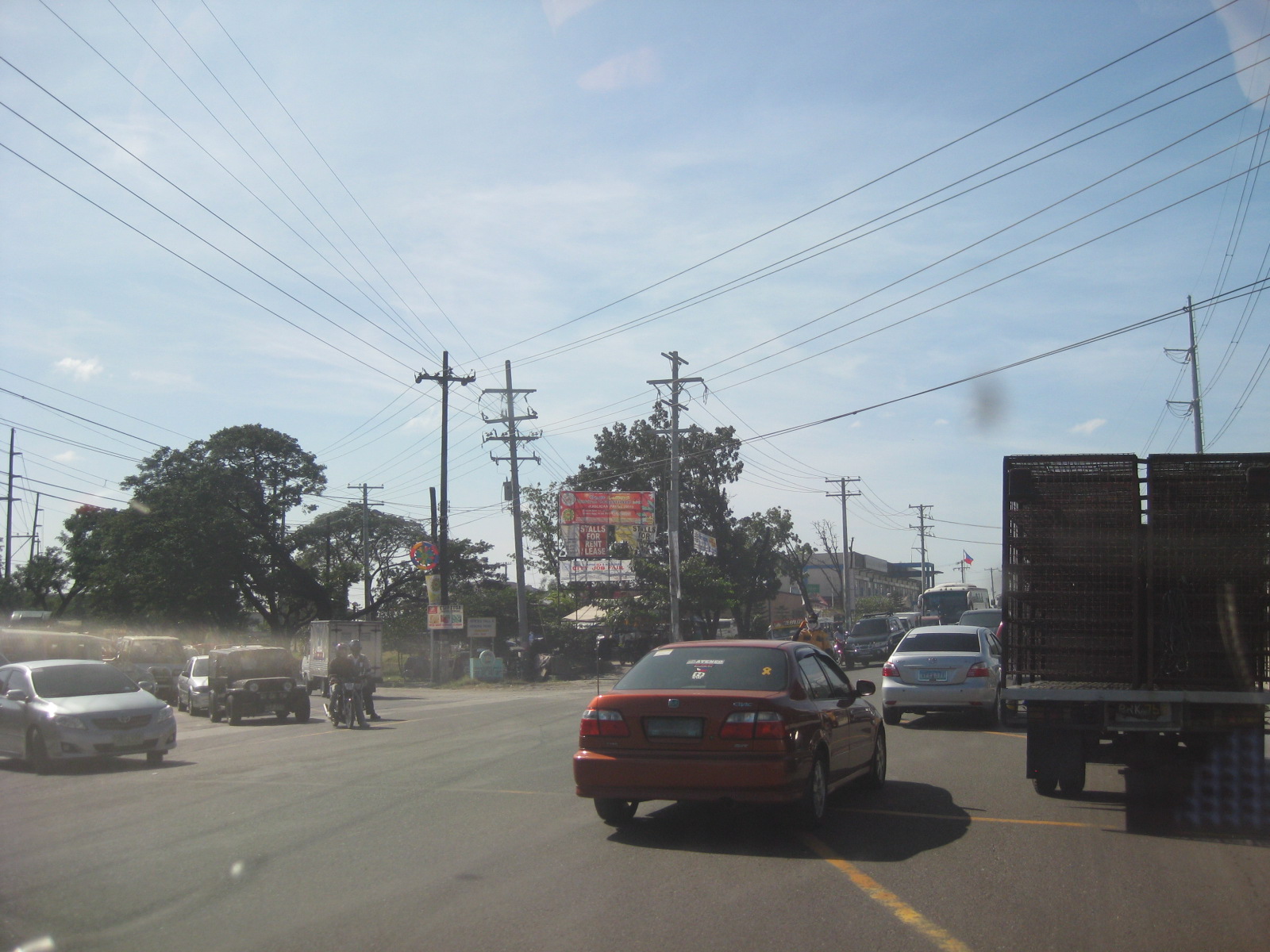 The junction is not signalized (no traffic lights) and manned by enforcers who appear to have no formal training in traffic management. I say so since they were applying the “buhos” system of attempting to dissipate queues from each approach (there were 4) without considering that in the process, longer queues were forming along the major road (GSO). Also, it seemed to us that the enforcers were prioritizing traffic along Lazatin when it was obvious that GSO was already congested.
 Traffic was practically free-flowing after passing the GSO-Lazatin junction. There were 4 lanes (2 per direction) and sufficient shoulder space on either side of the highway.
–
Carlos P. Garcia Avenue
I really haven’t written much about the other segments of Circumferential Road 5 (C-5), choosing to write about the Katipunan Avenue stretch from Aurora Boulevard to Magsaysay Avenue (UP Diliman). C-5 is officially named Carlos P. Garcia Avenue or C.P. Garcia Avenue after the 8th President of the Philippines. C-5 though is more commonly known by its many names for at least 3 long stretches of the road: Katipunan, E. Rodriguez, Jr. Avenue (Boni Serrano Ave. in Quezon City to Pasig Boulevard, Pasig City), and C.P. Garcia Ave. (Pasig Blvd. to SLEX/East Service Road). Following are a few recent photos along C5 along C.P. Garcia Ave. in Taguig.
 U-turn flyover at C-5/Kalayaan is among the much maligned projects of a past MMDA administration. There is supposed to be 3 lanes between the columns but the pavement conditions and relatively narrow lanes would usually accommodate only 2 vehicles at a time especially when one is a truck. Should it be demolished to give way to the original scheme proposed by the DPWH for the intersection? The current grade separation project at Quezon Ave./Araneta Ave. will eventually show whether such a scheme could have been better for C5-Kalayaan.
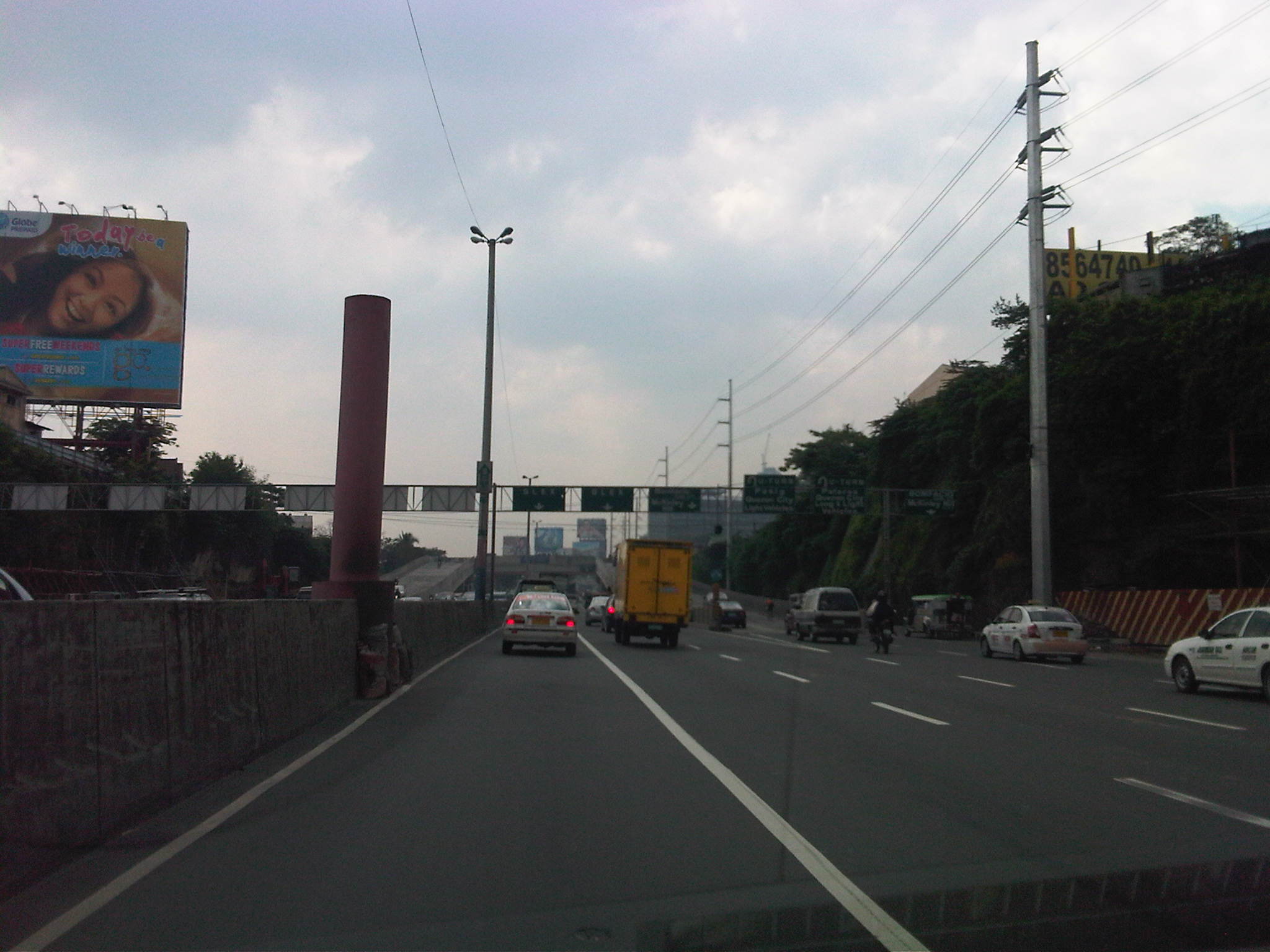 The pink column is a remnant of what used to be a pedestrian overpass at C-5/Kalayaan. There used to be a two span overpass in the area that has since been That’s the second elevated U-turn downstream that is utilized by traffic from Kalayaan (Makati) to Taguig (through traffic if the intersection was not closed to such) and to Pasig (left turn traffic).
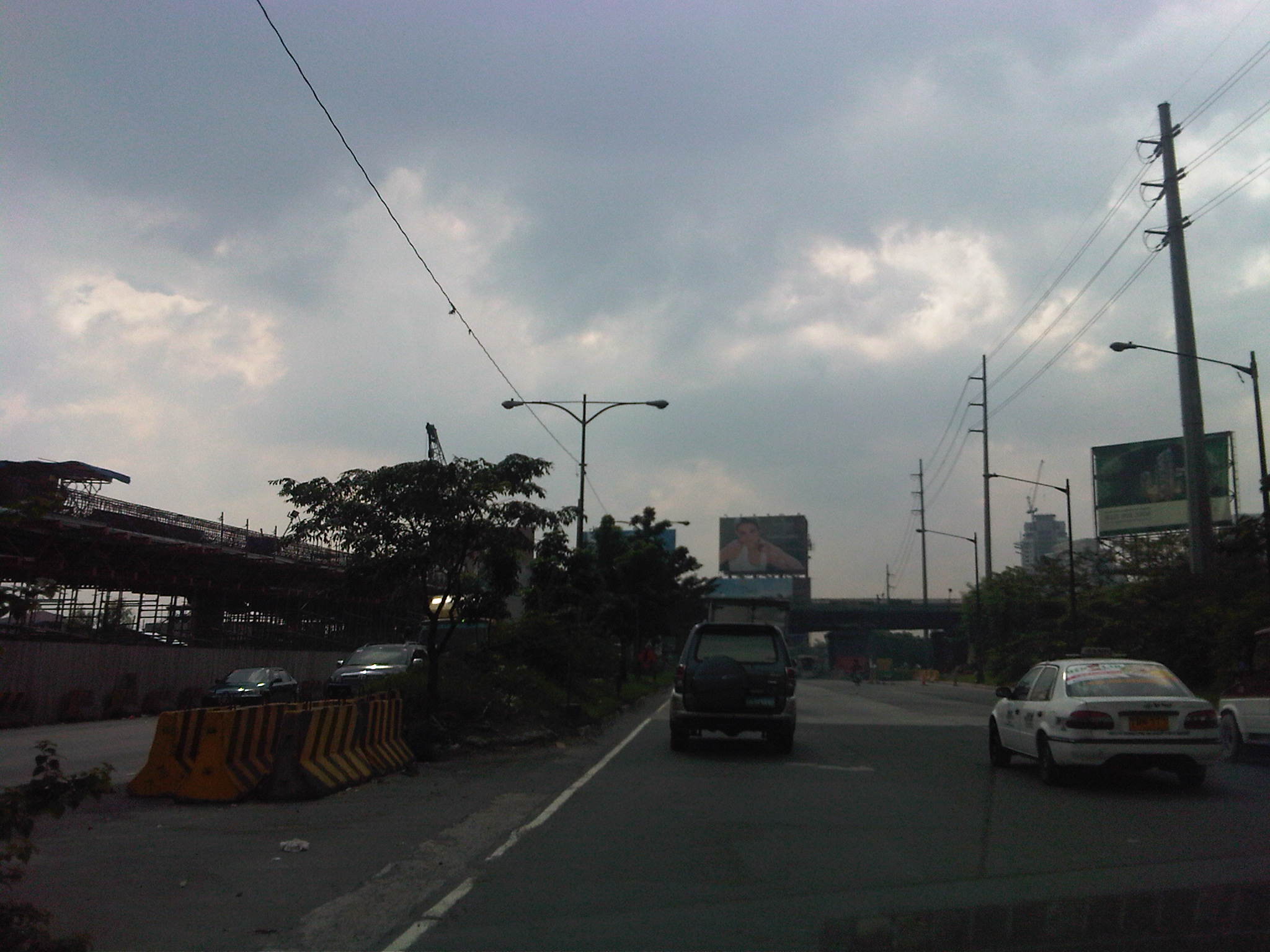 Approach to the construction site of an off-ramp/overpass from Bonifacio Global City. The flyover is supposed to ease traffic from BGC to C5-northbound currently concentrated along the overpass at 26th Street and Market! Market!
 Close-up of the flyover construction. The temporary columns and barriers in the middle of C5 can be quite tricky even during the day and the space is just enough for 2 cars to fit through the middle lanes. With trucks its again a different situation as they often require more space given the behavior of their drivers encroaching upon the adjacent lanes.
 Overpass from Market! Market! and along 26th Street. The pedestrians using the overpass and crossing to and from Target Street in old Taguig are undisciplined and do not follow traffic enforcers at the intersection with the service road. This leads to a high likelihood of pedestrian vs. vehicles collisions due to the conflicts in that area.
 The walls at the right side of the highway were constructed to separate C5 from the service roads on either side of the highway. These service roads are notorious for being used by residents of the areas along C5 for parking and jeepneys typically stop anywhere along the road to drop-off or pick-up passengers. Also, there are many incidences of people crossing C5 without care of their safety. Also, there have been cases where some vehicles have been reported to have been stoned by anonymous persons (probably from the informal settlements along the highway). The walls were interventions that are supposed to control such behavior and keep C5 as unimpeded as possible.
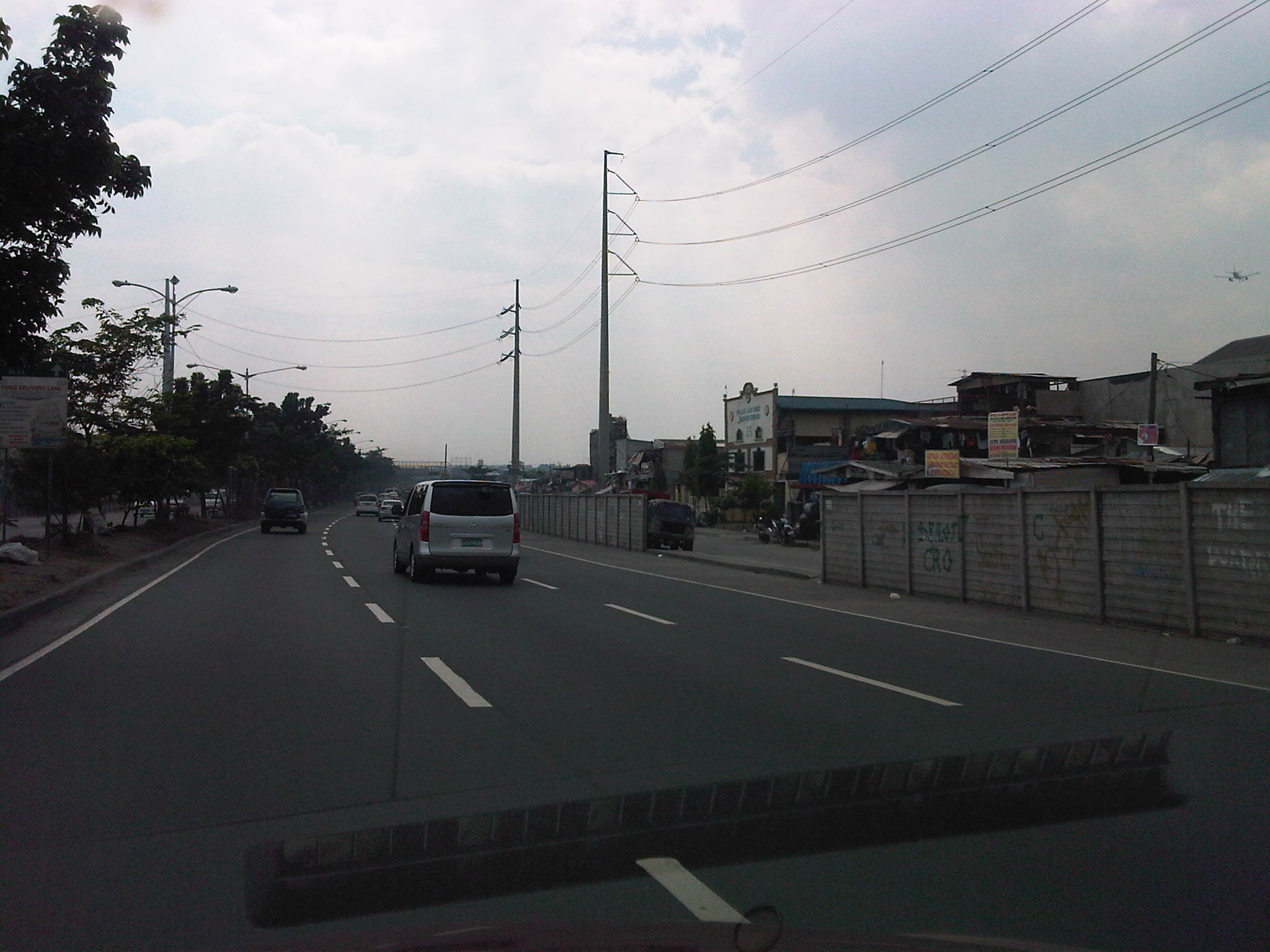 Despite objective for the walls, there are many breeches and these result in still a lot of jaywalking across C5 and jeepneys stopping to pick-up/drop-off passengers.
 A persistent issue along C5 pertains to the operations of jeepneys along the highway. There is a tendency to congregate at the designated loading/unloading areas that coincide with the pedestrian overpasses along the highway. Jeepneys typically occupy 2 lanes including the shoulder lane adjacent to the wall. The same behavior occurs at wall breeches often causing bottlenecks along the highway.
–
Afternoon jam along Katipunan
The northbound direction of Katipunan Avenue is usually congested from mid-day to early afternoons on weekdays. The congestion is caused by several factors including truck traffic and school generated traffic. Katipunan is part of a truck route along which trucks are allowed during the perceived off-peak periods (i.e., not during the morning and afternoon peaks). There are many schools in the area including two major universities (UP and Ateneo), a college (Miriam), and several other schools that generate a lot of vehicular traffic around this time mostly from their grade schools or pre-schools. There are also a lot of activity along the stretch from Ateneo to C.P. Garcia due to the commercial establishments especially the restaurants that attract quite a lot of patrons during the extended lunch period (typically from 11:00 AM to 2:00 PM).
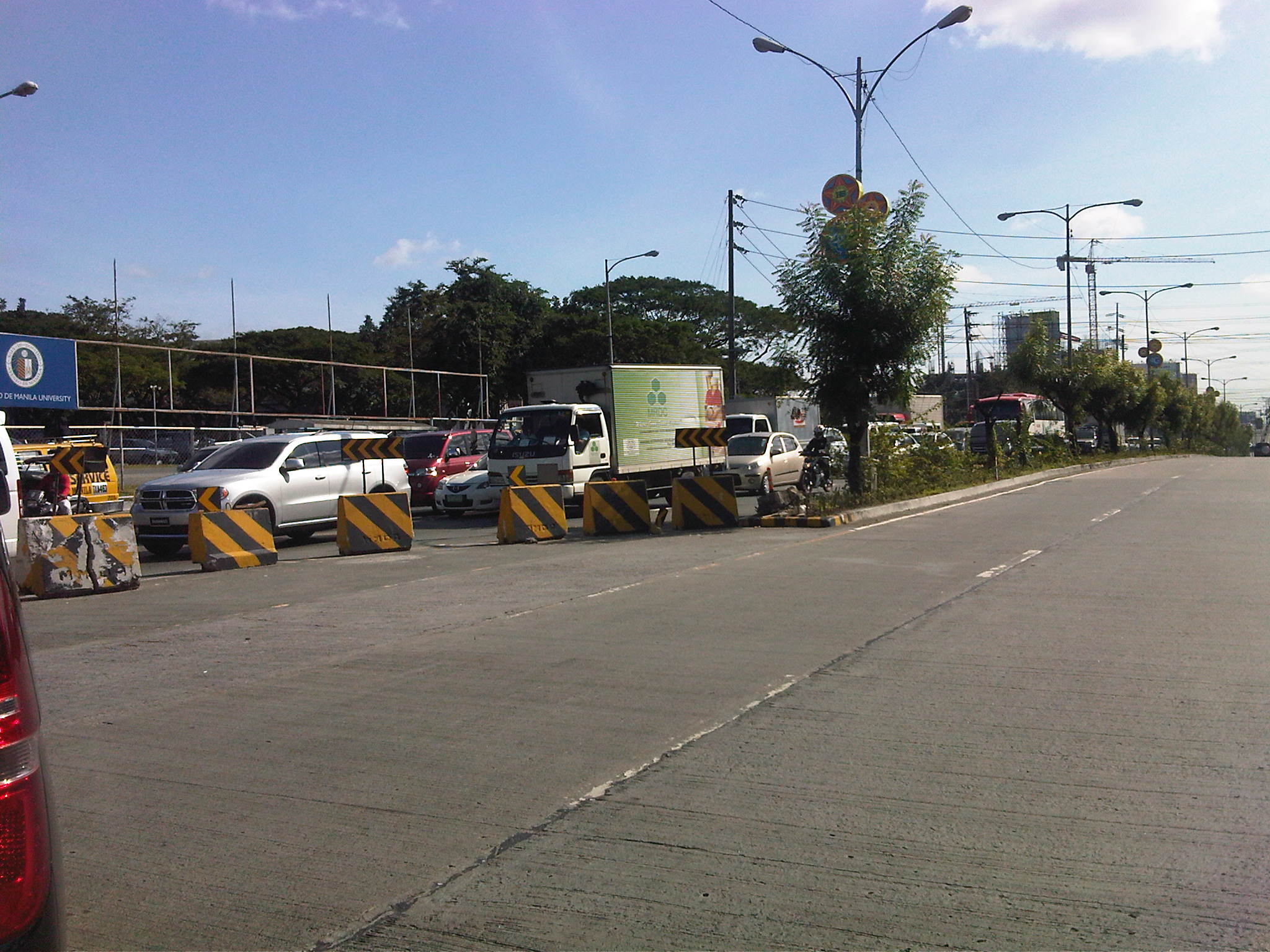 Congestion stretches onwards and may reach past the other end of the overpass towards the Blue Ridge area. The 5-lane section (3 from the flyover and 2 from the at-grade section) narrows to 3 lanes at this section to accommodate the U-turn slot past Ateneo’s gate 2 – an classic case of a bottleneck.
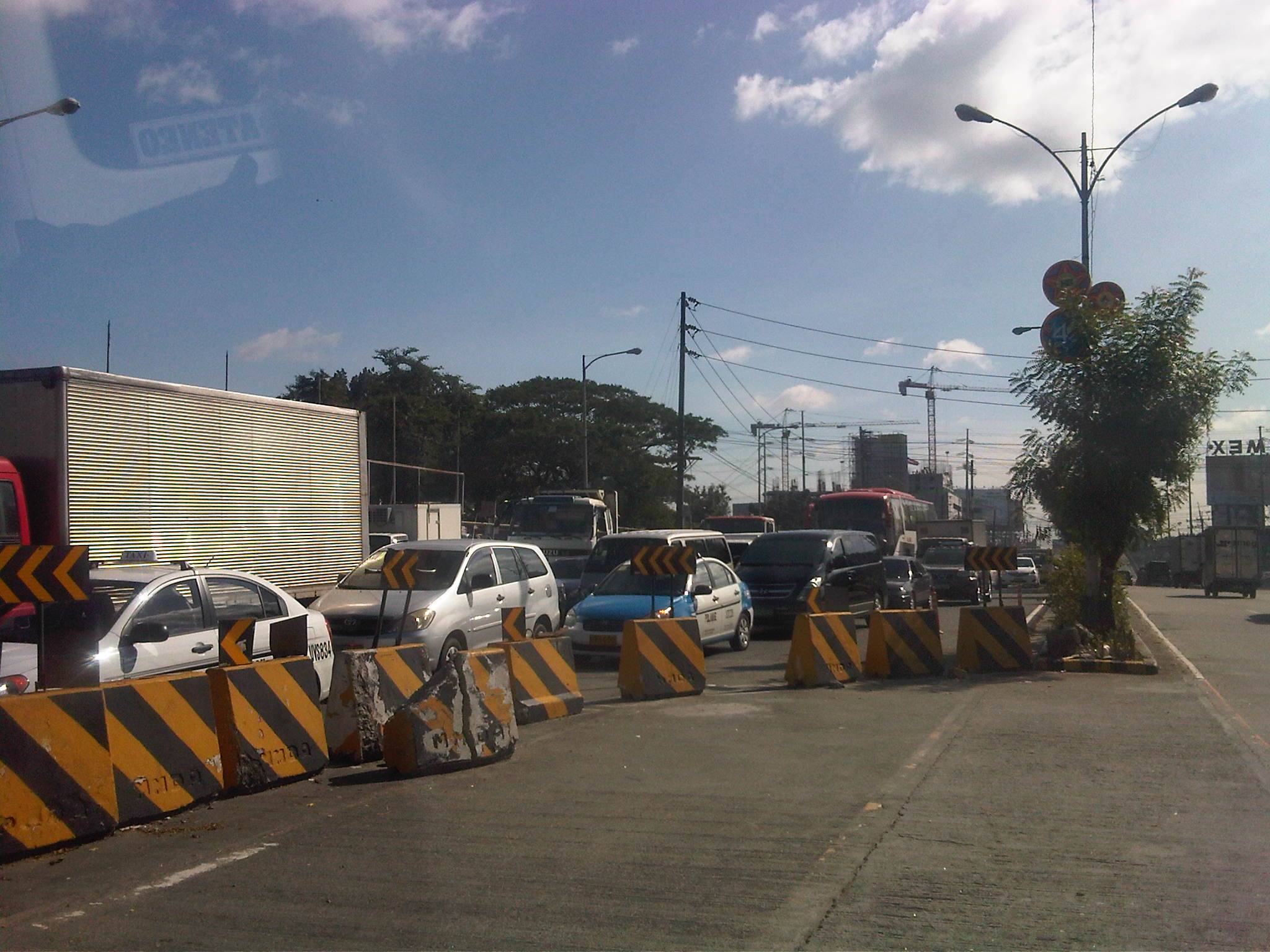 The SM Blue condominium construction is visible in the background of this photo. Although the U-turn slot only has about 1.5 lanes worth of space, the concrete barriers cover the remaining space of a lane, thereby reducing effective capacity for the road section.
 A tarpaulin sign stating Ateneo’s position questioning Notice the concrete barrier used to delineate the U-turn slot that obviously has seen better days. This location is probably among the most dangerous sections along Katipunan (and C5 in general). This has been site of many fatal road crashes. During early mornings, motorists speeding along Katipunan (uncongested during the unholy hours) and descending the flyover often miscalculate or are suprised by the U-turn slot and its unforgiving barriers. The damage on the barrier in the photo is a “souvenir” of sorts from it being a witness to a crash.
–
Muelle del Rio
The Muelle del Rio is a riverside road that stretches from Quezon Blvd. (from the ramp of Quezon Bridge) to Plaza Mexico in Intramuros. The road passes under the McArthur and Jones Bridges that cross the Pasig River, and behind buildings such as the Manila Central Post Office, the National Press Club, the Philippine Chamber of Commerce and Industry, and the Bureau of Immigration.
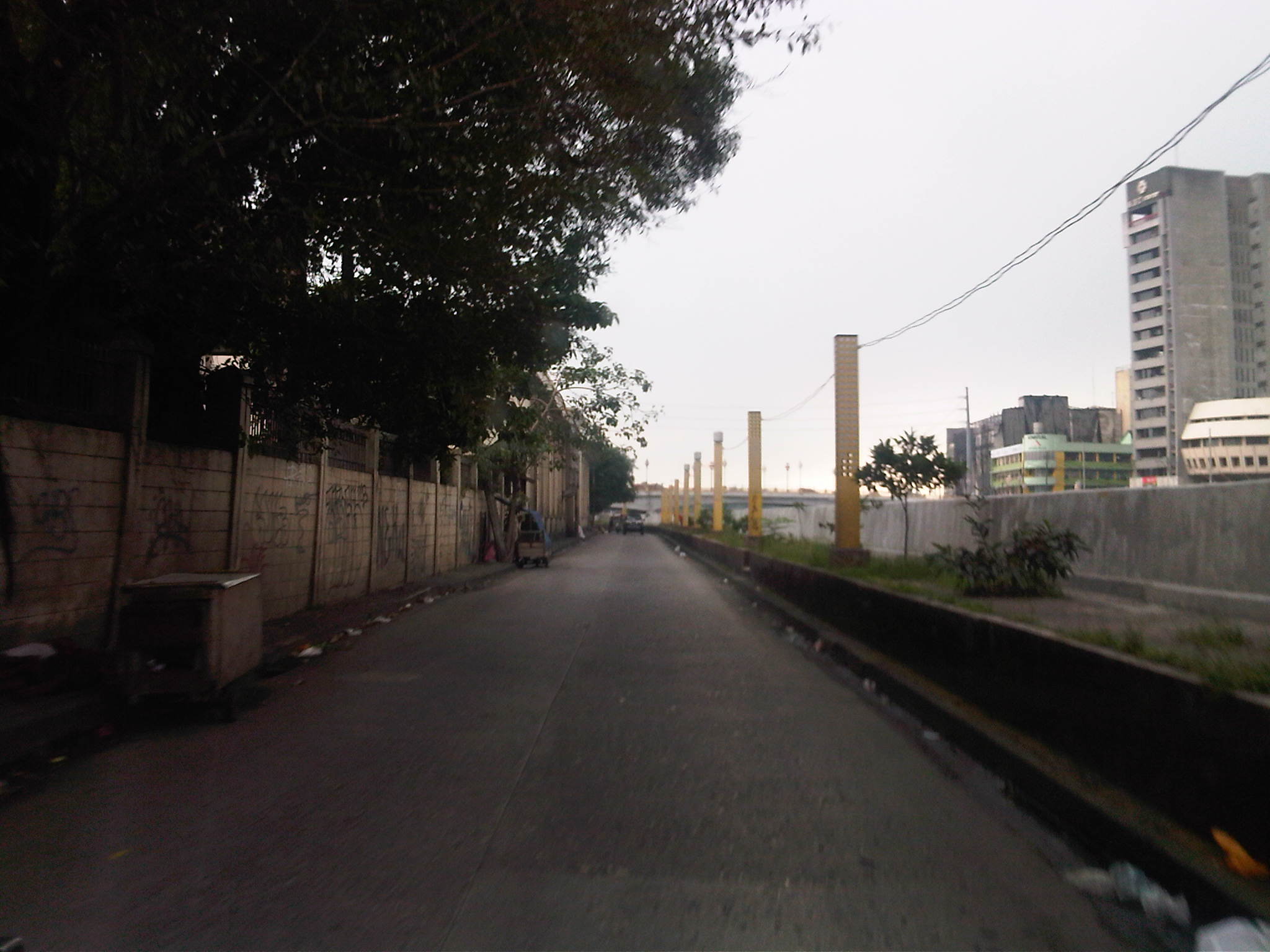 The stretch from McArthur Bridge behind the Manila Central Post Office is clear of squatters but there are many garbage, mainly plastics, strewn everywhere. There are people “residing” under McArthur Bridge and these homeless people have only their carts or cardboard boxes to protect them from the elements.
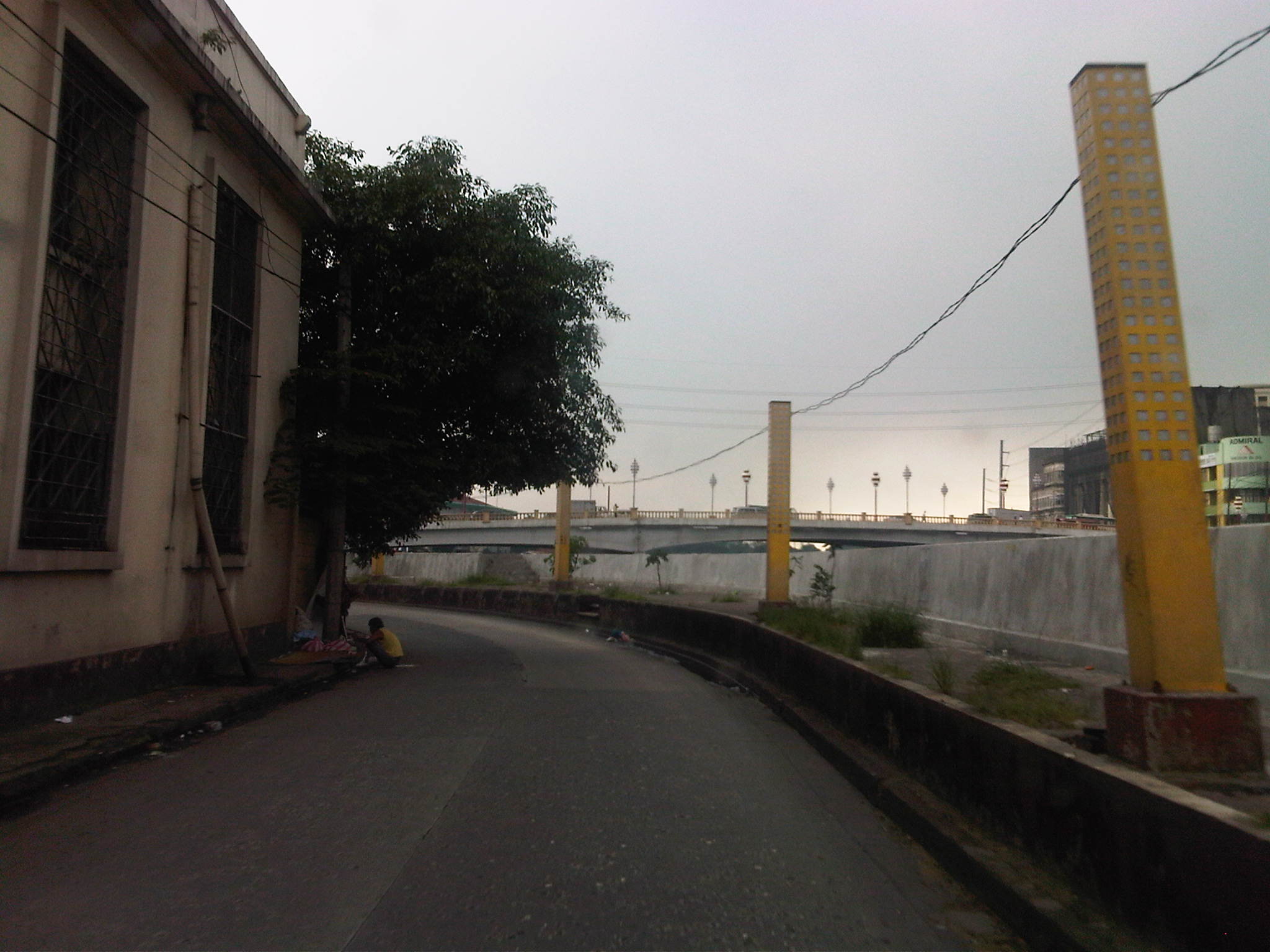 The lamp posts along the road look like they were inspired by the capiz windows of old houses. The homeless include the individual pictured here who was washing clothes using the flowing water from various sources including a leaking water pipe. This section is often flooded during the wet season due in part to its location and elevation with respect to the Pasig River.
 The underpass at Jones Bridge is another section that is usually flooded during the wet season. A staircase connects the bridge and the riverside walkway cum park. The bridge is currently mentioned in news reports regarding the film “The Bourne Legacy” that will be shot in Manila. The bridge is an old one and considered a landmark in Manila. It has been the subject of many old photos and has been romanticized in paintings.
 Vehicles parked along the linear park across the road from behind the Bureau of Immigration. The park is not supposed to be a parking facility but due to a lack of parking spaces for the Bureau and not too many people using the park anyways, parking was tolerated. Perhaps it is better than having such vehicles occupy precious road space. Further down the road, the red tile roof of a Pasig River Ferry terminal is visible.
 The Plaza Mexico Station of the Pasig River Ferry. the Ferry services were suspended last year due to many problems including the lack of passengers.
Plaza Mexico is only a stone’s throw away from the ferry terminal shown in the preceding photo and is already within the walls of Intramuros. Among the historical buildings in the vicinity are the Intendencia, Almacenes and the Aduana, which were buildings from the Spanish Period. Some are currently being restored as part of a heritage initiative in Manila spearheaded by the Intramuros Administration.
–
 Caught (up) in traffic