
Home » Land use (Page 11)
Category Archives: Land use
Special lectures on transportation after the 2011 tsunami in Japan
We recently had the honor of hosting two professors from the Tokyo Institute of Technology (Tokyo Tech). Prof. Tetsuo Yai was an adviser to two (2) faculty members of the Institute of Civil Engineering of UP Diliman and Dr. Daisuke Fukuda was adviser to a former student of ours who is now with De La Salle University. While both are in the transportation field, their laboratories are located in different campuses of Tokyo Tech. Prof. Yai’s laboratory is at the Suzukakedai campus in Yokohama while Dr. Fukuda’s lab is at the main campus in Ookayama where Prof. Yai used to have his laboratory.
Prof. Yai delivered a lecture on “The Progress of Miyako Recovery Plan from Tsunami Disaster” while Dr. Fukuda presented on the “Impacts of Rolling Blackouts on Railway Transport Service in Tokyo Metropolitan Area after the 2011 Tohoku Earthquake.” The lectures were held at the Toyota Training Room of the National Center for Transportation Studies (NCTS) with an audience comprised mainly of graduate and undergraduate students of Civil Engineering.
 NCTS Director Sean Palmiano opening the lectures and introducing Prof. Yai to the audience.
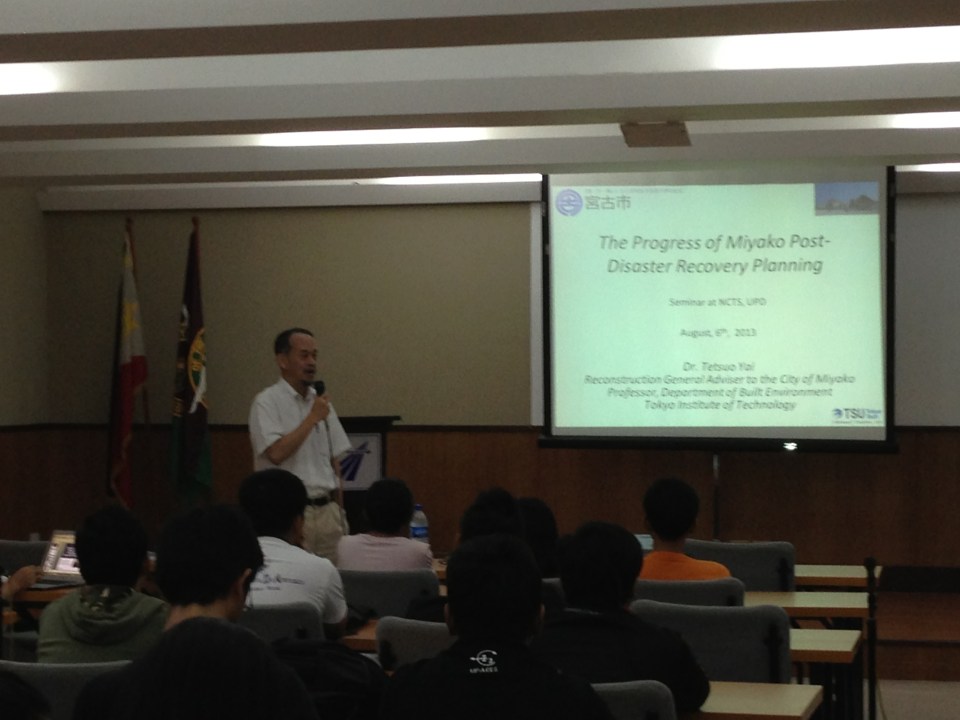 Prof. Yai introducing his topic and talking about the earthquake and tsunami that hit the Tohoku region in 2011.
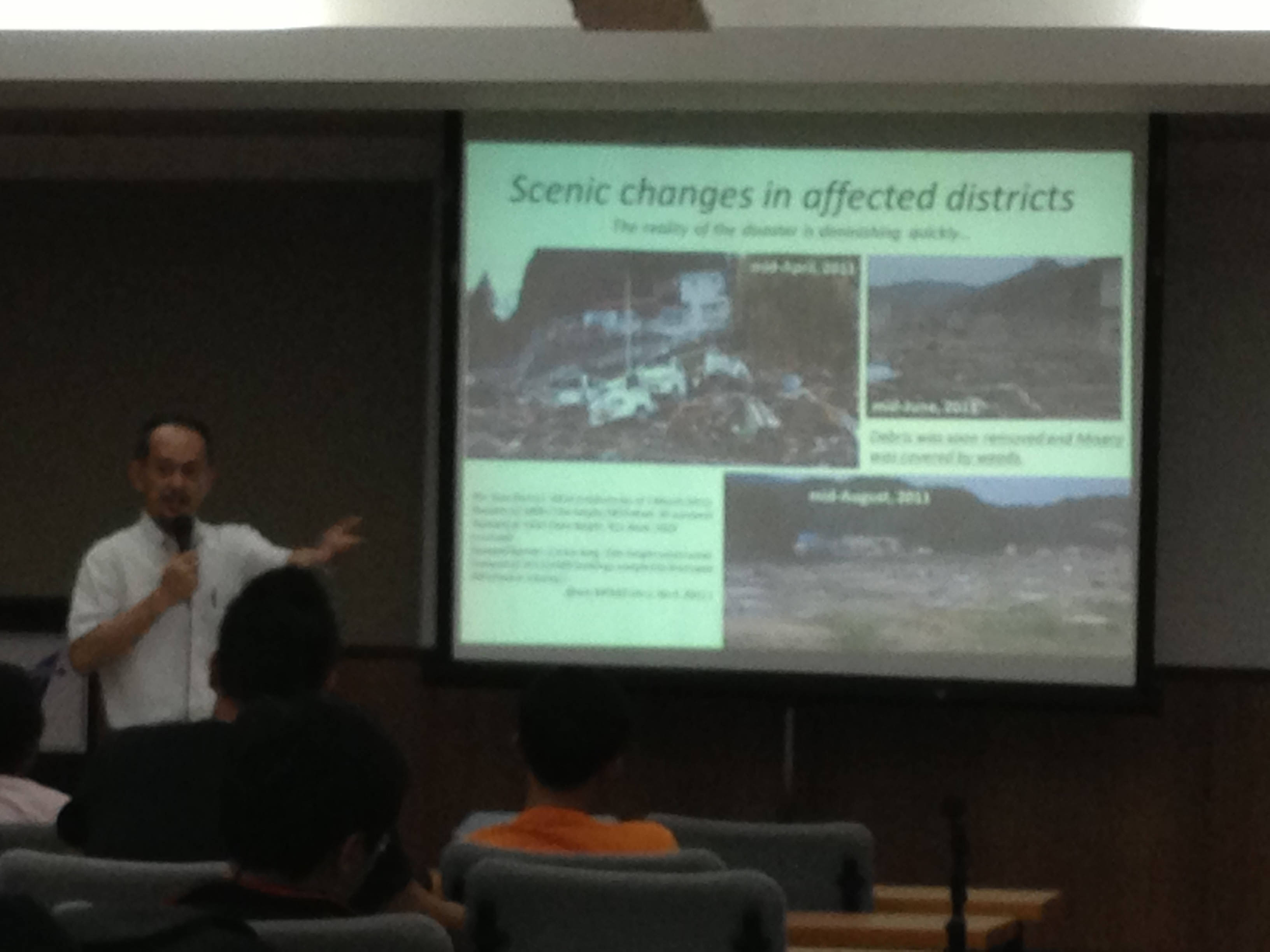 Prof. Yai explaining about the effects of the tsunami on Miyako City and the initiatives for recovery.
 Dr. Fukuda describing the urban rail network in the Tokyo Metropolitan Area.
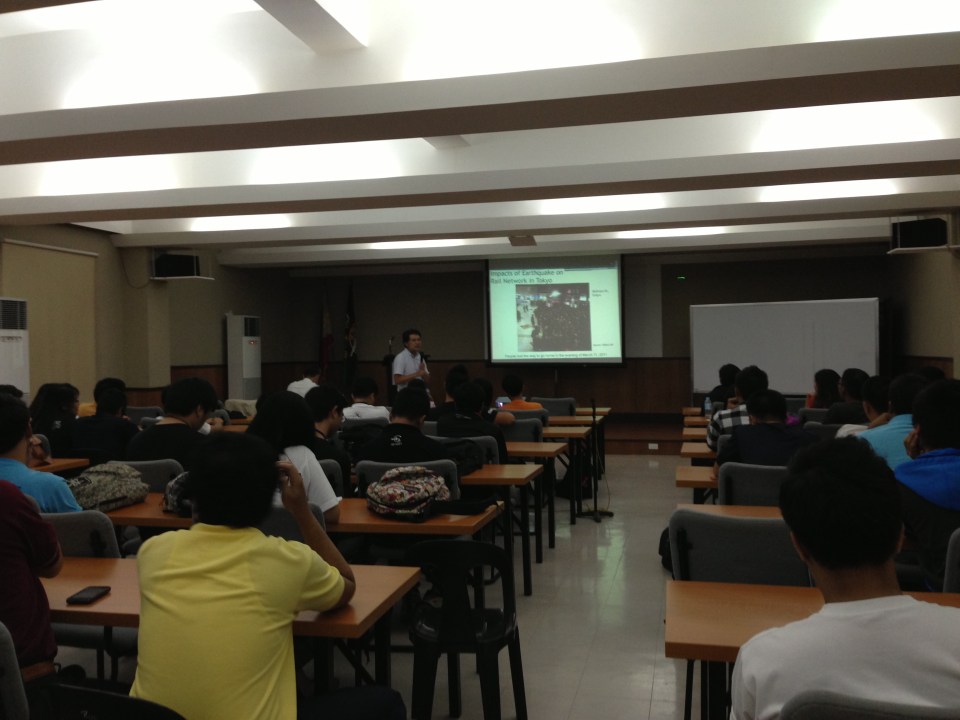 The lectures were well-attended.
 Dr. Fukuda explaining on the impacts of blackouts on rail transport and commuting times in Tokyo and its surrounding areas.
–
Streets of Intramuros: Solana Street
I’m posting more photos of the streets around Mapua and Lyceum. Solana Street is behind Mapua and practically runs parallel to Muralla Street. The southeast end of the street is at its junction with Victoria Street at the Manila Science High School while the northwest end is at the junction with Muralla St. and Andres Soriano, Jr. Ave. at Plaza Espana, where located are the ruins of the Maestranza and the Intendencia.
 Intersection of Solana Street with Beaterio Street with an informal pedicab terminal at the corner.
 Real Street (view towards the southwest) as seen from Solana Street
 A newly built or renovated building is at right across from Mapua. There are many buildings hosting dormitories or rental rooms for students in the area. This is similar to buildings near institutions in the University Belt area where now stands many high-rise condominiums also catering to students.
 Intersection of Solana Street with San Francisco Street (left), which leads back to Muralla Street and the Lyceum.
 Intersection with Sta. Potencia Street – we caught an amusing sight of these two people who appear to be compacting the asphalt concrete transition between Solana’s lower pavement surface elevation with the Sta. Potencia’s new PCCP.
 Vehicles parked along Solana Street and behind the Mapua Institute of Technology
 Approaching the intersection with Victoria Street, one sees many signs of businesses geared towards the academic nature of institutions in the area (e.g., photocopying, bookbinding, computer rentals, etc.). The building on the left is Mapua’s while the ones on the right include dormitories or rental apartments on the upper floors.
–
Another look at traffic along Morayta, Recto and Legarda
Heading to another appointment one morning, our driver avoided Quezon Boulevard and the Quiapo area, which we learned later had serious flooding at the underpass. Our driver said we were actually waved off by a traffic enforcer from heading into Quezon Blvd. to head instead towards Morayta and Recto. And so I decided to take some new photos along our way, which took us to Morayta, Recto, Legarda, P. Casals and Ayala Blvd.
 Morayta Street with the Far Eastern University (FEU) at right is part of an area that is called the University Belt because of the academic institutions located in the area including several major universities like FEU, the University of the East (UE), the University of Sto. Tomas (UST), San Sebastian College, San Beda College, Centro Escolar University and College of the Holy Spirit.
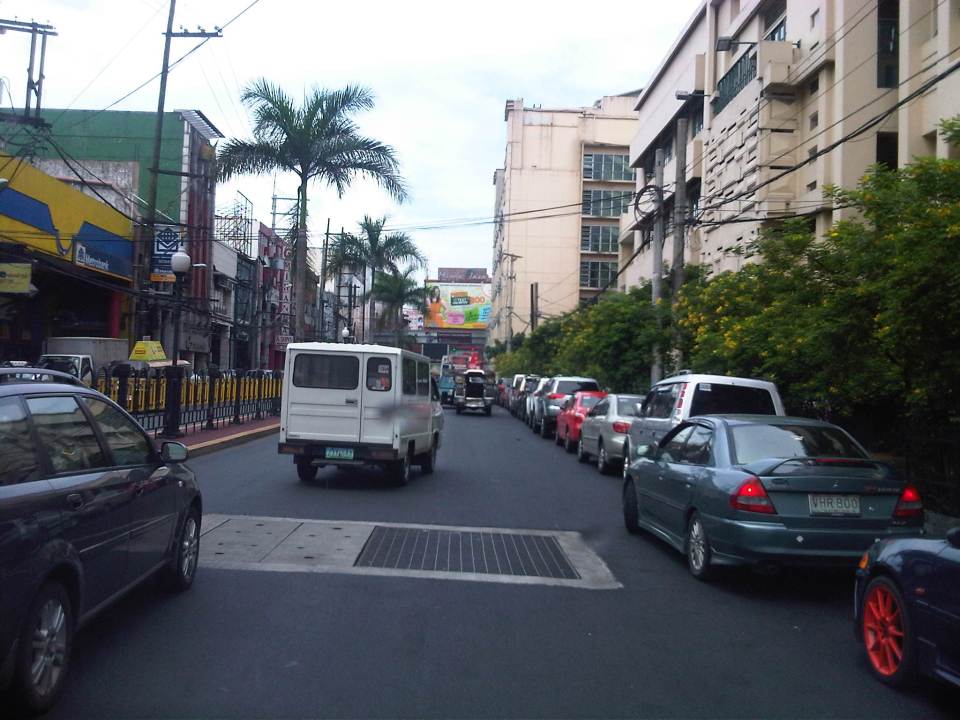 On-street parking along Morayta Street – there should be parking fees for such spaces in Manila since vehicles significantly reduce road capacities and cause congestion. These streets are public spaces and should benefit the general public and not just a few people who happen to have cars but no parking space in an area where space is very limited and therefore valuable.
 Approach to intersection of Morayta with Recto Avenue.
 Recto Avenue eastbound with the elevated tracks of the LRT Line 2.
 Approach to the intersection of Recto with Loyola Street. San Sebastian College is just after the signalized intersection. The pedestrian crossing is for people crossing to or from the University of the East, which is on the other side of the road.
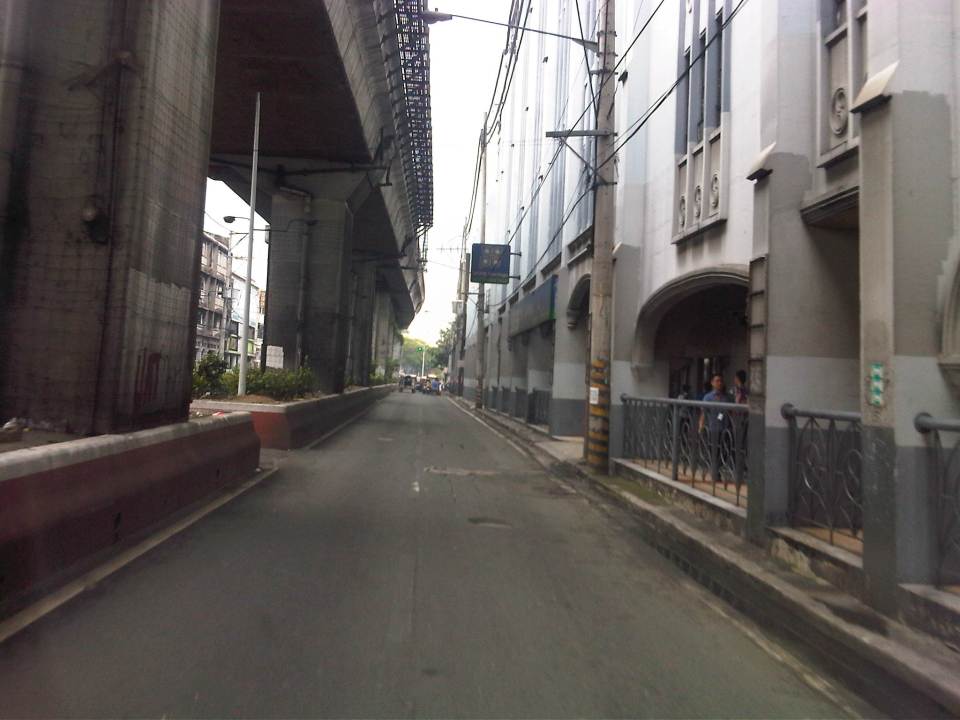 The alignment of the LRT Line 2 led to its posts dividing the eastbound lanes of Recto for the section between Loyola Street and Legarda. San Sebastian College is at right with its arcade walkways.
 The divided eastbound lanes of Recto merge at the approach to the intersection with Legarda and Mendiola.
 That’s Mendiola from across our turning vehicle with San Beda College on the left and a branch of Jollibee obscuring a view of Centro Escolar University at right.
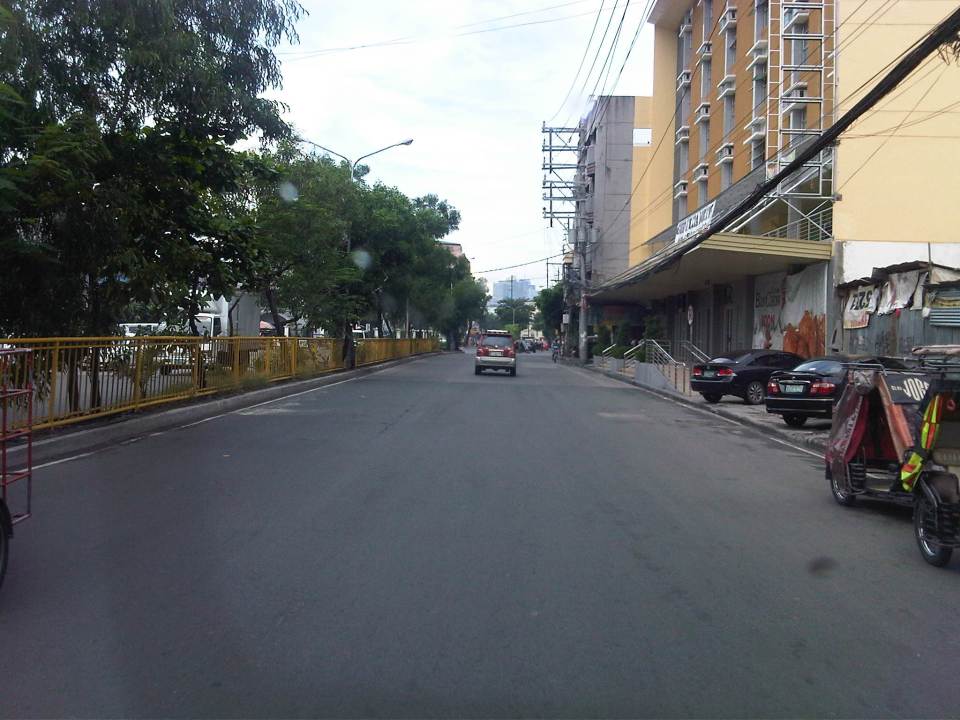 Southbound lanes of Legarda in the general direction towards Arlegui Street. There are many new buildings along the street including the one on the right, which replaced what were already decrepit buildings and houses. Some of these houses probably had historical value but were demolished nonetheless after the property was sold to more enterprising people.
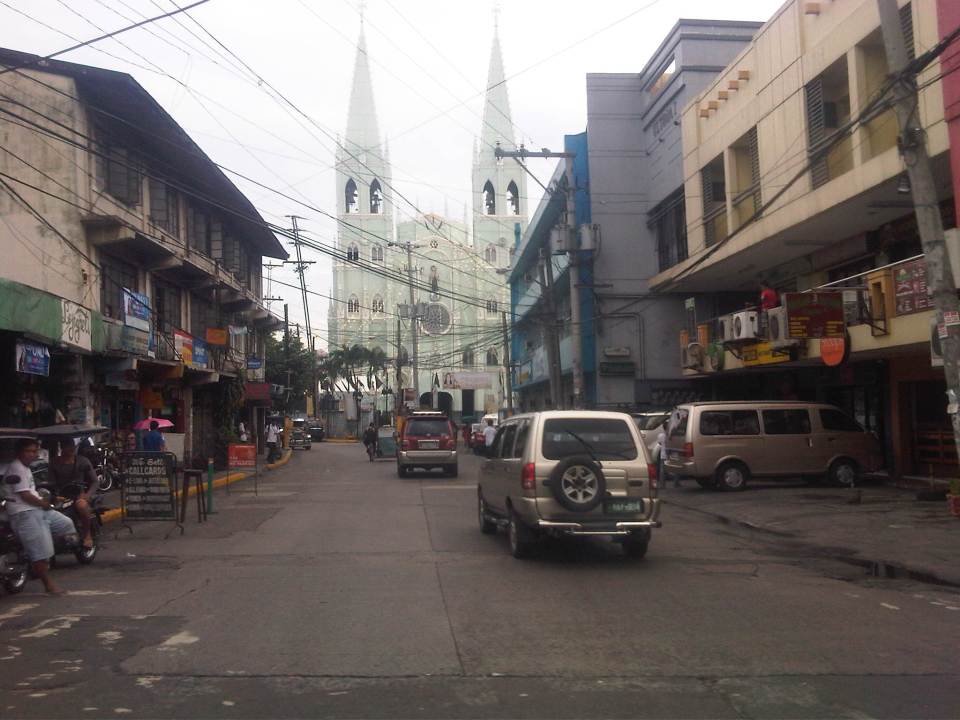 A peak at San Sebastian Church from Legarda and downstream along Bilibid Viejo Street. This image has been captured in many photos and drawings from the time it was completed during the last years of the Spanish period, to the American period until the present.
 Legarda ends at its intersection with Nepomuceno and Concepcion Aguila Streets where the most prominent landmark is the National Teachers College. Here, Legarda becomes Nepomuceno and proceeds towards Arlegui and P. Casals.
–
The Streets of Intramuros: Muralla Street
Intramuros is known as the “old” Manila as the enclave was practically The City when the Philippines was under Spain. Streets are generally narrow as they were designed at a time when there were no motor vehicles like automobiles, jeepneys, buses or trucks. People walked or rode on horses. Luxury vehicles were carriages while goods were carried by carts or people. The following photos show the stretch of Muralla Street from the Victoria Street (Bayleaf Hotel) to Real Street (Lyceum University).
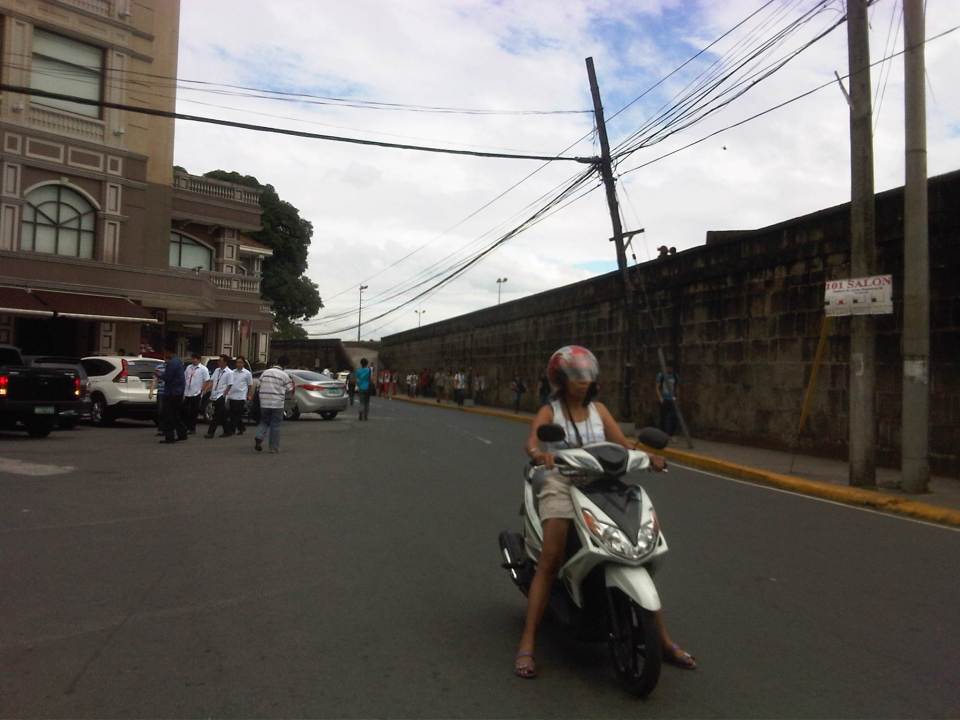 Entrance to Muralla Street with the Bayleaf Hotel at left, which is run by Lyceum University
 Muralla Street runs along the eastern wall of Intramuros. It is a one way street and so the photo shows a pedicab (also called padyak or sikad), a non-motorized tricycle, running counter to the flow of traffic.
 These streets were made for walking – Intramuros has narrow streets and can barely accommodate two way traffic so many have been designated for one-way flow.
 There are schools along the left side of the road including the Mapua Institute of Technology, Lyceum University and Colegio de San Juan de Letran. As such, there are usually many students in the area walking around, having their meals at the nearby canteens/eateries (right side) or perhaps just sitting and admiring the view from the top of the wall.
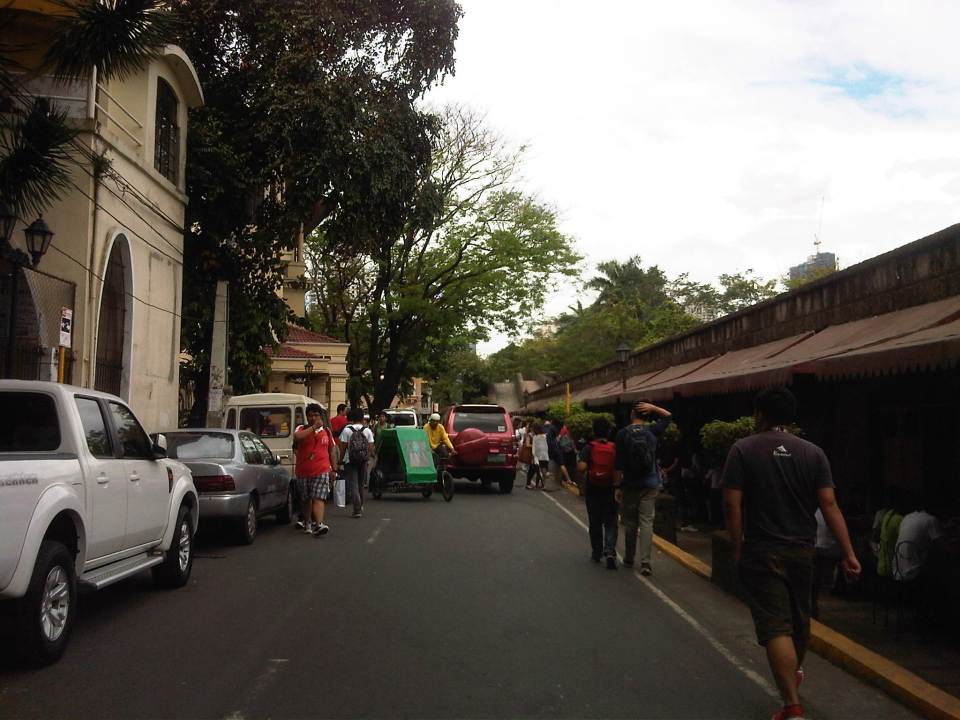 Parking is a major problem in Intramuros and one would see vehicles parked along one side of the street (evident in most of the photos in this post), obviously taking valuable space away from people and other motor vehicles (i.e., reduced road capacity).
 There are many eateries or small restaurants along Muralla St. and just under the wall. These are patronized mainly by students so meals are inexpensive.
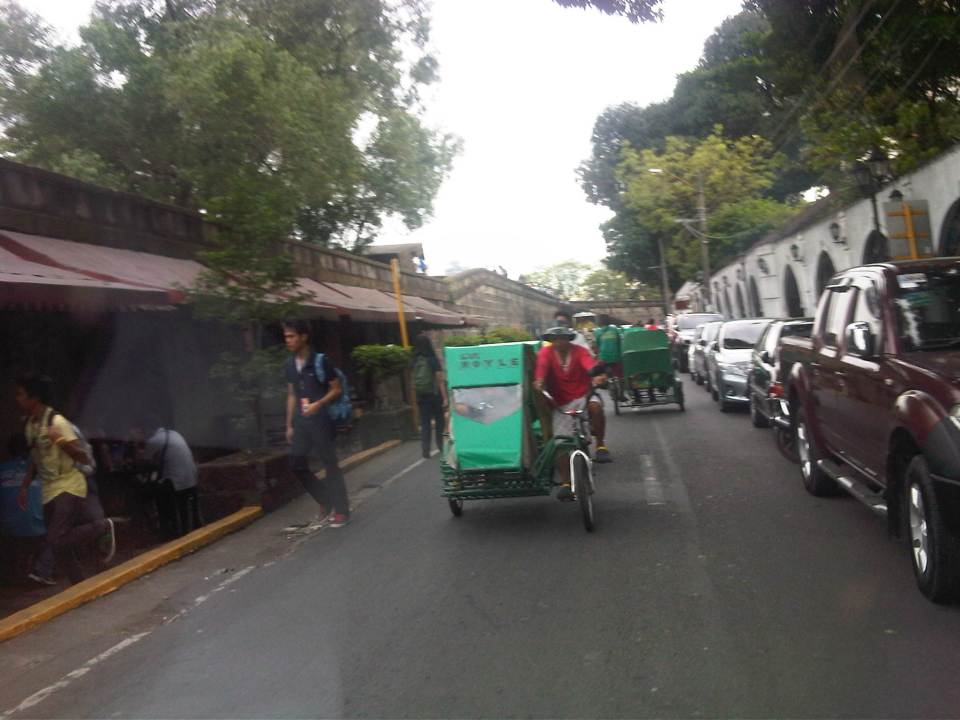 There are many pedicabs in the area with long queues at the gate waiting for passengers coming from the general direction of Padre Burgos Ave., where people can transfer to and from jeepneys serving the area. Frankly, I think there is an excessive number of pedicabs in Intramuros considering roads in the enclave can be transformed into walkable streets, just like they were during the Spanish and American periods. Notice again the on-street parking along one side of the road.
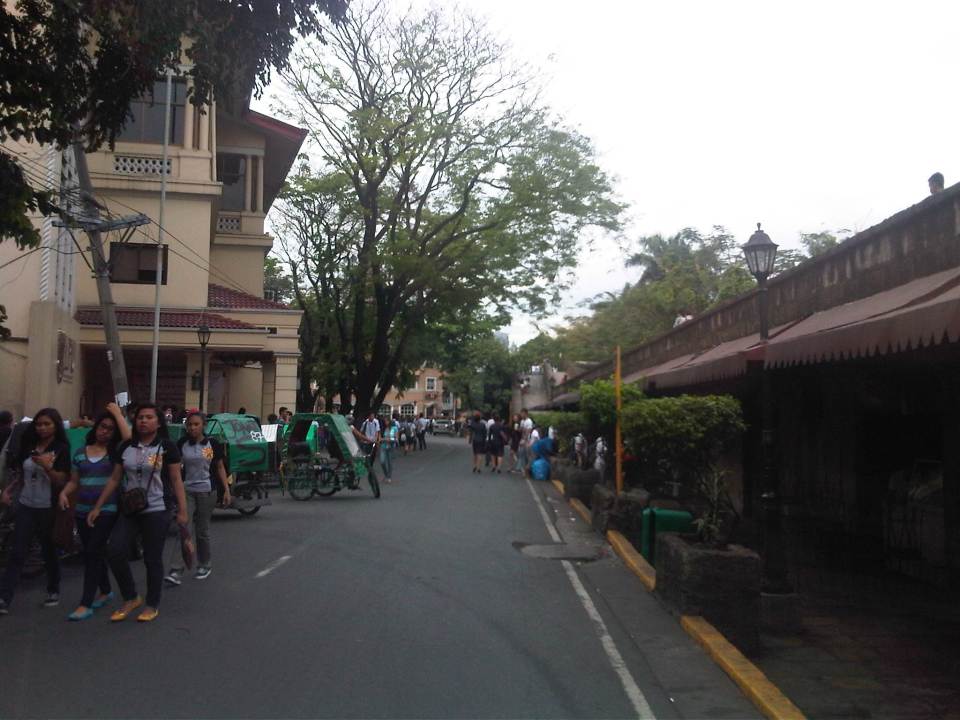 More students and more pedicabs along Muralla Street. People are used to traffic mix and generally stay clear of the space allocated for motor vehicles.
 Security personnel posted along the walls are appropriately dressed as Katipuneros or Rayadillos (honor guards). The building down the street is a dormitory just beside the buildings of Lyceum University, whose buildings are split up by public streets making it tricky to define a campus for the university.
 Junction of Muralla Street and Real Street with a private dormitory building at the center of the photo. Muralla Street continues along the side of the wall and proceeds all the way to Plaza Espana and the old Intendencia. Meanwhile, Real Street proceeds to the left of the dormitory. Also shown at the left is the entrance to one of the buildings comprising Lyceum University. Other buildings are behind the dorm.
–
There goes the neighborhood!
Being frequent visitors to Tagaytay, we couldn’t help but be dismayed with the recent developments there featuring high rise buildings. The first to do this was Robinsons Land, which constructed the first tall building in the Summit Ridge hotel and residential condominium along the national highway, just past the Taal Vista Hotel.
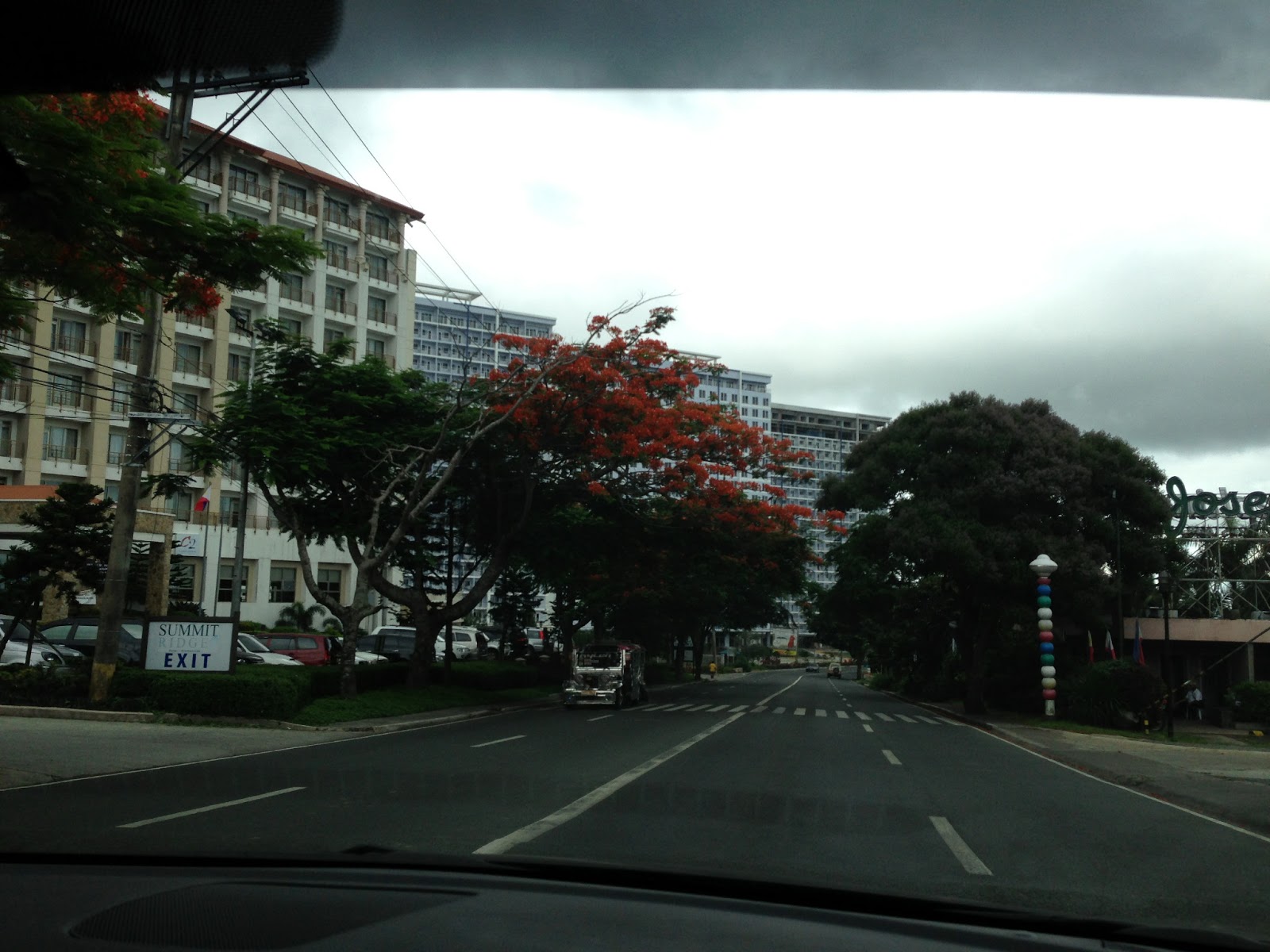 |
| A traveler’s view from the highway – Robinson’s Summit at left is surrounded by SM’s Wind. The sign of Josephine’s Restaurant is visible at right in the photo. |
This project meant the inevitable entry of competitor SM in the area. What we initially thought was a smart move by SM in acquiring the Taal Vista Hotel paved the way for the retail giant to acquire more land for development, which included the much hyped Wind Residences beside (and surrounding Robinsons’ Summit Ridge.
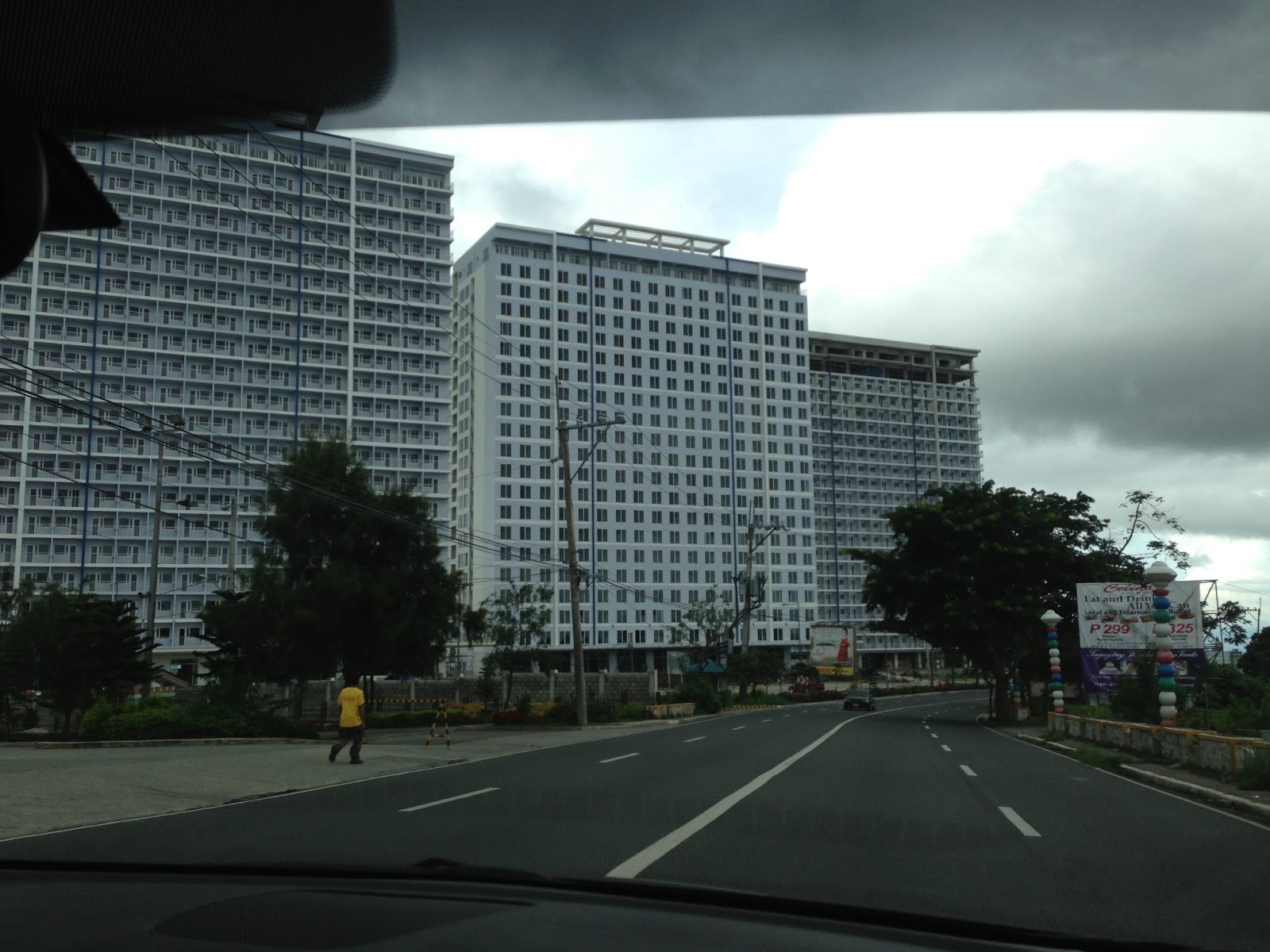 |
| SMDC’s Wind Residences in Tagaytay |
Closely following SM is a development by Cityland near the rotunda, which eerily looked like just one of the ill-conceived boxes they call condominiums in Metro Manila. We couldn’t help but notice that there is generally a lack of landscaping or open spaces to complement the high-rise buildings so there is little or no effort in making the buildings and the lands where they’re built blend with the environment.
For a tourist destination like Tagaytay, it seemed to me that it would be in their best interest to have no buildings perhaps beyond medium rise ( 4 or 5 floors max?). The prevailing perception now is that the city did not do its job in regulating such high density developments. Granted, there are many people who wish to have their own houses in Tagaytay and property values there are climbing. Why else would major players be racing to build high-priced residential developments? And it seems that some developers thought that best approach which addresses demand seems to be the high-rise option. Unfortunately, “best” here seems to be equated to “most profitable” rather than “most sustainable.” Nevermind that the buildings now obscure the view and the sun for many residents of the surrounding areas (not just those living along the ridge). Nevermind that these developments will require much water and other resources for the maintenance alone. Were these elements even considered in the impact assessments of these developments? Did the Environmental Management Bureau do its part in ensuring that the developments conform to standards and regulations?
Now comes what is touted as the tallest ferris wheel in the country, which brings me to the question of why do people go to Tagaytay? To ride a Ferris Wheel? I don’t think so… The local government seemed too eager to approve major projects here and there without looking at a sustainable future for the city. High intensity developments such as the high rise residential buildings currently under construction in the city will eventually put too much pressure on precious resources including water supply and also scar the landscape (I don’t want to use the term cityscape.) with structures that basically do not conform with the character of Tagaytay. These are also sure to add to vehicle traffic that’s already concentrated along the national highway and there are poor facilities for pedestrians including a lack of sidewalks/walkways and safe crossings along the highway.
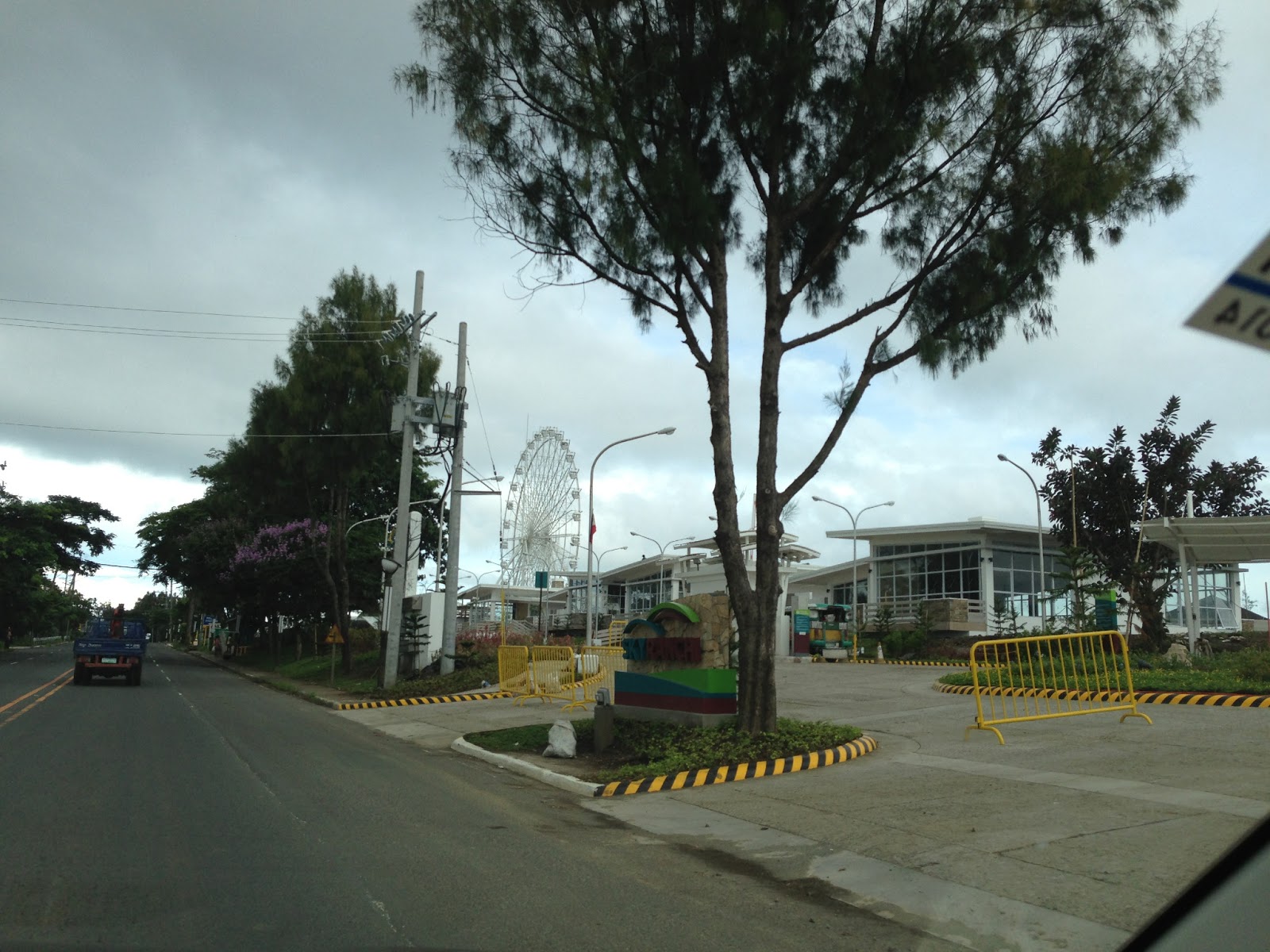 |
| Amusement park and convention center facilities beside the Taal Vista Hotel |
Of course, this is only my opinion and one of so many other opinions regarding development. Perhaps people living in the area accept such developments as they represent income for the LGUs (Tagaytay, Silang and Amadeo are the ones most directly benefiting from the developments.) and jobs for people residing in the area. These were definitely considerations in the process of approval for these projects and probably weighed more than other factors that required attention. I just hope that a sustainable future was not sacrificed by people who opted to earn a quick buck from these projects.
–
Traffic congestion and the limits of quick fixes
One time last summer night, it took me 2.5 hours to get to the airport from where I reside when it should only be an hour or 1.5 hours (on a typical bad day). Very early mornings (between 2 to 4 AM), it only takes me 40 minutes between my home an the airport. The route I usually take is mainly along Circumferential Road 5 (C-5); a route that basically has sparse public transport (mostly jeepneys along different sections) but is a truck route. It was summer though and one would have thought that there would be less vehicles along the road with school still out. I was wrong in that assumption and that cost me both time and fuel that night.
Traffic congestion in Metro Manila and other Philippine cities have been issues for such a long time that one tends to assume there’s nothing being done to fix the problem. In Metro Manila, the Metropolitan Manila Development Authority (MMDA), in cooperation with the various local governments and national agencies, has implemented various schemes including the number coding, truck ban and a bus dispatch system along EDSA. Yet, congestion persists and only last week, the President got caught in traffic as he traveled from Malacanang Palace in Manila to the DOST Compound in Taguig. The news was filled with a comment that he supposedly made to the MMDA Chair about the delay he and his entourage experienced. The bad news is that this congestion will not go away and will only worsen if there are no steps taken to address the problem. And this happens not only in Metro Manila but in other highly urbanized cities in the country. Quite obviously, quick fixes are no longer enough and we have reached the limits of their applicability.
 EDSA during the morning rush hours
 EDSA during the afternoon peak, which actually extends to an evening and even nighttime traffic jam
So how do we alleviate traffic congestion? Here’s three things that come to mind as they seem to be quite logical and very obvious:
1. Build the mass transit infrastructure required – these infra include rail and bus rapid transit systems and are urgently needed in Metro Manila, Metro Cebu, Davao and other highly urbanized cities. A shift from private vehicle use to public transport will not happen if people have no attractive options for commuting. In Metro Manila, there is a backlog of mass transit projects with lines that should have been constructed and operational years or even decades ago.
2. Rationalize transport services – the long standing practice is to increase the number of existing modes of transport as the demand increases. This logic is one that is most abused as a doubling of demand is conveniently but incorrectly interpreted as requiring a corresponding doubling of the number of tricycles or jeepneys, for example. What is required is for our cities to “graduate” from low capacity and less efficient modes to higher capacity and more efficient ones. Many cities seem plagued with tricycles as their main modes of transport within their CBDs when these should have been restricted to residential areas and mainly in the periphery rather than allowed to dominate (and clog) urban streets.
3. Build more walkways and cycling facilities – its difficult to encourage people to walk and cycle if there are no space for pedestrians and cyclists to travel safely and efficiently. Most trips are actually short ones and do not require motor vehicles so it makes sense to invest in pedestrian and cycling facilities so people get the clear message of support for such options for travel. Such investment is also one for healthy living as walking and cycling are forms of exercise and it is well established that these modes of transport promote healthier lifestyles and therefore, healthier people in cities.
–
The Streets of Manila: Dagupan Street and side streets
After reading on the brouhaha caused by a negative description of Manila in a novel written by a popular author, I decided to look for some recent photos I took while en route to a meeting in Manila. We were going to the Philippine National Railways (PNR) office in Tutuban for a meeting and I couldn’t help but take a few photos along Tayuman and Dagupan Streets, trying to find “proof” of the “hell” that is supposed to be Manila. While I have some comments myself, I will leave it to my readers what they see from the photos and make their own comments.
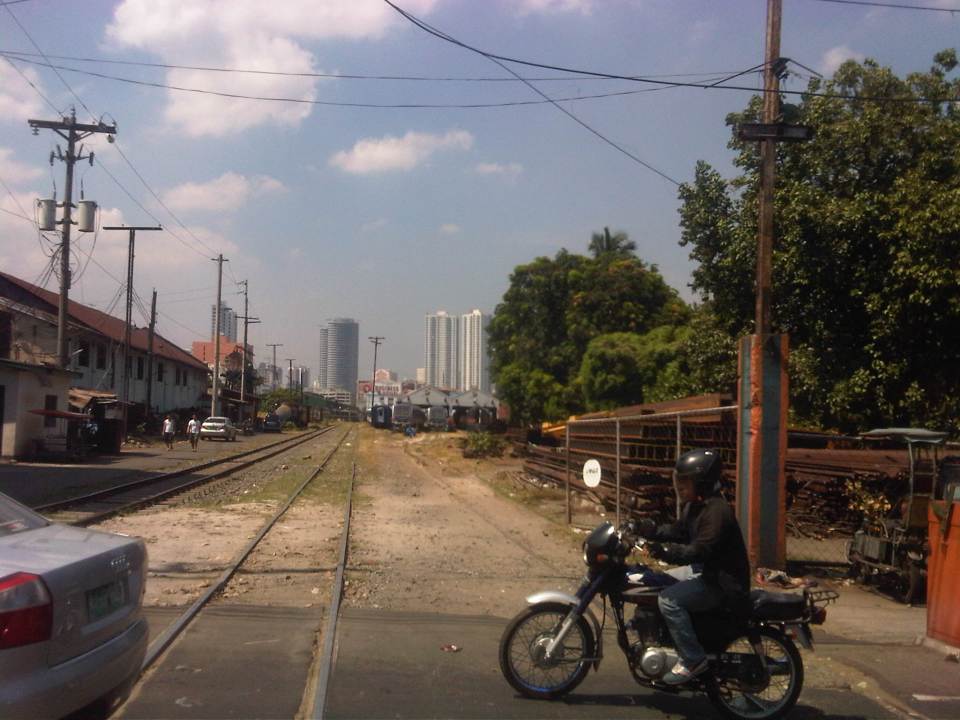 View of the PNR tracks from along Tayuman Street
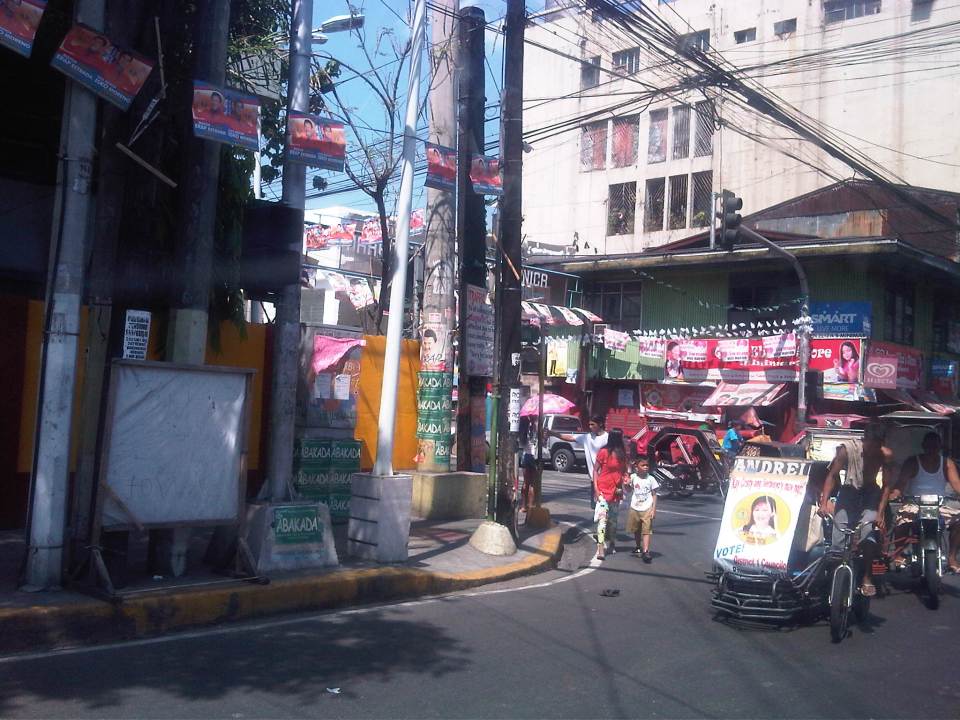 Intersection of Tayuman Street and Dagupan Street – the intersection has traffic lights but it can be confusing with pedicabs generally not following the signals.
 Dagupan Street is a 4-lane road that serves a predominantly residential area across from the PNR station and depot in Tutuban. And where there are residential areas in Manila, there are pedicabs, or non-motorized 3-wheelers like the ones shown with the motor tricycle (center) in the photo.
 The two shoulder lanes are occupied by parked vehicles; effectively reducing the capacity of the street for traffic. In addition to the on-street parking, motorists would have to deal with the pedicabs whose drivers will not give way and seem not to care about their impeding the flow of traffic. It seems the area had or were having their fiesta when we passed by and with the May elections, many politicians took advantage by illegally placing banners and other campaign material with the fiesta banderitas.
 Side streets along Dagupan Street are all narrow and many appear to be one-way streets given that half of the carriageways are occupied by parked vehicles.
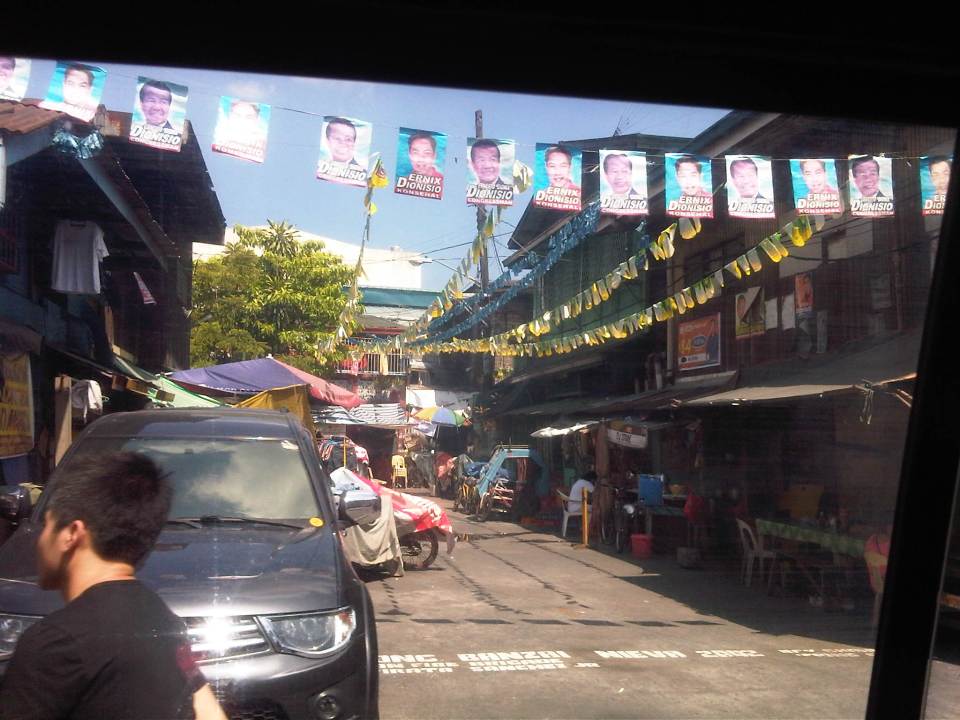 Some side streets appear to have dead ends like this one with a house in the middle of the road. In some cases, there are basketball courts or tents set-up for wakes in the middle of the streets. More illegal campaign materials by local politicians running for office in Manila are shown in the photo.
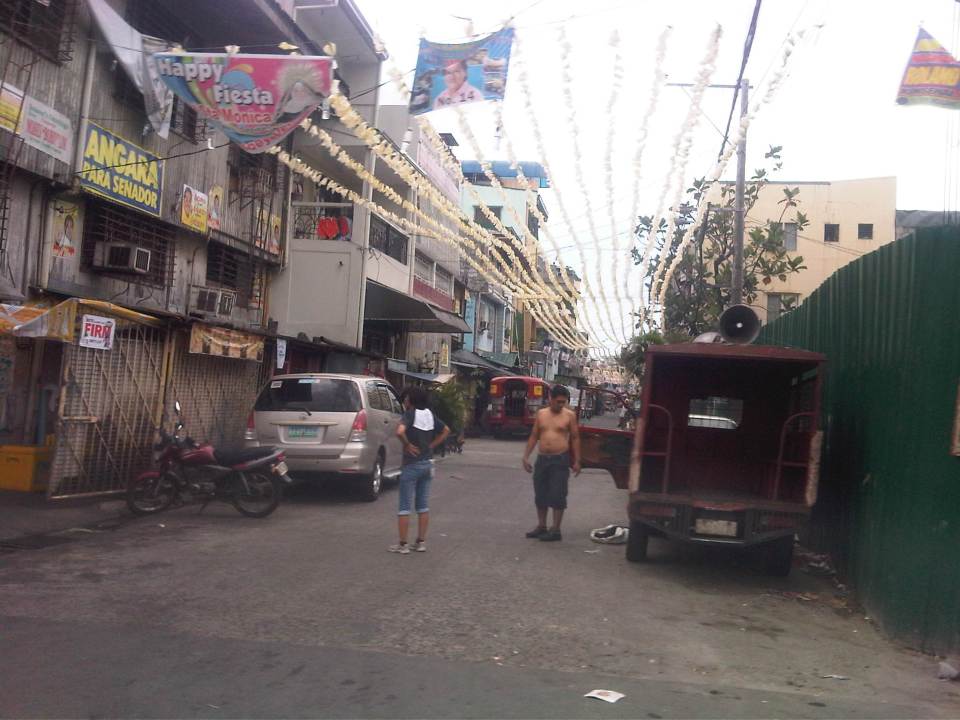 Another side street but with less vehicles parked along the road. Many residents are affluent enough to own vehicles but have no garages. The city tolerates on-street parking but not just for local roads like this one but even along major thoroughfares!
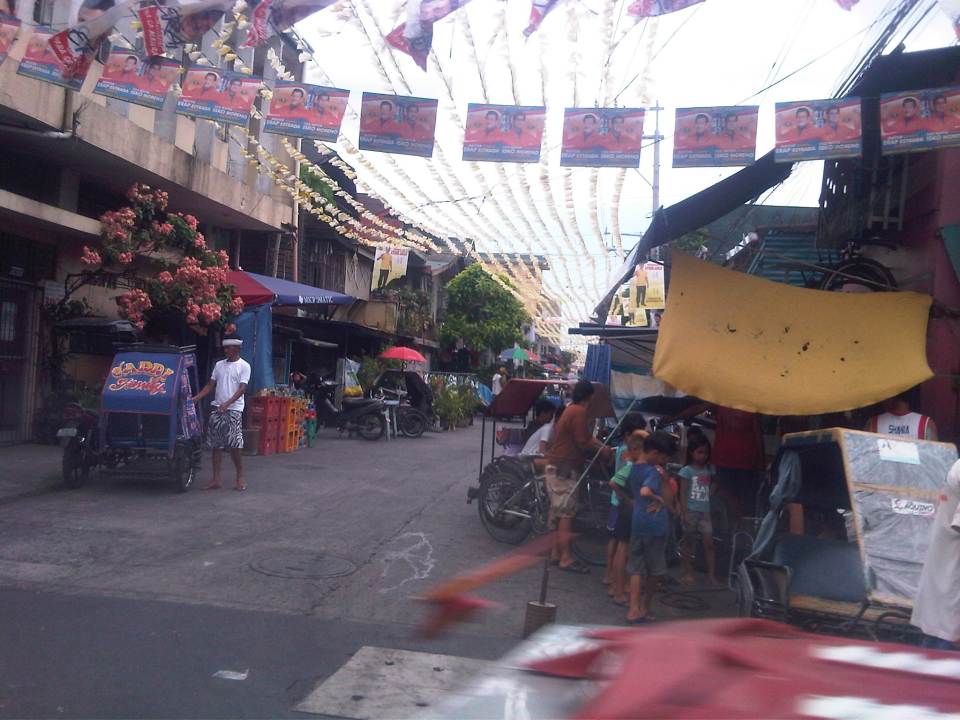 There’s not a few eateries, stores and other establishments along this street. Most if not all of these establishments take up road space for tables and supplies (like the soft drink cases in the photo). Among their customers are workers and pedicab drivers who park their vehicles on the road.
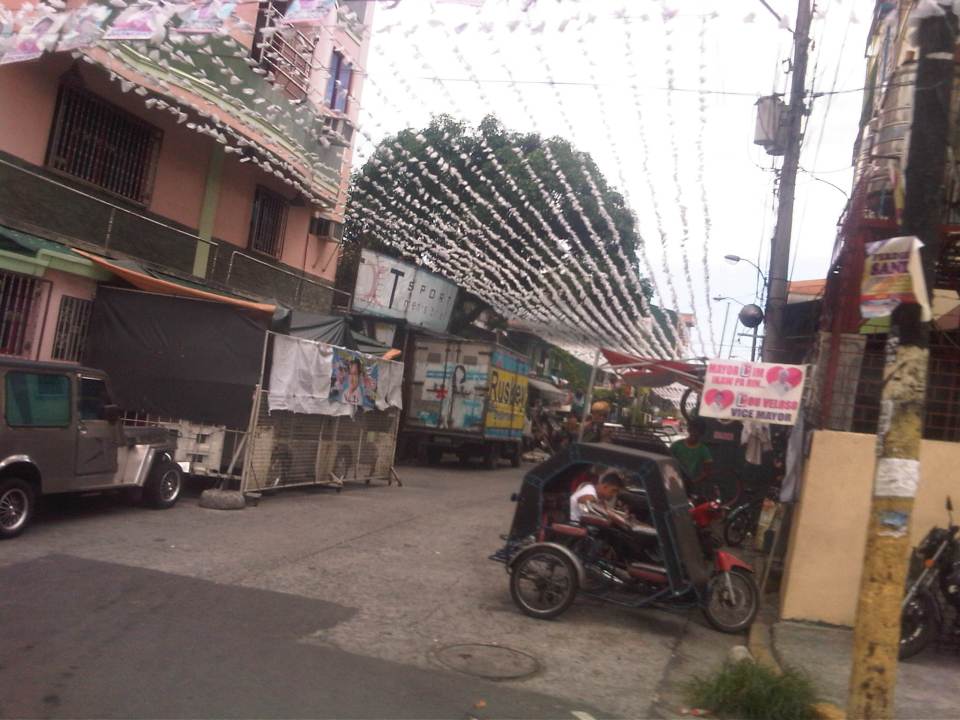 Along this street, some residents have allotted space for makeshift garages or extensions of their buildings. These can be in the form of tents or steel partitions that act to secure a vehicle.
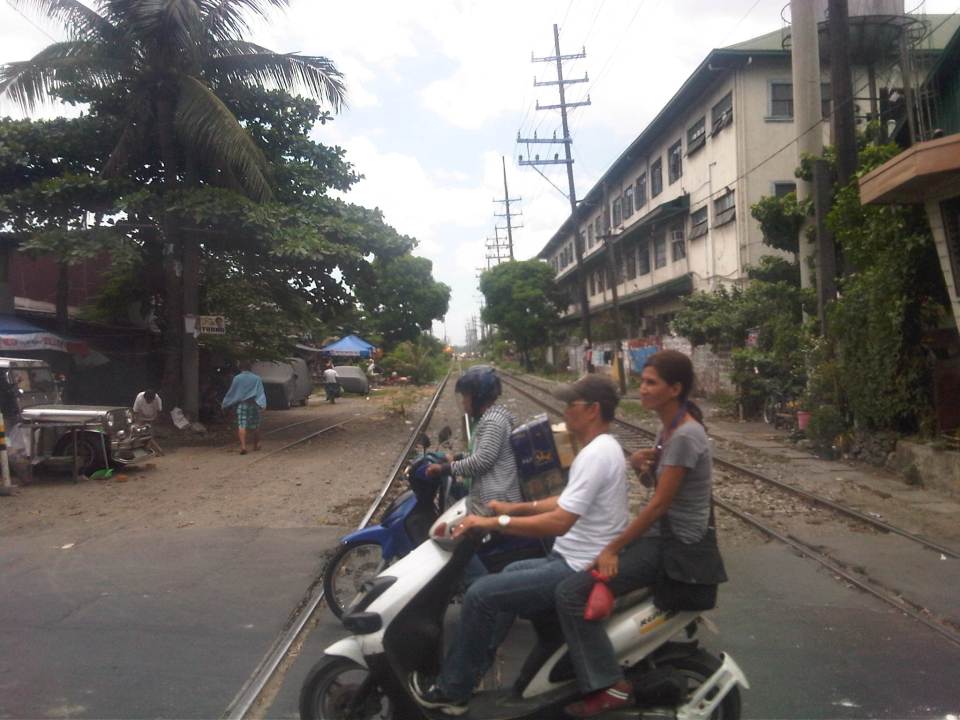 A look at the PNR tracks from Tayuman Street downstream is in the general direction of Caloocan (part of what was Main Line North). The building on the right is a TESDA facility.
Coming soon: the streets of Intramuros.
–
What Public Transit Data Teaches Us About How People Use a City
I’m sharing an interesting article featured on The Atlantic Cities, one of our favorite sites on the internet. Enjoy!
What Public Transit Data Teaches Us About How People Use a City.
Luzon Avenue Flyover
The Luzon Avenue flyover spanning the width of Commonwealth Avenue is now open to two way traffic. Previously, only the northbound side was open, allowing vehicles to cross Commonwealth from Tandang Sora Ave./Katipunan Ave. to Luzon Ave. and towards Congressional Avenue. I took a few photos of the flyover and the vicinity of Luzon Avenue en route to NLEX a few days ago.
 The Luzon Avenue flyover has a total of 4 lanes, divided by a median island.
 The lamp posts indicate a well lighted road during night time. The pedestrian walkways on either side are quite narrow and I think the designers of the flyover could have widened this feature of the facility.
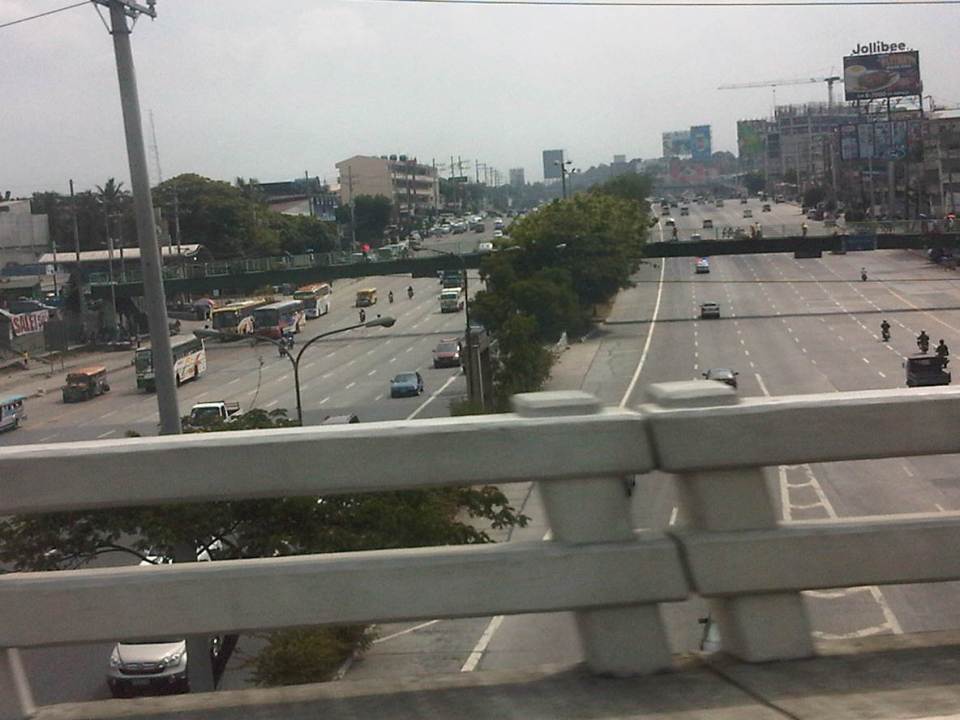 A view of Commonwealth Avenue from the flyover.
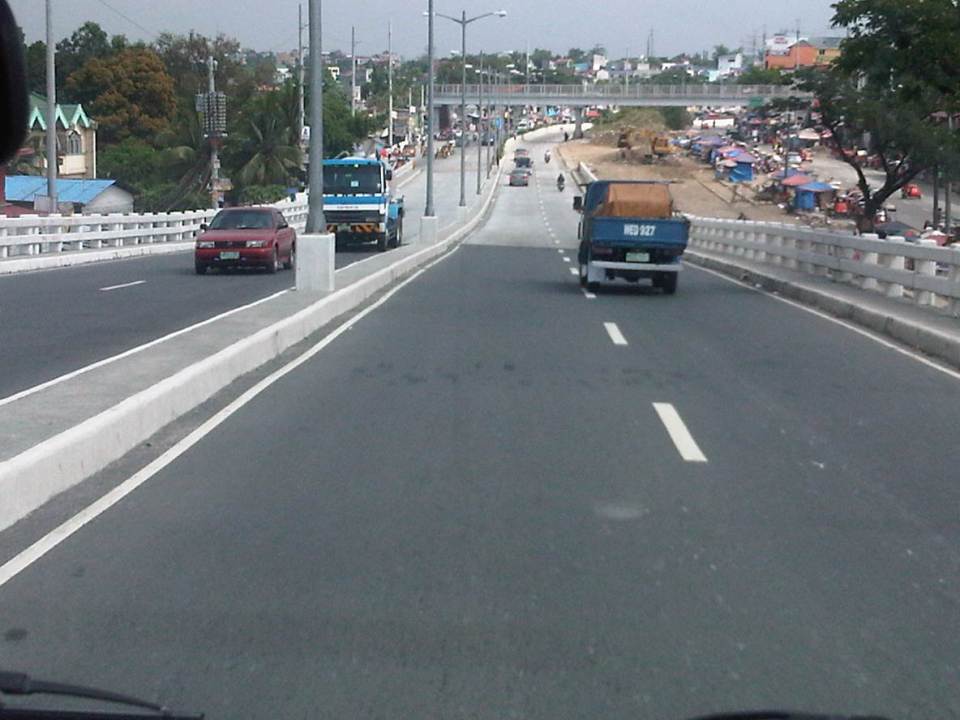 Along the other end of the flyover is Luzon Avenue, which has been widened to accommodate the flyover and the at-grade sections connecting to the QMC-bound side of Commonwealth Avenue.
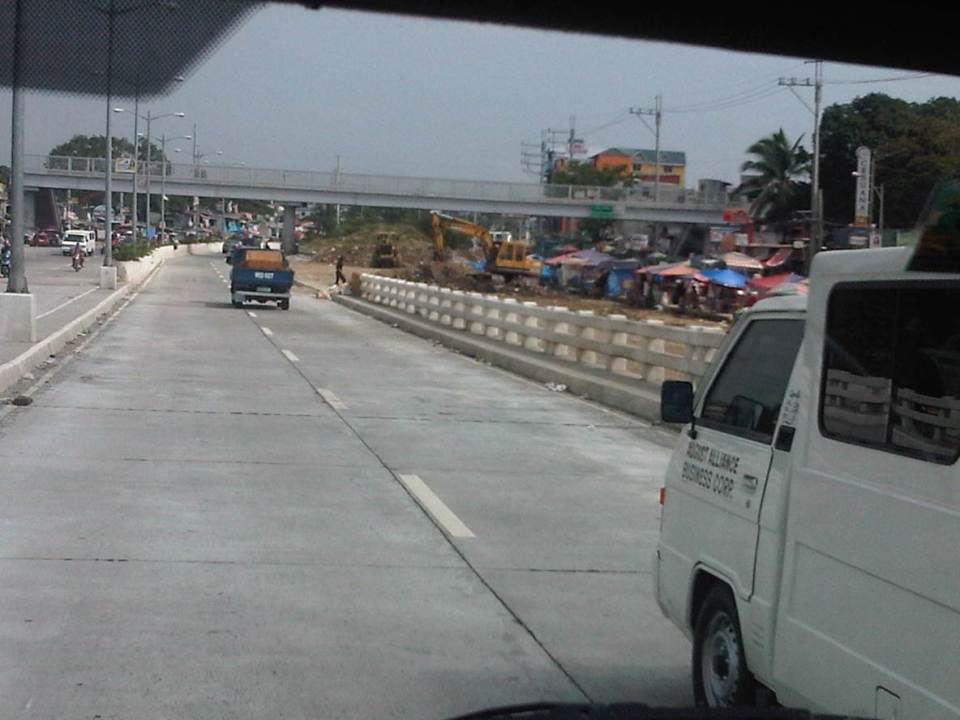 A pedestrian overpass was constructed at the foot of the Luzon Ave. flyover so pedestrians will not cross at this critical part of the flyover when vehicles would typically be picking up speed as they descend (or ascend on the other side) the flyover. There are still construction work along the northbound side of Luzon Avenue.
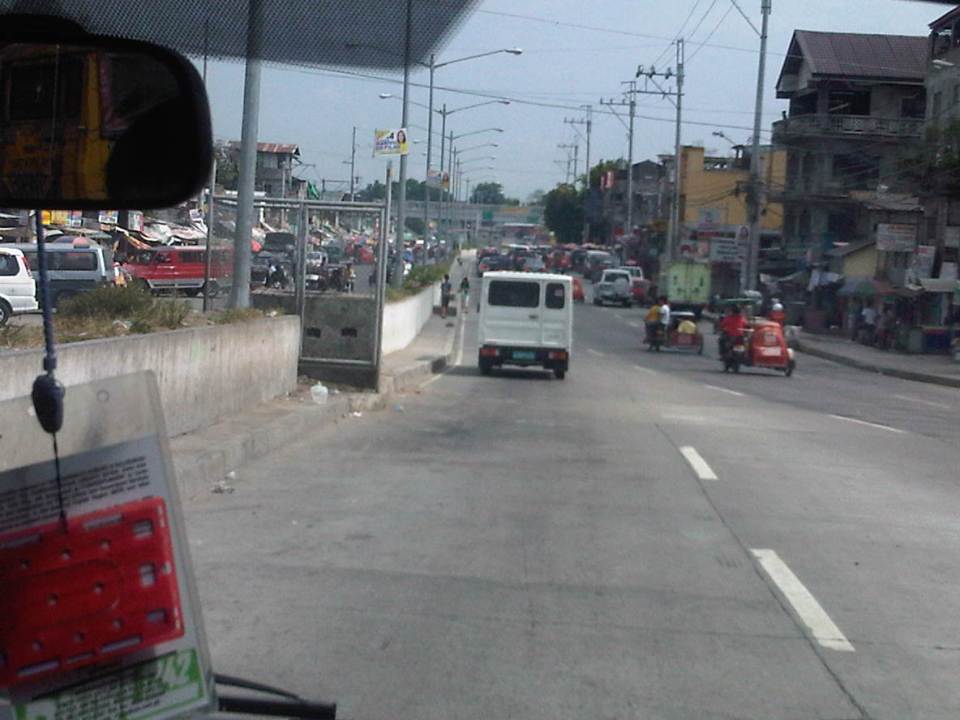 Luzon Avenue, which is a 6-lane, 2-way road divided by a median, is quite crowded with either side of the road occupied mostly by informal settlers. There is also an informal wet market (talipapa) along the road.
 The pavement is elevated compared to the land on either side of the road. There are stores and shops set up by those living along the road.
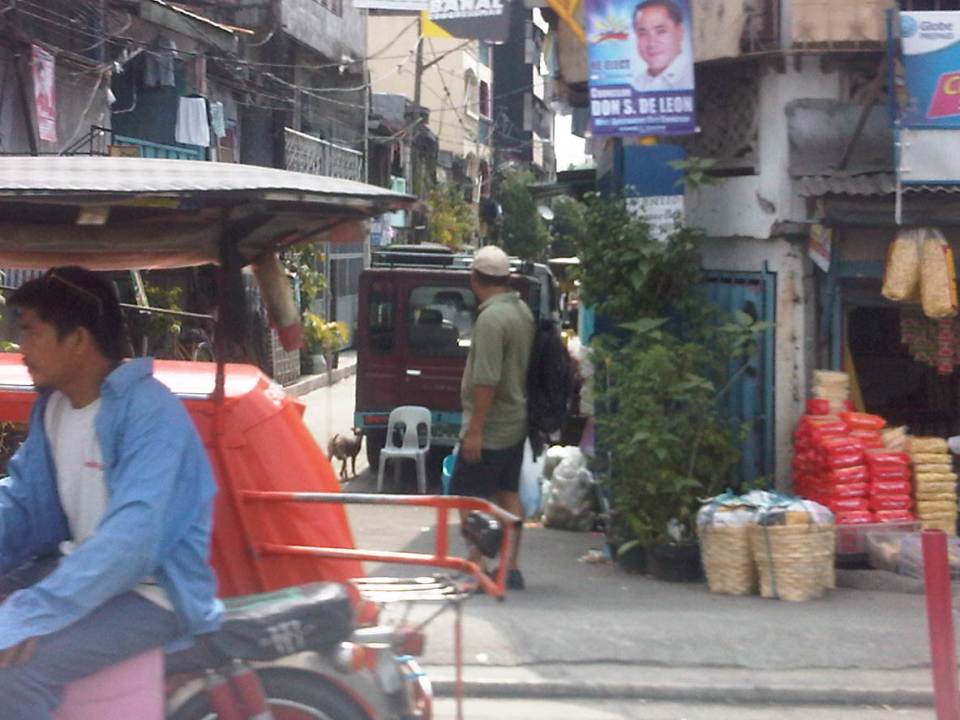 Side streets are narrow and could probably accommodate only cars or small vehicles like tricycles (also shown in the photo traveling along Luzon Ave.
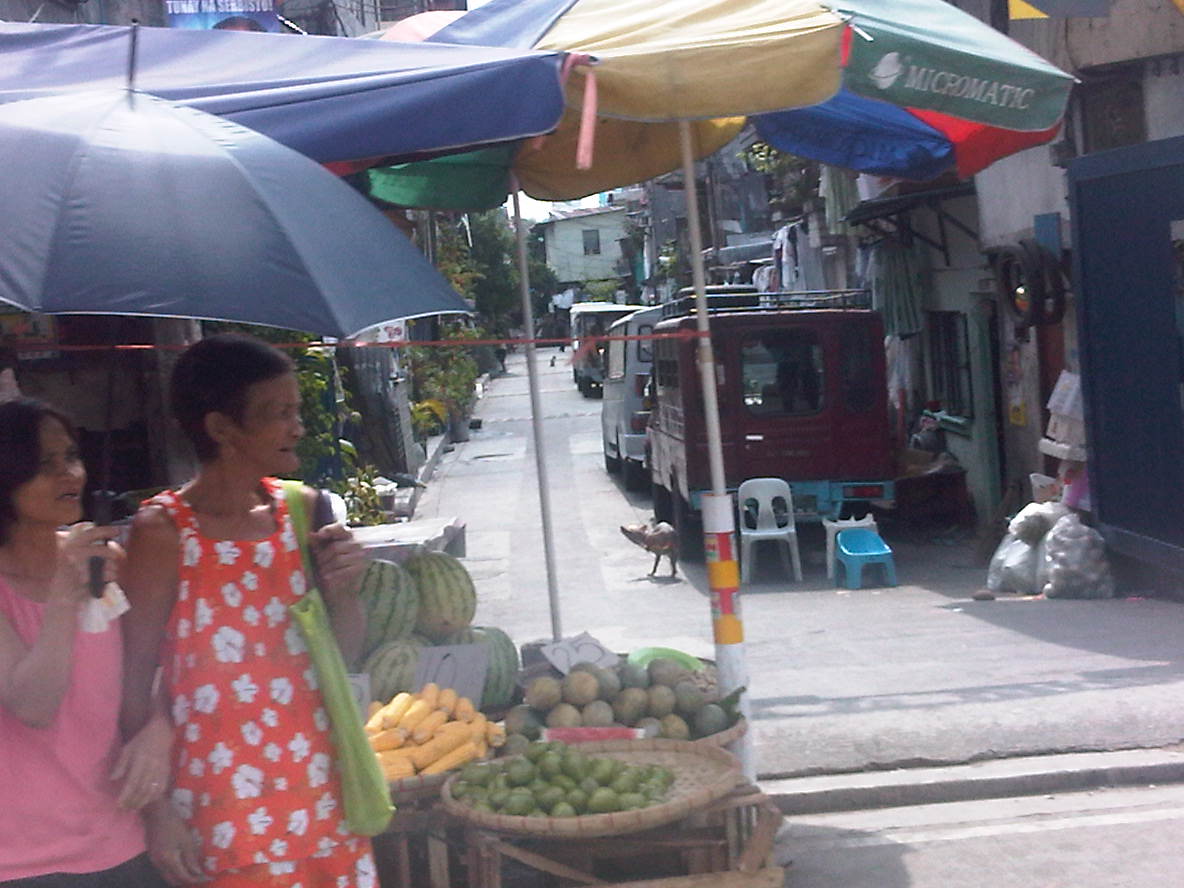 Some stalls are just along the street like this fruit stand that’s already on the carriageway. The photo also shows a better view of a side street with parked vehicles along one side of the road.
 Approach to Congressional Avenue – there is another pedestrian overpass near the junction with Congressional. Note the height of the plant box on the median that is designed to discourage or minimize jaywalking across Luzon Ave.
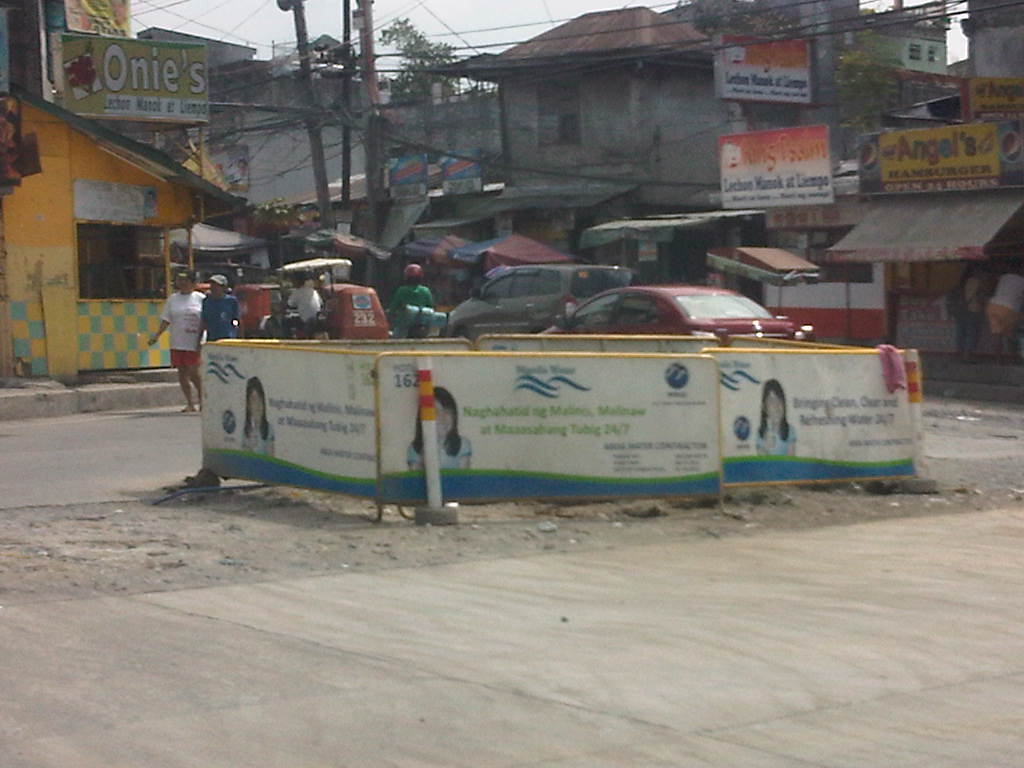 Water works at the junction of Luzon Ave. and Congressional Ave. Luzon Ave. continues as a narrow 2-lane street towards the direction of Bgy. Holy Spirit.
–
UP Village transformation
UP Teachers Village in Quezon City is a good example of a residential area that has been transformed over a few years. This transformation was enabled mainly by its streets, particularly Maginhawa Street, being open to general traffic. Teachers Village roads are often used as short cuts between major roads like Commonwealth Avenue and C-5/Katipunan (via C.P. Garcia Street), and Elliptical Avenue, Kalayaan Avenue and V. Luna. Due to both significant foot and vehicle traffic, what used to be homes along the streets have become restaurants, shops, offices, or even schools. There are many cases of homeowners who have found their houses less livable due to the noise and air pollution attributed to traffic (Note: There are so many tricycles in the area.). These have sold their property to people who used it instead for business. Unfortunately, despite the approval of the local government of the changes in land use, most establishments clearly have not satisfied basic building code requirements such as those for parking and pedestrian facilities.
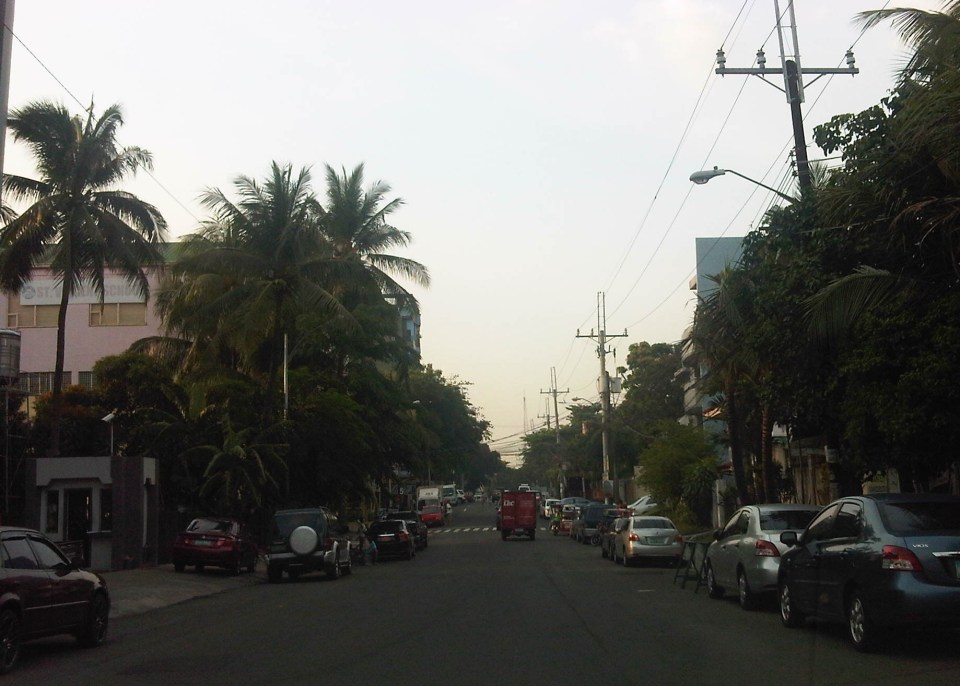 On-street parking along both sides of Maginhawa Street in Teachers Village
 Schools and commercial establishments like restaurants and shops are found along Maginhawa Street. Most do not have adequate parking spaces for customers.
Maginhawa Street has been widened to accommodate more vehicular traffic. Unfortunately, widening the road has only led to more on-street parking as shown in the preceding photos. People also are often forced to walk along the carriageway because because sidewalks are usually blocked, with some establishments using the space for al frresco set-ups. Developments need to be inspected to check if they comply with basic requirements such as parking and pedestrian facilities. Development and land use changes can be justified but proponents must be made to comply with the minimum requirements of the National Building Code in order to mitigate potential impacts to the community.
–
 Caught (up) in traffic