
Home » Public Transport » Bus (Page 5)
Category Archives: Bus
The plight of commuters during GCQ
I write this on the eve of the imposition of Modified Enhanced Community Quarantine (MECQ). It is another unfinished article that was intended to be a quick post showing the typical conditions for commuters during the GCQ. Public transport supply was slow to return to adequate levels as the government took advantage of restrictions to impose route rationalization and modernization programs. The following scenes were common along my commuting routes:
 Commuters waiting for a ride near the provincial capitol
 The rains of the wet season added to the misery of the wait.
 Long queue at the public transport terminal at Robinsons Antipolo, which is the terminus for buses connecting Antipolo with Cubao and Ortigas Center.
 The queue reaches beyond the shaded areas of the terminal.
I think national government should be the one to provide for the public transport needs of frontliners (i.e., health care workers including doctor, nurses, medical technologists, pharmacists, etc.) and other essential workers. My definition of the latter are those required for logistics to function as well as those to ensure the required production or manufacturing for the rest of us who need to stay at home. Not everyone has the same, fair circumstances as there are those who can afford to stay at home and those who need to work for them to live, often on a day-to-day basis.
The pandemic has taken a toll not only on the physical but the mental health of many of us. Government rants and retorts are unnecessary and uncalled for given its dismal performance. I dare say dismal as the evidence shows certain local government units and the Office of the Vice President doing much, much more despite their limited resources. We are not in this quandary because government performed well and to the best of their people’s abilities. If that was their best then they have no business staying in their positions. If our health care system fails, then there is nothing to stop this pandemic from claiming much more than lives.
–
Route 9: Antipolo-Cubao
I keep forgetting posting something about the buses that now operate along the Antipolo-Cubao route. Route 9, as the DOTr and LTFRB have designated this route covers one of 2 routes connecting Antipolo and Quezon City’s older CBD. Route 9 is via Sumulong Highway and Masinag Junction. The older route via Felix Avenue and Cainta Junction has not been revived. Both routes used to be served by jeepneys; many of them the “patok” kind that were known for speeding and risky maneuvers. It seems, at this time, that these will not be allowed to operate again along these routes with the rationalization efforts of the government. Following are photos taken at the Robinsons Antipolo transport terminal, which is where one of the end points of Route 9 is located.
 Buses maneuver at the spacious terminal grounds at Robinsons Antipolo.
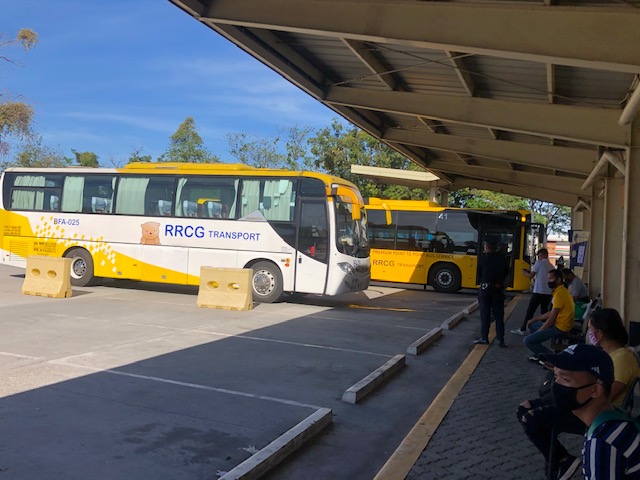 There are two bus services currently terminating here. One is the P2P bus service between Robinsons Antipolo and Robinsons Galleria, and the other is Route 9 between Antipolo and Cubao, Quezon City.
 Many of the buses were “pulled out” from their former routes. The term pulled out is actually inaccurate since public transport operations were suspended during the lockdown.
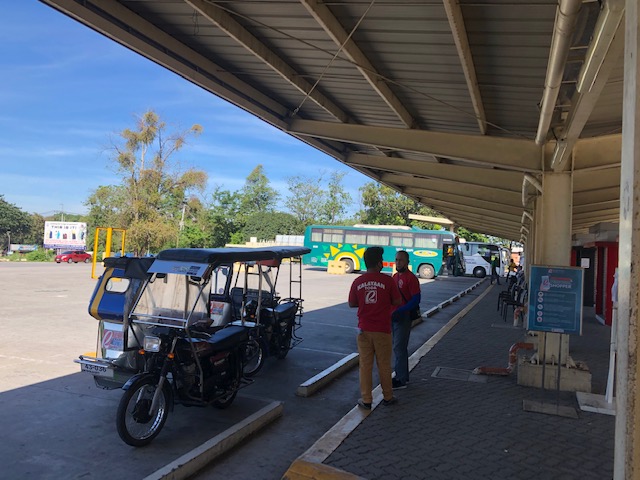 The transport terminal is an intermodal one that’s supposed to cater to buses, jeepneys, vans and tricycles. There are currently no UV Express vans operating here and traditional or conventional jeepneys have yet to return to Antipolo.
 A big part of the terminal is an area reclaimed from a failed amusement park that occupied the corner of this lot. The rides and other equipment were removed prior to the lockdowns.
 There are minimal restrictions to the vehicles accessing the terminal grounds. Here you see a taxi and tricycle moving about. Cars may be parked nearby and these (parked cars) were not uncommon before the lockdown as some people practiced “park and ride” with the P2P buses.
 EMBC buses such as this one used to ply the Tanay – Divisoria and Tanay – Quiapo routes
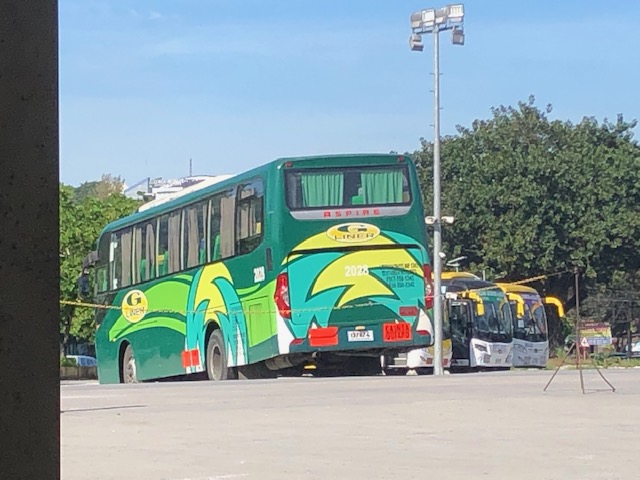 G-Liner buses are a familiar sight in Rizal where they are probably the oldest company continuing service since the 1980s. Correct me if I’m wrong but I only remember them being in operation in the 1980s. Before them were Metro Manila Transit Corp. buses and the baby buses that plied the Binangonan-Recto route.
 G-Liners now operate two routes from the rationalization program: Antipolo-Cubao and Taytay-Gilmore.
The passenger capacities of the buses and the service between Antipolo & Cubao have been significantly reduced due to health protocols. Thus, buses can only carry perhaps up to 40 or 50% of their seating capacity. I mentioned seating capacity here because of physical distancing requirements and the ban on standees. Previously, a bus left every 5 minutes and their frequency could not cover the demand along the route. Recently, I observed more buses in operation and the addition buses from two more bus companies that used to ply the Fairview-Baclaran and Fairview-Alabang routes. These could probably help ease the supply issues.
More on the Antipol-Cubao service soon!
–
On mass transit and active transport
I recently gave a talk on transport in the new normal. There are a lot of materials that you can refer to if you want good visuals for a presentation. It helps to capture the attention and maybe the imagination of your audience, which in this case was varied. While I assume many to be in the physical, chemical & social sciences, and engineering, I knew that there were also people from media and those who were just interested in the topic. And so I made sure there were a lot of infographics mixed in with bullet points to drive the message clear about mass transit systems being the backbone of transport in highly urbanized cities, conventional transit like buses and jeepneys supplementing and complementing these, and active transport enabled and encouraged as a safe option for many.
I wasn’t able to include the following graphic shared by a friend advocating bicycle use especially for work and school trips. The following graphic comes from TUDelft, which is among the major universities in the forefront of research in transit and cycling. Clicking on the graphic will take you to their Facebook page and more links to their programs.

Note the essential information relating bicycles and transit in the graphic. Do we have similar data in the Philippines (or at least for the National Capital Region)? I hope this stirs interest for research work. There are a lot of topics to take on including even data collection to capture the information required for substantial studies on cycling, transit and their relationship.
–
Partas bus terminal in Cubao
Prior to the lockdown, we were still able to conduct one fieldwork for a provincial bus terminal located in the Cubao district of Quezon City. We had previously conducted a study for the re-design of this terminal and the company again called on us for an update after they were not able to implement the previous study’s recommendations.
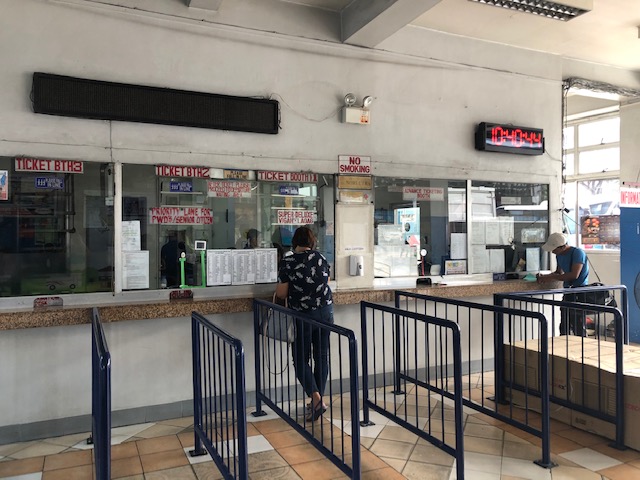 You can purchase your tickets at the terminal
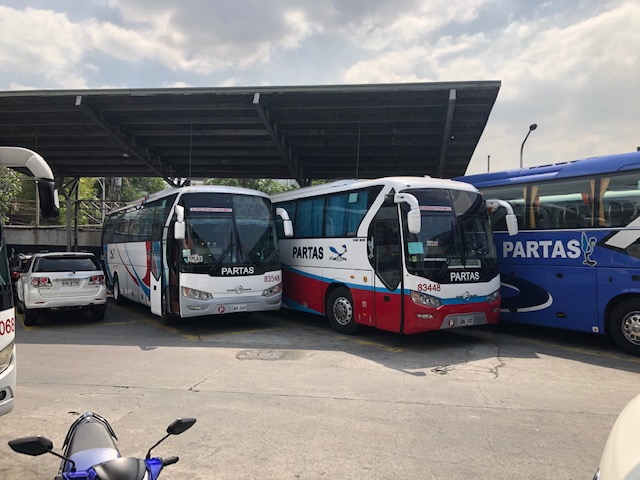 Different model buses waiting for their boarding times
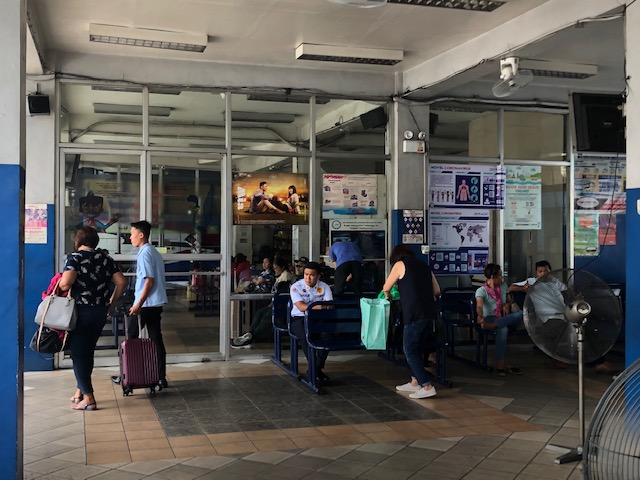 The passenger waiting lounge has indoor and outdoor seating.
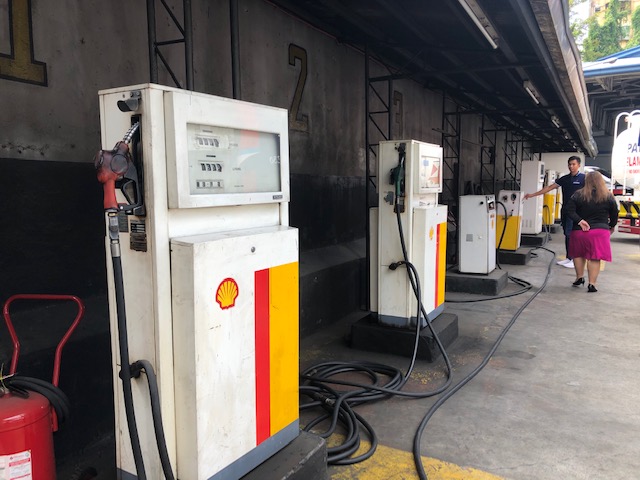 The terminal has its own fuel pumps so buses need not go to a fuel station.
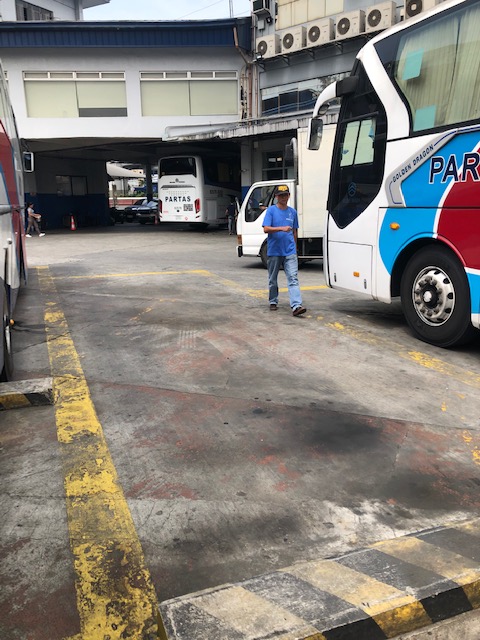 Bus parking slots are marked but there is little space between buses. The fishbone pattern parking allows for each bus’ door (front) to be accessible as shown in the second photo of this post.
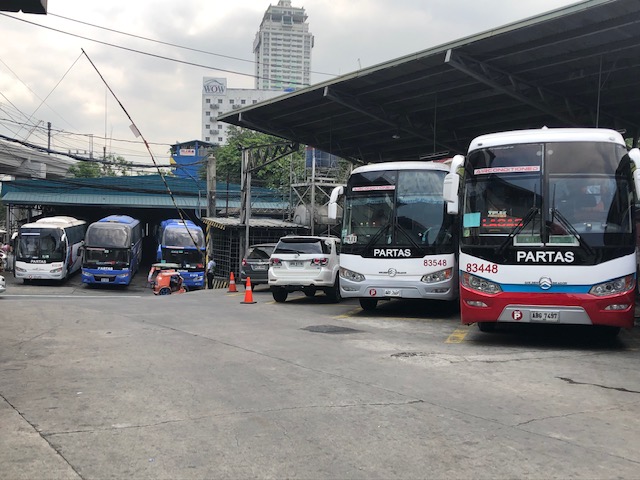 Another view of the terminal’s bus slots. The ones further in the photo are actually across the street from the terminal.
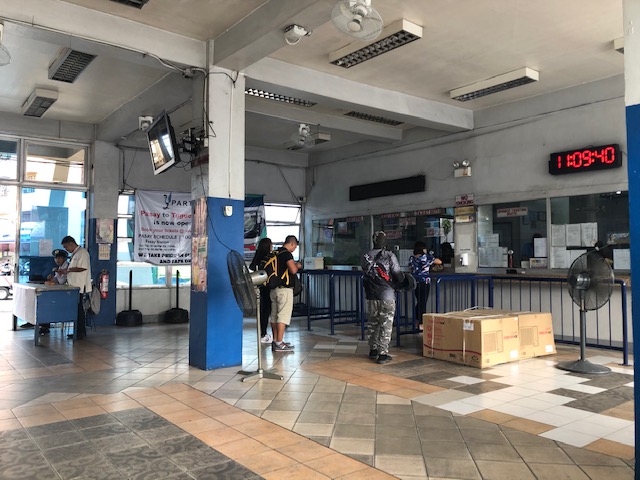 Passengers lining up to purchase tickets at the terminal lobby. The boxes are consigned freight.
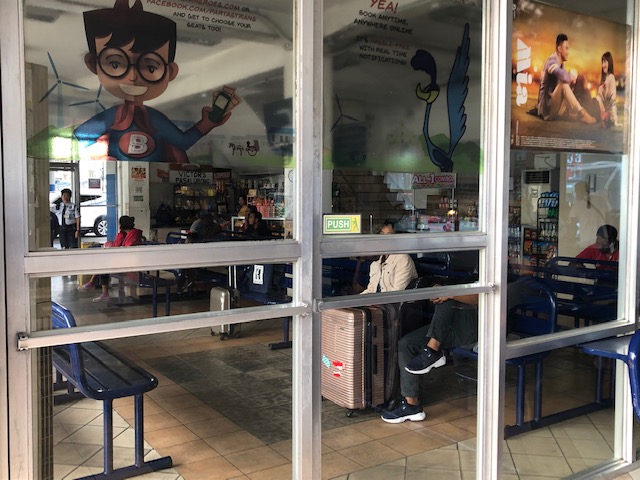 The air-conditioned passenger lounge includes shops for meals, refreshments or souvenirs.
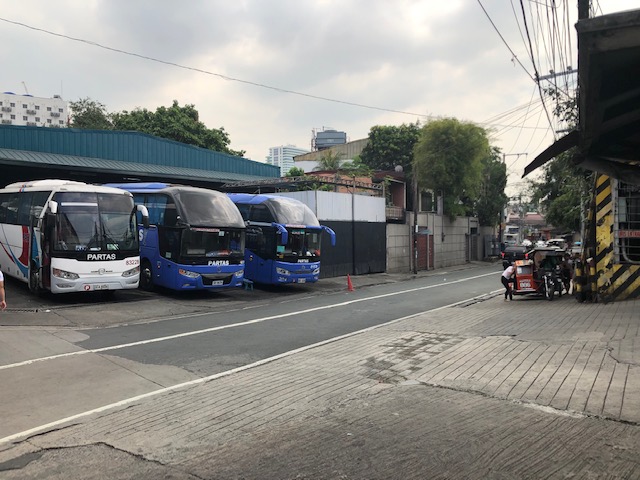 Here are the bus slots across the street from the terminal. That’s an informal tricycle terminal on the left. While off-street, the tricycle terminal occupies what little sidewalk is there that is supposedly for pedestrian use.
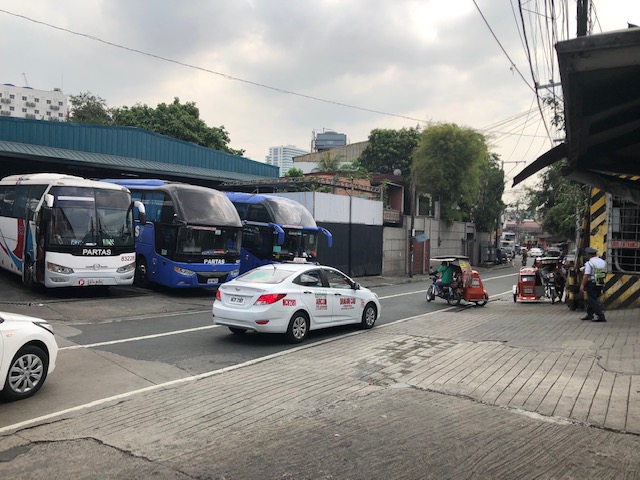 Taxi passing along the street as tricycles maneuver from their terminal on the sidewalk.
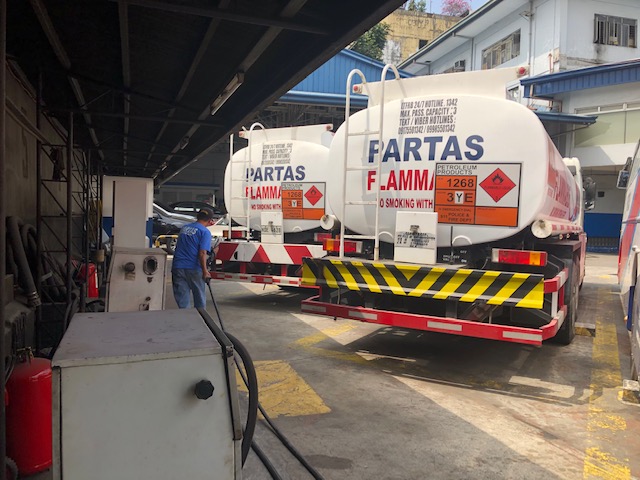 Fuel tankers are allotted slots at the terminal as they deliver fuel for the terminal’s pumps.
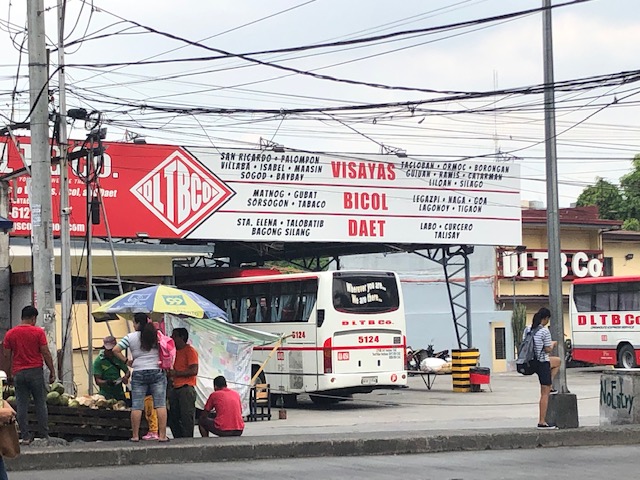 Another private provincial bus terminal across from the Partas terminal. This one’s from the resurrected BLTBCo. (now DLTRBCo.) buses that ply routes to Region 5 (Bicol) and Region 8 (Eastern Visayas via ferry between Sorsogon and Leyte).
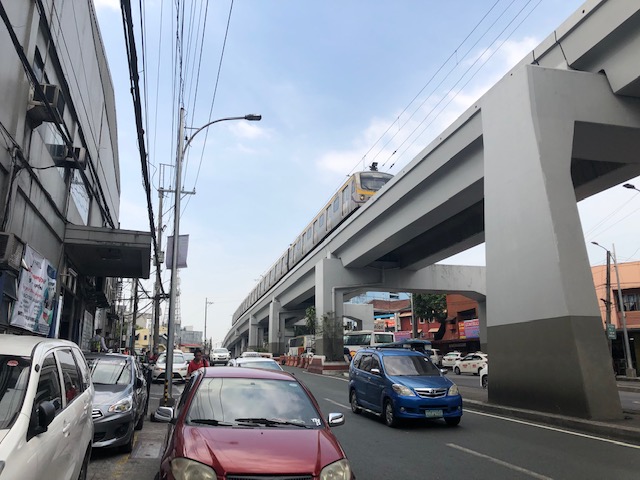 Line 2 train traveling atop Aurora Boulevard. The Partas terminal is on the left with cars parked on the sidewalk and curbside.
I think this was the last project when we did fieldwork for before the lockdowns. I wonder when we can do field work again. Transport and traffic are not the usual and the “new normal” in transportation is still evolving especially in Metro Manila.
–
Regular bus services for Antipolo
Finally, there is a regular bus service between Antipolo and Cubao. This will be between the Robinsons Antipolo transport terminal and the Araneta City (formerly Araneta Center) via Sumulong Highway, Marcos Highway and Aurora Boulevard. This is a more significant development than the P2P bus service between Antipolo and Ortigas CBD (i.e., Robinsons Antipolo and Robinsons Galeria) as this is a regular bus service with what appears to be designated stops. I say what appears to be designated stops based on the fare matrix released by the Land Transportation Franchising and Regulatory Board (LTFRB).
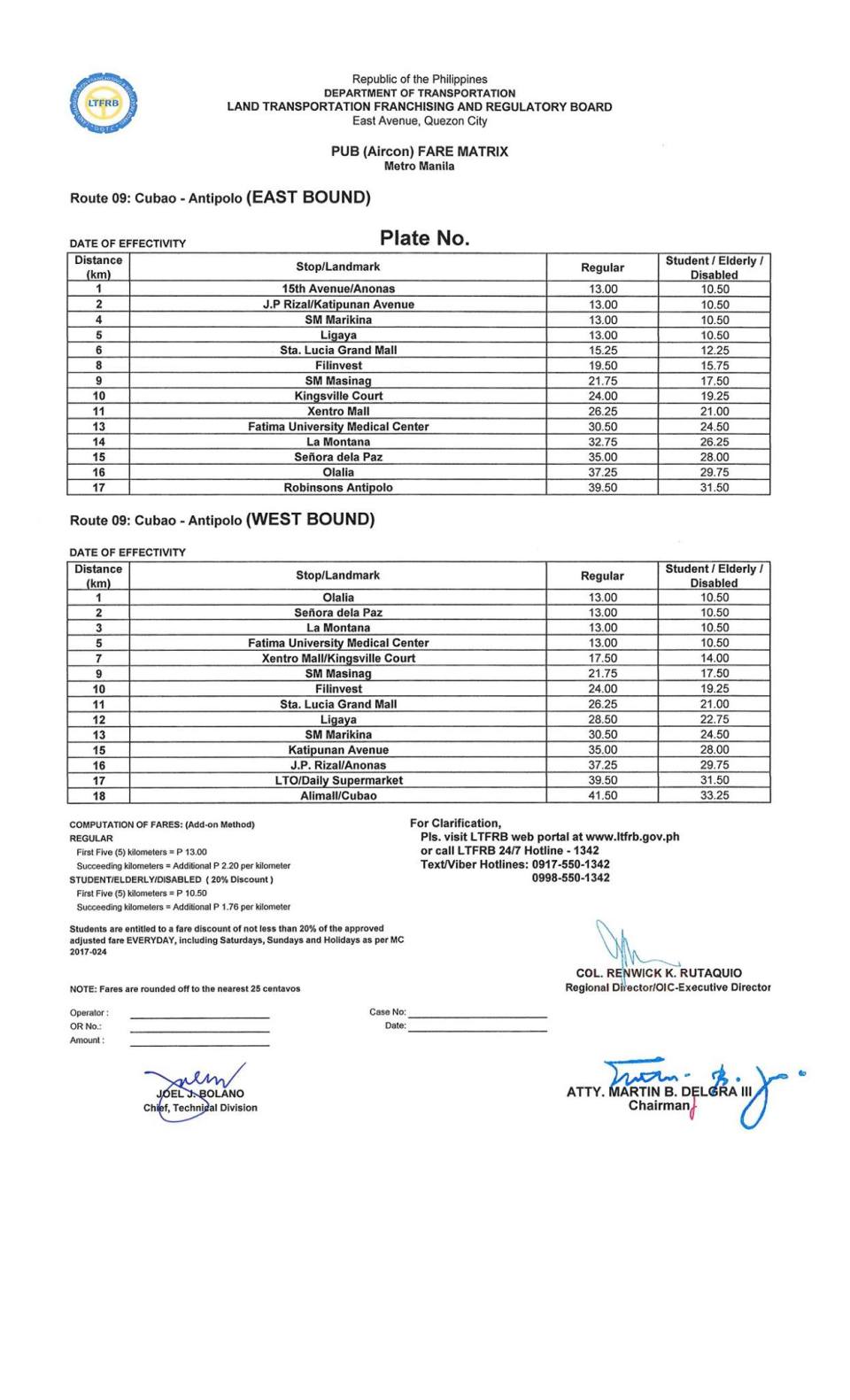
I have written about this in the past and communicated this to local and national officials and yetWill this spell the decline and eventually phasing out of the Antipolo-Cubao jeepneys? Probably not unless there is a strong move for a phaseout. The operation of the Line 2 Extension will surely impact them, too. But they can and should survive even for feeder services with respect to the rail and buses.
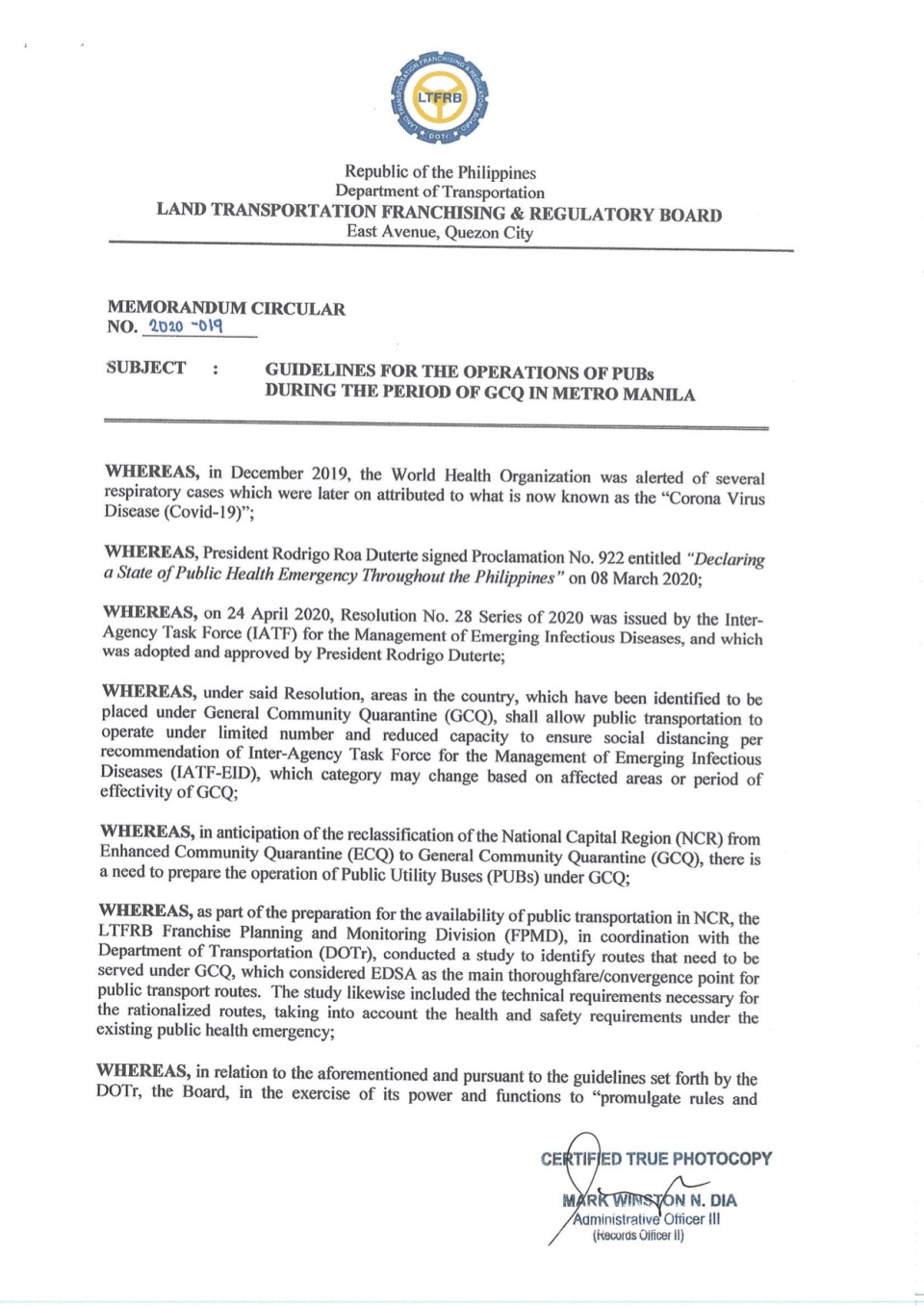
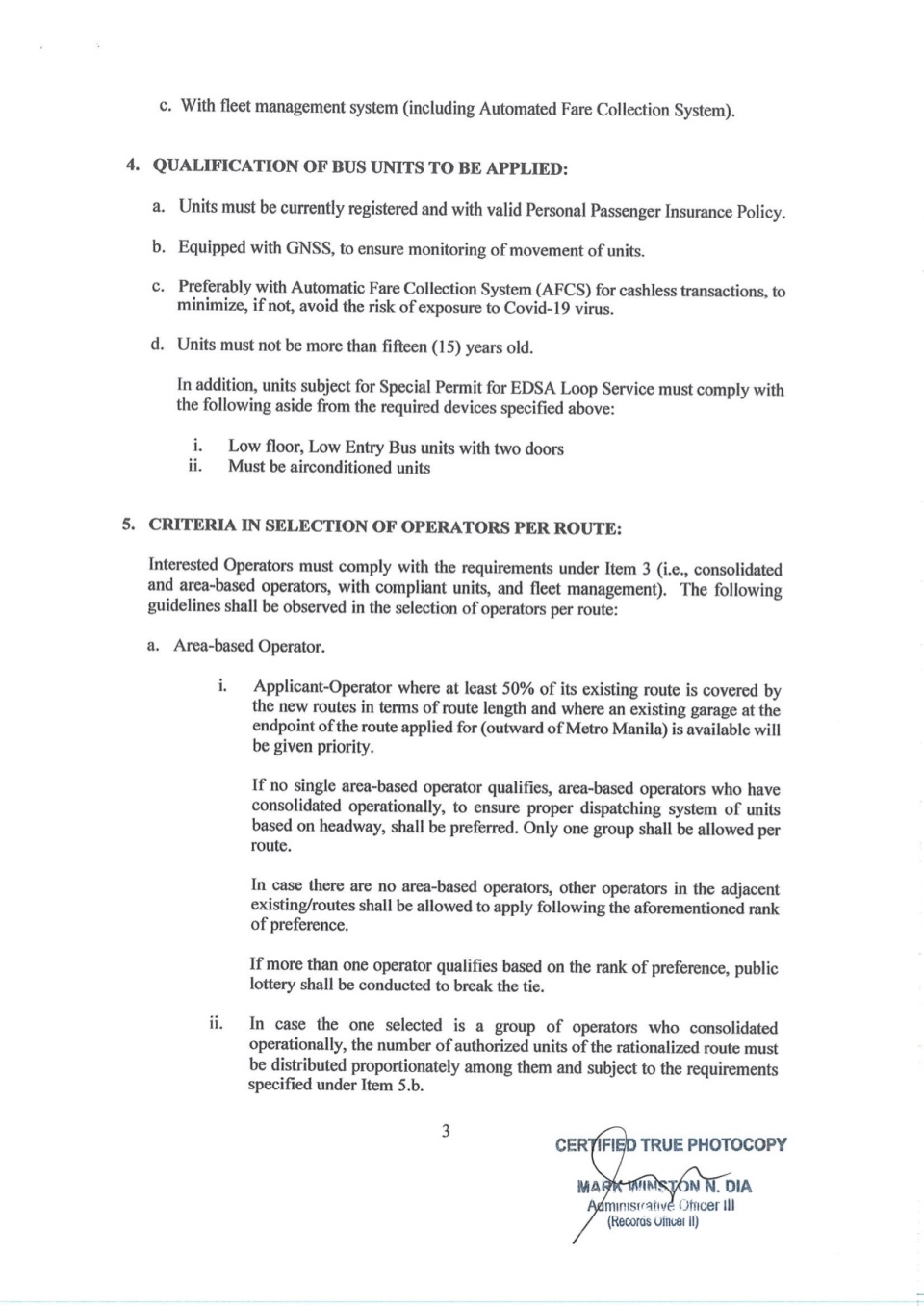
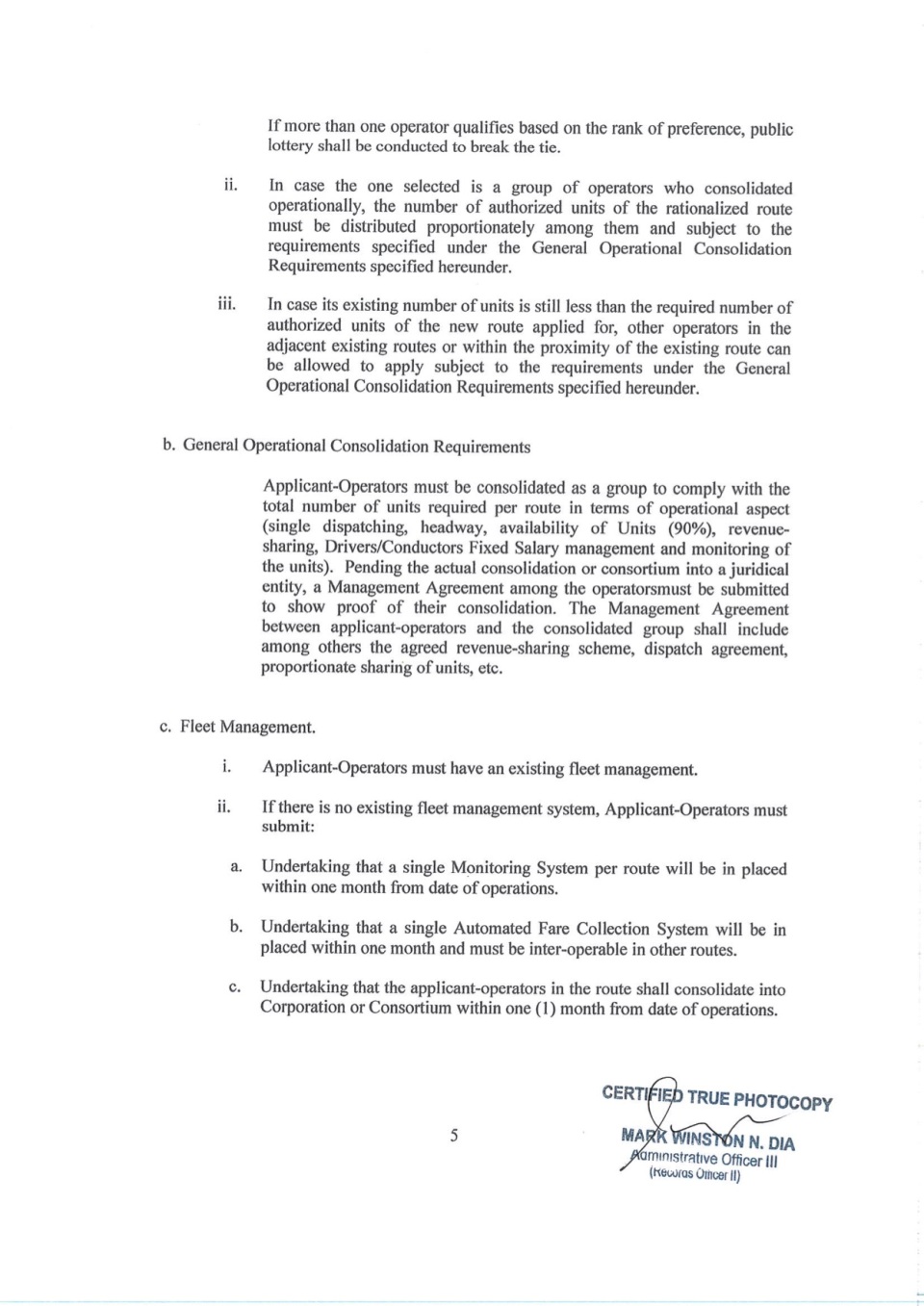
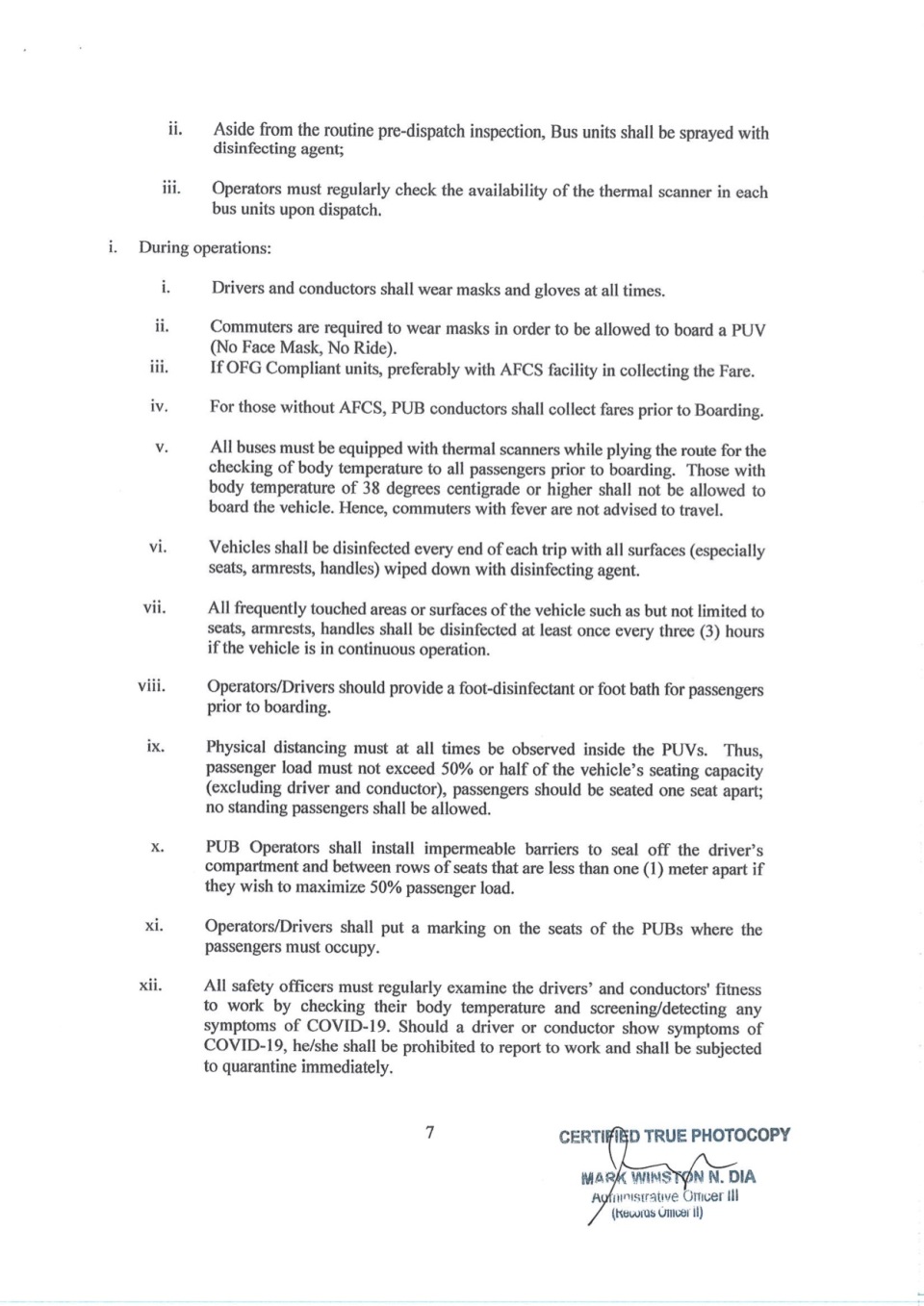
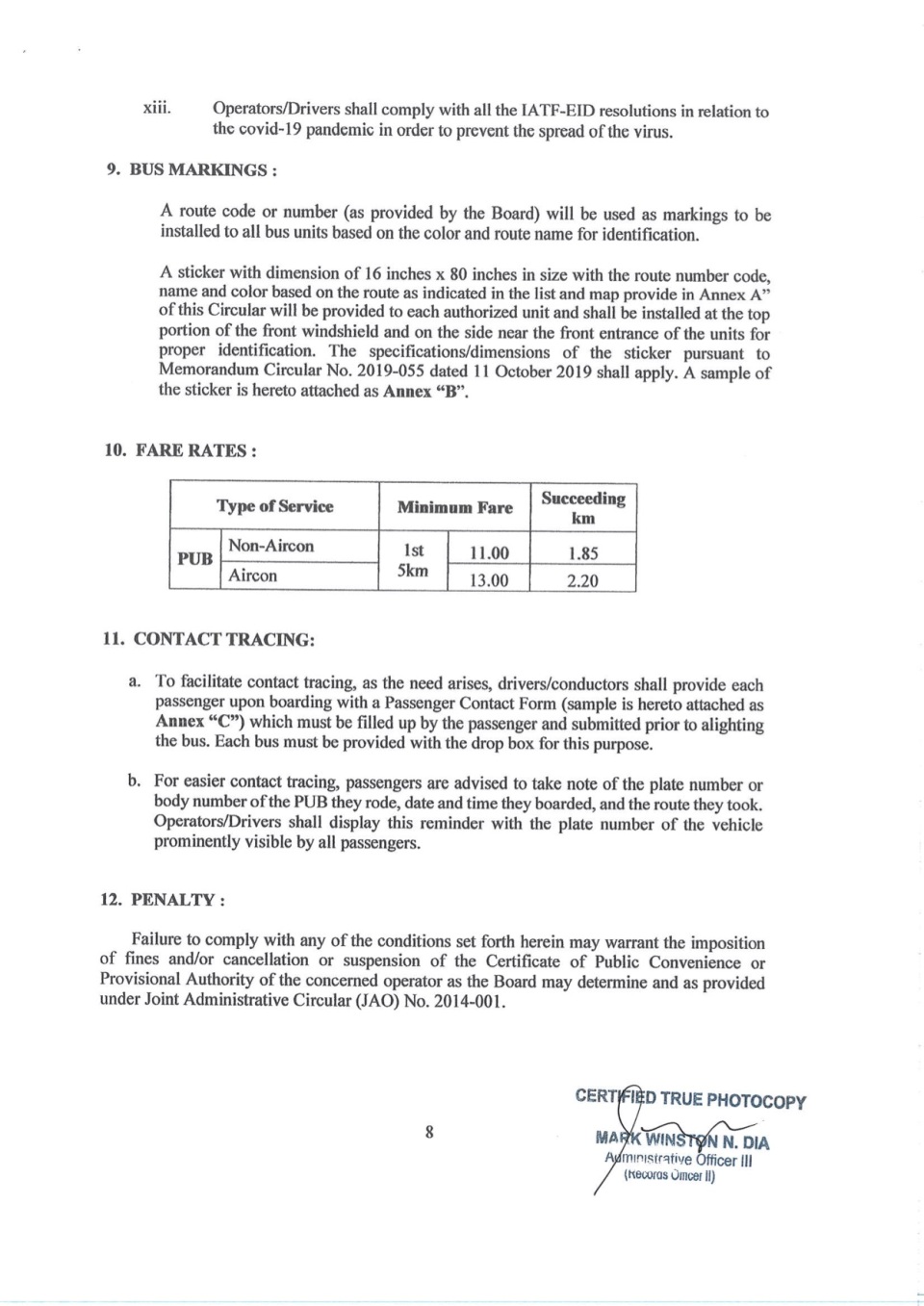
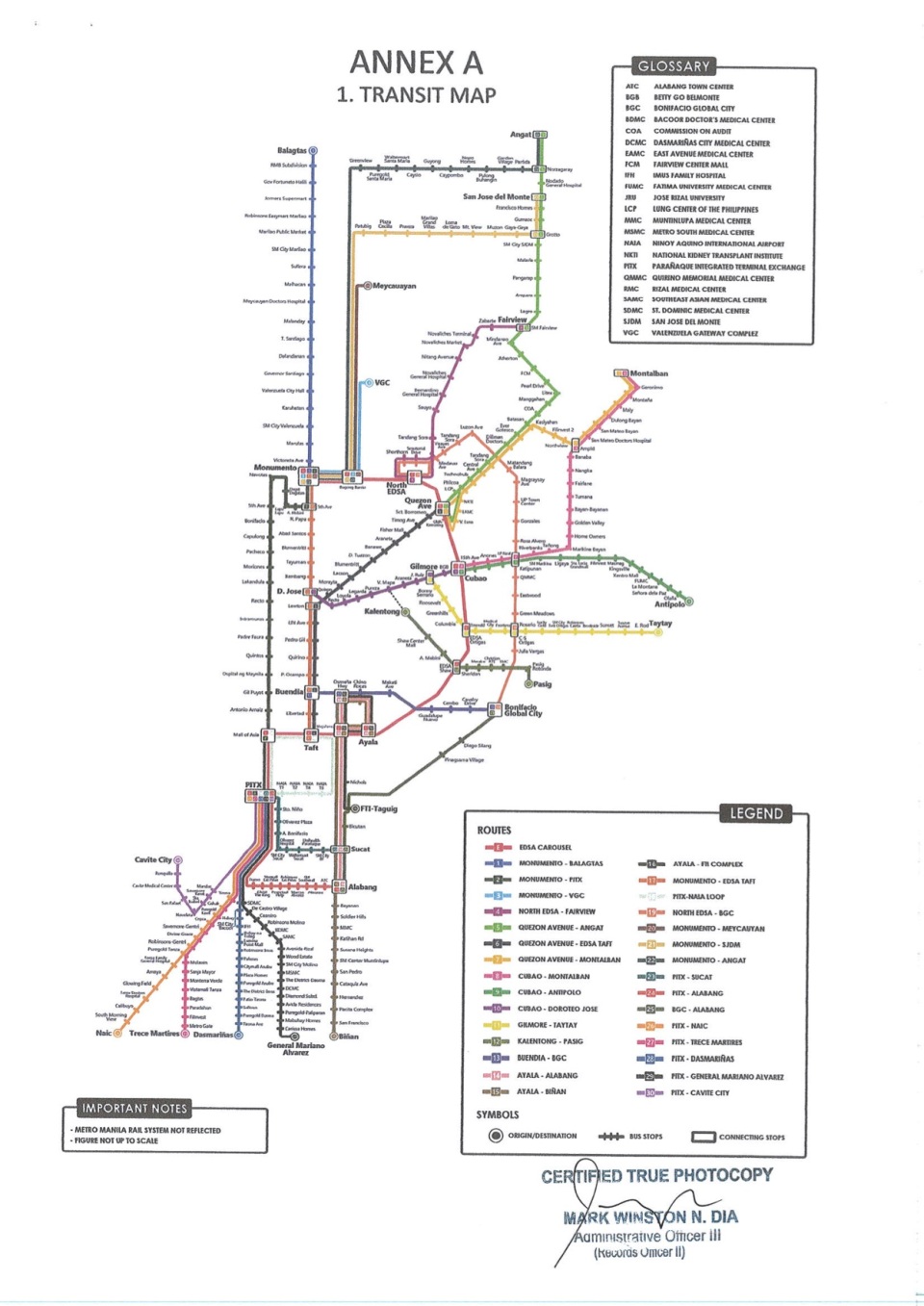
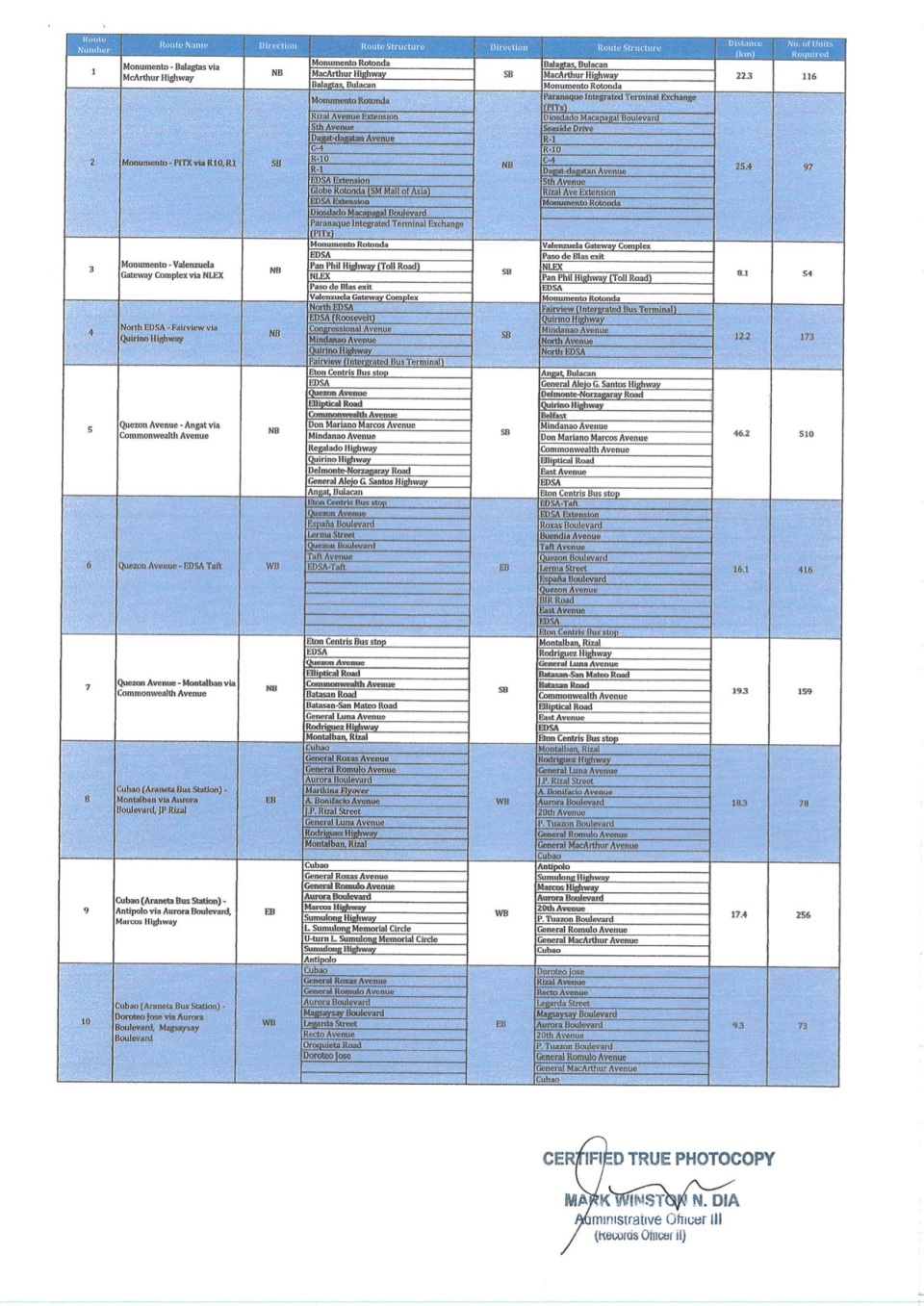
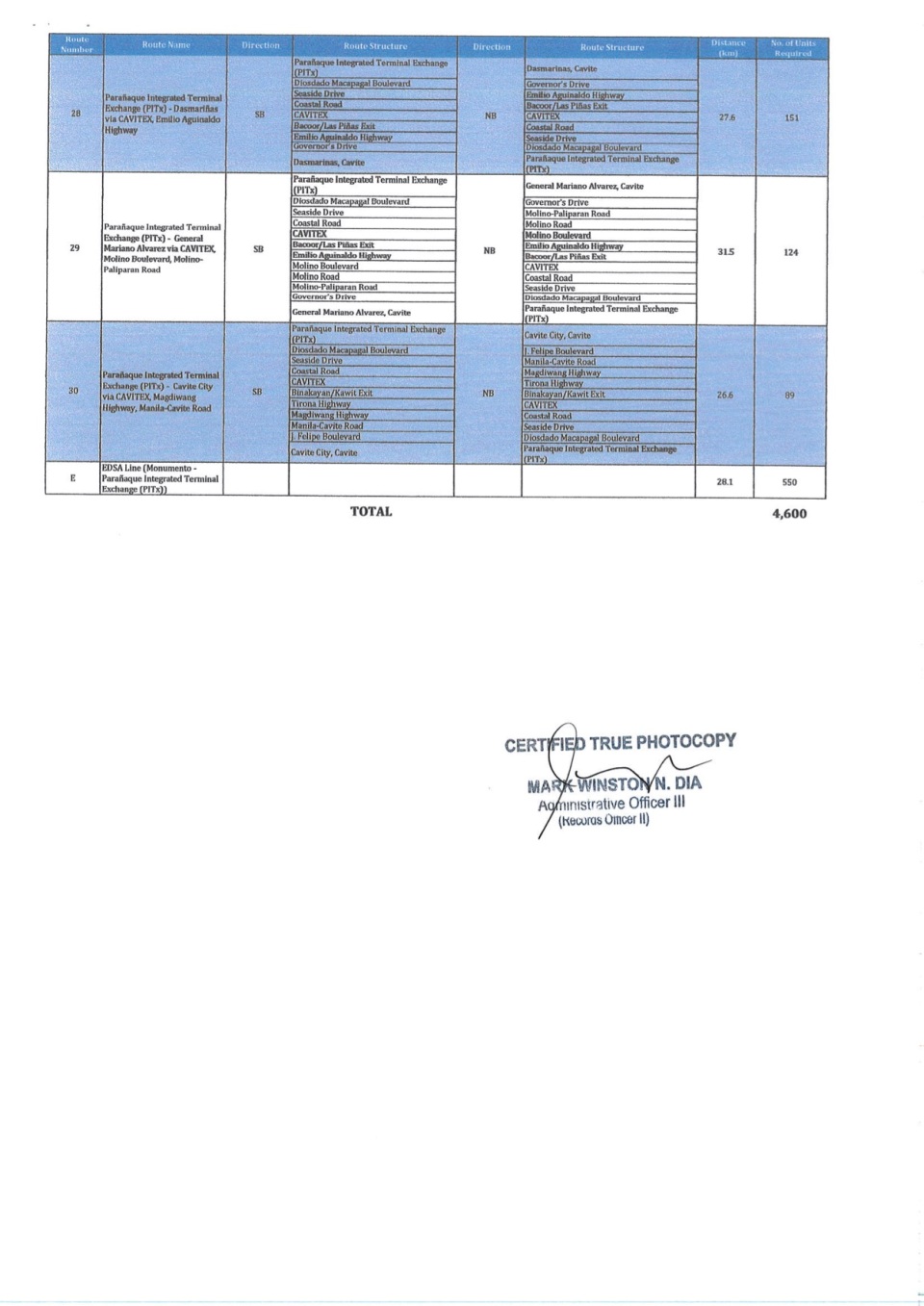
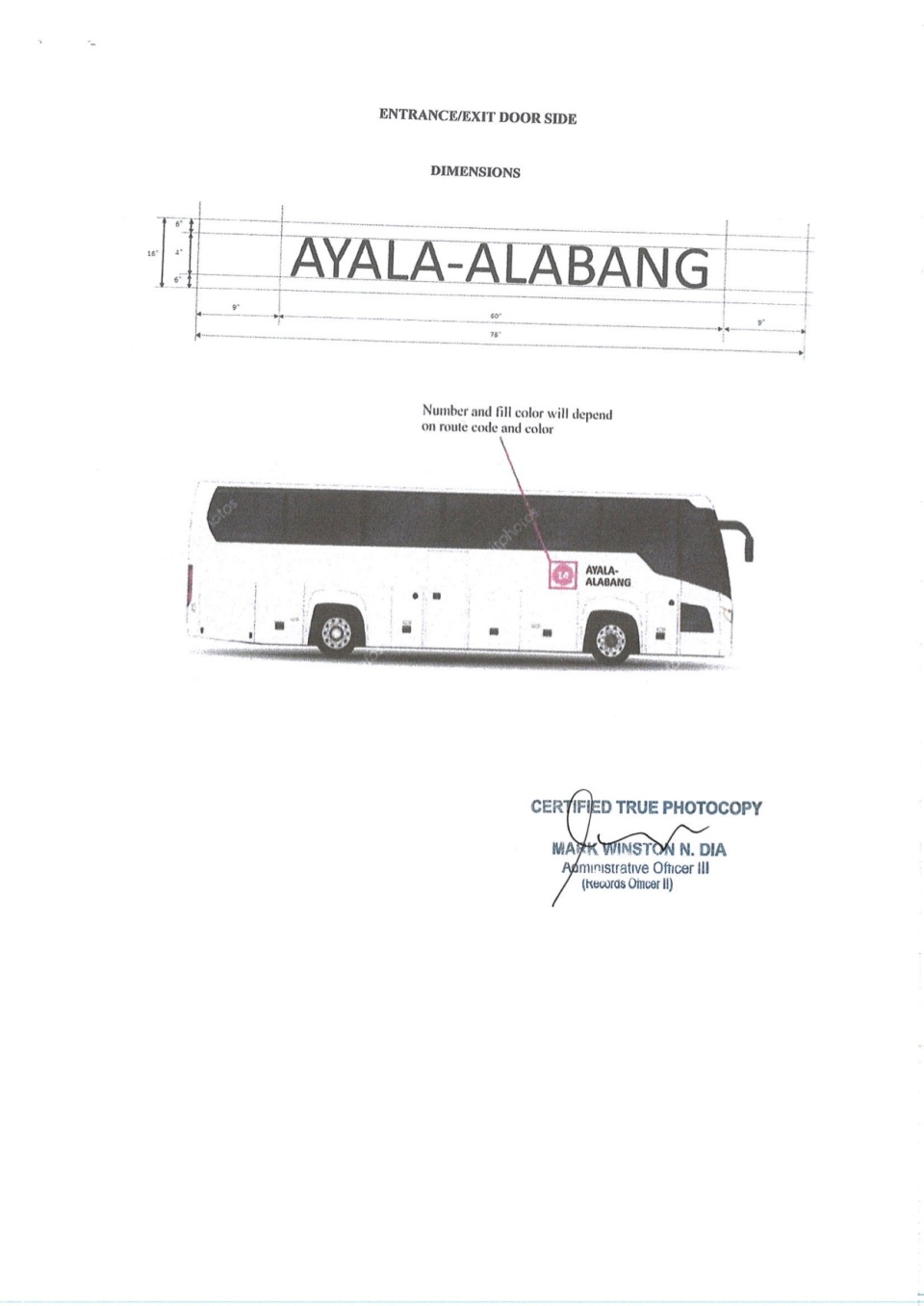
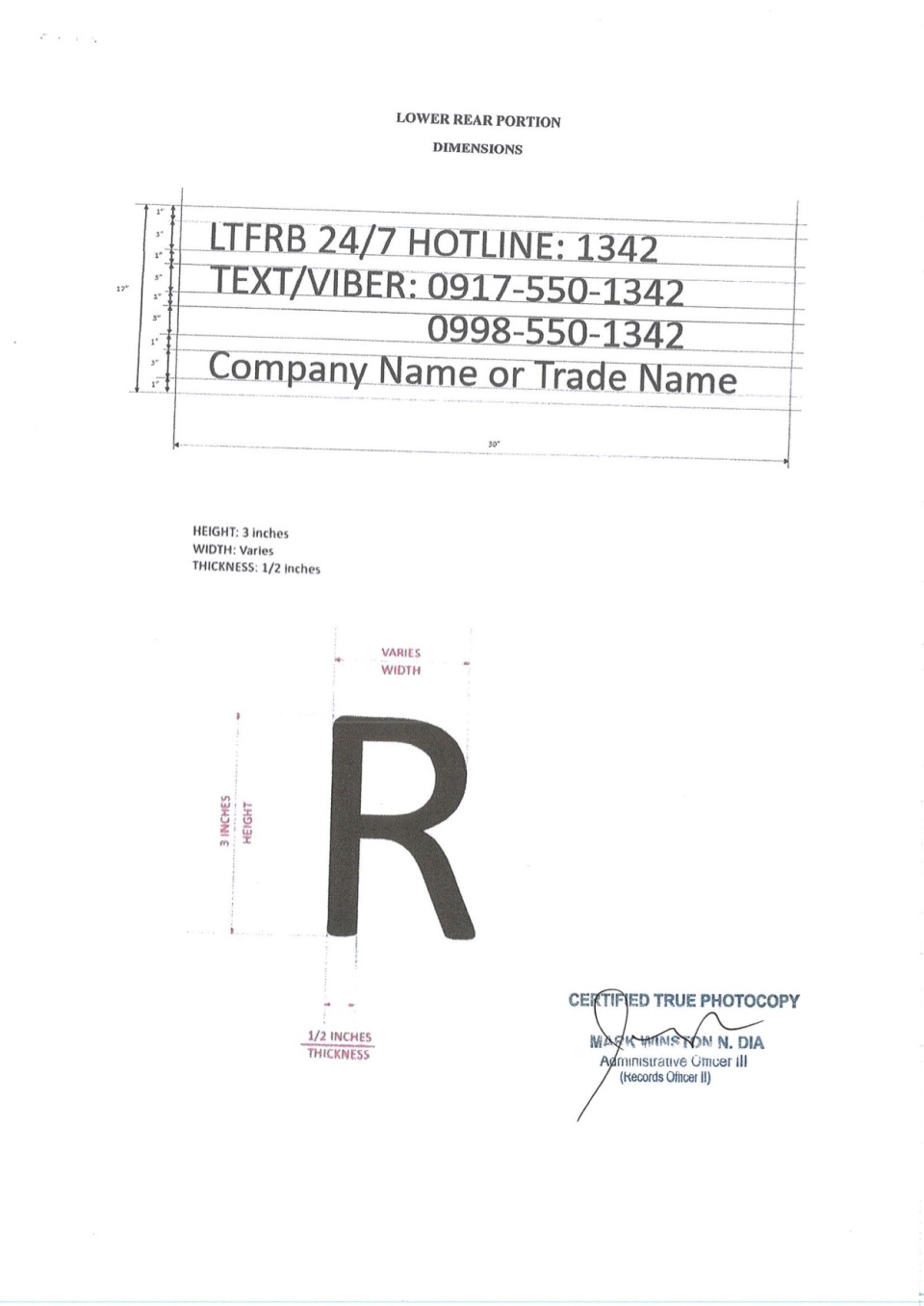
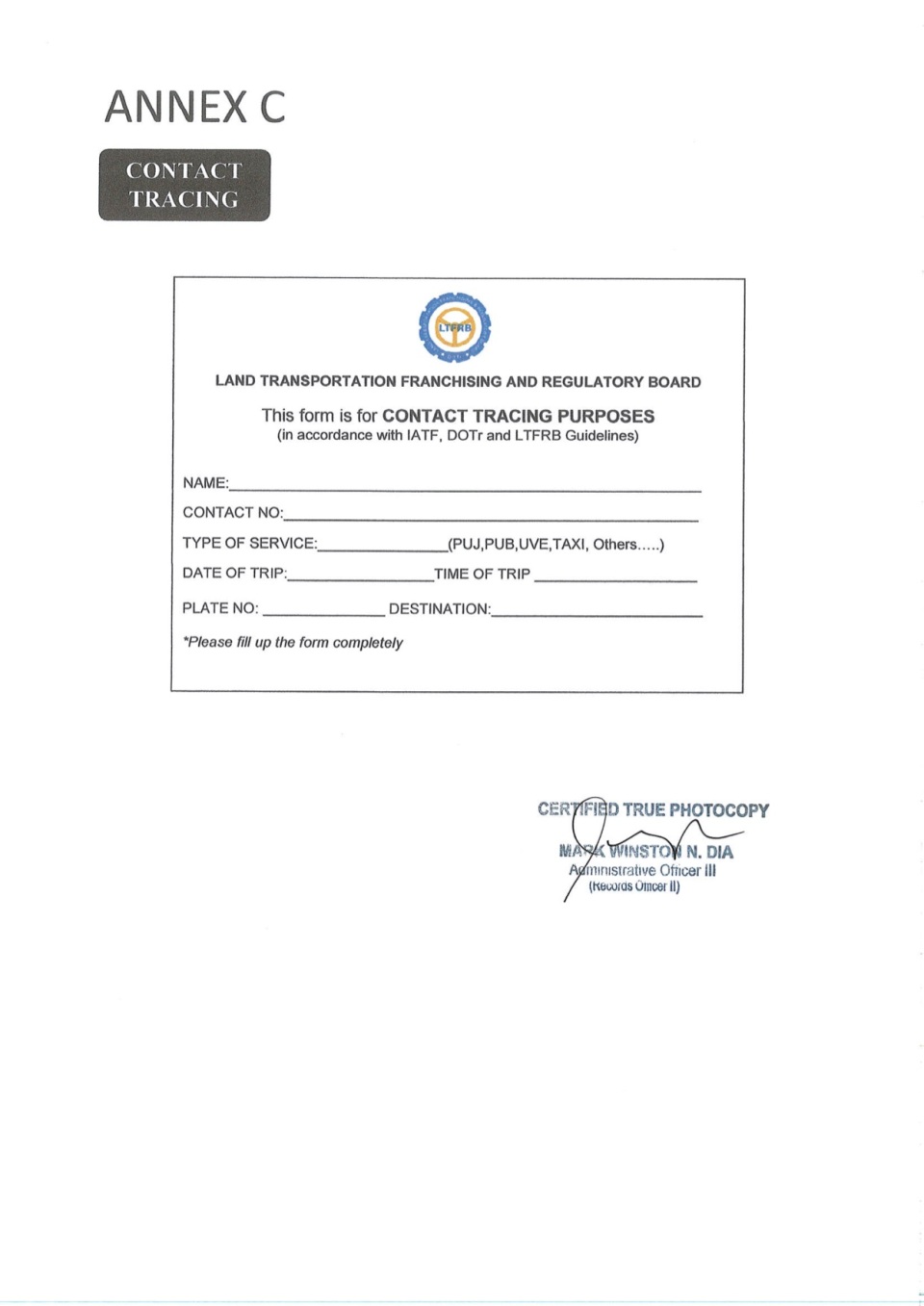
LTFRB Memorandum Circular No. 2020-019 – Guidelines for the Operations of PUBs During the Period of GCQ in Metro Manila
The following images show the full 19 pages of the Land Transportation Franchising and Regulatory Board Memorandum Circular No. 2020-019: Guidelines for the Operations of PUBs During the Period of GCQ in Metro Manila. Again, no comments for now as I post this for reference. I have not seen it posted on the LTFRB’s Facebook page yet but it is a public document and something that needs to be circulated for the benefit of the riding public.








–
On the proposed single bus route along EDSA
A friend posted this on social media as news came out about the government’s statement on its considering a single bus route for EDSA. EDSA, of course, is Circumferential Road 4 and perhaps the busiest road in Metropolitan Manila in terms of volumes of people and vehicles traversing this road. Public transportation along EDSA is mainly by buses and the MRT Line 3. Line 3’s capacity is already diminished despite the high demand for it mainly because of the number of train sets that are currently in operation. Buses, meanwhile, are split among the many routes converging along much of EDSA. These routes are shown in the map on the left where you can see the overlapping routes that have various end points.


Of course, it is best to read the Final Report of this study. That way, one is able to see the overall context for this section that is part of the concluding part of the report. I recall that the consulting team from UP was able to map the routes of other public utility vehicles like jeepneys and UV Express from that time. Perhaps the DOTr still has a copy somewhere? The NCTS Library in UP Diliman is currently closed so one may have to search the internet first for a copy of the study or perhaps snippets of it here and there. Perhaps related to this is a proposal to revive (or maybe the right word is ‘resurrect’?) the now defunct Metro Manila Transit Corporation or MMTC that used to dominate EDSA and other major roads in direct competition with the few private bus companies during its heydays as well as the jeepneys.
–
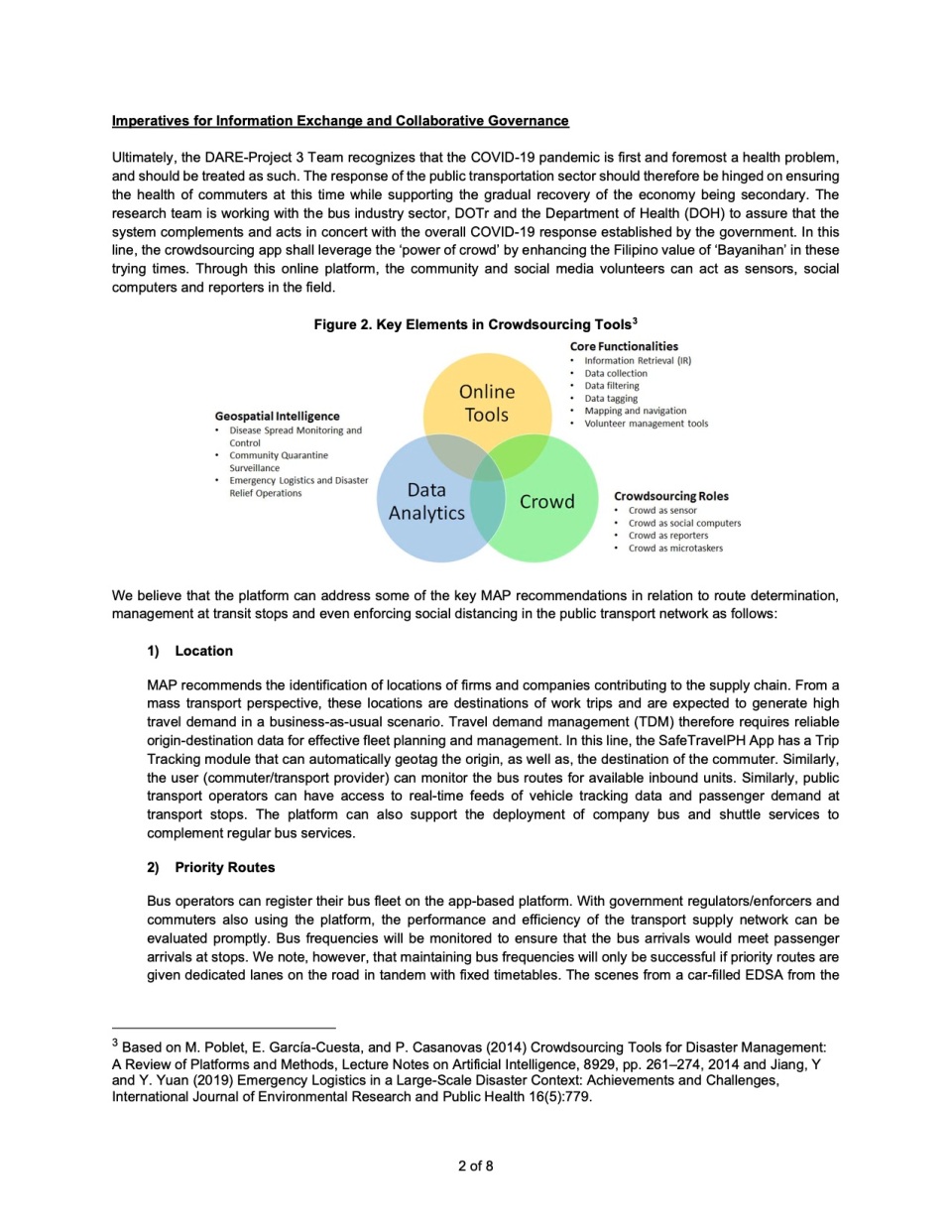
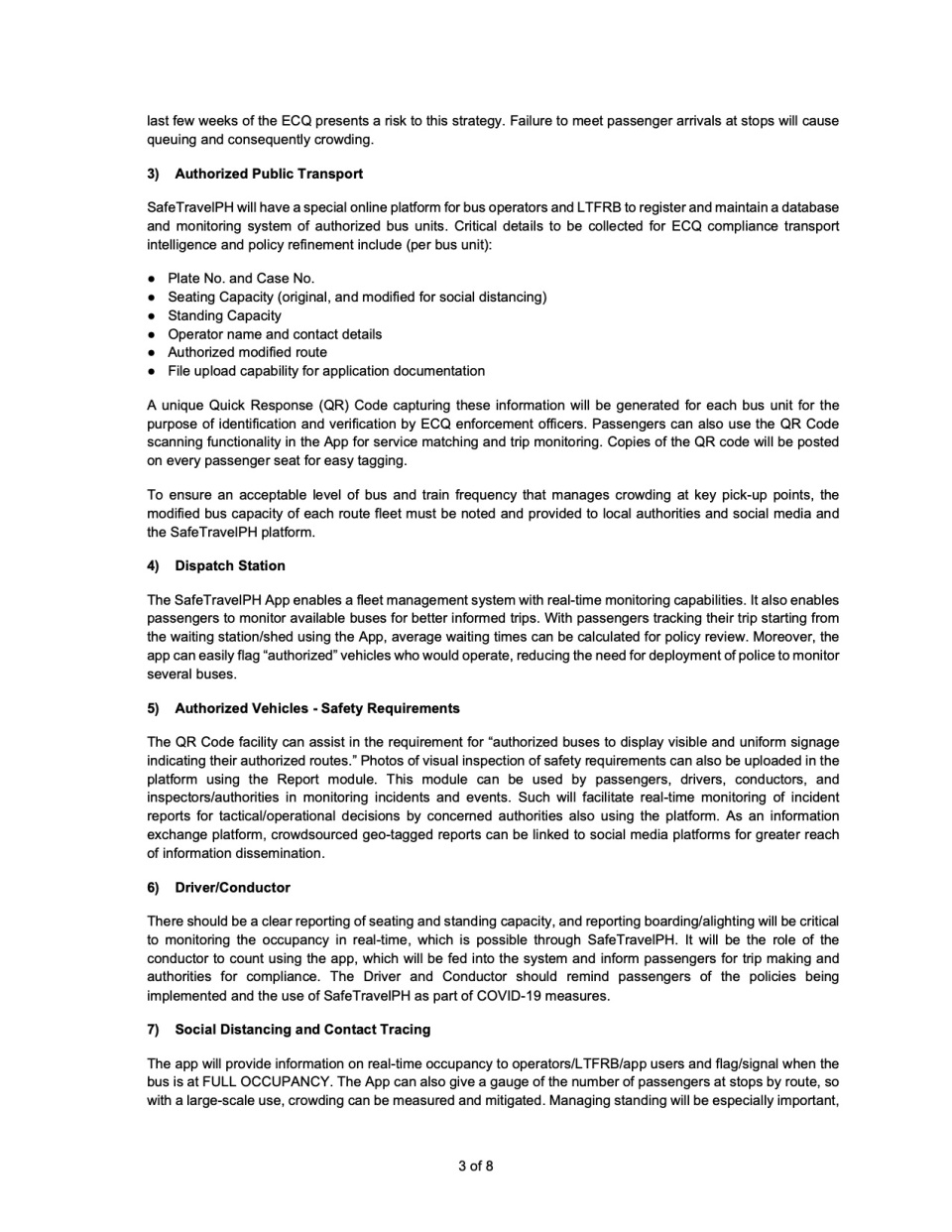
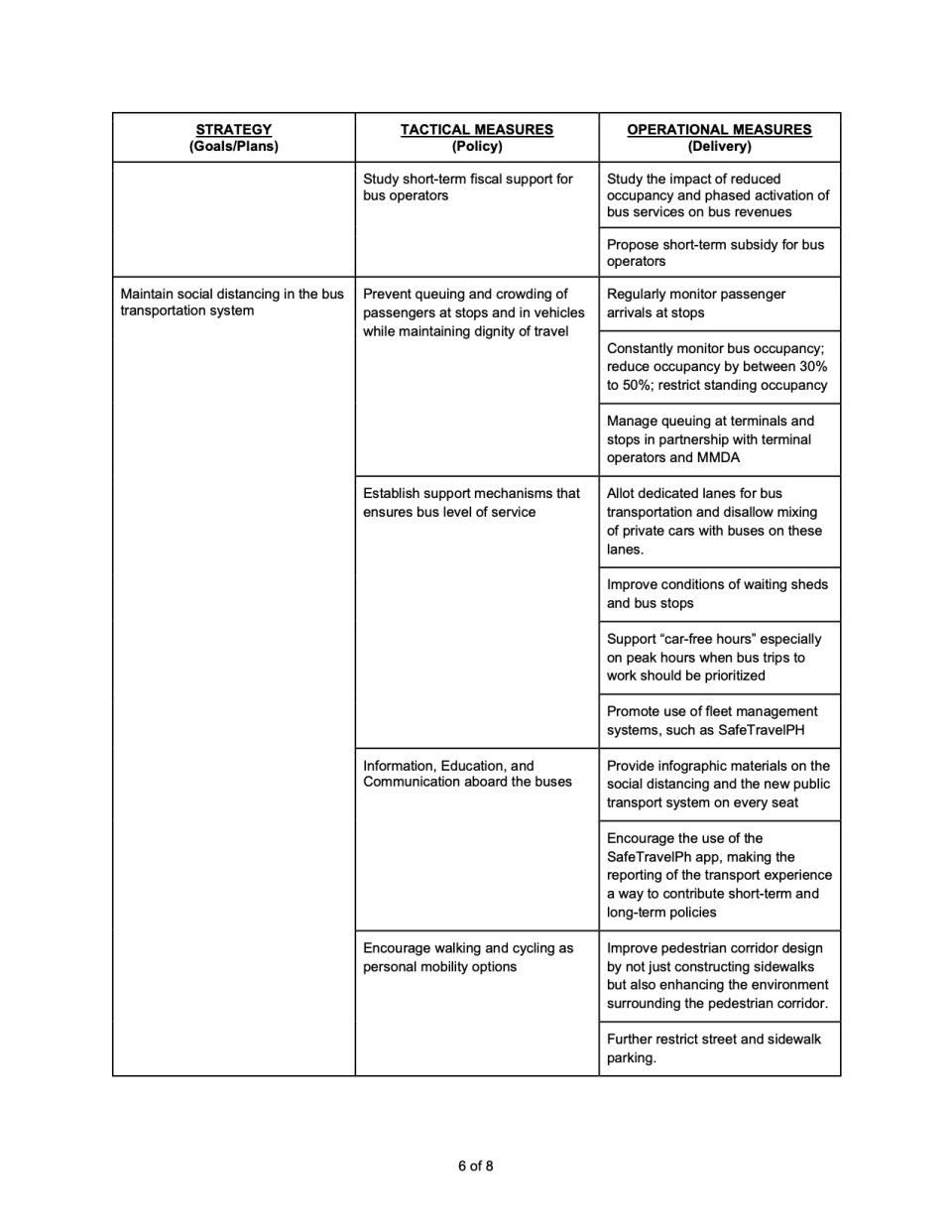
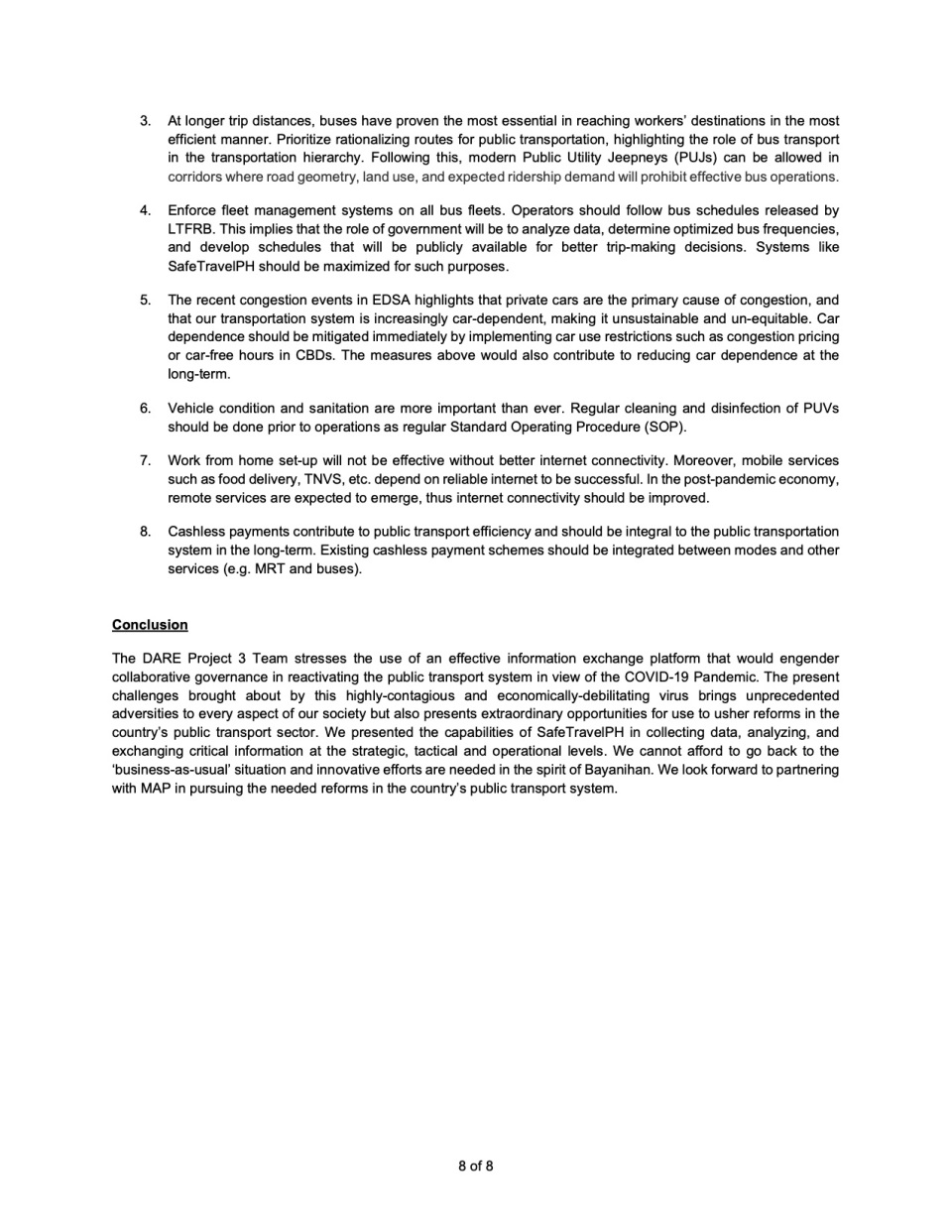
Public Transport Recommendations of the UP COVID-19 Pandemic Response Team
Here are the recommendations of UP COVID-19 Pandemic Response Team: “Effective Reactivation of Public Transport Operations for the New Normal through an Information Exchange Platform for Collaborative Governance”




–
On public transport services during the pandemic
I’ve read a lot of discussions and recommendations pertaining to public transportation services (mainly its lack thereof) during the Enhanced Community Quarantine aka lockdown in most parts of the Philippines. Problem is, a lot of people had their mobility curtailed as most people did not have their own private vehicles (cars or motorcycles) to do essential trips (i.e., for groceries, market, drugstores, hospitals, etc.). These include so-called frontline workers, most especially those working in hospitals or clinics. Even the use of tricycles on a limited basis while adhering to physical distancing guideline was not allowed in many cities and municipalities. What do we really need to do now and in transition to address the lack of public transport services?
Here is a concise yet very informative article on transit:
Walker, J. (2020) “Cutting Transit Service During the Pandemic: Why? How? And What’s Next?”, Human Transit, https://humantransit.org/2020/04/cutting-transit-service-during-the-pandemic-why-how-and-whats-next.html [Last accessed: 4/23/2020]
Most of the points discussed and recommendations presented are applicable to our case in the Philippines. We should also accept the fact that we cannot go back to the situation prior to the ECQ, and that the new normal calls for a reduction in car use. Meanwhile, we still have to address the pressing issues and come up with a plan or maybe strategies for public transport that involved not just buses and trains but other modes as well like the jeepneys, vans and tricycles.
–
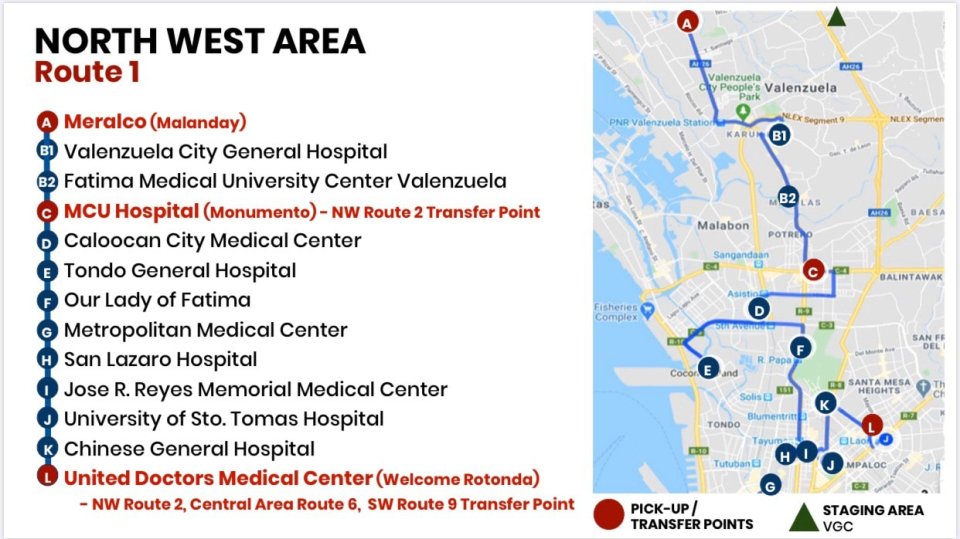
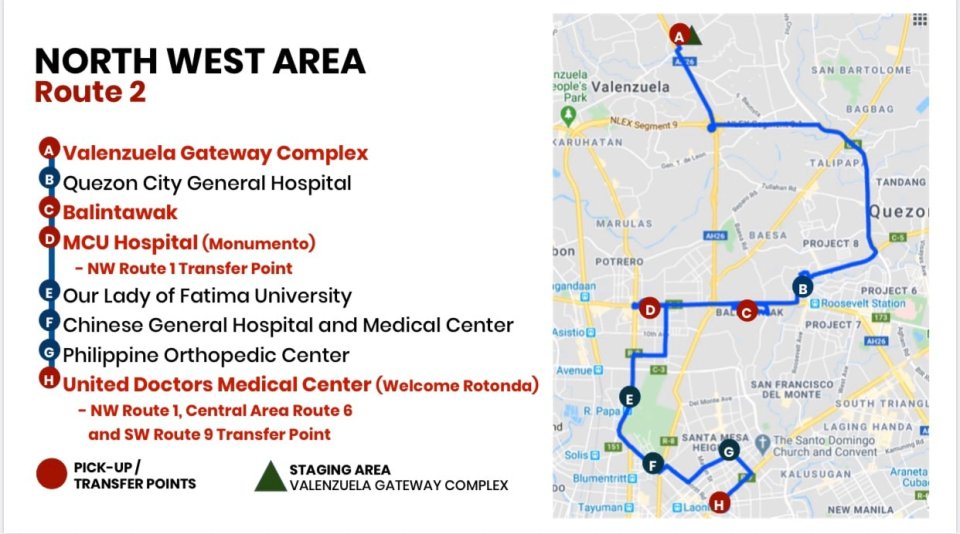
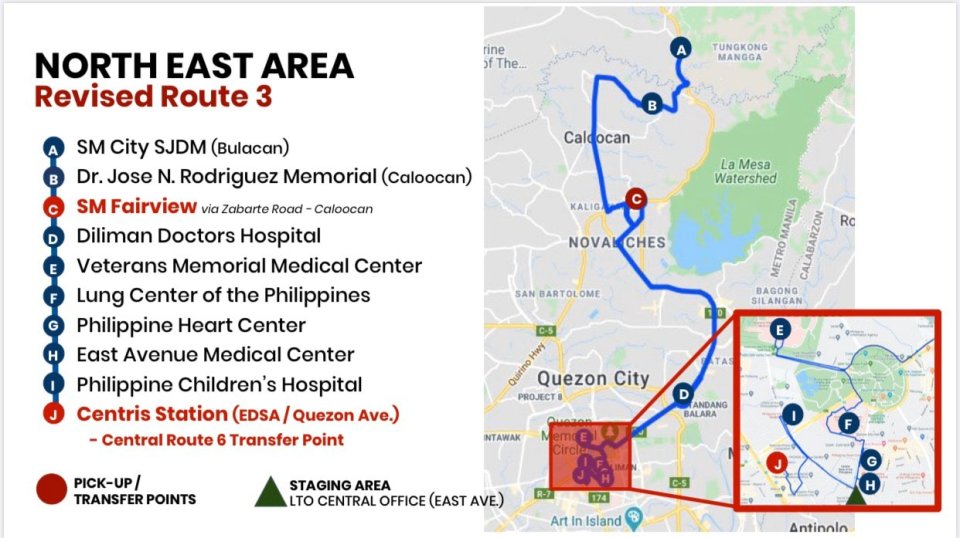
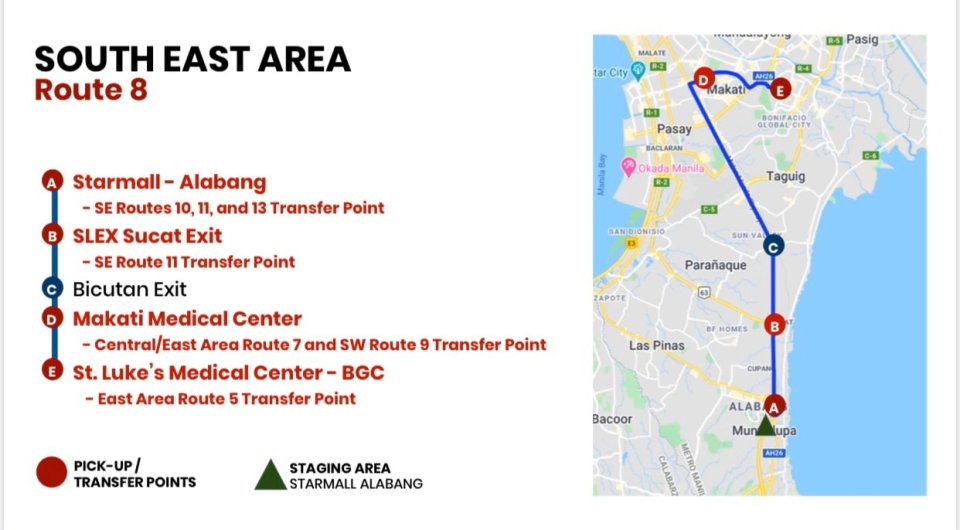
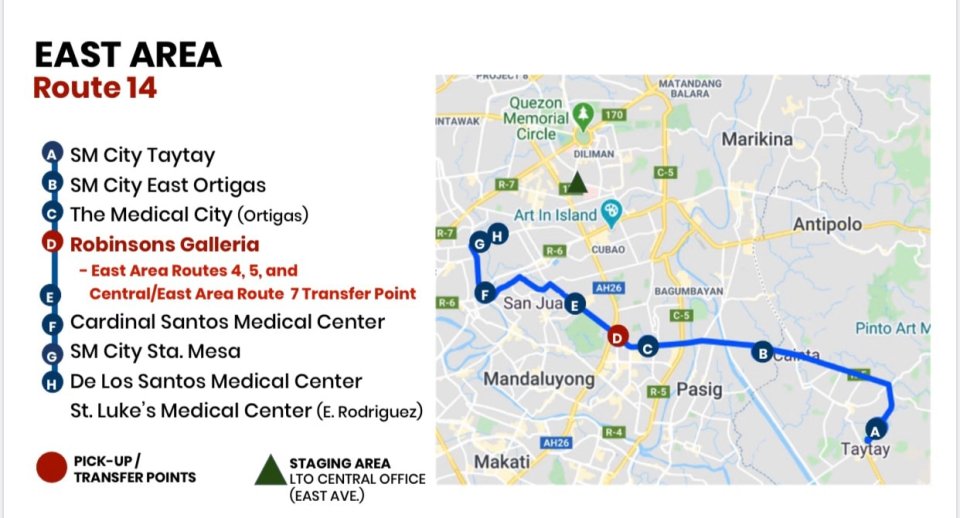
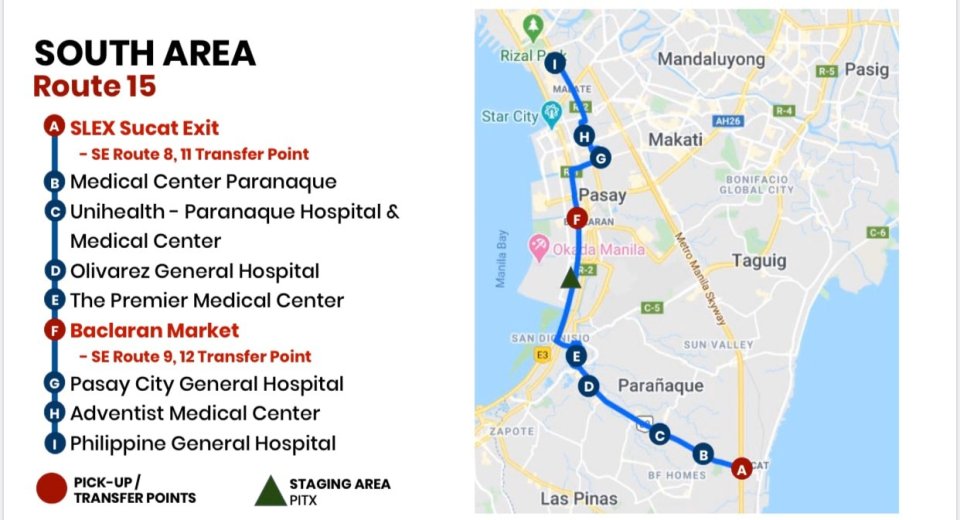
Transport route maps for Greater Metro Manila/ NCR during the quarantine period
I am sharing the following maps produced by the Department of Transportation (visit the DOTr Facebook page) and the Office of the Vice President. The details of operations are in their respective social media accounts that are being shared/circulated.
Here are the maps for 16 routes from the DOTr:





Here is a map from the OVP as well as a detailed itinerary for one of the routes they operate:


–

