
Home » Public Transport (Page 44)
Category Archives: Public Transport
San Diego Buses
I took a lot of photos of transport in San Diego and among these are of buses. The San Diego Metropolitan Transit System operates a variety of buses that included articulated ones. These have fixed routes and designated stops. At each stop, there is information on what buses (i.e., routes/route numbers) stop there. Here are a few photos of buses in San Diego.
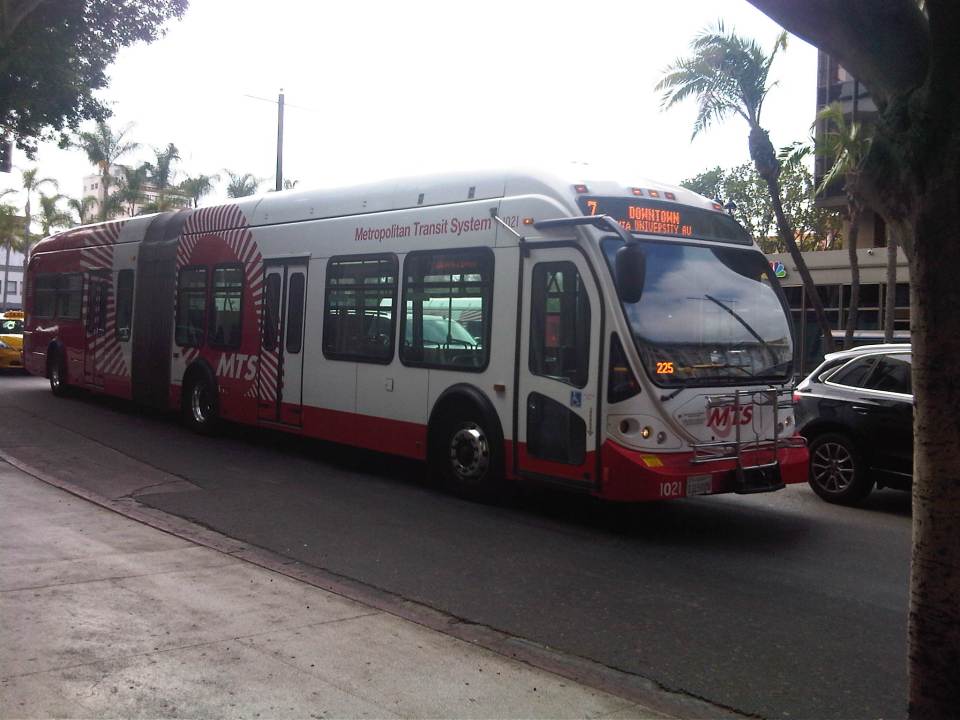 Articulated bus in downtown San Diego
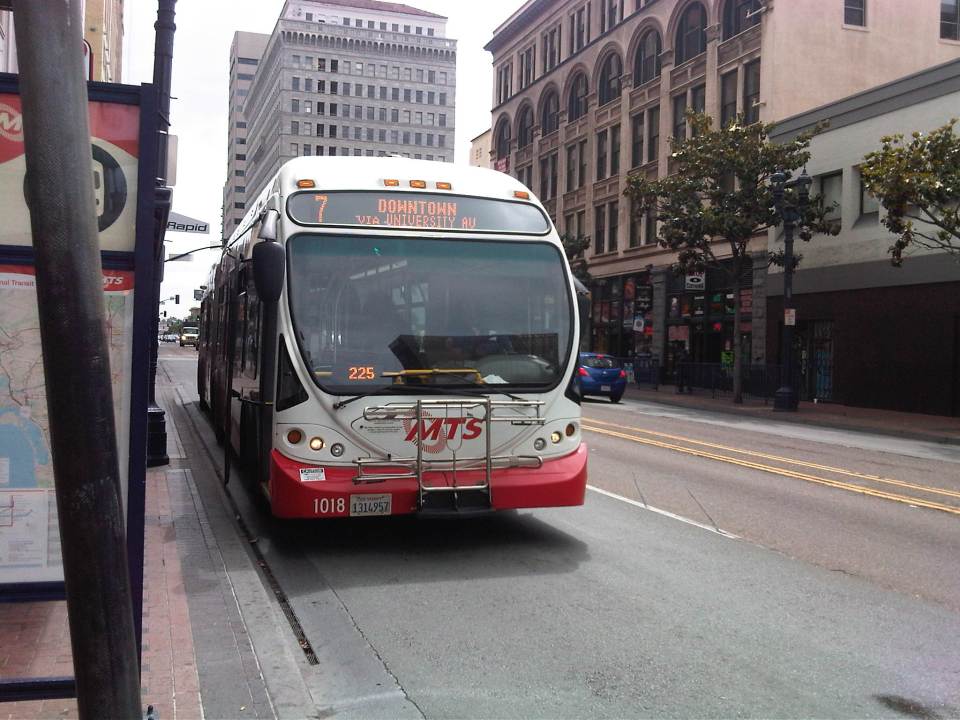 The contraption in front of buses are racks for bicycles
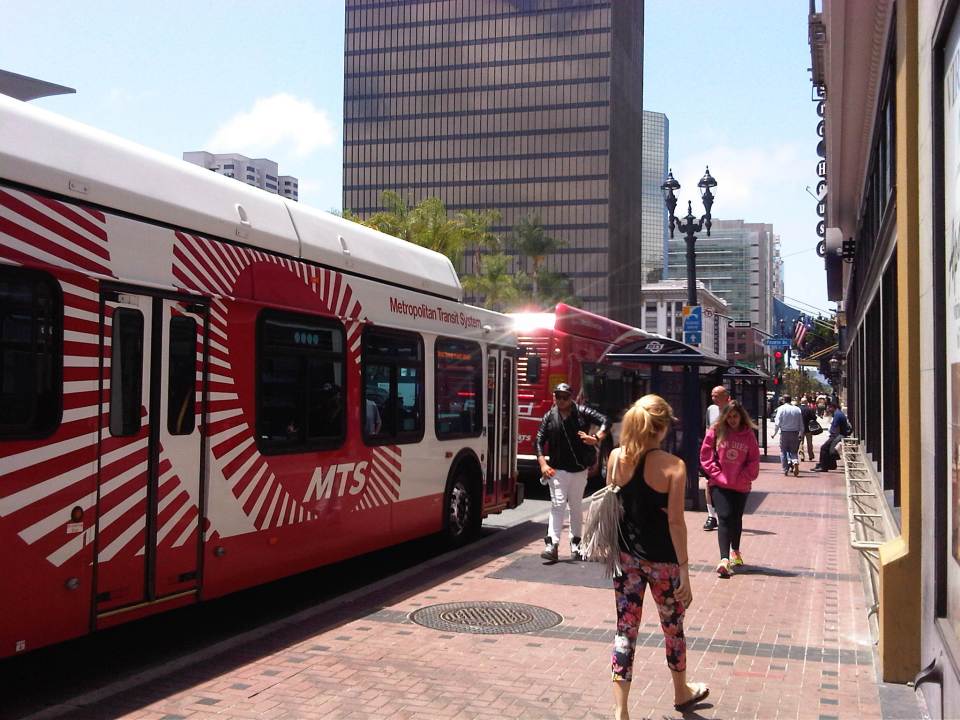 Bus stop in downtown San Diego
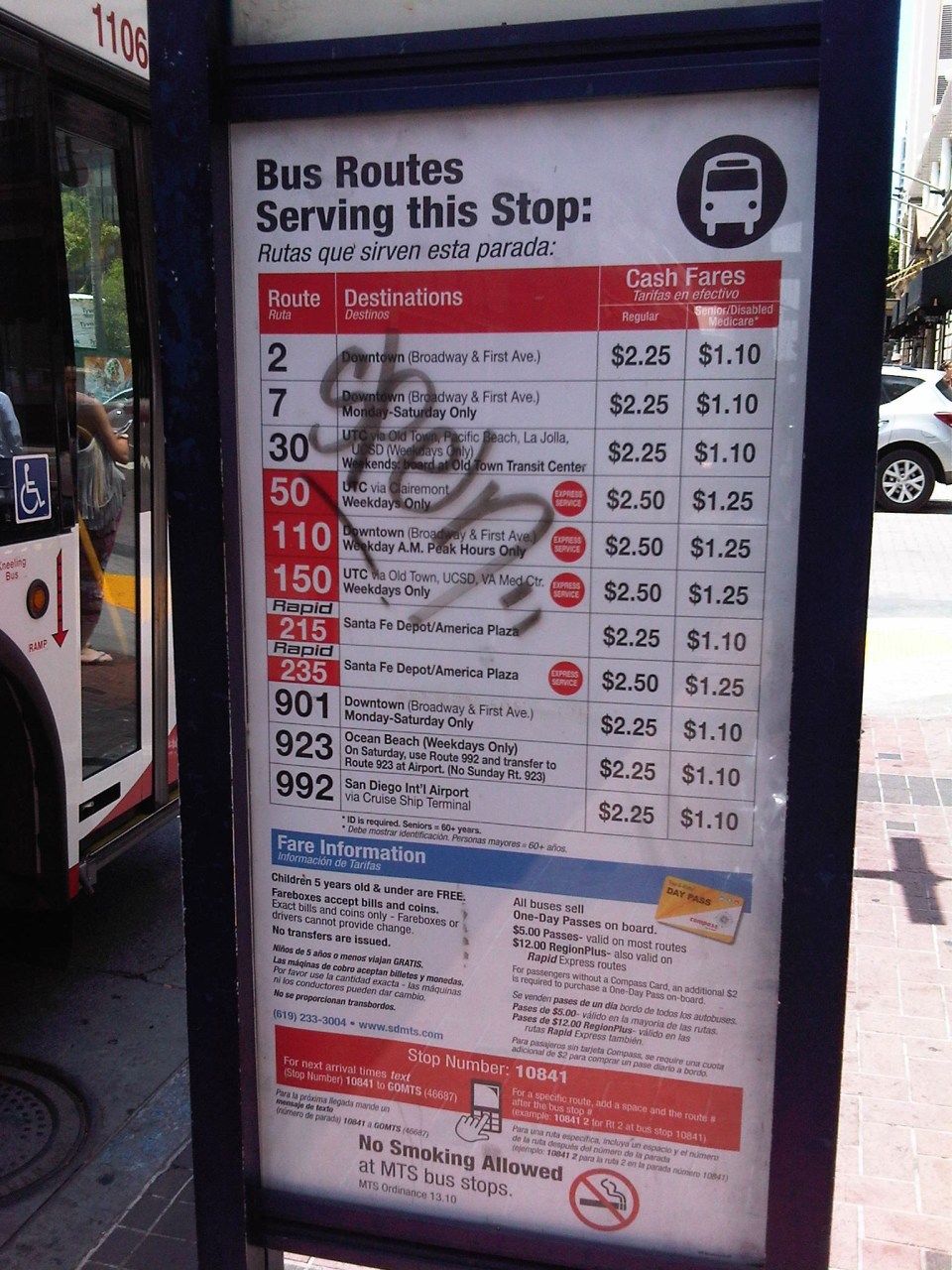 Information on bus routes, destinations and fares at bus stops – you can pay as you board the bus or purchase a ticket, pass or compass card in advance.
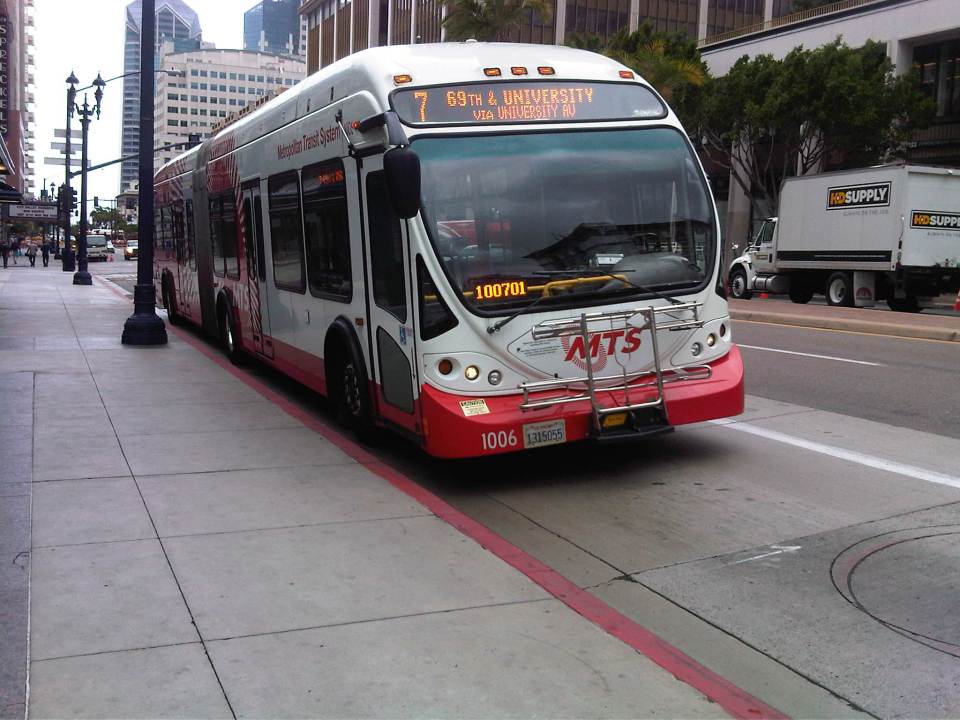 A bus serving the La Mesa-Downtown route via University Ave. – this is the bus you take from downtown San Diego to San Diego Zoo
 Bus interior shows few seats and much spaces for standees – enabling the vehicle to maximize its passengers
 The interior on the rear half of the articulated bus
San Diego is a city of just under 1.4 million people with a transport system that’s able to serve the demand for transport over the distances covered by its buses and trolleys. Compared to Philippine cities, San Diego’s transit system is one well oiled machine. Of course, it is more expensive if you convert dollars to pesos but then if you account for the standard of living (including living costs and salaries) and the quality of service provided by the trolleys and buses, then you have something Manila and other major cities in the Philippines would be envious of. Can we have something like San Diego’s transit system in the Philippines? We can but (and that’s a big ‘but’) it needs a lot of work and commitment to set-up and make something like this work.
–
San Diego’s Sta. Fe Train Depot
A highlight of my ‘do-it-yourself’ tour of San Diego, CA was the Sta. Fe Train Depot or Railway Station. The depot was celebrating is centennial and for me represented part of America’s railway heritage being part of a railway line stretching along the US’ Pacific coastline. Following are photos in and about the Sta. Fe depot.
 The historic Sta. Fe Train Depot building as seen from the San Diego MTS trolley station.
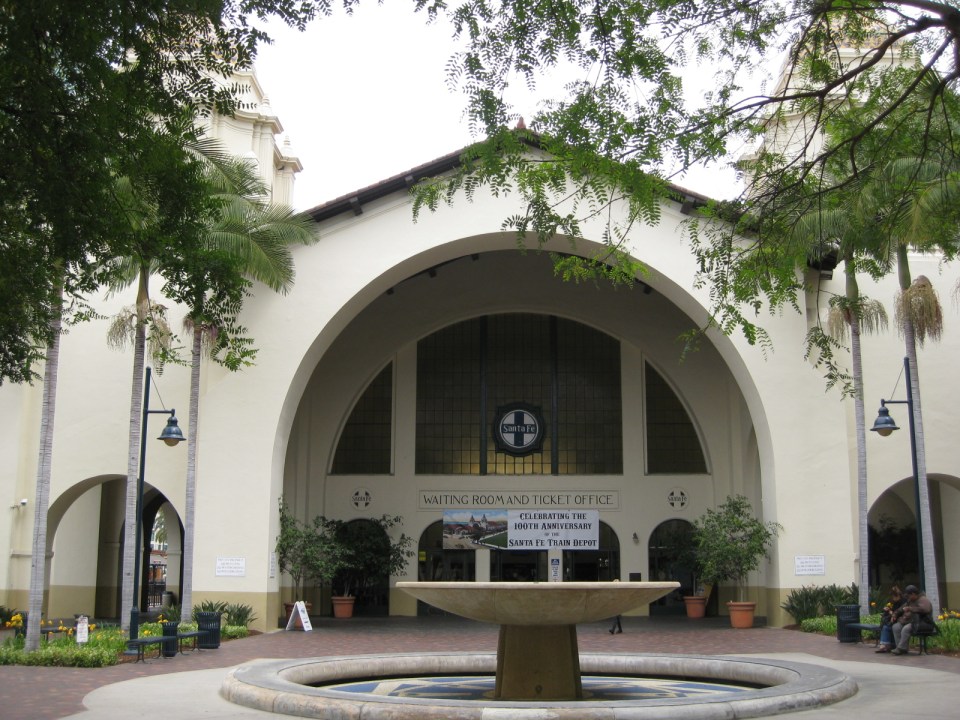 Front of the train deport showing a fountain and the main doors to the station building.
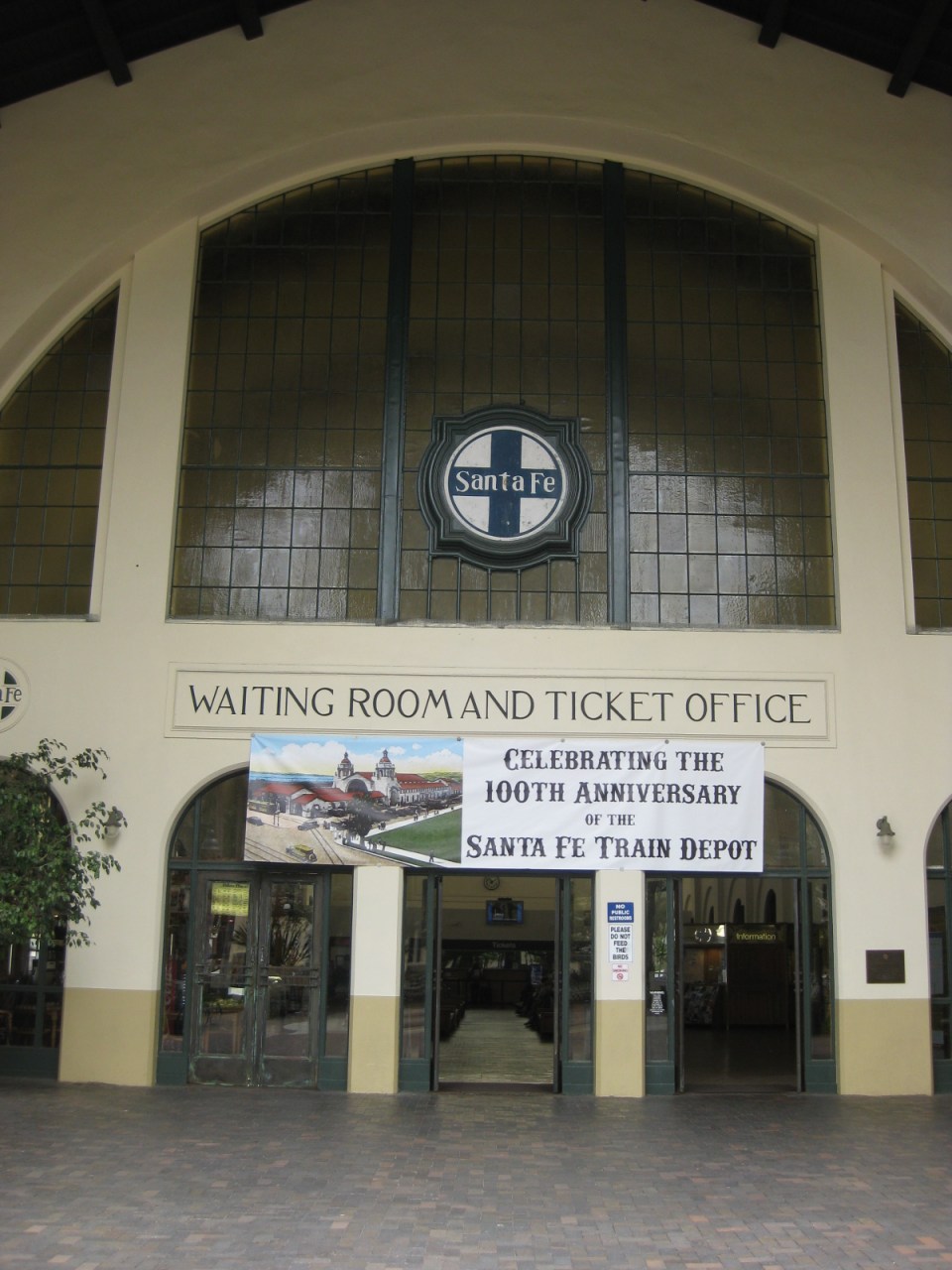 Entrance to the building, which contains the ticket office and waiting room for passengers and well-wishers.
 One is greeted by this splendid view of the building’s interior evoking a time when trains ruled in land transportation. An information booth is seen at the right while the food kiosk is at the left. The ticket windows are further at the center.
 The kiosk inside the station building provides sustenance to passengers, well-wishers and passers-by. Note, too, the mosaic designs on the columns of the building.
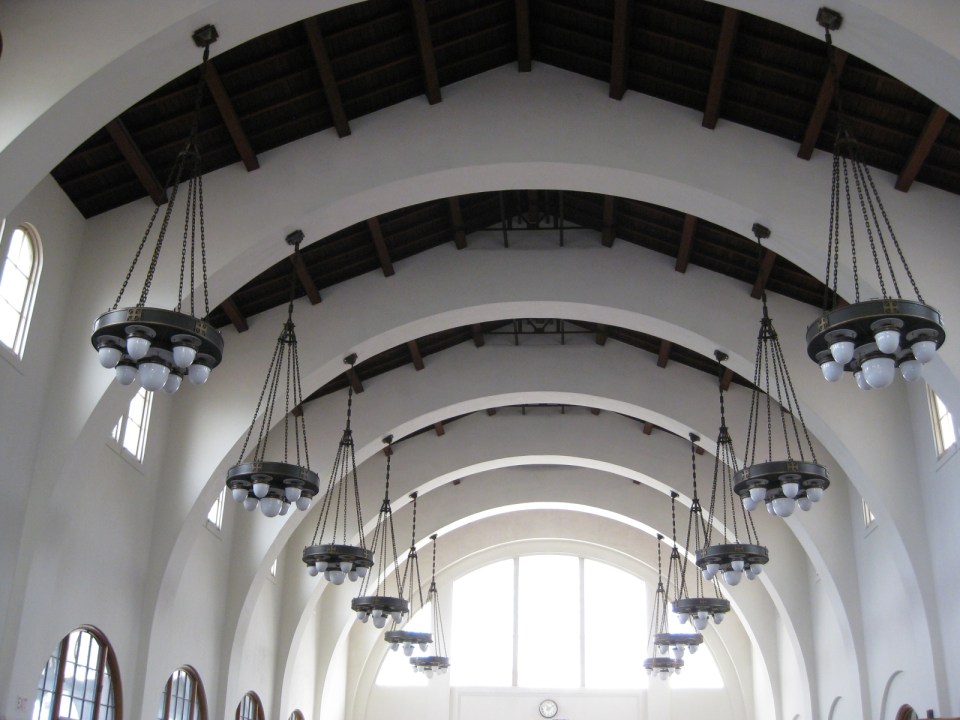 A closer look at the station’s ceiling and chandeliers shown arches emanating from the columns to support the roof. Such features are of earthquake resistant structures in this earthquake-prone region and particularly in the State of California.
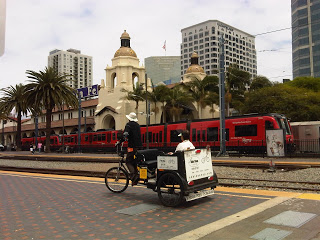 Pedicab, trolley and the Sta. Fe Train Depot
I took some refreshments at the kiosk in the station. The hotdog sandwich was good and the coffee was strong. I took the trolley from the station to explore San Diego along its commuter train lines. More on San Diego’s trains and stations in future posts.
–
Some setbacks for sustainable transport
There have been a few setbacks for sustainable transport in the news recently and not so recently. One is the burning of an electric vehicle, a COMET to be precise, that saw one unit burn to the ground near the UP Town Center along Katipunan Avenue. I am not aware of any official or formal findings being released as to what really happened to the vehicle but that is basically a big PR problem now as detractors of e-vehicles will point to the incident as proof that e-vehicles still have a long way to becoming a viable and safe option as public utility vehicles. E-vehicles have a lot to prove especially as an option for public transport and such setbacks only strengthen the argument against them and leaves us with the current conventional options.
Another is the discontinuance of service inside the Bonifacio Global City (BGC) of hybrid buses operated by Green Frog Transport. This one is due to what Green Frog described as exorbitant fees being charged by Bonifacio Estates Services Corp (BESC) for their buses to enter BGC. This is making the rounds of social media but there seems to be no response from BESC nor from the Bases Conversion and Development Authority (BCDA), which is supposed to also have a say with policies in BGC. Perhaps BESC thought it best to just give Green Frog the silent treatment for what appears as a trial by publicity approach by Green Frog. One commuter commented that maybe BGC authorities should push for their Fort Buses to be hybrid and phase out the jeepneys in favour of higher capacity transit inside BGC.
There have also been issue on road safety including many incidents of pedestrians getting run over by vehicles. Many of these have been captured on video particularly by the Metropolitan Manila Development Authority (MMDA), which has set-up a network of cameras in many intersections along major roads. Many show vehicles Given that many cases feature jaywalking, it is still the responsibility of any motorist to exercise caution when manoeuvring, especially when turning at intersections. Drivers will always have blind sides or weak sides when they manoeuvre so they should be very careful when in doubt and not immediately proceed when it is not clear that they have a clear path. At BGC (again) one will notice that many motorists do not give way to pedestrians even when the latter are crossing at the right locations and according to the sign clearing them to cross the street. In one case involving two speeding SUVs, one lost control and hit a pregnant woman crossing the street. While a significant number of vehicles in BGC are through traffic, it is still the responsibility of BGC’s traffic enforcers to ensure motorists follow traffic rules and regulations including prioritising safety over haste. Simply attributing such safety issues to through traffic is no excuse for traffic enforcement being as lax as or par with the rest of Metro Manila, especially for a CBD that packages itself as better than the rest of Metro Manila.
Finally, the LRT Line 2 Extension begins construction
The groundbreaking ceremony for the extension of the LRT Line 2 from Santolan, Pasig City to Masinag Junction in Antipolo City was held last June 9, 2015. This marks the beginning of the construction of the much anticipated and much delayed extension of the line to what was supposed to be part of the first phase of Line 2. I say supposed because most experts believe the current line should have terminated at Masinag from the start instead of at Santolan where the depot is located. Masinag had much more sense many years ago as it was a good staging point for possible extensions to Cogeo, Antipolo City proper or Marikina City. The areas along the Marcos Highway corridor beyond Masinag alone have experienced tremendous growth especially after the floods of Ondoy (Typhoon Ketsana), which submerged much of the Marikina Valley including Pasig, Cainta and lower Antipolo.
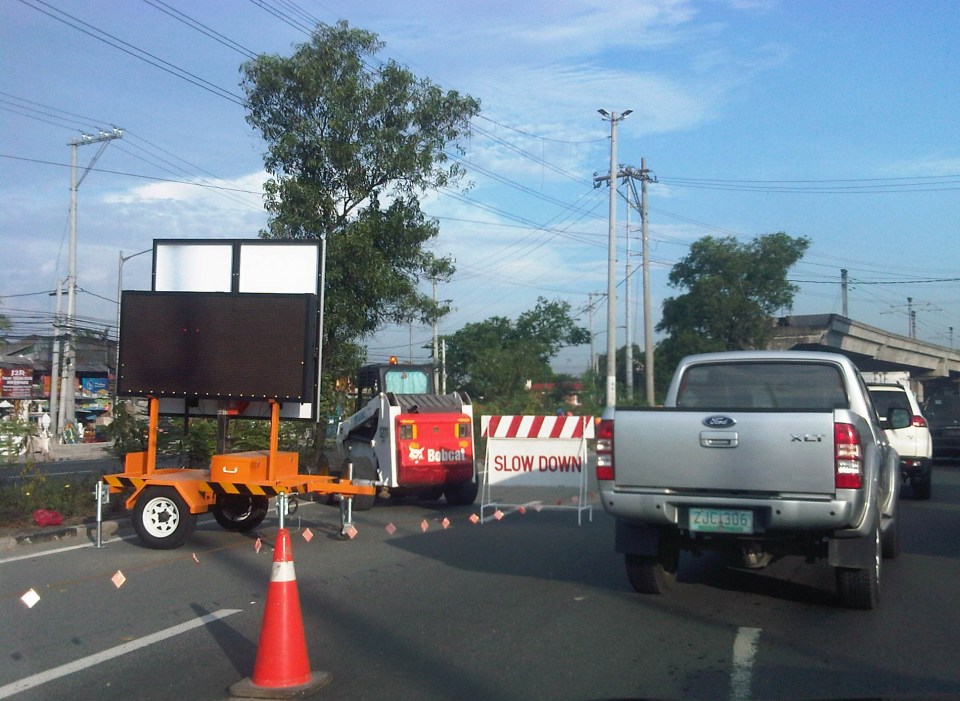 Traffic cones and signs guide motorists away from the inner lanes of Marcos Highway.
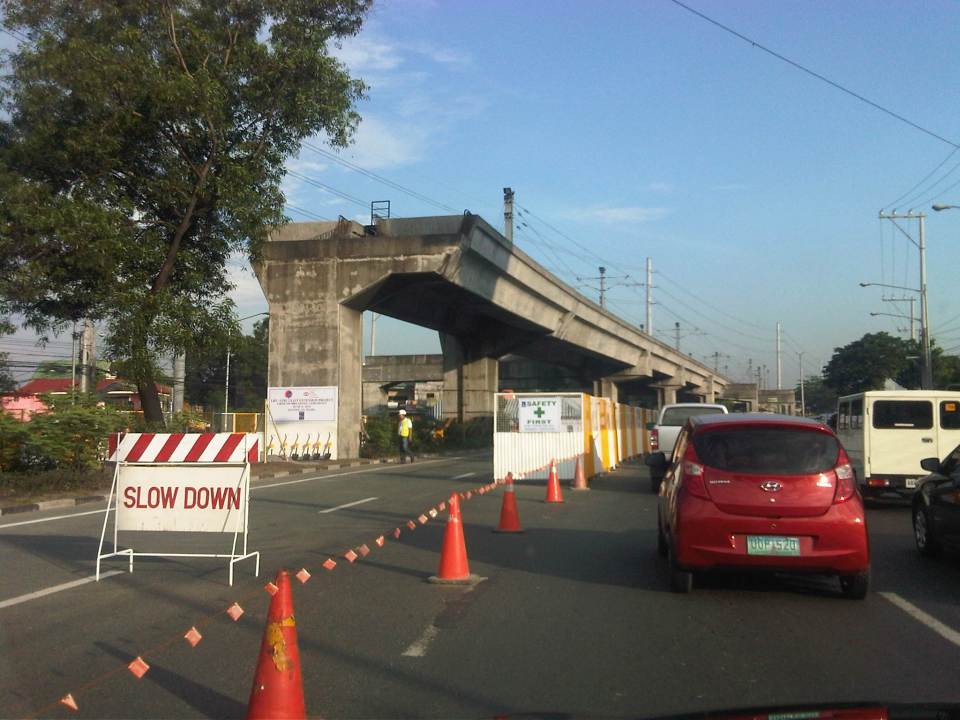 Two lanes from each side of Marcos Highway at the current end of the Line 2 were appropriated in addition to the median for the groundbreaking ceremony.
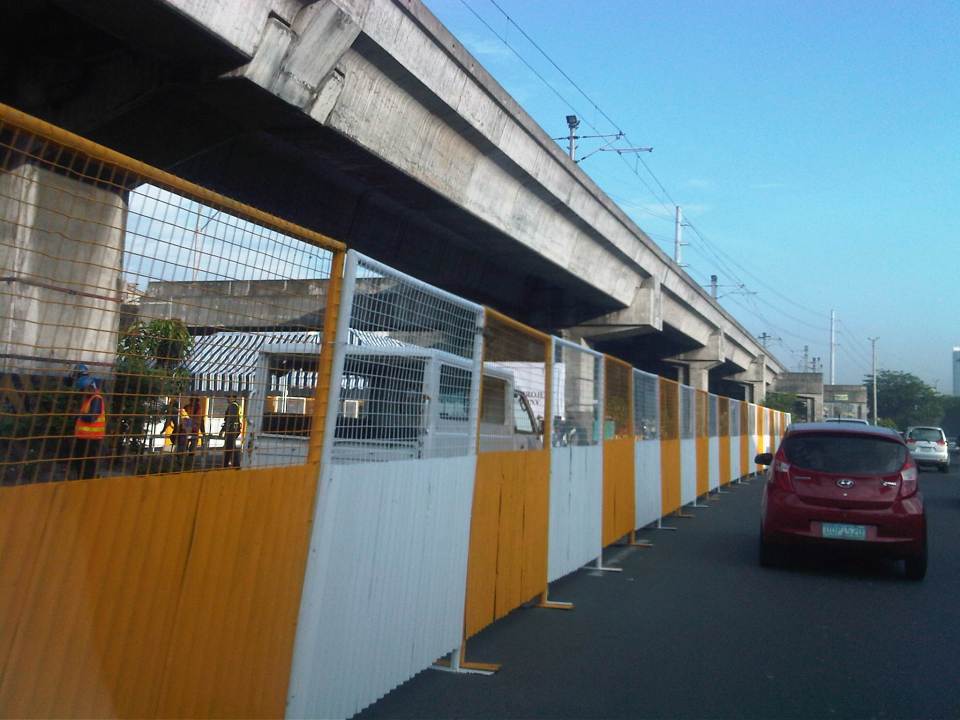 The stage is set – the stage for the ceremony is set under the viaduct with these barriers practically shielding the participants from curious passers-by (usyoso). Regardless, the event cause congestion along the highway.
Of course, that was the groundbreaking ceremony. As of today, there’s no sign yet of the contractor, DMCI, fully mobilizing and already reserving the inner lanes of Marcos Highway for the construction of the viaduct and stations. If the current works for the NAIA Expressway in the airport area is to be a reference, then severe traffic congestion is to be expected along the highway and this will extend beyond the actual construction site from Santolan to Masinag. As such, the public will experience inconvenience for the next so many months or perhaps couple of years (or more if there were delays). However, I believe that once the line is operating all the way to Masinag, it will help to ultimately decongest Marcos Highway and Aurora Boulevard and a lot of people will benefit from the improved travel times.
Incidentally, the term LRT is actually a misnomer here because among the 3 operational rail mass transit lines (I am excepting the PNR Commuter Line here.) in Metro Manila, Line 2 is actually a heavy rail system. Perhaps the government should already correct this by simply referring to Line 2 as ‘LRTA Line 2’ or renaming LRTA to reflect its nature as a transit authority that should not be limited to light rail only.
–
Dau, Mabalacat Bus Terminal – Part 2
The first part of this feature on the Dau Bus Terminal in Mabalacat, Pampanga showed the city’s PUV Common Terminal, the bus berths from the entrance of the terminal and the many stalls lined along the terminal. This second part features more photos including some showing a tricycle terminal and an airport shuttle lounge inside the huge bus terminal.
 The interior shows an even more expansive bus terminal with more berths, a tricycle terminal and the Clark Airport shuttle station.
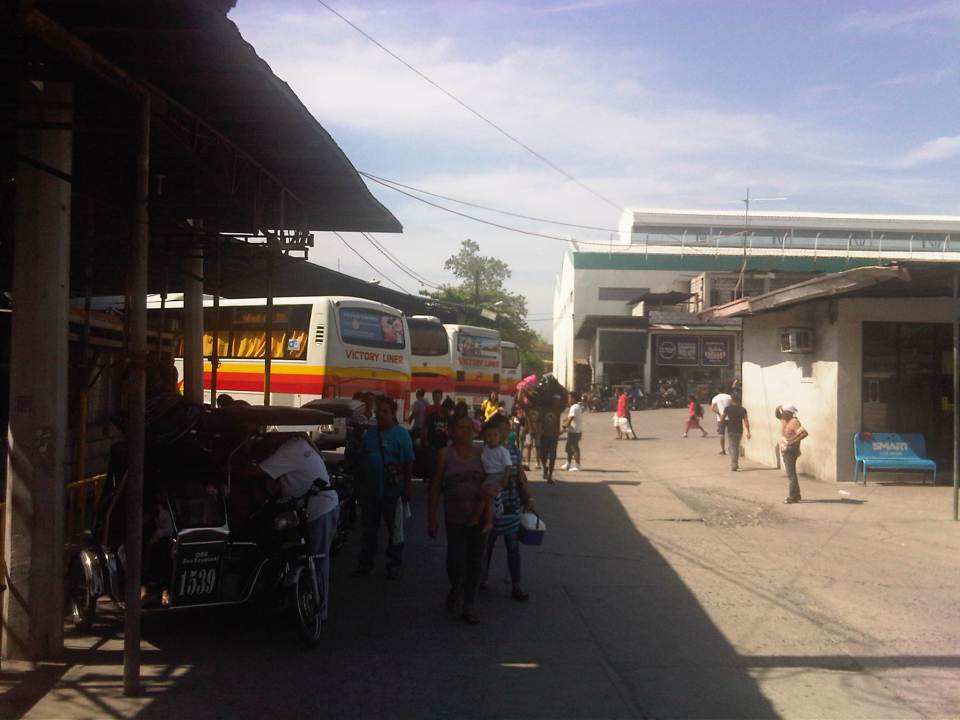 Victory Liner buses berthed just after the tricycle terminal within the bus terminal
 Clark Airport Lounge in the middle of the bus terminal
 An add for a popular cracker brand states “the journey is long”
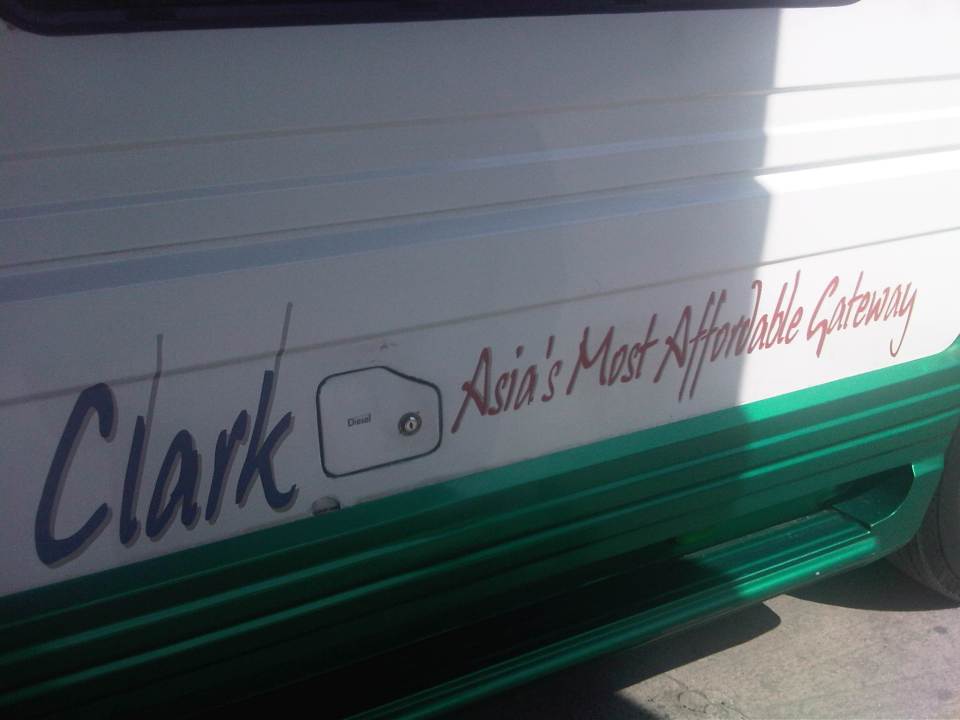 Sign on the Clark shuttle jitney
 The Clark Airport shuttle jitney is an extended or stretched Asian Utility Vehicle (AUV) that typically seats 27 people including the driver.
 The tricycle terminal at the bus terminal allows for a more direct transfer between modes (i.e., long distance, inter-provincial or inter-city transport to local transport).
 Passengers from the lounge board the airport shuttle. Luggage are also taken inside the vehicle so it can only accommodate a limited number of people rather than the 27 I mentioned earlier.
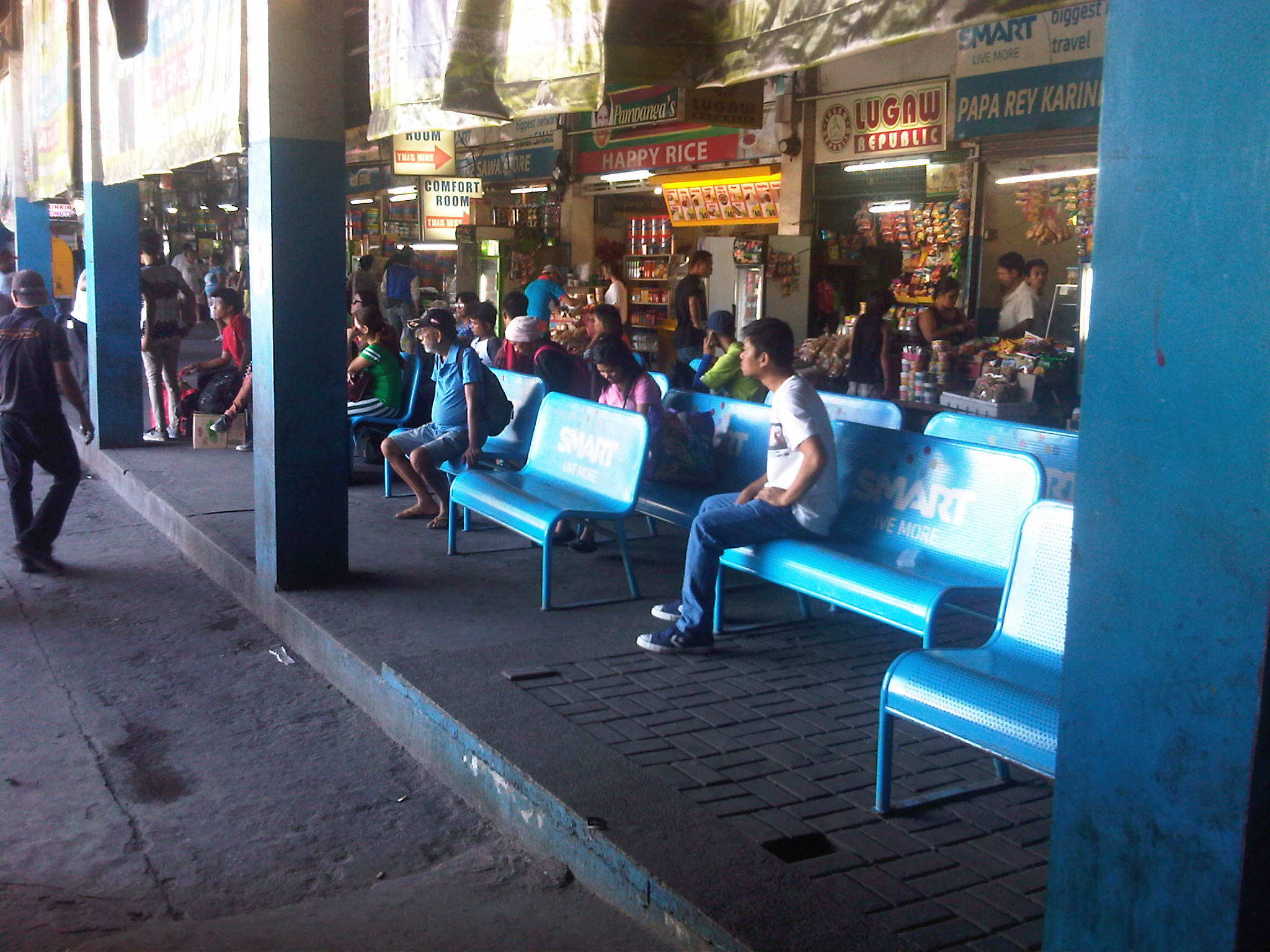 Another look at passengers waiting for their buses at the available (and limited) benches at the terminal. The benches shown seem to be ‘sponsored’ by a leading Telecom company.
 Beverage dispenser at the terminal
 Low batt? Cellular phone chargers are quite popular with passengers needing a quick battery charge while waiting for their buses to arrive at the terminal.
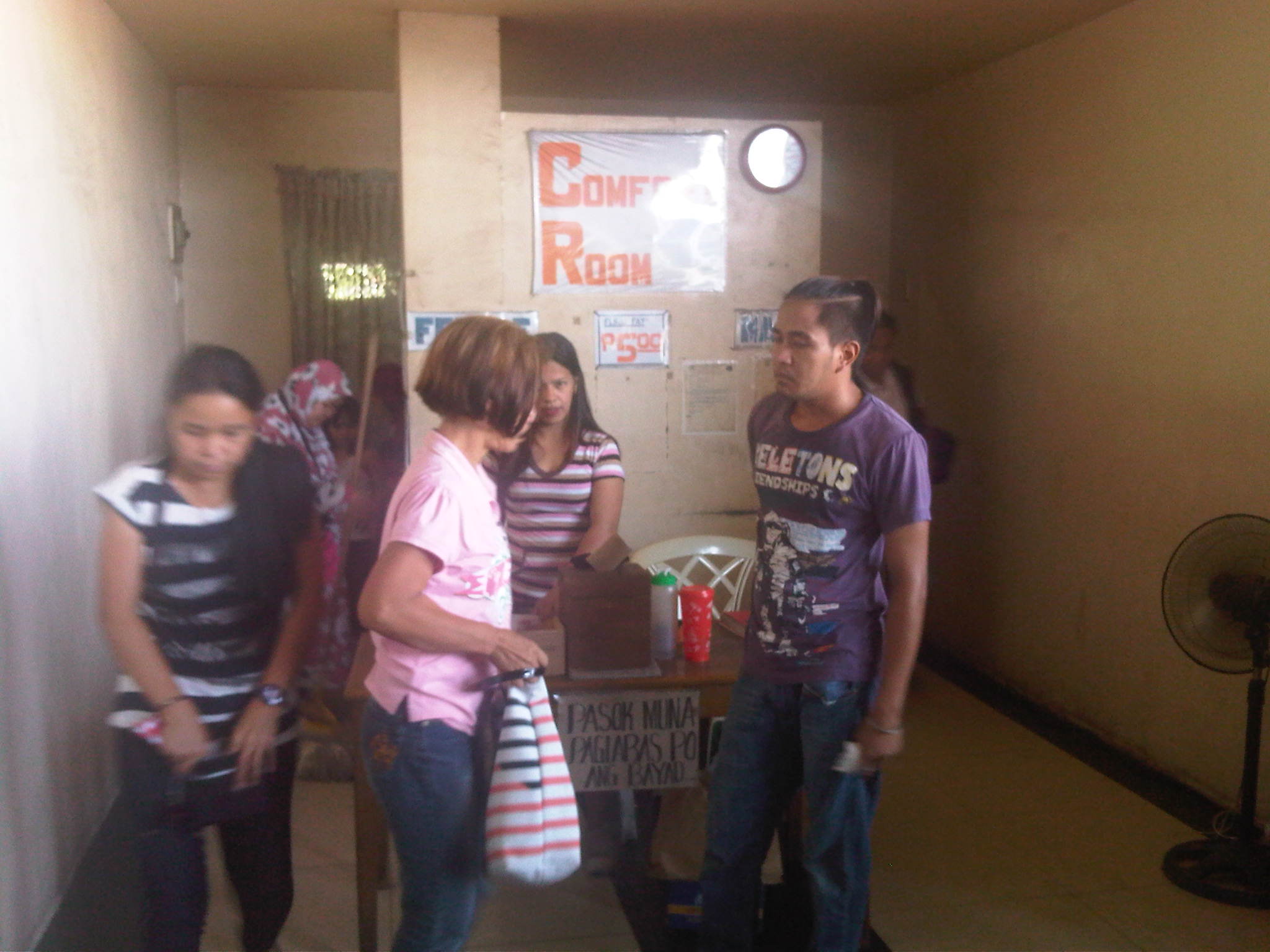 Public comfort rooms or toilets at the terminal charge 5 pesos (about 12 US cents) for each use. There’s a sign that says payments are made after use. The fees are supposed to cover maintenance of the toilets but don’t expect much in terms of cleanliness or smell.
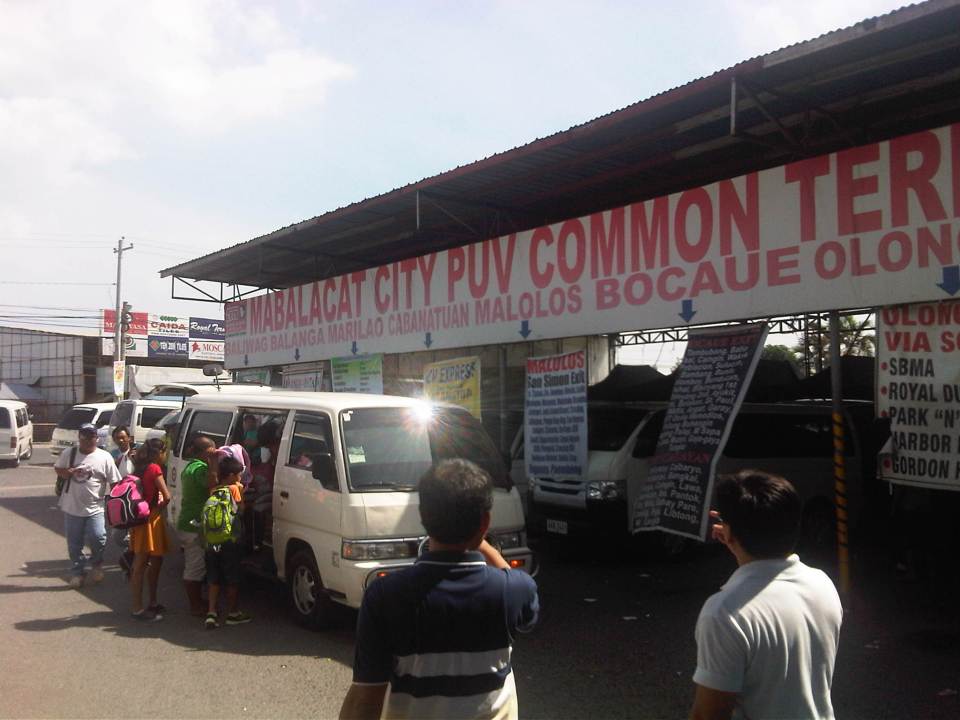 Passengers board a van at the Mabalacat City PUV Common Terminal. PUV stands for Public Utility Vehicle and basically stands for the vans running long distance express routes that are supposed to be non-stop or limited stop.
 Huge signboard at the entrance to the terminal
The huge bus terminal is a good example of a regional bus terminal in the Philippines and one that is also a multi-modal facility at least for road transport. It is relatively well-run and is a major transfer point for people traveling between much of Luzon Island including Metro Manila. There is definitely room for improvement including amenities for passengers and perhaps a more modern airport shuttle lounge. Perhaps there should be more investments to further improve this terminal used by so many passengers traveling mainly on the provincial buses calling on the terminal.
–
Dau, Mabalacat Bus Terminal – Part 1
We recently went to Mabalacat, Pampanga, which is north of Metro Manila and at the end of the North Luzon Expressway. The objectives of my colleagues were to inspect the Dau Bus Terminal and to look at the airport shuttle whose terminal is co-located and within the large bus terminal. Following is a first batch of photos I took at what is the largest bus (and intermodal) terminal in Central Luzon. There are others like it around the country like the one in Lucena City in Quezon Province (Southern Luzon) but few are as large and serve as many buses.
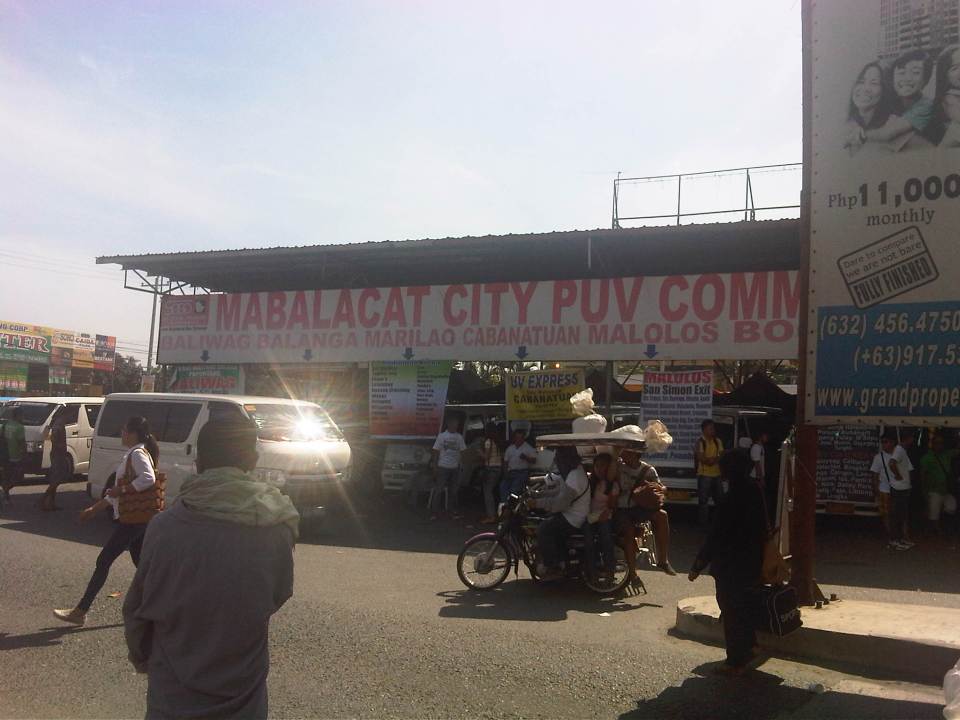 The city’s PUV terminal is adjacent to the bus terminal
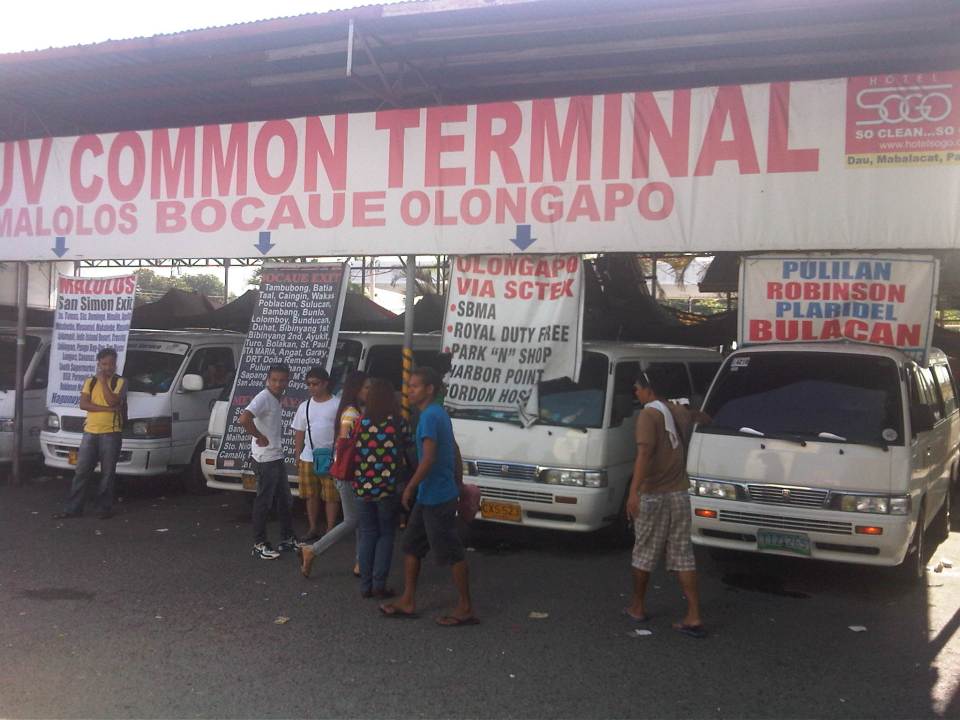 Vans bound for various provincial destinations await their passengers at the PUV terminal. These usually seat 10 passengers and directly compete with buses for the destinations indicated in the signs.
 Passengers walk towards the terminal and the berth assigned to their buses.
 People line up to congregate at the berth assigned to specific bus companies and according to their destinations
 Passengers, well-wishers, hawkers and shopkeepers mingle in what is probably the busiest terminal in Central Luzon. I am not aware of any similar terminals in other provinces in Region 3 including Bulacan, Tarlac and Nueva Ecija.
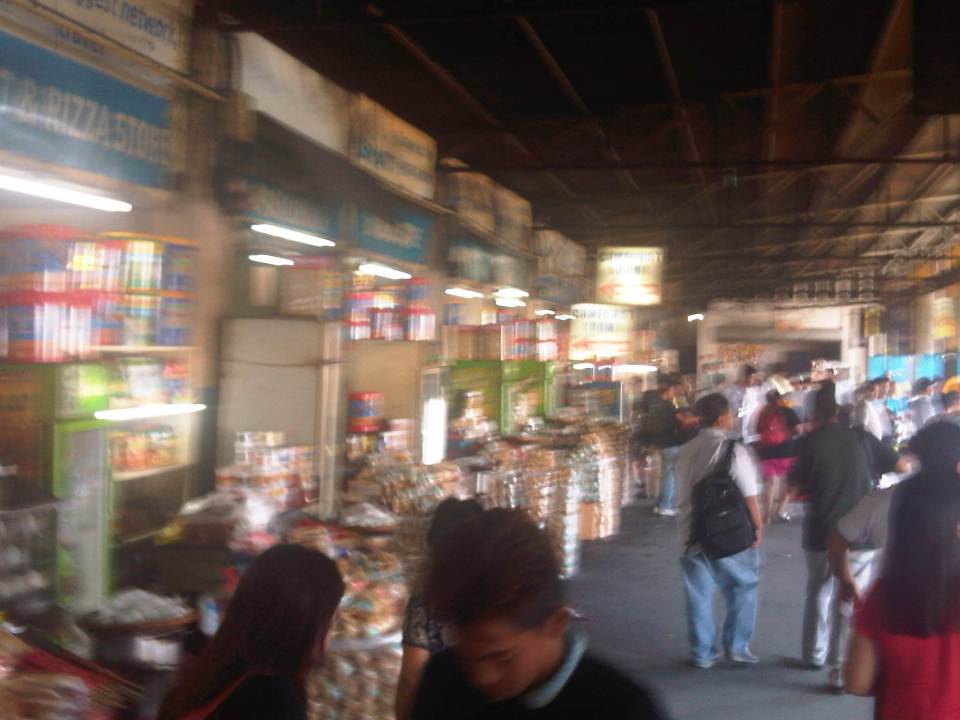 Stalls at the terminal sell mostly food and drinks including large containers of biscuits that are still popular pasalubong.
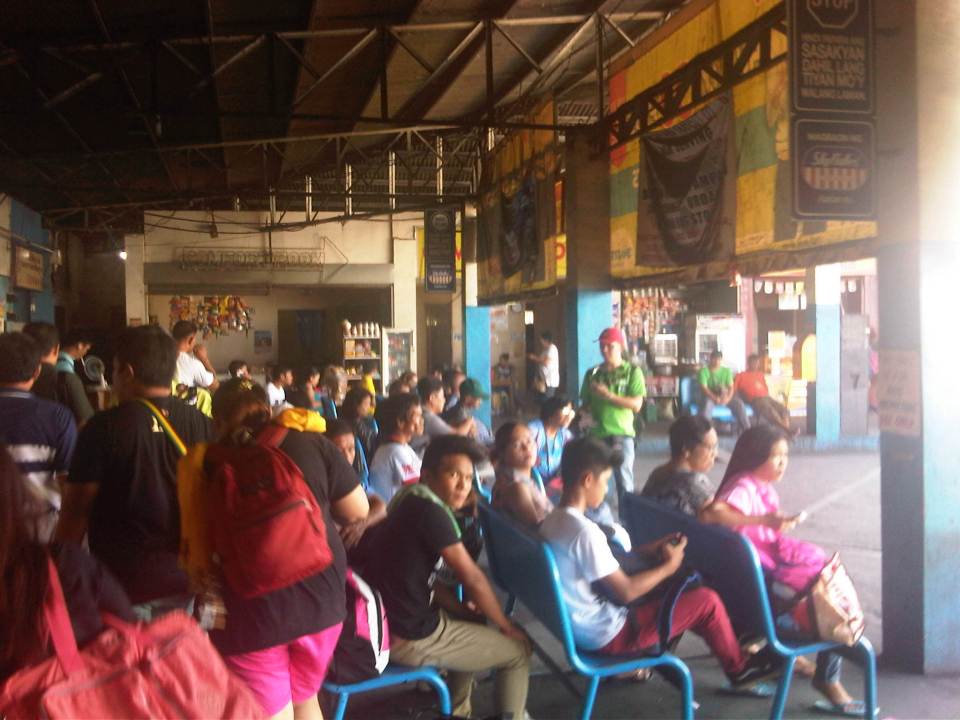 Some areas of the terminal can be quite crowded as some bus companies are more popular than others.
 Not all bus companies provide benches for their passengers. Some seats are actually provided by stores and eateries but only for their customers.
 Empty berths at the bus terminal
 Passengers wait for their buses on the benches or while standing and having a quick snack or smoke at one of the stores at the terminal. The guy in the photo is actually violating a national law and local ordinance banning smoking in public areas.
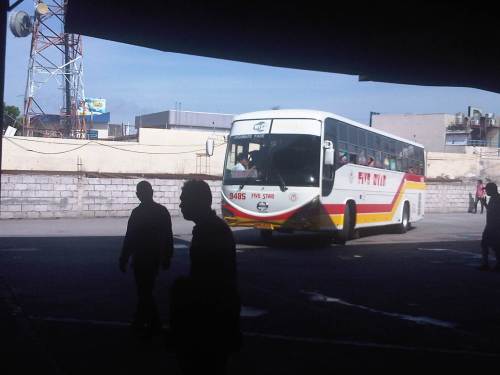 A Five Star bus arrives at the terminal. Bus companies have their assigned berths at the terminal and drivers and conductors presumably have their suki eateries or stores.
More on the Dau bus terminal in a future post.
–
Pedicabs in San Diego
I was surprised to see a familiar vehicle going around San Diego as I took a walk around the Gaslamp District. I had to do a double take as I saw three-wheeled non-motorised transport (NMT) along a busy road. Many were brightly decorated or sported lights that made them noticeable among the vehicles on the streets when it got dark. Many drivers were also dressed to attract passengers. Many wore helmets or some head gear (hats or caps for others). Motorists seem to be well-adjusted to these pedicabs running along San Diego roads but then traffic in the CBD appears to be lighter compared to downtown Los Angeles or San Francisco.
 Bicycles and cycling are very popular in San Diego so pedicabs seem to be a natural extension of that
 Three-wheeler with a smiley
 Pedicabs could carry 2 to 4 passengers depending on their seating configuration
 A pedicab decked with rope lights is followed by one with well-dressed passengers. The pedicabs were quite popular with delegates/participants of the INTA conference held at the San Diego Convention Center.
 I like this photo I took of a pedicab ferrying a passenger to the historic Sta. Fe train station. A San Diego trolley is also in the photo. The image shows the complementation among transport modes.
The pedicabs in San Diego are basically for tourism and not necessarily for commuting. They do, however, agree to carry people who would rather ride the pedicab than take a taxi or walk to their destinations. You just have to negotiate a fair price for the ride. The good thing with the pedicabs in San Diego is that their operations there provide a good example, a proof of concept if I may state, of how motorised and non-motorised options can co-exist. These options for travel include the rail-based trolley and provide people with a plethora of options for sustainable mobility. I think this should work in medium sized, highly urbanised Philippine cities as well.
–
San Diego’s Compass Card
Whenever I am in a new city, I try to learn about their transport system. This includes finding out if they have some conveniences with respect to public transport like a transit card that you can use for various modes of public transport. Examples of these are cards in Singapore, Hong Kong and Japan that you can just reload (top up) and swipe or tap at terminals found in most if not all public transport. In Japan, you can even use their cards to purchase items at convenience stores or vending machines.
San Diego has what it calls the Compass Card, which you can use for the trolley and bus services. You can purchase a card from the Transit Store or at any of the machines located at the trolley stations. The Compass Card can be used to load day passes (instead of purchasing paper passes).
 Compass card vending and reloading machine – you can also purchase special tickets here like the 1-day Pass that basically allows you to have unlimited use of the trolley and buses within the day of purchase.
 Compass card front shows also the private sponsor/partner of the MTS – Albertsons
 At the back of the card are information on the use, care and expiration of the card.
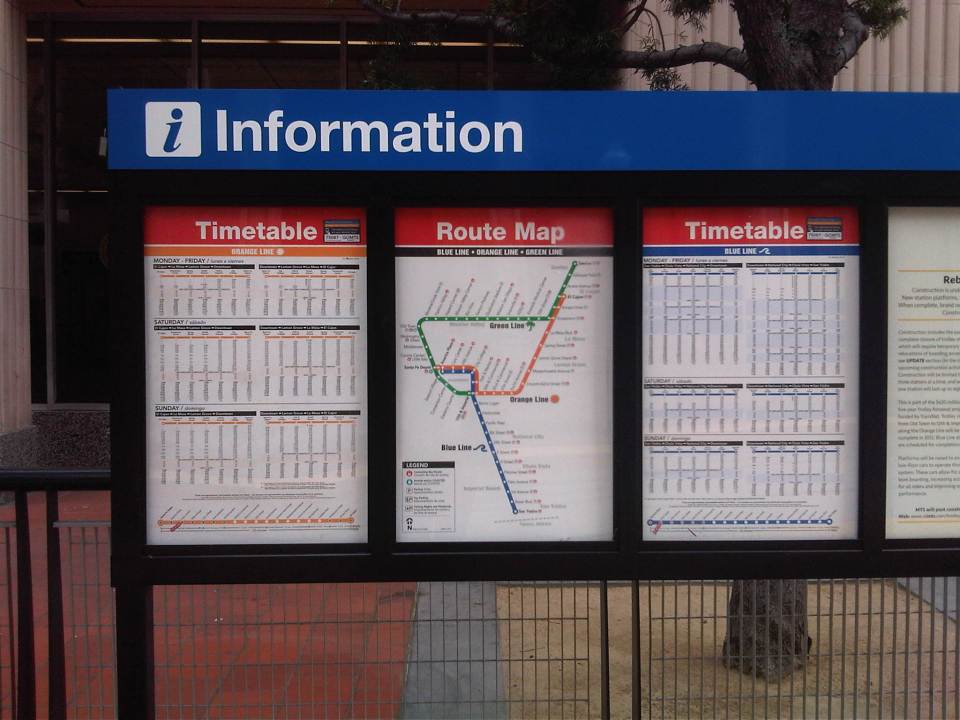 Timetable and route information for the San Diego trolley
 A close-up of the route map for the San Diego trolley’s three lines.
More detailed information on the Compass Card can be found in this link. I will write about the trolleys in succeeding posts.
–
On the new transport categories by the DOTC
An article came out recently about the four new transport categories introduced by the Department of Transportation and Communications (DOTC).
These are:
- Transportation Network Vehicle Service (TNVS),
- Premium Taxi,
- Airport Bus, and
- Bus Rapid Transit
To quote from the article from Rappler, TNVS are:
“Vehicles of application-based, ride-sharing service providers, like Uber, GrabTaxi, Tripda, and EasyTaxi, will now fall under the category TNVS.
TNVS will cover vehicles that provide pre-arranged transportation services for compensation, using an online-enabled application or platform technology to connect passengers with drivers using their personal vehicles, Abaya said.
These new rules will also allow ride-sharing service providers to accept regular passengers heading to any point of destination in the country, Abaya added.
Operators of TNVS, called Transportation Network Companies, are also required to screen and accredit drivers and register them with the Land Transportation Franchising and Regulatory Board (LTFRB).
All TNVS vehicles will also be required to install and use global positioning system (GPS) tracking and navigation devices. Only sedans, Asian Utility Vehicles, Sports Utility Vehicles, vans, or similar vehicles will be allowed, and these should not be older than 7 years.
The new framework makes the Philippines the first country to have nationwide rules on ride-sharing, according to both the Philippine transport department and Uber. Previously, only local and city governments have regulated the services…”
Premium Taxis are described as:
“…vehicles with a 7-year age limit under this new category will be equipped with GPS, online and smartphone booking capability, and cashless transactions through credit or debit card payments.
Like TNVS, premium taxis will be allowed to accept regular passengers heading to any point of destination in the country…”
And Airport Buses are:
“…should have fixed schedules and off-street stops, low-floor height and adequate luggage space, CCTV cameras, GPS device, free WiFi, and must run on Euro V or clean alternative fuel.”
Abaya pointed out that Green Frog has expressed interest in the airport bus service that would ply three areas including Makati City, Mall of Asia (MOA) as well as Bonifacio Global City (BGC) or Ortigas business centre…”
I won’t mention the BRT anymore. It deserves its own feature (as if the previous ones on it are not enough to describe the system), and is the only mass transit among the 4 categories “introduced” by the DOTC.
These new transport categories are obviously a step in the right direction. These are not new ideas and the institution of these categories by the DOTC is long overdue considering that the agency had to go through this process in order to address legal issues pertaining to such services. In the case of TNVS and Uber, for example, much has been mentioned about franchise issues and how Uber was illegal under the prevailing set-up. It is good to have another option to the regular taxis but then weren’t GrabTaxi and EasyTaxi were supposed to have enhanced services?
As for airport buses, such limousine services have been in operation in many other countries. Unfortunately, in Metro Manila’s case, these buses would have to contend with worsening traffic conditions along most major roads connecting the airport terminals to the various points of interest mentioned in the article (e.g., Makati CBD, BGC, Ortigas CBD, etc.). It is good though that Green Frog was mentioned in the article as the new category provides an opportunity for cleaner and more efficient technologies to be applied to transport services. Still, if these services will be operated by reckless drivers then they won’t be much better than what we already have at present.
–
Habal-habal in Metro Manila
Motorcycle taxis, called habal-habal in the many parts of the Philippines, are usually associated with rural areas where 4- or even 3-wheeled vehicles would have a difficult time traveling. Meanwhile, larger vehicles probably won’t fit in narrow rural roads, which can be more like a trail than a road. I saw this habal-habal station along Circumferential Road 6 in the Pasig City part of the road. The area is part of a large relocation area for informal settlers. The settlement is basically unplanned, with homes/buildings a mix of shanties and other design-your-own structures with narrow streets and alleys. The latter is most suitable to walking, bicycles and yes, motorcycles.
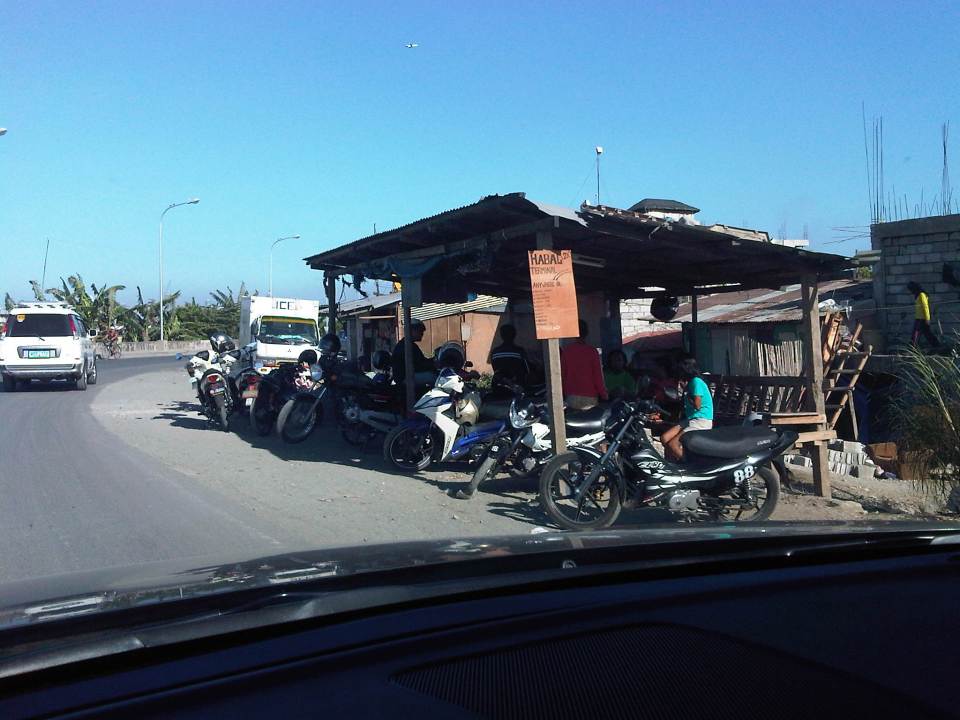 Habal-habal terminal along C-6 in Pasig City near the Napindan Channel
Despite the denial of many local governments including the MMDA, there are motorcycle taxis operating around Metro Manila. Many of these are in areas where there are no public transport services. Tricycles or pedicabs are not allowed or cannot access these areas (streets too narrow or in bad condition). Walking could have been an option but pedestrian facilities are probably even worse or walking distances are long and therefore inconvenient and uncomfortable to most. I don’t know about the fares for their services but I’m sure these are based on what people are willing to pay and established from what providers initially asked for such services. It is likely to that the operators of these services and their passengers know each other as the people in the communities served by habal-habal tend to know each other or another from other people (i.e., everyone knows everyone else).
–
 Caught (up) in traffic