
Home » Public Transport (Page 45)
Category Archives: Public Transport
Future of jeepneys?
I spotted a jeepney on my way home with a message (or tagline, depending on how you see it) printed on its side. It says BEEP, which was supposed to stand for Bagong Jeep (translated as New Jeep). From the looks of the vehicle, there was nothing new about it, except maybe this sign that was painted over an older design on the vehicle’s body. Apparently, the tagline does not refer to the vehicle itself but to the image of the jeepney. “Bago” or “New” here refers to a new image for jeepneys. Long regarded as the “King of the Road,” the jeepneys have become synonymous to reckless driving, uncomfortable rides and unreliable services. They have also come to represent unsustainable transport what with most jeepneys being fuel guzzlers and smoke belchers.
 I already spotted several jeepneys plying the Cogeo-Cubao route sporting this sign that’s apparently a campaign to uplift the image of jeepneys. It seems really a stretch to call these ‘bago’ as the vehicles I’ve seen are the same customized bodies with second hand engines running them.
There is a campaign to rehabilitate the image of the jeepneys and perhaps it should start with driver behavior and not necessarily the vehicle. Many jeepney drivers (as well as drivers of other public utility vehicles) have attitudes leaning on the rude side. You see many of them driving recklessly along our roads and stopping just about anywhere (e.g., in the middle of the road). Such behaviour is due to many factors including the way these people learned to drive and their motivations for their means of earning a living. Much can also be said about their education both formal and regarding their driving.
There are also many vehicles vying to be the replacement for the jeepneys and among these are electric vehicles including the electric jitneys that I have featured in past articles on this blog. Incidentally, one of those electric jitneys is actually a more recent model of the electric jeepneys that’re currently in operation in Makati and Alabang, and it happens to be called the Beep. Operating in Filinvest City, the e-jeepneys there have been lauded as a viable option for replacing the conventional jeepneys. So far, so good and time will tell if indeed, conventional jeepneys will be phased out in favor of e-jeepneys. The jury is still out there in terms of the e-jeepney’s reliability and durability.
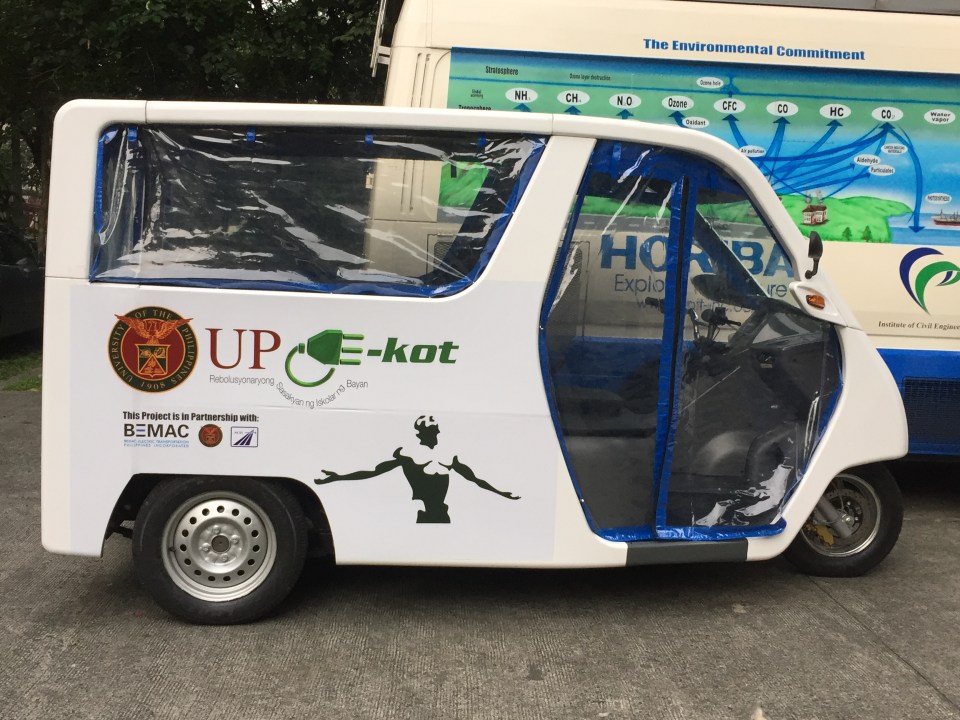 An electric tricycle currently undergoing experimental operations at the University of the Philippines Diliman campus is more a replacement for tricycles and multicabs than for jeepneys.
–
Transport in times of rains and insensitive statements
How important is a good public transport system? Part of the definition of a good public transport system is that it should be an all-weather system. This means that even if there is inclement weather, the system would still be functioning and able to ferry people between their homes, workplaces, schools and other destinations. Of course, the exception here would be the times when there are extreme weather conditions like typhoons passing through cities. The rains today and past other days reminds us how difficult it is to commute even when you have your own vehicle. Those who opt to use their own cars now encounter severe traffic congestion with increasing frequencies while those with only public transport as their choice usually have difficulty getting a ride home.
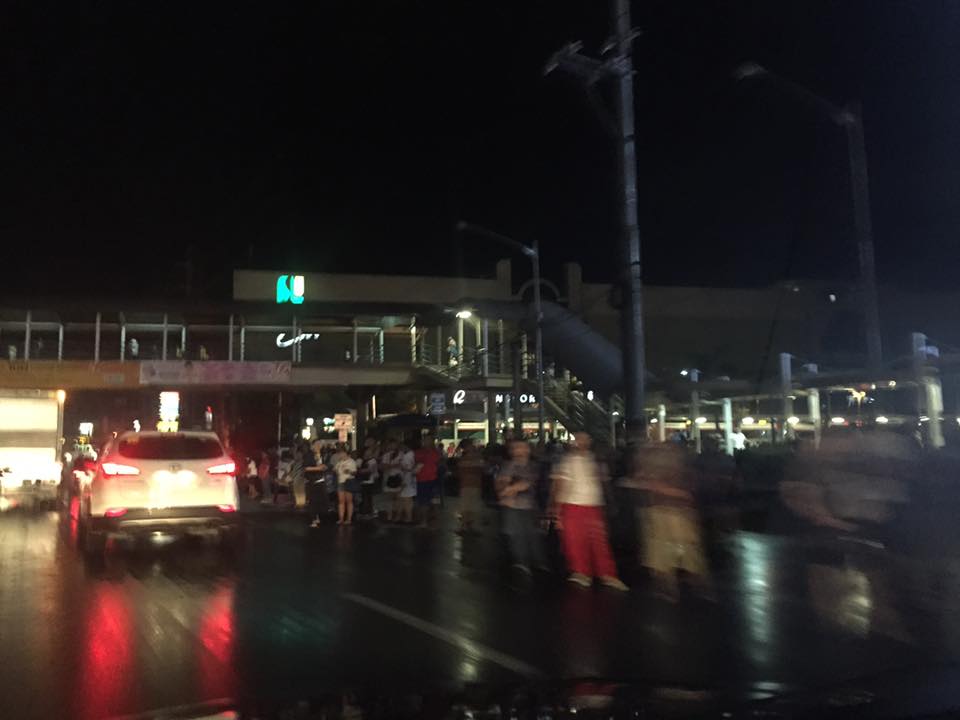 Commuters on the carriageway trying to get a ride home – many brave the strong rains to get ahead of others
It is not just unfortunate but rather depressing that Metro Manila and other major Philippine cities have no efficient public transport systems. The current modes of transport are road-based and dominated by paratransit including jeepneys, multicabs and tricycles. The state of disrepair of the PNR and MRT3, the much-delayed extensions of LRT1 and LRT2, and the much-delayed construction of MRT7 and BRT lines all contribute to the hellish commutes people experience everyday. Combine these with what experts regard as deficient station plaza designs that have led to inefficient transfers between the trains and road-based transport. It is no wonder that a person on bicycle can beat a commuter on a trip between Trinoma in Quezon City and a university in Manila considering the state of MRT3 and the poor transfer conditions between MRT3 and LRT1. This won’t likely be the case in Singapore or Tokyo where the proper hierarchies of transport are well established and with the necessary facilities to support their people-friendly systems.
What’s more depressing, frustrating and disappointing (if its possible to feel all three simultaneously) is how transport officials, including and especially the top official of the Department of Transportation and Communications (DOTC), apparently see our transport woes as “not fatal”. Is it really “not fatal”? Increases in the incidence of respiratory diseases due to the increased emissions are attributable to mobile sources (vehicles) and the long hours of road traffic congestion. The increase in the number of fatal road crashes as reported by the Metropolitan Manila Development Authority (MMDA) is also attributable to a significant increase in traffic volumes. One comment on social media was right on the dot on emergency cases ending up dying due to the ambulances being unable to make it to the hospitals in time for their passengers’ treatments.
And so, there were renewed calls for transport officials to get out of their chauffeured cars and take regular public transport between their homes and offices. The dares include riding the MRT3 during the peak periods and actually experiencing the queues and the crowded platforms and trains. It is no wonder that the image of the Dutch ambassador riding his bicycle to his office has been a popular share in social media because a lot of people feel that leaders should be examples themselves on how each one of us can pitch in to solve transport and traffic problems. Attempts by some government officials (including the top official of the transport department) to ride the MRT3, for example, are met with much criticism because they are given special treatment – they skip the lines and have bodyguards escorting them and clearing the way and space for them to ride comfortably. Clearly, this is not what the common commuter experiences everyday when he or she would have to use something short of MMA skills to get a ride.
Are we helpless against such insensitivity of our officials, many of whom are politicians and professionals associated with oligarchs? Not totally. And next year’s elections offer the commuting public a chance to express what they think about transport in this country and in their cities and municipalities by making transport and traffic urgent issues that need to be addressed and prioritized. Will you vote for candidates who had a hand in the continuing deterioration of transport in the Philippines and who consistently dismiss transport and traffic issues as secondary and just a by-product of non-inclusive economic growth? I surely won’t and will be very critical of candidates’ platforms and proposed programs should they win and become the leaders of this land. A big part of those programs should be how to address transport and traffic issues especially the deficiencies in infrastructure. Addressing these pressing issues on transport and traffic will go a long way in improving the quality of life of Filipinos and ensure a sustainable and inclusive growth for the country.
–
Good intentions and knee jerk reactions
Social media is again abuzz with stories about Uber and how Philippine government agencies like the Department of Transportation and Communications (DOTC) and the Land Transportation Franchising and Regulatory Board (LTFRB) are hassling Uber, Grab and similar companies into complying with government regulations covering their services. Is it really a hassle and are these “Transport Network Companies” or TNCs the real deal in terms of solving part of Metro Manila’s transport woes?
I believe Uber and other services like it have good intentions towards providing high quality, on-demand transport services. However, based on what I’ve read about the service in other countries (particularly in the US and Europe), the intention (original?) was to take advantage of surplus or excess capacity of vehicles being driven by “owner-drivers” between origins and destinations such as their homes and offices. That means an improvement of sorts for traffic as, instead of having one vehicle per person, two or more can share a single car. The main differences with conventional carpools is that the driver and his passengers practically do not know each other, and the passengers pay the driver a fee that is agreed upon at the start of the transaction. This works well in car-oriented cities as well as those with less than satisfactory public transport services especially when it comes to taxis.
The last sentence seems to be the right description for Metro Manila and other rapidly growing Philippine cities. And so, Uber, Grab Car and other shared service attracted many users who can afford them and providers willing to share their rides with total strangers. I stated “owner-drivers” in the previous paragraph as this was supposed to be an essential part of the set-up where Uber and others didn’t add to the cars already on the roads. Problem is, apparently and allegedly, some enterprising people who had the resources thought it would be a good idea to deploy all their vehicles (and even purchase additional ones) by hiring drivers they could register with Uber or Grab Car. That way, they thought they could bypass the typically bureaucratic process of getting a franchise for taxi or rental car franchises that also include all those business permits and, of course, taxes. The result of this would not be the utilization of excess capacity but the addition of more cars on the roads and therefore contribute to worsening congestion.
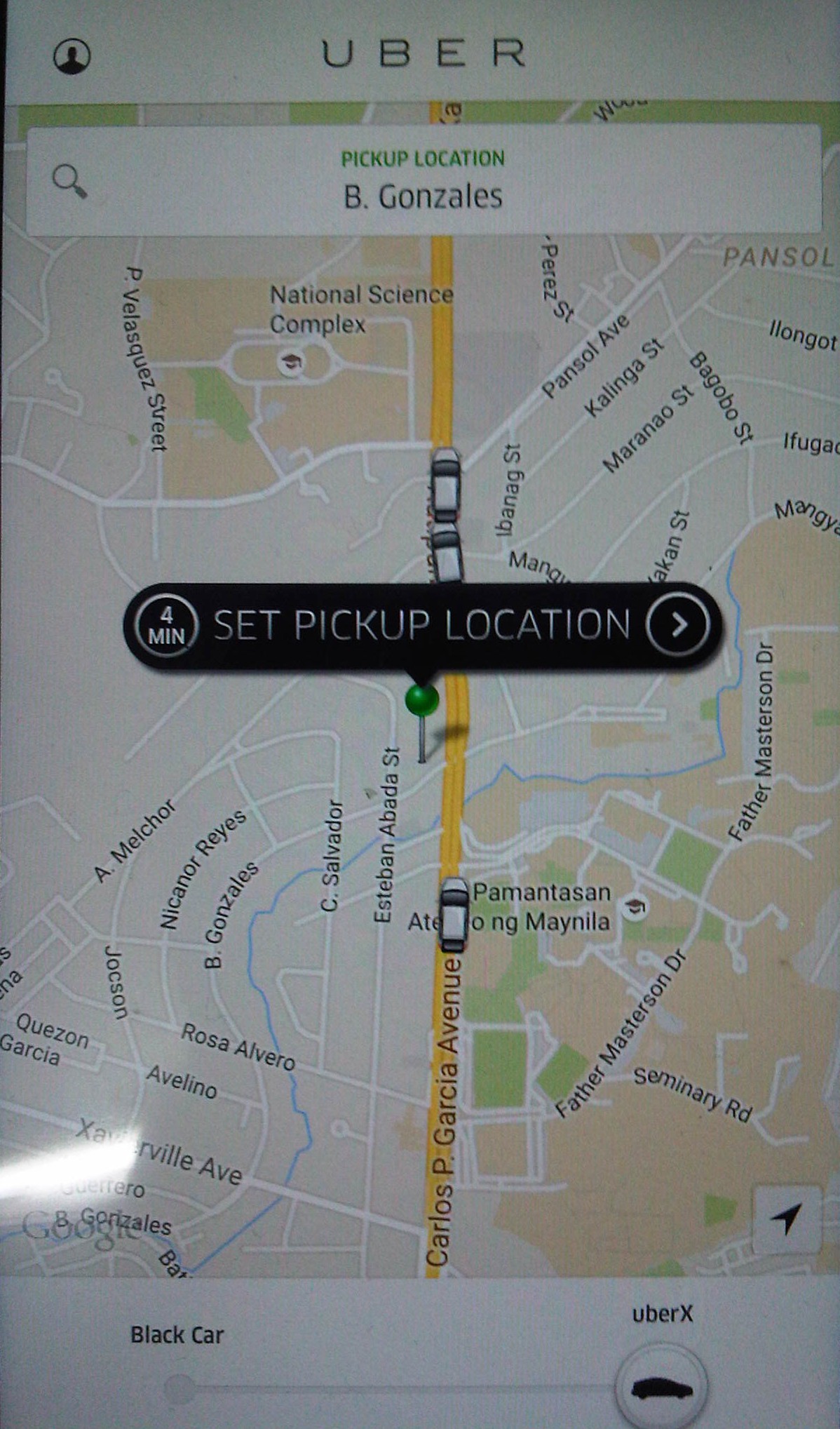
As far as the LTFRB is concerned, like it or not, they are just doing what they are mandated to do and are supposed to do with any transport service provider that is not purely private (i.e., services with a fee). It just so happens that the DOTC and LTFRB have been on the receiving end of a lot of flak from the public and especially in social media for what is perceived as the agencies’ ineptitude in dealing with major issues in public transportation. These include the continuing saga that is EDSA-MRT 3 and the perceived low quality services provided by buses and jeepneys in general that leave people at the mercy of taxis and UV express if they opt not or cannot afford to purchase their own vehicles.
The main issue is not whether DOTC and LTFRB should pay attention to Uber and others like it. The agencies should as per their mandates. However, there are a lot of other more serious and more urgent issues/problems including the much delayed mass transit projects and the low quality of service being provided by buses, jeepneys, UV express and conventional taxis that the DOTC and its attached agencies need to act on and now. I know it is a generalization (There are many good bus, jeepney, UV express and taxi drivers and operators out there who are also working their butts off to earn a living.) but then when you combine unsafe driving, with high fuel consumption and a lot of harmful emissions then you get a cocktail that’s definitely bad for all travelers.
How many people use Uber or Grab Car or taxis? Do they outnumber those taking the LRT/MRTs, buses, jeepneys and UV express? They don’t and therefore only represent a small percentage of the trips being taken everyday in Metro Manila and adjacent areas. And so the more pressing issues are really those pertaining to mass transit and the dire need to construct these systems once and for all in order to achieve a more sustainable and inclusive transport system for this still growing megalopolis.
–
The LRT Line 2 Extension gets underway
A lot of people have been waiting to see the construction of the LRT Line 2 extension from Santolan in Pasig City to Masinag in Antipolo City. Right after the groundbreaking ceremony last June, there seemed to be no activity along the alingment that was the center of Marcos Highway. Actually, there were already activities as the contractor already deployed personnel to do some surveys including marking the locations of the columns that will support the elevated tracks.
The past week saw the contractor setting up a work zone in the middle of Marcos Highway and stretching from across Robinsons Metro East and McDonalds. The work area included what was the opening for the Felix Avenue-Marcos Highway intersection. This is probably one of the busiest if not the busiest stretches of Marcos Highway so the reduction by one lane for either direction of the highway immediately had a negative impact on traffic. Added to the highway capacity reduction in terms of the remaining available lanes is the further reduction due to the ‘usyoso’ behavor of motorists ‘inspecting’ the work zone as they pass by.
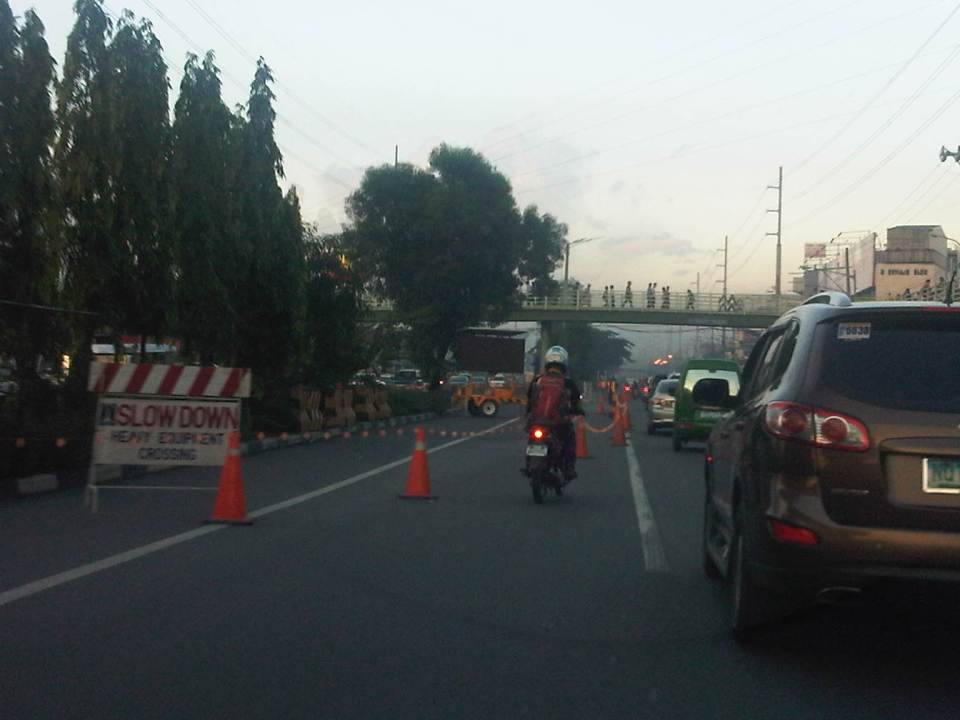 Work zone across from Robinsons Metro East – direction of traffic to Masinag (eastbound)
 Work zone at the junction of Imelda Ave. (formerly Felix Avenue formerly Imelda Ave.), Gil Fernando Ave. (formerly A. Tuazon Ave.) and Marcos Highway
 Work zone near McDonald’s (on the other side -westbound – of Marcos Highway) and also near a major U-turn slot used by vehicles coming from Imelda Ave that are westbound
Traffic will definitely be heavy along this section and the rest of Marcos Highway once construction is at full swing. I am tempted to say that it might be worse than the NAIA expressway construction site of which the contractor is the same. I just hope the appropriate traffic management measures are implemented and that road users will be cooperative. This will likely be a couple of years’ sacrifice for anyone living along this corridor and the major roads connecting to it. Will there be a light at the end of the proverbial tunnel? There should be as LRT Line 2 will finally be able to serve an area wanting of efficient and reliable public transport.
–
Health and commuting
Why is good public transportation especially transit important? Perhaps transport engineers and planners often get lost in trying to explain this from the perspectives of travel efficiency (e.g., reduced travel times, fuel efficiency, more capacity in terms of people carried, etc.) and environmental concerns (e.g., reduced emissions, reduced noise, etc.). Perhaps, too, there’s a need to articulate the importance of good public transport from the perspective of health. How many people do running, jogging or walking in the mornings, afternoons or evenings just to lose weight? How many go to gyms to workout? Perhaps the key to health lies in just walking everyday and integrating that healthy walk in your daily commutes. Here is a nice article from the Wall Street Journal on the link between the way you commute and a healthy life:
Your Commute Could Help You Lose Weight
Somethings I miss from living in Japan and Singapore are my regular walks to and from the transit station. I recall really good walks between the Transport Laboratory in YNU to the Soetetsu Line Kami Hoshikawa Station. You have to walk up a small mountain almost everyday from the station to the university. I also had good walking buddies back then during my 3 years in Yokohama. Later, I also enjoyed walking or cycling between the Transport Lab at Saitama University and the International House. Often, too, I would walk or cycle to the supermarket, the transit station or just around the neighborhood during free times. In Singapore, our home and the office were also near transit stations so we could take nice walks between them aside from the four flight of stairs to our apartment on the fourth floor. Such healthy commutes can be realized in Philippine cities if proper planning is undertaken and transit projects are implemented not just from the perspective of efficiency but, importantly, from the viewpoint of health. The current state of public transport is not healthy and many, especially those taking the EDSA MRT 3, will say that it is quite stressful to commute in Metro Manila. And stress is definitely not the way to lose weight. Is this true for other Philippine cities as well? Hopefully, we can work out transport solutions that include good public transport to promote healthy lifestyles.
–
Grab a taxi
When we were residing in Singapore, it was so easy to book a taxi wherever we might be. Comfort Taxi’s booking system allowed us to get a taxi from our home to the airport or to avoid long queues at the mall by booking a taxi by phone and waiting for it at a designated stop nearby. With the arrival of GrabTaxi and EasyTaxi in the Philippines, getting a cab became a little easier and convenient though one friend opined that the app basically mainstreams the current practice of negotiating with the cab driver for the fees (usually higher than the meter fare for metered taxis) to be paid for a ride. Hindi pa kasama ang tip dito! This ‘negotiating’ is a ‘trial and error’ thing and in certain cases, there might not even be a negotiation for the fares as Metro Manila cab drivers are notorious for being choosy about their passengers and their destinations.
Here are a few screen grabs from a booking we made last month after having some difficulty getting a ride out of UP Diliman in Quezon City.
 Information about the booking fees in various Philippine cities. The booking fee in Manila is conspicuously and significantly higher than those in other major cities.
 Grab Taxi’s interface shows the number of taxis nearby, which is apparently the number within something like a 4 or 5-kilometer radius of our location (204 is a big number!). We were at Melchor Hall at the time and the most convenient pick-up location was at the National Center for Transportation Studies, which was behind Melchor Hall.
 You can also check out the availability of more exclusive (and expensive) Grab services such as GrabCar and GrabCar Premium. When you slide to GrabCar, the status bar will also show how many drivers of that service option are nearby (i.e., 20 drivers nearby for GrabCar). GrabCar would be similar to the basic service (and vehicle) provided by the more popular Uber.
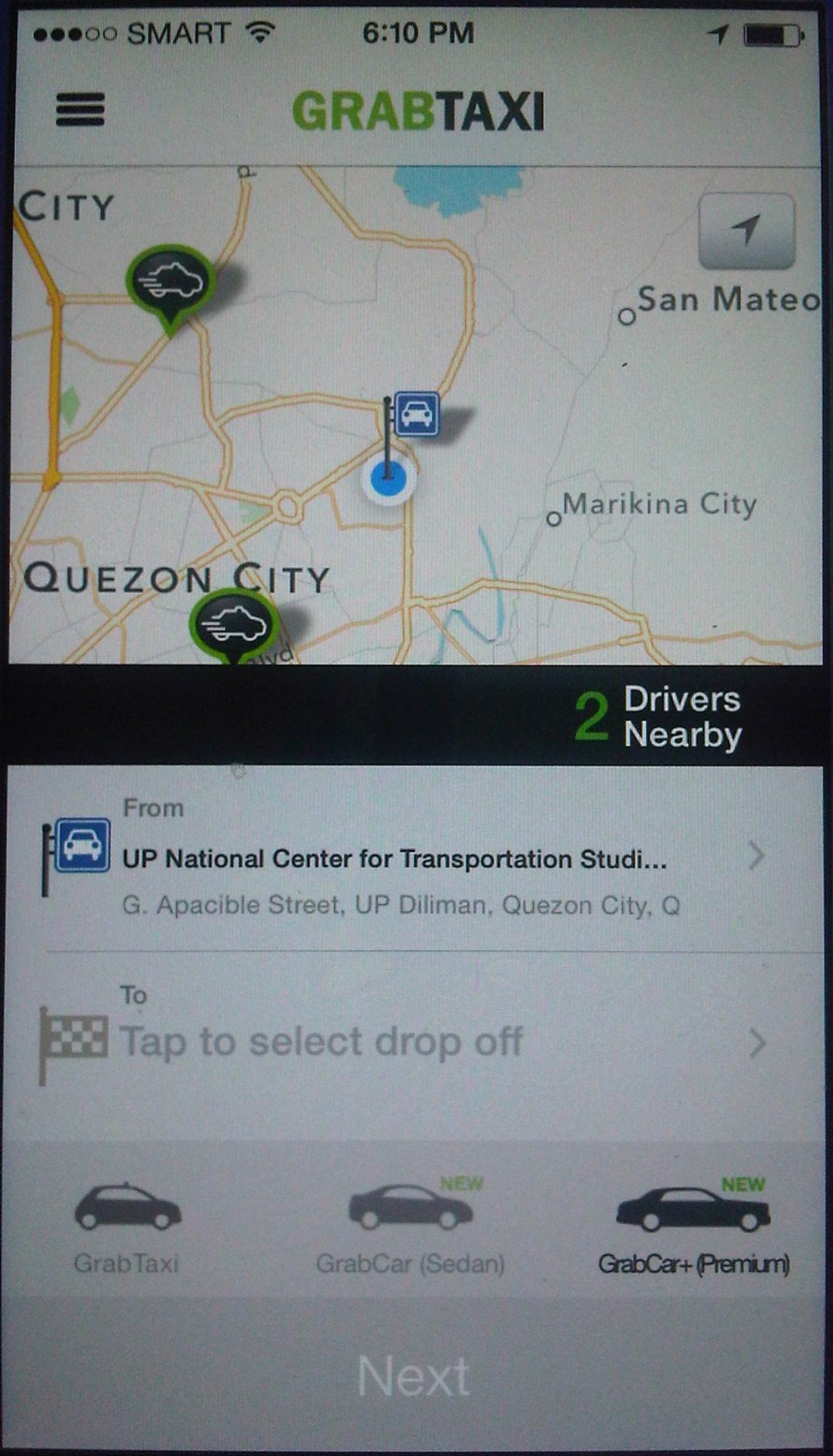 GrabCar Premium is probably the equivalent of the Uber Black Car service we have in Manila.
 Another view of the user interface showing some (or many) of the 204 taxis nearby.
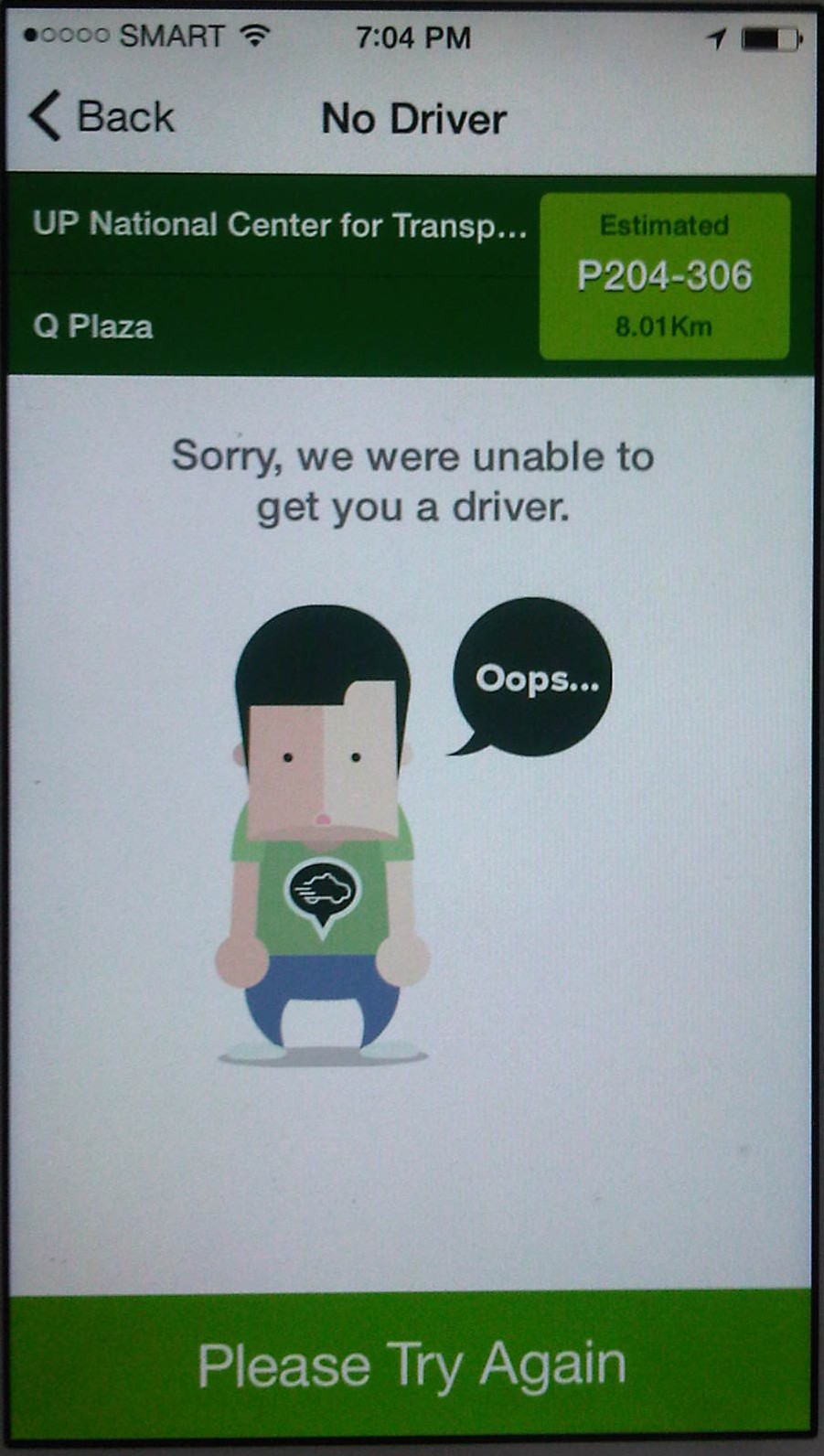 Here is an example of a message from GrabTaxi after it was unable to get a cab for us.
We were fortunate that the failed attempt at getting a cab was once only as we got a cab in our next try. This is despite all the cabs supposedly nearby. In reality only those who are willing to go to my destination from Quezon City will initially be interested in taking my request via the app. There is also a gratuity feature of GrabTaxi that allows the user to indicate how much he/she would be tipping the driver on top of the fare and booking fee. In the end, I guess my stating a very generous tip ensured my successfully getting a cab. For this, my friend’s opinion seems to be true that apps such as GrabTaxi mainstreams or makes the negotiations formal and a given when using the app. It, however, already eliminates the part where the prospective passenger gets turned down by the cab he/she hailed. When a cab responds to a request via GrabTaxi, EasyTaxi or even Uber, the driver already agrees to the terms of the deal regarding the ride. And it is a good thing that these apps now feature feedback mechanisms (e.g., rating the drivers) in order to weed out those that are still uncooperative, greedy or want to take advantage of the need for taxi service.
GrabTaxi now has a new service, Grab Express, which is an on-demand pick-up and delivery service. This is a service already provided by other companies in the US that are now giving traditional or conventional courier/logistic companies a lot of competition. I would think there is a demand for such services especially in cities where documents and other stuff still need to be submitted to offices like reports, manuscripts, letters and others that need to be delivered in “hard copy” format.
–
Some thoughts on the EDSA MRT 3 problem
A lot of people reacted when the current Philippine President practically absolved the Department of Transportation and Communications (DOTC) from any fault regarding the issues on the EDSA MRT Line 3 during his recent State of the Nation Address (SONA). The main message in some articles appearing on mainstream and social media is that the President should blame DOTC for the mess. I have the opinion that both DOTC and the private entities involved (MRT Corporation, MRT Holdings) are responsible for the problem and its being continuously unresolved.
A week ago, I got the following question in my email:
Who is it that we could blame for the current state of the rail system? What do you suggest that the government or the private partner do in order for them to improve the line?
Quite frankly, I thought the first question was too direct and blunt as to ask who we can blame for the MRT3 mess. It is also very awkward to answer the second question because it assumes that I am an expert on the legal issues on this matter. I am NOT a legal expert nor would I want to pretend to be one. Here was my reply:
That’s actually a very tricky question. We can’t really blame a specific person or persons but perhaps entire organizations that are supposed to be responsible for the mess that is MRT3. The main or root issue seems to be legal and not at all technical. The technical problems experienced are manifestations of a contract that is a textbook case for how NOT to do a PPP. I am not privy to the details of the discussions between the government and the people involved and behind MRTC so it is awkward to make comments specific to this matter of the contract and all its complexities. Perhaps the DOTC wants to follow “Daang Matuwid” by not budging to the terms laid out by MRTC? Perhaps MRTC is aware of the stakes (plight of the riding public) and is using this to force DOTC into a deal that is not favorable to government? We can only speculate on this without firsthand knowledge of their discussions.
However, from the perspective of transport as a service and as a public good, I would say that MRTC indeed is aware of the public’s clamor for improvement. This is all over the news and social media in the form of commentaries, images and even videos of the undesirable experiences of those taking the MRT3. In the end, DOTC must decide whether it is all worth it to maintain the stalemate with MRTC considering that the public interest is at stake here and things will just become worse with inaction. Perhaps the government should move towards the best compromise they can live with considering the urgency of addressing the problem at hand.
I would like to think that my reply was quite cautious. There have been many allegations and claims from both sides of the table regarding how to resolve the impasse and the conflicts that seem to be interwoven with the contract on the MRT3. Perhaps such cases test the limits of “Daang Matuwid”? Much was and is expected from DOTC considering its battery of lawyers including top officials of the department. Aren’t they supposed to have been involved in discussions and negotiations aside from strategic planning for our transportation in this country? I guess the general public especially those who take the MRT3 for their commutes already know who to blame for their plight…
–
2015 National Science and Technology Week and the Hybrid Road Train
The Philippines’ Department of Science and Technology National Science and Technology Week 2015 on July 24-28, 9am-6pm, SMX Convention Center, Mall of Asia, Pasay City. NSTW 2015 has 9,300 square meters showcasing 145 technologies, 51 forum sessions, 11 technology demonstrations, 25 other S&T events, 1 road train. Admission is free. Details at National Science and Technology Week  A special feature this week is the Hybrid Electric Road Train developed by the Metals Industry Research and Development Center (MIRDC) with 5 coaches and capacity of 240 passengers. You can find a description of the road train project in the MIRDC’s site from this link. Here’s a screen grab from the same site/link showing what the road train looks like:

Incidentally, the MIRDC is also the DOST center in-charge of development of Automated Guideway Transit (AGT) vehicles currently being tested in the University of the Philippines Diliman and the MIRDC Compound in Bicutan. Free rides are scheduled on July 24 12nn-4pm; July 25-28, 10am-12nn, 2-4 pm. The road train is envisioned to provide for mass transit needs of cities particularly those with long stretches of major roads like EDSA or C5 in Metro Manila.
–
San Diego Buses
I took a lot of photos of transport in San Diego and among these are of buses. The San Diego Metropolitan Transit System operates a variety of buses that included articulated ones. These have fixed routes and designated stops. At each stop, there is information on what buses (i.e., routes/route numbers) stop there. Here are a few photos of buses in San Diego.
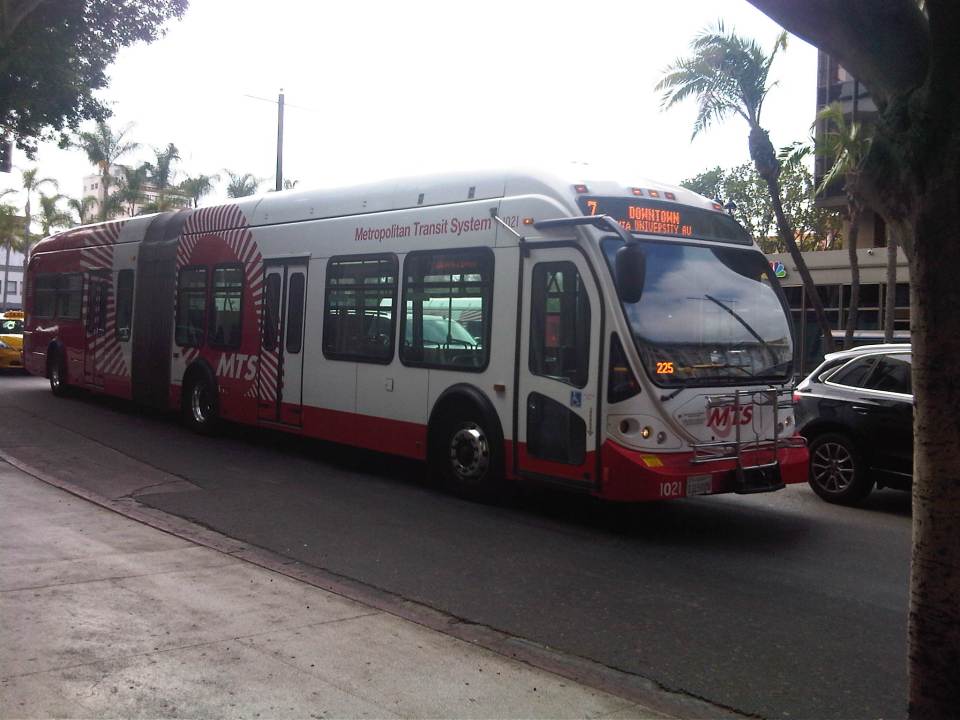 Articulated bus in downtown San Diego
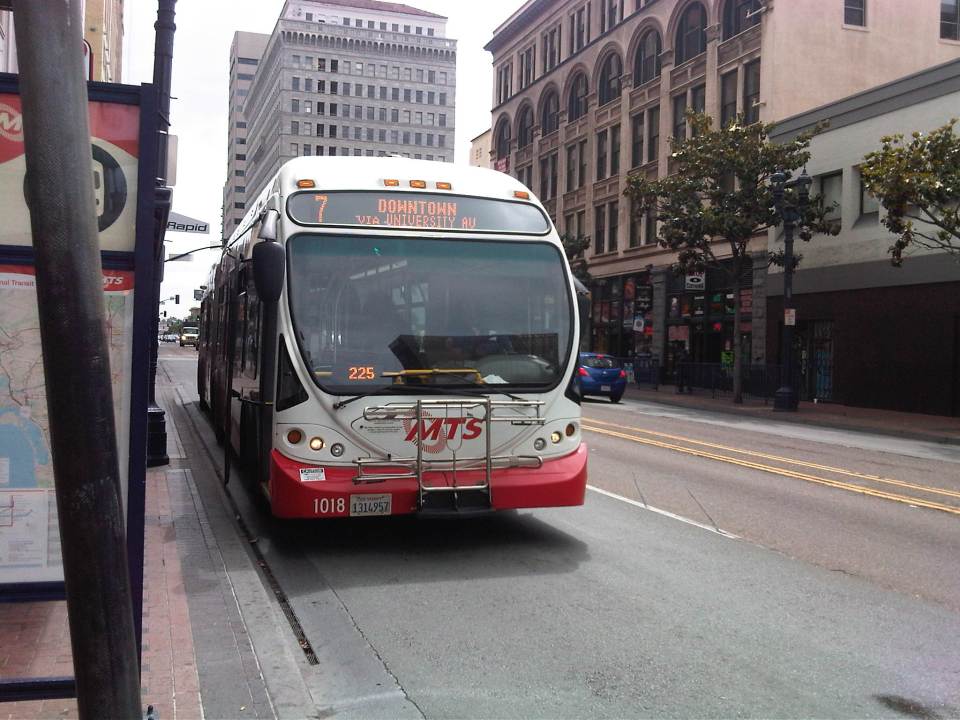 The contraption in front of buses are racks for bicycles
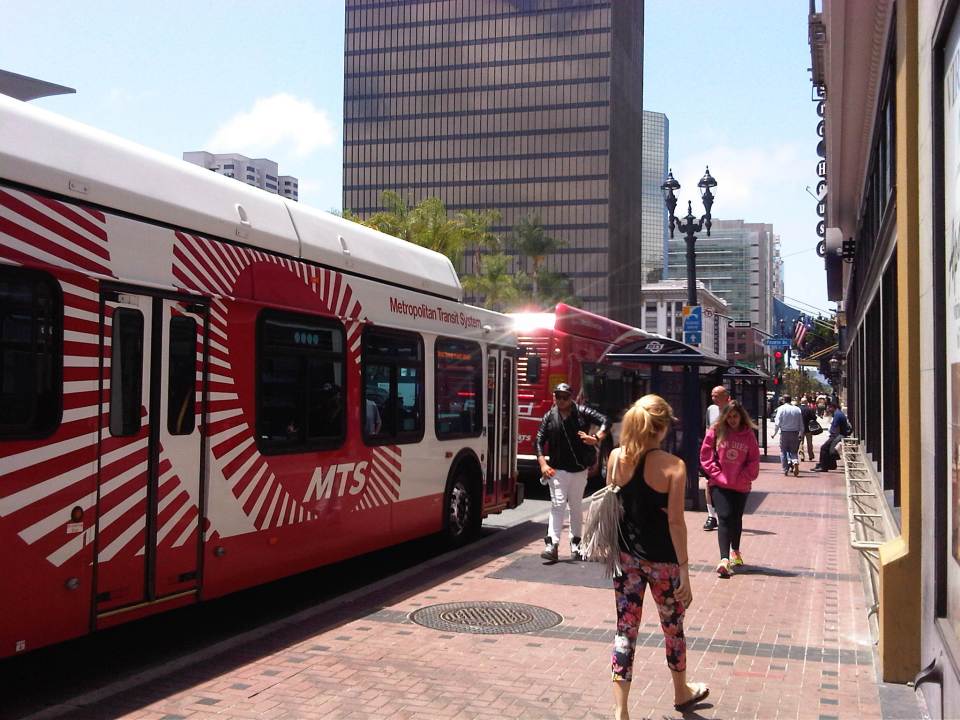 Bus stop in downtown San Diego
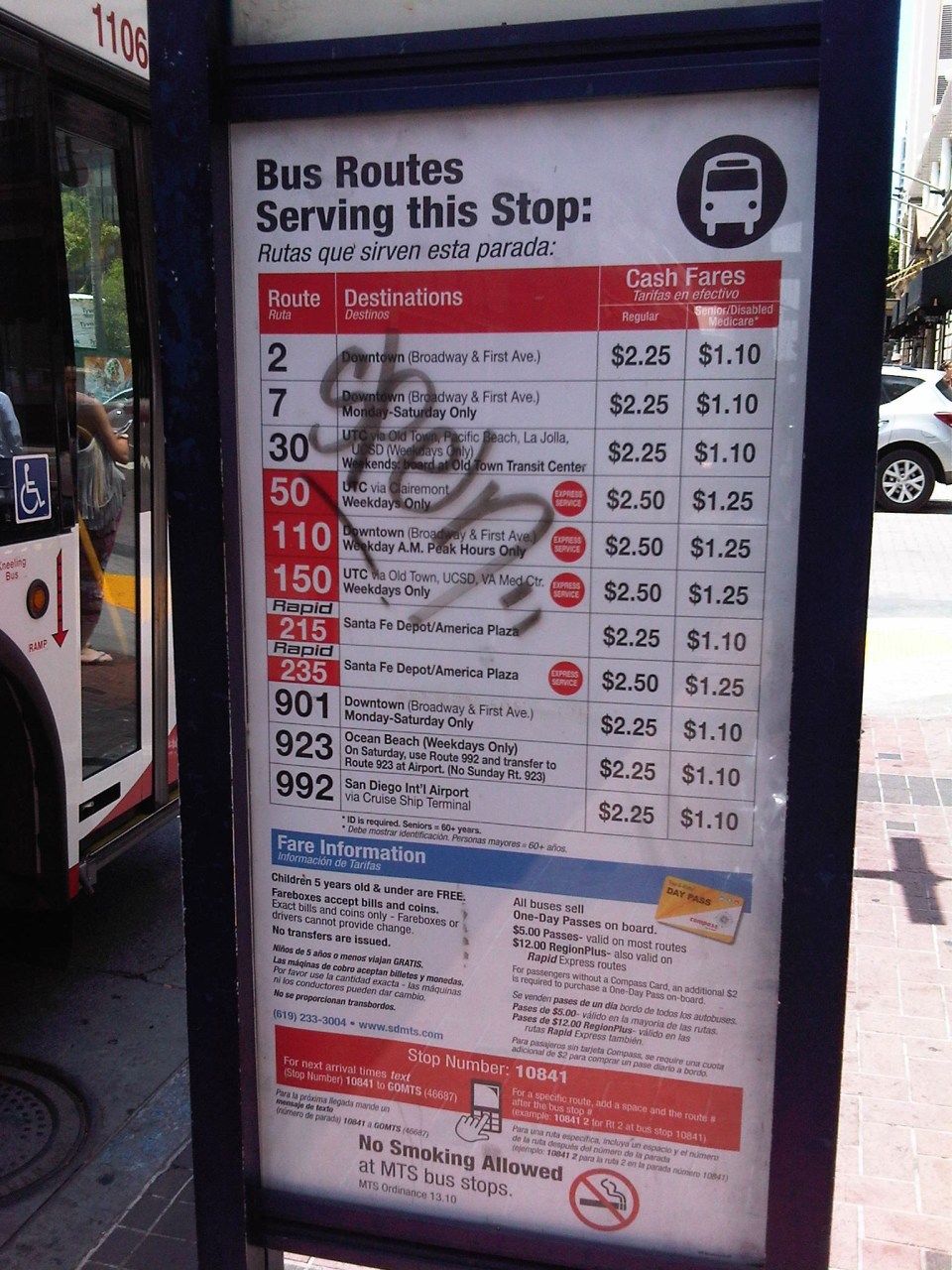 Information on bus routes, destinations and fares at bus stops – you can pay as you board the bus or purchase a ticket, pass or compass card in advance.
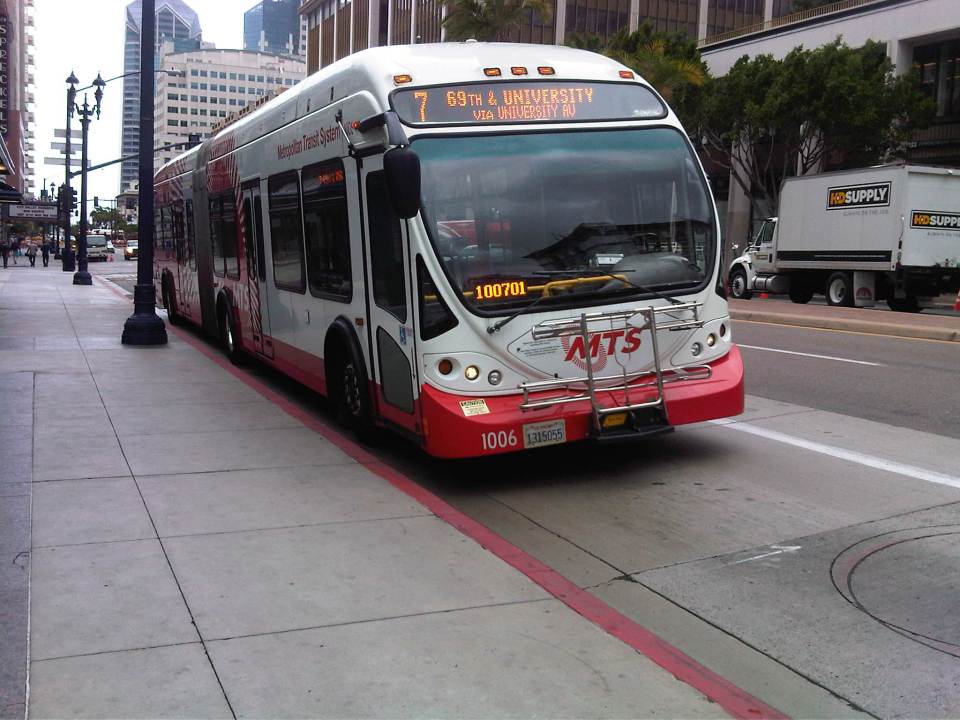 A bus serving the La Mesa-Downtown route via University Ave. – this is the bus you take from downtown San Diego to San Diego Zoo
 Bus interior shows few seats and much spaces for standees – enabling the vehicle to maximize its passengers
 The interior on the rear half of the articulated bus
San Diego is a city of just under 1.4 million people with a transport system that’s able to serve the demand for transport over the distances covered by its buses and trolleys. Compared to Philippine cities, San Diego’s transit system is one well oiled machine. Of course, it is more expensive if you convert dollars to pesos but then if you account for the standard of living (including living costs and salaries) and the quality of service provided by the trolleys and buses, then you have something Manila and other major cities in the Philippines would be envious of. Can we have something like San Diego’s transit system in the Philippines? We can but (and that’s a big ‘but’) it needs a lot of work and commitment to set-up and make something like this work.
–
San Diego’s Sta. Fe Train Depot
A highlight of my ‘do-it-yourself’ tour of San Diego, CA was the Sta. Fe Train Depot or Railway Station. The depot was celebrating is centennial and for me represented part of America’s railway heritage being part of a railway line stretching along the US’ Pacific coastline. Following are photos in and about the Sta. Fe depot.
 The historic Sta. Fe Train Depot building as seen from the San Diego MTS trolley station.
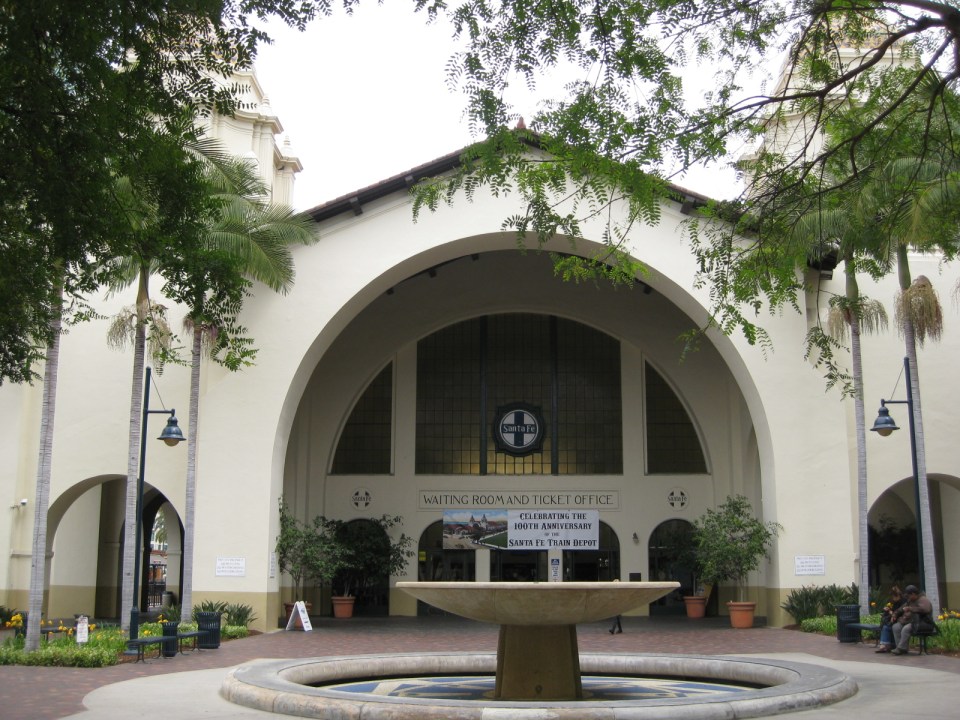 Front of the train deport showing a fountain and the main doors to the station building.
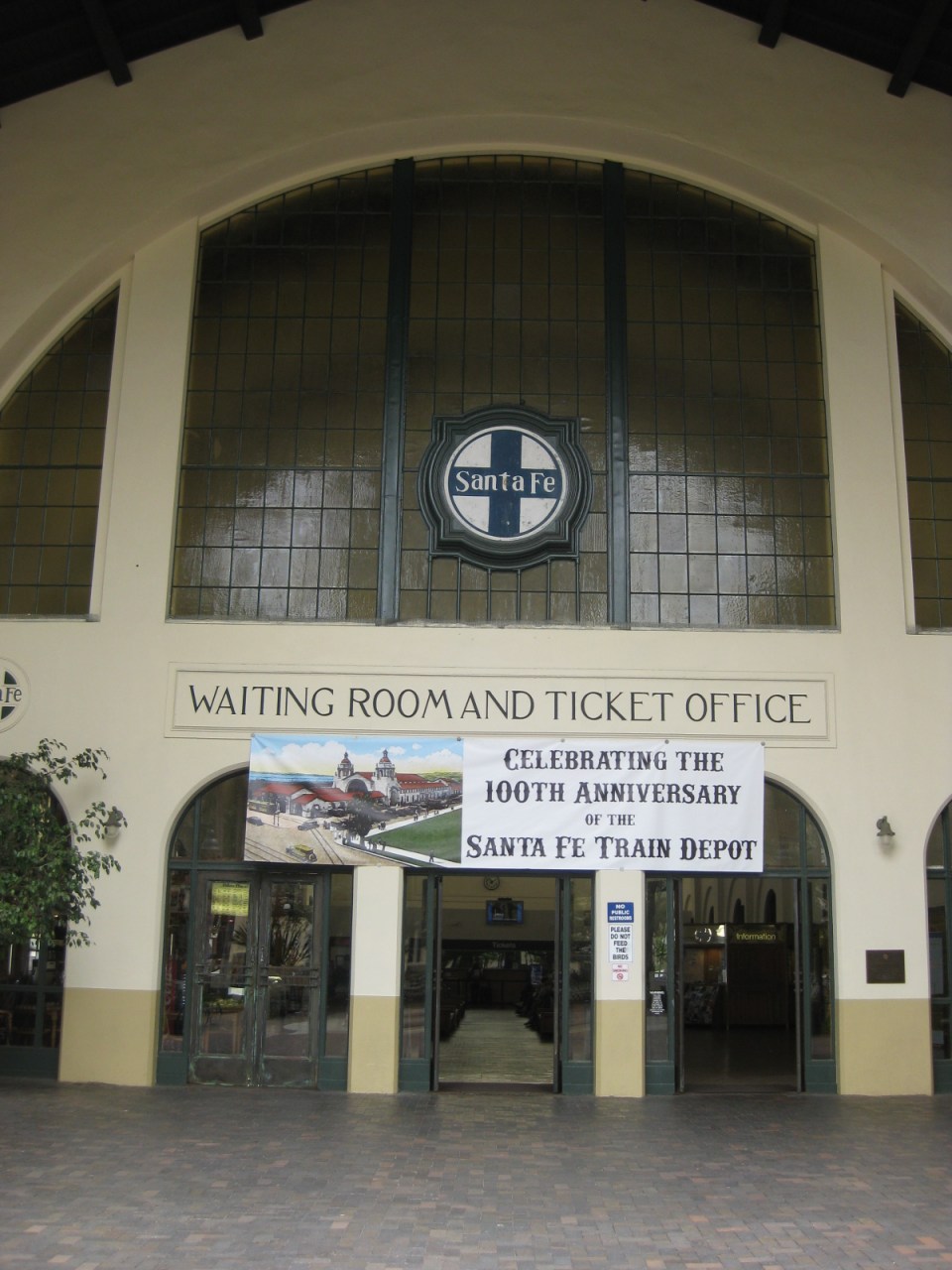 Entrance to the building, which contains the ticket office and waiting room for passengers and well-wishers.
 One is greeted by this splendid view of the building’s interior evoking a time when trains ruled in land transportation. An information booth is seen at the right while the food kiosk is at the left. The ticket windows are further at the center.
 The kiosk inside the station building provides sustenance to passengers, well-wishers and passers-by. Note, too, the mosaic designs on the columns of the building.
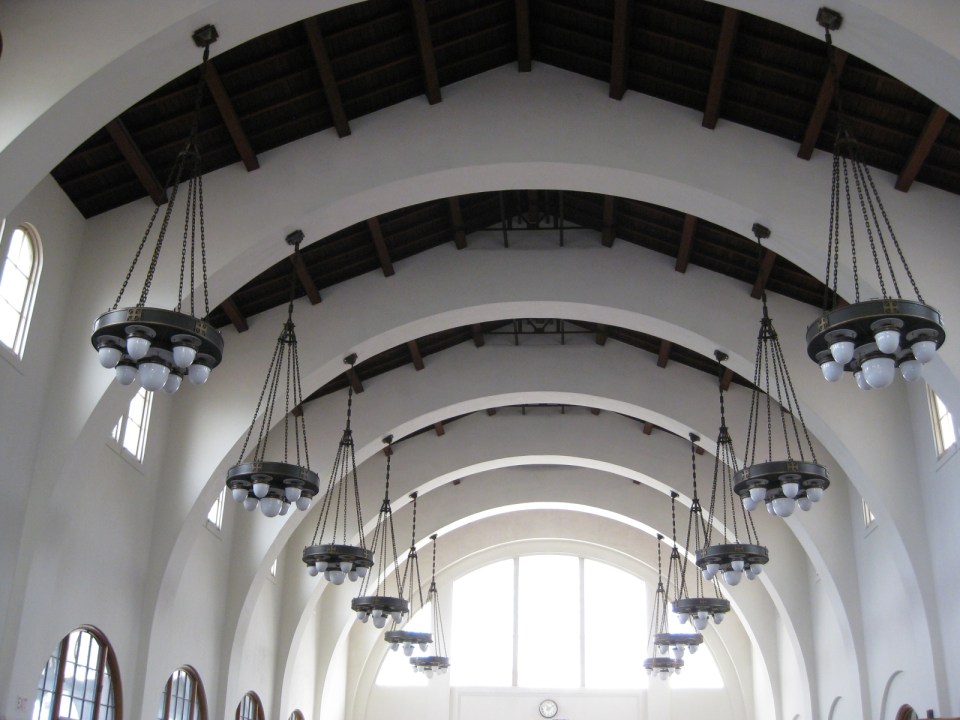 A closer look at the station’s ceiling and chandeliers shown arches emanating from the columns to support the roof. Such features are of earthquake resistant structures in this earthquake-prone region and particularly in the State of California.
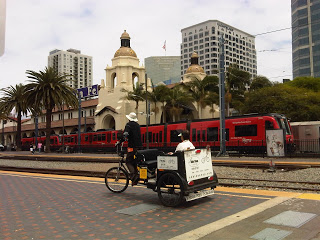 Pedicab, trolley and the Sta. Fe Train Depot
I took some refreshments at the kiosk in the station. The hotdog sandwich was good and the coffee was strong. I took the trolley from the station to explore San Diego along its commuter train lines. More on San Diego’s trains and stations in future posts.
–

