
Home » Public Transport (Page 59)
Category Archives: Public Transport
A tale of transport costs for a commuter
When I was in high school, the minimum fare was 1 peso and my daily afternoon commute from school cost me an average of 3 pesos per day. If we didn’t have to go to school for extra-curricular activities on a Saturday, that meant I usually spend 15 pesos per week or about 60 pesos per month. I remember that my parents paid 200 pesos for the school service, which only covered the morning trips from home to school. This brought my monthly transport cost total to 260 pesos and this was back in the 1980’s. At the time my weekly allowance was 100 pesos (~400/month); more than enough for my lunch and snacks, and which allowed me to save some money that I usually deposited in my savings account. Of course, my actual total allowance was 600 pesos per month factoring in the amount my parents paid for the school service. These figures meant transport accounted for 43.33% of what was my income back then (15% if the school service component was not included).
At university in the early 1990’s, my allowance was up to 300 pesos per week. Transport fares, however, increased with a minimum fare of 2 pesos (for the first 4 kilometers) and my two rides one way to the university cost me a total of 5 pesos per trip. This could easily be multiplied by two if I was able to get an easy ride home from Katipunan but traffic was already worsening at the time and I, together with a few friends who had similar commutes, often found myself going to Cubao where the terminal was so I could get a sure ride home. This meant I had to shell out an additional 6 pesos on certain days. I estimate that my weekly total could average around 80 pesos, bringing my monthly average up to 320 pesos. That translates to 26.67% of what can be considered as my monthly income at the time.
By the time I was in graduate school in the mid 1990s, commuting in Metro Manila was a whole different animal with congestion along my route really becoming terrible. It was so terrible that the conditions then resulted in the birth of what was called FX services. The then newly introduced Asian Utility Vehicles (AUV), particularly the Toyota Tamaraw FX’s, that originally were registered as regular taxis started contracting passengers (illegally) in order to maximize their fares. It was actually the other way around as passengers who were exasperated at the very long queues in Cubao decided to contract FX taxis as groups and offering the drivers fares they just couldn’t refuse given that their being taxis allowed for flexible travel routes bypassing congested roads. By the time, the going rate was 10 pesos per passenger for an FX taxi starting from Cubao and ending at Cainta Junction. I was among the people willing to pay for this luxury, considering it saved me a lot of time and the ride then was comfortable due to the airconditioning on these vehicles. Perhaps it was also my way of applying what I understood from my transport economics lessons from my Japanese professor back then.
My daily commute during my grad school days cost me around 30 pesos for a total of about 200 pesos per week counting Saturdays and other side trips during the week. This to me was quite acceptable considering I had a scholarship grant at the time that gave me 3,000 pesos per month excluding other allowances that covered research expenses. The significant increase in my income was actually just enough to retain the percentage I spend for transport. Due to the corresponding increase in my transport costs, the percentage I spent for transport remained at 26.67%!
Taking post grad studies in Japan a few years later, I estimate that my average monthly transport costs amounted to around 20,000 yen (I traveled practically everyday using trains and buses.) This didn’t include the very occasional taxi on late nights when trains and buses were no longer available from the city center to the dormitory. My monthly allowance though was a very generous 185,000 yen so transport only accounted for 10.81% of my monthly income. This meant I had money available for a comfortable life abroad after accounting for my needs (e.g., food and shelter) and factoring in savings towards my estimated disposable income at the time.
The above examples are illustrations of how much transport costs become significant considerations in our typical expenses. Transport costs like the fares I paid when I was a student ate up a significant part of what was considered my income at different times. My case can probably be considered as fortunate since my parents were able to provide for me during my high school and university days, and I was able to get generous scholarships during my grad and post grad schooling. It is not the same for may others who would have to shell out more to be able to travel between home and school and do not have the choice, given limited resources (i.e., allowances), to select transport with a higher level or quality of service. There are those who have to walk (and even swim) to and from school simply because they have no other means.
I relate my personal experiences as I try to understand the plight of many commuters who have to bear the provisional fare hikes that the LTFRB approved today. This is in part a reaction to the clamor of public transport groups for transport fare increase in relation to the alarming increase in fuel costs. Unfortunately, there is little difference between transport during my time as a student and transport today. In fact, we still are very dependent on tricycles and jeepneys where buses and perhaps rail transport is the more appropriate modes for travel.
Perhaps our continued dependence on transport that is too dependent on fossil fuels whose prices are susceptible to many factors makes us quite vulnerable not just to price changes but also to the whims of a public transport system that has been proven to be inefficient and ineffective. It goes without saying that we need to have the necessary public transport infrastructure built in order for commuters to once and for all be relieved of the constant threats of oil price hikes and fare increases. Too long have been the delays for rail lines and BRTs, and it is costing us billions of pesos that could have instead already paid for these systems that we are hesitant to put up. Only then will we be liberated from those who claim to be concerned about the welfare of commuters but fail to deliver safe and efficient transport services as they put revenue first contrary to their commitments when they got their franchises.
–
Decoupling transport and fossil fuels in the Philippines
An article appearing in the Business World today caught my attention as it provided, to me, a very good argument to support initiatives to wean transport away from its dependence on fossil fuels. Being a supporter of the initiatives for alternative energy to power public transport, especially the electric jeepneys, I can appreciate the discussions pertaining to urban transport. The DOTC, LGUs and the current dispensation should take heed of the main points in the article and focus attention and resources to building the transport infrastructure that our cities so badly need and that have been delayed for so long that we are often forced into short term (and short sighted) remedies (the FX or UV Express services come to mind).
The author is a former Dean of the School of Economics of the University of the Philippines Diliman and is well respected for his articulate views on practically everything connected to his field of expertise. His piece on urban transport in the Philippines includes mention of what many of our leaders already know but are afraid to touch due probably to its socio-political, and therefore painful, implications. I reproduce below the entire article as it appeared on the March 19, 2012 issue of Business World’s online edition. My sincere apologies for any copyright infringements that I might have committed.
The right thing is doing nothing
The clamor from public transport groups, mass organizations, a few politicians, media columnists, and — surprisingly — even some academics to reduce the VAT on oil products has now become so insistent that the government may just be tempted to cave in.
Doing so would be a big mistake.
It is hard to justify on first principles just why or how a solution to high oil prices should involve a reduction of the VAT on fuel. The VAT, after all, is based on the idea that all consumption must be uniformly taxed — that is, taxed at the same rate. Without good reason, the tax system should not itself be responsible for making some goods more or less expensive than others. Hence, if without taxes the price of a can of corned beef was, say,twice that of a bar of bath soap, then it should still be worth twice as much after a 12% tax is imposed on each. (Note that the ratio of X to Y is the same as the ratio of X(1.12)to Y(1.12).) That relationship is unchanged whether the uniform VAT is set at 5, 10, or 12%, as long as the rate is the same across all goods. (My colleague Ben Diokno has even seriously proposed that the VAT rate be raised to 15 percent in lieu of high income taxes — although he has curiously been reported as supporting a cut in the VAT on fuel.)
To argue that the VAT rate should be reduced for some products but not for others is to privilege the consumption of those products. But why should gasoline and diesel in themselves be more vital to consume than other goods? Why is a peso spent on fuel socially more important than, say, the peso a family spends on electricity or water? Or the toll paid by a bus using the NLEx? Or what a student pays for a cheap sandwich? Or a professional’s hard-won savings to purchase a laptop? Or more meritorious than a farmer’s purchase of fertiliser, pesticides, and farm tools? What entitles petroleum products to this special treatment?
If the answer given is that petroleum products are “consumed by the poor,” that’s not exactly true either. It is vehicle owners, both private and commercial, who consume petroleum-based fuel — and few of them are poor. Indeed, if the government were to cut the VAT on fuel, it would help not only jeepney — and bus — operators but also owners of BMWs, Benzes, Pajeros, and Fortuners. The effect would be to privilege heavier users of auto fuel — poor or not.
Tax-tinkering is fraught with danger, and its deleterious effects should by now be evident in our experience with an already existing fuel subsidy (which everyone seems to have forgotten), namely, the decades-old privilege given to diesel fuel. For starters, note that there is no inherent physical reason that diesel should be cheaper than gasoline. Indeed, from a pure cost perspective, diesel is more costly to refine, so that before any taxes, it is likely to be more expensive than gasoline. In the US and the UK, for example, where the two fuels are taxed uniformly, diesel is more expensive than gasoline; in Germany and Canada they cost virtually the same. So if only the 12% VAT were applied to both — say, at landed cost — gasoline would probably still be cheaper than diesel.
It is not the VAT but the lower specific tax on diesel — at only one-third of that applied to gasoline — that makes the latter more expensive by more than 20%. This low tax, which has been in place since time out of mind, was always meant as a concession to public transport, the predominant user of auto diesel.
And where has this discriminatory policy taken us? First, it has only deepened the country’s reliance on diesel fuel. It has discouraged any search for or shift to alternative fuels on the part of public transport. On the contrary, it has enticed an increasing number of private vehicle owners to shift to diesel fuel themselves. The latter, of course, is a completely unforeseen consequence and embarrassingly gives the same “pro-poor” diesel tax privilege to a jeepney driver and a Mercedes Benz owner. It’s basic Slutsky: cheapen something in relative terms and you divert consumption towards that thing. Similarly, lowering the VAT on fuel will do nothing but deepen the country’s dependence on all petroleum fuels.
The second effect is more pernicious. Cheap diesel — combined with the lax franchising of everything from buses to jeeps to pedicabs — has created an overcrowded and über-fragmented urban transport sector. A 2007 World Bank volume reports that Manila had 13,375 public transport vehicles per million people, compared to only 1,890 for Bangkok and 1,807 for Hong Kong. (Guess where the public is better served.) Philippine public transport today is dominated by numerous and fragmented small operators kept alive only by artificially cheap fuel.
Transport groups routinely blame high fuel prices for their woes. Under-appreciated is the fact that their own uncontrolled proliferation — which leads to cutthroat competition, congestion, and dangerous road rage and warfare — is the main reason for their low incomes. This proliferation of bit-players has itself been unwittingly brought about by the policy of subsidized fuel (diesel). Ultimately, however, this kind-hearted approach has only hurt the poor by depriving them of cheap, clean, and efficient transport. For just as large developers will be discouraged by squatters occupying a property, the transport sector’s preemption by an inefficient and fragmented small sector precludes the entry of firms with larger capacities and more efficient technologies, all of which could have led to better service.
Lowering the VAT on fuel addresses none of these problems. On the contrary, it would only perpetuate them. The country is better served by confronting the real problems of urban transport. Government time, imagination, and effort are better directed at encouraging higher capitalization in the transport sector, larger capacities, more fuel-efficient technologies, and less reliance on imported fuels whose prices are volatile. The initiative to field large numbers of natural gas-powered and electric buses is a promising start. Unlike the transport sector, the power industry weaned itself from imported oil many decades ago, and electric power now is largely sourced domestically and therefore largely immune to the price-gyrations of world oil markets. Using more electricity for transport is the more effective way to insulate the country from the speculative activity that characterizes world oil markets. The same goes for natural gas, which is something the country itself produces.
The sooner the petroleum dependency of public transport can be reduced, the better it will be for the country-including its poor. For that, the most urgent and bold actions are clearly warranted. But as for the demand to reduce the VAT rate on petroleum products-effectively undermining and distorting hard-won legislation for the sake of a temporary exigency-the best response is clearly inaction. And if there are those who choose to call this indolence, indifference, or “Noynoying” (the latest meme), if some critics cannot see the difference between a placebo and real medicine, between palliatives and real reforms-then the president would do well to pay them no heed.
He should simply-igNoy them.
Emmanuel S. de Dios is the treasurer of the Institute for Development and Econometric Analysis and a Professor at the UP School of Economics. For comments and inquiries, please email us at idea.introspective@gmail.com.
–
Indeed, Filipinos deserve better transport services. In most cases, the proliferation of informal modes where they are no longer suitable (e.g., tricycles dominating urban transport in many cities, jeepneys plying long distance routes, etc.) is actually a disservice with many operators no longer committed to providing safe and efficient service. For most, the livelihood aspect of transport has become so deeply rooted in the sector that our leaders have tended to turn a blind eye to the excesses and abuses such operators impose upon the riding public. The result? Filipinos will continue to aspire for their own vehicles (these days this vehicle would be the affordable motorcycle) because of the low quality of service of our public transport modes, eventually contributing to the worsening congestion we experience in our daily commutes. Meanwhile, we continue to envy the transport systems in the major cities of our neighbors like those in Bangkok, Kuala Lumpur and Jakarta. We are eons behind Singapore but soon, even Vietnam will probably overtake us in terms of public transport systems once they start building what they are currently planning for Hanoi and Ho Chi Minh. How long must we all suffer before our leaders are moved to finally address this problem head-on and not be satisfied with remedies.
–
First franchise for the electric jeepney
The first franchise for electric public transport was issued by the Land Transport Franchising and Regulatory Board (LTFRB) in favor of the electric jeepneys that currently service routes in the City of Makati, the financial center of Metro Manila. An article featuring the LTFRB’s issuance of the first electric vehicle franchise may be found here. Initially, these e-jeepneys were operating with support from the Makati City Government, which had the foresight for environment friendly public transport. But despite the formality of their routes in that city’s CBD, the e-jeepneys could only rely on donations, being unable to charge fares in part due their having no franchise to authorize them to do so.
The journey towards this first franchise was a long and somewhat arduous one. It took quite some time for the e-jeepneys to be recognized and registered under the Land Transportation Office (LTO) as the agency didn’t have guidelines that were flexible enough to admit a new generation of vehicles birthed by the desire to come up with low emission, low carbon transport to address environment concerns. For one, as the popular anecdote goes, the LTO was insisting on the vehicle having a tailpipe! Another story involved inspectors being dumbfounded by the vehicle not having a conventional engine (the e-jeepney had an electric motor). There are other stories (some probably tales) about other obstacles that the proponents of the e-jeepney had encountered from government as well as their own ranks (e.g., businessmen who just wanted to make a quick buck and weren’t really looking at the medium and long term of e-vehicle applications and deployment). And these add up to the significance of their accomplishments up to this point.
It is very fortunate and definitely admirable that proponents of the e-jeepney led by the Institute for Climate and Sustainable Cities (iCSC) and active players such as the Clean Air Initiative for Asian Cities (CAI-Asia) and those in the private sector have passionately and persistently pushed for the mainstreaming of electric vehicles. The group, now under the umbrella of the Electric Vehicle Association of the Philippines (EVAP) has been able to get the attention and support of bigger players such as Meralco and its mother corporation Metro Pacific. In fact, EVAP has been very strong in their lobbying for incentive to electric, hybrid and other vehicles using alternative energy sources. Perhaps with the continued, unflagging efforts of the group we will eventually see the transformation of Philippine road transport to one that is environmentally sustainable.
Theirs is a group that is very well grounded, knowing that the stakes are high and that the public and the transport sector need to be convinced of the viability of e-vehicles. The social and economic aspects of e-vehicles replacing conventional local transport modes such as the jeepney and the tricycle are quite complex when seen from the perspective of livelihood; a topic that seems to have been taboo to transport planners and policymakers. Yet, it is a topic that would ultimately have to be dealt with or addressed if real transformation is to be achieved for road public transport even outside the realm of the e-vehicle initiatives.
Transport, after all, is not entirely an energy issue or something simplified into such. This is why the various agencies need to work closely together and with organizations like the EVAP, the academe and international agencies like the ADB and the WB. It is a challenge to all concerned, and most especially to the DOTC, the DENR and the DOE to collaborate and encourage discussions in order to effect meaningful changes to our transport system. This should be pursued instead of the current set-up where national agencies like the DOTC and DOE appear to be working independently of each other while dealing with the same concerns. This can be problematic as well as wasteful in terms of time and other resources (e.g., funds), and may lead to confusion to the people and organizations involved.
–
EVA and PCA stand on the ADB’s eTrike initiative
The Electric Vehicle Alliance (EVA) and the Partnership for Clean Air (PCA) wrote to the ADB regarding the proposed “reallocation of USD 110 million away from the original stipulation in the approved Country Investment Plan of the Philippines with respect to the Clean Technology Fund (CTF).” The amount will pay for the purchase of about 100,000 electric tricycles, with the intention of having these replace conventional ones currently operating in many Philippine cities and towns. Following is the letter from the EVA and PCA:
Warm greetings!We wish to inform you that the Electric Vehicle Alliance (EVA) represents a broad assembly of private sector organizations involved in vehicle manufacturing and assembly, fleet operations, battery solutions, electricity provision and after-sales servicing, academic institutions, government officials and civil society groups. EVA is spearheading the transition of the country towards a low emission transport regime, particularly through the sustained deployment of electric vehicles.We wish to inform you that, in principle, EVA supports the aims enunciated by the eTrikes proposal that your office is currently evaluating. We urge your office, however, to postpone decisions over the requested reallocation of USD110 million away from the original stipulaton in the approved Country Investment Plan of the Philippines with respect to the Clean Technology Fund.
We believe further deliberation is warranted in order to correct what may be flaws in the proposal as designed and which can help ensure the genuinely transformational utilization of the CTF.
Among many other reasons, the following deserves serious scrutiny:
1) Country ownership: As documents from the Philippine government will demonstrate, country ownership of the initiative is far from certain. We attach, as an example, a document from the Department of Energy expressly stipulating that this is largely an ADB-driven initiative, a fact that is the subject of public debate at present.
In addition, as the the lead agency that determines climate change policy and operational coherence with regard to Philippine mitigatory and adaptation measures, there has been no formal involvement of the Climate Change Commission in the crafting, much less finalization, of the said proposal. The eTrikes initiative remains under intensive discussion at the National Economic and Development Authority (the Philippine planning authority) as to whether or not it will be included in the Investments Coordination Committee of the country.
2) Lack of government consultations with the private sector, civil society and academe. The Department of Energy itself has stated that it has not undertaken formal consultations with stakeholders to the enterprise, particularly the transport sector and the banking sector. (Using subsidized credit from the CTF the eTrikes project may potentially crowd out commercial banks intent on opening lending windows for e-vehicle financing) and, particularly, the renewable energy industry from whose sector the USD110 million is going to be diverted. No member of the renewable energy industry, in fact, has been consulted over the reallocation of the funds.
3) Design flaws. Unless corrected – which is also the purpose behind the need for quality undertaking of consultations – huge gaps in the project design are likely to have an adverse impact on the long-term success of the transition to low carbon transport in the Philippines. For instance:
* No feasibility study has been presented to sectors that stand to gain from, or be adversely impacted by, the eTrikes proposal. We believe such a brief should actually be the basis for consultations that the Philippine government is obliged to undertake.
* The project unbundles the undertaking into four operational clusters that will be bidded out: motor and controller; battery supply; charging station and chassis/body. It is uncertain if there is a fifth cluster on after-sales service, specifically because is no bidding process for the assembly stage of the operations. This last point particularly invites sticky warranty and legal issues – if there is no aggregator of the different clusters of the project, the question is who will assume liabilities? We hope it is not the Philippine government.
Furthermore, haphazard unbundling may also involve questionable transactions down the road given the size of the undertaking. (A single firm that does not undergo bidding may end up assembling 100,000 E-Trikes that, as the project proponent states, will be given away to “beneficiaries”).
We can identify further concerns but suffice it to say, from the examples cited above, a postponement of decisions by the CTF board is warranted.
We would be pleased to share with you further details about issues that will arise if decisions are made with undue haste.
Thank you for your attention.
Signed,Mr. Rene Pineda Jr.President, Partnership for Clean Air, Inc. (PCA)Convenor, Electric Vehicle Alliance (EVA)EVA Members:
Danilo Villas – AMMEO; David Garcia – Atin ‘To; Michael Alunan – Atin ‘To; Atty. Glynda Bathan – CAI-Asia; Bert Fabian – CAI-Asia; Alvin Mejia – CAI-Asia; Dir. Gregorio Tangonan – COMSTE; John Sognco- COMSTE; Engr. Jean Rosete – EMB-DENR; Asec. Cora Davis – DENR; Manny Sabater – DENR; Dir. Zenaida Mendoza – DOE; Arnel Garcia – DOE; Lourdes Capricho – DOE; Dr. Manuel Biona- DLSU; Rey Esguerra – DOST; Cynthia Lazo – DOT; Engr. Terry Galvante Jr. – DOTC; Art Valdez – former DOTC Undersecretary; Yuri Sarmiento – e-jeepney; Sec. Bebet Gozun – Office of the Phil. President; Yvonne Castro – EVAP; Red Constantino – iCSC; Efren Cruz – FPAD; Engr. June Yasol – JAYAREC; Ma. Theresa Calo – Mandaluyong City Office; Rannie De leon – Mandaluyong City Office; Anthony Agoncillo – Meralco; Mack Dizon – Meralco; Melinda Derpo – Meralco; Frank Collantes – Meralco; Jufaleh Constable – Meralco; Annie Reodica – Meralco; Victor Baylosis – Meralco; Carlo Nombres – Meralco; Tessa Oliva – Miriam P.E.A.C.E.; Raquel Naciongayo – MMASBA; Arnold Sarmiento – Motolite; Rhene Borja – Motolite; Abelardo Mendoza – Motolite; Rommel Juan – MVPMAP; Bong Cruz – MVPMAP; Ferdie Raquelsantos – MD Juan Enterprises; John Marasigan – PhUV; John Lee – PhUV; Rene Pineda – PCA; Vicky Segovia – PCA; Aileen Tepace – PCA; Alberto Suansing – SOPI; Jose Regin Regidor – UP-NCTS; Atty. Gia Ibay – WWF; Denise Galvez – WWF; Vince Perez – WWF; Lory Tan – WWF; Elsie de Veyra – ZWRMP
The statement is a clear expression of the stand taken by stakeholders in the e-trike saga. It is also clear that many if not most stakeholders have not been consulted in the rush towards the deployment of 100,000 electric tricycles. While the ADB and the DOE may have meant well in pushing for electric tricycles to replace the conventional ones, railroading e-trikes will cost the fledgling local industries a lot considering the possibility that the electric vehicles will all be imported from China. It should be noted, however, that there has really been little or no success at this stage since the e-trikes that have been donated have only added to the current fleets comprising of legitimate and colorum tricycles. Perhaps in the haste or excitement associated with the potential positive impacts of e-trikes (e.g., low emission transport) on the environment, the bigger picture concerning issues on public transport in Philippine cities and towns has been disregarded. But then this might be understandable since the approach appears to be still mostly from the energy perspective rather than transport’s. It should be emphasized again that the DOTC, as the lead transport agency with a mandate to draw up policy concerning transport in the country, should be active in the discussions and present a clear road map for what transport should be in terms of hierarchy and taking into consideration the relationship between demand and supply. Then perhaps the direction we are taking in relation to low emission transport such as electric vehicles will be a clearer and, not to mention, a straighter one.
–
Weekday EDSA
I chanced upon an uncongested EDSA one day during noontime along the northbound direction. I was traveling from the airport and saw that my usual route along C5 was very congested. I decided to take EDSA instead considering it was noontime and there would probably be less vehicles along the highway during that time of day. I was right and the following photos speak for themselves in as far as describing traffic between 12:00 NN and 1:00 PM.
 Section past Orense Street and the MMDA headquarters
 Section approaching Guadalupe
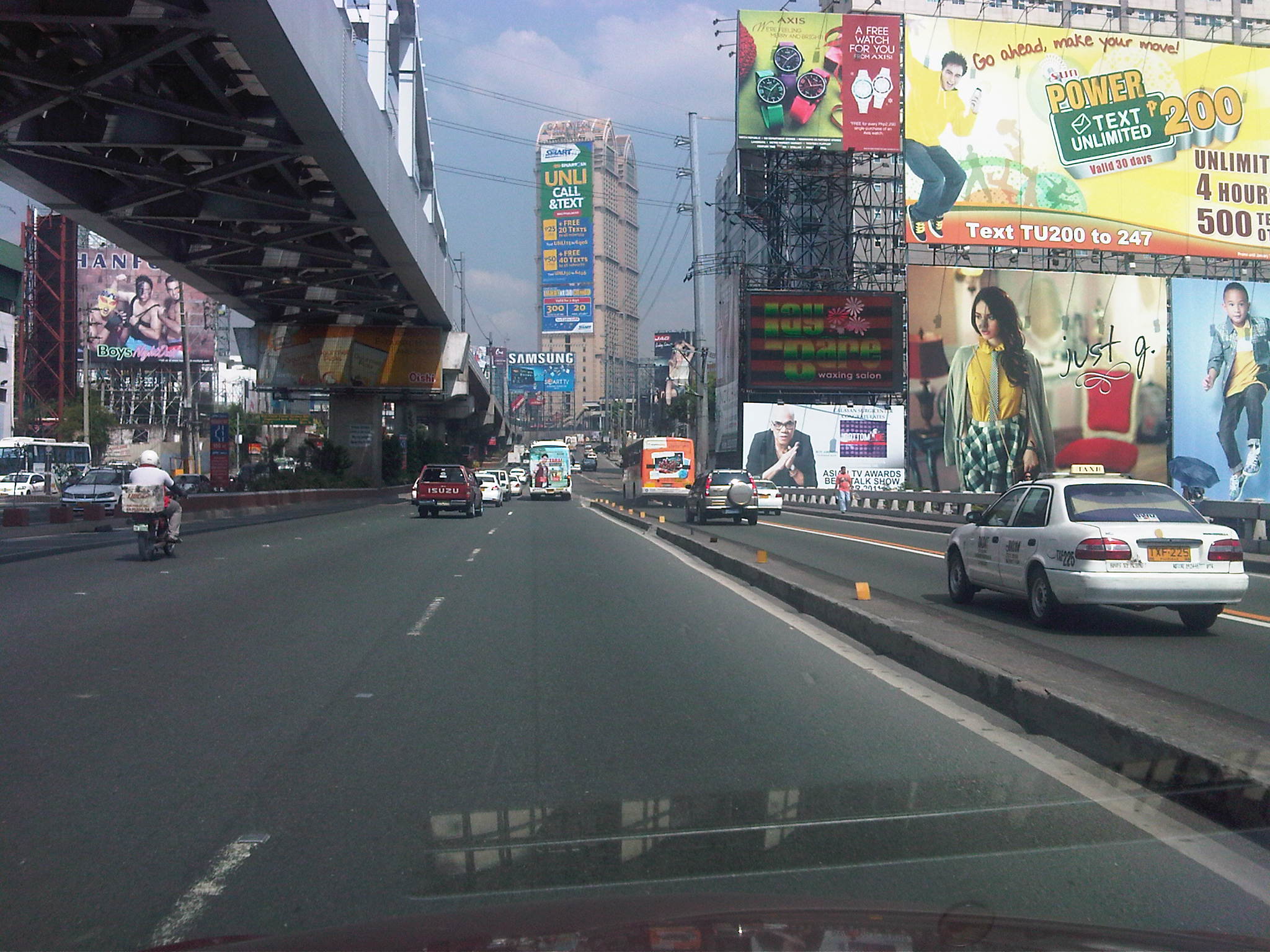 Guadalupe Bridge, crossing the Pasig River, the MRT 3 runs along the steel bridge above
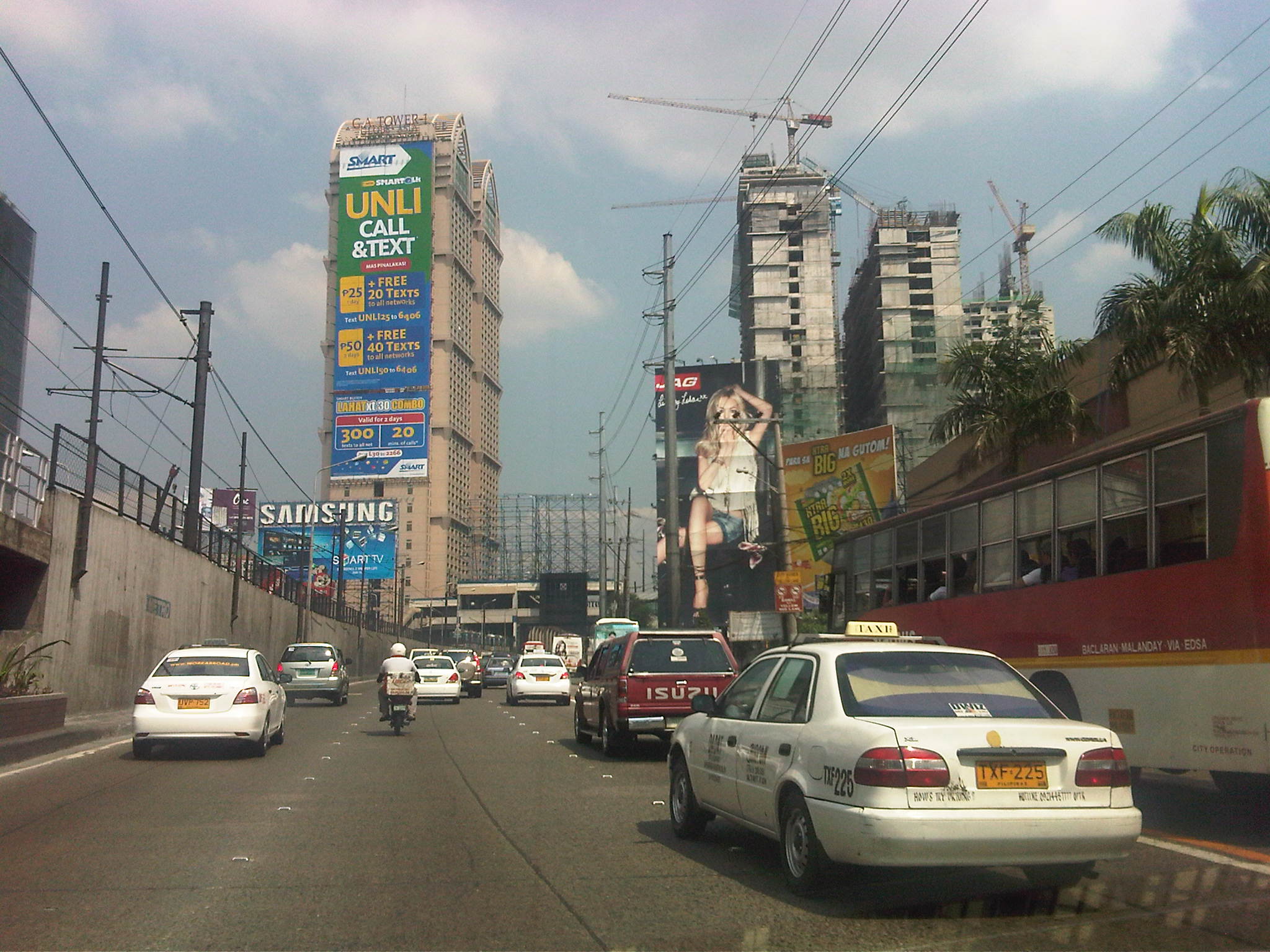 Approaching A. Bonifacio/Renaissance, in the background is the G.A. Tower, the Boni MRT Station and condos under construction including SMDC’s Jazz
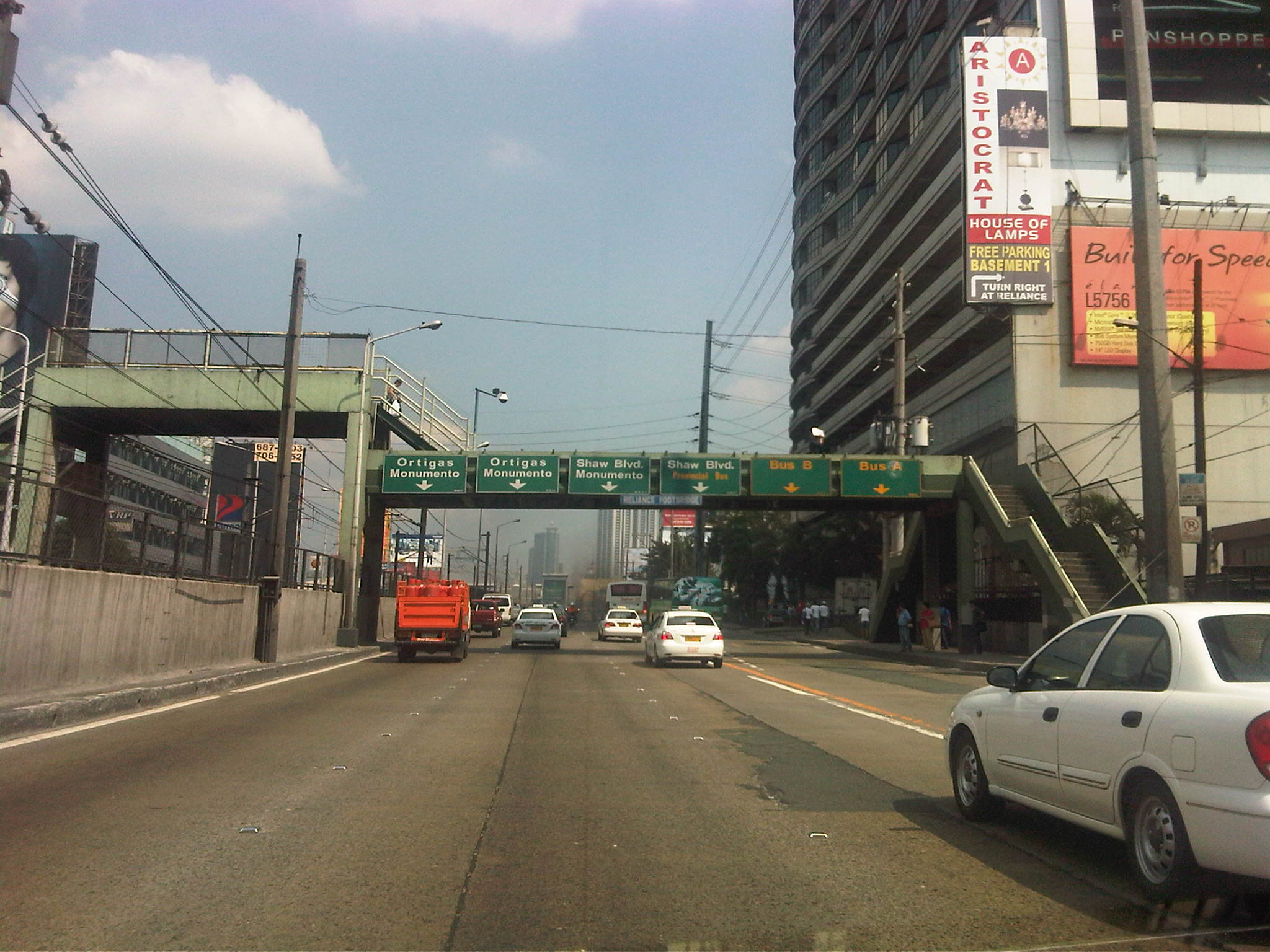 Section across the Renaissance Tower where many FM radio stations are based
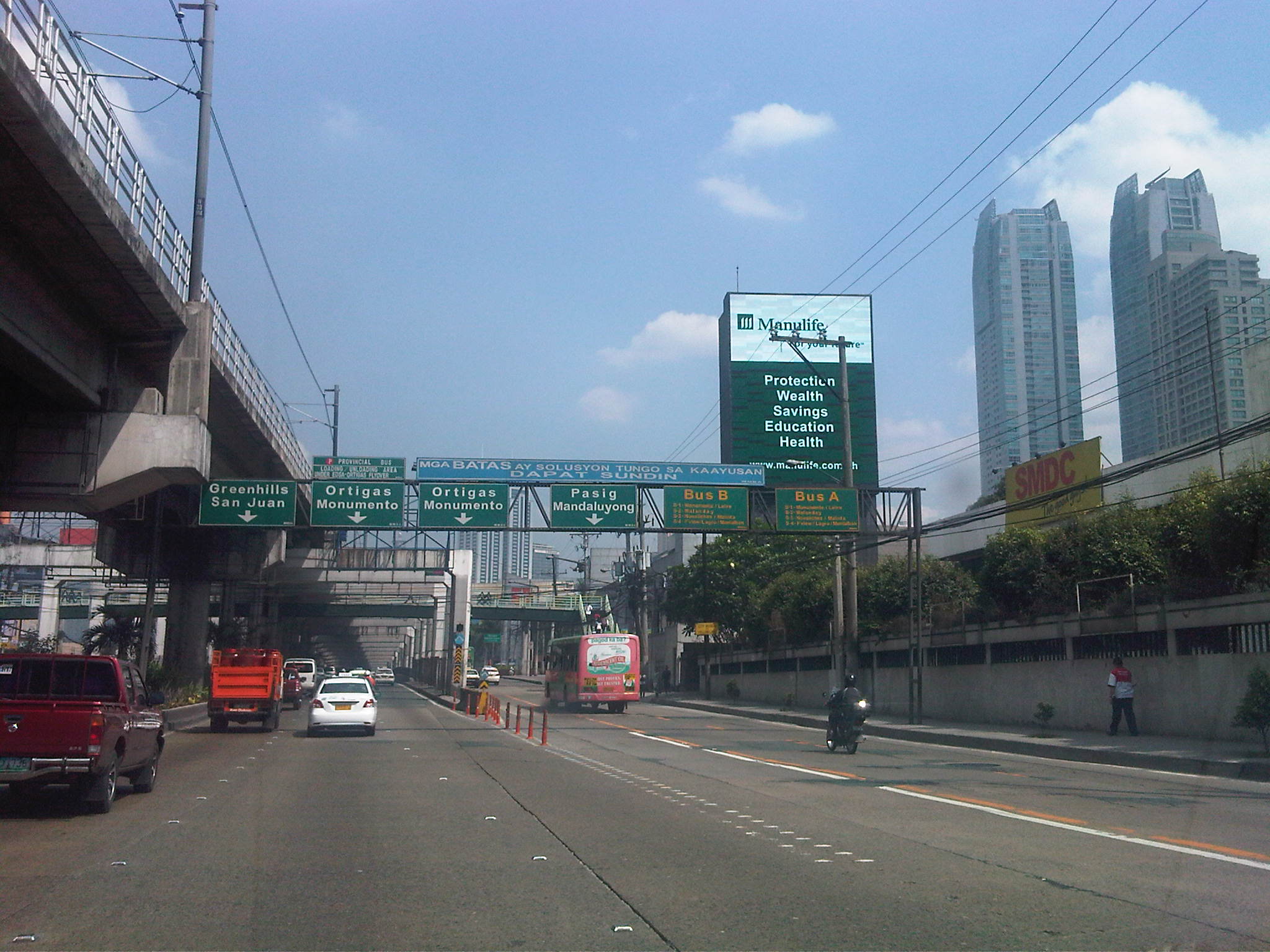 Section past Robinsons Cybergate Mall
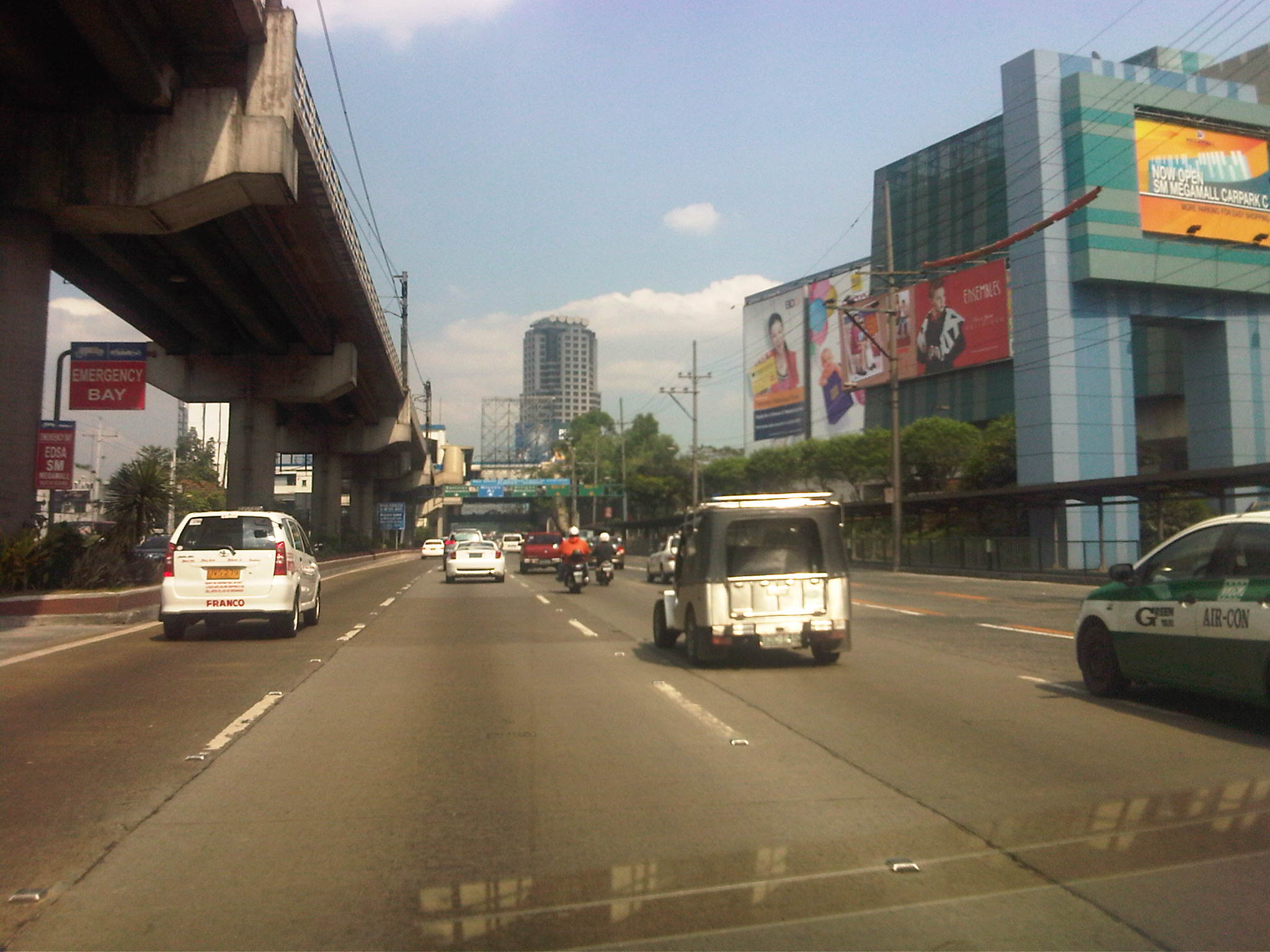 Section across the SM Megamall and approaching the ADB
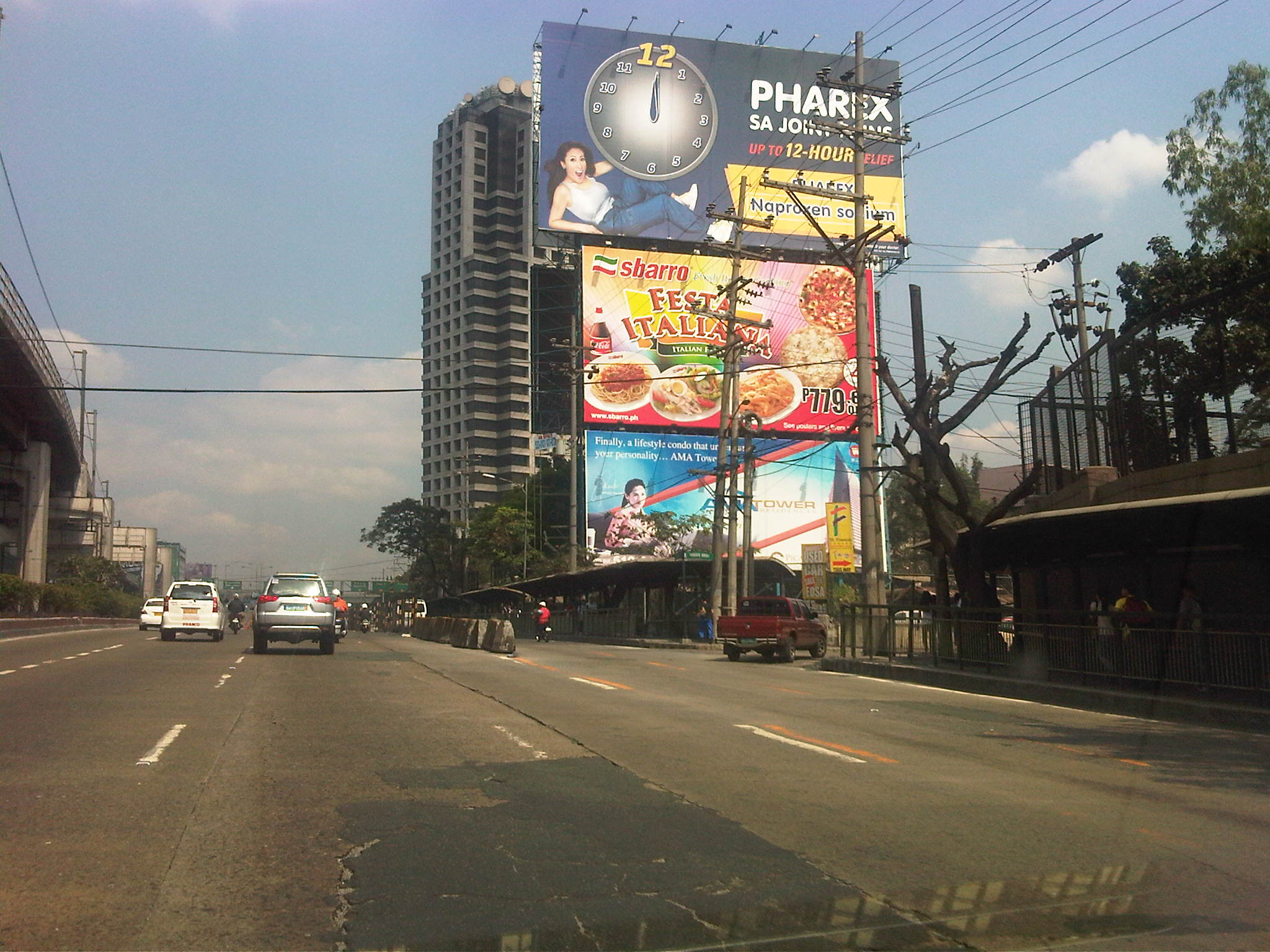 Section across the ADB and approaching Ortigas Ave. One of Galleria’s buildings is seen behind the giant billboards. The MRT
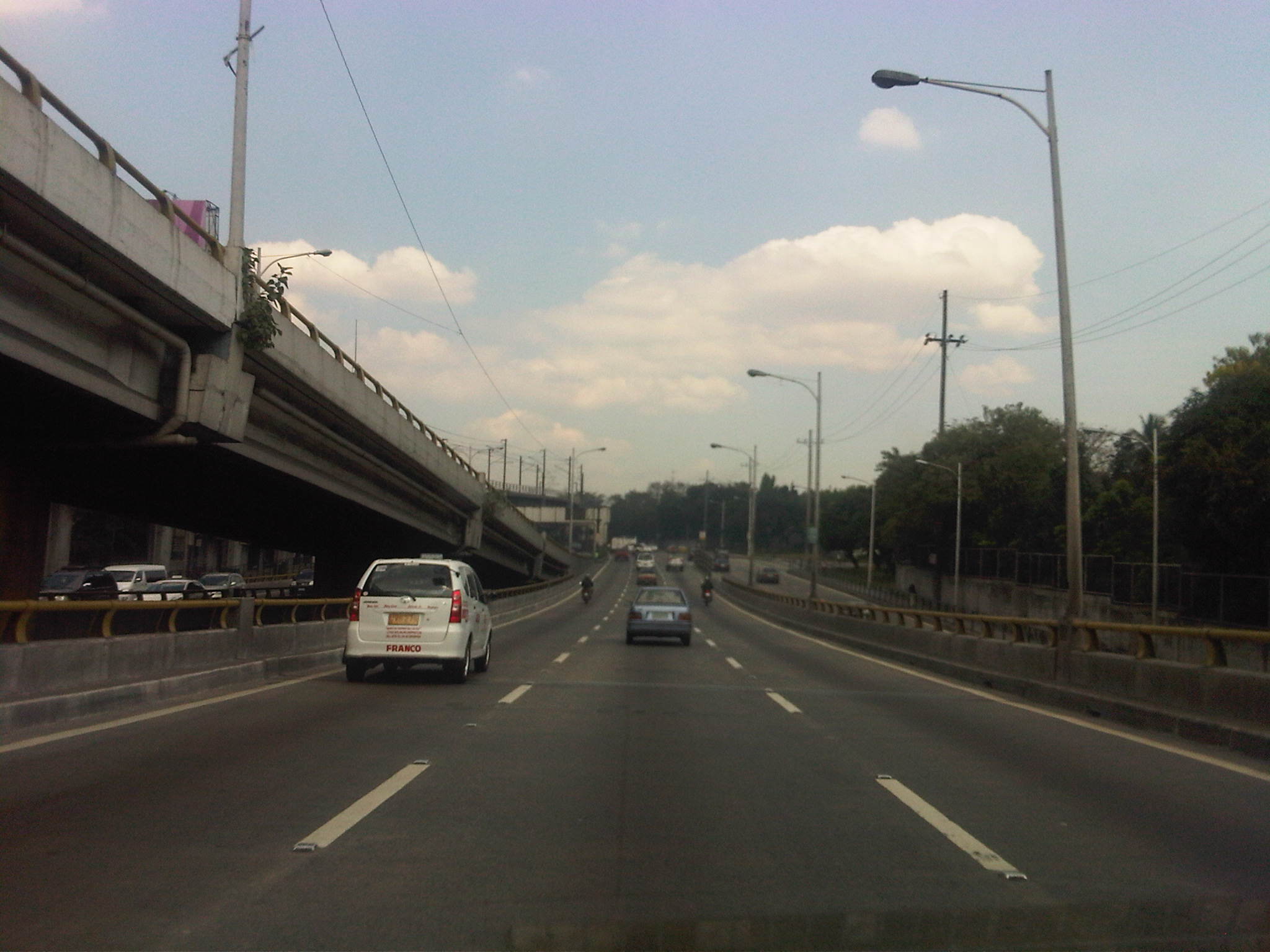 Section descending the Ortigas Flyover and across from Corinthian Gardens
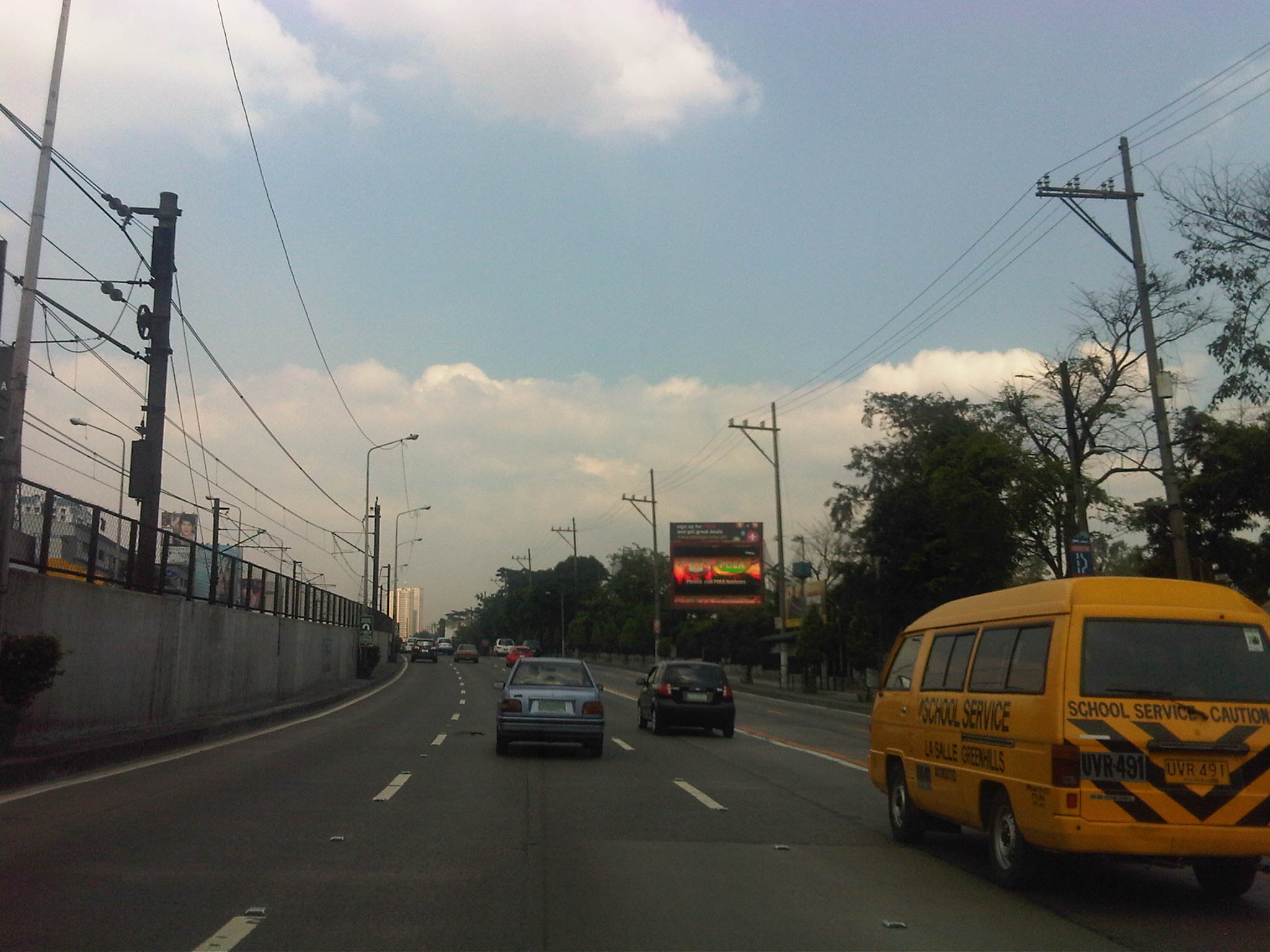 Section across Camp Aguinaldo (between the Aguinaldo and Crame) and approaching the Camp’s EDSA gate
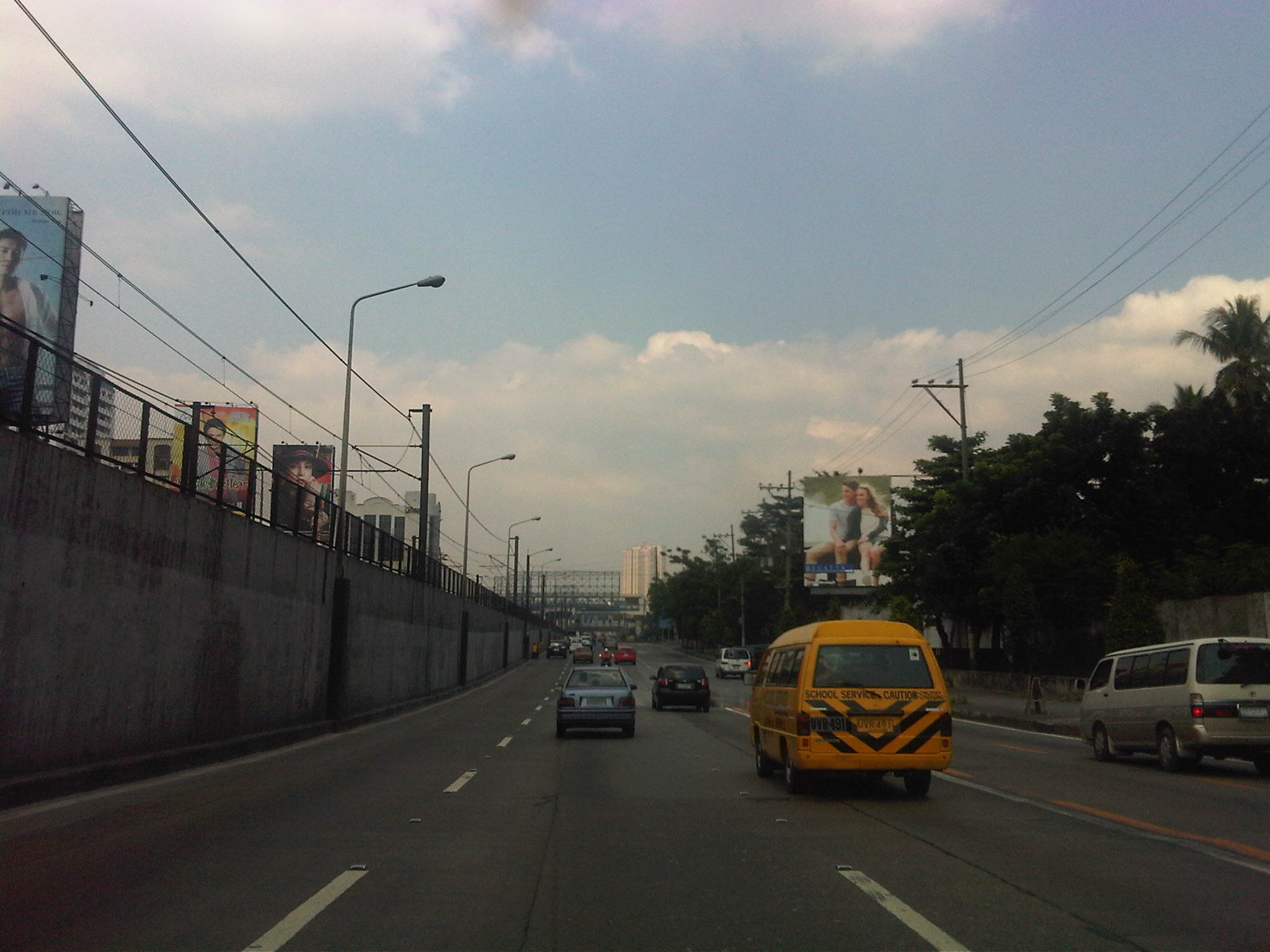 Section approaching Boni Serrano Avenue
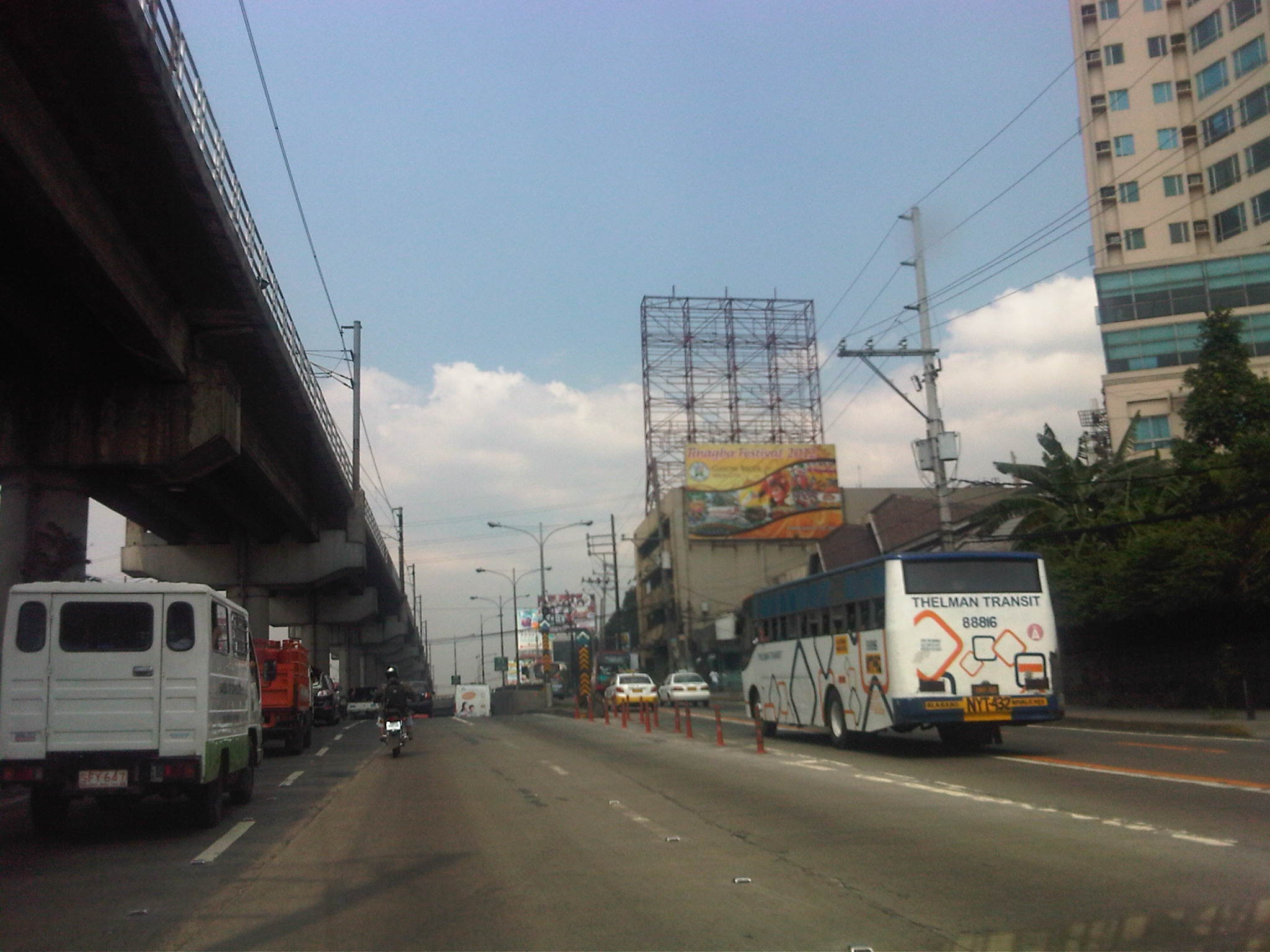 Section approaching the EDSA underpass crossing P. Tuazon and approaching the Cubao commercial center
 Section past the Cubao commercial center and across from several provincial bus terminals lined up along EDSA northbound
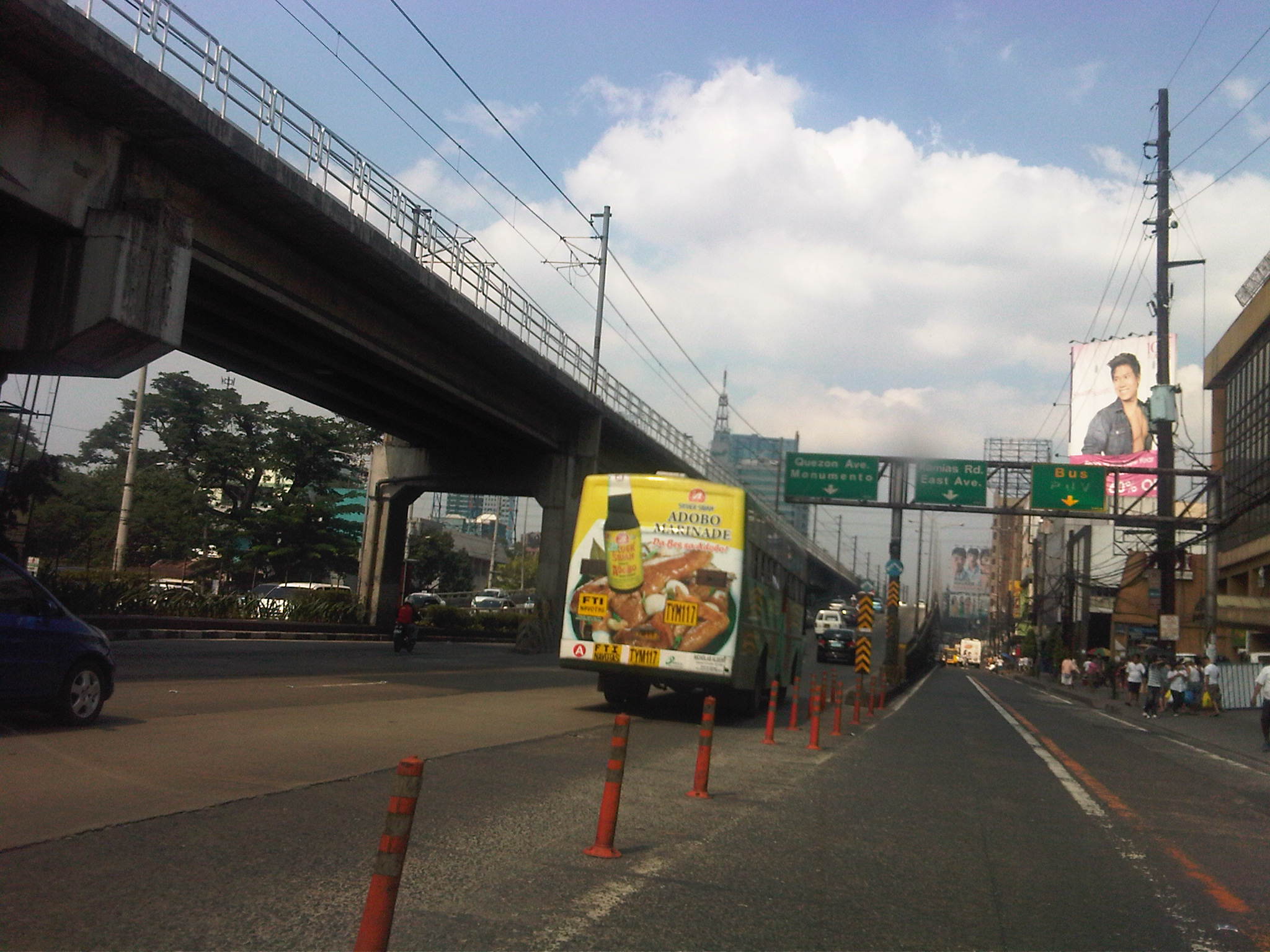 Section approaching Kamias – taking the flyover means I won’t be able to turn towards East Avenue so we shifted towards the outer lanes
Now, if only EDSA and the other main arteries of Metro Manila could be like this more frequently…
–
Municipal transport in San Francisco – Part 2: Trolley buses
San Francisco’s trolley buses are probably among the last of a fading breed of bus transport still employing electricity to service various routes in that city. With a cousin driving our vehicles along McAllister Street, I was able to take photos of the overhead cables from which the trolley buses are able to pick-up electricity to power their motors.
 Overhead cables seem to be everywhere including the streets around the San Francisco City Hall located at the Civic Center. This is a photo of the intersection of McAllister and Polk Street.
 Another view of City Hall with cables running above McAllister. Notice the cables connected to transverse wires that are in turn connected to the light poles.
 Where buses turn, cables may also be found above. This is the junction of McAllister and Van Ness Avenue. That’s the Herbst Theater building on the left, which houses the Museum of Performance and Design, and the California Public Utilities Commission on the right. Those are two buses, one trolley and the other natural gas-powered in the middle of the photo.
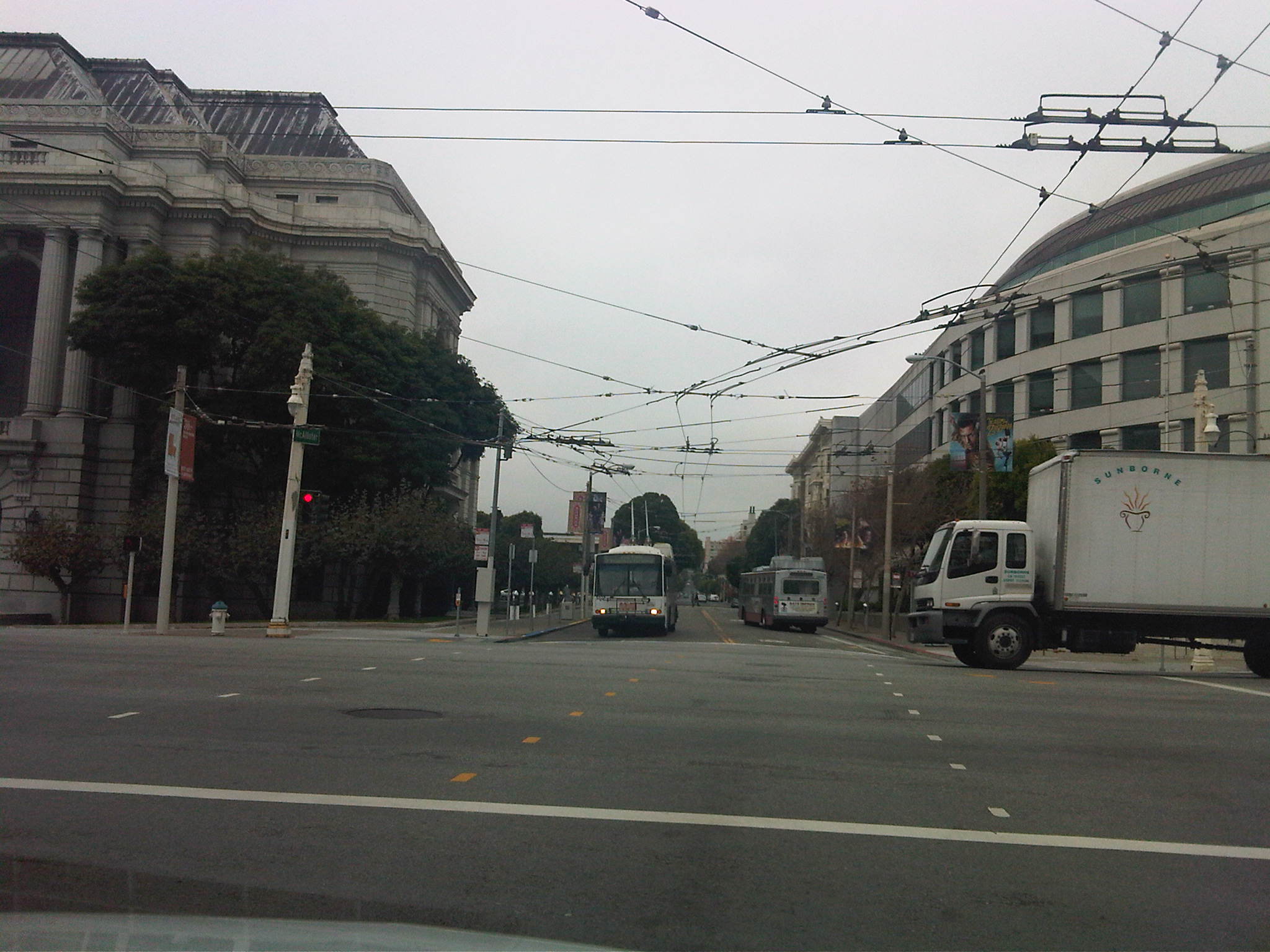 A close-up from the preceding photo shows the trolley bus with its long pantograph. The bus on the right runs on natural gas and is a low emission vehicle.
 A closer view of the overhead cables show how they are connected to the poles along the roadside.
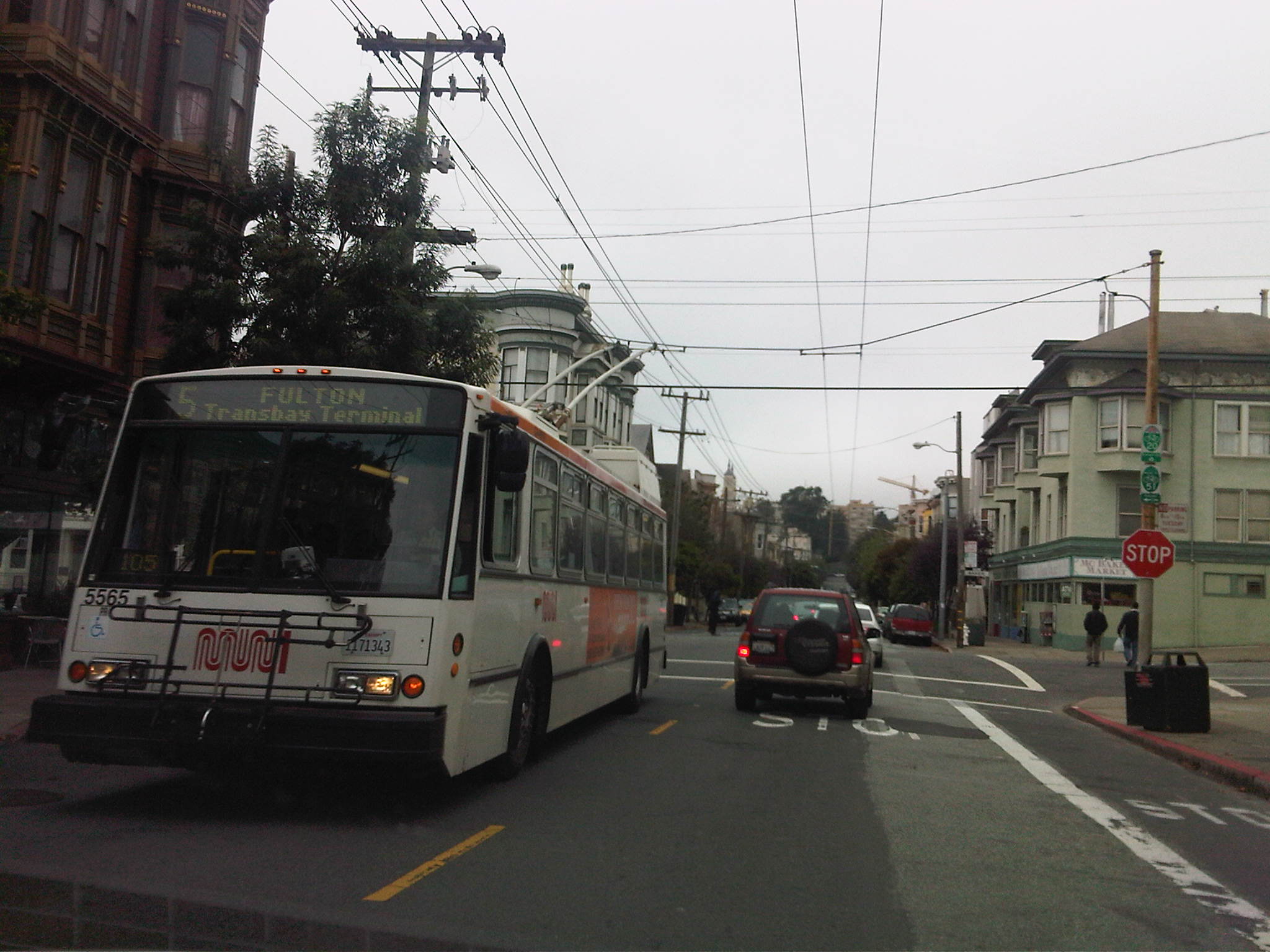 That’s a bus headed for the Transbay terminal. At front is a bicycle rack and the worm logo of Muni.
In the streets of San Francisco, one thing’s for sure – if you see those overhead cables along a road, you know that the trolley buses run along that street. Most major streets in San Francisco are served by public transport, providing excellent mobility for its citizens. They say you can usually take or get off a bus within a block of your destination. If you have to walk, the walk is usually at a leisurely pace and generally in a safe environment. You’ll probably only encounter difficulties walking when you’re in the hilly areas like Nob Hill and Russian Hill where the streets can get quite steep. Still, the walk’s usually well worth it not just because of the exercise but also because of the view and the small neighborhood shops and restaurants along your way.
Municipal transport in San Francisco – Part 1
San Francisco has an extensive public transport system with the combination of buses, LRT’s and cable cars allowing its citizens and visitors both accessibility and mobility for much of the city. A friend says that the objective Muni set out to accomplish was for anyone using the system to be able to alight from a public transport vehicle at most one block from one’s final destination. A block already represents a very comfortable walking distance well within the 200 to 300 meters radius often mentioned by public transport planners for the catchment areas of stops or stations.
SF’s Muni operates several types of buses including what are probably among the last electric trolley buses in the world.
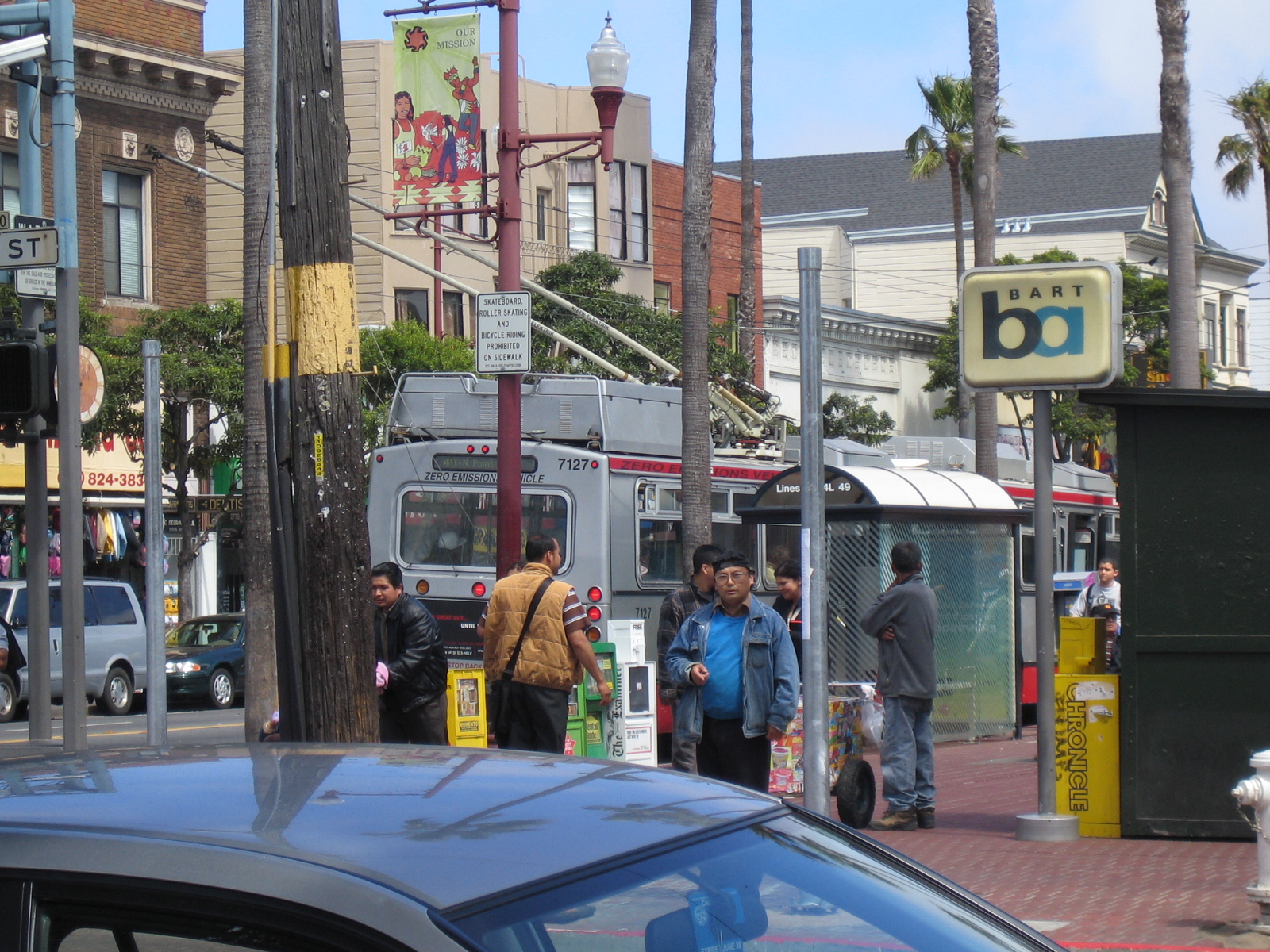 That’s a trolley bus in the photo above stopping near the BART station where I was waiting to be picked up by a friend. Note the flexible, long pantograph that is used to pick-up electricity from the overhead cables. The photo was taken in 2007 during a previous trip to the Bay Area.
Following are three photos I took back in 2007 at an intersection across the Balboa Park BART Station, where I thought I hit the jackpot in terms of watching the Muni’s various transport modes pass by. Think bird-watching but replace the birds with buses and LRTs.
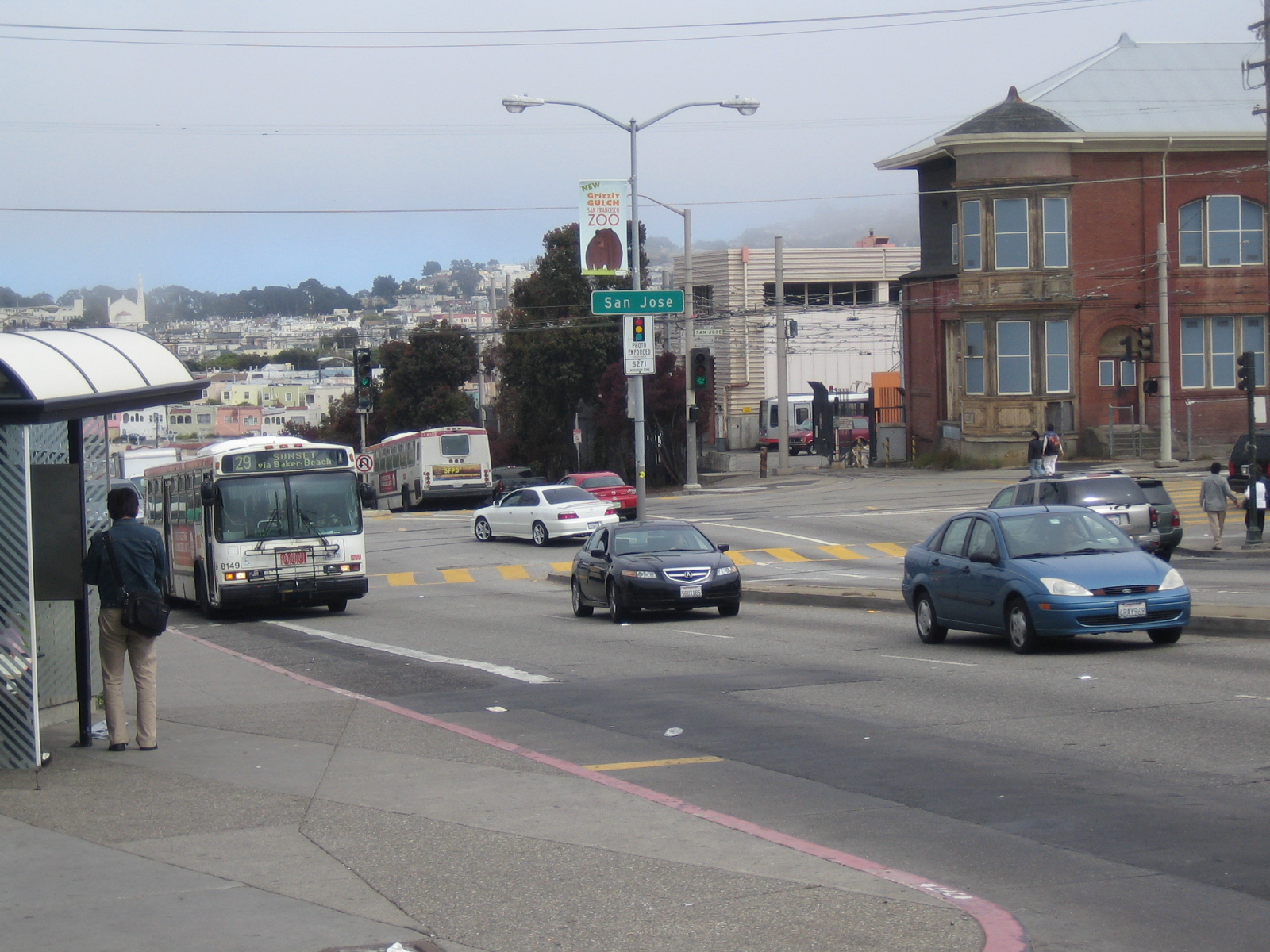 The typical Muni bus has a number designating its route that can easily be found in transit maps to guide regular commuters and visitors alike. Most buses I saw had bicycle racks located in front of the bus that would enable cyclists to bring along their bikes during a long commute. Most buses these days run on natural gas. On the far right of the photo, one can get a glimpse of a LRT vehicle.
 LRT vehicle coming out of the depot – the rails are embedded on the pavement and allow for the mixed use of roads by motor vehicles and LRTs.
 LRT crossing the intersection. LRTs are given priority at intersections and the traffic signals are programmed to facilitate the flow of these high capacity public transport mode. This is a reflection of prioritization of public transport over private transport, which should be the case rather than the other way around.
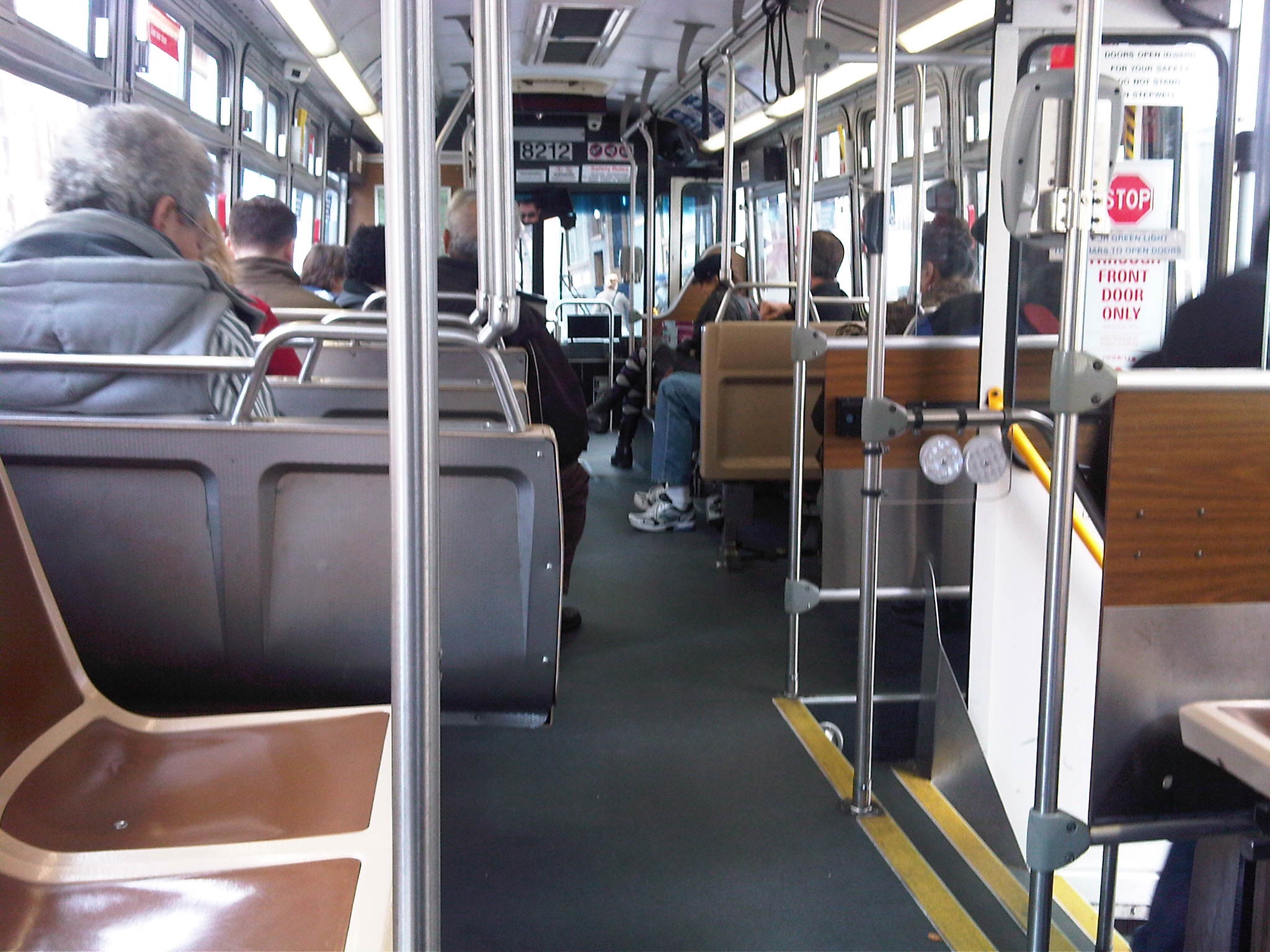 Inside a bus in San Francisco, there are seats provided for the elderly and the physically challenged. Entrance is via the front door where a passenger must first pay for the ride or show his pass for the driver to see. Exit is via the back door, which is wider to allow for the efficient unloading of passengers. To stop the bus at the designated stops along the route, a passenger should push a button (on the newer buses) or pull on a cable (on older buses) to activate a signal for the driver. To open the rear doors, one need only to push the bars across the doors.
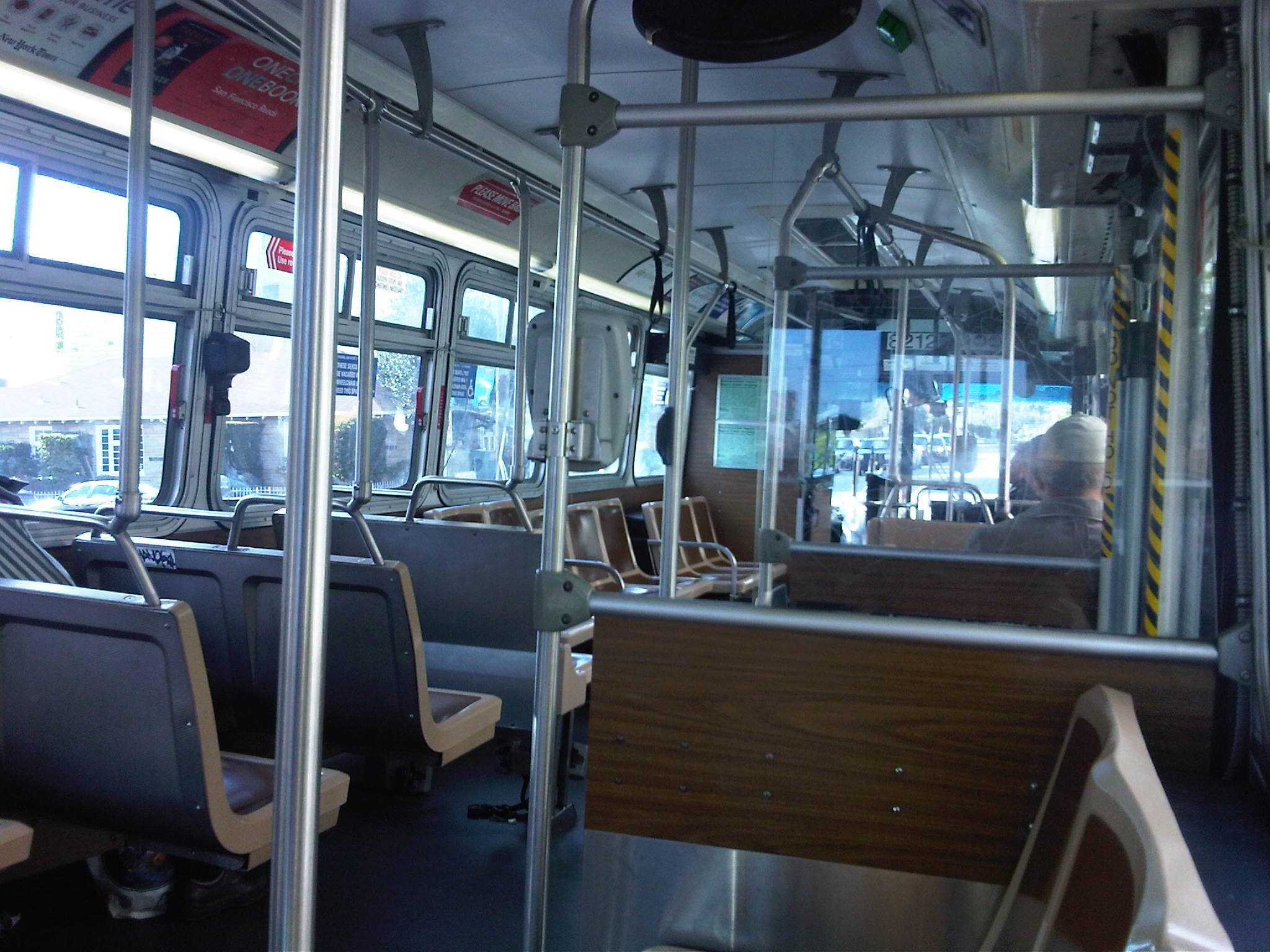 Another look at the interior of a Muni bus. Although the bus appears to be old, it is clean/tidy. There are the occasional vandalism and there are signs asking passengers to report incidence of vandalism on the bus. There are also signs stating that conversations may be recorded and that the bus is under video surveillance. These seem to be standard security features of public transport in the US especially after the incidents of 9/11. Such information is welcome considering everyone would prefer to travel safely.
San Francisco’s Cable Cars
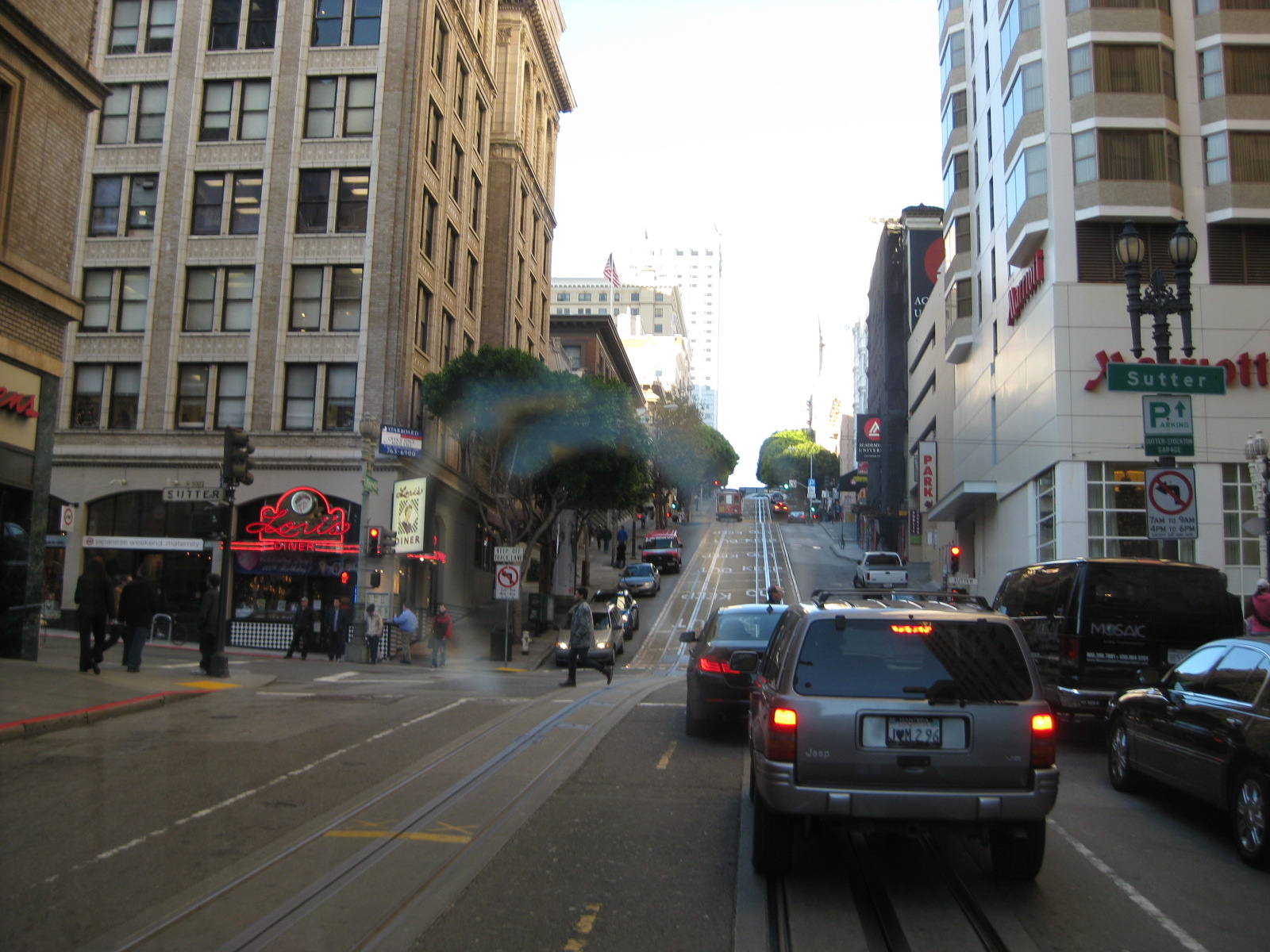
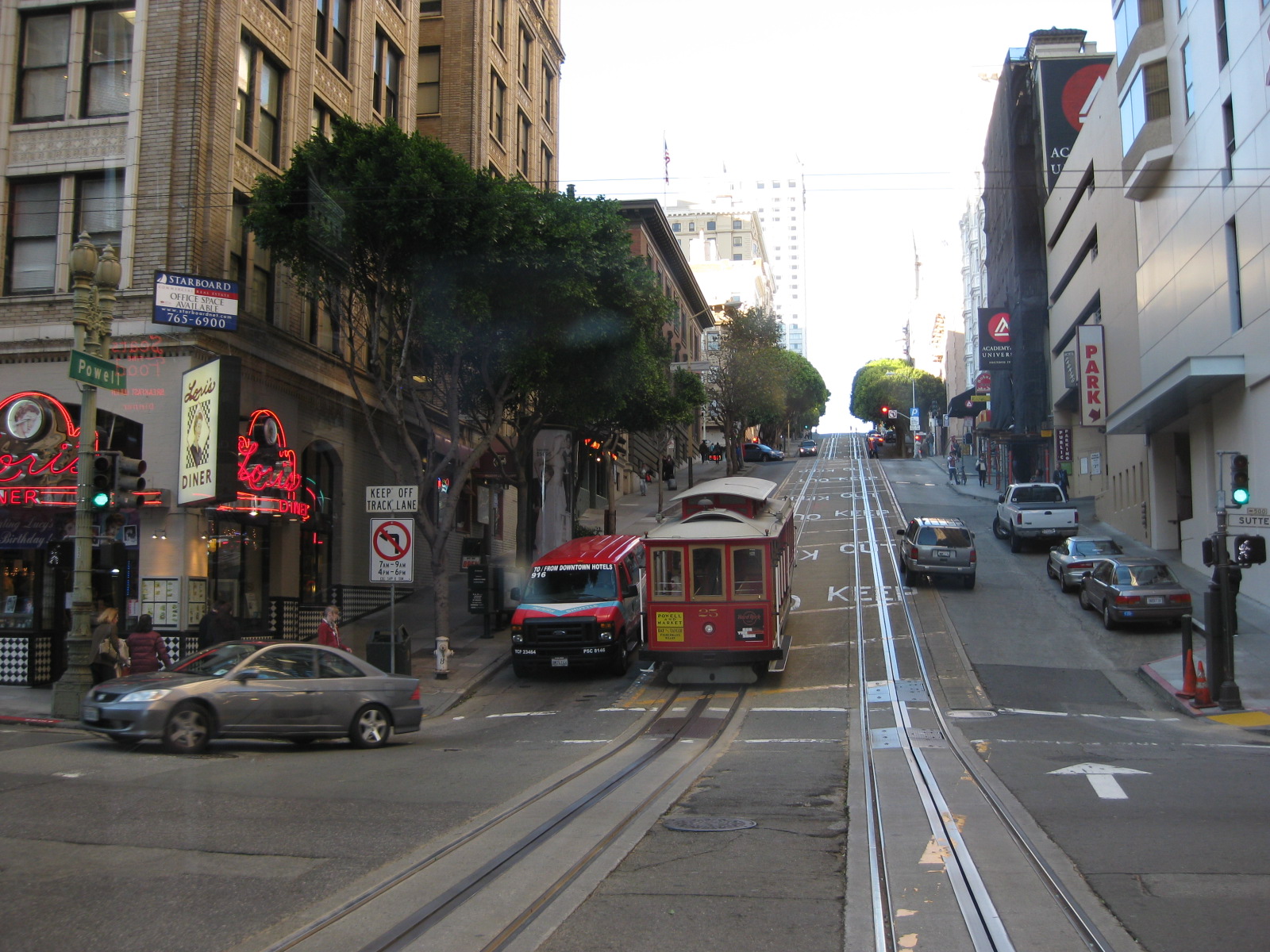
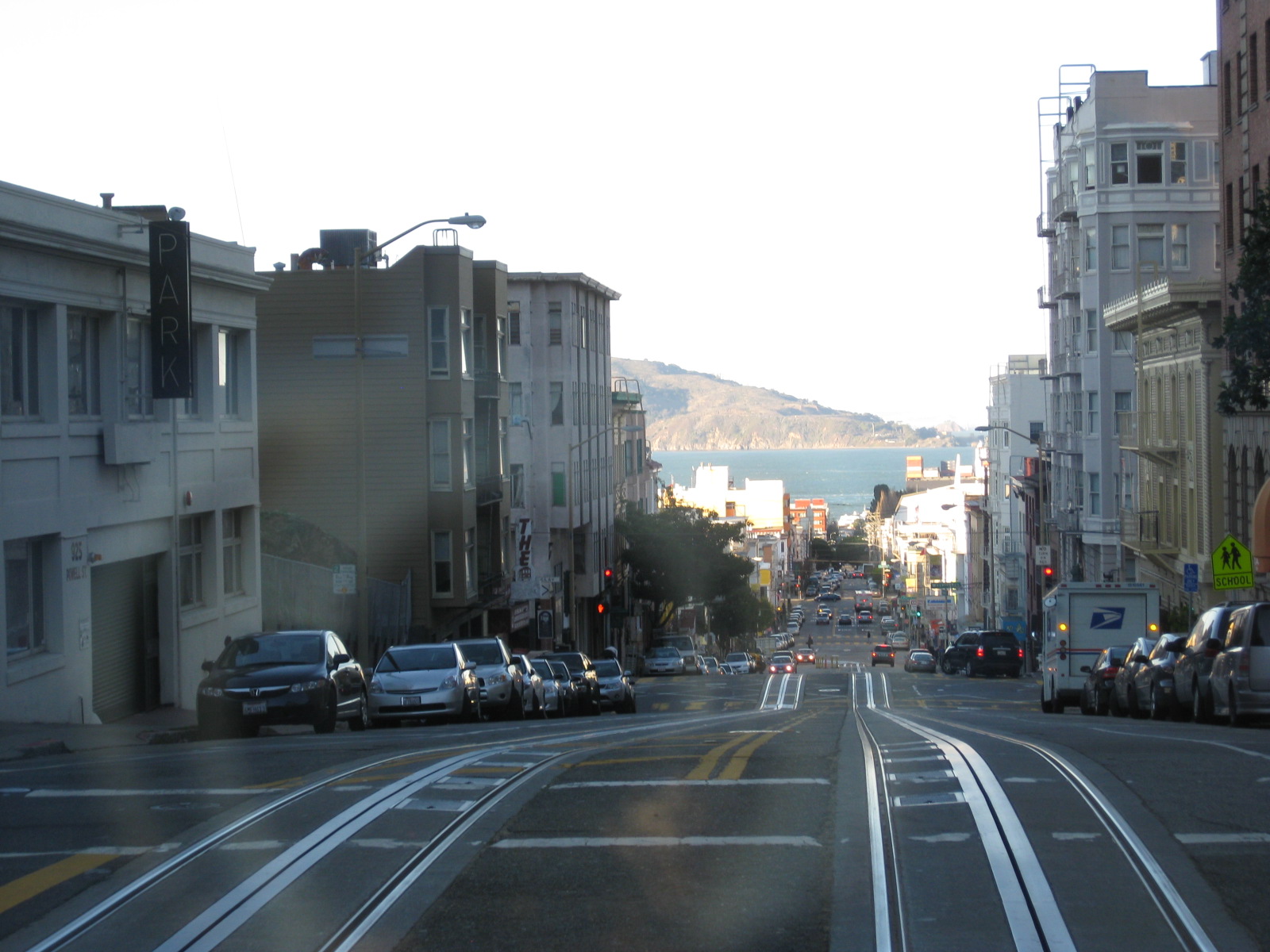
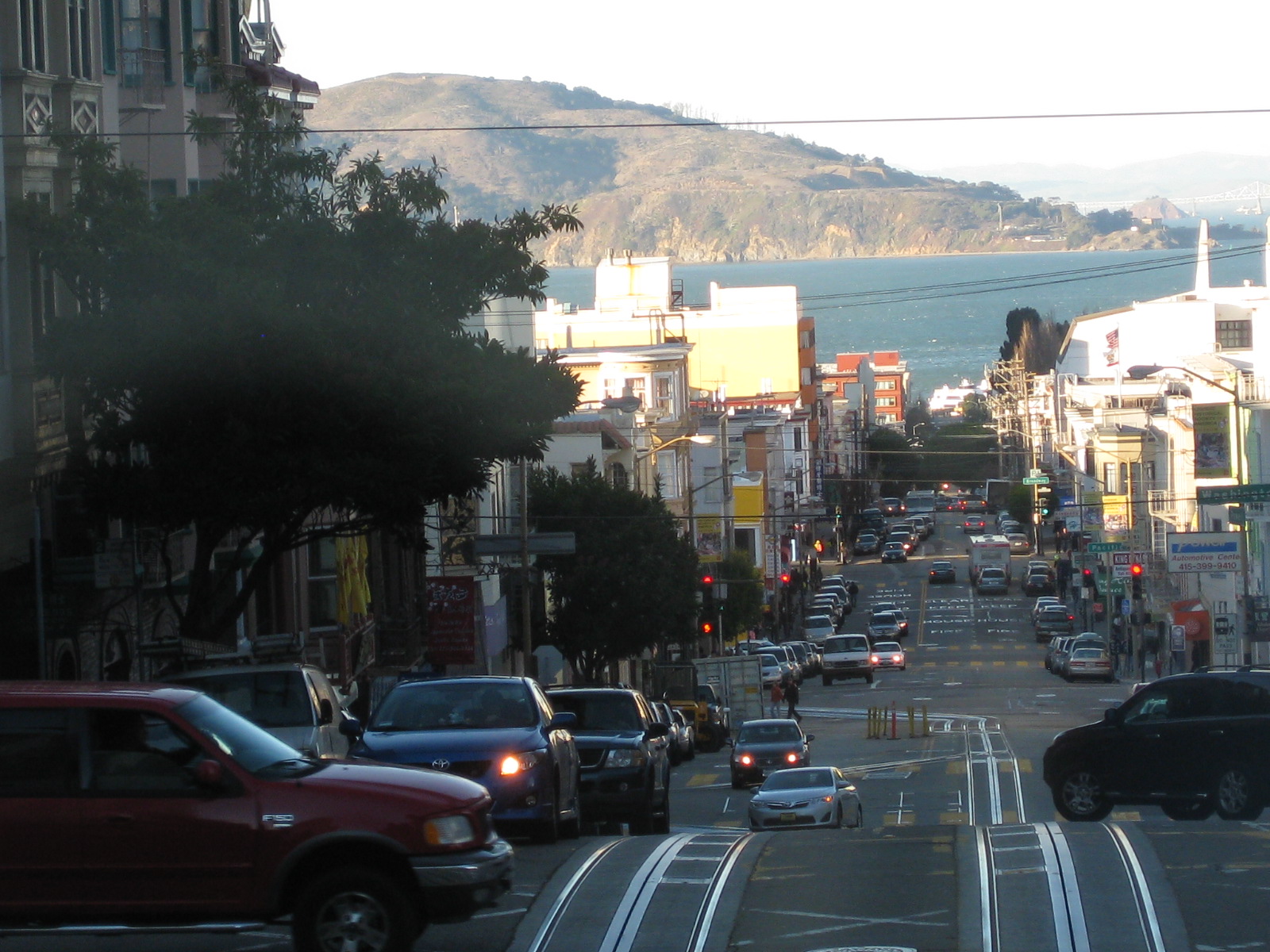
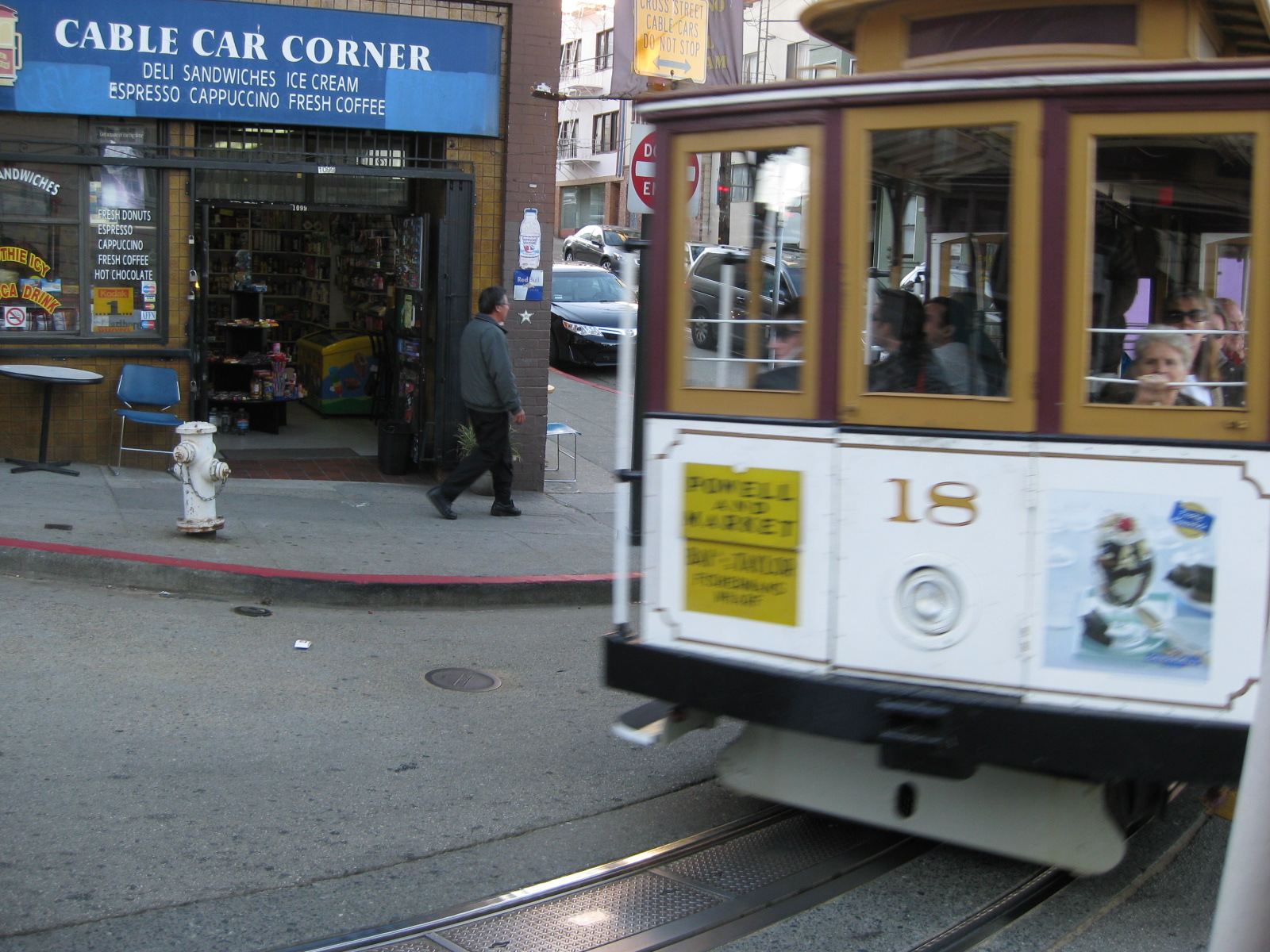
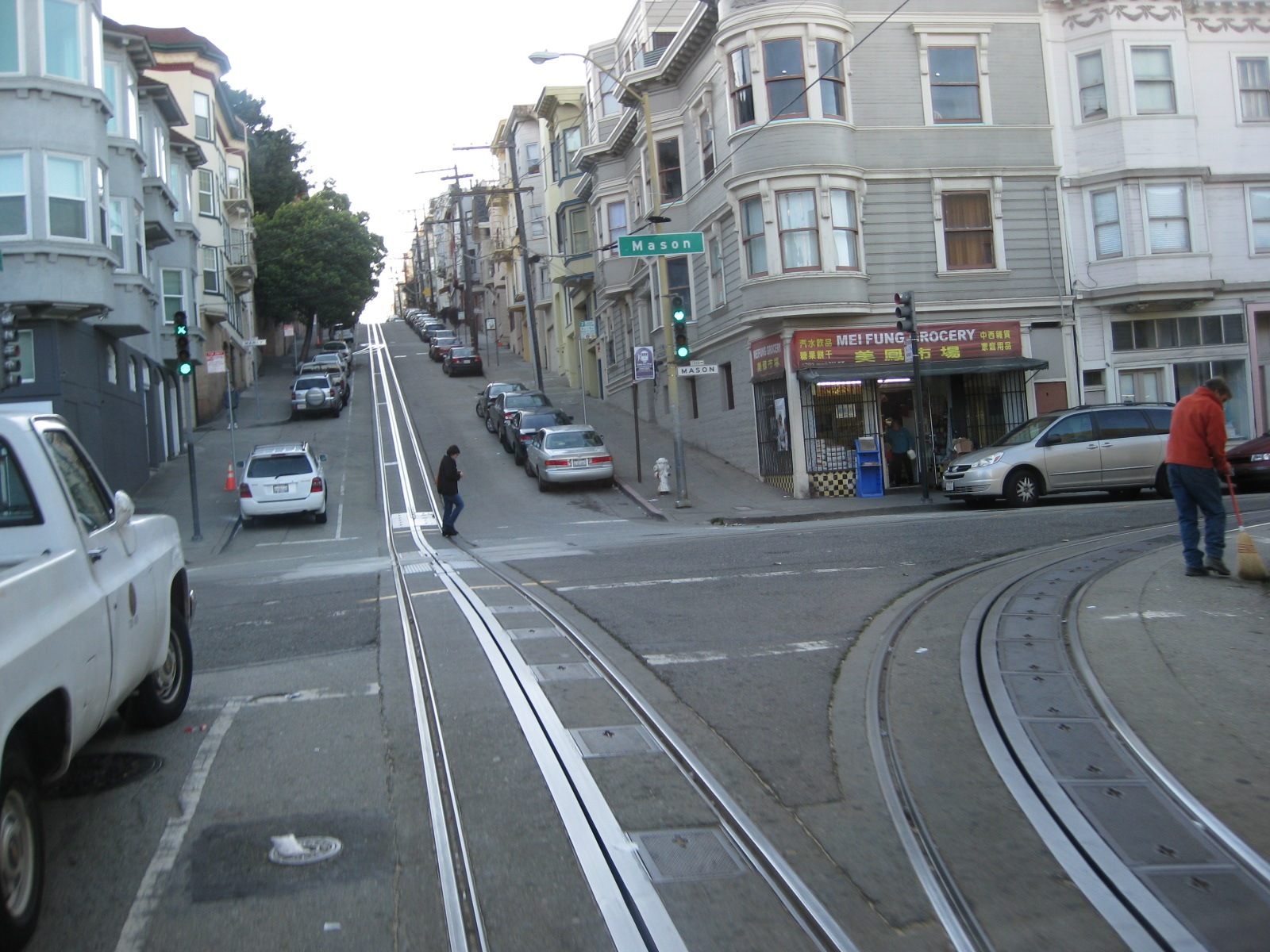
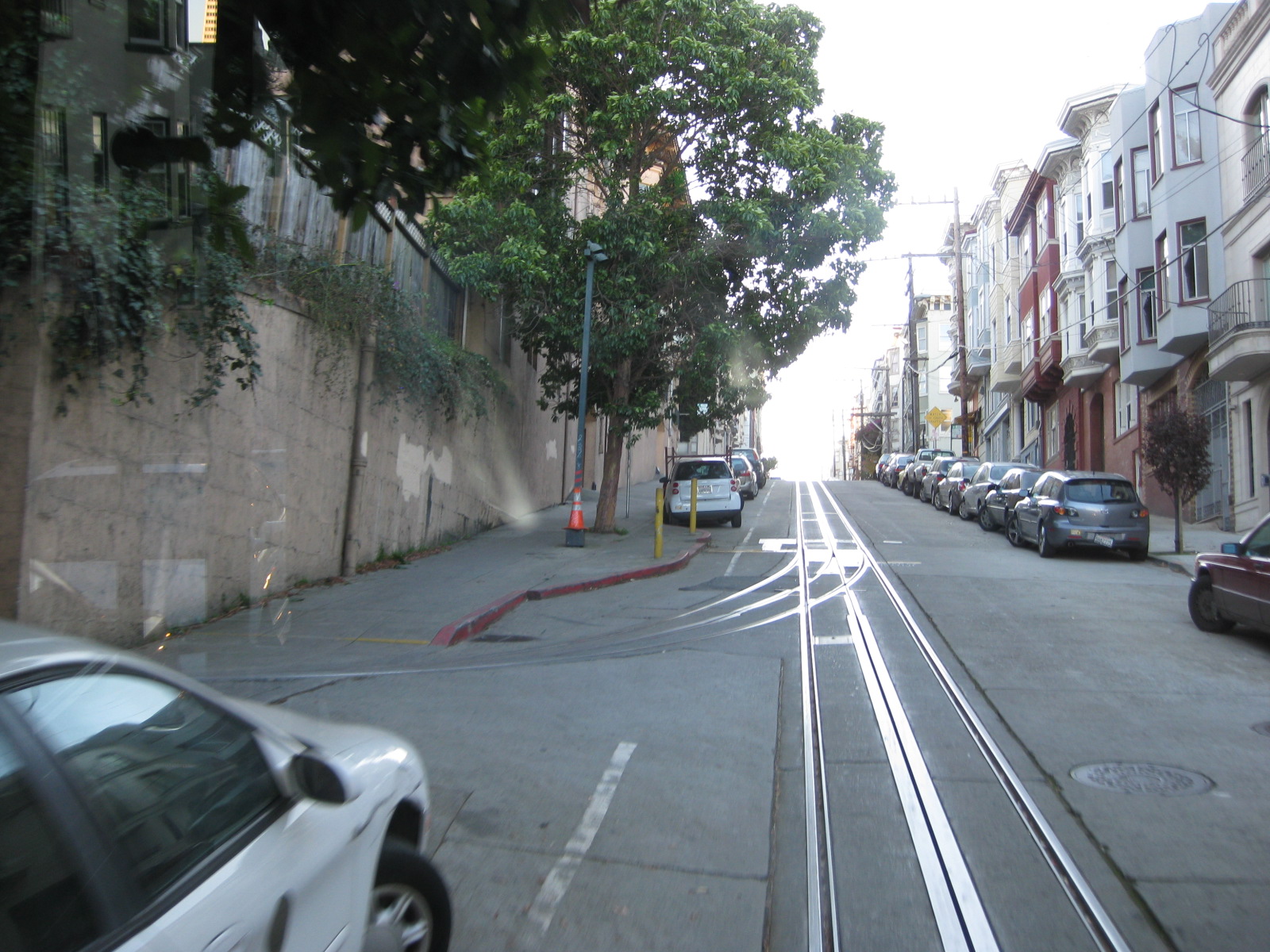
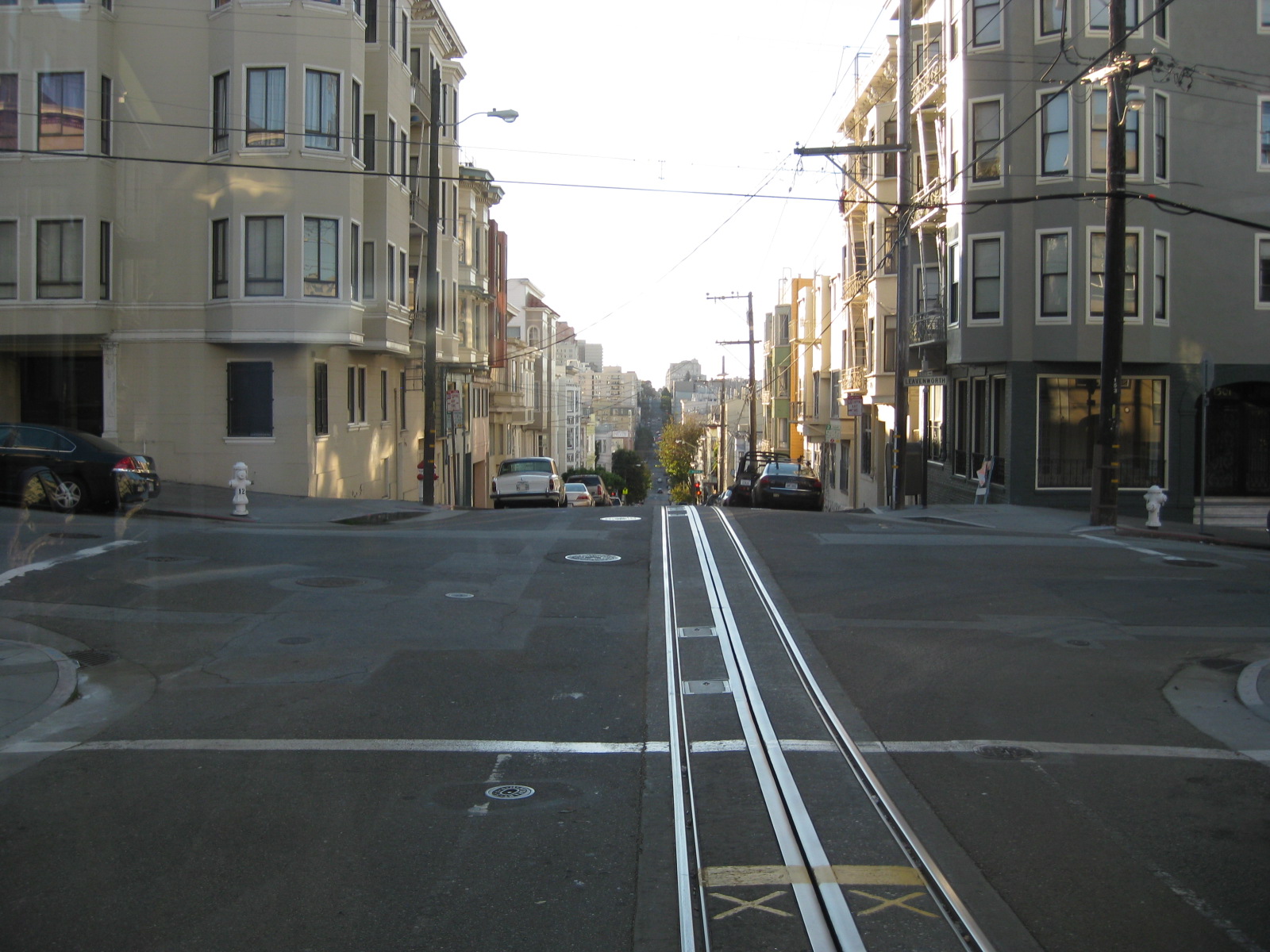
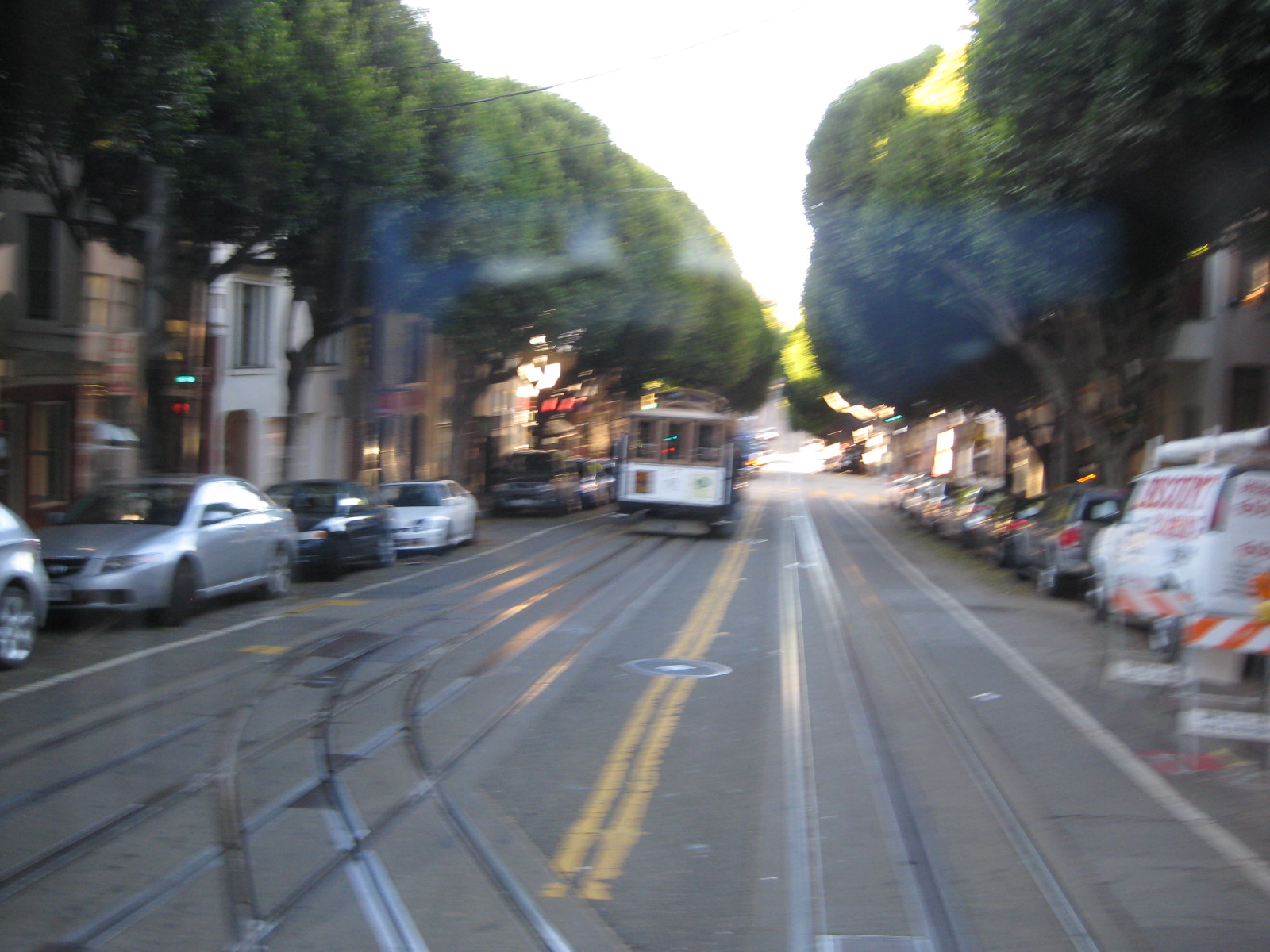
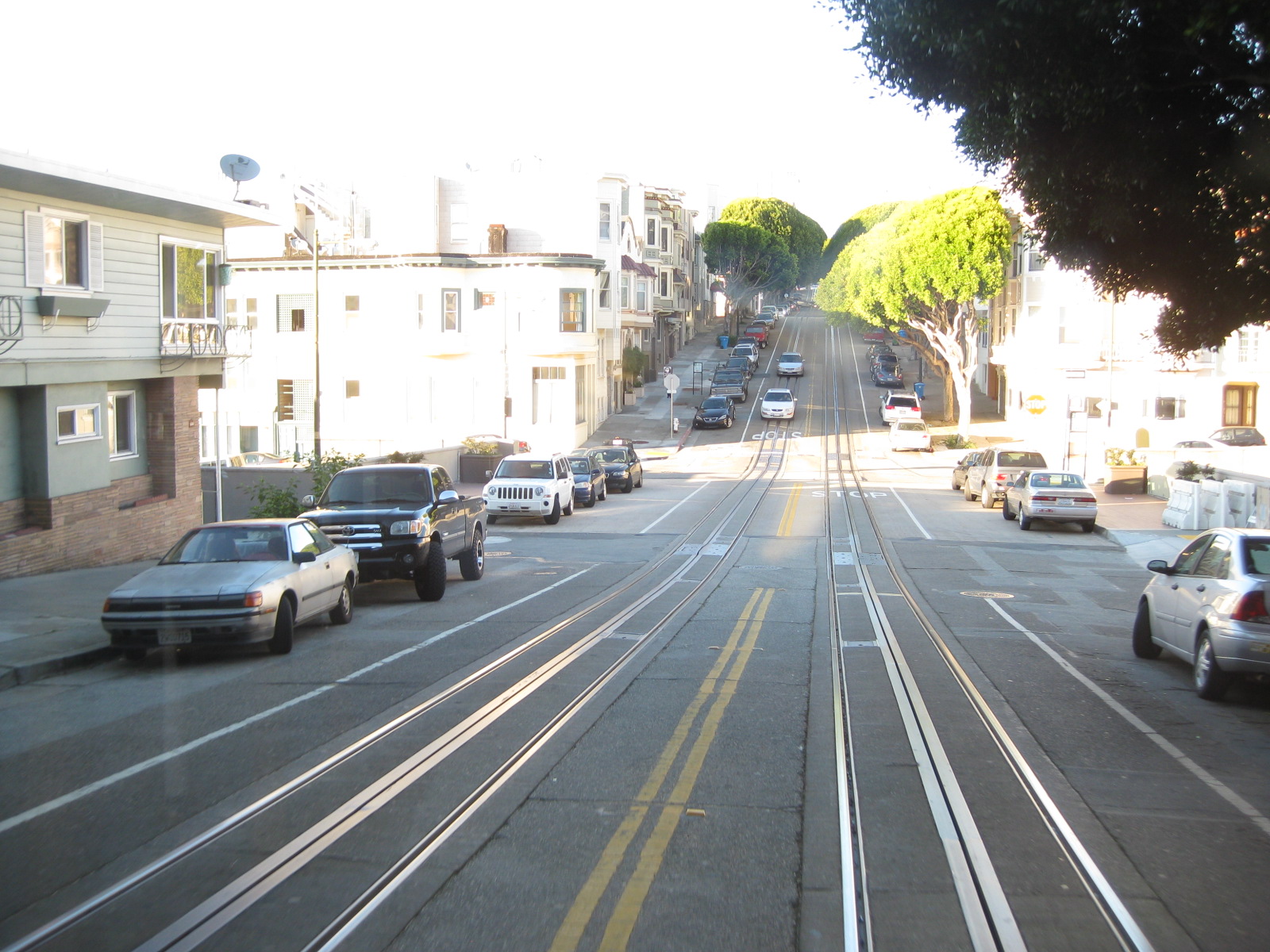
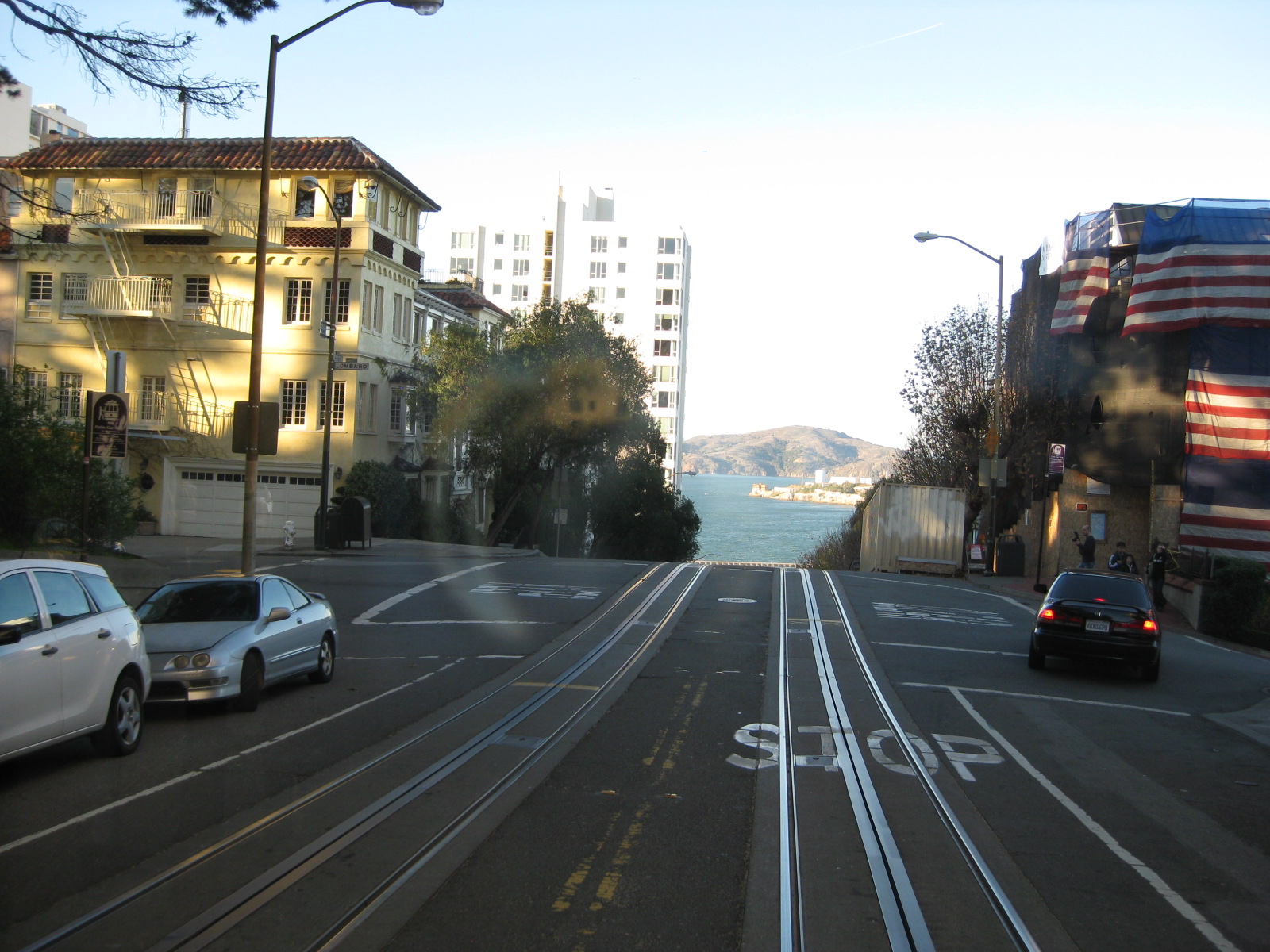
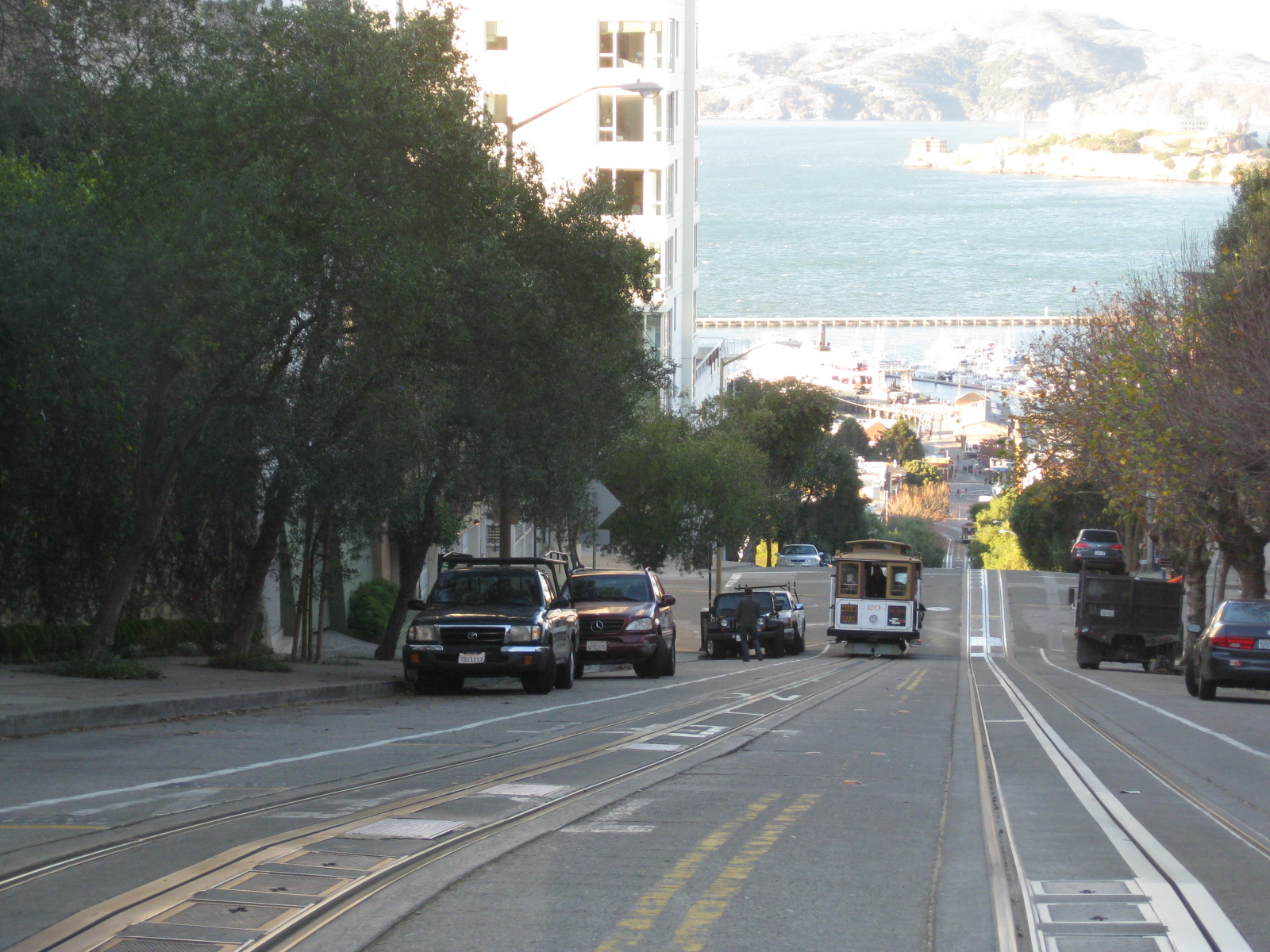
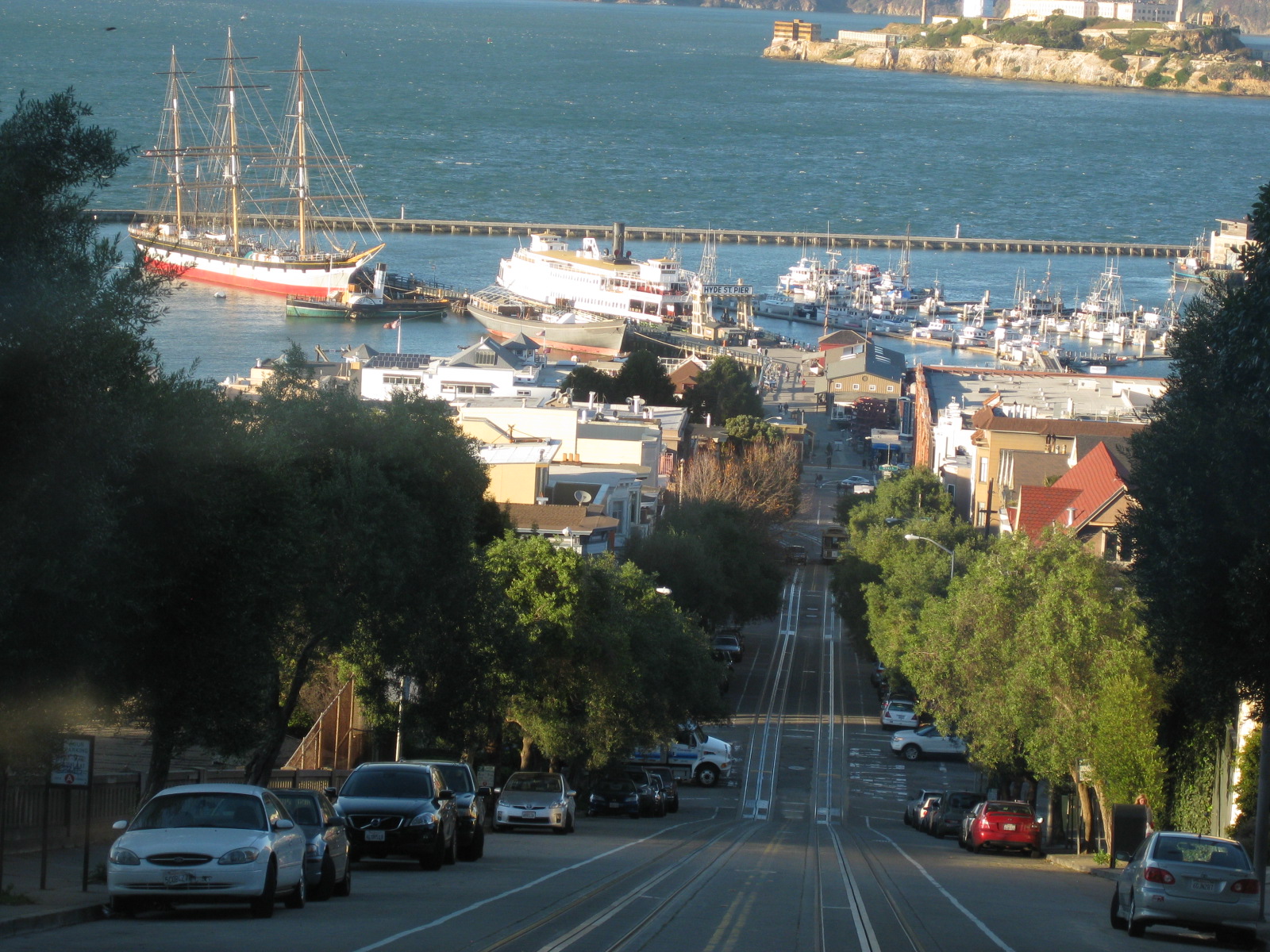
The photos show a particular journey aboard a Powell & Hyde cable car from Market Street (near Union Square) to Hyde Street (near Argonaut Hotel). The trip takes one through notable spots like Union Square, Chinatown, Nob Hill and Russian Hill, including a stop at Lombard Street that has that famous crooked section popular with tourists and residents alike. There are also breathtaking views of the bay as the cable car descends towards Mason or Hyde Streets, towards the pier.
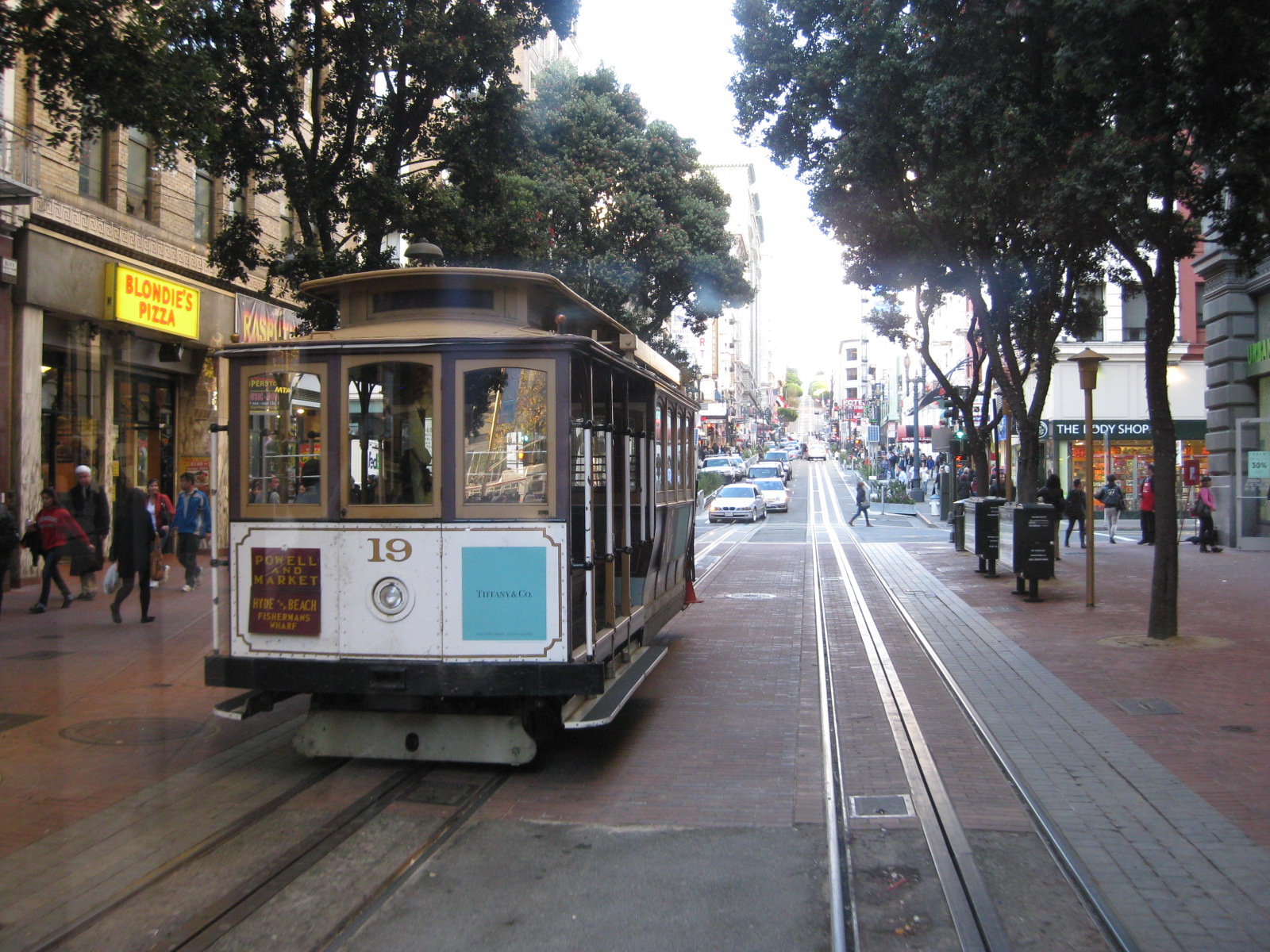 Cable car arriving at the end of the line near Market Street
–
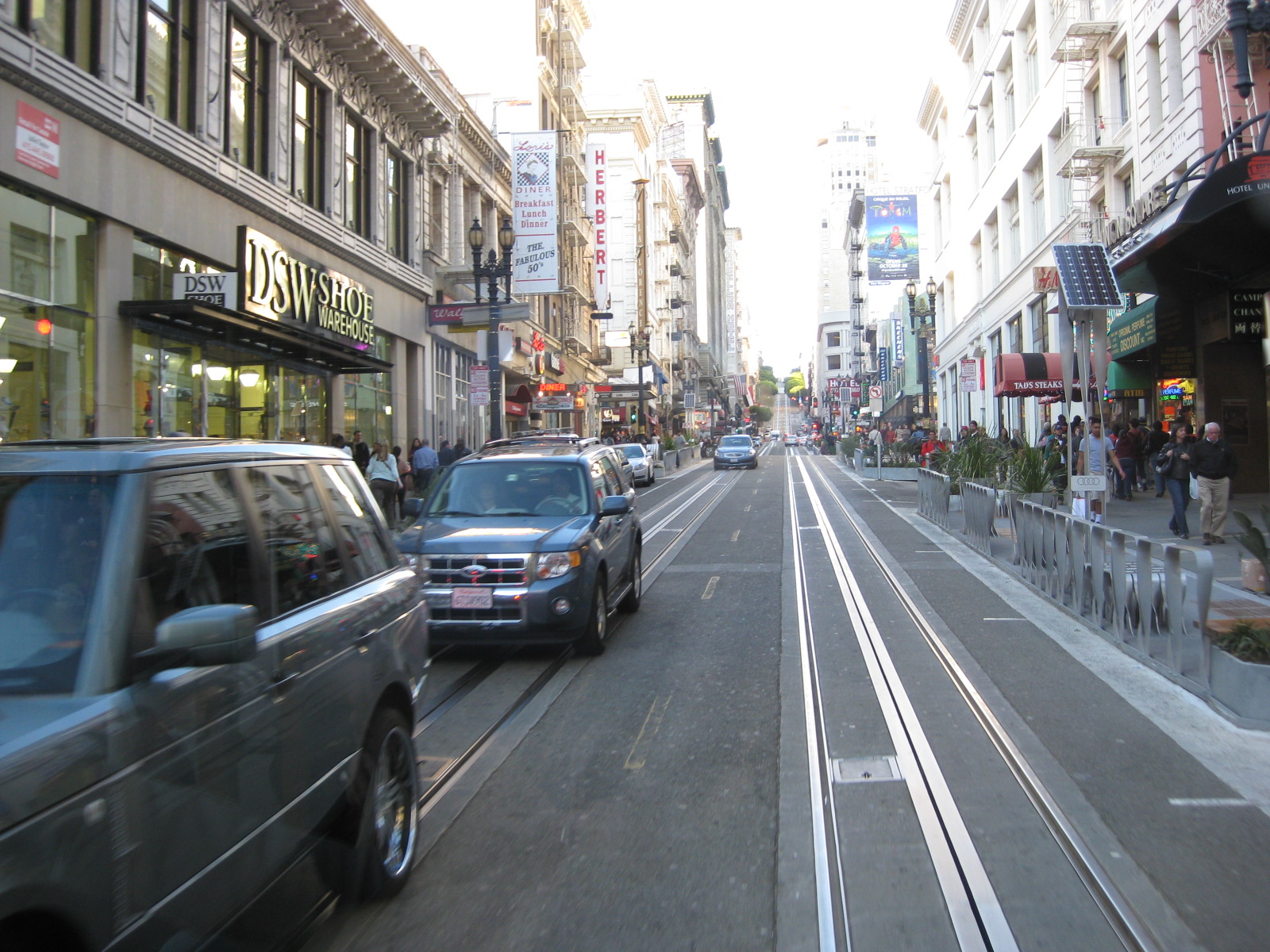
 To the right is Union Square famous for its Christmas Tree. However, there is that monument at the square that people tend to take for granted. Filipinos should be aware that it is one commemorating the victory of one Comm. Dewey and the US Fleet over Adm. Montojo and the Spanish Fleet in Manila Bay back in 1898, a significant part of Philippine and American histories.













Transport mode shares in Metro Manila
Fairly recent surveys (first quarter of 2011) along major corridors in Metro Manila have yielded the following data on transport modes shares in the National Capital Region. Such data, while quite specific for the corridors surveyed, strongly indicate that most people take public transport. As such, it is quite logical that public transport be prioritized and perhaps provided with the road space they require to be more efficient in conveying passengers to their destinations. There are mixed results in terms of which types of vehicles tend to dominate the road and these are noted below. Note that data for rail is not included but should favor public transport as well. Taxis, in this case, are classified among private vehicles. Trucks are not considered here as passenger vehicles though they do carry people.
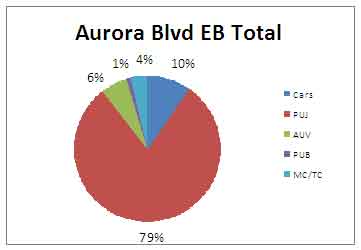 Person trip mode shares along Aurora Boulevard eastbound (to Rizal & Marikina) – jeepneys account for 79% of road-based transport while cars carry 10% of person trips. In terms of vehicle share of the road, cars account for about 25% of the road while jeepneys take up about 59% after converting jeepneys into passenger car units using the assumption of 1.7 pcu = 1 jeepney. Such assumption is also used in other estimates.
 Person trip mode shares along Aurora Boulevard westbound (to Cubao/Quezon City) – jeepneys account for 76% of road-based transport while cars carry 14% of person trips. Meanwhile cars occupy 31% of the road while jeepneys use 57%.
Interesting for the above statistics is the fact that these numbers do not reflect the actual share of public transport given that there is a rail transit service along this corridor. LRT Line 2, however, terminates before reaching the Province of Rizal, which necessitates the transfer of passengers from rail to mainly jeepneys towards their final destinations.
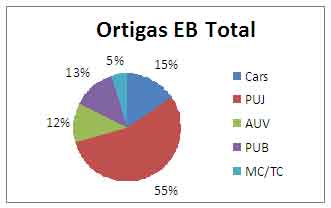
Person trip mode shares along Ortigas Avenue eastbound (to Rizal Province) – jeepneys account for 55% , buses 13% and AUVs 12% of road-based transport (total of 80% for PT) while cars carry only 15% of person trips. Cars occupy 37% of the road while jeepneys eat up almost the same at about 37%. AUVs are quite significant along this corridor taking up 12% of the road. Surprisingly, buses only occupy about 5% assuming 2.5 pcu = 1 bus. Perhaps Ortigas can be decongested if public transport services along the corridor are rationalized with many jeepneys retired in favor of the higher capacity buses.
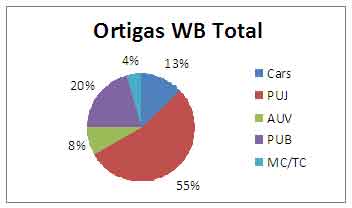
Person trip mode shares along Ortigas Avenue westbound (to Mandaluyong/Manila) – jeepneys account for 55% , buses 20% and AUVs 8% of road-based transport (total of 83% for PT) while cars carry only 13% of person trips. Cars take up 38% of the road, jeepneys also 38%, AUVs 9% and buses only 4.5%.

Person trip mode shares along Commonwealth Avenue northbound (to Novaliches) – jeepneys account for 30% , buses 35% and AUVs 5% of road-based transport (total of 70% for PT) while cars carry 26% of person trips. Cars take up 57% of the road, jeepneys 17%, AUVs 6% and buses about 12%. Meanwhile, motorcycle account for about 8% of road space along Commonwealth NB. Note that Commonwealth is the widest road in the country with sections having up to 10 lanes per direction. The two outermost lanes are typically designated for PUVs while the 4th lane from the roadside is designated as a motorcycle lane.
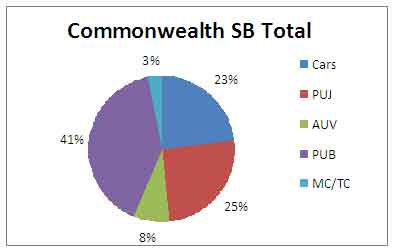
Person trip mode shares along Commonwealth Avenue southbound (to Elliptical) –
Note that there is a proposed MRT 7 to be constructed along Commonwealth and that system will also favor public transport users. Such a system should be more efficient in carrying passengers along the corridor and should provide an opportunity to rationalize PUJ and PUB numbers along Commonwealth. And such an opportunity should be taken and not passed up if government is really serious in improving transport in Metro Manila.
Person trip mode shares throughout the country will surely have similar numbers if not higher shares for public transport compared to Metro Manila. This more than underlines the impetus for providing safe, efficient public transport services for Filipinos – a commitment that should not only be stated or printed but actively pursued with government in the forefront rather than on the sidelines.
Graphs and other stats mentioned derived from data from surveys for the Mega Manila Public Transport Planning Support System (MMPTPSS), 2011.
iBus – bus system reinvented?
In the recent British Invention Show, a Filipina won a gold medal for something that is probably much needed to solve the transport woes of this country – the iBus. It is of course initially conspicuously like your regular bus system but upon closer look at the slideshow from the news article, there are many things about the system that’s high tech. The high tech aspects of the iBus are actually example applications of Intelligent Transport Systems (ITS) as implemented for public transport.
I am not privy to the details for the iBus but I did see part of its progress after meeting a few times with its proponents since last year. With the award, I hope that perhaps our DOTC, LTFRB or MMDA will become interested in the system and perhaps that interest will translate into the deployment of the system in a test corridor as a proof of concept. I would even dare propose that should the demo be successful that it be applied immediately in Philippine cities requiring modern transit systems.
 Caught (up) in traffic