
Home » Airports (Page 16)
Category Archives: Airports
Another look at the Puerto Princesa Airport passenger terminal
I was in Puerto Princesa, Palawan recently and too the opportunity to take a few photos at the passenger terminal. The last time I was in Puerto Princesa was in November of last year and that was during the off-peak season. This time, I wanted to capture scenes at the airport during the peak season (i.e., summer) when Palawan is a major destination for a lot of tourists who want to enjoy its excellent beaches and other attractions including the famous Underground River, which is a UN Heritage Site and a wonder of nature.
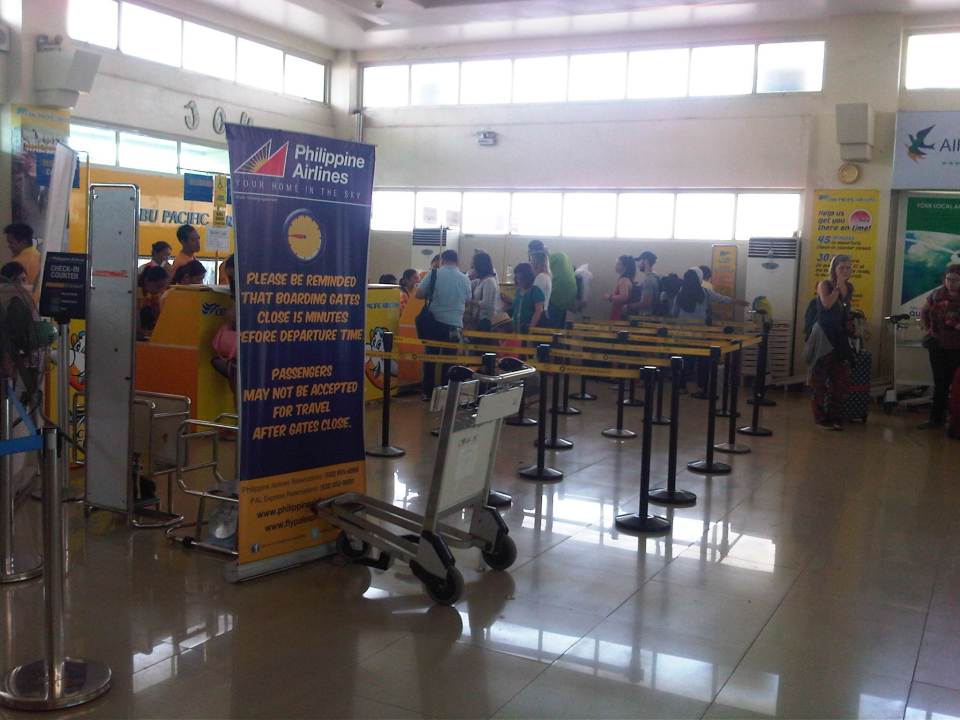 Check-in counters for Cebu Pacific and Philippine Airlines
 Check-in counters for Air Asia Zest
 The pre-departure area has been expanded recently and it looks like it was enough for now. There were many people but there were enough seats and no one really had to stand around or sit on the floor as they wait for their boarding calls.
 A look at the expanded area of the terminal. There are a few concessionaires here selling the usual souvenirs. There is one good coffee stand here for those who need their shot of caffeine.
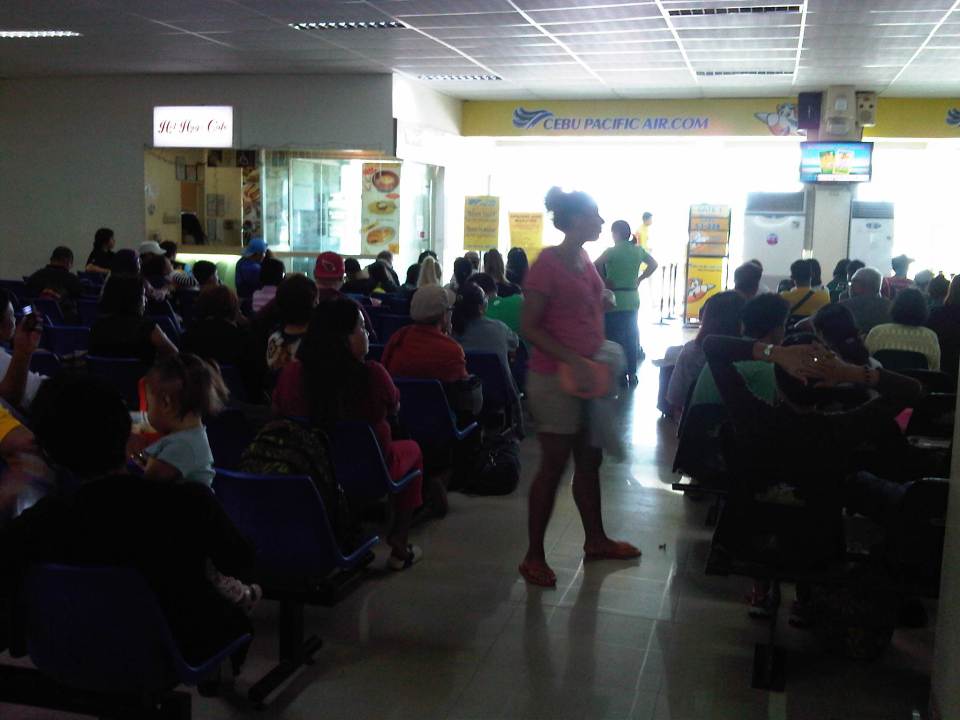 Passengers on the next flights sit up front awaiting their boarding calls
Puerto Princesa is currently building a new airport terminal on the other side of the runway. This terminal should have a much larger capacity than the current, expanded one. The project is necessary as the number of visitors to the city and the island of Palawan continues to increase mainly due to tourism. the airport will eventually become a full international airport with regular flights to/from regional cities like Hong Kong and Singapore.
–
Mactan Cebu airport departure
The trip to Cebu would not be complete without taking new photos of Mactan Airport’s departure lounge. This was already expanded and improved a few years ago to accommodate the steady increase in the number of visitors to Cebu. It will soon be part of a major project to expand and upgrade the airport so perhaps this year will see the start of a transformation of sorts for the airport. Following are a few photos describing the departure area.
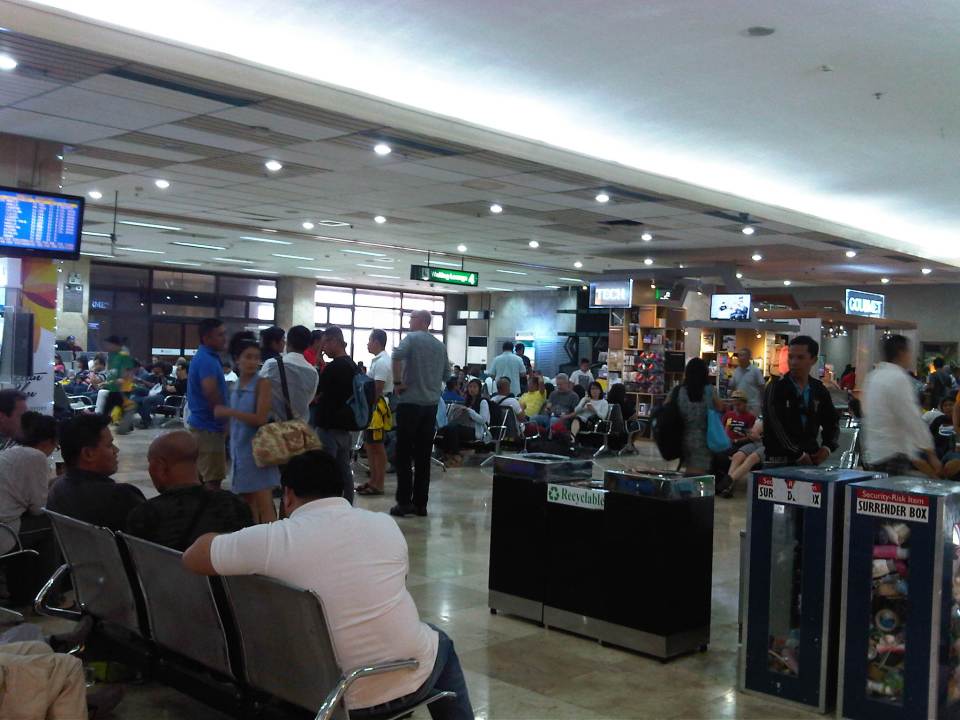 A crowded departure lounge greets travelers upon completing the final security check. The boxes at the right and near the garbage bins are containers for items prohibited from being hand carried to the aircraft.
 Passengers tend to congregate near the eateries and shops even if their gates were a few minutes walk away.
 Eateries and other concessionaires at the airport departure lounge include those offering Cebu lechon, dimsum, donuts, sandwiches and others.
 There’s a small screen showing the status of flights. I think the airport should eventually have a bigger screen for such useful information.
 The District Emporium specializes on locally made stuff including bags, accessories, crafts, footwear and other interesting items travelers can take home as souvenirs.
 List of Cebu Pacific flights boarding at our gate and the one near it. These many flights meant a very crowded waiting area. You can see from the photo passengers standing and seated on the floor as they wait for their planes to arrive and be called for boarding.
 Inside the departure area that was apparently all for CebPac flights, many seats are actually unoccupied by people. Many seats have bags or other stuff on them care of passengers who tend to hog seats for themselves.
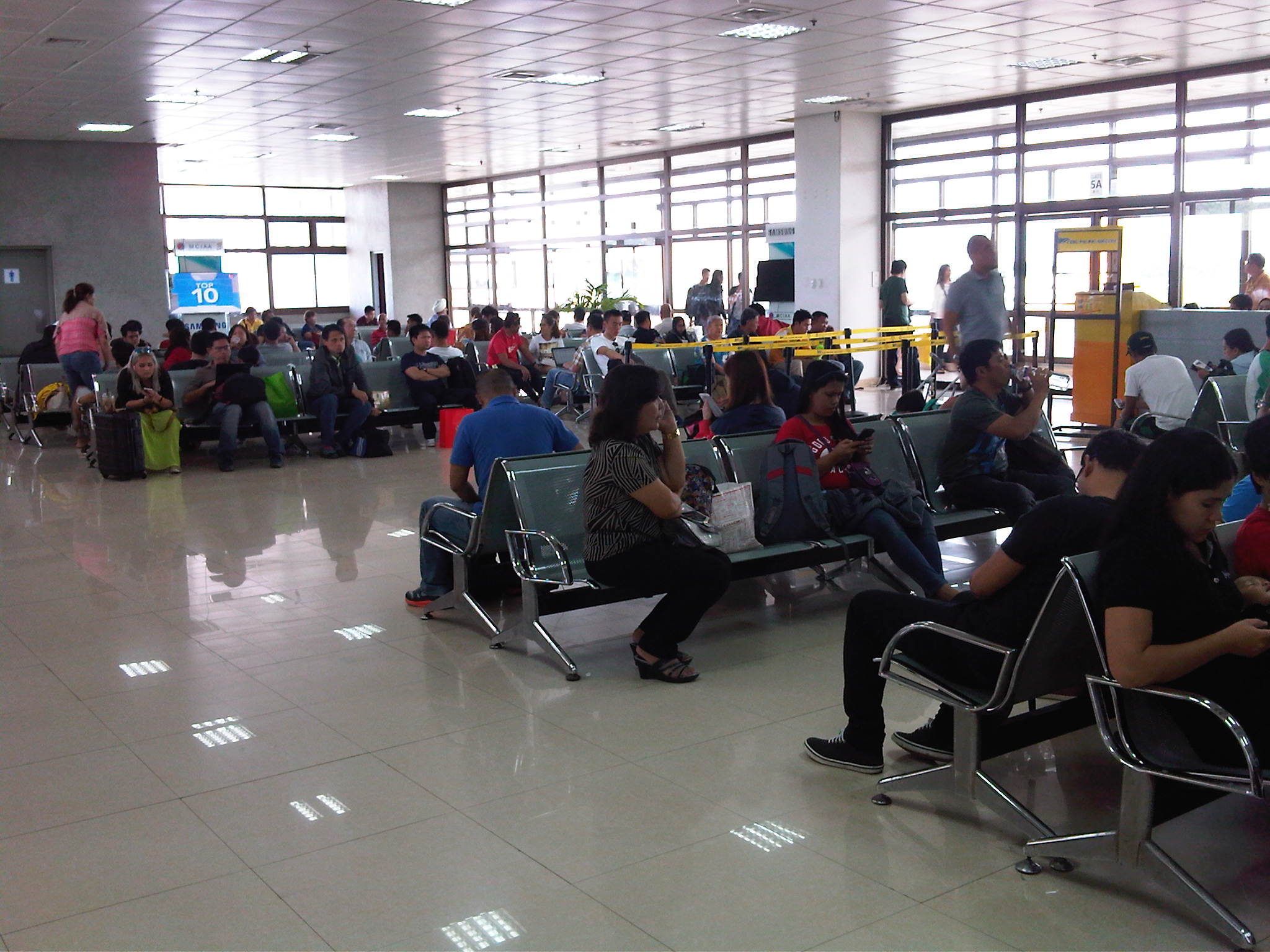 Another look at the area for departing passengers.
I expect to be in Cebu at least one more time this year. We have a big conference coming up in September for the Eastern Asia Society for Transportation Studies. This is a biannual international conference that is hosted by different Asian cities and which the Philippines will be hosting for a second time (The first conference was held in Manila in 1995.). We’ll see if there is a drastic change by then as the airport project is one that is tentatively listed as part of the technical tours for the conference.
–
Getting a taxi at Mactan Cebu International Airport
It is easy to get a taxi in many airports in the Philippines not named NAIA. The list includes, of course, Mactan Cebu International Airport. There is a regular taxi stand just a few meters walk from the arrival area. You have to cross the driveway and there are directional signs to guide travelers towards the taxi stand that is just a short flight of stairs from the corridor across the arrival area.
 Directional sign to the taxi stand – definitely not international standard but is clear and sufficient for its purpose.
 Queue for taxis – there has been an improvement here as there is now a tent for passengers’ shelter and a driveway for taxis. It used to be an open area along the MCIA driveway where taxis are lined up.
 The stand is manned by airport security and staff who also issue information on the taxi on a piece of paper containing a phone number of the MCIA for complaints. I don’t know if they get a lot of complaints and if the airport acts on these if and when there are complaints from passengers.
 Passengers loading luggage in the trunk of a taxi – there are many LPG-fueled taxis in Cebu and if you have many pieces or large luggage it would be better to select a taxi with more trunk space. LPG taxis have their tanks inside the trunk, limiting space for luggage.
 Some workers are busy doing the lane markings for the driveway. We thought that these probably being undertaken in preparation for the APEC meetings that several Philippine cities will be hosting.
–
Mactan Cebu airport arrival
Arriving in Mactan, Cebu for our vacation, I wanted to get a few photos of the airport to have an updated post on the airport. It’s been a while since I had been to Cebu and I noticed my previous posts on the airport did not feature any photos upon arrival. I also wanted to take photos before major work is undertaken for the airport. Mactan Airport is already scheduled for expansion and upgrading under a PPP project with a consortium including local contractor Megawide and the company behind Indira Gandhi Airport in India. (This was the same project where other consortia that included companies behind Changi and Incheon Airports, top airports in the world, lost in the bidding.) Here are a few photos of the arrival area as well as some tips for getting a taxi to your hotel, resort or wherever you’re going from the airport.
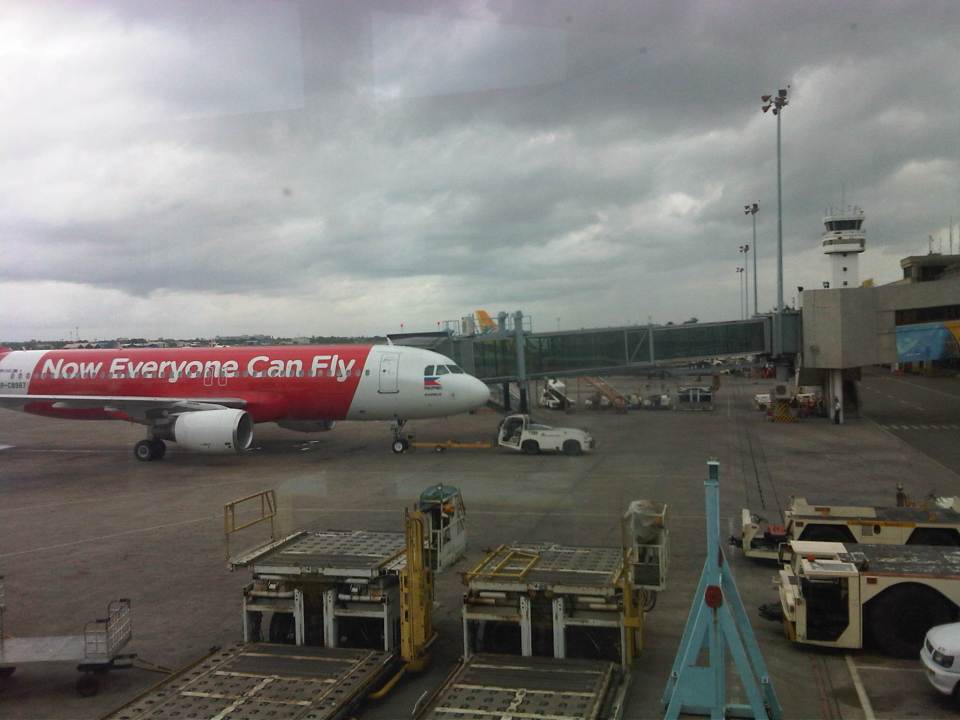 An Air Asia plane on the tarmac of Mactan Cebu International Airport
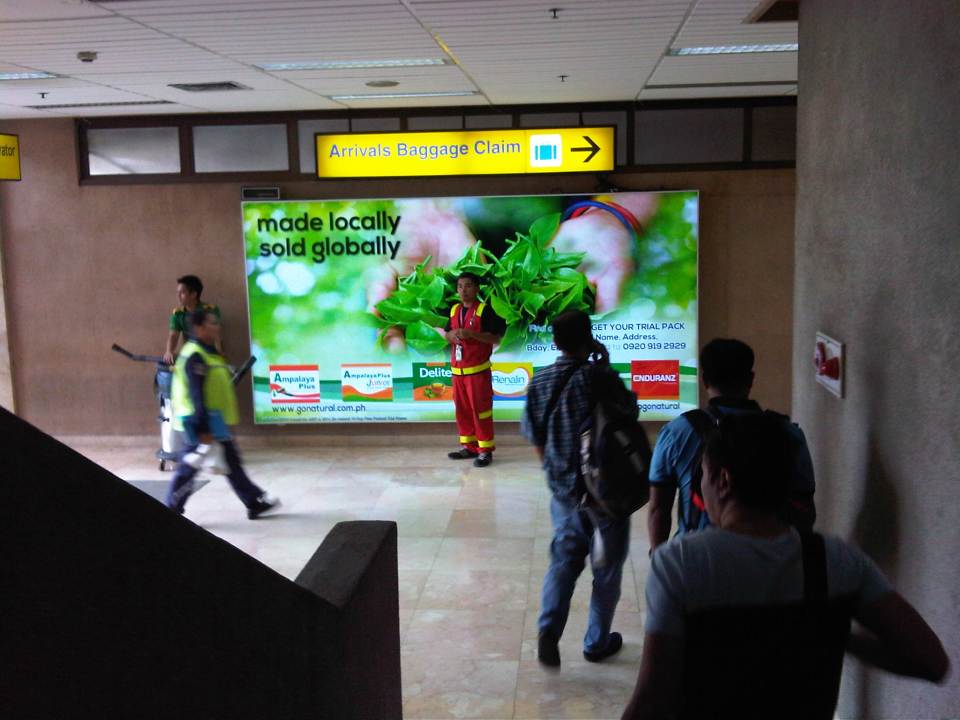 We got to use the tube as we deplaned (unlike in Manila) and walked towards the baggage claim area.
 Passengers taking their positions to pick up their luggage from the carousel.
 Tourist information, hotels and other counters and booths greet arriving passengers at the airport.
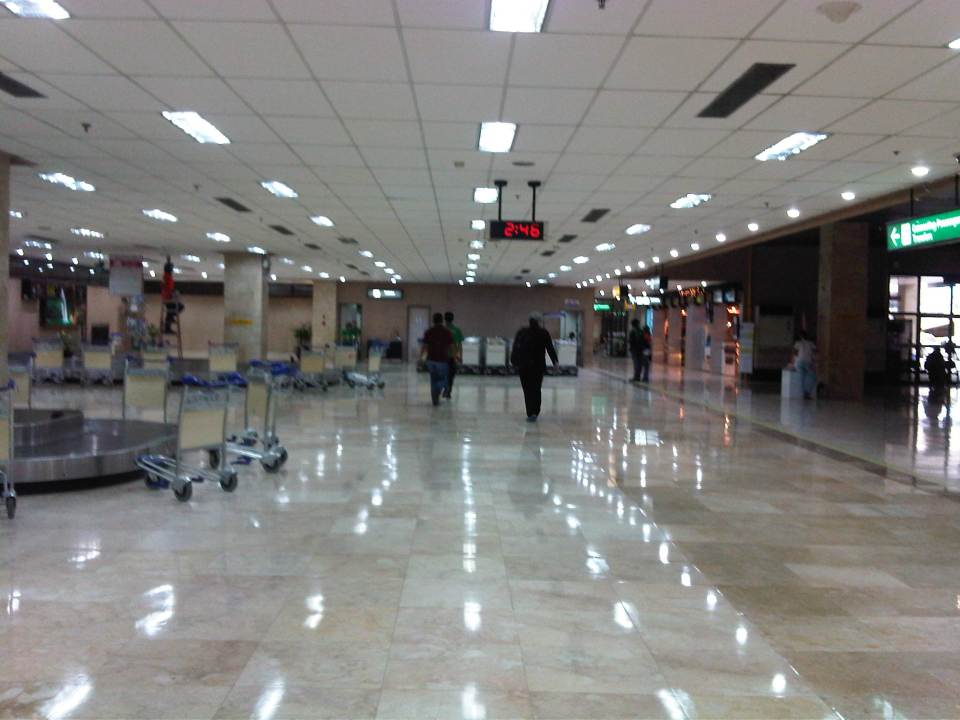 Spacious marble-floored baggage claim area
 Passengers waiting for their bags to come out of the carousel.
 A friendly reminder to people claiming their baggage. The sign is in English, Japanese and Korean, indicative of the languages used by most travelers to and from Cebu. Similar to other airports in the Philippines, no one actually checks whether the baggage tags match the claim stubs with the passengers. Fortunately, people are honest and there have been none or minimal incidents of mistaken luggage.
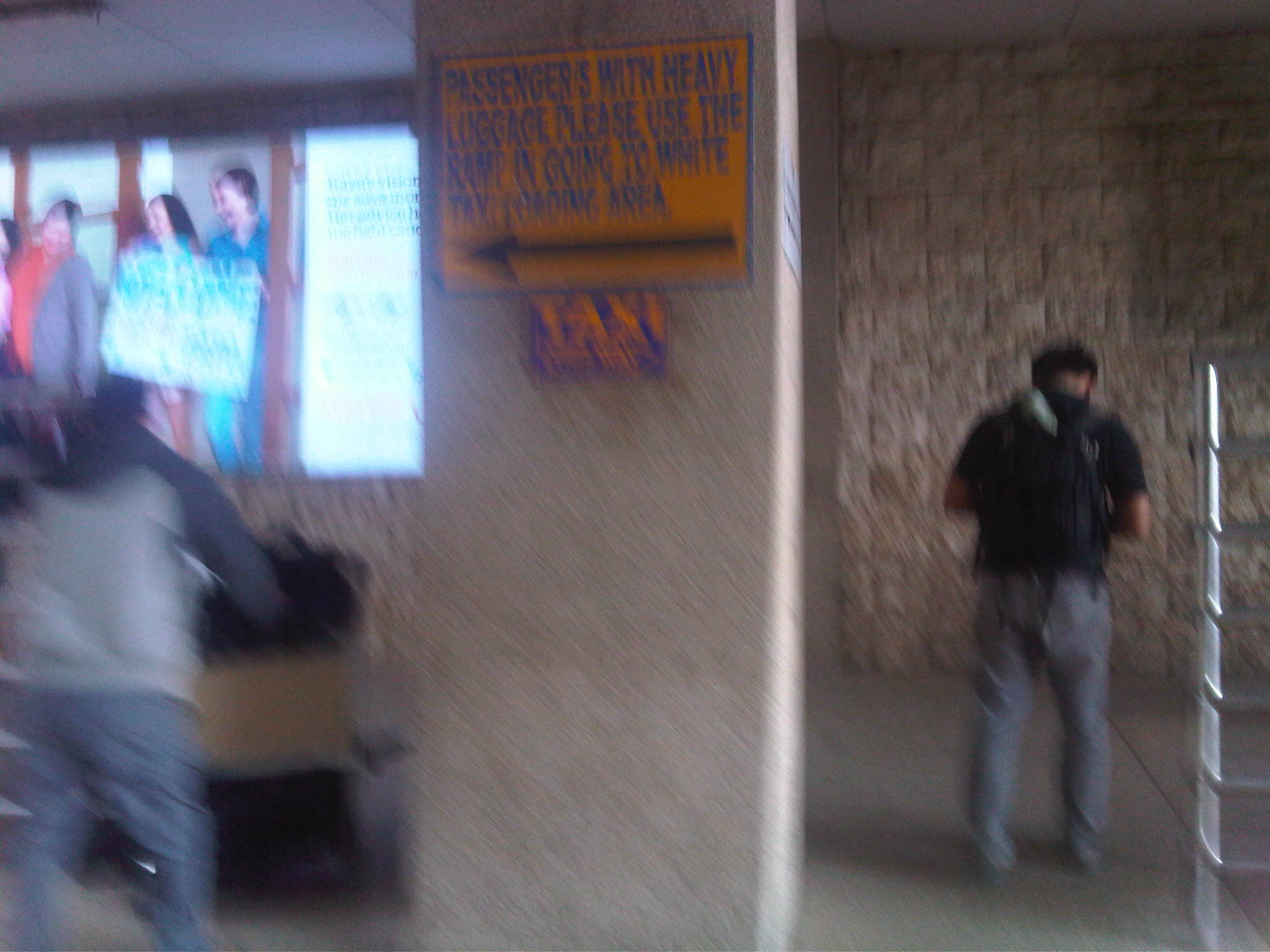 To get to the taxi stand, you have to cross the driveway as you get out of the arrival area. There are signs to guide you to the taxi stand where airport security provides assistance to passengers as they board the taxis. I took this photo in a hurry so its blurry. The taxis stand is to the right and up a short flight of stairs. The arrow on the large sign in the photo show the way to a ramp to the taxi stand for travelers with heavy or a lot of luggage.
In the next posts: Getting a taxi at Mactan Airport and Mactan Airport departure.
–
Overnight parking at the NAIA T3 multi-level parking facility
Many have been asking about the overnight parking rates at the Ninoy Aquino International Airport (NAIA) Terminal 3 and I had wanted to write on this but just didn’t have the material to share with readers of this blog. I had wanted to verify for myself the overnight parking rates at Terminal 3 but had not used the Terminal for my flights last year, which had me using all except Terminal 3 for my travels. Last weekend, I finally had the chance to check the parking rates as I left my vehicle at the airport for a weekend getaway before school (and work) starts for the second semester at the university.
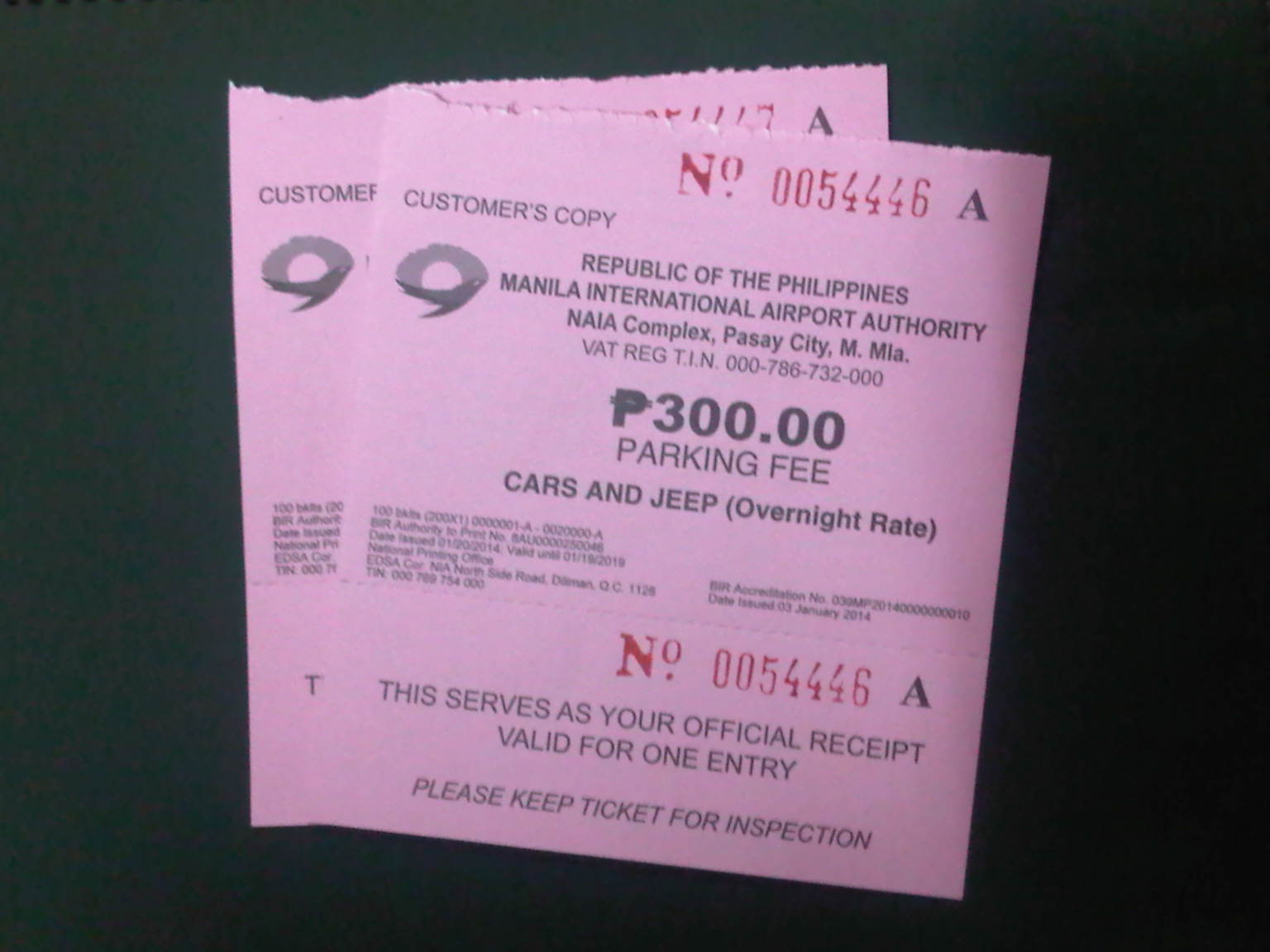 Parking tickets issued at NAIA Terminal 3’s multi-level facility.
The parking fee is 300 pesos per night. This is a fixed rate and you don’t have to pay additional fees for when you exceeded the hour when you parked your vehicle. That is, even if you parked your vehicle at 7:00 AM the previous day and took it out at 5:00 PM the following day, you still get charged 300 pesos and NOT 300 pesos plus a charge for exceeding 24 hours parking.
For those parking at the multi-level facility, one just has to drive through the arrival level (ground) of NAIA T3 and turn right near the end of the driveway to enter the facility. I haven’t checked if the access at the departure level is open (perhaps a reader can verify this?) but they do have security checks between the parking facility and the terminal itself so people can go directly to the parking area without dropping off their companions and luggage at the terminal. You don’t have to drop-off your companions and luggage at the departure level and then go around the airport road again just so you can park your vehicle at the multi-level facility.
–
On delayed flights in the Philippines
I participated in a conference held in Puerto Princesa, Palawan last November and both my flights to and from Puerto Princesa were delayed. The first one was delayed by 1 hour. We boarded on time and there were no announcements of delays. However, we sat inside the plane for about an hour including taxiing towards the runway and then waiting in queue before we were cleared for take-off. The pilot was constantly on the PA system though, informing passengers about the cause of the delay, which was airport congestion. This was a reference to the many take-offs and landings (departing and arriving aircraft) being handled by the airport at the time. It seems air traffic control could not cope with the number of aircraft departing and arriving at NAIA even considering the airport had two runways that were operational (We took off using the secondary runway.).
 Aircraft taxiing towards NAIA’s main runway in preparation for take-off
I won’t mention specific airlines as I think domestic flights by all airlines have been incurring significant delays and not just recently but among the main possible reasons for delays that can be charged to the airline are the following:
1. Airport congestion – This can refer to either the runway or the passenger terminal. However, for the latter case you can have examples of very congested or crowded terminals of airports that have planes taking off and landing on time. Tagbilaran and Roxas Airports are like that, and Mactan (Cebu) and Bacolod-Silay have passenger terminals that are becoming if not already congested. Thus, airport congestion as a reason for delays must be due to runway operations. A single runway airport will handle fewer flights compared to those with multiple runways. Airport runway design and configuration are influenced by many factors but given any single runway in a major airport like NAIA it is already assumed that these factors are already considered in operation and on a typical day under normal or even favorable conditions, the only other significant factor for runway operations is air traffic control. Air traffic controllers would be responsible for guiding arriving flights and clearing planes for take-off. The number of take-offs and landings will also be significantly affected by how air traffic control “queues” planes in the air and on the ground.
2. Too many flights – Airlines tend to maximize the use of their aircraft and seem to be scheduling more flights that they can handle. This results in the very common “late arrival of turnaround aircraft” reason that airlines announce as the reason for delayed flights. Granted, in many cases this is ultimately due to reason #1, it seems that other airlines that have lesser flights also have less problems of this kind. In fact, I have observed that in many if not most instances, international carriers do not incur as much delays as local carriers and among local carriers there seem to be a unanimous observation on which “planes are always late” these days.
It seems at first that the main issue is not necessarily airlines overbooking their flights since air traffic control and the number of runways can be major factors influencing the number of aircraft that can take-off and land during a particular period. However, one particular airline has a knack for offering a lot of flights that they obviously cannot handle with all the delays and cancellations they have been incurring to the consternation of a lot of travelers. Though I myself use the airline often due to the convenience of their schedules and frequencies, I too have been victimized many times of these delays including one flight to Singapore a couple of years ago when, instead of arriving in time for dinner I ended up arriving home just after midnight.
Recently, there have been calls for the airline and others performing like it to be penalized in order for them to realize how much inconvenience they have brought on to their passengers. I think this is right in order to send a clear message to airlines that safety and service come first before profit. Too many flights, no matter how convenient to the passengers in terms of schedule, is not a substitute for good quality service. Being a budget airline also does not excuse it from what a lot of people have branded as crappy service. This mentality of airlines reminds me only of similar mentality among bus and jeepney operators (land transport) but that’s another story.
–
NAIA Terminal 4 arrival
I was among those initially wondering about which terminal at Ninoy Aquino International Airport (NAIA) was being referred to as T4. I already suspected that this might be the term coined for the old Manila Domestic Terminal that was the airport of my childhood days (aside from the old Mandurriao Airport in Iloilo City). The last time I used this terminal was in mid-1996 on a trip to Cebu and prior to my study leave abroad. That was more than 18 years ago so when I had the chance to use Terminal 4 again, I decided to go for it. Following are photos I managed to get of T4 as I arrived from Puerto Princesa via Tiger Air, which was operated by Cebu Pacific but used the old domestic terminal in and out of Manila.
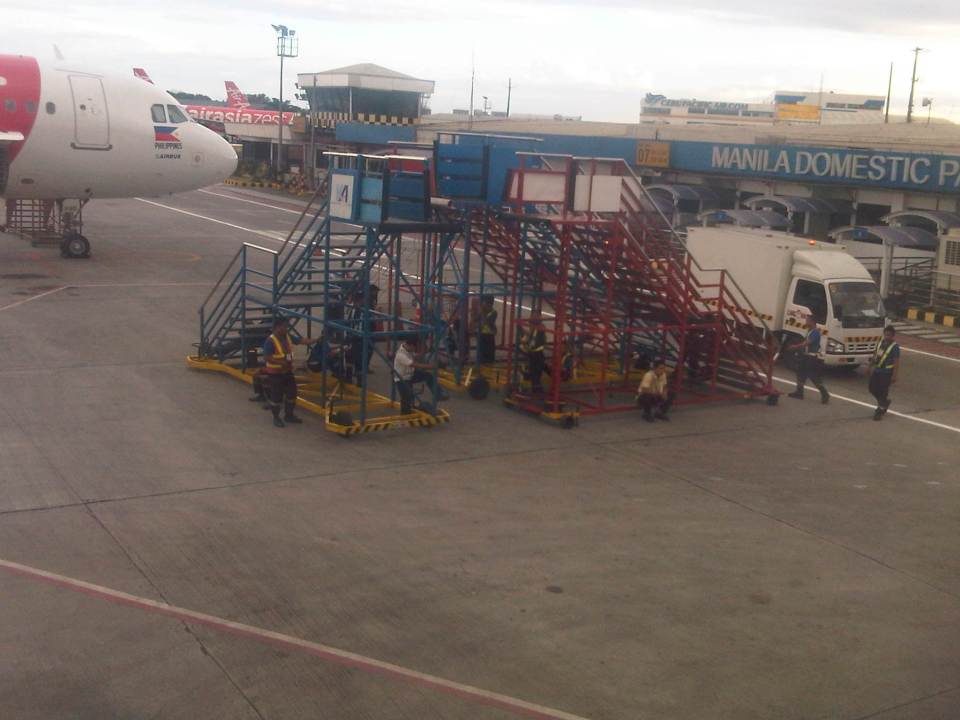 Ground staff preparing to position the stairs for deplaning passengers.
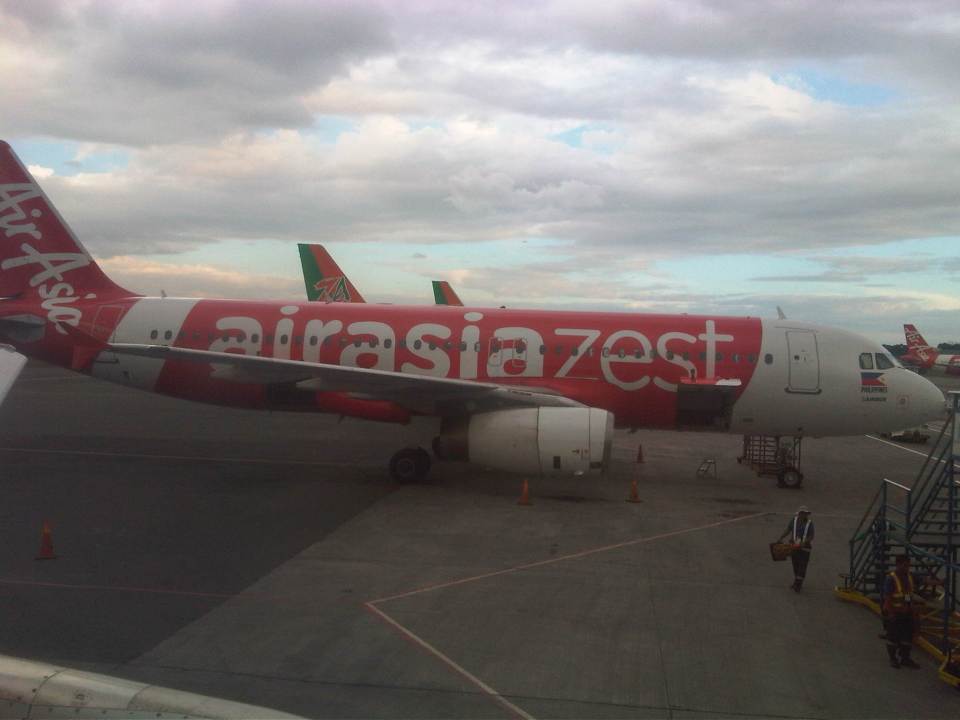 Air Asia Zest aircraft parked in front of the terminal – there are basically two liveries currently in use, the old Zest Air design and the Air Asia design. Air Asia acquired the majority for the airline from Zest Air not too long ago.
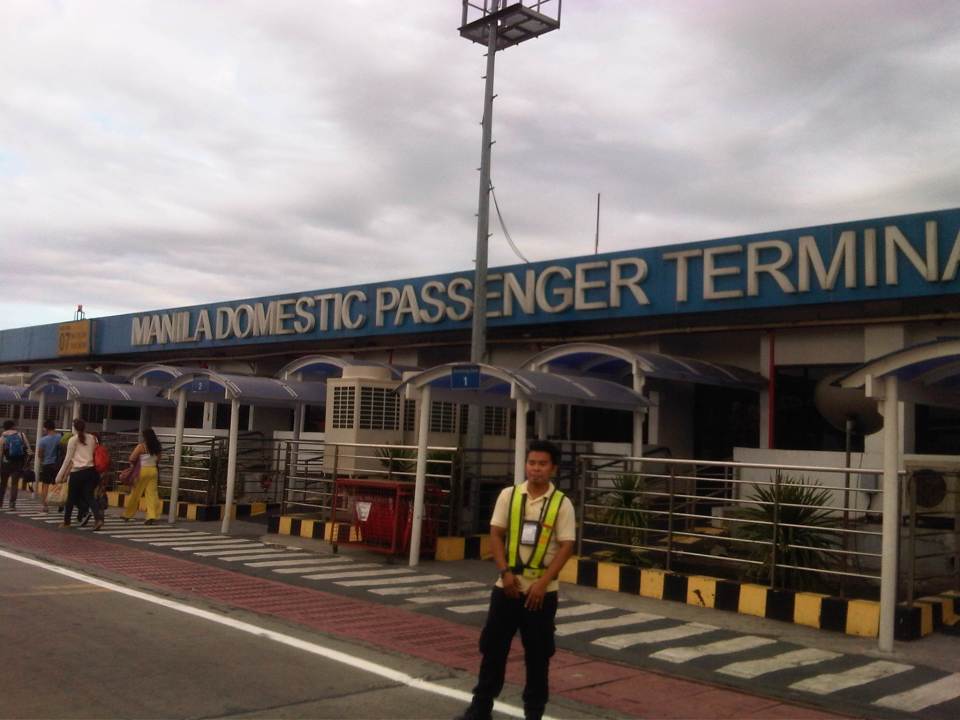 Airport ground personnel stand around to guide passengers towards the arrival area. Unlike other airports, they are more active in asking passengers not to loiter in the tarmac for photo opportunities.
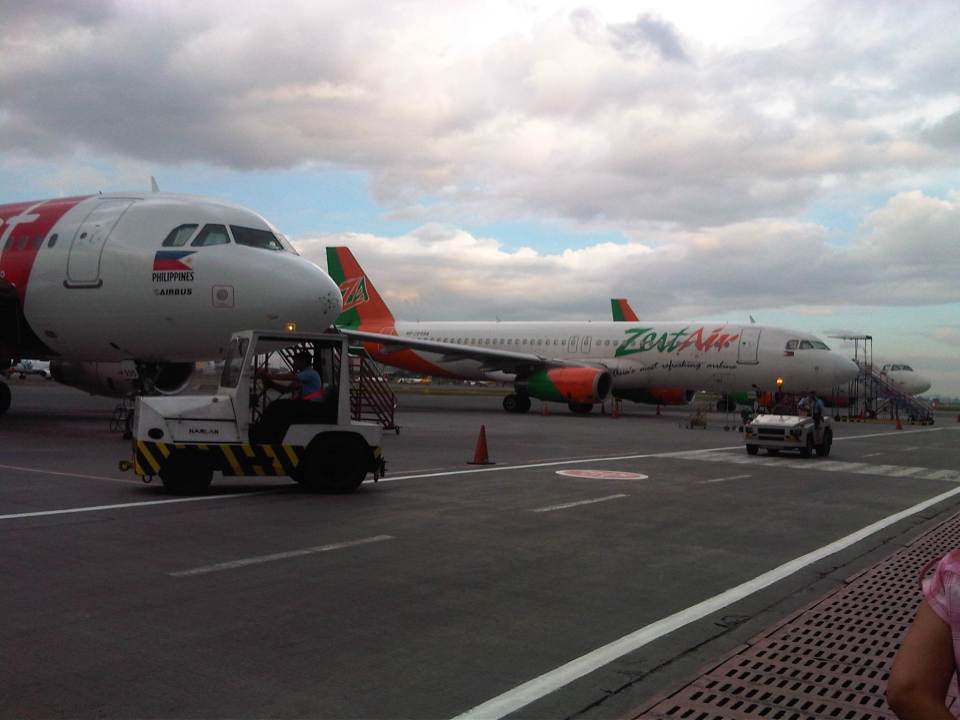 Another look at the Air Asia Zest planes still in their old livery
 We had to walk a bit around the terminal building to get to the arrival area. We had to enter the terminal through a side entrance instead of what looked like the more formal entrance to the arrival area.
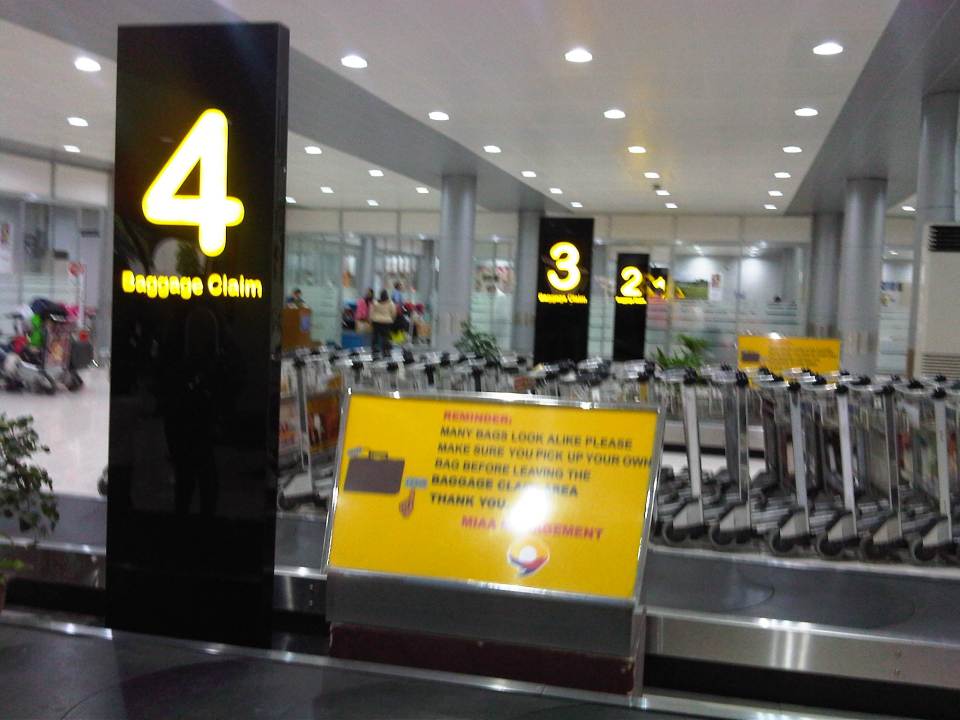 Baggage claim area – it looked like they refurbished this area, which brought back memories of the same area I’d seen after arriving from domestic trips (mostly from Iloilo).
 Exit from the arrival area leading to the driveway.
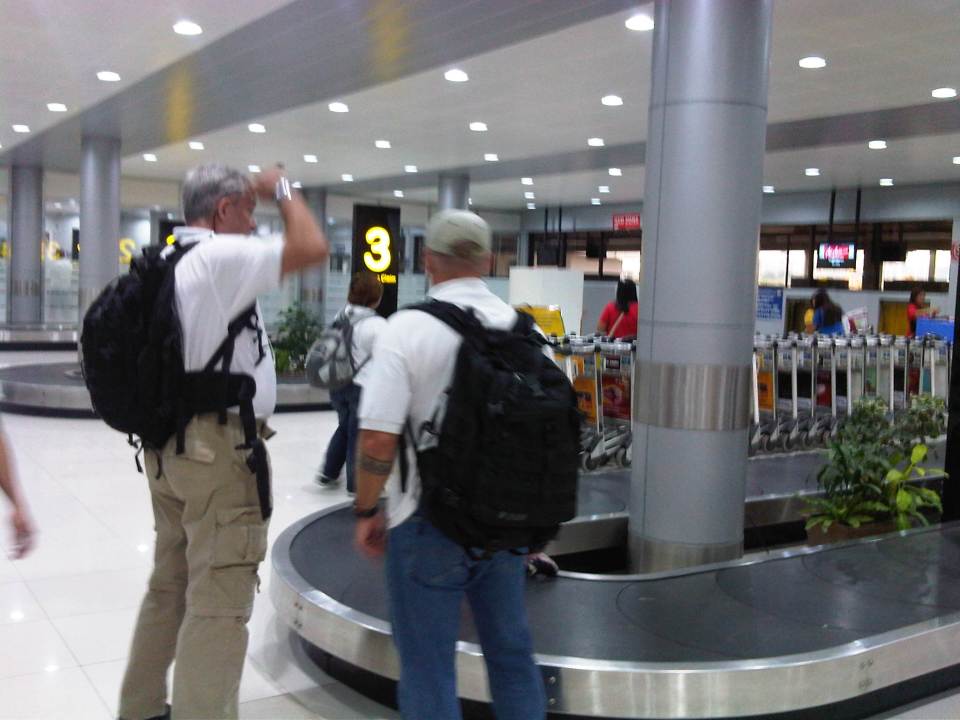 Tourists waiting for their checked-in baggage
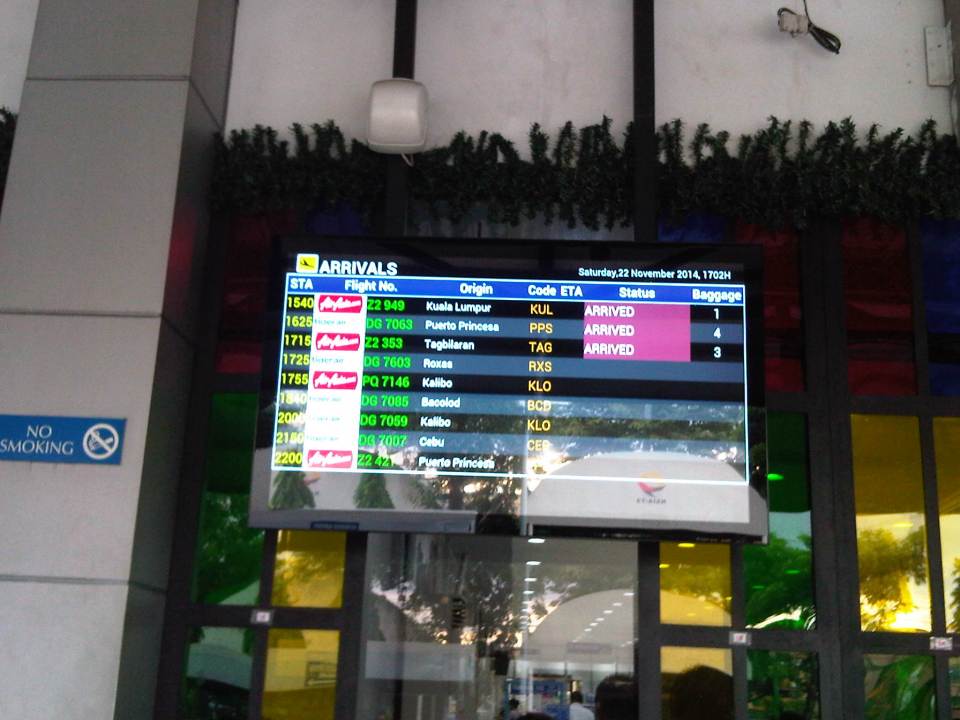 Information board for arriving flights at Terminal 4
 Terminal 4 also serves international flights as can be deduced from the signs and the arrival from Kuala Lumpur shown in the info board in the previous photo. These are flights operated by Air Asia, which is the leading budget airlines in the world.
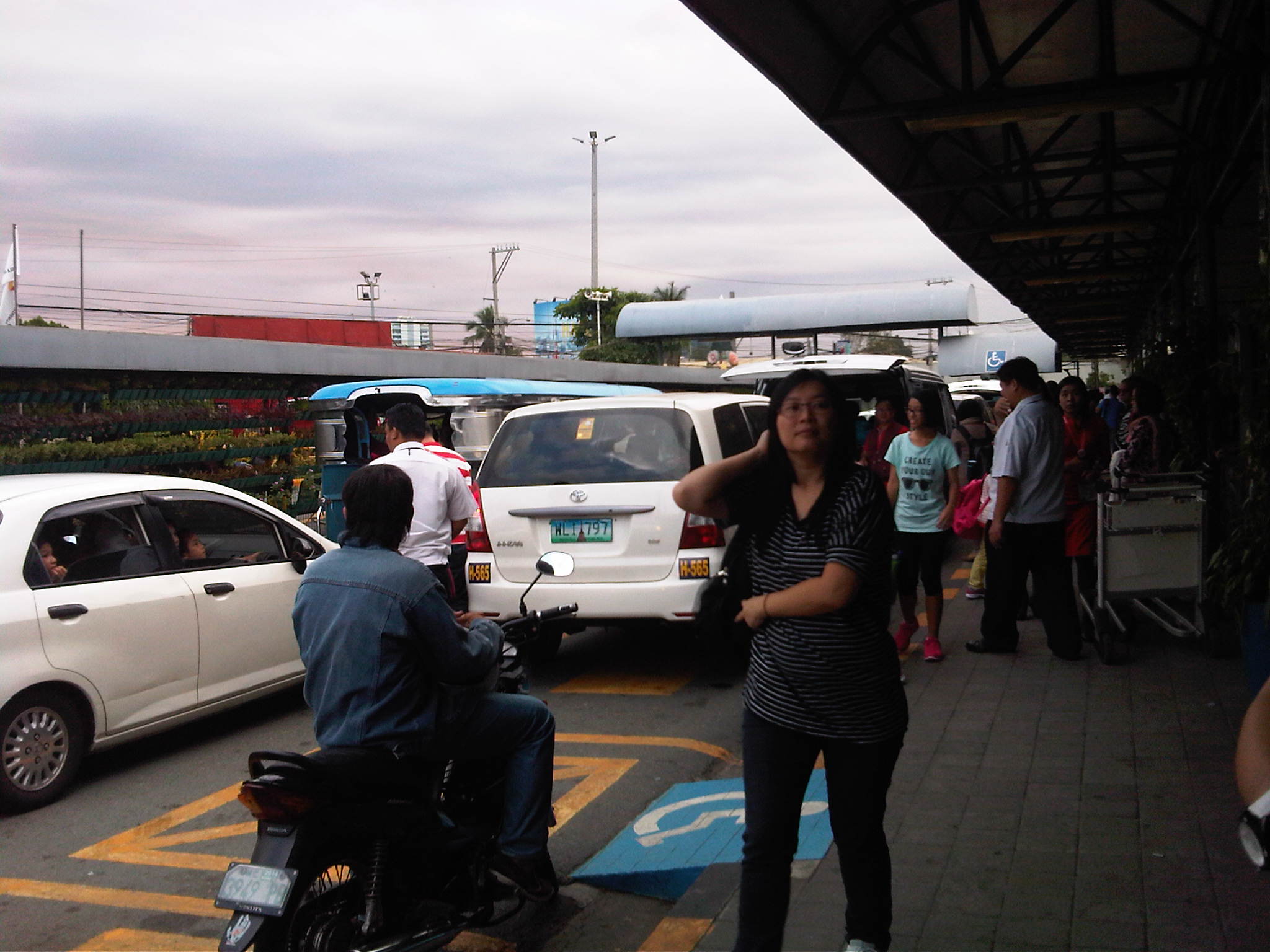 Busy driveway with drivers picking up or unloading passengers at the airport. I remember this area swarmed with porters back in the day when baggage included a lot of boxes and other stuff people carried to Manila from provincial trips. I still remember one trip by myself during my college days when a porter offered his help with my bags. I didn’t have money to tip him so I told him I could manage (I obviously could not.) but then he helped me anyway, quipping “libre naman iyan” (that’s all free) – a good lesson in humility for me, which I always recall in similar situations.
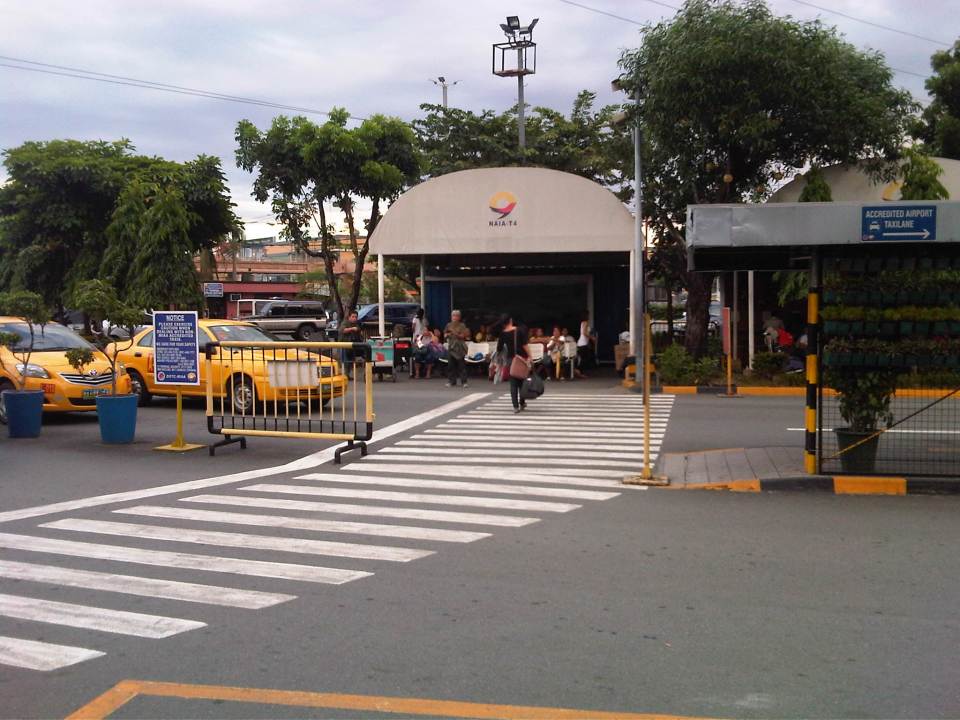 There is a covered waiting area for well-wishers across from the arrival area exit.
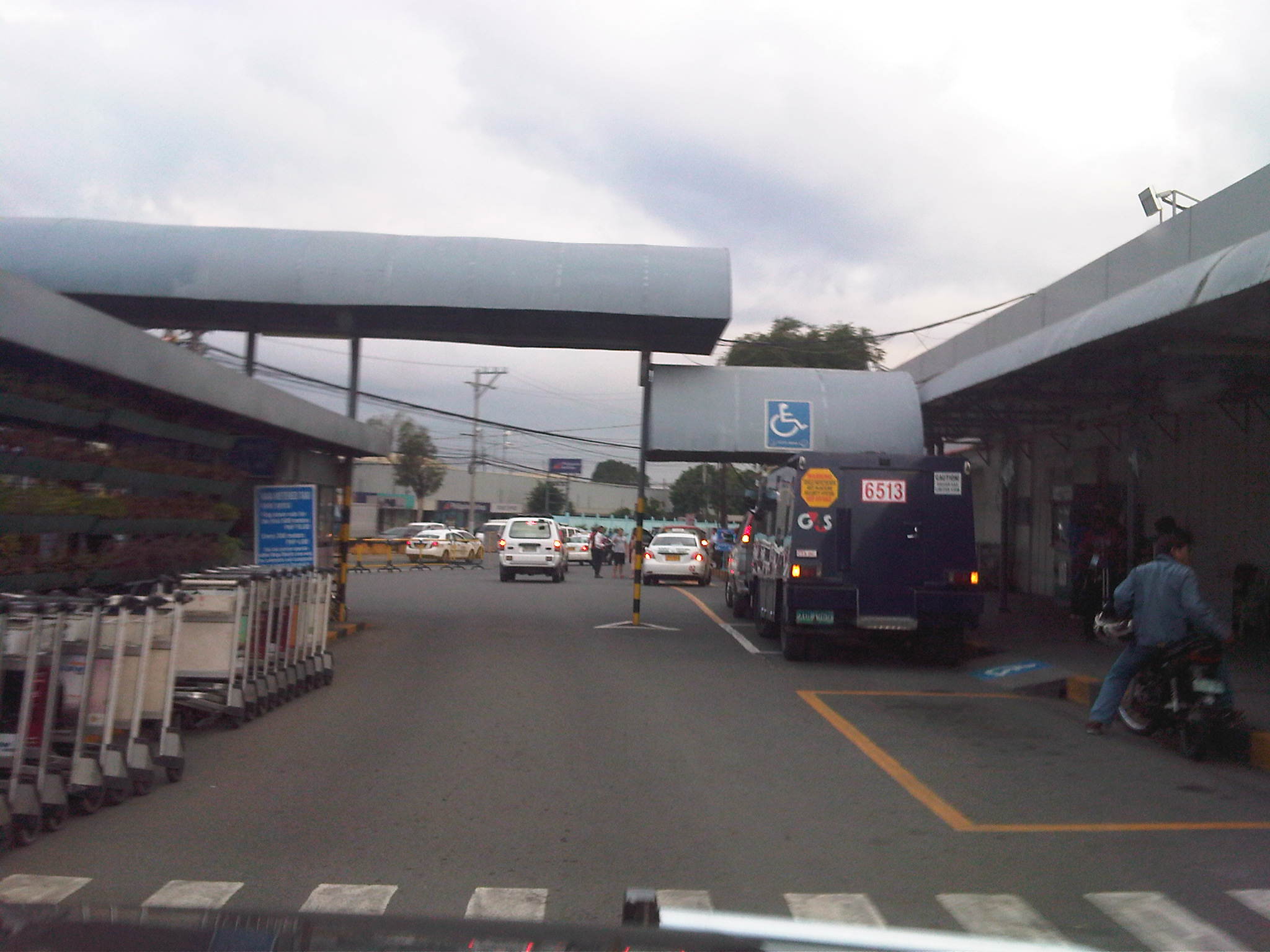 A view of the Terminal 4 driveway as we drove out to go home.
–
A replacement for NAIA?
Our plane approached Ninoy Aquino International Airport (NAIA) from Manila Bay and so I was able to get a good look at Sangley Point from the air. Sangley Point is currently an Philippine Air Force base although last time I checked some general aviation have been transferred from NAIA to Sangley Point to ease congestion at Manila’s gateway. Recently, Sangley Point has been the subject of much discussions regarding the location of a possible replacement for NAIA. The latter has been experiencing much congestion lately as evident from the frequently delayed flights in and out of the airport, which already has 4 passenger terminals. The assessment is that NAIA won’t be able to handle the steadily growing number of flights, passengers and cargo that it is and would be handling. And so, the conclusion was to determine the location of a new airport that would basically serve the National Capital Region in particular and the rest of the country in general. The last is in reference to NAIA being the prime gateway to the country despite other international airports including Cebu-Mactan and Davao.
There is actually another major airport to the north of Metro Manila in what was formerly a U.S. air base in Pampanga province – Clark. Clark International Airport (also known at one point as Diosdado Macapagal International Airport) was once touted to be the Narita to NAIA’s Haneda (an allusion to the two major gateways in the Kanto region of Japan). Plans for Clark included the construction of a modern railway line (the still-born Northrail) that would have connected Metro Manila with Clark. There is already a modern expressway connecting the two in the North Luzon Expressway (NLEX) and the Subic-Clark-Tarlac Expressway (SCTEX) that connects Clark with the rest of Central Luzon. The newest tollway in the country, the Tarlac-Pangasinan-La Union Expressway (TPLEX), has already completed Phase 1 and will ultimately connect Clark with northern Luzon.
Sangley Point is located to the southwest of NAIA in the province of Cavite. Its location is quite strategic being at the mouth of Manila Bay and current developments related to much reclamation work in the coastal cities and towns of Metro Manila and Cavite invites speculation about Sangley Point as a possible site for a future international airport. The examples of Haneda, Kansai and Hong Kong have been mentioned as references or models for Sangley to follow. However, it is not a simple thing considering the need for extensive reclamation in order to have space for a modern airport with multiple runways and passenger terminal(s) that can handle the projected millions of travellers using the airport. There are also environmental concerns here that need to be addressed, which can be evaluated via a comprehensive environmental impact study.
 Sangley Point airbase as seen from our landing aircraft
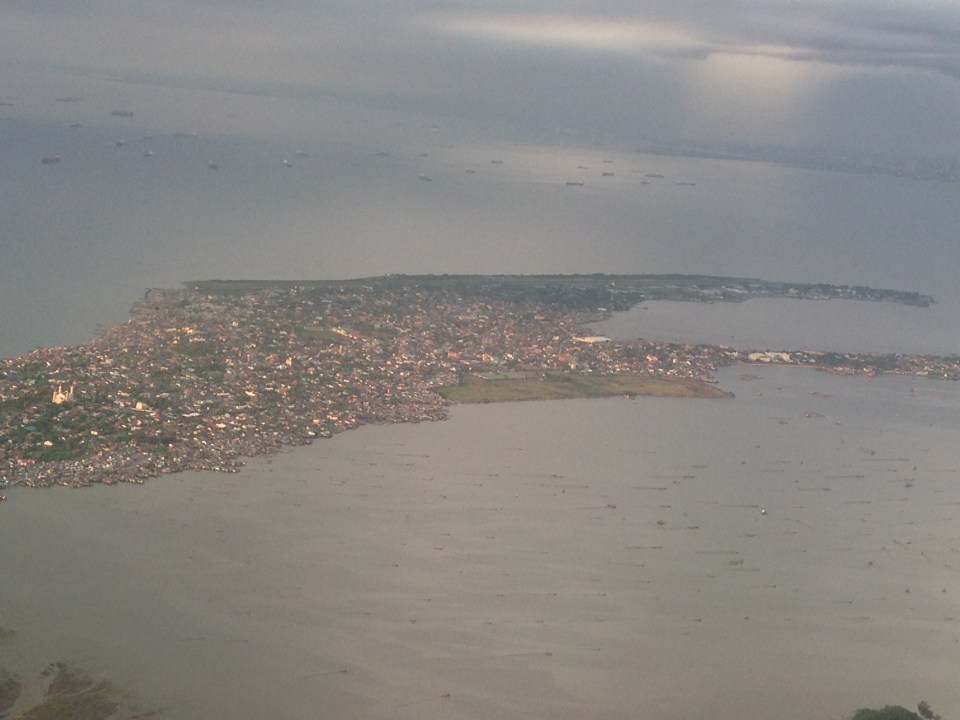 A closer look shows the strip of land that’s pretty much just the runway and a few buildings that serve as terminal and offices.
Whether the proposal for a future international airport at Sangley Point takes off (pun intended) or it is decided that Clark will be the main gateway for what has become a Greater Capital Region (Mega Manila) remains to be seen. There is actually a couple of other proposals put forward before including a site in Bulacan (north of Metro Manila) and at Laguna de Bay (south of Metro Manila). These proposals have basically faded in discussions and only Clark and Sangley Point remain in active consideration. Clark is already there and has a master plan with 3 runways and a huge passenger terminal while Sangley is still basically a concept for the transformation of a small air base and with lots of uncertainties/risks involved especially in implementation. Perhaps what will be for Clark’s advantage and the tipping point is the Bases Conversion and Development Authority’s (BCDA) proposal for a Clark Green City located nearby. The success of this new city is seen partly to be anchored on Clark becoming the main gateway and in tandem with NAIA. In my opinion, this can and would work (and would likely be more cost effective) if the government commits itself to Clark and the required infrastructure to support the airport. This can also help decongesting Metro Manila with a major development in Clark Green City, which is already in the works in as far as BCDA is concerned. As for Sangley, perhaps the question is not whether we can do another Haneda but if we can do it right and within a reasonable time frame given the complexity of the task at hand.
–
Puerto Princesa Airport
I haven’t been to Puerto Princesa, Palawan since 2010 so I had wanted to see for myself what improvements they have done to their airport. This was considering the city and the province in general have become a very popular and accessible tourist destination featuring pristine beaches, hidden natural attractions as well as vibrant communities around the island. While the airport has been under renovation for a while, the terminal is already nearing if not already at capacity. Surely, as the country continues to promote tourism, Palawan will have a steady increase in the number of visitors and Puerto Princesa Airport will be the main airport access to the main island. The islands of Coron to the north of Palawan is served by a small airport in Busuanga, and El Nido at the northern part of Palawan Island will soon likely be served by another airport. But the jump off point for most of the island including the relatively “unexplored” south will be Puerto Princesa, which is also the centre of business/commerce. While its runway can handle large planes (I once rode on a B747 from Palawan), its terminal cannot handle the number of passengers such airliners are able to carry. The prospect of direct and regular international flights also would require a larger terminal to efficiently handle both domestic and international arrivals and departures.
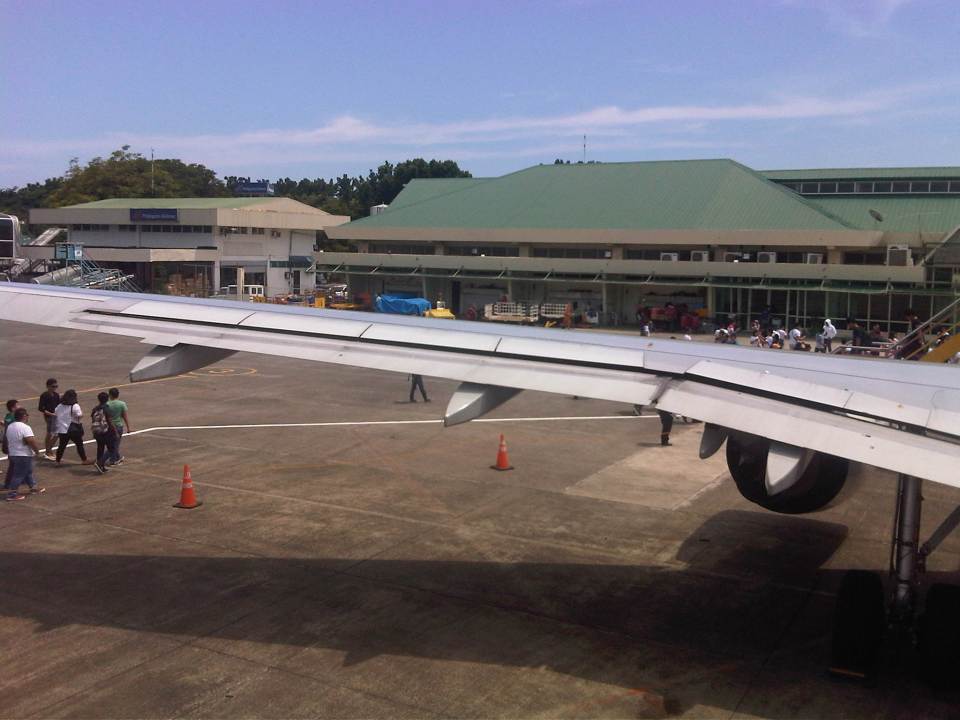 View of the airport upon stepping out from the aft door
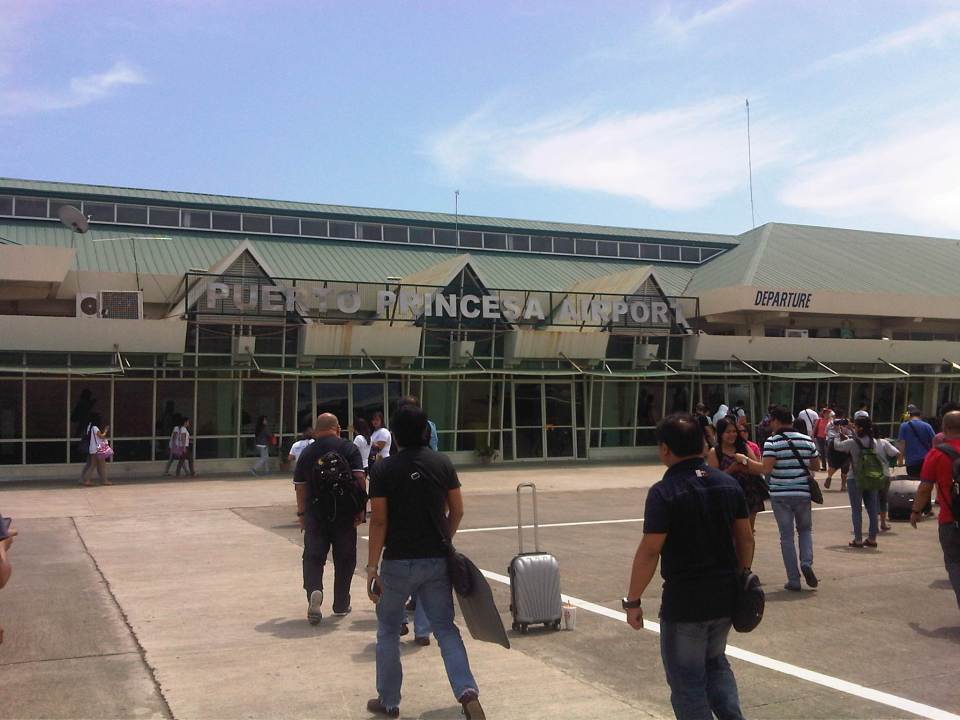 Passengers walk towards the terminal. Many passengers linger or loiter on the tarmac to take photos of themselves with the airport or aircraft in the background. While not unique to the Philippines, lingering on the tarmac is a no-no in many other airports due to security concerns.
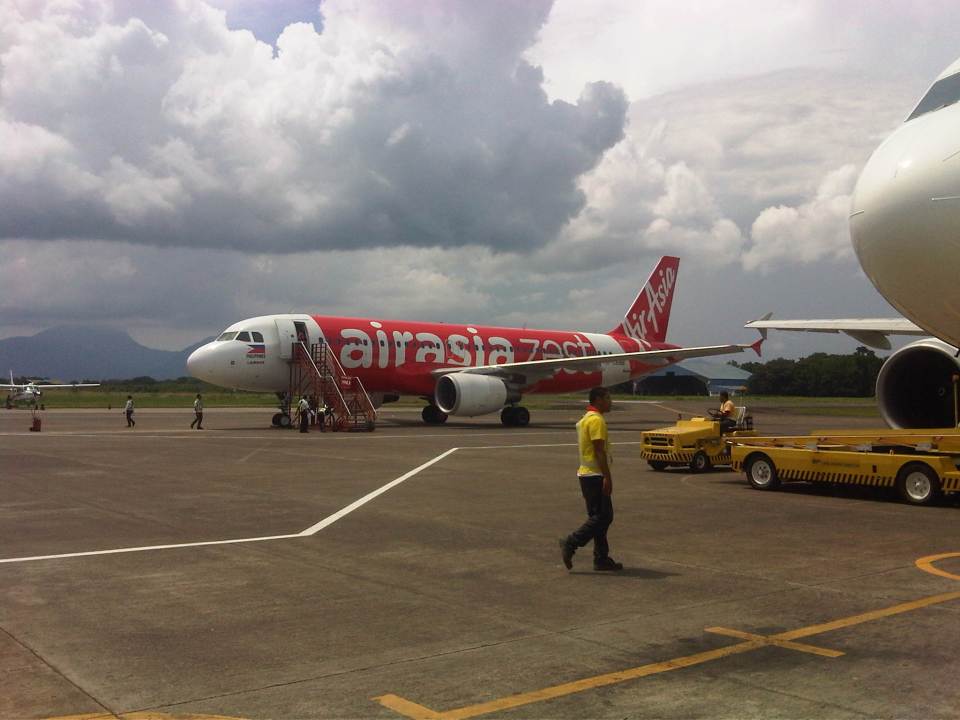 Air Asia recently acquired local budget airlines Zest Air and now services Zest’s domestic destinations like Puerto Princesa.
 We flew Cebu Pacific, which has the most flights servicing Puerto Princesa and had the better schedule for us. Unfortunately, CEB passengers seem to be experiencing a lot of delays. Our flight was delayed by 2 hours, which was definitely a waste of time as we had to go directly to our meeting upon our arrival in the city. Apparently, CEB has already earned the monicker its main competitor had for “planes always late.”
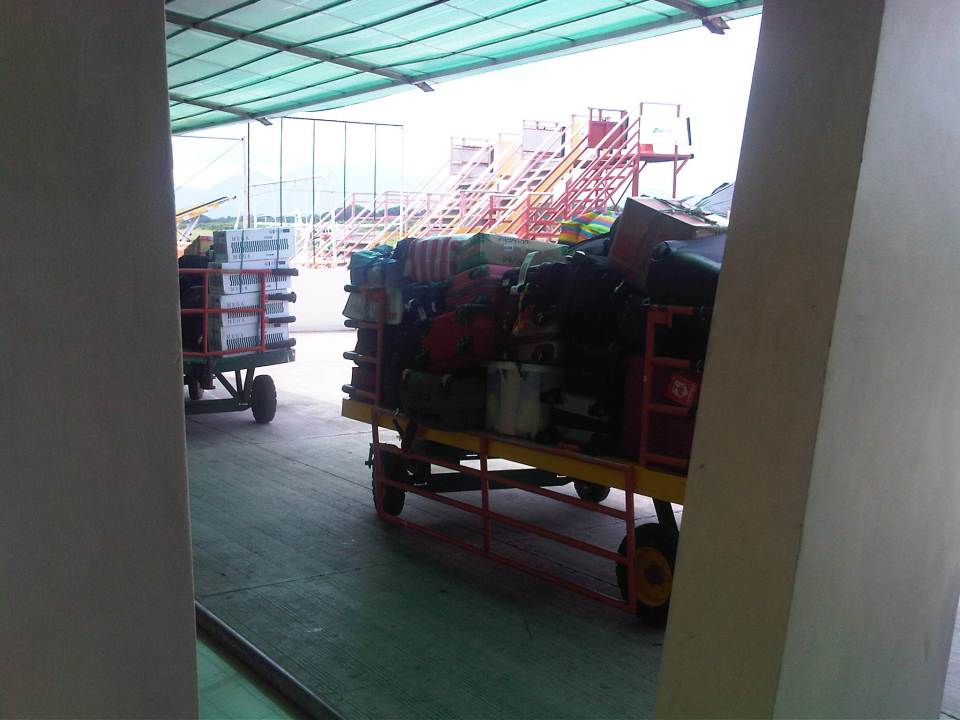 Bags being transported from the aircraft to the baggage claim area. Bags are loaded and unloaded manually so handling can be an issue and a concern especially for those using designer or expensive luggage. On days with inclement weather, luggage can get wet and there is the occasional bags being dropped (and damaged).
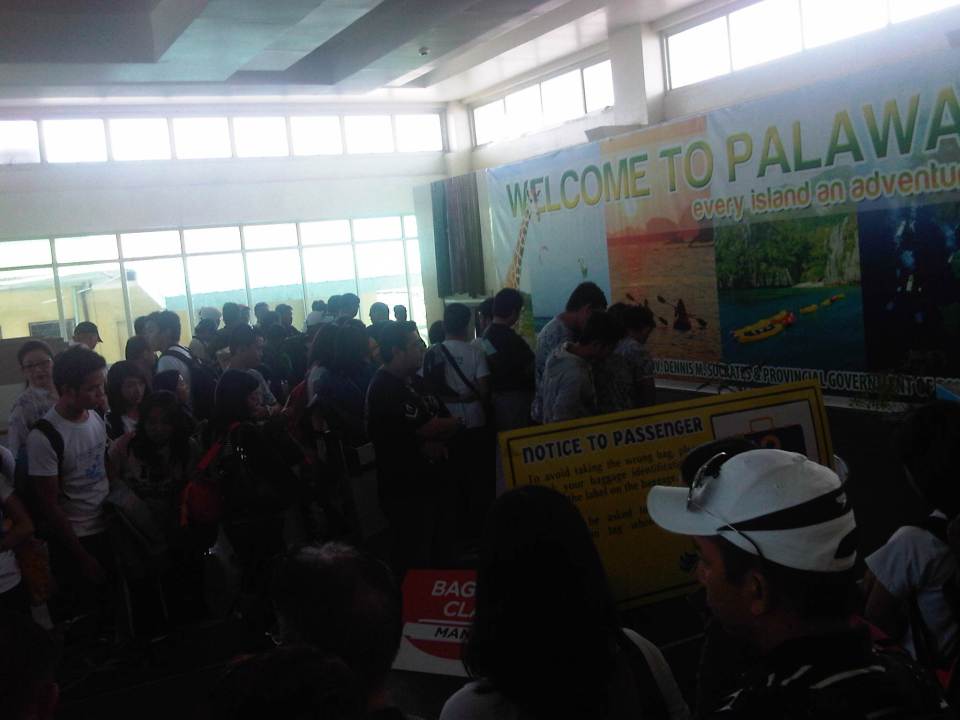 The baggage claim area at Puerto Princesa airport is obviously not so spacious with just a single belt shared by arriving passengers from different flights.
 Crowded but not chaotic. That’s how I would describe the baggage claim area when two flights arrived one almost immediately after the other.
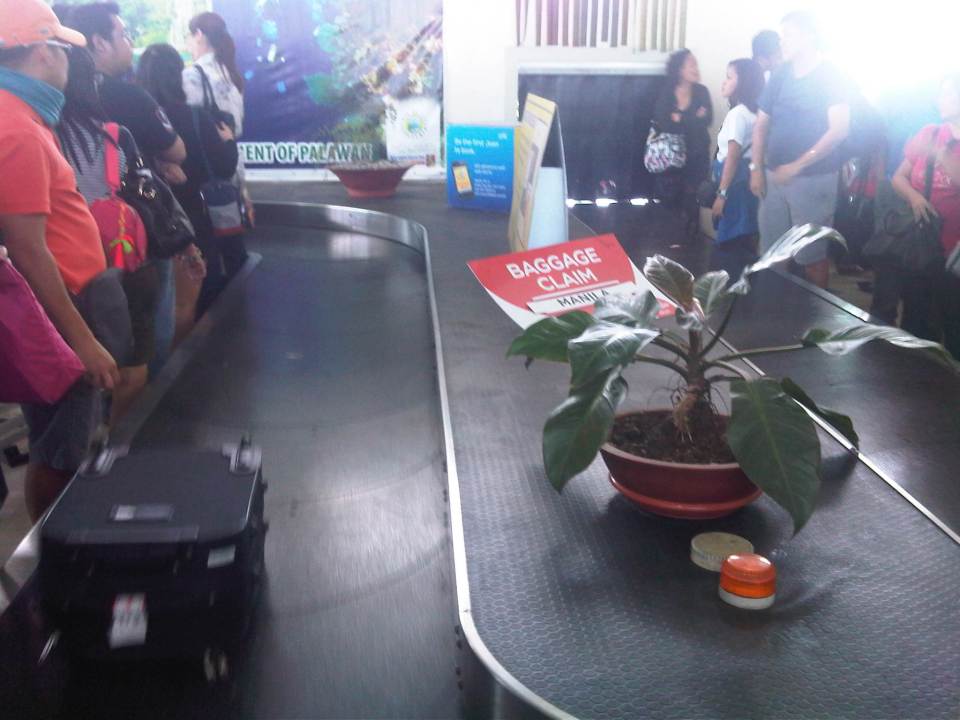 Baggage carousel.
 Sign informing visitors about the policy for going to the Underground River, one of the most popular if not the top attraction in Puerto Princesa.
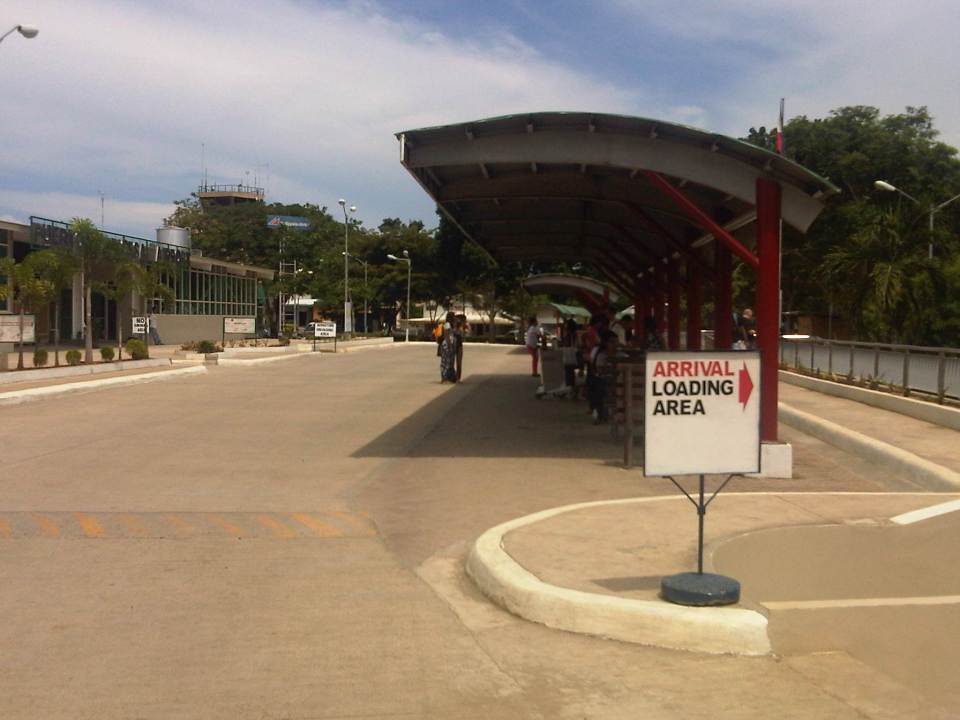 Covered area for loading/unloading passengers and visitors at the airport.
 Waiting area for people fetching passengers just outside the arrival area.
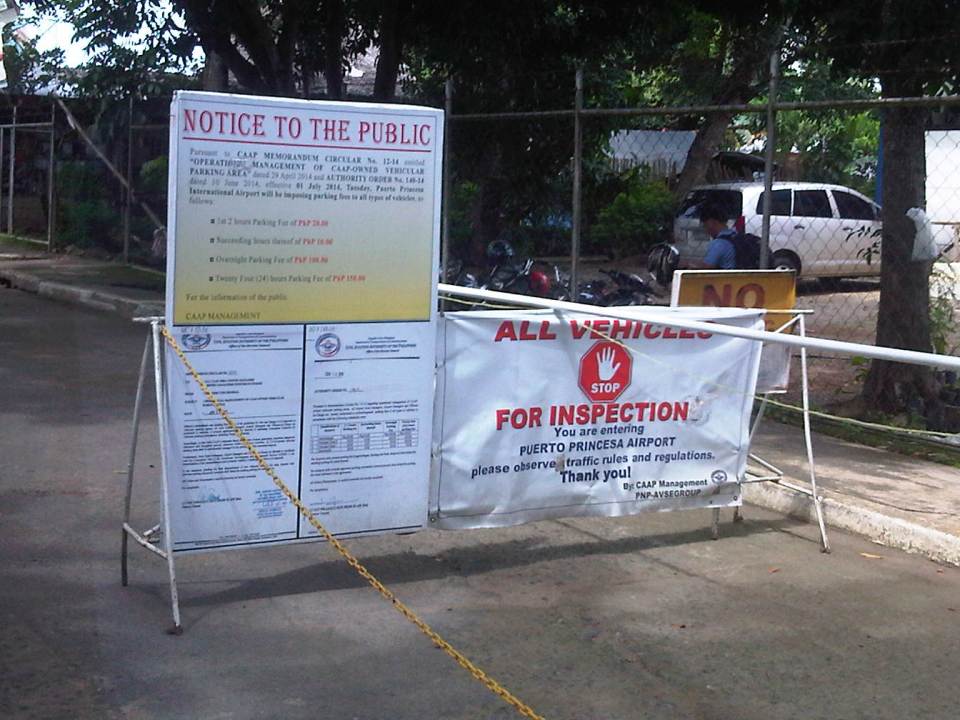 Notices for passengers and others entering the airport driveway.
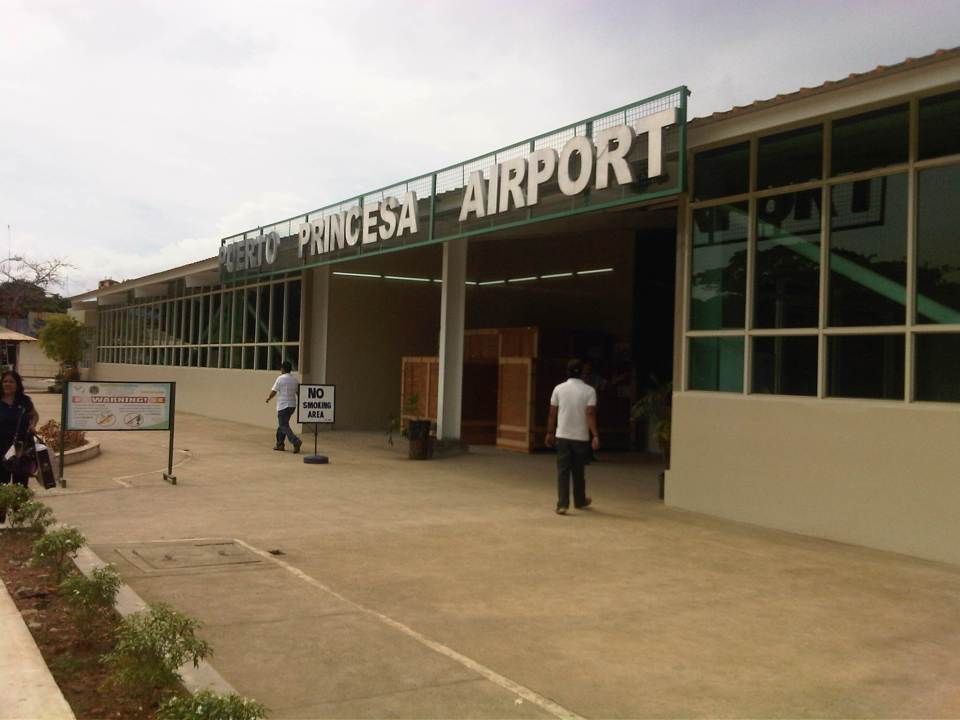 Entrance to the airport.
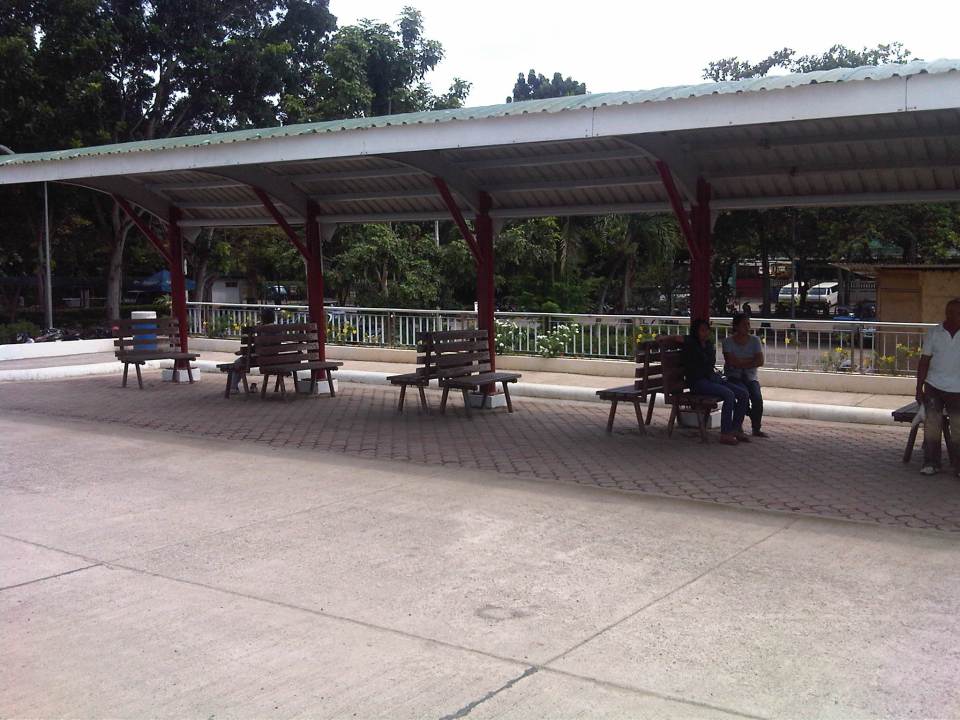 Another look at the loading/unloading/waiting area just outside the terminal building.
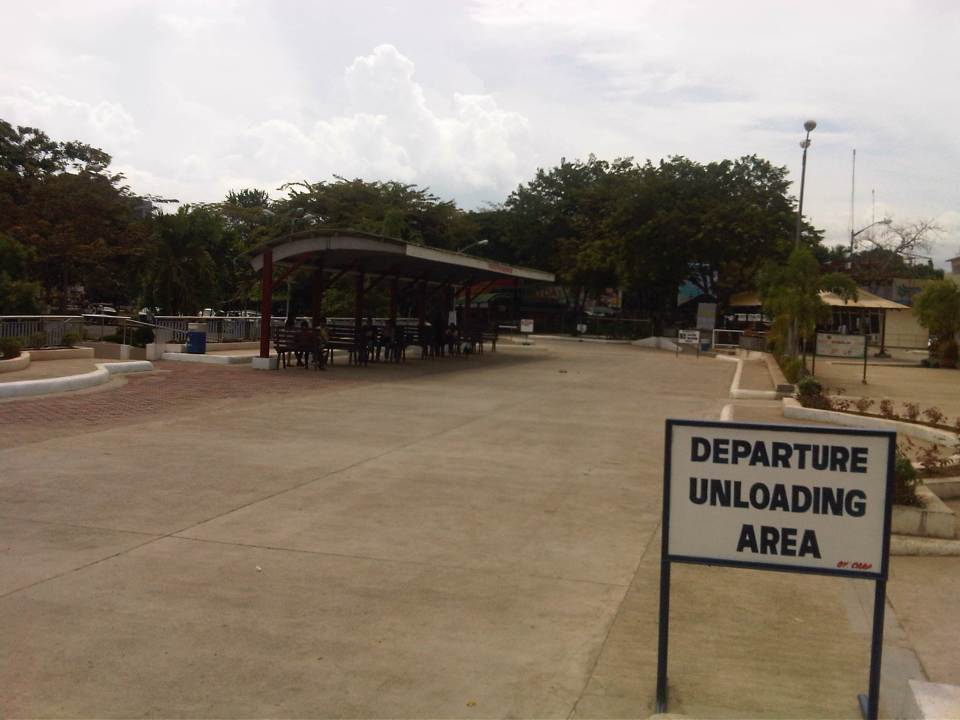 Airport terminal driveway and departure unloading area.
 Departure area under construction/renovation with seats, counters and other materials everywhere.
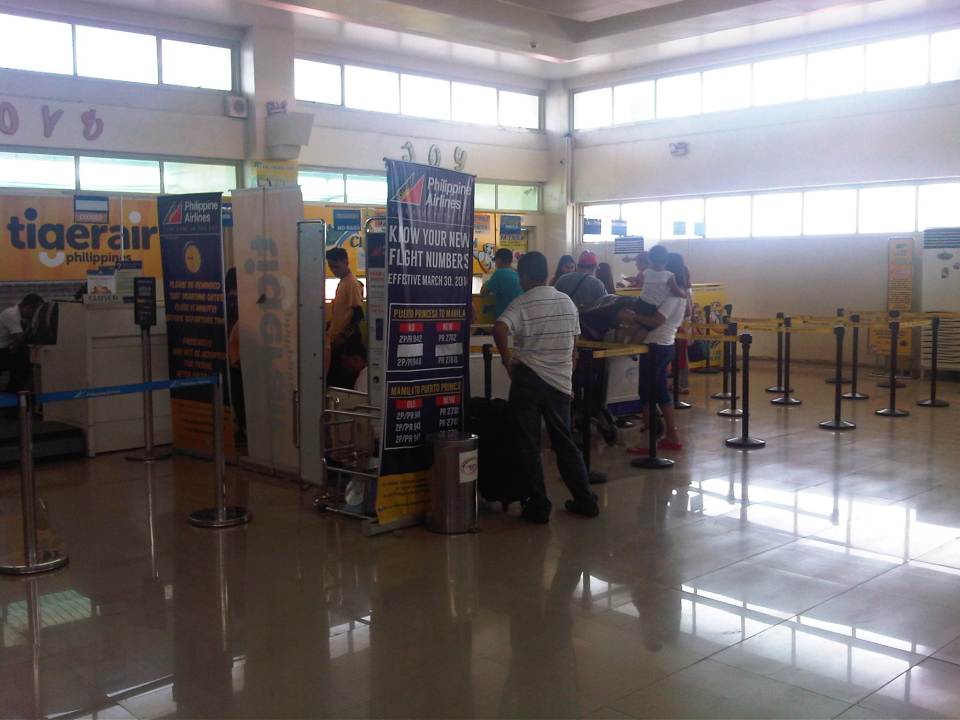 Cebu Pacific check-in counters. Tiger Air flights are operated by Cebu Pacific.
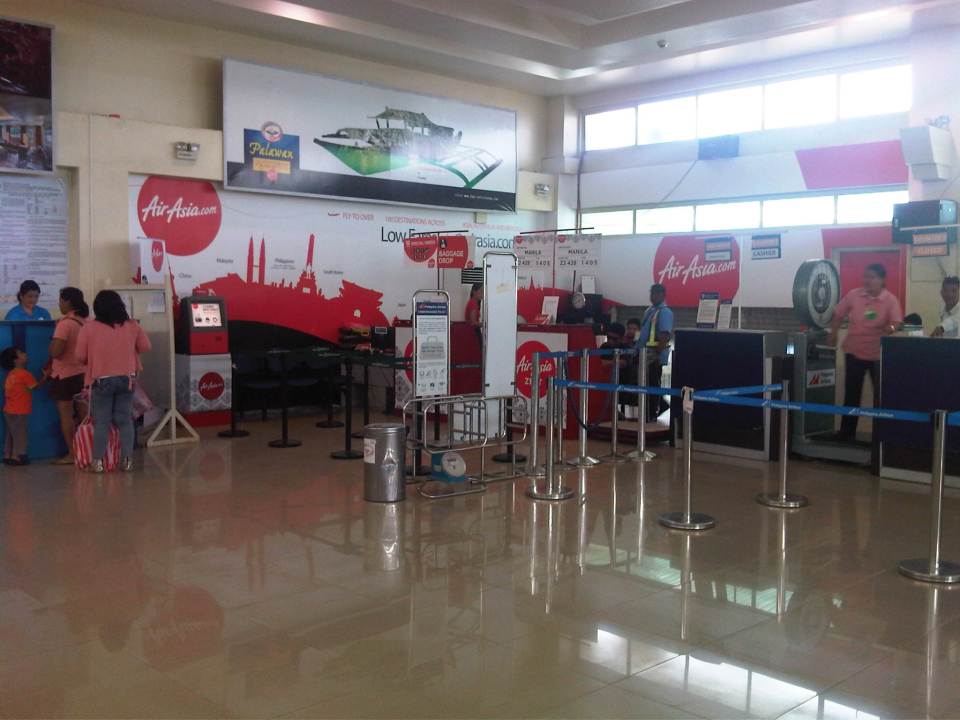 Air Asia Zest check-in counters.
 Entrance to the pre-departure lounge/area.
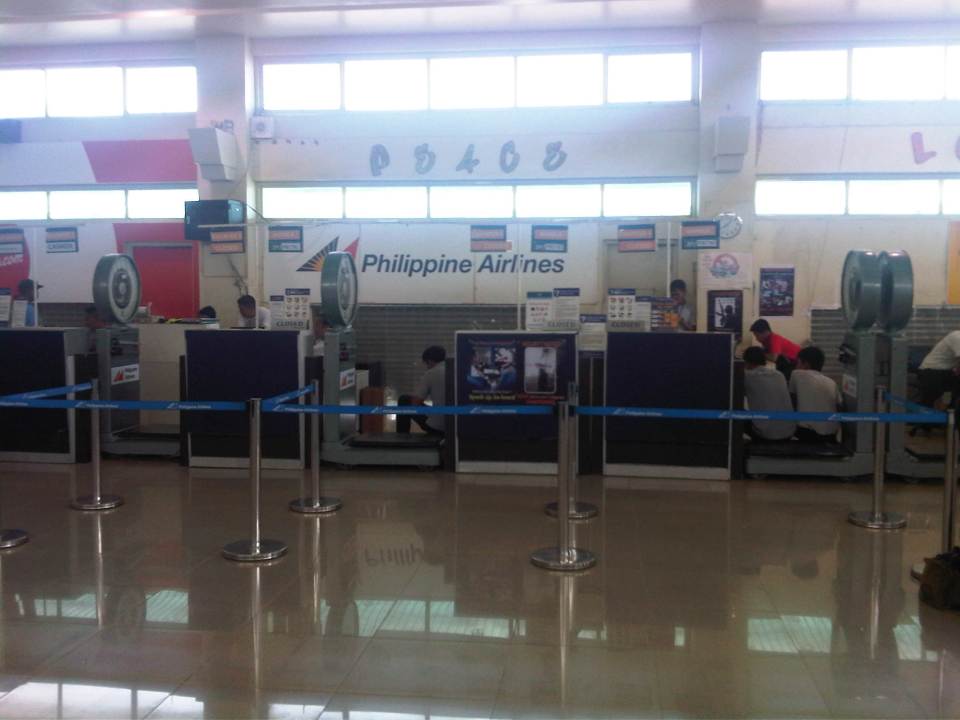 Philippine Airlines check-in counters
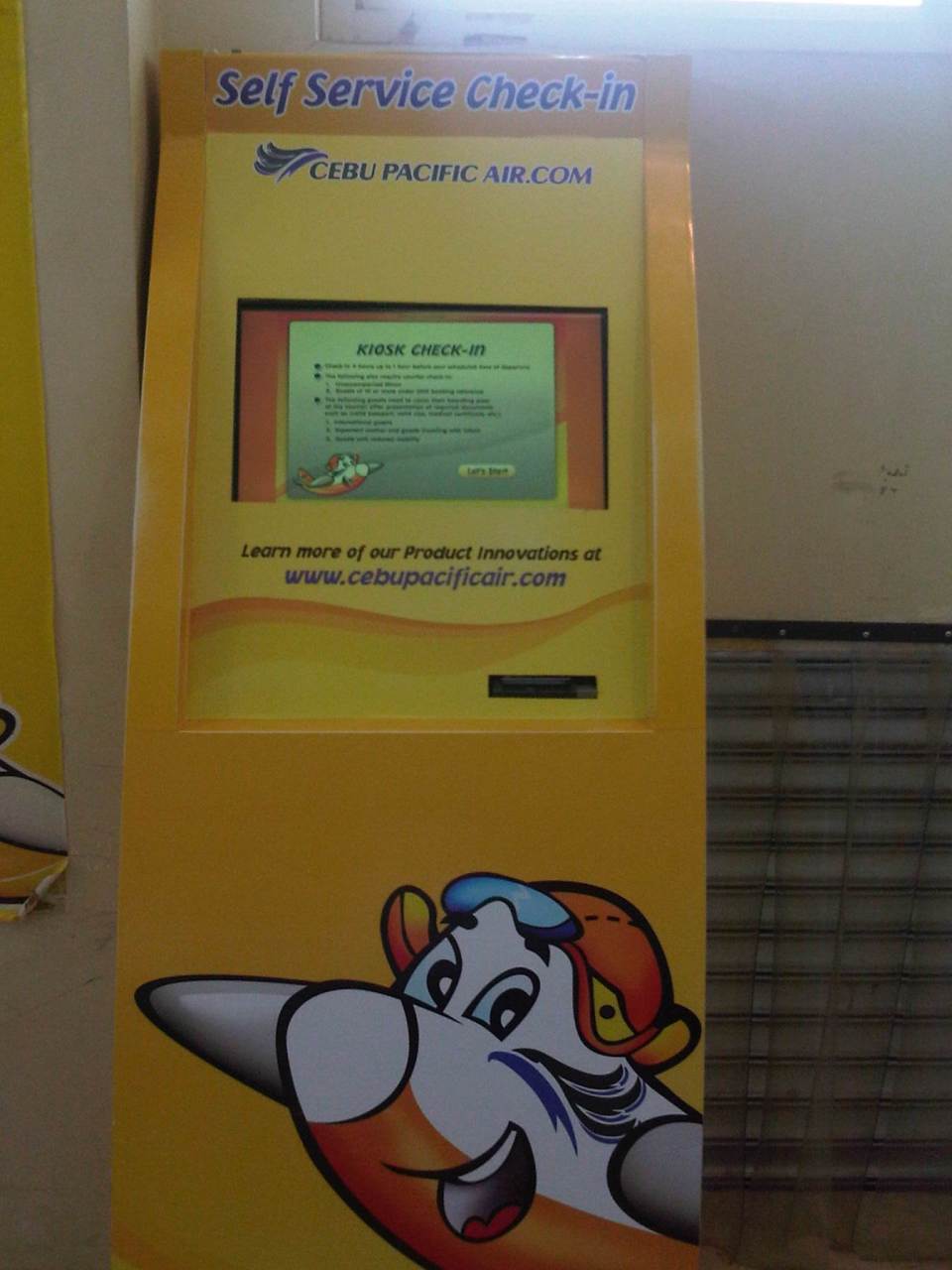 Self service check-in machine by Cebu Pacific. This is very useful for passengers arriving early at the airport for their flights. It allows you to check-in, select seats and get your boarding passes prior to the counters opening for passengers checking-in at the terminal. It’s basically an internet or online check-in so you can go to the internet check-in counter, which usually has a shorter queue.
 Passengers accumulating in near the Cebu Pacific check-in counters. I think airlines shouldn’t have policies preventing passengers arriving early from checking-in. This might be okay for large terminals servicing so many flights but for smaller airports like PPS, Cebu Pacific would probably do better by attending to passengers. Everyone could see that their staff were not at all doing anything behind the counters so they might as well check in passengers so as to reduce and better manage the queuing later on.
 The airport now services international flights but mostly chartered ones. There is an international departure area and a simple immigration counter. These don’t look like they are in regular use.
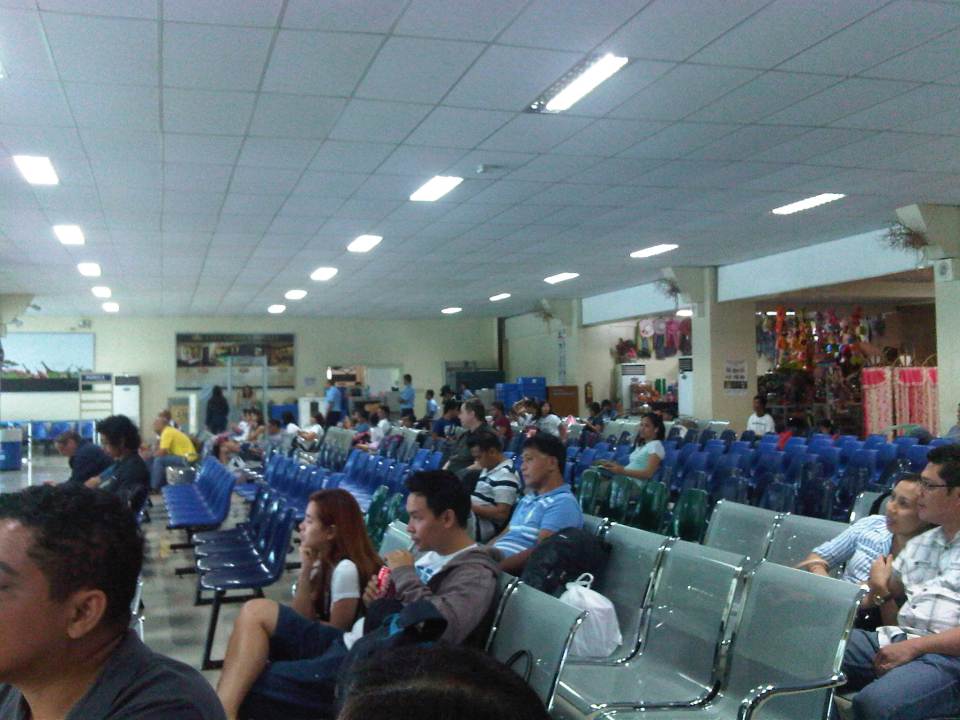 Pre-departure area at the terminal – there seems to be a lot of seats but these are all practically occupied for a single flight. Most aircraft servicing the MNL-PPS route are not wide bodied but the area cannot accommodate 2 plane loads (assuming A319 or A320) of passengers. This is a non-smoking area by law and there is a room for smokers. People though seem to be in-and-out of the room so people seated near the door leading to the smoking room (there are 2 doors) still get a sniff of cigarette smoke.
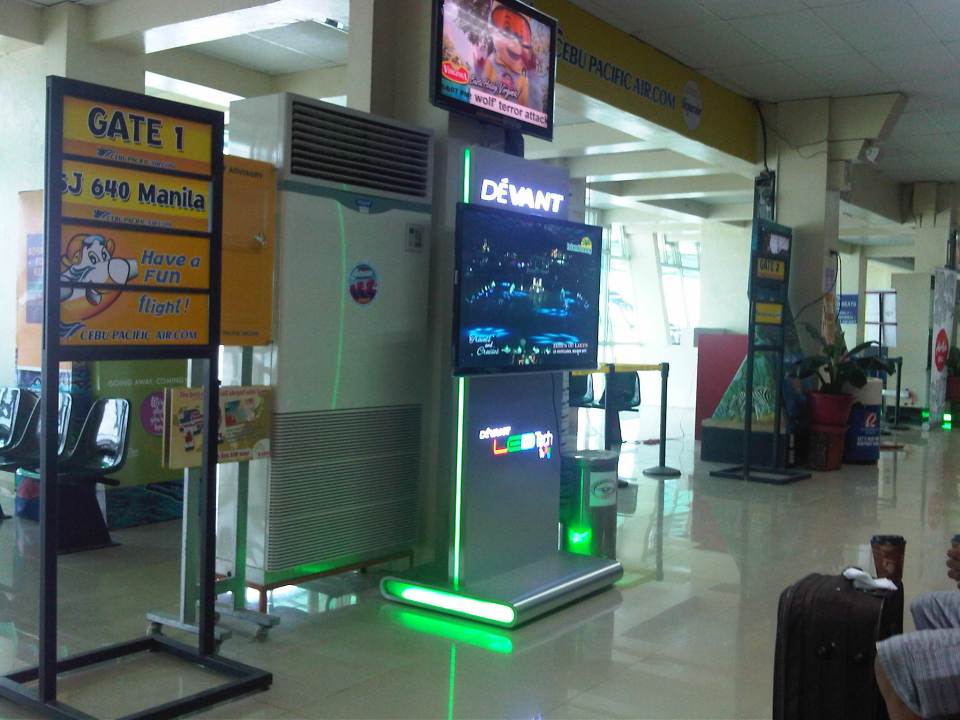 Overall, the terminal is clean and orderly. There are 3 gates reserved for each of the airlines (Cebu Pacific, Philippine Airlines and Air Asia Zest) that have the most flights to and from Puerto Princesa.
 Our Cebu Pacific plane was again late by an hour and so that meant we were getting home later in the night. The good thing about it was that it also meant less traffic (both the airport and roads) in Manila compared to a late afternoon arrival.
–
NAIA Terminal 3 multi-level parking
The multi-level parking facility of NAIA Terminal 3 is open. I have not been to T3 in a while and saw that the multi-level parking was operational only upon returning from a trip to Palawan last week. Last night, as I maneuvered to the open parking lot prior to fetching a friend at the airport, I was directed by airport security to the multi-level facility upon being informed that the open parking lot was already full. Following are a few photos of the multi-level parking at NAIA Terminal 3.
 The entrance and exit to the multi-level parking facility is at the end of the arrival level driveway.
 Motorists should keep to the right heading towards the parking building. There are two lanes clearly marked for the entrance.
 There are two booths but there is currently a desk where staff issue parking tickets to users.
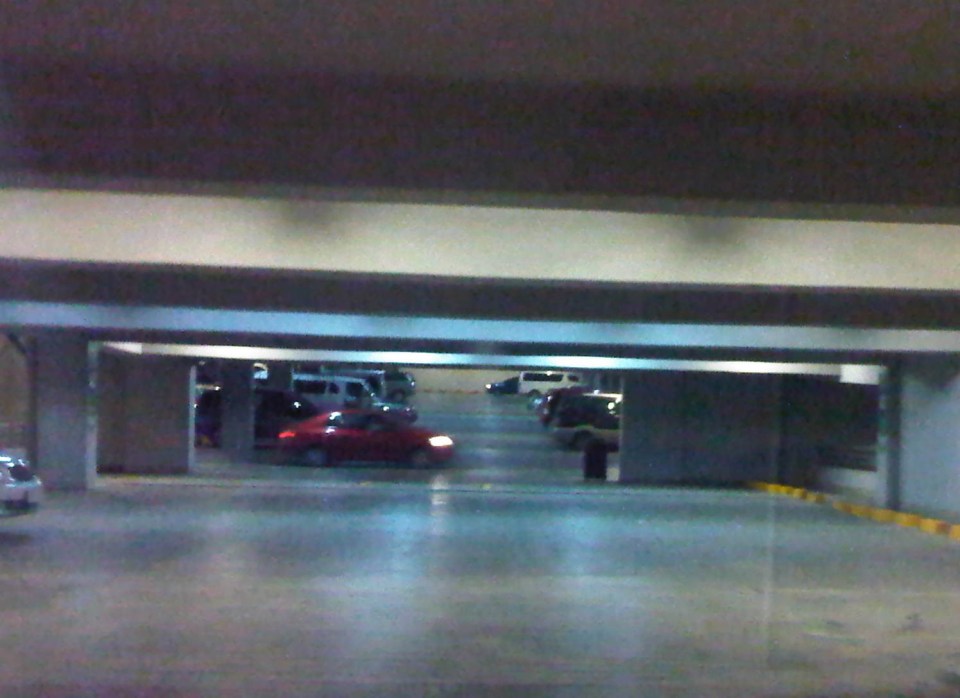 Driving inside the facility, one realises that it is spacious and could handle the vehicles generated by the additional flights begin served by T3.
 Not many people seem to be aware that the parking building is now operational based on the many spaces still available around the multi-level facility. Most people still use the open lot across from the terminal unless its closed off (full) and security staff direct them to the parking building.
 Most driveways are 2-way and so provides good traffic circulation inside the facility.
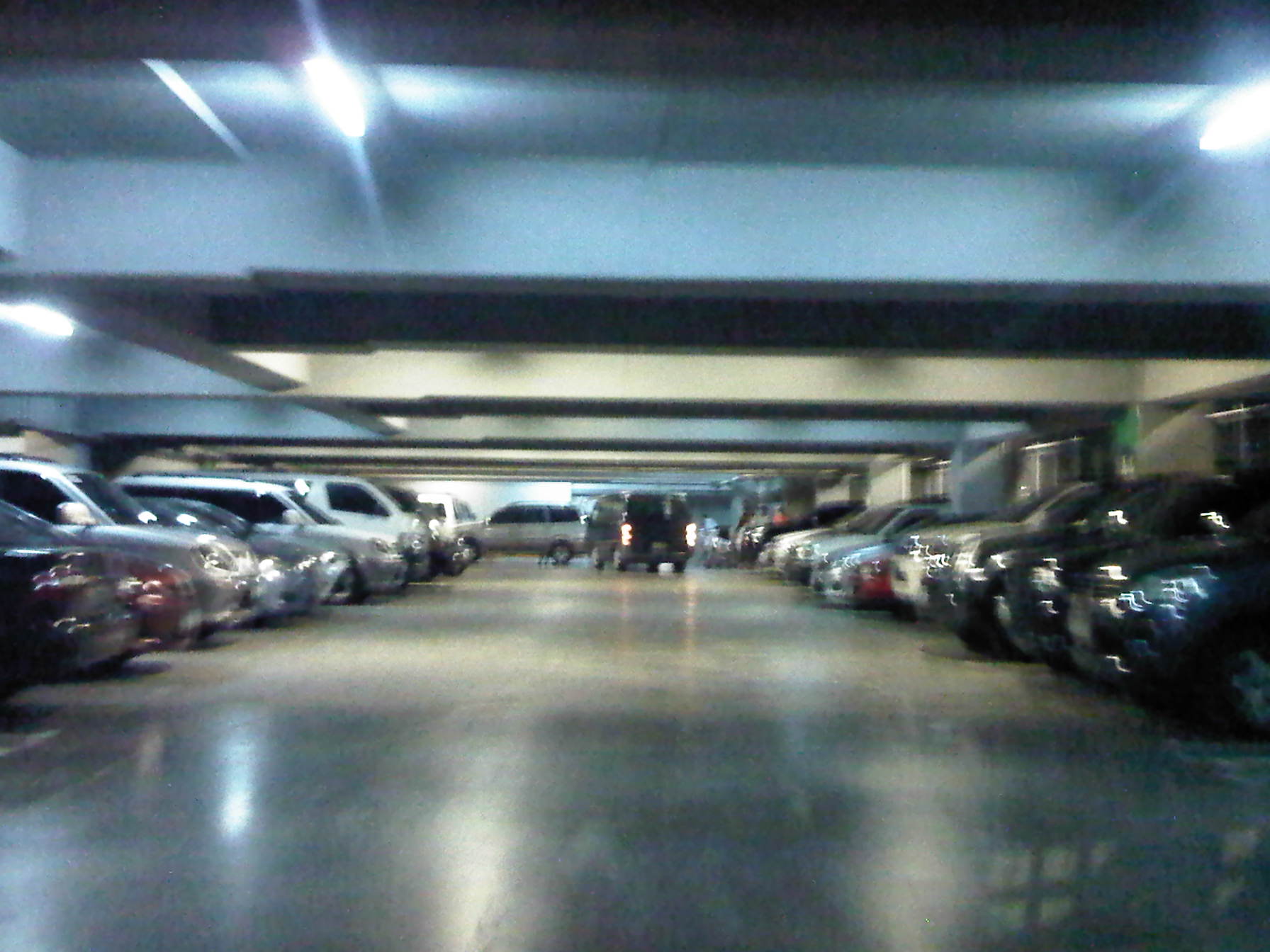 The spaces nearest to the entrance to the terminal are obviously the first ones occupied.
While it took some time for authorities to finally open the multi-level parking at T3, it is a most welcome development considering many international airlines have been transferring operations to T3. These include Cathay Pacific, Delta, Emirates, Japan Airlines and Singapore Airlines among others that will be using T3 as T1 is being rehabilitated. The rates are the same as the open lot (I paid PHP 40.oo for almost 3 hours parking.) and because your vehicle will be basically indoors, it is a good option for trips where you opt to leave your car at the airport (park & fly). NAIA charges PHP 200 per night but I think this is a very reasonable rate assuming that this is a more secure facility compared to the open lot.
–
 Caught (up) in traffic