
Home » Airports (Page 19)
Category Archives: Airports
The positive impacts of direct EU flights from the Philippines
It’s all over the news since evening yesterday – the European Union’s lifting a ban on direct flights from/to the Philippines to/from its member countries. While the decision is limited to legacy carrier Philippine Airlines (PAL), it is quite symbolic of gates (and not just windows) of opportunity opening up for the country particularly in terms of tourism and other businesses. It is no secret that the Philippines has been pushing for more tourism from abroad, knowing that there is vast market out there who would be willing to spend money on vacations to attractions in many parts of the country.
These attractions include currently popular destinations like Boracay, Palawan (including Coron), Mindoro, Batangas, Cebu (Mactan, Bantayan, Moalboal, Camotes), Bohol (Panglao), Surigao (Siargao) and Davao (also Samal). There are also many emerging destinations for international tourists like those in Ilocos (Pagudpud, Saud, etc.), Cagayan (Sta. Ana, Palaui Island, etc.), Aurora, Bicol (Caramoan, Misibis, Bagasbas, Calaguas, etc.), Guimaras, Siquijor, Negros, Mindanao and so many other attractions in the other provinces. Obviously, that was not an exhaustive list and one would eventually get tired Googling so many places to see around the country. I purposely mentioned “international” here as I would like to believe that local tourists (i.e., Filipinos) have already discovered many of these emerging destinations that are only being developed now judging by the photos being posted on social media, the amount of info now available about so many destinations when you use the search engines, and the continuing aggressiveness of local airlines in offering promotional fares while also maintaining high frequencies to many cities.
Increased tourism arrivals would definitely have wider impact on a lot of businesses and not just those directly dealing with the visitors (i.e., hotels, airlines, etc.). The required logistics will tell us, for example, that agriculture and fisheries sectors will also benefit as they will supply the food required by tourists. Retail will also benefit as it is inevitable for people to make purchases like souvenirs and other items (need or want) during their stays. I had written before about the benefits of a healthy competition among local airlines in the Philippines and the winners are practically everyone and not just the tourists. It should be noted here that the number of Filipino Overseas Foreign Workers (OFWs) and their families along would make direct flights worthwhile for PAL.
Offhand though, this development regarding direct flights to Europe for PAL should increase the already tremendous pressure on government to provide the transport infrastructure to handle tourist arrivals. These would be airports, ports and roads that are necessary for smooth travel across the country and not just for our international gateways in Manila, Cebu, Clark and Davao. These gateways, after all, provide a first impression of the country, and I would like to see NAIA Terminal 1, for example, finally getting the upgrade that should have been done so many years ago. Perhaps, the demand translating to more passengers to be handled by our gateways will increase further should approval be granted for Philippine carriers to serve more US destinations. That is not far-fetched given the proverbial green light from the EU for PAL.
–
Whatever happened to the NAIA redesign/renovation proposal
I forgot to include a link to the design presentation that came out a few years ago. It was quite promising and lot of people (including me) hoped that the project would push through. Of course, we now know we are nowhere near an upgrade of Terminal 1. Following is a video of the redesign proposal on YouTube attributed to renowned designers Kenneth Cobonpue, Royal Pineda and Budji Layug.
I leave it to the reader to Google about new reports of what happened with the project and the bidding that was supposed to have been conducted. It’s been 1.5 years now since that proposal, and there’s certainly and practically nothing happening at NAIA Terminal 1.
–
Crowded NAIA Terminal 1 arrival area
NAIA Terminal 1 remains as the main international terminal for Manila. This is where most international airlines are served. Terminal 2 is exclusively for Philippine Airlines while Cebu Pacific and All Nippon Airways are the only airlines with international flights via Terminal 3. And so it’s easy to see that Terminal 1 can get quite crowded especially as one international arrival comes after another during the peak hours of the airport. One A320 aircraft alone can carry about 150 passengers and wide bodied aircraft like the the A330’s and A340’s can carry more than 250 passengers each. Even larger B777’s and B747s carry more than 350 and 400 passengers, respectively. These are just too many for Terminal 1 to handle resulting in long queues at the immigration counters, crowded baggage claim areas and long queues again for customs. These passengers eventually converge along the arrival area driveway across from the well-wishers’ waiting area (i.e., a two story building) behind which is the open parking area of the airport.
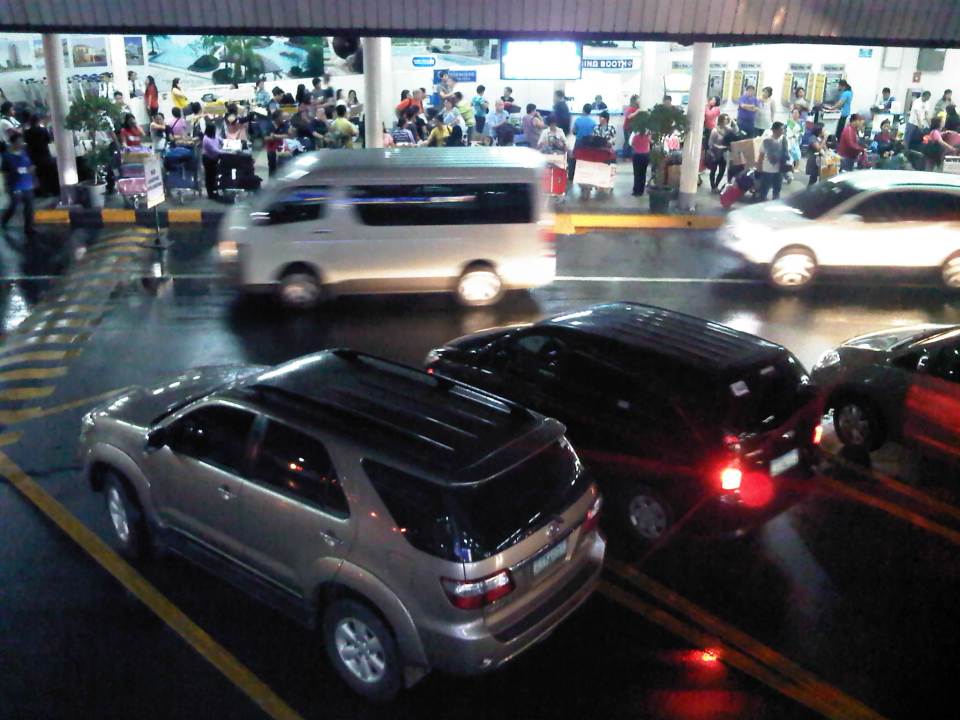 When flights arrive one after another in short headways, the terminal becomes too congested from the immigration counters to baggage claim and the pick-up areas.
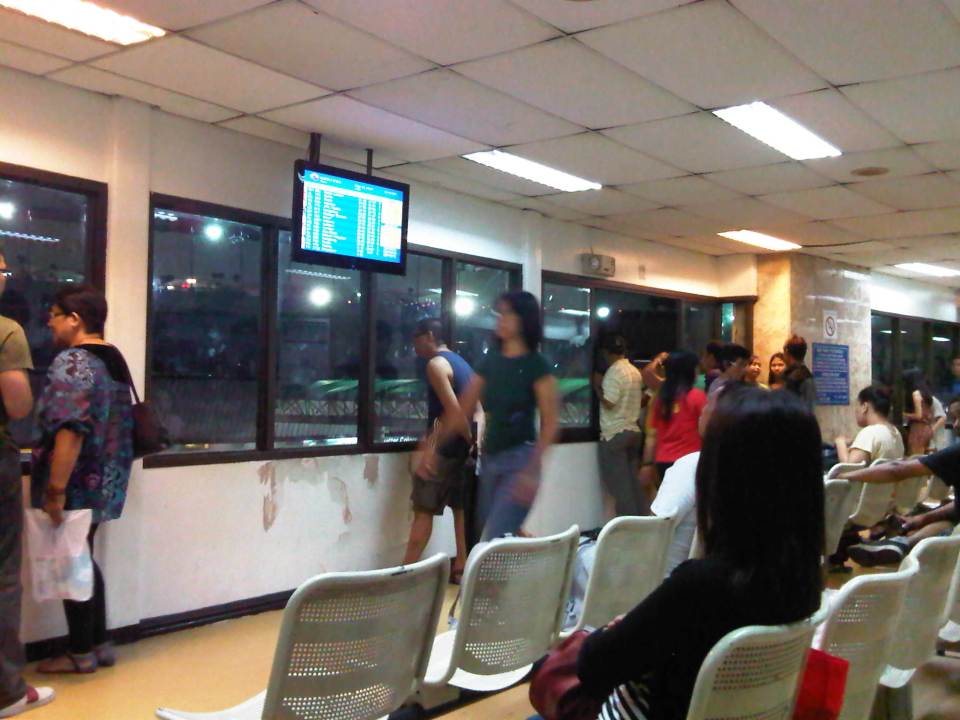 Well-wishers waiting for relatives or friends glance at the screen for information on arrivals while others look through the window to check out the people waiting along the driveway.
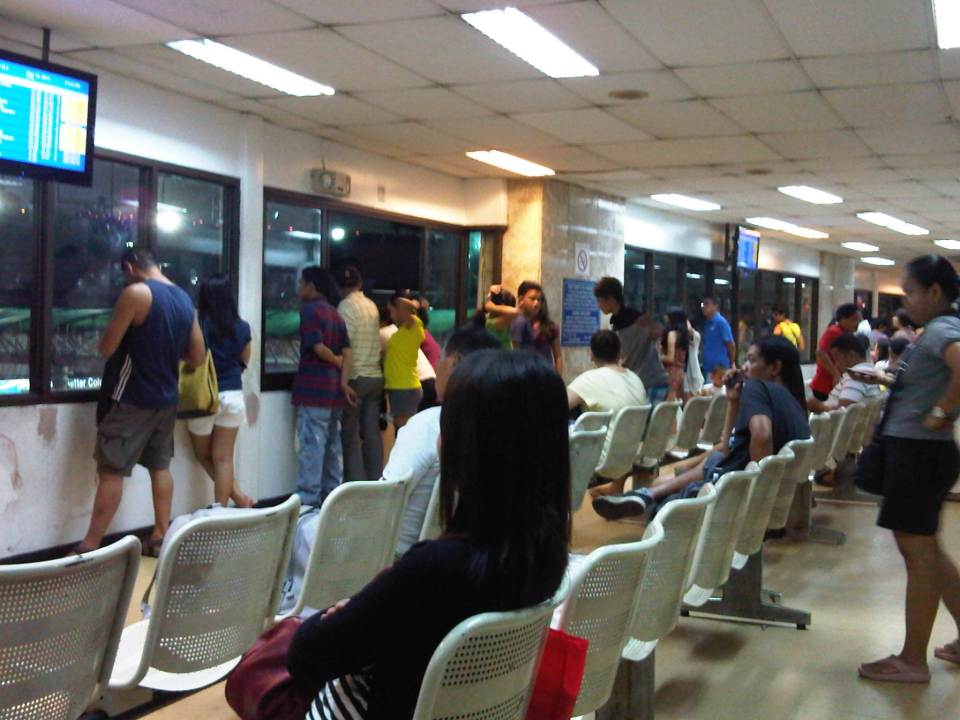 While others are seated, some people opt to stand at the windows, anticipating the arrival of relatives or friends. The second of the building that serves as the waiting area for well-wishers is air-conditioned but there open windows like the one shown in the photo. That window alone could cost a lot in terms of power consumption by the air-conditioning units.
The ground level is even more crowded and there’s always people wanting to cross over to the other side of the driveway to meet relatives as they arrive from the ramp. Airport security try their best to keep order but some people are quite insistent and in certain cases taunt or berate the guards for not letting them through. I think this behavior of people was quite unfair to the guards as the latter were only doing their jobs and its only right that they keep people from flooding the arrival driveway. It’s already too crowded and more people will only bring more mayhem if allowed to mix with the arriving passengers.
Terminal 1 was the subject of calls for renovations and an upgrade from what it is now, a bad first impression of the country. I remember a group of architects and designers came up with a plan to renovate Terminal 1 including improving the layout of the terminal and parking facilities. The Department of Transportation and Communications (DOTC) was supposedly tasked to follow through with this project but ended up offending people by bidding the project out. Another design firm was supposed to have won the bid but until now, there has been no activity related to this long-delayed major improvement. Perhaps there was hesitation as they agency struggles to decide whether NAIA should continue to serve as the main international gateway to the country? Well, it is certainly still the main gateway and will continue to be so in the foreseeable future as the prospects for Clark and other proposals remain hanging in the air. We should live with this reality and carry on what needs to be done to improve Terminal 1, and quickly!
–
NAIA Terminal 3 check-in
I was again at NAIA Terminal 3 for a very early flight. I always enter Terminal 3 from the ground (arrival) level, whether I am coming from the open parking lot or am driven to the airport by a driver. There are less people lining up to enter the terminal at the arrival level so its usually faster compared to the departure level, which seem to be always crowded. It’s only logical because it is the departure level and most people would automatically proceed there. The layout of Terminal 3, though, allows for the passengers and well-wishers to circulate within the arrival and departure areas that are open to the public, including the restaurants and shops located at the third level of the terminal.
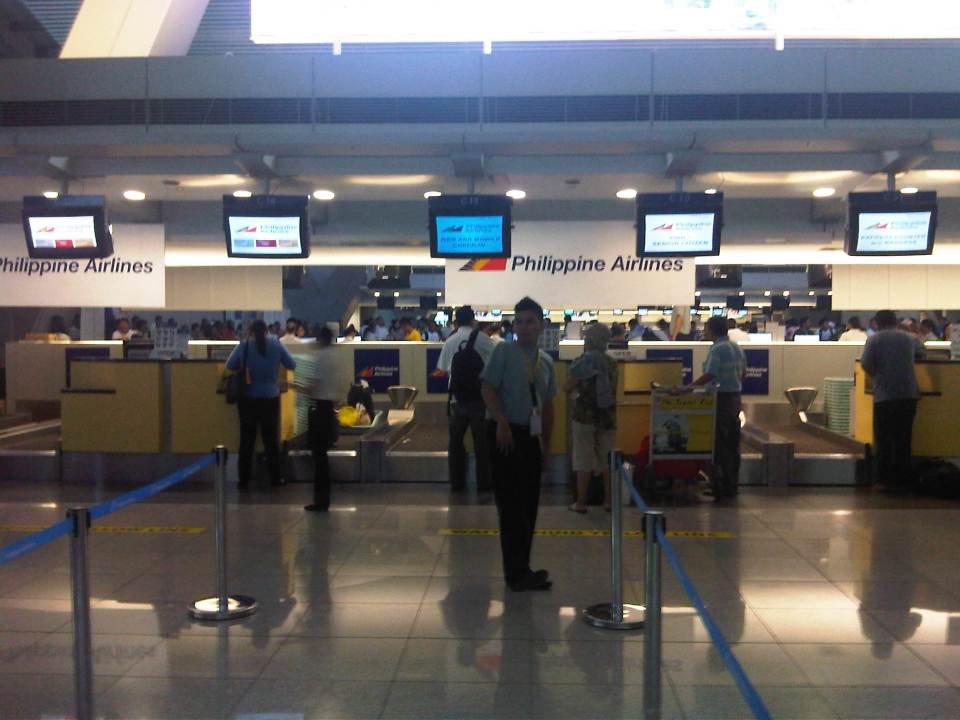 Check-in counters for PAL and PAL Express flights
 Important information for passengers of PAL and PAL Express includes info for counters for senior citizens, persons with disabilities (PWD), and persons who have checked-in using the internet.
 Crowded Cebu Pacific check-in counters for domestic flights – Terminal 3 is the home terminal or hub for Ceb Pac in Manila. As the country’s largest airline in terms of both aircraft and passengers, their international and domestic flight counters are are almost always crowded.
–
Tacloban Airport arrival
After landing at Tacloban Airport during one trip last April, I took a few photos as our plane was taxiing towards the airport terminal. Following are those photos with annotations/comments.
 A view of the runway as our plane turned to taxi towards the airport passenger terminal. The terminal is somewhat visible in the photo. The control tower can be seen just to the right of the Cebu Pacific plane that arrived ahead of us.
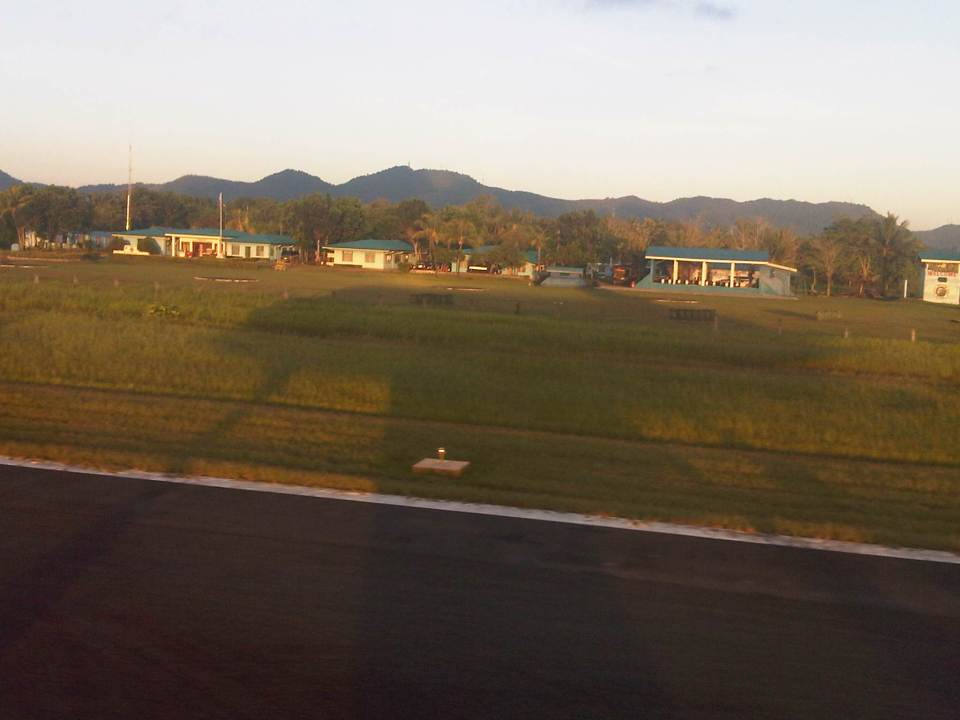 Philippine Air Force buildings at the Tacloban Airport – you tend to wonder how we can defend our country when there are no aircraft at an air force base facing the Pacific Ocean. I remembered seeing impressive planes and helicopters of the Japanese Self Defense Forces and US Marines lined up along the tarmac at Okinawa.
 Fire trucks and other emergency vehicles are always ready (SOP) for whatever incident may happen during aircraft take-offs and landings. You just wonder if they have sufficient skill and equipment to handle the more serious cases.
 Air traffic control tower at Tacloban Airport
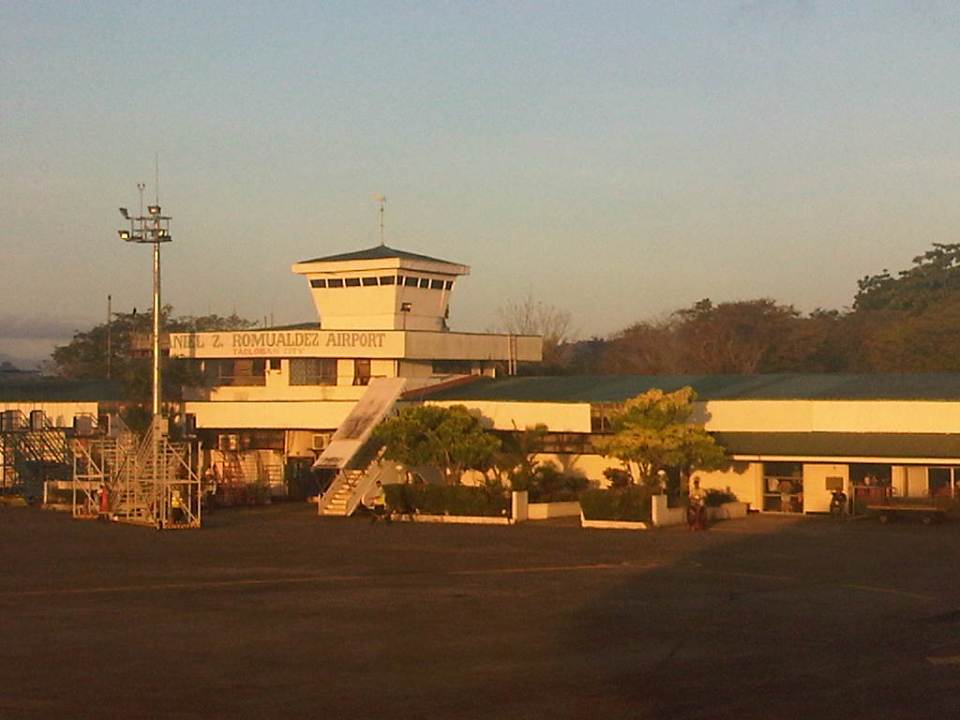 The Daniel Z. Romualdez Airport terminal building
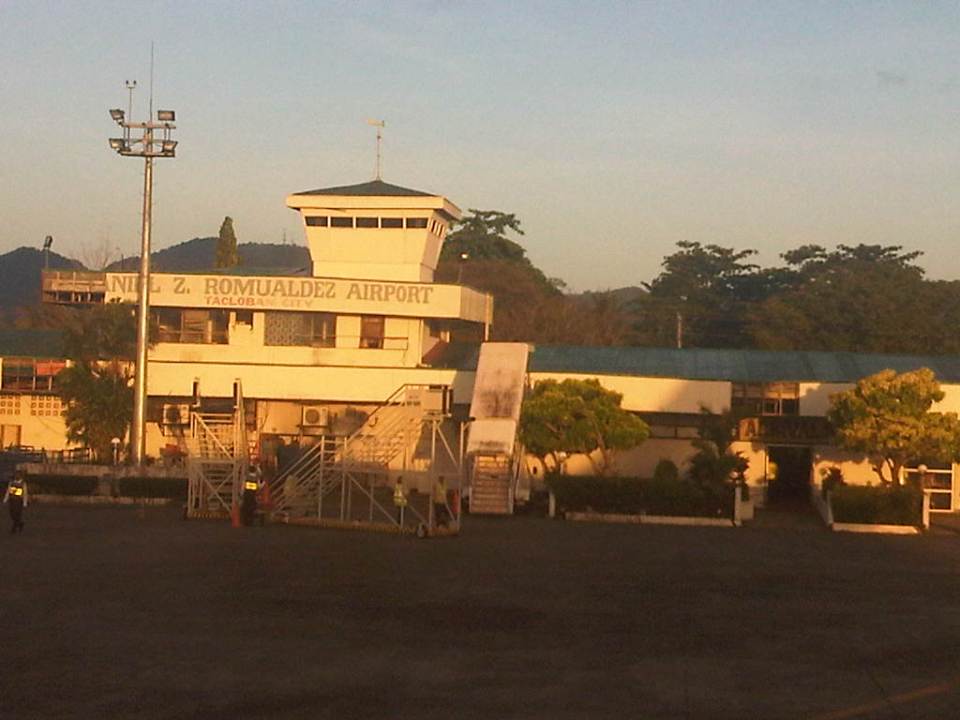 From the looks of it, the terminal has seen better days and badly needs repairs/renovations.
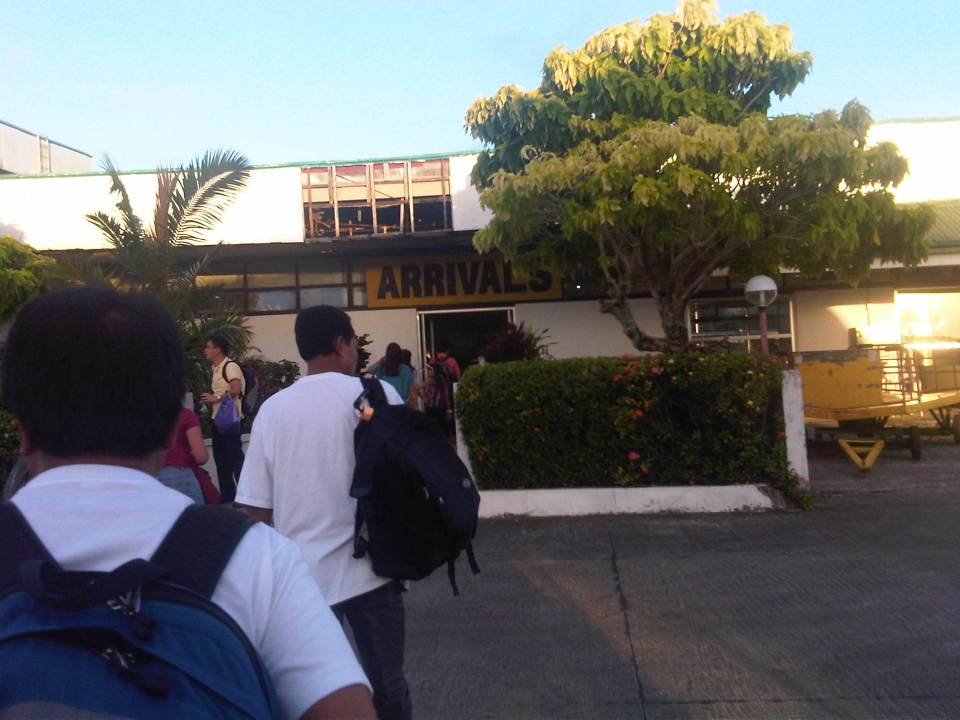 Passengers file towards the arrival area to await their baggage before exiting the terminal to proceed to their respective destinations. Many passengers may not necessarily be heading to Tacloban or other towns in Leyte but will cross over to Samar, which is physically connected to Leyte via the San Juanico Bridge. Tacloban has more regular flights in the region and is the best bet for people opting for flexibility in their travel schedules.
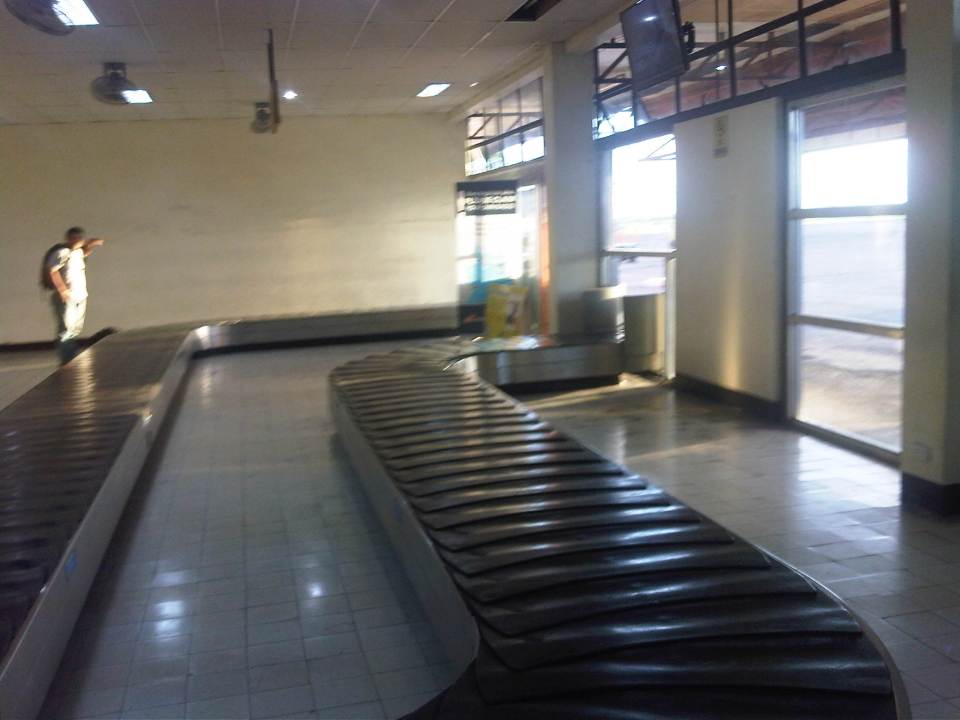 Baggage claim is similar to other old airports around the country. With passenger arrivals well above 1 million per year, Tacloban, which is the principal airport in Region VIII (Eastern Visayas), needs an upgrade.
–
NAIA Terminal 3 domestic departure
NAIA Terminal 3 hosts the domestic flights of Cebu Pacific and PAL Express (formerly Air Philippines and Air Phil Express). PAL now also flies out of T3 for major cities like Cagayan De Oro, Legazpi, Puerto Princesa and Tacloban, where PAL and PAL Express flights seem to have merged and are quite difficult to tell by the aircraft. The difference becomes clear when one boards the plane and sees no Mabuhay Class seats for PAL Express and seats have the leatherette covers (similar to Ceb Pac’s) instead of the more classy fabric in PAL planes.
 Hallway to the boarding gates – there are many shops and restaurants to choose from where one can have a meal or drink before a flight.
 This shop is packaged like the higher end duty free shops on international terminals. There’s a Krispy Kreme donut stall that’s quite popular as pasalubong.
 A typical cafe at NAIA T3
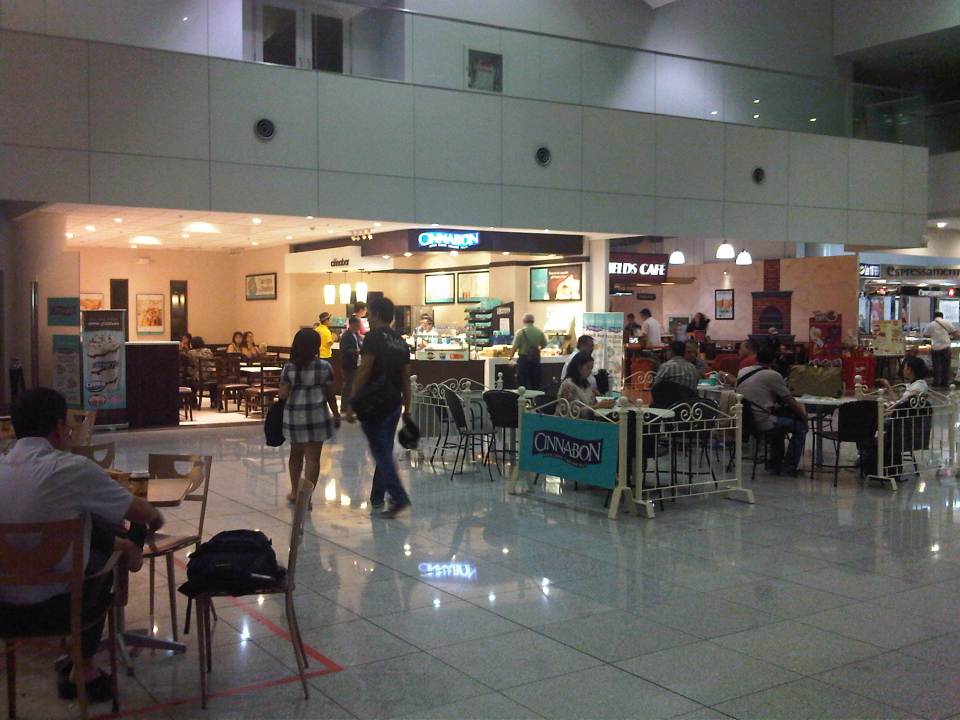 More cafes give passengers a lot of choices for where they might want to get their beverage, meal or snack.
 And still more cafes…
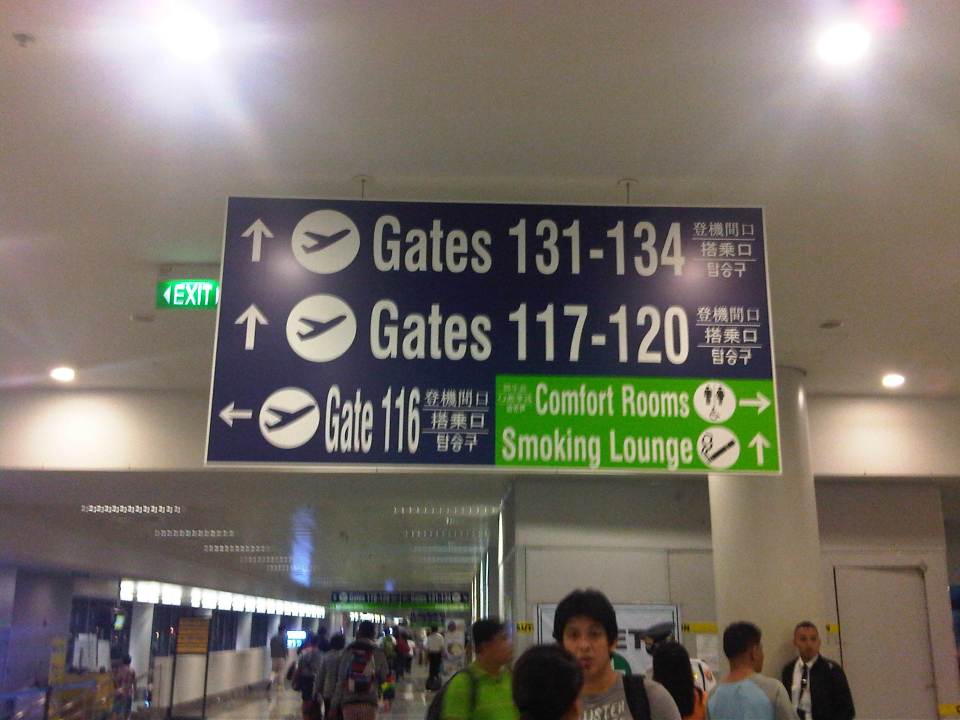 Large signs provide adequate guidance for passengers.
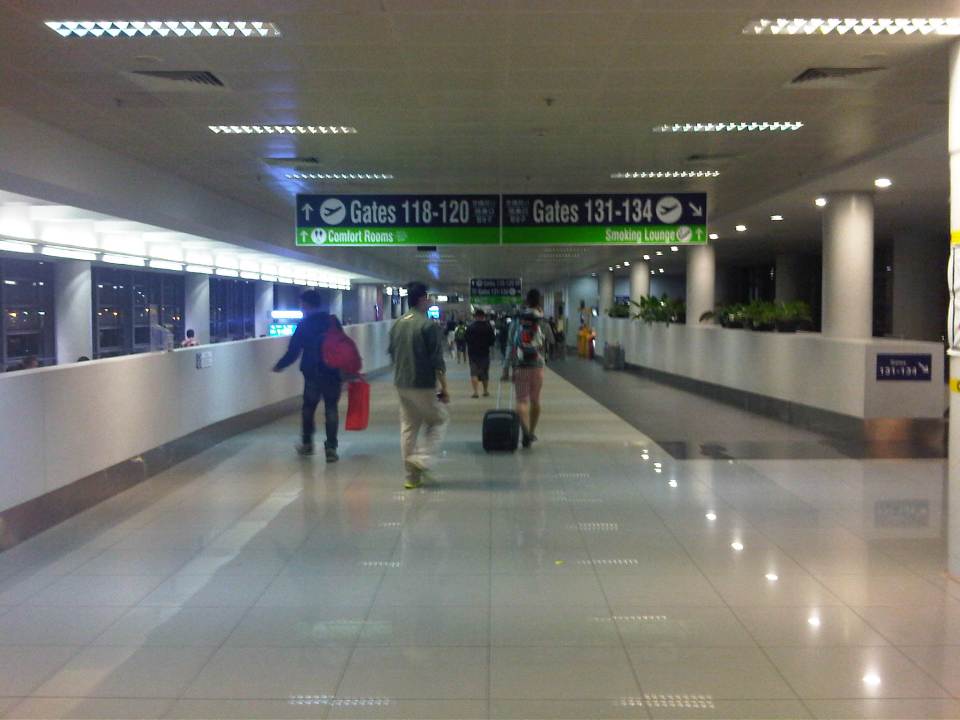 The long walk – T3 is a linear terminal with gates spread along either wing of the building, which means passengers would have to walk some distance to and from their gates for departures and arrivals.
 It’s summer in the Philippines, so there are more flights and passengers than usual. I was at the terminal for a 0440 flight to Tacloban and there were already a lot of people waiting for their respective flights to destinations such as Cebu, Iloilo, Bacolod, Dumaguete and Davao.
 Passengers at Gate 118 seated along a corridor that also features a non-functioning “walkalator” or moving walkway. Such walkways should help passengers move more conveniently and swiftly to and from their gates but all are currently not operating (for one reason or another).
 Fellow passengers at Gate 119 waiting for our boarding call
 There are many television sets at T3 where passengers can catch the latest news on cable or, in this case, a replay of an NBA Playoff game.
–
Mactan Cebu International Airport – Take 2
I haven’t been able to get decent photos inside Mactan Cebu International Airport (MCIA) in previous trips to Cebu. And so, when I finally had the opportunity recently, I wasted no time taking a few photos inside the terminal. MCIA is frequently in the news these days as its proposed expansion is being bidded out. The airport is the second busiest airport in the country after Manila’s NAIA; serving more than 6 million international and domestic passengers in 2011. This will continue to increase as Cebu develops further in terms of business and tourism.
 Check-in counters for Philippine Airlines
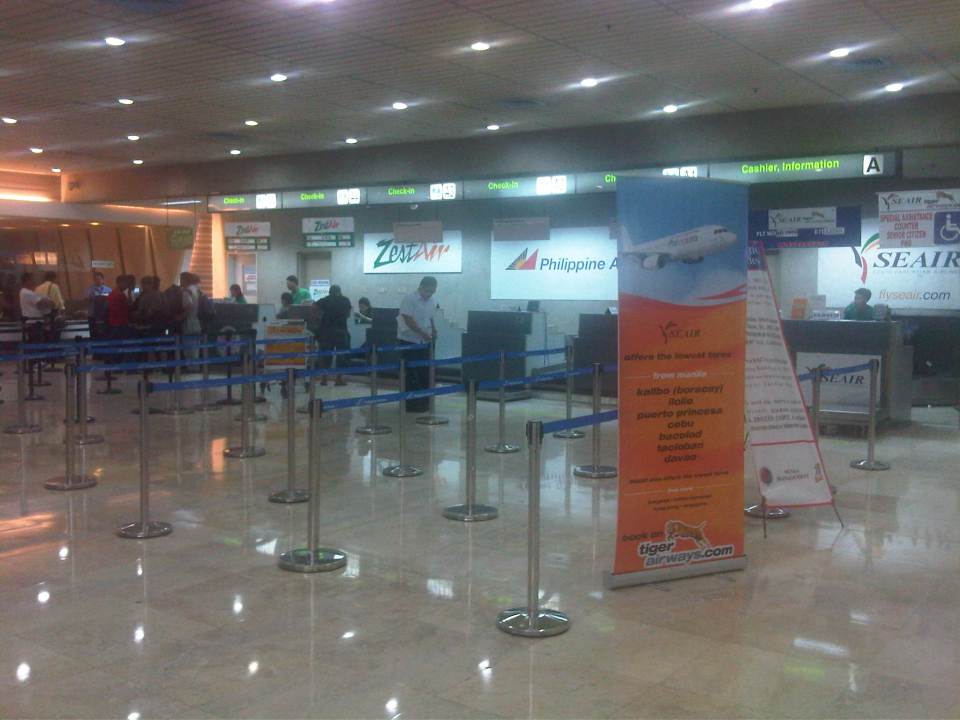 The check-in counters for Zest Air (formerly Asian Spirit) and Seair (now operated by Tiger Airways) were practically beside PAL’s. The PAL counters between Zest Air and Seair used to be Air Phil Express counters. The latter is now known as PAL Express, PAL’s repackaged budget airlines.
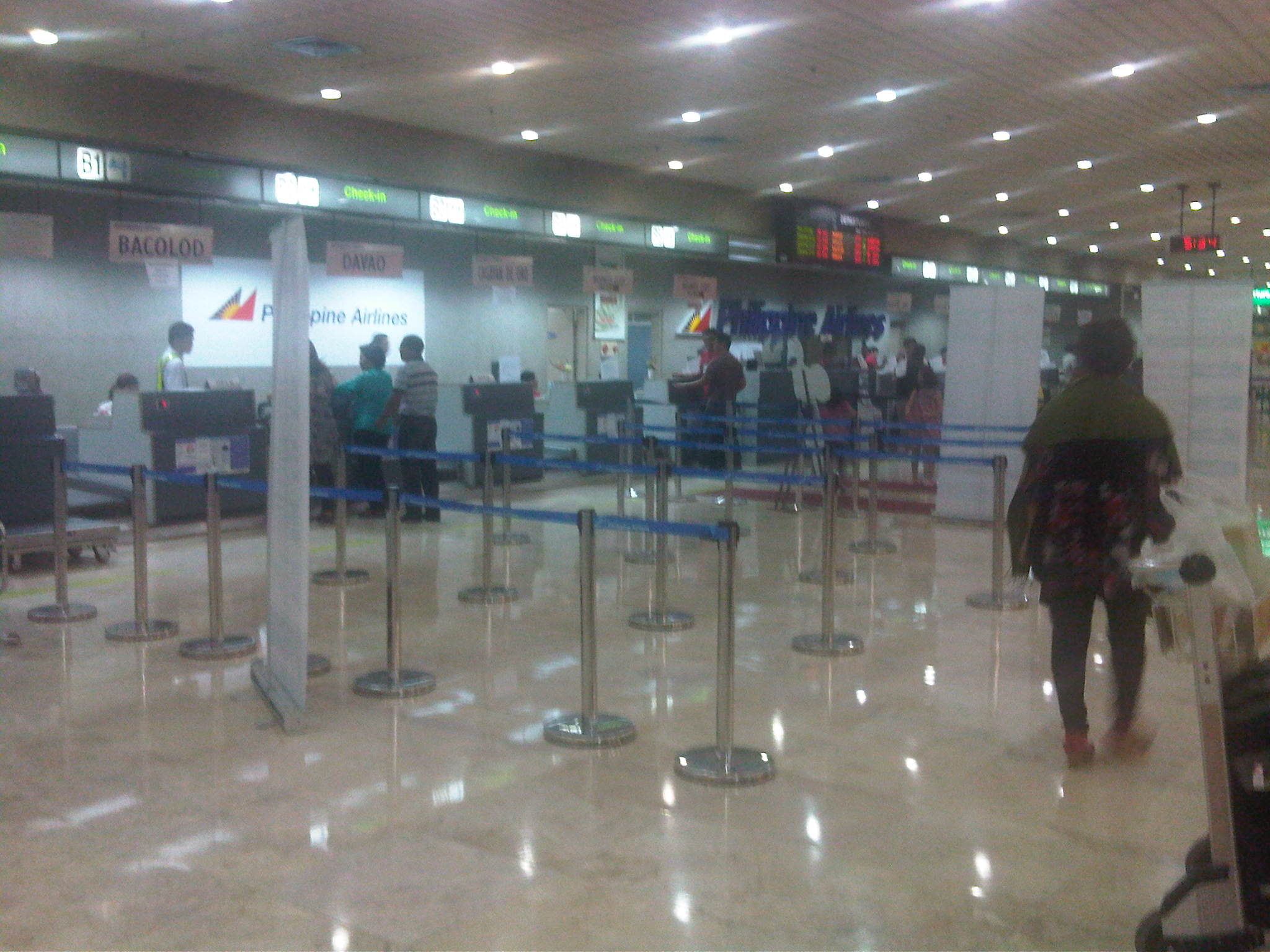 Cebu connects with many other cities in Visayas and Mindanao. The number of domestic flights are comparable to Manila and there are destinations in Mindanao that do not have direct flights connecting to Manila. Instead, one would have to fly via Cebu or Davao.
 Information on designated terminals for flights to and from Manila. PAL subsidiary Air Philippines, which became Air Phil Express and now PAL Express used to fly out of NAIA Terminal 3 with PAL exclusively using Terminal 2. With the re-organization of PAL and its more aggressive approach at present, the airline now seems to have expanded and is now competing with Cebu Pacific for space at Terminal 3.
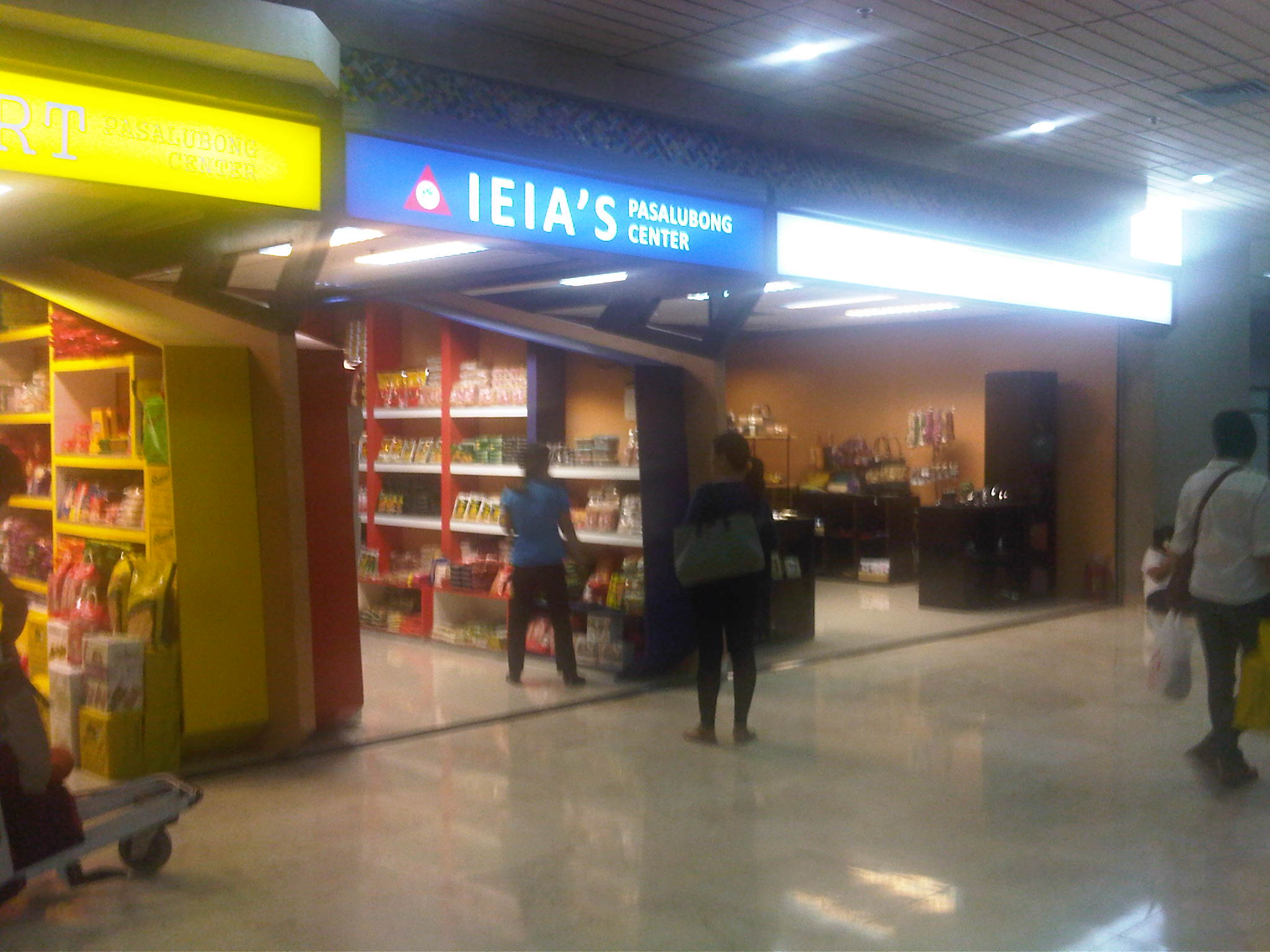 There are many souvenir shops at the airport, many selling food items like the popular dried mangoes, otap, rosquillos, and dried sea food. Popular brands are Titay’s and Shamrock. The items at the shops at the airport are priced higher so it is advisable for people to purchase souvenirs at local shops or supermarkets in the city. Titay’s and Shamrock have their own shops in Cebu and Mandaue. Dried fish is best bought at the market in Cebu (Ask your driver to take you to the “tabuan” market.).
 Islands Souvenirs is an established brand in the Philippines specializing in souvenir shirts and other items. I used to collect shirts from the cities I have visited and I have already collected quite a lot from my travels in the country. There is an Islands Souvenirs shop at most major cities in the country. MCIA also has a Timex stall at the pre-departure area. Timex is a watch company producing high quality watches out of the economic zone in Lapu-lapu City.
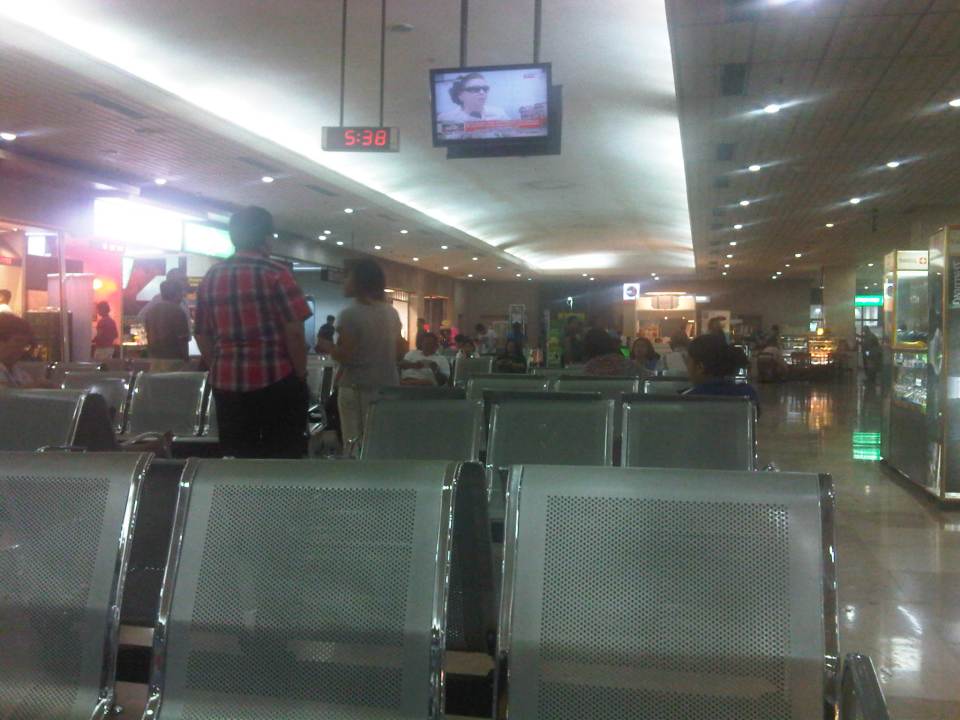 Pre-departure area at MCIA – the area can get quite crowded during the day when most flights depart out of the terminal. PAL fields wide bodied aircraft to address the high demand between Manila and Cebu during the day.
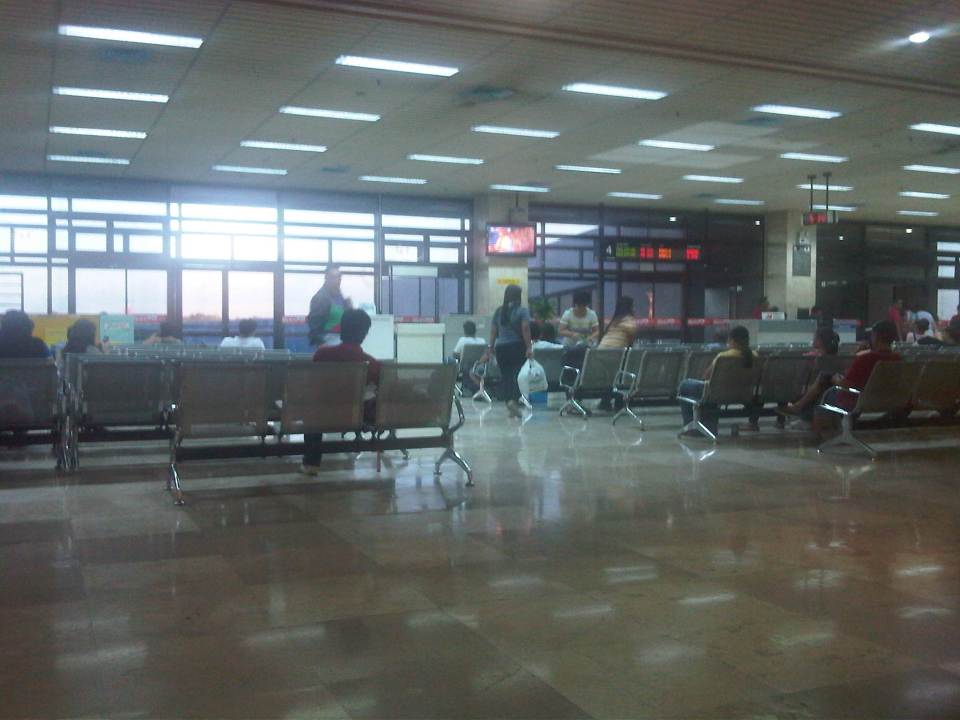 Gate 4 seats at the MCIA
 Passengers waiting for their flight. My flight back to Manila wasn’t a full one probably because it was a later flight.
There’s been a lot going on in MCIA ever since the former Cebu City Planning and Development chief Paul Villarete took over as General Manager. I’ve noticed the improvements as I have been to Cebu quite frequently since 1996. These include a cleaner terminal and more efficient services in the airport. MCIA is a work in progress and should soon be upgraded with a new terminal building. I’m hopeful that the groups bidding for the project will do a great job as at least two of them are associated with top airports in Changi (Singapore) and Incheon (Korea).
–
Daniel Romualdez Airport in Tacloban
I had been to Tacloban only once before and was not able to take some photos of the airport. This time around, I was able to get a few photos as I checked in for my flight back to Manila. Tacloban Airport is among the busiest airports in the country serving more than 1 million passengers annually. Tacloban is the regional center of Eastern Visayas and is the only airport in that region with jet airline (A319s and A320s) service. Despite the increasing demand due to growth in both industry and tourism, the airport is limited by its runway and terminal. A planeload of passengers already crowd the pre-departure area on a regular basis and conditions in the area is not at all comfortable. While there is a room for changing diapers and another for breastfeeding (thanks to DOTC’s Gender Awareness and Development program), there are few other amenities at the terminal.
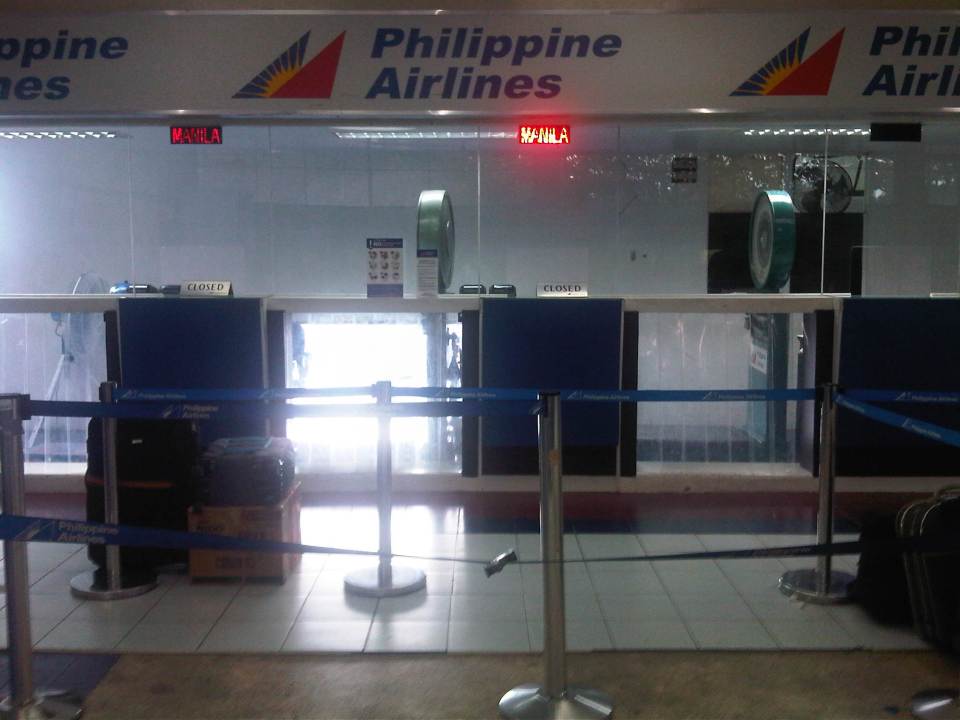 Philippine Airlines check-in counter
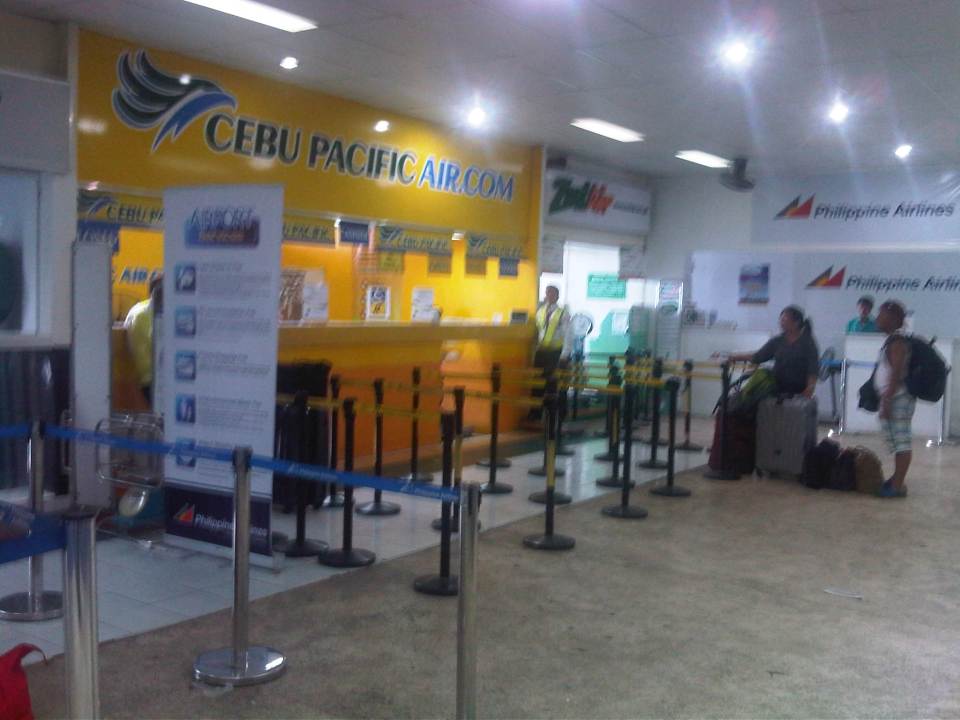 Cebu Pacific and Zest Air check-in counters
 Ceb Pac passengers waiting to board the aircraft on the tarmac
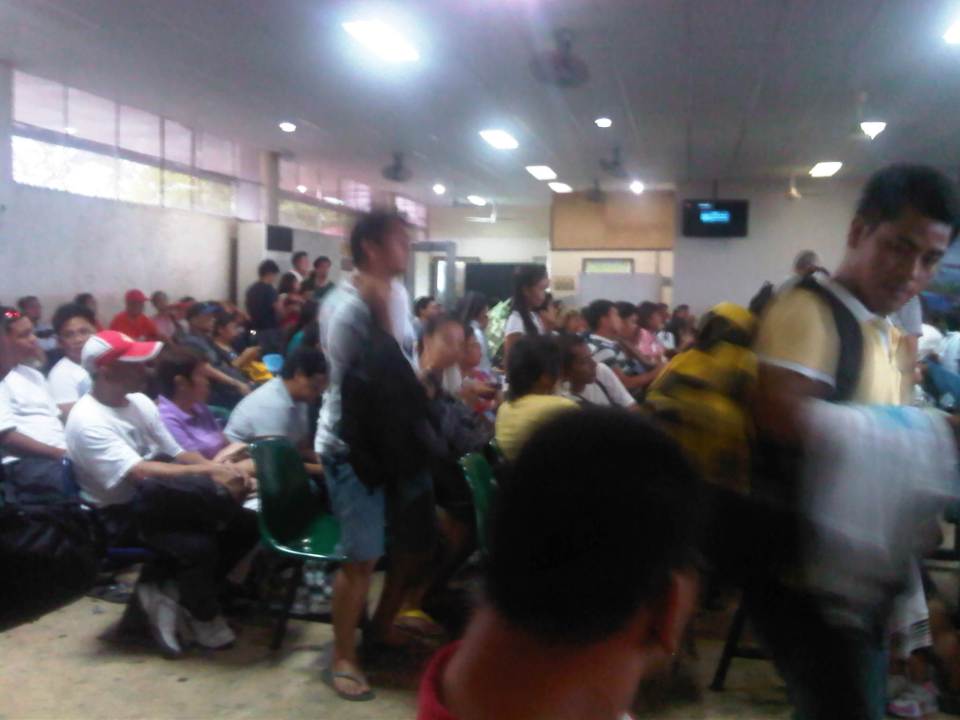 Another shot of the crowded pre-departure area
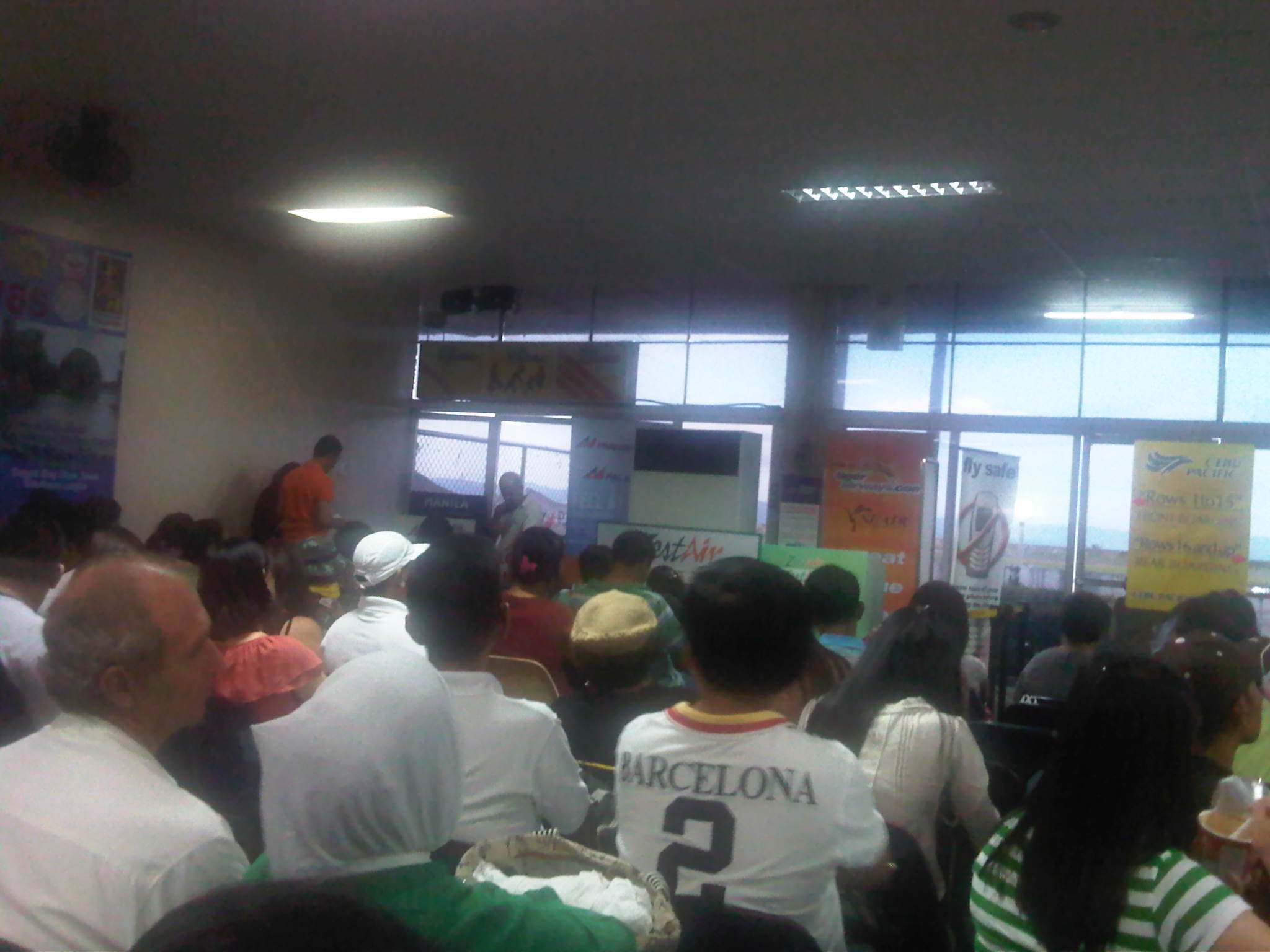 PAL passengers waiting for their plane to arrive
Tacloban Airport is due for expansion with a new terminal proposed for construction nearby. The land where the new terminal will be constructed has been acquired and cordoned off and I was told that the runway will be lengthened. I am just not sure if DOTC or CAAP has acquired the lands necessary for the runway component of the project but upgrading the runway for the airport to accommodate wide bodied aircraft will indeed require much land. Nevertheless, it is a project that is long overdue and needed to push for development of the region, which has one of the higher incidence of poverty at 37.2% for Region 8. Leyte has a 31.9% poverty incidence while Southern Leyte is at 36.4%. Neighboring Samar provinces have even worse statistics with Western Samar at 36%, Northern Samar at 43.7% and Eastern Samar at a staggering 59.4% poverty incidence. These stats are based on the figures recently released by the National Statistical Coordination Board (NSCB) based on the Family Income and Expenditure Survey (FIES) conducted in 2012.
–
Francisco Bangoy International Airport revisited
The number of views for Davao’s international airport spiked a few days ago and from the responses to the posting on Facebook, it’s clear that people are appreciative of good infrastructure provided to them. People in other cities expressed similar or related feelings in relation to the post with many expressing that they hoped their city could have a good airport. Well, we know at least that Iloilo and Bacolod have good airports in Cabatuan and Silay that are now serving international flights as well. Hopefully, we’ll have more airports upgraded like Tacloban, Tagbilaran, Legaspi and Puerto Princesa that are all very crowded as more people fly to these cities including tourists whose numbers are steadily increasing. Cebu’s airport expansion is up for bidding and Northern Mindanao will soon have a large airport opening at Laguindingan. Cagayan De Oro’s Lumbia Airport will eventually be phased out. Meanwhile, here are a few more photos on DVO from a recent trip I had.
 Check-in counter for Philippine Airlines passengers
 Check-in counters for PAL and Cebu Pacific
 The spacious terminal is desirable for large cities like Davao and generally serves the entire region.
 Cebu Pacific’s self service terminal that I first saw in Davao and now is also in other airports as well
 The check-in counters as seen from the escalator as I went up to the departure level
 The corridor to the pre-departure area Gates 1 and 2 of the terminal
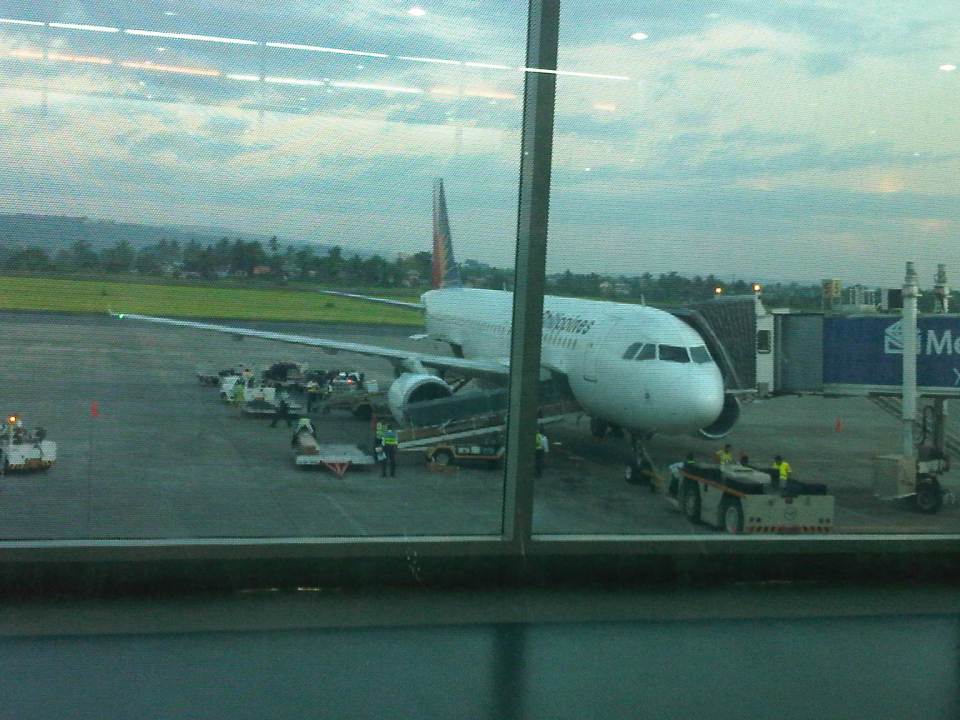 View of PAL Airbus A320 at the airport
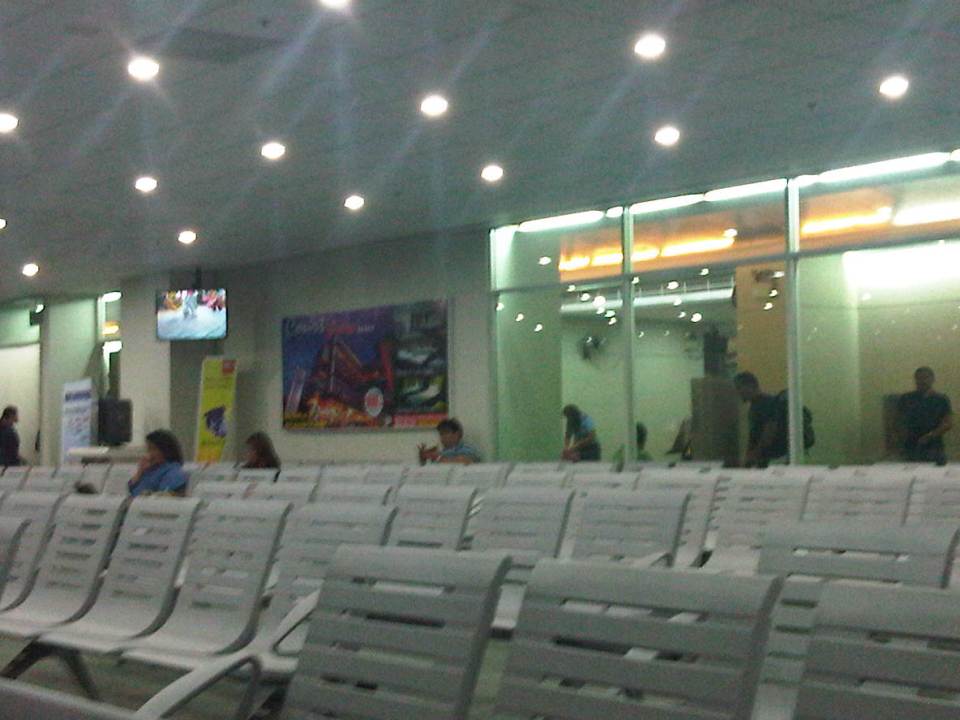 Spacious pre-departure area at the airport
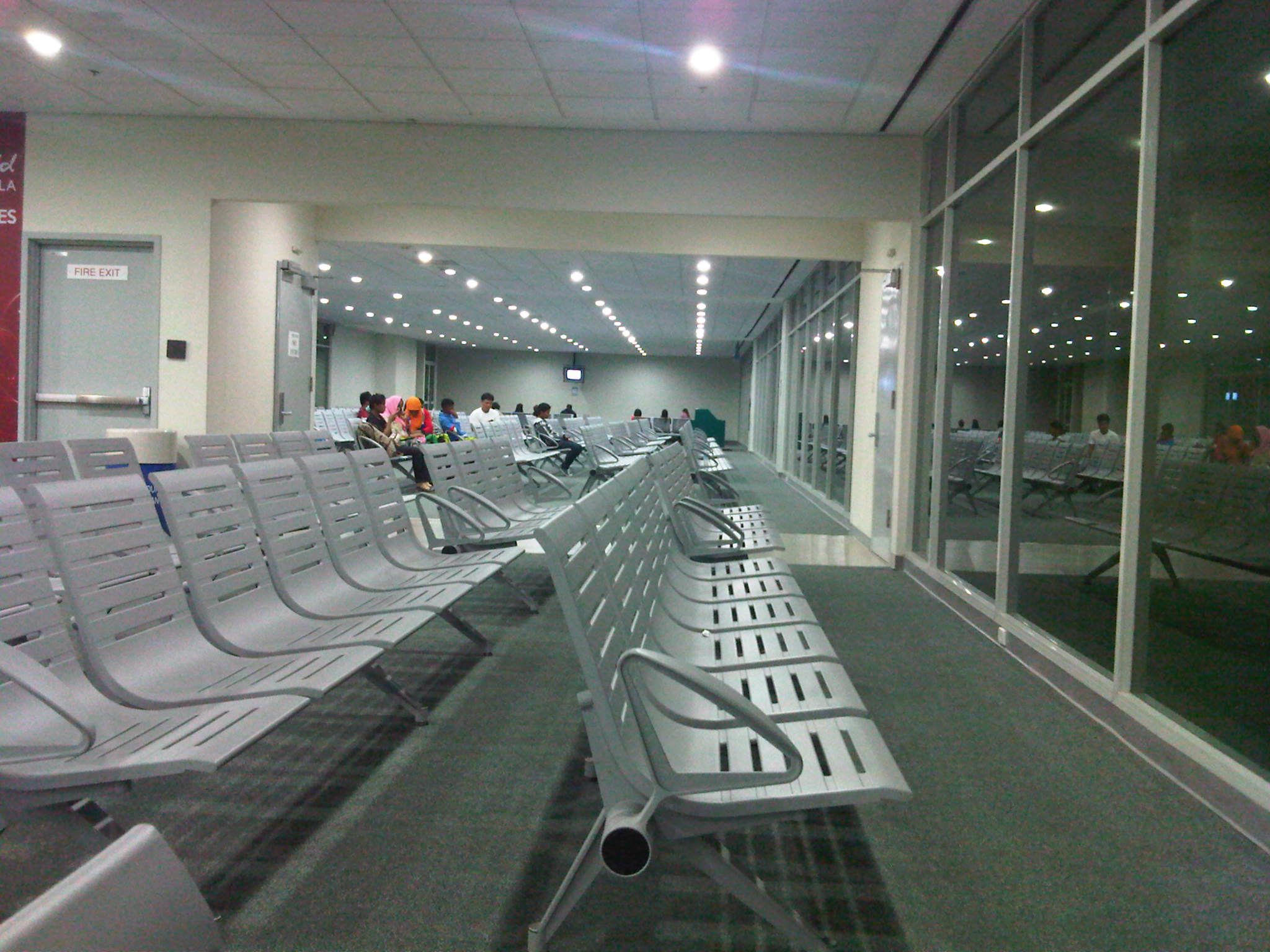 Another look at the spacious pre-departure area at Davao’s airport – I assume that the area can become full if the aircraft happens to be a widebody like the B747 or A330.
More on airports soon…
–
Walking around HKIA
With some time on my hand, I decided to explore HKIA after arriving via the Airport Express during my last visit to Hong Kong. I really haven’t had the chance to go around the airport in my previous trips particularly because I had to transfer between connecting flights. Following are a few photos at the HKIA taken last December 2012.
 Entering the huge HKIA terminal from the Airport Express platform
 Corridor leading to the driveway
 Check-in counters mix with shops inside Terminal 1
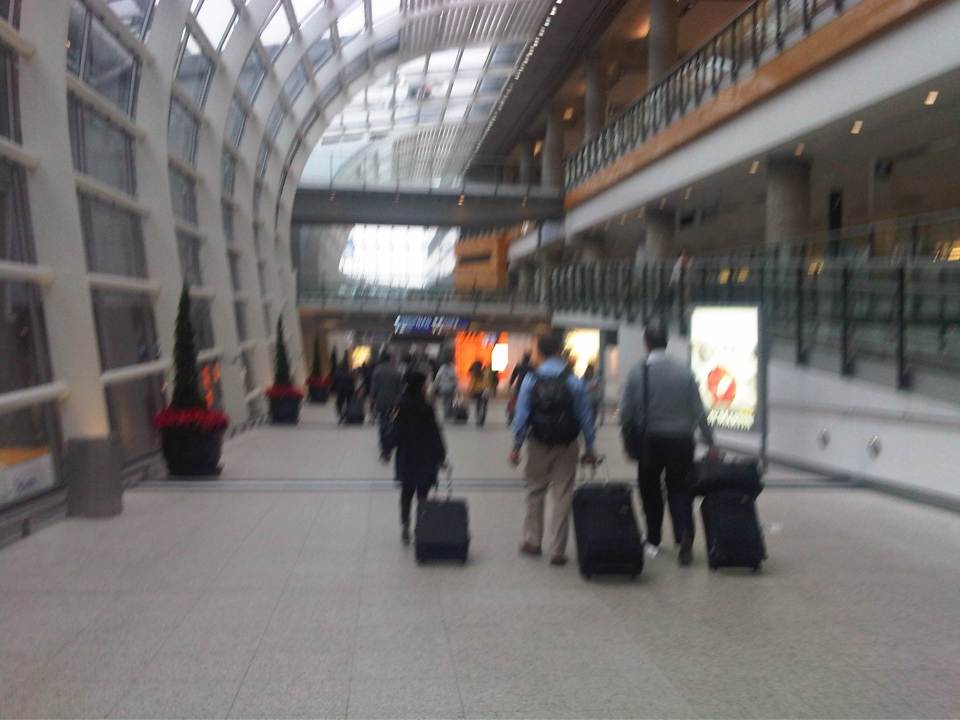 Ramp towards the tunnel connecting HKIA Terminals 1 and 2
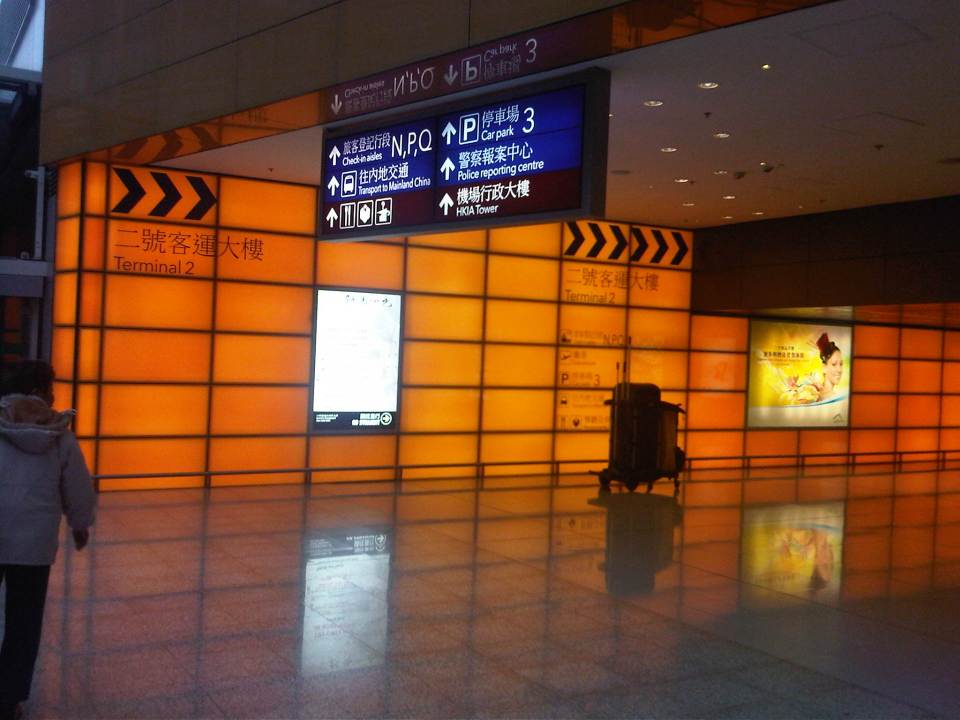 Tunnel to Terminal 2
 Counters for limousine and travel services at Terminal 2
 Shops at HKIA include branches of luxury brands. They also have Disney stores at the terminals.
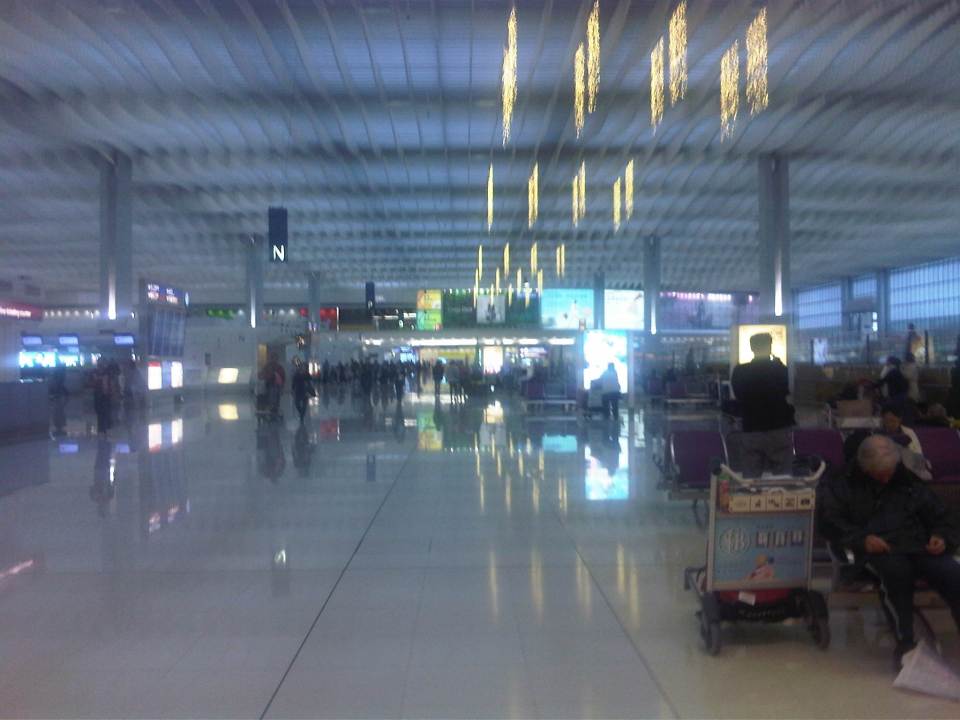 More shops and benches at a passenger waiting area at HKIA
 Information board for arrivals and departures
 Travelers can easily go around the airport terminals and information such as those shown in the photo are found in strategic locations around the terminal.
 Taking a train ride to the satellite terminal where my boarding gate was located, I took a photo of the interior of the vehicle.
 HKIA was promoting environmental awareness the last time I was there.
 Travelers, particularly children, can have a quick look and learn about the environment in this set-up inside the terminal.
 Expansive interiors of HKIA departures level makes people appreciate the space. For a very busy airport, HKIA does not look congested once you are inside the terminal.
 A photo of the tarmac taken while I was reclining on what I though was perhaps among the most comfortable chairs in an airport terminal. I was lucky have found one unoccupied and quite selfishly used it until our boarding call.
I think HKIA is indeed one of the best airports in the world. For me, it is a toss-up between HKIA and Singapore’s Changi for the top spot, even considering that Changi had a Budget Terminal. That terminal is now giving way to a larger Terminal 4, which has much expectations riding on it given the airport’s standing. Not to denigrate HKIA, which I think has better shopping and dining than Changi but there might be other factors where Singapore’s airport is better than HKIA?
–
 Caught (up) in traffic