
Home » Posts tagged 'NAIA Terminal 1'
Tag Archives: NAIA Terminal 1
NAIA Terminal 1’s departure level driveway and drop-off
Weeks ago there was a fatal incident involving a motorist who plowed into well-wishers and passengers at NAIA Terminal 1. It was revealed. I finally had the chance to see the area for myself. I had not gone to Terminal 1 in a long while and especially after San Miguel Corporation had taken over the airport. The photos shared below were taken by my wife as we eased into the departure driveway of NAIA T1 one early morning last week.
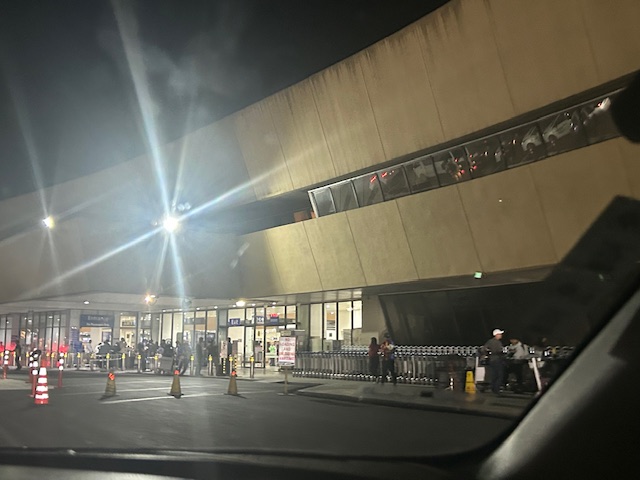 Arriving at the west wing of the departure level of Terminal 1. Those are luggage carts lined up along the sidewalk. There are cones for the restricted area but these turned out to be to block vehicles from using the inner lane adjacent to the terminal.
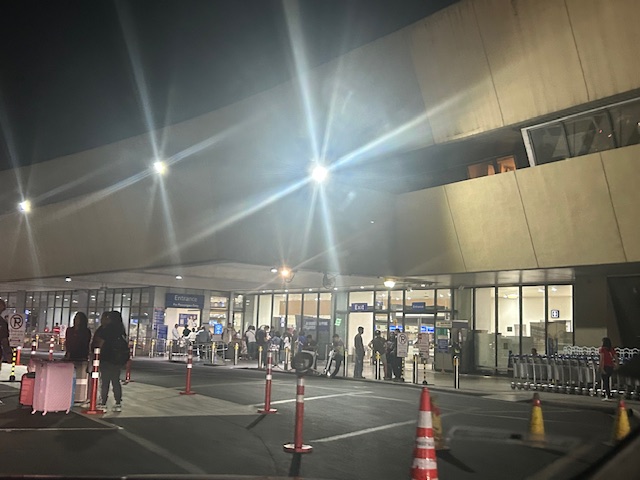 West wing entrance of Terminal 1 – unlike Terminals 2 and 3, there is really no area for well-wishers. Note the bollards that are supposed to protect people from errant vehicles. We now know these were not built or installed to the required specifications for protection.
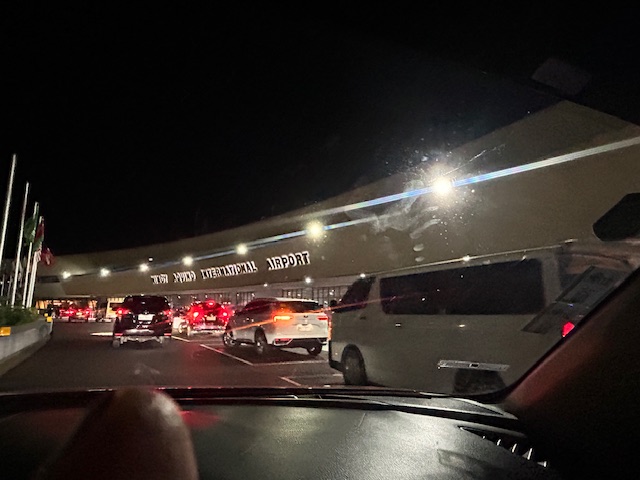 Vehicles are now parked parallel along the center of the driveway. Previously they were angled facing the terminal.
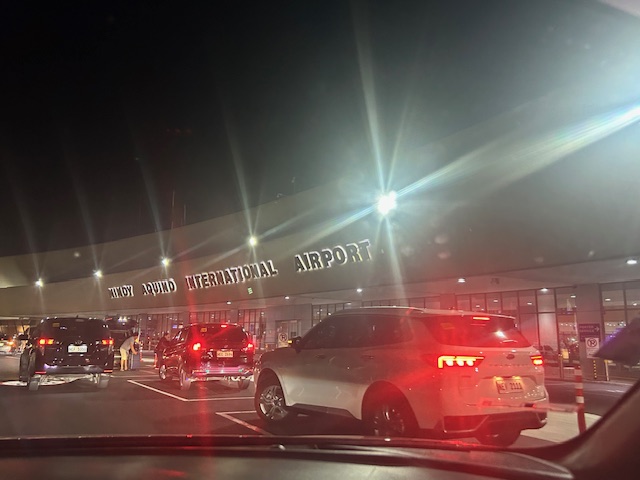 In terms of the space available, this significantly reduces the number of vehicles that can park to drop off passengers at the departure driveway.
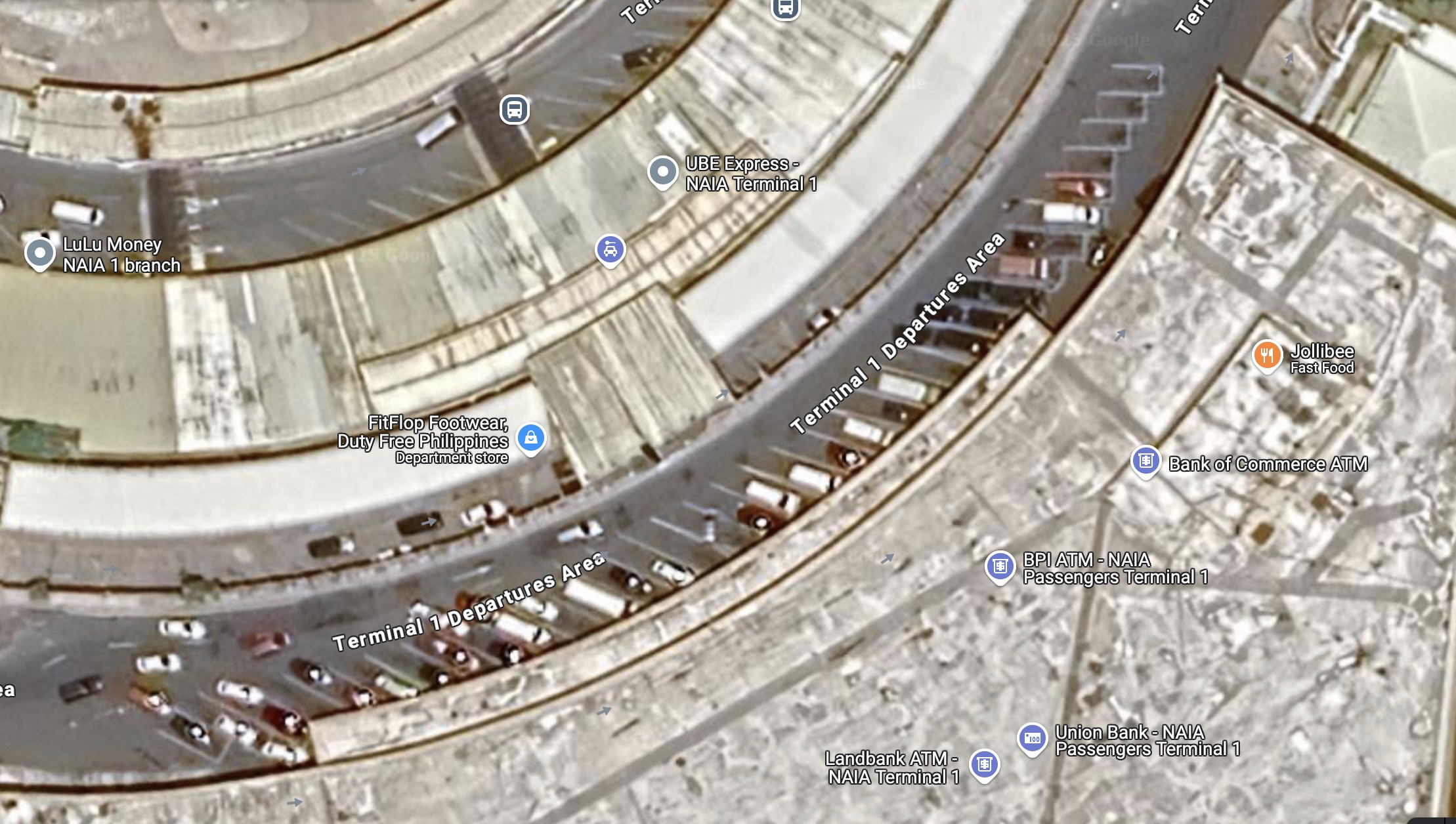
Screenshot from Google Maps showing the previous layout of the drop-off parking. Note the vehicles pointing towards the terminal.
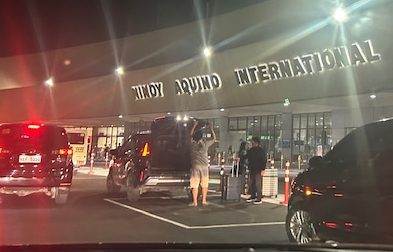
Passengers unloading their luggage behind the vehicles. There are markings for the vehicle slot but most just park parallel where space is available at the center of the driveway.
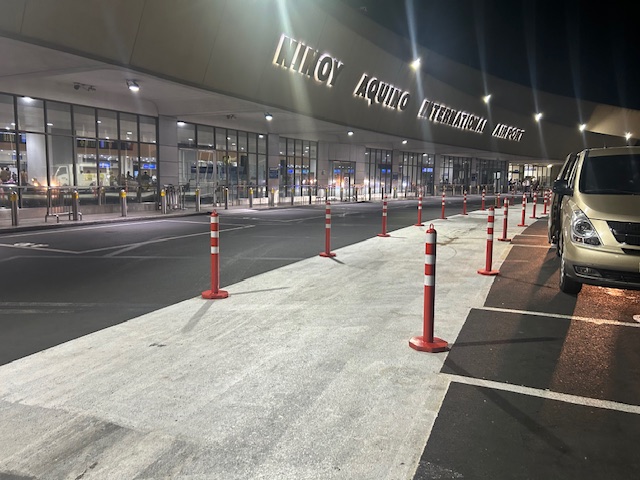 There is a buffer zone between the inner driveway lane and the drop-off lane. There were no vehicles using the inner lane but you can see in the photo that there are also curbside slots. Perhaps these are used during the busier times at the terminal?
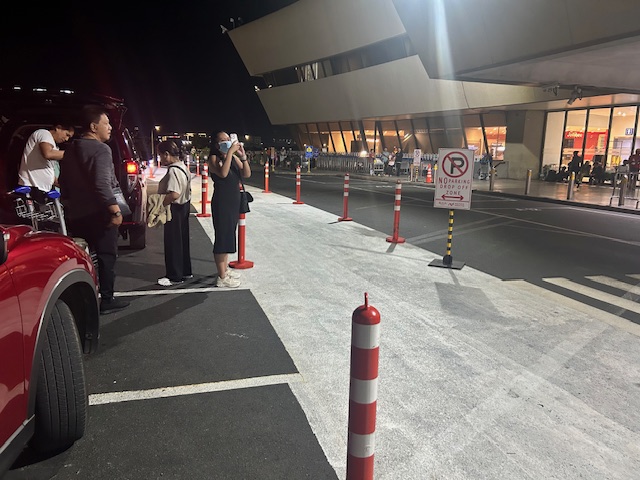 Other passengers were also taking photos as their luggage were being unloaded from their vehicles.
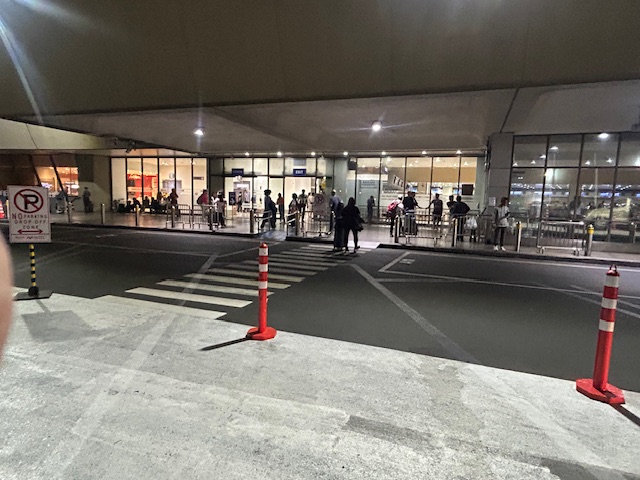 This is where the fatal crash occurred. It seems the damage has been repaired and quickly and its business as usual at the airport.
NAIA authorities should already start retrofitting or reinstalling the bollards at the terminal. This would ensure the safety of passengers vs. vehicles that may or may not be under the control of their drivers. The effort to quickly address the concern is much appreciated but a long term solution needs to be implemented to prevent future crashes from occurring here and at other terminals.
–
Another look at NAIA Terminal 1 arrivals
I have not been to NAIA Terminal 1 since before the pandemic. Last May, I had the opportunity to go there to fetch the wife who was arriving from US. That meant an opportunity to take photos of the arrival areas including the well-wishers area and concourse at the main terminal building.
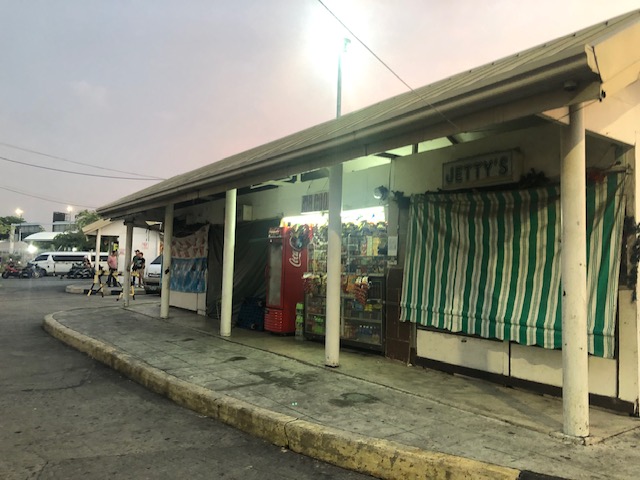 Kiosks are open basically at all times the terminal is operational or open. These usually sell or serve snacks or light meals including sandwiches and pansit (noodles). While I was not able to check the prices, items were usually priced significantly higher than if you purchased them elsewhere in similar stores.
 The well-wishers area is the same building with two levels. The ground level is open and the second level is air-conditioned.
 A single level building hosting stores selling food and drinks stands between the waiting area and the open parking lot.
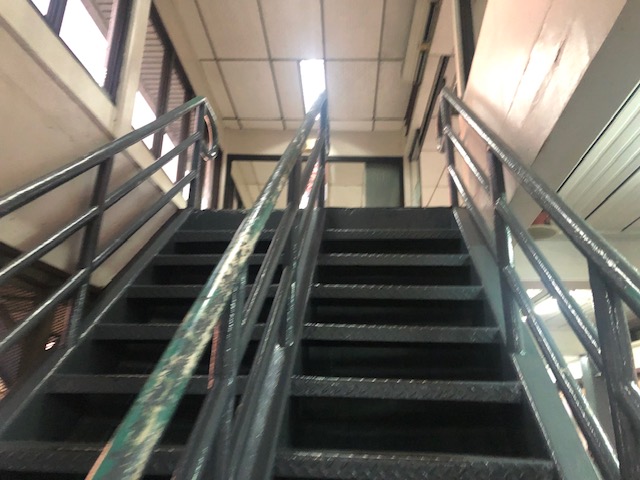 Stairs lead to the second level of the building for those who are waiting for arriving passengers (e.g., fetchers including relatives and friends).
 There used to be a Jollibee branch at the second level. I assume its closure was mainly due to the pandemic as it had a steady stream of customers before.
 There were few people at the second level. Either it was still very early or that there were fewer sundo these days. The parking lot is full of cars so I guess people just chose to stay near or in their vehicles or at the first level of the building.
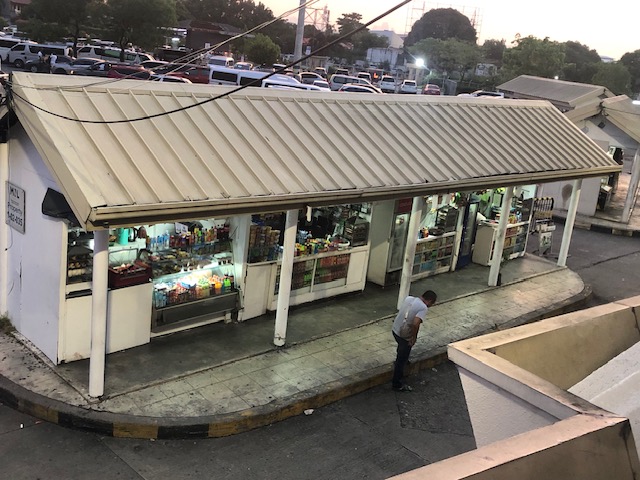 Another look at the kiosks behind the well-wishers area
 The driveway is still chaotic with drivers not following security and security often turning a blind eye to drivers taking their sweet time at the driveway.
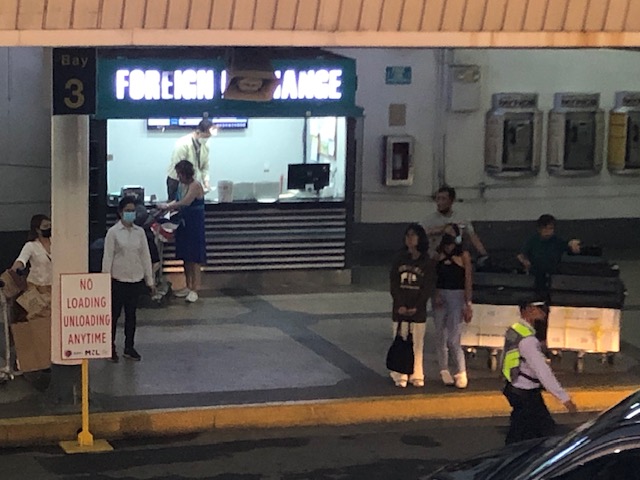 A foreign currency exchange stall at the arrival concourse
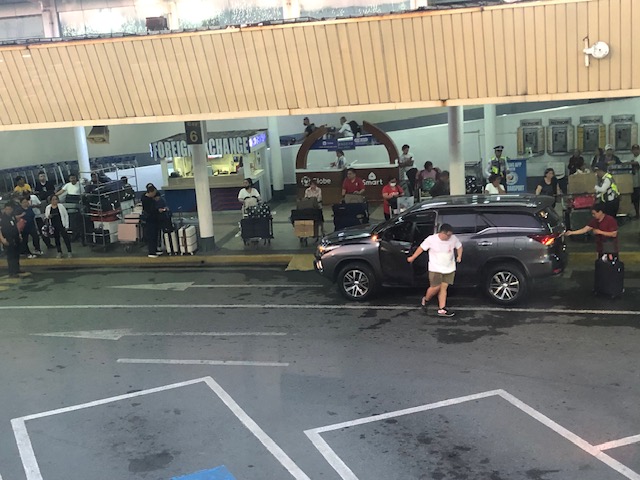 Here’s an example of a vehicle parked or standing along the concourse instead of at the designated slots marked along the middle of the driveway.
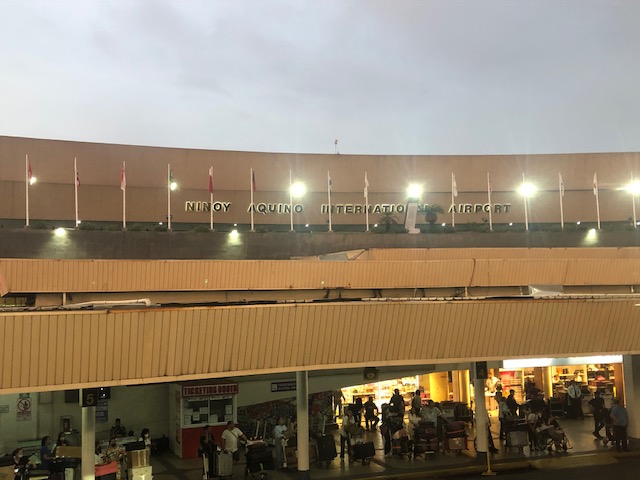 A view of the main Terminal 1 building from the waiting building. At the bottom of the photo is the arrival concourse along the driveway. At the top is the main driveway of T1, which is used by VIPs.
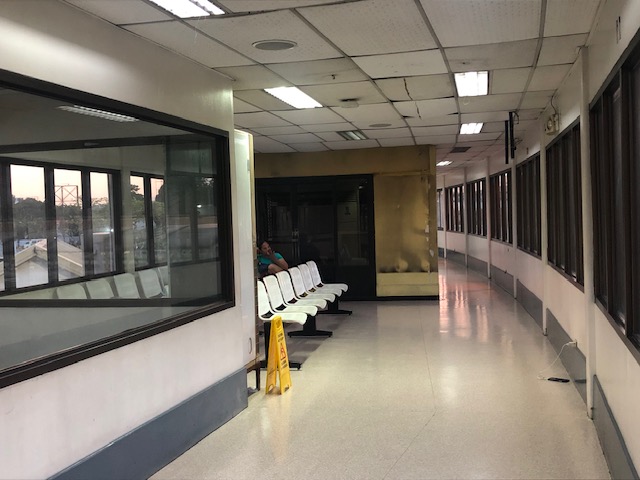 The other end of the second floor used to have a Kopi Rotti branch that became an ordinary . I guess it also became a casualty of the pandemic.
 Arriving passengers may cross from the terminal building to the well-wishers area before proceeding to the parking area.
 Crossing to the arrival concourse, here is the perspective of arriving passengers after descending from the terminal. There’s a duty free shop here for last minute purchases.
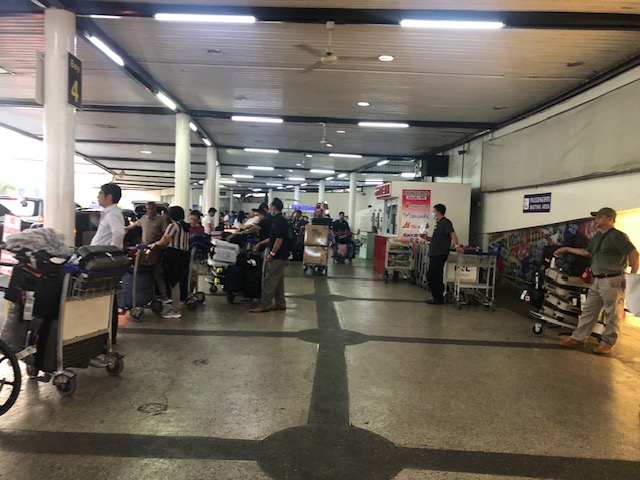 Another view of the concourse
It seems that little has changed at the arrival and waiting areas of NAIA Terminal 1. Everything appears to be back to pre-pandemic conditions. Security is very lax and there is no indication that the grand plans drawn up for the renovation of the terminal will push through in the near future.
–
NAIA terminal designations for airlines – reshuffle
Airport authorities in Manila announced that airline designations at NAIA’s four terminals would be reshuffled. I took this photo of the announcement on a tarp at the corner of NAIA Road and Ninoy Aquino Avenue as we left NAIA Terminal 1.
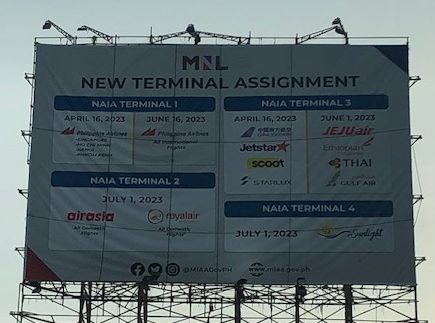
While there seems to be no major concern for the international airlines mentioned in the tarp, there will be a major inconvenience for Philippine Airlines passengers. For most its flights including international ones, transfers were easier and more convenient since international and domestic flights shared the same Terminal 2. There was no need to travel from or to another terminal unless the transfer involved another airline. From June 16, 2023, all its international flights will be via Terminal 1 so there will be a need to transit between T1 and T2 for connecting flights. Cebu Pacific will still enjoy this convenience for most of its flights as international and most domestic flights are via Terminal 3.
–
NAIA Parking Rates as of April 2022
Here’s a quick share of information about the parking rates at the NAIA airport terminals:

The infographic is from the DOTr Facebook Page and should be useful for those picking up people at the airport or who would be leaving their vehicles there as they travel again with the easing of restrictions due to the pandemic.
–
On immigration lines at NAIA Terminal 1 – again
Much has been said and written about the congestion at the immigration area at the Manila’s Ninoy Aquino International Airport. My most recent experience was a mix of good and bad as the lines were quite long prior to my departure for Bangkok.
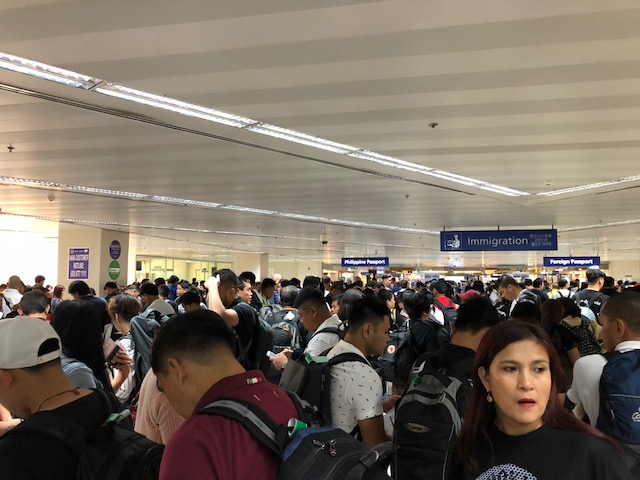 A very crowded immigration area when I joined the line. Note how far I was to the immigration booths and the meandering arrangement to maximise the space for queued travellers. I reckon that it took me almost an hour to get to a booth. Perhaps the airport can place some signs indicating how much time is estimated for one in line to get to the front? I wrote about this back in 2014 and proposed something similar to what I saw at airports like Narita and Incheon.
Meanwhile, the lines were shorter and faster upon my arrival a week later as shown in the following photo:
 Believe me these lines are shorter and faster moving. There were many immigration personnel the night of my arrival including an old friend from high school. Only, there were only 2 plane loads of passengers so it will definitely be worse during the peak hours when larger aircraft with more passengers arrive at the terminal.
It is a good thing that the airport is installing machines for express lanes soon. That will surely expedite processing for, at least, Filipinos returning from abroad. I think the departures would be quite tricky since there are many requirements particularly for workers leaving for their overseas assignments as well as government employees who require travel authority (TA) for them to travel abroad for whatever purpose. I think its Terminal 1 that is more notorious for the long queues as I didn’t have similar experience when using Terminals 2 or 3. Airport and immigration officials should exert more effort to ensure such congestion is minimised especially as the country targets more passenger traffic through its international airports.
–
NAIA terminal transfer guide
I was able to get the following photos of a couple of pages from the Philippine Airlines (PAL) inflight magazine Mabuhay. The photos show an airport terminal transfer guide for the Ninoy Aquino International Airport (NAIA), which has 4 terminals. Since I get a lot of traffic and questions about terminal transfers in this blog, I thought it practical and informative to just post these here for everyone’s benefit.


I hope these are helpful!
–
Road crash at NAIA Terminal 1 parking area
[Warning graphic content]
Last May 30, I was picking up my wife at the airport and heard a loud crash as I was getting my ticket for the NAIA Terminal 1 parking lot. I looked around but could not see anything that could concern me. As I rounded the driveway though, I noticed the vehicles in front of me already slowing down. This was the scene that greeted us:
 Van in an awkward position against the bushes of the parking lot fence and after colliding with a parked SUV. Security staff were already there and one person (the driver of the van?) seemed out of sorts.
As I continued my drive, I saw this gruesome scene of a person who was likely hit by the van when it crashed into the limited access gate of the parking lot:
 The casualty of the incident was lying on the ground with security personnel apparently more concerned about the damaged gate than attending to the person.
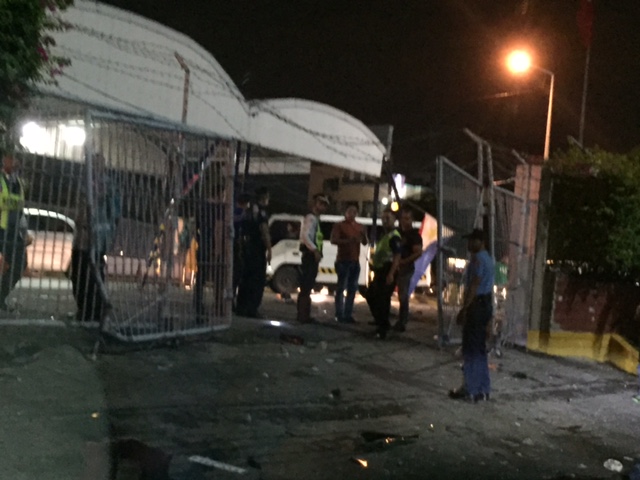 Another look at the damaged gate that the van punched through before finally crashing into the SUV and the bushes as shown in the first photo.
I’m not sure if this incident was featured in the news. It surely is something that would likely be not attract so much attention as it may not be as ‘newsworthy’ as other incidents that have happened recently. That is often the case with road crashes, which seem to be regarded as something typically occurring.
One thing we get and should realize from this is that everyone is indeed vulnerable from road crashes. The casualty in the photo (I assume only one) was likely someone who was there waiting for a relative or a client to arrive. Large groups and even whole families may be found at the airport parking lot as they wait for loved ones to arrive. The victim probably was just wiling his time, even texting people about his status, when tragedy struck that night.
–
NAIA Expressway – T2 to T3
This is a continuation of yesterday’s post on the NAIA Expressway. This time, I am posting on the trip back from Terminal 2 to Terminal 3. It cost us 45 pesos, which is the same toll fee we paid for the reverse direction. Here are photos I took of NAIA X with some comments on the sections and signs.
 Vehicles coming from Terminals 1 and 2 would have to take the on-ramp after the intersection of NAIA Road and the Paranaque-Sucat Road (Ninoy Aquino Avenue) and just before the intersection with the Domestic Airport Road.
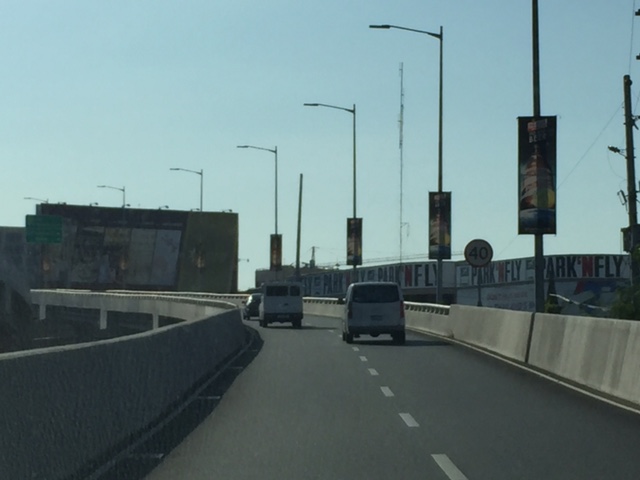 That’s the Park’N Fly building that is located at the corner of the NAIA Road-Domestic Road intersection.
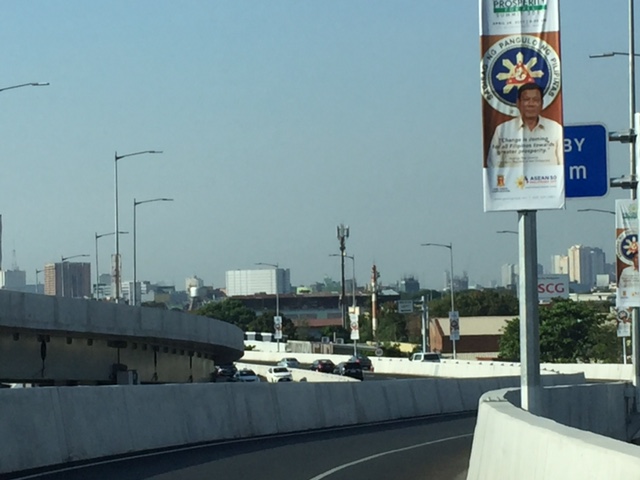 Vehicles bound for Terminal 3 and the Skyway should keep right.
 Traffic will merge with those coming from Macapagal Boulevard.
 Speed limit and signs for merging traffic
 The three lanes include the merging lane at right.
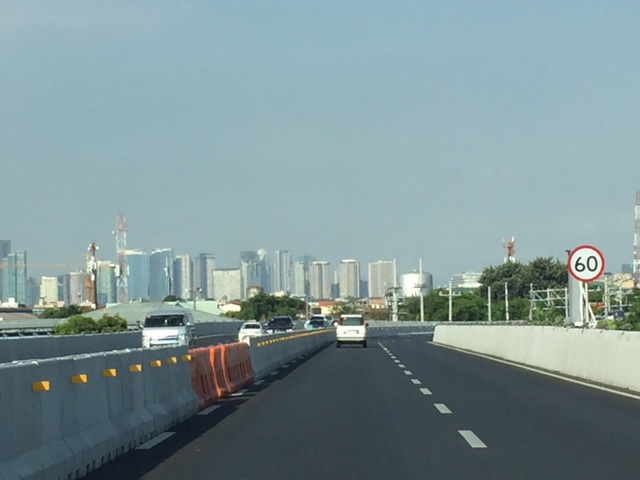 Noticeable along the NAIA X is the lack of shoulders. Although the lanes appear to be wide, drivers may become uncomfortable when two vehicles are side by side due to the perception of constricted space.
 There are lots of reflectors installed on the media barriers. There are also a lot of ad space with tarps installed on each lamp post along the expressway.
 Sign informing travelers of the toll plaza coming up ahead.
 Directional sign guiding vehicles bound for the Skyway or Terminal 3. My colleagues and I agree that instead of just stating “Skyway”, the sign should state “Skyway/C5/Nichols”. Travelers who are not heading south and unfamiliar with the NAIA X off-ramps would likely take the Terminal 3 exit and end up passing through T3. There is actually another off-ramp leading to Andrews Avenue and eventually Sales Road (formerly Nichols) so you don’t have to pass through T3. We made that mistake and ended up going through T3.
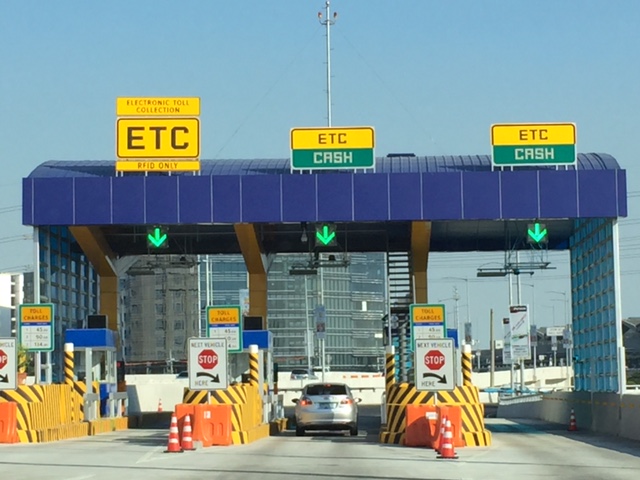 Toll plaza prior to the T3 exit ramp
 Section just after the toll plaza
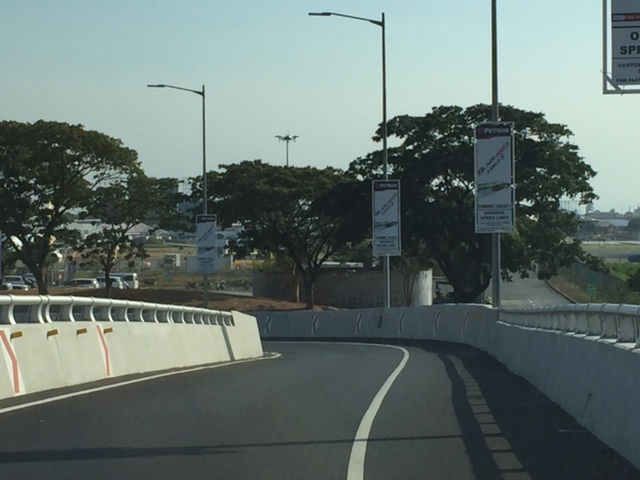 Off ramp
 Standing vehicles right next to the off-ramp with their drivers likely waiting to fetch arriving passengers. It is practically impossible to make a hard left to avoid going into T3 so you have no choice but to go through the terminal via the departure level (elevated) or the arrival level (ground).
–
NAIA Expressway – T3 to T2/T1
Last Friday was our first time to use the NAIA Expressway. This was one of the major projects under the last administration and under the Public-Private Partnership (PPP) program and became operational last year after being delayed (It was not operational during the APEC summit in 2015.) for some time. I also commented on the need for NAIA X in one post before as I preferred to have a transit system instead. NAIA X is basically and mostly beneficial to cars and not necessarily for public transport. It also practically limits if not eliminates the possibility of having elevated transit (e.g., monorail or AGT) to connect the 4 terminals among them as well as to areas outside the airport zone (BGC, Makati, etc.).
I thought this post would be a useful one for travelers especially those coming in and out of the airports at this time of the year. A lot of people are departing or arriving at the Ninoy Aquino International Airport (NAIA), which is a main gateway to Metro Manila and adjacent regions. It can get congested along the roads between the four terminals of the airport and since there is not internal transport system linking them, travelers would need to travel along public roads. It cost 45 pesos (less than 1 USD) for the stretch from Terminal 3 to Terminal 2 (same if you’re headed for Terminal 1), and I thought it was well worth it considering it can really be quite congested between the 4 terminals. That congestion has already victimized a lot of people before with many missing their flights. But then perhaps one major cause of that congestion was the construction of the NAIA Expressway?
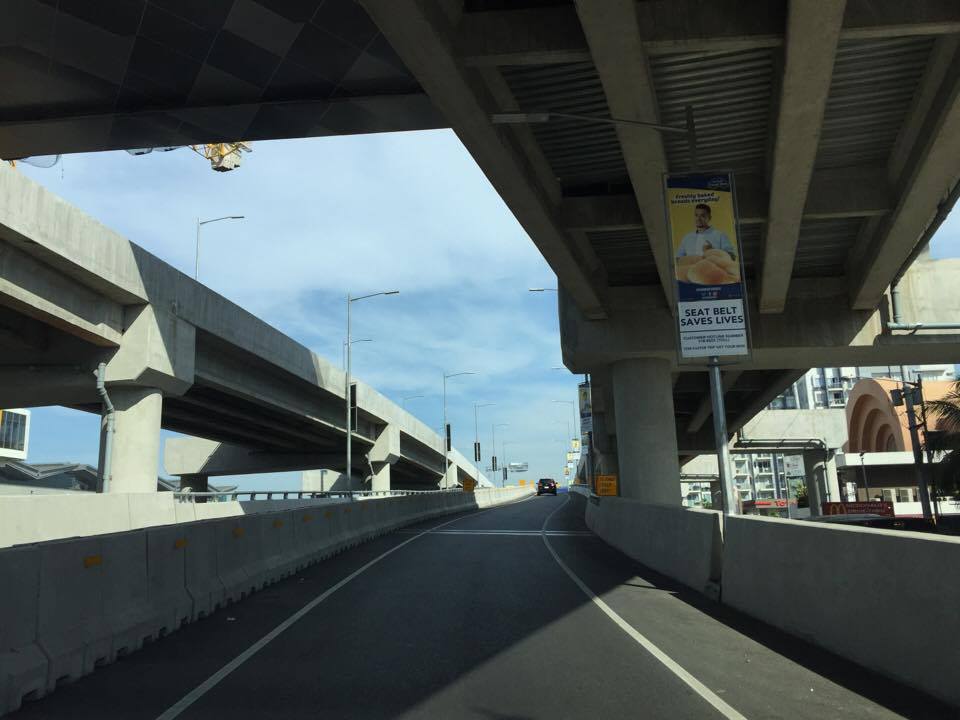 Entry ramp across from Terminal 3 and before the Sta. Clara church at Newport City
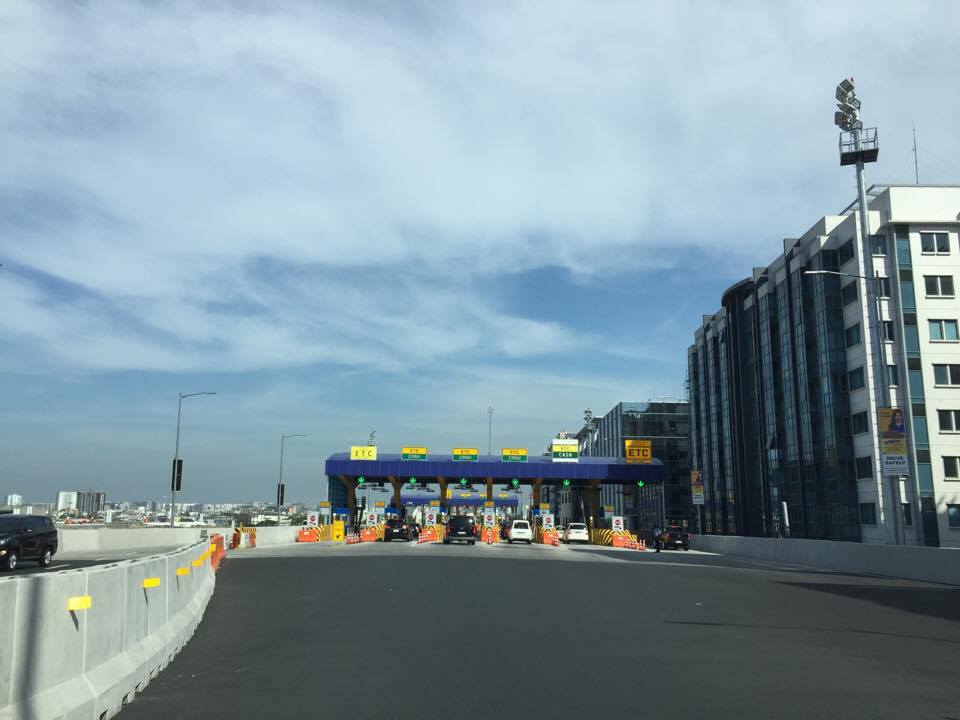 Toll plaza where travelers pay upon entry to the tollway
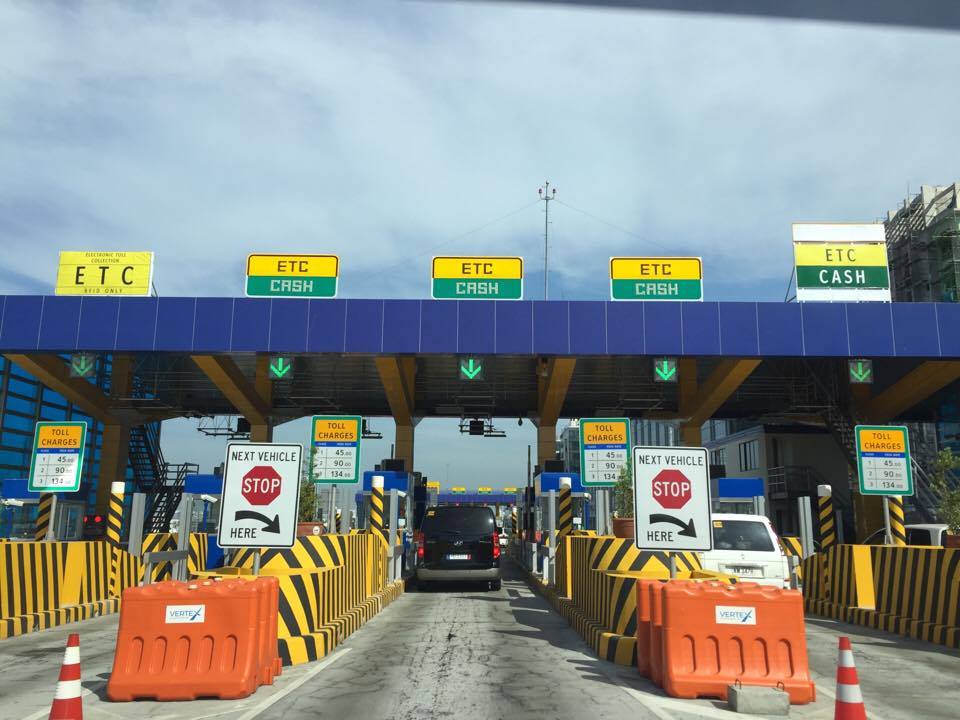 Just before the toll plaza where most booths are for mixed ETC/cash transactions
 Upon exiting the toll plaza, travelers have to deal with multiple lanes merging into two
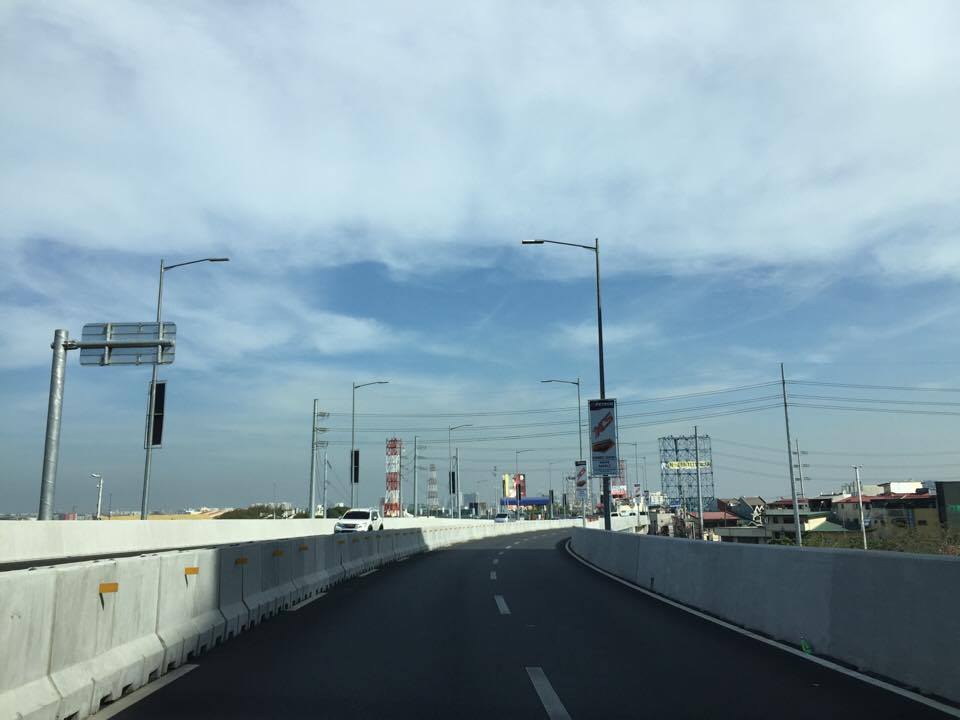 Two-lane section with neither shoulders nor “elbow room”
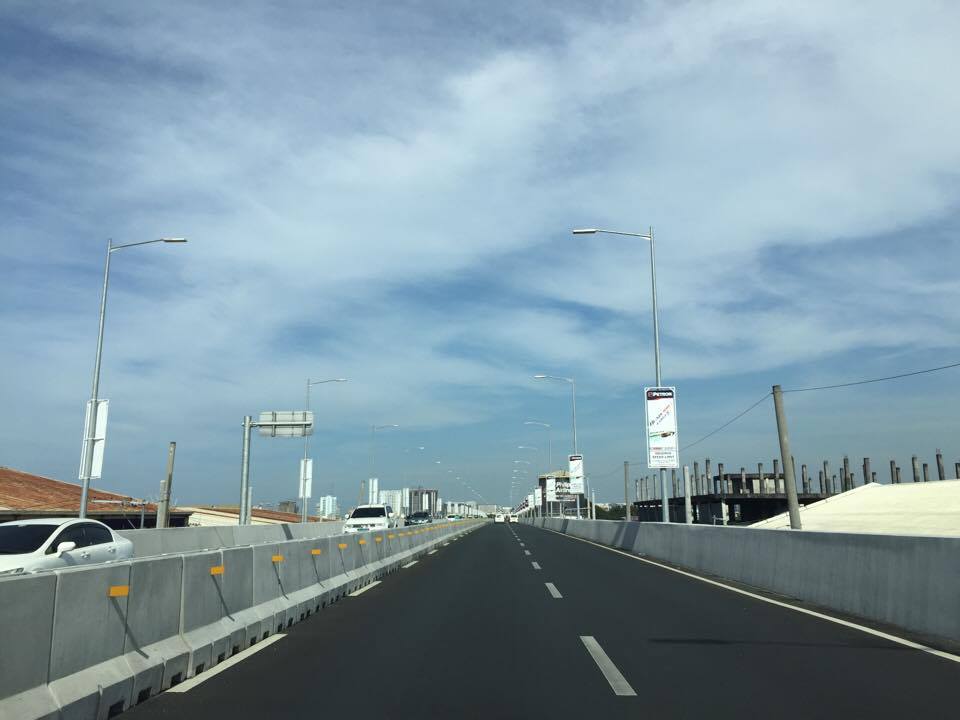


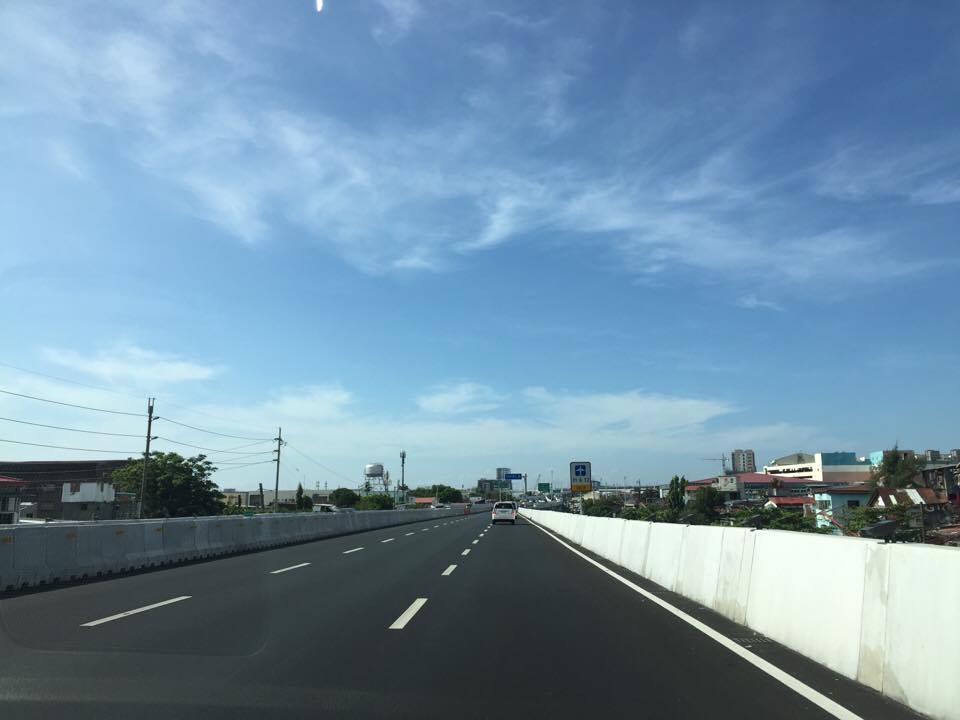
 Directional sign providing guidance especially for vehicles headed to Terminals 1 &2
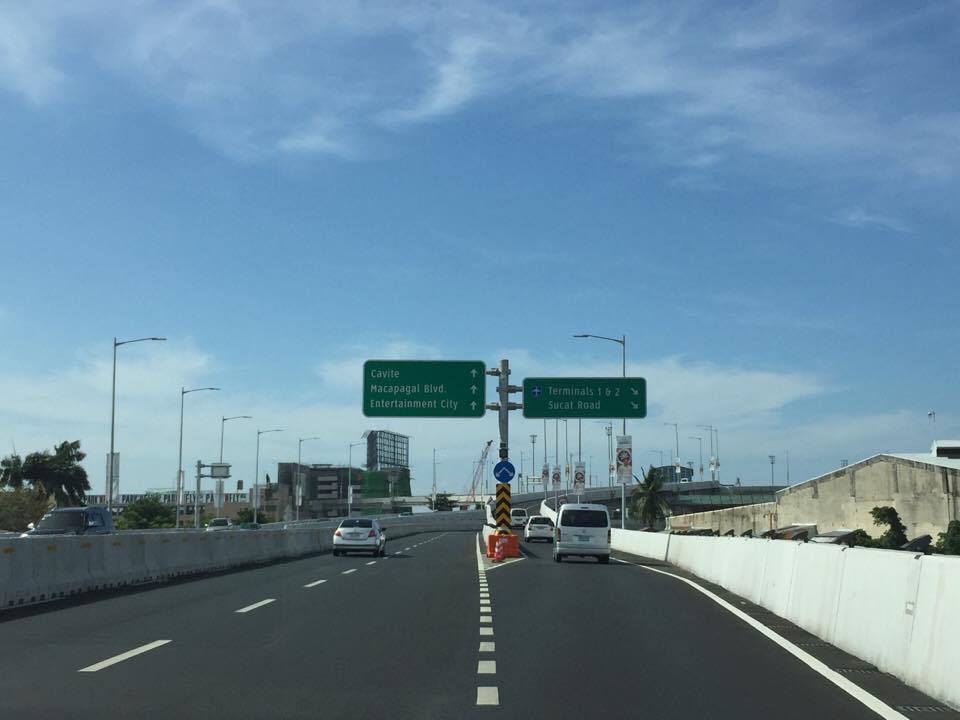 Directional signs for vehicles bound for Cavite and Macapagal Blvd (left) and Terminals 1 or 2 (right)
 The tollway section goes underneath the section headed towards Macapagal Boulevard and the Coastal Road
 The lane from Terminal 3 merges with another from the Coastal Road
 Signs showing which side to stay along towards either Terminal 2 or 1
 Fork in the road – the tollway branches our to either Terminal 2 or Terminal 1
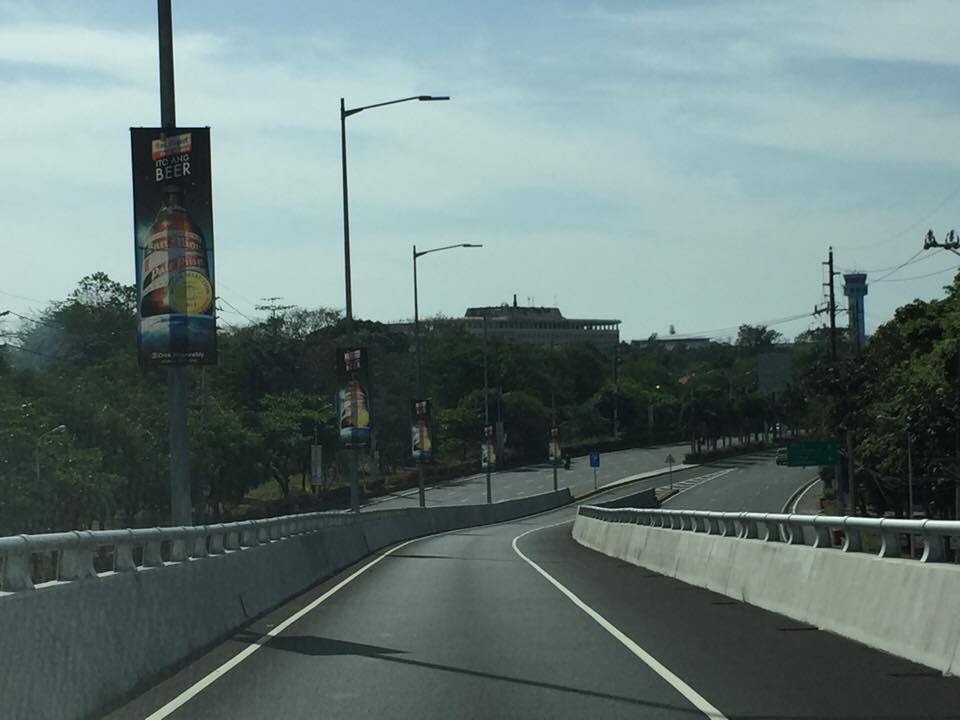
 Off ramp towards Terminal 2
Next: Terminal 2 to Terminal 3
–
NAIA Terminal 1 departures – some updates, Part 2
This is a continuation of the previous article providing updates on NAIA Terminal 1. The terminal is currently being renovated and what used to be the most maligned terminal in the country has improved both in terms of facilities (including the toilets!) and processes (immigration was efficient when I passed through). Here are more photos of the terminal from my recent trip.
 The same Duty Free shops were there. The lighting was basically the same but area seems cleaner than before.
 There are few Duty Free shops are T1 compared to other international terminals, which are like shopping malls in terms of selections (e.g., Changi, Hong Kong, etc.).
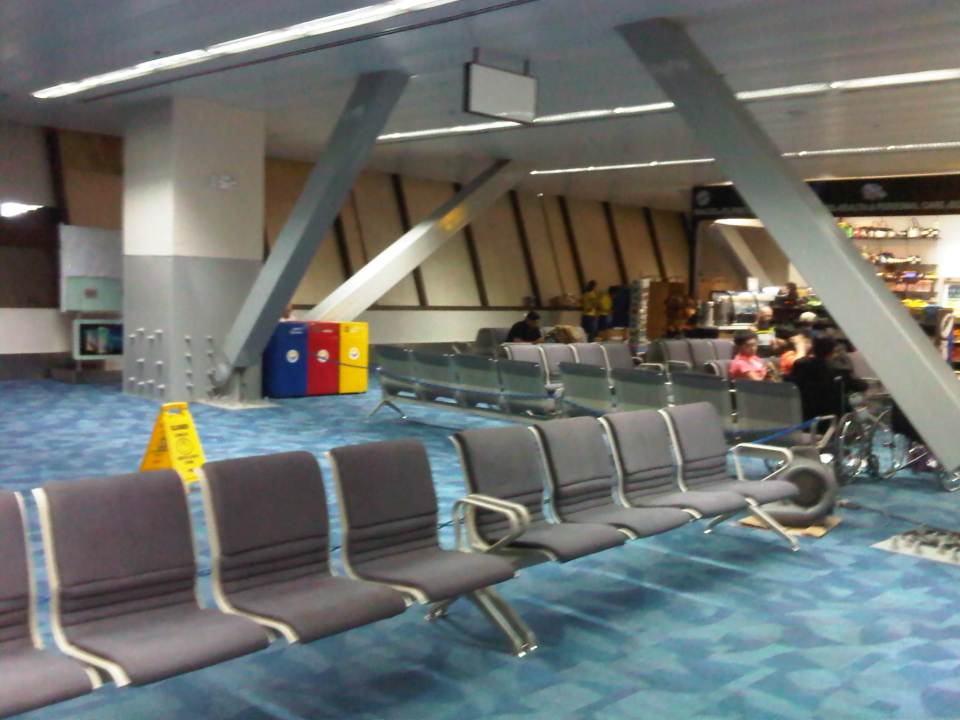 Many areas have been cordoned off for the renovation works at the terminal.
 A welcome sight for many, especially those wanting to have a decent cup of coffee or tea would be the Starbucks at T1.
 One of the new concessionaires at Terminal 1 is a welcome sight to passengers who before had to make do with food and drink stands that weren’t as attractive.
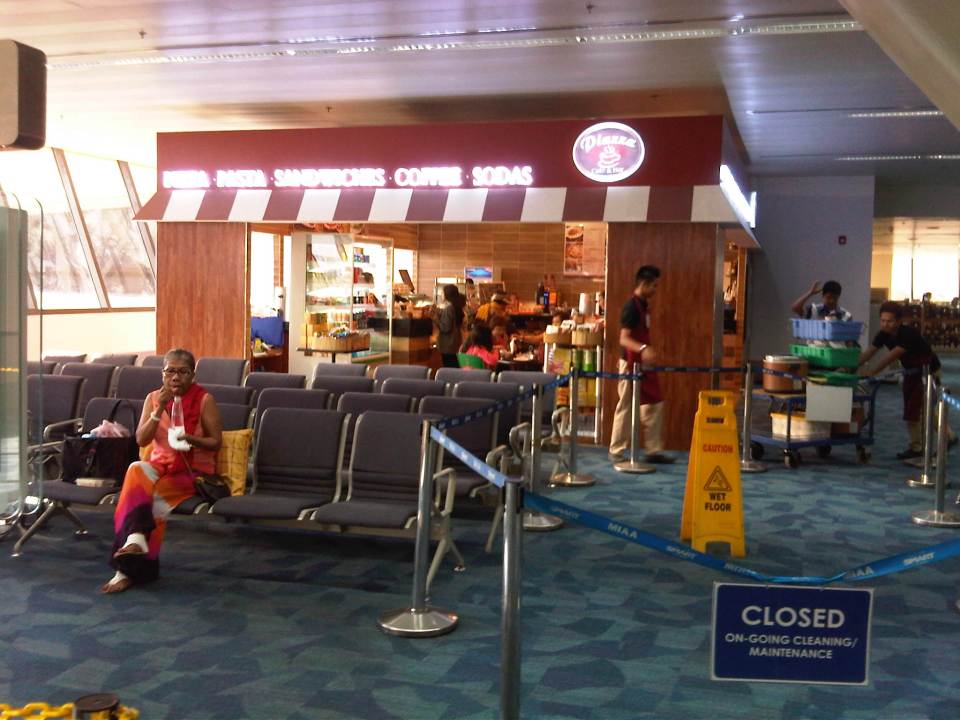 Another new concessionaire is this coffee shop at T1 offering what looked like fairly prices (for an airport) drinks, sandwiches and meals.
 The corridor to our boarding gate has been repaired and cleaned. The carpets no longer looked filthy and were not smelly.
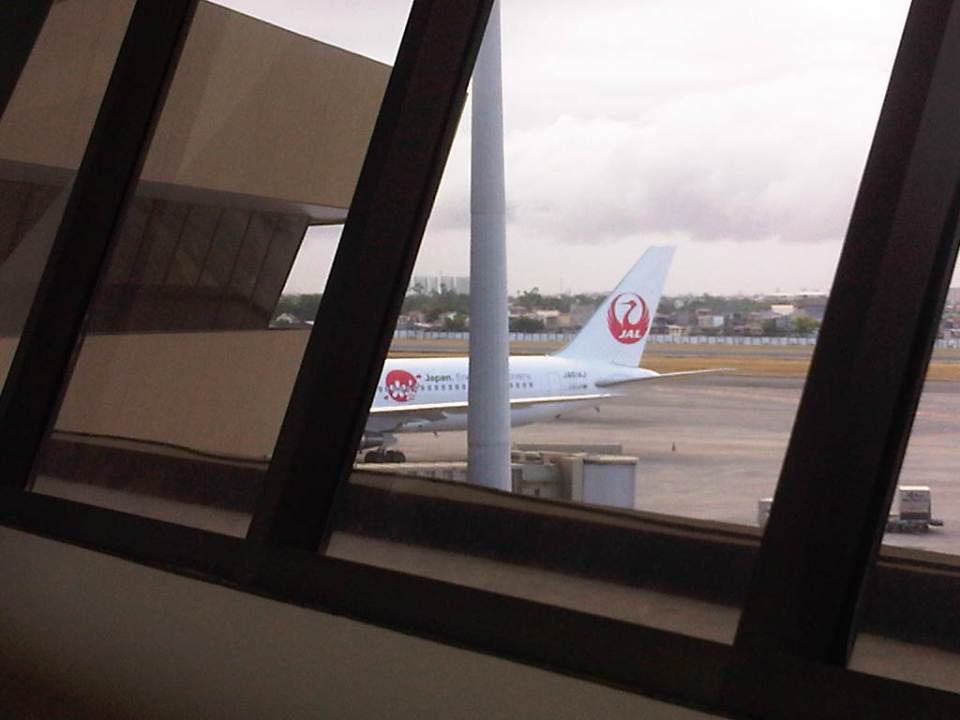 Japan Airlines aircraft docked at T1 sporting its original (retro) logo
 Vacant slot and available airbridge at T1
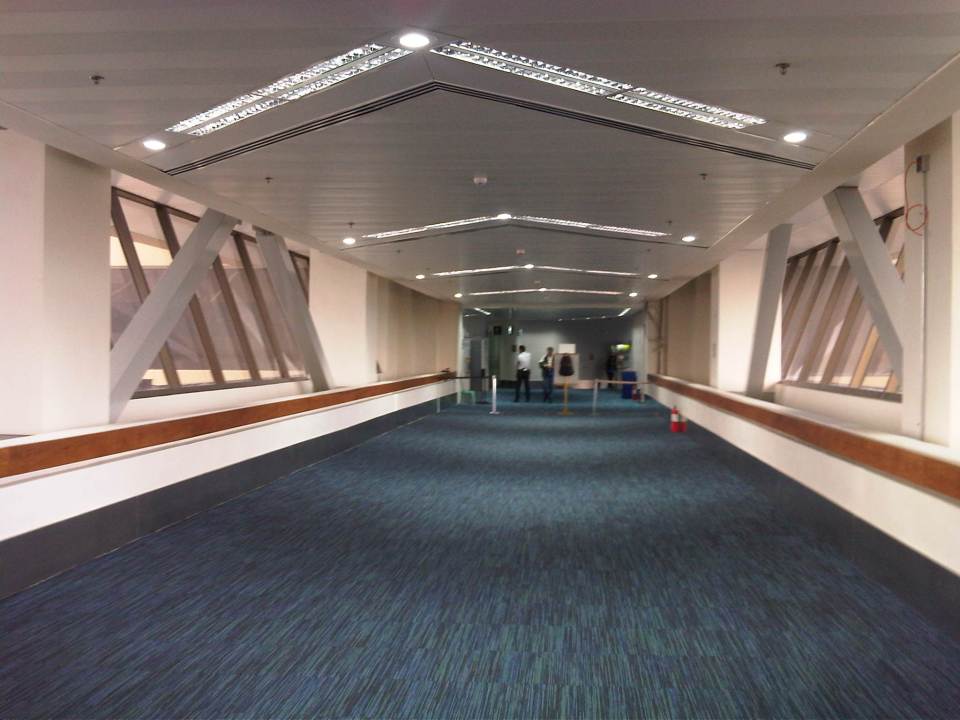 Another look at the renovated and cleaned corridors to the boarding gates
 A China Southern Airlines plane at NAIA Terminal 1
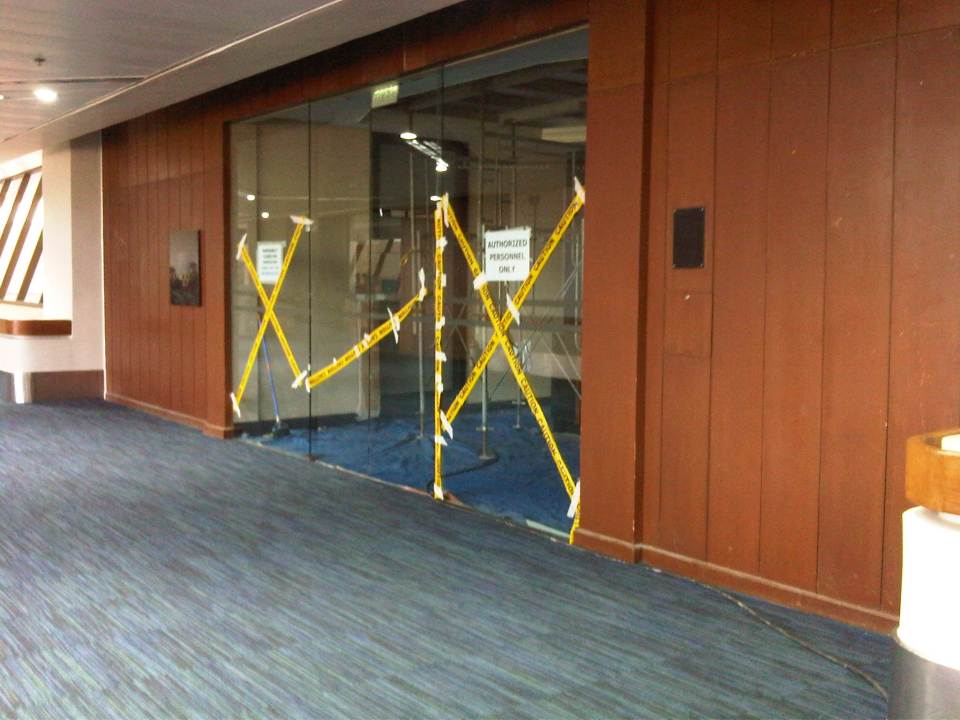 Passenger lounge under renovation
 Shared lounges for First Class and Business Class passengers of several airlines
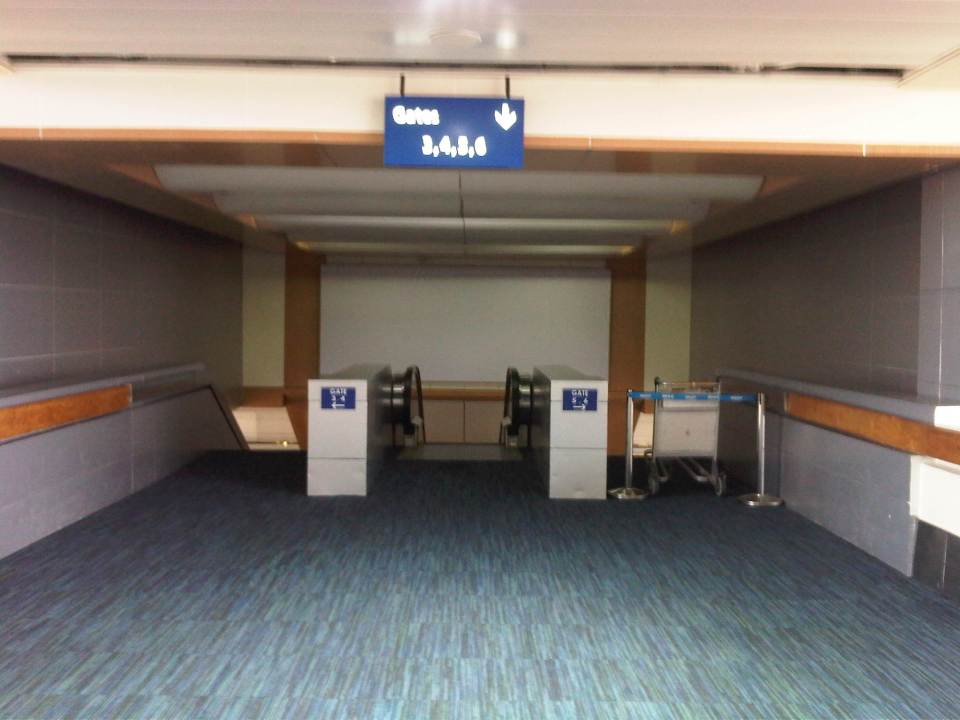 Stairs and escalators to the pre-departure area and boarding gates
 Souvenir shop at the pre departure area
 Final baggage inspection before the waiting area near the boarding gate
 Boarding gate for my flight
 There were plenty of available seats as passengers only started to arrive at the pre departure area. The seats were basically the same ones here when I last used T1. Though not needing to be reupholstered, these require proper and regular cleaning considering all the people who have gone through the airport.
I will post again soon on Terminal 1 but from the arrival perspective.
–
 Caught (up) in traffic