
Home » Infrastructure (Page 30)
Category Archives: Infrastructure
Roadworks along Angel Tuazon Avenue, Marikina
On my way to the dentist last weekend, I encountered more roadworks during my drive. This time, it was along Angel Tuazon Ave. stretching from Marcos Highway to Sumulong Highway. Due to the rains the past few days, work seems to have been suspended and I saw no one doing anything along the work site.
 Concrete pavement re-blocking site along A. Tuazon Ave. – this road frequently goes under water during intense rainfalls brought about by typhoons. Being a truck route also contributes to the road being damaged.
–
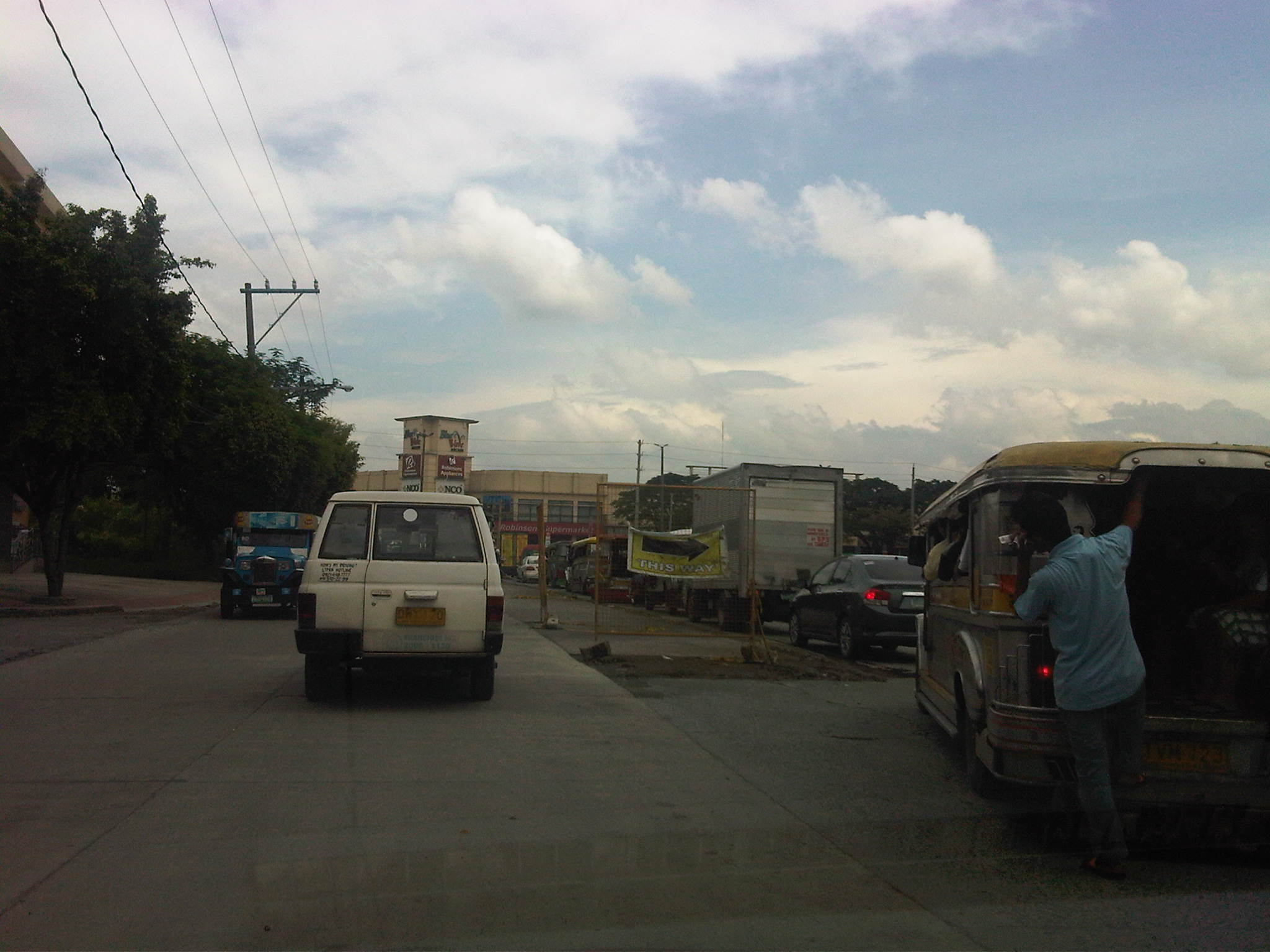 Roadworks along the approach to the junction with Sumulong Highway – one lane of the opposing direction is generally used by left-turning traffic along the northbound side under a countet-flow scheme. I can imagine this causes significant congestion along other legs of the intersection as only one lane is available for the southbound direction, limiting intersection capacity.
Good luck to people passing these areas this week. May you have more patience as you travel.
–
SM Marikina-Santolan Station pedestrian walkway
A good example of providing for pedestrian access for development is the walkway connecting LRT Line 2’s Santolan Station with SM City Marikina. Of course there’s an even better example in Makati City where the walkways at the Ayala CBD connect office buildings and the commercial center comprising Greenbelt and Glorietta. That system of walkways is probably the first of its kind in the country and has not been replicated elsewhere, at least as far as I know. The significance of the walkway that practically connects to points in two cities (SM is in Marikina while the LRT station is in Pasig) is that it is a good example of a facility that provides access to a transit station. Not too long ago and before Typhoon Ketsana laid waste to the area beneath the bridge and overpass, there was even a proposal for a public transport terminal to be developed here. If this was realized, then the area would have been a very busy hub similar to Crossing or Market!Market! but maybe not at the level of Cubao.
 The elevated walkway across the bridge along Marcos Highway is wide and obviously designed to be able to handle the potential number of people generated by the mall.
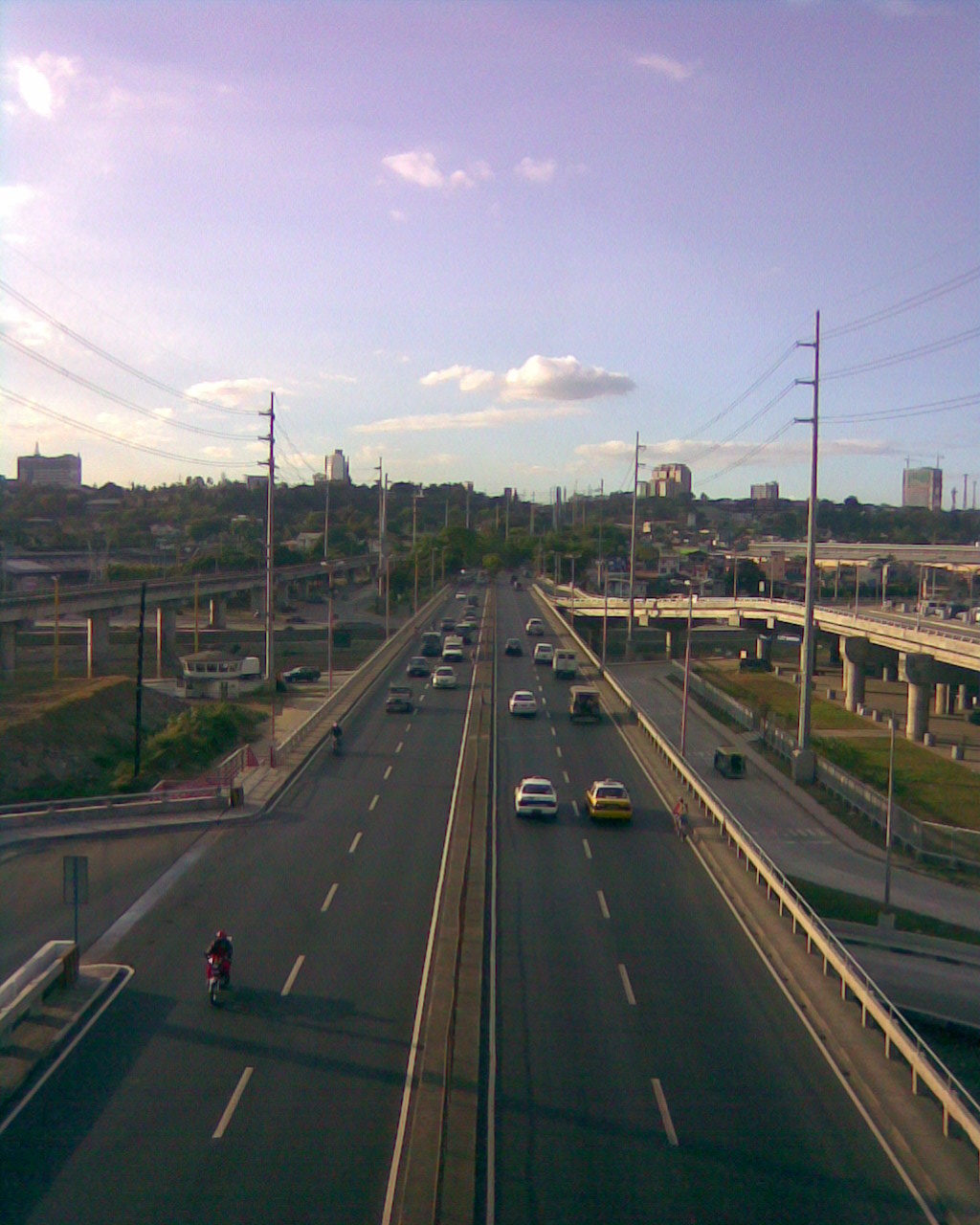 The walkway provides a perfect position for observing traffic along the bridge. This is probably an ideal location for a station for conducting screenline traffic counts for Metro Manila. The driveway on the left side of the photo is for public transport loading and unloading bays commonly used by jeepneys bound for the towns of Rizal Province.
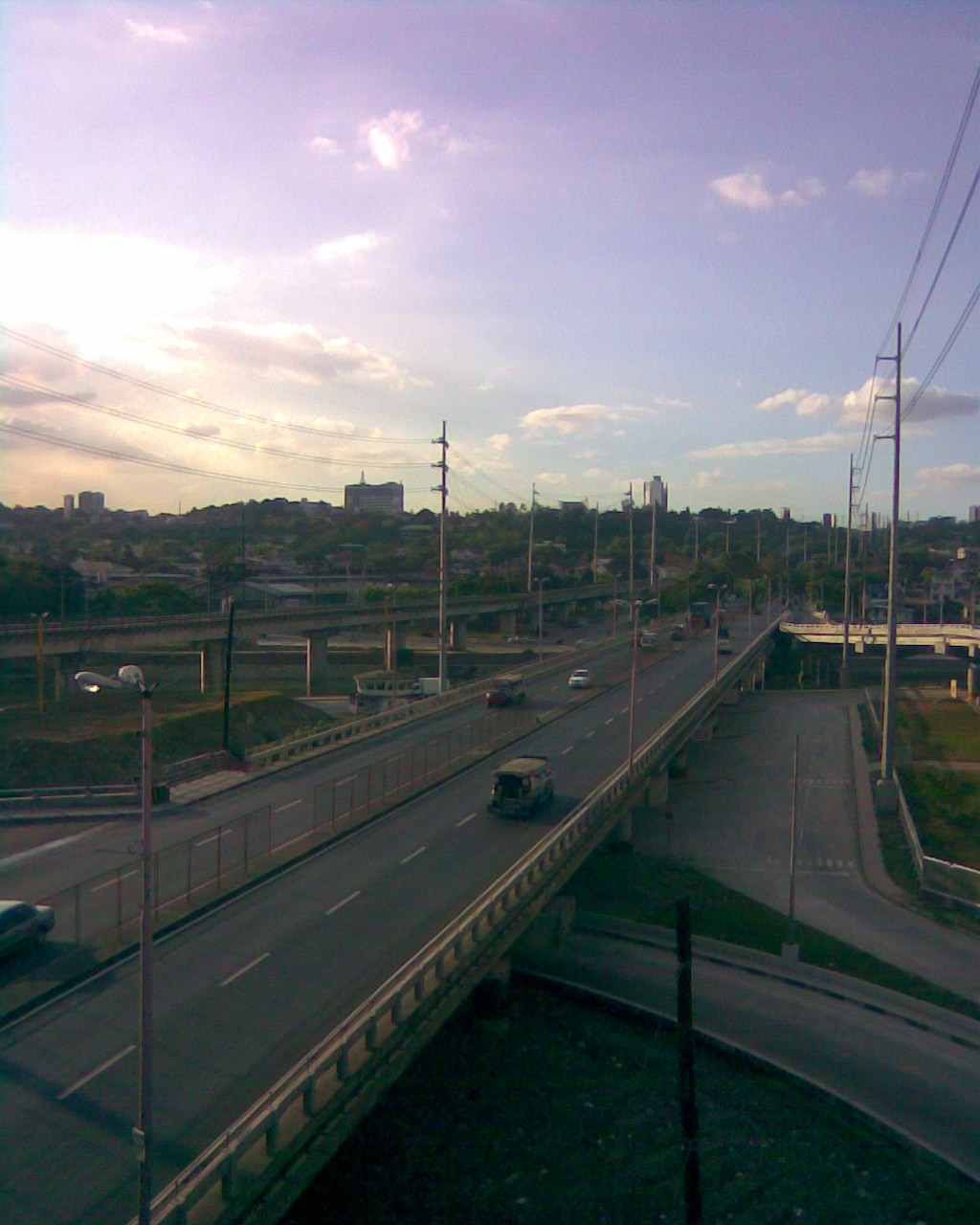 Another view from the walkway with a good perspective of the underpass connecting to a bridge to C5. Visible from this position is the area under the bridge that was proposed to be an eastern bus terminal during a previous dispensation at the MMDA.
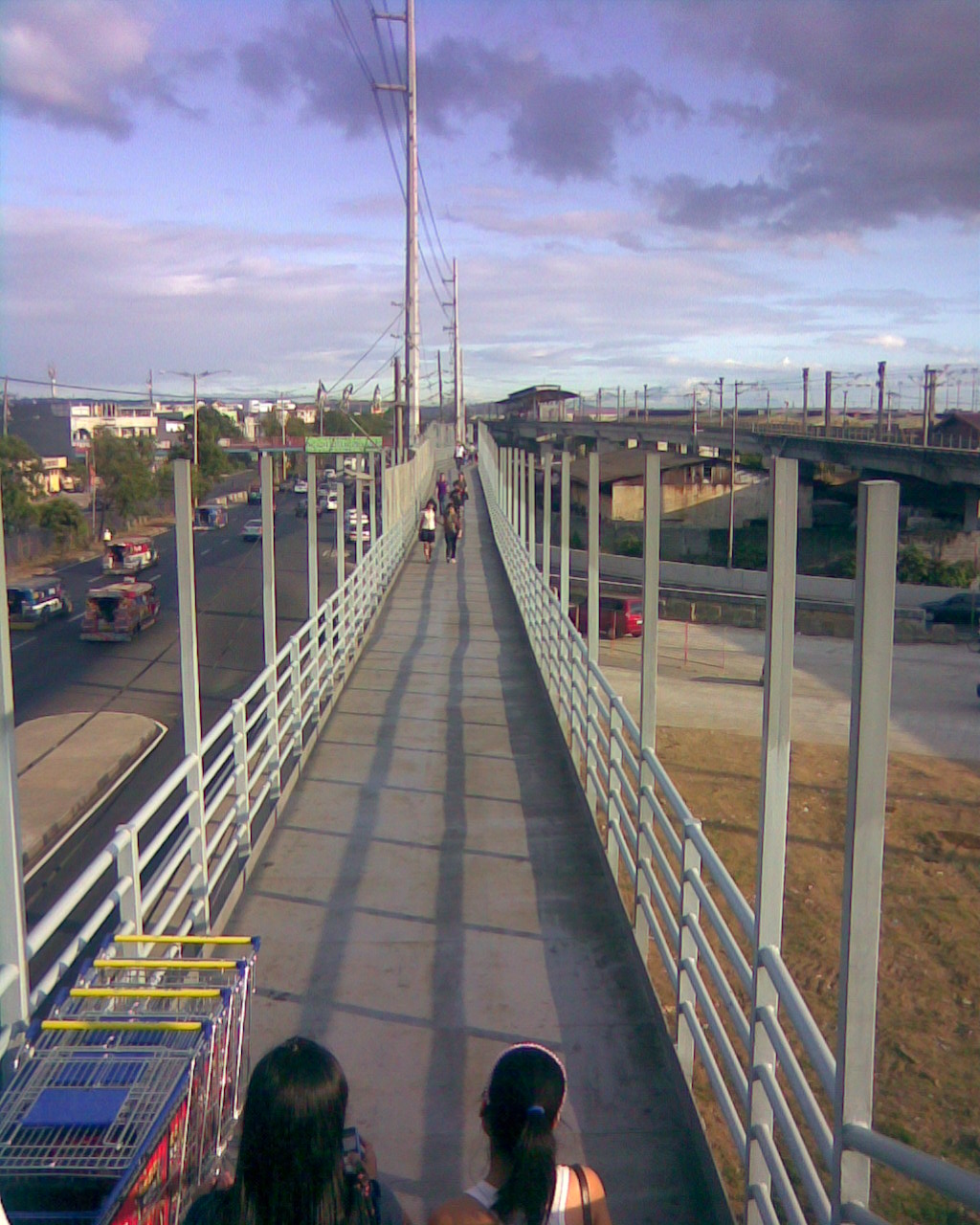 The long walk to the MRT station – from this perspective, it seems the walkway connects directly and almost level with the station platform. It is not at all connected directly with the station. Instead, one has to walk towards the end of this path and then down the stairs that end at the sidewalk near the PUV loading/unloading area. To get to the station, one has to walk some more. The posts appear to be provisions for the installation of a roof over the walkway to shield people from the elements.
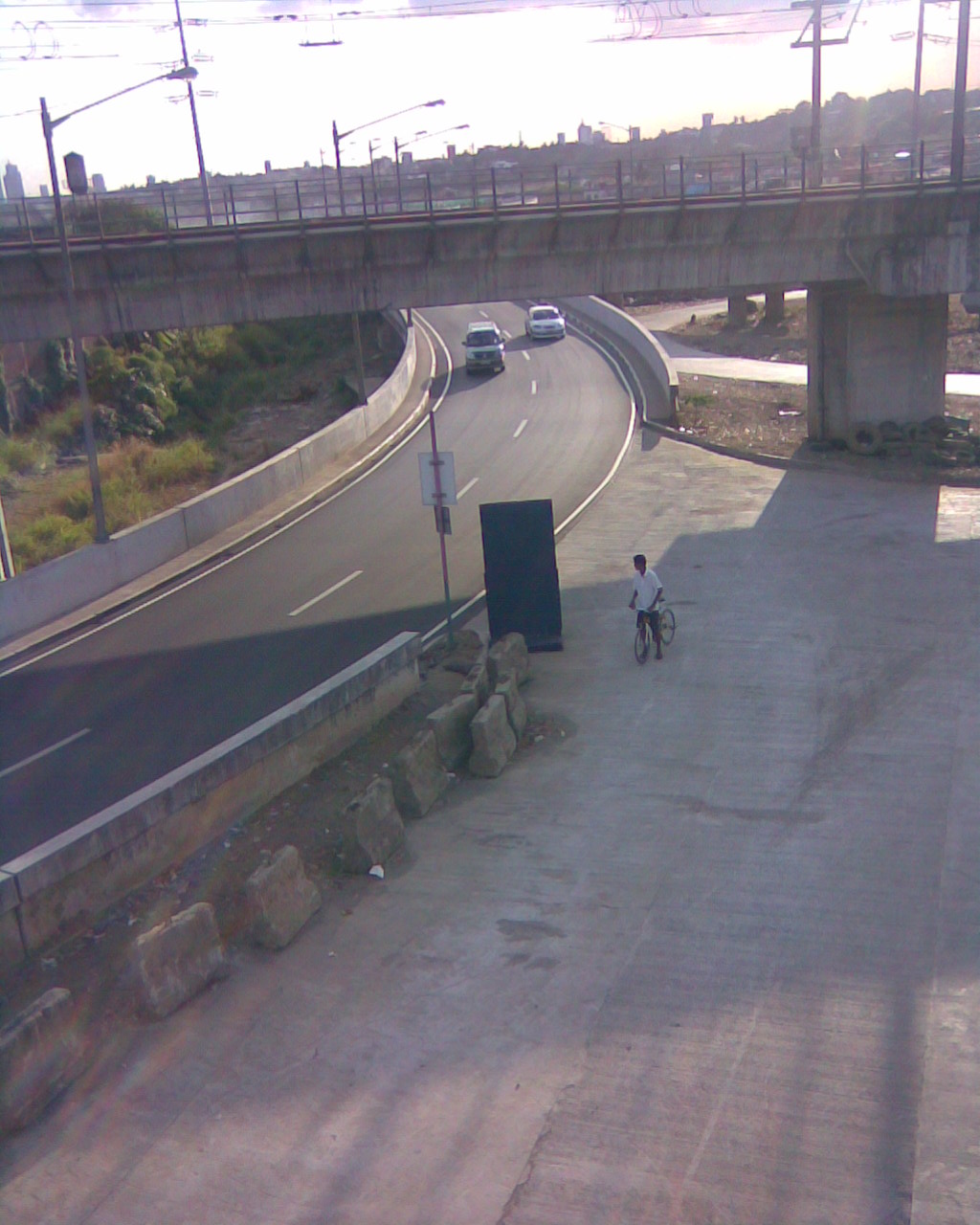 That’s the branch of the bridge emanating from C5 via the Riverbanks Road that was constructed on land expropriated from Camp Atienza, headquarters of the 51st Engineering Brigade of the Philippine Army. The curved section carries traffic from C5 that feeds into eastbound lanes of Marcos Highway.
–
Commonwealth extension
Quezon City’s Commonwealth Avenue extends from its junction with the Elliptical Road (Quezon Memorial Circle) up to gate of Jordan Plaines Subdivision in Novaliches. Often labeled as a killer highway due to the frequent road crashes that have resulted in many deaths, it is perhaps the widest road in all of the Philippines, having 10 lanes per direction at its widest sections in the Diliman area. The avenue is still far from completion as the stretch from Jordan Plaines to Quirino Highway has taken quite sometime for construction. I took the following photos of the area last weekend to illustrate the situation.
 Counterflow scheme a block away from the Jordan Plaines gate due to excavations and the civil works on a short bridge over a creek. Two weeks ago the counterflow scheme was implemented along the northbound side of the avenue.
 Only a few people were working on the Sunday I passed by the area.While there are signs and a few barriers, the work area presented a lot of hazards to both motorists and pedestrians. It was a bit dry last Sunday due to the sunny weather but I can imagine the mud from the work site should rains fall in the area.
Connecting Commonwealth Avenue with Quirino Avenue will surely improve circulation in the area and would probably ease congestion in the Novaliches bayan area. Maybe there will even be an adjustment of some public transport routes once Commonwealth and Quirino are connected. The extension of the avenue is long overdue and a much delayed project considering that there are already developments along the right of way including a residential project by the Quezon City government. The completion of the avenue will perhaps also have a significant impact on land values in Novaliches.
Tracing tracks 2
Following are a few more photos from a trip to Naga City back in 2009. These photos take off from a previous posting where I featured the tracks of the PNR’s Main Line South, mainly what a traveler may see along the national highway en route to Naga City. Many of these tracks were not being used by any trains at the time due to a suspension of services after an incident a few years back when a Bicol Express train was derailed somewhere in Quezon. Most of the tracks one will see here have already been rehabilitated as the PNR has resumed the service between Manila and Naga City. In fact, they have taken advantage of the long weekend for All Saints’ Day (Undas) to promote the Bicol Express service that now features sleeping cars. The approximate travel time between Manila and Naga is 12 hours.
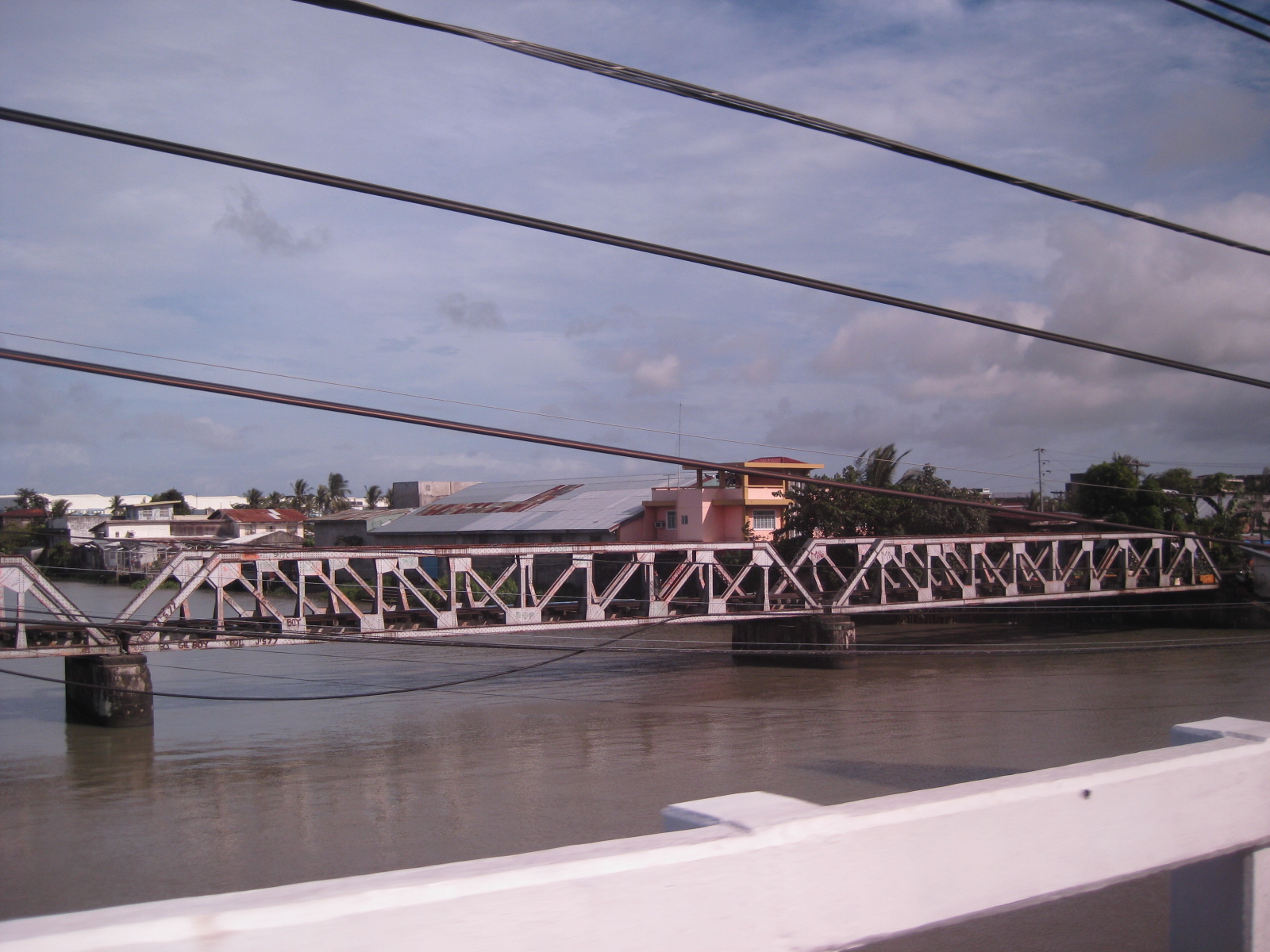 A railway bridge in Naga City – note the classic steel truss design that was the mainstay of most PNR bridges.
 Another steel truss bridge – this one I photographed prior to the provincial boundary with Quezon province.
 Rail junction along the national highway – this junction is located in the town of Gumaca. The signs are already obscured by tree branches and electric poles. At the time, one could see the state of neglect for the tracks as they are practically covered by dirt that transforms into mud during rainy days.
 The railway tracks parallel to a barangay road – many sections again appear to be covered by dirt and growth. A tricycle is parked atop the tracks, probably waiting for passengers on space that is being used as a shoulder with respect to the local road. As communities have access to local roads, there are no trolleys here.
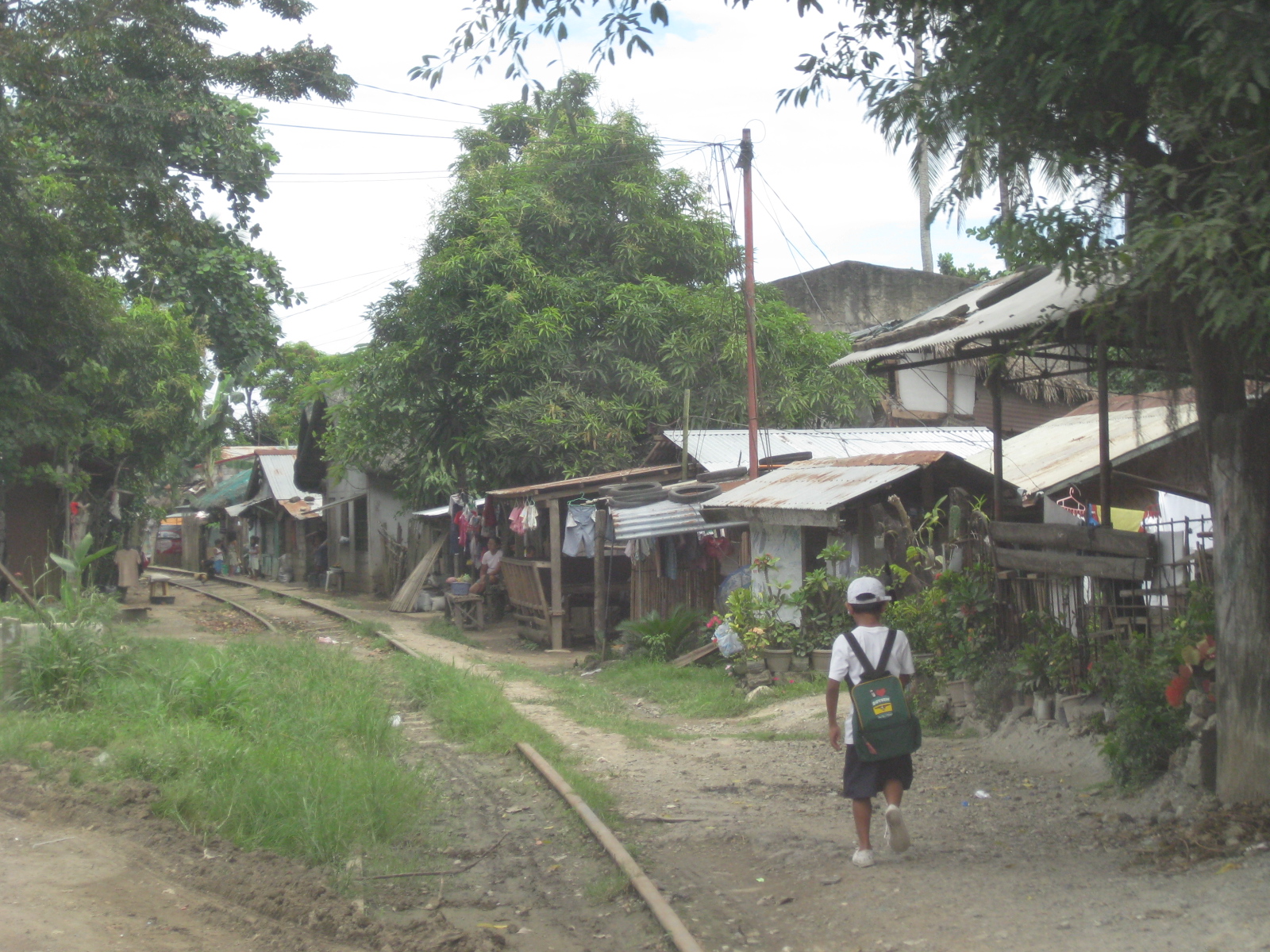 Neglected railway tracks – note the grass growing along the tracks and covering the rails. Also, from the looks of it some ties seem to be missing or just buried in the dirt. Many houses and shanties are obviously within the 30m ROW of the PNR. Such situations create a high risk for untoward incidents should rail services become regular and more frequent.
Tracing tracks
Traveling to and from the Bicol region back in 2009, I tried to trace the PNR’s Main Line South railway tracks that passed through the provinces of Quezon and Camarines Sur. Following are a few snapshots while traveling on-board our trusty Pajero. I don’t remember the towns where I took the photos mainly because I didn’t keep tabs about the info. However, I’m sure these can be retraced and recorded in another, future trip to Bicol. I hope readers don’t mind the reflections in some of the photos due mainly to our vehicle’s window tint.
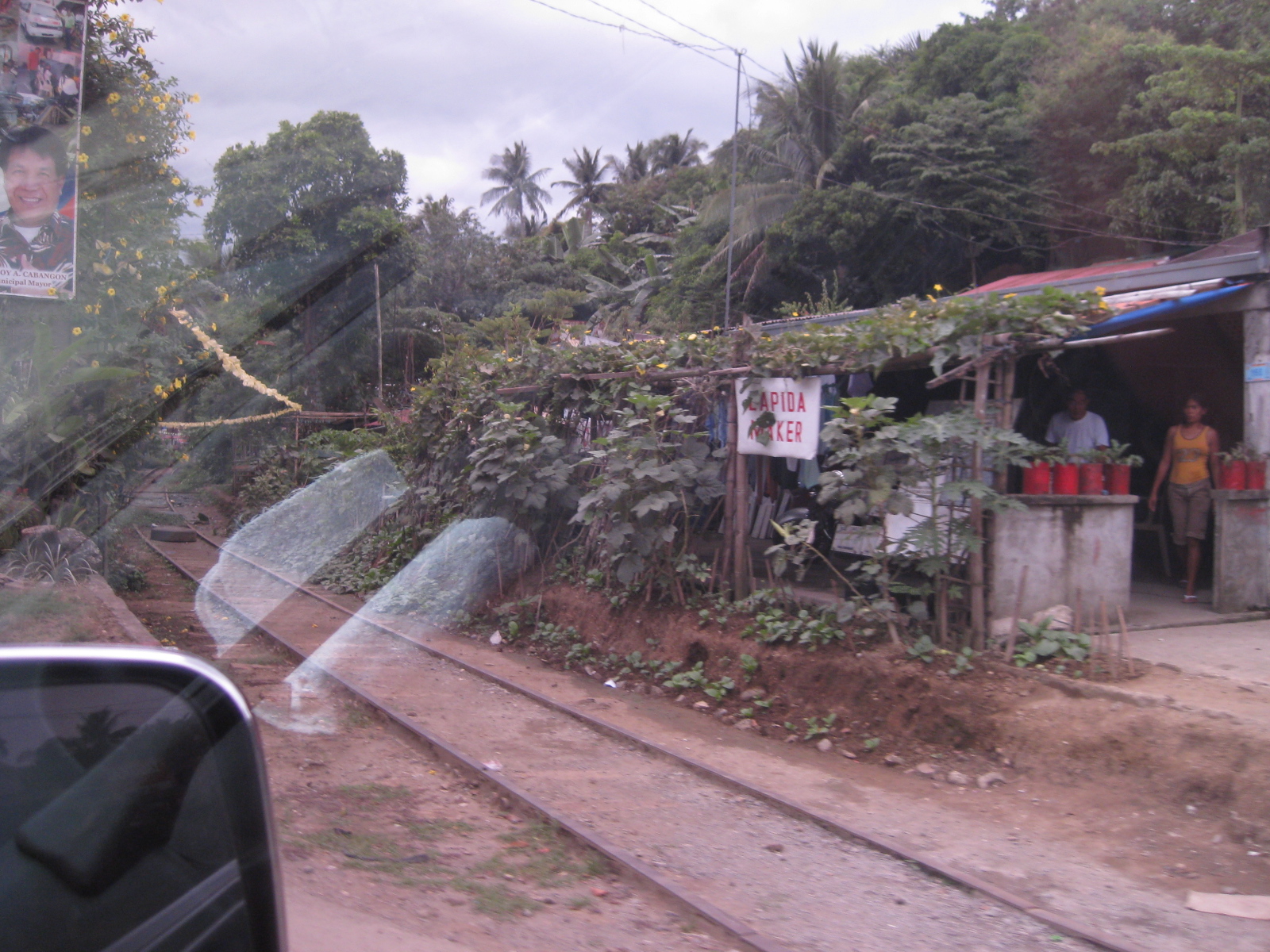 Railway tracks along a barrio in Quezon – while the rails are there, it seems many of the ties (sleepers) are either missing or already covered in soil. Note the houses that have encroached on the PNR ROW? They are well within the 30 meter ROW of the PNR tracks and will surely be affected should there be capacity expansion (read: double tracks) in the future.
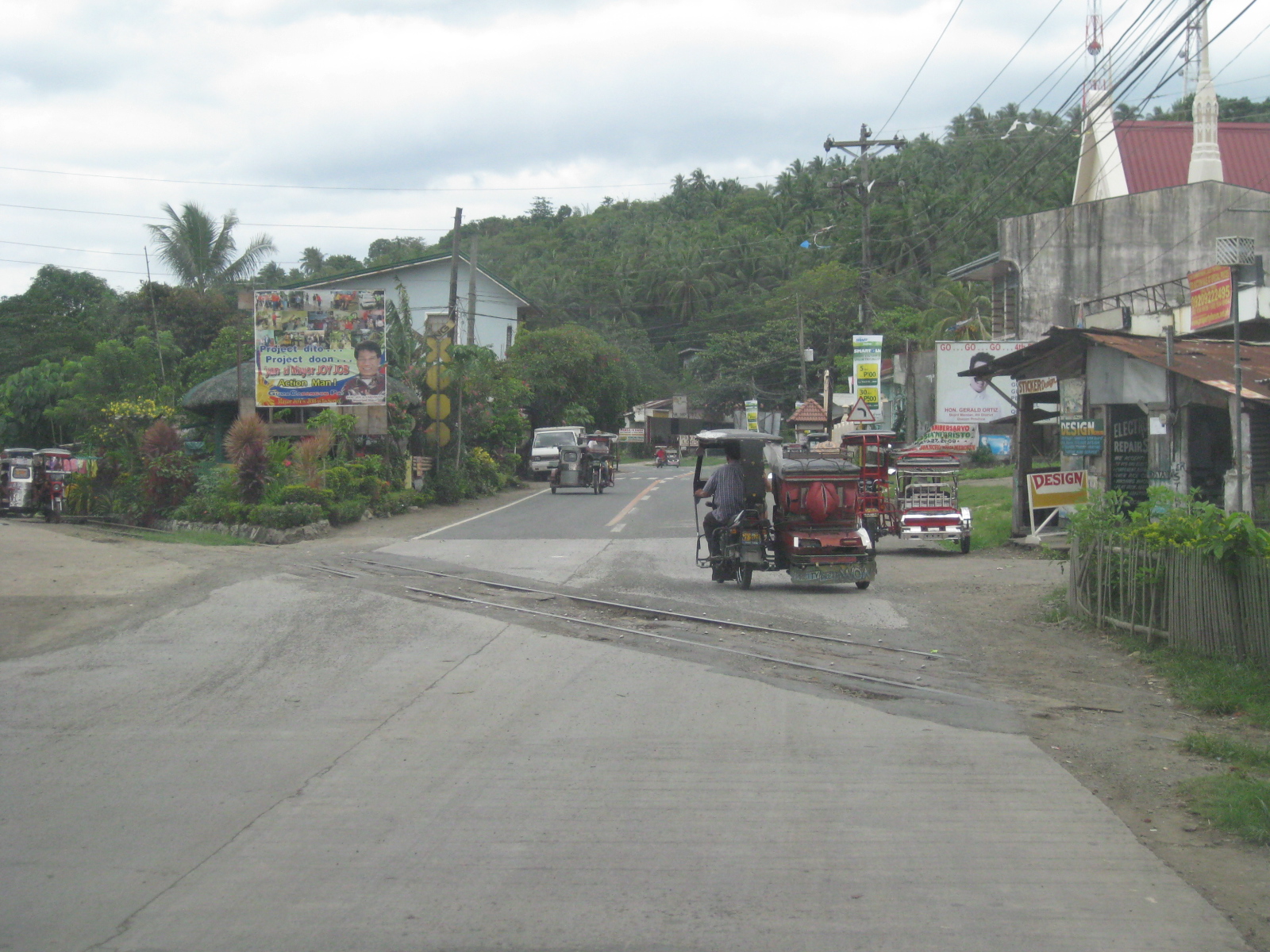 Tracks embedded on the national highway – while the old signs are still present in some junctions with roads, most are either unreadable because of wear or hidden among the posts and flora. These, too, need upgrading and should already include traffic signals and barriers to warn road traffic of an approaching train.
 The switch assembly on the right indicates diverging tracks probably in the vicinity of a station somewhere downstream from where I hurriedly took a photo.
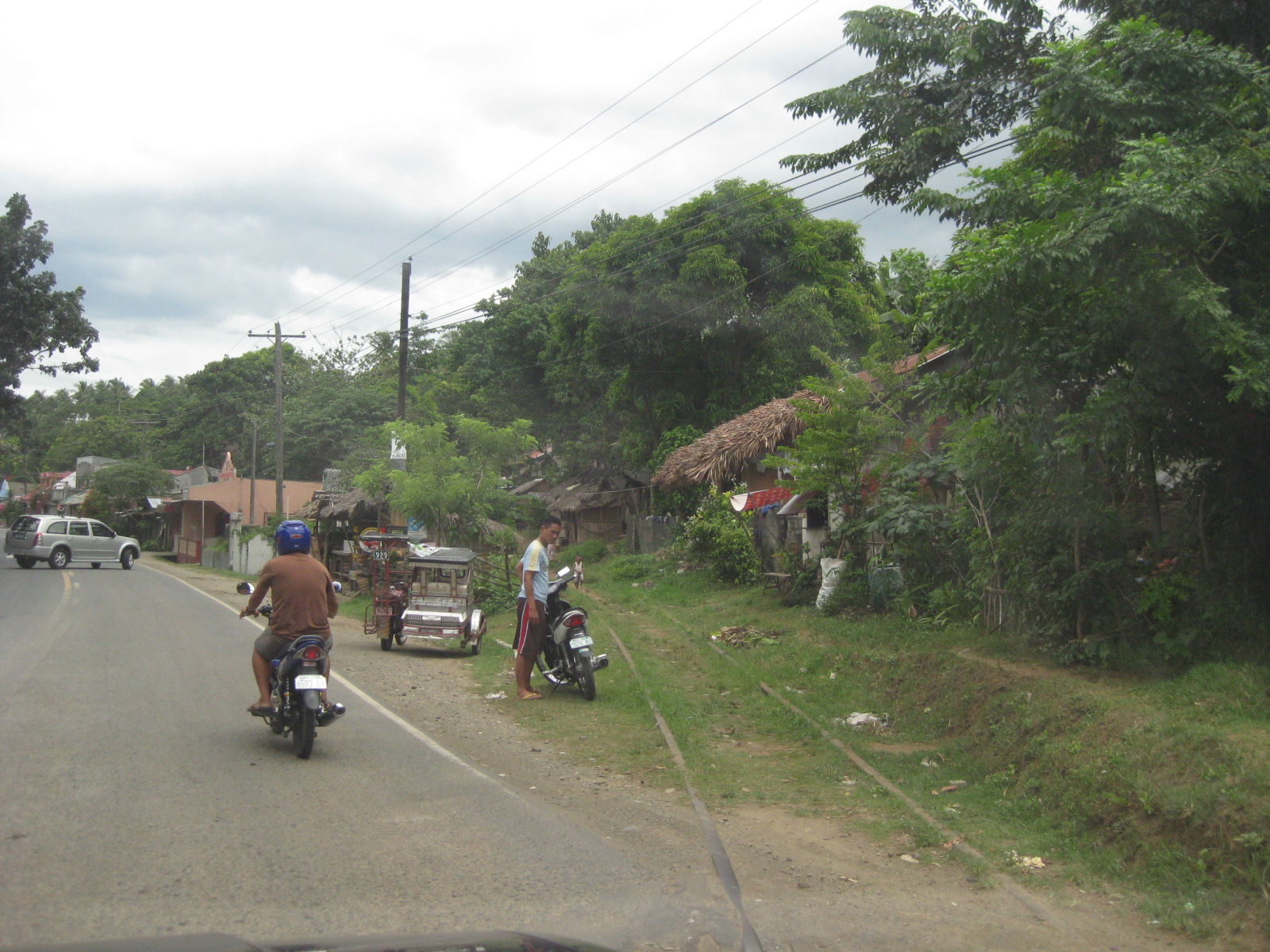 Railway tracks seemingly diverging from the highway – in this case, the photo strongly suggests the absence of ties to hold the tracks and prevent derailment. Much of what’s left of both MLS and MLN are in this condition and in the case of MLS requires intense rehabilitation to ensure the safety of travel. I can only imagine how trains should slow down during the wet season when the soil turns to mud in many sections.
 The signs are not so noticeable especially when motorists are driving quite fast along roads with very good pavements. I don’t think the railway signs comply with current standards of reflectivity and are already partly hidden from effective view by the trees and structures along the roadside. The tracks just ahead and crossing the highway are almost hidden due to the highway pavement. Asphalt overlays may tend to cover rails that are embedded on the highway.
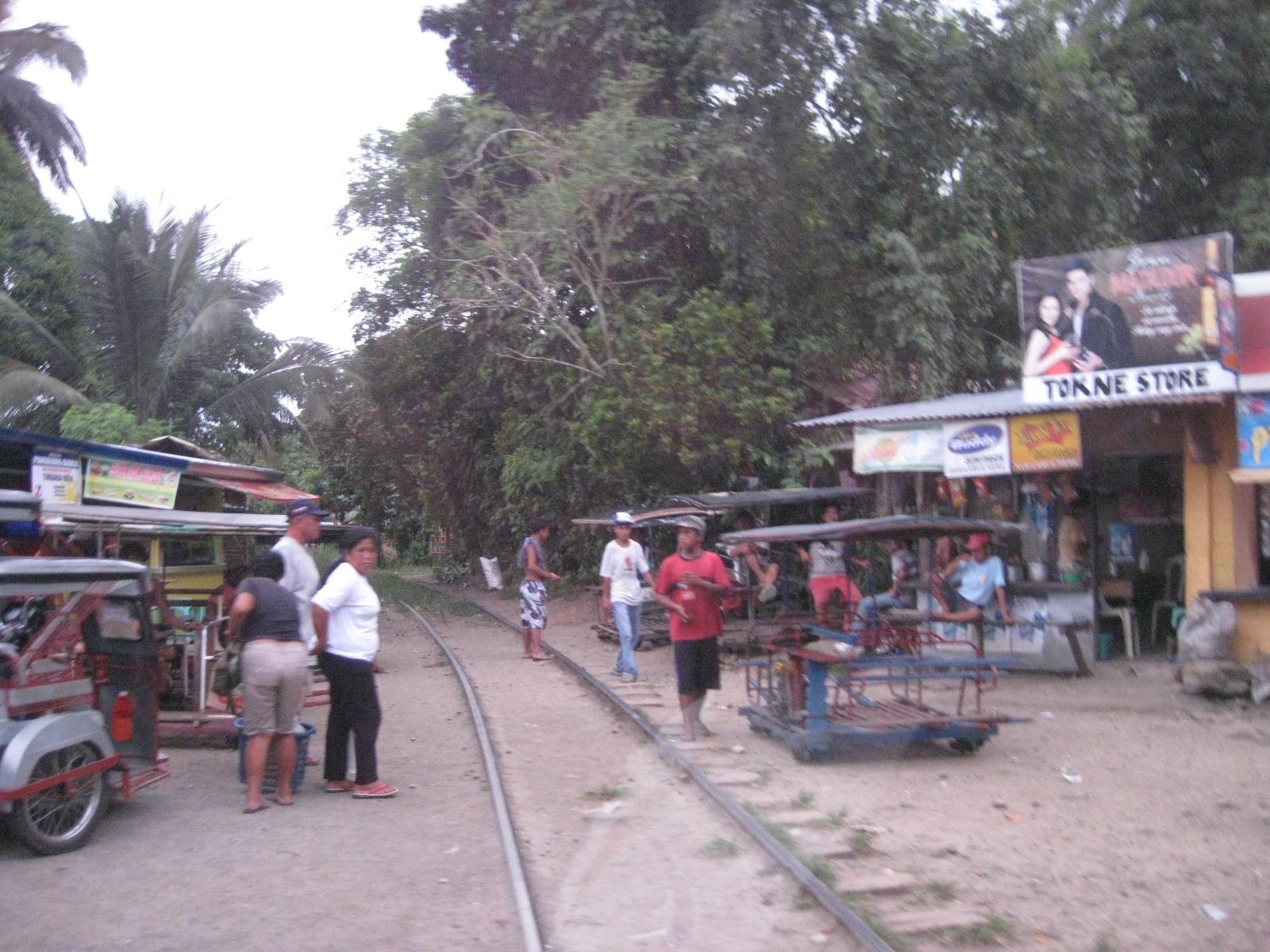 My first look at the motorized trolleys of Quezon – this photo shows what seems to be a terminal for two type of paratransit: the road-based tricycle (left) and the rail-based trolley (right). Being a convergence point for passengers, there are stores and eateries in the area. Note again the condition of the tracks where the wooden ties are still visible.
The photo above is my last snapshot of the railways prior to us using the bypass road on our way to Naga City. We also encountered heavy rains that prevented me from taking more photos during our drive. Thus, I was only able to take some more snapshots when we were already in Naga City.
 Rail crossing in Naga City – the signs again are obscured by other structures along the road. There are practically no safety devices at the time that could prevent crashes involving trains. Of course, at the time, the train service to Bicol were still suspended so there were none that could have had conflicts with road-based traffic.
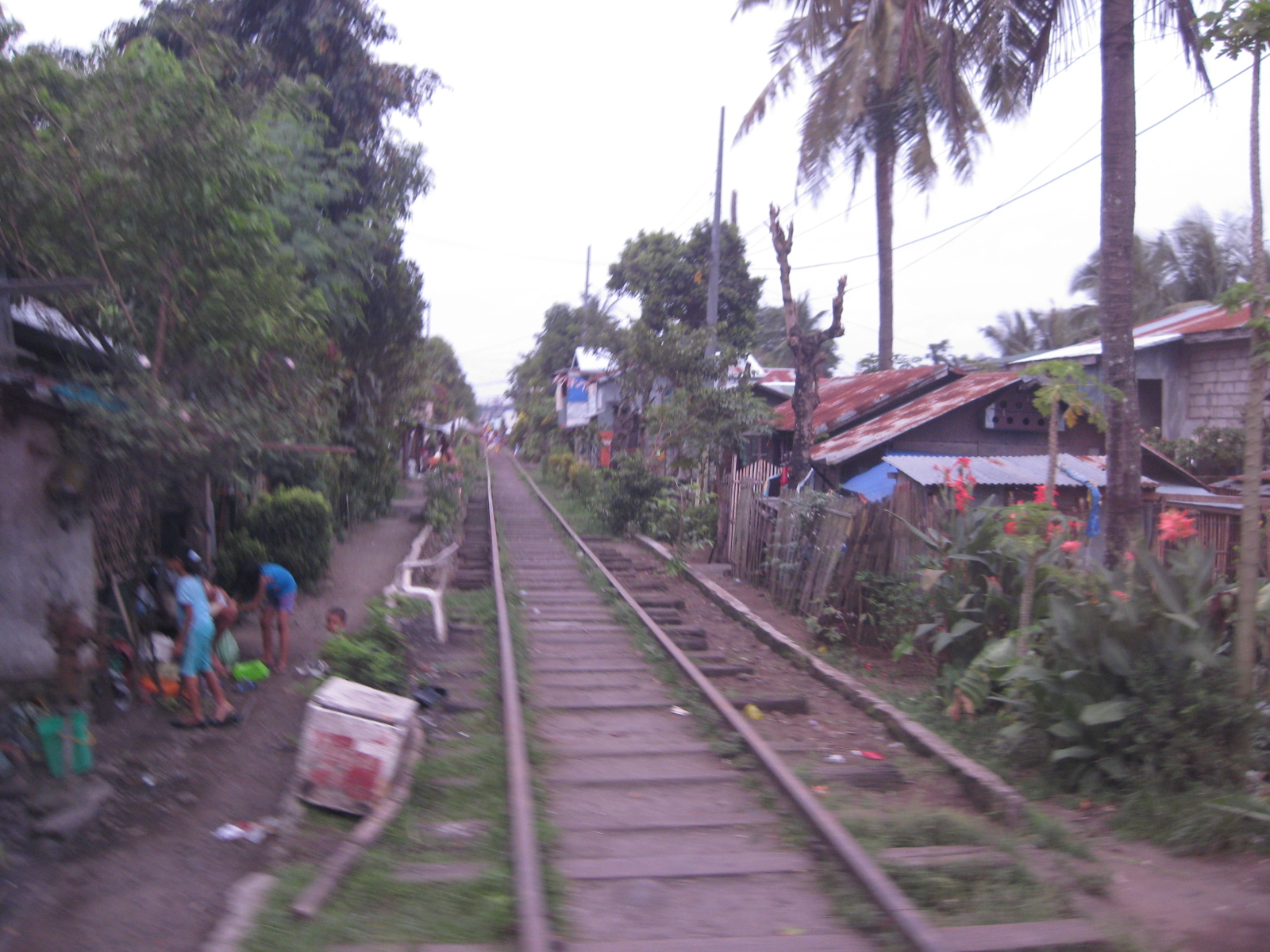 Railway tracks in Naga City – the tracks here seem to be in good condition despite the suspension of train services at the time. Noticeable too is the fact that while there is clearly encroachment on the PNR ROW, the houses have at least some space between them and the tracks unlike the case of Manila. Note that in the Bicol region, the PNR uses a single track rather than a double track system. Future capacity expansion (and I’m crossing my fingers here) would require a double track system to permit increased two way traffic once the trains regain popularity.
Next: the trolleys of Naga City
First battery swap program for E-jeepney
I am posting a press release from the proponents of the electric jeepney about the first battery swap program launch this morning. The program will allow for the continuous operations of the e-jeepney in Makati, extending its operating hours as they are no longer limited by the depletion of their batteries. This program will surely have a significant impact on how e-vehicles (not just e-jeepneys) are deployed and presents a model for local government units who are at least curious about having the electric vehicles (perhaps) to replace conventional public transport in their respective cities. This should be a game-changer in the promotion of EST in the Philippines.
Electric jeepney fleet proponent pioneers country’s first battery swap program
(October 19, Manila) The pioneer of the country’s first electric jeepney fleet unveiled this morning an innovative battery swap scheme which its proponents expect “to dramatically improve the efficiency and revenue generation of eJeepney operators.” Over thirty guests, including 22 British volunteers headed to Bohol on Friday for climate change solidarity work, graced the occasion.
“With a little practice, we expect the battery change to take the whole of 10 minutes, which is like a common stop in a gasoline station. The previous eight-hour charging process becomes a thing of the past with this program. It means eJeepney drivers can use their vehicles for a longer period and reduce battery depreciation as well,” said iCSC executive director Red Constantino.
Constantino said “green aims must be coupled with robust economic benefits. We anticipate double earnings for operators, which is superb since we’re already saving a huge amount just because we’re using electricity instead of gasoline to power the vehicles.”
The Institute for Climate and Sustainable Cities, which owns and operates the celebrated eJeepney fleet in Makati City, designed and fabricated the battery program with the support of the British Embassy in Manila. Also known as iCSC, the group is implementing the program in partnership with private sector groups Ejeepney Transport Corp (EJTC) and Motolite.
The scheme is based on a simple roll-off, roll-on logistical set-up, using eJeepneys retrofitted with battery trays and a battery loading bay at the eJeepney depot. A dispatcher rolls out spent battery sets of an eJeepney and replaces it with a fully charged set through a palette lifter manufactured by iCSC.
“Ejeepneys represent carry huge business potential and improvements in operations such as this scheme can create new revenue streams for groups interested not just in eJeepney operations but in battery leasing as well,” said the CEO of EJTC, Yuri Sarmiento.
“We are with you not as passengers but as partners. Together, we can steer our way to a brighter, more sustainable and prosperous future,” said Trevor Lewis, the British Embassy’s Deputy Head of Mission in remarks made during the event.
“Our company is determined to invest in the future of this country and we are elated to be part of this venture,” said Arnold Sarmiento, who represented leading Philippine battery manufacturer Oriental Motolite.
The battery swapping project aims to accelerate the expansion of electric public utility vehicle applications in the Philippines by increasing the operating time of electric jeepney fleets while reducing time used to charge eJeepney batteries. The pilot test period will take place from October 19, 2011 to February 14, 2012. Partners in the initiative hope data from the project can promote a more rapid transition to low carbon transport in the Philippines.
The battery swapping system is located in Makati City’s Fire Station, the site of the country’s first battery-charging station for electric vehicles. Ejeepney units plying the country’s first two routes – the Legazpi Village loop and the Salcedo Village loop — will utilize the battery swap pilot system, which will be run by iCSC, EJTC, Motolite and Makati City jointly.
“We thank the British Embassy in Manila for their support of the city’s endeavors. We are committed to build a low carbon future together with climate change-resilient development,” said Makati City transportation consultant Ernie Camarillo.
iCSC works on fair climate policy and innovative energy solutions for localities. It is the pioneer of the Climate-Friendly Cities project, which integrates sustainable waste management and renewable energy generation with electric public transport alternatives.
Railways in Luzon – Main Line South
In a previous post, I talked about the recent developments concerning the PNR and provided an historical perspective of railway development in Luzon Island, particularly focusing on the Main Line North and its branches. The MLN, of course, is no longer operating with proverbial nail in the coffin hammered by the eruption of Mt. Pinatubo in 1991, when lahar buried much of what was left of the lines in Pangasinan, Tarlac and Pampanga. Various initiatives have been put forward since the 1990’s to revive a portion of the MLN but in the form of a rail service connecting Clark with Manila. This is the Northrail project that has seen so much anticipation because of its promise of finally reviving railways for Central Luzon by providing access to what is being touted as the future main international airport at Clark, the Diosdado Macapagal International Airport (DMIA). The continuing saga concerning what seems to be a struggle in putting up Northrail is certainly worth another post. Meanwhile, we focus on the Main Line South for today’s feature. The figure below illustrates the extent of the MLS, significant sections of which have been rehabilitated.
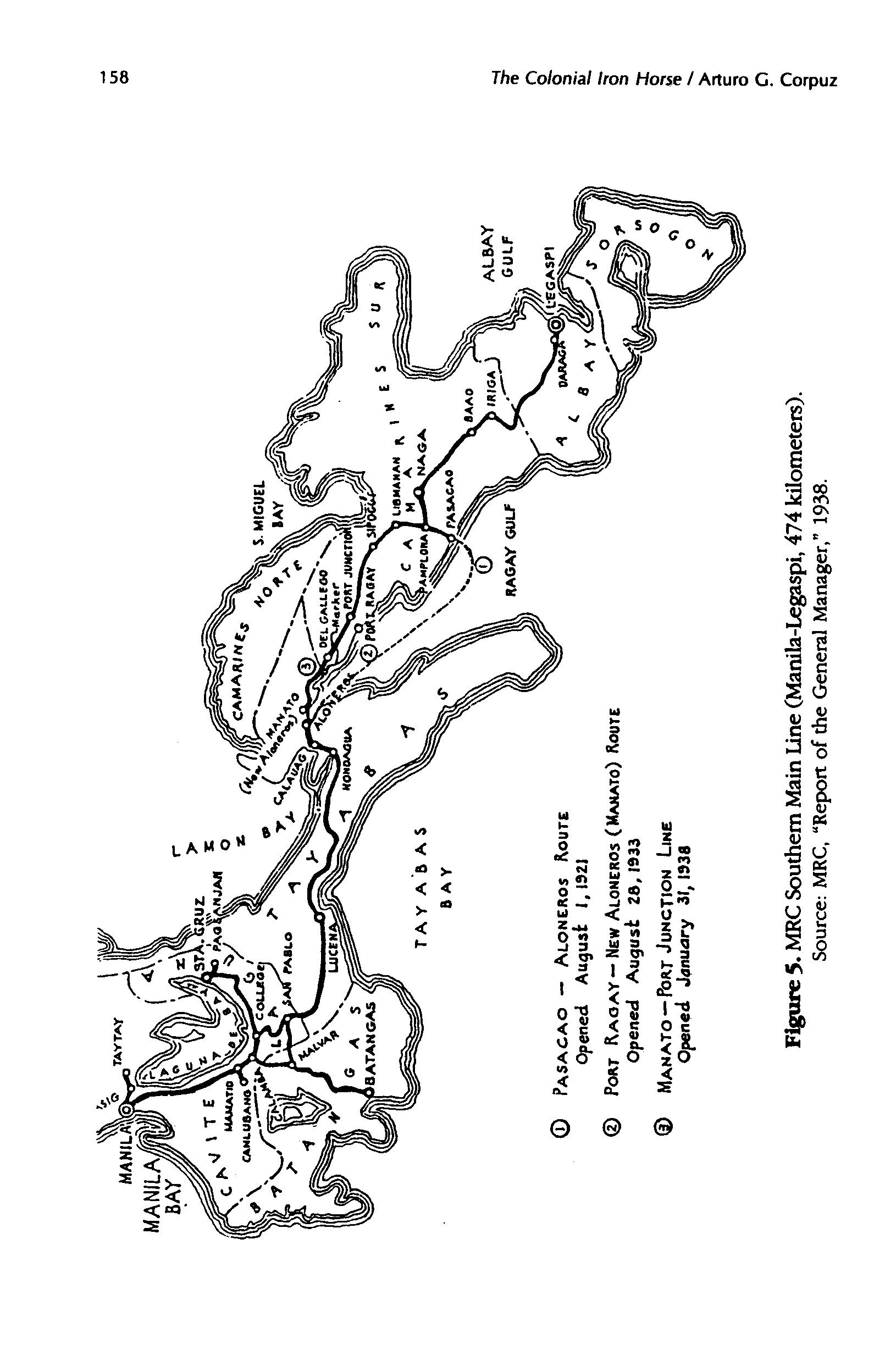 The PNR Main Line South (Source: PNR)
The MLS was constructed starting in the early 1900’s and can be quite tricky to establish given that many refer to it also by another familiar name: the “Bicol Express.” The invention of the latter term though was only applicable from 1938 when the first trains finally traversed the entire stretch from Manila to Legaspi, Albay. Construction for the southern line and its branches started in Manila and included the rail developments in Batangas, Cavite and Laguna that was later extended all the way to Aloneros in Guinayangan, Quezon. From here, it finally linked up with a line that started construction in Legaspi and proceeded northwards along the Bicol region until Ragay, Camarines Sur. (Reference: Corpuz, 1999 and PNR)
- The Main Line South started from Manila and covers practically the same route as today’s commuter and Bicol line all the way to Quezon and the Bicol Region. Construction started from two points representing the end stations of Manila and Legaspi with the northern segment terminating at Aloneros (Guinayangan, Quezon) and the southern segment at Ragay, Camarines Sur. The gap was eventually connected through Tagkawaya, Quezon in 1938.
- The Cavite Line ran from Manila to Naic via Paranaque and Bacoor for a total of 44 km, and was completed in 1908. The line was eventually abandoned in 1936.
- The Canlubang Branch is 7 km and emanated from what is currently the commuter line from Mamatid in Cabuyao, Laguna. It was completed in 1909.
- The Santa Cruz Branch started from Calamba and extended to Sta. Cruz and terminated at Pagsanjan, Laguna for a total of 46 km. Completed in 1912, continued contruction towards the towns of Rizal could have realized a railway line connecting the coastal towns of Laguna De Bay.
- The Batangas Branch is a 43 km network from Luta in what is now Malvar, Batangas to Bauan via Lipa and Batangas City. Completed in 1912, the Batangas-Bauan segment was abandoned in 1936.
PNR Field Trip in 2003 – Part 3
At the end of our field visit to the PNR yard in Tutuban, our group was treated to a free ride to the Buendia (Gil Puyat Ave.) Station. Some of us sat on the last car so we were afforded a view of the railway tracks and the environment along the PNR right of way. The result is a set of photos that I like to call “a peep into the train’s backdoor.”
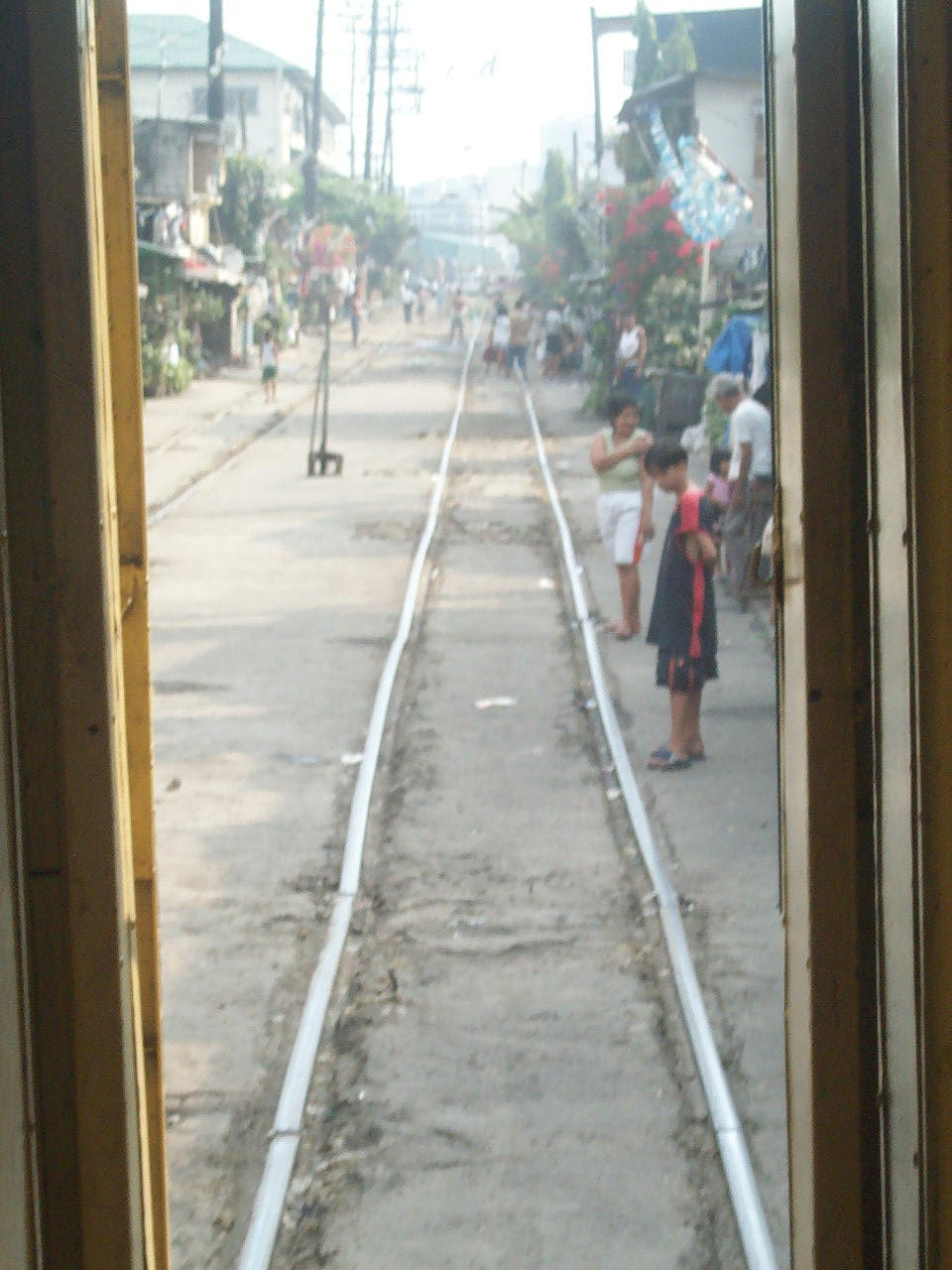 At the time, there were no rehabilitation work along the commuter line and one could clearly see the state of the tracks that could easily lead to derailment. Communities were dangerously close to the tracks as many informal settlers have encroached upon the PNR ROW. There is even a makeshift basketball court in the middle of the tracks. Thus, trains moved quite slowly partly because of the tracks and partly because of the people, mostly children who routinely cross the path of the train.
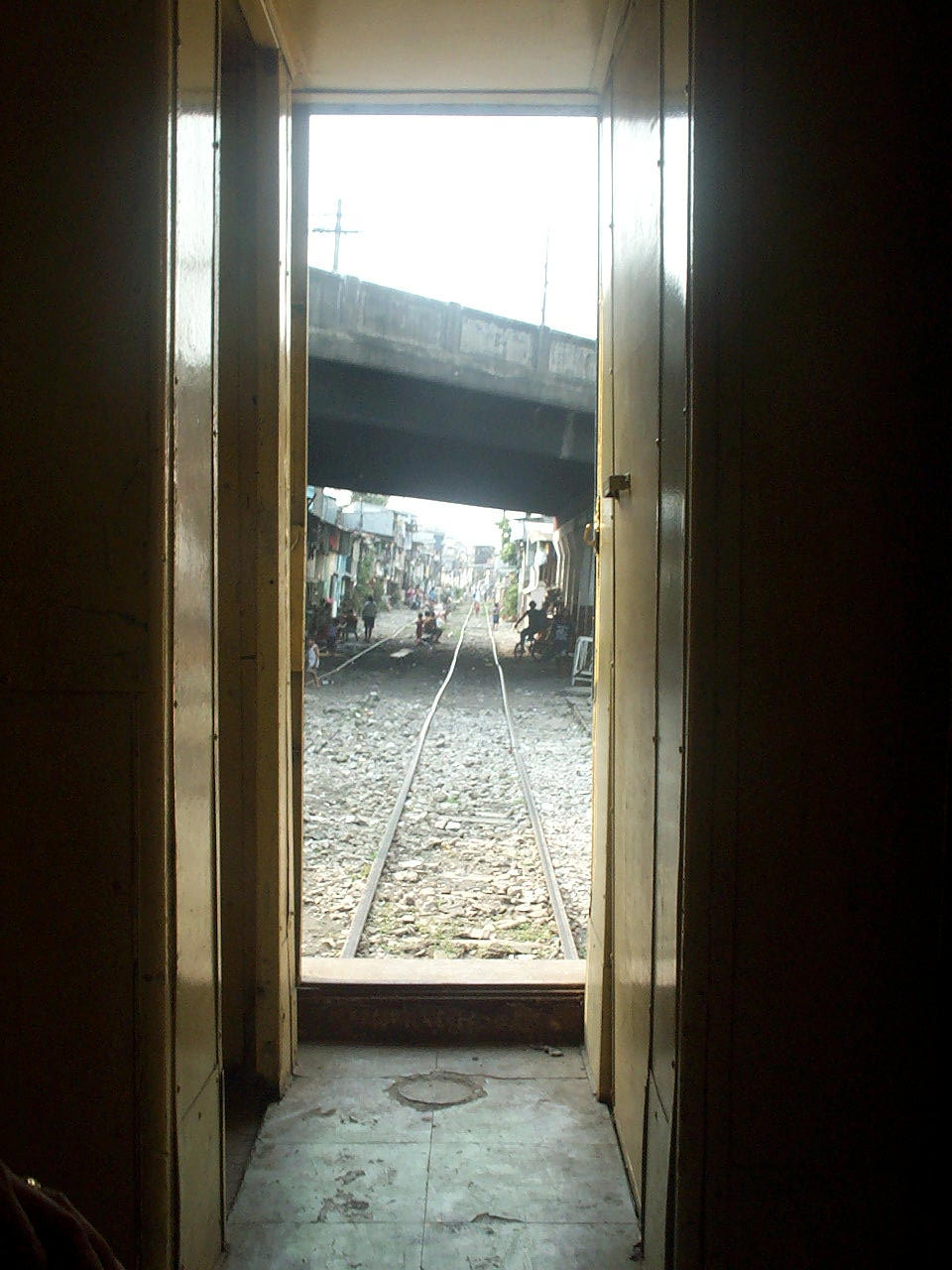 People have set up benches between the tracks and tambays are often found drinking or gambling, of the dangers posed by the trains.
Absent at the time were the trolleys that serve as informal transportation for communities along the line. These trolleys were generally human-powered, pushed by their operators and taking advantage of the the tracks and the unseen slopes to generate momentum and speed. These trolleys were light enough that they could easily be removed in case a train happened to be passing. I have photos of trolleys from my trip to Bicol that I will be including in future posts.
 It is said that the state of a country is clearly reflected in the conditions or situation of its transportation system. I guess the photo above gives us a pretty good picture of where the Philippines is right now if only we can deduce the essential elements from the photo. We have children wandering about and not getting the education they need to become productive members of society. This, despite primary and secondary eduction being free and compulsory. We have a problem concerning waste disposal that definitely has environmental consequences, not to mention a contribution to the perennial problems of flooding. We also have a housing problem where affordable, well-located housing is generally unavailable thereby attracting people to informal settlements. In the latter case, some settlements seem to be encouraged by local politicians if not local governments as they provide cheap votes come election time. And of course, there’s our transport system that needs a lot of attention if only to fix the results of failures in transport planning.
Need I say more?
PNR Field Trip in 2003 – Part 2
During the field in 2003, we also visited the PNR yard in Tutuban. The original central station/terminal of the PNR was already lost to what is now the Tutuban Mall. Perhaps in the near future, the PNR would again have a central terminal with architecture evoking its glory days. I’ve always imagined something that looks like what is Tokyo Station today. After all, stations of what was the PNR Main Line North featured red bricks.
 At the PNR yard in Tutuban, one could see what were operational and abandoned rolling stock and other equipment. Notice the roofs of the passengers cars? The roofs were modified because informal settlers were throwing their garbage and other wastes on top of the cars. The reasoning for the modification was that the wastes would just slide down. There’s some anecdotal evidence that the settlers also did their own adjustments by tying two plastic bags of garbage and hurling the two in such a way that the two bags would be on either side of the roof.
 A turnout at the PNR yard – turnouts allow for the diversion of trains from one set of tracks to another. It has three basic components: switches, acute angle or vee crossings (also known as “frogs”), and obtuse angle crossings. Visible in this photo is the frog at the middle of the picture and the check rails across from either side of the frog.
 Every wonder how the switches are activated so trains can transfer from one set of tracks to another? The contraption on the left is a lever that moves the rails for the trains to switch tracks. Of course the LRT and MRT lines use a more modern version of these devices so trains can transfer tracks once reaching the end of the lines.
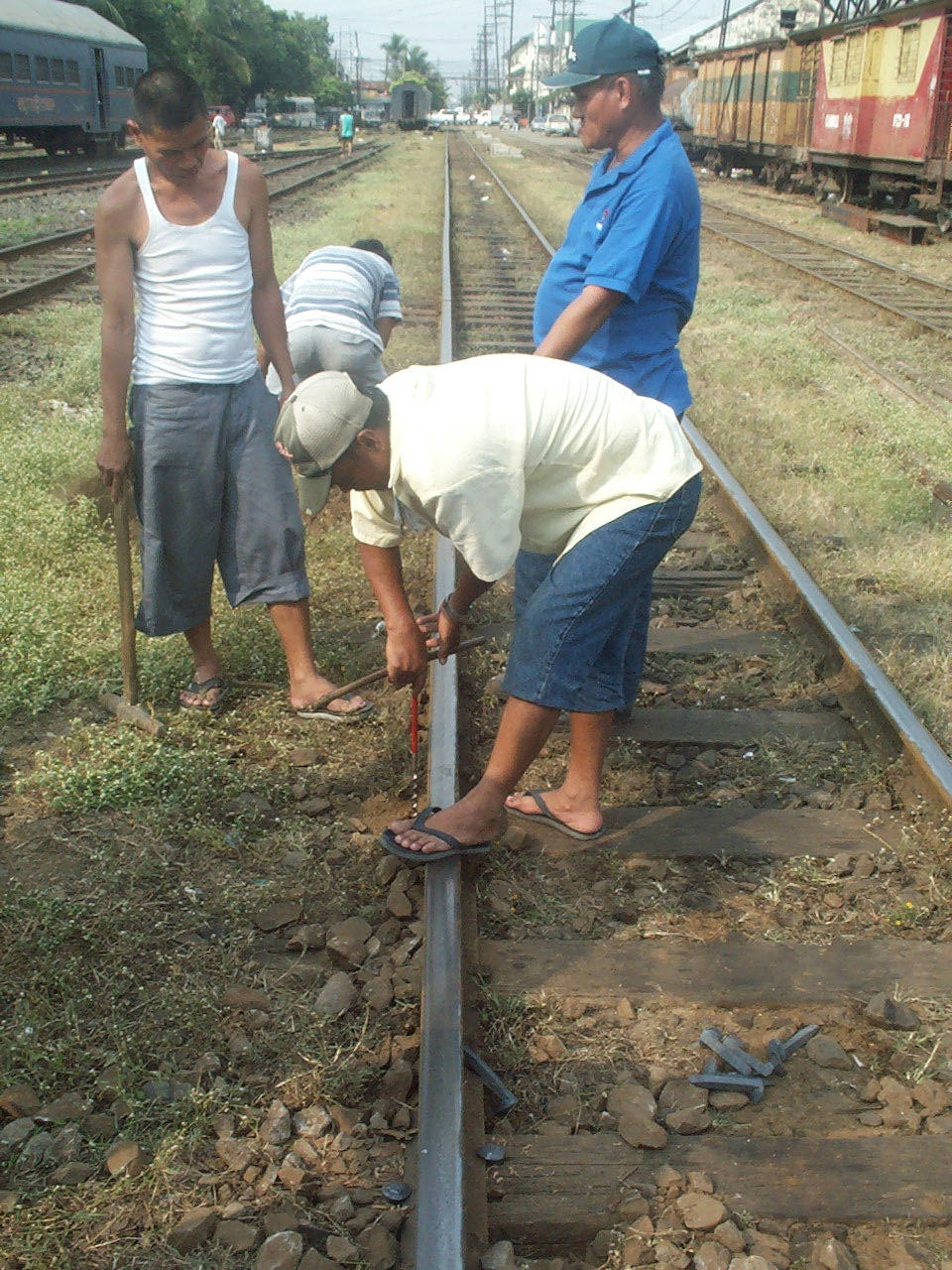 PNR staff working to secure the rails to the railroad ties (sleepers or traviesa) – it may look pathetic but the PNR was really so ill-equipped that they had to use manual drills to make holes on the wooden sleepers and then hammer the spikes (shown in the foreground) to the ties. Note the man with the big hammer on the left waiting for his turn to work. Since then, the PNR has changed many of these sleepers so we see mostly concrete ties in their places. Many sleepers were stolen not just along abandoned tracks in the north and central Luzon but those along active tracks as well. These were sold as construction material, garden accessories or even accents for houses, offices or restaurants.
PNR Field Trip in 2003 – Part 1
I found some old photos from a field trip at the PNR we organized for our students back in 2003. I remember we had a big delegation composed of senior undergraduate students of Civil Engineering, senior Tourism students, and graduate students taking up MS Civil Engineering and MA Transportation Planning. The PNR was very kind to accommodate us and explain to the students how the company was making ends meet at the time. Many of us faculty and technical staff who were still fresh out of our stints in Japan were saddened by the state of the PNR and could only utter words of support and encouragement to its management. We are now quite happy that there has been significant progress in the past few years for both the commuter line and Main Line South.
Following are a few photos from that 2003 field trip:
 Students gathered around an old bogey under maintenance at the PNR facilities. The two people on the right in the photo are Dr. Dayo Montalbo of the School of Urban and Regional Planning and Dr. Val Teodoro who was senior technical staff with the NCTS at the time.
 Taking a closer look at a bogey with the detached cars in the background. The state of PNR rolling stock at the time was a depressing sight considering what was once a proud company.
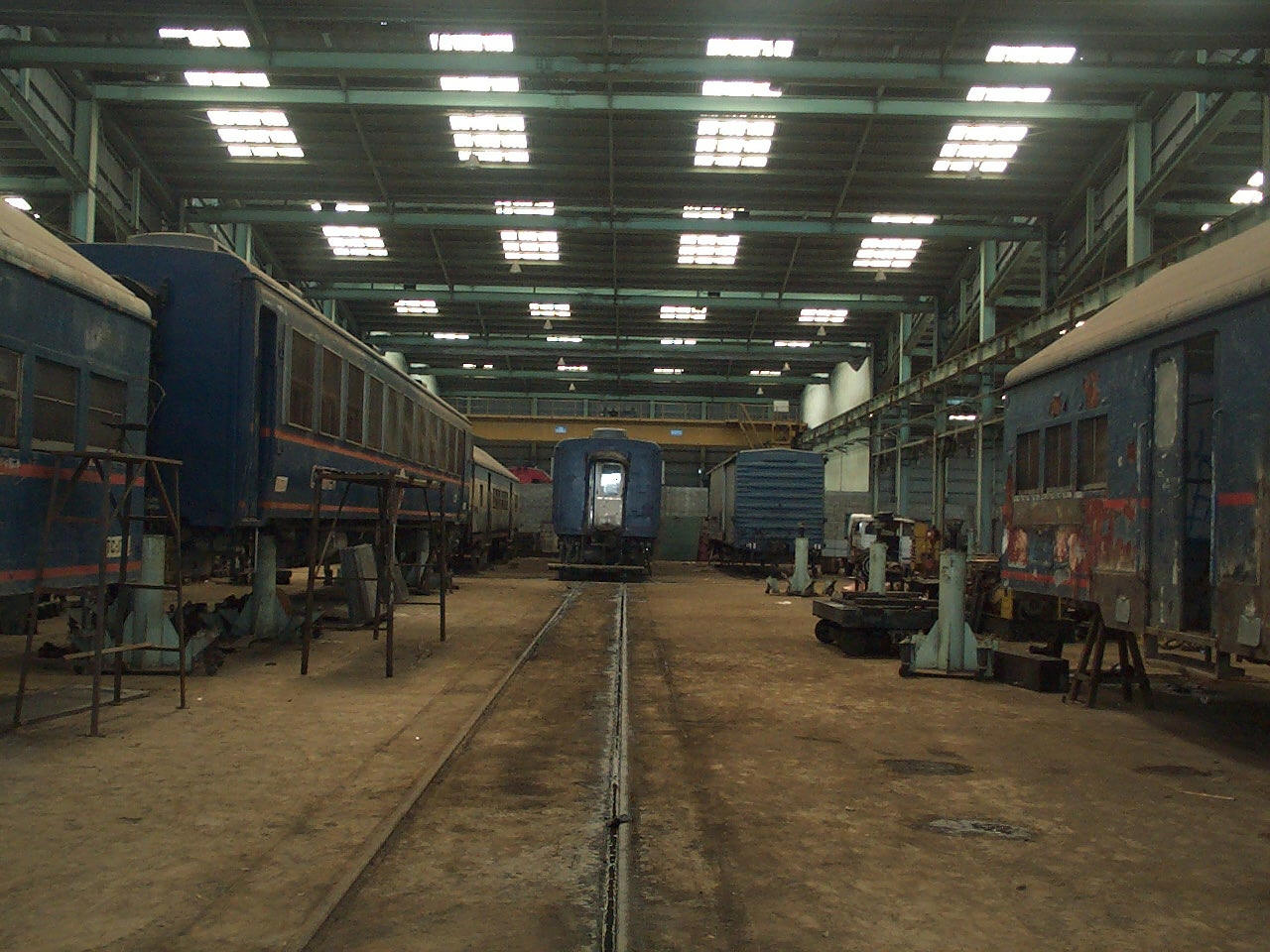 A look at the maintenance facilities at PNR Caloocan. This is a far cry from the modern facilities we later saw at the LRT 2 Depot in Santolan, which was only recently opened at the time.
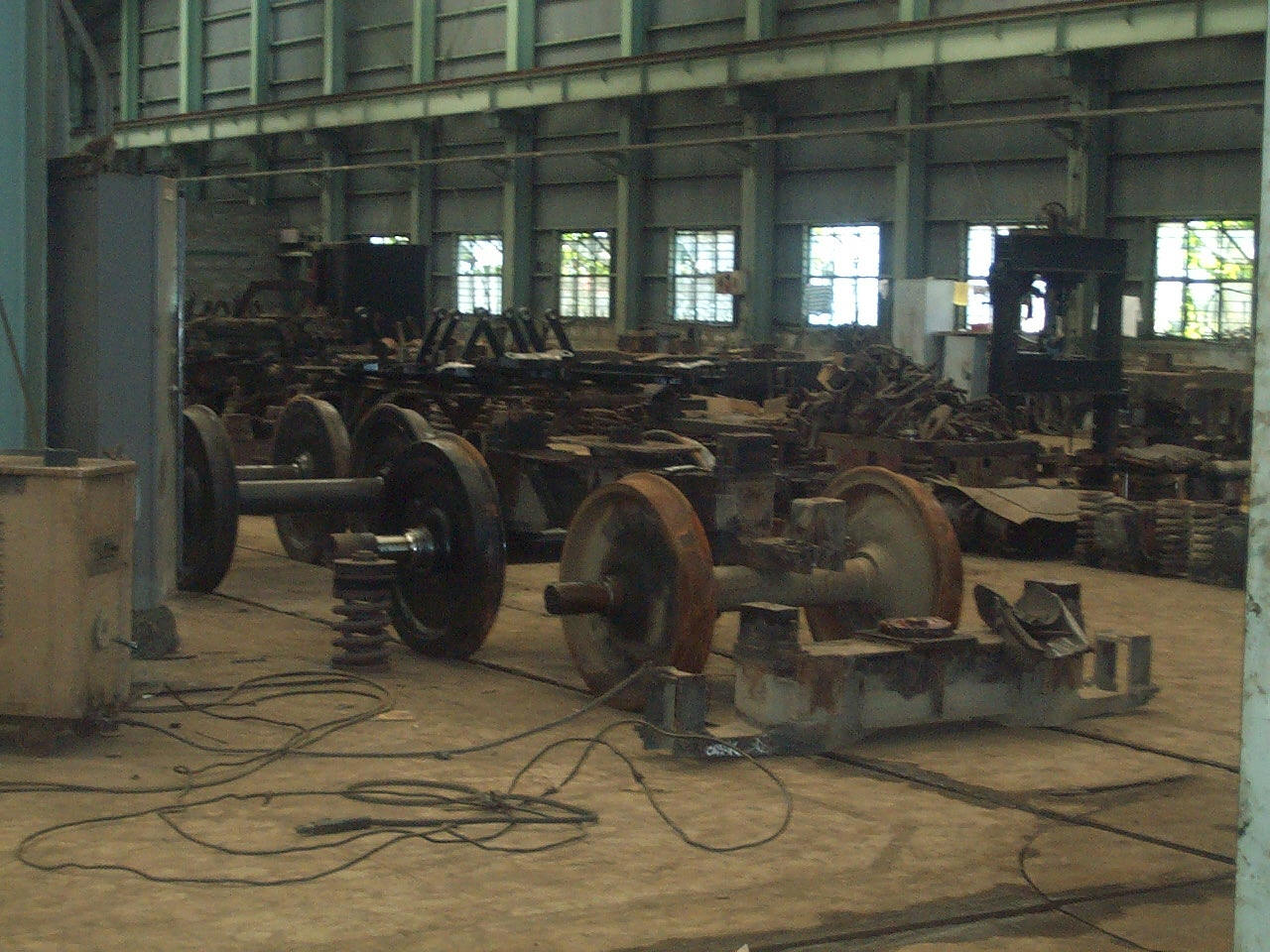 Barbells? These are the trains’ wheels. Other spare parts are in the background. To the untrained eye, the area where they keep the spare parts looks like a scene in a junk shop.
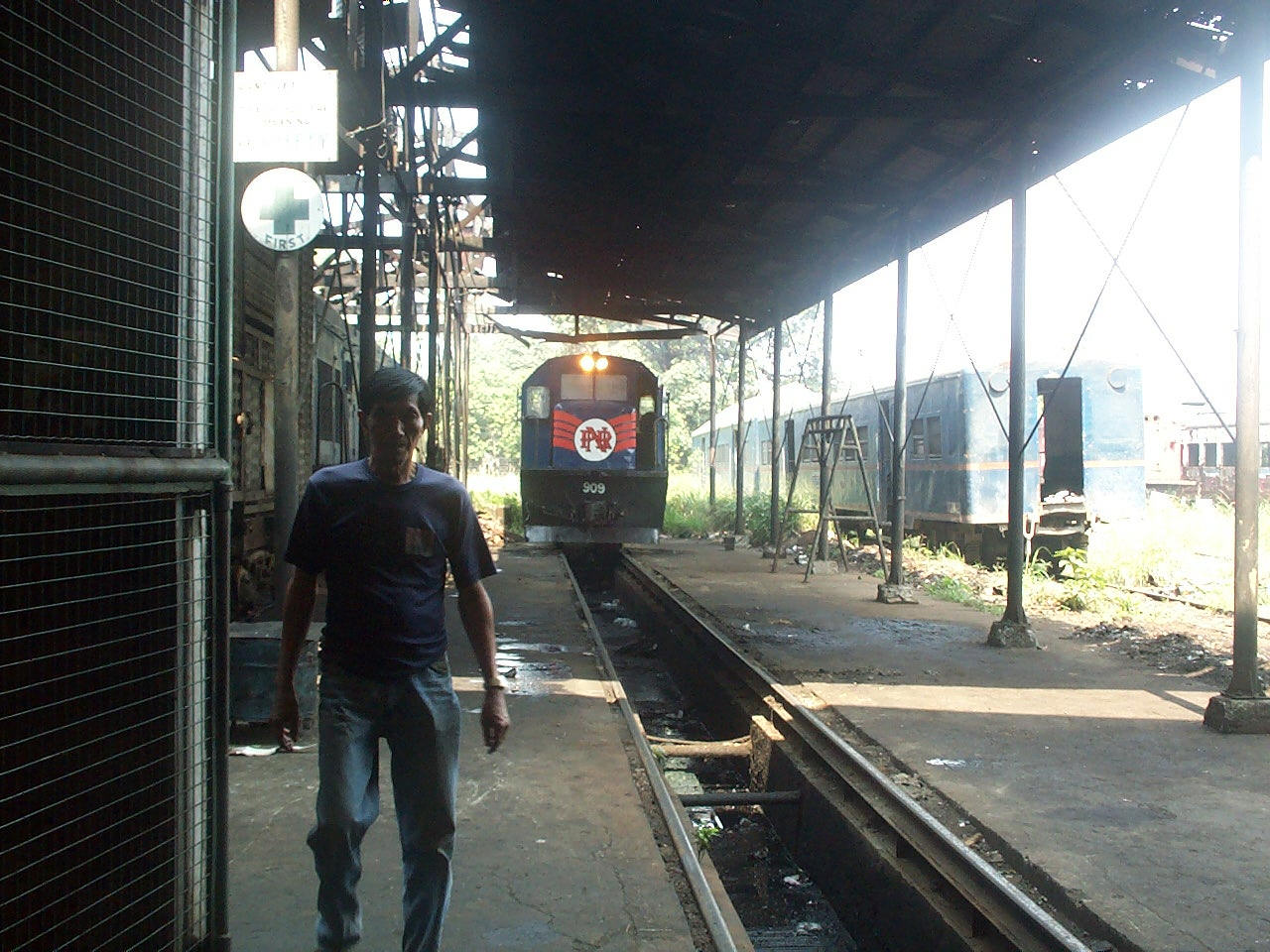 Locomotive coming in for maintenance. PNR rolling stock at the time have seen better days and required a lot of work in order to keep the trains running. Passenger share of the PNR was insignificant due to its often irregular service at the time, partly due to the conditions of its rolling stock and partly, too, because of the conditions of the tracks.
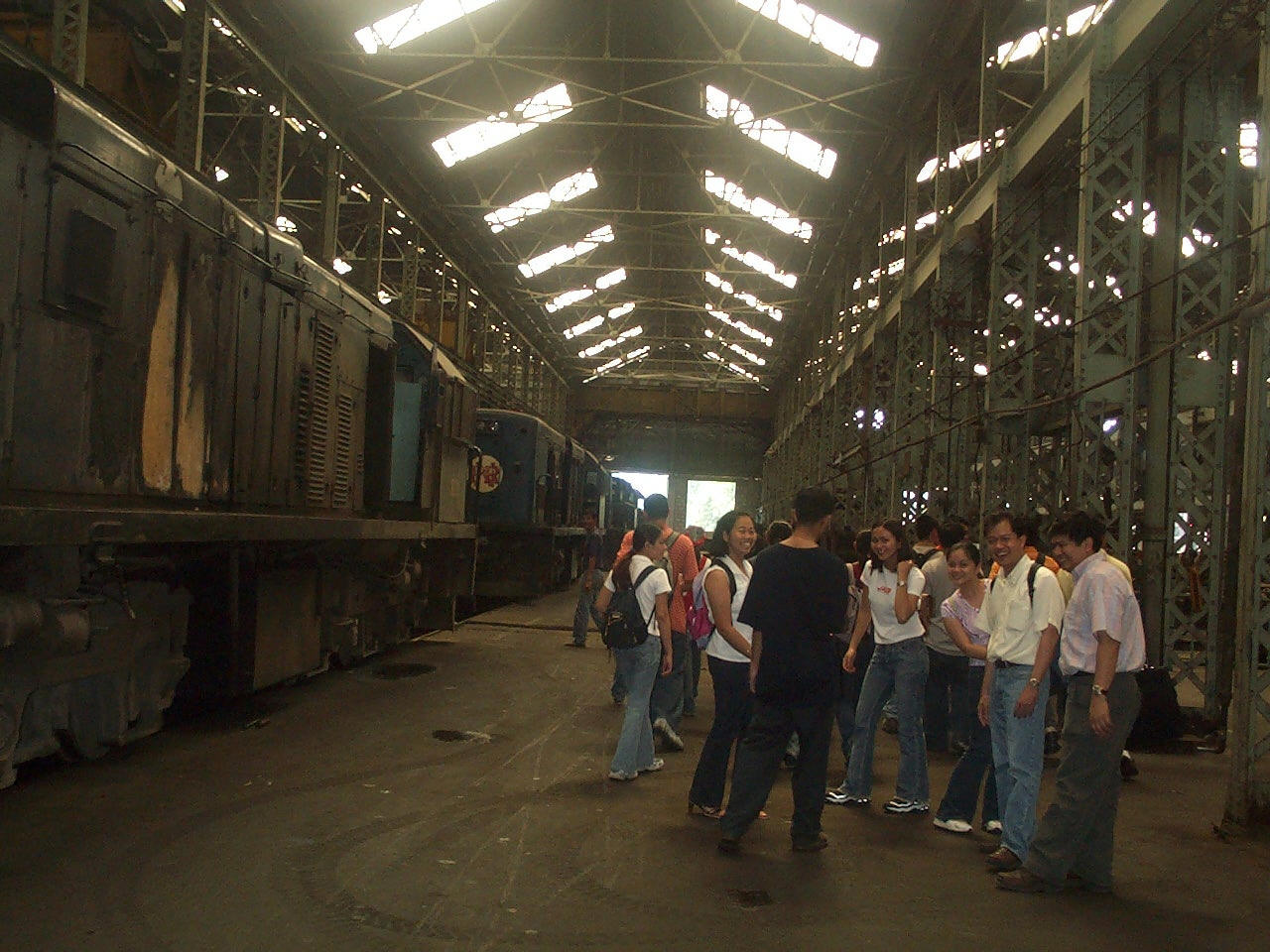 Students and their teachers during a light moment beside locomotives undergoing maintenance in the PNR garage.
More photos on the field trip in a succeeding post.
 Caught (up) in traffic