
Is it difficult to understand the phenomena of induced demand?
I’m sharing a recent article that laments about how transport departments in the US seemingly don’t understand the concept and phenomena of induced demand. Is it really difficult to understand or are transport officials including highway planners and engineers deliberately ignoring what’s staring them in the face?
Zipper, D. (September 28, 2021) “The Unstoppable Appeal of Highway Expansion,” Bloomberg City Lab, https://www.bloomberg.com/news/features/2021-09-28/why-widening-highways-doesn-t-bring-traffic-relief [Last accessed: 10/10/2021]

The topic in the article is very much applicable to our own Department of Public Works and Highways (DPWH). The DPWH’s key performance indicators (KPIs) need to change from the typical “kilometers of road constructed” or “lane-kilometers of roads widened” to something like “travel time between points A and B”. Agencies like the DPWH always like to claim they are for solving traffic congestion but we already know widening roads just won’t cut it. It has to be more comprehensive than that and involve the entire transport system rather than just a part (i.e., the road). And it has to be a collaborative effort with various other agencies like the Department of Transportation (DOTr) and local government units. Unfortunately, too, these agencies like the DOTr and those under it, and many (not all) LGUs also like to go at it solo so we end up with piecemeal solutions that are also often out of context.
–
On rethinking transit for our cities
There’s a nice article recently published on The New York Times. It’s about how cities have been rethinking and developing their transit systems in light of climate change and the pandemic. Here is the article:
An interesting part of the article is on the call for the return of trams or street-level trains. These are very similar to the tranvia that used to be the preferred mode of public transport before World War 2. Would that be possible to build now in Metro Manila? Perhaps it would be a bit more challenging given the development but there are definitely corridors or areas where you can have trams…if the government wanted to. Among those would be along the Pasig River if the development will be similar to the esplanade and enough ROW can be acquired and allocated for these street-level transport. There is also the Botocan ROW, which we actually studied many years ago for Meralco, for the feasibility of a street-level transit system stretching from Katipunan to Quezon Institute. It could have been the revival of Meralco’s rail division of old.
What do you think?
–
On why people are afraid to bike
There is an interesting graphic shared by a friend on his social media account. I am also sharing it here. The source may be found at the bottom right of the graphic.

I think the graphic speaks for itself. How can we encourage people to bike whether for commuting or other utilitarian purpose if there are nuts behind the wheels of many motor vehicles? All the points raised in the graphic are true for the Philippines and are not limited to drivers of private vehicles. These are also the same for public transport drivers as well. And these cannot be solved or addressed overnight. You have to get to the roots of the problem, which are about the driver and rider education (i.e., training), and the licensing system of the Land Transportation Office (LTO).
While there are driving and riding schools that have proliferated, many seem to just go through the motions of driver and rider education. Prospective motor vehicle drivers and riders often just learn enough to pass a flawed examination to get their licenses. Do they really learn about how to behave properly when driving or riding? It certainly does not show with how they deal with cyclists and pedestrians. As for enforcement, well that’s another topic to discuss in a separate post.
–
Why not rationalize other routes now?
There is an enduring discussion in various forums and platforms about the lack of supply of public transportation. I can’t help but notice though that many discussions consciously or unconsciously leave out the part of public transport rationalisation that calls for phasing out lower capacity vehicles in favour of higher capacity ones. I have written about this and explained the necessity particularly along corridors with high transport demand. Delaying what is required (not necessarily what is inevitable) means we fall short of transforming public transport services in this context.
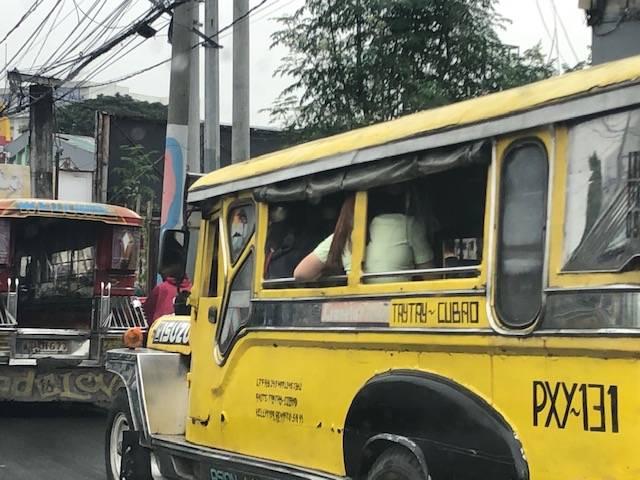
There are definitely missed opportunities here but the current discussions and proposed resources for 2021 including funds for service contracting seems to suggest a status quo in terms of vehicles with the exception of the modernisation part. Perhaps this is because we are still in pandemic mode and survival is still the name of the game? Nevertheless, there should be initiatives and continued dialogue about ‘graduating’ from lower capacity vehicles to higher capacity ones. Of course, this discussion is more urgent for highly urbanised cities than smaller ones.
–
Air crash mysteries
I wrote about the Concorde recently and how I at one time dreamt of flying in one. I shared an article in that post about the air crash that doomed the Concorde. While it appears morbid to certain people, there is that fascination about air crashes not because of the deaths but because these often lead to better designs for aircraft and policies for the aviation industry. Here is a recent article about the still missing (vanished without a trace?) Malaysian Airlines Flight 307.
Admiral Cloudberg (March 27, 2021) “Call of the Void: Seven years on, what do we know about the disappearance of Malaysia Airlines flight 370?”, Medium.com, https://admiralcloudberg.medium.com/call-of-the-void-seven-years-on-what-do-we-know-about-the-disappearance-of-malaysia-airlines-77fa5244bf99 [Last accessed: 9/23/2021]
Unlike other disastrous crashes that include weather factors, pilot errors, instrument or engine failures, we cannot learn (much) from this crash as the black box or any other parts of the aircraft were never recovered. Of course, not in the same category as these types of crashes are those that were blown up or shot down whether by accident or deliberately such as the ill-fated Korean Airlines Flight 007. There are other lessons to be learned if not yet learned from those tragedies.
–
Papers from the Philippines presented in the EASTS 2021 conference
Here’s a list of papers from the Philippines presented at the recent 14th International Conference of the Eastern Asia Society for Transportation Studies (EASTS). The local society, the Transportation Science Society of the Philippines (TSSP), is affiliated with EASTS being one of the founding societies for what is now the mother organization with members across Asia.
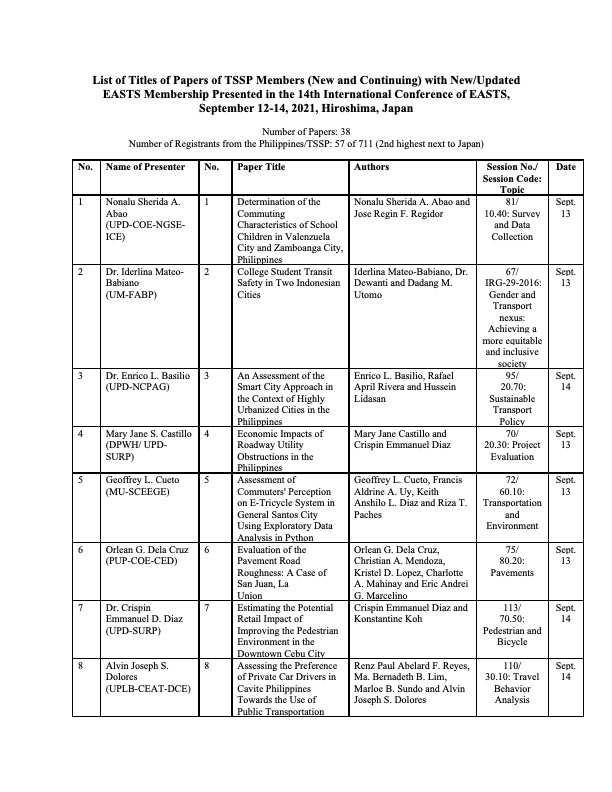


I thought the list would be helpful to those who come to this site to look for research topics. I guess it’s that time of the year for many university/college students who are looking for topics for their thesis or dissertation. There’s a nice mix of topics in the list and shows what are the current topics students and faculty from the different schools are engaged in. Many appear to be from research projects, which are a natural source for technical papers being submitted, presented and published in conferences or journals.
The TSSP is holding its own virtual conference in November 2021. I will also share about that and the papers to be presented in that conference in a future post. Currently, they have not finalized the program and papers submitted are still being reviewed.
–
On Transit, Urban Equity and Sustainability
Here is another quick share of an article about public transport, urban equity and sustainability:
Descant, S. (September 2021) “How Can Transit Deliver Urban Equity and Sustainability?”, Government Technology, https://www.govtech.com/transportation/how-can-transit-deliver-urban-equity-and-sustainability [Last accessed: 9/21/2021]
The article discusses how the Covid-19 pandemic clearly shows the role of public transportation in the lives of a lot of people. There is that opportunity to significantly if not radically improve public transportation now more than ever. Surely governments and their transit or regulating agencies have thought about this. While the pandemic led to situations that are not necessarily clean slates for many, there are definitely opportunities here and there to implement change that will increase benefits for transit users while attracting non-users to shift from their preferred modes (i.e., private vehicles). Here’s a takeaway from the article:
“We know that public transportation is the solution. So there needs to be a commitment at the federal level, not just in terms of funding, but also integrating public transportation deeper into the fabric of society, through land use policy and through other transportation access policies — the sidewalk and bike lane piece — with the data and payment apps as well…”
What improvements do you think should and can be done now given the pandemic situation? Are these still timely or have we figuratively “missed the bus”, so to speak?
Vintage bus and train cards
With the Tokyo Olympics recently concluded and me supposed to be in Hiroshima now and participating in an international conference, I am somewhat nostalgic about Japan. Having lived there for a few years while studying, and then staying again for a few months twice later (2001 and 2008) as a visiting researcher, I miss many of my haunts.
Another discovery one time I was searching for an item in my office drawers is a stash of cards from the various times I was staying in Japan. You can purchase these at the station, convenience stores or from the bus driver.
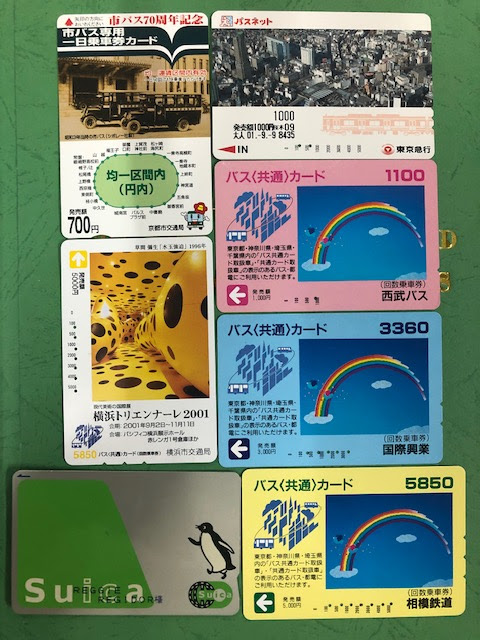
The bus cards already have discounts incorporated. The pink 1,100 bus card costs 1,000 yen so you get an extra 100 yen value. It’s +360 for the blue and +850 for the yellow. Since I was a regular commuter before, I usually got the yellow card. I’m not sure these cards are still there given the advances in technology and innovations over the past decade but it is likely that these were upgraded and are other options to more high tech ones using, for example, smartphones. Mobility as a service (MaaS) is now being promoted in Japan and as I have registered for my conference in Hiroshima, I have a three day transport pass included in my registration. This can be accessed through my phone and could have made a convenient companion going around the city.
–
EASTS 2021 Conference
I would have been in Hiroshima, Japan today if it weren’t for the pandemic. I would have been attending this conference from this weekend (September 12 to 14) where my colleagues and I will be presenting our papers at the respective sessions according to the topics of our work. This year, the conference is virtual and we submitted recorded presentations though presence during the sessions is still required to answer questions about the papers presented. A pre conference even was already held yesterday that attracted early career research in transportation. Here is the link to the conference hosted by Hiroshima University.
I have been to Hiroshima once but unfortunately it was a busy trip to the university and I could not go around. I had wanted to go the memorial to the atomic bomb attack on the city. The plan we had before the pandemic was to have a post conference trip to Kyoto and then proceed to Tokyo on what could have been another sentimental journey for me and close friends who have also studied in Japan. Perhaps there will be another opportunity soon and that we can already travel even with the restrictions or health protocols pertaining to Covid-19.
–
On electric vehicles in the Philippines – current situation and prospects
Here’s a quick share of an article on electric vehicles in the Philippines:
Fernandez, H.A. (September 7, 2021) “Electric vehicles in the Philippines: a mottled green solution,” Eco-Business, https://www.eco-business.com/news/electric-vehicles-in-the-philippines-a-mottled-green-solution/ [Last accessed: 9/8/2021]

It is interesting that the article cites past studies that covered not just e-vehicles but the bigger picture for transport. I think most if not all people who were doing work on low carbon transport including the modeling of scenarios for the long term were not able to anticipate something like Covid-19 disrupting activities around the world and curbing emissions so drastically in the last year. The so-called ‘old normal’ situation has not returned but some say that even with the pandemic affecting transport, we still won’t be able to attain the targets necessary to stave off global warming. The bottomline is that we need more aggressive actions and probably, shifting to e-vehicles is one of those that combined with others will help achieve targets.
–
 Caught (up) in traffic