
On preserving old transit systems
Many old cities have either retained or phased out their old road-level transit systems. I am referring mainly to rail-based streetcars rather than road-based ones such as buses. Even the indigenous types of road-based public transport may be phased out and usually in the name of modernization. Some though, like Singapore’s rickshaws and Manila’s calesas are still existent but you will find them either during odd hours or in tourist areas.
A good example of a city that has retained and preserved its transit system that is San Francisco in the US. The city still has a running cable car system, and its street cars maintained and operated by the San Francisco Municipal Railway (Muni). These are practically operational, traveling museums. The streetcars, for example, are of different models – a collection of streetcars from various cities around the world that have phased out this transit systems a long time ago. So it should not be surprising to see a different street car every time. And one could try to ride each one in operation while staying in city.
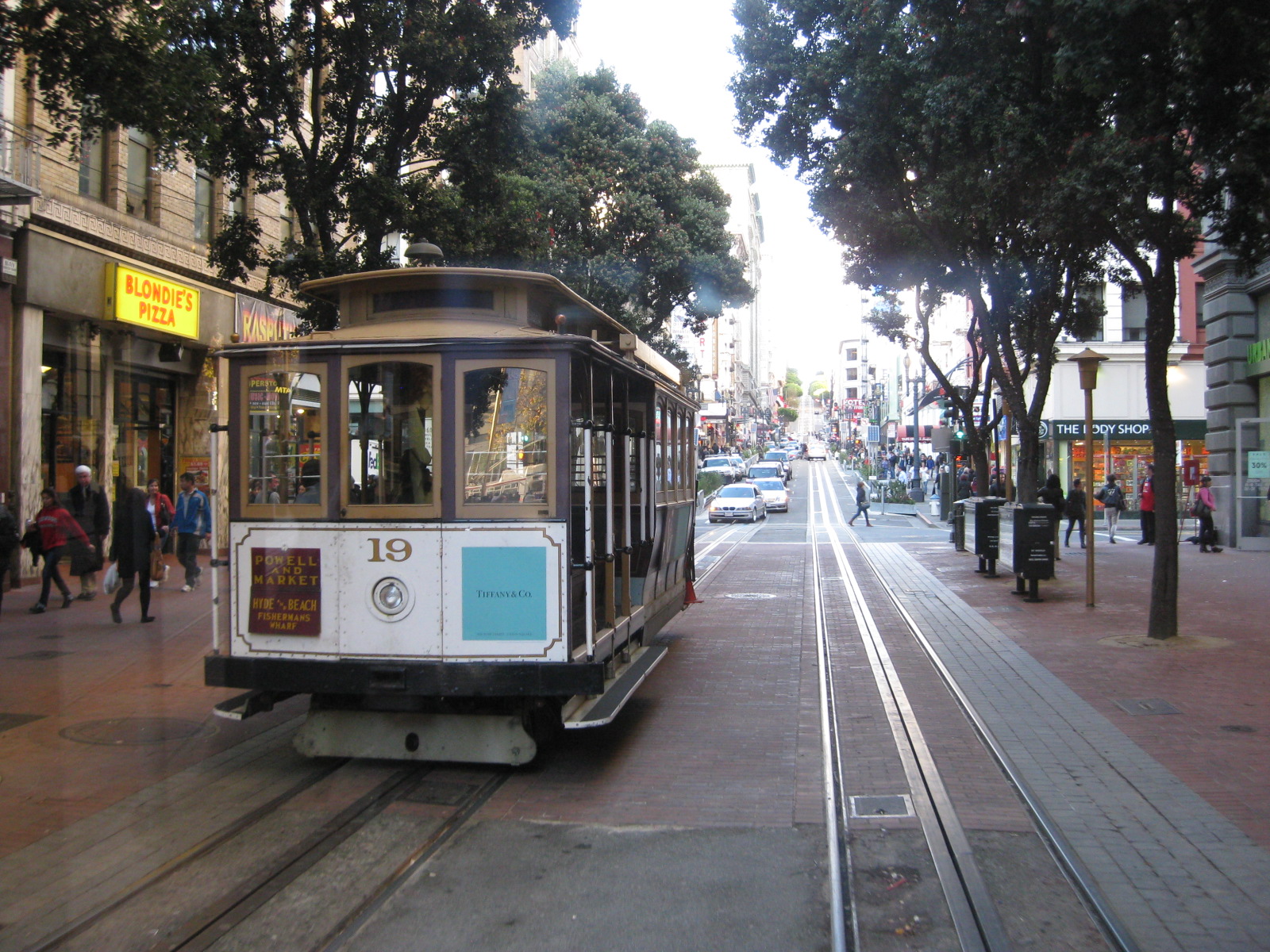
Here is an article about Kolkata’s (Calcutta’s) trams:
Schmall, E. (September 2, 2021) “Kolkata’s ‘Fairy Tale’ Trams, Once Essential, Are Now a Neglected Relic,” The New York Times, https://www.nytimes.com/2021/09/02/world/asia/kolkata-india-trams-calcutta.html?smid=url-share [Last accessed: ]
What are your thoughts about preserving or phasing out these transit systems?
–
On current health protocols applied to public transport
The current surge of infections attributed to the Delta variant of Covid-19 has been alarming. The recent quarantine issuances by national government have not been effective as there was basically lax enforcement or implementation. Granted, there were just a lot of loopholes designed to allow so-called “economic frontliners” to go to work and under conditions that made their commutes risky in the context of the pandemic. The same laxity and loopholes apply too, to people who have no business roaming around and yet travel with their motor vehicles (especially motorcycles) and bicycles across cities, towns and provinces in the guise of exercise or essential travel.
Meanwhile, the practice and enforcement of public health protocols in the country has been lax and misguided (e.g., do we really need to wear face shields?). In public utility vehicles, people are now crowding inside with usually only a sheet of plastic separating one from another. This is not exactly reassuring in as far as spreading the virus is concerned. And we shouldn’t pretend that we are not aware that there are asymptomatic people going around and infecting others whether knowingly or not. It’s no wonder, really, why people who have the private vehicle or active transport option use these instead of public transport.


Much has been said about government failing to address the Covid-19 pandemic from the start. And it continues to bumble through this health crisis (if you don’t want to call it one then either you don’t understand the gravity of the problem or just refuse to do so – the latter is worse). Tagging workers as ‘economic frontliners’ is probably at least as bad as calling BPO workers ‘Bagong bayani’, adding them to the Overseas Foreign Workers (OFWs) who had been branded as so in the past. This becomes a convenient excuse to ease health-related restrictions for people to travel/commute to work. It is a form of gaslighting the very same workers to believe they need to go out and work. Meanwhile, precious funds are being diverted elsewhere including the dolomite beach at Manila Bay and money spirited away in preparation for next year’s elections.
I got it from recent surveys that people give a higher priority to employment and earning income over Covid-19. Perhaps most have not had direct experiences with the frightening cases of Covid-19 (i.e., they’re asymptomatic or have encountered only asymptomatic cases with friends and families). I hate to say it but it seems like the same thinking pertaining to extra judicial killings (EJK). I can already imagine hearing the usual comments: “Malayo sa bituka.” “Wala akong pakialam diyan.” “Okay lang yan. Hindi naman kami apektado niyan.” These comments reflect an absence of empathy. Empathy I think is very much needed today in order for people to understand what’s going about. And that’s not just about us but businesses as well that definitely, likely lost a lot during this pandemic but still need to empathize if not call out those who are really responsible about the mess we are in. Do your employees really need to go to the office? Or can they continue working from home? The answer to these questions affect commuting in the time of Covid-19 and relates strongly to the protocols applied to public transport.
–
On my first plane rides, and dreaming of supersonic travel
Even before this race to space by billionaires, one option for travel captured my imagination and attention – supersonic travel. I cannot remember exactly the first time I was on my first flight but I know it was a trip between Manila and Iloilo in the 1970s. Iloilo is the home of my father and we basically had only two options to get there – airplane or ship. While maritime travel was much cheaper, it took a day one way to get to Iloilo and vice versa. We didn’t want to waste two days especially as my father took leaves from work when we went on vacation so air travel was usually the choice especially for the shorter Christmas breaks. We usually took the ships in summer.
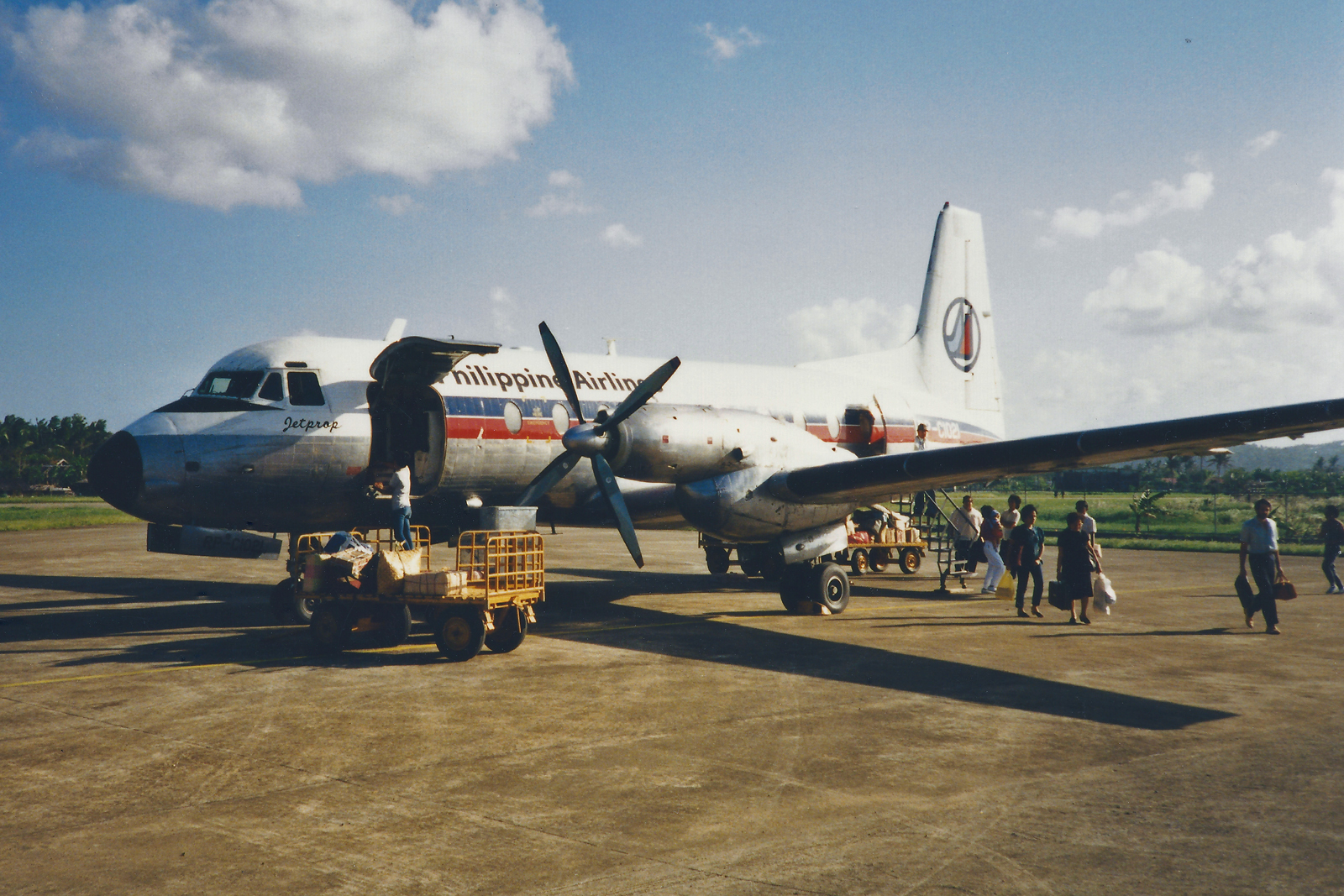
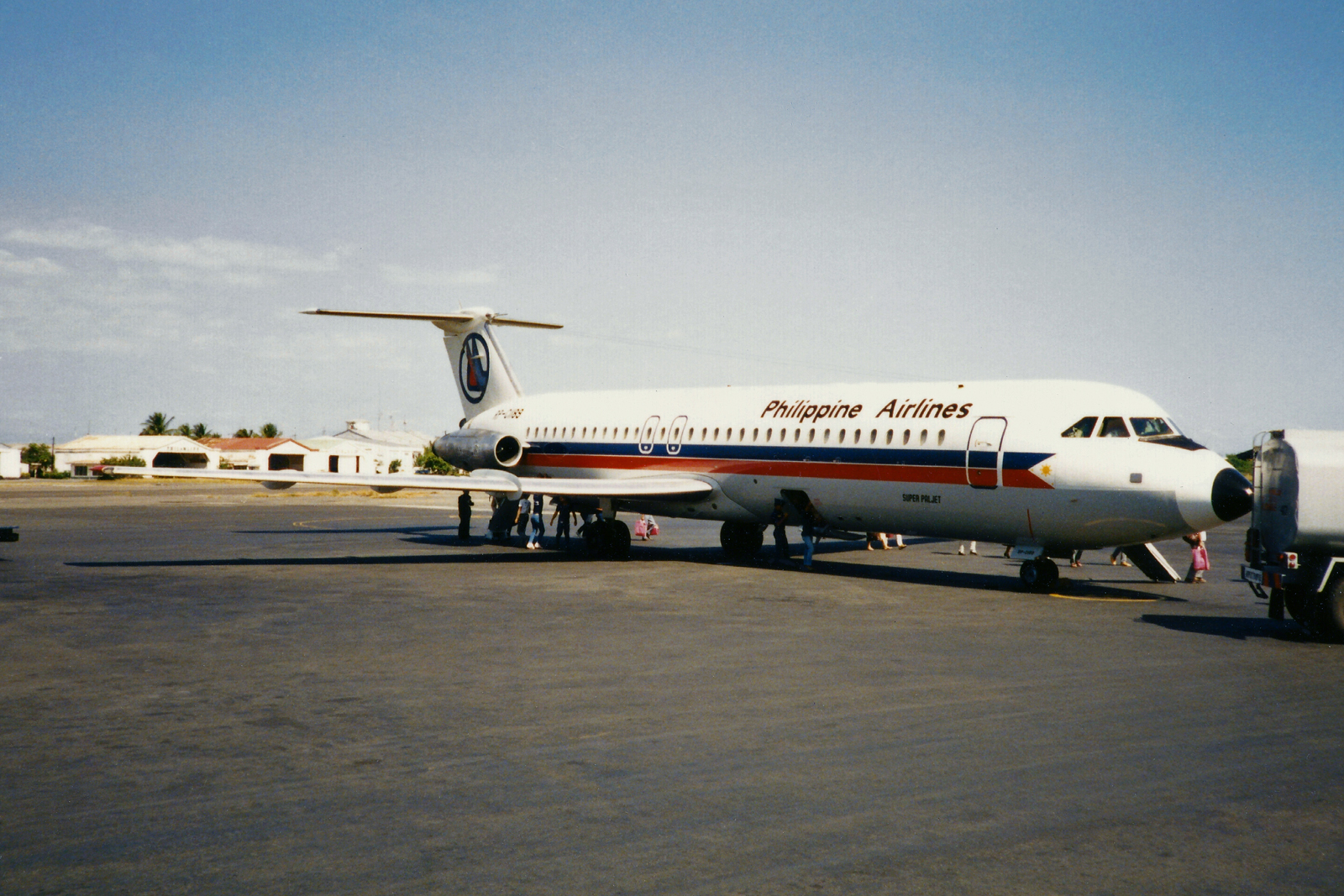
My earliest memory of flight was on a turboprop airliner. This was a Philippine Airlines (PAL) Hawker Siddeley HS 748. My first on a jet plane was on a BAC 111 on the same route and the same airline. There were no competition then for domestic air travel. Following are the photos of these two aircraft that were the workhorses of PAL until the 1980s.
The fascination with flight and aircraft included a dream of experiencing supersonic flight. The only ones that time were the Concorde and the Tupolev Tu-144. The Tupolev had a rather short service with the last commercial flight in the late 1970s. Also, the politics at the time meant it was highly improbable that I could have a trip that involved this plane. The Concorde had trans-Atlantic flights and I also dreamt about traveling around the world. I thought maybe I can save up for a one-way trip between Europe and the US. Unfortunately, that opportunity never came up. My first international flight was in 1996 when I rode on a Boeing 747 from Manila to Narita. I did eventually travel to the US and Europe but these were after the Concorde was decommissioned. That was probably mainly due to the following incident in this article:
Cloudberg, A. (August 29, 2021) “Death of a Dream: The crash of Air France flight 4590,” Medium, https://admiralcloudberg.medium.com/death-of-a-dream-the-crash-of-air-france-flight-4590-84c8a9e6c74a [Last accessed: 9/1/2021]
Will there be supersonic services in the future? Probably not. However, the aircraft designs of the future should satisfy ones needs when traveling on these planes. One just wonders how much air travel will change due to Covid-19.
–
Undergraduate and graduate research topics, 2021
I noticed again that there seem to be a lot of ‘hits’ for articles I wrote years ago about research topics. Many appear to be looking for topics for their university/college/school research projects including those who might be looking for thesis or dissertation topics. Here are some of my past postings on research topics:
October 23, 2020: https://d0ctrine.com/2020/10/23/research-topics-in-the-time-of-covid-19-part-1/
August 11, 2017: https://d0ctrine.com/2017/08/11/topics-for-transportation-research/
September 28, 2016: https://d0ctrine.com/2016/09/28/research-topics-for-transportation-engineering-and-planning-for-2016-2017/
December 11, 2015: https://d0ctrine.com/2015/12/11/undergraduate-research-topics-for-academic-year-2015-2016/
July 4, 2015: https://d0ctrine.com/2015/07/04/research-topics-on-transport-and-traffic-in-the-philippines/
October 22, 2014: https://d0ctrine.com/2014/10/22/undergraduate-research-topics-on-transportation-for-ay2014-2015/
August 27, 2013: https://d0ctrine.com/2013/08/27/undergraduate-research-topics-on-transportation-at-up-diliman-2013/
October 17, 2012: https://d0ctrine.com/2012/10/17/undergraduate-research-topics-on-transportation/
October 12, 2011: https://d0ctrine.com/2011/10/12/undergraduate-research-topics-on-transportation-2011-2012/
It is from the July 4, 2015 article where I wrote something that is still very much applicable today or perhaps anytime someone asks about what topics should be pursued by undergraduate, graduate and even faculty research:
“Schools need to develop their own research agendas. That is so that students would be able to choose topics that their faculty can realistically and effectively guide their students instead of sending them out to become the burdens of others. These would include topics concerning local issues. Are there road safety issues at locations such as intersections near the school? Are the streets in the nearby CBD experiencing congestion? Is there an oversupply or lack of public transport services in the city or a nearby town? It seems awkward for a university in Pampanga, for example, to have students taking on a topic concerning EDSA-MRT or students of a university in Metro Manila taking on a topic on Mindanao railways, if their faculty have no relevant experiences or capabilities to properly guide the students.
I would encourage schools to identify topics concerning local issues first. As they say, charity begins at home, and working on solutions for local problems should be top of the agenda of any school. That includes us at UP and there are many topics that focus on issues in and around UP Diliman. If we can’t solve our own problems then how can we be believable in addressing those outside our direct influence area?”
I do encourage prospective student researchers to take on topics addressing local transportation issues. Some recommendations are as follows:
- Active transport – topics on bike use, bike lanes planning and design, pedestrian or cycling facilities, safety, funding and investments, integration with public transport, end of trip facilities, IEC or C4D materials development and deployment, etc.;
- Road/highways – topics on road safety, road capacity (e.g., assessing the necessity and/or effectiveness of road widening projects);
- Public transportation – topics on rationalization, modernization, services in the time of Covid-19, business models including service contracting, motorcycles as public transport (i.e., motorcycle taxis);
- Anything relating transport and the pandemic – topics about transport in the so-called new normal, impacts of Covid-19 on transport, traffic, commuting, etc. These topics can be framed a number of ways and can be very local (i.e., based on local experiences) and/or comparative.
There are obviously more including the “classic” ones on traffic engineering and management (e.g., traffic congestion, intersection analysis, development of micro-simulation models, etc.), transport planning (e.g., travel demand forecasting, transport model development, etc.), as well as those on the various modes of transport (air, maritime and rail come to mind). The objective is to be able to contextualize and address issues closer to your home rather than far from it. I think that’s how best you can contribute to addressing transport problems rather than be over-ambitious or messianic in your research topic(s).
–
On the STAR Tollway, some recent photos
A trip earlier this year allowed me to take a few photos of the STAR Tollway. STAR stands for Southern Tagalog Arterial Road, which was what the expressway was before it became a tollway. I have memories of this being a regular highway in the early 1990s. Then, it was still a two lane road and there were even animals walking around and at times crossing the highway. Later, even after it became an expressway, the ROW was still not secured (i.e., fenced) so motorists would regularly encounter animals creating unsafe situations to both.
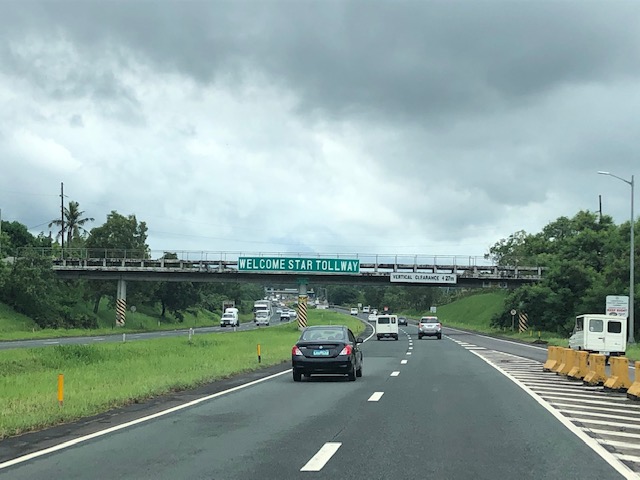

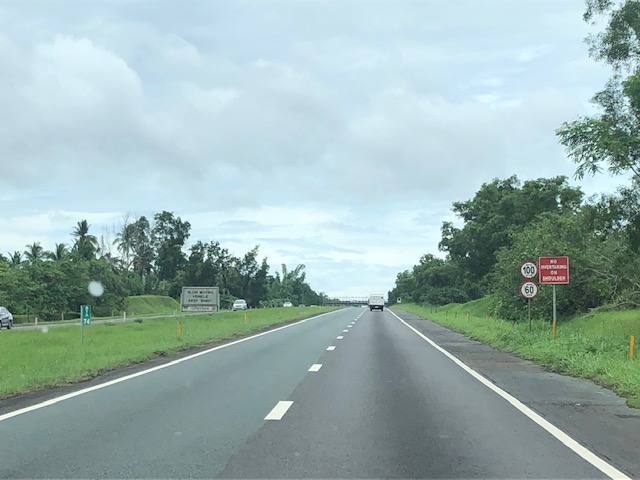
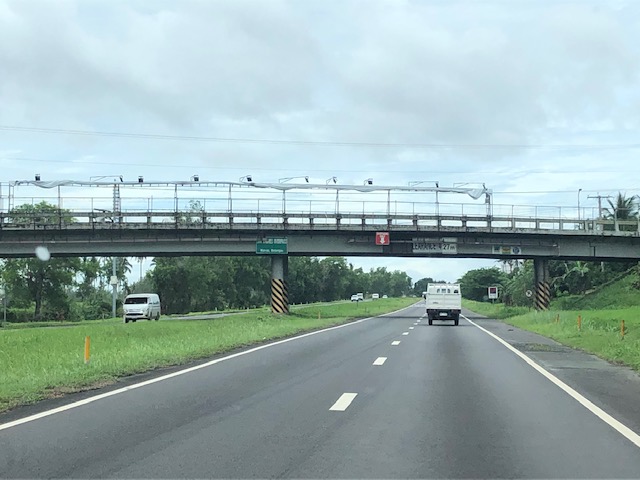
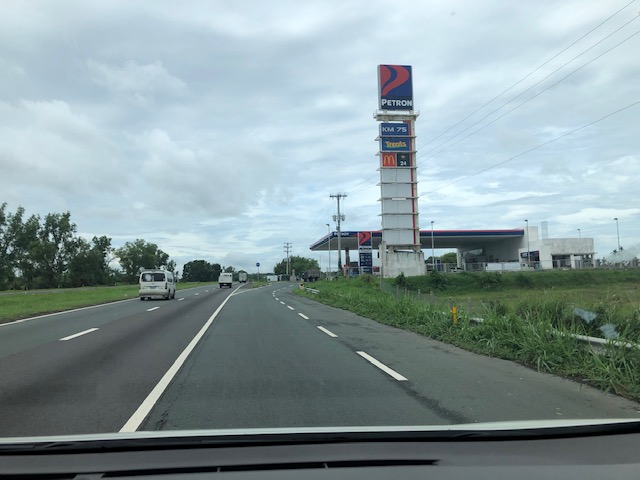

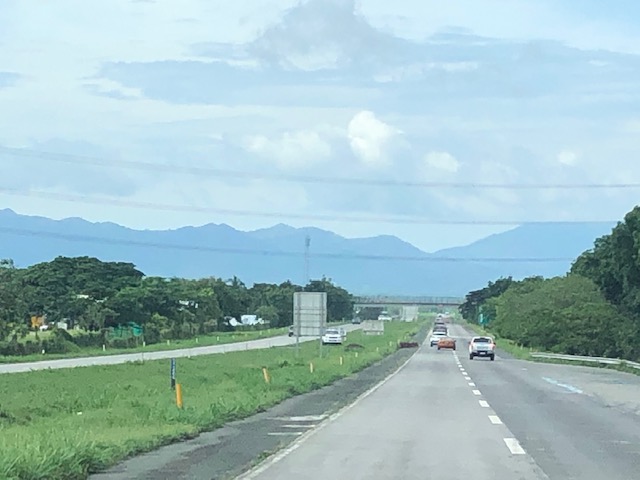
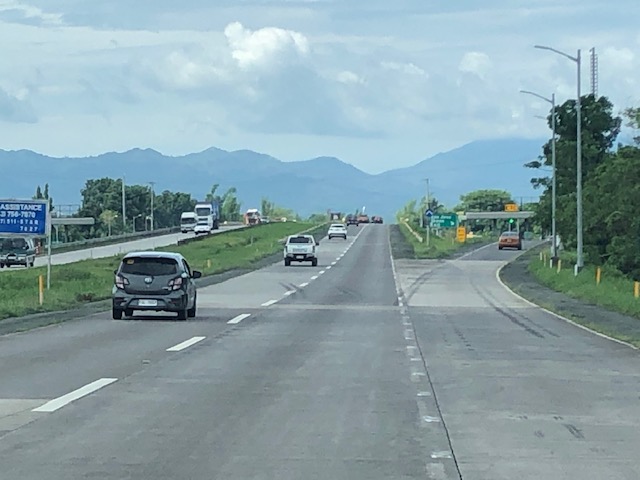
Noticeable in the photos are the wide medians. These are typically used for expansion (i.e., additional lanes) when the time comes that the capacity of the tollway is no longer enough to cater to the demand. Both the NLEX and SLEX used to have these wide medians that are now part of the motorway. Are there alternate uses or purposes for this median? Perhaps, and this has been done abroad, one could fit bicycle paths there? Or maybe install solar panels to generate power? Or maybe do both?
–
On the future of Uber and other ridesharing/ridehailing companies
A few years ago, Uber was the darling of transportation. It and others like it were considered disruptors. They were but then eventually unraveled as their business model and practices were challenged and exposed. Here’s an article that does not mince words in describing what and how Uber is:
Doctorow, C. (August 11, 2021) “End of the line for Uber,” Medium, https://marker.medium.com/end-of-the-line-for-uber-901e3077bbbc [Last accessed: 8/21/2021]
There’s a wealth of references (links provided) in the article provided to support the arguments of the author. It is not anecdotal but an accumulation of facts from various experiences as well as a documentation of the company’s efforts to hide its flaws.
I co-authored several papers analyzing what was seen as a phenomenon. It was clear that people preferred Uber or Grab over regular taxis because of the higher quality of service they got. Similar results were obtained elsewhere and spelled the doom of many taxi drivers. Those that survived were the better serving ones like taxis in Japan and Singapore. However, the more recent of those papers have shown that what are called TNVS or transport network vehicle service have basically been deceiving and took advantage of their drivers (whom they do not want to refer to as employees). Did they help reduce congestion? They did not, and even added more cars to traffic.
–
Article on “invisible exercise”
Here’s another share of an article I recently read about what is referred to as “invisible exercise”. This might just be semantics to some people as we often just refer to this as “chores”. Yes, you can do a lot of exercise by being active around your home. Handwashing clothes and dishes, doing gardening, cleaning the house, walking the dog(s), etc. all burn calories. I recall having a workout at our old house in Iloilo where we have wood floors. It’s no joke polishing the floors using a coconut husk (bunot). Just imagine you’re doing/dancing the twist. 🙂
Putka, S. (August 9, 2021) “The invisible exercise that might count more than your workout,” Inverse, https://www.inverse.com/mind-body/hidden-exercise-better-health [Last accessed: 8/19/2021]
To quote from the article:
“More physical activity is almost always for the better when it comes to living a long, healthy life. But only some of us have access to the time, equipment, and resources it takes to engage in what we typically think of as “exercise.”
The spaces we occupy, or our “built environment,” can also erode or enhance chances of staying “fit” over time. In many cases, the necessities of daily life mean many people will get their exercises from daily activities — especially if they live in low-income countries.”
There’s another article I recently read about how regular exercise helps one become resistant to Covid-19. There’s also another that states regular exercise or being active may contribute to those who have Covid-19 to have milder cases (of course this is combined to already having been vaccinated). The key here is being active!
–
On priority lanes for public transport
I am currently part of an International Research Group (IRG) involved in studies on bus priority. Yesterday, we had a meeting where one professor mentioned the importance of being able to clearly explain the advantages of having priority lanes for buses in order to improve their performance (i.e., number of passengers transported and improved travel times). There was a lively discussion about how the perception is for bike lanes while transit lanes have also been implemented for a long time now though with mixed results.
There are very familiar arguments vs. taking lanes away from cars or private motor vehicles and allocating them for exclusive use of public transport and bicycles. It may sound cliche but ‘moving people and not just cars’ is perhaps the simplest argument for priority lanes.
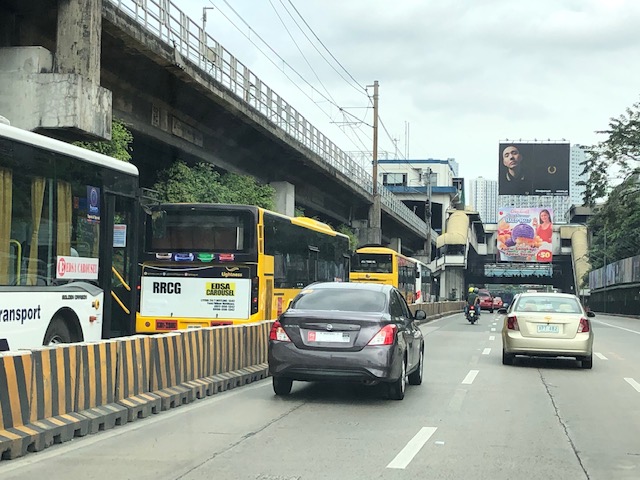 EDSA carousel buses lining up towards a station
 Bike lane along Katipunan Avenue – is this a temporary thing? a fad because traffic is really not back to the old normal? Katipunan is infamous for being congested with cars generated by major trip generators in the area such as schools/universities and commercial establishments.
 The bike lane along Commonwealth Avenue proves there’s just too much space for private motor vehicles. And with the Line 7 in the horizon, perhaps more lanes can be taken and made exclusive to road public transport. [Photo credit: Cenon Esguerra]
–
On defining the 15-minute city
I have shared articles and briefly written about the concept of the 15-minute city on this blog. Here is another discussing how a 15-minute city is defined:
(February 8, 2021) “Defining the 15-minute city,” Public Square, https://www.cnu.org/publicsquare/2021/02/08/defining-15-minute-city [Last accessed: 8/10/2021]
Here is an image from the article:
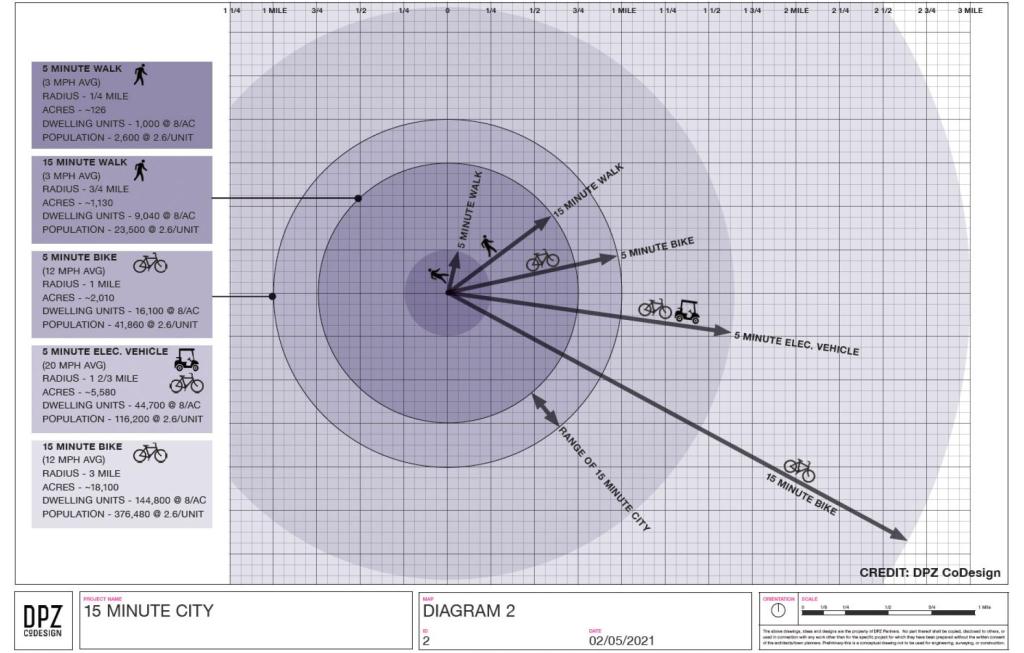
Again, it is important to contextualize these concepts. I share these as references and topics for discussion. Of course, I have my own opinions about this and I have written about those in previous posts. I guess in the Philippine context, we can include the pedicab or non-motorized three-wheelers in the discussion. These are also very popular modes in many cities and municipalities despite their being also prohibited along national roads like their motorized counterparts. It would be nice to have more visuals in the form of maps that show travel times for essential destinations or places like hospitals, markets, grocery stores, workplaces and, of course, homes. I assume there is at least someone, somewhere who perhaps have made multi-layer maps of this sort and attempted to related them along the lines of this concept of a 15-minute city (or perhaps the even older “compact cities”).
–
On the BRT gaining popularity
Bus rapid transit or BRT has been around at least since the 1970s when the first ‘real’ BRT systems went into operation in Curitiba, Brazil. Here’s an article presenting the current state of deployment of these systems in the US:
Duncan, I. (July 23, 2021) “Cities are turning to supercharged bus routes to more quickly and cheaply expand transit services,” The Washington Post, https://www.washingtonpost.com/transportation/2021/07/23/bus-routes-public-transit-brt/
“There are indications that BRT lines can promote some of the density long associated with rail routes. A new analysis of job and residential growth by researchers at the University of Arizona examined areas around BRT stations in 11 cities between 2013 and 2019. In each case, they found areas close to the stations accounted for a significant share of regional growth.”
The Philippines should have had its first BRT line more than a decade ago if the government had been decisive about it. The first opportunity was under the administration of Macapagal-Arroyo when it was first conceptualized for Cebu City under a UNDP project and picked up by the WB for implementation.* The next opportunity came under the Aquino administration when the Cebu BRT could have been one of those low-hanging fruits for public mass transportation. Now, the same project is nowhere near completion as the Duterte administration has less than a year before it bows out. Meanwhile, there are proposed BRT’s in Metro Manila and Davao that have yet to see the proverbial light of day. The EDSA carousel is supposed to morph into a BRT but has not become so and requires more tweaking for it to be one.
*[Note: The BRT that was supposedly implemented by the MMDA under its then Chair Bayani Fernando was not a BRT or even a BRT light. It is not even at the scale of the current EDSA carousel.]
 Caught (up) in traffic