
On transportation problems being treated like diseases
I am sharing this relatively old article on transportation problems needing treatments as if these were diseases. I say it’s ‘old’ because it’s from last year, and these days when much content is being pushed everywhere including mainstream and social media, things get old, quickly. Rewind to more than a decade ago and Intelligent Transportation Systems (ITS) wasn’t as popularly applied as today and Artificial Intelligence (AI) seems to be everywhere now including in transportation systems.
Menard, T. (September 1, 2024) “Transportation Rx: Treating Traffic Glut Like Doctors Treat Sinus Congestion,” Planetizen, https://www.planetizen.com/features/131478-transportation-rx-treating-traffic-glut-doctors-treat-sinus-congestion [Last accessed: 4/21/2025]
To quote from the article:
“Traffic congestion is not unlike congestion that builds up in the human airways. When we see a doctor, we are prescribed a treatment that clears the backup. Similarly for roads, rather than setting up road signs and cones to redirect traffic, cities can take a more prescribed treatment approach through methods such as congestion pricing and other road pricing strategies, as well as technologies like edge computing, navigation-enabled Mobility-as-a-Service (MaaS) modeling, and transit signal prioritization. “
This is not the first article to allude to medicine when the topic is traffic congestion. There are others that use terminology from the human body’s circulatory system. When an artery gets blocked, a bypass can be a solution. But perhaps we don’t need bypasses and look at other. more effective ways of dealing with transportation problems.
–
On reckless driving and riding, road rage, and kamotes
A story went viral a couple of weeks ago about a motorcycle rider getting shot by a driver. Many discussions and videos have been shared with some sympathetic to the driver and others to the riders. One thing is definite from the videos shared when you filter the commentaries and biased opinions – both the driver and the riders are guilty of reckless driving or riding. With all due respect to the root crop often invoked and associated with these kinds of motorists, kamotes as they are called seem to have increased no thanks to many of these learning to operate motor vehicles without being properly trained, oriented, evaluated and tested if they deserve having licenses. The increase and documentation of incidents of road rage should be taken very seriously by the LTO and serve as reference for improving the licensing system.
Here’s an informative material on reckless driving from the National Center for Transportation Studies’ Road Safety Research Laboratory:
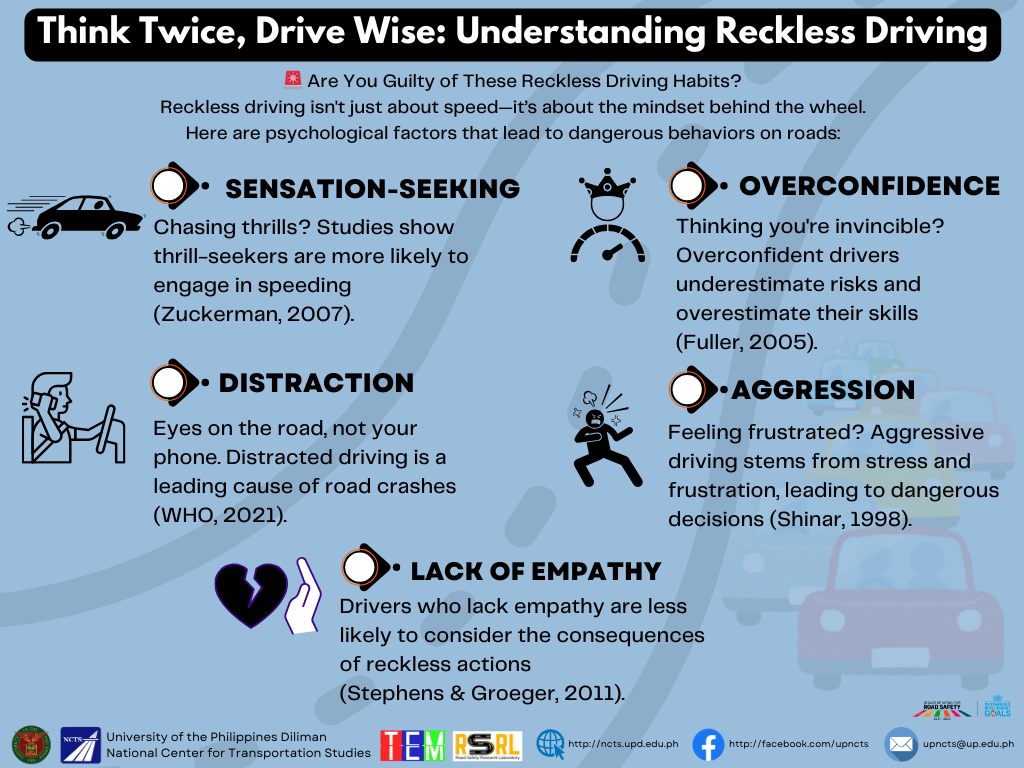
This Holy Week, there are many who are using the roads whether for long distance travel (e.g., spending the holidays in their hometowns away from the metro) or for the typical religious trips (e.g., pilgrimages, Visita Iglesia, etc.). Motorists should exercise caution as they drive or ride. We should be more mindful of the impacts of our behavior to other travelers whom we share the roads with.
Safe travels to all!
–
On step counts towards health and wellness
I’m sharing here an article about step counts. I guess the jury is still out there so to speak when it comes to the number of steps per day. The key is really to be active rather than just sit or lie down for most of the day. And there are many ways to be active and be able to measure it so you can monitor your movement.
Loudin, A. (February 28, 2025) “Why step count remains the most impactful fitness stat,” WebMD, https://www.webmd.com/fitness-exercise/news/20250228/why-step-count-remains-most-impactful-fitness-stat [Last accessed: 4/14/2025]
To quote from the article:
“For decades, the goal was 10,000 steps a day — but further research has shown that step counts as low as 2,500 still deliver long-term health benefits that increase as your step count rises — even past 10,000. The bottom line, however, is that more movement is better for you and serves as the best measurement of longevity.”
You can walk to start your day. You can walk in the middle of the day (say lunch time). And you can walk after dinner. And that’s just walking. Of course, you prefer to jog, run or bike, even swim, then that should do it for you in terms of being active. Walking though is really for most people who are physically able. And you can do it outdoors or indoors (yes, even in a building). So that’s where you should start in terms being more active towards health and welnness.
–
More garbage along our streets
Election Day approaches in the Philippines and despite certain rules that are supposed to be in place and followed by candidates and their supporters. Enforcement from the COMELEC is really bad (and that’s the truth everywhere around the country). Otherwise, we’d have a lot of disqualifications every election and perhaps many incumbent politicians won’t be able to run for office. Here are a few examples in my home city of Antipolo in Rizal where a dynasty “rules” and also has connections with another family in Cavite.
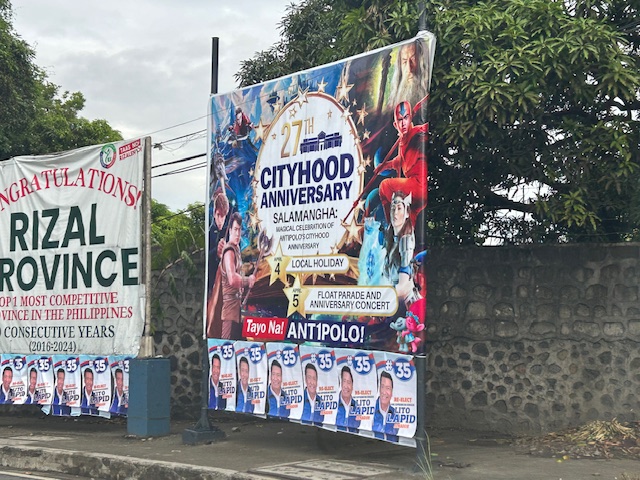 Antipolo’s city hood anniversary tarp features a Cavite politician who is closely related to the current leaders of the city and the Province of Rizal. Below the tarp are posters of a Pampanga politician who is also a movie actor like the other guy.
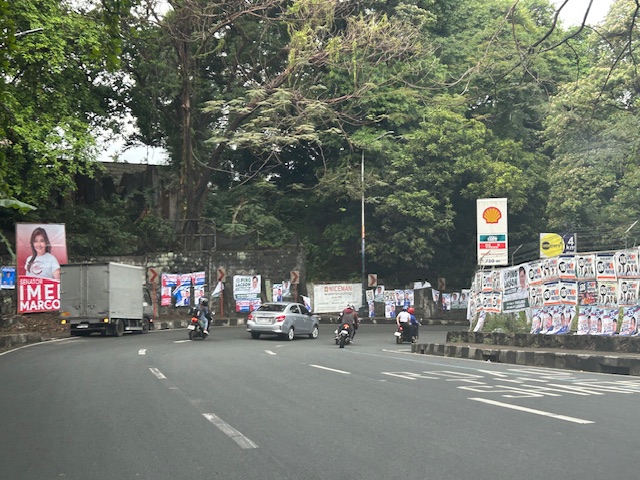 Antipolo roads are full of these campaign materials. Supporters have not spared private property of the garbage.
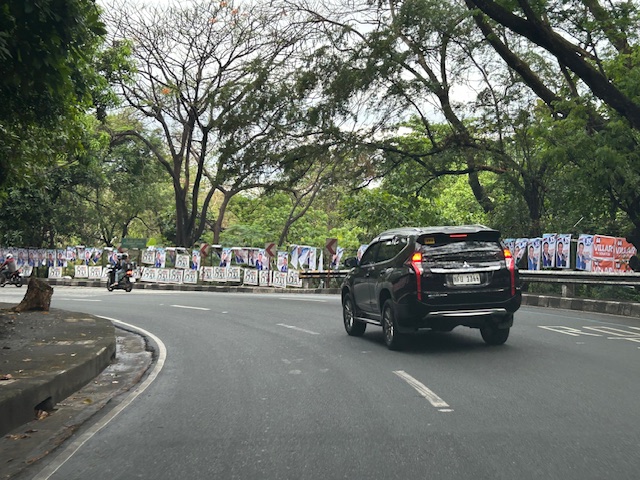 Perhaps those who will do the Alay Lakad to Antipolo this coming Maundy Thursday should each remove a poster, tarp or more as they journey to the Shrine of Our Lady of Peace and Good Voyage. This could be part of their penance and serve also as cleansing of minds in preparation for elections.
Try to explain again how these politicians are not overspending (and probably charging the costs to taxpayers). The math is pretty easy. You can check how much a politician’s monthly income is based on the salary grade of the position he/she is running for. Compare that to the amount spent for his/her campaign. You can’t recover the amount spent in one term. Are they billionaires willing to part with their money to get elected to positions that demand a lot in terms of the competence and dedication to good governance. Rather, the suspicion is that politicians will likely be corrupt and get his/her money back in a variety of ways to recover millions or even billions spent. It’s really a vicious cycle that doesn’t end well for the Filipino people in terms of the infrastructure and services we could have if only politicians moderated their greed.
–
Eats and shops at the Bicol International Airport
This is a continuation of the feature on the Bicol International Airport. I am sharing the following photos below so my readers can be guided about what’s available to eat and/or drink at the terminal.
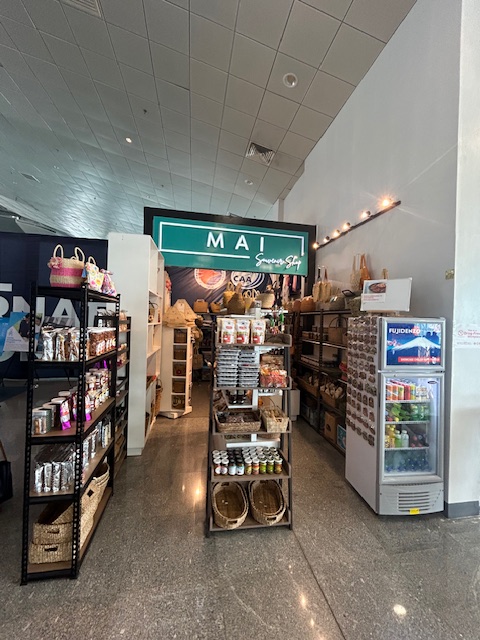 Souvenir store at the entrance to the departure lounge
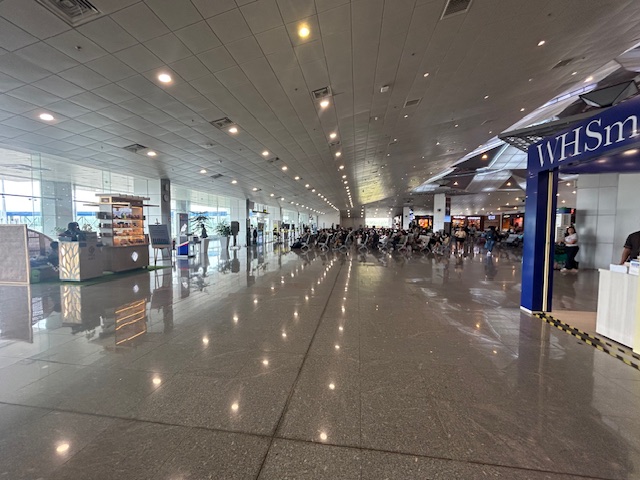 Turning to the pre-departure area – there’s WHSmith
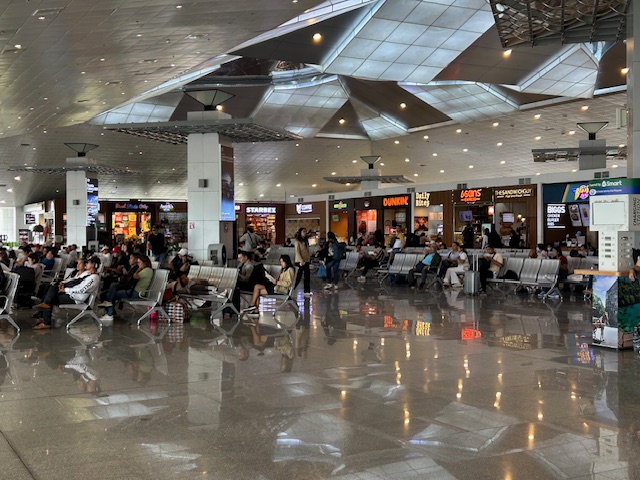 The terminal has a spacious lounge surrounded by shops
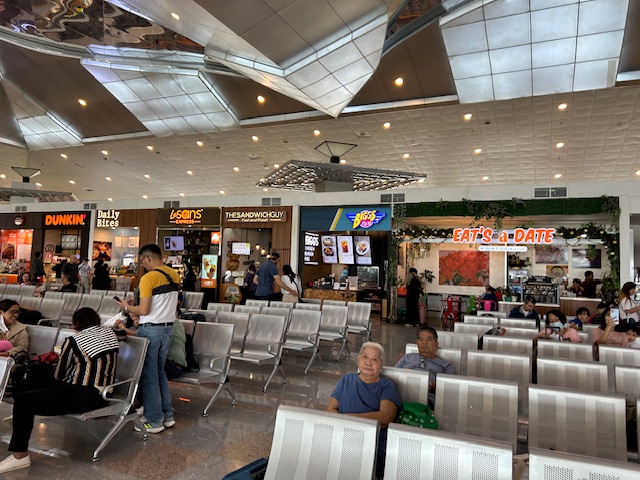 Among the options for the hungry are Eat’s a Date and the familiar Bigg’s, which is a chain that originated in Bicol. I think they are the Bicol equivalent of Bo’s Coffee.
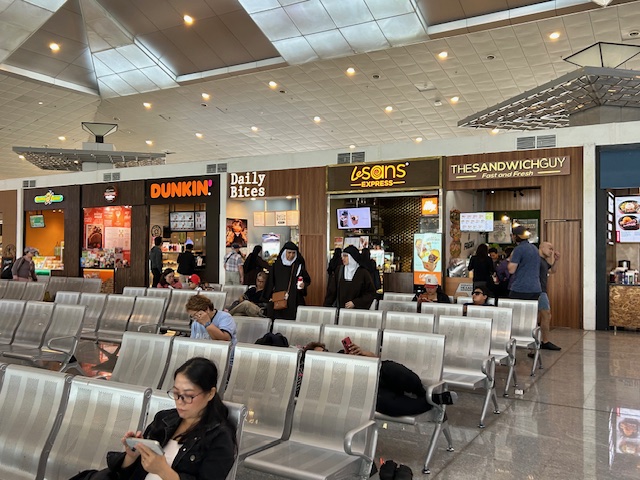 Some are familiar (Dunkin, Potato Corner and Sandwich Guy) while others are probably Bicol-based (LeSans, Daily Bites)
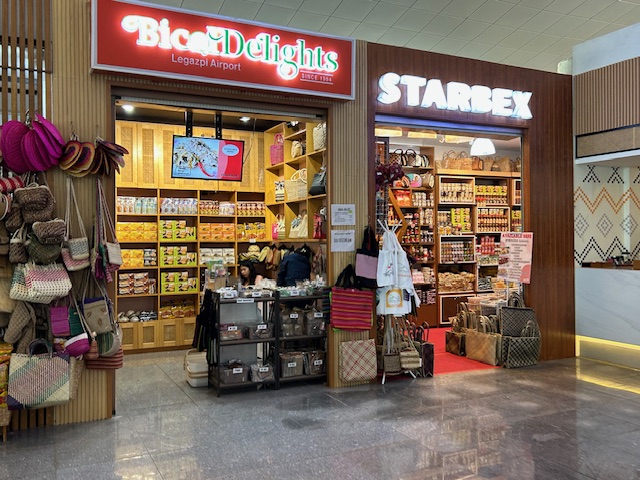 There are many local products for sale as souvenirs or for personal consumption.
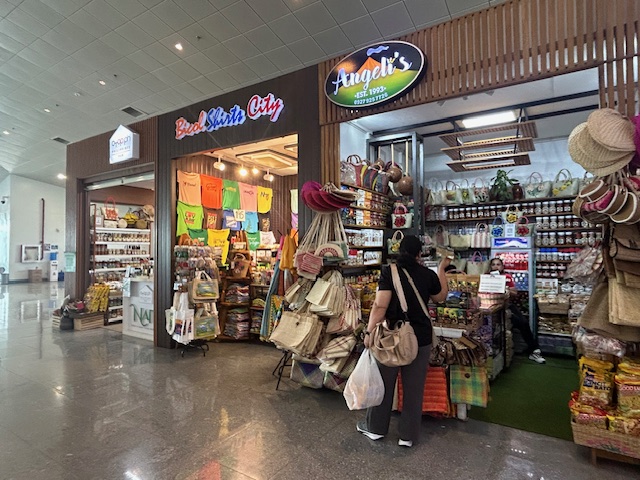 There are handicrafts and shirts at the terminal. I highly recommend the shirt store for the quality and variety of designs. I believe there are better shirts here in general compared to the tourist areas like Cagsawa.
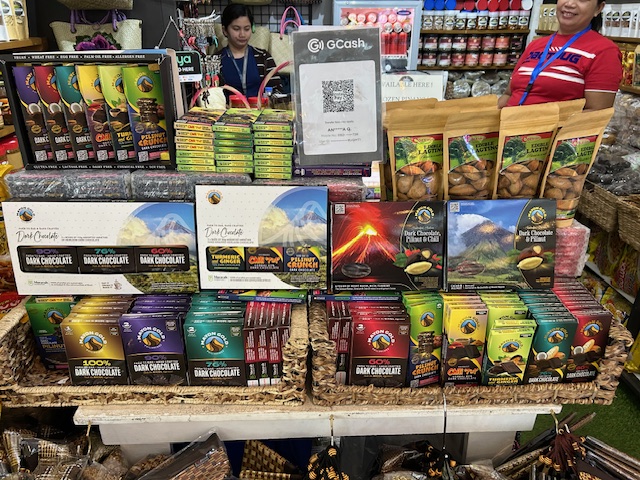 One shop sells local delicacies especially those with pili nut and chili – two items associated to Bicol.
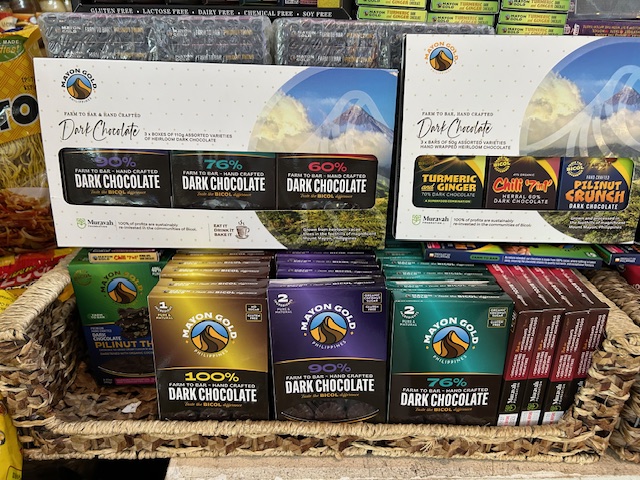 Locally made chocolates are available at the airport. I’ve seen Mayon Gold at the NAIA terminals and can say that their pili nut crunch chocolate is good. I have another blog where I write about chocolates so I will not write about the taste here.
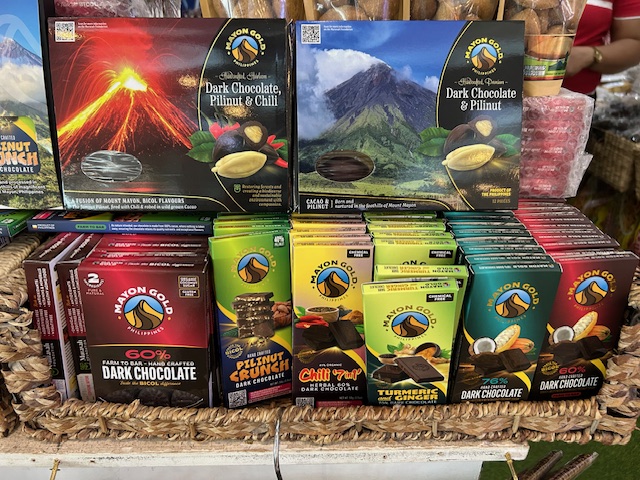 The chocolates come in individual bars for the different variants. They also have box sets or samplers.
More on the airport soon!
–
On strategies for urban mobility
Here is an interesting article on other strategies for urban mobility:
Menard, T. (March 24, 2025) “Beyond Congestion Pricing: Strategies for Revolutionizing Urban Mobility,” Planetizen, https://www.planetizen.com/features/134601-beyond-congestion-pricing-strategies-revolutionizing-urban-mobility [Last accessed: 4/6/2025]
To quote from the article:
“The common thread among successful urban transportation initiatives is the use of data to make mass transit more competitive. When cities invest in improving the transit experience through technology, service enhancements, and targeted incentives, the results are clear: increased ridership, reduced congestion, and lower emissions. These outcomes benefit not just individual commuters but the broader community as well, contributing to improved air quality, reduced traffic-related stress, and more livable urban environments.
In looking ahead, the lessons from New York’s congestion pricing experiment and the initiatives of other progressive cities offer a roadmap for transit agency leaders worldwide. By embracing data-driven strategies, investing in advanced technologies, and creating the right mix of incentives and disincentives, cities can transform their transportation systems to meet the challenges of the 21st century.
The key takeaway for transit agency leaders is clear: when mass transit is made more attractive, efficient, and competitive with private vehicle use, commuters will respond positively. The data from New York and other cities proves that well-designed transportation policies can yield significant benefits for urban communities. As more cities adopt these innovative approaches, we can look forward to a future of smarter, more sustainable urban mobility that enhances the quality of life for all residents.”
Perhaps the main statement to be emphasized here should be: “The common thread among successful urban transportation initiatives is the use of data to make mass transit more competitive.” How many of our cities are doing this now and in the context of the public transport rationalization and modernization? Does the LTFRB or the DOTr collect and use data towards improving public transportation? Are these efforts comprehensive rather than selective?
–
A new bottleneck along Marcos Highway in Antipolo City?
I’ve been wondering why there seems to be much congestion along the westbound side of Marcos Highway in the morning just before we reach SM Cherry. It is usually flowing there but the past weeks when we used the route instead of Sumulong Highway, traffic was really bad. As I am quite observant about the traffic and always looking for reasons or causes, I found that this was due to the alternative route Antipolo ‘opened’ that many motorists now take when traveling between Marikina and the side of Antipolo heading in the general direction of Cogeo.
The alternate route connects Marcos Highway and Sumulong Highway via TOCS Avenue (which intersects Marcos Highway near SM Cherry) and Sampaguita Street (which intersects Sumulong Highway past Masinag Junction and near the Hillside Centre Plaza before Soliven Avenue). If you’re coming from Marikina and heading in the direction of Cogeo or even Antipolo Simbahan then this route may provide shorter travel time as you won’t have to go around Masinag Junction to make an effective left turn to Marcos Highway (direct left turns at Masinag are not allowed).
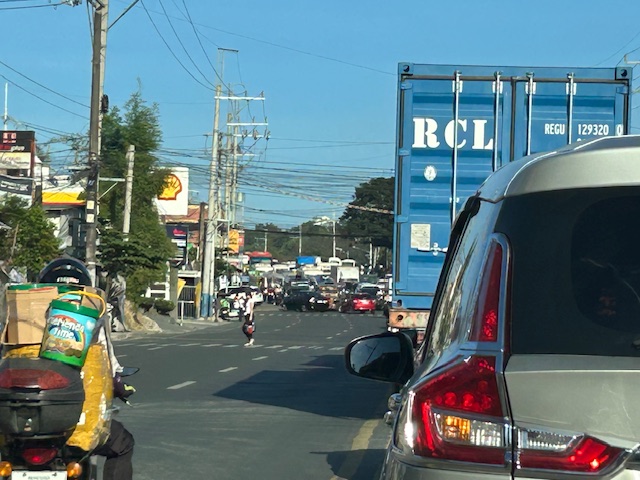 This is the view from the queue approaching the intersection of TOCS Avenue with Marcos Highway from the eastbound side of the highway. Note that traffic is not flowing from the junction along the eastbound (Metro Manila bound) side of the highway.
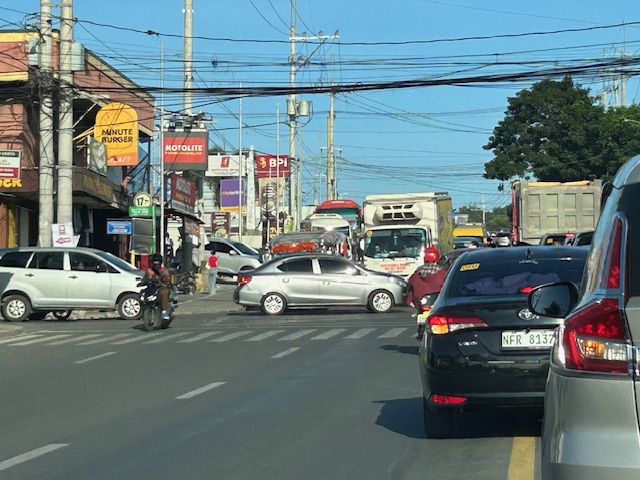 A closer look with vehicles turning left to Marcos Highway from TOCS Avenue. There are usually Antipolo traffic enforcers facilitation (read: favoring) traffic from and to TOCS Avenue. This results to build-up along Marcos Highway where most traffic is through traffic.
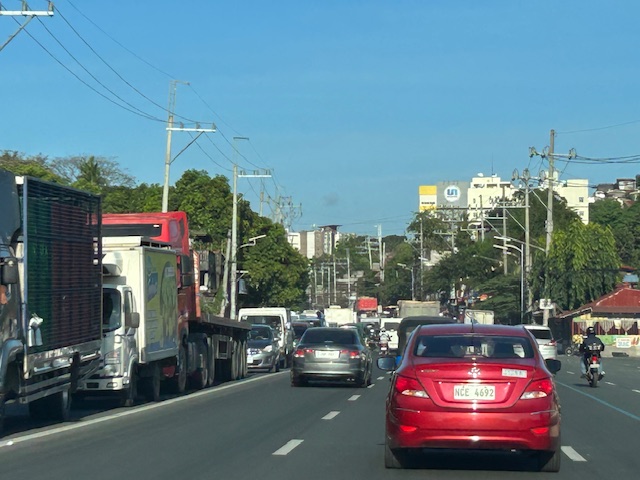 The resulting congestion affects many travelers including freight along the westbound (Metro Manila-bound) direction of Marcos Highway.
While the alternate route likely provides shorter travel times for those coming from Marikina to Antipolo/Cogeo and vice versa, this is at the expense of more people and goods who and that travel along Marcos Highway. Antipolo should realize this even with basic observations on the traffic build-up in the area. Traffic for that alternate route should not be prioritized to the detriment of travelers along Marcos Highway.
–
On walkable spaces for senior citizens
Here is a quick share of an article on walking and walkability, and the relation with dementia:
Steuteville, R. (March 10, 2025) “Living in a walkable place reduces dementia,” , https://www.cnu.org/publicsquare/2025/03/10/living-walkable-place-reduces-dementia [Last accessed: 3/29/2025]
To quote from the article:
“When we live in a walkable place, we move more, naturally. Unsurprisingly, exercise is linked to better cognitive health. Regular exercise increases memory, and boosts hippocampal volume by 2 percent.
Also, walkable neighborhoods are more stimulating. They are built on connected street networks, which give individuals more choices on how to get around and reward those choices with diverse physical paths linked to spatial memories. And they are mixed-use.
“Street layouts with better connectivity and walkability are associated with a reduced risk of cognitive impairment. Access to local amenities, such as food stores, community centers, and healthcare amenities, supports cognitive health,” the authors note.
Social connections also probably help. When you walk to a destination, you are more likely to have friendly interactions, which have been shown to reduce the risk of depression, and walkable places also boost the sense of community.”
As there are many senior citizens in our village, the topic is quite relevant. Most seniors probably won’t take a walk if they felt it was dangerous or risky even inside residential subdivisions. In our neighborhood, there are a few of them going around using their motorcycles or scooters. Most I see walking around perhaps for exercise or leisure rather than to go to a store or restaurant in the area. But increased traffic due to customers of restaurants that sprouted around the village has increased the risk for those who walk. Hopefully, the induced motor vehicle traffic generated by these establishments can be managed and regulated for the overall welfare of residents.
–
Sentimental for Yokohama
A visit from a couple of professors from Yokohama National University (Yokohama Kokuritsu Daigaku) triggered the sentimental part of me. Among the materials presented were information about life on campus and in Yokohama, which is the second biggest city in Japan after Tokyo. There were also giveaways including a nice folder featuring a photo of Yokohama showing the campus on the foreground and many landmarks in the background.
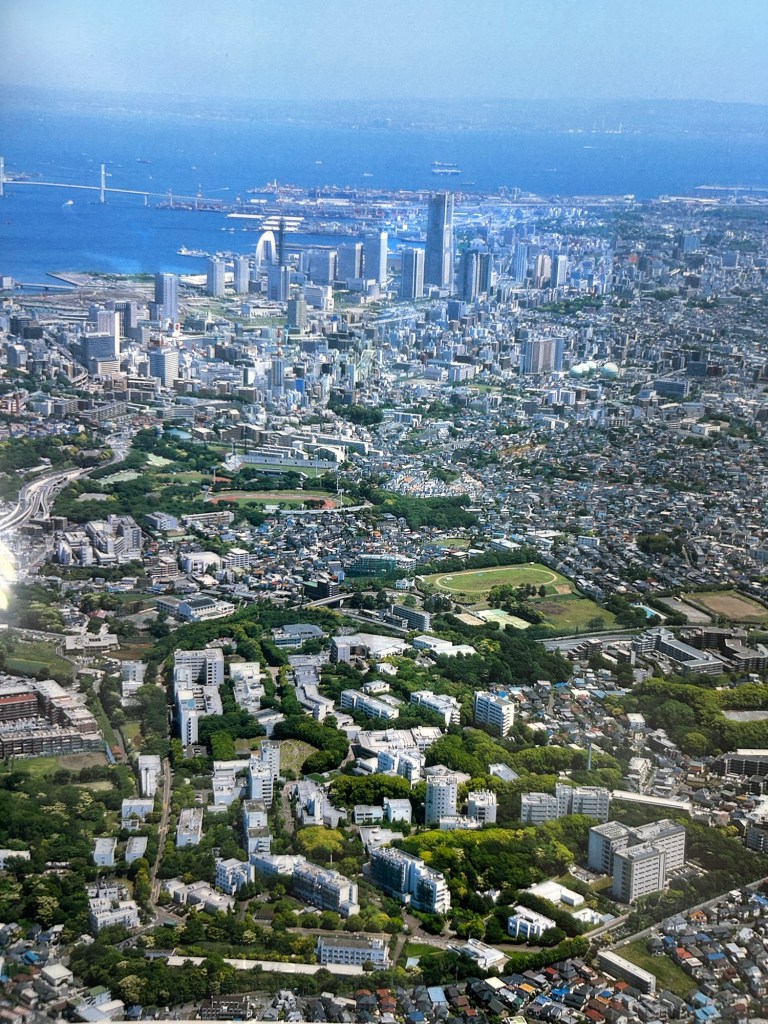
Landmarks in the photo include the Landmark Tower that used to be the tallest building in the country. There is also the Yokohama Bay Bridge that eventually connects to the Aqua Line. And, of course, the Port of Yokohama, which has long been one of the international gateways to Japan.
I have not been to Japan for more than a decade so I look forward to doing another sentimental journey to again visit familiar places and explore new ones.
–
On accessibility for airline passengers with disabilities
We already know about the ramps they use for boarding and deplaning for most if not all passengers including those on wheelchairs. As we boarded our plane to Legazpi last month, I noticed that there was another way to board aircraft if the passenger was on wheelchair. Here are some photos I took of the elevator access at NAIA Terminal 3.
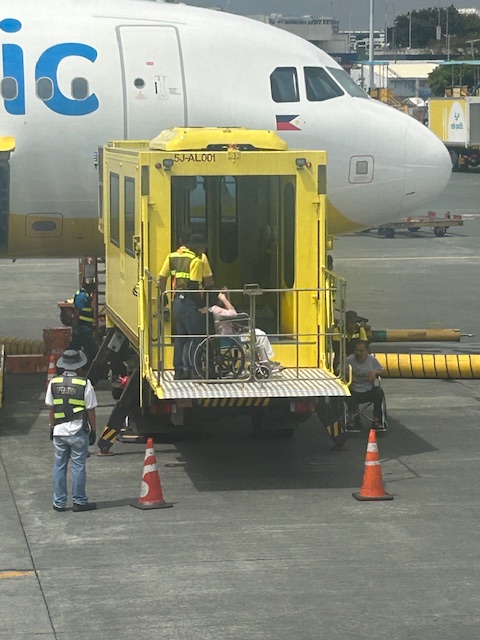 I took this photo of a female passenger being wheeled into the elevator compartment after the ramp was elevated to the compartment level. Notice that there is another wheelchair-bound passenger waiting in the shade at the right in the photo.
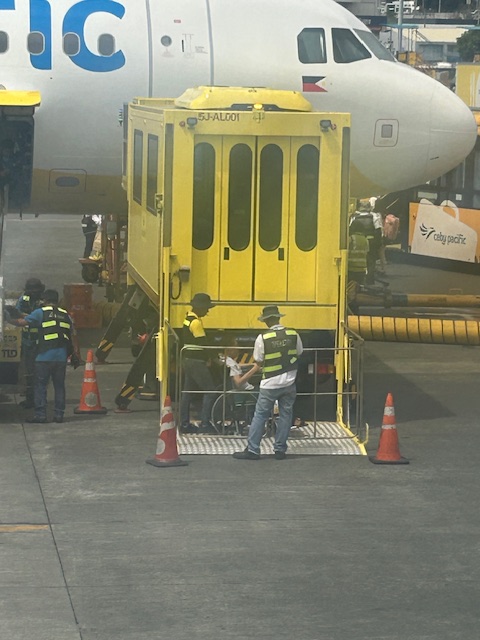 After the female passenger is inside the compartment, the ramp is lowered and the male passenger is wheeled unto the ramp.
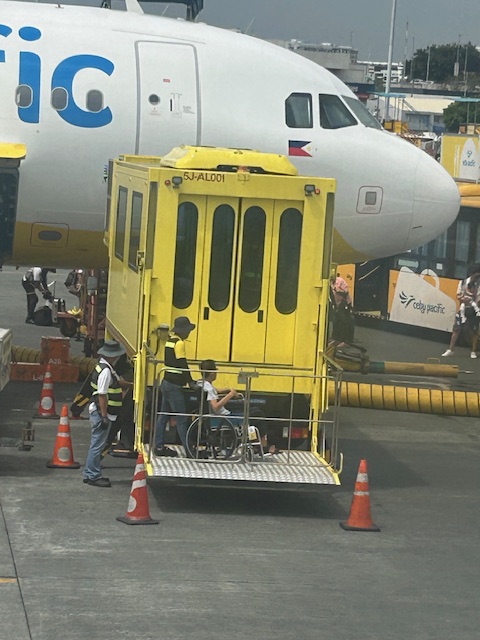 The ramp elevates towards the compartment door.
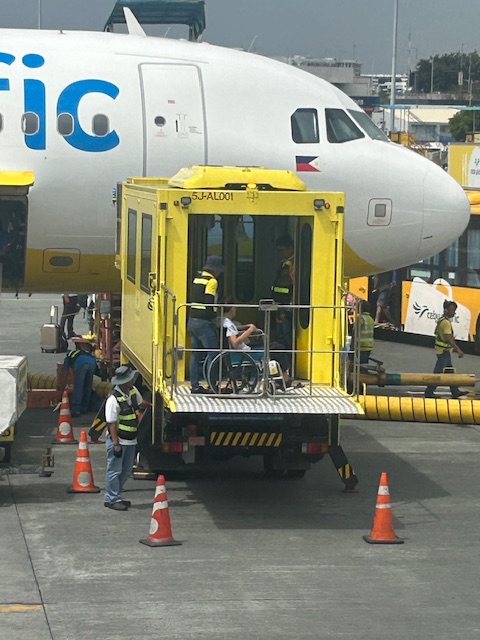 When level, the doors open for the second passenger to enter.
 The doors close and the main elevator goes up with the 2 passengers and the ground personnel assisting them.
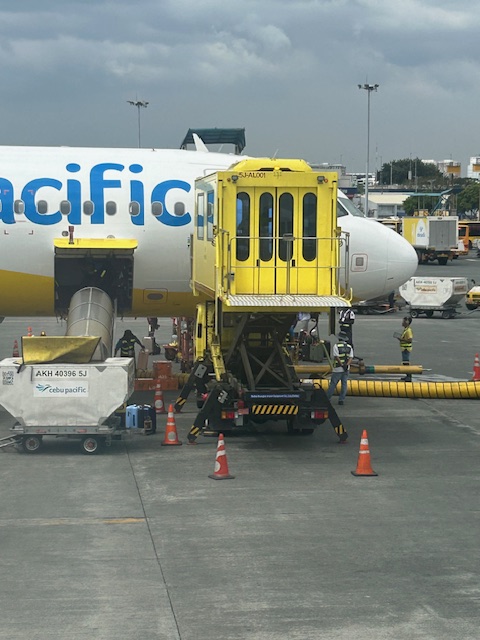 The platform is elevated until its door and ramp is aligned with the plane’s door.
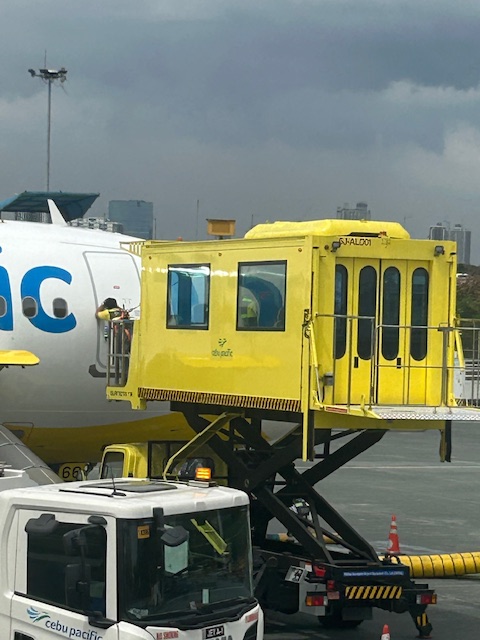 Ground personnel assisting the wheelchair-bound passenger knocking on the door for flight attendants to open it for the passenger.
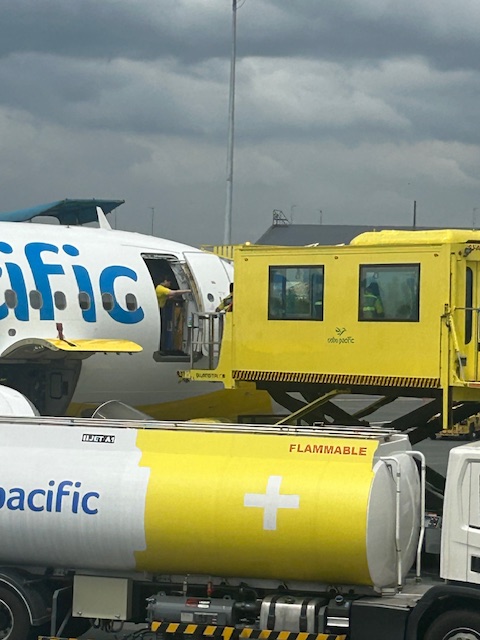 Airline crew opening the door for the wheelchair-bound passengers
This was the first time I saw this equipment at an airport. I wonder if there are similar elevators at the other NAIA terminals or in other Philippine airports where there are no tubes or bridges connecting the aircraft to the terminal buildings.
–
 Caught (up) in traffic