2015 National Science and Technology Week and the Hybrid Road Train
The Philippines’ Department of Science and Technology National Science and Technology Week 2015 on July 24-28, 9am-6pm, SMX Convention Center, Mall of Asia, Pasay City. NSTW 2015 has 9,300 square meters showcasing 145 technologies, 51 forum sessions, 11 technology demonstrations, 25 other S&T events, 1 road train. Admission is free. Details at National Science and Technology Week  A special feature this week is the Hybrid Electric Road Train developed by the Metals Industry Research and Development Center (MIRDC) with 5 coaches and capacity of 240 passengers. You can find a description of the road train project in the MIRDC’s site from this link. Here’s a screen grab from the same site/link showing what the road train looks like:

Incidentally, the MIRDC is also the DOST center in-charge of development of Automated Guideway Transit (AGT) vehicles currently being tested in the University of the Philippines Diliman and the MIRDC Compound in Bicutan. Free rides are scheduled on July 24 12nn-4pm; July 25-28, 10am-12nn, 2-4 pm. The road train is envisioned to provide for mass transit needs of cities particularly those with long stretches of major roads like EDSA or C5 in Metro Manila.
–
Transit Lounge at NAIA Terminal 3
While waiting for the wife to arrive at Terminal 3 of the Ninoy Aquino International Airport (NAIA), I decided to go around the terminal again. It had been a while since I had explored the terminal and the delayed arrival of the plane meant I had a lot of time to burn. It seemed too lazy an option to just sit down and have some food and drink at a cafe or restaurant when you can exercise by taking a walk around the terminal.
At the fringes of Level 4 where most of the shops, cafes and restaurants are located, I stumbled upon a newly opened transit lounge. The Wings Transit Lounge is dubbed as the Philippines’ first airport lounge. It opened last May and offers travelers and even well-wishers facilities similar to that of hotels. It is actually a hotel within the airport that gives people the option of a more comfortable rest or sleeping area (accommodations). This can be a good option for people in between flights (transfer passengers) especially those arriving late at night and with long layovers before their connecting flights at the same airport terminal or the other terminals of NAIA.
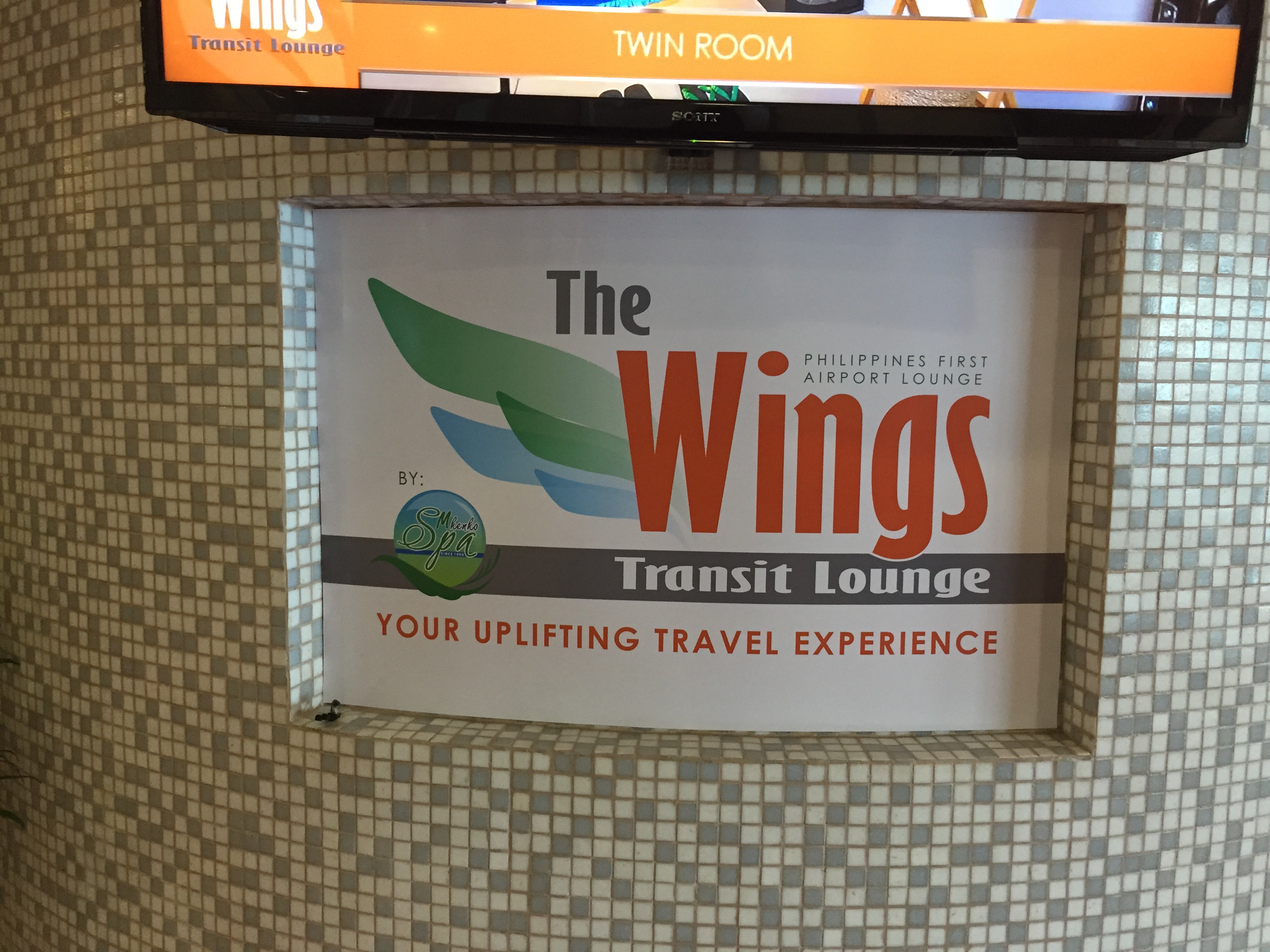 The Wings Transit Lounge opened last May at NAIA Terminal 3
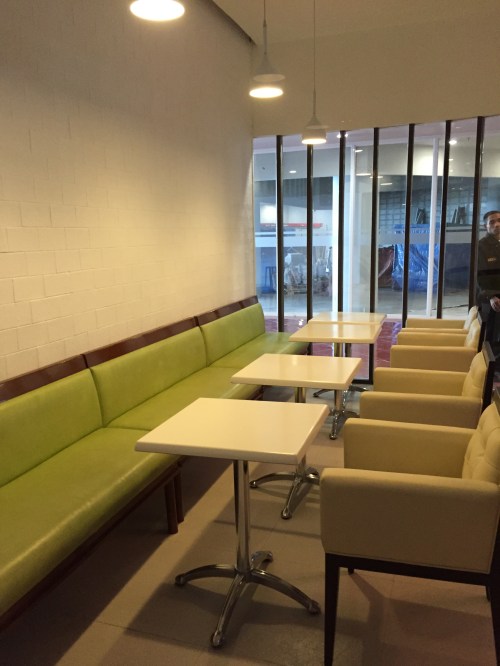 Dining or work area
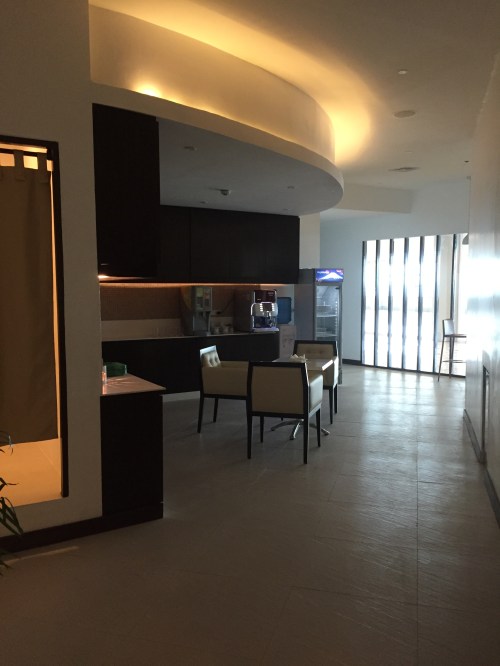 Pantry and dining area – the bright lights in the background is from the area across the corridor from the transit lounge that has a great view of the tarmac and runway; parts of NAIA Terminal 3 that have yet to be occupied (and which are prime areas for restaurants or cafes).
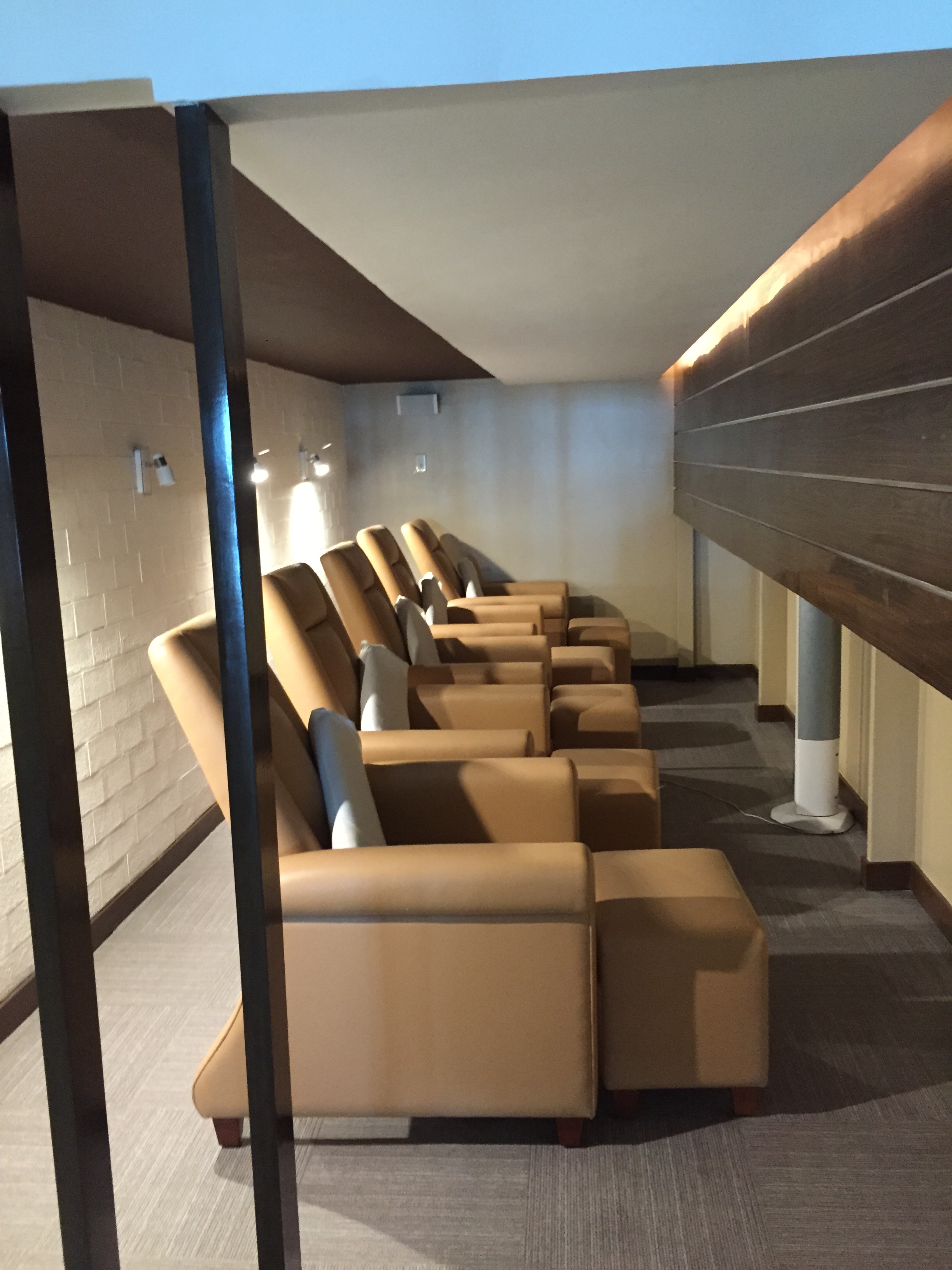 Lounge chairs for napping, waiting, a massage or a manicure/pedicure
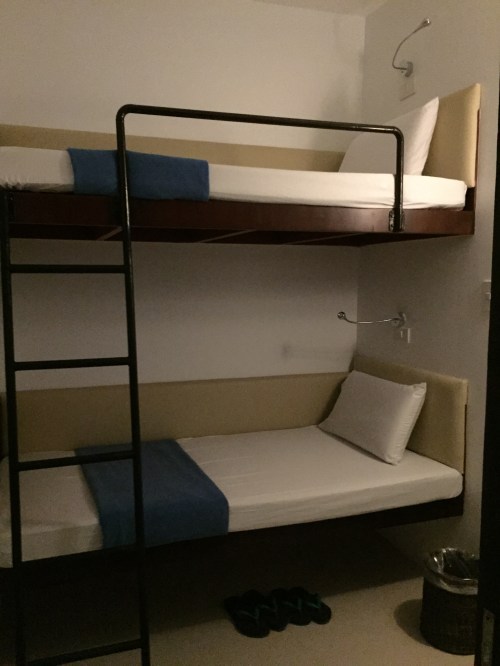 Double deck beds at the family room – note also the personal reading lights for each bed.
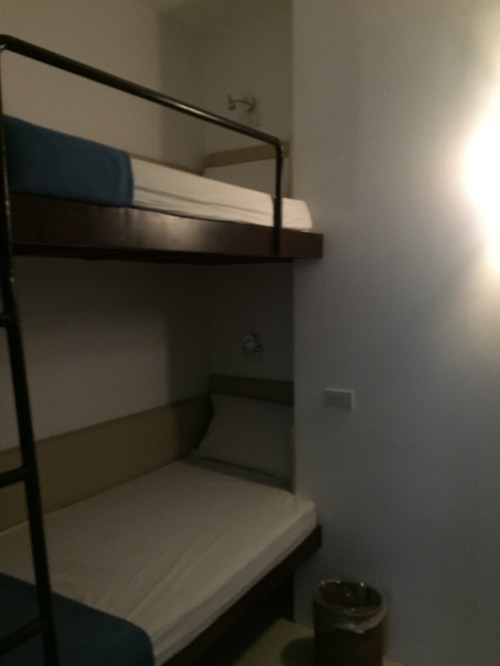 Another photo of the double deck beds at a family room. I wasn’t able to get photos of their twin and bunk rooms as these were occupied when I went around the transit lounge.
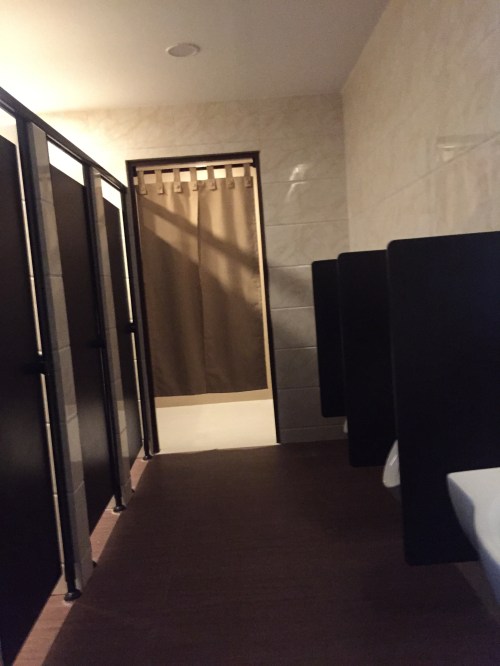 Common toilets and showers for those wanting to freshen up before or after a flight.
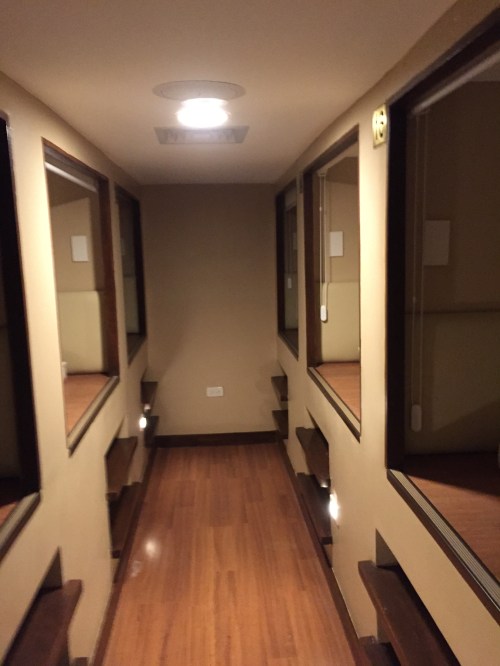 Capsules include blinds for some privacy
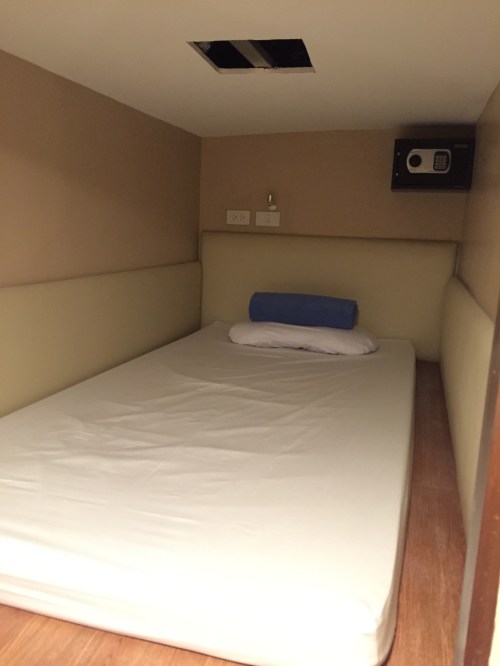 Here’s one capsule unit with a safety deposit box and reading light.
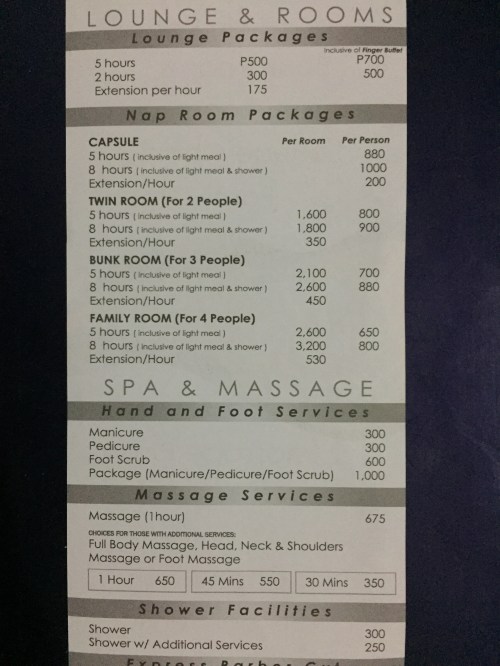 Room and lounge rates plus rates for other services offered by Wings Transit Lounge
The rates appear to be expensive at first glance but should be considered in the context of convenience. The transit lounge provides services (mainly accommodations) that, although hotels in the area can also provide, are offered right there at the terminal itself. You can google the airport hotels to compare rates. The nearest ones to NAIA Terminal 3 are the Marriott Hotel, Maxim’s Hotel and Remington Hotel.
–
Promoting road safety to our youth
Road crashes has been regarded as one of the top killer disease worldwide. Many people have perished or have been seriously injured in road crashes. As such, road safety is and should be a top concern among national and local agencies. We are all vulnerable road users whether we are pedestrians, motorists or riders regardless of our age, gender, ability or health, income and other attributes. And so it is in our best interest to be aware of and participants to initiatives advocating road safety.
The Philippines is part of the Global Road Safety Partnership (GRSP) with its own PGRSP acting as an umbrella organization consolidating and coordinating road safety initiatives among government and private organisations. Among these initiatives are programs promoting road safety among our youth and particularly to our children. Kids are very receptive to ideas. Their minds are like sponges in terms of their absorption of knowledge and information about everything around them and what’s provided to them. If they are taught about road safety at an early age, they would hopefully be able to appreciate this and even influence their parents, siblings and relatives to be practitioners and advocates of road safety.
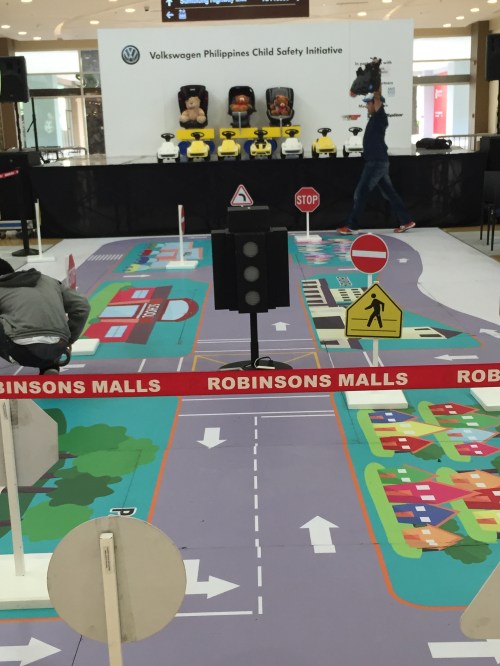 Road safety promotion initiatives like this is a collaboration of several government and non-government entities like the DOTC, PGRSP and Safe Kids Philippines with support from various partners in the private sector including Automobile Association Philippines (AAP), Top Gear, and of course, Volkswagen Philippines, which has a very active child safety program.
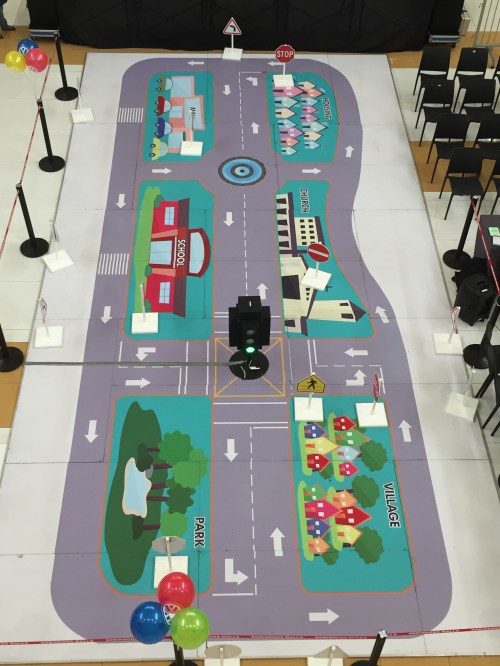 Layout of the ‘portable road safety park’ that can be easily set-up in road safety promotion roadshows like those being held at malls around Metro Manila and its adjacent towns.
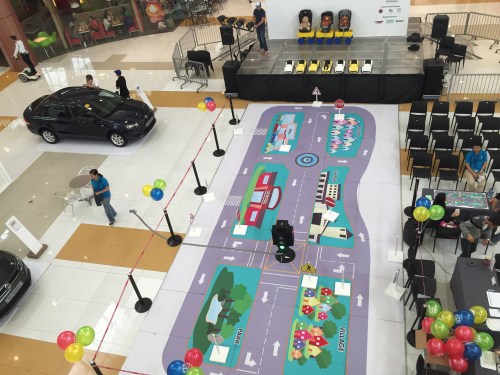 Another view of the ‘park’, stage and orientation area for the road safety initiative at a major mall in Antipolo City, which is to the east of Metro Manila.
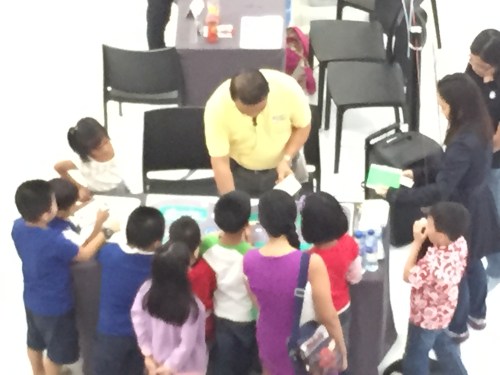 Children and their parents/guardians flock around a resource person for the road safety initiative and park.
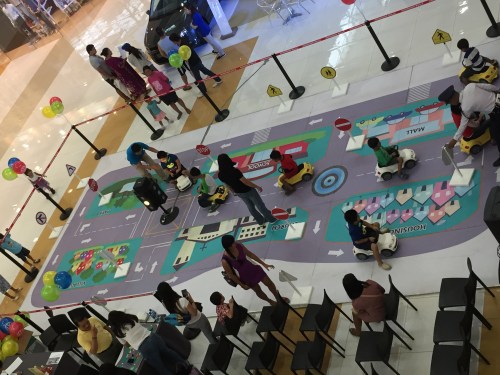 Kids try out the portable road safety park, simulating traffic using toy cars and familiarising themselves with basic traffic rules and road signs.
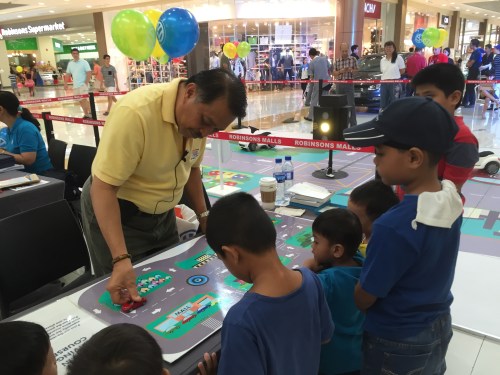 Former LTO chief and current Secretary General of the Philippines Global Road Safety Partnership (PGRSP – the local affiliate of the international group) Albert Suansing orienting children about the road safety activity
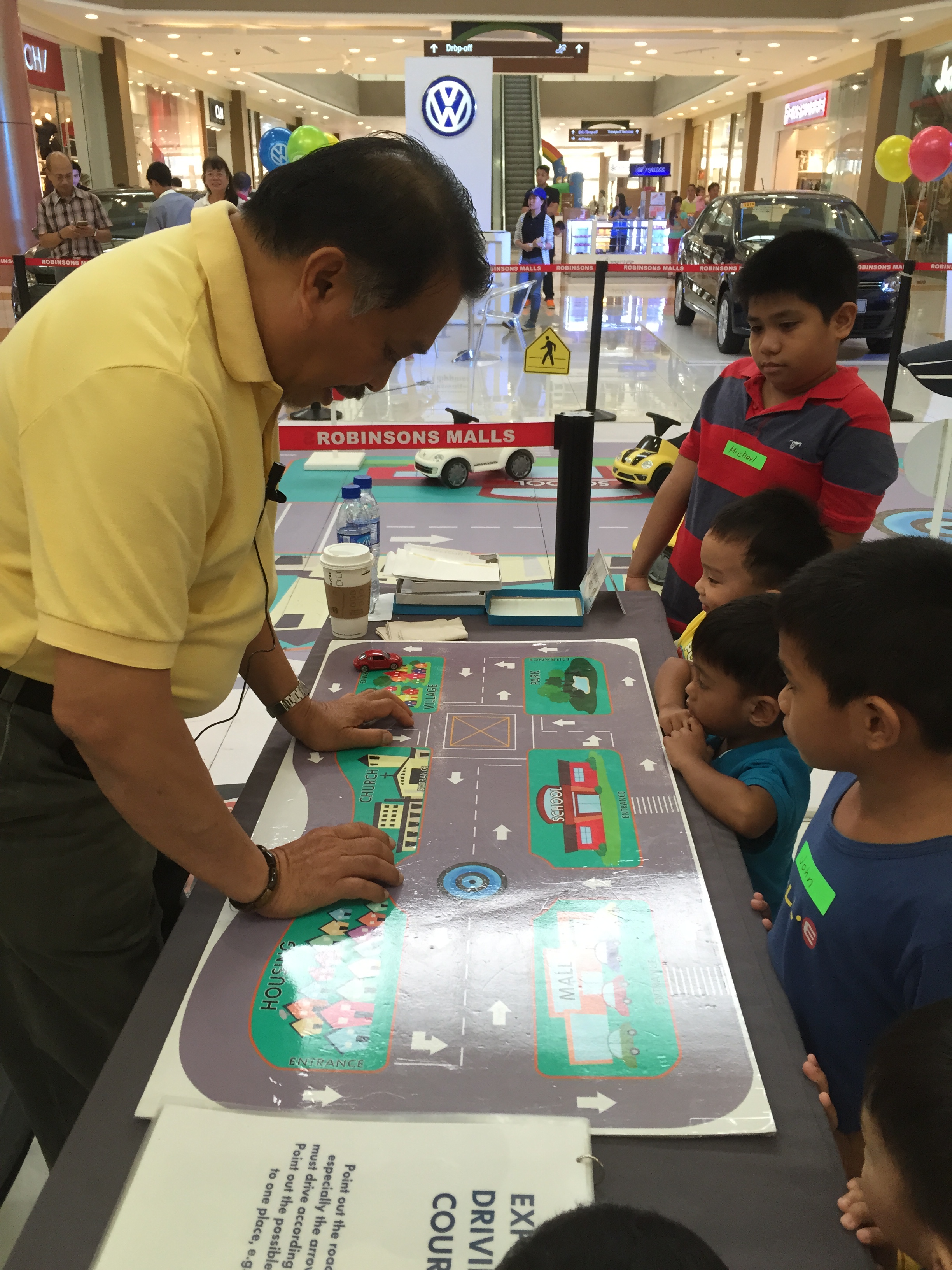 People should be taught about road safety at an early age. Children are very receptive and their minds are like sponges in terms of absorbing the information provided to them (e.g., road safety practices, correct behaviour for pedestrians and motorists, etc.).
We hope that there will be more initiatives like the one we featured here. I believe there are many who support road safety and those who are interested in promoting it among various stakeholders. Hopefully too, these will be extended and held in other cities around the country in order to increase road safety awareness and support that will ultimately lead to safer road environments for all.
–
San Diego Buses
I took a lot of photos of transport in San Diego and among these are of buses. The San Diego Metropolitan Transit System operates a variety of buses that included articulated ones. These have fixed routes and designated stops. At each stop, there is information on what buses (i.e., routes/route numbers) stop there. Here are a few photos of buses in San Diego.
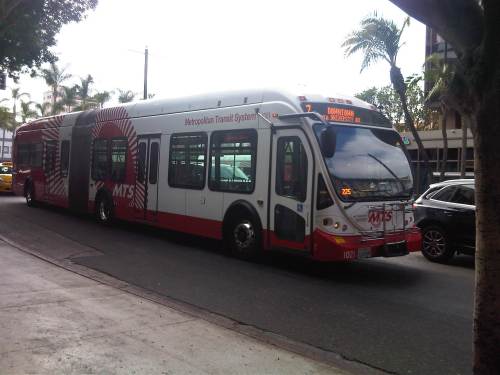 Articulated bus in downtown San Diego
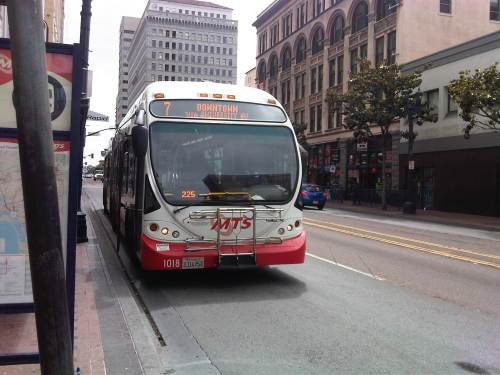 The contraption in front of buses are racks for bicycles
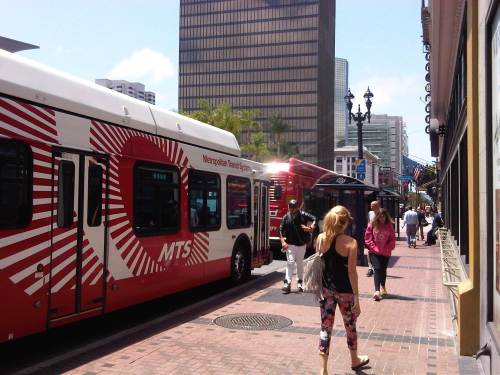 Bus stop in downtown San Diego
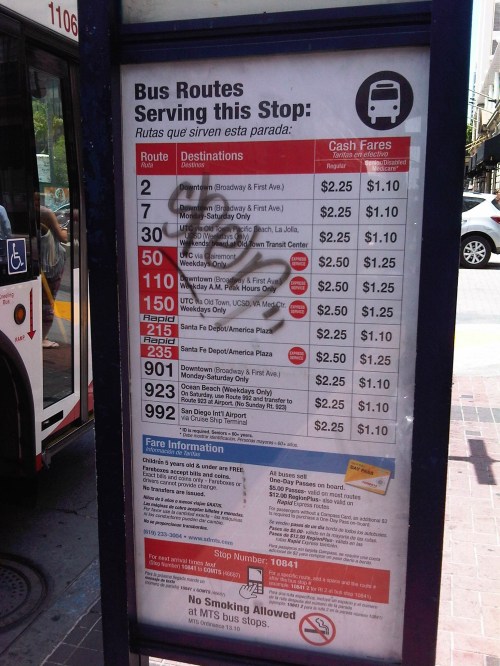 Information on bus routes, destinations and fares at bus stops – you can pay as you board the bus or purchase a ticket, pass or compass card in advance.
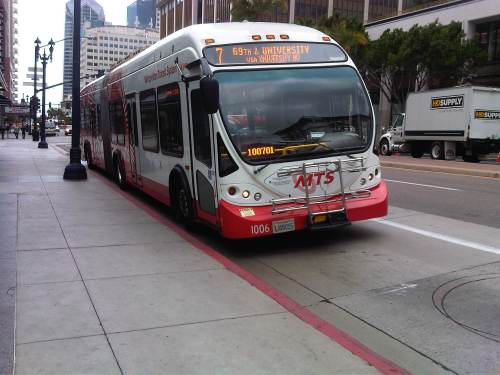 A bus serving the La Mesa-Downtown route via University Ave. – this is the bus you take from downtown San Diego to San Diego Zoo
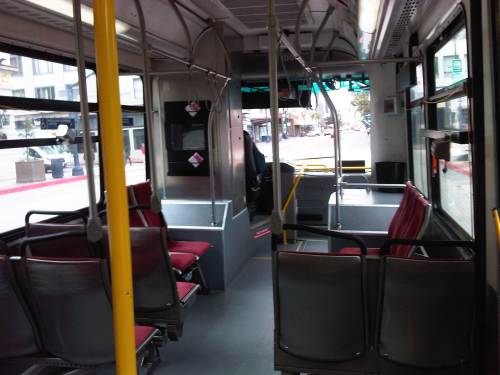 Bus interior shows few seats and much spaces for standees – enabling the vehicle to maximize its passengers
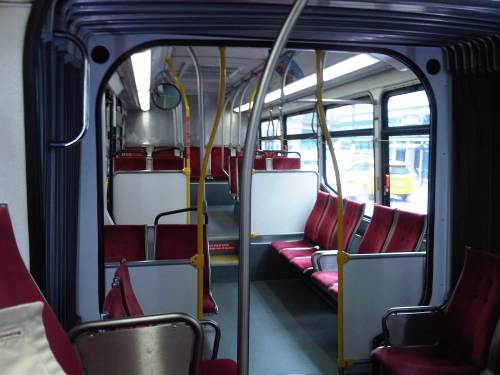 The interior on the rear half of the articulated bus
San Diego is a city of just under 1.4 million people with a transport system that’s able to serve the demand for transport over the distances covered by its buses and trolleys. Compared to Philippine cities, San Diego’s transit system is one well oiled machine. Of course, it is more expensive if you convert dollars to pesos but then if you account for the standard of living (including living costs and salaries) and the quality of service provided by the trolleys and buses, then you have something Manila and other major cities in the Philippines would be envious of. Can we have something like San Diego’s transit system in the Philippines? We can but (and that’s a big ‘but’) it needs a lot of work and commitment to set-up and make something like this work.
–
Tom Bradley International Airport
Before our trip back to Manila, we passed by Los Angeles to visit with family and meet up with friends. We haven’t seen them for some time including cousins who live outside of LA but drove hours just to meet up. Needless to say, we had a great time meeting up with relatives and friends whom we only communicated with via internet. nd we also managed to squeeze in some touristy stuff like going to see the space shuttle Endeavor at the California Science Center.
On the day of our flight back home our cousin drove us to Tom Bradley International Airport. We normally booked an airport van or limousine but he was free that noontime so we had a free (and more comfortable) ride to the airport. Unfortunately, I couldn’t get photos of the check-in area as it was already crowded when we arrived and we had to split up as I was flying Economy while the wife was flying on Business Class. Here are a few photos I took at the airport:
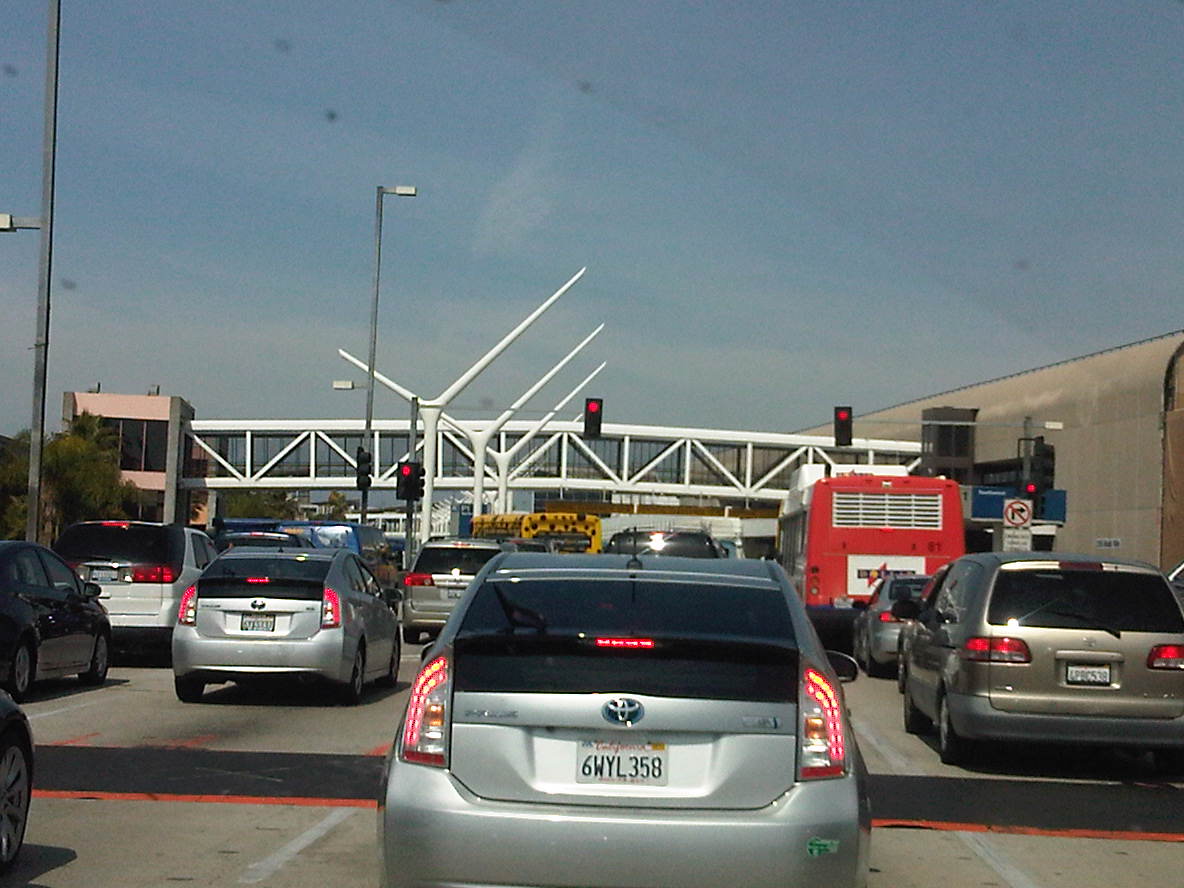
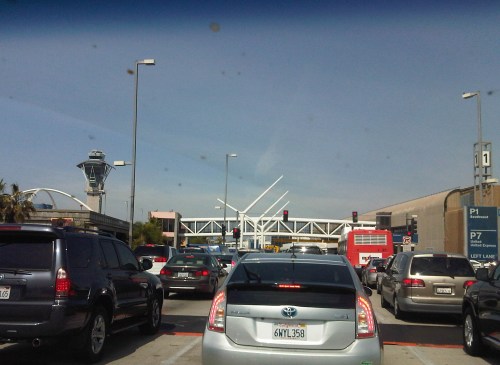 Traffic congestion at the airport driveway
 Upon clearing immigration and completing security checks, passengers are greeted by shops along the corridor to the boarding gates.
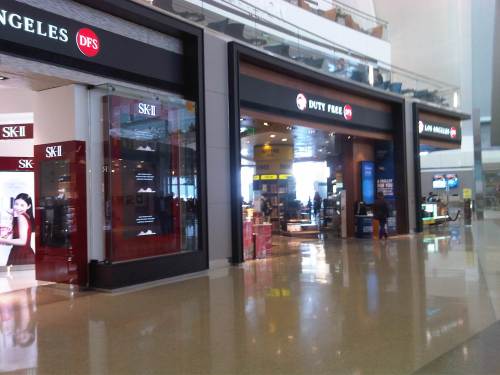 Duty Free shops at LAX
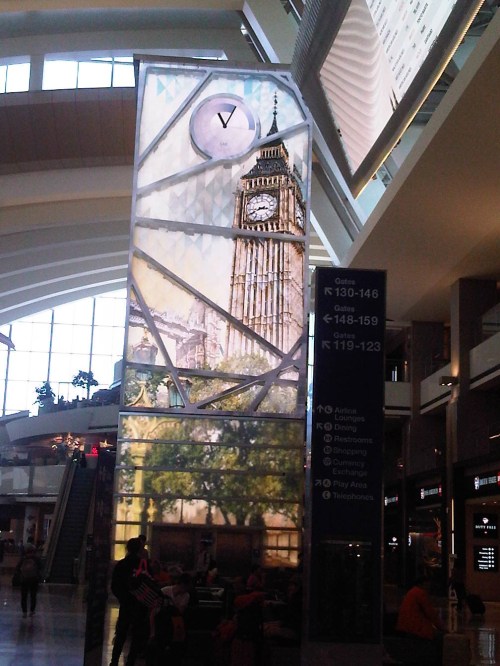 Giant video screens show the time and landmarks in other cities around the world
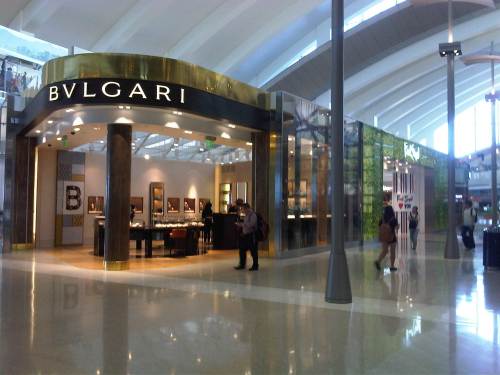 As in many international terminals, there are many high end shops at LAX
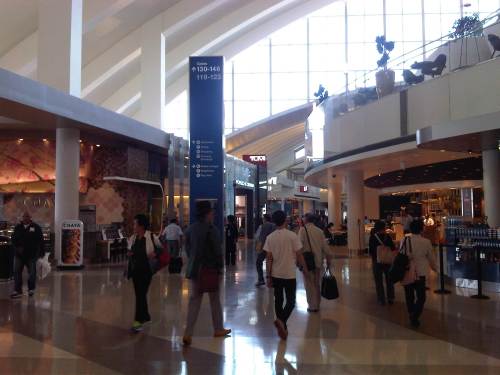 More shops, directions to boarding gates and other information are strategically located in the terminal.
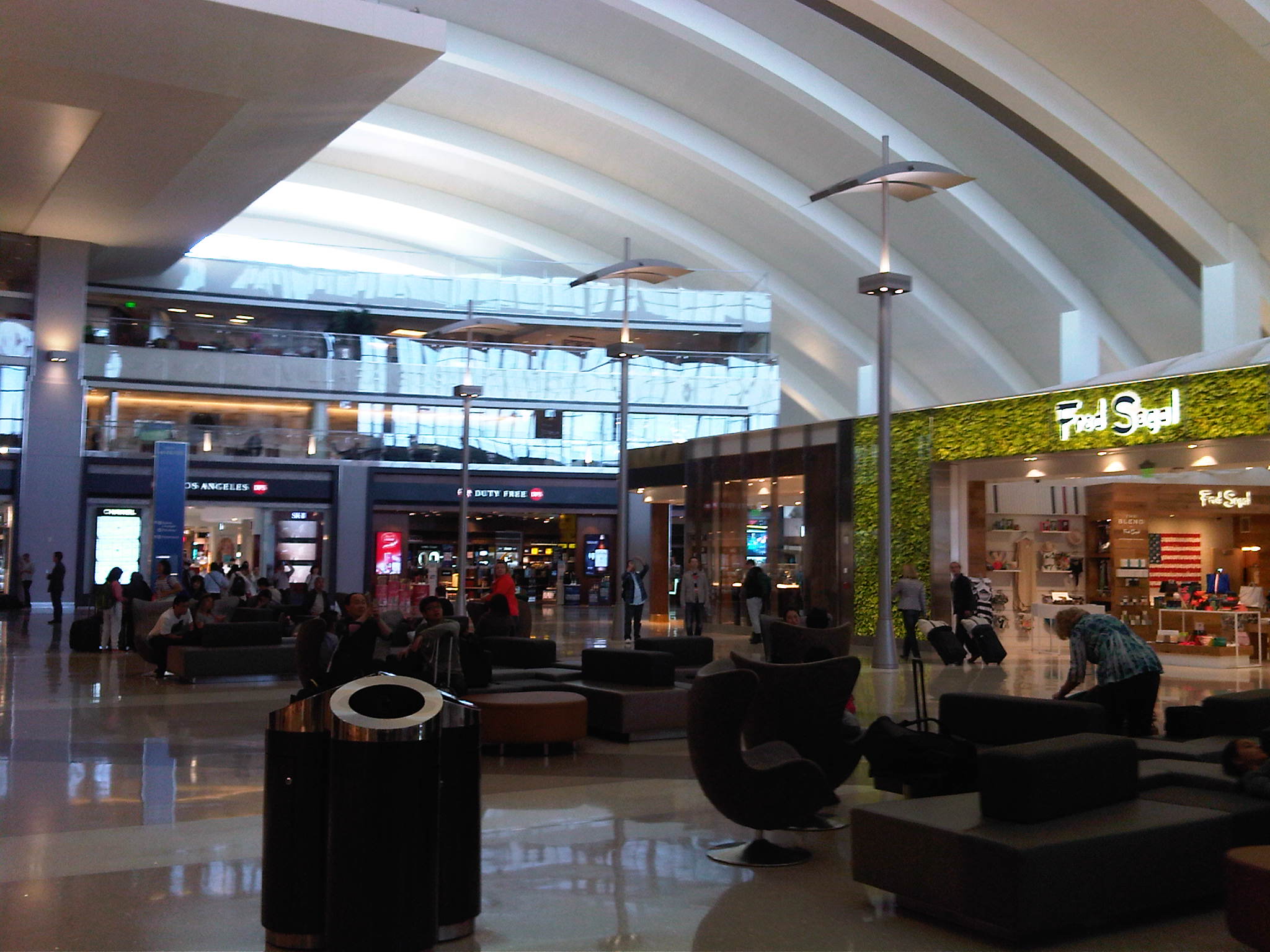 Passengers can lounge around the airport as there are many seating areas in the terminal.
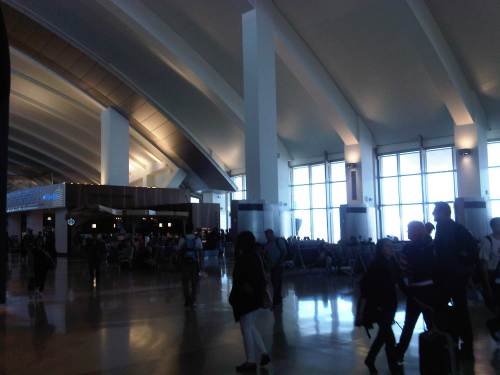 Passengers walking around or seated at the terminal
 Passengers can walk around the terminal to get the blood flowing if they prefer not to just sit and wait for their flights to board.
 Boarding gate for our flight
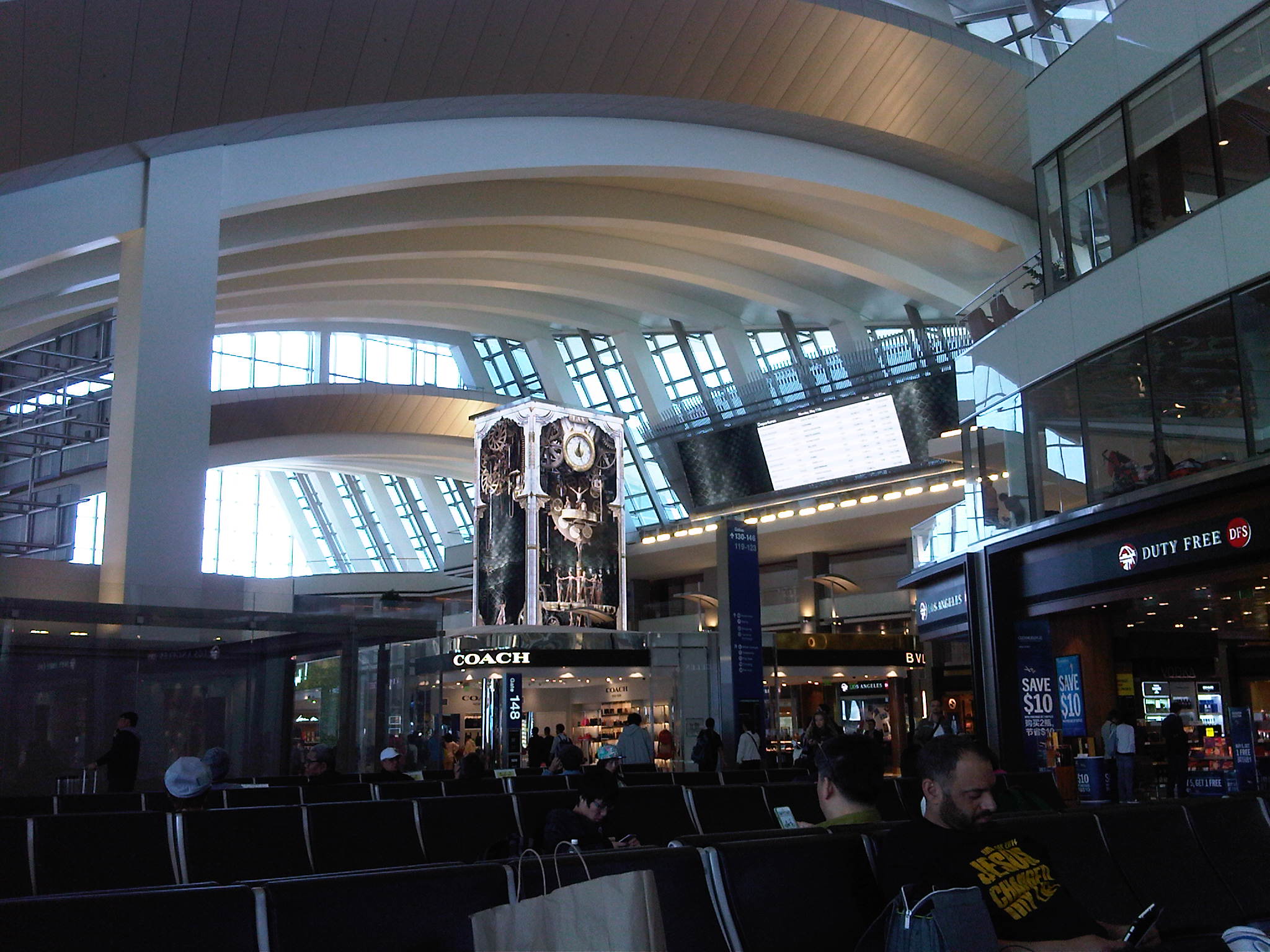 Passengers waiting near the boarding gate catch up on conversation, read or do whatever they prefer to while waiting for their boarding call.
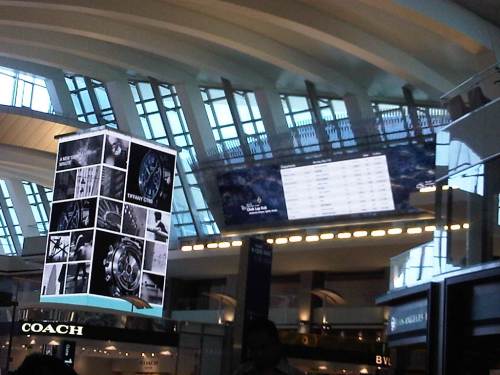 Another look at the information board on flights as well as the advertising screen at the terminal.
–
Transport research agenda
As promised, I am posting our research agenda from the last academic year. This has been revised every year since we established our undergraduate research program more than a decade ago. Back then, the document had been informal in the sense that it was not an official document that was submitted to the university for approval. Over the years, the agenda had been developed alongside that of the National Center for Transportation Studies and has evolved according to the current issues and concerns (including trending topics) in transportation.
A. Traffic Flow Theory and Analysis, and Traffic Engineering
1. Evaluation of Intersection Performance Considering Pedestrian Movement
2. Car-Following and Lane-Changing Models for Local Traffic Micro-simulators
3. Optimization of Traffic Signal Settings
4. Highway and Intersection Capacity and Level of Service
B. Highway Engineering
1. Local Pavement Design Practice
2. Coordination of Horizontal and Vertical Alignments
C. Intelligent Transport Systems (ITS)
1. Advanced Traveller Information and Navigation
2. Advanced Public Transportation and Travel Information
3. Microscopic Traffic Simulation Modelling
4. Advanced Parking Management
5. Integrated Fare Collection for Public Transport
6. Probe Car System for Road Safety and Travel Time Assessment
7. Development of Devices/Sensors for In-Vehicle Air Quality Measurement
8. ITS Support for PWDs, Senior Citizens and Women
9. Smart City and PUV Connectivity for Fully Automated Driving: Internet of Vehicles (IoV)
10. Advanced Traffic Data Collection Tools and Methods
D. Transport Safety
1. Road Safety Audit
2. Road Crash Data Analysis and Management System
3. Road-Based Public Transport Safety
4. Philippine Air Transport Safety
5. Philippine Maritime Safety
6. Safety and Comfort Assessment of Public Utility Vehicles
7. Safety Assessment of Buses Equipped with GPS
E. Public Transport
1. Indigenous Modes of Transport
2. Public Transport Operation and Management
3. Public Transport Station/Stop and Terminals
4. Assessment of Mass Transport Options (e.g. BRT, AGT, AFV)
5. Multi-Modal Transfer Stations in Urban Areas
F. Mobility Management
1. Parking Management Systems
2. Traffic Calming
3. Bikeways Planning and Management
4. Pedestrian Facilities and Walkability
5. Assessment of Freight Vehicle Restraint Schemes
G. Transportation, Environment, Energy and Vehicle Technologies
1. Fuel and Energy Efficiency of Alternative Fuel Vehicles for Public Transport
2. Roadside Air Quality Assessment and Modelling
3. Roadside and Airport Noise Modelling
4. Utilization and Customization of GHG Emissions Estimation Tools for Assessment of Avoid-Shift-Improve Policies and Transport Infrastructure Projects
5. Customized Local Road Vehicles for Public Transport (jeepneys and tricycles)
6. Transport Energy Demand
Note from the above agenda that there are few items that are very specific. The above are not working titles for researches but very general topics that can be the basis for formulating specific topics for each student/group that will be working on that topic. Not indicated in the agenda are information on which faculty members are assigned to each topic. Faculty members have various specializations and have contributed items to the agenda. Students choosing a particular topic will be assigned to the faculty member who will be guiding the students towards proposal formulation and eventually, research implementation.
–
Research topics on transport and traffic in the Philippines?
I noticed that this site has received a lot of hits for inquiries regarding undergraduate research topics. While we at UP have yet to start our first semester of the academic year 2015-2016, other schools have already started their semesters, trimesters or quarterms. I suspect students in their final or graduating year would be looking for topics for their research projects or, what some schools refer to as the undergraduate thesis projects.
I have written about our undergraduate researches at UP Diliman the past few years and listed down the topics our students have implemented for their undergraduate projects. In our case, we have 2 subjects that our students take during their final year – CE 190, a one unit course that focuses on the formulation and approval of the research project and CE 199, a three unit course for the implementation of the approved project. These are taken over 2 semesters, usually the last 2 that the student takes before graduating.
Unfortunately, not all schools would have the capability and capacity to advise students taking on topics on transport and traffic. I noticed that many schools and their advisers just let their students select topics of their own choice. Many provide minimal if any guidance to students. The latter often choose topics on current issues or problems without checking if they have the knowledge and tools to undertake substantive studies. Often too, it seems to us that the advisers are not capable of providing guidance to their own students and as such just let them seek advise elsewhere including people they would identify as resource persons but to whom they would be more dependent on for advice than their schools’ faculty members. Although their enthusiasm and interest in various topics are commendable and there are many out there who would be gracious and generous to share their time, knowledge and experience with these students, they cannot do so as regularly as full-time faculty members. In fact, it is unfair to these people whose times and resources are already constrained by their own responsibilities (e.g., a professor at DLSU also has his own students to guide and classes to teach).
Schools need to develop their own research agendas. That is so that students would be able to choose topics that their faculty can realistically and effectively guide their students instead of sending them out to become the burdens of others. These would include topics concerning local issues. Are there road safety issues at locations such as intersections near the school? Are the streets in the nearby CBD experiencing congestion? Is there an oversupply or lack of public transport services in the city or a nearby town? It seems awkward for a university in Pampanga, for example, to have students taking on a topic concerning EDSA-MRT or students of a university in Metro Manila taking on a topic on Mindanao railways, if their faculty have no relevant experiences or capabilities to properly guide the students.
I would encourage schools to identify topics concerning local issues first. As they say, charity begins at home, and working on solutions for local problems should be top of the agenda of any school. That includes us at UP and there are many topics that focus on issues in and around UP Diliman. If we can’t solve our own problems then how can we be believable in addressing those outside our direct influence area?
In the next post, I will share and example research agenda from the last academic year. This was the basis for our students selecting topics for their undergraduate researches and as starting points for our graduate students in formulating topics for their MS thesis.
–
Arrival at LAX
This is a follow-up to the last post on the San Diego Commuter Air Terminal. I incorrectly stated that the info about the commuter terminal is current but it turned out that its already closed and flights have been transferred to the main terminal. Thanks to a comment from one of my readers who pointed that out! Anyhow, from San Diego, our SkyWest plane landed at LAX and taxied to Terminal 8. I took the following photos at LAX upon arrival from San Diego.
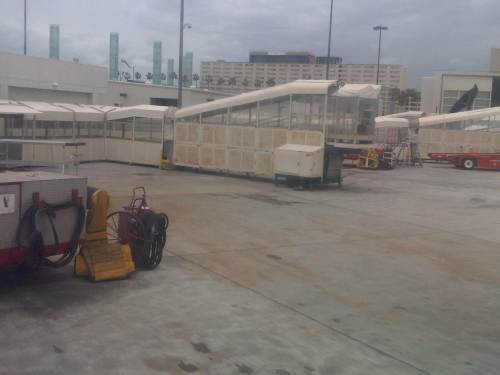 Instead of a bridge or stairs, the airport was equipped with these combinations of covered stairs and walkways to the terminal building.
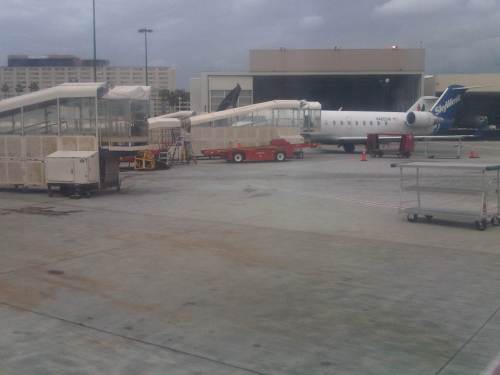 These seem to be especially fabricated for small aircraft and allowed for passengers to walk between aircraft and terminal for all weather conditions.
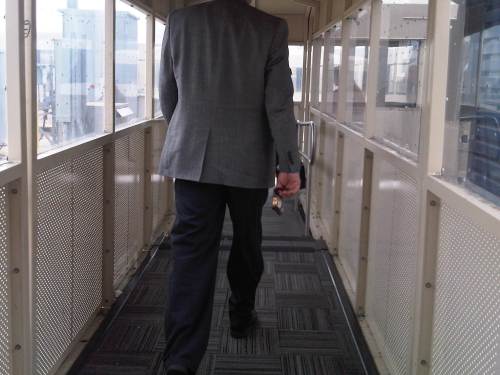 A look inside this ‘tube’ of sorts connecting the aircraft and the terminal
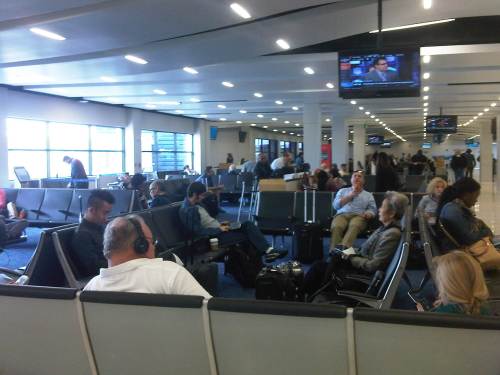 Inside Terminal 8 are passengers waiting for their boarding calls.
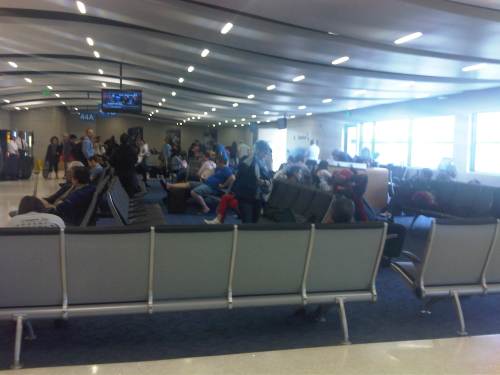 Another look around Terminal 8’s pre-departure lounge
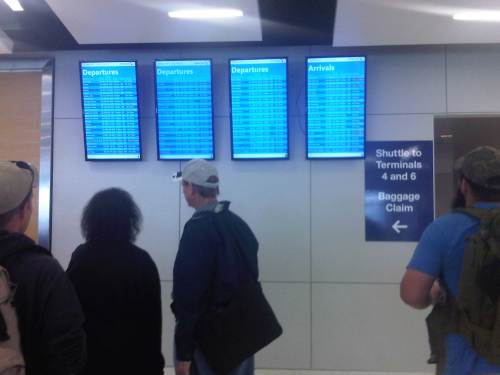 Information about departures and arrivals are shown on the screens at the lounge
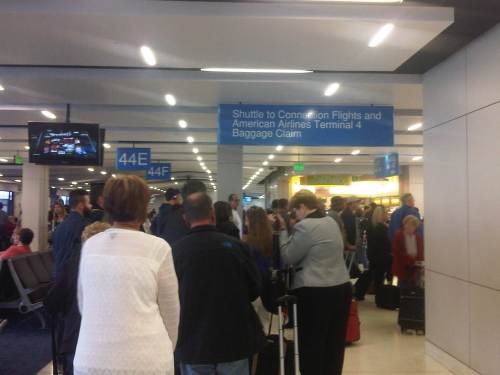 Long line for the shuttle to Terminal 4
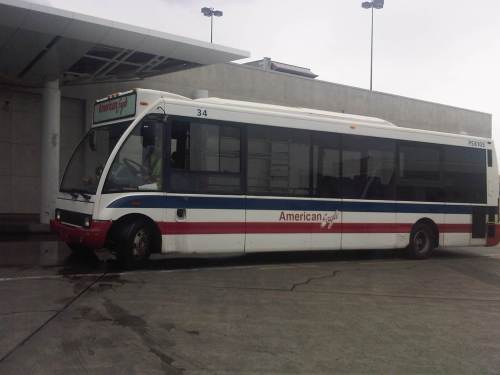 Our shuttle care of American Eagle airlines
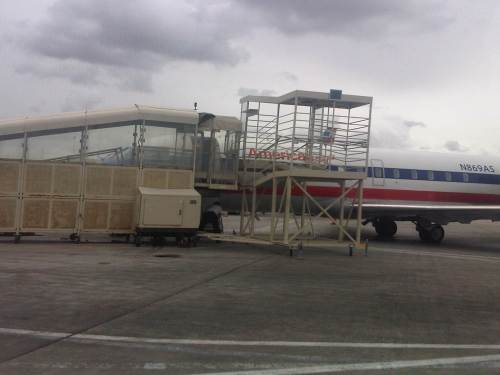 I was able to get a photo of an American Eagle airlines plane docked at one of the contraptions for enplaning/ deplaning passengers.
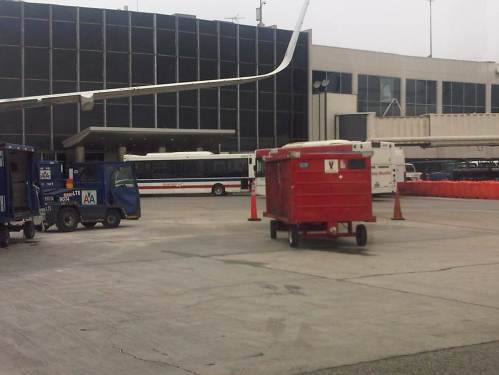 Buses wait their turns to drop-off and/or pick-up passengers at Terminal 4.
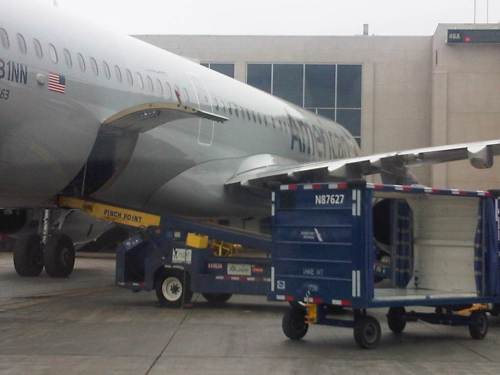 While waiting for our turn to alight from our bus, I took this photo of an American Airliner being serviced for luggage/freight.
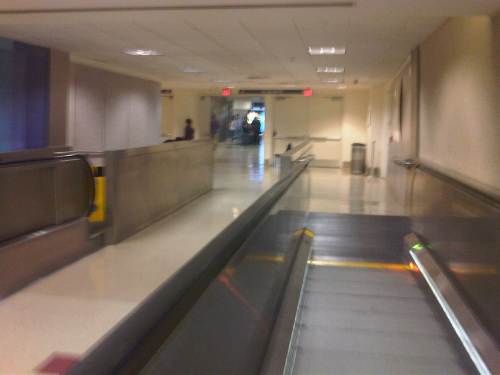 Moving walkway from the arrival gate of the terminal to the baggage claim area
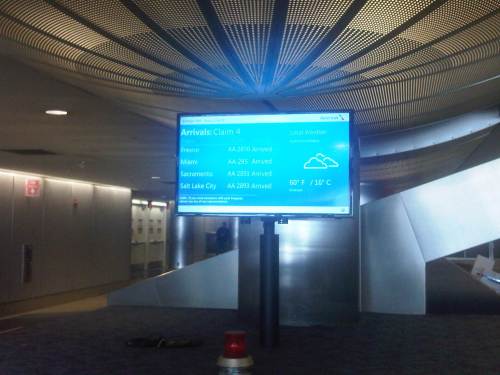 Information on arrivals served by a particular carousel are displayed on an LED screen. There is also information on the weather.
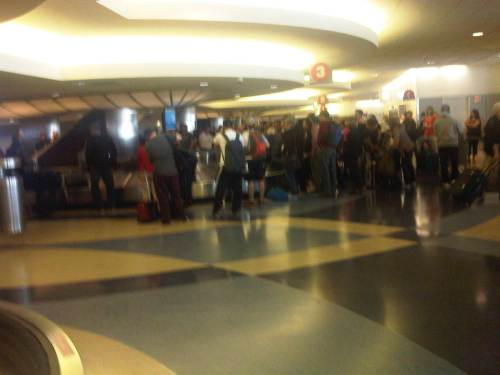 Passengers crowd around carousel 3 while waiting for their luggage to come out.
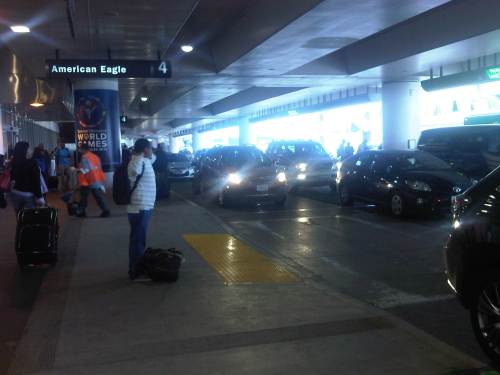 Busy driveway at LAX Terminal 4
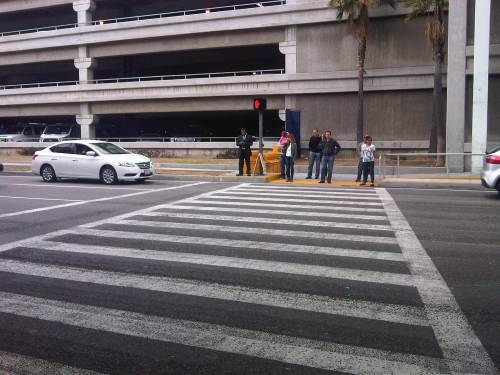 Crosswalk between the airport terminal and the multi-level parking building
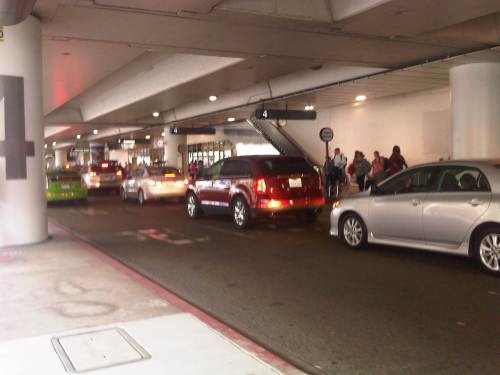 Long line of vehicles whose drivers are fetching arrivals
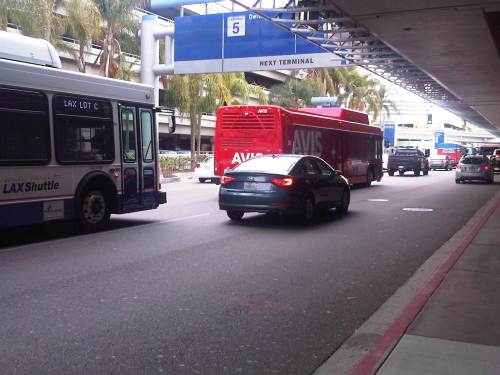 Parking shuttle and other airport shuttle buses passing through Terminal 4. There are vast parking lots located some distance away from the airport terminals that are used by travellers parking for long periods (i.e., park and fly for vacations or business trips).
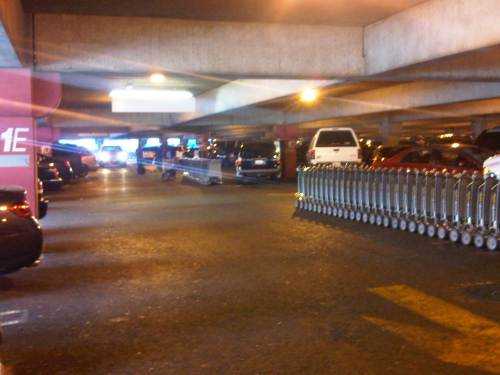 Inside the airport parking building across from Terminal 4
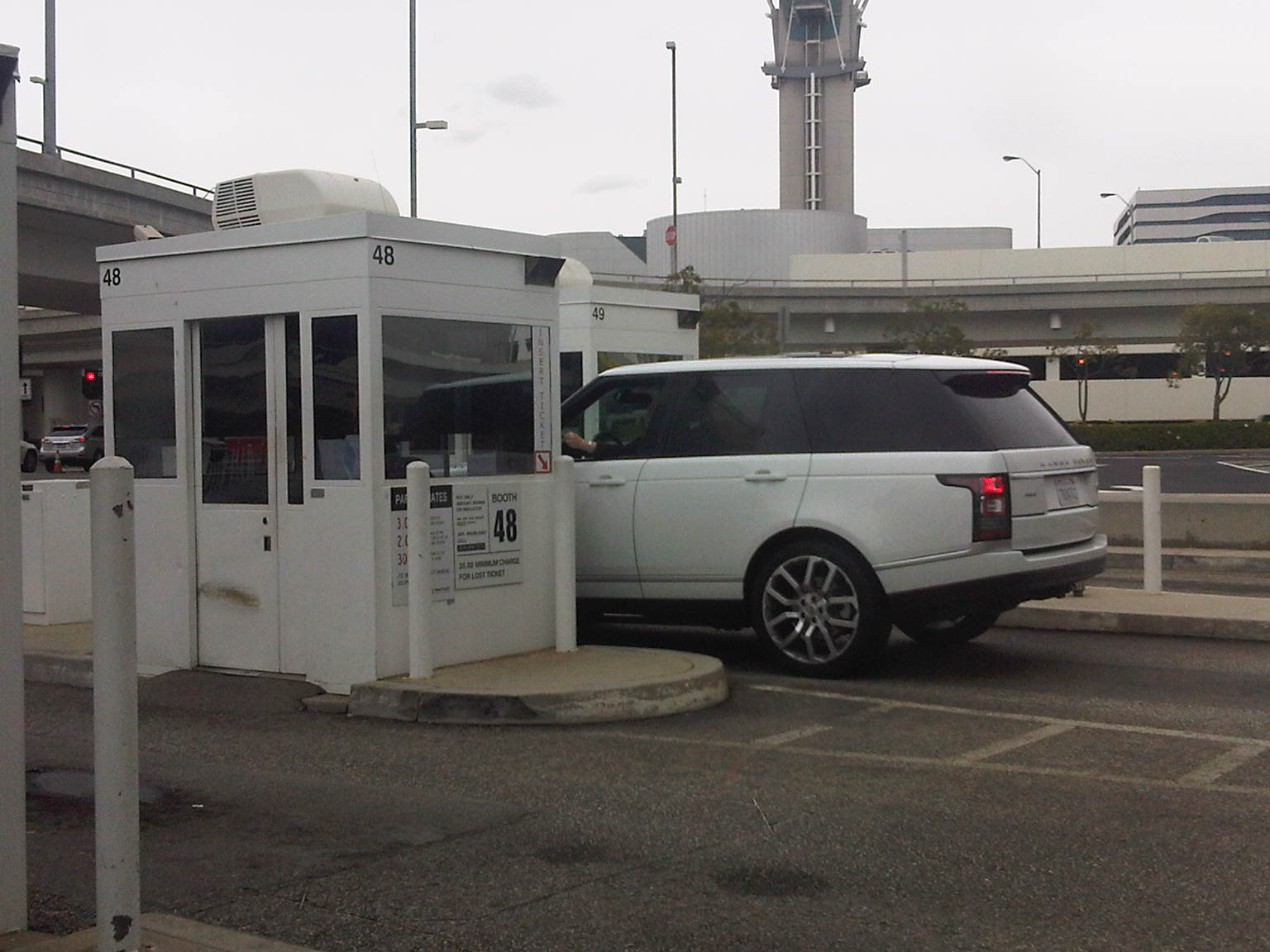
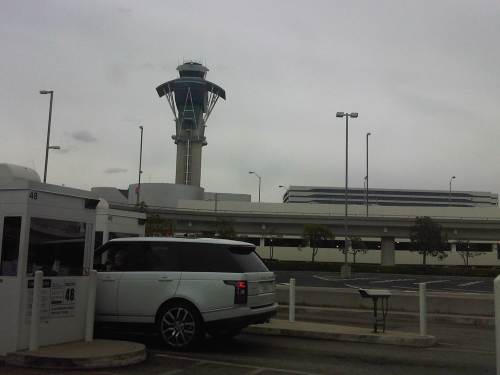 Exit from the airport parking facility with the air traffic control tower in the background
 The iconic central structure of LAX features modern architecture
–
San Diego Commuter Air Terminal
I’m starting July with a post I started writing after our trip to the US last May but which I only finished recently. The info won’t likely become stale for quite some time so its still pretty much informative for those traveling from San Diego by plane. [Correction: The terminal closed in early June with flights transferred to the main terminal or replaced by larger aircraft. For more info, you can check out this link.]
We mistakenly went to San Diego Airport’s main terminal. It turned out that our flight to Los Angeles would be via the smaller commuter terminal. It’s a good thing that they had an airport shuttle for the convenience of passengers traveling from one terminal to another. The commuter terminal sort of reminded me of the old low cost carrier terminal at Singapore’s Changi Airport but San Diego’s I think is much better in terms of amenities and design.
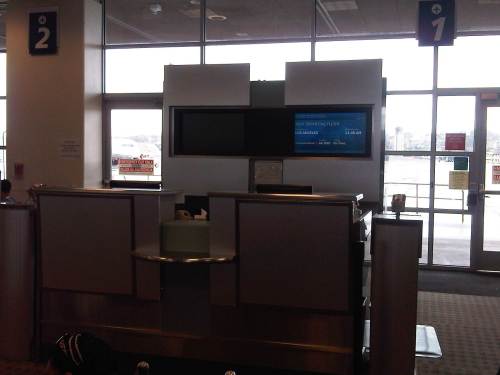 The counter at our boarding gate
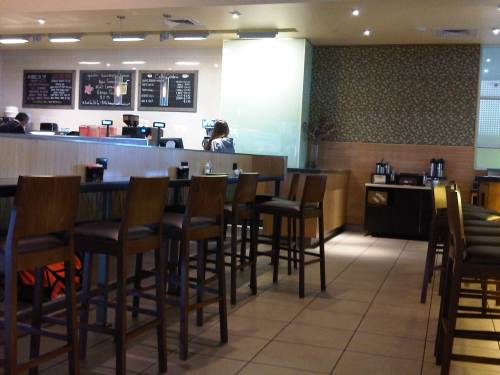 The cafe/restaurant at the commuter terminal had a relaxed and comfortably feel about it
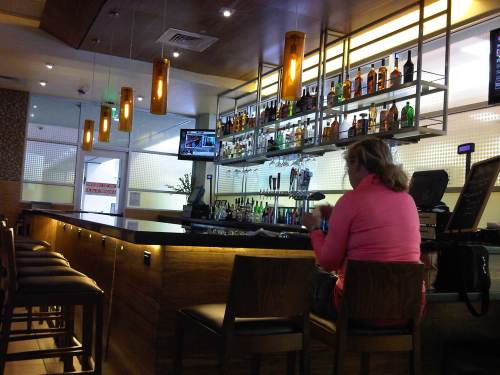 There was also a bar for those wanting to grab a quick drink, alcoholic or not, prior to their flights
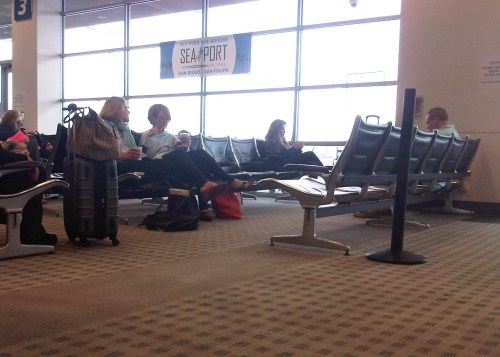 Passengers waiting for their flights relax by conversing with their company, having a drink, listening to music or reading or just plain sitting and looking around.
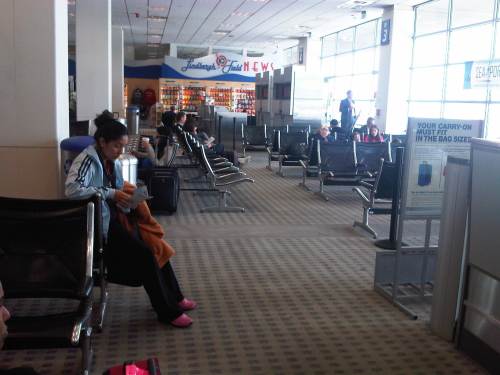 There’s a news stand at the terminal for those who want to grab something to read for the short flight or for later.
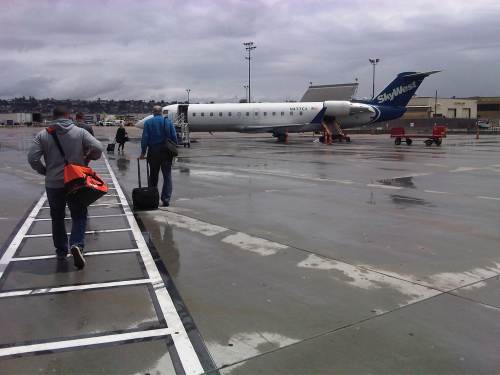 The path to the plane was clearly marked. We were fortunate that the rains stopped prior to our boarding the aircraft.
 Our SkyWest plane is the smallest jet aircraft I’ve ridden on. The last time I was on an airplane of this size, it was on a turboprop between Tacloban and Manila. The space above the seats was limited and could probably fit a briefcase sized bag so if you have one of those backpacks or thicker bags with your computer, you would have to place them under the seat in front of you. Of course, this can be uncomfortable to many considering the also constricted leg room in these small aircraft.
–
Rains, floods and traffic
The wet season is here and with it the now typically heavy rains in the afternoons. Last week, the heavy rains brought upon flash floods in Metro Manila and adjacent towns. There have been no typhoons yet so these are mainly monsoon rains (Habagat), which we expect to be daily occurrences. Many of these floods are along major roads including EDSA, C5, Espana, and Quezon Ave. that transformed these roads into parking lots as most light vehicles are unable to traverse flooded streets.
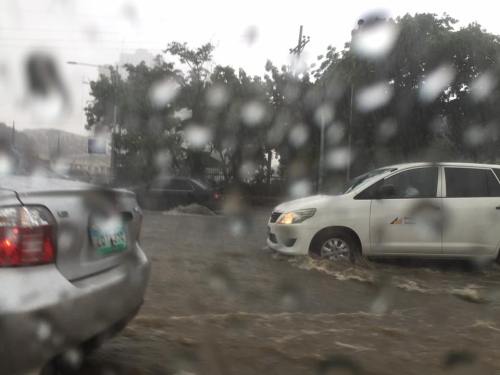 Vehicles run along the flooded Elliptical Road in Quezon City
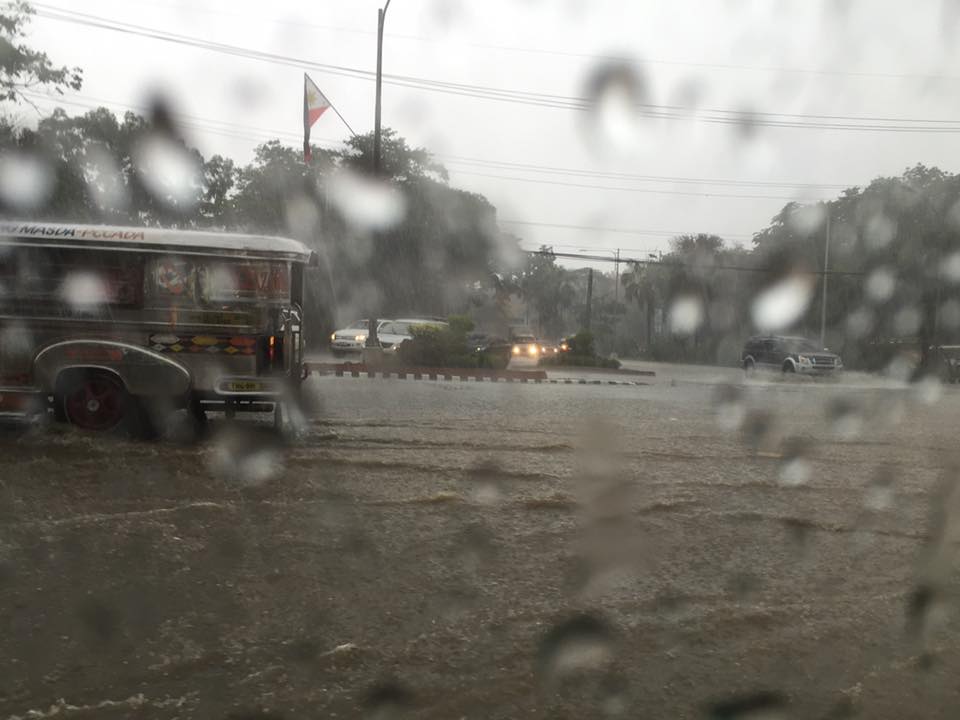 Jeepneys and SUVs (at right in the photo) take on the flooded Elliptical Road-Quezon Avenue intersection
Due to the traffic congestion resulting from the floods, many public utility vehicles especially jeepneys and UV Express vehicles were not able to go back and make their round trips.
 Cars risk the floods along Elliptical Road – the deepest waters are, ironically and curiously, along the section fronting Quezon City Hall where there is a pedestrian underpass connecting city hall with the Quezon Memorial Circle. Since the underpass is not flooded then it can be concluded that there’s something wrong with the drainage for Elliptical Road.
The weather is a very significant consideration for transport planning for cities in the Philippines. For Metro Manila it is almost everyone’s concern about how they can travel between their homes, offices, schools and other destinations without them and their things getting wet. This is what a lot of people advocating for road sharing seem to forget or choose to forget in their arguments for walking and cycling. A person residing in Fairview in Quezon City and working in Makati City will most likely not walk or cycle between his home and office because of the weather. This is a reality that could be solved by good public transportation, which, unfortunately, we also don’t have (yet) so people are ‘forced’ to do what they can to improve their plight. Unfortunately, too, what they are forced to do is purchase a car (or more). The proposal to build infrastructure to enable walking and cycling especially over medium to long distance is in the same dilemma as those for mass transit. And the latter is the more urgent matter needing action for the sheer volume of people they can carry and therefore benefit.
–
 Caught (up) in traffic