
Pet peeve – still on deplaning at NAIA T3
I was waiting for the boarding call for my flight and took the photo below of passengers deplaning via the stairs at the aft door and the air bridge. These were loaded unto the waiting buses, which ferried them to the terminal building.

For all those buses with their drivers, fuel and emissions, wouldn’t it have been more cost efficient to just operate the airbridge and let the passengers use this facility rather than have them take the stairs (and without assistance for the elderly and those with babies or small children)? From an environmental perspective, wouldn’t use of the air bridge make more sense in terms of reducing carbon footprints as well as fuel consumption?
–
A tale of transport costs for a commuter
When I was in high school, the minimum fare was 1 peso and my daily afternoon commute from school cost me an average of 3 pesos per day. If we didn’t have to go to school for extra-curricular activities on a Saturday, that meant I usually spend 15 pesos per week or about 60 pesos per month. I remember that my parents paid 200 pesos for the school service, which only covered the morning trips from home to school. This brought my monthly transport cost total to 260 pesos and this was back in the 1980’s. At the time my weekly allowance was 100 pesos (~400/month); more than enough for my lunch and snacks, and which allowed me to save some money that I usually deposited in my savings account. Of course, my actual total allowance was 600 pesos per month factoring in the amount my parents paid for the school service. These figures meant transport accounted for 43.33% of what was my income back then (15% if the school service component was not included).
At university in the early 1990’s, my allowance was up to 300 pesos per week. Transport fares, however, increased with a minimum fare of 2 pesos (for the first 4 kilometers) and my two rides one way to the university cost me a total of 5 pesos per trip. This could easily be multiplied by two if I was able to get an easy ride home from Katipunan but traffic was already worsening at the time and I, together with a few friends who had similar commutes, often found myself going to Cubao where the terminal was so I could get a sure ride home. This meant I had to shell out an additional 6 pesos on certain days. I estimate that my weekly total could average around 80 pesos, bringing my monthly average up to 320 pesos. That translates to 26.67% of what can be considered as my monthly income at the time.
By the time I was in graduate school in the mid 1990s, commuting in Metro Manila was a whole different animal with congestion along my route really becoming terrible. It was so terrible that the conditions then resulted in the birth of what was called FX services. The then newly introduced Asian Utility Vehicles (AUV), particularly the Toyota Tamaraw FX’s, that originally were registered as regular taxis started contracting passengers (illegally) in order to maximize their fares. It was actually the other way around as passengers who were exasperated at the very long queues in Cubao decided to contract FX taxis as groups and offering the drivers fares they just couldn’t refuse given that their being taxis allowed for flexible travel routes bypassing congested roads. By the time, the going rate was 10 pesos per passenger for an FX taxi starting from Cubao and ending at Cainta Junction. I was among the people willing to pay for this luxury, considering it saved me a lot of time and the ride then was comfortable due to the airconditioning on these vehicles. Perhaps it was also my way of applying what I understood from my transport economics lessons from my Japanese professor back then.
My daily commute during my grad school days cost me around 30 pesos for a total of about 200 pesos per week counting Saturdays and other side trips during the week. This to me was quite acceptable considering I had a scholarship grant at the time that gave me 3,000 pesos per month excluding other allowances that covered research expenses. The significant increase in my income was actually just enough to retain the percentage I spend for transport. Due to the corresponding increase in my transport costs, the percentage I spent for transport remained at 26.67%!
Taking post grad studies in Japan a few years later, I estimate that my average monthly transport costs amounted to around 20,000 yen (I traveled practically everyday using trains and buses.) This didn’t include the very occasional taxi on late nights when trains and buses were no longer available from the city center to the dormitory. My monthly allowance though was a very generous 185,000 yen so transport only accounted for 10.81% of my monthly income. This meant I had money available for a comfortable life abroad after accounting for my needs (e.g., food and shelter) and factoring in savings towards my estimated disposable income at the time.
The above examples are illustrations of how much transport costs become significant considerations in our typical expenses. Transport costs like the fares I paid when I was a student ate up a significant part of what was considered my income at different times. My case can probably be considered as fortunate since my parents were able to provide for me during my high school and university days, and I was able to get generous scholarships during my grad and post grad schooling. It is not the same for may others who would have to shell out more to be able to travel between home and school and do not have the choice, given limited resources (i.e., allowances), to select transport with a higher level or quality of service. There are those who have to walk (and even swim) to and from school simply because they have no other means.
I relate my personal experiences as I try to understand the plight of many commuters who have to bear the provisional fare hikes that the LTFRB approved today. This is in part a reaction to the clamor of public transport groups for transport fare increase in relation to the alarming increase in fuel costs. Unfortunately, there is little difference between transport during my time as a student and transport today. In fact, we still are very dependent on tricycles and jeepneys where buses and perhaps rail transport is the more appropriate modes for travel.
Perhaps our continued dependence on transport that is too dependent on fossil fuels whose prices are susceptible to many factors makes us quite vulnerable not just to price changes but also to the whims of a public transport system that has been proven to be inefficient and ineffective. It goes without saying that we need to have the necessary public transport infrastructure built in order for commuters to once and for all be relieved of the constant threats of oil price hikes and fare increases. Too long have been the delays for rail lines and BRTs, and it is costing us billions of pesos that could have instead already paid for these systems that we are hesitant to put up. Only then will we be liberated from those who claim to be concerned about the welfare of commuters but fail to deliver safe and efficient transport services as they put revenue first contrary to their commitments when they got their franchises.
–
Decoupling transport and fossil fuels in the Philippines
An article appearing in the Business World today caught my attention as it provided, to me, a very good argument to support initiatives to wean transport away from its dependence on fossil fuels. Being a supporter of the initiatives for alternative energy to power public transport, especially the electric jeepneys, I can appreciate the discussions pertaining to urban transport. The DOTC, LGUs and the current dispensation should take heed of the main points in the article and focus attention and resources to building the transport infrastructure that our cities so badly need and that have been delayed for so long that we are often forced into short term (and short sighted) remedies (the FX or UV Express services come to mind).
The author is a former Dean of the School of Economics of the University of the Philippines Diliman and is well respected for his articulate views on practically everything connected to his field of expertise. His piece on urban transport in the Philippines includes mention of what many of our leaders already know but are afraid to touch due probably to its socio-political, and therefore painful, implications. I reproduce below the entire article as it appeared on the March 19, 2012 issue of Business World’s online edition. My sincere apologies for any copyright infringements that I might have committed.
The right thing is doing nothing
The clamor from public transport groups, mass organizations, a few politicians, media columnists, and — surprisingly — even some academics to reduce the VAT on oil products has now become so insistent that the government may just be tempted to cave in.
Doing so would be a big mistake.
It is hard to justify on first principles just why or how a solution to high oil prices should involve a reduction of the VAT on fuel. The VAT, after all, is based on the idea that all consumption must be uniformly taxed — that is, taxed at the same rate. Without good reason, the tax system should not itself be responsible for making some goods more or less expensive than others. Hence, if without taxes the price of a can of corned beef was, say,twice that of a bar of bath soap, then it should still be worth twice as much after a 12% tax is imposed on each. (Note that the ratio of X to Y is the same as the ratio of X(1.12)to Y(1.12).) That relationship is unchanged whether the uniform VAT is set at 5, 10, or 12%, as long as the rate is the same across all goods. (My colleague Ben Diokno has even seriously proposed that the VAT rate be raised to 15 percent in lieu of high income taxes — although he has curiously been reported as supporting a cut in the VAT on fuel.)
To argue that the VAT rate should be reduced for some products but not for others is to privilege the consumption of those products. But why should gasoline and diesel in themselves be more vital to consume than other goods? Why is a peso spent on fuel socially more important than, say, the peso a family spends on electricity or water? Or the toll paid by a bus using the NLEx? Or what a student pays for a cheap sandwich? Or a professional’s hard-won savings to purchase a laptop? Or more meritorious than a farmer’s purchase of fertiliser, pesticides, and farm tools? What entitles petroleum products to this special treatment?
If the answer given is that petroleum products are “consumed by the poor,” that’s not exactly true either. It is vehicle owners, both private and commercial, who consume petroleum-based fuel — and few of them are poor. Indeed, if the government were to cut the VAT on fuel, it would help not only jeepney — and bus — operators but also owners of BMWs, Benzes, Pajeros, and Fortuners. The effect would be to privilege heavier users of auto fuel — poor or not.
Tax-tinkering is fraught with danger, and its deleterious effects should by now be evident in our experience with an already existing fuel subsidy (which everyone seems to have forgotten), namely, the decades-old privilege given to diesel fuel. For starters, note that there is no inherent physical reason that diesel should be cheaper than gasoline. Indeed, from a pure cost perspective, diesel is more costly to refine, so that before any taxes, it is likely to be more expensive than gasoline. In the US and the UK, for example, where the two fuels are taxed uniformly, diesel is more expensive than gasoline; in Germany and Canada they cost virtually the same. So if only the 12% VAT were applied to both — say, at landed cost — gasoline would probably still be cheaper than diesel.
It is not the VAT but the lower specific tax on diesel — at only one-third of that applied to gasoline — that makes the latter more expensive by more than 20%. This low tax, which has been in place since time out of mind, was always meant as a concession to public transport, the predominant user of auto diesel.
And where has this discriminatory policy taken us? First, it has only deepened the country’s reliance on diesel fuel. It has discouraged any search for or shift to alternative fuels on the part of public transport. On the contrary, it has enticed an increasing number of private vehicle owners to shift to diesel fuel themselves. The latter, of course, is a completely unforeseen consequence and embarrassingly gives the same “pro-poor” diesel tax privilege to a jeepney driver and a Mercedes Benz owner. It’s basic Slutsky: cheapen something in relative terms and you divert consumption towards that thing. Similarly, lowering the VAT on fuel will do nothing but deepen the country’s dependence on all petroleum fuels.
The second effect is more pernicious. Cheap diesel — combined with the lax franchising of everything from buses to jeeps to pedicabs — has created an overcrowded and über-fragmented urban transport sector. A 2007 World Bank volume reports that Manila had 13,375 public transport vehicles per million people, compared to only 1,890 for Bangkok and 1,807 for Hong Kong. (Guess where the public is better served.) Philippine public transport today is dominated by numerous and fragmented small operators kept alive only by artificially cheap fuel.
Transport groups routinely blame high fuel prices for their woes. Under-appreciated is the fact that their own uncontrolled proliferation — which leads to cutthroat competition, congestion, and dangerous road rage and warfare — is the main reason for their low incomes. This proliferation of bit-players has itself been unwittingly brought about by the policy of subsidized fuel (diesel). Ultimately, however, this kind-hearted approach has only hurt the poor by depriving them of cheap, clean, and efficient transport. For just as large developers will be discouraged by squatters occupying a property, the transport sector’s preemption by an inefficient and fragmented small sector precludes the entry of firms with larger capacities and more efficient technologies, all of which could have led to better service.
Lowering the VAT on fuel addresses none of these problems. On the contrary, it would only perpetuate them. The country is better served by confronting the real problems of urban transport. Government time, imagination, and effort are better directed at encouraging higher capitalization in the transport sector, larger capacities, more fuel-efficient technologies, and less reliance on imported fuels whose prices are volatile. The initiative to field large numbers of natural gas-powered and electric buses is a promising start. Unlike the transport sector, the power industry weaned itself from imported oil many decades ago, and electric power now is largely sourced domestically and therefore largely immune to the price-gyrations of world oil markets. Using more electricity for transport is the more effective way to insulate the country from the speculative activity that characterizes world oil markets. The same goes for natural gas, which is something the country itself produces.
The sooner the petroleum dependency of public transport can be reduced, the better it will be for the country-including its poor. For that, the most urgent and bold actions are clearly warranted. But as for the demand to reduce the VAT rate on petroleum products-effectively undermining and distorting hard-won legislation for the sake of a temporary exigency-the best response is clearly inaction. And if there are those who choose to call this indolence, indifference, or “Noynoying” (the latest meme), if some critics cannot see the difference between a placebo and real medicine, between palliatives and real reforms-then the president would do well to pay them no heed.
He should simply-igNoy them.
Emmanuel S. de Dios is the treasurer of the Institute for Development and Econometric Analysis and a Professor at the UP School of Economics. For comments and inquiries, please email us at idea.introspective@gmail.com.
–
Indeed, Filipinos deserve better transport services. In most cases, the proliferation of informal modes where they are no longer suitable (e.g., tricycles dominating urban transport in many cities, jeepneys plying long distance routes, etc.) is actually a disservice with many operators no longer committed to providing safe and efficient service. For most, the livelihood aspect of transport has become so deeply rooted in the sector that our leaders have tended to turn a blind eye to the excesses and abuses such operators impose upon the riding public. The result? Filipinos will continue to aspire for their own vehicles (these days this vehicle would be the affordable motorcycle) because of the low quality of service of our public transport modes, eventually contributing to the worsening congestion we experience in our daily commutes. Meanwhile, we continue to envy the transport systems in the major cities of our neighbors like those in Bangkok, Kuala Lumpur and Jakarta. We are eons behind Singapore but soon, even Vietnam will probably overtake us in terms of public transport systems once they start building what they are currently planning for Hanoi and Ho Chi Minh. How long must we all suffer before our leaders are moved to finally address this problem head-on and not be satisfied with remedies.
–
Update on the Quezon Ave.-Araneta Ave. underpass
Passed by the construction site of the Quezon Ave. underpass at its intersection with Araneta Ave. last week and took a few more photos showing the progress of work for the underpass. Fortunately, we were riding a bus and our seats provided a good view of the underpass. Following are photos taken last March 12, 2012.
 Heavy equipment along the ramp on the eastbound direction of Quezon Ave.
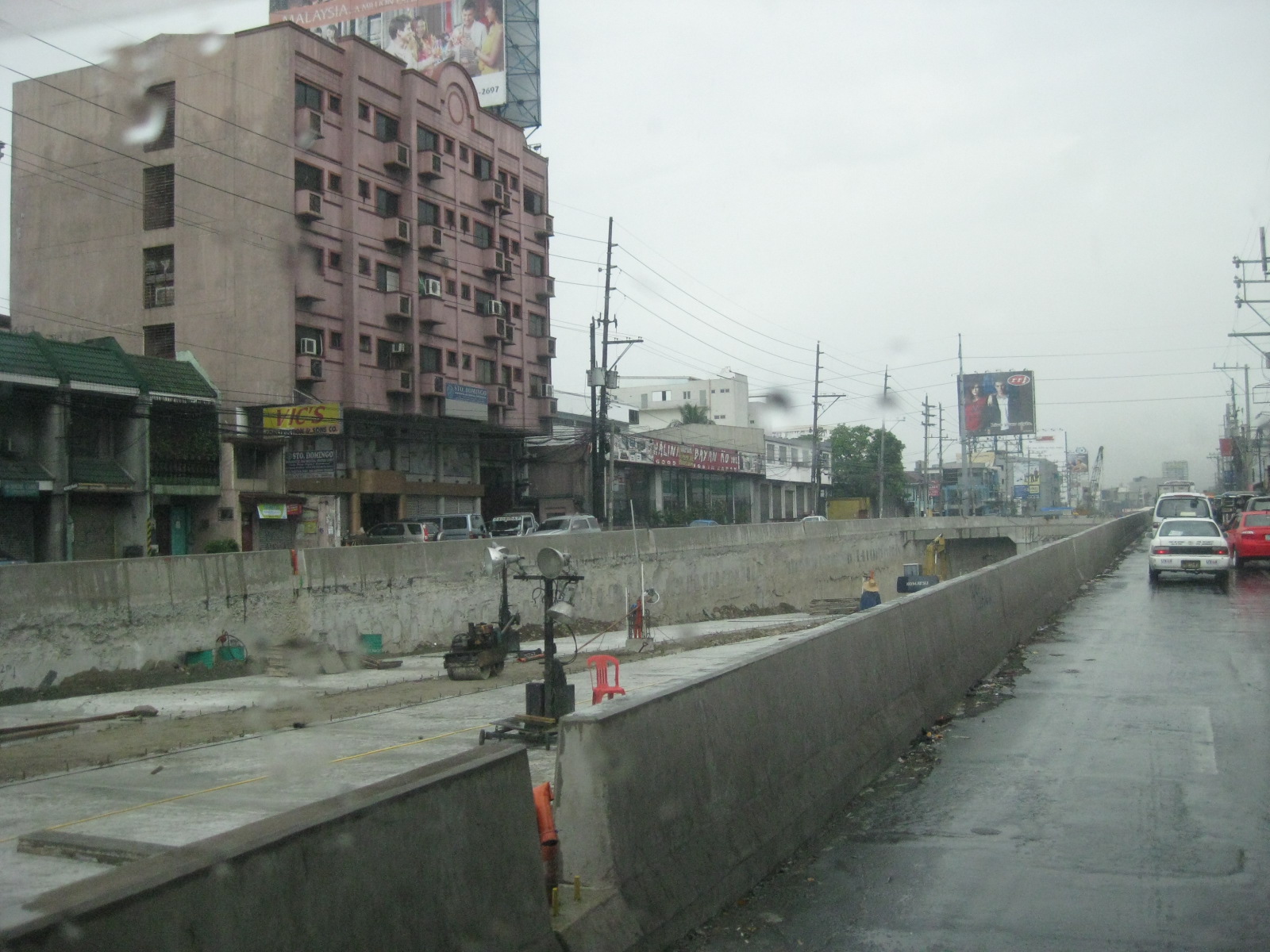 Both directions of the underpass have been paved and the median island is under construction.
 Backhoe at unpaved section of the underpass. The design reminds me of the underpass section along the same Quezon Ave. at its junction with Agham Road. Visible from the photo are braces/anchors embedded into the sides of the walls to reinforce these and prevent collapse.
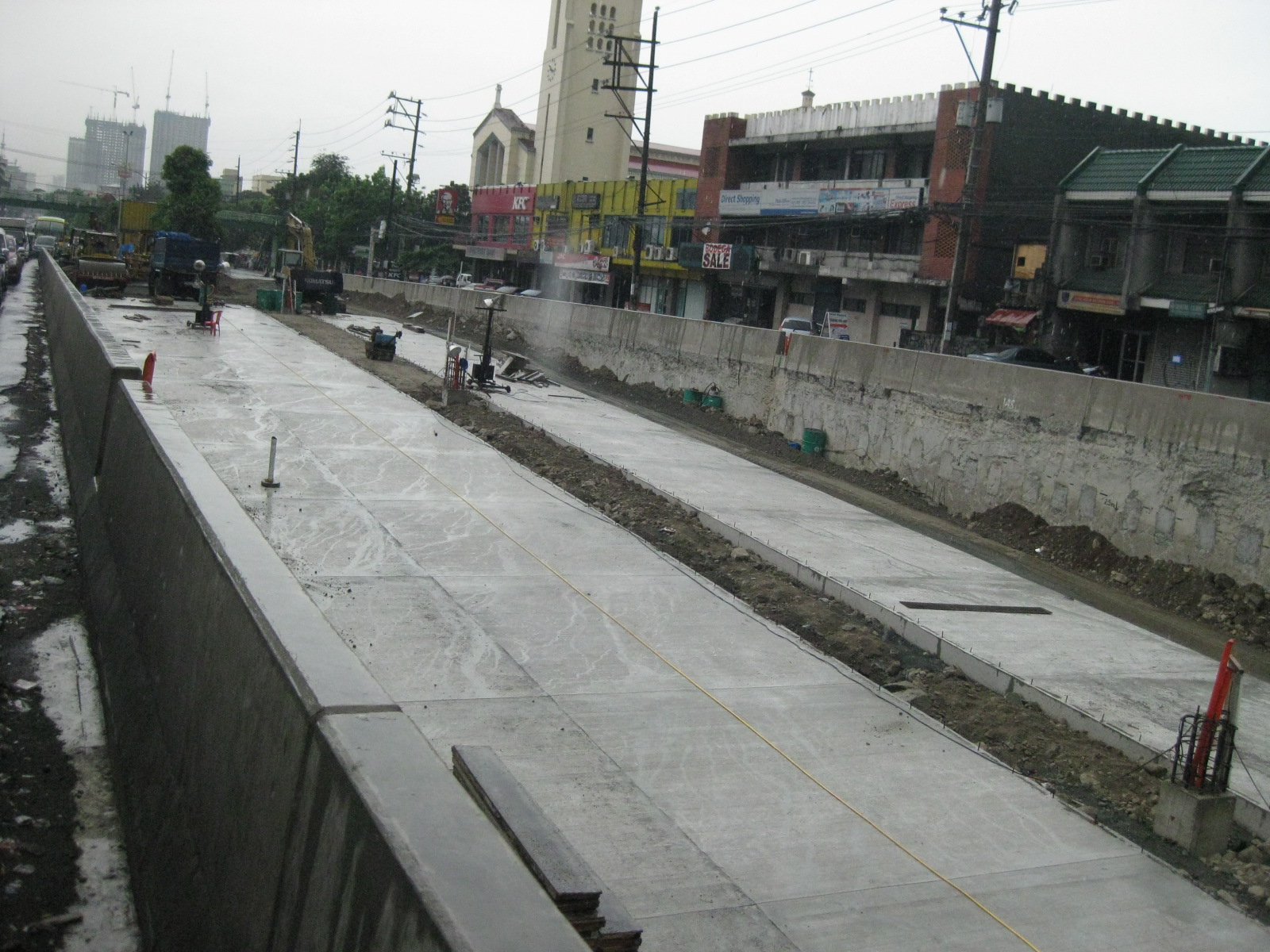 The underpass will have 3 lanes per direction that should be able to handle significant through traffic along the arterial.
 The section past Araneta Ave. is practically complete and retains essentially retains 3 lanes on each side of the original Quezon Ave. Upstream of the junction, there are only 2 lanes available on eaither side of the at-grade section of Quezon Ave.
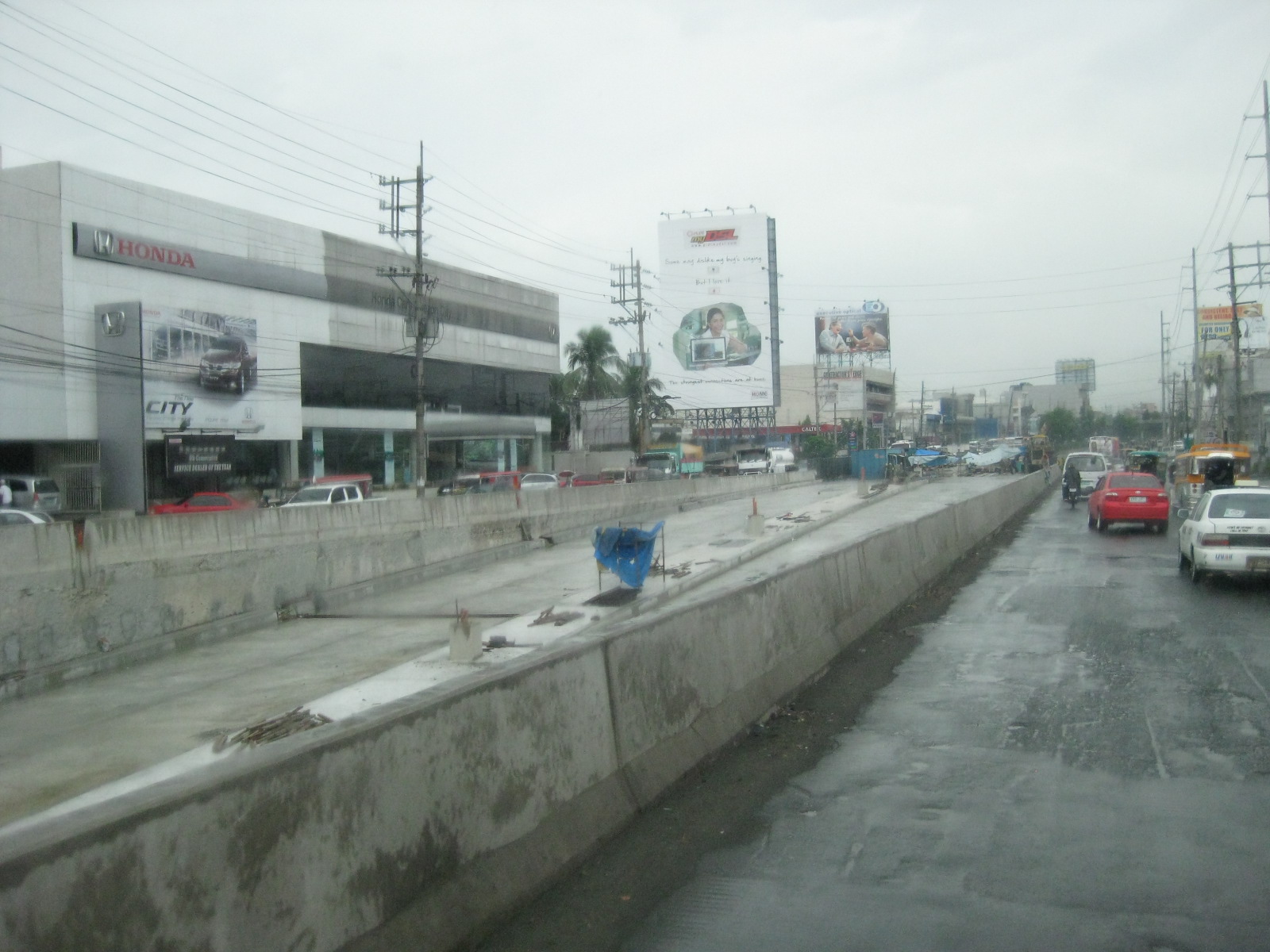 While traffic along the eastbound (to Quezon City) direction is practically free-flowing due to the wide section of the highway downstream, the westbound (to Manila) section is congested.
 Construction materials and workers’ bunkers at the east end of the underpass.
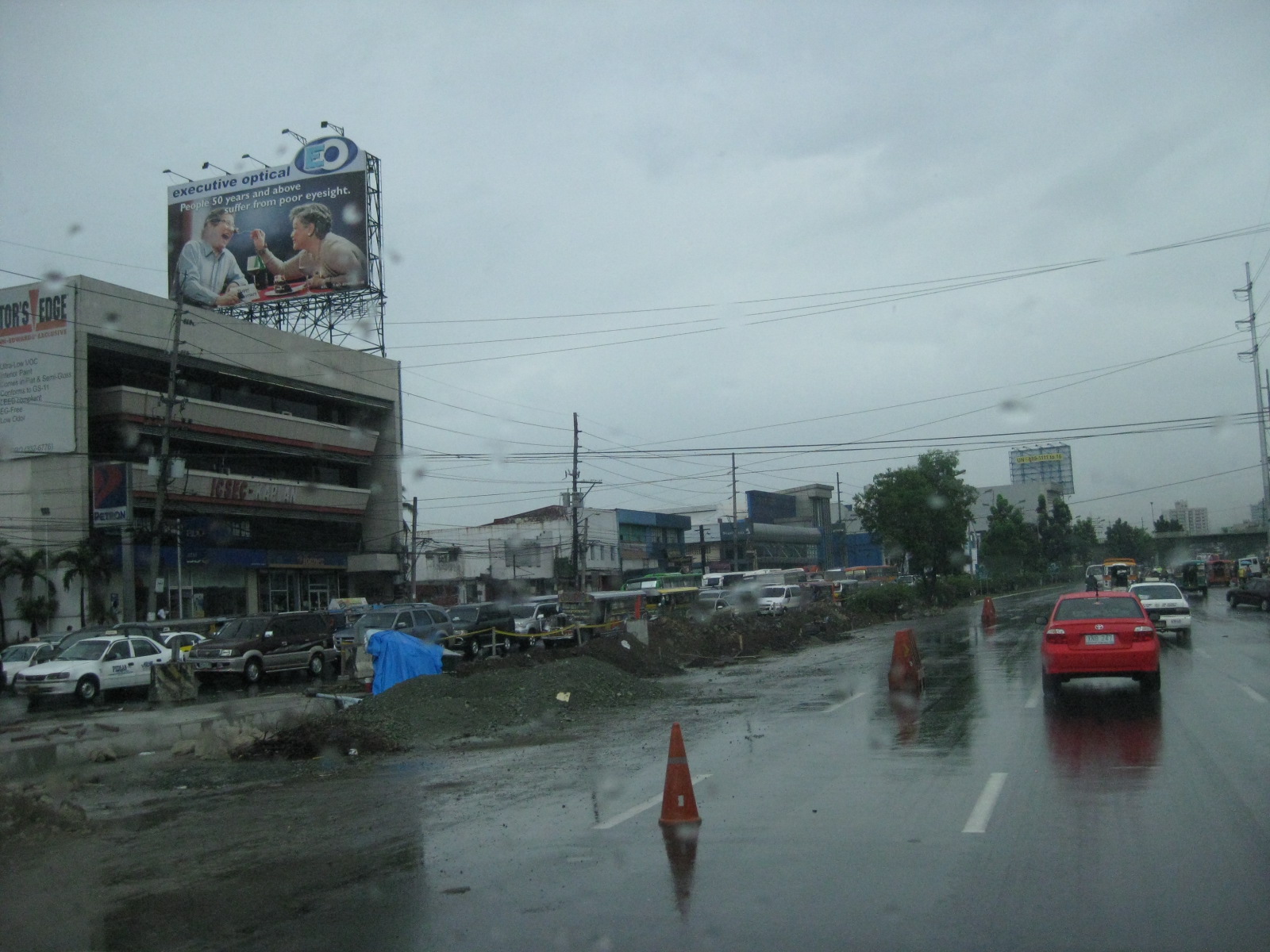 The congestion along the westbound direction extends from the intersection to way past the underpass’ east end. On a bad day, it takes a significant time for travelers to be able to cross Araneta Ave. and towards Manila.
–
Early morning at NAIA Terminal 2
Taking the 5:30 AM flight to Roxas City, we had to be at the airport at least an hour before the ETD. We decided to come earlier in order to be able to get good seats. We were taking Philippine Airlines and the airline didn’t have an online check-in facility (!) so we decided to be there 90 minutes prior to the ETD. That meant leaving our homes around 3:00 PM to make it to the airport by 4:00 AM despite the fact that traffic is usually free flowing at those hours.
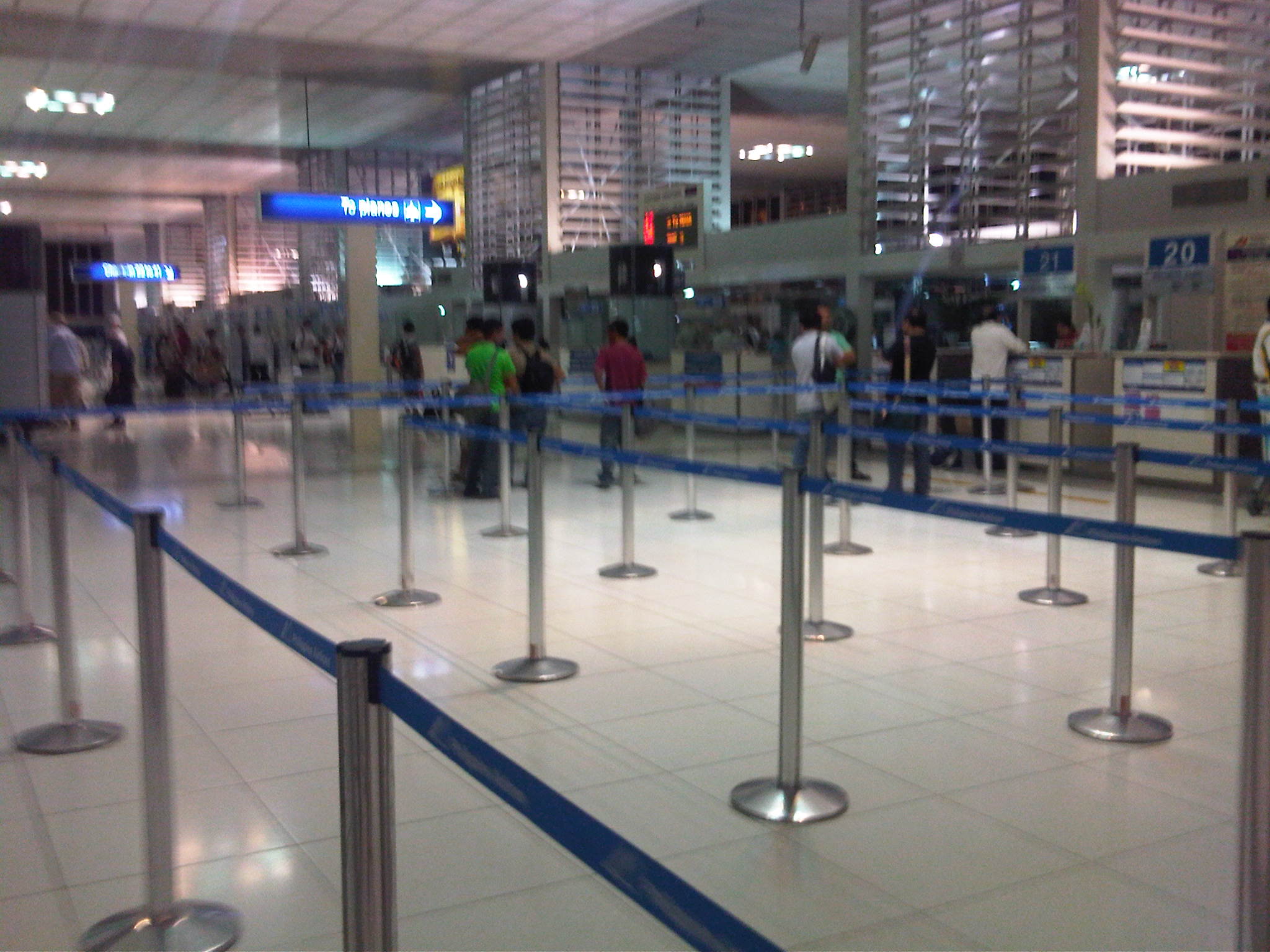 Check-in: There were few passengers at the airport despite the many early morning flights. Perhaps the fact that Terminal 2 has separate wings for domestic and international passengers also partly explain this, aside from the fact that fewer people are taking PAL. We noticed during check-in that the ground staff seemed slower than before. The staff in red uniform are supposed to be relatively new as PAL decided to outsource many of its services to cut costs.
 Departure lounge: The departure area is not at all crowded and you can choose wherever you want to sit while waiting for your flight to be called. Even the cafes were not crowded and we easily got a table where we could drink our coffee while waiting for the boarding call.
 Boarding gates: The gates at NAIA’s Terminal 2 look like this with a counter in front of the gate. Only staff are supposed to be behind the counter considering security implications and issues. This wasn’t the case when I was at the same airport for a US flight last year. The ground staff who were apparently newbies along with the security people paid no attention to one foreigner charging his phone behind the counter and talking it up with staff about what’s on their computer screen!
 Concessionaires: There are many concessionaires inside the departure area of T2 and fortunately they open early for passengers wanting to have a quick bite or drink before their flights. Some passengers may also have to purchase last minute pasalubong and among the popular items are cakes and pastries from either Goldilocks or Red Ribbon. Terminal 3 is much better though as there are many restaurants and shops in the terminal where passengers and well-wishers can have their meals.
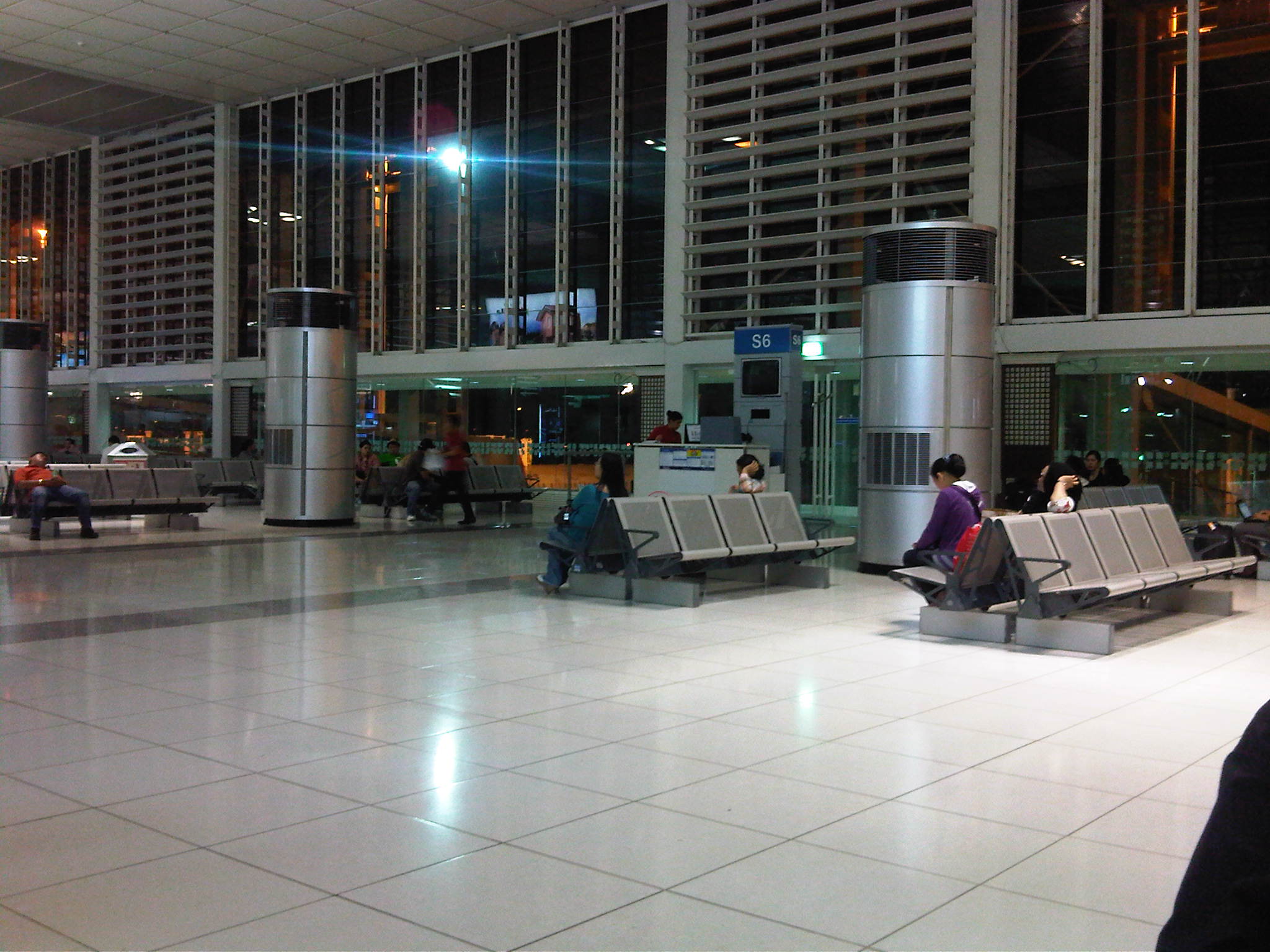 Neat and clean: Terminal 2 is not as big and neat as Terminal 3, which serves the Cebu Pacific, AirPhil Express, PAL Express and ANA flights (T2 only serves PAL). Nevertheless, I think the facilities are much better than Terminal 1 and that includes the toilets. It would seem to me that the floors are good enough for one to sit or even lie on while waiting for your boarding call. I wouldn’t recommend it though.
The Centennial Terminal, as T2 is also called, is supposed to remain as PAL’s terminal even after Terminal 3 would have been fully operational. One plan called for all international flights to be serviced from T3 while all domestic flights, except those of PAL, will be at T1. Hopefully, these re-assignment of services will be done after T1 is renovated. So far, I haven’t got news about the proposed renovation including whether this will push through at all. Manila definitely needs good airport terminals if only to make a good first impression on visitors. Airports, after all, are gateways and provide visitors with a preview of what a country can offer.
Another look at Roxas Airport
I was back in Roxas City a week ago for a quick meeting to discuss a proposed central public transport terminal for the city. We flew into Roxas City via Philippine Airlines, arriving just before 6:30 AM. I took some photos as we deplaned and while exiting through the arrival area of the airport. Following are recent photos taken at the airport.
 Airport terminal as it appears to the traveler as one emerges from the plane to descent the stairs to the tarmac.Conspicuous under the airport’s name is the information that the terminal is 2.80m above mean sea level. This is probably related to disaster mitigation and management for info for people flying in to provide support.
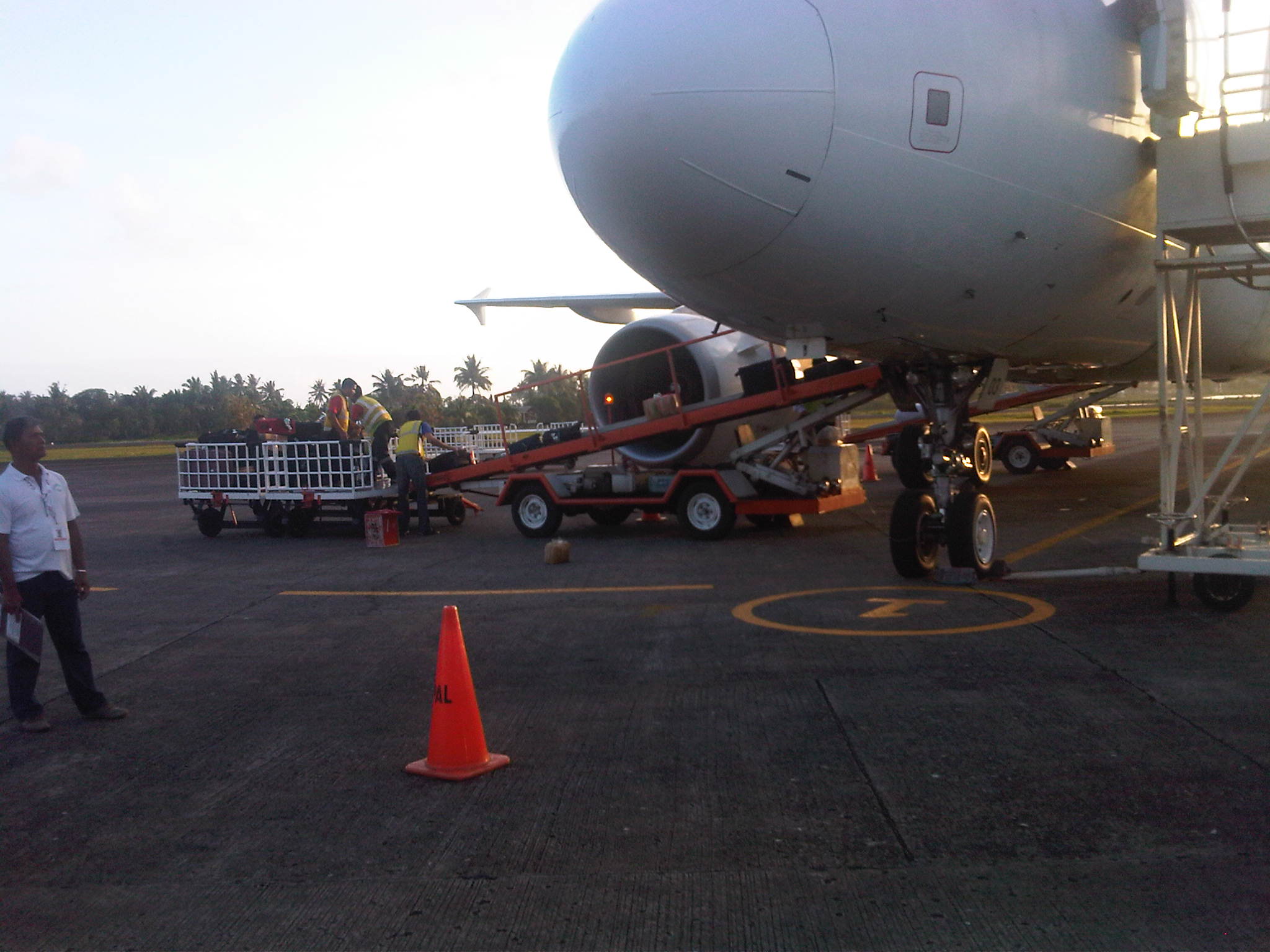 Baggage handling from the aircraft – baggage is handled with care unlike how it’s shown in some video circulating around the internet. The cone is one of several that are supposed to mark the restricted areas around the aircraft where passengers may not pass through.
 The arrival area is small like those of most domestic terminals and is just enough to handle the few daily flights that service Roxas City.
 The arrival area cannot fit all the passengers and the porters who typically assist those with luggage or baggage. In fact, much of the area is eaten up by the conveyor system. Note, too, the dart board on the wall on the upper right of the photo. Staff on break probably play darts to while away their time.
 Porters in purple shirts gather outside the arrival area as passengers file out of the terminal. Airport staff will signal to the porters once the first bag is on the conveyor following a simple system to avoid overcrowding at the arrival area.
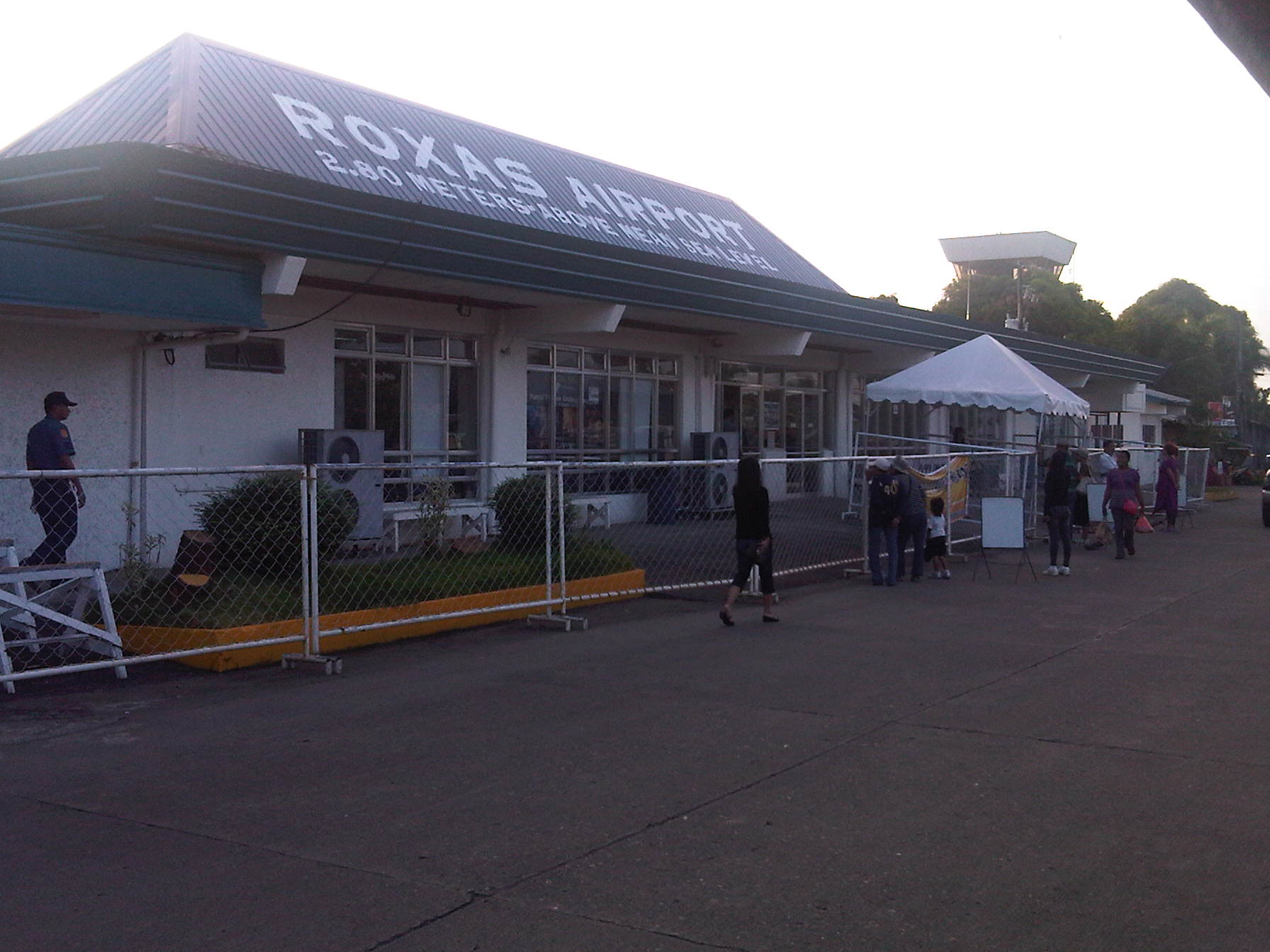 The departure wing that includes the check-in counters for the airlines may be accessed through a secure gate. The security personnel are courteous and efficient.
 People waiting for relatives, friends or clients at one of the sheds constructed for well-wishers or those fetching passengers. The parking areas are designated for taxis and rental cars.
After our meeting with city officials, we were back again at the airport to catch the afternoon flight back to Manila. This time, we took Cebu Pacific as it fit our schedule so we could be back in Manila by late afternoon.
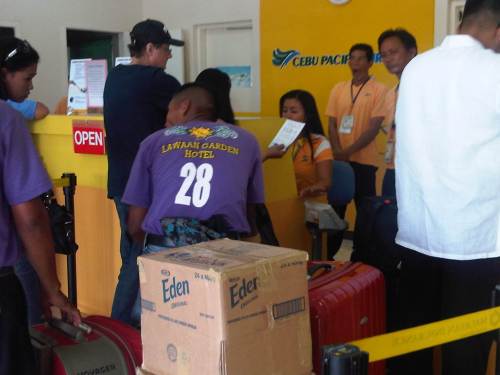 Check-in counter for Cebu Pacific – the staff accepted our boarding passes and seem to be surprised we had already checked-in online.
 After checking-in, passengers pay the 30 Peso terminal fee at a nearby counter.
 After passing through the final security check, one can wait for boarding at the pre-departure area where seats were apparently marked by the airline who provided them. These are the older fiberglass seats that are common in many domestic terminals.
 The newer metallic seats seem more comfortable. We checked-in early so there were few passengers in the area when I took the photos. Notice the gleaming floor? They replaced the old dark tiles with these that made the area brighter and more neat-looking.
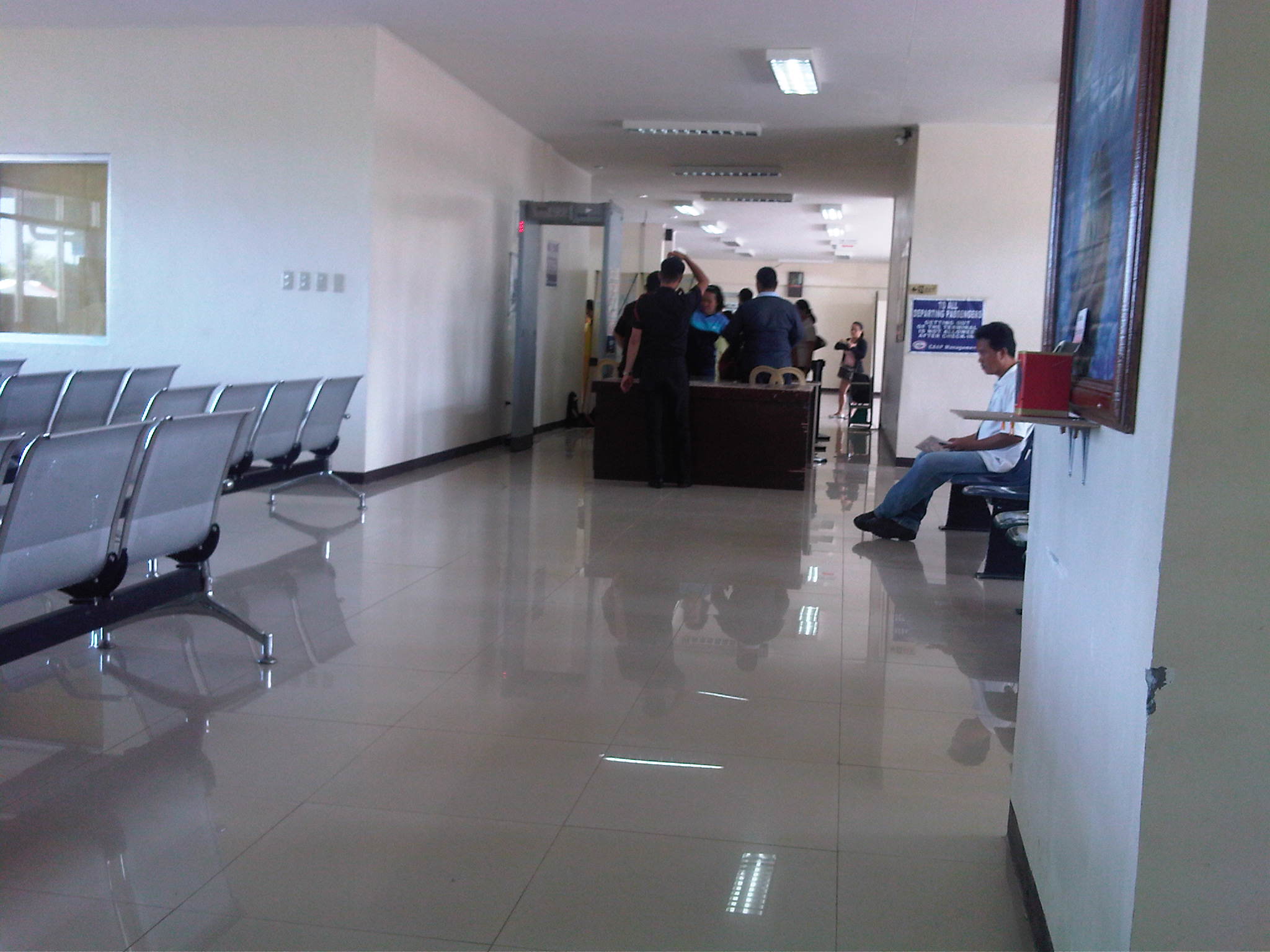 Final security barrier/check as seen from inside the pre-departure area.
 Another look at the metallic seats, this time with passengers waiting for our return aircraft to arrive.
 Concessionaire in the terminal – this is the last place where one can buy pasalubong. I was disappointed, though, to see that the products being sold were from Guimaras rather than from Roxas or Capiz.
 Stairs for boarding the aircraft – to expedite the boarding process, a second set of stairs is provided for rear entrance. Passengers are sorted before boarding for those who are to use the front and aft doors.
There are plans to upgrade Roxas Airport. It currently has a relatively short runway that allows for A320 or A319 aircraft operations, but landings and take-offs must be quite precise as they practically use up the entire length of the runway. It also has to improve the capacity of both its departure and arrival areas given the tendency for overcrowding even though it seems the terminal only handles one aircraft at a time, unlike other busier airports such as Iloilo and Bacolod. And oh, the toilets are clean and well-maintained. In fact, the Secretary of Transportation who is from the city and bears its name (the former president was his grandfather) uses the toilets himself so if its good enough for him, its probably good enough for most other people using the airport toilets.
–
Why is Commonwealth still unsafe?
After being branded as a “killer highway” and regarded as the most dangerous road in the Philippines, authorities have scrambled every now and again to come up with various schemes to reduce the incidence of road crashes along Commonwealth Avenue in Quezon City. The highway has been designated as a traffic discipline zone, pedestrian overpasses have been constructed, the speed limit has been set at 60 kph, and a lane has been assigned for motorcycles. All this and still Commonwealth has been assessed to be unsafe.

Why is Commonwealth Avenue unsafe after all the initiatives, all the programs and projects implemented along the corridor? There are many reasons both general and specific. However, let us list only four:
1) Driver behavior – despite all the safety programs, driver behavior (both for private and public transport) has not generally improved. There are still many aggressive and reckless drivers weaving in traffic. PUB and PUJ drivers often exit the lanes designated for them. Private vehicle driver continue to speed above the speed limit, knowing that there is only 1 speed radar deployed along the highway. And drivers continue to use median openings to cross the highway, creating situations with high likelihoods of crashes. Gap acceptance is typically aggressive and driver and riders seem to travel thinking others will just avoid them should there be conflicts along the way.
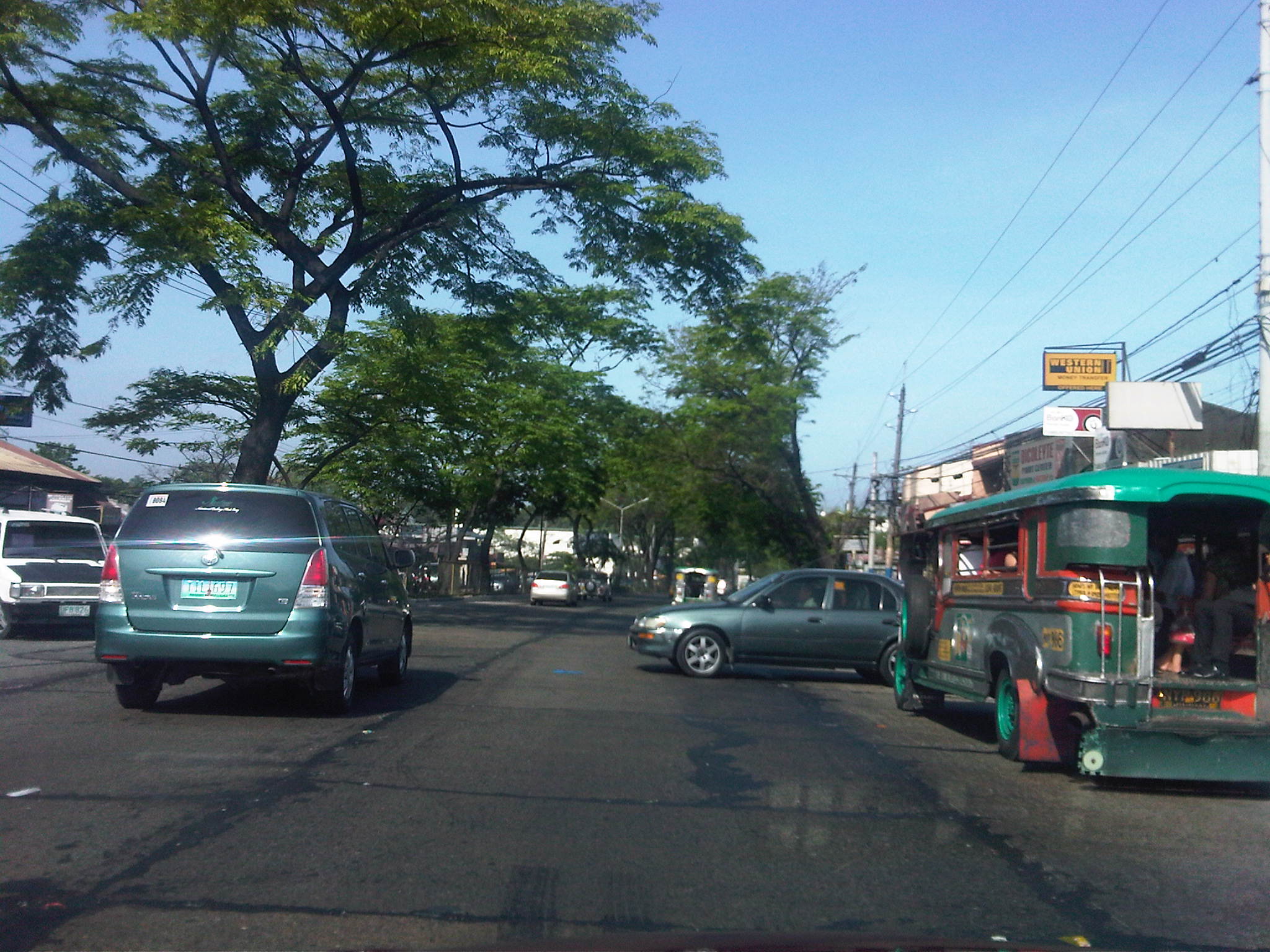
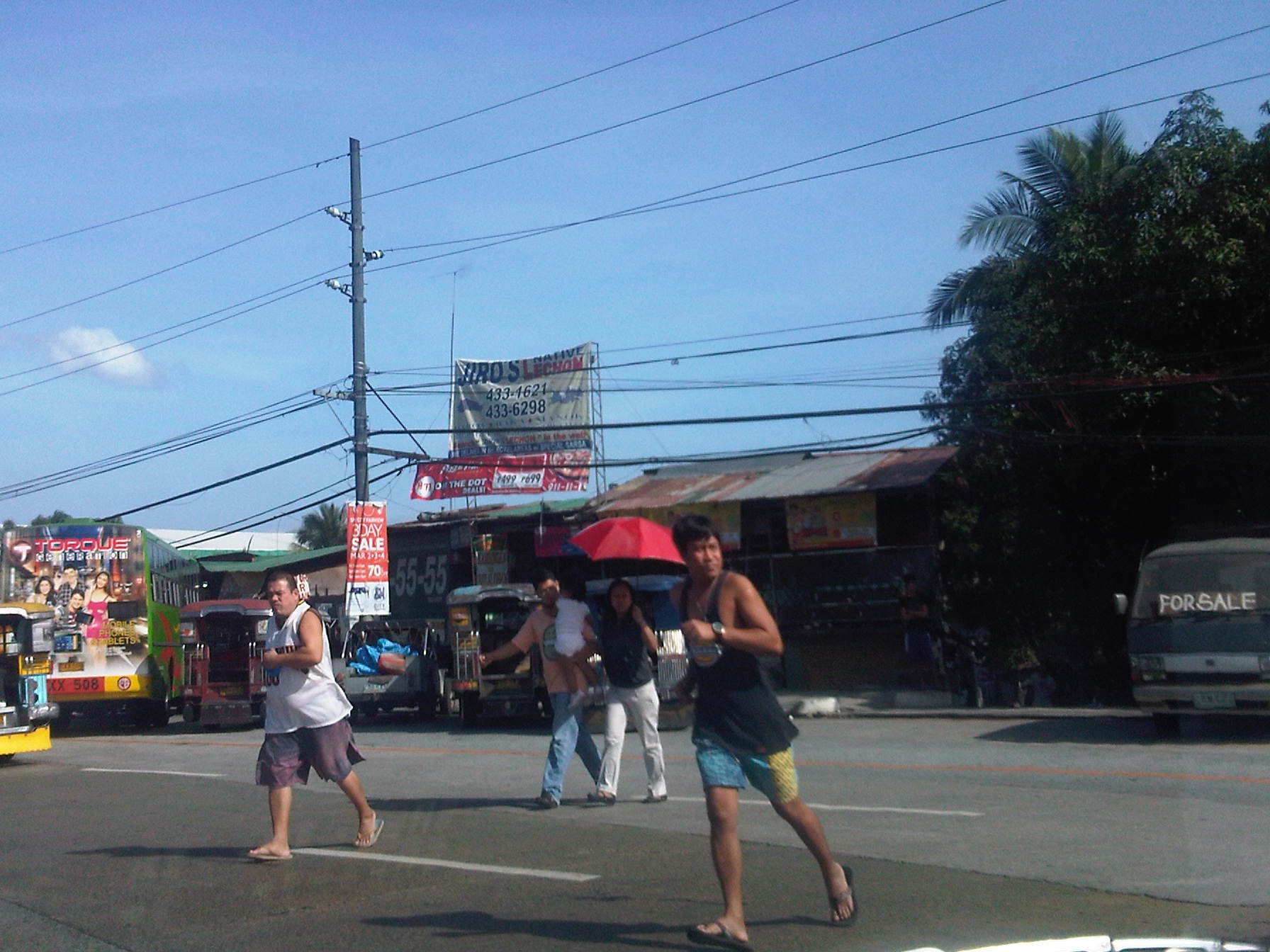
2) Pedestrian behavior – even with overpasses constructed, This is particularly the situation along the section from Fairview Market to Litex where people of all ages continue to cross at various points along the highway, seemingly oblivious to the dangers posed by motor vehicles along the highways many lanes. People seem to be generally unaware or do not care about the risks as shown by the pedestrians below including parents crossing while carrying their child. Jaywalking (or if there is an equivalent running and dodging vehicles) is quite prevalent along Commonwealth despite the construction of several overpasses. One problem, it seems, is the fact that many overpasses are not used because of some design flaws (stairs too steep or have limited capacity) and the propensity for setting up shop right on the overpasses themselves, thereby limiting its capacity for pedestrian traffic.
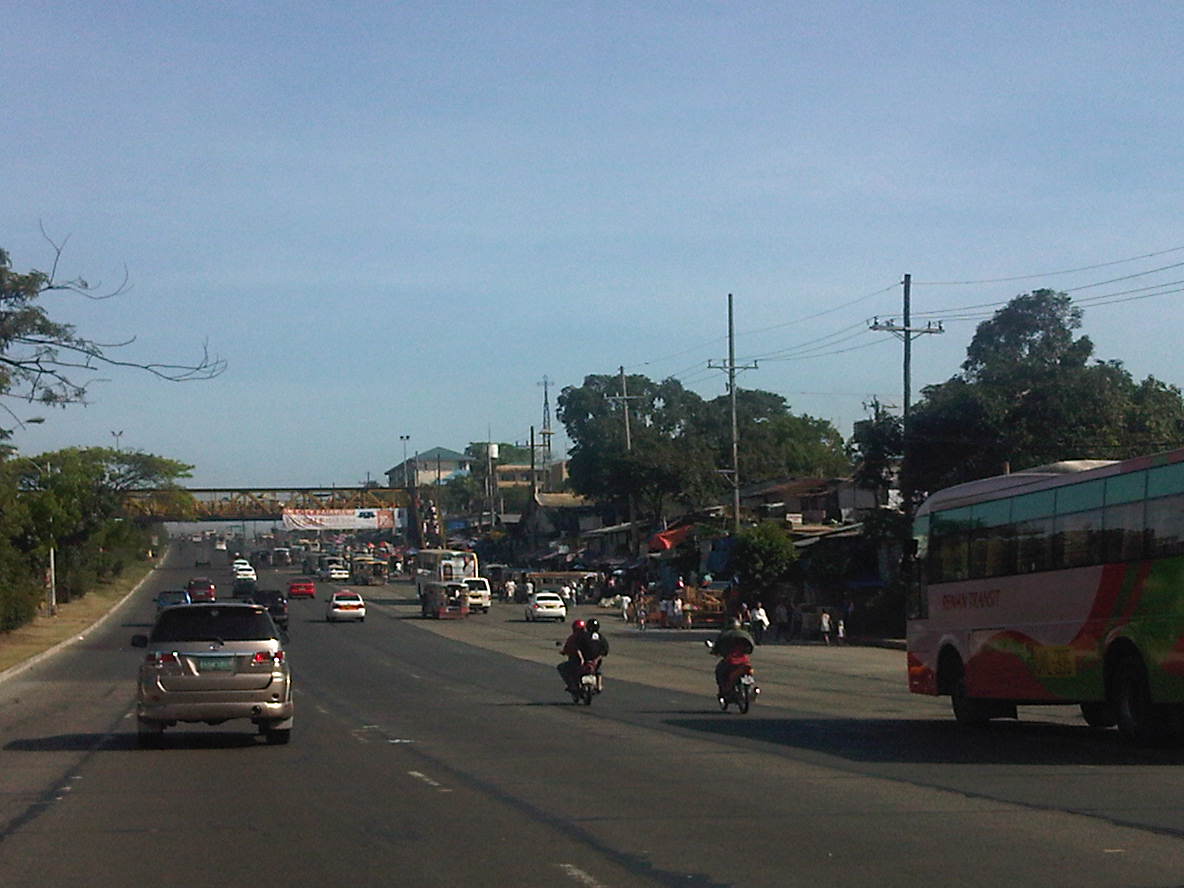
3) Enforcement – let’s be honest and accept the fact that enforcement along Commonwealth is patchy at best. It’s strict only during the initial days of a new program but eventually relaxes. We have a term for this – “ningas cogon.” This applies to both enforcers of the MMDA and Quezon City DPOS and the Philippine National Police. In fact, there are many violations that are taken for granted perhaps for the sheer difficulty of sustaining enforcement efforts. It was mentioned previously that there is still a problem pertaining to pedestrians and such problems that include jaywalking and illegal vendors on overpasses are among those that need constant attention from enforcers. There is also the persistent challenge from public transport that includes racing and the non-usage of lanes designated for them. In the photo below, for example, jeepneys take up the outer lane of the highway, which also happens to be part of the public transport lanes where PUB’s and PUJ’s are supposed to be confined while traveling along Commonwealth.

4) Geometry – the highway is not only too wide but also generally straight and level for long sections. These conditions are perfect for high speed travel and without enforced speed limits will normally tempt a lot of drivers and riders to speed up. This is something that has been well established abroad and can easily be observed along our expressways and national roads where the formula of availability of space (wide roads) plus excellent sight distance combine with aggressive, risk taking driver/rider behavior to result in high vehicle speeds.
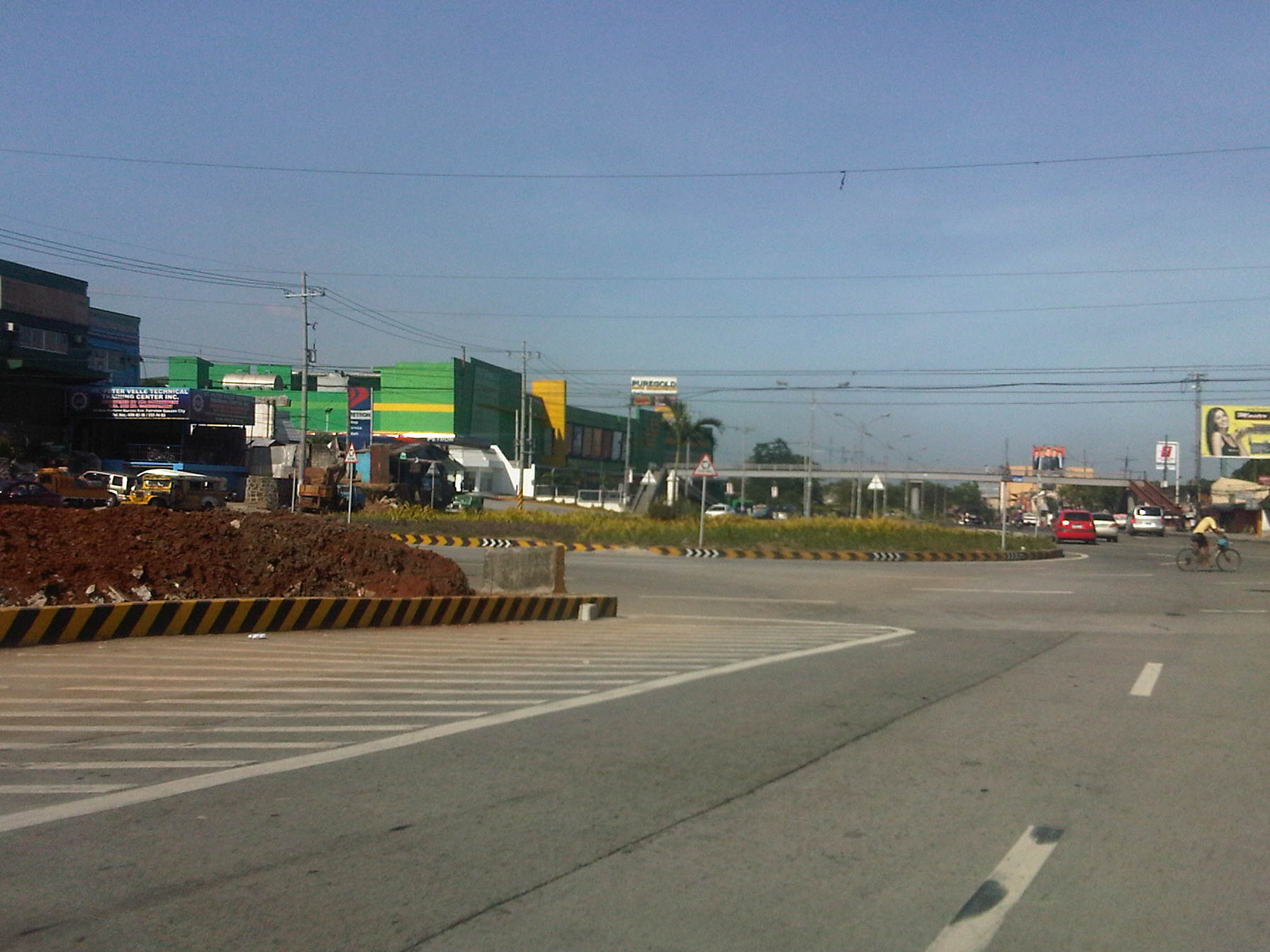
There are also the unusual designs of median openings (U-turns) that were claimed to have taken into consideration vehicle turning radii as well as trajectories along the the highway. Yet, there is the persistent observation that the median islands appear to be “nabubuntis” or getting pregnant based on the bulging island where the U-turn slots are located. U-turns also encourage weaving and aggressive behavior in order to cover the distance and width to a median opening. The non-occurrence of crashes now do not mean they will not occur in the future. These are examples of disasters waiting to happen just like the conditions at the huge roundabout that was constructed along Commonwealth in the Fairview area (photo below) where vehicle movements show motorists generally do not know how to use roundabouts. Thus, you get buses making U-turns and jeepneys and cars doing left turns in this portion of the highway.
Let me emphasize a main point I made in the previous paragraphs: It is not because there are few road crashes occurring (compared with the potential often cited by various parties criticizing the U-turn scheme) that Commonwealth is deemed safe. The fact is that any assessment of the highway will be based on the likelihood of crashes occurring due to the conditions along the road. It is probably by sheer luck that the incidence of fatal accidents is not that high. It is still a case of a disaster just waiting to happen.
There is still much to hope for since the MMDA and others involved continue in their efforts along Commonwealth including the designation of motorcycle lanes and the enforcement of speed limits (despite their limited hardware). These have obviously influenced motorists’ behavior in a positive way along the highway. Behavior change is a very good thing that needs to be reinforced further in order to improve safety along Commonwealth. But constructive and more permanent behavior change with respect to transport and traffic will take time, and efforts need to be consistent, firm and sustained to condition the minds of travelers for this change.
The case for Commonwealth might as well be applied to other roads not just in Metro Manila but throughout the country as well. Much is required in terms of resources and commitment to effect significant changes that will lead to the improvement of transport and traffic conditions. And yet the treatments are often generally varied, each city going about its own ways despite good practices available for adoption or adaptation. Perhaps the lessons from Commonwealth will be applied elsewhere, or perhaps not. Let us just hope that it won’t go the way officials in other cities jokingly say about traffic schemes in Metro Manila – “We observe what they do in Metro Manila and then we don’t do it here.”
–
Cagayan Valley Roads – Part 1
The Cagayan Valley Road is part of Asian Highway – 26 (AH-26) and the Pan-Philippine Highway. I have had only three opportunities to travel along this road and only once so far was I able to cross into Nueva Vizcaya, Isabela and Cagayan. Two previous trips have only taken me as far as San Jose City in Nueva Ecija. When the chance to travel to Tuguegarao, Cagayan came up one time, I didn’t hesitate to volunteer and opted to take a road trip in order to have the best view of the land and points of interest along the corridor.
 Tree-lined roads – from Gapan, Nueva Ecija, one is treated to sections lines with old trees. Sections generally have good asphalt pavements but markings are badly faded or non-existent.
 Traffic is generally very light between towns and there are even few tricycles, the ubiquitous paratransit that is usually the mode of choice for local commuting.
 Aside from the absence of pavement markings, there is also a dearth of road signs. While it may be reasoned that these are unnecessary due to the light traffic, there are minimum signs and markings required for such roads to guide motorists.
 The only thing or things missing along this section are chevron signs to guide motorists negotiating the curve. Of course, in other places in the country the chevrons can be quite excessive.
 Minimum required signs and markings along curves are shown in the photo with the double yellow indicating no passing along both sides of the road. Signs should, however, be free from obstructions. such as the makeshift fence of houses along the highway.
 The solid yellow along the broken white lines states that motorists are prohibited from passing along the lane on the right using the left lane. Vehicles on the left (opposing traffic in this case) may overtake using the right lane.
 Many sections have limited sight distance while having excellent pavements and markings. The sign on the right informing motorists of the curve ahead is damaged and needs to be repaired or replaces.
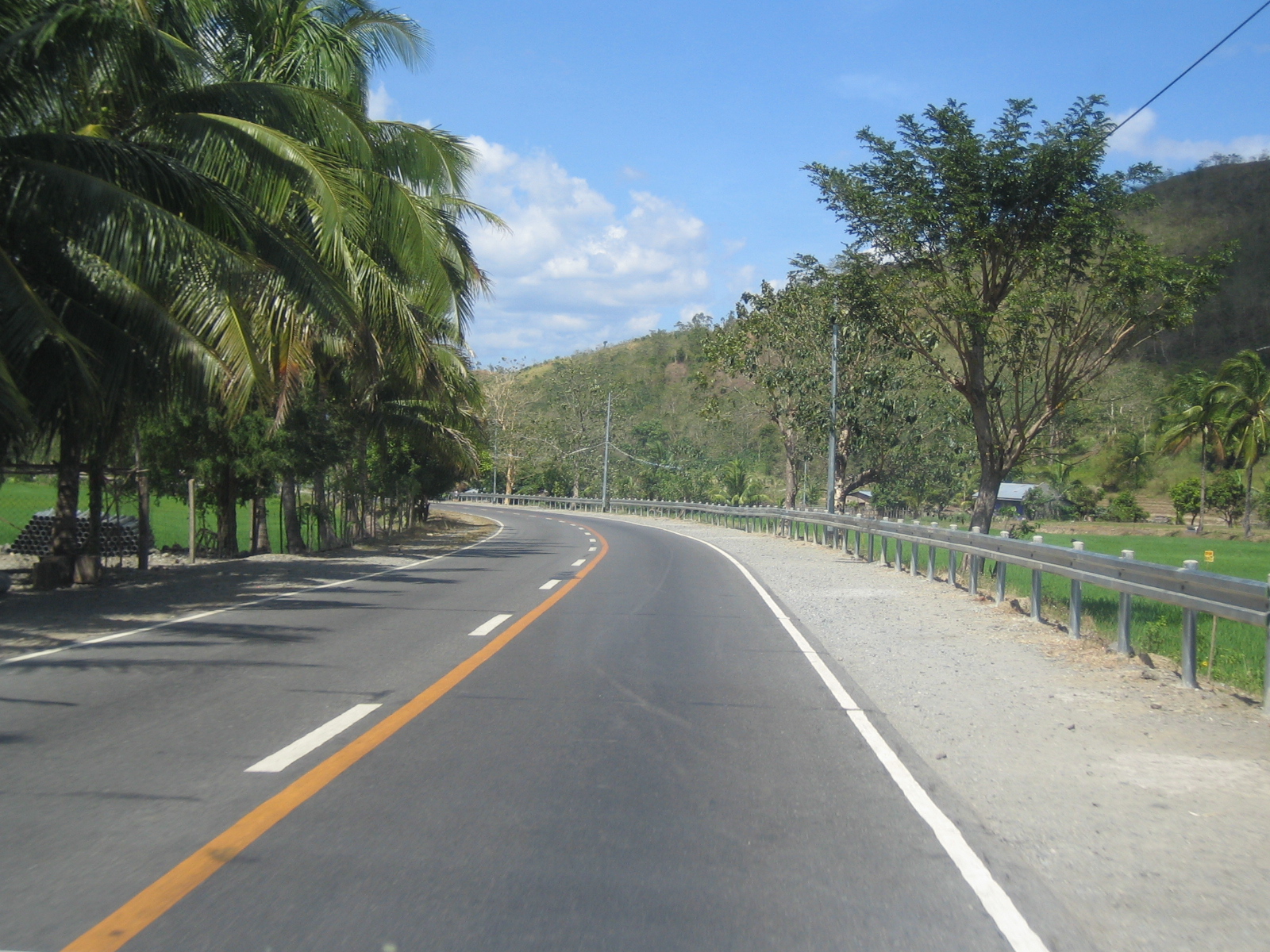 Scenes like these belong to coffee table books about rural roads. Unfortunately, there should also be signs along the road to guide motorists.
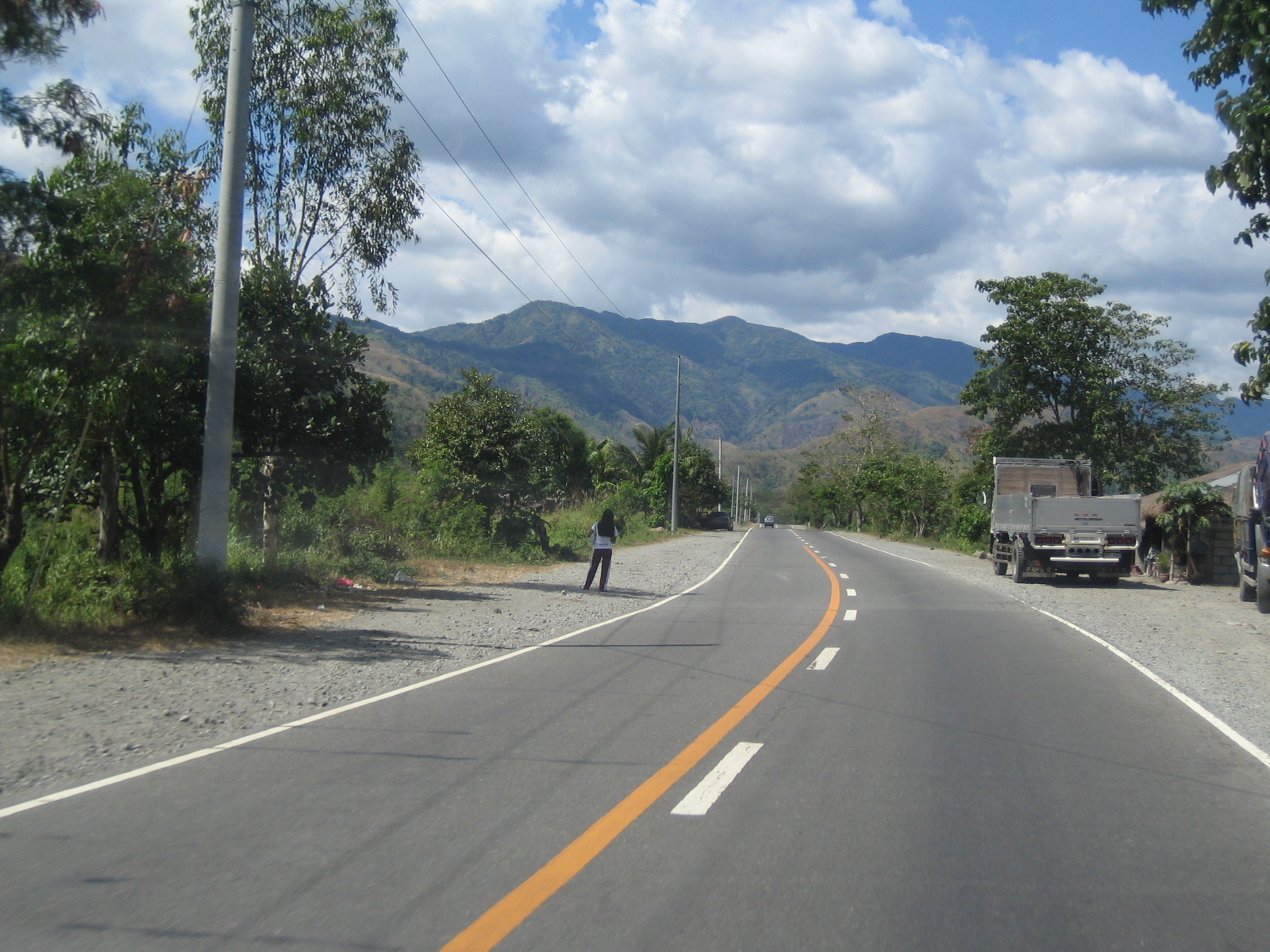 In this case, vehicles along the opposing lane are prohibited from overtaking. Vehicles along ours may overtake slower moving traffic.
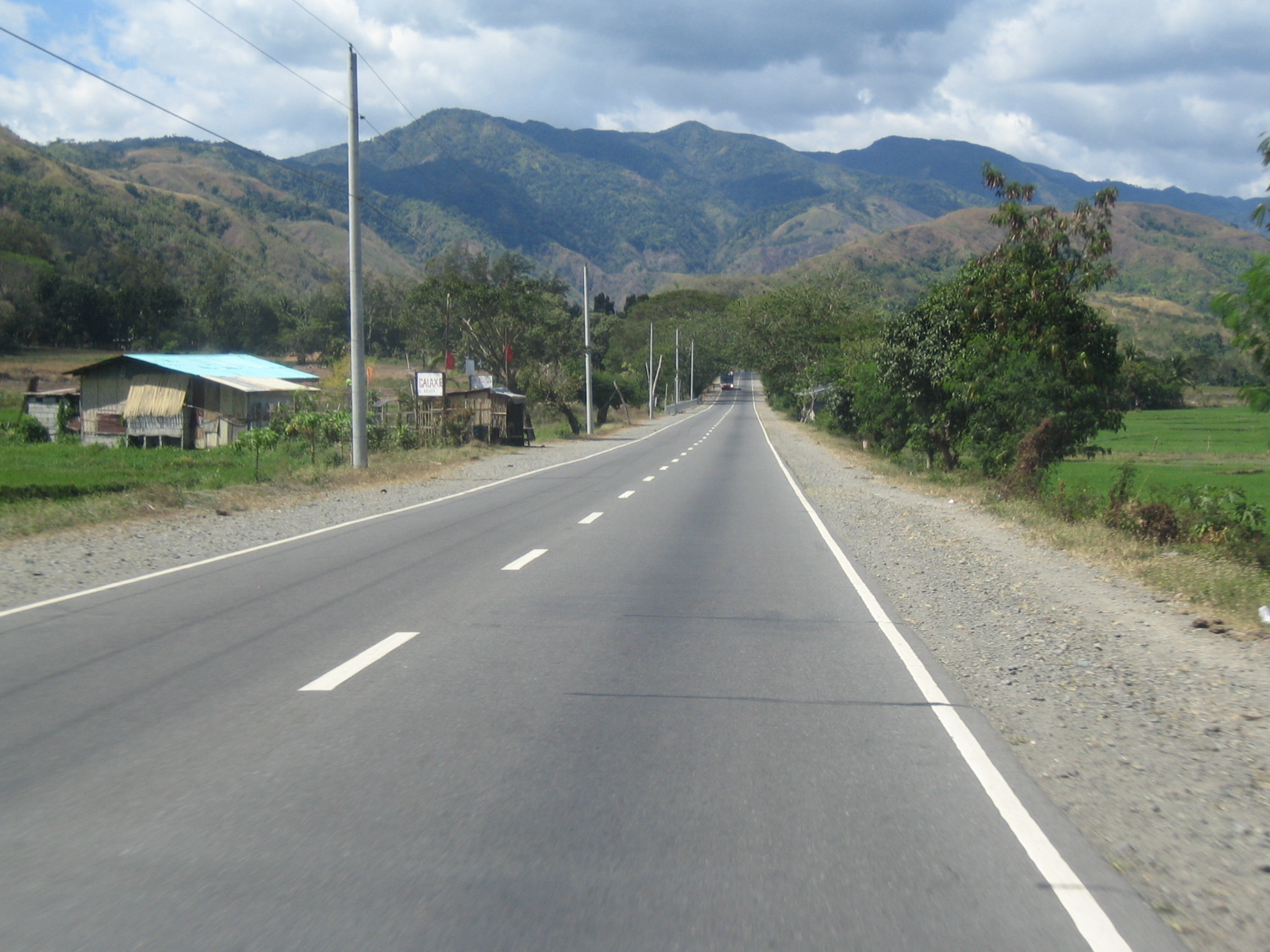 Sections like this where sight distance is excellent is ideal for passing. Travelers should enjoy the view of the countryside and the mountains up ahead. Sadly, the mountains have much fewer trees after years of illegal logging that have exhausted our timber resources. These have remained generally unaddressed to this day.
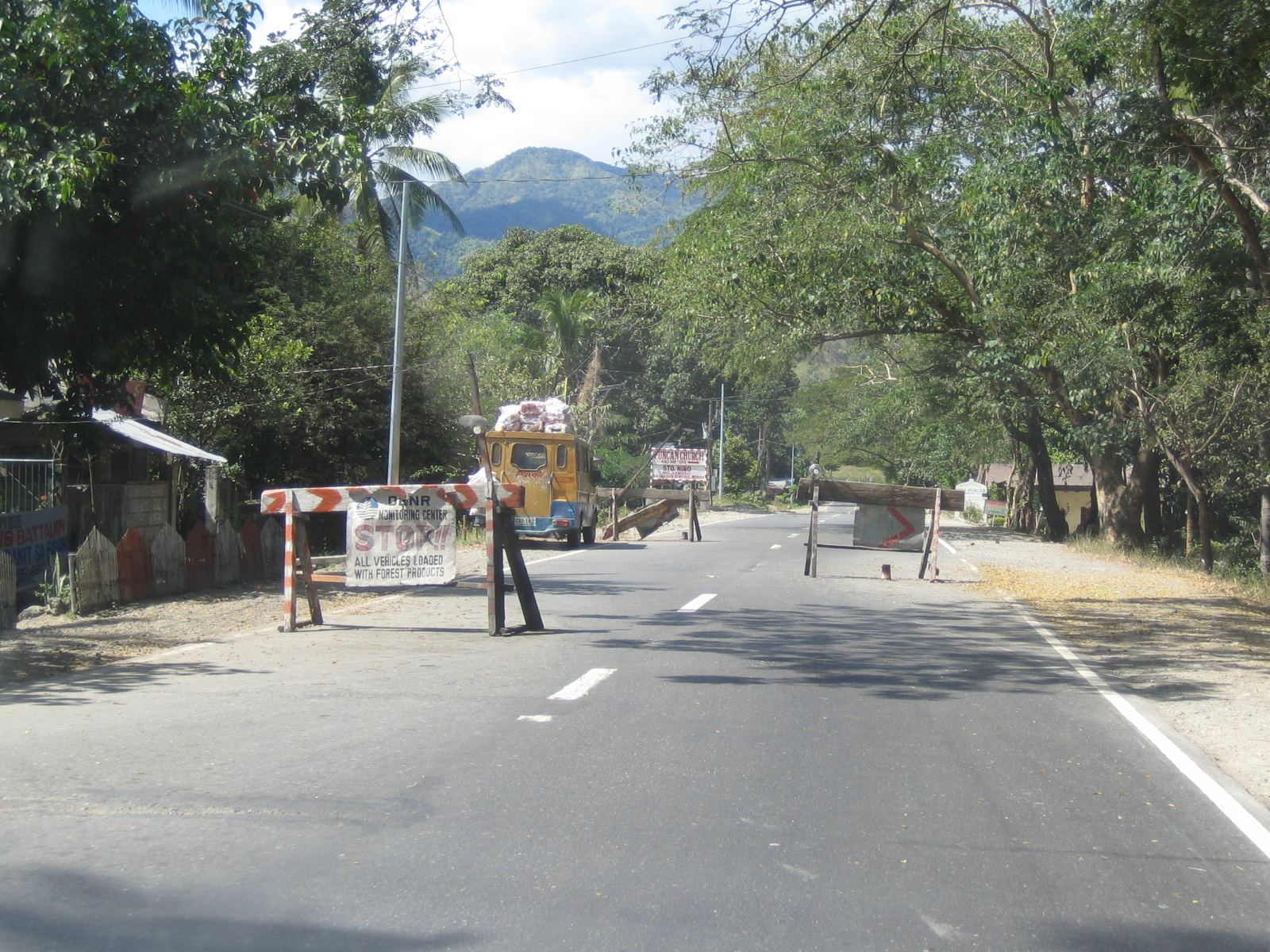 Barriers set up by locals to slow down traffic – there are similar others placed on the road by the PNP, the DENR and barangays for various reasons including checkpoints for illegal logs, firearms, etc. While mostly for good intentions, these can become hazards along the road especially at night when the highway is generally poorly illuminated.
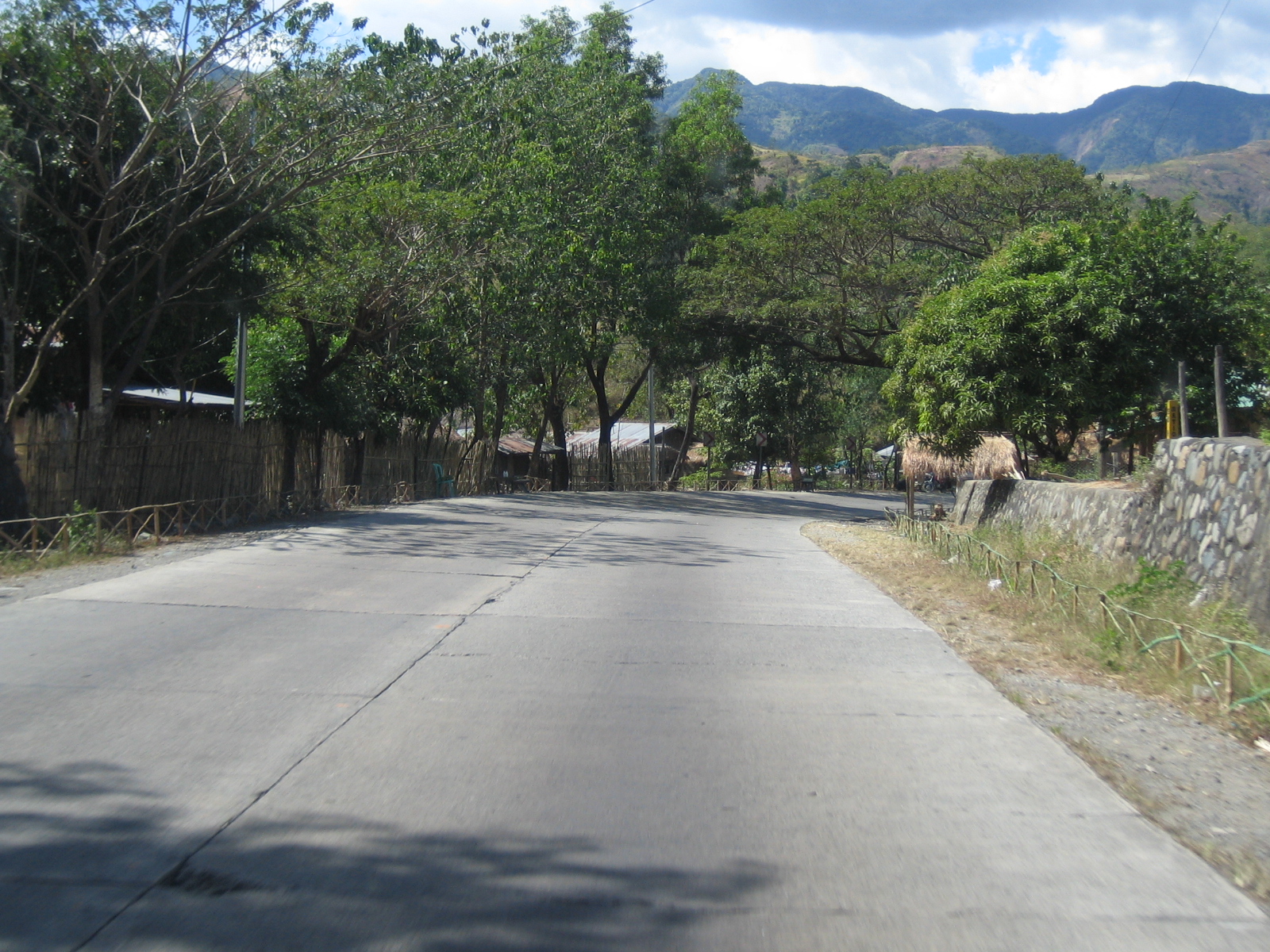 In addition to many sections not having standard markings and road signs, shoulders are practically non-existent partly due to encroachments on the ROW.
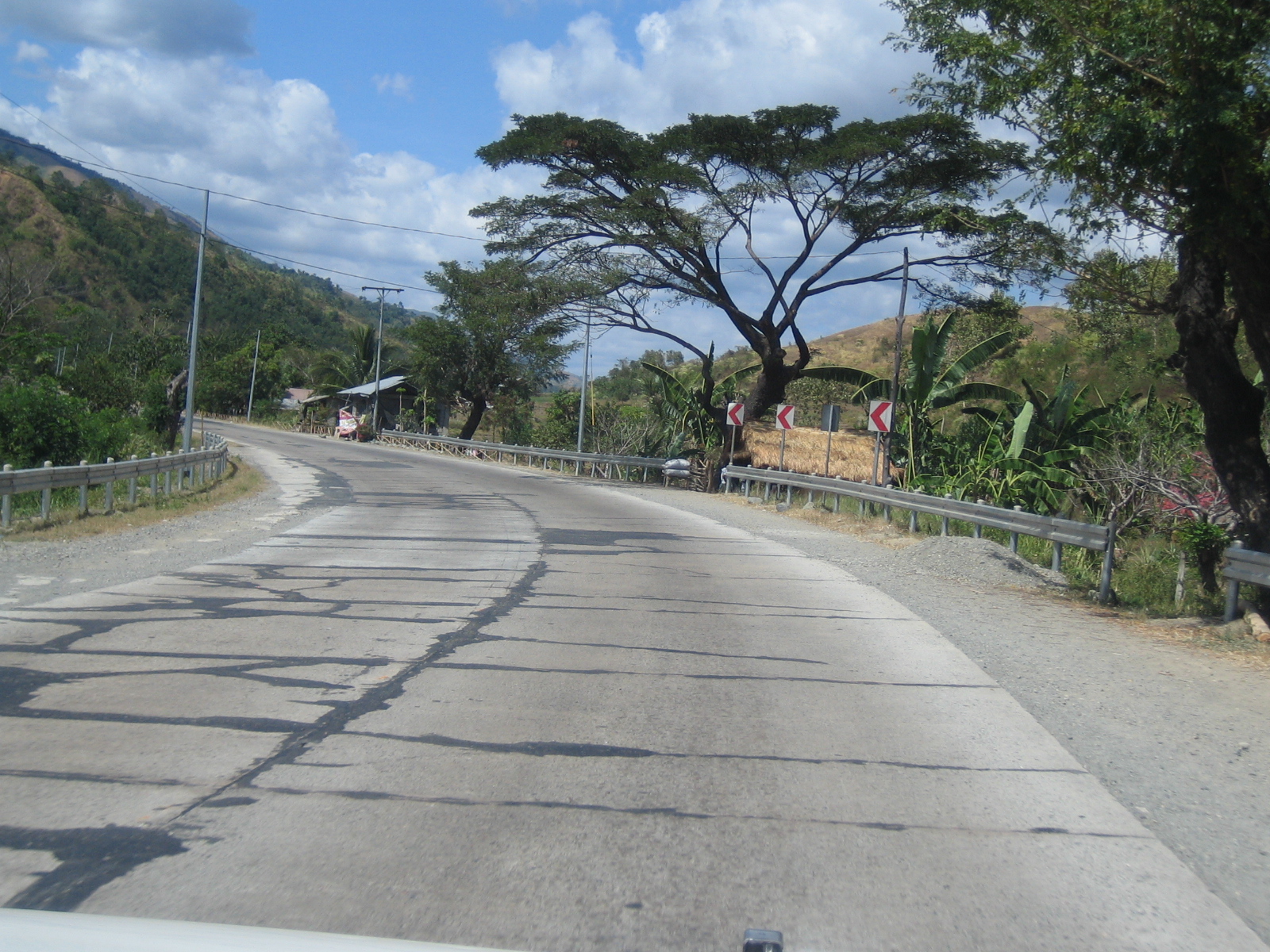 Marginal maintenance of roads is quite common where cracks are often addressed by asphalt seals. Several of the chevrons along this section have been taken by vandals with only the posts remaining along with 3 signs.
 Poorly maintained section where the pavement already needs to be rehabilitated, i.e., “re-blocking” as it is often called is necessary for many sections where there is also a need to re-assess the base or sub-base layers.
 Many sections have large cracks like this section. I took a photo of this also because of the old signs warning motorists of the reverse curve ahead and the speed limit of 30 kph. I doubt that the speed limit is enforced or followed by drivers and riders but the section is even more dangerous because of the plunge on one side and the barriers seem inadequate for preventing vehicles from taking off from the highway.
 There are wide shoulders along the road for layovers of truckers and other motorists seeking some rest from a long travel. There are usually stores or eateries here where people can purchase some refreshments.
 Trucks parked along the road – there are common areas where truck crews rest or have quick maintenance checks for their vehicles. There are typically repair and vulcanizing shops along these highways.
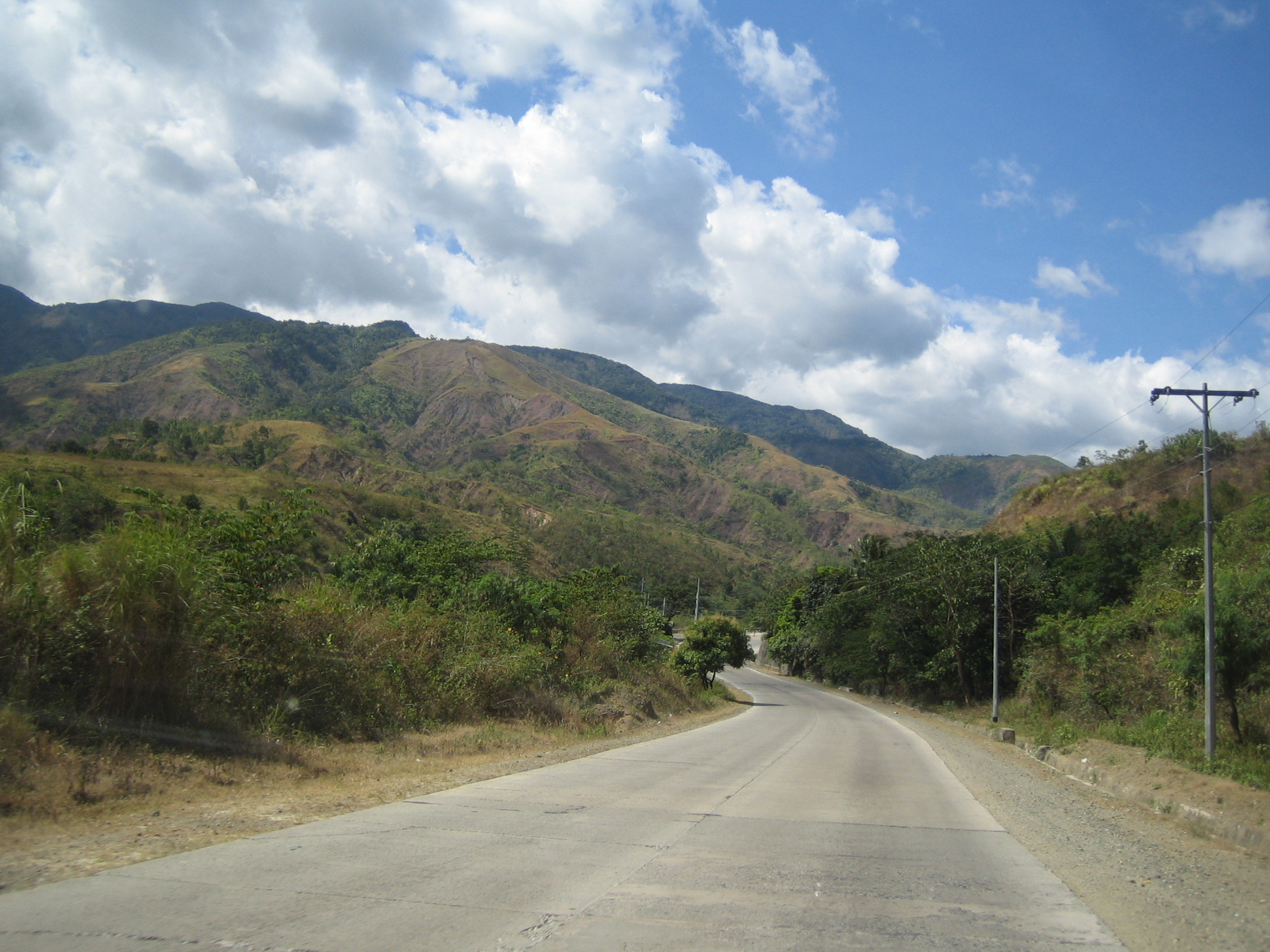 The long and winding road – sections like these could have been more dramatic if the mountains actually had trees. Needless to say, there are no pavement markings and signs along this section.
 These mountain sections have been improved to include shoulders that are wide enough for traffic to use them as climbing lanes.
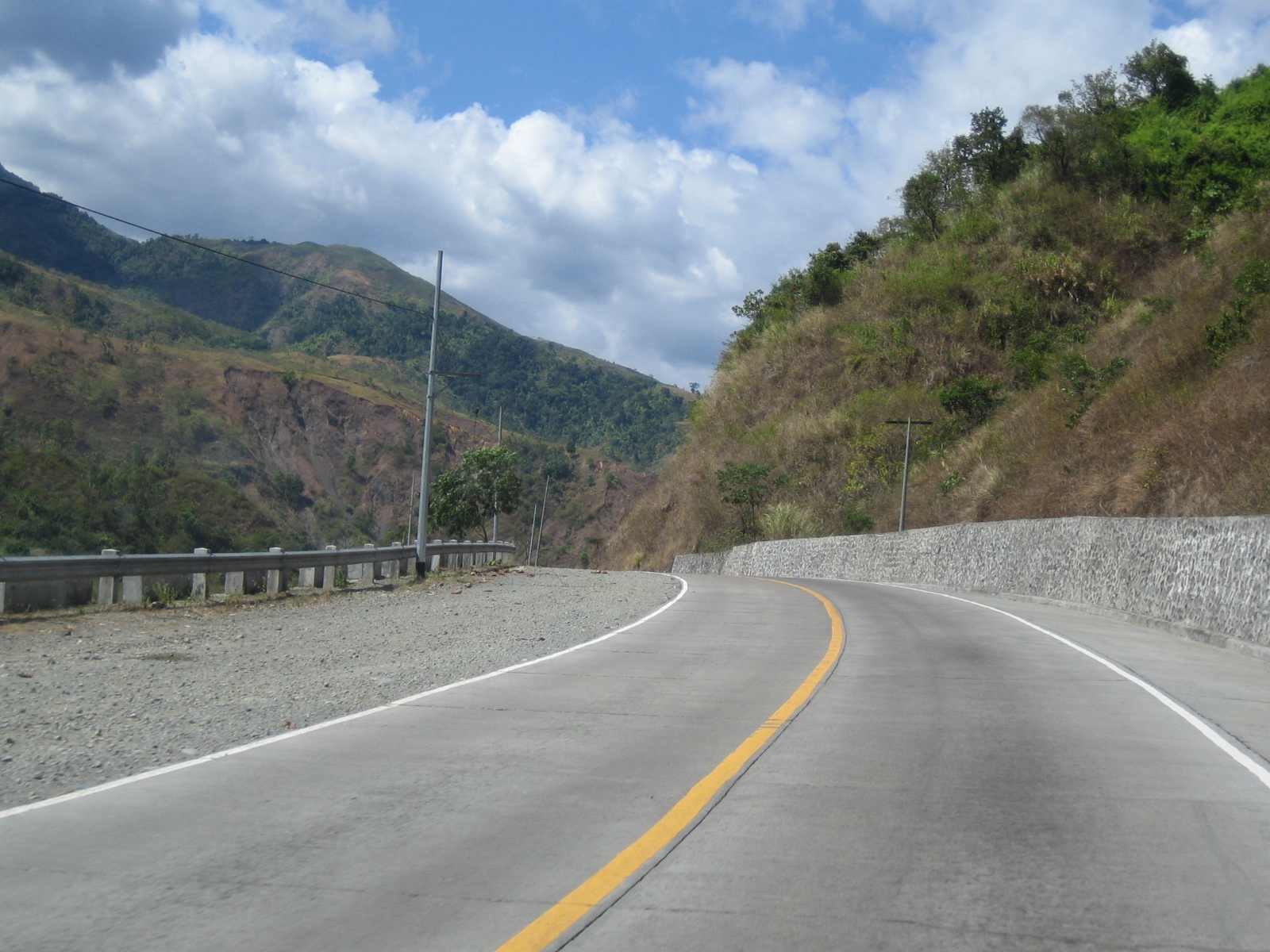 The shoulder along the outer edge of the highway is wide enough to allow for enough space for recovery or emergency stops. I am not sure though if the barriers are adequate for preventing vehicles from going over the ravine on this side of the road.
 The drive along this highway was quite educating with respect to the varying conditions along our roads and the environmental impacts of deforestation. The climates here could have been cooler and the air fresher if the mountains had much more trees than what remained.
 Along the way you encounter the occasional provincial bus – these are actually scheduled services by companies like Victory Liner, Florida, Baliwag, JAC Liner, etc.
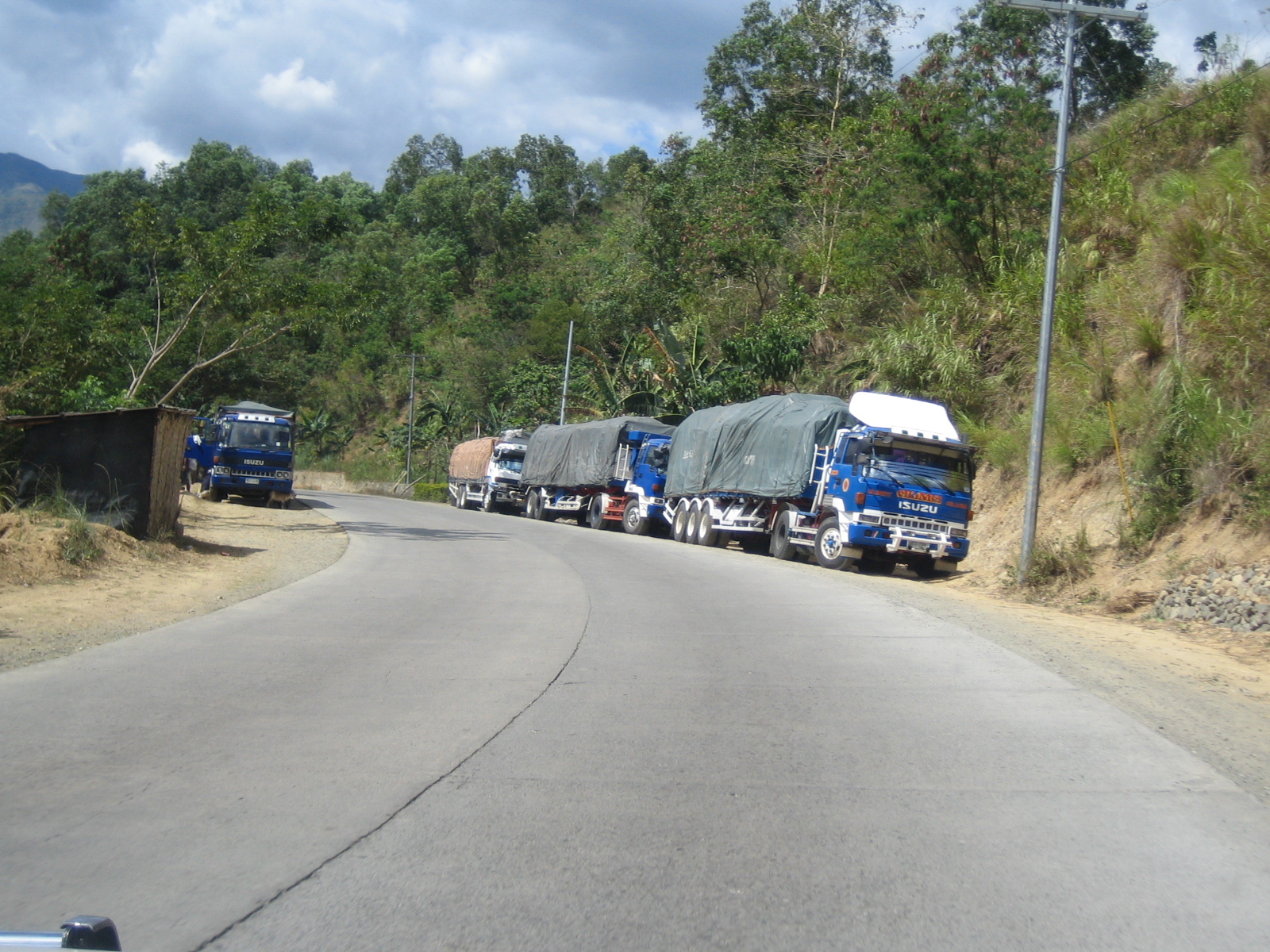 Trucks parked along the highway – truck crews generally take rests on long trips and would usually time their travel to factor in the truck bans in some towns along their routes and in Metro Manila as well. It is usually difficult for them to travel continuously during the day as they are slowed down not just by the terrain but by local traffic (e.g., tricycles).
 Unmarked – some sections have good pavements but don’t have standard markings. At the minimum, centerline and edge markings are desirable for such sections.
 Slow climb – travel can be significantly slowed down by trucks negotiating the slopes. Trucks laden with goods are usually hindered by their loads as they would have to overcome gravity. In many cases, these trucks may be overloaded, making their engines work more to be able to carry their weights.
 Passing maneuver – fortunately, traffic is generally light to make it possible for vehicles to pass slower moving ones. Note that there are no pavement markings to guide motorists along this section.
 Typical horizontal curve with limited sight distance – such sections are quite common along the highway since due to the mountain ranges on this side of Luzon Island.
 No signs? – while there are pavement markings along this section, the centerline marking should have been a solid yellow to discourage overtaking prior to and along the curvature, especially since sight distance is very limited by the terrain and the foliage. There should also be traffic signs to inform motorists of the approaching section and to guide drivers as they traverse the segment.
 Similar road section along the highway – shoulder along the opposing lane is narrow and sight distance is limited by trees and other growth along the inner part of the curve.
 Slope protection – the concrete wall was apparently constructed to prevent landslides or rockslides along this section of the highway.
 Trucks generally require enough space to turn and curves seem to be adequate for the turning radii of most types of large trucks using the highway.
 Reverse curve – this unusual section includes a concrete barrier to prevent wayward vehicles from going off the road and flying off the cliff on one side of the highway.
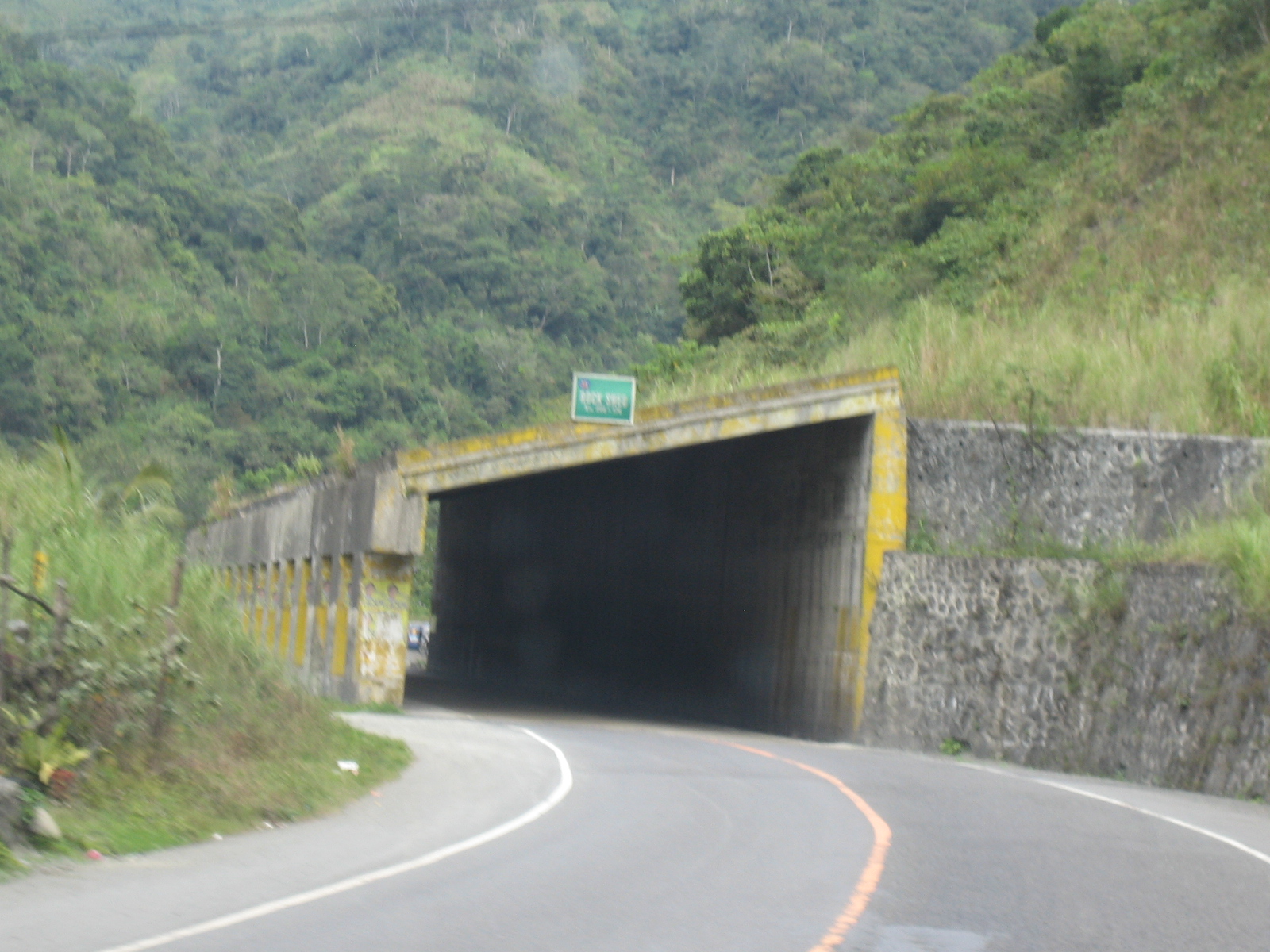 Engineers designed and constructed this section with a roof to protect the road section from landslides or rockslides. One will find similar structures along Marcos Highway on the road to/from Baguio City.
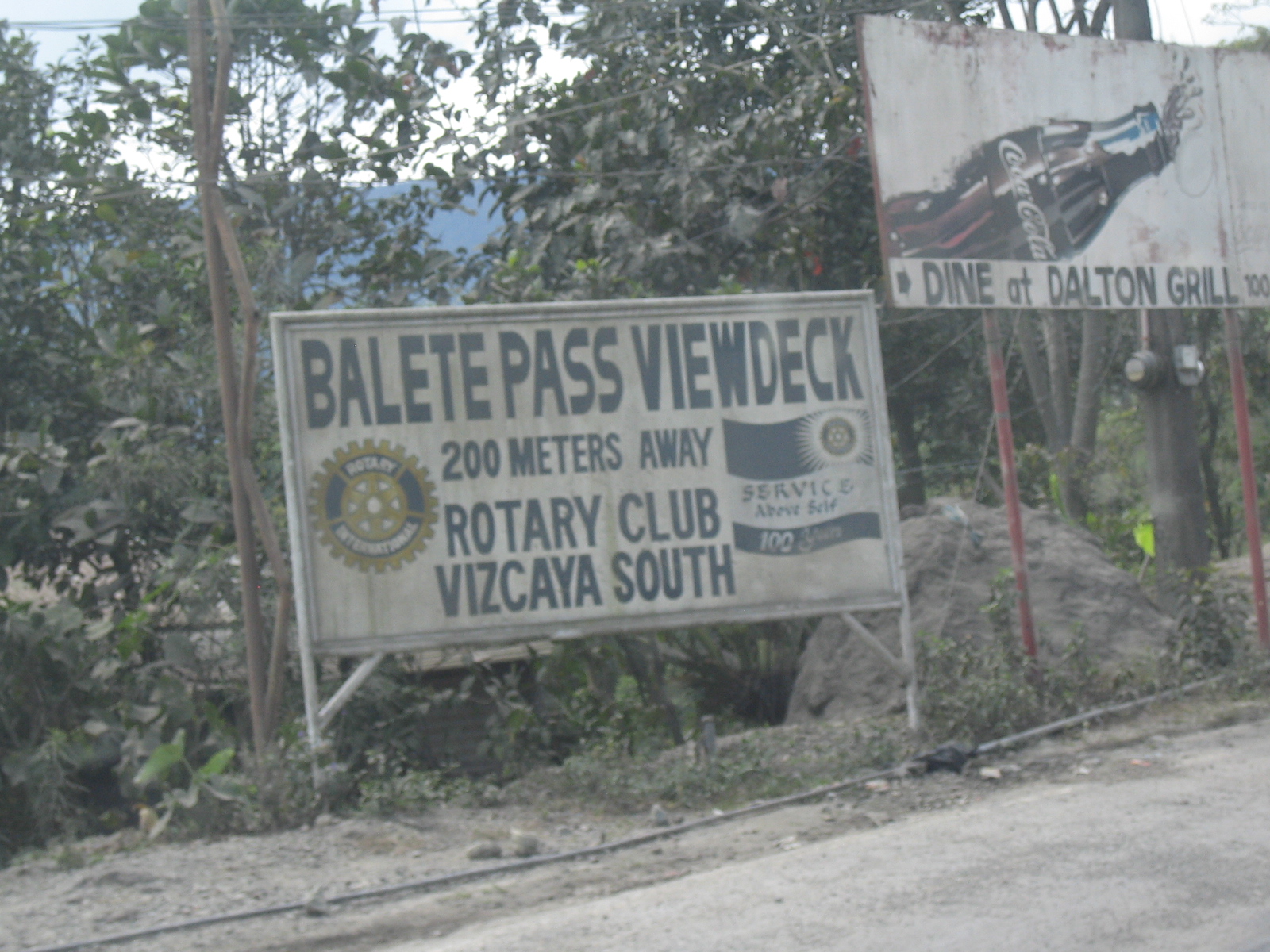 Sign by an organization informing motorists of the view deck along Balete Pass coming up along the road. There should be a standard sign for such attractions along our national roads. Perhaps there is already one erected in the area considering this photo was taken about 5 years ago.
Upon entering the province of Isabela, we decided to take the alternate route to avoid what we anticipated as heavy traffic along the towns and cities including Santiago and Ilagan. I will feature these sections in a future post that will serve as a sequel to this one.
–
The STAR Tollway
The Southern Tagalog Arterial Road (STAR) Tollway connects the province of Laguna with Batangas, stretching from the SLEX extension in Calamba, Laguna to the spur road along Sto. Tomas and on to Batangas City. It has been the subject of criticism for being unsafe and this is for many reasons. Such include the fact that a significant part of the tollway is 2-lane and undivided like most national highways around the country. Fortunately, however, there seem to be few road crashes being reported along the tollway. This is probably due to the relatively low traffic volumes observed along the STAR combined with motorists being aware of the potential for crashes. Such awareness increases their alertness to situations that can lead to accidents. Following are photos I took almost a year ago during one trip to Batangas City.
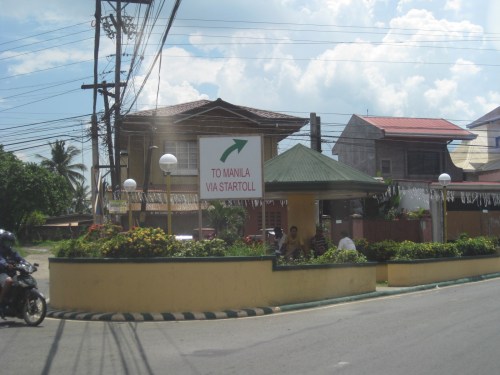 Junction leading to the entrance of the tollway
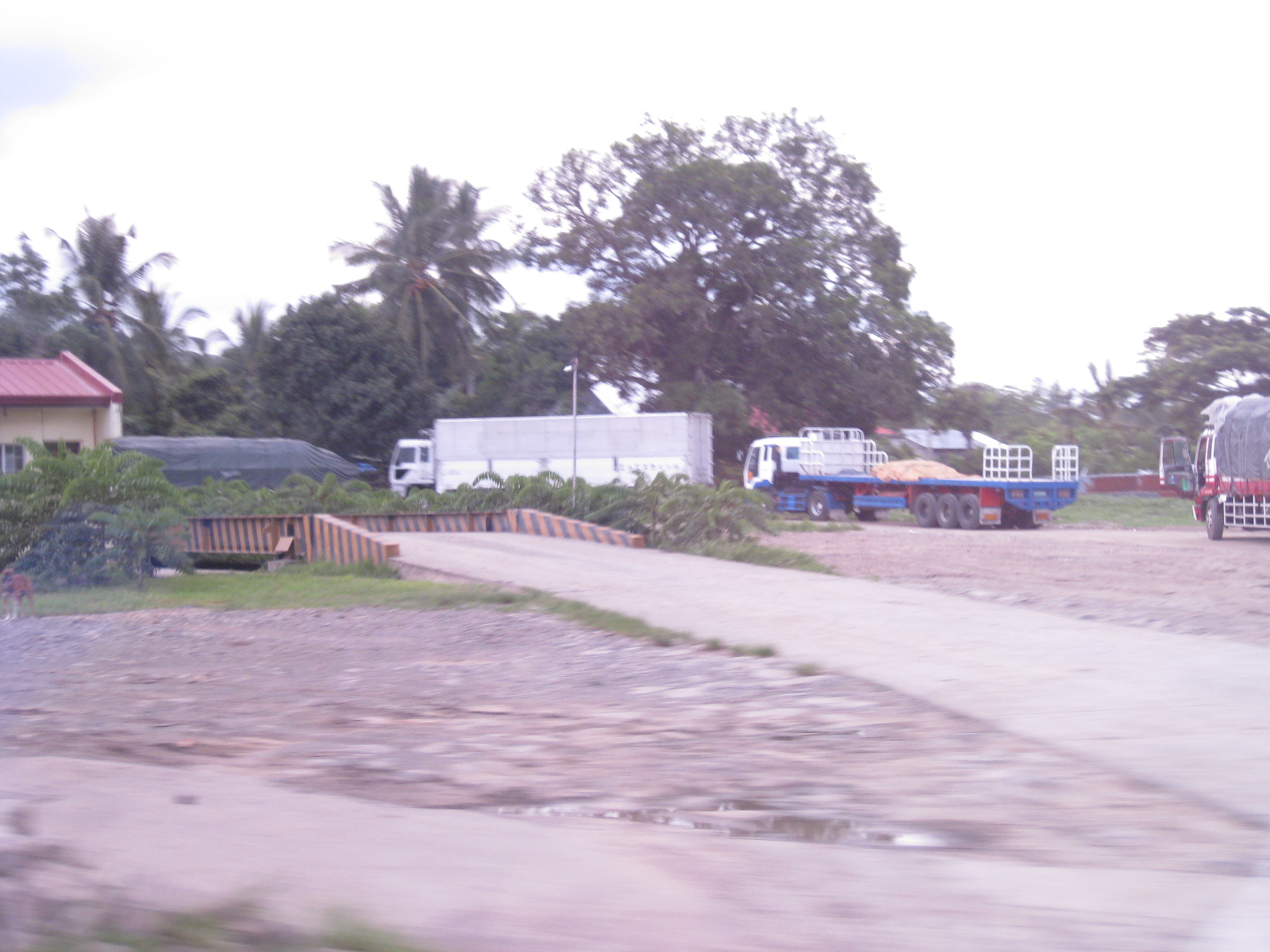 Weigh bridge for trucks entering the tollway
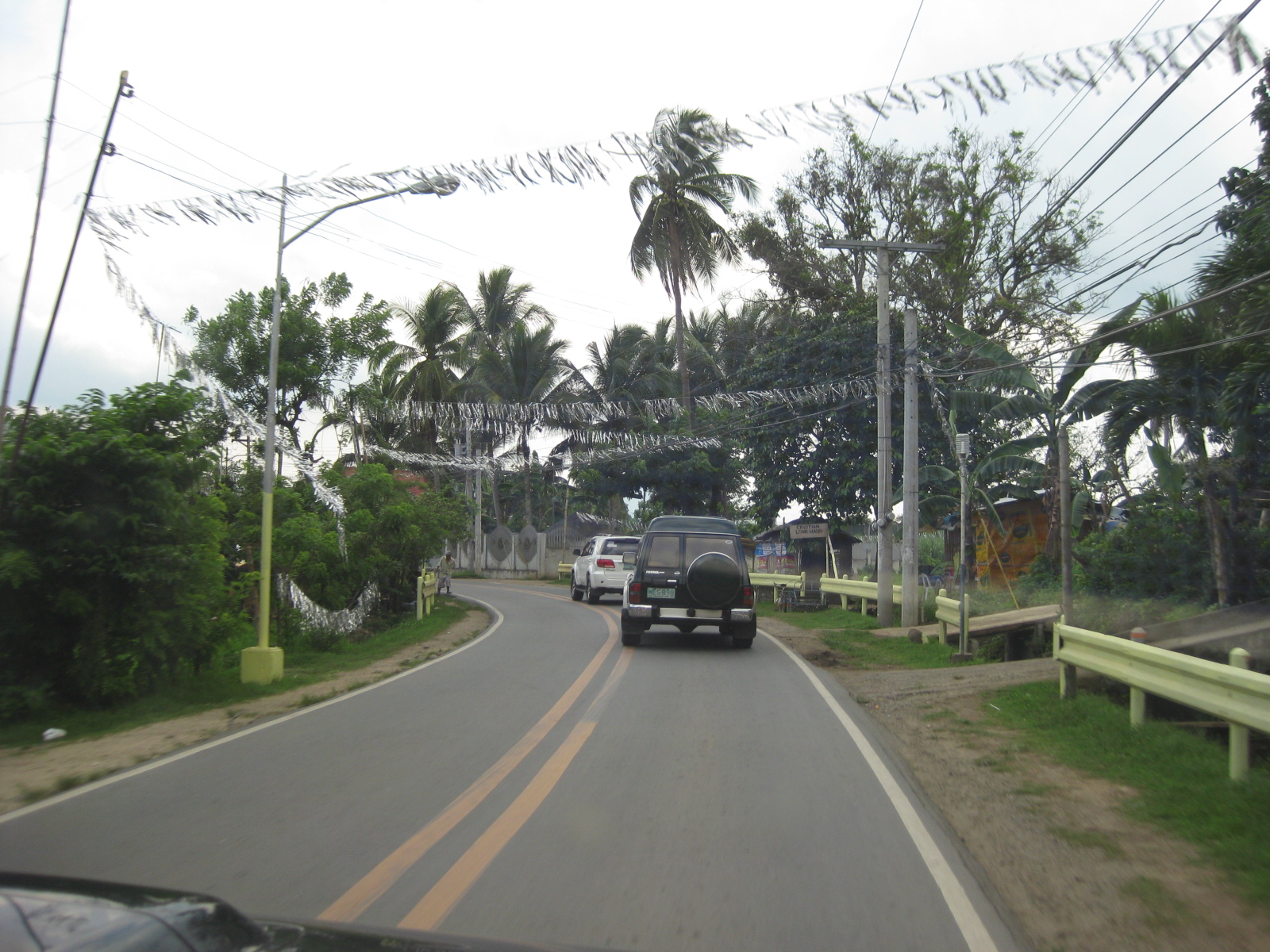 Section of national highway connecting to the tollway
 Ramp to tollway is on the right. The national road passes under the tollway.
 Typical entry toll barrier
 Ramp merging into tollway
 Two-lane, two-way section of the tollway – the section is along half of the ROW and would have been the SB section of a divided road. The undeveloped land on the right will be the section where the NB section will be constructed. That’s a typical pedestrian overpass in the photo.
 The full ROW for the tollway was acquired prior to its construction but due to the low traffic demand, the owner-operator decided against building the full, divided highway. Nevertheless, the highway generally has standard shoulders on either side and standard lane markings.
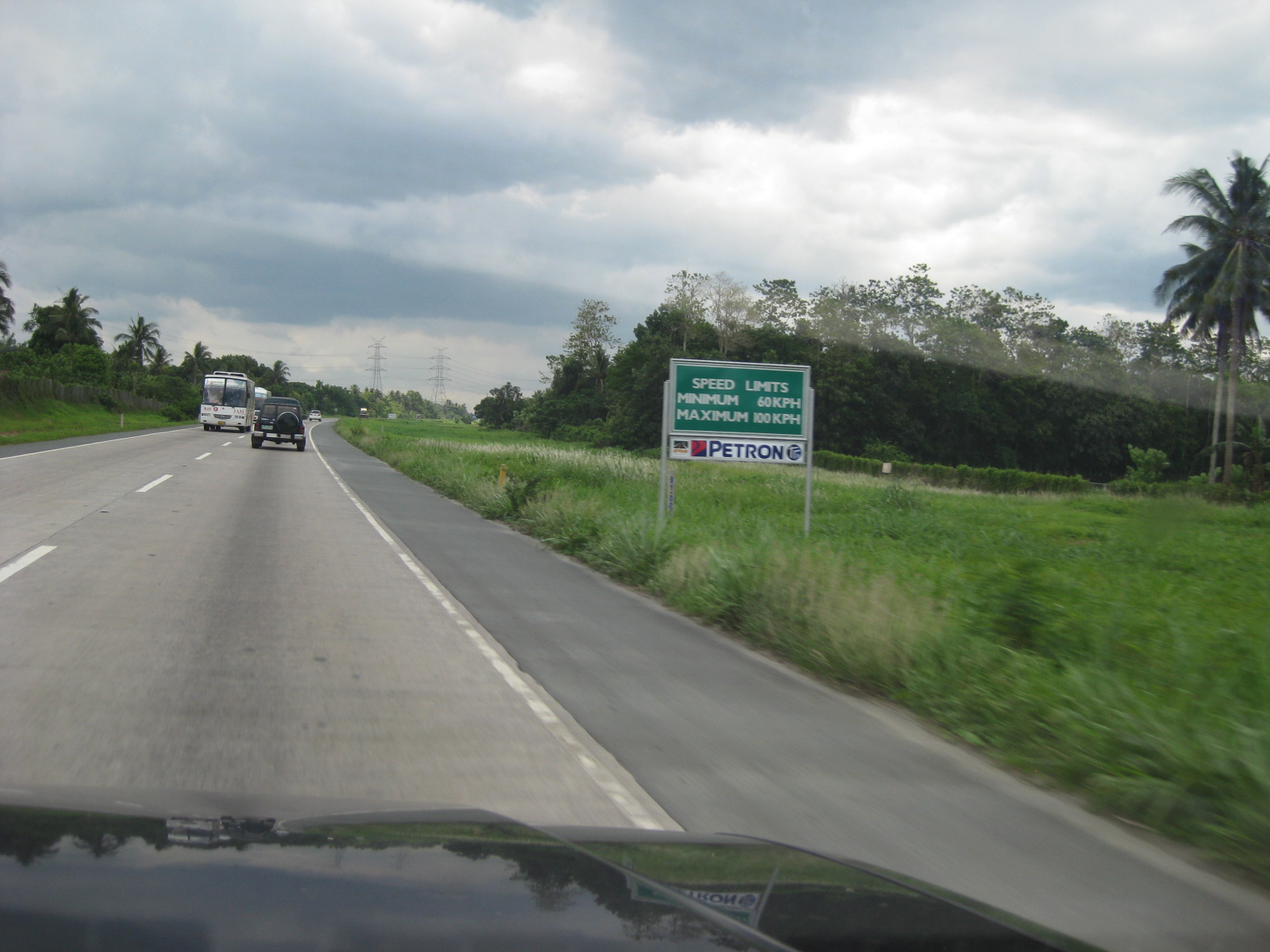 Example of non-standard sign along the expressway. Such non-standard signs are found along the entire tollway.
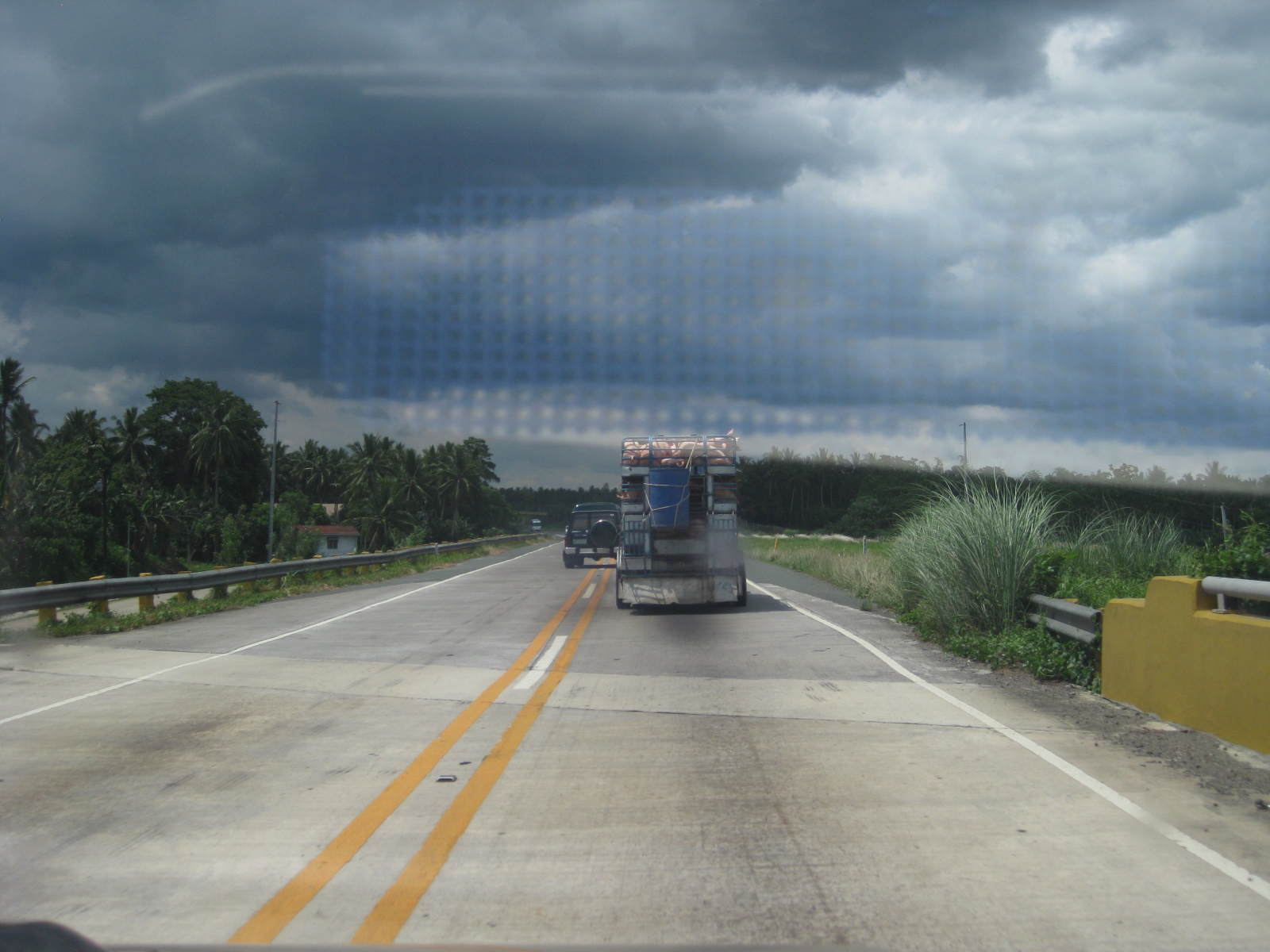 Overpass section of the tollway where there is a junction with a national road
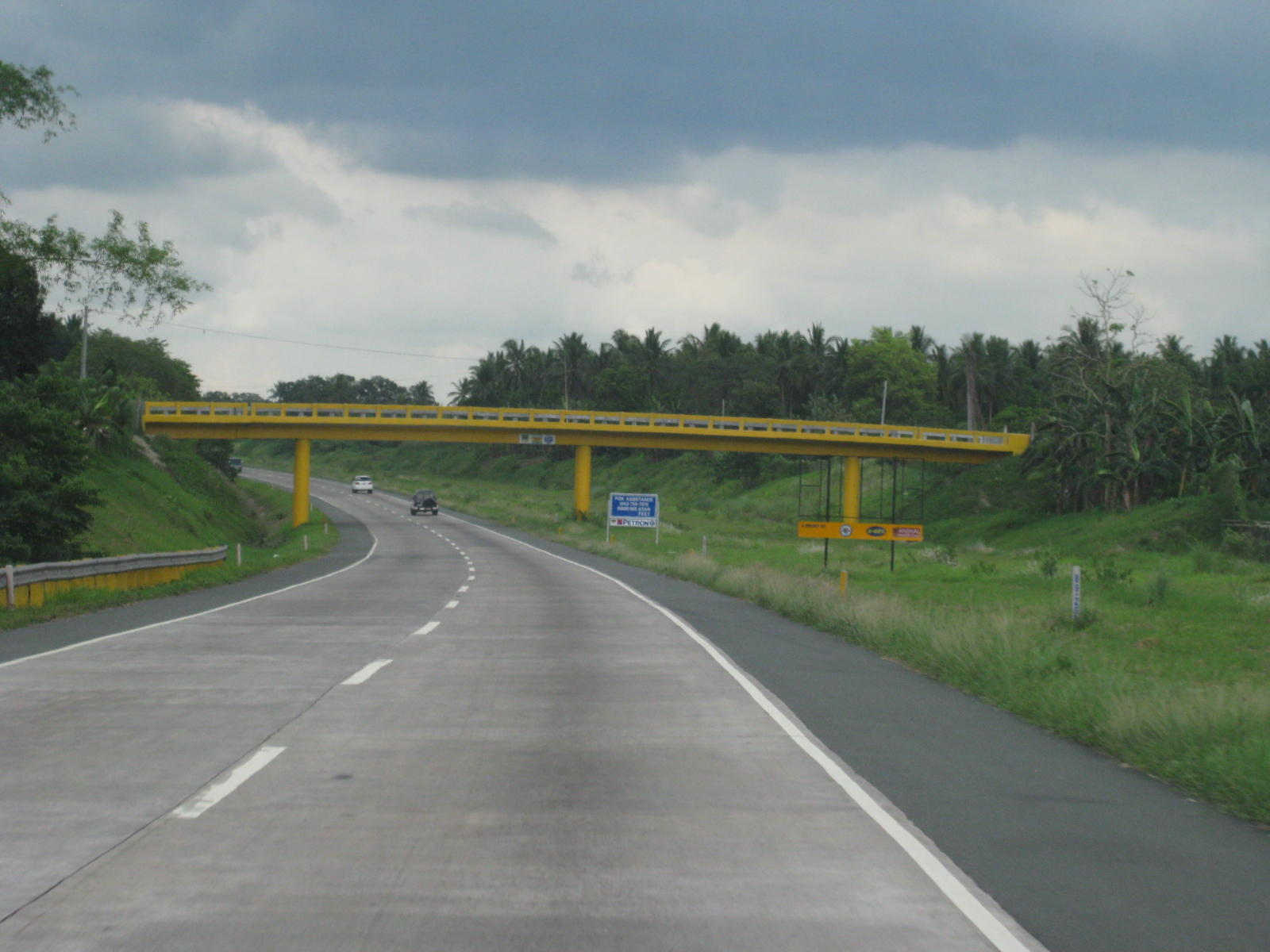 Typical bridge for traffic crossing the tollway where there are no entrance or exits to/from the tollway
 Vehicle attempting to overtake a RORO bus traveling from Batangas Port to Metro Manila
 RORO bus initiating a passing maneuver with respect to a slower moving tanker truck. Note that the shoulder at this section is only half the width of a lane.
 Approach to exit to Lipa City
 Three-lane section along the tollway where the extra lane is for vehicles turning off the tollway
 Section of STAR under rehabilitation along the 4-lane, divided part of the tollway
 Gas station along the tollway provides an opportunity for rest, refueling and/or refreshments
 Typical two-lane section (NB)
 Long sag section along the tollway
 Typical section and traffic along the tollway – even at sections where demand is supposed to be significant enough to justify 4 lanes, traffic is light and free-flowing.
 Typical horizontal curvature along the tollway
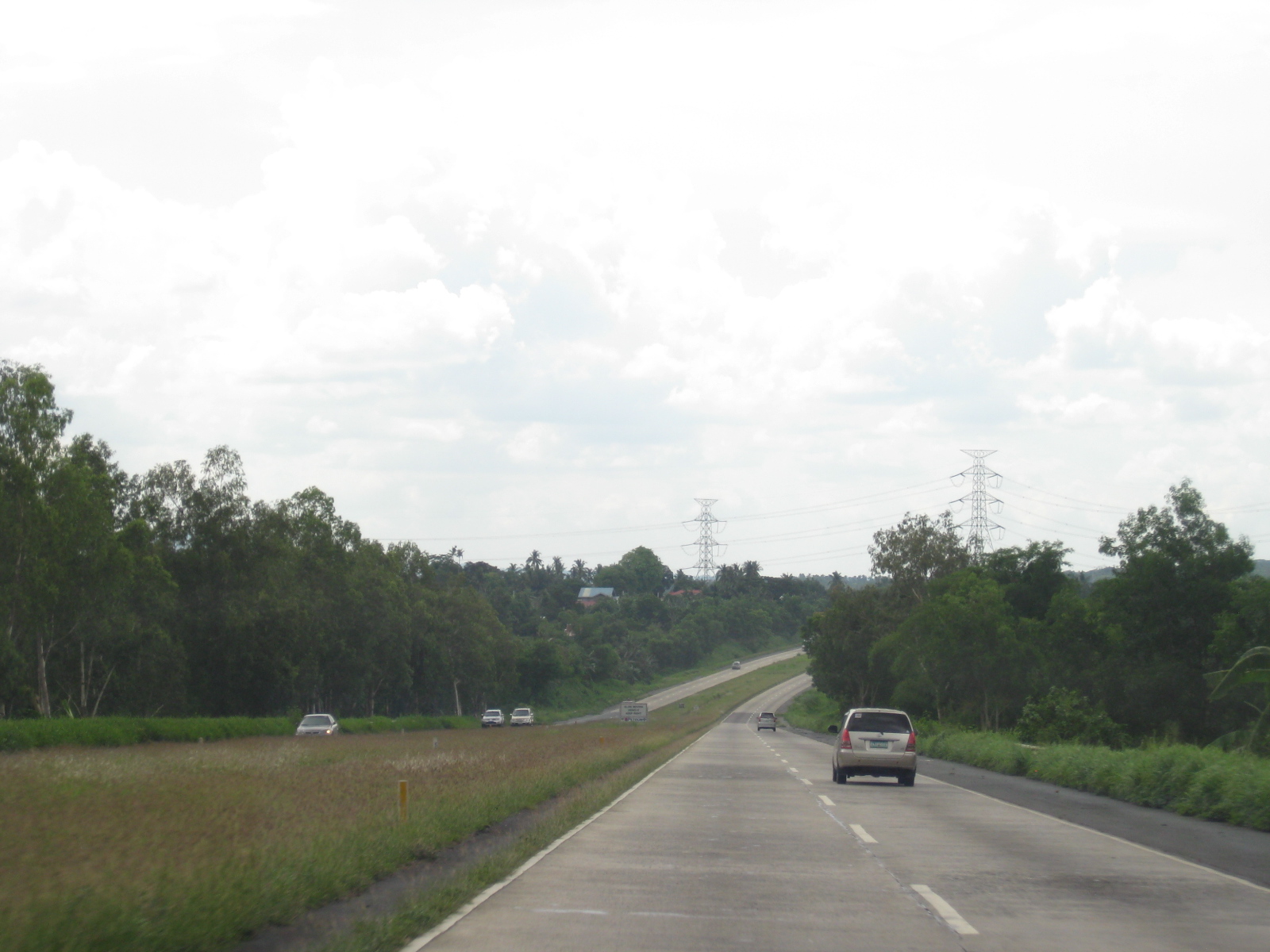 The geometric design of the tollway provides adequate sight distance, harmonizing horizontal and vertical curves.
 Non-standard signs along the expressway located along the median
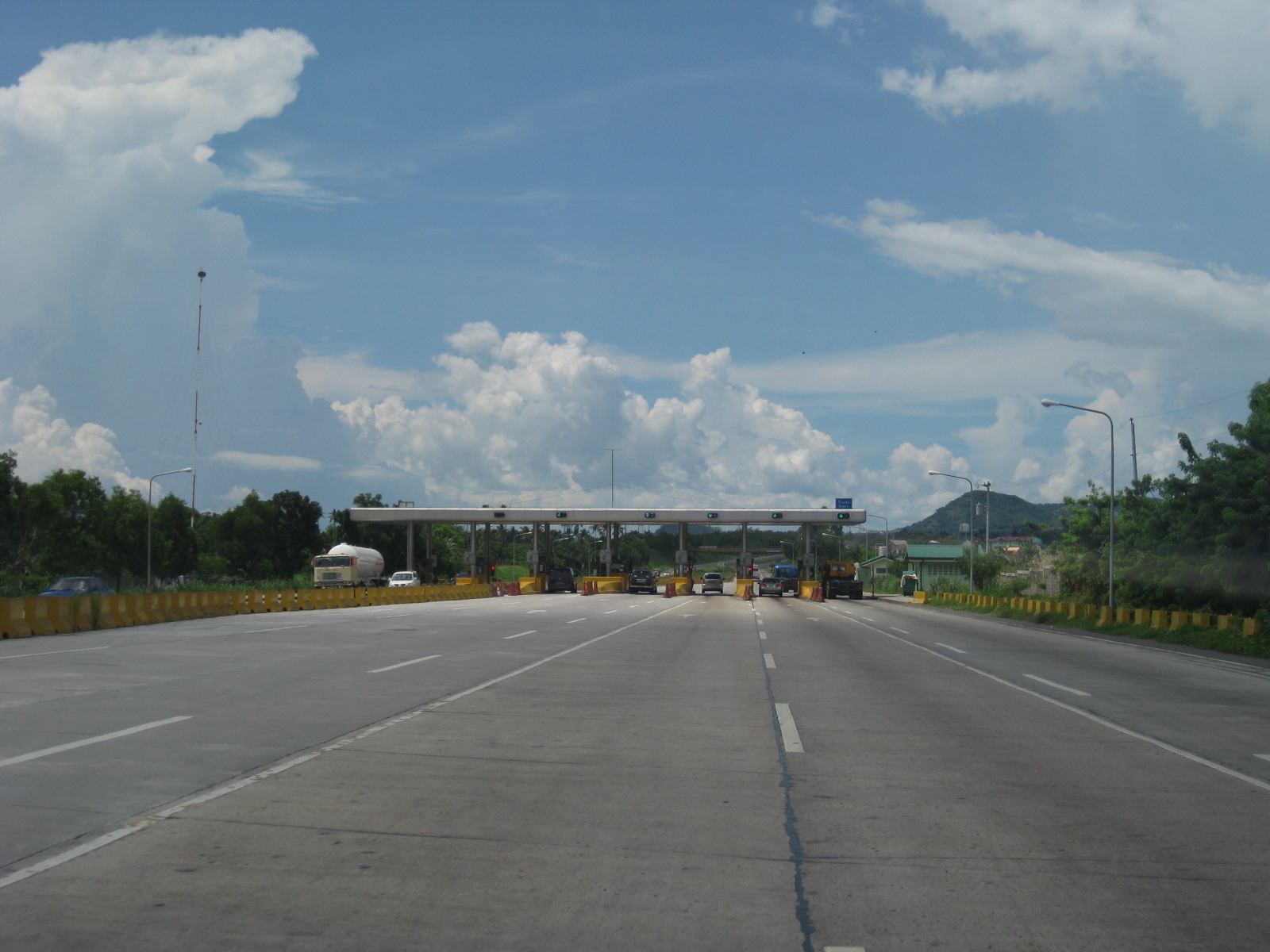 Approach to the toll plaza prior to the spur road connecting STAR with SLEX
 Exit toll plaza
 Spur road section leading to the SLEX
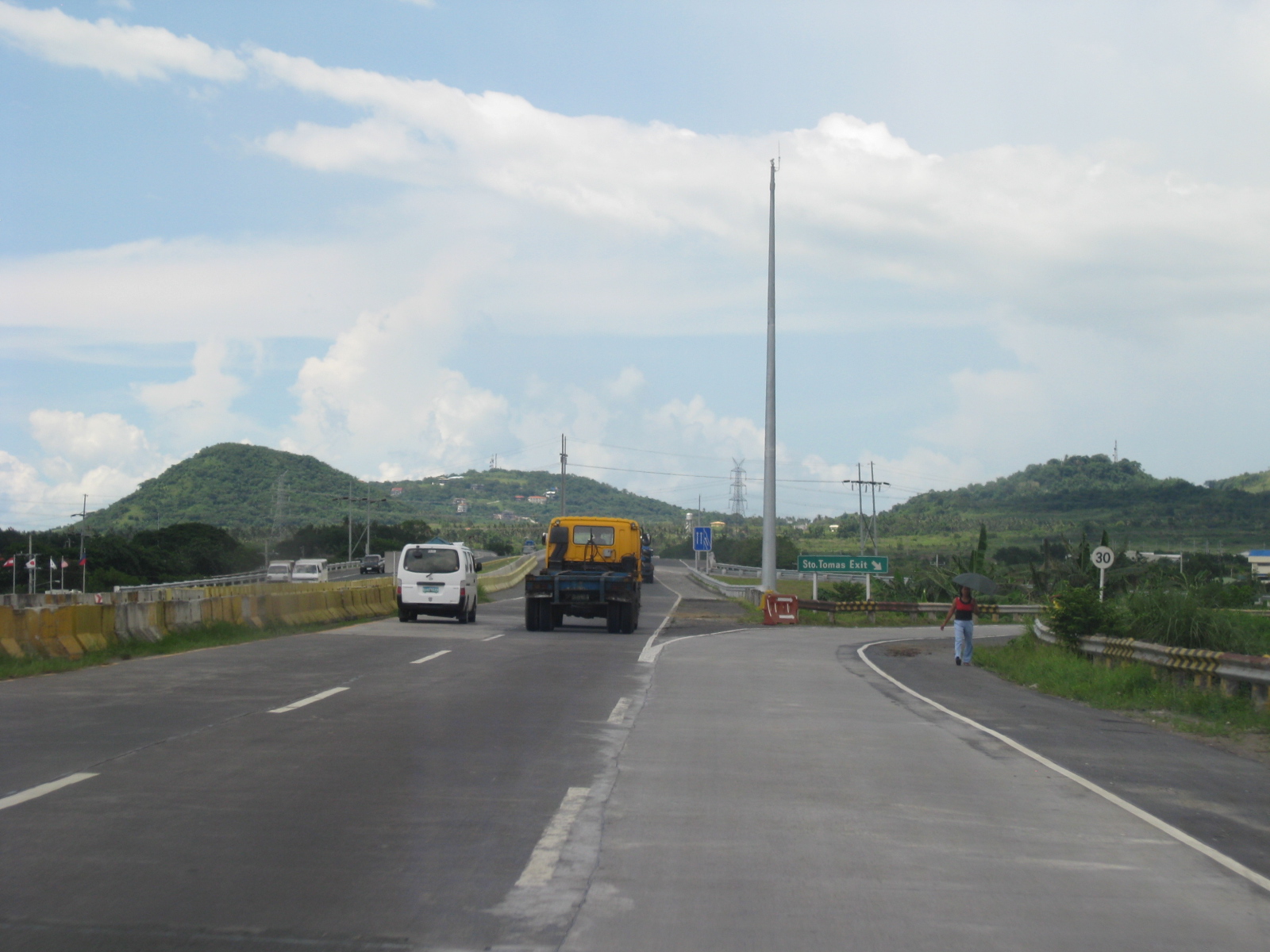 Sto. Tomas exit ramp
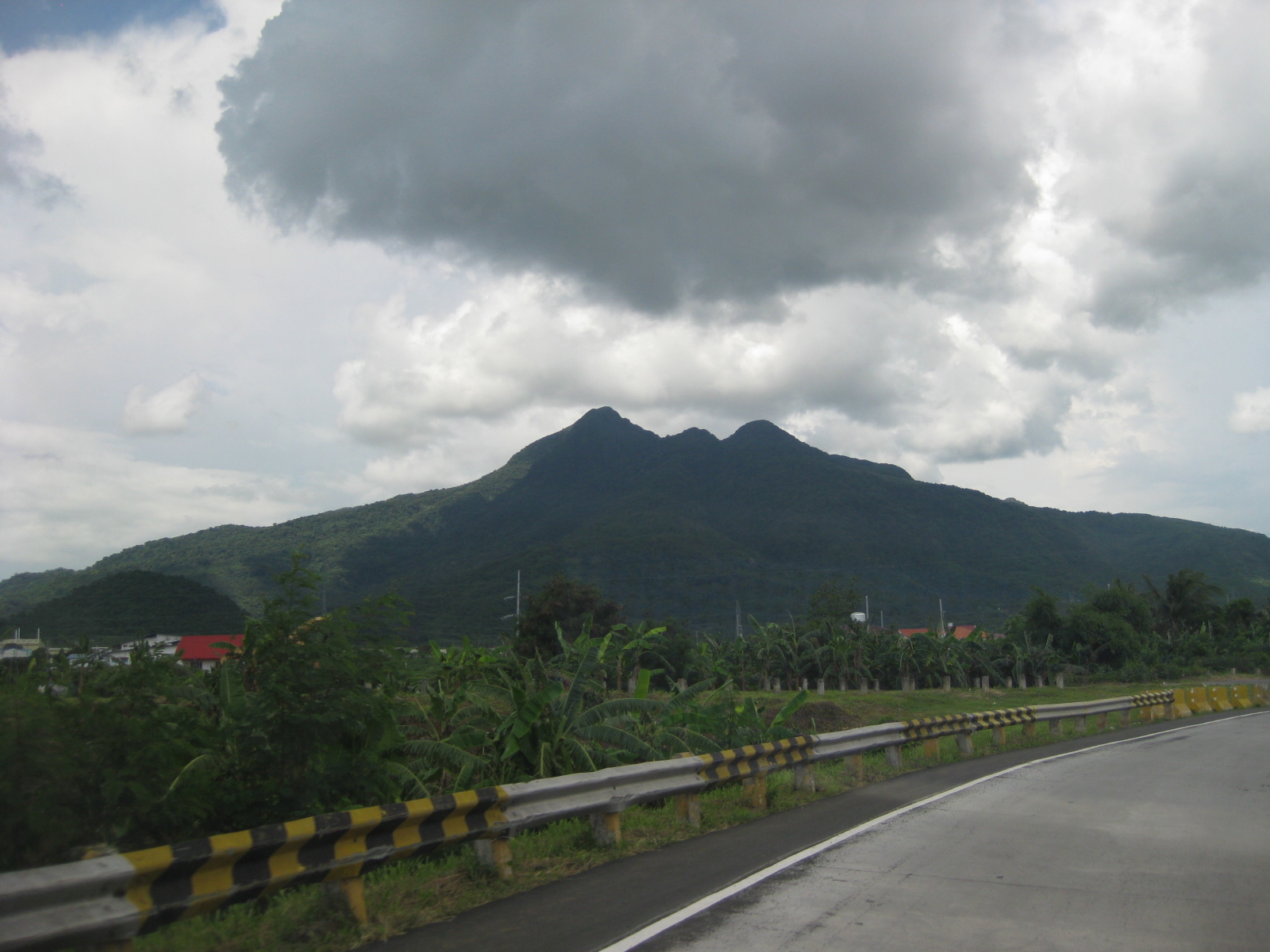 View of Mt. Makiling from the exit ramp
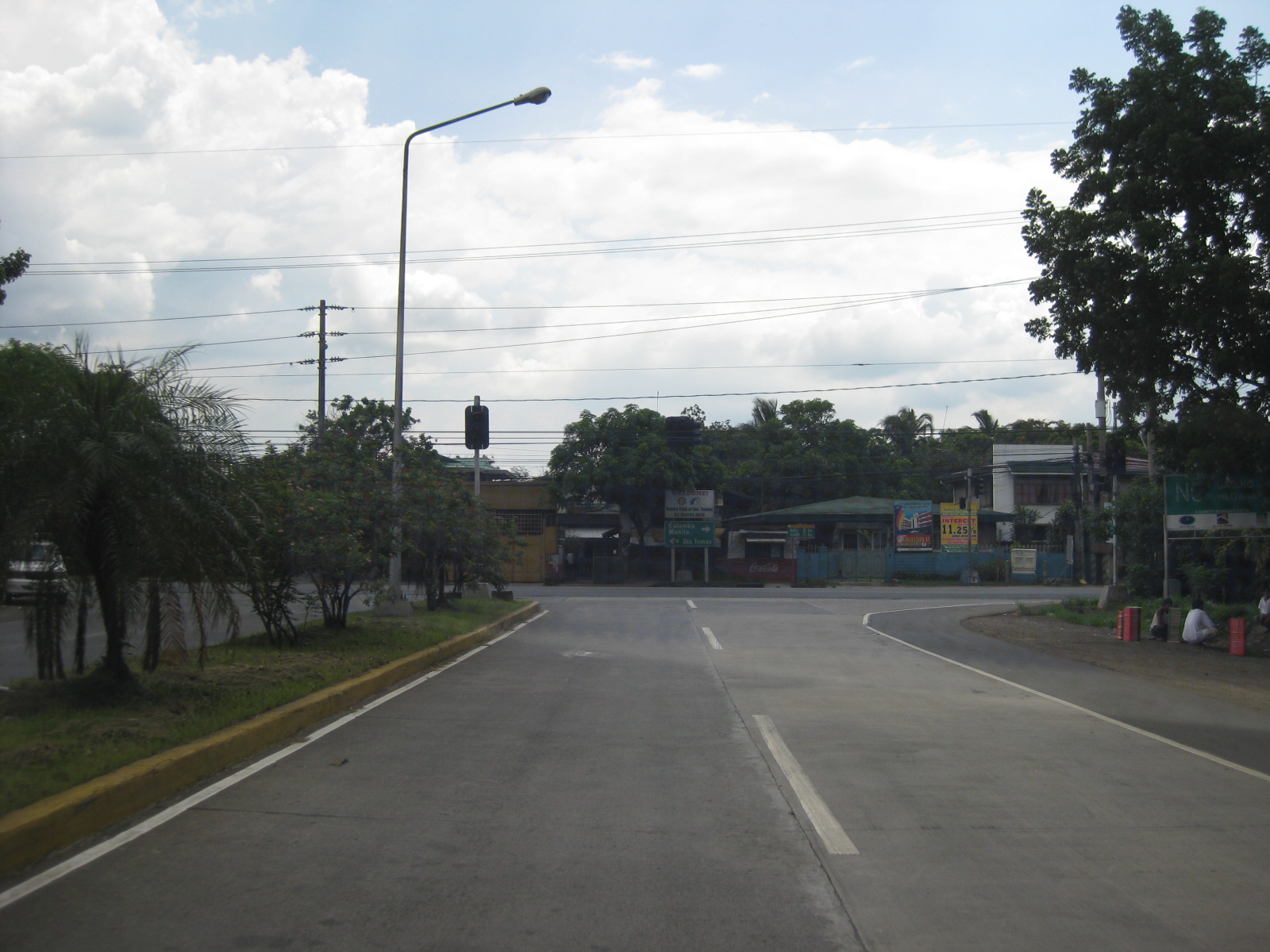 Junction from Sto. Tomas town proper to the tollway spur road
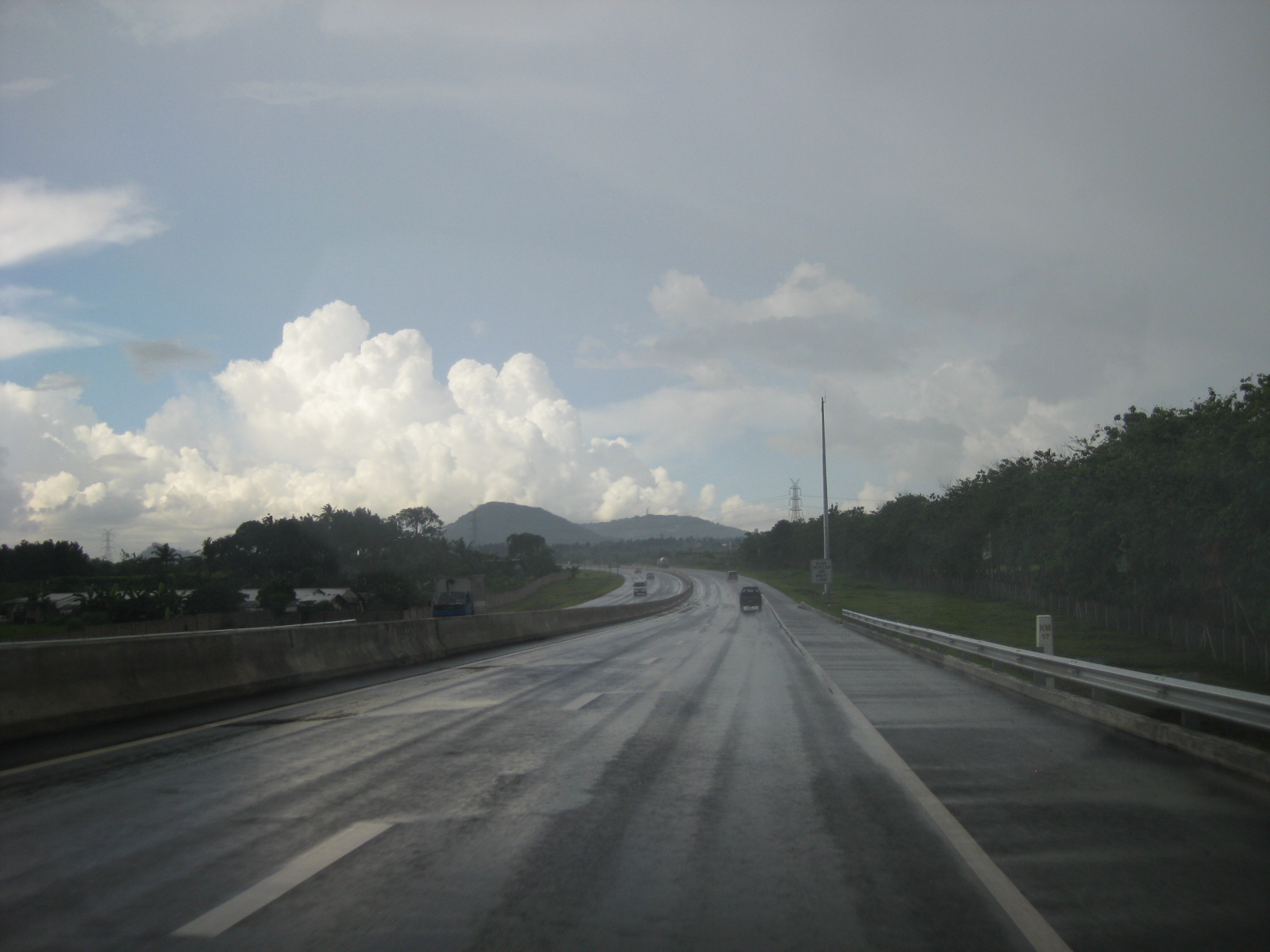 Section leading to the SLEX Extension
San Miguel Corporation, a company traditionally associated with beverage (San Miguel Beer) has acquired the STAR in its expansion to infrastructure projects. It is said to be planning for the construction of a full 4-lane divided tollway that will finally see the construction of the northbound lanes for a significant portion of the highway. There are, however, more improvements necessary in order to improve the safety of the tollway. These, of course, includes the installation of standard road signs and pavement markings. In is quite noticeable, too, from the photos above that there are few if any lamps along the tollway. This situation causes the tollway to be quite dark at nighttime and this lack of illumination may lead to road crashes especially along the undivided sections in Batangas. It is expected that traffic along the STAR will continue to grow in the coming years due in part to the increase in the volume of inter-regional trips including those taking the nautical highway system. Batangas Port already serves a lot of vehicles that cross the water between Luzon and Mindoro and this will continue to rise in number as towns along the corridor prosper and lead to increased vehicular traffic.
–
The air that we breathe – afternoon smog in Metro Manila
I like to take aerial photos of islands and distinguishing formations or features on the land below. Among those I’ve been able to catch on photo on clear days are Mayon Volcano, Taal Volcano, the Chocolate Hills, Cagayancillo, and Corregidor Island. I took some snapshots while our plane was approaching Metro Manila around 5PM. This time, what caught my attention was not the any land feature but something above it – the smog that covered Metro Manila and its surrounding areas.
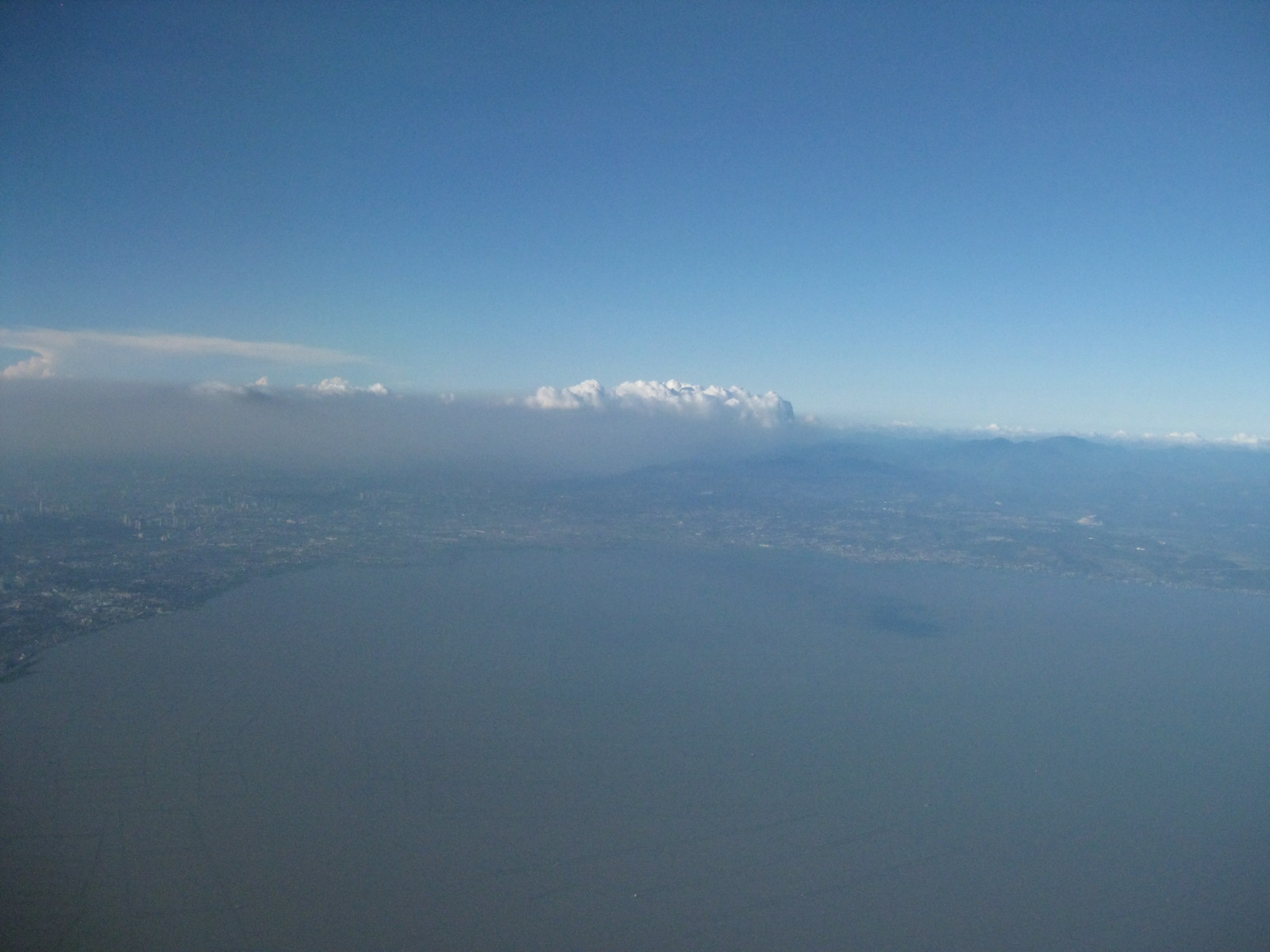 Approaching Metro Manila from Laguna de Bay, one can already sense there was something ominous in the air.
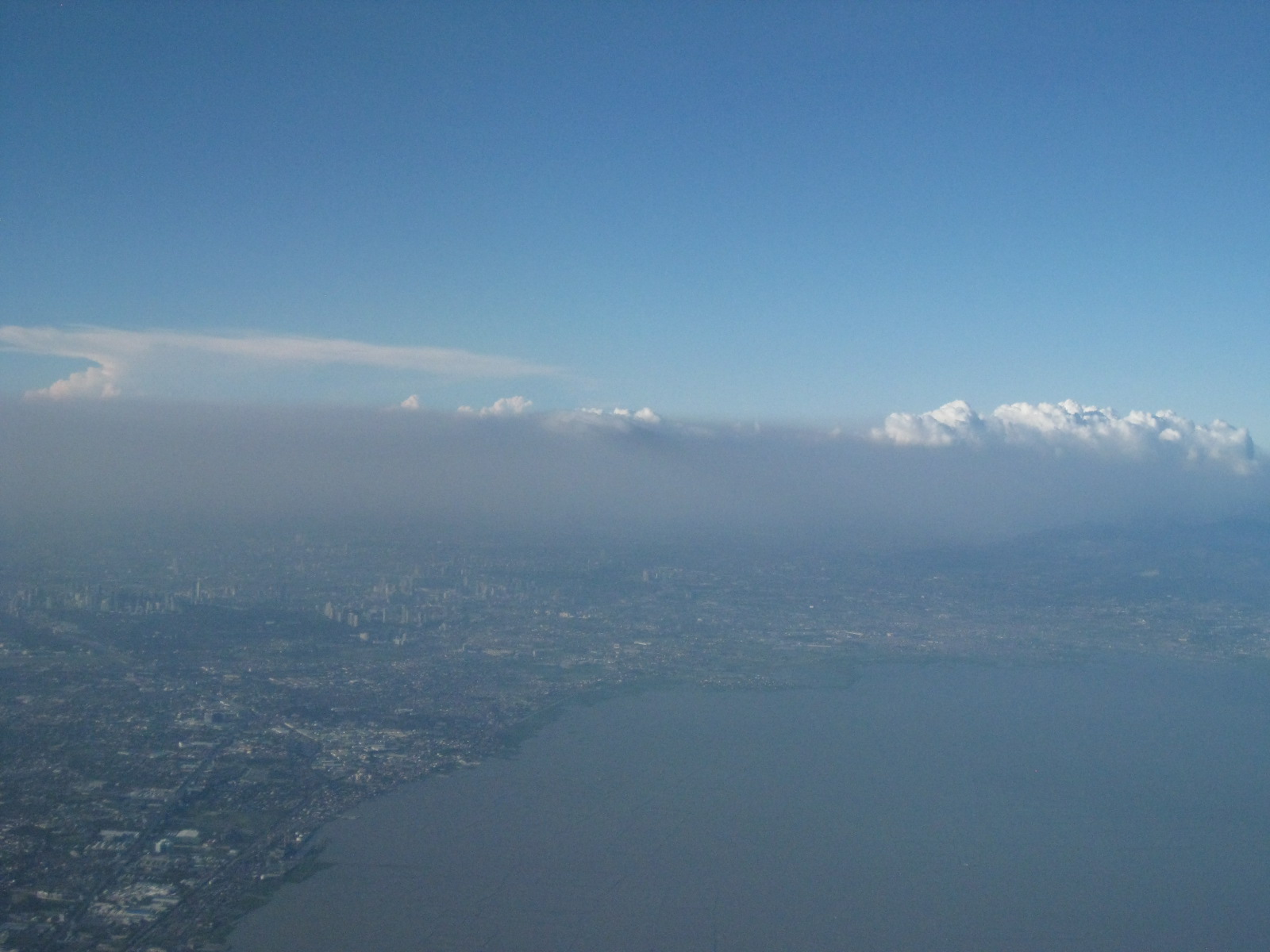 The smog over Metro Manila and parts of Rizal was not totally unexpected but I didn’t expect it to be this bad.
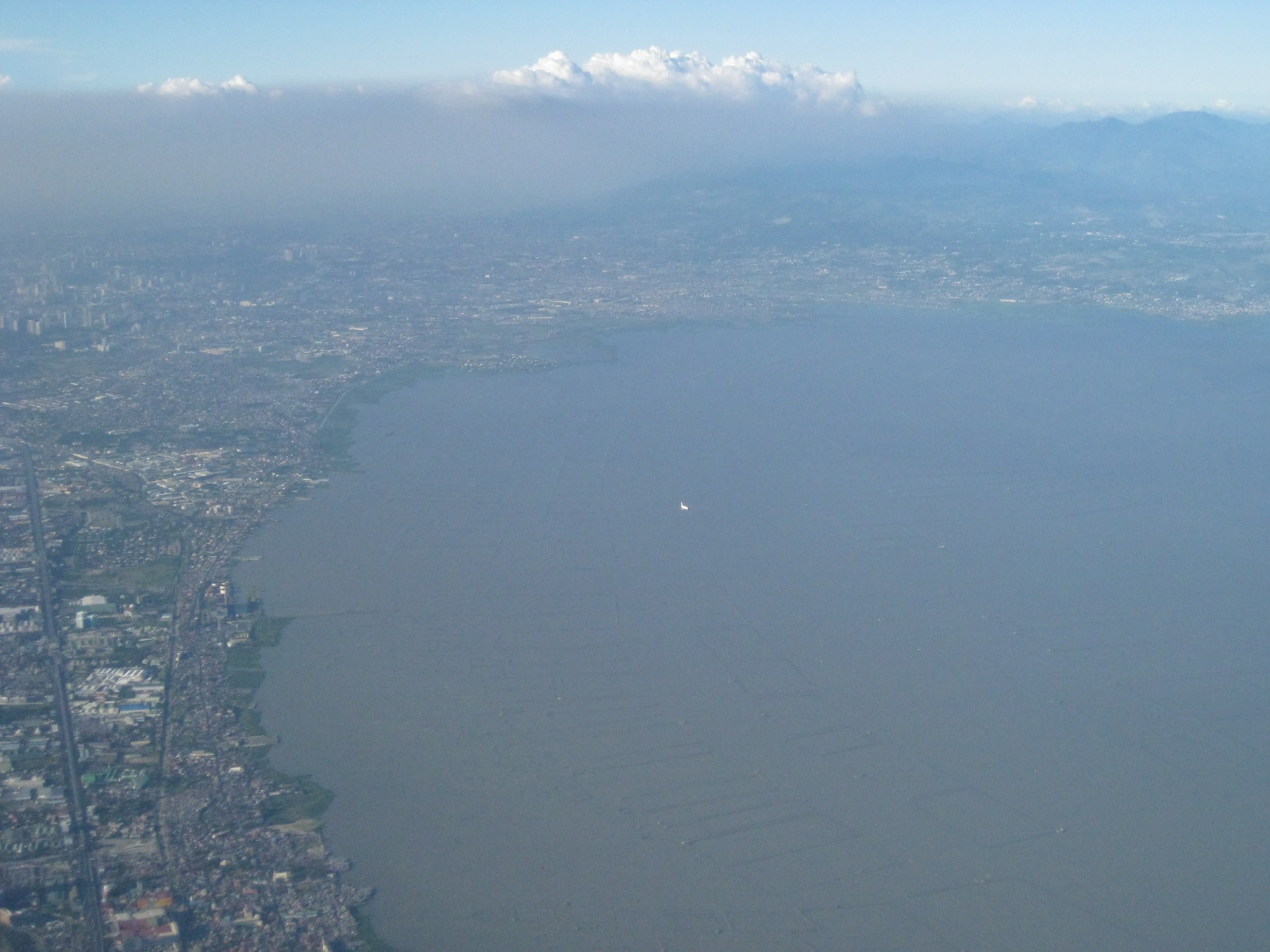 That’s the SLEX on the left side of the photo, to give the viewer a sense of location. The thick haze make it seem as if the clouds in the horizon are the tops of some snow-capped mountain range.
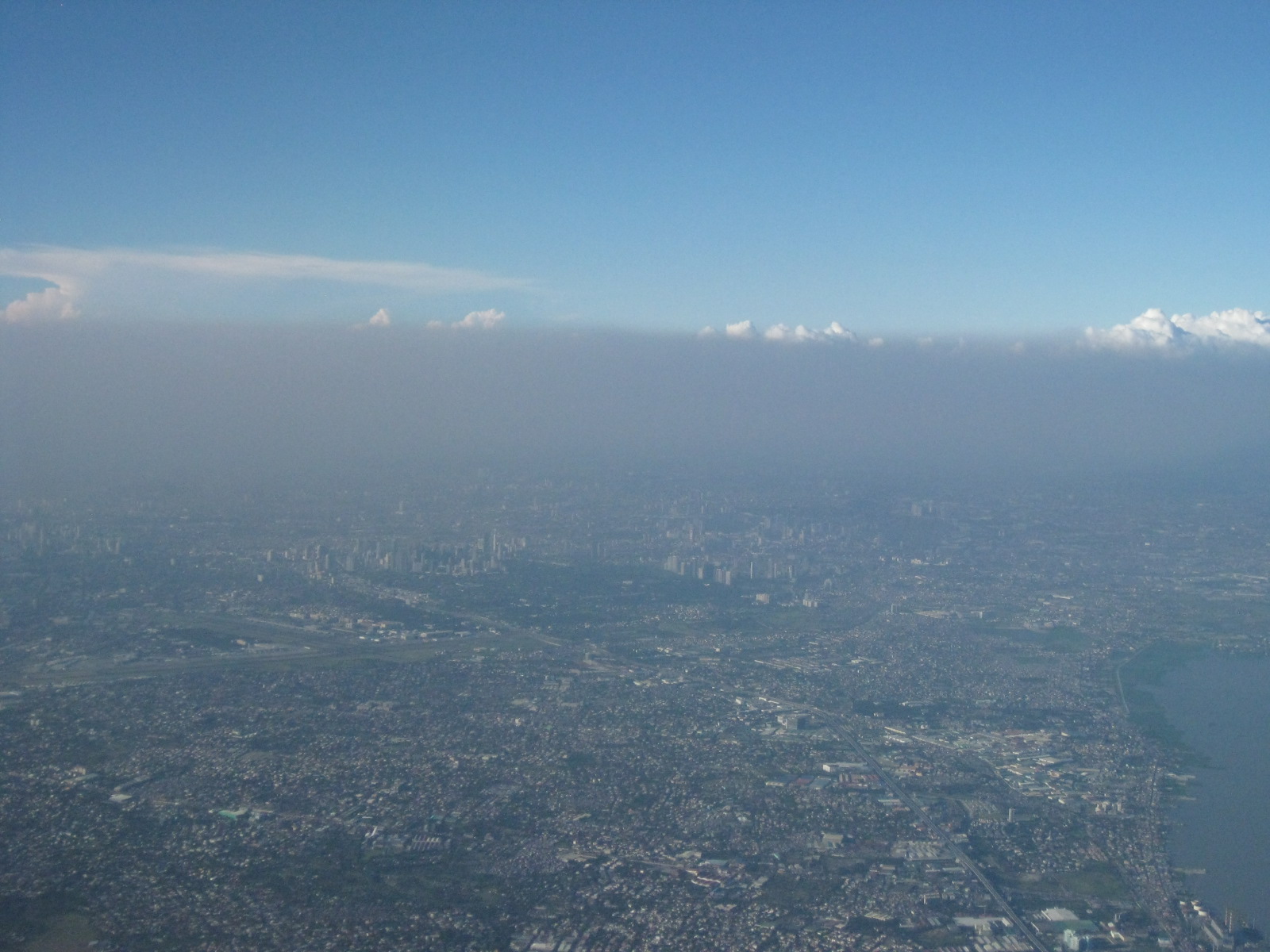 Smog over Makati and Ortigas – the main sources of this manifestation of air pollution are the emissions from road transport tailpipes.
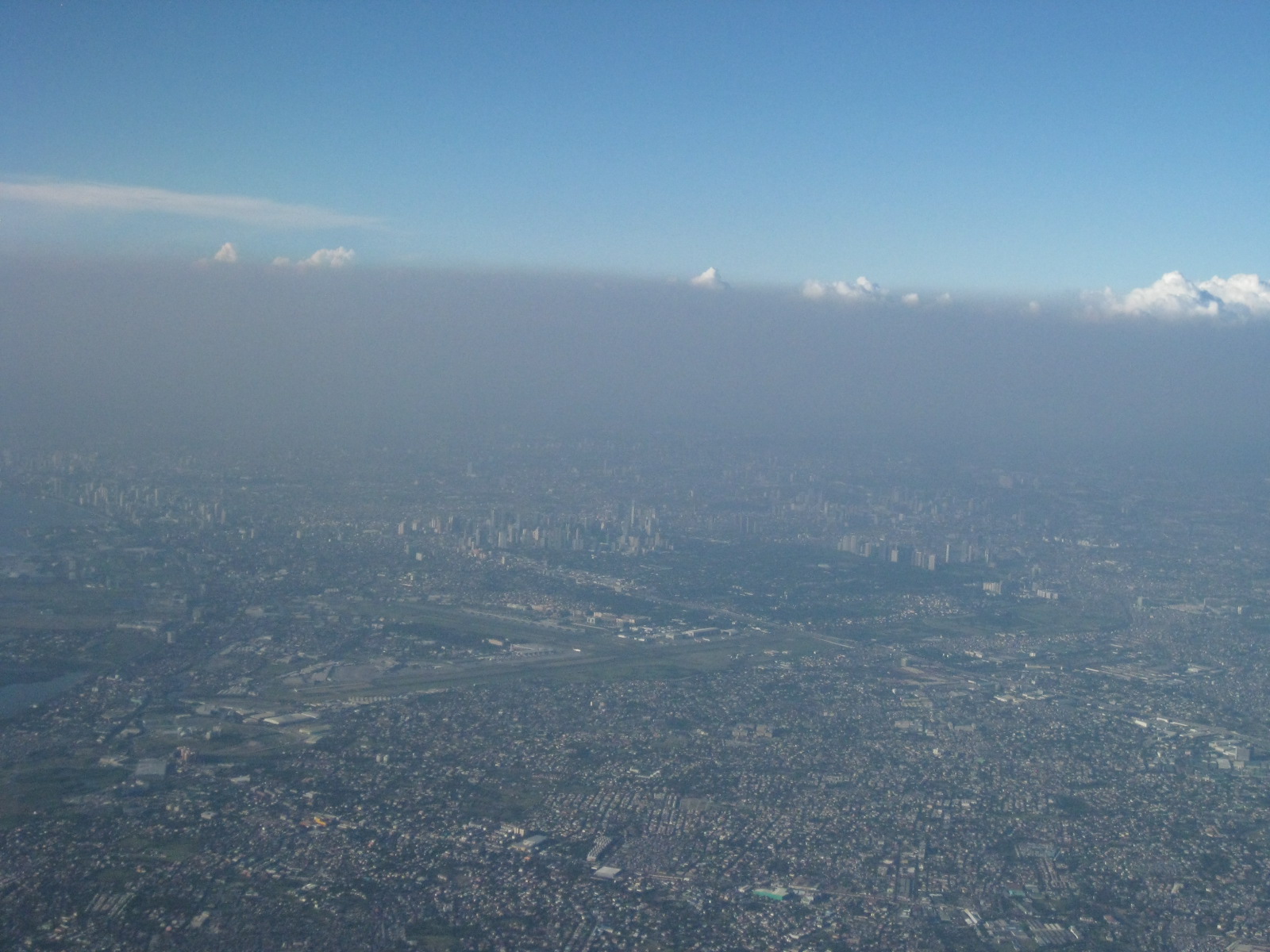 Smog over the airport – that’s the NAIA at the center of the photo
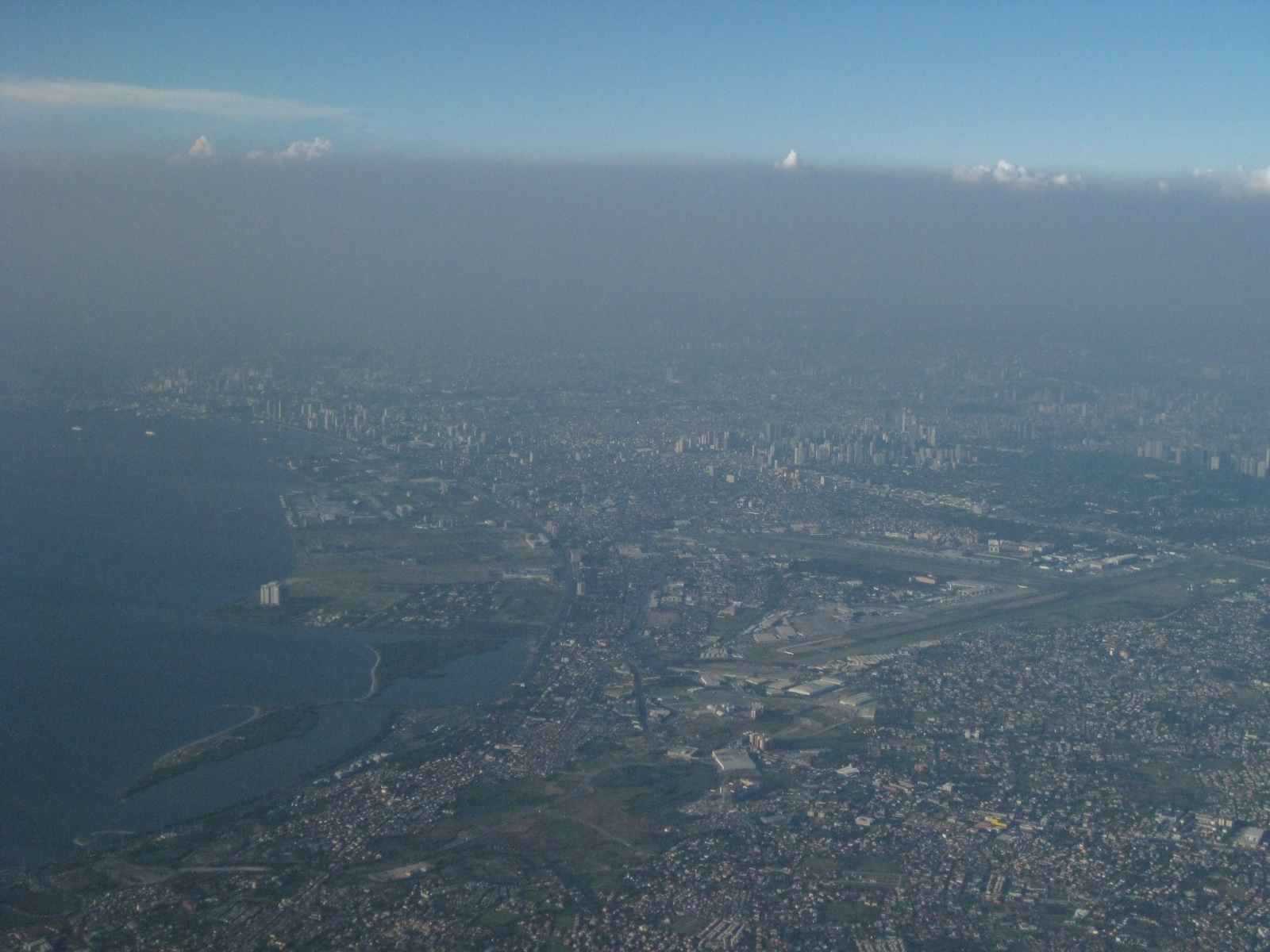 Yes Manila, that’s the air we breathe! This is what we inhale everyday and is the result of years of neglect and irresponsibility for those who cheated on the emission tests prior to vehicle registration, and continue to fail in the proper maintenance of vehicles.
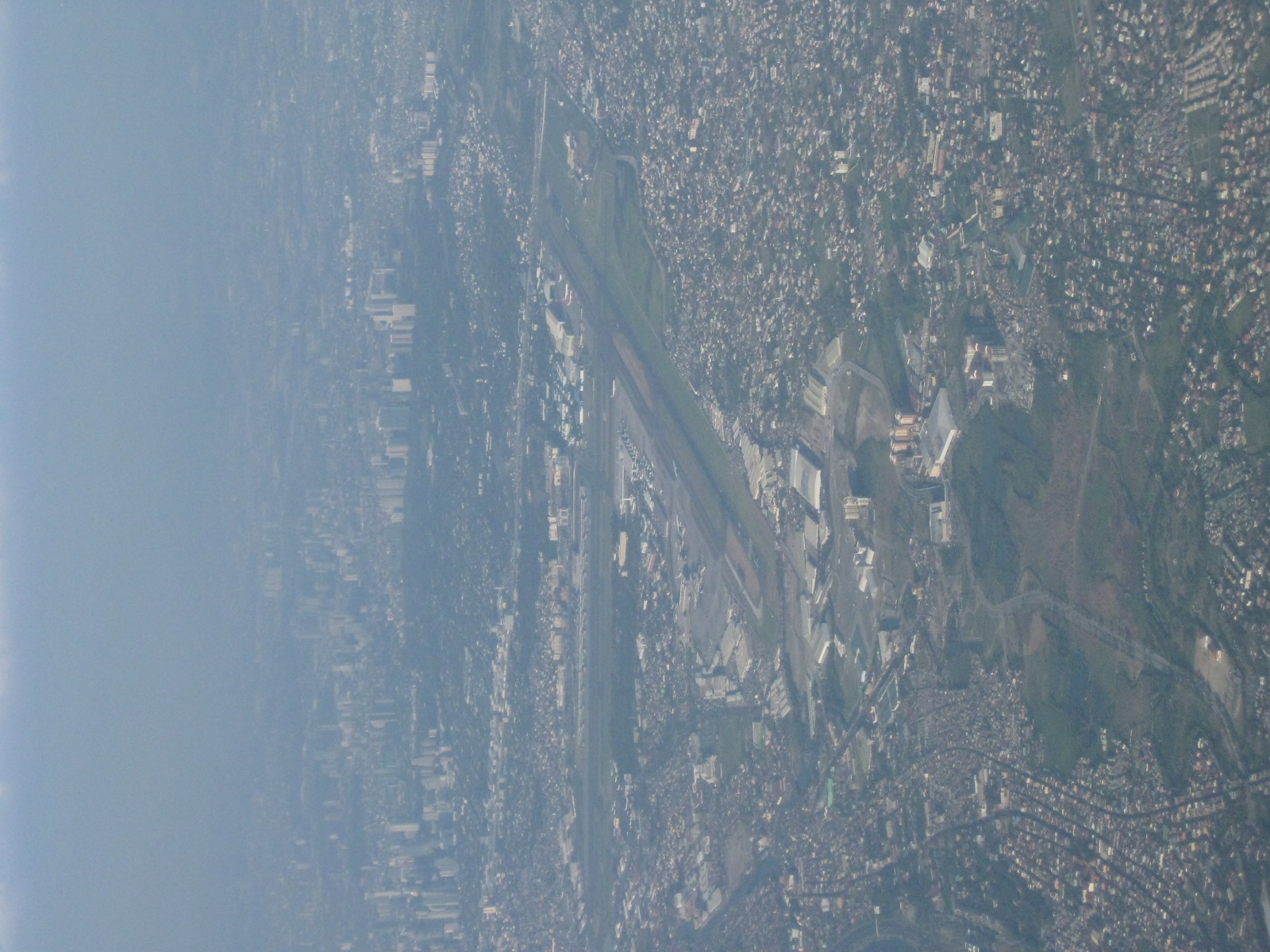 Nope, its not an out of focus photo or the effect of dirt on the aircraft windows. The blur in the photo is caused by the haze above and all around the airspace of Metro Manila.
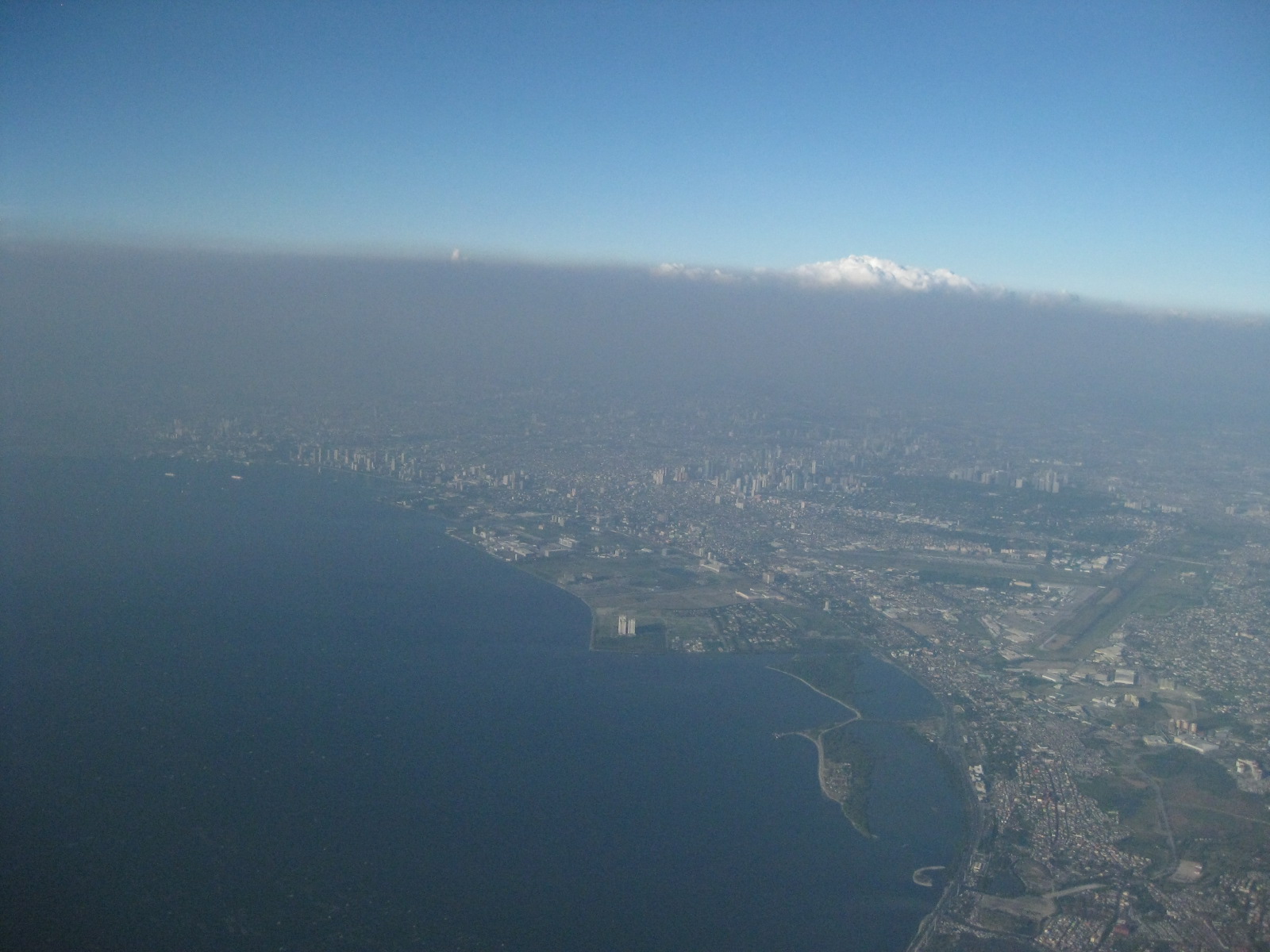 Manila with a thick band of air pollution above it. Pilots and tourists arriving by aircraft see this everyday and I’m quite sure that they have a bad impression about Metro Manila from this scene of the smog alone.
 Another shot of the airport runways with the haze above. At the lower part of the photo and along the approach to NAIA’s main runway is a bird sanctuary being threatened by plans to reclaim and develop the area.
The presence and persistence of smog over Metropolitan Manila should be a cause for concern if not outright panic considering the impacts of such pollution on our health. Unfortunately, people on the ground do not see this haze and would even likely interpret this as just cloud formations. Perhaps we tend to forget that one reason sunsets at Manila Bay are so colorful is because our air is already too polluted. It is sad that such realizations have not led to more urgent action from the government, often depending on NGOs to do much of the work. There is no other time than the present to be aggressive in such efforts as to clean our air. This is why we are pushing for sustainable transport…this is why we work!
–
 Caught (up) in traffic