
Capacity building: tools for traffic analysis
The National Center for Transportation Studies (NCTS) of the University of the Philippines recently received a very generous donation from the Manila North Tollways Corporation (MNTC), which has partnered with the Center in the conduct of training programs for its staff. The donation includes several software packages that would help the Center leapfrog from its modest capabilities and allow it to be par in as far as tools are concerned with government agencies and private entities who have acquired similar software.
Commercial transport planning and traffic engineering software such as those for travel demand forecasting and traffic simulation are quite expensive, and the Center has been using only old versions of TRAF-NETSIM, JICA STRADA and software developed by its staff using programming languages that are also taught by the several of its fellows. Perhaps the most recent acquisition of the Center prior to the donation is the CUBE transport planning software, which has been utilized to migrate the transport model for Metro Manila that was developed in 1999 using JICA STRADA. The latter effort was conducted in cooperation with the Department of Transportation and Communications (DOTC) with data gathered through various projects over the last few years to update the road network and traffic inputs.
Of course, there have been temptations before as there are bootleg software around but the Center has refrained from acquiring and using such software consistent with the University’s policy pertaining to intellectual property rights and acceptable use. Instead, we have encouraged our students to develop their own applications though some have been crude in terms of user interface. Still, these are effective for tools in their researches.
The donation includes academic versions of VISSIM (the same simulation software acquired some years ago by the MMDA followed by the DPWH) and SIDRA, which is for intersection analysis. Also acquired in the donation are full versions of the same SIDRA, Synchro with SimTraffic (also a micro-simulation software) and Anadelta TESSERA (highway design software). Soon to be delivered are a new version of the TSIS/TRAF-NETSIM software and accident analysis software (road safety). This is in addition to GPS units that were recently delivered and a LIDAR gun for speed measurements that will donated this year (2012).
Dr. Ricardo Sigua, head of the NCTS Road Safety Research Laboratory and a Professor at the Institute of Civil Engineering of UP, recently held a brief training session with our senior undergraduate students for using the VISSIM software. He gave them group assignments afterwards and already, there is much excitement among the students who have the opportunity to use top of the line software for their studies. We look forward to their presentations in two weeks time when they are to show the outcomes of their modeling work.
 Dr. Sigua teaching students how to use the VISSIM at the Toyota Training Room – the tarp is a fixture from a training course held recently at the same room
 Unlike the past decades, many students now have their own notebook computers where they could install the student edition of the VISSIM software.
Quezon Ave.-Araneta Ave. progress
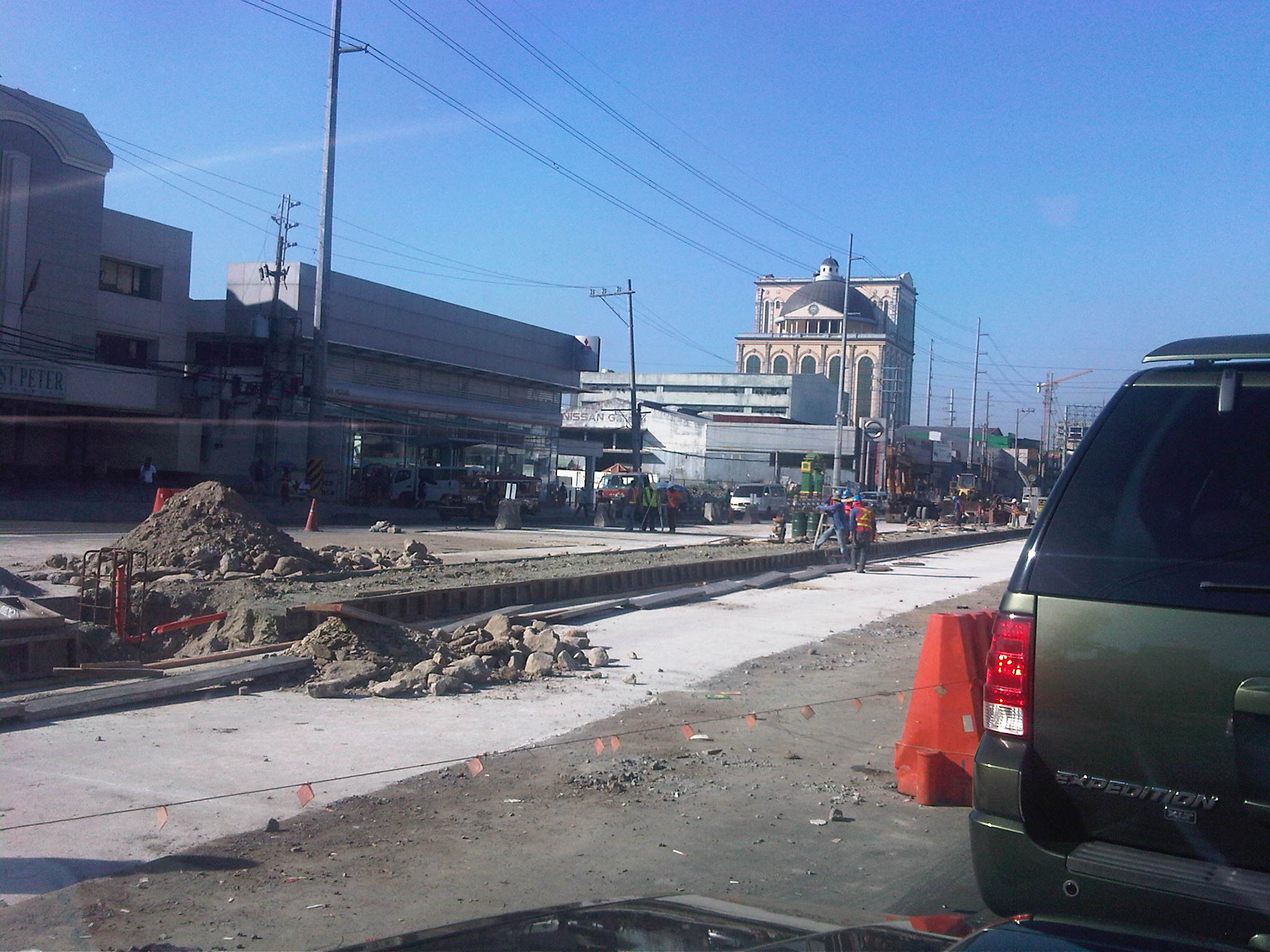
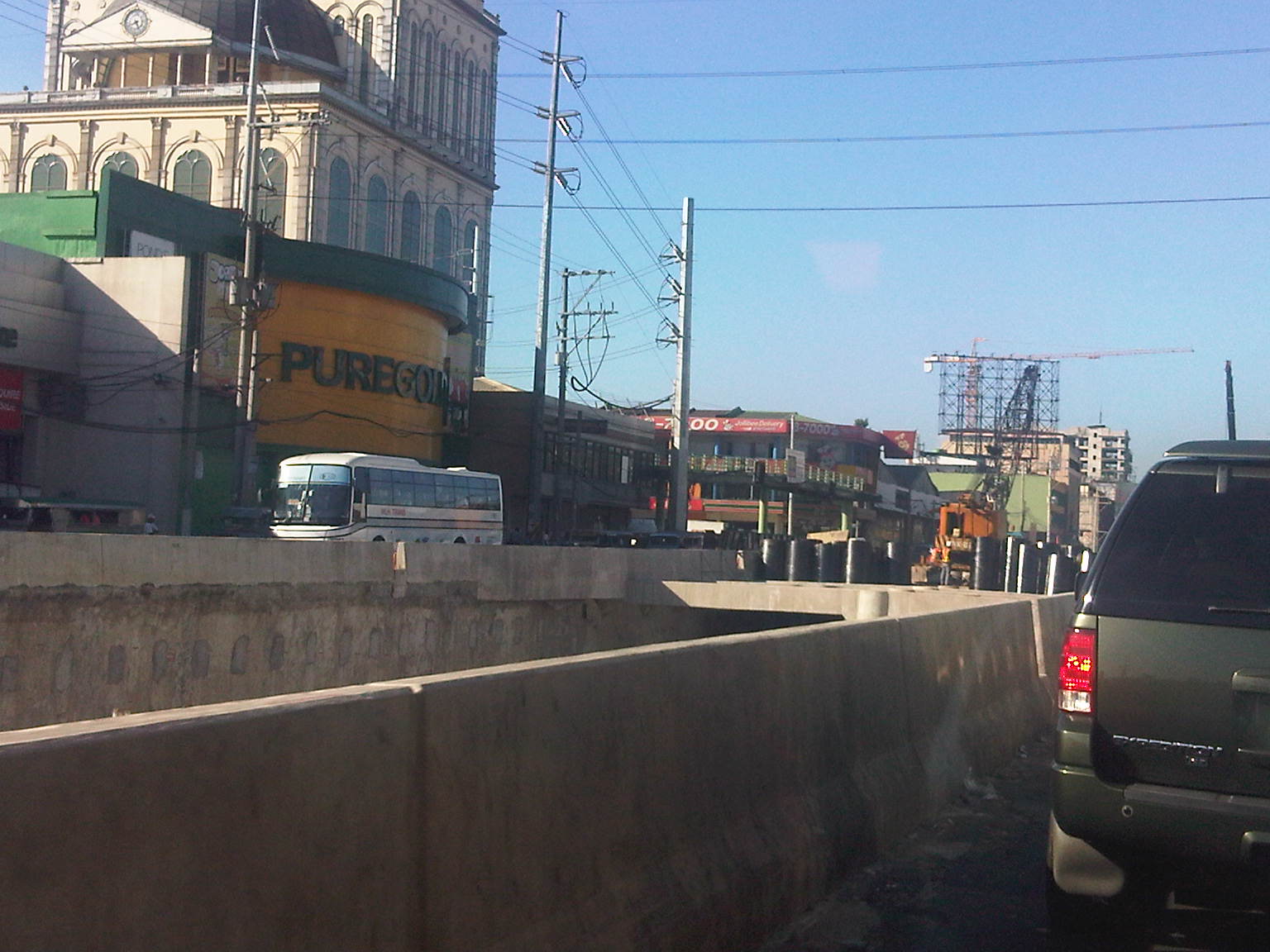
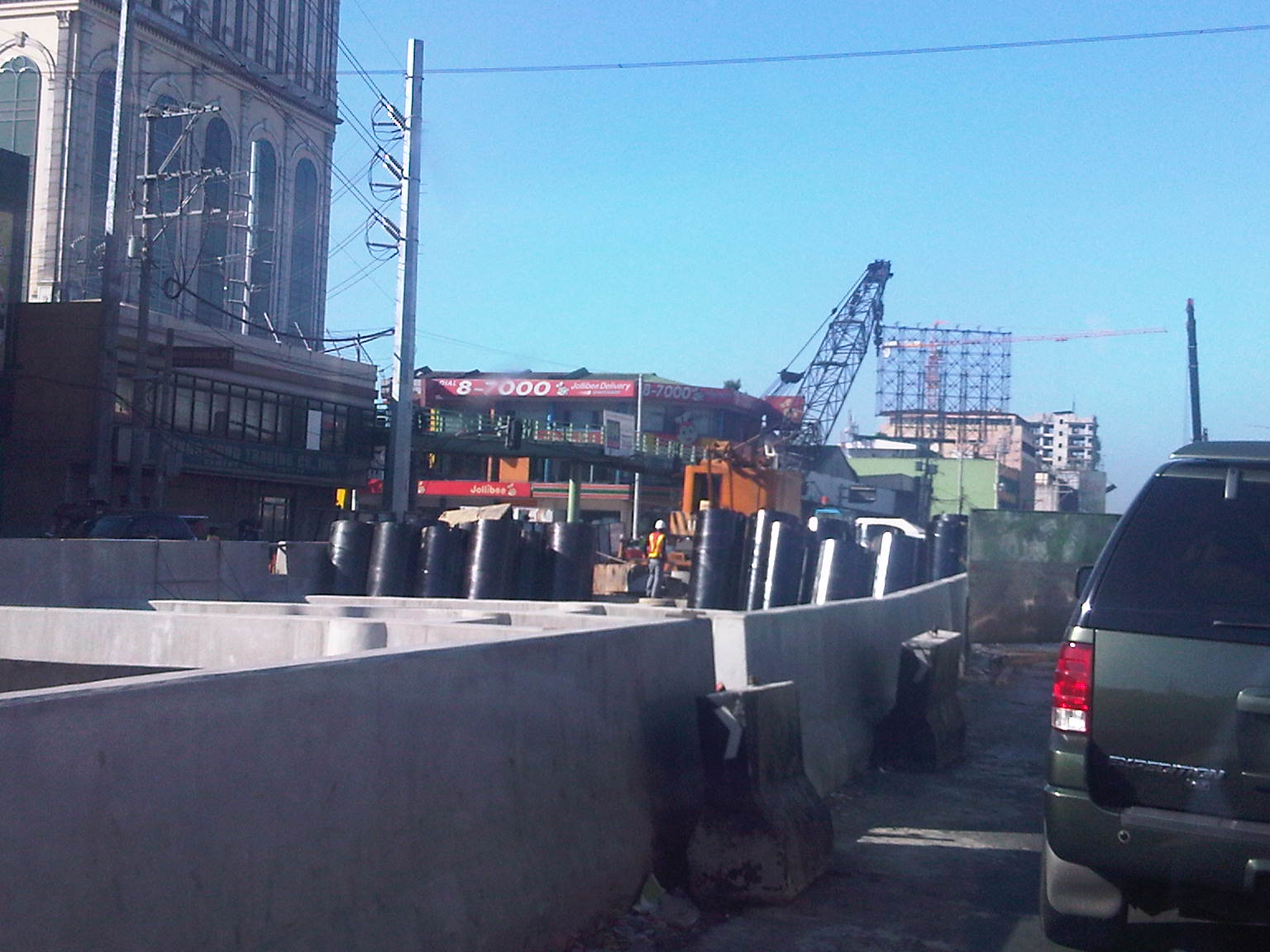
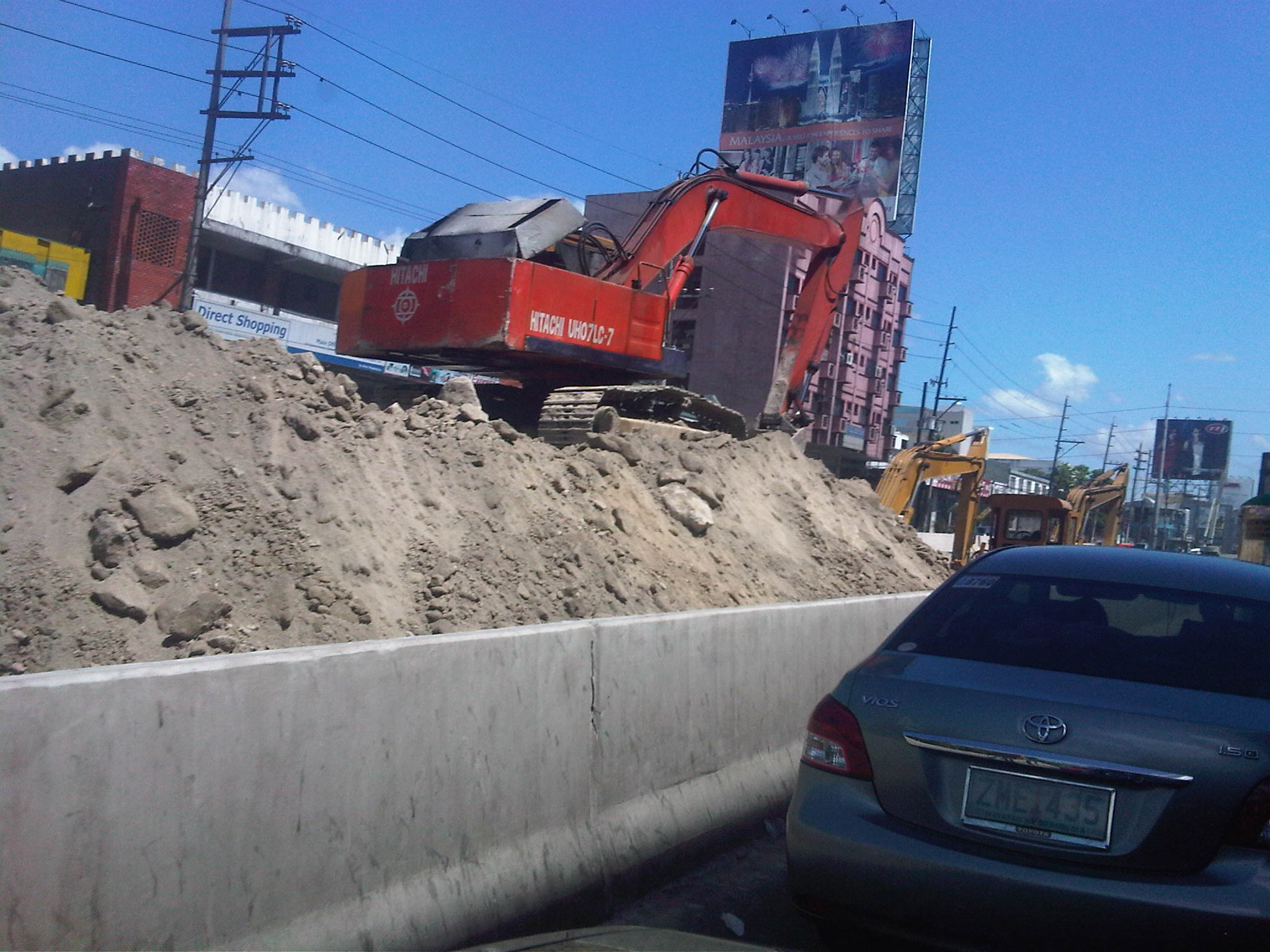
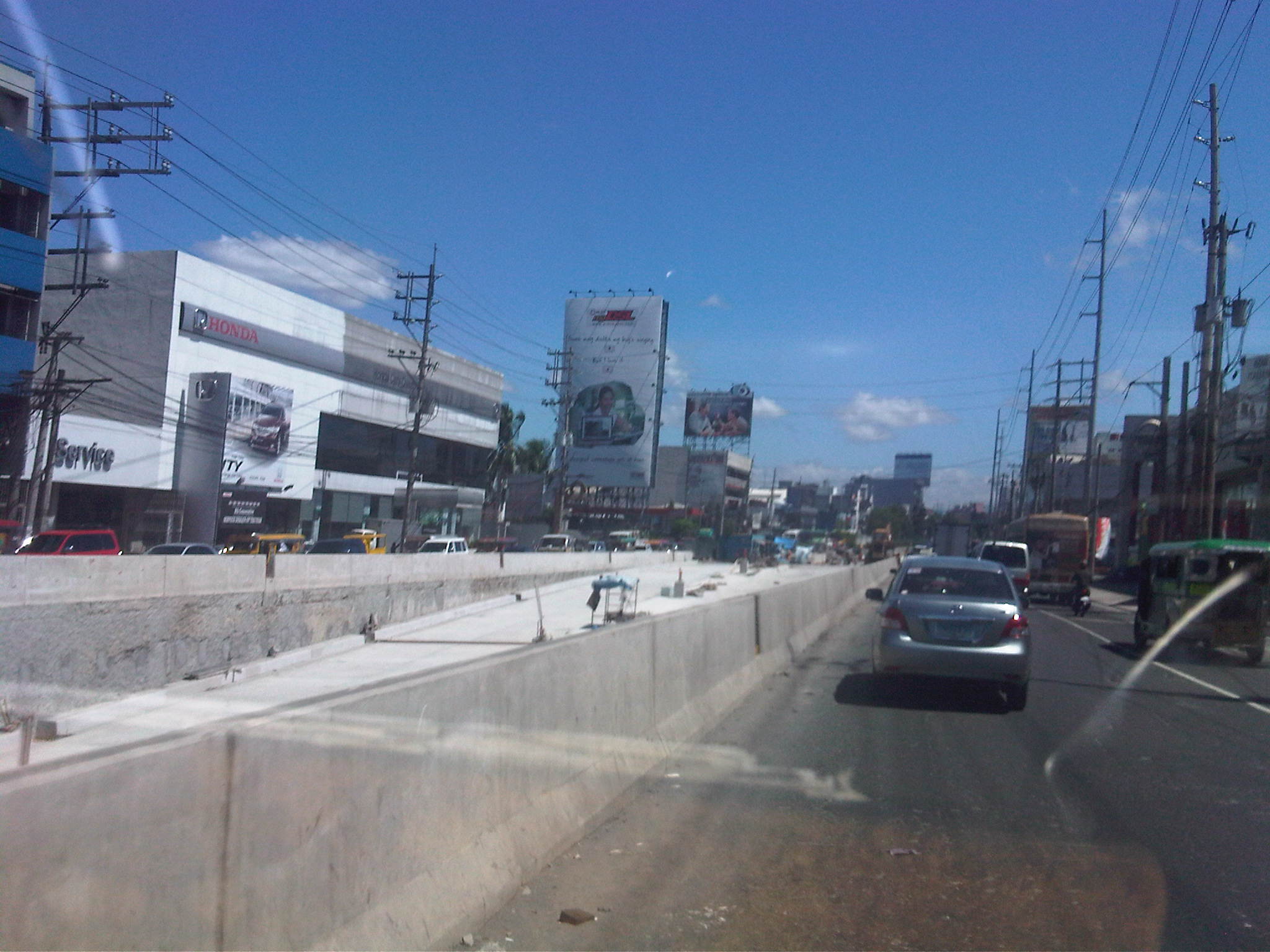
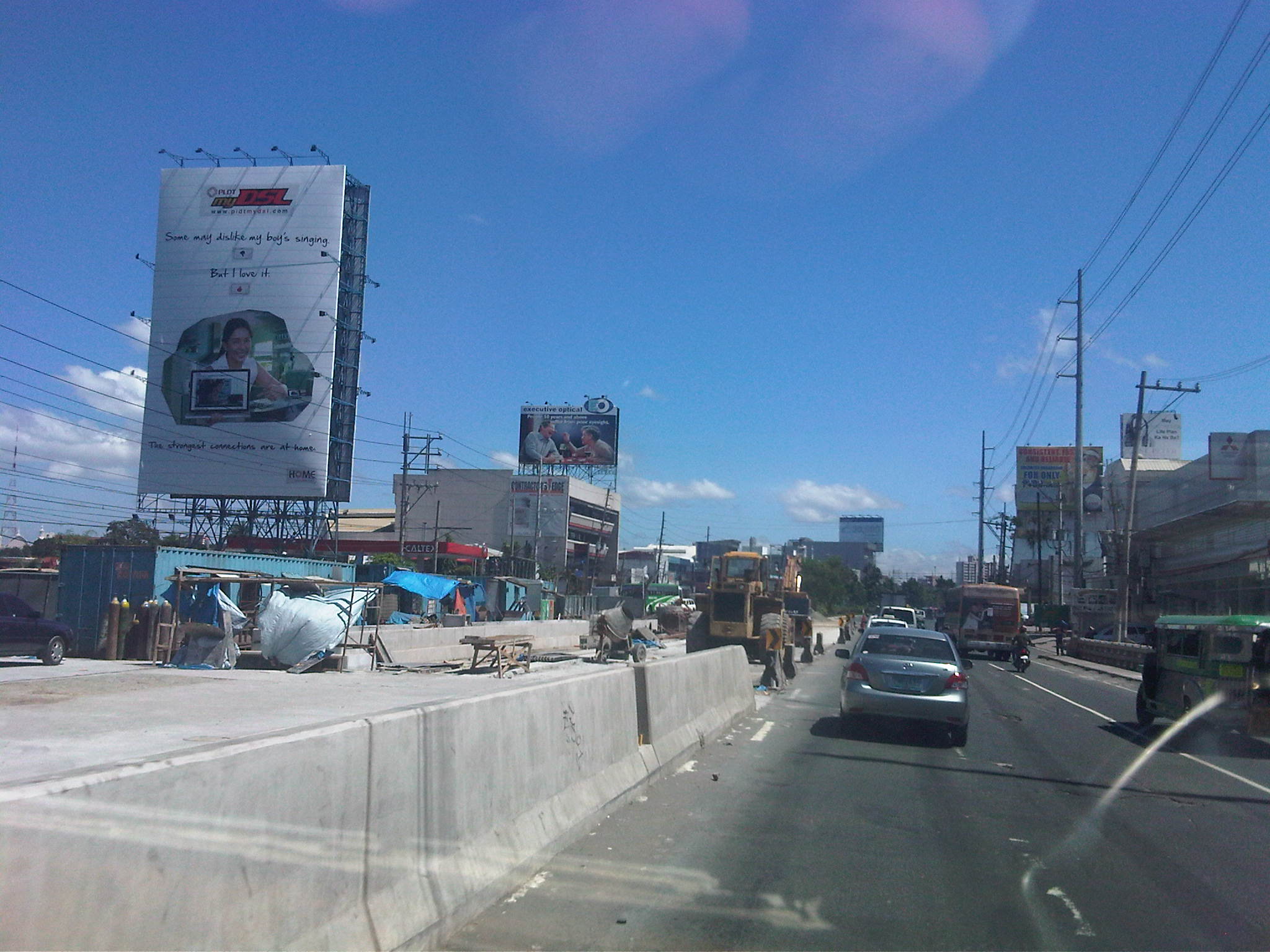
Passed by the construction site of the underpass along Quezon Ave. and the project seems to be running on schedule and should be finished prior to the next school year. Much is expected of the project because it has been touted as the solution to the traffic congestion along both major roads intersecting at this point.
The following photos show the work site from the westbound side along Quezon Ave. from Honda to Sto. Domingo:
 1
1
 2
2
 3
3
 4
4
 5
5
 6
6
 7
7
 8
8
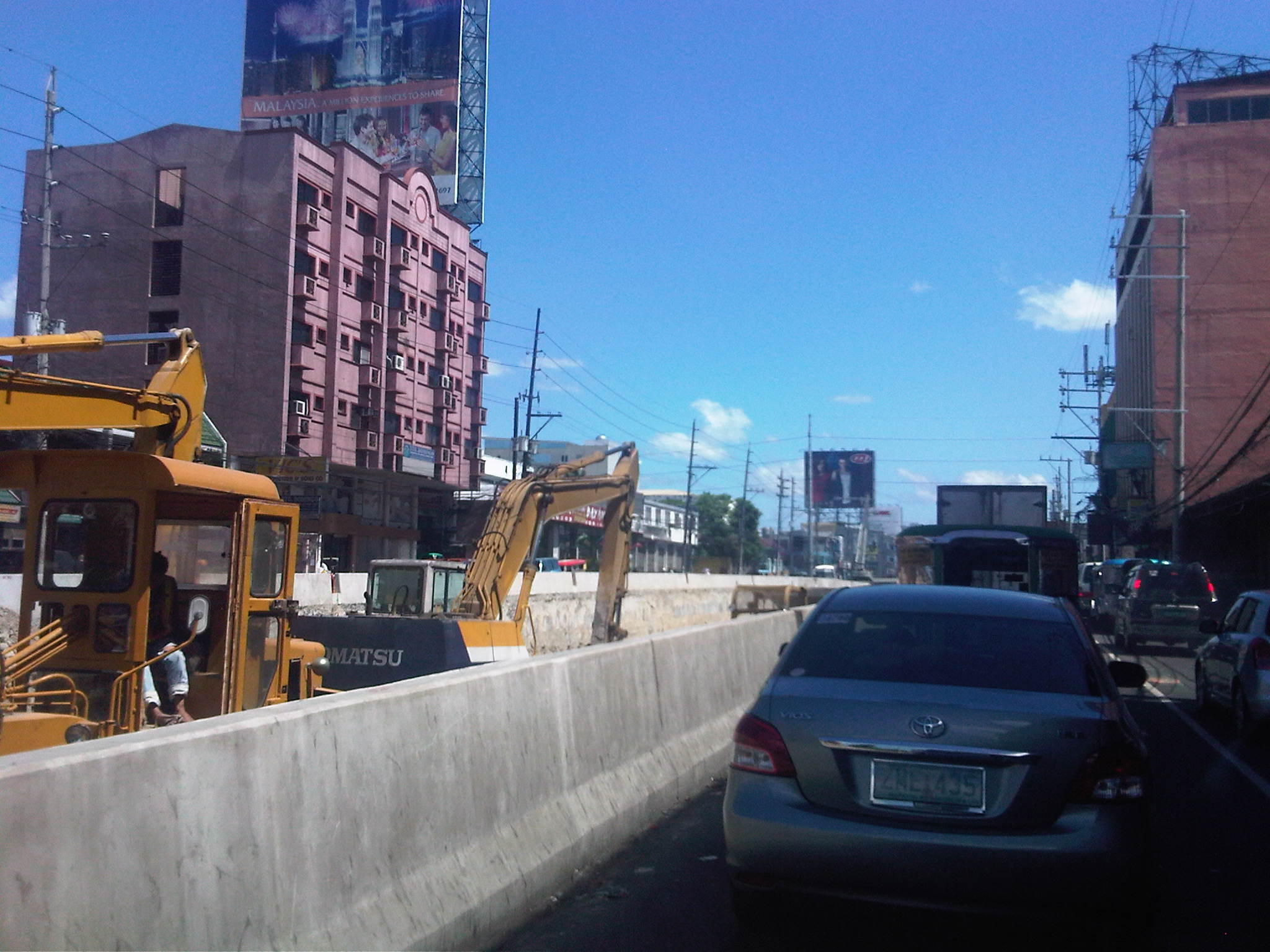
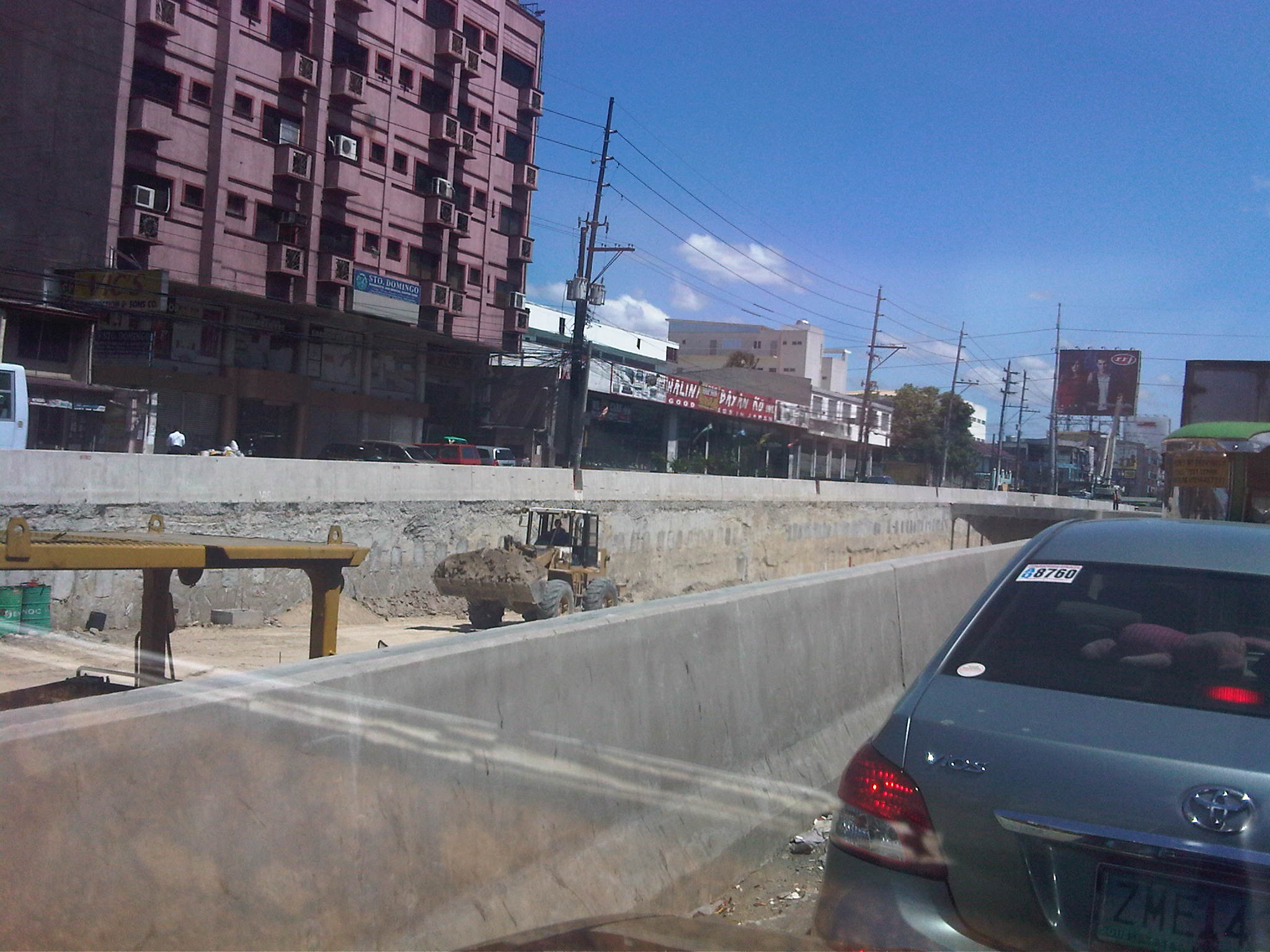
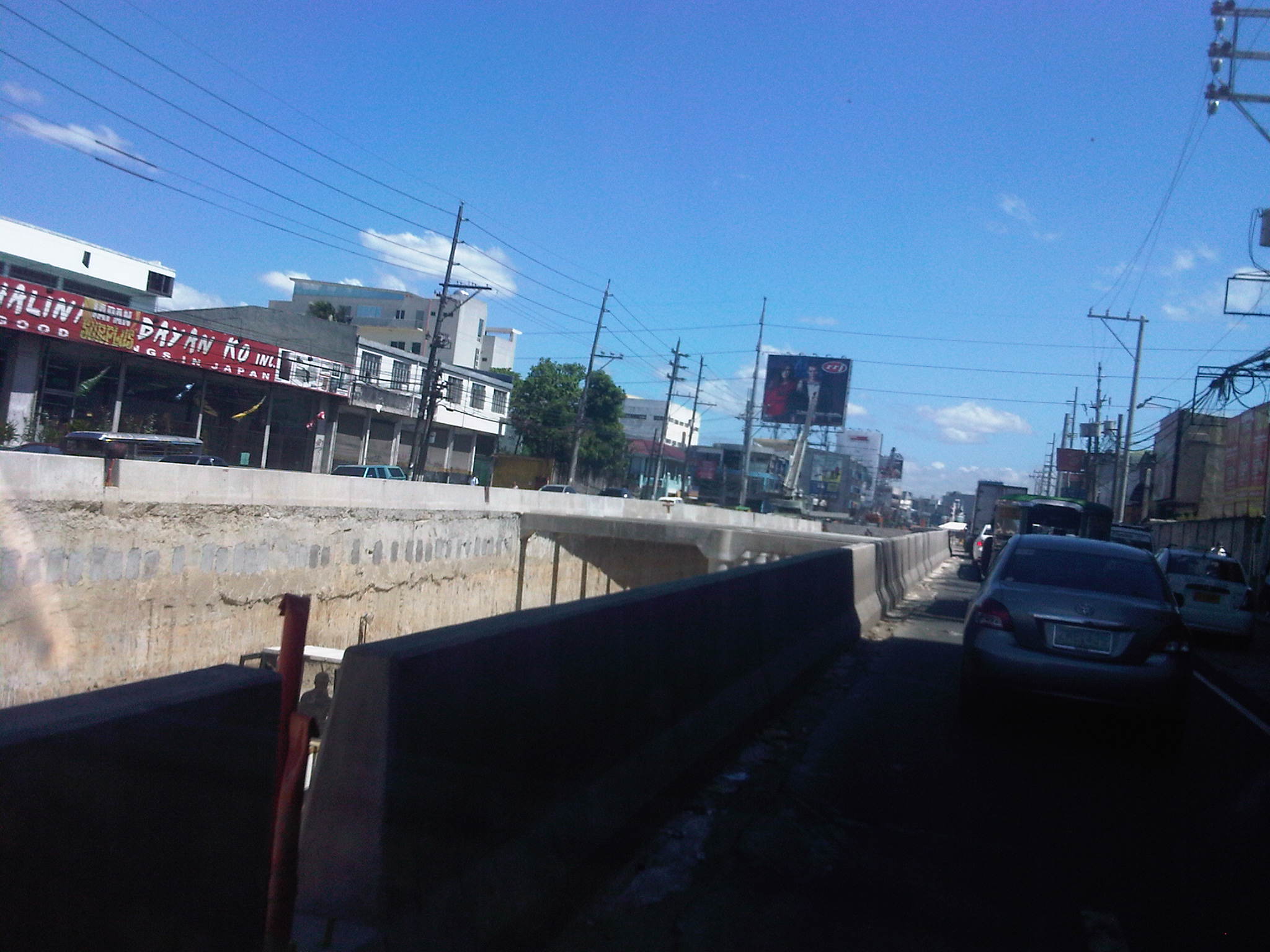
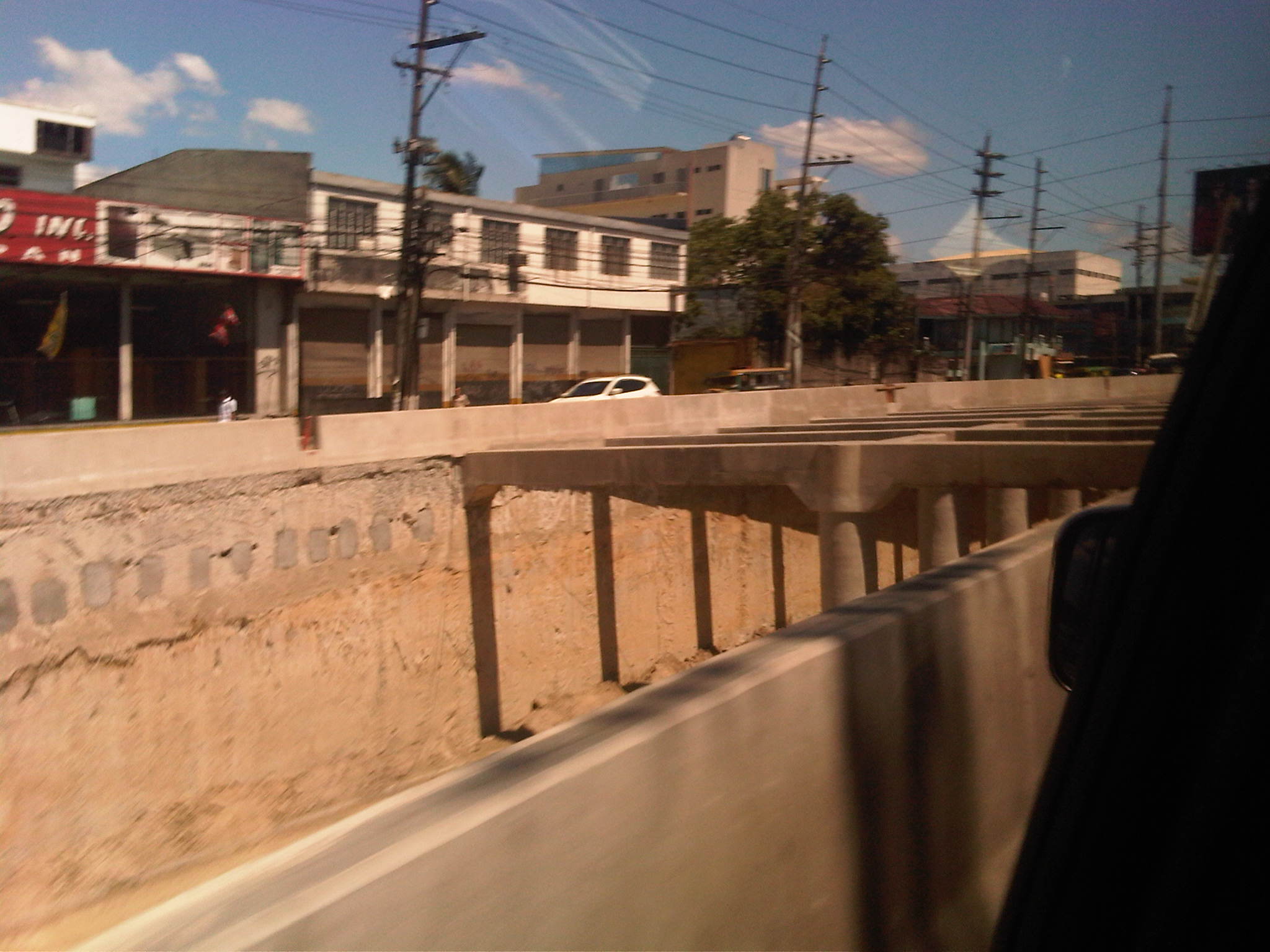
The following photos show the work site from the eastbound side of Quezon Avenue from the Sto. Domingo to Puregold:
 9
9
 10
10
 11
11
 12
12
 13
13
 14
14
 15
15
 16
16
 17
17
 18
18
There seems to be a lot at stake with the completion of this project considering concerns about the drainage (Talayan is nearby and so is a river that usually overflows during periods of heavy rains.) as well as the capacity of the roads to handle traffic. While there should be no problems along the eastbound direction of Quezon Ave. due to the available capacity due to the widened sections of the highway, it is quite a different case for the Manila-bound direction where congestion may occur due to Sto. Domingo church and the series of intersections including the busy one at Banawe. Nevertheless, the main concern will be if the traffic signals at the at-grade Quezon Ave.-Araneta Ave. intersection will be able to handle the remaining traffic considering that most through traffic along Quezon Ave. will be expected to take the underpass. While the DPWH simulations seem to show relief at the intersection, the actual outcomes are something to wait for in order to validate traffic engineering analysis for the junction.
–
Another quick look at the EDSA motorcycle lanes
There was a story appearing in the news recently about motorcycle riders staging a motorcade rally to bring attention to their plight in relation to the motorcycle lane along Epifanio Delos Santos Avenue (EDSA) or Circumferential Road 4 (C-4). The Metropolitan Manila Development Authority (MMDA) implemented the scheme along EDSA after getting generally positive results along Commonwealth Avenue in Quezon City and Diosdado Macapagal Boulevard in Pasay City. Perhaps the thinking here was that if such a scheme succeeded in other roads, it would also succeed elsewhere. Right? – Wrong!
EDSA is always so different from may other Metro Manila roads, most definitely from Commonwealth Ave. and Macapagal Blvd. For one, EDSA carries more traffic than these two roads (combined?) and the sheer volume of private vehicles during busy times of the day cannot be handled by the lanes designated for them. The two outermost lanes of EDSA are supposed to be for the exclusive use of buses but private vehicles frequently encroach on these lanes due to the inevitable spillover from congestion. Fortunately, there is a truck ban along the highway (these generally use Circumferential Road 5) but this does not translate to less congestion as the following photos show. Commonwealth is wider than EDSA while carrying less traffic. As such, vehicles can speed up along many sections of that highway. In fact, the main problems along Commonwealth happen to be related to speeding and weaving. Macapagal has even less traffic and generally does not carry public transport. Perhaps it will carry more traffic in the future once the reclamation areas are fully developed.
 Heavy traffic along EDSA at mid-afternoon – many cars encroach upon the two outermost lanes that are supposed to be for buses. The same vehicles practically occupy the lanes designated for motorcycles.
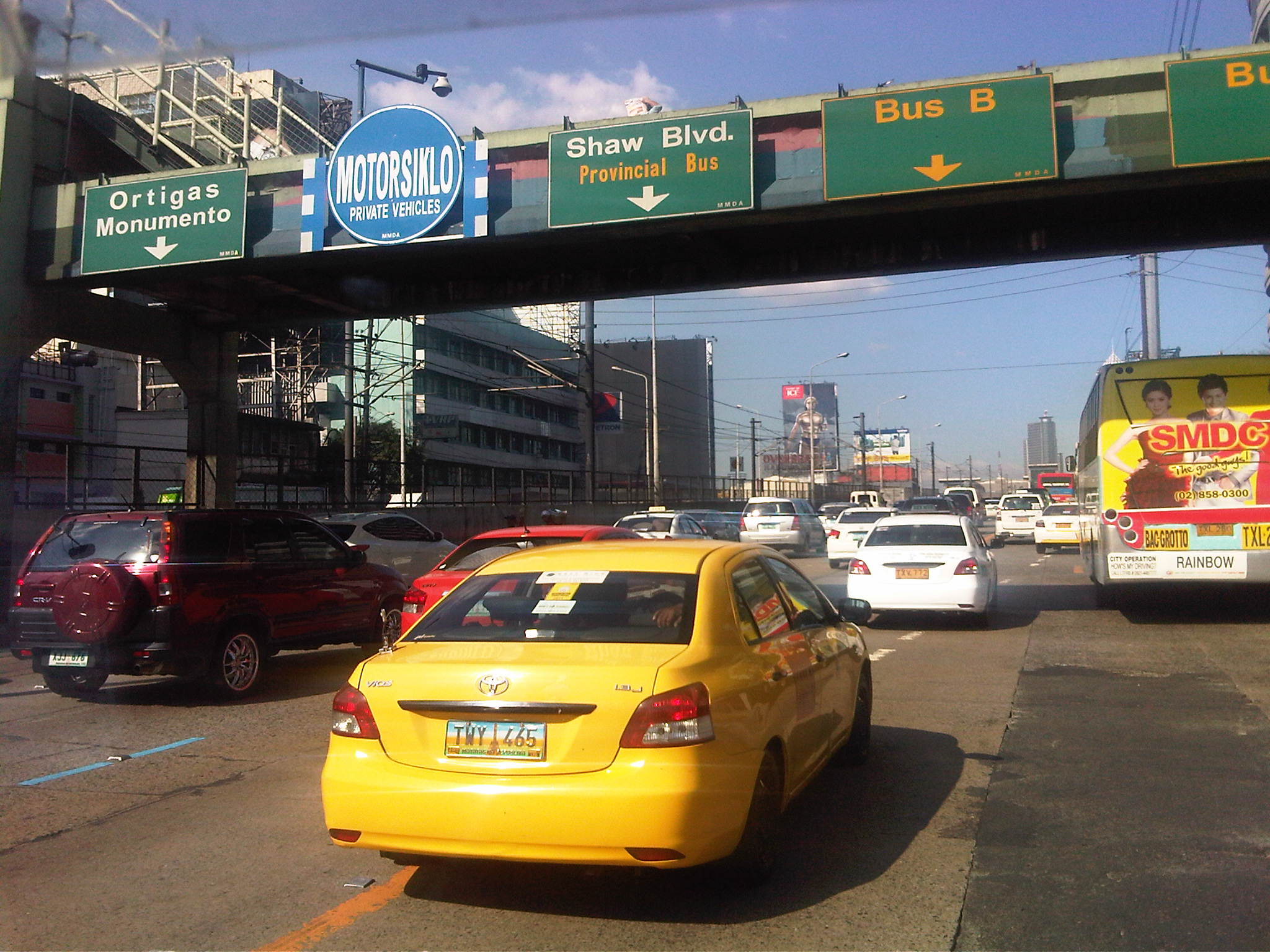 Vehicles occupying the lane designated for use by motorcycle along EDSA – note the “fine print” on the sign on the pedestrian overpass stating the lane is also for use by private vehicles. Riders are lobbying for the lane to be for their exclusive use.
 No motorcycles in sight – there were few motorcycles along EDSA at the time the photos appearing here were taken. Their numbers are more significant during the morning and afternoon peak periods.
 The motorcycle lane proceeds through EDSA along its underpasses and overpasses – EDSA’s capacity during peak periods is not enough for cars and so they usually spill over to the bus lanes. It’s also status quo for them in as far as using the motorcycle lane is concerned, unlike in the case of Commonwealth Ave. where the wider carriageway allows for private vehicles to avoid taking the motorcycle lane.
The initial assessment we made for the motorcycle lanes along EDSA was positive and hopeful for the behavior change that it is supposed to bring about both with drivers and riders. I believe that despite the dry run and the aggressive enforcement that followed, the scheme as applied along EDSA is still very much in the “honeymoon” stage and there’s room for some adjustments here and there including some flexibility on motorcycle riders who are often forced out of the designated lane by cars. It is clear from the photos above that private cars really cannot be given too much freedom to use the motorcycle lane. Perhaps by prohibiting cars from generally using the motorcycle lane, we’ll eventually have a safer EDSA. This comes at a steep price, however, as that will be one less lane for private cars. But then again, if the objective is to discourage car use (especially the low occupancy kind) then it should be good but with the caveat that public transport services along EDSA, including the MRT running along the center of the highway, should have improved quality of service.
–
Deplaning…it’s more fun in the Philippines
I was thinking about things that are more fun in the Philippines when I suddenly remembered I was able to take a couple of photos of fellow passengers descending from our aircraft via stairs, walking along the tarmac, and then ascending the stairs to the air bridge/tube. This, because there was no tube operator available for our plane at NAIA Terminal 3. I could still remember various remarks from passengers ranging from the unkind to those that come across as jokes to those made in jest including the by-line “It’s more fun in the Philippines!” that was adopted by the Department of Tourism as their slogan.
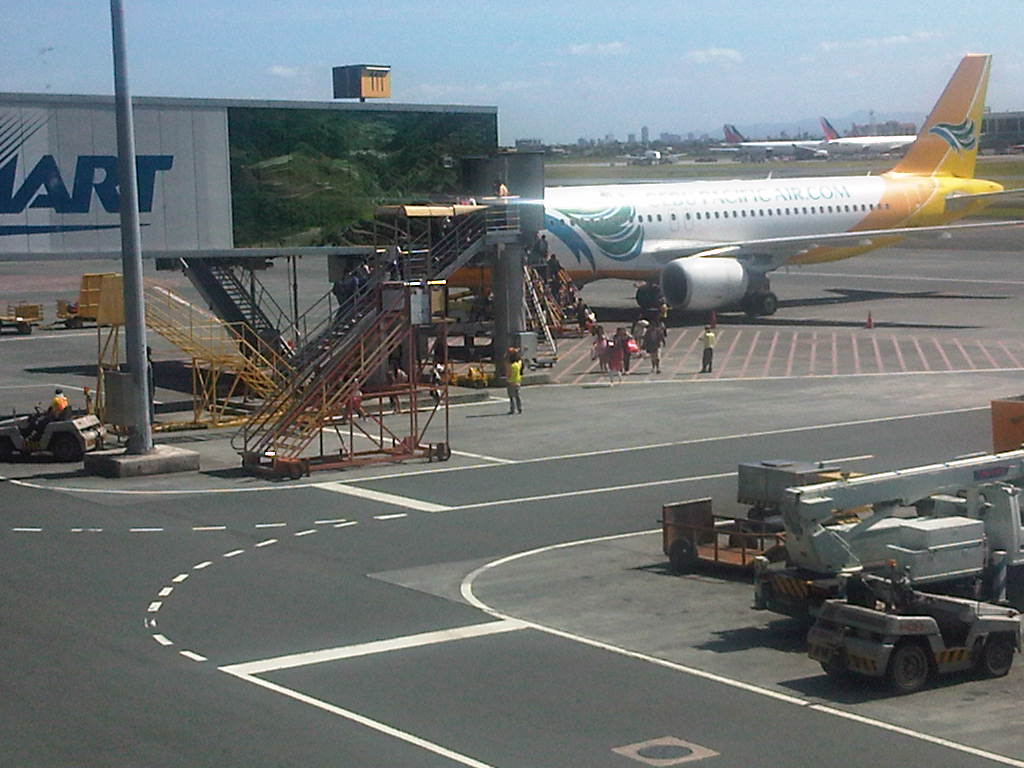 Passengers deplaning from the Cebu Pacific A320 aircraft – the plane was already docked for it to be served by the air bridge but it tool about 20 minutes before the flight attendant informed passengers that the aircraft had to be re-positioned to allow for the stairs to be brought alongside the aircraft. It was also announced that the reason for this was because there was no operator available for the air bridge.
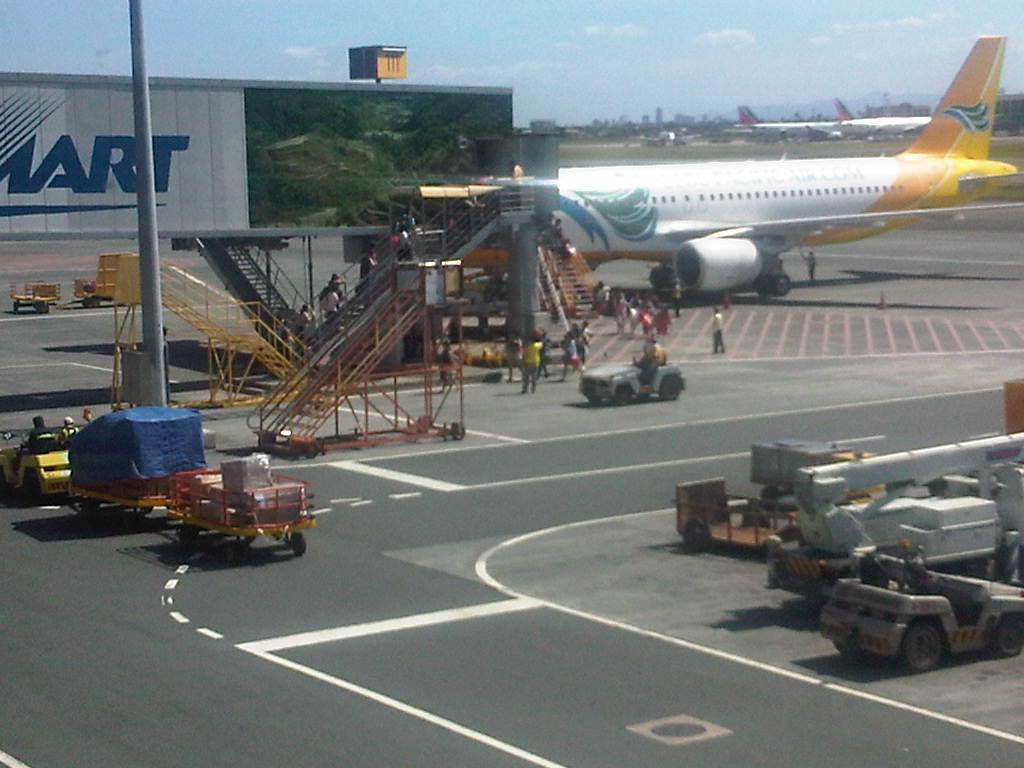 Passengers ascending the stairs to the air bridge – after walking the distance from the plane, passengers were instructed to climb to the air bridge, which connected to the corridor leading to the immigration area. This was at 2:30 PM in the afternoon when passengers are exposed to the scorching heat and elderly passengers had to negotiate two stairs with minimal assistance from ground personnel. For domestic flights, I remember that passengers could proceed to the baggage claim area that was practically at the same level as the tarmac since they didn’t require processing through immigration.
–
Another look at NAIA T3 – arrival
Arriving at NAIA, aircraft may proceed to one of 4 terminals operating at the complex – Terminal 1 (international), Terminal 2 (international and domestic flight operated by PAL), Terminal 3 (Cebu Pacific, PAL Express and Air Phil Express and ANA of Japan). Despite the fact that the airport is fully equipped for servicing aircraft, most equipment apparently are not being used for various reasons including preserving such equipment for when the terminal will be in full operation. In certain cases such as the immigration and customs booths on the area designated for domestic operations, the equipment/furniture are not required at all. One common observation for most passengers using T3 is the non-use of the tube or air bridges by Cebu Pacific, which requires passengers to board and alight using the stairs and, in many cases, still require the same to climb back to the air bridge to walk to the arrival area!
 A common experience for domestic and international passengers is to board or deplane without the benefit of using the tube or airbridge of Terminal 3. This was apparently to shorten boarding and alighting time for faster turnarounds for Ceb PAc. I was to learn later that there also aren’t enough airbridge operators at the terminal.
 An inutile airbridge at Terminal 3. It seems these are not used by airlines for one reason or another – a definite disbenefit to passengers.
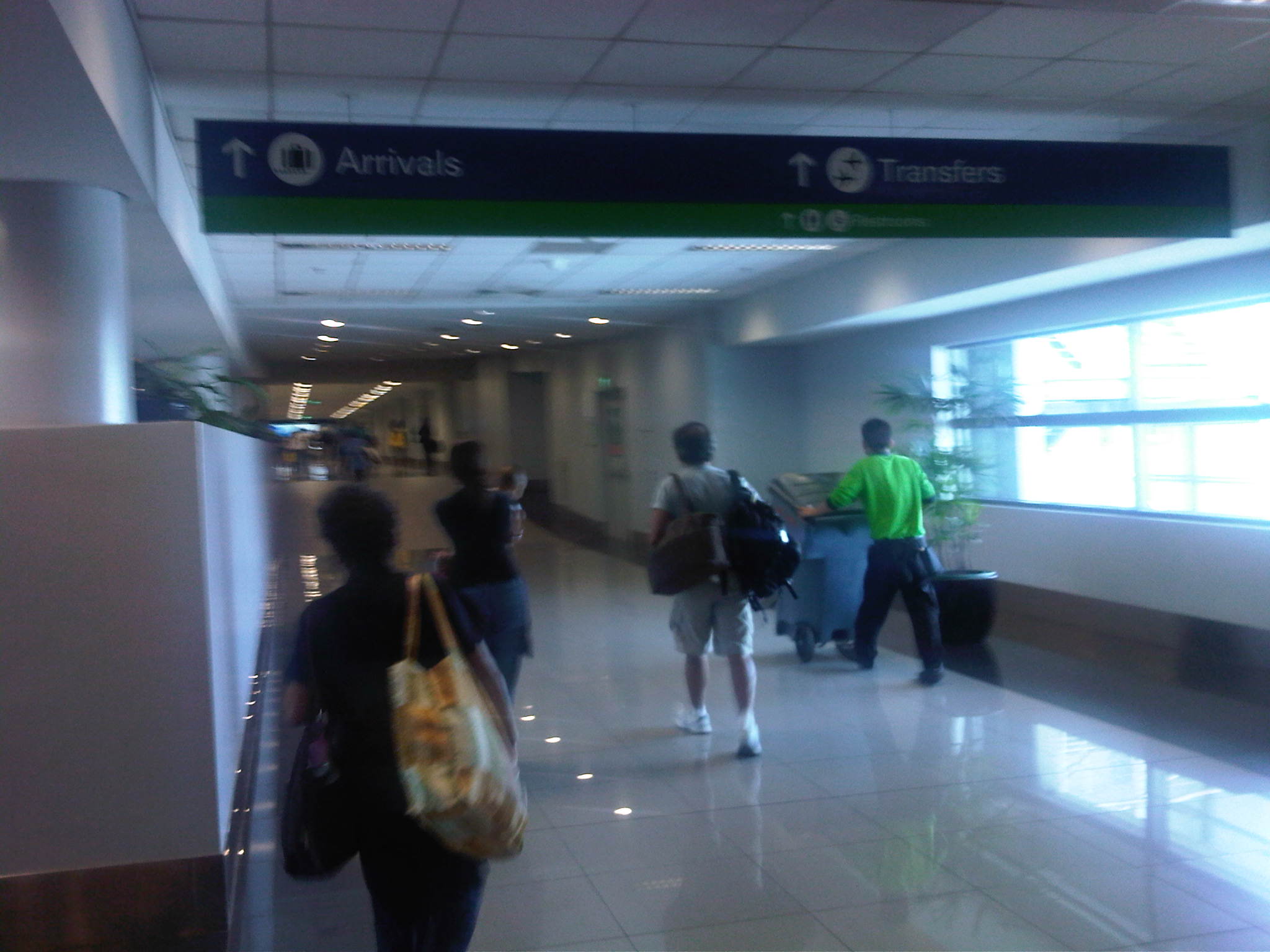 It’s a long walk from the tarmac to the baggage claim area. For passengers on international flights, they would have to go through immigration first after the long walk.
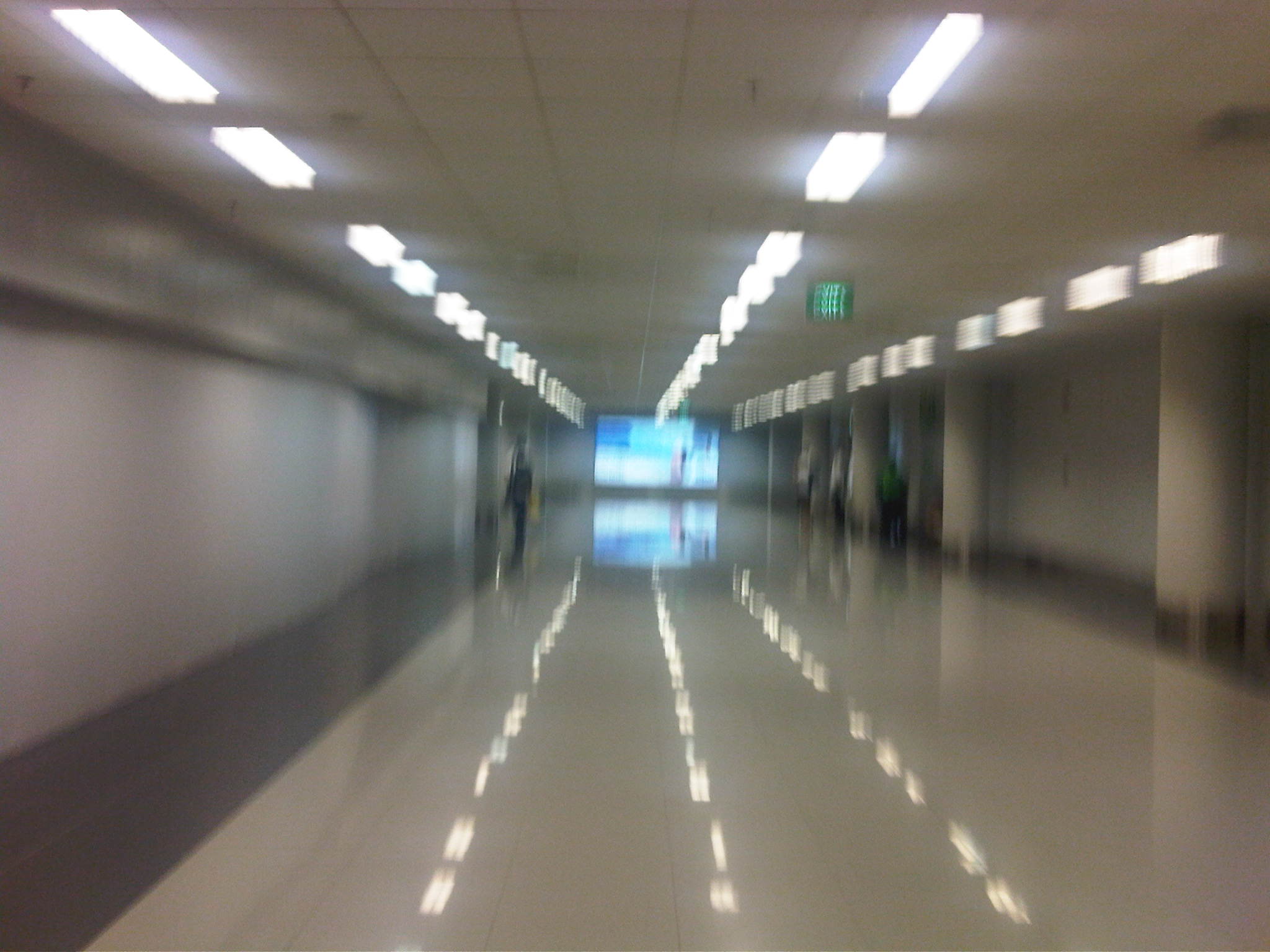 Long hallways without the benefit of moving walkways are always an inconvenience to passengers, some of whom would probably require assistance. Of course, there are passengers who opt to cheat with their carry on allowance so one can say they should blame themselves when burdened with more than what is allowed for carry ons.
 Immigration booths on the domestic wing of T3 are unoccupied and probably should be reconsidered in case the airport will continue to be used for both domestic and international operations.
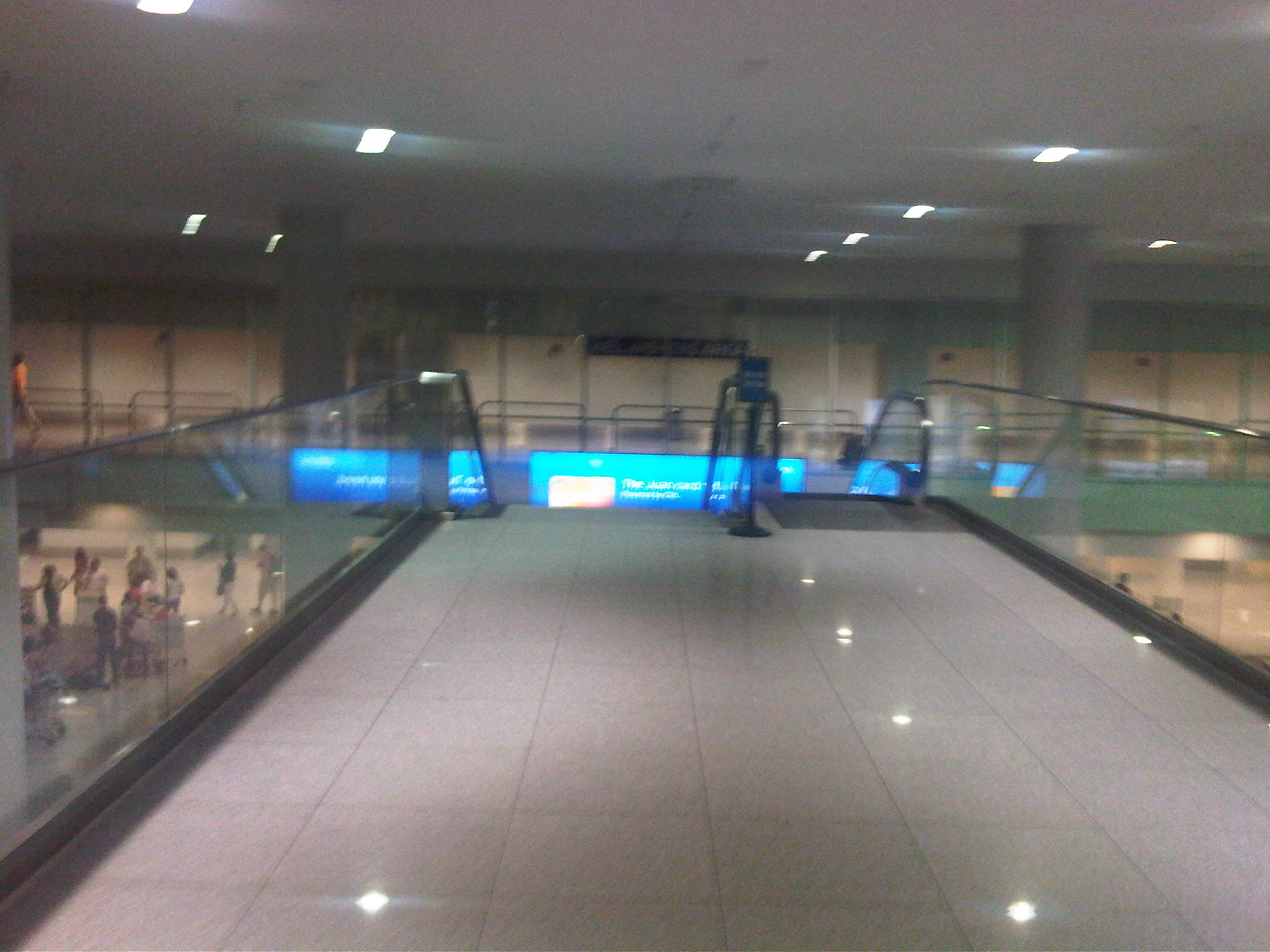 Past the immigration area, passengers would descend via stairs or escalator to the baggage claim area.
 Passengers waiting around the carousel – there was a time when one had to pay for the use of carts. Fortunately, that was scrapped during the last decade.
 Notice to passengers picking up their baggage from the carousel. T3 personnel do not check the baggage tags when passengers exit the area. The same is true for T1. Only in T2 (Centennial Terminal) do staff strictly check baggage tags, minimizing the chances of one’s luggage being taken (mistakenly or otherwise) by other people.
 First bags out unto the carousel
 Spacious area for baggage claim – there are actually several carousels but airlines use only 1 or 2 carousels despite so many flights being handled by T3.
 Since T3 was originally conceptualized as an international terminal, the wing used for domestic operations still have an area for customs operations. Like the immigration booths, these are unmanned and passengers just breeze through to exit the arrival/baggage claim area.
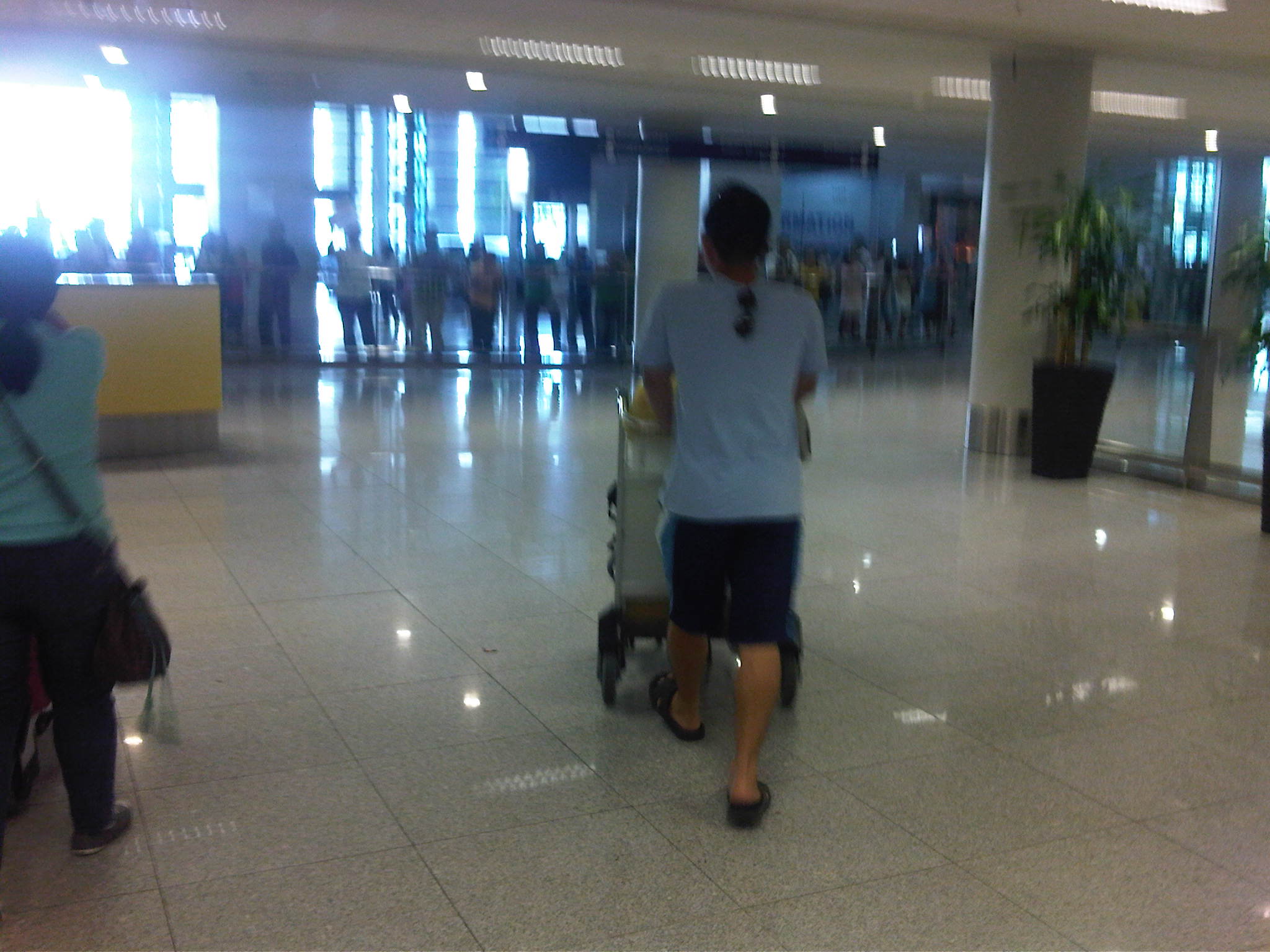 View for passengers exiting from the baggage claim and/or customs – one can easily see people waiting for arrivals, some with signs bearing names of persons they are meeting.
–
Flying budget vs full service
I have read and heard a lot about the discussions regarding flying budget vs. full service. Obviously, there are cost implications, as budget fares are considerably lower than regular fares with budget fares as low as perhaps 25% of full service airlines. For example, you can get very cheap fares for Cebu Pacific especially if you happen to be watchful of their frequent promos like their Piso (One Philippine Peso) and Zero promos, where they practically charge passengers taxes, insurance and fees on baggage only! That means a round trip fare can easily range between 5,000 PhP to 8,000 PhP for a flight between Manila and Singapore with 15 kilograms allowance for each way. Meanwhile, “regular” budget fares can reach a high of 11,000 PhP for the same baggage allowance. This compares favorably against fares from full service airlines like Philippine Airlines (PAL), whose promos still result in higher fares (around 12,000 PhP based on their online ticketing) while regular fares are in the range of 18,000 PhP (Fiesta Class or Economy) to perhaps 30,000 PhP (Mabuhay Class or Business). That’s easily 3 budget flights for the price of 1 full service flight! And other full service airlines flying MNL-SIN direct are surely more expensive with Singapore Airlines (SIA) charging even higher fares than PAL.
I have been able to take advantage of such promos that significantly reduced costs for my flights between Manila and Singapore (where I have a second home). Though I can afford to fly full service, I don’t think its practical for a 3.5-hour flight that I have come to be accustomed with considering the frequency of my travels. A flight that long is quite bearable and one has a lot of options to while away the time including bringing a good book to read during the flight, working on your computer or enjoying music on your portable player. I have seen a lot of people sleeping through the flight and waking up quite refreshed prior to arrival.
It makes even more sense to fly budget for domestic trips considering the furthest destinations are roughly 2 hours from Manila (e.g., Davao and Gen. Santos in Mindanao island). For most flights, it is just 45 to 60 minutes of flying time and travelers would usually have their own food and drinks (baon) with them anyway. Why purchase an expensive ticket for food that you would probably be criticizing? Service? There’s really not much of a difference for domestic flights as Ceb Pac and PAL staffs provide similar quality of service. To some, maybe the recent labor problems of PAL would suggest that their current staff would be less experienced except perhaps for international flights where they should have the slight advantage over Ceb Pac. In other airlines, however, the quality of service and experience would be the same though I can say that SIA, Thai Airways and Cathay Pacific provide better service than PAL nowadays. In fact, many full service airlines of other countries have their budget counterparts, with SIA competing with Tiger Airways, Garuda with Lion Air, and Malaysian Airlines with Air Asia, and their staffs would probably have the same experiences and service qualities.
Long haul flights are a different case since these flights can really be quite tiring and stressful, and there are things like in-flight meals, which though much maligned in many cases, are actually a necessity for long flights. Flying Singapore Airlines for a recent trip between Manila and Bali, for example, that consisted of two legs (3.5 hours MNL-SIN and 2.5 hours SIN-DNP) each way will definitely be more comfortable even with a stopover at Changi. Flying non-stop between Manila and Los Angeles is another example of a trip where full service airlines will have an advantage over budget, even after factoring in the additional costs attributed to fare differences. For such flights, one needs to be taken cared of and it would be such a hassle to prepare meals to bring with you on those flights but as they say and based on experience, there are always exceptions.
So as far as flights coming in and out of the Philippines (international) are concerned, the rule of thumb would probably be to take full service airlines for long flights (i.e., longer than 3 or 3.5 hours continuous or cumulative) and take budget airlines otherwise. For domestic flights, budget should definitely be chosen over full service. Of course, such preferences may be irrelevant if someone else is paying for your fares and your travel budget allows for the more expensive options. Still, with “value for money” being one of the original slogans of budget airlines, such is still very much the case here. And who wouldn’t want to be able to save on airfare and use such savings for food and shopping at their destinations?
–
First franchise for the electric jeepney
The first franchise for electric public transport was issued by the Land Transport Franchising and Regulatory Board (LTFRB) in favor of the electric jeepneys that currently service routes in the City of Makati, the financial center of Metro Manila. An article featuring the LTFRB’s issuance of the first electric vehicle franchise may be found here. Initially, these e-jeepneys were operating with support from the Makati City Government, which had the foresight for environment friendly public transport. But despite the formality of their routes in that city’s CBD, the e-jeepneys could only rely on donations, being unable to charge fares in part due their having no franchise to authorize them to do so.
The journey towards this first franchise was a long and somewhat arduous one. It took quite some time for the e-jeepneys to be recognized and registered under the Land Transportation Office (LTO) as the agency didn’t have guidelines that were flexible enough to admit a new generation of vehicles birthed by the desire to come up with low emission, low carbon transport to address environment concerns. For one, as the popular anecdote goes, the LTO was insisting on the vehicle having a tailpipe! Another story involved inspectors being dumbfounded by the vehicle not having a conventional engine (the e-jeepney had an electric motor). There are other stories (some probably tales) about other obstacles that the proponents of the e-jeepney had encountered from government as well as their own ranks (e.g., businessmen who just wanted to make a quick buck and weren’t really looking at the medium and long term of e-vehicle applications and deployment). And these add up to the significance of their accomplishments up to this point.
It is very fortunate and definitely admirable that proponents of the e-jeepney led by the Institute for Climate and Sustainable Cities (iCSC) and active players such as the Clean Air Initiative for Asian Cities (CAI-Asia) and those in the private sector have passionately and persistently pushed for the mainstreaming of electric vehicles. The group, now under the umbrella of the Electric Vehicle Association of the Philippines (EVAP) has been able to get the attention and support of bigger players such as Meralco and its mother corporation Metro Pacific. In fact, EVAP has been very strong in their lobbying for incentive to electric, hybrid and other vehicles using alternative energy sources. Perhaps with the continued, unflagging efforts of the group we will eventually see the transformation of Philippine road transport to one that is environmentally sustainable.
Theirs is a group that is very well grounded, knowing that the stakes are high and that the public and the transport sector need to be convinced of the viability of e-vehicles. The social and economic aspects of e-vehicles replacing conventional local transport modes such as the jeepney and the tricycle are quite complex when seen from the perspective of livelihood; a topic that seems to have been taboo to transport planners and policymakers. Yet, it is a topic that would ultimately have to be dealt with or addressed if real transformation is to be achieved for road public transport even outside the realm of the e-vehicle initiatives.
Transport, after all, is not entirely an energy issue or something simplified into such. This is why the various agencies need to work closely together and with organizations like the EVAP, the academe and international agencies like the ADB and the WB. It is a challenge to all concerned, and most especially to the DOTC, the DENR and the DOE to collaborate and encourage discussions in order to effect meaningful changes to our transport system. This should be pursued instead of the current set-up where national agencies like the DOTC and DOE appear to be working independently of each other while dealing with the same concerns. This can be problematic as well as wasteful in terms of time and other resources (e.g., funds), and may lead to confusion to the people and organizations involved.
–
Learning from motorcycling in South East Asia
The scenes are very similar to what you would see along roads in many parts of the Philippines. Motorcycles and scooters zipping here and there, often with more than one rider. If one were not aware of the fact that the motorcycles and other vehicles were along the left side of the road. Motorcycles are very popular in most of Southeast Asia and is in fact the dominant mode in cities in countries like Vietnam, Cambodia and Thailand. It is also very popular in Indonesia and is rapidly on the rise in the Philippines. Despite the mayhem associated with motorcycles based on the various stories or anecdotes that eventually came with photo evidence, motorcycles are here to stay and there is a lot to learn from the experiences in our South East Asian neighbors for us to improve safety concerning motorcycles.
 Riders along a street in Bali – the scene is so familiar as if we were just traveling along a Philippine street
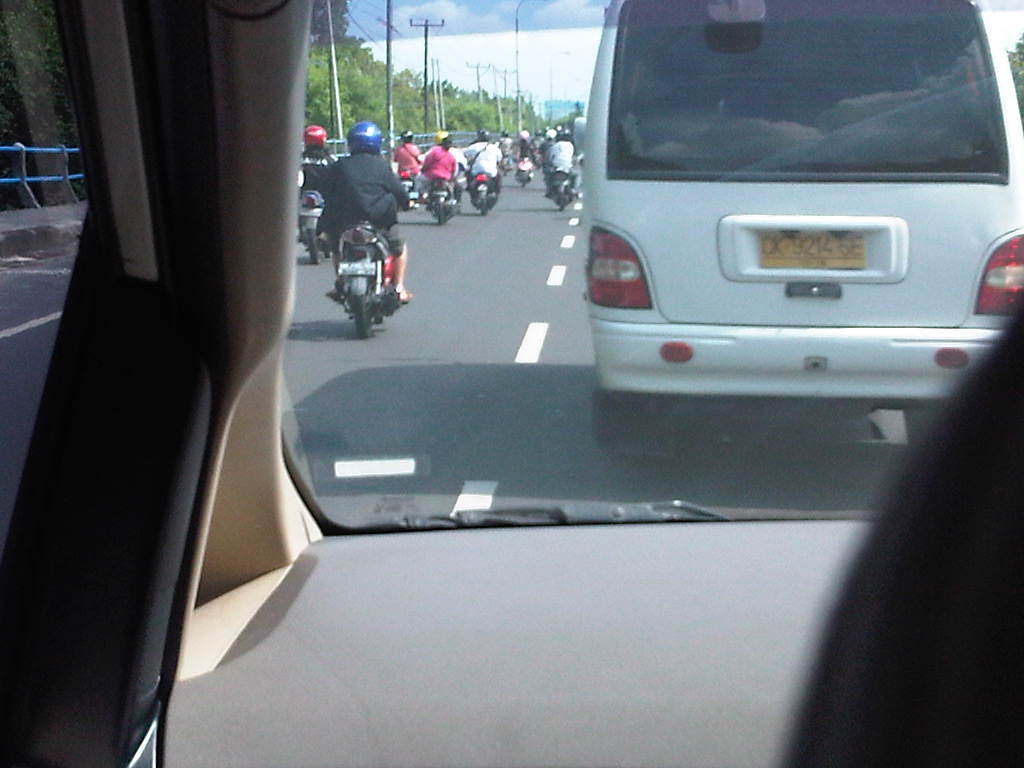 Motorcycles traveling along the left-most lane (the equivalent of our right-most or curbside lane) – that lane is also assigned to public transport. Along this road, the public transport happens to be a BRT variant.
The difference in motorcycling between Bali and Manila (or any Philippine city for that matter) seems to be that drivers of other motor vehicles in Bali are more respectful of the rights of motorcycle riders to road space. While lane splitting is also a common occurrence as well as riding along other motorcycles in the same lanes, the impression is that in the Philippines, riders have higher risks considering the likelihood that they will be sideswiped by other vehicles particularly public transport (buses, jeepneys and AUVs) and trucks. Philippine drivers have a tendency to assert their positions along the road often tailgating or shifting lanes (cutting) at the last moment, and often with the smallest of gaps available for such maneuvers. Such behaviors often have them in conflict with motorcycle riders who are brushed off as minor elements in traffic.
From a driver’s perspective, motorcycle riders in Bali seem to be more disciplined when in flowing traffic, seldom weaving when not required to do so, even while traveling at 2 or 3 motorcycle beside each other along a lane. This is not the case in the Philippines where riders tend to speed even when unnecessary and employ risky maneuvers while doing so. Such behavior increases the likelihood of crashes involving motorcycles, as there are increased interactions among vehicles.
With or without motorcycle lanes, riders (and their passengers) should be safer if other motorists would just respect their rights to the road. This works the other way around where motorcycle riders should, on their part practice lane discipline and refrain from unnecessary maneuvers like lane splitting and weaving in flowing traffic. Mutual respect and discipline, while perhaps difficult to achieve in the immediate term are something that should be encouraged with firm and fair enforcement of traffic rules and regulations. Otherwise, mayhem in our roads will continue and will exact more lives and limbs from motorists and pedestrians alike.
–
The “pasaways” on our roads
When the current President announced his disdain for wangwang or the illegal use of sirens by different people (usually the abusive ones), the LTO, the PNP and other authorities immediately cracked down on vehicles using wangwangs. It took just a few days to eliminate these irritants of our roads and the public was treated to government in action and serious about eliminating manifestations of corruption and abuse that we seem to have accepted as part of our society.
But what seemed like a good opening move eventually deteriorated somewhere in the middle game and others similar to the wangwang have not been addressed. It is a case of ningas cogon and it is a case where government failed to build on momentum (from the wangwang campaign). Two particularly serious matters that I would like to see the government address pertain to tailpipes and license plates. For tailpipes, there are just too many smoke belchers out there that it doesn’t take a genius to know that there are so many vehicles that should not be running along our roads. For license plates, I cite the examples of the abuse of commemorative plates and the use of covers to obscure the plates (i.e., tinted covers).
 Drive through smoke belcher
We see a lot of these vehicles that obviously didn’t or wouldn’t pass emission tests. You wonder why our air quality is still on the decline despite provisions of the Clean Air Act. The answer is quite simple – “non-appearance.” The term refers to those not really undergoing the emission tests required of vehicles prior to the renewal of their registrations. In fairness, the LTO seems to have tried so many ways to ensure that vehicles do undergo emission tests but these efforts have not translated into cleaner air and we see a lot of cars, jeepneys, buses and trucks belching smoke everywhere we go. No wonder road transport is the biggest contributor of air pollution in our cities.
 Potent mix – commemorative plate bearing the LTO and DOTC logos and something that suggests that the owner of the car is from media
It seems that commemorative plates are back and with a vengeance. License plates are replaced by commemorative ones so that the users can evade being accosted by MMDA and other enforcers for number coding violations. Among the most popular commemorative plates I’ve seen used to replace standard ones are those bearing the names of the NBI, PNP, LTO and DOTC. These are the agencies who are supposed to be enforcing against the improper use of commemoratives and yet they are the ones who seem to be promoting the abuse. Then there are those announcing the positions or offices of certain government officials like those bearing special plates (8, 16, “Councilor,” etc.). The other day there was even a news report where former congressmen continue to use special plates while no longer in office!
Such manifestations of abusive behavior continue along our roads and in plain sight of everyone and most especially people who are supposed to enforce traffic rules and regulations. While the attention of the public is on the big ticket and more controversial and sensational impeachment trials, the government seems to have forgotten that in order to achieve its “matuwid na daan” slogan, it has to grind out the even more challenging task of eradicating the rest of the wangwangs and effect behavior change in transport.
–
Coastal Expressway
One of the shortest tollways in the Philippines is the Coastal Expressway, which was actually a free road in the 1990’s (then known as the Coastal Road). It now connects to a longer segment that is the Cavite Toll Expressway (CaviTEx). Following are photos taken during a recon survey of an area along the expressway in relation to a traffic impact study we were conducting for a major development.
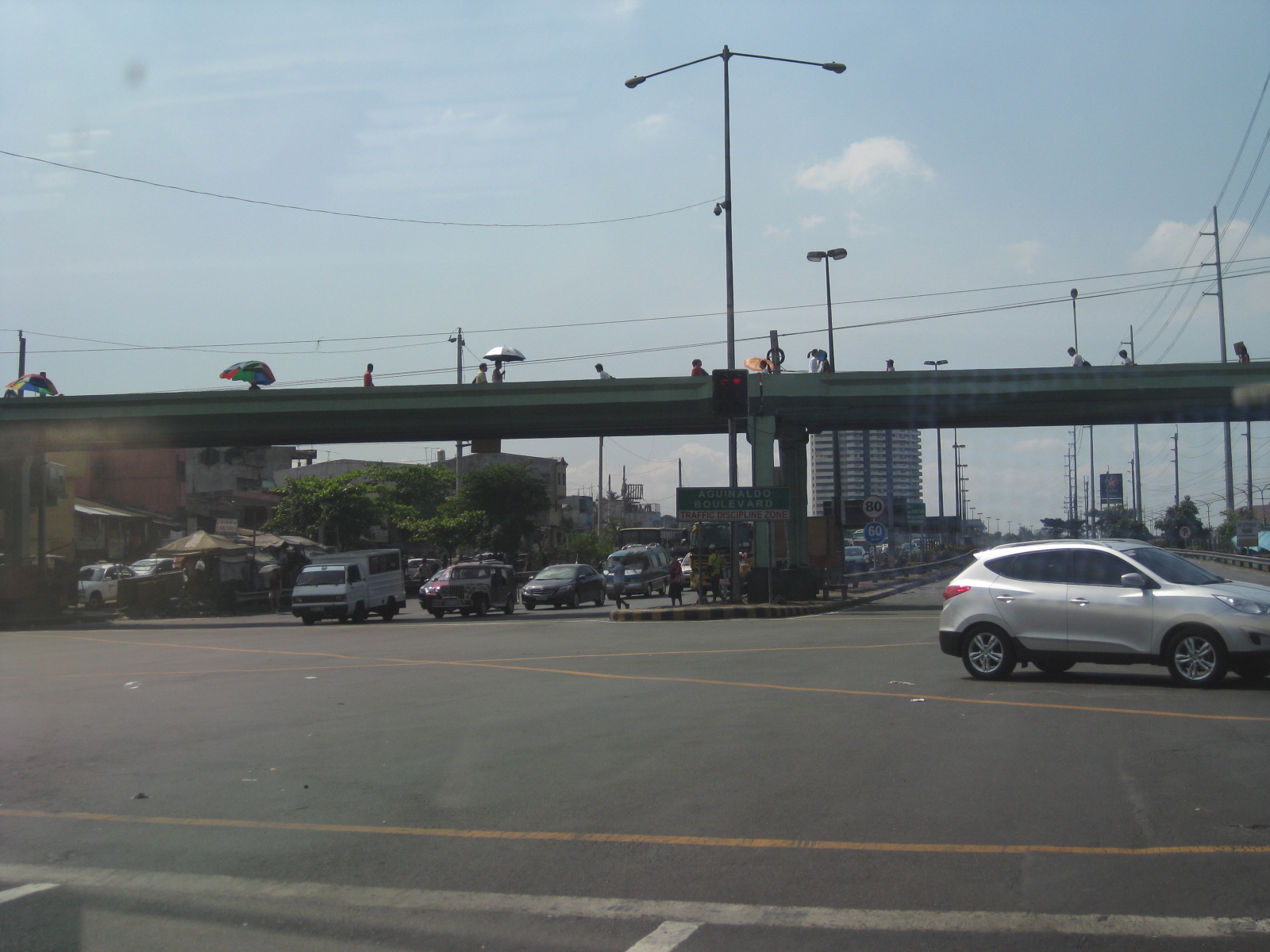 The Coastal Expressway essentially starts from the intersection of Roxas Boulevard and the Airport Road in Pasay City
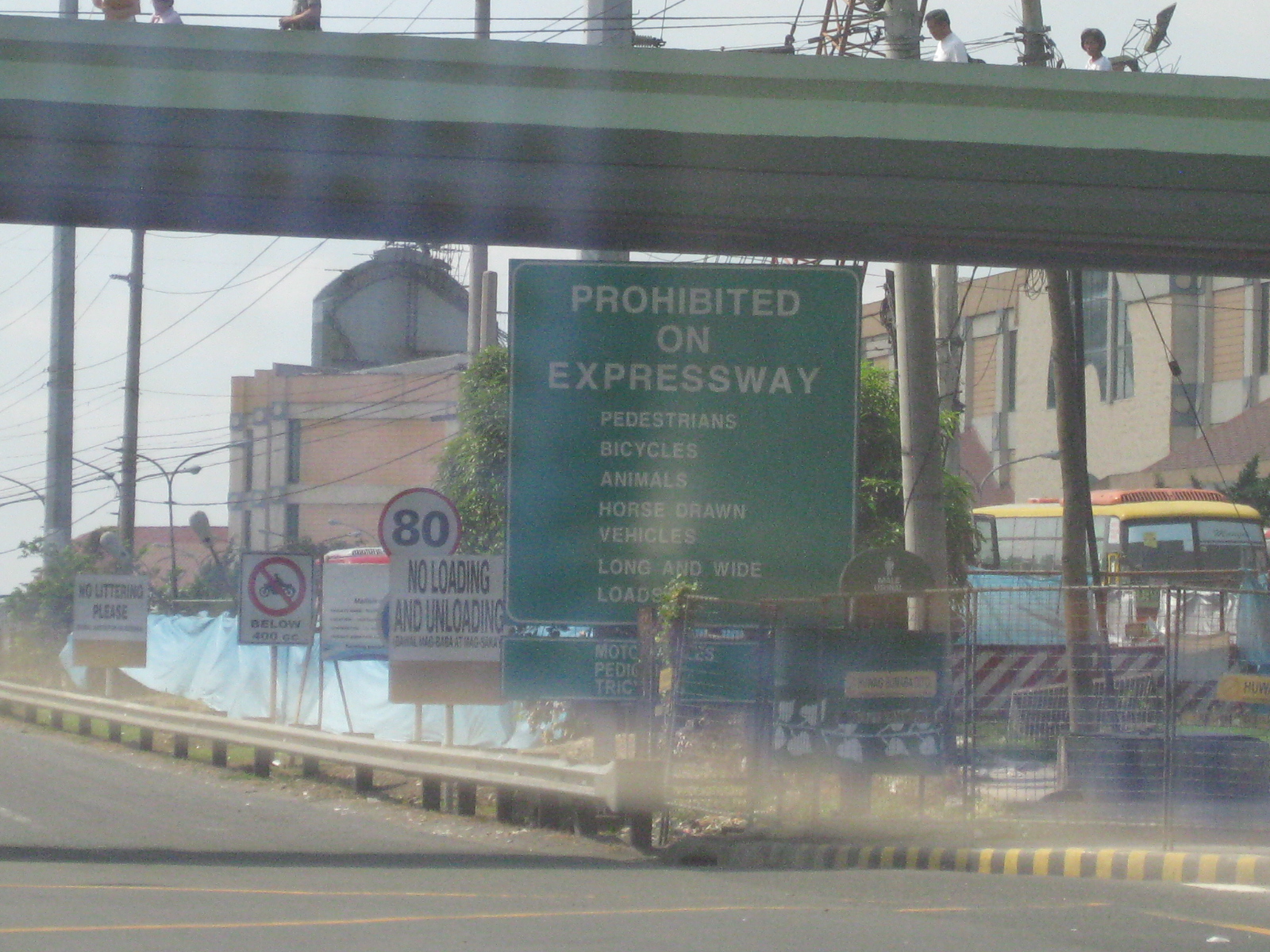 There seems to be so many signs on this corner leading to the entrance to the expressway. This is an example of what not to do in as far as signage are concerned.
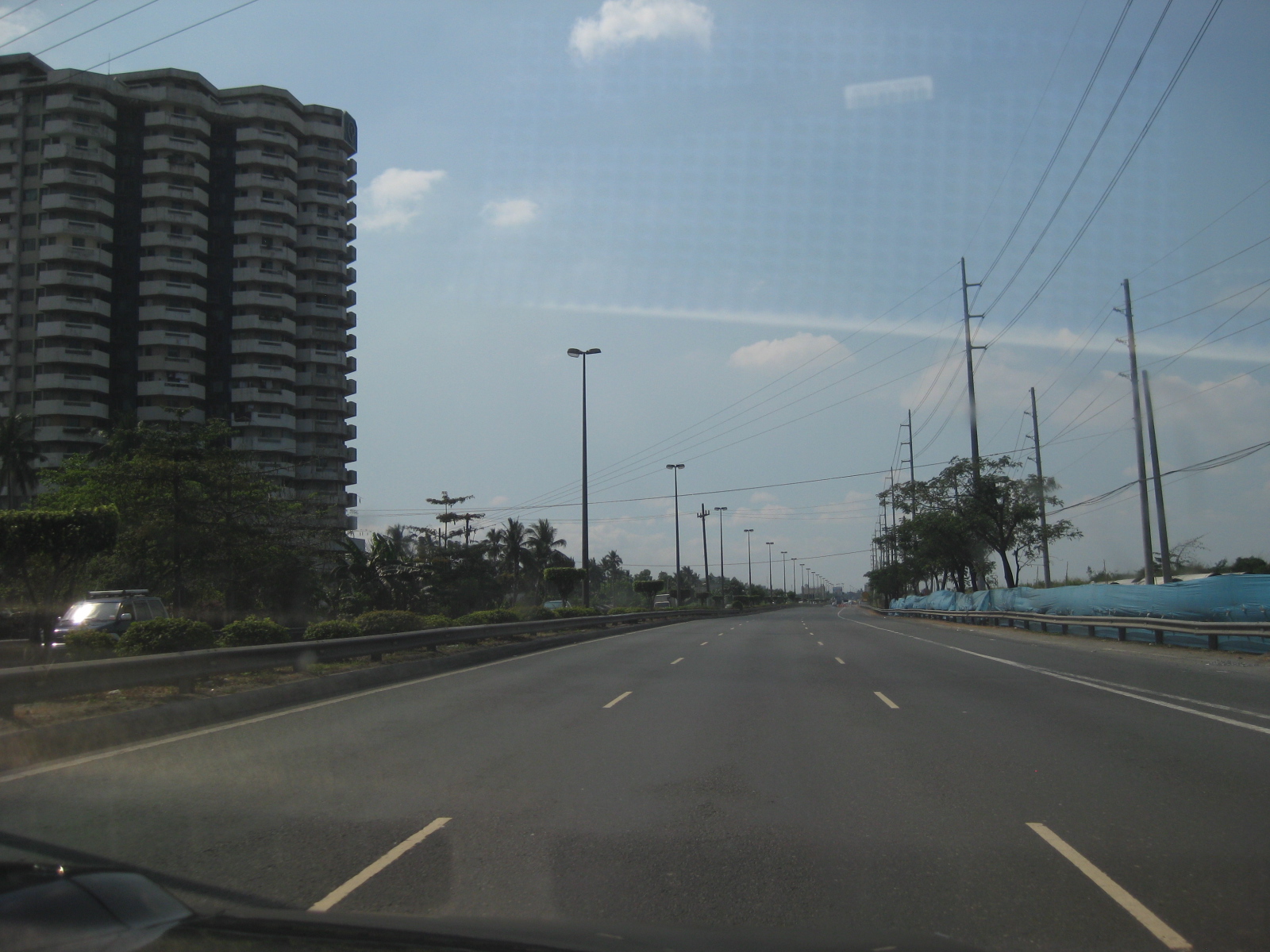 From the intersection, it is practically free flowing traffic leading to the toll plaza. On one side of the expressway are residential/office condominium developments and on the other side are undeveloped or under-developed reclamation areas.
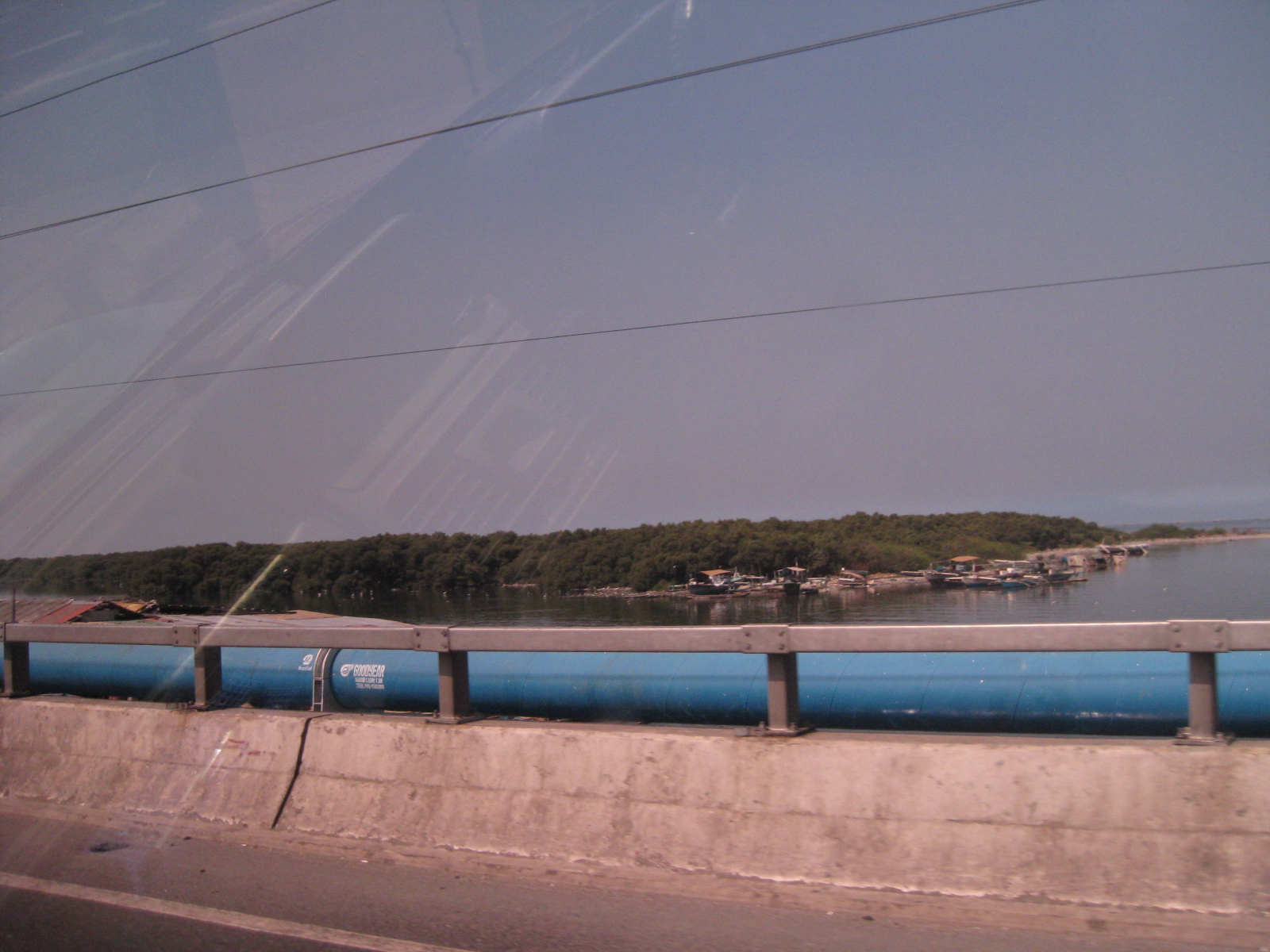 The photo shows one of several small islands from across the tollway that is host to mangrove forests. These growths in turn host an entire eco-system that includes migratory birds, which makes the area a popular site for conservationists, environmentalists and bird-watching enthusiasts.
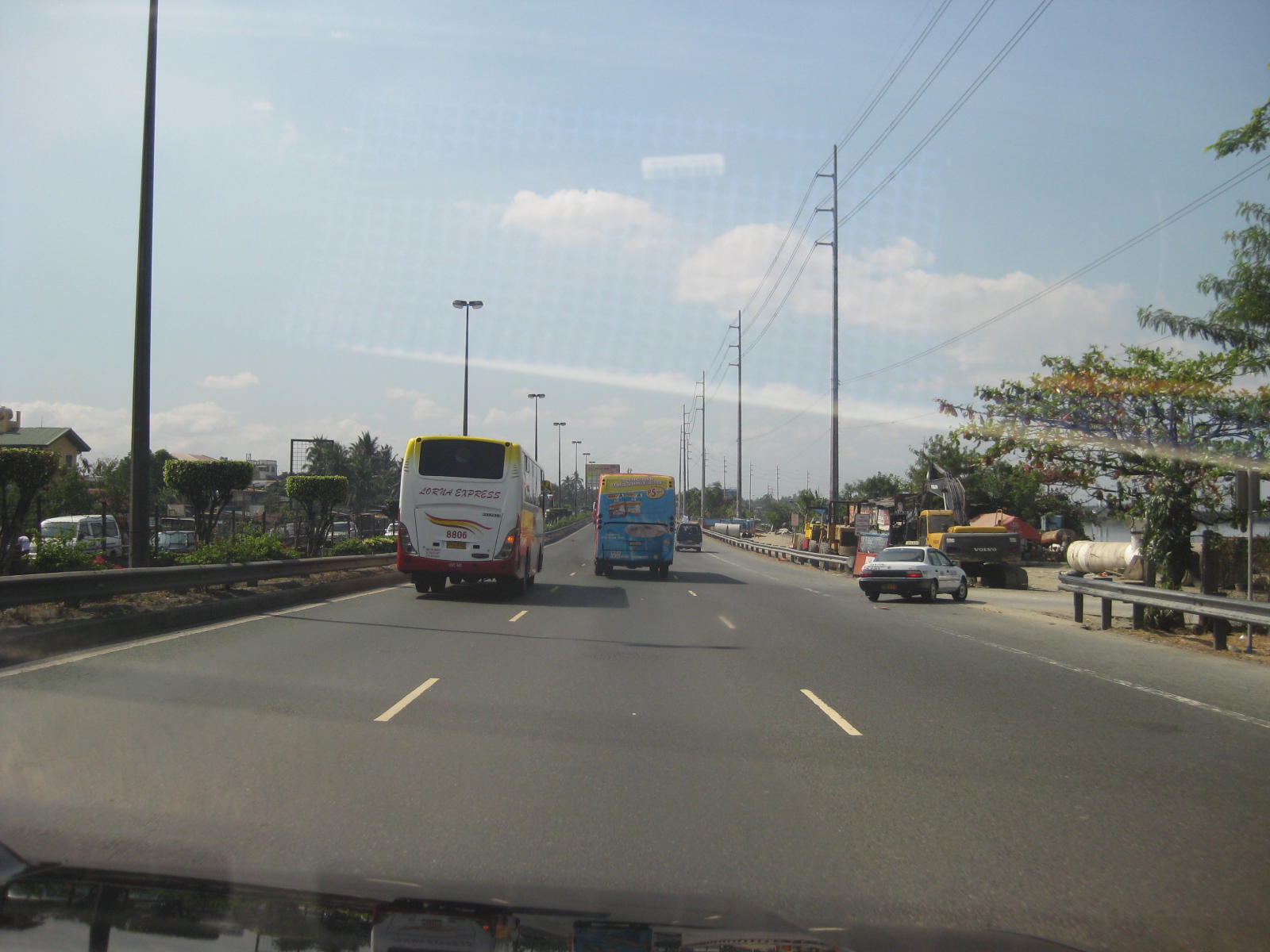 Many provincial buses use the tollway from terminals and stations in Pasay and Manila. This is because the tollway provides a direct access to the province of Cavite where many people who work or study in Metro Manila reside.
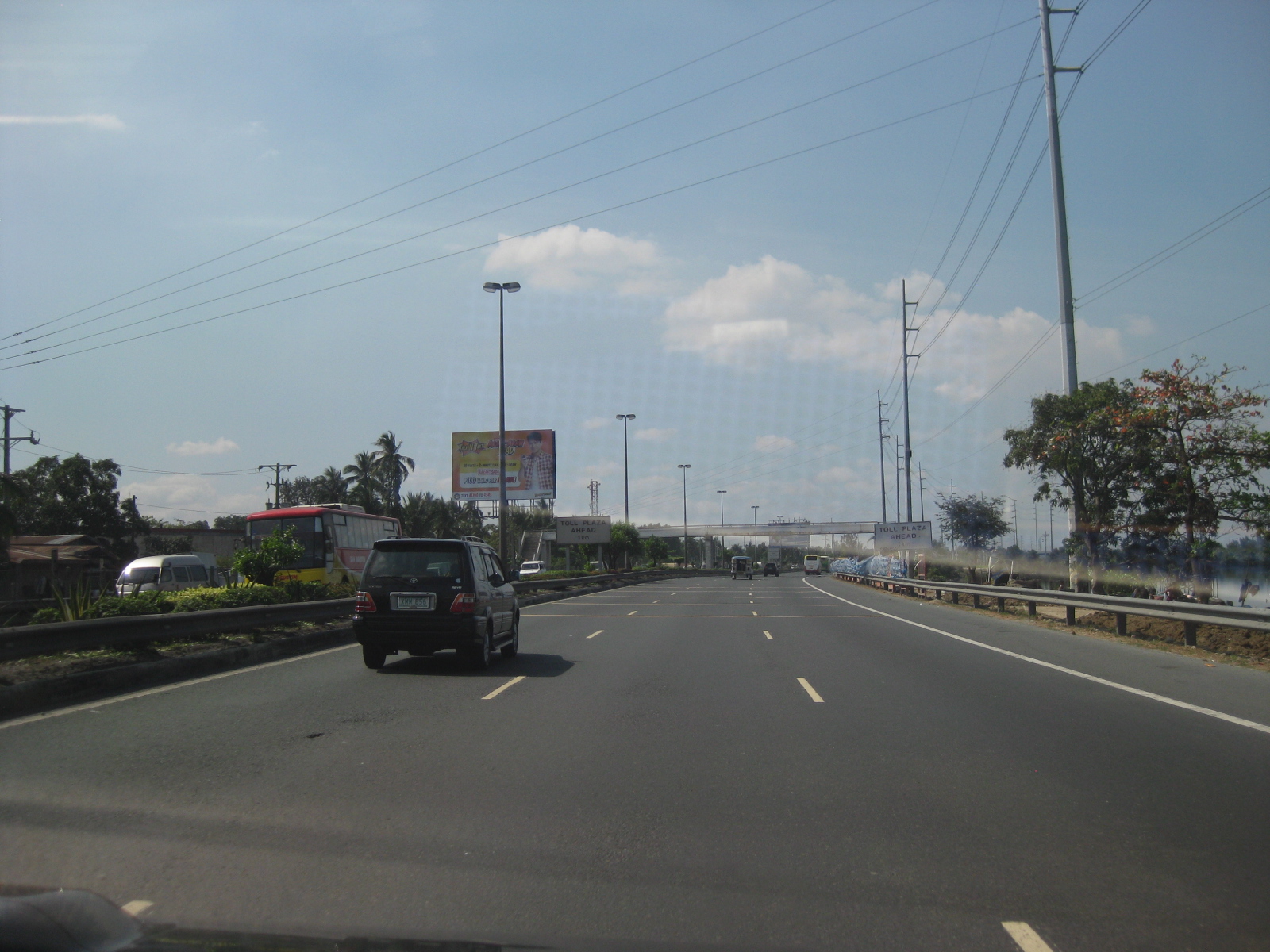 The tollway has 3 lanes per direction with standard shoulders on either side of the carriageway. The is also a median separating the opposing flows of traffic.
 Signs advise for the reduction of speeds as vehicles approach the only toll plaza along at the time along the route to Cavite. There is a minor toll facility along a feeder road to the tollway along the northbound side but it seems more an accommodation rather than a full-fledged tollgate.
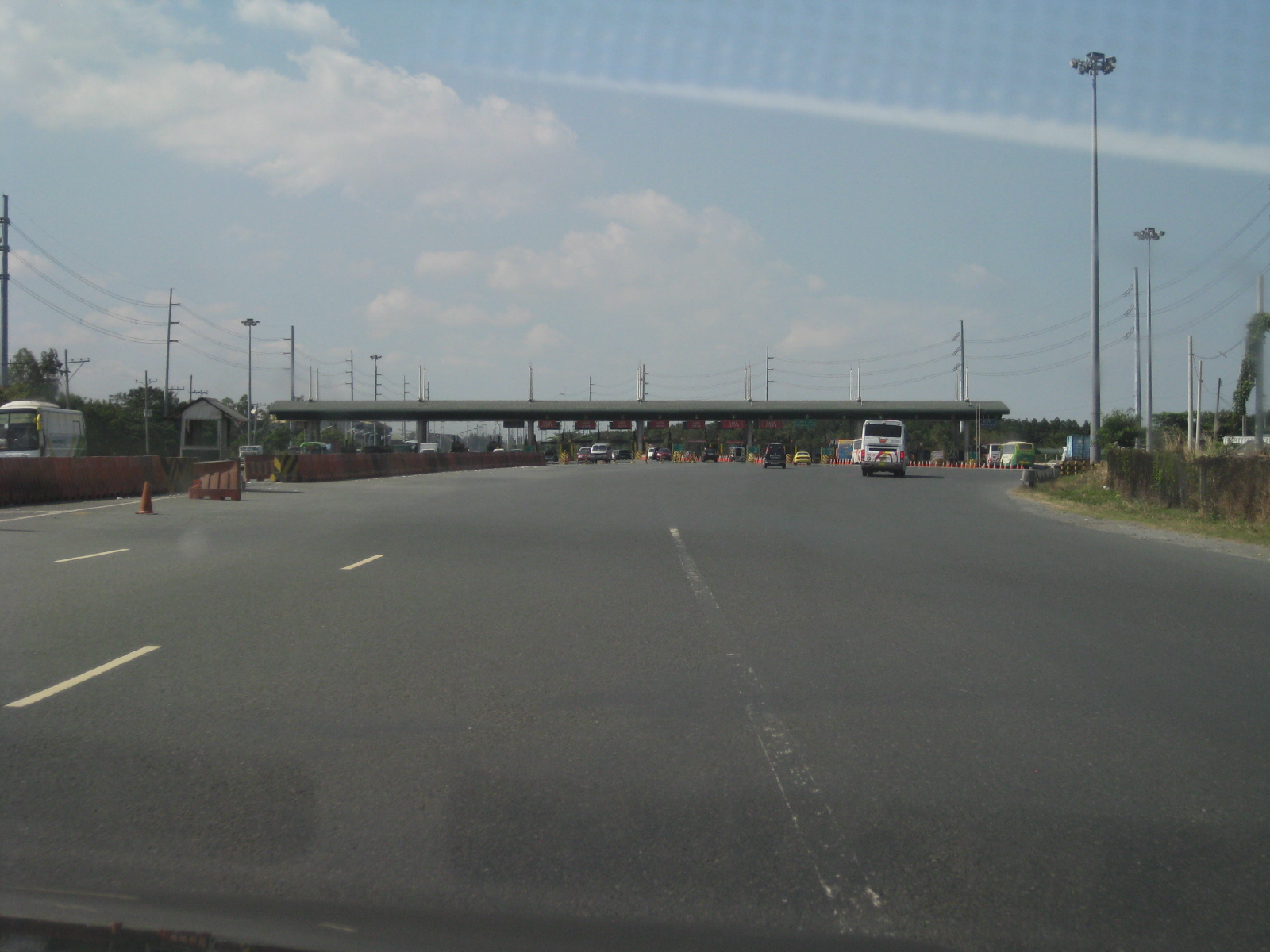 The Coastal Expressway toll plaza – traffic during the time of travel was light despite it being a weekday. However, traffic can be quite horrendous during peak periods and queues particularly long at the toll plaza. There are no electronic toll collection systems in place yet so all transactions are manual. The highway section widens at the plaza for the multiple booths to be able to accommodate vehicle arrivals.
 Typical toll booth along the expressway
 Traffic cones help guide motorists from the toll plaza who will eventually transition back to a three-lane section.
 Sign indicating the boundary between Metro Manila and the Province of Cavite
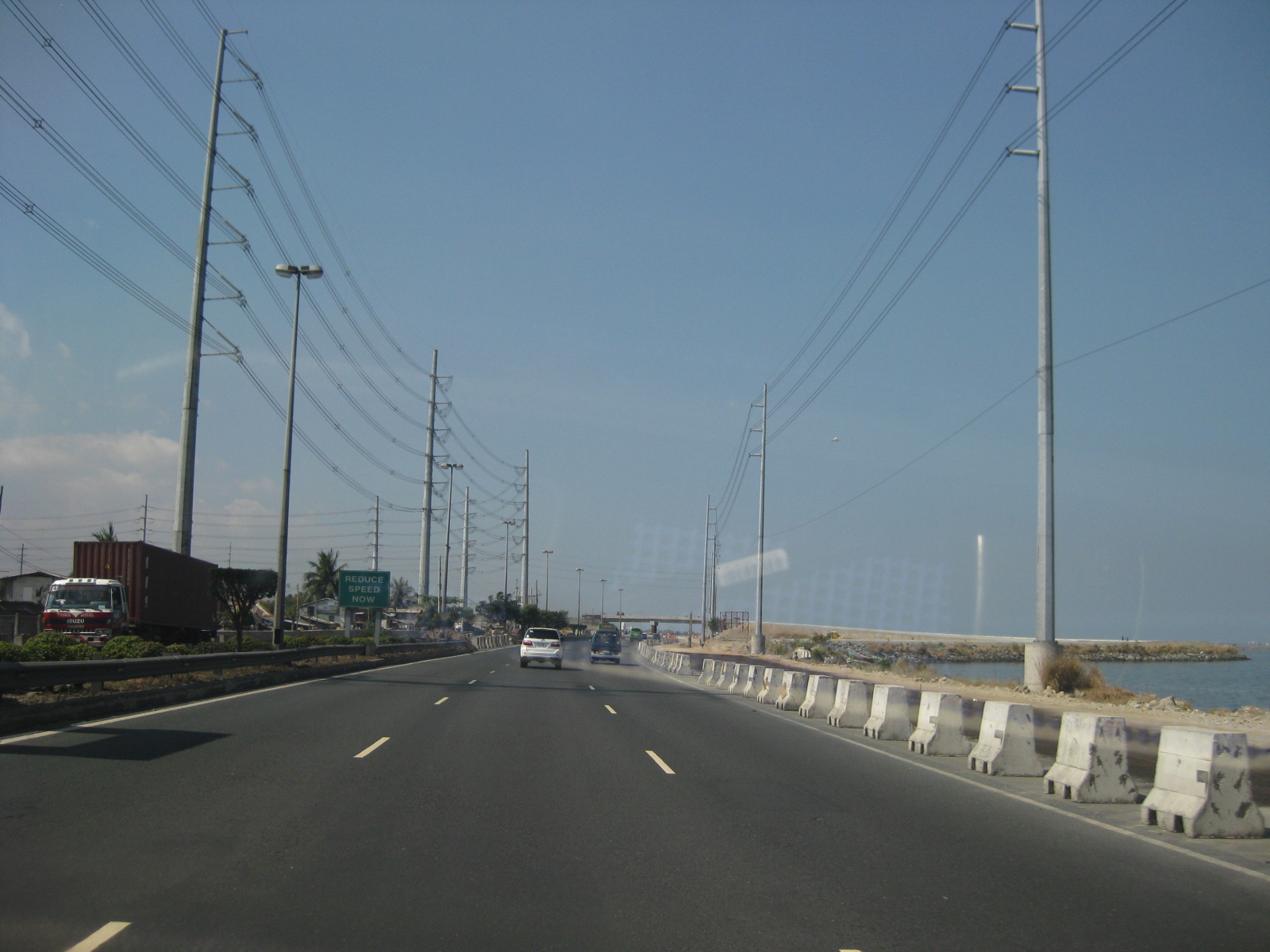 Nearing the then end of the expressway in Bacoor, Cavite, one could already see the ongoing interchange construction and the unfinished section of CaviTEx.
 Construction works for the approach to the overpass for what is now the Bacoor Exit. Vehicles now take the rightmost lanes to turn left towards Bacoor using the overpass that can already be seen in the photo. Vehicles proceeding towards Kawit should proceed along the tollway
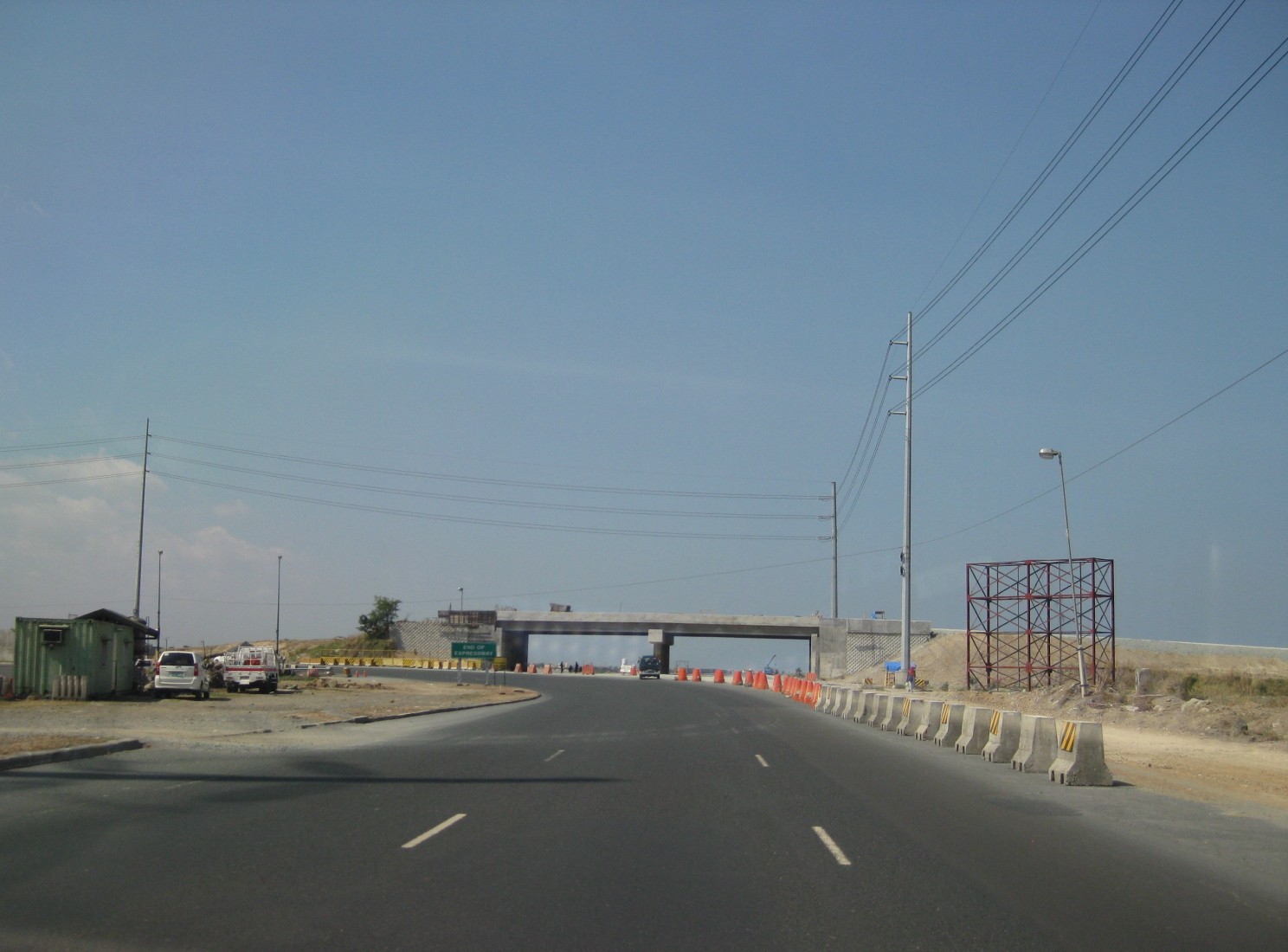 At the time these photos were taken, the CaviTEx was not yet completed and the Coastal Expressway ended at Bacoor. The curve leads motorists to Bacoor town proper.
 A peak at the then unfinished section of Cavitex including the uncompleted overpass
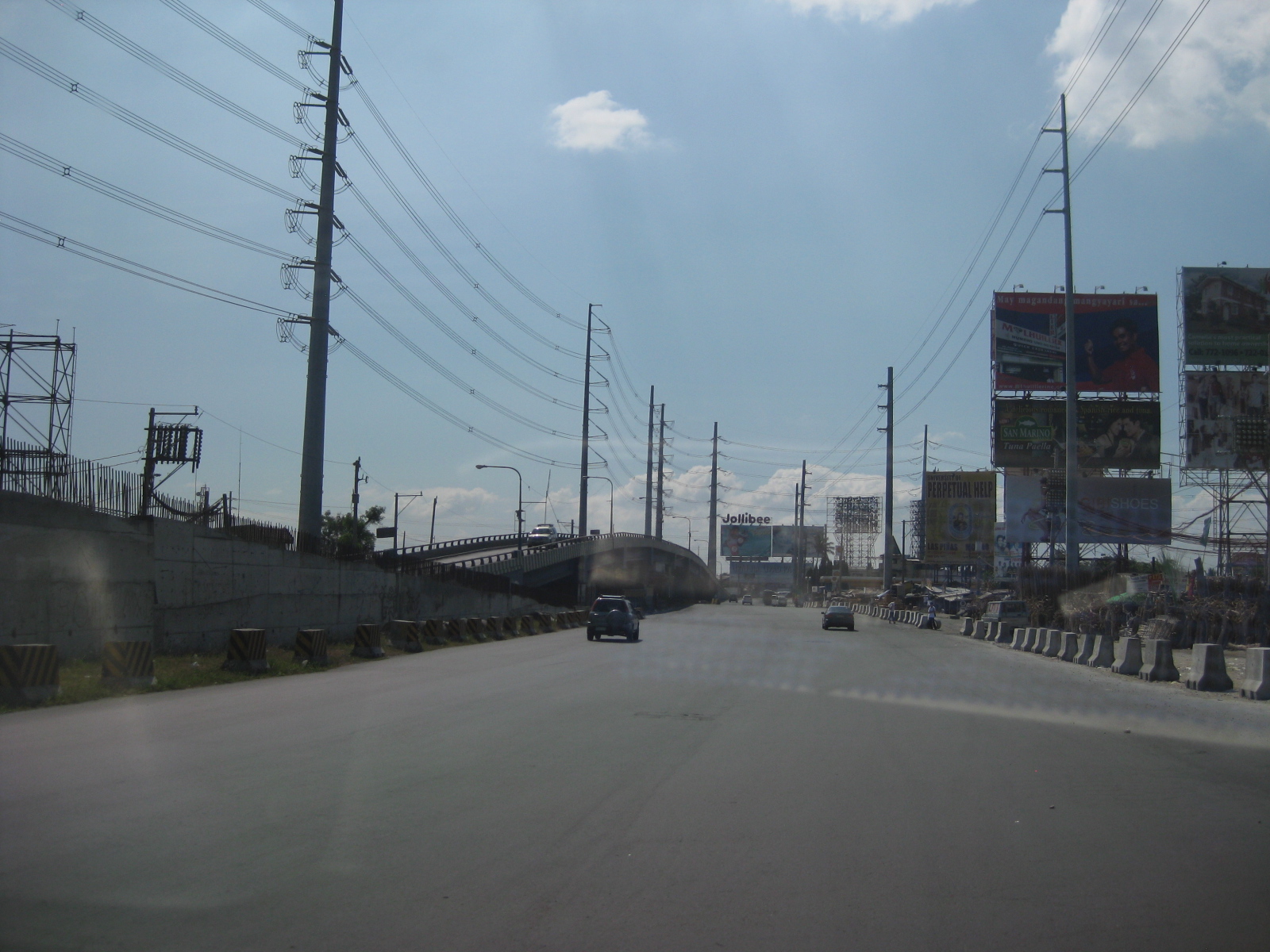 Turning towards Bacoor, motorists are greeted by another overpass on the opposing direction that leads travelers from the Alabang-Zapote Road (from Muntinlupa) or the Aguinaldo Highway towards the Coastal Expressway. Travelers wanting to proceed to Las Pinas via Quirino Avenue may turn beneath the flyover.
 17Overpass from Aguinaldo Highway to the Coastal Expressway. Our vehicle’s trajectory led us to Quirino Avenue, which eventually connects to the C5 Extension
 To go to Alabang via the Alabang-Zapote Road, motorists should stay on the left side of the road. To go to the Aguinaldo Highway, one must keep to the right.
–
 Caught (up) in traffic