
Road crashes along Katipunan Avenue
Katipunan Avenue in Quezon City has claimed a lot of lives and injured a many more people over the past years particularly due to aggressive and often reckless driving or riding by motorists using the road. Especially dangerous is the section stretching from the flyover to the U-turn slot just after Ateneo’s Gate 2 since many vehicles tend to (over)speed from the wide overpass and unto the section fronting Ateneo De Manila University. On the other side of the road, motorists also tend to speed up towards the overpass, unmindful of vehicles shifting from the outer lanes of the road towards the U-turn slot. In many cases, some vehicles cross from the establishments along Katipunan towards the U-turn slot. These conditions significantly increase the likelihood of occurrence of road crashes.
This morning, I noticed during my drive to UP that the concrete barriers of the U-turn slot along Katipunan northbound were again witnesses to another crash. The driver was most likely speeding if not flying from the overpass and miscalculated on his/her maneuver upon discovering the barriers along his/her path as he/she descended the overpass. It was more especially dangerous this morning as I can imagine the pavement conditions as well as the visibility given the heavy rains pouring around Metro Manila since last night. I took a quick photo of the damaged vehicle just when a truck was maneuvering in preparation to towing the vehicle.
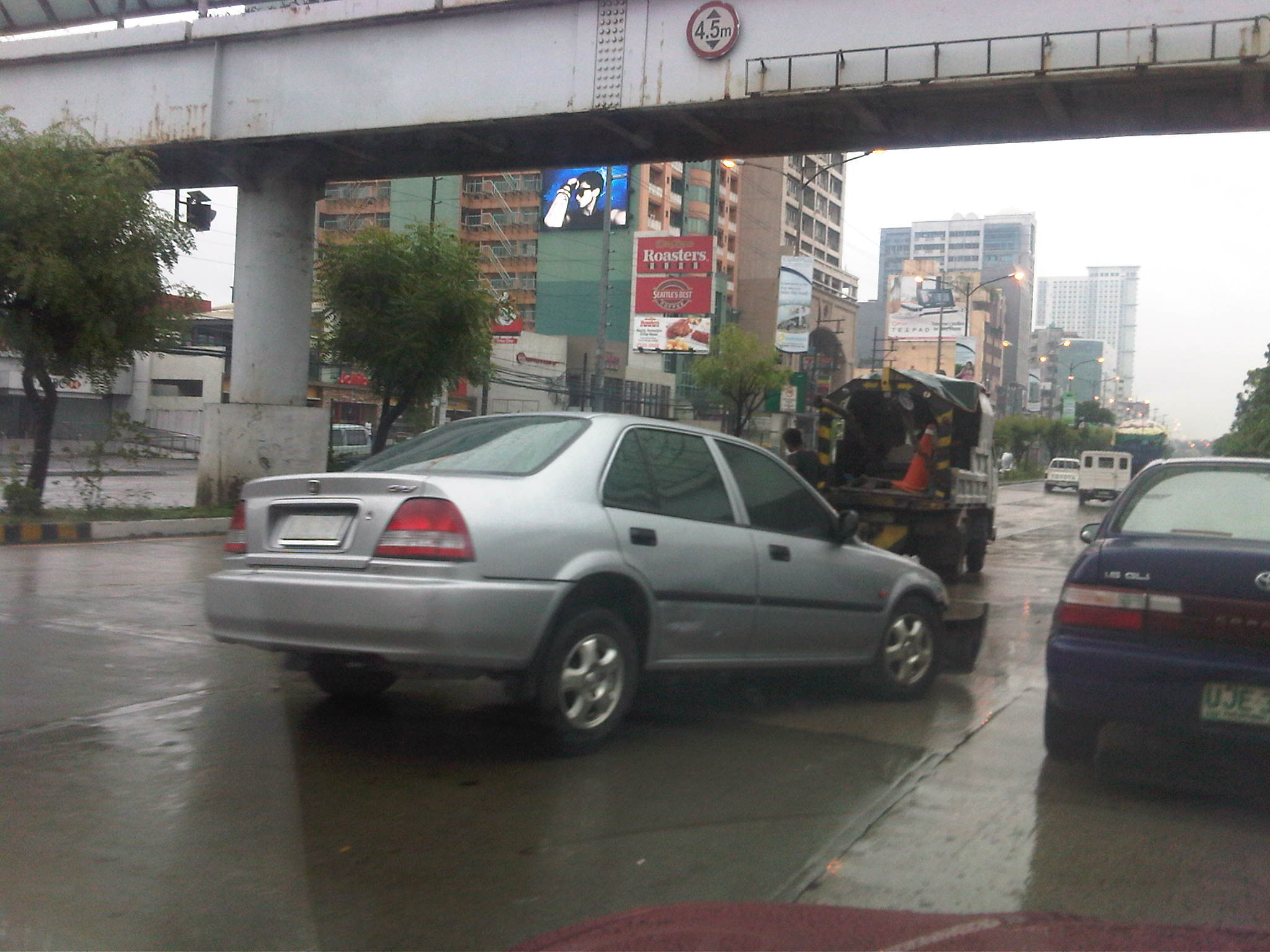 Honda City with damaged front bumper – the vehicle hit one of the concrete barriers of the U-turn slot with a trajectory indicating it apparently came from the direction of the overpass. After passing the vehicle, I saw that the left front wheel is already missing and apparently destroyed when the car hit the barrier. The damage to the car indicated tremendous impact and I just hope the driver and other occupants (if any) were wearing their seatbelts when the car hit the barrier. It would have helped also if the car had airbags. These safety devices are not standard issue in many if not most vehicles in the Philippines allowing dealers to make airbags optional and giving the buyer the false perception of getting the vehicle with a cheaper price.
When will motorists learn from such incidents? When and how will the MMDA or whoever is in-charge finally, effectively and decisively address this issue? Is it simply a case of speeding and something that can be addressed by enforcing speed limits? Or does the infrastructure and layout encourage such behavior among motorists? Perhaps we should rethink how we design and place U-turn slots and the barriers we use in the scheme. Otherwise, we will just see the same scene happening all over again at the cost of more lives and limbs.
–
SM Marikina-Santolan Station pedestrian walkway
A good example of providing for pedestrian access for development is the walkway connecting LRT Line 2’s Santolan Station with SM City Marikina. Of course there’s an even better example in Makati City where the walkways at the Ayala CBD connect office buildings and the commercial center comprising Greenbelt and Glorietta. That system of walkways is probably the first of its kind in the country and has not been replicated elsewhere, at least as far as I know. The significance of the walkway that practically connects to points in two cities (SM is in Marikina while the LRT station is in Pasig) is that it is a good example of a facility that provides access to a transit station. Not too long ago and before Typhoon Ketsana laid waste to the area beneath the bridge and overpass, there was even a proposal for a public transport terminal to be developed here. If this was realized, then the area would have been a very busy hub similar to Crossing or Market!Market! but maybe not at the level of Cubao.
 The elevated walkway across the bridge along Marcos Highway is wide and obviously designed to be able to handle the potential number of people generated by the mall.
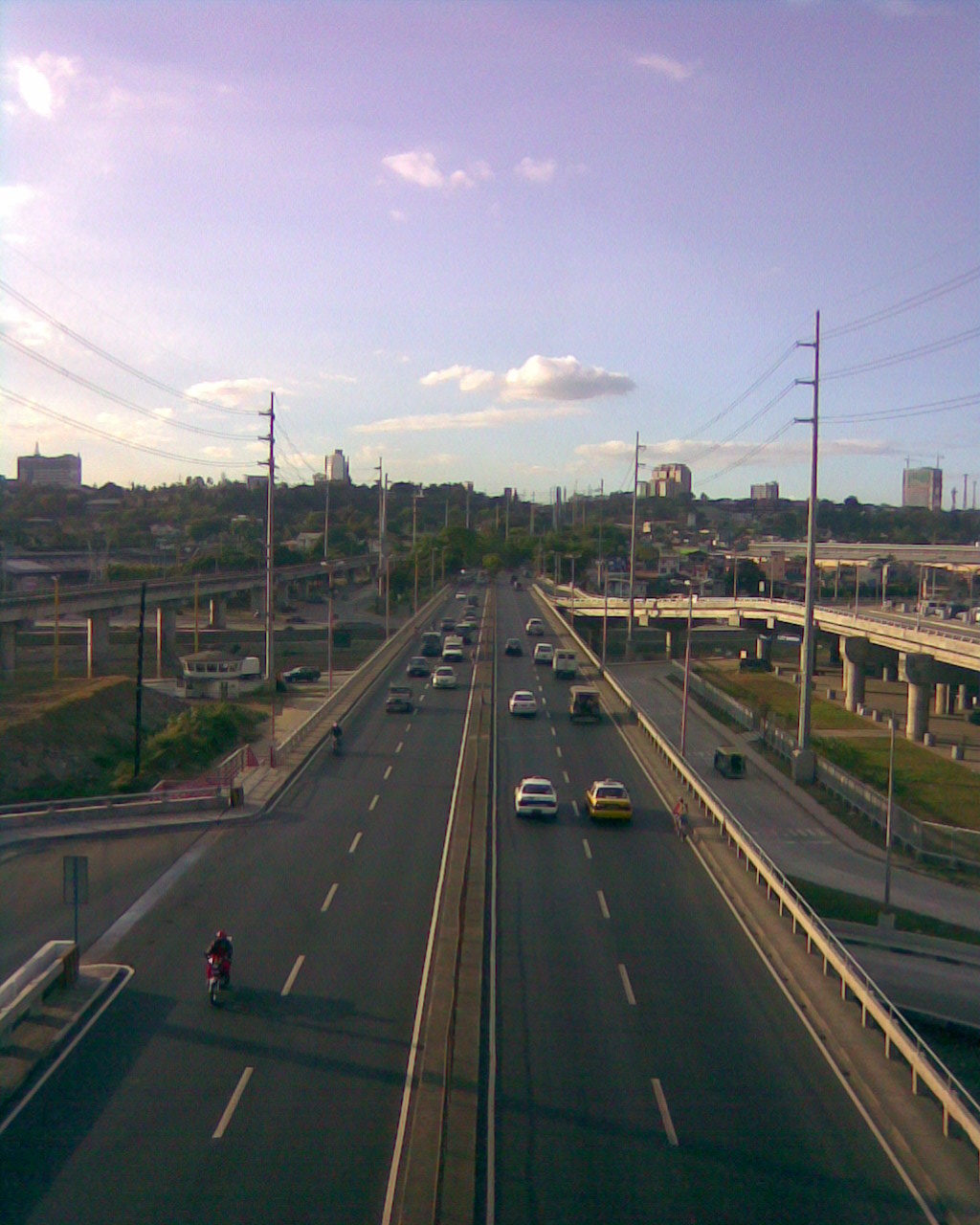 The walkway provides a perfect position for observing traffic along the bridge. This is probably an ideal location for a station for conducting screenline traffic counts for Metro Manila. The driveway on the left side of the photo is for public transport loading and unloading bays commonly used by jeepneys bound for the towns of Rizal Province.
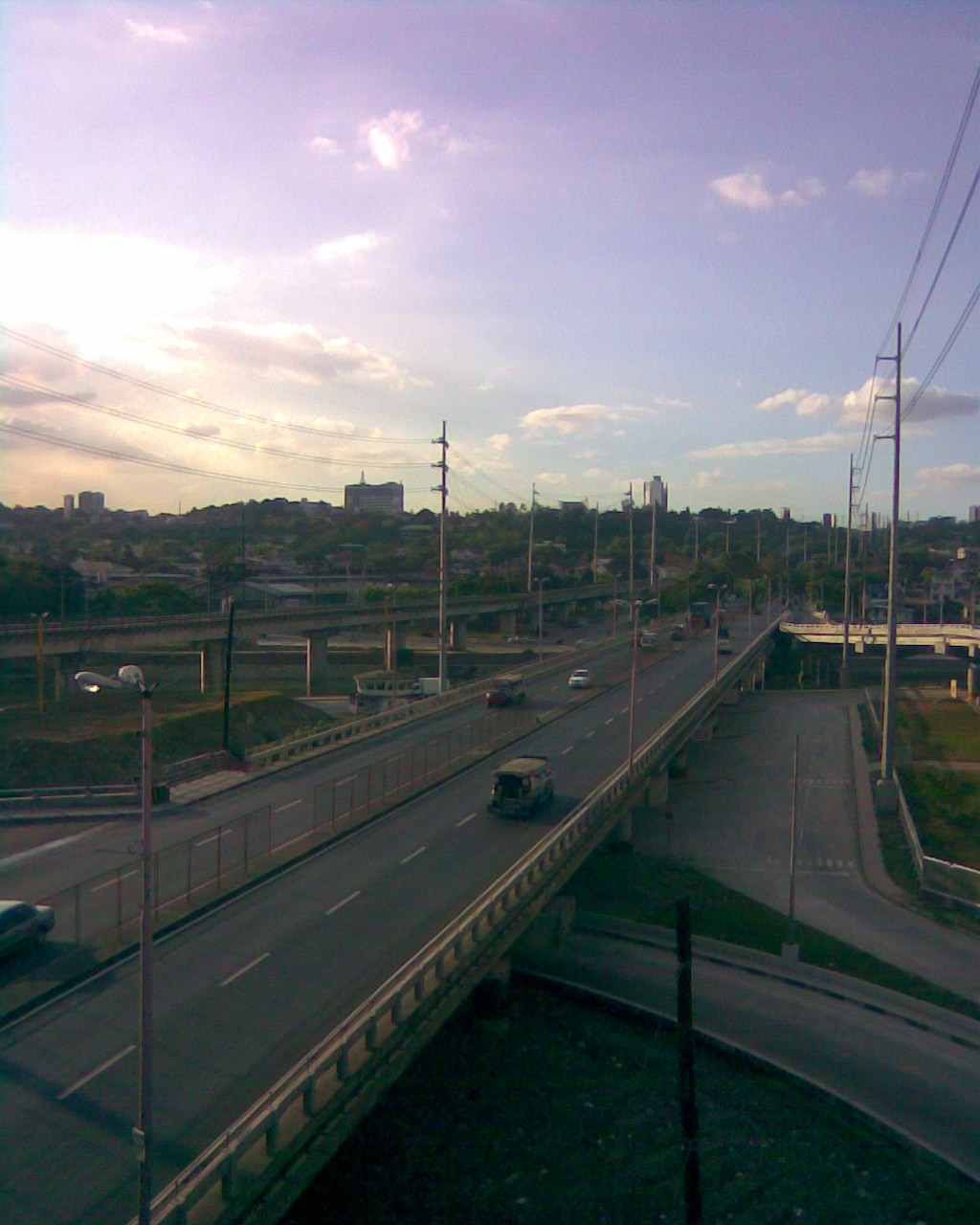 Another view from the walkway with a good perspective of the underpass connecting to a bridge to C5. Visible from this position is the area under the bridge that was proposed to be an eastern bus terminal during a previous dispensation at the MMDA.
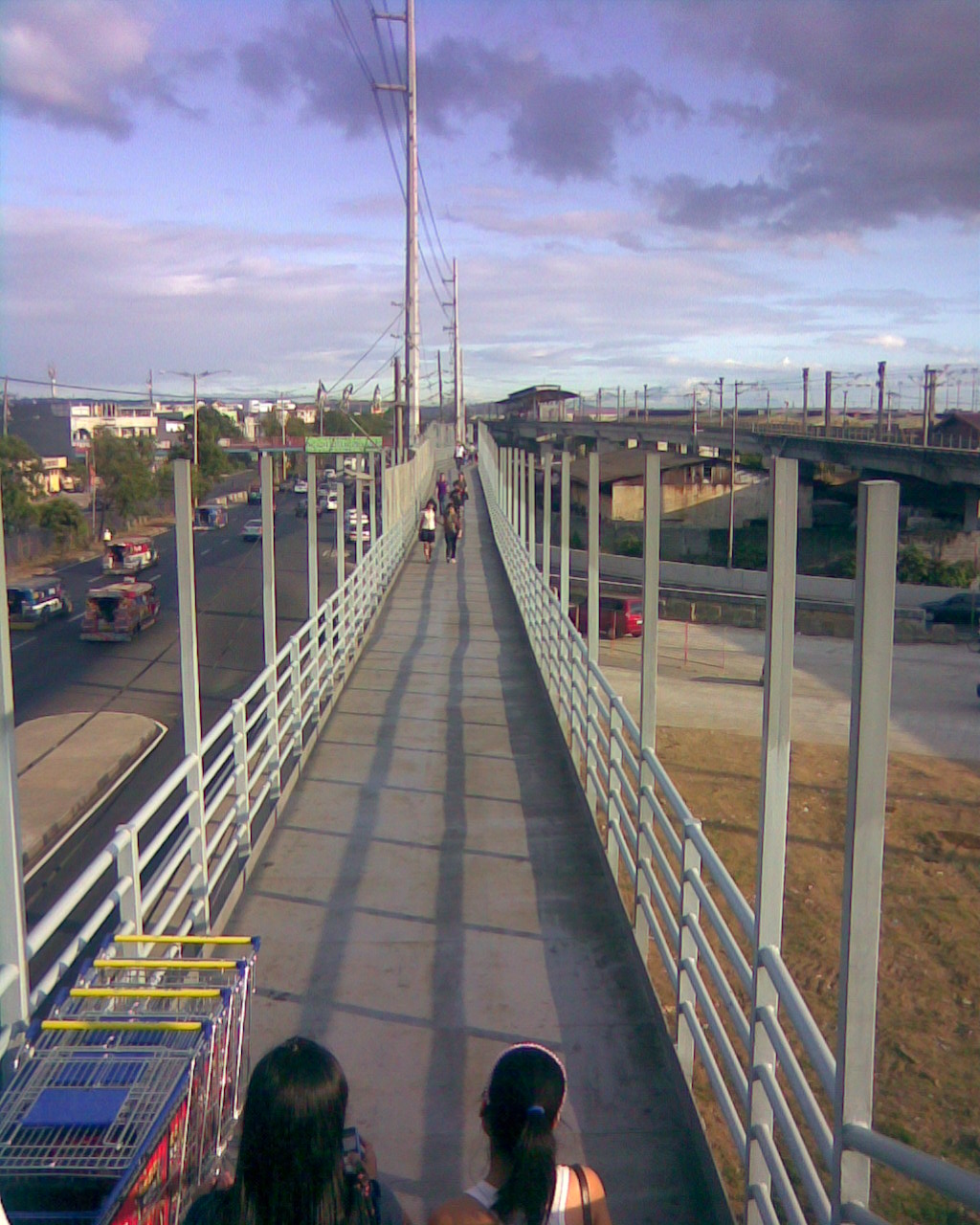 The long walk to the MRT station – from this perspective, it seems the walkway connects directly and almost level with the station platform. It is not at all connected directly with the station. Instead, one has to walk towards the end of this path and then down the stairs that end at the sidewalk near the PUV loading/unloading area. To get to the station, one has to walk some more. The posts appear to be provisions for the installation of a roof over the walkway to shield people from the elements.
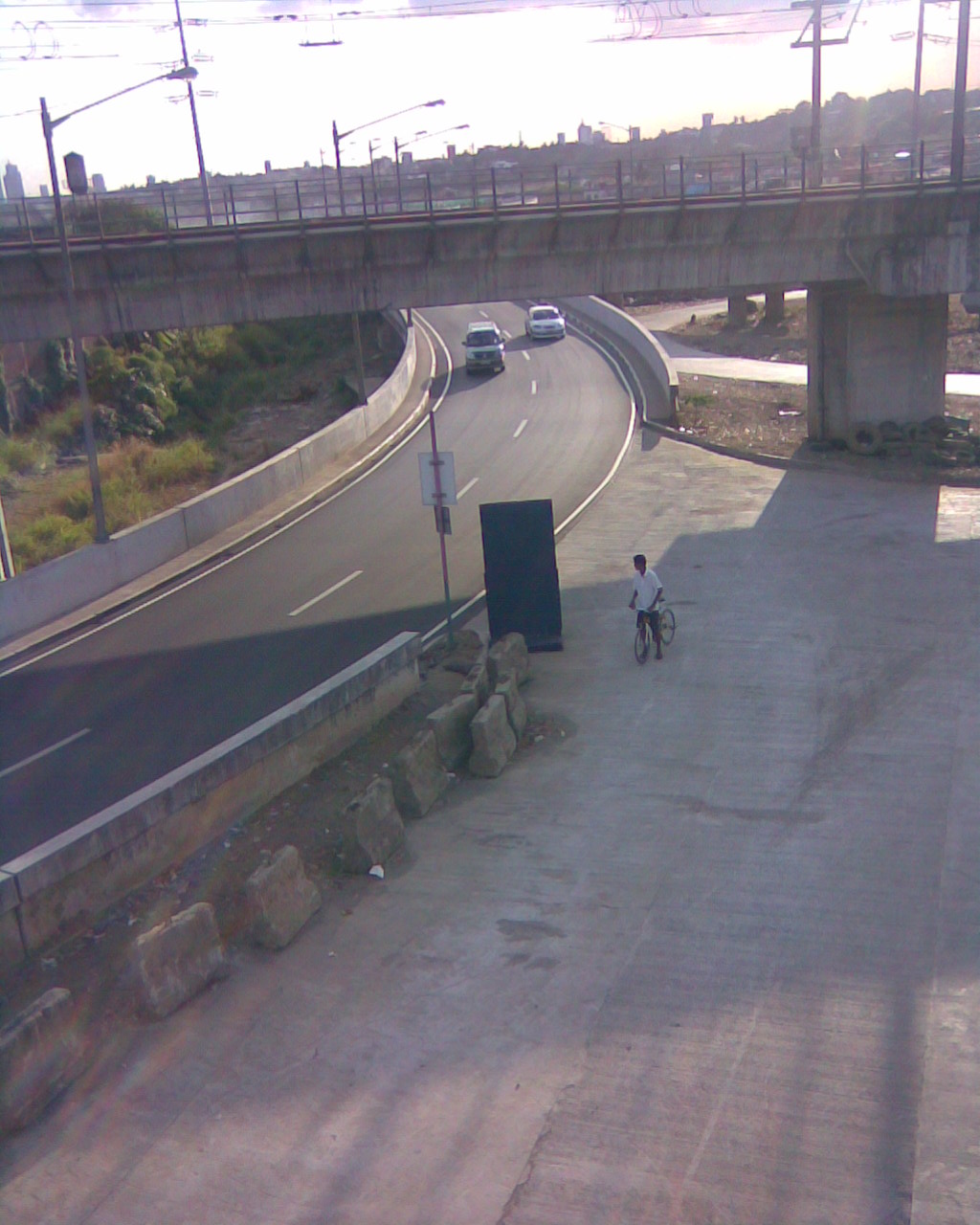 That’s the branch of the bridge emanating from C5 via the Riverbanks Road that was constructed on land expropriated from Camp Atienza, headquarters of the 51st Engineering Brigade of the Philippine Army. The curved section carries traffic from C5 that feeds into eastbound lanes of Marcos Highway.
–
Commonwealth extension
Quezon City’s Commonwealth Avenue extends from its junction with the Elliptical Road (Quezon Memorial Circle) up to gate of Jordan Plaines Subdivision in Novaliches. Often labeled as a killer highway due to the frequent road crashes that have resulted in many deaths, it is perhaps the widest road in all of the Philippines, having 10 lanes per direction at its widest sections in the Diliman area. The avenue is still far from completion as the stretch from Jordan Plaines to Quirino Highway has taken quite sometime for construction. I took the following photos of the area last weekend to illustrate the situation.
 Counterflow scheme a block away from the Jordan Plaines gate due to excavations and the civil works on a short bridge over a creek. Two weeks ago the counterflow scheme was implemented along the northbound side of the avenue.
 Only a few people were working on the Sunday I passed by the area.While there are signs and a few barriers, the work area presented a lot of hazards to both motorists and pedestrians. It was a bit dry last Sunday due to the sunny weather but I can imagine the mud from the work site should rains fall in the area.
Connecting Commonwealth Avenue with Quirino Avenue will surely improve circulation in the area and would probably ease congestion in the Novaliches bayan area. Maybe there will even be an adjustment of some public transport routes once Commonwealth and Quirino are connected. The extension of the avenue is long overdue and a much delayed project considering that there are already developments along the right of way including a residential project by the Quezon City government. The completion of the avenue will perhaps also have a significant impact on land values in Novaliches.
Fine-tuning the motorcycle lanes
I tried following the motorcycle lanes along Commonwealth Avenue one weekend to see if the MMDA has been able to mark the designated lane (4th lane from the roadside) throughout the entire stretch of the highway. I was optimistic considering all the hype about the lanes but still crossed my fingers given past experiences on such schemes’ implementation in Metro Manila and other Philippine cities. I wasn’t happy with what I saw while traveling along Commonwealth, particularly at points where public utility vehicles stop to drop-off or pick-up passengers. In a previous post, I already explained that where buses, jeepneys and AUVs tend to congregate, they occupy several lanes and effectively block through traffic. Among the lanes occupied are the ones designated for motorcycles. In all my observations, traffic enforcers seem always helpless and inutile against errant motorists occupying the motorcycle lane and posing danger through their maneuvers.
Following are a few photos I took along Commonwealth to “survey” the motorcycle lanes.
 Motorcycle lane along section past Toyota Commonwealth – note the “Motorsiklo” sign on the overpass indicating the lane designated for motorcycles
 Motorcycle lane along section in vicinity of Diliman Prep School – the lane is identifiable by the alternating blue and white lines, as well as the sign (“Motorsiklo”) on the overpass. While motorcycles are required to use only this lane while traversing the highway, other vehicles like the taxi shown in the photo are allowed use of the lane. I believe this is something that should be discouraged as they create situations where there is a high probability of crashes occurring.
The lane disappears after the St. Peter church and there are no markings or signs that would help guide motorcyclists to stay on the lane and perhaps also guide other motorists as well against using the lane. Many motorists, especially private vehicles, seem to respect the “blue lane,” usually and consciously leaving this lane for motorcyclists. We need more of that respect and much of courtesy in our streets and highways!
 Section past Sandiganbayan and approaching the Commonwealth and Fairview Markets – while some motorcycle riders can be observed as trying hard to follow the scheme, there are no markings to help guide them nor are there signs on the overpasses along the rest of the way. Perhaps the MMDA and the DPWH have not yet painted the markings or installed the signs along these sections? But then perhaps the implementation of the scheme is premature considering the lack of pertinent signs and markings?
 A bit of mayhem along Commonwealth and Fairview Markets – buses and jeepneys are practically everywhere here and occupy around 4 lanes as they load/unload passengers at this very crowded area. Motorcycle riders understandably veer away from the outer lanes of Commonwealth
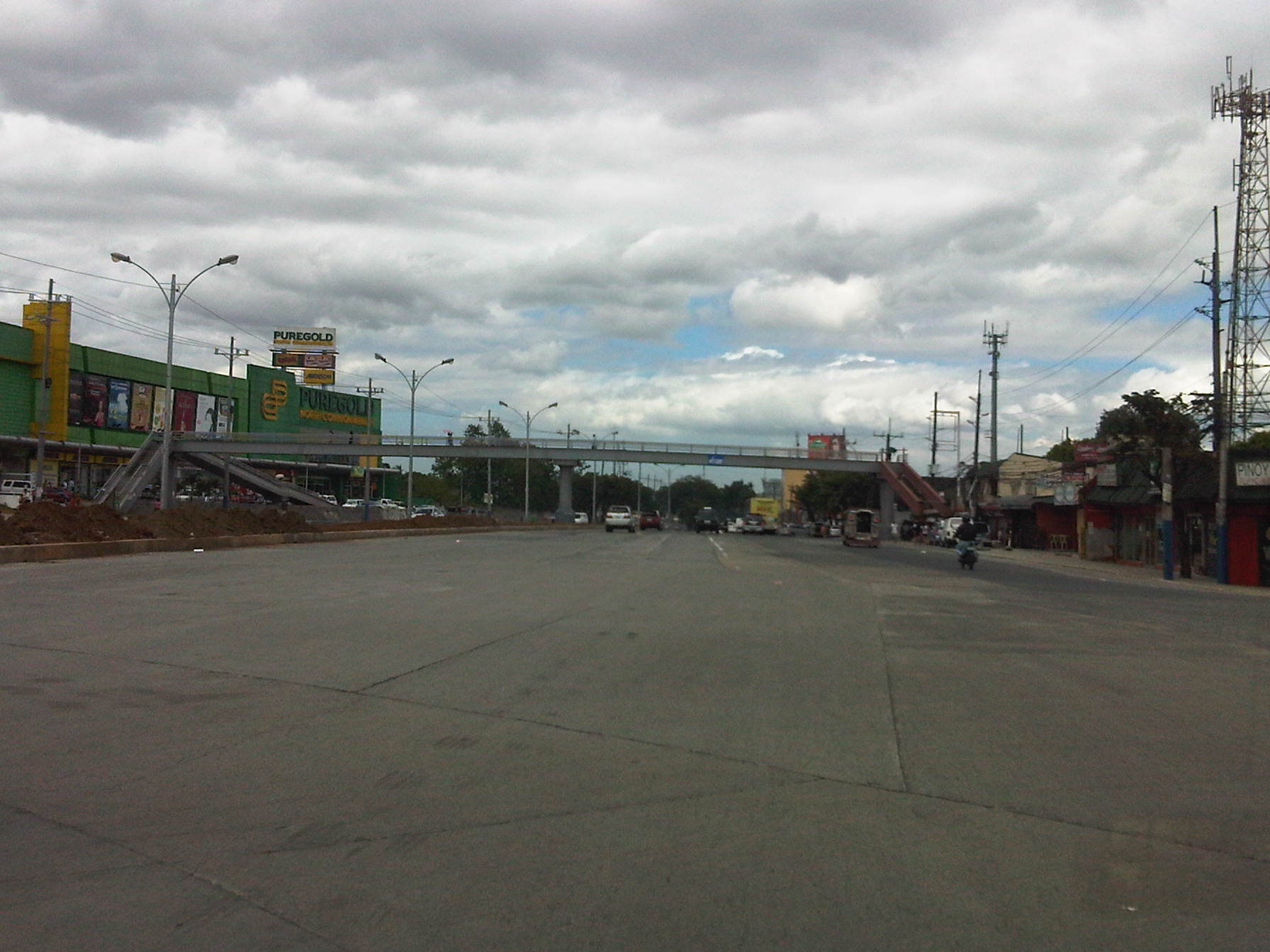 Section past the new rotonda along Commonwealth just before the overpass across the new Puregold branch – the highway was widened along this stretch and narrows to 3 lanes per direction after the overpass. There are no pavement markings yet for the newly added lanes and most of those for the previous lanes are already faded.
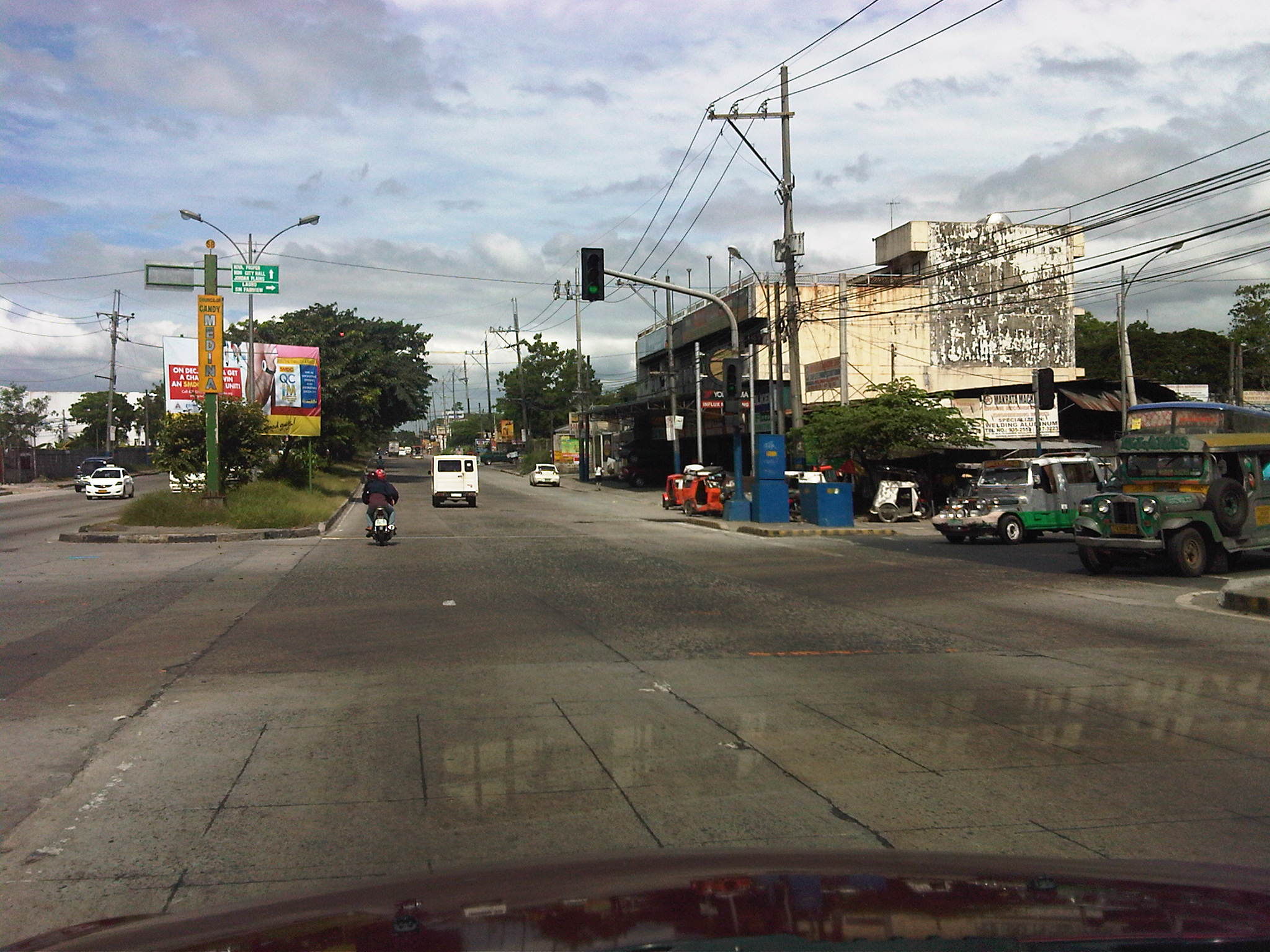 Junction of Commonwealth and Regalado – pavement markings are practically weathered and there are no indications of motorcycle lanes along these sections of Commonwealth
The formulation and implementation of motorcycle lanes along Commonwealth (and Macapagal Boulevard) are based on very good intentions (i.e., to reduce the incidence of road crashes involving motorcycles). However, the absence of pavement markings and signs to guide motorists and especially motorcyclists send the wrong signals in as far as enforcement is concerned. Add to this the serious matter of traffic management along PUV loading/unloading areas that is required to ensure that PUVs will not occupy motorcycle lanes and forcing riders to take to other lanes, thereby coming into conflict with private vehicle traveling along the inner lanes. These two issues clearly need to be addressed and fast so that the scheme can be effectively implemented throughout the entire length of Commonwealth Avenue.
The current situation pertaining to the implementation of motorcycle lanes in Metro Manila is perhaps another case where the agency implementing the scheme again “bit off more than it could chew.” As in the case of the 60 kph speed limit, effective enforcement throughout Commonwealth is limited by the availability and deployment of speed measurement equipment. As such, many vehicle still exceed 60 kph at sections where there obviously are no speed guns or radars. These situations and conditions are highly likely to lead ultimately to a ningas cogon outcome for such traffic management schemes. Such is undesirable since motorists will only become jaded (if they are not yet at this point) about traffic management in Metro Manila and elsewhere. And yet there are already indications that, like the PUV lanes, the MMDA would eventually slack on the enforcement side after realizing it needs to employ and deploy much more trained/skilled enforcers to implement all these schemes at the same time.
More congestion due to Imelda Ave. water and road works
Days before the long weekend break for the days commemorating All Saints and All Souls (Undas), I was surprised to experience severe congestion during the evenings that I drive to my home in Antipolo. To me it was quite unusual knowing from experience that traffic should be lighter considering most schools were already on semestral break and, closer to the weekend, many people would have already gone on vacation leave to return to their hometowns. I took a couple of photos of the progress of civil works as I drove, quite slowly, to my parents’ home at a subdivision along Imelda Ave. I wanted to take more photos but there was a sudden rainfall that obscured vision over my windshield and it became dangerous to take chance photos while driving in the rain.
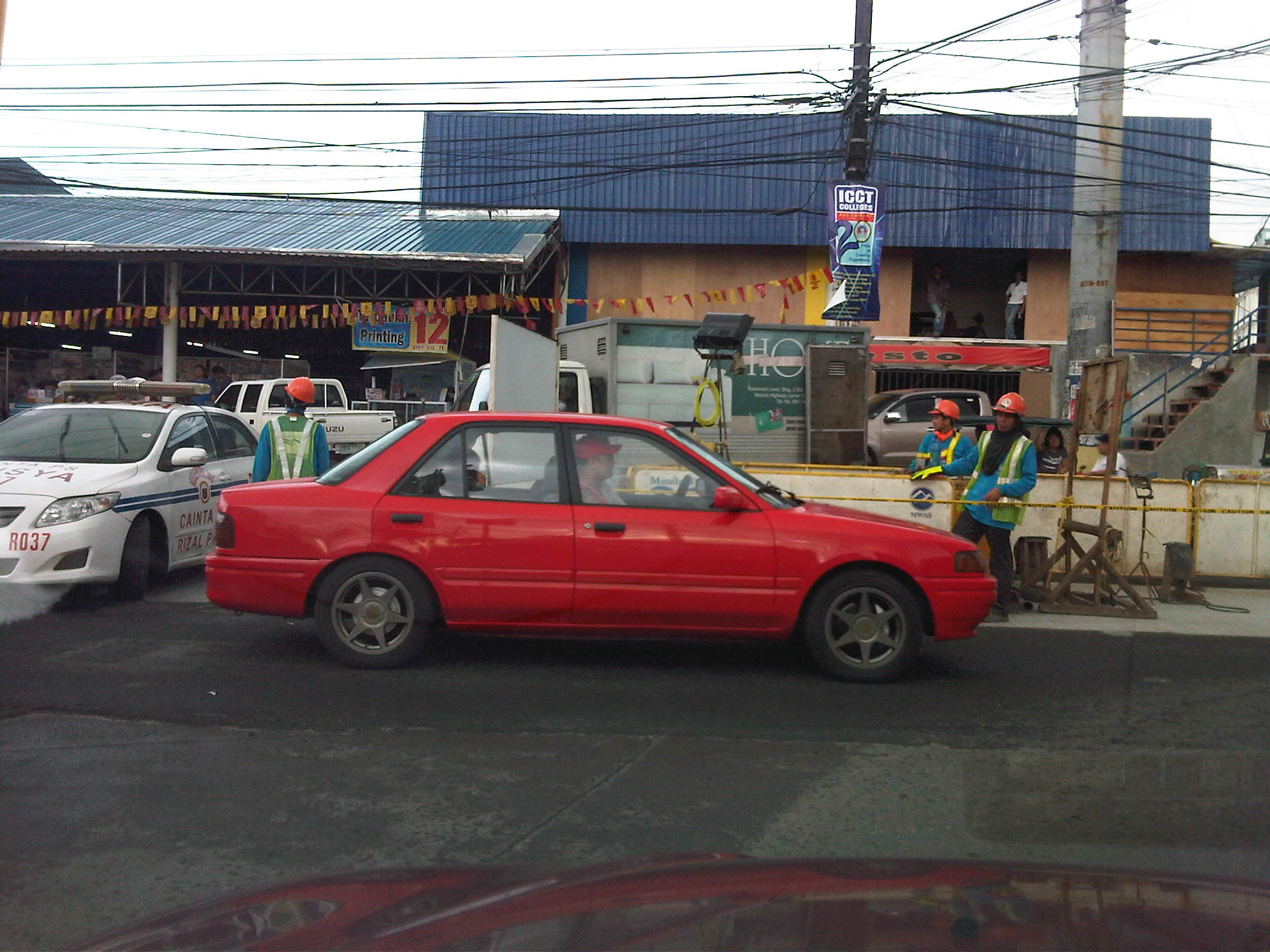 Water and road works at the junction of Imelda Ave. with the Sta. Lucia access road – the activity area effectively occupies a full lane of southbound direction of Imelda Ave. This has resulted in significant reduction in the capacity of the highway, and leads to sever congestion during the afternoon to evening peak periods. During these times, a very high volume of traffic including large trucks pass through the avenue from Marcos Highway and the resulting queues spill over and block traffic at the junction with Marco Highway. At its worst, the congestion extends towards Amang Rodriguez (Ligaya).
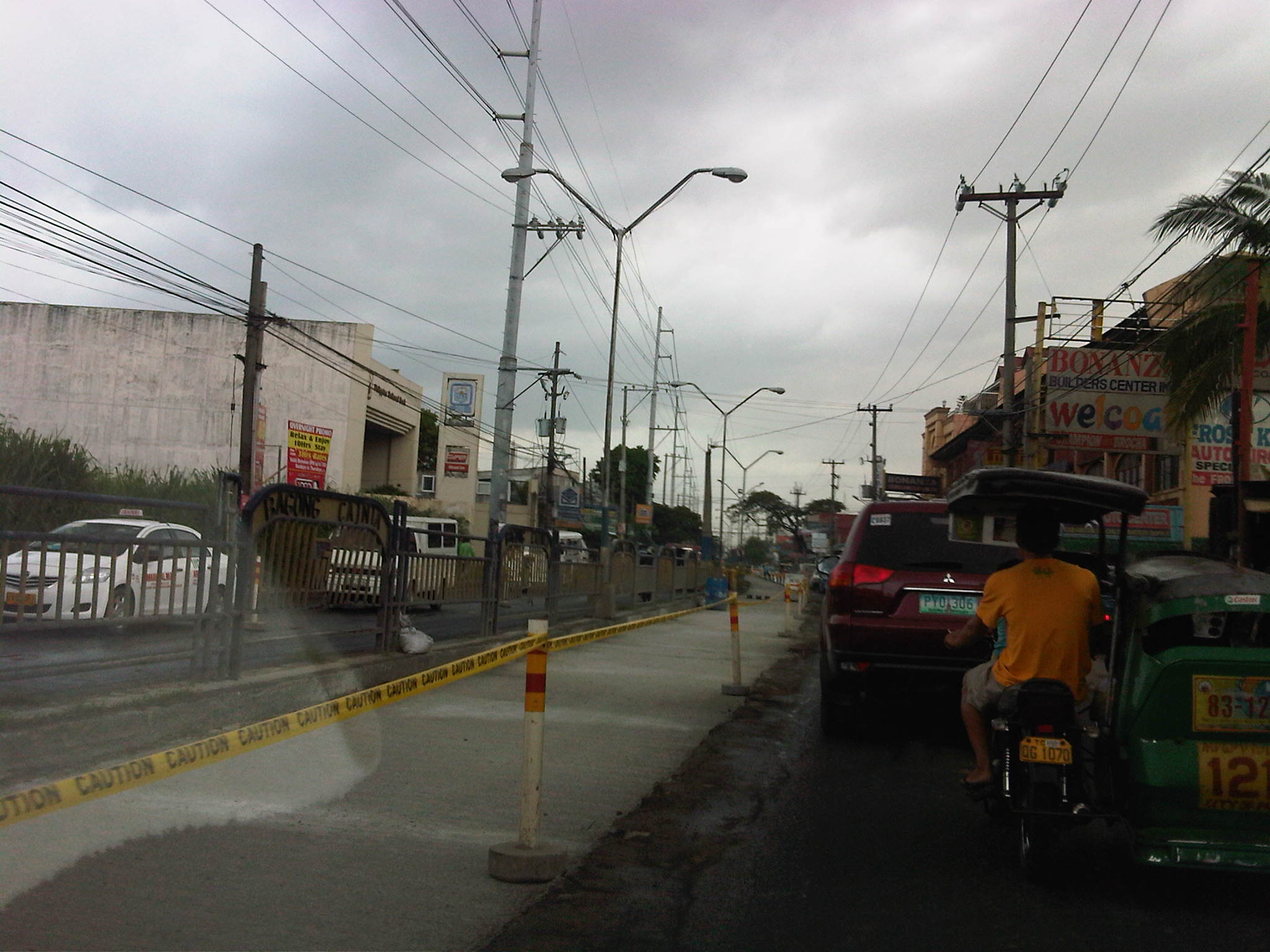 Single lane available to southbound (to Cainta Junction) traffic – all vehicles had to use one lane due to civil works being undertaken along the lane shown in the photo. New water pipes were laid down under the lane to increase capacity for the increasingly growing populations of the progressive towns of Rizal Province.
From the looks of the progress of work I’ve seen personally this weekend, I guess we can expect the congestion to start easing from the latter part of this week. The contractor tried to ease southbound traffic by employing a counter-flow scheme using one lane on the northbound side but the result was not as successful as the contractors desired as congestion quickly set in along this direction causing more misery to travelers along Imelda Ave. Apparently, the contractor underestimated the traffic along the avenue.
Memorandum Order No. 25, Series 2011
MALACAÑAN PALACE
MANILA
BY THE PRESIDENT OF THE PHILIPPINES
MEMORANDUM ORDER NO. 25
RECONSTITUTING THE INTER-AGENCY TECHNICAL COMMITTEE ON TRANSPORT PLANNING (IATCTP)
WHEREAS, transportation infrastructure has the biggest share in the country’s infrastructure investment program and will continue to be among the critical drivers of the country’s economic growth;
WHEREAS, a number of government agencies are involved in transport planning activities within their respective areas of jurisdiction;
WHEREAS, the Department of Transportation and Communications (DOTC) is the primary policy, planning, programming, coordinating, implementing, regulating and administrative entity of the government in the promotion, development and regulation of dependable and coordinated transportation network in the country;
WHEREAS, the Department of Public Works and Highways (DPWH) is the lead agency for the planning, design, construction and maintenance of the national road network, which continues to dominate the country’s transport system;
WHEREAS, the Philippine Ports Authority (PPA) is mandated to facilitate the implementation of an integrated program for the planning, development, financing, operation and maintenance of ports or port districts in the country;
WHEREAS, the Maritime Industry Authority (MARINA) is tasked to integrate the development, promotion and regulation of the maritime industry in the country;
WHEREAS, the Philippine National Railways (PNR) is the first instrumentality of the government mandated to provide railway system and services within the integrated national transport system;
WHEREAS, the Light Rail Transit Authority (LRTA), by virtue of Executive Order (EO) 603, is responsible for the construction, operation, maintenance and/or lease of light rail transit systems in the country, which are recommended and envisioned to alleviate traffic and transportation situation in a congested metropolitan area within the context of rational land use planning;
WHEREAS, the Metropolitan Manila Development Authority (MMDA) is tasked, among others, to coordinate development planning, transportation and traffic management, urban renewal and land use planning, urban protection, pollution control and public safety in Metro Manila which is the country’s premier economic and financial capital;
WHEREAS, the Civil Aviation Authority of the Philippines (CAAP), created on 04 March 2008 by virtue of Republic Act (RA) 9497, is mandated to be the technical regulator of air transport;
WHEREAS, the University of the Philippines-National Center for Transportation Studies (UP-NCTS) aims to, among others, conduct research activities on transportation, provide extension services to various government agencies and the private sector, and provide information services on transportation; and,
WHEREAS, transportation affects the country’s economic development and therefore there is a need to effectively coordinate its planning and policy formulation process led by the National Economic and Development Authority (NEDA) in order to achieve the objectives of sustainable economic growth in the country.
NOW, THEREFORE, in consideration of the foregoing premises, the IATCTP is hereby reconstituted in view of the important roles of the other transport agencies in achieving a comprehensive and integrated coordination function in transport planning. The Committee shall now be composed of the following:
| Deputy Director-General, NEDA-National Development Office | – Chairperson |
| Assistant Director-General, NEDA-National Development Office | – Member |
| Director, NEDA-Infrastructure Staff | – Member |
| Director, NEDA-National Planning and Policy Staff | – Member |
| Director, NEDA-Project Monitoring Staff | – Member |
| Director, UP-NCTS | – Member |
| Head of Planning Service/Unit, DOTC | – Member |
| Head of Planning Service/Unit, DPWH | – Member |
| Head of Planning Service/Unit, PPA | – Member |
| Head of Planning Service/Unit, MARINA | – Member |
| Head of Planning Service/Unit, PNR | – Member |
| Head of Planning Service/Unit, LRTA | – Member |
| Head of Planning Service/Unit, MMDA | – Member |
| Head of Planning Service/Unit, CAAP | – Member |
The Committee shall continue to perform the following duties and functions:
a. Formulate and recommend to the NEDA Board Committee on Infrastructure (INFRACOM) comprehensive and integrated transport plans;
b. Formulate standards and guidelines for the preparation of agency plans for transport development;
c. Develop a transport information system that shall serve the information needs of all transport planning and other relevant agencies;
d. Coordinate the conduct of studies, researches and data-gathering on various aspects of the transport sector;
e. Formulate areas of cooperation and coordination among the various agencies and instrumentalities of the government involved in transport programs and projects to avoid duplication of efforts;
f. Provide the NEDA Board with up-to-date information needed in the review and evaluation of transport plans and projects; and
g. Serve as a forum for the resolution of operational problems of transport agencies.
The Committee shall submit to the NEDA Board INFRACOM any issues/concerns that require adoption/resolution by the latter.
The Committee shall meet for the purpose of discharging its functions and may create sub-committees as may be necessary. Other relevant transport agencies and organizations may also be invited to attend meetings when warranted.
The NEDA Infrastructure Staff shall provide secretariat services to the Committee.
All heads of departments, bureaus, offices and instrumentalities of the government are hereby requested to extend full cooperation and assistance to the Committee to ensure the successful execution of its tasks.
This Memorandum Order (MO) shall take effect immediately and shall supersede MO 473 (1974).
DONE, in the City of Manila, this 26th day of October in the year of our Lord Two Thousand and Eleven.
(Sgd.) BENIGNO S. AQUINO III
By the President:
(Sgd.) PAQUITO N. OCHOA, JR.
Executive Secretary
Tracing tracks 2
Following are a few more photos from a trip to Naga City back in 2009. These photos take off from a previous posting where I featured the tracks of the PNR’s Main Line South, mainly what a traveler may see along the national highway en route to Naga City. Many of these tracks were not being used by any trains at the time due to a suspension of services after an incident a few years back when a Bicol Express train was derailed somewhere in Quezon. Most of the tracks one will see here have already been rehabilitated as the PNR has resumed the service between Manila and Naga City. In fact, they have taken advantage of the long weekend for All Saints’ Day (Undas) to promote the Bicol Express service that now features sleeping cars. The approximate travel time between Manila and Naga is 12 hours.
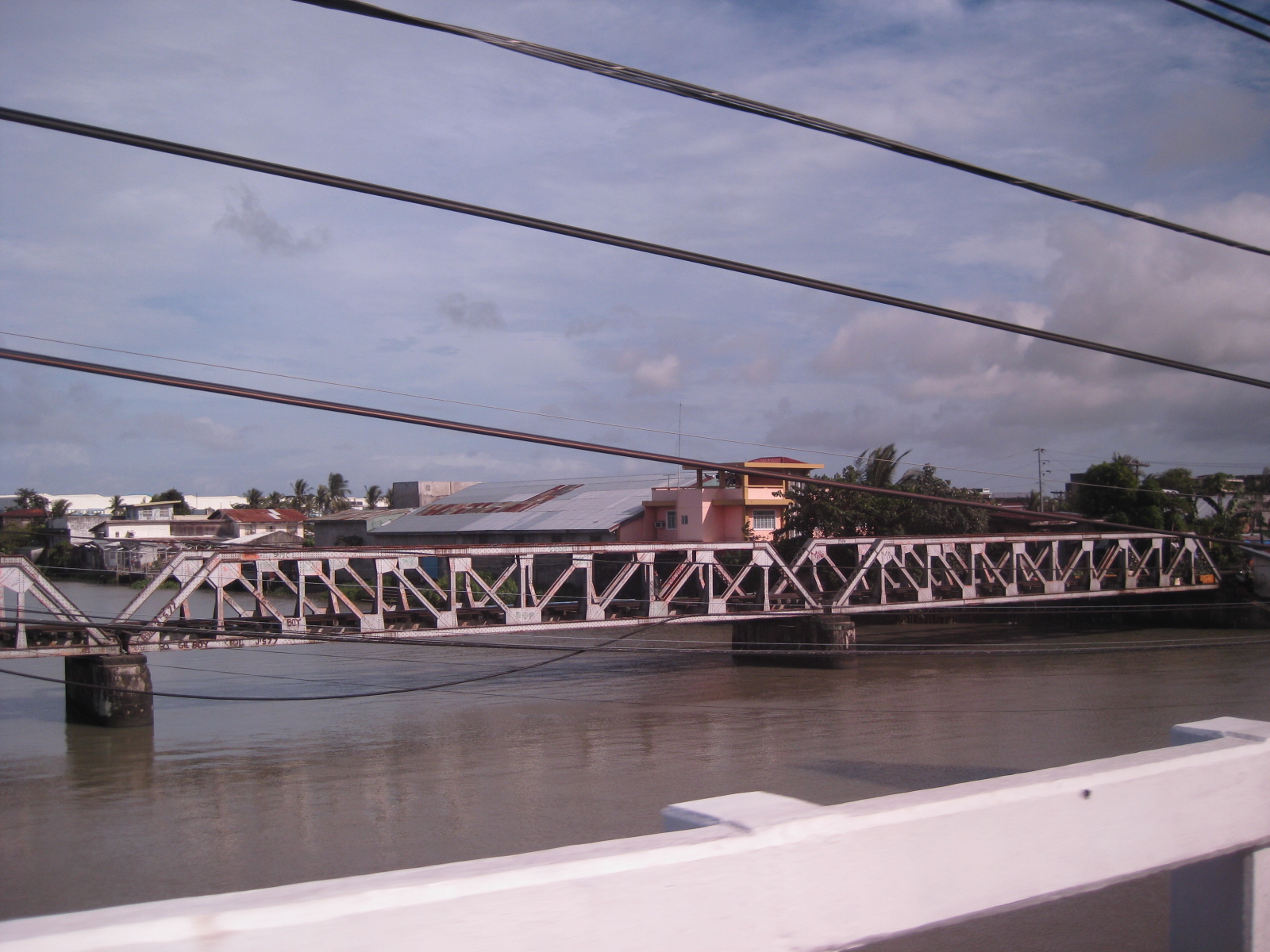 A railway bridge in Naga City – note the classic steel truss design that was the mainstay of most PNR bridges.
 Another steel truss bridge – this one I photographed prior to the provincial boundary with Quezon province.
 Rail junction along the national highway – this junction is located in the town of Gumaca. The signs are already obscured by tree branches and electric poles. At the time, one could see the state of neglect for the tracks as they are practically covered by dirt that transforms into mud during rainy days.
 The railway tracks parallel to a barangay road – many sections again appear to be covered by dirt and growth. A tricycle is parked atop the tracks, probably waiting for passengers on space that is being used as a shoulder with respect to the local road. As communities have access to local roads, there are no trolleys here.
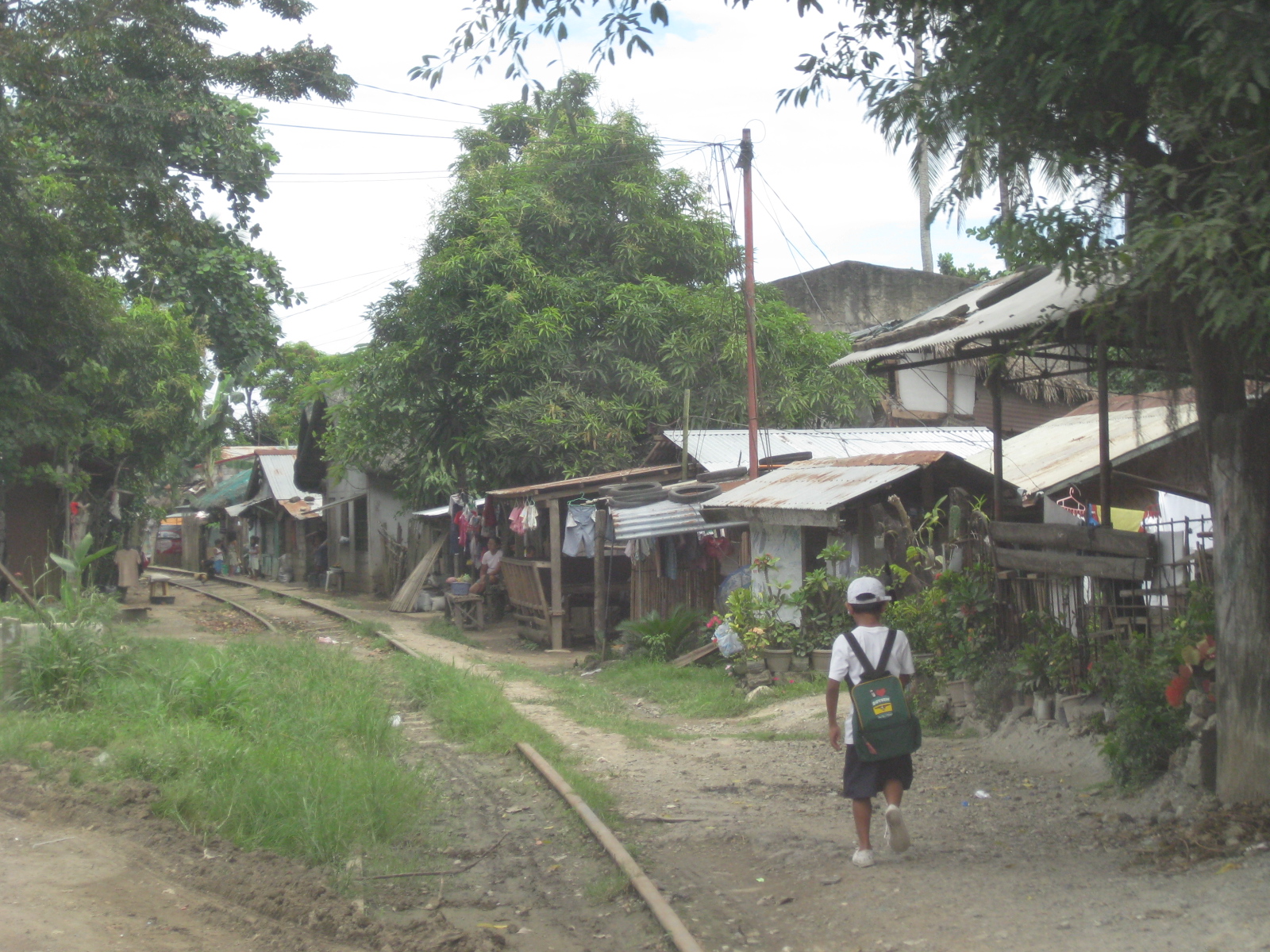 Neglected railway tracks – note the grass growing along the tracks and covering the rails. Also, from the looks of it some ties seem to be missing or just buried in the dirt. Many houses and shanties are obviously within the 30m ROW of the PNR. Such situations create a high risk for untoward incidents should rail services become regular and more frequent.
Informal rail transport
After my talk at the Ateneo De Naga, we went around the city to have a look at its roads and transport. As we had already seen the previous day that there were motorized trolleys in that city, we made it a point to visit one informal terminal located at a junction. The following photos are a documentation of our taking a closer look at informal rail transport in the Philippines.
 Taking a closer look at the motorized trolleys of Naga City – our driver Roy speaks to two drivers/operators of the trolleys to ask them about operations. The trolleys are not so much different from the one we saw along the road while traveling through the towns of Quezon Province and certainly look like their relatives in Manila. They are made of light but sturdy bamboo with the occasional metal parts and some have makeshift couplers in case two or three are connected to form trains! The trolleys even have benches to allow for a few seated passengers.
 Passenger mix – the trolley service is popular to different users including students and laborers. They are cheap and the most practical (direct) mode of transport to their home, which are located along the railway line. Note the concrete ties for the tracks, indicative that this section has already undergone rehabilitation in the past when the old wooden sleepers were replaced by concrete ties.
 Informal freight transport – goods like rice and flour are also transported using the trolleys. I assume there are also stores in communities along the tracks and that the most convenient way of transporting commodities (paninda) would be via this mode.
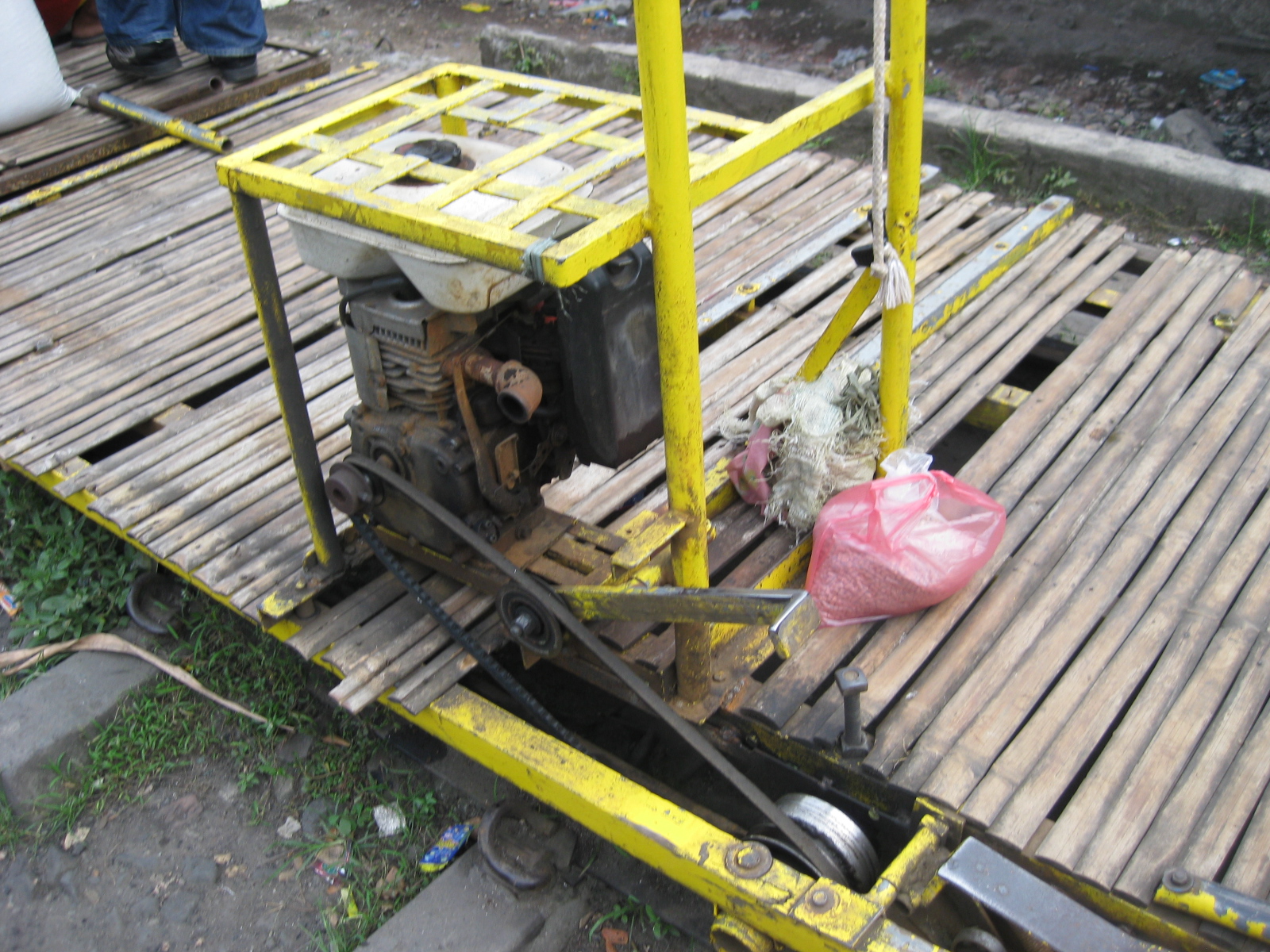 Motor power – while most if not all the trolleys in Manila are human-powered (partly because they should be light enough to lift in case trains do come given the increasing frequency of PNR commuter line services), the Naga trolleys use motors similar to that being used by boats.
 Driving wheel – while trains may be powered by locomotives, the trolleys have motors typically used by pumpboats and by the tricyboats found in the Visayas and Mindanao (tricycles powered by the same motors). The driving wheel is connected to the motor to move the vehicle and the contraption on the lower right and just beside the driving wheel is the brake mechanism. Thus, the driver is usually positioned just behind the motor where he has access to both the motor and the brakes.
 Fully loaded – a single trolley can carry as many as 25 passengers depending on their weight and size (more if there are many children in the mix). I think there are about 24 passengers on this trolley about to depart from the informal terminal.
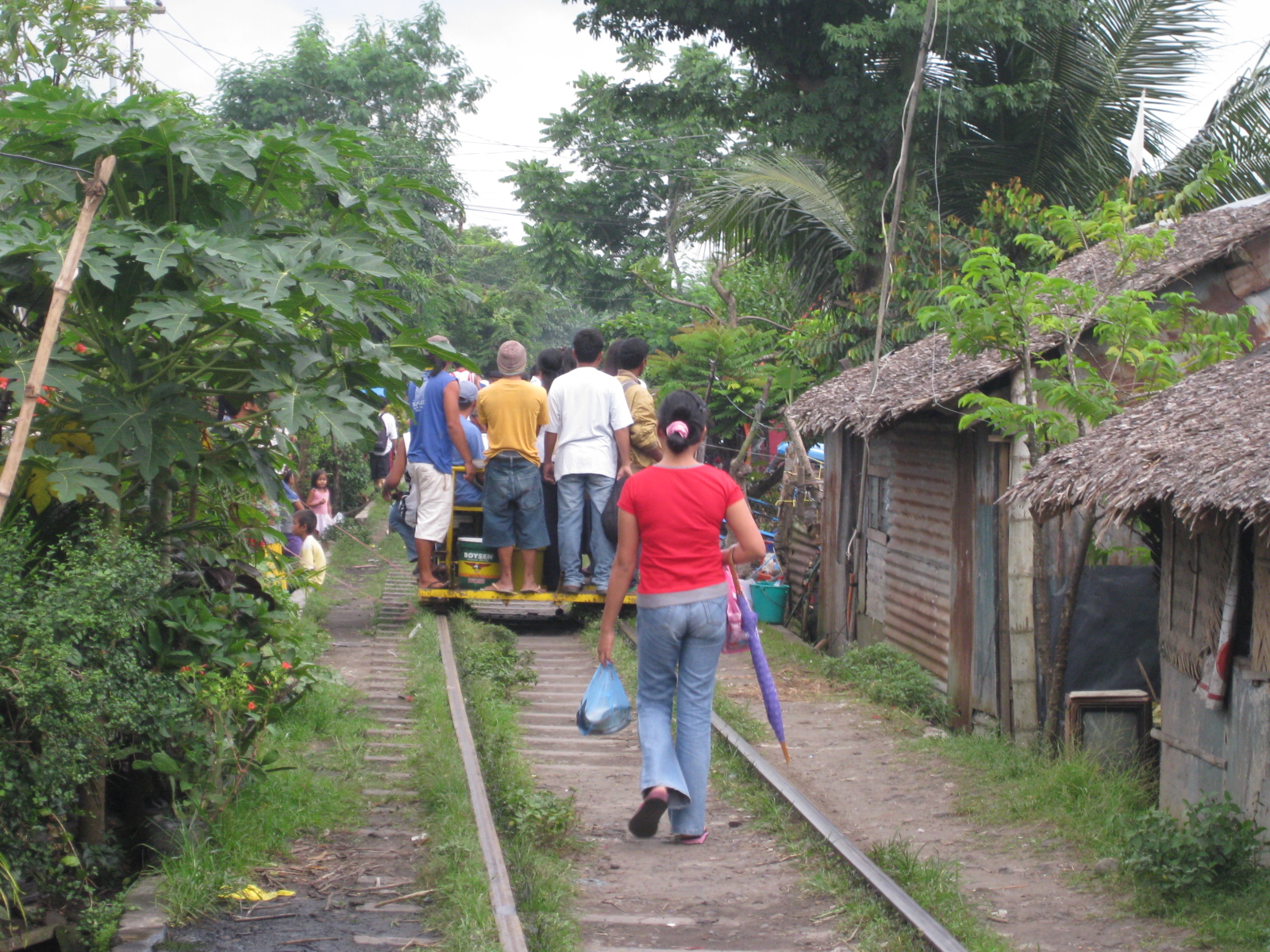 Off they go – with a full load and each person paying 10 pesos for the ride, the driver can earn about 200 pesos for one run or 400 for a roundtrip. Operating costs are quite simple including fuel and maintenance costs. On a typical busy day, a driver can have about 5 round-trips. Note how close houses are to the railway tracks.
 Next in line – the driver of the next trolley positions his vehicle and waits for passengers. We estimated it took something like 15 to 20 minutes to get a full load during the afternoon peak period when we were at the informal terminal. It would probably be longer during the off-peak periods.
 A view of the tracks on the other side of the road – we learned that the area along the tracks is not served by the trolleys.
I can imagine that with the resumption of the Bicol Express service between Manila and Naga City, the people operating the trolleys would eventually have to deal with more frequent arrival of trains. Currently, the PNR services would probably pass through the trolleys’ service areas during the night-time so there will be very limited conflict at present. However, further rehabilitation of the Main Line South and the resumption of services all the way to Legaspi City should already serve as a notice to informal rail transport and the concerned local governments that the days of the trolleys are numbered.
EST and Green Urbanism
I had the great opportunity of presenting excerpts of the National Environmentally Sustainable Transport Strategy (NESTS) and talk about its implementation at the local level at the recently concluded Green Urbanism Conference. The Conference was organized by the School of Urban and Regional Planning (SURP) of the University of the Philippines Diliman in cooperation with the Faculty of Design of Kyushu University, with support from various partners including AusAID. It ran from October 18-20, 2011 at the Heritage Hotel Manila, featuring a variety of topics divided into 5 sessions namely:
- Green Cities
- Green Architecture and Ecological Landscapes
- Green Infrastructure
- Environmentally Sustainable Transport
- Developing Climate and Disaster Resilient Urban Centers
“This paper presented current and past efforts focusing on sustainable transport. Many of these are continuing especially the promotion of good practices in EST that emanate from the national strategy that was recently formulated. The national EST strategy identifies action plans and the corresponding responsible agencies or entities. The key competencies and skill sets that will enable cities to formulate and implement meaningful programs and projects were also presented. More importantly, the paper examined the capacities of cities for transportation planning and recommended for collaborative agreements with local universities with sustainability in mind.
The general observation has been that LGUs are often unaware that certain programs and projects they are implementing or planning actually fall under EST. As such, they are unable to package their programs and projects in a way that can be attractive to both local and foreign support. One main objective of social marketing for EST is to assist cities by capacitating them with the fundamentals they would need to undertake projects geared towards sustainable transport.
The strategies developed for each EST thematic area are collectively called the national strategy and implies responsibility of a national agency for its implementation. Upon closer scrutiny, however, it must be realized that significant impacts will only be attained if EST is successfully implemented at the local level. The role of national agencies such as the DOTC and the DENR is to provide guidance and capacity to cities for the latter to be able to come up with meaningful programs and projects. After all, while big ticket EST projects may be initiated by national agencies, their success will be determined by how these are implemented at the local level. In the Philippines, cities have been empowered for such purposes and localizing national programs and strategies would be essential in addressing enduring and emerging problems concerning transport and traffic.”
Tracing tracks
Traveling to and from the Bicol region back in 2009, I tried to trace the PNR’s Main Line South railway tracks that passed through the provinces of Quezon and Camarines Sur. Following are a few snapshots while traveling on-board our trusty Pajero. I don’t remember the towns where I took the photos mainly because I didn’t keep tabs about the info. However, I’m sure these can be retraced and recorded in another, future trip to Bicol. I hope readers don’t mind the reflections in some of the photos due mainly to our vehicle’s window tint.
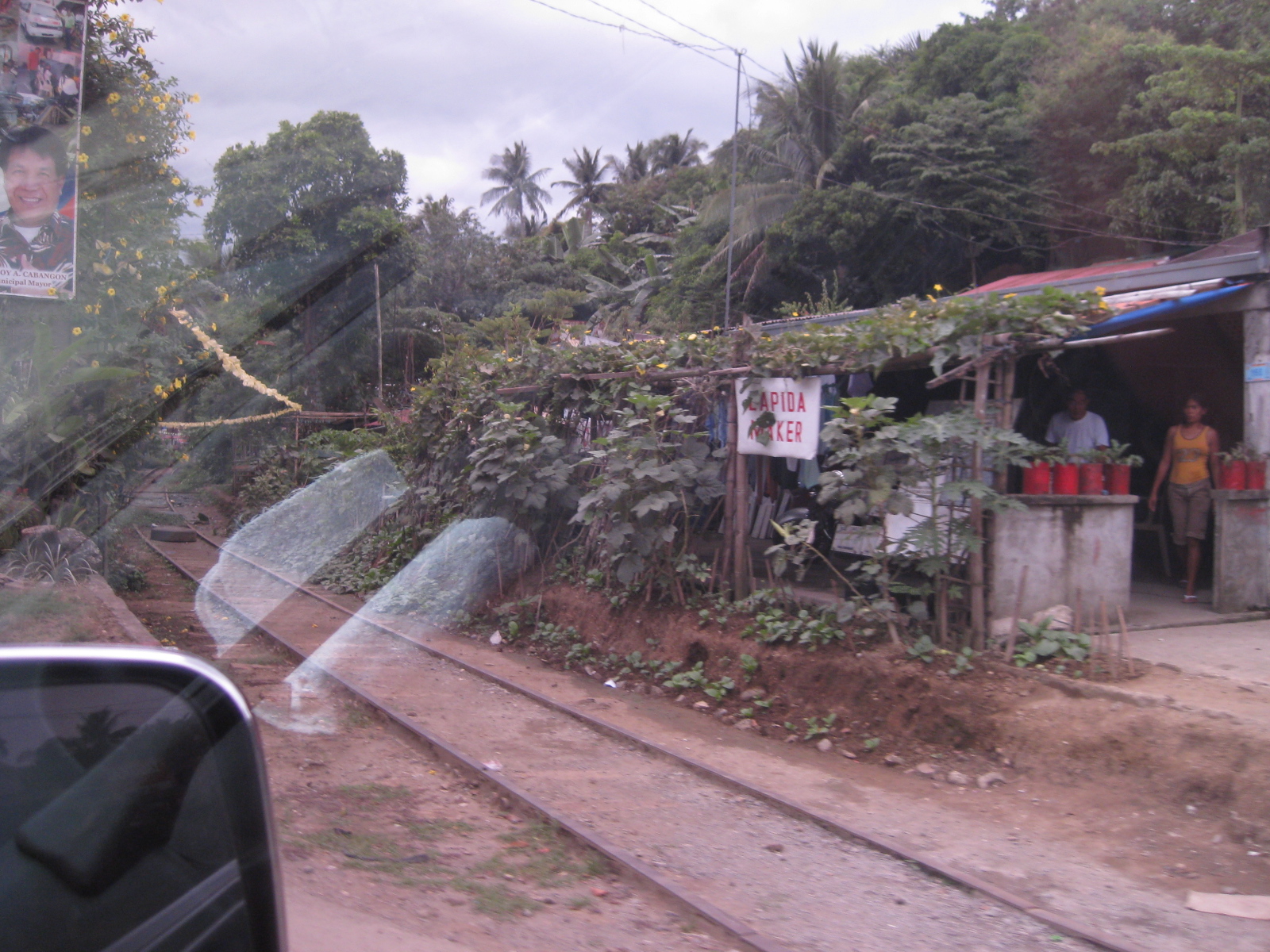 Railway tracks along a barrio in Quezon – while the rails are there, it seems many of the ties (sleepers) are either missing or already covered in soil. Note the houses that have encroached on the PNR ROW? They are well within the 30 meter ROW of the PNR tracks and will surely be affected should there be capacity expansion (read: double tracks) in the future.
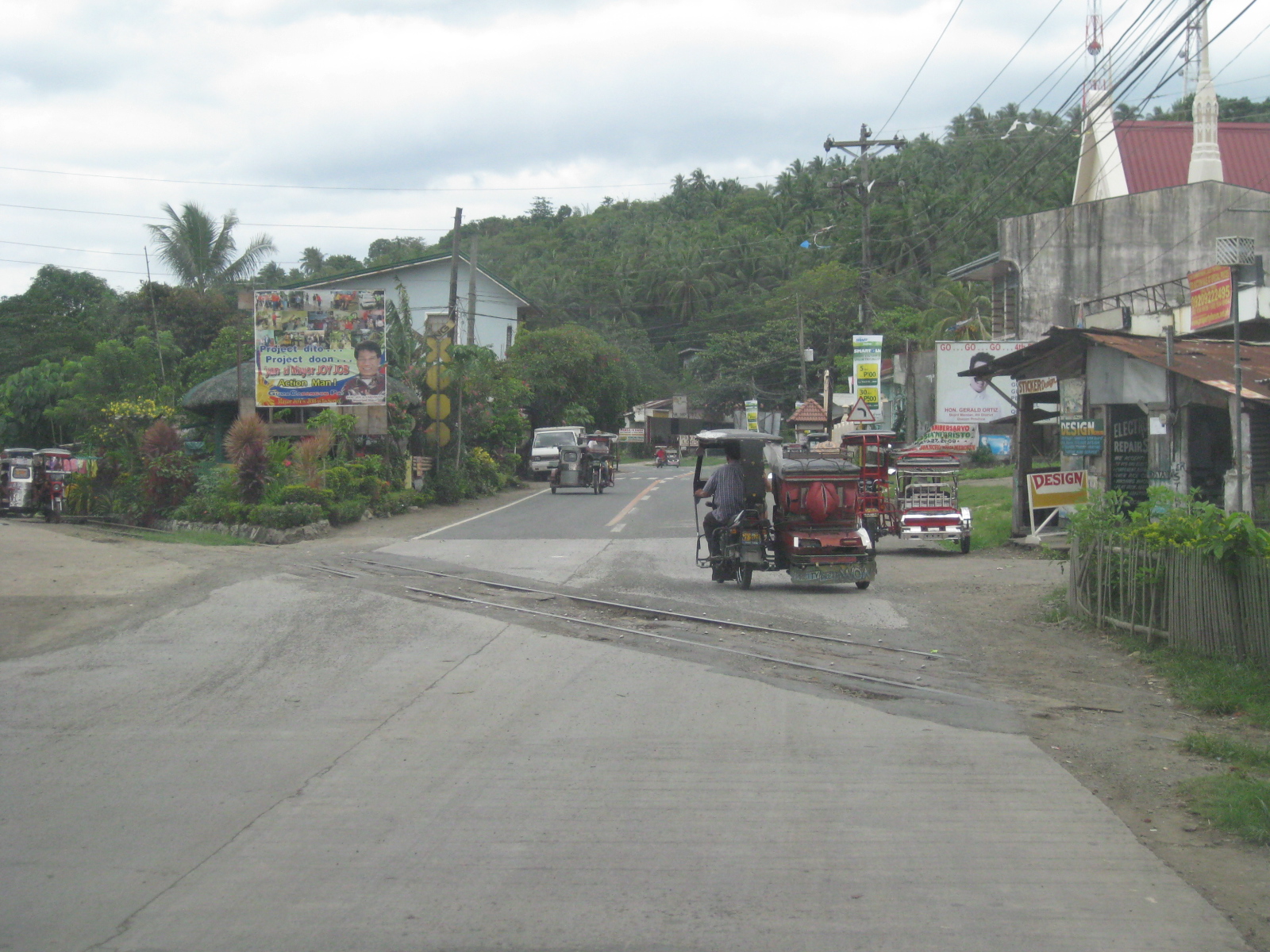 Tracks embedded on the national highway – while the old signs are still present in some junctions with roads, most are either unreadable because of wear or hidden among the posts and flora. These, too, need upgrading and should already include traffic signals and barriers to warn road traffic of an approaching train.
 The switch assembly on the right indicates diverging tracks probably in the vicinity of a station somewhere downstream from where I hurriedly took a photo.
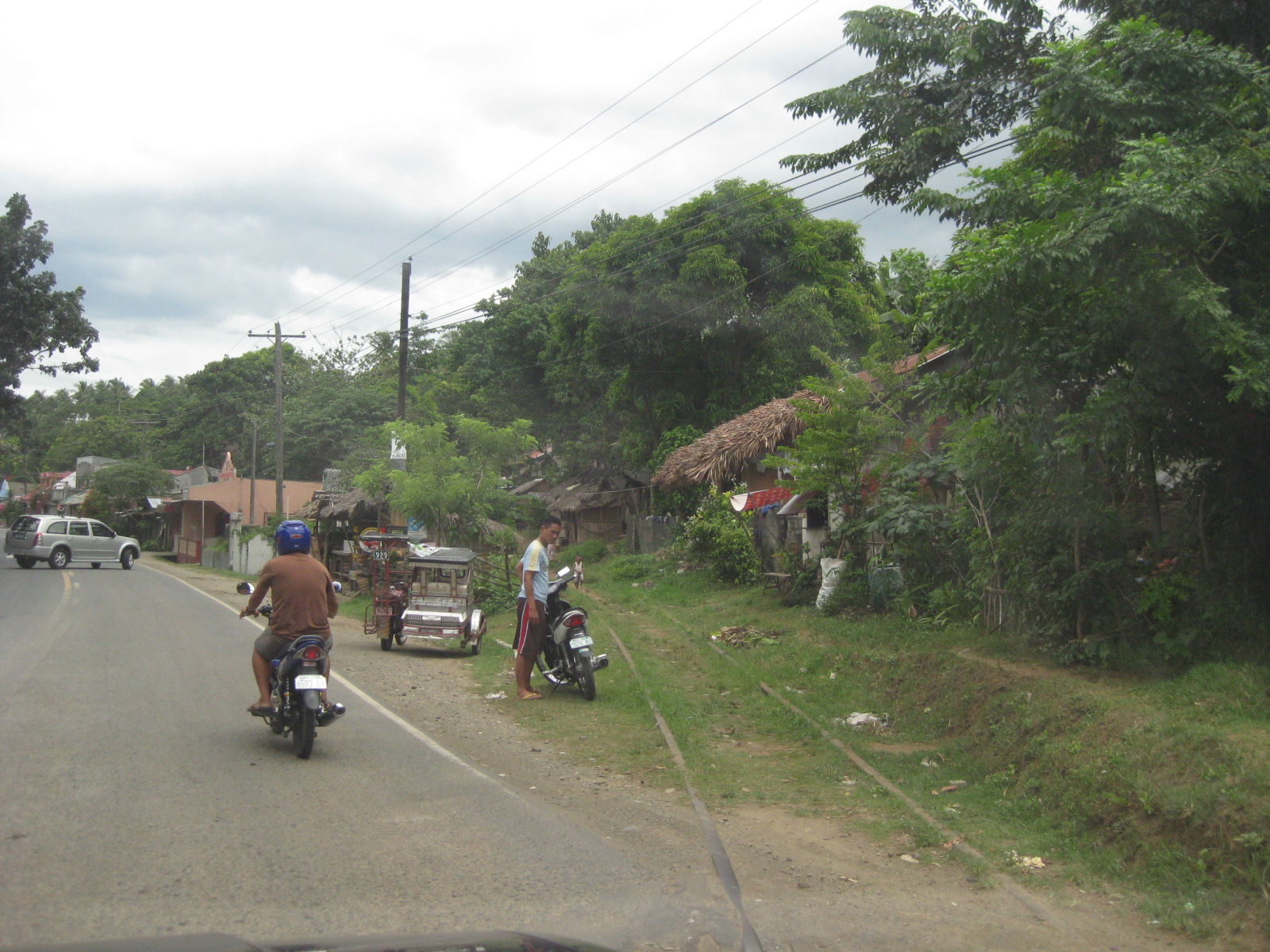 Railway tracks seemingly diverging from the highway – in this case, the photo strongly suggests the absence of ties to hold the tracks and prevent derailment. Much of what’s left of both MLS and MLN are in this condition and in the case of MLS requires intense rehabilitation to ensure the safety of travel. I can only imagine how trains should slow down during the wet season when the soil turns to mud in many sections.
 The signs are not so noticeable especially when motorists are driving quite fast along roads with very good pavements. I don’t think the railway signs comply with current standards of reflectivity and are already partly hidden from effective view by the trees and structures along the roadside. The tracks just ahead and crossing the highway are almost hidden due to the highway pavement. Asphalt overlays may tend to cover rails that are embedded on the highway.
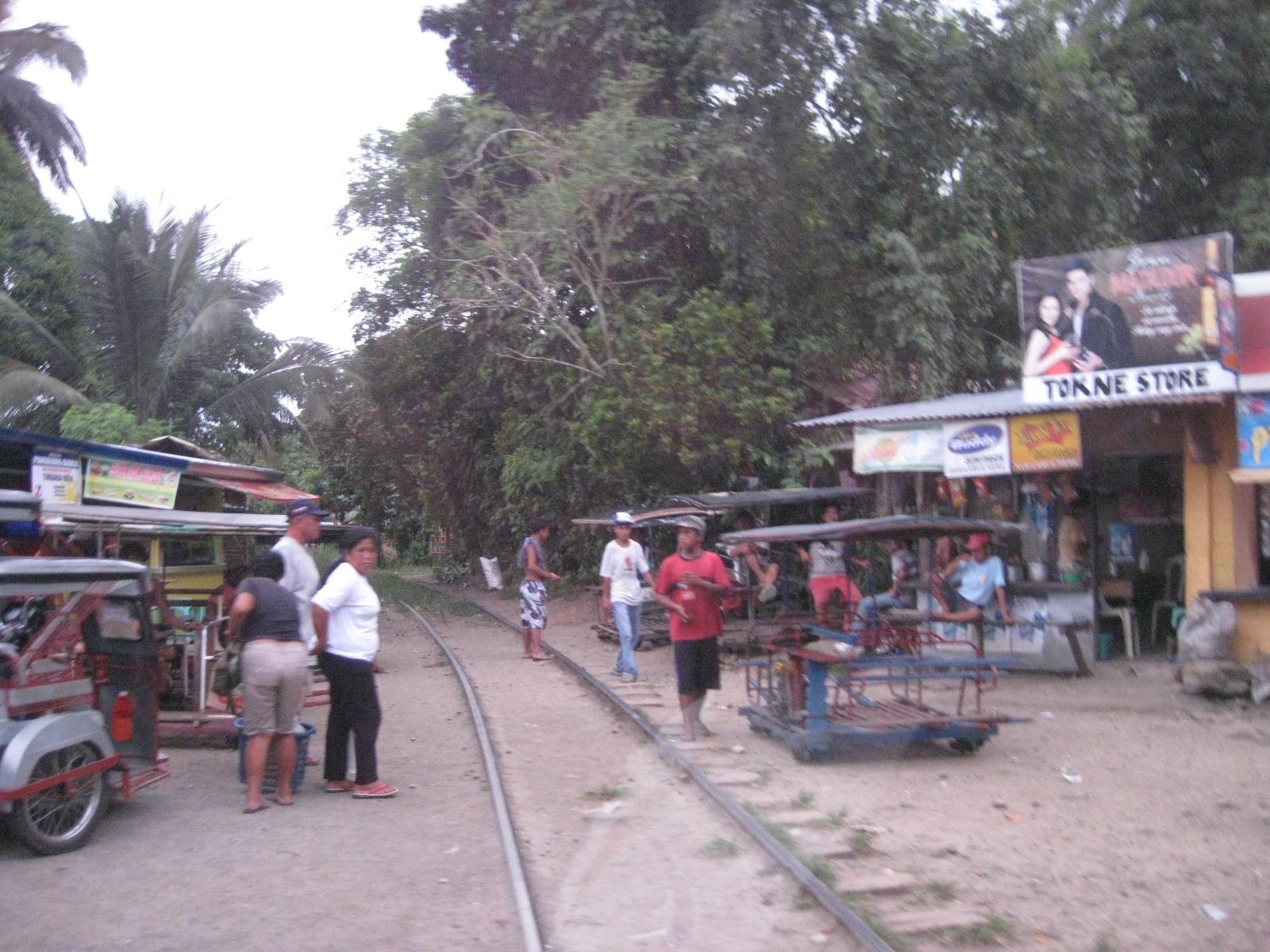 My first look at the motorized trolleys of Quezon – this photo shows what seems to be a terminal for two type of paratransit: the road-based tricycle (left) and the rail-based trolley (right). Being a convergence point for passengers, there are stores and eateries in the area. Note again the condition of the tracks where the wooden ties are still visible.
The photo above is my last snapshot of the railways prior to us using the bypass road on our way to Naga City. We also encountered heavy rains that prevented me from taking more photos during our drive. Thus, I was only able to take some more snapshots when we were already in Naga City.
 Rail crossing in Naga City – the signs again are obscured by other structures along the road. There are practically no safety devices at the time that could prevent crashes involving trains. Of course, at the time, the train service to Bicol were still suspended so there were none that could have had conflicts with road-based traffic.
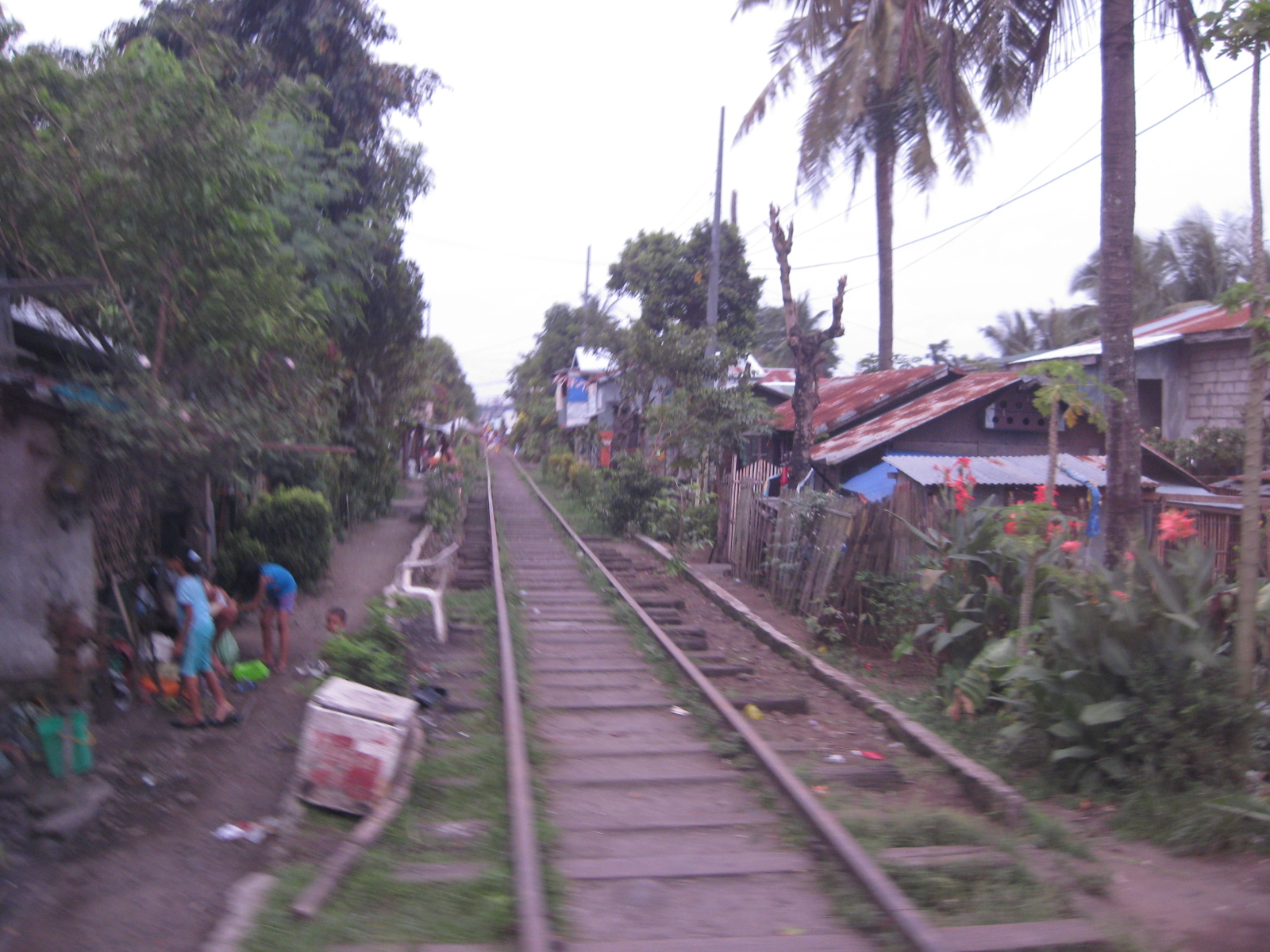 Railway tracks in Naga City – the tracks here seem to be in good condition despite the suspension of train services at the time. Noticeable too is the fact that while there is clearly encroachment on the PNR ROW, the houses have at least some space between them and the tracks unlike the case of Manila. Note that in the Bicol region, the PNR uses a single track rather than a double track system. Future capacity expansion (and I’m crossing my fingers here) would require a double track system to permit increased two way traffic once the trains regain popularity.
Next: the trolleys of Naga City
 Caught (up) in traffic