
Vehicle refuge during floods
Passing Felix Avenue one early morning this week, I saw familiar scene. There were lots of vehicles parked along Felix Avenue (formerly Imelda Avenue) including the service roads along either side of this major road connecting Marcos Highway and Ortigas Avenue Extension.
These vehicles are owned by residents of subdivisions along the avenue whose areas are prone to flooding. These include Vista Verde, Metroville, Kasibulan, Karangalan and the two Green Parks. I didn’t see this along the stretch so the other flood prone villages like Village East and Country Homes. Perhaps they have been able to adapt better?
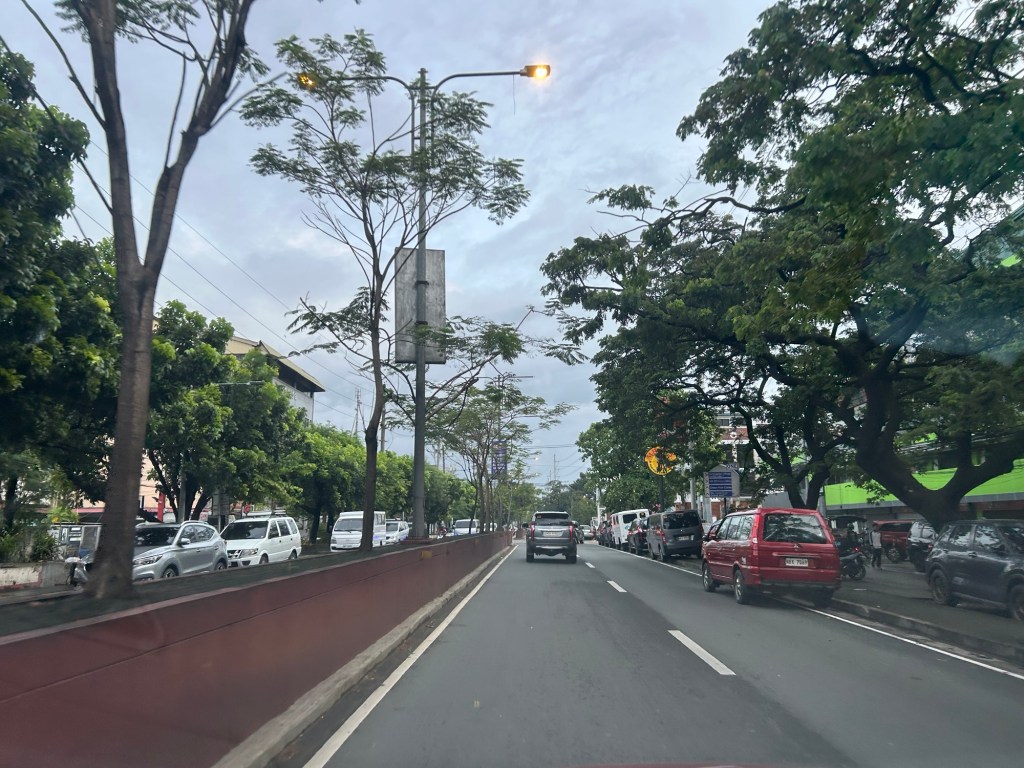
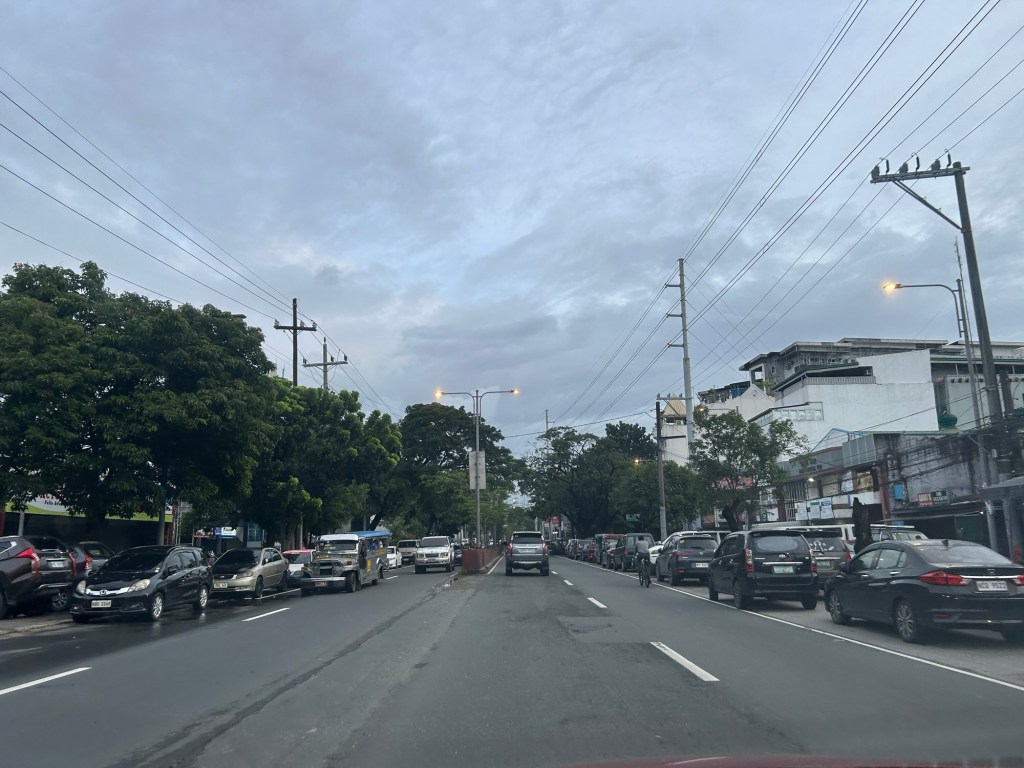
Car-centric discussions aside, when you go the ‘east’ you will notice a lot of people using SUVs. One reason probably is because many Rizal towns including Antipolo City, and Pasig and Marikina Cities are prone to flooding. Can you imagine over 50 years of flooding in these areas? And then with the current investigations concerning flood control projects, have you wondered if the ‘east’ really got their taxpayers’ money’s worth in terms of interventions?
–
Railways construction progress in Luzon
I’m currently attending the Philippine Railway Conference. The presentations so far have been informative especially about the progress of rail projects in the country. Most if not all of these projects are in Luzon, which includes Metro Manila. Here are the progress of work as shown in the photos of the slides I took during the plenary sessions this morning.
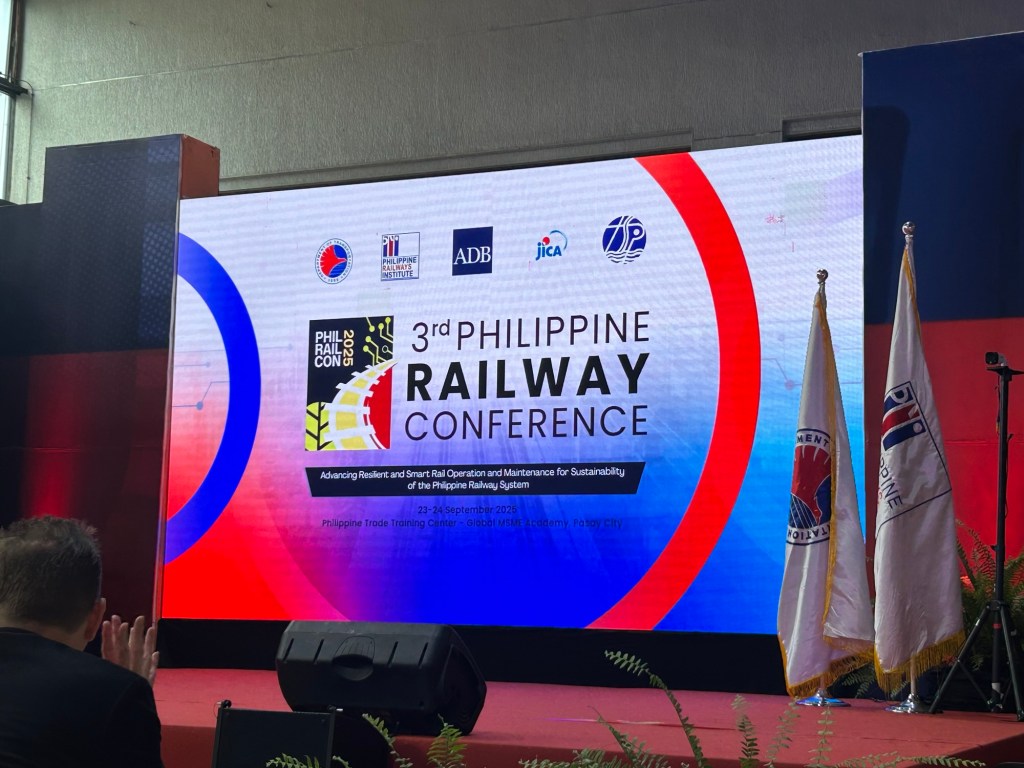
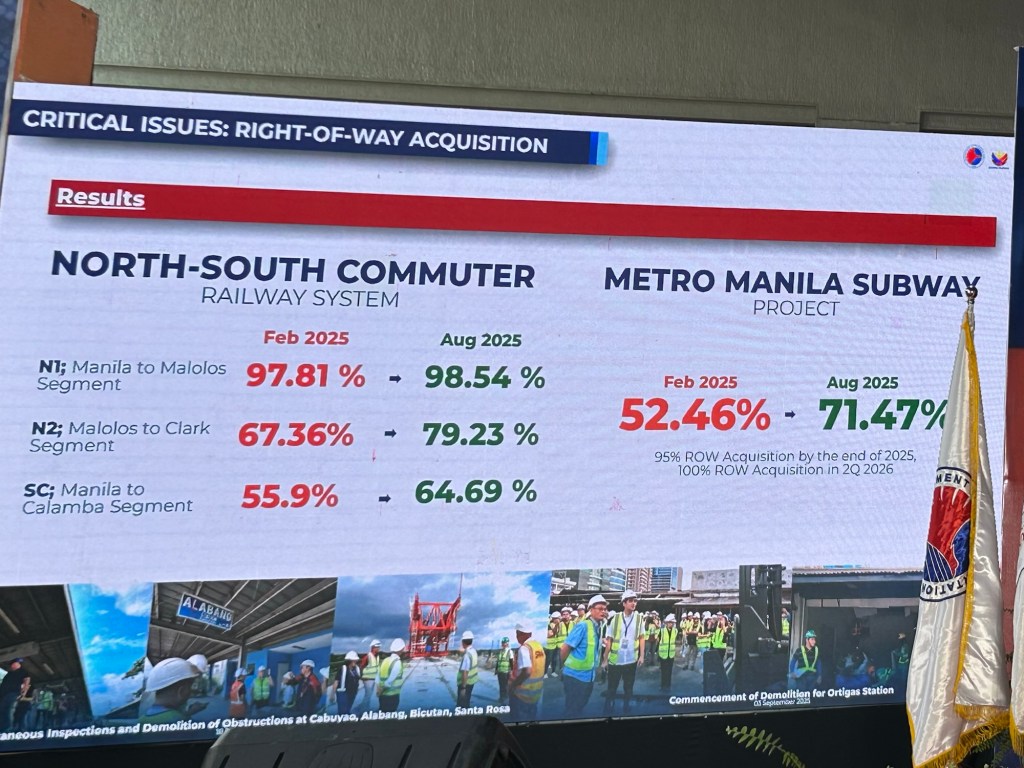
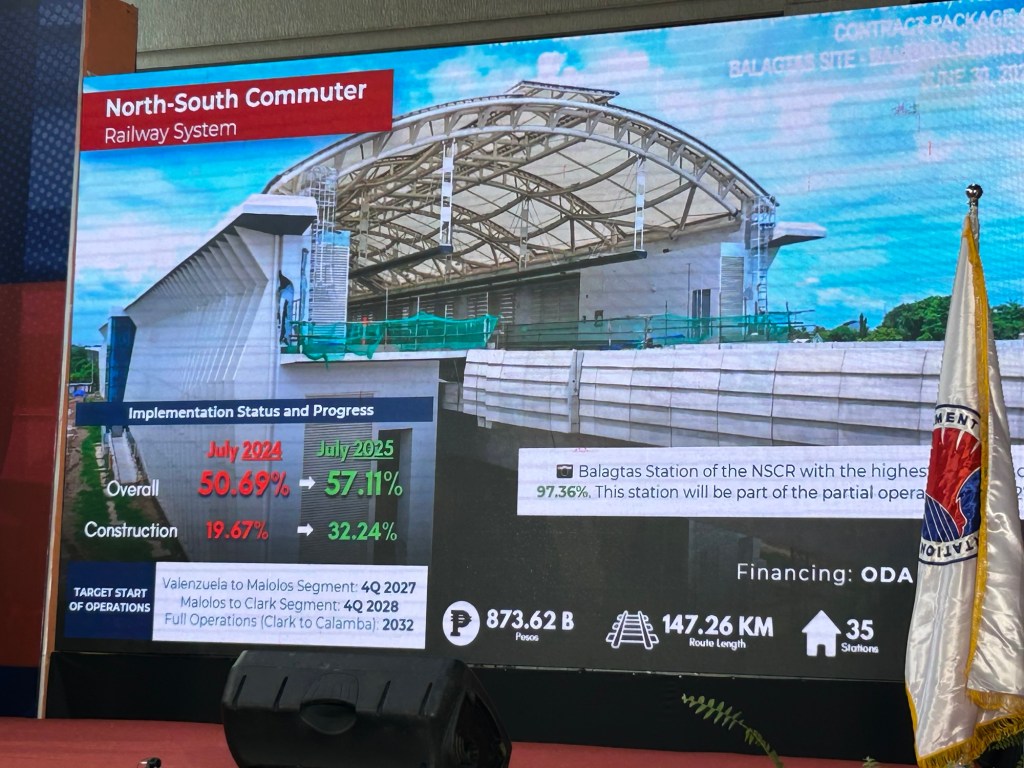
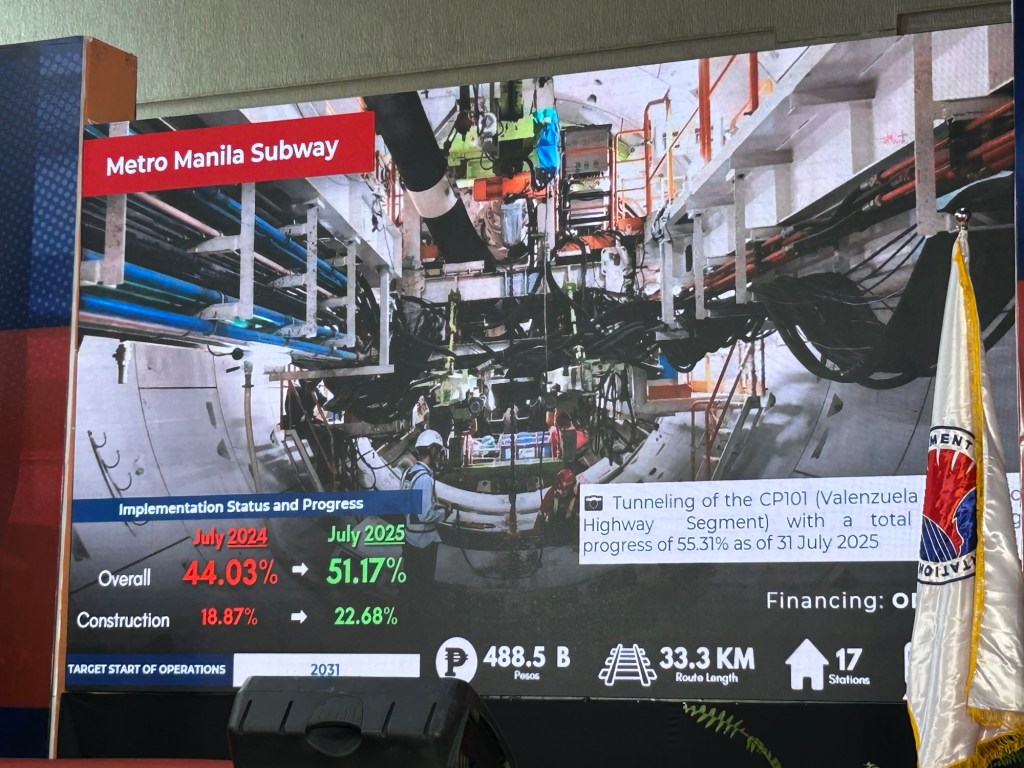
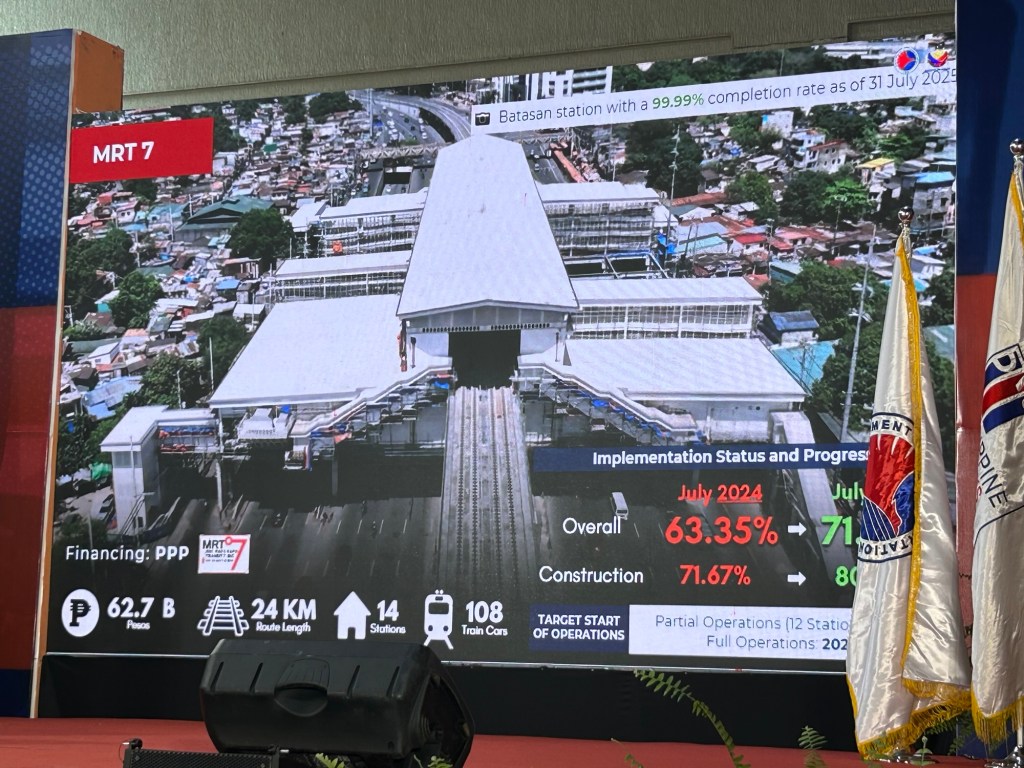
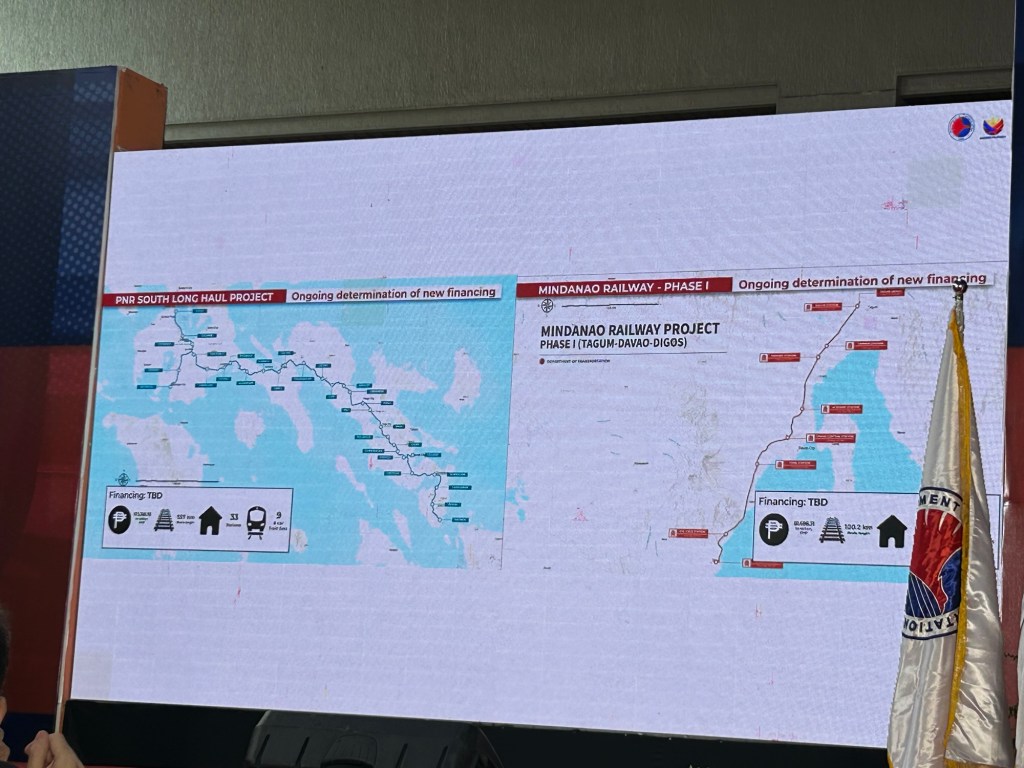
Based on the presentations, these railways currently under construction will be ready or partially operational by 2027. What do you think about the progress of work?
–
Needed: MMDA Transport Authority similar to Transport for London
I am sharing this article from Business World about the idea (or is it already a proposal) for an MMDA Transport Authority. I seem to recall there were already proposals for something like this but I have to check for references and sources. In the meantime, I am content with sharing the following:
On Nov. 11, 1999, the British Parliament established the Greater London Authority. Prior to that, there was no single entity managing the entirety of London. The governance of the city was fragmented, and responsibilities for planning, transport, and other city-wide matters were divided between local boroughs and national authorities. The Greater London Authority was established […]
Source: Needed: MMDA Transport Authority similar to Transport for London
Looking back on Philippine railway history
The Philippine Railway Conference 2025 is coming up soon. I am very glad to see a lot of people interested in rail – from the technical people running our railways to those involved in planning and management to the advocates and enthusiasts. Rail was not so “fashionable” or “glamorous” (to use these words liberally) many years ago. Perhaps people traveling and experiencing rail in countries where it has persevered and evolved plus social media have changed this – and for the better. Sharing here some papers that were the outcomes of an interdisciplinary research program led by the Third World Studies Center of UP. Rail, after all, is not just about the technical but also the social and human aspects of the mode.
The website for the Emerging Inter Disciplinary Research (EIDR) program supported by the UP System is still up and hosted by the Third World Studies Center. I think it’s something worth a Phase 2. The program leader, Dr. Ricardo Jose, is now retired from UP but is a Professor Emeritus of UP so he can still be engaged. Nevertheless, there are many at UP and other higher education institutions who can be involved in a program that should have a more expanded coverage. There were railways, after all, in other parts the country including Panay, Negros, Cebu and Mindanao.
–
Sins of omission at DPWH
I’ve been quite busy the past weeks due to various commitments including deadlines. Nevertheless, I have tried to be updated on the current events pertaining to the flood control scandal many government officials are now being linked to. These include the personalities involved, the projects and the amounts that are now the basis for a lot of people being horrified enough to be called into action. Apparently, many people have not been convinced enough of past misdeeds that have been reported; including the ones pertaining to abuses of uses of confidential funds.
I have hesitated to post on my thoughts about the mess at DPWH as I have many friend including past and present students who are with the Department. Some if not all I know to be sensitive to the corruption issues around the flood control projects. The latter apparently blew up in the faces of the officials of the agency and exposed them and their staff to a lot of ridicule (both warranted and not) and even harassment. Recently, I’ve been seeing a lot of posts from people who are supposedly with the DPWH. These posts are obviously apologists for certain officials considering the content of their writing. These are basically attempts to absolve those who claim to be clean among the DPWH staff and officials, and yet they have not done anything to correct these wrongdoings. This is what is called commiting ‘sins of omission’. By not doing anything for whatever reasons including being afraid to be a whistleblower (considering the consequences) means one is enabling or even encouraging the acts of corruption. In essence, they are being complicit by turning their blind eyes to the rotten eggs. This applies anywhere and not just to DPWH employees. And perhaps so many in government agencies are guilty of this.
–
Early morning walks
I’ve been waking up earlier so I can do my morning walks before leaving to drop off our daughter to school. These days, what were bright mornings at 5:30 AM are now dark. The nights are longer as we approach December. Here is the view along my walking route.
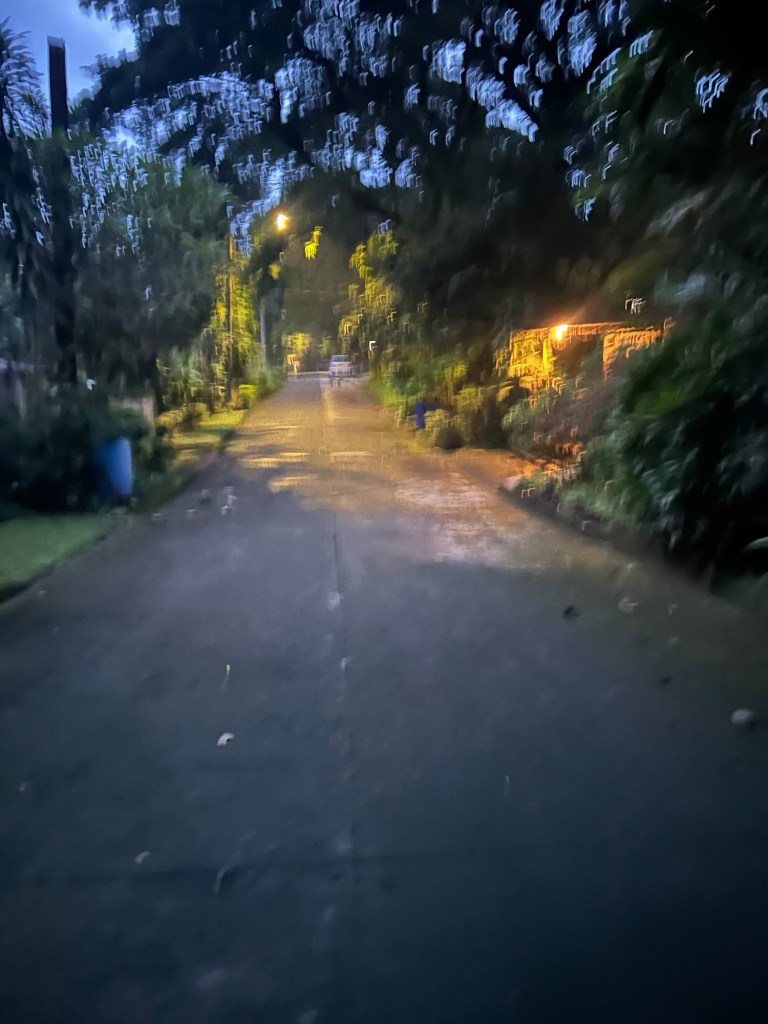
Unlike previous mornings when I can do at least 3 rounds along my usual route, I now can only do at most 2 rounds. I guess I have to wake up earlier to add 1 or 2 rounds. Afternoons to evenings are usually rainy and prevents me from walking. I treat this as a bonus if ever we are able to take afternoon or evening walks.
–
The mobile stores of my childhood days
I took a photo of this animal (cow) drawn cart as we passed it in Taytay en route to Makati via C-6. These used to be larger and wagons drawn by one or even two animals (usually cows or bulls). Families lived in those wagons and were somewhat nomadic in a sense that they traveled while selling products like walis tambo (brooms for indoor use like those in the photo), walis tingting (brooms made of coconut stems also in the photo to the rear of the cart), baskets, and other handicrafts. I have memories of their regular if not frequent visits to our village in Cainta in the 1970s and early 1980s. Eventually, they vanished. I see some from time to time but only like the one in the photo below. I have not seen the larger wagons.
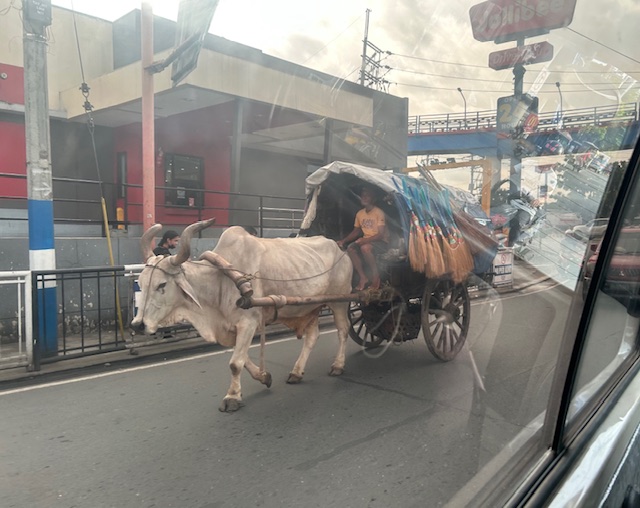 The cart was pulled by a bull that looked emaciated to me. I hope they’re able to feed this animal and care for it considering this is probably their most valuable asset.
While this seems like a spectacle these days, they were the mobile stores of the past; often traveling in groups. I wonder how long there will be animal-drawn carts like this.
–
Traffic congestion along EDSA
I’ve taken some photos of EDSA traffic as well as the EDSA Carousel buses. Here are the more recent EDSA photos I took as I traveled from Makati to Quezon City after serving as a panelist in the Energy Transitions Dialogue last Wednesday.
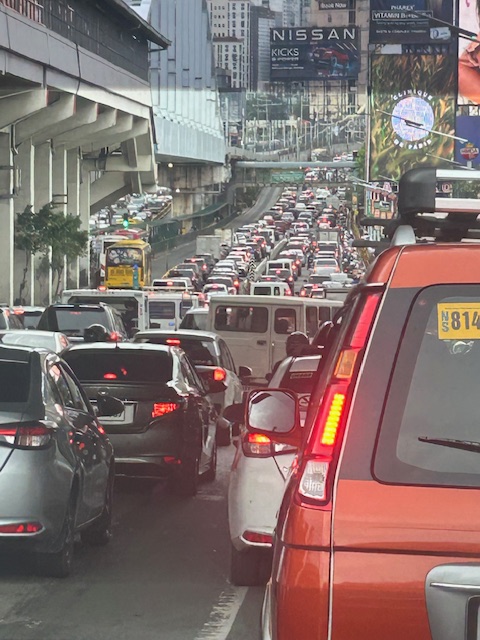 I took this photo as we passed Guadalupe. I like this in the sense that it shows the clear ROW for the EDSA Carousel buses. One wonders why most of these motorists would prefer to drive their vehicles rather than take the bus or the MRT.
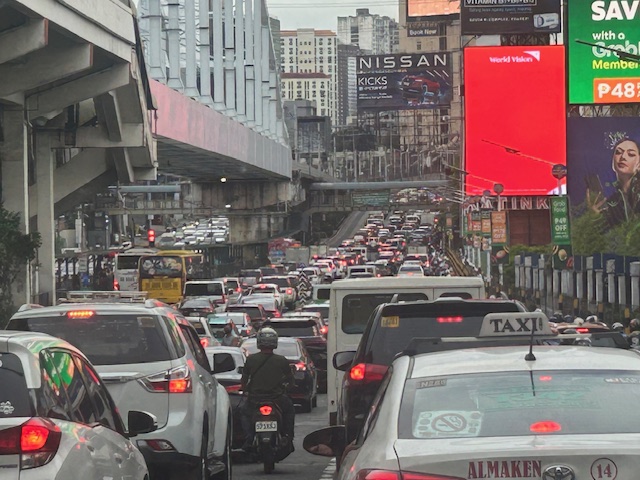 You can see in the photo that EDSA’s northbound side is clogged as far as the eye could see. If you check the image under the MRT bridge, it shows the southbound side was also congested. These photos were taken around 4 PM so this was still an hour before most people would be going home from work.
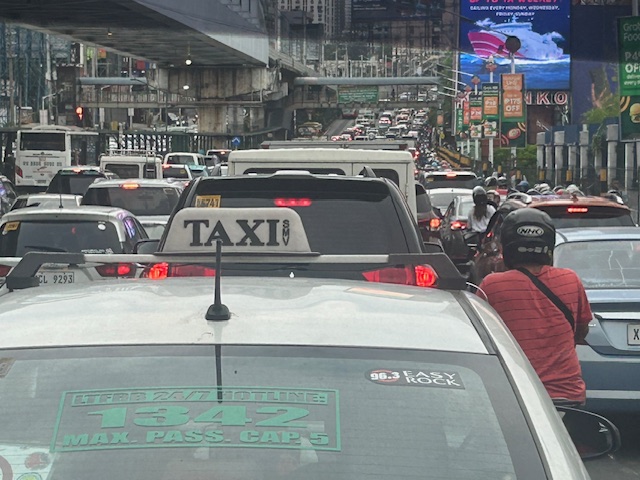 I mentioned in my comments at the panel that one consequence of giving number coding exemption to electric and hybrid vehicles is that this further diminishes the effectiveness (is it still effective?) of the MMDA’s number coding scheme. I don’t have the stats of how many EV’s and hybrids are registered and running in Metro Manila. Those numbers combined with actual counts will tell us how they are impacting traffic. That would be a nice topic for a paper. 🙂
The photos pretty much describe the transport situation in Metro Manila. Many of our major cities will be heading this way unless they improve their public transportation fast. If they do, then public transport mode share will be sustained if not increased. Metro Manila’s is already being eroded by inefficient public transport, motorcycles (including taxis) and perhaps unintentionally, electric and hybrid vehicles.
–
inDrive- A cheaper alternative to Grab?
Friends have been sharing that a new player in the TNVS business is less expensive than Grab. And yet they have comparable vehicles and drivers. They are also supposed to be easier to book. I’ve tried them a few times so far but forget to get screencaps to show the difference between the new players and Grab.
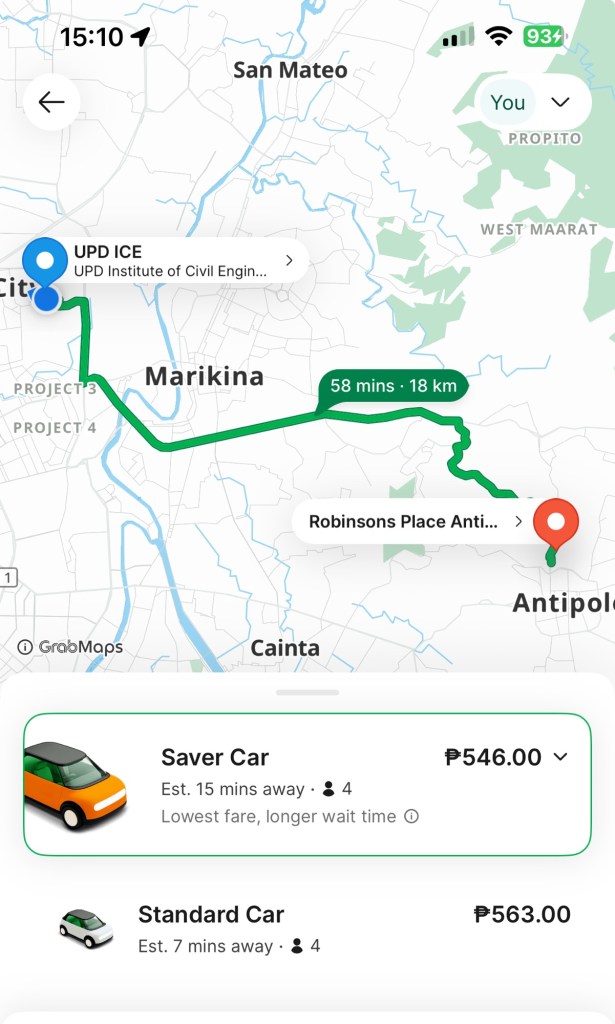
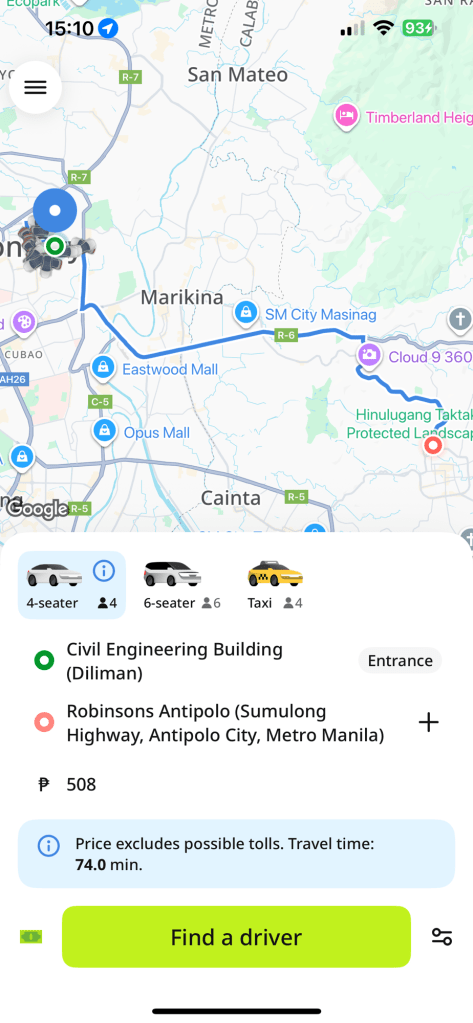
Of course, I ended up booking inDrive as it was cheaper by about 60 pesos for a standard car. I will continue taking screen caps for succeeding rides I will be taking in the future.
–
Competition for Grab?
Friends have been talking about the two new options that they say should rival and compete with Grab. These are another ride hail company and, interestingly, a taxi company. That ride hail company is In Drive and the taxi company is Green GSM.
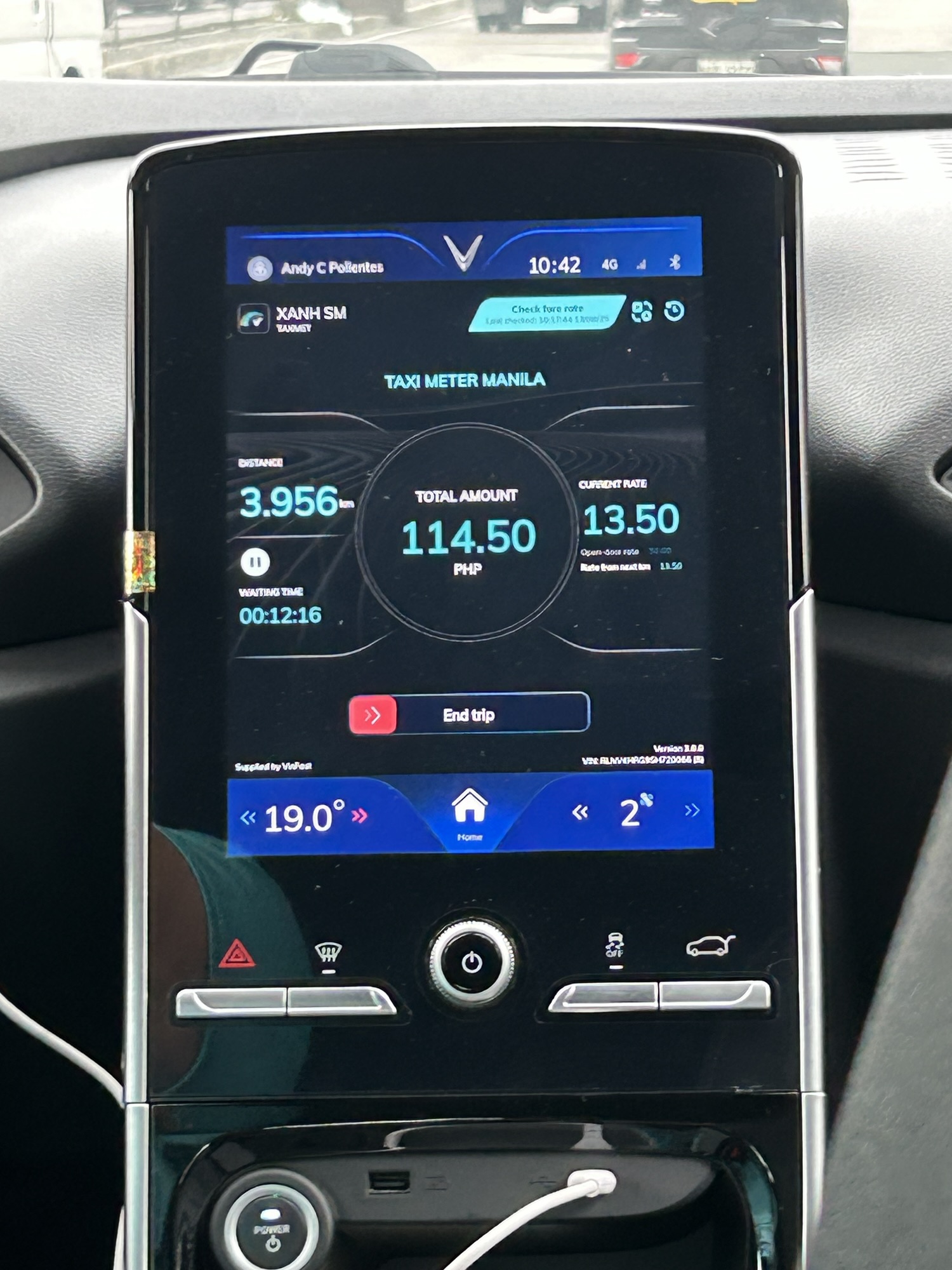 Green GSM vehicle dashboard showing the taxi meter details
The observation and consensus are that either is cheaper than Grab. My personal experience is that they are cheaper than Grab and substantially so. What does this mean? Probably that more people will eventually discover and experience the same and Grab’s ridership will decline. By how much? We don’t know that yet. What we know is that Grab’s most significant competition now are the motorcycle taxis like Angkas and Joyride. Move It is Grab’s response to the other two after it was prevented by government to compete directly with the two. More details in future posts this September.
–
 Caught (up) in traffic