
Afterthoughts on ridesharing
Ridesharing/ride-hailing companies like to claim that they are helping solve transport problems. However, their disruptions seem too good to be true in a growing number of cases including those in London and California where studies have shown anomalous practices of companies particularly Uber. Grab is now the dominant company in the Philippines after Uber sold its business to Grab. Other upstarts have had little impact on Grab’s market share. The only ones perhaps that have had some success taking business from Grab are the motorcycle taxi app companies like Angkas and Joyride. Motorcycle taxis are actually quite popular though they have been informal (and illegal). Habal-habal operations though have been tolerated in many cities and towns with authorities usually turning a blind eye to their operations.
They have thrived in large cities and have practically displaced taxi companies in these cities. I would not go deep into the social impacts but there are already a lot of negatives including the growing evidence that they are taking people away from public transport in general. Their operations seem promising at the start as the original concept was to use underutilized vehicles that otherwise would have been parked for most of the day, and offering work and income opportunities to people who had the free time (e.g., home-based people who may have a few hours to spare to drive/transport other people to their destinations). The latter were assumed to be part-timers with their vehicles available for providing transport services on demand. The vehicle used might be a spare one. And I use the word ‘spare’ here as it is assumed there might be another ‘main’ vehicle that is used by another person in the family who is a full-time job who drives to work. I don’t buy that romanticized claim that one main objective of these rideshare companies is to break the monopoly of taxi companies. They ended up being the taxis with all those cars now roaming city streets for passengers (and fares).
I mention here a very recent article citing an MIT study:
Green Car Congress (February 2021) “MIT study finds Uber & Lyft increase congestion, decrease transit ridership and don’t affect vehicle ownership,” Green Car Congress, https://www.greencarcongress.com/2021/02/20210204-tncs.html [Last accessed: 2/5/2021]
There is also a published paper in 2019 that is from the perspective of TNVS drivers in Metro Manila:
Mirandilla, C.S. and Regidor, J.R.F. (2019) “Assessment of Transportation Network Vehicle Services from the Drivers’ Perspective,” Journal of the Eastern Asia Society for Transportation Studies, Volume 13, Pages 2369-2389, https://doi.org/10.11175/easts.13.2369
In the paper, their findings include the following:
“It was found that TNVS have greater impact in traffic flow compared to other modes of transportation while delivering inferior productivity. The study also found that full-time driver-operators have very high risks of financial losses, and they have lower than minimum wage income when depreciation costs and maintenance costs are considered.”
–
What type of seat is appropriate for your child?
I wrote yesterday about the new law requiring child seats for children 12 and under or under 4’11” in height in the Philippines. The implementation has been postponed after government received a lot of flak about it. To be fair, the info campaign started months ago but it seemed to be limited to social media and not really disseminated as widely as is ideal. The material while catchy at first glance, is not as clear in the info or message as already evidenced from the flak about the law and its provisions.
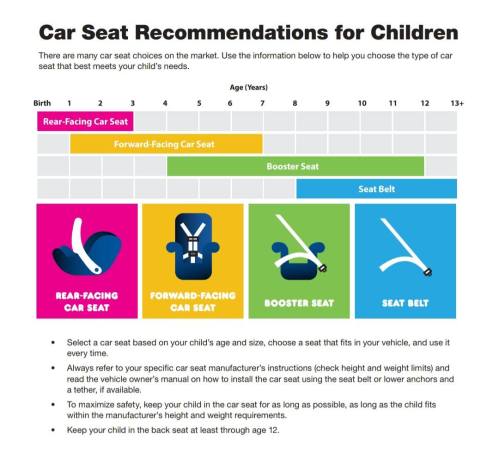
Here is a graphic from the US National Highway Traffic Safety Administration (NHTSA) that is quite easy to understand:
Based on the information from the NHTSA, the CDC came up with the following graphic:
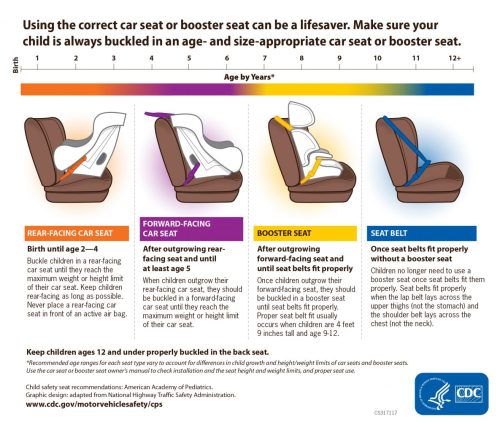
It would have been clearer and more effective in communications if the agencies-in-charge came up with similar material rather than the one I shared in yesterday’s post. There are also many designs for child seats and so far there are no specifics about these that people could refer to. Ultimately, I believe there should be a list of what are allowed or not allowed including brands. Perhaps its better to have a list of what are not allowed with the reasons for these, and then let the manufacturers challenge these. Having a list of allowed products might come off as advertising or favoring certain manufacturers. Of course, it will be up to the Bureau of Product Standards (BPS) of the Department of Trade and Industry (DTI) to determine which seats will be allowed based on their specs and the standards they conform to. European and US standards are among the most stringent so perhaps these can be reviewed and determine whether they can be adopted in the Philippines.
–
On R.A. 11229 and the requirement of Child Seats
There seems to be a lot of feedback (mostly negative) on the new law and its implementing rules. RA 11229 is the “Child Safety in Motor Vehicles Act” that requires the use of child car seats. There seems to be a confusion about who are supposed to be using child seats particularly about the age and height limits mentioned. In one “controversial” interview, a government transport official was recorded replying to a question about tall children that the parents would have to get a bigger vehicle. That was obviously uncalled for but also probably what can be considered as a “snappy answer to a stupid question[see note below]” type of situation. What is clear now is that a lot of people are not aware of the provisions and implications of the new law (for various reasons including their choosing to ignore it) and there needs to be a more comprehensive and effective info campaign on this topic. Not yet mentioned in discussions are the models of car seats that are approved or certified for use.
 Screenshot of a graphic explaining who are required to use child car seats
Here are examples of the opinions and comments in one of the group discussions I am part of [I will just leave these without specific attribution or anonymous.]:
- “RA#11229 was badly written. Authored by Sen JV Ejercito, trying to copy laws in the USA. In California, the Child Safety Seat is only required for child 2 years old and below, 4 years old in NY, and 3 years old in Europe. Additional parameters: height limit of 40″ (101 cm) and weight limit of 40lbs. They differentiate rules for children up to 8 years in NY & CA.”
- “The Philippine version lumps all kids into one group below 12 years old, requiring child restraint system. Additional parameter is 150 cm height, none on weight. Two wrong premises of our law: 1) that Filipinos children are taller than Europeans and Americans of same age, and 2) Filipino children mature later at 12.”
- “They lumped it into one class because its the simplest and easiest thing to do, without going into a lot of uncertainty. Na controversial na nga yung 12 yr. old catch-all, ano pa kaya kung they broke it down into numerous classifications.”
[Note: To those who are not familiar with the term “snappy answers to stupid questions”, google it together with Mad Magazine.]
–
On using a car for transport in the time of COVID-19
We start the month of February with a very informative articles from the New York Times about car use and the spread of Covid-19. There have been a lot of discussions or discourse, even arguments, about private car use or shared vehicles (e.g., Grab) as people have apparently chosen these over public transport in many parts of the Philippines. For one, there is still a limited supply of public transport as government tries to take advantage of the situation to implement their rationalization and modernization programs.
The following article is from the US but the principles presented particularly about air flow and the potential spread of the virus inside a car are factual and apply in a general manner to other situations including ours. It is important to have an appreciation of the science behind air circulation and how it relates to the potential infections.
Anthes, E. (January 16, 2021) “How to (Literally) Drive the Coronavirus Away,” New York Times, https://www.nytimes.com/2021/01/16/health/coronavirus-transmission-cars.html [Last accessed: 2/2/2021]
The common misconception appears to be that using private vehicles automatically helps spread the coronavirus. The science tells us it is not as simple as that (i.e., using your own vehicle will lead to your and your family being infected). While private vehicles are not the proverbial suit of armor vs. Covid-19, their proper use might give better chances compared to crowded and/or poorly ventilated public utility vehicles. Walking and bicycles, of course, are most preferred but that’s a topic for another article.
–
Infanta, Quezon Arch
I was just writing about the arches you typically came across as you traveled by road around the Philippines. A former student of mine posted a photo of the arch welcoming travelers to Infanta, Quezon from Rizal province, and I asked to have a copy of the photo. He is an avid cyclist who goes on long rides. The arch bears the seal of the town but few other symbols (that I am familiar with) that could have represented the municipality. Here is a typical low-traffic highway with two lanes and dirt shoulders along either side of the road leading to something mysterious (see that fog/mist at the end of the road?).
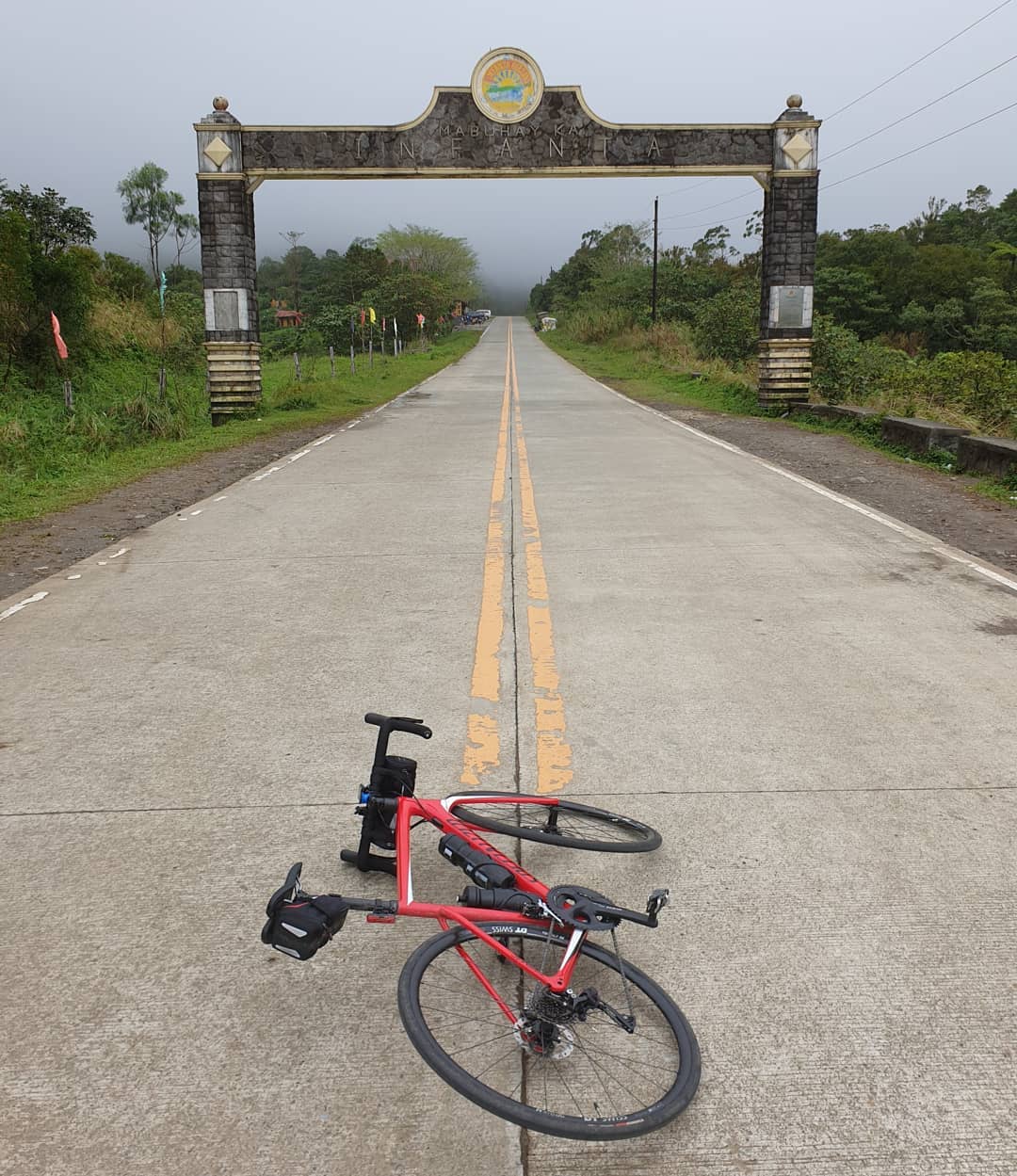 Road to Infanta, Quezon [Photo credit: Dexter Cuizon]
–
On airline travel in the time of Covid-19
I haven’t been on a plane since February 2020. That is almost one year next month. I have friends though who have traveled by air recently. They had to follow certain protocols before departing and upon arrival at their destination. These include testing for the virus and observing quarantine especially upon their return to Metro Manila and prior to returning to their respective homes. Fortunately, all have been testing negative for Covid-19 and were able to come home safely.
Here is an interesting article on air travel, particularly how airlines and airports are handling passengers during this time when processes need to consider the prospects of getting infected by Covid-19:
Marshall, A. (January 21, 2021) “The Art and Science of Boarding an Airplane in a Pandemic,” Wired, https://www.wired.com/story/art-science-boarding-airplane-pandemic/ [Last accessed: 1/26/2021]
I am anxious about being required to travel for a project we are currently doing for a major city in Mindanao. While our clients have been very understanding about our health concerns, it might be inevitable for some of us in the project team to travel by March 2021 to present the findings and recommendations of our study. I will continue to update myself about travel guidelines in preparation for that likely travel.
–
On the road again
A couple of weekends ago, I found myself doing my first long drive in months. I wasn’t a passenger but the driver when the wife and I went on an excursion with neighbors-friends, one of whom arranged for our lunch at Ugu Bigyan’s Potter’s Garden in Tiaong, Quezon. We had two options to get there – one via the scenic route through Rizal’s backdoor that takes one to Teresa, Tanay, Baras and Pililla in Rizal, Pakil, Pangil, Paete, Lumban, Pagsanjan, Sta. Cruz and San Pablo in Laguna, the other via C-6, SLEX and STAR Tollways taking us through southern Metro Manila, Laguna, and Batangas. We took the latter route as it was faster (shorter travel time by an hour) and it allowed us to test our newly installed Autosweep RFID’s for the two tollways we used along the way.
The photo below was taken by the wife upon my prodding. I had not seen an arch as we traversed Sto. Tomas (Batangas), and Alaminos and San Pablo (Laguna). These were all along Asian Highway 26 (AH 26) or the Pan Philippine Highway system. The arch marks entry/exit to/from (boundary) the Province of Quezon from the Province of Laguna. Laguna doesn’t have its own arch.
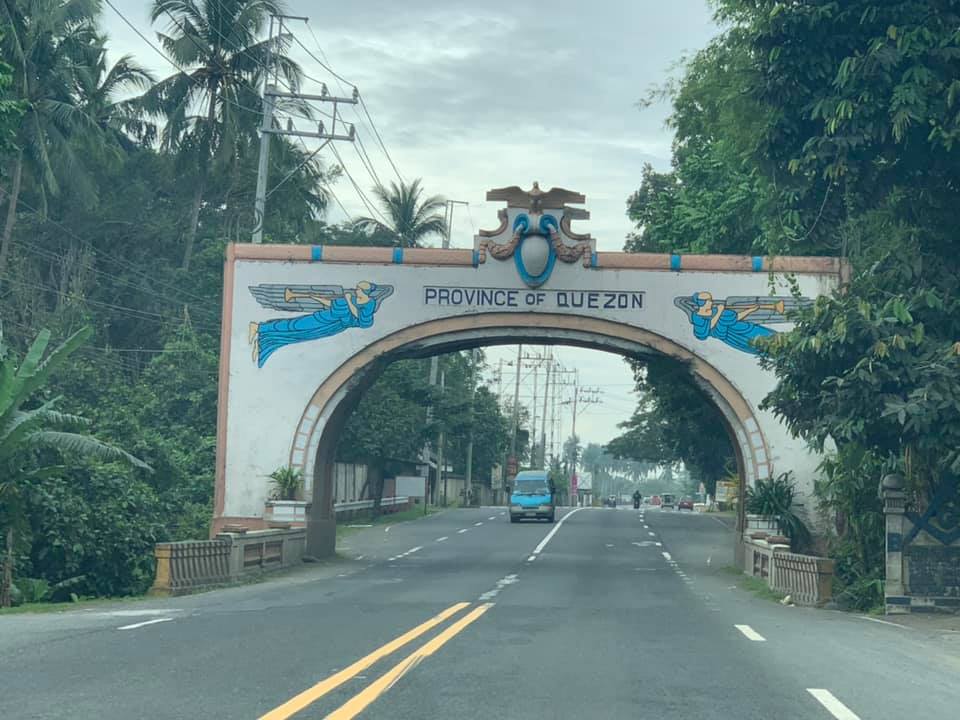
Arches like the one in the photo used to be the landmarks between towns and provinces. I wrote about these many years ago:
Arches in La Union and Ilocos Sur
Arko along the highways
I have other photos somewhere but have not scanned/digitized them. Others I think that I left at my parents’ home perished with the floods of Ondoy.
With DPWH’s road widening program, many of these arches around the country may have been demolished. Those that remain tend to constrict traffic as they have space for two lanes and perhaps narrow shoulders at either side like what is shown in the photo. Perhaps others will be reconstructed and even enhanced to reflect a town’s or province’s attractions or attributes?
–
On the plastic barriers for jeepneys
The minimum requirements for conventional jeepneys prior to their returning to operations include the installation of barriers so as to have physical separation between passengers. Ideally, such separation should be a distance of at least one meter, which was initially relaxed to ‘one seat apart’, and then further relaxed to just the barrier separating passengers. You see various designs installed in jeepneys. I posted a couple in an earlier post showing examples of customized and DIY barriers. Here is another that looks like there was more effort involved in the making of the plastic barriers:
 Specially made plastic barriers with messages and graphics on social distancing printed on them.
 Jeepney drivers are obliged to reject or unload passengers not adhering to the protocols including those refusing to wear face masks and shields while commuting using public transportation modes. I assume that they are really doing this for their and their passengers’ safety and well-being.
–
On congested tollways during the pandemic
I finally was able to go on a long road trip yesterday as friends invited us to go on an excursion to Quezon to a prominent pottery artist’s place in the town of Tiaong. I first thought we would be going via the backdoor of Rizal since we were already in Antipolo but it turned out that it would be faster via the tollways route. Both Google and Waze recommend our route via C-6, SLEX and STAR to get to our destination. It could have been longer via the Manila East Road but which is a more scenic route. While it took us only 2.5 hours to get to our destination, it took an additional hour on the way back. Part of it was the congestion along the national highway between Tiaong and Sto. Tomas, Batangas but I was also a bit surprised about the congestion along SLEX on the way back (photo below) but saw that this was mainly due to vehicles filing towards the Skyway ramp in Alabang.
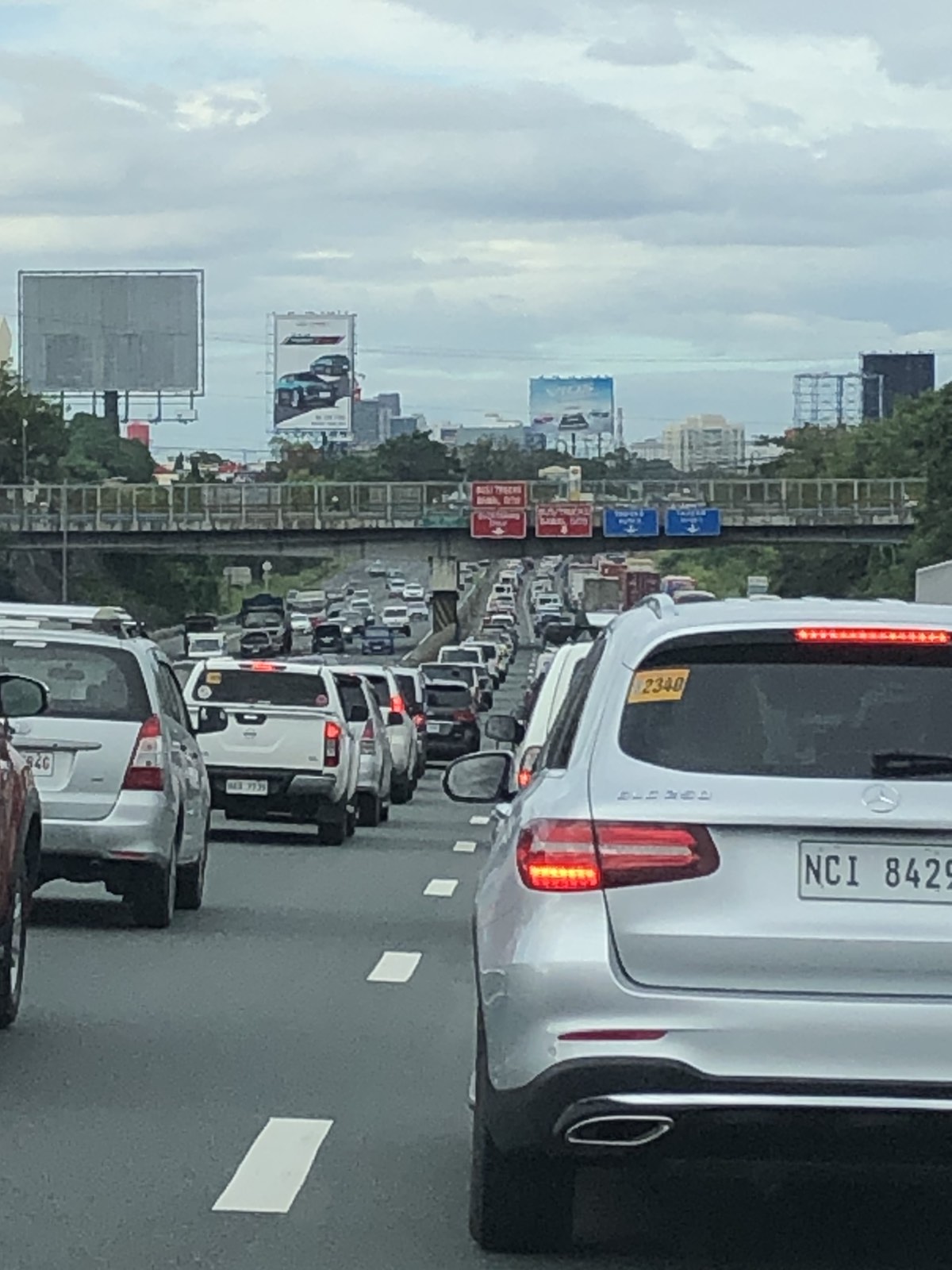
There was the expected congestion at the toll plazas as vehicles still need to slow down. It is not like the seamless, structure-less system in Singapore where their sensors can detect vehicles running at high speeds. The toll barriers are still there and the channels for one are relatively narrow. Then, there are travelers that seem hard in understanding that there are specific booths for cash payments. Also, there were occasions when the barriers did not lift immediately for one reason or another. That tends to slow down the processing of queued vehicles – a problem that my undergraduate students could probably take on after their lessons in queuing theory.
–
On planning our cities from a child’s perspective
Wouldn’t it be interesting to find how children would plan their cities? No, this is not the lego building kind of exercise but something closer to actual planning exercises where children not only act as planners but stakeholders themselves. We always say they are the future and that know that they will inherit whatever good or bad we are doing now, and yet they have little say in that future. Perhaps we should heed what they think our cities require?
Ergler, C. (January 4, 2021) “Young children are intuitive urban planners — we would all benefit from living in their ‘care-full’ cities”, The Conversation, https://theconversation.com/young-children-are-intuitive-urban-planners-we-would-all-benefit-from-living-in-their-care-full-cities-151365 [Last accessed: 1/15/2021]
–
 Caught (up) in traffic