
Some thoughts on transport for President-elect Duterte
My colleagues and I were talking about the not so surprising results of the recent national elections in the Philippines. I say not so surprising because people have been clamouring for change for quite some time now. It did not help the current administration and its standard bearer were hounded by the transport and traffic problems experienced by the country especially in Metro Manila. Here are some thoughts for the President-elect and whoever will be part of his transportation team:
- Come up with a framework for developing transportation in the country. The framework should contain both soft and hard measures. On the soft side would be strategies and policies like those promoting sustainable transport especially low carbon transport systems. This many include promoting walking, cycling and public transport at the local level. Hard measures would include infrastructure for all modes of transport including railways, airports and ports. Local roads development might be something President-elect Duterte’s team should look into as local roads basically provide accessibility for rural areas and contribute to development. The framework will serve as a guide for the next 6 years for whoever will be in-charge of transport-related agencies. He should have a sound game plan so as to be systematic in the approach to address transport and traffic issues.
- Watch out for and appreciate low hanging fruits. I think the current administration has already initiated solutions to pressing problems but mostly in Metro Manila in the form of the LRT Line 2 Extension and the MRT Line 7. There is also the new rolling stock for MRT Line 3. Pres.-elect Duterte’s team should already look into the mass transit needs of other highly urbanized cities such as Cebu, Iloilo and his hometown of Davao. Whether these will be road or rail-based systems should be the subject of studies to determine what can be completed immediately and within the term of the President and which need substantial investments and perhaps engagement with the private sector. The mention of “paralysis by analysis” by critics of the outgoing administration can be traced to the latter’s seeming disregard of the accomplishments of its predecessor, which could have been implemented early on during the term. The next administration should not make the same mistake.
- Just do it. That was the mantra of the late Sen. and former DOH Sec. Juan Flavier, which he got from Nike. Transport and traffic problems in this country has worsened over the years due to the slow development of infrastructure coupled with issues on land use planning. These two actually go hand-in-hand. Metro Manila is already at a stage where indeed it will take long-term planning and infra development to solve (i.e., significantly reduce) congestion (note: You cannot eliminate congestion for a megalopolis like the NCR). Meanwhile, it is not too late for other major cities so investments and infra development should start under his watch. For starters, completing the proposed Cebu BRT and building a mass transit system for Davao should serve as inspiration for other cities to follow. Already there is a need for sophisticated public transport in emerging metropolitan areas like Iloilo, Bacolod, CDO and Angeles-Clark-Mabalacat. These do not require 12 years but perhaps with urgent action be addressed within 6 years. This, of course, should go together with the building infrastructure for walking and cycling where applicable and in relation to transit development.
–
Suggested reading on affordable housing and transit
I had written before about opportunities with the construction of the LRT Line 2 Extension along Marcos Highway and the MRT Line 7 along Commonwealth Avenue, Regalado Avenue and Quirino Avenue. There is a nice article that came out last April 28, 2016 at the Mobility Lab site:
Affordable housing and transit should go hand-in-hand
I am afraid though that despite the developments further north of the Line 7 alignment, it seems land values have increased thereabouts. This means homes there will likely be as expensive as those near the city center. Only, the residential units in Caloocan and San Jose Del Monte are low density (e.g., single detached houses) and not medium to high density (e.g., walk-ups, condominiums). The government should have also invested in land and residential developments like how Singapore did it. HDB-type developments could have made the difference in as far as prices and rent are concerned. This could likely made it more affordable to workers seeking homes to purchase or rent near transit stations.
–
How did Mar Roxas lose? Top 10 transport-related reasons
I started writing this days before the national elections and if we are to base our forecast of Monday’s results on surveys and what’s circulating in mainstream and social media, then “change” will most likely be coming. Whether this change is a breath of fresh air or something that stinks and is just being masked by people around and behind him we will only know once he and his team starts working on rebuilding this country from what seems to be a most tumultuous and divisive campaign.
While it is possible to list down a lot of reasons from different aspects of his campaign, I would like to think that the administration’s standard bearer lost in large part because of his and the administration’s failures in transportation. Here’s my top ten transport-related reasons for why the Liberal Party’s presidential bet lost his bid to become the Philippines’ President:
- MRT-3 mess – the new coaches of the EDSA MRT-3 went into service today. People associate the current administration’s failures with images of long lines at MRT-3 stations and people walking as they leave stalled or defective trains. These are powerful images even as government claimed they were working on solutions to acquire new rolling stock and provide the maintenance the line needed.
- Paralysis by analysis – despite having many “low-hanging fruits” (i.e., projects ready to be implemented) from the previous administration and his predecessor at DOTC, Roxas and his people embarked on their own studies that seemed to take forever to finish. Many of these were with the PPP Center and it seemed that the government didn’t want to have any part in infrastructure development but passed this responsibility to the private sector.
- LRT-1 Cavite extension – this is a PPP project that also until now has not been implemented. Add to that the alleged circumstances for this project and the privatization of Line 1 where one company was most favored over others. Incidentally, the same company seems to have bagged a lot of projects under the current administration.
- BRT – Bus Rapid Transit (BRT) projects in Cebu City and Metro Manila are examples of projects that were developed by the previous administration and were ripe for implementation but are yet to take off.
- NAIA controversies – “tanim bala,” “malas,” delayed flights, blackouts, dirty toilets, the list goes on…you name it and they have it at the NAIA terminals.
- DOTC Sec. EA Abaya – the face of DOTC after Roxas and one who has come to be associated with what is perceived as a poorly performing agency. He should have been fired from the job years ago but for one reason or another he has stayed on at the agency and brought much damage unto the Roxas campaign. One has to wonder why Roxas refused to do some self examination and call for Abaya’s resignation. Hindi ba siya nakahalata na yung mga taong dapat sana ay kakampi ay nakasira ng husto sa chances niya maging Pangulo?
- NAIA Manager Honrado – the capital airport manager’s boo-boos including the “tanim bala” controversies and the bungled renovation of Terminal 1 easily put the manager as a symbol of ineptness. His being associated to the President as a former classmate did not help his cause as “classmate” had become synonymous with being “favored” despite failures.
- PNR – the only remaining long distance railway line in the country is still in a state of disrepair. There have been opinions that this was to government could sell it cheap to the private sector.
- North EDSA common station – the most appropriate location for the common station or grand terminal for LRT-1, MRT-3 and the future MRT-7 is in front of the SM City North EDSA Annex. Elsewhere would not be optimal and yet that is what Roxas started at DOTC, after reneging on an agreement with SM pertaining to the design of the station.
- Transport planning and infrastructure framework – few people seem to know that prior to 2010, there have been studies that led to a proposed National Transport Plan and Policy but this was not adopted by the Roxas DOTC with one Assistant Secretary even claiming that there was no framework. Fortunately, NEDA took the responsibility to develop one with little help coming from the DOTC.
–
Progress in promoting and realizing sustainable transport in the Philippines
There is a very good article that came out of Rappler last March 28, 2016:
Creating sustainable transport systems: PH’s progress so far
The article caught my attention as I have lost track of what should be the monitoring of sustainable transport initiatives anchored on the pillars of EST as described in the National EST Strategy and the article. The formulation of the national EST strategy started under the administration of President Gloria Macapagal-Arroyo (DOTC Secretary Leandro Mendoza) and was completed under President Benigno C. Aquino III (DOTC Secretary Jose Dela Cruz). The formulation was initiated and supported by the United Nations Centre for Regional Development (UNCRD) and is unique partly because it is the only one to be completed among similar projects across ASEAN. The other countries like Indonesia, Vietnam and Cambodia were only able to get to the baseline and consultations stages of their own national EST strategy formulations. The Philippines National EST Strategy document eventually became an input for the formulation of the National Transport Policy Framework (supported by AusAID) as well as the National Transport Infrastructure Framework (supported by the WB).
–
Electric vehicle models at the 5th Electric Vehicle Summit – Part 2
I already featured a lot of the electric vehicle models that were on display at the 5th EV Summit and this second part adds to those in the Part 1. There are some new models in the following photos including a mini-bus model that features a lot of doors and a similarly-designed jitney model. I took photos of the interiors as well to give the reader an idea of the layout of these models and perhaps imagine how they could fit as potential public utility vehicles.
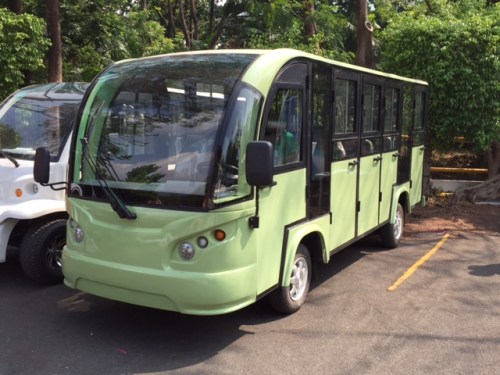 Electric minibus model
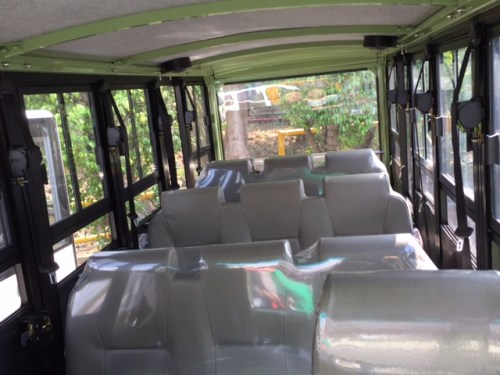 Interior of the minibus showing rows of seats
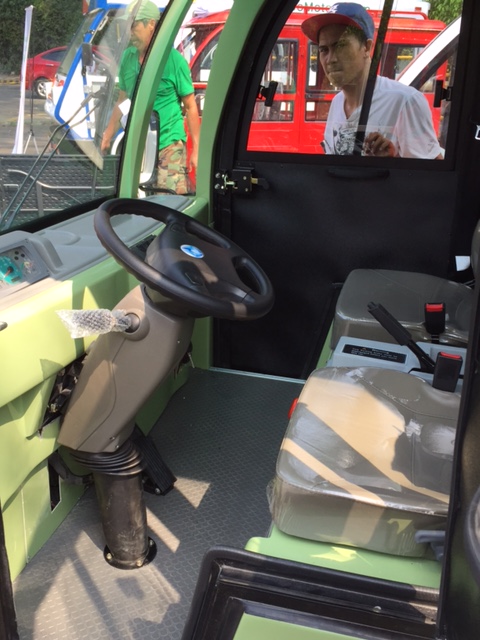 Driver and front seats
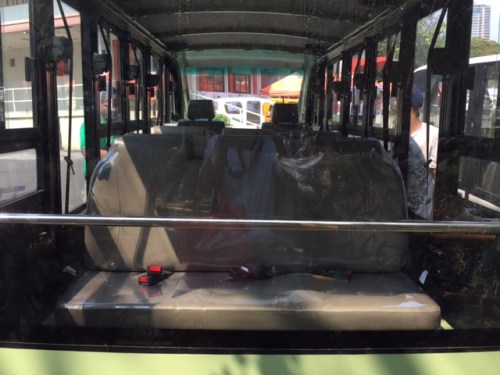 Rear seats facing the back instead of the front – the large window gives passengers a nice clear view of following vehicles, among others.
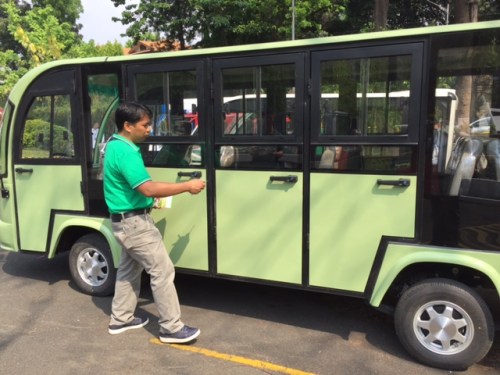 The minibus had many doors (8 total) to allow passengers to board and alight from each row.
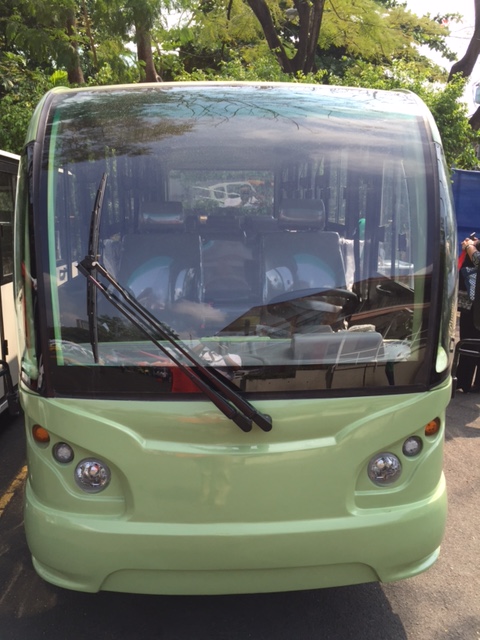 Front of the mini-bus featuring a single large wiper
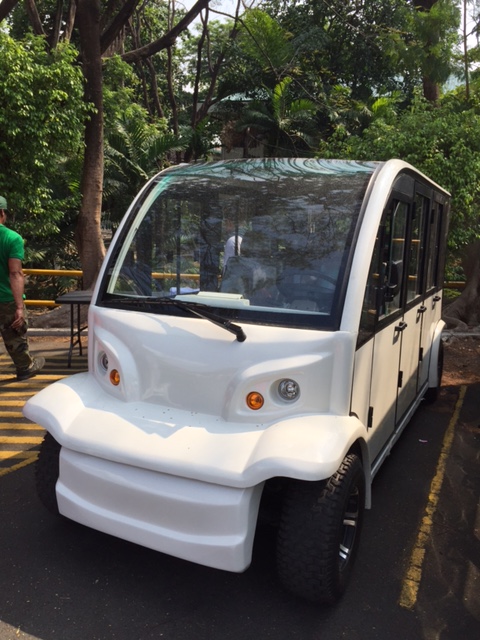 Jeepney-sized version of the minibus also featured multiple side doors (6 of them for this vehicle).
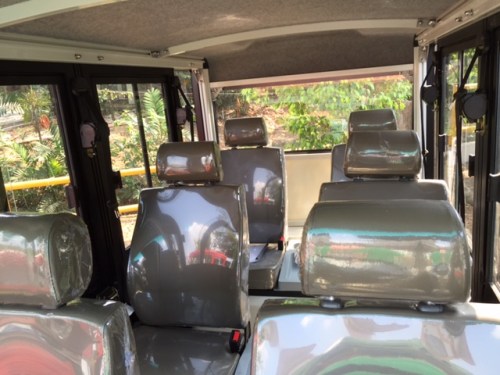 Seats inside the jitney
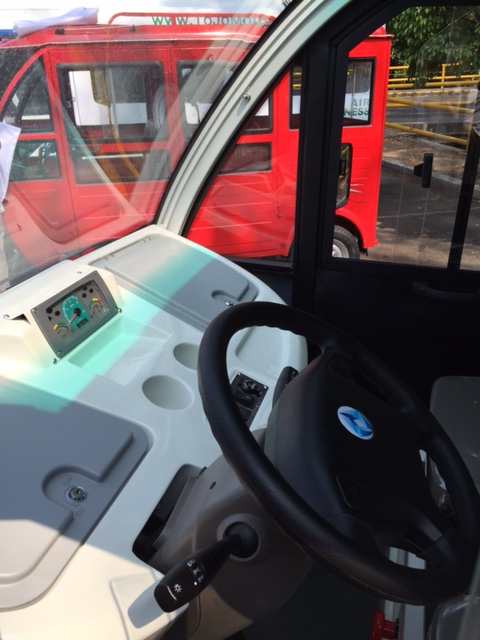 Dashboard and steering wheel of the electric jitney
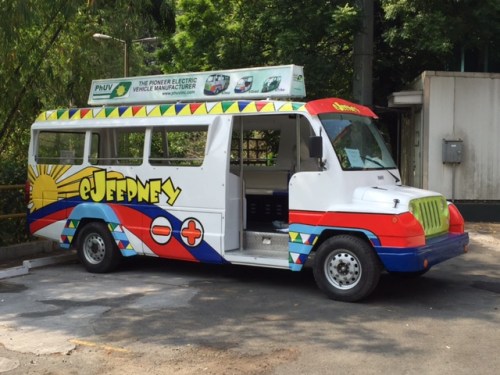 Another look at the latest model of the electric jeepney
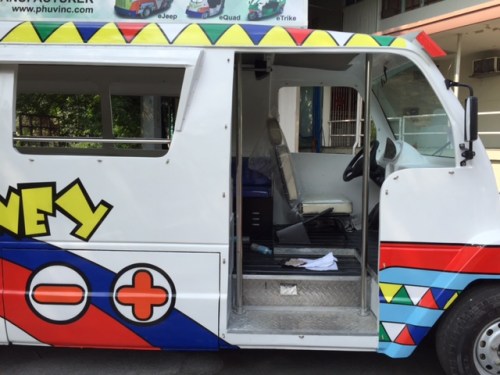 The door is at the curbside
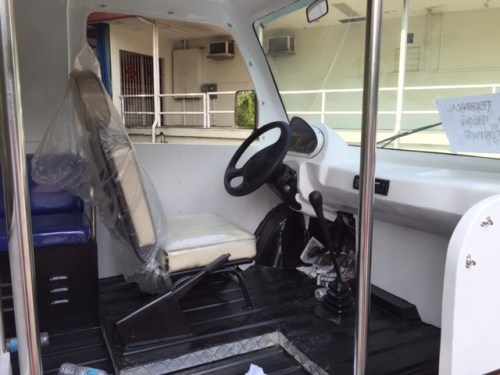 Driver’s seat
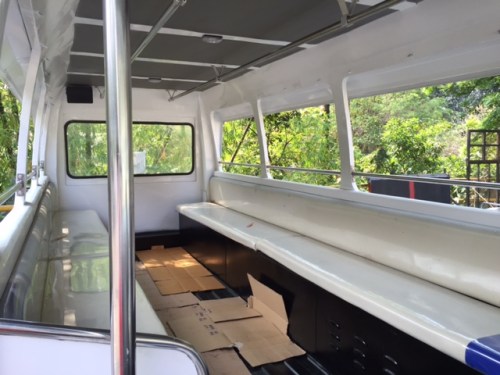 Bench seat layout for the e-jeepney
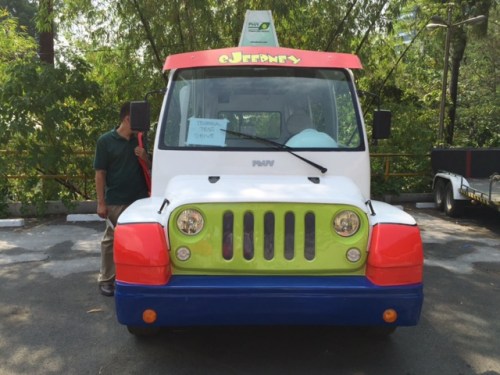 Front view of the e-jeepney featuring a pronounced and familiar snout
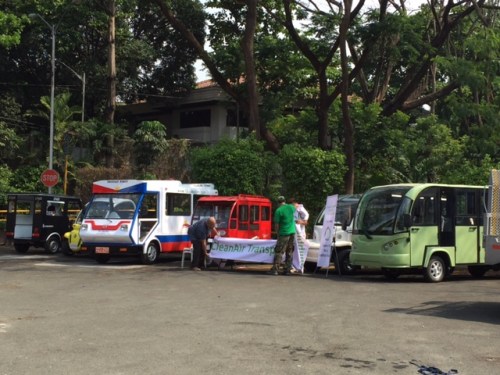 Setting up for display and demo
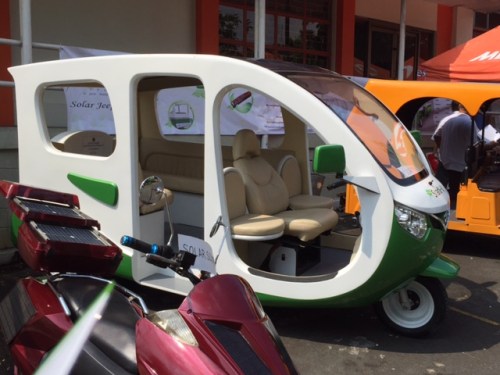 Star8’s e-trike model featuring a side door instead of one at the rear
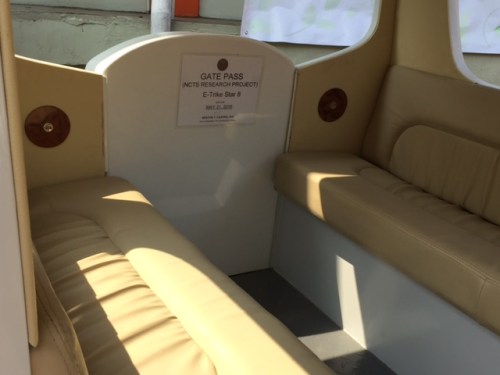 Bench seat layout for Star8’s e-trike
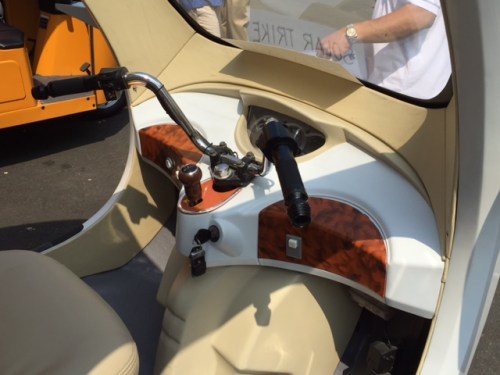 Dashboard and driver seat for the Star8 e-trike
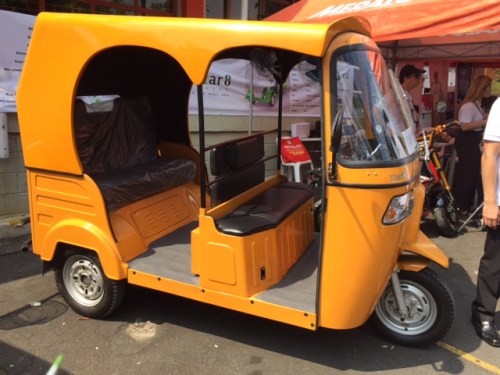 Star8’s tuktuk design for the e-trike
The variety of electric vehicle models and the increase in the number of industry players is encouraging. Interest in electric vehicles have steadily increased over the past half decade. Perhaps the government should have a stronger role as catalyst or enabler for this industry to flourish and perhaps transform not only the public transport scene but also for people to adopt e-vehicles for private use. This can only be done if the proper incentives are in place that include policy, fiscal and financial instruments favoring electric vehicles as well as their hybrid relatives. These will go a long way towards a low carbon transport future for the country.
–
On a proposal to redesign bus stops and signs in Metro Manila
Here’s another quick post but it is something that should be picked up by government agencies particularly the Metro Manila Development Authority (MMDA). The following link is from Sakay.ph, which conducted a study on their own and came up with this:
A Redesign of Bus Stops and Signage in Metro Manila
The idea is not at all a new one considering you will see such appropriate stop designs and signs abroad. These are good designs that make a lot of sense (See the visuals in the article for you to be convinced). Only, the MMDA and other agencies including local government units are notoriously stubborn when it comes to innovative ideas that challenge the templates that they are used to. Perhaps the Land Transportation Franchising and Regulatory Board (LTFRB) and the Department of Public Works and Highways (DPWH) can also take a look at these ideas considering public transport is regulated by LTFRB and the agency can take a progressive stance in ruling for more uniform bus body designs. Meanwhile, the DPWH is in-charge of most road signs along national roads like EDSA and should also be proactive in the design of signage while also keeping in mind the international standards that we need to conform with. As for the buses themselves, the recommendations underline the need to streamline (read: reduce) the number of buses and players and the rationalization (read: simplify) routes in Metro Manila. Maybe they can start doing the livery for the P2P buses to show how the concept works?
–
Electric vehicle models at the 5th Electric Vehicle Summit – Part 1
The 5th Electric Vehicle Summit was held last April 14-15, 2016 at the Meralco Multi-Purpose Hall. Following are photos I took at the summit where many current electric vehicle models were on display and demonstration. Many of the photos show variants of the electric tricycle designs from various manufacturers that conform with the design promoted by the Asian Development Bank (ADB). These are basically in the form of the Thai tuktuk and similar to Cagayan De Oro’s motorella.
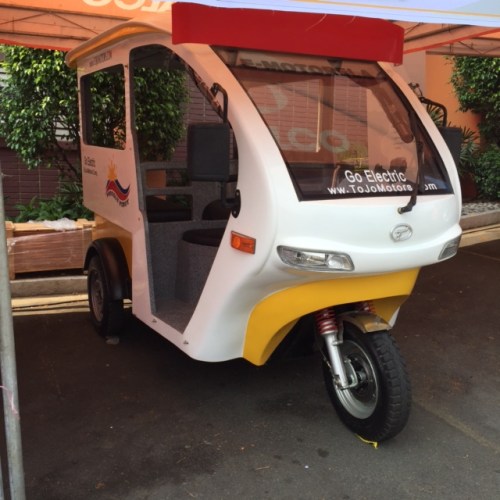 Go Electric e-trike by ToJo Motors
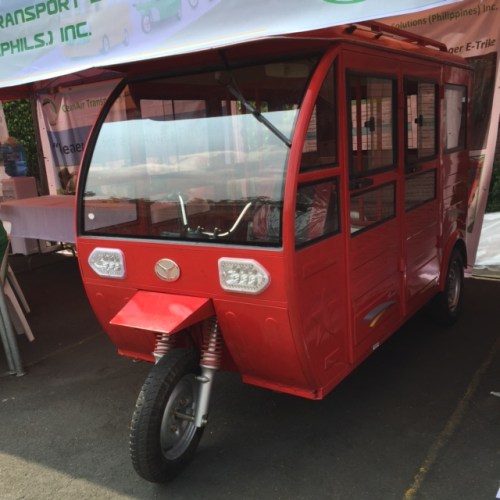 E-trike model by Clean Air Transport Solutions, Inc.
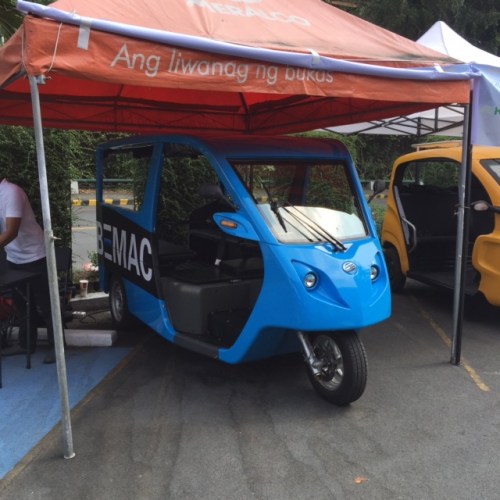 BEMAC e-trike model – the company recently landed a big contract to produce e-trikes.
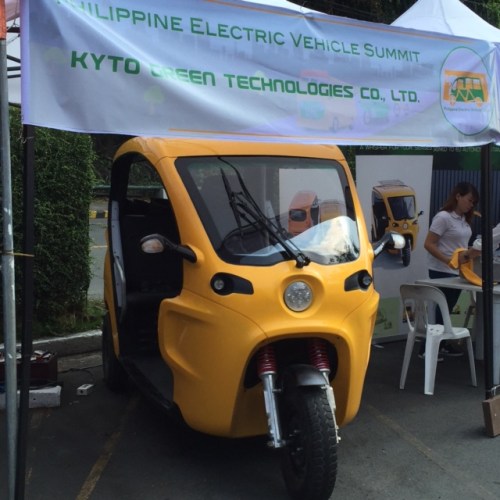 E-trike by Kyto Green Technologies Co., Ltd.
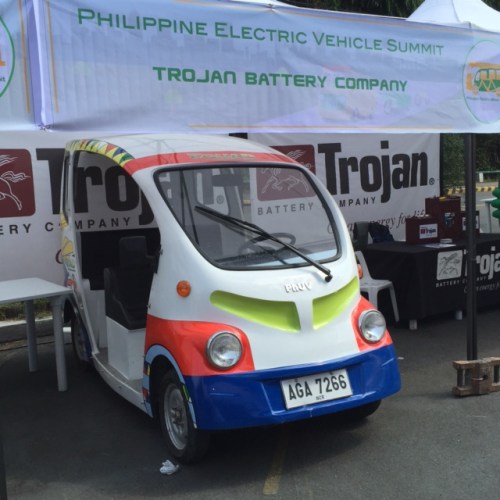 Electric car (4-wheeler) by PhUV powered by Trojan batteries
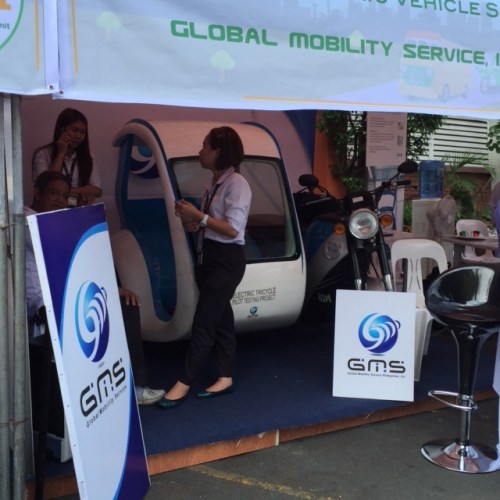 E-trike model by Green Mobility Service
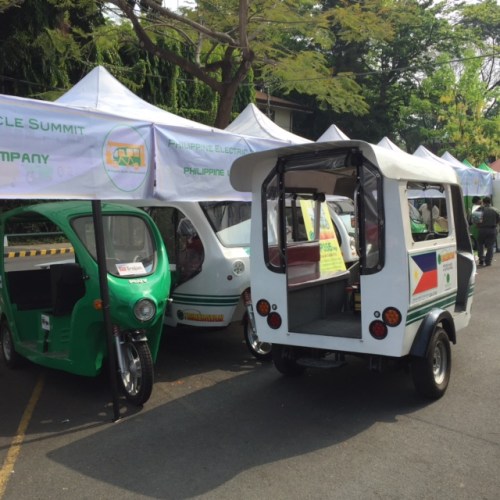 PhUV’s e-trike variants
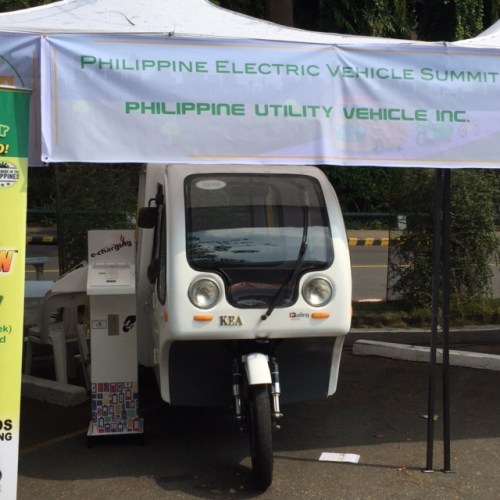 E-trike and charging station by KEA
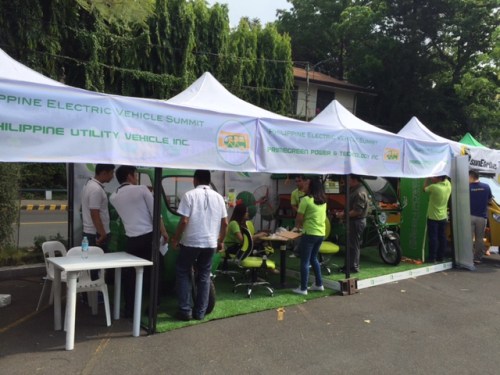 Exhibitors setting up their booths and electric vehicles
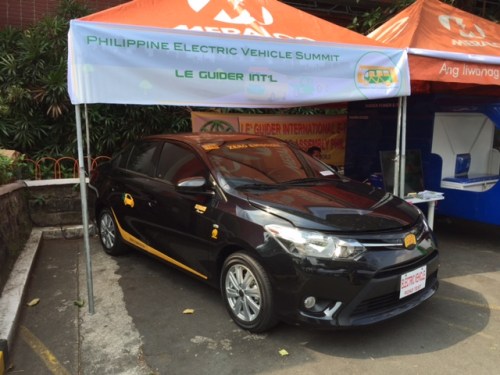 Conventional vehicle converted into electric by Le Guider International
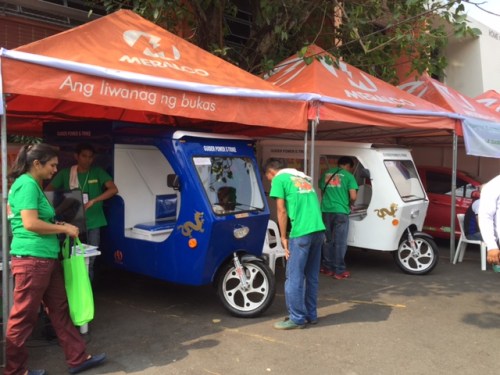 E-trikes by Guider Power
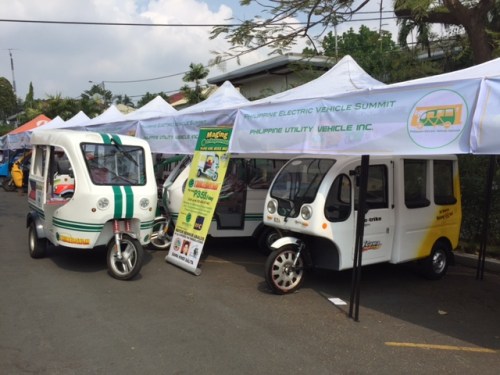 Another look at PhUV’s e-trikes
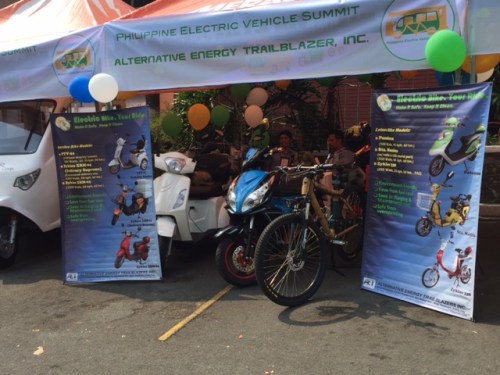 Electric motorcycles by Alternative Energy Trailblazer, Inc.
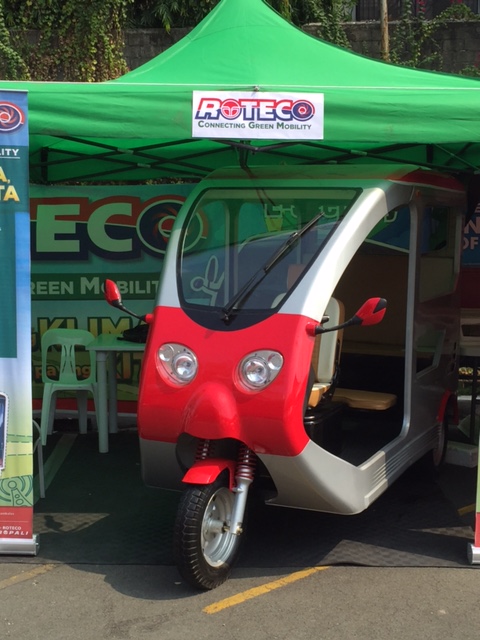 E-trike by Roteco
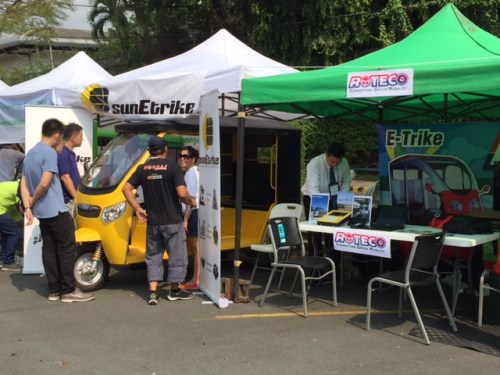 SunE-trike and Roteco booths at the summit exhibition area
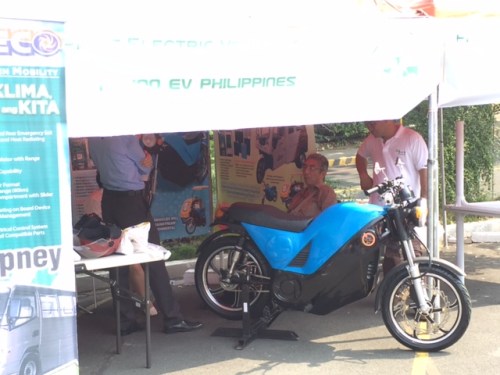 Sporty electric motorcycle model by Talino EV – this can be paired with a sidecar to serve as an e-trike.
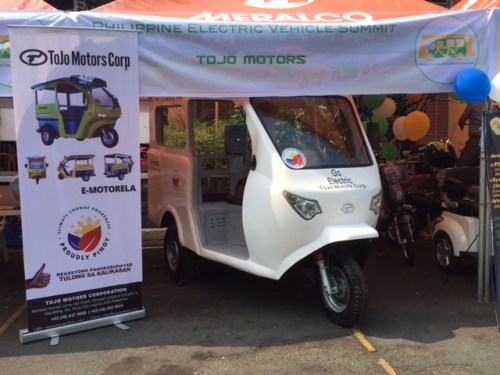 The ToJo Motors booth
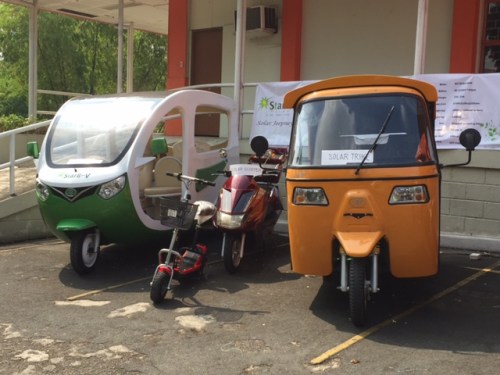 Electric vehicles powered by solar energy by Star8
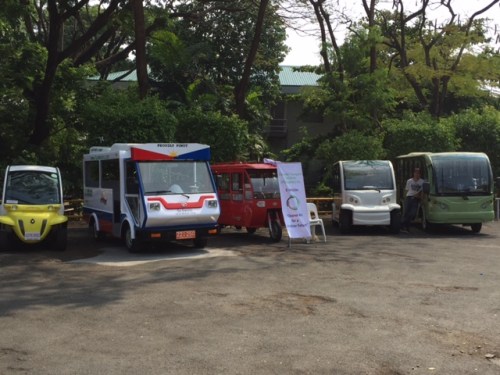 E-vehicle models by Clean Air Transport Solutions, Inc.
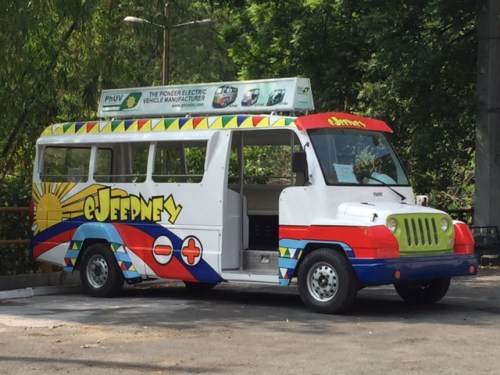 Latest model e-jeepney by PhUV featuring side door and a higher ceiling
To be continued…
–
Introducing the New Director of the National Center for Transportation Studies
The National Center for Transportation Studies (NCTS) of the University of the Philippines Diliman has a new Director. Dr Ma. Sheilah G. Napalang of the School of Urban and Regional Planning (SURP) succeeds Dr Hilario Sean O. Palmiano of the College of Engineering. Dr Napalang becomes the 5th Director of the NCTS since the latter’s transformation from the Transport Training Center (TTC) in the early 1990s, not counting the two OICs over that period.
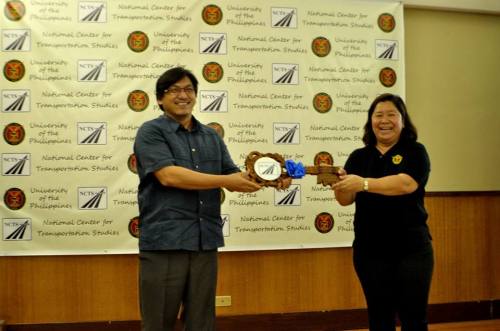 Dr. Napalang receives the symbolic key from Dr Palmiano
Dr Napalang was a former top senior technical staff of the NCTS before she joined the faculty of SURP after a short stint at the Asian Institute of Tourism (AIT) of the same university. Prior to joining UP, she was a faculty member and former Chair of the Department of Civil Engineering of Xavier University in Cagayan De Oro City in Mindanao. Dr Napalang obtained her B.S. Civil Engineering degree at Xavier University, her master’s at Virginia Tech in the US, and her doctorate at Tokyo Tech in Japan. She has done work on sustainable transport and the viability of transport systems. She has also contributed to the Cebu Bus Rapid Transit (BRT) project and the formulation of the National Environmentally Sustainable Transport (EST) Strategy. Her most recent publications are:
- Challenges of Urban Transport Development in Metro Manila: A look back at the last 40 years (lead author)
- State of Pavement Engineering in the Philippines and Implications on the Economic Life of National Roads (lead author)
These papers were presented at the recent 11th International Conference of the Eastern Asia Society for Transportation Studies (EASTS) held in Cebu City last September 2015.
Congratulations to Dr. Napalang for her new appointment, and thank you to Dr. Palmiano for his contributions as NCTS Director!
–
Are Filipinos willing to pay for good public transportation?
There is a nice article that appeared last April 1, 2016. I hope it is not an April Fool’s type of an article.
Why is the U.S. unwilling to pay for good public transportation?
Reading the article reminded me of a lot of similar concerns surrounding public transport projects currently being constructed and those in the proposal and pipeline stages in Philippine cities. It seems though that there are still many people who have little appreciation of the benefits of modern public transport systems. Aside from Metro Manila and perhaps Cebu City, there is little clamor for modern mass transit systems. People tend to take commuting for granted with modes that they have grown up with like buses, jeepneys and tricycles until they start to experience first-hand the pains of traveling using inferior transport on severely congested roads. But even then, most seem to take it in stride and carry on, carrying their crosses in a state of purgatory that seems to have no end in sight.
–
NAIA Terminal 3 international departure wing
My recent trip to Singapore allowed me to take a few photos of the departure area of the Ninoy Aquino International Airport (NAIA) Terminal 3. This is the same terminal that had a blackout recently that drew a lot of flak from a lot of people, and for which the airport manager was supposed to have attributed to bad luck (malas). I don’t agree as many of the problems of the NAIA terminals are the outcomes of poor management that, in other airports in other countries, would result in the manager’s firing.
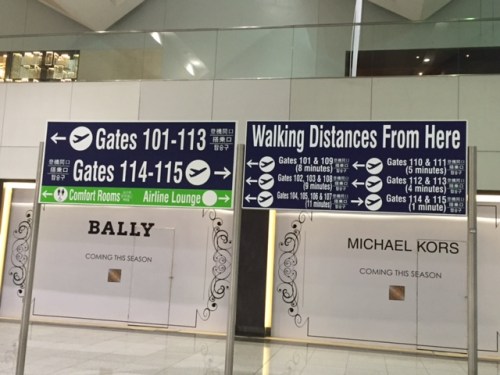 Directional signs and spaces reserved for future shops greet the traveler as he/she enters the area after the final security check.
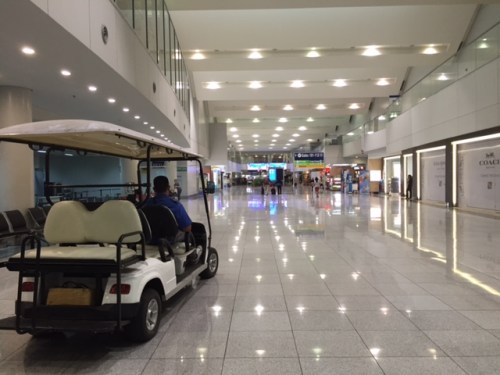 A view of the international departure wing’s expanse with an electric cart for passengers requiring transport assistance
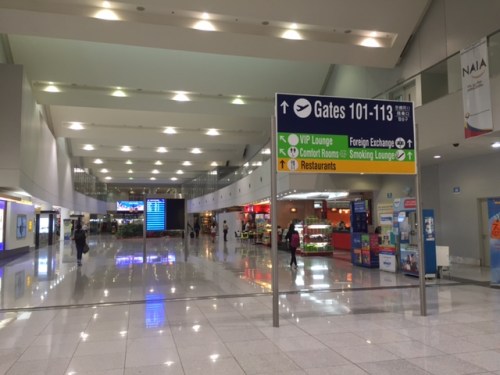 There are now more duty free shops at this wing unlike a few years ago when I was traveling frequently between Manila and Singapore.
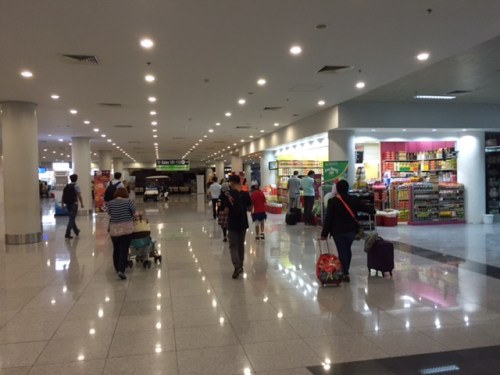 Passengers walking past the shops
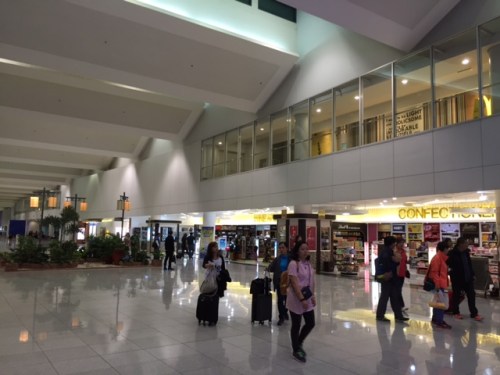 There are more choices now for duty free shopping and those returning to Manila may want to take advantage of the ‘travel light’ promo of Duty Free Philippines, which gives returning passengers 5% discount on their purchases. Items will be collected upon their return to Manila.
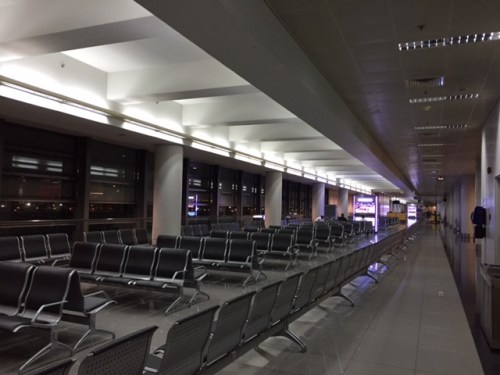 Seats for one of the gates at NAIA T3’s international departure wing
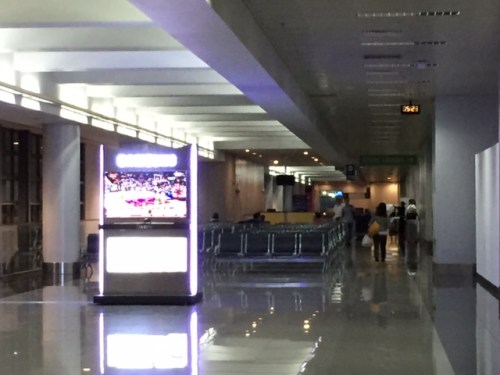 There are still TVs there and all of them were showing replays of NBA games
–
 Caught (up) in traffic