
On a canceled trip due to a typhoon
I was supposed to be traveling with my family to Singapore over the Undas long weekend. That did not push through due to the circumstances brought about by Typhoon Paeng. What could have been our daughter’s first travel abroad did not materialize and we were left with sunk costs from the tickets we had already bought online for Universal Studios and the Singapore Zoo. We also had to cancel meet-ups with friends in Singapore.
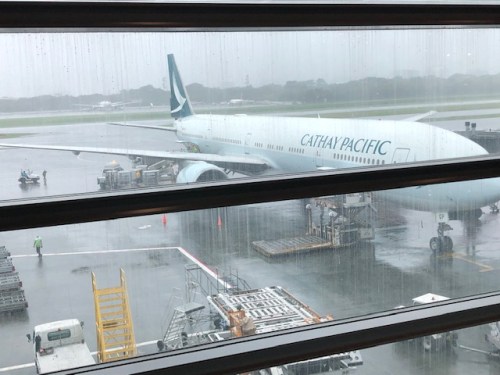 This Cathay Pacific plane landed safely before noon and later departed for Hong Kong without incident.
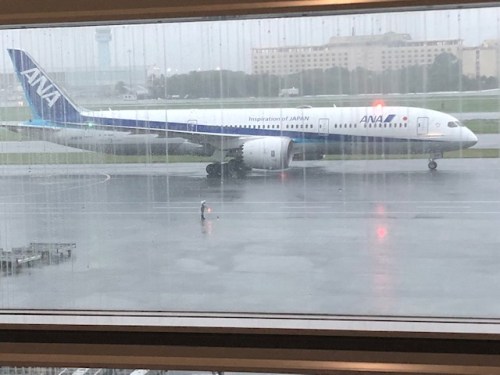 An earlier ANA flight arrived and departed without incident. This one arrived mid afternoon but was similarly grounded due to the typhoon.
The airport announced all flights were canceled just before 6:30 PM. This was a late announcement that some airlines were waiting for. Cebu Pacific apparently had advance information as they canceled all their international flights one after the other around 6:00PM (probably to manage the crowds that would file out of the departure area to reclaim their luggage). We were disappointed that Singapore Airlines did not act immediately and decisively on the matter. We were expecting at least an announcement of when we could expect to be on the next flight. For an airline of their stature, I was also expecting that they could have made arrangements for accommodations due to the great inconvenience brought upon passengers. That was the least they could do if they intended to put us in the next available flight (planes were cleared to operate at 10:00PM that night). Apparently, the typhoon (and its implied acts of nature/acts of God aspect) was also a convenient excuse for the airline (and others, too) to practically abandon their passengers. [Note: A pilot friend intimated that these decisions and behavior by airlines are partly due to policies and actions of the previous administration/government of the Philippines where all the blame was put on airlines for cancellations and they were penalized for acting independently or ahead of government announcements.]
Of course, we later received a series of emails from the airline informing us that we were rebooked to flights the following day. I say ‘flights’ here because these the first email informed us of a flight at 10:00AM. A subsequent email then said we were to be in a 12:00 flight. A third then said that we were to be on a 2:00 PM flight. We got to read these emails around 7:00 AM the following day as they were sent overnight when we were already occupied in finding accommodations during inclement weather. Flabbergasted, we decided to request a refund instead of re-booking and rescheduling our trip. It was already difficult to reschedule as there weren’t any weekends long enough remaining this 2022 and this Undas was the ideal time for a getaway. We’ll try again another time.
–
Provincial bus services via the transport terminal at Robinsons Antipolo
Robinsons Antipolo recently announced the daily trip schedule for provincial destinations for the transport terminal at the mall. These are for destinations in the Bicol region and the Visayan Islands of Samar, Leyte and Bohol. These will likely travel via Rizal’s “backdoor” through Teresa, Morong, Tanay and Pililla and proceed through the Laguna towns of Pangil, Pakil, Paete, Lumban and Pagsanjan, before going through Quezon province via Luisiana, Lucban towards Lucena, where there is a major bus. From Lucena, the trip will then take the usual routes through Bicol. Here is the posting from the Robinsons Antipolo Facebook page:
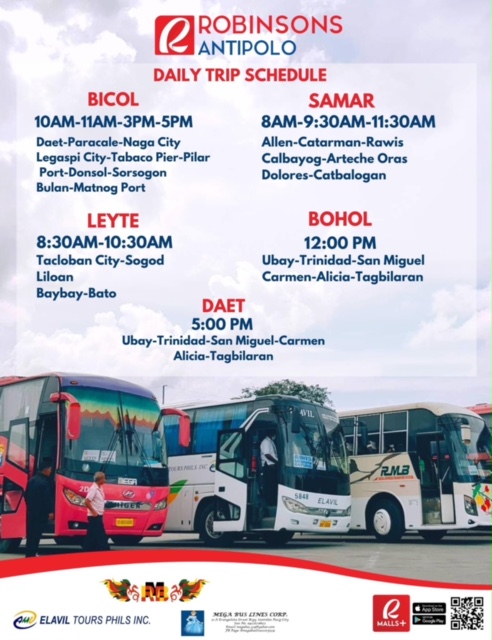
There are three bus companies serving the routes mentioned above and as shown at the bottom of the poster. While I am familiar with the routes in Bicol (I have experienced traveling by bus all the way to Gubat, Sorsogon, which is my mother’s hometown and where we have many close relatives.), I have not experienced crossing to Samar via Matnog. I have been to both Samar and Leyte and have crossed the San Juanico Bridge many times so I know how long those trips can be. The highways now are better and I assume the buses offer more comfortable rides so its the ferry (RORO) crossing between Matnog and Allen that will be the slowest and perhaps most uncertain part of the trip. I say uncertain because if the weather is not good, the coast guard will halt the ferry services. I was surprised there was a connection to Bohol. That is not a short trip from Leyte to Bohol. And I was expecting a service to Cebu instead, which was closer and had regular ferry services between Leyte and Cebu islands.
I don’t know about the demand for these services or routes. I hope these are sustainable and sustained as it offers an alternative for people residing in Rizal and nearby areas who want to go to Bicol, Samar, Leyte or Bohol via these routes.
–
Arrival at Mactan Cebu International Airport
It’s the Undas holidays when people typically travel to their hometowns. In the past, this has been an exodus for the big cities like Metro Manila where most people actually originated from other provinces. It is a common sight for the bus terminals, airports and seaports to be crowded this time of year and prior to November 1 as people travel home. This year is probably the most crowded in many years considering the COVID-19 pandemic has restricted travel the last 2+ years.
This is actually a late post on our travel back in July 2022. It is still relevant as I feature here Cebu’s main gateway – the Mactan Cebu International Airport. We were back in Cebu after almost 3 years and looked forward to a nice vacation. That starts with a pleasant arrival at MCIA that set the tone for a nice break from our work and an adventure for our daughter before school opened (they started in August).
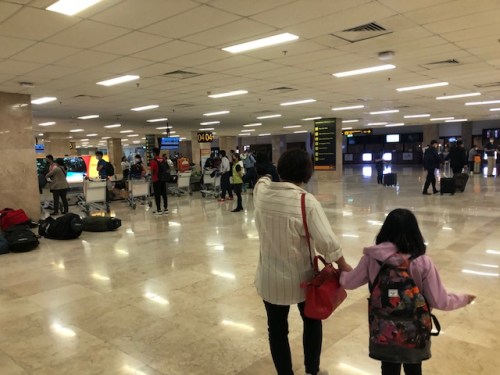 Arriving passengers are greeted by a spacious baggage claim area.
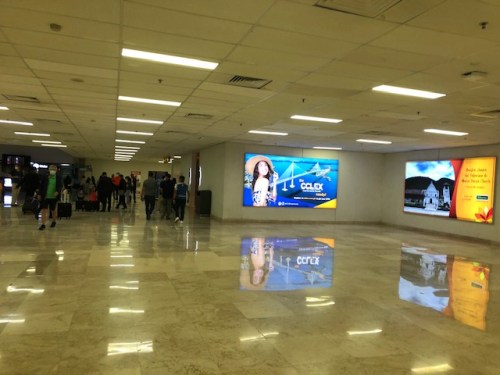 It’s good that the airport did not feel compelled to have every space occupied by something. It makes the passengers feel and appreciate the space, which I thought was a plus for very busy airports like MCIA.
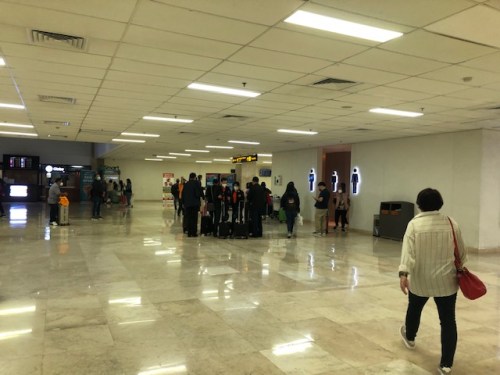 The terminal also has well-maintained tiolets, which is another feature that I think is non-negotiable for such facilities. The toilets are a major part of the first impression of a city/destination for travelers.
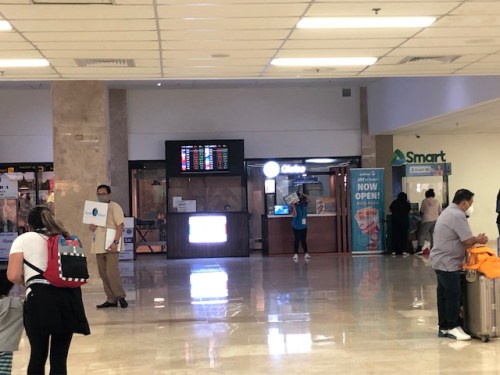 Communication companies greet travelers with promos. Globe and Smart offer simcards for visitors. I think these are more for the foreigners or balikbayans who probably need a local number and simcard so they don’t max out their phone accounts while traveling in the country.
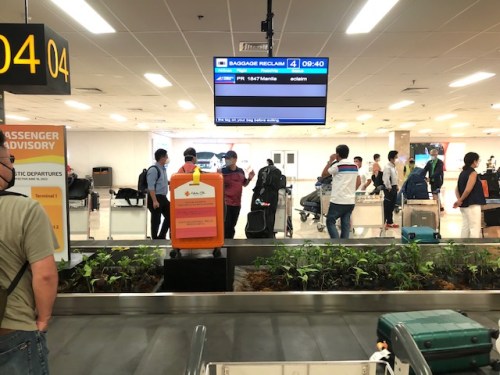 People gather around the carousel to claim their baggage. The info board is working and there are signs reminding passengers to carefully identify and claim their baggage.
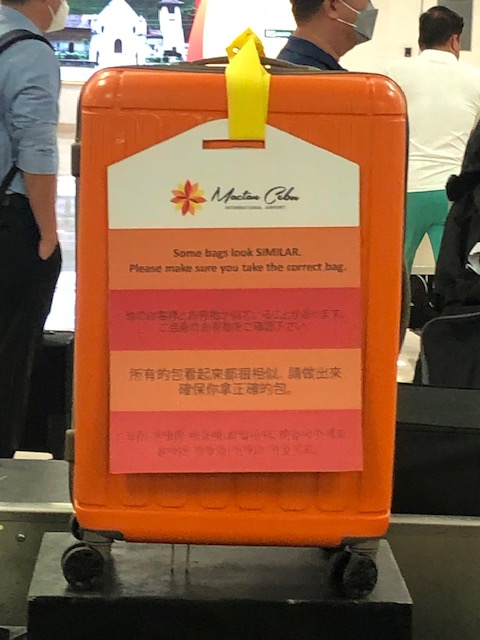 Many bags look similar and since no one checks the tags/stickers upon exit of the terminal, people should take care in picking up the wrong luggage. It can be an inconvenience to both parties.
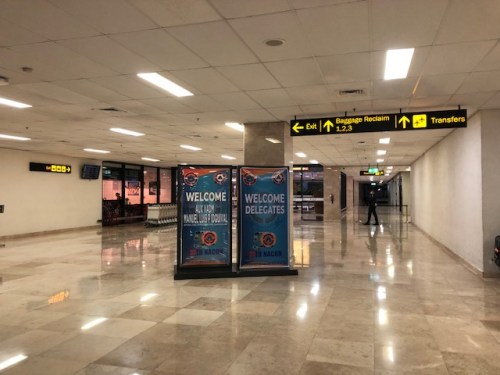 This corridor leads to the airline transfer desks.
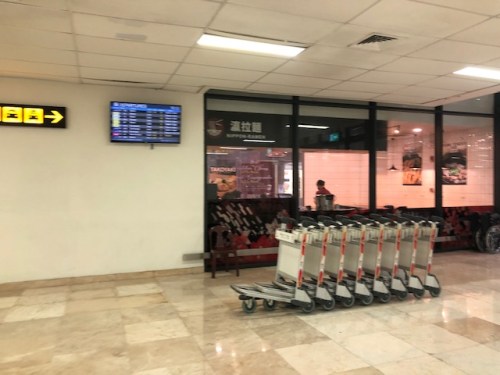 There’s a preview of one of the restaurants outside baggage claim area of the arrival level of the airport.
 Arriving passengers are greeted with a spacious lobby that has two levels of shopping and dining areas.
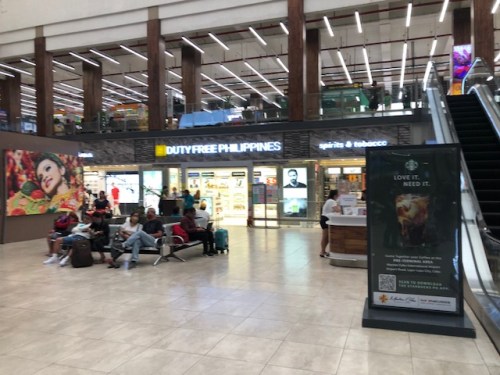 There are two levels of shops and restaurants. Duty Free Philippines has a branch here for those who have the duty free privileges.
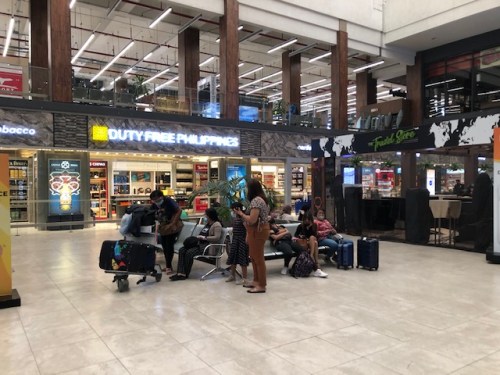 There are seats for travelers and well-wishers.
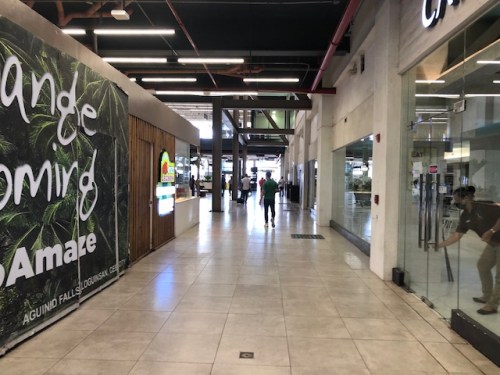 The corridors are lines with shops, restaurants and food stalls.
 Some shops offer the popular lechon (roasted pig) and other local favorites. [Pardon for the blurry photo.]
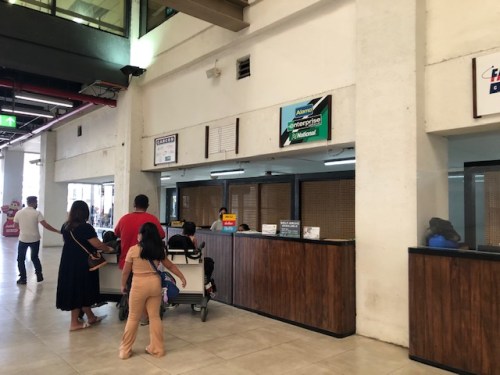 The airport transport services are organized and have their own ‘formal’ counters. This is unlike the old times when these had informal stalls outside the airport. You can now more confidently book your car or van or inquire about tourist services at one of these counters.
I no longer took photos of the transport terminal at MCIA. I already posted photos on that in previous articles. It is the same and still efficient, convenient and comfortable to travelers. It is definitely better than NAIA’s and other airports in the country in terms of design.
–
On reducing driving and its inherent risks
Ever since the automobile was invented and eventually mass-produced, there has been an increasing risk associated with motor vehicle traffic. Laws, policies and regulations have also been influenced to favor the car rather than people. And so we now have what is termed as a car-oriented and dependent transportation system that seems so difficult to undo as most people appear to be enamored by the car. Owning a car (or even a motorcycle if you want to extend this idea of individual ownership) remains an aspiration to a lot of people.
Here is a link to the compact version of a comprehensive report by Todd Litman that presents and argues for a new paradigm where driving is considered a risk factor. There are data and a table comparing old and new traffic paradigms to help us understand the situation and what needs to be redefined or re-framed in order to achieve our safety targets or vision.
Litman, T. (October 20, 2022) “Driving as a Risk Factor: A New Paradigm,” Planetizen, https://www.planetizen.com/blogs/119287-driving-risk-factor-new-paradigm?utm_source=newswire&utm_medium=email&utm_campaign=news-10202022&mc_cid=beacdc2a04&mc_eid=9ccfe464b1 [Last accessed: 10/28/2022]
To quote from the article:
“Safer vehicles, roads, and driving may reduce crashes but achieve few other goals, and sometimes contradict them. Transportation demand management and smart growth policies increase safety in addition to helping to achieve other planning goals, and so can be considered win-win solutions.
More comprehensive safety analysis tends to support social equity goals. Many conventional safety strategies, such as larger vehicles with more passenger protection, and wider roads with fewer intersections, tend to increase walking and bicycling risks. In contrast, lower traffic speeds, TDM, and Smart Growth tend to improve safety, mobility, and accessibility for people who cannot, should not, or prefer not to drive.”
The key takeaway here should be that people should have the option of not driving at all in order to reduce the risks associated with driving as well as reduce congestion. A more comprehensive
–
On modified, fossil fuel kick scooters
You’ve probably seen one of these micromobility modes but take a closer look and you will notice a more spruced-up version of what you thought was an electric kick scooter (EKS). No, this one in the photos is not electric-powered but running on an internal combustion engine. It is a modified, fossil fuel-powered scooter.
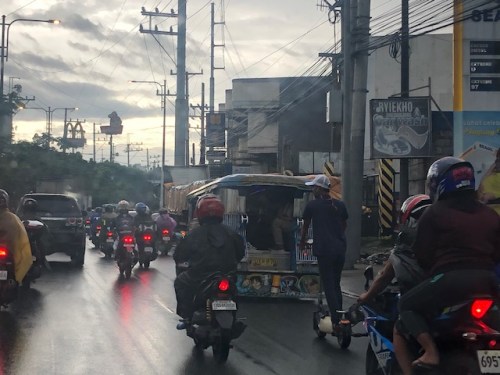 You can see the modifications on the scooter – the engine and the gas tank.
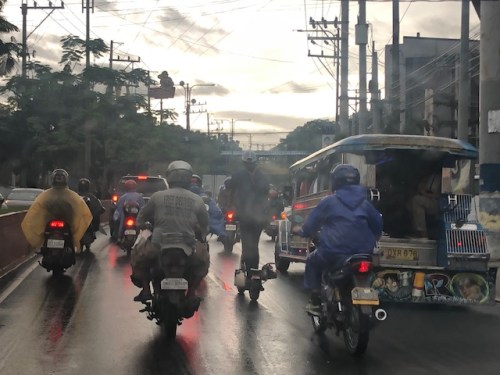 These can be hard to detect for drivers or riders and can be risky at night time when visibility is a major factor for those using these vehicles.
I’ve seen these modified scooters along my typical commuting routes. They seem to be faster than the regular EKS. They also appear to have more power for uphill or climbing as I’ve seen these having no trouble ascending to Antipolo via Sumulong Highway or Ortigas Avenue Extension. As for maneuverability, I cannot really make an assessment except for what I’ve observed. But what worries me is that there are also reckless riders of these vehicles who tend to weave in traffic whether its congested or free flowing. If it’s difficult to anticipate the movement of motorcycles and bicycles along highways and streets, it’s even more with these scooters. But before you react and say that drivers and riders need to be slowing down (and all that jazz), remember that it takes two to tango. Even if you do slow down or practice safe driving or riding, if that other person will be reckless then there will be an increased likelihood for a crash to happen.
–
Children’s companions to and from school
In the recent 15th National Convention on Statistics, an interesting information is about the companions of school children when going to school and coming home from school. Note the change in companions from elementary school to high school.


The data above is from Zamboanga City. Is it the same or different in other Philippine cities or municipalities?
–
On the future of the common auto repair shop
I saw this article on Wired about how high-tech vehicles are killing the auto repair shop. I have to agree with the observation. Perhaps it’s more imminent in the First World where newer model vehicles including electric and hybrid vehicles cannot just be repaired at a conventional auto repair shop. And they do have more of the newer vehicles as they have phased out the older ones that don’t comply with the higher standards that are now in place in terms of things like emissions and fuel consumption.
Marshall, A. (October 20, 2022) “High-Tech Cars Are Killing the Auto Repair Shop,” Wired, https://www.wired.com/story/high-tech-cars-killing-the-traditional-auto-repair-shop/?bxid=5bd6761b3f92a41245dde413&cndid=37243643&esrc=AUTO_OTHER&source=EDT_WIR_NEWSLETTER_0_DAILY_ZZ&utm_brand=wired&utm_campaign=aud-dev&utm_content=WIR_daily_102122&utm_mailing=WIR_daily_102122&utm_medium=email&utm_source=nl&utm_term=P4 [Last accessed: 10/22/2022]
To quote from the article:
“As the traditional auto repair shop disappears, so might the stereotype about the grizzled and grimy auto repair tech with a wrench in his hand. “These complexities have made it more difficult for a shop to operate if it’s not running properly—if it’s not properly funded, not properly insured, doesn’t have the correct tooling, doesn’t have the right insurance,” says Lucas Underwood, the North Carolina shop owner.”
In our case, there are still so many of the conventional vehicles operating including the locally fabricated ones using surplus engines. At least for the more basic repairs the neighborhood repair shops, the “talyers” as we call them, will survive for now and perhaps for a longer while than how it is in the First World. Even the backyard or self taught auto mechanics are trying to keep up with the electronics and many are honest enough to tell you to go to the ‘casa’ if they cannot repair your vehicle or perhaps the parts are not available at the typical auto supply shop.
–
Another look at the Zamboanga Airport – departure
This is another one of those late posts. I was in Zamboanga City three months ago. I had wanted to see for myself what the airport now looks like and if they were able to complete the renovations on the airport. Here are the photos I took of the departure area of the airport where most of the renovations were being done the last time we were in Zamboanga just weeks before the lockdown in March 2020.
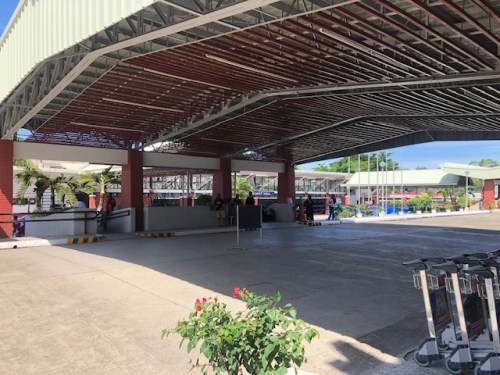 The driveways are still the same and so is the main concourse, which is limited to VIPs. Most passengers would have to cross this area from where they alighted to get to the terminal.
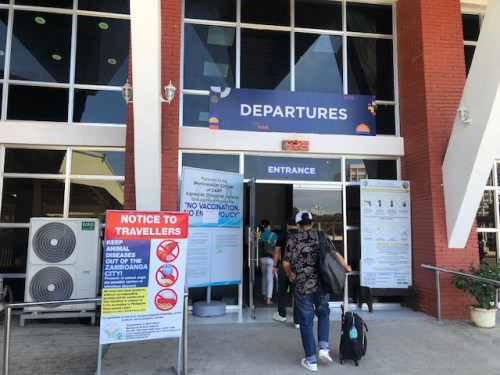 Entrance to the terminal’s departure area
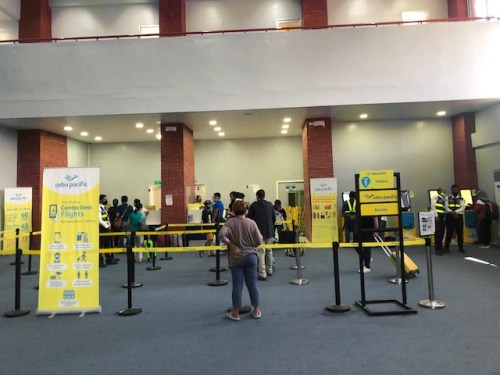 What used to be a crowded, hot and humid check-in area is now spacious, orderly and better-ventilated.
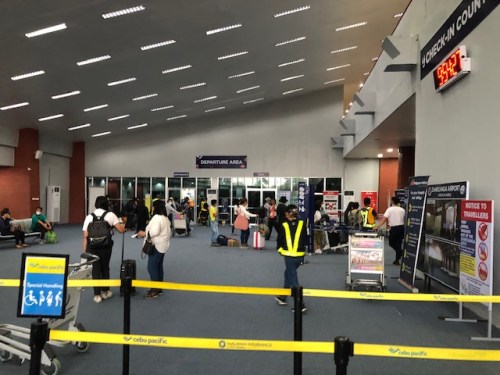 A general view of the check-in area of the airport
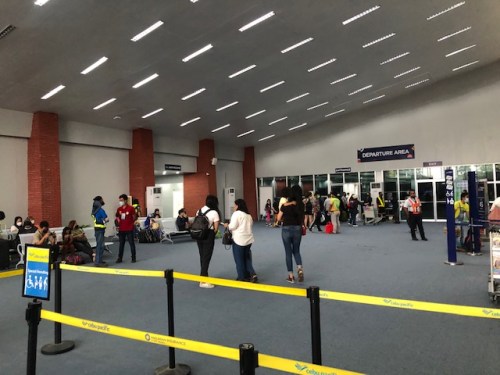 It can now accommodate more passengers and travelers will be more comfortable here compared to how it was before.
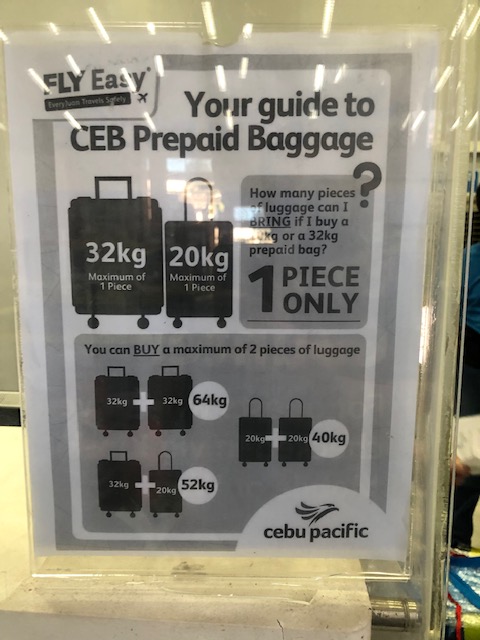 Cebu Pacific posted this for guidance of passengers in the number of baggage they are allowed to bring according to what they paid for when they bought their tickets.
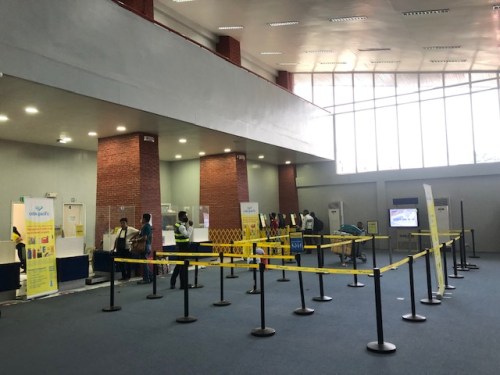 Cebu Pacific’s check-in counters
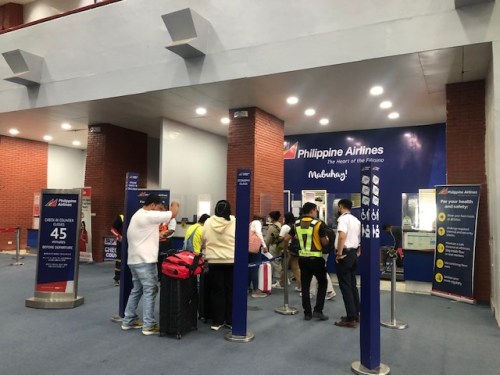 PAL’s check-in counters
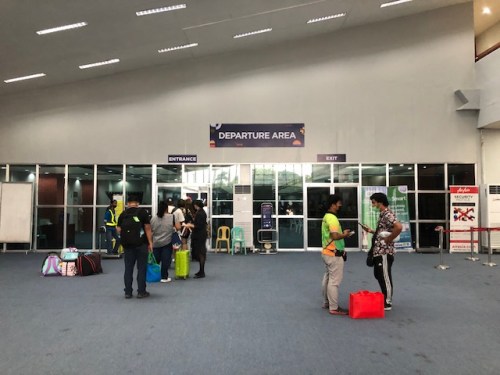 Entrance to the lounges – airport personnel check the passengers’ boarding passes and mark the seats on the plane to probably see who are already in the lounge and waiting for the boarding call.
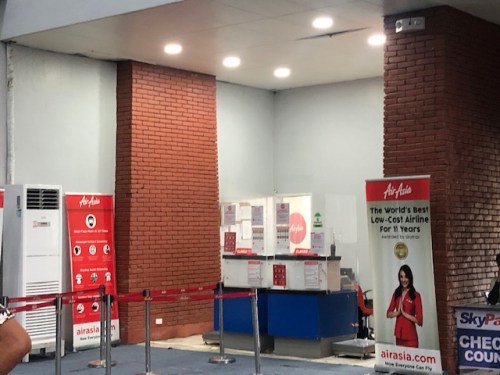 Air Asia check-in counters
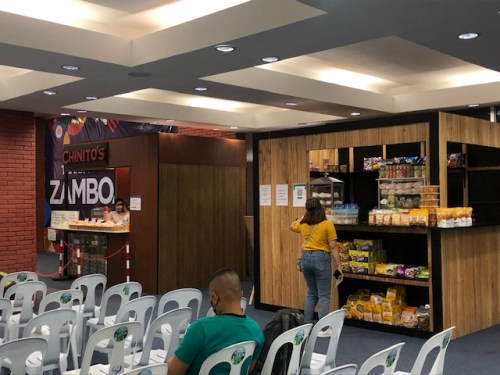 The shops and eateries that was in the mezzanine are no more. Like the airport in Panglao there are now fewer and limited food options at the departure lounge. Fortunately, there is a stall operated by the popular restaurant-cafe Chinito’s. They have good coffee, snacks and light meals there.
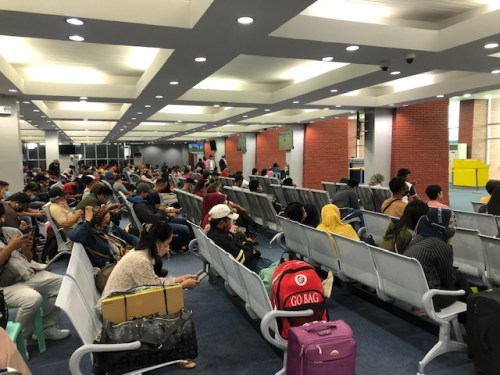 The lounge area remained the same. I did not see any additional seats or areas for departing passengers. The lighting has improved though.
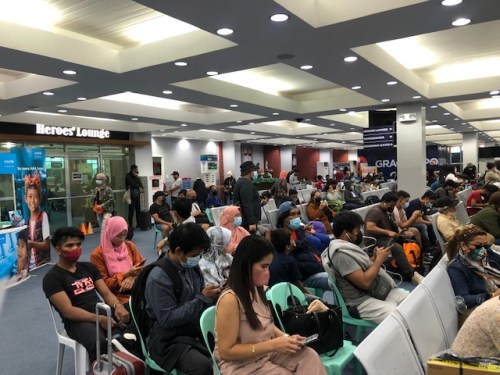 There’s a separate Heroes’ Lounge for those who are from the armed forces. Zamboanga is an important post for the military and you can see drones either flying or on the ground at the air force base in Zamboanga. Andrews Air Base is just across the airport and they share the same runway.
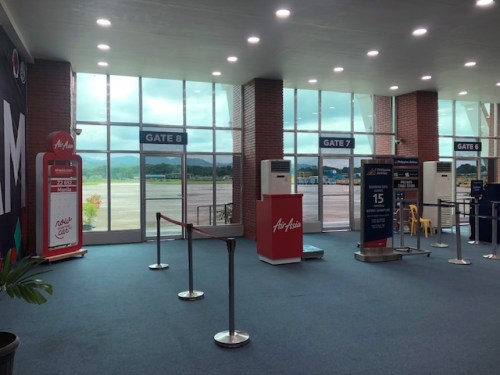 Gate assigned to Air Asia
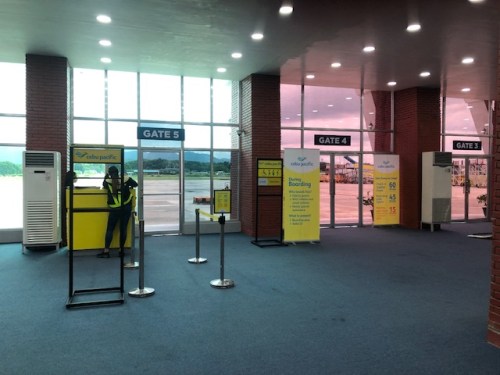 Gates assigned to Cebu Pacific
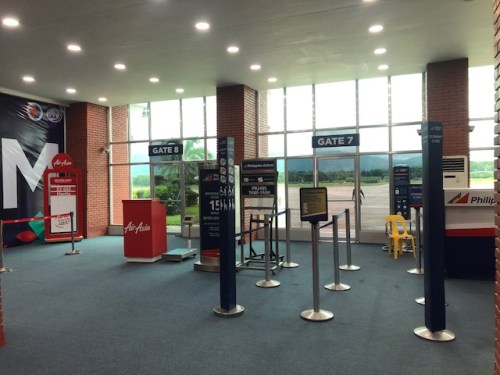 PAL’s gates are just beside the one assigned to Air Asia
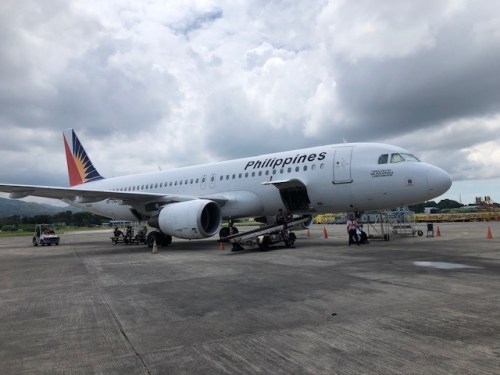 A PAL jet preparing to load luggage and freight
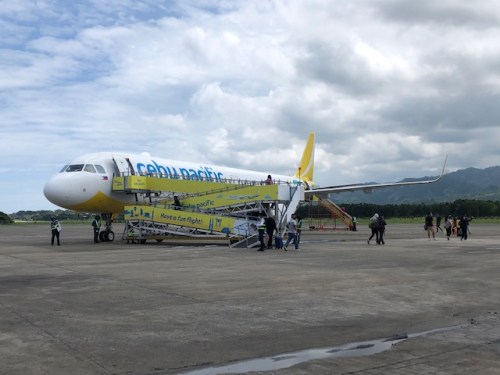 Our Cebu Pacific plane uses the more passenger-friendly ramps for the forward door.
I will post more photos of airports once I am able to visit other cities once again. I am already looking forward to traveling to Cagayan De Oro via Laguindingan Airport. And perhaps my first overseas trip since December 2019. Meanwhile, I still have to post photos of Mactan’s newer terminal.
–
Who can design bikeways?
I have read many comments about how bike lanes and other bike facilities are sub-standard or unacceptable because they were designed by non-cyclists. From an academic perspective and perhaps also from a point of view of someone who values empathy, the planning and design of bicycle facilities should not be so limited. The objective of education, and particularly for schools whose graduates become professionals like engineers, architects and planners, should be to have the latter be able to plan and design the most suitable infrastructure and facilities for all users. Suitability here should include equity considering the many elements involved for people of different gender, physical ability or disability, age, health conditions, etc. That said, it is the responsibility of agencies such as the Department of Public Works and Highways (DPWH) to revise and update their design manuals and guidelines to ensure that these are according to International standards and mindful of the best practices in various cities and countries that are now very well documented.
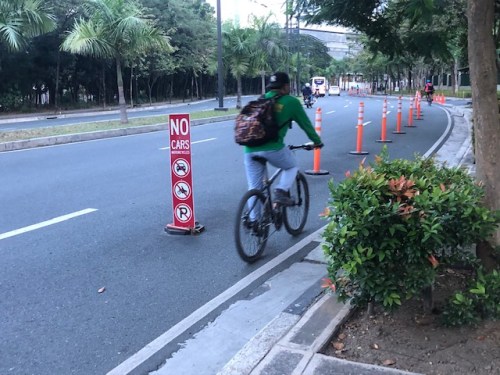 Bike lane in BGC,Taguig City
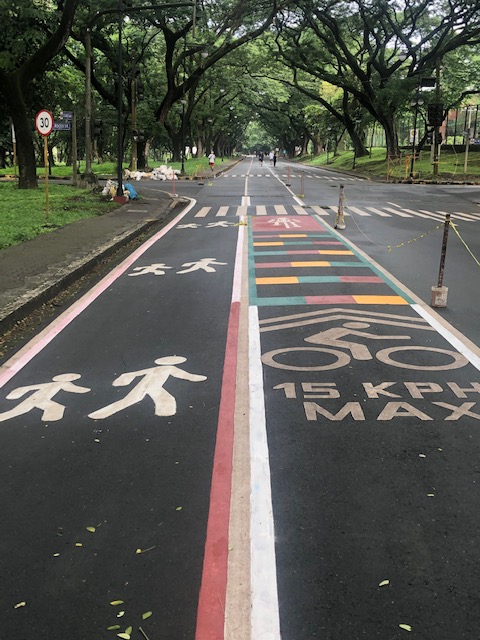 Bike lane and jogging/walking lane in UP Diliman
–
On making streets safer through woonerfs
One of the new things I learned when I was taking up transportation planning as an undergraduate student in the 1990s was about the woonerf. Our teacher then was a Visiting Professor from the Tokyo Institute of Technology. He introduced to us many concepts in that elective course that paved the way to a number of us proceeding to specialize in transportation. What is a woonerf? Well, here’s a nice article defining the woonerf and providing some examples:
Ionescu, D. (October 6, 2022) “What is a Woonerf?” Planetizen, https://www.planetizen.com/definition/woonerf?utm_source=newswire&utm_medium=email&utm_campaign=news-10062022&mc_cid=9d60b3d668&mc_eid=9ccfe464b1 [Last accessed: 10/10/2022]
To quote from the article:
“Translated as “living street,” a woonerf employs strategies like traffic calming devices and low speed limits to force drivers to slow down and safely share street space with pedestrians, cylists, and others, often without raised curbs separating cars and pedestrians. In the Netherlands, where the woonerf originated in the 1960s, motorized traffic within woonerf zones is limited to walking speed…
…A woonerf is not a pedestrianized street, but rather one where multiple users and vehicles co-exist. However, a woonerf can be converted to car-free uses using bollards or other barriers. The woonerf maintains utilitarian uses like loading docks and parking while making the roadway safer and more accessible to non-drivers.”
There should be many applications to the woonerf in the Philippines especially in areas where the dominant land use is residential and through traffic should be discouraged. This is goes well with the complete streets concept that is now being promoted and in fact pre-dates the concept and was well ahead of its time.
–
 Caught (up) in traffic