
TSSP 2016 Conference Program
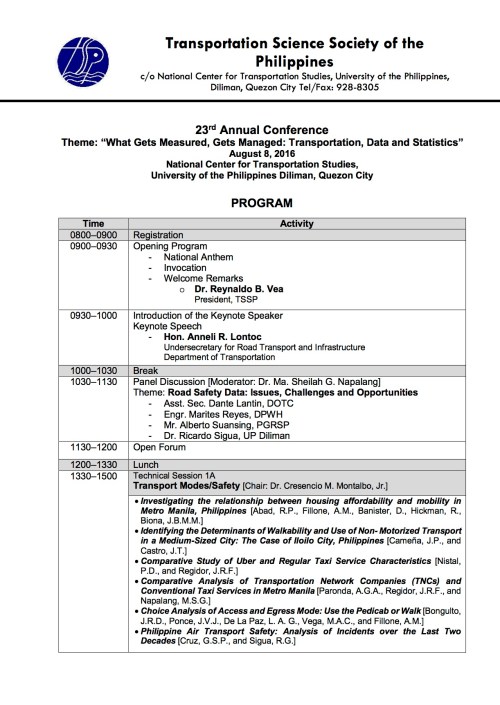
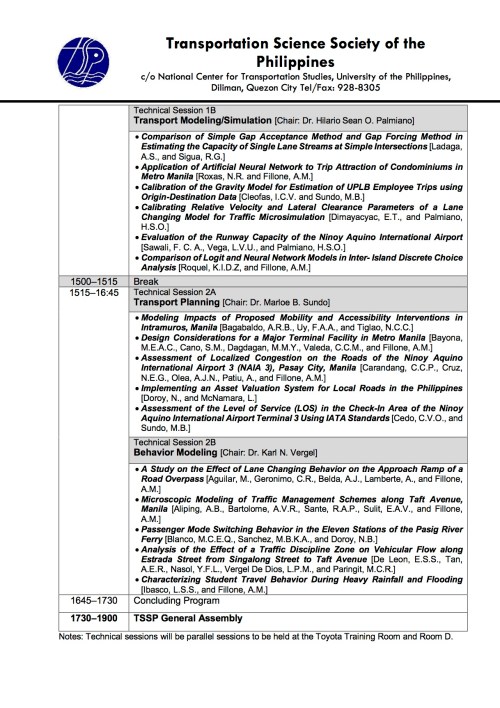
I am sharing the banner and final program for the Transportation Science Society of the Philippines 23rd Annual Conference to be held on Monday, August 8, 2016. The final program features a Keynote Speech by the Undersecretary for Road Transport and Infrastructure Anneli R. Lontoc, a Panel Discussion on Road Safety, and technical sessions in the afternoon.

 –
–
Walking is good for you!
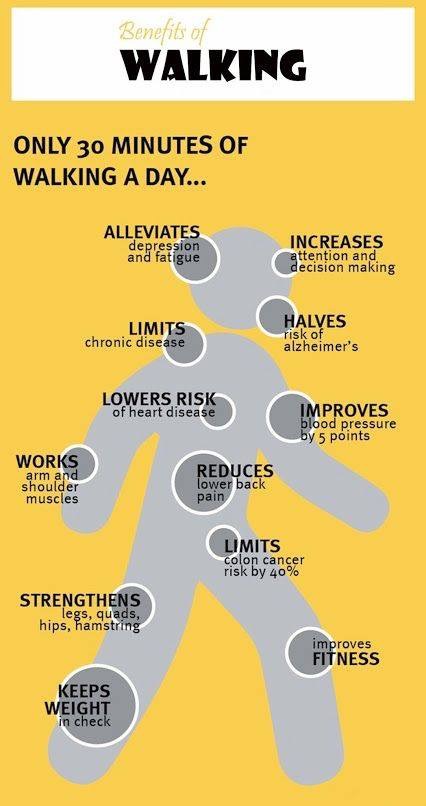
I found the following graphic on social media (Facebook). It shows the benefits of walking, particularly 30 minutes of walking per day. There are many studies that have established the benefits of what is now termed as ‘active transport’ that includes walking and cycling to promote healthy communities and cities. If only our communities and cities are more walkable then perhaps more people can be encouraged to walk more and there will be a reduction of motor vehicle traffic. The latter will be those vehicles used for short distance trips that are typically associated with distances suitable for walking rather than riding or using a motor vehicle.
–
Straddling bus prototype?
What was peddled as a unique public transport mode concept in social media is now a reality. Check out the article and video here:
China’s Futuristic Straddling Bus Is Finally Here
This is a welcome development for public transportation. However, some issues need to be addressed, particularly regarding road safety. Motorists traveling under the straddling bus may have reactions to the vehicle as it passes above them and such may lead to road crashes. Of course, with the advent of driverless vehicles such incidents may be minimised if not altogether eliminated.
–
TSSP 2016 Conference: Tentative Program
I am sharing below the tentative program for the 23rd Annual Conference of the Transportation Science Society of the Philippines (TSSP):
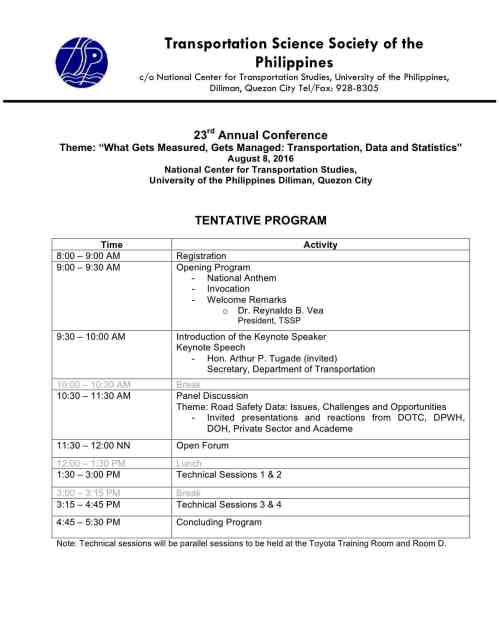
Soon, I will post on the list of papers to be presented for the Technical Sessions to be held in the afternoon part of the one-day conference.
–
TSSP 2016 Conference – August 8, 2016
I start August with an announcement, promoting the 23rd Annual Conference of the Transportation Science Society of the Philippines (TSSP). The theme of this year’s conference is “What Gets Measured, Gets Managed: Transportation, Data and Statistics.” The conference will have a panel discussion in the morning and parallel technical sessions in the afternoon.

The topic for the panel discussion is “Road Safety Data: Issues, Challenges and Opportunities”. Confirmed are resource persons from the Department of Transportation, the Department of Public Works and Highways, and the Global Road Safety Partnership Philippines. The session will feature presentations and reactions on agency or organization initiatives on road safety with emphasis on road safety data. An open forum will immediately follow for the audience to be able to participate in the discussions.
The afternoon will feature 4 parallel technical sessions where selected papers will be presented. These would be the output of researches from leading universities including the University of the Philippines, De La Salle University and Mapua Institute of Technology. I will post on the paper titles as soon as I get a copy of the program.
The one-day conference will be held at the National Center for Transportation Studies at the University of the Philippines in Diliman, Quezon City.
–
Seemingly minor violations that affect traffic and safety
The following photo shows one of the many minor violations that happen everyday along many roads and particularly at intersections. Motorcyclists and drivers frequently occupy spaces that are supposed to be clear of vehicles. The motorcycles and AUV below occupy the pedestrian crossing that is typically space for pedestrians and cyclists crossing the intersection. Both vehicles also are encroaching upon the intersection’s yellow box, which can be risky given that the intersection is signalised and other vehicles are given the right of movement according to the cycle settings of the intersection.
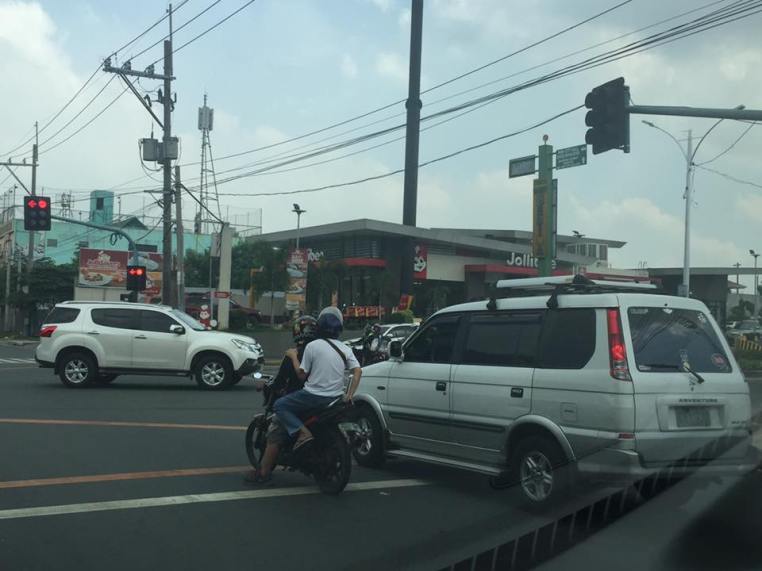
This and others like it are what seems to be minor incidents but in truth have a combining or cumulative effect on traffic streams that contribute to congestion as well as having implications on road safety. Pedestrians and cyclists are forced to go around the vehicles blocking their paths, likely putting them in harm’s way. Other motorists try to avoid these errant vehicles, which, like in the photo, may be blocking the path of vehicles proceeding towards the intersection leg to the right that is hidden in the picture. Motorists doing this must be apprehended by traffic officers/enforcers as these are clear violations of traffic rules. If one is to promote discipline among road users, then it should start with minor violations that tend to be disregarded by traffic enforcers.
–
Evidence from Montreal: Building bike lanes to reduce car use
I just wanted to share this article showing evidence of car use reduction (and therefore, car traffic along roads) with the provision of bicycle lanes.
Building Bike Lanes Really Does Get More People Out of Their Cars
The article though cautions readers against generalising or assuming great improvements. Some figures mentioned in the article including the following (I took the liberty of copying and pasting):
- “A 10% increase in bike accessibility resulted in only a 3.7% increase in ridership.”
- “…cycling infrastructure also reduced greenhouse gas emissions from cars by 1.7%, a reduction equivalent to converting transit buses to hybrids and electrifying commuter trains.”
These numbers are for the case of Montreal, Canada. Not mentioned are the number of cyclists, vehicle traffic volumes and other pertinent data that are useful in analysis. The article correctly points out the importance of using science (e.g., sound analysis based on good data) in order to convince governments to put up bicycle infrastructure. I would even add that this approach should also be applicable to pedestrian facilities.
–
Monuments to recklessness or carelessness?
Our recent trip to a resort in Batangas required for us to take a local road that was both narrow and winding. The roadside revealed what remained of a bus that was involved in a crash not too long ago. This was a crash where many of the passengers perished. Many of the fatalities were teachers who attended a workshop held in a venue in the area.
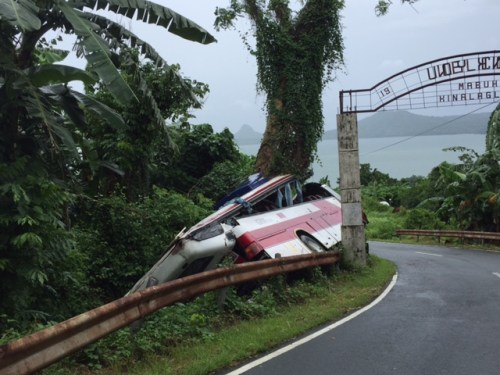 Remains of the bus wreck along the local road in Mataas na Kahoy, Batangas
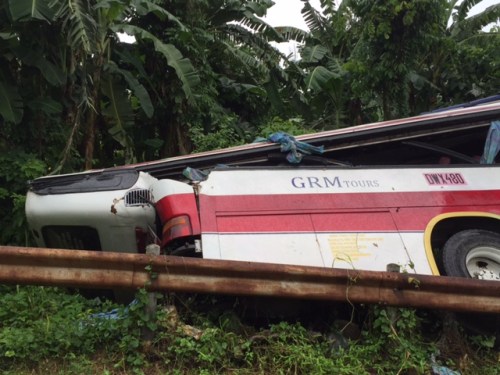 From the looks of the wreck, it is difficult to assume that no one perished here. Passengers seldom wear their seat belts when riding a bus and a crash would mean passengers literally flying around inside the bus. It would have been difficult to avoid serious injury at the least for those who were in the bus.
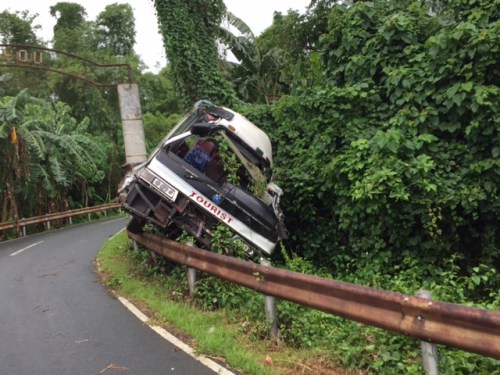 This is the scene that will greet travellers to Mataas na Kahoy, Batangas. Gruesome but it drives the point regarding road safety. The wreck serves as a strong reminder to drive safely no matter what in order to avoid such incidents.
–
Dang Bakal road widening in Antipolo
We go to church at the Parish of the Immaculate Heart of Mary along Daang Bakal in Antipolo City. Quite obvious is the current road widening project being implemented along Daang Bakal. While the improvement of the road was welcome, my opinion is that widening the 2-lane road to 4 lanes was not necessary given the traffic in the area served by the subject section (basically traffic generated by the parish and the exclusive subdivisions along the road). For one the section being widened from the intersection with the Antipolo Circumferential Road leads to a dead-end (i.e,, the gate of an exclusive subdivision). And so, traffic is generally very light along this road section
Are there plans to revive the original right of way of the old railway line but in the form of a road connecting Hinulugang Taktak to Ortigas Avenue via Valley Golf? If not, then the road widening of Daang Bakal is unnecessary. Even if the justification were for cyclists, I would argue that perhaps you only needed to have paved shoulders that need not have the same width as the carriageway lane. Following are photos of Daang Bakal featuring the road widening project.
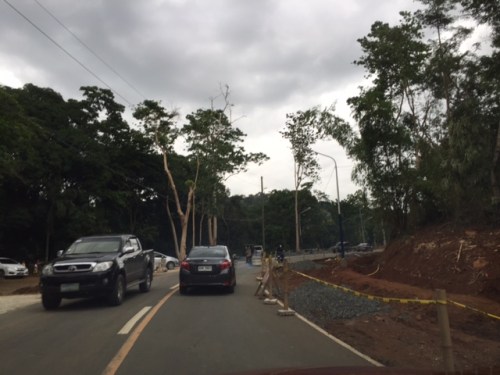
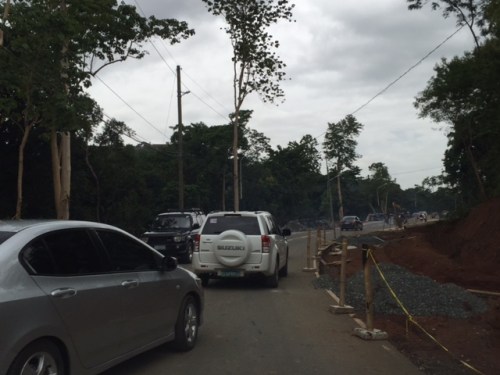
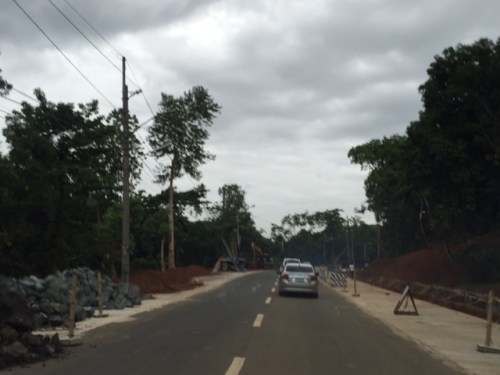
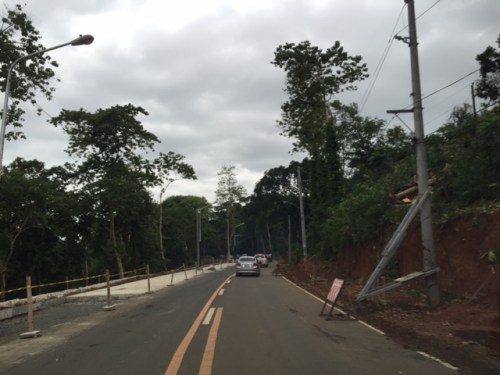
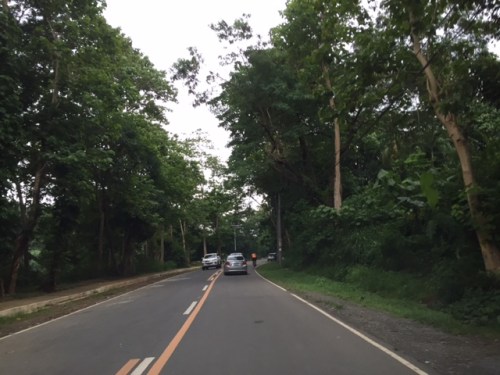
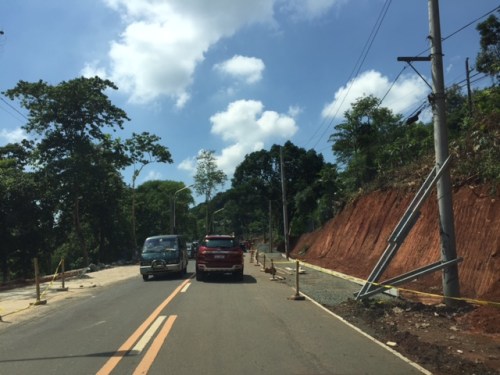
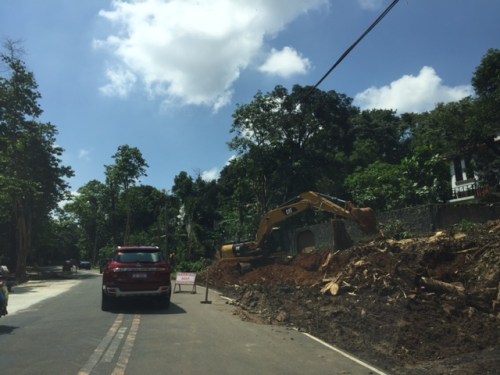
From the photos, it is clear that a lot of trees have been cut in order to make space for the additional lanes for the road. While most of these trees are too close to the original carriageway, there were many that I felt didn’t need to be cut if a narrow shoulder was deemed sufficient for the road. Traffic in the photos are typical peak period traffic on a Sunday when the road carries the most traffic in a day due mainly to churchgoers.
–
Standards for integrated railways in the Philippines
With the recent pronouncements about railway projects in Metro Manila including the ongoing Line 2 Extension to Masinag, the impending construction of Line 7 (i.e., along Commonwealth and Regalado Avenues and Quirino Highway) and the proposal for a Line 4 (Diliman, Quezon City to Lerma, Manila), it becomes more imperative to have integrated railway infrastructure including and especially common stations where lines intersect and common specifications guided by standards or guidelines. Do we have such or has there been work towards their formulation in the past? The simple answer to that question is yes. But then we have to qualify that affirmative response because while there was a study a decade and a half ago, the outcomes of that study, which is a comprehensive take on all aspects of railway systems was never formally adopted (again?) by the Philippines.
The following link is for the Executive Summary of the “Study on Integrated Railway Network for Metro Manila (SIRNMM) completed in 2001.
Perhaps there is a need to revisit the outcomes of this study? This can serve as a good platform from which updated guidelines and standards can be developed for a more harmonious development of railways systems not just for Metro Manila but for other cities as well.
–
 Caught (up) in traffic