
Counterflow culture: pang-iisa
There are several videos currently circulating in social media showing counter-flowing motorists. In one, a driver with a camera on his dashboard proactively positions his vehicle along the middle lane of the correct side of the road and engages a counterflowing motorist who initially appeared as if he were going to insist on his wrong behavior (feeling entitled perhaps?). The driver with the dash cam didn’t budge or give way and the errant driver had to go back to his correct lane.
In another, more serious video, another dash cam records a scene along a curved 2-lane section of Marcos Highway where an oncoming motorcycle slammed into a counterflowing vehicle coming from the left side of the vehicle with the dashcam. It was clear that the counterflowing motorist violated the double yellow line rule, which led to the dreadful crash.
These are examples of what seems to be a counterflow epidemic among many motorists. Counterflowing is not only prevalent among motorcycles and public utility vehicles but among private vehicles as well. There are even those who follow emergency vehicles that legitimately and urgently use the opposing traffic lane. This behavior seems to be associated with these motorists wanting to get ahead of others. In Filipino or Tagalog, the term is translated to pang-iisa or gustong maka-isa (wanting to get one up on other people). This behavior can be attributed to a person being impatient, undisciplined, reckless, feeling entitled, or – all of the above.
Such issues could have been preempted by a stricter licensing system that can be administered by the Land Transportation Office (LTO). However, since many already have their licenses then the burden for correcting such behavior falls upon traffic enforcement agencies and their personnel including the Highway Patrol Group (HPG) and the MMDA. Hopefully, such errant behavior can be corrected and our roads can be safer for all users.
–
Will a flyover at Katipunan-C.P. Garcia solve the traffic problem in the area?
I read a news article about the proposal by the Department of Public Works and Highways (DPWH) to construct a left-turn flyover at the intersection of Katipunan Avenue (C5) and C.P. Garcia Avenue in Quezon City. The flyover is supposed to be for vehicles turning left from the northbound side of Katipunan to C.P. Garcia Ave., which goes through the University of the Philippines Diliman
Will the flyover solve the traffic congestion problem in the area, particularly at the intersection and Katipunan in general? I would say no, it would not solve the congestion problem both for the intersection and for Katipunan. This assessment is due to the following reasons:
- The overpass does not address the root cause of congestion in the area, which is trip generation related. There are many major trip generators along Katipunan alone including three major schools (UP, Ateneo and Miriam) and a mall (UP Town Center). Add to this the traffic generated by the high density residential developments along Katipunan (notice the high rise condominiums lining up across Ateneo and Miriam?) and the through traffic coming from various areas that use C5’s Katipunan section.
- Congestion is caused by saturated intersections corresponding to Ateneo Gate 3 and main gate of Miriam College. Traffic going in and out of these schools are favored over through traffic along C5 resulting in congestion in the area. Perhaps it would be more appropriate to build overpasses to bypass these intersections.
- Congestion is caused by vehicles bound for and coming from the UP Town Center. The congestion due to traffic generated by the commercial development is actually alarming considering it is not yet completed and trips attracted and produced is not yet at full potential.
- The heaviest flows at the Katipunan-C.P. Garcia intersection are along Katipunan (northbound and southbound through traffic). Logic and traffic engineering principles point to grade separation to be more appropriate for such traffic and NOT for the left turn movement. A flyover should also be able to bypass UP Town Center as vehicles bound for the mall already blocks traffic along both sides of Katipunan and directly affects the intersection.
I think the DPWH should do well to re-assess their proposal along the lines of the reasons I have listed here rather than continue with the folly of building a left turn overpass alone. UP Diliman should also resist this overpass as, based on the news article, it would mean UP giving up some 8,000 square meters of its property for the project. UP already has given a lot for widening C.P. Garcia but that goes without saying that a through flyover might also require UP to give up property and particularly from its National Science Complex for such a project.
–
Shopping malls and Ortigas Avenue Extension traffic congestion
Recently, I noticed that traffic has somewhat eased along the eastbound side of Ortigas Avenue Extension. For one, this was probably due to the completion of road works and the reopening of lanes between Cainta Junction and Brookside. This improved traffic flow as traffic personnel didn’t have to resort to the balancing act that is the counter-flow scheme they had been employing to alleviate congestion for mostly home-bound traffic. But a major contributor to congestion was the Ever Gotesco Mall in the former Riverside industrial complex. Malls like this are major trip generators and if traffic coming in and out of the malls are not managed properly or facilities are not provided for efficient movement of people and vehicles, then there will surely be congestion along access roads. I stated that the Ever mall ‘was’ a major contributor because the mall recently closed down and the property is now fenced off from the road. At present, there is practically zero traffic that can be attributed to the former mall.
Following are a few photos of the closed and fenced off property that was the Ever Ortigas mall.
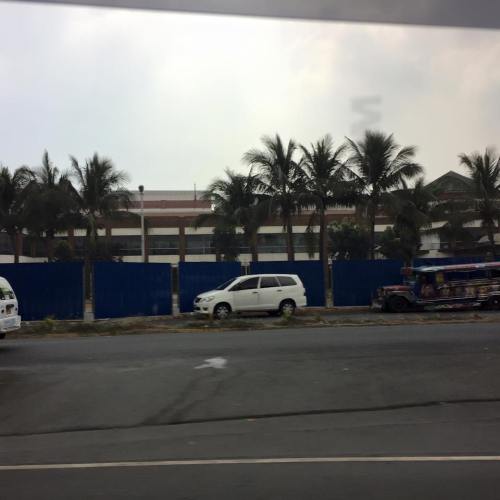 Jeepneys and UV Express vehicles now use the service road of the mall as a terminal.
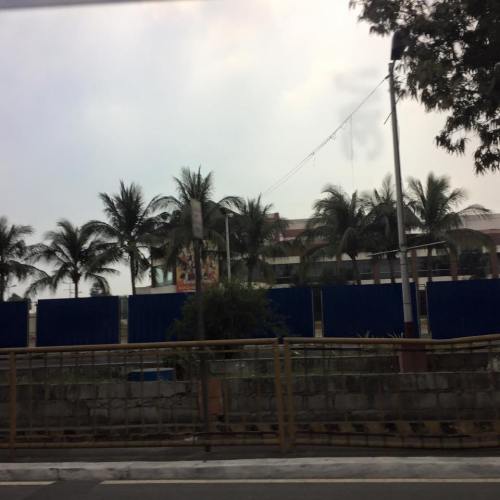 It’s now a breeze passing through the eastbound section of Ortigas Extension in front of the former mall. There are signs stating the property has been acquired by retail giant SM. It will probably be transformed into an SM mall.
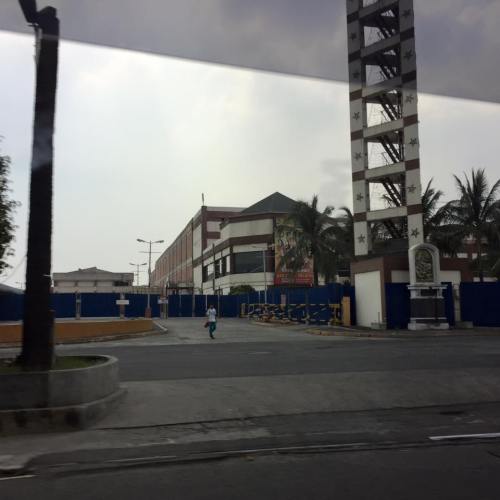 This driveway used to cause congestion as jeepneys and private vehicles exited the mall through this driveway and many turned left towards Ortigas westbound. These vehicle often effectively blocked traffic along the eastbound direction with queues reaching all the way past Countryside and reaching De Castro on a bad day.
There were only two shopping malls along Ortigas Avenue Extension – the Robinson’s Place near Cainta Junction and Ever Gotesco. Ever has recently close but it is expected to re-open as an SM Mall sometime in the near future. SM doesn’t have a mall in the area and the ‘nearest’ ones would be Megamall, Marikina and Taytay (not counting the Super Center beside Tiendesitas and the Super Center along Felix Avenue). If indeed an SM mall will be there soon, we could expect heavier traffic in the area given the trip generation characteristics of SM. Perhaps, though, there is an opportunity to improve traffic in the area if SM can consider some improvements to its driveways and circulation. They could probably do something like what SM Novaliches had done with their generous setback to ensure that there will be no serious congestion along Quirino Avenue due to mall-generated traffic.
SM will not be the only major commercial development that is expected to generate traffic that will lead to congestion along Ortigas Extension. Almost across the former Ever mall is a commercial development under construction with a building I think is too close to the road. Then there is also the commercial/residential project that is being constructed along the westbound side of Ortigas Extension near the Kaytikling Junction in Taytay, Rizal. I wonder if these had the necessary traffic studies to support their impacts on at least the immediate areas they will be affecting.
–
Mainstreaming the motorcycle taxi via current transport tech trends
The motorcycle taxi is common in Southeast Asia and it seems that bringing it to the next level means taking advantage of available technology to facilitate getting a ride. In the forefront is Grab, the company behind GrabTaxi and GrabCar, which is a similar service to the popular Uber. GrabTaxi facilitated getting a taxi and is already popular for being quite effective to many who have availed of the service. I am among those who have used GrabTaxi and so far has been satisfied with the service.
Recently, Grab had been in the news for a service it has been providing elsewhere and which also appeared on their app in the Philippines – GrabBike. I also saw this feature on their app and was curious about how they were able to go mainstream on this in the Philippines because motorcycle taxis (e.g., habal-habal) are basically illegal in most cities and are unregulated except by barangays or a few local governments where their services have been recognized. The Land Transportation Franchising and Regulatory Board (LTFRB) ordered Grab to stop offering this feature of their services. It seems they haven’t done so as GrabBike is still there and the service very much alive.
 GrabBike feature on the old GrabTaxi App available in the Philippines
In fact, we tried to check if there was a GrabBike near our office and voila! There was one unit that appeared in our screen. I would bet that there would be more appearing on one’s screen if he/she happened to be in an area where there’s demand for motorcycle taxis services (e.g., Eastwood, BGC, Ortigas, Makati CBD, Cubao, etc.).
 GrabBike featured on Grab’s new look app
Motorcycle taxis are popular in the provinces and especially in rural areas not just because of the convenience they provide (easily hailed and can maneuver through congested roads) but because they are a necessity, being practically the only public transport mode available to people. The main issues against them in the Philippines are safety-related. Not all providers practice safe riding and most if not all are sure to have no insurance to cover their passengers in case they are involved in a crash. One cannot fully blame motorcycle taxi service providers for offering their services considering the traffic mess in many highly urbanized cities especially in Metro Manila. However, offering such services to the public means that service providers should bear responsibility for ensuring the safety of their passengers. This would basically be in the form of insurance and regulation particularly for fares they charge. I wouldn’t even go to the tax implications of the income they derive from their operations.
These services will no doubt continue to be offered, even clandestinely, as traffic conditions remain bad and continue to worsen. People will gravitate towards such services in order to reduce the travel times in their commutes. This is expected to happen as long as people perceive that nothing is happening to significantly improve transportation in this country.
–
EDSA MRT 3 chronicles
A friend referred an article to me today and I thought it would be a very good read to a lot of people interested in what has happened and what is happening to the EDSA MRT 3. I think that this article is so far the most comprehensive, not-necessary-legal treatment of events leading to what we now have as a mass transit system along arguably the country’s busiest thoroughfare:
On a clear day you can see the MRT
It’s a must read for a lot of people who want to know about the dealings related to MRT 3 and perhaps understand how complex this has become. I would also recommend people read the very good discussions in the comment section of the article. It’s good to see the healthy exchange of opinions rather than have trolls ruin them.
–
Emergence of motorcycle taxis in Metro Manila and other cities
Motorcycle taxis operate in many Asian cities. In Southeast Asia, in particular, there are formal and legal motorcycle taxi services in cities like Bangkok and Jakarta. These motorcycle taxis are called “habal-habal” in many parts of the Philippines and are accepted modes of public transport particularly in rural areas where roads are not the same quality as those in urban areas. Motorcycles and motor tricycles are the most preferred modes of transport and their characteristics are usually most suitable for such roads.
In Metro Manila, there are motorcycle taxis operating in many locations including Bonifacio Global City, Eastwood City and White Plains. These are basically discrete operations and providers are low key so as not to attract the attention of authorities. Services though are worst kept secrets considering they have a steady clientele. In Pasig City, and I assume other Metro Manila cities as well, there are ‘formal’ habal-habal terminals. I took a photo of one in a low income residential area that was designated as a relocation site for many informal settlers around the metropolis.
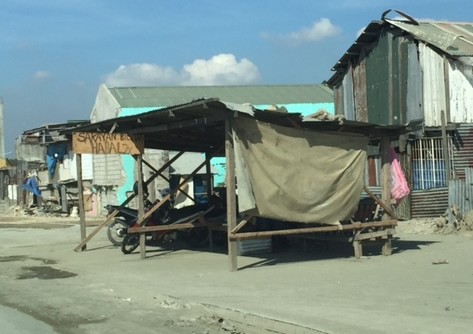 Habal-habal terminal in Pasig City near the Napindan Channel where the Pasig River meets Laguna de Bay
A friend at the Cebu City Traffic Operations Management (CCTO or CITOM) told us that there is a growing number of motorcycle riders offering transport services in their city. These are illegal but are being tolerated in many cases due to the growing demand for their services particularly during unholy hours late at night or in the early morning. I also saw many of these operating in Tacloban and even crossing the San Juanico Bridge to Samar Island from Leyte.
There are also many habal-habal in tourism areas including in island resorts where there is a lack of formal public transport services. This mode is a necessity and so far, there are only rare reports of these vehicles and their riders being involved in road crashes. This is the case despite their being perceived as unsafe modes of transport. I guess they will continue to be popular in rural areas and will quickly become popular should they be mainstreamed in urban areas just like their counterparts in neighboring countries in Southeast Asia. In fact, the demand is already there and just waiting to be tapped given the horrendous traffic jams that will drive people towards modes they think can allow them to escape traffic congestion.
–
The benefits of walking
I came across an old article on walking that appeared in The New Yorker in 2014. This was after reading another article my wife shared that also was about walking. One is about both the physical and intellectual benefits of walking while the other was about walking without a purpose. Both were about walking and thinking, and definitely about the benefits of even a short stroll to our physical and mental being.
Here’s the article from The New Yorker: Why walking helps us think
And the article from BBC: The slow death of purposeless walking
I highly recommend both articles as we ponder about making our cities safe for pedestrians/walking.
–
Tire conditions
While stopped at an intersection, my eyes wandered to look at the vehicles around me. I took a photo of the rear tires of a truck stopped beside me. Following are some observations about the tires:
- Most if not all the tires were re-treads
- Most of the tires are worn out
- One tire is already damaged and should not have been used in the first place
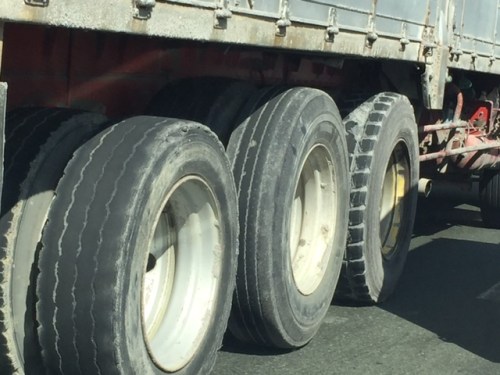
Such conditions of trucks’ tires reflect the state of many commercial vehicles in the country. The same observation applies to public utility vehicles. I guess there have been many instances of tire blow-outs involving trucks and jeepneys. These have not been reported as they often lead to traffic congestion (i.e., when a vehicle is forced to stop and block traffic), which is not at all an uncommon experience to many. Few perhaps have led to high profile road crashes featuring fatalities. Still, the potential for major crashes is there and it is contributory to disasters that are always just waiting to happen in many of our roads.
–
Endangering others by your behavior on the road
A major concern in road safety is the behavioral aspect that includes the attitudes of drivers and riders. Aggressive and irresponsible driving can be observed along many Philippine roads including low traffic roads along which there is a tendency for motorists to speed up. Social media contains many posts of videos showing reckless behaviour (e.g., vehicles zig-zagging along roads), placing other road users in danger with the possibility of crashes involving or influenced by these same vehicles. There are also posts of photos allegedly taken by speedsters boasting of the high speeds they are able to attain or cruise along on tollways and even regular roads.
Such behavior, however, may be influenced by strict and proper enforcement of traffic rules and regulations. I would like to believe that it it should be easier these days to determine if vehicles are speeding beyond the safe speeds roads are designed for. There are many tools such as speed guns or radars. However, these are few with the Metro Manila Development Authority (MMDA) having only two guns at their disposal. Operators of NLEX and SLEX are supposed to have their own speed guns and they have been apprehending speedsters as best they can. However, it seems that there are still many who are not apprehended and continue to pose as dangers to their fellow travelers. (I assume that those apprehended may also continue to speed up and do not get caught in most times they do.)
One creative approach for traffic law enforcement should be to browse social media of posts by people who claim to be running their vehicles at high speeds, violating road speed limits. Speeding is dangerous because drivers and riders will have less control over their vehicles and other elements affecting the vehicle. Perhaps the Land Transportation Office’s (LTO) enforcement arm should have an internet unit charged with searching for such cases online and investigate the identities of these people in order to flag them in the LTO licensing system?
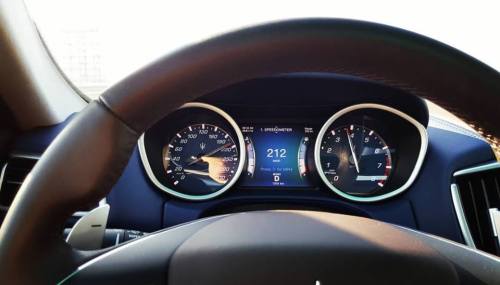 Example photo posted on social media where the driver boasts of his reaching high speeds while driving in a Metro Manila road.
–
Sudden intended acceleration? Intended ones are more dangerous!
The motoring community in the Philippines has been in rather heated discussions regarding the Mitsubishi Montero’s alleged defect that causes what has been termed as ‘sudden unintended acceleration’ or SUA. This term refers to the vehicle suddenly, and without the driver doing anything, rapidly accelerating, forward or backward, and hitting anything in its path. The proofs to these alleged incidences are supposed to have been documented by many including videos that have been uploaded to YouTube and even shared or used by mainstream media. The vehicle’s manufacturer itself denies that there is a defect in the model(s) being cited for SUA. They have also released a new model of the vehicle in the market and most people not paranoid about SUA seem not to mind the buzz about the alleged defect. The new model, after all, is supposed to be free of that particular defect considering the manufacturer, despite its denials, should have been aware of the complaints and concerns.
Defect or none, I think what’s more dangerous is not the ‘sudden unintended acceleration’ of vehicles. In fact, I am not aware of any fatalities attributed to this and all the videos I’ve seen alleging the defect happened in parking lots and driveways. These have caused only minor injuries and, surely, damage to properties. What is more dangerous and should be the concern by all is the intended acceleration leading to speeding (or over-speeding) that is so common in our roads regardless of whether these are expressways or city streets. Such behaviour are almost always intended and therefore the drivers are very much aware of their actions and in control of their vehicles. In control, that is, until they hit something or, worse, someone. Such irresponsible and often reckless behavior plague our roads and one person’s folly can be the doom of others as is usually the case in road crashes involving (over)speeding.
–
 Caught (up) in traffic