
Morning and afternoon smog
I was meaning to upload these two photos taken during the same day but one in the morning and the other in the afternoon. The photos were supposed to show the quality of the air we breathe based on the smog. The band of brown that is the smog over Metro Manila is clear in the first photo while the second photo seems to be clearer. The operative word there is “seems” because although the band does not appear in the photo, it does not mean the pollution is gone.
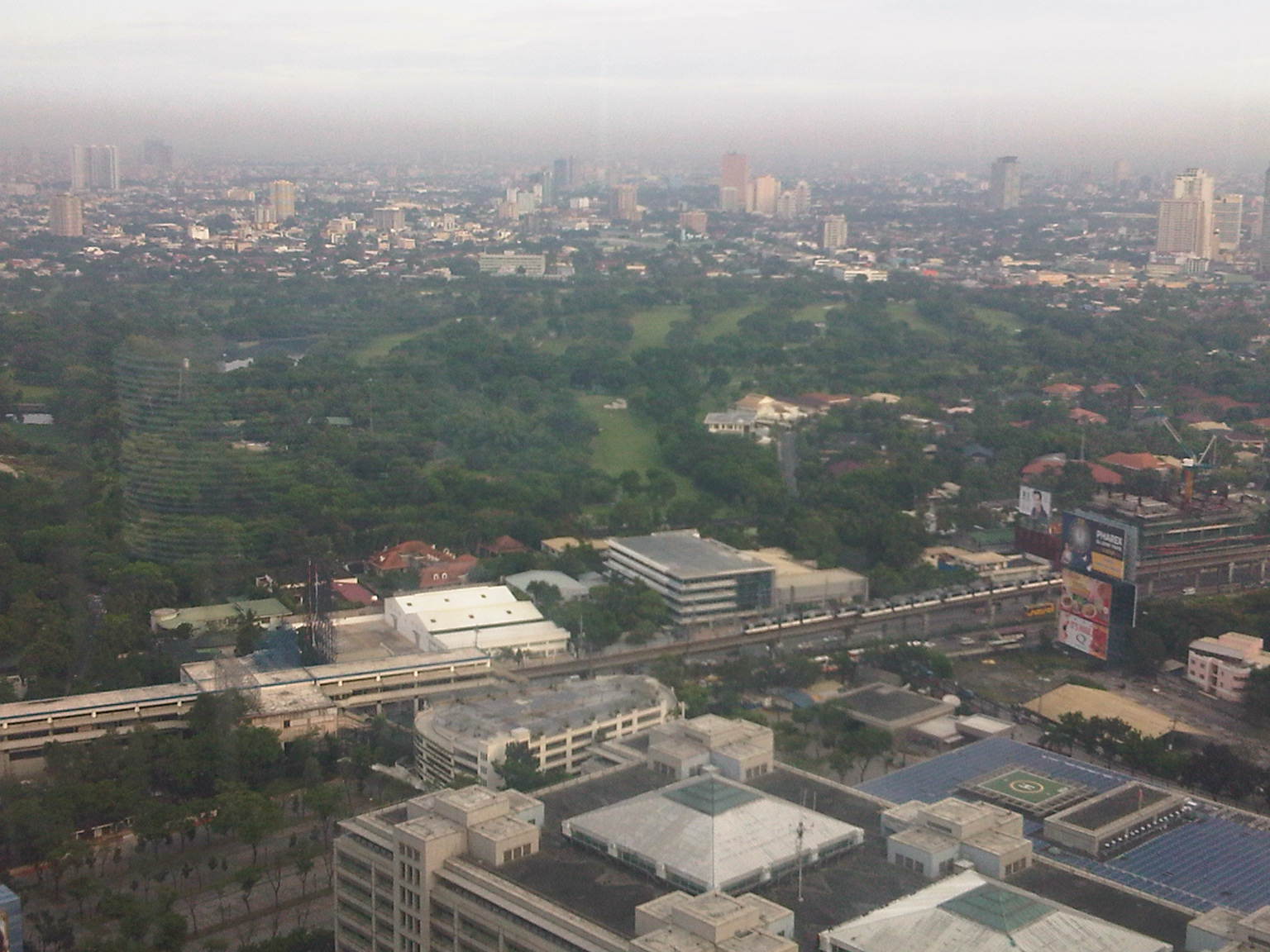 Before – photo taken during the morning at 6:43 AM
 After – photo taken in the afternoon at 2:01 PM.
One shouldn’t be fooled by the second photo where it appears as if the smog has been dispersed or that the pollution is gone. On a real clear day, one should be able to see the Manila Bay in the horizon and not the bright white seen in the second photo. If my science is correct, this bright white is actually the dispersal of light due to the same smog or haze that is above us but which we cannot discern with our eyes. I think the term is “photo chemical smog” that I remember picking up from health advisories broadcast on radio while I was living in Japan in the 1990s. The reality is that there is much pollution and while this is not visible from the ground, it is clear when one is in the air. I refer the reader to an earlier post I made about this condition.
–
Quezon Avenue: Elliptical to EDSA
Quezon Avenue is part of Radial Road 7 (R-7) and stretches from the Elliptical Road (also technically part of R-7) in Quezon City to the Welcome Rotonda in Manila, where it connects with Espana Avenue. It has intersections with several major roads including EDSA (C-4) and Araneta Avenue (C-3). The following photos show the sections from Elliptical Road to EDSA. The following photos were taken along the Manila-bound side of the highway showing features along the sections including pedestrian footbridges and the underpass along Quezon Avenue that bypasses junctions with Agham Road and EDSA.
 Overpass connecting the Lung Center side (left) with the Parks & Wildlife side (right)
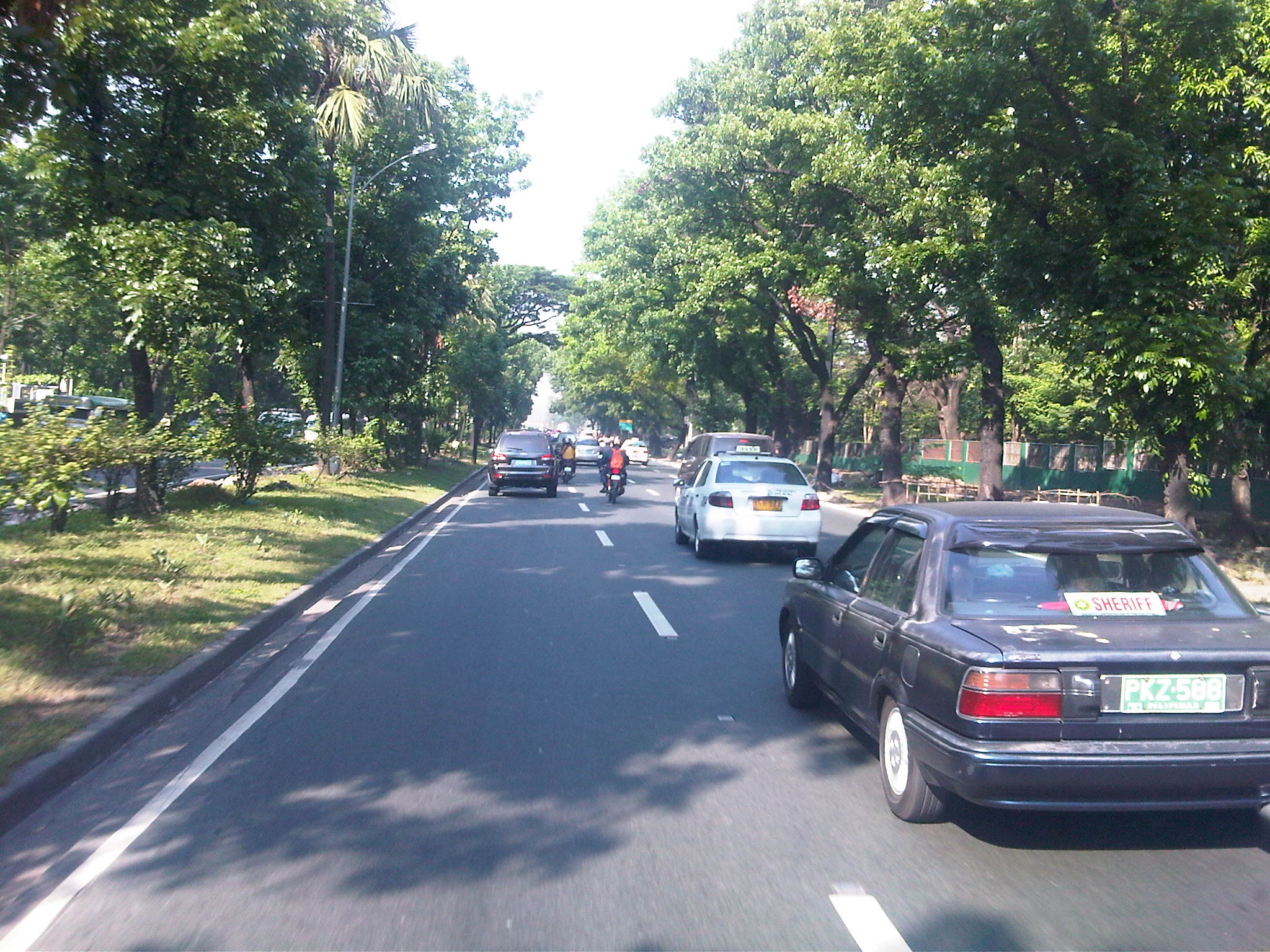 This section of Quezon Ave. has 4 lanes per direction and these are divided by a wide median island. Pavement is of excellent condition with clear markings to guide motorists.
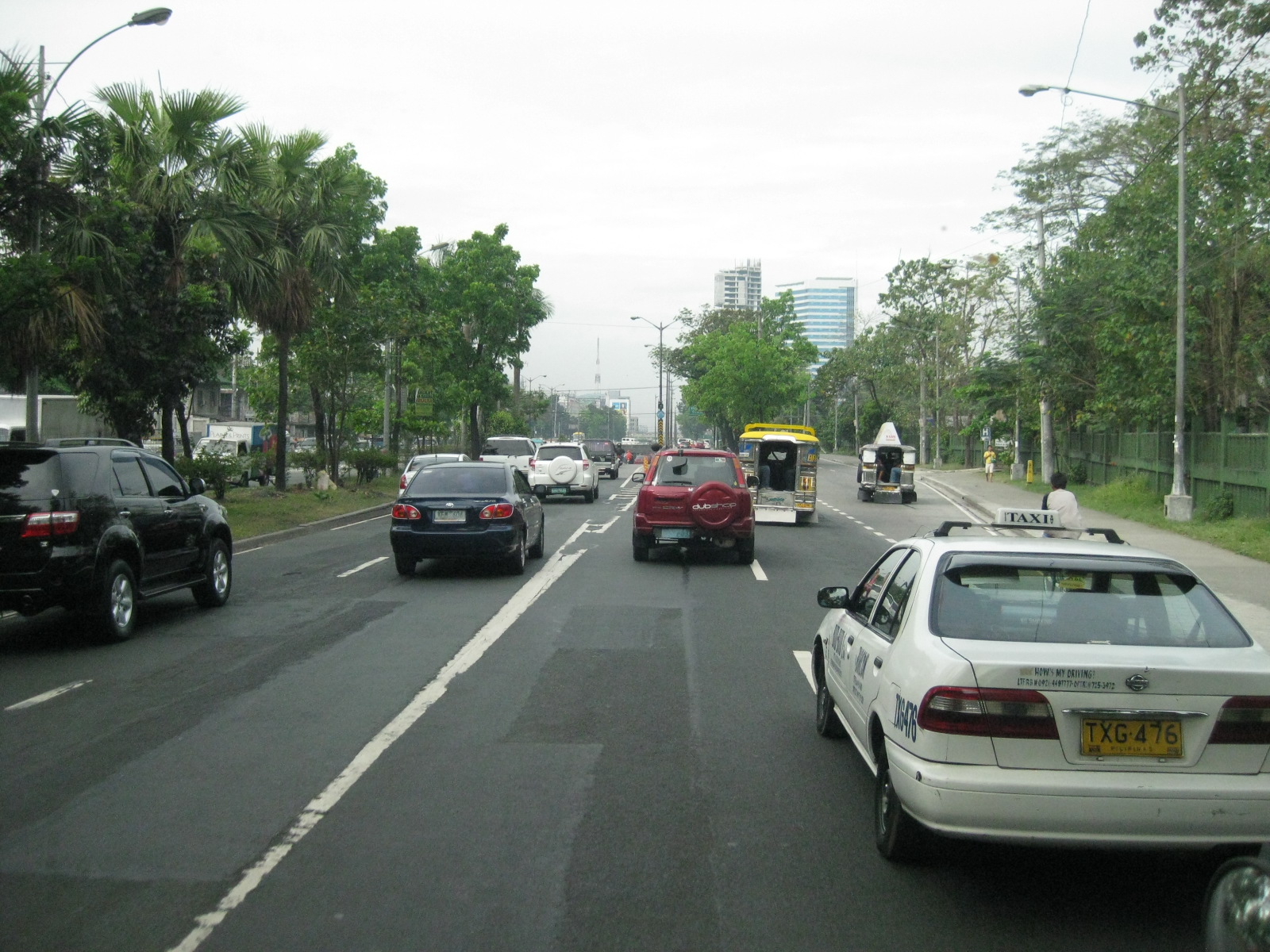 Approach to the underpass (left lanes) and Agham Road (right lanes)
 The section approaching Agham was widened by taking land from the Children’s Hospital (right). The trees on the island that defines the service road generally used by vehicles turning right to Agham is visible downstream in the photo. Chevron markings and the orange poles delineate the path to the underpass.
 The view from the other side of the road showing the service road island (with the trees) and the delineators for the underpass
 Vehicles approaching Agham Road – the vehicles on the left side are already along the underpass. The 2-lane service road is on the right
 Agham Road approach along Quezon Ave. – the junction is signalized and has a total of 5 lanes along the approach
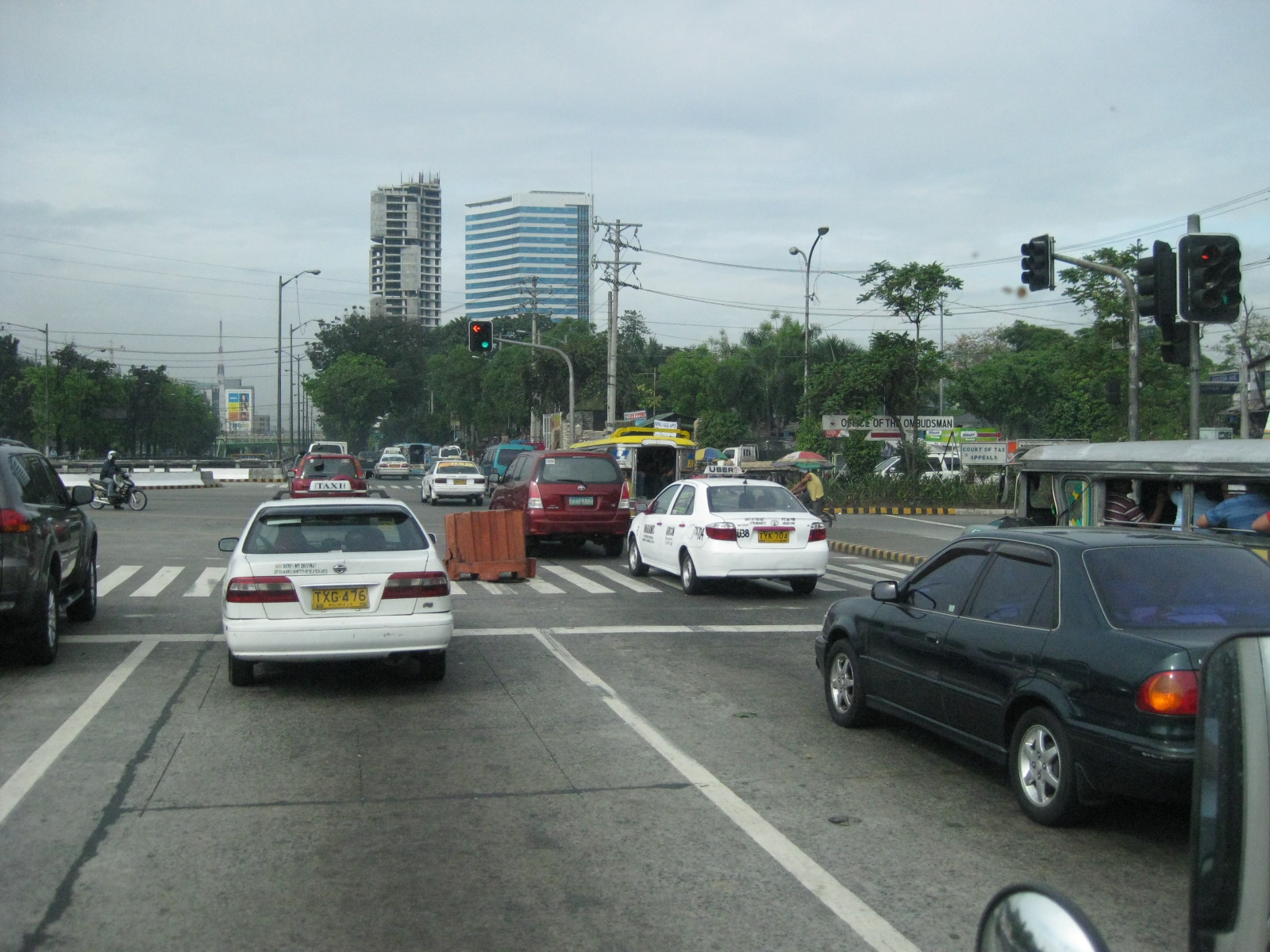 Plastic barrier at the approach – such should be removed/cleared from the highway and especially at the intersection as they are hazards to road users
 Past the junction with Agham Road, the highway is again divided by the island lined with trees forming two 2-lane channels. Public transport is supposed to take the right-most lanes.
 Approach to EDSA where all vehicles must turn right. Vehicle proceeding along Quezon Ave. must take the U-turn slot under the EDSA overpass just a few meters after turning right at the junction. Obscuring the view of the vehicular overpass along EDSA is the pedestrian footbridge just ahead. Note the barriers to prevent jaywalking in the area.
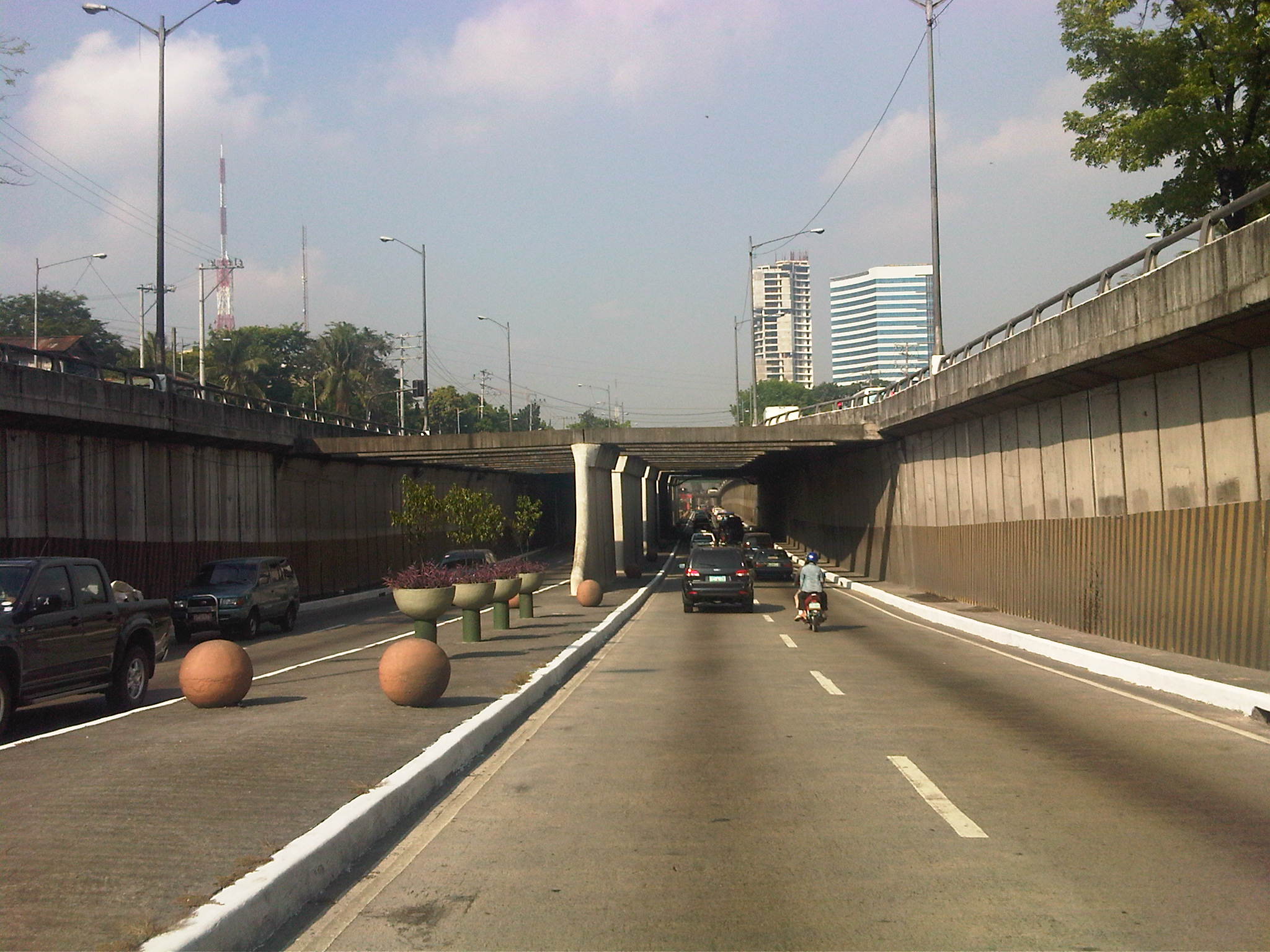 Underpass section along Quezon Ave. approaching the junction with Agham Road
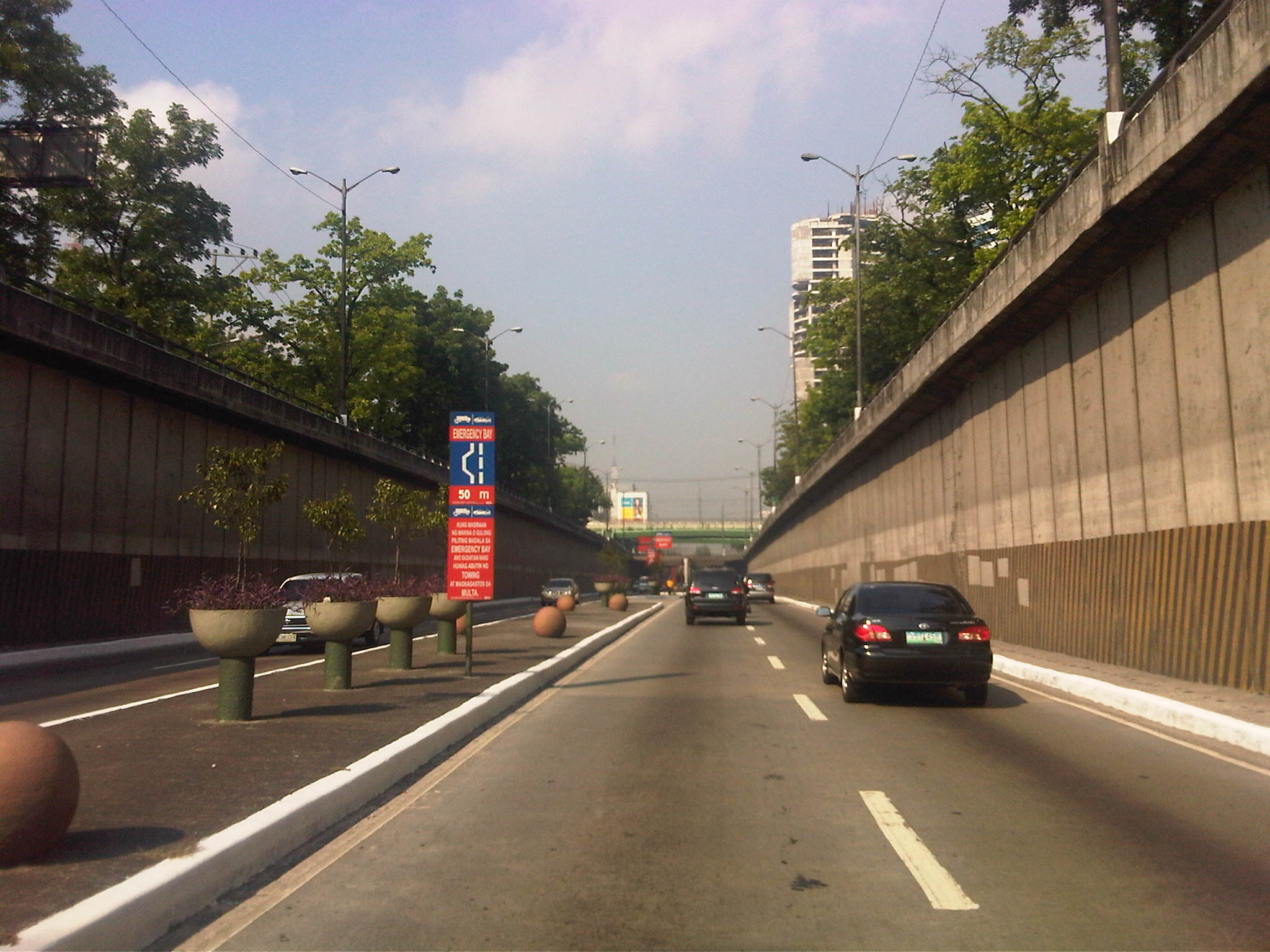 Underpass section between Agham Road and EDSA
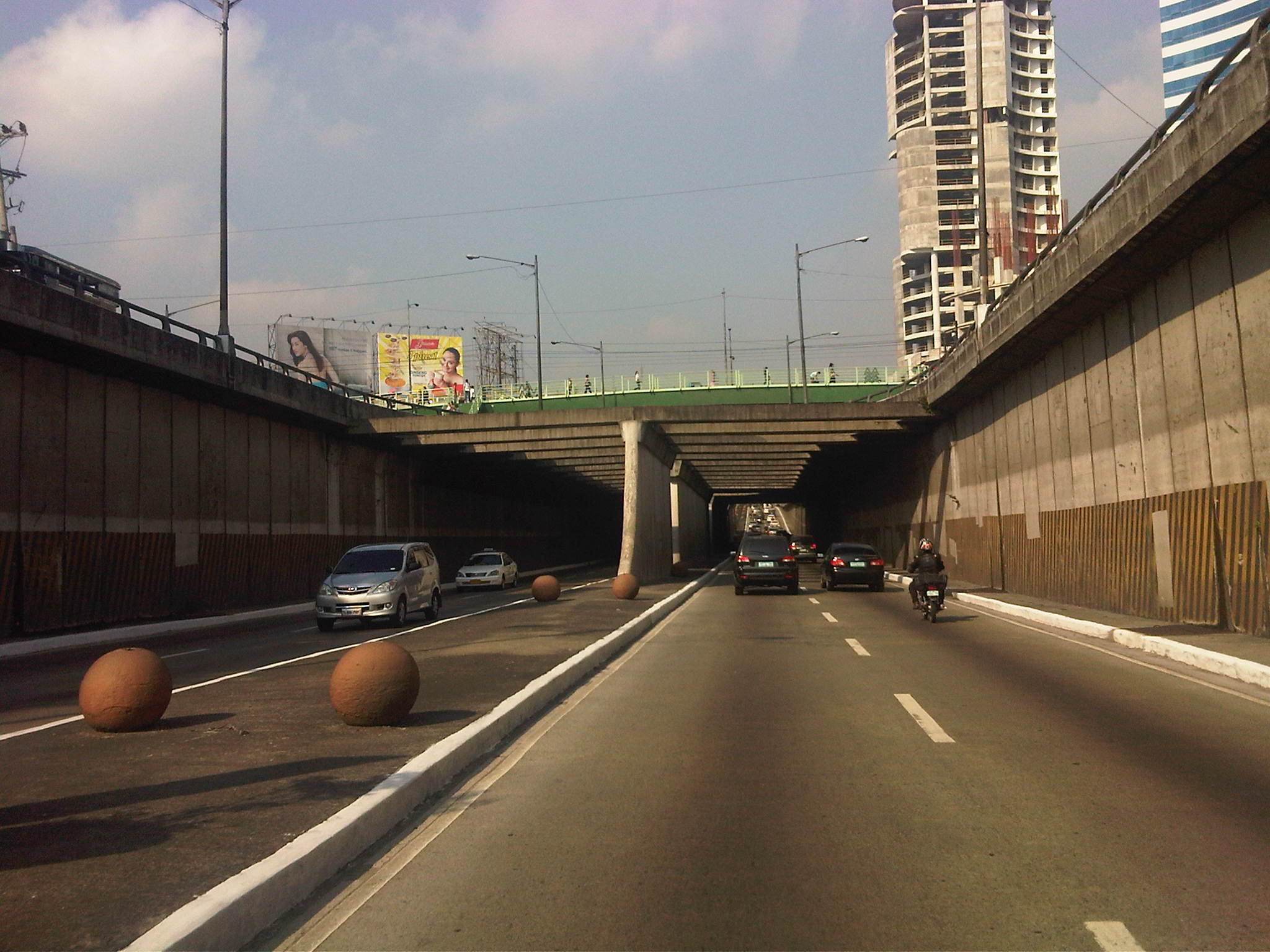 Underpass section approaching the junction with EDSA – at the junction, there is essentially 3 levels of roads: the underpass along Quezon Ave., the junction itself, and the overpass along EDSA
–
North EDSA
Heading to Tutuban for our technical visit of the Philippine National Railways, we passed along the north segment of EDSA from its junction with North Avenue in Quezon City to 8th Street in Caloocan City. Following are photos showing the overhead LRT 1, the motorcycle lane, U-turn slots and various buildings adjacent to EDSA.
 EDSA – North Avenue junction – the blue lane markings designate the motorcycle lane along EDSA. SMDI’s Grass Residences can be seen behind the mall.
 Section in front of SM North EDSA – the bus stop beneath the SM Sky Garden is on the right of the photo
 Section after SM North – the green building is Quezon City Academy
 Section in the vicinity of Roosevelt Ave./Congressional Ave.
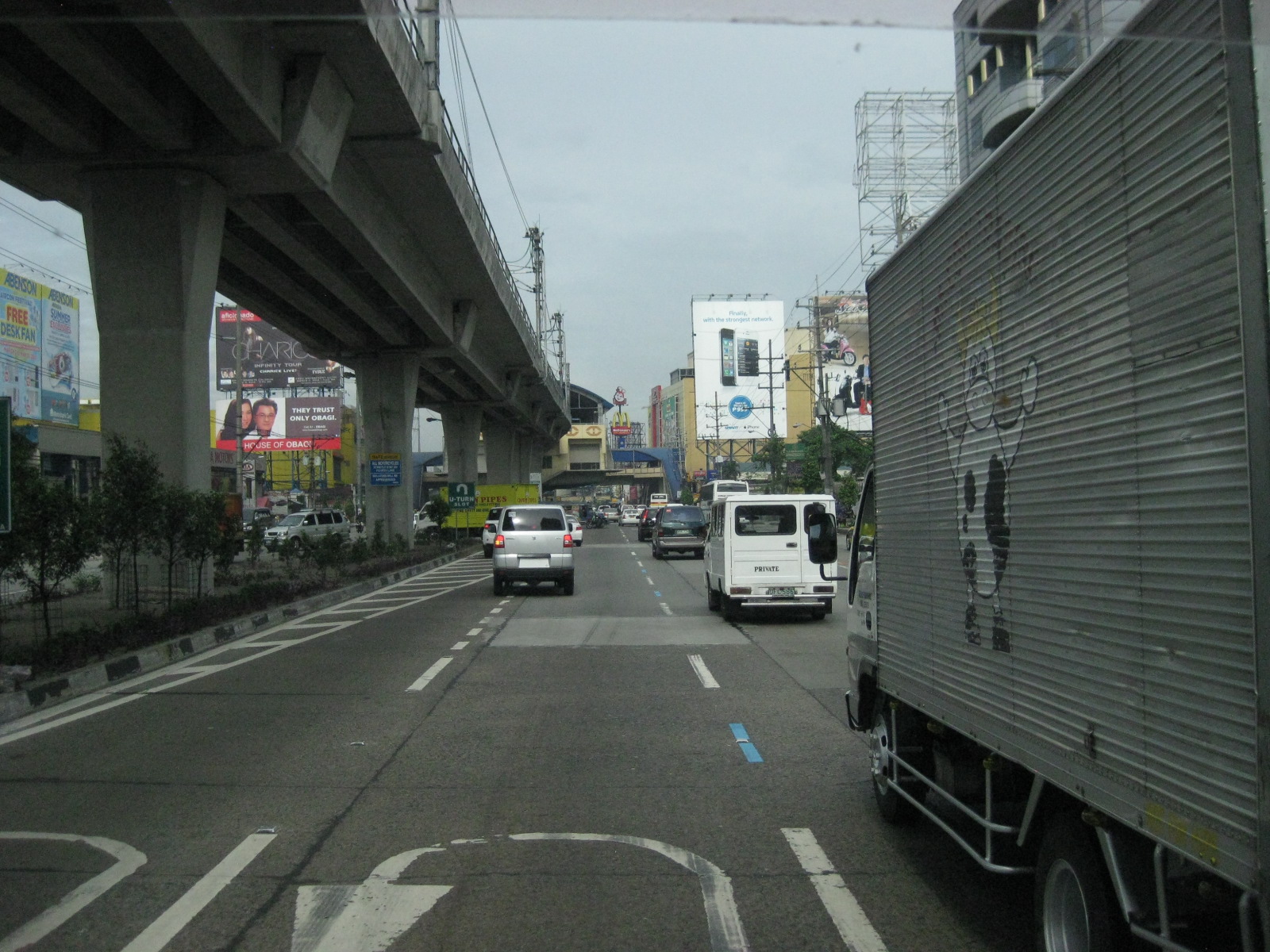 Section between Corregidor St. and Roosevelt Ave./Congressional Ave.
 LRT 1 Extension Roosevelt Station
 Section after Roosevelt Ave./Congressional Ave. before Fema Road
 Section approaching Home Depot and Kaingin Road junction
 Section across from Shell Station right after Wilcon Builders Depot
 Section across from Hyundai dealer right after Shell station
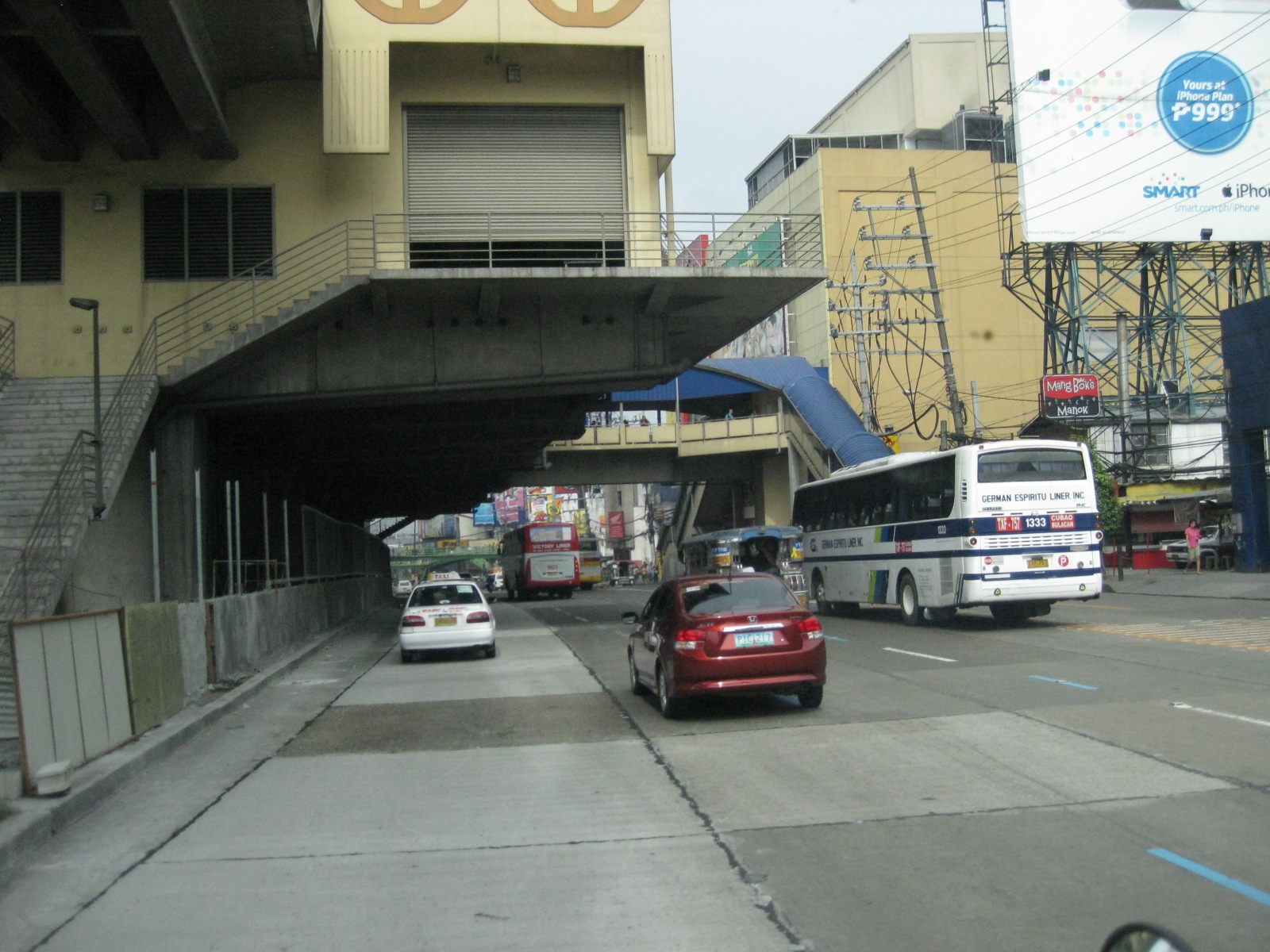
 Section approaching Balintawak LRT Station
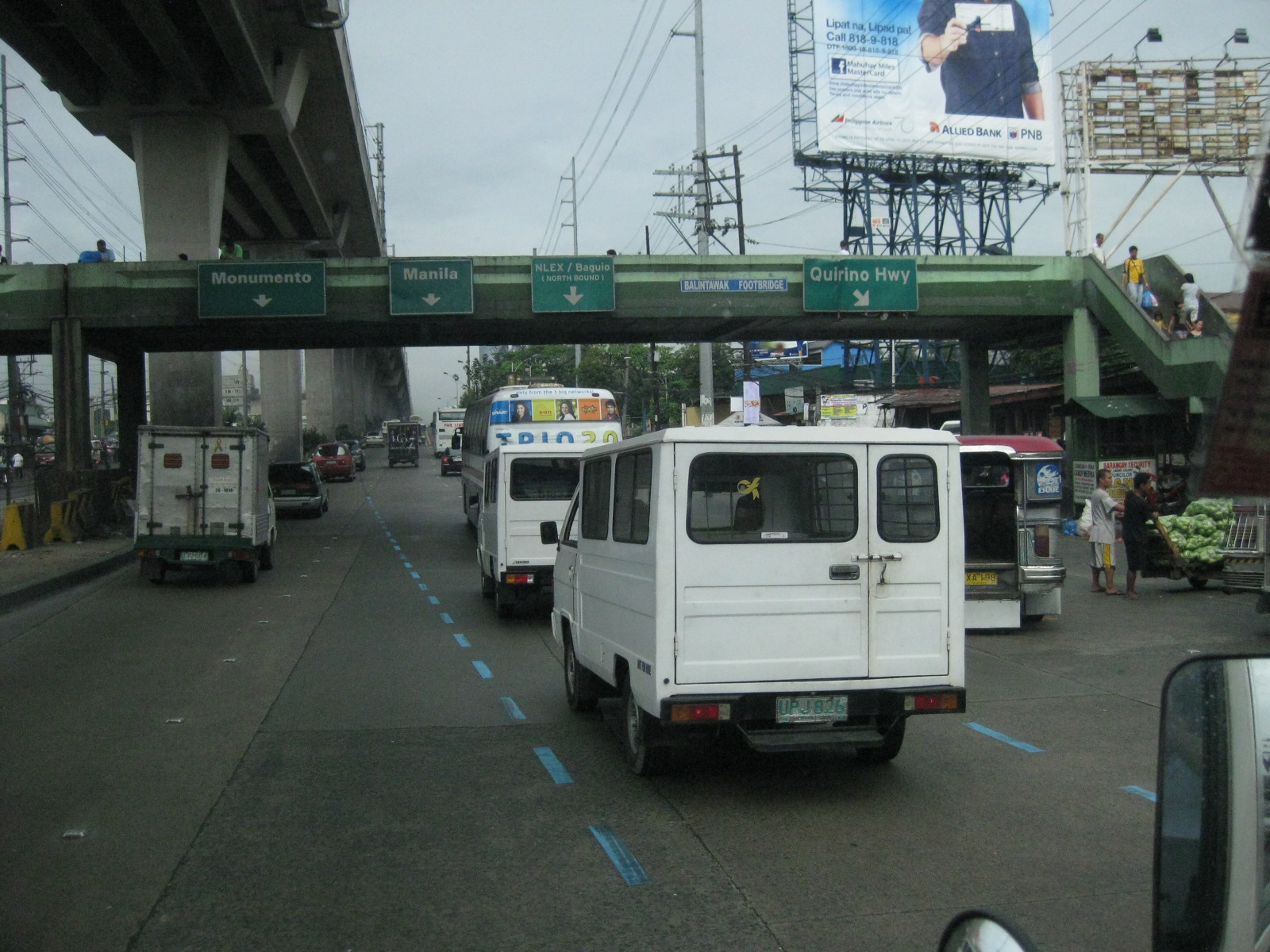 Section along Munoz Market (note the cart full of vegetables on the right in the photo)
 Exit ramp to NLEX at the Balintawak interchange (cloverleaf)
 Section of EDSA on top of NLEX (Balintawak interchange)
 Section right right after the interchange – vehicles on the rightmost lane are those coming from NLEX southbound and coming on to EDSA northbound
 Section after Toyota Balintawak and Gen. Evangelista, and approaching Gen. Mascardo
 Section approaching 8th Street U-turn slot after Mariano Ponce
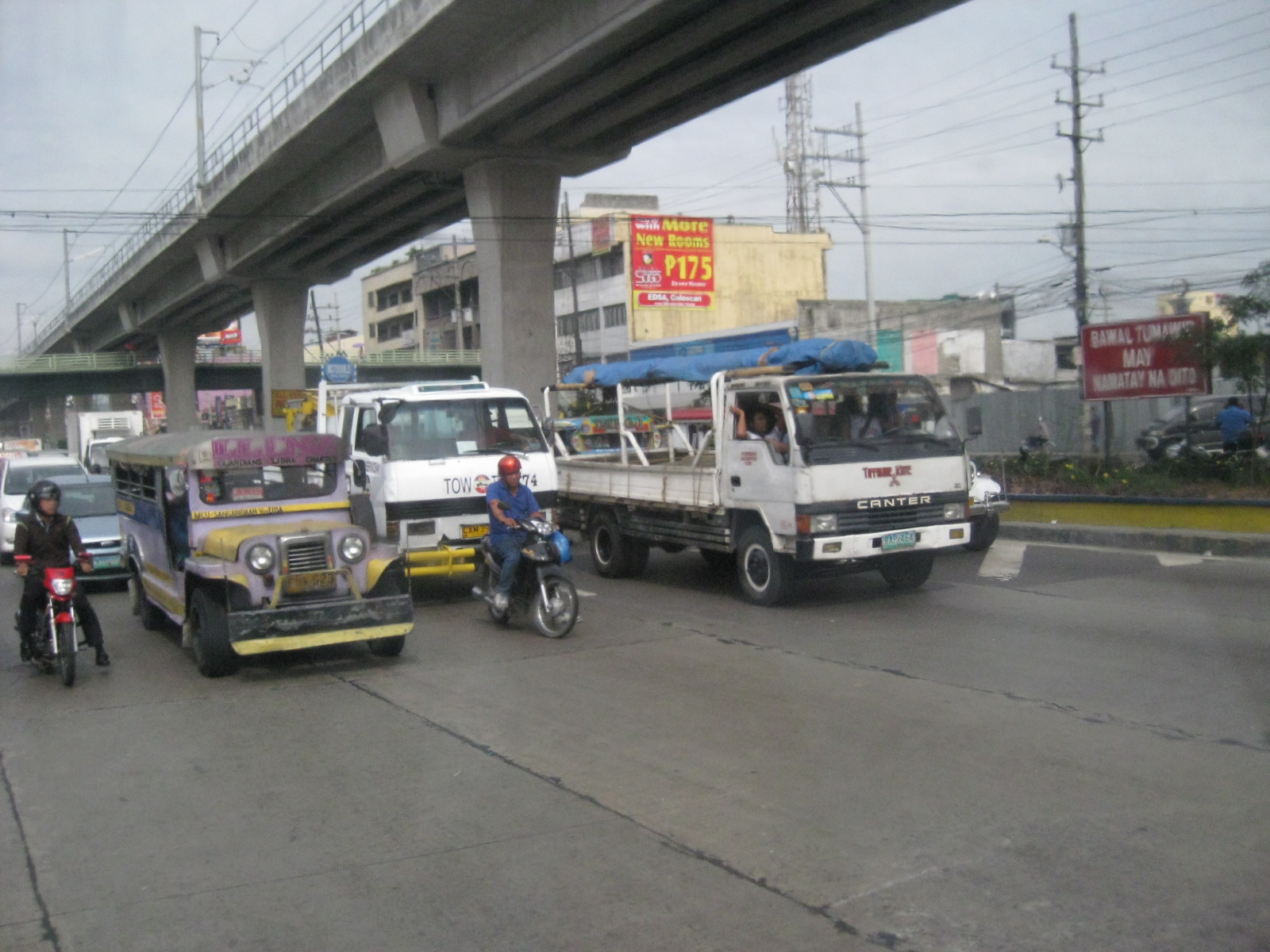 Vehicles stopped at intersection/U-turn slot to allow vehicles turning left from EDSA northbound to 8th Street
–
Mission accomplished: Marcos Highway
The roadworks along Marcos Highway in Pasig, Marikina, Cainta and Antipolo was mostly completed last March 31, 2012. I say almost because despite the rush to finish a lot of things including the asphalt overlays before the project deadline, there are quite a few unfinished parts of the highway including installations of street lamps, sidewalks and barriers. There are also sections where there are no pavement markings, particularly at junctions. Nevertheless, the most important thing is that the highway is much less congested nowadays, though the capacity will surely be tested once school starts in June. Also up for an acid test will be the drainage system constructed along the highway from Masinag to the Marikina River that is supposed to address flooding in the general area.
 Section across from Robinsons Metro East
 Section at Dela Paz – note that there are no pavement markings
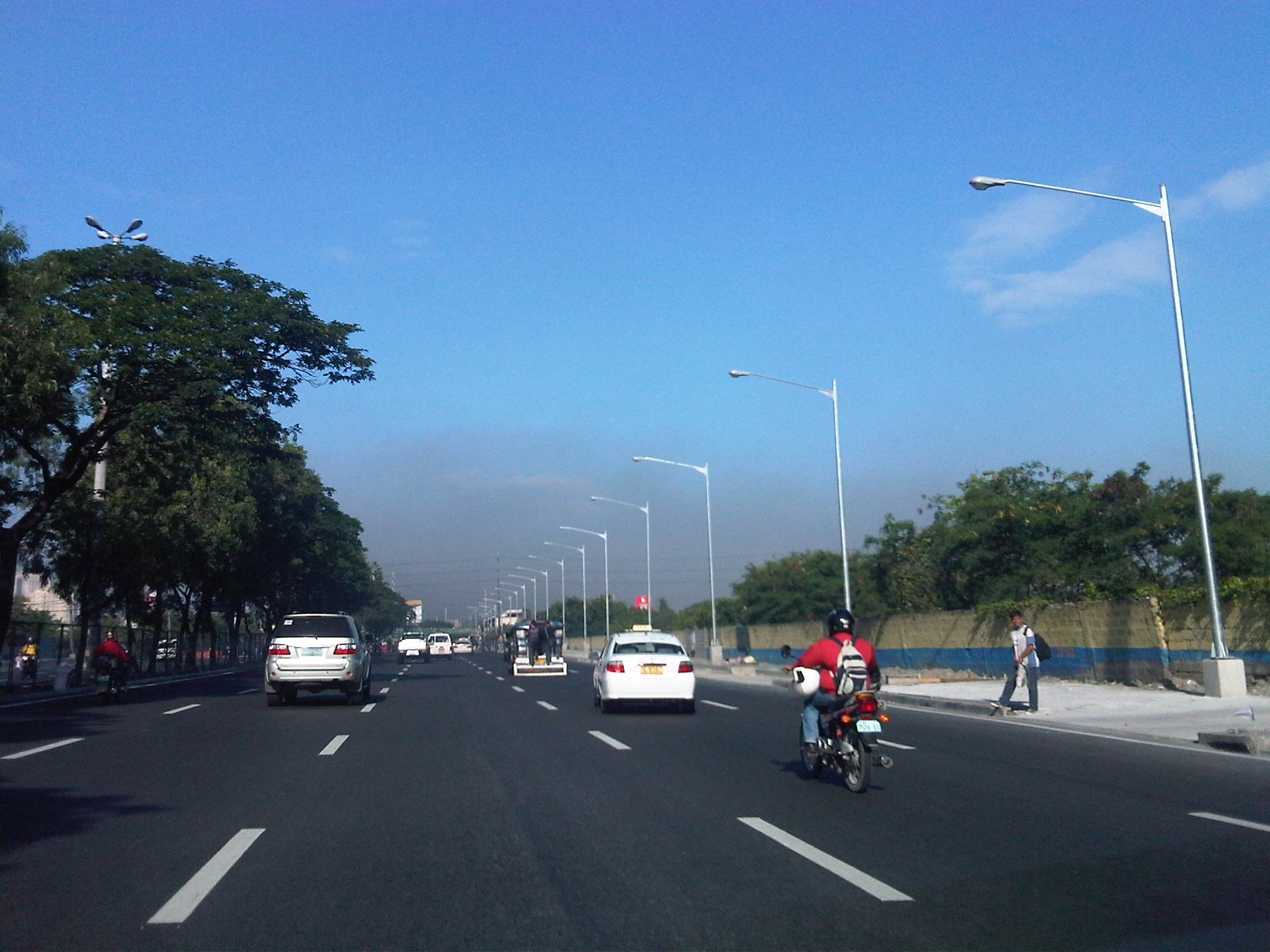 Section between Dela Paz and Ligaya
 Section approaching Ligaya
 Section approaching LRT Line 2 Santolan Station
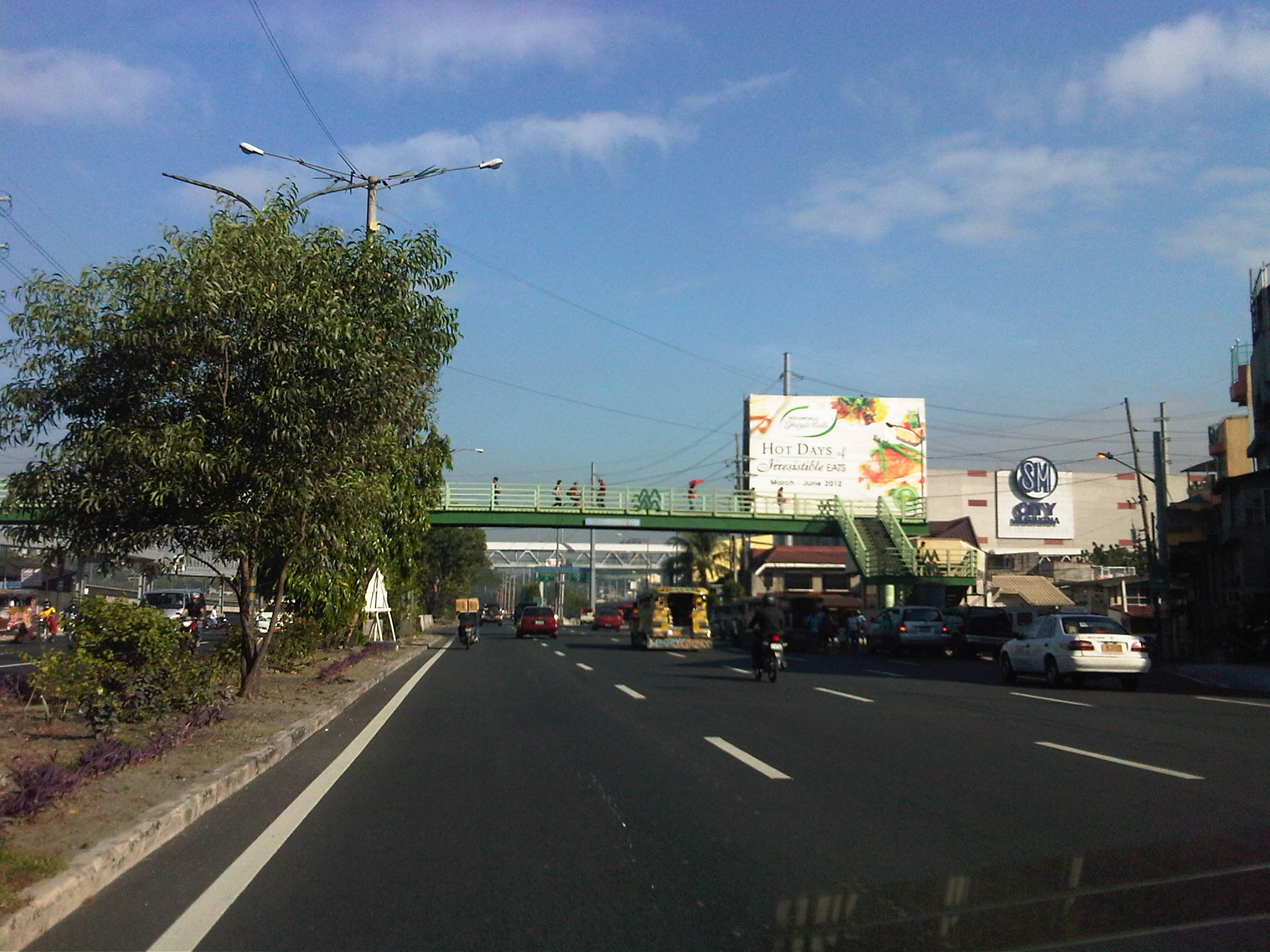 Section approaching the bridge and SM Marikina
One thing people, especially the DPWH, should note about the asphalt overlays is that it tends to hide the concrete slabs underneath that were not at all “re-blocked” or rehabilitated as the contractor rushed its work. These shortcomings will probably manifest with continued passes of heavy vehicles including what appear to be overloaded trucks at night. Perhaps flaws in the construction will also come into view once the wet season sets in when weaknesses in pavements would usually come out as a result of exposure to the elements. Nevertheless, a lot of people are thankful for the completion of major works on the highway and I am particularly happy that pedestrian walkways were part of the project. Perhaps traffic managers should look into public transport operations (e.g., yellow lanes) now that Marcos Highway has been widened. Perhaps, too, motorcycle lanes can be considered similar to the treatment along Commonwealth.
–
Sumulong Highway
Sumulong Highway stretches from Marikina City (junction with J.P. Rizal Ave. and continuing from A. Bonifacio Ave.) to Antipolo City (junction with the Circumferential Road). It is one of the main access roads to the Shrine of Our Lady of Peace and Good Voyage, which is perhaps the most visited shrine in the country. I don’t usually dare to take photos along this road when I’m by myself as I have to concentrate on my driving and be aware of other vehicles, cyclists and pedestrians I encounter along the highway. At some sections, people and tricycles seem to come from all over the place and may pose problems to new drivers using manual transmission vehicles, who might have difficulties working the clutch as they drive up to Antipolo. Downhill, it also quite dangerous and one wonders how many drivers of cars, jeepneys and trucks get away with their aggressive behavior along the highway, often putting other motorists, cyclists and pedestrians at high risk of getting involved in crashes.
Following are a few photos I managed to take en route to a seminar in Antipolo. I would caution anyone not familiar with the highway to not attempt taking photos when there are many vehicles or people on the road.
 Weathered – section right after Masinag Junction where vehicles on the left are bound for Masinag. The section has 4 lanes with faded or no markings, no shoulders and no pedestrian facilities. There are significant on-street parking including those in front of auto repair shops.
 Encroachment – houses and other establishments have encroached on the RROW, making it practically impossible if not too costly to appropriate space for pedestrian facilities. Local transport like tricycles and pedicabs regularly use or cross the highway, often being the cause of congestion along Sumulong.
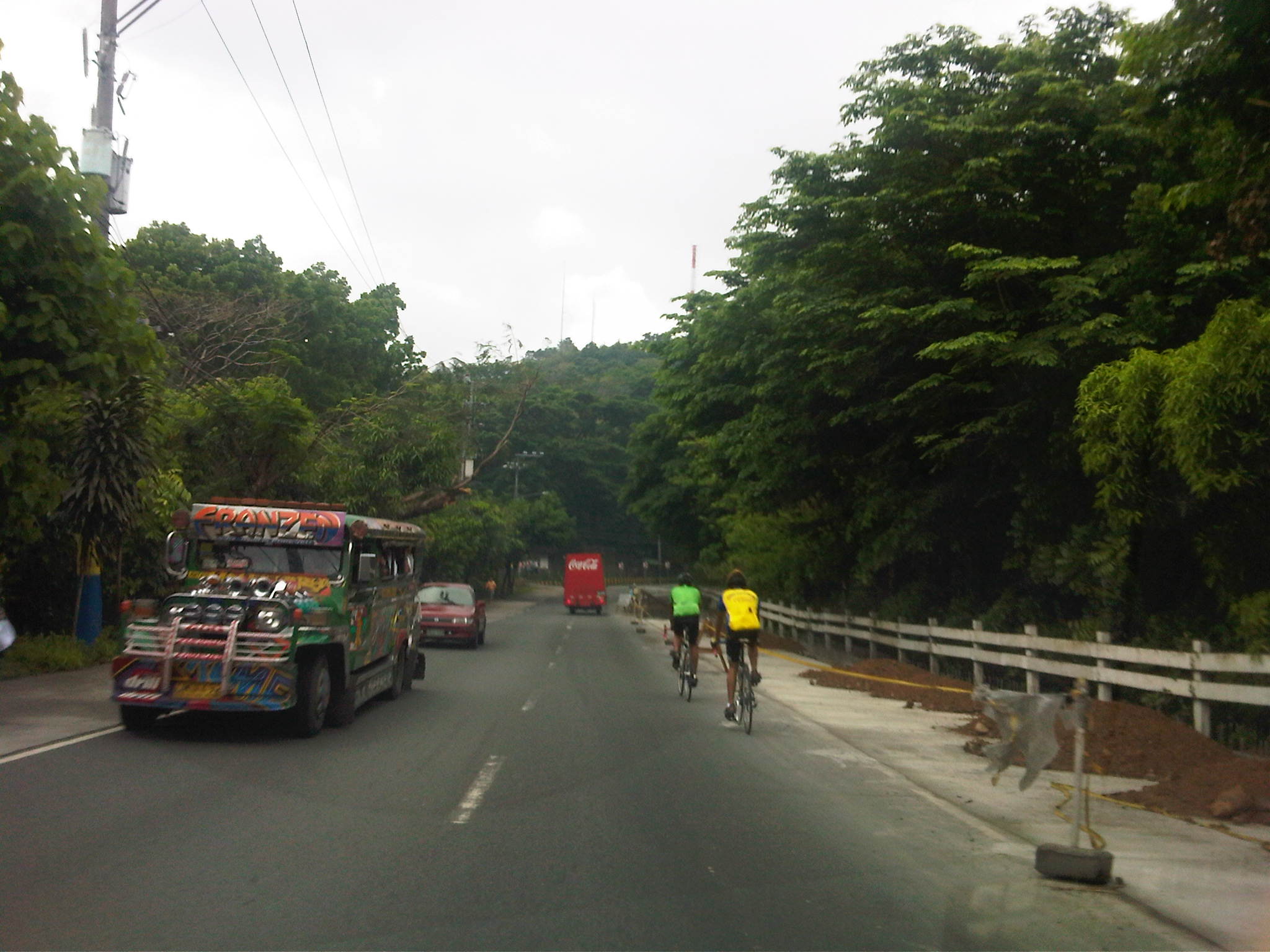 Road works – concreting of shoulders along the stretch near Town & Country Estates. You will encounter many cyclists using this route. During some Sundays, the Antipolo Feast Day and the Holy Week many people may be found walking along the road, many on pilgrimage to the Shrine. Perhaps cyclists and people are now using the concrete shoulders, reducing but not eliminating the likelihood of being sideswiped by motor vehicles.
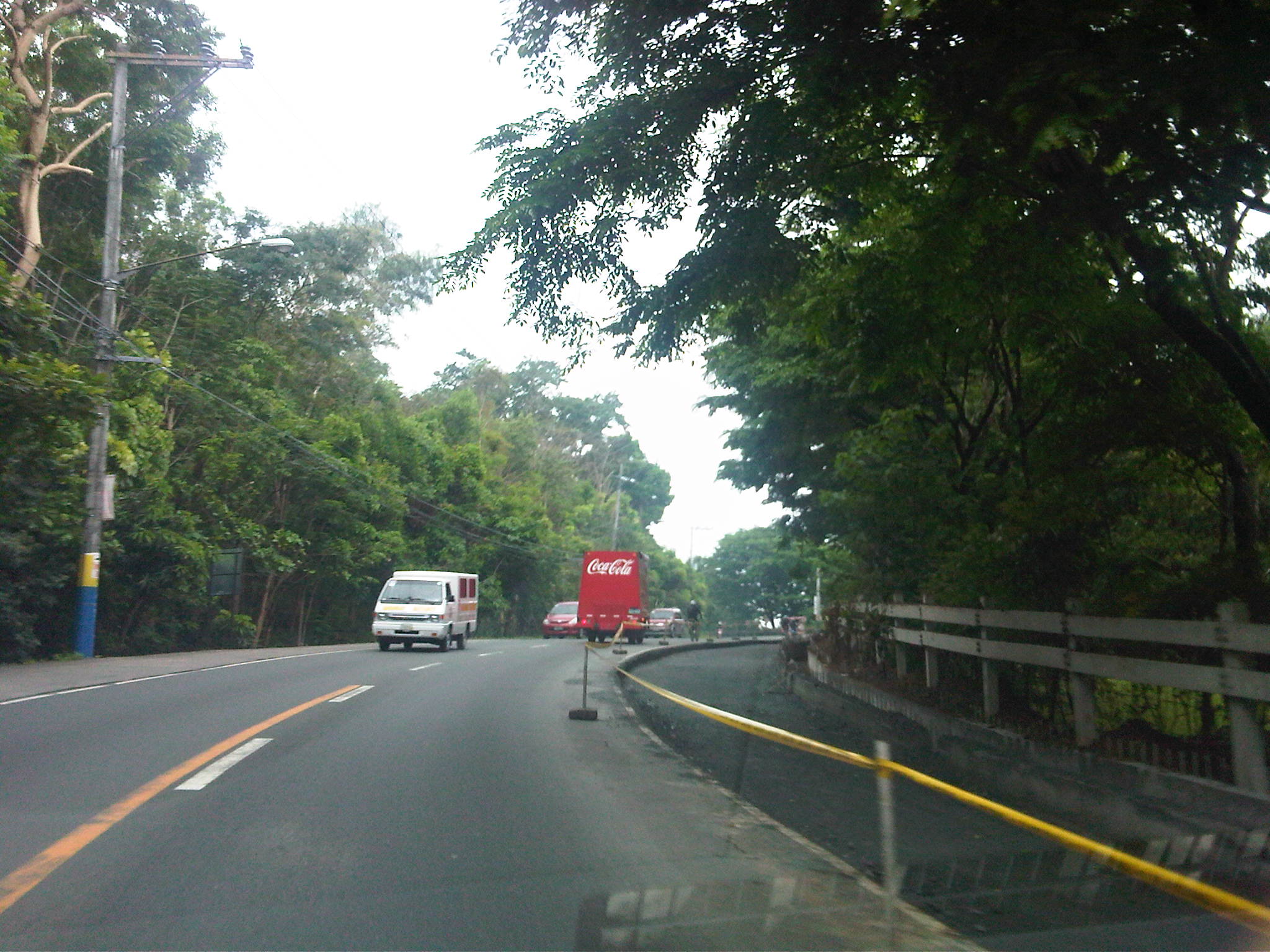 Curvature – shoulder works along Sumulong Highway should be complete by now and offering space for cyclists and pedestrians. Of course, these could also be used by slow moving vehicles or those pulling aside to stop (for whatever reason) to allow other vehicles to pass.
I hope Sumulong Highway would have provisions for walking safely to and from the Shrine. A lot of people flock to the church not only during its Feast Day, Sundays and the Holy Week. Many people would also be interested in hiking along this way if they only had a safe way from Masinag to the Shrine. The space is limited and there are many conflicts along the way but I also remember that the same corridor was considered for the LRT Line 2 extension to Antipolo Cathedral. Surely the RROW would allow for pedestrian facilities on one side of the road if some due diligence is performed to determine the extent of encroachments along Sumulong.
–
Walking around in NAIA Terminal 3
I had another opportunity to explore NAIA’s Terminal 3 last weekend. The following photos were taken while walking around to kill time while I waited for the arrival of a friend I was fetching at the airport. I arrived early at the terminal assuming it would be difficult to get a parking slot and that the flight would be arriving on time. I ended up eating dinner and having a nice stroll around the terminal building.
 Check-in counters for ANA and Zest Air
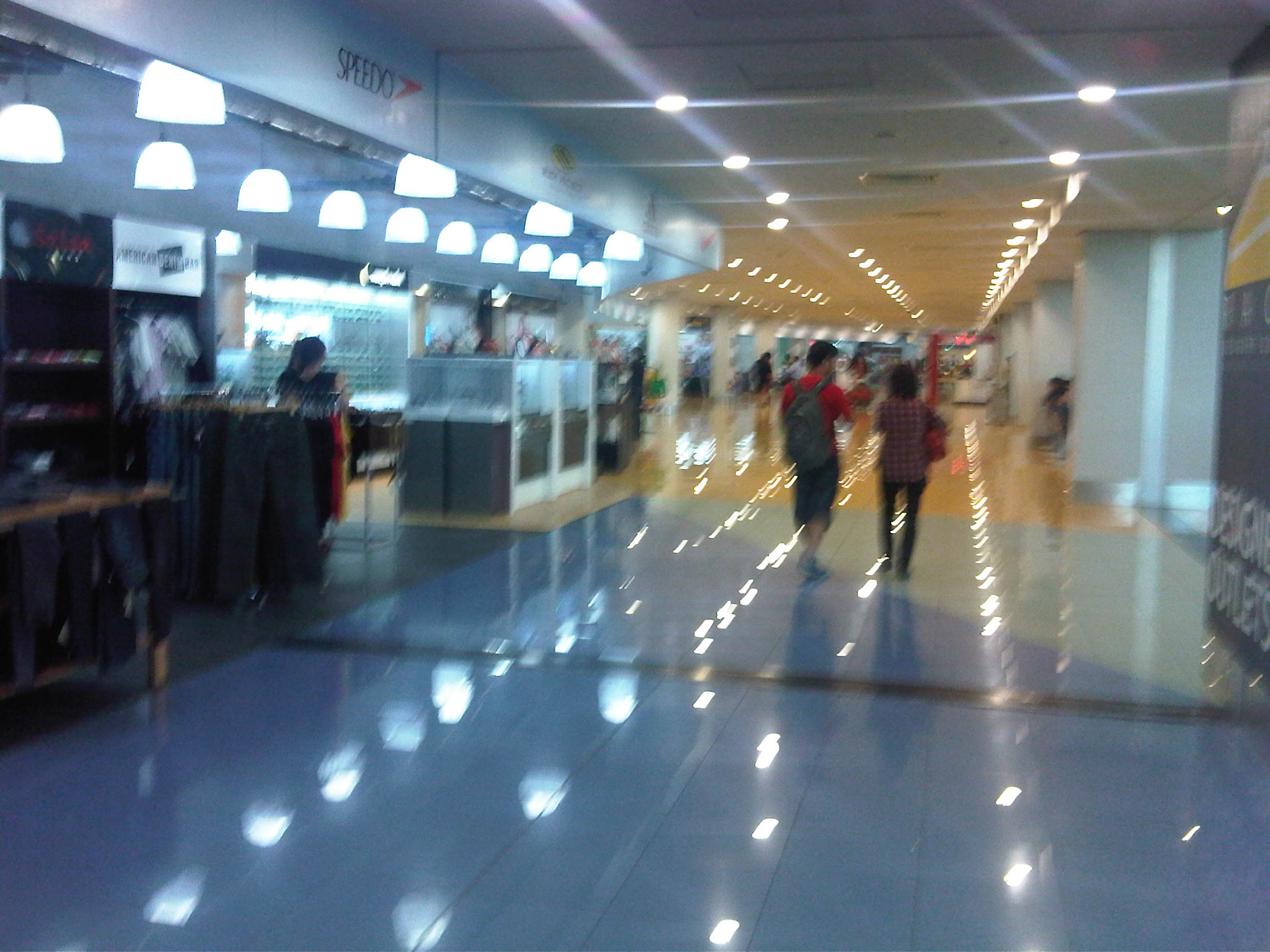 Shops at the third level of the air terminal (2nd level of the departure area) – there’s also a Mini Stop and 7-Eleven at the terminal.
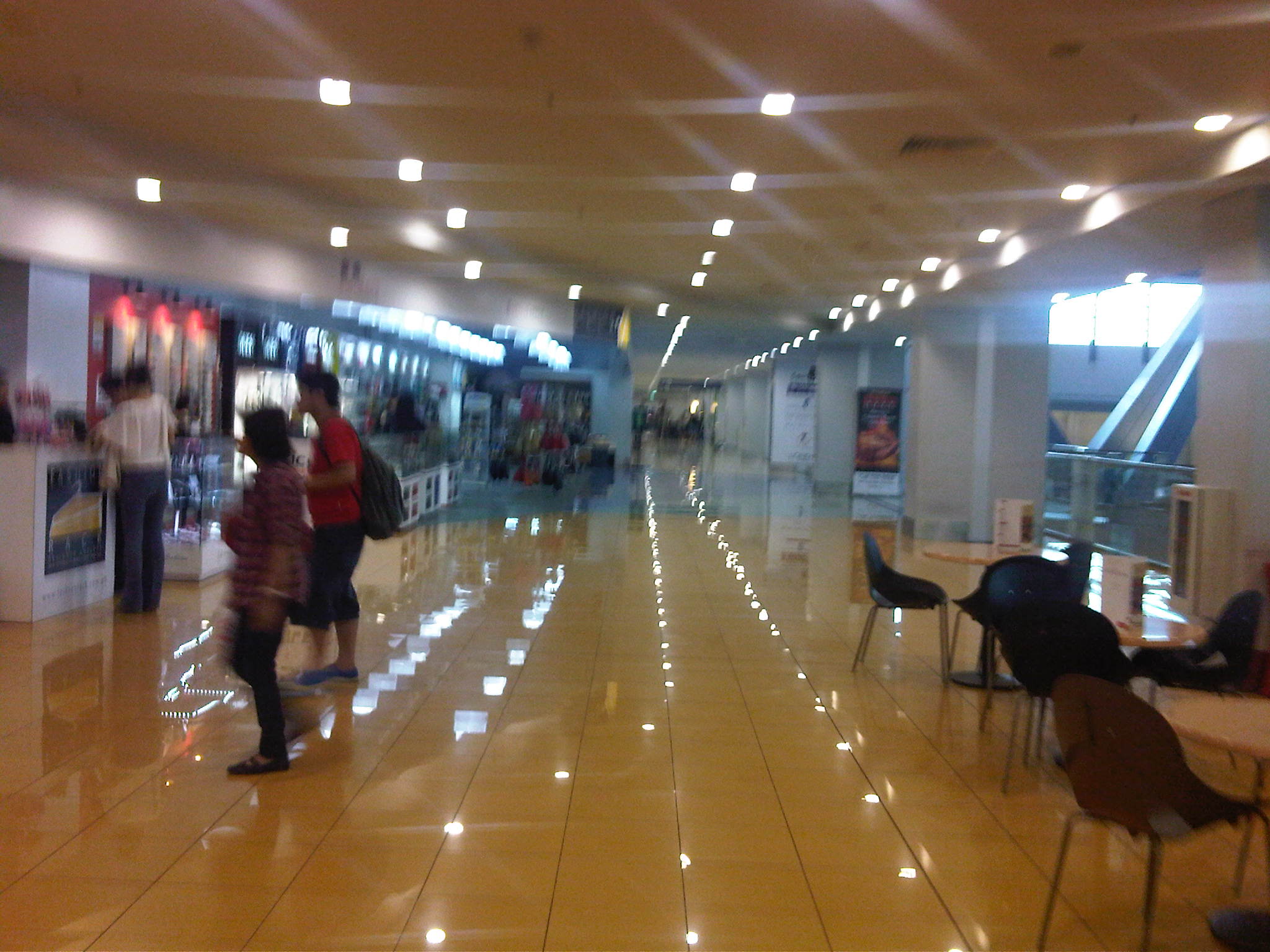 Most of the shops appear to be outlets for popular brands like Nike, Adidas, Oakley, Delsey, etc.
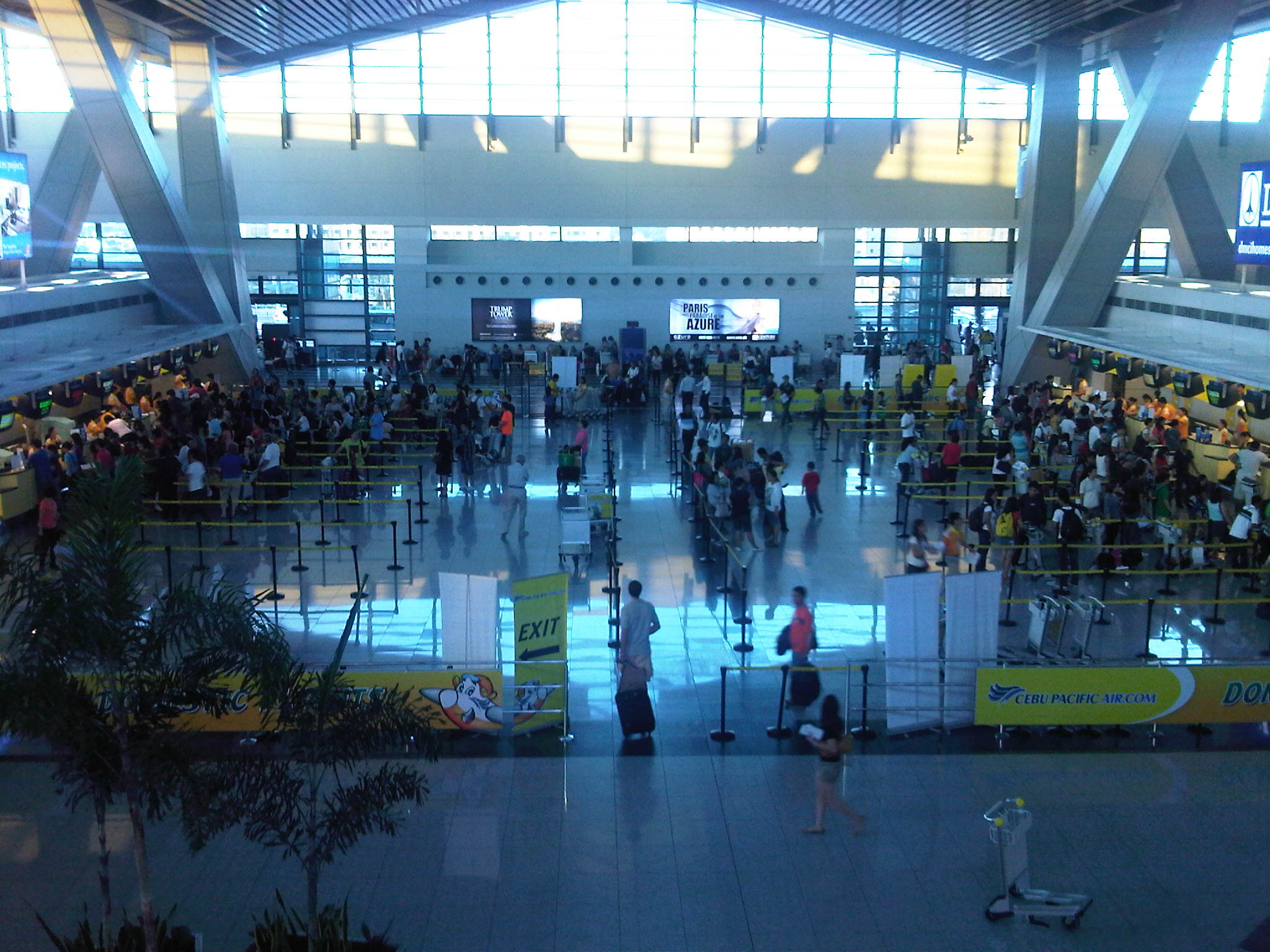 Queues before the Cebu Pacific counters for domestic flights.
 There are many restaurants including the recognizable ones like Shakey’s Pizza, Pancake House, Kenny Rogers, Yellow Cab Pizza and Jollibee.
 Screens showing flights scheduled for departure and arrival via NAIA Terminal 3.
 Spacious halls of the arrival area of Terminal 3 – surprisingly, the area was not crowded at the time (it was around 6:30 PM when the photo was taken)
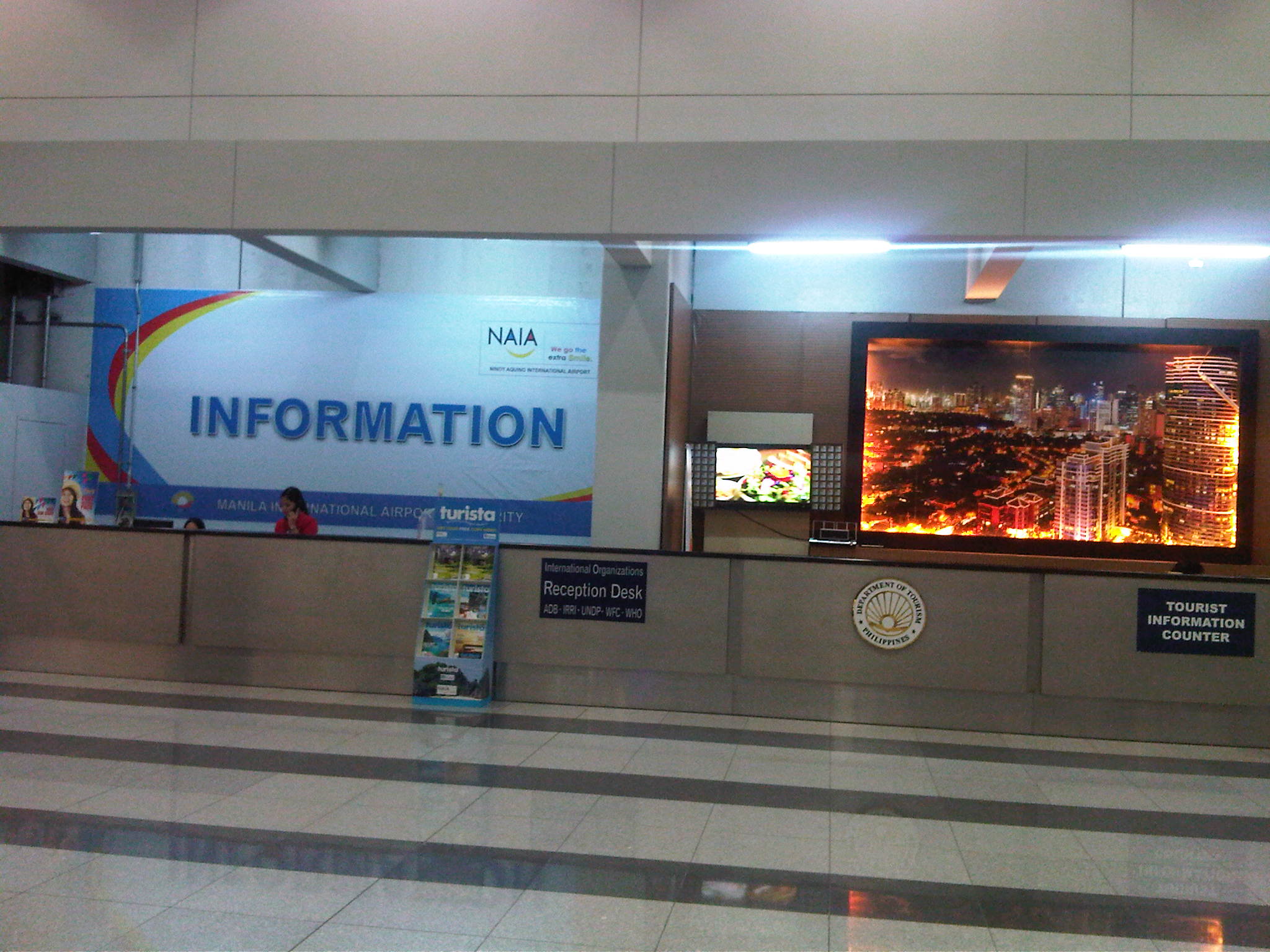 Information counters for visitors
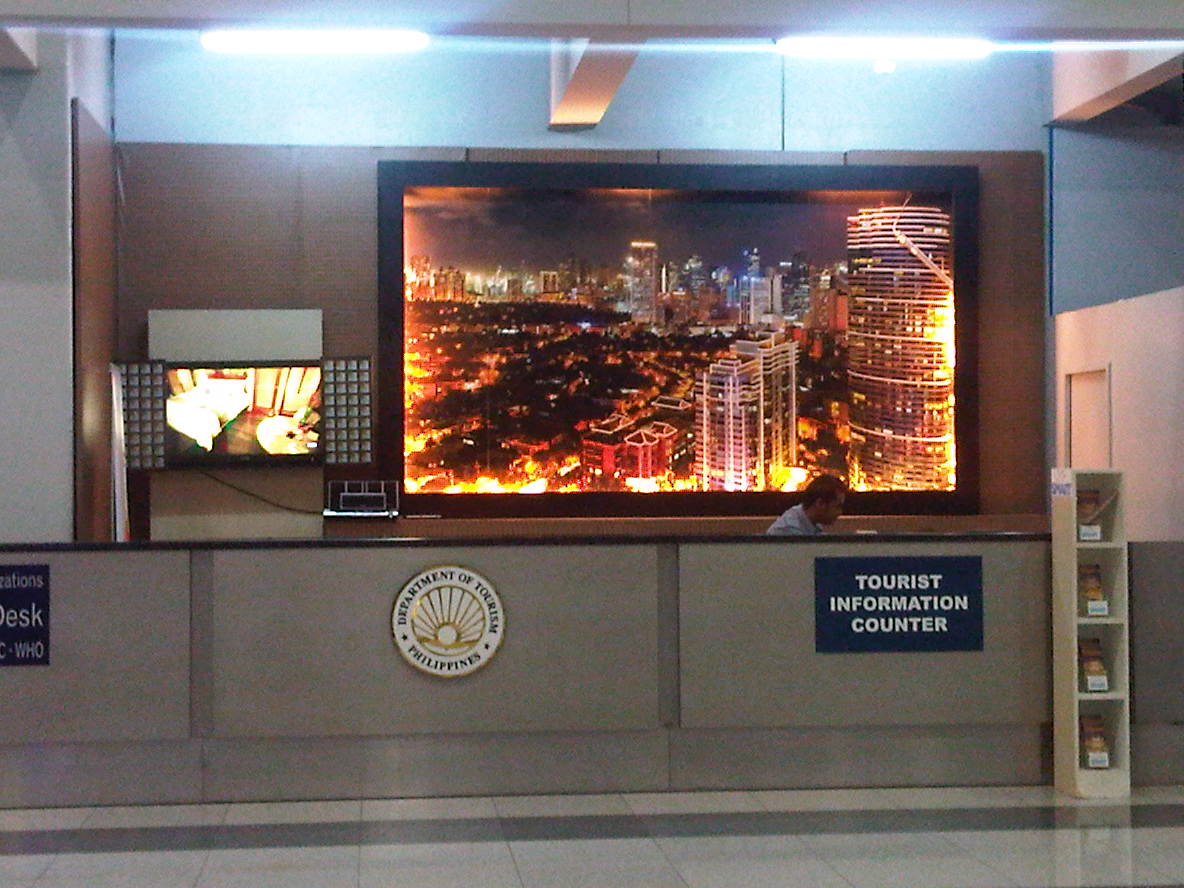 Tourist information counter of the Department of Tourism
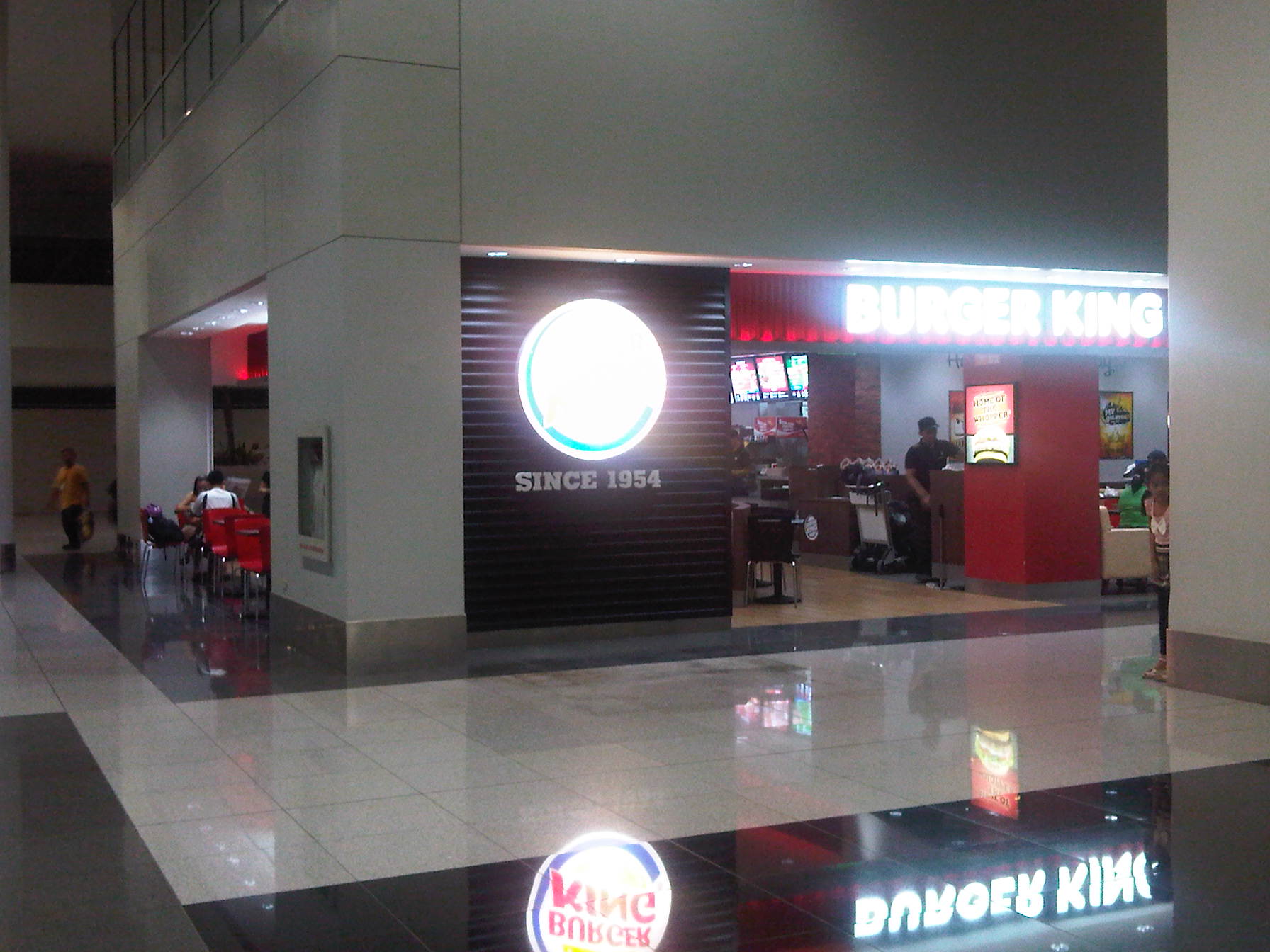 Newly opened Burger King at the ground level / arrival area of Terminal 3
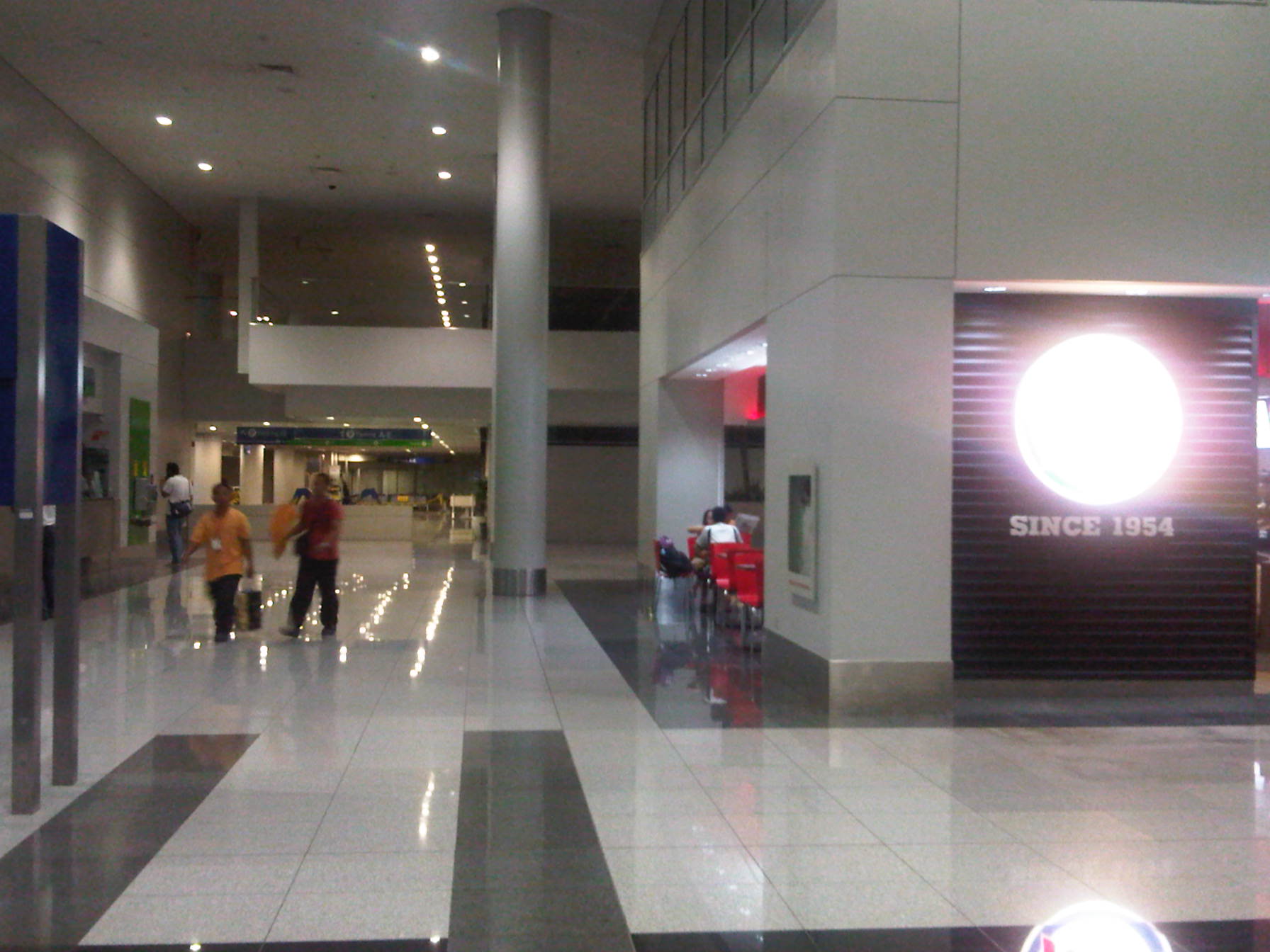 This way leads to the unopened area of the terminal, which includes space for more shops and the multi-level parking building. On the left side across Burger King are ATMs and counters of banks for currency exchange.
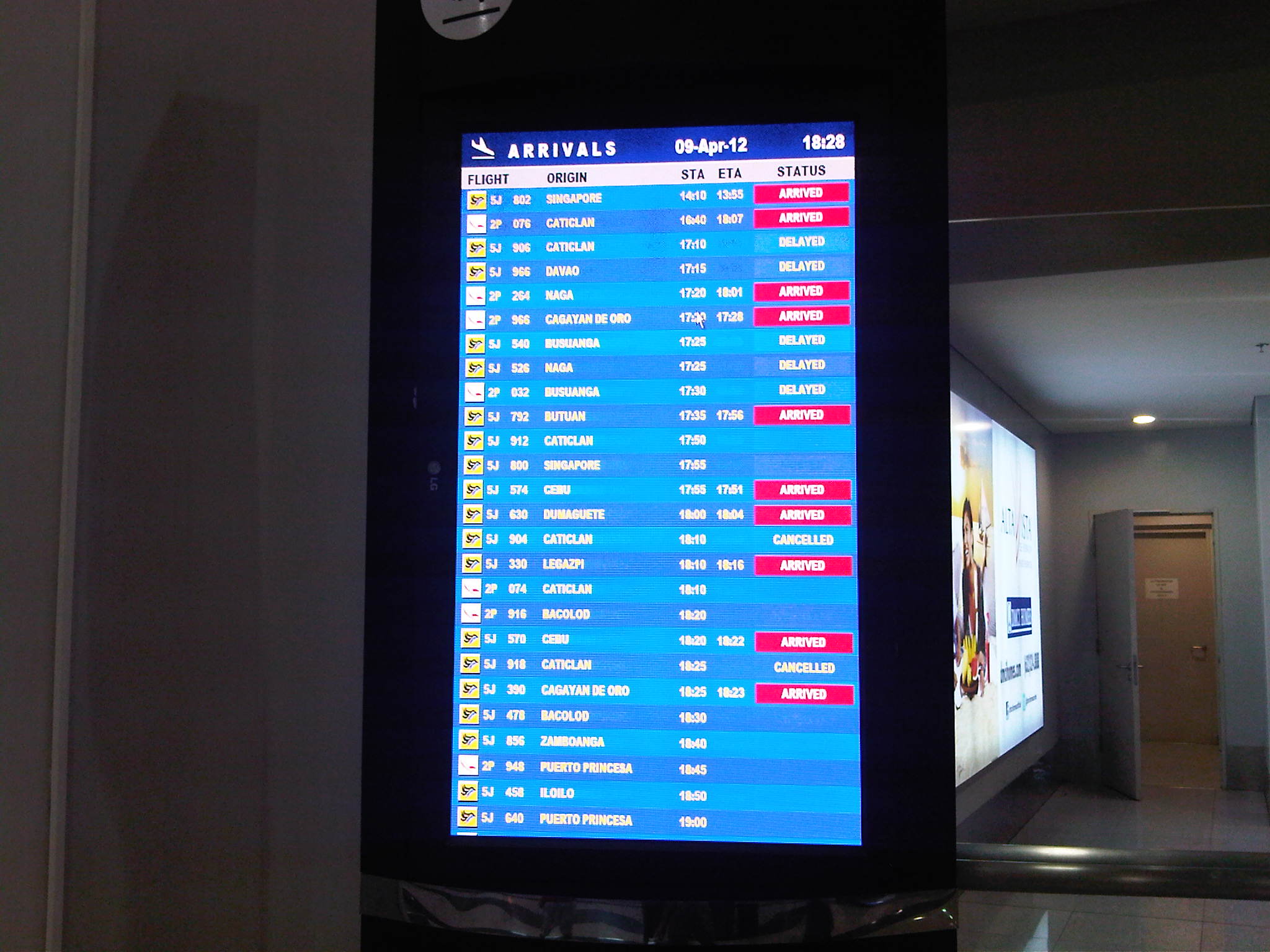 Arrival information just before the exit from baggage claim and customs
 Well-wishers view of passengers coming from the baggage claim area for domestic arrivals
–
But seriously…recognizing walking as a mode of transport
There is a general observation that urban planning in the Philippines, including planning and design for transport, revolves around motor vehicles. In fact, much of what we think are sound policies and guidelines, even rules of thumb, are car-oriented rather than people-oriented. Our love for the car is often traced to our being a colony of the United States and our orientation to cars have been reinforced over the years by policies, plans and projects that seem to be biased for car users while detrimental to commuters in general. In fact, we have been used to having roads built and widened that these types of projects seem automatic, no brainer solutions to the traffic problems we encounter everyday. Not that this is a bad thing, considering that we do have many missing links to complete and infrastructure to build where they are needed. Yet, for many of our highly urbanized cities, public transport infrastructure has been too slow to address the demand for movement.
Metro Manila is already choking in as far as traffic is concerned and our proposed solutions still are road widening and the call for elevated expressways. Meanwhile, we have poor road public transport services and a limited rail or mass transit network. It seems that most of the plans for trains and BRTs have never left the proverbial pipeline and as such, we continue to languish in I would like to think that a lot of people would want to take public transport if only the quality of service is similar to systems in Singapore, Hongkong, Kuala Lumpur or even Bangkok or Jakarta. We have to deliver on this end, which will also see our streets begin to become decongested as vehicles will naturally decrease with people choosing PT over their cars, especially in this period of increasing fuel prices.
Of course, these public transport infrastructure carry hefty price tags. And so to complete the picture and solve the puzzle of transport in cities like Metro Manila, Cebu and Davao, we would need to address what is perhaps the most basic for of transport that is often forgotten when talks center on highways and mass transit – walking. It is a fact that walking is the mode with the highest share for transport; dwarfing all other modes since we all walk at some point of our trips (e.g., Car users still have to walk to and from the parking spaces.) Unfortunately, we seem to have become lazy, preferring to ride than to walk and making so many excuses even when the facilities for walking are already provided and conditions favor walking over motorized transport. Of course, the main challenges for ensuring the safety and comfort of those who choose to walk remain and investments are required for more infrastructure to encourage walking. There are good practice examples like the walkways connecting buildings at the Makati CDB and the sidewalks of Quezon City. These are, however, more the exception than the rule and so there is still a need to actually “formalize” walking as a mode of transport and one that could probably save us a lot of fuel, reduce emissions and, most importantly, improve our health and well-being.
Following are excellent articles for reading, and for consideration when we re-think what we are doing to improve transport and mobility in our cities. A re-orientation is in order for us to address
(Note: the sources and links to the online articles are shown below and in the files. These are made downloadable here only to facilitate access to the articles. There is no intent for any copyright infringements.)
Why don’t Americans walk more? The crisis of pedestrianism:
What scientists know about how pedestrians really behave:
Walking_in_America__What_scientists_know_about_how_pedestrians_really_behave_
How walk score puts a number on walkability:
Walking_in_America__How_Walk_Score_puts_a_number_on_walkability_
With America and the rest of the world taking a second and perhaps critical look into how they are planning their transport systems and focusing on encouraging people to walk, we should perhaps take this as our cue to also re-think how we are planning and designing our systems. We should, and not be too dependent on the recommendations of studies past and present that seemingly try to simplify our plights as something that can be solved by roads and cars alone.
–
The air that we breathe – morning smog in Metro Manila
We were early at the venue of the seminar we organized before the Holy Week. The seminar venue was on the top floor of a tall building in the Ortigas Center area and afforded us an almost 360 degree view of the surrounding areas and beyond. At 6:45 AM, the sun was steadily rising and it was already bright enough to look into the horizon from different parts of the venue. I took the following shots while we were setting up for the seminar and it is clear that air quality is really bad in Metro Manila and its surrounding areas. Most of this may be attributed to vehicle emissions as the DENR estimates 65% of air pollutants coming from mobile sources while only 21% are from stationary sources (i.e., factories) and 14% from area sources (e.g., burning of garbage or grass).
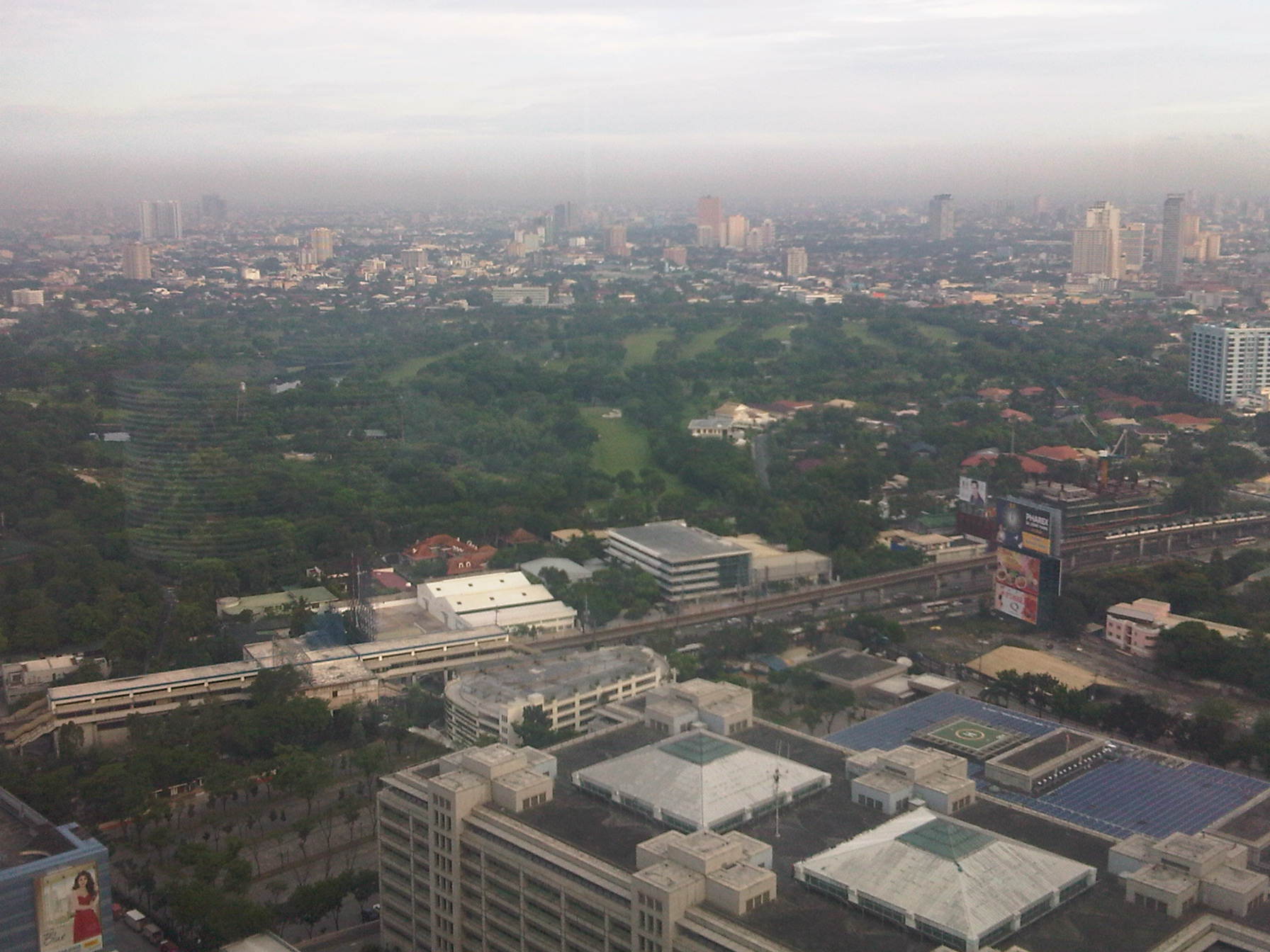 Golf anyone? – from one side of the building, you could see Wack-wack golf and the EDSA-MRT as well as the roof top of the ADB headquarters. One can also see the thick band of dark brown (or is it brownish black) that is the smog covering much of Metro Manila. Early morning golfers and joggers probably are not aware of the health implications of their activities that morning. The building where the DOTC has its offices is located is also visible in the photo (middle of the right edge of the picture).
 Makati skyline – visible in the horizon in the center of the photo is the Makati CBD with its tall buildings. People looking from atop a building on that side will see the Ortigas skyline and a band of brown. Contrast this with the blue sky and clouds at the top of the photo.
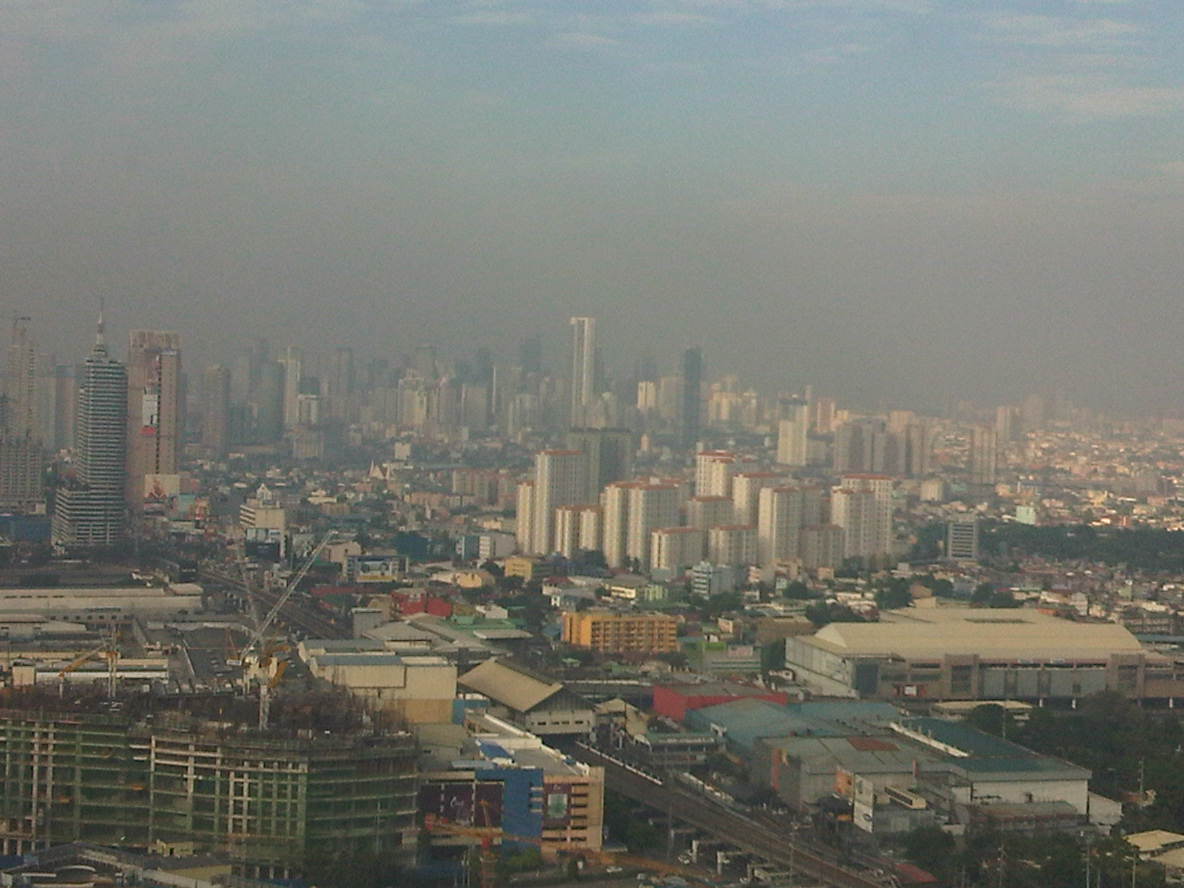 Close-up – the Makati skyline or shall we say “fog line,” a more appropriate term around Metro Manila this summer
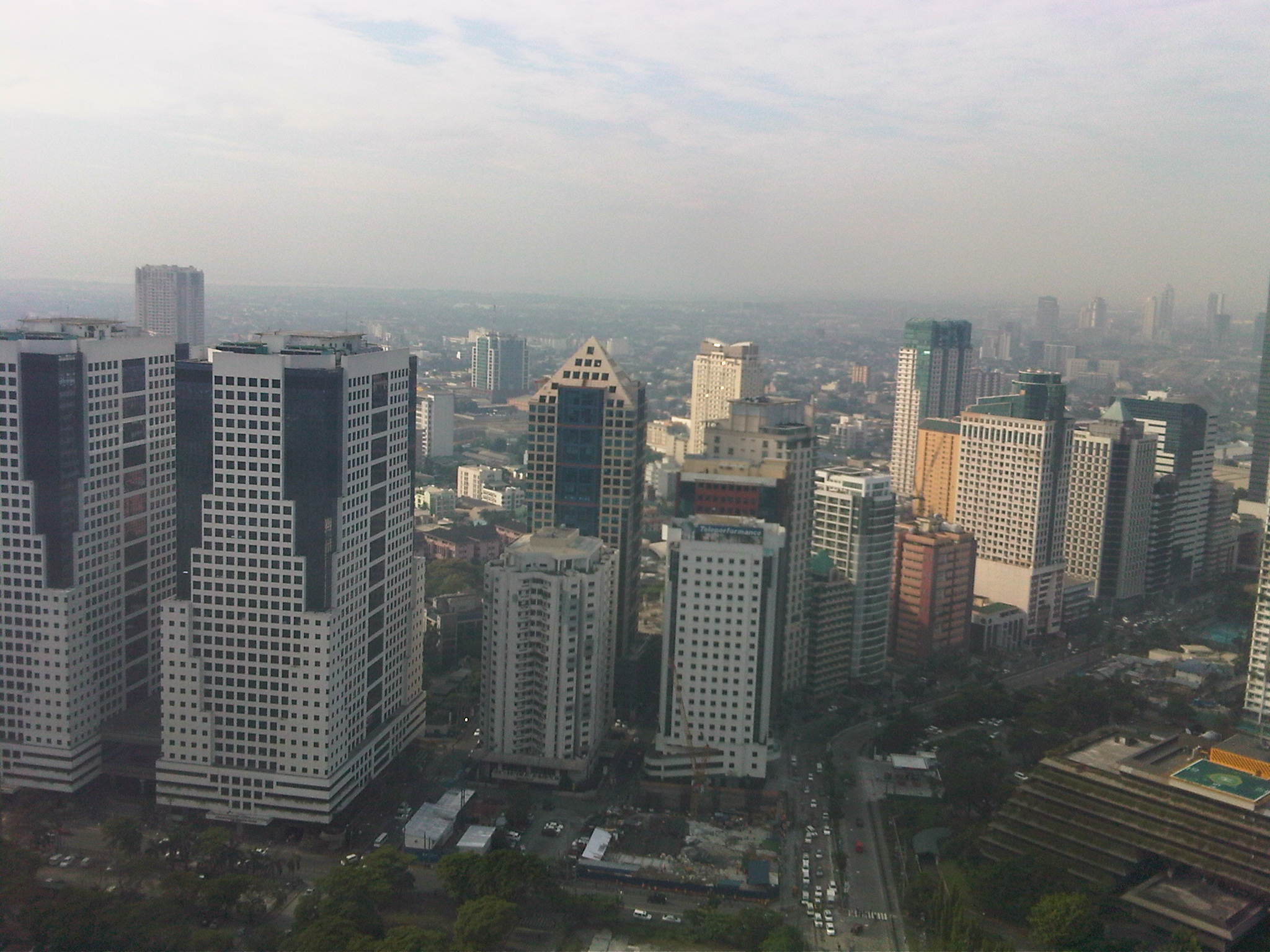 The south – beyond the Tektite Towers and other prominent buildings along San Miguel Avenue is the south (Paranaque, Las Pinas and Muntinlupa). Also, there is Taguig and Pateros along the line of sight from this photo. There are buildings of Bonifacio Global City visible on the right in the horizon.
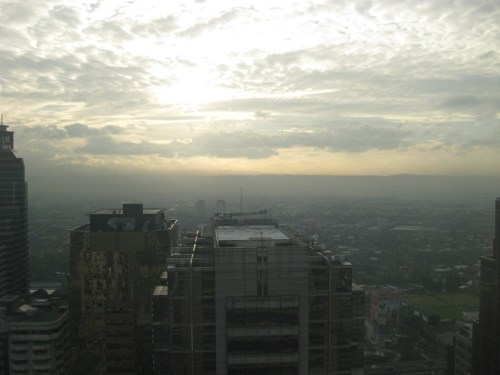 The sun rises from the east – as with Manila Bay sunsets, the colors produced by the sun become quite dramatic when combined with the pollution (Yes. The dramatic reds and oranges you get from sunsets may be attributed to the air pollution.). One is supposed to see the mountains of Antipolo in the horizon but because of the smog and the exposure of the shot, you can only see an outline of the mountains and an idea of what people in the lower parts of Rizal breathe everyday. The Ortigas Center is located in Pasig City and the areas between Rizal and our location are all within that city.
 Quezon City and beyond – right next to Pasig to the north is Quezon City, and beyond along the line of sight is the Marikina Valley and the mountains of San Mateo and Montalban (now Rodriguez). That’s Eastwood with its tall buildings barely seen in the smog to the left of the photo.
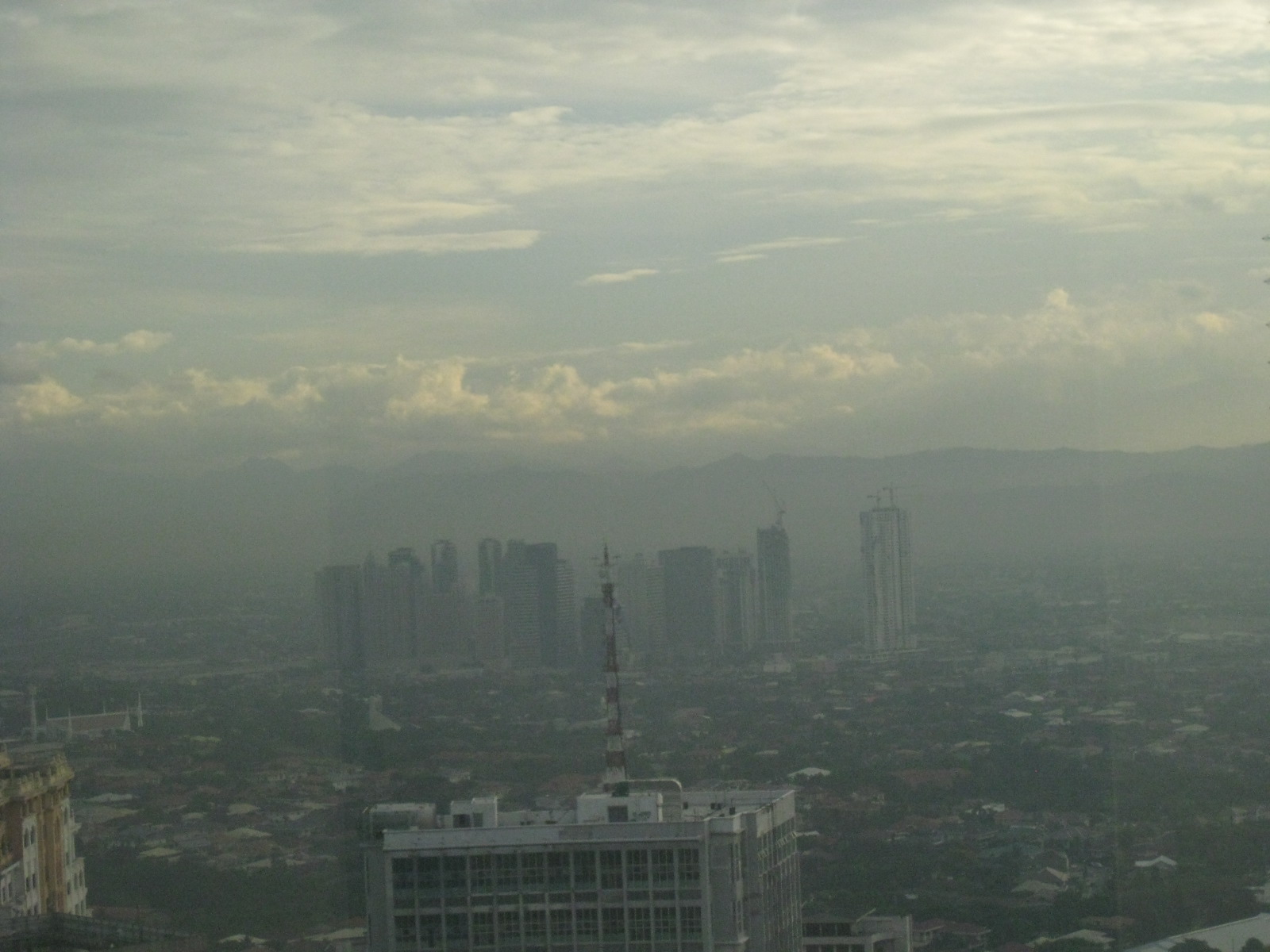 Take two – a closer look of Eastwood and the outlines of the Sierra Madre mountains. The smog seems thicker over the Marikina Valley and Quezon City as any other structure is practically hidden by it beyond Eastwood.
The photos above are on-the-ground validations of aerial observations I earlier posted. It can only go worse given the onset of the driest part of the year and behavior of air circulation at this time of the year. Of course, one isolated typhoon or weather system passing through Metro Manila can dissipate this smog but it will only return to wreak havoc on our health. So much for the Clean Air Act and other initiatives? We should try harder including doing our part in reducing our carbon footprints. Perhaps we should be honest in the way we maintain our vehicles. Perhaps we should demand more from public transport operators and truckers as they constitute a significant part of visible and observable smoke belching. Perhaps we should not encourage the proliferation of motor tricycles but instead replace most of these with non-motorized ones especially in residential areas. Air may be free but we are all at risk even in the perceived safety of our homes.
–
Changi’s Budget Terminal
Singapore has the best airport in the world, a distinction it has maintained despite challenges from similar world-class airports like the ones in Hongkong and Incheon. It currently has 3 huge terminals for mainly full service airlines including the very impressive Terminal 3. Singapore also has a Budget Terminal, which I have observed as serving only 2 airlines, both budget – Tiger Airways and Cebu Pacific. The Budget Terminal has most of the amenities of the three other main terminals and is also excellently maintained with its sparkling clean floors and toilets. In fact, when one arrives at the airport for an early flight, you will notice that there are people (mostly caucasians) lying on the floor somewhere taking a nap while waiting for their counters to open. I guess it beats renting a room at a hotel considering you can burn time at the airport with all its facilities available, 24 hours. Following are a few photos I was able to take while waiting for the airline counter for my flight to open and also while waiting for my boarding call.
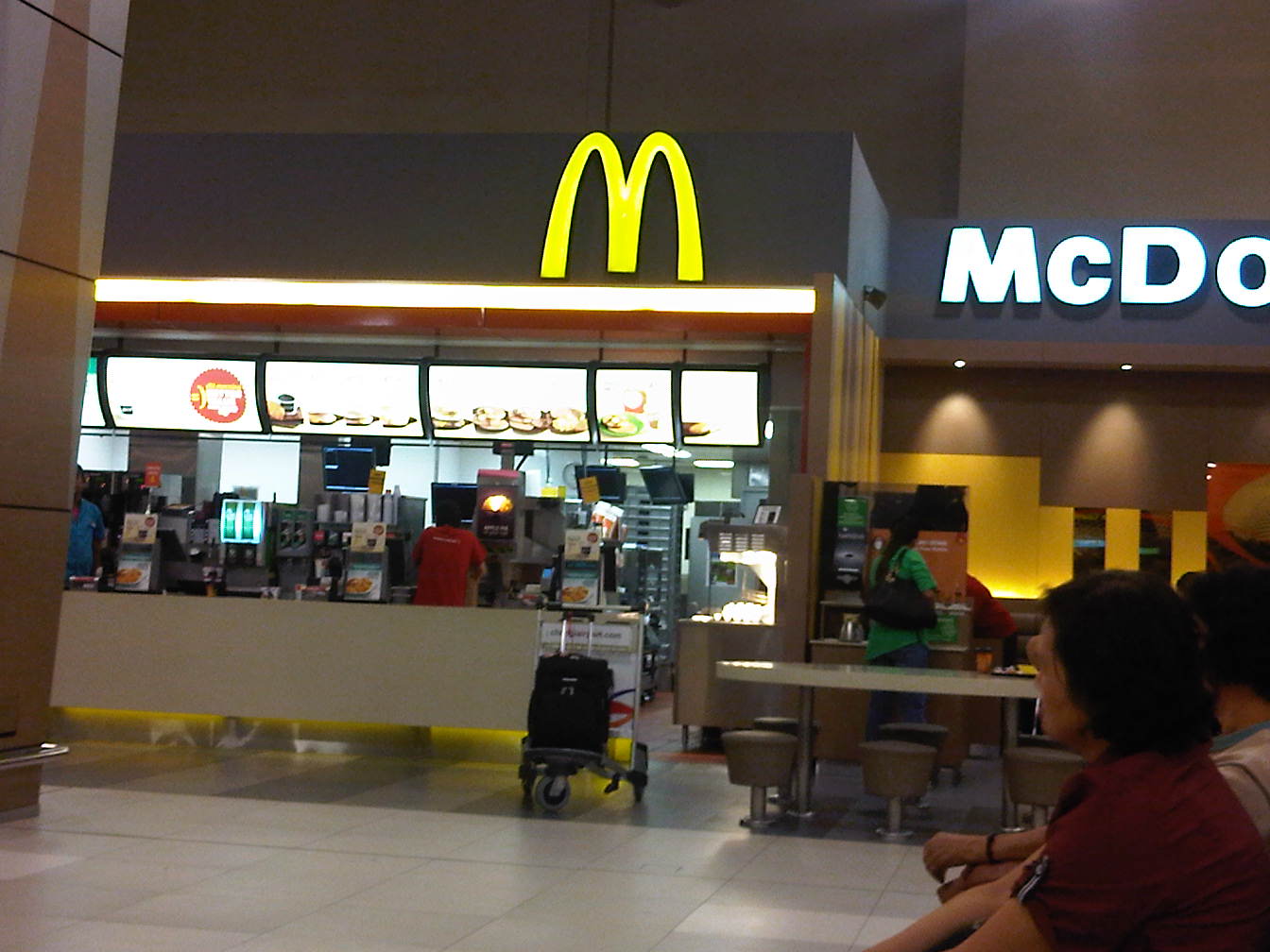 A McDonald’s outlet at the Budget Terminal
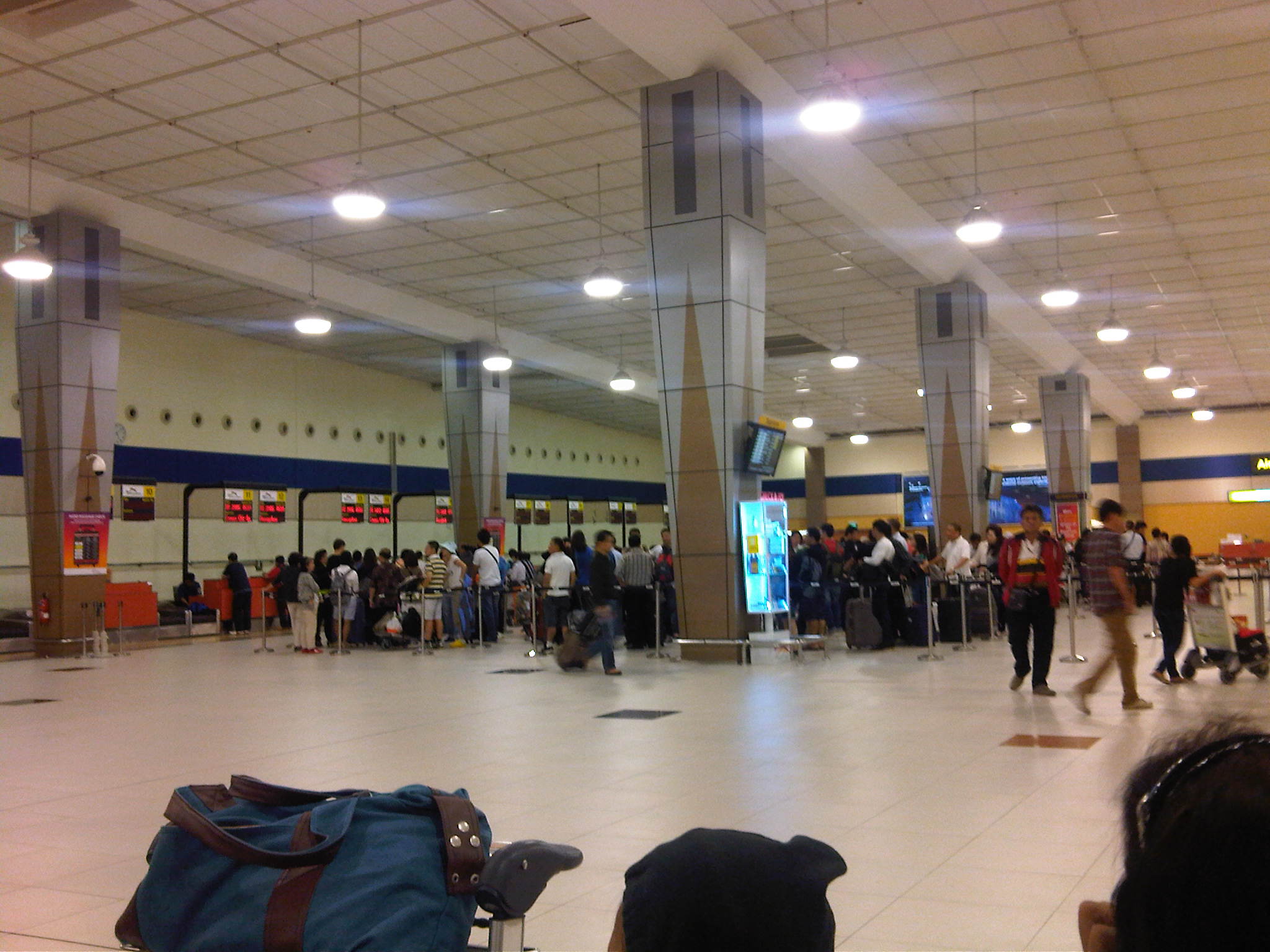 Queues at the Tiger Airways check-in counters
 Airport staff pushing carts toward the gates
 Passengers queued before the Departure gate prior to the immigration counters
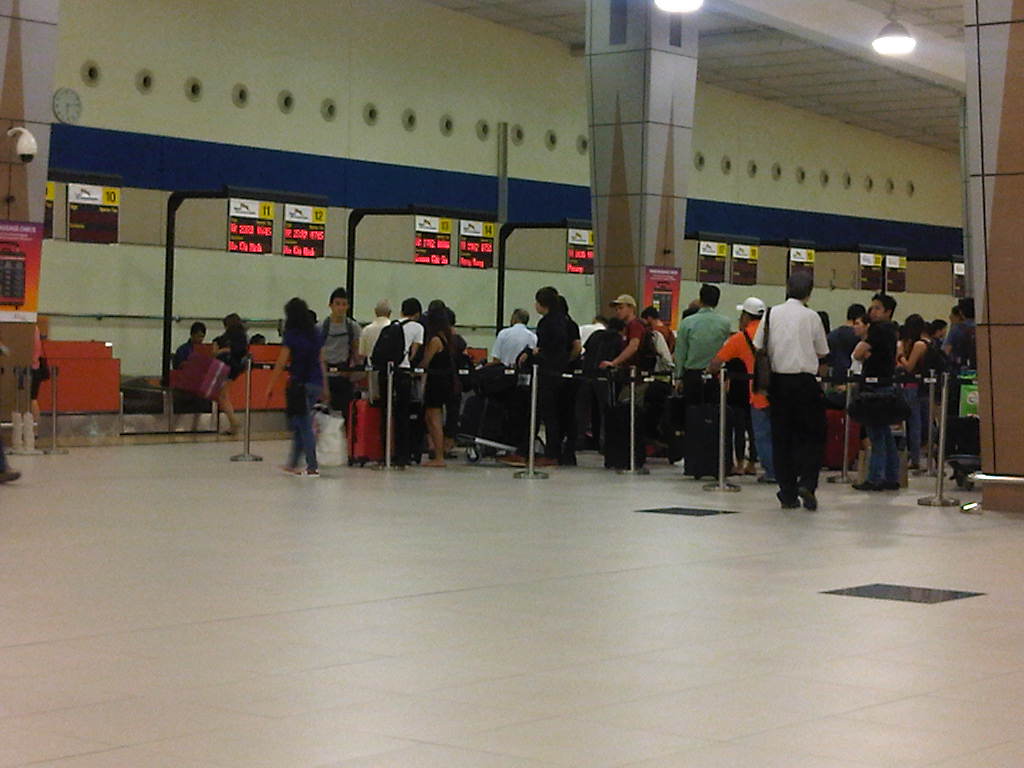 Tiger Airways is one of the more successful budget airlines in the region, a distinction in shares with AirAsia and Cebu Pacific
 You see a lot of passengers with large boxes or luggage including what are obviously electronics (giant LED or LCD TVs are quite the bargain in Singapore).
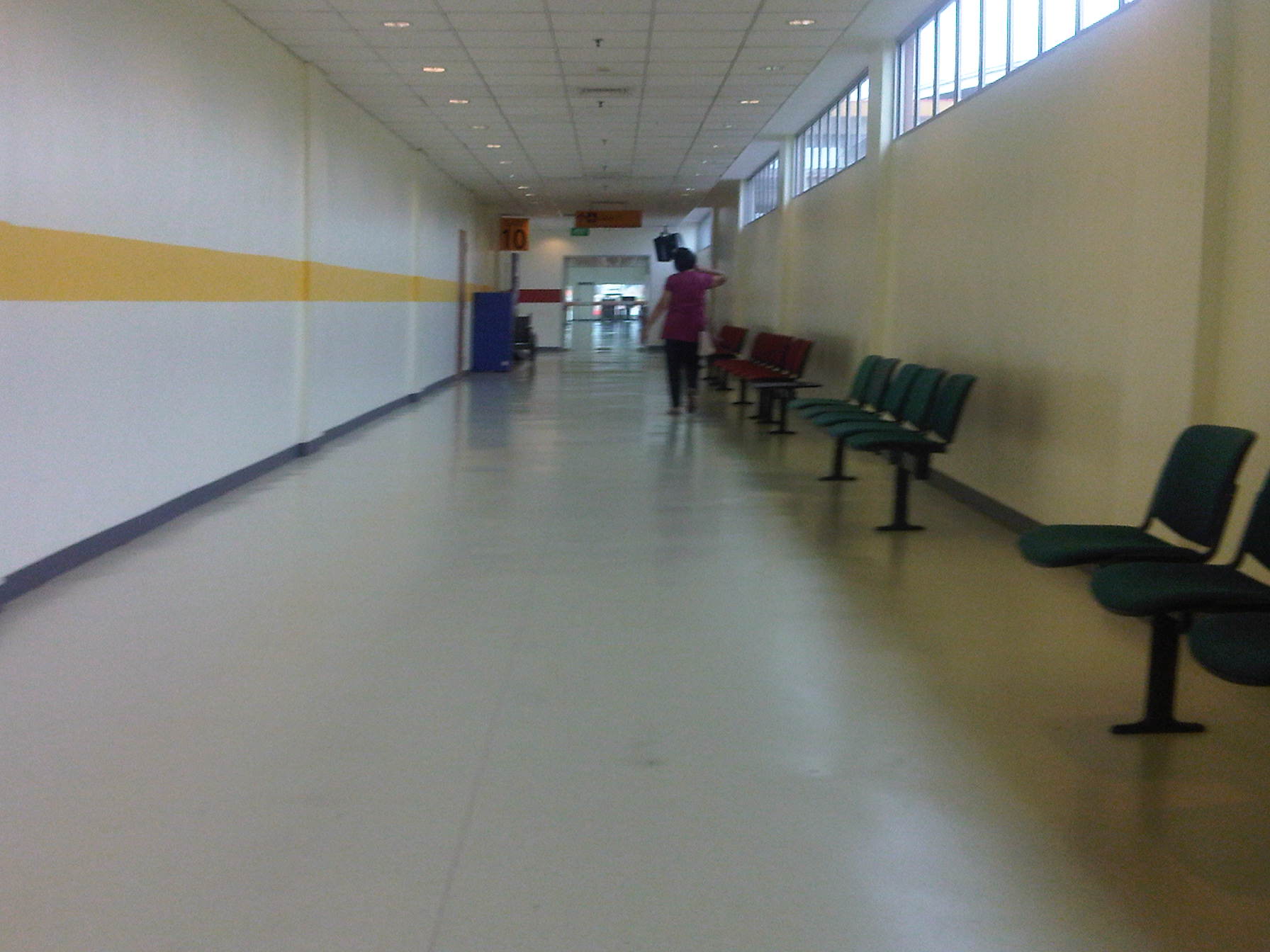 Corridor to the gate
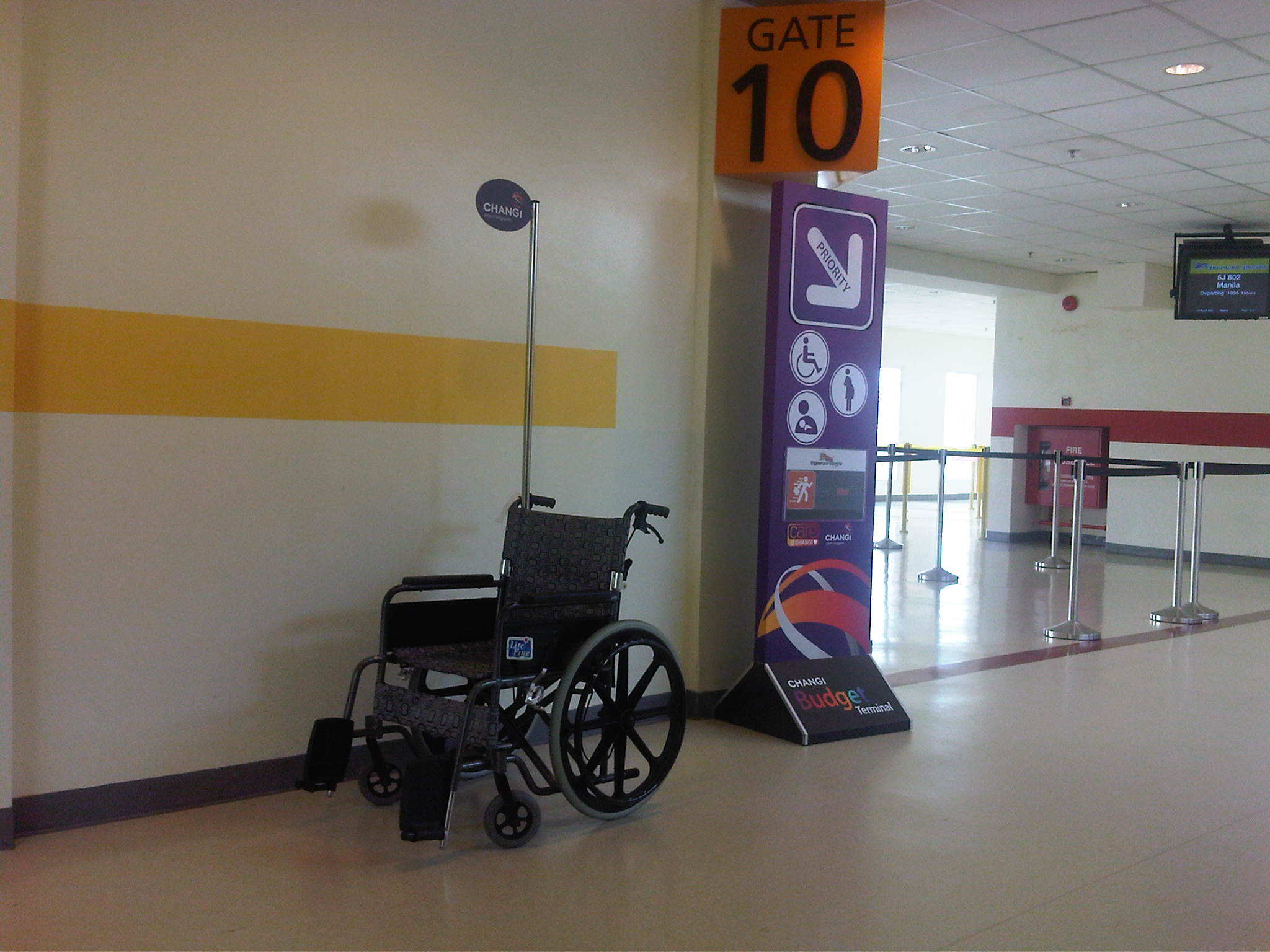 Wheelchair for passengers requiring it and sign stating priority for boarding (PWDs, pregnant women, those with small children)
 The waiting area at the end of the linear budget terminal
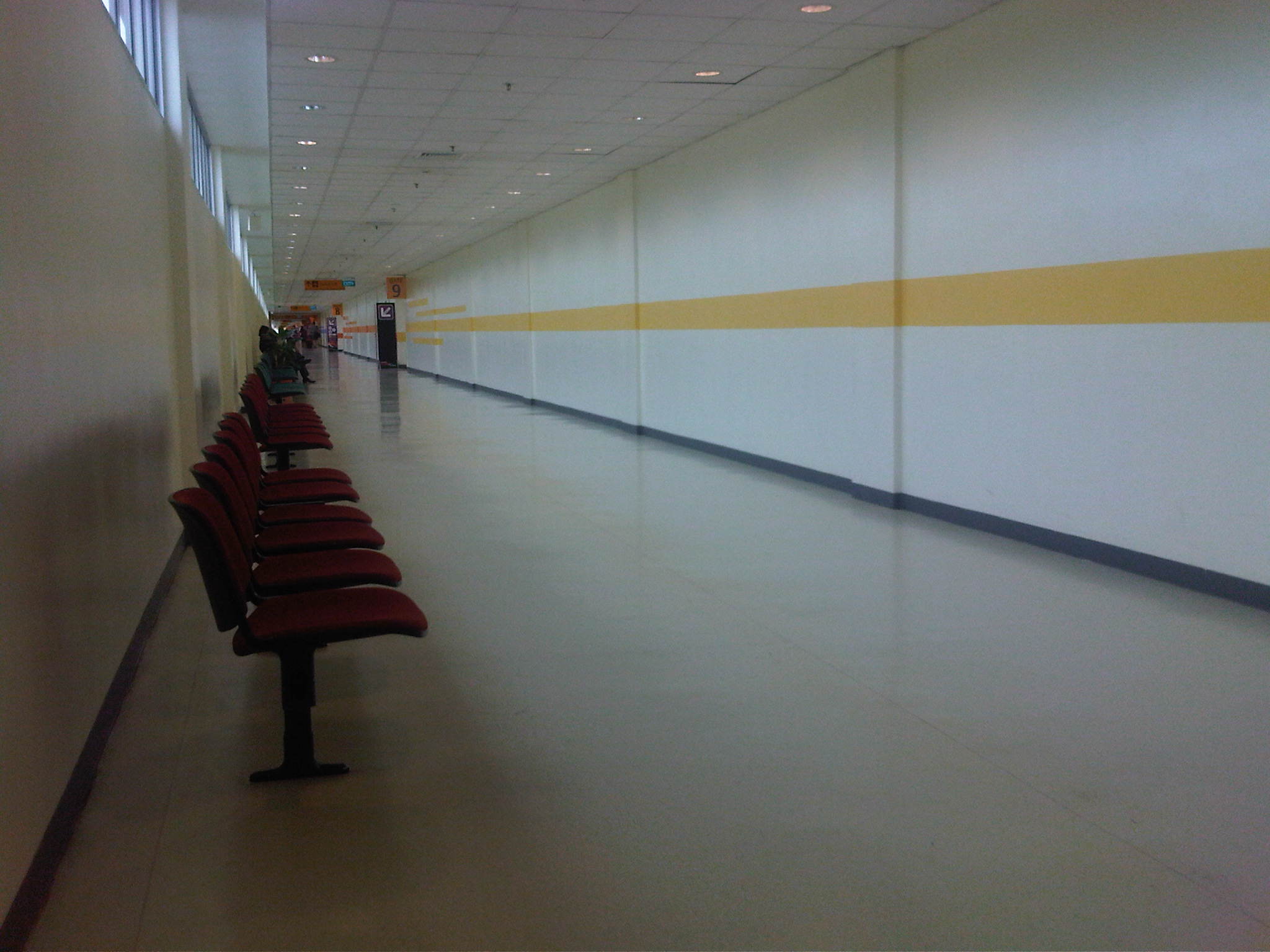 Seats at the waiting area – view from the end of the corridor
I have learned from friends and acquaintances that there are plans to scrap the Budget Terminal. In its place, a Terminal 4 will be built and all budget airlines will be served by the collective of four terminals at Changi. There has been mention of a 5th terminal but I guess that will be further in the future. One can’t be certain though since air traffic at Changi is still steadily increasing along with the travelers handled by the airport. Singapore knows it has to maintain its advantage as a hub connecting Asian destinations with the rest of the world and Changi is at the forefront of the city-state’s efforts to also maintain its leverage and status as a global center for business in the region.
–
Resurrecting the Bicol Express
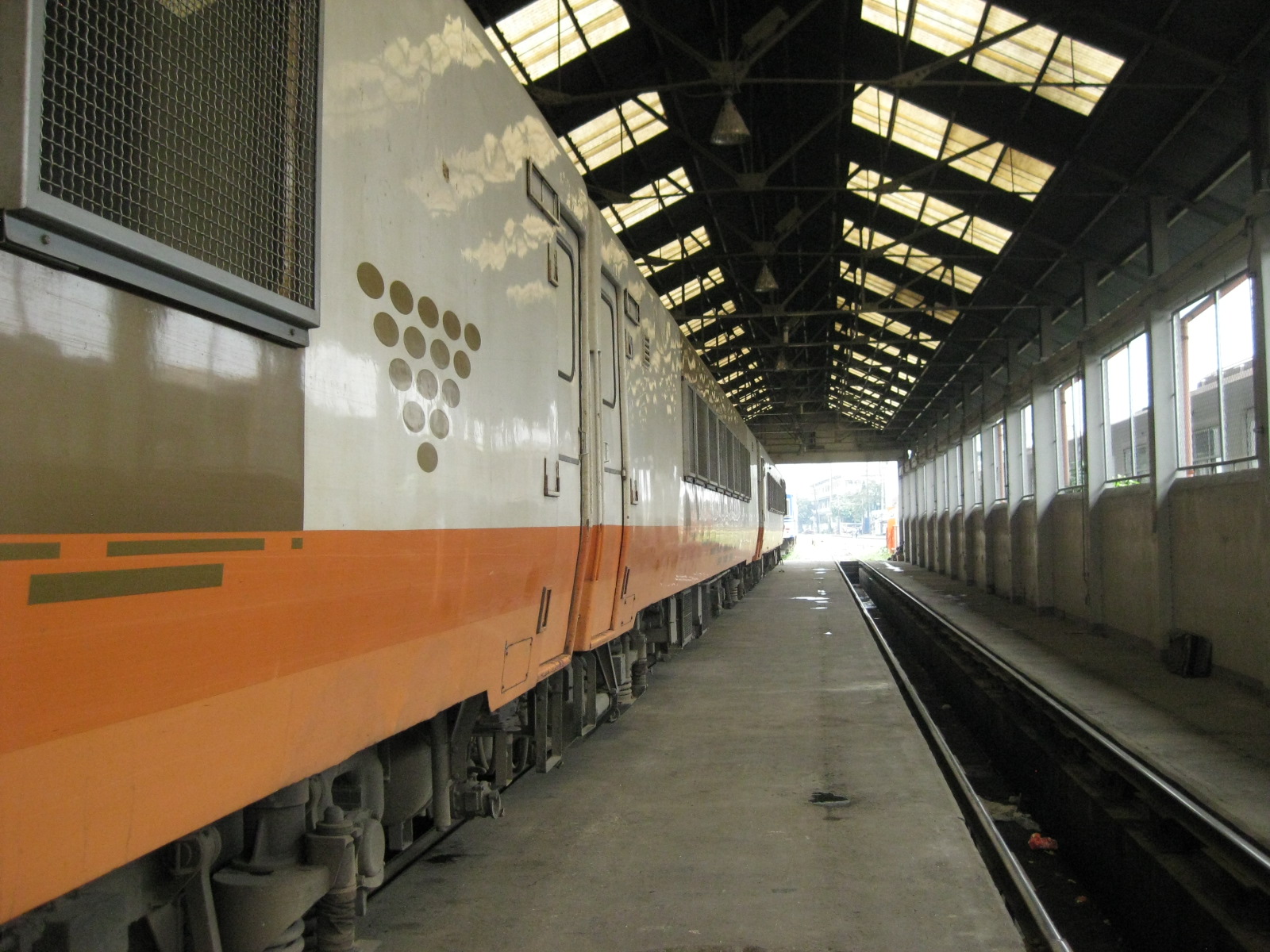
Part of our recent field visit at the PNR included a tour of the depot where the maintenance and refurbishing works are undertaken. Among the cars we saw were those intended for train sets to serve the recently revived Bicol Express. The service to Bicol was recently re-started with a once-a-day trip to Naga City in Camarines Sur, which was eventually extended all the way to Ligao, Albay. The revival hopefully could be the start of something big – a renaissance – for the once famed Bicol Express. For older people, this could be a nostalgic service while for younger people it could be an adventure of sorts. Perhaps it would be a welcome alternative to air and road travel to the region given that the PNR ROW offers a better view along the way into Bicol including breathtaking Vistas of Mayon Volcano, the Pacific Ocean, Lamon Bay, Ragay Gulf and the Bicol countryside. Unfortunately, for now Bicol Express trains travel mainly at night from Manila and so the views will come up only after Naga City, which the train reaches at around 6:00 AM in the morning, and from there proceeds to Legazpi City for the next few hours.
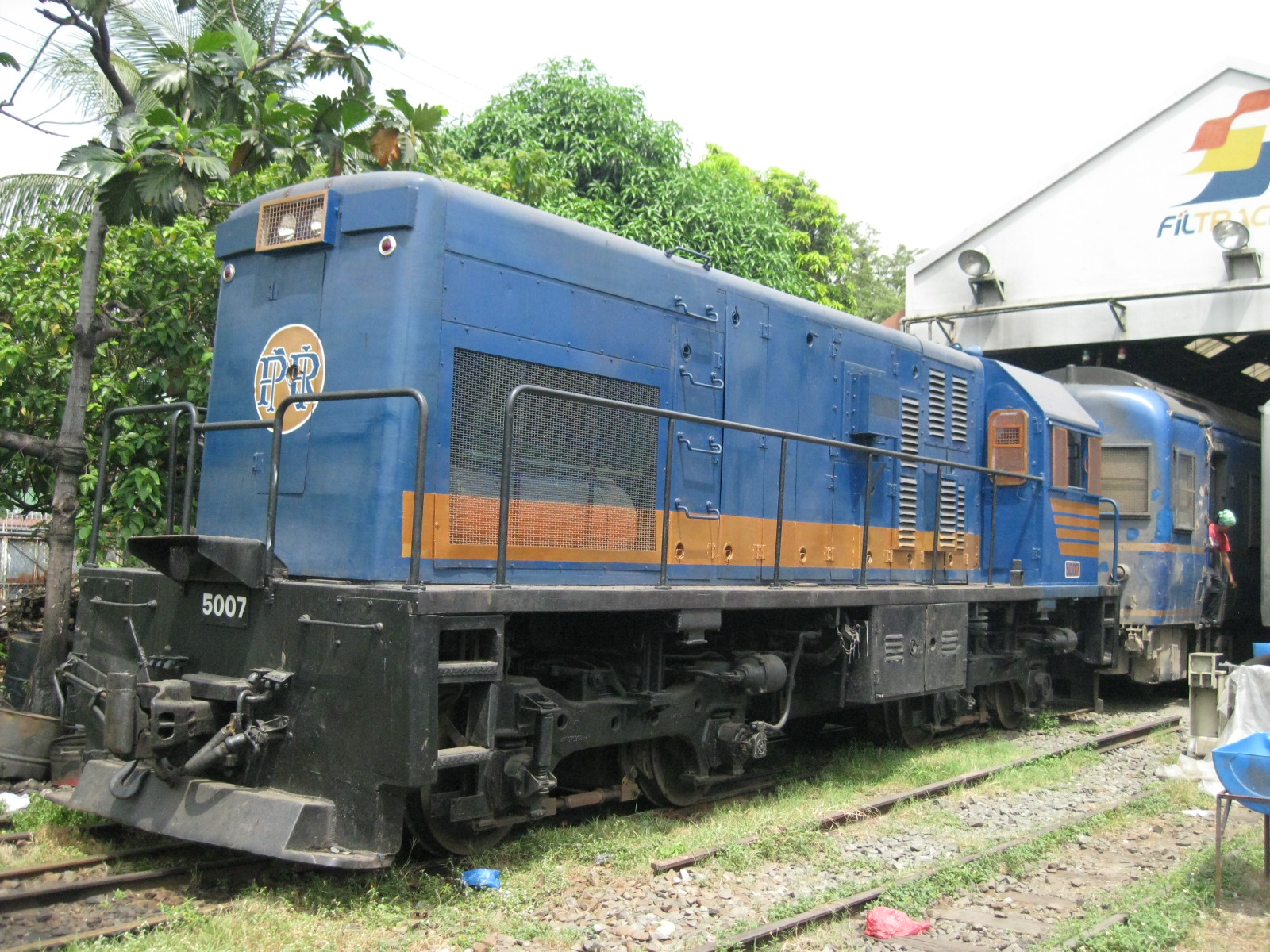 Diesel-electric locomotive that pulls PNR trains – unlike those I rode in Japan, Philippine trains are no electrified and have to be pulled by locomotives.
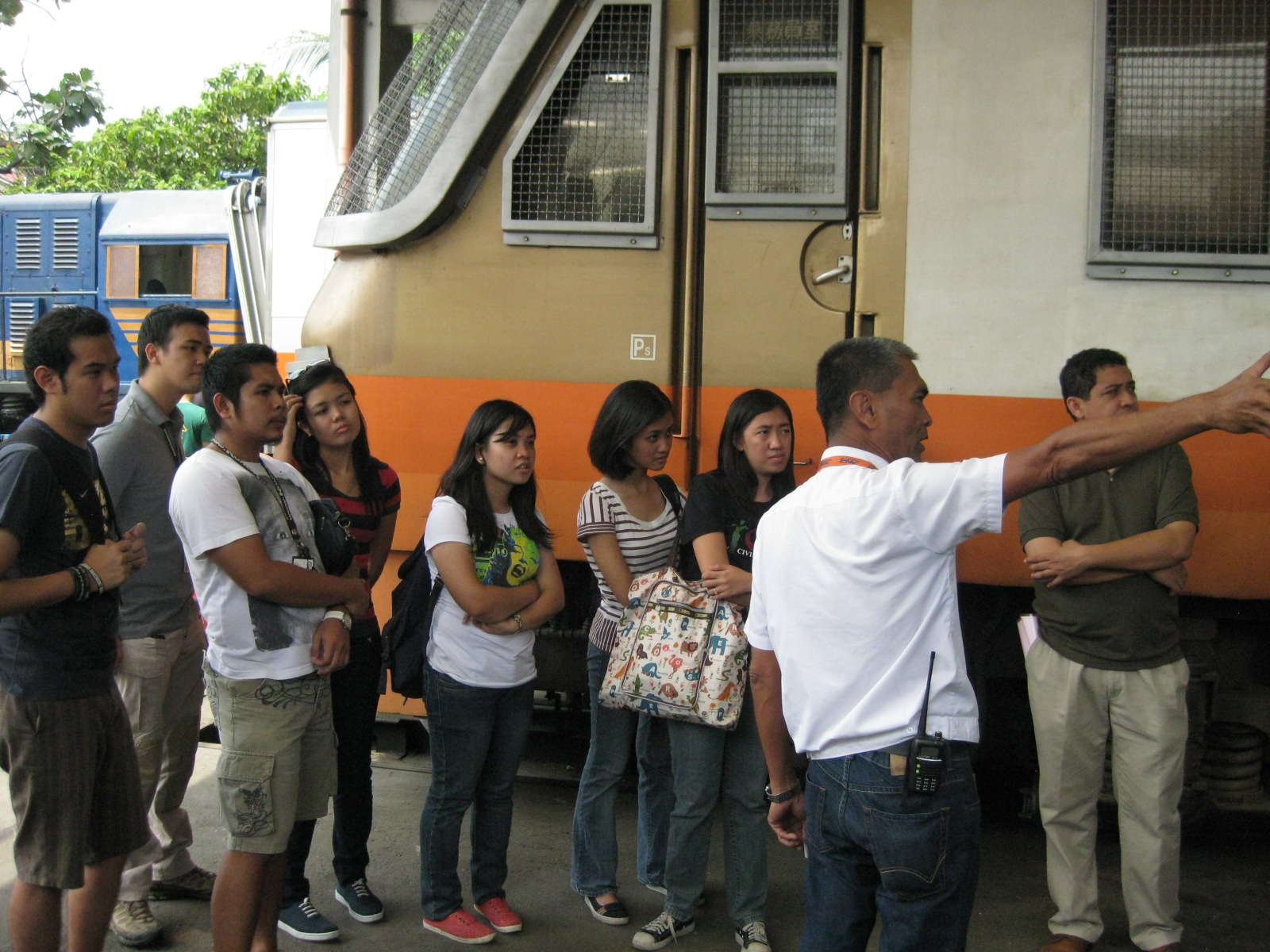 Technical tours – our hosts were very gracious and generous to provide us with a grand tour of the depot and the rolling stock. Such tours help our students to understand railway engineering “from the source.” Perhaps some students may be inspired to join a rail company.
 Sleepers – not referring to the rail ties but to the sleeper cars of this train, which has the family cabins consisting of 4 beds (0n 2 double-deckers) each cabin.
 Side view – the same diesel electric locomotive, which is actually a mobile power plant. Diesel is used as the fuel for the engine that produces electricity to power the locomotive.
 Upper deck – the cabins have 2 double deck beds with the upper deck bed having straps to prevent passengers from falling. While much of the PNR’s tracks have been rehabilitated, they are said to be still far from providing the smooth ride of their Japanese counterparts.
 Hallway – our students pose for photo along the corridor to illustrate the space in a sleeper car. There is a small seat that can be unfolded from the side wall across from each cabin door. Perhaps this is not really for use by the conductor but an extra seat for groups having a huddle or individuals wanting a seat to get a good view from the other side of the train. There’s are thick curtains that serve to provide privacy for each cabin. Each car is connected to each other so it is certain that passengers from other cars may be walking along these corridors.
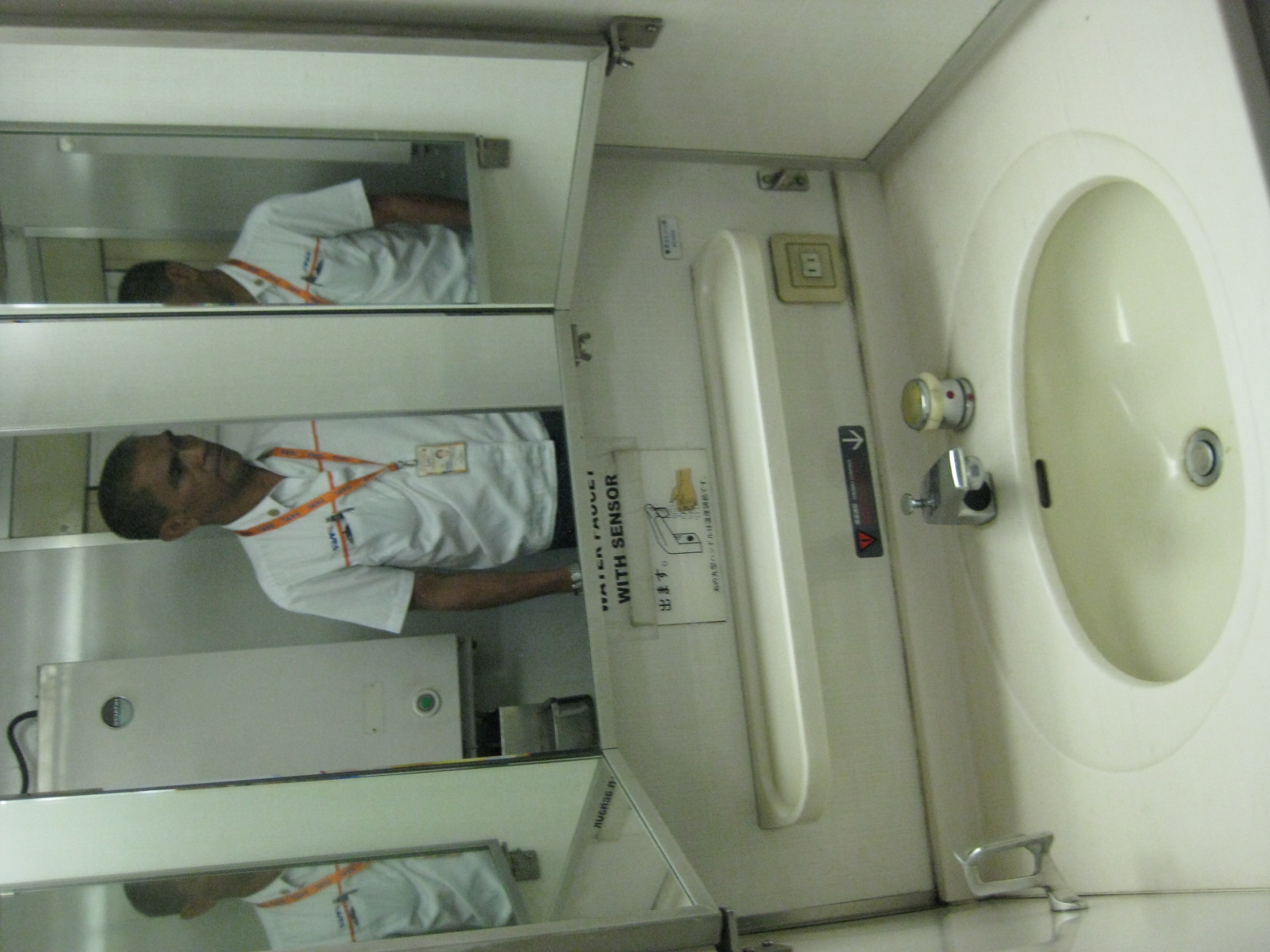 Wash room – the sleeper cars are equipped with washrooms and toilets for the long ride, amenities not usually found in most long distance buses serving the same corridor.
 Dirty toilets? – not really because this train has not yet been put into operation. The amenities like toilets and sinks are part of the refurbishing activities, we were told. Of course, this would have to be validated by actual passengers who would, by now, have taken the Bicol Express trains to/from Bicol during these Holy Week holidays.
 Conductor’s cabin – each car has a cabin assigned for the conductor or whoever is assigned to assist passengers during their journeys.
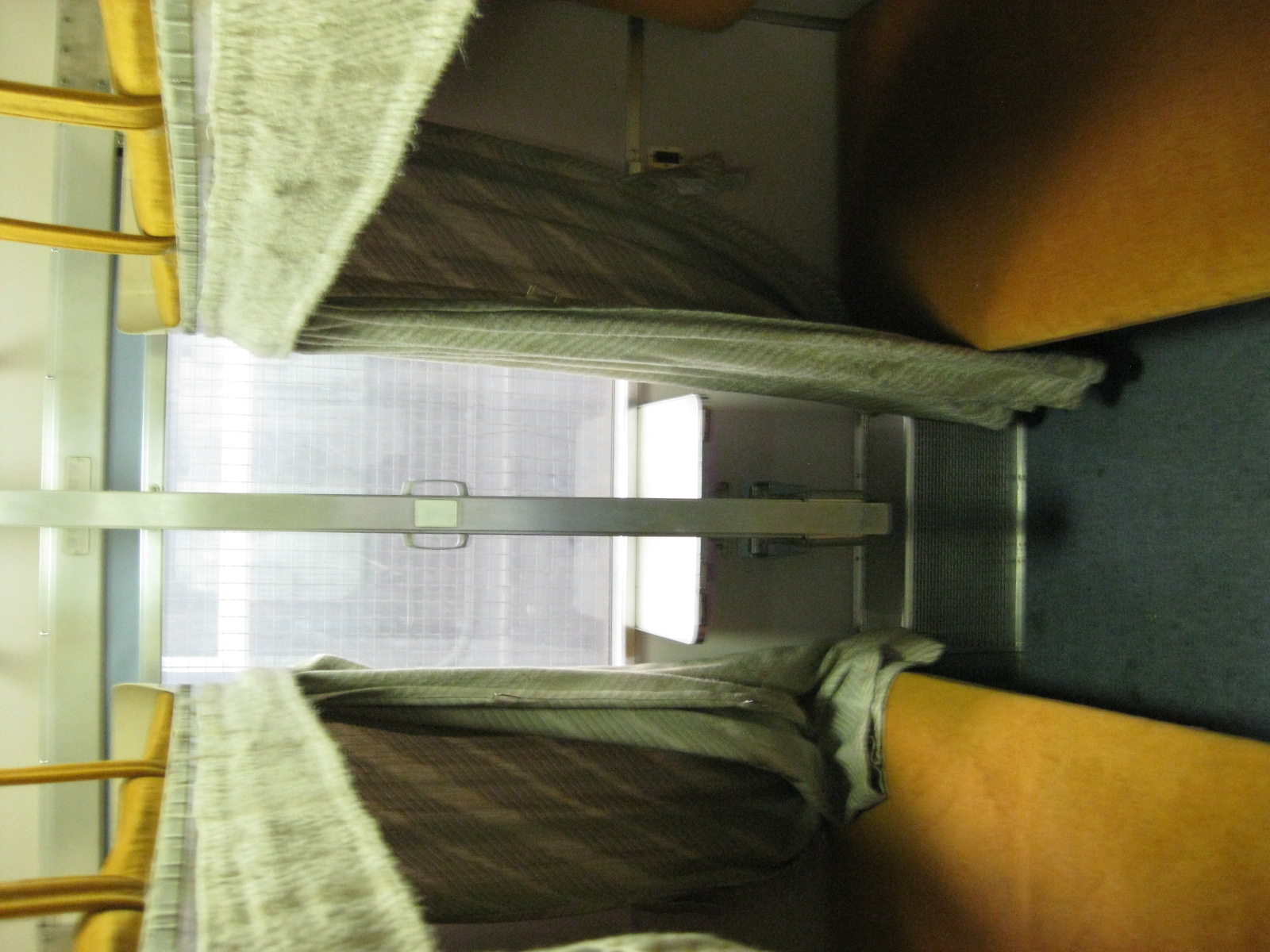 Double-deckers – the photo affords a better view of the double deck beds in a family cabin. The handles on the vertical bar on the center when pulled apart will reveal steps for persons to climb to the upper deck beds. There are also curtains for persons to have privacy particularly while sleeping or when sharing the cabin with other people.
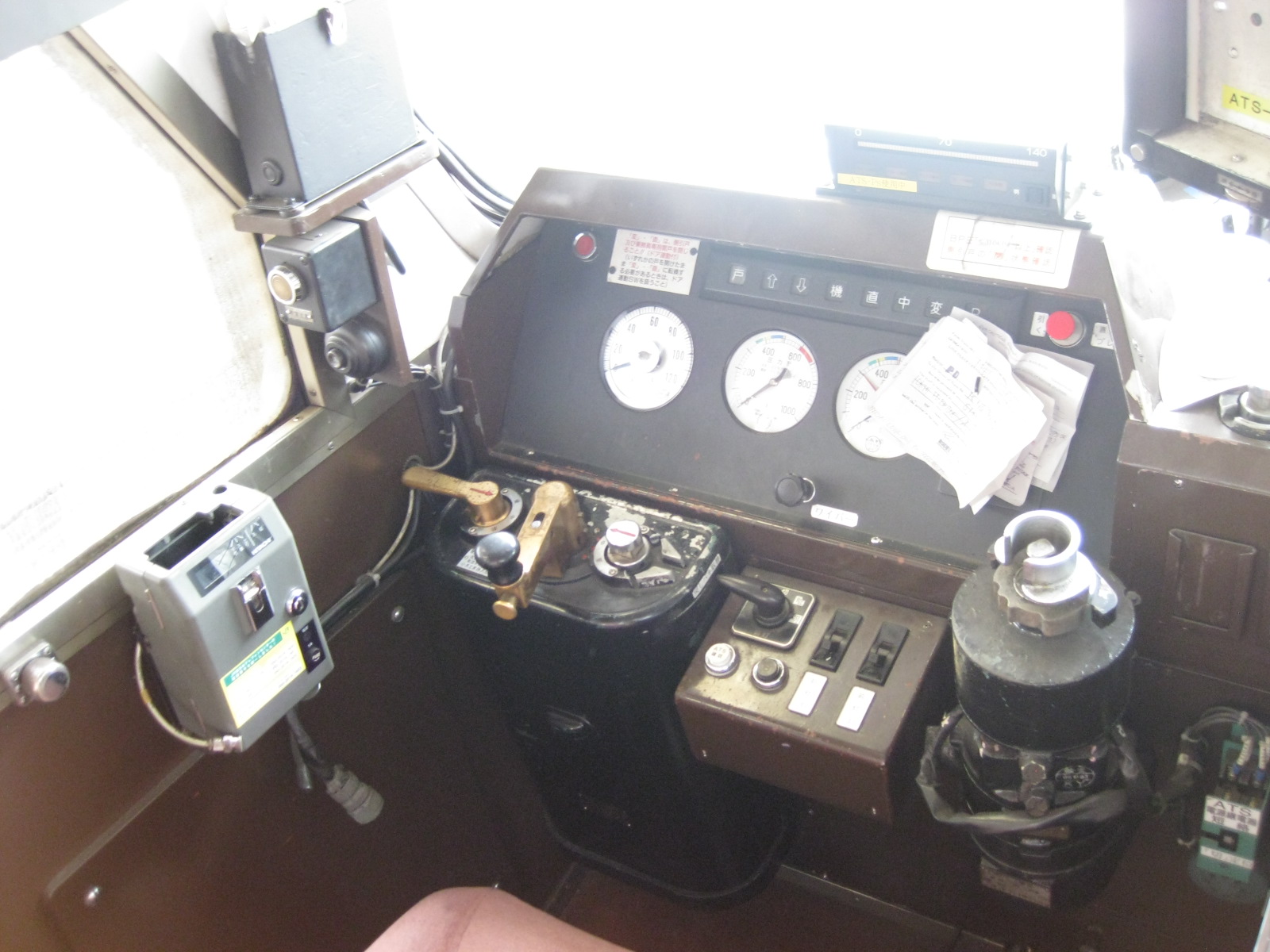 Driver’s console – the controls for the train give a hint on how old this unit is, noting that it has been retired in Japan. I remember looking at similar dials and levers during my first visit to Japan in 1996 when we usually stood behind the cockpit to see how the train is operated.
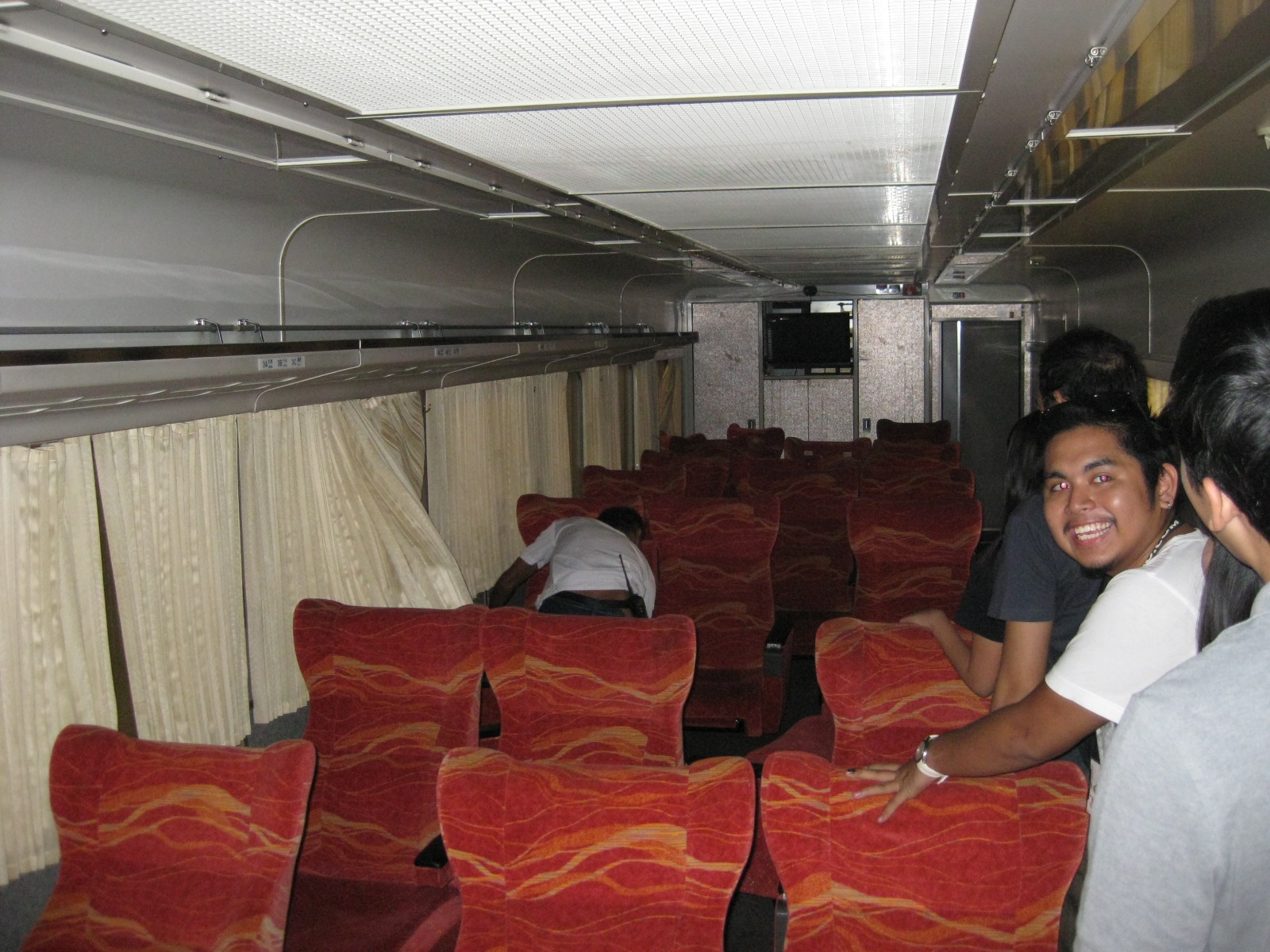 Recliners – inside the cars are reclining seats that seem to be as comfortable as business class seats on airliners. I tried one of the seats and the cushions are still quite firm for something that’s more than a decade old. I couldn’t smell any traces of tobacco so I guess these were already sanitized. Smoking cars are quite common in Japan and seats and entire cars can smell of smoke that tends to stick to the furniture and your clothes if you happen to be in one during a trip.
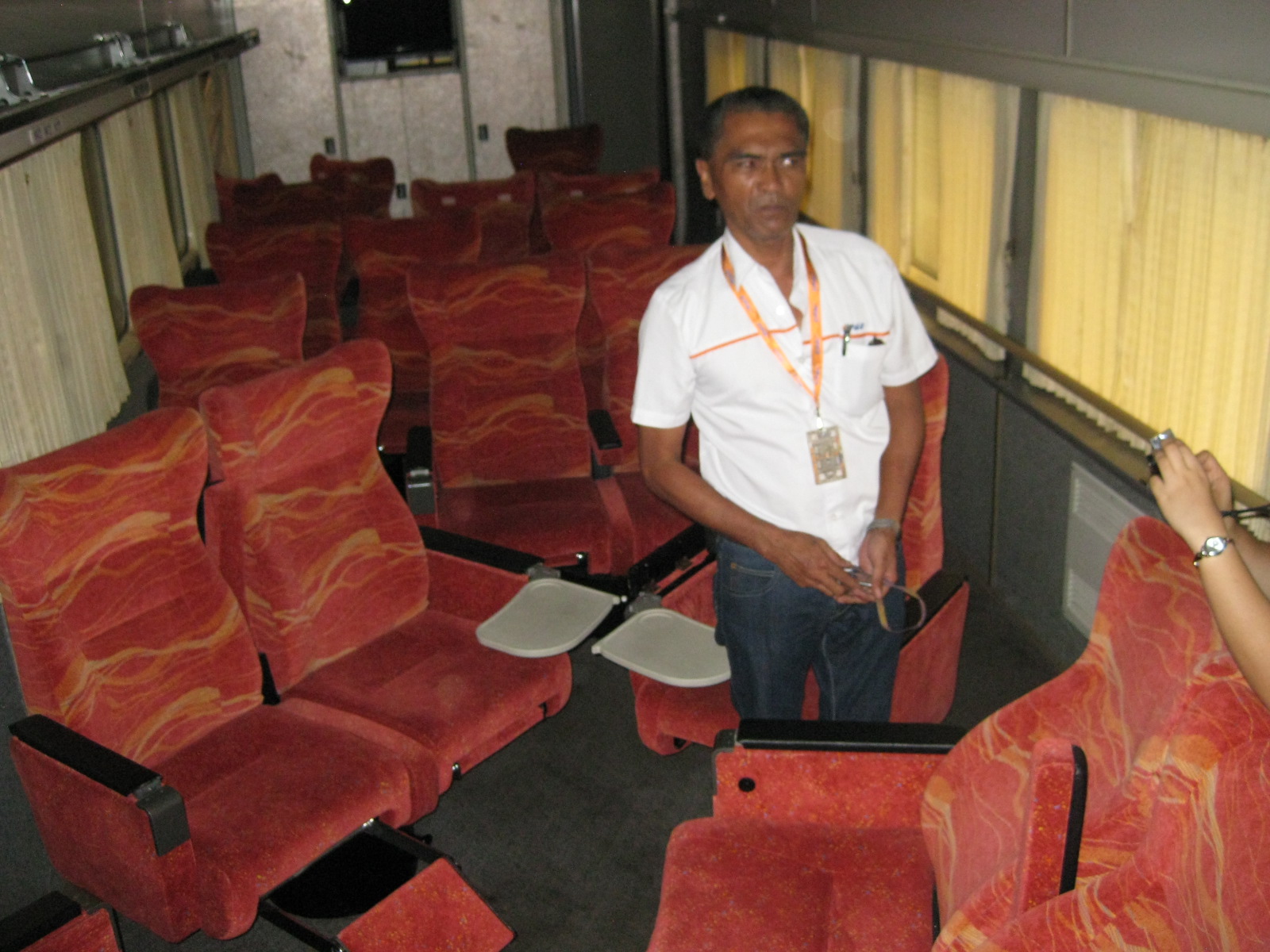 Rotation – the seat can be configured so that groups may face each other. Many seat two people kind of like love seats perfect for snuggling on long distance trips. There are also pull-out trays for eating, writing or working on your computer to update FB status or tweet about the experience.
 Entertainment – Yes, that’s a television set at the far end of the cabin. I can imagine that like in buses, the PNR will be showing some movies during trips to help passengers wile away the time. We were informed that big groups could actually take a car for themselves so it is also possible to have activities like workshops in the train. Perhaps groups could even have karaoke if they had the entire car to themselves.
 Reserved – the seat numbers remind ticket holders which seat they are to take and the characters remind us where the trains came from. That’s a hook (for hanging your coat or other belonging) in the lower center of the photo.
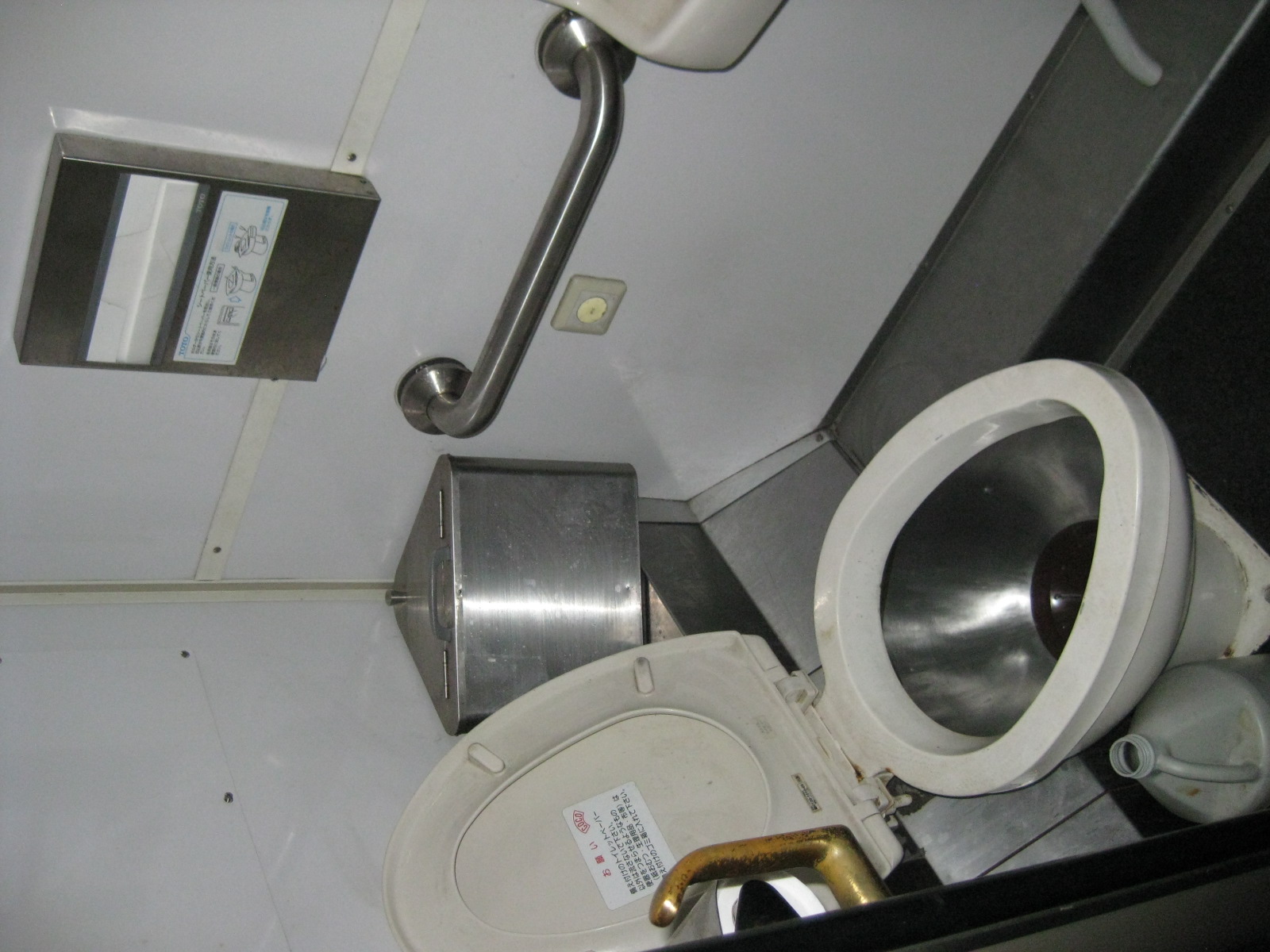 Toilets – the toilets are western-style with support bars for those requiring stability and a paper towel dispenser for the convenience of passengers.
 Toilets for PWDs and others – this has larger space for people requiring space including persons with disabilities, senior citizens, pregnant women and those with babies or small children.
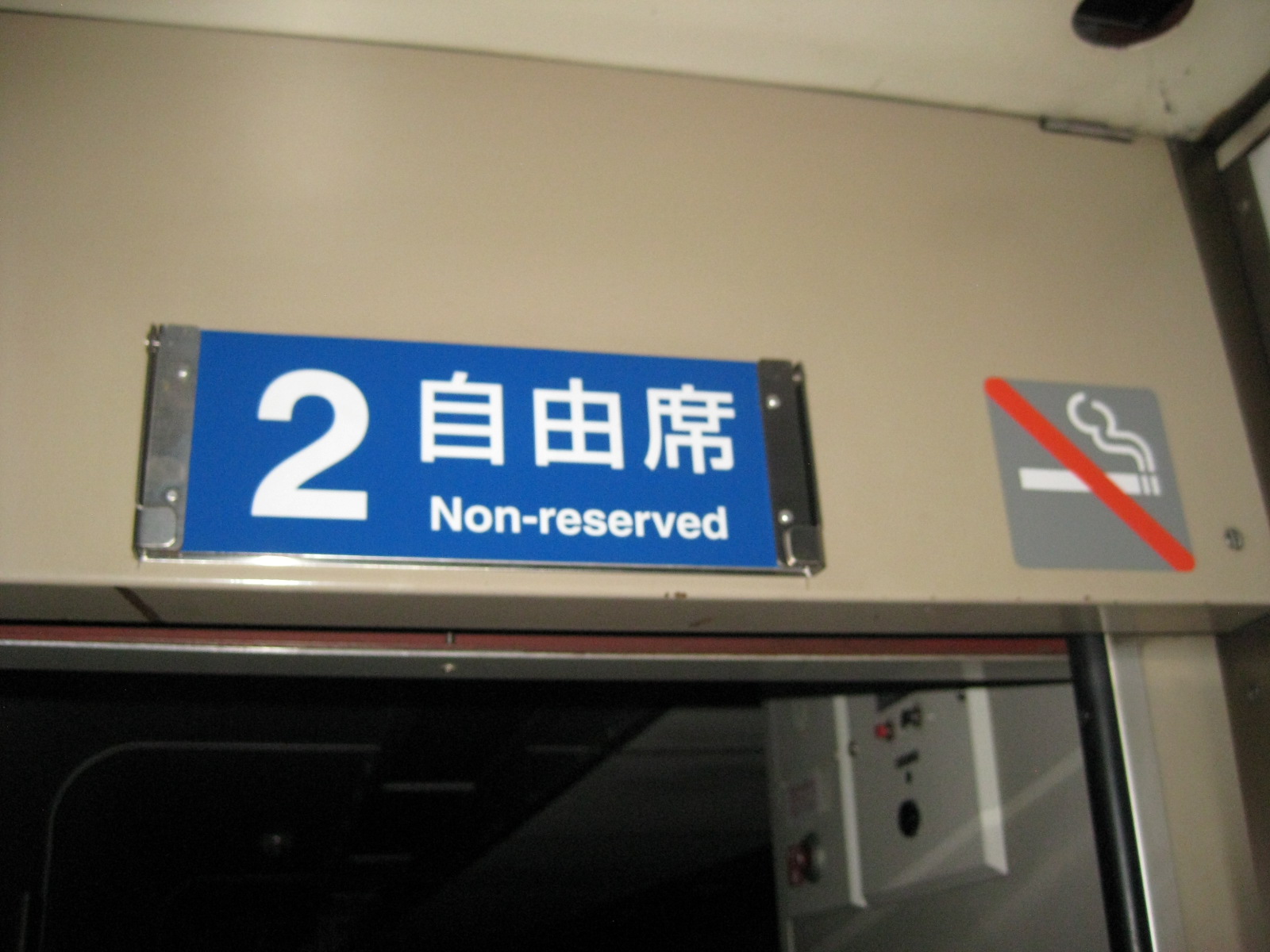 No reservations – in Japan “Non-reserved” means that seats on the car are first come, first served. One could purchase either such seats or the more expensive reserved seats from the train station.
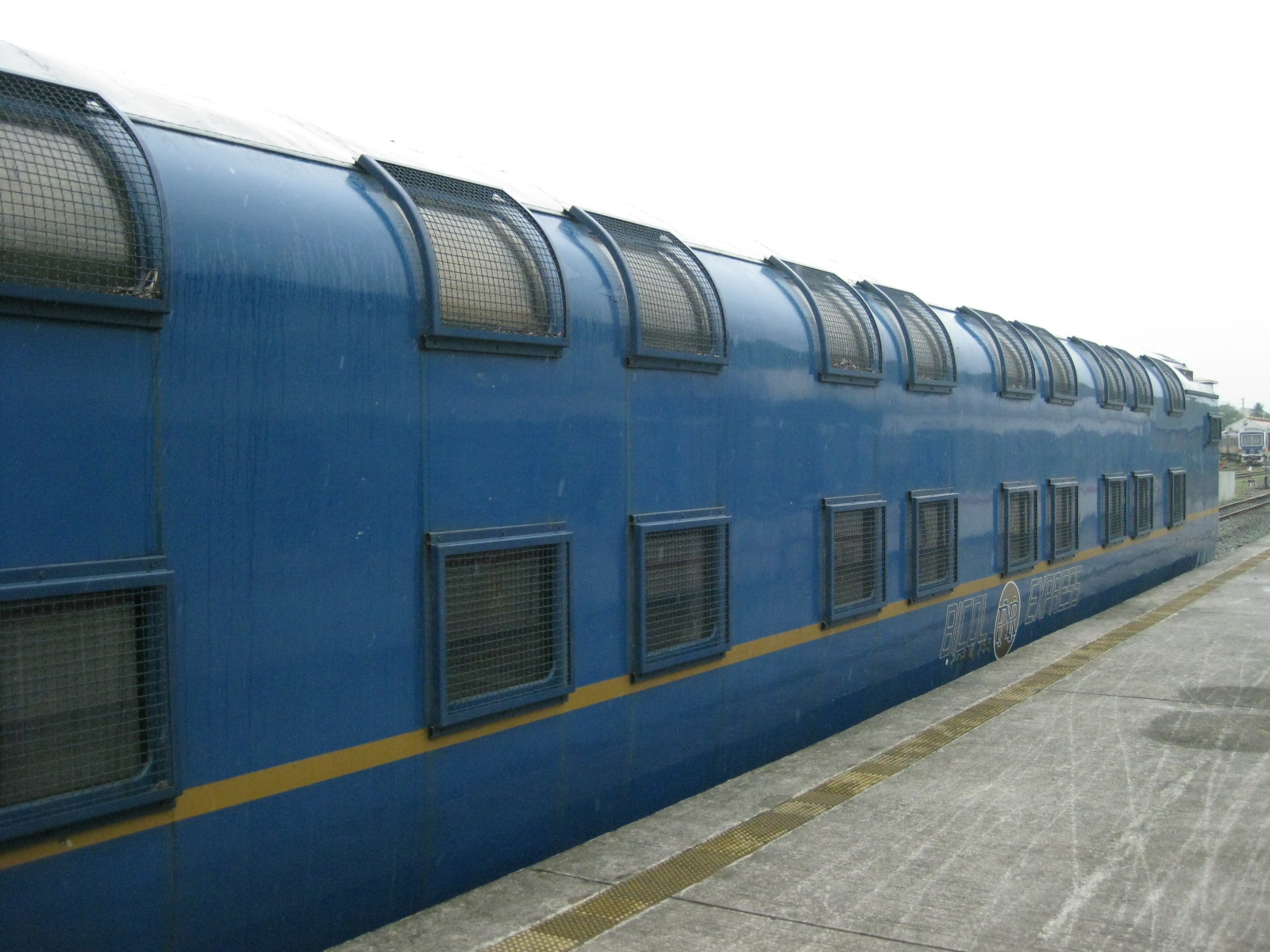 Executive class – the double deck cars containing Executive Sleepers or individual cabins for the Bicol Express
 Airconditioned – the Executive Sleepers have air-conditioning, which is a requirement for all services of the PNR that is part of the attraction for passengers. Some cars were fitted with generator sets to supplement the power provided by the locomotives. Note again that the PNR lines are not electrified so power required for lights, aircon and other equipment have to be provided by these generators.
 Dining car – the Bicol Express trains include dining cars like this one also being refurbished by the PNR.
 The Bar – the car included a bar where people could have drinks. This feature of the train elicited a lot of questions and some excitement among our students.
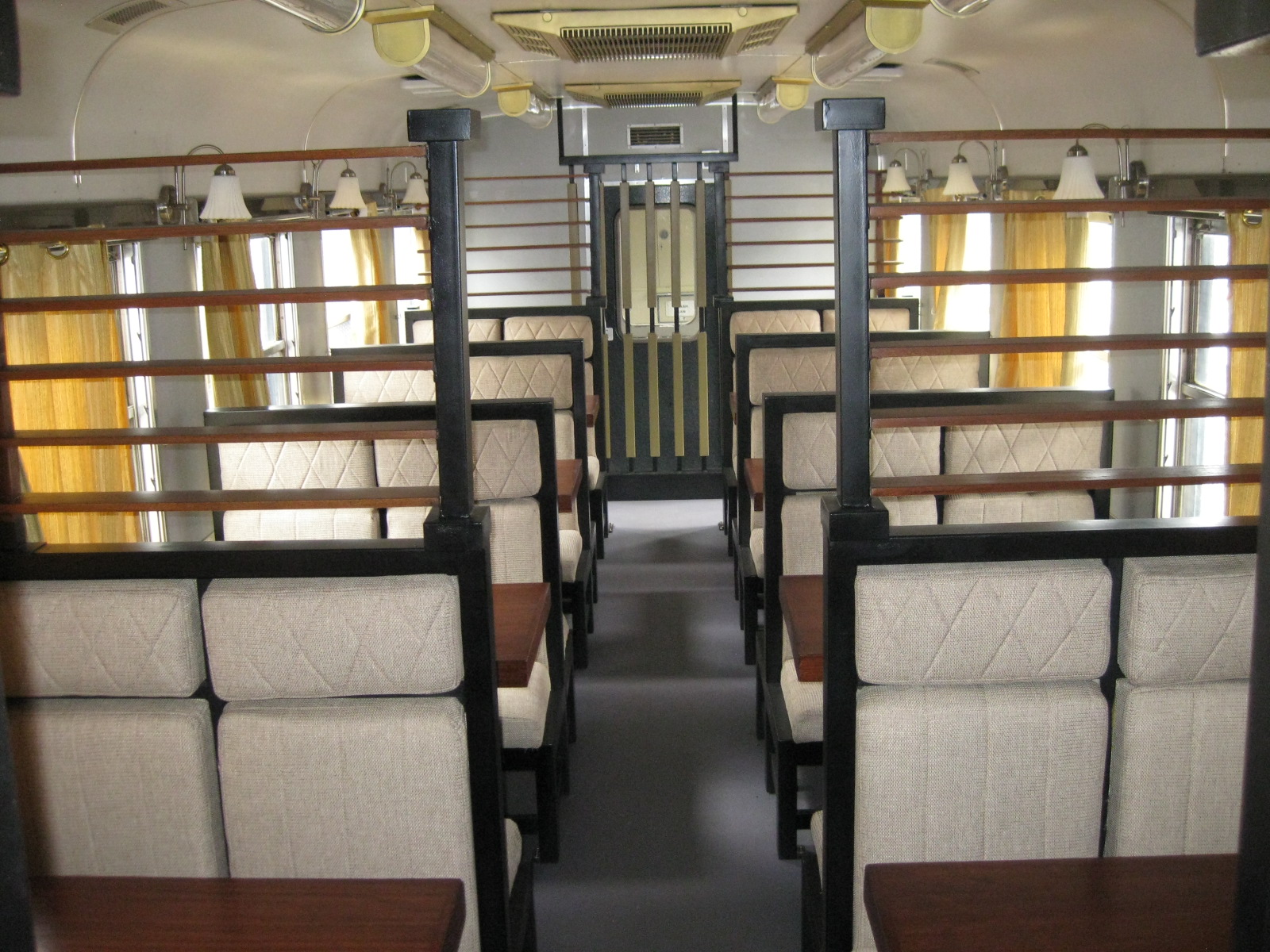 Dining tables – there’s ample space for diners though we were not able to ask who may actually be allowed to use the dining cars. There are 4-seater and 2-seater tables in the car.
 4-seaters – a closer look at the dining tables show comfortable seats and a good view from the window. Unfortunately, the Bicol Express trains travel at night so there’s really not much to see while in transit.
 Singles – passengers may also opt to eat at the bar, especially for the case of individuals who might end up hogging a table and depriving groups of space.
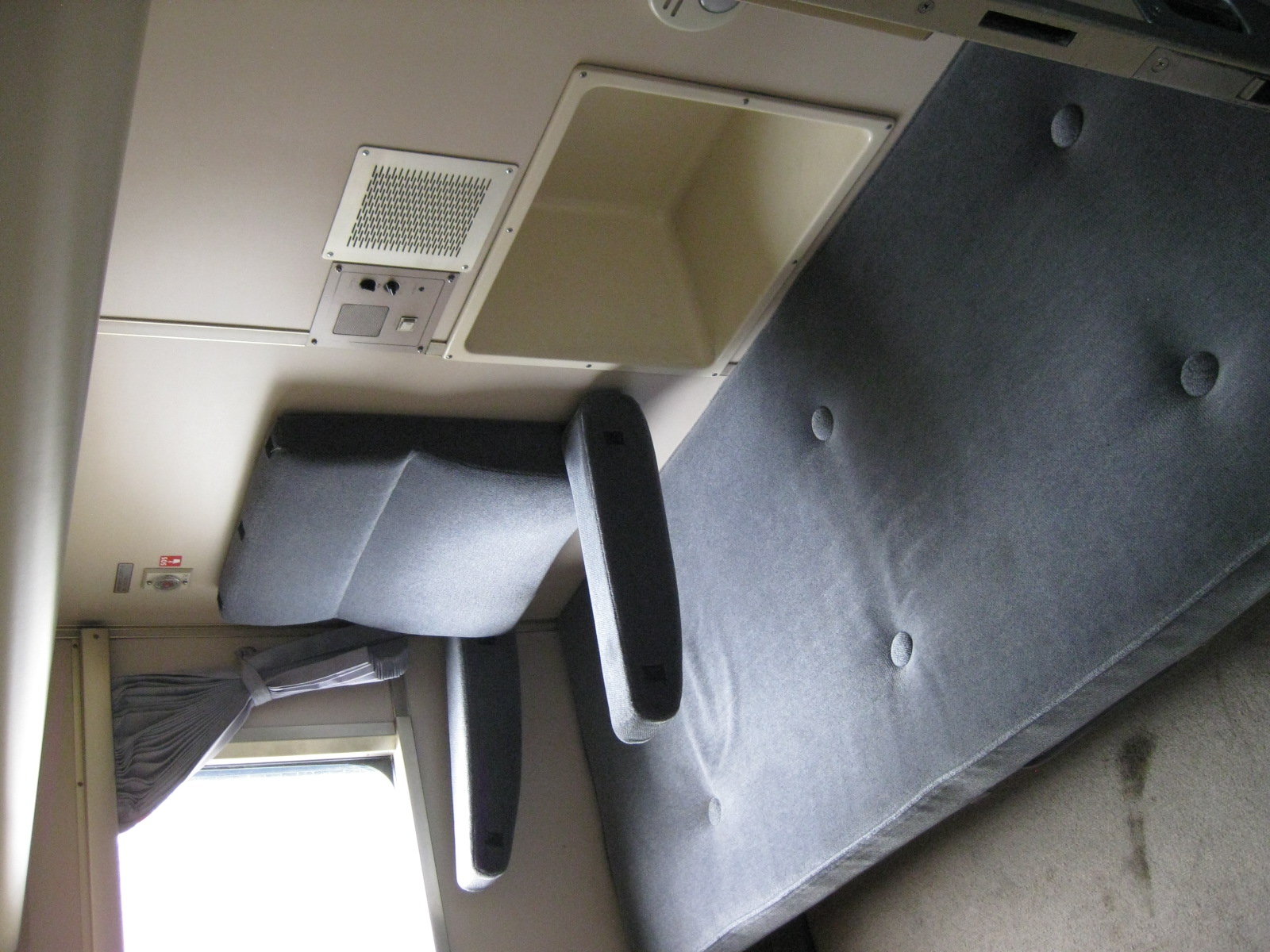 Executive sleeper – the cabin has a bed that doubles as a seat. Note the foldable arm rests and back cushion by the window. Also, there is space for a small bag located at a more secure part of the cabin.
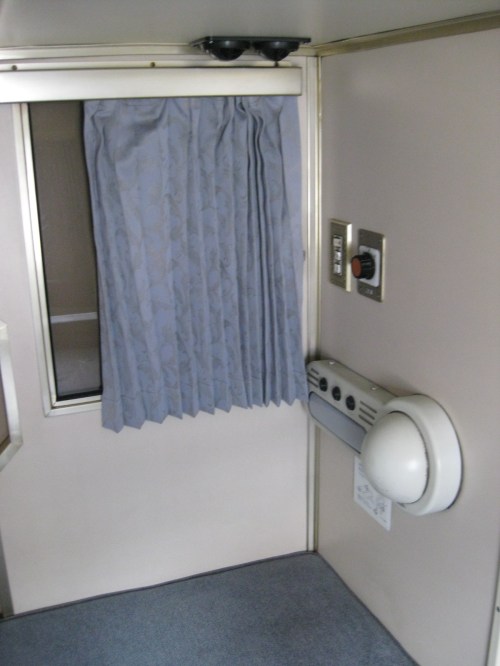 Lights and aircon – each cabin is equipped with a desk, adjustable lights and individual air-conditioning control for the convenience of the occupant.
 Window seat – each cabin has a window and generous space for the individual. The same features are found on the cabins on the upper deck but I guess the view is better upstairs so these would be the choice cabins for the Executive Sleepers.
I look forward to finally riding the Bicol Express, perhaps with family or friends, as I visit relatives in Bicol (my mother hails from Sorsogon). Though I can ride the train to Legazpi City, Albay, it is just a short trip by bus from that city to my mother’s hometown. Of course, there are other cities of interest for me including Naga City, my father-in-law’s hometown and Legazpi where there are many attractions around. My father has told me a lot about the Bicol Express, which he took with his sisters en route to Sorsogon to wed my mother. And so, part of the attraction to the train is sentimental in nature.
–
 Caught (up) in traffic