
Municipal transport in San Francisco – Part 1
San Francisco has an extensive public transport system with the combination of buses, LRT’s and cable cars allowing its citizens and visitors both accessibility and mobility for much of the city. A friend says that the objective Muni set out to accomplish was for anyone using the system to be able to alight from a public transport vehicle at most one block from one’s final destination. A block already represents a very comfortable walking distance well within the 200 to 300 meters radius often mentioned by public transport planners for the catchment areas of stops or stations.
SF’s Muni operates several types of buses including what are probably among the last electric trolley buses in the world.
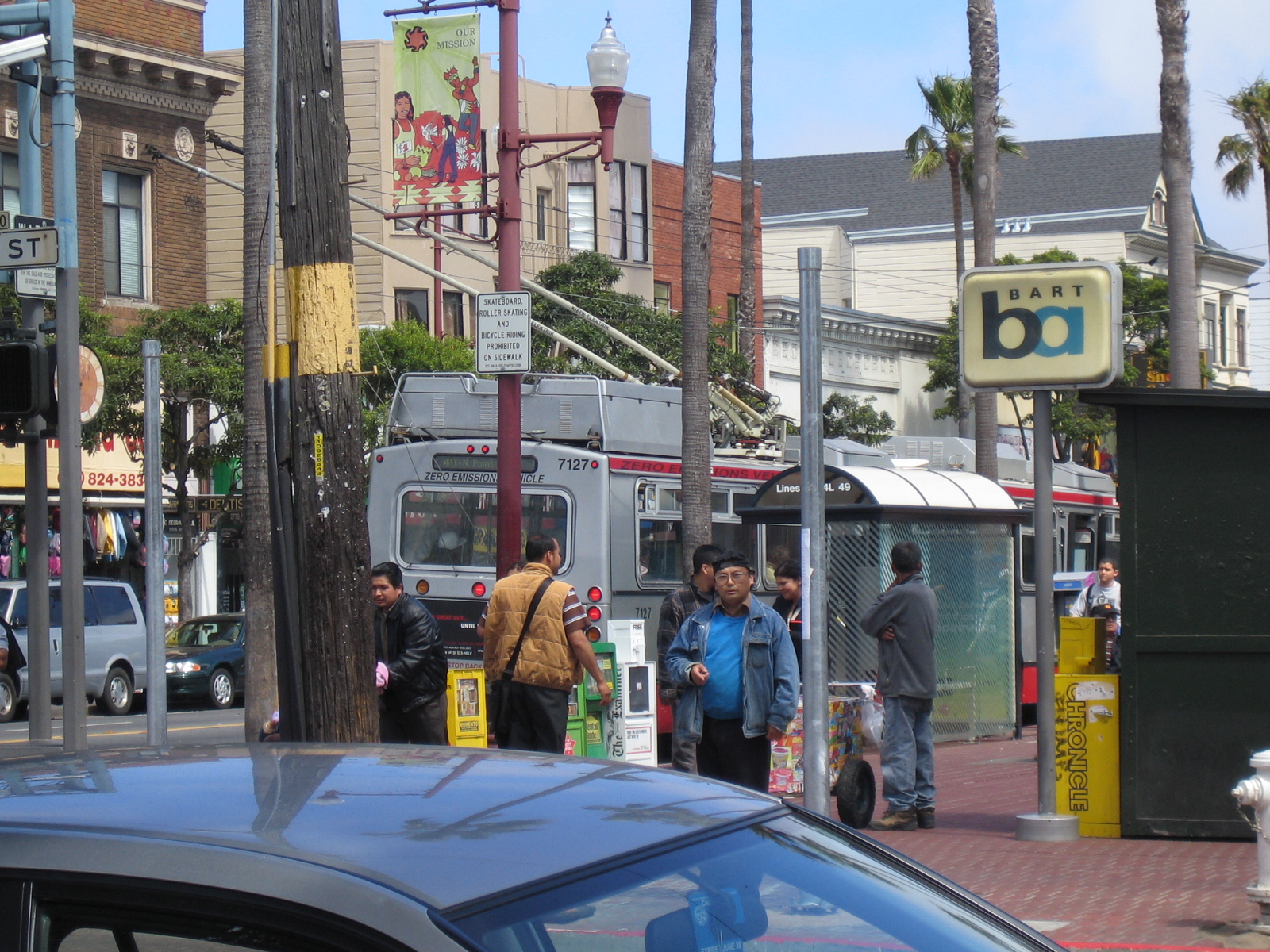 That’s a trolley bus in the photo above stopping near the BART station where I was waiting to be picked up by a friend. Note the flexible, long pantograph that is used to pick-up electricity from the overhead cables. The photo was taken in 2007 during a previous trip to the Bay Area.
Following are three photos I took back in 2007 at an intersection across the Balboa Park BART Station, where I thought I hit the jackpot in terms of watching the Muni’s various transport modes pass by. Think bird-watching but replace the birds with buses and LRTs.
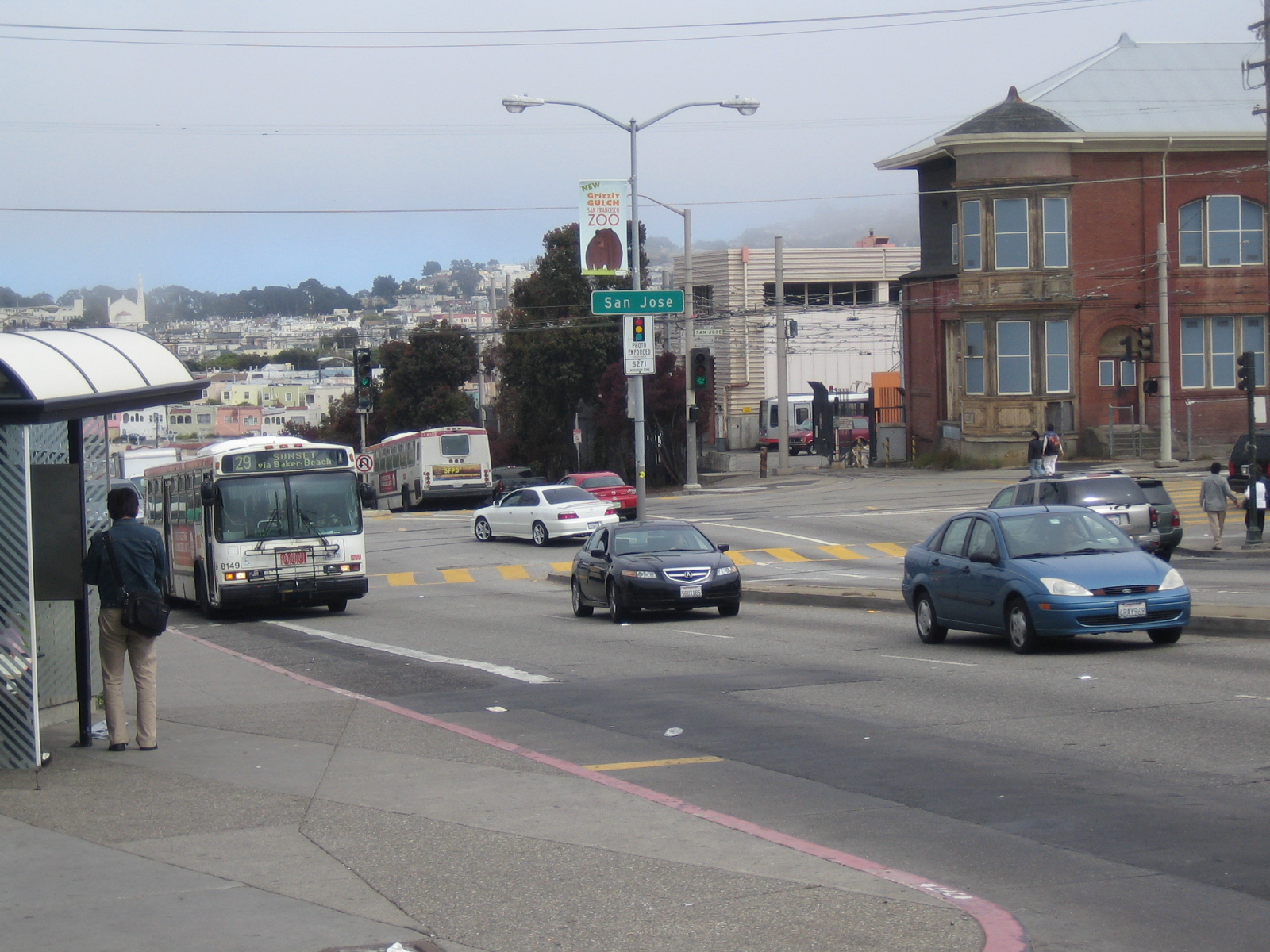 The typical Muni bus has a number designating its route that can easily be found in transit maps to guide regular commuters and visitors alike. Most buses I saw had bicycle racks located in front of the bus that would enable cyclists to bring along their bikes during a long commute. Most buses these days run on natural gas. On the far right of the photo, one can get a glimpse of a LRT vehicle.
 LRT vehicle coming out of the depot – the rails are embedded on the pavement and allow for the mixed use of roads by motor vehicles and LRTs.
 LRT crossing the intersection. LRTs are given priority at intersections and the traffic signals are programmed to facilitate the flow of these high capacity public transport mode. This is a reflection of prioritization of public transport over private transport, which should be the case rather than the other way around.
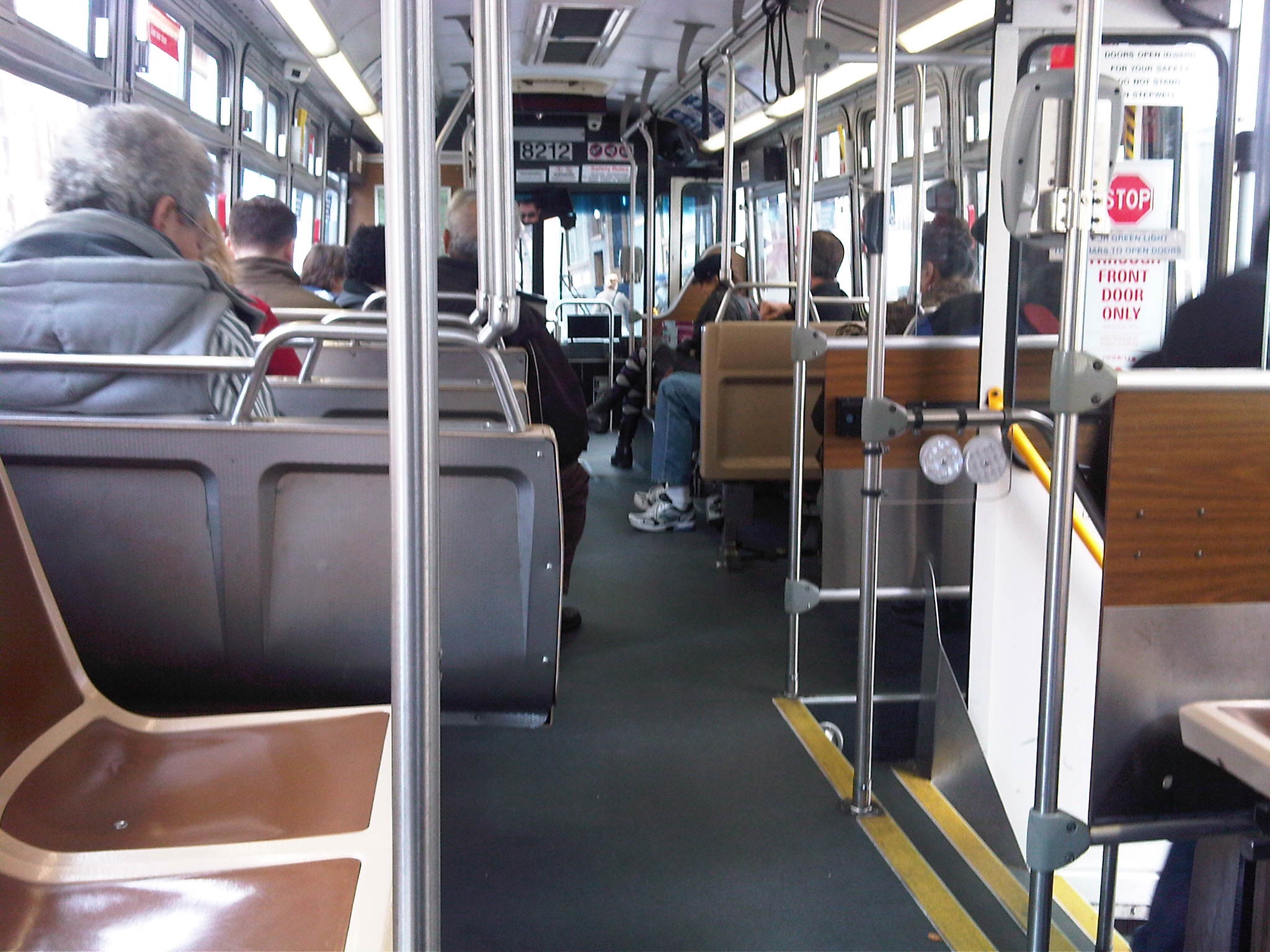 Inside a bus in San Francisco, there are seats provided for the elderly and the physically challenged. Entrance is via the front door where a passenger must first pay for the ride or show his pass for the driver to see. Exit is via the back door, which is wider to allow for the efficient unloading of passengers. To stop the bus at the designated stops along the route, a passenger should push a button (on the newer buses) or pull on a cable (on older buses) to activate a signal for the driver. To open the rear doors, one need only to push the bars across the doors.
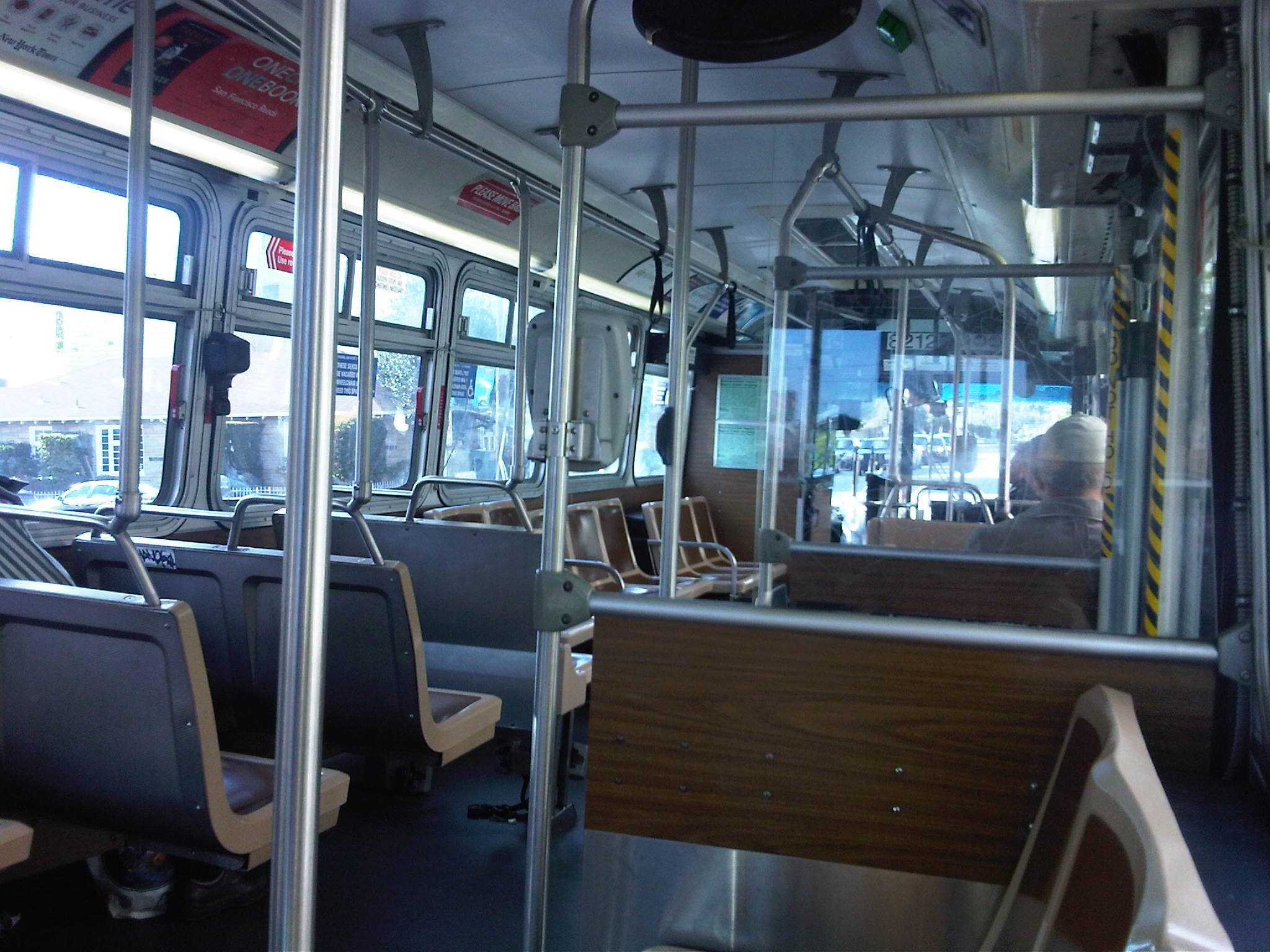 Another look at the interior of a Muni bus. Although the bus appears to be old, it is clean/tidy. There are the occasional vandalism and there are signs asking passengers to report incidence of vandalism on the bus. There are also signs stating that conversations may be recorded and that the bus is under video surveillance. These seem to be standard security features of public transport in the US especially after the incidents of 9/11. Such information is welcome considering everyone would prefer to travel safely.
Truck weight limits in the Philippines
I noticed a lot of interest on the “truck ban” scheme from the statistics provided by WordPress on my dashboard. It seems there are very limited material available on the scheme especially in the Philippines where there have been variations of and misconceptions on this travel demand management (TDM) measure. Why do cities like Metro Manila implement a truck ban? Or better yet, why are there designated truck routes in cities? The answer can be quite simple if viewed from the perspective of asset preservation. That is, by restricting trucks to use specific roads, we are also limiting their impacts (read: damage) to the road infrastructure. Such impacts come in the way of damaged pavements and/or bridges that bear the brunt of the weights carried by heavy vehicles. But such argument begs the question of why, in the first place, shouldn’t we design our pavements and bridges so that they may be able to withstand the cumulative loads of heavy vehicle traffic over a prescribed period of time, say 20 years, give and take a few years for variability and reliability in design and construction methods? Such is a question that needs to be answered, and clearly, by our DPWH, at least for the case of our national roads and bridges. It is really not a simple matter and certainly not something that cannot be blamed solely on the fact that evidences in the Philippines point to truck overloading as one of the culprits for damaged pavements and bridges.
The website of the Department of Public Works and Highways provides information on the axle load and truck weight limits for national roads. The matrix of weights may easily be downloaded and is provided in the following document:
The maximum single axle loads for different countries around the world are provided below:
Max Permissible Truck Loads World
I found another table of values this time for European countries. Based on the table on weight limits in European Union Countries, France seems to have the heaviest single axle load limit.
Still, the question running in the minds of most people involved in policymaking, monitoring and enforcement, and research is “How did we come up with the 13.5-metric ton maximum single axle load value in the first place?” Surely, it wasn’t a number that was plucked out from the air?
The 13.5-metric ton was most probably derived from an axle load study conducted in the 1990’s. Such a study could have, among others, determined the appropriate maximum axle loads that could be adopted by the country in lieu of the limits at the time that were already deemed obsolete given the evolution of trucks over time (i.e., they’re bigger now compared to, say, 30 years ago). What is problematic is that it seems the study was only able to derive the maximum single axle load and was not able to estimate maximum loads for tandem and tridem axles. Tandem axles are two axles positioned one after the other while tridems are three axles grouped together. These tandems and tridems are typical configurations for the rear axles of large trucks and trailers, enabling them to support heavy loads that typically are distributed more towards the rear axles.
San Francisco’s Cable Cars
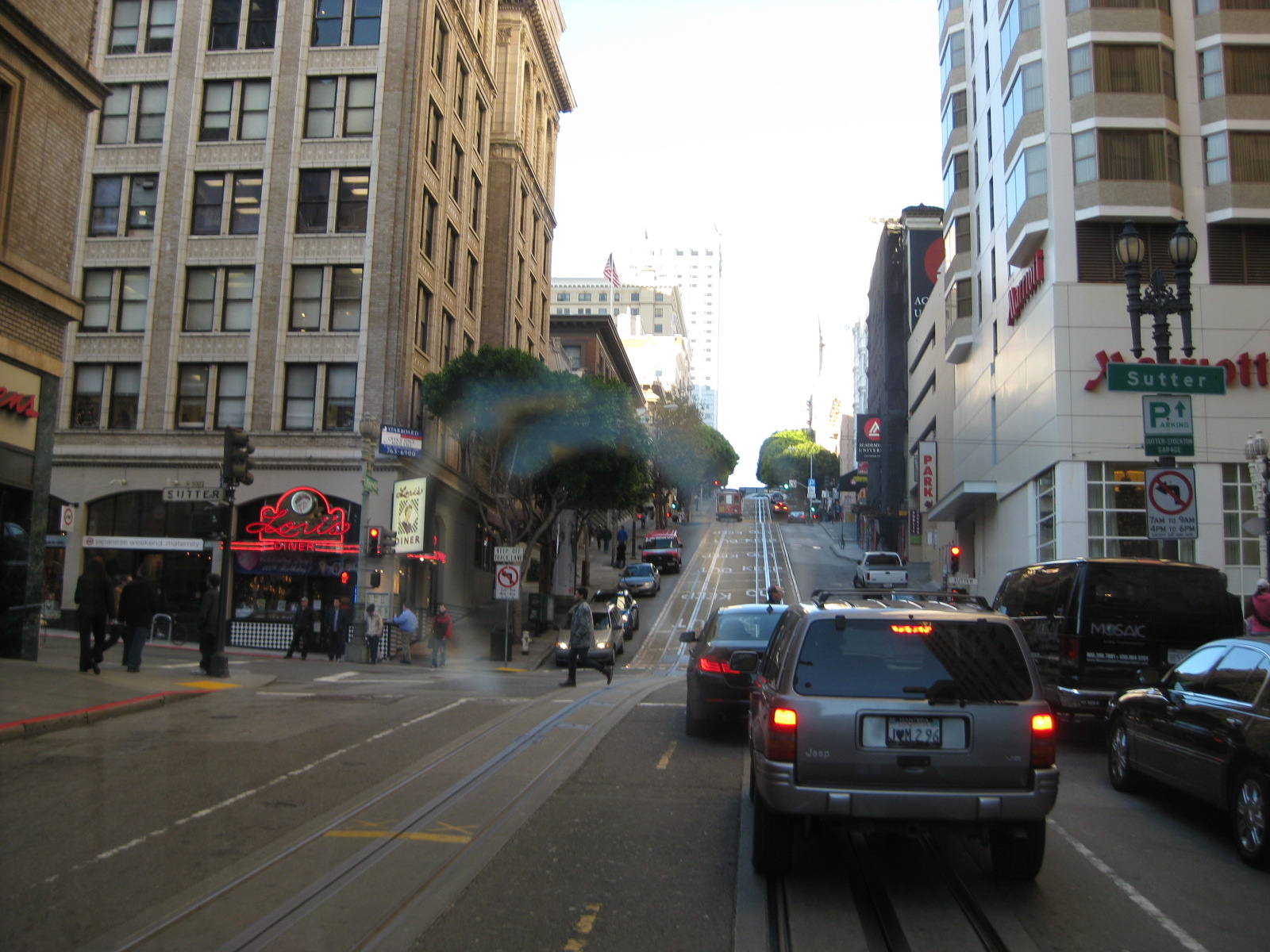
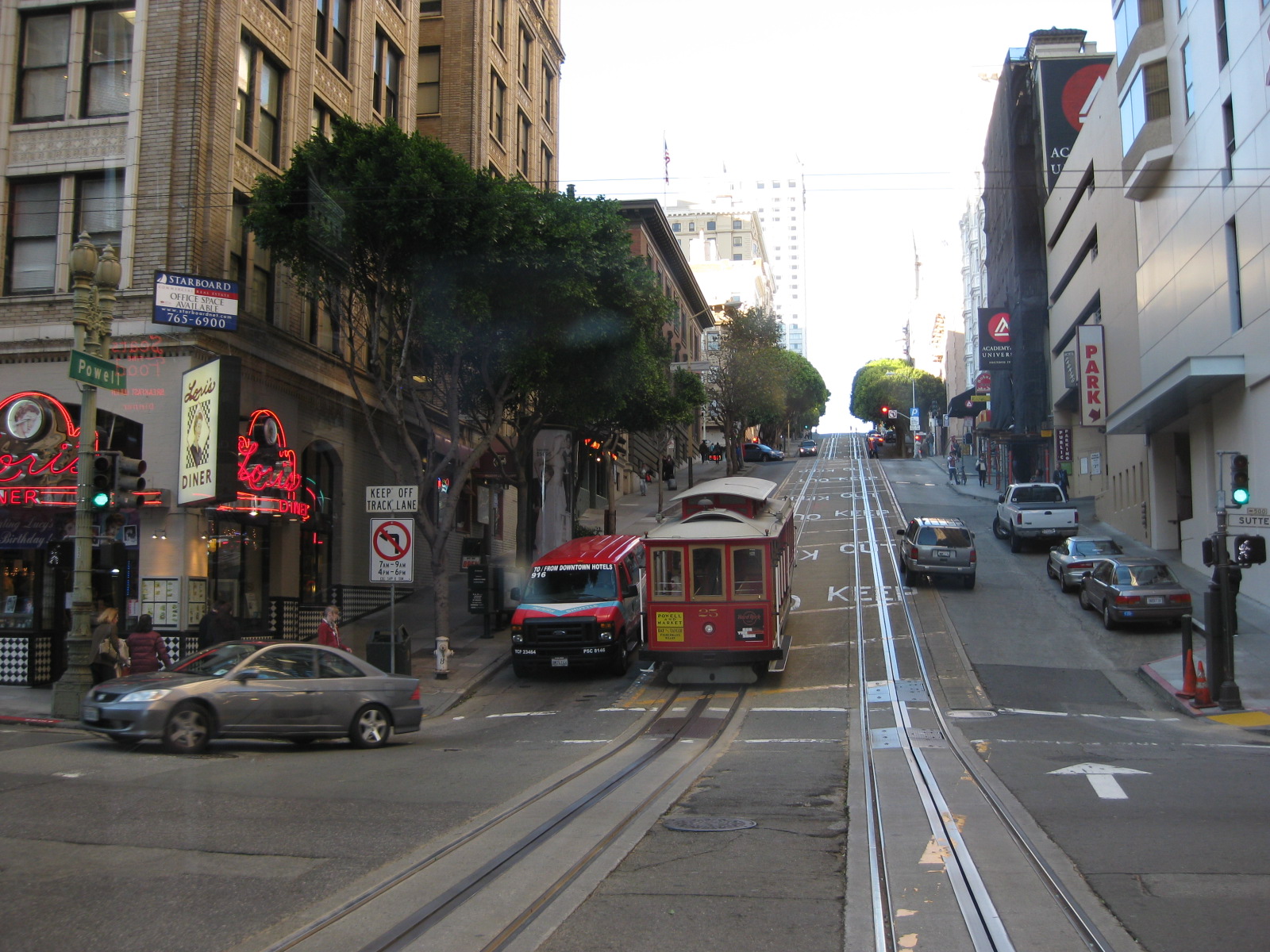
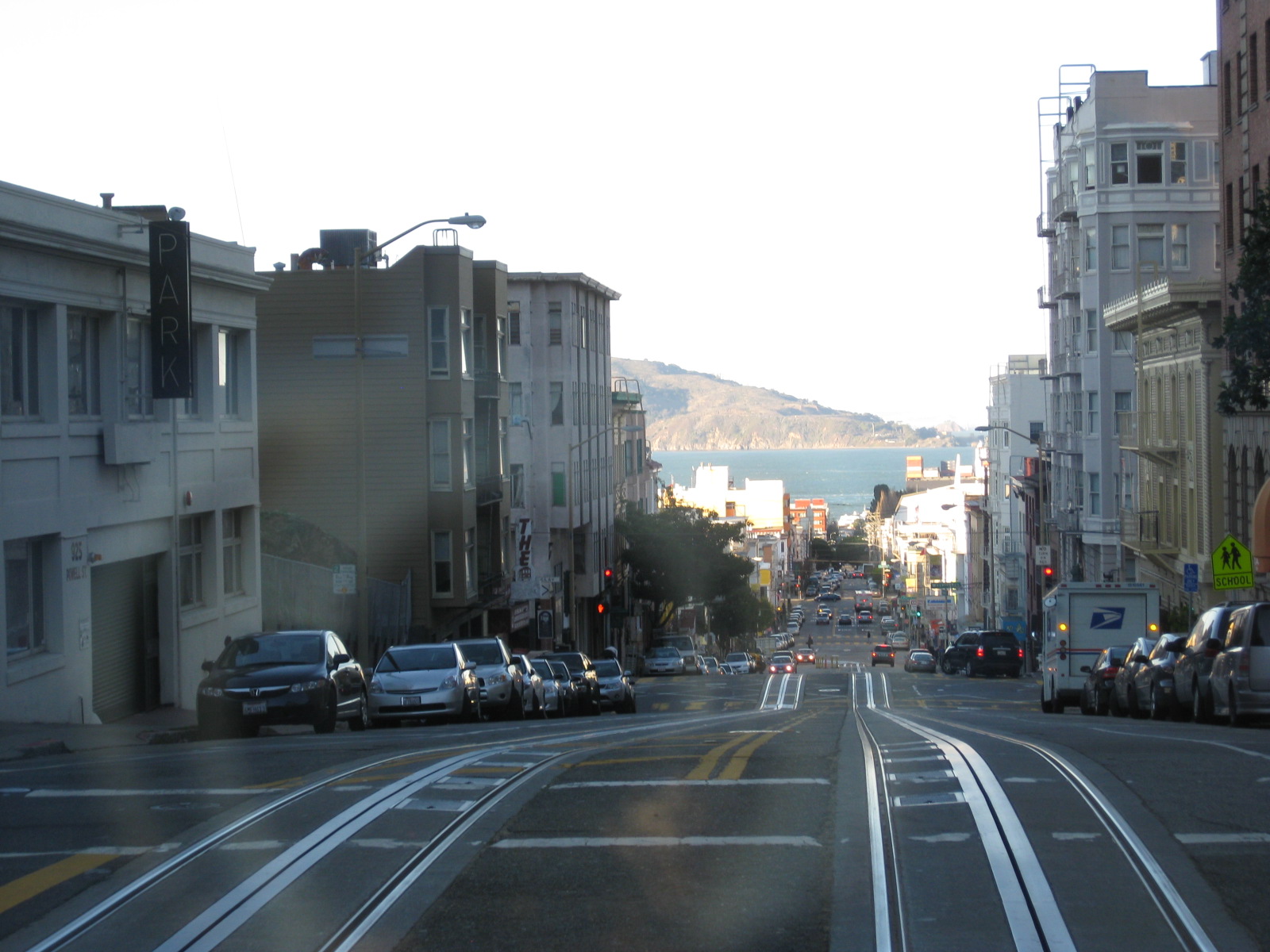
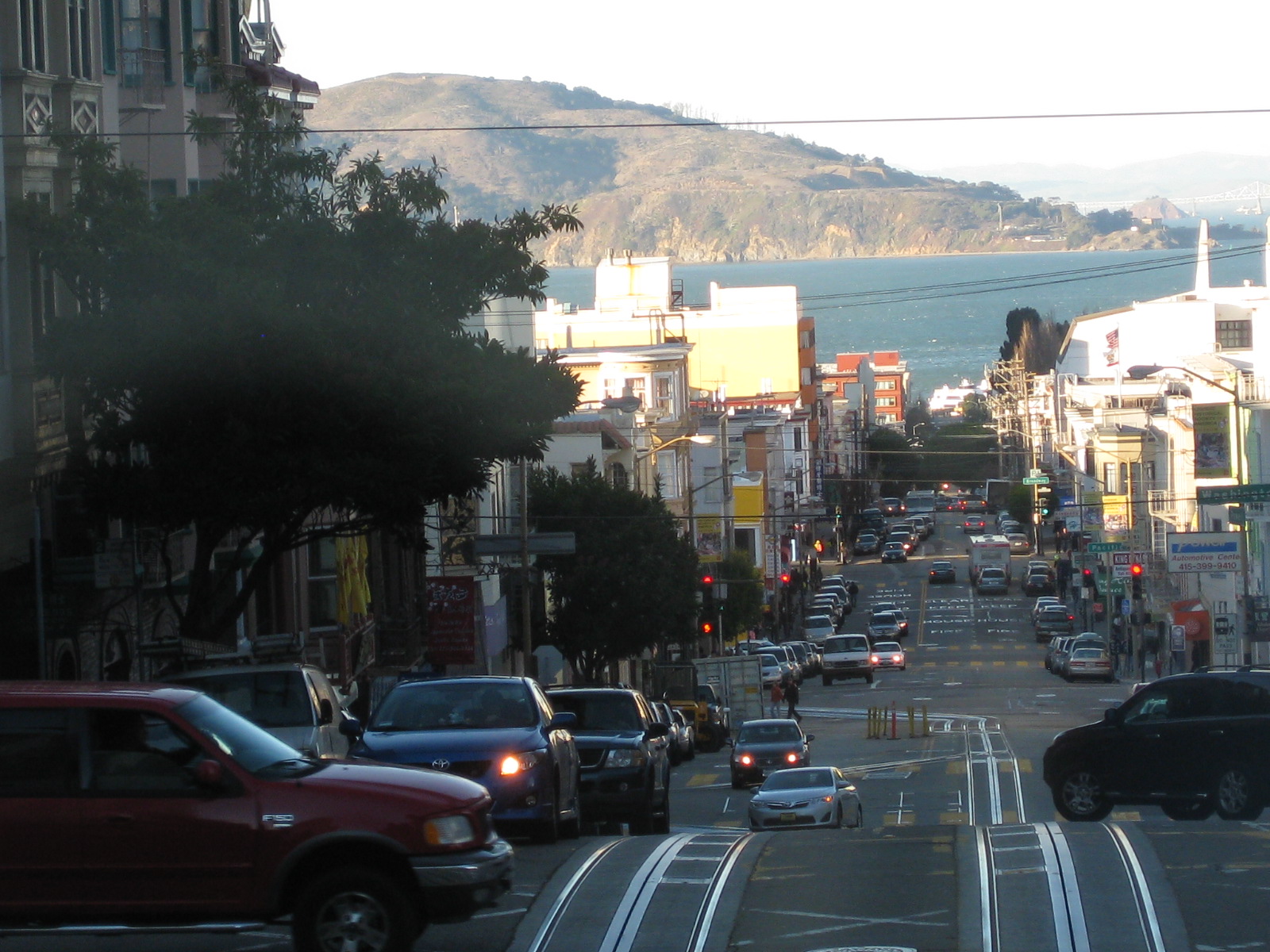
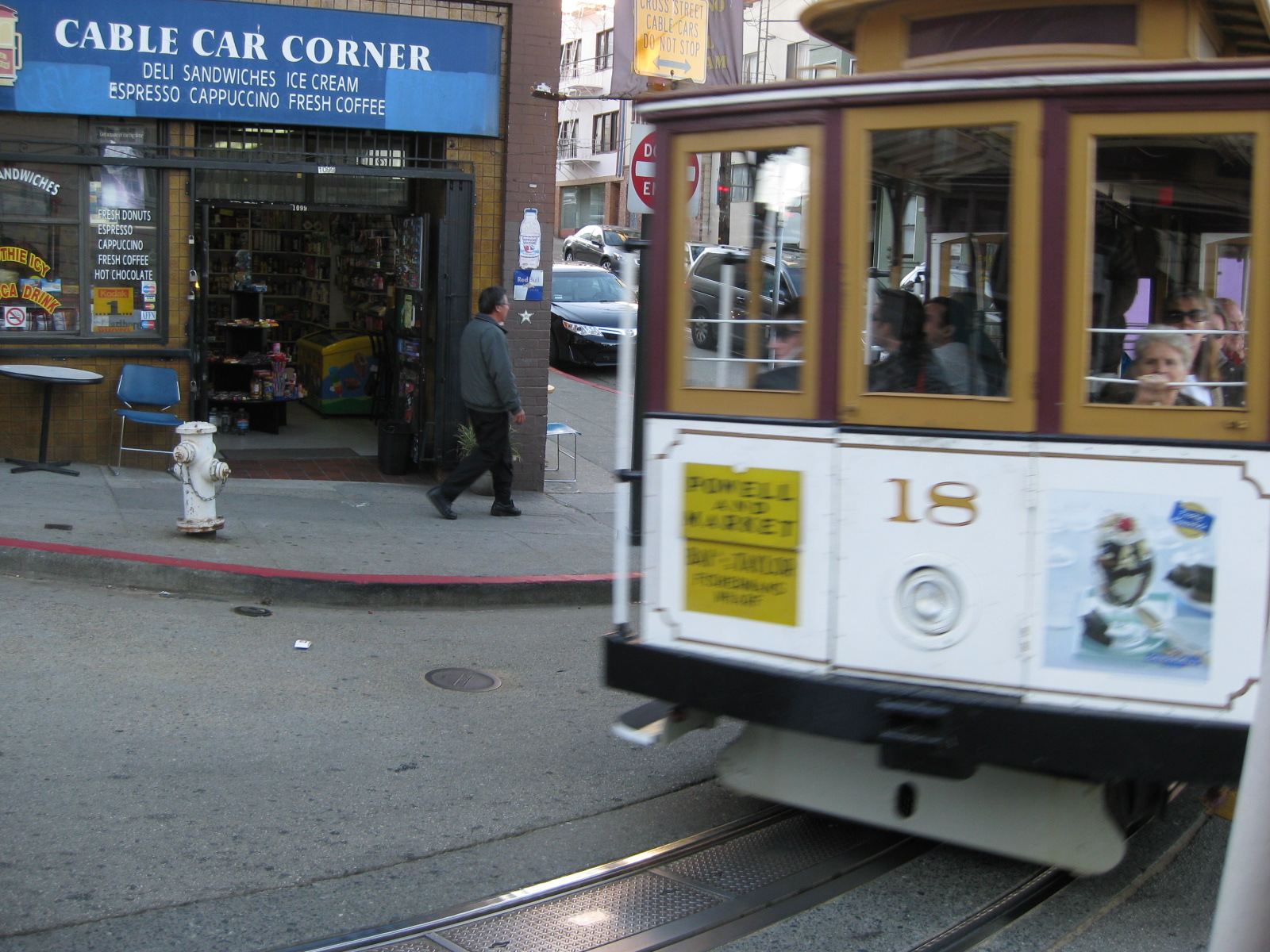
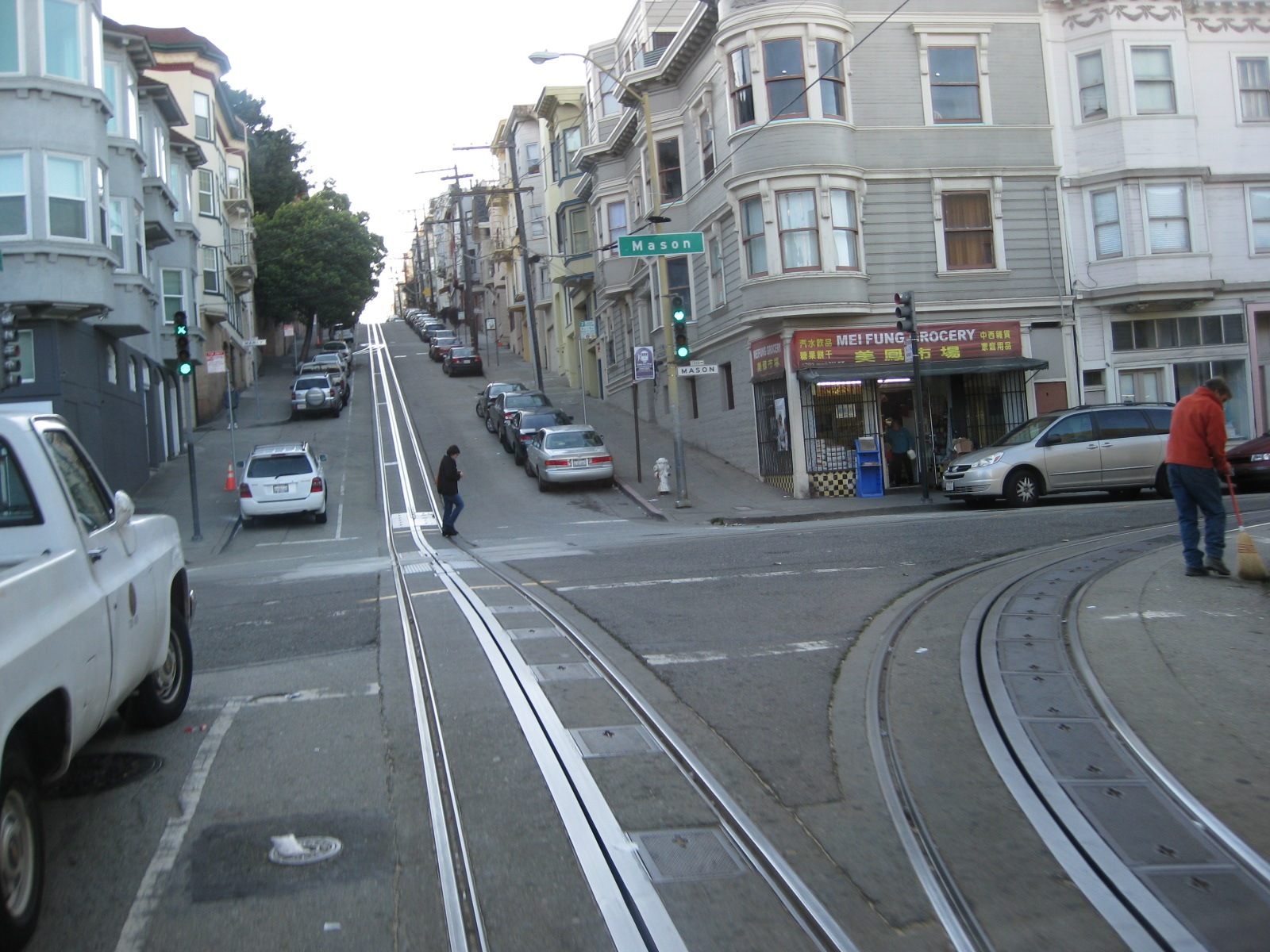
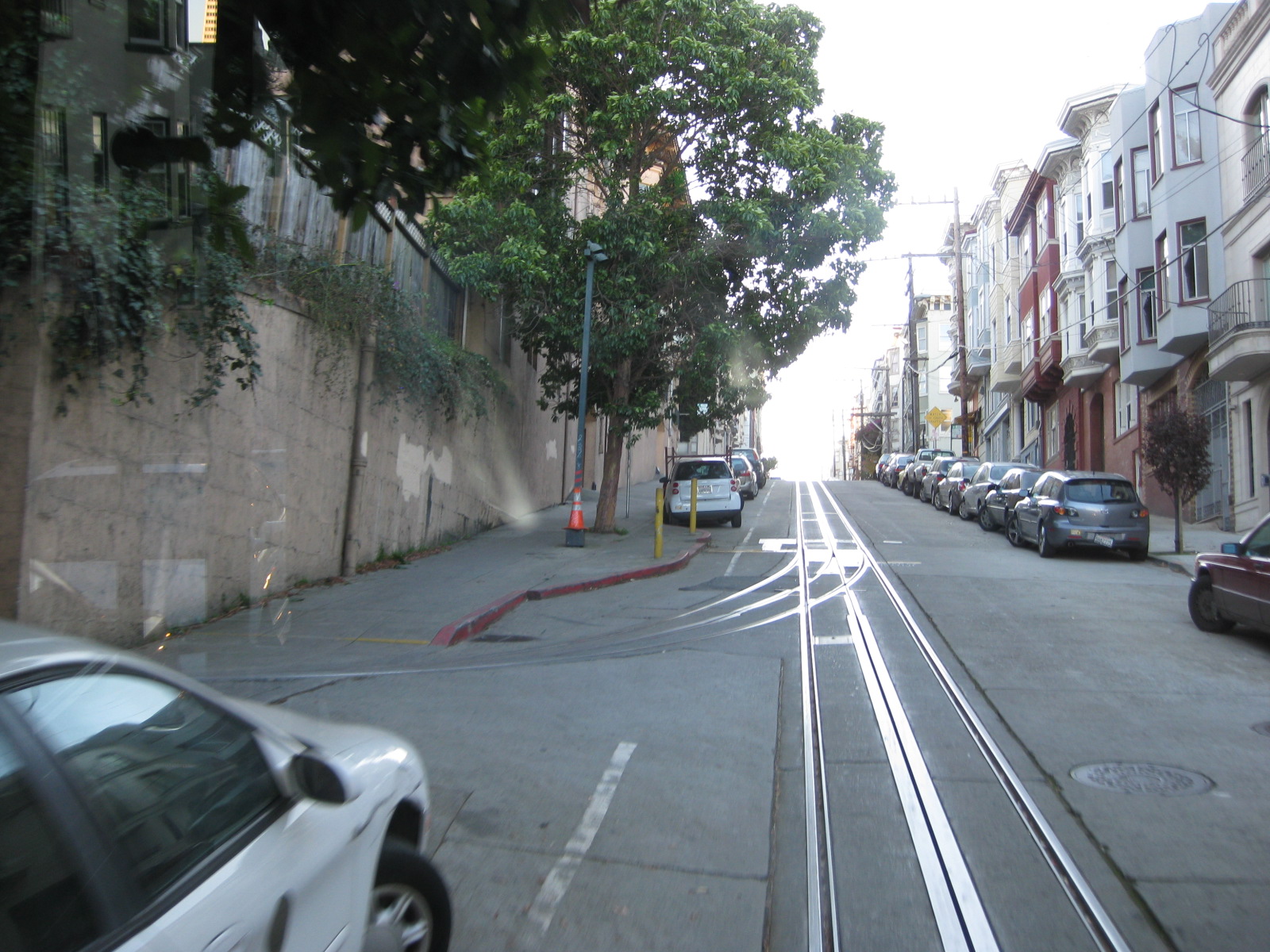
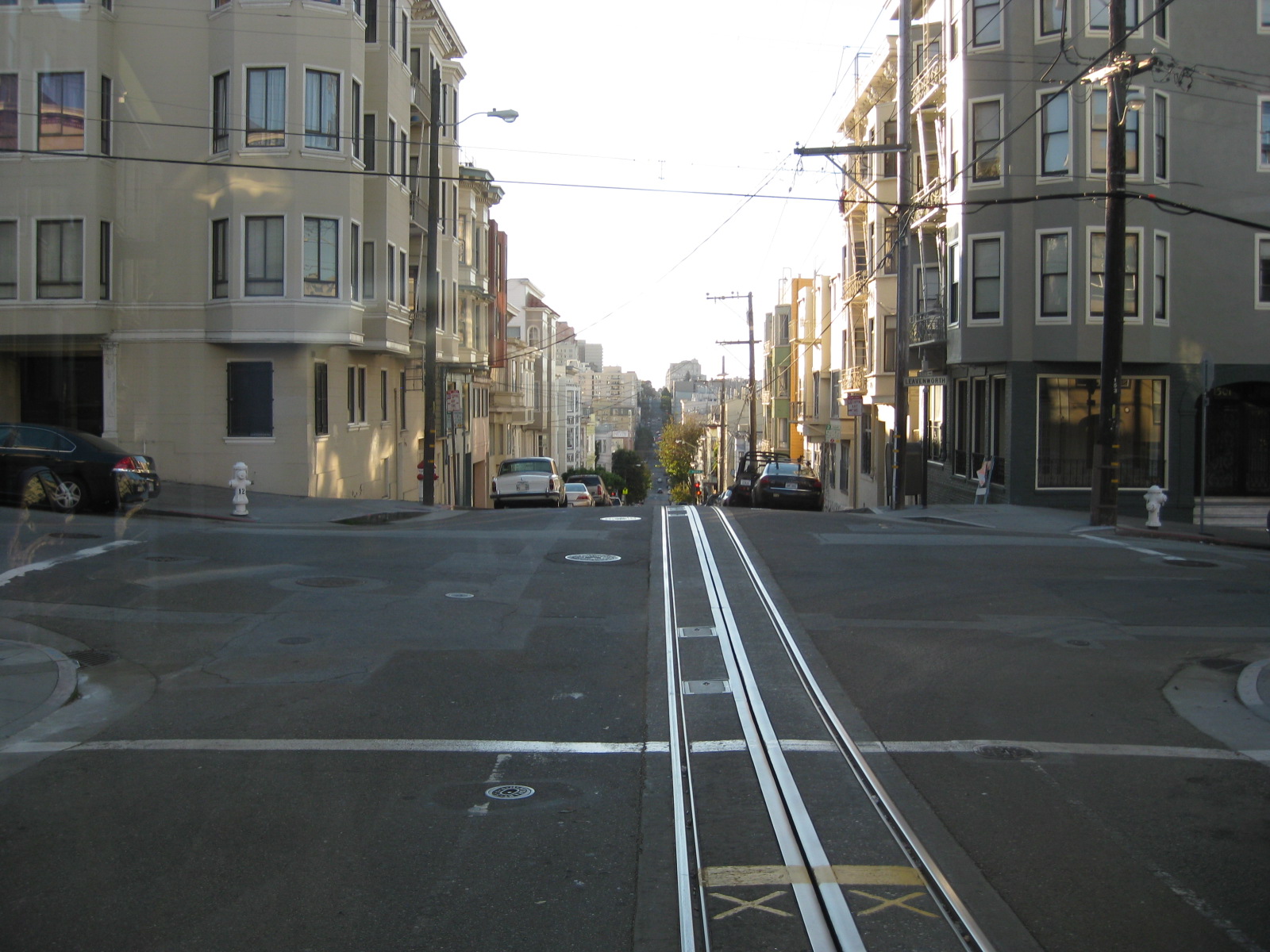
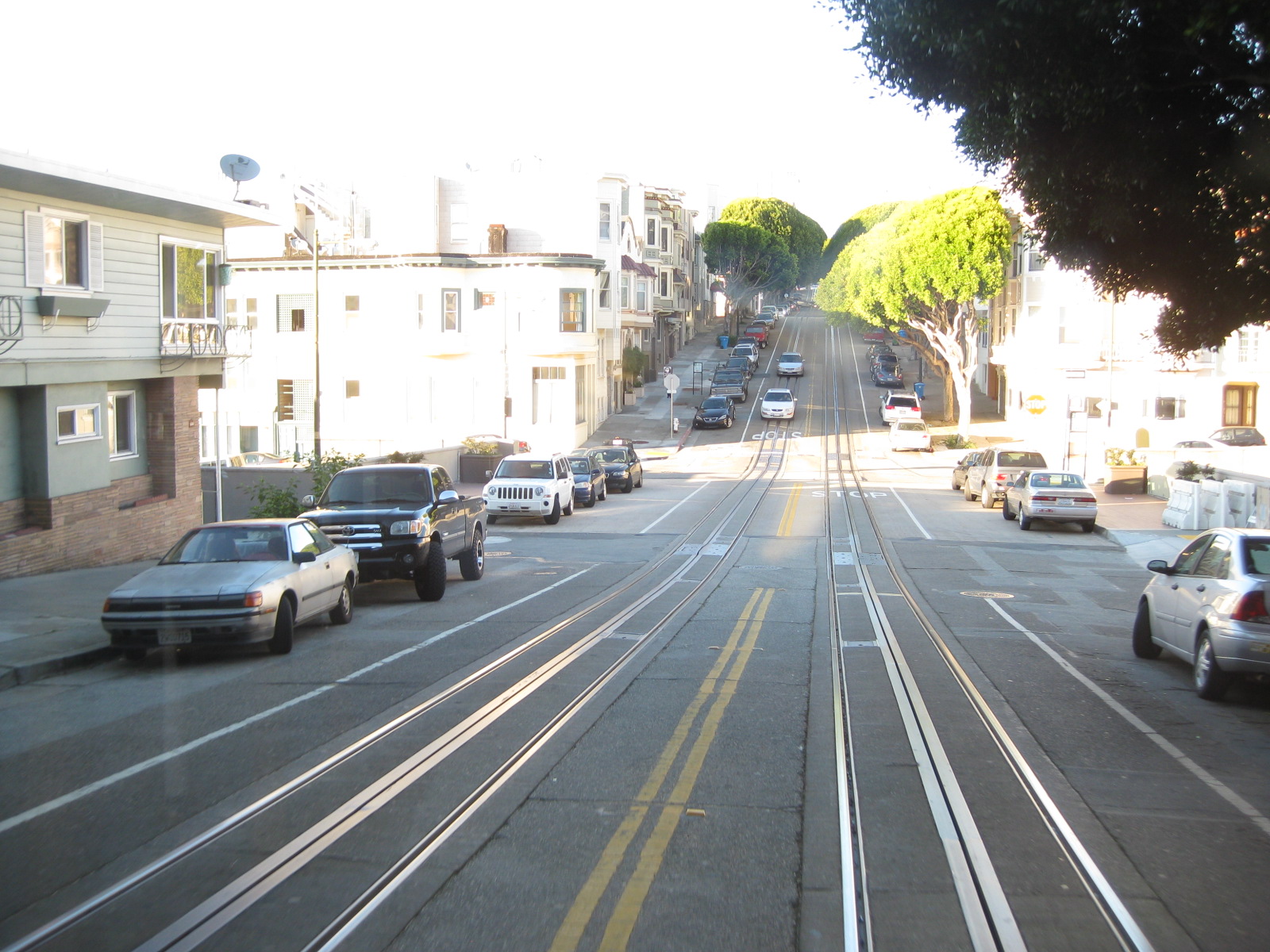
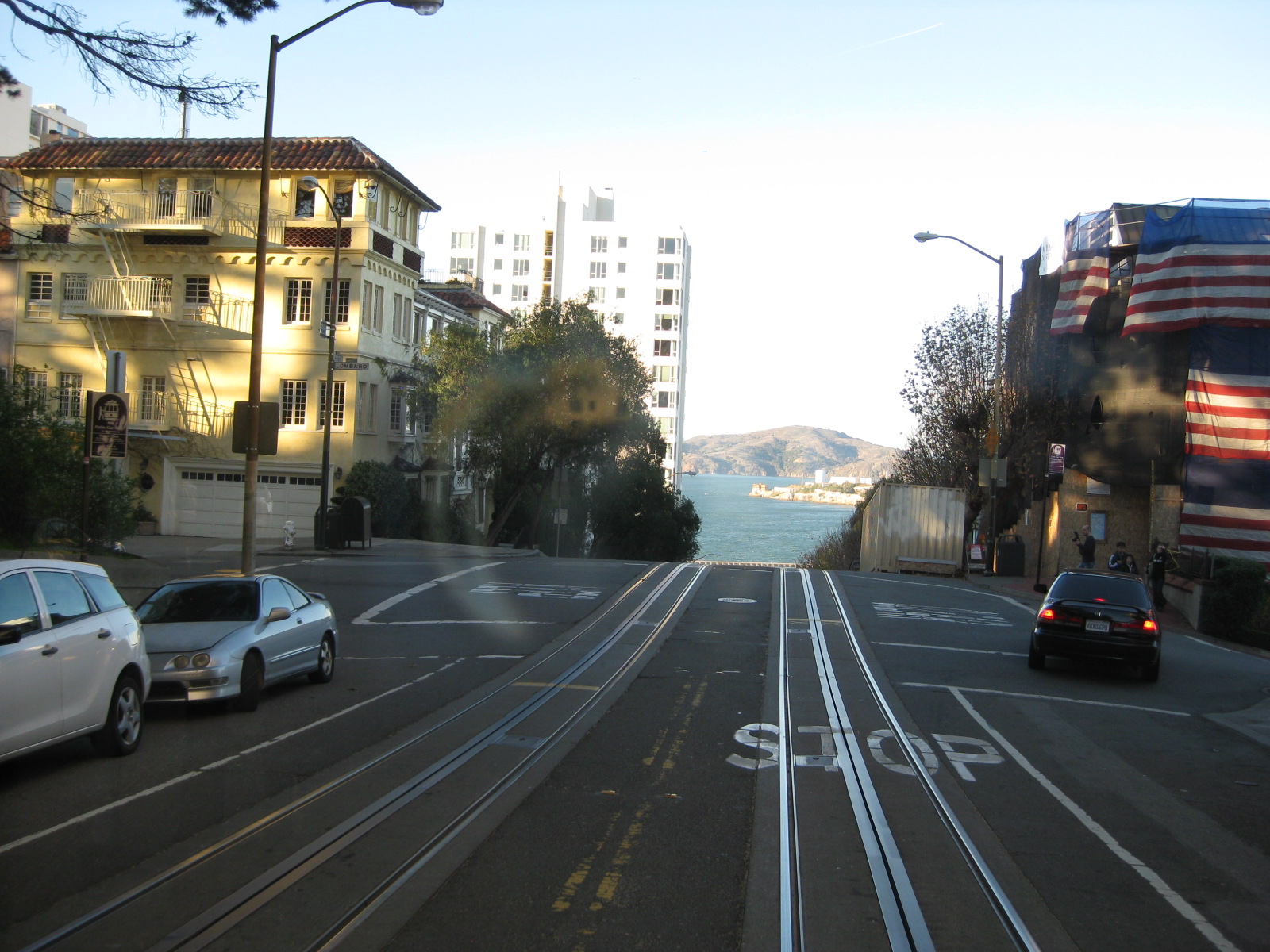
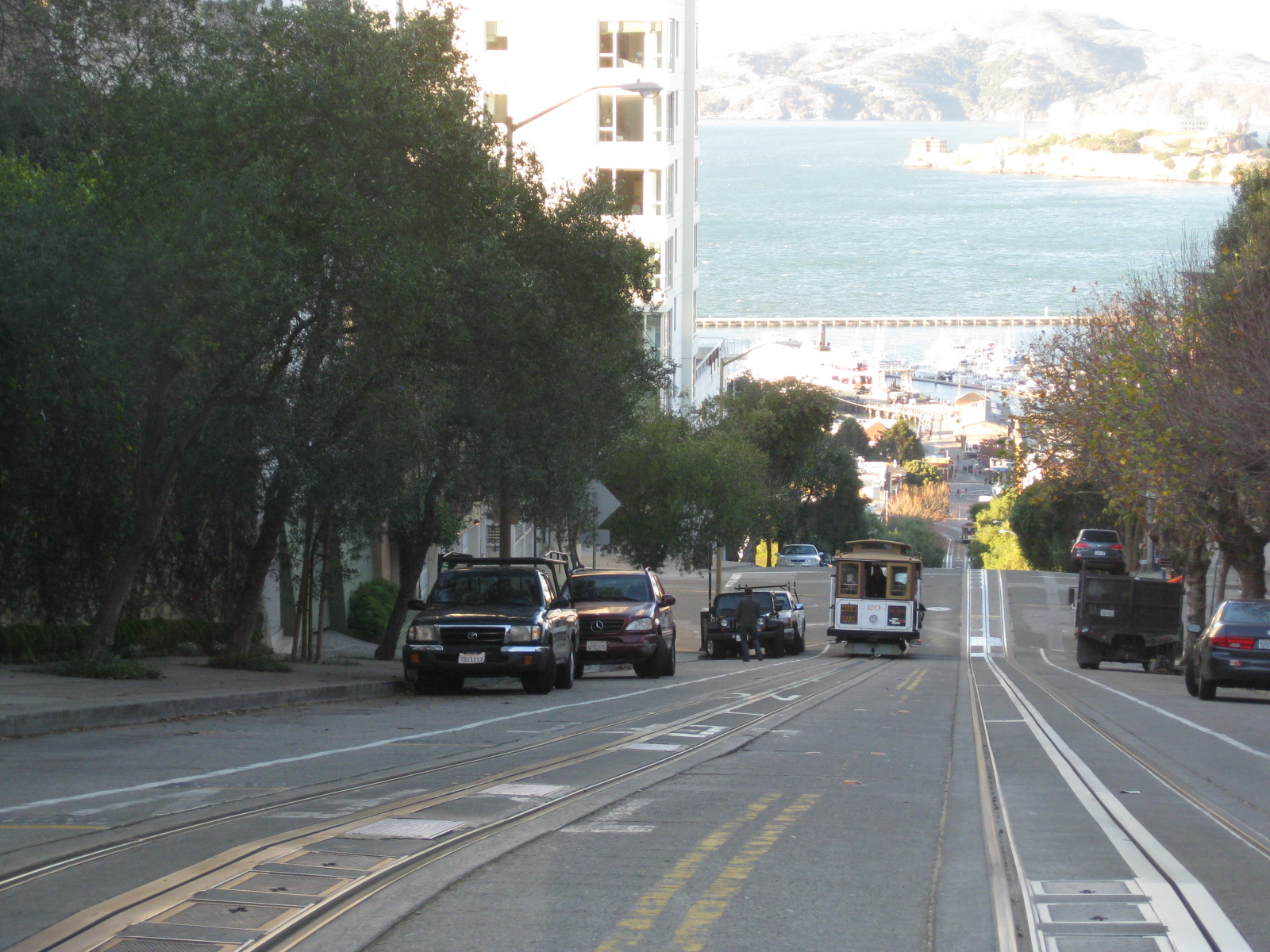
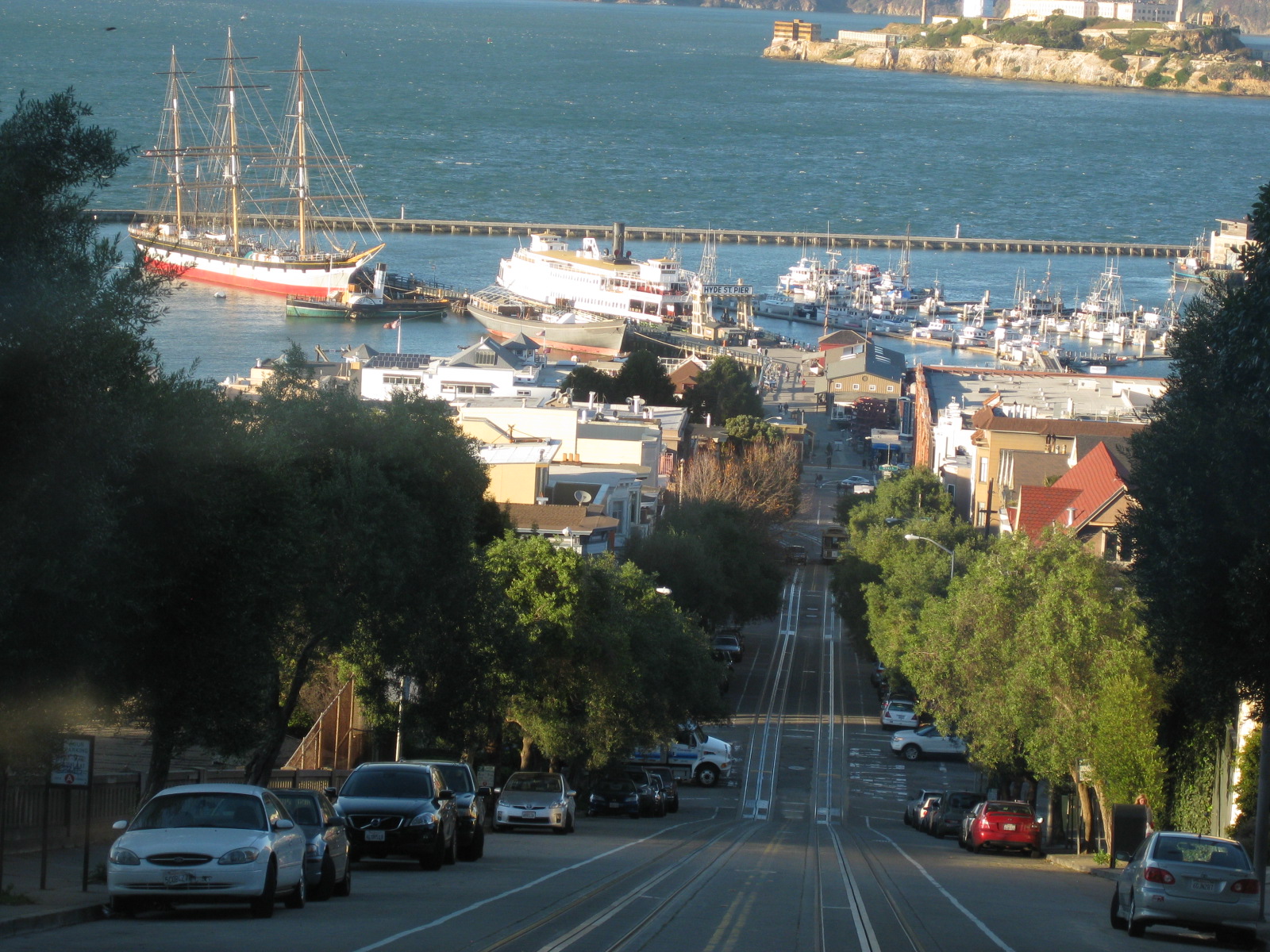
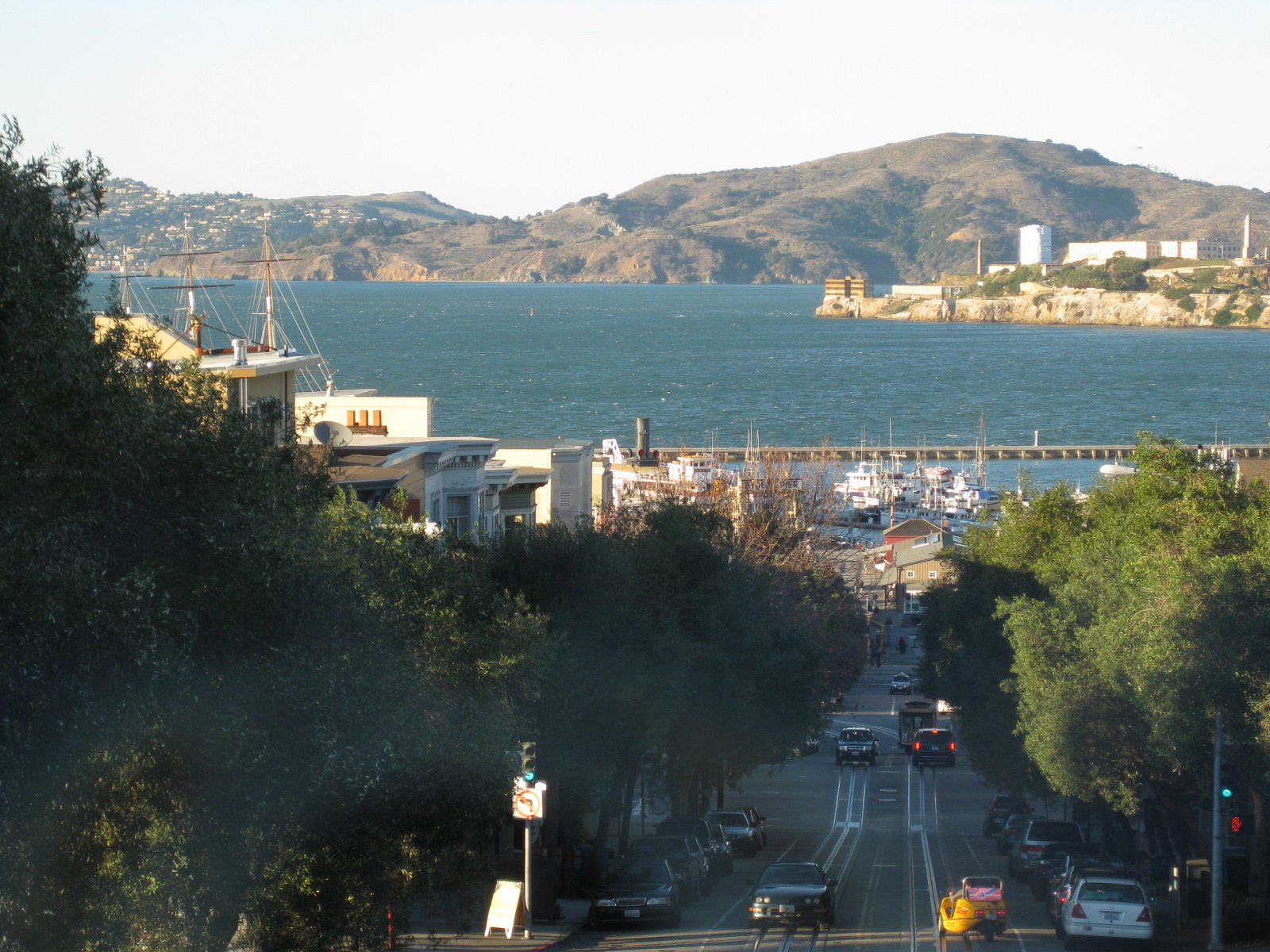
The photos show a particular journey aboard a Powell & Hyde cable car from Market Street (near Union Square) to Hyde Street (near Argonaut Hotel). The trip takes one through notable spots like Union Square, Chinatown, Nob Hill and Russian Hill, including a stop at Lombard Street that has that famous crooked section popular with tourists and residents alike. There are also breathtaking views of the bay as the cable car descends towards Mason or Hyde Streets, towards the pier.
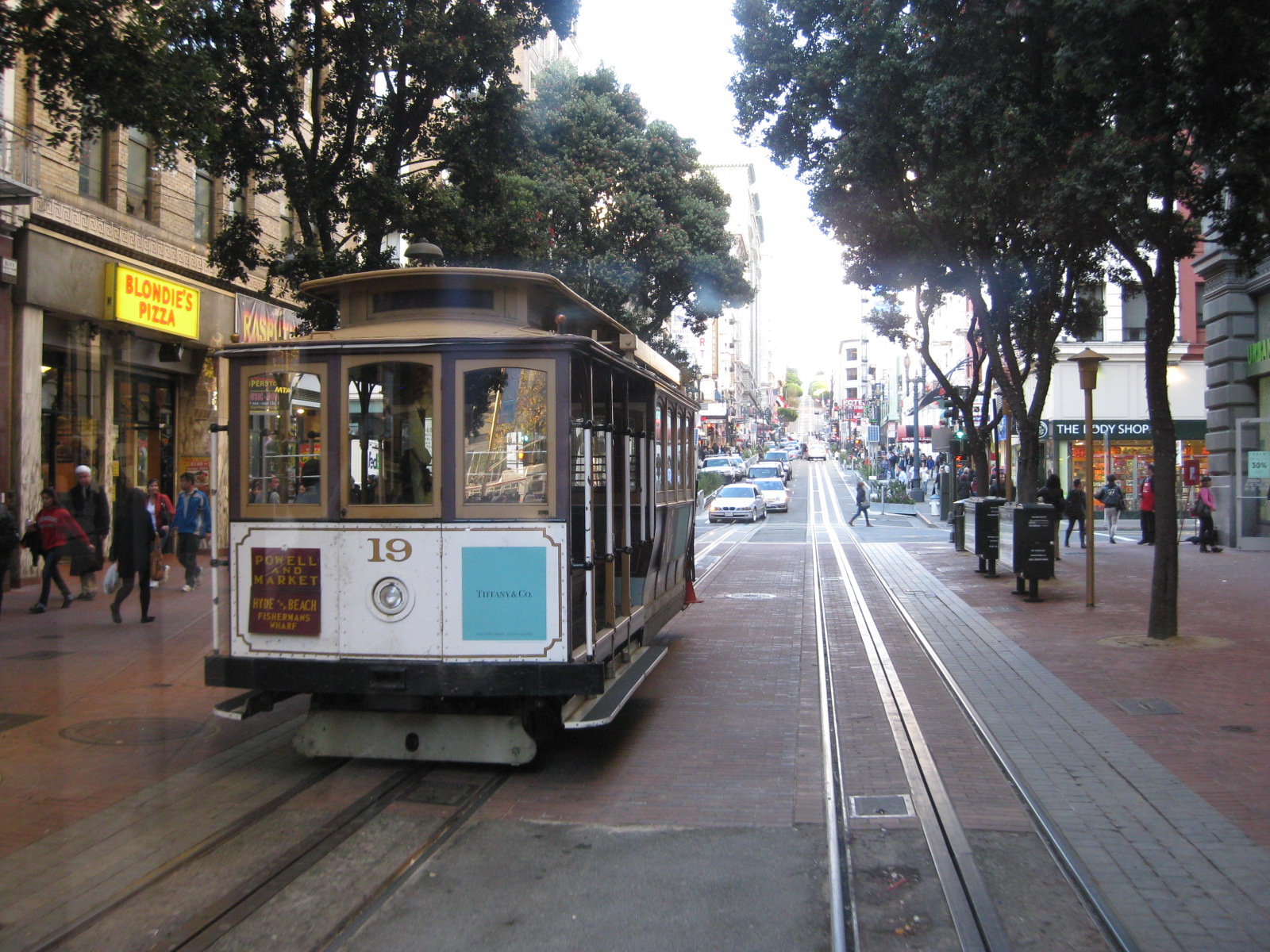 Cable car arriving at the end of the line near Market Street
–
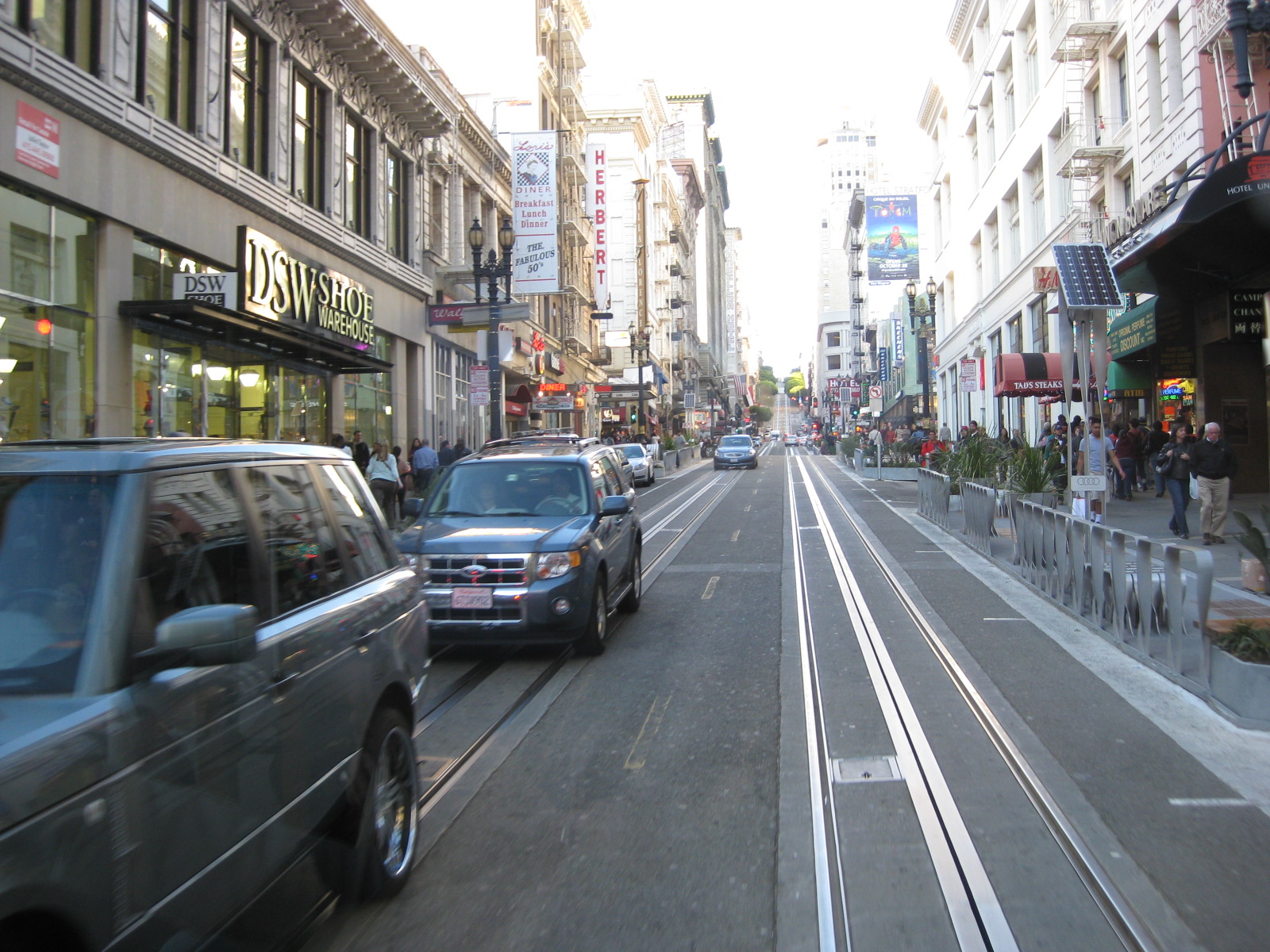
 To the right is Union Square famous for its Christmas Tree. However, there is that monument at the square that people tend to take for granted. Filipinos should be aware that it is one commemorating the victory of one Comm. Dewey and the US Fleet over Adm. Montojo and the Spanish Fleet in Manila Bay back in 1898, a significant part of Philippine and American histories.













Pedestrian facilities around Saitama Shintoshin Station
I have found many examples of excellent pedestrian facilities during my visits to Japan. Among the best are those integrated with the Saitama Shintoshin Station along the JR Keihin Tohoku Line. I had the good fortune of staying at a hotel near the station, from where I could easily catch a train to go to Saitama University via Kita Urawa Station where I transfer for a short bus ride to the university. Following are photos taken in September 2008 showing the walkways connecting my hotel with the JR station. Along the way the walkway connects other buildings such as those hosting government offices and the Saitama Super Arena, a major venue for indoor sports events like the Asian basketball tournaments that determine the continent’s representatives to the Olympics and World Championships.
 Tiled walkways with provisions for the blind (the yellow tiles) and protection from the elements
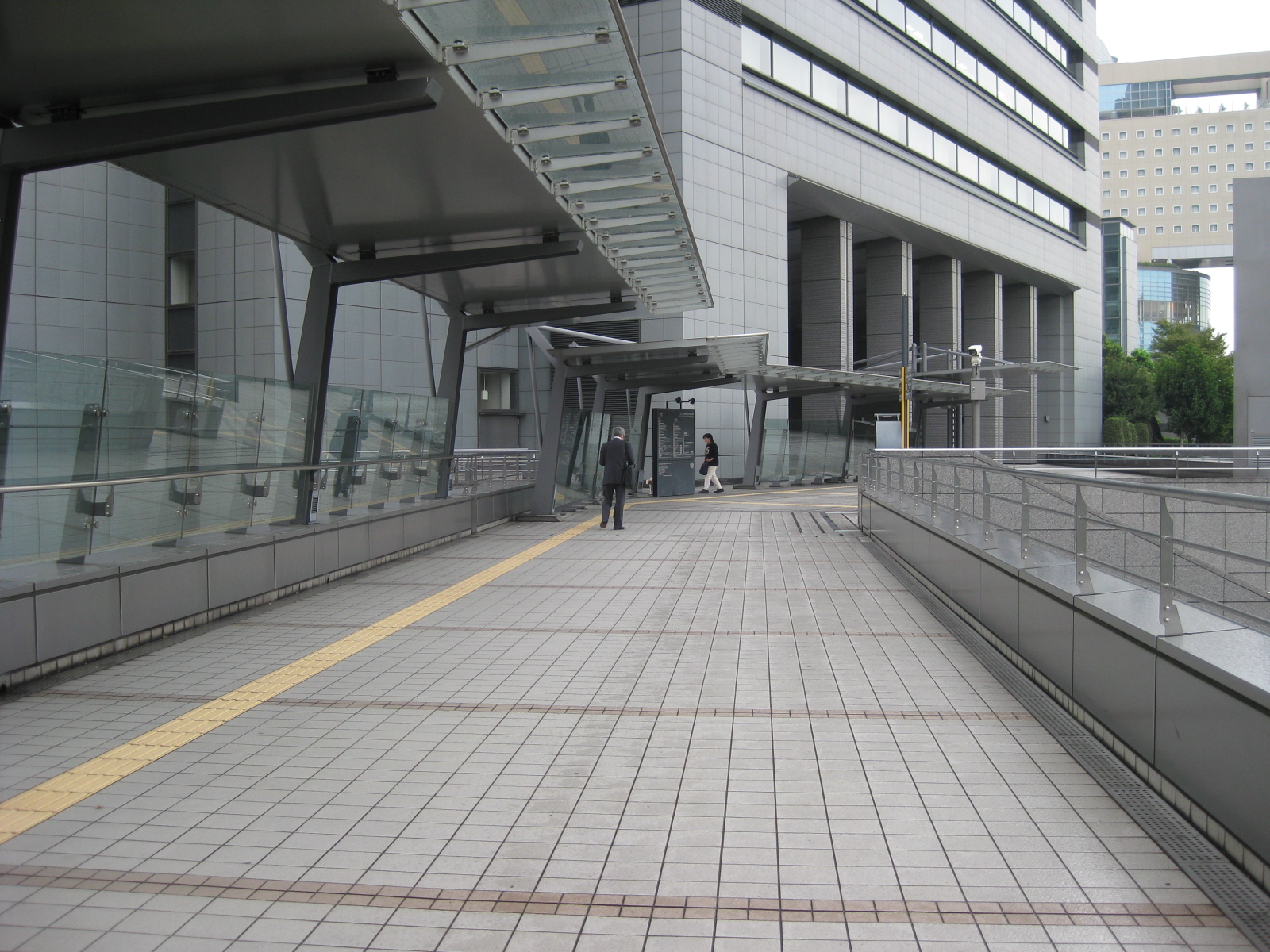 The walkways are wide and should be able to accommodate a high volume of pedestrian traffic. This section leads to the Saitama prefectural government offices located in the building on the background.
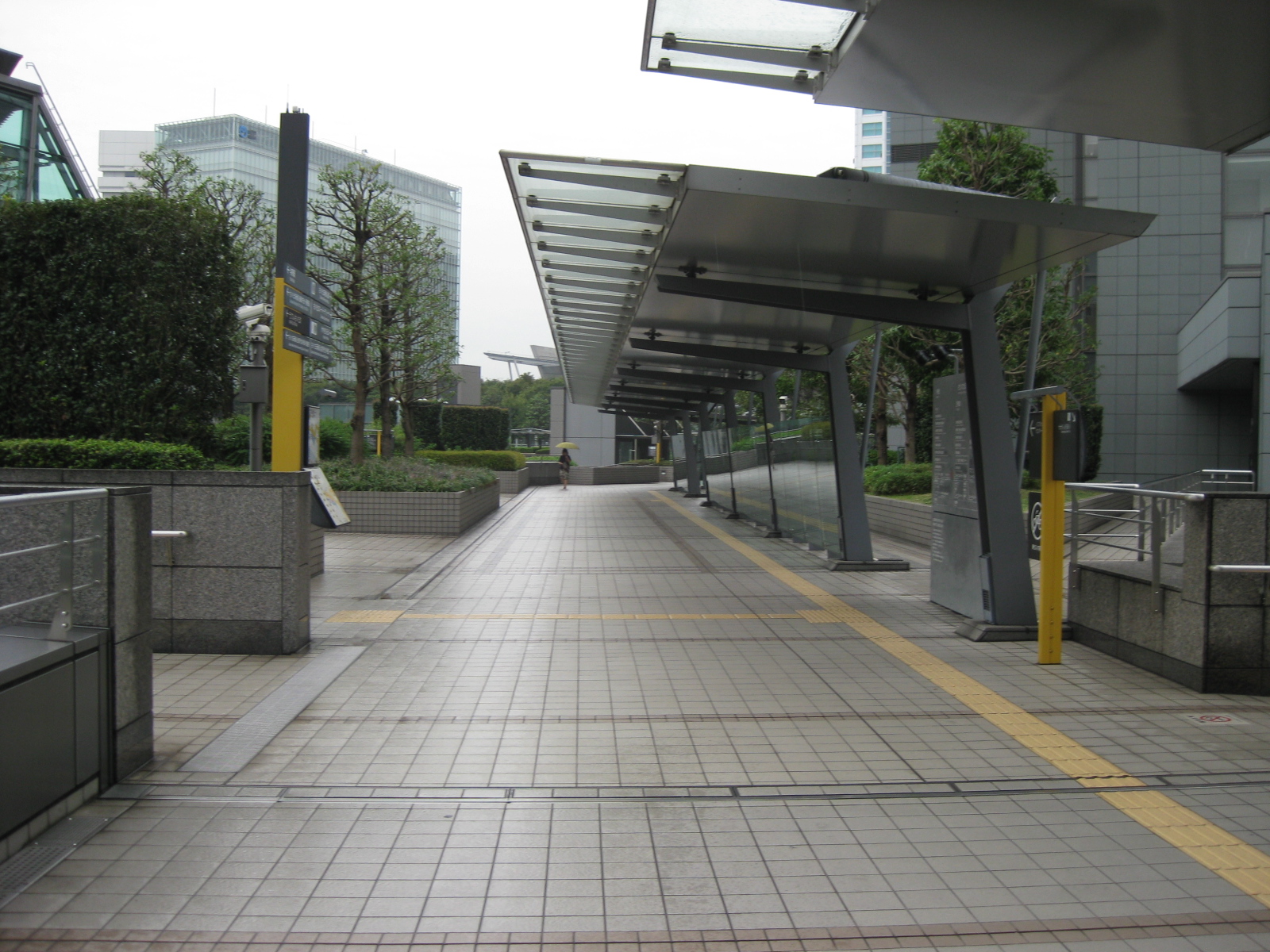 The yellow tiles forming the paths for blind pedestrians are designed to be under the shed and extends to the stairs from which the pedestrian could access the sidewalks and establishments at the ground level of the complex/area.
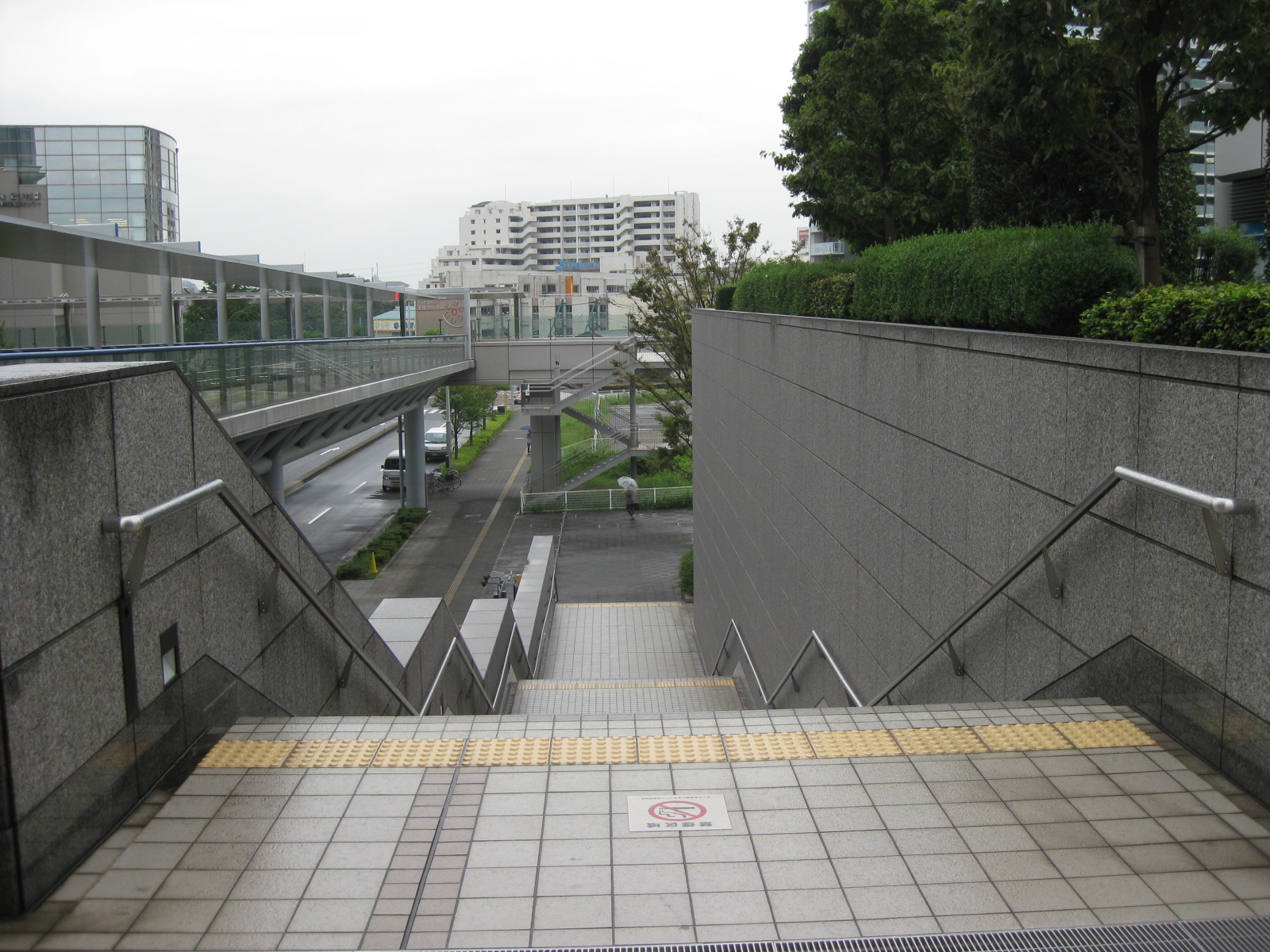 Stairs are designed with hand rails to support physically challenged people including the elderly. Note the yellow strips prior to the first step down the stairs.
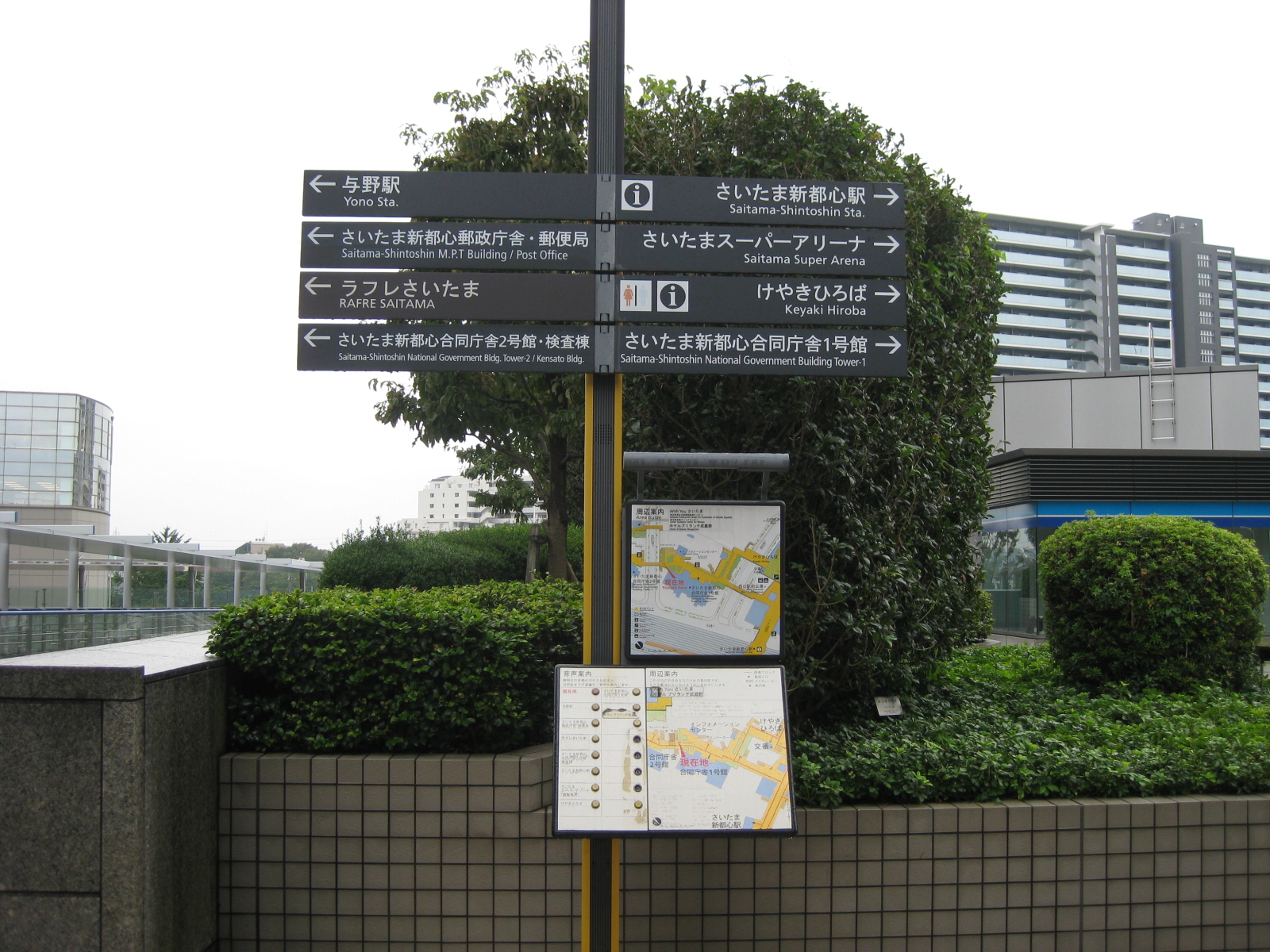 Pedestrian need to have access to information and maps and directional signs provide guidance for people especially those unfamiliar with the area (e.g., visitors or tourists). Most signs in the urban areas of Japan have English translations like what is shown beneath the Japanese in the signs above.
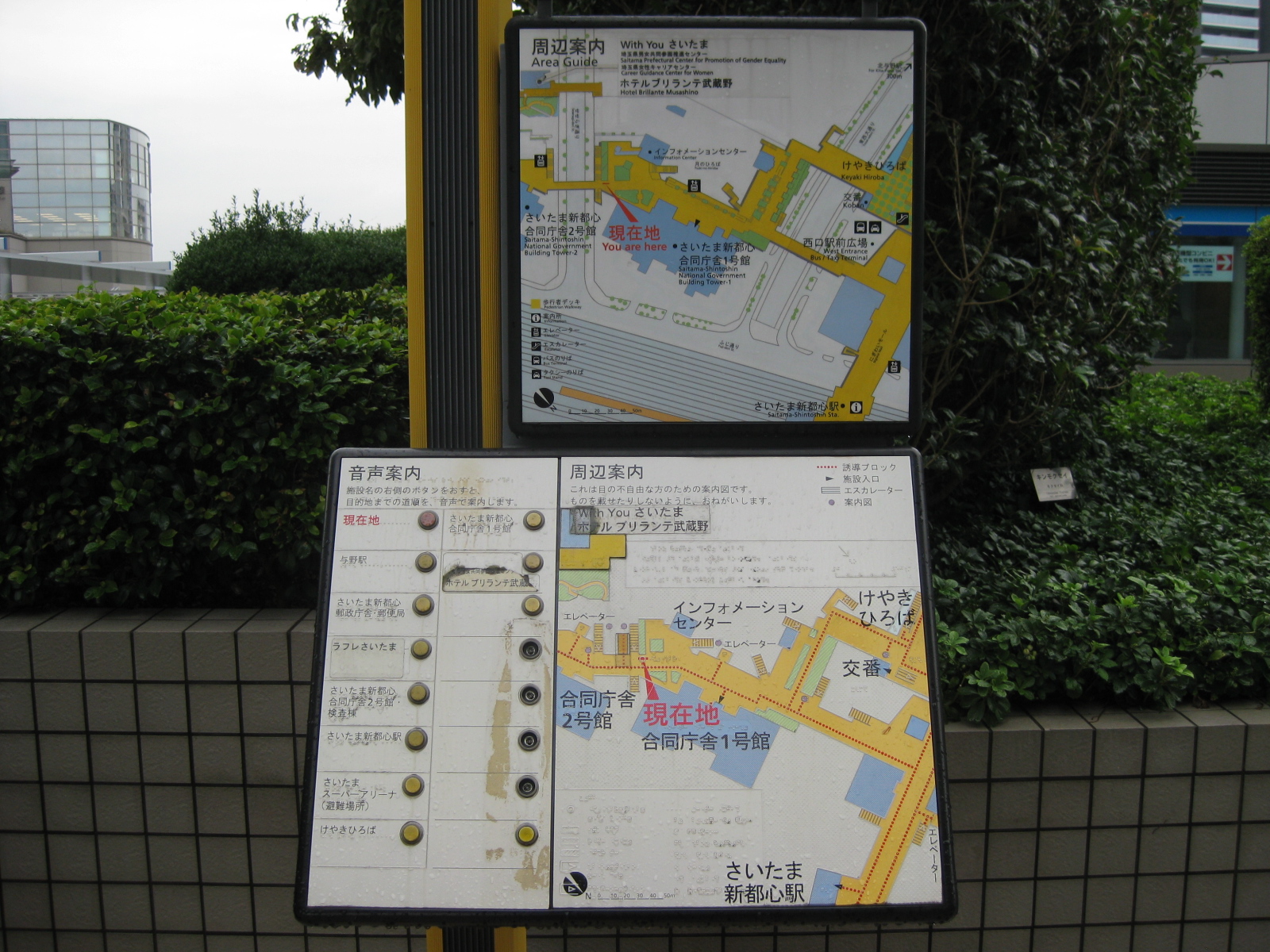 Some maps have interactive features. In this case, there are buttons that provide audio description of places of interest on the map. Today, there are already touchscreen maps in malls and there should be outdoor versions of such facilities.
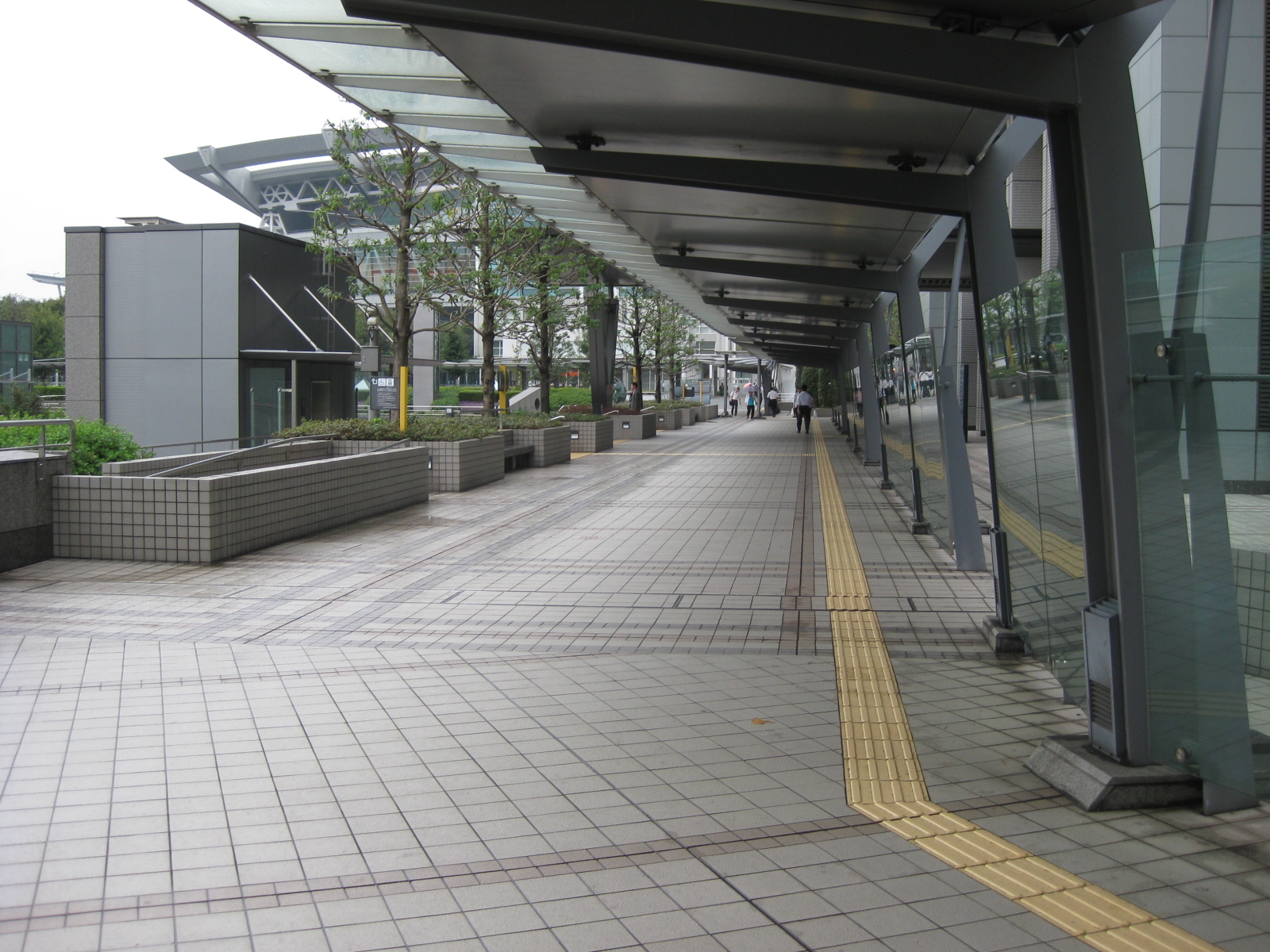 Another photo of the spacious walkways in the Saitama Shintoshin area. One could see the roof of the Saitama Super Arena on the upper left part of the photo and the building housing the elevators for those using wheelchairs or carrying heavy items.
 Closer to the station and the arena.
 There are plant boxes containing brushes and trees along the walkways, providing a more relaxing environment for pedestrians.
 The walkways eventually lead to the complex where located is the Super Arena on one side to the train station in the middle and the commercial complex on the other side.
 Walking from the station to the commercial establishments and office after the Super Arena (at right in the photo), there is a wide space for visitors (e.g., fans, spectators, etc.). There are many coffee shops and restaurants in the area where people could meet up for coffee or tea aside from grab a quick or leisurely meal.
 This the view of a pedestrian approaching the Saitama Shintoshin JR station. Shops are located along the right side of the promenade while the arches form the roof structure of the station, reflecting the modern architecture of the transit station.
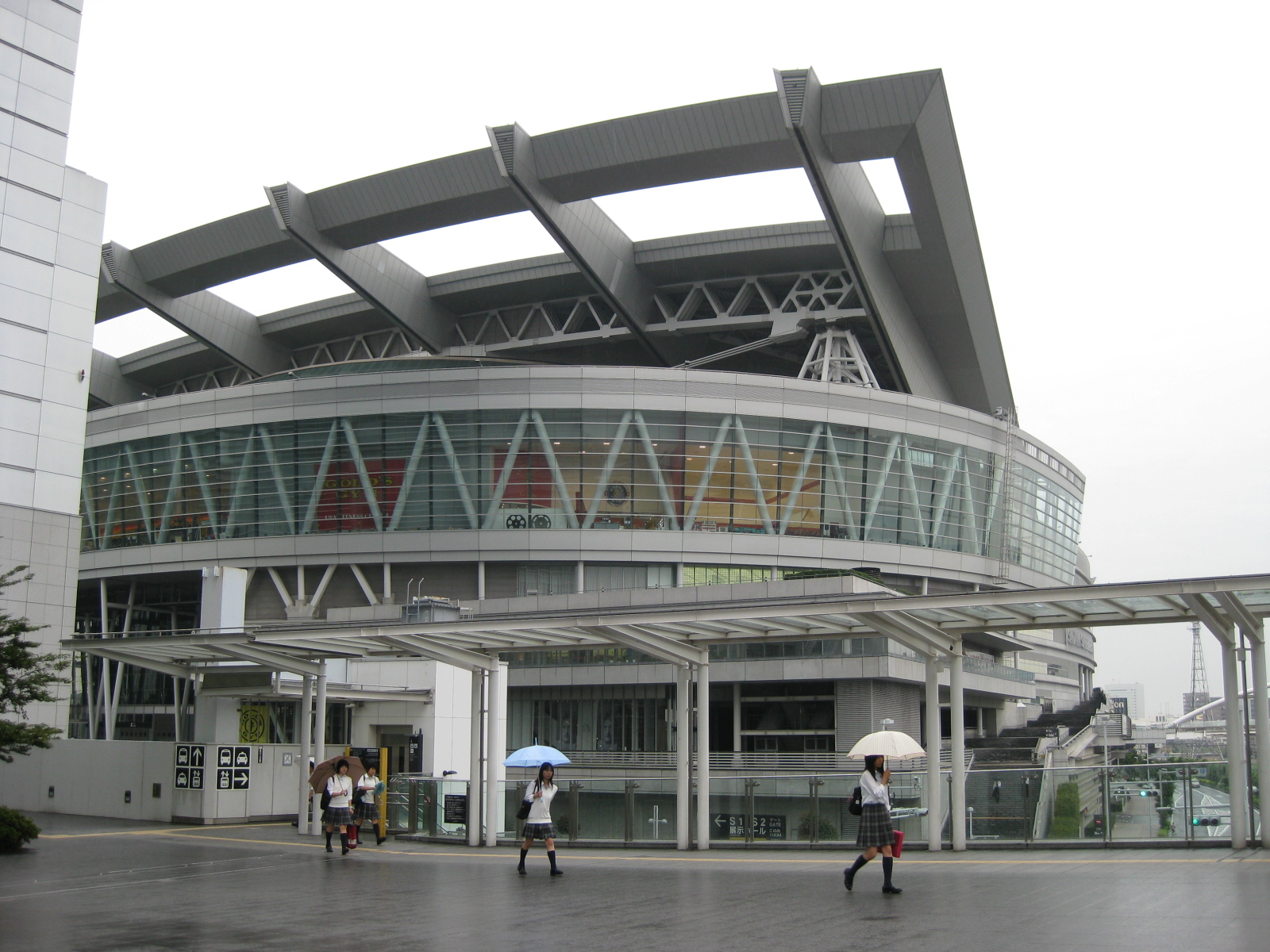 The Saitama Super Arena is also host to a museum dedicated to the late Beatle John Lennon.
 Inside the JR station plaza with kiosks on the left side and ticket machine to the right. Further on are more commercial establishments located in an upscale mall.
–
Fast ferries in the Philippines
The Philippines is an archipelago, meaning it is comprised of islands, some 7,107 of them. As it is impractical (read: too expensive) to connect the larger islands by bridges or tunnels, the connections would have to be made via either maritime or air transport. In previous postings, I have already written about some of the more modern airports in the country like the Bacolod/Silay, Iloilo and Davao airports. What I have not written about in this blog is something in maritime transport.
To get a feel of the current state of commercial maritime inter-island transport (i.e., not including those using motorized or human-powered boats or bancas), I thought it most appropriate to feature fast ferry/fast craft services that are quite popular in the Visayas and Mindanao. I will write on roll-on, roll-off (RORO) services and the nautical highway in the future.
There have been much progress in the upgrading of maritime transport services between islands in the Visayas and Mindanao. This was made possible with the introduction in the 1990’s of fast craft or fast ferries popularly called Supercat with the cat in reference to the catamaran-type vessels plying routes like Bacolod-Iloilo, Cebu-Tagbilaran and Cebu-Dumaguete. These fast crafts effectively cut down travel times by half with the Bacolod-Iloilo run trimmed down from 2-2.5 hours to 1 hour. Following are a few photos of fast crafts and terminal facilities in Cebu City.
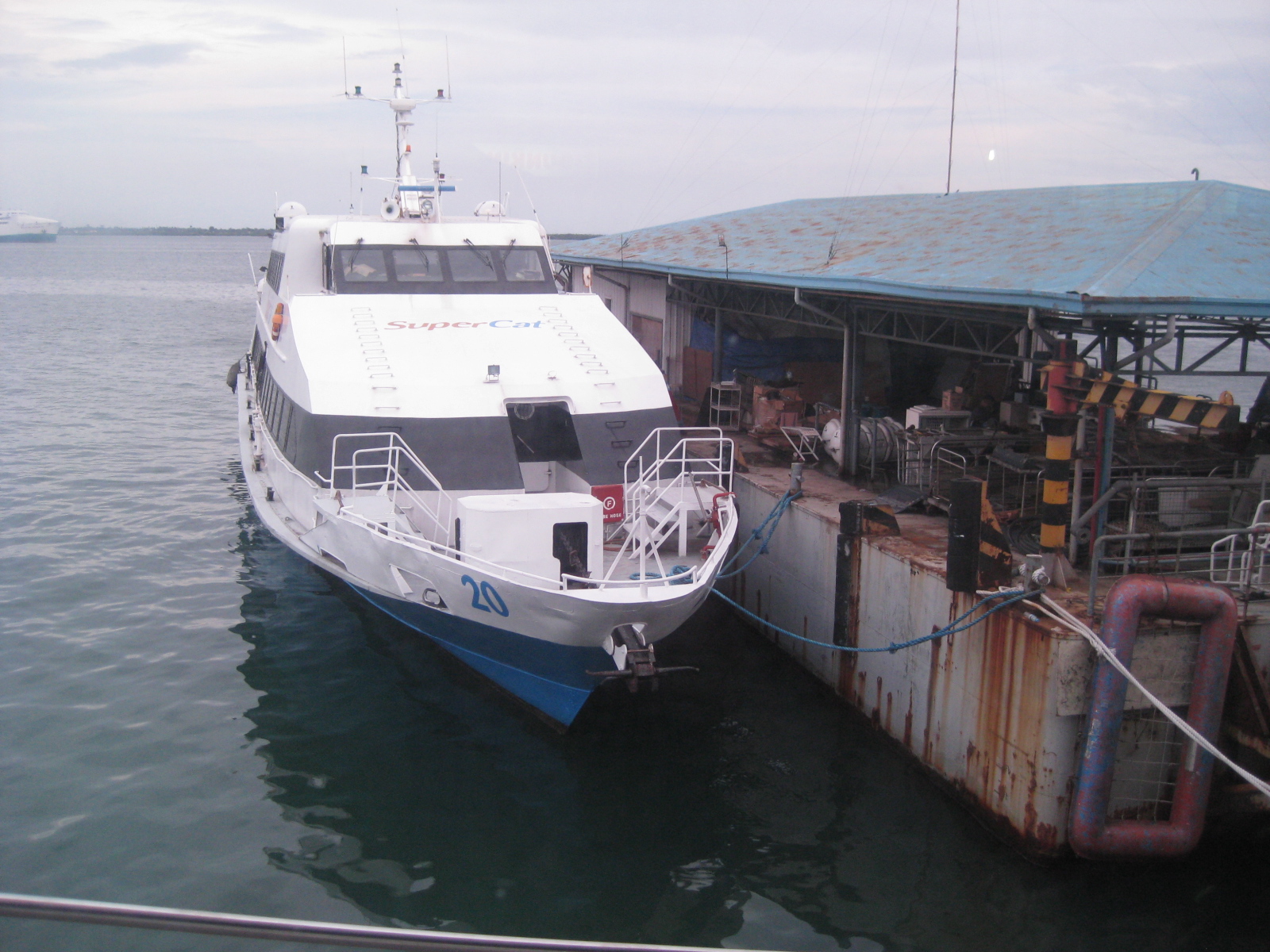 Typical fast ferry docked at the Cebu terminal of the Aboitiz Co.
 Twin-hulled SuperCat approaching the Cebu port
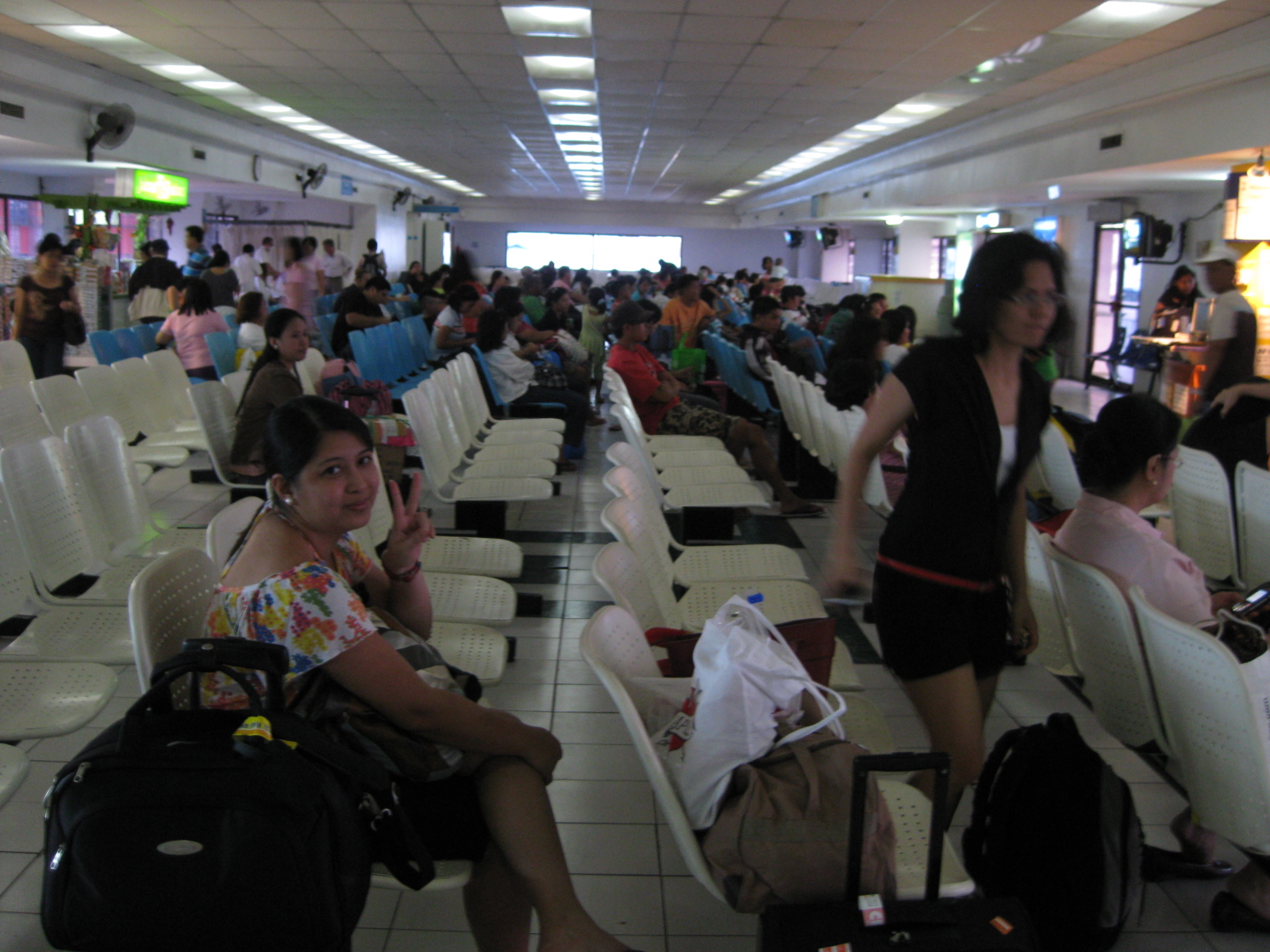 Inside the fast ferry terminal, there are plenty of space and seats for waiting passengers. There are also concessionaires selling food, drinks and souvenir items.
 Floating piers serve as the port’s extensions to accommodate fast craft operations
 Passengers boarding the fast craft via bridge connecting the terminal to the floating piers
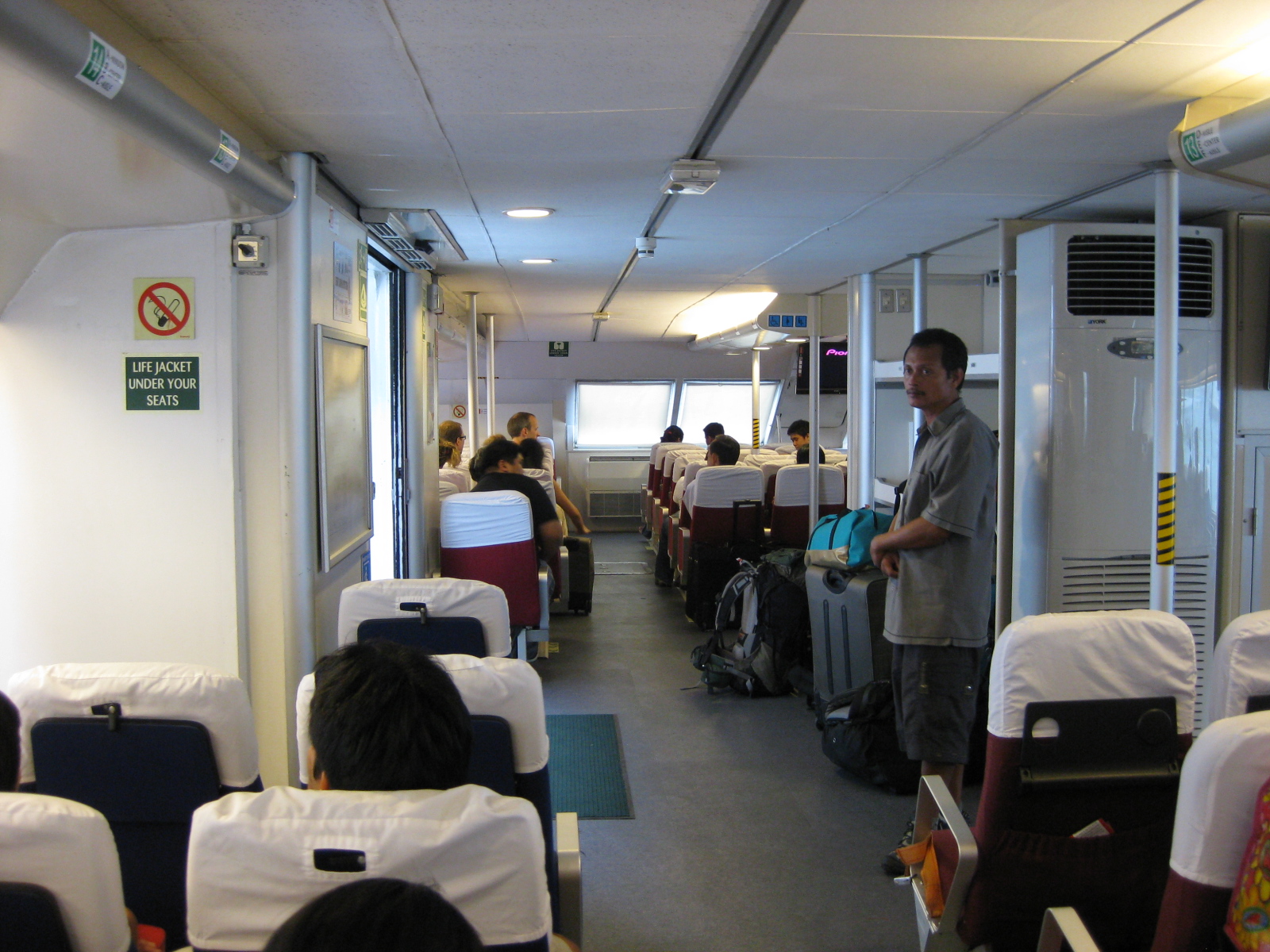 On-board the SuperCat, seats appear like those for long-distance buses complete with head rests for the comfort of passengers. The vessel cabin is fully air-conditioned.
 Another view of the seats inside the vessel show comfortable seating for passengers as well as wide windows for those wanting to have a view of the islands. There is also a snack bar inside the vessel serving food and drinks to hungry or thirsty passengers.
Fast ferry/fast craft services are quite popular in the Visayas and Mindanao and provide a less expensive option to air travel. These complement the RORO services that are more about long-distance travels between cities in different parts of the Philippines, like for example Manila to Iloilo. Such services offered by fast craft are essential for both commerce and tourism and should be encouraged for further development or upgrading, especially in terms of terminal facilities that are still wanting or deficient in many ports in the Philippines.
–
Transport mode shares in Metro Manila
Fairly recent surveys (first quarter of 2011) along major corridors in Metro Manila have yielded the following data on transport modes shares in the National Capital Region. Such data, while quite specific for the corridors surveyed, strongly indicate that most people take public transport. As such, it is quite logical that public transport be prioritized and perhaps provided with the road space they require to be more efficient in conveying passengers to their destinations. There are mixed results in terms of which types of vehicles tend to dominate the road and these are noted below. Note that data for rail is not included but should favor public transport as well. Taxis, in this case, are classified among private vehicles. Trucks are not considered here as passenger vehicles though they do carry people.
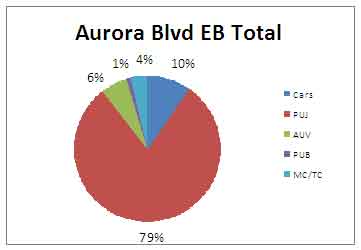 Person trip mode shares along Aurora Boulevard eastbound (to Rizal & Marikina) – jeepneys account for 79% of road-based transport while cars carry 10% of person trips. In terms of vehicle share of the road, cars account for about 25% of the road while jeepneys take up about 59% after converting jeepneys into passenger car units using the assumption of 1.7 pcu = 1 jeepney. Such assumption is also used in other estimates.
 Person trip mode shares along Aurora Boulevard westbound (to Cubao/Quezon City) – jeepneys account for 76% of road-based transport while cars carry 14% of person trips. Meanwhile cars occupy 31% of the road while jeepneys use 57%.
Interesting for the above statistics is the fact that these numbers do not reflect the actual share of public transport given that there is a rail transit service along this corridor. LRT Line 2, however, terminates before reaching the Province of Rizal, which necessitates the transfer of passengers from rail to mainly jeepneys towards their final destinations.
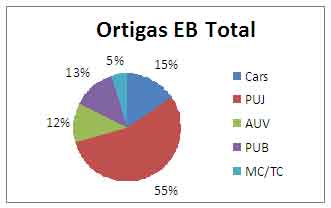
Person trip mode shares along Ortigas Avenue eastbound (to Rizal Province) – jeepneys account for 55% , buses 13% and AUVs 12% of road-based transport (total of 80% for PT) while cars carry only 15% of person trips. Cars occupy 37% of the road while jeepneys eat up almost the same at about 37%. AUVs are quite significant along this corridor taking up 12% of the road. Surprisingly, buses only occupy about 5% assuming 2.5 pcu = 1 bus. Perhaps Ortigas can be decongested if public transport services along the corridor are rationalized with many jeepneys retired in favor of the higher capacity buses.
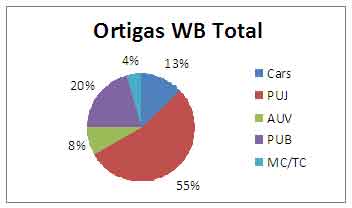
Person trip mode shares along Ortigas Avenue westbound (to Mandaluyong/Manila) – jeepneys account for 55% , buses 20% and AUVs 8% of road-based transport (total of 83% for PT) while cars carry only 13% of person trips. Cars take up 38% of the road, jeepneys also 38%, AUVs 9% and buses only 4.5%.

Person trip mode shares along Commonwealth Avenue northbound (to Novaliches) – jeepneys account for 30% , buses 35% and AUVs 5% of road-based transport (total of 70% for PT) while cars carry 26% of person trips. Cars take up 57% of the road, jeepneys 17%, AUVs 6% and buses about 12%. Meanwhile, motorcycle account for about 8% of road space along Commonwealth NB. Note that Commonwealth is the widest road in the country with sections having up to 10 lanes per direction. The two outermost lanes are typically designated for PUVs while the 4th lane from the roadside is designated as a motorcycle lane.
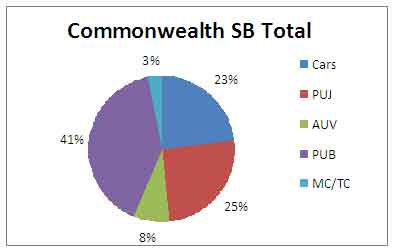
Person trip mode shares along Commonwealth Avenue southbound (to Elliptical) –
Note that there is a proposed MRT 7 to be constructed along Commonwealth and that system will also favor public transport users. Such a system should be more efficient in carrying passengers along the corridor and should provide an opportunity to rationalize PUJ and PUB numbers along Commonwealth. And such an opportunity should be taken and not passed up if government is really serious in improving transport in Metro Manila.
Person trip mode shares throughout the country will surely have similar numbers if not higher shares for public transport compared to Metro Manila. This more than underlines the impetus for providing safe, efficient public transport services for Filipinos – a commitment that should not only be stated or printed but actively pursued with government in the forefront rather than on the sidelines.
Graphs and other stats mentioned derived from data from surveys for the Mega Manila Public Transport Planning Support System (MMPTPSS), 2011.
Domestic Airport at Roxas City
There are many domestic airports around the country that need to be upgraded. Among them are Cagayan De Oro, Tagbilaran and Roxas City. With the exception of Roxas City, the other two cities I mentioned are in dire need of larger passenger terminals given the demand and longer runways to be able to handle larger aircraft. In the case of Roxas City, passenger demand is surely increasing but not as rapidly as CDO or Tagbilaran. CDO, after all, is the main gateway to northern Mindanao while Tagbilaran is a major tourist destination. In the case of Roxas City, it has to compete with larger and more modern airports in the island of Panay particularly the Iloilo and Kalibo airports. For the neighboring province of Aklan, there is actually another modern airport that serves primarily the demand for travel to the attraction that is Boracay Island. Still, there is a need to refurbish, at the very least, Roxas City’s passenger terminal for many reasons. Primary among these reasons are the need for a more comfortable departure lounge and a secure terminal facility. Of course, it will be most welcome if the runway could also be improved. Following are a few photos from a trip back in 2010.
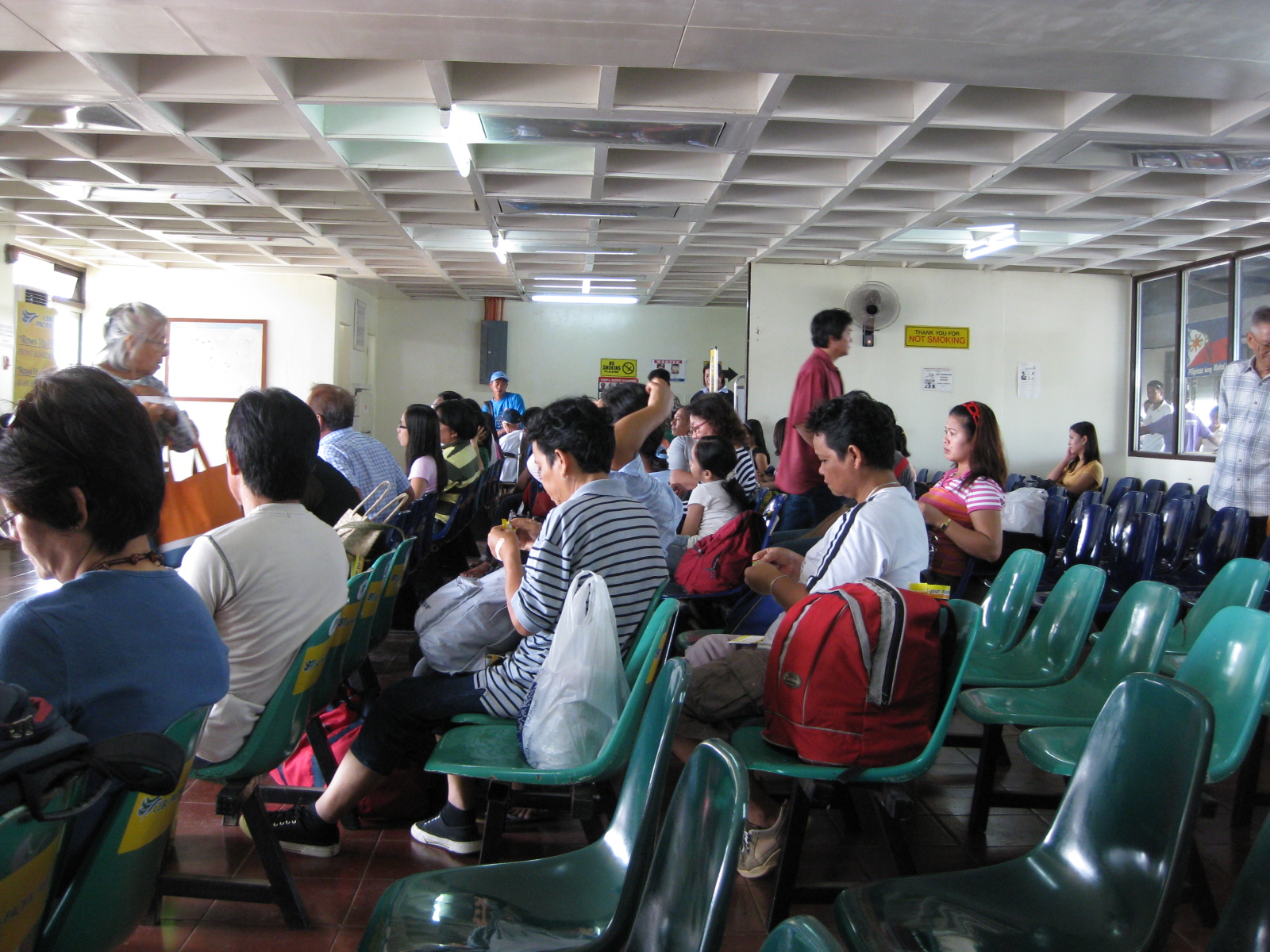 The departure area is crowded and would not be able to handle two plane loads of passengers given the typical schedule of flights to Roxas.
 It was a good thing the airconditioning was working and the area was generally clean. The toilets were satisfactory. The TVs were also functioning but one couldn’t really hear anything from the ambient sounds (or noise) from the collective conversations of those in the lounge.
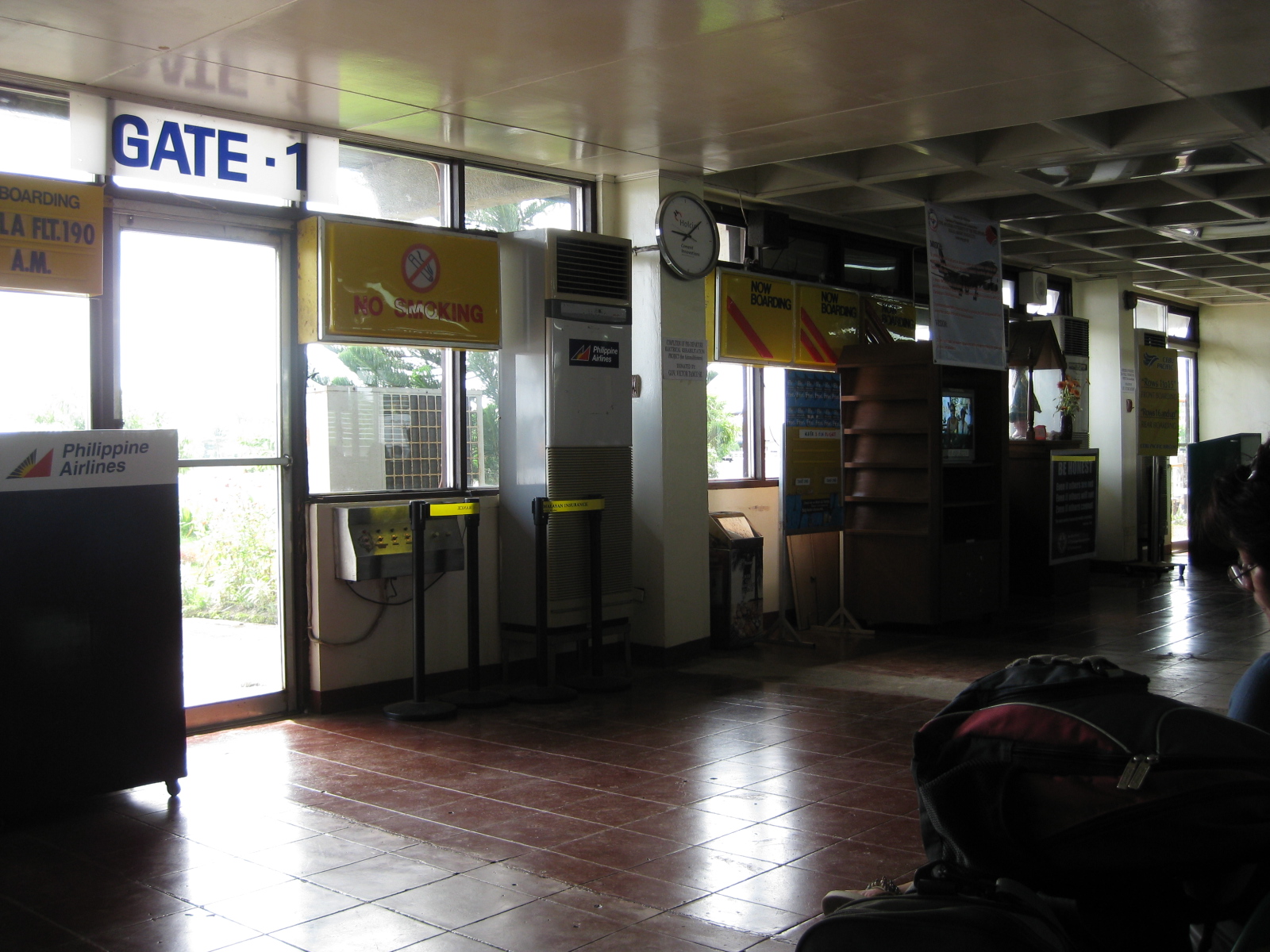 The airport reminded me a lot of the old processes in the old domestic airports including Manila’s. Boarding was organized according to the “diagonal lines” indicated on the boarding passes. There are still signs in the terminal with these conventions as shown above near the clock.
 The domestic airport provided the basic facilities for such terminals. These terminals do not have air bridges like the airports I have written about. In the photo shown above, fabricated stairs or ladders are used for boarding or deplaning.
–
iBus – bus system reinvented?
In the recent British Invention Show, a Filipina won a gold medal for something that is probably much needed to solve the transport woes of this country – the iBus. It is of course initially conspicuously like your regular bus system but upon closer look at the slideshow from the news article, there are many things about the system that’s high tech. The high tech aspects of the iBus are actually example applications of Intelligent Transport Systems (ITS) as implemented for public transport.
I am not privy to the details for the iBus but I did see part of its progress after meeting a few times with its proponents since last year. With the award, I hope that perhaps our DOTC, LTFRB or MMDA will become interested in the system and perhaps that interest will translate into the deployment of the system in a test corridor as a proof of concept. I would even dare propose that should the demo be successful that it be applied immediately in Philippine cities requiring modern transit systems.
Passing the blame for our traffic mess
We like to bash and criticize public transport drivers for their behavior when we only need to look in the mirror to see who is part of the traffic problem in this country. A lot of private car drivers here and elsewhere in the country tend to attribute traffic congestion to buses, jeepneys, AUVs and taxis while practically washing their hands off the congestion and reckless driving habits that we see everyday along Philippine highways and streets. Many tend to think that only PUV drivers are to blame for our traffic mess when in reality and data-wise there are surely more private traffic on our roads compared with public. Such statistics including mode shares for both vehicular and person trips along major corridors in Metro Manila I will share in another post.
I drive from my home to the office and back almost everyday and I have observed driving behavior for much of my life including the times when I’m in cities in other countries. PUV drivers to me are more predictable than private car drivers in this country. In fact, we can know for sure that PUV drivers will weave their vehicles in traffic and we will always brace ourselves for the aggressive driving every time we encounter PUVs. Such errant behavior, of course, could have been addressed by a stricter and more reliable licensing system for drivers. But that’s another story altogether that’s worth an entire article.
Meanwhile, I share the observation of one friend that many SUV or high-end vehicle drivers “tend to drive like outlaws.” I had articulated in an interview before that many young drivers (and older ones as well) tend to imagine themselves as race car drivers – and proceed by trying to out-speed and/or out-maneuver other drivers the way stuntmen do in the movies. This you can observe whether along a congested street or a free flowing expressway. Evidence to this includes all the road crashes involving private vehicles (including motorcycles) that would certainly out-number those involving PUVs. One thing not going for the PUVsm, however, is that they happen to carry more passengers and therefore more responsibility as a requirement of their being issued franchises. Another proof to irresponsible behavior are postings of claims and photos on social media showing speedometers exceeding speed limits. And yes, there are those who routinely and consciously violate speed limits along expressways for them to be captured by speed cameras. The shots are then used as bragging rights attesting to the driver reaching a certain speed with his/her vehicle.
This morning, I almost got sideswiped by a car who cut my path to make an abrupt right turn to enter the gate of a major private university. I thought I had a clear path to change lanes as I estimated a good distance from the same vehicle who was trailing me on the other lane. Instead, the vehicle accelerated and with horns blaring asserted his right to the lane. I had to use my defensive driving skills to avert a collision. Seconds later, he was blocking my path as he made a right turn at the university’s gate. I could only shake my head in frustration with what happened while an MMDA enforcer looked helplessly as a witness to the incident. A few minutes later, a couple of SUVs coming from a posh subdivision along Katipunan cut our path to make an illegal left turn at a U-turn slot. Vehicles from this subdivision do so regularly and with impunity as if their passengers were more blessed and more important persons than the rest using this major highway.
The examples above are just some of what we usually encounter everyday while traveling or during our regular commutes. These are certainly being caught on video by the MMDA cameras spread out and observing traffic along major roads in Metro Manila. These same drivers might be the first to throw the proverbial stone to their fellow drivers whom they have judged to have committed sins of recklessness when the truth is that they themselves are guilty and only have to look in the mirror to see for themselves who are really to blame for our dangerous and congested roads. Truly, what’s wrong with traffic in this country may not necessarily be with the way we manage traffic or enforce rules and regulations. It might just be the nut behind the wheel that’s defective, after all.
–
Parking galore
I met Paul Barter not too long ago when he visited Manila to give a presentation on parking at the ADB. This was at the then annual ADB Transport Forum held around May every year at the ADB’s headquarters in Manila. He is a faculty member at the Lee Kuan Yew School of Public Policy of the National University of Singapore. I keep forgetting that he is a regular blogger and writes a lot about sustainable transport and particularly about parking. And so I share this awareness to my readers about Paul’s blog Reinventing Parking.
Reinventing Parking is an excellent resource for a lot of articles and references on parking. Paul has researched on parking in most Asian countries and has been to major cities in the region where he has collected first hand data on parking policies and behavior. I find his materials well researched and his discussions and opinions on parking quite interesting as many of the issues he has delved into in his posts are very much applicable to our experience in the Philippines. I have had the pleasure of sitting down with him to talk about parking policies and standards (?) in this country for his comparative research and a paper he was doing at the time. I’m sure there’s a lot our planners and developers will learn from Paul’s work. Perhaps, even decision-makers or government officials in-charge of parking standards (e.g., National Building Code) can pick up a thing or two from his body of work.
–

