
On pedestrian crossings: innovating on the pavement markings?
I recently saw what looks like a project of the City of Antipolo where several pedestrian crosswalks are being painted over with artwork including a basic road safety message. The photo below shows one in progress across from the Provincial Capitol (aka Ynares) along the Antipolo City Circumferential Road.
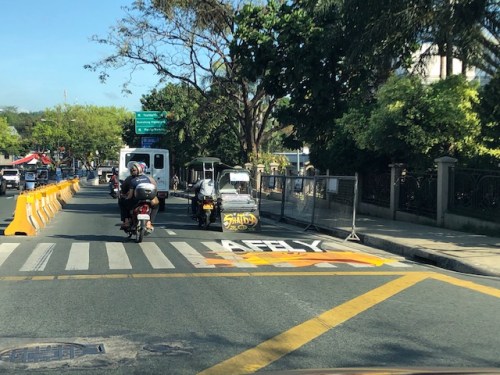 Photo of artwork in progress to cover the existing pedestrian crossing (zebra) pavement markings at the Rizal Provincial Capitol
Recently, I’ve seen news reports and posts by the proponents being shared in social media about the project. From what I’ve learned from reliable sources within the Department of Public Works and Highways (DPWH), this is an initiative with the blessing of the city and did not go through the DPWH. The main concern here is whether this ‘innovation’ of sorts will be effective and if the artist(s) behind the project used the proper materials (i.e., paint for pavement markings that are supposed to be highly visible day or night) for this project. If not, then this is just street art similar to what artists did on the UP Academic Oval a few years ago in front of Palma Hall. Sorry to blow your bubble but its more a publicity stunt than a safety device if proponents do not use the proper materials. I hesitate to use the term ‘design standards’ here because this is supposed to be artwork and perhaps the word ‘standard’ doesn’t apply. But to claim this enhances safety is at this point a stretch.
More first-hand photos soon…
–
Bus stops in Bangkok
My former professor – my second adviser – posted a few photos of bus stops in Bangkok. I am re-sharing these here to show one aspect of how buses operate in Bangkok including the route numbering and the schedules.
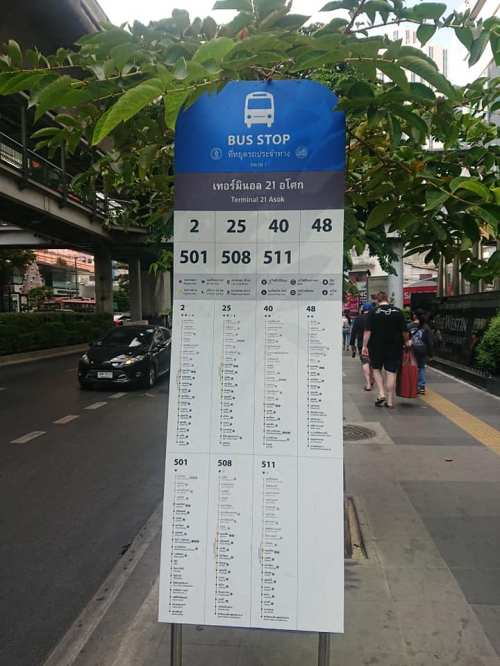 Bus route numbers and lists of designated stops for each [Photo credits: Fumihiko Nakamura]
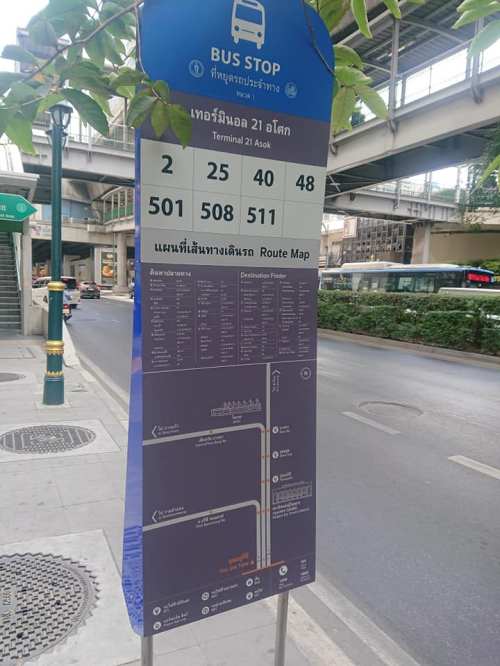 Route map on the other side of the panel [Photo credits: Fumihiko Nakamura]
There are no schedules here like the ones on bus stops in Japan or Singapore but the basic information is quite helpful for commuters and tourists who opt to take regular public transport instead of taxis or ride share. Are such devices being considered by the MMDA or other cities for their public transportation? If not, then maybe they can consider and include this in their New Year’s resolutions.
–
A Blessed Christmas to all!
I just wanted to greet everyone a Merry Christmas!
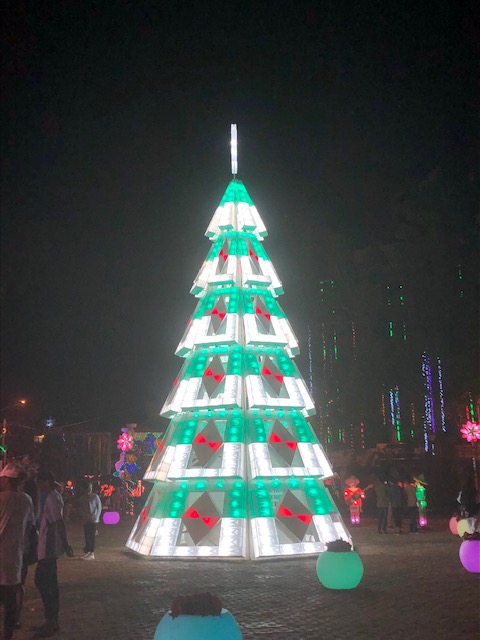 [Photo is of Christmas tree at Plaza Pershing, Zamboanga City]
–
Transit station connections in Singapore
The connections between transit stations in Singapore show us examples of how to encourage people to walk long distances. The links, mostly underground, are interconnected with branches to common exits to hotels, office and residential buildings. These are basically transit malls lined with cafes, restaurants and shops. There are even gyms (e.g., UFC) and play venues along some connections.
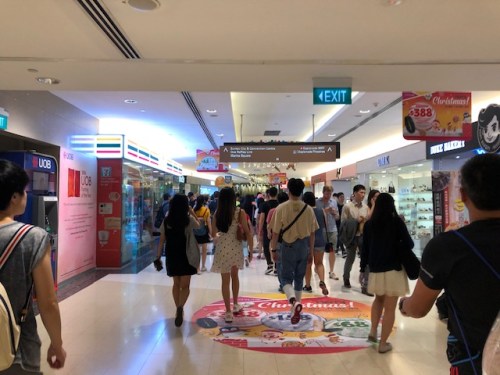 Underground transit mall between a City Hall Station (red line) and Esplanade Station (orange line)
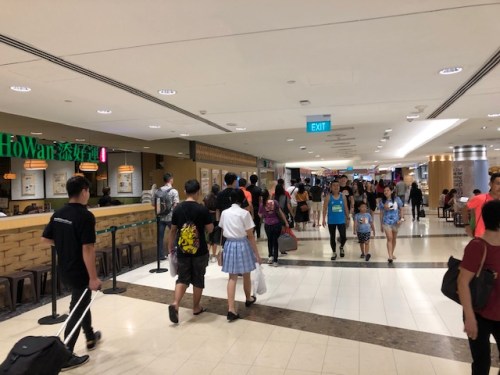 The connection is lined with restaurants, cafes and shops
Singapore’s underground connections reminded me of similar structures in Tokyo and Yokohama. You can just walk underground and come up near your destination. This is especially advantageous and comfortable during the summers when the hot weather becomes a detriment to walking outdoors. Underground transit malls or connections are usually air-conditioned or air is pumped into them for ventilation. As such, temperatures are significantly lower compared to the surface/ground. Will we have similar facilities/developments here in the Philippines and particularly in Metro Manila once the MM Subway is developed?
–
Some advantages of transit access – the case of a stadium and an arena
One of the advantages of having mass transit access to a major venue is that mass transit can carry more people than any other modes of transport to and from the venue. In the recent U2 concert held at the National Stadium in Singapore, we experienced first hand how a mass transit system is able to serve the surge in the demand to and from the Stadium Station of the SMRT’s Orange Line.
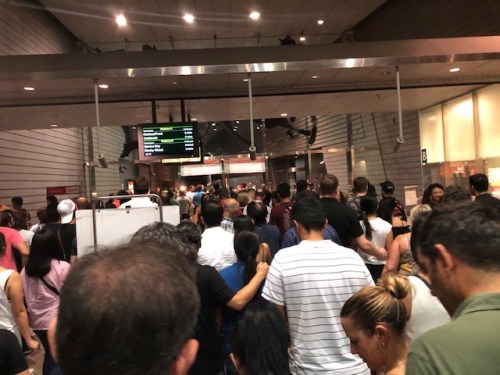 People filing towards the station – most people calmly I say most because there were some who apparently were not so familiar with the ways in Singapore and tried to muscle their way into the crowd. Maybe its like that in their own countries?
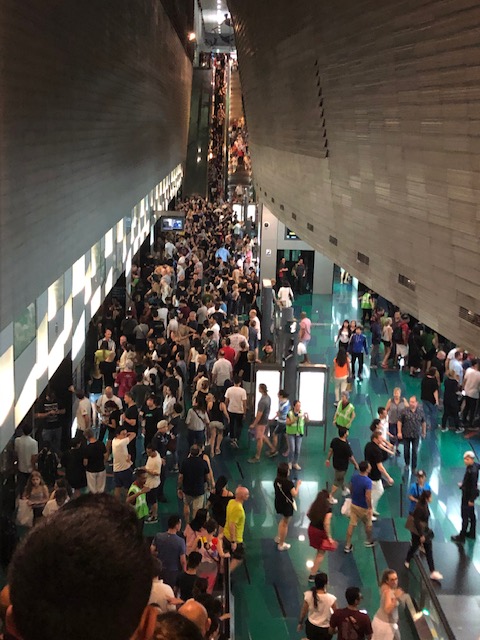 It was just like rush hour conditions at the station. Only, people weren’t going to work but home from the concert
Previous to this, I had similar experiences when I was residing in Japan. One time it was a surge in demand due to the popular fireworks display at Yamashita Park in Yokohama covered by three of JR Stations and the end station of the old Tokyu Toyoko Line. There was no Minato Mirai Line at the time that terminated at the park so people had only the JR Sakuragicho, JR Kannai and JR Ishikawacho Stations and the Tokyu Sakuragicho Station.
This is the weakness of the Philippine Arena, which can only be accessed via the NLEX and by road transport. The result for the larger capacity stadium’s hosting of a U2 concert resulted in horrendous traffic jams and hellish travel times for attendees. Friends stated that whatever high that they got from the concert was steadily depleted by their commutes to their homes. This will not improve even with Manila-Clark railway line because the line will be along the other side of the tollway. It won’t make sense for a branch to be constructed for the arena given the intermittent demand for the events it typically hosts in a year. But there can be a road transport connection to the nearest rail stations to at least alleviate the car traffic generated by the venue.
–
NAIA Terminal 4 parking
I have written a lot about NAIA’s Terminals 1, 2 and 3 but have featured Terminal 4 only perhaps once or twice. That’s probably because I have not used Terminal 4 as much as the others. All of my domestic flights have been via either Terminal 2 or 3 while my travels overseas are via Terminals 1, 2 and 3. And so I have had a lot of opportunities to also take photos about those terminals. The opportunity to take a few photos about Terminal 4, particularly the open parking area, presented itself last November when I fetched my wife and daughter who were arriving from a local trip one Sunday. My wife thought she had booked a Cebu Pacific flight but that turned out to be what CebGo, which used to be the Tiger Airways Philippines affiliate that Ceb Pac had acquired years ago. These operated from T4. Here are photos of the open parking area across from T4.
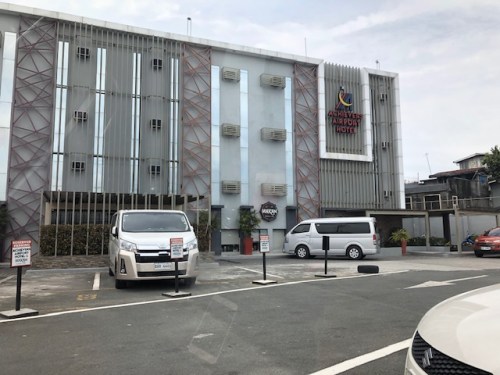 Achievers Airport Hotel, which is the nearest hotel to T4
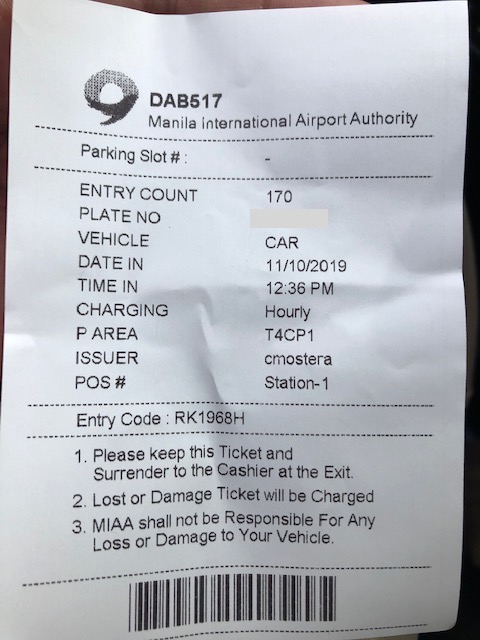 Parking ticket at T4 parking area – the rates are the same for all NAIA Terminal parking areas
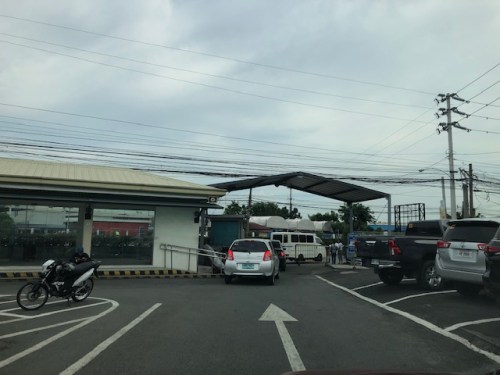 Exit from the parking area – T4 is just across from it
 Unfinished or just unoccupied area for drivers or shops?
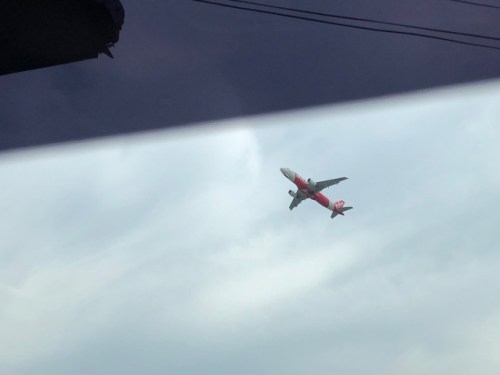 View of aircraft flying overhead
The parking lot doesn’t have a lot of spaces but it was relatively easy to get a slot. I actually waited a few minutes to get a slot and immediately after I parked, a few more vehicles left. So the turnover for the parking area is high enough at least for the Sunday noontime I was there. Perhaps its proportional to the number of people using T4?
–
Commuting in Singapore
Another thing we miss about Singapore is the public transportation. It was easy to go around Singapore especially with its comprehensive, extensive rail transport network. This is complemented by even more extensive bus transit services. All these are offer convenient, comfortable and reliable public transportation. As such, there is practically no need to use your own private vehicle for transportation unless there really is a need arising for their use (e.g., emergencies).
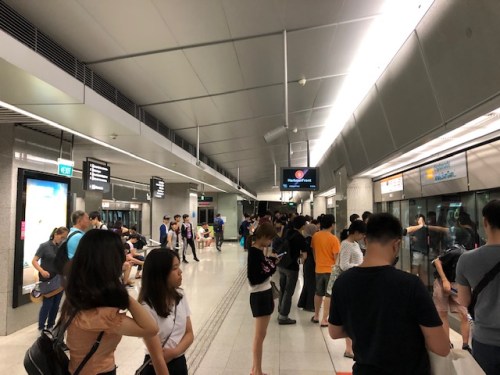 Passengers wait for the train to arrive at an SMRT platform
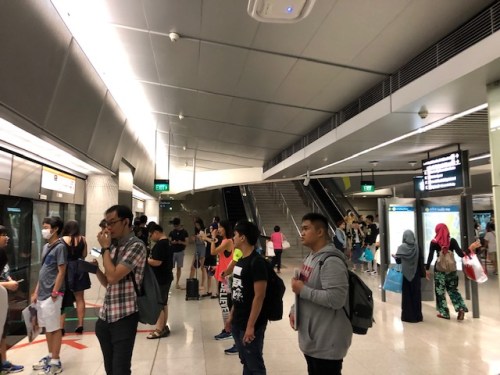 Passengers line up before the platform gates at an underground station
The transport system in Singapore actually reminded me of how efficient and reliable it was to commute in Japan where I’ve lived in three area – Tokyo, Yokohama and Saitama – for various lengths of time. These transport systems are what Metro Manila and other rapidly urbanizing cities in the Philippines need in order to sustain growth while providing for the transport needs of its citizens.
–
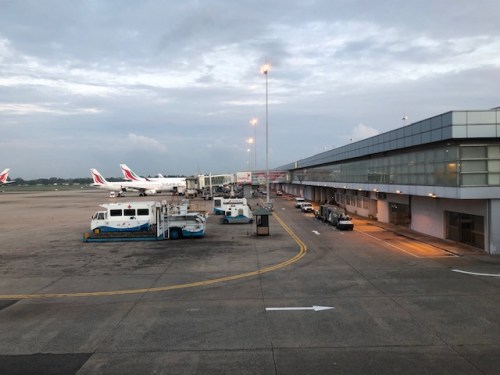
Sri Lanka Airport departure – Part 2
Before I post more on a recent trip to Singapore, I backtrack a bit to the trip to Sri Lanka. Following is a much delayed second part to my feature on Bandaranaike International Airport.
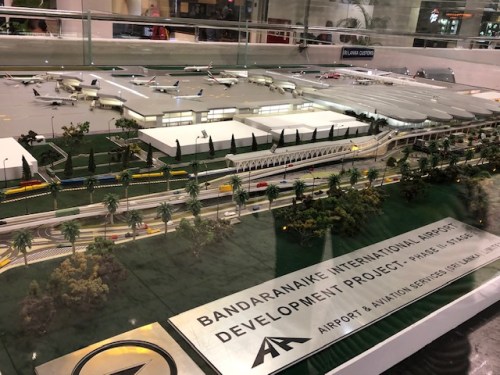 Scale model of the airport development project with this angle showing the terminal and land transport interface
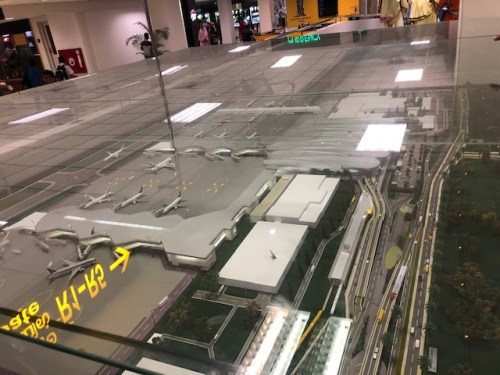 Terminal building with short pier for the gates
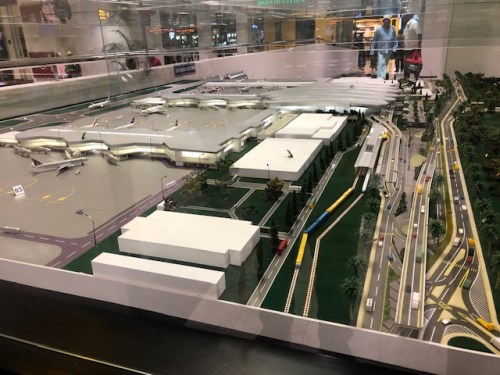 Closer and clearer look at the interfaces with rail and road transport
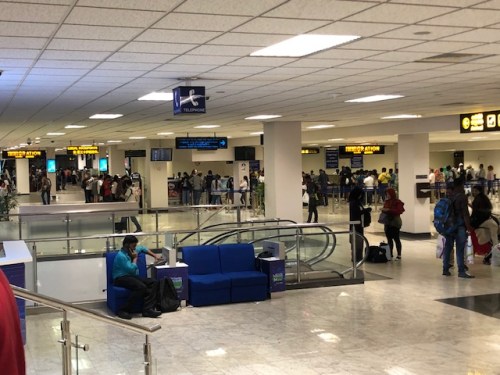 From the display we proceeded towards our gate.
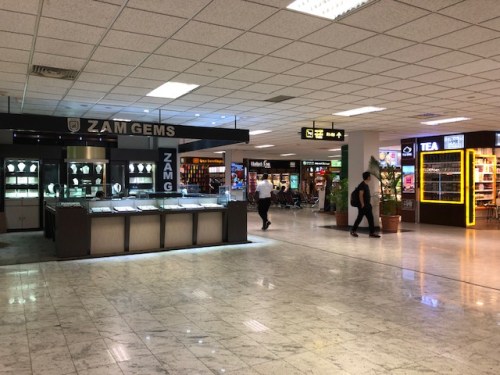 More shops mostly selling gems, jewelry or tea
 Looking out a window to see Sri Lankan Airlines planes lined up at the terminal
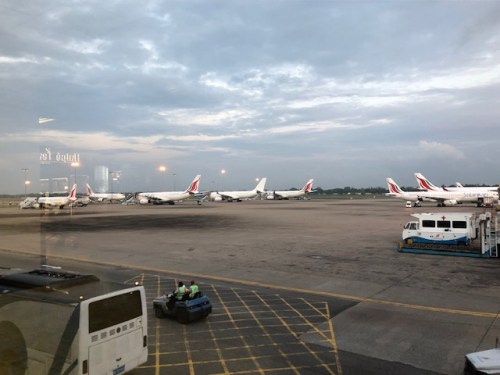 Other aircraft at the terminal are accessed via transporter(i.e., bus).
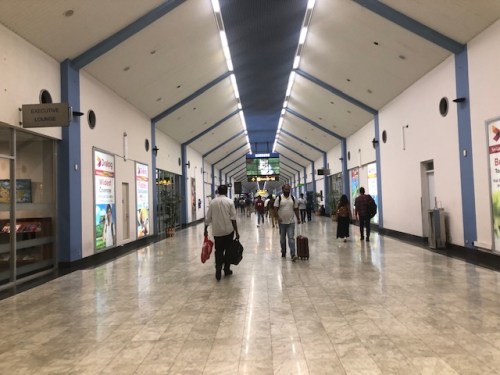 Long corridor to our gate
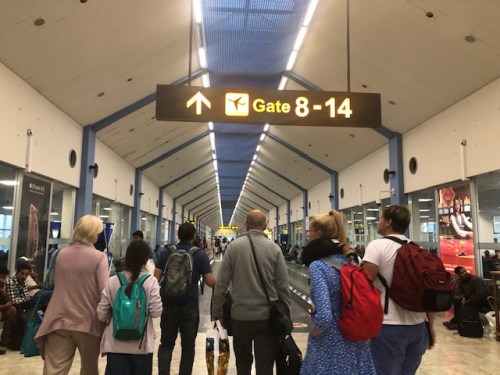 Passengers head to the gates via a moving walkway. Otherwise, it would be a long walk.
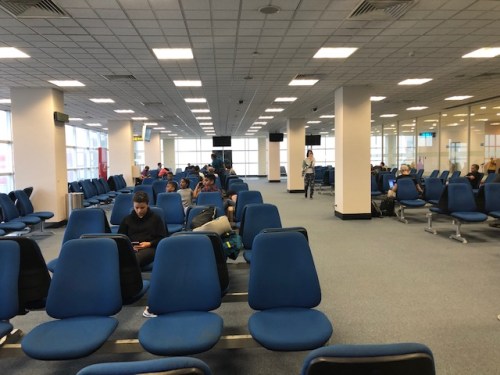 Pre-departure lounge
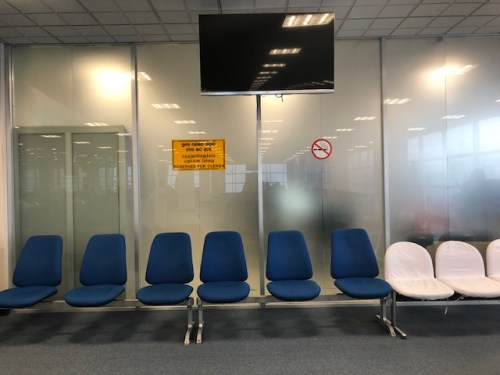 Behind these seats is the smoking room
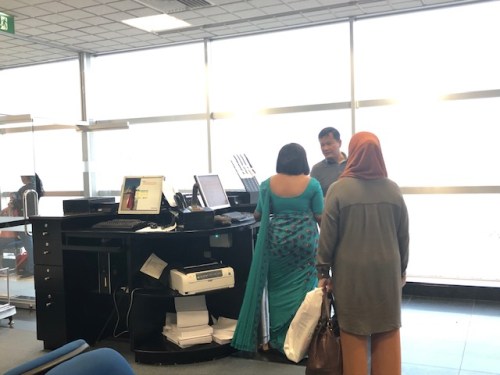 Passengers enter the pre-departure lounge through one last security check and the boarding pass and passport check by Sri Lankan Airlines ground staff.
–
Walking in Singapore
The recent trip to Singapore was like a sentimental journey for us. We had lived in the Lion City for almost 2 years and consider this a second home (actually a close third for me because I consider Yokohama as a second home having lived there for 3 years). Among the things we truly missed about Singapore aside from friends (many of whom have already moved to other countries) and food were the public transport and the walking. Singapore is a walkable city and the excellent public transport along with the land use planning has allowed healthier commutes for people.
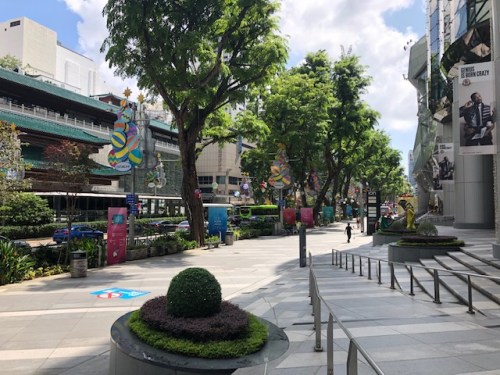 The environment along Orchard Road is inviting and conducive for walks.
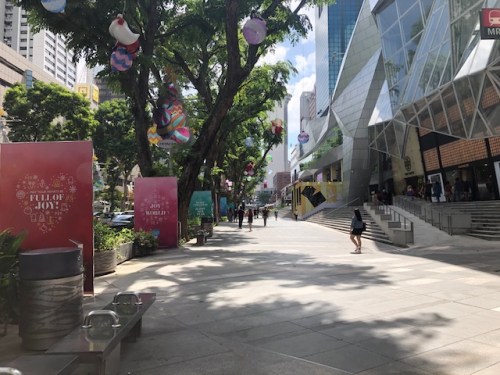 Wide sidewalks can accommodate more people and don’t make it feel so crowded even during the peak hours.
It was easy to log more than 10,000 steps per day in Singapore. In fact, I was happy to have walked an average of 11,000+ steps per day for the 3 days were there. One could only hope we can have similar infrastructure in the Philippines.
More on walking and public transport in Singapore soon.
–
Highway 2000, Taytay, Rizal
Prior to taking the photos I posted on Barkadahan Bridge, I was able to take a few photos of Highway 2000.
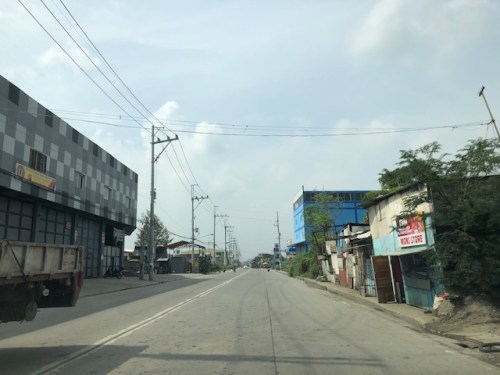 Section right after the Taytay Public Market – it is basically a 4-lane road but there are no lane markings for either direction. There is only the double line indicating which sides are for opposing flows of traffic.
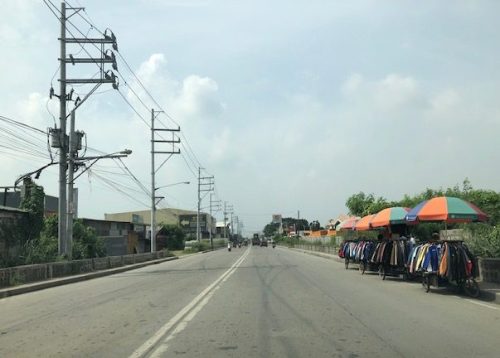 Informal shops along the highway
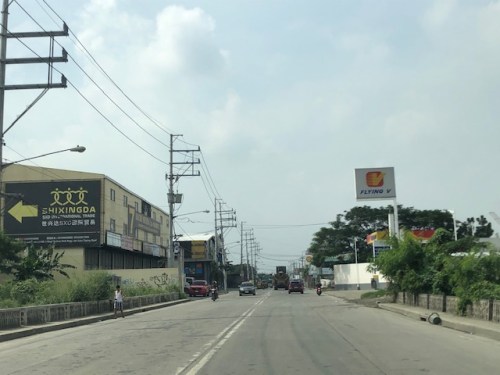 There are many garments and textile factories and depots/warehouses along Highway 2000 and from their names appear to be Chinese-Filipino or Chinese-owned businesses.
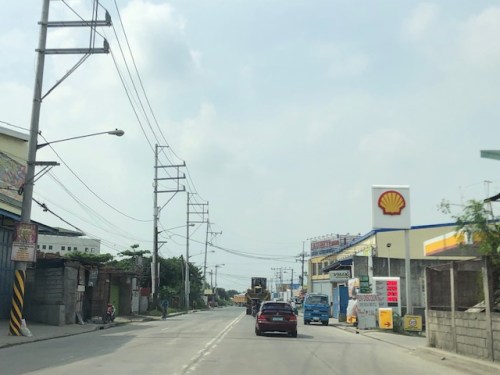 There are also several gas stations along the highway including this Shell station that used to have cheaper fuel prices than others like it in Taytay and Antipolo.
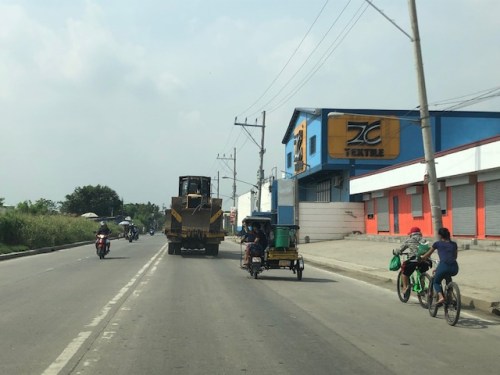 Bikers along the highway – new pavement markings should include those for bike lanes on either side of the highway. Ideally, bike lanes or bikeways should be protected and consistent with the design along C-6.
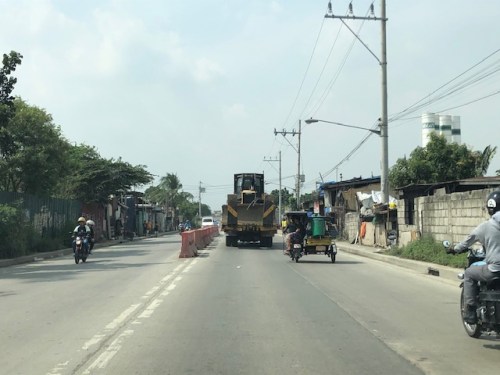 There seems to still be a lot of informal settlers along this road as evidenced by shanties on either side of the highway.
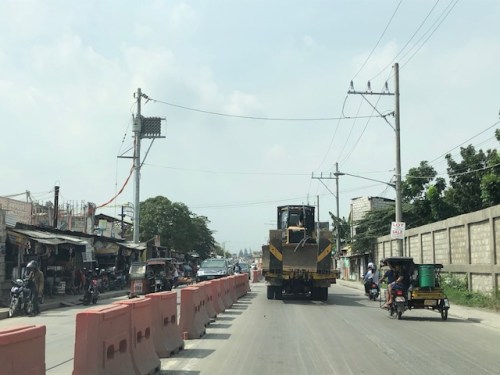 There are many trucks using Highway 2000. Among them are those carrying tractors or heavy equipment like the one shown here hauling a bulldozer.
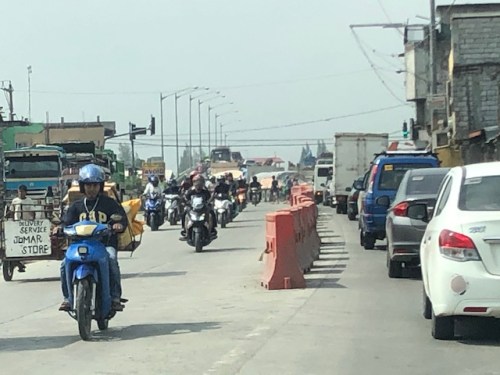 Orange barriers delineate opposing traffic at the Highway 2000 approach to Barkadahan Bridge. The intersection before the bridge is with the East Bank Road of the Manggahan Floodway.
I posted the following photo earlier. This show the RROW acquired along the eastbound side of Highway 2000.
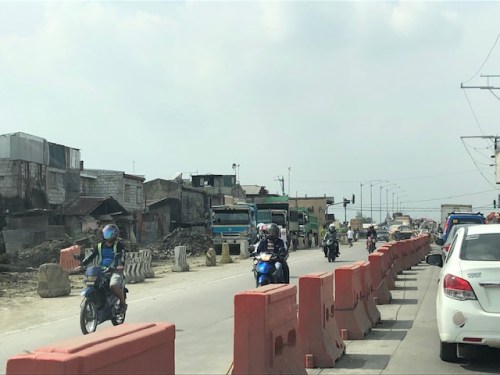
Highway 2000 already figures as a major link between Rizal and Metro Manila. It is part of an alternate route between Rizal and major CBDs like BGC and Makati via Circumferential Road 6. It is also a route to the south via Bicutan and eventually SLEX. Thus, it is imperative that this corridor and the Barkadahan Bridge be improved in order to carry the potential traffic (both non-motorized and motorized) that it is supposed to. Highway 2000 in particular should already feature protected bike lanes consistent with the design along C-6 in order for it to be transformed into part of a “bicycle highway” that can be the backbone for cycling as a mode for commuting.
–
 Caught (up) in traffic