
Some thoughts on the ridesharing vs taxi issues in Metro Manila
A lot have been said and written about the issues concerning ridesharing and taxis in Metro Manila. There are the personal posts you read and are being shared around social media. There are the obviously sponsored posts and articles going around. These are usually by trolls but may also include some personalities who are more than willing to lend their names to a cause they think is worth taking on. Unfortunately, the supposed victim here is also an oppressor if one tries to delve into their operations and practices. The real victims here, aside from the commuters who patronize ridesharing, are drivers and operators.
I stated Metro Manila because there seems to be no serious issues on ridesharing or taxis in other Philippine cities. Why is that? Is it because taxis provide better services in other cities like say, Cebu, Davao or Iloilo? Is it because public transport in other cities are better compared to Metro Manila? Or is it because ridesharing companies cannot compete with local, taxi-like transport like tricycles? Let me put it like this: Metro Manila public transport has deteriorated in the past decades. This deterioration comes in many forms including the very slow development of mass transit systems and the continued dominance of road-based modes.
Private vehicle mode shares have increased significantly over the last four decades. In the 1970s, the estimated split between public and private transport was about 75/25. In the 1980s, it was close to 70/30 but with public transport enjoying just about 70% shares. In the 1990s, the 70% had already been breached with public transport share estimated to be about 68%. The 2000s saw public transport shares to have been eroded further, with closer to 65% of trips using public transport. The last decade likely saw the further rise of private transport shares with the rapid increase in motorcycle ownership and use and the emergence of ridesharing such as Uber and Grab. This, despite the increase in population for the metropolis and also the increase in road public transport vehicles particularly UV Express.
These road-based modes are generally low capacity and require so many vehicles to transport so many people. And yet people choose them (e.g., purchase and ride a motorcycle, patronize Uber or Grab, etc.) because their options for their commutes are generally worse off. Motorcycles are not for everyone and not everyone can afford to or want to own a car. And yet, there seems to be a sizable population wanting (not necessarily needing) to be driven to and from their homes, workplaces, schools or other places of interest but not via conventional taxis; as evidenced from the popularity of ridesharing services.
Perhaps the only way to resolve the issue lies not only in the drastic improvement of conventional taxi services. Operators and drivers have had a lot of chances to do this but there seems to be little positive change here. Maybe, and ultimately, the solution is in the expedited development of mass transit systems like rail transit lines and bus rapid transit (BRT). And so the initiatives of the current administration along such infrastructure projects are most welcome and may stave off the decline of public transport mode shares (revival?). Better public transport should help make commutes more bearable. Commutes should be safer, faster and relatively inexpensive compared to owning and operating a car. And may I add that using conventional public transport should be more attractive than ridesharing.
–
Airport terminal transfer in Sydney
My flight to Melbourne was via Sydney. I chose Qantas because of the more favorable schedule as well as the cheaper fares the schedule provided compared with Philippine Airlines and Singapore Airlines (via Singapore). And so knowing I would have to transfer at Sydney airport, I decided to have more than an hour’s layover there. It turned out to be a good decision as we had to pick-up our luggage, clear customs and then walk over to the transfer area at the international terminal to have our check-in luggage tagged and dropped off before proceeding to ride a transporter (bus) to the domestic terminal. It was also a good thing that Qantas already thought about such transfers and had good facilities and service for such. Needless to say, the transfer was smooth/efficient.
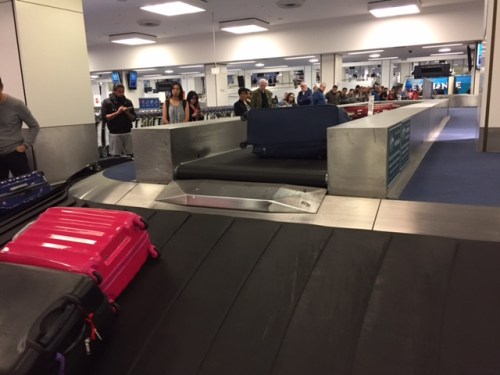 We had to get our baggage after clearing immigration
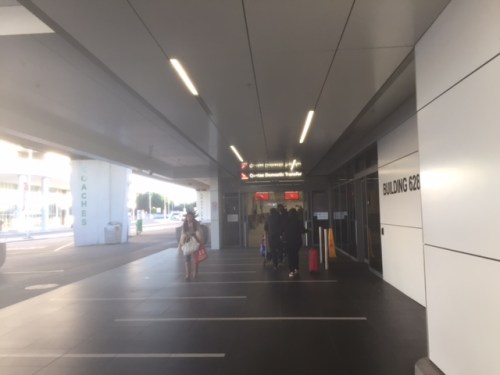 We had to walk towards the Qantas transfer facility to have our baggage tagged and dropped off for our connecting flights. In my case, that was for my journey to Melbourne.
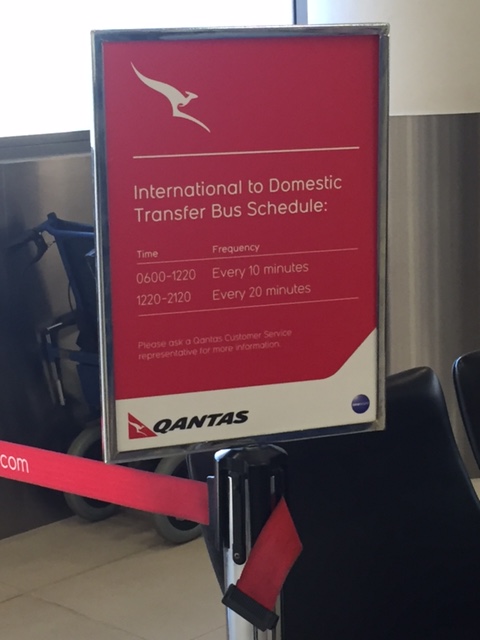 After dropping off our luggage, we waited to board the bus that would take us to the domestic terminal. The service frequencies are shown in the sign above.
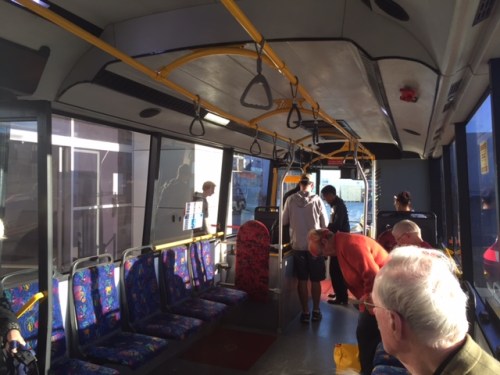 I was near the front of the line is I was able to board early and take a photo as people were just filling the bus.
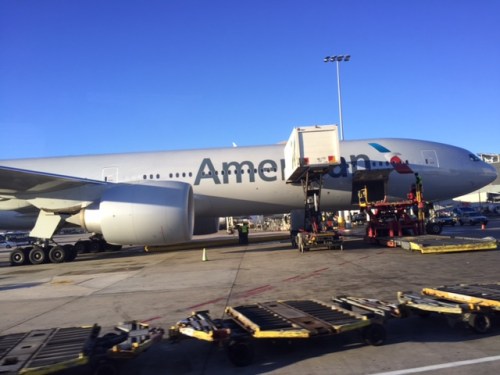 Scenes of aircraft ground operations while we were in transit from the international terminal to the domestic terminal includes this American Airlines jet replenishing on inflight meals.
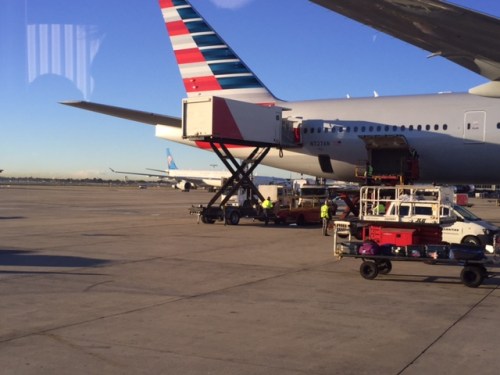 Here’s another view of the same jet getting serviced at the airport.
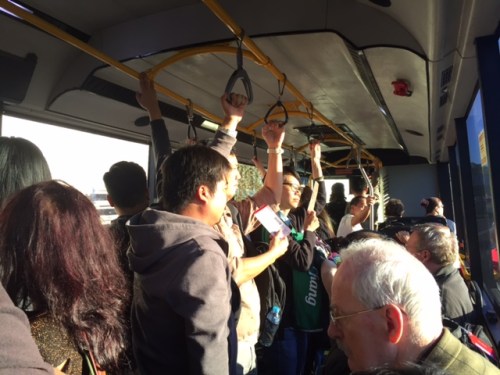 This is how the bus looks once it fills with people
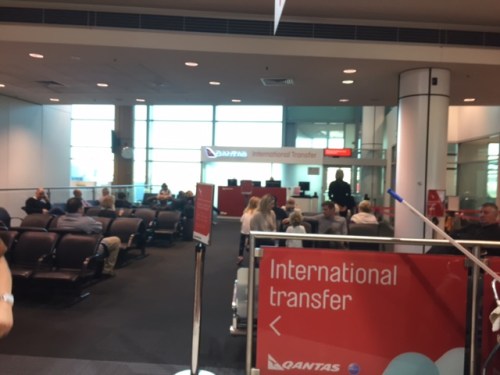 This is the scene when we arrived at the domestic terminal. Passengers at the terminal were also waiting to board the bus bound for the international terminal.
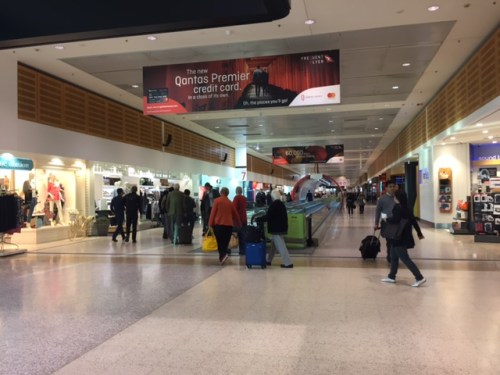 En route to my boarding gate, I took a few photos of the corridor lined with various shops.
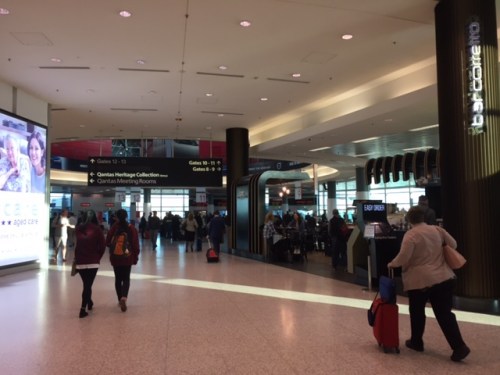 There were also cafes and restaurants for those wanting to have or grab a quick meal or drink.
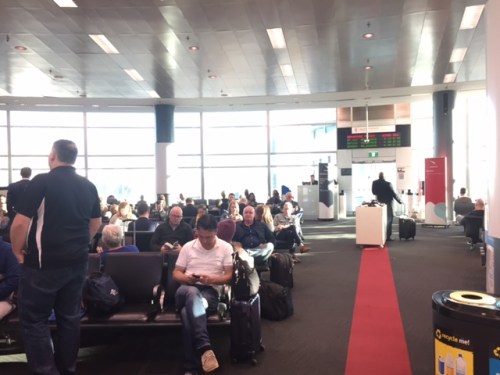 I arrived at the boarding gate with much time ahead of my flight. There were, however, many passengers already waiting, too.
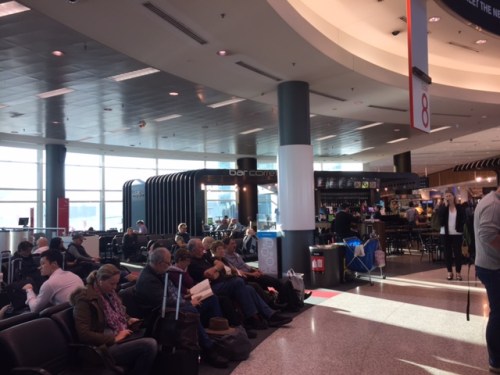 It seems crowded but there were enough seats for those wanting to relax while waiting for the boarding call. Others seem to prefer just standing (healthier?) there. It was still early in the morning so most people were just quiet or conversing softly with fellow travelers. I myself was a bit sleepy and looking forward to taking a nap on the 1.5-hour flight to Melbourne.
–
Topics for transportation research
I notice that I have been getting a lot of traffic on my site lately from people searching about research topics. I guess its that time of year when students (undergraduate, graduate, post-graduate) are looking for topics. I have written before that it seems to me that many schools don’t really provide much guidance to students in their topic selection for their undergraduate research, masters thesis and even doctoral dissertations. I have received and seen emails from students from other schools asking if I or one of my colleagues at the university can be their research advisers. We usually politely decline so as we also have our own students to advise and researches to undertake. While I believe we should encourage research on transportation topics, I would dare say that schools should be responsible enough to build capacity for their faculty to be able to effectively guide their students and not unfairly pass them on to others.
Here are some topics that I think are quite relevant at present:
- Anything that’s about ride sharing (i.e., Uber, Grab, etc.) and particularly on passengers’ and drivers’ characteristics.
- Carpooling as applied in offices, schools, communities. There’s an app that promotes this – Wunder.
- Motorcycle taxis – this includes habal-habal, Skylab and other variations both in the urban and rural setting. What are their characteristics? Passengers? Drivers?
- Complete streets – how can we apply its principles to our cities, towns, communities, even specific roads?
- Road safety – this genre covers a lot of topics including pedestrian safety, motorcycle safety, public transport safety, child safety, driver behavior, safe road designs, etc.
- Transportation costs/expenditures – characteristics of commuting and commuters in relation to the modes they take as well as the distances between their homes and workplaces or schools.
I believe there are a lot of topics that can be developed from the above. But perhaps schools can first formulate research agendas first and not attempt to snipe at every and all topics that come to mind.
Good luck on topic selection and here’s hoping your outcomes are useful to improve transport and traffic in the Philippines.
–
Melbourne’s transit system
One thing I always look forward to whenever I am traveling is to try out the public transport system of the cities I am visiting. My first day in Melbourne gave me an opportunity to familiarize with the city’s transportation including the trams and bikeways. Following are some photos I took as I went around the city center on-board their trams. I actually purchased a myki card but discovered a bit later that tram rides were free when you’re within the zone defining the city center. You only need to swipe or tap when you leave the zone where transit will charge the corresponding fares to your destination.
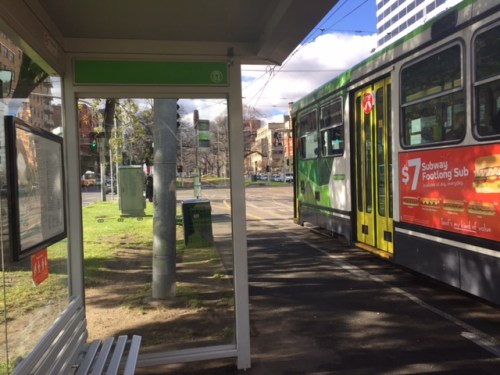 Tram passing by the stop where I decided to stand by to take a few photos while familiarizing with the network map.
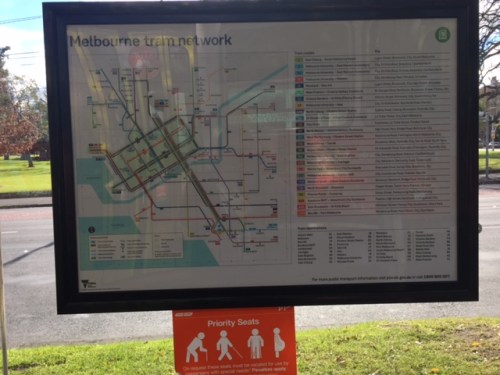 Melbourne transit network map and information on priority seats
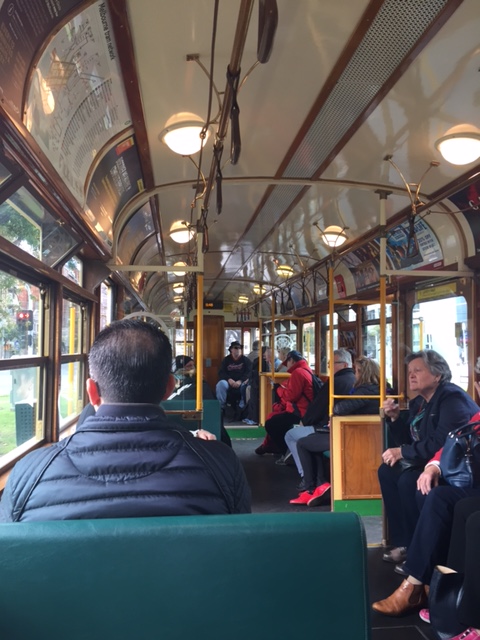 Inside the circle tram that goes around the city center
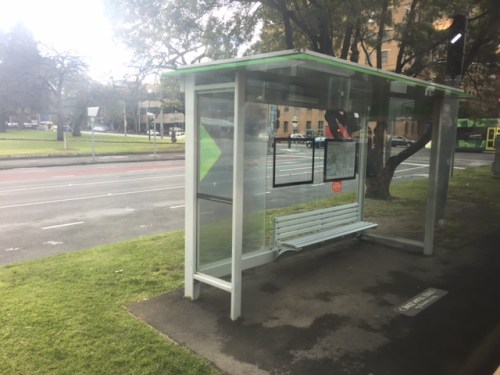 Typical transit stop
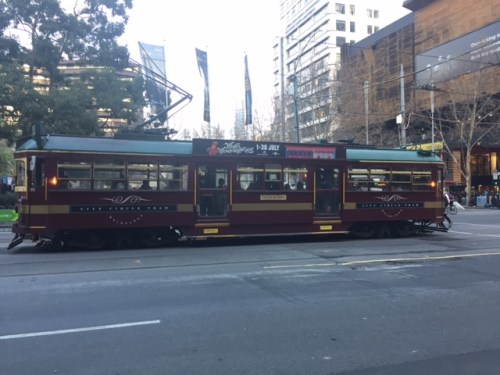 Vintage tram
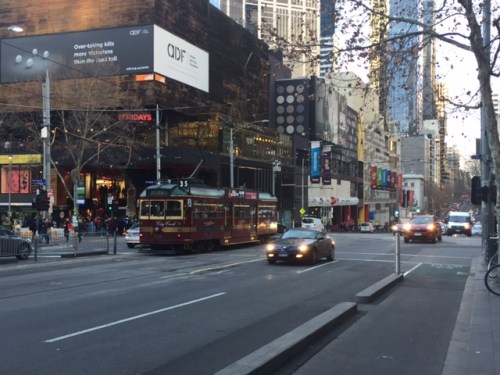 Tram crossing an intersection
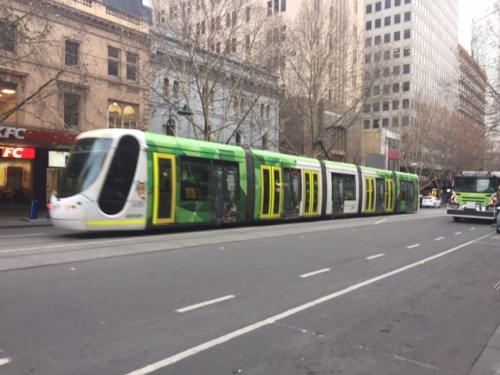 Modern transit vehicle
I found Melbourne’s transit to be quite efficient and the coverage was comprehensive enough considering the city was walkable and bicycle-friendly. This meant people had many options to move about and this mobility definitely contributes to productivity. More on transportation in Melbourne and Sydney in future posts.
–
Why do we need to reduce speeds?
A common observation made of Philippine drivers is that they seem to hesitate from slowing down even at hazardous locations or situations. Note, for example, vehicles approaching an intersection and you will observe that many if not most will not reduce their speeds. Most guilty for me are motorcycle riders who tend to maneuver and even speed up instead of slowing down for a safer approach. Slowing down (i.e., reducing one’s vehicle’s speed) is actually a no-brainer and something that is explicit in any country’s traffic rules and regulations and driver’s handbook.
I saw a lecture on why reducing speeds are important. This is not just from the specific perspective of safety but is explained in favor of mobility and quality of life. Here’s the lecture:
Reducing speeds for better mobility and quality of life by CarlosFelipe Pardo
–
Melbourne airport arrival
I traveled to Australia recently to attend a symposium on Sustainable Development in Melbourne. As such, I was able to observe and experience transport in a couple of major cities – Melbourne and Sydney. I arrived in Melbourne via Sydney at Terminal 1, which is for the domestic flights of Qantas. Here are some photos upon my arrival at the airport:
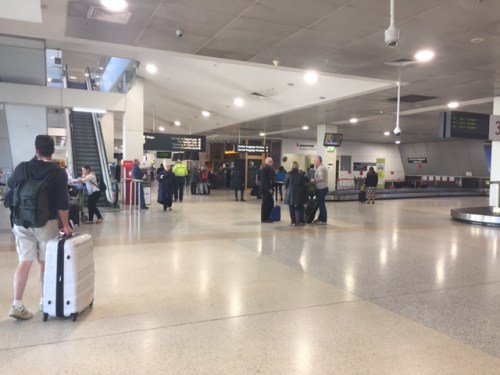 Upon deplaning, we proceeded through the shared departure areas with the shops and restaurants to go to the baggage claim area.
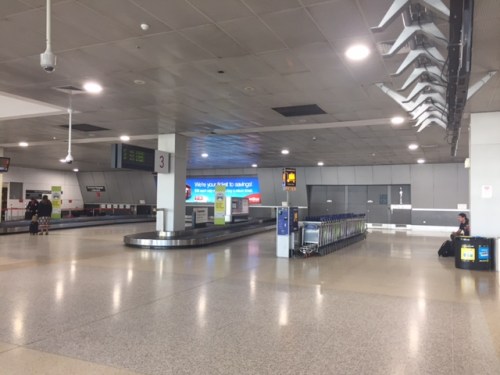 Baggage claim area
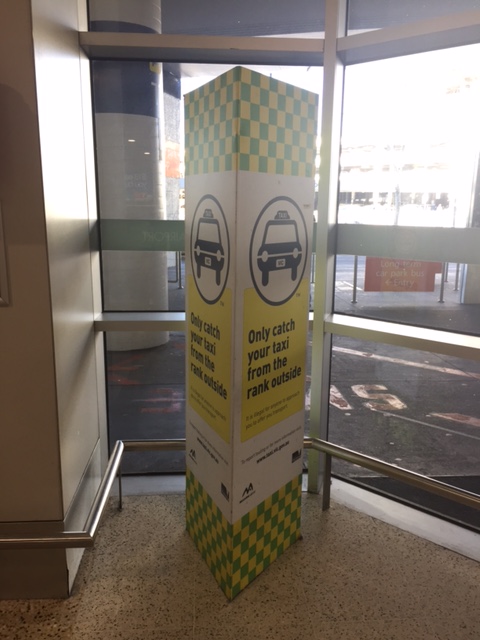 Guidance for those taking a taxi from the airport
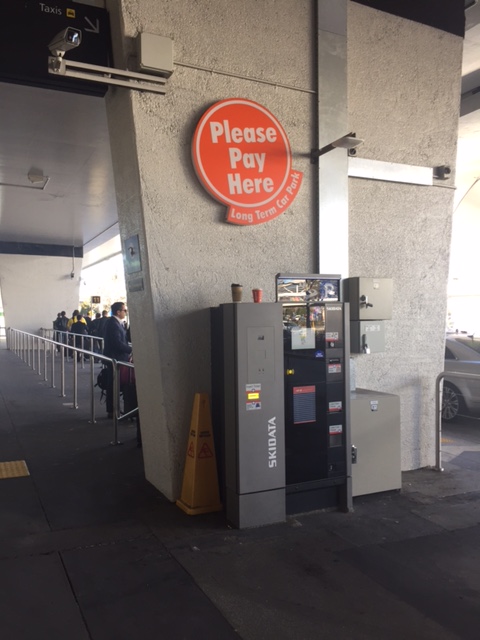 Machine for paying airport parking fees
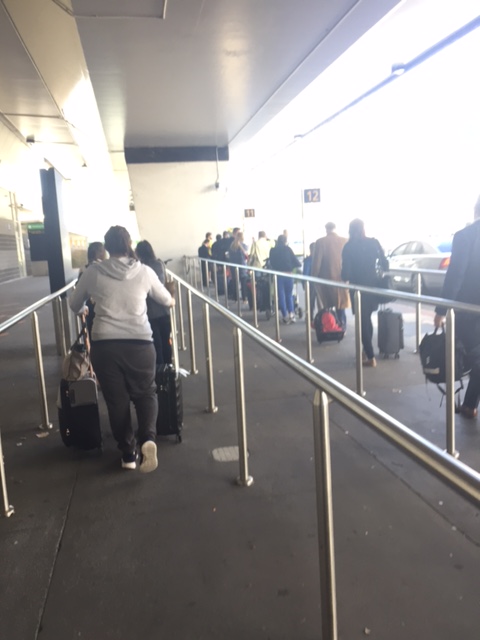 Taxi queue at the airport – the queue appeared to be long but there were many taxis so it didn’t take long to get one to the hotel. The airport had staff to direct passengers and taxis to the designated berths.
I will be writing more about transport in Australia in future posts. It is always a good thing to experience transport in cities abroad. And of particular interest for me when I was in Melbourne and Sydney was their cycling facilities so I will also feature those in future articles.
–
Some thoughts on the proposed Metro Manila subway
The detailed design for the proposed Metro Manila subway is supposedly underway. Here’s a graphic of what the system may look like underground. I got this from the American Chamber of Commerce newsletter.
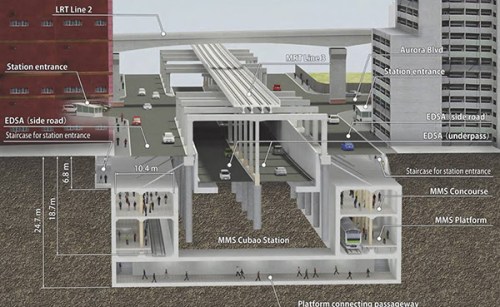
What is not shown, and which I think should also be emphasized, are the drainage tunnels that need to be constructed in relation to the underground transport system. Tokyo’s subterranean drainage, for example, are so extensive and spacious that it could handle the precipitation/runoff during rainy days so its subways are flood-free. Metro Manila stands to benefit much if similar drainage systems are built together with the subway. I think a lot of people can appreciate this feature of the subway nowadays when we all feel the impacts of the intense monsoon rains (Habagat) not to mention the typical typhoons that come our way. The subway’s construction may be seen not only from the transport perspective but also as an opportunity to improve the metropolis’ drainage system.
–
Some issues at Barkadahan Bridge
Perhaps one of the worst places to be in terms of traffic during the morning peak is Highway 2000, and particularly the approach to the Barkadahan Bridge that crosses the Manggahan Floodway. Traffic management at the intersection of the East Bank Road and Highway 2000 is so atrocious that everyone passing the junction would likely incur delays of more than 30 minutes.
The congestion in the area is also attributable to the fact that you have major roads carrying traffic from all over the eastern town of Rizal that are bound for Makati and Taguig (Bonifacio Global City), mostly for offices in those CBDs. These commuters likely use the completed C-6 sections including those at Lupang Arena and the expansion along the Laguna de Bay coast.
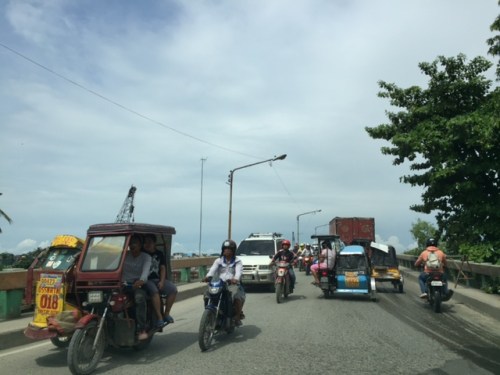 Barkadahan Bridge is a 2-lane structure with significant local traffic such as the tricycles in the photos
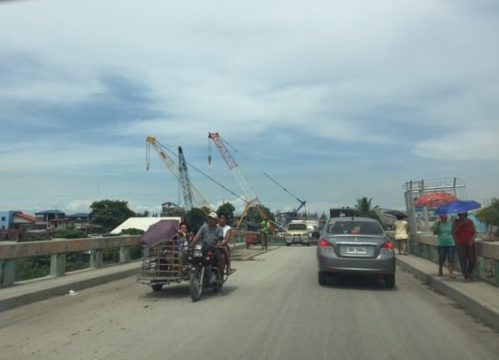 On either side are narrow walkways and it no uncommon for people to walk on the carriageway itself .
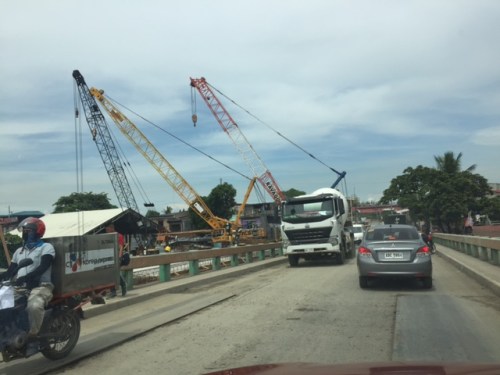 The bridge’s expansion is underway but, from my observation, is taking too much time. Perhaps the contractor is having problems with the foundations for the posts? Or maybe the funds aren’t flowing as required for the effective implementation of the project?
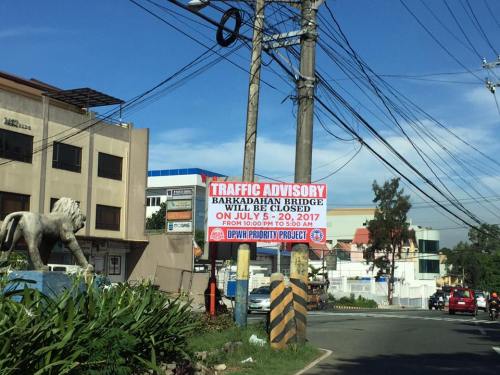 This is an ‘old’ sign now as July 20 is already more than a week ago.
A lot of people look forward to the completion of the bridge but the bigger issue is still the traffic management at the intersection that is also influenced by factors such as the tricycle terminal near the junction and the undisciplined local traffic. The situation is exacerbated by those who counter flow along Highway 2000 and generally get away with it. Perhaps the Municipality of Taytay should get some help in improving their capabilities for traffic management?
–
On the East Metro Transport Terminal in Marikina
This site has been visited a lot the past few days by people searching for information on the eastern transport terminal that’s being developed in Marikina City just across from SM City Marikina. I wonder if its for a study (i.e., students doing research) or perhaps some folks curious about the signs they’ve seen while crossing the Marcos Highway bridge across the Marikina River.
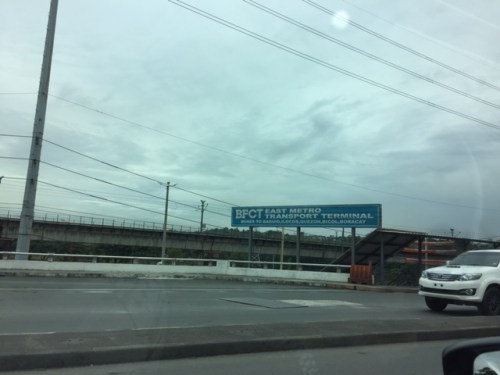 Signs informing people about the existence of a transport terminal beneath the bridge
The sign also states BFCT, the first part of which are the initials of the former MMDA Chair/Marikina Mayor. CT probably means ‘city transport’, ‘city terminal’ or ‘central terminal’? I haven’t been to SM Marikina lately so I haven’t had the opportunity to see how complete the facility is and if it is already operational. However, one can see from the bridge, as you travel along the outermost eastbound lane, that work is ongoing and there are vehicles (mostly vans, jeepneys and small trucks) that are parked there.
Is this a good location for a public transport terminal? I believe so; considering that there is a railway station nearby and the area is a convergence point for a lot of people (not only those residing in Marikina and Pasig). Do I think this should be a provincial bus terminal of the same level as the ones proposed for the north and south of Metro Manila? Yes, but only for trips bound for the east (e.g., Rizal and Infanta, Quezon) and south (e.g., Quezon, Laguna, Bicol) via the eastern route (Marcos Highway, Antipolo-Teresa Road or Manila East Road). I don’t think it is appropriate for trips heading to Boracay, Baguio or Ilocos. Buses headed for the latter destinations should terminate at the proposed north and south terminals. Buses to/from those places that would be terminating in Marikina would mean they would have to travel along C-5 in order to get to this eastern terminal. If these are in significant numbers then the traffic generated by such a terminal will contribute to congestion along C-5 and Marcos Highway. Of course, such proposed terminals should be subject to rigorous studies as these facilities can be major traffic generators and some mitigating measures must be in place to address potential issues.
–
MRT 7 on the way
The construction of the much-delayed Line 7 is underway. Hopefully, this project will be completed and be operational (or at least partly) before the end of the current administration. This would be one of the game-changers in terms of commuting along a corridor that has steadily increased in population and therefore travel demand. The ultimate end of the line in San Jose del Monte, Bulacan also means it will be serving relocation communities, many of whom are employed in Metro Manila and have to travel every weekday using buses, jeepneys and vans. Following are photos we took along the Commonwealth in the Fairview and Litex areas.
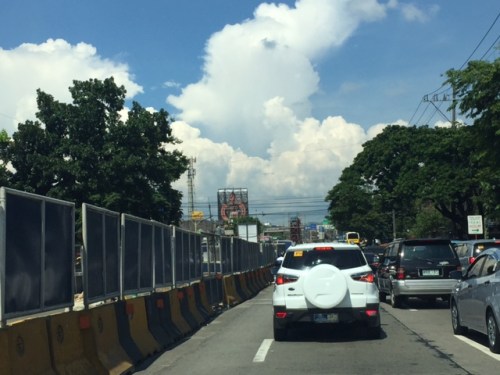 Construction is underway and this means traffic congestion as the number of lanes along either direction of Commonwealth Ave. has been reduced to provide space for the staging areas of the project.
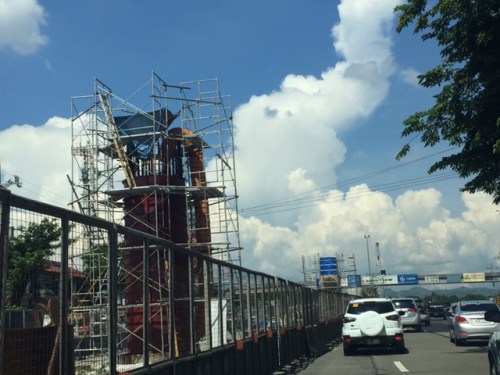 A column going up near the rotunda near Litex Market
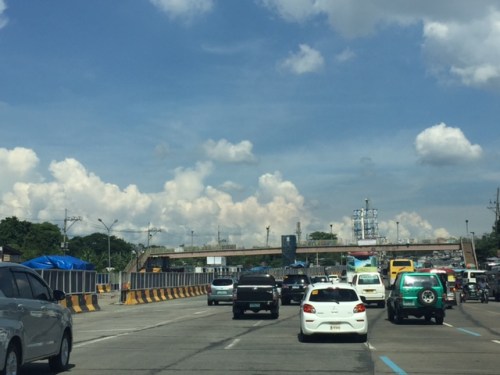 MRT Line 7 worksite along the Commonwealth Avenue median is secured by lines of barriers cum fences on either side of the median.
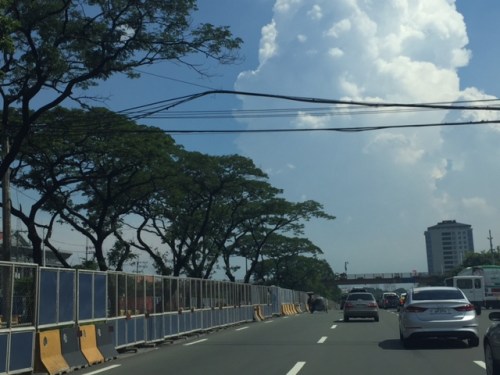 These full-grown trees in the middle of Commonwealth will be or already removed
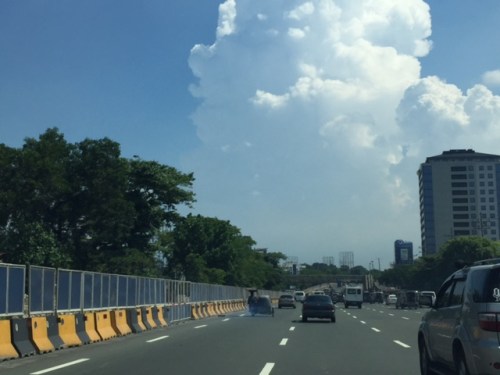 What has been a green row in the middle of Commonwealth Avenue will give way to an elevated railway line. I sure hope the proponents do some landscaping after the structure is built to restore the greenery.
More updates on the project soon…
–
 Caught (up) in traffic