
Some relief due to the number coding adjustments?
A friend asked me about my commute after the Metropolitan Manila Development Authority (MMDA) had implemented a tweak in the number coding scheme. To those not familiar with the recent adjustments to the Unified Vehicular Volume Reduction Program (UVVRP) or more popularly known as the number coding scheme, the MMDA has recently eliminated the window that was applied to many roads. The 10:00 AM to 3:00 PM window is no more and the MMDA also extended the coding period to 8:00 PM from the old 7:00 PM lifting.
My observation from my personal experience commuting in the mornings between Antipolo and Quezon City is that my travel times have somewhat improved. After Undas, I have enjoyed travel times of 45 minutes to 1 hour during the same morning periods when I choose to travel. This has improved significantly from the 1.5 hours I had spent prior to the adjustment. My usual route was mainly through Marcos Highway so perhaps its not just the coding aspect but also the fact that much of the construction work for the LRT Line 2 Extension have been completed and there have been less obstructions due to this project between Masinag and Santolan. My homebound trips seem to have improved too for the same reasons although not as significant as my morning commute. Another friend has similar observations and is very happy about the big improvements he says he now enjoys considering he has even longer commutes between Antipolo and Manila (Intramuros) or Makati (Gil Puyat).
But generally speaking, is it possible that there are significant positive impacts of the tweak in the number coding scheme? My assessment is that it is very possible and very likely especially if we see it from the perspective of vehicle trip reduction due to the adjustments made in the restraint policy. The number coding scheme is a travel demand management (TDM) measure designed to reduce vehicle traffic through vehicle use restraint. By introducing the coding window many years ago, the restrictions to vehicle travel were in effect relaxed and that encourage more people to use their cars.
The elimination of the coding window means people could not move their times of commute to later than 7:00 AM or earlier than 3:00 PM. It meant people whose vehicles were “coding” had to leave (forced?) early and go home late. Extending the coding period to 8:00 PM probably was probably a back-breaker to many people. And then the difference now compared to the 1990s and decade after that is the availability of the more reliable Uber and Grab vehicles that many car-owners had no option to use before. I’m not a psychologist but perhaps such factors have led to an improvement in traffic conditions. How long this would last shouldn’t be so difficult to tell given the experiences in the past and the fact that population and vehicle ownership continues to rise. Perhaps a year or two if no significant improvements in transport (e.g., mass transit projects) happen.
–
Starting November 14, the MMDA is also supposed to be clamping down (read: stricter implementation) on the motorcycle lane policy along EDSA, C5, Commonwealth and Macapagal Blvd. I’m not so sure how they will be doing this as enforcement along the stretches will require a lot of manpower.
–
Another look at Marcos Highway pedestrian overpasses – Part 2
I purposely didn’t include the overpasses at and near the Masinag Junction because I felt they deserved their own article. For one, the area will be the location of the future end station of the current LRT Line 2 Extension project. Here are a couple of photos of the overpasses in the area.
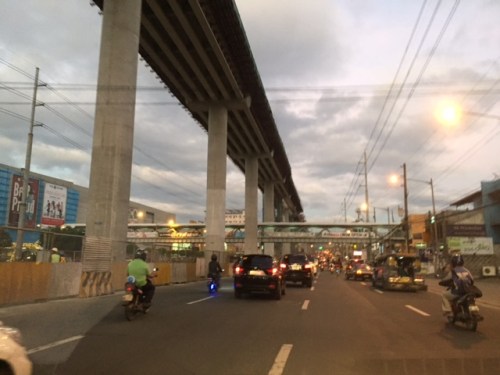 Overpass at SM City Masinag – note the tall columns for the elevated tracks of Line 2. Will the Masinag Station be located that high or will it be at a lower level, perhaps closer to the SM City overpass?
The overpass at SM City Masinag is something that has been replicated in many other locations where an SM mall has been constructed. Note the similarity of the situation with the likes of SM City Iloilo, SM City Novaliches where SM built pedestrian facilities to allow for safe crossings between the mall and the area across from it along the highway. In many cases, it is the mall which provided the overpass in coordination with the local government unit and, I assume, the DPWH.
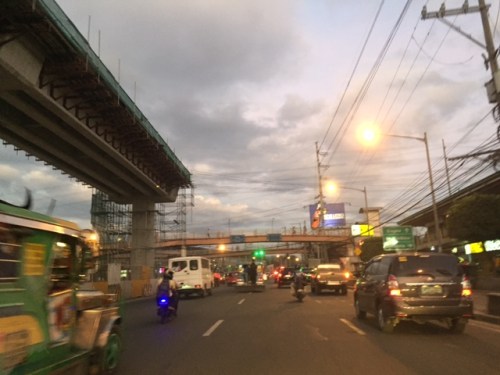 Overpasses at Masinag Junction – there are actually 4 bridges here, each spanning one leg of the junction.
One of the intents for these is to eliminate at-grade pedestrian crossings at the junction. While crossing have been reduced significantly, there are still many “pasaway” who cross even when there is a green light for vehicular traffic along the leg they are crossing. Traffic enforcers here are quite lax about this and don’t seem to put in an effort to inform people about the overpass. There is no excuse for those who might claim they are too old or weak to climb the steps since the overpass has 4 working elevators for those unable to make the stairs. I noticed though that most of those using the elevators are able bodied people who probably are just too lay to take the stairs.
–
Another look at Marcos Highway pedestrian overpasses – Part 1
My daily commute allows me to have a look at the progress of the LRT Line 2 Extension construction. I also became curious about the situation of the pedestrian facilities along Marcos Highway particularly the crossings since many at first seemed to be affected by the elevated rail structure that was to be built. Now, we already have a good idea of the fates of these pedestrian overpasses. This article shows the conditions/situation of pedestrian overpasses (also called footbridges) along Marcos Highway. Most overpasses are not covered; exposing pedestrians to the elements. Most are also made of steel, which can be traced to the MMDA’s (and later the DPWH’s) preference for these structures.
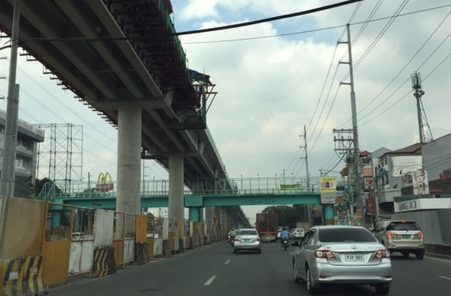 Overpass near Filinvest East-Vermont Park gates – the overpass actually is between a technical college and the commercial building across from it.
 The overpass across from Vermont Royale in front of a new Shell service station was actually among the newest facilities along Marcos Highway. Apparently though, it was built without considering the impending construction and design of the Line 2 extension. As such, the overpass needs to be modified or would have to be reconstructed elsewhere near the area.
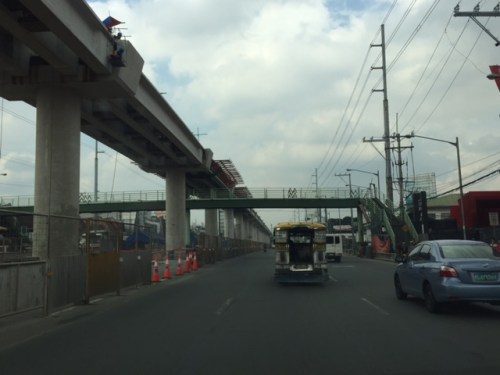 Overpass at Town & Country Executive Village that is also near the San Benildo School
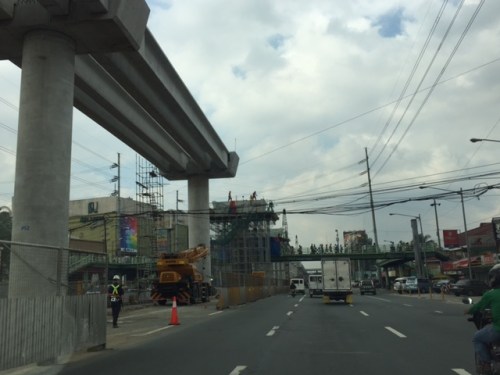 Overpass at Marcos Highway-Felix Avenue-Gil Fernando Avenue intersection – is probably the busiest among the pedestrian overpasses as it is at a busy junction where there are major commercial establishments (i.e., malls) and where many public transport routes converge.
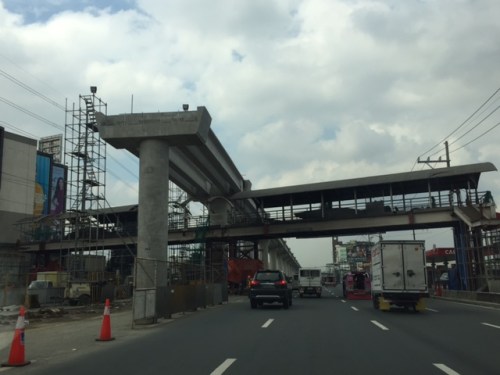 Robinsons Metro East overpass – this one also survived the clearance requirements with respect to the elevated superstructure for the Line 2 extension. However, since one of the two stations to be built will be nearby if not right across (part of the station at least) from the mall, then the station itself may function as an overpass.
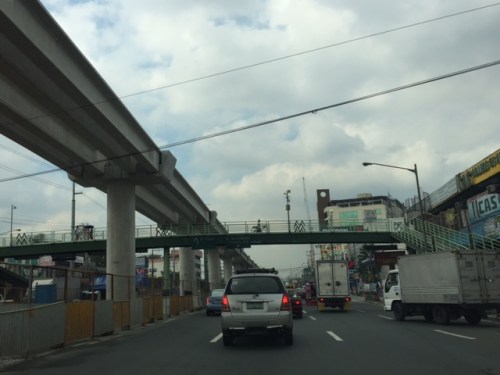 Overpass at De la Paz – note the ramp for bicycles and wheelchairs. This is one of the more bike- and PWD-friendly facilities along Marcos Highway. The slope is gentle enough for pedestrians, too, especially senior citizens who might have difficulty with steps.
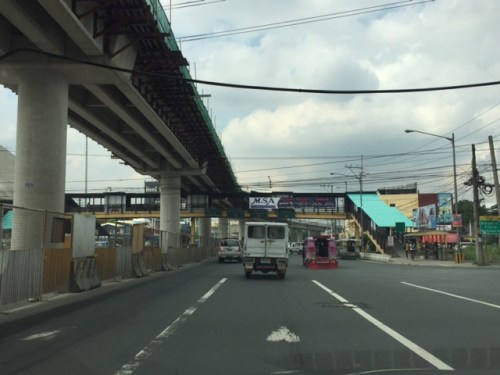 Overpass at Ligaya – this one also has ramps that make it easier for people to use to cross the busy highway. This will eventually be the closest overpass to the huge Ayala mall (Feliz) currently under construction at the Marikina side of Ligaya. I suspect that there might be a need for another overpass to be built with respect to the mall for one to directly serve the mall’s customers.
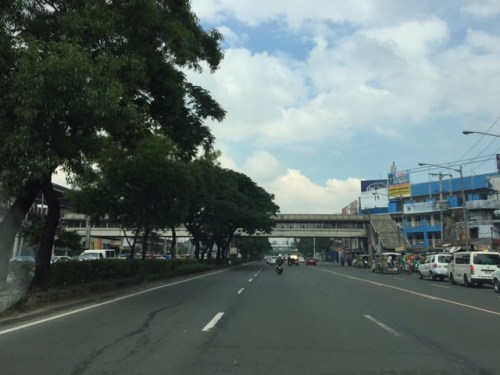 Line 2 Santolan Station overpass connects the Marcos Highway westbound public transport stop with the rail station along the eastbound side of the highway.
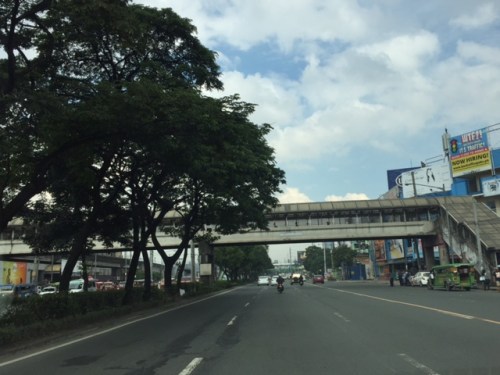 A closer look at the Santolan Station overpass, which is used by a lot of Line 2 passengers who cross the highway to continue on their journeys/commutes via train from their origins in Rizal, Marikina and Pasig. During the mornings, the observer will see a lot of jeepneys and UV Express vehicles emptying of passengers who cross the bridge to get to the station.
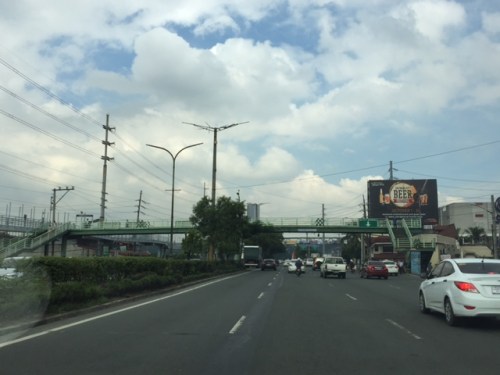 Santolan footbridge – this is actually more complicated than what is seems in the photo because the steel footbridge also connects to the SM City Marikina overpass (which is not included in this compilation but is visible in the photo). The footbridge branches to provide and almost direct connection between the mall and the Line 2 Santolan Station. That structure is shown at
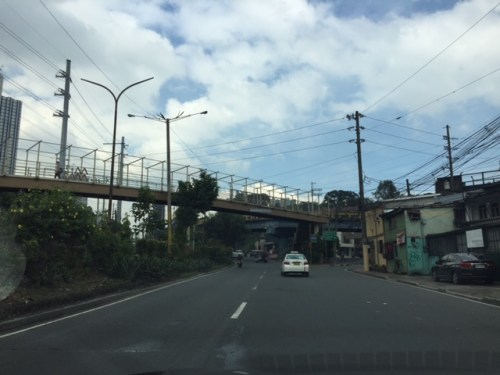 Monte Vista footbridge allows people to cross Marcos Highway (at its Marikina/Quezon City end) to and from A. Bonifacio Avenue, which is in Marikina City (Barangka)
More on pedestrian overpasses in the next post!
–
Mobilizing sustainable transport for development
The United Nations (UN) has recently published a new report on “Mobilizing sustainable transport for development” authored by a High Level Advisory Group on Sustainable Transport formed by the UN. The report and other resources may be found at the following website:
Secretary General’s High Level Advisory Group on Sustainable Transport
This is under the UN’s Sustainable Development Knowledge Platform. You can check out the other materials at the website. The UN has many initiatives on sustainable transport and has been very active in promoting or advocating for sustainable transport for a long time now. It is through the UN Centre for Regional Development (UNCRD), for example, that the Philippines and other ASEAN countries were able to formulate their national EST strategies. The new report continues on the UN’s commitment to promote sustainable transport to improve people’s lives around the world.
–
Tutubi bike share at BGC
I had been curious about the ADB-supported bike share initiative they called Tutubi since it was launched at the University of Sto. Tomas (UST) in Manila and at Bonifacio Global City (BGC) in Taguig. These have sophisticated portals where one can rent a bicycle by simply swiping or tapping your card unto the terminal. I finally noticed the bike station at Bonifacio High Street in BGC. I don’t know how I missed it since we are there weekly but then there are usually events in that area and the bike share station may have been obscured. Following are a few photos I was able to take as I watched our toddler walking about curiously and excited of the fountains and others she found interesting at High Street.
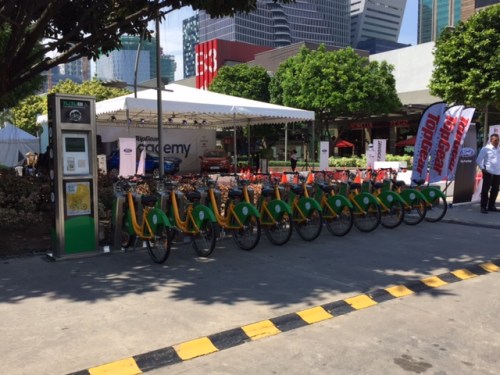 All the bikes seem to be here as not a slot was vacant.
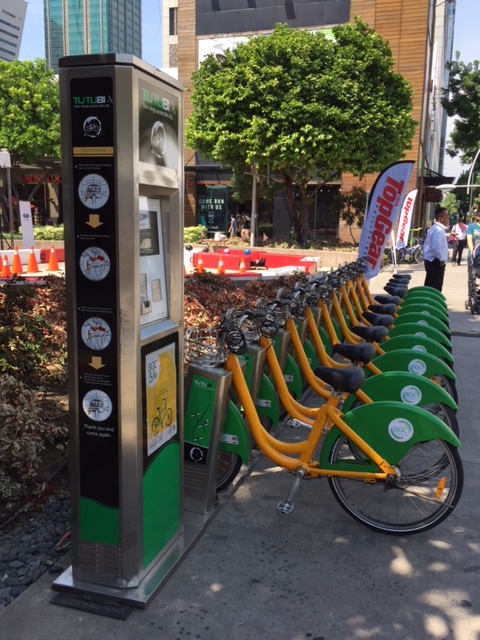 It seemed ironic to see not one bike in use against the backdrop banners of a popular motoring magazine.
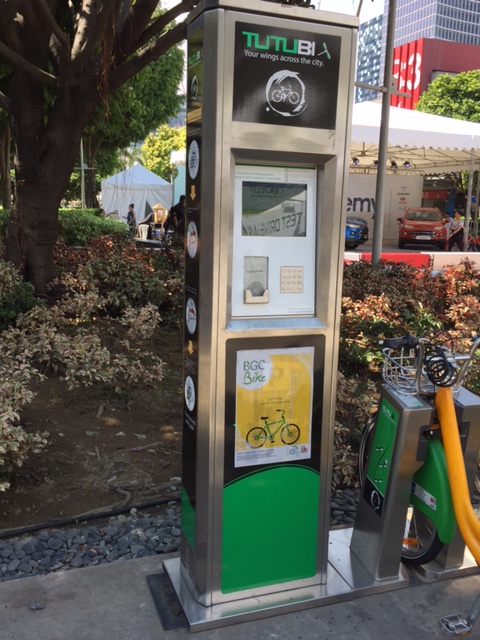 A closer look at the portal shows what looks like a new (unused?) facility.
It seems to me that there are few users of the Tutubi at least at Bonifacio High Street. I wonder if the bikes at UST are utilized more than the ones at BGC. I also wonder if UST is monitoring or studying bicycle use in its campus. Its use being limited within the premises of the campus sort of restricts users and diminishes utility. UST has a walkable campus and while its area is big (20+ ha) compared to other universities and colleges in the University Belt district, it is smaller beside Katipunan neighbors Ateneo De Manila University (80+ ha) and the University of the Philippines (493 ha). The latter two are also “walkable” with UP having more park-like features and open to the public.
UP Diliman has its own Bike Share program run by students and (I might come as biased) these seem to be popular on campus as I see many of the bikes used by students to go around from one building to another. UP Bike Share currently employs a more conventional system including subscriptions for frequent users. There is, however, a Department of Science and Technology (DOST)-funded project through the Electrical and Electronics Engineering Institute of UP Diliman that hopes to develop a more sophisticated system for managing and monitoring the bikes. That project has just started so we might wait 1 to 2 years to see its fruits.
–
Oversupply of vehicles for ridesharing/carsharing – Part 2
This is a follow-up on the recent post on ridesharing/car sharing where I talked about my observation that there seems to be an oversupply of vehicles being used for what is claimed as ride-sharing or car-sharing. In that post, I mentioned an observation by me and my colleagues that popular ride-sharing/car-sharing companies like Uber and Grab have led to more vehicles on the roads. I add to that the findings of our students that:
- Those shifting to Grab and Uber are mostly those already using taxis (regular users) and those using UV Express, which is a higher capacity vehicle using either vans or AUVs (average passenger capacities between 10 and 18 passengers).
- GrabCar and Uber function more as premium taxis rather than ride-share or car-share modes.
A friend who’s among the first Uber drivers in the country (He was already an Uber driver before the explosion in the service’s popularity.) shared that Uber earlier had been a real car-share/ride-share. My friend’s full time job was as a musician and he thought of becoming an Uber driver only to have some additional income for when he wasn’t busy with his work or didn’t have gigs. He was not roving around Metro Manila to get fares much like what is now being done by many Uber and GrabCar units.
Later, when Uber and Grab began more aggressive marketing; promoting their services as potentially generating much more income than conventional taxis and perhaps even a person’s full-time job, people started purchasing cars not for their use but to use in business in the form of Uber and Grab cars. I can probably understand those who bought cars and drove the cars themselves. To me, these would still qualify as ride-sharing/car-sharing but on the upper limit of what we can really consider “sharing” since they are supposed to be driving during their free times. Arguably, unemployed people have the entire day as free time compared with employed people or those who run businesses other than being Grab or Uber drivers. These include housewives and even “househusbands” who may have a vehicle at home that they can use for Uber or Grab. Employed people can only share their rides during the time they go to their offices or when they travel home later in the day. Others may have more free time as business people would likely have more flexible schedules.
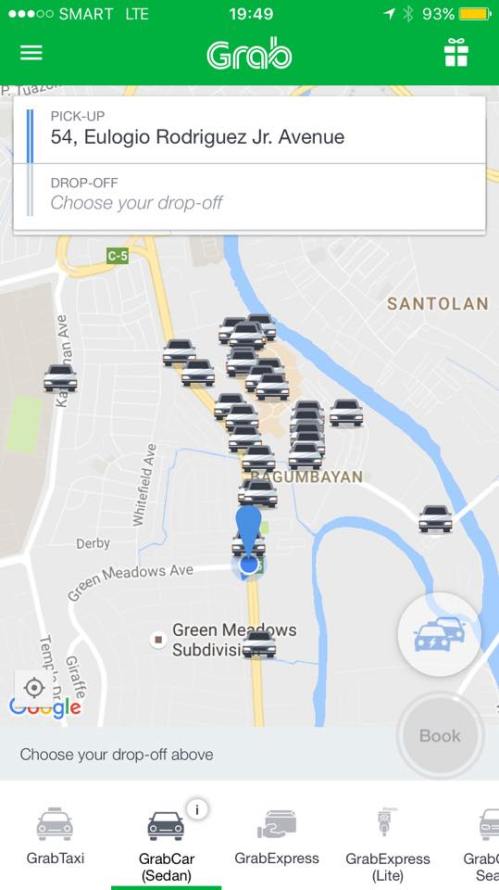
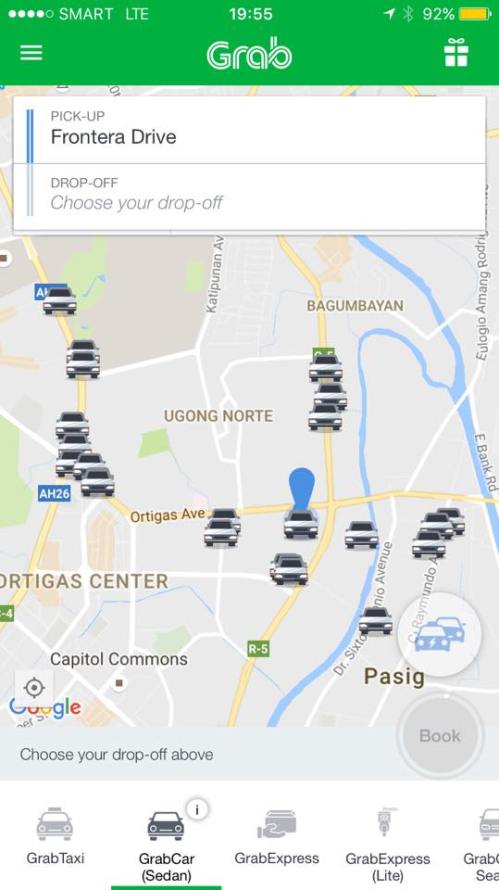
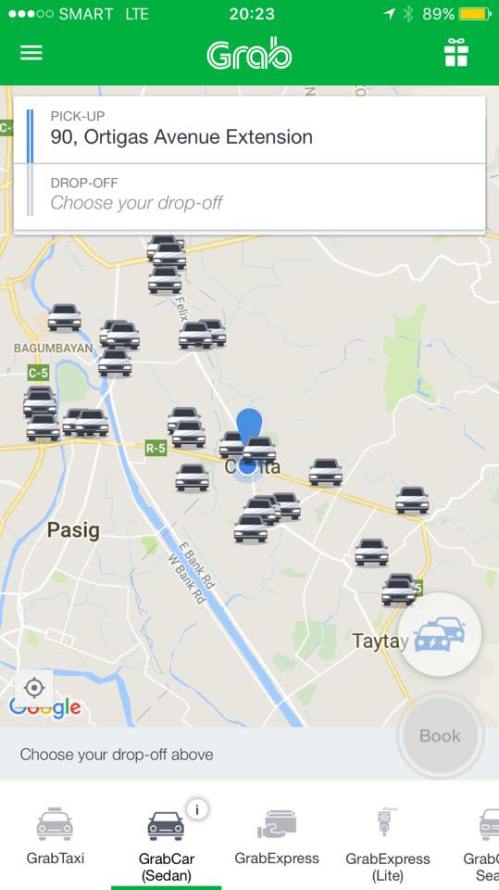
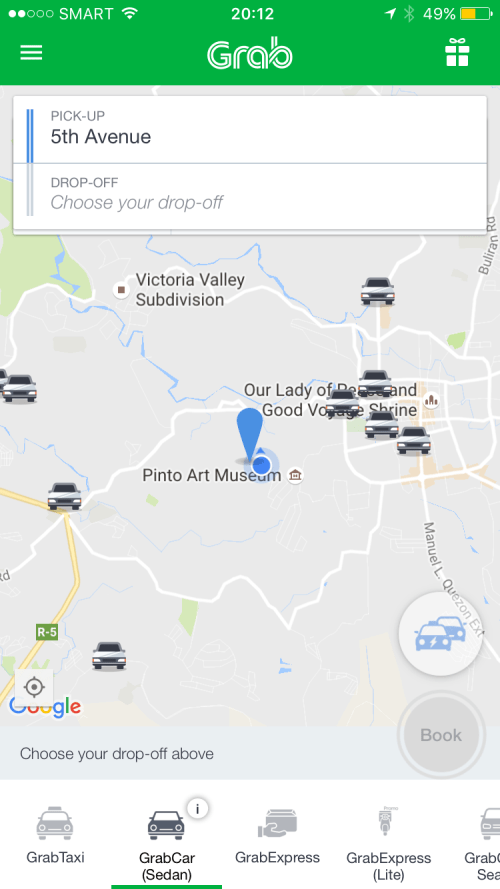
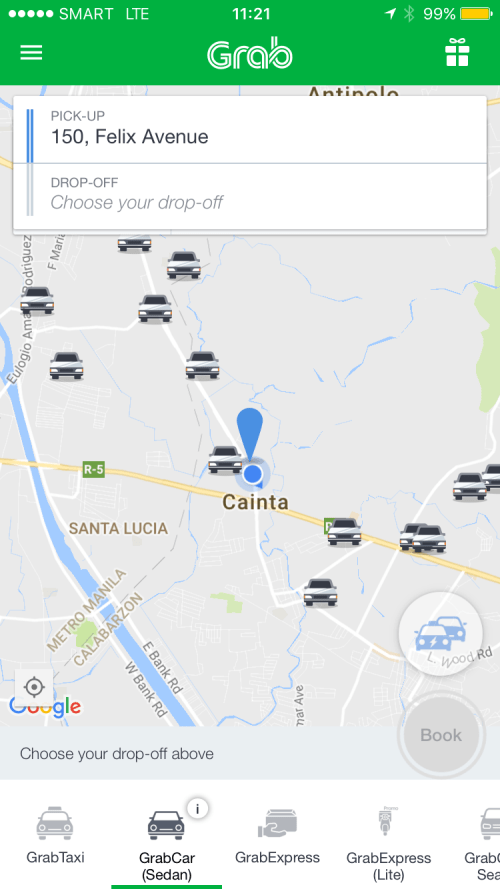
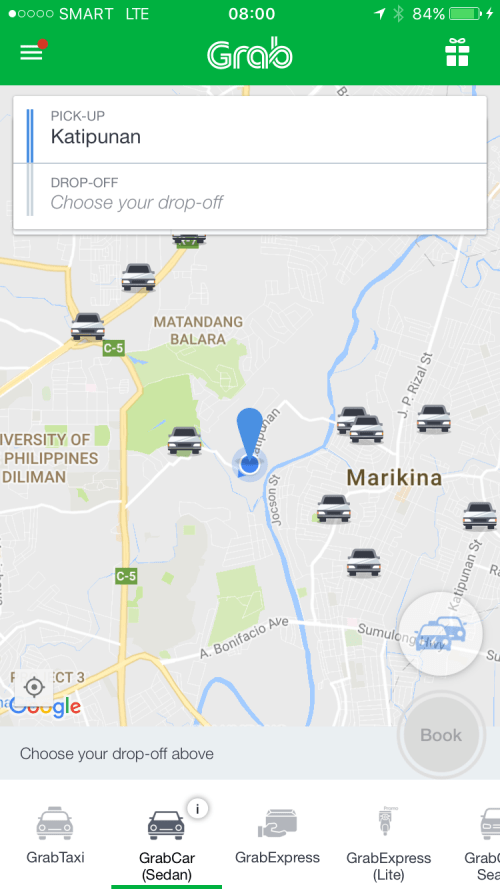
Following is a series of screenshots I took en route to a meeting. It is, I believe, more systematic in terms of trying to determine the availability of vehicles – in this case GrabCars. Again, correct me if I’m wrong about my assumption that the vehicles displayed represent available cars. If they do not then it means the app is misleading people into thinking there are available cars for them to hire.
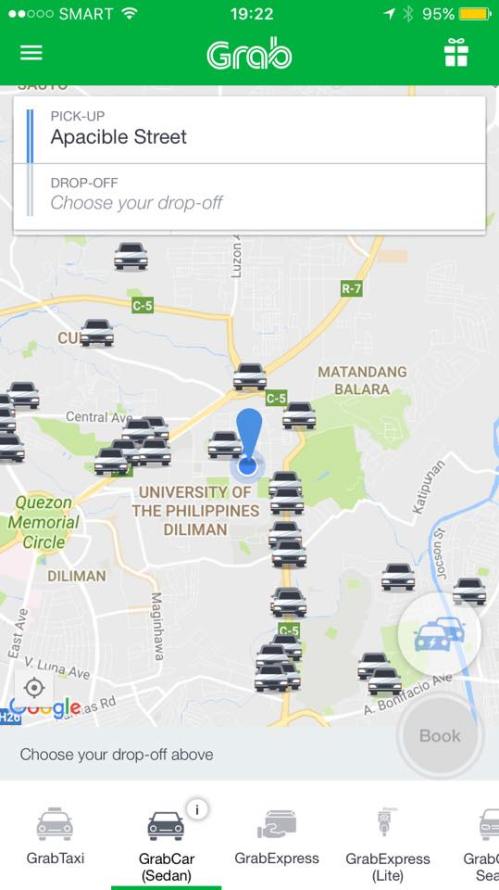
Grab Cars in the vicinity of UP Diliman
 Grab Cars in the vicinity of Eastwood
 Grab Cars in the vicinity of Tiendesitas
 Grab Cars in the vicinity of Cainta Junction
–
Global Street Design Guide
Here’s another quick post. I just wanted to share this article with a link to a Global Street Design Guide that was developed by the National Association of City Transport Officials (NACTO) in the United States (US). It’s a nice guide that’s based on the experiences of many cities in the US including transformations that have made commuting more efficient, enhanced mobility and, most important of all, improved safety. Following is the link to a more direct link to the guide:
NACTO and the Global Designing Cities Initiative Release Global Street Design Guide
This will be a good reference in the Philippines where many cities are in need of transformation to address current and future challenges in transportation. Planners, engineers and students should read this and use it to make our streets safer and more efficient in terms of mobility for all. It would be nice to see fresh ideas on how we can improve our streets not just in Metro Manila but elsewhere across the country. Of course, it would be nice if city planners of local government units (LGUs) can adopt this design guide parallel with efforts to improve public transport services. It should be understood that simply imposing lane allocations and traffic flow policies (one way?), for example, will not solve problems but may create more. The approach should always be integrated, inclusive. In other words, complete.
–
Metro Manila public transport – addition is good but we need subtraction, too
The company providing the P2P bus services is very enthusiastic (aggressive?) in promoting their services especially via social media. Satisfied commuters have also shared their experiences and a lot of photos about the buses and their commutes through social and mainstream media. I have read some articles carried by the likes of Rappler and Inquirer as well as blogs relating about the buses features, what people liked about the service and their suggestions on how to further improve and expand services. These have provided commuters with a taste of how good public transport could be in terms of quality of service.
The operations and the operator seems to have the blessings of the Department of Transportation (DoTr) and not just the present administration but from the previous one when the P2P services started. The fact that they have expanded services further these past few months is a testament to their popularity and the demand for high quality public transport services in Metro Manila. I personally believe that the next step is to give these buses exclusive lanes along their routes. Such would allow for buses to travel faster and providing a significant decrease in the travel times of commuters. Current operations, despite having non-stop runs between origin and destination, run in mixed traffic so their impacts in terms of travel times are diminished. Also, with exclusive lanes, they can probably consider adding a few stops between the route ends and be able to simulate bus rapid transit (BRT) services of which there seems to be little appreciation so far in the Philippines.
While the new buses and routes are very welcome and provide attractive options for commuting, there is still a need to address what is perceived as an over-supply of buses, jeepneys and UV express vehicles in Metro Manila. The attractiveness and higher service quality of P2P buses can pave the way for reducing the numbers of buses, for example, along EDSA. A similar strategy of introducing high quality bus services along other corridors and then reducing bus, jeepney and UV express units there can be implemented but will require much in terms of political will. The latter is important when dealing with operators and drivers of displaced vehicles, who may oppose such transport reforms and probably throw in legal impediments including those pertaining to franchising. Whether such opposition can be addressed by emergency powers or not remains to be seen but hopefully, even without such powers, the government can engage the transport sector to effect reforms and improve public transport (and ultimately commuting in general) not just in Metro Manila but in other cities as well.
–
Oversupply of vehicles for ride-sharing/car-sharing – Part 1
My students recently concluded studies on popular ridesharing/carsharing services Uber and Grab. The studies details how, for example, people have come to prefer Grab Taxi, Grab Car and Uber over regular taxis. One important finding and conclusion in one study is that Uber and Grab in the Philippines cannot be considered as contributing to sustainable transport. Note that this conclusion is just for the Philippine case and perhaps can be further constrained to Metro Manila since all data collected was with the geographical bounds of the metropolis.
There is already a perception that there is an oversupply of vehicles being used for what is being claimed as ride-sharing or car-sharing. This is due to the surge in new vehicle purchases as people joined the Grab/Uber bandwagon. Who can resist the opportunity to earn good money from being a Grab or Uber driver? That is basically the question answered by a lot of people who decided to purchase cars and register these and themselves for Grab or Uber.
To see if there is some truth to this perception of oversupply, we use one ride-sharing app for the information it provides users. One can make a quick check of how many Grab vehicles are moving about and ‘looking’ or waiting for riders/passengers. Following are what’s displayed on my phone in three random instances last Tuesday for GrabCar. I leave it up to the reader to draw conclusions from these screenshots.
More in Part 2…
–
Of accomplishments and legacies in transport
My colleagues and I have been talking about accomplishments and legacies. In particular, we had a spirited discussion about what we have been doing in terms of transportation projects that we have been involved in. I think everyone wants to have something physical to remember them by. And these should be positive and constructive and not memories of controversies or anomalies like those in major projects that will be associated with corruption or abnormalities in the processes by which the projects were implemented.
The ‘problem’ with being involved in policy making and planning is that these often lead to outputs such as reports and maybe even laws. If one is lucky enough then perhaps its in the form of a legislation rather than a Department Order. But those legislations and memos often do not acknowledge the people who contributed to its drafting. They will be associated with the politicians (e.g., senators and congressmen) and officials (e.g., secretaries, undersecretaries) who sponsored, co-sponsored or issued them. It will be good to have some sort of evidence to show and prove that you were instrumental in planning, designing and/or implementing a project.
The appointment of a new Department of Transportation (DoTr) Secretary in Art Tugade had me recalling our meeting with him to present the outcomes of our study on a major commercial development at Clark Freeport. He was appreciative of our work and mentioned that Clark had implemented many of the recommendations of the Master Plan we had developed for the Freeport back in 2010. All the major recommendations were implemented during Tugade’s watch at Clark. Following are the most notable ones:
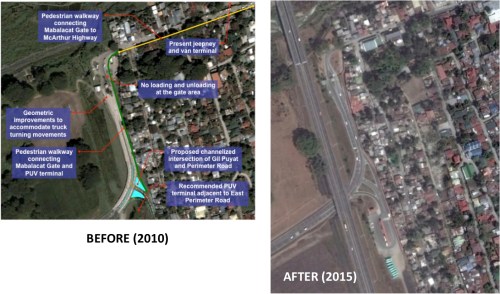 The Mabalacat Gate and Public Transport Terminal of the Clark Free Port Zone
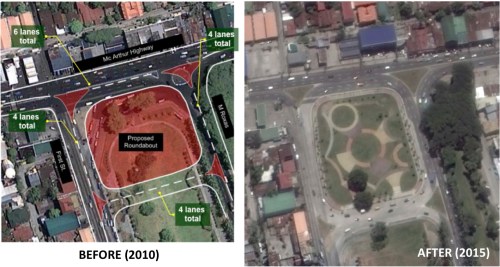 McArthur Highway – M.A. Roxas Highway – First Street rotunda
 Clark Freeport main gate
The lead for these projects was Dr. Ricardo Sigua who is the one of the leading transportation engineers in the Philippines and currently the Director of the Institute of Civil Engineering of the University of the Philippines Diliman. He is also the head of the Road Safety Research Laboratory of the National Center for Transportation Studies where he is also a Research and Extension Fellow. Others involved in these projects were Dr. Karl Vergel, Dr. Noriel Christopher Tiglao and Dr. Jose Regin Regidor, all from UP Diliman and affiliated with the NCTS.
–
 Caught (up) in traffic