
Bike share success?
There are two articles about bike sharing that got my attention today. These are both asked the question of weather bike sharing programs actually work or are successful. Following are links to the two articles available online:
Both articles draw upon the experiences in many cities in the United States where various bike share programs have sprouted. Many seem to have had some measure of success but most are not as successful when evaluated using criteria mentioned in the articles. I guess there’s much to be learned here but the experiences should not be limited to the US. There are better examples in Europe where bicycle use is quite popular compared to the US. Perhaps Asian examples, too, need to be assessed but then all need to be examined objectively and according to the unique situations and/or circumstances for how these bike shares came to be in the first place. In Metro Manila, the bike share program by the students at the sprawling University of the Philippines campus in Quezon City is a recent one but is very popular with students. Another, more endowed program in a more posh district in Taguig City is much less successful judging from the usually full racks of bicycles. There are also lessons to be learned here and perhaps things that can be shared with others looking to come up with their own bike share programs in their cities and towns.
–
Footpaths at the College of Engineering Complex, UP Diliman
There are newly constructed concrete footpaths connecting the buildings of the College of Engineering complex at the University of the Philippines Diliman. These are intended for pedestrians to be able to walk between buildings without worrying about weather-related concerns such as muddy paths during the wet season.
My colleague took the following photos while walking towards the Institute of Civil Engineering building from Velasquez Street where the university has a portal leading to its housing for faculty and staff.
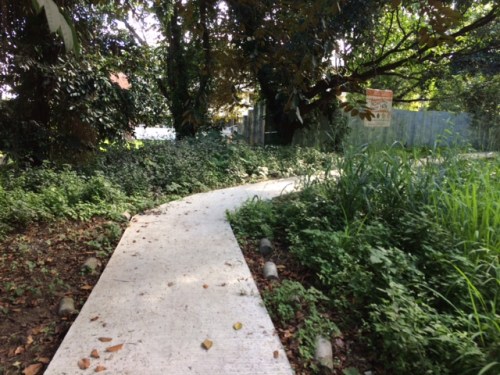 The concrete pathway is a significant improvement from the old dirt path that seemed to have been carved out of people’s trekking along this path over the last year or so.
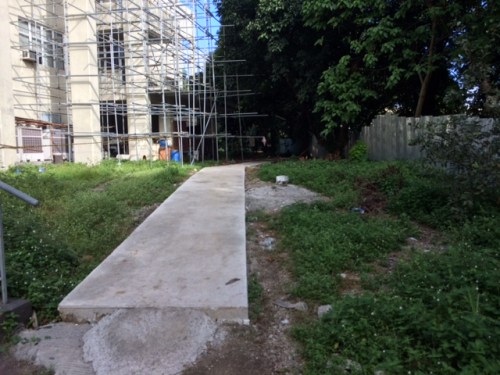 The path connects buildings at the area designated for the College of Engineering Complex. Many buildings such as the one above are under construction or to be constructed in this area.
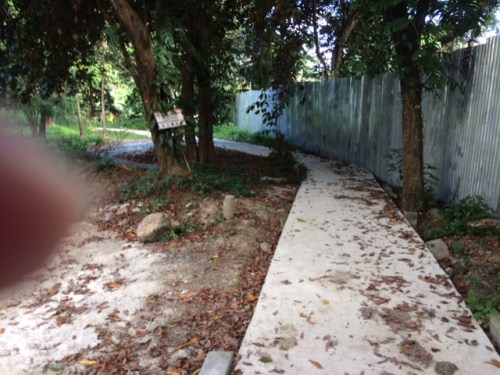 Much of the pathway goes through trees and other plants, preserving the greens already there that help provide a more enjoyable environment for walking.
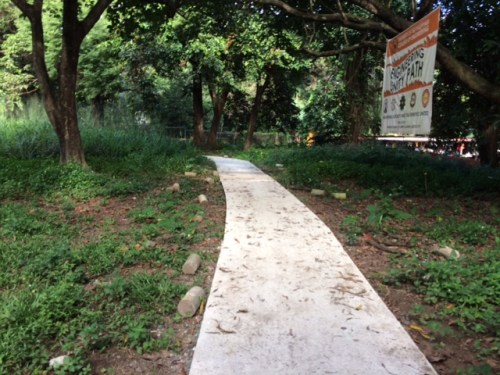 The pathway was dubbed the “Engineering Unity Path” as it connects buildings that are homes to individual institutes and departments that constitute the College of Engineering.
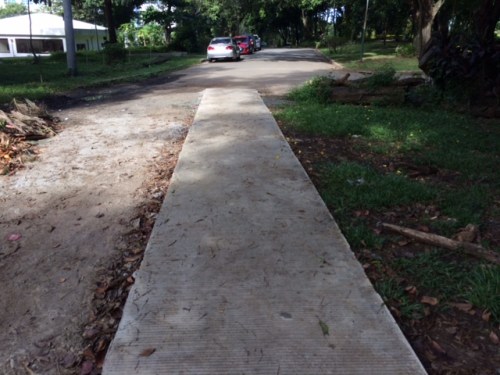 End of the road – one end of the foot path leads to Maramag Street and the driveway to the Executive House, the official residence of the UP President.
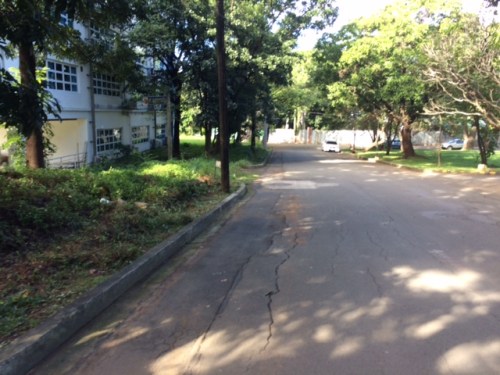 Maramag St. towards the Institute of Civil Engineering (ICE) complex with the ICE main building at left
While the pathway seems to be a permanent structure it is something I think is basically evolving just like the College of Engineering Complex. The complex already has a master plan but implementation towards a cohesive complex seem far from completion. For one, much of the complex covers a residential area in the university that has many (too many) informal settlers. And then there is the Executive House at the heart of the complex that probably needs to be moved elsewhere.
–
Habal-habal in Metro Manila
I posted about our ongoing research on motorcycle taxis. One of our subject areas are Pasig and Taguig in Metro Manila. These would likely represent the urban motorcycle taxi operations that we wanted to document and assess. One terminal I specifically asked our staff to visit as part of the recon/pre-survey activities is located at Pinagbuhatan, Pasig City near where the Pasig River connects with the Laguna de Bay. It is along Circumferential Road 6 and, based on my observation, has transferred locations several times since C-6 was being widened and paved.
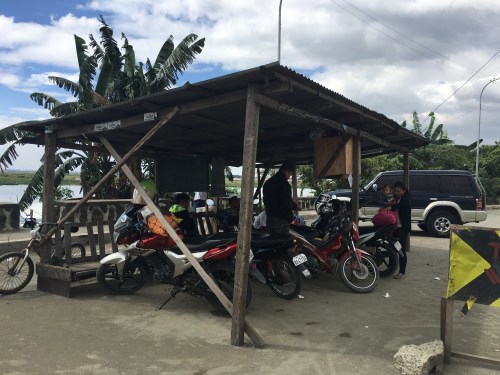 This is the terminal at Pinagbuhatan, Pasig City along C-6 and near the Napindan Ferry Terminal.
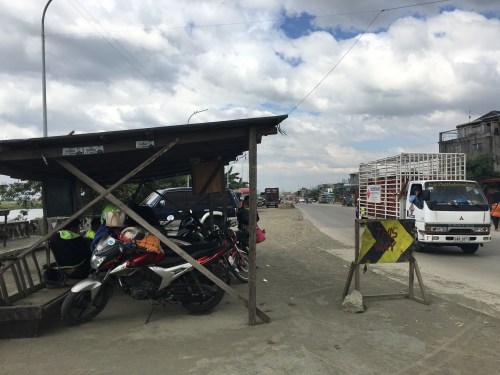 The current terminal stands along what used to be the older C-6 lane. The newer paved section of the widened C-6 is shown in use. It used to be closer to the bridge that crossed the Pasig River and near the Napindan Ferry Terminal.
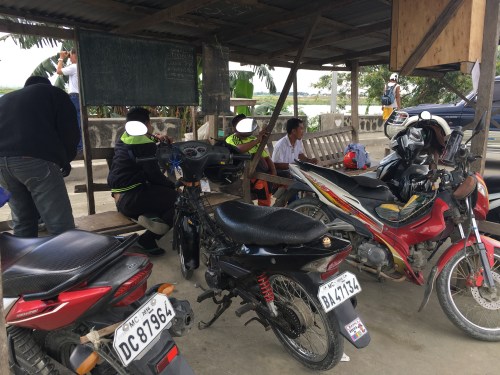 The habal-habal riders and operators have an organization and are generally tolerated by the local government. Unlike their provincial “relatives”, they usually only take one passenger seated at the back of the rider. Two passengers are not unusual or irregular especially if one is a child.
I will post about the characteristics of habal-habal operations soon. However, I don’t want to preempt the research we are doing so I would also prefer that we submit our report first and maybe even submit a paper or two for publication before I post them here. Among the things we have obtained so far are video recordings of what its like to ride these motorcycles. We used an action camera mounted on the rider’s helmet for this purpose. Our staff also did a quick interview of the service providers and will be doing a full survey soon to get substantial information for our research.
–
“Semplang” – motorcycle self accidents
There is a Filipino word used for falling by yourself for whatever reason or factor – semplang. The term applies for those riding a bicycle or motorcycle where a person has basically no one to blame but himself/herself for falling. Of course, there will be factors like weather and road conditions. Wet, slippery roads can be very treacherous. So are roads with potholes and/or open manholes. In most cases, however, the rider’s skill more than the other so-called factors that could have affected his movement and balance.
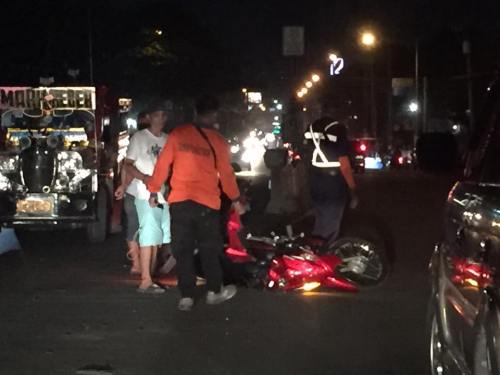 This is a case of a motorcycle rider losing his balance. I know because this happened as the motorcycle rider made a U-turn right in front of my vehicle at the slot across BF Steel in Cainta.
I am not certain about the condition of the rider in the photo above. While he looked shaken up (surprised?) by the incident, it did not seem to me as if he was moving abnormally (i.e., intoxicated or disabled). Perhaps its his skill that led to this? Such could not have been the case if he had sufficient training and experience and properly licensed to ride a motorcycle. Sadly, a lot of motorcycle riders are not well trained and gain skills only from experience. Yet, there are many who ride like they are stuntmen, often risking their lives and limbs as they maneuver (weave) through traffic.
–
Antipolo Station of the old railway line
For readers who are interested in the old railway line to Antipolo, please look at the comments section of this old post from November 2012:
What if Manila retained its old railway lines?
Someone (Thank You!) posted about the Antipolo Station, which is the last one along the line and the station closest to Antipolo Church. While the remnants of the old station at Hinulugang Taktak is well preserved and safe (for now) from any future developments, what remains of the old Antipolo Station is now in danger of being demolished. Antipolo and the DPWH are widening the circumferential road located in the area and based on the dimensions of the sections already completed at Siete Media beside the Robinsons mall, the remains of the old station structure may be lost as well.
In my opinion, the city should preserve this part of its history that is also a part of our railway heritage. While such road widening projects may be important, retaining this piece of history is equally relevant as it provides us with a perspective of the past (i.e., how people travelled, what were their destinations of interest, etc.) and learn some lessons about this (e.g., why we should not have wholly abandoned rail for road transport).
–
Skylab – motorcycle taxi
We are currently doing research on motorcycles and a major part of the research is on motorcycle taxis. Motorcycle taxis are popular in many areas in the Philippines despite national and local government agencies have not sanctioned or legalized their operations. There are two popular versions of the motorcycle taxis – the habal-habal and the Skylab. Both are basically motorcycles with some add-ons to increase passenger capacity or to be able to carry more goods or cargo.
The habal-habal is carries all passengers or cargo on the motorcycle with some variants having a plank for extension to the back or a customized seat over the gas tank that is usually for children. The Skylab owes its name from the US satellite that fell to the earth in the 1970s. The shape of the satellite inspired innovative extensions along each side of the motorcycle. This enabled riders to take in triple the number of passengers they could with the habal-habal set-up. Both have variants with roofs.
The following video shows a Skylab in Surigao Del Sur care of a very good friend, Dr. Alex Ladaga of Surigao Del Sur State University, whom we are collaborating with in this research:
More on these motorcycle taxis soon!
–
More congestion along Ortigas Avenue Extension?
There are two malls currently under construction along Ortigas Avenue Extension – SM East Ortigas and Waltermart Taytay. Nearing completion is the SM East Ortigas, which looks like a very big mall. It is the former Ever mall beside Riverside Subdivision and close to one of DMCI Homes’ first developments. It will open on December 2 and there are already a lot of promotional tarps announcing this along major roads including C-5, Felix Avenue and, of course, Ortigas Avenue.
Waltermart is further up towards Tikling Junction. These two are actually from the same mother company SM, which has somewhat diversified its retail business so it now includes the SM malls, Savemore, Waltermart and the newly minted S-Mall. These two are sure to generate a lot of traffic and cause more congestion with the SM East Ortigas already in an area where Ortigas Ave. Extension is regularly congested. I am not aware of any studies conducted with respect to this mall but I assume there is a transport impact study somewhere. Personally, I would ask SM to look into the case of SM Novaliches for something sort of a solution to the traffic problem right in front of the mall. Quirino Highway is widest along the section where SM Novaliches is, with the mall providing a very generous setback to accommodate multiple lanes for traffic to flow smoothly at least in front of the mall. That seems possible with SM East Ortigas especially since there is practically only 2 lanes for the westbound direction of Ortigas Ave. Ext. at this area.
Waltermart is a different thing because it is in an area where there is generally no congestion along Ortigas Ave. Ext. I also assume there is a traffic study somewhere providing traffic management schemes or alleviation measures in case congestion occurs due to the mall and its high density residential development component (it is part of a complex called “The Hive”).
I am speculative about the expansive lot vacated by Mitsubishi Motors beside the Panasonic complex. I wonder if any of the big developers are acquiring it and perhaps developing it into a major mixed use project. There is also the lot where Consolidated Tobacco used to be just across Countryside Subdivision and close to SM East Ortigas. Such future developments require careful study for its transportation impacts and the Municipality of Cainta should take a proactive stance for major developments that will generate a lot of traffic. Ortigas Ave. Ext., even after some widening, remains as a road with high potential and regularity for congestion. Only a mass transit system can probably decongest it but that will take some time to realize.
–
On expressway rest stops
Perhaps the first really nice rest stop long an expressway in the Philippines was the Petron station along the southbound side of the South Luzon Expressway (SLEX) that became operational more than 15 years ago (correct me if I’m wrong). Since then, there have been many additional rest stops/stations built along SLEX, NLEX and STAR Tollways. Rest stops have only been recently constructed along SCTEX and TPLEX. We stopped at the PTT station along the northbound side of SCTEX partly to check out their toilets. One colleague had mentioned that one should know which rest stops provided the best facilities in case of a toilet emergency. That, of course, can be a relative thing given the seasonality of traffic as well as the maintenance requirements for such facilities or amenities.
The PTT station did not disappoint as it basically had two options for the traveller – free toilets and a pay alternative. The payment is supposedly considered a donation to a charity supported by PTT. I opted to use the pay toilet (or lounge as some will call it) just so I know if it was worth the 20 pesos they charge. Following are a few photos for the discriminating travelers.
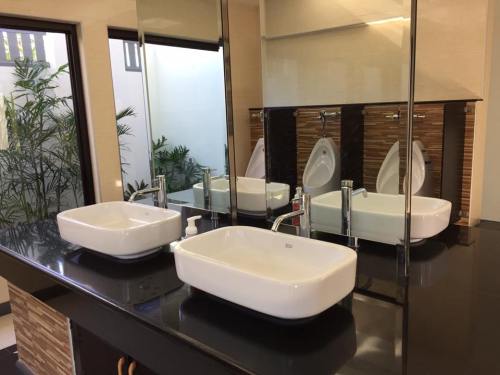 Wash basins and urinals are currently immaculate. This is understandable for a new facility but I hope they can keep it that way even when there are more traffic along SCTEX.
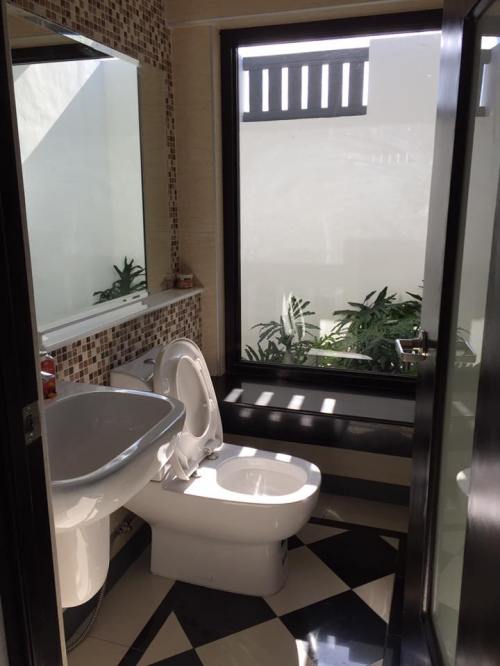 The toilet seems something like what you’ll find in a top quality resort or hotel with generous space, bidet, and a nice relaxing view of a pocket garden.
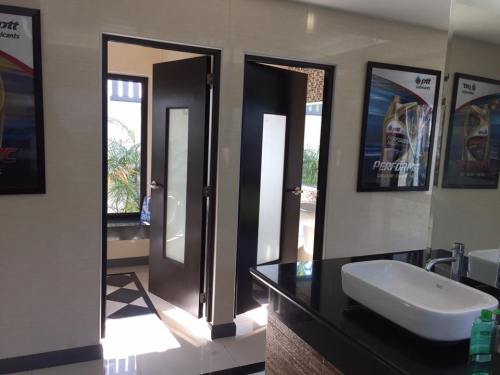 There are only 2 toilets in the men’s room. That is understandable since we most likely and often use the urinal instead of the toilet bowls. The ladies’ room should have more of these.
I think it is a big challenge for these stations/rest stops to maintain their facilities especially toilets. The volume of people and the frequencies of use (e.g., flushing, washing, etc.) will ultimately cause deterioration of faucets, water closets, etc. and these are usually free (service) with the station benefitting from the revenues generated by restaurants, shops and gas pumps rather than direct income from the use of toilets.
I would still suggest that rest stops also provide pay toilets and these should be expected to be clean and orderly compared to free toilets. I’m sure people will be willing to pay for this but then that shouldn’t be an excuse to neglect the free ones. Service is still the name of the game and quality service need to be provided by rest stops. Travelers will know about which stops have good facilities and word goes around quickly about comfort room quality among these stations. Of course, that goes without saying that such facilities should be child-friendly, PWD-friendly and senior citizen-friendly.
–
Another look at Marcos Highway overpasses – Part 3
The overpass at SM City Marikina is a bit more complex than what it looks like across the bridge. Here are some photos of the footbridge connecting the mall with the Santolan Station of Line 2:
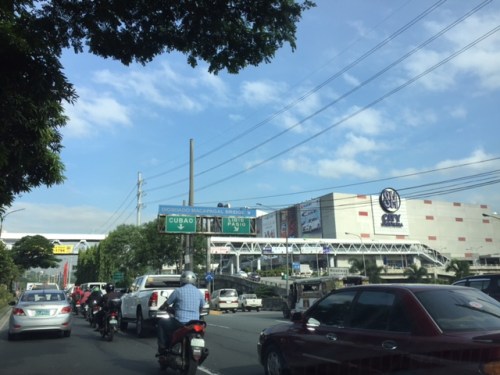 The overpass is a very long one and provides users with a partially covered walkway connecting to the LRT Line 2 Santolan Station. I say ‘partially’ because the roof over the overpass extends only across Marcos Highway.
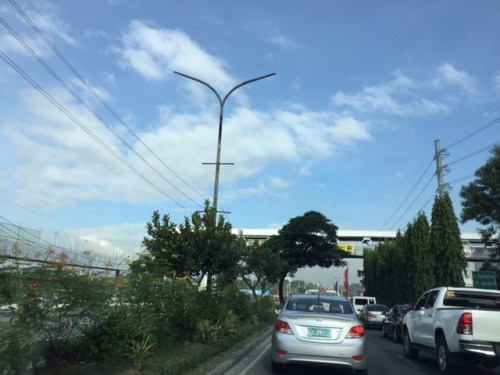 Note the covered bridge is only until the other side of Marcos Highway. From there it is an open overpass as shown at the left in the photo above.
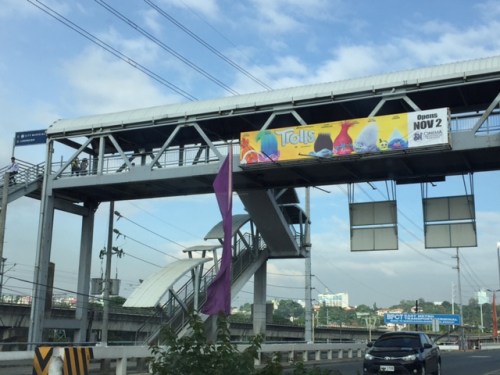 A closer look at the SM Marikina overpass shows just where the cover ends. There are stairs here leading to the loading/unloading bays across from the mall. There is also a path that leads to stairs to the public transport terminal under the bridge. There is a sign with a blue background in the photo stating the terminal is named after a former MMDA Chair who was also a mayor of Marikina and currently one of its congressmen.
–
Calamba-Binangonan boat ride
A niece posted on social media about a boat ride she took from Calamba, Laguna to Binangonan, Rizal. I immediately became curious about this as this presented an alternative mode of transport across the Laguna de Bay that could significantly cut travel time between major towns in Laguna and Rizal. Perhaps a boat ride could also cut substantial minutes between these provinces and Manila if only there was a direct connection or service with the Pasig River Ferry. I learned that it cost 50 pesos for a 45-minute trip from Calamba and Binangonan. Both the cost and the travel time are significantly less than what it would take via land and the roads connecting the two towns. I would estimate that the travel time using the South Luzon Expressway, Circumferential Road 6, Eastbank Road and Manila East Road would probably take more than 2 hours and the tolls alone will cost much more than 50 pesos. And this was via private transport. It would be longer and more expensive using public transport considering also that a person would have to make several transfers to travel between Calamba and Binangonan.
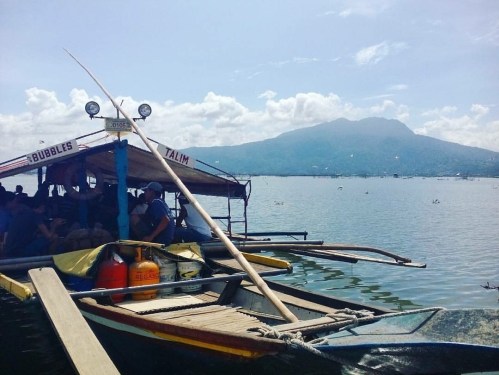 Outrigger ferrying people and goods across the Laguna de Bay (photo courtesy of Zarah Bombio)
The boats are practically the same ones that ferry people to and from Talim Island and my niece mentioned that there is a regular service of at least one boat every hour. Certainly this option should be considered by transport planners as they think of alternative modes for more efficient travel.
–
 Caught (up) in traffic